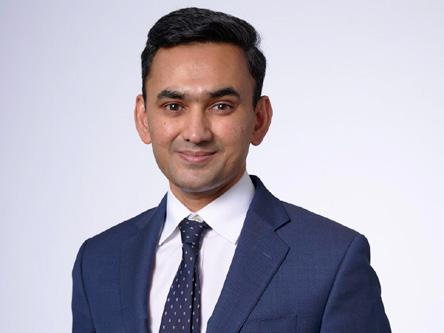
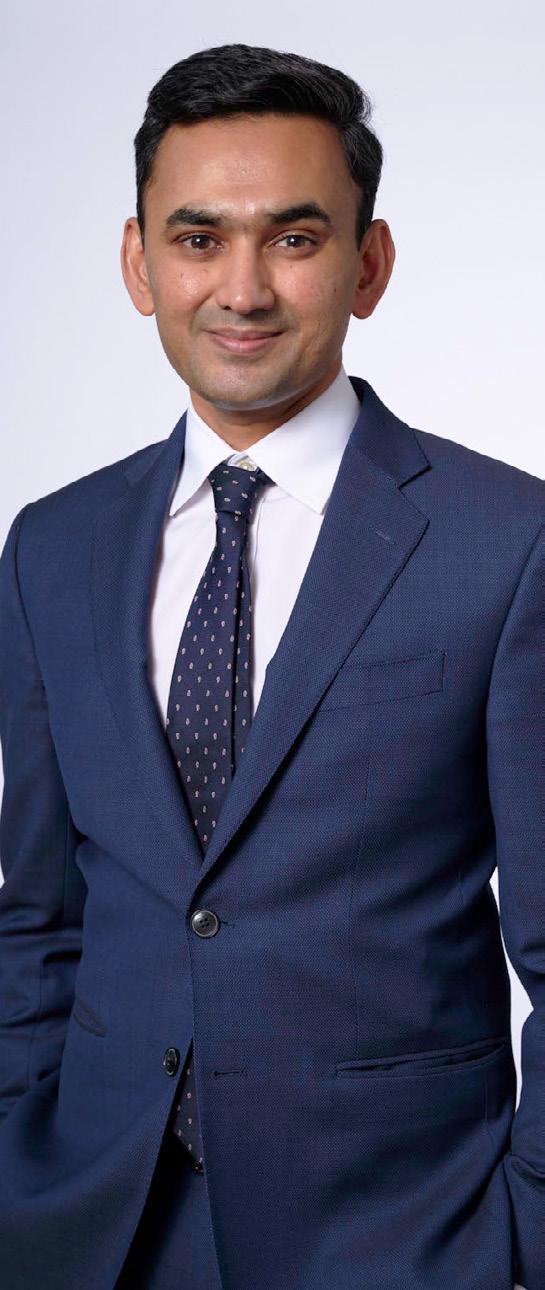
Senior Partner and Leader of QuantumBlack, Across the United Kingdom, Ireland, and Israel, McKinsey & Company
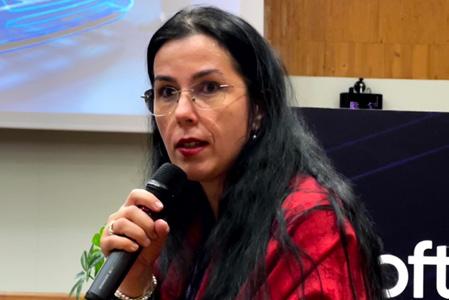
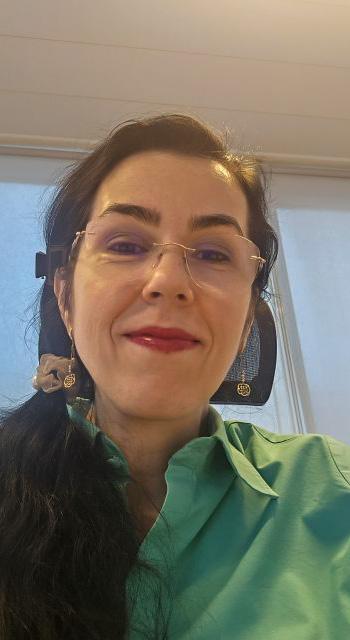
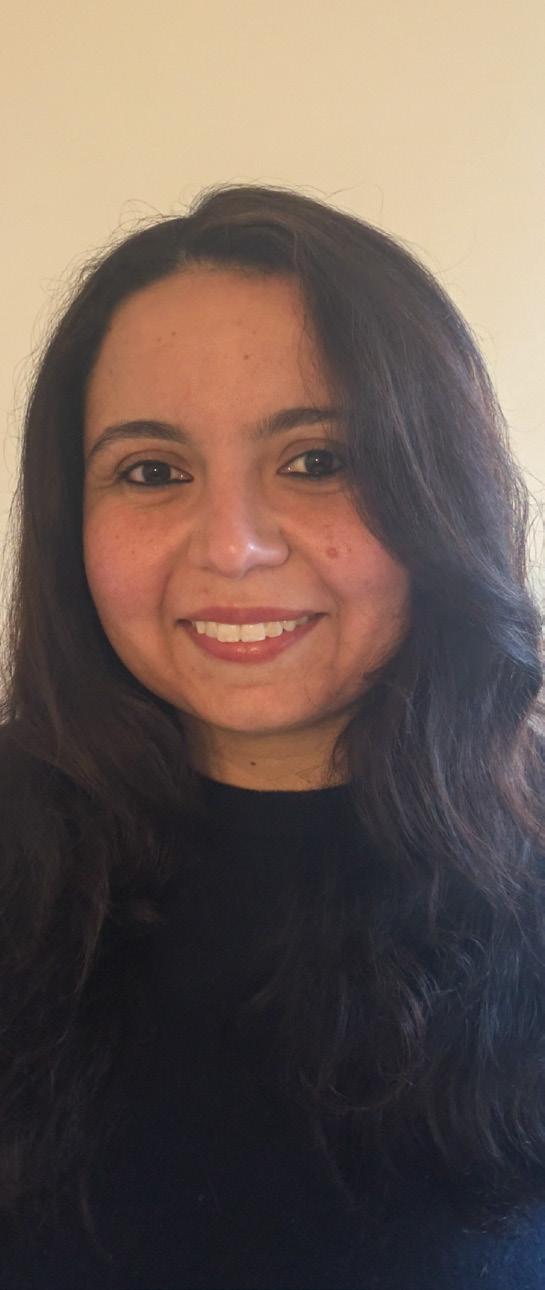
Fatema El-Wakeel
Data Strategy and Emerging Technologies Thought Leader, Head of Data Strategy and Insights. Enterprise IT, Arm & Researcher, University of Cambridge
FEATURING INSIDE
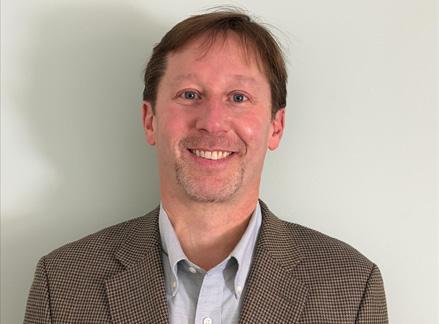
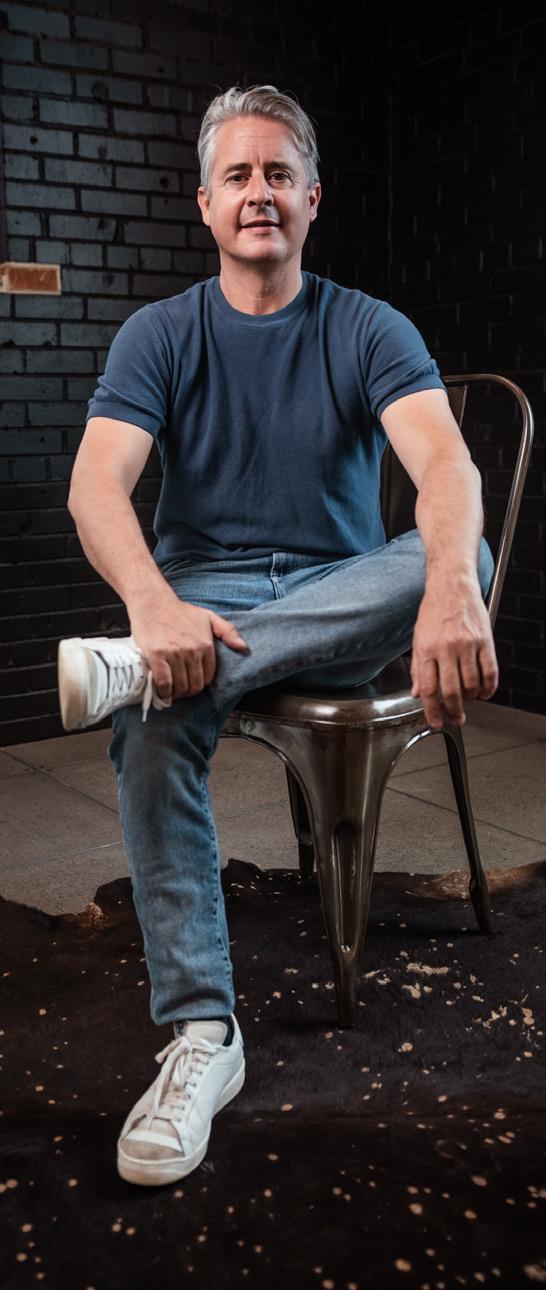
Mitch DeKoven Vice PresidentEvidence Generation, Precision AQ
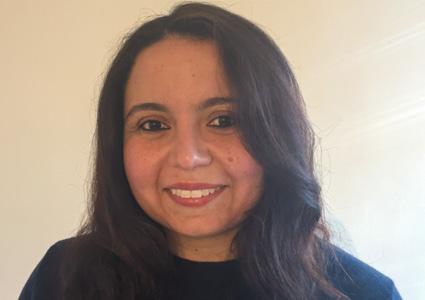
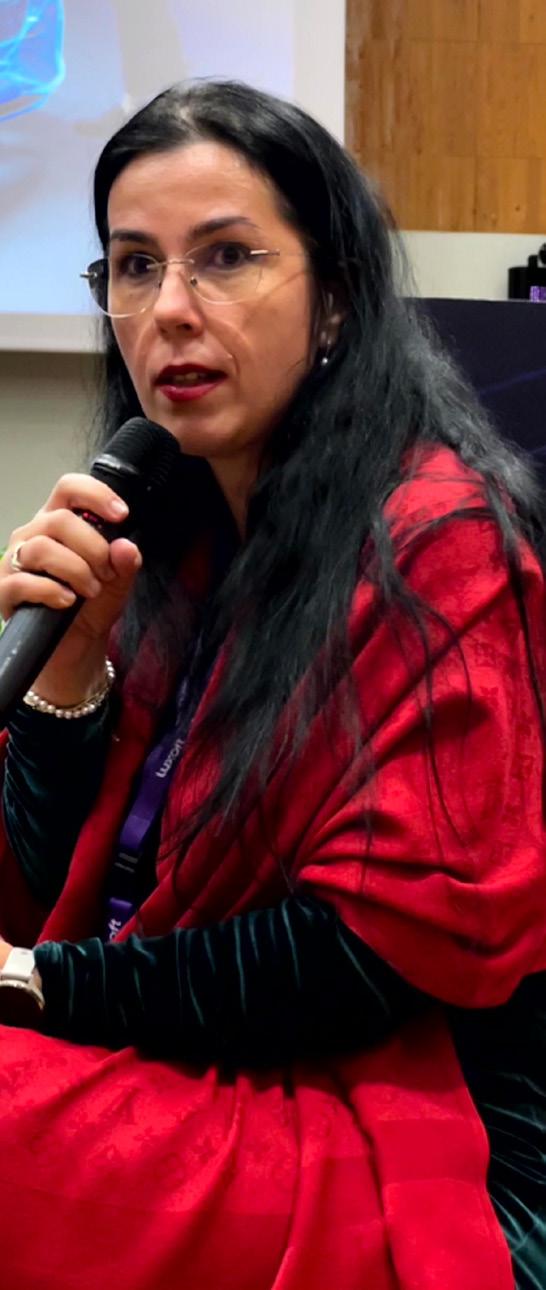
Raluca Voicu
VP Delivery for Automotive and Manufacturing Industry, DXC Technology
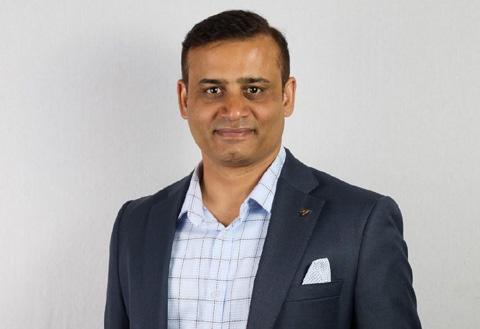
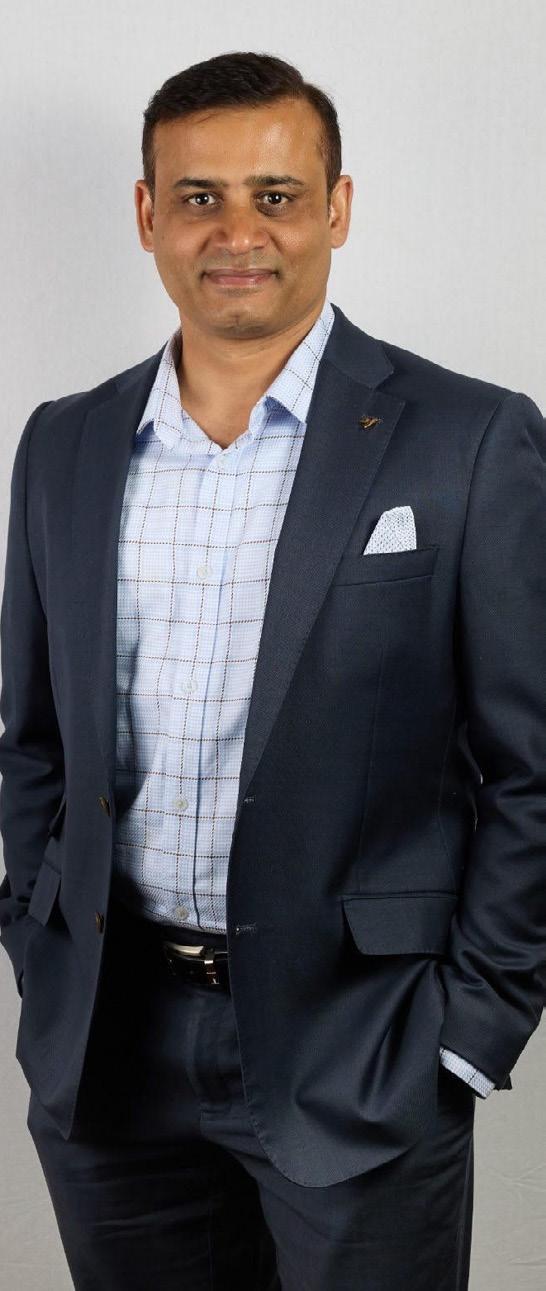
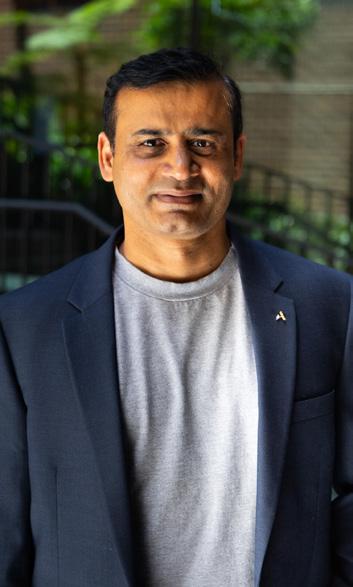
Ravinder Kalvakuntla Director of Customer Technology Services, Pacific, Accor
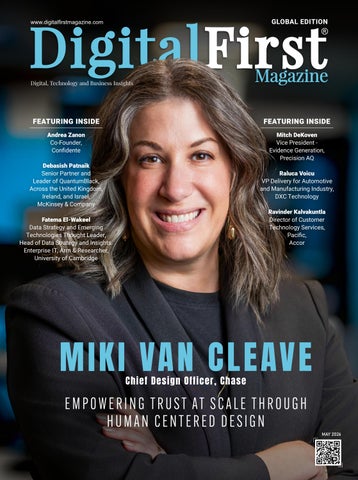
MIKI VAN CLEAVE
CENTERED DESIGN
Managing Editor
Sarath Shyam
Dr. John Andrews
Emma James
Andrew Scott
Sabrina Samson
Keith Alexander Consultant Editors
Naomi Wilson
Stanly Lui
Steve Hope
Shirley David Creative Consultants
Charlie Jameson
Louis Bernard
Branding & Marketing Partnerships
Jennifer Anderson
Monica Davis
Jessica Edword
Rachel Roy
Anna Elza
Stephen Donnell
Cathy Chen
Free Subscription
Free Subscription www.digitalfirstmagazine.com
International Partnerships
Americas Europe
Middle East & Africa Asia-Pacific
admin@digitalfirstmagazine.com
Follow Us On www.linkedin.com/company/ digitalfirstmagazine www.facebook.com/digitalfirstmagazine
Digital First Magazine www.digitalfirstmagazine.com is a global knowledge sharing digital platform published by Connecta Innovation Private Limited. All rights reserved. The opinions expressed in the content are those of the authors. They do not purport to reflect the opinions or views of Connecta Innovation Private Limited or any of its members or associates. The publisher does not assume any responsibility for the advertisements and all representation of warranties made in such advertisements are those of the advertisers and not of the publisher. Digital First trademark is owned by DFG Digital First Infotech Pvt Ltd. and Connecta Innovation Pvt Ltd. has permission to use Digital First brand name. Digital First Magazine www.digitalfirstmagazine. com is a Free Subscription and Free-to-read digital platform strictly not for sale and has to be strictly for internal private use only. Publisher does not assume any responsibility arising out of anyone modifying content and pictures, printing a copy of this digital platform in any format and in any country and all matters related to that.
The Quiet Architecture of Trust
There was a time when businesses built trust through advertisements, polished slogans, and carefully crafted public images. Today, trust is built differently. It is shaped in the quiet moments most people barely notice. A delayed banking notification.
A confusing checkout page. A chatbot that fails to understand urgency. Or, on the other hand, a seamless experience that quietly reassures us everything is working exactly as it should.
In many ways, design has become the new language of trust.
Not long ago, I found myself thinking about how often we interact with systems without speaking to another human being. From financial services to healthcare, people now place enormous faith in digital experiences. Research continues to show that customers are less tolerant of friction than ever before, and a single poor interaction can
damage confidence instantly. Businesses are learning a simple but powerful lesson: people may forget marketing campaigns, but they remember how an experience made them feel.
That idea sits at the heart of this month’s cover story featuring Miki Van Cleave, Chief Design Officer at Chase. In our conversation, Miki shares a perspective that feels especially relevant today. She explains how trust is not created through grand gestures, but through clarity, consistency, and experiences that reduce uncertainty during vulnerable moments. What makes her insights compelling is that she views design not as decoration, but as strategy. It becomes a bridge between business goals and human needs.
This issue of Digital First Magazine explores many dimensions of leadership, innovation, education, and transformation through conversations with industry voices, changemakers, and forward-thinking institutions. Each story offers a different lens on how organizations are adapting to a world where expectations continue to evolve rapidly.
As you move through these pages, I hope this issue encourages you to think differently about the systems, experiences, and decisions shaping the future around us. Because in a world filled with noise, trust may quietly become the most valuable thing any organization can design.
Happy Reading!
Sarath Shyam
MIKI VAN CLEAVE
Design
EXPERT OPINION
The Italian Advantage: Why How You Show Up Matters More Than What You Say
Andrea Zanon, Co-Founder, Confidente
LEADER’S INSIGHTS
Empowering Teams for Global Delivery Success
16
Shaping How Organisations Turn Data and Emerging Technologies into Strategic Advantage
Fatema El-Wakeel, Data Strategy and Emerging Technologies
Thought Leader, Head of Data Strategy and Insights - Enterprise IT, Arm & Researcher, University of Cambridge
Raluca Voicu, VP Delivery for Automotive and Manufacturing Industry, DXC Technology
LEADER’S INSIGHTS
Accelerating Businesses with AI Transformation
Debasish Patnaik, Senior Partner and Leader of QuantumBlack Across the United Kingdom, Ireland, and Israel, McKinsey & Company
Driving Value in Healthcare through Evidence
Mitch DeKoven, Vice President - Evidence Generation, Precision AQ
Transforming Hospitality through Tech
Ravinder Kalvakuntla, Director Of Customer Technology Services, Pacific, Accor
MIKI VAN CLEAVE
Chief Design Officer, Chase
EMPOWERING TRUST AT SCALE THROUGH HUMAN CENTERED DESIGN
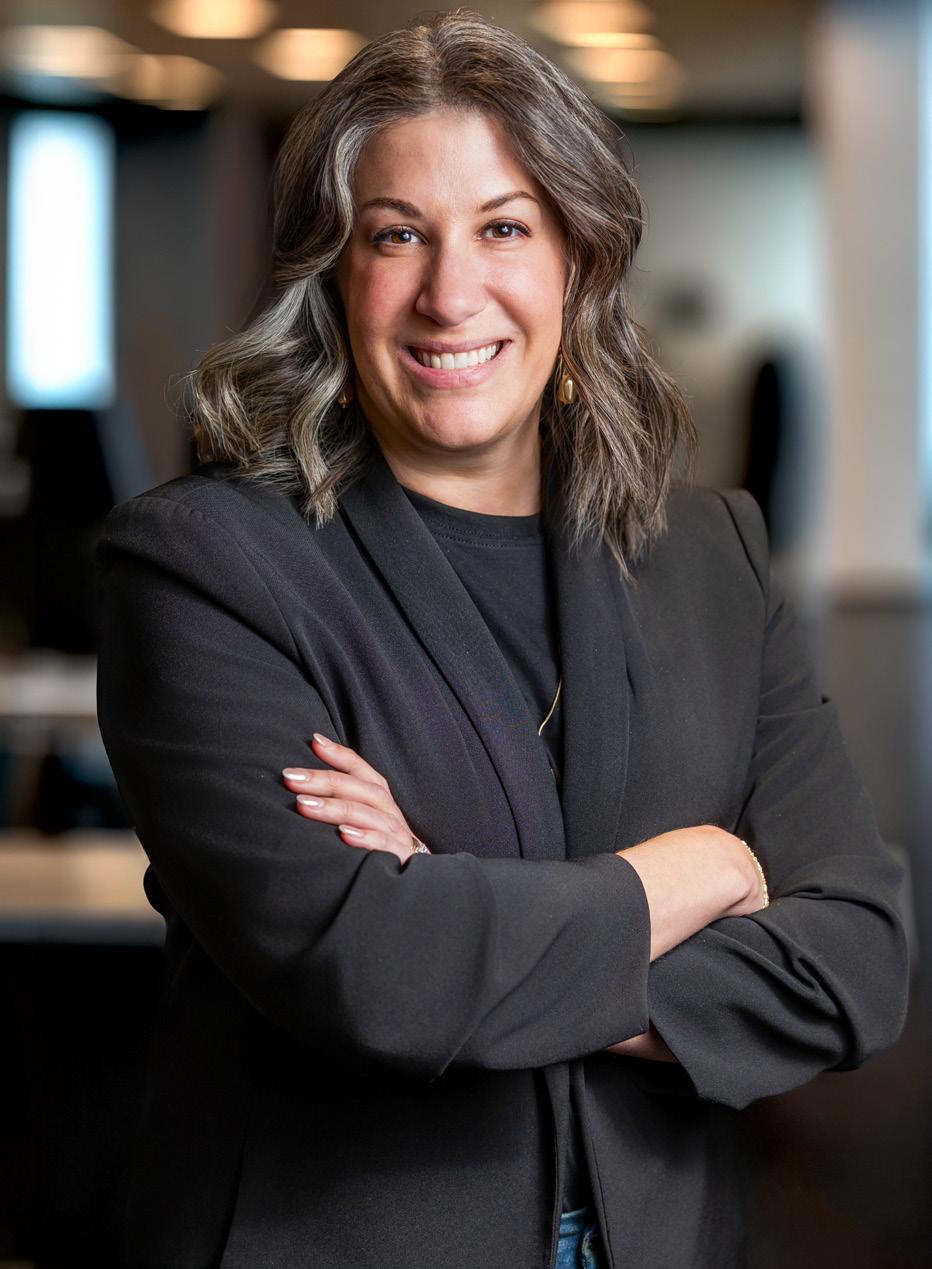
Miki Van Cleave serves as Chief Design Officer, playing a critical role in shaping enterprise strategy at the intersection of design, business, and innovation. Far beyond leading design execution, Miki brings deep business acumen and strategic insight to drive outcomes that support organizational growth, transformation, and customer value. Miki collaborates closely with leadership teams to translate business objectives into cohesive, human‑centered strategies. She leverages design as a strategic lever—informing decision‑making, influencing roadmap prioritization, and aligning experiences with long‑term enterprise goals.
Miki is known for building strong cross‑functional partnerships across product, technology, and data ensuring design is fully integrated into the business rather than operating in isolation. She champions a disciplined, outcomes‑driven approach to design that balances creativity with commercial impact. As a member of the executive leadership team, Miki helps guide organizational strategy, fosters a culture of innovation, and develops high‑performing teams that deliver intuitive, scalable solutions for customers and employees alike.
Recently, in an exclusive interview with Digital First Magazine, Miki shared insights into how design builds trust in financial services and why experience is now the product. Starting in digital product design during customers’ most vulnerable moments, she learned trust is earned through safe, clear, consistent experiences that reduce uncertainty across channels. In five years, winners will deliver hyperpersonalization with trust — proactive yet respectful, intelligent yet transparent. Her goal is elevating design as a leadership capability at the center of strategy, turning ambiguity into testable solutions that save money and drive outcomes. The following excerpts are taken from the interview.
Hi Miki. Your career in financial services spans over 15 years, culminating in your role as Chief of Design leading a multi-disciplinary team. What was your very first role in the industry, and what did it teach you about the relationship between design and trust?
My first role in financial services was in digital product design, focused on the moments where customers are most vulnerable: signing in, moving money, getting help and recovering when something goes wrong. That work taught me that trust is not a claim you make, it is a feeling you earn through the experience. In banking, customers are not only evaluating whether something works. They are evaluating whether it feels safe, clear and in their control. Design builds trust when we reduce uncertainty, explain what is happening in plain language and behave consistently across channels so customers never have to guess.
What do you love the most about your current role?
I love that I get to lead design at real scale with real stakes. At JPMorganChase, design is not decoration. The experience is the product,
and that means our work shows up in people’s everyday lives. I also love that this role is a front row seat to the future. AI is changing how we build and how customers will interact with their money, and my job is to make sure we move fast while staying intentional, inclusive and anchored in trust.
The branch, call center, app, and ATM must now feel like one experience. What’s the biggest barrier to true omnichannel design in banking today, and how will leaders solve it?
The biggest barrier is not effort or talent. It is the complexity that comes with scale. In most banks, the branch, call center, app, and ATM are built and operated by different teams for good reasons, and each channel has its own rhythms and responsibilities. The customer, however, experiences one bank, and they feel it when the handoffs are not seamless.
The way leaders solve it is by organizing around journeys, not just products. You set shared outcomes across channels, you hold a consistent bar for experience, content, and service, and you build the forums and tools that help teams stay aligned end to end. When everyone is anchored
AI IS CHANGING HOW WE BUILD AND HOW CUSTOMERS WILL INTERACT WITH THEIR MONEY, AND MY JOB IS TO MAKE SURE WE MOVE FAST WHILE STAYING INTENTIONAL, INCLUSIVE AND ANCHORED IN TRUST
on the same customer problem and the same quality standard, omnichannel stops being a talking point and starts being how you operate.
AI will touch everything from fraud detection to financial coaching. What’s one area where you believe human designers must remain firmly in the loop, no matter how good AI gets?
Money is personal, and the moments that matter most are often emotional. A customer is anxious, in a hurry, trying to recover from a mistake, or simply not sure what to do next. That is not just a logic problem, it is a human one.
AI can accelerate execution and generate options, but designers have to stay responsible for the intent, the clarity and the trust of the experience. Humans need to define what “good” looks like for real people, including edge cases, and we need to design the guardrails that keep customers in control. That includes how we earn consent, how we explain what is happening in plain language, how we make actions reversible and how we make sure the system stays inclusive and accessible. If we ever remove humans from that loop, we risk scaling confusion and exclusion at machine speed.
With fintechs, big tech, and neobanks all competing for attention, what will distinguish the winners in customer experience five years from now?
Many products and features will be increasingly commoditized, so the winners will be the ones who deliver hyperpersonalization with trust. The experience has to feel proactive without being intrusive, personal without becoming unpredictable, and intelligent without becoming opaque. The brands that win will be the ones
that connect money to the rest of a customer’s life in a way that is coherent, respectful and confidence building.
Great design leaders draw inspiration from outside their industry. What book, film, or exhibition outside of finance and tech has most influenced how you think about experience?
Actually, it’s none of the above. It was an experience I had in a hospital with my son. The hospital was clearly designed to make things easier for nurses, patients and parents, and you could feel that intention in every detail. In a moment that was stressful and emotional, the experience made us feel oriented, cared for and more capable. I think about that often because it is the hallmark of human-centered design. It is not about making something look good, though of course that helps. It is at the heart about making people’s lives a little easier when it matters most.
If you had an entire Saturday with no meetings, no phone, no deliverables, how would you spend it, and what would that day reveal about what you value?
I would spend half the day outside with a book, reading and genuinely slowing down, and the other half in the kitchen cooking. That kind of day reflects what I value most: downtime that actually recharges me, and taking care of my family in a way that feels grounded and present.
What is your biggest goal? Where do you see yourself in 5 years from now?
I hope I have helped more leaders truly understand what design brings to the table.
DESIGNERS ARE A UNIQUELY POWERFUL TALENT POOL BECAUSE WE ARE TRAINED TO MAKE SENSE OF COMPLEXITY, BUILD ALIGNMENT ACROSS TEAMS AND STAY ANCHORED ON THE HUMAN BEING, MEANING THE CUSTOMER, ON THE OTHER SIDE OF THE EXPERIENCE
Designers are a uniquely powerful talent pool because we are trained to make sense of complexity, build alignment across teams and stay anchored on the human being, meaning the customer, on the other side of the experience.
I want people to see that design is not a function you call at the end. It is a leadership capability. The best designers bring teamwork, empathy and deep technological curiosity, and they know how to turn ambiguity into a clear problem statement, a testable solution and a better outcome. And let’s face it, they can help teams and businesses save money by avoiding rework and solving problems early in the product development life cycle. Saving money is always a key contribution.
If I have done my job well, more organizations will be building with designers at the center of the work, not at the edges, and more designers will be stepping into broader roles across product, technology, operations and strategy.
If you could mentor one early-career woman in design/tech tomorrow, what’s the first piece of advice you’d give her about thriving without burning out?
I would tell her to build a habit of resilient honesty. Don’t be afraid to say “I don’t understand” because clarity protects your energy and your confidence. Then be dogged about protecting the things that keep you resilient: your health, your time, your family, your life outside of work. I do not think of it as balance. I think of it as harmony, and you have to defend it on purpose because work will always take the hours if you let it. That is how you thrive over the long arc, and that is how you lead without burning out.
Empowering Teams for Global Delivery Success
Raluca Voicu, VP Delivery for Automotive and Manufacturing Industry, DXC Technology
Hi Raluca. With over two decades of experience, what sparked your interest in leading global Delivery teams in Automotive and Manufacturing?
My career in Automotive and Manufacturing began in 2014, when I made a deliberate transition from the telecommunications industry. At that time, I took on the challenge of building an Automotive account from the ground up for a major Tier 1 customer.
The Automotive business subsequently expanded both locally and globally following Luxoft’s acquisition of ITC Networks, a recognized player in engineering services for networking and telecommunications. This transition was not without challenges, driven by both a complex business environment and significant personal circumstances. However, I have found that demanding situations tend to strengthen my determination and ambition.
The increasing competition around specialized chips for Physical AI is, in my view, a positive development, as it will accelerate innovation and enable smarter, more efficient systems
Raluca Voicu is a dedicated and accomplished professional, a co-inventor of two patents, and has led numerous projects that were delivered successfully, on time, and with strong results. Over the years, she has had the opportunity to build, grow, and lead teams through different and often challenging periods, always with a focus on trust, collaboration, and performance. She has been with DXC Luxoft since October 2006, and her career has developed entirely within this company. Looking back, she considers herself fortunate to have worked with managers who challenged her, supported her growth, and approached leadership without preconceived ideas. She has never experienced her gender as either an advantage or a limitation within DXC; instead, she has always been encouraged to grow based on merit, contribution, and capability.
Recently, in an exclusive interview with Digital First Magazine, Raluca shared insights intoherjourneyleadingglobalDeliveryteamsin Automotive and Manufacturing, sparked by her transition from telecommunications in 2014. In the next 5 years, Raluca sees technology, particularly Physical AI, transforming the industry. She also shared her personal hobbies and interests, future plans, words of wisdom, and much more. The following excerpts are taken from the interview.
On a personal level, my twin sons, born on December 31, 2012, were just one year old at the time. I made the conscious decision to return to work earlier than usual, striving to maintain space for both family and professional growth. While balancing these responsibilities was demanding, it proved deeply rewarding, as each provided a different source of motivation and energy.
Professionally, this period involved building teams from scratch to address complex customer challenges, personally engaging in the technical selection process, and developing a deep understanding of both the customer’s expectations and the Automotive industry’s processes and standards. Establishing trust and credibility was essential, as was navigating a new and highly regulated domain.
What consistently propelled me forward was my curiosity and strong inclination toward problem-solving. In this sense, curiosity was the key driver behind my decision to transition between industries, and it continues to motivate me to learn, explore, and deepen my understanding in every role I undertake.
What do you love the most about your current role?
I am highly motivated by working with people—whether customers, internal teams, or individuals driven by personal and professional growth. I firmly believe that when a group of people shares common values, habits, and convictions, they are capable of achieving exceptional results.
At the same time, I am fully aware that reaching and sustaining a true high-performance state as a team is not easy. It requires continuous effort, alignment, and mutual commitment. Supporting
teams on this journey, and contributing to the creation of such environments, is something I find both challenging and deeply rewarding.
How do you see technology transforming the Automotive and Manufacturing industry in the next 5 years?
I believe that artificial intelligence will continue to be a transformative force across all industries. Within the Automotive and Manufacturing sectors in particular, Physical AI will play a critical role in shaping future solutions. The increasing competition around specialized chips for Physical AI is, in my view, a positive development, as it will accelerate innovation and enable smarter, more efficient systems.
This evolution will impact the entire ecosystem, including vehicle manufacturers, Tier 1 suppliers, and the broader supply chain. As a result, job architectures and roles will gradually adapt to new requirements and expectations. I do not believe this transformation will lead to widespread job losses; rather, it will drive a shift in focus, skills, and ways of working.
To succeed in this environment, we will need to become even more agile and flexible, continuously learning and adapting to change. Ultimately, I see AI not as a replacement for human capability, but as a trusted partner that enhances our work and supports better decisionmaking.
What are the key skills leaders need to develop to drive transformation in the industry?
In my view, the key skills required for leaders who are expected to drive meaningful transformation include several critical dimensions.
Promoting the exchange of ideas fosters creativity, strengthens engagement, and supports the identification of innovative solutions—key elements for sustainable transformation
First, high emotional intelligence is essential. As leaders, we work with people, and without a genuine ability to understand human needs—whether those of customers or internal teams—it becomes difficult to clearly articulate the benefits of transformation in a way that resonates. Translating the “why” of change into tangible, personal value for different stakeholders is crucial to adoption. While this may sound straightforward, change often triggers uncertainty and insecurity, which can lead to resistance and, at times, strong emotional reactions. In this context, empathy is a foundational capability for any leader guiding transformation.
Second, flexibility is a vital leadership skill. This means not only accepting change, but
actively participating in it and helping to shape it. I strongly believe that change is the only constant, and the most important capability we can develop is improving how we respond to it. Resistance to change is a natural human reaction, yet overcoming it is essential in today’s dynamic environment.
Finally, a continuous learning and continuous improvement mindset is critical. Leaders must accept that what was effective yesterday may no longer be effective today, and that this is a natural part of progress. Embracing iterative approaches is often far more productive than waiting for perfect solutions. A quote I find particularly relevant is: “Continuous learning is better than delayed perfection.” This mindset helps prevent stagnation and encourages
momentum, especially in environments where people may otherwise hesitate until all answers are known.
Equally important is remaining connected to future trends and encouraging teams to do the same. Promoting the exchange of ideas fosters creativity, strengthens engagement, and supports the identification of innovative solutions—key elements for sustainable transformation.
Can you share a book, podcast, or resource that has inspired you recently?
From a technical perspective, I have a strong interest in Physical AI and actively follow its evolution through a variety of sources, including LinkedIn, industry publications, and specialized media. Within the Automotive and Manufacturing industries, Physical AI is expected to continue having a significant impact. In this context, I would recommend resources such as NVIDIA’s podcasts focused on Physical AI and robotics, as well as thought-leadership articles published by global subject-matter experts on LinkedIn and selected AI-focused YouTube channels. Rather than highlighting a single source, I believe that exploring multiple perspectives and forming one’s own informed opinion is an essential part of the learning process.
When it comes to the human and leadership aspects, I strongly recommend the work of Brené Brown and Sadhguru, each of whom addresses different yet complementary dimensions of personal development and self-awareness. For leadership topics approached from a positive and purpose-driven perspective, I regularly follow Simon Sinek.
In summary, depending on my needs, the context, and my personal state at a given
moment, I choose among these voices. What I find particularly valuable is that revisiting the same content over time often leads to new insights, as different personal or professional contexts allow for deeper and evolving learning.
How do you mentor and support emerging leaders in the Automotive and Manufacturing industry?
I am actively involved in mentoring activities both internally and externally, engaging with individuals from diverse backgrounds and geographies, not limited to the Automotive and
Manufacturing industries. It is encouraging to see the strong interest in hearing my perspective and, potentially, learning from my experience.
Internally, I have been part of well-established mentoring programs for several years, mentoring individuals at various levels of seniority. I have always approached these mentoring relationships as a bidirectional exchange, where both the mentor and the mentee benefit from shared perspectives and learning. Through these interactions, I have grown significantly myself, which further motivates me to support others in their development journeys.
Externally, I am also involved, on a pro bono basis, in mentoring initiatives within different communities, such as the Women Automotive Network and STEM for Her. These experiences continue to reinforce how much there is to learn from the diverse experiences of others. Across these interactions, I observe recurring themes that challenge not only younger generations but professionals more broadly, including perfectionism, time management, and navigating change.
What’s a favorite quote or mantra that guides you?
I mentioned it earlier: “Continuous improvement is better than delayed perfection”. This continues to guide me both personally and professionally.
What are some of your passions outside of work? What do you like to do in your time off?
Outside of my professional responsibilities, I value spending quality time with my family through simple yet meaningful activities, such as watching a movie together, cooking new meals, walks in nature or exploring new
destinations during vacations. These moments of togetherness are essential for maintaining balance and perspective.
At the same time, I make a conscious effort to dedicate time to myself through reading, going to the gym, or listening to various podcasts. When I experience higher levels of stress, I often turn to more tangible learning activities— particularly technical topics—as a way to refocus my attention and mentally disconnect for a period of time. I find this approach effective in restoring clarity and energy.
What is your biggest goal? Where do you see yourself in 5 years from now?
This is a challenging question, particularly in a context where stability has become increasingly rare. On a personal level, I see myself continuing to guide and support my children as they navigate an increasingly complex and fastchanging world. This may include adapting to significant life changes, such as relocating to another country in alignment with their own career paths. Helping them remain grounded and connected to strong values is not easy, but it is a responsibility I consider essential.
Professionally, I continue to see myself actively driving change and creating meaningful impact. Contributing to transformation, shaping direction, and supporting progress remain central to how I define my role and purpose.
What advice would you give to professionals looking to make an impact in global Delivery and tech leadership?
The main advice I would give to professionals looking to make an impact is to consider people at core of everything and stay human.
The Italian Advantage: Why How You Show Up Matters More Than What You Say
Andrea Zanon, Co-Founder, Confidente
At the end of last year, I sent just over 120 messages to people I work with, partners, executives, founders, collaborators, and, most importantly, dear ones. They were all text messages. Nothing automated. No templates. No copy-and-paste.
Each one was written with intention. A reference to a conversation we had shared, a dinner we cooked together, an aperitivo we enjoyed. A moment we remembered. A detail that made it clear the message was meant for them, not for a list. It took time. I wrote those messages in four languages. It was inefficient by
In a world where communication is optimized for speed and scale, intention and kindness have become scarce, and therefore powerful
Andrea Zanon is a global business strategist and advisor with 15+ years of experience supporting CEOs, Middle Eastern Minister of Finance, and leadership teams through growth, transformation, and highpressure decisions.
modern standards. And it worked. No ChatGPT, Claude, or Grok involved.
People noticed.
In a world where communication is optimized for speed and scale, intention and kindness have become scarce, and therefore powerful. That small gesture captures what I call the Italian Advantage: a leadership mindset rooted in presence, social intelligence, authenticity, and the discipline of showing up well, every day.
Intention Over Automation
We live in an age of empty communication. Emails, Slack messages, LinkedIn notes, AIgenerated outreach, everything is fast, scalable, and easily forgotten. Sometimes even fake-ish. Italian culture operates differently. Effort is visible. Attention is intentional. Relationships are treated as assets that require time and care, not transactions that can be automated. Ultimately, your network is your real net worth. This is not nostalgia or poetry. It is a way to stand out.
When people feel personally acknowledged, trust is built. When trust is built, business execution becomes easier. Leaders who understand this gain a real competitive edge. The Italian Advantage is about shifting from volume to value, from efficiency to quality. In what we might call the handshake economy, how you make people feel—starting with a simple handshake, becomes part of your operating model and your long-term leverage.
Show Up. Physically.
Another Italian principle is incredibly simple: show up.
Not virtually. Physically.
When I organize meetings, attend conferences, or sit at roundtables, I show up with energy, dressed with purpose, and fully engaged. I shake hands. I make eye contact. I remember names. I stay for the conversation after the meeting ends.
In Italian culture, presence is a sign of respect. You don’t rush it. And you don’t underestimate it.
As leadership becomes increasingly mediated by screens, those who still understand the power of physical presence gain a real advantage. They read rooms more accurately. They build relationships faster. They create experiences that are remembered.
Bella Figura Is Not Vanity
I also dress with intention. Not for attention. For respect.
In Italy, bella figura is often misunderstood as surface-level elegance. In reality, it is image discipline. It shows seriousness, about the moment, the people, and yourself. It says: this matters to me, and that is why I take care of myself.
First impressions are not superficial. They are data points. Before you speak, you are already being read.
Leaders who dismiss this as vanity misunderstand how humans work. Presence, posture, and presentation are part of communication. The Italian Advantage treats them as strategic, not decorative.
Never Eat Alone (Because Trust Doesn’t Scale)
Italian business culture understands something modern leadership often forgets: relationships are built in unstructured time.
Presence, posture, and presentation are part of communication. The Italian Advantage treats them as strategic, not decorative
Meals are not interruptions. They are moments where relationships are forged.
At the table, power dynamics soften. Listening improves. People reveal how they think, not just what they want. It’s where vulnerabilities are shared, mistakes are admitted, and trust is built.
And trust—not information—is often the real constraint in organizations.
In a productivity-obsessed culture, the most effective leaders protect time for authentic connection and learning.
The Quiet Advantage: Going Sicilian
The Italian Advantage is quiet.
One of its most powerful expressions is what I call going Sicilian: learning when not to speak.
The power of leadership lies not only in what is said, but equally in what is left unsaid. The Sicilian approach teaches that silence is not passive; it is a form of communication in itself, one that often brings the quiet participant to a position of authority.
Intentional pauses create space. And in that space, others tend to reveal more than they intended. In negotiations, silence introduces a subtle discomfort that prompts disclosure, clarification, or concession. The leader who
resists the urge to fill the gap signals confidence, control, and patience, quietly shifting the balance of power without escalation.
This is not withdrawal. It is caution as strategy.
It is also deeply tied to the Italian expression nessun problema (no problem), not denial, but confidence. The ability to absorb complexity and crisis without anxiety. Calm, when practiced consistently, becomes a competitive advantage.
A Framework for a Noisy World
Through intention, presence, conversation (even small talk), authenticity, and silence, the Italian Advantage offers a leadership framework for a chaotic, high-velocity world.
That is why these ideas resonate in executive sessions, boardrooms, and keynote stages. They speak to something many leaders are searching for but are rarely taught: how to lead with authority without noise, and influence without force.
In the end, leadership is remembered less for what was said than for how it felt.
And in today’s economy, that may be the quietest, and most scalable, advantage of all.
Shaping How Organisations Turn Data and Emerging Technologies into Strategic Advantage
Fatema El-Wakeel, Data Strategy and Emerging Technologies Thought Leader, Head of Data Strategy and Insights - Enterprise IT, Arm & Researcher, University of Cambridge
Hi Fatema, please tell us about your background and areas of interest. My work has consistently focused on one core question: how organisations move to treating data as a true strategic capability. I have led enterprise data strategy, AI, and analytics initiatives at scale, while in parallel researching why these strategies succeed or fail in real organisational contexts.
My interests centre on data strategy, AI, digital twins, and immersive technologies, particularly the leadership, governance, and cultural conditions required to scale them successfully worldwide. I am especially interested in the gap between experimentation and value creation, and how executives can design evidence-based strategies that endure beyond hype cycles.
Many organisations assume that investing in modern platforms, cloud, or AI will automatically lead to value. In practice, technology is rarely the limiting factor
Fatema El-Wakeel is a Data Strategy Evangelist, global data leader at Arm, and researcher at the University of Cambridge, shaping how organisations translate data and emerging technologies into long-term strategic advantage. With >15 years of experience across consulting, FMCG, financial services, automotive and IT, she has led enterprise data strategies, advanced analytics capabilities, and AI-enabled innovation at scale at big multinationals worldwide, including at Unilever, Jaguar Land Rover and HP. Her work centres on executive decision-making, digital transformation, and embedding data and tech-driven cultures. Fatema also serves as a Global Assembly Member at the University of Manchester and is a recognised speaker and author in the global data strategy and tech community.
Recently, in an exclusive interview with Digital First Magazine, Fatema shared insights into bridging data strategy and emerging tech for organizational impact. She also shared her favorite quote, future plans, words of wisdom, and much more. The following excerpts are taken from the interview.
My perspective is firmly grounded in practice. I have personally built and implemented data platforms, written production code, designed data models, and delivered analytics foundations and products endto-end. This experience allows me to bridge strategy and execution with credibility and depth. I have led global data ingestion and activation across + 190 countries, enabling +158 data products, partnered with executives to deliver multi-year data and AI strategies, and established a Data and Analytics Centre of Excellence from the ground up, later recognised by the University of Cambridge as a case study.
What do you love the most about your current role?
What I love most is working where belief, purpose, and impact meet. At Arm, our team is helping shape how data, analytics, and emerging technologies become strategic, enduring capabilities inside a global technology organisation. Arm’s mission is that the future of AI is built on Arm, which genuinely reflects what I believe in.
Alongside this, my work at the University of Cambridge allows me to step back and research, in a general and rigorous way, how organisations design, govern, and scale data strategies and AI capabilities. The insight I gain through research sharpens my thinking as a leader, while my industry experience keeps my academic work grounded in real-world complexity. That balance is what I value most, it enables me to create the right impact in our data and emerging tech profession
What’s the biggest myth about implementing data strategies, and how would you dispel it?
The biggest myth is that data strategy is primarily a technology problem. Many organisations assume that investing in modern platforms, cloud, or AI will automatically lead to value. In practice, technology is rarely the limiting factor.
Digital twins will move beyond static replicas to become AIenabled learning systems, continuously updated with real-time data to simulate scenarios, test decisions, and anticipate outcomes before action is taken in the real world
I’ve seen organisations with highly sophisticated data stacks struggle to make better decisions because the strategy was never anchored in how leaders actually decide, who owns which decisions, or how accountability flows. In contrast, I’ve also seen organisations unlock disproportionate value with relatively modest technology by first redesigning decision processes, governance, and operating models.
Data strategy is therefore a leadership, culture and organisational design challenge. When intent, decision-making, and culture are aligned first, technology becomes an enabler rather than an expensive distraction.
How will AI reshape data strategies in enterprises by 2030?
By 2030, AI will fundamentally reshape data strategies by shifting the focus to designing systems that continuously learn, adapt, and inform decisions. Data strategy will no longer be about pipelines and dashboards alone, but about architecting decision intelligence, where data, models, AI and human judgment work together.
AI and digital twins will increasingly converge. Digital twins will move beyond static replicas to become AI-enabled learning systems, continuously updated with real-time data to simulate scenarios, test decisions, and anticipate outcomes before action is taken in the real world. This will change how organisations plan, optimise, and manage risk.
To succeed, enterprises must move beyond project-based experimentation to capability-led strategies. My suggestion for what leaders must do now is define which decisions should be augmented through AI and digital twins, invest
early in data quality, governance, and operating models, and build organisational literacy around AI risk and responsibility. Those who act now will be at an advantage; those who delay will struggle as intelligent systems become embedded in how organisations operate.
What are some of your passions outside of work?
Outside of work, I’m very intentional about staying physically and mentally fit. I’m a duathlete, and endurance sports play an important role in how I think and live life. Training and racing have taught me patience, pacing, and resilience, knowing when to push, when to hold back, and how to sustain momentum over the long term.
I’ve officially paced the London Big Half and regularly pace within running clubs. I value these spaces because they create room for connection, reflection, and perspective outside formal environments. Alongside this, I enjoy travelling, hiking, reading, and exploring new cuisines.
What’s a book that shaped your data strategy thinking?
My data strategy thinking has been shaped less by a single book and more by engaging with research and conversations with leaders who are grappling with these challenges in practice. Academic papers and discussions with academics give me the frameworks and evidence to understand what works, what doesn’t, and under what conditions. Speaking with executives and practitioners then brings those insights to life, exposing the organisational, cultural, and political realities that rarely make it into formal models.
That combination has been critical. It’s helped me see where theory needs to adapt to practice, and where organisations can benefit from more rigour in how they approach data strategy. t has also broadened my perspective beyond my own experience, allowing me to learn from what other leaders have lived through, seen succeed, and watched fail. Those ongoing dialogues between research and leadership experience continue to shape how I think about designing data strategies that are both ambitious and executable.
What’s the best career advice you’ve received?
The best career advice I received was to actively shape the roles I step into, rather than simply move through them. It is not just about getting the role, but about how you show up in it, how you think, act, and lead. Ultimately, the success of any role depends on how you choose to shape it.
I see a career as a series of chapters. Staying open to learning allows those chapters to evolve, but shaping the role itself is what determines the impact of the story. When you take responsibility for outcomes and the environment you help create, growth compounds naturally for you, your teams, and the organisations you are part of. I believe that a career should deliver growth, purpose, and joy.
What is your favorite quote?
One quote I often reflect on is “You are the product of your environment.” It resonates with me because it highlights how deeply context shapes behaviour, decisions, and outcomes, whether in organisations or in life more broadly.
At work, it reinforces why data strategy is never just about technology, but about designing the right environments: governance, culture, incentives, and ways of working that enable people to make better decisions. Personally, it’s a reminder to be intentional about the environments I place myself in, because awareness of context and the ability to shape it make a great difference. For me, leadership is ultimately about creating environments in which people, systems, and ideas can perform at their best.
What is your biggest goal? Where do you see yourself in 5 years from now?
My biggest goal is to make data strategy and emerging technologies accessible and understandable, so they empower people and embrace the diversity of experience and thinking. I have been working towards this for years because I have seen how easily complexity and jargon become barriers to progress, sound decision-making, and inclusion.
I do this through my research at the University of Cambridge, my volunteering with the University of Manchester, and through Figure It Out with Fatema, a community I created to translate complex ideas into practical insight. It brings together a podcast, YouTube channel, leadership roundtables, executive coaching, and a running community, all designed to create space for learning, dialogue, and reflection.
My five-year north star is to be a trusted bridge between research, industry, and communities, helping leaders, organisations, and individuals engage confidently with data and emerging technologies in ways that are ethical, practical, and impactful.
Alongside this, I will continue speaking at universities and schools, supporting local
My biggest goal is to make data strategy and emerging technologies accessible and understandable, so they empower people and embrace the diversity of experience and thinking
communities with their data challenges, and shaping how the next generation approaches data leadership.
What advice would you give to other professional data strategy leaders?
My advice would be to think beyond tools and frameworks and focus on the decisions you are enabling. The most effective data strategy leaders start with clarity on purpose and outcomes, not technology choices. Be explicit about which decisions matter, who owns them, and how data can improve them.
Equally important is investing in people and culture. Data strategies succeed when leaders
create environments where curiosity, challenge, and evidence are encouraged. Stay technically literate even as you move into senior roles, but do not try to do everything yourself. Your role is to design the system, align stakeholders, and create the conditions for others to succeed. Finally, remain open to learning. We grow with the teams that help us grow, so finding and nurturing the right team truly matters.
Disclaimer: The views expressed in this article are solely those of the author, not on behalf of any of the organizations she is privileged to be part of, but rather as a practitioner, academic, and data strategy evangelist.
Driving Value in Healthcare through Evidence
Mitch DeKoven, Vice President - Evidence Generation, Precision AQ
Hi Mitch. What sparked your interest in market access and health economics, and how has your career evolved?
Early in my career as a hospital administrator at the Johns Hopkins Health System and Children’s National Medical Center in Washington, DC, I did not fully appreciate that a career path in market access and health economics and outcomes research (HEOR) even existed. Following my stint in hospital
administration, I moved to a small consulting firm, which turned out to be my best career decision to date. It exposed me to all aspects of healthcare (payer, provider, government, life sciences), and I quickly found that the projects on pricing, reimbursement and market access energized me the most. I immediately gravitated towards that work and that’s what sparked my strong interest in the market access and HEOR space.
The life science industry has a significant opportunity to strengthen its value narrative by placing greater emphasis on patientcentricity in HEOR research
Mitch DeKoven is the Vice President of Evidence Generation at Precision AQ. He has over two decades of experience in Health Economics and Outcomes Research, having served in leadership and management roles at IQVIA, ValueMedics, UBC, CHPS, and the Johns Hopkins Health System. Mr. DeKoven has published over 60 peer-reviewed manuscripts and sits on the editorial advisory boards of several leading healthcare journals. He earned a Master of Health Services Administration (MHSA) from the University of Michigan School of Public Health and a BA in Spanish from Washington University in St. Louis.
Recently, in an exclusive interview with CXO Magazine, Mitch shared insights into his journey in health economics and outcomes research (HEOR). He also shared his personal hobbies and interests, future plans, words of wisdom, and much more. The following excerpts are taken from the interview.
Teaching, mentoring, and guiding newer professionals is a natural extension of that mindset. It strengthens teams, improves the quality of our work, and supports the next generation of talent in the field
What excites you most about your current role as VP – Evidence Generation?
This role allows me to continue to do what I’ve enjoyed doing for the past 18 years –helping our clients determine, demonstrate, and communicate the value of their therapies to various stakeholders. The team at Precision AQ, with its data-agnostic approach, is truly top notch in the industry. What sets the organization apart is its ability to standardize diverse data sources that experts then synthesize into precise clinical and commercial solutions. I look forward to contributing as a member of the leadership team.
How will AI/ML transform health economics and outcomes research in 5 years?
This was a popular topic of discussions at a recent lecture I gave to Master of Health Administration students at the George Washington University School of Public Health. There is a lot of excitement, and plenty of curiosity, about how AI/ML may transform
HEOR. We are already observing a rise in the use of data science for predictive analytics in healthcare. Areas such as disease detection, trigger alerts, predictors of non-adherence and treatment response profiling are ripe to benefit from AI/ML. There are clear AI/ML benefits with regards to statistical programming and document preparation (e.g., IRB applications, protocols, statistical analysis plans) but there will always be a need to keep humans in the loop for methodological considerations, interpretation and dissemination.
What’s the role of patient-centricity in shaping future market access?
ISPOR has identified patient-centricity as one of the top 10 HEOR trends (2026-2027), and I couldn’t agree more. Quantifying and incorporating patient-centered outcomes is an area where HEOR can make a meaningful contribution. When we bring a patient’s perspective into the work, HEOR studies can be adapted to measure outcomes that more fully reflect and describe the real-world efficacy and effectiveness of a treatment.
The life science industry has a significant opportunity to strengthen its value narrative by placing greater emphasis on patient-centricity in HEOR research. As regulators, payers, providers, and policy makers continue to recognize the importance of such endpoints in their decision-making, market access and health outcomes stand to improve over time.
How do you stay passionate about health economics amid industry changes?
Staying passionate about health economics feels natural to me because it always comes back to remembering why the work matters: improving decision making so that patients can access therapies that genuinely improve their lives. That sense of purpose has consistently motivated me. Healthcare is constantly evolving, and the pace of innovation keeps me engaged. Staying connected via teaching, mentoring, speaking with students, and collaborating with colleagues across disciplines reinforces my passion, enthusiasm, and curiosity.
Are there any particular books, articles, or resources that have significantly influenced your thinking or approach?
My thinking is shaped less by any single resource and more by a combination of realworld experience and ongoing industry analysis. I rely heavily on continuous learning –especially from peers and colleagues – and I’m always synthesizing those insights into how I approach my work.
Any favorite quotes or mantras you live by?
A leadership philosophy I’ve carried with me is “see one, do one, teach one”, something I
first learned while working in a cell biology laboratory as an undergraduate student. It aligns closely with how I operate in HEOR and evidence generation. I’ve always believed leaders shouldn’t ask others to do anything they’re not willing to do themselves. Teaching, mentoring, and guiding newer professionals is a natural extension of that mindset. It strengthens teams, improves the quality of our work, and supports the next generation of talent in the field.
What are some of your passions outside of work? What do you like to do in your time off?
Besides spending time with my family, I enjoy playing golf, reading political thrillers, cooking (I enjoy the ‘before and after’ aspect of food preparation) and watching a variety of television shows, particularly comedies.
What is your biggest goal? Where do you see yourself 5 years from now?
I thoroughly enjoy doing what I do. In 5 years, I can envision doing more teaching at the university level and becoming more of a strategic advisor to life science manufacturers, perhaps as a member of their board of advisors/directors.
What’s your advice to young professionals entering HEOR or market access?
It is such an exciting time for young professionals to begin their career journey in HEOR or market access. My advice is to stay curious, remain flexible and recognize there is no single, linear career path in this field. Each experience offers something different; embrace every opportunity that comes your way.
Accelerating Businesses with AI Transformation
Debasish Patnaik, Senior Partner and Leader of QuantumBlack Across the United Kingdom, Ireland, and Israel, McKinsey & Company
What sparked your interest in strategy and AI and how did you get started in this field?
I have always been energised by how technology expands the frontier of what leading organisations can credibly pursue, and AI is the defining force today because it can rewire products, customer relationships, and the economics of entire operating models. I started as an engineer, building machine learning
models for banks, and that experience was formative.
Model performance matters, but value only shows up when you change decisions, workflows, and behaviour. That pulled me upstream from building solutions to shaping where AI creates advantage, and then to helping leadership teams industrialise AI as an enterprise capability so that impact scales, is governed responsibly, and compounds over time.
AI will shift from incremental productivity gains to a new operating reality in which intelligence is embedded across planning, decisioning, frontline execution, product development, and performance management
Debasish Patnaik is a McKinsey senior partner and leads QuantumBlack, AI by McKinsey, across the United Kingdom, Ireland, and Israel. He brings significant leadership experienceinAIstrategyaswellasdesign,build and at-scale deployment of GenAI/ AgenticAI Systems with leading clients spanning multiple industries. He works across industries, with particular focus on Financial Services and Tech/ Telco/ Media, serving clients in the UK, Europe, the United States, and the Middle East. His recent work includes defining digital strategies, launching digital attackers, building digital businesses, and leading transformation programs covering customer journeys and digital assets.
Recently, in an exclusive interview with Digital First Magazine, Debasish shared insights into his passion for strategy and AI, sparked by his experience building machine learning models for banks. In the next 5 years, Debasish sees AI transforming industries and business models shifting from incremental productivity gains to a new operating reality. He also shared his personal hobbies and interests, future plans, words of wisdom, and much more. The following excerpts are taken from the interview.
What do you love the most about your current role?
I love operating at the intersection of CEO ambition and enterprise delivery - helping leaders reimagine their businesses with AI, and then translating that ambition into measurable outcomes at scale. QuantumBlack brings together McKinsey’s strategic breadth and change strength with deep AI engineering and product delivery, so we can move from strategy to execution without losing pace or rigour. I also get to work with exceptional talent across strategy, data science, engineering, design, and transformation, which is what it takes to deliver solutions and the organisational and operating model shifts that make the value stick.
In the next 5 years, how do you see AI transforming industries and business models?
AI will shift from incremental productivity gains to a new operating reality in which intelligence is embedded across planning, decisioning, frontline execution, product development, and performance management. Business models will change as companies simultaneously compress cost-to-serve and unlock growth through hyperpersonalisation, new data-driven services, and AI-native products where software becomes a continuously learning layer around customers and operations. The winners will be the ones who treat AI as a managed, repeatable business capability.
What are the key skills business leaders need to develop to leverage AI effectively?
Leaders need to treat AI as a lever for value creation at scale, not a technology programme,
starting with a clear ambition and a ruthless focus on the handful of decisions, customer moments, and processes that truly move the P&L. They need enough AI and data fluency to pressure-test data readiness, model performance, and risk, and to make confident choices on where automation versus augmentation will create durable advantage. And they must be enterprise change leaders, able to align business, technology, risk, and operations behind a single agenda, redesign the operating model, and embed governance and controls that build trust and unlock sustained, scaled adoption.
Are there any particular books, articles, or resources that have significantly influenced your thinking or approach?
I am most influenced by building in the real world and learning what consistently drives adoption and measurable outcomes, especially in complex, regulated environments. I also stay close to practitioners thinking on scaling AI and modern ML systems, because the decisive edge is rarely the model alone; it is the operating model, data foundations, and execution discipline that turn AI into durable performance.
What’s a favorite quote or mantra that guides you?
“Reimagine the value, then engineer the scale.” Enterprises need to be ambitious on the “what”; how AI can reshape products, customer experiences, and operating models, and equally rigorous on the “how”; the pathway to adoption where impact compounds across the organisation. AI gives organisations capabilities that were previously out of reach, real-time decisioning, personalised experiences at scale, and stepchanges in productivity, but only when it is built and governed as a durable business capability.
AI gives organisations capabilities that were previously out of reach, realtime decisioning, personalised experiences at scale, and step-changes in productivity, but only when it is built and governed as a durable business capability
How do you mentor and support emerging leaders in AI and strategy?
A scaling mindset is important right from day one: important to be explicit about the value mechanism and metrics, build for production with strong data, controls, and governance, and align the cross-functional coalition required to move from pilot success to enterprise adoption. It is also important to institutionalise what works into repeatable patterns, shared components, and playbooks, so every launch raises the enterprise’s baseline, faster delivery, higher quality, stronger trust, and compounding impact.
What are some of your passions outside of work? What do you like to do in your time off?
Outside work, my time is anchored around my twins and our puppy, which is both a joy and the
best reset. When I can, I keep it simple: being outdoors, staying active, and making space to be fully present with family.
What is your biggest goal? Where do you see yourself in 5 years from now?
Our goal is to help leading organisations turn AI into a sustained source of competitive advantage by reimagining business models, launching new AI-native products and businesses, and redesigning how the enterprise creates value end to end. Over the next few years, we aim to keep partnering with leadership teams to unlock value creation at a scale previously out of reach, by embedding AI into the core operating system of the company, building the governance and operating model required to scale responsibly, and developing high-capability workforces so the organisation can continue to innovate and outperform as the technology evolves.
What advice would you give to professionals looking to make an impact in AI and business transformation?
Anchor your work in enterprise value and adoption, not novelty: start from the decision, workflow, or customer outcome you will change, and define the metric that proves impact. Learn how to scale by mastering what it takes to get into production, including data foundations, controls, governance, and operating model design. And build crossfunctional leadership skills, because the people who create disproportionate impact are the ones who can align business, technology, risk, and operations around a shared ambition and execute with pace and discipline.
Transforming Hospitality through Tech
Ravinder Kalvakuntla, Director Of Customer Technology Services, Pacific, Accor
Hi Ravinder. What sparked your passion for hospitality technology and innovation?
My passion was sparked on the hotel floor, not in a server room. Early in my career, I saw how a single system failure could ripple through the entire guest journey from check-
in queues building up to frustrated teams manually reconciling room statuses. I realised very quickly that technology in hospitality isn’t just infrastructure; it’s the invisible layer that shapes emotion, efficiency, and revenue. That intersection fascinated me. The ability to connect PMS, POS, CRM, PABX, guest apps,
Hospitality tech leaders must become translators between worlds. Technical literacy is essential, but so is operational empathy
Ravinder Kalvakuntla is a hospitality technology leader known for transforming complex hotel ecosystems into seamless, connected guest journeys. As Director of Customer Technology Services, Pacific at Accor, he has led large-scale digital initiatives across new openings, transitions, and operational environments, aligning technology strategy with commercial performance. With deep expertise in systems integration, project delivery, and change management, Ravinder focuses on reducing operational friction while enhancing guest satisfaction and revenue outcomes. Passionate about innovation with purpose, he champions a unified view of the guest journey, empowering teams and owners to unlock measurable value through smarter, more connected hospitality technology.
Recently, in an exclusive interview with DigitalFirstMagazine,Ravindersharedinsights into his passion for hospitality technology and innovation. He also shared his personal hobbies and interests, future plans, words of wisdom, and much more. The following excerpts are taken from the interview.
Building confidence, strategic thinking, and communication skills is just as important as building technical capability
and back-of-house systems into one cohesive ecosystem felt like solving a living puzzle. Over time, that evolved into a deeper purpose: building a connected technology environment that gives hotels a single view of the guest journey while empowering teams to perform at their best.
What do you love the most about your current role?
What I love most is the ability to translate complexity into clarity. As Director of Customer Technology Services for the Pacific region at Accor, my role has allowed me to sit at the crossroads of operations, owners, global brand standards, and local hotel realities. I enjoy designing solutions that are not just technically sound but operationally meaningful. Seeing faster check-ins, fewer lobby queues, stronger
guest feedback scores, and smoother onboarding of new properties is incredibly rewarding. It’s never about deploying systems for the sake of innovation; it’s about ensuring technology genuinely enhances both the guest experience and operational KPIs.
How do you see hospitality technology evolving in the next 5 years?
Over the next five years, hospitality technology will shift from being system-centric to journey-centric. Hotels will move beyond siloed platforms and toward unified data environments where PMS, distribution, guest engagement, and operational tools speak to each other in real time. Artificial intelligence will move from experimentation to embedded functionality, automating routine decisions and predicting guest needs before they’re
expressed. Automation in task management and service delivery will become standard, reducing friction and enabling teams to focus on human connection. The biggest transformation, however, will be cultural: technology will no longer be seen as a support function but as a strategic revenue and experience driver.
What are the key skills hospitality tech leaders need to develop?
Hospitality tech leaders must become translators between worlds. Technical literacy is essential, but so is operational empathy. The ability to understand how a front desk agent experiences a system is just as important as understanding APIs and integrations. Change management and stakeholder engagement are critical because even the best technology fails without adoption. Strategic thinking, commercial acumen, and data interpretation skills are becoming nonnegotiable. Above all, leaders must cultivate curiosity. Technology evolves rapidly, and staying relevant means being comfortable with continuous learning and calculated experimentation.
Are there any particular books, articles, or resources that have significantly influenced your thinking or approach?
Books like “The Lean Startup” by Eric Ries influenced my thinking around iterative implementation and validating ideas before large-scale rollouts. “Good to Great” by Jim Collins shaped my understanding of disciplined leadership and building sustainable performance cultures. I also draw inspiration from industry research and technology trend reports, particularly those that focus on digital transformation and customer experience
design. Beyond formal resources, some of my biggest lessons have come from real-world project implementations, vendor negotiations, and navigating complex RFP processes where alignment between strategy and execution truly matters.
How do you mentor and support emerging leaders in hospitality technology?
I focus on empowerment over instruction. I encourage emerging leaders to own outcomes rather than tasks. Mentorship, for me, means creating safe spaces where people can experiment, fail fast, and learn quickly. I share not only successes but also the challenges and missteps that shaped my journey. I emphasise cross-functional exposure, encouraging young professionals to spend time understanding operations, finance, and guest services rather than remaining confined to IT silos. Building confidence, strategic thinking, and communication skills is just as important as building technical capability.
What’s a favorite quote or mantra that guides you?
A mantra that guides me is, “Technology should simplify, not complicate.” If a system creates more friction than flow, it needs rethinking. I also believe in the idea that innovation must serve people first. In hospitality, the human experience will always be the differentiator; technology should amplify it, not replace it.
What are some of your passions outside of work? What do you like to do in your time off?
Outside of work, I value time that allows me to reset and reflect. I enjoy exploring new
In five years, I see myself leading transformative initiatives that unify technology, operations, and commercial strategy either within a global hospitality group or through broader industry advisory and consulting platforms
destinations, experiencing different hotel concepts as a guest, and observing how various brands interpret service and technology. Travel remains both a passion and a source of inspiration. I also enjoy a good workout running, quiet time with family and personal development reading, constantly looking for ways to grow not only professionally but personally.
What is your biggest goal? Where do you see yourself in 5 years from now?
My biggest goal is to shape the future of hospitality technology in the Pacific region and beyond by creating truly connected hotel ecosystems. In five years, I see myself leading transformative initiatives that unify technology, operations, and commercial strategy either within a global hospitality group or through broader industry advisory and consulting platforms. The ambition is to build environments where every touchpoint in the guest journey is seamlessly connected, measurable, and continuously improving.
What advice would you give to professionals looking to make an impact in hospitality tech?
Start with the guest and work backward. Understand operations deeply before proposing technical solutions. Build credibility by delivering measurable outcomes, not just implementations. Stay curious, stay commercial, and never lose sight of the fact that hospitality is fundamentally about people. Technology is powerful, but its true value is realised only when it enhances human connection and creates memorable experiences.