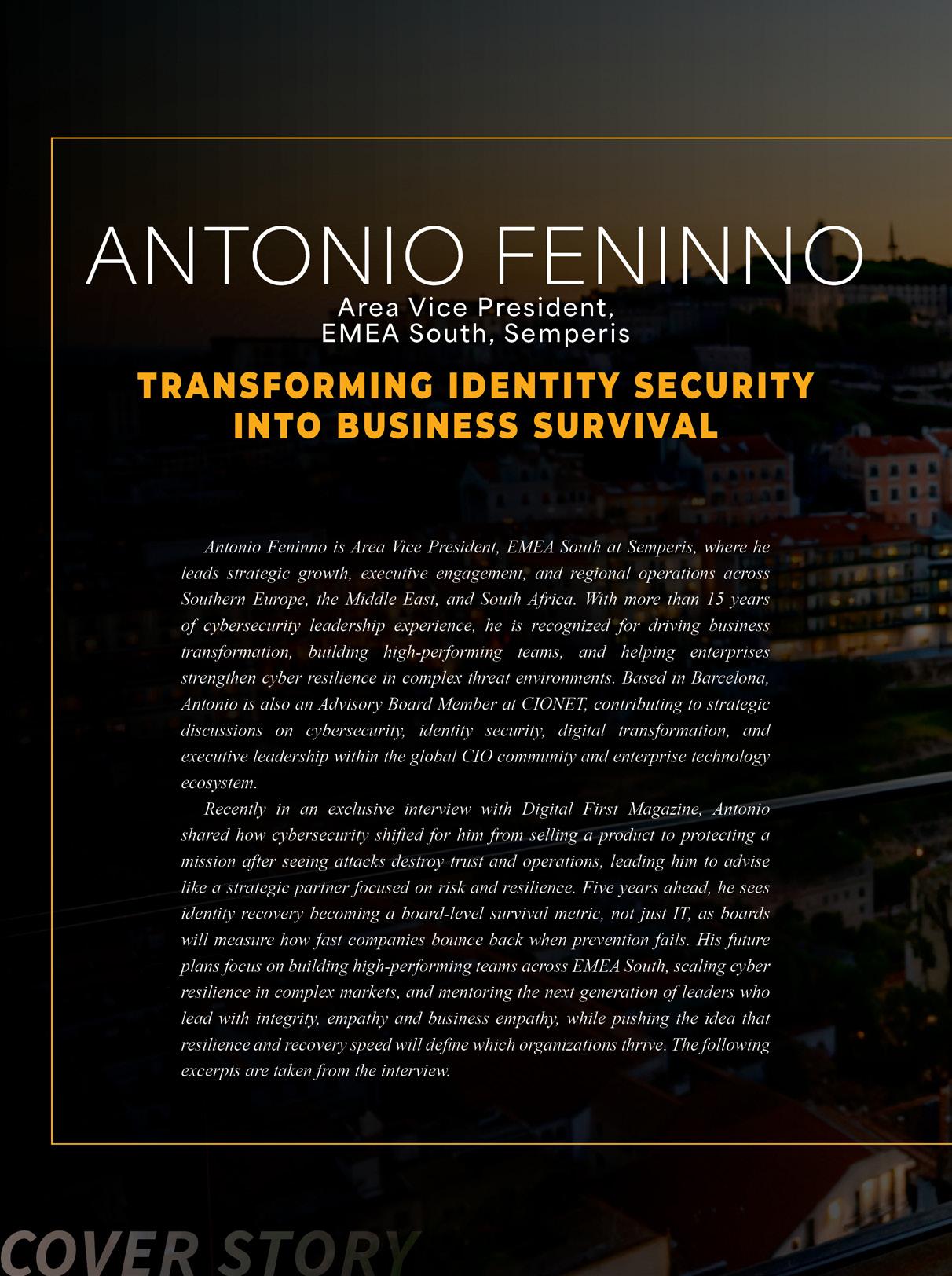
Nirlipta Panda Vice President and Global Head of Industry, Life Sciences, Capgemini Engineering
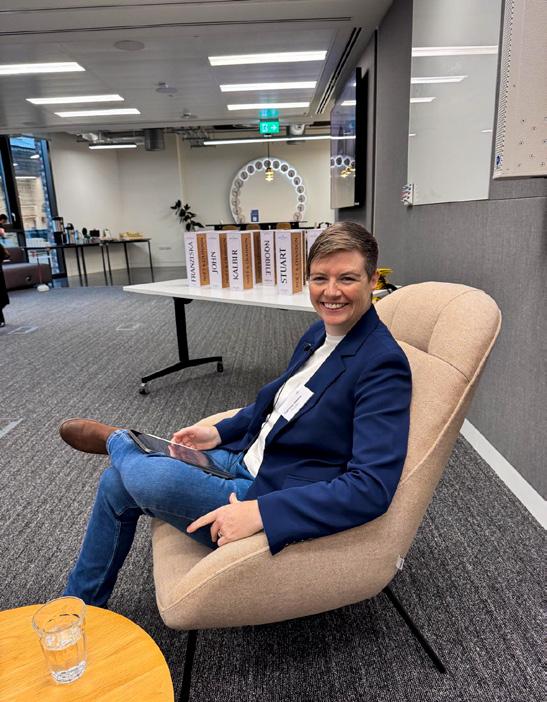
Warren Tucker Partner, PwC
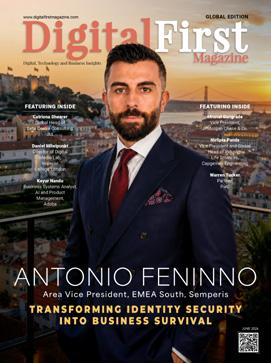
ANTONIO FENINNO
Managing Editor
Sarath Shyam
Dr. John Andrews
Emma James
Andrew Scott
Sabrina Samson
Keith Alexander Consultant Editors
Naomi Wilson
Stanly Lui
Steve Hope
Shirley David Creative Consultants
Charlie Jameson
Louis Bernard
Branding & Marketing Partnerships
Jennifer Anderson
Monica Davis
Jessica Edword
Rachel Roy
Anna Elza
Stephen Donnell
Cathy Chen
Free Subscription
Free Subscription www.digitalfirstmagazine.com
International Partnerships
Americas Europe
Middle East & Africa Asia-Pacific
admin@digitalfirstmagazine.com
Follow Us On www.linkedin.com/company/ digitalfirstmagazine www.facebook.com/digitalfirstmagazine
Digital First Magazine www.digitalfirstmagazine.com is a global knowledge sharing digital platform published by Connecta Innovation Private Limited. All rights reserved. The opinions expressed in the content are those of the authors. They do not purport to reflect the opinions or views of Connecta Innovation Private Limited or any of its members or associates. The publisher does not assume any responsibility for the advertisements and all representation of warranties made in such advertisements are those of the advertisers and not of the publisher. Digital First trademark is owned by DFG Digital First Infotech Pvt Ltd. and Connecta Innovation Pvt Ltd. has permission to use Digital First brand name. Digital First Magazine www.digitalfirstmagazine. com is a Free Subscription and Free-to-read digital platform strictly not for sale and has to be strictly for internal private use only. Publisher does not assume any responsibility arising out of anyone modifying content and pictures, printing a copy of this digital platform in any format and in any country and all matters related to that.
The Recovery Advantage
Not long ago, business success was measured by how fast organizations could innovate, expand, and capture market share. Today, a different question is emerging in boardrooms around the world: How quickly can we recover when things go wrong?
The answer is becoming increasingly important. From cyberattacks and technology outages to supply chain disruptions and geopolitical uncertainty, organizations operate in an environment where disruption is no longer an exception but an expectation. Recent industry studies suggest that the financial impact of operational downtime continues to rise, while customer tolerance for service interruptions continues to shrink. In this new reality, resilience is no longer just a risk-management function tucked away in a corporate framework. It is a competitive advantage.
Over the years, I have observed that the organizations that earn lasting trust are not necessarily those that avoid every setback. Rather,
they are the ones that respond decisively, adapt quickly, and emerge stronger from adversity. Their strength lies not in perfection, but in preparedness. The ability to recover with speed, clarity, and confidence is becoming one of the defining characteristics of successful enterprises.
This perspective is reflected powerfully in our cover story featuring Antonio Feninno, Area Vice President, EMEA South at Semperis. Drawing on more than fifteen years of cybersecurity leadership experience, Antonio offers valuable insights into the evolving relationship between security, resilience, and business continuity. His observation that recovery speed will become a board-level survival metric in the years ahead highlights a profound shift in how organizations must think about risk and long-term success. His journey from selling cybersecurity solutions to championing a broader mission of protecting trust and operational continuity makes for a timely and compelling conversation.
Beyond our cover feature, this edition of Digital First Magazine brings together a diverse collection of interviews, expert perspectives, and thought-provoking articles exploring leadership, innovation, technology, and the forces shaping the future of business. Each contribution offers a unique lens on the opportunities and challenges facing organizations in a rapidly evolving world.
As you turn these pages, I encourage you to think beyond prevention and consider the power of recovery. In an age defined by uncertainty, resilience may well become the ultimate differentiator. The organizations that thrive tomorrow will be those that learn how to bounce back faster today.
Happy Reading!
Sarath Shyam
EXPERT OPINION
Explainable AI in Financial Services and Cybersecurity: A Governance and Audit Imperative
Mrunal Gangrade, VP, JPMorgan Chase & Co.
LEADER’S INSIGHTS
Daniel Mitelpunkt, Director of Digital Media Lab, Imperial College London Revolutionizing Education with VR and AI
Transforming Data Centre Strategy into Human Growth
Catriona Shearer, Global Head of Data Centre Consulting, JLL
LEADER’S INSIGHTS
30
Driving AI Adoption and Digital Transformation Forward
Warren Tucker, Partner, PwC
Empowering Product Leaders Through Data Driven AI
Keyur Nandu, Business Systems Analyst, AI and Product Management, Adobe
36
Building Accessible Innovation for a Healthier World
42
Nirlipta Panda, Vice President and Global Head of Industry, Life Sciences, Capgemini Engineering
Thinking back to your very first role in technology, what moment made you realize cybersecurity wasn’t just a product to sell but a mission to protect, and what did you do next because of it?
Early in my career, I was involved in conversations where organizations viewed cybersecurity as a compliance checkbox rather than a business priority. That changed the moment I saw the real operational impact a cyberattack could have on a company. It was no longer about servers or software; it was about people losing trust, businesses stopping operations, and leaders realizing too late that resilience had not been built into the organization.That experience changed the way I approached my role completely. I stopped thinking like a traditional salesperson and started acting more like a strategic advisor. I invested more time understanding customer risk, business continuity, and executive priorities. From that point on, every conversation became
less about features and more about helping organizations protect their identity, operations, and reputation.
What do you love the most about your current role?
What I enjoy most is the ability to build something meaningful across very diverse markets and cultures. Leading Southern Europe, the Middle East, and South Africa means no two conversations are ever the same. Each country has different challenges, business dynamics, and levels of cybersecurity maturity, which makes the role incredibly stimulating.
At the same time, the most rewarding part is seeing people grow. Building high-performing teams, mentoring talent, and watching individuals evolve into leaders is something I genuinely value. Revenue and growth matter, of course, but creating a culture where people feel empowered, trusted, and motivated is what gives long-term meaning to the role.
BOARDS WILL INCREASINGLY MEASURE ORGANIZATIONS ON THEIR ABILITY TO RECOVER IDENTITY INFRASTRUCTURE
QUICKLY, SECURELY, AND WITHOUT BUSINESS
DISRUPTION
Identity is now the new perimeter. Looking five years ahead, what part of identity security will move from “IT problem” to “business survival metric” in the boardroom, and why?
Recovery and operational resilience will become the defining metric. Five years ago, boards mainly asked how to prevent attacks. Today, the more strategic question is how quickly an organization can recover when prevention fails. Identity systems sit at the center of modern business operations. If attackers compromise Active Directory or core identity infrastructure, they can effectively control the organization. That means identity resilience is no longer just an IT concern; it directly impacts revenue, operations, customer trust, and even market valuation. Boards will increasingly measure organizations on their ability to recover identity infrastructure quickly, securely, and without business disruption. The companies that survive future cyber crises will not necessarily be the ones that never get attacked, but the ones that recover faster than everyone else.
Talent profiles are shifting fast. What are three skills you now hire for in sales and customer-facing roles that you didn’t prioritize five years ago?
The first is intellectual curiosity. Technology evolves too quickly for people to rely only on experience. I look for individuals who genuinely want to learn, challenge themselves, and stay ahead of market changes. The second is business empathy. Customers no longer want transactional conversations. They expect professionals who understand industry pressures, executive priorities, and business outcomes. The ability to translate technical
complexity into strategic value has become critical. The third is adaptability under pressure. Markets shift, budgets change, and customer expectations evolve constantly. The people who succeed today are those who remain calm, resilient, and solutions-oriented during uncertainty.
Leaders are shaped by more than quarterly targets. What is one book, not about sales or tech, that changed how you coach people through uncertainty, and which idea from it do you use in team meetings today?
One book that had a strong impact on me was Man’s Search for Meaning by Viktor Frankl. What stayed with me is the idea that people can endure extremely difficult situations if they understand the purpose behind what they are doing.
In leadership, especially during uncertain periods, clarity of purpose matters more than pressure. In team meetings, I often encourage people to focus on what they can control instead of becoming consumed by external noise. When teams stay connected to purpose, accountability, and trust, performance becomes much more sustainable.
If you could host a dinner with three thinkers from any era to debate trust, risk, and technology, who would you invite, what would you ask them, and what assumption of your own would you want challenged?
I would invite Leonardo da Vinci, Nassim Nicholas Taleb, and Alan Turing. Leonardo because he represented limitless curiosity and the ability to connect disciplines
long before specialization became the norm. Taleb because his thinking on fragility and uncertainty is incredibly relevant in cybersecurity. Turing because he fundamentally shaped the relationship between humans and machines.
I would ask them whether society is becoming more resilient or more dependent as technology advances. The assumption I would want challenged is the idea that more technology automatically creates more security. Sometimes complexity itself becomes the greatest risk.
Music, football, or cinema often teach timing and teamwork. What is one performance or match you’ve watched that felt like a masterclass in execution under pressure, and what did you bring back to your team?
Music has always fascinated me because great performances are never only about talent; they are about timing, discipline, and emotional intelligence under pressure. One moment that stayed with me was attending a performance at Teatro alla Scala in Milan conducted by Riccardo Muti. Watching him lead the orchestra was a masterclass in leadership without unnecessary noise or ego. What impressed me most was how he created alignment through presence, trust, and precision rather than constant intervention. Every musician was exceptional individually, yet the real excellence came from their ability to listen, adapt, and move together as one unit. Even during the most complex passages, the orchestra remained composed and completely synchronized.
That experience influenced the way I lead teams today. In cybersecurity, especially during critical moments, success depends less on
individual brilliance and more on coordination, trust, and disciplined execution. The best teams operate like orchestras: everyone understands their role, communicates instinctively, and stays aligned to a common objective even under intense pressure.
What is your biggest goal? Where do you see yourself in 5 years from now?
My biggest goal is to continue building organizations and teams that create lasting
THE BEST TEAMS OPERATE LIKE ORCHESTRAS: EVERYONE UNDERSTANDS THEIR ROLE, COMMUNICATES INSTINCTIVELY, AND STAYS ALIGNED TO A COMMON OBJECTIVE EVEN UNDER INTENSE PRESSURE
impact, not only commercially but also culturally. I want to help shape a new generation of leaders who combine performance with integrity and empathy.
In five years, I see myself continuing to operate at the intersection of leadership, cybersecurity, and strategic growth, ideally on an even broader international scale. At the same time, I want to remain close to mentorship
and talent development because that is where I believe real legacy is created.
You’ve led through economic swings and market disruptions. What advice would you give a rising sales professional who has never sold through a downturn, and what should they protect at all costs? During difficult markets, the biggest mistake people make is becoming reactive and overly focused on short-term outcomes. Downturns are when trust matters most. Customers remember who stayed consistent, honest, and valuable when budgets were under pressure and uncertainty was high. My advice would be to focus on relationships, discipline, and credibility. Continue learning, stay close to customers, and avoid the temptation to overpromise for quick wins. Careers are not built in one quarter; they are built through reputation and consistency over time. A big part of how I approach leadership and relationships also comes from my personal background. I grew up in a family where my mother worked rehabilitating children with autism through hippotherapy. Watching her work taught me something powerful at a very young age: human connection is not only built through words. Sometimes understanding people requires empathy, observation, patience, and the ability to truly listen beyond what is being said. That experience shaped the way I lead teams and build customer relationships today. In business, especially during difficult moments, emotional intelligence and trust often matter as much as strategy or technical expertise. The one thing I would tell any rising professional to protect at all costs is integrity. Skills can open doors, but trust is what sustains leadership over the long term.
Transforming Data Centre Strategy into Human Growth
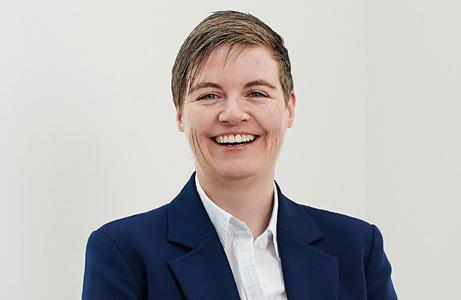
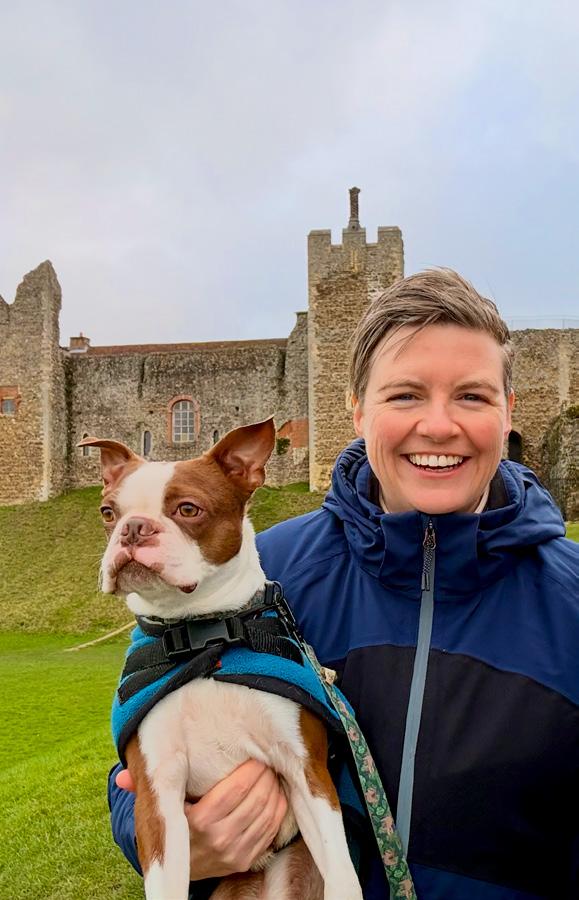
Catriona Shearer, Global Head of Data Centre Consulting, JLL
Hi Catriona. Your career spans multiple industries, yet the through-line is transformation. When did you first discover that you love assessing, diagnosing, and executing strategic change, and what made it click for you?
My ‘job’ became a career when I accidentally fell into a sales role. I took to it immediately due to the heady and addictive mixture of the freedom to act but with an underlying and
firm accountability to an overarching target. It encouraged me to be myself, to be creative, and to work with a hugely diverse customer base to solve their problems with them.
The strategic change and transformation experiences came later as I grew into more senior sales roles and found I was unusually good at long range planning, strategic pricing, customer profiling, and the prioritisation of where to invest our focus and build. That in turn
The speed and scale of development is phenomenal, and I believe 2026 will see related pressures shape the industry in a way we haven’t seen before
Catriona leads JLL’s Global Data Centre Consulting function with specialised focus on Data Centre Technical Consulting. Drawing on her background as Head of Operations at a global colocation provider, she ensures world-class technical expertise is deployed at scale across JLL’s global consulting practice. A committed advocate for the data centre industry, Catriona regularly shares thought leadership through panels, webinars, and podcasts inside and outside the data centre industry. She champions diversity as fundamental to industry strength and actively works to remove barrierstoentry.Hercontributionsextendthroughout the sector: founding JLL’s Speaker Series to create speaking opportunities for women, collaborating with Kao Data on the Critical Careers program, and supporting the Women’s Tech Forum and Forum for Women in Data Centres (FWD). Catriona leverages herplatformandinfluencetoopendoorsandelevate emerging talent across the industry.
Recently, in an exclusive interview with Digital First Magazine, Catriona shared insights into how curiosity, authenticity, and long-range thinking have shapedherpathfromaccidentalsalesrolestoleading strategic transformation in digital infrastructure. Looking at 2026, she warns that the sector’s phenomenal speed and scale of development will collide with a global talent shortage, creating a pinch point where the industry risks building more than it can operate with experienced engineers, raising operational risk and the cost of capital. To women entering their first data centre strategy meeting, her advice is to own their skill set confidently, express it authentically,andrememberthatdiverseworkforces are becoming a superpower in an industry where talent is scarce. The following excerpts are taken from the interview.
led to advisory conversations, turnaround work – and ultimately my own consulting business.
I love to build, and have been consistently drawn to companies, people, leaders who prioritise their long-term success over shortterm wins and it was this appetite to build an organisation that will last far beyond the span of my career that led me back into a Corporate role.
What do you love the most about your current role?
My typical day will be a colourful mix of client conversations, working with my team, development discussions, business strategy, creation and co-creation, mentoring, industry activity, and coffee..! That variety alongside JLL giving me the freedom to have an impact in my own way, whilst ensuring I deliver healthy and
As
AI and Quantum evolve, the size and power requirements of the buildings that host the compute will change so much that what we currently recognise as data centres will seem archaic
robust business growth is an absolute joy and creates a culture in the organisation that inspires ‘going beyond’ as well as long service.
Data centres are now critical infrastructure, not just real estate. From your vantage point, what is the single biggest trend reshaping the sector in 2026, and how should leaders respond?
The speed and scale of development is phenomenal, and I believe 2026 will see related pressures shape the industry in a way we haven’t seen before. We have a distinct and wellreported talent shortage, but we are building at a rate that’s extraordinary. This cannot fail to create a pinch point, globally – and without the industry collaborating to solve it together, we may find that the industry can’t operate everything it builds with experienced critical infrastructure engineers. As well as the obvious requirement for facilities to have experienced leaders and technicians in order to operate at all, that experience helps manage the risk of critical infrastructure investments for investors, so an increase in perceived operational risk causes a knock-on effect on the cost of capital. This, plus the amount of capital already committed to the industry, may be the constraint which reshapes the sector in 2026 and into 2027.
The next five years will be defined by trade-offs. What’s one contrarian bet you’d make about the future of data centres, and what signals are you watching to validate it?
I think as AI and Quantum evolve, the size and power requirements of the buildings that host the compute will change so much that what we currently recognise as data centres will
seem archaic. Current traditional design will fundamentally change, locations will vary more widely, and both power and latency/fibre speed requirements will vary to a greater degree as use-based facilities are commissioned.
Congratulations on being recognized as one of the Top 100 Women in Data Centres 2026. Our readers would love to know the secret sauce behind your success.
Thank you! For many years in my early career I struggled to ‘fit in’. I have a high-energy and direct manner which isn’t everyone’s cup of tea especially from a young & enthusiastic woman, and the consistent feedback I would get, “be more like this and less like that” made me mask myself and adjust my approach to fit the feedback.
Spoiler alert: It didn’t work.
The moment I allowed the true version of myself to show up every day was the start of my real success. I have been lucky to find a company like JLL which encourages authenticity and diversity, but please don’t think I am encouraging everyone to go about their day filter-free! Learning to curb the sharper edges, read the people around me, and temper myself were all critical to gaining professional maturity – but doing all that as myself, unapologetically, is what has led to both my happiness and my success. It allows me to have the confidence to follow my passions such as the Speaker Series where I facilitate panel practices for women across digital infrastructure and real estate, push for change inside and outside my organisation, and gives me the assurance that I am welcome, and that I belong. The psychological safety of being able to truly be yourself is underestimated,
and the more we facilitate this for those around us the better.
Young professionals see your title and want the roadmap. For someone entering data centres today, what three skills should they master first, and what myths should they ignore?
I would say it’s characteristics over skills to begin with. Be curious, be ready to learn, be ready to ask questions, don’t be afraid to say “I don’t know”. That curiosity should help open up a broad and fascinating industry which has a place for everyone, regardless of your interest or current skill level.
My advice would be to explore your options across various roles early in your career, then begin to home in on what brings you real happiness and fulfillment beyond money or perks. That’s where you will find long-term success because unlocking your passions and feeding your brain are the key fundamentals to personal progress. When you’re happy and fulfilled, you’re more successful.
We’re all surprised by what brings us joy. What’s a personal favorite hobby, passion, or indulgence that has nothing to do with data centres, and how does it keep you balanced?
I love to be outside and I absolutely love animals. I regularly find myself selecting holiday destinations based on animal-related activities in the vicinity. I still maintain the best day of my life was when I was able to hand-feed penguins and they hopped all over my toes!
Being outside and with or near animals brings a calm to me, a perspective of the size and scale of the world, and a healthy reminder
that whatever happens it’s rarely truly seismic, even if it feels that way at the time.
The natural world and our inarguable responsibility to care for and nurture it are
fundamentally how I see Leadership. I’m the caretaker or guardian of the company and industry, and my actions and activity should be focused on bringing benefit to those I impact.
Be curious, be ready to learn, be ready to ask questions, don’t be afraid to say “I don’t know”
Your mission blends happiness, engagement, leadership, and passion. If you had to capture your professional journey so far in one sentence, what would it be, and what chapter are you writing next?
I would say “follow your curiosity and be brave – you are more than one role or one company”. There are times when your life circumstances demand different priorities such as money, flexibility, or location – but I will always try to keep happiness at the core of my long-term decision making as I firmly believe it leads to high performance.
Women are still underrepresented in this space. What advice would you give to a woman walking into her first data centre strategy meeting, especially if she’s the only one at the table?
I believe the conversation and industry has moved forward. We don’t talk about why you should hire women and other diverse people now, we talk about who’s being left behind because they’re NOT doing it. This change means the rooms where we used to fight to be heard now want to hear from us, and the spaces that don’t are becoming less and less common.
The advice I would give is to be comfortable and confident with your skill set, experience and contribution – and find an authentic and consistent way to express that confidence. Every woman shows up differently as all men do, and the best employers make space for everyone. The companies that don’t, are simply being left behind as their key talent leaves for companies that do and in an industry with a severe talent shortage, your diverse workforce could become your superpower.
Revolutionizing Education with VR and AI
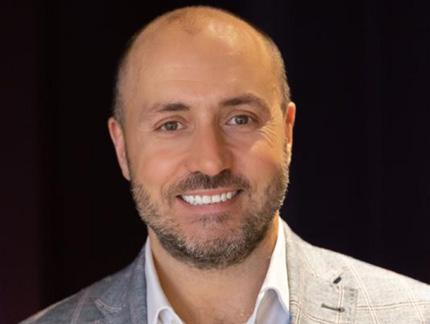
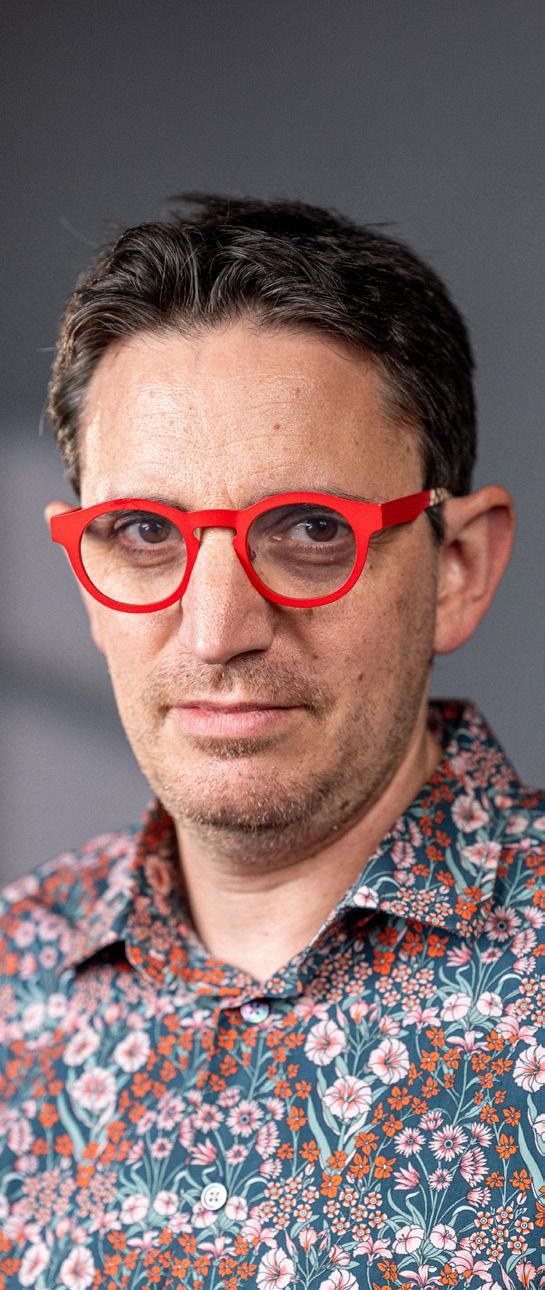
Daniel Mitelpunkt, Director of Digital Media Lab, Imperial College London
Hi Daniel. The Digital Media Lab has been a game-changer for Imperial College London - what sparked the idea for this innovative hub?
Crossing the line from the creative industries to Higher Education, seven years ago, it became clear to me that there was this huge, untapped opportunity.
Universities have become (and must become) scaled, advanced publishers and producers of immersive, interactive and timebased learning media, and yet this tended to
be addressed by small, siloed and less expert capabilities, without praxis management and with insufficient ambition.
Learners and students deserve engaging, pedagogically meaningful experiences and content, and are used to CreaTech and strong media more widely nowadays.
Technological advances have meant that smaller CreaTech operations (with XR, gaming or broadcast backgrounds) can nowadays deliver higher quality and volume of learning media and experiences for universities, and
With technological convergence, sectoral changes within HE, and Gen-AI, things are only getting more interesting; there would be plenty to still get right or wrong in the coming years
Daniel Mitelpunkt is Founder and Director of Imperial College London’s Digital Media Lab (DML), developing interactive and timebased solutions for learning and research. The lab’s work ranges from spatial computing in lecture theatres to VR digital twins of teaching labs, positioning DML as the university’s interdisciplinary hub for applied media. DML works collaboratively with leading academic and professional colleagues in both education and research. Beyond Imperial, Daniel is an active advocate for Creative Technology within Higher Education, championing stronger ties between academia and the creative industries and giving this emerging field a stronger voice.
Recently, in an exclusive interview with Digital First Magazine, Daniel shared insights into the Digital Media Lab’s innovative approach to learning and research at Imperial College London. He founded DML five years ago, recognizing the untapped opportunity for universities to become scaled, advanced publishersandproducersofimmersivelearning media. Daniel emphasized the importance of nuanced, evidence-rich approaches to tech adoption in HE, and sees Creative Technology playing a crucial role in shaping the future of higher education. He also shared his personal hobbies and interests, future plans, words of wisdom, and much more. The following excerpts are taken from the interview.
this is even before greater automation-driven productivity comes into the mix.
The exceptional thing in DML’s story though was less my own vision and more the fact that Imperial’s leadership, five years ago, and consistently, ever since, had recognized the opportunity and backed what was, at least initially, a highly unorthodox configuration.
Even though DML as a unit is only in its fifth year, it already has had significant evolution and is constantly changing. With technological convergence, sectoral changes within HE, and Gen-AI, things are only getting more interesting; there would be plenty to still get right or wrong in the coming years…
DML’s work spans spatial computing, VR digital twins, and more - how do you see these technologies enhancing learning and research?
This is all already happening, so we’re not talking about the future here.
What is rather exciting is how convergence of several technology types - XR and GenAI, computer vision, space scanning and reproduction techniques – is creating numerous new opportunities. AI can aid developing interactive learning media but also be ‘plugged’ onto the experience. Pixel streaming and remote or cloud compute solutions are allowing us to push higher end visualisations onto traditional teaching spaces without local or individual hardware (HMDs). Digital twins of our physical teaching labs are already allowing for better utilization of the time spent in the sampled physical lab. Game engines allow smaller teams on smaller budgets to create controlled, bespoke learning experiences that are rooted in the local curriculum, pedagogy, physical
estate and culture. Web-based interventions are already allowing for cheap scaling even beyond the campus, for example for online and blended learning.
Interestingly, the same in-house capabilities allowing DML to sample and digitally reproduce Imperial’s spaces for learning experiences, such as digital twin lab rehearsals, are also now deployed to better inform decisions about adapted or new physical buildings. We are using simulations and interactive visulalisations –same staff, kit and skills – not only to shape our digital learning estate but also the physical one. It won’t be long before the same approach will also be utilized to shape plans for new physical research laboratories too. Wouldn’t it be better, for example, if a research group were able to spend time in their future new lab virtually, finding out that the basin is in the wrong place or that lighting arrangements don’t work, before plans were approved and the lab was even built? To do much of the snagging before construction even begins?
What’s the most pressing issue facing higher education today, and how can leaders tackle it?
Higher Education is going through tough times, particularly in the UK, and unfortunately there are multiple challenges; financial, societal, cultural. It would be misleading to point to but one and ignore the others.
Even just in my own niche, which I feel more comfortable addressing, there are several problem types:
A binary division into techno-evangelists vs techno-skeptics, for example, has been corrosive. Innovators moving fast and breaking things that must not be broken, against those
who think that the world would ‘come to its senses’ and revert to turn of the century tech or job functions. Universities desperately need nuanced, evidence-rich approaches, balancing tech (and CreaTech) prowess with evaluation, ethics and critical thinking.
Another issue is some private sector actors that are ‘baiting and switching’ universities, or working against the university’s longer-term interest, instead of exploring better partnership models. It would be better to demonstrate an understanding (and care) for how public universities work, and particularly their need for a certain predictable horizon (especially with T&C changes) when scaling private sector solutions.
There is also the issue of how we think about spaces and ‘platforms’. Far from a philosophical bind, this now has very practical repercussions. Even the more progressive conceptualizations of ‘digital-physical’ and the need to align the two, are – to my mind - outdated.
Most universities mostly plan, resource and deliver ‘projects’ in siloes, rather than starting from the student journey and then explore enablers. In an era when we can already deliver highly ‘digital’ experiences within
legacy physical estate, as well as deliver highly ‘physical’ experiences entirely virtually, that alignment piece (as difficult as it may be to achieve) is still insufficient.
What role do you see Creative Technology playing in shaping the future of higher education?
CreaTech folk and University folk alike are missing a trick.
The creative industries have so much to contribute to education but tend to see HE mostly as just funnel of new talent, rather than also as employer for trained talent. Universities, on the whole, are not very good at hiring, managing or retraining the right CreaTech skills for their needs or opportunities, despite the fact that they teach those very skills and people…
Legacy understandings of ‘EdTech’ have not yet fully caught up with where technology already is and old division of labour between different functions within what should be collaborative efforts aren’t helpful either.
There is just so much scope for different types of experiential simulation, interactive visualization, films, animations or podcasts within HE, but if universities expect some
Legacy understandings of ‘EdTech’ have not yet fully caught up with where technology already is and old division of labour between different functions within what should be collaborative efforts aren’t helpful either
There is a bit of an unfortunate disconnect between theory and practice, in learning media, and we can all play our part in bridging the two
lone wolf generalist (whether you call them a ‘learning technologist’ or a ‘videographer’) to have multiple niche expertise and capacity for scale, well, that won’t enable the benefits, the impact, to play out. Here too, if everyone started from the desired learner experience, rather than from siloed legacy ways of working, we would likely see more cross-functional teams delivering impactful, evaluated, hype-resistant interventions that students would benefit from and appreciate.
It’s important to note though that it is all about the collaboration and cross-disciplinarity; media without reason, without wider course design, pedagogical rational or subject matter expertise, is an utter waste of time and money. In that sense, one of the benefits of having expertise in-house is also the ability to consult on what not to make. External vendors would understandably always wish to do stuff for the client, but sometimes –especially with constrained resources, time and bandwidth – you want expertise to help ascertain what not to do. Expert and agent in-house teams
are more suitable for that piece because they worry about workload and aren’t financially incentivized to take on any old thing.
What skills will be most critical for educators and professionals in the next decade?
It’s important that I don’t tackle this question in its fullness, as my own area is but one of the verticals, and I am not an educator myself.
One mantra that so far seems helpful, across different contexts, and may just prove useful (though I am no profit) is PURPOSE & PIVOTABILITY.
With so much constant, multi-faceted change and so many co-dependencies and unexpected vectors, I think it is sensible for us all to focus on the purpose of what we do, or should be doing, at its core, rather than what it currently translates to in practice.
You might be designing VR learning experience on a certain game engine using some coding language today, but the best way
of addressing the same core need might just be very different in seven years’ time. This might be true on the institutional level too; instead of trying to either compete with, or else bow before tech companies or ‘partners’, universities can consider what is their core purpose in teaching and learning, and then interpret that into different actions flexibility, at different points in time, as all the details keep changing (yet the purpose, hopefully remains more consistent).
If there is some pedagogical rational for a certain intervention today, that rationale may just still be there, down the line, but the delivery modality, skills, hardware or software involved, those might change more frequently.
I find that approach helpful because it has practical implications. It tells you, for example, that you may wish to own the IP, knowhow and assets used to create something, as you may need to be able - and permitted - to make some changes to it, down the line (say on technical, branding, scientific or commercial grounds).
So, looping back to your question, I guess managers and practitioners (let’s have some of those too please…) that can understand the purpose and pivot on how it is being achieved, when needs be, seem to me to be what you want during times of constant change.
That does require deep cultural changes though, because so much effort, time and money is currently defined through its operational nature, commercial arrangements, hosting platform or responsible team, rather than the desired outcome.
Looking back, what accomplishment is DML most proud of, and why?
To be honest, I try not to look back… Sure, there are numerous things that were hard to achieve or
exciting to have been part of, but the road ahead is both more interesting and more important.
Still, if I try to unpick this, I think it’s the collaborative thinking across disciplines and maybe just thinking, more generally. Some of our most exciting interventions have value in the idea, in a fresh look on familiar challenges or technologies, or else on seeing the world through very different experts’ eyes to then try and be helpful. Question being as important than the answer, if you like. With enough money, anyone could do ‘more’, faster or more technologically advanced anywhere, right? Especially in the private sector. Thinking is priceless.
One resource the likes of us in universities do have in abundance (and I am not joking) is access to the problems and gaps, through dialogue with colleagues and students. That can be a bit of a secret sauce that can enable better collective thinking and more meaningful interventions, rather than it all being about budget or headcount. You sometimes see huge investment by certain companies that fails to have the anticipated traction in UK universities, and it’s sometimes to do with the fact that the company has spent more time talking to each other than to people teaching and supporting teaching in universities.
Are there any particular books, articles, or resources that have significantly influenced your thinking or approach?
Many. Firstly, through involvement with the iLRN (Immersive Learning Network) community and conferences, I have been able to get more familiar with theoretical and evaluation frameworks that are instructive. There is a bit of an unfortunate disconnect between theory and practice, in learning media,
and we can all play our part in bridging the two. I also like Dr Tim Fawns’ take on pedagogy and technology, in his 2022 paper ‘an entangled pedagogy’. It has taken the conversation from the well-intended yet imprecise ‘pedagogy first’ to something that recognizes reality – and technology – more faithfully, at least to my mind.
What are some of your passions outside of work? What do you like to do in your time off?
I am a sucker for analogue media, to be honest, especially vinyl. I was into vinyl as a kid, before the arrival of CDs, and during the rise of music as file, and then streaming, and I still like vinyl. Not on any sonic grounds, I just like the format and its limitations. One day no doubt I shall have more time and more space and more vinyl, but for now I have more records I love playing than time to play them. I also play the piano, not very well but with some joy.
What is your biggest goal? Where do you see yourself in 5 years from now?
I have no goals and I think that has been helpful, even just given all of the turmoil of recent years, from the pandemic to generative AI. I never planned to work at a university, back when, and I don’t have a sense of what I should consider as a ‘good’ future for myself.
I worked in both the private and public sectors, so am by now cured of any fantasies about greener grass on the other side…
I did become peculiarly passionate, over the years, about the role of CreaTech in Higher Education, so in whichever configuration, if in five years’ time I can still play some constructive role in this, that would be nice.
What advice would you give to emerging professionals in edtech who want to drive change?
I would suggest not to define yourself by your current skills, or even ideas.
It’s good to change your skills and your thinking, from time to time.
Especially in an era of growing automation and synthetic content, it would likely not be good enough to be merely a proficient executor of generic ideas (because bots will do more and more of the execution, better and better). Deeper domain expertise and informed judgement on what constitutes ‘good’, and how to get there, within complex contexts and constrains, should prove more useful.
When people are starting to be able to just ask their consumer device to just make them something, what separates quality from gunk becomes knowing what to want, and how to correct course along the journey.
Power tools will enable pretty cool things, but more likely if used by power users. A power user, in this context, might not be the fastest hand on some legacy software, but the person with the deepest understanding of the compound considerations that will affect deliverables and outcomes (from game logic to UI to film language to principles of sound design, depending on one’s discipline).
I think universities could help emerging EdTech talent by, for example, not pretending EdTech is a singular (are you supposed to master LMS integrations, Unity interaction design, dozens of different filmmaking jobs and full stack development, all in one role...?). ‘Technology’ is big and learning technology should grow to accommodate.
Driving AI Adoption and Digital Transformation Forward
Warren Tucker, Partner, PwC
What sparked your interest in tech and digital transformation, leading to a 27year career in the industry?
I was one of those children who never stopped asking questions and always wanted to know how things work. That curiosity led me to study physics and explore areas like quantum behaviour, electronics, laser systems and MRI.
Along the way I developed a real passion for understanding and simplifying complex systems, which naturally pulled me toward
problems where technology can redefine what’s possible.
Early in my career I saw first-hand how software was beginning to reshape industries. As a lifelong sci-fi fan, I wanted to be part of building what came next.
Today at PwC UK I still get to live out that curiosity. I work at the intersection of software, AI, platforms and infrastructure - helping clients take ideas from the lab and put them to work in the real world.
With more than a thousand engineers building and refining solutions, we design AI around real work rather than expecting an offthe-shelf system to fit complex professional environments
Warren Tucker leads PwC’s Technology business in the UK across Software, AI, Digital Platforms, Infrastructure, High-Tech and Tech-Services. Having previously led PwC’s Cloud & Digital practice across cloud, data, AI and engineering services, he works with business and technology leaders to help organisations gain competitive advantage through technology - from enterprise-wide transformation and platform modernisation through to launching new digital and software products, reshaping operating models and creating new sources of tech-enabled growth. Recently, in an exclusive interview with Digital First Magazine, Warren shared insights into his 27-year career in tech and digital transformation, driven by curiosity and a passion for simplifying complex systems. He emphasized the importance of closing the adoption gap in AI and digital transformation, highlighting the need for organizations to redesign processes and workflows to unlock productivity gains. He also shared his personal hobbies and interests, future plans, words of wisdom, and much more. The following excerpts are taken from the interview.
For me the excitement comes when something complex suddenly clicks into place - and you know you’ve helped move a business forward or made a difference in society.
What do you love the most about your current role?
I enjoy being close to where markets are going and having a hand in shaping that direction.
Whether it’s sovereign technology, the next wave of AI adoption, or helping a highpotential startup move into its next phase, it’s a privilege to work alongside brilliant colleagues solving important problems for society and the economy.
Seeing a founder or leadership team find their momentum, sometimes after years of effort, is one of the most rewarding parts of the job.
I’m also motivated by work that is rooted in ambition and builds confidence, both inside the firm and with our clients. That blend of influence and tangible delivery keeps things interesting every day.
How do you see AI and digital transformation shaping industries in the next 5 years?
It’s a fascinating question, and one we engage with every day. In many ways the possibilities will arrive much sooner than five years, but adoption will be gated by human behaviour.
There is a clear gap today between executive intent and day-to-day usage. Many CEOs prioritise revenue growth through AI, yet only a small share of workers use AI tools regularly in their daily work. Closing that adoption gap is where the real work sits.
Smaller, more agile organisations will move first because they can align people, process
and technology quickly. The bigger shift is that software becomes the fabric of the business. Workflows, decisions and customer experiences increasingly live in software - and productivity gains begin to compound.
A recent client example brought this to life. They had struggled for years to scale marketing execution because it relied on manual workflows and inconsistent use of tools. By redesigning the process using their existing cloud environment, generative AI and agentic automation, they moved from idea to deployed value in weeks.
What stood out wasn’t just the technology, it was how quickly teams embraced it once it genuinely made their working lives easier. That’s when AI becomes real.
What’s the future of tech talent and skills development in organisations?
The future of tech talent starts with focusing on the work, not the technology.
When we embedded AI across more than 20,000 people at PwC UK, we began by identifying where these tools genuinely help people do their jobs better. We treat AI as a skill. Everyone completes foundational training before using tools like ChatPwC or Copilot so they understand strengths, limitations and risks.
We also built deliberate structures to support adoption, including our AI Elevation Studio and a network of AI Champions who provide peer support across teams.
With more than a thousand engineers building and refining solutions, we design AI around real work rather than expecting an offthe-shelf system to fit complex professional environments.
In five years I see myself continuing to push toward roles where I can accelerate that mission, ideally with an even broader platform to influence how the UK positions itself globally
At the same time human skills are becoming more important. As AI automates routine tasks, people move into judgement-rich work much earlier in their careers. Listening, communication and critical thinking become essential from the start.
Our goal isn’t to layer new technology onto old ways of working - it’s to help our people and AI grow together in a way that builds capability and confidence.
Are there any particular books, articles, or resources that have influenced your thinking?
Stephen Covey’s Seven Habits was formative early in my career. The discipline of focusing on the few things only you can do still resonates.
I’m also influenced by writing on the centaur model and organisational behaviour, because transformation ultimately comes down to people
changing what they do and how they do it.
My physics background also shaped how I communicate. Explaining technical ideas to non-technical audiences forces clarity about what matters and why people should care.
That mindset helps daily because simplifying the complex is often the difference between technology becoming an initiative and technology becoming an outcome.
What’s a favourite quote or mantra that guides you?
Make a lasting difference.
It sounds simple, but it’s the filter I use almost every day. If what we’re doing doesn’t create something lasting, we’re probably just adding noise.
For me it’s often about pace. My instinct is to push for movement, combining ambition with the controls and assurance our clients expect.
How do you mentor and support emerging leaders in tech and digital transformation?
I try to create the conditions for people to lead and innovate. That means giving space, energy and encouragement along with permission to challenge norms and try new ideas.
Real empowerment isn’t a focus group or a slide deck. It’s knowing you have the licence and support to implement something, learn from it and iterate.
Across our cloud and data engineering community we recognise the quality of the technical solution, the creativity of the approach and the impact in production, not just utilisation metrics.
Technical talent thrives when incentives match the work people care about. My role is to remove friction and amplify momentum rather than dictate direction.
What are some of your passions outside of work?
Skiing and sailing are two of my reset buttons. I also play the piano, which is a great way to clear the mind and focus.
Travel is another constant. Being somewhere unfamiliar often gives me the distance I need to see a problem differently.
I usually come back sharper and more grounded. A day on the slopes or on the water can give me a completely new perspective on a tricky problem the next morning.
What is your biggest goal? Where do you see yourself in 5 years?
My goal is to help move the dial on the UK’s role in the next wave of technology.
I’d like to see the UK become a trusted, high-velocity hub for AI, software and digital infrastructure - with ecosystems that connect investors, energy providers, data centres, telcos and software platforms into full-stack solutions that create real value here.
If we can help build the conditions for that ecosystem to thrive, the impact for the country could be enormous.
As a firm, one of our key roles is to convene and build - bringing strategy, engineering, cyber, risk and assurance together so clients can invest with confidence and scale with speed.
In five years I see myself continuing to push toward roles where I can accelerate that mission, ideally with an even broader platform to influence how the UK positions itself globally.
What advice would you give to professionals looking to make an impact in tech leadership?
First - commit to continuous learning by talking to people who are actually building things. Ask what they’re doing, what they’re stopping, where they’re investing and why. The most valuable insights usually come from practitioners.
Curiosity is a competitive advantage in this sector - use it relentlessly.
Second - learn to join the dots across sectors. As technologies converge, opportunities increasingly sit between industries like health, retail, manufacturing, defence and financial services.
Finally - develop a point of view on architecture and adoption. Leaders need to understand not just what an AI model can do, but how to select, observe and replace models as the landscape evolves.
Empowering Product Leaders Through Data Driven AI
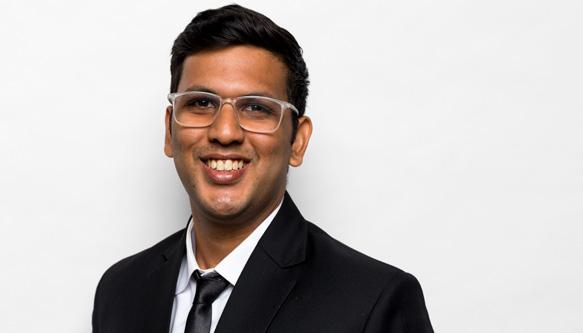
Keyur Nandu, Business Systems Analyst, AI and Product Management, Adobe
Hi Keyur. Every career starts with a spark. What was your first exposure to technology or problem-solving that made you curious about building products?
Growing up in India, I was always the person in my family who would take things apart to understand how they worked. My real spark came during my time at LTIMindtree, where I was an SAP Consultant leading a team of ten people. We were dealing with dozens of manual supply chain workflows that were slow, errorprone, and frustrating for everyone involved.
I remember thinking, there has to be a better way to do this. So instead of just documenting processes, I started looking at how we could automate them and measure whether the changes actually improved things. That was the moment I realized I did not just want to manage systems. I wanted to build products that solve real problems for real people. That curiosity has only grown since then, especially now that I work at the intersection of AI and product management at Adobe, where every week brings a new use case that did not exist six months ago.
The biggest surprise will be that the companies that win with AI will not be the ones with the most sophisticated models. They will be the ones with the cleanest, most well-governed data
Keyur Nandu works at the intersection of AI and product management at Adobe, where he takes enterprise AI use cases from concept to production. He leads a team of engineers building GenAI solutions, including contract intelligence tools, agentic RAG integrations for 500+ users, and optimization products that have driven millions in cost savings. His work spans the full product lifecycle, from user discovery and PRDs to prompt engineering and model evaluation. With over 5 years of experience across Adobe, Accenture, and LTIMindtree, Keyur holds an MS from Purdue University and is pursuing a Product Management certificate from MIT.
Recently, in an exclusive interview with Digital First Magazine, Keyur shared that his product mindset was sparked by solving real problems through automation, and today he focuses on building AI tools that solve for users, not just technology. He believes the future of enterprise AI lies in clean data and trust, not just bigger models, and stresses that responsible, human-centered design is what will make AI actually useful. His advice to aspiring leaders: stay curious, start small, and let real user impact guide every product decision. The following excerpts are taken from the interview.
What do you love the most about your current role?
What I love most is that I get to take an AI idea from a whiteboard sketch to a working product that people actually use. On the ATS AI team at Adobe, business units come to us with AI use cases, and my job is to determine whether it is worth building, scope it, and then ship it with our team of 5 engineers.
One week, I might be writing user stories for a sentiment analysis system that helps support managers spot frustrated customers before things escalate. Next week, I might be designing the conversational experience for an agentic RAG bot that lets 500 sales reps ask questions in Microsoft Teams/Slack instead of digging through different files. The variety keeps me sharp, but what really excites me is the feedback loop. When a support manager tells me the sentiment scores actually helped them catch a case before it became an escalation, or when a stakeholder who used to wait hours for data can now just ask our SQL agent a question in plain English, that is the moment that makes all the sprint planning and backlog grooming worth it.
GenAI is moving from demos to production. What shift in enterprise AI adoption over the next 5 years will surprise people the most?
I think the biggest surprise will be that the companies that win with AI will not be the ones with the most sophisticated models. They will be the ones with the cleanest, most well-governed data. Right now, everyone is excited about foundation models and what they can do, but in my experience at Adobe, shipping AI products, the bottleneck is almost never the model itself. It is the data underneath it. When we built our
agentic RAG bots, the quality of the answers depended entirely on the completeness and upto-dateness of the content corpus. The model was great, but if the guides and videos feeding it were outdated, the answers were useless. I think by 2030, enterprises will have shifted their AI investment away from chasing the latest model and toward building robust data pipelines, content governance systems, and feedback loops that keep their AI products trustworthy. The other shift that will surprise people is how invisible AI will become. The best AI products will not feel like AI at all. They will just feel like a tool that works. Nobody will say I am going to use the AI now. They will just ask a question in Slack and get a good answer.
My biggest goal is to formally transition into a product management leadership role where I am responsible for the full lifecycle of AI products, from identifying the opportunity to measuring its impact at scale
Data privacy and trust are critical. How should product leaders balance personalization with responsible AI by 2030?
This is something I think about a lot because I see it play out in my own work every day. When we built our SQL MCP agent at Adobe, one of the first things I had to define was a rowlevel access control framework so that people could query enterprise databases using natural language without accidentally seeing data they should not have access to. That is the kind of decision that does not show up in a product demo, but it is the difference between a product people trust and one that gets shut down by legal. My view is that responsible AI should not be treated as a compliance checkbox to be handled at the end. It needs to be embedded in the product development process from day one. When I write acceptance criteria for an AI feature, I include guardrails and fallback logic alongside the happy path functionality. What happens when the model is not confident? What data gets logged, and what does not? Who can see what? These are product decisions, not afterthoughts. By 2030, I believe the product leaders who succeed will be those who treat privacy and trust as features, not constraints. Users are becoming more aware of how their data is being used, and the companies that are transparent about it will earn loyalty that no amount of personalization can buy.
AI is changing how teams build and decide. How should leaders balance AIdriven automation with human judgment in product development?
The way I think about it is that AI should handle pattern recognition and humans
should handle the judgment calls. When we built our sentiment analysis product, the AI scores customer sentiment on a scale of 0 to 100 and color codes it so managers can spot problems at a glance. But the system does not automatically escalate a case or change how a support engineer responds. It surfaces the signal and then trusts the human to decide what to do with it. That distinction matters because AI is excellent at processing large volumes of data quickly and finding patterns that humans would miss, but it still struggles with context, nuance, and the kind of situational awareness that comes from experience. A sentiment score of 30 might mean a customer is frustrated, or it might mean they are just being direct, and the issue is actually straightforward. A human can tell the difference. My advice to leaders is to use AI to automate boring, repetitive work so your team can focus on the decisions that actually require human thinking. Automate data gathering, summarization, and initial scoring. But keep humans in the loop for anything that affects a customer relationship, a strategic direction, or a judgment call where getting it wrong has consequences.
Creativity fuels good product thinking. What book, podcast, or creator inspires how you approach problems and user psychology?
The book that had the biggest impact on how I think about products is Inspired by Marty Cagan. It completely changed how I approach discovery and how I think about the difference between building something that works and building something people actually want to use. The idea that the biggest risk in product development is not technical risk but value
risk, whether anyone actually cares about what you are building, really stuck with me. I also follow Lenny Rachitsky’s podcast closely. He interviews product leaders from companies like Airbnb, Stripe, and Notion, and what I appreciate most is how practical the conversations are. It is not abstract theory. It is real people talking about real decisions they made and what they learned from getting things wrong. On the AI side, I pay close attention to how Anthropic and OpenAI communicate about their products and research. Not just what they build, but how they think about safety, evaluation, and user trust. That informs how I approach guardrails and responsible AI in my own work at Adobe.
What is your biggest goal? Where do you see yourself in 5 years from now?
My biggest goal is to formally transition into a product management leadership role where I am responsible for the full lifecycle of AI products, from identifying the opportunity to measuring its impact at scale. Right now, I do much of this work in practice, but I want to own it in title and scope. I am currently pursuing MIT’s Professional Certificate in Product Management, which starts later this year, as a deliberate step toward deepening my strategic toolkit. In five years, I see myself as a Principal Product Manager leading a portfolio of AI products at a company where technology is core to the value proposition. I want to be the person who decides what AI products the company bets on, builds the team to deliver them, and is accountable for whether they actually move the business forward. Beyond my own career, I also want to contribute to how the industry thinks about AI product management as a discipline. It is still a relatively new specialization, and I think
there is a lot of room to define what great looks like when building products whose underlying technology is probabilistic, constantly evolving, and carries real ethical weight.
Inspiring others is part of leadership. What message would you share with aspiring AI + product leaders about leading with confidence and purpose in this era?
My message would be simple: do not wait for the perfect title before starting the work. I spent years as an SAP Consultant and then a Business Systems Analyst, but I was always building products, leading teams, and solving customer problems. The title on your badge matters far less than the work you put into learning, shipping, and iterating. The second thing I would say is to get your hands dirty with AI. You do not need to be a machine learning engineer, but you need to understand how these systems actually work well enough to make good product decisions. Know what a confidence score means. Understand why RAG architectures hallucinate and how to design around it. Build something yourself, even if it is a small side project like an MCP agent or a prompt workflow. That practical understanding is what separates product leaders who can talk about AI from product leaders who can actually ship AI products that work. And finally, be honest about what you do not know. AI is moving so fast that nobody has all the answers. The leaders who will thrive are the ones who stay curious, ask good questions, and are comfortable making decisions with incomplete information. That is what product management has always been about. AI just raises the stakes.
Wa n t t o S e l l o r fi n d
I nve s t o rs f o r yo u r
B u s i n e s s ?
Building Accessible Innovation for a Healthier World
Nirlipta Panda, Vice President and Global Head of Industry, Life Sciences, Capgemini Engineering
Hi Nirlipta. Your experience spans multiple industries, but what drives your passion for healthcare and life sciences? Life sciences & healthcare sits at the intersection of science, ethics, policy, economy and technology. That breadth is precisely what makes it intellectually irreplaceable. At the core, what sets this apart from every other industry I’ve worked in is simple — the work has irreversible consequences towards saving and improving lives. The rigorous, science based
multidisciplinary thinking that this industry demands is unique and truly rewarding.
What do you love the most about your current role?
The ability to shape the trends and wins from multiple markets globally is a huge plus. A focused industry led approach in my role helps keep my daily schedule closer to business, and end consumers. In my career, I was fortunate to have lived and work in this industry from
I’m driven by the belief that innovation is only meaningful if it’s accessible. That conviction shapes every strategy I build and every partnership I pursue
Nirlipta Panda is a Senior Business and Technology Leader with significant International Experience, currently working as the Vice President and Global Head of Life Sciences & Healthcare at Capgemini Engineering. She leads a global industry portfolio spanning 20+ countries across design & development engineering, regulatory & compliance, R&D, manufacturing & capex, supply chain and digital health capabilities. A strategic leader with deep domain expertise, she drives growth, complex large-scale digital transformation, and partnerships with leading industry CXOs and consortia across biopharma, medtech, and healthcare organizations. Nirlipta is recognized for building high-performing global teams and as an industry speaker and innovation sponsor driving deep social impact.
Recently, in an exclusive interview with Digital First Magazine, Nirlipta shared insights into the transformative power of end-to-end digitalization across the healthcare value chain and why life sciences remains intellectually irreplaceable due to its irreversible impact on saving lives. Passionate about making innovation accessible, Nirlipta highlighted how her global experience with healthcare disparities drives her to build strategies and partnerships that close gaps between producers and consumers. She also shared her personal hobbies and interests, future plans, words of wisdom, and much more. The following excerpts are taken from the interview.
multiple countries and continents. So having seen healthcare disparities up close — across geographies, demographics, and socioeconomic lines — I’m driven by the belief that innovation is only meaningful if it’s accessible. That conviction shapes every strategy I build and every partnership I pursue.
The life sciences industry is rapidly evolving, but what’s the most significant trend you see shaping the future of healthcare?
From my vantage point, the most structurally transformative trend of our era is the endto-end digitalization of the entire healthcare value chain — not in isolated pockets or select functions, but comprehensively across every dimension of the industry: from molecule discovery and clinical operations to patient outcome measurement; from capex and manufacturing floor to commercial execution. This transformation is both timely and consequential. It has meaningfully accelerated the entry, scale, and impact of emerging technologies — artificial intelligence, quantum computing, robotics, and beyond — creating a convergence of innovation that is reshaping what is scientifically and operationally possible in healthcare. At its core, this trend is driven by an urgent and unrelenting need for agility and speed to market — imperatives that are tested every day in the context of rare diseases, where patients cannot afford the luxury of slow development cycles, and exposed most starkly during global health crises such as COVID-19, which demanded that the industry compress decades of development convention into months.
Creating
a structural foundation built on longterm purpose and strategic clarity is key in binding teams together across borders and capabilities
As a leader in the life sciences industry, what do you think is the biggest misconception about digital transformation?
After years of leading digital transformation engagements across the life sciences value chain, the single most damaging misconception I encounter is this: “If we deploy the right technology, digital transformation will follow.”
It will not. We have to design an entire ecosystem around it, fundamentally reimagining how value is created, delivered, and captured across the enterprise — building the whole organizational capability and sponsorship around it. Typically for LS and Healthcare organizations, another predominant misconception is that regulation and compliance is the roadblock to faster digital transformation. The life sciences regulatory environment is genuinely complex- FDA 21 CFR Part 11, EU Annex 11, GxP validation requirements, Software as a Medical Device framework, clinical data standards — these are not trivial compliance burdens. They require sophisticated engineering, rigorous documentation, and sustained organizational discipline. But they are not barriers to digital innovation. They are parameters within which innovation must be engineered. Regulatory fluency is a digital engineering competency. Companies that treat it as a legal function rather than an engineering function will always be slower, more expensive, and more vulnerable than those that embed it in their technical architecture.
You’re known for your ability to bring people together, but what’s the secret to building and leading high-performing teams?
Building and leading high-performing teams is not a formula. It is a discipline, practiced consistently and holding a set of convictions that remain steady regardless of context, culture, and new visions or ambitions. Creating a structural foundation built on longterm purpose and strategic clarity is key in binding teams together across borders and capabilities. In today’s dynamic and rapidly
shifting environment, managing a team also means learning continuously and adapting fast, repurpose the skillsets in the team towards new growth opportunities and momentum. Perhaps the most important conviction I carry — one shaped as much by difficult experience as by success — is this: technical capability without character is a liability, not an asset. The skills a person brings to a role matter. But who they are as a professional, how they think, how they engage, and how they show up under pressure matters far more. It is a principle I apply without exception; I hire for who people are. I develop what they know.
Your passion for life sciences is clear, what’s your favorite book or movie and why?
I enjoy reading a wide range of literature from different eras and often find myself returning to authors like Anton Chekhov, George Orwell, Dan Brown among many others. Growing up, my father—a literature enthusiast—kept a personal library at home, so I had an easy access to many rare collections. Such literature has shaped me in significant ways and continues to inspire me.
What are some of your passions outside of work? What do you like to do in your time off?
It keeps changing.. there have been times I would end up travelling the world -exploring different cultures to investing myself with organizations like the Unicef and spending time in children’s education and advocacy. I stay active in many ways - anything that creatively challenges me and fuels me to continue to drive deep social impact.
I stay active in many waysanything that creatively challenges me and fuels me to continue to drive deep social impact
What is your biggest goal? Where do you see yourself in 5 years from now?
It’s been a fulfilling career journey so far, I would like to continue in this path to drive impact deep within. Down the road, it’ll be quite interesting to visualize a world where businesses are closing the gap between producers and consumers. I would like to take the business I would be driving to affect everyday lives not just financially but also morally and emotionally with innovation serving as the connecting link. As Ayn Rand quotes,” The law of supply and demand has an implicit sub clause: that it involves the same person in both the capacities of a producer as well as a consumer.” I would continue to strive
to play a role that drives & impacts both sides of this coin seamlessly.
Looking ahead, what’s the most important advice you would give to young professionals starting their careers in life sciences?
It’s one of the most rewarding places to be in but also a very demanding one. It requires a long-term investment and passion deep within yourself that should drive why you need to be here. But with the right intent, investment and sincerity, you can thrive significantly. This industry truly gives you a platform to accelerate your ambitions.
Explainable AI in Financial Services and Cybersecurity: A Governance and Audit
Imperative
Mrunal Gangrade, VP, JPMorgan Chase & Co.
Artificial intelligence has become impossible to overlook. It is not a “nice to have” thing for financial services and cybersecurity. Instead, it has become the core of how everything works. Machine learning model algorithms are determining who gets a loan,
which transactions are fraudulent, and whether a sudden increase in network traffic indicates an attack or only the usual operation. Such systems are highly influential and they most of the time give the correct answer. However, there is a downside to it. Many of them remain highly cryptic. When a deep learning model declines
Explainable AI (XAI) is a set of methods that serve to make AI systems intelligible to humans. XAI will become vital to practitioners operating in finance or
cybersecurity
Mrunal Gangrade is an award-winning technology leader, researcher, and speaker serving as Vice President of Engineering at JPMorgan Chase. She specializes in artificial intelligence, cybersecurity, explainable AI governance, and identity and access management within highly regulated environments. Her work focuses on building secure, transparent, and trustworthy AI systems that balance innovation with governanceandoperationalresilience.Mrunal has contributed to industry and academic discussions through international speaking engagements, research publications, judging panels, peer review activities, and advisory roles. She has received international recognition for her contributions to AI leadership, cybersecurity, innovation, and responsible technology adoption.
a loan request or marks the network packet as a potential threat, it is almost impossible to trace the reason. The reasoning is hidden underneath millions of mathematical parameters, and it is not something which a simple human would be able to understand. It is much more than a mere technical problem. Governance professionals, auditors and risk managers are deeply affected by it because it interferes with their core functionalities. Being able to explain decisions is the hub of accountability. What makes auditability possible is the existence of a trail that can be followed. If the decisionmaking system is a mystery, then one cannot expect either things to work out. Explainable AI (XAI) is a set of methods that serve to make AI systems intelligible to humans. XAI will become vital to practitioners operating in finance or cybersecurity.
The Interpretability Problem in HighStakes Settings
Interpretability problem has been a major focus of research for a long time but it is more pronounced in the top two domains where practitioners are engaged most of the time: financial services and cybersecurity. Deep learning completely changed the intrusion detection landscape in cybersecurity. There are threat detection systems based on convnet, RNN and autoencoders which can find threats that the classic signature based tools do not find at all.
The precision level achieved is quite high. There is however an issue. The security analyst on the other end must understand why the model has labeled a network session as malicious. Without the explanation, the security analyst is left guessing whether the alert is a genuine threat, a mistake of the model, or just a change
in the usual traffic patterns. Regulators and auditors frequently require the reasoning behind automatic security decisions to be documented, and a black-box model is incapable of providing that. Financial services are experiencing the same problem. Platforms based on the cloud process a huge number of transactions, and the AI models integrated into them make decisions that impact customers, counterparties, and the financial institutions themselves.
Moving Beyond Intuition: Making AI Transparency Real
One of the most important developments in XAI is the effort to clearly define how a model makes decisions. The starting point is not picking explanations after the fact but coming up with descriptions of model behavior that are structured and grounded in mathematics.
Why is this a reason for governance? When a model’s behavior can be linked to a clear and documented explanation framework, it becomes possible to establish an audit trail. One can substantiate the assertions regarding what the model is doing. Also, one might justify the model’s results to outside reviewers in a manner that withstands rigorous examination. It is a good idea to take a moment to highlight an important difference here. LIME and SHAP post-hoc tools differ in operation. LIME creates a local linear model to explain the prediction of a single instance of the complex model. SHAP, based on cooperative game theory, measures the contribution of each feature to a particular prediction.
Both are helpful in their way, and both have been widely used. However, they mainly reflect the model’s apparent behavior. They are not evidences of what the model is actually doing.
In reality, a SHAP explanation is a method of the sampling approximation and not a logical fact. Auditors who rely on these outputs as the final proof of fairness or correctness are, in fact, creating a new type of governance risk. The best method is to realize the extent to which posthoc explanations can and cannot help you and to support them with thorough documentation of the model’s design, the data used for training, and the validation steps.
What Regulators Expect: The Evolving XAI Compliance Landscape
AI does not just need to be accurate, it also needs to explainable. Regulators now require organizations in financial services, cybersecurity and critical infrastructure to provide details on how their AI systems work. That means providing proper documentation, human oversight, model validation and being honest about limitations.
This is crucial in cybersecurity. If a security alert fires and analysts cannot understand why, then it is a problem. Unexplained alerts lead to confusion and alert fatigue. When AI can explain its reasoning, teams respond faster, audit better, and actually trust the system. Explainability isn’t just compliance, it’s what makes AI useful.
Practical Steps for Practitioners
Organizations that want to use XAI need strong model records. A model inventory should not only list what each model does. It should also explain how the model was trained and what explainability method is being used.
All AI use cases do not need the same level of explanation. Tools like LIME or SHAP may be enough for the less risky decision. More detailed model documentation and stronger explanation methods may be needed by organizations for high risk and regulated decisions.
As
AI becomes more powerful and increasingly integrated with enterprise operations, those practitioners who are able to know both what explainability can do and where it is limited will be the ones who help design AI systems that institutions and the public can genuinely trust
All AI use cases do not need the same level of explanation. Tools like LIME or SHAP may be enough for the less risky decision
Internal audit teams should also test whether the explanations are reliable. The explanations should change when the inputs change. They should also reflect factors that experts would reasonably expect. If two similar cases get the same result but very different explanations, that may be a warning sign.
Privacy also matters as some explainability methods can reveal sensitive information about customers. This risk is even higher when AI systems run in the cloud. That is why explainability should be part of the wider AI privacy and governance process.
Conclusion
Explainable AI won’t be just a passing trend. It touches on a more fundamental issue. When organizations use AI to make crucial decisions, they have to be able to explain those decisions. This accountability goes in all directions toward auditors, regulators customers and management. This is how governance is done when it comes to AI. The technical means are there post-hoc approaches such as LIME and SHAP, structured documentation and explanation methods that help reviewers understand model behavior and everything in the middle. However, tools alone will not suffice. They must have a governance framework around them. That implies documentation standards that do not stop with model selection but include model design, training data, validation steps and explanation methods. It means a risk evaluation that considers explainability as a measurable attribute that is tested and verified and not merely a checkbox to be ticked. As AI becomes more powerful and increasingly integrated with enterprise operations, those practitioners who are able to know both what explainability can do and where it is limited will be the ones who help design AI systems that institutions and the public can genuinely trust.