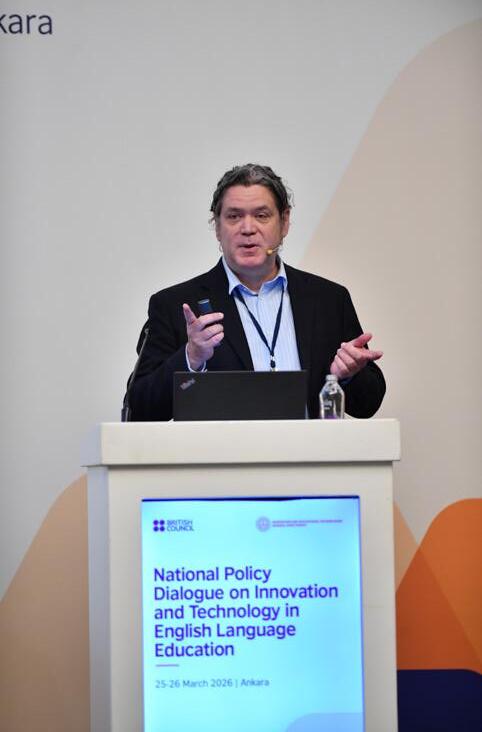
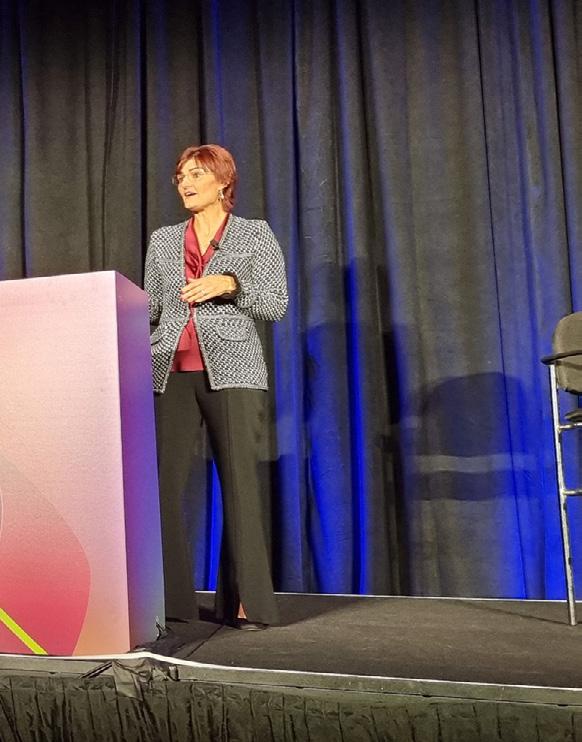
Amir Vashkover Head of Philips Data Security, Philips
Cristina Martin Greysman
WW Head of Nutanix Alliance Market Development, AWS
Deblina Sharma Partner, Deloitte
Esther Hitch Cyber Security Leader
Keith Joughin People and Change Expert PA Consulting
Martin Lewit Senior Vice President
Corporate Development Nisum
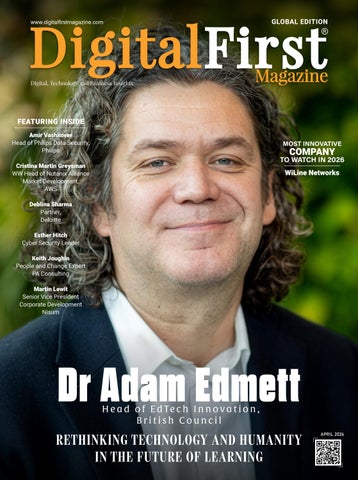
Dr Adam Edmett
Managing Editor
Sarath Shyam
Dr. John Andrews
Emma James
Andrew Scott
Sabrina Samson
Keith Alexander Consultant Editors
Naomi Wilson
Stanly Lui
Steve Hope
Shirley David Creative Consultants
Charlie Jameson
Louis Bernard
Branding & Marketing Partnerships
Jennifer Anderson
Monica Davis
Jessica Edword
Rachel Roy
Anna Elza
Stephen Donnell
Cathy Chen
Free Subscription
Free Subscription www.digitalfirstmagazine.com
International Partnerships
Americas Europe
Middle East & Africa Asia-Pacific
admin@digitalfirstmagazine.com
Follow Us On www.linkedin.com/company/ digitalfirstmagazine www.facebook.com/digitalfirstmagazine
Digital First Magazine www.digitalfirstmagazine.com is a global knowledge sharing digital platform published by Connecta Innovation Private Limited. All rights reserved. The opinions expressed in the content are those of the authors. They do not purport to reflect the opinions or views of Connecta Innovation Private Limited or any of its members or associates. The publisher does not assume any responsibility for the advertisements and all representation of warranties made in such advertisements are those of the advertisers and not of the publisher. Digital First trademark is owned by DFG Digital First Infotech Pvt Ltd. and Connecta Innovation Pvt Ltd. has permission to use Digital First brand name. Digital First Magazine www.digitalfirstmagazine. com is a Free Subscription and Free-to-read digital platform strictly not for sale and has to be strictly for internal private use only. Publisher does not assume any responsibility arising out of anyone modifying content and pictures, printing a copy of this digital platform in any format and in any country and all matters related to that.
The Price We Pay for Always Being Early
There was a time when being “early” felt like an advantage. Today, it often feels like an obligation. Every few weeks, there’s a new tool, a new platform, a new promise that claims to change everything. And quietly, across industries, a certain fatigue is setting in. I’ve felt it myself while reviewing pitches and ideas that sound exciting on the surface but struggle to answer a simple question: does this truly make things better, or are we just keeping up?
Recent studies suggest that a significant percentage of digital transformation initiatives fail to deliver expected value, not because of poor technology, but because of poor
alignment. That says a lot. The problem isn’t innovation. It’s the pace and the pressure to adopt without pausing to think.
This is where our cover story offers a refreshing perspective. In our conversation with Dr Adam Edmett, Head of EdTech Innovation at the British Council, what stands out is not just the scale of his work, but the restraint behind it. With nearly three decades of experience across teaching, research, and digital development, Adam brings a balanced view to technology. He understands its power, but more importantly, its limits. His work across diverse regions shows that meaningful innovation is rarely about chasing the newest idea. It is about designing solutions that fit real contexts, supported by evidence and grounded in human needs.
This issue of Digital First Magazine builds on that thought. Alongside the cover story, you will find a range of perspectives that challenge, question, and explore what it truly means to move forward in a digital world. From leadership insights to emerging trends, each piece invites you to think a little deeper and a little slower.
Perhaps the real advantage today is not in being the first to adopt, but in knowing what to ignore. As you turn these pages, I hope you find not just new ideas, but also the confidence to choose wisely.
Enjoy Reading.
John McGuire, CEO, WiLine Networks
LEADER’S INSIGHTS
Amir Vashkover, Empowering Cybersecurity Leaders for a Safer Tomorrow
Head of Philips Data Security, Philips
Cristina Martin Greysman, Empowering Tomorrow’s Tech Leaders Today
WW Head of Nutanix Alliance Market Development, AWS
Martin Lewit, Building a Sustainable Future for Digital Commerce
Senior Vice President Corporate Development, Nisum
Leading with Purpose in a Digital World
Deblina Sharma,
Partner, Deloitte
Fostering Innovation and Talent in Cybersecurity
Cyber Security Leader Esther Hitch,
50
Keith Joughin, Revolutionizing Public Services with AI Technology
People and Change Expert, PA Consulting
56
LEADER’S INSIGHTS
62
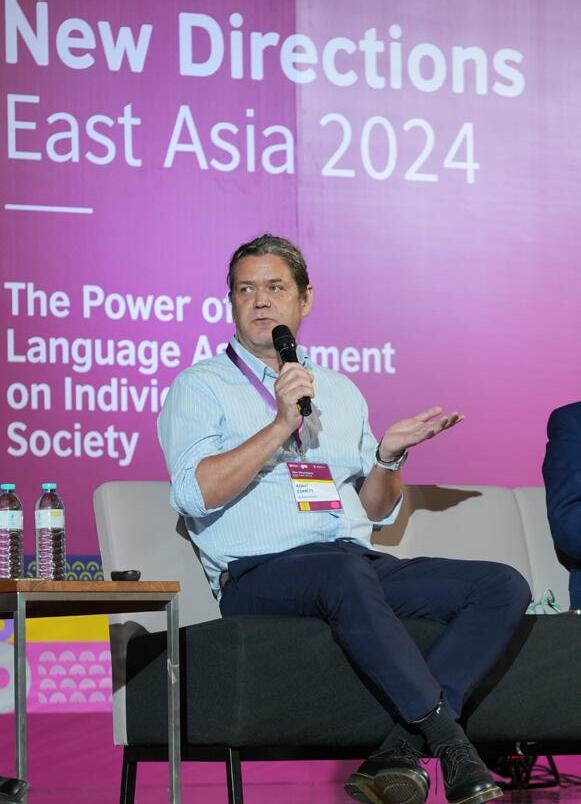
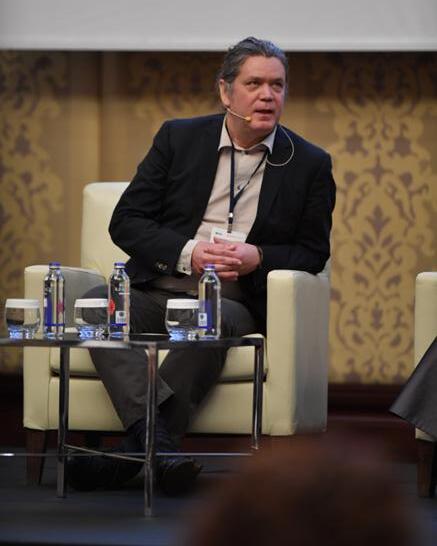
Dr Adam Edmett
Head of EdTech Innovation, British Council
UNDERSTANDING THE LIMITS AND POTENTIAL OF EDTECH
Dr Adam Edmett is Head of EdTech Innovation at the British Council, where he works on the design and delivery of technology-enabled education programmes reaching hundreds of thousands of teachers worldwide through partnerships with government education ministries. This work has been recognised with multiple awards at the UK’s Learning Technology Awards, including gold in 2025 for Best Blended Learning in China and Indonesia, silver in 2024 for Best Learning Technology Project in Brazil and Jordan, and bronze in 2023 for Best Use of Mobile Learning in Rwanda and Nigeria. With nearly three decades of experience across classroom teaching, language education, academic research and digital product development, Adam brings both a practitioner’s instinct and a researcher’s scepticism to the question of what technology can and cannot do for education. He holds a Doctorate in Education from the University of Bath, where his research focused on cognitive engagement in online teacher development, and his current work examines the impact of generative AI on English language teaching, with a particular focus on equity, responsible use and the risks of widening existing digital divides. In an exclusive conversation with Digital First Magazine, Dr Adam talks about the evolving relationship between education and technology and the lessons learned from decades of experimentation in digital learning. Drawing on nearly thirty years of experience across teaching, research, and global education programmes, he reflects on how thoughtful design and evidence-based decision-making can help schools use technology more effectively. He also shares insights from large-scale teacher development initiatives and explains why successful innovation often depends on understanding local realities rather than chasing technological hype.
You have built your career at the crossroads of education and technology. What pivotal moments or experiences shaped your journey into EdTech leadership?
In terms of technology… many! The fundamentals probably go back to the Sinclair ZX81, then the ZX Spectrum, then the Acorn Electron, before what was, at the time, my ultimate dream machine: the BBC Micro. And even earlier than that, there was Atari, Intellivision and the first ever gaming tech: do you remember the batand-ball game you could play on the TV? That’s actually a very good illustration of how far we’ve come in 40 years: literally a line going up and down and a dot bouncing around the screen, just a few pixels, and look where we are today. It’s staggering.
EDTECH IS FLAVOUR OF THE MONTH AGAIN. WHETHER THE RESULTS WILL FOLLOW THIS TIME REMAINS TO BE SEEN
I think my early obsession with computing was the foundation for my interest in EdTech and teaching. I was a teacher, but with this hobbyist background in computers, so I could see the potential. I’ve also been very fortunate to work for an organisation that has always innovated in the EdTech space. In the early 2000s, the British Council had a student community website called Global Village – essentially a Facebook before Facebook. The concept was brilliant: connecting all of our students globally through forums, chat rooms, and private messaging. But at the time, the technology wasn’t stable enough and digital literacy levels weren’t where they needed to be, so the community never reached critical mass. It taught me a great deal about why brilliant tech ideas can fail within an educational ecosystem: even when the concept is sound, reality has a way of intervening.
Then there’s luck. EdTech hasn’t always been as fashionable as it is now. Take the field of international development, where distance learning via broadcast and print was supposed to bring education to everyone on the planet and transform our future. It didn’t. It failed on most measures. For many years afterwards, distance education and EdTech became almost dirty words. Funders weren’t interested, having invested heavily in promises that never materialised. But now EdTech is flavour of the month again. Whether the results will follow this time remains to be seen.
In your current role at the British Council, what has been the most impactful innovation initiative you’ve led, and what made it successful?
I can refer to external validation for this question: the UK’s Learning Technology Awards where we’ve won medals or been a finalist for four of the last five years. In 2021 we were shortlisted for our Digital Task Force initiative: our response to the pandemic where we switched all our face-to-face activity to online over a very short period. Aside from the change in mode of delivery we also adapted the way we worked together as a global team, refiguring hierarchies and areas of work, galvanised by the need to respond to the changing needs of English teachers around the world.
In 2023 we won bronze for the Best Use of Mobile Learning for projects in Rwanda and Nigeria where connectivity and device access are a challenge. In 2024 we won silver for Best Learning Technology Project for our teacher development work at scale in Brazil and Jordan. Finally, in 2025 we won Gold for Best Blended Learning for innovative teacher development
programmes in China and Indonesia. I know you asked for one innovation, but they do all have a common thread to what brings success! The British Council is an endorser of the Principles for Digital Development, a framework that helps organisations design and deliver technologyenabled programmes that are inclusive, sustainable and evidence-driven. These principles guide our work globally and shape how we adapt our projects to local contexts.
We can take the Brazil initiative as an example of how we do this. The programme provided tailored professional development for teachers focused on up-to-date and practical classroom methodology. We supported 502 English teachers – 374 of whom graduated – and indirectly benefitted more than 106,000 students across the country.
Its success was built on a deliberate application of the Digital Development principles, starting with understanding the existing ecosystem. From the outset, the project was designed around the realities of teachers’ access to technology and connectivity. We selected a combination of online learning via a Learning Management System (LMS) and low-bandwidth tech, such as WhatsApp, to ensure participation even in areas with limited internet stability. Modules were translated into Portuguese, regional cohorts were formed to align with local cultural variations, time zones and school calendars, and Brazilian e-moderators were engaged to lead delivery: all active choices reflecting the infrastructure and working patterns in the Brazilian education system.
Equally important was designing with people, not for people – it’s a crucial distinction. We asked teachers nationwide to use our SelfAssessment Tool (SAT) to understand their
professional development priorities. Translated into Portuguese, it generated 1,670 responses, which directly informed the course content, pacing and delivery methods. We also ascertained English language proficiency, and each teacher’s digital and time limitations for training outside of school hours. After building the course based on this input, teachers could select the most relevant modules, participate in live sessions or self-paced learning and work within supportive regional peer groups.
Designing for inclusion meant reducing barriers to participation at every turn: translating module landing pages into Portuguese, allowing flexible module selection, providing continuous support via WhatsApp, organising regional cohorts for localised networking, and ensuring first-language support from Brazilian e-moderators (i.e. translanguaging). Local e-moderators also brought deep knowledge of the Brazilian education system, helping participants adapt the methodology to their classrooms. This built capacity and increased the likelihood that new approaches would be sustained beyond the programme.
On the data side, the British Council’s corporate approach – underpinned by GDPR compliance and other relevant regulations –ensures that all legal requirements for data handling are met in all of the countries we operate in. Our LMS supplier, eCom Learning Solutions based in Scotland, apply their own rigorous security protocols, with the LMS consistently delivering high-quality data protection and privacy standards for all users.
And critically, we used evidence throughout to improve outcomes. Participant feedback was collected during the course, allowing for real-time refinements to activities and guidance. It’s not
enough to understand how teachers have engaged with content after an educational programme has finished. E-moderators were shown how to monitor participants’ performance and progress, offering support in their first language and individual contact. The final results were clear: 98 per cent of participants said the course met their expectations and had a positive impact on their teaching. The programme achieved a 75 per cent graduation rate, meaning three out of four participants completed all requirements and were awarded a certificate. This is an outlier in terms of industry standards for online and remote learning.
There are other principles we adhere to and if interested you can find them here: https:// digitalprinciples.org/. Personally, I feel this framework is relevant for a whole range of contexts and at different levels: from national CPD programmes right through to school-level digital innovation and transformation.
School education systems worldwide are navigating rapid change. From your perspective, what are the most pressing challenges schools face today in integrating technology effectively?
The main one for me is the lack of clear, evidencebased information on technology. The challenge is that tech is evolving so rapidly that it’s incredibly difficult to gather the evidence, act on it, and embed good practice before the technology has already taken root in classrooms and is affecting learners. The digital literacy gap for teachers is only going to be made worse by AI. The ‘silver bullet’ mentality, the sense that this shiny new thing will change everything, is back, and it’s only going to intensify as major players look to monetise the enormous investment that’s poured into AI. It’s encouraging to see schools and education systems beginning to push back, and one hopes this is the beginning of a more critical, sustained engagement rather than a one-off reaction.
That said, never underestimate the power of these technologies once they are woven into the fabric of daily life. Look at Nepal’s attempt to ban social media: whatever its political origins, that overnight ban cut thousands of small businesses off from their customers. We’ve reached a point where something that started out as a fun way to reconnect with old school friends has become so embedded in economic and social life that a sovereign government struggles to enforce its own policy within its own borders. That should give us pause.
AI is reshaping conversations in education. How do you see artificial intelligence influencing teaching, assessment, and student learning over the next five years?
process, identifying when AI-generated material or content is displaying bias or inaccuracies. An issue with GenAI is that you need to be competent in the area of output. If you are not, then you will be unable to see where it has made mistakes. With the global teacher shortage crisis (South Asia and Sub-Saharan Africa in particular) there is an increased chance of AI use by less qualified teachers who are unable to critique AI-generated content. So, something like material creation that appears an obvious win, might be problematic in a low-income country.
I’ve painted a somewhat negative picture, but there are clear positives. My specific area of interest is language education, and I can see significant change on the horizon — not just in terms of how technology might assist learners, but in deeper questions about linguistic justice and what it means to be a language user when computers can perform many language tasks more efficiently than humans. Language was
supposed to be one of the things that made us distinctively human. That assumption is now worth examining carefully.
But returning to the classroom and the change I can see happening. Firstly, development of a learner’s ability to speak English. A typical obstacle to developing this skill has been that a learner may want to practise speaking but her teacher does not speak English, nor can her peers, nor perhaps anyone in her village or town. The potential change here in terms of an entirely new opportunity for practice is, I feel, highly significant. There may even be additional benefits of a non-human conversational partner; for example, there’s emerging evidence that learner anxiety can actually decrease when the conversation is with a chatbot rather than another person. There are also the usual digital advantages over a human in that AI is available whenever it is needed and the cost could be very low in an open-source context. And once you factor in the ability to adapt both input and feedback to an individual learner’s level and spoken performance, you start to see just how significant this could be for language learning. It’s possible that we’ll see a real shift towards more communicative teaching approaches in contexts where they’ve historically struggled to take hold, precisely because there was never enough opportunity for genuine interaction. This new capability will have implications for assessment as well; for example, are human oral examiners soon to become a thing of the past?
With AI there’s a lot of talk about personalisation. The idea is that if instruction can be tailored precisely enough, anyone can learn what they need, when they need it, in whatever way suits them best. We can finally move beyond the traditional classroom model that effectively
SAFEGUARDING IS ABSOLUTELY CENTRAL TO THE BRITISH COUNCIL’S WORK: WE HAVE A DEDICATED TEAM LOCATED AROUND THE WORLD WHO PROVIDE GUIDANCE AND ASSURANCE ACROSS OUR PROGRAMMES AND PROJECTS
holds back stronger learners and leaves those who need more help without it. The potential is enormous, but we’d be wise to remember that the pursuit of digital personalisation didn’t begin with GenAI. Going back to 2008, who remembers the EdTech startup Knewton? They like others were going to change the world and raised millions of USD with funding driven by promises of using what was then termed Big Data to personalise education. Predictably, the outcome fell well short of the rhetoric, and the company ended up being acquired by a publisher for a tiny fraction of what investors had put in. So the question is whether we’re watching history repeat itself, or whether this time we really are at a genuine turning point for education.
My view is that GenAI will bring more personalisation — whether that’s in how student writing is assessed and supported with ongoing formative feedback, or through conversational agents that can adjust their language level and topic focus to match individual learner needs. However, serious questions remain. How does personalisation actually affect learning over time, and at what point does dependence on AI start to undermine a learner’s ability to think critically for themselves? Given that GenAI can provide feedback at a level comparable to, or even surpassing, a teacher, is there a risk that busy teachers entirely forgo their role in that process? And where do we draw the line on privacy – are we prepared to allow data on our emotional states to be analysed to enhance specifically tailored instruction? The EU has already banned this. The US has not as yet, and China is already leveraging the surveillance potential of AI. Currently, most educational technology is deployed outside the classroom in both high- and low-income countries. If that trend persists, and personalisation increasingly means isolated learning, then we need to think carefully about how collaborative learning can
be preserved even as instruction becomes more individualised.
Lastly, a few words on accessibility. The next few years will transform various aspects of accessibility, initially in terms of the improved ability to interact with a computer without the use of a keyboard. And not so far into the future, AI agents will be able to perform tasks that may have been either very difficult or in some cases impossible for those with a disability. There will be other new capabilities that transform accessibility that are not in view right now. This is mainly because advancements in the area of accessibility are often an incidental outcome of more general commercial technology progress – i.e., they are not intentional in terms of direct funding. Again, in a world where governments were prepared to step in, we could see equity of access move much faster and make a real difference to inclusion.
As for the raging debate on whether AI will replace teachers: I don’t see this at all. Very particular tasks will change, and some roles will look quite different, but the idea that you can remove the human relationship from education misunderstands what education is.
As a leader driving digital transformation, how do you balance innovation with safeguarding pedagogical values and ethical considerations?
Safeguarding is absolutely central to the British Council’s work: we have a dedicated team located around the world who provide guidance and assurance across our programmes and projects. Ethical considerations are equally paramount. Our AI in ELT report, for example, was one of the earlier pieces of work in this space to raise issues such as algorithmic bias, as well as the more overlooked question of language standardisation and what it means when AI systems effectively privilege certain varieties of English over others.
Digital transformation can and should improve pedagogy, though how we use computers is always shaped by the educational thinking of the time. Computer Assisted Language Learning (CALL) is a good example of this. If you go back to the 1960s, instructional design was very much influenced by the predominant theory of learning: behaviourism. Then as we moved to constructivism and more social theories of learning, so the way we used computers in education evolved.
More widely, pedagogy is sometimes driven less by principle than by what’s convenient or what practical constraints make possible. I remember students asking me why they had to practise speaking with the person sitting next to them, who also couldn’t speak the language and might reinforce mistakes. I’d give the approved answer, i.e. that they wouldn’t actually learn errors that way, and that peer practice was very valuable. But the honest answer was often simpler: it was the best available option within
the constraints of a classroom. And in that classroom the only person fluent in the language was the teacher, and time didn’t allow for oneto-one interactions with thirty-plus students. That tension between the ideal and the feasible is something technology keeps reforming.
Beyond your professional responsibilities, are there personal interests or values that influence the way you approach leadership and decision-making?
On leadership: let people get on with it. Command-and-control management styles only create the illusion of control while demotivating the people who are being micromanaged. Something that has stayed with me from Tolstoy’s War and Peace is the contrast between Napoleon on the hill at Borodino surveying the battle below, issuing orders that barely reach the front lines, by which time conditions on the ground have already shifted — and Kutuzov, old and apparently half-asleep, who offers a completely different model of leadership: someone who understands the limits of control and works with the flow of events rather than against them. Tolstoy uses this contrast to make one of his central philosophical arguments: that grand commanders who believe they’re directing the course of history are largely deluding themselves. The chaos of battle is shaped by so many individual decisions on the ground that no single person on a hill, however brilliant, can truly control it.
I think the same applies to teams. A team performs best when everyone knows their role but has the freedom and independence to determine how they fulfil it. Everyone needs to be a leader within their own sphere of influence,
COMMAND-
AND-CONTROL MANAGEMENT STYLES ONLY
CREATE THE ILLUSION OF CONTROL WHILE DEMOTIVATING THE PEOPLE WHO ARE BEING MICROMANAGED
and giving people the support and confidence to do that is, I think, the most effective form of leadership. It can look like passivity from the outside, and you may occasionally have to defend it. But it works — particularly, I should say, when you’re fortunate enough to work with people who genuinely believe in the mission, are motivated by the work itself, and take pride in doing it well.
On decision-making: information and analysis matter enormously, but so does instinct — the kind of intuition that only comes from experience. Whether AI can ever replicate that is an open question. To me, it feels like the most human and creative part of strategy: the moment when you move from processing information to actually committing to a direction.
What advice would you offer to students and young professionals who aspire to build careers in education, innovation, or global development?
This is, honestly, an incredibly difficult question to answer at this particular moment. So I’d step back and say this: things don’t have to be as they are. Challenge the system. Read thinkers like Foucault to understand historical contingency — how power, usually not our own, shapes what we think is possible, what we can say, what we can’t say and perhaps even what we’re able to think. We don’t have to accept the parameters we’ve been handed.
We can use this new wave of technology to benefit humanity, but we should never mistake good intentions for good outcomes. Unforeseen consequences are the norm in technology, not the exception. I’d want every major tech leader to have that reminder every single morning: the road to hell is paved with good intentions. I’ve been involved in technology for most of my professional life, and I remain enthusiastic about its potential and yet I still find myself wishing, sometimes, that the smartphone had never been invented.
Empowering Cybersecurity Leaders for a Safer Tomorrow
Amir Vashkover, Head of Philips Data Security, Philips
Hi Amir. Can you describe your approach to mentoring and developing the next generation of cybersecurity professionals?
Mentoring is an inherent part of leadership. My own model of leadership is MORE – Meaning, Opportunity, Responsibility, Empathy!
Meaning – emphasize the meaning of your team’s work. How this contributes to society, environment, how their efforts make this world slightly better, safer or healthier
Opportunity – every moment, every interaction, every challenge or crisis poses also
an opportunity! Always look at the bright side, and when an opportunity knocks on your door –just react to it.
Responsibility – do things responsibly, think twice before reacting, before responding, changing, advising. Be responsible for your words and actions
Empathy – never forget putting yourself at the “other side”. When you’re coaching or mentoring, when you feedback or make decisions upon others, when you try to solve someone else’s problem – put yourself in his shoes.
Mentoring is an inherent part of leadership. My own model of leadership is MORE – Meaning, Opportunity, Responsibility, Empathy!
Amir Vashkover is an accomplished cybersecurity leader with over 20 years of global experience across information security, AI governance, and business development. He currently heads Data & AI Security at Philips, where he drives enterprise-wide strategies for securing digital transformation and secure GenAI adoption. With leadership roles at various SMB and enterprise companies, Amir has built and led global security programs, professional services teams, and strategic alliances. Amir holds an MBA and a BSc in Electrical and Computer Engineering, and volunteers as a certified EMT with the Red Cross. Amir is a triathlete and marathon runner who enjoys pushing his aerobic limits, but also unwinding with long-distance rides on his motorbike.
Recently, in an exclusive interview with Digital First Magazine, Amir shared insights on his approach to mentoring and developing the next generation of cybersecurity professionals, personal hobbies and interests, future plans, pearls of wisdom, and much more. The following excerpts are taken from the interview.
In your academic or work career, were there any mentors who have helped you grow along the way? What’s the best piece of advice you have ever received? I learned (and keep on doing that every day) from many people, but very few people has made the substantial impact on me to be called mentors for me. Only 2 people to be exact.
The first one, is a childhood / youth coach, literally. I started practicing Karate at the age of 6 and it took me nearly a dozen year to achieve the desired black belt. My coach, who though me a lot on the physical level, was (and still is as I meet him occasionally), but not less importantly, he mentored me and
developed my mental resiliency. He had his own 10 commandments, but if I had to come up with one word I took with him, it would be “discipline”
The other mentor, came years after, he was the founder and the CEO of the first company I worked for. for years, he’s always available for me to give an advice. And always it starts, and in a very genuine, respectful and humble way: “oh, this is very simple”.. we tend to overcomplicate things when we try to make decisions, but our minds cannot handle it. After a few years developing by this mentor, I realized that “if it won’t be simple – it simply won’t be” (Amir Vashkover)
What is your favorite quote or model?
There are so many quotes that it is impossible for me to choose. But more than I like brilliant quotes, I love “2D” models… while “All models are wrong, but some are useful” (often attributed to statistician George E.P. Box), I would share my own original model – the 10% resiliency model. I developed this model, while running my last marathon earlier this year in Paris. The 10% milestone is a pivotal moment. 2 pivotal moments to be exact. The first is 10% of the journey you passed since the starting line –beginnings are always tough. Primarily mentally tough, due to the uncertainty of what’s ahead.
The second is the 10% that are left to get to the finish line. The last 10% are tough, because you’re almost burnt out, exhausted, and worse think – on “auto-pilot”, apathic..
Which 10% point is harder? I cannot say, but for sure the “mitigation” for each point is different. The “10% point” of course is not and absolute point. In marathons, athletes call is “the wall”, some hit the first wall after 5k others after 10k, few may not at all, some hit the second wall on the 34th km, other at the 39th, very few just “jump over” this wall without noticing..
So the model, as models should be is simple: focus on the human factor (invest in people resiliency, motivation, guidance and coaching) at the beginning (till things get on track with the right speed) and at the end (when things can go off track), and focus the tools and process at the majority of the journey to keep stability, efficiency and productivity. The magic triangle of People – Processes and Tools always remains, but the balance of the mix must change.
The value of my time will only increase, as it irreversibly decreases. So, I’m always trying to make the most of every minute
No one knows what the world will look like in 20 years, but you can definitely influence that. Join the good guys and make this world safer
What are some of your passions outside of work? What do you like to do in your time off?
The value of my time will only increase, as it irreversibly decreases. So, I’m always trying to make the most of every minute. When I play soccer with my child, having a dinner with my wife, or riding on the highway with my motorbike – I’m all there, happy, not distracted, or worried about other things. For me the ‘how I do my time off’ is more important than ‘what I do in my time off’
Where would you like to be in the next 5 years?
When asked what he wanted to be when he grew up, John Lennon responded, “Happy”, which led to his teacher telling him he didn’t understand the assignment and he retorted that the teacher didn’t understand life… for me the question should be how would do I plan to keep happy, healthy and satisfied in 5 years…
What advice would you give to young people considering a career in cybersecurity?
No one knows what the world will look like in 20 years, but you can definitely influence that. Join the good guys and make this world safer.
Wa n t t o S e l l o r fi n d
I nve s t o rs f o r yo u r
B u s i n e s s ?
2026
WiLine Networks
Empowering Enterprise AI with Distributed Infrastructure, Sovereign Compute, and Measured Latency Engineering
WiLine Networks is headquartered in Silicon Valley, California, United States, and operates the only AI-first Edge Cloud platform, delivering sovereign AIaccelerated computing, real agentic AI, and secure, resilient connectivity across hybrid environments from elite core data centers to 5,000 distributed edge locations nationwide.
In an exclusive conversation with Digital First Magazine, John McGuire, CEO, WiLine Networks, talks about the company’s evolution from a connectivity provider to an AI-first edge cloud platform, driven by its uniquely distributed infrastructure. He shares how WiLine is redefining enterprise AI through low-latency edge computing, metro-based Edge Zone architecture, and a tightly integrated stack of compute, storage, and secure connectivity. McGuire highlights key findings from the company’s global latency research, emphasizing the importance of proximity in realtime AI workloads and the need for intelligent orchestration to prevent performance bottlenecks. He also sheds light on the “Trifecta of Enterprise AI,” data sovereignty, industry-specific use cases, and why the future of AI infrastructure lies beyond centralized hyperscaler models.
John McGuire, CEO, WiLine Networks
John, WiLine Networks has built a strong reputation as a leading business internet and connectivity provider serving over 3,500 enterprises nationwide. Now you are making a significant move into AI infrastructure with the launch of WiLine AI Edge Cloud. What prompted this strategic shift?
It was not really a shift. It was an evolution that our infrastructure made inevitable. For years, we have been building and operating a distributed network of over 5,000 edge points of presence across the United States. We own the fiber backbone, we own the last-mile connectivity, and we operate the facilities where our equipment sits. When the enterprise AI wave started accelerating, we realized that we were already sitting on the exact infrastructure topology that AI workloads actually need. Hyperscalers built their empires around centralized data centers. That model works well for training large models, but it falls short when you need real-time inference, agentic AI coordination, or latency-sensitive processing at the enterprise edge. We saw a clear gap in the market, and we had the physical foundation to serve it.
You describe WiLine as “The Only AI-First Edge Cloud Provider.” That is a bold claim. What makes your approach fundamentally different from what AWS, Google, or the neo-cloud operators are offering?
The difference is architectural, and it starts with ownership. Our AI Edge Cloud resides natively inside our own network. We are not leasing rack space in someone else’s data center and
calling it edge. We deploy NVIDIA, AMD, Intel, and ARM-based processors across our Edge SDN network — what we call a multisilicon inference cloud — spanning more than 5,000 Z-Box edge nodes across 500 markets in the United States, with a roadmap to scale to 10,000. Each of these nodes is connected through our 800-gigabit-per-second fiber backbone with integrated SASE. Compare that to the hyperscaler approach. AWS Outposts still cannot offer GPU-enabled instances like P5 or P6 in their Outposts form factor. Google’s GDC Edge has Blackwell GPUs in preview, but the power requirements make widespread deployment extremely difficult. Neo-cloud operators are at a structural cost disadvantage because they are paying marked-up prices to sit inside third-party facilities. We power our infrastructure using our own distributed power systems using what we call digital electricity, or PXU. That gives us a fundamentally different cost structure. When you combine that with full ownership of the technology stack, from the network layer to the compute layer to the orchestration platform, you get sustainable unit economics that competitors simply cannot replicate.
You recently published a technical blog grounded in a large-scale global latency study. The data showed that edge servers provide lower latency than cloud locations for 92 to 97 percent of end-users. How does that research inform your platform design?
That research is central to how we think about infrastructure engineering. The study measured round-trip times across 8,456 global vantage points to 6,341 edge servers and 69
cloud data center locations. The findings were unambiguous. While 58 percent of end-users can reach a nearby edge server in under 10 milliseconds, only 29 percent can achieve similar latency from the closest cloud region. At the 20-millisecond threshold, 82 percent of users are covered by edge infrastructure, compared to significantly lower coverage from individual cloud providers. For enterprise AI, those numbers are not academic. They are operational. When you are running an AI inference pipeline, the difference between 8 milliseconds and 40 milliseconds determines whether the experience is interactive or degraded. When you have agentic AI systems coordinating across multiple workflows, that latency delta becomes state propagation delay. For virtual desktop infrastructure enhanced with AI, it becomes the responsiveness that users feel in every interaction. We designed WiLine Edge Cloud around what the data actually shows. Compute must be placed within metropolitan
latency boundaries. We engineer our Edge Zones to operate within a sub-30-mile radius, ensuring deterministic low latency and proximity to enterprise workloads. Infrastructure topology is not an afterthought. It is part of the application logic.
Tell us more about the WiLine Edge Zone architecture. How does it differ from a typical edge appliance deployment?
A WiLine Edge Zone is a geographically localized, distributed compute fabric composed of three or more WiLine Edge POPs operating as a unified cluster across a short-distance metro footprint. This is fundamentally different from a single-site appliance approach, where you place a three-node cluster in one location and call it edge computing. Our architecture spans multiple interconnected Edge POPs, forming a resilient metro-scale cluster designed for highperformance edge computing. Applications
We engineer our Edge Zones to operate within a sub-30-mile radius, ensuring deterministic low latency and proximity to enterprise workloads
execute near the point of data generation, enabling real-time deterministic response times, short-path backup-as-a-service, and disaster recovery within metro proximity, and data residency compliance within defined geographic boundaries. Each Edge Zone is directly integrated with WiLine SD-WAN Direct Connect, so enterprises can aggregate secure connectivity, compute, and storage within the same low-latency topology. The model ensures that enterprise applications continue operating with predictable performance even during upstream internet degradation, because processing and storage remain within the local metro fabric. This is not a centralized hyperscale cloud extended outward. This is a distributed metro cloud engineered for proximity, performance, and control.
The latency research also highlighted the risk of hotspot formation at popular edge nodes, following a power-law distribution. How does WiLine address that challenge?
That is one of the most important and often overlooked aspects of edge infrastructure. The research showed that edge proximity follows
a power-law distribution with an exponent of 2.78. In practical terms, that means some edge nodes naturally attract disproportionate load while others serve very few users. If you simply route traffic to the nearest node without intelligent orchestration, you will oversubscribe specific locations and degrade the very performance you are trying to deliver. We built WiLine Edge Cloud with this reality in mind. Our Edge Zones operate with high-availability clustering, live migration capabilities, and workload-aware orchestration. When local capacity thresholds are approached, workloads can be rebalanced across distributed zones or complemented by higher-capacity core environments. This is not edge in isolation. It is a coordinated edge-core topology. Under low workload conditions, the majority of requests achieve sub-10-millisecond latency. Under high workload intensity, our hybrid augmentation model ensures that performance does not collapse. Bare-metal GPU hosts, distributed storage, and network fabric are all engineered and maintained as managed infrastructure. Customers do not manage nodelevel availability. High availability and live migration are integrated at the cluster level.
You mentioned the “Trifecta of Enterprise AI” as a core part of your go-to-market strategy. Can you explain what that encompasses?
The Trifecta represents the three pillars that enterprises need to run AI workloads effectively, and we deliver all three as an integrated platform. The first pillar is AIAccelerated Compute and Secure Storage. This is robust distributed infrastructure for local, low-latency model execution. We deploy NVIDIA, AMD, Intel, and ARM-based processors with bare-metal performance, NVMe storage with high IOPS, and support both regional and local edge deployment. Our GPU-as-a-Service offering gives enterprises on-demand access to GPU resources for AI training, edge inference, or media rendering with zero virtualization tax. What matters here is that a single agentic AI workload requires fundamentally different hardware at each step — inference is compute-bound, decode is memory-bound, and tool calls are network-bound. Our multisilicon platform routes each task phase to the optimal processor, which is how we reliably achieve three to ten times faster AI inference for the same cost and power. The second pillar is our ML Platform combined with Agentic AI. This is where enterprises develop, train, and deploy models. We offer GPU-powered virtual machines, Kubernetesbased container services, and agentic AI software optimized for enterprise workflows. This includes custom small language model deployment, agentic AI workflows, enterprise data integration, and white-glove AI consulting. The third pillar is Secure and Resilient Connectivity. We leverage
our 800-gigabit-per-second fiber backbone with integrated SD-WAN, Carrier Ethernet and DIA services, DDoS protection, TLS inspection, and DNS filtering. Everything is managed through a single pane of glass with white-glove, AI-driven customer service. What makes this powerful is the bundling. When enterprises combine GPU-as-a-Service with connectivity and storage, they unlock 25 to 50 percent discounts. One provider, one bill, and up to 30 percent savings when you bundle. That economic model, combined with the performance advantages of edge-native deployment, is something no hyperscaler or neo-cloud operator can match.
Data sovereignty is becoming an increasingly critical concern for enterprises, particularly in regulated industries. How does WiLine Edge Cloud address that?
Data sovereignty is built into the architecture, not bolted on as a compliance layer. Every WiLine Edge Zone operates within defined geographic boundaries. All data, including metadata and logs, is encrypted to the highest level and processed exclusively within national borders and governed by local laws. Our distributed edge nodes allow enterprises to keep sensitive data within specific geographic boundaries while still benefiting from the full compute and storage capabilities of the platform. We enable enterprises to enforce jurisdictional boundaries aligned with regulatory, contractual, or internal governance requirements. For industries like healthcare, where you are running AI-powered diagnostic imaging at the bedside, or financial services, where you
need low-latency trading algorithms with compliance built in, this is not optional. It is a prerequisite. Our platform also provides distributed and encrypted storage across POPs, which means improved data durability, faster recovery times, and the ability to maintain data residency within defined geographic boundaries. Enterprises get the performance of edge computing with the governance controls they need.
Which industries are you seeing the strongest demand from, and what use cases are driving adoption?
We are seeing strong demand across several verticals. Healthcare and medical imaging are major ones. Hospitals and clinical networks want to run AI-powered diagnostic imaging and anomaly detection directly at the point of care. The latency and data privacy requirements make centralized cloud processing impractical for many of these workloads. Digital media and animation studios need high-performance virtual desktops for 3D, VFX, and video editing. Our proximity-optimized VDI, operating within a sub-30-mile radius and combined with SD-WAN Direct Connect, delivers sessions that are terminated and processed within the local metro fabric. That eliminates the lag that creative professionals experience with remote cloudbased desktops. Security and surveillance are other areas where real-time edge processing is essential. Processing video streams locally for feature recognition, motion detection, and license plate reading requires inference at the edge, not in a distant cloud region. Manufacturing is increasingly
We deploy NVIDIA, AMD, Intel, and ARMbased processors across our Edge SDN network — what we call a multi-silicon inference cloud — spanning more than 5,000
Z-Box edge nodes across 500 markets in the United States, with a roadmap to scale to 10,000
adopting what we call AI factories, with intelligent process orchestration, predictive maintenance, and real-time quality control. And autonomous systems, whether vehicles, drones, or robotics, fundamentally require real-time AI inference with edge-deployed compute power. Financial services round out the picture with low-latency trading algorithms and fraud detection systems that demand both speed and data sovereignty.
WiLine currently serves major metropolitan areas across the United States. What does the expansion roadmap look like?
Today, we are operational across more than 500 markets in the United States, spanning 15 active regions including Portland, Sacramento, San Francisco, Los Angeles, San Diego, Phoenix, Denver, Chicago, Atlanta, Tampa, Philadelphia, and Houston, among others. Our architecture is designed to scale horizontally across more than 5,000 Edge POPs, enabling the creation of thousands of metro-distributed Edge Zones while maintaining unified operational control from a single platform. The roadmap takes us to 10,000 nodes. Every new node we deploy extends the reach of the platform while maintaining the same sub-30-mile latency envelope, the same managed infrastructure model, and the same integrated connectivity. Administrators can deploy workloads, enforce policy, monitor performance, and manage lifecycle operations across all metro Zones from a single control interface. We are also building out our marketplace ecosystem for rapid deployment of enterprise-grade services, including virtual firewalls, SD-
WAN gateways, secure access platforms, VDI environments, backup services, observability tools, and AI inference frameworks. The goal is to make WiLine Edge Cloud the most complete and accessible AI infrastructure platform for enterprises that need performance where their users, devices, and data actually are.
As a final thought, what would you say to enterprise technology leaders who are evaluating their AI infrastructure strategy today?
I would say this: AI infrastructure should not be designed around where hyperscalers happen to have built their regions. It should be designed around where your users, devices, and data actually are. The measured latency data is clear. Edge infrastructure provides lower latency to the overwhelming majority of users. Regional centralization cannot substitute for distributed deployment. And capacity-aware orchestration is required to avoid localized congestion. WiLine Edge Cloud is engineered around those empirical realities. We deliver sub-8-millisecond edge latency, 99.9 percent SLA, up to 86 percent savings on egress and compute costs compared to traditional hyperscalers, multi-silicon orchestration that can slice AI models across different silicon architectures to use the best chip for each portion of the workload, and a fully integrated platform that combines AI compute, agentic AI, and secure connectivity into a single offering. The shift from hyperscalers to the edge is here. We are not waiting for the future. We are building it. For more information, visit wiline.com or contact enterprise@wiline.com.
Empowering Tomorrow’s Tech Leaders Today
Cristina Martin Greysman, WW Head of Nutanix Alliance Market Development, AWS
Hi Cristina. What drives your passion for technology and leadership in the IT industry?
It all started in middle school when I first got my hands on a computer. I was absolutely fascinated! And then when the internet came along – wow, that sound of a modem connecting was like music to my ears! It opened up a whole world of information that I never could have imagined before.
What really gets me excited about this industry is that it’s like one giant, ever-changing puzzle. Every day brings new challenges, new
problems to solve, and that’s what I love most about it. The tech world is so dynamic and competitive – there’s never a dull moment!
Over my twenty-plus years in strategic alliances and channel sales, I’ve learned that it’s not just about the technology itself. It’s about how we use that technology to solve real business problems and create opportunities for our partners and customers. That’s where the magic happens for me.
At the same time, this industry can be tough, especially for women. You need real resilience and emotional intelligence to not just survive but
What really gets me excited about this industry is that it’s like one giant, ever-changing puzzle. Every day brings new challenges, new problems to solve, and that’s what I love most about it
Cristina Martin Greysman serves as Worldwide Head of Nutanix Market Development at Amazon Web Services (AWS), bringing 20+ years of technology leadership experience to startups and giants in tech. Since joining AWS in 2018, she established the first partner community for US State and Local Governments, led the Americas AWS for SAP Alliance and Partner Community, and now develops global market strategies with Nutanix. Her expertise spans business development, strategic alliances, channels and partner programs. A champion for women in technology, Cristina has received multiple honors for her volunteerism including Philadelphia Business Journal’s Woman of Distinction and Women We Admire Top 50 Women Leaders of Pennsylvania.
Recently, in an exclusive interview with Digital First Magazine, Cristina shared insights on her passion for technology and leadership, her experience building and leading high-performing teams, her perspectives on the future of AI and its potential impact on the IT industry, personal hobbies and interests, words of wisdom, and much more. The following excerpts are taken from the interview.
really thrive. But that challenge is part of what drives me to be a better leader. I want to help others develop those same strengths and create a more supportive environment for everyone.
Something else I’m really passionate about is that leadership is the same as management. You can lead from any chair – you don’t need people reporting to you to make a difference. That philosophy aligns with how we think about leadership at Amazon, where everyone is expected to step up and lead, regardless of their title.
At the end of the day, I measure my success not just by business metrics, but by how many people I’ve been able to mentor and support
along their own career journeys. That’s what really matters to me.
What do you love the most about your current role?
What I absolutely love about my job is working with our consulting and technology partners. I’ve spent most of my career in this space, and I’ve never tired of it. There’s something incredibly rewarding about helping entrepreneurs and business owners grow their companies.
Every single day is different for me. One day I might be working on marketing campaigns and events, the next I’m diving into
sales strategy, then I’m developing solutions with our partners, and before I know it, I’m in strategic planning sessions with executives.
Let me share a recent example that really shows why I love this work. We started using this AI-powered partner intelligence tool called PartnerOptimizer for our SAP on AWS partners. The results blew me away! We saw triple-digit growth in just six months because we could finally target the right partners effectively. We’re talking triple-digit yearover-year growth in partner-originated deals and the same impressive growth in annual recurring revenue. Even our average deal sizes grew by double digits.
It’s that kind of strategic impact that gets me excited to go to work. When you can combine the right technology with solid partnership strategy and see those kinds of results – that’s when you know you’re making a meaningful impact.
How do you see AI and automation changing the nature of work in the IT industry, and how can leaders prepare for these changes?
Generative and agentic AI is already impacting how I work. First, I’m experimenting with internal tools that Amazon makes available to us to find information, get detailed data analysis, conduct research, and write impactful business reports. Second, I spend a significant amount of time learning about Gen and agentic AI. Amazon provides training and hands on workshops on a regular basis, and I prioritize my time to take advantage of those opportunities. Third, I’ve started to use Gen AI tools as a collaboration and brainstorming partner to glean insights and ideas I might be missing on my own.
How can leaders prepare? First, never stop learning. The pace of change in AI is relentless, and we need to foster that same adaptability in our teams. I’m constantly encouraging experimentation and being willing to pivot when new opportunities emerge.
Second, we absolutely must invest in our people. That means reskilling and upskilling programs, but also focusing on those uniquely human skills – strategic thinking, creativity, problem-solving, and emotional intelligence. These are things AI can’t replicate.
Third, we need to be champions of ethical AI development. That means having clear guidelines around data privacy, making sure our
algorithms are fair, and being transparent about how we’re using these tools.
And finally, don’t be afraid to jump in and start experimenting, like we did with PartnerOptimizer. But always keep that ethical lens front and center. The goal is to use AI to amplify our human capabilities, not replace them.
Can you describe your experience building and leading high-performing teams, and what strategies you’ve used to drive team success?
After more than twenty years of leadership, including starting my own company and working at some major tech firms, I’ve learned that building great teams starts with one fundamental belief: everyone can be a leader, regardless of their title.
I’m a big believer that leadership isn’t the same as management. Some of the most influential people I’ve worked with didn’t have anyone reporting to them, but they led by example and inspired others to follow. When you create that kind of environment, amazing things happen.
One thing I’m really proud of is my focus on mentorship. One way I measure my career success by how many people I’ve been able to help along their own journeys. When you invest in your people like that, you create this incredible culture of learning and support. People feel valued, they’re more engaged, and they want to contribute their best work.
In this industry, you also need to build resilience in your team. Let’s face it – tech can be demanding and sometimes unforgiving. I’ve learned to help my team develop that emotional intelligence and resilience to handle the ups and downs.
The proof is really in the results. That tripledigit growth we achieved with our SAP on AWS partners wasn’t something I did alone. It took a cohesive, skilled team to execute that strategy, learn how to use the AI tools effectively, and engage with our partners in meaningful ways. When you have the right people who feel empowered to take ownership, set a clear vision, and give them the tools they need to succeed – that’s when you see those kinds of impressive outcomes.
At the end of the day, I measure my success not just by business metrics, but by how many people I’ve been able to mentor and support along their own career journeys. That’s what really matters to me
It’s really about creating an environment where people can do their best work and feel supported in taking smart risks.
How do you stay current with the latest developments in AI, information security, and compliance regulations?
Staying current in this fast-moving industry is definitely a challenge, but it’s also one of the things I enjoy most about the tech industry, and I take a multi-faceted approach to it.
Being at AWS is also a huge advantage. We have incredible internal resources, training programs, and colleagues who are literally at the cutting edge of cloud computing and AI innovation. I’m constantly learning from the brilliant people around me. In addition to company provided tools, I’ll spend time watching videos on YouTube in the evening on the couch and I subscribe to a couple of newsletters and podcasts that synthesize the latest information for me and gives me the business impact of the changing technologies. The best way I stay current is by actually using these technologies in my day-to-day work. When you’re actually implementing these solutions, you get a much deeper understanding of the security implications and governance challenges.
The key is staying connected – both to the broader industry through events and associations, and to the practical applications through handson experience. That combination keeps me informed and ready to adapt as things evolve.
What are you most proud of accomplishing in your career so far?
I’m most proud of my ability to develop and empower others to achieve their own success and my dedication to fostering the talent
pipeline in the tech industry from the ground up. I’ve done this in both my job roles as a people manager and AWS on-boarding buddy, and through my volunteerism with organizations such as TechGirlz, CompTIA (now the Global Technology Industry Association, an international Information Technology association representing over 2000 member organizations), and the Rutgers School of Business TeamUP mentoring program.
Can you share a book, podcast, or resource that has had a significant impact on your thinking?
Two books that I read years ago that I found valuable were Womenomics and The Confidence Code, both by Claire Shipman and Katy Kay. These books helped me understand that I was not alone in my career experience and that there is data to support diversity of thought and background. Another book that impacted my thinking as a working mom with very young children was The Pie Life by Samantha Ettus. I struggle with the term “work live balance” because the mental image it creates is that of a scale. But in The Pie Life, the image is that of a pie chart and different areas of your life have larger or smaller slices of pie depending on where you are in your life journey. I listen to Fair Play podcast with Eve Rodsky. As mom’s who work both inside and outside the home, we don’t have to it all to have it all. Fair Play provides a framework for getting the entire family on board with running a household. However, the resource that has impacted my thinking the most is a plaque my father gave me in high school. On it appears a quote by Theodore Roosevelt from 1910. ““It is not the critic who counts: not the man who points out how the
strong man stumbles or where the doer of deeds could have done better. The credit belongs to the man who is actually in the arena, whose face is marred by dust and sweat and blood, who strives valiantly, who errs and comes up short again and again, because there is no effort without error or shortcoming, but who knows the great enthusiasms, the great devotions, who spends himself in a worthy cause; who, at the best, knows, in the end, the triumph of high achievement, and who, at the worst, if he fails, at least he fails while daring greatly, so that his place shall never be with those cold and timid souls who knew neither victory nor defeat.” I learned from this not to be afraid to take risks or try new things. I’d rather fail and learn than regret never having taken the chance.
What are some of your passions outside of work? What do you like to do in your time off?
In my free time, I love to watch stand-up comedy and read historical fiction books. I’m also an enthusiastic cheerleader at my kids’ soccer games. My favorite thing to do outside of work is sit down to a great meal, cooked by my husband, and enjoy it with friends and family.
What are your long-term career aspirations, and how do you see yourself evolving as a leader over the next five years?
I’m really excited about where this industry is heading, and I want to be right in the middle of driving that change. Over the next five years, I see myself continuing to innovate at the intersection of technology, partnerships, and strategic growth, but on an even bigger scale.
That success we had with AI-powered partner intelligence showed me what’s possible when you combine the right technology with solid strategy. I want to keep pushing those boundaries – maybe shaping industry strategy more broadly, leading larger global ecosystems, or pioneering new approaches that other companies will want to follow.
But here’s what’s really important to me: I want to keep developing the next generation of diverse tech leaders. My commitment to mentorship isn’t going anywhere – if anything, I want to expand it. I could see myself taking on more formal roles in talent development, maybe serving on advisory boards focused on diversity and inclusion, or becoming even more of a thought leader on ethical technology and inclusive leadership.
The industry has given me so much, and I want to give back by helping shape a more responsible and inclusive future. I’m not just interested in climbing the corporate ladder –though growth is certainly part of the plan! I want to expand my influence as someone who drives exceptional business results while also nurturing talent and championing positive change.
Ultimately, I want to leave a legacy that goes beyond the numbers. Yes, I want to keep driving impressive business outcomes, but I also want to be known as someone who helped make this industry better for everyone who comes after me.
What advice would you give to aspiring IT leaders looking to make a meaningful impact in their organizations?
This is something I’m really passionate about! Let me share what I’ve learned over the years.
The bottom line is this: focus on creating value, developing others, and staying true to your principles. If you do those things consistently, the impact will follow naturally
First and foremost, never stop learning. I cannot stress this enough. The technology landscape changes so quickly, especially with AI and automation, that if you’re not constantly learning and adapting, you’ll get left behind. Stay curious about everything!
Second, develop your resilience and emotional intelligence. This industry can be challenging, and you need to be able to bounce back from setbacks while also understanding and connecting with the people around you. These soft skills are just as important as your technical expertise.
Here’s something I tell everyone: you don’t need a fancy title to be a leader. Some of my most impactful colleagues have been individual contributors who led by example and influenced others through their expertise and character. Start leading from wherever you are right now. Invest in other people. Seriously, this is huge. Mentor others, support your colleagues,
help people grow. Not only is it the right thing to do, but it creates this incredible network of people who will support you throughout your career. I measure my own success by how many people I’ve been able to help along the way.
Learn to build partnerships and navigate ecosystems. Whether it’s internal relationships or external partners, success in tech often comes down to collaboration. Master the art of bringing different groups together to solve problems.
And finally, embrace innovation strategically, but don’t forget about the human element. Yes, leverage new technologies like AI – we’ve seen incredible results from that. But always consider the ethical implications and make sure you’re using technology to enhance human capabilities, not replace them.
The bottom line is this: focus on creating value, developing others, and staying true to your principles. If you do those things consistently, the impact will follow naturally.
Building a Sustainable Future for Digital Commerce
Martin Lewit, Senior Vice President Corporate Development, Nisum
Hi Martin. What drives your passion for entrepreneurship and tech innovation?
For me, it’s all about impact. Technology, when used well, can change lives and open doors for people and communities that were previously overlooked. That’s what drew me to entrepreneurship in the first place: the chance to build something from scratch that solves real problems and creates new opportunities.
I’ve always been energized by the “blank canvas” moments. I love the idea of opening new markets, redefining service offerings, or even mentoring startups. Those situations come with
complexity and uncertainty, but that’s where innovation thrives.
At the end of the day, my passion is valuesdriven. I believe technology should enable inclusive growth and meaningful change, and entrepreneurship is how we turn that vision into reality. That’s what keeps me curious, creative, and motivated every single day.
What do you love the most about your current role?
I love that my role blends strategy and execution. One day I’m shaping long-term growth plans,
Technology, when used well, can change lives and open doors for people and communities that were previously overlooked
Martin Lewit is Nisum’s SVP Growth & Corporate Development; a global consulting partner specialized in digital commerce and evolution. With vast experience in solving complex business challenges with innovative solutions, Martin’s interests include developing and training those who work with him, working with tech startups and generating connections that create new and exciting opportunities. He also provides effective leadership, strategic vision,andadailyfocusonbuildinganinnovative culture, under the company’s motto “Building success together.”
Recently, in an exclusive interview with Digital First Magazine, Martin shared insights on his passion for entrepreneurship and tech innovation, the best piece of advice he has ever received, personal hobbies and interests, future plans, pearls of wisdom, and much more. The following excerpts are taken from the interview.
driving global strategic initiatives or defining new market development plans. And the next I’m working with teams to bring those ideas to life on a day-to-day basis. It’s incredibly rewarding to collaborate with such diverse teams and partners around the world, each with unique perspectives and strengths, and see how those differences drive better outcomes. I also enjoy the variety; no two days look the same, and that keeps me curious, inquisitive, and energized.
What role do you think tech innovation plays in shaping inclusive growth?
Tech innovation, when paired with intention, is one of the most powerful levers for inclusive growth. It has the potential to create access where it didn’t exist before. For example, in Latin America, fintech solutions like digital wallets and mobile banking have enabled millions of previously unbanked people to access financial
services. In Mexico and Brazil, mobile payment adoption has surged, contributing to financial inclusion rates increasing by more than 20% in under a decade. Inclusive innovation can unlock entrepreneurship, education, and healthcare for communities historically left out of the digital economy.
Innovation alone isn’t enough. We need to be intentional in our strategies, policies, partnerships, and design choices to ensure these technologies reach the right groups and are built for their real needs.
Can you describe your approach to mentoring start-ups and working with committed teams?
For me, mentoring startups is about sharing experience and helping founders navigate the challenges I’ve seen and lived through myself. Early-stage startups often struggle with focus, and I try to help them cut through the noise to
identify what’s important. I emphasize clarity of vision and focus on priorities, because in those early days, spreading yourself too thin can kill momentum.
I also believe in balancing strategy and execution. It’s not enough to have a great idea or a bold vision—you have to know how to bring it to life step by step. My approach is to work with founders on both: sharpening their long-term strategy while making progress now. At its core, mentoring is about empowering people to make better decisions faster and to grow in a way that’s both sustainable and impactful.
How do you prioritize your own professional development and stay up-todate with industry trends?
I prioritize my professional development by staying curious and connected. One of the things I love most is talking to the AI experts in our own teams at Nisum and across our extended ecosystem, hearing their perspectives, what they’re experimenting with, and what trends they see emerging. Those conversations are invaluable because they go beyond headlines and into realworld experience.
I also admit I sometimes get “lost” in research, falling into long stretches of web browsing across different sources, chasing insights from one idea to the next. It’s a great way to spot patterns and get a feel for where things are headed. On top of that, I leverage industry reports and make a point of attending key events whenever I can. For example, I recently attended Cambridge Tech Week in Cambridge, which was a fantastic place to learn from thought leaders and connect with people tackling the same challenges from different angles.
If you could have a one-hour meeting with someone famous who is alive, who would it be and why?
Without question, Lionel Messi would be my dream one-hour meeting. As an Argentinean, seeing him bring home our third World Cup was pure joy, and meeting him would be a once-in-a-lifetime experience. Beyond his achievements on the field, I’d love to learn from his perseverance, leadership, focus, and resilience; these are qualities that translate far beyond sports.
In your academic or work career, were there any mentors who have helped you grow along the way? What’s the best piece of advice you have ever received?
Throughout my career, I’ve been fortunate to have mentors who encouraged me to embrace challenges as learning opportunities rather than obstacles. One standout piece of advice came early on: “Focus on solving the problem, not the symptoms.” This wisdom has grounded my approach to innovation and leadership by reminding me to dig deeper for root causes and build sustainable solutions, rather than quick fixes. It’s shaped how I prioritize long-term value creation over short-term gains.
What are some of your passions outside of work? What do you like to do in your time off?
Outside of work, being Argentine, I’m absolutely crazy about football and grilling; it’s practically in my DNA. I also really value spending time with my family. There’s nothing better than organizing trips together and
Innovation alone isn’t enough. We need to be intentional in our strategies, policies, partnerships, and design choices to ensure these technologies reach the right groups and are built for their real needs
enjoying every moment as I watch my kids grow. Those experiences bring me real happiness and help me keep everything in perspective.
Where would you like to be in the next 5 years?
In the next five years, I envision myself continuing to drive impactful innovation at Nisum while expanding my influence as a mentor and advisor to emerging tech ventures globally. I hope to be at the forefront of fostering sustainable, inclusive growth powered by technology, contributing not only to business success but also to positive societal change. Personal growth remains a priority, and I look forward to deeper engagement with communities that align with these goals.
What advice would you give to aspiring entrepreneurs and tech leaders?
My advice to aspiring entrepreneurs is to focus on what matters most. In the early days, it’s tempting to chase every opportunity, but clarity of purpose and priorities is what drives real progress. At the same time, the pace of change today is radical, so you need to embrace a flexible mindset, be ready to adapt, learn fast, and pivot when the market shifts. Pair that with balancing strategy and execution: have a bold vision, but break it down into actionable steps you can deliver and learn from along the way. Surround yourself with smart, committed people, and don’t be afraid to ask for help or learn from others’ experiences. And above all, stay connected to your “why.” Entrepreneurship is hard, and it’s your sense of purpose that will keep you resilient and moving forward when things get tough.
Leading with Purpose in a Digital World
Deblina Sharma, Partner, Deloitte
Hi Deblina. What drives your passion for technology over the years?
At its core, my passion for technology stems from a desire to solve real human problems. When many different minds come together, the solutions are not only smarter—they’re more empathetic, relevant, and lasting. What excites me is how this brings forward voices and it’s often those very perspectives that hold the key to transformative ideas.
What do you love the most about your current role?
What I truly enjoy is the dual impact—helping clients grow through innovative transformation strategies while also investing in the growth of our people. There’s nothing more fulfilling to me than seeing a program succeed and watching the individuals behind it rise in confidence and leadership. Driving transformation for our clients is intellectually rewarding, but what stays
When many different minds come together, the solutions are not only smarter—they’re more empathetic, relevant, and lasting
Deblina Sharma is a seasoned global leader with nearly 30 years of experience driving digital and business transformation across industries, with a focus on Life Sciences. She has led complex, high-value programs—from post-acquisition integration to enterprise-wide process redesign—delivering measurable impact at scale. A passionate mentor and advocate for inclusive leadership, she builds high-performing teams and guides future leaders. Deblina has held several leadership roles in consulting and now serves as Principal at Deloitte Consulting LLP. She is a trusted advisor to executives, holds a patent for talent retention, and has received multiple awards across her career for leadership excellence.
Recently, in an exclusive interview with Digital First Magazine, Deblina shared insights on her passion for technology driven by solving real human problems through collaborative innovation, the secret mantra behind her success, personal hobbies and interests, her favorite quote, future plans, words of wisdom, and much more. The following excerpts are taken from the interview.
with me is the opportunity to coach, mentor, and champion emerging leaders across our teams.
Given your experience, how do you see the role of technology evolving in the Life Sciences industry in the next 5-10 years? Technology is set to redefine Life Sciences— not just in how it operates, but in how health care is thought about and delivered. AI, cloud platforms, and data-driven insights are accelerating drug discovery, streamlining trials, and getting therapies to patients faster. But what excites me most is the shift toward personalized, predictive care—powered by digital tools, wearables, and real-world data.
As a leader, I think the future of Life Sciences isn’t just about technology - it’s about people.
What strategies do you use in your career to mentor in the workplace?
Years ago, I encouraged a quiet but brilliant team member to lead a client presentation. That one opportunity helped her find her voice—and she went on to become a key leader on the project. It reminded me – of the importance of trust, intention, and small actions as a leader that can create lasting impact.
How do you stay current with the latest trends in digital innovation and leadership?
In today’s rapidly evolving digital landscape, continuous learning is not just a personal priority, it’s a leadership imperative. With technologies like AI, cloud platforms, and data-driven solutions reshaping how we work and deliver value, staying
ahead requires more than awareness; it demands a deep commitment to learning and reinvention. I stay engaged through executive education, innovation forums, and—most importantly—by listening to those around me, especially the rising talent who often bring bold, future-focused ideas.
Great leadership isn’t about having all the answers about staying curious, embracing change, and creating a culture where learning is embedded into how we lead, adapt, and innovate every day.
You were recently recognized as a 2025 Leader of Impact. Our readers would love to know the secret mantra behind your success.
I’m deeply honored by the recognition. If there’s one mantra that’s guided me, it’s “lead
with purpose, stay curious, and lift others as you rise.” Success, to me, is about meaningful impact—helping to solve real problems, mentoring others, and staying true to my values. It’s never been about titles—it’s about the people and progress along the way.
What are some of your passions outside of work? What do you like to do in your time off?
Outside of work, I’m all about family. I have two daughters, and being present in their lives—whether I’m cheering one on at a tennis match, watching the other light up the stage in musical theatre, or simply doing what they love—keeps me grounded. I treasure our time together, especially during holidays and quiet family moments, which remind me what
Leadership is about having the courage to follow your convictions—not the crowd. Speak up, even when it’s uncomfortable
truly matters. I’m incredibly grateful for my husband’s unwavering support—it allows me to show up fully, both as a leader and as a mom.
I also care deeply about giving back. I find real joy in mentoring others, especially young girls exploring STEM, and supporting community initiatives that make a difference. Inspiring others—at home and in the local community—is where I find my greatest sense of purpose.
What is your favorite quote?
“Treat people the way you want to be treated.”
It’s something my mom always said, and it’s shaped like how I lead, raise my daughters, and show up for others.
What are your long-term career aspirations, and how do you see yourself evolving as a leader over the next five years?
Over the next few years, I hope to grow as a leader who uplifts others—mentoring the next generation, supporting clients through meaningful transformation, and building teams that lead with purpose. For me, leadership is about creating impact that lasts beyond your role.
What advice would you give to aspiring leaders looking to make a similar impact in their careers?
Leadership is about having the courage to follow your convictions—not the crowd. Speak up, even when it’s uncomfortable. Do the work you truly believe in, not just what’s expected. Learn from your mistakes - they’re part of the journey, not the end of it. Stay grounded in purpose, lead with integrity, and never underestimate the power of your voice. That’s where real impact begins.
Fostering Innovation and Talent in Cybersecurity
Esther Hitch, Cyber Security Leader
Hi Esther. Please tell us about your background and areas of expertise. My journey into cybersecurity began through an unconventional path as a communications officer in the British Army, where I spent 14 years developing a deep understanding of operational risk and strategic thinking. Throughout my military career, I progressively specialised in cyber risk management, strategy development, and governance frameworks across diverse operational environments.
Transitioning to the private sector, I joined Deloitte’s Cyber Risk practice, where I spent five transformative years advising organisations across multiple sectors. This experience not only broadened my technical expertise but also sharpened my ability to translate complex cyber challenges into actionable business strategies. What truly energises me about consultancy work is the intellectual agility it demands— each client presents unique challenges that require fresh perspectives and innovative
What truly energises me about consultancy work is the intellectual agility it demands—each client presents unique challenges that require fresh perspectives and innovative solutions
Esther Hitch is a Cyber Security Leader with over 20 years of cybersecurity expertise spanning military and commercial sectors. Beginning her career as a Communications Officer in the British Army, she developed specialisations in cyber risk, strategy, and governance across diverse operational environments. Following her military service, Esther spent five years at Deloitte’s Cyber Risk practice before joining BDO, where she delivered significant pipeline growth and led the global DORA initiative. Recognised as one of the Future CISO 100 2025, she holds multiple certifications including CISM and CISSP, earned an MBA and MA while advancing her career, and remains passionate about mentoring the next generation of cybersecurity professionals through individualised support and authentic leadership.
Recently, in an exclusive interview with Digital First Magazine, Esther shared insights on her career journey in cybersecurity, her approach to mentoring and developing the next generation of cybersecurity professionals, her perspectives on emerging trends and technologies that will shape the industry’s future, personal hobbies and interests, future plans, words of wisdom, and much more. The following excerpts are taken from the interview.
solutions. This constant variety has continued to cultivate my adaptability and problem-solving capabilities, while the opportunity to work with such a diverse range of stakeholders keeps me continuously learning and growing. I find that this dynamic environment allows me to deliver the most meaningful impact for the organisations I support.
What emerging trends or technologies do you think will have the most significant impact on the cybersecurity landscape in the next few years?
My mentoring philosophy centers on individualised support—some professionals need strategic guidance and industry connections, while others simply benefit from knowing they have a trusted advisor available when challenges arise
Two critical developments stand out as transformational for our industry. First, the imperative shift toward quantum-safe cryptography represents perhaps the most fundamental security challenge of our time— organisations must begin preparing now for the eventual reality of quantum computing’s threat to current encryption standards. Second, the dual-edged nature of AI in cyber security demands immediate attention: while AI-driven security solutions offer unprecedented defensive capabilities, the corresponding evolution of AI-powered threats requires businesses to fundamentally reassess their risk posture and response strategies.
Congratulations on being recognized as one of the Future CISO 100 2025. Our readers would love to know the secret mantra behind your success.
I’m honored by this recognition, though I believe success in cybersecurity leadership stems from a combination of factors rather than a single formula. Authenticity, continuous learning, and maintaining genuine curiosity about both
technology and people have been foundational to my approach. Perhaps most importantly, embracing the reality that our field demands constant adaptation—what worked yesterday may not work tomorrow, and that uncertainty is where innovation thrives.
Can you describe your approach to mentoring and developing the next generation of cybersecurity professionals?
I’m passionate about expanding our talent pipeline, recognising that exceptional cyber security professionals can emerge from any background or career stage. My mentoring philosophy centers on individualised support— some professionals need strategic guidance and industry connections, while others simply benefit from knowing they have a trusted advisor available when challenges arise. The common thread in my approach is reliability; trust forms the foundation of effective mentoring relationships, and I prioritise being someone others can depend on for honest, constructive guidance.
Can you share a book, podcast, or resource that has had a significant impact on your thinking?
My intellectual influences evolve with different life phases, but recently Michelle Obama’s podcast series ‘The Light’ has been particularly profound. During these uncertain times, the stories shared reminded me of the critical importance of human connection and maintaining our curiosity about the world beyond our immediate experiences. This perspective directly translates to my professional approach—effective cyber security leadership requires understanding diverse viewpoints and building bridges across different communities and stakeholder groups.
What
is your favorite quote?
While my perspectives evolve over time, one quote that consistently resonates is ‘there is more that connects us than separates us.’ This principle has proven invaluable both professionally and personally— whether navigating challenging stakeholder relationships, building consensus across diverse teams, or approaching complex organizational dynamics with empathy and understanding.
What are some of your passions outside of work? What do you like to do in your time off?
Given my office-based role, I prioritise movement and exploration outside of work. I’m passionate about Pilates reformer and aerial hoop, which provide both physical challenge and mental clarity. I also love discovering new parts of London and the UK (I have a veterans railcard, so I take any excuse to get on a train), and spending quality time with family, god children and friends. All of this helps fuel my creativity and perspective in professional settings.
What are your long-term career aspirations, and how do you see yourself evolving as a leader over the next five years?
Experience has taught me the value of maintaining flexible ambitions rather than rigid career blueprints. Currently, I’m drawn toward advisory roles and senior leadership positions where I can shape organisational culture and strategic vision. Over the next five years, I’m committed to evolving as a leader through
Currently, I’m drawn toward advisory roles and senior leadership positions where I can shape organisational culture and strategic vision
continuous reflection, research, and active listening—with the ultimate goal of creating inclusive, high-performing environments where every team member can reach their full potential.
What advice would you give to young people considering a career in STEM or cybersecurity?
Two practical pieces of advice: First, invest in relationship-building through industry
events and professional platforms—your network often becomes your most valuable career asset. Second, be strategic about professional certifications. Demonstrate initiative through free training and learning opportunities, but resist pressure to self-fund expensive exams. Competent interviewers can assess your knowledge and commitment through thoughtful questioning, and most reputable employers will invest in your certification once you’re part of their team.
Revolutionizing Public Services with AI Technology
Keith Joughin, People and Change Expert, PA Consulting
Hi Keith. What drives your passion for people and change management in the public services sector?
I have spent over 22 years in people and change, both in the private and public sectors. As a people person, some of my earliest work frustrations were when the emphasis and investment on transformation programmes was generally focused on the technology. How people and organisations adopt it, use it and benefit from it was often considered too late. This narrative
has shifted over time and organisations that get it right are now thinking about how technology enables and augments the workforce and creates better ways of working. Over the past decade, the people agenda is now a key priority, as it has become harder to attract, re-skill and retain the right talent in a fast moving and dynamic landscape, accelerated further by AI and digital disruption.
In terms of the public services sector, I really enjoy working with our clients on challenging
Over the past decade, the people agenda is now a key priority, as it has become harder to attract, reskill and retain the right talent in a fast moving and dynamic landscape, accelerated further by AI and digital disruption
Keith Joughin is a people and change expert at PA Consulting and leads their Global People & Change team for Public Services in the UK. PA works with clients in both private and public sector organisations, on their most critical workforce and transformation challenges. Keith sits on PA’s Public Sector Global Governance Team, leading their Strategy and Performance. Prior to working with PA, Keith was a Managing Director at Accenture, where he led their Talent & Organisation Practice for Health and Public Services for the UK and Europe.
Recently, in an exclusive interview with Digital First Magazine, Keith shared insights on his passion for people and change management in the public services sector, the need for a people-centric approach in transformation programs, ensuring that technology enables and augments the workforce, his future plans, wordsofwisdom,andmuchmore.Thefollowing excerpts are taken from the interview.
programmes, which ultimately impact and provide benefit to society. PA is involved with some of the most complex and important programmes, in sectors such as defence and security, justice and home affairs, health and education. I get a real buzz when I see something in the media that we’re involved with, as it reminds me of the importance of our work.
building our people & change practice for public services.
Consulting is very much a people business. I enjoy speaking with clients who have really interesting jobs and challenges. And internally, I thrive in supporting our brilliant people and learning from them.
What role do you think governance and strategy play in driving business success, and how do you approach these areas?
Both play a hugely important part. It’s important to have both a deliberate and responsive strategy in consulting. Deliberate to set out the vision and priorities to ensure everyone is heading in the same direction, and responsive as things move fast. There is often a need to pivot and adjust
Countries such as the UK are rightly investing in innovation and R&D across science and technology, as well as recognising that increased collaboration across industry and academia is needed to drive true innovation
to the wider dynamic political and economic environment. Culture can be undervalued at times. If people have the right values and behaviours, it gives an inbuilt advantage to be responsive and agile. The governance point is interesting. It’s a requirement to understand where decision making at different thresholds sits, but not to the point it becomes rigidly hierarchical and inhibits that agility.
How do you see the public services sector evolving in the next 5-10 years, and what opportunities or challenges do you think this presents?
There is a huge opportunity with AI, particularly for UK Government departments that focus on where and how AI can save staff significant time in their roles. The department can then drive the adoption of new ways of working, and clearly articulate where the time saved can be re-focused. Countries such as the UK are rightly investing in innovation and R&D across science and technology, as well as recognising that increased collaboration across industry and academia is needed to drive true innovation.
That said, there are clearly some challenges, not least with budgets and global economic uncertainty. But this can also create an opportunity, as there needs to be a laser focus on change and transformation that drives real value, in terms of both efficiency and productivity.
I’m expecting to see some big shifts in the shape and structure of the public sector workforce. In the UK, there is a real opportunity to better collaborate and share expertise across departments, through a focus on the missions, in a way that has been traditionally difficult to do, with more siloed governance.
How do you stay current with the latest trends and developments in human capital and organizational transformation?
Of course, training and reading are still important tools for development, but the most powerful approach is talking to as many clients and People/HR leaders as possible, to get a sense of their challenges and needs.
You were recently recognized as one of the Top 25 Human Capital Consultants and Leaders of 2025. Our readers would love to know the secret mantra behind your success.
Thank you. Industry recognitions are more about celebrating the work of the organisation than the individual themselves. We have a brilliant people and change team at PA, with a huge breadth and depth of expertise across skills and learning, business change, operating model and organisation design, HR and workforce transformation and leadership and culture. We have a really collaborative and supportive culture, which makes it a pleasure to work here.
For success in the consulting industry, having a can-do attitude, a curious and problem-solving mindset, and being able to handle both pace and ambiguity, will hold someone in good stead.
What are some of your passions outside of work? What do you like to do in your time off?
Well, I have a wonderful family. My wife Jude is a child psychologist and we’ve been together since we were 19. We have 2 children – Emily who is 10 and Sebastian who is 8 – as well as our gorgeous, but greedy, golden retriever dog, Isla.
For success in the consulting industry, having a can-do attitude, a curious and problem-solving mindset, and being able to handle both pace and ambiguity, will hold someone in good stead
We all love sports, and I coach my daughter’s football team and son’s cricket and rugby teams at the weekend. I enjoy running, weights and playing padel too – which I got into this year.
What is your favorite quote?
There was a quote that came out of a G7 summit about a decade ago., “The future of work is a race between technology and skills, and technology is winning.” I think about this regularly, as I feel humans should always be ahead and in control and deliberate about how tech is used for the benefit of society. It also highlights the challenge and responsibility we have to re-skill and up-skill our workforce, so people aren’t left behind, and so technology doesn’t end having a net-benefit for a minority.
What are your long-term career aspirations, and how do you see yourself evolving as a leader over the next five years?
The more you do and learn, the more you realise what you don’t know, so continuing to have a
growth and learning mind-set and embracing change and new technologies will be key. I hope to continue building my client base and working on government challenges which have a positive societal impact. I am proud to work at PA and I’m also excited about our purpose, strategy and growth plans for the future. I’m really looking forward to supporting the next generation of talent we have coming through.
What advice would you give to young professionals looking to break into the consulting industry?
In my opinion, industry and capability focus is less important early on, but there are core consulting skills that are key – being curious, having a can-do attitude, being collaborative and enjoying problem solving. In terms of practical steps, be confident and speak with as many people in the industry as possible to help grow your network. Don’t be afraid to have an opinion. I think it’s a brilliant and broad industry and would recommend it to anyone.