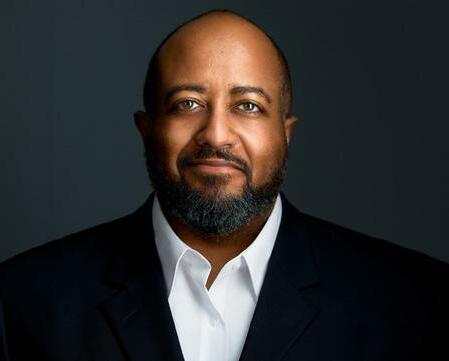
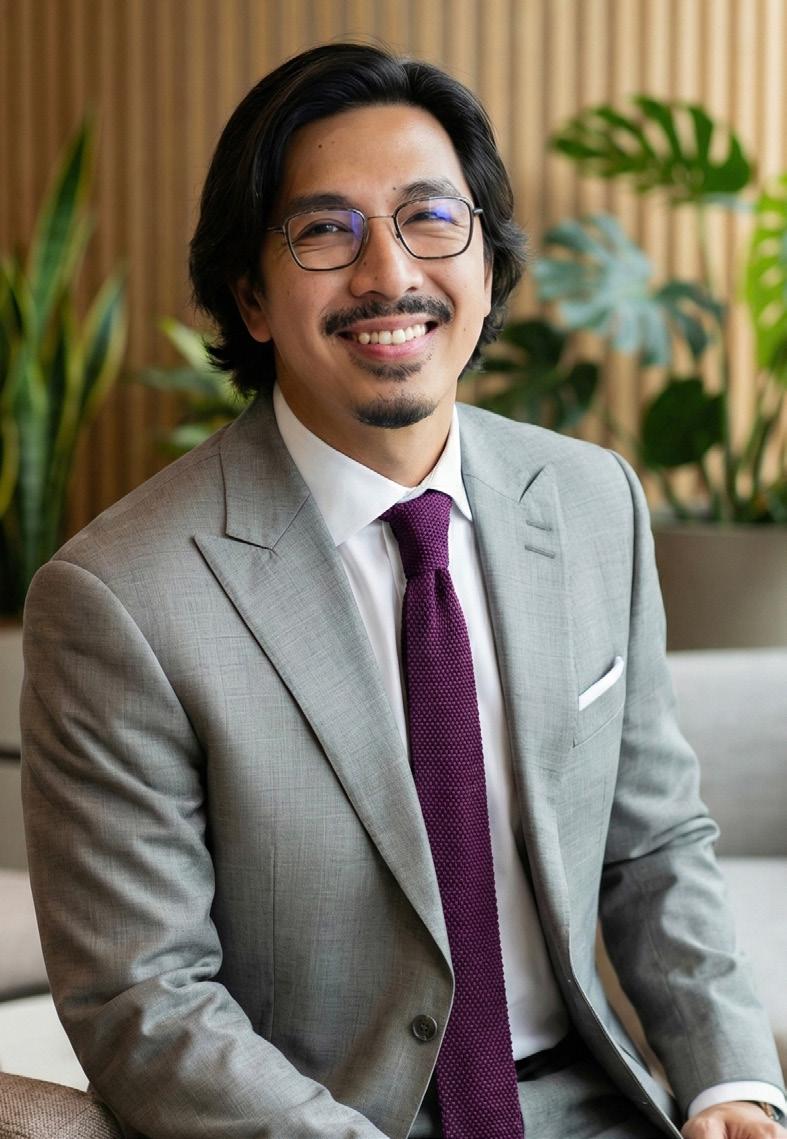
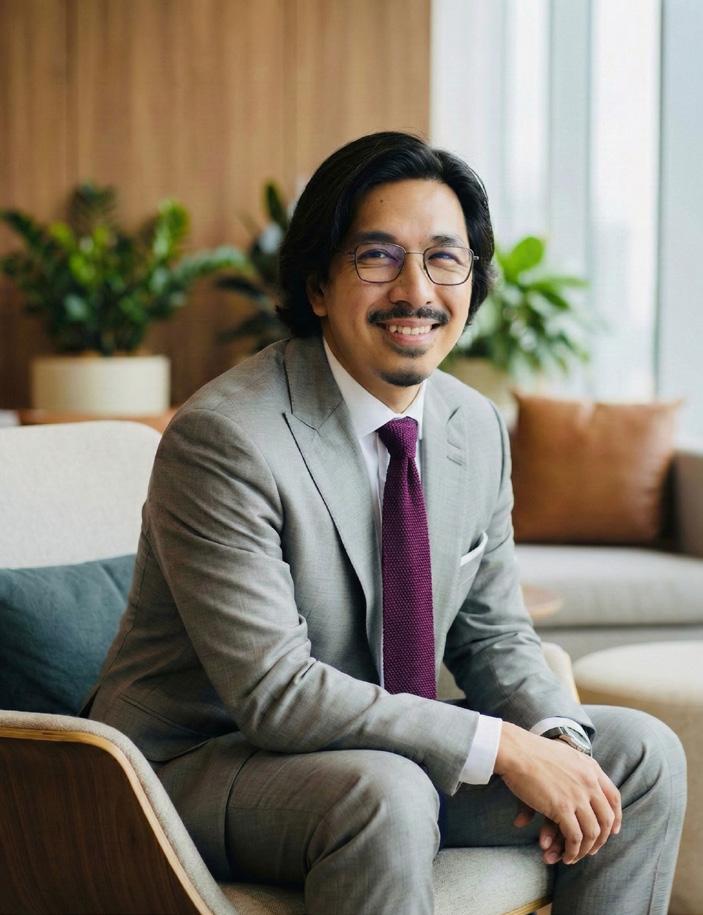
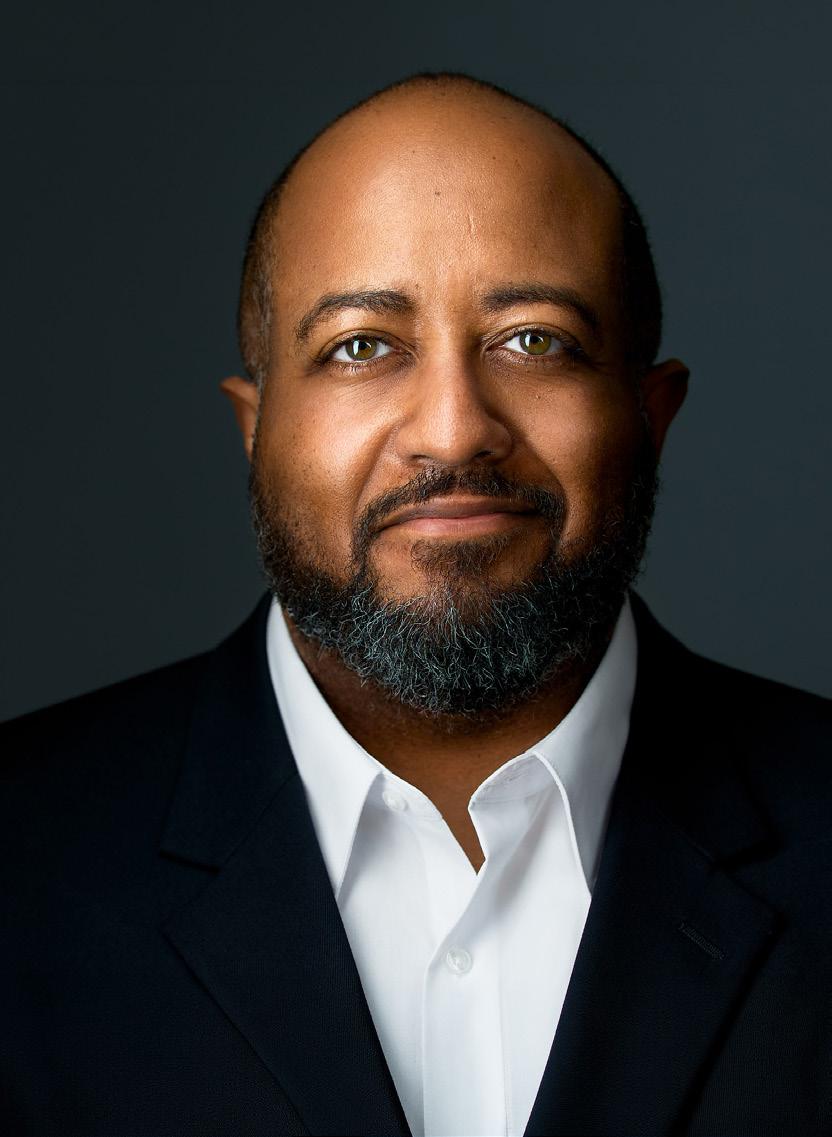
Jef R. Lacson Chief Financial Officer, UnionDigital Bank
Renard Henry Speaker & Technology Leader, Black Belts & Boardrooms Podcast
Shruti Harish Solution Engineering General Manager, Manufacturing and Mobility, Microsoft
PAOLO PELLEGRINI
PARTNER,
METYIS
HARNESSING AI FOR SUSTAINABLE GROWTH
June 2026
Creative Consultants
Charlie Jameson
Louis Bernard
Managing Editor
Sarath Shyam
Branding & Marketing Partnerships
Jennifer Anderson
Monica Davis
Jessica Edword
Consultant Editors
Dr. John Andrews
Emma James
Andrew Scott
Sabrina Samson
Editorial Enquiry admin@cxooutlook.com
Naomi Wilson
Stanly Lui
Steve Hope
Keith Alexander
Anna Elza
Stephen Donnell
Susan Miller
Partnerships Enquiry admin@cxooutlook.com
Asia-Pacific International Partnerships admin@cxooutlook.com
CXO Outlook www.cxooutlook.com is a global knowledge sharing digital platform published by Connecta Innovation Private Limited. All rights reserved. The opinions expressed in the content and pictures provided are those of the authors. They do not purport to reflect the opinions or views of Connecta Innovation Private Limited or any of its members and we do not assume any responsibility. The publisher does not assume any responsibility for the advertisements, its content, pictures, and all representation of warranties made in such advertisements are those of the advertisers and not of the publisher. CXO Outlook www.cxooutlook.com is a Free Subscription and Free-to-read digital platform strictly not for sale and has to be strictly for internal private use only. Publisher does not assume any responsibility arising out of anyone modifying content and pictures, printing a copy of this digital platform in any format and in any country and all matters related to that.
The Skills Machines Cannot Replicate
There is an interesting paradox unfolding in today’s business world. As artificial intelligence becomes more capable of analyzing data, automating workflows, and generating insights, the qualities that make us human are becoming more valuable than ever.
Not long ago, business leaders were expected to be the most knowledgeable people in the room. Today, information is available instantly, and AI can process vast amounts of data in seconds. Yet organizations continue to face challenges that cannot be solved by algorithms alone. Questions of trust, ethics, culture, purpose, and human connection remain firmly in the hands of leaders.
I have often observed that the most memorable leaders are rarely those with all the answers. Instead, they are the ones who ask the right questions, inspire confidence during uncertainty, and bring people together around a shared vision. This reality is becoming even more relevant as AI reshapes the workplace. According to recent industry reports, AI adoption across enterprises continues to accelerate, but many organizations still struggle
to translate technological capability into meaningful business value. The challenge is no longer access to technology; it is how leaders guide people and organizations through transformation.
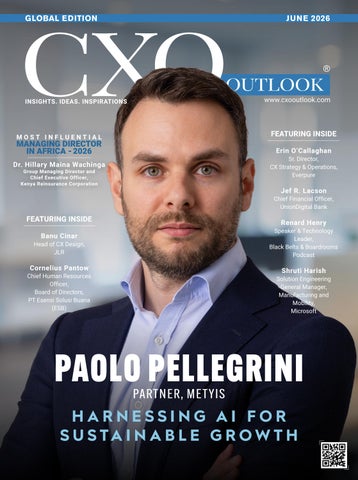
This theme resonates strongly with our cover story featuring Paolo Pellegrini, Partner at Metyis. Throughout our conversation, Paolo shares a compelling perspective on the evolution of AI from a tool for automation to a catalyst for entirely new business models. Drawing on years of experience helping organizations integrate data and AI into strategic decisionmaking, he highlights a future
where leaders will increasingly manage AI agents while relying more heavily on uniquely human capabilities such as judgment, creativity, emotional intelligence, and ethical reasoning. His insights offer a thoughtful roadmap for navigating a rapidly changing business landscape.
Beyond our cover feature, this edition of CXO Outlook brings together a diverse collection of interviews, expert perspectives, and thoughtprovoking articles that explore leadership, innovation, business transformation, and the evolving future of work. Together, they offer valuable lessons from leaders who are shaping industries and challenging conventional thinking.
As technology continues to redefine what is possible, the true differentiator will not be how effectively we compete with machines, but how deeply we cultivate the qualities that machines cannot replicate. I invite you to explore this issue and discover the ideas, experiences, and perspectives that will help define the next chapter of leadership.
Enjoy reading.
Sarath Shyam
PARTNER, METYIS
Dr. Hillary Maina Wachinga
Group Managing Director and Chief Executive Officer, Kenya Reinsurance Corporation
Building Resilience in an Age of Uncertainty
Breaking the ScaleUp Paradox: How We Turned Finance into a Strategic Compass
Jef R. Lacson, Chief Financial Officer, UnionDigital Bank
Designing Effective AI Use Cases Through Human-Centric Thinking
Banu Cinar, Head of CX Design, JLR
The Long Shadow of 2026: Why the Next Crisis Will Not Look Like the Last
Cornelius Pantow, Chief Human Resources Officer & Board of Directors, PT Esensi Solusi Buana (ESB)
Shruti Harish, Solution Engineering General Manager, Manufacturing and Mobility, Microsoft
PAOLO PELLEGRINI
HARNESSING AI FOR SUSTAINABLE GROWTH PARTNER, METYIS
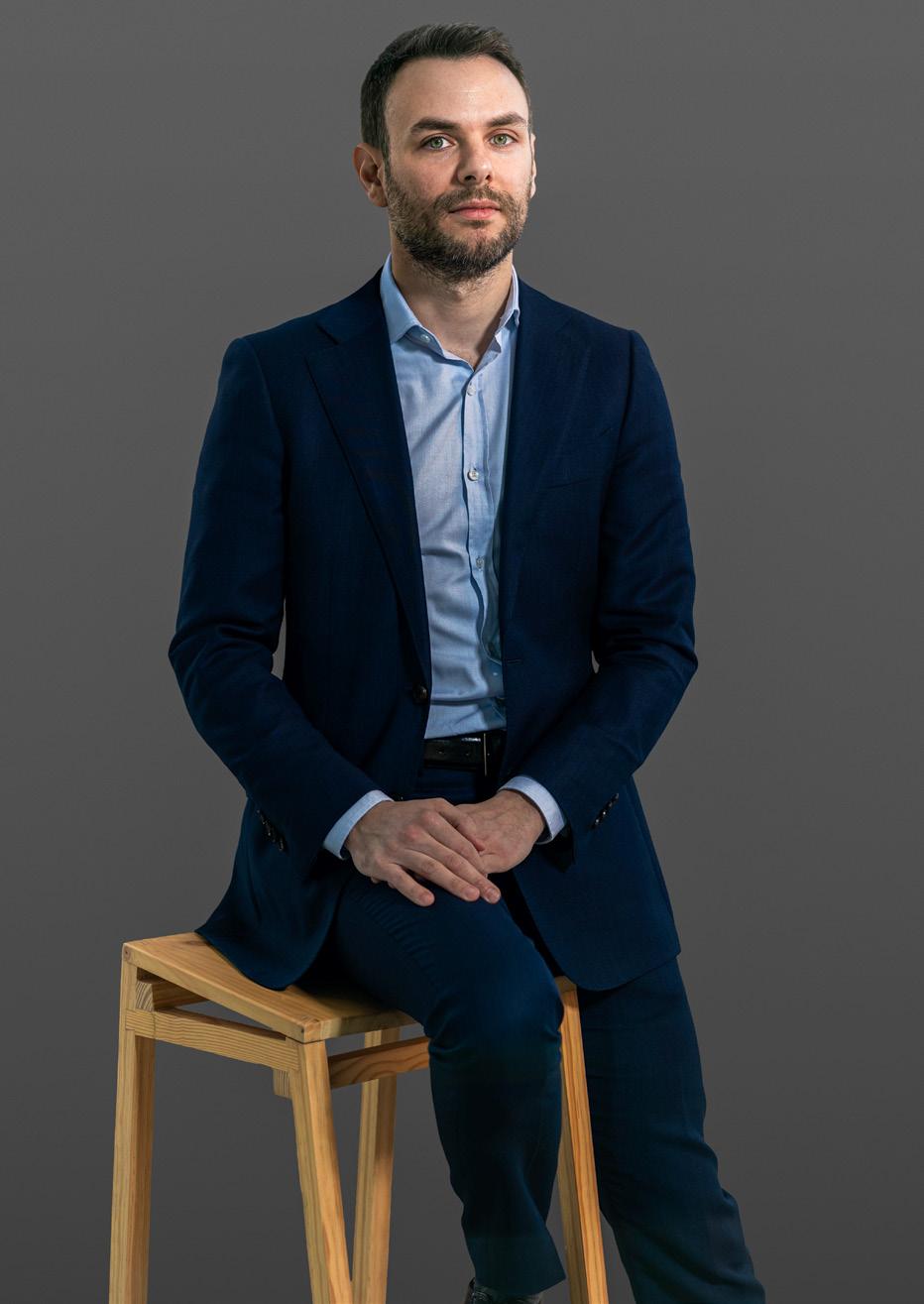
Paolo Pellegrini is a Partner at Metyis, where he supports large organizations in leveraging data and AI to drive strategic decisions and build AI-driven business models. With experience across industries and functions, he focuses on embedding intelligence into how companies operate, decide, and grow. He specializes in bridging data and strategy, helping organizations move beyond automation toward new value creation models. In 2019, he led the development of one of the first Italian LLM initiatives, anticipating the rise of generative AI. Previously, he held leadership roles in consulting and worked as a Researcher at Politecnico di Milano on Big Data and emerging digital technologies. Recently, in an exclusive interview with CXO Outlook Magazine, Paolo shared insights into the transformative impact of AI on business operations and strategy, emphasizing the need to shift from automation to creating new value models. Paolo also discussed the future of work and leadership, predicting that leaders will manage AI agents and require new skills and cognitive abilities, with emotional intelligence becoming crucial in AI-mediated environments. The following excerpts are taken from the interview.
Hi Paolo. As industries continue to evolve, how is AI transforming business operations and strategy?
The transformation driven by AI has been, and continues to be, one of the fastest and most pervasive in recent history – undoubtedly accelerated by the mass adoption triggered by ChatGPT. Yet, despite the widespread perception that we are already fully immersed in this revolution, we are still in its early stages. This is not just a matter of business adoption or the number of use cases developed, but of understanding AI’s true potential and its ultimate point of application.
The window to fully grasp and see this potential consolidate is much shorter than most expect: within the next two years at most, its real trajectory will become clear. Today, however, the market still tends to interpret AI as a layer of automation. That is the real limitation.
AI is not about doing what we already do better: it is about making what we do today obsolete.
To be concrete: it is not about reducing the time required to produce a report, but about building systems that eliminate the need for reports altogether; not about improving how people work, but about redefining the very concept of human work and its traditional boundaries; not about scaling existing businesses more efficiently, but about creating offerings that are inherently AI-native and could not exist without it.
Only those companies that start building proprietary AI-based assets today will be able to establish a meaningful competitive advantage in the medium to long term. But this requires a fundamental shift: it is not about replacing people with agents, but about rethinking from
the ground up both the operating model and the value proposition brought to market. Those who use AI for efficiency stay in the game; those who use it to redefine their role in the market will reshape the game itself.
Another often overlooked aspect is that building AI-based systems is fundamentally different from developing traditional software. There is no stable end state: these systems continuously evolve – because the underlying models evolve, and because the ways in which their capabilities can be integrated into products are virtually limitless.
This also fundamentally changes how investments should be assessed. Traditional ROI frameworks – built on closed business cases and FTE reduction – are no longer adequate. An AI system is never truly “finished” and never enters a simple maintenance phase. When that becomes the metric, it signals a tactical use of AI rather than a systemic, transformative one.
To some extent, the supply side also contributes to slowing down this transformation. Many players have positioned themselves around AI without having developed true maturity, often replicating traditional models. However, it is not sustainable to approach AI with the logic of traditional software or consulting: long projects, rigid roadmaps, and months before delivering value. The shift has already happened, but market inertia is still protecting many incumbents. Activities that once required projects worth hundreds of thousands, with months of analysis and development, can now be delivered in a fraction of the time and cost. What makes AI powerful – its ability to make advanced capabilities widely accessible at low cost – also makes it deeply disruptive for professional services,
An AI system is never truly “finished” and never enters a simple maintenance phase
putting entire pricing and delivery models under pressure.
As a result, B2B players must fundamentally evolve: moving beyond pure consulting or custom development toward building reusable assets, hybridizing consulting, software, and SaaS models, and focusing on scalability rather than one-off delivery.
This is the real transformation underway –and, as of today, very few organizations have both the vision and the willingness to fully embrace it.
What are the most significant opportunities and challenges AI presents for companies in terms of customer experience and engagement?
The first thing to acknowledge is that we are experiencing a form of collective amnesia.
Until recently, the dominant themes were real-time, one-to-one personalization, and data-driven decision making. Today, as AI has become mainstream, all of this seems to have been pushed into the background, as if it had suddenly become less relevant. The same applies to data science and advanced analytics. For more than a decade, they represented the effort, often complex and imperfect, to build systems capable of anticipating customer behavior and enabling proactive actions.
These elements have not disappeared. On the contrary, they remain the very foundations on which AI will also have to rely when it comes to customer experience. The problem is that, in most organizations, those foundations are still weak. Systems remain fragmented, data is distributed, and decision logic is disconnected. These are the same limitations that slowed down the adoption of machine learning, and they inevitably limit AI as well. It is hard to imagine building a serious predictive model without a proper data layer, without breaking silos, without coherent data structures. Yet there is a growing belief that AI can operate in a plugand-play fashion within one of the most complex domains: customer relationships, where signals are inherently fragmented and inconsistent.
There is a fundamental difference between automating an isolated task and having a coherent, end-to-end understanding of the customer, supported by systems capable of making decisions and orchestrating actions across legacy environments.
This is where the real challenge emerges.
The challenge is not AI. The challenge is everything required for AI to actually work. The only way this gap is currently being framed as solvable, without addressing the underlying foundations, is through the idea
of agents. In theory, agents should be able to navigate fragmented systems, interpret context, make decisions, and orchestrate actions autonomously, effectively compensating for structural weaknesses.
The reality is that, today, these agents do not truly exist.
In most cases, what is labeled as “agentic” is nothing more than prompt-driven logic orchestrating existing APIs. This is not a fundamentally new paradigm. It is a more accessible and flexible layer on top of what already existed. True agentic systems are still in their early stages, although recent developments suggest that direction is starting to take shape.
At this point, two possible trajectories emerge.
The first is that agents evolve into truly autonomous systems, capable of navigating complex environments faster and more effectively than humans.
The second is that the software ecosystem adapts to become agent-friendly, exposing interfaces designed to be operated by autonomous systems.
Both scenarios come with significant challenges.
The first collides with the inherent entropy of real-world digital environments, where actions are fragile, non-standardized, and constrained. The second would require a level of alignment across vendors that is unlikely, as most players have little incentive to make their systems fully interoperable and controllable by external agents.
In other words, the most advanced vision of AI-driven customer experience, one that is autonomous, adaptive, and proactive, is technically plausible but still far more distant and complex than current narratives suggest.
However, if the main challenge is still structural and technical, the opportunity is equally significant.
AI has the potential to fundamentally reshape how companies are perceived and interacted with by customers. In the near future, product and service discovery will increasingly happen through AI systems rather than traditional interfaces. Retail experiences will be augmented and mediated by intelligent layers. The entire lifecycle, from discovery to post-sale, will progressively become AI-driven.
Digital transformation has already exposed deep inconsistencies across the value chain, creating friction between channels, data, and interactions. AI introduces the possibility to
Digital transformation has already exposed deep inconsistencies across the value chain, creating friction between channels, data, and interactions
finally address this fragmentation, not by adding more layers, but by orchestrating them.
This is why AI is once again a true game changer. But it is not one that can be adopted passively.
Companies will not win by simply deploying AI capabilities. They will win by rethinking who they are for the customer, what value they deliver, and how that value is generated and experienced.
The technological trajectory, especially around agentic systems, is still evolving and far from fully defined. That makes this moment both powerful and dangerous. The opportunity is enormous. But only for those willing to question their assumptions, rebuild their foundations, and actively shape their own path through this transition.
Everyone else will simply adapt to it
How is AI impacting the skills and capabilities required for leaders and teams to drive business success in the future?
No one today has a definitive answer to what the future of work will look like once AI is fully mature and deeply embedded across organizations.
If we look at a manufacturing context and imagine factories populated by autonomous robots, it becomes relatively intuitive to picture a scenario where a “line manager” is no longer managing people, but systems. These would not be static, single-purpose machines, as we often see today, but flexible systems capable of adapting to context, switching tasks, and taking on different roles depending on operational needs. Precisely because of this flexibility, the challenge would not simply be to operate them,
but to orchestrate them. Even if such systems are able to self-organize to some extent, the presence of many dynamic and interchangeable units would still require a higher level of control. Someone would need to decide how to allocate them, which roles they should take on, and how to balance priorities over time.
If this is a plausible evolution in industrial environments, it is reasonable to expect a similar shift in service-based organizations.
Managers will not only lead people. They will increasingly manage AI agents.
Systems that execute operational tasks, make decisions, and need to be continuously monitored, guided, and adjusted. In a scenario where these agents become sufficiently reliable, a single individual could be responsible for overseeing hundreds of interconnected operational nodes. The equivalent of managing a very large team, but without the traditional signals that come from human interaction.
Today, a manager can walk into a room, sense the atmosphere, observe subtle signals, and understand where attention is needed. In the future, this same capability will need to be applied to systems rather than people. While this may sound like an extension of current management practices, it introduces a fundamentally different level of complexity. And it may be one of the few viable ways to maintain real control over increasingly autonomous systems, ensuring that accountability still exists.
If this scenario materializes even partially, the skills required will change dramatically. Not only from a technical perspective, but also from a cognitive and psychological one.
There is, however, a very concrete issue that remains unresolved: how will this manager actually observe and interact with such systems?
Leaders will need to be followed by people who will struggle to adapt to new ways of working, who may resist giving up established habits and comfort zones
Today, the tools used to build AI agents do not yet provide effective ways to visualize these systems in action, either individually or in their interactions. Nor do they offer truly evolved interfaces to keep humans meaningfully in the loop. In most cases, we are still relying on traditional dashboards and alerts.
For this reason, it is difficult to imagine the future of work without also rethinking physical workspaces.
We may see the emergence of environments specifically designed to visualize and interact with
complex agent-based systems, through advanced visual interfaces, voice commands, or even gestural interactions. Spaces where orchestration and control become central activities.
If that happens, not only organizational structures will be challenged, with a likely reduction in purely operational roles, but also concepts such as remote work may need to be reconsidered. Being physically present in an environment that allows full visibility and control over these systems could become as critical as being on a production floor today.
Regardless of the exact scenario that will unfold, one point already stands out. In an increasingly agent-driven world, the role of leadership will not diminish, but expand. Leaders will not only guide people, but also systems and machines. And for this reason, the most important capability will be one of the oldest and most overlooked: the ability to be followed.
Leaders will need to be followed by people who will struggle to adapt to new ways of working, who may resist giving up established habits and comfort zones.
But they will also need to be followed by machines.
Not in the simplistic sense of using them, but in a much deeper way: being able to direct them. Leaders will need to understand their business so thoroughly that they can translate it into operational logic, decision frameworks, and agentic behaviors. They will need to clearly define how these systems should act, which decisions they should make, and how they should handle trade-offs.
In other words, they will need to build systems that execute a vision.
This is the real inflection point. The potential of machines will be broadly the same for everyone. The same models, the same tools, often even the same providers. The difference will not lie in the technology itself, but in how it is interpreted, guided, and aligned with a clear vision.
This is where the human factor becomes central again.
Not because humans will outperform machines in execution, but because they are the only ones capable of providing direction, context, and meaning to what machines do.
In the end, companies will not differentiate based on the AI they use, but on the ability of their leaders to turn that AI into something truly distinctive. And that will require a rare combination: vision, deep business understanding, and the ability to make both people and systems follow it.
Looking back, what accomplishment are you most proud of, and what did you learn from it?
In an era where everyone talks about AI, and where most companies rely on the same large language models provided by a handful of players, my sense of pride naturally goes back to 2019, when I worked on building one of the first proprietary LLM systems.
At the time, the term “Generative AI” did not even exist, and no widely accessible model was available. But it was already clear to me that companies would need machines capable of generating text, not just to reduce manual effort, but to better control how communication is crafted and optimized for business performance.
The initial inspiration was very simple: subject lines for emails, SMS campaigns, push notifications.
It was evident that performance depended on recurring patterns such as urgency, scarcity, and personalization, typically applied based on the intuition of copywriters. The idea was to move beyond intuition and build a system that could generate text not purely creatively, but by leveraging patterns learned from historical data.
We designed a system where text generation was guided by models trained on past communication, analyzing linguistic variations, contextual signals, and their correlation with performance outcomes. The goal was not just
to generate content, but to suggest the most effective formulation for the next interaction.
Turning that intuition into a working model was both complex and, in many ways, exploratory.
With a very small team, just two highly capable people, and a strong strategic direction, we were able to develop a functioning system in less than three months. When tested in real campaigns, it delivered consistent doubledigit improvements.
From there, the challenge evolved toward generating longer and more general-purpose text, similar to what today’s LLMs produce. The main limitations were infrastructure and, most importantly, access to high-quality data.
This is where we had a unique opportunity. We partnered with one of the largest publishing houses in Italy, gaining access to tens of thousands of books accumulated over decades. This allowed us to train models on a much richer and more structured linguistic base, moving beyond narrow use cases into a more holistic understanding of language.
Looking back, beyond the intuition and the technical achievement, what I value most today is the perspective that experience created.
There is a fundamental difference between using AI and building it.
Today, AI capabilities are widely accessible. The same models, the same APIs, available to almost anyone. In many ways, they are becoming a commodity.
What remains rare is a deep understanding of how these systems actually work. How they process information, how they generate outputs, and where their limitations and failure modes lie.
Having built such a system from the ground up provides a very different level of awareness. It changes how you design solutions, how you evaluate results, and how you think about the role AI should play within a business. In a world where access to technology is increasingly equal, this difference in understanding becomes a key source of advantage. Because ultimately, the real distinction is not between those who use AI and those who do not, but between those who treat it as a tool and those who truly understand what sits behind it.
What’s the importance of emotional intelligence in leadership, and how can leaders cultivate it?
Emotional intelligence will become a foundational and highly differentiating asset in the future of work.
But not in the traditional sense.
The point is not to humanize AI, or to pretend machines have emotions. The real shift is how human emotional dynamics will evolve in environments increasingly mediated by AI.
This is something I have been exploring for some time with a psychologist who focuses on digital well-being, studying the long-term effects of hyperconnectivity on how we think and behave. AI is adding a completely new layer to that conversation.
Today, we still underestimate how much time we spend interacting with AI systems. Some people say it is still less than the time we spend on our phones. But that comparison misses something important.
AI does not just distract us. It engages us. These systems simulate human interaction remarkably well. They are helpful, responsive, often extremely agreeable. Sometimes, they
Emotional intelligence will become a foundational and highly differentiating asset in the future of work
even feel a bit too agreeable. I am not suggesting that AI providers are deliberately trying to win us over with overly flattering responses, but it is hard to ignore that these systems tend to reinforce our thinking, validate our inputs, and make the interaction feel very comfortable.
Over time, this has an effect.
We start treating these interactions as if they were real. We lower our skepticism. We respond to them using the same cognitive patterns we use with other people. You already see this happening. People asking AI for personal advice, for relationship guidance, even for life decisions.
Assuming this dynamic will not enter the workplace is, in my view, unrealistic.
Now imagine combining this with a future where a significant part of our day is spent managing and interacting with AI agents. The risk is not the absence of interaction. It is the substitution of human interaction with something that looks similar, but is fundamentally different.
And this is where culture becomes critical.
I come from Italy, where something as simple as a coffee break is almost an institution. People gather, talk, exchange views, often about work, sometimes about life. It may not look productive, but it creates alignment, trust, and a shared understanding that is very hard to replicate through structured processes. A future where these moments disappear is technically possible. But it is not neutral.
Different cultures, different organizations, and different individuals will react to this shift in very different ways.
This is why emotional intelligence will matter so much.
Leaders will need to understand not only what their organizations are doing, but how people are experiencing this transformation. They will need
The challenge I am most excited about is how to reinvent consulting by combining it with education, turning it into a true empowerment service
to recognize new forms of disengagement, new dependencies, and subtle changes in behavior that are still not fully understood.
There are no ready-made frameworks for this. And this brings us to the real point: emotional intelligence, in this context, is not about being empathetic in a traditional sense. It is about understanding what is happening beneath the surface and acting on it.
Because ultimately, technology will be scalable and widely accessible. Human response will not. And the leaders who will make the difference are those who can read it, interpret it, and guide it before it becomes a problem.
If you could have dinner with any historical figure, who would it be and why?
In a world so heavily exposed to AI, and in a role like mine where this topic is constant, I increasingly feel a sense of urgency to reconnect with something physical.
Something that brings us back to reality. A world where objects exist, and where those objects create value not only through their function, as AI does, but also through their design, their story, and their connection to people’s lives.
In the objects of the past, there are cultural, social, and even philosophical layers that will be very difficult to fully replicate in a future dominated by digital interactions and outputs. For this reason, I would not choose just one person to have dinner with. I would go back and meet a series of entrepreneurs who fundamentally reshaped how business works.
I would like to sit down with Isaac Singer and understand how he not only built the first widely adopted complex household machine, but also invented the installment payment model to make it accessible to a broader market.
I would then join André and Édouard Michelin and hear how the idea of the Michelin Guide emerged, a brilliant move to stimulate travel and, indirectly, increase demand for tires.
And I would love to spend time with Ole Kirk Christiansen, when he transitioned Lego from wooden toys to the interlocking brick system that we still use today, creating a product with almost infinite combinatorial potential.
What fascinates me about these stories is not just the innovation itself, but the clarity of the underlying business logic. These were not abstract systems. They were tangible, grounded, and deeply connected to real customer needs.
Despite my passion for technology, and my excitement about the transformations we are living through, there is something in that world that feels more direct, more authentic. You can almost sense the proximity between the idea, the product, and the customer. And I believe there is a lesson in that.
Understanding those stories helps us reconnect with the fundamental mechanisms of business. It reminds us that, beneath all the layers of technology we are building today, the core dynamics remain the same.
If anything, the more complex our systems become, the more important it is to remember where real value is created. Because in the end, technology evolves but the principles that make businesses meaningful and sustainable tend to remain unchanged.
What’s something on your bucket list that you’re excited to tackle soon?
As someone who has spent years working with large organizations on strategy and AI, I feel genuinely excited to be living through this moment.
As mentioned earlier, everything in professional services is changing, and will continue to change even more rapidly. For many, this is a source of concern. And understandably
so: shifting entire organizations, long-standing processes, and business models that have proven to work over time is never easy.
Personally, I tend to see these moments differently. They force me to stop, reflect, and rethink how my own role is evolving. They push me to question what I do, and how I can reshape it to create more value.
Over the years, I have had the opportunity to work across different models, from pure strategy design to outsourcing, and more hybrid approaches where the goal is to help clients build capabilities internally. That last dimension, in particular, is becoming increasingly central. In many ways, the role is moving closer to that of an educator.
Clients do not just want solutions. They want to understand, master, and use AI themselves. And while technology is becoming more accessible, the ability to interpret it, apply it, and integrate it into real business contexts still requires guidance.
This is where I see the next evolution of the industry. The challenge I am most excited about is how to reinvent consulting by combining it with education, turning it into a true empowerment service.
Not just delivering answers, but enabling organizations to develop their own.
This will not be straightforward. It means questioning not just one model, but at least two: traditional consulting and traditional training. And then designing something new in between. But that is exactly what makes it interesting. Because in a world where technology becomes increasingly accessible, the real value shifts from providing solutions to building the capability to create them. And that is a transformation I am very keen to be part of.
MOST INFLUENTIAL MANAGING DIRECTOR IN AFRICA - 2026
Dr. Hillary Maina Wachinga
GROUP MANAGING DIRECTOR AND CHIEF EXECUTIVE OFFICER, KENYA REINSURANCE CORPORATION
BUILDING RESILIENCE IN AN AGE OF UNCERTAINTY
For many industries, reinsurance operates quietly in the background, rarely visible to the public yet essential to economic stability. It is the mechanism that allows businesses to invest confidently, infrastructure projects to move forward, and communities to recover when uncertainty strikes. That quiet influence is precisely what drew Dr. Hillary Maina Wachinga to the profession and continues to shape his leadership today. “What drew me to reinsurance is that it is one of those industries that works quietly in the background, yet it makes so much possible. When businesses invest, when farmers plant, when infrastructure is built, there is always risk in the background,
and reinsurance helps society carry that risk,” he says.
Since his appointment as Group Managing Director and Chief Executive Officer of Kenya Reinsurance Corporation in March 2023, Dr. Wachinga has approached the role with the mindset of a steward rather than a headlinedriven executive. He assumed leadership at a pivotal time for the Corporation, as Kenya Re was implementing its 2022-2026 Strategic Plan, embedding IFRS 17, strengthening underwriting discipline, and preparing for a new phase of regional and international growth.
By the time he stepped into office, Kenya Re had already established itself as one of the most respected composite reinsurers in
HILLARY MAINA WACHINGA, GROUP MANAGING DIRECTOR AND CHIEF EXECUTIVE OFFICER, KENYA REINSURANCE CORPORATION
DR.
Eastern and Central Africa, with operations extending across Africa, the Middle East, and Asia. Its subsidiaries in Côte d’Ivoire, Zambia, and Uganda, alongside an extensive network of cedants and brokers, gave the Corporation both scale and regional influence. For Dr. Wachinga, however, the task was not simply about preserving momentum. It was about strengthening the institution from within.
“My immediate priority was to make sure Kenya Re was positioned on a strong and healthy foundation,” he explains. That meant taking an honest look at the quality of the business being carried, making difficult but necessary portfolio decisions, and strengthening systems and reporting structures across the organization. He also viewed IFRS 17 not merely as a compliance requirement, but as a management discipline capable of improving visibility, accountability, and long-term decision-making.
Under his leadership, the Corporation’s direction has become increasingly defined by discipline and sustainability. Rather than chasing growth for appearance’s sake, Dr. Wachinga has focused on improving the quality of the underwriting book, protecting
the balance sheet, strengthening partner relationships, and building a stronger platform for the future. Life reinsurance expansion, talent development, and regional growth have emerged as central pillars of that long-term vision.
Colleagues and industry peers often describe him as a leader who combines technical depth with calm execution. He brings a measured style to an industry shaped by volatility and constant change, balancing strategic clarity with humility and a visible respect for people. “I strive to lead with strategic clarity and humility, combining technical depth with compassion, while maintaining high performance standards alongside a genuine concern for people,” he says.
That balance between performance and stewardship has come to define his leadership journey at Kenya Re. At a time when many organizations are pressured to prioritize shortterm optics, Dr. Wachinga has remained focused on building resilience, strengthening institutional trust, and preparing the Corporation for the next chapter of growth in an increasingly complex global risk environment.
Rather than chasing growth for appearance’s sake, Dr. Wachinga has focused on improving the quality of the underwriting book, protecting the balance sheet, strengthening partner relationships, and building a stronger platform for the future
Building Strength Through Discipline
Dr. Wachinga, leadership begins with discipline. Not the rigid, top-down kind often associated with financial institutions, but a quieter form rooted in judgment, accountability, and long-term thinking. In an industry where every decision carries financial consequences, he believes leadership must balance technical precision with honesty and human understanding. “I believe in disciplined leadership, transparent leadership, and people-centered leadership. Discipline is important because in our business not every opportunity is the right opportunity. Transparency matters because numbers tell a story, and leaders must be honest enough to listen to that story,” he says.
That philosophy has shaped the direction of Kenya Reinsurance Corporation since Dr. Wachinga assumed leadership in 2023. Rather than pursuing rapid expansion for appearance’s sake, his focus has been clear and deliberate: strengthen the institution, improve the quality of business, protect capital, and position Kenya Re for sustainable long-term growth. Underwriting discipline, portfolio quality, claims responsiveness, regulatory compliance, and measured diversification have become central pillars of that strategy.
Some of the most important decisions under his leadership were also the most difficult. Kenya Re undertook a deliberate clean-up of parts of its portfolio, prioritizing technical quality over sheer volume. It was a move that required patience and conviction, particularly in a market where growth is often judged through headline premium numbers. At the same time, the Corporation strengthened its capital position, sharpened underwriting discipline, and accelerated efforts to expand its life reinsurance
business beyond domestic borders. Regional market presence was also reinforced through subsidiaries positioned closer to clients and cedants.
The results of that disciplined approach soon became visible. In 2024, Kenya Re recorded an insurance service result of approximately KSh 2.95 billion, a significant increase from KSh 677 million in 2023. The Corporation’s IFRS 17 net/ net combined ratio also improved sharply from 97.7 percent to 78.1 percent during the same period. For Dr. Wachinga, the improvement reflected more than financial progress. It signaled a strategic shift toward building a healthier and more sustainable underwriting book.
“That discipline required difficult but necessary decisions, including the strategic withdrawal from certain loss-making markets. While such decisions may have a short-term impact on premiums, they were important in creating a cleaner and more technically sound book,” he explains.
The timing of these decisions made them even more significant. Kenya Re was navigating a demanding external environment shaped by hardening retrocession markets, rising retrocession costs, domestication requirements across several African markets, intense competition, and ongoing rating-related constraints. Yet throughout this period, Dr. Wachinga maintained a measured approach centered on preserving capital, strengthening the portfolio, and protecting the institution’s long-term stability.
What emerges from his leadership style is a willingness to prioritize resilience over optics. While some leaders chase fast expansion, Dr. Wachinga appears more focused on building an institution capable of enduring cycles,
absorbing shocks, and remaining trusted in uncertain times. It is a philosophy grounded less in urgency and more in stewardship, a belief that lasting institutions are built carefully, one disciplined decision at a time.
Expanding Confidence Across Markets
Reinsurance may operate behind the scenes, but its impact reaches across entire economies. It gives insurers the confidence to underwrite larger risks, supports investment and infrastructure development, and helps businesses recover when uncertainty strikes. In emerging markets especially, that role becomes even more critical. Access to capacity, technical expertise, and stable risk-sharing structures can shape the pace of economic progress itself. “Reinsurance is really an enabler of economic confidence. When Kenya Re plays that role effectively, we are not just supporting insurance companies, we are supporting development, resilience, and economic continuity,” says Dr. Wachinga.
That broader understanding of the industry’s role has influenced Kenya Re’s strategic expansion under his leadership. One of the most significant milestones during this period has been the internationalization of the Corporation’s life reinsurance business. In 2025, Kenya Re Life expanded beyond a largely domestic focus into international markets across Africa, the Middle East, and Asia, marking a major step in diversifying the Corporation’s long-term reinsurance franchise.
The launch of the International Life Reinsurance Operations in February 2025 represented more than a product expansion. It reflected a deeper strategic ambition to build a more balanced and resilient business model. For Kenya Re, life reinsurance offers the
In 2025, Kenya Re Life expanded beyond a largely domestic focus into international markets across Africa, the Middle East, and Asia, marking a major step in diversifying the Corporation’s longterm reinsurance franchise
opportunity to diversify earnings, strengthen ties with cedants, and reduce dependence on the volatility that often characterizes non-life business.
At the same time, the Corporation has pursued selective geographic re-expansion. Plans for a Tanzania subsidiary, renewed engagement with India through GIFT City, and the establishment of a liaison office in Rwanda all point to a strategy built on measured growth rather than aggressive expansion. The sequencing has been intentional: consolidate first, strengthen the balance sheet, improve portfolio quality, and then expand from a stronger foundation.
Dr. Wachinga has also focused on strengthening the operational autonomy of Kenya Re’s subsidiaries in Côte d’Ivoire, Uganda, and Zambia. By enabling each subsidiary to report to its own board of directors, the Corporation has improved governance, increased local accountability, and strengthened responsiveness within regional markets. The impact has been practical as much as structural. Subsidiaries can now process and settle claims more efficiently without routine intervention from Head Office, reducing turnaround times and improving service delivery for cedants and clients.
Despite the pace of change across global insurance markets, Dr. Wachinga remains anchored in fundamentals. “I always remind myself that while the environment changes, the fundamentals do not. Sound underwriting, prudent capital management, good claims discipline, and strategic patience will always matter,” he says.
It is a perspective that reflects both caution and adaptability. Climate risk, regulation, technology, and geopolitical uncertainty
continue to reshape the global risk landscape, but his approach remains grounded in balance: remain disciplined on fundamentals while staying open to innovation and new tools. That balance has helped Kenya Re expand with confidence while maintaining the institutional stability that remains central to its long-term ambitions.
Relationships Built on Trust and Responsiveness
In reinsurance, trust is rarely built through marketing campaigns or public visibility. It is built quietly, often in moments of pressure, when clients expect speed, clarity, and certainty. For Dr. Wachinga, that responsibility sits at the center of what makes a reinsurer credible. Claims settlement, he believes, is where promises are truly tested.
Under his leadership, Kenya Reinsurance Corporation has sharpened its focus on timely claims processing, digital settlement systems, reserve discipline, and responsiveness to
cedants. The Corporation has also maintained an ambitious internal target of settling qualifying cash calls within 24 hours, a standard designed to reinforce confidence during critical moments for insurers and policyholders alike.
That operational focus has not gone unnoticed. During this period, Kenya Re received external recognition for rapid claims settlement, strengthening its reputation as a dependable reinsurer capable of responding with speed and discipline when clients need support most. For Dr. Wachinga, the recognition was less about awards and more about reinforcing the Corporation’s core responsibility to its partners.
At the same time, he has worked to bring greater structure and accountability to client relationship management. The Partner Awards Programme, launched in early 2024, reflected a broader shift in how Kenya Re measures partnership value. Cedants and brokers were recognized not only for premium volumes, but also for profitability, payment discipline, and
the quality of long-term collaboration. “For me, this sent an important message to the market. While Kenya Re values strong relationships, we equally value quality, discipline, and mutual responsibility,” Dr. Wachinga explains.
That balance between relationship-building and technical discipline has become an important part of Kenya Re’s identity under his leadership. Rather than attempting to mirror the scale of global reinsurance giants, Dr. Wachinga has focused on strengthening the advantages that come from regional proximity and market understanding.
“We do not try to compete by pretending to be something we are not. The large global players have strengths of scale, balance sheet, and rating depth. Our strength is different. Our strength is proximity to the markets we serve, understanding our clients, understanding the regional context, and being present where relationships and insight matter,” he says.
It is a philosophy rooted in realism rather than imitation. Kenya Re’s strategy has been to partner globally where scale is necessary while strengthening its regional leadership through responsiveness, accessibility, and local insight. That approach has shaped the Corporation’s broader growth strategy, particularly as it expands into carefully selected markets and business lines.
“Our approach has been deliberate: strengthen first, then expand from a position of confidence. The goal is not expansion for its own sake, but meaningful growth that is sustainable, profitable, and aligned to our longterm role as a leading African reinsurer with global relevance,” Dr. Wachinga says.
Alongside institutional strategy, Dr. Wachinga has remained personally engaged
in relationship-led business development. Through direct engagement with brokers, strategic partners, and market leaders across Africa and Asia, he has continued to position Kenya Re within key industry conversations. His participation in regional CEO summits, AIO platforms, FAIR networks, and technical exchanges reflects an understanding that relevance in reinsurance is built not only through financial strength, but through visibility, dialogue, and trusted partnerships.
As Kenya Re continues to expand its reach, those relationships remain central to its future. In a business built on confidence, trust still travels fastest through consistency, responsiveness, and the strength of long-term partnerships.
Preparing Kenya Re for the Next Era
For Dr. Wachinga, technology is not a separate conversation from leadership. It is part of how institutions remain relevant, responsive, and prepared for the future. Across the global insurance industry, data, automation, and artificial intelligence are reshaping how risks are assessed and how decisions are made. Kenya Re’s response under his leadership has been practical and deliberate rather than reactive. “Technology is now an important part of how we build a modern reinsurer. For me, technology is not just about systems; it is about helping people make better, faster, and more informed decisions,” he says.
Since assuming office, Dr. Wachinga has overseen efforts to deepen automation across key operational areas, including underwriting, claims management, finance, and reporting. The Corporation has also strengthened its use of data to improve visibility into profitability, market trends, and portfolio performance. These
Under Dr. Wachinga’s leadership, Kenya Re has encouraged staff readiness in areas such as artificial intelligence, data analytics, and prompt-engineering training, recognizing that the future of underwriting, claims management, and customer service will be increasingly technology-enabled
changes reflect a broader push to build stronger operational discipline while improving decisionmaking across the organization.
His background in risk management, compliance, and systems transformation has shaped much of this approach. Under his leadership, Kenya Re has strengthened financial reporting structures, improved documentmanagement systems, and advanced the implementation of IFRS 17 across the Group. What stands out, however, is the way he speaks about the transition. For him, IFRS 17 was never simply a regulatory requirement. It was an opportunity to improve institutional clarity and strengthen the quality of management information across the business. “It required stronger data discipline, closer actuarial coordination, better systems alignment, and clearer performance measurement across the organization,” he explains.
Alongside systems transformation, Dr. Wachinga has placed equal emphasis on people development. The launch of the Kenya Re Training Academy in September 2023 marked an important investment in technical capability, both internally and across the Corporation’s wider network of cedants and partners. The Academy has since hosted technical exchanges
with global industry players and become an important platform for knowledge-sharing within the market.
He views learning as an institutional responsibility rather than an optional initiative. “Institutions grow by continuously investing in and developing their people,” he says, a belief that has increasingly shaped Kenya Re’s internal culture.
That future-focused mindset also extends to emerging technologies. Under Dr. Wachinga’s leadership, the Corporation has encouraged staff readiness in areas such as artificial intelligence, data analytics, and prompt-engineering training, recognizing that the future of underwriting, claims management, and customer service will be increasingly technology-enabled.
Yet even as Kenya Re embraces new tools, Dr. Wachinga’s approach remains grounded in balance. Technology, in his view, should strengthen judgment rather than replace it. Systems can improve speed and accuracy, but institutions still depend on thoughtful leadership, capable people, and disciplined decision-making.
That balance between innovation and institutional discipline continues to shape Kenya Re’s evolution. As the industry enters a more data-driven and interconnected era, the
Corporation is not simply adapting to change. It is preparing to compete within it, with stronger systems, stronger people, and a clearer sense of purpose.
Leading with Discipline and Institutional Trust
In the reinsurance business, stability is never accidental. It is built through disciplined underwriting, strong governance, and the ability to make difficult decisions before problems become visible. For Dr. Wachinga, those principles have remained central to his leadership at Kenya Reinsurance Corporation.
His professional background in risk management and compliance has shaped a leadership style grounded in governance, internal controls, and long-term institutional resilience. Under his leadership, Kenya Re has maintained solvency compliance across its key jurisdictions while continuing to engage closely with regulators, policy makers, and industry stakeholders across its markets.
“In our business, underwriting discipline is not optional; it is the heartbeat of sustainability. If you get risk selection wrong, everything else becomes much harder,” Dr. Wachinga says. That philosophy has influenced how Kenya Re approaches growth, partnerships, and portfolio management. The Corporation has placed stronger emphasis on technical discipline, profitability, and intentional risk selection rather than pursuing premium growth without regard for long-term sustainability. The shift reflects a broader effort to strengthen the quality of the underwriting portfolio while protecting the institution’s future stability.
The impact of that discipline has also been reflected in Kenya Re’s ratings performance.
During Dr. Wachinga’s tenure, the Corporation maintained a very strong balance-sheetstrength assessment from AM Best on a riskadjusted capitalization basis. In October 2025, the outlook on the Long-Term Issuer Credit Rating was revised to stable, an important signal that the Corporation’s underwriting, capital, and solvency measures were helping to reduce downside concerns. GCR also
maintained Kenya Re’s international and national ratings on a stable outlook.
While the Corporation continues to navigate the challenge of strengthening its headline international rating, Dr. Wachinga has approached the issue with measured persistence rather than short-term reaction. Kenya Re has continued pursuing rating-advisory initiatives, strengthening enterprise risk management frameworks, and reinforcing the technical, capital, and governance foundations required to support future ratings improvement.
What stands out in his approach is the consistency of the message. Growth matters, but sustainability matters more. In a sector shaped by volatility and uncertainty, institutional trust is earned slowly through discipline, transparency, and the ability to remain steady under pressure.
Building Financial Strength for the Long Term
Financial resilience has become one of the defining themes of Kenya Re’s recent journey. At a time when reinsurance markets have faced rising retrocession costs, intense competition, regulatory shifts, and capital pressures, the Corporation has remained focused on protecting its balance sheet and strengthening its long-term financial position.
Under Dr. Wachinga’s leadership, shareholders’ funds grew steadily from approximately KSh 40.77 billion at the end of 2022 to KSh 48.17 billion in 2023, KSh 49.67 billion in 2024, and further to approximately KSh 54.5 billion by the close of 2025. The growth reflects more than financial expansion alone. It signals stronger capital capacity, improved resilience, and greater readiness to support future underwriting opportunities and regional growth ambitions.
“Financial resilience has remained central to my leadership at Kenya Re. We have continued to protect the Corporation’s capital base, maintain solvency, and strengthen our ability to absorb volatility within an increasingly demanding reinsurance environment,” Dr. Wachinga explains.
His tenure has also been marked by important capital-market activity designed to restore confidence and reinforce long-term investor trust. One notable milestone was the Corporation’s bonus issue, which raised approximately USD 100 million and contributed to a significant rebound in market confidence, with the share price recovering by more than 200 percent.
The recovery reflected growing recognition of Kenya Re’s underlying strength and strategic direction. Yet despite those gains, Dr. Wachinga’s approach has remained notably restrained. He has consistently resisted the pressure to pursue aggressive expansion at the expense of sustainability.
Where earnings faced pressure from competition, domestication laws, retrocession costs, and ratings constraints, his focus remained fixed on protecting the franchise and preserving institutional stability. It is a leadership approach
shaped less by short-term optics and more by the discipline required to navigate long cycles in a volatile industry.
That long-term orientation continues to define Kenya Re’s financial strategy today. Rather than chasing momentum, the Corporation has concentrated on building resilience, preserving flexibility, and strengthening the foundations necessary to compete sustainably in a changing global risk environment.
Stewardship in a Changing Risk Landscape
The future of reinsurance, according to Dr. Wachinga, will be shaped by a new generation of interconnected risks. Climate events are becoming more severe and less predictable. Cyber threats are evolving into systemic exposures. Geopolitical tensions, currency volatility, and pressure within global reinsurance capital markets continue to reshape operating conditions across regions. At the same time, the industry faces another challenge that receives less attention but may prove equally important: talent.
“There are several risks the reinsurance industry must prepare for over the next decade. The future of this industry will depend not only on capital, but also on whether institutions are investing enough in technical people who can navigate increasingly complex risks,” he says. That future-focused perspective has influenced how Kenya Re positions itself within the market. During Dr. Wachinga’s tenure, the Corporation has received notable recognition for claims settlement, client service, market engagement, sustainability, and institutional performance. Among the most significant acknowledgments was recognition for rapid claims settlement,
reinforcing Kenya Re’s reputation as a dependable reinsurer capable of responding decisively when clients require support most urgently.
For Dr. Wachinga, these recognitions represent more than external validation. They reflect the Corporation’s effort to build credibility through consistency, technical discipline, and reliable partnerships. The Partner Awards Programme launched in early 2024 further reinforced that culture by recognizing cedants and brokers not only for business volume, but also for profitability, premium remittance discipline, and the quality of longterm collaboration.
Yet beyond strategy, ratings, and financial performance, what often leaves the strongest impression about Dr. Wachinga is the human side of his leadership. Colleagues describe him as disciplined but approachable, technically grounded yet deeply attentive to people. He speaks often about institutions not as structures, but as communities shaped by trust, values, and shared responsibility.
“What I believe distinguishes my leadership is that it cannot be measured by numbers alone. I strive to combine technical depth in insurance and reinsurance with empathy, accessibility,
and a genuine understanding of the people who carry the institution’s work every day,” he says.
Throughout his leadership journey, he has remained committed to staff development, succession planning, and mentoring younger professionals within the organization. He believes strong institutions are built not only through performance metrics, but through consistency, listening, and investment in people over time.
That philosophy also shapes how he approaches decision-making in moments of uncertainty. “Look at the facts honestly and then act with courage. Good decisions are rarely made from emotion alone; they come from clarity, preparation, and conviction,” he says.
In many ways, his leadership story at Kenya Re is not one of dramatic reinvention, but of stewardship. Strengthening what already existed. Correcting areas that required discipline. Opening new pathways for growth. And perhaps most importantly, bringing a human dimension to a role often defined only by numbers and performance indicators.
As Kenya Re continues preparing for a more complex and interconnected future, that balance between discipline and humanity may prove to be one of the Corporation’s greatest strengths.
Breaking the Scale-Up Paradox: How We Turned Finance into a Strategic Compass
Jef R. Lacson, Chief Financial Officer, UnionDigital Bank
One judge called it “competent finance modernization rather than exceptional innovation.”
I want to start with that line—not to rebut it, but to honor it. Because that single sentence captures a tension every CFO in a scaling enterprise eventually confronts: when is “doing the fundamentals brilliantly” itself the innovation?
In March 2026, UnionDigital Bank’s Finance Tribe was awarded the Gold Stevie® at the Asia-Pacific Stevie Awards for Innovative Achievement in Finance. Eight independent judges evaluated our submission. Seven praised the speed, scope, and strategic depth. One pushed back. And that pushback is exactly where this article begins.
The Scale-Up Paradox Nobody Warns You About
There is a moment in every digital bank’s lifecycle that the textbooks skip. It arrives after the license is secured, the core banking platform is live, and the first customers are onboarded. It is the moment when the institution discovers that the startup-speed culture that won the charter is now actively working against the regulatory discipline needed to keep it.
When I stepped into the CFO role at UnionDigital Bank in late 2024, I inherited exactly this paradox. Planning was disconnected from execution. Financial data lived in dozens of spreadsheets, each maintained by a different team with different assumptions. Procurement requests languished in email chains. And
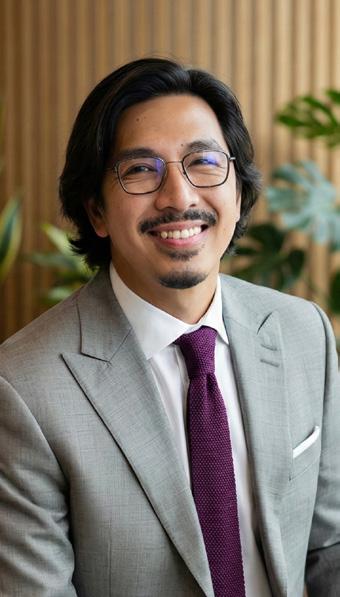
Jef Lacson is a results-driven CFO with nearly 20 years of experience leading financial transformation and governance across Asia’s financial services and technology sectors. Currently the CFO of UnionDigital Bank, he is helping steer the bank’s strategic pivot through portfolio derisking and capital raising. His background includes a career foundation at KPMG and regional leadership at Pacific Cross, AIG, and QBE, where he drove IFRS 17 adoption and operational turnarounds. Recognized as one of the top CFOs in Asia, he holds a Master’s in Business Economics and multiple certifications (ASEAN CPA, CPA, CIA, CISA), bridging financial rigor with digital innovation to ensure sustainable growth.
When I stepped into the CFO role at UnionDigital Bank in late 2024, I inherited exactly this paradox. Planning was disconnected from execution
the governance framework—to the extent it existed—was a patchwork of ad hoc controls that satisfied the letter of the regulation but not its spirit.
These were not technology problems. They were leadership problems wearing technology’s clothes.
Why We Rejected the Conventional Playbook
The standard prescription for a finance function in distress is a multi-year transformation roadmap: hire consultants, select a new ERP, run parallel systems for eighteen months, and hope the business doesn’t outgrow the plan before it’s implemented. We did not have that luxury. A digital bank burning through capital, with a board expecting a credible path to profitability, cannot afford to tell its stakeholders to wait 2 years for reliable numbers.
So we made a deliberate choice: we would build an Integrated Financial Management operating model in months, not years. Not by buying a single silver-bullet platform, but by rewiring how the Finance Tribe thinks, operates, and earns its seat at the strategic table.
Five Pillars, One Operating Model
We structured the transformation around five interdependent pillars, each designed to solve a specific failure mode while reinforcing the others.
First, Precision Planning through Integrated Business Planning. We retired compliancedriven budgeting and replaced it with a model that aligns capital allocation, capacity constraints, and commercial strategy in a single planning rhythm. The result was a 90% forecast
We structured the transformation around five interdependent pillars, each designed to solve a specific failure mode while reinforcing the others
accuracy rate—a number that gave leadership genuine confidence in trade-off decisions between growth investment and capital efficiency. Finance stopped being the tribe that said “no” and became the function that showed “what if.”
Second, Data-Driven Decisioning. We retired the spreadsheet ecosystem and replaced it with automated, management-ready dashboards that provided real-time visibility into expense velocity, loan performance, deposit trends, and operational bottlenecks. The shift was not cosmetic. It fundamentally changed the cadence of decision-making because leaders no longer had to wait for month-end reports to understand where the business stood.
Third, Operational Zero-Friction. We overhauled the procure-to-pay ecosystem— digitizing workflows, establishing clear accountability, and deploying a centralized service portal. The procurement backlog dropped by 90% in four months, clearing historical bottlenecks that had eroded vendor relationships and internal trust alike.
Fourth, Governance as an Enabler. We moved from ad-hoc controls to institutionalized discipline, documenting and standardizing governance across 34 documents—19 of which were entirely new. This was not bureaucracy for its own sake. It was the architecture that allowed us to move faster with confidence, achieving 100% audit compliance while maintaining operational tempo.
Fifth, Architecting Profitability. Finance stepped beyond its reporting mandate to lead the bank’s Path to Profitability. We integrated scenario modeling with execution constraints, ensuring the multi-year strategic plan approved
by the Board was not merely ambitious but financially viable, capital-efficient, and stresstested against regulatory scenarios.
What the Numbers Actually Mean
The quantitative results speak clearly. We achieved a consistent T+10 financial close and shareholder submission cycle—a benchmark that, for a bank of our scale and regulatory environment, reflects genuine operational discipline. In a 2025 internal stakeholder survey, Finance earned a 4.29 out of 5 trust rating, signaling a decisive cultural shift from gatekeeper to strategic partner. And the Boardapproved multi-year strategic plan now aligns
growth ambitions with sustainable return on equity in a way that was simply not possible twelve months earlier.
But the numbers alone are not the story. The story is what had to change for those numbers to become possible: the Finance tribe’s mindset, the business’s expectations, and the relationship between control and speed that most organizations treat as a zero-sum game.
The Innovation Question
Which brings me back to the judge who called this “competent finance modernization.” That judge was not wrong about the tools. Integrated business planning, automated dashboards,
If leadership cannot use your outputs to make realtime decisions, you are not doing finance—you are doing accounting with extra steps
digitized workflows, standardized policies, scenario modeling—none of these are new inventions. They are established practices in mature finance organizations.
But here is what I have learned after two decades across reinsurance, insurance, advisory, and now digital banking: the innovation was never in the tools. The innovation was in the execution context. Deploying established practices inside a regulated startup, under capital constraints, with a team that had to be built and mobilized simultaneously within a compressed timeline—that is where the difficulty lies. And that is where most transformations quietly die.
One judge captured it precisely: “The business transformation model adopted here goes beyond the traditional zero-sum tradeoff between speed and control.” That is the real contribution. Not a new framework, but proof that the false choice between agility and governance is exactly that—a false choice.
What I Want You to Take Away
If you are a CFO at a scaling enterprise— whether a digital bank, an insurtech, or any
regulated startup—I want to leave you with three convictions that guided this work.
First, your finance function is not a cost center. It is a strategic compass. If leadership cannot use your outputs to make real-time decisions, you are not doing finance—you are doing accounting with extra steps.
Second, governance and speed are not enemies. Governance poorly implemented is slow. Well-architected governance is the infrastructure that lets you move fast without breaking the institution.
Third, culture eats dashboards for breakfast. The most elegant financial model is worthless if the people operating it do not trust each other, do not share information freely, and do not believe that Finance exists to enable rather than police.
This Gold Stevie belongs to the Finance Tribe of UnionDigital Bank—every analyst, every manager, every partner across the organization who chose to trust the process and run toward the hard problems instead of away from them.
I am proud of what we built. I am more excited about what comes next.
The Long Shadow of 2026: Why the Next Crisis Will Not Look Like the Last
Cornelius Pantow, Chief Human Resources Officer & Board of Directors, PT Esensi Solusi Buana (ESB)
In the quiet intervals between global disruptions, a collective hope often emerges among the C-suite that the “sprint” is finally over. Following the frantic digital pivot of the early 2020s, the prevailing sentiment was that organizations could finally return to a predictable, steady-state operation. However, the horizon of 2026 suggests a far more grueling form of endurance. While the pandemic was a crisis of physical movement and health, the current landscape is defined by the intersection of deep-seated geopolitical volatility and a fundamental restructuring of the global economy.
Today’s warning signs are centered in the Middle East, where escalating tensions in energy-producing regions are creating a ripple effect that transcends geography. For a Chief Human Resources Officer or a business leader in Southeast Asia, these are not mere headlines
to be observed with detached interest; they are lead indicators of operational friction. For an economy like Indonesia, these shifts signal impending pressure on supply chains, commodity pricing, and internal overhead. The challenge for leadership today is to recognize that “reactive agility”, the ability to move fast once a fire starts, is no longer a sufficient strategy. We are entering a phase where the only true competitive advantage is the ability to interpret distant signals and translate them into immediate organizational readiness.
The Peril of the Signal Lag
One of the most expensive lessons of the last decade was the catastrophic underestimation of the “lead time” between a global signal and its local consequence. Organizations frequently fall into a reactive trap because they mistake a slow-moving crisis for a minor one. In the
Cornelius Pantow is a Chief Human Resources Officer and Board-level leader with over a decade of experience in strategic human resource planning, talent management, and organizational development across Indonesia and Southeast Asia. He has led people transformation initiatives in large enterprises and high-growth organizations, including technology, financial services, and consumer industries. A certified HR professional and licensed assessor, Cornelius is recognized as a 40 Under 40 Asia HR Leader and Top 10 Voices in HR. He is passionate about unlocking human potential through balanced governance, inclusive culture, and human-centered leadership.
Leadership must now move beyond the comfort of performance metrics and begin treating “preparedness” as a core strategic capability
current geopolitical climate, we are witnessing a similar pattern. Fluctuations in energy markets do not hit the corporate bottom line with the suddenness of a government-mandated lockdown, but they cascade with far more permanence. What begins as a spike in logistics costs eventually erodes consumer purchasing power, increases manufacturing friction, and ultimately constricts the capital available for talent development and expansion.
For organizations currently hitting their performance targets, this is a dangerous season for complacency. Success in a stable market is rarely evidence of internal resilience; it is often simply a reflection of favorable external conditions that the organization has yet to see challenged. Leadership must now move beyond the comfort of performance metrics and begin treating “preparedness” as a core strategic capability. This requires a fundamental shift in mindset, where the question is no longer whether disruption will occur, but how deeply the organization has integrated adaptability into its daily rhythm before the urgency of a crisis forces its hand.
Beyond the AI Obsession: Closing the Resilience Gap
For the past several years, the HR narrative has been almost entirely dominated by the rise of Artificial Intelligence. The emphasis has been heavily weighted toward upskilling talent for prompting, automation, and digital decisionmaking. While this remains a critical pillar of modern business, an over-fixation on technology has created a “resilience gap.” Digital readiness is essentially decorative if an organization lacks the operational elasticity to survive a twenty
Leadership must now bridge the technical with the tactical, which requires a deliberate move away from the “efficiency-only” models of the past
percent surge in raw material costs or a sudden, dramatic shift in consumer behavior driven by regional inflation.
Leadership must now bridge the technical with the tactical, which requires a deliberate move away from the “efficiency-only” models of the past. In stable times, rigidity is often rewarded and mislabeled as “optimization.” However, in volatile times, that same rigidity becomes a terminal liability. The goal is no longer to build the most efficient machine, but to foster the most adaptable organism. This means rethinking business continuity not as a static manual stored in a digital drive, but as a living set of scenarios that leaders at every level are trained to navigate with autonomy.
The Human Toll of Economic Pressure
From a people-strategy perspective, the coming economic shift presents a unique risk involving the widening gap between rising operational costs and static income levels. As economic pressure builds, employees feel the squeeze long before it reflects in quarterly board reports. If this pressure is not addressed through transparent and empathetic leadership, the result is a predictable decline in engagement and a spike in turnover. When people feel that the organization is not cognizant of the external pressures they face at home, the social contract of the workplace begins to fray.
The role of the CHRO in this environment is pivotally strategic rather than purely administrative. It is no longer enough to manage morale through superficial perks or cultural initiatives; leadership must maintain trust through radical transparency. Employees must understand the external context of
organizational changes to stay aligned with the leadership’s direction. Furthermore, the most valuable competency in the current market is not a specific technical skill, but the ability to pivot across functions. We must move away from a single-plan mindset and begin co-authoring multiple playbooks that account for varying energy costs and supply chain disruptions, ensuring the workforce is cross-trained to move where the need and the survival of the firm is greatest.
The Indonesian Context: A Microcosm of Global Change
In Indonesia, the challenge is amplified by a unique geography and a diverse economic landscape. From Sabang to Merauke, a global energy shift hits different regions with varying intensity. A logistics firm in Java faces different hurdles than a mining operation in Kalimantan or a consumer goods distributor in Sulawesi. This diversity demands that leaders adopt a dual-lens perspective, keeping one eye on global trade routes and the other on local infrastructure realities.
The complexity of the Indonesian market serves as a perfect testing ground for modern leadership. It requires a holistic perspective that considers both global trends and hyperlocal impacts. In this context, the future of leadership is not defined by the ability to predict the future with certainty, but by the ability to act with awareness before urgency leaves no other choice. We may not yet see the full impact of current geopolitical developments, and the timeline for the next shift may extend over months or years. However, uncertainty should never be mistaken for irrelevance.
When the next wave arrives, the advantage will not go to the company that reacts with the most speed, but to the one that prepared with the most foresight
The Strategic Mandate
If anything, the current ambiguity is a signal to prepare earlier rather than later. For leaders across all sectors, this is the moment to step back and ask whether they are building organizations designed for the world they see through their window today, or for the world that is forming on the distant horizon. When the next wave arrives, the advantage will not go to the company that reacts with the most
speed, but to the one that prepared with the most foresight.
The difference between survival and obsolescence often comes down to the willingness to challenge long-held assumptions about stability. By prioritizing adaptability over mere efficiency and transparency over silence, leaders can ensure that their organizations do not just weather the next shift, but emerge from it with a renewed sense of purpose.
Hi Erin. As Senior Director, CX Strategy & Operations, what drives your passion for championing customer value and operational excellence?
In my (new) role as Senior Director, CX Strategy, Planning & Operations at Everpure, I sit at the intersection of customers, operations, and growth. I’m still early in the journey, but I’m drawing on a mix of experiences—from integrated operations, sales, and executive/ strategic communications —to better support the CX organization. What really energizes me are the outcomes: partnering across regions,
segments, and functions to turn customer insights into action, drive our core CX metrics (NPS, CSAT, customer health), and make complex change feel simple and repeatable for our teams and customers.
The CX landscape is rapidly evolvingWhat emerging trends do you believe will have the most significant impact on customer experience?
AI-driven insights and automation are reshaping how we anticipate needs and resolve issues before they surface, while subscription and
AI-driven insights and automation are reshaping how we anticipate needs and resolve issues before they surface, while subscription and outcome-based models are redefining what
“value” means over the life of a relationship
Erin O’Callaghan is Senior Director, CX Strategy & Operations at Everpure. She leads Women@Everpure, launched a Women in Integrated Operations community and mentorship program, and drives community impact in partnership with the Pure Good Foundation. Previously, she led executive and employee communications for the COO, CRO, and CCXO, and held leadership roles at Adobe and Cisco. A San José State graduate, she began in sports and entertainment with MTV Networks and the NHL’s San Jose Sharks. Bay Area–based, she’s a committed philanthropist, lifelong horse enthusiast, and connector who builds inclusive, high-performing teams.
Recently, in an exclusive interview with CXO Outlook Magazine, Erin shared insights into her passion for championing customer value and operational excellence. Erin emphasized the importance of turning customer insights into action, driving core CX metrics, and making complex change simple and repeatable. As a leader, Erin coaches emerging leaders to sharpen their storytelling and prepare for high-stakes situations. She draws inspiration from her experience with horses, learning to earn trust through presence and consistency. Erin advocates for inclusion and diversity, emphasizing the importance of everyday connection and community building. The following excerpts are taken from the interview.
outcome-based models are redefining what “value” means over the life of a relationship. The teams who will win are the ones who combine these capabilities with clear journeys, strong operating rhythms, and change management that truly supports global, diverse customer bases—without losing the human element of empathy, judgment, and trusted relationships at every stage.
You’ve been recognized for your strengths in executive communications - What’s your favorite way to coach or mentor emerging leaders?
Prior to this role, I supported our COO, CRO, CCXO, and VPs as their executive and organizational communications manager, which gave me a front-row seat to many leadership styles. My favorite way to coach is helping emerging leaders sharpen the “so what” of their story, prepare for the hardest questions in the room, and still sound like themselves when the stakes are high.
What’s the most rewarding part of your experience with horses, and how does it influence your professional approach?
As a lifelong horse enthusiast, I’ve learned that you never earn trust with a title—you earn it through presence, consistency, and calm under pressure. Horses mirror your energy and intent, and that profoundly shapes how I aspire to lead: show up steady, listen more than you speak, and remember that people, like horses, experience your leadership in how you make them feel. I’ll be honest—this doesn’t always come naturally, and it’s something I continue to work on as a leader every day.
You’re a strong advocate for inclusion and diversity - What’s the best advice you’ve received on promoting inclusivity in the workplace?
The best advice I’ve received is: “Inclusion is what people feel in the moments you don’t see.” As President of Women@Everpure, that
When we consistently show up for each other and our communities, inclusion becomes part of how we operate, not a standalone initiative
means building a community where people feel seen, supported, and able to grow together—through everyday connection, not just big events. And through our Pure Good Foundation, it means extending that same spirit beyond our walls by giving our time, talent, and resources to causes that reflect our values. When we consistently show up for each other and our communities, inclusion becomes part of how we operate, not a standalone initiative.
If you could have dinner with any historical figure, who would it be and why?
More of a modern trailblazing figure, I’d choose Jacinda Ardern. Her leadership through crises was rooted in doing what’s right, even when it was hard, and in consistently “showing up” with empathy, clarity, and action. I’m inspired by how she paired toughness with humanity— making difficult decisions, standing by her values under intense pressure, and proving that you can be both compassionate and uncompromising about what you believe is right.
What’s something on your bucket list that you’re excited to tackle soon?
I’m really excited to travel to Italy—spending time in the countryside, learning more about the history and culture, and (ofcourse) enjoying the food and wine. It brings together a lot of what matters to me: new perspectives, beautiful landscapes, and time to reset before the next big chapter with CX.
Hi Renard. As a visionary IT leader, what do you enjoy most about transforming IT into a strategic business partner? What I enjoy most about transforming IT into a strategic business partner is shifting the perception of IT from a support function to a value creator. For me, it is about moving beyond tickets and infrastructure, and instead driving outcomes that directly impact revenue, customer experience, and operational efficiency.
The most rewarding part is sitting at the table with business leaders and speaking the language of the business. When the organization
clearly understands the mission and vision, it creates alignment across every department, including IT. That shared understanding ensures that technology initiatives are not developed in isolation but are directly tied to broader business objectives.
I also find fulfillment in building teams that operate with that same clarity. When IT professionals understand how their work connects to the company’s mission, they begin to think more strategically, challenge assumptions, and contribute in more meaningful ways. That shift elevates both performance and culture.
When IT professionals understand how their work connects to the company’s mission, they begin to think more strategically, challenge assumptions, and contribute in more meaningful ways
Renard Henry is a strategic IT leader, executive coach, and speaker in the automotive industry, known for driving digital transformation and aligning technology with business strategy. With a focus on AI, cybersecurity, and operational excellence, he leads highperforming teams and develops leaders along the way. Renard is also the co-host of Black Belts & Boardrooms, where he connects leadership lessons from martial arts to the executive world. Passionate about mentorship and continuous growth, he is committed to developing future leaders and contributing at the board level. Recently, in an exclusive interview with CXO Outlook Magazine, Renard shared insights into transforming IT into a strategic business partner, emphasizing the importance of aligning IT with business objectives and driving outcomes that impact revenue, customer experience, and operational efficiency. He highlighted the need for IT leaders to prioritize AI, cybersecurity, and governance to stay competitive, and stressed the importance of developing future-ready IT professionals with a balance of technical expertise and business acumen. Renard also discussed his vision for IT transformation, focusing on creating a culture of continuous learning, accountability, and empowered decision-making. The following excerpts are taken from the interview.
At its core, transforming IT into a strategic partner is about alignment, influence, and impact. It is about ensuring that every technology decision supports the direction of the business. When that alignment is achieved, IT does not just support the business, it helps lead it forward.
As technology continues to evolve, what emerging trends should IT leaders prioritize to stay competitive?
As technology continues to evolve, IT leaders should be highly focused on artificial intelligence and cybersecurity, but with a disciplined, business-aligned approach.
Artificial intelligence, particularly generative and predictive AI, is creating significant opportunities for organizations to enhance decision-making, improve efficiency, and deliver more personalized customer experiences. However, with that opportunity comes responsibility. Many organizations talk about “AI for good,” but that conversation must include strong AI governance. Without clear frameworks around data usage, ethics, risk management, and accountability, the same technology that creates value can also introduce significant risk. Governance is what ensures AI is not only powerful, but also trustworthy and aligned with the organization’s mission.
At the same time, cybersecurity remains foundational. As organizations expand their digital footprint and adopt AI-driven capabilities, the attack surface continues to grow. IT leaders must prioritize resilient, zero trust architectures and embed security into every layer of the organization. Cybersecurity can no longer be treated as a reactive function; it must be integrated into strategy, enabling the business to innovate with confidence.
Ultimately, staying competitive requires a balance between innovation and protection. AI drives transformation, cybersecurity ensures resilience, and governance connects both to responsible, sustainable business outcomes.
How can leaders ensure their IT organisations are equipped to adapt to rapidly changing market conditions?
To adapt to rapidly changing market conditions, leaders must build IT organizations grounded in both clarity and flexibility. It starts with alignment. When IT understands the mission and priorities of the business, teams can move quickly without losing direction.
Equally important is creating an operating model that enables agility. Modern architectures, cloud platforms, and automation allow organizations to respond faster, but the real differentiator is people. Leaders must foster a culture of continuous learning, accountability, and empowered decision-making.
Ultimately, adaptability comes down to alignment and execution. Organizations that can move with the business, not behind it, are the ones that lead through change.
What
are the key skills required for future-ready IT professionals, and how can organisations develop these skills?
Future-ready IT professionals need a balance of technical expertise and business acumen. Skills in areas like cloud, AI, and cybersecurity are essential, but what truly differentiates top performers is their ability to connect technology to business outcomes.
Equally important are soft skills, the skills that keep you in the room with executives. Many IT professionals are comfortable working
behind the scenes, but the future requires visibility, communication, and influence. The ability to clearly articulate ideas, engage in strategic conversations, and present with confidence is what elevates IT from a support function to a leadership voice.
Organizations can develop these capabilities by fostering a culture of continuous learning, providing opportunities for cross-functional collaboration, and encouraging professionals to step into high-visibility environments. That includes presenting, participating in strategic discussions, and building comfort in executive settings.
Ultimately, the goal is to develop IT professionals who are not only technically strong, but also confident, visible, and capable of leading at the highest levels of the organization.
Your go-to stress-relief technique is Brazilian Jiu-Jitsu, what’s your favorite aspect of it?
What I value most about Brazilian Jiu-Jitsu is the mindset it develops. It teaches you to stay calm under pressure, think strategically in
difficult situations, and remain disciplined even when you are uncomfortable.
There is also a strong parallel to leadership. In Jiu-Jitsu, you cannot rely on brute force; you have to be patient, adaptable, and intentional with every move. It is a connection I explore often through my podcast, Black Belts & Boardrooms, where we bridge lessons from martial arts to executive leadership.
It also reinforces humility and continuous learning. No matter your level, there is always something to improve, and that perspective keeps you grounded.
For me, Brazilian Jiu-Jitsu is not just a stress reliever, it is a constant reminder of how to lead with focus, resilience, and control.
If you could have dinner with any historical figure, who would it be and why?
If I could have dinner with anyone, it would be my mother.
She played a defining role in shaping who I am, especially in my early years. She instilled in me the importance of continuous growth, not
Artificial intelligence, particularly generative and predictive AI, is creating significant opportunities for organizations to enhance decision-making, improve efficiency, and deliver more personalized customer experiences
just in my career, but as a husband and a father. Her mindset was always about becoming better than the day before.
She also taught me that life is not meant to be easy. Discomfort is part of the process, and it is what ultimately makes us stronger. That perspective has stayed with me throughout my leadership journey.
She has always been a leader I have looked up to, and the foundation she built continues to guide how I show up every day.
What’s something on your bucket list that you’re excited to tackle soon?
One of the things high on my bucket list is stepping into a board role.
As I continue to grow as a leader, I am excited about the opportunity to contribute at that level, helping shape strategy, provide governance, and support organizations. It is a natural extension of my journey, combining my experience in technology, leadership, and business transformation.
What excites me most is the ability to bring a different perspective to the table while continuing to learn from other seasoned leaders. For me, it is about impact and the opportunity to help guide organizations forward in a meaningful way.
What advice would you give to organisations looking to drive ITdriven growth and innovation?
What problem are we trying to solve? That question should be the starting point for any organization looking to drive IT-led growth and innovation. Too often, companies lead with tools or trends without clearly defining the outcome they want to achieve. Real
Real innovation happens when technology is aligned to a specific business need, whether that is improving customer experience, increasing efficiency, or creating new revenue opportunities
innovation happens when technology is aligned to a specific business need, whether that is improving customer experience, increasing efficiency, or creating new revenue opportunities.
Equally important is building a culture that supports innovation. This means empowering teams to think beyond their roles, encouraging experimentation, and learning quickly from failure.
Finally, strong partnerships between IT and the business are critical. When there is alignment and trust, IT becomes more than a support function, it becomes a true driver of transformation.
Wa n t t o S e l l o r fi n d
I nve s t o rs f o r yo u r
B u s i n e s s?
Leading with Purpose in the Age of AI
Shruti Harish, Solution Engineering General Manager, Manufacturing and Mobility, Microsoft
Hi Shruti. As technology continues to evolve, what emerging trends should leaders prioritize in driving digital transformation?
We are seeing a clear shift toward AI driven business process automation and the integration of AI into the flow of work, unlocking employee innovation and accelerating business impact. At the same time, organizations must be deliberate in embedding security and governance as core foundations of the platforms they build or
modernize, particularly as their AI maturity increases.
With technology evolving at an unprecedented pace, the ability to stay agile and to foster a culture of continuous learning and adoption is more critical than ever.
What’s the impact of changing customer expectations on business strategy?
Business strategy must continuously align with customer expectations in the moment. Staying
With technology evolving at an unprecedented pace, the ability to stay agile and to foster a culture of continuous learning and adoption is more critical than ever
Shruti Harish is a global technology and transformation executive with 25 years of driving innovative digital transformation strategies for Fortune 500 organizations in the technology, airlines, and asset management industries. Leverages data, cloud and AI strategies to optimize customer success and business growth. Delivers business value realization to drive revenue growth and end-user outcomes. In her current role Shruti leads the Cloud and AI Platforms strategy for Microsoft’s Manufacturing and Mobility vertical, a world class team of Cloud Solution Engineers and Leaders. She is passionate about establishing an innovative high performing culture to drive the Microsoft mission to empower organizations and people to achieve more. Recently, in an exclusive interview with CXO Outlook Magazine, Shruti shared insights into the emerging trends driving digital transformation, the impact of changing customer expectations on business strategy, and her approach to leadership. Shruti emphasized the importance of prioritizing AI-driven business process automation and integrating AI into the flow of work to unlock employee innovation and accelerate business impact. She also shared her thoughts on achieving work-life balance, emphasizing the importance of embracing the moment and focusing on what matters most. The following excerpts are taken from the interview.
relevant to your customer is the single most important driver of business success. When you deeply understand their problems and help solve them, you consistently create value. Especially in today’s AI era, what matters most is the human relationship—built on trust, integrity, and a commitment to meet and exceed customer expectations every day. That is what should shape and define your business strategy. Without these bi-directional feedback loops between your business and your customers, your strategy can quickly become obsolete.
How do you stay connected to your customers and understand their needs?
Go beyond the here and now. If you’re there to solve one problem, take the opportunity to ask what else is top of mind. What are the critical issues they know they need to address but aren’t yet thinking about or able to prioritize today? That’s how you uncover additional value.
Equally important is bringing industry relevance into every customer interaction. Understanding what matters in their industry and how their competitors are driving innovation, is essential. Taking the time to learn their business, their challenges, and the broader industry pressures positions you as a true partner in shaping their growth strategies and priorities.
As a leader, what’s the most important quality you look for in a team member?
I look for a deep ambition to learn, positive energy, and the adaptability to pivot and do
I look for a deep ambition to learn, positive energy, and the adaptability to pivot and do what’s right for our team, business, customers, and organization in an everchanging environment
what’s right for our team, business, customers, and organization in an ever-changing environment.
What’s the key to achieving work-life balance as a leader?
I see this as a continuous balancing act, one that never truly ends. Each day and each week bring a different set of priorities, constantly shifting what demands your focus. The most effective approach is to fully embrace the moment and the challenge in front of you. What remains constant is the learning, whether you succeed or fall short, there is always value to be gained. There is no true downside to the problems we face.
That’s why I encourage every leader to consistently ask themselves: What matters most right now? How do I show up fully present for this moment? These are the questions that should guide us every day.
What’s the best trip you’ve ever taken, and where would you love to travel next?
The most memorable trip I’ve taken was to Bali. The spirituality, vibrant culture, stunning natural beauty, incredible food, and the kindness of the Balinese people completely captivated me. What stayed with me most was their genuine smiles, they make you feel as if your presence brings them joy, a feeling that welcomes you from the very moment you arrive.
As a woman in tech, what advice would you give to young girls and women aspiring to join the industry?
No matter how difficult or lonely your path, you deserve a place in every room, and you belong at every table you join.
Designing Effective AI Use Cases Through Human-Centric Thinking
Banu Cinar, Head of CX Design, JLR
Artificial Intelligence (AI) has become one of the most discussed technologies in modern business, promising faster decisions, improved efficiency and better customer experiences. But while many organisations are eager to introduce AI, not all AI projects lead to meaningful impact. The difference between success and failure often comes down to one simple principle: putting people at the centre.
Human-centric design—an approach we use actively in CX Design, that starts with understanding people’s needs, behaviours and pain points—helps ensure AI solves real problems rather than simply automating what already exists. When combined with careful examination of root causes and strong use of data, it becomes a powerful foundation for developing AI use cases that genuinely improve processes and customer experiences.
Based on my personal experience, here is my view on how can we as CX design functions design AI solutions more effectively, and provided with three practical examples of customer-focused AI opportunities I think can apply to wide range of companies.
Start With People, Not Technology
Human-centric design begins with empathy: taking time to understand the experiences of customers, employees, and stakeholders. It requires asking questions such as:
• What frustrations do people face?
• Where do delays, confusion or errors commonly occur?
• What tasks feel repetitive, unclear or timeconsuming?
By observing real experiences and gathering feedback, we can identify pain points that truly matter. AI should not be introduced simply
Banu Cinar is an accomplished customer experience leader currently serving as the Head of CX Design at Jaguar Land Rover. With extensive experience in the luxury automotive sector, Banu has previously held key roles such as Senior CX Strategic Design Consultant at E.ON and Global Head of Customer Experience at Experian. She excels in developing enterprise CX strategies and driving digital transformation projects. Banu holds a Master’s degree in Customer Excellence Management and various certifications in business analysis, project management, and digital marketing. Her expertise lies in customer journey optimization, governance, and innovation, making her a prominent figure in the industry.
Human - centric design begins with empathy: taking time to understand the experiences of customers, employees, and stakeholders
because it is fashionable or available. Instead, AI should be used when it addresses a meaningful issue that impacts people’s ability to achieve their goals.
For example, if customers frequently complain about long response times, we might explore whether the cause is unclear information, inconsistent internal processes, or limited support staff. Each root cause would lead to a different AI solution.
Understand the Root Cause Before Designing the Solution
A common mistake in AI projects is assuming the problem is obvious. We might believe slow service is caused by workload, when in reality the issue could be data spread across multiple systems, unclear guidance for staff, or unnecessary manual checks.
Root-cause analysis helps avoid building AI on top of broken processes. Teams should use tools such as process mapping, data reviews, interviews, and “five whys” questioning to dig deeper. Sometimes the answer is not AI at all but a simpler process improvement.
Once the true root cause is clear, we can then assess whether AI can address it more efficiently than traditional methods. For example:
If the root cause is human error due to repetitive tasks, automation may help.
If customers cannot find information, AIpowered search or virtual assistants may be appropriate.
If decision-making is inconsistent, machinelearning insights may offer more reliable guidance.
AI becomes most effective when built on a strong understanding of what really needs to change.
AI can analyse historical service data to predict when issues are likely to occur—such as part delays, long repair times, or inconsistent updates
Let Data Guide the Opportunity
Human-centric design and AI both rely heavily on data. Once pain points and root causes are understood, the next step is identifying what data exists, its quality, and how it can be used.
We should:
Analyse customer journeys to identify patterns, delays and common drop-off points.
Review operational data to understand workloads, errors and wait times.
Check whether the required data is available, accurate and complete.
Data does not just measure the problem— it helps shape the solution. For instance, if customers call frequently about the same type of query, AI could support smarter routing or suggest tailored solutions. If the organisation sees seasonal trends or repeat issues, predictive AI can help teams prepare resources more effectively.
By combining human insight with data evidence, we can prioritise use cases that provide the greatest value.
Three AI Use Cases That Improve Customer Experience
While every organisation’s needs are different, the following examples show how AI can address real customer problems when designed with human-centric thinking.
1. Intelligent Customer Support Assistant
The Problem: Customers often face long wait times for common queries, while staff spend too much time answering repetitive questions.
Root Cause Insights: Many customers ask about simple topics such as order status, account updates or troubleshooting steps. Support
agents are overwhelmed with high volumes of predictable queries.
AI Opportunity:
An intelligent assistant—powered by natural-language processing—can answer common questions instantly, guide customers through simple actions, and escalate complex issues to human agents. When designed around customer needs, this improves response times, reduces frustration, and frees staff to focus on meaningful support.
2. Predictive Issue Resolution in Service Journeys
The Problem: Customers experience recurring issues during service appointments, repairs or delivery stages, often only discovering problems after they occur.
Root Cause Insights: Data shows that certain steps of the service journey commonly cause delays or repeated visits. Customers feel they must chase updates, creating dissatisfaction.
AI Opportunity:
AI can analyse historical service data to predict when issues are likely to occur—such as part delays, long repair times, or inconsistent updates. The system can then trigger proactive communications or suggest alternative solutions. This turns a reactive experience into a proactive one, improving trust and reducing stress for customers.
The Problem: Customers feel treated like numbers, receiving generic offers or communications that do not reflect their preferences or past behaviour.
Root Cause Insights: We hold large amounts of customer data, but it is often scattered or unused, leading to one-size-fits-all experiences.
AI Opportunity:
AI can combine purchase history, preferences, and behaviour patterns to provide personalised recommendations—whether for products, upgrades, services or loyalty benefits. Customers feel better understood, while the organisation benefits from stronger engagement and higher satisfaction.
In summary, effective AI does not begin with technology. It begins with people. By combining human-centric design, thorough root-cause analysis, and data-driven thinking, organisations can create AI solutions that solve real problems and deliver meaningful improvements to customer experience.
When used with care, AI becomes more than a tool—it becomes a way to design better, simpler and more human experiences.