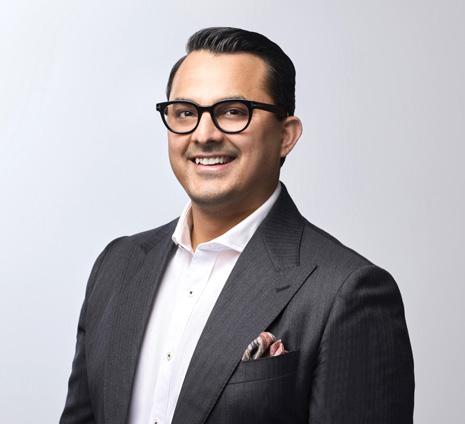
Amy McPhillips Vice President, HR IT and Employee Experience, Kyndryl
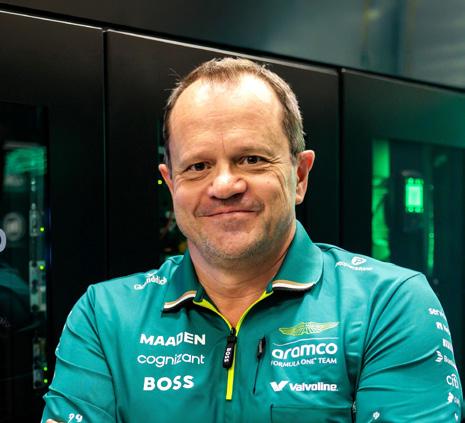
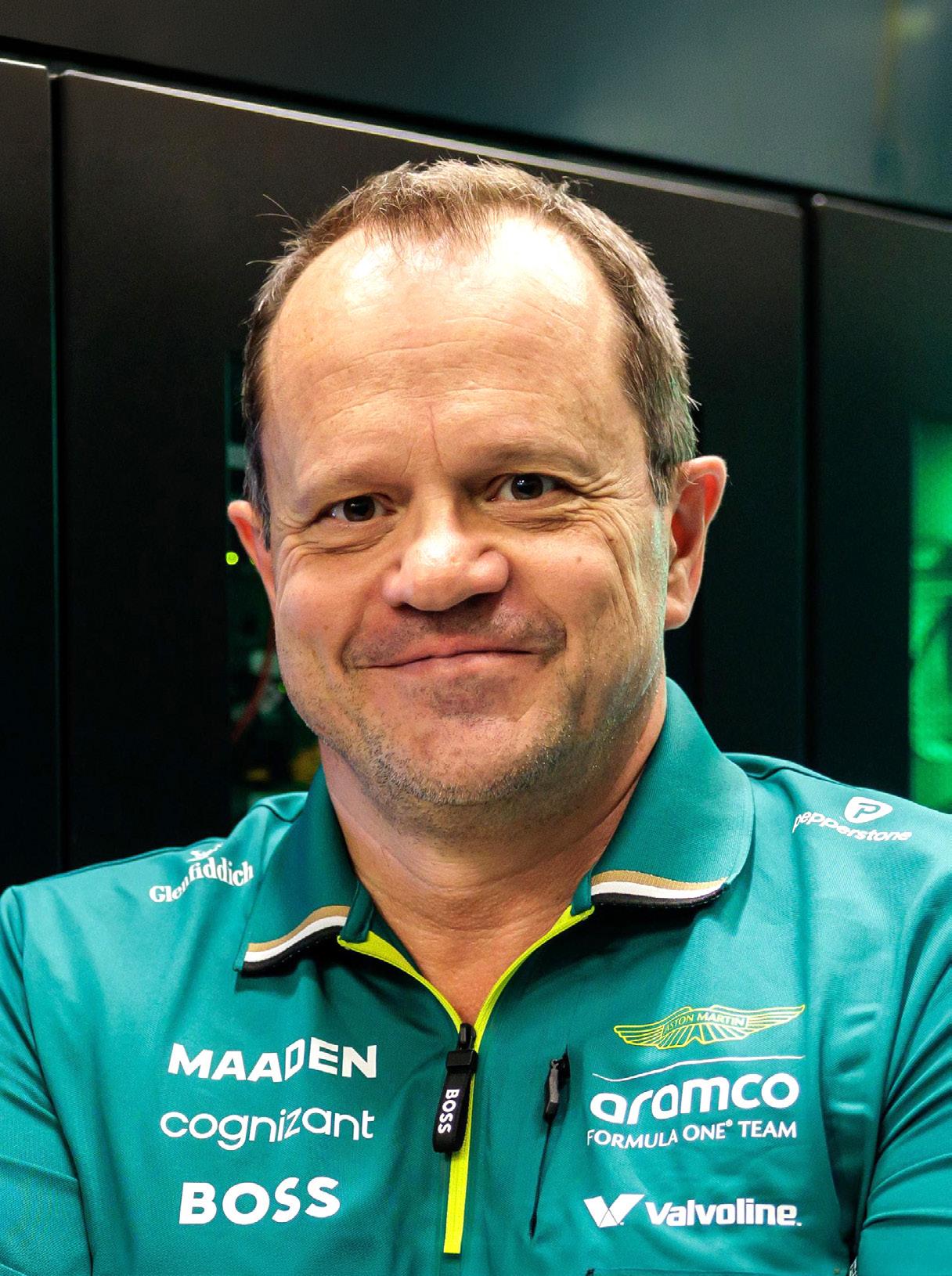
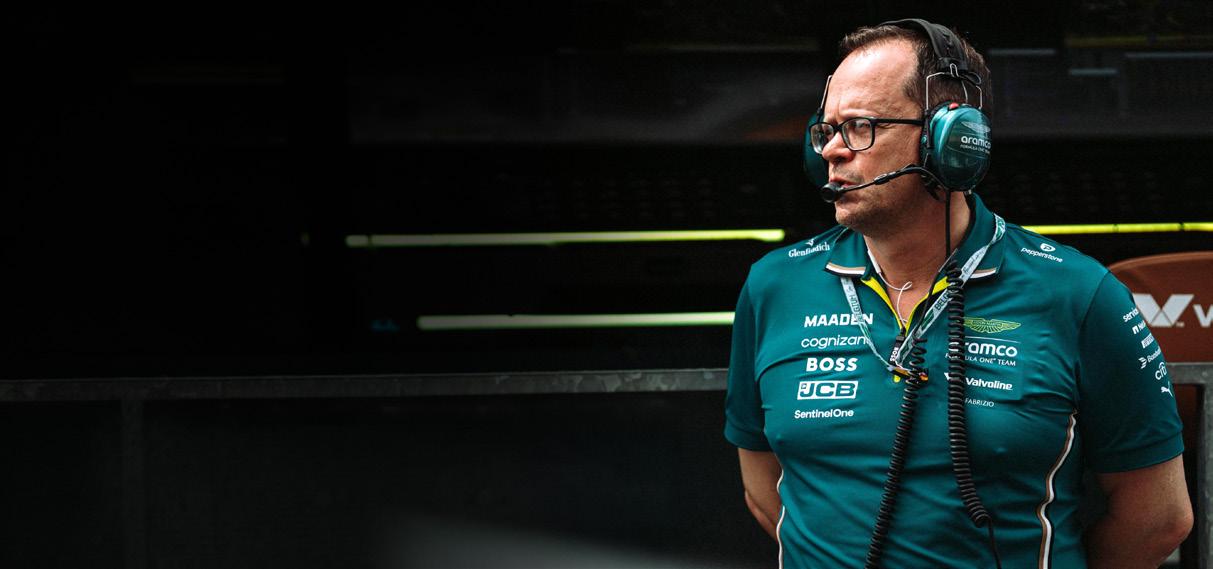
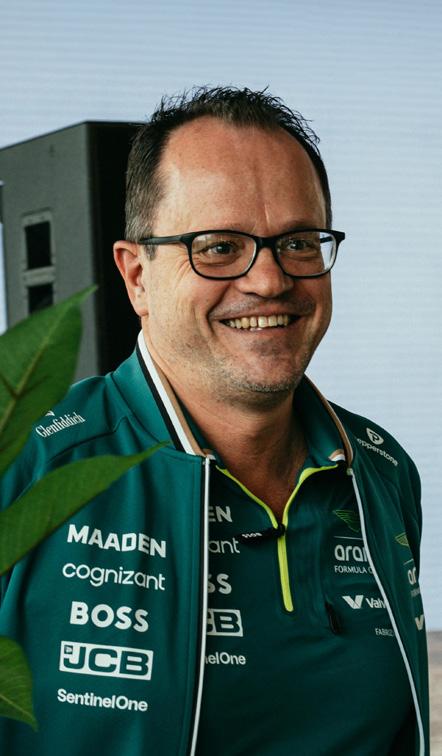
Fabrizio Pilotti CIO, Aston Martin Aramco Formula One™ Team
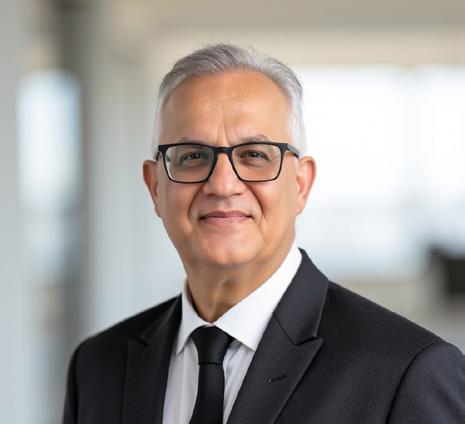
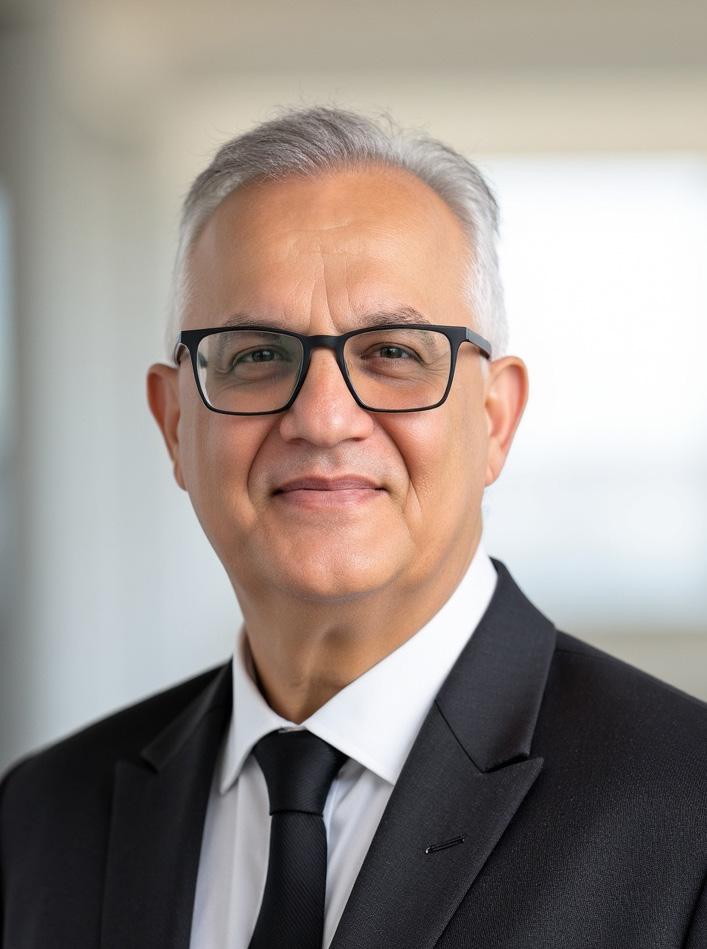
Prof. Abbi Sharma Chief Digital & Transformation Officer, Critical Infrastructure and Essential Services, Victorian Government
FEATURING INSIDE
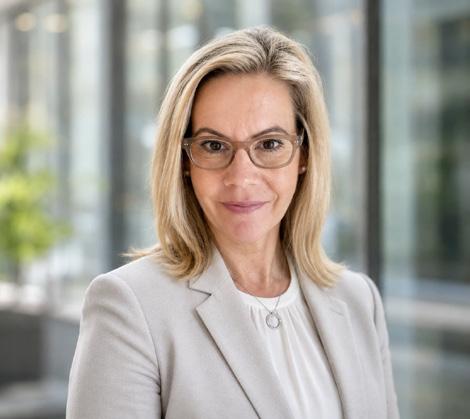
Rebecca Straka CIO, Weyerhaeuser
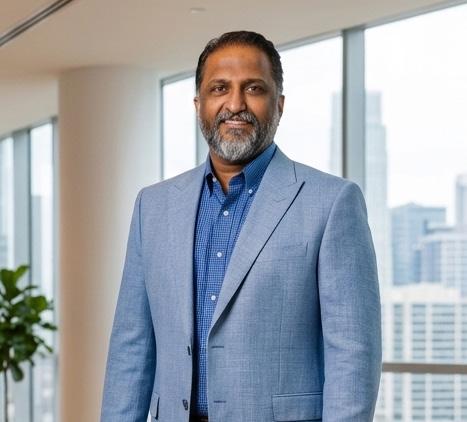
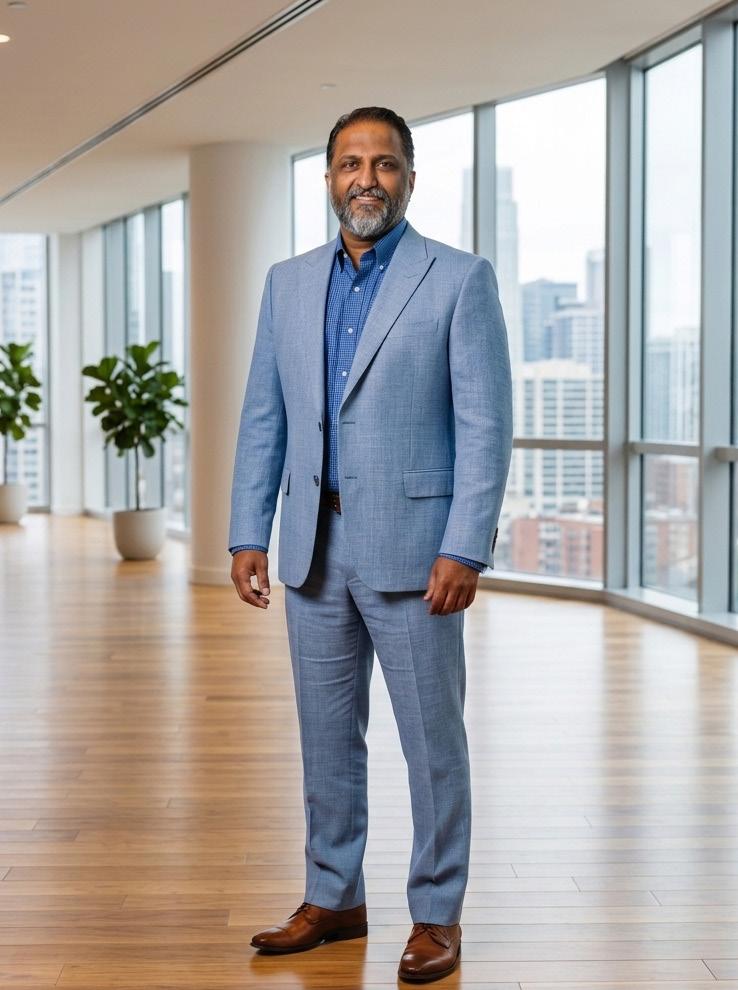
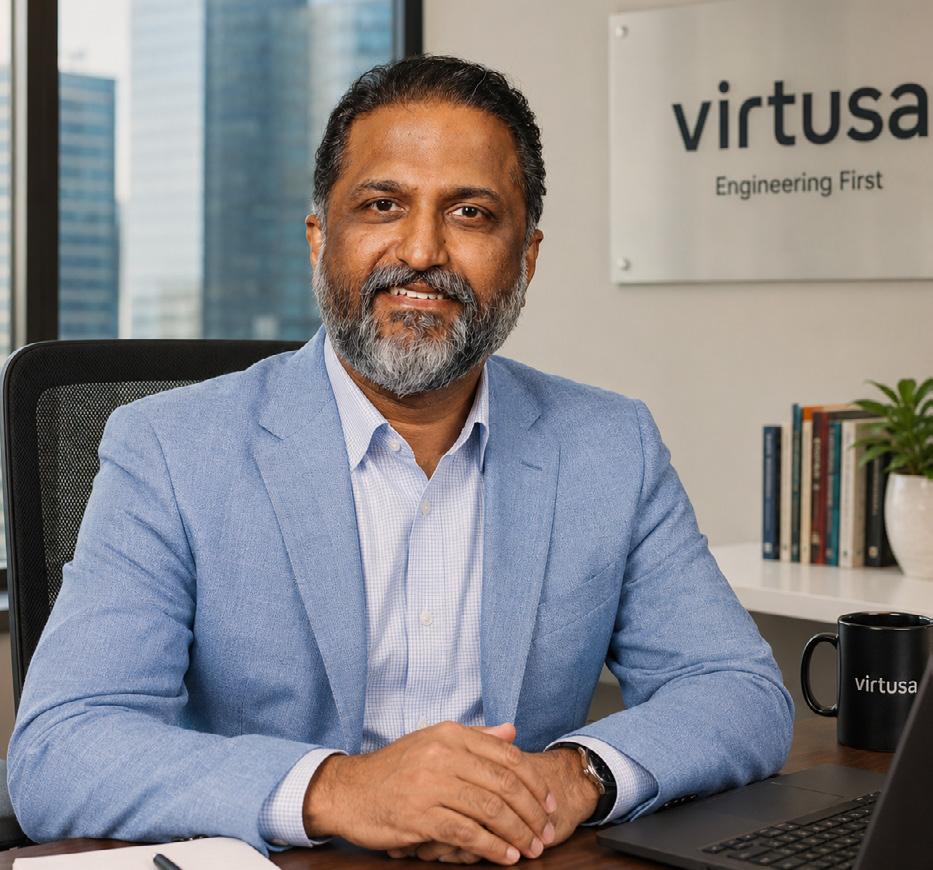
Sanjay Deshpande Executive Vice President & Head - Banking, Manufacturing, Retail, Emerging IndustriesAmericas, Virtusa
Sunil Dadlani EVP-Chief Information & Digital Transformation, Cybersecurity, Venture Studio AI, Data Officer, Atlantic Health
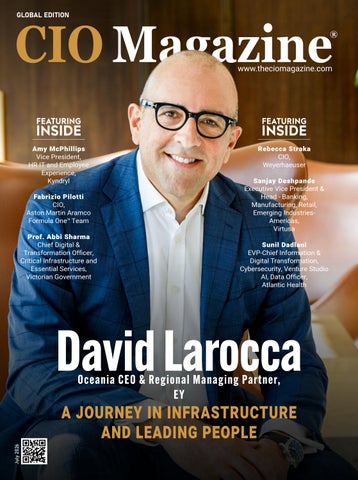
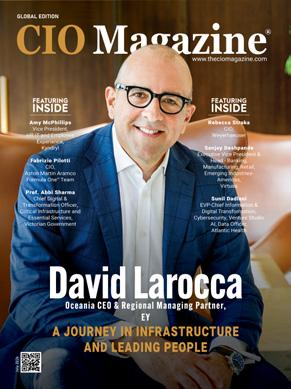
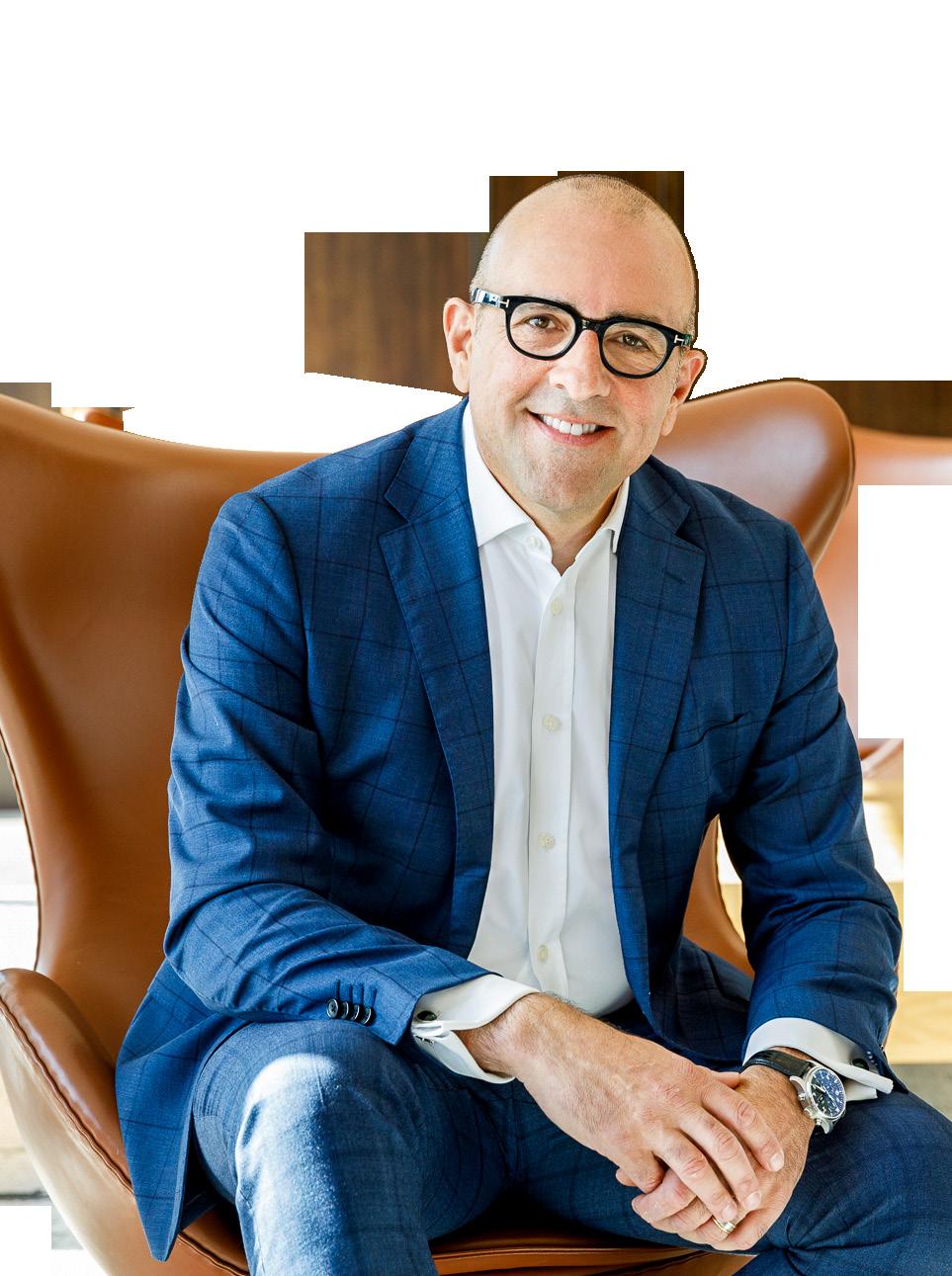
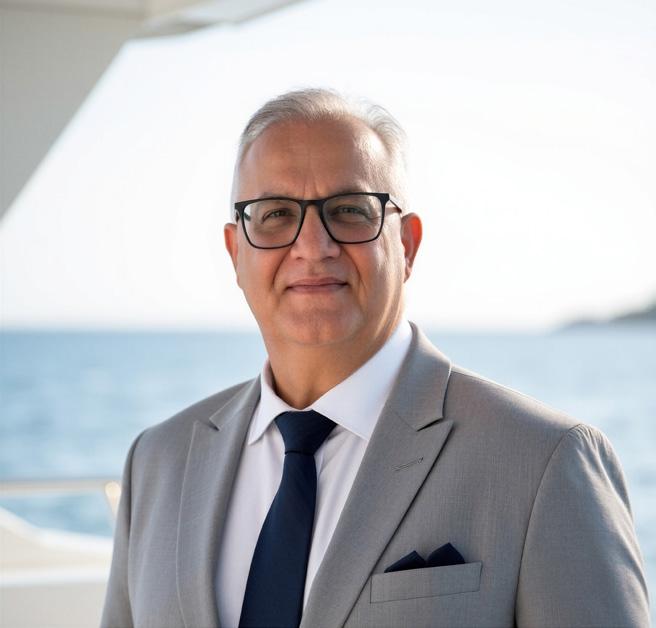
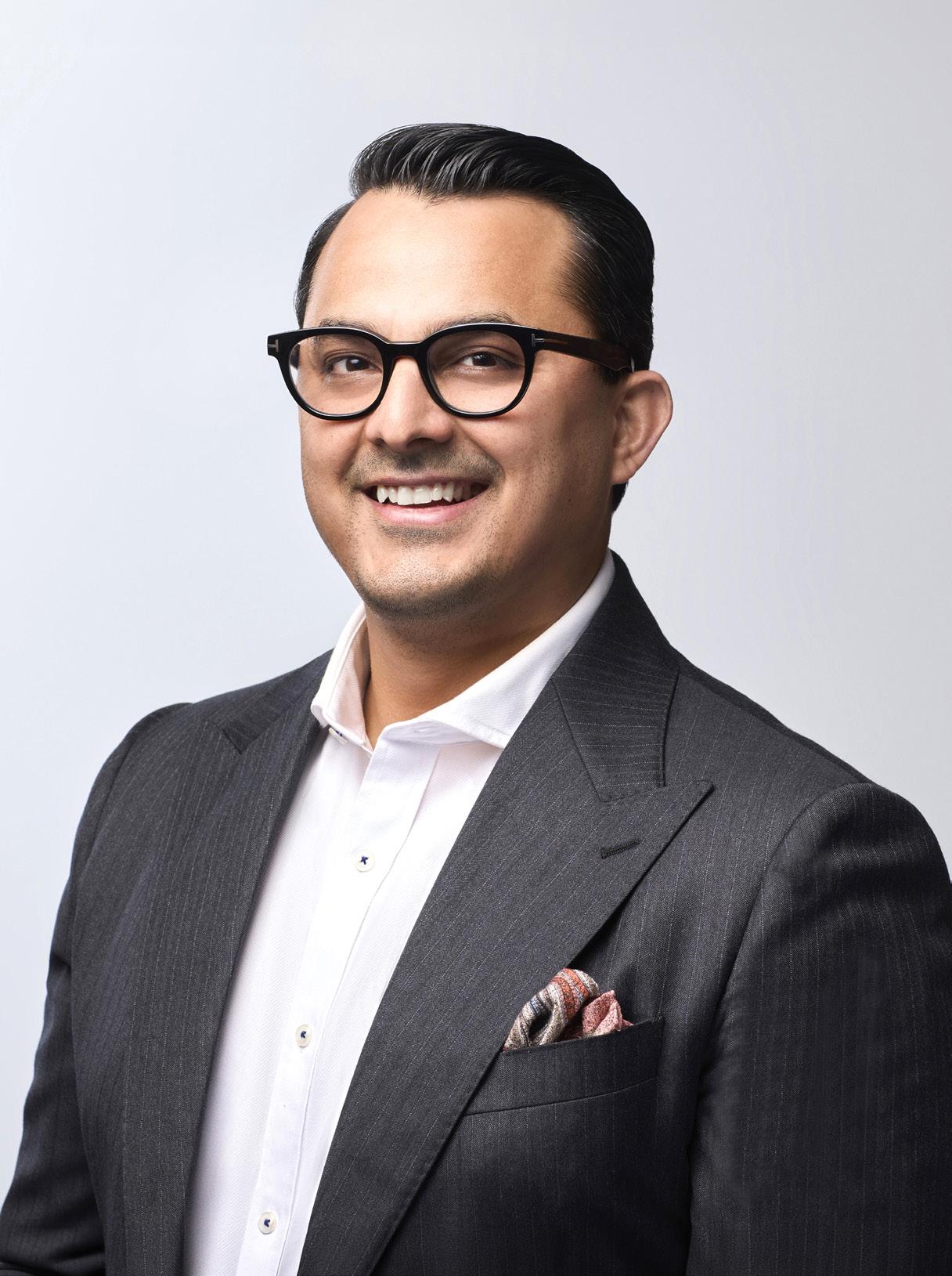
David Larocca
Oceania CEO & Regional Managing Partner,
EY
A JOURNEY IN
INFRASTRUCTURE AND LEADING PEOPLE
admin@thecioomagazine.com
www.thecioomagazine.com
admin@thecioomagazine.com
www.linkedin.com/company/ciomagazine
CIO Magazine www.theciomagazine.com is a global knowledge sharing digital platform published by Connecta Innovation Private Limited. All rights reserved. The opinions expressed in the content and pictures provided are those of the authors. They do not purport to reflect the opinions or views of Connecta Innovation Private Limited or any of its subsidiaries, its members or associates and we do not assume any responsibility. The publisher does not assume any responsibility for the advertisements. The content, pictures, and all warranties made in such advertisements are the sole responsibility of the advertisers. CIO Magazine www.theciomagazine.com is a Free Subscription and Free-to-read digital platform strictly not for sale and must be strictly for internal private use only. Publisher does not assume any responsibility arising out of anyone modifying content and pictures, printing a copy of this digital platform in any format and in any country and all matters related to that. “CIO Magazine www.theciomagazine.com“ and “The CIO Magazine www.theciomagazine.com“ trademarks are owned by Connecta Innovation Private Limited.
WHAT HOLDS WHEN EVERYTHING MOVES
Everymajor transformation begins with a promise: faster services, smarter decisions, cleaner growth, better access. Yet the question that determines whether that promise endures is rarely technological. It is simpler, and harder: do people trust the change being made in their name?
We have all encountered the moment when a well-intentioned initiative loses momentum, not because its ambition was flawed, but because the purpose was unclear, responsibilities blurred, or those affected felt brought in too late. Trust is often treated as the soft side of leadership. In reality, it is operational infrastructure: the invisible system that allows institutions, partners, employees and communities to take difficult decisions together.
That system is under strain. The 2025 Edelman Trust Barometer found that 61% of respondents globally reported a moderate or high sense of grievance, reflecting a widespread feeling that institutions are not listening or acting fairly. In an era of constrained budgets, rising delivery costs and rapidly advancing AI, leaders cannot afford to see confidence as an afterthought. It must be designed into the work, from the first definition of the problem through governance, procurement, communication and accountability.
This is why our cover conversation with David Larocca, Oceania CEO and Regional Managing Partner at EY, feels especially timely. His career has been shaped by the practical, long-horizon work of infrastructure: roads, railways, airports and the systems that make communities more connected. But his insights reach beyond the physical build. As digital and AI-enabled infrastructure becomes central to economic competitiveness, he argues for clarity before speed: define the problem, allocate risk intelligently and strengthen collaboration between government and business.
That is the discipline of trust. It asks leaders to be candid about trade-offs, inclusive in how they listen, and rigorous in how they deliver. It also asks them to resist the temptation to go to market before the fundamentals are settled; a lesson relevant to every transformation, whether it involves a city precinct, a cloud platform or a new operating model.
Elsewhere in this issue, you will find thought-provoking articles, interviews and ideas that approach leadership, innovation and technology from varied angles. Together, they remind us that progress is not simply about what we build, but about the confidence we build around it.
Enjoy Reading.
Sarath Shyam
Oceania CEO & Regional Managing Partner, EY
A JOURNEY IN INFRASTRUCTURE AND LEADING PEOPLE
COVER STORY
Amy McPhillips
24 Vice President, HR IT and Employee Experience, Kyndryl
Empowering Employees to Focus on Work that Matters
36
Sanjay Deshpande
Executive Vice President & Head - Banking, Manufacturing, Retail, & Emerging IndustriesAmericas, Virtusa
The New Global Leadership Equation: Empathy, Adaptability, and AI
Prof. Abbi Sharma
42 Chief Digital & Transformation Officer - Critical Infrastructure and Essential Services, Victorian Government
Elevating the CIO Role in the AI and Quantum Era
Sunil Dadlani 14 EVP-Chief Information & Digital Transformation, Cybersecurity, Venture Studio AI, Data Officer, Atlantic Health
Transforming Healthcare from AIEnabled to AI-Native
Fabrizio Pilotti 30 CIO, Aston Martin Aramco Formula One™ Team Redefining Motorsport Technology for the AI Era
Rebecca Straka 48 CIO, Weyerhaeuser
Empowering Outcomes with Customer Centered Tech
COVER STORY
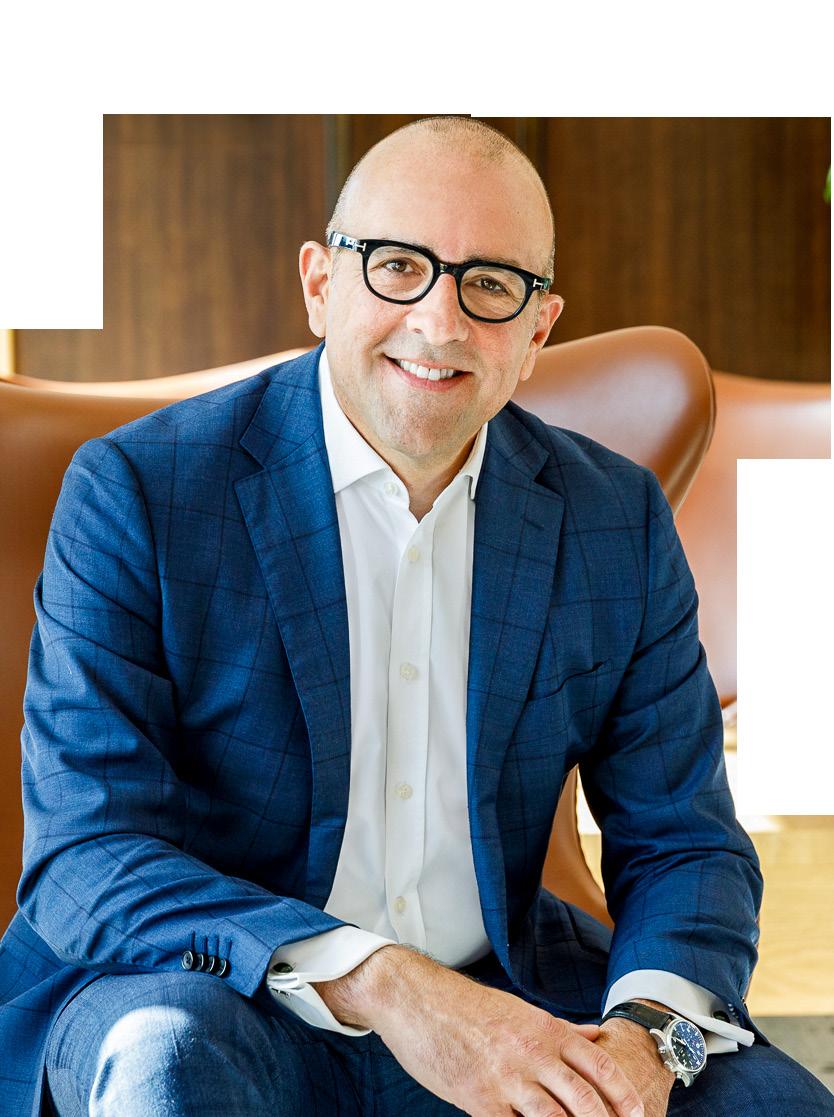
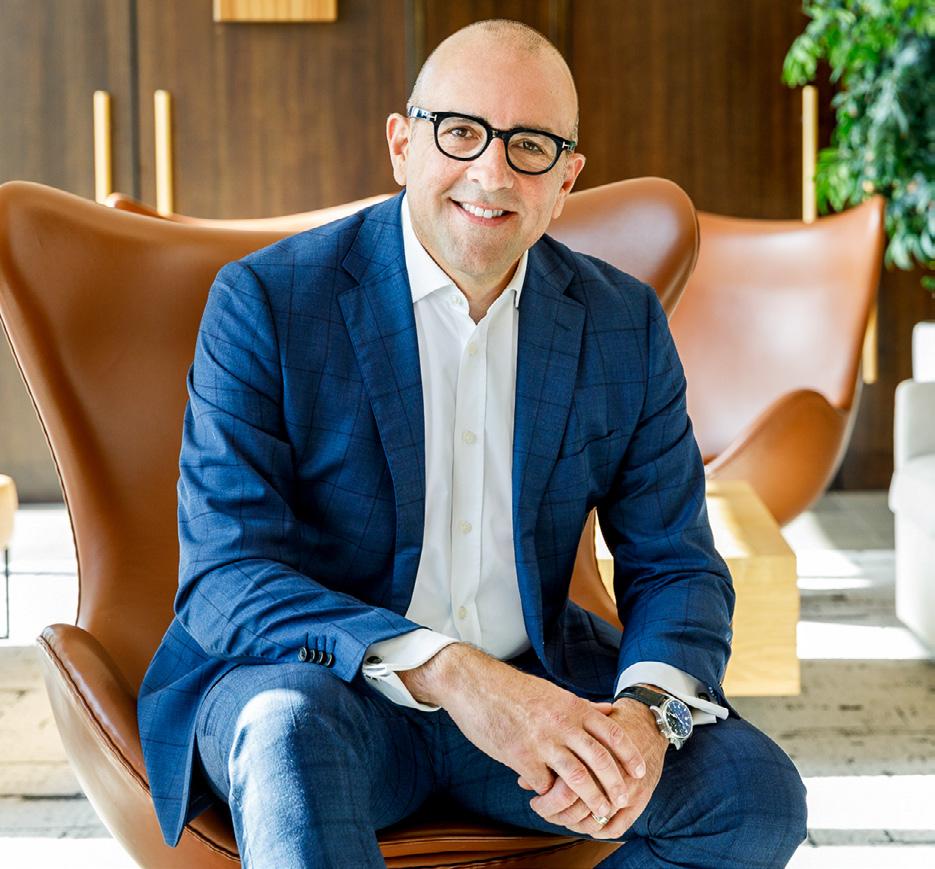
David Larocca
Oceania CEO & Regional Managing Partner, EY
A JOURNEY IN INFRASTRUCTURE AND LEADING PEOPLE
David Larocca is the Chief Executive Officer and Regional Managing Partner of EY Oceania, leading more than 700 partners and 9,000 people across Australia, New Zealand, Fiji and Papua New Guinea. He is a member of the EY Asia-Pacific Operating Executive, EY Global Practice Group and the Champions of Change coalition. David joined EY in 2003 and has over 25 years’ experience advising public and private clients on infrastructure and major transactions across Australia, Asia and Europe. Known for his pragmatic, inclusive leadership, he is focused on delivering client impact, strengthening culture and helping organisations build more efficient, accessible and sustainable communities.
Recently, in an exclusive interview with CIO Magazine, David shared insights into how his professional journey began in project finance before founding EY’s Infrastructure Advisory team, driven by the tangible impact of building roads, rail, and airports that transform communities. On trends and AI, he believes the next wave of digital and AIenabled infrastructure will demand stronger government-private partnerships as costs rise and budgets tighten, while warning leaders not to go to market before fundamentals like problem definition and risk allocation are clear. His words of advice for young professionals are to stay curious, ask one more question, and look beyond the immediate task to build perspective and opportunity. The following excerpts are taken from the interview.
Hi David. Every CEO’s path starts with a first step. Looking back at joining EY in 2003 as a founding member of the Infrastructure Advisory team, what made you choose infrastructure and advisory as your career foundation?
My path into infrastructure really started before EY. I initially fell into it while working in project finance at Westpac many moons ago, and what drew me in was the tangible nature of the work. Infrastructure allows you to see the outcomes of what you do – roads, rail, airports – projects
that physically come to life and, at their best, genuinely transform how people live and work.
What do you love the most about your current role?
What I enjoy most about my role is the diversity of it. Every day is different, whether it’s spending time with our clients, engaging with our people across EY, or being involved in our community and global network. What really stands out is hearing about the positive impact we have through our work – that’s what makes it so rewarding.
Stronger partnerships between government and the private sector will be critical, particularly as we move into the next wave of digital and AI-enabled infrastructure
Infrastructure underpins economies, yet funding and delivery are under pressure. What will change most about how infrastructure is financed and built in the next five years?
It’s a challenging time for the sector. The case for infrastructure investment remains strong, particularly across transport, social, energy and increasingly digital infrastructure. But rising costs, constrained government budgets and shifting private sector risk appetite are making delivery more complex. As a result, stronger partnerships between government and the private sector will be critical, particularly as we move into the next wave of digital and AIenabled infrastructure.
Risk is central to transactions and advisory. What emerging risk do leaders underestimate most when planning long-term projects today?
One of the most underestimated risks is going to market before the fundamentals are fully worked through. Projects need a clear understanding of the problem they’re solving, realistic cost expectations and a well-considered approach to risk allocation. When that isn’t in place upfront, it tends to create issues later in the process.
Diversity and inclusion are central to your passion. What’s one practical step organizations can take this year to move from intent to real inclusion?
There’s no single action that addresses real inclusion. And its never ‘done’. Progress requires consistent effort, clear tone from the top and genuine commitment across the organisation. While it’s obviously the right thing to do, it’s
If I could give one skill, it would be curiosity. Ask one more question, look beyond the immediate task, and seek out opportunities outside your core focus
also essential for driving business. Our clients and stakeholders rightly expect it, and it needs to be embedded in how we operate day to day.
Leaders need perspective beyond the boardroom. What book, not about business, has shaped how you think about people and culture?
I am not a big book reader, but Steve Jobs’ biography has always stuck with me. He wasn’t a perfect leader – no-one is – but he had a clear vision, he was relentless in pursuing it and surrounded himself with amazing people.
I also loved his obsession with the customer –we talk about client centricity at EY. Steve Jobs embodied this.
Many CEOs have a “signature question” before making big decisions. What’s the one question you ask yourself?
The question I come back to is simple: what haven’t we thought about? It helps challenge
assumptions and ensures we consider risks and perspectives that might otherwise be missed.
What is your biggest goal? Where do you see yourself in 5 years from now?
My biggest goal is being as good as I can in my current job. I also want to look back when I am long gone out of the role and think I made a small contribution to making EY an even better firm than it was when I stepped into the role.
If you could gift one skill to every young professional starting out, what would it be?
If I could give one skill, it would be curiosity. Ask one more question, look beyond the immediate task, and seek out opportunities outside your core focus. That mindset opens up learning, builds perspective and creates opportunities over time.
Sunil Dadlani
EVP-Chief Information & Digital Transformation, Cybersecurity, Venture Studio AI, Data Officer, Atlantic Health
Transforming Healthcare from AI-Enabled to AI-Native
Sunil Dadlani is an award-winning global executive serving as Chief Information, Digital, Cybersecurity, and Innovation Officer. A pioneer in human-centered design, he champions the transition from AI-enabled to AI-native ecosystems, implementing advanced Agentic and Generative AI technologies to create frictionless clinical experiences. Recognized as a multi-year Global CIO 100 honoree and one of the Top 50 Global Icons, Sunil drives enterprise-wide cloud governance, data strategy, and robust zero-trust risk frameworks. Educated at institutions including Harvard, Wharton, MIT, Cornell and Columbia, he possesses deep expertise in orchestrating secure, large-scale digital architectures that transform modern healthcare delivery. His career spans Fortune 100 companies across five continents — from Sony Motorola, Siemens and Novell to the New York State Department of Health.
Recently, in an exclusive interview with CIO Magazine, Sunil shared insights into why he left consumer tech for regulated, mission-driven sectors. On talent shortages, he said healthcare loses if it competes with Big Tech on salary alone. Systems must build, not buy, talent through reskilling, embed data scientists in clinical domains, and train clinicians in AI literacy. To a 22-year-old wanting to transform healthcare, he’d say spend time where care happens, observe workflows, pick one specific problem, build something small that helps, learn AI with clinical context, understand healthcare finance, and stay patient and curious. The following excerpts are taken from the interview.
Hi Sunil. Fortune 100 to government to healthcare is an unusual arc. What drew you from consumer tech into regulated, mission-driven environments like healthcare and public sector?
“Honestly, I didn’t leave consumer tech — I followed the hardest problems where impact would be most. And the hardest problems migrated into regulated industries.”
I started in Fortune 100 environments where the focus was scale, efficiency, and shareholder value. That experience taught me how to build systems that perform, optimize cost structures, and operate with discipline. But over time, I realized that the same digital and AI capabilities driving margin expansion in consumer tech could have far greater impact in sectors where outcomes are measured in human terms.
The transition to government and then healthcare was driven by that realization. These are some of the most complex, regulated, and operationally constrained environments in the world. Yet they are also the ones where the gap between what is possible and what is delivered is the widest.
Healthcare, in particular, operates with structural inefficiencies that would not be tolerated in other industries. We see fragmented data ecosystems, manual workflows, and administrative burdens that can account for nearly 25 to 30 percent of total healthcare spend. That is not just a cost problem. It is patient access, safety, and experience problem.
What drew me in was the opportunity to apply the rigor of consumer tech and enterprise discipline to a mission-driven system. Not to “digitize” healthcare at the surface, but to fundamentally re-architect it.
What do you love the most about your current role?
What I value most about my current role is the ability to operate at the intersection of mission, scale, and transformation.
Healthcare is one of the few industries where every decision carries both operational and human consequence. The work is not abstract. It is deeply tangible. When we improve access, reduce friction, or enable clinicians with better tools, the impact is immediate and visible inpatient care.
At the same time, the complexity is what makes it intellectually compelling. You are navigating clinical workflows, regulatory constraints, financial pressures, and rapidly evolving technology all at once. It forces you to think beyond point solutions and build systems that work end to end.
“The best technology leaders in healthcare aren’t the ones who understand the tech the deepest. They’re the ones who can sit in a room with a CMO, a CFO, and a frontline nurse — and make all three-feel heard, aligned, and confident in the same decision.”
You champion the transition from AIenabled to AI-native ecosystems. What will be the clearest signal by 2030 that a health system has truly become “AInative”?
By 2030, the clearest signal that a health system is truly AI native will not be the number of models deployed. It will be whether intelligence is embedded into every decision without friction, and trusted by the people making those decisions.
In an AI-enabled organization, AI sits on the side. It generates insights, dashboards, or
recommendations that still require translation and manual action. In an AI native system, intelligence is part of the workflow itself. It is invisible, continuous, and operational.
When a health system becomes truly AInative, the technology recedes entirely into the background. It becomes the foundational fabric of the organization.
Here is what that actually looks like on the ground:
• The friction just disappears. Ambient technology will listen to a patient-physician interaction, update the electronic health record, order the correct labs, trigger the preauthorization with the insurance company, and queue up the billing codes—all seamlessly in the background without the doctor ever typing a word.
• The shift from reactive to autonomous operations. In the revenue cycle or supply chain, you won’t have teams logging in to manually fix billing errors or predict inventory shortages. You will have autonomous, agentic workflows that self-correct, manage denials, and optimize workflows in real-time, escalating only the most complex anomalies to a human expert.
• The metric shifts from “adoption” to “capacity.” Today, we measure success by how many people use a tool. In 2030, an AI-native system will measure success by how much time has been given back to the bedside.
The ultimate proof of an AI-native health system is that clinicians will feel like they can finally just be doctors and nurses again, and patients will feel like they are interacting with a human-centered ecosystem, not a bureaucratic machine.
Zero trust is evolving beyond network perimeters. In five years, what will “identity” mean in a hospital where humans, devices, and agents all request access?
We are moving from static identity to dynamic, contextual trust.
Today, identity is largely human centric and role based. A physician logs in, a nurse badges in, a device is registered. Access is granted based on predefined roles and network boundaries.
That model does not hold in a world of autonomous agents, connected medical devices, and continuous data exchange.
HEALTHCARE IS ONE OF THE FEW INDUSTRIES WHERE EVERY DECISION CARRIES BOTH OPERATIONAL AND HUMAN CONSEQUENCE. THE WORK IS NOT ABSTRACT. IT IS DEEPLY TANGIBLE
WHEN A HEALTH SYSTEM BECOMES TRULY AINATIVE, THE TECHNOLOGY RECEDES ENTIRELY INTO THE BACKGROUND. IT BECOMES THE FOUNDATIONAL FABRIC OF THE ORGANIZATION
In the near future, identity will become multi-dimensional and continuously evaluated across three domains:
1. Human identity
Not just credentials, but behavior, context, and intent. Access will adapt in real time based on location, activity patterns, risk signals, and clinical context.
2. Device identity
3. Agent identity
This is the biggest shift. AI agents will not just assist. They will act. Each agent will require its own identity, permissions, accountability trail, and governance boundaries. You will need to know not just that an action was taken, but which agent took it, on whose behalf, and under what constraints.
Every device, from infusion pumps to imaging systems, will carry a verifiable, cryptographic identity. Trust will depend on device integrity, software state, and real time posture, not just network presence.
What brings this together is a move toward continuous authentication and authorization, where trust is not granted once but recalibrated constantly.
You’ve been honored as a multi-year Global CIO 100 and Top 50 Global Icon. Our readers would love to know the secret mantra behind your success. Honestly, there is no secret formula or magic bullet. If I look back at my career, from the Fortune 100 to government and now healthcare, my “mantra” comes down to a few simple, nonnegotiable principles I live by every day.
First, leadership is about people, not protocols. You can have the most brilliant technology strategy in the world, but if your team doesn’t trust you, or if you don’t care about their growth, it’s just ink on paper. I’ve always focused on building high-performance teams where transparency is absolute and humancentered design is the default. My job isn’t to be the smartest person in the room; it’s to clear the runway so the brilliant people around me can do their best work.
Second, fall in love with the problem, not the technology. It’s easy to get blinded by the latest shiny object—whether that’s quantum computing or the newest AI model. But true enterprise value happens when you use technology to solve real, painful, human problems. In my current role, that means focusing on things like reducing clinician burnout or pulling millions of dollars out of operational waste so it can go right back to patient care. When your focus is entirely on solving the problem, the accolades tend to take care of themselves.
Finally, empathy and fiscal discipline must coexist. You can’t be a successful modern leader
by just being a visionary, and you can’t do it by just being a ruthless cost-cutter. You have to balance both. You need empathy to understand how your decisions affect a nurse on the floor or a citizen using a government service, combined with the financial grit to negotiate hard, structure smart enterprise agreements, and protect the organization’s capital.
At the end of the day, success isn’t about the titles or the awards. It’s about building a legacy of trust, resilience, and meaningful impact in the lives of the people you serve.
What book — technical, philosophical, or historical — has the most notes in your margins, and which idea guides your weekly decisions?
One book that has shaped my leadership thinking is Good to Great by Jim Collins. What stands out is the idea that enduring success is not driven by a single breakthrough or bold move. It is built through disciplined people, disciplined thought, and disciplined action, compounded over time.
That principle translates directly into how I operate week to week.
In healthcare, the temptation is to chase transformation through big, visible initiatives. But the reality is that sustainable impact comes from consistency. Putting the right leaders in place, being brutally honest about where you stand, and then executing with focus and discipline.
Two concepts from the book guide my decisions:
The Hedgehog Concept
Clarity on what you can be best at, what drives your economic engine, and what you are deeply passionate about. For me, that means focusing
on building an AI native, digitally integrated health system that improves outcomes while remaining financially sustainable.
The Flywheel Effect
Transformation is not a single moment. It is a series of consistent pushes in the same direction. Each improvement in access, throughput, cost structure, or clinician experience builds momentum for the next.
So on a weekly basis, the question is not “What is the next big idea?”
It is “Are we pushing the flywheel in a consistent direction?”
Because over time, discipline compounds into transformation.
Talent shortages in cyber and AI are acute. How will health systems compete for and grow the next generation of “AInative” engineers and clinicians?
Competing with Big Tech and Silicon Valley for AI and cyber talent on salary alone is a losing battle for healthcare. If we try to play that game, we lose before we even start.
To win the talent war, health systems have to change the rules of engagement. We shouldn’t just try to recruit tech talent; we have to build an ecosystem that grows it from within, and we have to pitch something Big Tech can’t offer: unmatched purpose and high-leverage impact.
There are three shifts that will define how leading systems compete and grow AI native talent.
1. Build, not buy, the workforce
The supply of fully formed AI and cyber talent will remain constrained. The winning strategy is to create talent internally. That means structured reskilling programs for engineers, data scientists embedded in clinical
domains, and clinicians trained in AI literacy and workflow design. The future is not pure technologists or pure clinicians. It is hybrid talent that understands both.
2. Create AI native operating environments
Top talent wants to work where they can build and deploy at scale. That requires modern data platforms, access to high quality data, responsible governance, and the ability to move from idea to production without friction. If your environment slows innovation, talent will leave. If it accelerates learning and impact, talent will stay.
3. Make purpose a competitive advantage
Few industries offer the ability to directly improve human lives at scale. But purpose alone is not enough. It must be paired with visible outcomes and empowerment. Engineers should see how their models improve patient care. Clinicians should have agency in shaping the tools they use.
If you could host dinner with three innovators from any era, who would be at the table and what would you ask them about building for humanity?
If I could bring together a dinner table to explore what it truly means to build for humanity, I would invite Steve Jobs, Alan Turing, and Jensen Huang.
Each represents a different dimension of innovation that continues to shape our world.
With Steve Jobs, the conversation would center on the human experience. He understood something many technology leaders still miss: technology has little value if it does not resonate with the human spirit. He did not build from engineering checklists. He built from intuition about how people feel and interact.
AT THE END OF THE DAY, SUCCESS ISN’T ABOUT THE TITLES OR THE AWARDS. IT’S ABOUT BUILDING A LEGACY OF TRUST, RESILIENCE, AND MEANINGFUL IMPACT IN THE LIVES OF THE PEOPLE YOU SERVE
I would ask: As we move into a world of autonomous, agentic AI systems that can think and act on behalf of humans, how do we design these invisible yet powerful systems, so they deepen human connection rather than distance us from it?
With Alan Turing, the discussion would turn to the ethics and boundaries of intelligence. He laid the foundation for modern computing yet lived before society could fully grasp its implications.
I would ask: As machines begin to reason and act with increasing autonomy, where should we draw the boundaries to ensure intelligence remains aligned with human values?
With Jensen Huang, the focus would be on infrastructure as destiny. He has fundamentally reshaped the compute layer that powers the AI era.
I would ask: How do we ensure that the infrastructure we are building today remains accessible, sustainable, and broadly enabling, rather than concentrating innovation in the hands of a few?
Across all three, the underlying question is the same:
How do we scale intelligence in a way that strengthens humanity, rather than outpaces it?
What
is your biggest goal? Where do you see yourself in 5 years from now?
My biggest goal right now is to successfully transition a major, integrated health system from being merely “AI-enabled” to truly “AI-native.”
Right now, the entire industry is caught up in the noise of pilots, point solutions, and chatbots that require extra clicks from our clinicians. My immediate focus is to engineer that out. I want to build a foundational, autonomous
architecture—especially in areas like revenue cycle management and ambient clinical documentation—where the technology recedes into the background and simply does the heavy lifting. The metric of success isn’t technology adoption; it’s the number of hours we return to a doctor or nurse to spend at the bedside.
Where I See Myself in 5 Years
Five years from now, I see myself continuing to lead at the bleeding edge of where complex global technology, strategic business architecture, and societal mission intersect.
Whether that is expanding my scope to drive digital-first transformations across broader, Specifically, over the next five years, I intend to focus on three things:
Pioneering Agentic Governance: As autonomous AI agents begin executing workflows independently, the role of the technology leader shifts from deployment to governance. In five years, I want to have established the definitive enterprise playbook for how large-scale organizations safely orchestrate, audit, and de-risk autonomous AI systems.
Securing Next-Gen Infrastructure: We are rapidly heading toward a world where quantum computing will threaten current cryptographic standards. I want to ensure that the critical infrastructure I oversee is completely migrated to post-quantum, zero-trust security frameworks well ahead of the curve.
Mentoring the Next Generation: By then, the lines between a “technologist” and a “business leader” will have completely vanished. I want to spend a significant portion of my time coaching and building a world-class pipeline of “bilingual” executives who can seamlessly
speak the language of deep data science, hardnosed financial discipline, and human-centered leadership.
If a 22-year-old told you “I want to transform healthcare with technology,” what would you tell them to do this year?
If a 22-year-old told me they want to transform healthcare with technology, I would probably say this first:
That is a great ambition. Now go spend time where care actually happens.
Healthcare looks very different from the inside. It is complex, fast paced, and often messy in ways you cannot fully understand from the outside. So the most important thing you can do this year is get close to the frontline. Sit with clinicians, observe workflows, talk to patients, and pay attention to where things break down or slow down.
Then, instead of trying to solve everything, pick one problem. Something real and specific. Maybe it is documentation burden, scheduling delays, or gaps in patient communication. Try to understand it deeply and build something, even if it is small, that actually helps.
At the same time, build your AI and data skills. But do it with context. Technology in healthcare is not just about what is possible. It is about what is safe, practical, and usable in real environments.
I would also encourage them to learn how healthcare works financially. It may not sound exciting at first, but it is critical. If you understand how value flows through the system, your solutions are much more likely to scale.
And most importantly, stay patient and stay curious.
Wa n t t o S e l l o r fi n d
I nve s t o rs f o r yo u r
B u s i n e s s ?
Empowering Employees to Focus on Work that Matters
Amy McPhillips
Vice President, HR IT and Employee Experience, Kyndryl
Amy McPhillips is Vice President, HR IT and Employee Experience at Kyndryl, where she focuses on making it easier for employees to get work done in a digital and increasingly AIenabled world. She is passionate about simplifying the employee experience by reducing the “navigation tax” and orchestration burden so employees can focus on meaningful work. With more than 25 years of experience across Intel, Medtronic, and Target, Amy has led large-scale transformation across HR systems, digital workplace systems, and IT strategy and operations. At Kyndryl, she supports the mission to design, build, manage, and modernize the world’s critical technology systems, bringing a relationship-driven leadership style grounded in trust, connection, and empathy.
Recently, in an exclusive interview with CIO Magazine, Amy shared insights into how 25+ years of experience shaped her mission to cut the “navigation tax” employees pay daily. She sees AI as the shift from improving interfaces to reorchestrating work itself, where employees state intent and workflows move end-to-end across systems. Her advice to rising IT leaders: protect empathy and trust, pause anything that adds complexity without clear value, and focus on translating tech into meaningful business outcomes. The following excerpts are taken from the interview.
Hi Amy. Most leaders don’t start with “digital transformation” on their business card. Thinking back to your first role leading engineering teams, what problem made you realize technology could change how thousands of people work, and what did you do about it?
My early career in retail shaped how I think about experience design. Every decision was grounded in consumer behavior and conversion, where even small changes in layout, product placement, or checkout flow could influence millions of customers and billions of $. Everything was intentionally designed to reduce friction, guide decisions, and make purchasing seamless. That same mindset applies to IT and employee experience. Employees aren’t thinking in terms of systems they’re trying to get something done,
just like customers completing a purchase. Applying retail principles like orchestration, personalization, and friction reduction is critical to driving productivity and adoption.
One example was a learning management system implementation in a medical device environment, where we eliminated a single unnecessary sign-off step. While minor on its own, with over 5 million learning records annually, even seconds saved per interaction scaled significantly. In a regulated environment where compliance training keeps operations running, that efficiency matters. Just as friction drives cart abandonment in retail, it drives disengagement internally. When workflows are complex, employees avoid or work around them. By simplifying the design, we improved efficiency, increased adoption, and strengthened compliance.
EMPLOYEES JUDGE THEIR EXPERIENCE BY HOW EASY IT IS TO BE PRODUCTIVE, AND THAT DIRECTLY SHAPES ENGAGEMENT, RETENTION, AND CULTURE FIT
What do you love the most about your current role?
What I love most is the opportunity to improve how work feels for employees at scale.
Today, many organizations are dealing with what I describe as a daily ‘navigation tax’ of employees jumping between systems, searching for information, and stitching together workflows just to move work forward. At a broader level, that creates an orchestration burden where employees are effectively coordinating work across systems and functions instead of focusing on business outcomes. Being in a role where we can address that holistically is incredibly energizing. And even more exciting right now with AI, we now can move beyond improving interfaces and start rethinking how work happens. That’s a much more meaningful problem to solve than deploying another system because it’s about giving time and energy back to employees so they can solve business problems.
Digital employee experience is now board-level. Looking five years ahead, what part of the employee tech stack will move from “IT support” to “talent retention metric,” and why?
I think the biggest shift will be in how work is orchestrated across systems.
Today, most of the employee tech stack is still evaluated as individual tools such as systems of record, collaboration platforms, service tools. But employees don’t think that way, they just want to get something done quickly and easily. Take a simple IT or HR request like ordering a new PC or resolving a payroll issue. Today, that often means jumping between Workday, ServiceNow, external payroll provider systems,
email, and multiple approval steps. The friction isn’t in any one tool it’s in the handoffs between them. It’s already possible with Agentic AI for that experience to be orchestrated endto-end. Employees will state their intent, and the workflow will move across systems automatically. The organizations that reduce context switching, eliminate unnecessary steps, and design this way will have a real advantage. Ultimately, employees judge their experience by how easy it is to be productive, and that directly shapes engagement, retention, and culture fit.
Workforce demographics and remote models are shifting. What capability will companies need to own natively by 2030 to attract and keep talent, and what should they finally stop outsourcing?
By 2030, organizations will need to own the ability to design and continuously evolve the employee experience across a more diverse, multi-generational workforce where people are working longer and expectations around flexibility, technology, and career growth vary significantly. That requires a deeper understanding of employee personas, because a frontline worker, a digital-native hire, and a senior leader all experience work very differently. You can see this today in environments where SaaS tools serve as the system of record, but the experience is fragmented and siloed by department or function, not by persona. When organizations introduce universal ‘AI front doors’ employees can simply ask for what they need and have work orchestrated across systems for them.
At the same time, companies should move away from outsourcing fragmented service models that break the experience. The
most common employee complaints in these environments are slow response times, being passed between teams, inconsistent answers, and not knowing where to go for help or find information. Over time, that erodes trust and makes work harder than it needs to be.
What are three skills you now look for when hiring or developing leaders that you didn’t prioritize five years ago, and what skills have you intentionally deprioritized?
What I prioritize most now is AI fluency, and process/orchestration mindset, and a business value mindset. Most importantly, leaders need strong business acumen, and they must understand the business deeply and be able to translate technology into meaningful business outcomes. From there, adaptability is critical, because IT leaders need to be comfortable operating in constant change and ambiguity, and guiding their teams through that. What I’ve intentionally de-prioritized is deep specialization in a single tool or specialty area. Expertise still matters, but it’s no longer sufficient. Today’s leaders need to think holistically, evaluate across a rapidly evolving landscape, and lead through transformation not just rely on depth.
Leaders are shaped outside the office too. What is one book, not about technology, that fundamentally changed how you lead people through change, and what idea from it do you use with your teams?
A classic leadership book that had a lasting impact on me is StrengthsFinder 2.0 by Tom Rath. Earlier in my career, I experienced feedback cultures that focused heavily on fixing
weaknesses. While there’s value in addressing gaps, focusing only on them misses a much bigger opportunity to build confidence, energy, and sustained performance. This book reinforced that people grow fastest when they build on what they naturally do well. It also made me more intentional about understanding my own strengths and where I need complementary partners around me. One of the most impactful leaders I’ve worked for took a chance on me for a role specifically because I brought a different style and set of strengths from his own and he valued those differences. That experience shaped how I build teams today which is building a team of diverse strengths and perspectives and creating the trust that helps people thrive through change.
Accounting and HR trained you to see both numbers and people. What is one piece of music, art, or sport that mirrors that balance of precision and empathy for you, and what did you learn from it?
My background is also in photography, specifically portrait art. I once co-owned and operated a professional photography studio, and it really shaped how I think about the balance between technical precision and creativity. Photography is a very technical art form, you must understand lighting, composition, digital editing, and all the mechanics behind getting the shot right. But what really makes an image powerful is how well you connect with people, understand their story, and bring out something authentic in the moment. Likewise, in leadership, I’ve learned there is always a level of structure, discipline, and management oversight required, but you can exponentially amplify your impact by understanding people and creating the conditions where they shine bright.
STAYING CLOSE TO YOUR TEAMS, LISTENING, AND GROUNDING YOUR LEADERSHIP IN RELATIONSHIPS AND TRUST IS CRITICAL FOR HELPING EMPLOYEES NAVIGATE CHANGE AND BUILD CONFIDENCE IN ADOPTING NEW WAYS OF WORKING
What is your biggest goal? Where do you see yourself in 5 years from now?
My biggest goal, both personally and professionally, is to have a meaningful impact on people, whether that’s my family, the teams I lead, or the employees we support. Their success is what motivates me. I want to help create an environment where people can do their best work and feel good about it, where work and life is productive, fulfilling, and not weighed down by unnecessary complexity. If 5 years from now I am still making a difference in how people experience and achieve their best, I’ll consider that a success!
You’ve led through economic cycles and industry shifts. What advice would you give a rising IT leader who has never managed through major disruption, and what should they protect versus pause?
Especially in times of disruption, lead with empathy (protect) and intention (pause). It’s easy to focus on tools and solutions, when the real challenge is understanding how those changes are experienced by people. Outcomes aren’t driven by technology alone, but by how people engage with and adopt it. This is especially true right now with AI, where there’s a mix of excitement and fear for employees. Staying close to your teams, listening, and grounding your leadership in relationships and trust is critical for helping employees navigate change and build confidence in adopting new ways of working. These are also leadership skills that AI can’t replace as the human experience of work is built on connection, understanding, and trust. And what I mean by leading with intention is to pause anything that adds complexity without clear value. Not everything needs to move forward at once. Often, the most impactful thing you can do is simplify focus on what matters most, reduce the noise, and remove the friction that makes change harder than it needs to be.
Fabrizio Pilotti
CIO, Aston Martin Aramco Formula One™ Team
Redefining Motorsport Technology for the AI Era
Fabrizio Pilotti joined the Aston Martin Aramco Formula One™ Team as Chief Information Officer in July 2025. With nearly 30 years of experience in IT, Fabrizio brings deep expertise in software development, IT for financial services, and most recently, the high-performance world of Formula 1®. Before joining Aston Martin Aramco, he spent over a decade leading information technology at Mercedes AMG High Performance Powertrains, where he played a pivotal role in supporting the team’s competitive edge. Earlier in his career, he held positions across a range of sectors, including roles at Daimler and Deutsche Bank. As CIO at Aston Martin Aramco, Fabrizio is responsible for driving digital innovation, optimising IT infrastructure, and aligning technology strategy with the team’s performance goals on and off the track.
Recently in an exclusive interview with CIO Magazine, Fabrizio shared insights into how 30 years from software developer to F1 CIO taught him decisive, pressuretested leadership, why AI will make Formula 1 more real-time and data-driven while enhancing not replacing engineers, and why aspiring motorsport tech leaders should stay calm, stay curious, and commit to the work with no shortcuts. The following excerpts are taken from the interview.
Hi Fabrizio. Your career in highperformance motorsport technology spans over a decade. How did your earliest role in tech shape the way you approach engineering under extreme time pressure today?
“Hi! Yes, I’ve worked in the motorsport industry for over a decade now. Before joining the Aston Martin Aramco Formula One™ Team in 2024, I spent almost 11 years with Mercedes AMG High Performance Powertrains.
“My earliest role in technology was at Quark nearly 30 years ago, where I worked as a Senior Software Developer. While that may seem far removed from my role today as CIO of a Formula One team, many of the lessons I learned there still shape my day-today approach.
“There’s still a strong overlap when reviewing solutions for the team now - just at a faster pace. My early roles helped build the confidence to think on my feet, make decisions that are right for the business, and operate under the high-pressure environment of Formula One.
“That first role also helped develop my mentoring and teamwork skills. Supporting junior developers and collaborating effectively as a team remain hugely important parts of my role today.”
What do you love the most about your current role?
“Well, it’s an incredibly exciting time for the industry. Formula One is already a fast-paced environment, and the introduction of AI is bringing together two rapidly evolving worlds. Seeing these developments happen in real time is fascinating, and it constantly makes me think
about the future possibilities for both the sport and the wider industry.”
What does the future of AI look like in Formula 1?
“The future of AI in Formula One is very exciting because it has the potential to transform how teams design, develop and operate cars. We’re moving towards a much more connected and data-driven environment, where AI can help engineers analyse large amounts of telemetry and performance data in near real-time, allowing teams to react faster and make more informed decisions under pressure.
“I think we’ll also see AI play a bigger role in the design process, helping teams explore more aerodynamic concepts, material combinations and performance set-ups far earlier in the development cycle. Over time, that could lead to cars becoming more adaptable to changing track conditions, with AI supporting quicker setup adjustments and faster iterations in the future.
“Beyond the car itself, AI will continue to shape manufacturing, simulations, supply chains and race strategy, helping streamline workflows and remove inefficiencies across the wider organisation. At the same time, the importance of high-performance computing and cloud infrastructure will only grow, because the ability to process and act on data quickly is becoming a competitive advantage in and of itself.
“AI is not replacing engineering expertise in Formula One, it is actively enhancing it. The teams that can integrate AI most effectively into their workflows and decision-making processes will be the ones able to innovate, adapt and move fastest.”
Talent pipelines are shifting with AInative engineers entering the field. How will the skill set of a motorsport IT department look different in 2030 compared to today?
“We’re already starting to see AI become more of a teammate, like a support system that helps people work faster and more efficiently. Across Formula One and motorsport, AI will increasingly help drivers, engineers and designers solve problems quicker by drawing on huge amounts of existing engineering knowledge and data.
“By 2030, I think the skillset within a motorsport IT department will evolve to reflect that. The core engineering knowledge will still be essential, but there’ll be a much greater emphasis on understanding how to work alongside AI - knowing how to prompt it effectively, interpret its outputs and integrate it
into day-to-day workflows. Engineers will need to build confidence and trust in AI tools, while still applying human judgement to validate results and make final decisions. I think there will always need to be humans in the process.
“I don’t expect the roles themselves to disappear, but they’ll look different. The fundamentals of what people coming into the field need to learn won’t massively change either. Strong computer science and scalable technology skills will become even more valuable, but physical and hands-on roles like mechanics and composite builders will still be hugely important entry points into the industry as well.
“Ultimately, the biggest shift will be in how people work day-to-day. Those who can combine engineering expertise with the ability to effectively use AI will be the ones who thrive.”
ENGINEERS WILL NEED TO BUILD CONFIDENCE AND TRUST IN AI TOOLS, WHILE STILL APPLYING HUMAN JUDGEMENT TO VALIDATE RESULTS AND MAKE FINAL DECISIONS
Outside of data and code, passion fuels performance. What personal hobby or interest keeps you mentally sharp during the intensity of a race season?
“Outside of work, I enjoy spending time with my family. Going out for a nice breakfast and coffee with my partner is my safe space and a chance to properly unwind. I’m a huge coffeelover - so much so that drinking and trying new coffee has become a hobby in itself.
“Otherwise, you’ll find me studying, particularly physics and astronomy, which I find fascinating.”
Many CIOs have a favorite piece of tech from their childhood. What was the first gadget or computer you owned, and how did it spark your curiosity?
“When I was little, I spent a lot of time playing around with engines. My father had a few
outboard engines and we’d spend hours taking them apart, servicing them and putting them back together again. I remember being mind blown by how everything worked as a kid.
“And it probably goes without saying, but I was also obsessed with Lego - how most engineers start out.“
If you weren’t in motorsport or tech, curiosity would have led you elsewhere. What alternate career would you have pursued, and what draws you to it?
“I always dreamt about being an astronaut and came really close to achieving it! I went through the long process to become an astronaut and unfortunately didn’t make it to the final step. If I didn’t find my calling in motorsport, I would have definitely given it another shot.”
What is your biggest goal? Where do you see yourself in 5 years from now?
“Easy one! I want to win with Aston Martin Aramco Formula One™ Team.”
For a student reading this who dreams of a leadership role in motorsport tech, what’s the one mindset shift they need to make right now to get there?
“I’d say the biggest thing is to stay calm, be a sponge and learn as much as you can - as quickly as you can. Ask questions, stay curious and keep learning.
“But ultimately, you have to put the work in. There’s no magic answer or shortcut to success, especially in F1. It takes focus and commitment but it’s incredibly rewarding when you get there.”
The New Global Leadership Equation: Empathy, Adaptability, and AI Sanjay Deshpande
Executive Vice President & Head - Banking, Manufacturing, Retail, & Emerging Industries-Americas, Virtusa
Sanjay Deshpande is a senior business executive with over three decades of experience in growing businesses across various industries and global markets. In his current role, he is the Executive Vice President and Americas Business Head for Banking & Financial and Emerging Industries. Throughout his career across four continents, Sanjay has built a reputation for transforming complex businesses into high-growth engines and building cohesive teams. A trusted advisor to C-suite executives and player coach for teams, he has transformed businesses, built new markets and revenue streams through relentless focus on growth and complexity reduction. Prior to Virtusa, he served as Chief Sales Officer for the Americas at Polaris Software. He also built a startup prior to that and has worked for global organizations in the ICT space.
Recently, in an exclusive interview with CIO Magazine, Sanjay shared insights into a leadership journey shaped not by one inflection point but by decades of operating across many different geographies, diverse business cultures, and uncomfortable situations that forced constant reimagining and reshaping. On talent, he believes high-performing teams in five years will be defined by incessant learning, granular micro-domain expertise that goes inchwide and mile deep, passion for technology-enabled problem solving, comfort working with both humans and agents, and adopting new metrics of measurement, a shift his organization is already preparing for through custom training academies. Finally, for intrapreneurs in large enterprises, his advice is to stick to conviction, take the road less traveled, focus on the future and disintermediation, build high quality collaborative teams, and measure the impact quotient every single day. The following excerpts are taken from the interview.
Hi Sanjay. You’ve built and scaled businesses across multiple continents and industries — from startups to global P&L roles. Looking back at that global journey, what single inflection point most shaped the leader you are today? My leadership style is not defined by a single inflection point, but rather a culmination of various journeys across different geographies, diverse business cultures and environments, and people. I approach leadership as a “people-first” leader, leading with empathy and prioritizing employees over customers and upward management. I recognize this is somewhat of an inversion of the standard industry model. Being put into unknown and uncomfortable situations multiple times in my career has shaped me and helped build key leadership traits. Reflecting on my journey, I believe I learnt a lot, whether it was starting businesses in entirely new geographies, unifying disparate teams across continents and
mentoring them to drive profitable growth despite hostile business environments. This continuous cycle of unlearning and learning helped me transform into the change agent I am today, always focused on challenging the status quo.
What do you love the most about your current role?
I enjoy the opportunity my current role offers to meet diverse customers and prospects, and help them problem-solve their complex challenges, blending technology as an enabler with process re-engineering, ways of working, and people management. I equally enjoy working closely with my teams helping them navigate through their respective journeys, especially when facing not so favorable situations. Finally, one perk that I have always enjoyed, thanks to the nature of my work, is to travel extensively. Having travelled to 60 plus countries, I can say
BE
with a fair degree of confidence that places and people teach you way more than many other popular mediums.
Emerging sectors often signal the next disruption. Which emerging area are you watching most closely right now, and what makes it a game-changer?
I think all of us are closely watching the evolving business landscape, thanks to the enormous possibilities offered by Artificial Intelligence. Be it Agentic AI, Embodied AI, SLM’s, Multimodal Models, and Post Quantum Cryptography; the sheer impact they can create is unfathomable!
The true gamechanger, however, is how we manage potential risks associated with AI— such as discrimination, drift, privacy breaches, hallucinations, and security vulnerabilities. Just as critical is addressing its resourcehungry nature in powering and cooling data centers, alongside building sustainable hybrid models for humans and agents to co-exist. As we strive for this balance, it is imperative that we actively mitigate any detrimental impacts on environmental and social causes. At my current company, Virtusa, this is precisely how we are shifting our AI strategy. By prioritizing responsible AI-led engineering, we help organizations accelerate productivity, augment revenue, and reduce costs—all while maintaining strict safeguards to mitigate risks posed by AI.
Talent is now global and fluid, yet domain expertise still matters. How will the profile of a “high-performing team” change in the next five years?
To thrive in a rapidly changing business landscape, a high-performing team must
relentlessly focus on continuous learning and unlearning, embracing the AI-led art of the possible and adopting new ways of working. Domain expertise will become increasingly granular, requiring an exclusive, inch-wide and mile-deep focus for the responsible utilization and monetization of AI. Essential ingredients for these future teams will include a strong intrinsic focus on micro-domains, an unwavering passion for technology-enabled problem-solving, a drive to test new solutions for both familiar and emerging problems, an adaptability to new measurement metrics, and the evolution to seamlessly engage with both humans and agents. At Virtusa, we have made significant investments to AI-enable our teams. By providing them with access to the right environment and tooling, as well as domain and tech upskilling through custom training academies, we are helping them embrace the cultural and operational shifts needed to adopt new ways of working and take a quantum leap.
Leaders are shaped as much by what they read as what they do. Which book has stayed with you the longest, and what idea from it do you apply most often?
The novel Shantaram by Gregory David Roberts is the book that has stayed with me the longest. It is a cult classic that contains innumerable leadership lessons, particularly on finding one’s own path to change the status quo while building resiliency, leading with empathy, navigating ambiguities flawlessly and so on. The idea that I apply most often, which has become a go-to mantra, is a quote, “When was the last time you did something for the first time….” from the book “21 Indispensable Qualities of a
Leader” authored by John C Maxwell, who is seen as one of the world’s foremost authorities on Leadership. This quote pushes you every single day to step out of your comfort zone, not get complacent, and embrace new learnings and experiences.
Many professionals aspire to global P&L roles. What are the 2–3 capabilities they should deliberately build in their 30s to be ready?
To prepare for global P&L roles, professionals must first learn to read between the lines. Identifying unstated needs is a vital trait that every leader should possess. Beyond evaluating direct and indirect influencing factors, leaders
must anticipate potential disintermediation trends—both tech and non-tech—that could adversely impact the business. Other critical capabilities include maintaining tight fiscal discipline; developing resilience and a peoplefirst approach; leading with empathy; taking audacious yet calculated risks; and, most importantly, always measuring the impact of their actions.”
Diversity and inclusion are personal passions for you. Who is one leader, historical or current, whose approach to inclusion you deeply admire?
I deeply admire Nelson Mandela for his approach to inclusion. His unwavering focus
BEYOND EVALUATING DIRECT AND INDIRECT INFLUENCING FACTORS, LEADERS MUST
ANTICIPATE POTENTIAL DISINTERMEDIATION TRENDS—BOTH TECH AND NON-TECH—THAT COULD ADVERSELY IMPACT THE BUSINESS
and courage, despite years of adversity and incarceration, set a gold standard for translating one person’s dream and vision into a reality for humanity and driving the inclusion agenda.
What is your biggest goal? Where do you see yourself in 5 years from now? I do not set five-year goals because of the sheer market dynamism and the continuous need for reshaping and rebuilding. My goals are centered on creating value for my organizations, my clients, my teams and the community. Specifically, I aim to apply advanced technologies to complex human challenges, while focusing on team mentorship and social impact initiatives like education and healthcare. On the personal front, I intend to continue with my journey of doing things that I have never done before, travel to many more countries and spend quality time writing about meaningful experiences and reflections.
With your background in both startups and large enterprises, what’s your advice to intrapreneurs trying to drive change inside big organizations? My advice is to always stick to your convictions if you strongly believe an idea can drive positive change and challenge the status quo, even if it requires taking the road less travelled. Remember, no idea is a bad idea because you either win or you learn and grow, so do not worry about winning a popularity contest. The focus must be on what the future holds, what will remain relevant, potential disintermediation zones and the “jobs that need to be done”. Equally important are building high-quality, collaborative teams and, most importantly, consistently prioritizing the Impact Quotient.
Elevating the CIO Role in the AI and Quantum Era Prof. Abbi Sharma
Chief Digital & Transformation Officer - Critical Infrastructure and Essential Services, Victorian Government
Professor Abbi Sharma is an internationally recognised technology, transformation, applied research, innovation and corporate governance leader with executive experience spanning government, healthcare, higher education, research and critical infrastructure sectors. He has held Chief Information Officer, Chief Technology Officer and Chief Transformation Officer roles, leading enterprise-wide digital transformation, cybersecurity, artificial intelligence and operational modernisation initiatives across complex organisations. He also serves as a Non-Executive Director and Professor of Applied Research, Technology and Innovation, helping bridge academia, industry and government. Professor Sharma is a sought-after keynote speaker, advisor and thought leader on technology governance, AI, digital resilience and innovation-led organisational transformation. Recently, in an exclusive interview with CIO Magazine, Prof Sharma shared insights into a career that converges CTO, CIO, Chief Transformation Officer, Non-Executive Director and Professor roles, explaining that his interest in technology was never about tech itself but about solving complex problems and using information and innovation as strategic enablers of economic growth, resilience, public trust and societal progress. Looking ahead 5 years, he believes the CIO/CTO roles will evolve into enterprise risk, resilience and value creation leaders, with greater boardroom accountability for AI governance, cyber resilience, digital ethics and operational transparency, while universities and industry will blur boundaries to co-create talent and research through innovation ecosystems measured by real-world impact. His advice to aspiring CIOs/CTOs is to focus less on technology and more on business outcomes, develop judgment, build trust, communicate clearly and maintain a long-term perspective, because credibility and integrity earn lasting influence. The following excerpts are taken from the interview.
Hi Prof. Sharma. Your career spans CTO, CIO, Chief Transformation Officer, Non-Executive Director, and University Professor — a rare convergence of roles. What first sparked your interest in technology as a lever for strategy and resilience, and when did you know this would be your life’s work?
My interest in technology was never really about technology itself. It was about solving complex problems and creating better outcomes for people and organisations. Early in my career, I observed that the organisations that adapted fastest to change were not necessarily the biggest or best funded; they were the ones that used information, technology and innovation as strategic enablers. That insight fundamentally shaped my thinking. Over time, I came to see technology as a form of strategic infrastructure that underpins economic growth, organisational resilience, public trust and societal progress. The more I worked across government, healthcare, higher education and critical infrastructure sectors, the more convinced I became that technology leadership sits at the intersection of strategy, governance, risk and transformation. That is when I realised this was not simply a profession but a lifelong pursuit.
What do you love the most about your current role?
What I enjoy most is the opportunity to create meaningful impact at scale. Technology leaders today have a unique vantage point across the entire organisation, from frontline operations and customer outcomes through to executive decision-making and board governance. I enjoy helping organisations navigate complexity, modernise services, strengthen resilience and unlock new opportunities through innovation.
Equally rewarding is mentoring future leaders, connecting research with real-world application, and helping organisations translate emerging technologies such as artificial intelligence into practical outcomes that improve lives and strengthen communities.
You emphasize technology as “strategic infrastructure.” In the next 5 years, how will the role of the CIO/CTO change in the boardroom and in public accountability?
The CIO and CTO will increasingly become enterprise risk, resilience and value creation leaders rather than simply technology executives. Boards are already recognising that digital systems, cybersecurity, artificial intelligence, data platforms and critical infrastructure are now inseparable from organisational performance. Over the next five years, technology leaders will play a much greater role in strategic planning, investment decisions, regulatory compliance and public accountability. We will see increasing scrutiny around AI governance, cyber resilience, digital ethics and operational transparency. The technology executive of the future will need to be equally comfortable discussing financial performance, organisational risk, public trust and technology strategy. Their role will become far more visible and accountable both inside and outside the boardroom.
Higher education and industry are colliding in new ways. What trend do you see in how universities and corporations will co-create talent and research by 2030?
By 2030, the traditional boundaries between universities and industry will become
increasingly blurred. Organisations are seeking graduates who can contribute immediately, while universities are under pressure to demonstrate real-world impact. As a result, we will see deeper collaboration across research, curriculum design, industry placements, executive education and commercialisation. The future will be characterised by co-created innovation ecosystems where industry helps shape research priorities and universities become active partners in solving complex economic and societal challenges. Success will increasingly be measured not only by publications but by translational outcomes, commercialisation, workforce capability and measurable impact.
You sit at the interface of research, innovation, and practice. Is there one book, paper, or thinker that fundamentally changed how you view the relationship between technology and society?
While Clayton Christensen’s work on disruptive innovation shaped my understanding of how technology transforms industries, the leaders who have most influenced my thinking about the relationship between technology and society come from a much broader spectrum. Simon Sinek taught me that great organisations and technologies must be anchored in purpose. Brené Brown reinforced the importance of trust, courage and human connection in leading change. Leaders such as Barack Obama, Nelson Mandela and Atal Bihari Vajpayee demonstrated how vision, empathy and principled leadership can unite people around a shared future, even during periods of significant disruption and uncertainty. Across technology
THE CIO AND CTO WILL INCREASINGLY BECOME ENTERPRISE RISK, RESILIENCE AND VALUE CREATION LEADERS RATHER THAN SIMPLY TECHNOLOGY
EXECUTIVES
and research, thinkers such as Geoffrey Hinton and Demis Hassabis continue to highlight both the extraordinary opportunities and responsibilities that accompany technological advancement. Together, these influences have taught me that technology is fundamentally a human endeavour. Its success is not determined by how sophisticated it is, but by the value it creates the trust it earns, and the positive impact it has on people, communities and society.
You moderate major forums and deliver keynotes worldwide. What’s your favorite topic to speak on when you have complete freedom, and why does it energize you?
If given complete freedom, I would speak about how emerging technologies such as Artificial Intelligence, Quantum Computing, Biotechnology and advanced digital systems
can be harnessed to create a healthier, more prosperous and more sustainable future for humanity. We are living through one of the most significant periods of technological advancement in human history, where breakthroughs in science and technology have the potential to transform healthcare, accelerate medical discovery, improve education, strengthen critical infrastructure, address climate challenges and enhance quality of life for billions of people. What energises me most is not the technology itself, but its potential to solve some of society’s most complex and enduring challenges. The real opportunity lies in ensuring these innovations are developed and deployed responsibly, ethically and inclusively so that their benefits are broadly shared. These conversations sit at the intersection of technology, leadership, research, public policy and human progress, and they ultimately centre
LEADERS DO NOT NEED TO BECOME TECHNICAL EXPERTS, BUT THEY MUST UNDERSTAND HOW AI CREATES VALUE, HOW IT INTRODUCES RISK AND HOW GOVERNANCE FRAMEWORKS CAN ENSURE RESPONSIBLE DEPLOYMENT
on a simple but profound question: how do we use innovation not just to build smarter systems, but to build a better society.
You build capability, not just systems. What’s one AI-era leadership skill you believe every CEO and Board member must develop by 2027?
The single most important skill will be AI governance literacy. Leaders do not need to become technical experts, but they must understand how AI creates value, how it introduces risk and how governance frameworks can ensure responsible deployment. Boards and executives will increasingly be required to oversee decisions involving autonomous systems, algorithmic accountability, data governance and emerging forms of operational and strategic risk. Those who develop the ability to ask the right questions and establish appropriate guardrails will be far better positioned to lead successfully in the AI era.
What are some of your passions outside of work? What do you like to do in your time off?
Outside of work, I enjoy spending time with family and friends, playing golf whenever I can, mentoring emerging leaders and engaging with diverse communities. I have a strong interest in public policy, leadership, economic development and international collaboration, particularly strengthening relationships between Australia and India across education, research and innovation. I also enjoy reading, reflecting on leadership lessons, and exploring how emerging technologies will shape the future of society. Some of my most rewarding experiences come from helping people realise their potential and
supporting initiatives that create lasting impact beyond individual organisations.
What is your biggest goal? Where do you see yourself in 5 years from now?
My overarching goal is to help organisations and societies navigate one of the most significant technological transitions in human history. Over the next five years, I hope to continue contributing at the intersection of executive leadership, governance, academia and public policy, helping shape the responsible adoption of emerging technologies such as AI and quantum computing. I would like to further strengthen international partnerships, support the development of future leaders, and contribute to building more resilient, innovative and inclusive institutions that create long-term value for communities and economies.
Aspiring tech leaders often chase titles over judgment. What’s the most important advice you’d give to a rising CIO or CTO who wants a seat at the strategy table?
Focus less on technology and more on business outcomes. The most effective CIOs and CTOs understand strategy, risk, finance, governance and organisational behaviour just as well as they understand technology. Boards and CEOs do not invite technology leaders into strategic conversations because they understand systems; they invite them because they help solve complex business problems and create sustainable value. Develop judgment, build trust, communicate clearly and always maintain a long-term perspective. Titles may open doors, but credibility, integrity and sound judgment are what earn you a lasting seat at the table.
Rebecca Straka
CIO, Weyerhaeuser
Empowering Outcomes with Customer Centered Tech
Rebecca Straka is the CIO of Weyerhaeuser (WY (NYSE)) since 2019, where she leads the company’s global technology, AI, and data organization. A seasoned technology and business transformation executive with more than 30 years of experience, she has built and led enterprise capabilities that enable growth, strengthen resilience, and improve operational performance. Her leadership spans large-scale, multimillion-dollar initiatives across supply chain, manufacturing, customer solutions, cybersecurity, data, and workforce productivity. At Weyerhaeuser, she established the company’s AI and data practice and created a digitally focused strategic workforce plan. Rebecca is the 2026 SeattleCIO ORBIE Global Company award winner.
Recently, in an exclusive interview with CIO Magazine, Rebecca shared insights into how her career began with customer-facing market research, teaching her that tech only creates value when it’s tied to business needs and customer outcomes. As CIO of Weyerhaeuser, she’s leading the shift from “lift and shift” to intelligent, adaptive platforms, and sees talent and trusted data as the biggest gaps between AI ambition and reality. Her words of advice for aspiring CIOs: move beyond technical excellence to focus on enterprise value, risk, and outcomes, and learn to communicate in clear business terms. The following excerpts are taken from the interview.
Hi Rebecca. Your career spans Fortune 500 and privately held companies, leading global IT, AI, and data at enterprise scale. What was your first technology role, and what did it teach you about the intersection of tech and business value?
My first role in technology was conducting market research for the technology products and services my company was bringing to market. It was a humbling experience to cold call companies to ask them multiple questions for our research. As you can imagine, most people do not want to participate in market research; they either hang up or say “no”. This experience gave me a real appreciation for the challenges employees working with customers/ prospective customers on a daily basis face to maintain relationships and generate revenue. This taught me early about the importance of “customer at the center” of everything we do and that technology only creates value when it is clearly connected to a business need and communicated in a way that resonates with the customer.
What do you love the most about your current role?
What I love most about my role, beyond the people, is the opportunity to have a broad view across the company. It gives me a front-row seat to business strategies, how the various organizations operate, and how technology is / can be leveraged to create value. Few roles offer the ability to work across all lines of business while also engaging in everything from innovation to new ventures to the operational processes that keep the company running day to day.
ERP and HCM modernization is shifting from “lift and shift” to “reinvent.” What trend will define successful enterprise applications in the next five years?
The defining trend will be the shift to intelligent, adaptive platforms that enable companies to continuously improve how work gets done, rather than simply modernizing legacy processes in a new system. The most successful enterprise applications will combine automation, embedded intelligence, and simplified user experiences to help organizations make faster decisions, reduce manual effort, and respond more quickly to changing business needs.
Another defining trend of successful enterprise applications will be those that can be implemented quicker and in a nimbler fashion will garner more share of the market. Multiyear, multi-million-dollar implementations are difficult and costly for companies. Software vendors who can more easily scale and adjust faster will come out on top. My hope is that software companies will also simplify their licensing models. The licensing models are becoming too complicated and costly. With the advent of advanced automation and AI, software companies need to adjust as other toolsets can take their place.
In my view, modernization efforts will create the most value when companies resist the temptation to customize around old ways of working and instead use the opportunity to rethink operating models, standardize where it matters, and build on a strong data foundation. As an example, in a recent ERP program, we moved from approximately 5000 customizations in the legacy environment to less than 1000 customizations in the new environment. It was hard work, but work that has real value at the
end of the day. Technology is important, but the differentiator will be an organization’s ability to pair modern platforms with clear governance, process discipline, and effective change adoption.
AI and data platforms promise enterprise-wide insight. Where do you see the biggest gap between AI ambition and operational reality in large companies?
The biggest gaps between AI ambition and operational reality are talent and data. Most companies understand the potential of AI and large data platforms, but many underestimate what it takes to build the
right capabilities and foundation to scale it to obtain enterprise-wide insights. Companies need to have strategies and aggressively execute against those strategies to address both gaps. Workforce training plans, management of change efforts, and ability to leverage partners are critical for success to address needed skills and
WITH THE ADVENT OF ADVANCED AUTOMATION AND AI, SOFTWARE COMPANIES NEED TO ADJUST AS OTHER TOOLSETS CAN TAKE THEIR PLACE
CIOS SHOULD DESIGN GOVERNANCE SO THAT COMPLIANCE IS BUILT INTO THE OPERATING MODEL RATHER THAN LAYERED ON AFTER THE FACT
capabilities. Data is the foundation for machine learning and artificial intelligence. Organizations need alignment around what constitutes trusted or “certified” data and which platforms will serve as the enterprise standard.
Data needs to be defined, appropriately structured, accessible, and governed to execute against plans. This is easier said than done. It takes investment and commitment to obtain quality and timely insights at any level.
Regulatory and compliance demands are accelerating globally. How should CIOs design governance so compliance enables speed, not slows it?
CIOs should design governance so that compliance is built into the operating model rather than layered on after the fact. It needs to be embedded in the organization’s culture. When governance is clear, risk-based, and embedded into day-to-day processes, teams can move faster because expectations, guardrails, and decision rights are already understood. The goal is to make the right path the easiest path.
It is also important to not underestimate management of change and the art and science of “bringing people along”. Team members need to understand the why behind both the business goal and the compliance needs and that both urgency and compliance can be achieved if everyone works together. This requires close partnership across technology, legal, security, privacy, and the business, along with controls that are standardized enough to scale but flexible enough to support innovation. When compliance is treated as a business enabler, not just an audit requirement, it helps organizations move with greater confidence, speed, and resilience.
Talent models are shifting to productaligned, agile, and global teams. What will the high-performing technology org of 2030 look like compared to today?
The high-performing technology organization of 2030 will be even more integrated with the business, more product-oriented, and more focused on outcomes. It will bring together global talent, cross-functional capabilities, and
platform thinking to deliver solutions faster, with more resilience, and in closer alignment with enterprise priorities. I believe the shift will continue from traditional functional silos toward teams that own products, services, and business outcomes end to end. This shift is a journey and will take time. For many companies, it will likely take the form of a hybrid model –traditional and product – depending on the needs and maturity of the organization.
Just as important, the talent model will reward adaptability, collaboration, and learning agility. Leaders will need to create environments where technical depth and business acumen grow together, because the strongest organizations will be the ones that keep evolving as business needs change. In my experience, the best organizations invest in people as intentionally as they invest in technology.
Winning the 2026 SeattleCIO Global Company ORBIE Award is peer recognition at the highest level. Our readers would love to know the secret mantra behind your success.
I do not think there is a secret mantra as much as there is a consistent set of core beliefs. For me, it starts with respect. Everyone wants to feel respected; respected for their points of view, experience, and style. Respect garners team trust, and trust enables successful business outcomes. I also believe in staying grounded in the business, building strong teams, leading with integrity, and being willing to make hard decisions.
Awards like this are meaningful because they reflect the impact of a team, not an individual acting alone. I have been fortunate to work with talented people, strong business partners,
and leaders who value innovation, operational excellence, and continuous improvement. That combination has shaped both my approach and the results we have been able to achieve together.
If you had a completely unscheduled weekend with no devices, how would you spend it, and what would that reveal about what matters to you?
I would spend it at home with my family and friends. I like my downtime and quiet time, especially walking outside in the fresh air. It is rejuvenating for me, and it helps me think more clearly. A former leader of mine used to call it “levelling up.” Meaning, take the time to step away from the work tasks at hand and you’ll be amazed by how much your frame of mind is positively impacted. Those big problems are either not so big or are much easier to solve by stepping back to reflect. However, I admit being always on is a problem for me personally, and it is something that I constantly work at balancing.
What is your biggest goal? Where do you see yourself in 5 years from now? Implementing and leveraging technology to enable the business to grow and execute against its strategies, as well as developing a team who can lead without me are my two biggest goals. This is what I see as success.
Five years from now, I hope to continue in a role where I can mentor the next generation of leaders. This is where I get my personal energy. I have spent much of my career leading and executing hard, complex initiatives. There have been many learnings. I want to continue to share those learnings with the next generation
IMPLEMENTING AND LEVERAGING TECHNOLOGY
TO ENABLE THE BUSINESS TO GROW AND EXECUTE AGAINST ITS STRATEGIES, AS WELL AS DEVELOPING A TEAM WHO CAN LEAD WITHOUT ME ARE MY TWO BIGGEST GOALS
with the hopes they can use what has worked and learn from the opportunities.
For aspiring CIOs coming from engineering or infrastructure, what’s the biggest mindset shift needed to succeed at the board level?
The biggest mindset shift is to think broader about enterprise value, risk and business outcomes. It is no longer about technical excellence. It is about growth, customer impact, resilience, and how technology enables the business. Communicating simply, in business terms, and understanding core business fundamentals such as financials, competitive landscape, operational dimensions, and business strategies are crucial to success at this level.