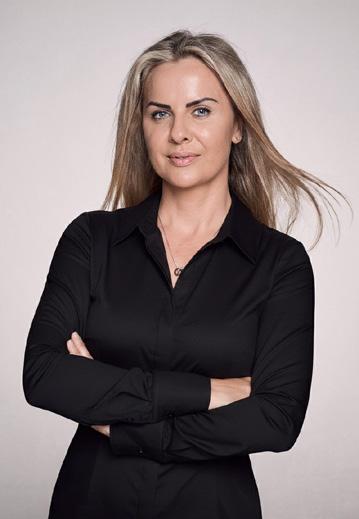
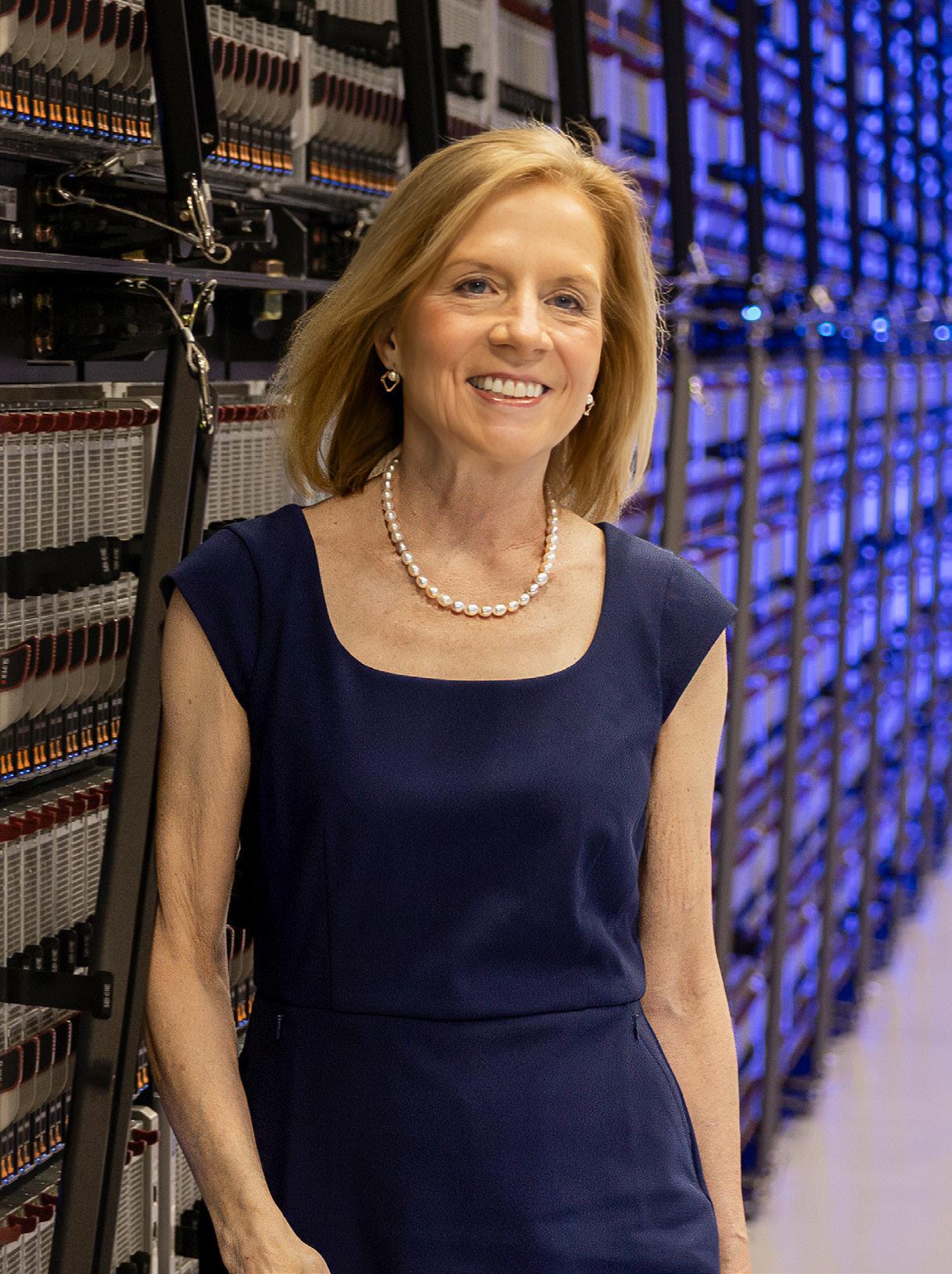
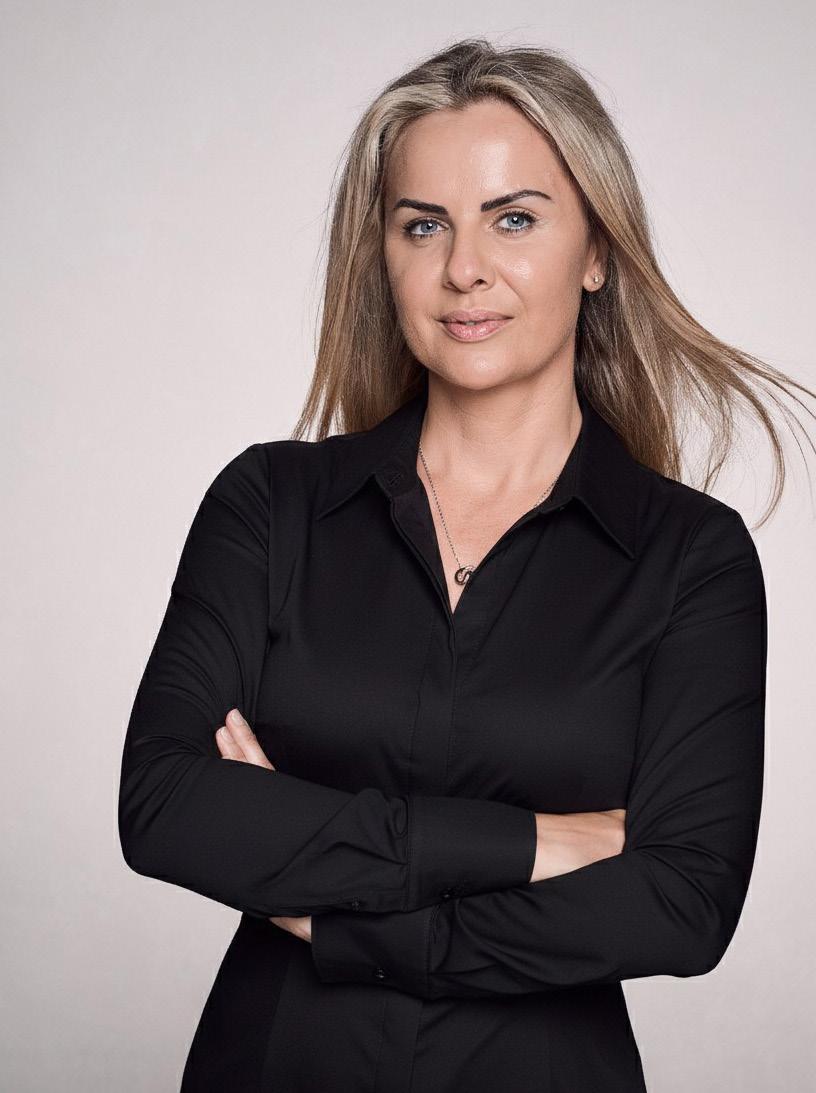
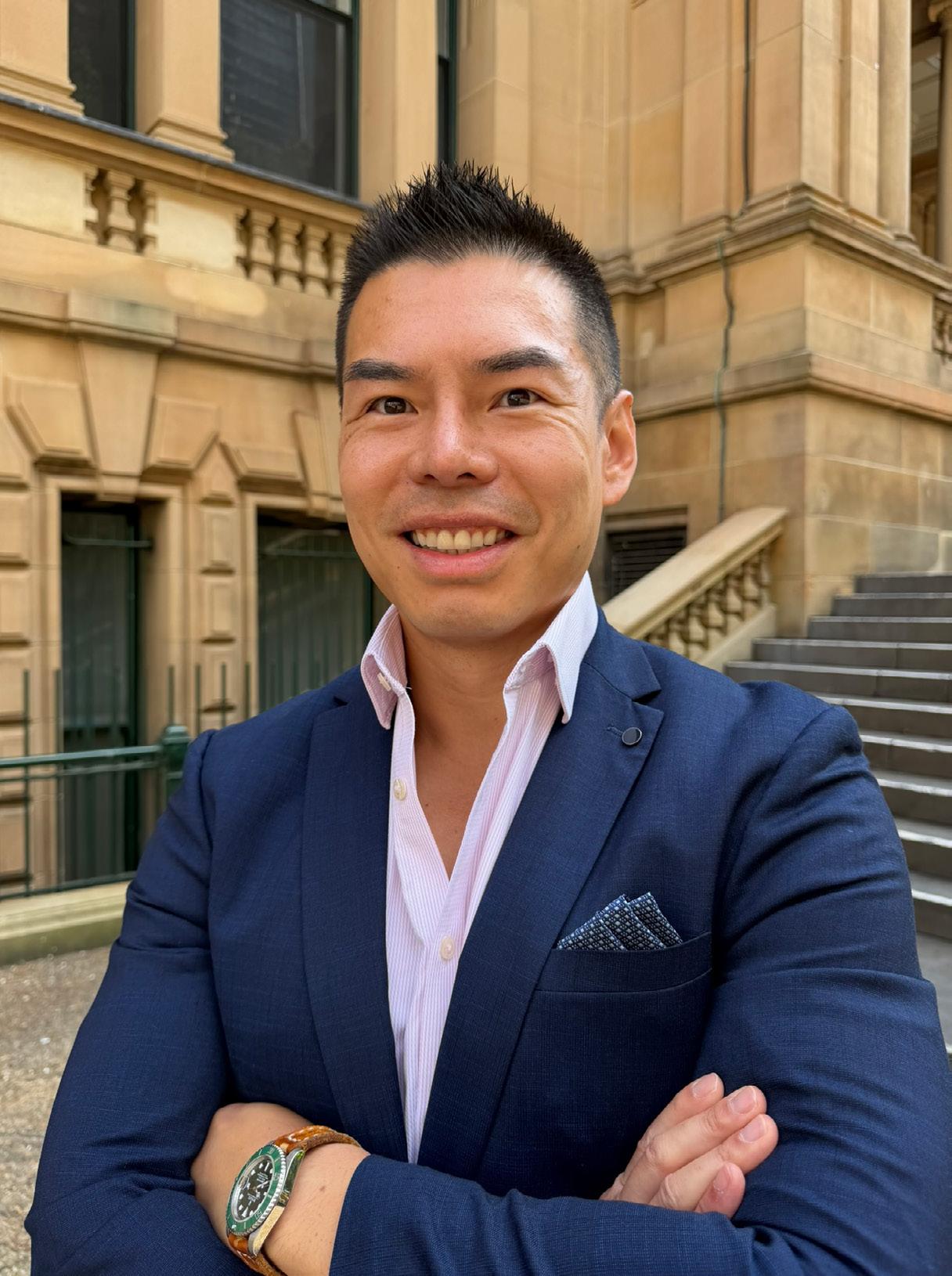
Mojgan Lefebvre EVP and Chief Technology & Operations Officer, Travelers
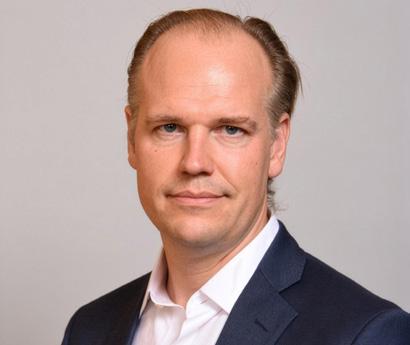
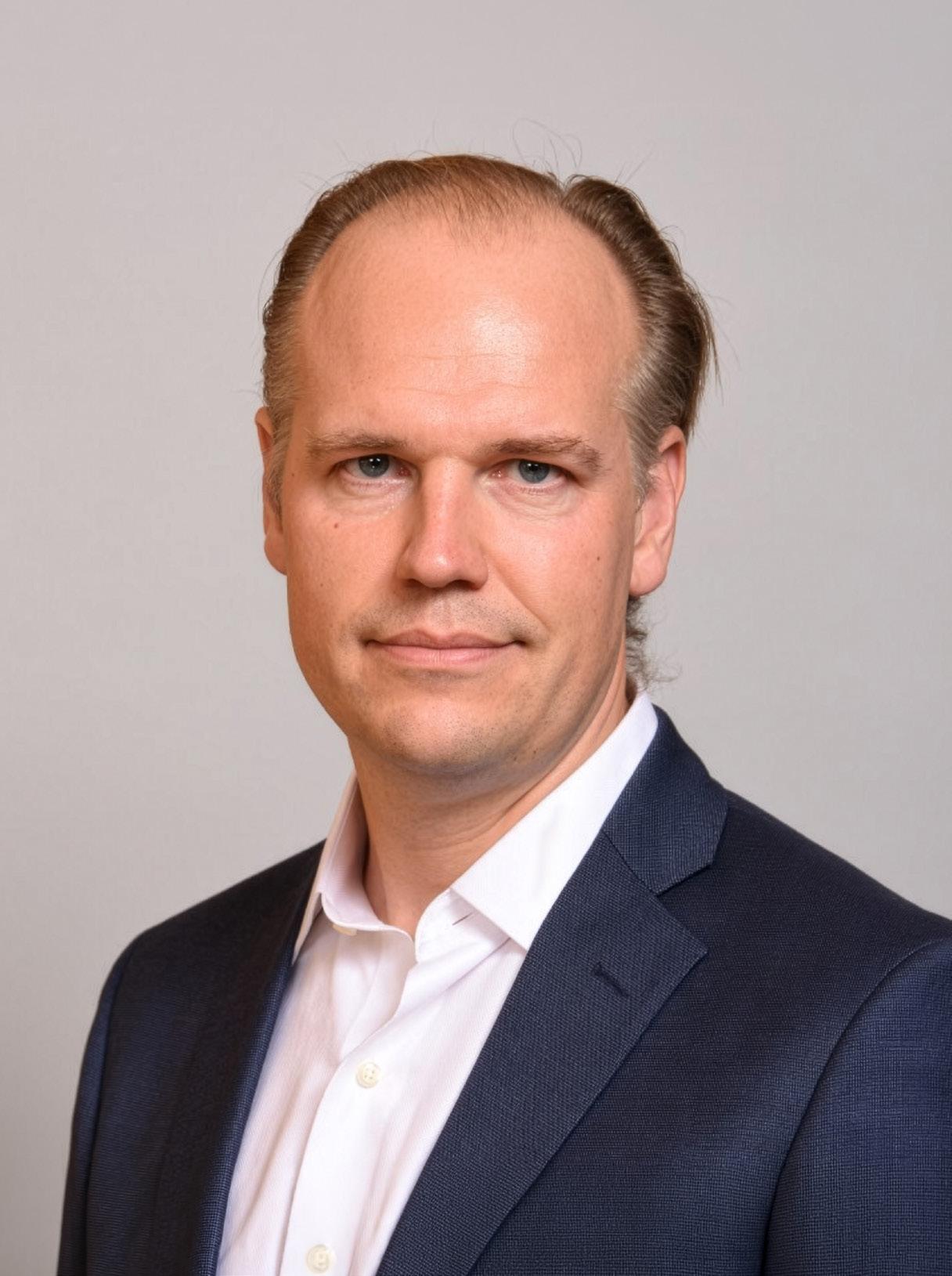
Niklas Sundberg Chief Digital Officer & Senior Vice President, Kuehne+Nagel
FEATURING INSIDE
Dr. Sanja Cancar-Todorovic Principal, Global Commercial Cloud & AI Data Center Integration, Microsoft
Shanthi Pudota
Senior Vice President & Chief Data and Analytics Officer, Bank of Oklahoma
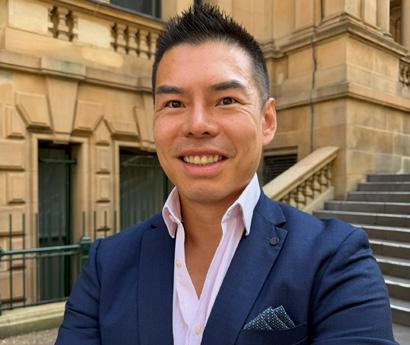
Dr Tom Gao Chief Technology and Digital Services Officer, City of Sydney
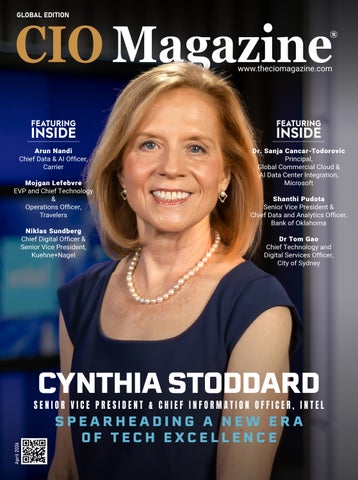
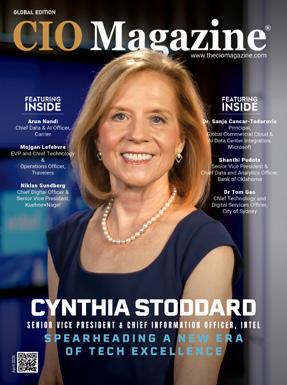
CYNTHIA STODDARD
SENIOR VICE PRESIDENT & CHIEF INFORMATION OFFICER, INTEL SPEARHEADING A NEW ERA OF TECH EXCELLENCE
admin@thecioomagazine.com
www.thecioomagazine.com
admin@thecioomagazine.com
www.linkedin.com/company/ciomagazine
CIO Magazine www.theciomagazine.com is a global knowledge sharing digital platform published by Connecta Innovation Private Limited. All rights reserved. The opinions expressed in the content and pictures provided are those of the authors. They do not purport to reflect the opinions or views of Connecta Innovation Private Limited or any of its subsidiaries, its members or associates and we do not assume any responsibility. The publisher does not assume any responsibility for the advertisements. The content, pictures, and all warranties made in such advertisements are the sole responsibility of the advertisers. CIO Magazine www.theciomagazine.com is a Free Subscription and Free-to-read digital platform strictly not for sale and must be strictly for internal private use only. Publisher does not assume any responsibility arising out of anyone modifying content and pictures, printing a copy of this digital platform in any format and in any country and all matters related to that. “CIO Magazine www.theciomagazine.com“ and “The CIO Magazine www.theciomagazine.com“ trademarks are owned by Connecta Innovation Private Limited.
WHEN THE CIO BECAME THE BUSINESS
Nottoo long ago, the CIO sat at the far end of the table, called in when something broke or needed to be built. Today, that seat has moved. In many organizations, it is now closer to the center, where decisions shape not just systems, but the business itself. I’ve seen this shift play out in conversations with leaders who no longer ask, “What can IT support?” but rather, “What can technology make possible?” It is a subtle change in language, but a profound one in intent. According to recent industry studies, a growing majority of digital transformation budgets are now directly tied to revenue growth and customer experience, not just operational efficiency. That tells its own story.
This evolving mandate comes to life vividly in our cover story featuring Cynthia Stoddard, Senior Vice President and Chief Information Officer at Intel. Cynthia’s journey reflects what the modern CIO role truly demands: a blend of technical depth, business clarity, and the courage to rethink legacy systems. From her transformative work at Adobe to her current leadership at Intel, she has consistently demonstrated how technology can be a catalyst for growth, resilience, and reinvention. What stands out is not just the scale of her work, but the mindset behind it. Her belief that innovation depends on diversity of thought and her conviction that AI will redefine how we work in the coming years offer both clarity and urgency.
Beyond the cover story, this issue of CIO Magazine brings together a range of perspectives that reflect the many dimensions of leadership today. From emerging technologies to evolving workplace dynamics, the conversations are varied, grounded, and forward-looking.
If there is one takeaway I hope stays with you, it is this: the role of the CIO is no longer about keeping the lights on. It is about turning them on in places no one thought to look. And that is where the future begins.
Enjoy Reading.
Sarath Shyam
EXECUTIVE OP-EDS
Dr. Sanja Cancar-Todorovic
Principal, Global Commercial Cloud & AI Data Center
Integration, Microsoft
Control the Reaction, Control the Outcome
TECH TALKS
Mojgan Lefebvre
EVP and Chief Technology & Operations Officer, Travelers
Empowering Customers Through Faster Smarter Service
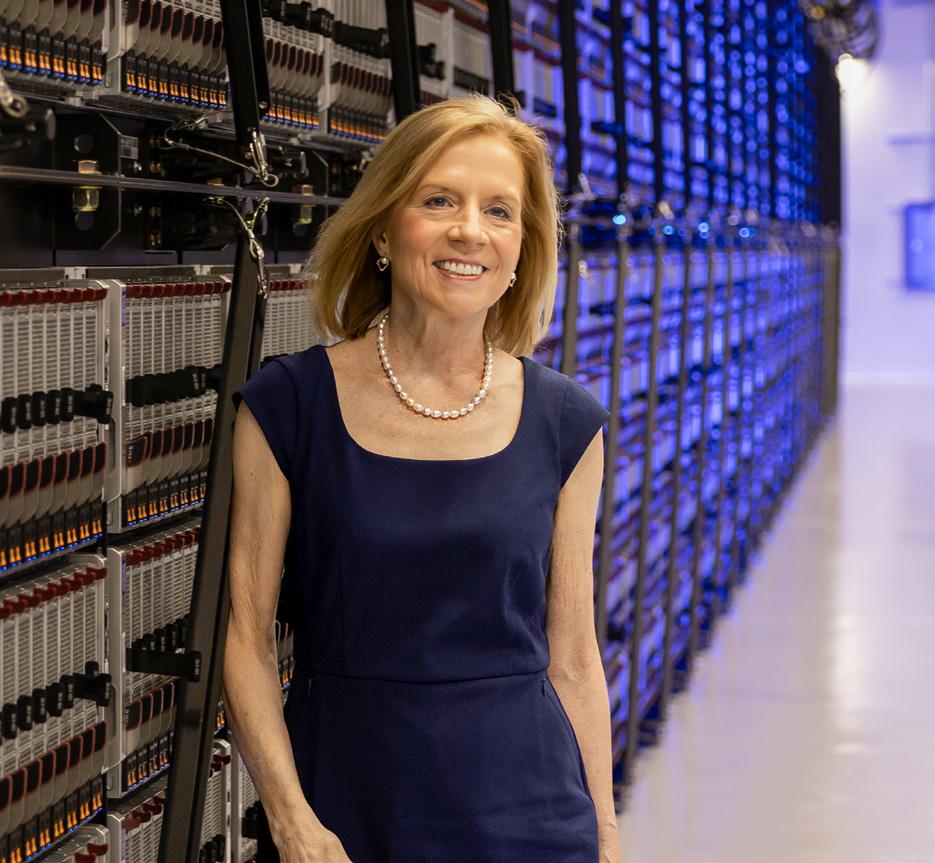
CYNTHIA STODDARD
SENIOR VICE PRESIDENT & CHIEF INFORMATION OFFICER, INTEL
SPEARHEADING A NEW ERA OF TECH EXCELLENCE
Cindy Stoddard is a globally recognized technology and business transformation executive with a distinguished record of modernizing complex global enterprises. Before Intel, she served as Senior Vice President and Chief Information Officer at Adobe, where she led the global technology strategy and enterprise platforms supporting a multi-billion-dollar business across 70+ countries. She modernized Adobe's technology foundation, advancing cloud, data, AI, and automation capabilities while strengthening cybersecurity. Her leadership spans multiple industries, including high tech, retail, transportation, and logistics for companies like NetApp, Safeway, and APL. Stoddard has earned recognition, including Forbes CIO List and Forbes 50 Over 50.
Recently, in an exclusive interview with CIO Magazine, Cindy shared insights into her journey in technology, sparked by her love of math and problem-solving, and her passion for driving business transformation through IT. Cindy predicts that AI will be a game-changer in the next 5 years, enabling automation and human augmentation and stressed the importance of diversity and inclusion in tech, saying "technology innovation is dependent on diversity of thought." She also shared her personal hobbies and interests, future plans, words of wisdom, and much more. The following excerpts are taken from the interview.
Hi Cindy. What sparked your interest in technology, and how did you get started in your career?
My interest in technology really started with a love of math at an early age. I was drawn to problem-solving, pattern recognition, and the idea that data and analytics can help unlock insights and solve real-world problems.
I was also fortunate to have teachers and mentors who recognized that interest and encouraged me to pursue it further. They pushed me to join after-school groups and activities where I could explore science and work on hands-on projects, which helped build both my skills and confidence.
I originally earned my undergraduate degree in accounting, but early in my career I became fascinated by how technology could improve business processes and decision-making. Over time, that interest grew into a long-term career in IT, where I’ve had the opportunity to work across multiple industries and see firsthand how technology can transform the way organizations operate.
What do you love the most about your current role?
What I love most about this role is the opportunity to work with an iconic technology company that has been respected in the industry for decades, and to help position it for the next generation of innovation. There’s tremendous potential to build the infrastructure and capabilities that will support Intel’s future growth.
The role also sits at the intersection of technology and people. It’s about solving complex technical challenges while improving how teams work and connecting technology investments to the broader goals of the business.
When you can enable people with the right tools and help them see how their work contributes to something larger, that’s incredibly rewarding.
How have you seen the role of the CIO change in the last 5-10 years, and what changes do you see on the horizon in the years ahead?
The role of the CIO has evolved significantly. It has shifted from being primarily an order taker responding to requests from the business to becoming a strategic partner with a seat at the table.
Today, CIOs are increasingly advisors who help organizations execute on technology-driven transformation. With the rise of AI, the role is expanding even further - helping companies rethink business processes, strengthen their data foundations, and identify where AI can meaningfully improve how work gets done. Looking ahead, CIOs will play a critical role in helping organizations become AI-enabled, preparing the workforce to use these capabilities effectively, and identifying opportunities where technology can drive measurable business impact.
How do you see AI transforming industries in the next 5 years?
Over the next five years, I think the biggest impact of AI will come from rethinking business processes. Organizations will start by asking a simple question: does this task truly require a human, or can it be automated?
If the answer is yes, AI can help augment people by giving them better tools, insights, and decision support. If the answer is no, then it opens the door to automation that can improve efficiency and accuracy.
Looking ahead, CIOs will play a critical role in helping organizations become AI-enabled, preparing the workforce to use these capabilities effectively, and identifying opportunities where technology can drive
measurable business impact
Across industries, from healthcare to manufacturing to retail, that combination of automation and human augmentation will fundamentally change how work gets done and create new opportunities for innovation.
Can you share a book or resource that inspires you and why?
I’m an avid reader and especially love audiobooks. Two books that really stood out to me approach leadership and technology from different angles.
Why Machines Learn by Anil Ananthaswamy gave me a new perspective on AI. It traces the history of computing and machine learning and shows how ideas that have existed for decades are only now becoming possible at scale as the
infrastructure has caught up. It’s incredible to see how the power of math and computing has brought those concepts to life.
Another book I enjoyed is Stories That Stick by Kindra Hall. It highlights the importance of communication and storytelling. As leaders, we often need to explain complex ideas to different audiences, and knowing how to frame a message in a way that resonates and sticks with people is incredibly valuable.
What's the importance of diversity and inclusion in tech? How do you mentor and develop future tech leaders?
Technology innovation is dependent on diversity of thought. People bring different backgrounds, experiences, and perspectives to the table, and
Technology leaders must translate complex technical ideas into business value and help others understand how technology can solve real problems
those differences help teams ask better questions and develop stronger solutions.
Inclusion is just as important. As a leader, it’s not enough to have diverse voices in the room, you have to make sure those voices are heard. Sometimes that means actively creating space for people to share their ideas. When people feel their perspectives matter, it leads to better outcomes for the organization.
Mentorship is also a critical part of developing future tech leaders. I’ve always viewed it as a two-way learning experience where both people
grow. It’s about sharing experiences, giving people stretch opportunities, and helping them understand how their work connects to the broader business.
I also believe in encouraging interest in technology early - whether that’s mentoring professionals in their careers or supporting programs that introduce students to STEM. When you combine diverse perspectives, inclusive leadership, and intentional mentorship, you create a strong pipeline for the next generation of technology leaders.
What's the most important quality for a tech leader to have?
One of the most important qualities for a technology leader is the ability to communicate and connect with different audiences. Technology leaders must translate complex technical ideas into business value and help others understand how technology can solve real problems.
That requires strong relationships across the organization and a deep understanding of the business. When leaders can bridge that gap between technology and business priorities, they’re better positioned to drive meaningful impact.
What are some of your passions outside of work? What do you like to do in your time off?
Outside of work, I enjoy spending time in my garden. I grow both flowers and vegetables, and tomatoes are my specialty. I usually end up turning them into homemade pasta sauce.
I also love spending time on the Oregon coast and skiing in the Sierras when I can. Another
longtime hobby of mine is sewing, which I learned from my grandmother and still enjoy today. It’s a creative outlet that’s very different from my day-to-day work in technology.
What is your biggest goal? Where do you see yourself in 5 years from now?
My biggest professional goal is to help position Intel’s IT organization as a leader in how technology and AI can enable the business. That means building the capabilities and infrastructure needed to support innovation and help the company operate in new and more effective ways.
Five years from now, I hope to look back and see that we successfully helped make Intel an industry leader in applying AI and technology to drive meaningful business impact.
Given your experiences and achievements, what advice would you give to aspiring technology leaders who aim to make a positive impact in their organizations and the industry as a whole?
Know the business first, and the technology second. Always ensure your work is aligned to business goals and focused on delivering meaningful outcomes.
Equally important is building and maintaining strong relationships – internally and across the industry. Don’t stay behind the IT wall. Spend time with the business, your customers, and your employees to understand their challenges and priorities. Technical expertise is important, but your ability to understand, inspire, and empower people will ultimately determine your success as a CIO.
Empowering Customers Through Faster Smarter Service
Mojgan Lefebvre
EVP and Chief Technology & Operations Officer, Travelers
Mojgan Lefebvre is EVP and Chief Technology & Operations Officer at Travelers, where she oversees technology, data, analytics, AI, cybersecurity, customer service and business operations, driving enterprise-wide transformation through AI and digital innovation. Since joining Travelers in 2018, she has been a driving force behind the company’s digital and operational transformation, enabling business growth through technology. Mojgan earned a computer science degree, summa cum laude, from Georgia Tech and an MBA from Harvard Business School. Her career spans leadership roles at Bain & Company, bioMérieux and Liberty Mutual. She has been recognized as a Forbes Next 50 Innovative Technology Leader and was inducted into the CIO Hall of Fame in 2022.
Recently, in an exclusive interview with CIO Magazine, Mojgan shared insights into how an unconventional path from Iran to Tel Aviv to the United States shaped her belief that technology is one of the most effective tools for solving complex problems. On trends, she called generative AI the most consequential shift, emphasizing that the real question is building foundations of trusted proprietary data, governance, and an empowered workforce to use AI with precision and accountability. She also shared her personal hobbies and interests, future plans, words of wisdom, and much more. The following excerpts are taken from the interview.
As a senior technology and analytics executive, your career has been marked by a passion for solving business challenges with technology. What sparked this interest, and how has it shaped your professional journey?
My passion for technology grew from a simple but powerful realization: It is one of the most effective tools we have for solving real, complex problems – and I have spent my career proving this out.
My path into tech was anything but conventional. I grew up in Iran and moved frequently as a child because of my father’s work. I attended a British school in Tel Aviv, learned a new language, navigated new cultures and became comfortable with uncertainty early. When I eventually left Iran and came to the United States, I had planned to study medicine – but the cost was prohibitive, and I was funding my own education. I had a strong math background, and people told me I should try computer science. I had never seen a computer in my life, but I
decided to take that advice. It turned out to be one of the best decisions I ever made.
From there, I was intentional about pairing technical depth with business acumen. I pursued an MBA at Harvard Business School and built strategy capabilities at Bain – not to move away from technology but to ensure that I could apply it where it matters most: to real business outcomes. That philosophy has shaped every role I’ve taken on since.
What do you love the most about your current role?
What I love most is the opportunity to develop people and to watch someone grow into a leader they didn’t know they could become. That is what I find genuinely energizing at this stage of my career.
The scope of impact in this role is also extraordinary. I lead global technology and operations, and I get to see directly how our work shapes the experience of customers, employees and communities. Seeing years of strategic
GENERATIVE AI IS THE MOST CONSEQUENTIAL SHIFT WE’RE SEEING RIGHT NOW. WE ARE ONLY BEGINNING TO UNDERSTAND ITS TRANSFORMATIVE POTENTIAL, NOT JUST IN AUTOMATING TASKS BUT IN FUNDAMENTALLY REIMAGINING HOW WORK GETS DONE
investment come to life – from our AI-powered Wildfire Loss Detector to TravAI, our enterprise generative AI platform, and our newly launched TravelersLLM – has been deeply rewarding. But what gives all of that meaning is the people behind it.
Technology and analytics are rapidly evolving. What trends do you see shaping the future of these fields, and how can professionals prepare?
Generative AI is the most consequential shift we’re seeing right now. We are only beginning to understand its transformative potential, not just in automating tasks but in fundamentally reimagining how work gets done. At Travelers, we are embedding AI across every stage of the software and analytics development life cycle, from product design and user story writing to code review, testing and deployment. We are also going further, building agentic systems – where multiple AI agents coordinate across complex, multistep workflows – that are already in production in parts of our operations. Code reviews that once took days can now be completed in minutes. That pace of change is real, and it is accelerating.
The more important question for organizations is not whether to adopt AI but whether they are building the foundations to use it with precision and accountability. That means proprietary data they can trust, governance frameworks that hold up under scrutiny, and a workforce that is genuinely empowered rather than just exposed to the tools.
Professionals looking to stay ahead should adopt a genuine growth mindset because in this field, the only constant is change. Remain
relentlessly curious. Surround yourself with people who challenge you, invest in continuous learning and never stop asking “Why?” Leaders should actively model exploration and experimentation. That is how organizations transform and how individuals stay relevant as the landscape keeps shifting.
What skills or experiences do you believe are essential for success in these fields, and how can aspiring professionals acquire them?
First, learn to speak business. Being a great technologist is not enough. You have to help others understand why your work matters to the organization. Always work backward from the customer and the business outcome. Second, invest in relationships with genuine intention. Decisions about you are made when you are not in the room. Relationships are what ensure that you are well represented in those moments.
Third, embrace candor, but deliver it with care. You can and should care personally for your colleagues while also challenging them directly. The best teams are built on mutual trust, accountability and honest feedback, all given with genuine regard for the other person.
Finally, seek out mentors and sponsors. Not just people who offer advice, but advocates who will use their voice and influence to create opportunities for you. And when you are in a position to do so, return that favor without hesitation.
Can you share a book or resource that inspires you, and why?
Kim Scott’s “Radical Candor,” which she also calls “compassionate candor,” is one I return to
again and again because it captures something I believe deeply about leadership: Empathy and accountability are not opposing forces; they are deeply connected.
Leaders can get this balance wrong in both directions. Some over-rotate toward results, believing that pressure and pace alone will drive performance. That may produce outcomes in the short term, but over time it erodes trust, engagement and retention. Others lean too heavily into empathy, avoiding the hard conversations in an effort to protect people. But as Scott explains, when you don’t have those conversations, you often end up doing the wrong thing for the person and the organization. What the book reinforces for me is that leading with heart does not mean lowering expectations. It means being clear about outcomes, holding people accountable and making difficult decisions – all while genuinely caring about the people doing the work.
As a mentor and advocate for women in technology, you’ve founded initiatives like Empower Together and partnered with nonprofits like Girls Who Code. What drives your commitment to diversity and inclusion?
It comes from a very personal place. I know what it means to navigate spaces where people who look like you are underrepresented. And I know what it costs, quietly, when you feel like you have to make yourself smaller to fit in. Early in my career, my name, Mojgan, was often difficult for people to pronounce. Wanting to reduce friction, I started introducing myself as Megan. It seemed practical at the time, but
I felt disconnected from myself every time I heard that name – like I had compromised something essential for someone else’s convenience. After about six months, I went back to my name. That experience taught me that authenticity is not just a personal value; it is a leadership strength. When you bring yourself fully to the table, you create space for others to do the same. That leads to stronger teams, better ideas and more resilient organizations.
That is what drives my commitment. I founded Empower Together and partnered with Girls Who Code because I want to make sure that others, especially young women entering technology, have advocates, not just examples. I was fortunate to have mentors and sponsors throughout my career who saw potential in me before I fully saw it in myself. That experience taught me the lasting power of advocacy. When you are in a position to do it, you have an obligation to give it back.
What are some of your passions outside of work? What do you like to do in your time off?
Giving back is genuinely important to me. I volunteer with Birthday Wishes, which ensures that children experiencing homelessness don’t go without celebrating their birthdays –something most of us take for granted. That simplicity is exactly what draws me to it. I also support the Art Resource Collaborative for Kids, which keeps arts access alive for children who would otherwise go without. And I serve on advisory boards for both Georgia Tech and Boston University, which keeps me connected to the next generation of technologists coming up.
THE BEST TEAMS ARE BUILT ON MUTUAL TRUST, ACCOUNTABILITY AND HONEST FEEDBACK, ALL GIVEN WITH GENUINE REGARD FOR THE OTHER PERSON
Beyond that, I believe deeply that having a supportive partner and family makes an enormous difference, both in work and in life. I love traveling with my husband and our two daughters. Experiencing new places together has always been one of the things that recharges me most.
What is your biggest goal? Where do you see yourself in five years from now?
I tend not to think about it in terms of a specific role or title. What matters most to me is the
impact I am having and the kind of organization I am helping to build.
Over the next five years, my focus is on helping Travelers fully realize the potential of AI – not just adopting the technology, but fundamentally reimagining how we operate, make decisions and serve our customers at scale. We have built real foundations: proprietary data, purpose-built models and agentic systems already running in production. The next chapter is about converting that foundation into enduring competitive advantage. We are still early in that journey, and the opportunity ahead is significant.
OVER THE NEXT FIVE YEARS, MY FOCUS IS ON HELPING TRAVELERS FULLY REALIZE THE POTENTIAL OF AI –NOT JUST ADOPTING THE TECHNOLOGY, BUT FUNDAMENTALLY REIMAGINING HOW WE OPERATE, MAKE DECISIONS AND SERVE OUR CUSTOMERS AT SCALE
Just as important, I want to develop leaders who can lead in that environment with confidence, leaders who are comfortable with change, who stay curious and who can translate technology into real business outcomes. That, to me, is how transformation becomes durable: not through platforms alone, but through the people who know how to use them and keep pushing them further.
If five years from now we have built a more adaptive, more innovative organization and developed a generation of leaders who can sustain that momentum long after any single person has moved on, that is what I will consider my most meaningful contribution.
What advice would you give to aspiring technology leaders looking to make a meaningful impact?
We have touched on many of these themes already, but if I had to distill it: Connect everything you do to business strategy. Build relationships with real intention. Align and genuinely empower the people around you. Adopt a growth mindset and speak candidly, with compassion, not armor.
And then one more thing I feel strongly about: Be generous with your time and your voice because you never know whose path you might change. Some of the most meaningful guidance I have given and received has happened in 10- or 15-minute conversations: a hallway exchange, a quick call, a reply to a message someone almost didn’t send. Never underestimate the impact of showing up for someone in a small moment. It compounds in ways you cannot see.
Empowering Tech for a Better Future Niklas Sundberg
Chief Digital Officer & Senior Vice President, Kuehne+Nagel
Niklas Sundberg is Senior Vice President and Chief Digital Officer at Kuehne+Nagel, where he leads the company’s global digital ecosystem across AI transformation, cloud modernization, data platforms, and responsible technology governance. Over a career spanning more than two decades, he has held senior technology and advisory roles including CIO and enterprise architecture leadership positions at ASSA ABLOY, Managing Partner at Gartner, and Executive Vice President at Connecta. Niklas is a recognized advocate for sustainable IT and responsible digital transformation, author of Sustainable IT Playbook for Technology Leaders, and a board member of SustainableIT.org.
Recently, in an exclusive interview with CIO Magazine, Niklas shared insights into his focus on sustainable digital transformation. In the next five years, he sees sustainable IT evolving with constraints on energy, water, and materials, making circularity essential. He also shared his personal hobbies and interests, future plans, words of wisdom, and much more. The following excerpts are taken from the interview.
Hi Niklas. With over 20 years driving change, what sparked your focus on sustainable digital transformation?
I have always had a strong interest in both environmental and social issues. Earlier in my career, I served on the board of a non-profit organisation called From One to Another, which focuses on education and the circle of learning for young women in Africa, particularly in Nigeria. That experience shaped my belief that long-term impact is created where systems, opportunity, and responsibility intersect.
My deeper focus on sustainable digital transformation emerged around 2021, when I was working closely with the Chief Sustainability Officer in my organisation on its broader sustainability agenda and science-based targets. As part of that work, I was responsible for shaping an IT sustainability strategy. When I began researching the topic, I quickly realised there was no clear starting point. There were pockets of good practice across areas like data centers, cloud, software engineering, and procurement, but no coherent playbook that connected strategy, architecture, and execution.
At the time, the topic was also largely absent from mainstream media and executive discourse. That gap motivated me to put a spotlight on sustainable IT, not as a reporting exercise, but as an operating discipline. With my employer’s support, I decided to write Sustainable IT Playbook for Technology Leaders in my own time. The ambition was simple: to inspire, educate, and most importantly, help technology leaders take action.
Fast forward a few years, and the conversation has accelerated dramatically. The rise of AI, with its enormous demands on
energy, water, land, and critical materials, has made the sustainability implications of digital infrastructure impossible to ignore. At the same time, the sustainable IT community has grown significantly. I’ve had the privilege of serving on the board of SustainableIT.org since 2022, alongside more than a thousand peers globally who are working to advance sustainable technology leadership. The journey has really just begun.
What do you love the most about your current role?
Throughout my career, I’ve been intentional about choosing roles where I can contribute to meaningful, long-term impact at global scale. Working in international environments, across complex value chains and digital platforms, creates a unique opportunity to influence how technology is designed, operated, and scaled across industries and regions. What I value most is the ability to operate at the intersection of technology, business, and society. When digital decisions are made thoughtfully at scale, they can create durable positive effects far beyond the boundaries of a single organisation. That is where I feel I can contribute most.
How do you see sustainable IT evolving in the next 5 years?
The next five years will be defined by constraints. We are entering a period where the theory of constraint becomes very real for digital infrastructure. By the end of this decade, a significant share of global energy consumption will be attributable to data centers, largely driven by AI. These environments require not
THE RISE OF AI, WITH ITS ENORMOUS DEMANDS ON ENERGY, WATER, LAND, AND CRITICAL MATERIALS, HAS MADE THE SUSTAINABILITY IMPLICATIONS OF DIGITAL INFRASTRUCTURE IMPOSSIBLE TO IGNORE
only energy, but also water for cooling, highperformance hardware, and access to critical raw materials.
This brings sustainability out of the abstract and into the realm of availability, resilience, and geopolitics. Competition for energy infrastructure and rare earth materials is already shaping global dynamics. Circularity therefore becomes essential, not optional. Extending asset lifecycles, designing for reuse, and recovering materials will be central to maintaining digital growth.
At the same time, sustainable IT will become far more mainstream. As digital infrastructure constraints begin to affect everyday services, sustainability will increasingly be seen as a prerequisite for reliability and access, not just an ethical choice. I expect hyperscalers and platform providers to shift their focus from pure scale to more sustainable architectures, driven by regulation, customer expectations, and physical limits.
AI is here to stay. The toothpaste is out of the tube. The challenge ahead is not whether we use these technologies, but how we build digital infrastructure that is sustainable, resilient, and inclusive. Bridging the digital divide and ensuring access beyond a privileged few will be a defining leadership challenge of the decade.
What’s the future of green supply chains in tech?
Green supply chains in tech are moving from compliance to competitive advantage. Historically, sustainability was largely about risk mitigation, reporting, and avoiding regulatory penalties. Going forward, it will increasingly differentiate brands, influence customer loyalty, and shape access to capital.
Procurement and supplier management are already changing. Environmental, social, and governance metrics are becoming as critical as cost and quality in supplier selection. Expectations for transparency are expanding beyond tier-one suppliers to full value-chain visibility, driven by regulation and customer demand.
Digital technologies will play a central role. Real-time data, AI-driven optimisation, and digital product passports will enable lifecycle emissions tracking, traceability, and more informed decision-making. Circular economy principles will become operational norms rather than pilot initiatives, with reuse, refurbishment, and reverse logistics embedded into core planning processes.
Finance will accelerate this shift. Sustainability-linked financing, internal carbon pricing, and investor scrutiny of Scope 3 emissions will increasingly influence strategic decisions. Ultimately, leading organisations will treat green supply chains as digitally native, datadriven, collaborative ecosystems that are tightly linked to both market positioning and long-term resilience.
What led you to write “Sustainable IT Playbook for Technology Leaders”?
While working on sustainable IT strategy at ASSA ABLOY, I noticed a recurring pattern. There was plenty of discussion about why sustainability matters, and a growing list of initiatives describing what organizations should consider. What was missing was guidance on how to actually operationalize sustainable IT.
The book was designed to bridge that gap. It starts with the “why,” establishing why sustainable IT matters from a business,
environmental, and societal perspective. It then addresses the “what” across areas such as AI governance, data centers and cloud, applications and architecture, data, hardware lifecycle management, energy use, and procurement.
Most importantly, it moves to the “how.” How do you get started today? How do you set realistic goals, assess maturity, quantify impact, and establish an emissions baseline for IT? The intention was to provide technology leaders with a practical, action-oriented resource they could apply in their own environments to drive measurable change.
Can you share a book or resource that inspires you and why?
Two books stand out for me in the sustainability space. Bill Gates’ How to Avoid a Climate Disaster provides a clear, pragmatic view of the scale of the challenge and the role technology must play. Paul Polman’s Net Positive, co-authored with Andrew Winston, is equally influential in showing how courageous companies can thrive by giving more to society than they take. Together, they balance realism with optimism and reinforce the idea that leadership matters.
What are some of your passions outside of work? What do
you like to do in
your time off?
While I spend much of my professional life working in global contexts, I believe strongly in staying grounded in the local community. Outside of work, I’m actively involved in my local football club, where I coach my son’s team and will soon be coaching my second son as well.
TREAT SUSTAINABLE IT AS A CORE WAY OF RUNNING TECHNOLOGY, NOT AS A SIDE INITIATIVE OR REPORTING REQUIREMENT
It’s a powerful way to give back and to engage with people from very different backgrounds than those I encounter professionally. Youth sports create a unique environment for teaching leadership, teamwork, perseverance, and mutual respect. I firmly believe that athletics, alongside academics, provides a strong foundation for developing confident, responsible individuals.
What is your biggest goal? Where do you see yourself in 5 years from now?
I don’t think about the future primarily in terms of titles or roles. For me, it’s about impact. It’s about leaving systems, organizations, and communities in a better state than we found them for future generations.
That impact exists on multiple levels. On one hand, contributing to large-scale change through global digital platforms and supply chains. On the other, staying connected to local communities where impact is immediate and personal, such as volunteering as a youth coach. These two dimensions balance each other. Global work provides scale and leverage, while local engagement provides perspective and meaning.
Ultimately, it’s not about personal milestones. It’s about what we can achieve together by using our skills, platforms, and influence responsibly.
What
advice would you give tech leaders starting their sustainable IT journey?
Treat sustainable IT as a core way of running technology, not as a side initiative or reporting requirement. The most durable impact comes from early architectural and decision-making choices, so focus there.
Don’t wait for perfect data. Start with directional insights, make trade-offs explicit, and build learning into the system. Embed sustainability into how technology is designed, procured, and operated. Otherwise, it will always lose to speed and cost.
The timing is right. Regulation, customer expectations, and technology maturity are converging. The next five years will likely see more progress than the previous five. This is the moment to lean in, not only to do the right thing, but to position yourself as a technology leader in an area that will matter enormously going forward.
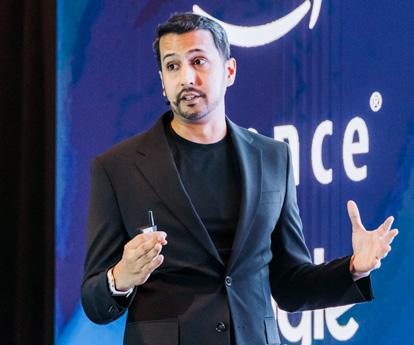
Creating a Better Future with AI Arun Nandi
Chief Data & AI Officer, Carrier
Arun Nandi is a visionary AI executive with over two decades of experience across 3x cross-vertical Fortune 200 enterprises driving more than $500M in AI-led business impact. Recognized as one of the Top 100 Influential Leaders in AI and the Top 40 AI Leaders Under 40 (2023), he is also a LinkedIn Top Voice in artificial intelligence and enterprise digital transformation. He has successfully built and scaled AI and analytics practices multiple times, converting strategy into measurable enterprise value. A trusted advisor to corporate boards and investment firms, Arun is a sought-after keynote speaker.
Recently, in an exclusive interview with CIO Magazine, Arun shared insights into his passion for driving AI-led business impact, sparked by his problemsolving nature and desire to drive tangible real-world outcomes. Looking forward, Arun sees AI shaping the future of business and industry through autonomous agents, productivity gains, and addressing key challenges like sustainability and environmental impact. He also shared his personal hobbies and interests, future plans, words of wisdom, and much more. The following excerpts are taken from the interview.
Hi Arun. As a leader with over two decades of experience in AI, what sparked your passion for driving AIled business impact, and how did you develop your expertise in this area?
Inherently, I am and have always been a problem-solver! I derive a lot of energy from solving complex problems – the bigger they are, the better! For enterprises for over a decade or more, the discussion around Analytics and AI is about value and impact. As a P&L leader in previous roles, I relished the opportunity to drive outcomes that have a tangible real-world impact. I have always thrived in environments where you are working with a limited set of resources – typically time and material based, and you are looking to maximize the outcomes you extract.
What do you love the most about your current role?
I have a unique position where I have an ability to impact the company performance, down to EBIT/EPS levels, drive sustainability of our ecosystem to improve the usage of energy and infrastructure while enhancing the lives of customers, and supporting the growth and development of talent and the ecosystem at large. I do not take this lightly – to quote Stan Lee: with great power comes great responsibility.
As AI continues to evolve, what trends do you see shaping the future of business and industry in the next 5 years?
I strongly believe that history doesn’t repeat itself, but often rhymes. We are in year 3 of perhaps a 10-15 year technology innovation cycle. Taking cues from previous technology revolutions
such as the steam engine, electrification and the computer chips, each of these innovations took a certain degree of maturity to evolve. I see a fleet of autonomous AI agents and bots doing a lot of the repeatable work that we are engaged in today, whether they are considered blue-collar or knowledge-worker jobs. I see a gradual rise in productivity which will lead to us unlocking significant value for businesses and customers. I see us addressing key challenges we are facing – including how to produce more with less, how to leave a smaller environmental footprint, while having the opportunity to unlock time and effort for consumers with convenience at their fingertips.
What’s the role of AI in driving sustainability and environmental impact in industries like manufacturing and retail?
AI is a really powerful technology. We have to use it to solve the most pressing challenges of our times. This includes climate justice – which has implications to everything from sustainable sourcing strategies, addressing our over-reliance on plastic which has infiltrated our food chain, addressing climate change, amongst others. We have an imperative between the private, public and academic domains to collaborate to achieve these goals.
What are the key skills AI professionals need to develop to lead in a rapidly changing landscape?
In such a rapidly evolving ecosystem, tethering your identity to a specific technology is often a short-term strategy. What I would instead recommend curiosity, a proclivity to change and an always-on learning mindset. These skills will
I SEE A FLEET OF AUTONOMOUS AI AGENTS AND BOTS DOING A LOT OF THE REPEATABLE WORK THAT WE ARE ENGAGED IN TODAY, WHETHER THEY ARE CONSIDERED BLUE-COLLAR OR KNOWLEDGE-WORKER JOBS
remain relevant whether we are in an AI supercycle or an AI bubble.
You have been a recipient of numerous awards and accolades over the years: one of the Top 100 Influential Leaders in AI, the Top 40 AI Leaders Under 40 (2023), and being a LinkedIn Top Voice. Our readers would love to know the secret mantra behind your success.
I am grateful for all the honors and accolades. I pride myself on the quality of my work, that
over time, has received recognition. I have a lot to learn from others and miles to go before I sleep, but I have found value in the conscious competence model. While I was unconsciously incompetent at one point, you slowly graduate to conscious incompetence, then to conscious competence, and finally to unconscious competence. It is a hugely rewarding experience to see this evolution take shape in any craft, which I would strongly recommend to anyone looking to craft their own adventure.
Can you share a book or resource that inspires you and why?
I’m a voracious reader, and consume a lot of knowledge each day, so it is hard to pinpoint one. A recent learning from a book, Chatter by Ethan Kross, which I’m currently reading speaks to how to harness your inner voice toward meaningful accomplishments. Another related impactful learning from Marcus Aurelius’ timeless classic Meditations is that you have power over your own mind, not outside events. Realizing this is the first step towards strength.
What are some of your passions outside of work? What do you like to do in your time off?
IN SUCH A RAPIDLY EVOLVING ECOSYSTEM, TETHERING
YOUR IDENTITY TO A SPECIFIC TECHNOLOGY IS OFTEN A SHORT-TERM STRATEGY
Travel has been one of my lifelong passions – I have had an opportunity to travel to 50 countries and have learned so much about culture, food and people that brings me immense joy. In my time off while not traveling, I enjoy being an explorer in my own city. On a separate note, I enjoy adventure motorcycling –I have traveled far and wide and it brings me great perspective and joy.
What is your biggest goal? Where do you see yourself in 5 years from now?
I strive to spearhead AI in whatever capacity I have, to drive impact. This goes from personal productivity at the outset to organizations to the industry to the community to ultimately, the world as a whole. I aspire to have an impact to the betterment of all of these ecosystems with AI, however small or large it is.
What advice would you give to professionals looking to make an impact in AI and digital transformation?
Always be learning. Be hungry and have a healthy distaste for the status-quo. If you want to go fast, go alone; if you want to go far, go together.
Wa n t t o S e l l o r fi n d
I nve s t o rs f o r yo u r
B u s i n e s s ?
CONTROL THE REACTION, CONTROL THE OUTCOME
Dr. Sanja Cancar-Todorovic
Principal, Global Commercial Cloud & AI Data Center Integration, Microsoft
Dr. Sanja Cancar-Todorovic is a business executive, author, and keynote speaker with over 25 years of leadership across telecom, finance, and technology. She leads global initiatives on Microsoft’s Cloud Operations + Innovation Supply Chain team, focusing on sourcing, capacity planning, and AI data center integration for Hyperscale and Colocation projects. Holding a DBA, eMBA, Master of Management, and an Honours BA in Law and Political Science, her expertise spans supply chain, third-party risk, AI in business, and transformational leadership. In 2025, she was recognized as Changemaker of the Year and Woman of the Year runner-up.
The business environment is not designed for predictability, and setbacks are not exceptions; they are part of the operating model.
Even the most well-structured strategies, negotiations, and decisions will, at times, produce outcomes that fall short of expectations. While it is easy to rationalize setbacks as redirection in hindsight, in real time they often trigger emotional responses that can override even the most disciplined thinking.
This is where leadership is tested.
Emotional awareness is human; emotional control is a discipline. The ability to remain composed, deliberate, and strategically grounded, particularly when outcomes deviate from plan, is an underappreciated executive capability. In high-stakes environments, emotional reactions such as frustration or urgency can feel justified, even necessary. In reality, they often erode influence, compromise decision quality, and weaken negotiating positions. The true cost is not the moment itself, but the downstream impact on credibility, relationships, and long-term outcomes.
The question, then, is not whether emotions arise, but how leaders manage them without losing strategic control.
A recent recommendation led me to revisit Winning Through Intimidation by Robert J. Ringer. Despite its title, the book is not about dominance. It is about awareness. Specifically, the risk of operating with naïve assumptions in environments driven by self-interest, power dynamics, and perception.
In executive decision-making, optimism is often positioned as a strength. However, unchecked optimism can create blind spots.
Assuming alignment of intent, underestimating counterpart motivations, or overlooking hidden risks can lead directly to the very setbacks that trigger reactive decision-making. In this sense, being naïve (not complexity), is often the root cause of avoidable disruption. For those operating in negotiation-intensive environments, this should sound familiar. We are trained to assess risk, define alternatives (BATNA), and prepare for multiple scenarios. Yet even with this discipline, setbacks can feel personal. That tension, between professional rigor and human response, is precisely where leadership maturity is defined.
Ringer’s core premise remains highly relevant: intimidation, in its many forms, is a constant in business. It presents through confidence, authority, urgency, and perceived power. However, these signals are often strategic constructs rather than indicators of true leverage. The moment a leader recognizes this, and refuses to react emotionally, is the moment control is re-established. What is visible in any negotiation or interaction is rarely the full picture. Underlying motivations, constraints, and risks often remain unspoken. Leaders who rely solely on surface-level signals are more susceptible to both strategic missteps and emotional reactions when outcomes shift unexpectedly. This is why rigorous scenario planning and disciplined skepticism are not signs of pessimism, but of preparedness.
Ultimately, executive effectiveness is less about rhetoric and more about control of the situation, the narrative, and critically, oneself. This requires deliberate planning, clarity on alternatives, and a disciplined approach to managing both adversity and success.
LEADERS
WHO RELY SOLELY ON SURFACELEVEL SIGNALS ARE MORE SUSCEPTIBLE TO BOTH STRATEGIC MISSTEPS AND EMOTIONAL REACTIONS WHEN OUTCOMES SHIFT UNEXPECTEDLY
Composure is not situational; it is a consistent signal of strength. Even in positive outcomes, overextension or visible eagerness can undermine positioning.
If there is a single principle that emerges, it is this: unmanaged assumptions lead to avoidable setbacks, and unmanaged setbacks lead to emotional decision-making.
Avoiding naïve trust is not about cynicism. It is about strategic awareness. In an environment defined by speed, uncertainty, and constant change, the capabilities developed in negotiationheavy roles, risk assessment, scenario planning, and understanding power dynamics, must
extend beyond formal deal-making. They are, in effect, leadership capabilities. I wrote this article for three reasons: to ground myself as I work through a few thorny challenges, to reinforce for experienced leaders the importance of applying these disciplines more broadly (and not just during negotiations), and to pass these insights along to people who haven’t had the same training but deserve the same advantages. Understanding how power, perception, and selfinterest operate is not optional, but foundational. Setbacks will occur. The differentiator is the ability to remain prepared, composed, and forward-moving in spite of them.
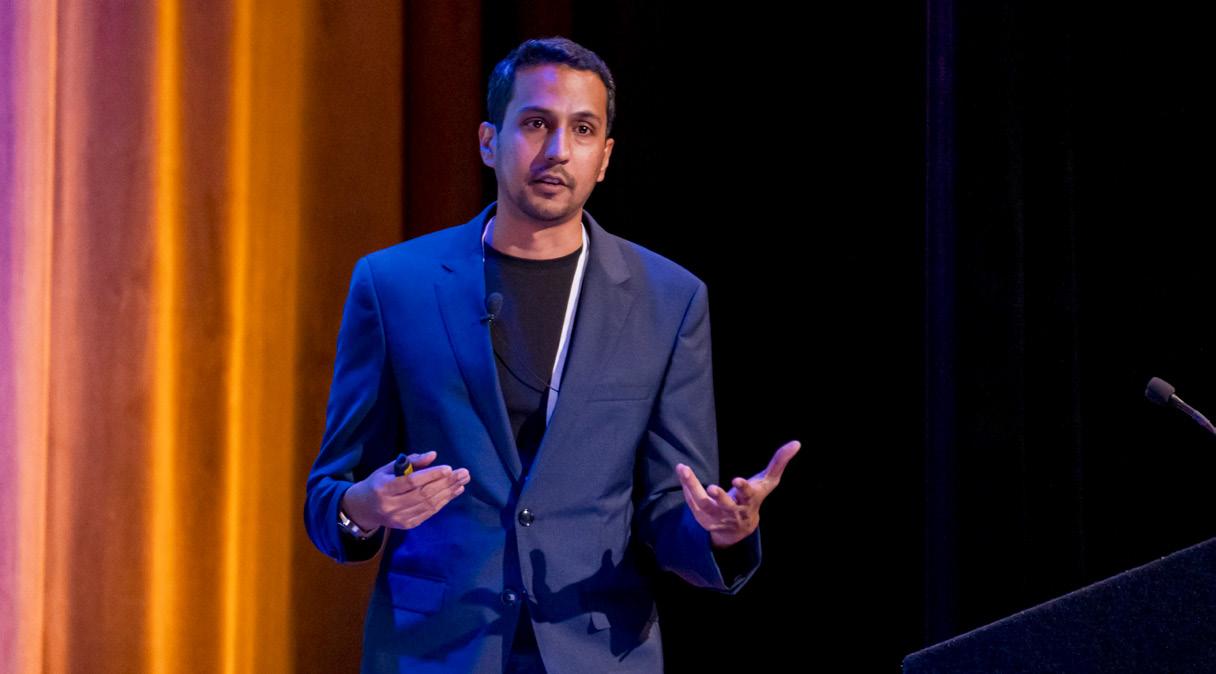
Shaping the Future of Digital Services Dr Tom Gao
Chief Technology and Digital Services Officer, City of Sydney
Dr. Tom Gao is a senior digital and technology leader known for delivering practical, high impact transformation across complex organisations. As Chief Technology and Digital Services Officer at the City of Sydney, he leads enterprise platforms, cyber security, digital services, infrastructure, and innovation. In 2025, Tom was ranked among the Top 10 CIOs in Australia and recognised nationally as CIO of the Year by IDG, as well as CIO of Local Government of the Year. He is respected for his strong engineering foundations, business acumen, and relentless focus on measurable outcomes for organisations and communities.
Recently, in an exclusive interview with CIO Magazine, Tom shared insights into his journey in technology, sparked by early exposure to programming and a scholarship at 16. He also shared his personal hobbies and interests, future plans, words of wisdom, and much more. The following excerpts are taken from the interview.
Hi Tom. What sparked your interest in technology, and how did you get started at 16 with the Unisys Sydney University scholarship?
My interest in technology started early and it was never abstract. Growing up as the child of immigrant parents, resources were limited. My father worked five jobs a week to support our family, yet he made a deliberate decision to invest what little spare money he had into my education. Instead of gadgets, he hired a computer tutor.
In primary school, I was introduced to programming through languages like Turbo Basic and Turbo Pascal. Writing code taught me that technology was not magic, it was something you could understand, shape, and use to solve problems. That sense of agency stayed with me.
Like many teenagers, I also spent plenty of
time gaming, but I was always more curious about how things worked under the hood. That combination of disciplined early exposure and genuine curiosity ultimately led me to pursue opportunities like the Unisys Sydney University scholarship at 16, which became the formal starting point of my career in technology.
What do you love the most about your current role?
What I enjoy most about my current role is the constant challenge of solving complex problems, whether they sit in technology, people, or organisational design. No two days are the same, and the problems that matter most are rarely purely technical.
A core part of my role is ensuring the organisation remains resilient and dependable from a technology perspective, while at the same
THERE IS CURRENTLY AN OVERWHELMING AMOUNT OF HYPE AROUND AI, AND WHILE IT HAS REAL POTENTIAL, IT IS NOT A SUBSTITUTE FOR GETTING THE BASICS RIGHT
time using digital capability to help business areas improve the services they deliver to the community. That balance between stability and progress is where I do my best work. When technology quietly enables better outcomes for citizens, staff, and the city as a whole, that is what I find most rewarding.
How do you see digital transformation evolving in the next 5 years?
Over the next five years, I expect digital transformation to mature and become far more pragmatic. There is currently an overwhelming amount of hype around AI, and while it has real potential, it is not a substitute for getting the basics right.
Sustainable transformation will continue to centre on people and processes. The organisations that succeed will be those that focus on digitising and redesigning core processes to remove friction, improve efficiency, and deliver better outcomes. Technology should simplify work, not add complexity.
Much of the most important effort will remain largely invisible. Investment in data quality, enterprise platforms, system integration, and a continually strengthening cyber security posture will be critical. These foundations determine whether advanced capabilities, including AI, can be deployed safely, responsibly, and at scale. Without them, digital transformation risks becoming little more than experimentation rather than lasting change.
What’s the biggest opportunity for tech leaders to drive business value today?
The biggest opportunity for technology leaders today is to genuinely bridge the gap between
technology and business value. Too often, technology leadership is still framed around delivery rather than outcomes, and that limits impact.
What is missing across much of the industry is deep business and financial acumen. Without a clear understanding of commercial drivers, risk, and return on investment, it becomes easy to chase trends rather than results. The current hype cycle around AI is a good example. In many cases, investment is being made without a credible business case or a clear path to measurable value, yet spending continues to accelerate.
Tech leaders who can translate technology capability into tangible business outcomes, who can challenge weak investment logic, and who are comfortable holding the line on ROI, will be the ones who truly drive value over the next decade.
Can you share a book or resource that inspires you and why?
I began my career at 18 as a commercial Perl developer, and one idea from that community has stayed with me ever since. Larry Wall, the creator of Perl, popularised the principle TIMTOWTDI, which stands for There Is More Than One Way To Do It.
While it originated in a programming context, I have found it to be a powerful mindset well beyond code. It reinforces the importance of open thinking, curiosity, and avoiding rigid solutions to complex problems. In leadership, technology, and organisational change, there is rarely a single correct path. What matters is choosing the approach that best fits the context, constraints, and desired outcomes.
That principle has shaped how I lead teams, evaluate solutions, and approach transformation. It encourages healthy debate, respects diverse perspectives, and keeps the focus on outcomes rather than dogma.
How do you mentor and develop future tech leaders?
My view is that the strongest technology leaders are those who have done the hard work early in their careers. Leaders who have been engineers understand the reality of building products, the trade offs, and the inevitable constraints that exist between ambition and delivery. Those experiences, combined with real business and financial acumen, create judgment, and judgment is what leadership ultimately comes down to.
A significant part of a senior tech leader’s role is capital allocation and prioritisation. Without a deep understanding of opportunity, risk, and execution reality, it is very difficult to make good decisions consistently.
When I mentor future leaders, I focus less on giving answers and more on building thinking capability. I use real problems, explore possible solutions together, and challenge them to articulate trade offs, risks, and consequences. The goal is to help them develop independent judgment, because that is what separates good technologists from great leaders.
What’s the most important skill for a young professional to develop in tech?
Resilience is the most important skill a young professional can develop in technology. Everyone works similar hours. What separates people over time is the effort they put in
beyond what is expected and the consistency of that effort.
Earlier in my life, I competed in bodybuilding, and that experience reinforced a simple truth. There is no substitute for effort. Progress comes from showing up repeatedly, doing the hard work, and staying disciplined when results are not immediate.
The same principle applies in technology and leadership. Careers are shaped less by what people say and more by what they do. It is the challenges you take on, the setbacks you work through, and the problems you are willing to own that ultimately set you apart.
What are some of your passions outside of work? What do you like to do in your time off?
Outside of work, my world largely revolves around my two young boys, Harrison aged four and Oscar aged seven. They have an incredible ability to test your patience and completely reset your priorities in the same breath. They are the love my life yet exhausting and humbling.
My wife and I also make a conscious effort to stay active. Like many parents, time has become the scarcest resource, so our gym sessions have migrated from a commercial gym to our garage, which we have converted into a home gym. It is not glamorous, but it is consistent, and consistency matters.
That balance between family, health, and work is something I value deeply. It keeps me grounded and reminds me that performance, whether at home or at work, is built on discipline, routine, and showing up even when it is inconvenient.
TECH LEADERS WHO CAN TRANSLATE TECHNOLOGY CAPABILITY INTO TANGIBLE BUSINESS OUTCOMES, WHO CAN CHALLENGE WEAK INVESTMENT LOGIC, AND WHO ARE COMFORTABLE HOLDING THE LINE ON ROI, WILL BE THE ONES WHO TRULY DRIVE VALUE OVER THE NEXT DECADE
What is your biggest goal? Where do you see yourself in 5 years from now?
My biggest goal is to continue creating meaningful value through the work I do. That means taking on new and increasingly complex challenges, solving problems that matter, and building environments where talented people can do their best work.
Over the next five years, I see myself leading at a broader scale, working with exceptional teams to tackle complex organisational and societal challenges, and continuing to push for practical, outcome driven use of technology. Just as importantly, I want to enjoy the journey. Doing meaningful work with smart, curious people, and having fun along the way, is what sustains long term impact.
What’s your advice for someone looking to transition into a leadership role in tech?
My advice is simple. Stop talking and start doing. Leadership in technology is not about selling ideas or sounding impressive, it is about taking responsibility and delivering outcomes.
There are plenty of people who can talk convincingly about technology, but far fewer who are willing to step into difficult problems and see them through. Over time, that difference becomes obvious. When nothing changes, credibility erodes. When results show up, people notice.
For anyone looking to move into a leadership role, focus on what genuinely matters to the organisation. Work hard, prioritise the right problems, and be deliberate about where you invest capability and capacity. Consistent execution, aligned to organisational goals, is what ultimately earns trust and creates leadership opportunities.
Transforming Tomorrow with Data and AI Shanthi Pudota,
Senior Vice President & Chief Data and Analytics Officer, Bank of Oklahoma
Shanthi Pudota is Senior Vice President and Chief Data Officer at BOK Financial, leading enterprise data, analytics, and AI strategy with a strong focus on measurable business outcomes. With a career rooted in data platforms and technology, she brings deep experience driving large-scale transformation across complex, regulated environments. Shanthi is known for bridging data, technology, and the business to simplify legacy ecosystems and scale trusted, responsible AI. A people centered leader, she prioritizes empowerment, ownership, and accountability, building high performing teams and cultures of experimentation that embed data driven decision making across the enterprise for long term organizational impact.
Recently, in an exclusive interview with CIO Magazine, Shanthi shared insights into her passion for driving business outcomes through data and AI, sparked by her experience bridging technology and business needs. Shanthi emphasized the importance of strong data foundations, governance, and responsible AI, and sees trends like decision intelligence and agent-driven workflows shaping the future of business. She also shared her personal hobbies and interests, future plans, words of wisdom, and much more. The following excerpts are taken from the interview.
Hi Shanthi. As a senior Enterprise Data, Analytics, and AI executive, what sparked your passion for driving business outcomes through data and AI, and how did you develop your expertise in this area?
I started my career on the technology side, focused on data and data platforms, and I’ve always enjoyed building the foundational capabilities that make data reliable and scalable. As I progressed, I became increasingly drawn to the business side, where I could see how data influences decisions, outcomes, and strategy. What I enjoy most is working at the intersection of data, technology and business, bridging the gap between what’s technically possible and what the business truly needs. That experience shaped my expertise by forcing me to translate complex data and AI capabilities into practical, value-driven solutions that leaders can trust and use every day.
As AI continues to evolve, that intersection has become even more important. My focus has been on ensuring strong data foundations and governance while enabling AI that is practical, responsible, and embedded into how the business operates, not as an experiment, but as a core capability.
What do you love the most about your current role?
What I love most about my current role is the ability to drive meaningful business outcomes by leveraging data and technology together. I’m able to bring years of transformation experience to help the organization move beyond technology adoption to real, measurable impact.
TECHNICAL FLUENCY IN MODERN DATA PLATFORMS, AI, AND AUTOMATION IS ESSENTIAL, BUT
IT’S
NO LONGER SUFFICIENT ON ITS OWN
Having worked across both the technology and business sides, I’m in a position to connect strategy to execution, aligning data platforms, analytics, and AI with what the business is trying to achieve. That includes helping leaders reimagine how decisions are made, how risk is managed, and how customer experiences are delivered.
What’s especially rewarding is seeing data and AI become embedded into day-to-day operations, not as standalone initiatives, but as trusted capabilities that enable the business to move faster, make better decisions, and scale responsibly.
As data and AI continue to evolve, what trends do you see shaping the future of business and industry?
AI is rapidly moving from experimentation to execution, becoming embedded in core
workflows like risk management, compliance, and customer engagement. As that happens, data quality, governance, metadata, and lineage become mission-critical, not optional.
I also see strong momentum toward decision intelligence and agent-driven workflows, where AI augments human judgment while operating within clear guardrails. The institutions that succeed will be those that anchor AI in strong data foundations and clear business outcomes, enabling innovation without compromising resilience or responsibility.
What are the key skills data and AI professionals need to develop to lead in a rapidly changing landscape?
To lead in this rapidly changing landscape, data and AI professionals need to develop a strong blend of technical depth, business acumen, and governance mindset. Technical fluency in modern data platforms, AI, and automation is essential, but it’s no longer sufficient on its own.
Equally important is the ability to connect data and AI to business outcomes, translating capabilities into decisions, risk reduction, and customer value. In regulated industries, professionals must also understand data quality, ethics, and governance to ensure AI is trusted, transparent, and scalable.
Can you share a book or resource that inspires you and why?
A book that continues to inspire me is Mindset: The New Psychology of Success by Carol Dweck, which explores the difference between a fixed mindset and a growth mindset. The core idea, that abilities can be developed through learning and effort rather than being fixed
resonates strongly in the world of data and AI, where change is constant and learning never stops.
In my experience, a growth mindset is essential for transformation. It encourages experimentation, resilience, and continuous improvement, qualities that are critical when leading teams through data, analytics, and AI innovation. It also reinforces the importance of creating cultures where people feel safe to learn, adapt, and evolve alongside the technology.
What’s a favorite quote or mantra that guides you in your work?
A leadership mantra I anchor on is “Keep it simple.”
In our data and technology environments, especially in financial services, we operate with significant complexity driven by legacy systems and evolving business needs. As a leader, I believe it’s critical to maintain a continuous mindset of simplification, not by ignoring that complexity, but by intentionally managing it.
Focusing on simplicity helps create clarity for teams, reduces friction, and keeps everyone aligned on business outcomes rather than technology for technology’s sake. Strong leadership, in my view, is about cutting through complexity so the organization can move forward with purpose and deliver measurable impact.
How do you mentor and support emerging leaders in data and AI?
I focus on empowering emerging leaders by giving them real ownership, clear outcomes to drive, the authority to make decisions, and accountability for results. That ownership builds
confidence and helps them grow from strong contributors into well-rounded leaders.
I also work intentionally to create a culture of experimentation and learning. In data and AI, not every idea will work the first time, and that’s okay. I encourage teams to test, learn quickly, and adapt, while staying grounded in strong data foundations and responsible practices.
Most importantly, I stay closely engaged as a coach, asking questions, removing barriers, and helping leaders connect their work to business impact. When people feel trusted, supported, and accountable, they’re more willing to embrace change and lead through it.
What are some of your passions outside of work? What do you like to do in your time off?
Outside of work, I’m passionate about travel. Exploring new places and cultures helps me grow personally, it broadens my perspective, challenges my assumptions, and often gives me fresh ways of thinking about leadership and problem-solving.
Family time is also incredibly important to me. No matter how busy things get, I try to be intentional about staying present and grounded with the people who matter most. That balance helps me recharge and show up more thoughtfully- both as a leader and as a person.
What is your biggest goal? Where do you see yourself in 5 years from now?
My biggest goal is to build and sustain data and AI capabilities that create lasting business value, not just short-term wins. That means establishing strong foundations, modern operating models, and empowered teams
that can continuously adapt as technology and business needs evolve.
Looking ahead five years, I see myself continuing to lead at the intersection of data, technology, and business transformation, helping organizations scale AI responsibly, simplify complex legacy environments, and embed datadriven decision-making into how the business operates every day.
Just as important, I want to be known for developing strong leaders and teams. Creating an environment where people are empowered, accountable, and confident leading change is a legacy that matters to me as much as technology itself.
What advice would you give to professionals looking to make an impact in data and AI leadership?
My advice is to lead with outcomes, not technology. The most impactful data and AI leaders start with the business problem and work backward, ensuring that analytics and AI are practical, trusted, and used.
It’s also critical to build strong foundations, data quality, metadata, governance, and operating models matter just as much as data and technology platforms. Without them, AI won’t scale responsibly or sustainably.
Equally important is to create space for experimentation and stay open to change. The landscape is evolving too quickly to rely on static skills or rigid thinking.
Finally, focus on simplifying complexity and communicating clearly. Great data and AI leaders operate at the intersection of technology and business, and their ability to bring clarity, trust, and momentum is what ultimately drives impact.