April 2026
April 2026
It has been one year since President Donald J. Trump began his second term, a period defined by an expansive use of executive authority designed to transform federal governance. During his first week in office, Trump made history by issuing an unprecedented thirty-six executive orders . Since then, the Trump Administration has issued a sweeping volume of executive orders , presidential actions, memoranda, and policy directives aimed at driving change in federal policy across major dimensions of public life, from criminal justice and civil rights to education, economic opportunity, environmental regulation, and technology policy. Executive actions allow the president to direct how federal agencies implement and enforce laws without the need for congressional approval. While not all executive actions are legally binding, they have still played a powerful role in shaping the priorities, funding decisions, and day-to-day governance of federal agencies .
Over the past year, the Congressional Black Caucus Foundation has closely monitored the executive orders and presidential actions that carry profound implications for Black communities. We have cataloged these actions, analyzed their impacts, and monitored their legal statuses in our Executive Order Tracker. What we have found is a consistent pattern of policy shifts that diverge sharply from the priorities of the previous administration, with far-reaching implications for civil rights, racial equity, and democratic accountability . At the same time, courts have emerged as an important mechanism for civil rights organizations to challenge or limit the reach of these executive actions, offering a critical though incomplete check on executive overreach and a reminder that the most harmful policies can still be challenged and constrained.
A defining trend across the administration’s executive actions has been the dismantling of diversity, equity, and inclusion (DEI) frameworks across federal agencies, higher education, and federally funded programs. Executive actions have eliminated DEI requirements in federal contracting, directed agencies to terminate equity-focused initiatives, and prompted investigations into universities over diversity programs. Additionally, federal agencies have frozen or terminated billions of dollars in research funding tied to programs addressing health disparities, STEM access, and workforce development.
• Over 3,800 research grants totaling approximately $3 billion were frozen or terminated across the National Institute of Health (NIH) and National Science Foundation (NSF). The cuts disproportionately targeted:
» Research on health disparities in minority communities.
» Programs recruiting and training computer science teachers from underrepresented groups.
» After-school STEM programs for students of color and low-income students.
» Teacher training and district initiatives to boost math and science participation among underrepresented students.
• The administration attempted to eliminate the Institute of Museum and Library Services, rescinding millions in grants to African American history museums. While courts reinstated previously canceled IMLS grants in December 2025, the administration proposed eliminating the agency’s operating budget, which impacts its capacity to support the 50% of Black Americans who rely on libraries for literacy programs, accessibility services, and educational materials
• The National Park Service removed the “Freedom and Slavery” exhibit at Independence National Historical Park in January 2026 before a federal court ordered reinstatement.
• The Interior Department reinstated Confederate monuments on federal property while ordering removal of slavery-related exhibits across more than a dozen national parks.
Key Executive Orders
EO 14151 — Ending Radical and Wasteful Government DEI Programs and Preferencing EO 14173 — Ending Illegal Discrimination and Restoring Merit-Based Opportunity
EO 14253 — Restoring Truth and Sanity to American History
Executive actions have also targeted educational equity initiatives and the ways race, inequality, and American history are taught. Federal guidance has warned schools and universities that race-conscious programming or discussions of systemic racism could violate civil rights law, prompting some institutions to remove books, training programs, and student services addressing racial inequities. These actions have led institutions to close diversity offices, reduce recruitment initiatives targeting underrepresented communities, and scale back cultural resource centers. Historically Black Colleges and Universities (HBCUs) have been acutely affected by cuts to federal grants, limiting their ability to conduct timely research. At the same time, changes to federal grant programs, civil rights enforcement, and data collection have weakened the federal government’s ability to monitor disparities in education. Reductions in civil rights staff and the elimination of key education data programs limit oversight of discrimination in schools and narrow institutional accountability for advancing educational equity.
• Across higher education institutions, DEI cuts have led to the elimination of diversityfocused programs, offices, and resources:
» Ball State canceled LGBTQ-focused training and reassigned diversityfocused employees
» Georgia Institute of Technology dissolved its LGBTQIA+ Resource Center and Black Culture, Innovation, and Technology group.
» Northwestern University eliminated DEI pathways from their Masters of Business Administration curriculum and removed diversity websites.
» University of Alabama closed its Division of Diversity, Equity, and Inclusion as well as its LGBTQ+ center
• More than $140 million in NIH and NSF grants were canceled at HBCUs between March and November 2025. Canceled grants affected the thirteen HBCUs pursuing Research 1 (R1) status, collectively serving 40% of all HBCU students and representing a half-century federal effort to build Black research powerhouses. Losses included:
» Florida A&M University’s pharmacy school lost $16 million. Hampton University lost $1.2 million in NIH funding.
» Howard University lost more than $11 million in NSF grants, including $3 million for a STEM pipeline program; it is the nation’s only R1 HBCU. Morehouse College lost $2.9 million in NIH funding.
» North Carolina A&T State University lost $24 million in grants.
» Tennessee State University lost $34.5 million in grants, paused all research spending, and risked losing Research 2 status.
• The Department of Education laid off nearly 50% of Office for Civil Rights staff in March 2025, placing 247 employees on administrative leave while receiving more than 9,000 discrimination complaints, 90% of which were dismissed without substantive review.
• In August 2025, the Department of Education also proposed eliminating federal data collection that tracks racial disparities in special education identification and discipline - data essential for detecting discrimination against Black disabled students.
EO 14173 — Ending Illegal Discrimination and Restoring Merit-Based Opportunity
EO 14242 — Improving Education Outcomes by Empowering Parents, States, and Communities
EO 14279 — Reforming Accreditation to Strengthen Higher Education
By fast-tracking energy infrastructure development and easing environmental review requirements, some executive orders have tilted federal policy toward fossil fuel expansion and large-scale data infrastructure projects. This has the effect of placing Black neighborhoods, often located near brownfields, Superfund sites, or other highpollution areas, at greater environmental and health risk. Meanwhile, directives withdrawing from global health frameworks and cutting environmental justice roles have undermined efforts to address long-standing racial disparities in health outcomes.
Key Data Points:
• Energy costs for American households have increased dramatically under this administration. Electricity bills increased 6.3% year-over-year in January 2026, and natural gas prices rose nearly 10% year-over-year.
• Nearly $35 billion in clean energy investments were canceled or downsized in 2025, eliminating more than 38,000 current and future jobs. Battery and EV projects drove much of the pullback.
• The U.S. withdrew from the World Health Organization, leaving a $278 million debt and eliminating participation in global disease surveillance systems that process over 12 million influenza samples annually.
• Forty-six percent of CDC databases stopped updating following withdrawal from global health frameworks
• The Environmental Protection Agency (EPA) shut down its Office of Environmental Justice and External Civil Rights and all 10 associated regional environmental justice offices that had been instrumental in addressing pollution issues in low-income communities, leaving Black neighborhoods adjacent to mining operations without federal advocacy for environmental protection.
• The EPA rescinded $7 billion in Solar for all funding allocated to reduce energy burdens in low-income households.
Key Executive Orders
EO 14151 — Ending Radical and Wasteful Government DEI Programs and Preferencing
EO 14154 — Unleashing American Energy
EO 14155 — Withdrawing the United States from the World Health Organization
Actions that restrict collective bargaining for federal workers and eliminate certain federal offices and initiatives have negative economic implications for Black Americans, who are overrepresented in federal employment and benefit from equity-oriented programs. Limiting labor protections or dismantling agencies that support Black business development and homelessness services threatens economic mobility and deepens structural vulnerabilities in the labor market.
Key Data Points:
• Black unemployment increased from 6.2% in January 2025 to 7.5% in December 2025.
• Black women’s unemployment rose from 5.1% in March 2025 to 6.1% in April 2025, peaking at 7.5% in September 2025.
• Black women in federal employment declined by nearly 33% in 2025, compared with a 3.7% decline across the overall federal workforce, resulting in the elimination of 95,371 positions held by Black female federal employees.
• Approximately 90% of workers targeted for DEI-related terminations are women or nonbinary, and 80% are nonwhite, with Black women representing the majority of those affected.
• Executive Order 14251 excluded Transportation Security Administration (TSA) employees from collective bargaining coverage, immediately terminating their union contract with the American Federation of Government Employees (AFGE) and expanding collective bargaining restrictions to over a million federal workers across agencies including Defense, Homeland Security, and Veterans Affairs. The loss of collective bargaining will disproportionately impact Black communities, as Black employees make up 18.5% of the federal civil service, compared to about 13% of total civilian employment.
Key Executive Orders
EO 14151 — Ending Radical and Wasteful Government DEI Programs and Preferencing
EO 14170 — Reforming the Federal Hiring Process and Restoring Merit to Government Service
EO 14251 —
Another clear trend across the administration’s executive actions is the expansion of federal enforcement authority across immigration, elections, and criminal justice. In the immigration arena, executive actions have reduced refugee admissions, narrowed or terminated Temporary Protected Status (TPS) and parole programs, and increased federal-state cooperation in immigration enforcement. At the same time, new federal actions have tightened access to the ballot, including orders requiring documentary proof of citizenship, mandating federal cross-referencing of voter rolls with immigration databases, and authorizing enforcement actions against states that do not comply with new federal standards. These policies coincide with a broader intensification of federal involvement in criminal justice and public safety. Executive orders have declared national “crime emergencies,” expanded the deployment of federal agents, and overridden local reforms. Together, these actions signal a shift toward greater federal intervention in enforcement systems that disproportionately affect Black communities, increasing risks of surveillance, civic exclusion, detention, and economic instability.
• During the August 11, 2025 federal surge in Washington, D.C., approximately 383 arrests were made in the first week, rising to roughly 1,600 arrests by September 10, 2025. Thiry nine percent of surge-related arrests occurred in Wards 7 and 8, areas east of the Anacostia River with predominantly Black populations.
• As of March 2026, Haiti’s Temporary Protected Status (TPS) designation is in a state of legal limbo. Under Executive Order 14160, the Trump administration moved to terminate it effective February 5, 2026. On February 2, 2026, a federal court blocked this action. This keeps TPS active for roughly 330,000 Haitians, while the administration appeals to the U.S. Supreme Court.
• The administration paused the U.S. Refugee Admissions Program in January 2025 under Executive Order 14163. The FY2026 refugee admissions ceiling was reduced from 125,000 in FY2025 to 7,500, a 94% reduction under Presidential Determination No. 2025-13.
• Executive Order 14248 requires documentary proof of citizenship to register to vote and directs the Election Assistance Commission (EAC) to amend the national mail voter registration form accordingly. People of color are three times more likely than white Americans to lack any form of documentary proof of citizenship.
EO 14160 — Protecting the Meaning and Value of American Citizenship
EO 14163 — Realigning the United States Refugee Admissions Program
EO 14248 — Preserving and Protecting the Integrity of American Elections
EO 14333 — Declaring a Crime Emergency in the District of Columbia
Across the executive actions we tracked this past year, several recurring themes emerge:
• A shift away from equity-based policymaking , particularly in education, workforce development, and community support programs;
• An expansion of federal authority in law enforcement and criminal justice, with potential to intensify inequality in policing practices; and
• A reorientation of federal priorities that may deepen environmental, health, and economic disparities affecting Black Americans.
These trends underscore the importance of continued monitoring, legislative oversight, and public engagement to ensure that federal actions do not further entrench systemic inequities.
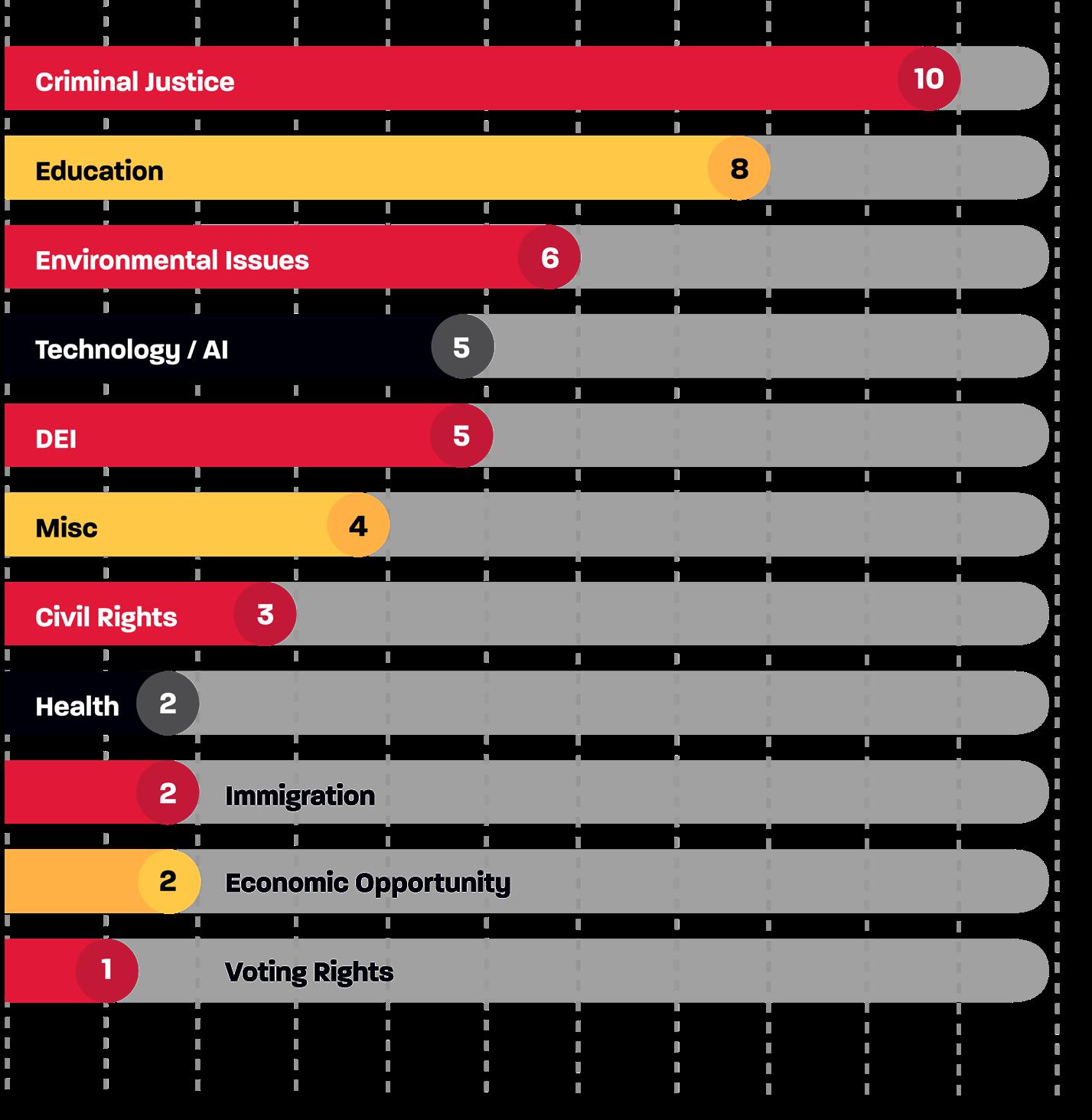
During the first year of President Trump’s second term, executive actions have been most heavily concentrated in criminal justice and policing, followed by education, tech/AI, and diversity, equity, and inclusion (DEI). Together, these areas reflect a sustained use of executive authority to reshape public safety, educational equity, and civil rights enforcement in ways that carry significant implications for Black communities.
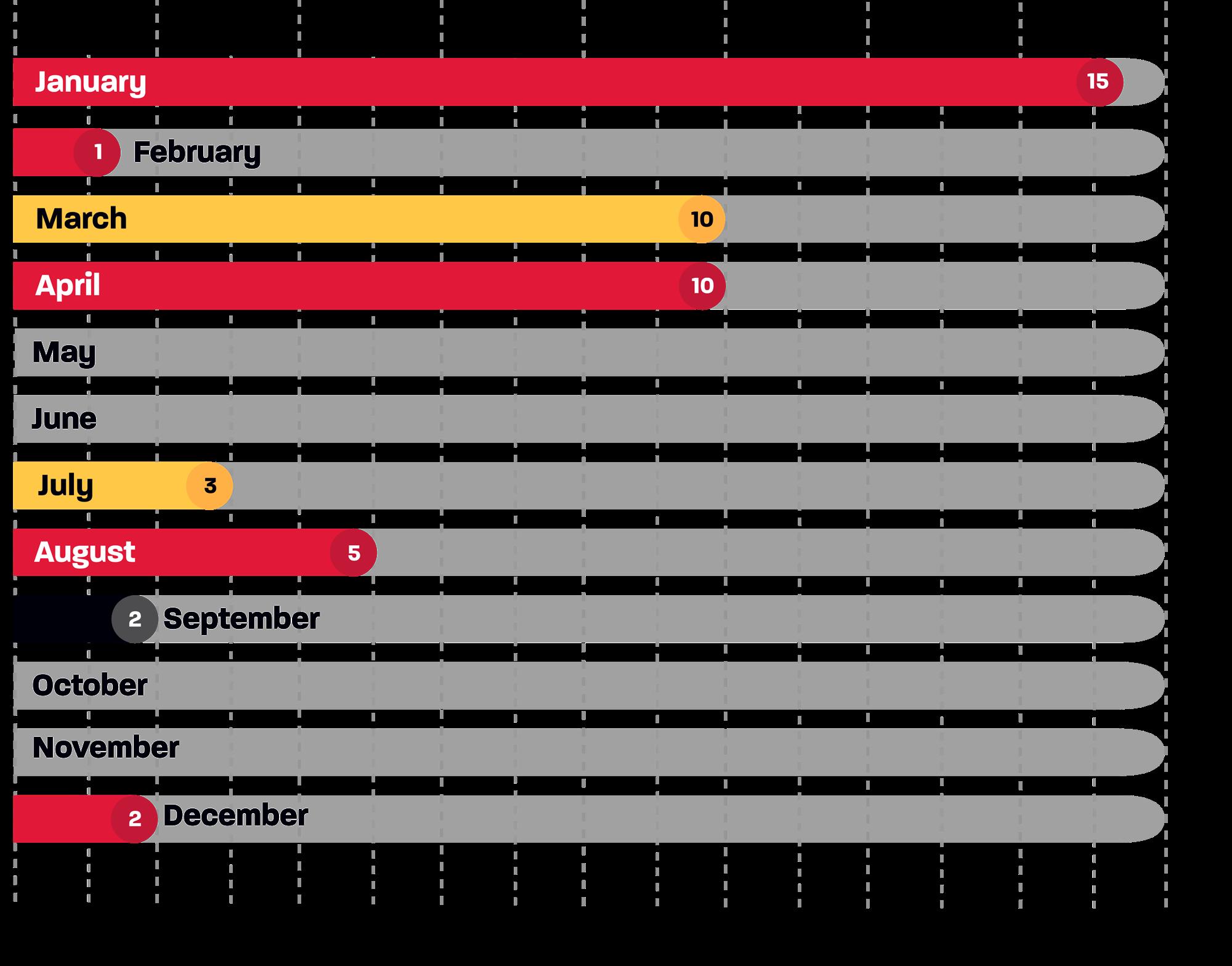
The issuance of executive orders impacting Black Americans accelerated during the early months of the administration, peaking mid-year before tapering slightly. This pattern underscores that many of the most consequential policy shifts affecting Black communities were enacted early, setting the direction for agency priorities across the federal government.
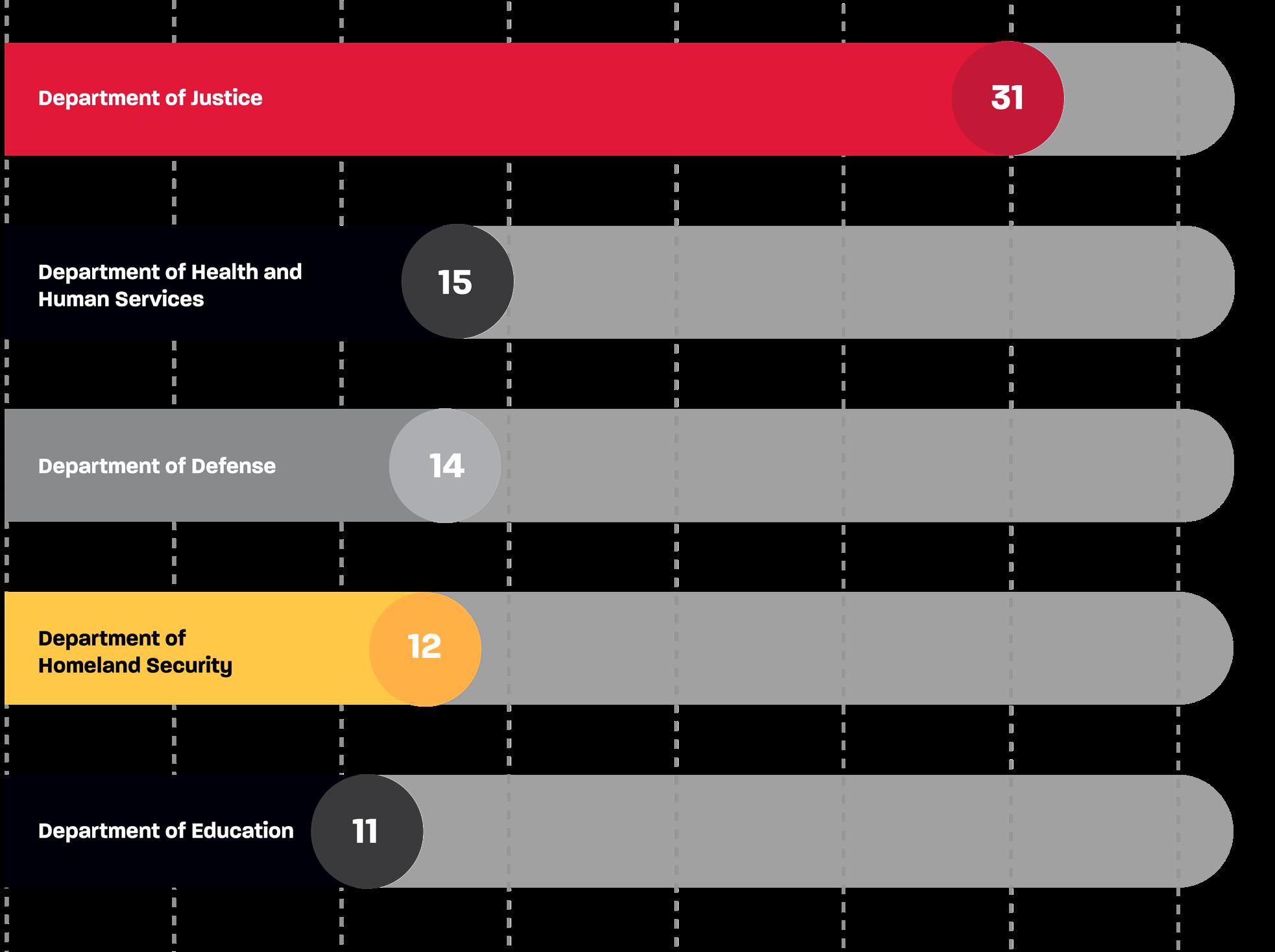
Executive orders most frequently targeted agencies responsible for civil rights enforcement, education access, labor protections, immigration, and environmental oversight. Concentration within these agencies highlights how executive authority is being used to redirect federal governance away from equity and accountability.
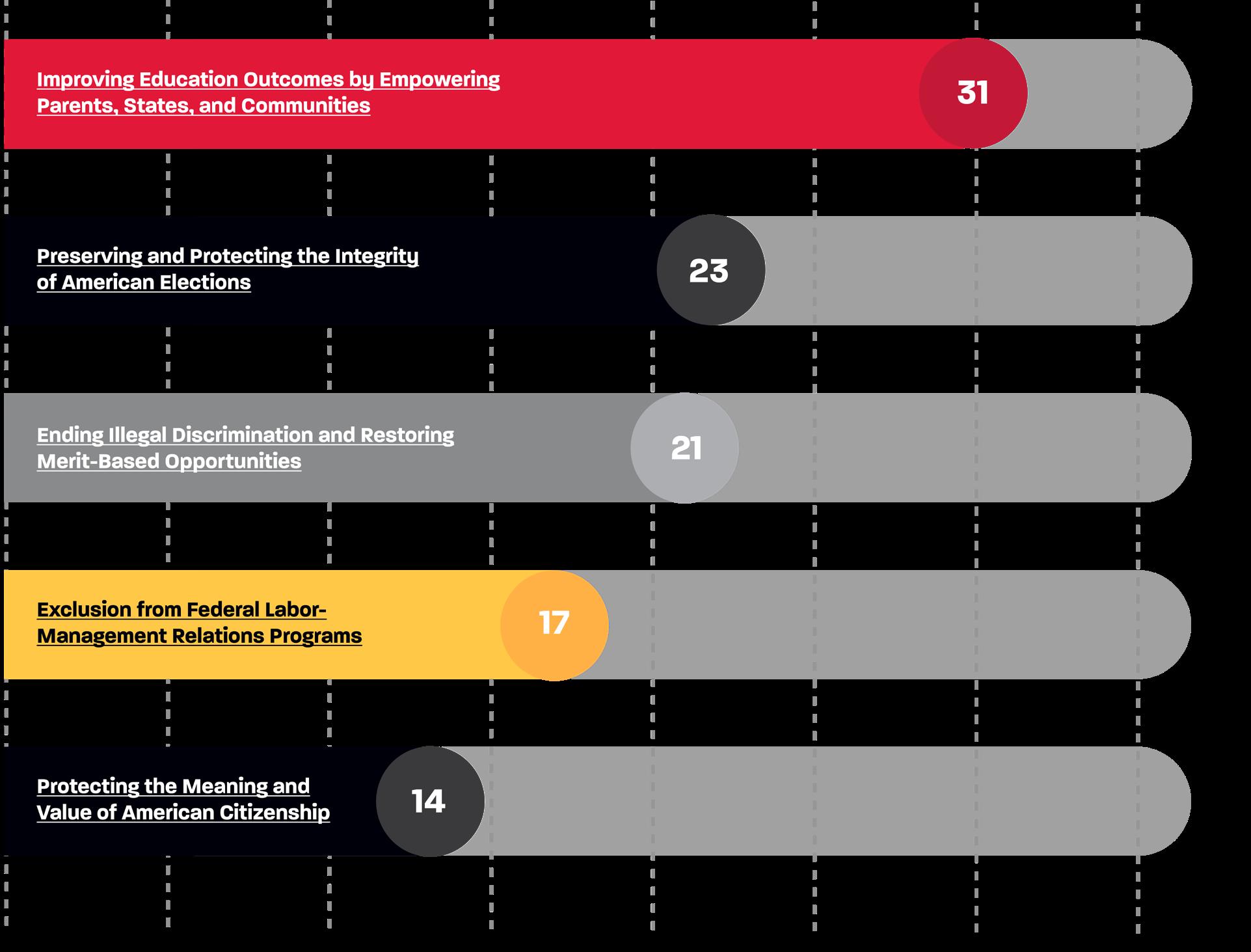
The Congressional Black Caucus (CBC) has been vocal in its opposition to President Trump’s executive actions and continues to fight for all Americans. CBC Members have responded to executive orders spanning a variety of issues, from education funding and voting rights, to birthright citizenship and the right to unionize. The CBC remains a powerful force uplifting Black communities and notifying their constituents about emerging policy.
Note for all charts: Figures are based on the Congressional Black Caucus Foundation’s Executive Order Tracker and reflect select executive orders and presidential actions issued during the first year of President Trump’s second term.
The Congressional Black Caucus (CBC) earned the nickname “The Conscious of the Congress” by advocating for marginalized communities and championing legislation that promotes equity and human rights. During the first year of the Trump Administration, the CBC, led by Chair Yvette D. Clarke , and its members have issued over 150 statements in response to executive orders. CBC members have also introduced bills to combat some of the most consequential executive orders.
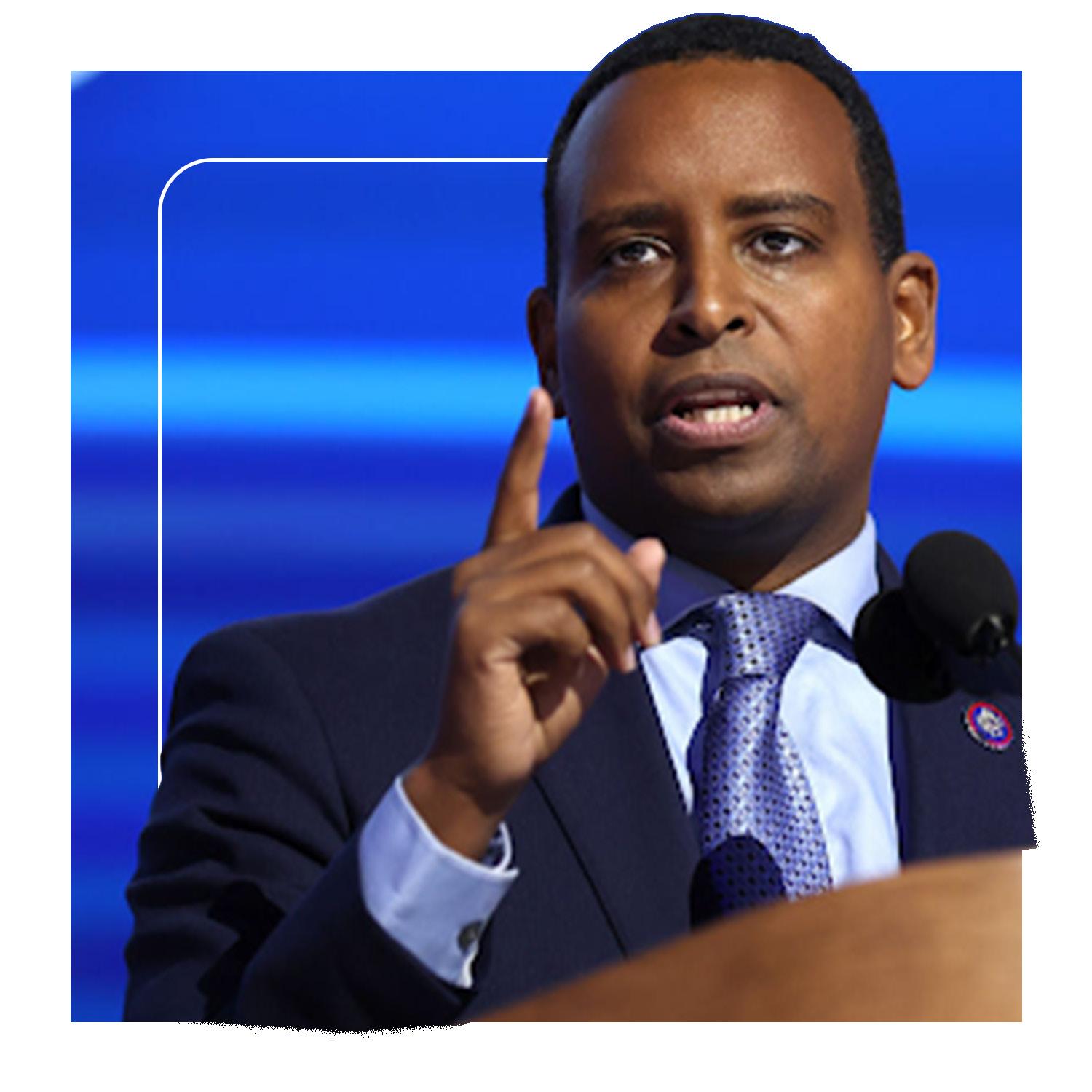
On January 20, President Trump issued an executive order, which was later reclassified to a presidential action, ending birthright citizenship for those born to undocumented immigrants and those born to people here lawfully on a work, tourist, or student visa. The executive order was challenged by advocacy organization Citizens Assisting and Sheltering the Abused (CASA, Inc.) and made its way to the Supreme Court. The House Democrats’ Litigation and Rapid Response Task Force, led by CBC Member Rep. Joe Neguse (CO-02), filed an amicus brief in support of birthright citizenship.
“President Trump’s executive order on birthright citizenship is unconstitutional, and as our amicus brief makes clear, House Democrats will continue to vindicate our constitution.” - Assistant Democratic Leader Joe Neguse
During his first few days in office, President Trump issued two executive orders eliminating diversity, equity, and inclusion policies, practices, and roles from the federal government. The orders significantly impacted diversity programs at federal science agencies. In response, on April 30, Reps. Shontel Brown (OH-11) and Marilyn Strickland (WA-10) reintroduced the Women and Underrepresented Minorities in STEM Booster Act of 2025. The bill would create new federal grants for programs focused on professional development, training, mentoring, and outreach activities of women and minorities in science, technology, engineering, and mathematics (STEM).
“Instead of going backwards on diversity, we need to move forward. Our economy and our communities are stronger when more people have opportunity. I’m proud to co-lead this important legislation [...] which will help us invest in under-represented communities and help more people secure good STEM jobs.”
- Rep. Shontel Brown
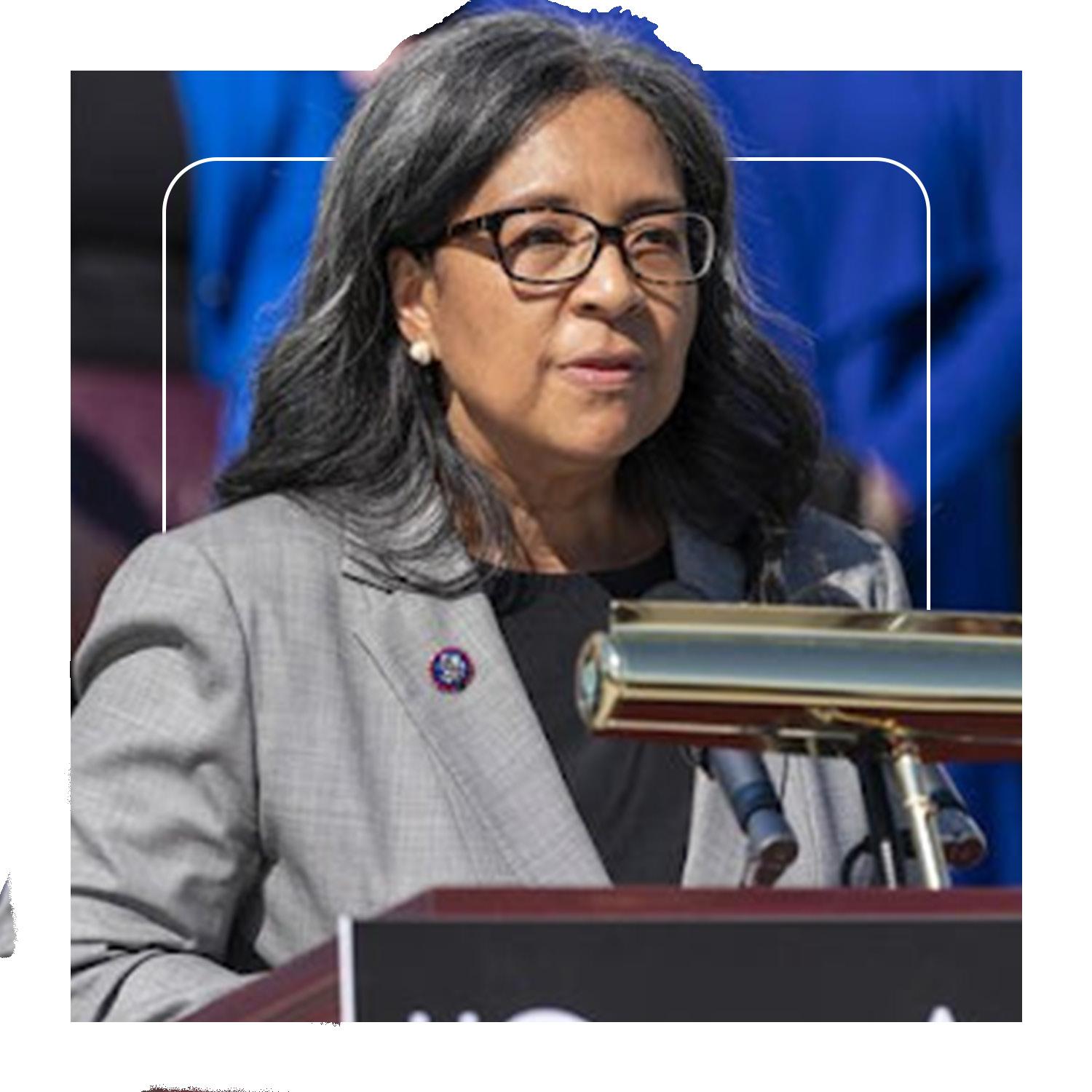
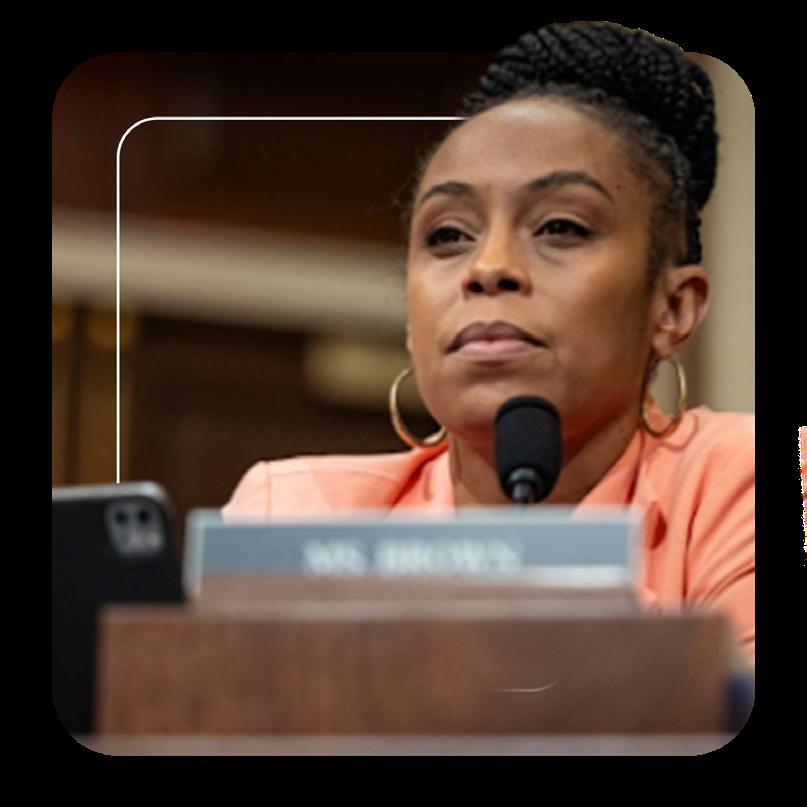
“Women and minorities across STEM fields often face obstacles and inequality in many stages of their careers. This bill will help ensure that high-wage STEM jobs are more accessible to historically under-represented communities.”
- Rep. Marilyn Strickland
On March 27, President Trump issued an executive order prohibiting federal workers across more than 20 agencies from collective bargaining. On April 8, Sen. Lisa Blunt Rochester (D-Del.) joined two of her colleagues in reintroducing the Public Service Freedom to Negotiate Act. The legislation would guarantee the right of public sector employees to organize, act concertedly, and bargain collectively in states that currently do not afford these basic protections.
“As the granddaughter of union steelworkers and Delaware’s former Secretary of Labor, I know the power workers have when they stand together. At a moment when the Trump administration is indiscriminately firing federal employees across government, it is past civil servants have the protections and benefits that private sector workers do: the right to organize.”
- Sen. Lisa Blunt Rochester


Terri A. Sewell (AL-07)
On April 2, President Trump issued his first executive order placing tariffs on foreign countries. One week later, Rep. Terri A. Sewell (AL-07), Chair of the Congressional Black Caucus Foundation Board of Directors, introduced the Stopping a Rogue President on Trade Act. If passed, the bill would return tariff authority to Congress and void President Trump’s executive order. Though the Supreme Court ruled that President Trump does not have the authority to impose tariffs, this legislation would codify Congress’ authority to levy tariffs.
“Our economy is in chaos, working families are hurting, and small businesses across my district are worried they will lose their businesses because of Donald Trump’s reckless trade war. We have one man in the White House who is willing to throw the global economy into disarray just so that he can have foreign leaders and CEOs come begging to him on bended knee. Enough is enough!”
- Rep. Terri A. Sewell
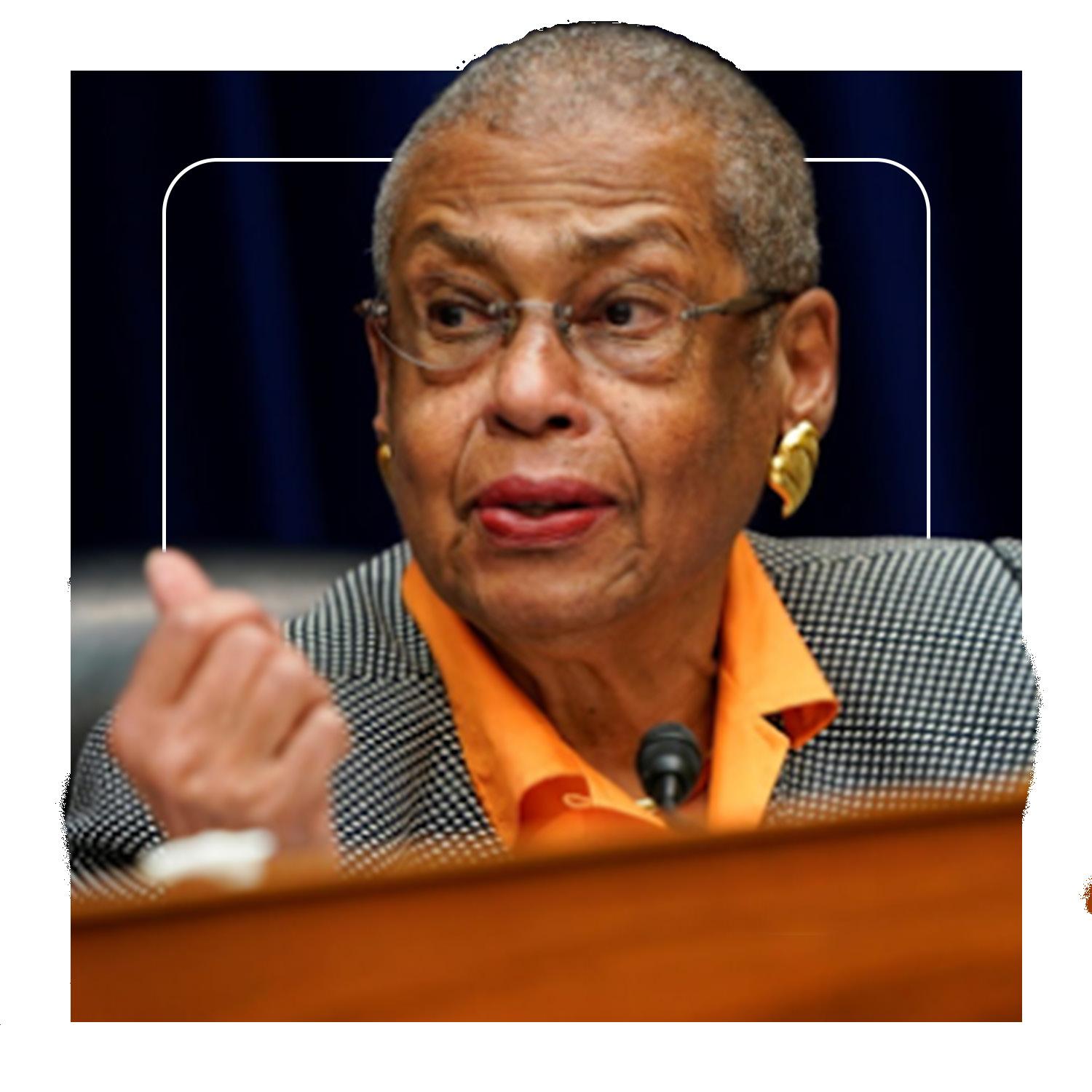
On August 11, President Trump issued an executive order declaring a state of emergency in Washington, DC and authorizing the use of the Metropolitan Police Department (MPD) for federal purposes. On September 5, Congresswoman Eleanor Holmes Norton (D-DC) introduced a bill to grant the District of Columbia full control over the D.C. National Guard and the MPD.
“D.C. residents are Americans, fully capable of governing themselves, including having full control of their police force and National Guard like residents of the states. President Trump’s unprecedented federalization of the D.C. Police and his activation of the D.C. National Guard without D.C.’s consent underscore the necessity of D.C. statehood.”
- Congresswoman Eleanor Holmes Norton
Grant Witness -Grant Witness
The Trump Administration Is Threatening Libraries, Museums, and Other Nonprofits That Support the Arts, Humanities, and Learning -Center on Budget and Policy Priorities
ALA Welcomes Reinstatement of All Federal IMLS Grants to Libraries -American Library Association
Who Uses Libraries and What They Do at Their Libraries -Pew Research Center
Judge Orders Slavery Exhibit Must Be Restored at President’s House in Philadelphia -Fox 29
Statement on the Freedom and Slavery Exhibit Removal at Independence National Historical Park -Organization of American Historians
Trump Administration Removes Slavery Exhibit, Historical Displays From Parks, Museums -Straight Arrow News
The Trump Administration Is Intentionally Erasing the Black History Told by Public Lands and Waters -Center for American Progress
Ball State Cancels LGBTG Training Session Amid Uncertainty of State Legislation -WRTV Indianapolis
Ball State Ends DEI Programs to Comply With State and Federal Orders -WFYI Indianapolis
George Tech Dissolves LGBTG+ Pride Alliance, Women’s Resource Center, Black Tech Group Amid DEI Concerns -Rough Draft Atlanta
Three Northwestern Schools Take Down DEI Sections on Their Web Pages -The Daily Northwestern
NU Kellogg Removes DEI Pathway Amid Trump Executive Orders -The Daily Northwestern
College Campuses Are Closing Their Women’s and LGBTQ+ Centers -teenVogue
University of Alabama System Campuses Each Close DEI Offices, Reassign Staff -AL.com
HBCUs Reel as Trump Cuts Black-Focused Grants: ‘This Is Our Existence’ -The Chronicle of Higher Education
Education Department Layoffs Gut its Civil Rights Office, Leaving Discrimination Cases in Limbo -Associated Press
Ed. Dept. Paid Civil Rights Staffers Up to $38 Million as It Tried to Lay Them Off -Education Week
GAO Report Finds Education Department Civil Rights Enforcement Collapsing as Disability
Complaints Go Unreviewed -The Arc
90% of Student Discrimination and Harassment Complaints Were Dismissed Last Year. Here’s Why -The 19th
ED Proposal Removes Federal Data Collection for Special Education Racial Disparities -Council for Exceptional Children
Electricity Bills Got More Expensive In 2025—Despite Trump’s Promise To Reduce Utility Costs -Forbes
The US lost $35B in Clean Energy Projects Last Year -Grist
As U.S. Prepares to Exit WHO, It Is Stiffing the Agency on a Large Bill -STAT
Six Years After COVID-19’s Global Alarm: Is the World Better Prepared For the Next Pandemic? -World Health Organization
Nearly Half of Once Frequently Updated CDC Databases Are Now Outdated - The Scientist
EPA Eliminated Office of Environmental Justice and External Civil Rights (OEJECR) and EJ Regional Divisions -Harvard Law School
Groups Sue EPA Over Canceled $7 Billion Solar Program Intended to Help Poorer Americans -Associated Press
Why Are Unemployment Rates Climbing For Black Workers? -Marketplace
Black Women Suffered Large Employment Losses In 2025—Particularly Among College Graduates and Public-Sector Workers -Economic Policy Institute
Latest Fedscope Data Offers a Glimpse into Federal Workforce Changes Under DOGE And Raises Transparency Concerns -Partnership for Public Service
DEI Purge in D.C. Leaves Black Women at Higher Risk -The Washington Informer Fell V. Trump -Civil Rights Litigation Clearinghouse
The Trump Administration Ended Collective Bargaining For 1 million Federal Workers -Center For American Progress
Trump Attacks on Federal Agencies Have Steep Implications for Black Workers -Economic Policy Institute
DC Federal Takeover Sees 383 Arrests in First Week -WUSA9
Federal Surge Data Reports -Washington, DC Metropolitan Police Department

What 1,200 Arrest Records Say About the Surge of Federal Law Enforcement In DC -VPM
Haitians Helped Boost Springfield’s Economy – Now They’re Fleeing in Fear of Trump -The Guardian
TPS For Haiti in 2026: What Haitian TPS Holders Need to Know Right Now -Ilabaca Law
Presidential Determination on Refugee Admissions for Fiscal Year 2026 -Federal Register
Presidential Determination on Refugee Admissions for Fiscal Year 2025 -Federal Register
Voter ID 2023 Survey Key Results Jan 2024 -Center for Democracy and Civic Engagement

Center
April 2026