2024
PREPARED
BY
Olajumoke Obayanju, Sr. Director, NREI
Congressional Black Caucus Foundation


PREPARED
BY
Olajumoke Obayanju, Sr. Director, NREI
Congressional Black Caucus Foundation
This 2024 Annual Report provides an overview of the National Racial Equity Initiative for Social Justice (NREI) to capture our progress on priorities since 2023.
The NREI was established in late 2020 in direct response to the murder of George Floyd, which prompted protests nationally over the reliving of, yet another African American killed by police. Though the Congressional Black Caucus Foundation (CBCF), for years, has prioritized advancing the global Black community, the NREI was founded as CBCF’s pledge to bolster its work in advancing racial justice, combating systemic injustice, and increasing economic development opportunities for the Black community. George Floyd’s murder exemplified the structural barriers and systemic racism that continue to pervade our societal constructs, from the criminal legal system and our court system to healthcare and education systems. His death also inspired—and more appropriately ignited—a force of political, financial, and grassroots mobilization around social justice and racial equity.
In its fourth operating year the NREI has accomplished the following to Remove Financial Barriers for Black Students attending Historically Black Colleges or Universities (HBCUs), Advance Social Justice Policy through research and programming, Create a Pipeline for young Black leaders, and Empower Action-Driven Change:
1. Hosted and placed 1 full-time Fellow on Capitol Hill and the Foundation through our John R. Lewis Social Justice Fellowship.
2. Awarded $150,000 to 15 undergraduate and graduate level scholars attending 12 HBCUs across the nation.
3. Published 15 NREI research deliverables on issues ranging from analyzing food insecurity to examining environmental hazards to safeguarding the federal voting rights of individuals upon their release from incarceration, and much more.
4. Hosted informative and policy-informed programming, including an in-person Community Conversation in Atlanta, Georgia and the NREI Annual Legislative Conference Panel.
As the NREI enters its fifth year of operations, we are filled with excitement and anticipation for the impactful work ahead in 2025. Having been funded for the past five years, this milestone marks not only a testament to the program’s success but also an exciting opportunity to build on the progress we’ve made and tackle new challenges in the coming year.
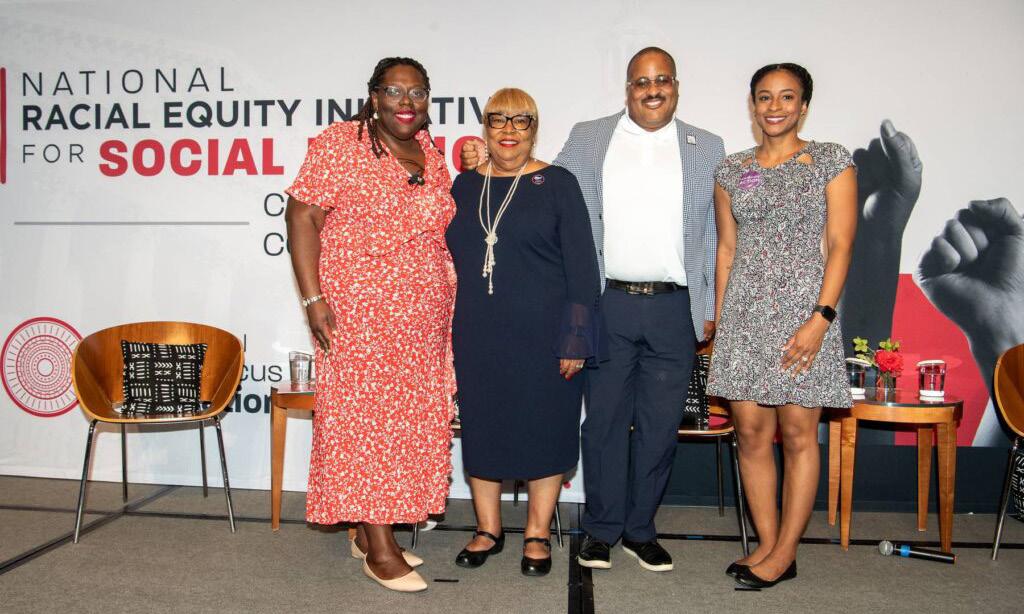

The NREI’s mission is to combat systemic injustice and advance racial equity, human rights, education, and economic development opportunities for the Black community.
Housed in the Congressional Black Caucus Foundation’s (CBCF) Center for Policy Analysis and Research (CPAR), the NREI takes an evidence-based approach to develop sound policies targeted to reducing racial disparities caused by racism and discrimination. The NREI provides solutions-driven and proactive policies and practices that produce equitable access, opportunities, treatment, and outcomes for African Americans. Recognizing that combating systemic racism can be achieved through various avenues,
the NREI framework supports the CBCF’s organizational mission of developing leaders, informing policy, and educating the public. The NREI includes social justice fellows, social justice scholarships for HBCU students, a task force, and research, data, and public policy related to social justice reform for maximum impact in Black communities. The scope of work for the NREI involves measurable deliverables and activism that shape the foundation of NREI’s establishment, operational trajectory, and research policy.
On March 11, 2024 , CBCF welcomed aboard Jennie Patterson as the new Program Manager for NREI. Since joining, Jennie has managed the day-to-day planning, coordination, and implementation of NREI and CPAR programming. Jennie also served as a thought partner to the Senior Director and was responsible for coordinating the activities and events of the NREI, giving detailed attention to program strategy and developing sustainable systems to ensure the execution of high-caliber programs.
On October 21, 2024 , NREI Senior Director, Olajumoke “Jummy” Obayanju resigned from her position. Under Jummy’s four-year leadership, NREI made significant progress, publishing over 40 research reports on urgent social issues. She also spearheaded the launch of the NREI Task Force for Social Justice Ambassadors and launched the NREI Community Conversations, which brought together communities in Detroit, Atlanta, Tulsa, and Washington, D.C. She also welcomed 25 Fellows into the inaugural John R. Lewis Social Justice Fellowship.
he HBCU Social Justice Scholarships were created to encourage and support the next generation of social justice leaders committed to advancing equity, freedom, and justice for all, especially the Black community. The scholarships ameliorate the economic hardships, particularly, experienced by HBCU students committed to social justice work, with the hopes of removing financial barriers and expanding future opportunities and access to success. The funds
Tare disbursed on an annual one-time basis to undergraduate, graduate, or doctoral level students attending Historically Black Colleges or Universities, pursuing studies related to social justice to include, but not limited to, criminal justice, education, civil rights, or community/economic development. Students must demonstrate their interests and experience in social justice, student activism, and/ or community service.

The John R. Lewis Social Justice Policy Fellowship is designed to give young, Black professionals the opportunity to work in Congress and with the Foundation to address social justice and racial equity issues that affect the Black community. Distinguished by two six-month rotations, Social Justice Fellows are placed in the U.S. Congress with Congressional Black Caucus members and the CBCF’s Center for Policy Analysis and Research (CPAR) for a total of 12 months. Fellows produce social justice policy research and analysis on topics that include, but are not limited to, criminal justice reform, education, community/ economic development, health equity, and civil rights. While working in Congressional Black Caucus member offices, Fellows gain invaluable legislative experience as they engage in the development of public policy initiatives, attend briefings, conduct research, write speeches, and develop rapport with key leaders, all in the areas of social justice. In the Center for Policy Analysis and Research, Fellows work under the NREI Director and in cooperation with other stakeholders to conduct policy analysis, research, and data collection. During their term Fellows also organize social justice forums and brain trusts, serve as an expert in their field, and produce issue briefs, fact sheets, and other publications related to social justice.

2024–2025 Fellowship Cycle
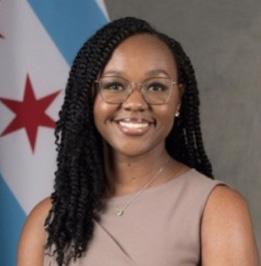
Ashley Hodo
Congressional Placement: Representative Nikema Williams
Interests: Generational Wealth and Economic Mobility
Sponsor: Prudential Financial
Focusing on key areas such as Criminal Justice Reform, Education, Health Equity, and Economic Opportunity, our research has been guided by the pressing needs of our communities. This year, we published 15 impactful pieces, including policy briefs, reports, and blog posts, to drive meaningful change.
Criminal Justice:
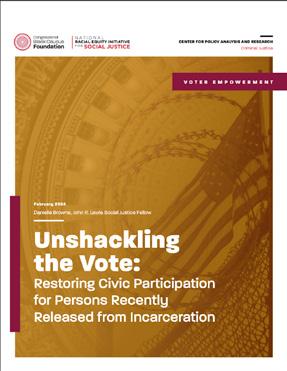
Unshackling the Vote: Restoring Civic Participation for Persons Recently Released from Incarceration:
This policy brief explores the implications and importance of H.R. 4987, a bill that aims to safeguard the federal voting rights of individuals upon their release from incarceration. The brief delves into the benefits for both individuals seeking a fresh start after reintegration and the broader Black community, as well as what is at stake for the 2024 election cycle if legislation of its kind remains unimplemented.
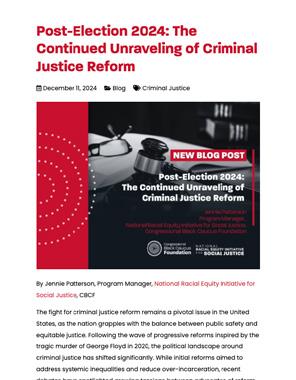
2024: The Continued Unraveling of Criminal Justice Reform :
This blog post discusses the ongoing battle for criminal justice reform in the U.S., highlighting a shift in political attitudes as voters in several states roll back or reject reforms aimed at reducing incarceration.
Economic Opportunity:
Economic Resurgence: Black Employment in Transition: This policy brief delves into the economic trends affecting Black Americans, examining past and present factors such as the COVID-19 pandemic’s effects on employment, the rise of remote job opportunities, and the growth of self-employment.


Leveraging Upskill and Reskill Programs in Technology for Black Economic Growth : This policy brief identifies how investing in workforce development for Black individuals provides a pathway to not only addressing the talent deficit in the technology sector, but also serves to dismantle systemic barriers and create opportunities for economic advancement.
Rooted Inequality: Analyzing the Economic Causes and Consequence of Food Insecurity : Food insecurity and economic mobility in the Black community are intricately connected. This policy brief explores the socioeconomic determinants of food security and their impact on the economic mobility of the Black community.
Burning Issues: Heat Islands, Environmental Victimization, and Economic Disparities in Black Communities : This report examines the intersectional dynamics of Urban Heat Islands (UHIs) and their effects on the Black community, exploring the underlying drivers, socioecological impacts, and policy implications of UHI-induced environmental victimization.
Burning Disparities: The Impact of Heat Islands on Black Communities: This blog post discusses how urban heat islands (UHIs) disproportionately affect Black communities and calls for climate reforms, including more green spaces, better building reflectivity, and increased cooling centers, to address the environmental injustices and protect vulnerable populations.
The Fight to Increase Racial Equity Within Cannabis Policy: This policy brief outlines the history of cannabis policy in the United States and examines the current landscape for cannabis legalization at the state level. Additionally, the authors analyze a policy proposal aimed at lowering the barriers for Black entrepreneurs entering the cannabis industry.
Education:
Health:
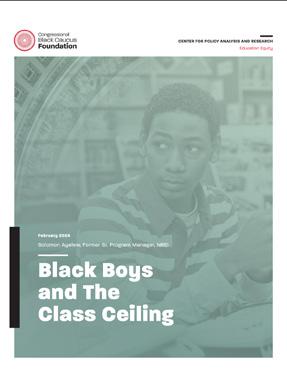
Black Boys and the Class Ceiling: This publication highlights the disparities intersecting across racial, gender, and socioeconomic lines, resulting in inferior outcomes for Black boys and a “class ceiling” for Black men.
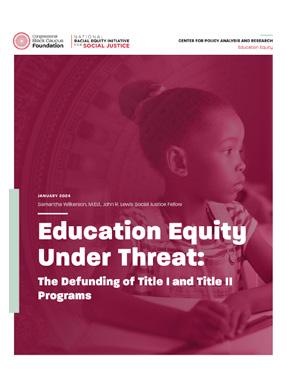
Education Equity Under Threat: The Defunding of Title I and Title II Programs : This policy brief examines the consequences of the House of Representatives proposed cuts to Title I and Title II programming and the implications of the budgetary decisions on students.
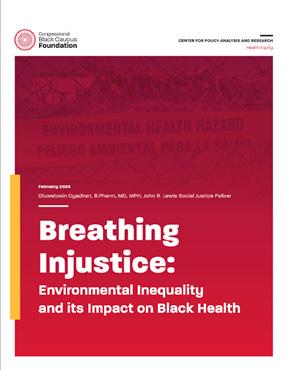
Breathing Injustice: Environmental Inequality and its Impact on Black Health: TThe United States’ long-standing practices of racism have resulted in health inequities that disproportionately affect the Black community. This policy brief sheds light on the critical intersection between environmental justice and Black health, examining environmental hazards, health disparities, and potential solutions.
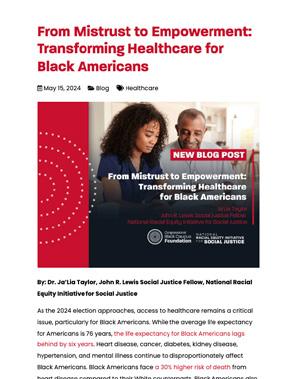
From Mistrust to Empowerment: Transforming Healthcare for Black Americans: This blog post addresses the critical healthcare disparities faced by Black Americans, including higher rates of chronic illness, lower life expectancy, and mistrust in the healthcare system due to historical mistreatment. It emphasizes the need for systemic change, such as increasing Black healthcare professionals and cultural competence, and highlighted the Policy for the People Health Equity Summit as a platform for discussing these issues and advocating for solutions.
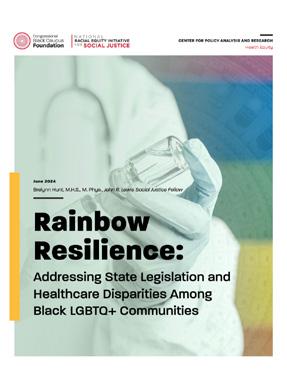
Rainbow Resilience: Address State Legislation and Healthcare Disparities Among Black LGBTQ+ Communities: This policy brief explores the recent changes in LGBTQ+ healthcare legislation across states. It highlights how this trend in state policies disproportionately impacts Black LGBTQ+ individuals, who already face significant healthcare disparities and discrimination.
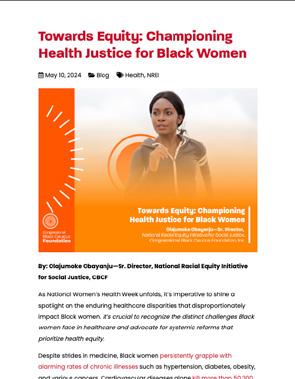

Towards Equity: Championing Health Justice for Black Women : This blog post highlights the healthcare disparities that disproportionately affect Black women, including higher rates of chronic illnesses, maternal mortality, and fibroids, compounded by systemic racism and historical injustices. It calls for systemic reforms and policies that prioritize health equity, with the aim of ensuring Black women receive the care, respect, and dignity they deserve.
Understanding Cholesterol Disparities in the Black Community : This brief provides an in-depth analysis of cholesterol, including its disproportionate impact on the Black community and its role in increasing risk factors for other illnesses. Additionally, the author addresses misconceptions about cholesterol health and outlines steps to reduce high cholesterol levels
The NREI Task Force of Social Justice Ambassadors is a cohort of individuals committed to challenging racial injustice and advancing racial equity and social justice reform. Using their platforms, Ambassadors work in collaboration with NREI to disseminate research and information, advance policy and community-based solutions, develop relevant programming, share best practices, and raise awareness through media and mass movements for change with attention to youth activism, community organizing, and grassroots mobilization.
On May 13, 2024, the NREI announced its second cohort of Task Force for Social Justice Ambassadors! We are so excited to work with our new Task Force of leaders, academics, influencers, and community activists, who are committed to empowering action-driven change.
The newly appointed NREI Task Force for Social Justice Ambassadors are:
• Dr. Uché Blackstock, Best-selling Author and Founder and CEO, Advancing Health Equity: A prominent advocate for health equity, Dr. Blackstock brings invaluable expertise in addressing racial disparities in healthcare access and outcomes. She recently published her memoir, “LEGACY: A Black Physician Reckons with Racism in Medicine,” which became an instant New York Times bestseller.
• Darrell Booker, Corporate Affairs Specialist and Racial Equity Tech Lead, Microsoft: A seasoned leader in Microsoft’s Philanthropy division, Mr. Booker is celebrated for his pivotal role in spearheading the Nonprofit Tech Acceleration for Black and African American Communities initiative.
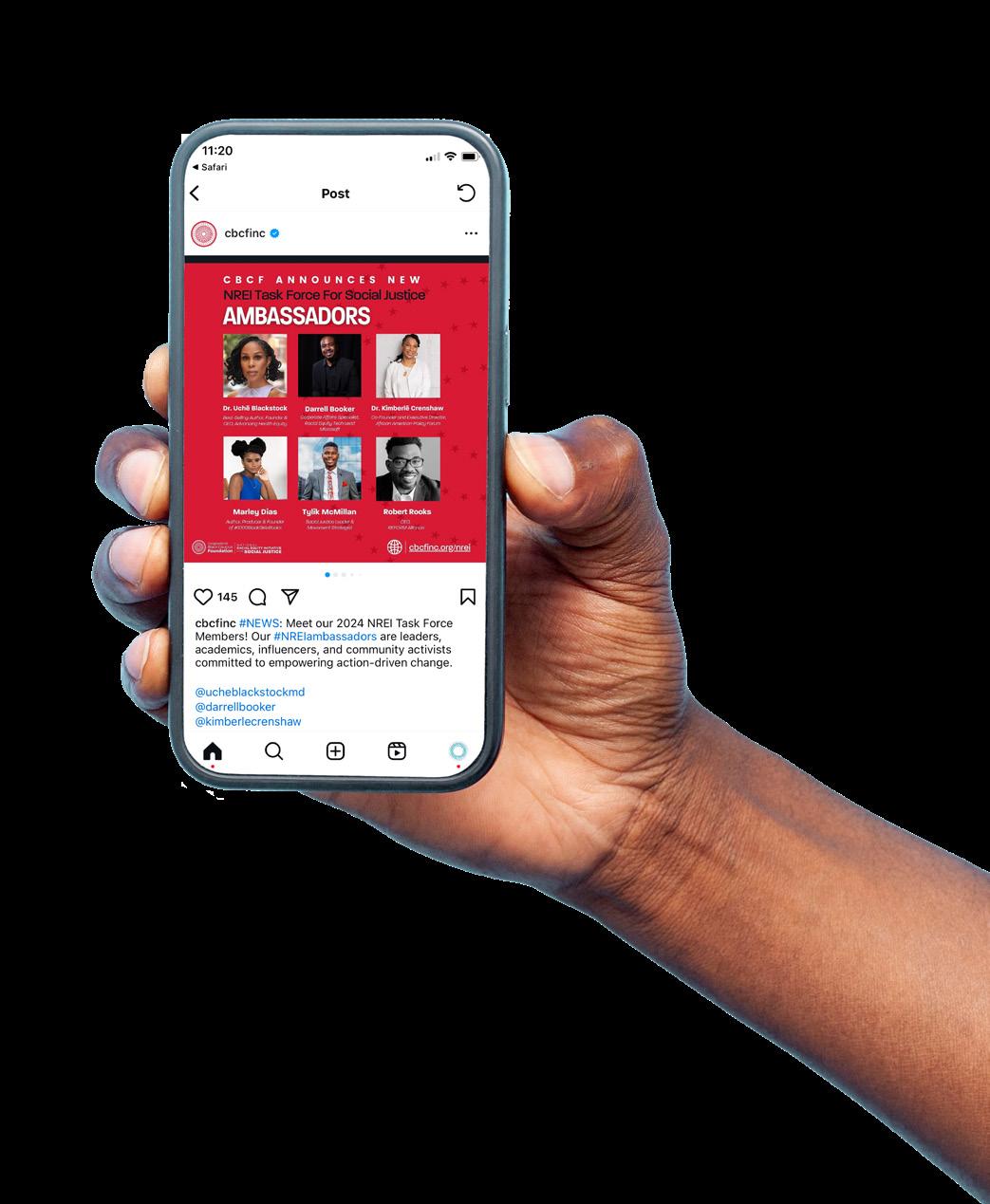
• Dr. Kimberlé Crenshaw, Co-Founder and Executive Director, African American Policy Forum: legal theorist, Dr. Crenshaw is renowned for her groundbreaking work on intersectionality, illuminating the complex ways in which race, gender, and other identities intersect to shape individuals’ experiences and opportunities.
• Marley Dias, Activist, Author, Producer, and Creator: Recognized for her #1000BlackGirlBooks campaign, Ms. Dias is a trailblazing advocate for diverse representation in literature, inspiring young readers worldwide to embrace their identities and stories. As an author, speaker, and advocate, Marley continues to inspire change, leveraging partnerships and her platform to amplify underrepresented voices.
• Tylik McMillan, Social Justice Leader and Movement Strategist: A prominent voice in civic engagement, Mr. McMillan is committed to empowering and advocating for social and economic equality, amplifying the voices of young people in the fight against systemic injustice.
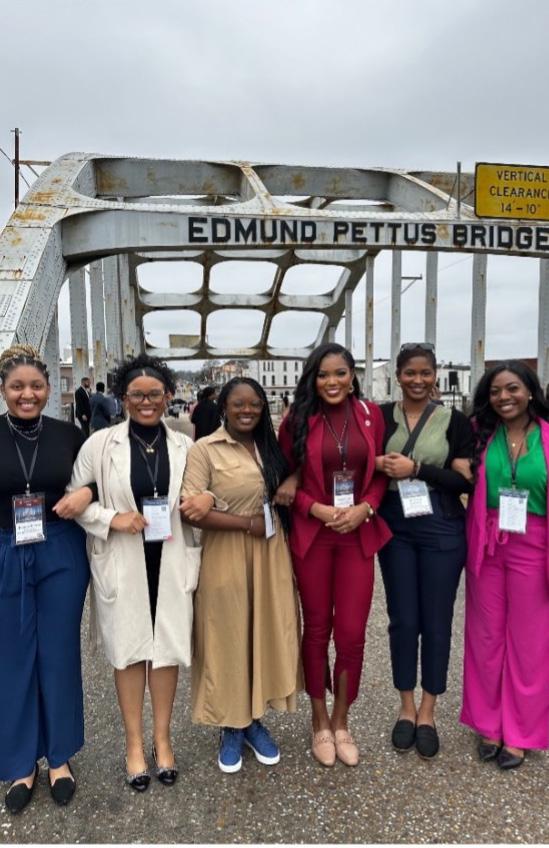
On February 29, 2024- March 4, 2024 , the NREI Fellows, alongside CPAR Vice President Dr. Jonathan Cox and NREI Senior Director Olajumoke Obayanju, attended the 2024 Faith and Politics Pilgrimage in Montgomery, Alabama.

This pilgrimage provided Fellows with a firsthand experience of Civil Rights history, and to embark in the legacy of late Congressman John R. Lewis. The weekend included discussions with civil rights leaders such as Dr. Bernard Lafayette and activist Dr. Valda Harris Montgomery. Fellows visited historic sites like the Freedom Rides Museum, Sixteenth Street Baptist Church, The Legacy Museum, and the Edmund Pettus Bridge, amongst others.
Atlanta Community Conversation Atlanta Community Conversation Post-Event Survey Findings:
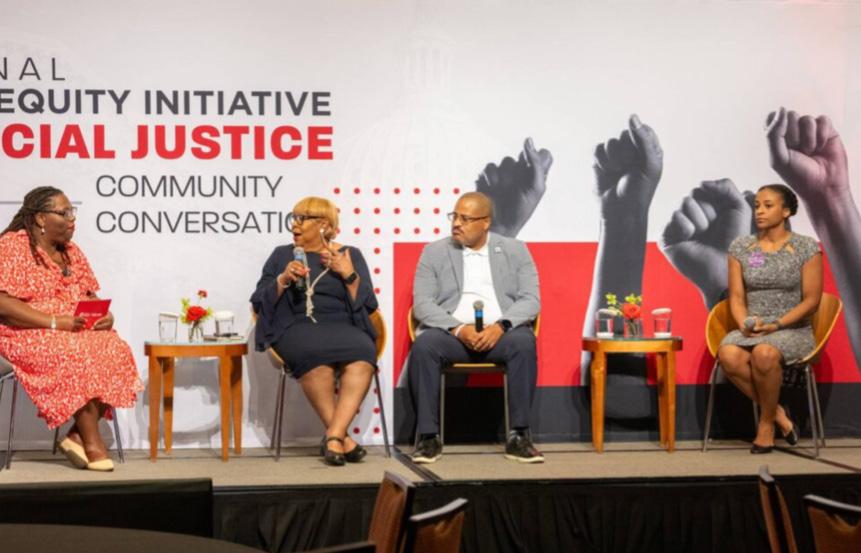
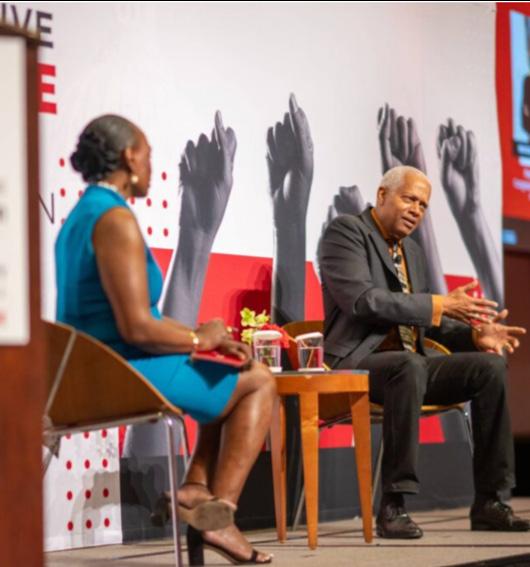
On Saturday, June 8, 2024, the NREI hosted a Community Conversation in Atlanta, GA entitled: Empowering Equality: Voting Rights and Representation. Nearly 90 community members attended and learned about Gerrymandering and the Shadow of Political Violence Against Black Communities, Restoring Voting Rights through Criminal Justice Reform, and Technology’s Impact on Future Elections and Civic Engagemen t. Fifteen community-based and non-profit organizations were represented at the Voting & Activism Fair. Rep. Hank Johnson participated in the Fireside Chat with CBCF President and CEO Nicole Austin-Hillery. Event photos here .
of attendees were highly satisfied with their overall experience
92% 69%
were very satisfied with the quality of event content of respondents were first time attendees
were very satisfied with the overall experience and interaction at the Voting and Activism Fair
were very satisfied with the quality of program speakers
were very satisfied with the length of the program
Respondents interested in subscribing to the NREI newsletter
77% 100% 75% 77% 53.8%
Responses to what the NREI can improve on:
• Opportunities for more engagement and collaboration
• 2-hour lunch was too long, especially since lunch was served on site.
On June 15, 2025, CBCF hosted its second Scholarship Luncheon to celebrate and honor the Congressional Black Caucus Foundation Scholarship recipients. After the success of the inaugural NREI HBCU Scholarship Luncheon, the Luncheon has now expanded to encompass all CBCF Tracking Foundation scholars. These include: The Tracking Foundation MultiYear Scholarship, The Tracking Foundation Scholars Scholarship, NREI Historically Black College and Universities Scholarship, CBCF Reducing the Financial Barrier Scholarship, and the Performing and Visual Arts Scholarships. The event included a Fireside Chat with President & CEO, Nicole Austin-Hillery, and Greg Nixon, Head of Strategic Investments, Senior Managing Director and Senior Legal Counsel, Cerberus Capital Management. There were also two professional development opportunities: 1) Becoming Social Justice Change Agents with Marie Sylla-Dixon, Senior Vice President, Policy and External Affairs, Albertsons Companies and 2) Leaning into Your Power: Voting and Civic Leadership with Amanda Hollowell, Managing Director, National Organizing, When We All Vote.
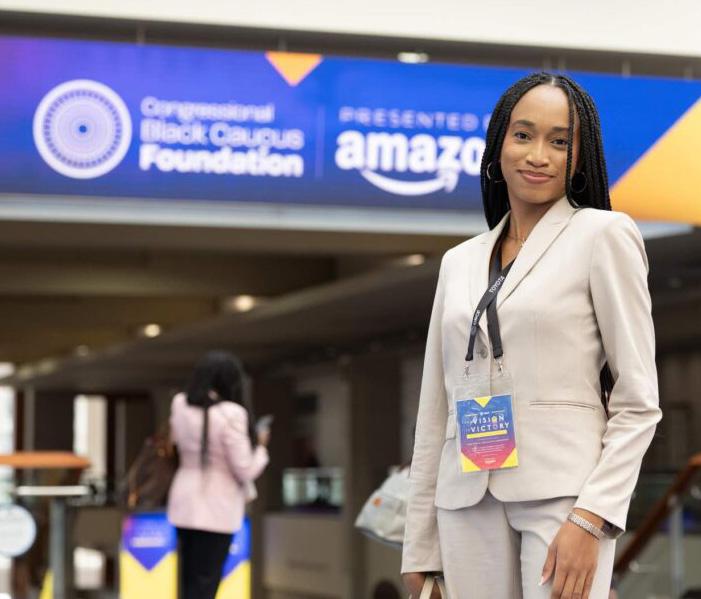
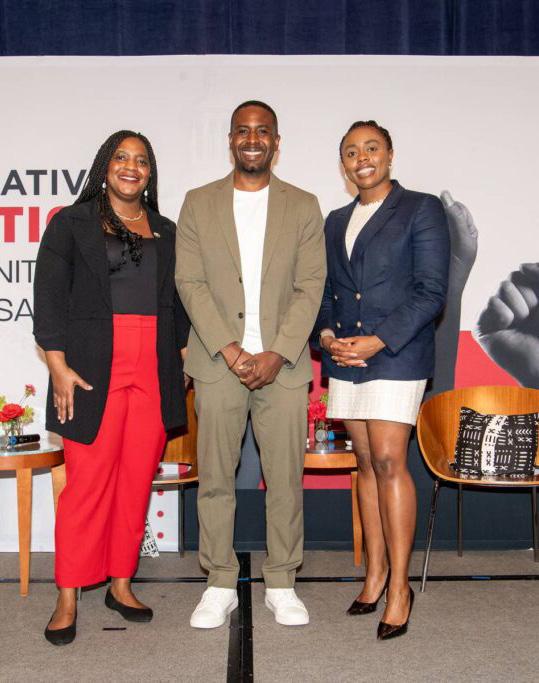
On September 13, 2024, the NREI Task Force held a panel titled “Activism Unleashed: Digital Media for Social Justice.” The session, sponsored by the Robert Wood Johnson Foundation, highlighted the role of digital platforms and social media in advancing social justice causes. The panelists explored the strategies, successes, and challenges of leveraging digital platforms for social justice and societal transformation. They also discussed effective strategies for online organizing, digital storytelling, and leveraging technology for social change.
• In its fourth operating year, the NREI continues to be a staple part of the Congressional Black Caucus Foundation.
• Collaboration with the Marketing & Communications department led to regular content updates and multimedia posts, significantly boosting online interactions and enhancing visibility.
• Continued, strong output of research and publications.
• Enhanced collaboration with other organizations to amplify impact and broaden outreach.
• With the success of the social media strategy and increased newsletter subscribers, there’s an opportunity to build a stronger digital community.
• With now 25 Fellows who have matriculated through the program, there is an opportunity to build a strong alumni base of practitioners in the racial justice space.
• Dependence on corporate funding can limit scalability; fluctuations in financial support may impact future projects.
• Evolving national focus/priority on racial equity may impact future funding.
• Shifts in policy priorities (e.g., new political climates) could challenge NREI’s ability to remain relevant.
Continue to Expand and Enhance Research, Policy, and Community Initiatives
• Update the CBCF NREI website page to improve user experience and accessibility, ensuring it serves as a comprehensive hub for resources, events, and news related to racial equity.
• Produce at least 15 research pieces across criminal justice, economic opportunity, education and health equity.
• Create downloadable toolkits and guides that equip individuals and organizations with practical strategies for promoting racial equity in their communities.
• Work with the Marketing & Communications department to implement a social media strategy that includes regular content updates and engaging multimedia posts to increase followers and interactions.
• Grow the CBCF NREI newsletter subscription base by 40% through targeted outreach and valuable content that informs and inspires action.
The goal to expand and enhance NREI’s research, policy, and community initiatives is nearly accomplished. While the CBCF NREI website was not updated— there were features added to improve user experience and accessibility (i.e. Fellows’ Capstones, Newsletter subscription button).
NREI produced 11 research publications and 4 blogposts across key areas such as criminal justice, economic opportunity, education, and health equity, allowing us to hit our goal of releasing 15 research pieces.
The 2022 NREI Annual Report was released. The NREI Atlanta Community Conversation toolkit was also released and provided practical strategies for promoting voting rights in communities.
NREI also worked closely with the Marketing & Communications department to implement a social media strategy that included regular content updates and engaging multimedia posts, which significantly boosted online interactions. Lastly, the newsletter subscription base nearly tripled (160 subscribers), further increasing community engagement and reach.
Continued on next page...
• Utilize a variety of recruitment channels, including job boards, social media, professional networks, and partnerships with organizations that focus on diversity and equity, to attract a diverse pool of candidates.
• Create a detailed onboarding plan that includes orientation sessions on NREI’s mission, current projects, and organizational culture.
Strengthen the NREI HBCU Scholarship and John R. Lewis Social Justice Fellowship Programs
• Conduct a comprehensive evaluation of both the HBCU Scholarship and John R. Lewis Fellowship programs to identify strengths, weaknesses, and areas for improvement based on feedback from past recipients and stakeholders.
• Create supplementary resources for scholarship recipients and fellowship participants, including access to mentorship, networking opportunities, and academic support.
• Review and enhance the curriculum for the John R. Lewis Fellowship to ensure it includes relevant topics on social justice, equity, and community activism, incorporating input from experts and past fellows.
Launch second cohort of Task Force of Social Justice Ambassadors
• Recruit and select second cohort of the NREI Task Force, comprising of professionals across various social justice sectors, including academia, corporate leadership, and community activism.
• Implement a social media campaign to announce and launch the second cohort.
We hired our new program manager in March 2024.
Yes
Yes
A comprehensive evaluation of both programs was conducted, identifying strengths, weaknesses, and areas for improvement based on feedback from past recipients and survey responses. To further support scholarship recipients and fellows, we held the NREI Scholars’ Luncheon.
Additionally, the curriculum for the John R. Lewis Fellowship was reviewed and enhanced, incorporating input from past fellows.
Yes
We onboarded our second cohort of the NREI Task Force in May 2024. The Task Force announcement was included in local and national media, including The Washington Informer, Black PRWire, and WJNI Gospel Radio.
a. Employ diverse recruitment strategies to attract a wide range of candidates.
b. Effectively onboard the new Senior Director, familiarizing them with NREI’s mission, ongoing projects, and future objectives.
a. Conduct a needs assessment to identify gaps in existing resources to develop a public database of resources for community members to acquire free, easy, trackable access to social justice policies.
b. Select a suitable technology platform for the database and design its structure and interface.
c. Conduct user testing with community members and stakeholders, then launch the database.
a. Cultivate partnerships with sponsors from different sectors to expand the variety of fellowships available and research projects possible within the Fellowship program.
b. Strengthen sponsor partnerships to ensure ongoing and consistent support for sustaining and growing the Fellowship program.