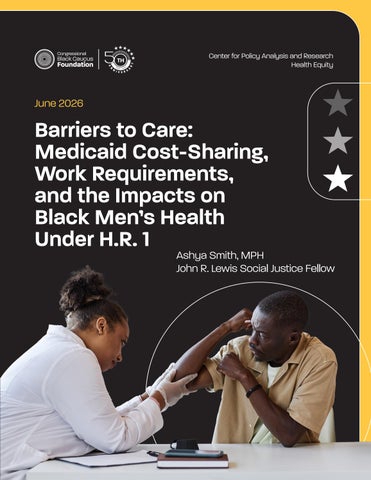
Barriers to Care: Medicaid Cost-Sharing, Work Requirements, and Impacts of Black Men's Health
June 2026
Under H.R. 1
Ashya Smith, MPH
John R. Lewis Social Justice Fellow
Medicaid, a health insurance program provided in partnership with federal and state governments, is available to adults living with income 138% below the federal poverty level.1 At little to no cost to the enrollee, the program allows recipients to access doctor visits, medications, and other health services would be otherwise unaffordable. House Resolution 1 (H.R. 1), known as the One Big Beautiful Bill Act, mandated $1 trillion in cuts to Medicaid. The Medicaid funding cuts will go into effect in stages, starting in 2027. The Congressional Budget Office estimates that 10 million Medicaid recipients are expected to lose access to health coverage over ten years because of H.R. 1.2 While funding cuts will impact all recipients, Black men are at particular risk of losing access to essential healthcare services, threatening their overall health and wellbeing.
Medicaid By the Numbers 3-7
68M Adults Enrolled
13.2M
10.9M
Covers 1/3 of all adults with mental health disorders. Covers 1/4 of all adults with substance use disorders.
Note: Medicaid sex and race data are not disaggregated.
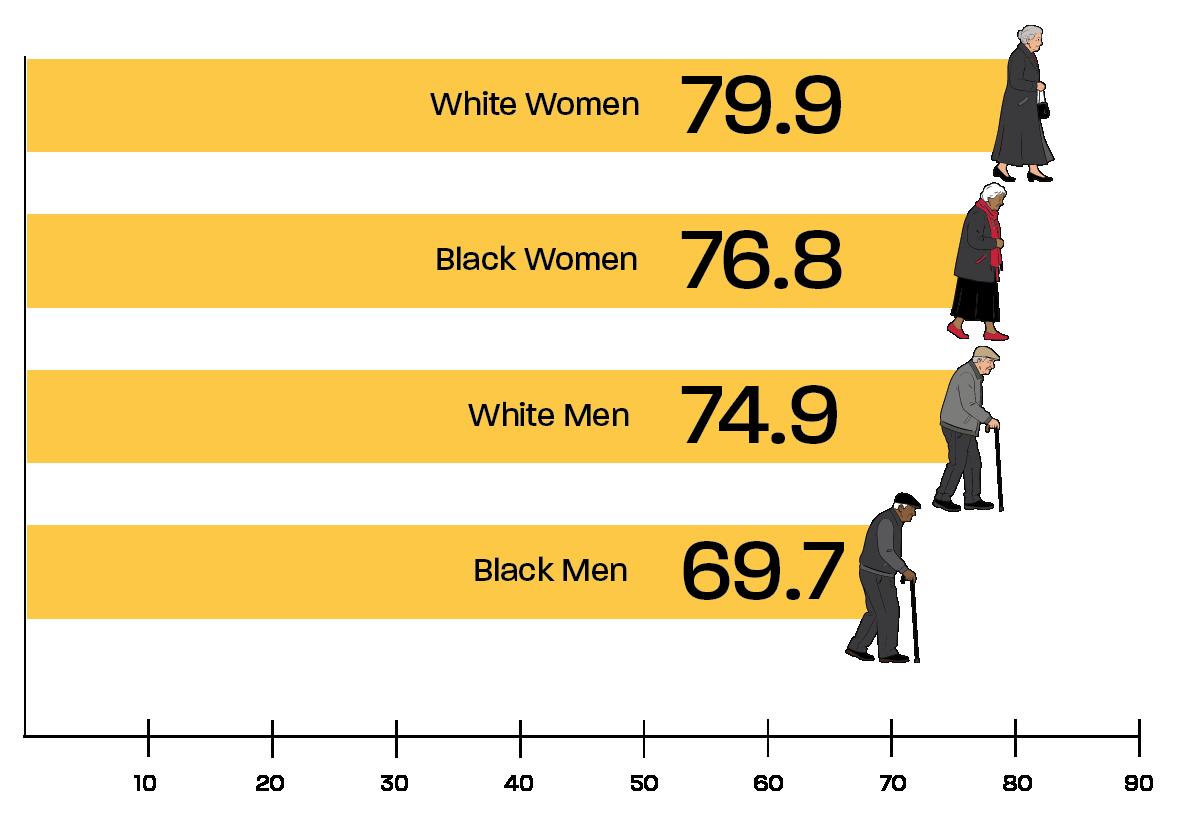
Black Men’s Health by the Numbers:
Top ten causes of death for Black men:
5-10%
Cost-Sharing and Work Requirements Will Limit Access to Care for Black Men
H.R. 1 requires state Medicaid programs to impose cost-sharing on enrollees and enforce work requirements as a factor of eligibility. These new requirements reinforce barriers to healthcare access, which will likely result in worse health outcomes for Black men.
Cost-Sharing
Cost-sharing--which involves any out-of-pocket spending that is not covered by insurance, including copayments, coinsurance, deductibles, and other similar charges--is associated with worse health outcomes, increased financial burden, limited state savings, and a reduction in reimbursement for providers.13,14 Previously, cost-sharing was optional for states with expanded Medicaid (under expanded Medicaid, any adult aged between 19-65 who meets the income requirements is eligible for coverage).
Work Requirements
Beginning January 1, 2027, Medicaid expansion states must implement work and community engagement requirements for enrollees ages 19–64. To maintain coverage, enrollees must complete at least 80 hours per month of qualifying work, education, or community engagement activities.15 Work requirements create additional administrative barriers for Medicaid enrollees and may be especially difficult for individuals who rely on Medicaid-covered medications and treatments to maintain employment.16
An estimated 4.8 million people are expected to lose Medicaid coverage under these requirements.
Impacts on Black Men
Due to H.R. 1’s funding cuts, work requirements, and cost-sharing fees, Black men with Medicaid will have decreased access to physical and mental health services.
Black men with multiple health conditions may face financial barriers from cost-sharing needed to see a specialist. Research shows that those who cannot afford cost-sharing are more likely to go without care.17 The new $35 copayment will have repercussions on Black men, who have the worst health outcomes in the country.18 The Medicaid changes under H.R. 1 are likely to intensify longstanding disparities in Black men’s health outcomes.
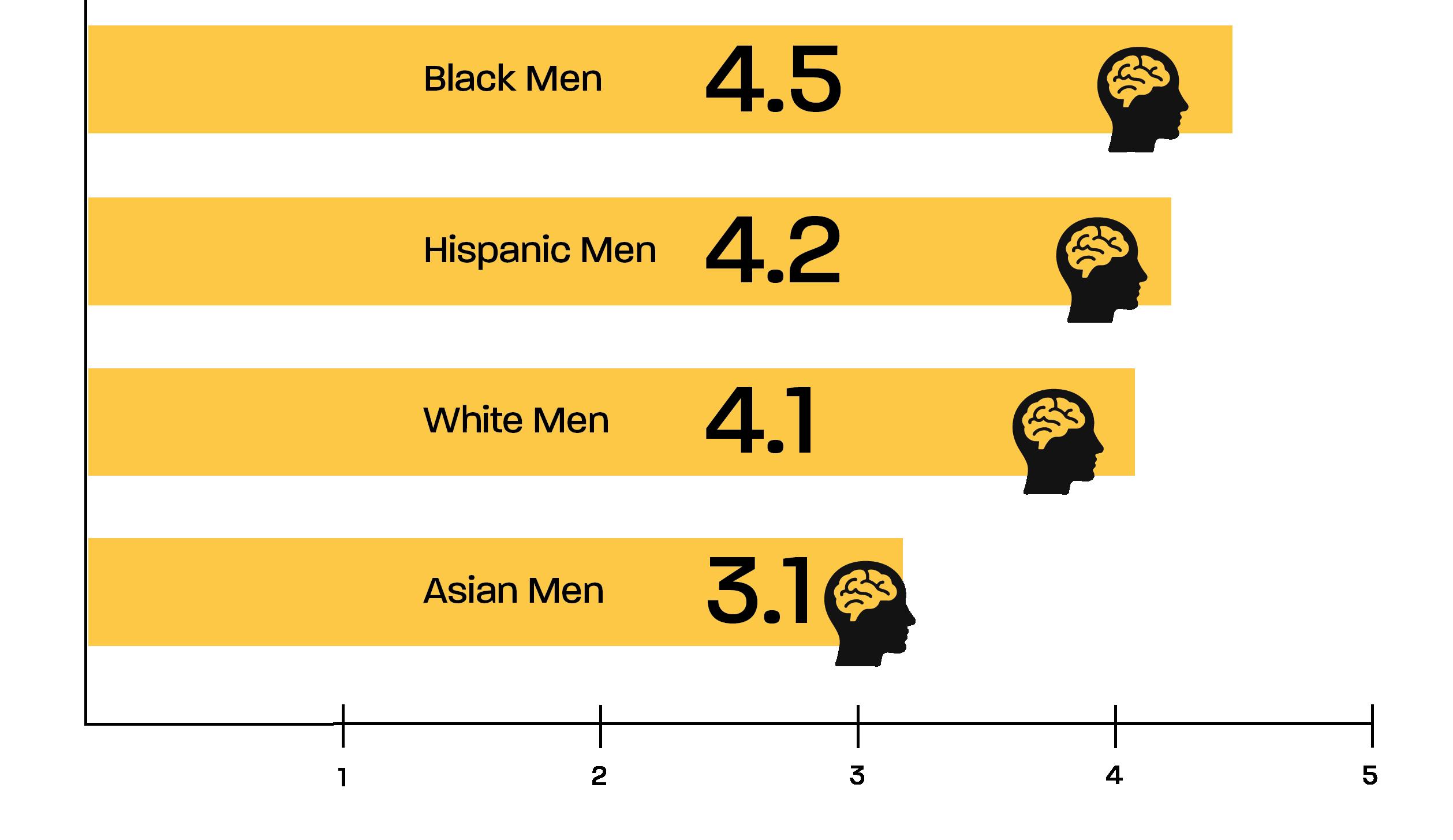
In addition, Medicaid is the single-largest payer for mental health services in America.19 Medicaid provides low-cost mental health services that Black men need to be diagnosed or to maintain care for a mental health condition. Any reduction in Medicaid coverage threatens continuity of care and undermines access to essential behavioral health services for Black men. Average Poor Mental Health Days in Past 30 Days (2024)
By linking health coverage to employment, Medicaid work requirements may deepen barriers to care and stability for Black men already at heightened risk of incarceration. Black people with mental health conditions, particularly schizophrenia, bipolar disorders, and other psychoses are more likely to be incarcerated than people of other races.20 Research shows that access to mental health care decreases crime and incarceration.21 This is particularly meaningful for Black men because one in five will experience incarceration at some point in their lives.22 Any instance of incarceration severely reduces the chances of being employed, resulting in an additional barrier to proving eligibility for Medicaid work requirements.23 Due to higher incarceration rates of Black men overall, for those on Medicaid, work requirements could disrupt access to mental health and substance use services, services that reduce arrests and incarceration rates.24
Overall, the changes mandated by H.R. 1 create administrative and financial obstacles for Black men, which will prevent them from maintaining enrollment and receiving care.
Spotlight on Illinois
Medicaid Cuts in Illinois
In 2024, Illinois had a slightly higher Medicaid enrollment rate compared to the national average.25
26.2%
Illinois Medicaid enrollment rate
23.7%
National Medicaid enrollment rate
Twenty-four percent of the over 3.4 million Illinois citizens enrolled in Medicaid are Black.26 The Department of Health Care Family Services, which houses the state’s Medicaid program, is preparing for the impact of HR 1’s federal Medicaid cuts—cuts that will strain the state budget and lead to reduced services and enrollment if the state cannot makeup the funding gap. Decreased enrollment numbers will also put financial pressure on local hospitals and clinics, which will be forced to bear the burden of uninsured patients.27,28
The State of Medicaid in Illinois 29-34
• In 2022, Illinois’ Medicaid program covered nearly 1 in 5 adults with mental illnesses.
• Fifteen percent (over 520,000) of people covered by Illinois Medicaid in 2025 were diagnosed with a mental health or substance use condition.
• Cost sharing begins October 1, 2028.
• Work requirements may begin as early as January 1, 2027.
• Between 270,000 to 500,000 Illinoisans are estimated to lose Medicaid coverage due to work requirements.
In Illinois, men experience poorer health outcomes than women, reflecting broader disparities in men’s health seen nationwide. Men account for over two-thirds of all suicides in the state.35 Black men experience the most pronounced health disparities in life expectancy, heart disease, and prostate cancer.36
Black Men’s Health in Illinois 37-38
• In Illinois, Black men’s suicide rate is 13.4 deaths per 100,000 people.
• In Illinois, Black men are 14.8% less likely to seek care and receive treatment for a mental health issue.
• In Cook County, Black suicide rates have increased 2.4 times from 2018 to 2023.
• In Chicago, Black men have the lowest life expectancy of any race and sex group and have higher mortality rates for almost every cause of death.
South Chicago Speaks: Community Voices on Health Care Improvements
In 2022, a research study conducted by the Illinois Department of Health Care Family Services and University of Illinois at Chicago analyzed Medicaid hospitalizations. The data surveyed eight neighborhoods in Illinois and showed that people with Medicaid were most hospitalized for mental illnesses, substance use disorders, hypertensive diseases, diabetes, chronic obstructive pulmonary disease/asthma, and heart disease.39
In the same study, Black residents of South Chicago in Cook County were interviewed about their experiences with the health care system. Hearing from this group provides real-life accounts of the barriers Black Medicaid recipients face when accessing care as well as community-backed policy recommendations that legislators should use to inform policy in Chicago, Illinois.
5.1M Cook County population
22.1% Black population of Cook County
1.5M Residents on Medicaid in Cook County
Community-Led Policy Recommendations
Culturally Competent Care
South Chicago residents expressed a desire to have culturally competent care providers representative of their communities. Residents said there are not enough culturally competent mental health clinicians in their neighborhoods that are welcoming to Black patients.
Gender Composition of Mental Health Workforce
National Black Representation in Mental Health Professions
Recommendation: The Chicago Board of Education should create and invest in pipeline programs that expand early exposure, academic preparation, and career opportunities in mental and behavioral health fields, helping to increase the number of Black men and women who pursue these professions.
Know What Resources Are Available
South Chicago residents said they were not aware of the city’s mental health services. They also reported a lack of local healthcare facilities in their community. The Chicago Public Health Department only has six mental health clinics, including clinics on the south and west side of the city. Only fifteen of Chicago’s seventy-seven community areas are served by Crisis Assistance Response & Engagement Program (CARE) mental health teams, city-run programs where mental health professionals respond to mental health crises.40
Recommendation: The Chicago Department of Public Health should create communication and social media campaigns that share what mental health services are available, as well as increase health care facilities that serve Chicago residents, particularly for and in Southside communities.
Break the Taboo and Halt the Hesitancy
South Chicago residents acknowledged that Black men are hesitant to seek out medical care for a variety of reasons, including an unwillingness to appear vulnerable, not enough time to leave work, and the social stigma of seeking mental health care. Mental health is often a taboo topic for Black communities, which can prevent people from getting the care they need.
Recommendation: The Chicago Department of Public Health should develop programming to address historical mistrust of the health care system, cultural barriers, and concerns about engaging with medical providers. Additionally, it should provide confidential, community-led spaces for Black men to share their experiences and recommendations for health care services.
Scan the QR Code below to access a full set of references June 2026 Center for Policy Analysis and Research