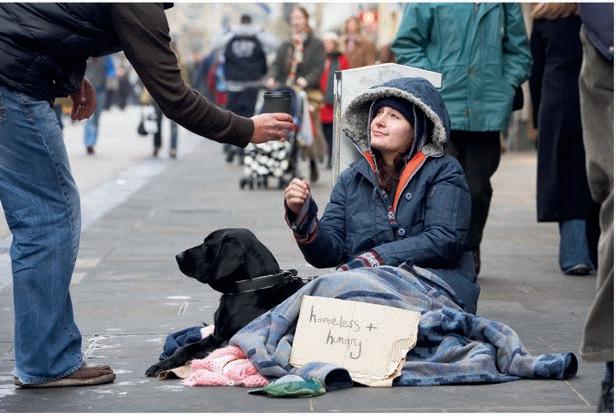
The liberating course run by Hope Chapel –help for your church?
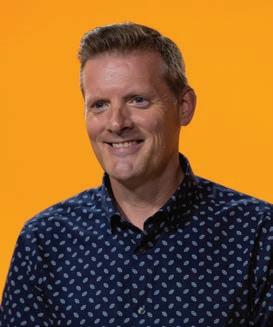
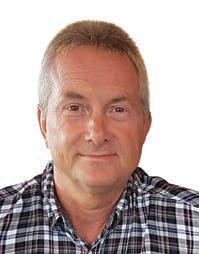
thirtyone:eight CEO asks if your church has the right culture
WORLD MISSION
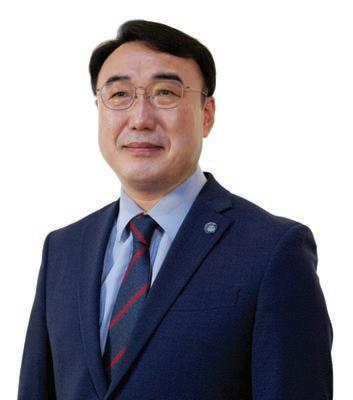
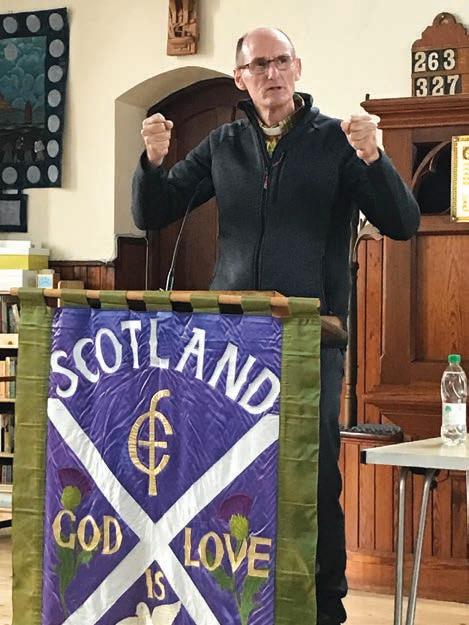
Jooseop Keum shares the vision of CWM
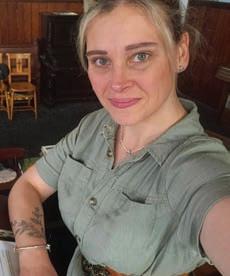
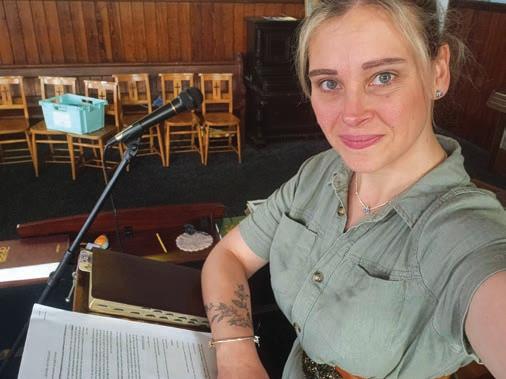
30 RESTORED & RENEWED Theology student on CF course tells her testimony
1 From the General Secretary LOCAL CHURCH NEWS
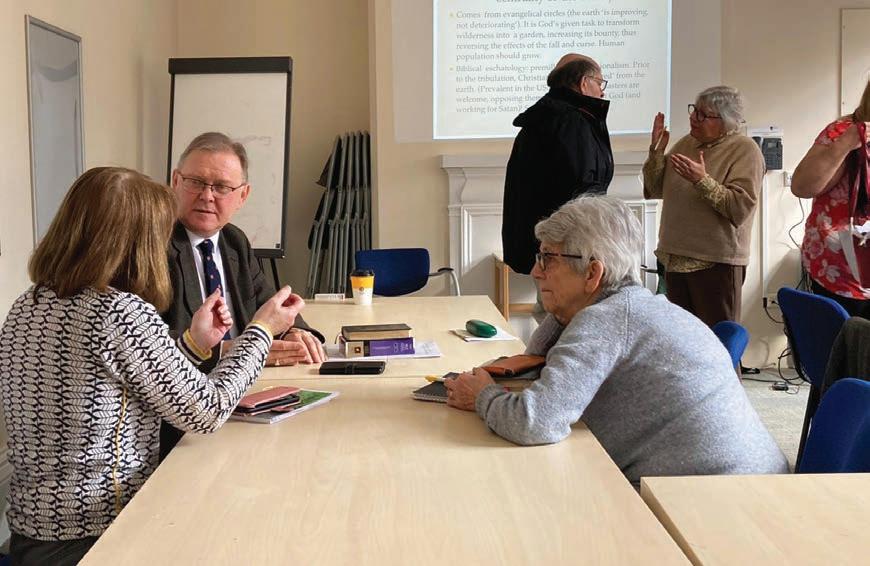
2 ‘Living Free’ at Hope
4 30 years of ministry; shoebox success
5 Football club helps church; animal service; carol competition winner
6 International church in Swansea; Newark church
7 Messy Mossy Church!
8 President calls for silence
9 CF at CRE; grant for repairs; President Elect’s challenge
10 Creating a safety culture
12 World Day of Prayer
14 USA Congregationalists
15 Vacancies; Tips for life online
16 Council for World Mission
19 Kevin Potter in Romania
20 Missionary’s UK tour
22 Top tips for learning churches BREAK TIME
Crossword, wordsearch
“…looking forward to being refreshed by your company. God’s peace be with all of you” (Romans 15:33, The Message)
Editorial
In1951 the surrealist artist Salvador Dali created a painting radically different from most of his other work – a picture of Jesus on the cross.
Called Christ of Saint John of the Cross, it is also different from most other depictions of the crucifixion because it looks down on Jesus from above, and the cross seems to be suspended in space, looking down on a lake and fishermen by a boat.
Curiously it is devoid of nails, blood and a crown of thorns, but it’s still a dramatic image and for me, it symbolises two things: that Christ died for the whole world, yet also for ordinary people like you and me.
Dali claimed to have painted it after a dream, saying: “I had a ‘cosmic dream’ in which I saw this image in colour and which in my dream represented the ‘nucleus of the atom’. This nucleus later took on a metaphysical sense; I considered it ‘the very unity of the universe’, the Christ!”
In the 1950s, splitting the atom was a new and frightening reality, so it’s not surprising that he should dream of this. But Dali’s comment about Christ being the ‘unity of the universe’ reminds me of Hebrews 1, which speaks of Jesus as the One through whom God made the universe, and who sustains “all things by his powerful word” (verse 3).
The nuclear experiments of the forties seemed to threaten the foundations of the universe. As those who have watched the Oppenheimer movie will know, even the scientists themselves feared breaking atoms might start a chain reaction that would ignite the atmosphere and destroy the Earth. Today, warming the atmosphere is the world’s nightmare: we may be setting fire to the Earth not with a bomb but greenhouse gases.
But this Easter let’s remember that the Christ whose hands were nailed to the cross for us is also
ORDER REFRESH: There are three issues of Refresh each year, available on annual subscription at £30 incl. p&p and the Yearbook. Email: admin@congregational.org.uk or tel: 0115 9111460 for details. Refresh Magazine, ISSN 2634-2987, is published by: The Congregational Federation, Congregational Centre, 8 Castle Gate, Nottingham NG1 7AS Tel: 0115 911 1460 www.congregational.org.uk www.theresourcehub.co.uk Registered charity 264839
the Christ who holds the universe in his hands. God has promised that “as long as the earth endures, seedtime and harvest, cold and heat, summer and winter, day and night will never cease” (Genesis 8:22). The earth will not pass away until the day of judgement (2 Peter 3:7) and then God will create a new heaven and new earth (2 Peter 3:13).
In the meantime, our job is to take the Gospel to the ends of the earth. This issue of Refresh explores some ways in which that is happening, through the World Day of Prayer (p12), the work of the Council for World Mission (p16) and Congregational churches in the USA (p14). We also hear about a multi-cultural church in Swansea (p6) and a visit to Romania (p19).
Have a very happy Easter!
“There is one Lord, Jesus Christ, through whom all things were created, and through whom we live.” (1 Corinthian 8:6).
All Bible quotes are from either the NLT or NIV unless otherwise stated. This magazine is printed on paper from a sustainable source.
Kelvingrove
From the General Secretary
‘Like a tree planted by streams of water…’ (Psalm 1:3)
Welcome to the Spring edition of Refresh. Have you given anything up for Lent or even taken anything on this year? If so, I wonder how you are getting on? I find it difficult to do either but it doesn’t stop me trying.
One of the other mums in my daughter Poppy’s school started a charity over lockdown called Liverpool Zero Waste. She now has a whole team of volunteers who collect the food at the end of each day that otherwise would be thrown in the bin, and distribute it to the needy. Her New Year’s resolution was to use the food every day in new recipes and ideas, which is a great idea for Lent too. I know lots of churches that also distribute food from supermarkets. If you want to know more, please ask.
For the Monday CF Bible study over Advent I used some great little videos produced by ‘The Bible Project’. I have downloaded their app and am really enjoying the films and challenges they produce on so many Bible books and passages.
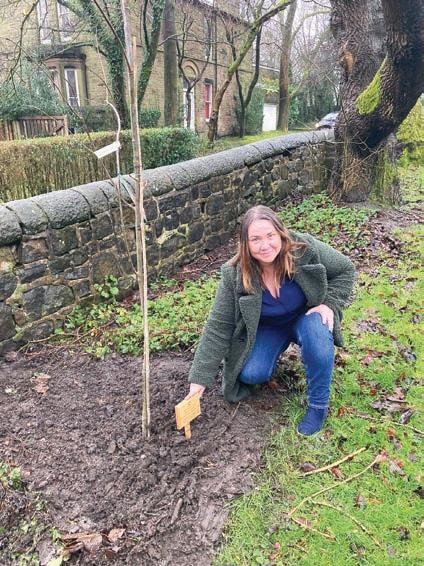
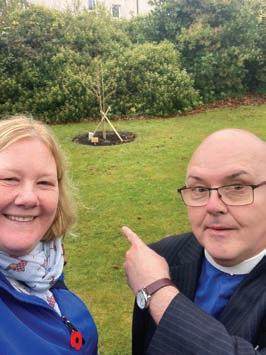
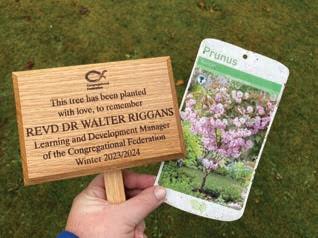
It was a privilege in December to plant some trees in remembrance of our late CF colleague Walter Riggans (see photos). All the tree species were chosen by the last churches and places he visited. We planted a cherry blossom at the Knightswood church in Glasgow, and a rowan at the Greenacres church in Oldham, and we were meant to plant a holly tree in Newark but on the day planned we woke to over a foot of snow – which Walter would have been thrilled about!
I know it’s only March but please put 11 May in your diary for our May Assembly. This year we are being hosted by the Eastern area as our venue is the University of Essex just outside Colchester. We have a historic tour of Colchester booked for the Friday evening and a 1960s music night booked for the Saturday. We also invite you to see a Manna Theatre Company production on the Thursday.
Also at the Assembly, Elisabeth Sweeney Smith will be in inducted as our new President and outgoing President Oliver Kinchin will share his reflections on the brave space churches he has visited and encouraged.
Thanks for all your nominations for the Serving the Community Awards which are sponsored by Congregational Insurance. It is so humbling and encouraging to read about the many creative ways Congregational churches are serving and sharing the message of Jesus. The winners will be presented at Assembly.
Finally, I want to encourage you to come to Nottingham and be part of one of the small church days we have planned throughout the year. We have created opportunity and space for fellowship and encouragement. Each day has a theme but besides a Bible study there will be an activity to help build relationships with fellow Congregationalists. The next one is on Wednesday 27 March when we will think about the roles of church offices. Travel grants are available, but you can also join in through Zoom using your phone or computer.
God bless you and thank you for all you do.
I hope you all have a wonderful Easter.
Yvonne Campbell
Robyn Riggans, the daughter of Revd Dr Walter Riggans, with the tree planted in his memory at Greenacres. Walter was the Learning and Development Manager of the Congregational Federation for many years
Yvonne with Rev Tom Wilson, the minister at Knightswood Congregational Church in Glasgow, pointing to the tree planted there for Walter
The plaque by the Knightswood tree
The Living Free story
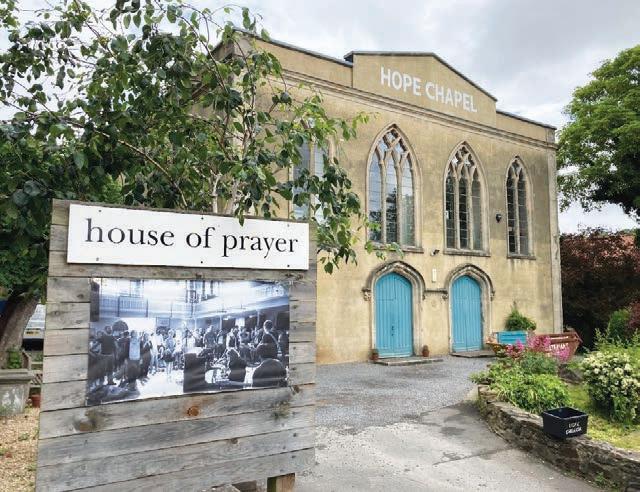
By Chris Bond, Co-Pastor with Alice Bond at Hope Chapel in Bristol
We asked Chris Bond if he could share the story of the Living Free course and how it’s shaped his church, Hope Chapel, since 2005. Chris says: “It’s helped to bring the healthy culture we enjoy within the church through giving us very practical tools to help us follow Jesus every day.” Here Chris gives us the back story to Living Free and an overview of how it has helped Hope Chapel.
Silas and Annie Crawley started Hope here in Bristol as a new church in an old chapel in 2000. In 2004 Silas was suffering with a debilitating bout of chronic fatigue. A friend recommended he go over to Seattle to a conference that he thought would help Silas. Silas was reluctant but the friend persisted and even offered to pay. Silas went and came back a different man. So much so that Annie and nine others of us from Hope flew out to the US for the next conference in 2005. Living Free came from this church near Seattle where a number of events sent them into a rapid learning journey. One of these was the pastor’s wife seeing an angel in her bathroom. That was a shock! They also had people manifesting evil spirits in their church services like we read of in the gospels and Acts (e.g. Mark 1:23, Acts 19:16).
What was initially so compelling to us who went over to this conference was not reading the teaching in the course notes but seeing it lived out in the lives of the church members. We were warmly welcomed at the airport by people we had never met before, taken to their homes, fed and driven around for the whole week.
All of these things were outside of their theology and normal church experience. When they prayed for people who were affected by evil spirits in their services, they would pray for hours but nothing would happen. They realised there was a lot that they did not understand or live as Christians, despite having followed Jesus for many years.
As they pursued what they were lacking, God taught them to hear his voice prophetically and they discovered more of the power and authority that they had as Christians. All of this learning was put together into a course called Living Free.
Then at the conference the teaching was peppered with testimonies – many people from within the church standing up and telling how their lives had been changed. Each day ended with prayer teams. Every conference delegate would be prayed for by a team of two or three members of the church, who in many cases had come straight from work.
There were about 100 of these prayer teams, and each was hearing words from God for us about our ‘original design’ – a purpose and calling with good works of faith designed for us to do (Ephesians 2:10). They also told us of areas where God was bringing new freedom to our lives.
We came back to Bristol, each armed with our ‘original design’ (on sheets of note paper), having identified some of the strongholds that were holding us back from living as Jesus intended us to, and enthusiastic about what we had learned and received. We began running the Living Free course at Hope. Across the church we discovered that each of us really was created with an original design. We learned also to recognise where our brokenness was stopping us living in this original design. We found that
through repentance and forgiveness we could move beyond these areas of brokenness into increased freedom. This was bearing fruit in our families, marriages, work places – giving us a better way to live, and more fully taking hold of what Jesus accomplished through his death and resurrection on the cross.
There have been around 1,000 delegates on Hope Living Free courses over the last 15 years – that gives an idea of some of the momentum and fruit that has come from this wonderful teaching. We’re continuing to live the Living Free teaching and run the course at Hope every year.
If you’re interested in Living Free within your church, Hope have done some remote courses in the past and would be happy to discuss the course with you.
Contact Chris on: office@hopechapel.co.uk
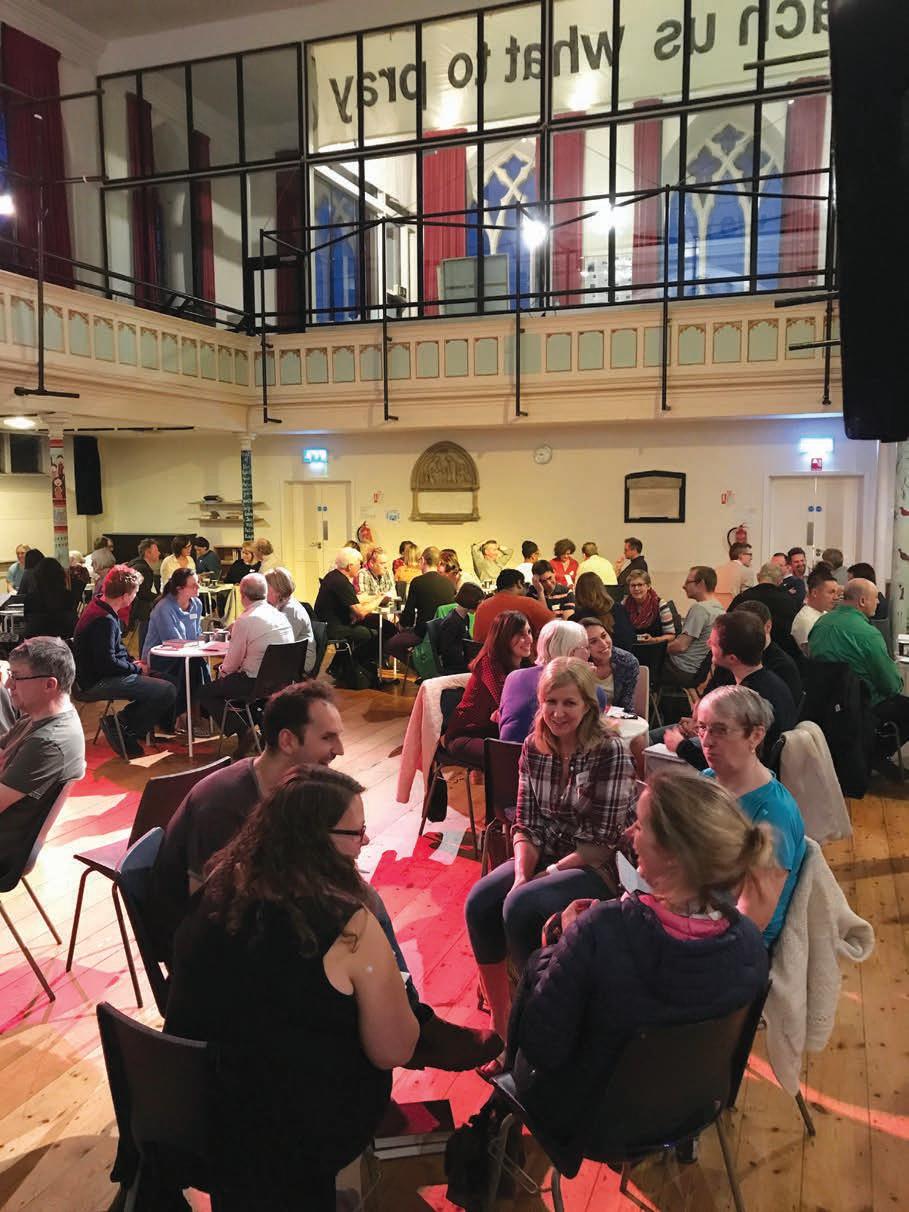
Left: The Living Free Course at Hope Chapel: an Original Design Prayer Evening in 2018
Julie Newitt celebrates 30 years leading Blaby CC
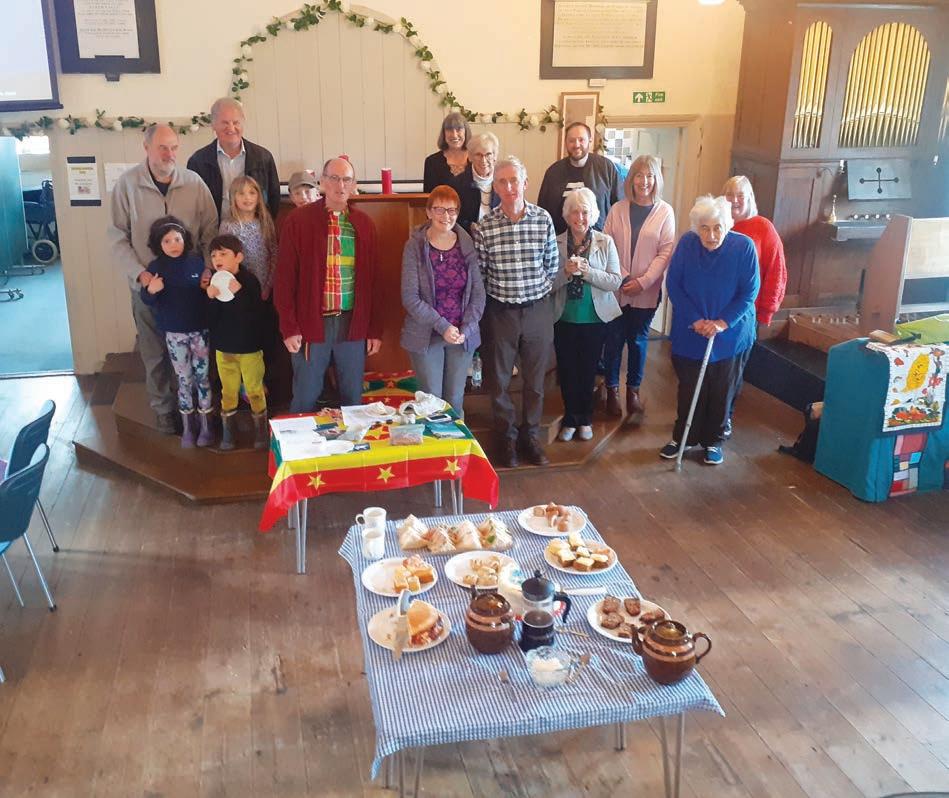
Blaby Congregational Church in Leicester held a special event on Saturday 11 November to thank Julie Newitt for pastoring the church for 30 years.
Julie wrote in the church’s newsletter: “I would just like to express my thanks to all those who attended my 30th celebration. What a truly wonderful event this was, to be surrounded by so many people who have been such a part of my journey here at the church. It really was a very special occasion.
“It has been both a privilege and a pleasure to serve this church for 30 years and I continue to thank God for the support and help which he gives me to enable me to do this. My thanks to all those people who have helped me over the years as together we serve God in this place and I pray that together we will continue to grow for many years to come.”
An Essex church’s experience of Operation Christmas Child
Manychurches across the country pack Christmas gifts into shoeboxes to send to needy children around the world. One of those last year was Steeple Bumpstead Congregational Church.
The church’s Reaching Out magazine reported that they held a coffee morning on the first Saturday in November to pack some of the boxes: “It was much enjoyed by a lovely mix of people and children as we filled a large stack of empty shoeboxes from the tables laden with donated items. And, of course, there was also coffee, cake and much chat!
“These boxes filled with small items and love can bring hope and a smile to children caught in the midst of wars, natural disasters and extreme poverty, and could be the first Christmas present they have ever received in their lives.”
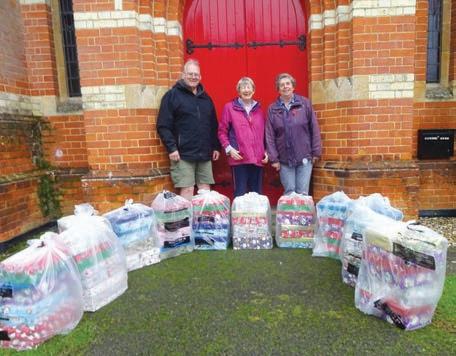
The church also raised £155 to help cover shipping and other project costs which, together with £206 from their Bric-a-brac coffee morning, was donated with their shoeboxes to Operation Christmas Child. This is a project of the Samaritan’s
Purse charity, which uses the donations to deliver the shoebox gifts around the globe.
A special Shoebox Service was then held in November, in which “our filled shoe-boxes joined the ‘wall’ of colourfully wrapped shoe-boxes which were brought to the service” and prayer was offered for the safe delivery of the boxes and for the children receiving them.
The following week all the boxes from the church, a local Sew Crafty Group and a primary school were taken to a drop-off location in Haverhill, and from there to a processing centre in Coventry.
If other churches want to join the scheme for Christmas this year, Samaritan’s Purse say: “A shoebox gift from your church or group could be just the encouragement a child needs this year. Every shoebox gift your group packs is a heartfelt expression of love and an opportunity for a child to hear the good news of the Gospel.”
On Sunday 7 January, CF General Secretary Yvonne Campbell had the privilege of attending Steeple Bumpstead Church to present some of the children who attend Pilots with their Master Mariners Awards for long service.
Julie at the church celebration
Steeple Bumpstead’s shoeboxes packed and ready to go
Exeter church holds animal service
IdeCongregational Church in Exeter held a blessing service for pets on Sunday 29 October.
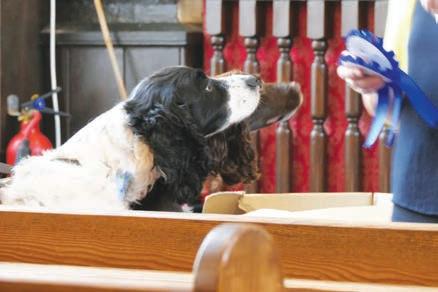
The animal-focused service was led by Ruth Endacott and Kevin Dudman and included a snail race, making animals from lego and pipe cleaners, hymns, prayers and an address. Kevin led the address with the theme of ‘What can dogs teach us about God?’. The congregation were reminded that, whoever they are, we have a God of love who loves everyone unconditionally.
Six dogs, two guinea pigs and a chicken received a personal prayer of blessing and received a rosette, as did all the humans!
Kevin was encouraged by the attendance. He said: “Along with our regular congregation we had six children and six adults who had been to the chapel before but
had not attended for some considerable time.
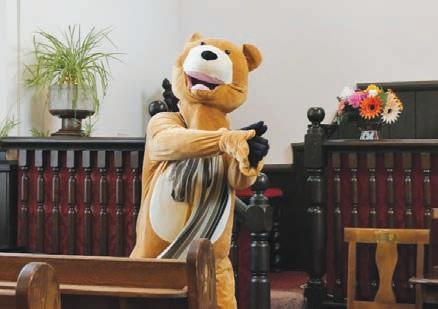
“The service was also joined by a large teddy bear who was spotted walking around the village prior to the service holding a bill board about the service, and who enthusiastically led the hand actions to one of the songs.
“This was the first time we did this at Ide but it may well become an annual event.”
Football club raises funds for church Congregationalist wins BBC carol competition
Amember
of Cowper Memorial
Congregational Church in Dereham has won the Senior Category of the annual BBC Radio 3 Carol Competition.
Clare Welfare, an amateur composer and very talented musician and artist, was told she had won just before Christmas. The result was announced on BBC Radio 3 and then her music was featured across Radio 3’s festive schedule.
Entrants had to compose music to the words of a poem entitled Polaris written by the poet laureate, Simon Armitage. Clare’s entry can be heard on Radio 3’s website.
When informed of her win, Clare said: “I cannot believe it, it’s amazing. I did not think I would get this far with it.” Clare often plays the piano at worship services while husband Graeme plays the pipe organ.
The Norfolk church’s minister, Revd David Farrow, congratulated Clare and says that Clare and Graeme joining their church was an answer to prayer, as the church hadn’t had an organist for three years until Graeme came along.
Lastsummer, Wycliffe Congregational Church in Stockport were honoured to be nominated for the bucket collection at Stockport County FC’s 140th birthday celebration match.
The collection raised £480.86 for the church, which says the money “will go towards running costs to keep the church open, so we can welcome everyone on our Social Saturdays”. Whilst the collection took place, the large screen at Edgeley Park displayed an old photo of the church, which today needs a lot of funds for the upkeep of the large Victorian building.
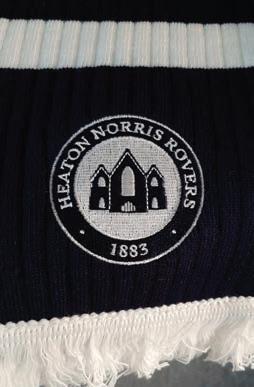
The connection between church and club dates back to the founding of the club in 1883. Lads from Wycliffe’s Sunday School joined with others to form Heaton Norris Rovers, which became Stockport County in 1890. In September, the Edgeley Post reported that the church “has a special place in the hearts of County supporters” and that a special commemorative shirt was worn by the players for the celebration match, which included a badge with an image of the church. The club framed one of the shirts and presented it to the church.
Stockport County Community Trust said they were looking at other ways to support the church, including another collection at a game later in the season.
Above left: Dogs receiving their rosettes (but perhaps wishing for a bone?)
Above: Mr Bear led the hand actions
A limited edition Heaton Norris Rovers scarf with the logo featuring Wycliffe Church, produced by Stockport County FC
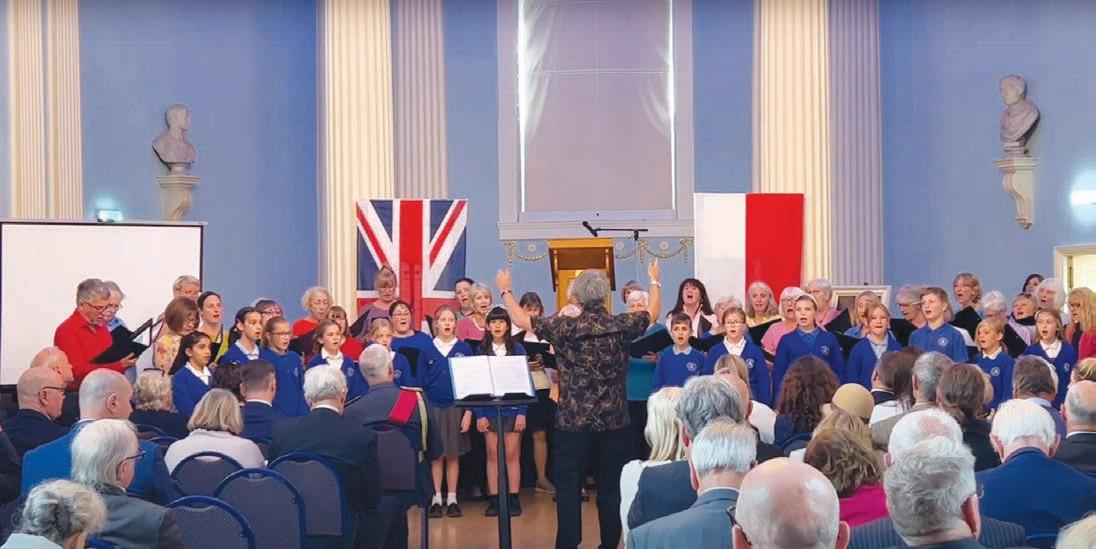
The Just Sing! Choir performs ‘Dziękuję’ in Newark Town Hall
Newark church choir perform in Town Hall
Acommunity choir called Just Sing!, established in 2014, meets in Newark Congregational Church’s hall once a month on a Saturday morning. They recently recorded a song called ‘Dziękuję’, which in English means ‘Thank you’.
Newark CC’s pastor, Mark Taylor, explains: “The background is that Polish wartime leader General Sikorski was for many years buried in Newark Cemetery. There are still a large number of Polish war graves there but the General’s remains were returned to Poland some years ago.
“This summer it was decided that a statue of the General would be installed in the Polish part of the cemetery and a ceremony was held there, attended by a number of dignitaries
including the Polish ambassador to the UK.
“Later that day a further event was held in the Town Hall with the same dignitaries present and our choir, Just Sing!, performed this song with a school choir. It is based on the story of Irena Sendler – a Polish hero who saved many Jewish children from the Warsaw Ghetto in World War Two. There is a statue of her in a garden opposite the church.
“The jar referenced in the lyrics was where she kept details of all the children she saved so that after the war they would know their true identities. We got a standing ovation!”
The song, written by Caroline Bonnett and Sue Rinaldi, can be viewed on YouTube at: youtube.com/watch?v=F12fiZgMgAA
Expanding Welsh church has an exciting year
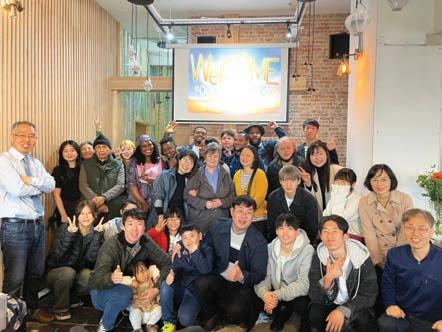
The very international congregation of All Nations Church
For more information, please visit: www.ancswansea.com
AllNations Church in Swansea report that 2023 was an exciting year for them – not least because of their move into a new building.
The church is an international congregation with diverse nationalities and backgrounds. Their pastor, Jaesub Lim, says: “The Lord allowed us to envision a city mission, which became a reality at the end of 2021. We acquired a property in the city centre and, after some preparation, began renovating the building.
“The three-story structure includes accommodations on the first and second floors, while the ground floor hosts a coffee shop utilised for our Sunday services and weekly meetings.
“We moved into the building in April and have experienced growth in attendance. Additionally, we’ve established connections with neighbouring Christian organisations such as the Chinese church, Swansea City Mission (which leases furniture and coffee
equipment for our ministry), and street evangelists who conduct weekly outreach in the centre of Swansea.
“Most importantly, we are fostering relationships with individuals residing in and around the city centre. Our café has hosted various Christian groups for their monthly meetings, choir concerts, Korean and English schools.
“The church is also beginning FAN (Friend and Neighbour) meetings for local residents and university students seeking to enhance their cultural understanding and English skills. In our accommodations, we extend invitations to fellow missionaries for holiday breaks and visitors who are partners in our mission.
“The support for our new venture in the city centre has been overwhelming, and the Lord has already blessed us with new visitors, some of whom have become part of our fellowship.”
Their vision for 2024 is to establish a City Evangelism Network, to reach out to University students, to evangelise through their coffee shop, to build a strong and unified fellowship and international community for Jesus.
Messy Mossy Church!
By Debbie Lea Taylor from Wivenhoe Congregational Church
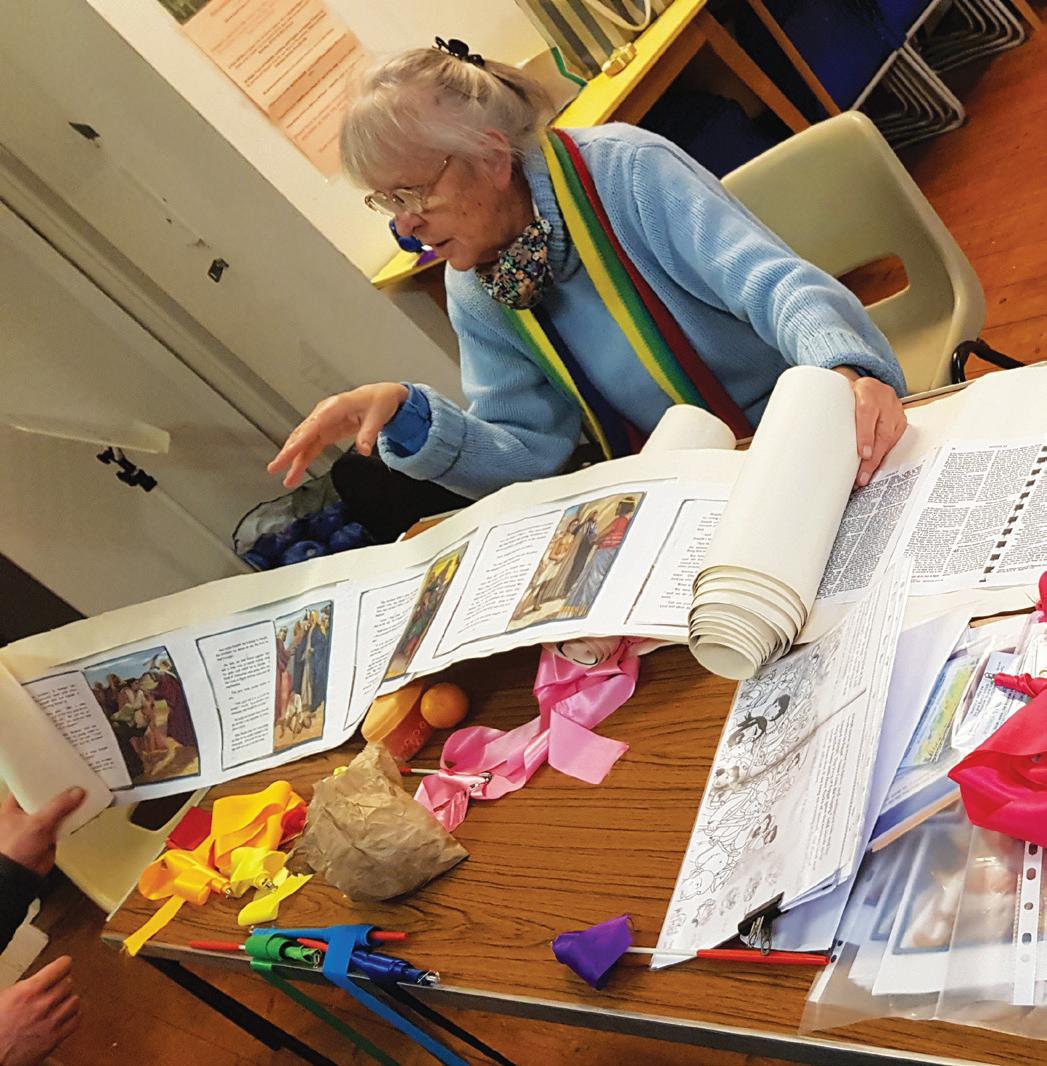
Messy Mossy Church at Wivenhoe CC in Essex is a combination of the well-known all-age fresh expression of church called Messy Church with outdoor activities to enjoy God’s creation. Debbie Taylor explains how it came about:
“It began with an idea I came up with as a more personal perspective on Forest church, namely, the Genesis walk, in which participants connect with God through the medium of nature. The first of these walks was on 30 July 2022.
“The local Methodist church ran an event called Messy Church, in which faith was expressed through the medium of craft. When this programme came to an end – with some leftover craft materials – I absorbed it into a new, hybridised event called Messy Mossy Church, with the ‘mossy’ element being the nature-based activity.”
Debbie says there are three elements that inspire Messy Mossy Church:
“Firstly, gathering outdoors with people in nature, engaging with them. It’s about sharing and acceptance, while at the same time learning about nature and wildlife as we journey with each other in God’s beautiful creation.
“Secondly, being creative in the presence of God by expressing different ways of worship, singing songs and praying, telling stories of how God is working in our lives, as we walk in fellowship.
“And thirdly, keeping your eyes fixed upon Jesus all the way, while reaching out to those who may be far from him, stepping out on the same path Jesus took that honours God, because we care and love. It benefits us in more ways than one. Knowing Jesus is the best pleasure to ever have in your life. Your life is so much more exciting, it’s more purposeful and it’s more fulfilling. It saves your life.”
Debbie also describes Messy Mossy Church as: “A community of church groups and people, who are looking for common ways of connecting with their local community – nature – wildlife and their God.”
The aim is to share the Christian faith based on a
trinitarian God who has created and is creating in the
Everyone can bring something to the group –acceptance – openness, whether
Debbie says: “The first event, for example, involved the collection of small items in nature – leaves, twigs, seed pods, anything that was small but still caught our eye. Our theme was titled Creation.
“We arrived back with buckets of leaves, feathers, berries and all sorts of colourful flowers and strange objects, as the impression of a picture which we copied.
“Other projects allowed imaginations to explore various interpretations, such as laying a table in such a way as to recreate the story of the parting of the
“Activities were and still are many and varied, attracting a wide age range of participants, giving them an opportunity to develop a stronger and more personal aspect to their faith, whilst the outdoor, natural backdrop connects with God through all the senses, for a more wholesome spiritual experience. As John Muir once said: ‘I’d rather be in the mountains thinking about God than in a church thinking about mountains.’
“Messy Mossy Church has since been on an evolutionary journey, steered by its participants’ explorations of their faith. Less outdoor activity now, but still diverse in activity and creativity. As it expands, I am sure it will evolve further and inspire a wider sphere of participants.”
Wivenhoe Congregational Church will host some of the fringe events at our 2024 Assembly in May. Why not come and join in Messy Mossy Church on the Sunday afternoon?
Main circular photo: One of the craft events with a biblical theme at Messy Mossy Church
Is it brave to be silent?
CF President Oliver Kinchin encourages us to ‘be brave’ and ‘stay silent’
Igrew up completely unaware of the white privilege I had been born into, completely unaware that as a male my pain would be taken more seriously by doctors, and ignorant of what it would be to worry every day about how I was going to stay warm or where my next meal was coming from.
As I grew up, in rural Oxfordshire, I continued to be largely oblivious to the challenges faced by minorities and the marginalised.
It was a Council for World Mission (CWM) trip to Utrecht back in the early 2000s which showed me how others are expected to live. I spent some time during this trip at an Emmaus community, helping out in the bookshop and furniture store, preparing and serving meals to the wider community – those who needed clothing, feeding, healing, and loving.
Since that trip I have tried to speak out where I have seen inequality, and been an ally to those in need of support. I have tried to give a voice to those without. Always speaking, always saying: “This isn’t okay.”
When I set off on my journey of being ‘Windswept’ as this year’s President, I wanted to be able to encourage people to acknowledge the damage done to us all by the world, to allow each one of us to have the opportunity to see how struggle and suffering has allowed us to walk more closely with Christ. And I started doing this by encouraging all of us to be ‘brave’: to create a brave space, where we can talk
candidly, openly and honestly, admitting that we don’t have all the answers, but we know who does, and it’s okay that he is on our side. Or more properly, we are on his side.
But there was something missing in all of this. As I shared with churches, as we gathered in faith, in trust in Jesus, in Brave Spaces, there was something which wasn’t present. Silence. We were so busy discussing all the things which we didn’t understand, which we found difficult, giving each person in the room time to share with the rest of the group… but where was the time for God to share with us? Not individually, as when we pray, but in community with each other. Where was the collective silence?
In previous years we have seen #BlackLivesMatter and #MeToo and many other social justice movements taking to the streets, holding rallies, giving speeches, generally making a noise. And it is right that we should continue to stand up and speak out for injustice in all its forms. But as Christians we have another important obligation: we need to be attentive to God’s words and allow him to speak to us and through us. And this must start with silence.
A friend who was a waitress once mentioned to me that she found it sad when an older couple who had been married for a long time (her assumption, not mine) came to eat at the restaurant, because they would barely speak to each other. Yet the younger couples were always talking to each other, filling the air with their conversations. And I think at the time, I probably agreed with her. I didn’t want to be someone who sat in silence opposite someone else.
Yet the older me has a different viewpoint. How brilliant is it when you are so comfortable being with someone else that you don’t need to constantly impress them by saying something witty, gossiping about the shortcomings of mutual friends, or otherwise filling the emptiness within the room?
When we gather as a church, are we comfortable in God’s presence? Comfortable enough to be silent with him and be fully present in the moment? Or are we still seeking to fill the silences with praise, prayers and petitions?
Finding the best resources
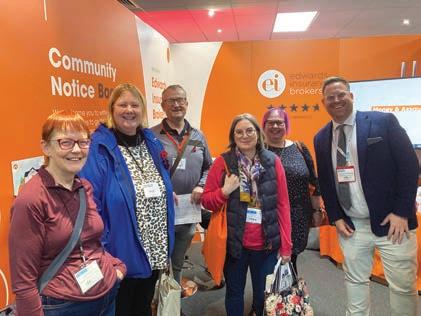
InNovember some of the Congregational Federation Church Support Team visited the Christian Resources Exhibition (CRE) at Cranmore Park in Solihull.
CF General Secretary Yvonne Campbell says: “We talked to people about new resources like Shine Your Light, an organisation that runs science days for churches and mental health courses with a focus on church life.
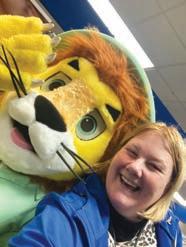
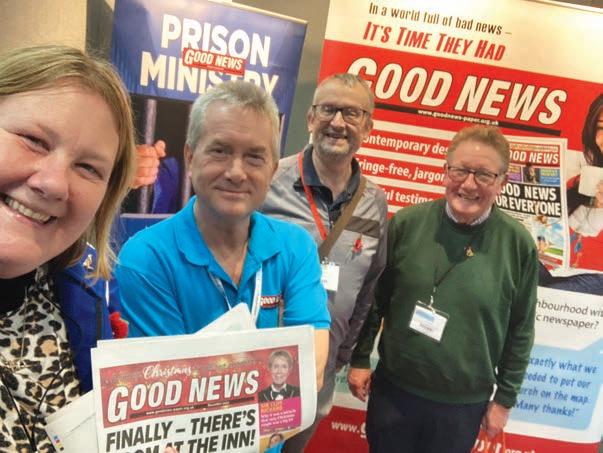
“We met up with many friends, including: Andy Jackson and Sam Richards from the United Reformed Church who gave us ‘Revolting Christian’ badges (!); Hayley Humphreys and staff from safeguarding organisation thirtyone:eight (the highlight of my day was meeting Roary the Lion, the mascot for the children’s resources!); Chris, Sarah and David Edwards from Edwards Insurance who filled our pockets with sweets!; Mike Royal and Sarah Ball from Churches Together in England (CTE); Peter Wooding, journalist and film maker of our Serving the Community Awards; and last but not least, Refresh editor Andrew Halloway who is also editor of the Good News evangelistic newspaper and was manning the Good News stand.”
CF offices cepa ced with grant
TheCongregational Federation has been awarded a grant of £2,280 from the Benefact Trust towards lift repairs and a lighting upgrade.
Since 1972 the Trust has awarded over £256 million to churches, Christian charities and the communities they serve –£100 million in the last five years alone.
The CF’s Finance Officer and Property Manager Philip Stainer reports: “Work on the lift is progressing, including the fitting of a replacement valve. Lighting across the site was upgraded during August, including in the offices, conference centre and student accommodation. There will be long term energy savings as a result, and also better lighting in the student rooms and reduced maintenance.”
If your church is interested in applying for a grant, see www. benefacttrust.co.uk.
The CRE is a one stop shop for everything to do with church life and Christian ministry, including chairs, organs, banners, Bibles, coffee machines and all things technology including chip and pin. The event ran over two days and each day there were lots of seminars and training sessions.
Yvonne adds: “This year musician Rick Wakeman was the celebrity who opened the event, much to the delight of Stephane Vickers, Pastor at Hay Mills cc! A great day was had by all, with thanks to CTE for free tickets. The next event is at the Marshall Arena, Milton Keynes, from 9-10 October 2024.”
Calling all creatives!
CF President Elect Elisabeth SweeneySmith says: “I would like to set a practical challenge for the creative ones out there to design and produce a portable cover I can take with me to drape over various pulpits where I will be preaching in 2024/2025.
“The cloth-type narrow banner is what I have in mind, with a design that captures the theme of my year, either in an image or with text. When you are making it, there should be enough space left at the top of the banner for me to be able to affix it to each pulpit, so the design should not be right across the top as this section will be out of sight to the congregation. It will be lovely to use the first one at assembly in the eastern region. My theme for the year is: ‘Hear the word of the Lord.’”
Contact Elisabeth at: esweeneysmith@me.com or tel: 0780 194 9034.
CF team members at the Edwards Insurance stand with Chris Edwards (right)
Yvonne with Andrew Halloway, Neil Chappell and Jim Lyon at the Good News newspaper stand
Seven top tips for a safer, healthier culture
Justin Humphreys, CEO of Christian safeguarding organisation thirtyone:eight, writes for Refresh on the issue of how churches can be safer places for staff, members and visitors
ulture is the all-important ingredient in the success of any organisation or community. Strategy is important – in fact it is essential: we have to know where we are going and how we are going to get there, but knowing how we are going to get there is as much about our culture as it is the plans and dreams for our work or ministry.
The need to focus on culture and get that right, in whatever setting we are working in, is critical to the success of achieving our goals. So, culture and strategy go hand in hand, but good strategy without good culture will never achieve its fullest potential. Creating environments in which everyone is safe and can flourish is fundamental to our purpose as God’s Church. Building safer, healthier culture is all about modelling attitudes and behaviours to those around us to achieve this purpose. To effectively create safer places, we must be prepared to take a long cold look at our cultures – do they support this mission and vision? How do we know that we are both safe and healthy?
What are the characteristics of a safer, healthier Christian culture?
It is important that we consider this. Safe and healthy culture doesn’t happen by mistake. We have to work at it. We can’t just assume that we all know the answer to this question, like the child in Sunday School who worked out that the answer to every question was Jesus.
If we want to see our culture having a positive effect on those we work with or minister to, we must start with ourselves: our attitudes, beliefs and behaviours. Sometimes this means we will need to be the change we want to see around us and help others to see what we see.
Safer, healthier culture means:
• We have the principles of safeguarding as the foundation of our efforts.
• We respect, value and nurture those in our care.
• We empower and guide through appropriate use of Scripture.
• We nurture our leaders at all levels.
Safer, healthier culture also means that:
• We value whole-life service, not just what happens in church.
• We operate with a healthy regard for accountability (for ourselves and others).
• We model inclusion and participation.
• We guide in a manner that maintains freedom of choice.
So, how do we ensure that a focus on these things stands a chance of making a difference? Here are seven top tips to help us map our culture against our aim of creating the safer places that incorporate the points above:
1. Listen to the stories and commentary
Pay attention and genuinely listen to what is being said about your church or organisation, both by those inside and those outside. How do people think you have managed challenging issues? Can you demonstrate that you are prepared to learn lessons from what didn’t go well?
2. Be proactive in your communications and messagingmessaging
Make every effort to be clear in your intention to facilitate and foster safer practices. Ensure that people know who your key contacts are and that
appropriately. Reinforcing positive messages about safer places within services will help too.
3. Manage power dynamics
Be attentive to how power is used within your church organisation, by whom and for what purpose. Is any exercise of power coupled to appropriate accountability? Make every effort to ensure that power is used in a way that empowers others –to be most effective, it should be given away.
4. Be transparent about your structures and accountability mechanisms
Be alert to the formal and informal structures and accountabilities that exist in your church or organisation – it will make all the difference to the long-term sustainability of your culture-setting efforts. Ensure that shadow structures (i.e. informal and often unrecognised) don’t undermine your efforts and reduce accountability.
5. Be clear about governance and leadership
Make sure you are clear about how your church or organisation is governed. Would people know who to speak to and know the difference between organisational governance and spiritual leadership? Ensure you give the maintenance of your culture sufficient attention alongside the pursuit of mission and vision.
Encourage and model the day-to-day behaviours and ways of working that you want to see in your church or organisation. Welcome appropriate and respectful challenge to behaviours and attitudes that threaten or conflict with safer, healthier culture.
7. Review and refresh
Keeping issues of safer, healthier culture on the agenda so that it becomes expected as the norm will encourage growth and flourishing. Reviewing the impact of all the above will help you to make changes in a timely way and allow you to deal with low level concerns before they get too big. Despite our best intentions and the best strategic planning, our work and ministry will be limited in its ability to foster flourishing unless we can demonstrate that it is founded on and characterised by a well-informed culture – one that is safe and healthy.
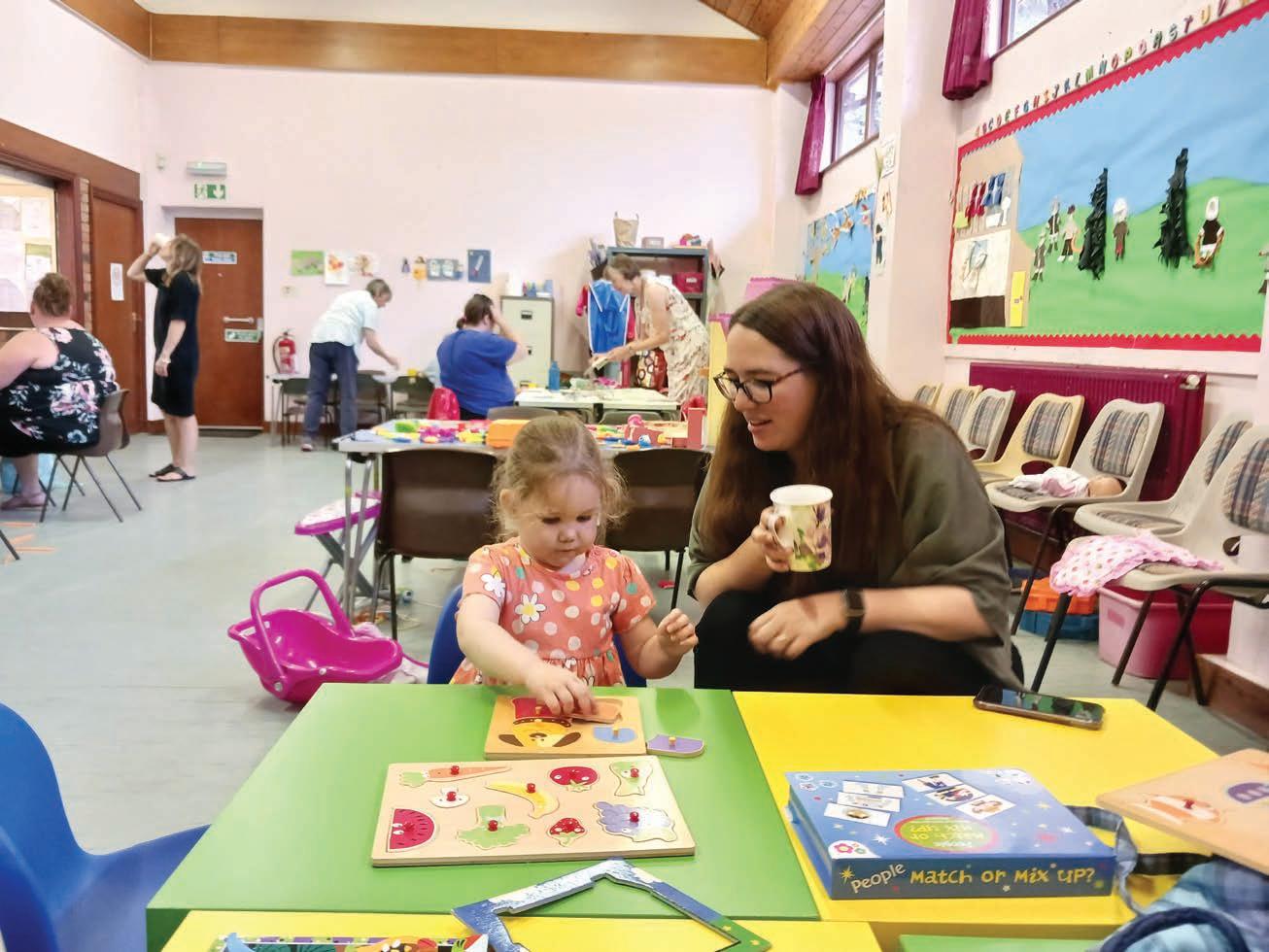
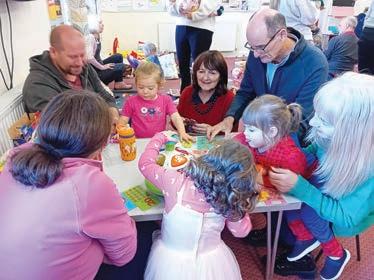
issue for churches in many contexts, e.g. where adults and children interact at toddler groups like this one at Hasbury Community Church in the West Midlands
Thirtyone:eight works with over 10,000 organisations to help create safer places. The Congregational Federation is a member and churches benefit from all the resources and training on offer.
The material in this article is based upon the book Escaping the Maze of Spiritual Abuse: Creating Healthy Christian Cultures by Lisa Oakley & Justin Humphreys, SPCK, 2019.
The extraordinary rise of the World Day of Prayer
The World Day of Prayer, which is still known by some as the Women’s World Day of Prayer, is surely one of the best traditions, both internationally and inter-denominationally, in the world Church. Retired CF minister Angela Robinson, who is a representative for CF in England and Wales for the World Day of Prayer, tells Refresh how it began.
TheWorld Day of Prayer is a story of slow but inspired development which began with a group of American women around 100 years ago. It has ended up as one of the best traditions, both internationally and inter-denominationally, in the global Church!
It arose from women who were practical and praying Christians when faced with the needs of the world, and especially of women and children in the mission field. Unlike many new movements it did not start with a clear vision of what it was to eventually become, but slowly and organically developed over many years –and astonishingly!
Before the official start date, there was already a strong tradition in the USA and Canada, among Christian women, of supporting with prayer the numerous boards for foreign and home missions which focussed on the needs of women and children. This developed into a commitment to communal as well as personal prayer for this work and the need to have annual days and even weeks of prayer within denominations, and an agreement that prayer should be both informed and lead to prayerful action.
At first the largely male-led missions strongly disapproved of what these women were up to! I can find no details as to how this was overcome, but the desire to drop ‘Women’ from the title shows it has become widely accepted.
In 1887, the first joint National Day of Prayer for mission work was organised by the wife of a Presbyterian minister, Mrs Mary Ellen James, in Brooklyn – a poor area of New York. It included the confession of individual and national sins, and taking offerings that would fitly express contrition. The idea spread and other denominations joined in.
Right at its beginning, the Day aimed to do two things: to reach out to God in confession (an element which has lapsed a bit), and to reach out to the needy in generosity.
In 1890, two Baptist women visited the East and saw the need for women’s education and literature and returned home to establish a day of united prayer for
overseas mission. In 1910, to celebrate 50 years of progress, events were organised all over the USA which were an early example of ecumenical cooperation.
Thus the third principle was established – to reach out to mission across the world.
In 1922, the two national days of prayer, one in Canada and one in the USA, shared the same date and in 1926 a service plan that was distributed to some other countries got a big response and enthusiasm began to grow.
The fourth principle was to organise it for churches of all denominations. In 1927, during a meeting of the International Missionary Council, it was confirmed that it should include many mission partners in all countries and that the theme should not only be on missionary work but all the concerns of the kingdom of God. In 1928 that decision was put into practice. Thus the fifth principle was to organise the Day internationally.
The sixth principle was to involve all that it means to be a Christian and to listen to one another’s services with the joy of a shared faith, and with special attention to shared burdens for social justice so that we can then pray for one another with understanding. These six principles are still held by those who organise the World Day of Prayer.
After various dates were tried, it is now always on the first Friday in March. (So do note, if you are joining in, the posters notifying the time and place need to be out in January – in practice, designed by Christmas, as February is too late!)
Word of the service soon spread via individuals meeting at conferences, sharing the information and going home to start organising it. A Scottish woman, Mrs Grace Forgan, heard about it at an international conference in Jerusalem in 1928 and in 1930 there was the first Day in Scotland, then in England in 1932, Wales in 1933, the Republic of Ireland in 1935 and Northern Ireland in 1943.
After World War Two, the movement grew dramatically. The International Committee, representing seven regions of the world, meets every five years to choose the countries and the biblical themes and whatever else they need to discuss.
The conviction grew that the service should bring together people of various ethnic traditions and cultures. The National Committees added Bible studies on the theme, and material for children and youth and a lot of information about the country. After two world wars, the connection between such developments and confronting the ignorance and prejudices that can lead to warfare was not neglected.
Various figures are available but it appears that the work for the Day may be translated into 90 languages in 150 nations, each one of which has a National Committee on which each denomination has its representative and which edits the work appropriately. In 2023, there were approximately 1800 services in the UK. Regional Days are held locally to encourage local organisers to have interesting services. A great deal of money is raised at the services across the world which is given to a range of carefully selected Christian charities.
When I returned from 14 years in Bangladesh, I was ashamed to see that, in the list at the back of the service leaflet, the Congregational Federation was the only denomination that did not have a representative so I volunteered – and discovered the level of commitment needed! There are seven meetings a year, most needing overnight accommodation (all expenses are paid.) I found my colleagues really interesting people, intelligent, creative and great fun, and the work excellent and very demanding. I need to be several years younger, so another CF volunteer would be warmly welcomed!
Last year’s country to supply the service was Taiwan (a very challenging place) and this March it is the Christian women of Palestine which is surely the most challenging of all. In 2025, the service will come from the women of the Cook Islands, where early missionary work was spread among the Pacific Islands by our own (Congregational) London Missionary Society – now incorporated into the Council for World Mission.
The standards and the level of excellence for this Day require a commitment that can be formidable! But how else could the results be so remarkable and lead to the interest and respect in which it is held?
Angela Robinson was Minister at Grassington for eight years and at Wivenhoe for seven years, and went to Bangladesh for one year in 1999 and stayed for 14 years! She is now retired in her birthplace of Southport.
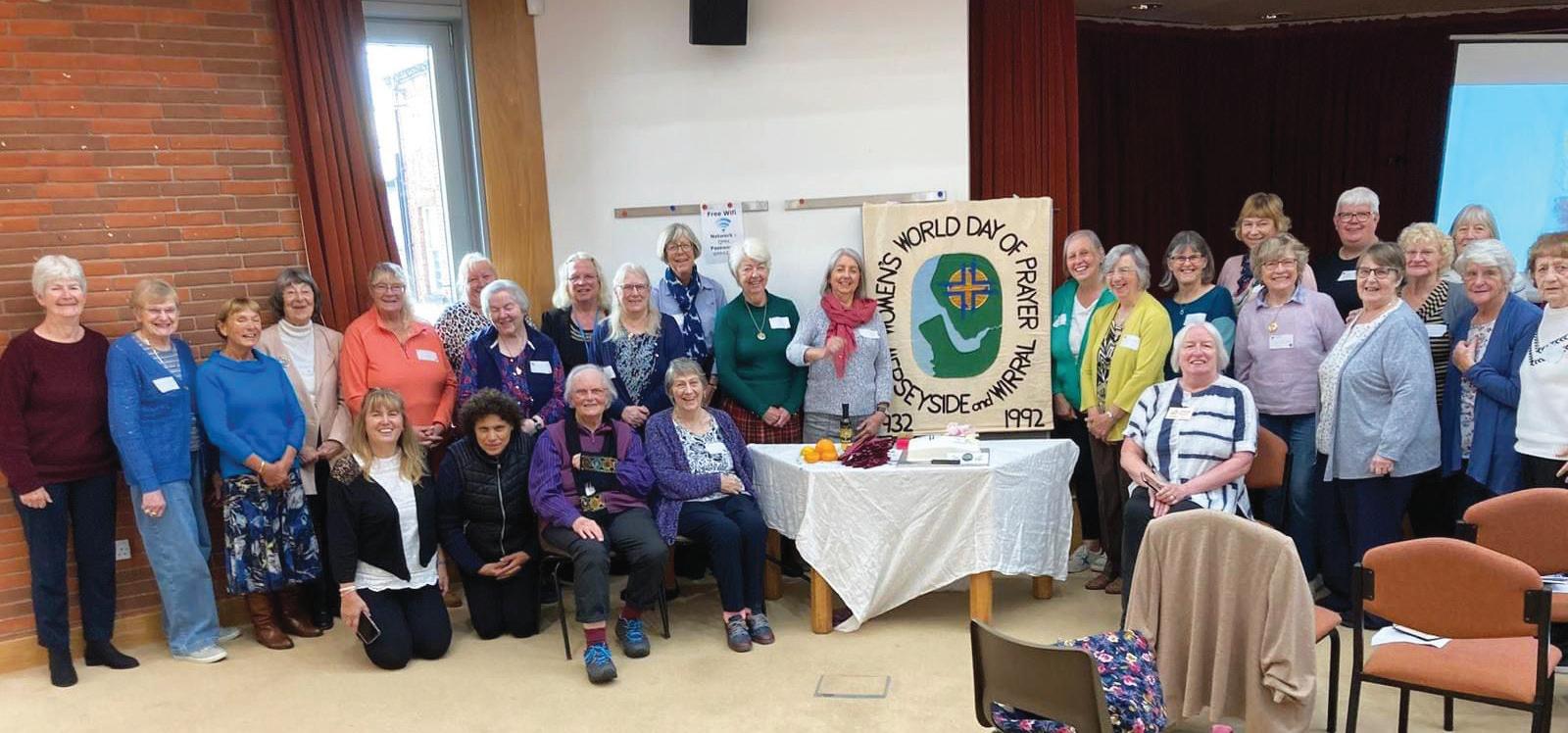
Above: The Merseyside and Wirral Preparation Day
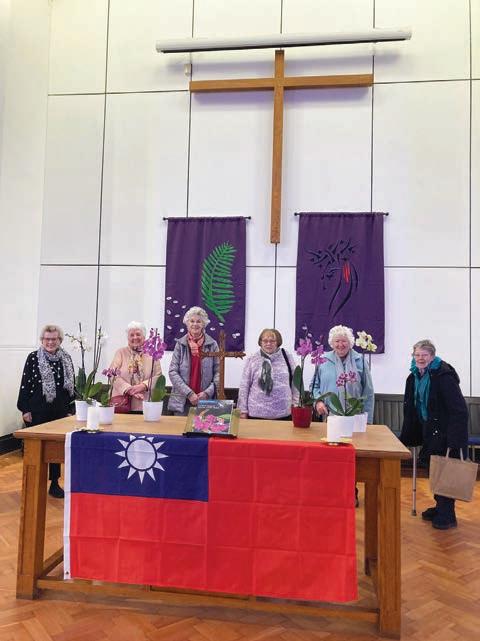
Left: The 2023 World Day of Prayer service in South Liverpool
Getting to know the Congregational churches in America
Late last year CF General Secretary Yvonne Campbell was contacted by the National Association of Congregational Christian Churches (NACCC) in the USA. These churches are similar to our churches. They invited Yvonne to speak at one of their mission meetings about the work the CF is doing. Here is an introduction to the NACCC and some of the work they are involved with.
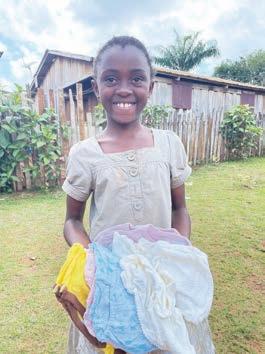
Ngah Marie Terese –grateful for her gift from the Mission School of Hope in Cameroon, one of the NACCC’s mission partners
TheNational Association of Congregational Christian Churches (NACCC) is comprised of 300 diverse Congregational churches throughout the United States. Its home office is in Oak Creek, Wisconsin.
The NACCC mission statement is: “To nurture fellowship among Congregational Christian churches and to support ministries of the local church in its community and to the world, all in the name of Christ.”
The NACCC, through its Mission and Outreach Ministry Council (MOMC), is holistic in approach, ministering to the needs of the whole person: the spiritual, the physical and the relational, all in the name of Jesus Christ. Through One Great Hour of Sharing offerings, the NACCC/MOMC seeks to respond to and care for communities impacted by war, natural disasters and food insecurity. Building and sustaining relationships is at the forefront as we work together to the fulfil the Great Commission.
Two NACCC churches ministering in their communities are First Congregational Church in Hanson, Massachusetts led by Revd Dr Peter Smith and Faith Community Church in Franklin, Wisconsin, pastored by Revd Dr Stu Merkel. The First Congregational Church participated with area churches and the Salvation Army to present the eighth annual Family Fun Day.
their area to pay off school lunch debt in the Franklin School District. Each church donated $250 in this effort to support the community and experience the joy of serving.
Two of the NACCC’s mission partners are Hosanna Industries in Pennsylvania and Mission School of Hope in Cameroon.
Katie DeJournette, Director of Fleet and Grounds and Church Relations at Hosanna Industries, writes: “It always makes me smile when people say: ‘Oh! So, Hosanna is a construction company!’ We perform hundreds of construction repairs and home builds, but thanks to our executive director’s vision, thousands of volunteers and our full-time mission workers, we help alleviate other needs such as loneliness, interacting with the socially disenfranchised, encouraging children of struggling single mums and coming alongside the elderly with our Annual Gift Delivery day in time for Christmas.
“Often, I get calls following Gift Delivery Day telling me these are the only gifts and food they will be getting for the holidays and most express how much they enjoyed a visit during this very lonely time.”
We look forward to more sharing of stories between the CF and the NACCC
Held on the Town Hall Lawn, the event featured free backpacks and school supplies for school-age children from three area towns. A local rental company provided Bounce-Houses and other inflatable amusements. The Salvation Army, in addition to providing many of the gifts for the children, provided hot dogs, chips and water by means of their mobile canteen. Local church members hosted the amusements, did crafts with the children, and built bridges of friendship to their neighbours. A local pastor presented a brief Gospel message. The backpacks also included information about each participating church.
Pastor Stu Merkel and members of Faith Community Church partnered with four churches in
Mission School of Hope’s Director, Revd Charles Sagay, shares this beautiful ‘thank you’ letter from a girl who has been helped by the mission (see her photo with this article): “My name is Ngah Marie Terese and I am in the first promotion class of Mission School of Hope Bilingual Nursery and Primary School, Owens Family Campus. I just passed my entrance exams into middle school.
“As I prepare to enter middle school there are so many things I miss already from my school: the free meals, health care, school supplies, Bible teachings and the very caring teachers. I was troubled about all these and because my underwear is all worn out and torn, I was wondering how my life would look like, especially the embarrassment if others get to know. To my greatest surprise, Mission School of Hope representatives came to my home and to other homes and now I have this beautiful underwear and I am totally ready for middle school!”
CONGREGATIONAL FEDERATION OPPORTUNITIES
These churches are seeking ministers. Please contact the Congregational Federation at our Nottingham office if you are interested.
Full time:
Greenacres, Oldham (North West) – part-time considered; Haverhill (Eastern); Market Harborough (East Midlands) – part-time considered; Southwick Christian Community Church (South East); Springhead, Oldham (North West) – part time considered; Kirkcaldy (Scotland) – part time considered.
Part-time:
Dereham: Cowper Memorial Church (Eastern); Elstow Bunyan Christian Fellowship (East Midlands); North Nibley (South West Midlands); Shillington (East Midlands); Stalybridge (North West).
Tips for life online
The bigger picture
By Neil Chappell, Social Media & Website Officer, Congregational Federation
Howlong is the list of events that go on in your church?
From worship services to kids clubs, prayer groups, coffee mornings, film clubs and ‘Knit ‘n’ Natter’, the list is probably endless. And I guess I barely scratched the surface with that list.
Do you turn people away from your events because there are no more seats? No, I didn’t think so. But I bet you’d like to be in that predicament. I know I would be happy to have to wrestle with that problem! So how can we encourage people into the events we create?
They say that there are two proven methods that help promote your cause: word of mouth and good quality images. Word of mouth doesn’t really need explaining. It’s so good if someone has enjoyed an event at your church that they just naturally tell friends, family or neighbours about it and encourage them to come along. But what about those pictures?
In the digital age, where visual content dominates online spaces, the importance of using good quality images cannot be overstated. Whether for instant impact on social media and in newsletters, or for long term use on websites, the quality of images plays a crucial role in capturing attention, conveying messages, and making a lasting impression.
You might say: “I’m not a photographer.” But let me tell you there is a rich diversity of royalty-free images out there which are just brilliant. They are royalty-free because we don’t intend to use them for commercial purposes, but to enhance our websites, blogs or publicity, to allow our message to catch the attention of people.
There are numerous websites you could explore: freelyphotos.com, unsplash.com, pexels.com, pixabay.com… Each have hundreds of thousands of images which are good to use. And there are plenty of image creation websites, like canva.com, that take these images and, combined with text, create wonderful graphics that certainly catch the eye.
Non-stipendiary:
Cawsand (South West); Frampton (South West Midlands); Oban Congregational Church (Scotland); Penrhys, Llanfair Uniting Church (Wales); Ebenezer Independent Congregational Chapel, Tredegar, Gwent (Wales).
But even better than the generic images from these websites are the photographs of your people and your events. There are times to use generic images – and to good effect – but how much better to use your own? For instance, there are some fantastic harvest images out there, beautiful cornucopias, immaculate ploughed fields, picture perfect displays of fruit, etc. But why not take a photo of your harvest display and put that in next year’s publicity? Or your Nativity? Or your coffee morning?
Probably the vast majority of people in your local community haven’t stepped foot inside your church, so giving them a view of it would be good. Also, the vast majority don’t know who goes to your church, so showing a picture of your people engaged in an activity would be even better. Imagine the conversations that might be started: “Hey, Pete, didn’t know you went to Chapel. Saw your picture on Facebook!”
Of course, this does bring us to GDPR, and the need to get the permission of people to use their images on social media, blogs, websites, emails, leaflets or posters. Protocol dictates that you have that in place and respect people’s wishes. But good quality images of your people and places enhance the overall visual appeal of any content. Up to date high-quality images contribute to a polished and professional look.
Today’s mobile phones are more than adequate to do a good job, along with associated photo editors. Remember that clear, crisp and vibrant images not only make the content visually appealing but also reflect positively on your church. In contrast, poor-quality images can create a negative perception.
Why not review how you use pictures in the life of your church and start trying one or two new approaches in 2024? You can contact me anytime to talk about your church’s website or social media presence. Drop me a line.
Best wishes, Neil
neil.chappell@congregational.org.uk
What
does the Council for World Mission do?
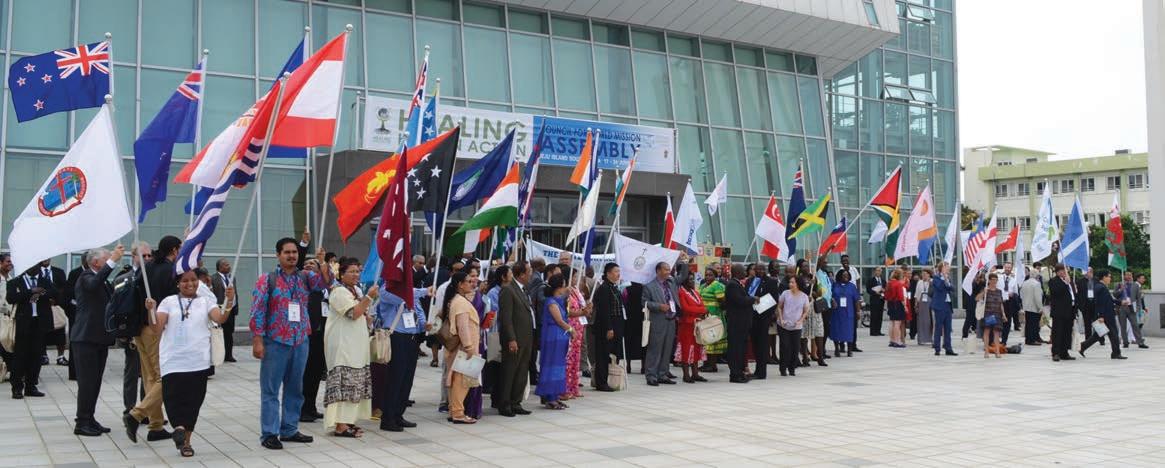
Revd Dr Jooseop Keum, General Secretary of the Council for World Mission (CWM), introduces Refresh readers to the diverse work of CWM as it seeks to share the Gospel across the globe.
Warmest greetings from the Council for World Mission!
I am pleased to reach out to you all through the Congregational Federation’s Refresh magazine. I am thankful for the opportunity to introduce the ongoing work of CWM to the members of the CF. Through this, I would like to provide the readers with a brief sketch of the work of CWM based on its strategy and the new programmatic structure.
CWM is a worldwide partnership of churches. The 32 members, located across six global regions, namely Africa, the Caribbean, East Asia, Europe, the Pacific and South Asia, are committed to sharing their resources of money, people, skills and insights globally to carry out God’s mission locally. The Management team and staff are strategically located in London and Johannesburg, with the General Secretariat based in Singapore and two regional offices in Jamaica and Fiji.
CWM is committed to sharing God’s love and journeying with each other in our quest to create life-flourishing communities. This quest for life is not only for us, the humans, but every living creature to
live in harmony on this planet Earth, the only home for all of us. This was the mission to which Jesus committed himself and for which he lived and died, that we may have life and have it to the full (John 10:10).
Every ten years, CWM reviews its strategy based on reading the signs of the time and sets its vision to serve God’s mission through the member churches and ecumenical partners. The new Strategy Framework set for the decade of 2020-2029, under the theme, ‘Rise to Life: Confessing Witness to Life-flourishing Communities’, calls upon the members to work towards fulfilling the vision of ‘Life-flourishing Communities, living out God’s promise of a New Heaven and a New Earth.’
The Framework invites the CWM community to boldly confess its faith and allegiance to the ‘God of life’ and to reaffirm its commitment to follow Jesus in radical discipleship. It seeks relationships with fellow pilgrims on the journey to enable liberating and transforming witness to life-flourishing communities in the name of Jesus.
I became the General Secretary of CWM soon after the adoption of the new strategy. The Board tasked me with interpreting the Strategy Framework into a Programmatic Structure. As the General Secretary of CWM, I envision achieving the following five goals during my tenure:
• Re-envisioning CWM as a community of transforming discipleship by strengthening its missional identity.
• Developing CWM as a global game-changer in mission thinking and ecumenical action.
• Sharpening the Strategy Framework and introducing an action plan for its implementation at all levels.
• Making the office to be more effective, transparent and accountable through professional, moral and spiritual leadership.
• Providing pastoral support and solidarity with member churches
Therefore, aiming to sharpen the Strategy Framework with concrete action plans and programmes to lead the CWM’s missional movement towards the life-flourishing oikoumene (Greek word meaning ‘the whole inhabited world’), and affirming the primary nature and role of member churches as agents of carrying God’s mission in contexts and global witness in prophetic solidarity, I discerned with the Board to implement CWM’s Strategy through the following six primary programmatic areas:
1. Life-flourishing Creation and Economy
Led by the Mission Secretary for Ecology and Economy, this programmatic area aims to work in collaboration with the member churches to advocate for ecological and economic justice, raise awareness, and promote solidarity with the people’s movements. Theological Education for Economy of Life (TEEL), New International Finance and Economic
Architecture (NIFEA), and the School of Intersectional Ecotheology and Ecojustice Witness (SIEEW) are some of the current key projects under this programmatic area.
2. Mission Programme and Partnership
Led by the Mission Secretary for Mission Programme and Partnership, this programmatic area advocates for a life-flourishing Church in action, responding to the contemporary challenges in various global contexts through the mission in collaboration with the member churches. This programmatic area covers some of the CWM’s flagship programmes like Partners in Mission (PIM), Mission Support Programme (MSP), Internship Programme, etc.
3. Discipleship, Spirituality, and Dialogue
Led by the Mission Secretary for Discipleship, Spirituality and Dialogue, this programmatic area works with the member churches, ecumenical partners and interfaith organisations to promote prophetic dialogue and interfaith solidarity and engage in evangelism as a transforming discipleship. In addition to various theological consultations, the annual Discernment and Radical Engagement (DARE) programme and Decolonising the Theological Education and Mission Studies are some of the key areas of CWM’s work through this programmatic area.
4. Education, Formation and Empowerment
Led by the Mission Secretary for Education, Formation and Empowerment, this programmatic area aims to collaborate with member churches and theological and missional institutions to prepare next-generation leaders to be the transforming
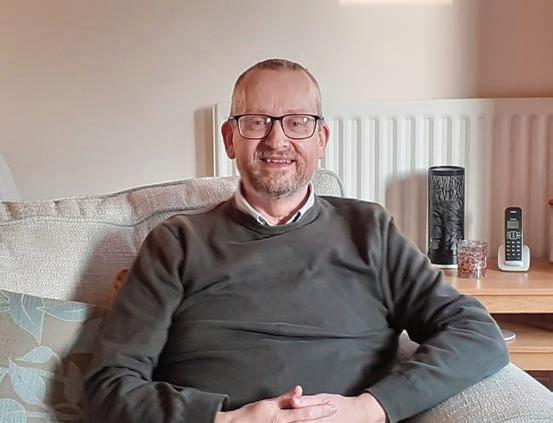
Jooseop Keum
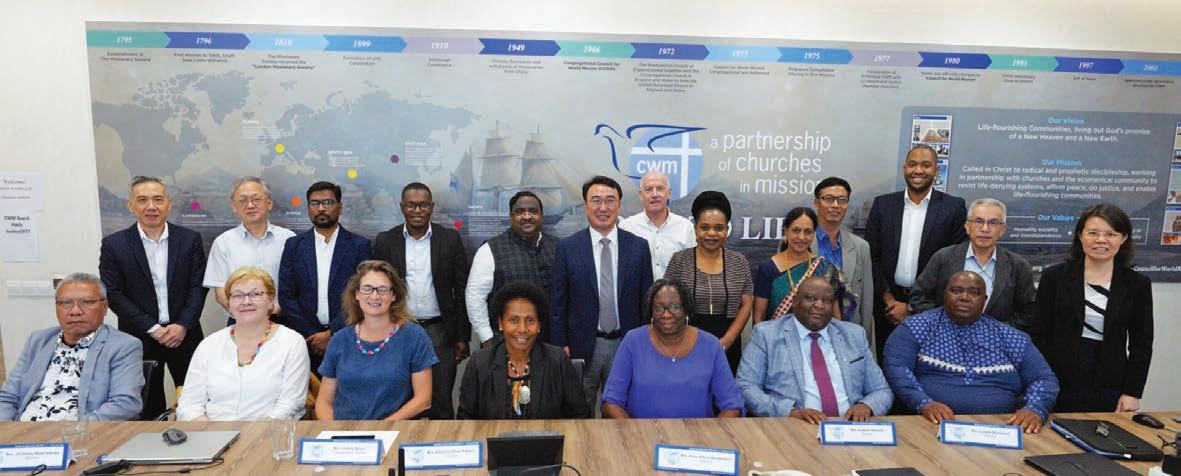
2022 CWM Board Meeting in Singapore
Please pray for Mark Tucker, Elisabeth Sweeney Smith and Jason Boyd who will represent the CF at the CWM Assembly in June. Continued from
Programmes (AAP), Special Academic Accompaniment Programme (SAAP), Member Church Initiatives (MCI), Training In Mission (TIM), Face to Face, etc.
5. Mission from the Margins
Led by the Mission Secretary for Social Justice, this programmatic area engages with member churches to promote the rights of marginalised communities and advocate for life-flourishing societies that promote and foster inclusivity, hospitality, equality and justice. It also seeks to bring awareness on various forms of modern slavery, racial injustices, gender-based violence, refugee crises, indigenous people’s struggles, etc., to engage in the mission of justice and advocacy for the poor and marginalised through various programmes like Beyond Mission, Cast out Caste, Decolonising Mission, etc.
6. Peacebuilding and Community Development
Led by the Mission Secretary for Peace and Development, this programmatic area seeks to discern and identify the contemporary challenges that disrupt peace in various contexts and assist the member churches in finding conflict resolutions and reconciliation. Advocating for life-flourishing growth through community development programmes and promoting solidarity, it aims to achieve life-flourishing growth by transforming community development. This programmatic area is also responsible for the CWM’s solidarity and action grants.
The deputy General Secretary for Programmes provides guidance and leadership for all the six Programmatic Mission Secretaries, who are also assigned to respective regions to accompany the work of the member churches.
In addition to the six programmatic areas, The Onesimus Project (TOP) also plays a major role in guiding CWM’s work for resisting racial injustices, engaging with the legacies of colonialism and racism, and addressing the contemporary forms of slavery as well as oppressive structures. The work of TOP that
Ecumenism, will provide new perspectives and insights for discerning our mission of justice in the contemporary context.
The current work of the General Secretariat is also shared by its preparations for the forthcoming Assembly, which will be taking place from 12-19 June 2024 in Durban, South Africa, with the theme, ‘Rise to Life: Together in Transformation!’ As it is taking place after eight years, this Assembly will be an opportunity for the global CWM family to rise to life as a community of churches together towards a transformative mission of God.
As mentioned, the vision of CWM for this decade necessitates alliances engaging churches, ecumenical partners, and peoples’ movements. It requires a rediscovery of human identity in the image of God in an era of egotistic, mechanistic and technocratic dehumanisation and ecological degradation. It envisions the affirmation and embracing of spiritualities, the reshaping of economies, the restoration of ecology, and the renewal of the global space into life-flourishing communities.
Therefore, the member churches and the ecumenical community are called to engage in radical and prophetic discipleship, which is expressed in transformative and loving action to resist, affirm, support and enable life-flourishing alternatives.
While there are only a few areas of the work of CWM mentioned here, there are numerous other programmes, events and consultations that are constantly happening across the globe through member churches and ecumenical partners. For more information on the ongoing activities, please look through the CWM website at www.cwmission.org or follow the CWM Facebook page at www.facebook.com/ cwmission and the YouTube Channel at www.youtube. com/@CouncilforWorldMission/about.
May the God of life enable us to engage in ways that are life-flourishing, justice-supporting and peace-affirming!
Impressions of Romania
Kevin
Potter, Pastor of Springwater Peppard Congregational Church in Henley-on-Thames with wife Linsey, recently visited a charity helping children and families in Romania. Kevin tells Refresh readers how it went…
Ihadnever been to Romania, but our October 2023 visit with the charity Big Love rectified that. This charity partners with Open Hands Romania, sharing Christ’s love and supporting young children and families, specifically in the Gypsy community, who are facing significant hardships.
Big Love helps a children’s centre in Doi Moldoveni and resources a facility in Oltenita supporting 30 children. The youngsters receive breakfast and educational support. Five children have now successfully integrated into state schools. Our visit was an exploratory trip to see if our Compassionate Loaf team of artisan bakers could support the women and help develop a bakery alongside their cheesemaking initiative.
Upon our arrival in Bucharest, we saw significant wealth. Still, as we travelled further east, I was struck by the change in the social environment. We stayed in Calarasi and visited the small town of Chiselet near the Danube on the Bulgarian border, where the bakery is being planned.
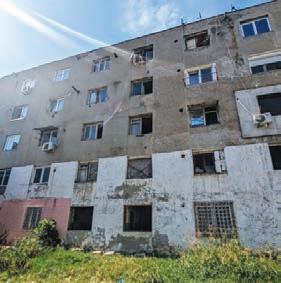
In Calarasi, I saw the poverty but also the residue of communism. The buildings were constructed during the communist dictator Ceausescu’s time and were made to herd the rural population into large urban areas to work in the factories. They are now broken-down slums with dark corridors of profound sadness. Some flats have only two rooms but house nine people or more. They also only have a sheet to cover the central doorway.
Amid this hardship, the joy of the children at the centres was catching, and the juxtaposition was stark. Visiting gypsy townships reminded me of similar places we had seen in Ciudad Juarez in Mexico. It highlighted that the evils of poverty, oppression and exclusion cast a similar shadow right across the globe. Praise God that the light of Christ overcomes the darkness.
Linsey writes: “I was deeply struck by the stark poverty as we walked through a neighbourhood that housed one of the centres. Small huts, dry and dusty pot-holed roads, children playing, but among the adults a sense of apathy and acceptance. One lady
had a t-shirt on with the words ‘NOT MY PROBLEM’ bejewelled onto it. As I watched her, I felt so sad as I thought, but ma’am – it is your problem. You are affected by all this. You have to live in this situation of poverty and try to make minimal resources last while your post-communist government says everything is good.
“It’s very easy to take a voyeuristic approach to this sort of poverty. To watch from the outside and be dispassionate and objective. To judge and have simple answers about how it all can change. But getting to know the people that have chosen to work with these families, watching them in action, loving and caring deeply, was profound and moving. I learnt a lot in my few days with them, and was reminded of the frustrations I felt on short-term trips to Mexico where I couldn’t deeply get to know the people and learn the language.
“I guess it’s not surprising that our hearts are pulled towards living alongside people and getting to know them, learning to love them. After all, that’s what Jesus did.”
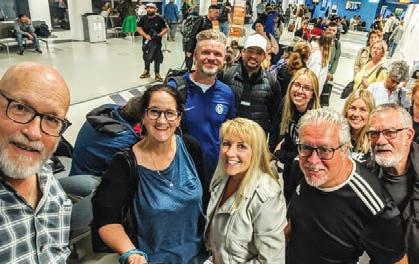
The group from Kevin’s church on their way to Romania
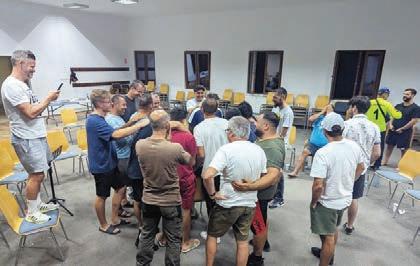
Prayer with the men of the area
Old communist housing, still occupied today
UK tour for Grenada missionary
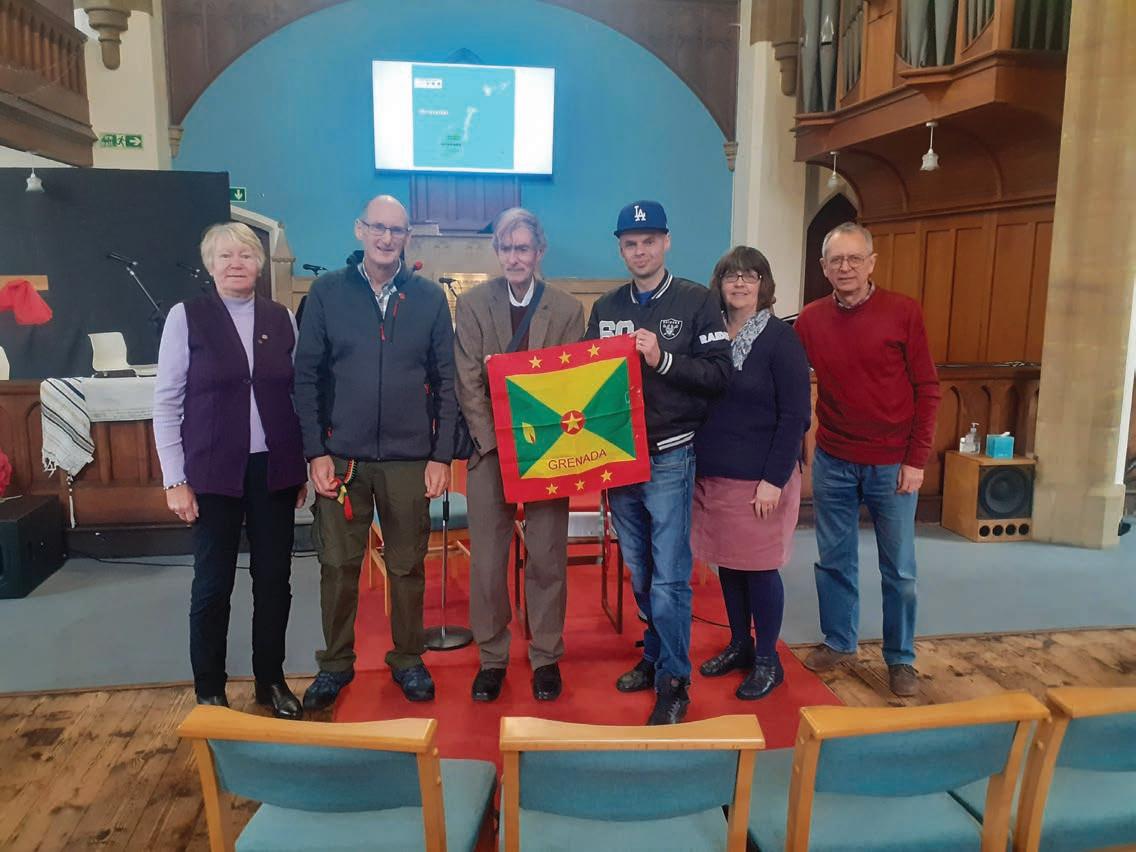
Rev Nigel Lindsay is currently serving with the Presbyterian Church in Grenada facilitated by the Council for World Mission. He works with two churches, a primary school and secondary school. Last October and November he was on furlough in the UK – but didn’t get much rest: he spoke at 34 services or events in 24 different churches! Here’s his report.
It was great to meet so many people back in the UK, both those I knew and many whom I met for the first time. I am so grateful to those who were able to accommodate me or transport me around. I felt welcomed and supported. I had some great food and much cake for my birthday in October!
After arriving in the UK from Guyana after attending a CWM training event, my sister picked me up from the Oxford park and ride and dropped me outside Witney Congregational Church at 10.25am for a 10.30am service where I was delivering a children’s talk! My first activity.
Travelling so much was tiring, whether it was by car, train, bus, or sometimes kindly transported by local people. I was based at my sister’s place in Witney, Oxfordshire, and travelled to churches in Scotland,
West, it was good to be invited to a children’s club followed by a youth club. I had the chance to speak to maybe 50 children at each, about staying focused to achieve your goals and how Jesus helps us.
I was invited to two under-fives groups and was able to lead some singing, tell a Bible story and use my parachute. My last event was leading a Boys’ and Girls’ Brigade meeting around a Grenada theme for an hour and half. The leader said afterwards: “You were brilliant, the children loved it and you were so lovely with them.” You can tell I enjoy the work with young people.
But I had a great time with adults too. My thanks to all who joined in some of my action songs with me at different services! It was interesting to see a few
With folk at Taunton in Somerset in November
Sunday mornings. I also took part in a couple of café style church services, which gave the opportunity for refreshment, discussion and questions.
stepping out and continuing to build God’s Kingdom here on Earth. We don’t need to go to another country, there is plenty for us to do in our own community, and I was encouraging people to do one small thing, like saying ‘hello’ to others.
At one church we focused on using the resources we had been given to help others to achieve, by sharing our resources. Some churches are doing a great job at reaching out to their community, providing warm spaces, food distribution, clothes for the homeless and space to come and not feel isolated.
Sometimes I was interviewed and sometimes I spoke with photos and invited questions as I went along. It is still possible to invite me to your church as I can appear via Zoom. Some people from CF churches came out to join me for two weeks or so at the end of January and the nation’s 50th Independence celebration. Others are welcome – if you can get here, I can accommodate you.
Having some nibbles at North Nibley Chapel in Gloucestershire
Visiting Harden Congregational Church in Bingley, Bradford
Helen Keighley from Harden CC says: “We very much enjoyed Nigel’s visits. Thank you for sending him to us.
“He talked to our social group (which is also a warm space), telling us about the work he has been doing in Grenada and some of the challenges he has. He showed us images of the church and community in Grenada and answered any questions we had.
I slept in 19 different beds over the two months in the UK and travelled hundreds of miles. I had a tyre blowout when driving to Frinton-on-Sea, and got lost in Solihull when visiting the Christian Resources Exhibition. My sister arranged a birthday party for me with a surprise – an amazing Korean choir. I also walked on the South Downs and did some of the Thames Path.
I am now back in Grenada and Christmas was interesting. Just before it we had very heavy rain in
area had no running water for two weeks. I was fortunate.
I have also completed a five day walk across Grenada to raise funds for benches and shelter for our primary and secondary schools.
I have a memorandum of understanding to be here until the end of August 2024 and then need to decide what is next. I would appreciate your prayers as we discern what God’s plan is for the years ahead.
Do get in touch! You can email me at: pastornigel19@yahoo.co.uk, or ring 07917 222304 or WhatsApp the same number.
“He returned later to engage with children and parents at our toddler group (pictured). He played with them and chatted with their parents, played a parachute game, told a Bible story and sang songs. He then joined us at our Tittle Tattle Teashop in the church, and led a well-received 15 minute reflection.”
Nigel preaching in Scotland in October
Top tips for learning churches
A series offering practical ideas on church life
by Catherine Booton, the CF’s Learning and Development Manager
Part 2: Help! We want to set up a Bible study group
Small group Bible study is a fantastic way of exploring and learning about God’s Word together, but often we can be unsure of where to start or whether we have the skills to run such a group. We can be put off trying by worrying about the problems and what we think we can’t do, and so the Learning and Development department offers you our beginner’s guide and some ideas to help you to get those groups going…
1. What sort of group do we want?
It’s good to take some time to discuss the aims of your group and to ask some important questions about the group itself. There are many things you will need to consider before you begin and here are just a few of the questions you may need to ask of those who are thinking about joining the group…
• When is best to meet? Daytime, evening, weekend?
• How long should meetings last? One hour (plus maybe time for tea)? More?
• How often should we meet? Weekly, monthly or for a set period (at a particular time of year like Advent or Lent, or for a period of six or eight weeks, for example). Perhaps think about the momentum you need to get the group up and running and keep it going!
• Do we want to combine the study time with a meal or other fellowship and refreshments?
• Who will be invited to join us? People from our own fellowship, other churches, or bring a friend?
• Where will the meeting be held? At church, in someone’s home, in a public space, somewhere else? What resources or technology do you need and where can they be used?
2. What and how can we study?
The obvious answer, perhaps, is the Bible! But that can be a daunting prospect when you are not sure where to begin. There are many publications to help
you to study the Bible, but it is a case of finding the one that suits the needs of your group. If your group enjoys discussion, then one which is very much led from the front may not work. If you prefer to look at one book of the Bible, then one that looks at the wide sweep of the whole Bible may not be right. The problem with every resource, of course, is that what runs effectively in one group may not be as good for a different set of people, so you need to consider the resources available and ask some of these questions…
• Will there be a group leader? (The minister, a deacon or someone else with the necessary skills?) Or will the leader be different for each session? Do we need to get an outside leader or have we got the necessary skills in the group already?
• What type of resource is required? What aims and objectives do we have?
• What sort of people are in our group? What level of knowledge do we already have and what ways of learning suit us best?
• Does the resource give us the information we need but also the freedom to explore and add our own perspectives?
The Congregational Federation can share some examples of resources that can be used including Holy Habits, Engage Worship, 10 Publishing and more – see the resource hub website at: www.theresourcehub.co.uk
LEARNING TOGETHER
Studying the Bible together is essential for Christian growth
make sure meetings run smoothly.
• Make sure everyone knows the time and place of the meeting
• If there is an expectation that participants have read/considered material beforehand ensure they have received it with enough time to do so.
• Meetings should be held in a place that makes the participants feel comfortable and in surroundings that lead to people feeling happy to share and learn (consideration should be given to comfortable seating, appropriate levels of heating, good audibility, etc.)
• Stick to timings (particularly ending times) so that people are able to make plans around the group.
• Ensure that everyone is able to contribute to the session as they wish. No one should feel obliged to contribute but also the meeting shouldn’t be monopolised by any individual!
4. How will we assess the effectiveness of the group?
After any project it is a good idea to get feedback from participants and to see how the group has gone.
• You may want to do this by something as simple as asking those who took part to comment and to see if they wish the group to continue after the first resource is completed.
• It may also be a good idea to speak to anyone who initially joined the group but didn’t complete the course to get their comments on the group and why they left.
• Do we want to continue? Have a full discussion over whether the group wants to continue, what the next topic could be and what changes (if any) are needed.
If after considering all the above, you feel that your church is not in a position to start a group alone, don’t despair. Perhaps you could consider one of the following…
• Join an online course (as a group or as individuals). For example, the CF hold an online Bible study on a Monday afternoon from 1.30pm–3pm facilitated by the General Secretary.
• Watch this space for online learning opportunities coming from the CF next year. Take a look at our website regularly where details of upcoming courses and events will be shown: www.congregational.org.uk/ learning-development or find local or nationally run groups from other traditions.
• Run an ecumenical course with other churches in your locality or run a course with other CF churches in your area.
• Incorporate your Bible study into your Sunday worship services – either as part of the main worship or before/after the service.
Most of all we wish you every blessing as you set out on your journey of discovery and learn more from God’s Word together. Please remember that we are here to help – so if you have any questions or would like to take the next step, get in touch. We would love to hear from you.
Train
or
Crossword
Across
1 Positions of players in some ball games (5)
4 Book or magazine published once a year (6)
7 Yorkshire city (5)
8 Device to help breathing (7)
10 ‘They sang to the music of tambourine and ------- ‘ (Job 21) (4)
11 ‘He has given us his very great and precious ------- ‘ (2 Peter 1) (8)
14 Yeast (6)
15 ‘This poor man ------- and the Lord heard him’ (Psalm 34) (6)
17 Reminders; souvenirs (8)
18 ‘My richest ------- I count but loss’ (hymn) (4)
20 Made broader (7)
22 Caribbean country (5)
23 ‘He is to take a ------- full of burning coals from the altar’ (Leviticus 16) (6)
24 Commonplace; trite (5)
Can you find the names of 22 birds? Look up, down, forwards, backwards and diagonally.
Down
1 One of the 12 disciples (11)
2 Jesus lived here after John the Baptist was imprisoned (Matthew 4) (9)
3 ‘Though your ------- be as scarlet, they shall be as white as snow’ (4)
4 Place where bees are kept (6)
5 Bible book (8)
6 Small pointed tool (3)
9 Designed for people to live in (11)
12 ‘ ------- comes from the Lord’ (Jonah 2) (9)
13 Long narrow flags (8)
16 Large American vulture (6)
19 King of Israel more wicked than any before him (1 Kings 16) (4)
21 Jesus: “Whoever lives and believes in me will never ------- ‘ (3)
Fill the grid so that every column, every row and every 3 x 3 box contains the digits 1 to 9
EVANGELISM
Connecting with the community
By Hilary Biggin
There are many ways of sharing the Gospel with your local community but a good first step is to establish relationships. Most people come to faith through knowing another Christian – and that can’t happen if we never meet them. Newcastle-under-Lyme Congregational Church had a new idea on how to connect with their community last Christmas – through decorating the church windows.
Church Secretary Hilary Biggin explains how the initiative came about and what the response was: “We decided to try connecting with the businesses/premises around our church this Christmas and to this end myself and one of the ladies in church, Ann Ryles, printed off some leaflets and then went around to the various businesses and invited them to decorate a window in church.
“The idea came from Ann and she has worked exceptionally hard posting out leaflets to some of the homes nearby too. We were very pleased that two of the businesses and a small private school took up the offer.”
In the accompanying photos, the window with the ‘love’ sign on it was done by a bridal shop, which posted the photo on their Facebook page and are now following the church on Facebook.
Hilary explains what this window meant to her: “It speaks of a snowy night with snow falling on the ground and the frost glittering upon it, there is an angel who proclaims a special birth, a star which guides us to the candle (light of the world) born this night and then the word LOVE – which came down at Christmas in the form of a little child. (It tells the Christmas story perfectly, although possibly the Bridal Lounge just thought it was a pretty decoration – who knows?!).”
The second window with the reindeer was done by Nowell Mellor Solicitors, who are opposite the church. Hilary’s view of this one is: “It is very cold in the forest, with snow upon the ground and frost upon the trees, and on this holy night, silent night, even the birds of the air and the beasts of the forest stop in wonder at the news of a birth.”
The school’s window needs no explanation but has strengthened their connection with the church. Hilary says: “We have made such a connection with Demetae Academy. Their school play was performed in our hall and went exceptionally well. The children had great fun making the display at school and were very vocal when they came to put it up, telling us about the baby Jesus and Mary his mother and who the other characters were, even the camels.”
The church also held an open morning so that people from the businesses and school could bring relatives and friends to look around, and so the fellowship could invite their own neighbours to see the displays.
Top: A display on love by the Bridal Lounge shop Middle: The window by Demetae Academy – a local school Bottom: The decoration by Nowell Mellor Solicitors
Thc fivc mp kes of maesesaon
Rev Dr Graham Adams is one of the tutors on the Congregational Federation’s Practical Theology course and Tutor in Mission Studies, World Christianity and Religious Diversity at Luther King Centre for Theology and Ministry in Manchester. In this series, Graham explores the Bible’s five marks or aspects of mission: proclaiming the good news, nurturing new believers, caring for those in need, transforming injustice, and treasuring all creation.
Part 3: Caring for those in need
Sofar in this series, we have looked at two marks of mission: proclaiming the good news of God’s kingdom, and nurturing believers.
Regarding the first, we saw that ‘the kingdom’ is a new reality that comes amongst us, but according to Jesus’ parables, it does so in ‘small’ ways. Like yeast that’s hidden. Or as in a mustard seed, again small but growing enough to make room for others. Or it’s children who show us how to enter it, as though their smallness matters in a world which prizes size and strength.
In other words, we’re called to proclaim something that is both awesome and vast, and at the same time, it’s present amongst us in ‘small’ things, prompting us to pay attention to parts of life which may seem little or overlooked. This is the good news of God’s alternative kingdom! It cherishes and loves even the ‘least’ of things and people; it challenges a world focused on grandeur and scale, by helping us to notice whatever and whoever is belittled. Such is
So, too, regarding the task of ‘nurturing believers’, we focused on the place of childlikeness. It’s a quality which may build communities that are safe but brave enough for us to ask awkward questions, dream big dreams, and imagine alternatives. By rediscovering what it means to be like children – curious, playful, adventurous, imaginative – we can help churches allow old and new believers alike to share in the adventure of faith; not taking things for granted; but seeking the kingdom together. In other words,
once again, it is God’s celebration of what is small and fragile which helps us to participate in the grand purposes of God’s mission.
We can make a similar point regarding the third mark of mission: ‘caring for those in need’. That is to say, we play our part in the expansive mission of God if we pay particular attention to those whose struggles are overlooked. Or we build a caring world by giving value to every small act of kindness, however unnoticed. But despite this affirmation of what’s small, it’s worth noticing something huge: the very idea of ‘the mission of God’ (sometimes expressed in the Latin phrase, the missio Dei).
The thing is, for most of Church history, churches took for granted that mission was what they did; they were the ones who planned and furthered mission. But during the 20th century, there was a realisation: mission existed even before the church, because firstly, it is God who initiates mission. God is the God of mission. In fact, the Bible is largely a collection of writings which have emerged out of mission contexts; they witness to the God who is on a mission and who calls people to join in with this mission. The God of mission came first – and the Church followed.
But what is God’s mission? What are God’s purposes for creation? The Bible reveals many dimensions: shalom (which is not only peace, but well-being and wholeness in community), justice, the feeding of the hungry, the setting free of the oppressed, the renewal of all creation, the reconciliation of all things. God desires all these things; God’s purposes for creation are multi-layered.
For some Christians, salvation holds these strands all together, while others see them as different aspects of God’s kingdom coming on earth as in heaven – God’s will being done. Either way, the vision
EVANGELISM
about life in all its fullness, here on earth and more. It’s a vision which preceded the Church, which was embodied in Jesus, and which called the Church into being.
This is a big realisation: it reminds us that the Church doesn’t ‘own’ mission, but we discern it and join in with it. And this helps us to understand the different marks of mission. The first two (proclaiming the good news and nurturing believers) are more obviously the Church’s concern –but not for its own sake; rather for the sake of God’s kingdom.
The medical profession is one example of caring for those in need, and is part of God’s mission whether carried out by Christians or others
But the third mark (caring for those in need), the fourth (transforming the structures of injustice) and the fifth (caring for creation) are not only the work of the Church. Certainly, the church should engage in them, as faithful marks of God’s all-embracing mission, but we shouldn’t presume that it’s only us who care for those in need, transform injustice or treasure creation. People outside of the church can participate in these aspects of God’s mission; and this shouldn’t be a surprise – because the Bible witnesses to many different people playing their part in God’s mission, even if ‘insiders’ don’t always appreciate it.
For example, the pagan king Cyrus is called messiah or “anointed one” in Isaiah 45:1, for playing his part in freeing the Israelites from exile; and many
others who aren’t part of Israel or the church, from Rahab to the Samaritans, contribute to God’s purposes. After all, this third mark of mission is simply caring for those in need: anyone who is struggling, whether due to illness, grief, hardship, poverty, hunger, debt or anything – because God’s mission includes bringing healing and peace, so any who work for healing and peace are contributing to God’s mission. It does not mean they are contributing to the whole of God’s mission, but that is not the point here: we are simply recognising that caring for those in need is an aspect of God’s mission.
We see this, too, in Jesus’ parable of the sheep and the goats, in Matthew 25:31-46. Those who cared for the hungry, the sick and those in prison are surprised to discover they were doing it for Christ – because their actions are celebrated simply for caring in itself, not for the motivation. As for those who had not cared, perhaps they assumed correct faith was everything – but not in this parable. Caring for each other is a vital aspect of mission: loving our neighbours as ourselves – and valuing the love which others show for us as themselves too.
Caring – every small act of kindness – is good news in itself, not as a means to some other end, but as a good in itself; an expression of the very mission of the God of kindness.
Credit: Gratis Graphics/Wikimedia
History and its legacy
By Richard Cleaves, Secretary of the Congregational History Society
So, what exactly was her lasting legacy?’
That was a question after I had given a lecture about a remarkable woman who, in the face of an immense amount of hostility, had fulfilled her calling to preach the Gospel from 1860 to the beginning of the 20th century.
Although there is a 50-foot stained glass window in her memory in pride of place in the National Cathedral of Washington, there was no memorial to her in Wales until the day of my lecture. Cardiff Baptist College that day dedicated a seminar room in her memory. A great great nephew of hers cut the ribbon at the door to the room, and I had been
Rachel Cox Paynter started preaching when she was only 13. By the time she was 21 she was preaching and lecturing all over Wales. On the day of what she thought was a dream marriage to a like-minded husband she discovered that he had been cheating on her. She decided to end her marriage in the newly formed Divorce Court in London.
To the disgust of some correspondents in the Welsh religious press and to the acclaim of others, she continued to tour the country preaching and lecturing, using her maiden name. By now she had come to be known as Rahel o Fôn. That simply means Rachel from Anglesey: Fôn is pronounced in the same way as the name Vaughan.
Within a couple of years she had emigrated with her brother Evan and her sister Catherine to North America. At the invitation of Welsh churches from New York to Wisconsin and from Iowa to Missouri, she continued to preach and to lecture. Marrying for a second time, she had a son Joseph and a daughter Anna who died at 15. She brought her new husband, Edward Davies, and Joseph back home to Ynys Môn to meet the family. True to character she left Edward with her sister Grace, helping Joseph to learn Welsh, and she once again toured the country. For the next 20 years she travelled between Wales and America, preaching and lecturing, while her son Joseph made his mark in the Democratic Party.
In the last three or four years of her life she lived with her son and his family in their Washington home, where the newly elected President Woodrow Wilson, the young Franklin D. Roosevelt and many others from government circles were regular visitors.
The floral tribute on her coffin was presented by President Woodrow Wilson and his daughter Margaret in the purple and white of the Votes for Women campaign. President Franklin D. Roosevelt spoke of the way “she occupied a unique place” in his mind as “one of the very great women” he had known and someone who had been “a noble great, spiritual force for good” in the USA.
Having been with President Woodrow Wilson in Versailles at the end of World War One, and with President Truman at Potsdam in 1945, Joseph Davies never forgot his Welshness or his indebtedness to his mother’s preaching and thinking. In 1954 he presented that stained glass window to the National
Rahel o Fôn was the first woman minister ordained in the US state of Wisconsin
HISTORY
Cathedral in Washington “in thanksgiving to God for the lives of Rahel o Fôn and Edward Davies”.
Nothing remains of any notes she might have used or anything else she might have written. But the Welsh press in Wales and in the USA covered her meetings extensively. She spoke of the godliness and the usefulness of the Bible, of its radicalness and integrity. As she spoke, exploring the deep things of God, the Bible came to life. Her evangelical preaching was serious, eloquent, richly poetic and yet simple. She looked to Christ as Head of the Church, prayed in the most profound of ways and her manner was authoritative, influential, and majestic.
Initially a Baptist, she became frustrated with the custom of allowing only baptised believers to share in communion, and so ministered in the Congregational Churches of Watertown, Wisconsin and nearby Ixonia, where she was ordained to the full time work of ministry. With churches of every denomination, she longed to share ‘the old, old story’.
My lecture over, it was time for questions. I did my best to respond to them all. But I found one of them particularly challenging: “So, what exactly was her lasting legacy?”
I could have given an answer. But then I thought better of it. It seemed to me the question was one I wanted to put back to the questioner. My audience had heard me tell the story of a remarkable woman. There are lots of clues in the story itself that point us toward an answer. My job was to tell the story. It’s up to everyone who hears my story to make their own mind up and decide what her lasting legacy is. If you want to find out, then join the Congregational History Society, and for a very reasonable subscription you will receive the magazine and be able to read my lecture for yourself! Suffice it to say, it has a lot to do with the forthcoming Presidential election in the United States of America.
Fabio Lewis and Richard Cleaves, relatives of Rahel o Fôn, with Ed Kaneen and Rosa Hunt, Co-Principals of Cardiff Baptist College at the opening of the Rahel o Fôn room
Washington National Cathedral
God’s unconditional love restores daughter’s faith after her father’s death
Vicky Bunn from Newark is a student on the CF’s Practical Theology course. She was only baptised last year, but has grown so much since returning to the faith of her childhood. Here Vicky tells how she wandered away from God but he has drawn her back to himself.
Top: Since rediscovering faith in Jesus, Vicky has become a deacon and a preacher, and is studying theology
Inset: Vicky’s baptism in August 2023 at the Congregational church in Newark
Iwasbrought up in a Christian family and we attended church every Sunday.
My parents ran a youth group and as a young girl I got to do a lot of different things within the church. We went to Spring Harvest every year (a Christian holiday week at Butlins) which I really enjoyed. I was also very fortunate to go to Israel with friends and family – an amazing experience that I’ll never forget.
I became a Christian at a young age and was baptised around ten years old, but I don’t think I fully understood about my faith. Seeing how strong my parents’ faith was, I just wanted to be like them.
I continued to attend church all through my teens and went to youth groups with my friends, but my troubles began from the age of 15, when I lost my biological father in a tragic car accident. I then found life very difficult for the next 20 years. I was very angry at God for a lot of things, so I stopped going to church. In those 20 years there were some bad times, from battling drug addiction to feeling suicidal and lots of other things, but there were also some amazing times – like when I got married to Dave and we had four beautiful children.
It wasn’t until we moved into The Manse which belongs to London Road Congregational Church (LRCC) in Newark in 2020 that I started to attend church again. My feelings for God began to change, as I realised that he still loves me unconditionally, no matter what sins I had committed or anger I had felt towards him.
When I started to go back to church, I never would have thought that the next three years or so would be life changing for me in such a positive way. I became a member and a deacon of LRCC, I was baptised again last year, and I am now doing the CF’s Foundation Degree in Practical Theology and leading our church services.
LRCC’s pastor, Mark Taylor, invited me to a preaching course last year. I was reluctant to go but he managed to convince me a couple of days beforehand to attend. So I went along with the intention of just seeing what it was all about, but as I was listening to Catherine Booton talking, I really felt God telling me that this is the path he wants to lead me on.
So, for someone who didn’t want to attend originally, I left that building on a new path – signed up for the theology course, which I started in September and runs for four years.
But before I started the course I really wanted a completely fresh start with my life, so I asked my church if they could help me arrange a service of renewal. So on 27 August 2023, I was baptised for the second time. It was such a special moment. I will always remember it. As soon as I was lifted out of the water I felt like a new person and that all my troubles had gone. I have complete trust and faith in the future that God has ordained for me, and from that day onwards I believed that nothing is impossible, and nothing will be the same again.
I am very excited about the course. I am learning so much about my faith and enjoying meeting new people. I can continue to preach at my church and maybe other churches as a stronger believer. I am a child of God and proof that God is full of blessings. I’m so blessed to have an amazing family and church family around me that will love, care and support me through this journey with God.
God bless you all!
Your Views
Alternative views on ‘woke’
Ihadsome concerns with last issue’s editorial condemning ‘wokeism’.
First, it would be fairer to engage with the definition a movement uses of itself rather than accepting the definition attributed to it by its critics.
Importantly, ‘woke’ comes out of anti-racism, which is about waking up to the subtleties and pervasiveness of racism. It’s not simply a matter of an individual “being racist” or “not being racist”. Rather, “anti-racism” acknowledges that we are embedded in social structures that bear the legacy of racist history. This requires us to become more alert to the complexities. These insights don’t necessarily flow from Marxist Critical Theory. For instance, they also come from Black theology.
However, even if the connection to Marxism was clearer, other movements in theology also use aspects of Marxist analysis without buying in to its conclusions. For example, liberation theologies use some Marxist social analysis, but their fundamental point that God has a special concern to liberate the poor has a much more ancient source: the Bible.
As to the Bible and Western civilisation: the Editorial suggested that the Bible is the foundation of Western civilisation and that wokeism is attacking both. But this is too simplistic. Most Christians would surely say that our culture is not exactly the kingdom of God, but on the basis of the Bible, Christians have different views about what needs to be transformed. After all, the Bible itself both defends and resists aspects of ‘traditional values’. In fact, Jesus’ ministry posed a challenge to many traditional norms by consistently putting the marginalised at the centre.
So, finally, to be woke is to be alert to injustice, also a Christian concern, so even if we may be rightly concerned when a movement becomes self-righteous (which happens to many movements, including Christianity of course!), we might do well to listen – and recognise that many people do see connections, and in particular, many younger Christians would embrace the aspirations of woke.
Graham Adams, theology tutor
Taken aback!
Iwasa little bit taken aback about the editorial in Refresh 8, but, on the other hand, I think it is important for different views to be expressed and for controversial topics to be aired, so we can take on board other ways of looking at life. Only God knows the whole truth!
Christine
Denwood, Wimbledon
Ed – For a thorough analysis of the links between Marxism, critical theory and identity politics, I recommend ‘The Lies We Are Told, The Truth We Must Hold’ by Sharon James, Christian Focus Publications.
Proud of Refresh
Thankyou for what you have done for the Congregational Federation by this act of creation that Refresh magazine is –something that we can all be proud of. What it is to have a denominational magazine that is a real blessing! Many congratulations to our editor for jolly hard work and let us congratulate him and keep the contributions coming –including photos, drawings and how about stories for all ages? After all, we have all the evidence we want that we are a creative lot!
Angela Robinson, Southport
Inspiring research
One of our church friends gave a long contribution to a recent Sunday service because he was inspired by the Refresh article ‘Christmas is Jewish!’ He really enjoyed researching the subject further.
Christine Denwood, Wimbledon
Pastoral Care in Practice: an Introduction and Guide
By Michael Hopkins
Reviewer: Revd Barbara Bridges, retired Minister and Chair of the Accreditation and Pastoral Care Coordinator Group (APCCG)
Do you have concerns about how you prepare your pastoral team? If so, this is the book for you and your church. Whether you give it to individuals to prepare themselves to be a pastoral visitor or whether you get them together and use the book as a basis for training it will help you and them to share God’s love with the community you serve. It is quick to read – I read it on a 2 hour train journey – but every chapter has questions to ponder at the
The Hiding Place
By Corrie Ten Boom with John and Elizabeth Sherrill
Reviewer: Diana Laycock, Church Secretary at Martin Top Congregational Church
In our Book Club we have recently read this classic Christian biography. Corrie Ten Boom and her family were Christians who lived in Haarlem in the Netherlands during World War Two. During the Nazi occupation, they were hiding, feeding and transporting Jews and others to safety. It is estimated they were able to save 800 Jews, in addition to protecting resistance workers. The book
Consider Him: Listening, Learning and Leaning on Jesus
By Catherine Campbell
Reviewer: Sonia Holden, a member of Martin Top Congregational Church
In this daily devotional Catherine writes about how God never gives up on us, and about how she has found that times of brokenness and hopelessness can be the best place for growth in our relationship with God.
end or use as basis for discussion. I first became a pastoral visitor many years ago and a book like this would have been very helpful. Even after many years of trying to offer pastoral care I learnt quite a few things from it. It starts with the visitor themselves, how they look after themselves.
It continues through the vital issue of keeping everyone safe to guidance on engaging with different people in varied situations. In reading it I felt it was talking to and about people living in today’s society with all its problems. Each chapter ends not just with questions to consider or discuss but also with a prayer. I would recommend this book to anyone who cares for the pastoral ministry of our churches. Published 2023 by Canterbury Press; available from Canterbury Press, Amazon or Waterstones
gives a good account of how they were able to achieve this and the risks they took. But in February 1944 they were betrayed and Corrie and several relatives were sent to concentration camps.
I thought I would find this hard going and depressing, but that proved wrong and it was difficult to put down. It is a story of great heroism, faith and hope, as well as the worst aspects of human nature. It is also one of forgiveness, as Corrie’s sister Betsy died in the camp but Corrie was given the grace to forgive. This book provides a valuable lesson to us, regarding faith, forgiveness and reconciliation against a backdrop of great hardship, terror and tragedy.
Published 1971 by Hodder & Stoughton; available from Eden, 10ofThose or The Good Book Company.
Catherine is a former nurse and pastor’s wife from Belfast who had three children, two girls and a boy, but both girls died before their teenage years. I recently heard her speak about her life with sincerity, hope and even humour about how, through those extremely difficult times of our lives, God meets us in our pain, restores us, and is in the business of using broken, weak people to make us stronger in our faith and show the world his glory.
Through many trials and heartache, Catherine found God to be very real, present and faithful.
Published 2023 by IVP; available from IVP, 10ofThose, Eden or Waterstones
PRAYER DIARY 2024
Rejoicealways, praywithoutceasing, givethanksinall circumstances; for this is the will of God inChristJesusforyou.
1 Thessalonians 5:16-18
MARCH
This is the confidence we have in approaching God: that if we ask anything according to his will, he hears us.
1 John 5:14
During March please remember in prayer the Congregational Federation. Pray for all within the Federation as they seek to support the churches.
Pray for all who serve our churches – ministers, pastors, preachers, youth and children’s workers, deacons and those who do their roles quietly in the background. Pray for growth over the Easter season in our churches and that more people come and stay.
Please also pray for the events in March:
1 March World Day of Prayer
14 March The meeting of the Investment Trust and Trading Board
23 March The meeting of the Church Support Committee
27 March Small Church Day in Nottingham
APRIL
And if we know that he hears us - whatever we askwe know that we have what we asked of him.
1 John 5:15
Remember in prayer the members of Council and CF Committees.
Pray for students undertaking the CF Training Course, the tutors who provide the training and the administration staff.
Pray for care homes and those who are house bound. Pray for those who visit and care for them. Pray especially for those with dementia and their families.
Events to remember in prayer:
6 April Finance and Support Services Committee
12-14 April CIPT Training Weekend
19-20 April CF Council meeting
MAY
Look to the LORD and his strength; seek his face always.
1 Chronicles 16:11
During May, please pray for the churches of the Congregational Federation in the Eastern Area as they host the Assembly.
Remember in prayer the Congregational Federation Assembly in the University of Essex, Colchester. Pray for those who have organised it, those who are speaking and all who attend. Pray for this year’s President Elisabeth Sweeney Smith.
Events to remember in prayer:
4-9 May Deaf Awareness week.
10-12 May CF Assembly
12-19 May Christian Aid Week.
22 May Small Church Day in Nottingham
JUNE
The Lord says: ‘Then you will call on me and come and pray to me, and I will listen to you.’
Jeremiah 29:12
During June please pray for the Congregational churches in Scotland and Wales.
Pray for those who are unemployed or financially struggling, for those feeling they have no hope. May they find help and the Christian message.
Pray for Christians around the world and all the member churches of the Council for World Mission (CWM).
Events to remember in prayer:
12-19 June CWM Assembly in South Africa
21-23 June CIPT Training Weekend
25-26 June Youth and Children’s Leaders Retreat
JULY
Is anyone among you in trouble? Let them pray. Is anyone happy? Let them sing songs of praise.
James 5:13
Pray for all churches in the English Areas of the CF that they see growth.
Pray for those who work in the retail and hospitality industries and in travel and at the airports, that they are helpful to customers, have patience, kind words and enjoy what they do.
Events to remember in prayer:
14 July Council for World Mission Sunday.
17 July Small Church Day in Nottingham
24 July The meeting of the Investment Trust and Trading Board