Please contact the Editor if you would like permission to reproduce any content.
All Bible quotes are from either the NLT or NIV.
This magazine is printed on paper from a sustainable source.
TO ORDER REFRESH
There will be three issues of Refresh in 2022, available on annual subscription at £30 incl. p&p and the Yearbook.
Email: admin@congregational.org.uk or tel: 0115 9111460 for details.
“…looking forward to being refreshed by your company. God’s peace be with all of you” (Romans 15:33, The Message)
Overflowing with hope
Anniversaries are always a time for both celebration and reflection – enjoying the milestone, but also looking back to the past and forward to the future. It’s a time to see what has been achieved and what still remains to be done.
With a Christian anniversary like the Congregational Federation’s 50th year, it’s also a time of thanksgiving to God for five decades of his faithfulness, and prayer for his guidance into the future.
On page 3 in this special 50th Anniversary and Assembly issue, you’ll find a lively interview with three Congregational Federation leaders which is very much about honouring the past and looking to the future.
Churches Together in England’s Sarah Ball talks to the Federation’s outgoing President, Suzanne Nockels, General Secretary Yvonne Campbell and new President Mark Taylor.
Also fascinating is the interview on the following pages (6-8) about one of the key founders of the Congregational Federation back in 1972 – Margaret Stansgate. President Suzanne Nockels talks to her granddaughter, Frances Nestor, who was one of the guest speakers at our Assembly.
A pioneer of women’s ministry, who was once rebuked by the Archbishop of Canterbury no less, Margaret became the Federation’s first President –and was the mother of Labour politician Tony Benn.
We needed extra pages in this issue to fit in our reports on the 50th Assembly in Birmingham and photos of the day, for all who couldn’t be there. The new President, Mark Taylor, spoke on his theme for the year – ‘Hope’ – and a full auditorium participated in some lively debates and voting, and we welcomed some special guests like the Free Church Moderator and the General Secretary of the United Reformed Church.
The day ended with an invitation from Taunton pastor James Taylor to attend next year’s Assembly in Somerset. On page 18, you can find out how James came to Christ at a beach mission.
As we were putting together this issue, there was another special anniversary approaching – the Platinum Jubilee. Thank God for the 70-year reign of Queen Elizabeth II! She has truly been a Defender of the Faith – speaking up for Jesus in so many of her Christmas messages. And the way in which she encouraged the nation with a special speech when the Covid pandemic was at its worst in this country was truly inspiring.
In that message in April 2020, watched by 24 million viewers, she encouraged “people of all faiths and of none. . . to pause and reflect in prayer or meditation”, but also repeatedly said that “we will succeed” in the fight against coronavirus, when vaccines were a distant hope and the first Nightingale emergency hospitals had opened – expecting to be filled.
At such a dark time, Her Majesty said: “I want to reassure you that if we remain united and resolute, then we will overcome it”, and most poignantly she echoed wartime sentiments when she ended with: “While we may have more still to endure, better days will return. We will be with our friends again. We will be with our families again. We will meet again.”
There were few dry eyes in viewers’ homes at that moment.
I’m sure the Queen’s brave optimism sprang not just from scriptwriters but from her trust in Jesus. She brought hope when hope was sorely needed.
And as new President Mark Taylor adopts the theme of hope for this year, let’s remember the hope we have in Christ.
“May the God of hope fill you with all joy and peace as you trust in him, so that you may overflow with hope by the power of the Holy Spirit” (Romans 15:13).
Andrew Halloway Editor a.halloway@ntlworld.com
Contents
1. From the General Secretary
3. The Federation at 50: special interview
6. The First President: Margaret Stansgate
9. The three Presidents: Messages by Suzanne Nockels and Mark Taylor; introducing Oliver Kinchin
11. 50th Assembly reports and photos 16. Spring School report
Taunton testimony
Christmas Competition
Biblical reflections
Making evangelism easy
Heroes of the faith
Break time
Vacancies and Life online
Prayer diary; solutions
From the General Secretary A busy year!
celebrate the 50th anniversary of the Congregational Federation.
Can you believe it’s summer already? Our planned events for the year are going well. The Being Congregational book is still popular, so if you haven’t got a copy yet, please ring the office.
I hope you are enjoying the calendar; the challenge in July is to create a time capsule. We are creating one in the office at Nottingham which will include things from the life of the Congregational Federation and life in general in 2022. We would love to include your church newsletter or a photo of your church. I would also like you to write a letter to the Church of the future, maybe 10 or 50 years ahead, telling them about your hopes for the Church in the UK.
called Golden Time, which is open to anyone from the Congregational Federation for fellowship and conversation based on the calendar parable and challenge. You are welcome to join and share your experiences. At the Assembly everyone was given a Smartie tube to fill with coins – I’d love to hear if you have managed to fill it!
We have also held our hymn writing workshops and some new hymns have been written. It was a joy to sing one of them, composed by Elisabeth Sweeney Smith, at the Assembly this year. The workshops and the hymns are available on our website and if you would like to host your own church hymn writing day or a session on anything that it is of interest to your church, we would be happy to facilitate it for you.
Continued on page 2
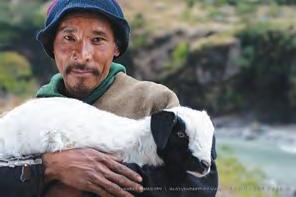
‘The Lord is my shepherd; I have all that I need. He lets me rest in green meadows; he leads me beside peaceful streams. He renews my strength. He guides me along right paths, bringing honour to his name.’
Psalm 23: 1-3, NLT
Photo:
Alex Treadway. Flickr
‘Take time to rest, ponder and pray as we seek God’s will and purpose for our churches and the Congregational Federation.’
Continued from page 1
Some ideas might include:
Worship styles
Bible reading or study
Pioneering
How to encourage children into church
How you keep teenagers in church
Ministering to older people
Dementia church
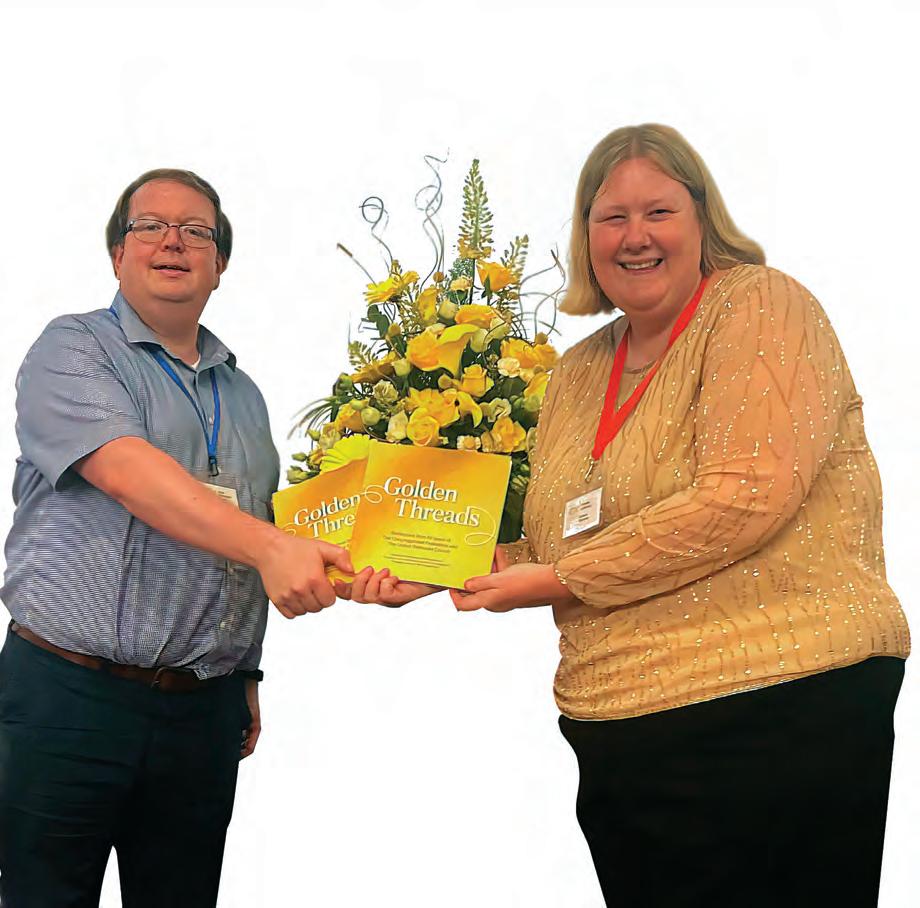
The book Golden Threads, which was written and produced together with the United Reformed Church, has been published. It is a collection of stories from the past 50 years. My thanks to all who contributed, especially Alan Marsden, Pastor at the Martin Top church (Salem Congregational Chapel near Clitheroe), who was our editor.
We have also launched a Christmas card competition for all the children in our churches. Why not have an unofficial Christmas Day sometime this summer and encourage the children to design a card? I know in some churches children’s work has been a challenge to start up again; this might be a fun event to plan. I have loved hearing about the children’s outreach work at Padfield, the Messy Church back at Highbury and Holy Rascals at Newport.
Luzia Watt, our Church Support Worker, has two national events planned for children next year. Even if you only have a few children, why not bring them along to meet more young people from our churches.
Do make sure you order a 50th Anniversary water bottle and pen.
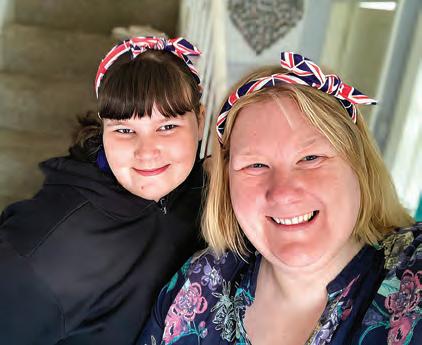
Another significant anniversary this year is the Queen’s Platinum Jubilee. There are lots of national events and community events planned for this historic event. Poppy and I have ordered Union Jack hair bands for the celebrations! Please share any photos from any events your church is hosting.
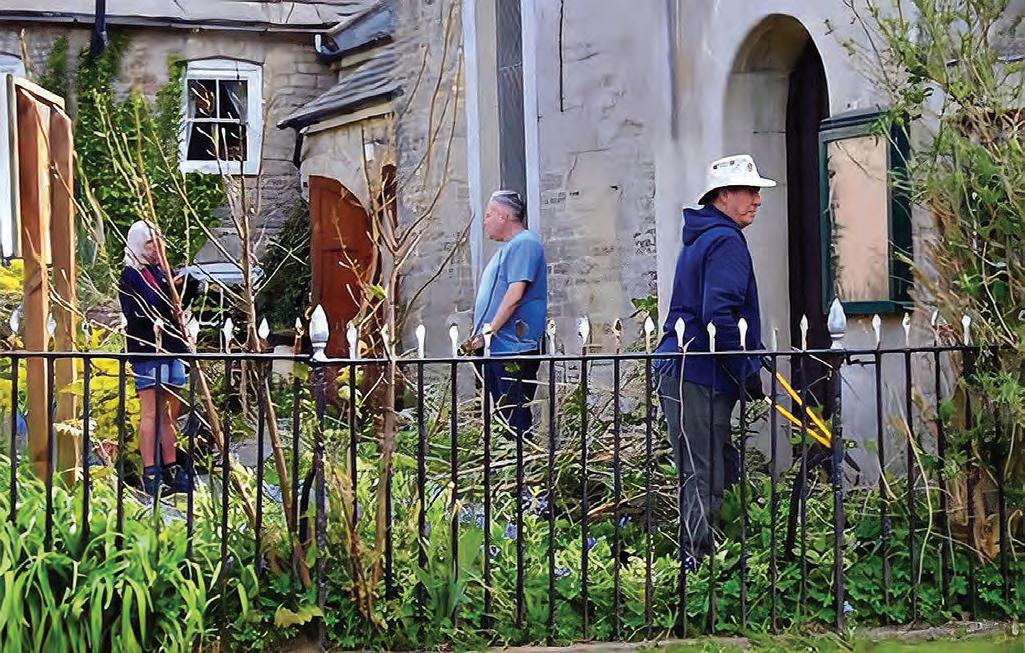
Another project your church might consider this summer is creating a biblical garden. This would mean including plants that are mentioned in the Scriptures, with the biblical passage alongside. The photo below is of members of Corfe Castle Evangelical Congregational Church working hard in their garden.
I do hope you have a wonderful summer. Take time to rest, ponder and pray as we seek God’s will and purpose for our churches and the Congregational Federation.
I look forward to hearing from you.
Yvonne Campbell
Working in the Corfe Castle Church garden
The current leadership of the Federation are honouring the past but very much looking to the future
Churches Together in England’s Senior Communications Manager, Sarah Ball (SB), spoke to the Federation’s President, Rev Suzanne Nockels (SN), President Elect Mark Taylor (MT) and General Secretary Yvonne Campbell (YC) in advance of our national Assembly.
SB: What makes the Congregational Federation special?
SN: It’s quite unusual to have federation as a word in our name – as opposed to union or association. There’s something about federating which is respecting those individual localities and expressions of things but also joining together for those things which are difficult to do by yourself. We’re not so independent that we’re stubborn; but we’re not so unified that we become uniform. And for me it’s a really radical sense of the priesthood of all believers. There is absolutely nothing I can do as
an ordained minister that someone in my church can’t if that church congregation says they have the spiritual gifting. It’s interesting to watch some other denominations that are becoming more congregational.
SB: One part of the statement that came out after your Spring School was that you ‘champion a model of authority that resists hierarchies and vested interests’.
SN: Yes, I hope we are counter-cultural in that. That voice is still needed.
YC: Each church responds to needs in their local community. They are governing themselves by the power of the Holy Spirit and respond to their own local needs and mission ways.
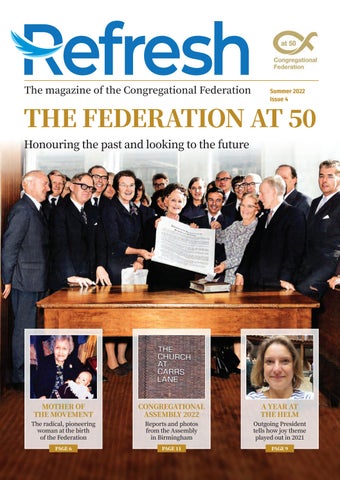
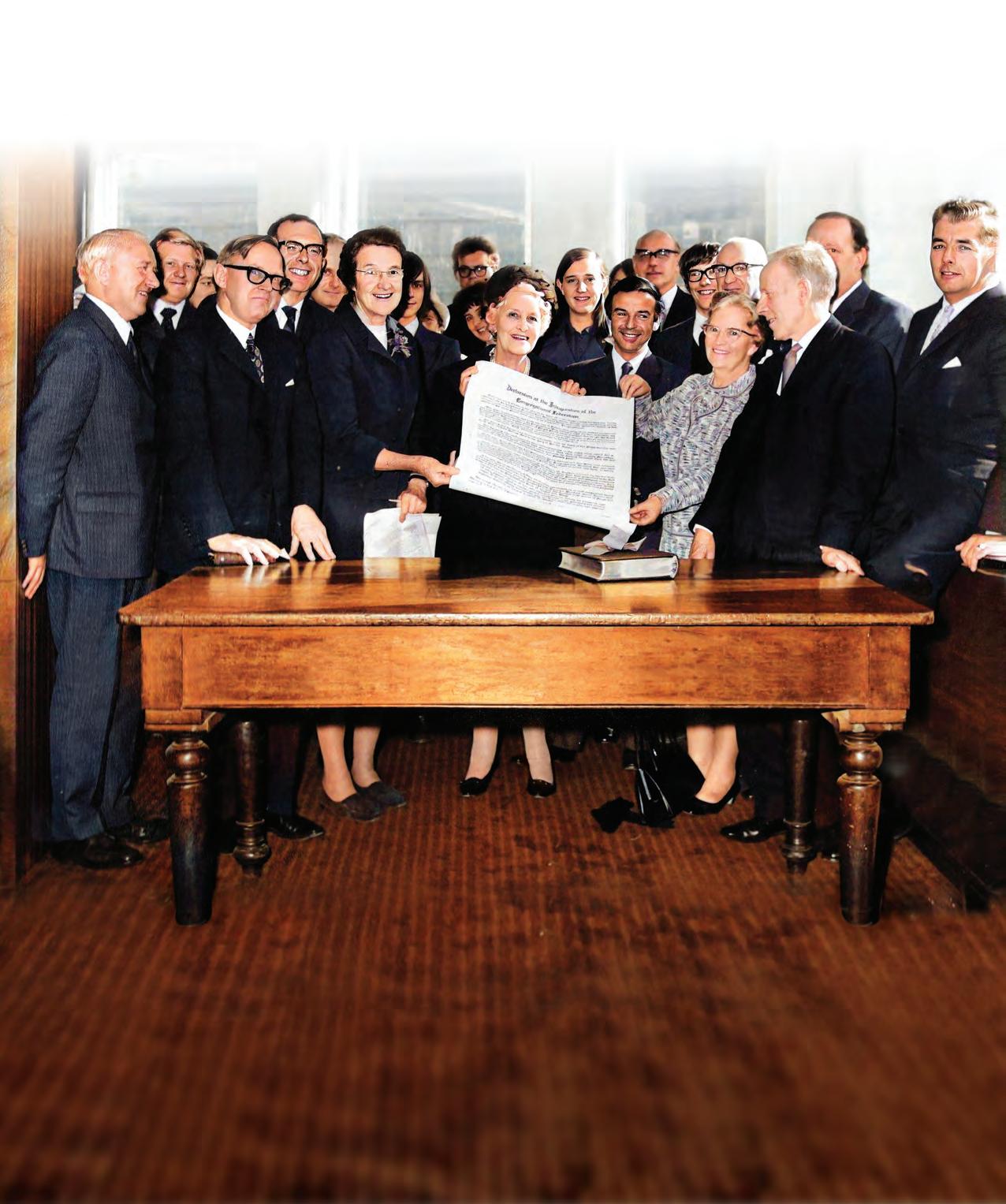
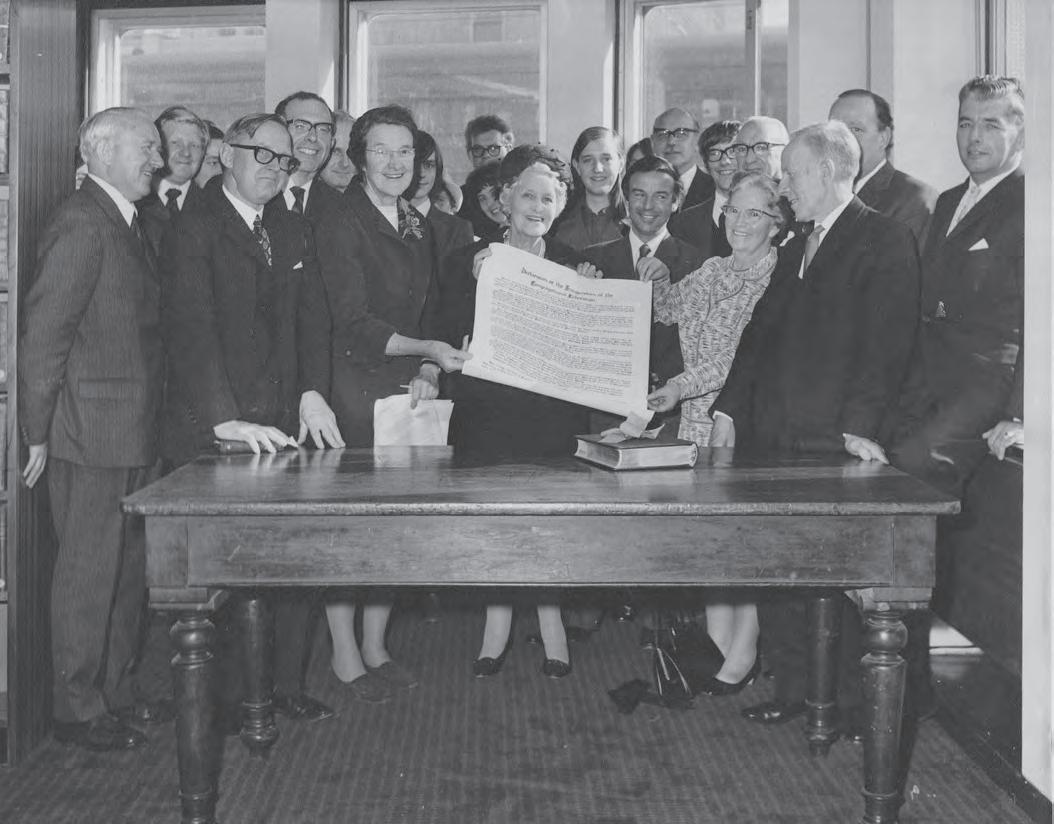
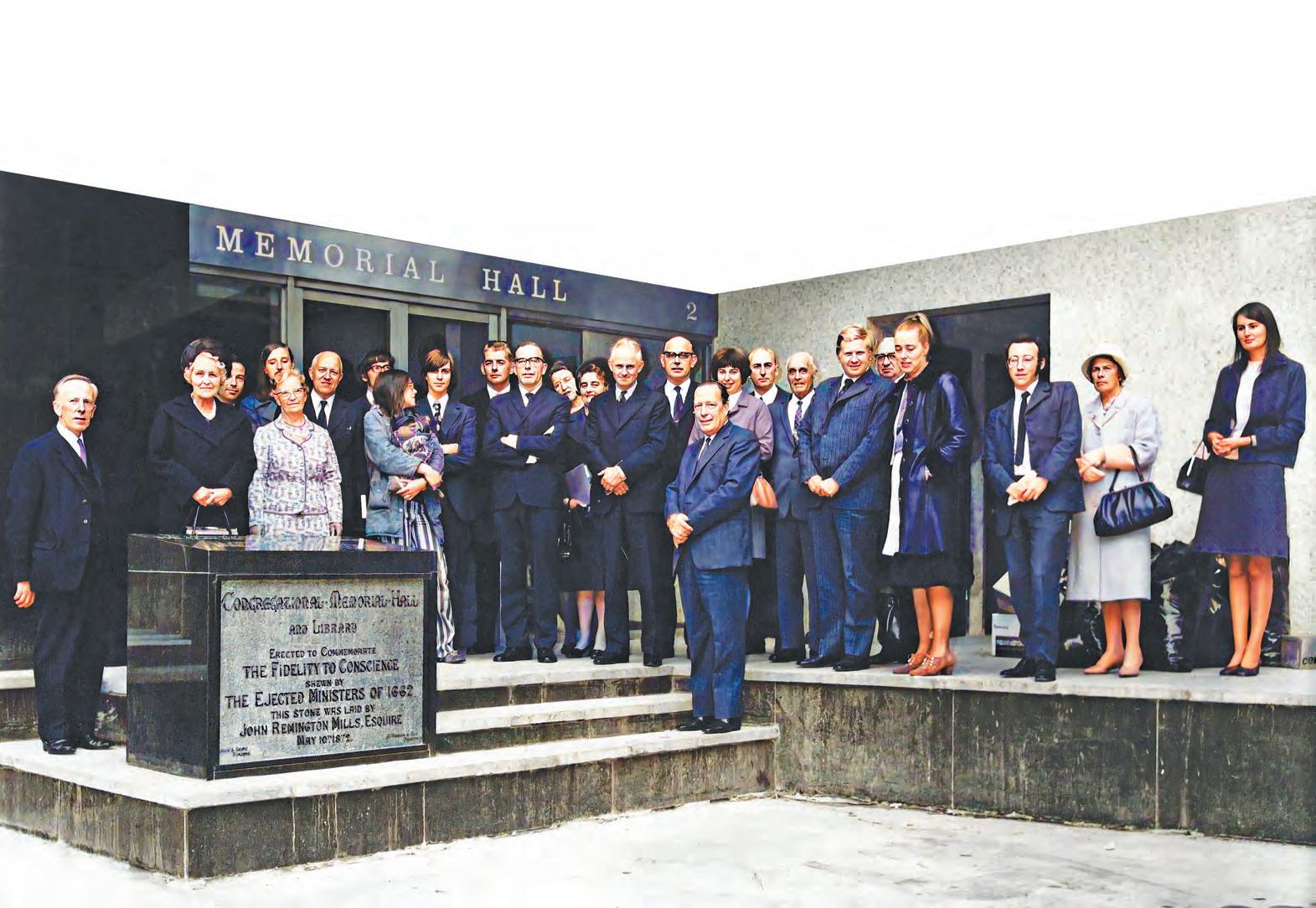
The declaration of the inauguration of the Congregational Federation in 1972 in Memorial Hall in London
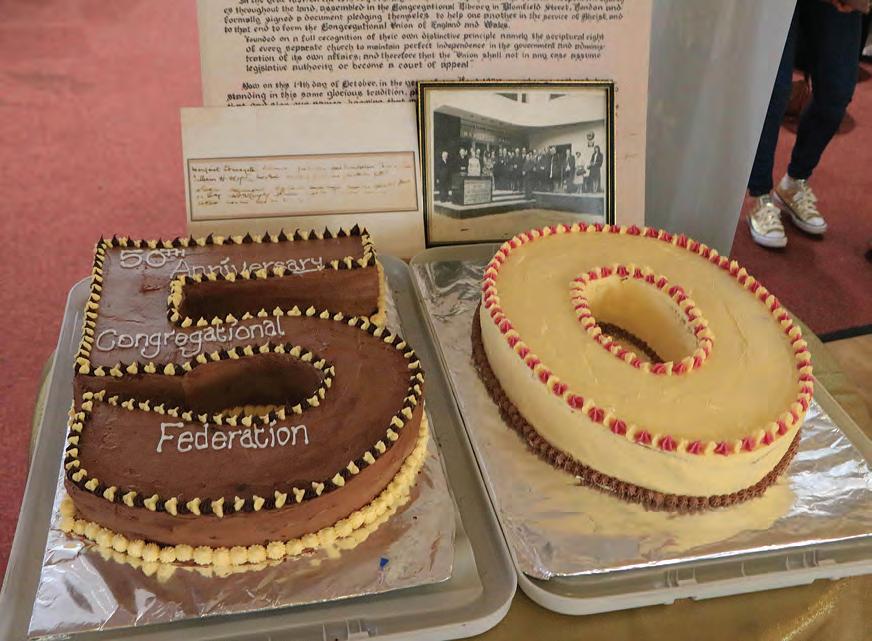
The 50th Anniversary celebration cake at the Congregational Federation Assembly 2022
Continued from page 3
MT: This lack of hierarchy is one of the key things to me in making us flexible and responsive, particularly when we’re pioneering, because it means you come up with something that can move very, very quickly and you can be innovative without waiting for someone else to approve it. You can try things out and be prepared to fail locally… or have success and share that with others.
SB: Is it frustrating for you who can move quickly, working with some of the more established denominations?
MT: I can tell you, working with some of the more ‘self-important churches’, I’m sorry to say that, but it’s the way it comes over, people don’t recognise the legitimacy of the less well-known churches. It can be a struggle.
SN: We have a long established history too. The non-conformist narrative is also important in the life of this country. You wouldn’t have sciences and modern languages at universities if it wasn’t for non-conformist academies. As a female minister, I still get people saying, “So you’ve been around since the 1990s”, and I say: “No, try the 1910s.” The story of radical non-conformism is a long one. I’m biased, I say it’s been around since the New Testament, but it’s a story which doesn’t often get told.
YC: The oldest non-conformist church is the Congregational Federation church based in Horningsham. It’s over 500 years old.
MT: Yes, it’s 50 years of the Congregational Federation, not 50 years of congregationalism.
SB: What’s the shape of the Congregational Federation in 2022?
YC: We’ve got 230 churches from the Shetland Isles to the Isle of Wight. We’re in cities and in very rural areas. We’re everywhere. We have clusters in the Leicester area, the Oldham area, in Gloucestershire, in Devon and also in London. We have a small team based in Nottingham which supports our churches. We provide that support and advice, a place of gathering, and the encouragement so that we can have a part to play wherever our locations are.
SN: Most of our churches are small. But I’m less worried about numbers than I was. Small groups of committed Christians can really help shape their communities and offer a depth of Christian fellowship. They can let go of trying to be a ‘model church’ and see what they can do in that place for the Kingdom of God. During the pandemic our churches have been food kitchens and vaccination hubs.
SB: Mark, you take over as President after the General Assembly on 14 May 2022. Do you have a theme for your year?
MT: Yes, it’s ‘hope’. Suzanne’s theme was ‘joy’. So I think it follows on. It’s my firm belief that we need to look forward, not hark back to the so-called heyday of the church 50 or 70 years ago. That’s the wrong emphasis. The world has moved and the church needs to move with it, to get in front of it. We need to do fresh things to engage with people. The spiritual quest of the human being hasn’t ended, it’s about how to engage with that in a way that makes sense for people now. The Covid thing has given us a huge opportunity actually. There is pressure to go back to how things were but we need to resist that. At my church we’re going to keep our services hybrid. Both in the building and on zoom. Zoom gives us something extra in terms of fellowship beyond those who can get into our building.
SB: I was struck by another part of the statement after your Spring School, ‘We need to be resurrection people; not resuscitation people.’ Is that a tough message to deliver?
MT: It can be. But that’s where we’re at now. We’ve had 50 years of the Federation. We want there to be another 50 and another 50… being honest if we don’t change, the chances of that happening are lower. The hope is that there are new ways of being church, which are not just sitting in pews on a Sunday morning. All it needs with the technology of today is one person with a good idea. They have almost infinite reach. They can make a difference.
SN: I’ve seen a few examples where groups have ‘died’ with the knowledge that the resources left will bless future projects. That’s a message of hope.
SB: How does ecumenism feature in the life of the Congregational Federation?
YC: We enjoy being part of the Free Churches Group and playing a full part in the life of CTE. Because of the independence of our churches, we can’t add our name to the very public statements, for example on refugees or Ukraine, but our churches work for justice and to support their communities.
SN: Being so locally based, our first instinct when we want to do something is to look for those churches who are around us. We are instinctively collaborative on the ground. We’re often further away from another congregational church so we look for those relationships more, not less.
With thanks to Churches Together in England. This article first appeared at cte.org.uk
SB: How are you celebrating your 50th year?
SN: Of course, being congregationalists a lot of things are happening in local churches.
YC: Together we’ve written a new hymn for our national assembly, we’ve published a calendar based on the parables of Jesus, we’ve got a book of reflections coming out in October and we’ve also published a joint book with the United Reformed Church called ‘Golden Threads’ about how we’ve worked together over the last five decades.
SN: I’d like to acknowledge the United Reformed Church which is also celebrating its 50 year anniversary. There was a parting of the ways 50 years ago, but there have been connecting points since that time and relationships now are very good.
MT: In fact we’ve just agreed to work with the URC to set up a joint hub to help Fresh Expressions pioneers. We’ll be training and supporting pioneers together. That’s got to be great for the future.
‘Resurrection people; not resuscitation people.’
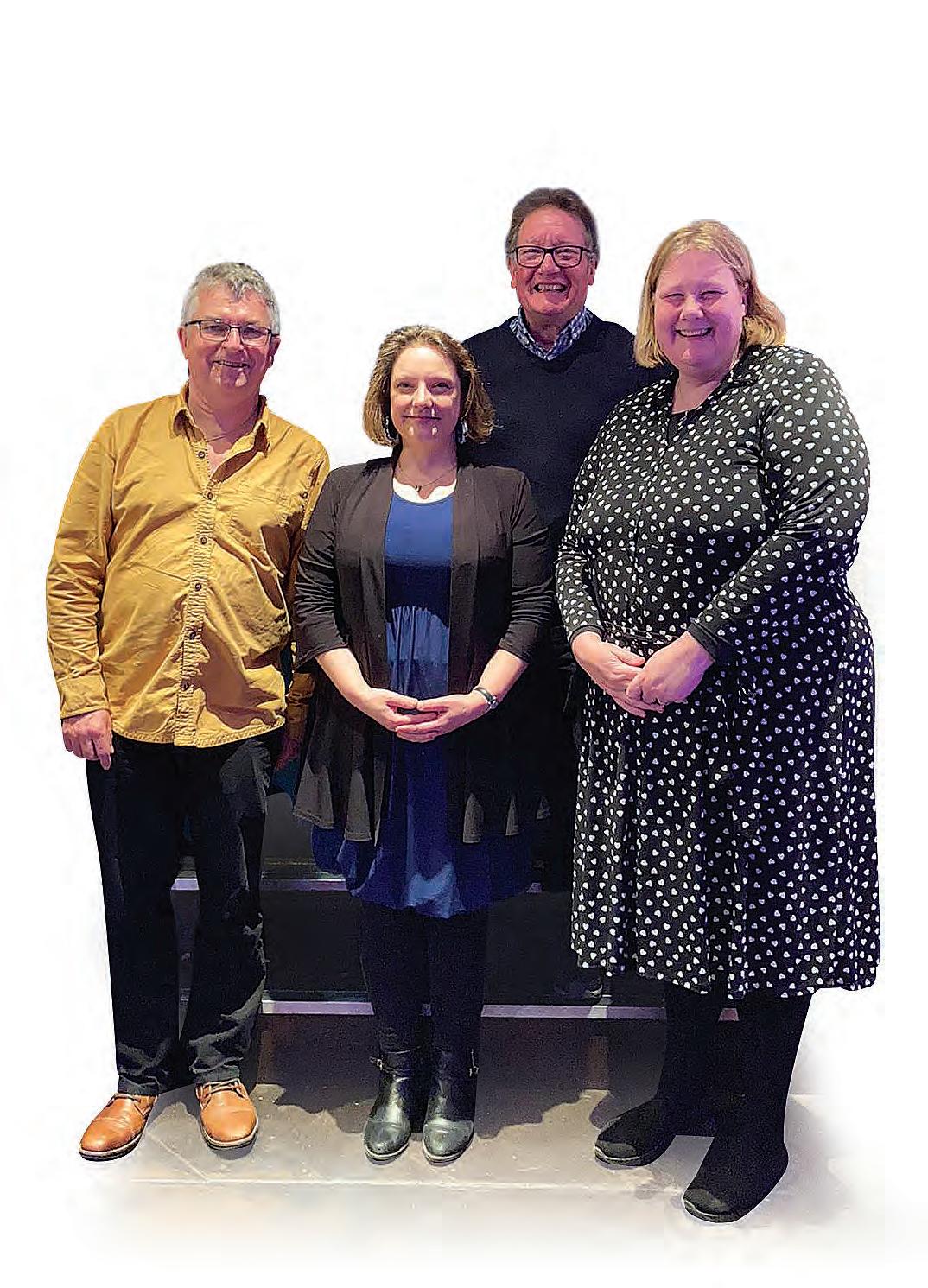
The leadership in March 2022 (from left to right): President Elect Mark Taylor, President Suzanne Nockels, Chair of Council Jim Lyon and General Secretary Yvonne Campbell
Remembering Margaret Stansgate
For the 50th anniversary of the Congregational Federation, Refresh asked Suzanne Nockels, Congregational Federation President 2021-22, to interview Frances Nestor about the Federation’s first President – Frances’s grandmother, Viscountess Stansgate. It’s a fascinating story about a radical, pioneering woman who was at the heart of the founding of the Federation.
Viscountess Stansgate, Margaret Benn, was born on 7 June 1897 and died 21 October 1991. She was both a theologian and an advocate of women’s rights. Margaret was only in her twenties when she was rebuked by the Archbishop of Canterbury, no less, for joining the League of the Church Militant –a predecessor of the Movement for the Ordination of Women.
elected to Parliament as a Liberal MP. While many other members of the family saw politics as their vocation, religion was her passion.
She first sensed God’s presence in early childhood. Her first experience was in a convent in France in the early 1900s as she observed the nuns worshipping.
Frances Nestor: granddaughter of the Congregational Federation’s first President, Viscountess Stansgate
Over the 20th century, many British Congregationalists became convinced of the merits of ecumenical cooperation, and the majority of Congregational churches in England and Wales united with the Presbyterian Church of England in 1972 to form the United Reformed Church (the Congregational Union of Scotland also joined in 2000). However, a significant minority did not join the URC and formed instead two other groups: the Congregational Federation and the Evangelical Fellowship of Congregational Churches (EFCC).
As first President, Margaret helped shape the Federation’s principle of ‘unity within diversity’. She was married to the politician William Wedgwood Benn and had four sons, including the Labour politician Tony Benn. Church of England deacon Frances Nestor is Margaret’s granddaughter. Suzanne Nockels asks Frances about her famous grandmother. . .
Suzanne: What influence did Margaret have on you?
Frances: She influenced me far more than I realised at the time. She was born and grew up in Scotland and came to London aged 14 when her father was
When the family returned to Scotland the following year, she started attending an Episcopal church nearby. She was only seven or eight at the time. Her grounds for faith were quite intuitive, although seeking to explore and understand better the implications of that ‘first hand’ experience later became her life’s work.
I think I absorbed by osmosis something of that sense of faith and confidence in a God of overwhelming love, although as a child and adolescent I considered myself an agnostic. My own parents weren’t churchgoers (though softened towards religion in later life), so in a sense, she was the family Christian, the person to go to with spiritual and religious questions.
She suffered great personal tragedy: her eldest son Michael joined the Air Force in the Second World War and was killed in 1944. As a mother whose son is now the same age as that of Michael when he died – 22 –I cannot begin to contemplate what she must have through; how she managed to find meaning and even joy in life during the rest of her life.
I was always struck by the fact that her faith remained; grew even, after this. She believed that she would be with him again after she died and this conviction offered great comfort. Her very liberal theology went hand in hand with a deeply-rooted sense of God’s presence: her faith the well-spring of all she was and did.
In my twenties, I had several experiences which I suppose are best described as numinous, of a
Suzanne Nockels, Congregational Federation President 2021-22
Presence whose love both encompassed and transcended this world – more real than anything in our material existence. The spiritual journey she had trod encouraged me and gave me the confidence to explore the implications of such experiences. I was baptised and confirmed in 1999; and eventually ordained in 2012 in the Church of England as a permanent deacon.
Suzanne: What were her guiding principles?
Frances: She was not dogmatic in religion or politics (although was active in the Labour Party for much of her life) and was able to disagree well. She didn’t find biblical literalism helpful, and was very keen on reconciling quite liberal biblical scholarship, and science, with her faith.
One of her guiding beliefs was the importance of listening to others; seeking to understand what motivated them, and how their experiences had shaped them. One of her favourite phrases was that discussion should generate light, not heat. She would ask ‘What have you been thinking about?’ when I visited, and really wanted to know. In the public sphere this translated itself into a strong belief in dialogue, not argument; in seeking to bring people together through what they had in common, rather than what separated them. This was, I think, at the heart of her passion for ecumenical and inter-faith dialogue.
She was very family-oriented but also a strong supporter of women’s suffrage, although in later life rather suspicious of some aspects of the post-1960s feminist movement. She was undoubtedly ahead of her time in her passionate belief in the ordination of women. Originally confirmed in the Church of England, she left it in 1948 for the Congregationalists because it was clear that there would be no progress on this in the near future in the Anglican Church. And it wasn’t until 1992, the year after she died, that the Church of England voted in favour of ordaining women to the priesthood.
Suzanne: Do you have a memory that illustrates her character?
Frances: Her parents had both reacted against the strict Presbyterianism of the time, with its emphasis on pre-destination, and, to their minds, a harsh and judgmental God set on trapping the unwary at every turn. Her own spiritual development was probably partly a reaction to their Victorian rationalism. When my father was six, he caught tuberculosis. There was no cure at the time apart from bed rest, and he could have died. He was sent to the seaside because the air was better, and so spent many months away from home. She always chose to send him to stay with Christian Scientists, not because she subscribed to all their beliefs, but because they had a Continued on page 8
‘One of her guiding beliefs was the importance of listening to others; seeking to understand what motivated them, and how their experiences had shaped them.’
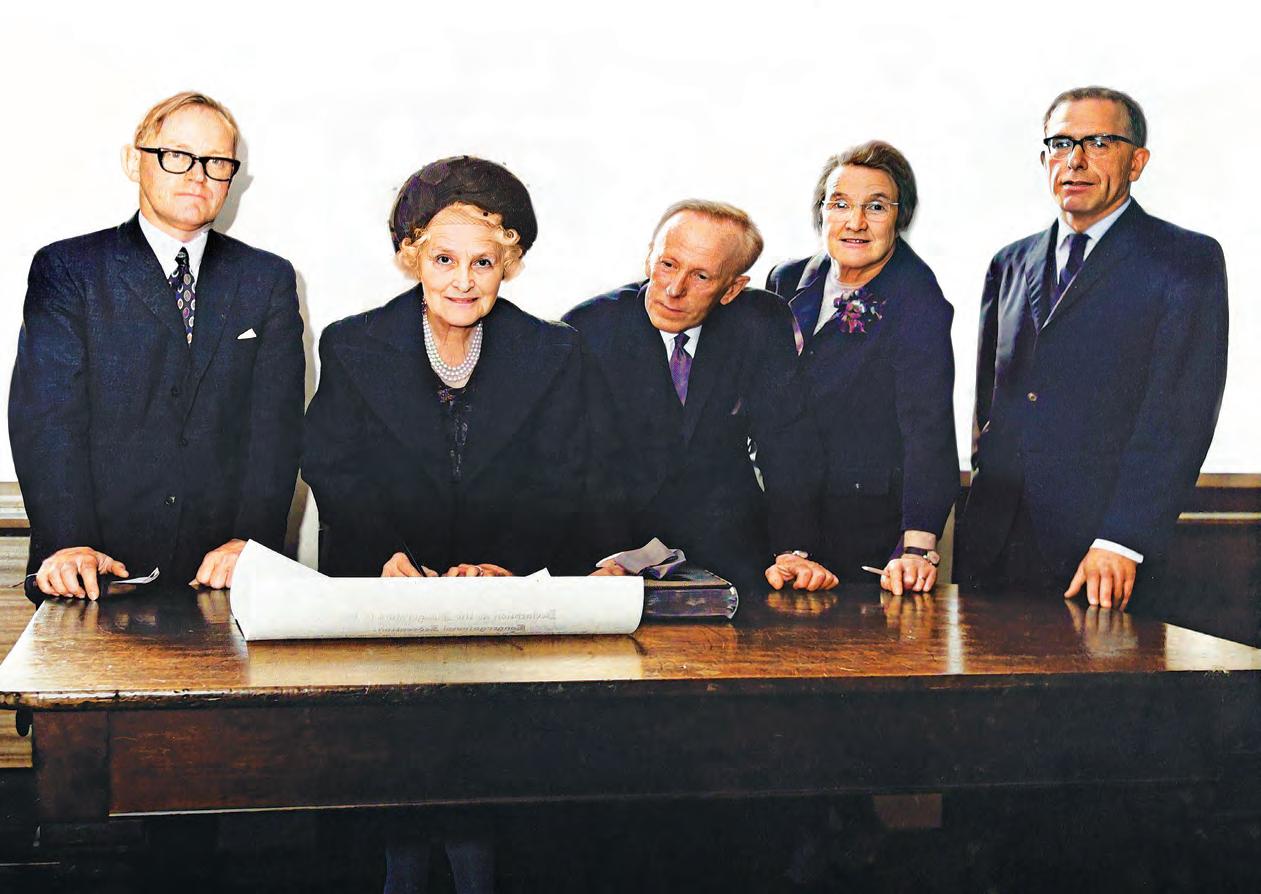
Margaret Stansgate (second from left) pictured at the signing of the declaration founding the Congregational Federation in 1972, with John Wilcox, Reg Cleaves, Elsie Chamberlain and Ivor Morris. With thanks to Margaret Morris
‘She was especially interested in religious dialogue: with those who didn’t have faith; with other Christian churches; and with other faiths – most particularly Judaism.’
Continued from page 7
philosophy and outlook of hope. Rather than embracing the realism of her mother that the world is a harsh place and suffering is part of life, she wanted him to be with people who believed he could get well. That to me says a lot about her character. He did recover and lived to the age of 88.
Suzanne: What would she say to the Congregational Federation today?
Frances: As well as women’s ordination, she was especially interested in religious dialogue: with those who didn’t have faith; with other Christian churches; and with other faiths – most particularly Judaism.
In her autobiography, she wrote: “The two faiths are necessarily different and can never become one. While it is not for me to say whether a knowledge of Christianity is of value to Jews, I am quite sure that Christians need to understand Judaism” (My Exit Visa, p219).
She was a vice-president of the Council of Christians and Jews and counted leading Jewish figures among her friends and associates. The Chief Rabbi Immanuel Jakobovitz gave a memorial lecture in her honour around 1993. She was a great supporter of the Hebrew University and was delighted to have a library – the Margaret Stansgate Library – named after her in 1975, and to be made a fellow at the age of 85.
Some of the scriptures she loved best were from the Hebrew Bible, especially the bits about prophets speaking truth to power on social justice. That I think was what both her son Anthony (Tony Benn) and my father David took from her teaching.
Her emphasis on the importance of freedom of conscience and a dislike of religious authoritarianism meant that she felt more at home in the Free Church than in the Church of England of the mid-twentieth century. Following her departure from the Anglican Church, she ministered happily within the Congregational Union during the 1960s. She was a close friend of Elsie Chamberlain, whom she often talked about with great affection. Elsie, a fellow Congregationalist, was the first woman to be ordained as an Air Force Chaplain. I believe I met her on at least one occasion.
The Congregationalist belief in the priesthood of all believers appealed to her. She wrote: “I do not think the Almighty wants us to accept dictatorship and have our minds made up for us by bishops. People should arrive at their own beliefs in the light of biblical religion” (My Exit Visa, p230).
It was this wariness of authoritarianism that lay behind her opposition to the proposed union between the Congregational Union and the Presbyterians to form the United Reformed Church. Those opposed formed the Congregational Federation and elected her the first President.
She found her spiritual home in the Federation, very much valuing its emphasis on unity within diversity – that each church acted independently within the umbrella of the Federation. She disliked enforced conformity, emphasising the uniqueness and preciousness of each individual journey to God, through the power of the Holy Spirit.
She would be delighted that the Federation continues to flourish 50 years after its foundation. In a religious and political climate of increased polarisation, I believe she would celebrate its spirit of independence, its gift of listening, its ability to disagree well, and its faithfulness and integrity in seeking to discern what it means to proclaim the gospel afresh in this place and time.
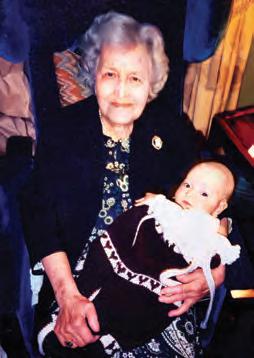
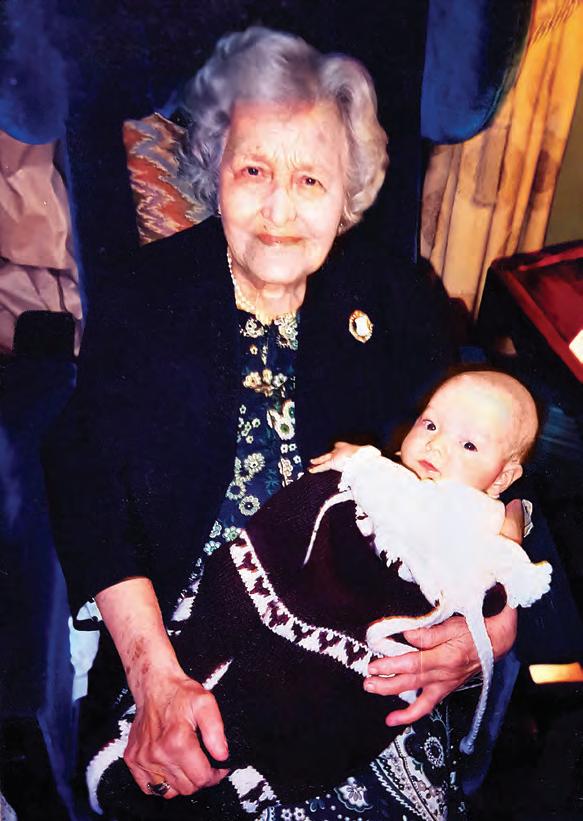
Margaret with Hilary’s son Jonathan Benn in 1987/88
Margaret Stansgate’s autobiography, My Exit Visa (Hutchinson, 1992), gives an excellent portrait of her life and work.
Finding joy
Suzanne Nockels, the Congregational Federation’s President for 2021-22 and Minister at Tapton Hill Congregational Church, reports on her year leading our churches and her chosen theme of ‘joy’ Steadfastness
I thank my God every time I remember you. In all my prayers for all of you, I always pray with joy because of your partnership in the gospel from the first day until now, being confident of this, that he who began a good work in you will carry it on to completion until the day of Christ Jesus. (Philippians 1:3-4)
I chose my Presidential theme of joy way back in 2019 before the lockdowns of the pandemic, before war in Ukraine and before the cost-of-living crisis. I must admit I nearly abandoned it. Yet, the apostle Paul in prison didn’t abandon joy despite being under house arrest. In his short letter to the Church in Philippi he uses the word 16 times. It isn’t sticking plaster stuff. Paul’s invitation into a joy that can exist in the hardest of times is threefold; thanksgiving, humility and steadfastness.
Thanksgiving
Obviously, the year shared the Presidency with Rev Dr Janet Wootton and this Presidential year have been unusual, but I have seen those three things at work. I think we learnt how to see the beauty and worth of ordinary things and they have filled us with gratitude. I have seen gardens planted and lost count of church meals where someone has said: “It’s so good to be able to do this again!” This week I met a mum who was overwhelmed with the blossom in a nearby park because she’s not been able to get out of hospital while her daughter has cancer treatment. Noticing beauty and going “wow” was restorative for her.
Humility
Humility does not sound li ke it leads to joy, especially if your idea of humility is beating yourself up. Humility is having a proper assessment of ourselves – not doing ourselves down and not puffing ourselves up. I have been so impressed with churches that just rolled their sleeves up and thought: “How can we serve in this?” It wasn’t about being a shinier church than the one down the road but simply being who they could be; running foodbanks, community kitchens and support hubs. We were also prepared to learn new things and benefited from new technology. Often it was people in their 70s and 80s who were running the live stream in some of the churches I visited!
Steadfastness is not the same as stubbornness. Paul roots it in Jesus’ steadfast love. If we stick with things, it is because Jesus has stuck with us. It has been tough, but our faith has helped us over the past two years. In all the change we knew that we were known by Jesus and loved by Jesus. I wonder if some things have become more important and other things less important for you and your church? Where should we still be steadfast? As we stick with things, even difficult things, will joy be found in them? May thankfulness, humility and steadfastness be our gateways into the joy of being in Christ. I want to close with some words by Frederick Buechner: Joy is home, and I believe the tears that came to our eyes were more than anything else, homesick tears. God created us in joy and created us for joy and in the long run not all the darkness there is in the world and in our selves can separate us finally from joy.
(F. Buechner, Secrets in the Dark: A Life In Sermons, London, Harper Collins, 2006, p.240)
‘Steadfastness is not the same as stubbornness.’
Suzanne having fun –finding joy in not taking herself too seriously!
There is hope!
New President Mark Taylor introduces his theme for hope for 2022/23
I was delighted to be inducted as President of the Federation at the Assembly in Birmingham. It’s an opportunity that it never occurred to me that I would have, but I want to make the most of it.
As I said in my address to Assembly, my theme for the year is ‘Hope’.
I hope that during my year I will have the chance to speak to many people in all sorts of Congregational churches, big and small, in villages, towns and cities. My message to them all will be that there is indeed hope that our churches will flourish, because I am convinced that, despite the fall in numbers that identify themselves as Christian, there is still great interest in the figure of Jesus Christ.
However, I also think that the churches need to look at themselves and their practices if they want people to engage with them in their search for meaning.
Traditional Sunday morning church services work well for many people and, done well, will always have an important role to play. But we need to ask ourselves how appealing they are to people who aren’t currently involved with church.
Society has changed. There are now many interesting things to do on Sundays. People may not want to give up a whole Sunday so they can attend a service in the middle of one of their two days off work. In addition, people are no longer so willing to be talked at – they want to have a say themselves.
My hope is that I can encourage Congregational churches to think about what they can do to engage with those outside the church, to explore the possibilities of new ways of being church and to use the depth of experience and knowledge within the Federation for mutual support.
I am confident that the locally-based decision making that is inherent in the Congregational way of being church makes our churches ideally placed to fulfil my hopes, and ensure we have thriving churches and a vibrant Federation moving into our second 50 years.
President Elect 2023/24
An introduction to Oliver Kinchin, chosen as the new President Elect at the 2022 Assembly, by the man himself
I have been part of the Congregational Federation family since 1998 when I joined Witney Congregational Church in Oxfordshire, where I started preaching.
Following our family’s move to Oldham, I became a deacon at Hope Congregational Church in the town and started training on the Federation’s Integrated Training Course (ITC). During my training I became the minister at Padfield Congregational Church in Derbyshire, taking up this post in 2013, and being recognised by the Christian Ministries Committee (CMC, now replaced by the Church Support Committee) in 2015. I stepped down from being in pastoral charge at Padfield in 2019, but still regularly preach in churches across the North West area.
I began teaching on the Federation’s Growing in Faith Together (GIFT) training course in 2015 and have been accredited by the CMC in this dual role.
I also teach on the ITC Level 4 course, specialising in Discipleship and Christian Spirituality. In wider church matters, I represent the Federation as a Governor for Northern College – a URC training centre in Manchester – being involved with all aspects of college life, including recruitment and disciplinary matters.
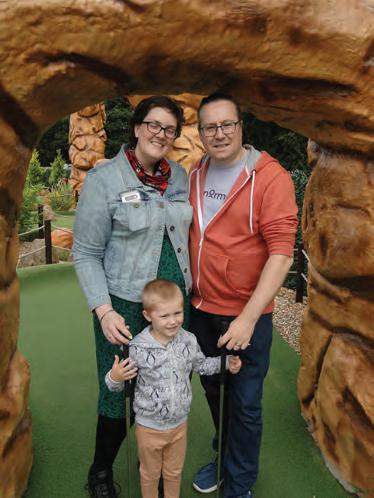
I am married to Emma and together we are raising a son who will be starting primary school in September 2022. Both Emma and Miles are very supportive of the work that I do for the Federation and will often accompany me when I am leading worship or teaching in Nottingham. All three of us are looking forward to getting to know more of you across the wider Federation.
Oliver can be contacted at: windsweptrev@yahoo.com or 07931 734 978
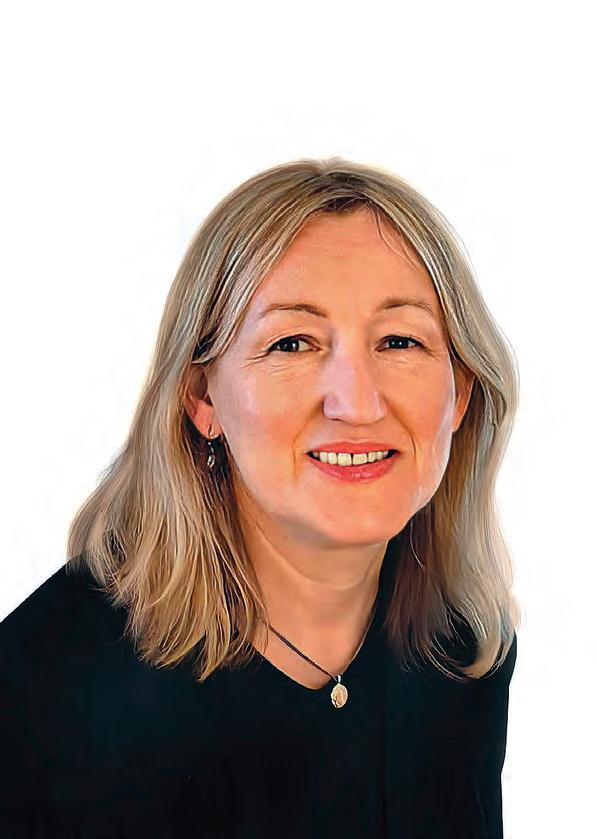
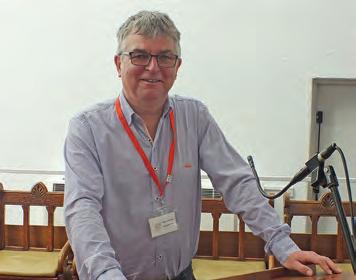
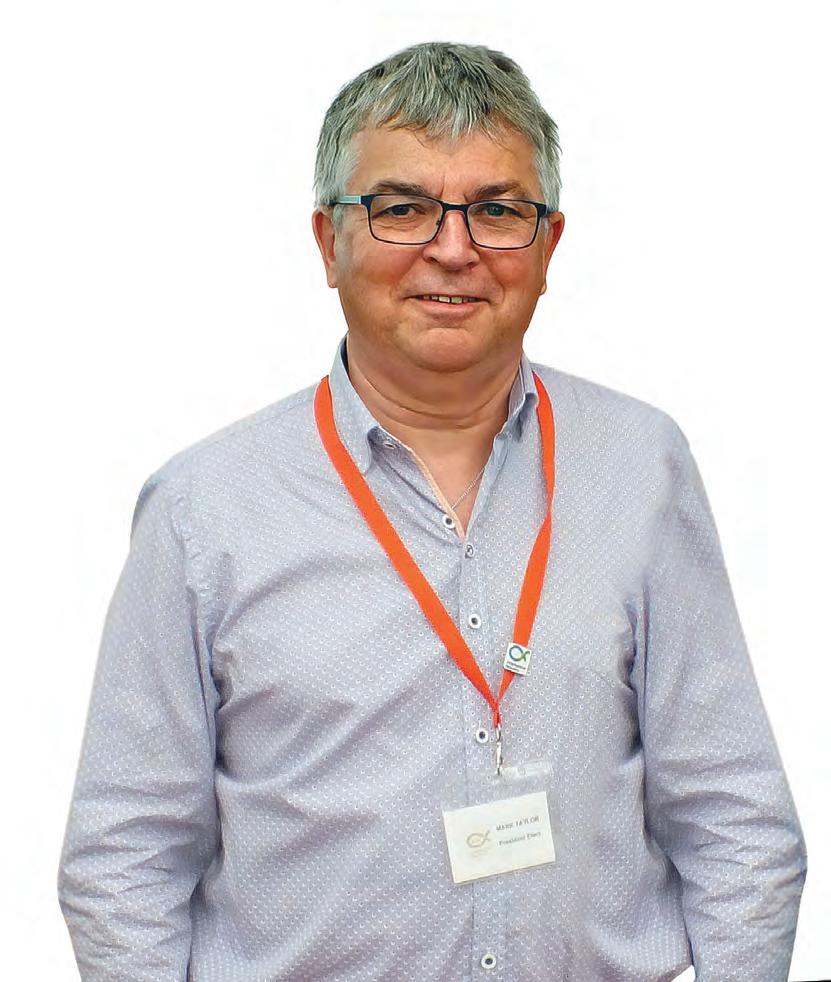
Mark Taylor – this year’s Congregational Federation President and Minister at London Road Congregational Church in Newark
Photo:
Congregational Federation Assembly 2022
Reflections by General Secretary
Yvonne Campbell
I arrived home on Sunday afternoon with a happy tired feeling after the Assembly weekend, hosted by the North West Midlands Area in Birmingham. Although the Assembly is my responsibility as General Secretary, it is very much a team approach. This includes the Area Churches, Congregational Federation staff, Chair of Council and Presidents, and this weekend was no different. Thank you to all who helped make it such a great weekend.
FRIDAY
Friday afternoon has become a time of fellowship for those in ministry, to learn and share together. Ministers and Pastors gathered this year to listen to the well-known author Bob Hartman, who gave us four pointers for story-telling:
Bring the characters to life
Build trust with your audience
Build trust within your audience
Share about God
Bob left us all ready to try something new when telling Bible stories, inspired by Psalm 78!
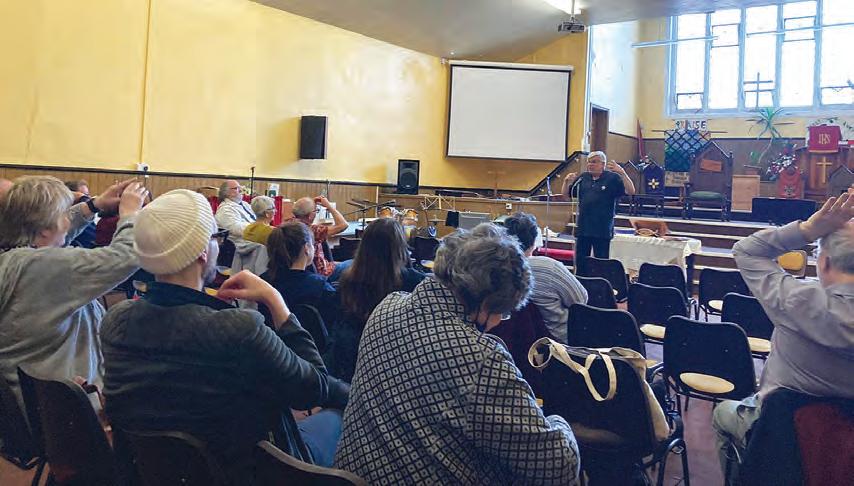
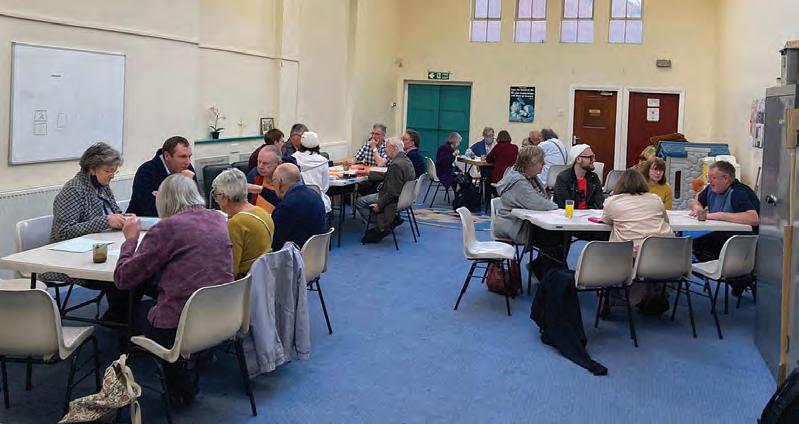
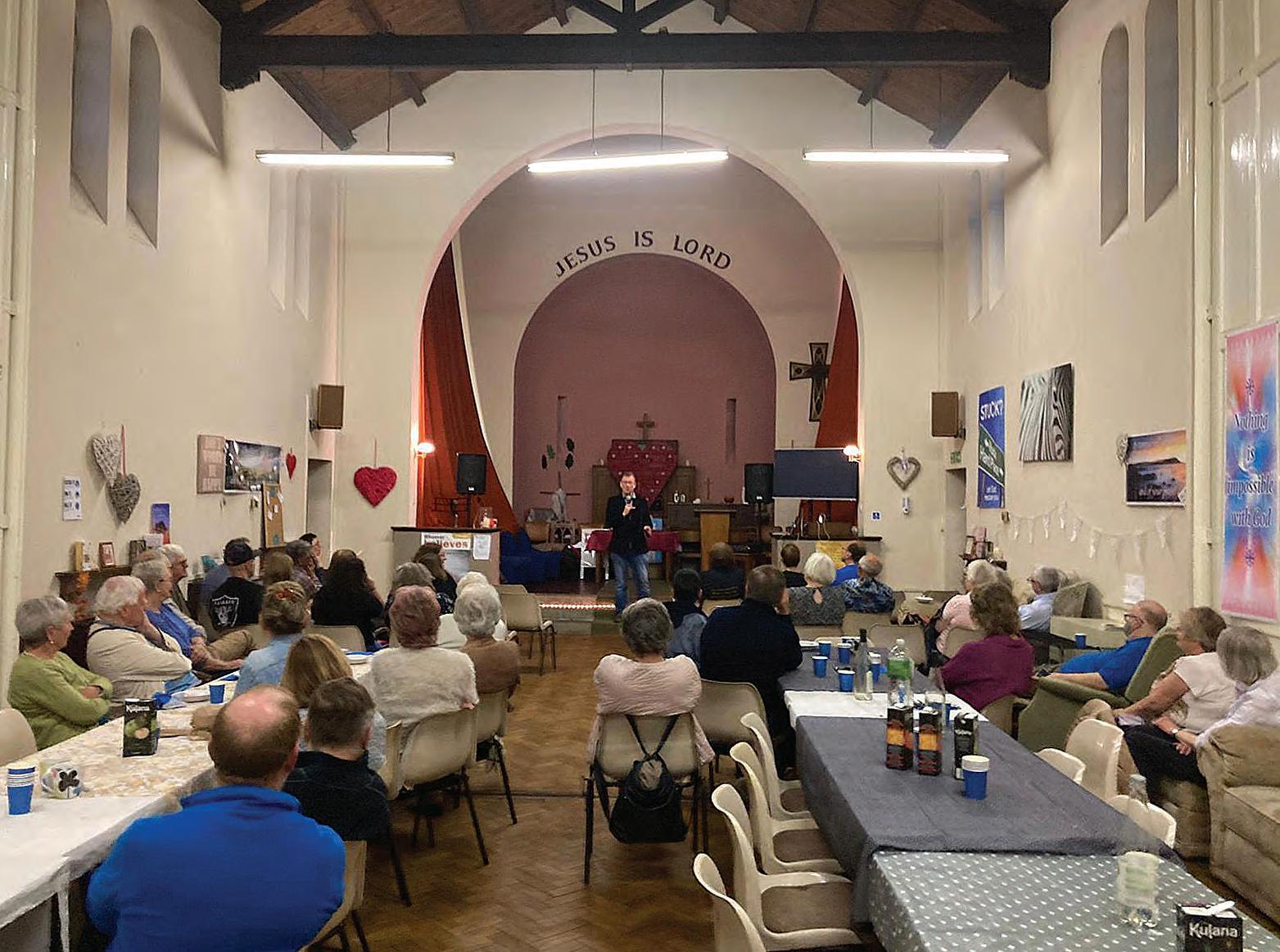
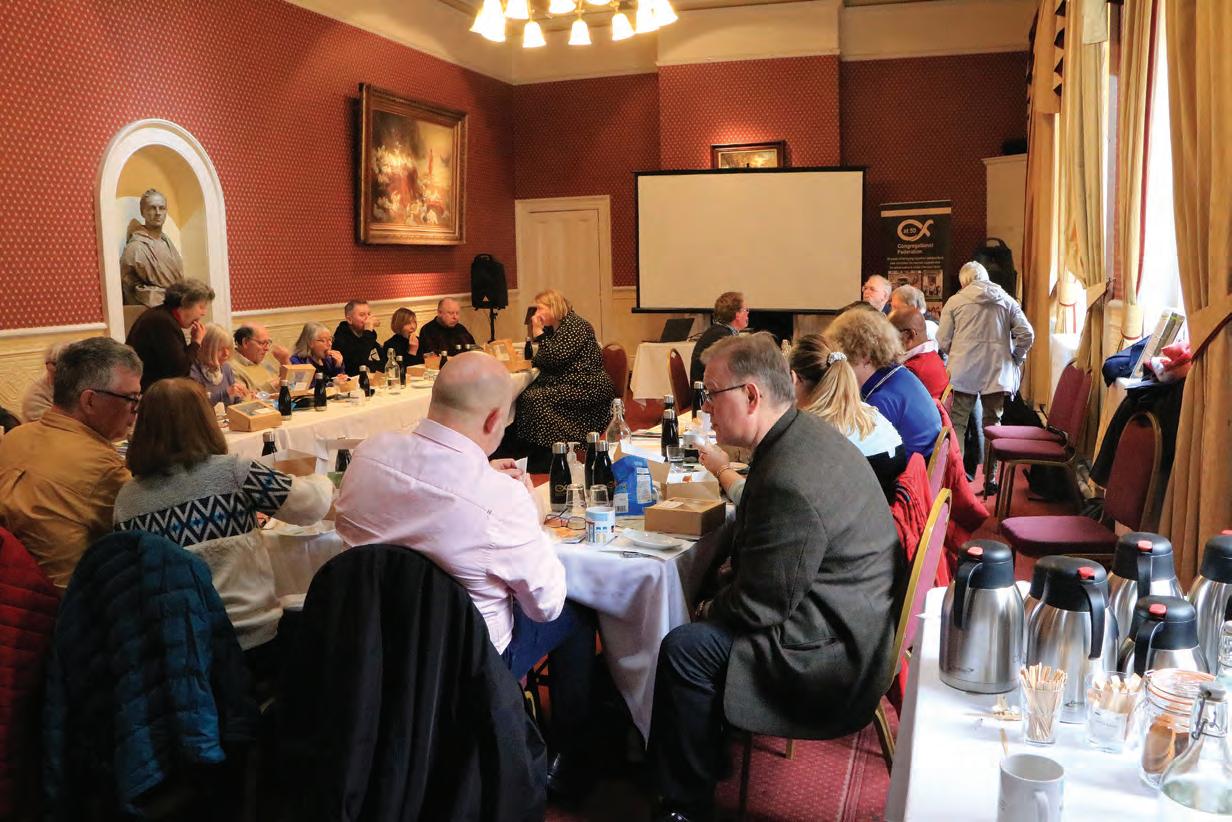
Many of us gathered for the Friday evening Fringe. It was an evening of conversation, starting with an open discussion about some post-pandemic church models and the hybrid church charter. It was exciting to hear about the new ways church is emerging with the use of technology. In the second half of the evening we had four themes: prayer walks, communion, good works and neighbourhoods. It was a table talk-based discussion and the whole evening was topped and tailed by worship from David Gent. The table talk activities and PowerPoint are available on the website.
Thank you to Ladypool Road Congregational Church for hosting both these sessions.
SATURDAY
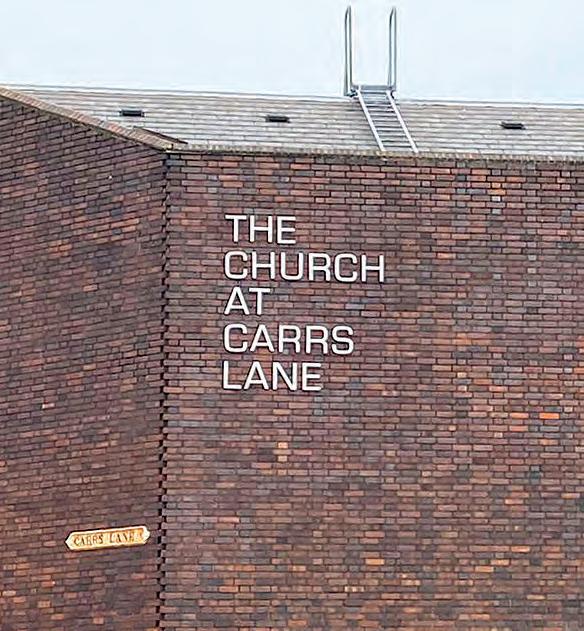
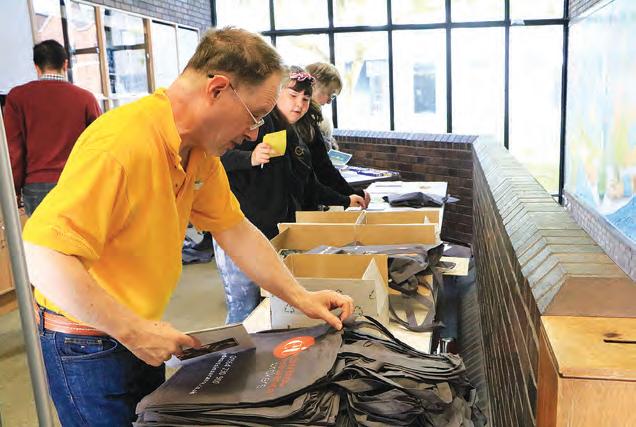
The main event on Saturday was at Carrs Lane Conference Centre. It was a quick turnaround for those setting up stands and packing bags, but it was wonderful to be able to open the doors at 9.30am and welcome a crowd of people all waiting patiently.
Continued on page 12
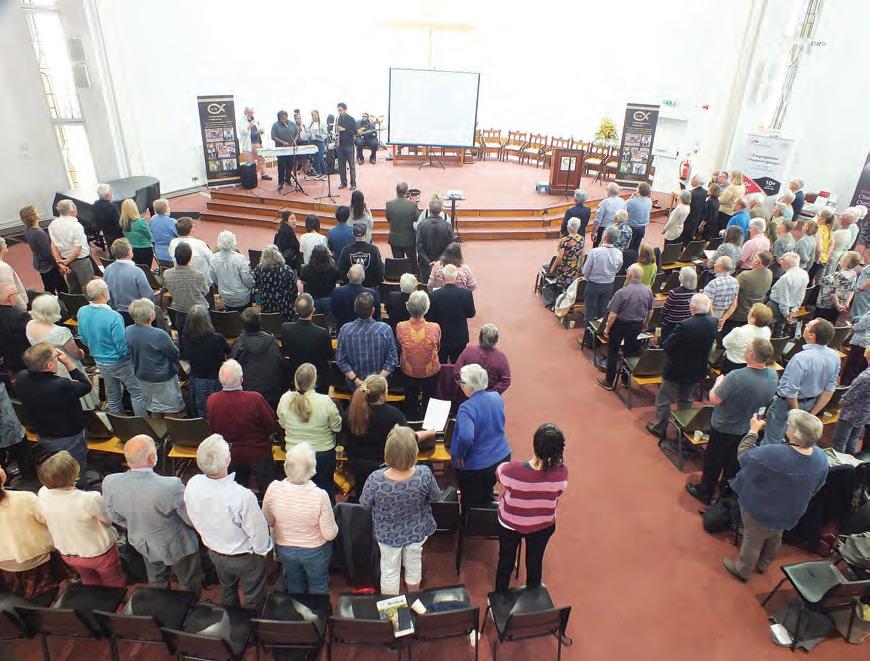
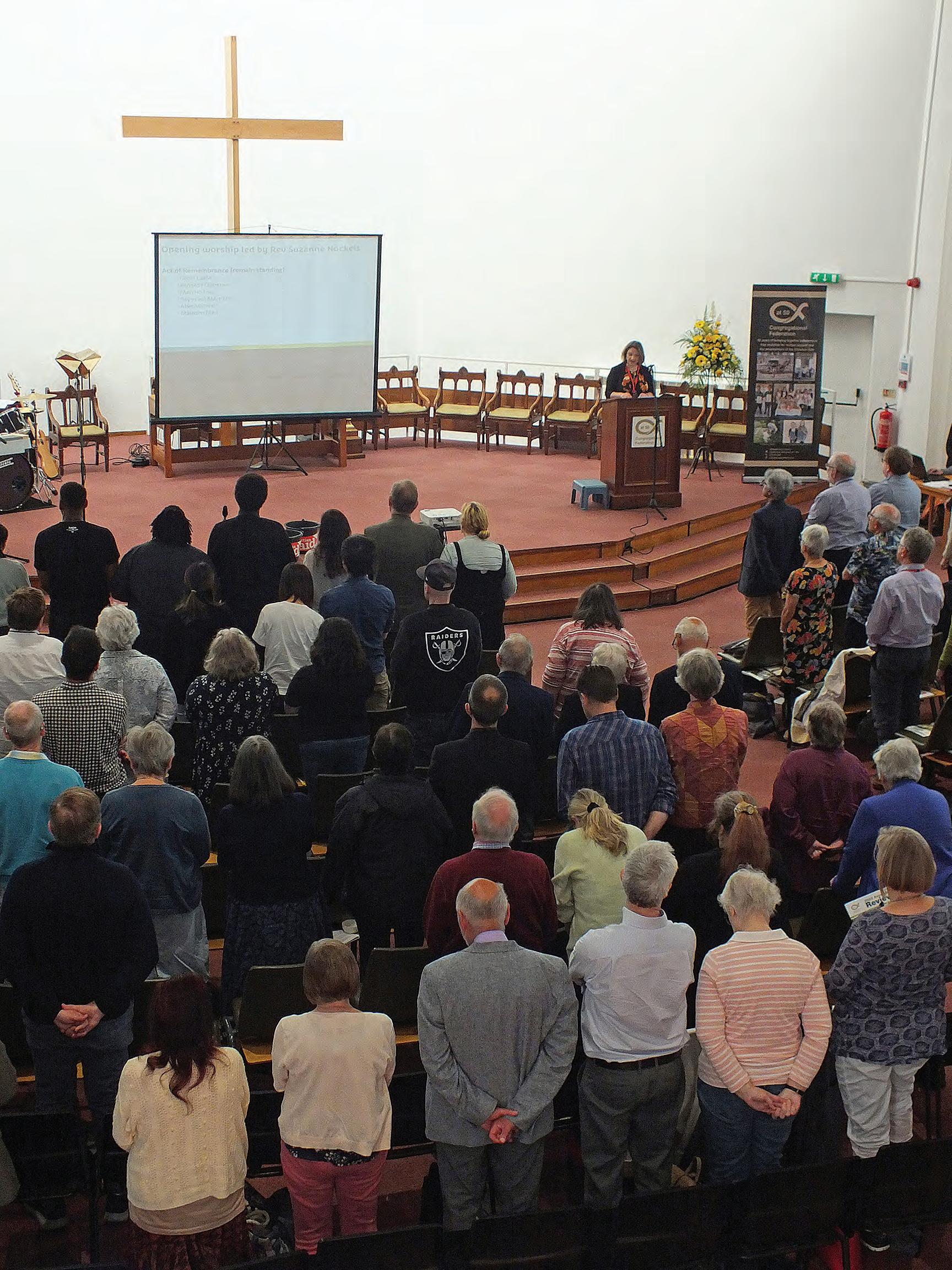
A full house at the Assembly at Carrs Lane Conference Centre in Birmingham
Photo: A. Halloway
FEDERATION NEWS
Continued from page 11
The venue was full; there was chatter and laughter all day. I thought there was a good mix of 50th Anniversary and present day content and a brilliant mix of ages. Luzia Watt, the Congregational Federation Church Support Worker, led a children’s assembly upstairs. My daughter Poppy loved it and was eager to tell me about the Bible-telling performance from Steve the Juggler. He opened the Bible and the pages were blank; he tapped it on his head twice and the pages changed to black and white, and two more taps and they had miraculously turned to colour. “The more we read our Bibles, the more alive the words become,” Poppy said!
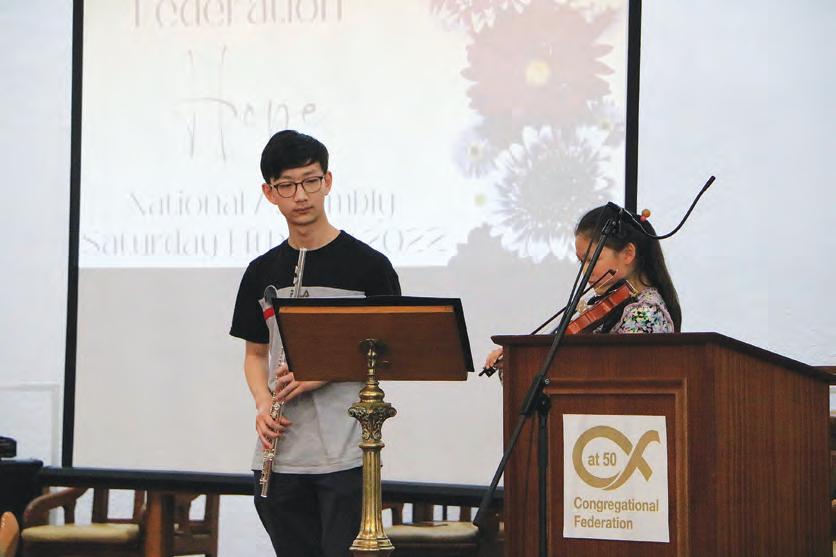
One special part of the day for me was when children from Wimbledon Congregational Church played the flute and violin for us at lunchtime.
The new President Mark Taylor shared an encouraging word comparing church with films. Films have moved with the times and so must the church, but there is still a place for every type of film as there is for different styles of church.
Congratulations to Oliver Kinchin, who was announced as President Elect, and Ruscombe were welcomed as a new Congregational church!
Assembly voted and agreed with the recommendation that observers at Council no longer need to be in place, after Oliver Kinchin presented an objective report.
The General Secretary of the United Reformed Church, John Bradbury, spoke with respect and hope and launched our joint publication Golden Threads, containing stories and memories of the past 50 years. Copies are available for £10.
The most memorable moment for me though, was listening to Frances Nestor – Lady Stansgate’s granddaughter. Lady Stansgate was the first President of the Congregational Federation. Frances shared memories and said how proud her grandmother would be of the Congregational Federation today.
I want to thank everyone who attended and made the day one of joy and hope. It was also the first Assembly to be live streamed and I know this was appreciated by so many.
The day continued with a Gofrit reunion! Gofrit was a Congregational Federation national action-based children’s and youth camp. It was a privilege to share in some classic crazy Gofrit games and share them with the next generation. Poppy can’t wait to play stir the porridge again. A huge thank you to Gail and Matt for their time as Gofrit leaders, bringing friends together in our 50th Anniversary year.
Hay Mills CC hosted the Saturday Social with fabulous Caribbean food and comedy from Paul Kerensa (his story was featured in our last issue). This included singing Christmas carols to the Benny Hill theme tune! Paul had us all laughing out loud.
SUNDAY
Mark Taylor spoke at Hay Mills CC on Sunday. His sermon challenged me. His three points were:
1. Sometimes church can be boring
2. Science can’t explain emotion.
3. We have to believe in Jesus – but what we believe might be different!
All credit to the church that they were able to still host us this weekend following leaders Jane and Stephane’s accident –a fall while cleaning the church. Please pray for them.
There is much to be thankful for and to reflect on doing better or differently next year.
We had prayed the Assembly would be a time of inspiration and good conversations, and so it was, so we thank God for his faithfulness and blessings.
General Secretary Yvonne launches the Golden Threads book with United Reformed Church’s General Secretary, John Bradbury
Yvonne welcomes Frances Nestor, who spoke about her grandmother –the Federation’s first President
Children from Wimbledon Congregational Church play the flute and violin at lunchtime
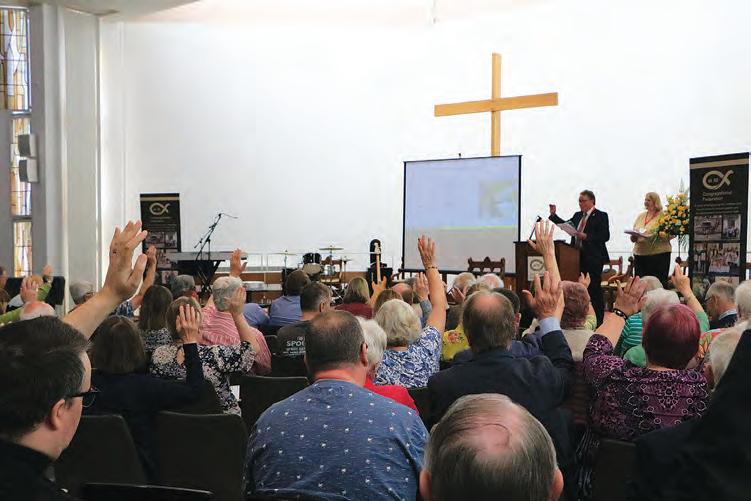
Saturday – voting on the decisions of the day
Comedian Paul Kerensa entertains the audience at Hay Mills CC on the Saturday night
Ministers listen to Bob Hartman on the Friday at Ladypool Road church
Fun at the Gofrit Reunion on the Saturday
Friday evening discussion at the Fringe
I came by train to the Assembly on the Saturday, and as I walked from Birmingham New Street Station to the church centre where the Assembly was taking place, my route took me straight through the centre of the famous Bull Ring shopping complex – the retail heart of Birmingham.
There, vying for the attention of passing shoppers, were two almost identical tents, both with bold messages printed all over them, a speaker preaching and people trying to give away literature.
President Suzanne Nockels leads the remembrance of those who have died
New President Mark Taylor
FEDERATION NEWS
“Just one person with an idea is enough” to transform the world, “and it doesn’t even have to be your idea! If we are prepared to adapt, there is still great hope. . . I think the Congregational churches are in the best possible position to adapt.”
As you can guess from this, Mark’s theme for the year will be hope, and we hope it will be a fantastic year.
The report from the new Chair of Council, Jim Lyons, also referred to the declining church numbers and memberships, so he said it was “vital that we have an organisation that addresses that” – meaning he is open to change that can help drive growth in the Federation, as the Lord leads. He said there is a need for vision for the future, and requested prayer that God would provide it.
Most of the ‘business’ decisions of the day were carried either unanimously or overwhelmingly in favour, with only one needing a careful count. Many attendees had good questions about the role of the Council and its relationship to the Assembly, and Jim ably led the discussion and provided as many answers as he could.
One particularly moving part of the Assembly had taken place earlier in the day. Outgoing President Suzanne Nockels led an act of remembrance of Congregationalists who have died in the past year. Another was when Congregational ministers with 10, 20, 30 or over 40 years’ service were asked out to the front to be thanked for their dedication.
It was also good to see ecumenical representatives at the Assembly for this special anniversary, as well as many messages from around the country and abroad that were shared by video, and a new church welcomed into the Federation.
A representative from Congregational Insurance, sponsors of the Serving the Community Awards, congratulated two award-winning churches and showed videos of the winning projects.
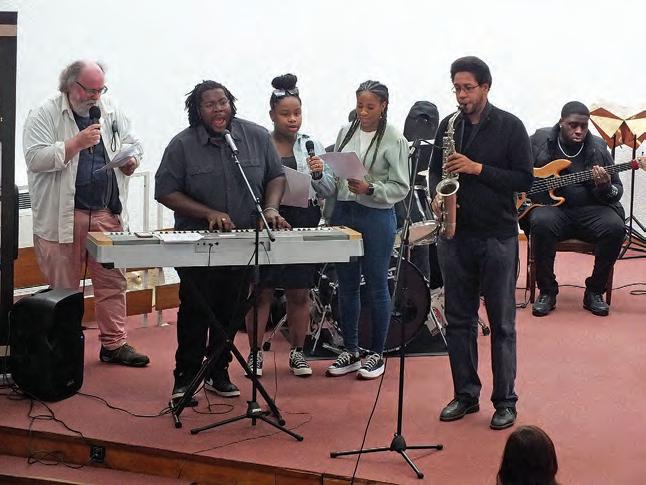
A highlight for me was the worship, led by Rychard Price and friends from Sparkbrook Christian Centre –an Elim church in Birmingham. The black gospel edge they gave to the songs was powerful and uplifting, and the variety was notable: from the new hymn composed specially for the Assembly, to classic contemporary worship songs.
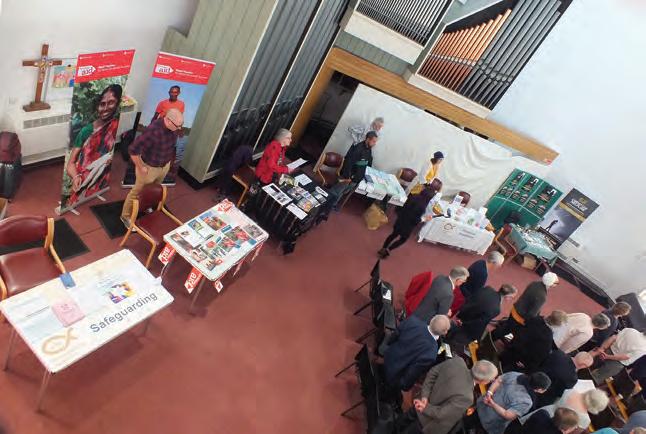
A beautifully-produced Assembly Review booklet guided everyone through the day, and a range of stands around the edge of the auditorium informed attendees about both Congregational projects and external groups like Christian Aid, a Christian helpline and church insurance companies. I gave away copies of Refresh to visitors to our table, and the feedback on the magazine was very welcome – both from those new to it and those already receiving it.
Attendees received a goody bag of treats on arrival, had a choice of lunches at the break, a supply of free tea and coffee through the day, and enjoyed two 50th anniversary cakes at the end – one in a 5 shape and the other an 0 shape!
General Secretary Yvonne Campbell reported that the offering at the Assembly had raised nearly £1,000 for Christian Aid! She also had a four-point message based on GOLD. G for Good News – how can we share it better? O for Online – how can we take advantage of online opportunities? L for Love – one way we can express that is through safeguarding. If your church hasn’t got a safeguarding certificate, now is the time to do it. And finally D for the Distinctiveness of Congregationalism – in 1972 there was a hope and spark to start something new to support each other. 50 years on, it is now us who carry that baton on –how can we play our part in the Congregational Federation?
It was a full house in Birmingham. It would be great to see just as many or more at next year’s Assembly in Somerset.
‘As Christians, we have to be at the centre of our culture, sharing our message in friendly competition with many different and opposing voices – but unafraid to take a stand for Christ.’
All photos: A. Halloway
Some of the stands representing different organisations
The worship band led by Rychard Price on vocals and keyboards
‘The Spring School was inspirational and a refreshment for mind and for spirit.’ – Participant
‘Is Christian Non-Conformity a Thing of the Past?’
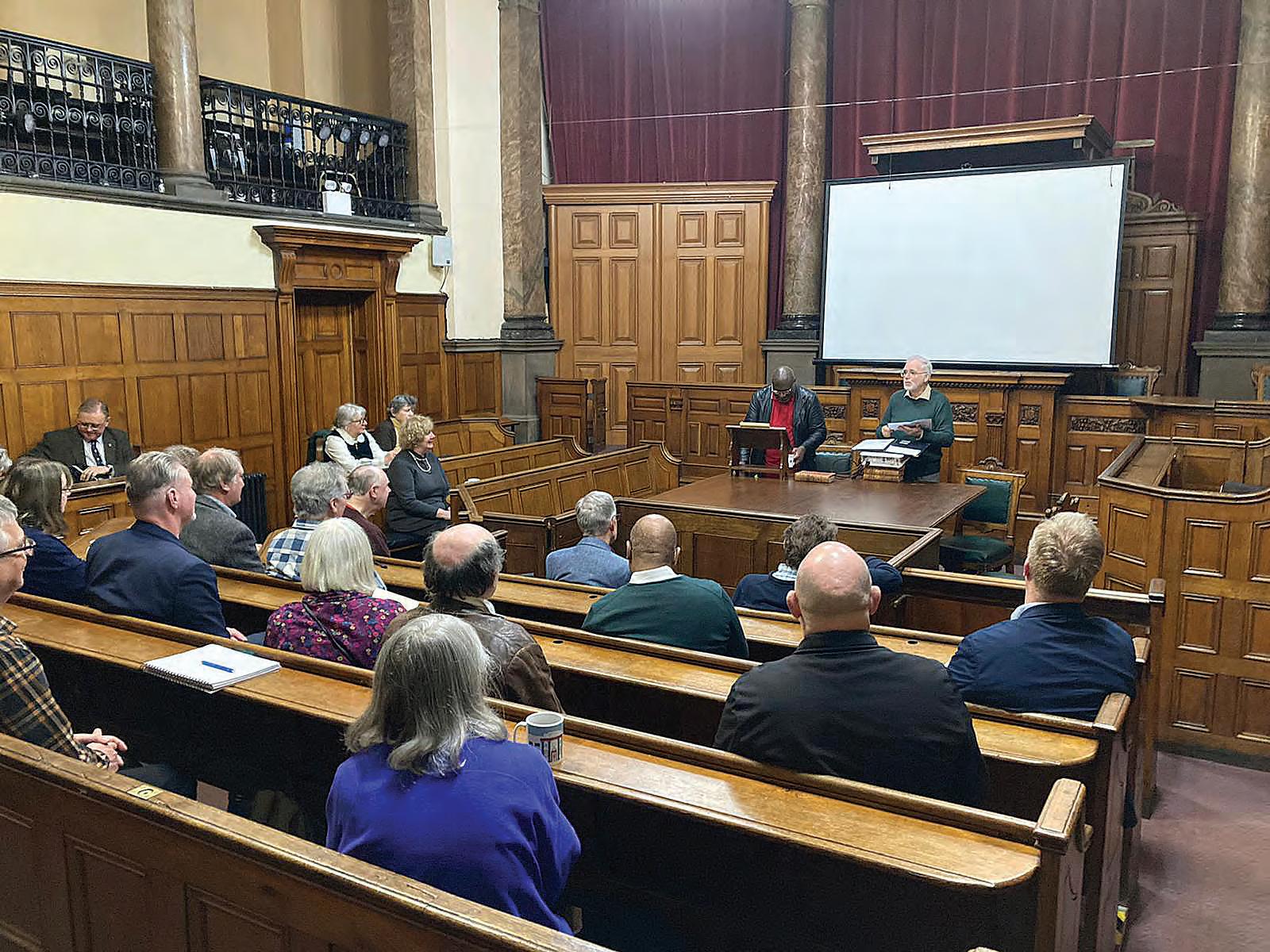
On 11-13 March 2022, the Congregational Federation launched its first Spring School as part of its 50th Anniversary celebrations and reflections. Led by the Congregational Institute for Practical Theology (CIPT), the weekend event was held in the iconic grade 2 listed National Justice
‘The atmosphere is kindly and welcoming. There is open encouragement to query and share in a wide variety of ideas.’ – Participant
While featuring the experience and convictions of the Congregationalist churches, the Spring School was not narrow in its intention or focus, highlighting the Christian non-conformist traditions generally, with participants exploring their collective and distinctive values, perspectives and principles. We were delighted that three of the participants came from the Non-Subscribing Presbyterian Church of Ireland. Other welcome participants included two representatives from the Free Churches Group –General Secretary Rev Paul Rochester and Moderator Rev Dr Hugh Osgood.
Rev Suzanne Nockels, the President of the Congregational Federation and a Tutor on the CIPT Training Course, gave the opening welcome address. Professor Anthony Reddie, the Director of the Oxford Centre for Religion, led a session on the importance of a Christian non-conformist voice in UK public life. Dr Julian Gotobed, Director of Practical Theology and Mission at Westcott House, Cambridge, presented sessions on the distinctives of that non-conformist voice within the broader family of Christian denominations and traditions and the need to recognise unfinished business in the areas of diversity and equity.
Thinking it through – the delegates at Spring School
Rev Dr Graham Adams, one of the ecumenical staff team within Luther King House, and also a Tutor on our course, emphasised that challenging selfserving ‘empires’ of whatever nature, size or scope, is a Christian non-conformist’s active responsibility.
The sessions
The workshop sessions, led as options running through the weekend, were led by two other Tutors on our course. Rev Dr Alan Argent, Research Fellow at Dr Williams’s Library, London, led an examination of significant historical Congregationalists with an ongoing influence, and Rev Dr Ann Jeffers, a former Director of Research at Heythrop College, University of London, led explorations into how we can read the Bible as non-conformists.
The event was greatly appreciated by all the participants and presenters and confirmed that there is a desire to renew an active commitment to speaking out in the name of Jesus against any vested interests that neglect or actively harm vulnerable and disadvantaged people. Being compassionate is not enough; we also need to be prophetic in the spirit of the biblical prophets. As James says in the New Testament: “Faith by itself, if it is not accompanied by action, is dead” (James 2:17, NIV).
It is hoped that this will be the first in an ongoing series of biennial Spring Schools.
FEDERATION
Statement of the Congregational Federation Spring School 2022
‘Is Christian Non-Conformity a Thing of the Past?’
As Christian non-conformists, we join with brothers and sisters in other Christian traditions in affirming that to be a disciple of Jesus is to champion a model of authority that resists hierarchies and vested interests, whether related to Governmental policies and practices or to the interests of businesses and any other powerful groups in society.
This alternative model of authority – and therefore of agency for ordinary people – goes to the heart of the gospel, creating a social vision in defiance of all forms and systems of domination, whether huge or small. We need to be more actively aware of the influence and control of self-serving, powerful institutions and people in society, and we need to be more actively engaged in critiquing and even opposing those powers in the name of Jesus.
As Christian non-conformists, we call on all Christians to commit to not only being compassionate, practically and personally supporting those who are living at the margins of society and its economy, but also prophetic, standing alongside people to challenge the injustices of society and its economy.
As Christian non-conformists, our commitment to Scripture calls us to affirm both the grace and truth of God’s Word and also the fact that we need the
‘I felt God’s acceptance and forgiveness of me, despite my mistakes. I felt like God had lifted off the burdens I had been carrying.’
Changed by love
Cornish teenager James Taylor found God at a beach mission and today he is pastor of a Somerset Congregational church. He told Refresh how it was an experience of God’s love that transformed his life. . .
I am James Taylor and I’m originally from Cornwall. I encountered the transformational love of God when I was 16, at a Scripture Union beach mission held in my hometown of Perranporth. During the youth group I became aware of the presence of God and I started to weep.
During that intense experience I felt God’s love reach deep into my heart, touching my sadness and my hurts. I felt God’s acceptance and forgiveness of me, despite my mistakes. I felt like God had lifted off the burdens I had been carrying. I was ‘born again’.
That experience and others that followed radically changed the direction of my life. I knew I was called to love people just like Jesus had showed his love to me. My interest in people led to work in a variety of roles, including youth work, support work and community work.
I was eventually called to live and serve at Lee Abbey in North Devon. The experience of living in a Christian community confirmed that growing in love for God and for others happens in the context of community. It was at Lee Abbey that I met my wife and we now have two beautiful children.
As I grew in my faith in Jesus I felt called to ministry in the church, but I had a very limited education. Later on, I had the opportunity to study for a degree in theology, which helped challenge and broaden my thinking. This also gave me the opportunities in ministry that I had hoped for.
I served as a Lay Pastor in the Methodist Church in Cornwall until my recent appointment to the Pastorate at North Street Church in Taunton. I am very excited about the future and I’m loving building relationships with the church family and within the Congregational Federation. We have been treated with tremendous kindness.
way to express what we’re striving to authentically demonstrate in our locality.
Jesus’ commandments are foundational to us as we embark on discovering what it really means to be disciples of Jesus. Our hope is that as we devote ourselves to loving God, loving each other and sharing God’s love with our community, we will witness lives transformed in Jesus’ name through the power of the Holy Spirit.
The annual Congregational Federation Assembly will be held in Taunton in
2023.
At North Street Church we desire to be obedient with the resources that God has entrusted to us, and as a town centre church we hope to be a hub of gospel activity. The Great Commandments (Matthew 22:34-40) and the Great Commission (Matthew 28:19-21) that Jesus gave us are the perfect
James Taylor – pastor of North Street Church in Taunton
Design a Christmas Car D to C elebrate the
The winner in each age group will win a gift voucher and the overall winning design will be used as the Congregational Federation’s Official 2022 card.
Age groups: Under 7s , 8—11s , 12 and over
Your design should be created on an A4 piece of paper on the theme of your favourite Christmas carol, like Hark the Herald Angels Sing or We Three Kings
Please send your entry to Christmas Card Competition, Congregational Federation, 8 Castle Gate, Nottingham NG1 7AS.
Don’t forget to include your name, age, contact number, address and your church name
Closing Date: 12th September 2022
Every entrant will receive a prize
“Your advice, service and response has been absolutely exceptional.” Adrian Church Treasurer
‘Even temptations in our lives can be seen as tests of our love and faith.’
The Crucible of Faith
by Dr Walter Riggans, Learning and Development Manager
It is a real moment of discovery when we realise that in the biblical languages the same words can refer to both tests and temptations. These are two different words in English, but not in Hebrew or Greek, and we need the context of any occurrence of one of these words in order to discern whether it is referring to a test or a temptation.
Even with respect to Jesus we see this ambiguity being spelled out in translations of the gospels. In Matthew 4:1-11, for example, the heading in the NIV is, ‘Jesus is Tested in the Wilderness’, but then in the actual passage, it says that “Jesus was led by the Spirit into the wilderness to be tempted by the devil’. The NRSV takes the temptation word into its heading for the passage: ‘The Temptation of Jesus’.
There is something really profound and positive here for us to wrestle with. Even temptations in our lives can be seen as tests of our love and faith. Resisting the temptation to behave in a way that goes against God’s will and standards can be seen as passing a test, proving our love and commitment to God. And it can be more motivating to tackle them positively in this way, rather than negatively, trying not to do or say something. We can see them as ways to show God that we want to please him by passing the test – by resisting the temptation. Jesus passed every test that the Satan put his way in the wilderness – and thereafter. But there is also another way to approach the importance of tests of love and faith that come our way in life. At the close of the biblical reflection in the previous issue of Refresh, we remembered the words of James:
Consider it pure joy, my brothers and sisters, whenever you face trials of many kinds, because you know that the testing of your faith produces perseverance . . . Blessed is the one who perseveres under trial because, having stood the test, that person will receive the crown of life that the Lord has promised to those who love him.
(James 1:2-4, 12, NIV)
The image here is one of life as a crucible in which our faith is tested and proved. This is a familiar enough metaphor, and the image comes from refining and purifying metals, burning away the dross that clings to them in the earth and making them useful for us.
God refines us to make us more useful to him –but also to free us from the dross that can cling to us and hinder our growth in grace, freedom and joy. We think of passages like these:
See, I have refined you, though not as silver; I have tested you in the furnace of affliction. (Isaiah 48:10, NIV)
In all this you greatly rejoice, though now for a little while you may have had to suffer grief in all kinds of trials. These have come so that the proven genuineness of your faith – of greater worth than gold, which perishes even though refined by fire – may result in praise, glory and honour when Jesus Christ is revealed. (1 Peter 1:6-7, NIV)
Photo: Pierre Guayacan
There is a biblical narrative that lends itself very well to this metaphor of a testing crucible. The immediate context of this famous passage in the book of Daniel is that King Nebuchadnezzar has ordered everyone in his kingdom to fall down and worship a gold image of himself. The irony of the test is that those who fail to obey will be thrown into a fiery furnace – not to refine them but to destroy them (Daniel 3:1-6).
Three Jewish men refuse to worship Nebuchadnezzar or his gods and are threatened with the furnace. Most often, when people think of this passage they go straight to the wonder of God’s miraculous intervention and how he saved them (verses 24-27). This miracle resulted in God being glorified (verses 28-30).
However, I think the most profound lesson here for us is found in verse 18. This is a wonderful expression of deep love, faith and commitment.
Shadrach, Meshach and Abednego replied to him, “King Nebuchadnezzar, we do not need to defend ourselves before you in this matter. If we are thrown into the blazing furnace, the God we serve is able to deliver us from it, and he will deliver us from Your Majesty’s hand.
But even if he does not, we want you to know, Your Majesty, that we will not serve your gods or worship the image of gold you have set up.” (Daniel 3:16-18; NIV)
Christians seem mostly interested in the mysterious fourth figure who is seen in the furnace with them (verse 25). Was he an angel or a pre-incarnation appearance of Jesus? He was certainly evidence that God is with his people in desperate situations. But we should also reflect on the amazing faith of the three men. They declare their faith in God, their complete devotion to him, and their willingness to be killed rather than betray him.
Their faith was strong enough whatever the cost, and whether or not God spared them. Their faith and devotion did not depend on a miraculous deliverance from persecution and death. God did deliver them, but as Christians, we should pray for that same gift of faith, genuinely being prepared to suffer for the Lord in bearing witness to him – if it ever comes to that –rather than expect to be miraculously delivered in every circumstance (Matthew 5:10-12).
If you, or a friend for you, can access the internet, play this version of the song, ‘10,000 Reasons’. There is deep trust and commitment to the Lord here, even when we are tested by life: www.youtube.com/watch?v=DXDGE_lRI0E.
Sadly we announce that Walter passed away on 10 June, just before we went to press. We will print a tribute in our next issue.
‘As Christians, we should pray for that same gift of faith, genuinely being prepared to suffer for the Lord in bearing witness to him – if it ever comes to that.’
Our faith is often tested but is refined by such trials
Evangelism made easy for everyone – honestly! (Part 3)
In this series, evangelist Rev. Andy Godfrey explains a new training programme for churches called Casting Your Nets, which equips ordinary Christians to respond to Jesus’call to‘cast your net’on the right side of the boat – where the fish are. This time, Andy shows how to use the story of your life – your testimony – in outreach.
There are times when I wish I had a pound for every time I heard a well-meaning Christian say “but my testimony is boring” or “I don’t really have a good story to tell”, or “No one would be interested in my life.”
Whilst it is true that we are not all converted murderers, drug dealers or alcoholics, the fact is that if God has intervened in our lives, if we have been truly ‘born again’ and have the Spirt of God living in us, our story is without question one worth telling. It means that we have been changed, we have been forgiven, we are special and we are on our way to Heaven. That is an incredible story.
Far too many Christians don’t see it that way. Indeed, I have to confess that for many years I didn’t either. Having been brought up in a Christian home and having “given my heart to Jesus” around the tender age of eight, I grew up thinking that my testimony was a very dull story indeed. My life hadn’t changed much, if at all. I was still going to church, attending Sunday School, trying to be a good person and that was it.
However, things began to change in my mid-teens. My father started working for a missionary society. He began to travel in and out of atheist communist Europe, which in his words was, humanly speaking, “a very foolish thing to do”. The missionaries were carrying relief goods such as clothing and. . . Bibles! I started to hear stories of people who were being persecuted and even killed for their faith. It was a wake-up call for me. Around the age of 15, I rededicated my life to Christ and nothing has been the same since. I started preaching in local churches around Weston-super-Mare and eventually made it to Bible college. Over 35 years later, I have had the privilege of preaching in many churches across the UK and Europe. I am in full time Christian work and I love it.
My testimony, when I am asked for it, centres not on my life “before” I became a Christian but on my life “after” I became a Christian. That’s been an exciting journey – and that’s true for every believer. We all have a “before, during and after” aspect to our story and it’s unique!
It is interesting how many times in the Bible the testimony of those who encountered Jesus has an amazing and powerful effect. In Mark chapter 5, Jesus says to the man he has just cast demons out of, “Go home to your family and tell them how much the Lord has done for you. . . So, the man went away and began to tell in the Decapolis (ten towns) how much Jesus had done for him. . . ’ (Mark 5:19,20).
In John chapter 4, the woman Jesus encounters at the well in Samaria shares her story with her friends and neighbours. The whole village comes to faith! Others are sent home to tell what Jesus has done for them. In John 9, the man who had been born blind and is healed by Jesus gives a remarkably simple but powerful testimony.
Perhaps the best example of a testimony that contains the elements of “before, during and after” is in Acts 26. Here Paul tells his life story to King Agrippa and includes all three elements.
Casting Your Nets, Outreach UK’s evangelism training programme, has a session entitled ‘Sharing Your Story’. The reason is simple. We believe that every Christian does have an exciting story to tell. We want to encourage every believer to see that their story is unique and worth telling.
We want people to be looking for opportunities to share their story with excitement and with the expectation that others will be interested. In fact, you may be amazed at how interested people really are. People do like a good story and they will listen –honestly! Though there are some key points you can learn which will help you present your story better.
As a part of the Casting Your Nets training, we ask those attending to write out their testimony and to imagine that they have two minutes to tell their story to someone. Could you do that? Remember those three elements and do keep things personal. Here is a guide to use:
1. Before. What was your life like before you became a Christian? You need to be honest but not make this the largest part of your story, especially if you became a Christian at a very young age, like me.
2. During. How did you become a Christian? What led you to that point of asking Jesus to be your Lord and Saviour, and how did it take place? If you can’t remember an exact time of decision, say how you became sure that you are a Christian.
3. After. Say what God has been doing in your life since you trusted him as Saviour and Lord. This part should always be on-going and focus on what God has been teaching you, or helping you with recently.
The next question is – who are you going to tell your story to? When we think of sharing testimonies, perhaps we think of people standing in front of a church, talking as part of a service. However, there are many other opportunities that naturally occur, and opportunities we can create – simply by inviting someone around to our home for a meal or a coffee.
So, what are the advantages of sharing your testimony? A few we highlight on the Casting Your Nets course are:
People love to hear stories
Testimonies demonstrate the reality of Jesus Stories avoid arguments. No one can counter claim what you are saying
It’s easy to remember. We all know our own stories and our sincerity and truth can come through our sharing
We are giving truth from experience not abstract dogma
It demonstrates the power of the Gospel. Your story is the story of what God has done.
So, if you are one of those who consider your testimony boring, please do think again. Remember, most people have ordinary lives themselves, so they might relate to your ‘ordinary’ life better than a dramatic one.
Retell the story to yourself until you can share it with ease. Tell it to others and stand back and see what God can do with a powerful story – your story. Yes – your story.
www.castingyournets.co.uk
‘The next question is – who are you going to tell your story to?’
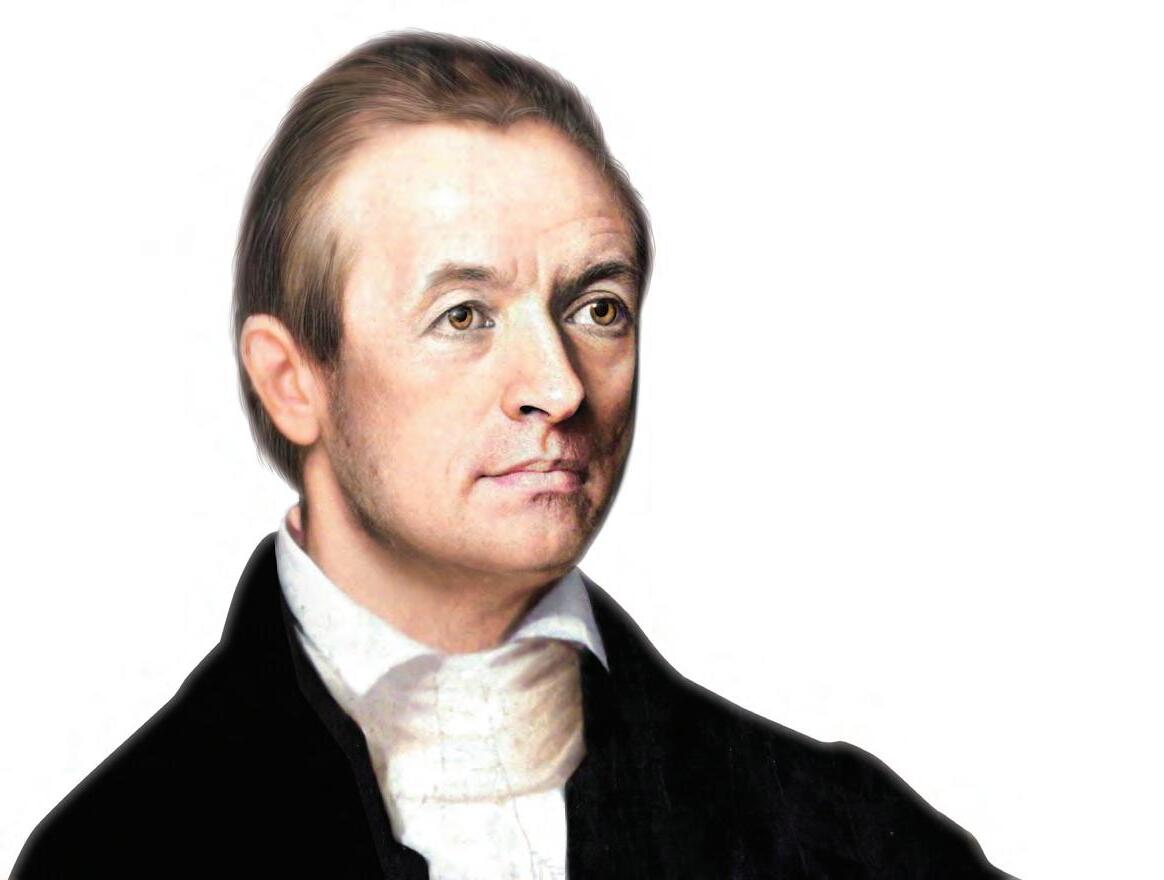
Adoniram Judson, Jr. (9 August 1788 – 12 April 1850) was an American Congregationalist and later Particular Baptist missionary, who served in Burma for almost 40 years
Heroes of the faith
A series on inspiring Christian lives by one of the UK’s leading evangelists, Canon J John
Adoniram Judson
The Congregational minister’s son who became a pioneering missionary
The story of Adoniram Judson, the first overseas missionary from the USA and the man who founded the church in Burma, is one of the most challenging in Christian history.
Judson was born in Massachusetts in 1788 to a godly Congregational minister. A gifted child, Judson made an early profession of faith in Christ but, to his father’s dismay, soon rejected Christianity. However, shaken by the sudden death of an atheist friend, Judson returned to his childhood faith.
Expected to follow his father into the ministry, Judson instead felt drawn to preach the gospel overseas and specifically in Asia.
At this early stage in its history, America had no history of foreign missions and so Judson decided to apply to a British missionary society. In the first of a lifelong series of difficulties, Judson was captured by the French en route to London and was harshly imprisoned before escaping.
Returning across the Atlantic, Judson raised support for missionary work within America and, with his new bride Ann,
sailed for Asia in 1812. Judson’s goal was the largely unknown Burma. Arriving in India, the Judsons encountered new problems; not only were there no boats to Burma but the all-powerful British East India Company was opposed to all missionaries, especially American ones.
After a year’s delay, during which Judson’s missionary ministry seemed likely to end before it began, the couple finally sailed for Burma. Trials and tribulations continued: Ann miscarried on the voyage and in Burma a mountain of difficulties emerged. The government was corrupt, hated foreigners and was prone to subjecting people to torture and execution without warning. The population near the coast was firmly Buddhist and seemed to have no interest in the gospel of Jesus Christ. The Burmese language proved to have a unique script, complex grammar and lacked any dictionary. To make matters worse, coastal Burma was unhealthy and the Judsons were frequently ill.
Despite this, Adoniram and Ann persisted. He worked at understanding the language, translated Bible portions and, developing increasing fluency, preached. Ann acquired spoken Burmese, which allowed her to share the gospel with friends and neighbours. The disappointments continued, with the death of a second child and disease or discouragement meaning that few other missionaries lasted long with them. After twelve years, Judson had only eighteen converts.
In 1824 a war between Britain and Burma broke out and an indirect result was that, for 20 months, Judson was brutally imprisoned and threatened with death. In 1826, while Adoniram was evangelising in the remote hinterland, Ann died. This, and the subsequent death of his baby girl, plunged Judson into a year-long depression but, in it, he continued with his translation of the entire Bible. Slowly the Burmese church grew, particularly when the animist Karen people of the interior eagerly welcomed the gospel. Finally, in 1835, after twentyfour years of labour, the Burmese Bible was published.
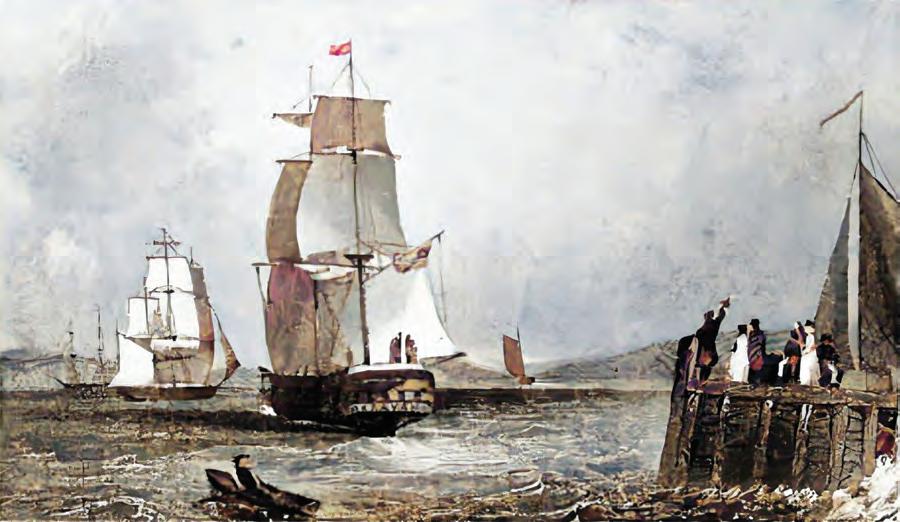
Sailing from Salem on the ‘Caravan’
Judson married again, to Sarah, the widow of a fellow missionary. Over the next ten years they had eight children, five of whom were to survive to adulthood. In 1845, Sarah’s health failed and, seeking medical care, the Judsons decided to sail back to the United States. Sadly, Sarah died at sea. Back in the United States for the first time after three decades on the mission field, Judson found himself a celebrated figure. He toured widely, encouraged support for missions and met and married a third wife, Emily. Together they returned to Burma to continue to work with the infant church.
During the 1840s Judson began to develop lung problems. In 1850, at the age of 61, he set sail to try and improve his health but died in the Bay of Bengal and was buried at sea.
Adoniram Judson’s achievements are almost breath-taking. When he arrived in Burma there were no churches and no Bible but, by the time of his death, he had translated the Bible, half completed a mammoth Burmese-English dictionary and there were a hundred churches with over 8,000 believers.
The current state of Christianity in Myanmar (as Burma is officially termed today)? Although the faith is thriving in some regions, Burmese Christians are frequently persecuted.
Let me highlight three truly challenging things about Adoniram Judson.
First, Judson was an extraordinary pioneer. This was a man in a culture with no tradition of overseas missions, with no support for foreign missionaries and with almost no knowledge about Burma. Yet despite that, Judson and his wife set out to proclaim the gospel. Confident in God, he set out on a path into the utterly unknown.
Second, Judson displayed enduring persistence. The standard biography of Judson is an uncomfortable read with its repeated accounts of sickness, brutal suffering and disappointment. Men, women and children appear on one page, only to be dead or departed on the next. Undeterred, for nearly 40 years, Judson followed the path God had called him to.
Finally, Judson was a man of exclusive priorities. As one of the few fluent non-native speakers of Burmese, Judson could easily have been sidetracked into education, business or diplomacy. Yet he knew what the church needed: a Bible, tracts and evangelism in Burmese. And with his single-minded and sacrificial determination that’s exactly what he produced.
In an age of comfort, the life of Adoniram Judson continues to challenge all who claim the name of Christian. www.canonjjohn.com
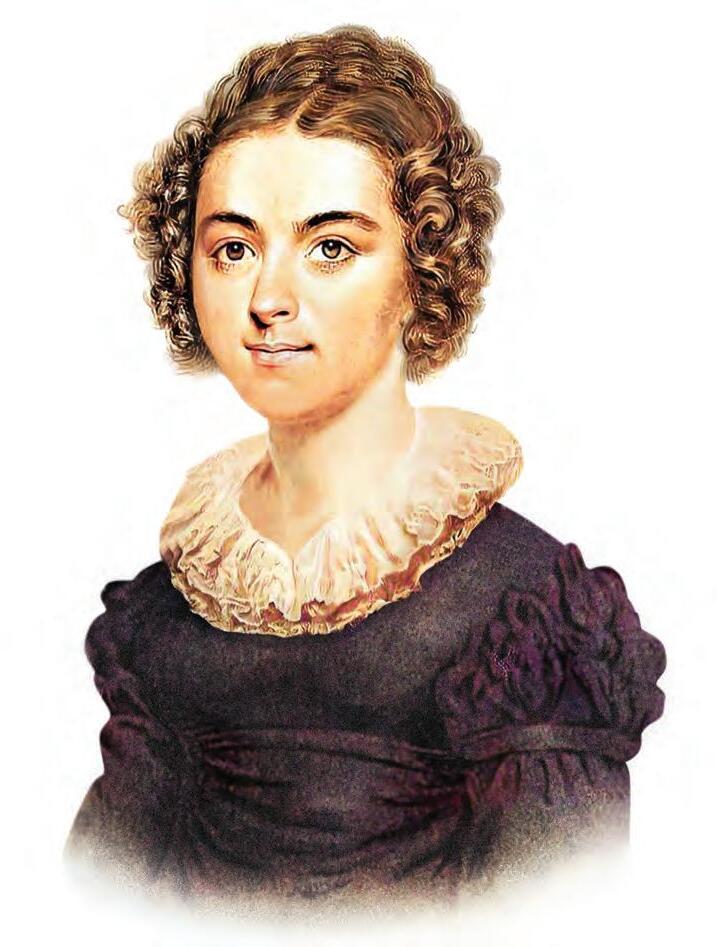
Ann Hasseltine Judson
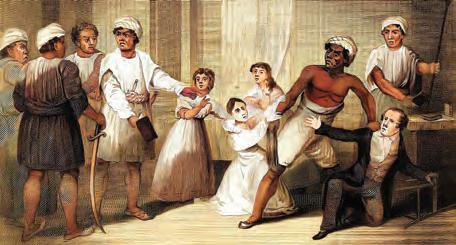
Seizure of Dr Adoniram Judson
Train your brain or just take a relaxing time out with these puzzles. The solutions are on the inside of the back cover (don’t cheat!).
Crossword
Across
1. Decline; reject (6)
4. Small case for jewels, etc. (6)
7. Building for lodging soldiers (8)
9. ‘ ---- Lord and father of mankind’ (hymn) (4)
11. European country (5)
12. Rare atmospheric gas (7)
13. Another European country (4)
15. (See 8 Down)
17. Burrowing night animal (6)
20. (See 21 Down)
22. American Indians living in parts of the USA (7)
24. May be obtained from very large animals (5)
26. Absalom was riding this when his hair caught in a tree branch (4)
27. Jesus did this, having completed his earthly work (8)
28. Remained (6)
29. Isaiah saw the Lord on one (6)
Wordsearch
Can you find 36 musical instruments? Look up, down, forwards, backwards and diagonally.
Down
1. The mother of biblical twins (7)
2. The number of days Moses fasted (5)
3. Songs of the sea (8)
4. Throw or fling (4)
5. Move in furtive or stealthy manner (5)
6. Daniel prayed this number of times daily (5)
8. & 15. Across. ‘Praise, my soul, the ---- of ---- ‘ (hymn) (4,6)
10. Looking at closely or with interest (5)
14. Town where Jesus spent his youth (8)
16. Item of a blacksmith’s equipment (5)
18. Small amount remaining after the main part is taken (7)
19. ‘The Lord is righteous in all his ----’ (Psalm 145) (4)
20. The foolish virgins ignored them (5)
21. & 20. Across. ‘New ---- morning is the ----’ (hymn) (5,4)
23. Relating to water (5)
25. Attack (4)
Sudoku
Fill the grid so that every column, every row and every 3 x 3 box contains the digits 1 to 9
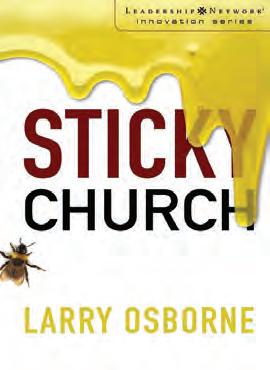
Sticky Church
by Larry Osborne
Reviewer: Dave Simms, Pastor at South Chingford Congregational Church
Small groups have transformed our church over the last few years, especially during and since the pandemic. We see an exciting future and enormous potential in developing small groups as a tool for discipleship, pastoral care and local mission.
We’ve already seen engagement increase, relationships deepen and leaders equipped within our church. And we’re finding that whilst fewer and fewer people will accept an invitation to attend a Sunday service, many more are open to an invitation to gather with a small group community then connect with the church that way.
With that in mind, much of my reading and learning recently has been to do with planting and developing small groups. I’d love to recommend this book to anybody interested in exploring this – it’s a short and easy read and covers both the value and
the theology of small groups, as well as some very simple step-by-step strategies for implementing and running small groups in any church setting.
A key principle which underpins much of the book: shut the back door! Whilst inviting and attracting new people to church is great, it’s equally (if not more) important that we keep the people who would otherwise visit once and not return, or who keep our seats warm for years but don’t connect. The key to that, suggests this book (and the experience of our church!) is to ensure that people are connected to significant relationships and to the Bible.
Small groups, when done well, tick both of those boxes.
Published by Zondervan, 2008, paperback. Available at Eden and Amazon.
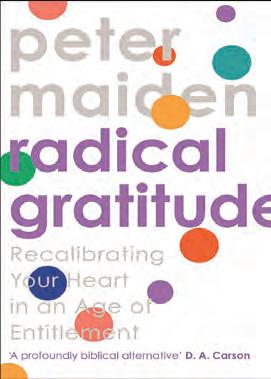
Radical Gratitude: Recalibrating Your Heart in an Age of Entitlement
by Peter Maiden
Reviewer: Rob Cross, Pastor at Brierley Green Congregational Church, Buxworth
When on the CIPT training weekend I picked up this book from the Nottingham library. We are not meant to judge a book by its cover but this looked a colourful cover and I recognised the author’s name! Radical Gratitude is written by Peter Maiden, former International Director of Operation Mobilisation and brother of Brian, who was our pastor as I grew up.
The book addresses our approach to life. Chapter one is titled ‘You owe me’, and that is the attitude we can so often take to God, life and society. Peter writes of cultivating gratitude and how as followers of Jesus we can choose to be thankful and recognise God’s grace even through the ups and downs.
He writes: “How can we take the bread and wine and ever question God’s love for us and his total commitment to us?”
This is an easy book to read with 12 short chapters of about 10-12 pages each, with some questions and a Bible reading which can be done alone or with others.
Peter wrote this through tragic circumstances yet his faith shone through. It was an inspiring and moving book to read and certainly challenged and encouraged me.
Published by IVP, 2020, paperback. Available from most Christian and secular bookshops/web stores
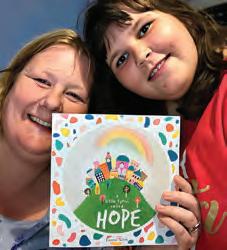
A Little Town Called Hope – Children’s Story Book
By Emma Allen; illustrated by Georgina Peters
Reviewers:
Poppy Campbell & Yvonne Campbell
Poppy: “I would definitely recommend this book to younger children, maybe aged 5 and 6. The words are amazing and I enjoyed looking at the pictures of the characters called Joy, Anger, Sadness and Fear. I didn’t think it was Jesus at first in one picture, but I like the signposts with Hope.
Yvonne: “This book was advertised in the newsletter from Hope Bristol and as our Congregational Federation theme this year from our President Mark
Taylor is Hope I thought I would order a copy. It’s a beautiful illustrated book with a subtle message which I actually think was great for Poppy who is 8. I especially liked the message about anger and how this emotion can be directed against injustice. A beautiful gift for grandchildren or children in your church.
Published by LightbulbBooks, 2021, hardback, £7.99. Available at cheerfullygiven.com and etsy.com
The following churches are seeking ministers/pastors at the present time. If you are interested in receiving more information you must firstly contact the Congregational Federation via our Nottingham office.
Full-time – Greenacres, Oldham – part time considered (North West); Southwick (South East); Ardrossan (Scotland)
Part-time – Bow (South West); Dereham: Cowper Memorial (Eastern); Elstow Bunyan Christian Fellowship (East Midlands); North Nibley (South West Midlands); Oakamoor (North West Midlands); Haverfordwest Pastorate (Wales); Shillington (East Midlands); Stalybridge (North West); Witney (South West Midlands).
Non-Stipendiary – Frampton (South West Midlands); Oban Congregational Church (Scotland); Penrhys, Llanfair Uniting Church, (Wales); Ebenezer Independent Congregational Chapel, Tredegar, Gwent (Wales).
TIPS FOR LIFE ONLINE
Let’s be careful out there
By Neil Chappell, Social Media & Website Officer, Congregational Federation
Recognise those words? They were the catchphrase of Hill Street Blues, an American TV police drama from the 1980s. It was one of my favourite series.
The reason I mentioned it? The day I am writing this – the first Thursday in May – is recognised as National Password Day. This was started by mega-tech company Intel a few years back to remind people to regularly review and renew their passwords. We all need to remember to stay safe online, or as Sgt Estherhaus would say: “Let’s be careful out there!”
Weak passwords like ‘Password1’ or the name of your favourite football team or your pet’s name still remain the source of inspiration for many people when choosing a login. But these sorts of passwords are easy for cyber criminals to hack – software exists that can guess millions of passwords in minutes! Think carefully about how to choose your password, and if you have to use the name of your pet and the year you bought it, instead of using clarence2016 at least mix it up with special characters and capitals. It would be much stronger to use c1@renCe2O16.
Neil Chappell
Remember, email addresses and phone numbers can be spoofed. The best way to get in touch with a company is to use a known email or phone number.
3. Look out for unexpected bills or items on your bank statement.
4. Keep your devices protected.
We continue to hear about scams and phishing attacks. Phishing is often used to steal user data, including login credentials and credit card numbers. It occurs when an attacker, masquerading as a trusted entity, dupes a victim into opening an email, instant message or text message. Please continue to do everything you can to stay safe online. Only this week I received an email from the Evangelical Alliance stating that they had been the victims of a significant cyber-attack and their database had been compromised.
Action Fraud recommends taking these six sensible steps:
1. Be wary of anyone asking for your details
2. Be especially wary of emails. Never automatically click on a link in an unexpected email or text.
5. Be careful when shopping online.
6. Check your credit report.
All very sensible precautions to take.
Don’t forget you can contact me anytime to talk about your church’s website or social media presence. Drop me a line.
neil.chappell@congregational.org.uk
Prayeristhesoul’ssinceredesire–utteredorunexpressed. James Montgomery, 1771 – 1854
JULY
Prayer is the burden of a sigh, The falling of a tear, The upward glancing of an eye When none but God is near.
During July, please pray for all who serve our churches – ministers, pastors, chaplains, preachers, mission enablers and spiritual enablers.
Pray too for individual churches and the people who serve God in voluntary positions.
Events to remember in prayer:
10 July Sea Sunday. Pray for seafarers. We thank them for the hardships they face and the sacrifices they have been forced to endure due to the Covid lockdowns.
17 July CWM Sunday – a day to pray for the work of the Council for World Mission and all those they seek to help.
17 July Rural Missions Sunday – an opportunity to give thanks for all those who faithfully maintain an effective Christian presence in rural communities.
27 July The meeting of the Investment Trust and Trading Board.
AUGUST
Prayer is the simplest form of speech That infant lips can try Prayer the sublimest strains that reach The majesty on high.
During this month, please remember in prayer all who serve the Congregational Federation in employed and voluntary positions.
Please pray for all people who are travelling. It could be to and from work or for travel on a holiday. Whether people are going by bicycle, train, coach, car or plane, pray for safe travel for everyone.
Pray for peoples’ physical and mental health.
Pray for friends. Our friends, whether believers or not, need our prayers. You don’t need to tell them you are praying for them, just pray.
SEPTEMBER
Prayer is the Christian’s vital breath The Christian’s native air.
During September, please pray for the children who are in our churches as they return to school in September. Remember especially those who will be starting a new school, college or university.
Pray for the churches situated in towns and cities where young people may be studying at college or university. May churches welcome young people.
Events to remember in prayer:
World Alzheimer’s Month and all those who suffer and for those who care and support them.
8–11 Sept. CIPT Training Weekend. Pray for all those who will be involved in the weekend – students, tutors and administrative staff.
9–18 Sept. Heritage Open Days. This is an annual event in England taking place over ten days in September that celebrates the country’s history, culture and architecture.
10 Sept. World Suicide Prevention Day. The purpose of this day is to raise awareness around the globe that suicide can be prevented.
11 Sept. Education Sunday. This is a National Day of Prayer and celebration for everyone involved in the world of education.
24 Sept. Church Support Committee meeting.
OCTOBER
O Thou by whom we come to God The life the truth the way, The path of prayer Thyself hast trod; Lord teach us how to pray!
During October remember in your prayers all the Congregational churches and their witness as they share the Christian faith.
Remember the Areas within the Congregational Federation and give thanks for the support they provide to individual churches.
Pray for all the Congregational churches within the Area of your church.
Events to remember in prayer:
1 Oct. The meeting of the Finance and Support Services Committee.
9 Oct. Homeless Sunday. Remember people in your community who experience homelessness and the difficulties they face.
10 Oct. World Mental Health Day. A day to remember in prayer all those people who have mental health problems and for those people who offer them help and support.
9–15 Oct. Prisons Sunday / Prisons Week. Pray for the families of people who are in prison and for prison chaplains who seek to help prisoners and their families.
18 Oct. Anti-Slavery Day. Pray that an awareness is raised of human trafficking and modern slavery, and pray that government, local authorities, companies, charities and individuals do what they can to address the problem.
Alto sax
Anvil
Banjo
Bassdrum
Bell
Bin
Bombard
Bones
Cello
Chang
Cheng
Citar
Deagan
Fife
Gong
Harp
Lute
Moog
Oboe
Organ
Piano
Pipe
Rattle
Rebec
Regal
Santir
Saxhorn
Timpani Traps
Tromba Tuba Vihuela
Vina
Lyre Marina
Viol
Sudoku
“May the God of hope fill you with all joy and peace as you trust in him, so that you may overflow with hope by the power of the Holy Spirit.”
(Romans 15:13)
TO ORDER REFRESH
An annual subscription for this year’s 3 issues, including the Yearbook, is £30 incl. p&p.
Email: admin@congregational.org.uk or tel: 0115 9111460 for details.