
Ministry to Yourself
Guidance for those in Ministry

Are we serious about this?
Yes; we know that it can sound inappropriate to be writing about ministry to yourself, since our understanding of ministry is that it is for others. God calls us to serve others.
We are not going to lose sight of the fact that being called to ministry is a tremendous privilege and that it brings wonderful joy and satisfaction to our lives. This is not in doubt, and we thank God for it.

We do rejoice in our gratitude to God for calling us into ministry; but God does not call robots or archangels into this ministry. You are neither robot nor archangel, and therefore you also need support and encouragement from others, as well as from God
Are we fussing?
Not at all. We use words like ‘mutual support’ and ‘interdependence’ very easily, but we need to realise that they really do mean something important. Those of you in ministry are constantly giving to others, in all sorts of ways, and this will be the case for whichever of our seven recognised ministries you have been called to. There can be times when our energy levels for ministry seem to be running very low. You know this.

Some of those who thank God that he has called you into ministry, whether full-time or part-time, and who benefit from your gifts and your commitment, may be aware of the cost of that level of discipleship. However, others may not be aware of this, and they may not appreciate how important it is to support you as well as to receive from you.
Ministry to Yourself
There are different layers to taking care of yourself, and we will be looking at three of them in this leaflet. This is not the whole story, but we hope that it will go some way to supporting you.
We want to suggest some perspectives and attitudes that will prove healthy and constructive for you as you continue in your commitment to God and to others. Looking after your own needs
There are some important spiritual disciplines for you, within yourself, as it were, that will help a great deal in preserving and enhancing your love, faith and energy for ministry.
Who is likely to help?
Take time daily to nurtureyourrelationshipwithJesus. Make time for personal prayer; read the Bible, working through it all, over time; be quiet with God, listening out for him speaking to you, personally; worship the Lord, daily. This is not part of your ministry, but it is for you, the person that you are, and it will have an impact on your ministry.

For those with family, take time daily to nurture your relationships with them. Your family is a fundamental part of your life, your first context for witnessing to what God means to you, and your home base for receiving love and support. Those closest to you should not be sacrificed for the sake of your ministry; not only will they suffer, but so will you. Guard your quality time with them.
For all of you, take time to nurture your relationships with friends. Cultivate strong, mutually supportive relationships. Don’t imagine that recreation, hobbies and enjoying life with friends and family are ungodly.

Nurturing and disciplining your ministry
There is a great benefit to be had from recognising both our strengths and also our relative weaknesses and limits. The weight of expectation from others can be very heavy, and our drive to satisfy those expectations, even if they are unrealistic, and even unfair at times, easily becomes draining. There are honest responses to these expectations which can be shared graciously and positively with others. Don’t be afraid to say that someone else would be better placed to do something, or to take responsibility for arranging something.
Another aspect of this, which is not uncommon, is that we can sometimes be reluctant to draw others into sharing our ministry, or supporting us in particular ways. This not only leads to a draining of our own personal resources, sometimes at the expense of family or friends, since all those ministry responsibilities and tasks take time and attention, but it also deprives others of an opportunity to use the gifts that God has given them, and to serve him with those gifts and their commitment
You are not responsible for providing all the ministry, but part of your responsibility is to see that the right ministry is provided by the right people. Build up those around you in whom you sense the gifts and calling of God. Investing prayer, time and work with them will not only build up the ministry and enable others to serve God, it will also prove healthy and liberating for you.


What is likely to help?
Be honest with yourself about your relative strengths in ministry, and don’t be embarrassed by them. Thank God for your gifts and abilities, and use them to serve him and others.
But be honest with yourself about your relative weaknesses in ministry, and don’t be embarrassed by them. Thank God that you can rely on him to meet every need Thank God that you will be able to play your part in whatever is needed in a situation, even if that means drawing in another person to help, or even to take the lead.
Be honest with yourself about your relative strengths and acknowledge that they may not actually be what is required in every situation. Don’t feel that you must always take the lead in every situation that arises. This can lead to situations where the best advice, help or challenge is not given to those in need of it, and it can also lead to a gradual build-up of unnecessary and unhealthy strain on yourself.
It’s also a blessing to receive
A once popular song said that sorry seems to be the hardest word. Another thing which is often very hard for some of us to say is that we would value some help and encouragement.
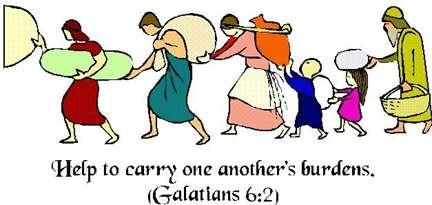
We can be so determined to give to others that we see it as a sign of failure to ask for support for ourselves. We can forget that what is true for all Christians is therefore also true for those in ministry: we all have weaknesses, and need one another. A sign of weakness is not a sign of failure.
What is likely to help?
Be honest, and acknowledge that you are in need of prayer and personal support. Receiving help is a sign of being dependent on God and the resources of people that he provides. Quite apart from the benefit to you, this will serve as a model for those among whom you are ministering. They will learn from you about the importance of mutual support and encouragement.
Welcome the prayer and ministry of others for you, and take seriously their adviceand perhaps sometimes their challenge, when appropriate. This relates to those who may be in your ministry team, whether formally recognised as a team, or not, and also the wider community. Let them know that their prayers and support for you really matter to you. Be prepared to act on what they say, and let them know when you have benefited from their support.

As the old saying goes, prevention is better than a cure; so invest time in all these healthy relationships before any crisis appears. Be in regular touch with those who will care for you if a really significant need in your life or ministry arises.
• For the benefit of occasional Quiet Days, see the Bible Reading Fellowship resource: https://www.brfonline.org.uk/collections/prayer-andspirituality/products/the-contemplative-response-leadership-and-ministry-in-adistracted-culture
• For reflections on healthy self-care, see the Blurt Foundation: https://www.blurtitout.org/
• For support with more effective church organisation, see the John Truscott website: www.john-truscott.co.uk
• For a practical podcast on looking after yourself, listen to Rob Bell: https://robbell.podbean.com/e/episode-81-letting-the-land-lie-fallow/
• For confidential counselling support, see Churches' Ministerial Counselling Service at http://www.cmincs.net/
• For reflections on the importance of a genuine rest day with God, see Wayne Muller (2000) Sabbath Rest: Restoring the Sacred Rhythm of Rest.
• For reflections on the value of developing a reflective approach to ministry, see Ian Cowley (2015) The Contemplative Minister
• For a very practical, easy read guide for taking care of yourself, see Anne Jackson (2009) Mad Church Disease: Overcoming the Burnout Epidemic
• For possible help from the desert fathers, see Henri Nouwen (2007) The Way of the Heart: Desert Spirituality and Contemporary Ministry
Keep in Touch
Keep in touch with the opportunities for ongoing support and development that are provided through the church support department of the Congregational Federation.
If you have any questions or comments regarding this, please contact either of us:
Yvonne Campbell
General Secretary
Congregational Federation 8 Castle Gate
Nottingham NG1 7AS admin@congregational.org.uk
0115 911 1450
Walter Riggans
Learning and Development Manager
Congregational Federation 8 Castle Gate
Nottingham NG1 7AS training@congregational.org.uk
0115 911 1450
This pamphlet was prepared by the CF General Secretary and the Learning and development Manager of the CF.