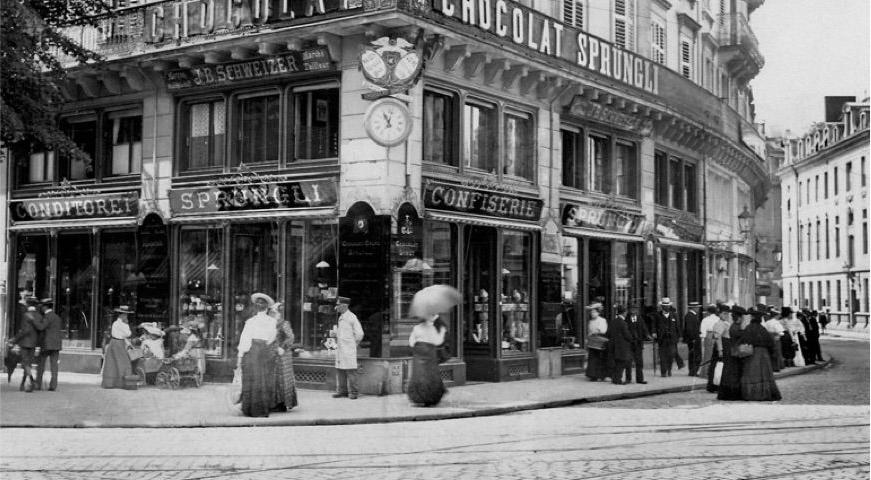
MOMENTS OF INDULGENCE FROM THE HISTORIC SPRÜNGLI RECIPE BOOK
Celebrating 190 years of Confiserie Sprüngli

MOMENTS OF INDULGENCE FROM THE HISTORIC SPRÜNGLI RECIPE BOOK
Celebrating 190 years of Confiserie Sprüngli
To celebrate our 190th anniversary, we’d like to invite you on a journey back in time with Confiserie Sprüngli. The following recipes are from the original Sprüngli recipe book from 1832, which is kept in the family vault to this day. It offers a unique insight into Sprüngli’s traditional craftsmanship and family history.
‘The recipe book from 1832 reminds us of the passion, craftsmanship and care upon which our company is based, and how our values have always been passed down from generation to generation.’
Tomas Prenosil, CEO of Confiserie Sprüngli in the sixth generation
The recipes are original recipes from that time. As a result, some of them no longer meet our current expectations in terms of taste, quality or preparation. The quantities, steps and ingredients used back then were different, as was the way they were documented.
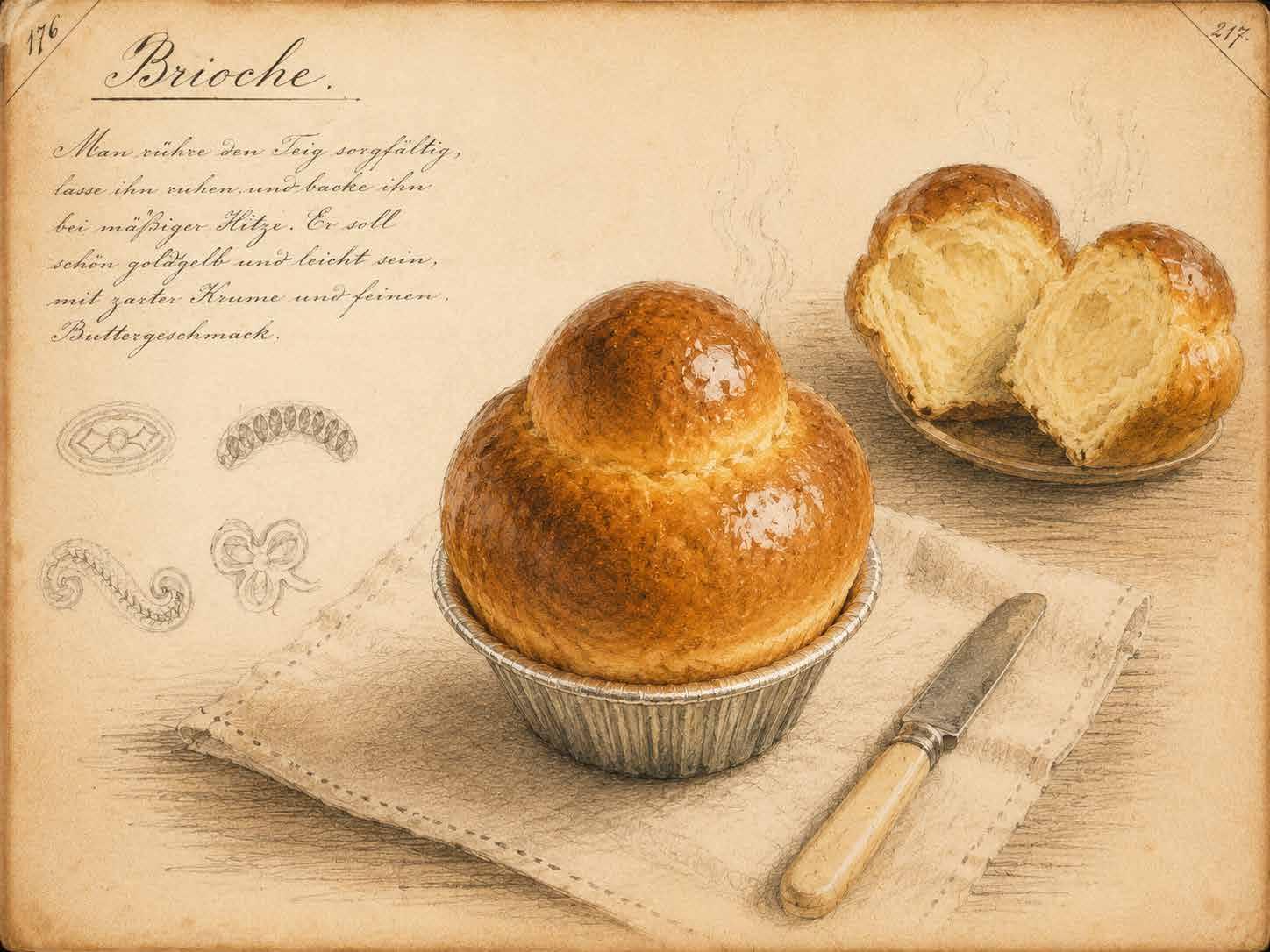
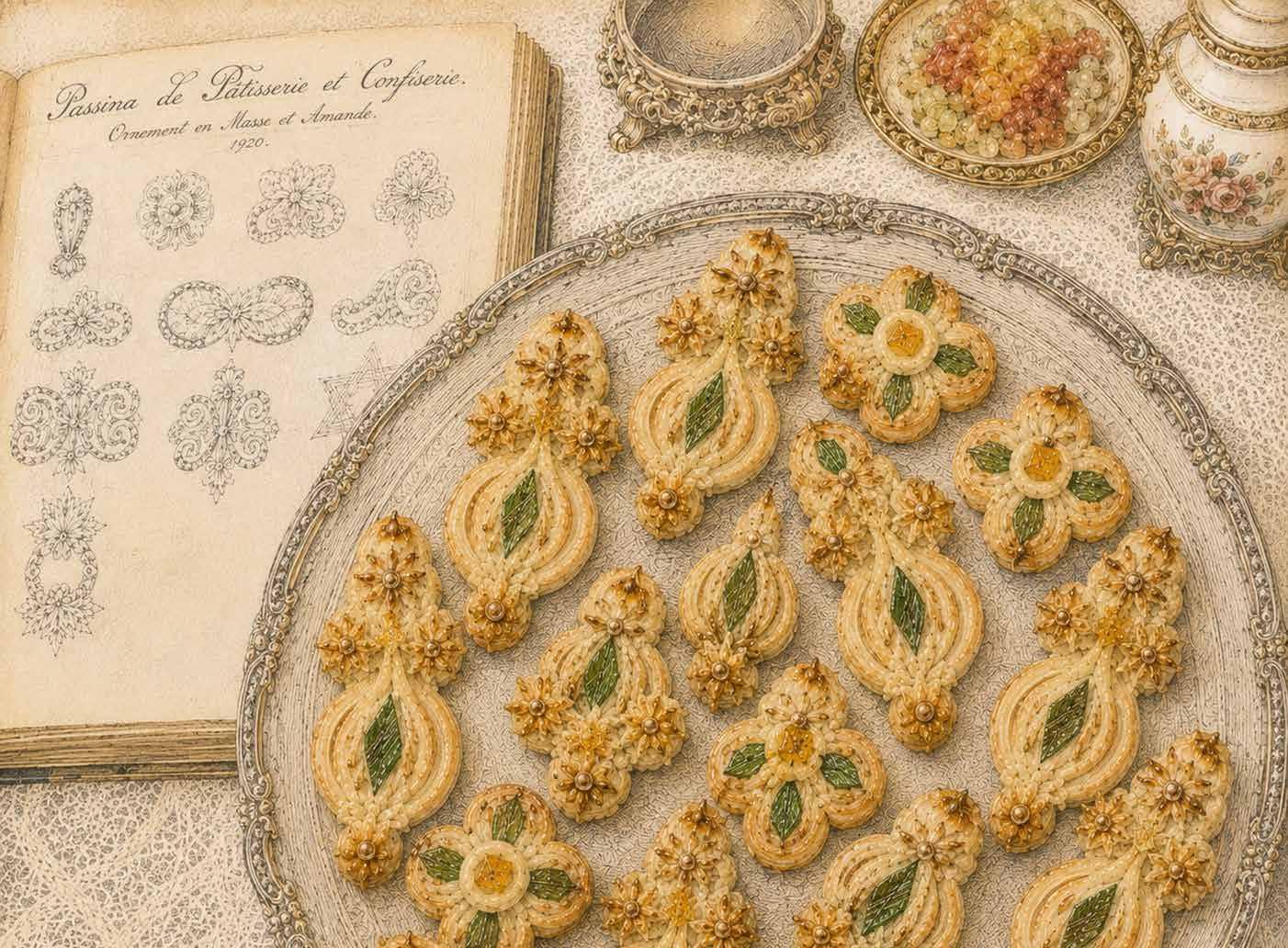
The original recipes have therefore been interpreted with great care and converted into current measurements, so that the historical specialities can still be baked at home today – without losing their original character. These two recipes – Brioche de Paris and almond confectionery – invite you to rediscover traditional craftsmanship and the culinary delights of a bygone era. We hope you have a lot of fun baking and enjoying the tasty treats.
Year of creation: ca. 1832
Makes:
Total time:
Preparation time:
Resting and rising time:
Baking time:
19 brioches
approx. 4 hours 15 minutes, plus pre-dough left to rest overnight and approx. 1 hour to bring to room temperature
approx. 65 minutes
approx. 3 hours
approx. 9–10 minutes
For the pre-dough:
• 125 g white flour, type 550
• 110 g water, 30°C
• 10 g active sourdough
• 1 g yeast
For the main dough:
• 245 g pre-dough
• 375 g white flour, type 550
• 4 medium eggs, approx. 200 g
• 60 g sugar
• 12 g yeast
• 12 g salt
• 90 g cooking butter, softened
For the syrup:
• 150 g water
• 150 g sugar
• 75 g rum
• ½ orange, grated zest
To finish:
• 1 egg for brushing
• A little fat for the moulds
1. Prepare the pre-dough:
2. Bring the pre-dough to room temperature:
3. Make the main dough:
Mix the white flour, water, active sourdough and yeast well. The temperature of the pre-dough should be around 26°C. Cover the pre-dough and leave to rest overnight in the fridge.
Remove the pre-dough from the fridge around 1 hour before you plan to use it.
Mix the pre-dough with the white flour, eggs, sugar and yeast in a kneading machine on speed 1 for approx. 3–4 minutes. Add the salt and continue mixing the dough on speed 1 for approx. 3–4 minutes. Then gradually add the softened butter. Mix the dough for approx. 10 minutes on speed 1 and then knead it on speed 2 for approx. 3–4 minutes. The temperature of the dough should be around 26°C.
4. Leave the dough to rest:
5. Shape the brioches:
Cover the dough and leave it to rest at room temperature for approx. 1½ hours.
Divide the dough into 50 g portions and shape into balls. Then shape a small ‘head’ with the edge of your hand. Place the shaped brioches in slightly greased moulds.
6. Leave the brioches to rise:
7. Prepare the syrup:
Cover the brioches and leave to rise in a warm place for approx. 1½ hours.
While the brioches are rising, bring the water, sugar and grated orange zest to the boil. Then add the rum. Keep the syrup warm until ready to use.
8. Bake the brioches:
9. Soak the brioches:
Carefully brush the risen brioches with egg and place in the oven.
• Bake for 2 minutes at 220°C
• Then bake for 7–8 minutes at 180°C
Generously soak the still-warm brioches with the warm syrup and then leave to cool.
When the original recipe was created, there was no melt-in-the-mouth chocolate in the form we know today. However, historical recipes evolve over the years and are constantly reinterpreted. Today, our brioches are often refined with a truffle, praline or piece of Sprüngli chocolate bar or slab as a delicate centre. To do this, place the chocolate in the middle of the portion of dough before shaping and carefully enclose it with the dough.
Year of creation: ca. 1832
Total time:
Preparation time:
Baking time: approx. 1 hour 5 minutes, plus drying overnight approx. 55 minutes approx. 7–9 minutes
For the confectionery mixture:
• 450 g almond paste
• 35 g pasteurised egg white
• ½ lemon, grated zest
For decorating and finishing:
• Candied fruits, such as angelica, cherries and oranges
• Warm gum arabic for glazing
• Gold pearls for decoration
1. Prepare the confectionery mixture:
2. Pipe into decorative shapes:
Mix together the almond paste, pasteurised egg white and grated lemon zest until an even mixture is formed.
Using various round and star piping tips, pipe the confectionery mixture into decorative shapes on silicone paper.
3. Decorate:
Decorate the decorative shapes however you like with candied fruits such as angelica, cherries or oranges.
4. Leave to dry:
5. Bake:
6. Glaze and garnish:
Leave the piped decorative shapes to dry overnight at room temperature.
Put the dried almond confectionery in the oven.
• Bake for 2 minutes at 220°C
• Then bake for 5–7 minutes at 200°C
Glaze the almond confectionery with warm gum arabic while still hot and decorate with gold pearls. Leave to cool completely.