Tribal restoration effort reintroduces First Food fish to Breitenbush River
The CUJ
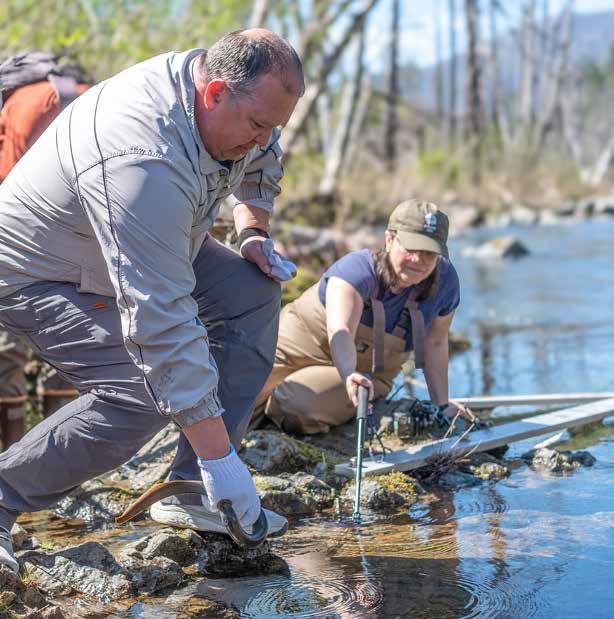
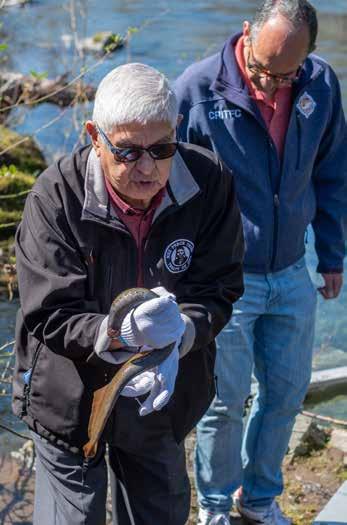
PORTLAND — Twenty-three Pacific lamprey were released into the vast, cold streams of the Breitenbush River, where tribal members and zoo biologists reintroduced the first fish into the freshwater in an effort to help revive the declining population.
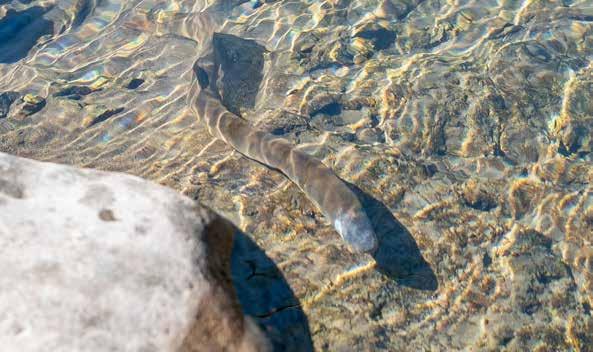
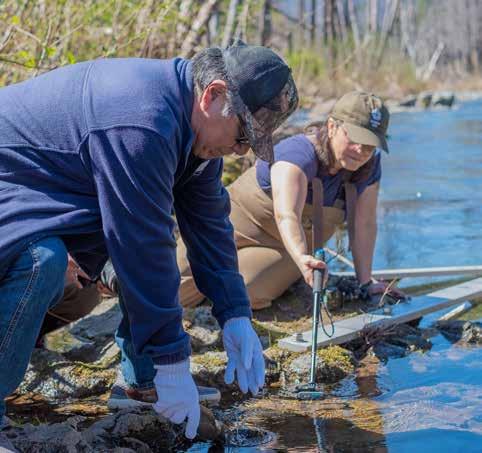
More than 20 people showed up for the ceremonial event, each official receiving a lamprey to release on April 8 in a stream that runs through the Willamette National Forest, near the Mount Jefferson Wilderness, northeast of Detroit Dam. As the river flowed on, the fish quickly swam into the clear water and disappeared beneath the glimmering sunlit surface.
The initiative is part of the Tribal Pacific Lamprey Restoration program, which collects lamprey below dams on the Columbia River with the help of the U.S. Army Corps of Engineers (Corps).
Under the program, the team keeps some lamprey in holding tanks for one to two years until they are ready to spawn, loaning some to the zoo for its exhibit.
See LAMPREY, Page A2
“Lamprey is a First Food for many tribes. We want to restore those populations to levels that support both the ecosystem and tribal traditions.”
—Jon Hess, senior fisheries geneticist with the Columbia River Inter-Tribal Fish Commission
The first released Pacific lamprey swims free April 8 in the Breitenbush River near Detroit Dam in Oregon.
(Yasser Marte/The CUJ)
YASSER MARTE
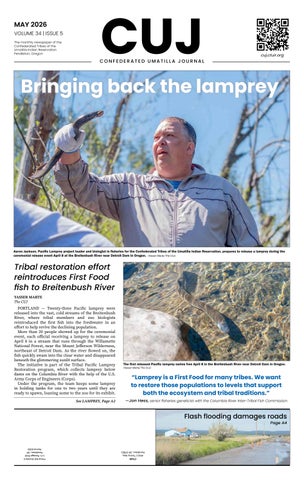
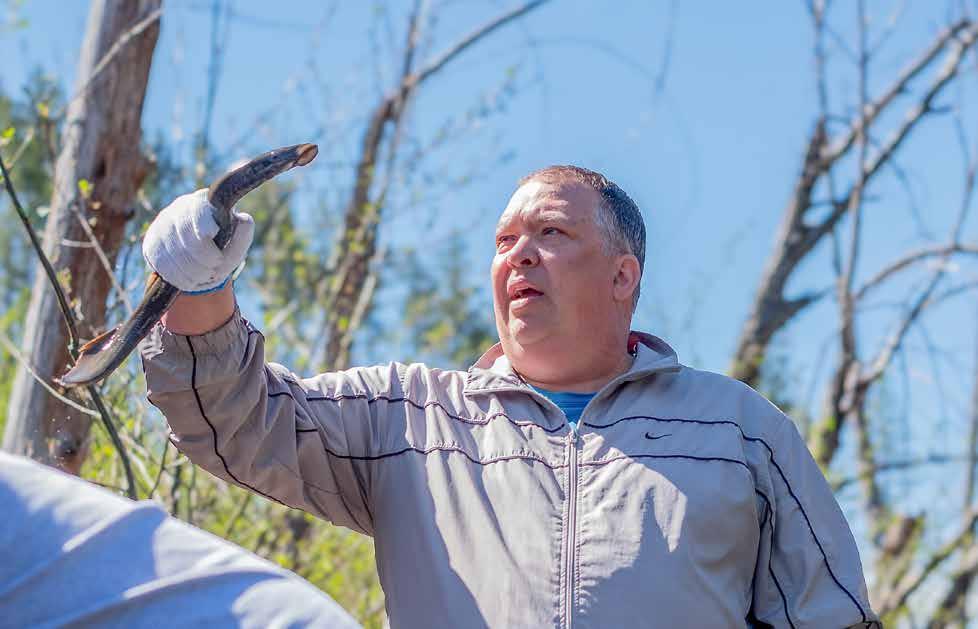
Aaron Jackson, Pacific Lamprey project leader and biologist in fisheries for the Confederated Tribes of the Umatilla Indian Reservation, prepares to release a lamprey during the ceremonial release event April 8 at the Breitenbush River near Detroit Dam in Oregon. (Yasser Marte/The CUJ)
LAMPREY
Continued from Page A1
When ready, crews transport the fish to tributaries of the upper Columbia River and the Snake River, then return with another group for display.
The effort brought together the Confederated Tribes of the Umatilla Indian Reservation (CTUIR), the Columbia River InterTribal Fish Commission (CRITFC) the Confederated Tribes of Grand Ronde (CTGR), the Nez Perce Tribe (NPT), the Oregon Zoo, Oregon Department of Fish and Wildlife (ODFW) and the Corps.
Aaron Jackson, Pacific lamprey project leader and biologist in Fisheries for the CTUIR, said the effort restores access for tribal members to harvest lamprey as they have since time immemorial. In addition, the work helps return the fish to areas where populations have declined for decades and supports broader ecosystem recovery, he added.
“It really feels good to be able to do some of that work and give back to not just the fish, the ecosystem, but our people as well,” Jackson said. “Hopefully, our kids’ kids, my great
CUJ
ABOUT THE CUJ
The Confederated Umatilla Journal (CUJ) was created in 1975 as the official publication of the Confederated Tribes of the Umatilla Indian Reservation (CTUIR), which includes the Cayuse, Umatilla and Walla Walla people. The CUJ is produced monthly by the CTUIR Communications Department.
grandkids, all of our community’s kids will once and always be able to harvest lamprey right back with Willamette Falls.”
Willamette Falls is now one of the few remaining traditional harvest sites after the species was nearly wiped out upstream of barriers across the basin. As a result, tribes continue to bring youth groups to the falls, where elders teach harvesting techniques, preparation methods and the species’ ecological and cultural importance.
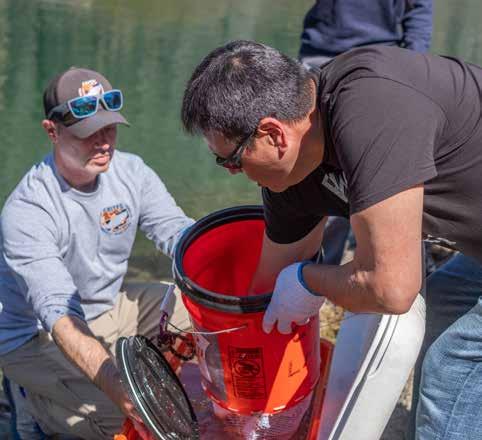
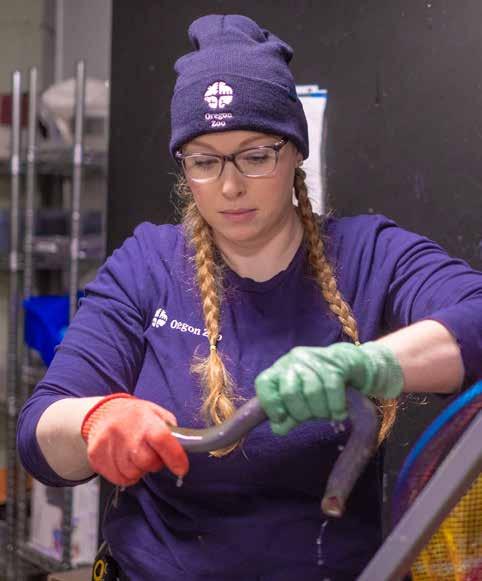
The return-to-river effort began early in the morning at the Oregon Zoo, where zoo staff and tribal members collected the eel-like fish from aquatic tanks in the Great Northwest area exhibit.
From there, crews pulled them out one at a time and placed the fish into buckets and stored them in large coolers for transport. Throughout the process, zoo staff maintained the water at 50 degrees Fahrenheit to match stream conditions, helping the lampreys adjust before release into their natural habitat.
Pacific lamprey remains a vital source of food, cultural identity and medicine for Columbia River Basin tribes. However, lamprey numbers have declined sharply, largely due to dams that block access to historic habitat.
The Corps operates a network of dams in the Willamette River Basin known as the Willamette Valley System. Those dams have significantly reduced lamprey populations by limiting access to spawning and rearing areas, contributing to long-term declines in both the Willamette and Columbia river basins.
Virgil Lewis, a commissioner for the Yakama Nation, said lamprey, like salmon, have long been overlooked and underfunded in restoration efforts.
Lamprey were historically used both as food and bait, he noted, with some harvested for sturgeon bait and others prepared as a traditional food source. He said families processed the fish by cutting, drying and preserving it for winter.
Releasing lamprey helps them thrive and grow naturally, allowing populations to rebuild at Willamette Falls as they once did, he said.
He added that the effort also supports younger generations by restoring access to traditional harvests, which can then be shared with families unable to collect their own.
“That’s one of the goals, the longrange goals for the tribes,” Lewis said. “We take lamprey to our reservations and release them and
CONTACT US Confederated Umatilla Journal 46411 Timíne Way Pendleton, OR 97801 email: cuj@ctuir.org phone : 541-429-7005
EMAIL ADVERTISING, LETTERS TO THE EDITOR, AND OTHER SUBMISSIONS TO: cuj@ctuir.org
ADVERTISING DEADLINE: 20th of the month prior to publication. The CUJ prints on the first Thursday of each month.
we’re hoping those that are released will come back and it’s working.”
Historically, Pacific lamprey occupied more than 3,000 river kilometers across five Willamette subbasins. That abundance supported large harvests at Willamette Falls, including an estimated 97,000 to 530,000 lamprey annually between 1943 and 1952, largely through commercial fishing, according to the Willamette Interorganizational Lamprey Leadership Passage Assessment Surveys Syntheses (WILLPASS Strategy Document).
By contrast, harvests fell to between 16,000 and 46,000 annually from 1997 to 2001. In the 2020s, annual harvests have dropped below 8,000 fish, primarily by tribal fishers.
Today, lamprey occupy less than one-third of their historic habitat in the Willamette Basin, according to the report.
Jon Hess, senior fisheries geneticist with the CRITFC, said lamprey have long been a vital part of the region’s ecosystem.
“The ecosystem has suffered without them,” he said. “As lamprey return to areas they once occupied, those systems will begin to recover.” Hess said lamprey larvae help filter and clean streams, while
SUBSCRIBE: The CUJ is free to pick up at tribal entities and area businesses. However, a mailed subscription can be purchased for the price of shipping and handling by contacting the CTUIR Finance Department. Call 541-429-7150 or visit the Finance Department in person at Nixyáawii Governance Center, 46411 Timine Way, Pendleton.
One Year: $15 Two Years: $28
For more information or daily news, visit the CUJ online at: cuj.ctuir.org
Aaron Jackson, Pacific lamprey project manager for the Confederated Tribes of the Umatilla Indian Reservation, releases a Pacific lamprey as an Oregon Zoo team member records on April 8 into the Breitenbush River near Detroit Dam in Oregon.
Ferris Paisano, chaplain of the Nez Perce Tribal Executive Committee, speaks about the importance of the Pacific lamprey project.
Photos by Yasser Marte
Video by Lee Gavin
“If they take hold, they’ll spawn, have their babies, and hopefully those babies can grow up here and start a population. It’s not going to happen overnight, but the trend can start going up.”
—Jerrid Weaskus, lamprey program manager for the CTUIR
juvenile fish provide food for other species. Tracking their movement will also give scientists new insight into how well they navigate dams in the Willamette River Basin.
“Historically, we’ve had data on salmon, but very little on lamprey,” he said. “As they grow and migrate downstream to the ocean, we’ll be able to see where they face challenges and what improvements are needed.”
Researchers hope the fish will eventually return in greater numbers to Willamette Falls, a site of deep cultural importance for Native tribes, Hess added.
“Lamprey is a first food for many tribes,” Hess said. “We want to restore those populations to levels that support both the ecosystem and tribal traditions.”
The plan to return the Pacific lamprey
Federal and tribal partners have developed a phased WILLPASS strategy to restore lamprey passage at Willamette Valley System dams, which calls for near and long-term actions to improve upstream and downstream movement and achieve at least 96% passage efficiency.
The plan proposes installing specialized passage structures, trapping and hauling fish around dams and translocating adults from Willamette Falls. Researchers say juvenile lamprey will require additional downstream passage solutions because they can spend three to nine years in river sediments before migrating.
Agencies and tribes will monitor reintroduced populations to measure survival and passage
success and compare different restoration approaches.
According to the document, the initial phase of the project, crews will collect up to 500 adult lamprey at Willamette Falls, genetically sample each fish and release up to 100 fish into each of five river segments where the species has disappeared.
The selected locations include areas upstream of Detroit Dam on the North Santiam River, Green Peter Dam on the South Santiam River, Cougar Dam on the McKenzie River, Hills Creek Dam on the Middle Fork Willamette River, and Fern Ridge Dam in the Upper Willamette and Long Tom Basin.
Researchers will track spawning success and juvenile production using electrofishing, environmental DNA and rotary screw traps. They will also monitor downstream migration and survival using Passive Integrated Transponder (PIT) tags, genetic tools and acoustic telemetry where possible.
Biologists still face major uncertainties about lamprey survival, migration and habitat in the basin. They do not know how many adults are available for trap-and-haul operations, how well juveniles survive downstream passage through dams or where suitable spawning habitat remains above barriers, according to the document.
Phase II is expected within five years and will expand restoration to additional river segments based on habitat conditions and passage feasibility.
The phased effort aims to rebuild lamprey populations while
improving fish passage at dams over time, with the long-term goal of restoring sustainable runs and supporting tribal harvest and ecosystem health.
Jerrid Weaskus, a lamprey program manager for the CTUIR, said the effort reflects strong collaboration and a shared goal to restore fish to the river system.
“It’s a good thing that we can all work together and hopefully get lamprey back into the river system,” he said. “It’s a positive day. Everybody showed up. It’s good for the fish, and all our work is for the same goal, to return our river systems to natural production of fish.”
Weaskus said agencies and tribes share responsibility for restoring healthy rivers.
“We just want a good, healthy river, and I think this is a good day,”
he said. “We’re trying to bring them back.”
He said he hopes the released lamprey will survive, spawn and establish a self-sustaining population that grows over time.
“If they take hold, they’ll spawn, have their babies, and hopefully those babies can grow up here and start a population,” he said. “It’s not going to happen overnight, but the trend can start going up.”
Weaskus said the effort builds on restoration work proven in other river systems and reflects a longterm commitment to rebuilding populations in waters where lamprey have disappeared.
“We’re going into a system where they weren’t here anymore, and now we’re trying to bring them back,” he said. “It’s a very positive thing to do.”
Mallory Peebles, an animal keeper in the North America section at the Oregon Zoo, moves a Pacific lamprey from its aquarium habitat into a cooler on April 8 at the Oregon Zoo in Portland.
Jerrid Weaskus (right), a lamprey program manager for the Confederated Tribes of the Umatilla Indian Reservation, reaches into a bucket for a Pacific lamprey as Jon Hess, a senior fisheries geneticist with the Columbia River Inter-Tribal Fish Commission, assists him.
Virgil Lewis, a commissioner for the Yakama Nation, releases a Pacific lamprey into the Breitenbush River as an Oregon Zoo team member records.
Flash flood
BEAU GLYNN
The CUJ
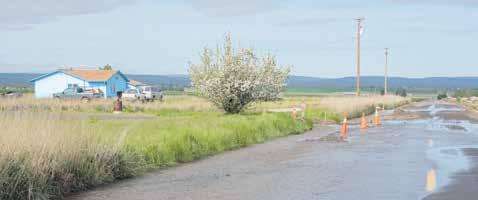
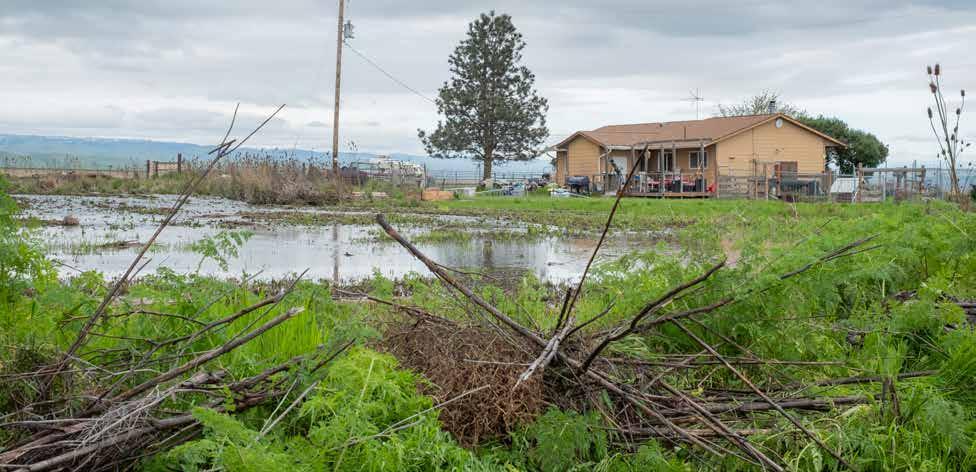
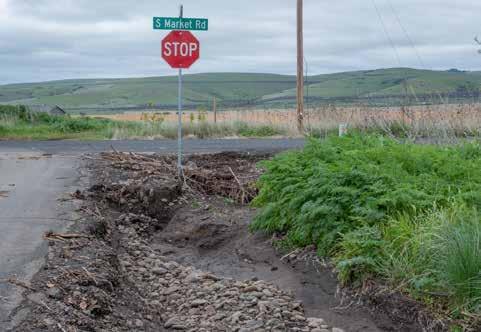
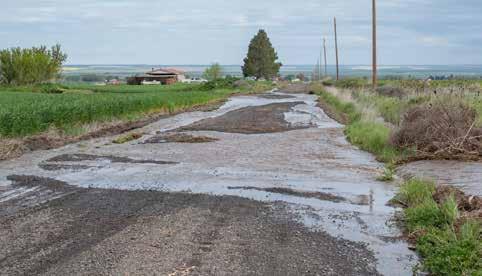
MISSION — Floodwaters overran roads on the south Umatilla Indian Reservation on April 22, including Conner, Best, Lloyd and Motanic roads, along with several others near Coyote and Patawa creeks.
The surge washed out grading, damaged culverts and carved out portions of pavement, while carrying rounded river rocks and depositing them along the roadsides.
Tamástslikt Cultural Institute (Tamástslikt) Director Bobbie Conner spent the evening placing cones and hazard signs along roads near Tamástslikt after flash flooding damaged multiple roads.
Conner first noticed the flooding about 5:45 p.m. as she drove home after passing a relative’s house. She said that water was building up along the road and in the ditch and the driveway looked like it was going to wash away. The home’s electrical box was starting to lay in the ditch where water was flowing, she added.
“I called dispatch, but didn’t have direct access to anyone who could get the road closure signs, so we came and picked up Tamástslikt equipment just to get people to slow down,” she said. “After, we put them up on Conner, where the flooding was right at the T-intersection, and got small barricades up on both sides of the water running across the road on Motanic.”
Conner, along with Confederated Tribes of the Umatilla Indian Reservation (CTUIR) Environmental Health and Safety Specialist Brian Fullen, called it an evening around 8:45 p.m.
“I was enormously grateful that there were staff out after-hours helping,” she said. “It’s a big deal, especially someone who has responsibility and can put safety stuff out.”
Excessive runoff flowing downhill through Patawa and Coyote creeks
Overflowing creeks damage multiple roads across south Umatilla Indian Reservation
overwhelmed roadside ditches and culverts, cutting across roads and through properties. Floodwaters spread into the Shenandoah community, one of the more densely populated areas outside the housing projects, with about 30 to 40 homes, according to Conner.
CTUIR Water Resources Specialist Devan Noblit said challenges derived from sediment runoff throughout the reservation flowing down with the overflow and clogging culverts.
“Folks were out trying to clear those culverts to help guide that water through those areas so the water levels would go down, but there is some pretty extensive damage,” Noblit said. “Not at the level seen in 2020 during that flood, but it still is pretty significant in some of these areas, especially where South Coyote Creek runs through.”
Noblit said a flooding event to this extent wasn’t a common occurrence, though some areas are more prone to smaller floods.
“The last time was 2020, and that was a hundred-year event that we saw then,” she said. “There have been smaller floods like this
throughout the years, but it’s not an annual event to any extent. There are certain areas that are more prone to flood annually, but the extent of the damage we saw isn’t common to be seen.”
Whose roads are these?
Conner said some of the roads on the south reservation have weakened foundations after years of water moving around them.
She said it was difficult to determine which entity owned affected roads and how to seek help to block them off or prevent future flood events.
Roads on the south reservation are owned by either the county or the Bureau of Indian Affairs (BIA).
Noblit said part of the problem comes down to determining which roads are owned by which entity.
“Our roads department is pretty good about maintaining, say, when it’s their culvert that gets blocked up, it gets reported and they’re pretty good about going out and cleaning those out,” she said. “It’s a little bit more challenging with the county, to have them come out and really clean those out or maintain those culverts, because there are
Road Ownership on the South Umatilla Indian Reservation
UMATILLA COUNTY ROADS
• Best Road
• Billy Road
• Conner Road
• Goad Road
• Holmes Road
• Kash Kash Road
• Lloyd Road
• Motanic Road Patawa Road
• Red Hawk Road
• S. Market Road Tias Road Tutuilla Church Road Tutuilla Creek Road
For Umatilla
County Roads information, contact the Umatilla County Public Works Roads Department at (541) 2785424.
BUREAU OF INDIAN AFFAIRS ROADS
• Angus Avenue
• Brahman Way
• Charolais Street Durham Plaza
• Meadow Lark Lane
• Minthorn Lane
• Pond Road
• Thompson Road Tokti Road
• Umbarger Road
For BIA Tribal Roads information, contact the CTUIR Public Works Department at (541) 429-7507.
quite a few on the reservation that are crushed. So, it takes a lot less sediment to build up than if the culvert were fully open.”
Conner said regrading the roads after flooding does not address the underlying issues.
“It doesn’t handle the culverts that were overflowing, it doesn’t handle the ditches that were blocked by somebody putting stuff in it that shouldn’t have been there,” she said.
Conner added there can be no “them and us” in moments of emergency, because everyone is a resident of the Umatilla Indian Reservation.
“We’re all driving these roads, we all have kids who have to get on the school buses, we all have livestock, pets, crops and other things to manage, sources of income. So, the
Floodwaters rise into the backyard of a home along Connor Road on April 23 in Mission. (Yasser Marte/The CUJ)
A road has eroded and sunk in the aftermath of flooding, exposing tree roots, on April 23 at the intersection of Lloyd Road and South Market Road in Mission. (Yasser Marte/The CUJ)
tribe needs an agreement with the county about working cooperatively on these kinds of issues,” she said.
She also expressed her frustration with the county’s priority, noting the lower population density in the flooded areas of the south reservation compared with other at-risk locations.
“It’s absolutely insane, because there wasn’t any emergency readiness for this to this degree that happened. We didn’t have snowpack, we had a drought declaration, but what we got was this water event,” she said.
Aren’t we in a drought?
Gov. Tina Kotek declared drought conditions for Baker, Deschutes and Umatilla counties on March 26 under Executive Order No. 26-05, citing persistent moderate drought conditions since mid-2025. The order expires on Dec. 31.
Conditions included abovenormal temperatures, well-belownormal snowpack, below-normal streamflow forecasts and generally dry soil moisture conditions.
Noblit said drought conditions are closely tied to snowpack.
“Throughout the winter we really didn’t have much snowpack,” Noblit said. “Then we have rain events like this, and it doesn’t stay in one place like snow does. This isn’t going to, in the long-run, impact drought in that capacity. But yes, most of the state is in a drought and has been in a drought throughout the winter as well.”
Water Resources Director Troy Baker said the flooding event was not directly tied to the drought declaration, due to the existing lack
of snowpack in the mountains.
“In 2020, we had a rain event with snow that created that highflow event, where this was just all rain,” he said. “We had areas that picked up 2 inches of rain in 24 hours, which is a lot of water, and we’ve had multiple rain events over the last few weeks, so the ground’s already saturated. When we have 2 inches of rain falling on top of that, it’s all running out in a flash flood type of event.”
Conner said if snowpack had been present before the storm, flooding likely would have been worse.
Mitigation, management and moving forward
Baker said preparing for future events starts with ensuring infrastructure can handle high water volumes.
“Ensuring that the culverts are adequate for the amount of flow that we would see, and ensuring that areas where we have some of
these creeks that are being farmed right up against the channel, being pushed into a narrower stream channel, that it doesn’t have a chance for that water to go over into the floodplain, to allow it to dissipate some of that energy,” Baker said.
When channels are narrowed by farming right up against them, he noted, water flows faster and can cause more damage. The flow only begins to slow down once it can spread, he said.
“I think there are some conversations that need to be had as far as, do we start looking at buffers on some of these creeks to ensure that we have the capacity for that water to lose some of the power that it has?” he said.
Conner said events like this can’t be fully prevented, but damage can be reduced through cooperation with Water Resources, Range, Agriculture and Forestry and other partners.
The damage that is inflicted can be mitigated through work done with in-stream permits, whether returning streams back to their original channels, creating seasonal retention or overflow ponds or upsizing culverts, she added.
Noblit said there’s a community concern as well for people in higher positions to “hold the county’s feet to the fire,” as it’s their responsibility to maintain culverts and road infrastructure that isn’t on private property.
Noblit said Water Resources has been working with different departments to come up with a plan to reroute South Coyote Creek back to the main channel to prevent further flooding of homes.
Conner said she is sad and frustrated by the extent of the damage but encouraged after speaking with Baker and CTUIR Emergency Management Coordinator Kimberly Hughes about improving preparedness for future events. She also said she is optimistic the CTUIR Board of Trustees could utilize its government-to-government relationship with the county to improve service to reservation roads.
She noted the flood carried topsoil downstream and spread freeway runoff, wreaking destruction to residences’ homes and yards.
“Water is the first thing we drink in the Longhouse at feast and it’s the last thing we drink in the Longhouse before they close the table and say the closing prayers,” Connor said. “Water is precious, water is sacred and we can’t afford to have water wasted.”
Flooding water runs across stretches of Motanic Road on April 23 in Mission.
(Yasser Marte/The CUJ)
FROM THE CTUIR LEADERSHIP
Our commitment to future generations
In April, it was great to see progress on a number of projects, some that have taken years to accomplish and others that are still in the works.
What stood out most is how these efforts are built on strong relationships, both within Confederated Tribes of the Umatilla Indian Reservation (CTUIR) and with external partners. These projects will have a lasting impact on our membership and our community.
Relationships matter to all of us. They are not always easy to maintain, but they are essential over time. Tribal leaders understand we cannot create success for our people and our communities on our own. We have to work with others who influence and affect our lives.
I have often been reminded by tribal elders that our 1855 Treaty was signed with the future in mind.
Our leaders then were planning ahead for generations they would never meet. Now it is our turn to do the same. That message has stayed with me for decades, and it continues to guide the work our leaders are doing today.
One project that reflects this long-term commitment is the reconnection of Chamna and the healing of the Yakima River Delta. CTUIR and the Yakama Nation have worked on this for decades, restoring the island and ensuring the Yakima River can flow freely again at its mouth. It was powerful to see so many partners come together and hear their stories. The Yakama Nation also hosted a strong celebration to recognize the success and bring everyone together.
Another example comes from our own experience restoring salmon to the Umatilla River. When smolts were first released at the headwaters,
KATHRYN BRIGHAM Chair, CTUIR Board of Trustees
they ended up in irrigation fields instead of continuing downriver. That moment brought the Board of Trustees and the Fish and Wildlife Committee together to find a better path forward. The work was not easy, but through communication, partnership, and collaboration, CTUIR restored salmon populations after 75 years of absence.
That is something to be proud of.
We are continuing that work in the Walla Walla River, and 2026 marks an exciting milestone: the first year salmon are returning to the Walla Walla Basin.
These successes remind us that
long-term commitment pays off. We have seen it through efforts like the Umatilla Basin Project and the Umatilla River Fish Restoration Program, where salmon returned after generations of absence. We see it continuing today with restoration work in the Walla Walla River. It also shows how we care for the land through our First Foods Policy, ensuring future generations have access to the foods that define who we are.
Beyond natural resources, we have made long-term investments in preserving our history through the Tamástslikt Cultural Institute, as well as in education, workforce development and planning for future energy needs.
All of this work reflects the same idea our elders shared years ago: plan not just for today, but for the generations that come after us.
CTUIR encourages tribal members to lend their expertise to commissions, leadership roles
Greetings. I want to take this opportunity to highlight the Confederated Tribes of the Umatilla Indian Reservation (CTUIR) committees, commissions and boards.
There are currently seven advisory committees: Cultural Resources Committee, Economic and Community Development Committee, Education and Training Committee, Land Acquisition Committee, Law and Order Committee, Science and Technology Committee and Veterans Committee.
The Board of Trustees (BOT) created advisory committees by resolution to provide policy advice to the board and tribal staff on specific subject matters, departments or programs of the tribal government. Each advisory committee has its own subject matter statement.
There are nine regulatory commissions. The BOT delegates authority to regulatory commissions to exercise governmental power in specific subject areas. This includes the authority to adopt regulations, conduct hearings, issue permits
MONICA PARADISE Secretary, CTUIR Board of Trustees
and impose fines as outlined in each commission’s code. The BOT has enacted individual statutes that define the scope of authority for each commission.
The nine current regulatory commissions of the CTUIR are Election Commission, Enrollment Commission, Fish and Wildlife Commission, Gaming Commission, Health Commission, Housing Commission, Land Protection Planning Commission, Tribal Employment Rights Office Commission and Water Commission.
The BOT creates boards of directors to operate tribal enterprises and service agencies. These boards function like those of private companies or nonprofit organizations. They may hire staff, manage budgets, contract in their own name and in some cases file
lawsuits.
These boards include Tiicham Conservation District; Nixyáawii Community Financial Services, a certified community development financial institution; Cayuse Holdings; Wildhorse Foundation, a charitable foundation; the Farm Committee, which provides operational oversight of the Tribal Farm Enterprise; and the Health Commission, which operates the Yellowhawk Tribal Health Center.
One important group to acknowledge is the CTUIR Senior and Junior Youth Leadership Council. The Department of Family and Children Services director Julie Taylor leads the council. They meet on the first and third Sundays of each month. The leadership council presented at the General Council meeting in March 2026 and shared a variety of projects they are currently working on.
More information about committees, commissions and boards is available on the CTUIR website under the Government tab, then Committees and Commissions. Each month, I conduct a work session to review applications with the BOT. The following Monday, the BOT makes appointments.
Public notices are posted throughout the community, on the website and in the CUJ listing current openings.
I encourage tribal members to apply and contribute their input and expertise. These opportunities also serve as a strong entry point for those interested in leadership roles within tribal government.
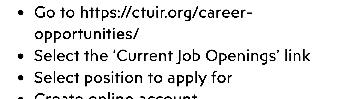
Current positions and applications can be accessed by scanning this QR code.
LETTERS TO THE EDITOR
Retrocession of civil jurisdiction to CTUIR should be formality
The Confederated Tribes of the Umatilla Indian Reservation (CTUIR) have a constitutional democratic government system with functions serving enrolled CTUIR members, as well as citizens of other Indian tribes and nonIndians who reside on the Umatilla Indian Reservation (UIR).
The CTUIR government funds and operates a system that includes health care, social services, economic development, public works, planning, housing and a wide range of other functions that are typically associated with either states or the federal government. This includes a judiciary, which is carried out by the Umatilla Tribal Court.
Within the justice system on the UIR, the Tribal Court exercises criminal and civil jurisdiction. Criminal jurisdiction covers enrolled CTUIR members, Indian people who are enrolled with other tribes, as well as non-Indians who are alleged to have committed certain domestic violence offenses. Criminal jurisdiction is concurrent with the federal government. For civil matters, which can be anything
MATTHEW JOHNSON CTUIR Tribal Court Director
from zoning to personal injury cases or landlord-tenant matters to taxation or probate to air quality, to name but a few, CTUIR jurisdiction is concurrent with the state of Oregon. This is due to a law passed by the United States in the 1950s known as Public Law 280.
Enacted in 1953, PL-280 required certain states such as Oregon to assume criminal and civil jurisdiction over tribal lands. This law authorized state law enforcement to operate on reservations without tribal consent, prosecuting Native and non-Native individuals in state courts. No federal funding was provided to support states in this role, which strained state resources.
Retrocession is the action of ceding territory and/or jurisdiction back to a government. In 1968, Congress amended PL-280 to allow states to return jurisdiction to tribes
or the federal government through retrocession, which tribes could request when they determined they are ready to do so. However, states lacked a specific process for this.
Senate Bill 1011, which the CTUIR helped draft and advocate for during the 2025 Oregon Legislative Session, establishes a clear statutory process for the retrocession of PL280 jurisdiction. Prior to the bill, decisions on retrocession were being made on a case-by-case basis. This created uncertainty for tribes pursuing jurisdictional restoration as well as the states they requested it from. The bill had bipartisan sponsorship and passed unanimously in the Senate on March 31, 2025, and in the House on May 14, 2025. Gov. Tina Kotek signed the bill into law that more clearly outlines and helps restore criminal and civil jurisdiction for most Oregon tribes during a Nov. 18 ceremony as part of Legislative Days at the Oregon Capitol.
The CTUIR Board of Trustees approved Resolution No. 25-081 during its Nov. 10 meeting, which along with an accompanying letter formally requested retrocession of
PL-280 civil jurisdiction from the state of Oregon. The governor had to acknowledge receipt of the request within 10 days of receipt, and within 90 days convene a meeting with CTUIR representatives to discuss the request, including but not limited to the implications and logistics of retrocession. Once that meeting has occurred then the governor had to accept or deny the request and notify the requesting tribe of her decision within 180 days. If the governor accepts, she must petition the U.S. secretary of the Interior regarding retrocession within 10 days after her decision for final approval.
The CTUIR has been exercising its constitutional jurisdiction since 1980 but has exercised its sovereign authority on, with and for its people and land since time immemorial. Given this deep connection between the land and the people of the CTUIR and the many ways in which the CTUIR government exercises contemporary government functions, the retrocession of civil jurisdiction by the state of Oregon to the CTUIR is hopefully nothing more than an imminent formality.
What are we learning about tribes in Washington’s schools?
In 2005, the 59th Regular Session of the Washington State Legislature, Substitute House Bill (SHB) 1495 became law. SHB 1495 was an act relating to teaching Washington’s tribal history, culture and government in the common schools.
As I thought about writing this oped, I had to personalize it. What was I taught in the public school system about tribal history, culture and government? What were you taught, whatever your age, in the public school system about the same?
I was raised in Wapato, Washington, and attended Wapato Schools for my K-12 education. Wapato is an incorporated city within the boundaries of the Yakama Nation, an approximately 1.2-million-acre reservation.
Thinking back, I remember Indian history being almost a chapter in our history books. I can recall seeing a picture of Sitting Bull and learning about the Battle of Little Big Horn and Custer. I learned about the great western migration of immigrants, Westward Ho and Manifest Destiny. I did not learn about the tribes I am a descendent or a member of and I was raised on one of the largest reservations in Washington with a ceded area of approximately 11.5 million acres.
As an enrolled member of the Confederated Tribes of the Umatilla Indian Reservation (CTUIR) – the Cayuse, Umatilla and Walla Walla People – our history in south central and southeast Washington and
LISA GANUELAS CTUIR Board of Trustees
the other Stephens/Palmer Treaty tribes, is much more than “almost a chapter in our history books.”
Why does a federally recognized tribe in Oregon care about a Washington law that requires common schools to teach tribal history, culture, and government?
Articles of agreement and convention in our treaty were concluded at Camp Stevens in the Walla Walla Valley on June 9, 1855. In the Preamble to our treaty, Territorial Gov. and Superintendent of Indian Affairs for the Territory of Washington Isaac I. Stevens assumed to treat with our tribes and bands residing within the Territory of Washington. Joel Palmer, superintendent of Indian Affairs for Oregon Territory, assumed to treat those residing in Oregon.
The Umatilla Indian Reservation is located in northeast Oregon. We own approximately 11,000 acres of trust land in Washington.
Our history, culture and government are factors to governments in the region, as we protect and promote our treaty reserved rights. In Article 6 of the U.S. Constitution, “all Treaties made…under the Authority of the United States, shall be the Supreme Law of the Land…”
In Article V of our treaty, it stipulated Walla Walla Chief Piopio-mox-mox would have the right to build and occupy a house near the mouth of the Yakama River. This did not occur as Chief Pio-pio-moxmox was taken hostage and killed on Dec. 6, 1855.
State Rep. John McCoy (38th LD) was the primary sponsor of SHB 1495. The bill was approved by Gov. Christine Gregoire on April 28, 2005, and became effective on July 24, 2005.
The CTUIR provided testimony to the original bill (HB 1495), and SHB 1495 successfully became inclusive of “federally recognized Indian tribes whose traditional land and territories included parts of Washington, but who now reside in Oregon, Idaho and British Columbia. School districts and tribes were encouraged to work together to develop such curricula. The key word regarding the law was encouraging.
In 2015, Substitute Senate Bill (SSB) 5433 regarding tribal education passed and amended the 2005 legislation. As passed, SSB 5433 required, not encouraged, the Office of Superintendent of Public Instruction and school districts to collaborate and incorporate curricula about the 29 federally recognized Indian tribes whose reservations are located in Washington. By amendment, SSB 5433 removed the requirement that school districts near Washington’s borders must work with tribes in
Oregon, Idaho and British Columbia to develop curriculum.
The ceded area of the CTUIR is approximately 6.4 million acres and about a quarter of it is in Washington. Our elected officials and staff are engaged with the administration, legislature and multiple state departments/agencies for the protection of our rights and interests. In December 2004, we became signatory to the Centennial Accord Between the Federally Recognized Indian Tribes with Treaty Reserved Rights in Washington State and The State of Washington.
There are 13 school districts in our ceded area. On March 24, 2025, the CTUIR signed a memorandum of understanding with the Walla Walla Public Schools to continue educating its students about CTUIR history and culture. So while it no longer is a requirement for the Walla Walla Public Schools to work with the CTUIR by state law, Walla Walla Public Schools have continued to respect our rightful presence and the teaching of our history, culture and government in the region.
We have continued work in the Washington State Legislature in the area of education, but that is far from the extent to which we have to advocate on our behalf.
For educational purposes and to learn more about us, consider visiting our Tamástslikt Cultural Institute at 47106 Wildhorse Blvd. in Mission. For more information, call 541-429-7700 or visit www. tamastslikt.org.
LETTER TO THE EDITOR
2026 is our year to quit commercial tobacco
JACINTHA “JAY” STANLEY
Yellowhawk Tribal Health Center, Tribal Tobacco Prevention Program Coordinator
How are we doing nearly halfway through 2026? Did we adopt healthier habits, or did the todo list fall by the wayside? Did we follow through on plans to quit commercial tobacco?
Either way, now is a good time to check in with yourself and your loved ones and recommit to the steps that support your well-being. Change and new habits can be challenging, but support can make the process more manageable.
The Yellowhawk Tribal Tobacco Prevention Program and its partners offer several resources to help community members quit commercial tobacco. Recognizing that each person’s journey is different, the program provides multiple options for support:
• Nicotine Replacement Therapy is available through Yellowhawk Pharmacy for patients age 15 and older. Youth under 15 should schedule an appointment with a provider to begin the process.
• To help manage withdrawal symptoms, patients can try Acudetox, available by appointment through the Behavioral Health Department at 541-240-8670.
Prevention education and tobacco cessation classes are planned, including youth classes at NCS and adult cessation classes in 2026.
• The CTUIR Community Warm Line is available 24/7 for anyone who needs someone to talk to. Call 541-969-0010.
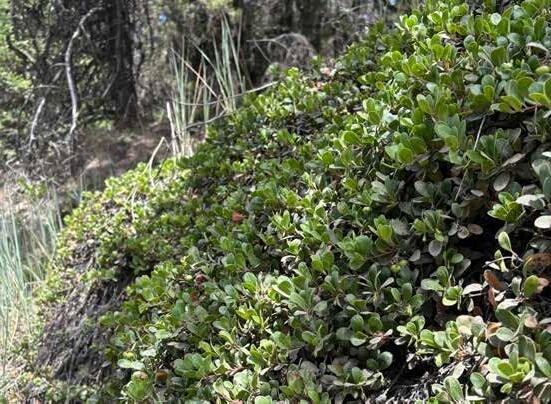
• Traditional medicine remains an important part of care. Kinnikinnick, the traditional tobacco used in this community, grows naturally in the Blue Mountains. The program offers tobacco ties for individuals and groups engaged in cultural practices.
• “Quit Kits,” which include items to help manage stress and cravings, will be available in May at Public Health and the Pharmacy.
For those still unsure about quitting, the adult cessation program, Second Wind, highlights several health benefits:
• After 20 minutes, blood pressure begins to return to levels seen before the last cigarette.
• After eight hours, oxygen levels in the blood increase to normal.
• After 24 hours, the risk of heart attack begins to decrease.
• After 48 hours, the senses of smell and taste improve.
• After 72 hours, lung capacity increases.
• Within two weeks to three months, circulation improves and walking becomes easier.
• Within one to nine months, coughing, sinus congestion, fatigue and shortness of breath decrease, while overall energy increases.
• After one year, the risk of coronary heart disease is about half that of a person who continues to smoke.
For more information, contact me at 541-2408575 or email JacinthaStanley@yellowhawk.org, or visit Yellowhawk Public Health. The Centers for Disease Control and Prevention website also offers additional resources.
Traditional tobacco, kinnikinnick, grows naturally in the Blue Mountains on the ancestral lands of the Confederated Tribes of the Umatilla Indian Reservation. (Jay Stanley/ Contributed Photo)
LETTER FROM THE EDITOR
Spring brings First Foods, First Fish and community
April passed quickly, yet it marked a series of meaningful firsts — First Fish, First Foods and the first release. The land takes care of us, and in return, we take care of it.
As the season turned, the rhythm of the community shifted with it. Sunnier days stretched into the evening and people gathered to honor responsibility, renewal and connection to the land.
Early in the month, I traveled to document the Pacific lamprey release in collaboration with the Confederated Tribes of the Umatilla Indian Reservation’s lamprey team, alongside partners from other tribes and state agencies.
The journey began at the Oregon Zoo, where lamprey are raised with care and monitored closely as part of a large effort to restore
what was nearly lost. From there, we followed the lamprey path east to the Detroit Dam area. When the time came, they slipped back into the river. It was a quiet return, witnessed by a small group of people carrying a shared purpose.
Later that week, The CUJ team attended the annual Root Feast, where the community continued its commitment to honoring and caring for the land. It was my first time at the event. Hundreds of tribal members gathered from across the Pacific Northwest,
bringing with them stories, songs and a shared commitment to First Foods and to protecting the land that sustains us.
During the gathering, I stepped beyond my role as a reporter and out from behind the lens. I accepted an invitation to help serve food and I joined in prayer and dance, an experience that deepened my understanding of inclusion and shared responsibility. For the first time, I set my camera down and allowed myself to be fully present. In that moment, I was no longer observing the community; I felt like I was a part of it. Thank you for letting me join. I am truly grateful.
In those moments — by the river, in the Mission Longhouse, in the spaces between conversation and ceremony — I saw a pattern that doesn’t break: perseverance
and care. A responsibility carried forward, year after year, generation after generation.
As summer approaches, another kind of beginning comes into view. Graduates across the region step into new paths, carrying their own stories forward. I congratulate all high school and college graduates in the region and wish them success in the paths ahead. May you move forward with purpose.
The seasons will keep changing. They always do. But what remains steady is this: community, care and the understanding that we belong to something larger than ourselves.
As always, I carry deep gratitude for the communications team, The CUJ staff and the CTUIR community members whose stories shape these pages. Thank you, gracias, and qayciyáw̌yaw.
CTUIR members can now receive reimbursement for birth certificates
THE CUJ
MISSION — Members of the Confederated Tribes of the Umatilla Indian Reservation (CTUIR) can now get reimbursed for birth certificates.
The Board of Trustees (BOT) voted on April 20 at the Nixyáawii Governance Center to include birth certificates among identification documents eligible for reimbursement to tribal members.
The BOT met in a work session April 15 to iron out the details of the birth certificate reimbursement policy before taking a final vote five days later.
Elfrina Lubrin, Enrollment administrative office manager, said a birth certificate is one of the documents the U.S. government accepts to issue a passport, which is why it is now eligible for reimbursement if needed.
“The reason came up as the SAVE Act gained traction, which mandates stricter proof of citizenship and photo identification requirements for voter registration and voting,” Lubrin said. “It is not required to carry your state-certified birth certificate on your person. However, it should be an accessible document should a person need to prove citizenship.”
The Safeguard American Voter Eligibility Act was introduced in 2025 and calls for people to provide proof of U.S. citizenship when registering to vote in federal elections, including passports, birth certificates or other governmentissued documents verifying citizenship. It has not been passed into law.
Other documents eligible for CTUIR reimbursement are U.S. passport books, passport cards, REAL ID Act driver’s licenses and REAL ID state-issued identification cards. REAL IDs refer to state-issued driver’s licenses or identification cards that comply with standards established by the 2005 REAL ID Act.
The BOT on Jan. 26 passed a resolution allowing the Enrollment Office to reimburse tribal members who pay for U.S. passport books and
cards as well as the REAL ID cards and driver’s licenses. However, the resolution was retroactive to Jan. 1, allowing those who obtained such documents between Jan. 1 and Jan. 26 to be reimbursed.
Lubrin said the revised resolution that added birth certificates is also retroactive to Jan. 1 and that it applies to birth certificates from any state, not just Oregon. She added that there is no cap on the amount someone can be reimbursed for since states charge different fee amounts for birth certificates.
The resolution allows any enrolled CTUIR member, regardless of age or location, to be eligible for the reimbursement of fees paid for obtaining the proof-of-citizenship documents. This includes renewal fees if renewed before or upon expiration. However, the CTUIR will not reimburse fees paid to replace lost or stolen documents or for expedited processing.
Tribal members will be reimbursed for only one document and are responsible for choosing which document fees they want reimbursed. Enrollment employees will not help people apply for the documents or decide the document for which they should seek reimbursement. Tribal members will need to pay all required fees first and obtain the document before requesting reimbursement.
To apply for a reimbursement, tribal members must complete a Request for Reimbursement Form, which is available at the Enrollment Office and online at ctuir.org/departments/enrollment/ state-idpassport-request-forreimbursement-form/. The link also includes the full reimbursement policy.
Along with the completed request form, tribal members must provide:
• An original receipt of the fees paid. If purchased online, a printout of the electronic receipt is acceptable.
• A photocopy of the passport book, passport card, REAL ID identification card or driver’s license.
The Enrollment Office will issue the reimbursement to the person
listed on the receipt, who must be a tribal member. Once the CTUIR has reimbursed a tribal member for fees paid for one of the eligible documents, the tribal member is ineligible for another reimbursement until the original document expires. Also, there is no timeline for when reimbursement materials must be turned in after a tribal member receives one of the eligible documents, Enrollment officials said.
For more information, call the CTUIR Enrollment Office at 541-4297035 or email enrollment@ctuir.org. Visit travel.state.gov/content/ travel.html for information on how
to obtain a passport and related fees. Required passport documents include:
• A birth certificate with an official seal or stamp of the government that issued it,
• A photo identification such as a valid driver’s license, and A color photo with a white or offwhite background taken in the past six months without glasses that clearly shows the applicant’s face. For information on how to obtain birth certificates, a REAL ID identification card or driver’s license, tribal members will need to visit their respective states’ government websites.
CTUIR receives $6.91M for hatchery, collection
THE CUJ
MISSION – The Confederated Tribes of the Umatilla Indian Reservation (CTUIR) has been awarded $6.91 million from the U.S. Bureau of Indian Affairs (BIA) for fish hatchery and collection activities.
Jerimiah Bonifer, Fisheries Program manager with CTUIR’s Department of Natural Resources (DNR), said the CTUIR in March received notice of the BIA funding appropriated in the Inflation Reduction Act of 2022.
“The funds are directly applied to the hatchery facility modernization and maintenance needs, which are necessary to continue to support treaty harvest rights throughout the CTUIR’s usual and accustomed areas,” Bonifer said.
While hatchery infrastructure remains one of the most effective tools used by the Fisheries Program to reintroduce and supplement salmon and steelhead in CTUIR’s traditional use areas, he added.
DNR applied for the funding in 2025 for three hatcheries: the Nursery Bridge Adult Collection Facility near Milton-Freewater, the Umatilla Hatchery Satellite Facility near Irrigon and the ˀImtwaha Fish Hatchery near Walla Walla, Washington.
“At Nursery Bridge, the funds will pay for construction of an improved collection and handling area, which is currently in the design phase,” Bonifer said. “At ˀImtwaha, the funds will support improved
internet connectivity, allowing for better connection to the Nixyáawii Governance Center and improved emergency response with the advanced alarm system installed when the facility was completed.”
He said the Umatilla Hatchery Satellite Facility is the oldest and includes the Immeques (em-meckeez) Acclimation site near Gibbon, Thornhollow Acclimation site near Cayuse and Three Mile Dam Adult Collection site near Umatilla.
Bonifer said all sites are budgeted for internet upgrades. He noted the sites, along with the Pendleton acclimation site, will also receive intake cleaning system upgrades or replacements, water control valve
replacements or rebuilds and intake flow meters.
He said the updates will also improve water-use reporting, strengthen alarm system connectivity and enhance the ability to maintain intakes during inclement weather, allowing staff to more securely hold fish.
Although the CTUIR has yet to receive the funds, work should begin when the money is transferred. Some projects such as internet upgrades should be completed within a year of their start dates, Bonifer said, while others may require longer timelines to ensure usability when needed.
For example, work at Nursery
Bridge is not expected to start until 2027 or 2028 because of the unfinished redesign and time needed to use the facility for its purpose and in finding a contractor for the project.
“Valve replacements and flow meter installations are again constrained by the funding arrival and bid process, but also the facilities need to be vacant for the work to happen,” Bonifer said. “Intake cleaning system replacements will need to happen during the summer months, likely in 2027.”
Despite lengthy times estimated for some projects, Bonifer said the CTUIR is thankful for the BIA funds because hatchery facilities are subject to high levels of wear and tear.
“Water is constantly working to destroy the concrete of which many facilities are made, their technology and mechanical parts,” he said. “Since we are also working with live animals, it is important to ensure that our facilities are able to safely hold and maintain the fish. Sometimes the only thing that prioritizes a repair is a catastrophic failure. This funding allows us to address areas where we haven’t yet had a failure, but if we keep delaying maintenance activities, we may. Ultimately it provides us with peace of mind and security for the over four million fish the artificial production program releases each year.”
An employee holds a salmon at the ˀImtwaha Fish Hatchery near Walla Walla, Washington. The hatchery is one that will receive modernization and maintenance needs as part of $6.91 million in federal funds appropriated to the Confederated Tribes of the Umatilla Indian Reservation. (CTUIR/Contributed photo)
CTUIR and Owl Research Institute install livestream camera for burrowing owls
TRAVIS SNELL
The CUJ
HERMISTON — The Confederated Tribes of the Umatilla Indian Reservation (CTUIR), Owl Research Institute (ORI) and Explore.org recently installed a livestreaming camera at the former Umatilla Army Depot to watch burrowing owls that nest there.
Lindsay Chiono, CTUIR Department of Natural Resources (DNR) Wildlife Program habitat ecologist-biologist, said she along with ORI and Explore.org staff installed the camera outside a burrowing owl nest on April 7 for public outreach and education.
“People, including me, are excited at the opportunity to observe burrowing owl behavior that is usually hidden from view such as pair bonding and hunting,” she said. “Education is a critical element of conservation and species recovery. Naturally, people care most about the species they know about. The live video stream is a form of that education. It offers us a window into the owls’ lives, allowing us to watch the owls going about their business without being disturbed by our physical presence.”
The live feed can be viewed at: https://explore.org/livecams/owlresearch-institute/burrowing-owls, including at night thanks to infrared capabilities.
“The site we selected hosts two artificial burrows,” she said. “Typically, an owl pair nests in one burrow and stores food in the other. The site we selected has a good long-term track record. That is to say owls nest in it in most years, and most nests are successful with a relatively high average number of fledglings. The site has been used for nine years and hosted successful nests. It has produced chicks that reached fledgling age in seven of those years.”
Although there is only one camera currently, which is powered by solar panels installed for the project, Chiono said there may be opportunities to add cameras in the future.
She added that much of the land at the former depot is being transferred into CTUIR ownership with plans to rename it to Papuunmí
Scan the QR code to view the live feed of burrowing owls
Tanawtpamá Tičám (Pop-poon-me Ton-out-pa-ma Teech-um), which means “home of the burrowing owls” in the Umatilla language.
Burrowing owls are culturally important to the CTUIR, Chiono said, as there are traditional songs and stories about them.
“Unfortunately, burrowing owl populations are declining throughout the species’ range, and the owl is a conservation priority wildlife species from Canada to Mexico,” she said. “The primary causes of the owl’s decline are habitat loss through conversion to agriculture and other uses, the elimination of burrowing mammals like badgers, which construct the burrows in which the owls live, and pesticide use, which affects prey populations. Burrowing owls primarily feed on rodents and insects.”
Global Owl Project Director David Johnson began the burrowing owl project in 2008 at the request of the U.S. Army. DNR became more involved in 2023 and now jointly manages the burrow network, which has approximately 100
artificial burrow sites, with the Oregon Military Department. The project started with three or four nesting pairs in 2008 and peaked in 2024 with more than 100 nesting pairs producing nearly 500 fledglings.
The ORI, based in Charlo, Montana, is dedicated to owl conservation through research and education. For more information, visit www. owlresearchinstitute.org. Explore.org is a philanthropic live nature camera network and documentary film channel. For more information, visit explore.org.
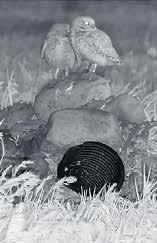
Two burrowing owls stand outside their burrow at the former Umatilla Army Depot near Hermiston in a photo captured by the livestreaming camera recently installed on the property by The Confederated Tribes of the Umatilla Indian Reservation and explore.org. This shot was recorded at night thanks to the camera’s infrared capabilities. (Explore.org/Contributed photo)
Denver Holt, Owl Research Institute founder and president, stands next to Lindsay Chiono, Confederated Tribes of the Umatilla Indian Reservation Program habitat ecologist-biologist, after helping install a livestreaming camera near two burrowing owl nests at the former Umatilla Army Depot near Hermiston. (Explore.org/Contributed photo)
First Fish Ceremony honors salmon’s long, hard journey
BEAU GLYNN
The
CUJ
MISSION — The first spring Chinook salmon of 2026 arrived April 27 to the Confederated Tribes of the Umatilla Indian Reservation (CTUIR) for the First Fish Ceremony on the Nixyáawii Governance Center (NGC) front lawn.
In an annual ceremony, the salmon (Waykaanash) is greeted with songs and prayers in celebration, recognizing the return of a key component of the First Foods.
“Without him, we wouldn’t be here. No fish, no people, none of our First Foods. If they weren’t here, we wouldn’t be here either,” Senior Youth Leadership Council Cultural Ambassador Abraham Shippentower said. “When we came into this world, we made a promise to take care of not only this land, but also our foods, just as they promised a long, long time ago to take care of us.”
Other speakers at the ceremony included Fish and Wildlife Committee (FWC) Vice Chair Don Sampson and Board of Trustees members Corinne Sams, Toby Patrick, Secretary Monica Paradise and Treasurer Raymond Huesties.
“It’s a way for us to honor our reciprocal responsibility to our foods and salmon was the first to stand up, it’s us giving thanks and praying for the continued return of our spring Chinook and all of the aquatic species,” Sams said.
Speakers at the ceremony acknowledged and thanked members of the community, the Department of Natural Resources and the FWC for their work to bring salmon upriver.
“To sit here today and hear everyone speak of the generations and all of the work that we’re putting in to ensure that our First Foods are coming back, this is a testament,” Paradise said. “I’m extremely grateful to the DNR, the Board of Trustees, FWC and the community for all coming together and honoring our First Foods and our Brother Salmon.”
Speakers at the ceremony emphasized the challenges of restoring and sustaining salmon runs, including dams, predation and other barriers, and returned to a common theme of resilience in the fish’s journey home.
“Remember that struggle that your brother had to go through and make it back to you, because society’s going to stop it, and they did, with the dams,” Patrick said.
Patrick also noted community efforts to restore salmon runs, a point Sams echoed, including work he discussed during a visit to Washington, D.C.
“We’ve been doing this work since time immemorial, managing these resources,” she said.
Sams said millions of dollars have gone toward restoration work and hatcheries aimed at rebuilding native stocks within the basin, helping tribal members continue to exercise their treaty rights. Those rights were reserved in perpetuity, but without Chinook salmon, exercising them becomes a challenge, she noted.
“I’m very grateful today for all of you to attend this ceremony, but mostly grateful for the CTUIR organization and participation,” Sams said. “It’s important to remember today that we honored our Brother Salmon. This isn’t for us, this is for future generations, but the work that you all do doesn’t go unrecognized.”
Sams said her time spent in Washington, D.C., was with the intent to amend the Mammal Protection Act, noting that it is resulting in the consumption of 50% of the Chinook population by sea lions.
“So not only are our fish experiencing water temperature issues, hydro systems, humans and climate change, but now we have sea lions that are predators. So, this is a big accomplishment that our Brother Salmon can make it back to us,” she said.
Amendments to the Marine Mammal Protection Act include a request to expand territorial authority. Sams said the CTUIR currently has authority to remove sea lions in areas from Bonneville Dam to the Interstate 5/ Interstate 205 bridge. The proposed expansion would extend that authority beyond the mouth of the Cowlitz River.
“There’s a huge issue with the Cowlitz, what we’re finding is our runs are running incongruent because of climate change. Previously, the small run would come in and some time would pass, then the sea lions would leave and our spring Chinook run would come in,” Sams said. “Well, now the runs are running together, so (the sea lions) don’t have to go anywhere, they just hang around and keep eating our fish. So we want to extend the territory where we could remove those animals.”
Currently, officials remove sea lions at
Bonneville Dam by trapping and relocating them. Sams said some animals go to zoos or rescue facilities, others are translocated to California and those that are diseased or in very poor health are euthanized.
Sams also said officials hope to incentivize technology to deter sea lions from interfering with salmon runs, citing efforts in Maine that he said have helped protect the lobster population by deterring killer whales that feed on them.
“Predation is only one challenge our salmon are facing,” she said. “We have the impacts of climate change, we have the impacts of the hydro system and now we have new impacts citing new energy with nuclear and data centers and the amount of water that’s being taken, and the fish rely on that water. They rely on that habitat and that ecosystem in order to thrive and flourish and they’re already at a detrimental decline.”
LEFT: Board of Trustees
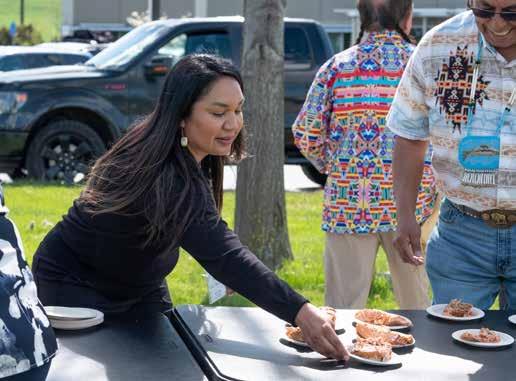
Secretary Monica Paradise serves plates of salmon as Master Umatilla Speaker Fred Hill looks on April 27 during the annual celebration.
(Yasser Marte/The CUJ)
ABOVE:
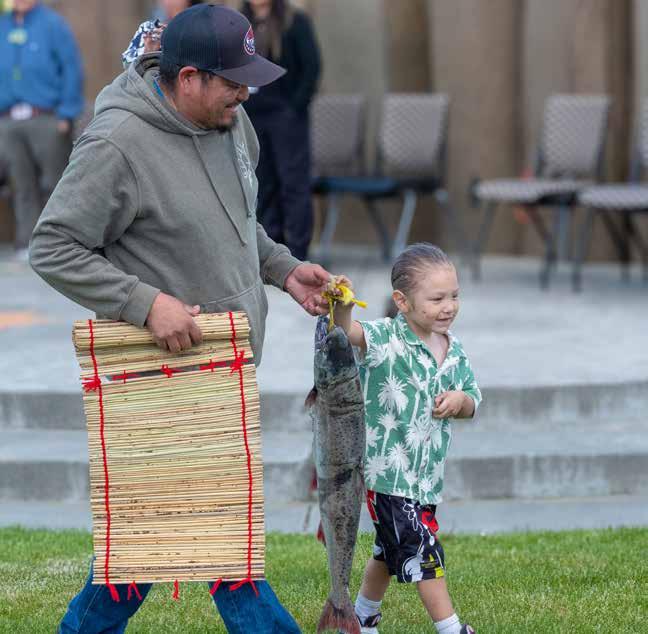
Christopher Williams and his son Tysen Williams carry a spring Chinook salmon on April 27 during the First Fish ceremony in Mission.
EPA finds high lead levels at Johnley Pond
BY BEAU GLYNN
The CUJ
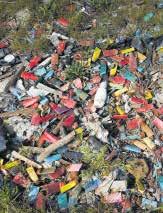
MISSION — Four cars, multiple tires and a gun store’s worth of shotgun shells and bullet casings have significantly increased the lead levels in and around Johnley Pond.
While performing a survey of the pond area April 6, Confederated Tribes of the Umatilla Indian Reservation (CTUIR) Environmental Health and Safety Specialist Brian Fullen said the lead contamination in some parts of the area reached as high as 6,000 parts per million (ppm). Natural levels of lead in U.S. soils range from 0.5 ppm to 1,200 ppm, averaging 26 ppm nationwide, according to the Environmental Protection Agency (EPA) website. The agency also says that lead can move from soil into groundwater depending on the type of lead compound and soil characteristics.
“A lot of the lead contamination is from people shooting,” Fullen said. “You see shotgun shells, bullets and targets, I’ve come up here and found TVs, monitors, propane tanks.”
The health effects from lead exposure can lead to behavior and learning problems, hyperactivity, slowed growth, hearing problems and anemia in children and can induce cardiovascular effects, decreased kidney function and reproductive problems in adults, according to the EPA. Pregnant women who are exposed to lead can experience premature birth, increased likelihood in behavioral or learning problems or put the mother at risk of a miscarriage.
In addition to being used as a dumping ground, the area around Johnley Pond is also a shooting range and an informal party spot. Because of continued activity there, officials have posted signage at the entrance warning the public of active mitigation efforts, and tribal police are patrolling the area to prevent interference with surveys and further littering.
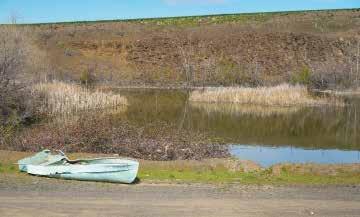
The area around the pond, which used to be a rock quarry, is littered with bullet casings and shells, empty cans and broken bottles, burnt mattresses and an unusable
rowboat.
The pond was also the site of a Dec. 3 scuba search by a fivemember FBI team looking for missing person Wesley Jones. The search yielded no results.
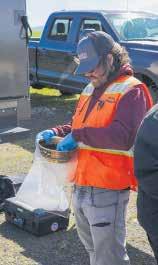
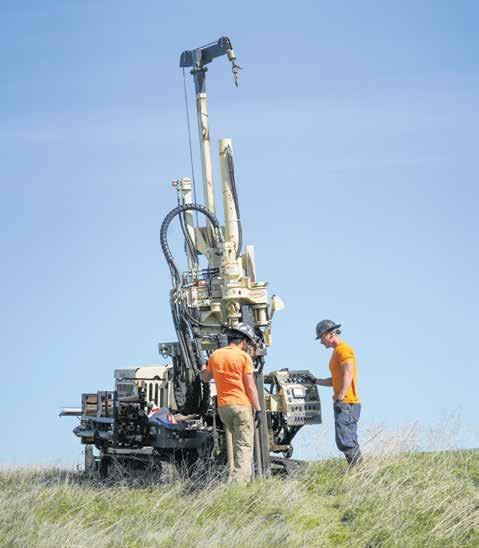
Randy Nattis, federal onscene coordinator with the EPA’s emergency response and prevention unit, said the surveying process, where the drillers will dig 10 holes, known as aquilots, up to 3 feet deep in each of the 18 decision units all around the property.
Each of the deposits from the aquilots will be evaluated with an in-field analysis using XRF, or X-ray fluorescence, he noted.
“It gives us really good, almost laboratory, metal evaluations of what’s in the soil,” Nattis said.
The composites are then consolidated and sent off to a laboratory for analysis, after which the field data can be compared to the laboratory.
After collecting the samples, the soil is sifted to keep out other fragments. Nattis noted that, through the sifting, bullet fragments had been separated as well as a spark-plug. Fragments like these can interfere with the analysis and alter composition levels of the
samples.
Evan Meinzer-Coleman, a project geologist with Weston Solutions Inc., conducts the on-site analysis, evaluating soil horizons and their composition.
After collecting soil samples from the 18 decision units, Nattis said they’ll collect a sample from the pond itself, just below the surface.
Fullen said the pond reaches depths of up to 30 feet in some areas. He added that crews found four submerged cars last year, along with tires and other debris.
CTUIR Environmental Toxicology Technician Devan Noblit pointed out the risk of lead contamination could spread to other nearby freshwater sources.
“We’re out here to make sure that the water is protected, and that there’s no contamination that they’re stirring up that gets in the waterways,” Noblit said.
Fullen noted that the Umatilla River is about 600 yards from Johnley Pond, raising concerns about the potential for lead contamination to spread through groundwater and affect nearby freshwater sources. By analyzing the aquilots, EPA officials can determine lead levels and compare them to regulatory thresholds. The results will show whether contamination exceeds those limits in different decision units, helping identify where it has spread and at what concentrations.
“We’ll look at that once we can make that determination based on the analytical and operation pathways,” Nattis said, “Then, we’ll start thinking about what a removal action would look like, what our strategy is. Then, we’ll gauge back with the CTUIR to figure out what is the best path forward and to be the most protective.”
A pile of shotgun shells litter the ground on April 6 near Johnley Pond.
Geologist Evan Meinzer-Coleman sifts a soil sample from an aliquot April 7 at Johnley Pond. In order to send a pure sample of the soil for testing, any fragments must be removed from the soil.
Workers operate a drill to gather samples called aquilots on April 7 near Johnley Pond.
A dumped rowboat sits next to Johnley Pond on Monday, April 6. The pond and the surrounding area, which is used as an illegal dumping ground and shooting range, is being evaluated for lead contamination levels.
Photos by BEAU GLYNN the CUJ
Grazing goats help manage weeds, lower wildfire risk
YASSER MARTE
The
CUJ
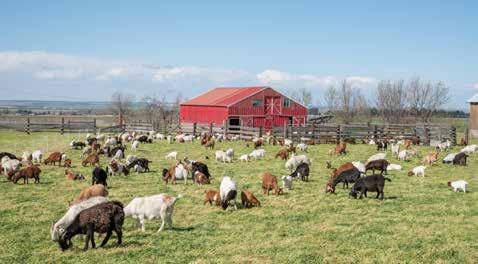
MISSION — A herd of horned heroes has returned to the Umatilla Indian Reservation, grazing the fields with their small hooves and bleating calls.
Outside on a sunny afternoon, hundreds of goats were seen eating weeds and shrubs on April 15 at the Nash Ranch on Best Road in Mission.
“Anytime you can use animals to control weeds, for example, grazing volunteer wheat that comes up in summer or fall, you’re feeding the animal while managing the field,” said Mae “Koko” Hufford, land project manager for the Department of Economic and Community Development for the Confederated Tribes of the Umatilla Indian Reservation (CTUIR).
She said grazing offers an alternative to chemical treatments, which some community members worry could have long-term effects.
“We don’t fully know how those chemicals will affect us over time or how they might impact our water supply,” Hufford said. “Using animals provides a different approach that can benefit the community.”
In the field, goats spread across the roping arena, the farm and surrounding areas, grazing on broadleaf weeds and reducing tall grass that could become a fire hazard.
Jerry Kropf, owner of the goat herd, said the goats are being used in the area to clear vegetation,
control weeds and reduce wildfire risk, while also managing noxious weeds and dense vegetation without herbicides.
“ We’re also taking down a bunch of grass that was getting tall and could pose a wildfire threat,” he said.
Although preventing wildfire is not the primary goal on the farm, this wouldn’t be the first time goats have been used to help reduce wildfire risk. Last year, more than 700 of the animals were deployed across Pendleton to graze on dry brush and invasive plants for the Pendleton Fire Department (PFD).
The fire department used multiple funding sources for the effort, including a $55,000 grant from the Community Wildfire Risk Reduction Program, administered through the Oregon State Fire Marshal’s Office.
In coordination with the PFD,
goats were especially effective on steep terrain and hard-to-reach areas where mowing equipment cannot operate.
Kropf said fire crews targeted overgrown empty lots and steep hillsides in and around the city that could not be easily maintained with traditional equipment, clearing about 85 acres last year. The animals are often deployed on slopes, vacant lots and other overgrown spaces that are difficult or unsafe for tractors and mowers.
The advantage of goats over mowing, he noted, is that they consume vegetation rather than simply cutting it down, leaving little behind.
“When they’re done, there’s very little left,” Kropf said. “Mowing is good, but you still have residue on the ground. It’s chopped up, but it’s still there, and it can still pose a fire hazard.”
Kropf added that the goats are also being used in wheat fields where herbicide applications failed to fully eliminate unwanted growth.
“The spray didn’t kill it properly, so there’s a lot of foliage that will be hard to work down,” he said. “We’ll graze it off so they can work the fields easily without any chemicals.”
Kropf said goats are not a cureall for land management issues, but are highly effective at reducing brush and invasive vegetation. He said the animals are particularly useful in dense blackberry thickets, where they strip foliage and clear access for follow-up removal.
“They’re very good at taking down brush,” Kropf said. “They prefer blackberries. They’ll go in there and strip all the leaves off and then it makes it easier to get in there and take things out.”
He said repeated grazing over several years can also help reduce persistent noxious weeds such as yellow star thistle by targeting plants before they go to seed. The goats consume flower heads and seeds, and their activity can help reduce the number of viable seeds left in the soil over time.
“If you keep on it for four years in a row, you get to where there’s very few viable seeds left in the soil,” he said.
Kropf added that the approach is part of a broader effort to reduce reliance on chemical treatments in land management.
The herd began work on March 31 and is expected to continue grazing the fields through mid-May.
A herd of goats grazes quietly in a pasture on April 15 along Best Road in Mission.
(Yasser Marte/The CUJ)
Yellowhawk hosts GONA at Nixyáawii
BY BEAU GLYNN
The
CUJ
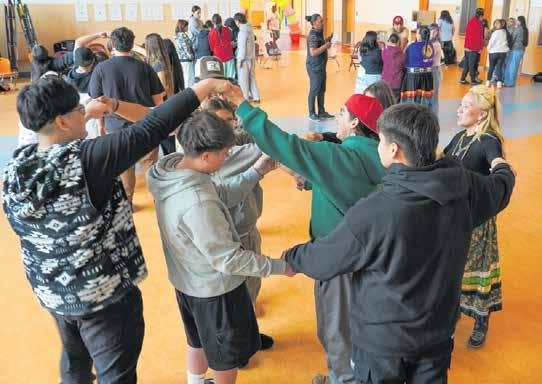
MISSION — Yellowhawk Tribal Health Center (Yellowhawk) hosted a Gathering of Native Americans (GONA) at Nixyáawii Community School (NCS) to foster intercommunity relationships and build trust among the students.
NCS students gathered on April 15 in a circle and participated in relationship-building exercises designed to strengthen and build connections among peers.
Yellowhawk Chemical Dependency Prevention Coordinator Jessica Collins said the GONA framework is built on four distinct parts developed to build trust and connections — belonging, interdependence, mastery and generosity.
“Each one kind of means something different, belonging is about building trust, mastery is recognizing strength and skills, interdependence is understanding how we support one another and generosity is giving back to each other and the community,” Collins said.
Collins said a group of Yellowhawk employees including herself were trained in the GONA curriculum in 2025.
“We work really closely with the schools and we’re a really close knit community, so we hear stuff that’s going on,” she said. “I think we’ve recently heard about maybe some things happening over here that might revolve around bullying, peer pressure or hurting each other’s feelings.”
Although the name emphasizes Native American involvement in the program, she noted that it’s open to all students regardless of background.
Over the course of the program, which ran most of the school day, students took part in exercises intended to get them out of their comfort zone and encourage them to speak and work with classmates they might not typically collaborate with, regardless of gender, age or social groups. Students were randomly placed into these groups to foster community building, where communication has been noted as lacking.
“This was meant for the kids to
“This was meant for the kids to take positive risks, increase their awareness of behavioral health and prevention resources and to show them the school and community has their backs.”
—Ryan Heinrich, Nixyáawii Community School Principal
take positive risks, increase their awareness of behavioral health and prevention resources and to show them the school and community has their backs,” NCS Principal Ryan Heinrich said. “Thanks to Yellowhawk for sponsoring this and being willing to work with the kids for a big chunk of the day.”
Collins said that was what they wanted to address through the GONA, to bring students together and show how much they depend on one another. She said it was important for them to care for each other and want the best for each other.
“Just in their life right now, as teenagers, all of the stuff they’re going through with pressure — pressure to get good grades, pressure to do well in sports, all of that stuff. They actually have a lot more in common than they realize,” she said.
Collins said GONA programs can be deep experiences. They typically revolve around dealing with having experienced trauma and grief, at least when the subjects of the program are adults, she added.
“We wanted to be careful with the kids, we wanted to tailor it to what they’re dealing with at this point in their lives, but for adults it could look a lot more complex,” Collins said. “We just really wanted the kids to feel connected with each other and understand that this is their school, this is their community and they belong together. It’s important for them to respect each other and understand that they have a lot in common.”
Yellohawk Youth Suicide Prevention Outreach Specialist Jeremy Wolf said connectivity is the main aspect of any community, but because communication at the school is not strong, a good sense of community was the foundational
focus of the GONA.
“That could be with each other, it could be with their families, it could be with their culture, their greater community or even with themselves,” Wolf said. “This is our
future and we need to all play a role. This exercise with them is just one of many things that are going to help them on their way and become the young adults they’re meant to be.”
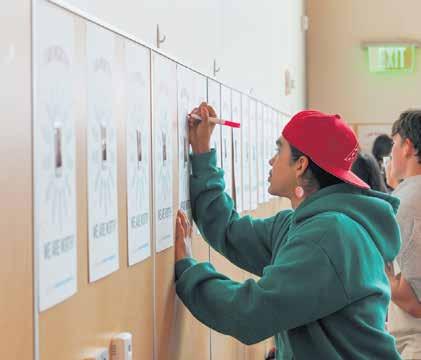
Nixyáawii Community School Student Hiyuum Nowland writes a message on a poster April 15 at the Gathering of Native Americans (GONA) facilitated by Yellowhawk Tribal Health Center. (Beau Glynn/The CUJ)
Students participate in a Gathering of Native Americans (GONA) April 15 at Nixyáawii Community School. (Beau Glynn/The CUJ)
TRAVIS SNELL
The
CUJ
PORTLAND — A Umatilla County man pleaded guilty on April 7 during the second day of trial for attempted murder, robbery and felon in possession of a firearm related to an armed robbery of the Wildhorse Resort & Casino (WRC) on the Umatilla Indian Reservation in 2022, according to the Department of Justice.
Javier Francisco Vigil, 54, pleaded guilty to attempted murder, robbery and illegally possessing a firearm as a convicted felon (Armed Career Criminal Act).
According to court documents, on Aug. 17, 2022, Vigil entered the WRC, walked to the cashier cage in the gaming area and handed the
cashier a note demanding $1 million. Vigil then drew a holstered pistol, pointed it at the cashier and threatened to “bathe everyone in blood.”
After getting nearly $70,000 in cash, Vigil exited the casino and shot at the responding Umatilla Tribal Police Department (UTPD) officer, who returned fire striking Vigil.
On Dec. 19, 2023, a federal grand jury in Portland returned a six-count superseding indictment charging Vigil with attempted murder, interference with commerce by robbery, use of a firearm during a crime of violence, assault with a dangerous weapon and illegally possessing a firearm as a convicted felon.
“We are very proud of the response of our employees who were faced with this challenging
situation more than three years ago,” WRC CEO Gary George said. “We want to thank our tribal police partners, as well as all the government officials and prosecutors who helped bring this matter to a close.”
U.S. Attorney Scott E. Bradford for the District of Oregon made the announcement.
Vigil will be sentenced on Aug. 4 before a U.S. District Court judge.
This case was investigated by the FBI and the UTPD with the assistance of the Bureau of Alcohol Tobacco and Firearms, the Hermiston Police Department, the Pendleton Police Department, Oregon State Police, Umatilla County Sheriff’s Office and Morrow County Sheriff’s Office.
Assistant U.S. Attorneys Cassady Adams and Arin Heinz are prosecuting the case.
Ancestral remains finally reburied in Walla Walla Man pleads guilty to charges in WRC armed robbery
WALLA WALLA — A contractor working on the Pioneer Park Pedestrian Improvements and Whitman Street IRPP Project inadvertently discovered ancestral remains in December 2024. About 18 months later, on May 1, the remains were reburied.
The reburial followed a prolonged delay while the city of Walla Walla continued construction and the remains were transferred to and held at the Department of Archaeology and Historic Preservation in Olympia, Washington.
Expressing frustration over the inadvertent discovery and the handling of the situation, the Confederated Tribes of the Umatilla
Indian Reservation (CTUIR) Board of Trustees (BOT) wrote on Jan. 31 a letter to the City of Walla Walla and the Washington Transportation Improvement Board on CTUIR’s Cultural Resource Protection Program (CRPP) coordinated the reburial and invited tribal elders to participate. Members of the CRPP, along with the Native American Graves Protection and Repatriation Act (NAGPRA) and Oral History staff, also attended, carpooling to the burial site to take part in prayers, songs and the reburial of ancestral remains that had been exhumed for a year and a half.
Protective measures were placed over the ancestor’s remains during the burial, preventing subsequent
inadvertent discoveries.
BOT member Toby Patrick said it has been a blessing to be able to return the remains to the ground for its eternal rest.
“The way we get put away, we get put away into the ground for eternal life, and through that time, we’re not supposed to be bothered,” he said. “I always say, society has a way of finding its way into who we are as Indian people, whether it’s right or wrong, or good or bad, it just has a way of happening, and this is how we take care of it.”
In the generations that have come and gone between the ancestor being buried, to it being inadvertently discovered and then buried once again, Patrick said it was important to retain the
teachings of tribal elders.
“All of the teachings from when this individual was put into the ground, to when we’re reburying it –it had a different set of elders, it had a different view at that time. Our view has to remain the same, the closest to our elders as it can. So, it’s not about our teachings coming out new, they’re being upheld,” Patrick said.
To continue these teachings and retain the knowledge of tribal elders, Patrick said tribal members need to come forward and ask questions, to participate in tribal ceremonies.
“That’s the way our teachings and everything is going to keep going, and if we don’t do that, our grandkids are the ones that are going to suffer,” he said.
BEAU GLYNN
The CUJ
CTUIR BOARD OF TRUSTEES MINUTES
March 23, 2026
BOT present: Vice Chair Aaron Ashley, Treasurer Raymond Huesties, Secretary Monica Paradise; Lisa Ganuelas, Corinne Sams and Sierra Quaempts, members and General Council Chair Lindsey X. Watchman.
Members absent: Chair Kat Brigham and Toby Patrick, member, both on personal leave.
A quorum was present.
Old business: Polled Letter and Motion: Next number 2026-011:
Polled letter No. 2026-008 Topic: Education Department letter to the Office of Head Start.
Motion: Raymond Huesties moves to ratify the polled letter 2026-008. Corinne Sams seconds. Discussion. Question. Motion carries 5-0-0.
Polled letter No. 2026-009 Topic: Washington Data Center Workgroup Preliminary Report.
Motion: Corinne Sams moves to ratify the polled letter 2026-009. Lindsey X. Watchman seconds. Discussion. Question. Motion carries 5-0-0.
Polled letter No. 2026-010 Topic: Washington SB 6355.
Motion: Raymond Huesties moves to ratify the polled letter 2026-010. Lindsey X. Watchman seconds. Discussion. Question. Motion carries 5-0-0.
New business: Proposed Resolutions: Next resolution number is 2026-013 Resolution No. 2026-013 Topic: CDA
Appropriation. RESOLVED, that the BOT hereby appropriates an allocation of $500,000 from the Contingency Fund to cover operating expenses incurred or planned to be incurred as outlined in the Intergovernmental Agreement; AND BE IT FINALLY RESOLVED, that the BOT hereby directs the Office of Executive Director to coordinate efforts with the other members of the Columbia Development Authority to obtain the annual operating budget to incorporate an allocation into the CTUIR annual budget process. AND, that said, Resolution has not been modified, amended or repealed and is still in full force and effect.
DATED: March 23.
Motion: Raymond Huesties moves to adopt Resolution 2026-013. Lindsey X. Watchman seconds. Discussion. Question.
Motion carries 5-0-0.
Other BOT action items: None
BOT travel or external meeting reports: Member Corinne Sams, three reports:
1. March 13, Virtual CRITFC SPOD meeting
2. March 16-18, Portland, to attend Reimagine the River hosted by Willamette Falls Trust.
3. March 18-20, Portland, for a CRITFC meeting.
General Council Chairman Lindsey X. Watchman, one report:
1. March 13-14, to Eugene, to attend the University of Oregon Indigenous Peoples Reception at the Many Nations Longhouse. This event was in conjunction with the Native American Environmental Law Conference.
Motion: Raymond Huesties moves to approve the trip reports. Monica Paradise seconds. Discussion. Question. Motion Carries 5-0-0.
BOT leave and travel requests: Chair Kat Brigham one request:
1. Travel request to Washington, D.C., from May 10-16 as part of the BOT CTUIR Advocacy Lobbying group.
Vice Chairman Aaron Ashley one request:
1. Travel request to Washington, D.C., from May 10-16 as part of the BOT CTUIR Advocacy Lobbying group.
Motion: Raymond Huesties moves to approve the travel and leave requests. Corinne Sams’s seconds. Discussion. Question. Motion carries 5-0-0.
March 30, 2026
Present: Chair Kat Brigham, Treasurer Raymond Huesties, Secretary Monica Paradise, Lisa Ganuelas, Corinne Sams and Sierra Quaempts, members and Lindsey X. Watchman, General Council chair.
Absent: Vice Chair Aaron Ashley, on travel and Toby Patrick, member, on personal leave.
A quorum was present.
Old business: None.
New business: Proposed Resolutions: Next resolution number is 2026-014
Resolution 2026-014: Topic: Education Project Chickasaw Nation New Market Tax Credit Unwind. RESOLVED, that the BOT hereby approves the Unwind of the New Market Financing for the Education Project as described in the Loan Satisfaction and Unwind Agreement attached as Exhibit 1C and authorizes the CTUIR, on its own behalf and following consummation of the Investor Exit on behalf of Investment Fund, to enter into the Loan Satisfaction and Unwind Agreement attached as Exhibit 1C or a document containing substantially similar terms and each of the Unwind Documents to which the CTUIR and Investment Fund is a party; AND BE IT FURTHER RESOLVED, that the BOT hereby authorizes its Chair or her designee, to execute and deliver each of the Unwind Documents to which the CTUIR or Investment Fund is a party; AND BE IT FURTHER RESOLVED, that the BOT hereby authorizes and directs that all necessary acts and further steps and actions, including but not limited to the execution of documents or agreements that may be required of the CTUIR or Investment Fund or that the Chair of the BOT deem necessary or appropriate to carry out the purposes of this Resolution, to facilitate the Unwind of NMTC Financing for the Education Project; and that this Resolution be construed as including any form of specific authorization required to enable the CTUIR to do or cause to be done all other acts and to take or cause to be taken all further steps and actions necessary or appropriate and to execute and deliver all agreements, documents and instruments that the Chair of the BOT, on behalf of the CTUIR, deems necessary and appropriate, to consummate the transactions contemplated herein and to facilitate the Unwind of the NMTC Financing of the Education Project; AND BE IT FURTHER RESOLVED, that the Business Lease, Sublease, Leasehold Deed of Trust, Assignment of Rents and Leases, Security Agreement and Financing Statement and the Subordination, Non-Disturbance and Attorney Agreement and Estoppel Certificate documents recorded with the Land Title Records Office be terminated; AND BE IT FURTHER RESOLVED, that all acts previously taken by the CTUIR or by any officer, director or employee of the CTUIR to effect and carry out the intent of this Resolution is approved, ratified and confirmed in all respects; AND BE IT FINALLY RESOLVED, that this Resolution shall become effective as of the date and time of its passage by the BOT. AND, that said Resolution has not been modified, amended or repealed and is still in full force and effect. DATED: March 30.
Motion: Raymond Huesties moves to adopt Resolution 2026-014. Sierra Quaempts seconds. Discussion. Question. Motion carries 5 for (Raymond Huesties, Sierra Quaempts, Lindsey X. Watchman, Monica Paradise and Corinne Sams), 0 against, 1 abstaining (Lisa Ganuelas).
Resolution 2026-015: Topic: BIA Signature Authority. RESOLVED, that the BOT approves the following staff to execute any and all documents required to comply with the Bureau of Indian Affairs farm leases as operator, with only one of the listed below required to sign: Executive Director, Director Department of Economic and Community Development, Farm Manager, Assistant Farm Manager and Chair Tribal Farm Committee; AND BE IT FURTHER RESOLVED, that the BOT approves the four BOT Officers to execute any and all documents with the Bureau of Indian Affairs farm leases as owners, with only one BOT Officer required to sign; AND BE IT FINALLY RESOLVED, that the Chair of the BOT and Executive Director are authorized to take all actions necessary to implement this resolution in a timely manner; AND, that said Resolution has not been modified, amended or repealed and is still in full force and effect.
DATED: March 30.
Motion: Raymond Huesties moves to adopt Resolution 2026-015 as corrected. Lindsey X. Watchman seconds. Discussion. Question. Motion carries five for (Raymond Huesties, Sierra Quaempts, Lindsey X. Watchman, Monica Paradise and Corinne Sams), 0 against, 1 abstaining (Lisa Ganuelas).
Resolution 2026-016: Topic: CTUIR Coordinated Human Services Public Transportation Plan Update. WHEREAS, continued on Page A18
CTUIR BOARD OF TRUSTEES MINUTES
Continued from Page A17
the BOT held a work session on March 26 and reviewed the updated Coordinated Plan, attached hereto as Exhibit 1; NOW, THEREFORE, BE IT RESOLVED, that the BOT hereby approves and adopts the updated 2026 Coordinated Human Services Public Transportation Plan, attached as Exhibit 1; AND, that said Resolution has not been modified, amended or repealed and is still in full force and effect. DATED: March 30.
Motion: Raymond Huesties moves to adopt Resolution 2026-016. Sierra Quaempts seconds. Discussion. Question. Motion carries 5 for (Raymond Huesties, Sierra Quaempts, Lindsey X. Watchman, Monica Paradise and Corinne Sams), 0 against, 1 abstaining (Lisa Ganuelas).
Other BOT action items: Committee/ Commission Update by Monica Paradise, BOT Secretary.
Culture Resources Committee, two-year term, one position advertised with one application from Linda Jones.
Motion: Raymond Huesties moves to appoint Linda Jones by acclamation to serve the remaining term expiring March 31, 2027. Corinne Sams seconds. Discussion. Question. Motion carries 6-0-0.
Election Commission, four-year staggered term, one position advertised, with one application from Mariah Watchman, who was appointed by General Council officers.
Enrollment Commission, four-year staggered term, one position advertised, with one application from Alan Crawford.
Motion: Corinne Sams moves to appoint Alan Crawford by acclamation to serve until the position expires January 03, 2029. Raymond Huesties seconds. Discussion. Question. Motion carries 6-0-0.
Farm Enterprise, three-year term, one position advertised.
Motion: Raymond Huesties moves to advertise DeArcie Abraham’s position, expiring May 18. Lindsey X. Watchman seconds. Discussion. Question. Motion carries 6-0-0.
Fish & Wildlife Commission, three-year staggered term; one position advertised, with one application received by Chris Williams.
Motion: Corinne Sams moves to reappoint Chris Williams by acclamation to serve until the term expires on March 13, 2029. Raymond Huesties seconds. Discussion. Question. Motion carries 6-0-0. Housing Commission, two-year term, two positions advertised.
Motion: Raymond Huesties moves to accept Leiloni Malone’s resignation and advertise two positions. Corinne Sams seconds. Discussion. Question. Motion carries 6-0-0.
Science & Technology Committee, twoyear term, two positions advertised.
Motion: Corinne Sams moves to advertise two positions. Raymond Huesties seconds. Discussion. Question. Motion carries 6-0-0. Tiicham Conservation District, two-year term, two positions advertised.
Motion: Corinne Sams moves to advertise two positions. Sierra Quaempts seconds. Discussion. Question. Motion carries 6-0-0.
Tribal Water Commission, two-year term, one position advertised with one application from Melinda Broncheau.
Motion: Corinne Sams moves to reappoint Melinda Broncheau by acclamation to serve until March 01, 2028. Lisa Ganuelas seconds. Discussion. Question. Motion carries 6-0-0.
Applications are due by 4 p.m. on April 17.
A BOT work session is scheduled for April 24, at 8:30 a.m. to review applications and appointments on April 27.
BOT travel or external meeting reports:
Member Sierra Quaempts, one report: 1. March 13–14, to Eugene to attend the Indigenous Peoples Reception provided by the Native Environment Sovereignty Project of the University of Oregon School of Law.
Motion: Raymond Huesties moves to approve travel report. Lindsey X. Watchman seconds. Discussion. Question. Motion carries 4 for (Raymond Huesties, Lindsey X. Watchman, Lisa Ganuelas and Monica Paradise, 0 against and 1 abstaining (Sierra Quaempts).
BOT leave and travel requests: General Council Chairman Lindsey X. Watchman three requests: 1. Personal Leave on April 2–3, 15 hours
2. Travel Request on April 17–18 to Portland to attend Cancer Action Network (CAN) and Indigenous Voices (IVV) led by a CTUIR Tribal member.
3. Travel Request from April 26–29, to Reno, Nevada, to attend the NAFOA Conference.
Member Lisa Ganuelas one request:
1. Personal Leave on March 27, all day.
Secretary Monica Paradise one request:
1. Polled Travel to Washington, D.C., as part of the BOT CTUIR Advocacy lobbying group from May 10 to 16.
Member Sierra Quaempts two requests: 1. Polled personal leave on March 26 from 7:30 a.m. to 1 p.m.
2. Travel request to Washington, D.C., as part of the BOT CTUIR Advocacy lobbying group from May 10 to 16.
Motion: Raymond Huesties moves to approve the travel and leave requests. Corinne Sams seconds. Discussion. Question. Motion carries 5-0-0.
April 06, 2026
BOT present: Present: Chair Kat Brigham, Vice Chair Aaron Ashley, Treasurer Raymond Huesties, Secretary Monica Paradise, Lisa Ganuelas, Toby Patrick, Corinne Sams and Sierra Quaempts, members and Lindsey X. Watchman, General Council chair.
A full quorum was present.
Old business: Polled Resolution: No. 2026-017: Topic: Indian Gaming Association Membership Renewal.
Motion: Corinne Sams moves to ratify Polled Resolution 2026-017. Raymond Huesties seconds. Discussion. Question. Motion carries 8-0-0.
New business: Proposed Resolutions: Next resolution number is 2026-018
Resolution 2026-018: Topic: Veterans and Elders Housing Design-Build Agreement and Budget. RESOLVED, that the BOT approves the Phase 1 Design & Grant Fee Budget (Exhibit 1C) with funding from the Contingency Fund; AND BE IT FURTHER RESOLVED, that the BOT approves Phase 1 of the Design-Build Agreement with Chervenell Construction (Exhibit 2C), which includes a limited waiver of sovereign immunity to permit the enforcement of the construction contract by binding arbitration and authorizes its Chair or the Executive Director to execute it; AND BE IT FURTHER RESOLVED, that the BOT will require the Housing Development Services Team to present a finalized construction contract and budget; AND BE IT FINALLY RESOLVED, that the BOT hereby authorizes the Executive Director to execute any and all documents within the approved budget necessary to carry out the purpose of this Resolution AND, that said Resolution has not been modified, amended or repealed and is still in full force and effect.
DATED: April 6.
Motion: Raymond Huesties moves to adopt Resolution 2026-018. Lindsey X. Watchman seconds. Discussion. Question. Motion carries 8-0-0.
Resolution 2026-019: Topic: Farm Enterprise Revenue Sharing. RESOLVED, the BOT authorizes reimbursement of the distribution to the General Fund for the years Farm Enterprise had a negative cash flow as listed in Exhibit 1C from the Contingency Fund; AND BE IT FINALLY RESOLVED, the Executive Director, Finance Director and BOT Treasurer ensure the reimbursement is transferred and credited to the Farm Enterprise account; AND, that said Resolution has not been modified, amended or repealed and is still in full force and effect. DATED: April 6.
Motion: Raymond Huesties moves to adopt Resolution 2026-019. Corinne Sams seconds. Discussion. Question. Motion carries 5 for (Raymond Huesties, Corinne Sams, Sierra Quaempts, Monica Paradise and Toby Patrick) – 0 against - 3 abstaining (Aaron Ashley, Lindsey X. Watchman and Lisa Ganuelas).
Resolution No. 2026-020: Topic: Farm Enterprise Line of Credit. RESOLVED, the Finance Department will reconcile the cash flow on a quarterly basis and make draws or deposits into the line of credit and report those to the Farm Enterprise; AND BE IT FINALLY RESOLVED, the Executive Director, Finance Director and BOT Treasurer ensure the Line of Credit for the Farm Enterprise is created and set up; AND, that said Resolution has not been modified, amended or repealed and is still in full force and effect.
DATED: April 6.
CTUIR BOARD OF TRUSTEES MINUTES
Motion: Raymond Huesties moved to adopt Resolution 2026-020. Corinne Sams seconded. Following discussion, the question was called. The motion carried, 5-0, with three abstentions. Voting in favor were Raymond Huesties, Corinne Sams, Sierra Quaempts, Monica Paradise and Toby Patrick. Abstaining were Aaron Ashley, Lindsey X. Watchman and Lisa Ganuelas. Other BOT action items: None BOT travel or external meeting reports: Chair Brigham, two February reports. One for ATNI and one for NCAI.
Motion: Raymond Huesties moved to approve travel reports. Aaron Ashley seconded. Following discussion, the question was called. The motion carried, 7-0. Lisa Ganuelas was not present for the vote. BOT leave and travel requests: Member Sams, three requests:
1. Polled personal leave, March 31 from 2:30 p.m. to 4 p.m.
2. Polled travel, April 6–9 ret. 1 p.m., attending U.S. v. OR Hearing and Zone 6 tour.
3. Polled travel, April 12–17 to D.C. as part of the CRITFC delegation. Chair Brigham, 3 requests:
1. Personal leave, March 1 to March 27. On March 27 is from 1–4 p.m.
2. Personal leave, April 14 from 9:30 a.m. to 4 p.m.
3. Travel, April 20-23, to attend ATNI Economic Summit at Llana.
Motion: Raymond Huesties moved to approve leave requests. Aaron Ashley seconded. Following discussion, the question was called. The motion carried, 8-0.
April 13, 2026
BOT present: Chair Kat Brigham, Vice Chair Aaron Ashley, Treasurer Raymond Huesties, Secretary Monica Paradise, Lisa Ganuelas, Toby Patrick, Corinne Sams and Sierra Quaempts, members and Lindsey X. Watchman, General Council chair, on personal leave.
A full quorum was present.
Old business: None.
New business: Proposed Resolutions: Next resolution number is 2026-021 Resolution 2026-021: Topic: Revolving Economic Ventures Fund–Investment in Zing Drone Delivery Inc. RESOLVED, that the BOT hereby authorizes investment in Zing Drone Delivery Inc. and approves the Convertible Note Purchase Agreement and the Unsecured Convertible Promissory Note attached as Exhibits 1C and 2C, respectively; AND BE IT FURTHER RESOLVED, the BOT hereby authorizes an investment in the amount set forth in the Unsecured Convertible Promissory Note attached as Exhibit 2-C, which investment shall be made from the Revolving Economic Ventures Fund; AND BE IT FINALLY RESOLVED, the BOT hereby authorizes its Chair to execute the Agreement and Note attached to this Resolution as Exhibits 1C and 2C or documents containing substantially similar terms and further authorizes its Treasurer, Executive Director and Finance Director to take all actions necessary to carry out the purposes of this Resolution and to implement the above-named investment; AND, that said Resolution has not been modified, amended or repealed and is still in full force and effect. DATED: April 13.
MOTION: Raymond Huesties moves to adopt Resolution 2026-021. Toby Patrick seconds. Discussion. Question. Motion carries 5 for (Raymond Huesties, Toby Patrick, Monica Paradise, Sierra Quaempts and Aaron Ashley) – 0 against - 1 abstaining (Lisa Ganuelas) Resolution 2026-022: Topic: Workforce Development Department (WFD) Strategic Plan. RESOLVED, the BOT approves the Workforce Development Department Strategic Plan, attached as Exhibit 1. AND, that said Resolution has not been modified, amended or repealed and is still in full force and effect. DATED: April 13.
MOTION: Toby Patrick moves to adopt Resolution 2026-022 as amended. Raymond Huesties seconds. Discussion. Question. Motion carries 6-0-0.
Other BOT action items: None
BOT travel or external meeting reports: Monica Paradise, March 26 attendance at the Federal Partners Coalition Summit in Pasco, Washington.
Sierra Quaempts, March 31 to April 3 attendance at the Washington State Indian Education Advisory (WIEA) Conference in Snoqualmie, Washington.
Lisa Ganuelas, April 14–17 attended to participate with members of the Shoreline Reconveyance Work Group in lobbying on behalf of CTUIR in Washington, D.C.
MOTION: Raymond Huesties moves to approve travel reports. Toby Patrick seconds. Discussion. Question. Motion carries 6-0-0.
BOT leave and travel or outside meeting requests.
Kat Brigham, two travel requests: 1. ATNI Convention from May 16 to May 22 in Ferndale, Washington.
2. Eastern Oregon Women’s Coalition Economic Summit at Four River Culture Center & Treasure Valley Community College from June 23 to June 26 in Ontario.
Lindsey X. Watchman, traveled April 17 to Warm Springs to tour the Elders Assisted Living facility.
Lisa Ganuelas, April 9, personal leave all day.
Toby Patrick, polled personal leave all day on April 9 and from 1 p.m. to 4 p.m. on April 10.
MOTION: Raymond Huesties moves to approve leave requests. Toby Patrick seconds. Discussion. Question. Motion carries 6-0-0.
CTUIR BOT Minutes – April 20, 2026
BOT present: Chair Kat Brigham, Vice Chair Aaron Ashley, Treasurer Raymond Huesties, Secretary Monica Paradise, Toby Patrick, Lisa Ganuelas, Corinne Sams and Sierra Quaempts, members and Lindsey X. Watchman, General Council chair. A full quorum was present.
Old business: Polled Motion: No. 2026011 Topic: Oregon Department of Agriculture Talking Points.
MOTION: Aaron Ashley moves to ratify Polled Motion 2026-011. Raymond Huesties seconds. Discussion. Question. Motion carries 8-0-0.
New business: Proposed Resolutions: Next resolution number is 2026-023: Resolution 2026-023: Topic: Revised Passport /REAL Identification. RESOLVED, that the BOT repeals Resolution 26-004; AND BE IT FURTHER RESOLVED, that the BOT hereby approves the revised Reimbursement Policy for CTUIR Tribal Members’ Passport, Passport Card or REAL ID Act Compliant State Driver’s License or State Identification Card Fees attached as Exhibit 1 and the Request for Reimbursement Form, attached as Exhibit 2, to be effective as of Jan. 1, 2026; AND BE IT FINALLY RESOLVED, that the BOT directs the Executive Director to publish the revised Reimbursement Policy and Request for Reimbursement Form so they may be available to Tribal members and authorizes the Executive Director to approve minor edits to both as needed for clarity; AND, that said Resolution has not been modified, amended or repealed and is still in full force and effect.
DATED: April 20.
MOTION: Corinne Sams moves to adopt Resolution 2026-023. Raymond Huesties seconds. Discussion. Question. Motion carries 8-0-0.
Resolution 2026-024: Topic: Behavioral Health Center Project. RESOLVED, that the BOT hereby approves of the Yellowhawk Tribal Health Center Behavioral Health Center Project as described in the work session materials attached as Exhibit 1C and Exhibit 2C; AND BE IT FINALLY RESOLVED, that the BOT hereby authorizes the Yellowhawk Chief Executive Officer to take such further actions, including the execution of documents, as may be necessary to carry out the purposes of this Resolution. AND, that said Resolution has not been modified, amended or repealed and is still in full force and effect.
DATED: April 20.
MOTION: Raymond Huesties moves to adopt Resolution 2026-024. Corinne Sams seconds. Discussion. Question. Motion carries 8-0-0.
Resolution 2026-025: Topic: 2026 Legal Aid Contract with NAPOLS. RESOLVED, that the BOT hereby approves the 2026 Contract between the CTUIR and the Native American Program of Legal Aid Services of Oregon (2026 Contract), attached hereto as Exhibit 1C; AND BE IT FURTHER RESOLVED, that the Office of Legal Counsel shall prominently advertise the availability of legal aid services pursuant to the 2026 Contract to Tribal Members; AND BE IT FINALLY RESOLVED, that the Office of Legal Counsel shall, as part of its regular reporting to the BOT, provide updates on the utilization of legal aid services by Tribal Members pursuant to the 2026 Contract. AND, that said Resolution has not
been modified, amended or repealed and is still in full force and effect. DATED: April 20.
MOTION: Corinne Sams moves to adopt Resolution 2026-025. Aaron Ashley seconds. Discussion. Question. Motion carries 8-0-0. Resolution 2026-026: Topic: Our Sustainable Future Initiative Proclamation. RESOLVED, that the CTUIR proclaims 2026 as the launch of Our Sustainable Future, an initiative to support and call attention to materials management efforts that contribute to fulfillment of the CTUIR’s’ policies, goals and priorities and to the State of Oregon’s recycling and food waste reduction goals; AND BE IT FURTHER RESOLVED, that the CTUIR commit to a written needs assessment of Tribal staff capacity and other funding and resource needs to develop food waste management systems to address community and commercial needs and desires, including (but not necessarily limited to) conserving water, harvesting First Foods and capturing nutrients within our community; AND BE IT FURTHER RESOLVED, that the CTUIR commit to investing in Tribal staff capacity and other resources to identify and pursue ways to reduce single-use plastics and strive to significantly reduce usage or ideally eliminate single-use plastic cutlery by 2030; AND BE IT FINALLY RESOLVED, that the BOT encourages Tribal government departments, enterprises and other entities to devote the necessary and appropriate resources and capacity to effectively participate in coordinated systemlevel approaches to achieve sustainable and resilient food systems and practices that support the First Foods, a healthy and vibrant CTUIR community and future generations; AND, that said Resolution has not been modified, amended or repealed and is still in full force and effect. DATED this 20th day of April 2026.
MOTION: Lisa Ganuelas moves to adopt Resolution 2026-026. Corinne Sams seconds. Discussion. Question. Motion carries 8-0-0.
Other board action items: Wildhorse Resort & Casino 2025 Audit Motion. Baker Tilly, LLP, completed the 2025 Audit of the
Wildhorse Resort & Casino and reviewed their independent audit and findings on April 15, with CTUIR Gaming Commission and BOT later the same day. Via receipt of an April 15 email from the Lead Gaming Inspector, the CTUIR Gaming Commission approved the 2025 WRC External Gaming Audit reports.
MOTION: Raymond Huesties moves to accept the 2025 Baker Tilly LLP External Audit Reports of the Wildhorse Resort & Casino and its entities and to authorize the CTUIR Gaming Commission to submit the gaming portion of the audit reports to the National Indian Gaming Commission (NIGC) before the April 30, deadline. Corinne Sams seconds. Discussion. Question. Motion carries 8-0-0.
BOT travel or external meeting reports: Lisa Ganuelas, attended Defense Nuclear Facilities meet and greet.
MOTION: Raymond Huesties moves to approve travel report. Monica Paradise seconds. Discussion. Question. Motion carries 7 for (Raymond Huesties, Monica Paradise, Sierra Quaempts, Lindsey X. Watchman, Aaron Ashley, Corinne Sams and Toby Patrick) – 0 against – 1 abstaining (Lisa Ganuelas).
BOT leave and travel or outside meeting requests:
Kat Brigham traveled 4/25 to Central Washington University to give a presentation to students.
Lisa Ganuelas, three requests:
1. Personal leave, May 1 all day.
2. Personal leave, May 27 from 7:50 a.m. to 9 a.m.
3. Travel request, May 22 to 24 to Richland, Washington to attend Columbia River Policy Advisory Group Meeting.
Sierra Quaempts traveled April 25 to Central Washington University to give a presentation to students.
Toby Patrick, polled personal leave April 16 and April 17 all day.
MOTION: Raymond Huesties moves to approve leave requests. Corinne Sams seconds. Discussion. Question. Motion carries 8-0-0.
Root Feast honors First Foods
Cara Greene assembles potato salad on April 12 in the Mission Longhouse kitchen during Root Feast. (Yasser Marte/ The CUJ)
Jeremy Wolf grills salmon on April 12 during Root Feast at the Mission Longhouse. (Yasser Marte/The CUJ)
From left, Manaia Wolf, Trinette Minthorn, Twila Jones, Molly Jones and Eva Looney prepare service tables and set out berries ahead of serving the community on April 12 during Root Feast at the Mission Longhouse. (Yasser Marte/The CUJ)
Annual gathering celebrates deep connection to the land
YASSER MARTE
The CUJ
MISSION — Nearly 300 people filled the Mission Longhouse on April 12 as the Confederated Tribes of the Umatilla Indian Reservation (CTUIR) and neighboring tribal communities gathered for the 2026 Nixyáawii Root Feast, a spring tradition centered on honoring the foods that sustain them and reaffirming responsibility to the land.
The gathering focused on traditional foods and seasonal harvesting practices that have long shaped cultural life in the Columbia Plateau region. The roots, which include cous (xáwš) and bitterroot (pyaxí), provide nourishment and reflect a deep connection to the land, gathered in accordance with customary practices and respect for nature.
“When the world was created, the Creator bestowed these gifts for us to care for and in return, they take care of us,” CTUIR member Trinnette Minthorn said. “These are our traditional foods, and we honor them with feasts.”
Inside the Longhouse, family and friends took part in the festivities and pitched in with the cooking. Women and children kept the kitchen buzzing as they cooked, prepped and organized. While outside, cooks worked over large frying pans and a tub of proofed dough to sizzle up fry bread, as men and boys nearby grilled fresh elk, salmon and eel.
At the heart of the gathering, participants joined a traditional Washat (or Seven Drum) religious service honoring the “sister” roots and offering thanks to the Creator and Mother Earth for the return of the First Foods – roots, salmon,
berries and game.
In the days leading up to the celebration, some of the women and children lodged at the Mission Longhouse and went on digging excursions, harvesting roots in nearby fields from morning until late evening.
Minthorn was among the women who gathered and stayed at the Mission Longhouse, working from day into night. During that time, she said, participants avoid outside commitments and remain focused on honoring the foods and their purpose of providing for the community.
“I’ve been gathering since I was a little girl,” she said. “I have been staying in the Longhouse during the feast period for about 15 years.”
It takes a collective effort with women and men working together to ensure everything runs smoothly, she added.
“Today’s the last day,” Minthorn said. “We’re all tired, but we’re all working with good hearts and good minds. For me, the Root Feast is one of the best weeks of my life.”
Another woman who lodged at the Longhouse, CTUIR member LeAnn Alexander, expressed that the gathering was both joyful and labor-intensive. Alexander said participants worked together over several days, from digging on Wednesday and Thursday to peeling roots on Friday and Saturday in preparation for the feast.
“Being together, laughing, having fun while also working very hard,” she said. “It’s all hard work, not just physically, but from our timná and it’s just a love for our community.”
“We make a commitment to these foods, and if we take care of them the way we were taught, they will come back to us every year if we fulfill our promise. It’s just a part of who we are.”
- Trish McMichael, CTUIR member
The preparation split along traditional lines: women handled the sister foods, while men handled the brother foods, grilling fish and meat over a wooden fire. Nearby, CTUIR member Jeremy Wolf grilled meat. He said the gathering is a time to honor a promise to traditional foods.
“They [First Foods] sacrifice themselves so we can be here,” Wolf said. “Our reciprocal promises are to take care of them, utilize them, look out for them and celebrate by gathering people together by seeing family and friends. It’s a wonderful celebration.”
Events like this bring generations together and teach one another, Wolf said.
The Longhouse resonated with the sounds of singing and goodnatured banter as community members came together to honor their traditions and nourish both body and soul.
Minthorn said the gathering is also about welcoming others.
CTUIR member Andrew Wildbill holds his daughter Wimtus as he grills salmon on April 12 during Root Feast at the Mission Longhouse.
Eva Looney, left, and CTUIR member Trish McMichael, right, make fry bread.
“We always make sure our relatives and our visitors come and eat good food, have good worship and celebrate with us the return of our foods,” she said. “We want them to leave with happy tummies and happy smiles.”
As one of the last feasts in the Pacific Northwest, Minthorn said the event can draw hundreds of visitors and feed 400 to 500 people. Although they are expecting about 350 people, organizers are preparing for as many as 500 to ensure there is enough food.
If attendance exceeds seating, they set up additional buffet-style service for those without a place at the tables. At times, they said, the feast has served nearly 500 people.
As the meal began, members served the First Foods, followed by songs and prayer, before everyone gathered to eat. Elders, youth and families came together across generations, sharing stories, laughter and knowledge.
“We make a commitment to these foods, and if we take care of them the way we were taught, they will come back to us every year if we fulfill our promise,” CTUIR member
Trish McMichael said. “It’s just a part of who we are.”
McMichael said she was not raised in the Longhouse but has been gathering for about 25 years.
“I started coming when my children were little,” she said. “They wanted to go to church, and this is where we came.”
After a two-year absence while caring for her son following a traumatic brain injury, McMichael said returning carries deep meaning.
“This is my first root feast back in a couple of years,” she said. “You miss it. It’s like a calling. When you’re not involved, there’s a hole that isn’t being filled.”
For McMichael, the gathering is about community and passing on knowledge.
“It’s a time to be with my sisters, to gather and to teach the younger ones,” she said. “If we’re not here to teach them, they won’t be standing where I am when they’re 50.”
She said the root feast reflects a shared responsibility and time on the land reinforces self-sufficiency and connection to traditional practices.
“It’s a time to fulfill our promise to the foods that have been given to us by the Creator and to be with our fellow sisters,” McMichael said.
The gathering reflected a sense of community and an ongoing relationship between people, land and food. Throughout the day, that connection was expressed through song, dance, meals and conversation across generations. It became a celebration of gratitude
and the sacred bond between people and the land—held in story, tradition and shared time.
Cayuse Jones, center, Demetri Brockie, left, and Aidan Wolf, back, grill salmon.
LeAnn Alexander (Tacwiitpe) works in the kitchen.
CTUIR member Molly Jones prepares food.
Proofed dough sizzles in oil while being made into fry bread.
Photos by Yasser Marte The CUJ
Video by Lee Gavin CTUIR Communications
Navajo pianist visits Nixyáawii Community School
The
MISSION — Live piano music filled the halls of Nixyáawii Community School (NCS) as Diné composer Connor Chee shared personal work rooted in culture and storytelling with students.
Chee visited the school on April 9, to perform a selection of his original compositions and to speak about his journey as an Indigenous musician. The visit was one of several stops leading up to his guest concerto performance with the Oregon East Symphony (OES) at the Vert Ballroom on April 11.
In addition to his appearance at NCS, Chee gave presentations at Pendleton High School and worked with local piano students through the Oregon Music Teachers Association.
Chee is known for combining his classical piano training with his Navajo heritage. His resume includes winning the gold medal in the World Piano Competition’s Young Artist Division at age 12 and performing at Carnegie Hall in
New York City shortly thereafter. He has a bachelor of music from Eastman School of Music and a master’s degree from the University of Cincinnati College-Conservatory of Music.
Chee was awarded first prize in the 2016 Bradshaw & Buono International Competition, which earned him another performance at Carnegie Hall for the winners’ recital. He has released three studio albums — the most recent being “Scenes from Dinétah” from 2020 — and is currently a voting member of The Recording Academy, also known as the Grammy Awards.
OES Executive Director James Dean Kindle said Chee has given educational presentations about his work before and they had thought it would be a great opportunity for him to do another while he was in the area prior to his concert that weekend.
Chee said he’s encountered a lot of preconceptions from people when they encounter Indigenous music.
“Today, it is so vast because we have Indigenous artists that are
“ ... people have this idea of powwow drums and the native flute and certainly that’s a part of the culture, but that’s not always what’s to be expected if you’re experiencing music from the community.”
- Diné composer Connor Chee, on peoples’ preconceptions when encountering Indigenous music
certainly doing traditional music, but there’s also what I’m doing — which is a contemporary-classical style,” Chee said. “Even among the composers who do that, it can sound different because we have different approaches. There are also hiphop artists and pop and all sorts of other genres coming from Indigenous artists that are influenced by their background and their heritage. For my music, people have this idea of powwow drums and the Native flute and certainly that’s a part of the culture, but that’s not always what’s to be expected if you’re experiencing music from the community.”
Kindle said it makes for a more holistic experience for the audience, providing more context prior to going into the concert experience.
“At the OES, we always strive to add educational components to all of our concert activities, especially when it comes from the guest artists that come and visit us,” he said. “There’s a diverse array of performers from all backgrounds, from all over the world and that includes a very vibrant scene of Indigenous composers and performers.”
A way to move forward past these perceptions, Chee noted, is by opening a line of communication, for an audience to try to go in with an open mind for what they’ll experience and that they’ll hopefully learn something new.
Starting his career as a performer, Chee initially envisioned himself
performing a standard classical repertoire, akin to classic composers Mozart or Beethoven. It wasn’t until he graduated college and returned home that he began to combine his classical piano training with his upbringing, heritage and culture.
“I was already playing classical music, but as more people took interest in it and as it started to open up conversations about my heritage, I started doing more,” Chee told the students during his presentation.
NCS Principal Ryan Heinrich said the school is always looking for opportunities like this for the students.
“I thought it was great,” Heinrich said. “He’s very talented and a lot of these kids have never had piano lessons, it was great to see.”
Kindle said initiatives like this started back in 2019 when OES collaborated with Diné composer Raven Chacon and Crow’s Shadow Institute of the Arts (CSIA). During Chacon’s three-week residency, while he composed a new chamber of work, a set of lithographic prints were produced at CSIA.
“We really pride ourselves on championing Indigenous composers,” Kindle said. “I think it’s diversifying our programming, that it’s relevant to our community and I don’t think there are a lot of urban symphonies — let alone rural symphonies — that are taking this approach and it’s just been really great to be working with him.”
BEAU GLYNN
CUJ
Diné composer and pianist Connor Chee shares a personal performance with students on April 9 at Nixyáawii Community School in Mission. (Yasser Marte/The CUJ)
Youngsters get up close and personal with salmon and lamprey
MISSION — Kindergartners from the Pendleton Early Learning Center (PELC) dove into a “fishtastic” adventure during the Salmon Field Trip, learning about the different fish species and the importance of releasing them back into the river.
Nearly 100 students toured the Pendleton Acclimation Facility in Mission on April 7, where they saw thousands of salmon and put on gloves to hold a Pacific lamprey.
Shawndine Jones, a heritage language teacher at the PELC, said the field trip gives kindergartners a chance to connect classroom lessons with real-world experience.
“We have kindergartners here to see the salmon and the lamprey, and they are learning about the salmon life cycle, the lamprey life cycle and the importance of salmon to the tribes here,” Jones said.
The visit included nine kindergarten classes, along with a small group of students from the Dual Language Immersion Program, accompanied by Master Umatilla Speaker Mildred Quaempts.
Jones said the partnership began in 2015 with the opening of the early learning center, formerly Hawthorne School, as lessons on animals and life cycles expanded to include salmon. Working with language and cultural leaders, students also learn Native terms for salmon and regional waterways such
as the Umatilla and Columbia rivers.
“We want to spread awareness about salmon and lamprey and their importance,” Jones said. “If we start that learning in kindergarten, hopefully they grow up wanting to help and protect salmon in the future.”
Jones described the experience as “fun” and left a strong impression on students.
“You can see it on their faces, how much they’re enjoying it,” Jones said. “They really care about the salmon and lamprey, and they’ll probably keep talking about this even when they get to elementary school. It’s a memorable experience for them.”
At the field site, children gathered along the dock at the salmon ponds, watching salmon dart through the water. Some students scattered feed across the surface and watched the ripples spread as fish swirled below.
Fisheries staff answered questions and explained how salmon are
raised and released into local rivers, along with the role lamprey play in the life cycle. CTUIR lamprey technicians pulled out the lamprey, giving each child an opportunity to hold the slippery eel.
Jen Krajcik, artificial production supervisor of the Department of Natural Resources, said the program raises and releases hundreds of thousands of fish each year. She noted that the process begins in the fall, when crews collect returning Coho salmon at Three Mile Falls Dam on the Umatilla River.
“There are about 250,000 of [salmon] each, so roughly 500,000 total,” Krajcik said. “We spawn them in October and early November, then take the eggs to Gnat Creek Fish Hatchery, which is run by the Oregon Department of Fish and Wildlife. Once the eggs develop to the ‘eyed’ stage, they can be moved.”
From there, the fish are transferred to Cascade Fish Hatchery in the Columbia River Gorge, where they
are raised until they reach smolt size, she added.
“We bring them back in early March, about 15 fish per pound and acclimate them here in Pendleton for about six weeks,” Krajcik said. “Then we release them in midApril, usually at dusk and they head out to the ocean.”
After one to two years in the ocean, the fish return to continue the cycle.
“It’s important to get the word out about what we’re doing,” Krajcik said. “The reason there are coho or Chinook in the Umatilla Basin and the Umatilla River is because of the work that we do. Without this program, there wouldn’t be a coho program or fishery.”
Public outreach helps connect the program to the fishing opportunities people enjoy today, she added.
“It’s nice to be here and say, ‘This is why there’s a fishery,’” Krajcik said. “If you enjoy fishing, this is why.”
YASSER MARTE
The CUJ
Maxshem Nowland, 6, a kindergartener at Pendleton Early Learning Center, dips his hand into a fish tank to feel Chinook salmon on April 7 at the Pendleton Acclimation Facility in Mission. (Yasser Marte/The CUJ)
ArtWORKz showcases young artists
BEAU GLYNN
The CUJ
MISSION — Student artists ages 6 to 18 filled the gallery walls and pedestals at Tamástslikt Cultural Institute (Tamástslikt) with works in a variety of styles for the 13th ArtWORKz Junior Art Show and Competition.
Artists gathered at the institute on April 18, for a reception and award ceremony. Judges scored entries on artistry, creative vision, technical merit and presentation. Daisy Minthorn, Roberta Lavadour and Jim Lavadour judged all submissions.
“Amazing craftsmanship from this year’s artists,” the judges wrote in a statement. “Good use of color and abstract themes! Impressive and complex uses of various mediums. Many pieces could have been selected for awards; always remember that art is subjective. Good work by all of the contestants.”
The exhibit of student art work opened on April 3 and runs through May 16.
Tamástslikt Director Bobbie Conner said 58 submissions were considered in the competition, though in the past, that number has been as high as 120.
“It depends on how many other shows are going on at the same time, sometimes there are other art shows at the same time and we end up competing with other calendars,” she said. “When we were getting really high numbers, it was getting harder to give them their space to give them proper attention, so we started limiting them to one (submission) per artist.”
Conner said all forms of art are accepted for consideration in the competition, two-dimensional, three-dimensional and poetry have been submitted in the past. She also said spoken word would be considered, though it would probably have to be submitted in video format.
The three grand prize winners across age brackets worked in different mediums.
Marceline Gottfriedson Garcia, 10, won the 10-and-under division with “Hot to Cold,” a necklace she created during a three-day road trip. Nettie Sheoships, 13, took the grand
prize for the 11-14 division with “Spring Fox” an acrylic painting of a fox leaping across a green field at night with rolling hills in the background.
In the 15-18 year-old bracket, Lokaa Tso, 17, won the grand prize ribbon with “Bracelet,” a beadwork piece .
Manaia “Tiwininmay” Wolf, 17, earned the Award of Merit in the 1518 division and the Grand Champion ribbon for her acrylic painting “The Inquiring Maiden,” which depicts a heron with vibrant colors and fine line work.
Wolf said she was inspired by a picture she saw of a heron and its position.
“I thought, ‘Maybe I’ll do a portrait of that in my own way,’” Wolf said. “I just did it how I thought it would look good.”
“The Inquiring Maiden” is the translation of her name and she found that the piece was a reflection of herself in a way, she added.
“My favorite part (of the heron) is
probably the head, I liked all of the details I put into it and the eye area, because that’s what caught my eye when I looked at the bird, because it was so focused,” she said.
Wolf said she has been painting with acrylics with this degree of intricacy since her freshman year and is now a senior at AthenaWeston.
“I’m kind of getting back into doing art, I’ve been focused on courses for the past two-ish years, so getting back into art was nice — it’s the first big project I’ve done in a while,” she said. “It’s just such a relaxing thing for me, it really clears my head.”
Tamástslikt Assistant Director for Operations Randall Melton said his favorite part of the competition was setting up the gallery and seeing the variety in the submissions from the students.
“Every year, you don’t know what you’re getting, how you’re going to set things up until the week we’re ready to open,” Melton said. “We’ll come in here and organize them by age group, and just seeing the different types of art that the kids are coming up with, it’s the best.”
Conner said her favorite part of the competition was having the students get to see their art in a gallery setting professionally.
“The idea that they may create art alone, they may create art in a classroom, but bringing the pieces together with other youths’ allows them to see not only the validation of their inspiration and their creation and how they manifested, but it also gives them the opportunity to enjoy being public about their art,” she said.
Conner said many of the entries return every year, including some who have competed from elementary school, through high school and later started families with children of their own. She described as “exciting” to witness
over the past 14 years.
“ArtWORKz is a place for not only school art teachers to bring their students’ work, but for individuals and families to create and present,” Conner said. “It’s exciting to see that representation.”
Tamástslikt Cultural Institute Director Bobbie Conner comments on “Spring Fox”, an acrylic painting by Nettie Sheoships, at the Junior ArtWORKz Competition on April 18 at Tamástslikt. Sheoships’ painting won the grand prize for the 11-14 age group.
(Beau Glynn / The CUJ)
Tamástslikt Assistant Director for Operations Randall Melton awards Manaia
“Tiwininmay” Wolf, 17, with Award of Merit and Grand Champion certificates for her acrylic piece, “The Inquiring Maiden” April 18 at the Junior ArtWORKz Competition. (Beau Glynn/The CUJ)
Cayuse funds help NCS students attend FBLA conference
BEAU GLYNN
The
CUJ
MISSION — A group of three Nixyáawii Community School (NCS) students headed off to the Future Business Leaders of America (FBLA) Business Leadership State Conference decked in new uniforms funded by a $5,000 grant from Cayuse Holdings.
NCS sophomore Broderick Kenney and seniors Nevaeh Moore and Ryan Titus McCoy, state competitors for the Oregon FBLA State Business Leadership Conference, gathered in the NCS gymnasium on April 8, for a send-off from classmates as they prepared to leave for Eugene the following morning.
As part of the send-off, representatives from Cayuse Holdings spoke to students and announced the company’s contribution to the FBLA team, covering costs for travel and providing uniforms.
NCS CTE teacher and FBLA advisor Christina Thomas said that in an environment where suits and business attire were the standard, the students felt more confident and empowered. She also noted that one student said they never would have seen themselves in professional business wear during their high school years if it weren’t for the FBLA and its standards.
“We wanted to come today and be a part of the send-off for the FBLA students and present the giant check,” Cayuse Native Solutions Executive Managing Director Debra
“Get your education and become a leader, don’t shy away from it.”
- Leo Stewart, Cayuse Holdings Board Member
Croswell said.
Croswell said that Cayuse Holdings was interested in supporting the FBLA, hoping the students will utilize the business leader skills through work at Cayuse Holdings in the future.
“Our CEO, Randy Willis, heard about what I was trying to do, and said, ‘Well, maybe we could just donate some money to their chapter to help them get going and buy what they need,’” Croswell said.
Cayuse Holding Board Member Leo Stewart also spoke to the students, urging them to pursue college educations and hone their business skills.
Stewart recounted the 27 years he spent working for Pacific Northwest Bell Company as a lineman and said his employers had wanted to promote him, but he didn’t have the college education the position required.
“Get your education and become a leader, don’t shy away from it,” Stewart said to the students. “Become a leader — the opportunity’s there, take advantage of it.”
After receiving the check from
Cayuse Holdings, Moore, the NCS FBLA Chapter president, was appreciative of the funding on her team’s behalf.
“Thank you all for giving us this opportunity to get these clothes, this attire, so that we could look professional, thank you so much. I appreciate it, we appreciate it,” Moore said.
Stewart told the students at the send-off that leadership can serve as a pathway to any venture they feel interested in.
The three state-bound FBLA students — Moore, Kenney and McCoy — traveled to Portland with Thomas as their advisor on April 9. Kenney focused on business law and journalism, Moore focused on agribusiness and McCoy competed in personal finance and economics.
All three students, each in their chosen fields, took part in objective tests in the relevant subjects. The tests consisted of 100 multiplechoice questions with a 50-minute time limit.
Each test covers key knowledge areas and objectives for each field.
For example, key fields within the agribusiness category, in which Moore competed, included health, safety and environmental management, management analysis and decision making, marketing,
economics and other related areas.
While the three NCS students competing in the FBLA competition took individual objective testing, the event also offered other testing opportunities including presentations, role plays and chapter-based events.
Thomas said the chapter was recognized as the Champion Chapter at the conference and that members were proud to accept a certificate honoring the achievement. The accolade highlights the commitment, service, leadership and core values of the FBLA in the chapter, she noted.
Of the competing students, Kenney, a first-year competitor placed in two events, finishing sixth in journalism, which challenges members to demonstrate knowledge in journalistic principles, media ethics and the business of news. He also finished 10th in business law, which focuses on the understanding of the legal system and its impact on business operations.
“Despite being newcomers to the event, the students navigated the high-pressure environment with grace and ambition,” Thomas said. “The experience was so transformative that their primary regret was a simple one: not joining sooner.”
(From left) Cayuse Holdings Board Member Leo Stewart, NCS FBLA team members
Dazon Sigo and Ryan Titus McCoy, NCS teacher and FBLA advisor Christina Thomas and (front) NCS FBLA team members Daijha Roper, Nevaeh Moore and Broderick Kenney display a check from Cayuse Holdings to the Nixyáawii Community School’s Future Business Leaders of America team during a send-off event April 8 in the NCS gymnasium. (Beau Glynn/The CUJ)
Umatilla women win back-to-back Battle of the Nations titles
ANNIE FOWLER
The CUJ
SPOKANE — If it ain’t broke, don’t fix it.
The women’s basketball team from the Confederated Tribes of the Umatilla Indian Reservation (CTUIR) put that adage to work when it created this year’s team for the Battle of the Nations tournament in Spokane.
There were a couple of roster changes from last year, but the core group of players returned, and the team won its second consecutive championship with a 58-51 win over Navajo Nation on April 12.
“Back-to-back championships reflect not only athletic excellence, but the strength of community, shared experience, and cultural pride that defines the CTUIR women’s team,” said Shoni Schimmel, a former college and WNBA star. “With deep respect for the game and those who uphold it, we recognize that success comes from consistency, community, and accountability. Growing up together has shaped our connection on the court, and it takes that collective spirit to compete at the highest level. We are grateful for the support, the competition, and the opportunity to continue building a lasting legacy.”
Facing some of the best tribal teams from across the County, the Umatilla team battled for three days before earning the title.
Kendall Wallace, a 5-foot-5 sophomore guard at Lewis-Clark State College in Lewiston, Idaho, was a big weapon for Umatilla. She was named tournament MVP.
The honor comes as no surprise. Wallace ranked second in the Cascade Collegiate Conference in 3-pointers made with 73 and averaged 10.5 points per game. The Warriors played in the NAIA championship game, losing to Bethel (Tenn.) 78-70.
The title came with a buffalo skull, a cash
prize, and each member of the team will receive a custom Battle of the Nations Pendleton jacket.
The team, coached by Ceci Moses, had a plethora of talent, led by Schimmel, who played college ball at Louisville, was a first-round WNBA draft pick in 2014 by the Atlanta Dream. She also played for the New York Liberty and the Las Vegas Aces, and was the MVP of the 2014 All-Star Game.
Mariah Watchman was a standout at Nixyáawii Community School, graduating in 2009. She was the first four-year varsity player on the girls team, and the first player at the school to eclipse 1,000 points.
Team Umatilla included Watchman, Shoni Schimmel, Jude Schimmel, Milan Schimmel,
“Playing in — and winning — back-to-back Battles has made those weekends some of the best basketball moments of my life and I know there’s more ahead,” Guthrie said. “Talent alone is great, but when you combine skill with heart, unity, and true teamwork, that’s something special — and rare. CTUIR has that. I’m beyond proud of everyone on these teams over the last two years. It’s been a true blessing, and our hearts are full being able to represent our tribe in such a positive way.”
The team expresses their sincere gratitude to Nixyáawii Community Financial Services and the Board of Trustees for their support.
Sophie Bronson, Wallace, Rosebud Guthrie, Skylin Parrish, Mary Stewart and Ella Stewart.
Members of the Umatilla women’s basketball team include Shoni Schimmel (back row, from left), Mariah Watchman, Milan Schimmel, Rosebud Guthrie, Mary Stewart and Ella Stewart. Front row, Jude Schimmel, Sophie Bronson, Skylin Parrish and Kendall Wallace. (Sammantha McCloud/The CUJ)
Tigerscots Langford, Ward recruited for college ball
ANNIE FOWLER
The CUJ
ATHENA — For the past two years, Bre Ward and Lily Langford have been the backbone of the WestonMcEwen softball team.
Ward has pitched all but one inning for the TigerScots this season (through May 4). In 100 innings of work, she has a 1.33 ERA, 186 strikeouts and has given up 19 earned runs. She has thrown just six wild pitches, and much of that consistency is thanks to Langford, who has caught every one of Ward’s pitches.
“It’s nice to have Lily catch for me,” Ward said. “I don’t have to worry about anything.”
Langford has 190 putouts this season and zero errors.
Both are also solid hitters and team leaders on a squad that has seven freshmen and just three seniors.
Ward and Langford have played key roles on the team since they were freshmen, helping the TigerScots reach the past three 2A/1A state championship games. They lost all three to Grant Union, but this season Weston-McEwen is ranked No. 1 and swept the Prospectors in Blue Mountain Conference play on April 11.
It’s not hard to see why both players were recruited to play college softball.
Ward signs with Corban University
The Corban University Warriors compete in the highly competitive NAIA Cascade Collegiate Conference, which includes powerhouses Southern Oregon University, Eastern Oregon University and Oregon Tech.
The Salem school wasn’t first on Ward’s list, but she sees the program as one where she can step in and contribute immediately. The Warriors were 6-32 overall this season and 5-19 in CCC play. The last time they made the CCC playoffs was in 2022.
“Our league is the toughest, I would say, in high school,” Ward said. “Obviously, it’s different at the college level. I watched Corban play Simpson, and I have seen Eastern Oregon play. I have seen the competition. I would rather play good teams and take a loss than play easy teams. I am super excited.”
Corban coach Jeff Covalt said he is looking forward to Ward joining the Warriors.
“We are very excited to welcome Bre,” he said. “We have loved getting to know her and her family and are excited to get to work with her every day and help her as she navigates college life. Our conference is the best NAIA conference in the country, and we are excited to help her learn to compete against incredible competition. Having Bre come in with her experience and skill set is something we are anxious to see.”
The Warriors will lose three pitchers to graduation this spring, leaving the door open for a new group of players, including Ward.
“My pitching coach threw them
out to me,” Ward said of Corban. “The first thing I looked at was their record. I contacted them anyway. I reached out to the coach three times before he contacted me. Then he came to one of my travel ball tournaments, and after the first game, he offered me a scholarship. He sent me the paperwork two months later. I was still on the fence about committing. Then he called me about a week before I committed and offered me more to go there.”
But it wasn’t the scholarship that tipped the scales — it was the people.
“For me, it’s just comfort,” Ward said. “I like the girls on the team and the campus. When I first started recruiting, I wanted to have a family for four years. I messaged some of the girls on the Corban team, and they said it was very family-like.”
Ward, a powerful hitter, hopes to get some plate appearances at the college level, though pitchers are not often used in that capacity.
Ward is hitting .646 in 48 at-bats with 31 hits. She has 13 singles, 11 doubles, seven home runs and 28 RBIs. She has walked 15 times and struck out eight times.
“We are always open to pitchers hitting,” Covalt said. “I’m sure it’s a conversation we will have this fall. She has been putting together a really special senior season, and we hope she keeps that rolling both in the circle and at the plate when she’s here with us.”
Ward, who plans to major in sports and recreation management and minor in psychology, would like to take a state title with her to Corban.
“On travel teams, you are always fighting to get better,” Ward said. “In high school, I’m not fighting my teammates for my spot; I’m fighting for my teammates. Half of our team is freshmen. I love it. They are so open to everything. What I’m trying to put on the girls is that we are the team to beat. Every team we play wants to beat us. We have to show up
100% every game. Even when we play Pendleton or La Grande, it still counts.”
Langford heads to Mt. Hood Community College
Langford is going to a program steeped in history. The Saints have won seven NWAC softball titles, the most recent in 2024 and consistently post one of the top GPAs in the conference.
“I’m very excited,” Langford said. “Their coaching staff is really great and they have great girls. I connected with them really well, and I liked the campus. It’s really outdoorsy — they have a little river running through campus. They are getting a new sports complex for softball, so that’s nice.”
Langford said she was in contact with schools in Colorado and Arizona when Mt. Hood first reached out.
“They invited me to a practice, but I was at a softball tournament in Vegas,” Langford said. “I went the following week. It means a lot to me for my parents to be at every game. The coaches are really special to me, and they are giving me the opportunity to play. Being that it’s an Oregon school, it’s not as expensive. Mt. Hood is a feeder school for other programs. I hope they can help me do the same.”
Saints coach Brittany Hendrickson said she is looking forward to Langford joining the team.
“Adding a player of Lily’s talent and experience is huge for us,” Hendrickson said. “She brings a high level of skill, composure and leadership behind the plate. We’re excited about what she’ll contribute both on and off the field.”
Langford said her main focus is catching, but her production at the plate stands out.
Langford, who hits No. 2 in the lineup, has a .596 average in 57 at-bats. Among her 34 hits are 12 singles, 10 doubles, six triples and 35 RBIs. She has scored seven runs,
struck out just twice and has 11 stolen bases.
“I’m mainly going for catching, and they say I have a big bat,” she said. “I will play anywhere, but catching is my main passion.”
Hendrickson said the Saints will take advantage of Langford’s versatility.
“Lily is exceptional at both,” she said. “Her hitting and catching are both going to make immediate impacts in our program.”
Like Ward, Langford has her eyes set on a state title. She has put in the time playing summer ball and has worked with hitting coach Henderson Orchard of Walla Walla to round out her game.
Though the TigerScots have fallen short in the past three title games, the experiences have been memorable.
“I got player of the game the last two years,” Langford said. “I hit a home run over the University of Oregon’s fence. That is one of my top memories as an individual player. Our success has opened doors.”
Hendrickson said players from successful programs tend to stand out.
“Lily comes from a solid WestonMcEwen program with a good history,” she said. “It does play a part when looking for recruits. It helps knowing they are being trained and prepared at a high level and provided opportunities to compete on a big stage and in pressure situations, like making it to the state finals last season.”
As the season winds down, Langford hopes to continue playing alongside Ward and is trying to recruit her for summer ball. Langford has played with the AI Bandits since she was 11. This summer, she will play with Northwest Athletics in the Boise/ Meridian area.
“I keep telling Bre she needs to come play with me this summer,” Langford said. “I just want her on my team one last time.”
Weston-McEwen’s Bre Ward pitches to a Pilot Rock batter April 23 in Athena. (Kathy Aney/The CUJ)
Weston-McEwen’s Lily Langford rounds third while playing Pilot Rock on April 23 in Athena. (Kathy Aney/The CUJ)
NIXYÁAWII COMMUNITY SCHOOL
PENDLETON HIGH SCHOOL
GAGE MACK ANDERSON
ZANE ELIAS JAMES EMRY
MIRANDA ISABELLE LEONARD
BAILEY SCHROEDER
COMMENCEMENT: MAY 31 • 3 P.M. HAPPY CANYON ARENA, PENDLETON
L. JOSEPH
ERIC ROBERT MCKAY
CHAISTYN RAY SURBER
BAVIS J’DEAN THOMPSON
ELLA MAE LAMERE
AVERY QUAEMPTS
TESLA JADE WILLIAMS
WESTON-MCEWEN HIGH SCHOOL
COMMENCEMENT: MAY 30 • 6 P.M. WESTON-MCEWEN HIGH SCHOOL
HAWTHORNE ALTERNATIVE HIGH SCHOOL
COMMENCEMENT: MAY 27 • 6 P.M. PENDLETON TECH & CAREER CENTER (SUBJECT TO CHANGE)
DEANDRE MINTHORN
RIVER DANZUKA
JILLIAN HELFRECHT
TRISTAN WESEMAN
GEORGIA WILLIAMS
MANAIA WOLF
ASH MICHAEL TIPTON
NODIN TYRUS BENTON
KAMIA DICK
AADEN BROM
DONOVAN WILLIAM CARLISLE
HAYDEN JAMES BONIFER
SHELDON
Sexual Assault Awareness Month highlights progress, challenges
BEAU GLYNN
The CUJ
MISSION — Looking back and moving forward framed the message at the 25th annual Sexual Assault Awarness Month (SAAM).
Family Violence Services in the Public Safety Department held a walk and lunch on April 23 at Nixyáawii Governance Center (NGC), culminating a series of events centered around reflection and progress.
Along the route, stations focused on youth education regarding sexual violence. Participants discussed when young people should learn about healthy relationships.
Family Violence Services Sexual Assault Specialist Maggie Steerman said the history of Sexual Assault Awareness started with grassroots operations in Philadelphia, San Francisco and Los Angeles called “Take Back the Night”.
“The height of when sexual assault would happen was at night, especially if (women of color) were walking alone, even in the city underneath lights, that’s when it was most dangerous for them,” Steerman said. “They started organizing just to take back ownership over their experience and their lives, and to bring light to how pervasive the issue is.”
Steerman said having this year’s SAAM theme be “25 years, looking back and moving forward” honors all of the progress made regarding sexual assault and recognizes that there’s still more progress.
“We’ve done a lot of great things, but there’s still more work to do,” she said. “Especially with our culture, I think there’s been a lot of great movement and progress around laws so that we can actually hold people accountable for crimes they commit against other people.”
Steerman teaches a Leadership Against Violence class at Nixyáawii Community School, where students have spent the past several months discussing intimate relationships and distinguishing between healthy and unhealthy relationships.
“The past couple of weeks that we’ve had class, we’ve been talking a lot about consent, what it looks like and what it’s not. We walk through a lot of different scenarios,” she said.
Two students in the class helped run a station along the walk.
With the month’s theme centered on looking back and moving forward, Family Violence Services Program Manager Desireé Coyote said that, while progress has been made in addressing sexual violence, there is yet still more to do.
“We need to be more engaging
with the community at their level, we’re not quite where I want us to be yet, but we’re getting there,” Coyote said.
Coyote pointed to progress in how sexual assault cases are approached, with less focus placed on victims.
“Maybe a bit more than five years ago, we were looking at moving away from always pointing at the victim,” she said. “We don’t see anything pointed toward education of young men or dads saying, ‘This is how you teach your young boy not to belittle women or girls,’ or, ‘This is how you stand up to a man who’s being sexist to a woman in public, or anywhere else.’”
Steerman said that over the next year, the program hopes to implement at least one recommendation from a Sexual Assault in the Community survey released in 2023. The survey, which was taken pre-COVID, addresses the high incidence of sexual assault within the tribal community and the barriers to services, justice and healing that victims encounter.
Recommendations listed in the survey include developing trust through community outreach, transparency in actions addressing sexual violence and building relationships with local law enforcement.
The program also called for increased awareness through youthfocused education and outreach campaigns, healing through culturally relevant practices, the introduction of support groups, expanded access to mental health services trained to meet survivors’ needs, and community-led initiatives and a five-year action plan.
“It’s more around meaningful awareness around sexual assault, especially child sexual assault, because a lot of community members opened up about their own experiences and how it’s pushed under the rug a lot,” Steerman said.
While there’s still progress to be
made, Coyote said it was good that sexual violence is being spoken about more.
“Before, everybody was all about, ‘Women shouldn’t do this, women shouldn’t do that,’ Nowadays, they’re starting to talk more about what men do or shouldn’t do,” Coyote said.
Men are more often the assaulter, it does not mean they are the sole offenders, she noted.
As SAAM marked 25 years of national recognition, Coyote looked ahead to what she hopes to see in the future.
“I think, for our future, we should be able to — young and old — not just be happy and safe no matter what time of day or night or environment we’re in, to know that no one will harm us,” Coyote said. “We shouldn’t have to worry about our teens and young kids being groomed online or at home, we shouldn’t have to see 14-year-old girls pregnant by someone in their twenties. It should not be normal.”
In honor of Sexual Assault Awareness Month, employees of Family Violence Services hosted a walk and lunch on April 23 to raise awareness of sexual violence and engage with the community. (Beau Glynn/The CUJ)
Family Violence Services Sexual Assault Specialist Maggie Steerman gestures to a participation station on April 23. People taking part in the walk and lunch in honor of Sexual Assault Awareness Month participated at the station by placing stickers regarding what age youth should be educated in different aspects of healthy relationships. (Beau Glynn/The CUJ)
FUNERAL NOTICES
Mary June Ryan-Parr
June 9, 1933 - April 27, 2026
Community Viewing & Blessing of June’s life was held at the St. Andrew’s Mission Church on April 29, 2026.
Gordon Paul Wilson
July 3, 1954 - April 14, 2026
Washat Services, Dressing and Viewing were held April 18, 2026. Release of Ashes and Community Dinner were held April 25, 2026.
Free spay and neuter clinic at Umatilla Tribal Fire Department
First Nations Veterinary volunteer Sam Martinico brings a puppy to its foster family after braving its procedure.
Volunteers with First Nations Veterinary at the free spay and neuter clinic said many of the dogs who participated had ticks in their fur. Volunteers extracted them and placed them in the “Tick Bag”, pictured above.
First Nations Veterinary volunteer Sarah Glaser returns a dog to its kennel after its procedure May 2 during the free spay and neuter clinic held at the Umatilla Tribal Fire Department facilitated by First Nations Veterinary and the 15/10 Foundation.
A dog reunites with his owner after its procedure at the clinic.
Photos by BEAU GLYNN The CUJ
UTPD names Mueller Officer of the Year
TRAVIS SNELL
The CUJ
Mueller
MISSION – Citing his outstanding character, the Umatilla Tribal Police Department (UTPD) named Officer Hans Mueller its Law Enforcement Officer of the Year.
UTPD Patrol Sgt. Russell Holt said Mueller, who has been with the UTPD for more than three years, was nominated by several of his fellow officers for being a great team member and having excellent character in his work and personal lives.
“There was not one incident that made him stand out, but Officer Mueller demonstrates a consistent work ethic and high competency in his duties,” Holt said. “Officer Mueller consistently demonstrates key qualities associated with being a successful and model law enforcement officer. He is diligent in his work ethic and dedication to his duties and exercises good judgement while setting a positive standard for others to follow.”
For the honor, Mueller received a plaque on April 11 during a law enforcement/firefighters banquet at the Veteran of Foreign Wars in Pendleton.
“I haven’t been awarded something like this before. I didn’t expect to receive it at all,” said Mueller, who has spent his short career entirely with the UTPD. “It is humbling to get recognized by my supervisors and peers for something like this. I would attribute any success I’ve had this year to the other incredible officers I get to work with every day, and with the high standards we hold each other to. I am truly proud of the quality of police work the UTPD completes, and I’m proud to represent the CTUIR at the UTPD.”
Nominations for the award are received by the UTPD’s supervisory staff, Holt said. Based on the nominations, a consensus among supervisors is reached on who will be chosen for the award.
“Officer Mueller serves the UTPD and Confederated Tribes of the Umatilla Indian Reservation with integrity, fairness, consistency and empathy. He is a great example of the high standards and expectations for officers of the Umatilla Tribal Police Department,” Holt said.
Some of the previous winners of the UTPD award are John Bustard (2025), William Morris (2024), Jonathan Elliot (2023), Tommy Thompson (2022), Jordan Williams (2021), Sam Williamson (2020) and Markus Williams (2019).
Hans
PUBLIC NOTICES
PUBLIC NOTICE
TRIBAL MEMBERS: This notification formally announces that applications are now being accepted from tribal members who wish to serve on the Commission(s)/ Committee(s) listed below. Members will receive a $125.00 stipend per meeting once the minutes have been approved and processed on CTUIR paydays.
CTUIR is advertising the following positions:
• 2 Positions – Science and Technology: meets second and fourth Tuesdays at 1:30 p.m.
• 1 Position – Tiicham Conservation District: meets second and fourth Tuesdays at 1–2:30 p.m.
All completed applications are due by 4 p.m. on Friday, May 22. A Board of Trustees (BOT) work session is scheduled for Friday, May 29, at 8:30 a.m. to review applications. Appointments will be made on Monday, June 1. Applicants must have access to meet in person, via Teams or via a teleconference with a landline or smartphone.
Applications are available online, or you may pick up a paper application at the front desk in the Nixyáawii Governance Center rotunda. Please return your paper applications to the front desk or the BOT Secretary’s Office. URL Link to fill out and submit your completed online application(s): https://ctuir.org/our-government/ committees-commissions/committee-andcommission-application/
Feel free to reach out if you need assistance with accessing a computer or filling out the application. For questions, please call BOT Secretary Monica Paradise at 541-429-7372 or email monicaparadise@ ctuir.org
CALL FOR PUBLIC COMMENTS
The Walla Walla Valley Metropolitan and Sub-Regional Transportation Planning Organization has released a draft update of its Public Participation Plan for public review. The document is available from May 1 through June 19, on the agency’s website at https://wwvmpo.org/public-participation. html.
Comments must be submitted to WWVMPO/SRTPO by noon on June 19.