
YASSER MARTE
The CUJ
MISSION — After five days of battling a wind-driven wildfire across Old Emigrant Hill Road, fire crews secured containment lines on June 21, according to the Oregon Department of Forestry (ODF).
The blaze ignited on June 16 at about 1:30 p.m. as a vegetation fire on the Umatilla Indian Reservation and rapidly spread to more than 1,400 acres of fee and trust land, fueled by dry grasses and gushing winds.
The flames intensified that afternoon as sustained winds of 25 to 30 mph pushed across an open field, with gusts estimated up to 40 mph, complicating suppression efforts. Thick smoke plumed over the hilltop, drifting over
nearby ridgelines as the fire advanced through grass and brush.
Fire trucks moved through the hillside to reach the blaze as local ranchers rode horseback to move cattle away from the advancing fire, corralling herds into safer ground as trucks climbed the hillside to haul livestock out of danger.
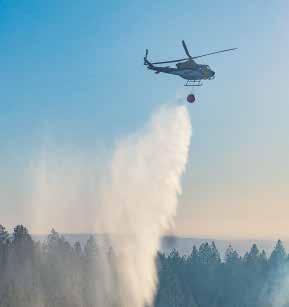
Aerial crews worked alongside ground teams from the afternoon into the evening. Helicopters scooped buckets of water from McKay Reservoir and dropped them on the flames. Airplanes released pink fire retardant along the fire’s edge, preventing the flames from pushing into timber and more heavily forested areas.
FIRE, Page A3

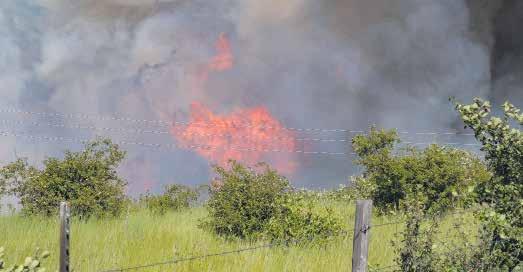
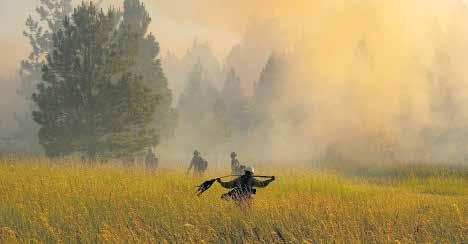
ABOVE: Strong gusts of wind push the flames higher as fire spreads across the hillside on June 16 along Old Emigrant Hill Road on the Umatilla Indian Reservation near Mission.
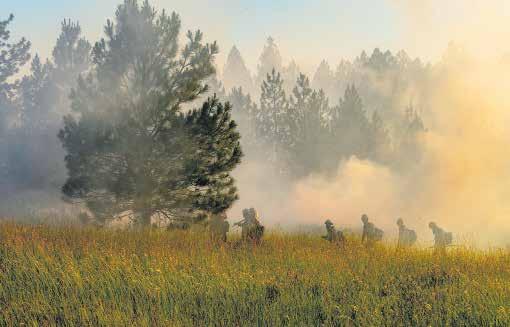
LEFT: Firefighter silhouettes are visible through smoky conditions as crews clear trees and branches to establish a firebreak.
Photos by Yasser Marte The CUJ
Video by Lee Gavin CTUIR Communications
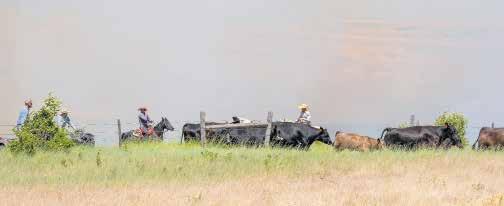
Ranchers on horseback move cattle away from an advancing wildfire on June 16, corralling herds into safer ground.
ABOUT THE CUJ
The Confederated Umatilla Journal (CUJ) was created in 1975 as the official publication of the Confederated Tribes of the Umatilla Indian Reservation (CTUIR), which includes the Cayuse, Umatilla and Walla Walla people. The CUJ is produced monthly by the CTUIR Communications Department.
PUBLISHER: Kaeleen McGuire kaeleenmcguire@ctuir.org
EDITOR: Yasser Marte yassermarte@ctuir.org
REPORTER: Beau Glynn beauglynn@ctuir.org
ADVERTISING: M. Moses-Conner cuj@ctuir.org
CONTRIBUTORS: Kathy Aney Dallas Dick Annie Fowler Lee Gavin Wil Phinney Travis Snell Aaron Wooden Sammantha McCloud
CONTACT US Confederated Umatilla Journal 46411 Timíne Way Pendleton, OR 97801 email: cuj@ctuir.org phone : 541-429-7005
EMAIL ADVERTISING, LETTERS TO THE EDITOR, AND OTHER SUBMISSIONS TO: cuj@ctuir.org
ADVERTISING DEADLINE: 20th of the month prior to publication. The CUJ prints on the first Thursday of each month.
SUBSCRIBE: The CUJ is free to pick up at tribal entities and area businesses. However, a mailed subscription can be purchased for the price of shipping and handling by contacting the CTUIR Finance Department. Call 541-429-7150 or visit the Finance Department in person at Nixyáawii Governance Center, 46411 Timine Way, Pendleton.
One Year: $15
Two Years: $28
For more information or daily news, visit the CUJ online at: cuj.ctuir.org
Near sundown of the first day, in the distance, silhouettes of firefighters moved through thick, billowing smoke as chainsaws revved and crews cut trees and branches to help slow the fire’s spread.
Umatilla Tribal Fire Department (UTFD) Chief James Hall said no structures were damaged in the fire and only one firefighter was injured.
A U.S. Wildfire Services firefighter was taken to St. Anthony Hospital for heat exhaustion within the first hour of the fire suppression support. He was evaluated and later released, Hall said.
Hall added that no livestock losses were reported and about 80 head of livestock were moved out of the area.
Multiple agencies responded to battle the wildfire, including the UTFD, the ODF’s Northeast Oregon District, U.S. Wildland Fire Services and several Area 9 Fire Defense Board mutual-aid partners.
Assisting agencies included Pendleton Fire Department, East Umatilla County Fire and Rescue, Umatilla County Fire District No. 1, Boardman Fire Rescue District, South Gilliam County Rural Fire Protection District, Echo Fire Department and the Confederated Tribes of the Umatilla Indian Reservation (CTUIR) Public Works Department.
In addition, a unified command structure included the UTFD, Bureau of Indian Affairs and ODF.
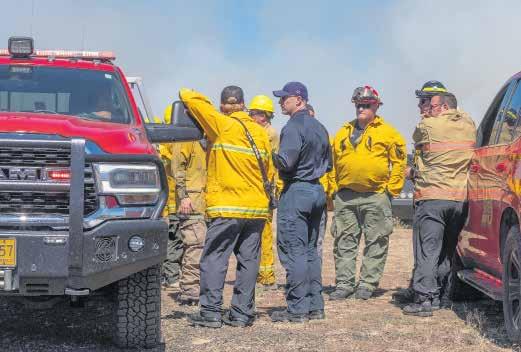
Hall estimated that roughly 100 firefighters responded to the incident. Crews deployed dozers, airtankers, helicopters, brush trucks, water tenders and wildlandurban interface engines to contain the fire.
As the fire intensified, Hall assumed command of the structural protection group, overseeing efforts to protect homes and other structures under challenging conditions. What started as an incident with a Level 1 “Be Ready” evacuation status was quickly elevated to a Level 3 “Go” order around 4 p.m.
However, only two households were evacuated, although officials have not yet released an official count.
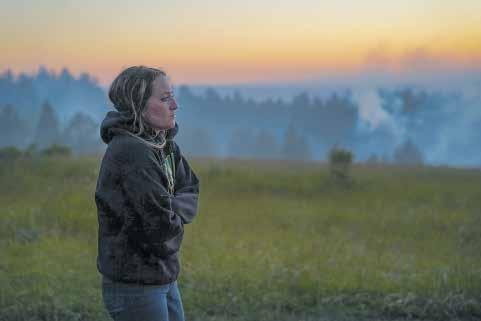
One family waited a half mile down the road from its cabin as crews were stationed in front of it to protect the structure.
Lindsey Huntington, who was evacuated from her family’s cabin, said she worried about the cabin and the surrounding mountains and trees, but also felt gratitude for the people who responded to protect it.
“I was probably more just overwhelmed with gratitude from everybody that showed up,” she said. “It almost made me cry. My grandma came up here every day. She loved this place.”
She said the property has been in her family for more than a century and described the cabin as “a longtime family gathering place.” She said she felt torn about leaving during the evacuation but expressed gratitude for the crews and volunteers working to defend structures in the area.
Kimberly Hughes, CTUIR Emergency Management
coordinator, said the incident was downgraded to Level 1 at 10:30 p.m.
No evacuation center was opened, though staff were placed on standby, Hughes added. The Umatilla County Emergency Operations Center and the Union County Emergency Operations Center were activated to provide support.
After the flames settled
The following day, June 17, fire suppression and mop-up operations continued. Crews worked over the next several days until officials declared the fire 100% contained.
ODF officials also issued an advisory after unauthorized drones flew in the wildfire area, preventing aerial firefighting crews from operating and forcing them to remain grounded.
Shannon Dunfee, environmental coordinator and public affairs officer for the Umatilla National Forest, said drones were prohibited in wildfire zones because unauthorized flights can force firefighting aircraft to be grounded.
“If you fly, we can’t,” Dunfee said. “When firefighting aircraft must be grounded, wildfires can grow in size, which greatly hampers firefighting efforts, threatens lives, homes, property and natural resources.
ODF officials also noted that firefighting aircraft require clear airspace to operate safely and urged the public to stay out of active wateruse areas.
Dunfee urged the public to know the rules before flying drones near wildfire areas.
However, the U.S. Department of Agriculture’s Forest Service conducted a drone flight on June 19 as part of the firefighting effort. The agency is licensed and certified to perform infrared detection and mapping, and ODF officials said the operation was a routine safety measure.
Dunfee said fire managers flew a heat-detecting drone over the Old Emigrant Fire area to identify any remaining hot spots and support full containment efforts.
Oregon’s wildfire season typically begins in mid-May and continues until late September, when seasonal rains arrive. Drought, snowpack and local weather conditions can extend or shorten the season, especially in Southwest and Eastern Oregon.
According to the ODF, 652.76 protected acres burned in Umatilla County in 2025, a significant decrease from the 39,907.83 acres burned in 2024.
Lightning was the leading cause of wildfires in the county over the past two years, accounting for 17 fires, or 44% of the total. Debris burning caused eight fires, or 21%, while equipment use and recreation each accounted for six fires, or 15%. Miscellaneous causes and smoking were linked to one fire each, representing 3% apiece.
The Old Emigrant Fire burned an estimated 1,424.6 acres and was declared 100% contained on June 21. The cause of the fire remains under investigation.
BEAU GLYNN
MISSION — The Confederated Tribes of the Umatilla Indian Reservation (CTUIR) hosted a virtual town hall on June 17 to take questions, comments and concerns regarding the CTUIR’s draft nuclear energy policy.
The town hall was led by Elizabeth McManus with the consulting firm Ross Strategic as well as her staff members Martha Madrid and Piper Casey, CTUIR Energy and Environmental Sciences (EES) Program Manager Mason Murphy, tribal attorney Martha Izenson and EES energy analyst Aaron Luke.
Izenson, who is the attorney assigned to work with the CTUIR’s Energy Strategy Team (EST), said the need for a draft nuclear policy became clear in 2025 as dozens of legislative concepts which promoted nuclear energy as a “clean” energy source moved forward in Oregon and Washington legislative sessions.
No bills were passed in those sessions, though some came very close. For example, HB2410 which would have allowed the Energy Facility Sitting Council to issue a site certificate for a small modular nuclear reactor (SMNR) energy facility demonstration project in Umatilla County. The bill’s chief sponsors were Oregon State Reps. Bobby Levy and Ed Diehl and Oregon State Sen. David Brock Smith.
“The (EST), with input and feedback from many additional tribal staff, committees and commissions, has drafted a policy that maintains a strong position of opposition to nuclear activities that threaten tribal values, rights and resources, while recognizing the importance of establishing clear conditions that would mitigate harm from adopted legislation or projects,” Izenson said in an email.
CTUIR adopted the Hanford policy in 2007, which lays out five objectives: identify and inform the CTUIR about the conditions at Hanford pertaining to natural and cultural resources and how they are affected by pollution and weapons development; protecting the health of tribal members; evaluating cleanup efforts; informing other governments regarding Hanford and the CTUIR’s interest; and encouraging government-togovernment partnerships.
In 2018, CTUIR updated the 2010 Comprehensive Plan, including Objective 5.15, which focuses on energy:
“The monitoring of impacts to the Reservation from off-Reservation energy and infrastructure development is an on-going issue for the protection of Treaty rights. The energy developments producing power using nonrenewable fossil fuels also produce environmental effects including air and water pollution. These pollutants have negative Treaty rights impacts. The challenge is to be actively involved and utilize Tribal sovereignty to protect the Treaty rights by monitoring and involvement with regional and national decision makers to minimize these negative impacts. To rise to these challenges,
“... for now, we draw the line at, ‘Does it impact our ability to practice our treaty rights?’”
— Aaron Luke, CTUIR Energy and Environmental Sciences energy analyst
the CTUIR must educate everyone about Tribal sovereignty and to develop plans to protect Treaty rights better.”
The CTUIR Board of Trustees (BOT) and tribal technical staff began discussing the need for a comprehensive draft nuclear policy in 2022 which incorporated the objectives of the Hanford Policy and the 2018 Comprehensive Plan.
During the town hall, Izenson said the overarching goal of the draft policy is that any future nuclear energy development, whether on-reservation — which would be directly opposed — or off-reservation, is not to infringe CTUIR members’ rights which include access to traditional-use areas where members exercise their Treaty Rights, harvest First Foods and engage in cultural practices.
“And in the policy, there is just unequivocal, full-stop, period opposition to nuclear weapons development, testing, storage within CTUIR’s jurisdiction or abroad,” Izenson said. “ Also, CTUIR would unequivocally oppose nuclear projects that are proposed to be cited within the exterior boundary of the (Umatilla Indian Reservation) or beyond the boundary, but under the regulatory jurisdiction or civil jurisdiction of the tribe or are cited beyond those boundaries but within the traditional use areas without any sort of government-togovernment consultation, subject to board approval.”
After a presentation narrated by a computer-generated voice detailing the need for an updated draft policy, attending tribal members were given the floor to ask questions or provide comments, whether by speaking directly or submitting
anonymously via the chat.
Many of the questions or statements focused on the draft policy’s protection of treaty rights and transparency regarding tribal members and their access to information relevant to the policy.
CTUIR member Donald Williams asked about the process of integrating tribal member perspectives in the EST or DNR.
“This policy had a lot of eyes and a lot of hands on it, and several CTUIR members participated in the development of the policy,” Murphy said. “The policy has been reviewed by all DNR programs, it’s been reviewed by six separate committees and commissions and we’ve incorporated all of those comments.”
Izenson corroborated Murphy’s comments, saying that to the extent that tribal employees may also be tribal members, and that committee and commissions are made up of tribal members, there has been a large amount of feedback received both from staff and committee and commission members.
A question was submitted anonymously asking what specific measures ensure tribal members have timely access to environmental data, risk assessments, financial agreements, as well as the potential impacts to treaty rights and First Foods, and what accountability exists if information is withheld or misrepresented.
“ What we’re doing today is, is an example of how we’re trying to make this policy process and the adoption of the policy transparent to the extent that we can,” Izenson responded. “ The goal is to be as transparent as possible within the parameters that have already
been set up by the CTUIR tribal government and its various departments.”
Another question asked about the emphasis on protecting treaty rights and cultural resources, and how that evolves when potential tribal enterprises and economic activities related to the nuclear industry are concerned.
“We want to maximize our ability to practice our treaty rights, and that being said, at least as far as I know, all nuclear development with today’s technology has an impact to that,” Luke responded. “We won’t know until we know, but for now, we draw the line at, ‘Does it impact our ability to practice our treaty rights?’”
Murphy answered an anonymous question regarding the transportation of nuclear waste or spent fuel, if the draft policy anticipates the waste being transported through traditional use areas and what plans coincide with emergency response.
“ Yes is the short answer. It definitely anticipates nuclear waste or spent fuels being transported,” he said.
Murphy also said potential agreements with private companies that solidify and remove the spent fuel to understand what the transportation would look like and how to benefit from it, anticipating that routes for disposal would likely include train and vehicular travel through I-84. He added that funds from the Department of Energy, the Public Safety Department and the Tribal Fire Department will help with emergency response.
The overall response from the town hall was opposition to nuclear developments interfering with traditional use areas and cultural resources, aligning with the draft policy’s strong position of opposition to nuclear activities that threaten those values.
Many readers may remember me from my time living on the Umatilla Indian Reservation and running my business Three Bears General Contracting. Though I am now an off-reservation member, my commitment to our community’s future remains unchanged. That is why we must confront the truth about blood quantum requirements.
It is a historical fact that blood quantum was never an Indigenous concept. It was invented and implemented by Euro-American governments to limit and reduce the number of legally recognized Native Americans. From the 1887
Dawes Act to the 1934 Indian Reorganization Act, the U.S. government used blood fractions as a mathematical tool for erasure.
Because fractions naturally diminish over generations of intermarriage, this system ensures tribes eventually breed themselves out of legal existence, letting the federal government evade its treaty obligations.
Our ancestors never relied on fractions. They measured belonging through kinship, lineage and community connection. By enforcing rigid blood quantum rules, we are keeping a colonial weapon active within our enrollment systems.
Lowering or eliminating these restrictions is about preventing demographic decline and protecting our families. Transitioning toward a system like lineal descent honors our true definitions of belonging and guarantees future generations will still have a tribe to call home. It is time to look beyond federal math and choose survival. If you would like to learn more, go to: https://nativegov.org/resources/blood-quantumand-sovereignty-a-guide/
BILL BOWLING, CTUIR Member, Resides in Colville, Washington
This year’s historic lack of snowpack is already being felt in the Walla Walla Basin, but that is not the only way we are making history when it comes to water. For the first time ever, Oregon and Washington are working together to cooperatively manage the shared water resources of the Walla Walla Basin.
Through the collaborative efforts of the Walla Walla Water 2050 Planning Group, water users, community members, local governments, the two states and the Confederated Tribes of the Umatilla Indian Reservation (CTUIR) are working together to tackle our shared water challenges.
Water is, of course, our most precious resource and central to our local identity. In the CTUIR’s Umatilla (Imatalamłáma) dialect, “Walla Walla” means “many small streams.” This water underpins our world-class agricultural economy and produces wines that rival the best that California and France have to offer. In fact, we’re so proud of our local sweet onion that we’ve named our baseball team after it.
The rivers and streams of our basin also once supported thriving
populations of salmon, which sustained the culture and traditions of the Columbia Plateau Tribes since time immemorial.
However, in the early 1900s, we lost these salmon as increasing demands on water depleted stream flows in the basin.

Today, we are working to change that. We believe that by working together we can restore salmon to our rivers and maintain our vibrant agricultural economy. To work toward this deal, water users in both states have undertaken conservation projects to increase their irrigation efficiencies. This means they can now divert less water than they used to but still grow the same amount of crops— essentially creating a “new” source of water to restore stream flows.
The city of Walla Walla also has led the way in these efforts, investing in efficiency projects so that more water can be left in Mill Creek, which provides critical spawning habitat for salmon and steelhead. And, thanks to the leadership of our elected officials, we now have the legal tools necessary to allow both states to work together
July is a good month to reflect on the work the Board of Trustees (BOT) has done from January to June 2026. There were 128 scheduled work sessions and 119 were completed as of June 30.

The BOT also held meetings on June 21, when it passed 36 resolutions and ratified 17 polled letters. In addition, 16 tribal members were appointed to serve on committees and commissions.
Along with the work sessions and meetings, the BOT heard five months of Monthly Policy Activity Summaries from each department, February through June. January was skipped while the BOT went through departmental orientation.
The departments gave progress reports to the BOT in January. These reports are presented every six months. The BOT also heard presentations from eight committees and commissions.
Each BOT member sits on one to two committees and commissions and there were 12 scheduled meetings for each commission and committee. There is so much more
work that has been done in the last six months, not to mention all the community activities, events and functions.
Reflecting on the first six months of this term, it has been a positive and gratifying experience to sit alongside the rest of the BOT and continue to push for policies that protect, preserve and help CTUIR continue to make progress across all sectors of our government. One policy essential to my role as secretary is the update to the BOT Secretary Procedures Code.
As our tribal government has grown, we must note the changes in policies that affect the BOT’s work. One of those changes is moving toward digital documents and forms, which will improve work efficiency and effectiveness.
I look forward to sharing the full-year report with the General Council in January 2027, and I am always open to feedback. You may contact me at monicaparadise@ ctuir.org. Take care of yourselves and one another, and have a safe Fourth of July.
to manage our precious water resources cooperatively.
From the Walla Walla’s headwaters in Oregon to its mouth on the Columbia River in Washington, we can now manage the basin as a single holistic watershed, not two disjunct systems of state water law.
Now we just need the salmon, but we are working on that, too. In close partnership with our fisheries’ co-managers in both states, the CTUIR has undertaken an effort to restore salmon to the basin. Now after nearly a century of absence, just shy of 1,000 salmon have made their way back to the Walla Walla Basin this spring.
And thanks to the efforts of our partners in the water user community, the Walla Walla River
will now flow again all summer long, providing salmon an opportunity to complete their migrations each spring. We still have much work yet to do, but we are making great strides.
While this progress is heartening, we cannot deny that we are seeing history made this year in both good ways and bad. It will be hard not to dwell on the fact that it will be an extremely difficult year for all of those who depend on water. But as the dry year wears on, try not to forget that we are making history in good ways, too.
So this spring, if you take a walk along the upper Walla Walla River, Touchet River or Mill Creek, take a closer look. You may be fortunate enough to glimpse something we have not seen for almost a hundred years: salmon in our rivers.
Richard LaCourse of the Yakama Nation didn’t come to the Umatilla Indian Reservation (UIR) to make a name for himself. He came to build something that mattered.
As the first news director of the American Indian Press Association from 1971 to 1975, LaCourse believed Native communities deserved journalism that answered to the people, not outside interests. In 1975, he arrived on the UIR and founded the Confederated Umatilla Journal (CUJ). He stayed only a year and a half before returning home to launch another publication for the Yakama Nation, but the standards he set never left this newsroom. His commitment to truth, objectivity and elevating community voices still shapes every edition we publish.

Over the past few months, the CUJ team spent time in the archive room beneath the Nixyáawii Governance Center, pulling bound volumes, old news editions and photos from the shelves. We carefully turned brittle black-and-white pages that have outlived typewriters, darkrooms, copy machines and more.
History doesn’t always announce itself. Sometimes it waits quietly in fading ink and aging newsprint, ready for someone willing to stop, look and remember. Reminding me of an old Chinese proverb, “The palest ink is better than the best memory.”
We found young faces that have since become respected elders. We read stories from Root Feast celebrations, smiled at old birthday shout-outs, revisited resolutions that shaped the Confederated Tribes of the Umatilla Indian Reservation, studied photographs from past Pendleton Round-Ups and followed the everyday moments that became part of the community’s collective story.
Every page carried a reminder that journalism isn’t just about recording events. It’s about preserving memory.
Those visits to the archives became part of a video project we’re producing for the upcoming Indigenous Media Conference, which celebrates Native news organizations from across the country. Along the way, we spoke with Randall Minthorn and John Barkley, one of the first reporters to work under LaCourse. We also sat down with Debra Croswell, Wil Phinney, Marcus Luke, Chuck Sams and others to talk about the heart of this newspaper, why it has endured, why people still trust it and why Indigenous journalism continues to matter.
Newspapers preserve history. They hold leaders accountable. They give families a place to celebrate victories, mourn losses and remember those who came before. They tell the difficult stories alongside the joyful ones because communities deserve both honesty and hope.
Sorting through those old editions reminded us why we do this work. Every assignment carries the same responsibility: listen carefully, report accurately and tell the story with respect and objectivity.
As we prepare to attend the Indigenous Media Conference, we want to thank the people who trust us with their stories. Every interview, every photograph, every phone call and email, every correction and every conversation help keep this newspaper alive. Thank you for allowing us to tell your stories. We don’t take that responsibility lightly.
And yes, if we happen to bring home a few awards recognizing last year’s work, we’ll gladly celebrate those, too. But the real reward has always been earning your trust, one story at a time. Thank you, graciias and qayciyáw , yaw.

Rebecca Sue Heath
Rebecca Sue Heath’s funeral services took place on June 16 and 17. Tuesday the 16 included a private family procession to the Longhouse with an escort from the Umatilla Tribal Police Department, followed by a dressing and viewing at the Longhouse and a Washat service after. The next day consisted of a Final Seven Songs at the Longhouse, the burial at Tutuilla Cemetery and a following lunch at the Longhouse.
Marvin L. Picard
Marvin L. Picard’s funeral services took place on Saturday, June 20 with a memorial service at Burns Mortuary of Hermiston. The service was followed by a memorial reception at the Harkenrider Senior Activity Center in Hermiston.
Julian Isaac Bronson
Julian Isaac Bronson’s funeral services were held on June 24 and 25. A memorial service was held at Pi-NeeWaus Community Center in Lapwai, Idaho, with a funeral service, burial at Nez Perce Tribal Cemetery and a following dinner the next day.
Charles “Chazz” Anthony Webb NOV. 18, 1940 - MAY 21, 2026
Charles “Chazz” Anthony Webb was born on Nov. 18, 1940, in Pendleton, Oregon. To Mathias Webb and Rachel Jackson. He passed away peacfully at his home in Mission, Oregon on May 21, 2026.
Chazz was raised in Thornhollow by his beloved grandparents, Saul and Amy Webb. He attended St. Andrew School through the eighth grade and later completed his high school education in Lapwai, Idaho, where he met Geraldine “Geri” Miles. The two married in 1958 and together raised three children: Aaron Allen, Christopher Lee and Yvonne Nanette. That same year, Chazz and Gerio moved to Camp Pendleton, California, where Chazz served in the United State Marine Corps and became a champion boxer.
In 1962, through the Indian Relocation Program, Chazz and Geri moved to Chicago, where he attended diesel mechanic school before relocation to Kooskia, Idaho. After the couple separated and following Geri’s passing, Chazz returned to Pendleton, Oregon. Chazz found love again when he met Kay Red Elk and the couple married in April 1974, beginning a long and loving partnership centered around family and community.
A gifted athlete amd dedicated coach, Chazz had a lifelong passion for sports and mentoring young people. In Pendleton, he enjoyed playing basketball with the Old Cayuses, slowpitch softball and golf. He coached youth basketball clinics, Indian men’s basketball, women’s basketball for Wilat-pu, Little League and Babe Ruth baseball. He also served two terms on the Babe Ruth Board. One of his greatest joys was spending time on the golf course with his best friend, Garrell Moore.
Professionally, Chazz dedicated 19 years to Prowler before joining Wildhorse Resort & Casino, where he worked as a blackjack supervisor for 21 years until his retirement. Known for his fun-loving spirit and welcoming personality, Chazz was deeply respected and loved by his employees, coworkers and the many customers whose lives he touched throughout the years.
Chazz was preceded in death by his parents, Mathias and Rachel, sisters Patricia Matheny and Beverly Miller, nephew James Mathney, stepson Daniel Red Elk, grandson Isaiah Webb and great-grandson Zayah Webb. He is survived by his loving wife, Kay Webb, sons Aaron Webb and Christopher Webb, daughter Yvonne (Al) Webb-Johnson, granddaughter Cyrene Red Elk, grandsons Thomas Webb, Elijah Webb and Brett Webb, several great-grandchildren, nieces and nephews and many extended family members and friends who will dearly miss him.
Viewing was held on May 26 at 2 p.m. at Burns Mortuary in Pendleton. A rosary was followed at 6 p.m. at Mission Longhouse in Mission. Funeral Mass was celebrated on May 27 at 9 a.m. at St. Andrew Catholic Church, and the burial was held at 10 a.m. at Agency Cemetery.
BEAU GLYNN
The CUJ
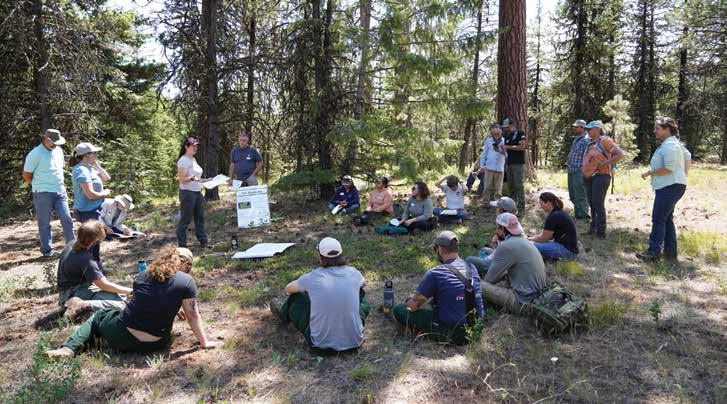
UKIAH — Within portions of the 1.4 million acres of the Umatilla National Forest just south of Indian Lake, the 54 North Restoration Project is in development, with the intent to promote restoration in the forest, and through that support wildlife, watersheds and First Foods.
The field tour, planned by the Northern Blues Restoration Partnership, which includes the Northern Blues Forest Collaborative, invited cultural resources professionals from local entities to learn how the 54 North Restoration Project intends to preserve the forest and discuss amongst each other the best strategies to do so.
Attendees ranged from employees from the Confederated Tribes of the Umatilla Indian Reservation (CTUIR), Confederated Tribes of the Warm Springs Reservation and the Nez Perce Tribe, as well as government employees who work in natural resource fields and Forest Service workers
“ The Northern Blues Forest Collaborative really helps to work with the two national forests and dig into projects like this and help public and partners understand the work that’s happening on the two national forests and to ask questions and to really just understand that kind of work,” Umatilla National Forest Acting Vegetation Management Staff Officer Amber Ingoglia said. “ It’s a partnership that supports cross-boundary wildfire risk reduction work, forest restoration work and really just coordinating our treatments across the landscape.”
Ingoglia said the area would be ideal for restoration work, noting some older pines among younger trees growing beneath, which could become ladder-fuel. Ladder fuels are routes fire can take to rise to upper parts of trees, using lower shrubs as a pathway.
“ So definitely a reason to do some work out here, and the other big part, the reason why we are asking the Umatilla Tribe to be here with us and help us with this project is that they’d submitted a Tribal Forest Protection Act (TFPA) letter to us, and they were interested in working in this area as well in kind of collaboration with the forest,” Ingoglia said.
During the field tour, Rosa Arellanes, a CTUIR First Foods botanist from the Department of Natural Resources, explained the significance of plant life in the area, pointing out how it can benefit from controlled fires and restoration projects.
Arellanes said the four touchstones focused on when working on restoration efforts to ensure current and future management activities align with protecting and enhancing First Foods are soil stability, hydrological function, landscape pattern and biotic integrity.
“Soil stability includes the physical, chemical and biological components. The hydrological function includes the water capture, storage, release and quality. The landscape pattern will include the patch size and extent arrangement
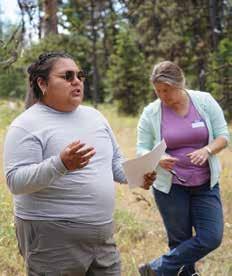
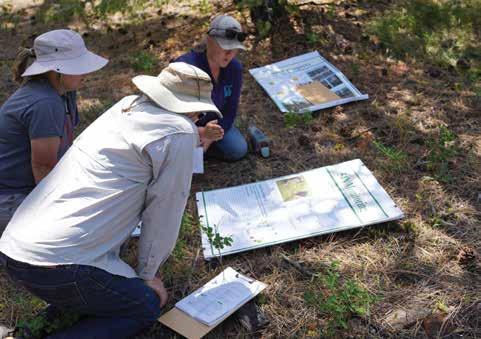
and connectivity and then lastly, we have the biotic integrity, which shows the composition, structure, species interaction and First Foods,” she said.
Arellanes said burning in the Blue Mountains used to be common and that the Blue Mountains were called so because settlers would see the sky filled with smoke from burns and change their routes.
“What most people are not taught in early education is that our tribes had land management before it was called land management, so our culture allowed us to work with neighboring tribes and divide areas for specific tribes to gather,” Arellanes said.
She added that, as a tribe, they had gained a specific knowledge over the centuries of the relationship between fire and huckleberries, one of the traditional First Foods.
Arellanes said some things she learned regarding growing patterns for huckleberries included the aspect or direction of sunlight, the fact that north and east plots have better berry production than their counterparts and they prefer partial shade and a slight slope.
In addition to huckleberries, Arellanes also spoke about other
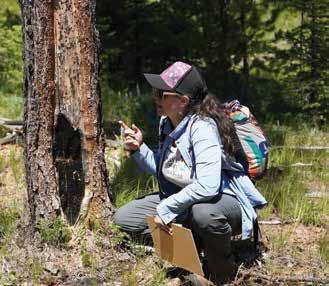
plant life in the area that benefits from controlled burning, such as glacier lilies or spring beauty. Plants like these have been found to grow in size or increase seed production after fires.
“So, fires are really beneficial for us,” Arellanes said. “ While these projects are close to home, the knowledge of the Blue Mountains and fire have been suppressed for a long time, and fire being reintroduced and having partners helps us aid the importance of what we hold so important as tribal people having these First Foods.”
In addition to Arellanes’ discussion about First Foods, other talking points were covered that focused on fuel management and wildfire risk reduction. Afterward, guests dove into discussion about the effectiveness of previous
treatments, such as thinning, burning and/or replanting.
Different methods were discussed regarding wildfire reduction and deterring bark beetles by clearing out condensed areas of Lodgepole Pines. Methods include mechanical thinning through using chainsaws and crews, mastication, which is a mechanical process using chipping or grinding, and then commercially harvesting the trees with larger diameters.
The final stop of the tour included additional discussions where attendees got the opportunity to voice opinions, questions and concerns about the monitoring goals for the project, as well as picture what success would look like for the project regarding the status of First Foods, wildfire reduction and
health.
NIKA BARTOO-SMITH
Underscore Native News + ICT
NEW YORK CITY — After living in the same house in Pendleton, Oregon, for the first 18 years of her life, Summer Wildbill took a big leap post high school graduation in 2023, by moving across the country to study international relations at New York University (NYU).
“My senior year self went in really confident that it was not going to phase me at all, and I could just do a really smooth transition from reservation to the city, which was not true,” said Wildbill, a Confederated Tribes of the Umatilla Indian Reservation (CTUIR) member.
She quickly noticed a gap in her education when it came to financial literacy and how to manage money. As she dove into research for herself, she found that this was a bigger need that she could help meet for other young Native people back home. She wanted to create a platform to help others learn about finances in an accessible way. Now, Wildbill is developing a financial literacy app in collaboration with her tribe via Nixyáawii Community Financial Services (NCFS).
Wildbill is heading into her senior year this fall. Post graduation, she dreams of attending law school. She hopes to focus on Indigenous economic development on an international level.
“I’m really interested in working first with my community in economic development, and then moving more towards a federal level, and learning communityspecific needs, and then how that’s translated at a federal level and into policy,” Wildbill said. “And then my ultimate goal would be taking all the perspectives and being able to look at policy on an international level, especially modern, Indigenous economic development.”
Though still in undergrad, her career thus far has focused on economic development — through a study abroad program in Argentina, an internship with the United Nations and as a 2026 Champion for Change through the Center for Native American Youth, focusing her project on financial literacy. She was also a 2024 Remembering Our Sisters Fellow.
In part because of those

accomplishments, Wildbill was recently announced as a recipient for two prestigious scholarships.
In mid-April, Wildbill learned that she was selected as a 2026 Truman Scholarship recipient.
One of 55 selected applicants, students had to be nominated by their institutions for demonstrating leadership, public service and academic achievement.
A few days after learning about the Truman Scholarship, Wildbill also learned that she was selected for a 2026 Udall Scholarship. The scholarship aims to highlight “future leaders in environmental, Tribal public policy and health care fields.”
“I can get so caught up in doing all the work,” Wildbill said. “[Applying for scholarships] gives me a moment to reflect on everything I’ve done and like how it’s kind of compounded over time. So that’s been really rewarding in those processes. I’m very grateful for it.”
Her work continues to inspire others in her family, like her younger sister, Claire Wildbill, who is currently a sophomore at the University of Southern California.
Claire Wildbill remembers dreaming with her sister about attending school in a big city one day.

“I didn’t believe that it could actually be possible until Summer was accepted to NYU,” Claire Wildbill said. “Her going out there and being the first one in our family to do that and get accepted, get scholarships, definitely inspired me to also pursue that for myself, because her doing it showed me that I could do it as well.”
Being surrounded by people in a big city at school in New York, some with access to huge amounts of money, Wildbill began to think about her financial situation. Through podcasts, books and articles, she dove into learning about financial literacy through topics such as savings and investment.
This personal research quickly evolved as she realized that this information could become helpful to other young Native people.
Wildbill is part of the university’s Martin Luther King Jr. Scholars Program that focuses on social justice and advocacy work. As part of the program, scholars are awarded a stipend each summer to conduct research on a topic related to social justice.
Noticing the gap between herself and other students at NYU who had more money, Wildbill formulated a series of research questions for herself: Why, specifically on reservations, is financial literacy so low? With all the different financial apps and curriculum already out there, what is failing minority groups, specifically reservations, when it comes to financial literacy?
The summer between her freshman and sophomore years, Wildbill began working with NCFS, the CTUIR’s community development financial institution (CDFI), to tackle this research.
“The main gap was it wasn’t actually targeting any of the emotional aspects of money, which I think is the most crucial point, especially as Native Americans, who have very strong not only historical traumas with money, but also they’re very cyclical patterns,” Wildbill said.
Using her research, Wildbill is
”The goals are about the kind of the person you want to become with building and sustaining long-term wealth based on your money mindset ”
—
Summer Wildbill
now in the process of helping to develop a financial literacy app called NativeCents with NCFS and Cayuse Native Solutions.
Dave Tovey, CTUIR member and NCFS executive director, remembers when Wildbill first approached him and his team about creating a financial literacy app.
The timing felt right to Tovey, as the CDFI had recently completed a strategic plan and wanted to find a way to provide more youth financial education.
He was particularly impressed with how, in her research, Wildbill remarked that everything was so numbers-driven, and found a need to start with a self-assessment to help people determine their personal relationship with money.
The four categories she broke it down into are: security and growth, anxious and scarcity, instant gratification and debtor mindset.
“I used that research to write a goal-based pedagogy,” Wildbill said. “The goals are about the kind of the person you want to become with building and sustaining longterm wealth based on your money mindset.”
Tovey has also been grateful to the efforts Wildbill continues to put into the app development, even though she has been busy with school.
“She’s just lining up all these scholarships and out there on this high-profile college experience, and like, wowee,” Tovey said. “But she carves off time for our project, happily and eagerly participating and generating some of the content and feedback we’re looking for.”
Wildbill is a contractor on the app, helping with the planning and content creation.
Her goal is to help youth feel empowered when it comes to financial decisions and provide a resource for CTUIR youth to understand how to manage their “18 money,” the money from gaming dividends that CTUIR members receive once they become adults.
As a kid, Wildbill wanted to be a teacher when she grew up, so the process of building lessons, and weaving them with Indigenous stories, has been particularly rewarding, she said.
She hopes that the app will be released by the end of the summer.
“I really hope that youth in my community genuinely use it,” Wildbill said. “The whole point of it is we want it to be interactive, and we want it to be something that’s easy to access and something that’s made for [CTUIR youth] so it feels like they’re within the financial education conversation, they’re a part of it.”
YASSER MARTE
The
CUJ
PORTLAND — Antone Minthorn, a Cayuse leader and former Board of Trustees (BOT) chairman of the Confederated Tribes of the Umatilla Indian Reservation (CTUIR), received an honorary doctorate of humane letters at Portland State University (PSU).
Minthorn accepted the degree during PSU’s 2026 commencement on June 14 at the College of Liberal Arts and Sciences ceremony in Portland.
After university leaders awarded the honorary doctorate, Minthorn took the stage and delivered a heartfelt speech to graduates, families and faculty.
“As you prepare to graduate from an institution whose very motto is ‘Let Knowledge Serve the City,’ I ask you to think deeply about what service means,” Minthorn said to the crowd. “Service means listening before you act. It means honoring the history of the places you will shape. And most importantly, it means using your education to lift up communities that have been historically left out of the blueprint. Whether you are entering corporate boardrooms, public office, or community activism, remember that the best plans are those rooted in empathy, sustainability, and respect for those who came before you.”
Minthorn has more than 20 years of experience in tribal government. He served as chairman of the BOT from 1997 to 2001 and from 2003 to 2009. Before that, he worked as a land-use planner and helped develop the CTUIR Comprehensive Plan, which continues to guide development on the reservation.
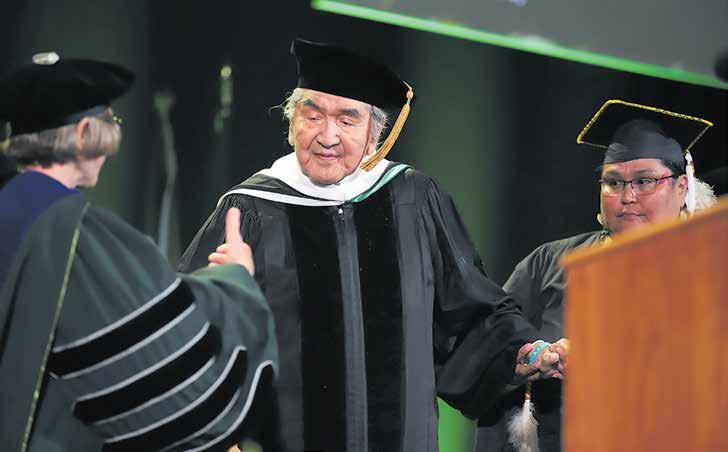
Minthorn also received a large volume of congratulations on Facebook, with more than 400 friends, family members and others from the CTUIR and surrounding communities congratulating him on the honorary degree.
According to the PSU press release, the institute described Minthorn as a passionate advocate for cultural preservation.
“He is an alumnus of Gonzaga University and Eastern Oregon College, where he trained in urban and regional planning,” the release stated. “His extensive regional leadership includes serving on numerous boards, such as Ecotrust,
which honored his enduring legacy by naming its boardroom after him in 2022.”
Minthorn served as president of the Affiliated Tribes of Northwest Indians and played a key role in shaping salmon policy for the Columbia River Inter-Tribal Fish Commission. He also helped negotiate efforts to restore salmon runs in his eastern Oregon homelands, work that contributed to broader regional efforts to
protect salmon populations across the Columbia River Basin.
He also worked since 2010 as a master language teacher, to restore the Cayuse-Nez Perce, Umatilla and Walla Walla languages, according to the press release.
Minthorn’s honorary degree recognition underscored a career defined by tribal leadership, environmental stewardship and cultural revitalization across the Columbia Plateau.
Tamástslikt Cultural Institute opens new exhibit with items from Mitchell collection
BEAU GLYNN
The CUJ
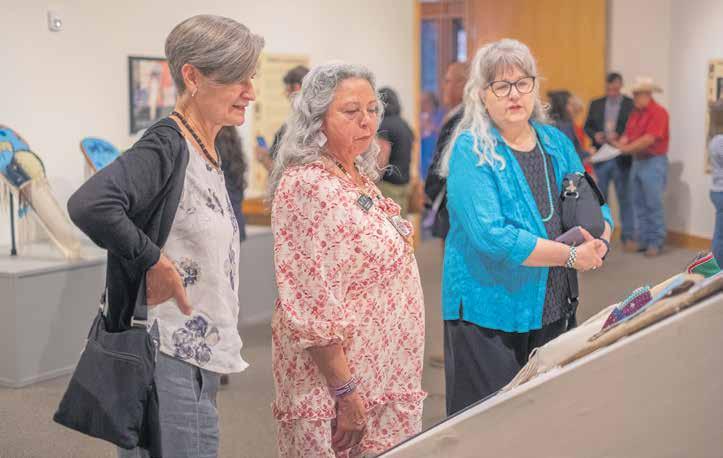
MISSION — Tamástslikt Cultural Institute (Tamástslikt) on June 4 hosted a preview of “Tíkaaš – The Precious Art of Cradleboards,” the first exhibit drawn from the Columbia Plateau Tribes portion of the Fred L. Mitchell collection, which was acquired in March.
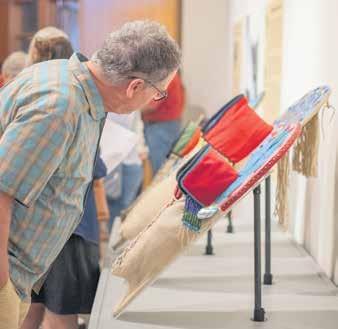
The exhibit, which opened to the public on June 5, features intricately beaded cradleboards alongside prints depicting early 20th-century Plateau Native American families and children with the cradleboards in use.
Organizers invited a select group of guests to the preview event, highlighting the cultural and historical significance of the collection as it returns to public view.
Tamástslikt Director Bobbie Conner said periodically she went to the house where Mitchell kept the pieces he had acquired over the years and knew his cradleboard collection was magnificent. The relationship between Mitchell and Tamástslikt started in 2016.
“The ornate, highly ceremonial cradleboards are indicative of how precious infants are to our culture,” Conner said. “There was a very high infant mortality rate. You can visit our cemeteries and see that on the reservation.”
Conner said circumstances such as horseback riding or wagon accidents, influenza, tuberculosis and other illnesses had significant impacts during the past 175 years, bringing forward the idea that infants are the future.
“We envelop them in not only safety and security, but express how precious they are in these art forms like cradleboards — the everyday ones and the ceremonial ones,” she said. “It’s a way of, I think, projecting that we are a hopeful people, that we intend to be here forever.”
Tamástslikt Assistant Director of Operations Randall Melton said Mitchell’s collection was unlike anything he’s seen, considering the number of Plateau-style beaded cradleboards.
“Think of them as an extension of the person that made them, and to treat them with that kind of care and respect,” Melton said. “Thinking of it as ‘coming home’ and also a new beginning for us, it goes with the way tribal people think — we always think back to look forward.”
“Coming home” was at the core of guest-curator Rebecca Dobkins’ opening comments prior to the exhibit’s opening. Dobkins is the curator of Native American Art at the Hallie Ford Museum in Salem as well as an emeritus professor of anthropology at Willamette University.
“In a sense, all of the children that are represented and the relationships around those cradleboards symbolically come home,” Dobkins said.
Dobkins said the collection was an
exquisite elevation of the universal human need to take care of infants.
“We, as creatures on Earth, produce the most vulnerable offspring of any other creature, and we have the responsibilities, in whatever communities we’re a part of, to protect those children and bring them into the world in, hopefully, a loving and sacred way,” Dobkins said. “And these cradleboards do it in such a magnificent way.”
This marks the fourth temporary exhibit at Tamástslikt to showcase Mitchell’s collection and the first presented since its acquisition in March. Previously, Mitchell’s collection had been on loan for displays including “100 Horses” in 2023, “Extraordinary Elk” in 2024 and “Pride in Patriotism” in 2025.
The display included cradleboards from Mitchell’s collection, along with three pieces by Maynard Lavadour made in the 1980s and 1990s — two of which were within the Tamástslikt collection. The third, a miniature cradleboard for dolls, is on loan from the Maryhill Museum of Art.
Melton said the rest of the cradleboards span from the early 1900s to the 1940s.
Dobkins said, at the turn of the 20th century, Pendleton was experiencing the height of portrait photography and Native American families were getting their portraits taken, a baby central in the photograph in a cradleboard or a child standing next to it.
“That early-1900s period, in terms of Indigenous history in North America, was one of the hardest periods for Native people,” Dobkins said. “The epidemics of the 1800s, the removal to reservations, the struggle that people had, and it’s at this very moment when Plateau beadwork reaches its effervescence.”
Dobkins described this period as a “nadir” of population, referring to the lowest point in fortune of a person or organization.
“Looking at these cradleboards
made me think how much faith and hope, even at this moment.
The makers of those cradleboards have — the mothers and caregivers and grandmothers who took care of those children, the siblings who took care of those babies — they had a hope and a faith that this would happen,” Dobkins said.
There are several options for further exhibits stemming from the Plateau portion of Mitchell’s collection, said Melton, ranging from basketry to stone tools.
“There are endless options with this collection. Even things that we’ve already had on display could also be part of a different display,” he said.
Conner and Melton said they hope the exhibit can be an educating experience for people unaware of the importance and purpose of cradleboards, also noting similarities between them and contemporary baby carriers or safety seats.
“I think that modern culture has safety seats by law, and we have seat belts that we didn’t have before. I often think about the innovations our people had thousands of years ago to keep us safe, whether it was the kinds of saddles we made or the way they trained horses or the way we took care of infants,” Conner said. “And I’m really proud of our
culture for having the capacity and the wherewithal to innovate in all of the ways we have, before safety seats were invented.”
Conner said many people have an unreasonable comprehension regarding how cradleboards are used, believing that they imagine it as a form of imprisonment when they see a baby bound in a cradleboard, wrapped and swaddled.
“Babies come from the womb, where they are nestled in a small space, where they are safe and can sway or move in the fluid there,” Conner said. “When they’re in a cradleboard, that same sense of security is there, and the swaddling and nesting in the encasement or enclosure that’s attached to the backboard keeps them safe, because you can continue to work while they are fully engaged.”
When considering the process of putting a cradleboard together in that time period, Melton said it was something to think about, when today a baby carrier is readily available at stores.
“These really show the care and time people put into making these things precious for a baby that was on the way or already here,” Melton said.
TRAVIS SNELL
The
CUJ
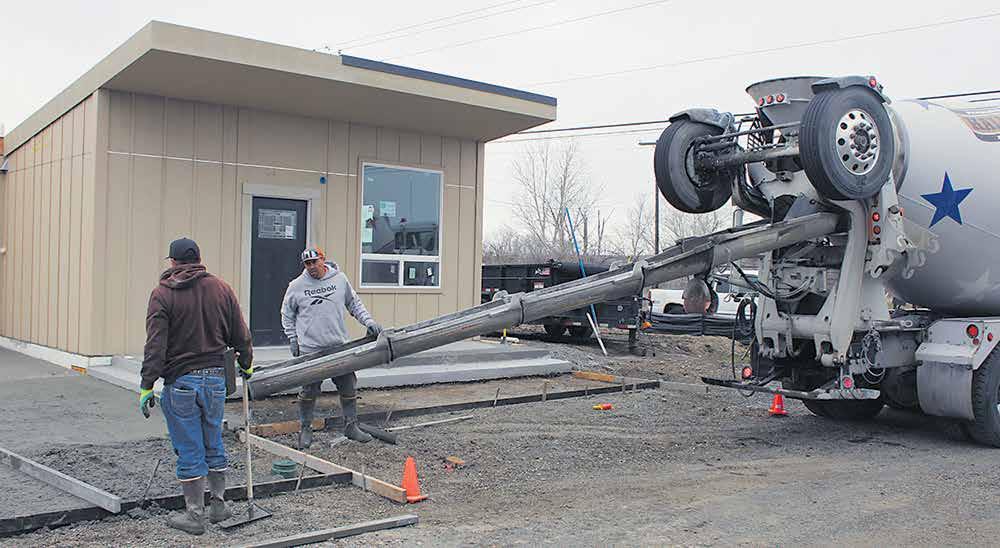
MISSION – The Confederated Tribes of the Umatilla Indian Reservation’s (CTUIR) Housing Department on June 24 held an open house for its three transitional housing units along Mission Road.
Located on a half-acre lot of trust land at 46390 Mission Road, Housing Director Marcus Luke said approximately $820,000 in COVID-19 funds from the American Rescue Plan Act were used to construct three cottages as transitional/temporary housing for CTUIR members.
“We’ve needed this for years,” Luke said. “We would get complaints of people living in their truck/cars, overcrowded mutual help home, staying in a motel, with friends, people feeling homeless and helpless.”
According to a Housing document, the Mission Road Temporary Housing project consists of two dwellings at 480 square feet each with attached carports, while the third unit consists of 612 square feet and a carport. All units include utilities (water, sewer, electric in lieu of gas), fiber, appliances, patio space and additional storage, the document states.
The cottages will also be available for the department’s Maintenance and Resident Services. Housing Maintenance Manager Tanner Michael said anyone staying in a unit would pay rent with the monthly amount depending on the scenario for why the person was

Newest Exhibit!
assigned to it.
“Under Resident Services, when a client becomes a tenant, that tenant puts in their 30-day notice wherever they are currently living,” Luke said. “After they move here, we’ll use a unit for their transition to become a tenant until their unit is rent-ready. They have already been approved by all requirements to get into housing.”
Under Maintenance, Luke said, when a unit needs a remodel, tenants can transition to one of the new cottage-style dwellings so that workers can have full access until
the remodel is finished.
“This is for whomever applies at Housing and is waiting for a unit or existing unit work for maintenance,” he said. “They must be qualified and approved by all the requirements already, and transition housing would be the next step after being approved.”
Housing worked with CTUIR’s Planning Department, Department of Economic & Community Development, Umatilla Tribal Fire Department, Cultural Resources Protection Program, Tribal Employment Rights Office and
Finance Department, as well as the Wenaha Group, Energy Trust of Oregon and several Nativeowned businesses to develop the housing. Final approval of the project will come from the U.S. Housing and Urban Development and the CTUIR Board of Trustees. GCT Land Management of La Grande and Seder Architecture are partnering as the design-builder, with construction expected to be fully complete by the end of July.
According to the Housing document, the units should be available for tenants in the fall.
Come in and view our newest exhibit featuring beautiful yet utilitarian cradleboards from the Fred L. Mitchell Collection. Learn about these colorfully beaded and finely crafted baby carriers used to transport infants leaving the mother’s hands free and keeping the child safe and entertained. Cradleboards are often considered works of art. They are traditionally decorated with intricate beadwork, porcupine quills, or paintings. Amulets, toys, and charms are often hung from the protective canopy. Young girls made small cradleboards for their dolls.
Kinship Café Open for lunch 11am-2pm Tuesday through Saturday! Great
Our exclusive Pendleton Wool Kusi blankets are back for a limited time. Each full-sized blanket is a colorful homage to the Kusi horse. Get yours before we run out again!
FREE FIRST FRIDAY!
July 3, 10am-5pm
FREE admission all day. Dine inside at Kinship Cafe or order take-out. Enjoy Indian Tacos ($13) and Frybread ($6) from 11am-2pm. Shop the Museum Store for the exclusive Kusi blanket and unique artisan souvenirs!

THE CUJ
MISSION – The Confederated Tribes of the Umatilla Indian Reservation’s (CTUIR) Family Violence Services (FVS) is inviting the public to its 2026 Tribal State & Federal Summit July 7-9 at the Wildhorse Resort & Casino.
FVS Coordinator Desiree Coyote said the summit is a biennial event in which the FVS partners with the Oregon Department of Justice – Crime Victim and Survivor Services Division to emphasize the importance of the CTUIR community’s health and well-being. This year marks the eighth summit.
With this year’s theme of “Beyond Policy: Shaping Behavior and Culture,” the summit will encompass various aspects impacting CTUIR community members as well as provide information from professionals that can benefit the community, Coyote said.
“Our keynote speaker, Marisa Miakoda Cummings, will highlight the importance of strengthening cross-jurisdictional collaboration among tribal, state and federal partners when dealing with domestic violence, sexual assault, trafficking and related harms while focusing on tribal sovereignty and culturally informed responses,” she said. “Participants will gain insight into the interconnected nature of public safety, public health and community wellbeing with emphasis on prevention,
intervention and survivor-centered services.”
Other sessions include ensuring compliance when dealing with state and federal funding; supporting survivors of domestic violence, sexual assault and stalking in the workplace; and brain injuries and their connection to domestic violence. For the complete agenda, visit https://ctuir.org/ media/5hyc1hny/agenda-2026tribal-state-federal-summit.pdf.
Coyote said the summit is open to the public because community members should hold accountable CTUIR employees and officials who deal with such issues by learning the practices, procedures and values of the tribe’s departments and programs.
“The CTUIR programs, departments and entities are here to benefit our people, all people equitably with heart,” Coyote said. “And this summit allows our community to come into play. As employees, we can train and enhance our skills and our knowledge. However, those we serve, our community, should always be aware of how our employees are to be examples and role models. And the best way to do that is for our community to learn alongside our employees.”
For information, call 541-4297410 or 541-429-7415 or email desireecoyote@ctuir.org.




BEAU GLYNN
MISSION — Three information events hosted by Nixyáawii Community Financial Services (NCFS) occurred throughout June to inform potential homeowners about the progress of homes under construction in the Nixýaawii Neighborhood.
The events, which took place in person on June 3 and virtually via Zoom on June 16 and June 24, detailed floor plans and features of the new homes and provided information on purchasing the new constructions, including details regarding the 99-year lease and other loan information.
NCFS Homeownership Services Manager Pamela Ranslam led the presentations, covering topics of leases, total costs, construction loans and guidelines in order to be eligible for the 99-year lease.
The 99-year lease is eligible for Confederated Tribes of the Umatilla Indian Reservation (CTUIR) members, guardians of a minor CTUIR member or guardian of an incapacitated adult CTUIR member.
A topic heavily covered by Ranslam included the land lease loan, which helps to fund the consideration fee charged by the CTUIR.
Ranslam said NCFS created the loan to have similar guidelines to the loan program Section 184, a loan specific for Native Americans looking to build on or purchase property.

“If you can get a Section 184 loan, you’re probably going to be able to get the land lease loan,” Ranslam said. “Your consideration fee, let’s say, is $15,000, NCFS would be looking at giving you a loan for $13,500, so you’ll need a total of $1,500 as your down payment.”
After having already made the $1,000 deposit to CTUIR to reserve the lot — which, if nothing is done to the lot in three years, the CTUIR has the ability to revoke the lease, partially refund the deposit and lease the lot to another applicant — an additional $500 out-of-pocket will need to be provided to sign the loan from NCFS.

“You can still have some challenging marks on your credit, or maybe you’re not where you want to be in terms of having the amount of money you might need to move forward with getting a mortgage. We’ve taken that into consideration, so you don’t have to be perfect or have perfect credit,” Ranslam said.
Ranslam said this homebuilding project is courtesy of a $3 million LIFT Grant from the state for local innovation and fast-tracking homeownership.
“The goal was to be able to build 21 homes over three years using that money we received from the state as a lending capital,” Ranslam
said. “We would build the homes, turn around and sell them to tribal members or work with a tribal member who wanted to have a home built on their specific lot. Once the home was completed, you could purchase the home from us, we would take that money and recycle it to use for building additional homes.”
Ranslam said NCFS hoped this would be a more streamlined process for tribal members to get homes.
There are two houses already built on the lot, and four are in the construction process. Three houses are for sale on lots 14,32 and 45.
Ranslam said there are two floor plans — one being a four-bedroom, two-bathroom with 1,485 square feet — and the other being a threebedroom, two-bathroom with 1,232 square feet.
Lot 14, the four-bedroom house, will range from $347,500 to $376,500, Ranslam said, while lots 32 and 45, the three-bedroom floor plans, will range from $322,500 to $337,500. She said a down payment of 2.25% is needed for a Section 184 loan.
The houses should be completed by mid-September, after an estimated nine months of construction and are first-come, first-served.
“If you’re interested in purchasing one of those homes, I would reach out. We can set up an appointment and make sure the process is going forward,” Ranslam said.









THE CUJ
MISSION – Confederated Tribes of the Umatilla Indian Reservation (CTUIR) officials have announced Carrie Sampson as a new deputy executive director in the Office of Executive Director (OED) and Autumn Adams as the executive assistant, filling the office’s remaining open positions.






Sampson, a CTUIR member living in Cayuse, holds dual bachelor’s degrees in science: one in health studies and one in community health education. She also earned a graduate certificate in health care management from Oregon Health & Science University.
As a deputy executive director she will help manage the CTUIR’s governmental departments.







“Being named deputy executive director is one of the greatest honors of my career. It’s an opportunity to serve my tribe in a meaningful way by ensuring the community’s needs are at the forefront of decision making, strengthening the organization and helping advance the tribe’s long-term vision,” she said. “It’s an opportunity to give back to the people and the place that helped shape who I am. I’ve chosen to raise my four daughters in this community, and I am deeply rooted and invested in being here. I’m incredibly honored to be a member of the CTUIR and am grateful for the opportunity to serve my tribe in this capacity.”
Sampson began her nursing career 20 years ago, building a foundation in patient care and service that transitioned into leadership roles focused on improving health care systems and strengthening programs that serve tribal communities.
“I’ve had the privilege of working with tribes across the Pacific Northwest and southern Alberta (Canada). Those experiences have given me a broad understanding of tribal governance, health care and community priorities while respecting that every tribe has its unique culture, values and strengths,” she said. “I’ve managed multidisciplinary teams, overseen multimillion-dollar budgets and built strong partnerships with tribal leadership, federal agencies and community organizations. Every role has prepared me to lead while staying grounded in the needs of the people we serve, and I’m excited for the opportunity to bring that experience home to the CTUIR.”
Sampson said her first goal is to listen and learn so she can understand what works well, where opportunities exist and how she can best support Executive Director J.D. Tovey and the CTUIR staff.
“My goals are to strengthen communication across departments
and help ensure our strategic priorities are creating meaningful results for our tribe,” she said. “My priority is building relationships and listening first. At the same time, I’m comfortable making difficult decisions when needed and holding myself and others accountable. I believe leadership is about serving others and creating a culture of trust and respect.”
Tovey said he selected Sampson for the job because of her experience and professionalism.
“I’m honored to welcome Carrie Sampson to the CTUIR leadership team,” he said. “Carrie brings the experience, professionalism and collaborative mindset that will help us continue building a strong organization and delivering on the Board of Trustees’ priorities. I’m grateful they’ve joined us during this transformative time for the CTUIR.”
Sampson, who will start July 16, joins Holy Cross tribal member Chanda Yates as the CTUIR’s two deputy executive directors. Yates joined the CTUIR in 2025.
Adams, who joined the OED on June 16, holds a bachelor’s degree in anthropology with minors in American Indian studies and museum studies from Central Washington University and a juris doctorate from the Sandra Day O’Connor College of Law at Arizona State University.
“As a proud Yakama Nation and Wanapum tribal member, I am honored to serve CTUIR. This is an opportunity to push myself and support the OED to the best of my abilities,” Adams said. “Having the opportunity to utilize my strengths and educational background to protect tribal sovereignty is of the utmost importance.”
Her experience includes working for Amnesty International USA, the U.S. Department of Justice and the Yakama Nation Cultural Resources Program.
Tovey said he was excited to welcome Adams as his executive assistant.
“This position plays an important role in helping our team stay organized, responsive and focused on serving the Board and our tribal members, and most importantly, keeping me on schedule. I look forward to the work we’ll accomplish together,” he said.

MISSION – Ensuring U.S. tribal nations are included in the U.S. Department of Justice’s (DOJ) efforts to Make America Safe Again, the DOJ is sharing access to certain federal criminal information systems with the Confederated Tribes of the Umatilla Indian Reservation (CTUIR).
In a historic move, the DOJ is sharing access to FBI-maintained criminal history records with the CTUIR’s Department of Education and Department of Children & Family Services (DCFS) to conduct background checks on employees and volunteers. The background checks, which include fingerprint records, are also required for all new professional service agreements involving contractors who have significant interactions with children.
This access improves the integrity of the hiring process for the two CTUIR departments, strengthens the tribe’s efforts to protect children, promote public safety and comply with state and federal grant requirements.
“We appreciate the U.S. Department of Justice recognizing the CTUIR’s tribal sovereignty in sharing access into these federal criminal history databases. This allows our employees in Education and DCFS to run more thorough background checks,” CTUIR Board
“ This is a significant step towards the tribe’s effectiveness in providing a safe environment for children, supporting families and promoting the well-being of the community.”
— Julie Taylor CTUIR DCFS Director
of Trustees Chair N. Kathryn Brigham said. “The more thorough the background checks are, the safer conditions are for people, especially children, who utilize these services.”
Since 2015, the DOJ has provided select tribal government agencies access to FBI Criminal Justice Information Services systems through the Tribal Access Program (TAP) for purposes authorized by Congress.
According to the DOJ, there are 152 tribes with more than 500 tribal government agencies that use TAP to improve public safety in their respective communities. Among other purposes, Congress has authorized tribal governments
to access criminal history record information to conduct background checks for specific purposes such as the screening of prospective foster parents and tribal government employees with access to children.
“Protecting children is among the tribe’s highest priorities, and this expansion of TAP is a great stride in the tribe’s ability to effectively protect children,” DCFS Director Julie Taylor said. “This advancement strengthens the tribe’s ability to conduct more thorough background checks for contractors, foster placements for children and others in trusted positions to care for children. This is a significant step towards the tribe’s effectiveness in providing a safe environment for children, supporting families and promoting the well-being of the community.”
Over time, tribes expressed interest in expanding the types of purposes for which they could access that information for background checks, such as educators and volunteers working in schools and social services.
Congress eventually amended 34 U.S. Code 41101 (sometimes referred to as Public Law 92-544) to provide a means for tribes to enact their own legal authorities that best meet the needs of their respective communities.






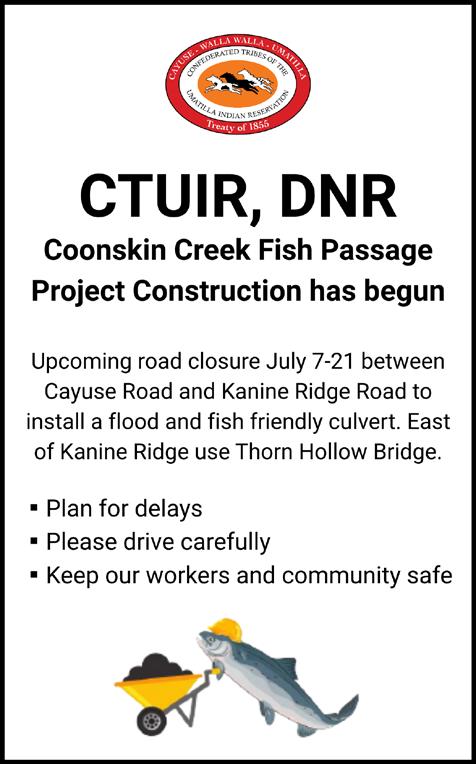
MISSION — The Confederated Tribes of the Umatilla Indian Reservation (CTUIR) Department of Natural Resources has an upcoming fisheries barrier removal project in Coonskin Creek near Cayuse Road (County Road 900), about 8 miles east of Mission.
Coonskin Creek provides critical habitat for mid-Columbia Steelhead and year-round habitat in the upper reaches for more native fish. Bonneville Power Administration is funding the project to support fisheries mitigation.
Four fish passage barriers in the creek are planned for removalthree associated with the old city of Pendleton water pipeline that has crossed the Umatilla Indian Reservation (UIR) for more than 100 years.
The fourth fish barrier will replace the existing, under-sized culvert with a three-sided box culvert that will allow high flows to move through the channel without pooling on the upstream side of the road.
The channel will be re-aligned to eliminate right angle turns at the culvert. The new creek alignment will meander with pool and wood habitat for fish rearing, reduce gradient and stream velocity in the reach.
The creek naturally dries during the summer and fall months, and construction will occur after the stream is dry.
Staff from the CTUIR Fisheries Program have worked with the Umatilla County, Bureau of Indian Affairs, CTUIR Water Resources, CTUIR Planning and CTUIR Public Works to advance this project to implementation this summer with effort to minimize disruption to the community.
The larger stream crossing will update and upgrade critical infrastructure identified in the CTUIR Climate Adaptation Plan, ensuring greater capacity for large hydrologic events predicted for the next several decades.
The project will be under construction during June and July between Cayuse Bridge and Kanine Road.
Travelers are asked to use caution when passing the site and watch for construction traffic and flaggers.
The road is planned to close for about 14 days during the installation of the stream crossing.
The traffic will re-route over Thornhollow Bridge. Plan extra time for driving during the construction. For more information, call Fish Passage Specialist Dana Sheedy at 541-429-7559.
Good radio lives here.

BOT Present: Chair Kat Brigham; Vice Chair Aaron Ashley; Treasurer Raymond Huesties; Secretary Monica Paradise; Members Lisa Ganuelas; Corinne Sams; Sierra Quaempts and Toby Patrick. General Council Chair Lindsey X. Watchman on Birthday Leave. Quorum present
Old Business: Polled letters and motions: Next number is 2026-012.
Polled Motion 2026-012: Topic: Washington State Society Banquet Donation.
Motion: Raymond Huesties moves to ratify polled motion 2026-012. Toby Patrick seconds. Discussion. Question. Motion carries 6 for (Raymond Huesties, Toby Patrick, Corinne Sams, Monica Paradise, Aaron Ashley and Lisa Ganuelas) – 0 against – 1 abstaining (Sierra Quaempts).
Polled Letter 2026-013: Topic: Formal Authorization for the Tribal Tax Advisory Group.
Motion: Raymond Huesties moves to ratify the polled letter 2026-013. Toby Patrick seconds Discussion. Question. Motion carries 6 for (Raymond Huesties, Toby Patrick, Corinne Sams, Monica Paradise, Aaron Ashley and Lisa Ganuelas) – 0 against – 1 abstaining (Sierra Quaempts).
Polled Motion 2026-014: Topic: National Governors Association, Oregon Energy Policy.
Motion: Raymond Huesties moves to ratify the Polled Motion 2026-014. Toby Patrick seconds Discussion. Question. Motion carries 6 for (Raymond Huesties, Toby Patrick, Corinne Sams, Monica Paradise, Aaron Ashley and Lisa Ganuelas) – 0 against – 1 abstaining (Sierra Quaempts).
Polled Motion 2026-015: Topic: Tribal member ingress, egress, and utility easement.
Motion: Corinne Sams moves to ratify Polled Motion 2026-015. Raymond Huesties seconds Discussion. Question. Motion carries 7-0-0.
New Business: Proposed Resolutions: Next resolution number is 2026-031. None.
Other BOT Action Items: None.
BOT Leave and Travel Requests:
General Council Chairman Lindsey X.
Watchman three requests:
Polled Travel on May 1 to Walla Walla to attend the reburial; Travel Request for June 5 to Spokane, Washington, to attend Washington Sen. Bob Ferguson’s fundraising event; Personal Leave Request for May 5 all day; and May 6 for 6.5 hours; and May 8 all day.
Member Lisa Ganuelas one request:
Personal Leave Request on May 14, all day.
Chair Kat Brigham three requests:
Personal Leave Request for June 4, 6, 11, 12, 19, 25, 26, and 29; Travel Request for June 25-27 to Salem to attend the LCIS Meeting and Plaza dedication;
Polled Personal Leave on April 29, all day.
Member Corinne Sams two requests: Polled personal leave on May 13 and 14; Polled travel to Portland, to attend a CRITFC meeting, May 19-22.
Motion: Raymond Huesties moves to approve leave requests. Corinne Sams seconds. Discussion. Question. Motion carries 7-0-0.
BOT Present: Vice Chair Aaron Ashley; Treasurer Raymond Huesties; Secretary Monica Paradise; Members Lisa Ganuelas; Corinne Sams; Sierra Quaempts; Toby Patrick and General Council Chair Lindsey X. Watchman. Chair Kat Brigham on personal leave. Quorum present.
Old Business: Polled letters and motions: Polled Resolution 2026-031: Topic: CUWHS Federal Assistance Continuation Application.
Motion: Corinne Sams moves to ratify Polled Resolution 2026-031. Lindsey X. Watchman seconds. Discussion. Question. Motion carries 7-0-0.
Polled Letter 2026-016: Topic: Oregon State Bar Amendments.
Motion: Raymond Huesties moves to ratify Polled Letter 2026-016. Corinne Sams seconds. Discussion. Question. Motion carries 7-0-0.
New Business: Proposed Resolutions: Next resolution number is 2026-032.

Resolution No. 2026-032: Topic: City of Umatilla Water Infrastructure Project. RESOLVED, that the Board of Trustees (BOT) hereby approves the Utility Right-of-Way and Assignment of Utility Right-of-Way attached as Exhibits 1C and 2C, respectively, for the City of Umatilla Water Infrastructure Project; AND BE IT FURTHER RESOLVED, that the BOT hereby waives the valuation of the Utility Right-of-Way and has agreed upon compensation satisfactory to the Confederated Tribes of the Umatilla Indian Reservation (CTUIR), which waiver and compensation are in the best interests of the CTUIR as authorized at 25 CFR Section 169.110(a); AND BE IT FINALLY RESOLVED, that the BOT hereby authorizes its Chair, or her designee, to execute the attached Utility Right-of-Way and Assignment of Utility Right-of-Way, or documents containing substantially similar terms, and to take such further actions, including the execution of documents, as may be necessary to carry out the purposes of this Resolution. AND, that said Resolution has not been modified, amended or repealed and is still in full force and effect. DATED June 1, 2026.
Motion: Raymond Huesties moves to adopt Resolution 2026-032. Corinne Sams seconds. Discussion. Question. Motion carries 7-0-0.
Other BOT Action Items: Commission/ Committee Update by Secretary Monica Paradise.
Health Commission, Three-Year Staggered Terms. One position to be advertised.
Motion: Corinne Sams moves to advertise for Carrie Sampson-Samuel’s position that expires June 16. Lindsey X. Watchman seconds. Discussion. Question. Motion carries 7-0-0.
Land Protection Planning Commission, Three-Year Term. One position to be advertised.
Motion: Raymond Huesties moves to advertise for Nizhonia Toledo’s position expiring June 12. Corinne Sams seconds. Discussion. Question. Motion carries 7-0-0. Science Technology Committee, Two-Year Term. Four positions to be advertised.
Motion: Raymond Huesties moves to advertise for the positions of Jeanine Gordon
and Lee Gavin, whose positions are expiring on June 11, and for two additional positions currently open, for a total of four positions. Corinne Sams seconds. Discussion. Question. Motion carries 7-0-0. Tiicham Conservation District, Two-Year Term. One position to be advertised. Motion: Corinne Sams moves to advertise for one position. Raymond Huesties seconds. Discussion. Question. Motion carries 7-0-0. Applications due by 4:00 p.m. on Thursday, June 18. A BOT work session is scheduled for Friday, June 26, at 8:30 a.m. to review applications. Appointments will be made on Monday, June 29.
BOT Travel or External Meeting Reports:
Member Corinne Sams three reports: May 4-6 in Portland to prepare as Plenary Speaker for the American Fishers Society Western Regional Conference as CRITFC and CTUIR representative; May 6 in Portland for CRITFC SPOD meeting; May 7-8 to Salem to attend reconvened Nine Oregon Tribal Consultation Task Force meeting.
Chair Kat Brigham four reports: April 20-23 to Ilani Casino to attend ATNI Economic Summit; May 10-16 to Washington, DC as part of the BOT CTUIR delegation lobbying trip; May 3 to the Echo Community Bldg. to attend Senator Merkley’s Town Hall meeting; May 25-28 to Salem to attend the LCIS meeting and the Salem Plaza Event.
General Council Chair Lindsey X. Watchman three reports: April 26-29 in Reno, NV, to attend the Native Finance Officers Association (NAFOA) Annual Conference; May 13-16 in Portland to attend the University of Oregon Nine Tribes Native American Advisory Council (NAAC) semiannual meeting; May 23-24 to Whitman College to attend four events in an official capacity: Baccalaureate dinner reception; Commencement; Sinaata Scholars reception and part of the Color Guard, leading the
Continued on page A18

student procession with our tribal flag.
Member Sierra Quaempts two reports: May 4-5 Yellowhawk Tribal Health Center, Behavioral Health Summit at Wildhorse Resort and Casino; April 27 Celebration of Tribal Relations, Celebration, and Tribal Leaders Listening Session.
Motion: Raymond Huesties moves to approve all travel reports. Corinne Sams seconds. Discussion. Question. Motion carries 7-0-0.
BOT Leave and Travel Requests:
General Council Chair Lindsey X. Watchman two leave requests:
Polled personal leaves for May 27 from 1-4 p.m.; May 28 from 8:30-10:30 a.m.
Member Lisa Ganuelas three leave requests:
Polled personal leave all day May 21 from 1-4 p.m.;
Polled personal leave all day, May 22; Polled travel from May 28, departing at 8:30 a.m. and returning on May 30 at 11:30 a.m. to attend and testify at the Oregon Data Center Advisory Committee on May 29.
Treasurer Raymond Huesties three leave requests:
Polled personal leave May 21 from 10 a.m. to 4 p.m. and all-day May 22; Personal leave July 13-17; Personal leave June 30 all day.
Member Sierra Quaempts three requests:
Polled personal leave May 21 from 12-4 p.m.;
Polled personal leave all day May 22; Personal leave request all day June 5.
Motion: Lindsey X. Watchman moves to approve leave requests. Raymond Huesties seconds. Discussion. Question. Motion carries 7-0-0.
BOT Present: Chair Kat Brigham; Vice Chair Aaron Ashley; Treasurer Raymond Huesties; Secretary Monica Paradise; Members Corinne Sams; Sierra Quaempts and General Council Chair Lindsey X. Watchman. Members Toby Patrick and Lisa
Ganuelas are on personal leave. Quorum present.
Old Business: Polled letters and motions: Next Number 2026-017.
Polled Letter No. 2026-017: Topic: Letter to Senators Wyden and Merley regarding concerns about CLARITY Act Impact on Tribal Regulatory Jurisdiction.
Motion: Raymond Huesties moves to ratify Polled Letter No. 2026-017. Corinne Sams seconds. Discussion. Question. Motion carries 6-0-0.
New Business: Proposed Resolutions: Next resolution number is 2026-033.
Resolution 2026-033: Topic: Housing and Urban Development (HUD) Section 184 Indian Home Loan Guarantee Program. RESOLVED, that the Board of Trustees (BOT) hereby establishes a pilot project in which the Confederated Tribes of the Umatilla Indian Reservation (CTUIR) may purchase up to two defaulted HUD 184 Home Loan notes where the pledged land or leasehold is trust land within the Umatilla Indian Reservation (UIR) based on the following: a) the HUD 184 Home Loan program is an essential financing tool for Tribal member housing development; b) the CTUIR’s purchase of a defaulted HUD 184 Home Loan can prevent HUD foreclosure on the mortgage on the land or leasehold and the loss of Reservation trust land; c) effective management of the HUD 184 Home Loan program is important for maintaining bank lending to Tribal member homebuyers; d) the Nixyáawii Community Finiancial Services (NCFS) has the capacity to manage and service 184 Home Loans that the CTUIR purchase from HUD, provided that the NCFS gets the funding for staff, legal expenses and needed software ; and e) the terms under any amended loan agreement with the borrower shall not relieve the borrower of the obligation to make payment under such amended loan agreement, shall not reward borrowers who have defaulted on their 184 Home Loan obligations or provide an incentive to Tribal members who have 184 Home Loans to fail to make timely payment of mortgage payments and satisfy other borrower obligations under their
loan and mortgage documents; AND BE IT FURTHER RESOLVED, that the BOT hereby authorizes its Executive Director to acquire defaulted 184 Home Loans from HUD that involve land and homes located within the UIR during the two year duration of the pilot project and to retain the services of the NCFS for the management and servicing of the loan, provided that NCFS may retain the fees and interest portion of loan payment proceeds from such acquired 184 Home Loans, and that the principal portion of the loan payments shall be deposited quarterly by NCFS in the Tribal General Fund; AND BE IT FURTHER RESOLVED, that the BOT hereby approve the Amended and Restated InterEntity Coordination Plan and Amended and Restated Donor Restrictions attached to this Resolution as Exhibits 1 and 2, respectively; AND BE IT FURTHER RESOLVED, that the BOT approves of the NCFS budget to purchase software and for staff and legal costs as described in the NCFS 184 Home Loan Budget that is attached as Exhibit 3C, and appropriates from the Contingency Fund the amount set forth in the attached budget needed by NCFS to service the 184 Home Loans; AND BE IT FURTHER RESOLVED, the BOT hereby directs the Executive Director to report to the BOT at the end of the pilot project on the defaulted HUD 184 loans acquired by the CTUIR and the status of the loan agreements with the homebuyer, which report shall protect the homebuyer’s confidentiality, so that the BOT can determine whether the future defaulted HUD 184 Home Loans should be acquired by the CTUIR; AND BE IT FINALLY RESOLVED, that the BOT hereby authorizes its Chair and the Executive Director to take such further actions, including the execution of documents, as may be necessary to carry out the purposes of this Resolution. AND, that said Resolution has not been modified, amended or repealed and is still in full force and effect. DATED June 15, 2026.
Motion: Raymond Huesties moves to adopt Resolution 2026-033. Monica Paradise seconds. Discussion. Question. Motion carries 6-0-0. Resolution 2026-034: Topic: Tribal Early
Learning Education Facility. RESOLVED, the Board of Trustees (BOT) hereby approves the Phase 1 Project Budget and Facility Operations Budget attached to this Resolution as Exhibits 1C and 2C, respectively; AND BE IT FURTHER RESOLVED, that the BOT hereby authorizes its Executive Director to execute necessary contracts to complete work consistent with the scope and do not exceed the Phase 1 Project Budget and Facility Operations Budget set forth in Exhibit 1C and 2C; AND BE IT FURTHER RESOLVED, that the BOT directs the Office of Executive Director to review other sources of funding to be used in place of Tribal funding, and other such grant sources as available; AND BE IT FINALLY RESOLVED, that the BOT authorizes its Chair and the Executive Director to execute the documents and to take such further action as may be required to carry out the purposes of this Resolution and proceed with the renovation of the Tribal Early Learning Education Facility; AND, that said Resolution has not been modified, amended, or repealed and is still in full force and effect.
DATED June 15, 2026.
Motion: Raymond Huesties moves to adopt Resolution 2026-034. Corinne Sams seconds. Discussion. Question. Motion carries 6-0-0.
Resolution 2026-035: Topic: General Welfare Benefits. RESOLVED, that the Board of Trustees (BOT) does hereby determine that the quarterly payments made to Tribal members from Wildhorse and Enterprise Revenues pursuant to the Confederated Tribes of the Umatilla Indian Reservation (CTUIR) budget approved by Resolution 25-084 and the 2024 Amended Gaming Revenue Allocation Plan are General Welfare Benefits that are exempt from Federal income tax as provided by Federal and CTUIR law, which determination is based on BOT consideration of the Tribal General Welfare Exclusion Act and implementing regulations, as well as conducting its own review of individual Tribal member expenses, and objective cost of living data. Based on that review and taking into account the unique facts and circumstances of the CTUIR and its members, the BOT has determined that the

amount of annual general welfare benefits in 2026 are substantially below the actual general welfare needs and expenses of its members; AND BE IT FINALLY RESOLVED, that the BOT does hereby authorize its Executive Director and Finance Director to take such further action as may be necessary to carry out the purposes of this Resolution. AND, that said Resolution has not been modified, amended or repealed and is still in full force and effect. Dated June 15, 2026.
Motion: Corinne Sams moves to adopt Resolution 2026-035. Monica Paradise seconds. Discussion. Question. Motion carries 6-0-0.
Other BOT Action Items: None.
BOT Travel or External Meeting Reports: Deferred.
BOT Leave and Travel Requests:
Vice Chair Aaron Ashley one request: Travel request to Spokane, Washington
from August 16-18 to attend Ulrich Summit. Member Corinne Sams one request: Polled personal leave June 3 all day.
Chair Kat Brigham one request: Polled personal leave from 3-4 p.m. May 10.
Member Lisa Ganuelas one request: Travel request to Grand Coulee, Washington, from July 29-31 to attend the Columbia River Advisory Quarterly meeting.
General Council Chair Lindsey X. Watchman one request: Personal leave all day June 12.
Treasurer Raymond Huesties one request: Polled personal leave all day June 10.
Member Sierra Quaempts one request: Polled personal leave from 9:30-10:30 a.m. June 2.
Motion: Raymond Huesties moves to approve leave requests. Corinne Sams seconds. Discussion. Question. Motion carries 6-0-0.



















































































































































































































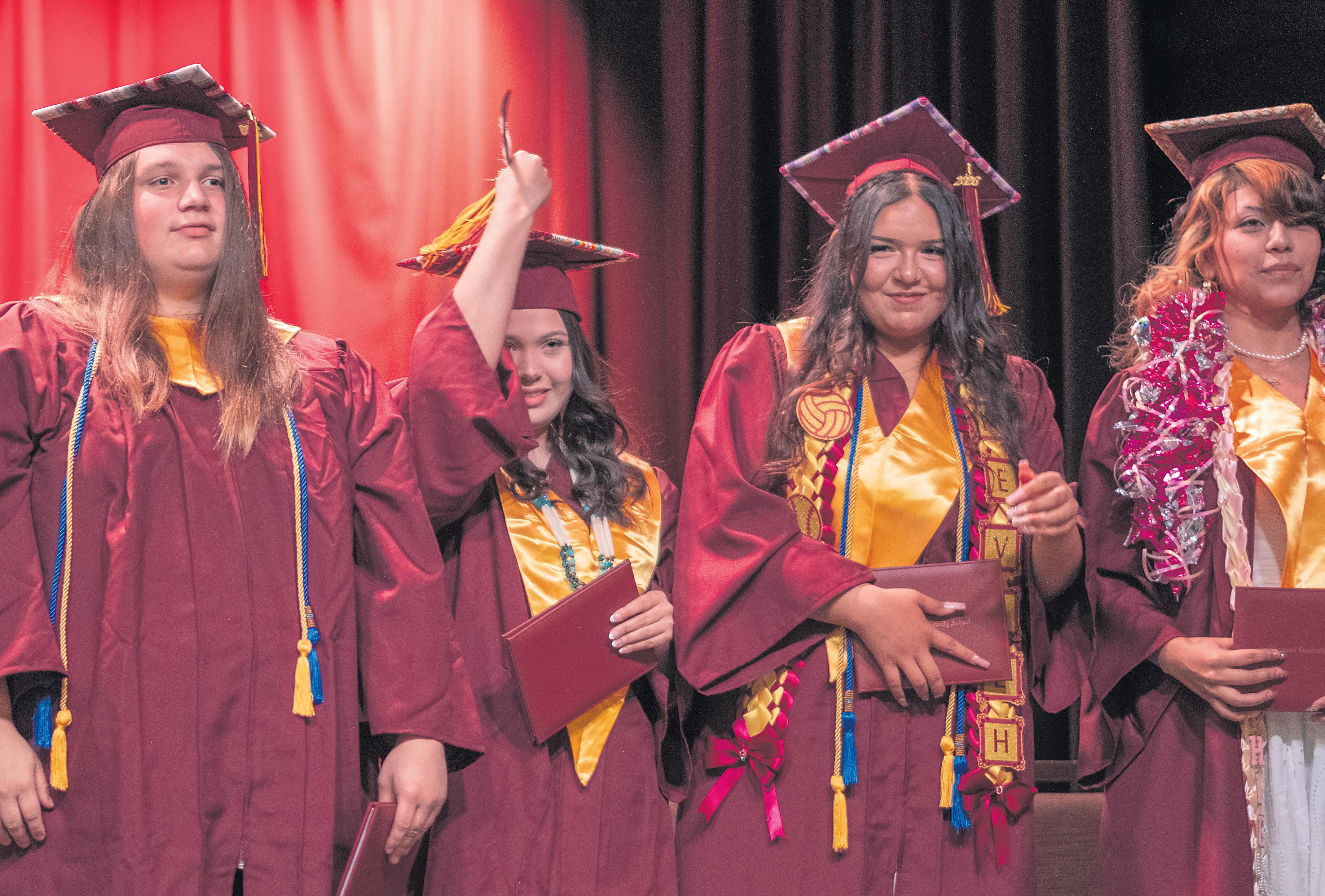
BEAU GLYNN
The CUJ
MISSION — Nixyáawii Community School (NCS) celebrated the Class of 2026, as 10 students walked across the stage to receive their diplomas, marking the school’s 22nd graduating class.
As the young graduates approached the stage at the start of the ceremony on June 5 at Wildhorse Resort & Casino, they presented roses to friends and family members significant to their achievements.
Speakers at the event included NCS Principal Ryan Heinrich; teachers Christina Thomas, Alison Zubiria and Zack Brandsen; and valedictorian Liana Stewart. Stewart graduated with honors, earning a cumulative grade point average between 3.50 and 3.74.
“This class was very easy when it came to school behavior. I didn’t have to worry about them hardly at all,” Heinrich said during the ceremony. “This class will leave lasting memories with all of the staff, coaches and the community that supported them.”
Three teachers spoke at the ceremony, offering encouragement and advice to their former students as they move into the next stage of their lives, whether pursuing further education, attending trade school or entering the workforce.
“I encourage you all to look back and
“Those of us that are here today aren’t
here
to
celebrate a piece of paper, we are celebrating you and all that you have become and the person
you’ve grown into.”
— Zack Brandsen NCS social science teacher
reflect on how you persevered during challenging times, the lifelong friends you’ve made, the skills you’ve gained and the lessons you’ve learned along the way,” Thomas said. “As teachers, we can lecture you all day long about the importance of showing up and just doing the work, but most of you have learned it firsthand.”
Thomas’s final message to her students encouraged them to treat others with kindness and respect and to carry out small thoughtful gestures.
“Spread kindness daily and reflect often on all you have to be grateful for,” she said. “I will start that practice right now by saying how incredibly grateful I am to have been a part of your lives.”
Brandsen, social science teacher of NCS, assured the graduates that
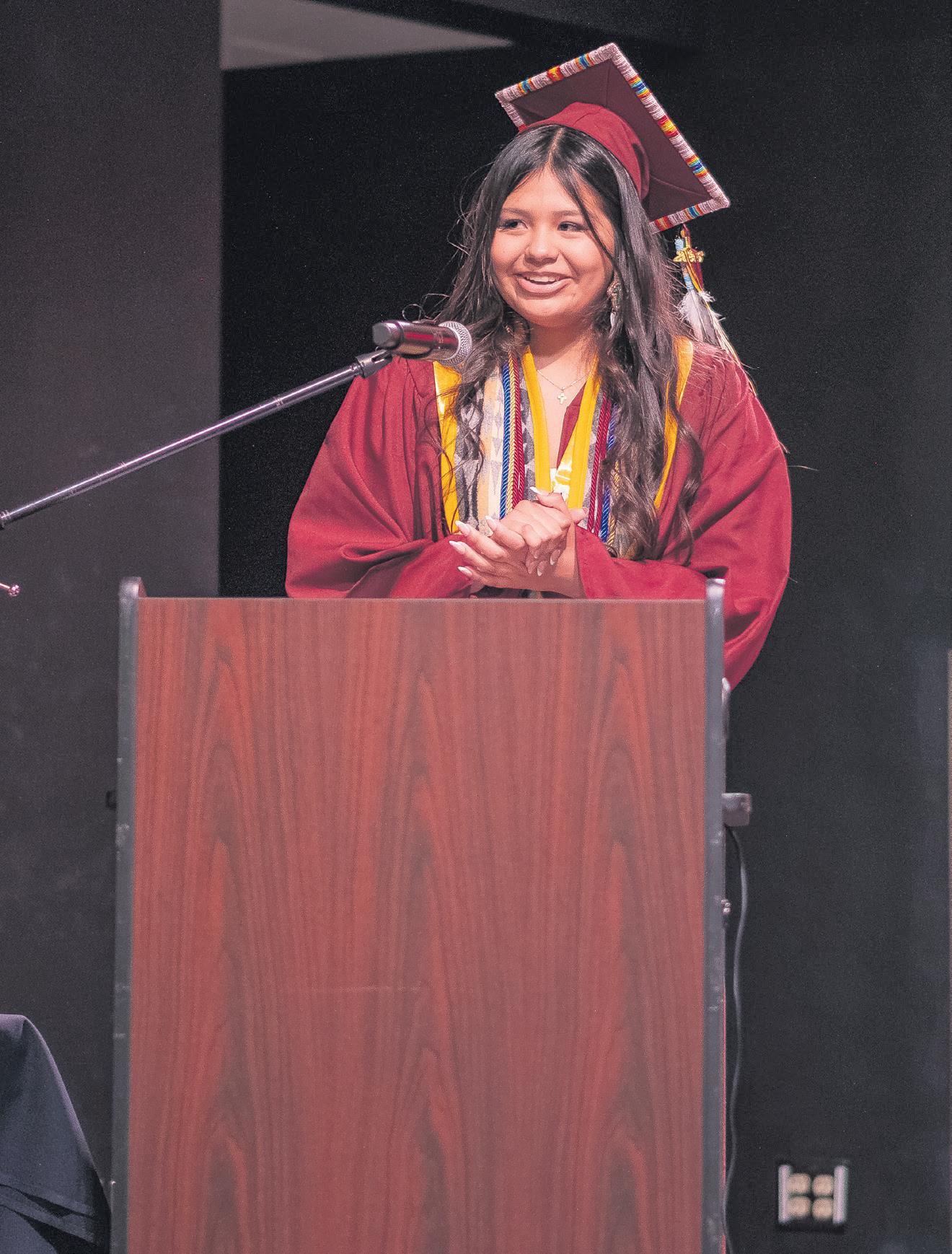
YASSER MARTE
The CUJ
MISSION — A new market has opened, bringing fresh food, local products and tribal entrepreneurship together on the Umatilla Indian Reservation.
Wildbill Market officially opened its doors on June 16 with a ribboncutting, marking the debut of a locally owned, Indigenous-founded grocery store serving residents of the reservation and the surrounding community.
The market, located at 46440 Kusi Road, offers various fresh foods and locally sourced products, including eggs from Rez Chicks, whole milk in half-gallon glass bottles from Catherine Creek Creamery, sourdough bread from Vault 19, smoked salmon dip from Brigham Fish Market and more.
The opening drew community members and supporters who gathered to celebrate the launch of a business rooted in local ownership and cultural values.
Klamath Tribes member Shoshone Wildbill, founder of Wildbill Market and food sovereignty initiatives project manager for the Northwest Portland Area Indian Health Board, said there is a need on the reservation for a grocery store that sells staple foods.
“I’ve worked in food sovereignty
for the last 10 years, which kind of pushed me into growing a grocery store and now that’s transitioned into a Native food hub,” Wildbill said. “The idea is to not only have products that I produce, but also a storefront and space for Native food producers to sell their products.”
Alongside household grocery essentials, Wildbill Market carries products from regional vendors to support local producers and strengthen the local economy.
The store also featured jars of honey produced by Wildbill, who launched the product through her beekeeping operation. The market also carries locally produced whole milk in reusable glass bottles.
“There’s a $3 deposit on the bottle,” she said. “When you bring it back, it’s only $5 for your next gallon or half-gallon of milk. The idea of reducing and recycling, I think, plays into that reciprocity for the land and for all of the foods that we eat.”
For customers seeking Native products, the store labels items from Native food producers throughout the market. Among them is a nonalcoholic sparkling rosé made by David Harrelson, a Grand Ronde tribal member who recently began producing his own wine. The beverage was featured during the opening ceremony and will remain available on store
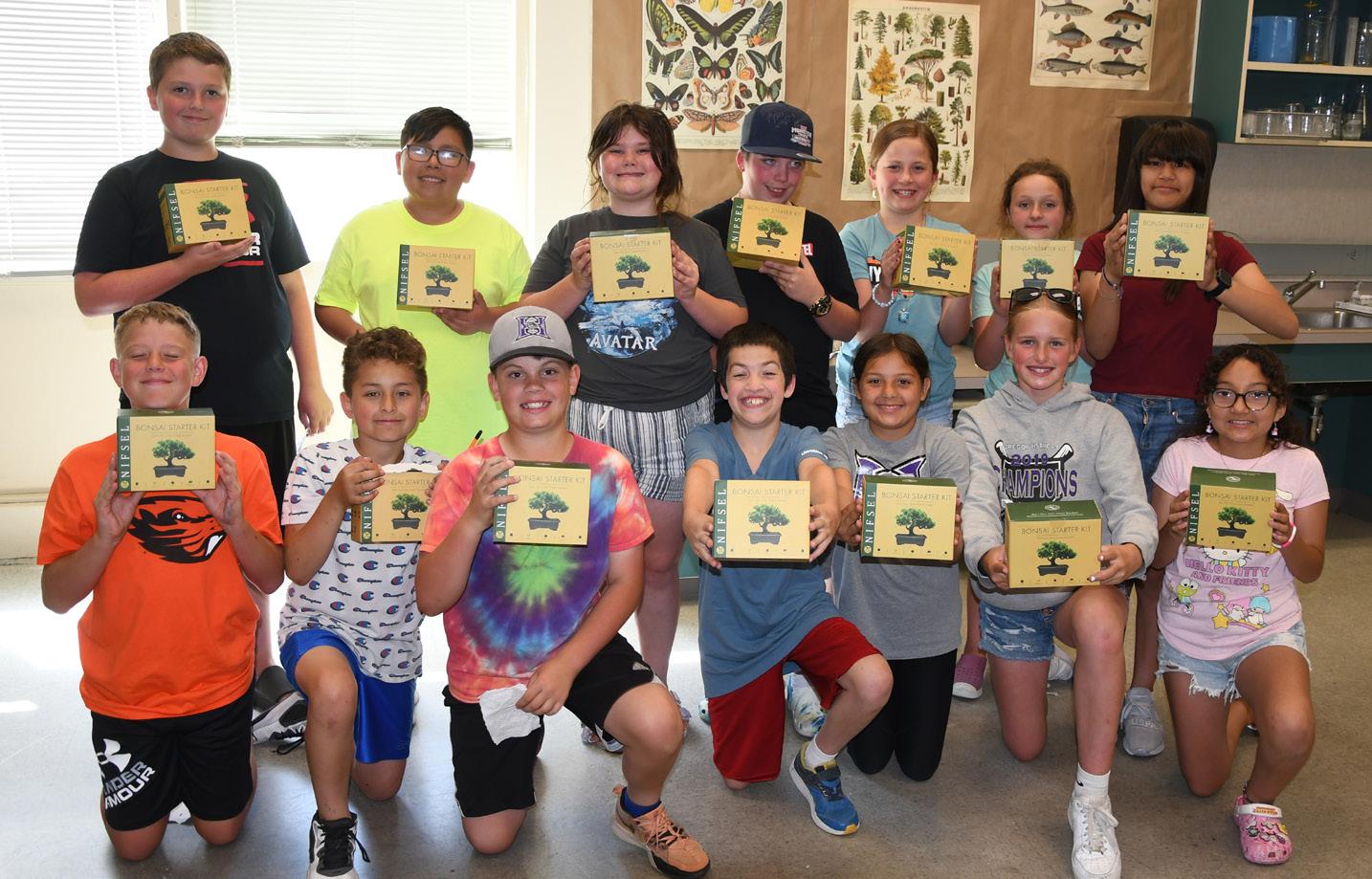

Hydromania Summer Science Camp is Back!
A FREE hands-on science adventure for students who have completed 4th or 5th grade! Explore science, water, energy, and the environment through exciting experiments and field trips. A few spots left - apply today!
Where: Armand Larive Middle School, Hermiston
When: 8 a.m. to 3 p.m., Monday–Friday
Space is limited to ensure a safe and engaging experience. Priority goes to first-time campers.
Questions? Call Program Coordinator Amy Baker at (541) 667-7160.
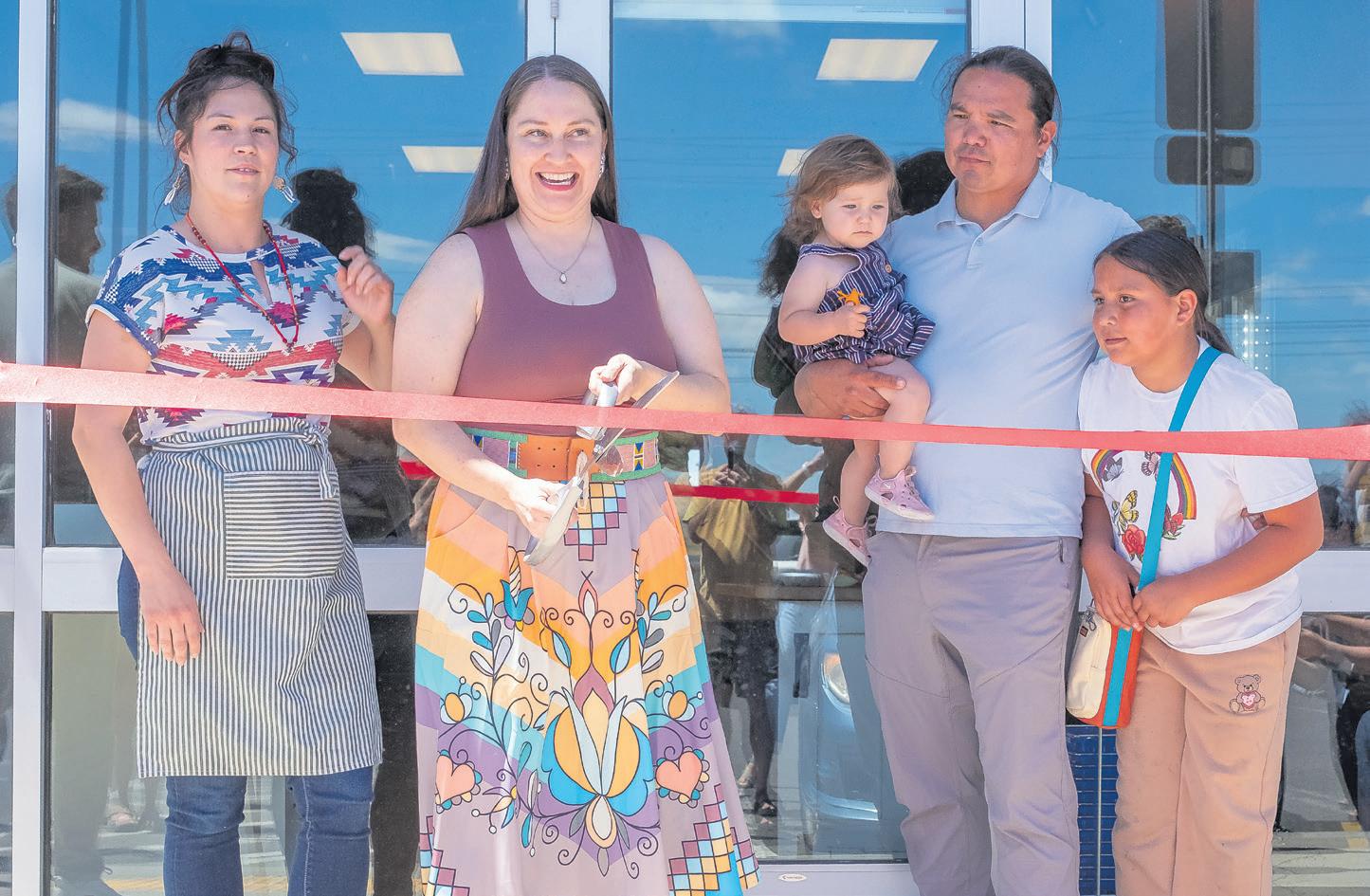
shelves.
The store also carried hot sauce products from Sakari Farms, an Alaska Native-owned business based in the Bend area.
With its doors now open, Wildbill Market aims to provide fresh groceries while elevating the work of tribal producers and local entrepreneurs. Beyond the brick-and-mortar, Wildbill said she also plans to use social media to highlight Native food producers and their products, helping customers learn more about traditional and regional ingredients.
“I would like to use my social media as a way of saying, ‘This is how you would prepare this food,’ or ‘You can use this ingredient in this way,’” she said. “So it’s not only promoting the producer and the product, but also educating on how
you can expand your palate.”
Wildbill emphasized that the interest in food sovereignty is growing in Native communities and that tribal nations should play a larger role in shaping their own food systems.
“You can make your own food, and we can rely on each other to create this food system as a community,” she said. “That’s really the message I want to get across.”
Wildbill Market is open from 9 a.m. to 6 p.m. Tuesday through Saturday. Customers can also follow Wildbill Market on Facebook and Instagram for updates on new Native products and featured vendors.


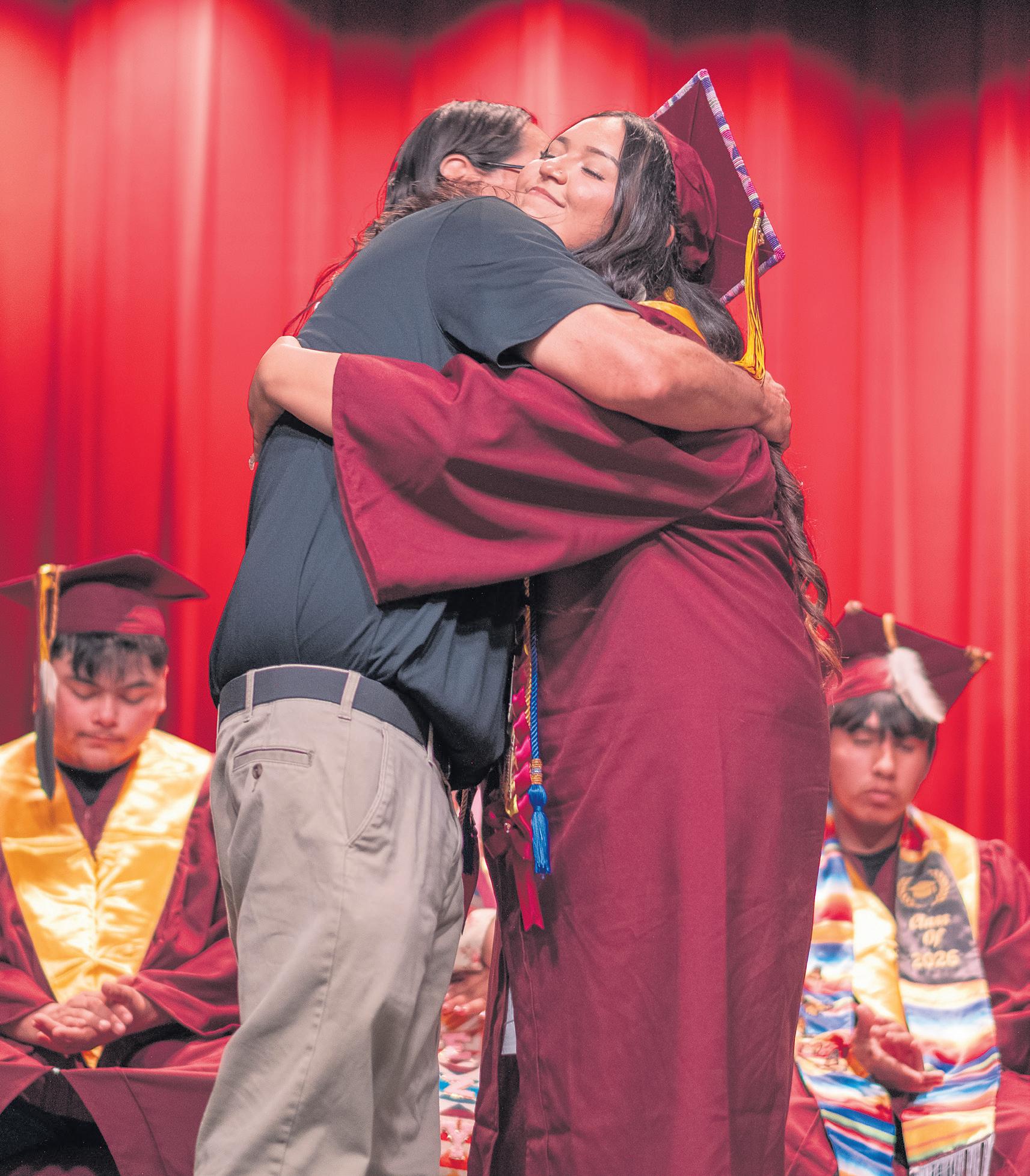
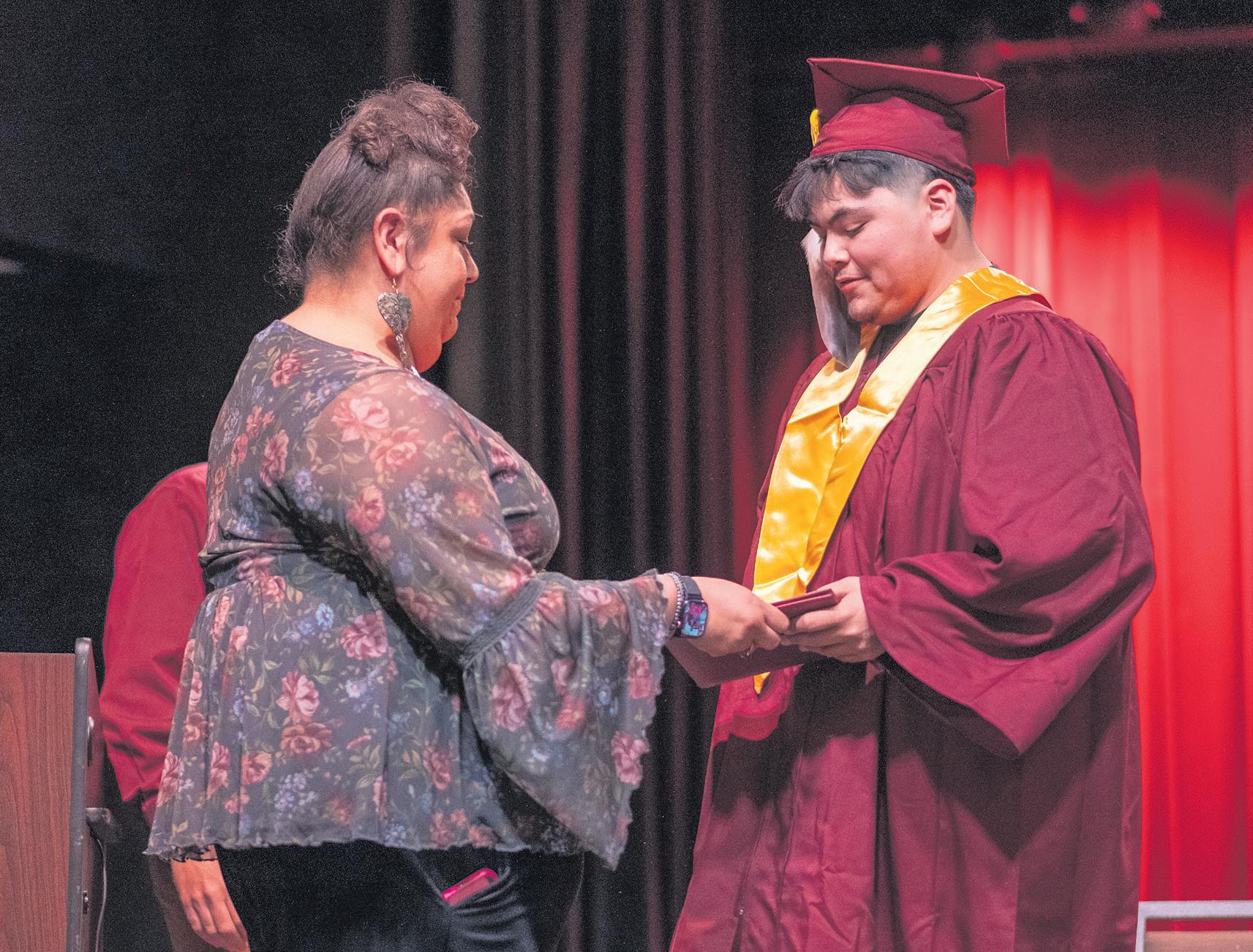
they should be proud of their achievements that culminated in their diplomas.
“Those of us that are here today aren’t here to celebrate a piece of paper, we are celebrating you and all that you have become and the person you’ve grown into,” he said.
Stewart addressed her classmates prior to the presentation of diplomas, congratulating her peers on their accomplishments.
“Some of us grew up together, riding around on our bikes, playing in the parks and going home when the streetlights turned on,” she said. “It’s pretty crazy that we’re up here now, some of us didn’t think
Continued from Page B1
we would be here.”
After Stewart delivered her speech, staff presented the Pepsi Bottling and Old Oregon League scholarships. Stewart and Neveah Moore received the Pepsi Bottling Scholarship, while Moore received the Old Oregon League Scholarship for “her remarkable athletic achievement and character throughout the 2025–26 school year.”
The NCS Class of 2026 graduates were Breezy Appenay-Dominguez, Noah Burdeau, Harley Gone, Jacob Jones, Ryan Titus McCoy, Moore, Meadow Nez, Shaundein Salt, Stewart and Sophie Wilson.
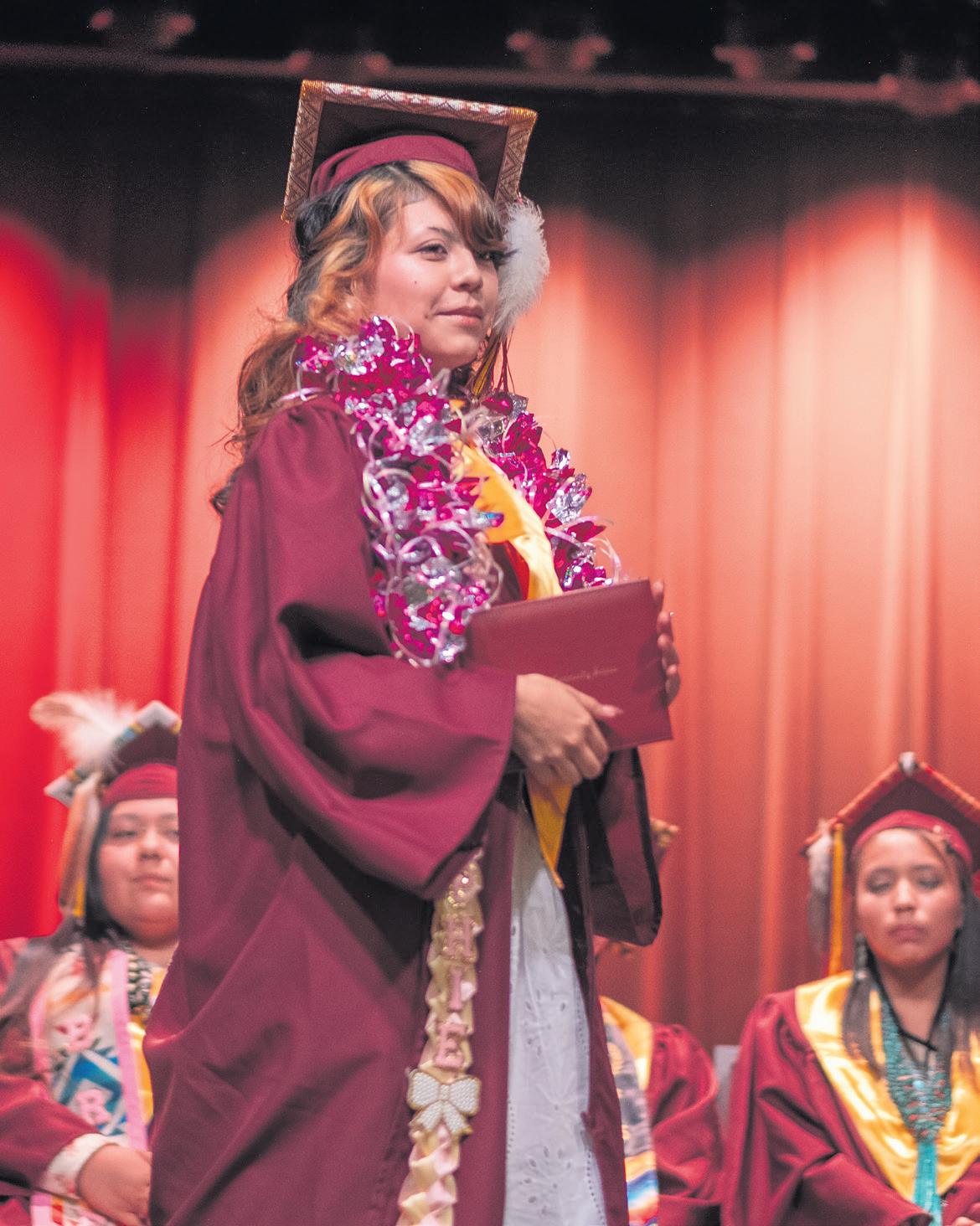
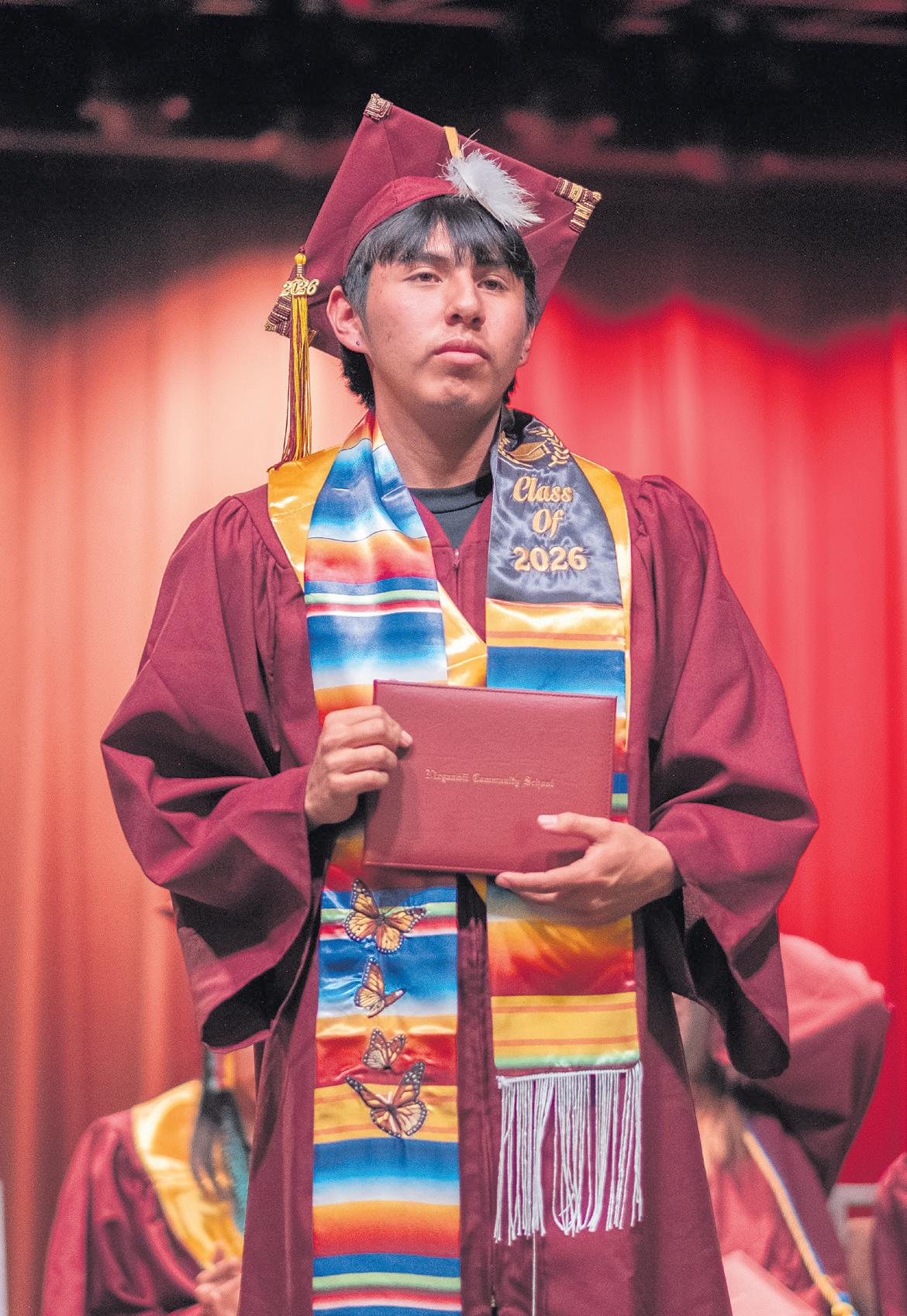

YASSER MARTE
The
CUJ
MISSION — Participants with the Confederated Tribes of the Umatilla Indian Reservation (CTUIR) put the finishing touches on colorful parade entries outside the Umatilla Tribal Fire Department before the annual Treaty Day Parade.
Families, tribal programs and community members gathered early to decorate floats, prepare vehicles and make last-minute adjustments before the parade stepped off at 9 a.m. on June 18.
The procession traveled from the Bureau of Indian Affairs office through Mission, circled the Department of Economic and Community Development and ended at the Mission Longhouse, where Treaty Day activities continued.
The CTUIR’s annual Treaty Day commemorates the Walla Walla Treaty of 1855. Although the tribes ceded millions of acres through the treaty, they reserved the rights to fish, hunt, gather traditional foods and medicines and exercise other sovereign rights. The treaty also established the Umatilla, Yakama and Nez Perce reservations.
The U.S. Senate ratified the treaty on March 8, 1859. The CTUIR established a constitutional government in 1949 to protect and uphold the treaty rights reserved by its members.
The annual celebration honors those enduring treaty rights and the resilience of the CTUIR.
Boots Pond, General Council vice chairman of the CTUIR and Treaty Day Parade donations coordinator, said this year’s Treaty Day Parade centered on the theme of “guiding the children” and preparing future generations.
“For the children, we want them to realize this is a big day that established a lot of our Northwest tribes and the rights they have today,” he said. “With the tagline ‘guiding the children,’ we’re helping them develop a healthy mindset and balance two worlds — the modern world with technology and our traditions and culture.”
Pond said the message is meant to encourage young people to carry cultural knowledge forward as they navigate contemporary life.
Community members gathered along the parade route with family and friends as children eagerly waited at the curb, ready to dash into the street to collect candy tossed from passing parade entries.
The parade was led by Happy Canyon Princesses MyaLyn Mills and Manaia Wolf, who guided the procession through Mission as spectators lined the route.
Candy flew through the air as decorated floats and vehicles made their way down the parade route. Children dashed forward to collect the treats. Passengers in pickup trucks waved to friends and family. Some participants turned their squirt guns on the crowd to cool them off from the heat.
Youth Council member Lisa McIntosh said Treaty Day is a time
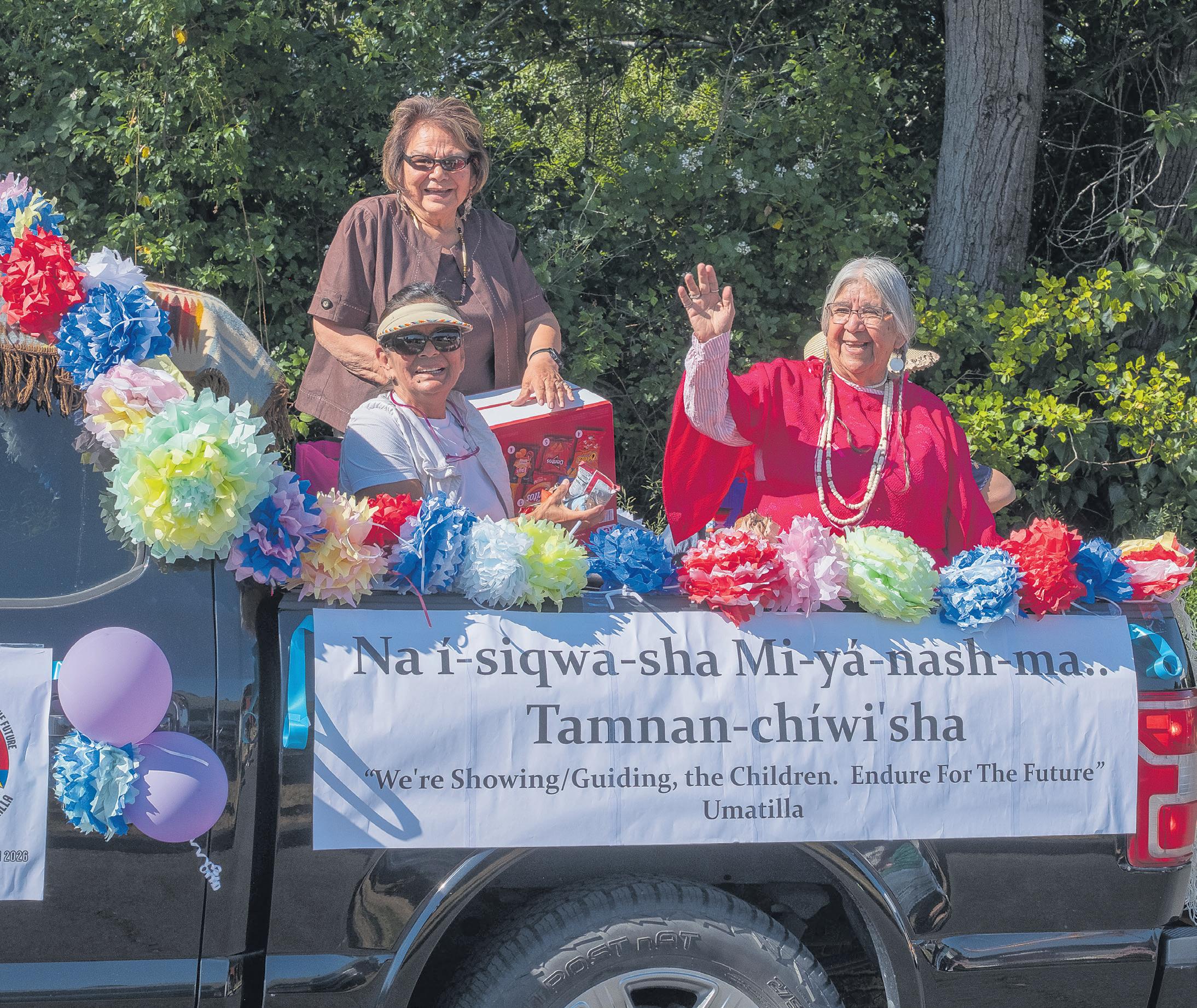
“We’re here to celebrate our treaty, the long and hard effort that our ancestors made so we can stand here today.”
— Corinne Sams CTUIR Board of Trustees member
for remembrance and celebration of the community. While Youth Council member-at-large Violet Kemp said the event reflects cultural unity.
“To me, Treaty Day means it brings all our culture together,” Kemp said.
Although the parade drew a large crowd, Treaty Day featured a full slate of events, including a Veterans Memorial commemoration.
“We’re going to honor the veterans and give them the respect they’ve earned and deserve,” Pond said.
During the Veterans Memorial, CTUIR Trustee Corinne Sams said the ceremony reflected gratitude for the sacrifices of ancestors who secured treaty rights that continue today.
“We’re here to celebrate our treaty, the long and hard effort that our ancestors made so we can stand here today,” Sams said. “Along the banks of Mill Creek at Walyatpu, we signed an agreement with the United States and reserved our usual and accustomed areas so we can hunt, fish in perpetuity and gather.”
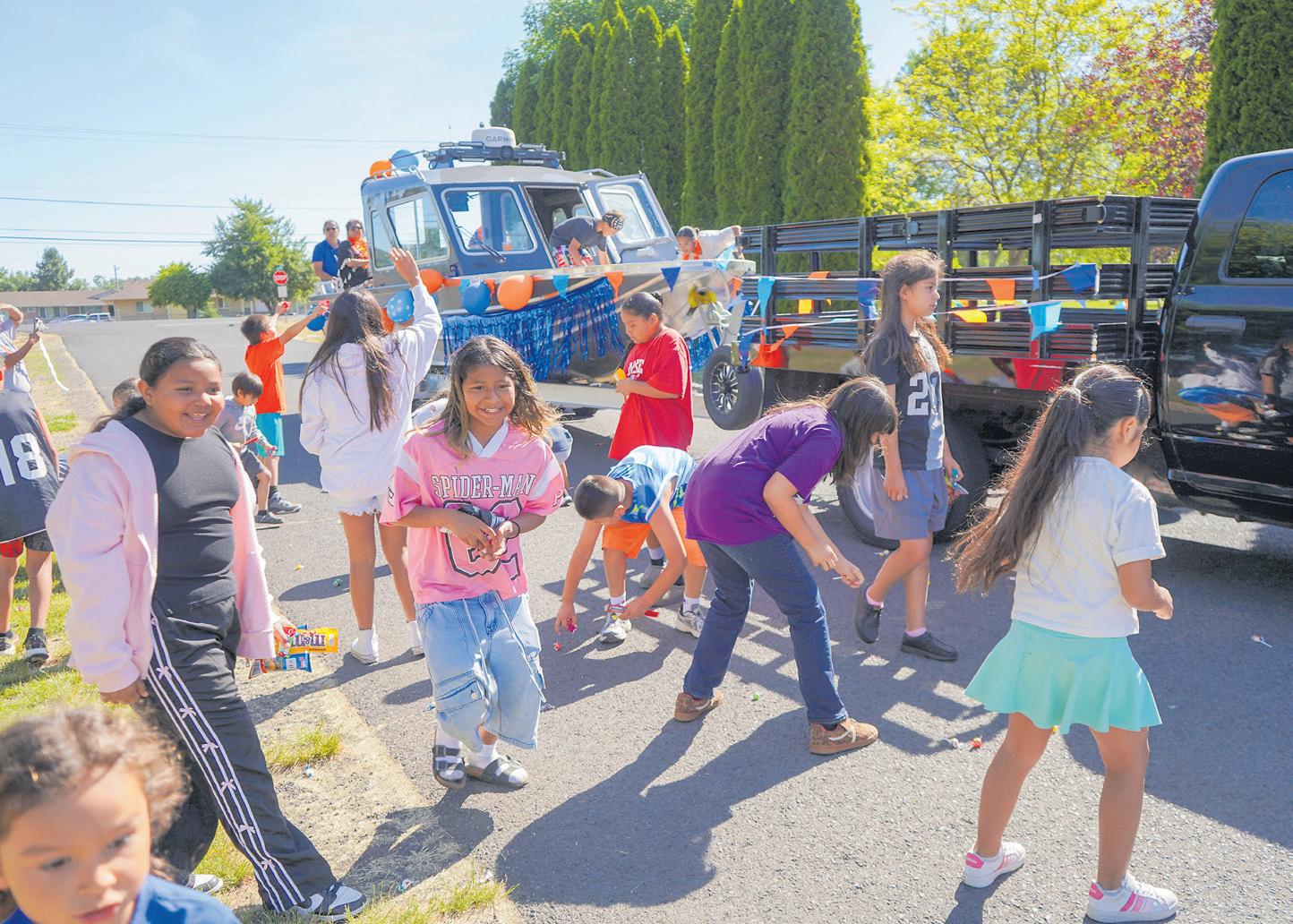
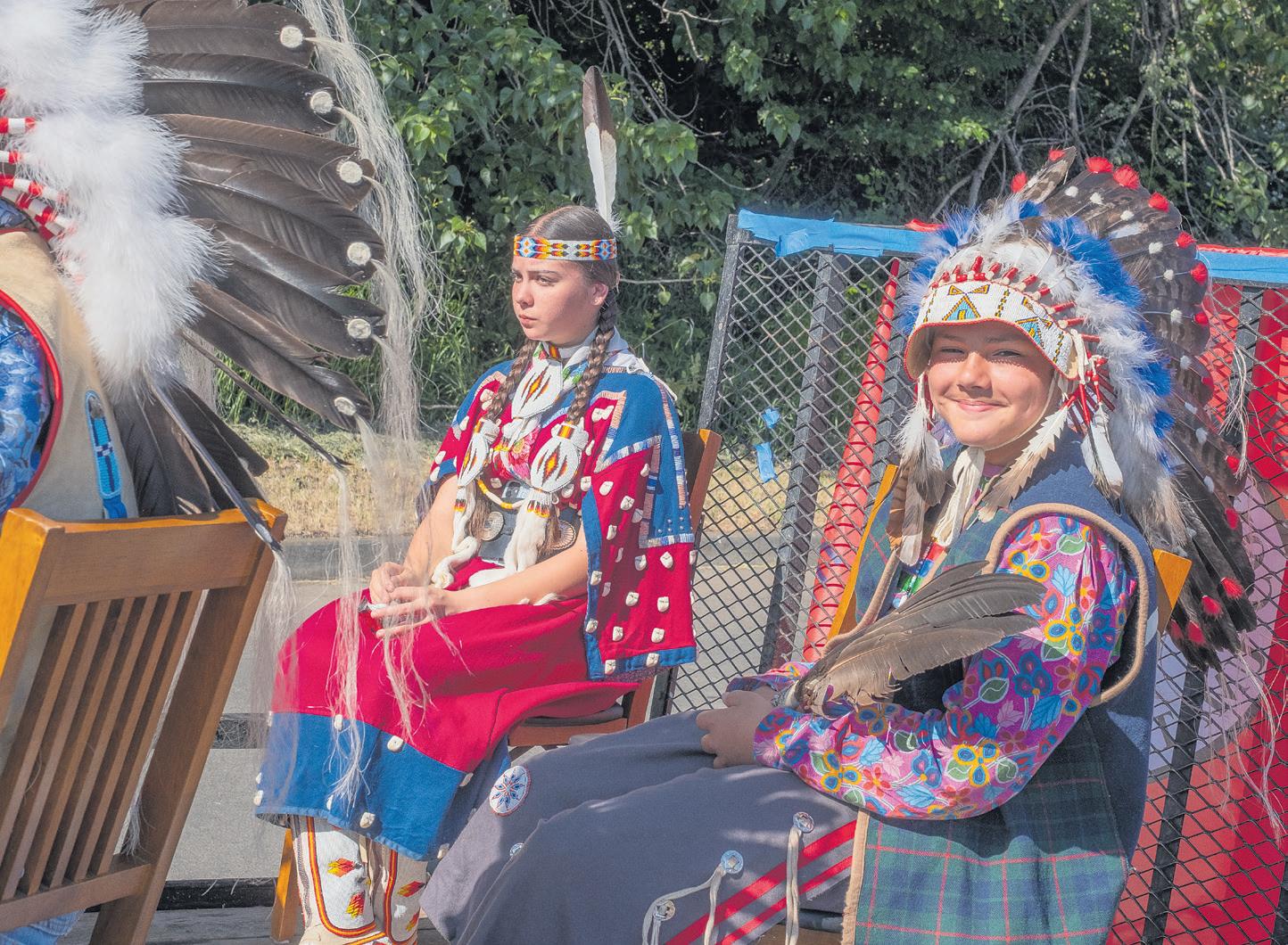
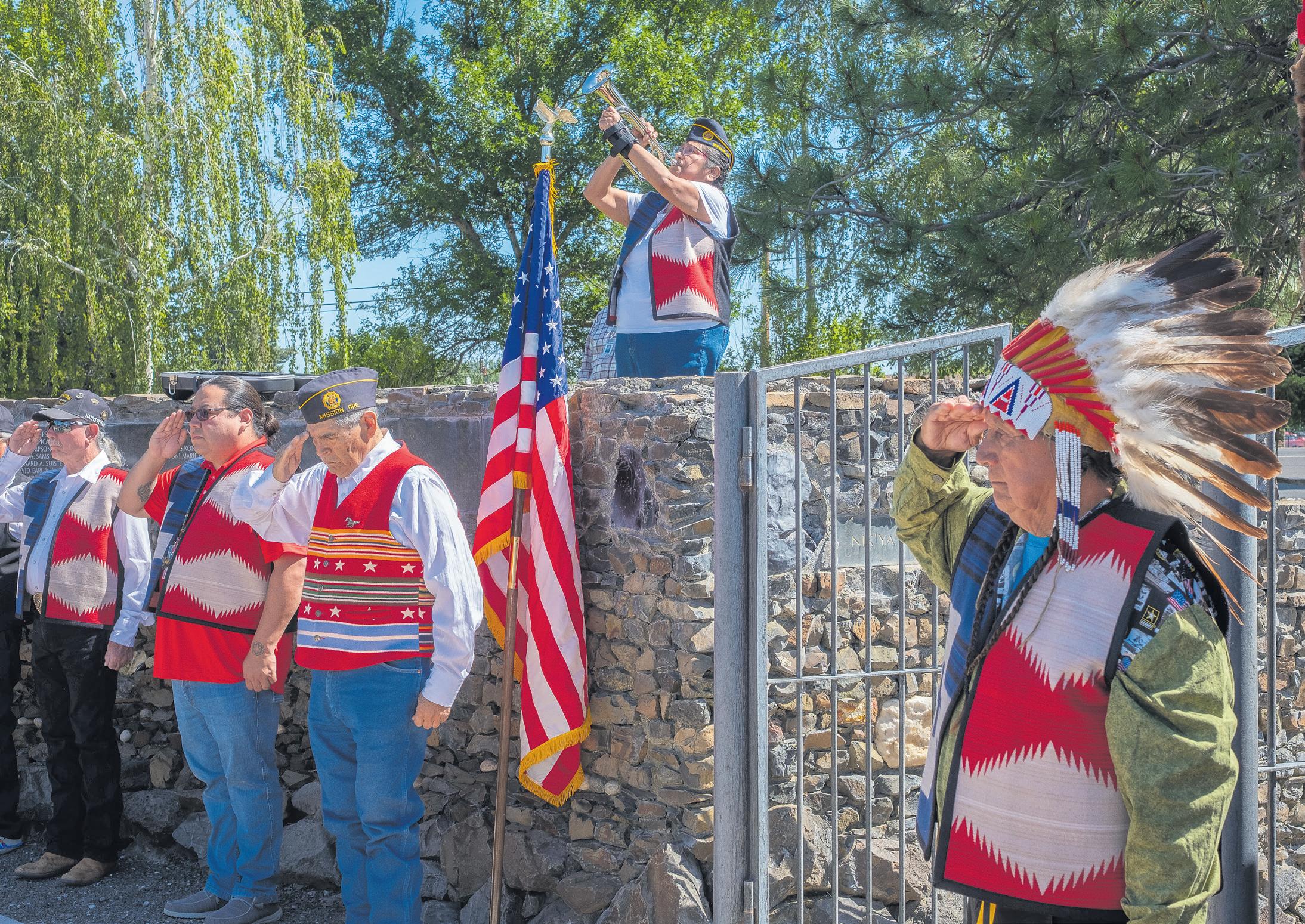
Sams said the names on the memorial represent a lasting responsibility to uphold those agreements and honor those who came before.
“These people on these names on this wall mean something,” she said. “We owe an enormous gratitude to those predecessors who thought of us and didn’t think of themselves.”
She said the community shares responsibility for carrying those obligations forward under tribal law and tradition.
“We rely on one another to carry these words, this agreement forward. It’s all of our responsibility,” Sams said.
She expressed gratitude to attendees, honored veterans and welcomed families who traveled from outside the region, including relatives of Guy Herrera from Rocky Boy, Montana.
“We continue to pray for those that are serving,” she said. “Thank you all for coming to celebrate with us.”
Following the memorial, attendees went inside the Mission Longhouse, where a free lunch was provided along with vendor and exhibit booths, a tipi race and an official Treaty Day program featuring keynote speakers, the Happy Canyon Princesses. The celebration continued throughout the day as families gathered to recognize treaty rights, cultural traditions and community strength.
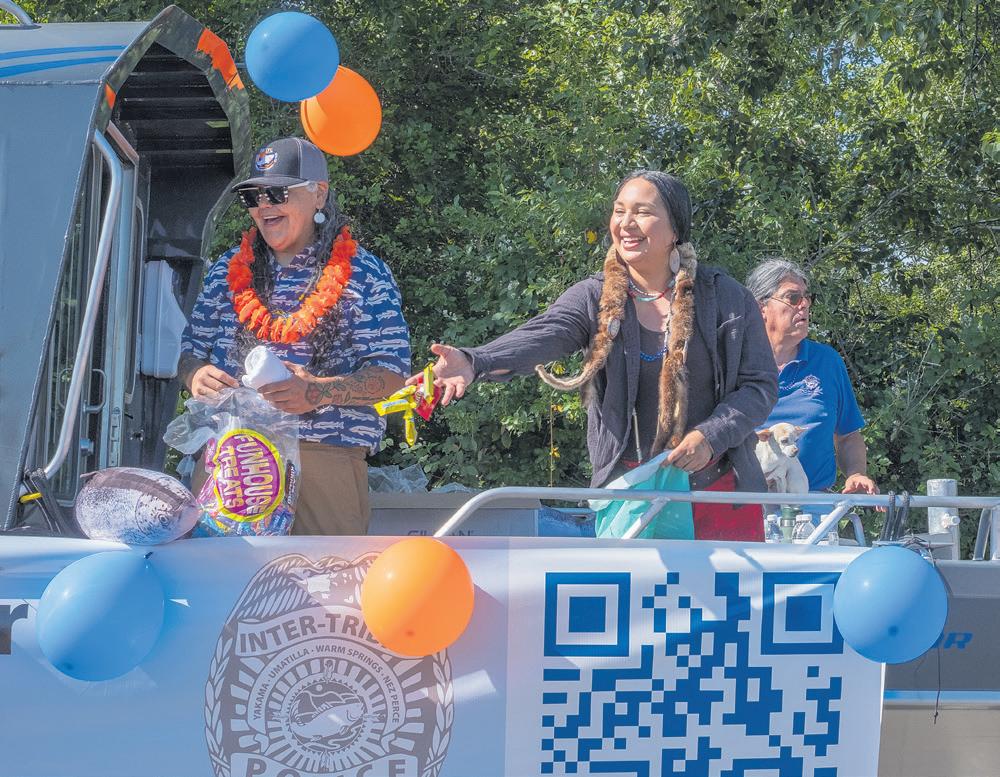

Lee Gavin CTUIR Communications
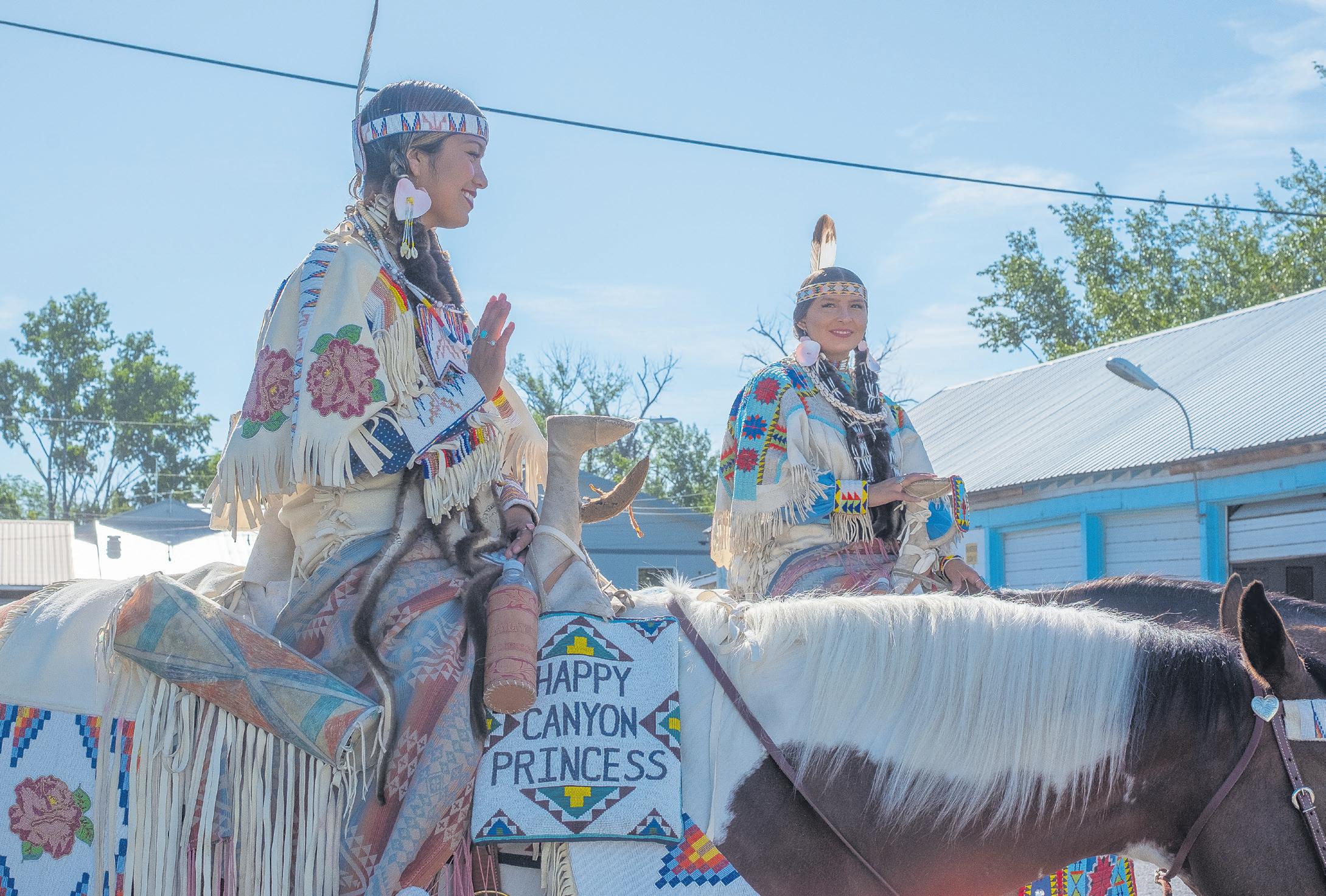



BEAU GLYNN
The CUJ
PENDLETON — Confederated Tribes of the Umatilla Indian Reservation (CTUIR) members Ellen Taylor and Jacob Wallis led the city’s sixth Pride Parade through downtown Pendleton.
The parade kicked off at 11 a.m. on June 13 near the Main Street Bridge and made its way to the Heritage Station Museum. LGBTQ+ community members and supporters waved to spectators along the route as marchers dressed in rainbow colors followed behind.
Taylor, the parade’s grand marshal, and Wallis headed the procession, which marked the start of the day’s Pride festivities.
“I’ve never been to a gay pride parade ever in my life,” Taylor said afterward. “It was an honor to be chosen to be one of the grand marshals with Jacob, I have a lot of respect for him because we’ve done a lot of work for the community.”
Taylor and Wallis were nominated anonymously by members of the community to serve as the grand marshals for the Pride event. Wallis said he didn’t realize he was nominated until he was selected.
“It just so happens we’re both from the Umatilla Indian Reservation, so it’s just really special to be able to be a part of this in that regard,” Wallis said. “To really have a lived experience that I honestly don’t think I would ever have imagined having in Pendleton, Oregon.”
Wallis said he identifies as TwoSpirit and was honored to serve his
role along with Taylor, who also identifies as Two-Spirit.
Alicia Reynan, the founder of Pendleton Oregon Pride and Festival coordinator, said the festivities were meant to be something fun and inclusive for everybody, regardless of who or what they were.
“It’s not just celebrating who you are, it’s a protest,” Reynan said.
“If we weren’t here, I think that we wouldn’t have the community we have, so this kind of shows our community that they’re loved, they’re welcome, they’re here.”
The purpose of the festival was to foster community and create a safe space for the LGBTQ+ in the area.
“Changing a person’s life, making sure they feel safe and have a place to go, to have access to the booths with mental and behavioral health, those are really important when people are constantly bullies, harassed or have higher statistics of being hate-crimed or violence in their life,” Wallis said. “There could be one person at this festival, and it’s important.”
For Taylor, expressing pride just meant having fun and coming together to support each other while making new friends, despite any protestations from others.
“The only thing I was disappointed in was that there were protesters, that kind of made me sad,” Taylor said. “Because you want it to be a safe space for everyone who wants to come out, because we’re such a small town.”
Wallis said, for him, pride is in activism, politics and resilience.
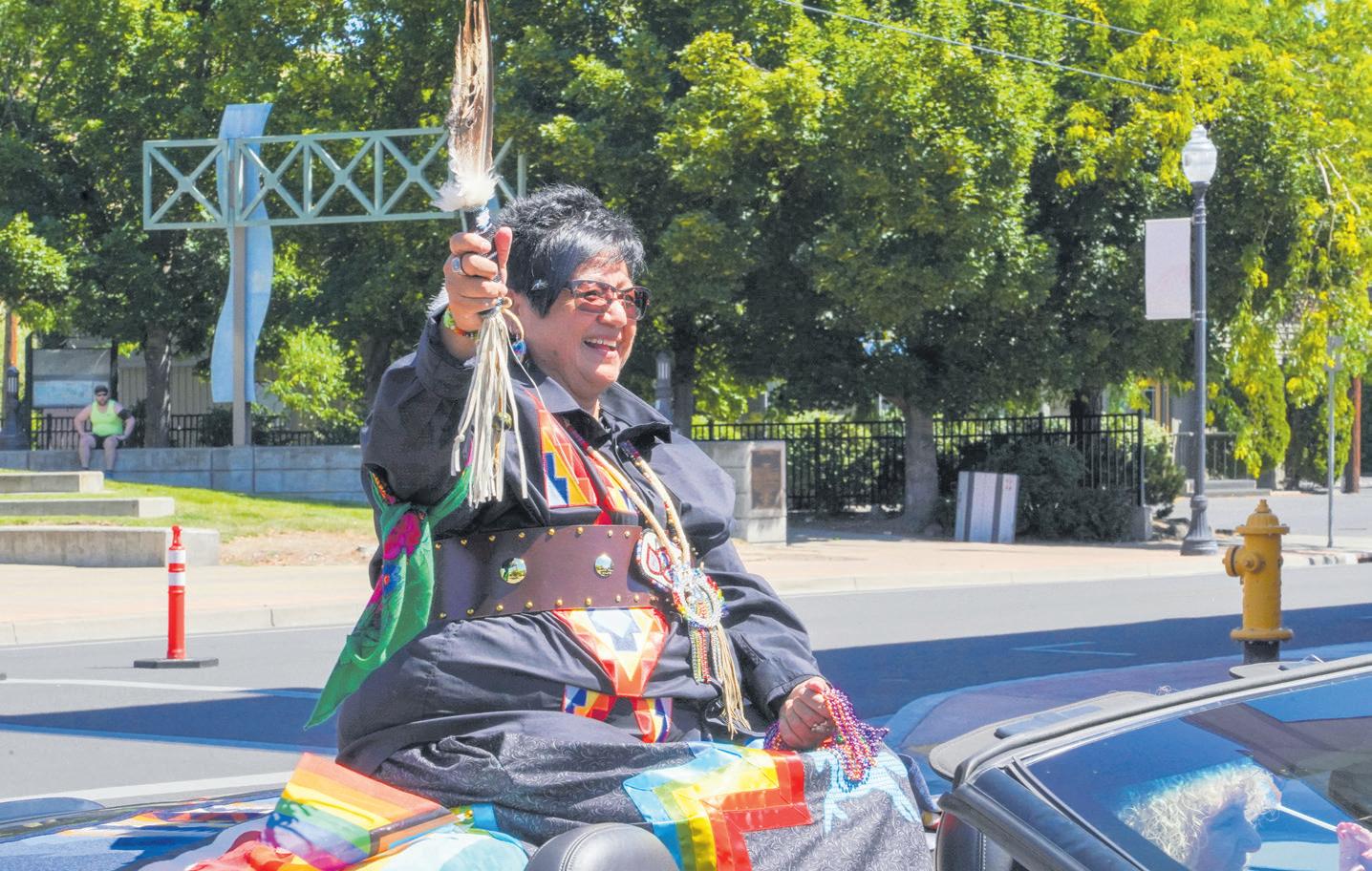
“There’s also just the power of love and the power of community that can overshadow so much of the hate and negative rhetoric that we have to hear 365 days out of the year,” he said. “Pride to me is everything. Not only showing resistance, but showing a future and being present, being a human being, essentially.”
In addition to the parade, Pendleton Oregon Pride organized a Pride Festival at Heritage Station Park, where the parade route ended. The festival featured vendor booths, community organizations and live music throughout the afternoon.
Later that evening, 7 Gen, a wellness center and one of the event’s sponsors, hosted the Let’er Drag Show, where a lineup of drag

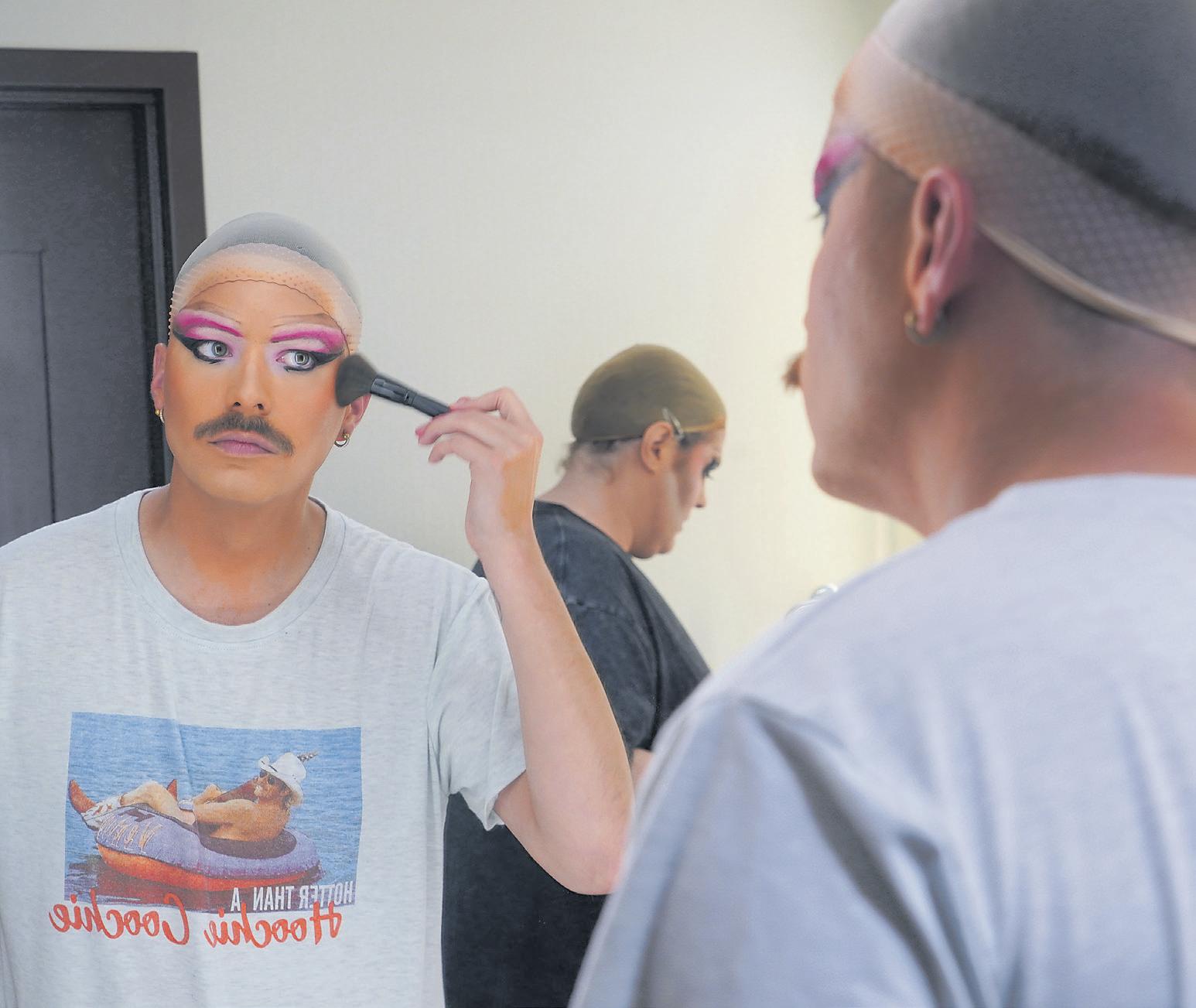

Photos by BEAU GLYNN

performers entertained attendees and capped off the day’s festivities.
Getting ready for the show
After attending the festival, Wallis returned to a room at the Wildhorse Resort & Casino where he donned a wig and transformed into Miss Terious, his drag persona.
Joining him was longtime friend and drag mother Kelsey Beers, who performs as Miss Leading. Together, they prepared for the evening’s Let’er Drag Show.
“I’m happy to be back in Pendleton doing drag,” Beers said. “It’s always a wild ride to be in the town that I grew up in and the city that felt so oppressive.”
Beers grew up in the area, and has lived in Corvallis for the past 13 years, where she started doing drag with a group of other queens for a show called Damn Right Drag Night.
“I do a lot of campy drag, I do a lot of funny drag. I like to make sure that while things are crazy and things are political — drag is political — there’s a power in being able to laugh together as a community,” Beers said.
Wallis said Miss Terious’ identity is more mysterious.
“She’s kind of all over the place, but as of right now I feel like her identity is very much being sexy, she’s definitely more political, she wants to take up space and she wants to be seen — which is ironic for the name,” Wallis noted. “But, that’s the beauty in it, of doing drag, you kind of just find that identity as you go along.”
Once the wigs were on and the lashes were glued down, the strobelights in 7 Gen shifted in
“There’s also just the power of love and the power of community that can overshadow so much of the hate and negative rhetoric that we have to hear 365 days out of the year.”
— Jacob Wallis, Pendleton Pride Co-Grand Marshal
shades of the rainbow and the show began. Ten performers strutted around the venue, collecting tips as they lip-synced to arrangements with the lights bouncing off their sequins. The room was full and the crowd showed its support for the dancers with cheers and applause.
“There are pockets of humanity, pockets of love, I don’t want to say tolerance because I don’t care if you tolerate me,” Wallis said. “I think that’s what’s beautiful about this, I just never thought in a million years this would happen here. I think being a thorn in everybody’s side, being present and just being real, it’s finally come to fruition. It was almost like a dream that I never dreamt and it’s here.”


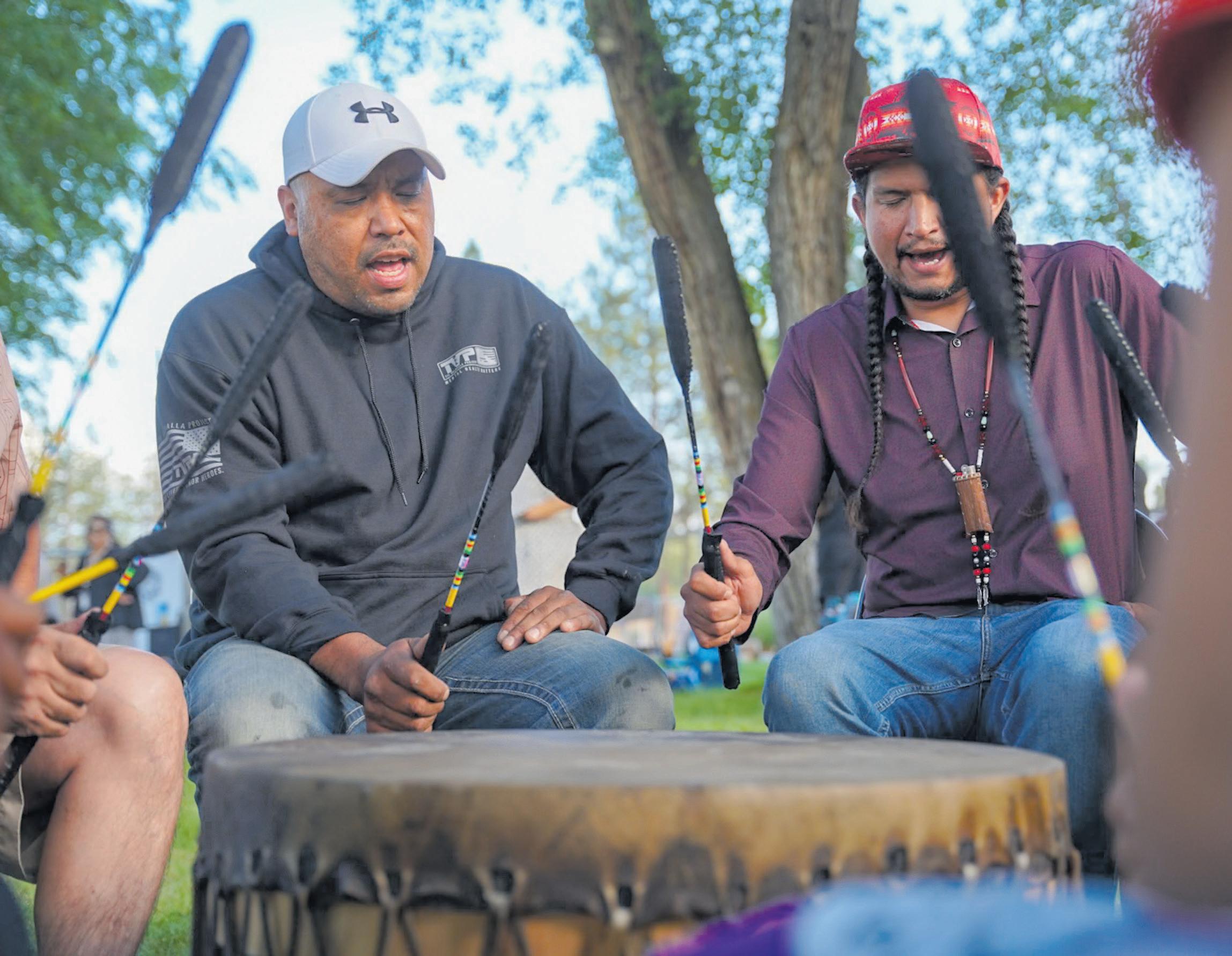
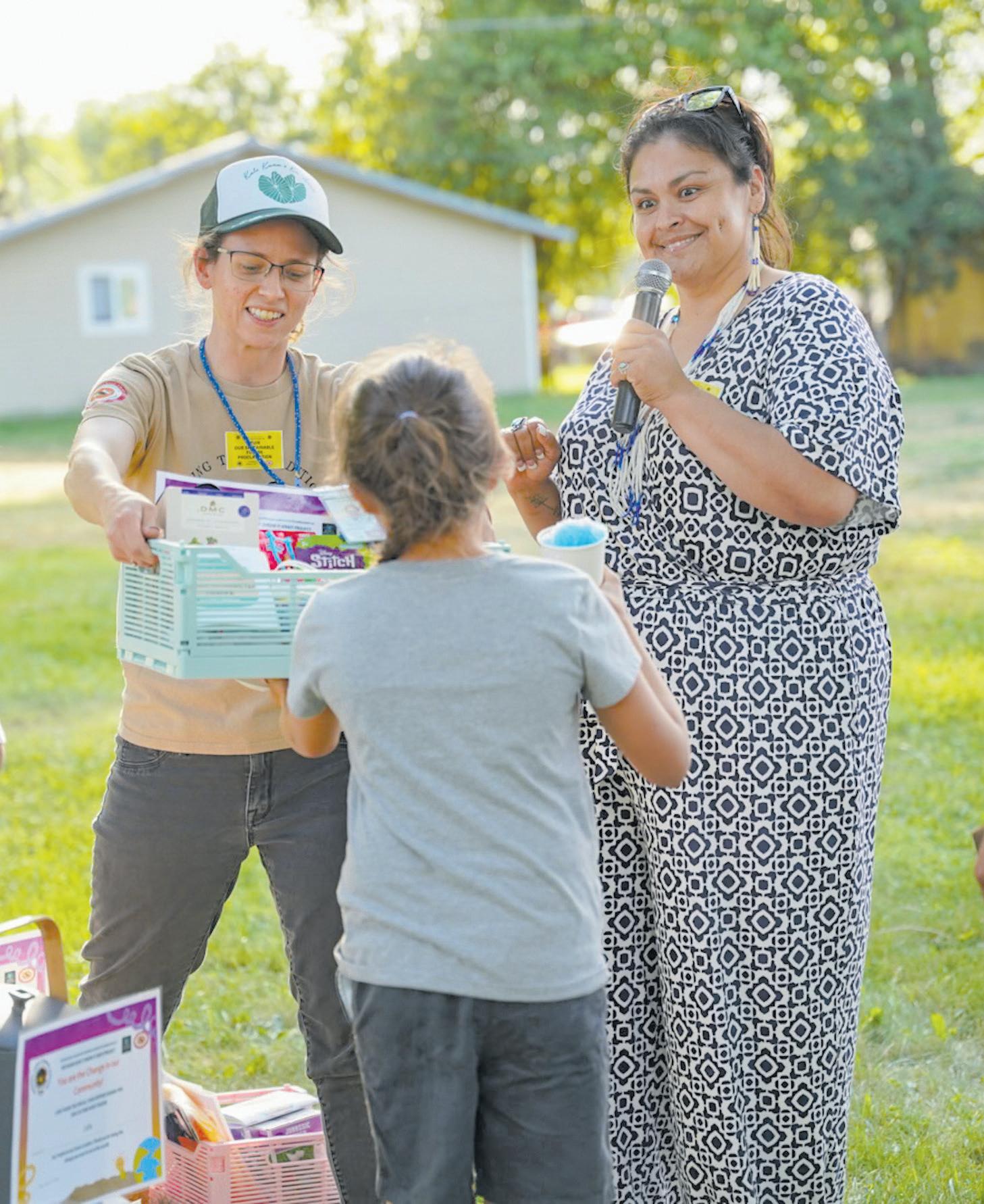
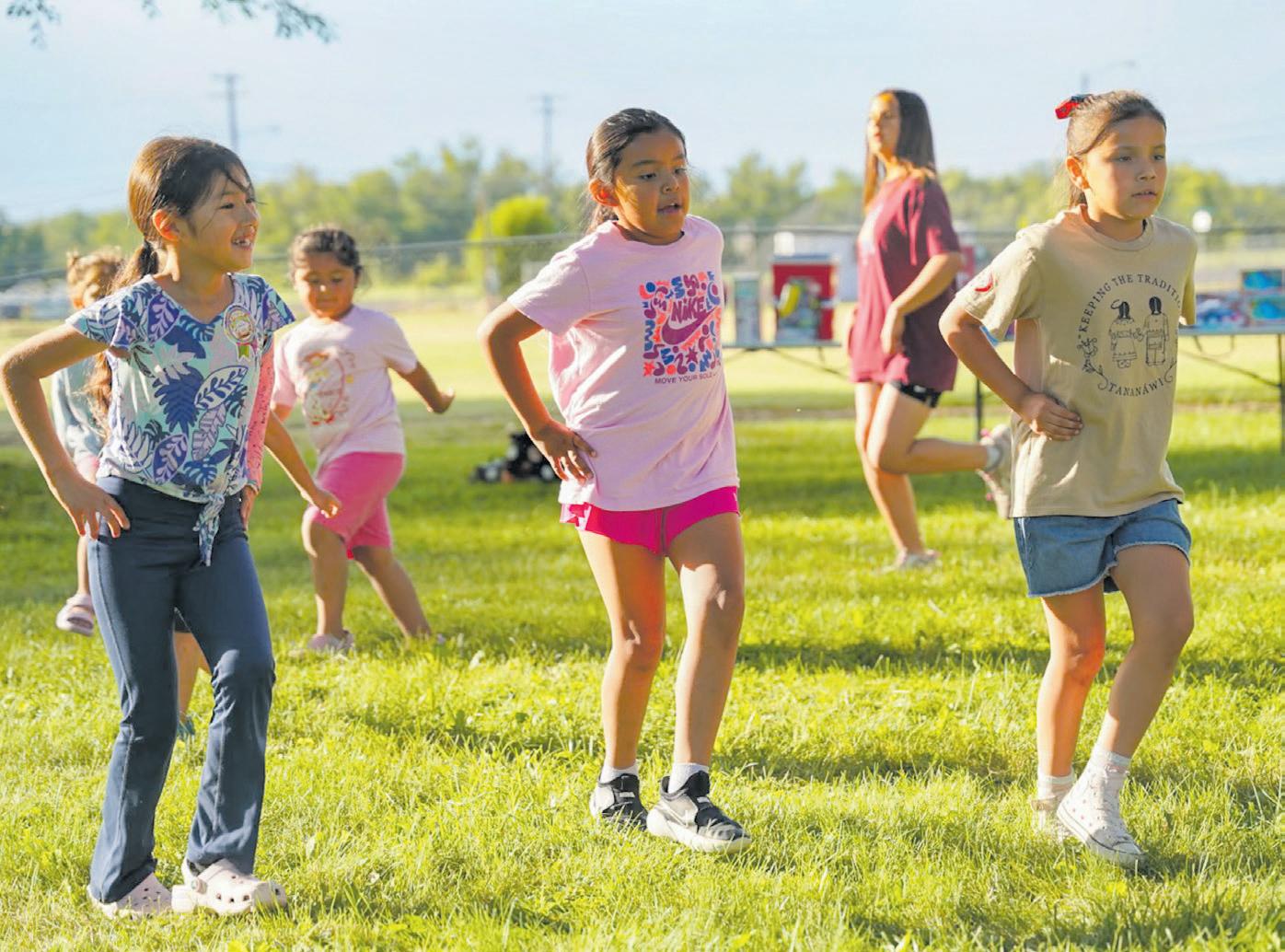
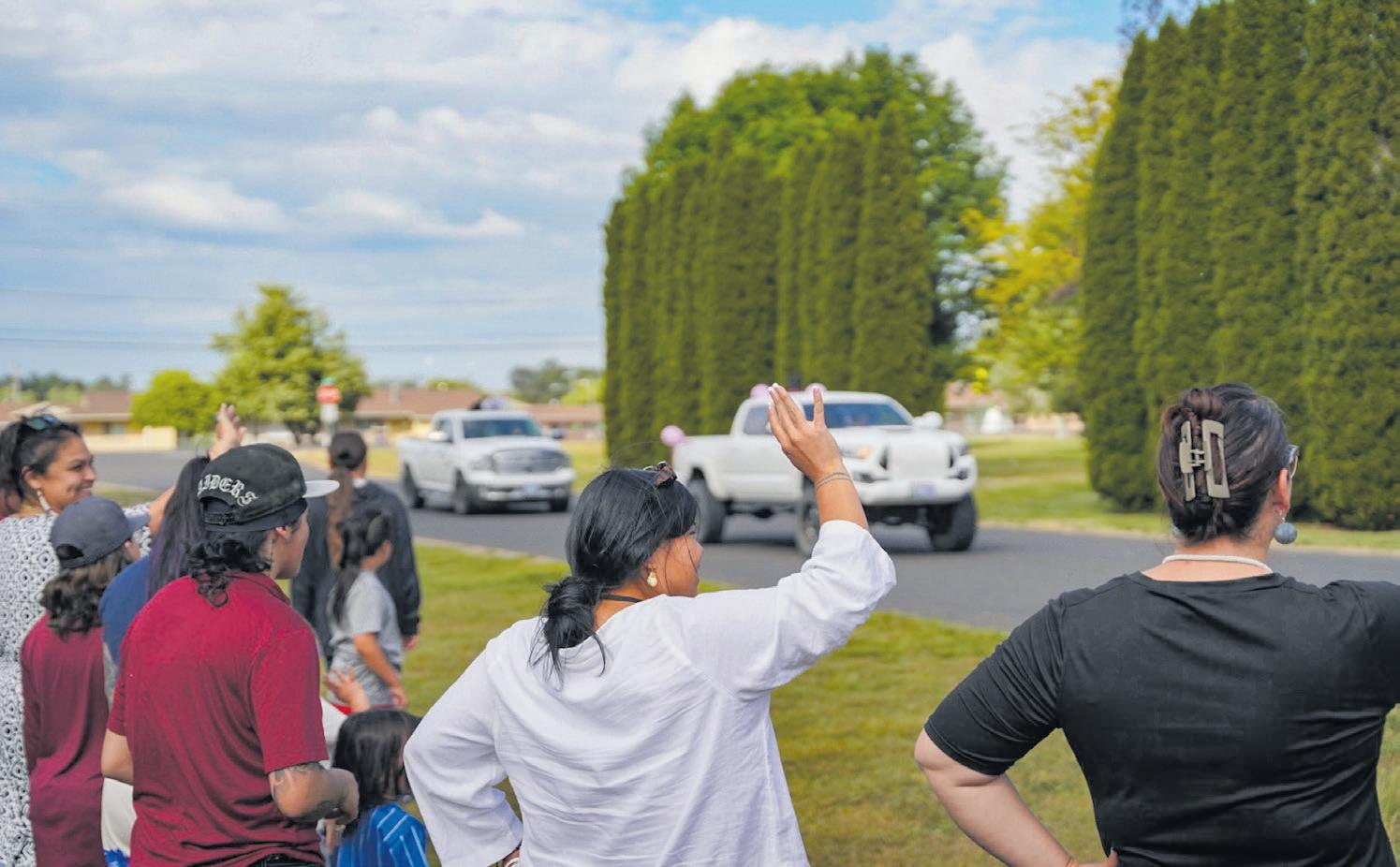
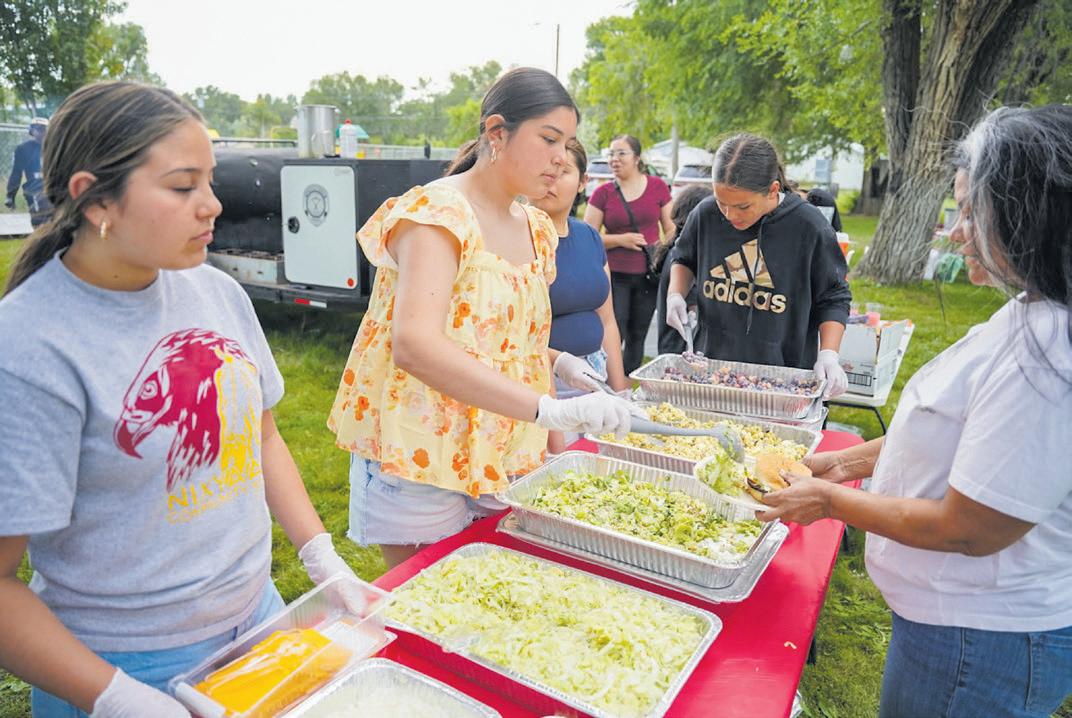
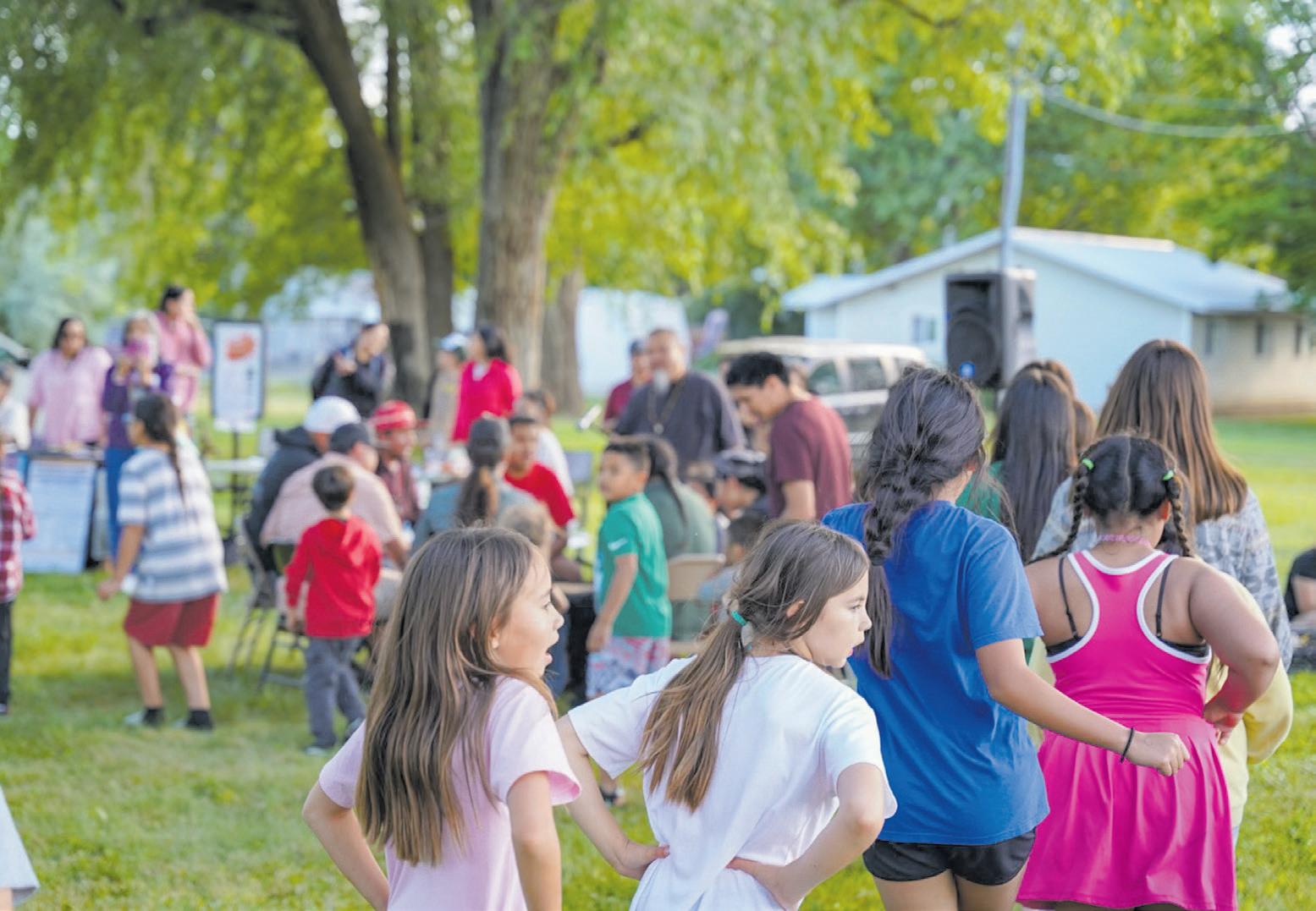
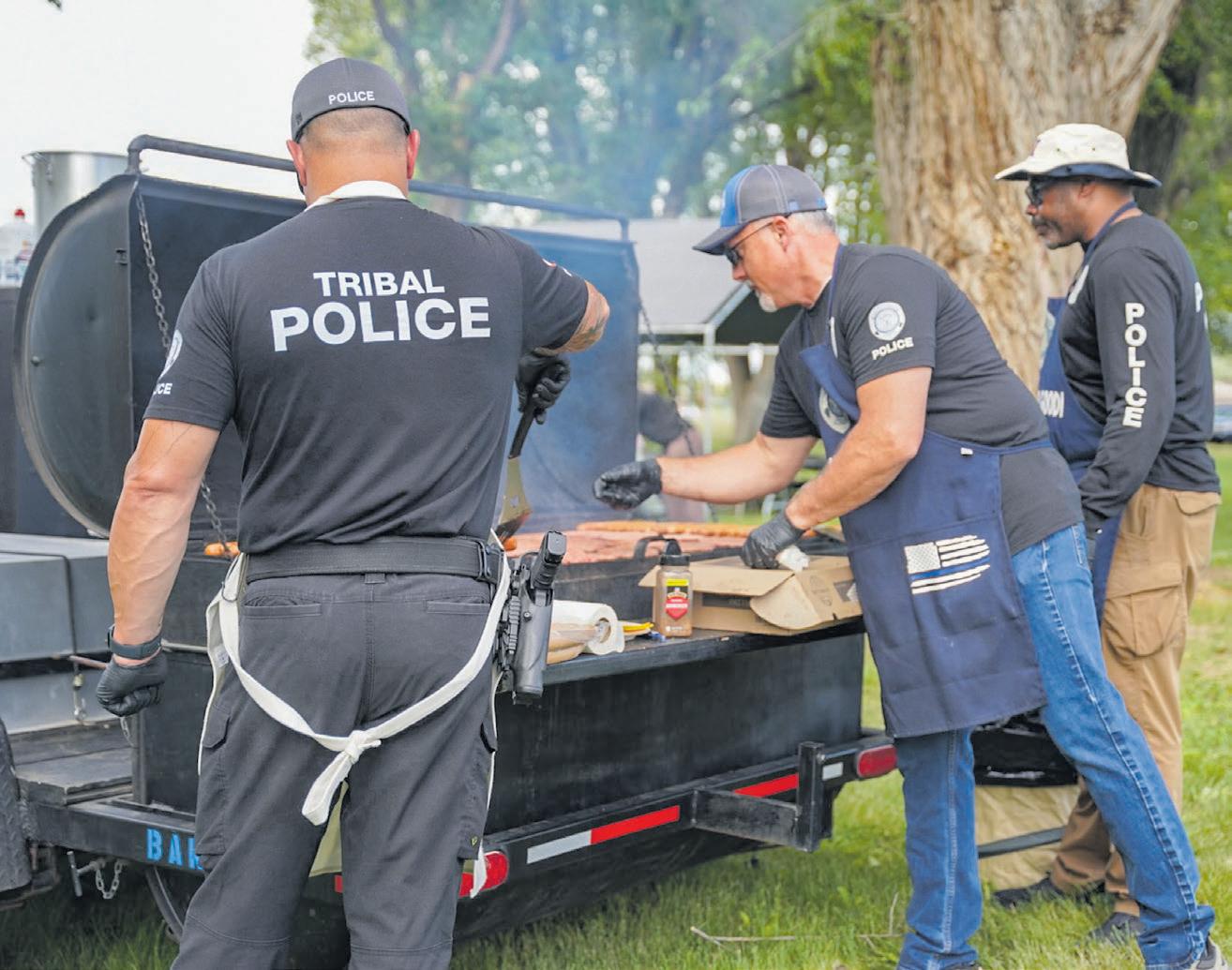
ANNIE FOWLER
The
CUJ
PENDLETON —
Pendleton’s Avery Brown, a two-time Greater Oregon League volleyball player of the year, will take her talents to the next level after signing to play beach volleyball for College of Idaho.

“We’re very excited to welcome Avery to our program,” Yotes coach Madison Machurek said. “She’s an accomplished athlete with a competitive background, and earning league player of the year honors twice speaks to both her talent and dedication to her sport. She is the perfect fit, considering her academic accomplishments and family values. Beyond her smarts, she has the work ethic and strong investment that matches our team’s culture.”
The 5-foot-10 Brown had a sensational career at Pendleton. She was a first-team Greater Oregon League (GOL) pick as a sophomore (198 kills, 31 blocks). Her junior year, she was named the GOL player of the year after helping the Bucks to a 19-7 season. She finished the season with 247 kills, 108 blocks, 70 digs and 29 service aces.
Brown was also named the GOL player of the year her senior year. She was a dominant hitter with 279 kills, 68 blocks, 111 digs, 87 service points and 40 aces.
Though she had a great career
playing indoors, Brown said she likes the challenges of beach volleyball.
“Over the last couple of years, I definitely shifted more toward sand,” Brown said. “I just like how in sand you do everything. Indoors, you are funneled into one position. I’m a middle, you block and hit. This way, I get to do a little of everything.”
Brown started playing beach volleyball her freshman year of high school and fell in love with it.
“I started playing to improve my indoor game,” she said. “I just really loved it and continued to do it.”
Brown, plays for the Kokua VBC Beach club team out of Spokane, Washington though this summer is playing for its satellite team in the Tri-Cities area.
“Last year, I drove there (Spokane) more often,” she said. “This summer, I am staying more local. I try to play as much as I can, but normally at least 2-3 days a week. Sand pit training is harder with the distance.”
Machurek said there are definitely some differences between indoor and beach volleyball, but many of the core skills translate well.
“Beach requires athletes to cover more court, make a wider variety of plays, and adapt to environmental factors, so there is an adjustment period,” Machurek said. “That said,

Avery’s beach volleyball IQ, ball control, and size will make that transition smoother.”
Machurek, a former College of Idaho player, joined the Yotes beach volleyball program in 2023 to build the team for their inaugural season in 2024.
“As a young program, we’re always looking for student-athletes who can elevate the level of competition and will fit into the College of Idaho community,” Machurek said. “We believe Avery has the potential to make an immediate impact, and we’re excited to see how she continues to develop as a young beach player.”
The Yotes went 7-10 overall this past season, and finished 0-2 at the Cascade Collegiate Conference tournament April 9, in Ashland, losing to Corban University 3-1 and to Bushnell University 3-2.
“I initially looked at the school because of beach volleyball,” Brown said, who will major in political economy. “I fell in love with the campus and the people I met. It worked out pretty well.”
And, Brown said she connected with Machurek from the start.
“That was one of the biggest factors,” Brown said. “I connected really well with the coach. Even with my first phone call, it just seemed like the right fit. She cares about the athletes and how they are doing.”
The College of Idaho just completed its indoor beach volleyball facility, so the players can
“She is the perfect fit, considering her academic accomplishments and family values. Beyond her smarts, she has the work ethic and strong investment that matches our team’s culture.”
now practice year-round.
“You try and play outside as much as possible, but we will be able to practice in that,” Brown said. “You can play beach volleyball anywhere as long as you have a sand pit. It’s more widespread than it seems. There are a lot of programs, even in landlocked states.”
With beach volleyball being a twoperson sport, Brown said pairings will be decided once practices start in the fall.
“It’s like tennis, your top five pairs compete and they count toward the final score,” Brown said. “We will play a bunch and figure out the pairings.”
Discover
At
Experience
Connect with our team today to learn more. 541-612-8213 | McKayCreekAL.com

ANNIE FOWLER
The CUJ
HEPPNER — In a conference stacked with talent, the only easy selections for the Blue Mountain Conference coaches were Heppner’s Sarah Estes as player of the year and Weston-McEwen’s Bre Ward as pitcher of the year.
“Our league is the toughest in the state,” Heppner coach Petra Payne said. “We have a lot of talented girls representing Eastern Oregon. When league play starts, you know you have to be at your best and anybody can be anybody on any given day. Playing in this league helps prepare us for the postseason, and I think that shows when so many of our teams are not only in the playoffs but in the finals year in and year out.”
The state coaches were of the same mindset as the BMC coaches, selecting Estes as the 2A/1A state player of the year, and Ward as the pitcher of the year.
Heppner, which won the 2A/1A state title, had four players selected to the first team, while conference champion Weston-McEwen had three, and Union/Cove and Pilot Rock each had four.
Other TigerScots joining Ward on the BMC first team were infielder Hope Berry (first team all-state) and catcher Lily Langford (second team all-state).
Ward, the 2A/1A state pitcher of the year for the second year in a row, led the TigerScots to the conference title with a 9-1 record.

She pitched 140 innings with a 16-6 record and a 2.70 ERA. She gave up 108 hits, struck out 243 (96 were looking at strike three), walked 122 and stranded 170 runners.
She helped her own cause at the plate, hitting .615 in 65 at bats. She had 40 hits, including 18 singles, 13 doubles, nine home runs and 39 RBIs. Defensively, she had three errors in 31 chances (.903%).
“Bre was our warrior in the circle the past two years,” W-M coach Jeff Griggs said. “You might say she more or less threw with her back to the wall, dealing all but one varsity inning this season. This girl is truly remarkable. In addition to her excellent pitching, she field a very
high percentage and swung a mean bat leading the team in intentional walks and home runs.
“I will never forget her throwing extra innings against an opponent while telling her team they will get it done offensively, just leave the defense to her,” Griggs continued. “We won with a walk-off home run. Bre will be sorely missed as a player and captain.”
Berry, the TigerScots’ shortstop, was the cleanup hitter. In 79 at-bats, she hit .481 with 38 hits, including 25 singles, nine doubles, one triple and three home runs. She also had 25 RBIs, scored 27 runs and stole 16 bases. In the field, she had 11 errors in 58 chances (.810%).
“This season, we asked Hope to shift over to shortstop and she did an amazing job there,” Griggs said. “She was also able to provide invaluable support and expertise to her replacement at third. In addition to wielding a steady glove at shortstop, she was a lock in the cleanup spot on offense. More than anything, we will miss her smile and positive approach to softball next year.”
Langford, in her second full season behind the plate, had just two errors in 261 chances (.992%). She was lethal at the plate, hitting .592 with a .648 on-base percentage. In 76 at-bats, she had 45 hits, including 17 singles, 15 doubles, six triples and seven home runs. She drove in 39 runs, scored 44 runs and had 21 stolen bases. Most impressive was that she struck out just two times.
“We asked a lot of Lily and she was able to deliver,” Griggs said. “She may not have the imposing catcher stature, but she plays like a giant, guarding home plate, blocking dirt balls, calling pitches at times and gunning runners. She led us in hitting average, runs driven in and runs scored. The team appropriately nominated her for the slugger award. Next season, there will be some big shoes to fill behind the plate.”
The Rockets saw outfielders Hailey Severe and Kessa Litfin, infielder Hailey Thieme and utility player Paige Hansen named to the BMC first team. Hansen also earned third-team all-state honors, while Severe was named to the honorable mention team.

Pilot
Paige
Thieme, the Rockets’ shortstop, hit .514 in 72 at-bats. She finished the season with 37 hits, including 21 singles, 12 doubles, one triple and three of Pilot Rock’s nine home runs. She drove in 37 runs, scored 24 times and had 14 stolen bases. Hansen, who caught and played second base, hit .507 with 37 hits. She had 25 singles, eight doubles, three triples and one home run. She had 17 RBIs, scored 27 runs and had 23 stolen bases. She struck out just eight times in 73 at-bats.
A sophomore, Severe played right field and was the Rockets’ leadoff hitter. At the plate, she hit .389 with 28 hits, including 23 singles, two doubles, two triples and one home run. She drove in 12 runs, scored 23 times and had 23 stolen bases. She struck out just nine times in 72 atbats.
Litfin, the center fielder, hit .322 with 19 hits. She had 15 singles, four doubles and nine RBIs in 59 at-bats. She also scored 25 runs and had a team-high 35 stolen bases. Blue Mountain Conference
Player of the year: Sarah Estes, sr., Heppner Pitcher of the year: Bre Ward, sr., WestonMcEwen
First team
Outfield: Kimber Ricker, sr., Union; Rillie Mitchell, jr., Grant Union; Hailey Severe, so., Pilot Rock; Kessa Litfin, jr., Pilot Rock.
Infield: Karli Satterfield, fr., Union; Hope Berry, sr., Weston-McEwen; Gracee Hueckman, jr., Grant Union; Hailey Thieme, sr., Pilot Rock; Delaney Stefani, sr., Heppner. First base: Sarah Estes, sr., Heppner. Pitcher: Bre Ward, sr., Weston-McEwen; Maya Payne, jr., Heppner; Jenna Johnson, fr., Union. Catcher: Isa Payne, so., Heppner; Lily Langford, sr., Weston-McEwen. Utility: Hayden Gregory, jr., Union; Paige Hansen, jr., Pilot Rock.
Second team
Outfield: Evelyn Hodgson, fr., WestonMcEwen; Avree Lathrop, jr., Heppner; Brynlie Kopple, jr., Grant Union; Gracee Hemphill, jr., Pilot Rock.
Infield: Cici Stefani, so., Heppner; Kashley Golden, sr., Pilot Rock; Rylee Workman, so., Grant Union; Shianne Claassen, so., Irrigon; Reagan Pickard, so., Weston-McEwen. First base: Olivia Sargent, fr., WestonMcEwen. Pitcher: Jada Deist, jr., Pilot Rock; Grace Kenyon, sr., Grant Union; Coley Gibbs, sr., Pilot Rock.
Catcher: Autumn Severe, fr., Pilot Rock; Bristol Bailey, jr., Grant Union.
Utility: Abigail Baird, fr., Union; Taylor Palmateer, sr., Grant Union; Avi Allen, jr., Union.
Honorable mention
Paeton Magdaleno, fr., Irrigon; Avaree Pantoja, fr., Irrigon; Hailie Burns, jr., WestonMcEwen; Kara Hansen, so., Grant Union; Nevaeh Moore, sr., Pilot Rock; Brooklynn Locey, so., Irrigon; Kathleen Baldwin, fr., Union; Olivia Ogden, jr., Heppner.
ANNIE FOWLER
The
CUJ
BAKER CITY — Weston-McEwen’s Jace Dunlap and Cason Pettyjohn were invited to play for the East Team in the 75th annual East-West Shrine All-Star Football Game on July 25 at Baker High School.
Players for each team will report to camp on July 19 at Eastern Oregon University in La Grande. The days leading up to the game will be filled with practices, tours, barbecues and a parade the morning of the game.
Other local players invited to play for the East Team include Caleb George, Landon McMahon and Owen Guerra from Heppner, Mack Murdock from Echo and Derek Miller of Union.
Dunlap, a defensive end for the TigerScots, had 35.5 tackles, 4.5 quarterback sacks and two fumble recoveries. He was first-team allconference selection as a defensive lineman, Pettyjohn, a first-team all-conference offensive lineman, held the line and helped open holes for the TigerScots to score 238 points. He also was a second-team defensive line selection.
Coaches for the teams have not been announced.
Reese Willis, Douglas; Ryder Sawyer, Douglas; Hayden Taylor, North Valley; Daniel Maldonado, Baker; Cason Pettyjohn, Weston-McEwen; Derek Miller, Union; Mack Murdock, Echo; Jace Dunlap, Weston-McEwen; Owen Walker, Caldera; Tyler Mundin, Adrian; Riley Krantz, La Grande; David Finch, Lowell; Cope Christensen, Harper; Caleb Scaglione, Cascade Christian; Coltin Miller, Burns; Thomas Rodriguez, Vale; Staton Barnes, Junction City; Matthew Suppah-Scott, Madras; Landon McMahon, Heppner; Malachi Loe, North Valley; Jack Wright, Burns; Caleb George, Heppner; Connor Lloyd, Junction City; Beckham Hibbert, La Grande; Carter Harris, Lowell; Connor Martin, Baker; Jude Anderson, Summit; Chase Franklin, Adrian;
West Team
Benji Montes, Woodburn; Kade Kinder, Knappa; Daylon Gutierrez, Clatskanie; Jason Kelley, Yamhill-Carlton; Ayden Blackshire, Clatskanie; Tanner Cagwin, Knappa; Blake Barger, Estacada; Juan Sabin, Bandon; Lane Olsen, Marshfield; Brody Panuke, Kennedy; Cameren Higgins, Gold Beach; Riley Gilbreath, Taft; Kyle Diaz, Lost River; Asher Maxwell, Dayton; Steen Smith, Santiam Christian; James Batsdorf, Marshfield; Hunter Etzel, Stayton; Brody Buzzard, Marist Catholic; Hayden Thompson, Bandon; Griffyn Boomer, Tillamook; Colby Rich, Kennedy; Jarrett Martin, Banks; Kol Tolan, Taft; Eugene Dunlea, Lost River; Julian Perez, Lost River; Oliver Girard, Coquille; Logan Large, Lebanon; Ryder Jackson, Seaside; Tatum Sexton, Camas Valley; Russell Carver, Clatskanie.



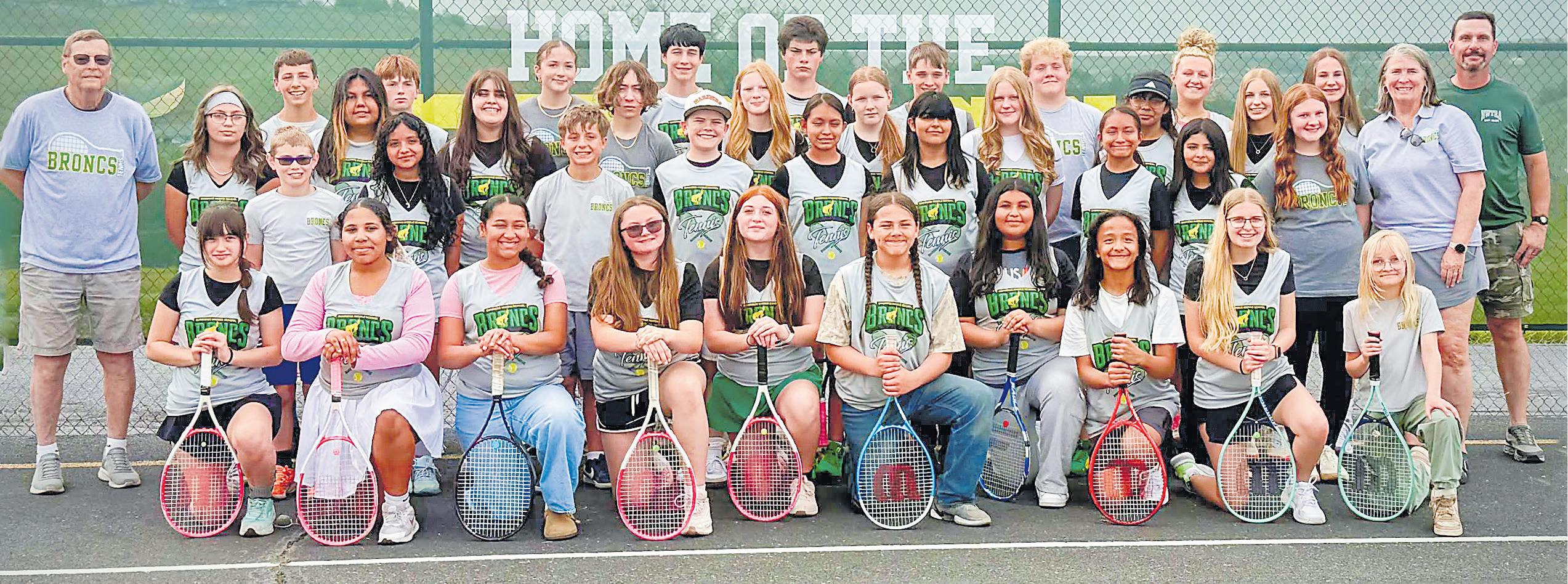
PENDLETON — When Julie Murphy took over the Sunridge Middle School tennis program this spring, she already had a strong support group with assistant coach Katie Mueller and the North East Tennis Center (NET).
The tennis program, which had 25 girls and 12 boys this season, has limited courts at the middle school (two), and the courts at nearby Community Park have been unplayable since the flood in 2020.
The NET partnered with the school, offering its two indoor courts for the program, and the instructors also helped the players hone their games.
“We split the team into two groups and the school transported one to the NET,” Murphy said. “I just feel like they have so many qualified coaches. All four of the volunteers are very qualified. The boys who were Pendleton’s No. 1 and 2 this year (Sam Larson and Adam Harrison), benefited from this program last year.”
Murphy said several NET members had a personal connection to Sunridge tennis, with children and grandchildren committed to playing tennis.
This is the second year the NET has played a big part in the program, and with the additional space and coaching, the Broncs were able to add a boys team last year.
For the past two years, volunteers
Tara Fleshman, Cary Ford, Doug Triebelhorn and Lisa Ward have worked with players.
“These volunteers often offer lessons and clinics to our Pendleton kids at no cost,” Murphy said. “The volunteers are so committed to these kids. It’s pretty cool. The coaching level they get is unheard of for the middle school level.”
Two weeks prior to the official season, the volunteers opened up the Net for workouts, offering coaching that allowed the players to start the season strong.
“The volunteers attended all practices and often traveled to away matches,” Murphy said.
Club members also have stepped up to support the program as a whole.
“The Net has also played a financial part in keeping the program going,” Murphy said. “Board members have written grants, offered lessons and other fundraisers to help provide equipment, uniforms and wind screens at the Sunridge courts. They have spent about $3,000 to help the program.”
The Broncs have shown their appreciation on the court.
The girls program finished the season 5-2-2, while the boys were 6-3. They played teams from the Tri-Cities, Walla Walla and Connell, Washington.
“We have had compliments from other communities on how well our kids play,” Murphy said.

ANNIE FOWLER
CUJ
ATHENA: Tim Taylor was a shining light on a Weston-McEwen team that won just four games all season: all in conference play.
The senior shortstop earned firstteam Blue Mountain Conference honors as an infielder.
For the season, Taylor hit .538 with 28 hits in 52 at-bats. He had 21 singles, seven doubles and 10 RBIs. He struck out just four times and walked 10 times. He also had nine stolen bases. Defensively, he had six errors in 54 total chances (.889%).
The TigerScots also had Bennett Cavalletto (pitcher) named to the second team, and Quentin Sincleir (infielder) to the honorable mention list.
Pilot Rock’s Gage Williams (pitcher) and Tucker Holton (utility) were named to the second team.
Heppner’s Caleb George was named player of the year by the conference coaches, and Tim Wilkins of Heppner was named coach of the year by his peers.
Blue Mountain Conference
Player of the year: Caleb George, sr., Heppner
Pitcher of the year: Baryn Huerta, sr., Grant Union
Coach of the year: Tim Wilkins, Heppner
First team
Pitcher: Baryn Huerta, sr., Grant Union; Keaton Coiner, jr., Heppner; Drake Dark, jr., Sherman; Jonah Jayne, jr., CU Baseball. Catcher: Cody Johnson, so., Irrigon; Kingdon Mitchell-Kirby, sr., Grant Union.
First base: Ryan Haugen, sr., Heppner.

Infield: Caleb George, sr., Heppner; Caylan Proudfoot, jr., Heppner; Weston Suchorski, sr., Grant Union; Tim Taylor, sr., WestonMcEwen.
Outfield: Jace Wilson, so., Heppner; Kord Dickenson, fr., Heppner; Jarett Waddel, jr., Grant Union; Owen Parsons, so., Grant Union.
Utility: Chet Workman, jr., Grant Union; Gage Simpson, jr., Sherman.
Second team
Pitcher: Gage Williams, so., Pilot Rock; Fletcher Grove, jr., Grant Union; Rene Garcia, sr., Irrigon; Bennett Cavalletto, jr., WestonMcEwen.
Catcher: Matt Wilson, fr., Heppner; Austin Alsup, fr., Sherman.
First base: Creed Weedman, fr., Sherman.
Infield: Alakae Rodriguez, jr., Heppner; Fletcher Grove, jr., Grant Union; Caiden
Walker, sr., Sherman; Erik Covarrubia, so., Irrigon.
Outfield: Landon Beil, jr., Grant Union; Carter Pansevicius, jr., CU Baseball; Kadin Allen, jr., Elgin; Colton Akers, jr., Irrigon.
Utility: Beau Van Cleave, fr., Grant Union; Tucker Holton, so., Pilot Rock.
Honorable mention
Pitcher: Kodi Maris, sr., Irrigon. First base: Ledger Johnson, so., CU Baseball; Aiden Wells, jr., Irrigon.
Infield: Quentin Sincleir, sr., WestonMcEwen; Titus Hardesty, jr., Grant Union; Kash Carreiro, so., CU Baseball; Matt Blake, CU Baseball.
Outfield: Bennette Atkins, jr., Irrigon.
Utility: John Rito, jr., Elgin; Bryce Johnson, fr., Elgin.

ANNIE FOWLER
The
CUJ
PENDLETON — Pendleton’s youth showed at times this season, but the Bucks could always rely on senior Avery Quaempts for a big hit and a sense of calm when things got tough.
Quaempts’ leadership and talent did not go unnoticed as she earned first-team Greater Oregon League honors as an infielder, and second-team 4A all-state accolades.
Outfielder Finley Evans and pitcher Shaylor Fisher also earned first-team GOL honors. Evans also earned third-team all-state honors, while Fisher was named to the honorable mention team.
“It’s nice to see Avery, Finley and Shaylor be awarded with first-team honors,” Pendleton coach Tim Cary said. “They are very deserving, and the other coaches in the league have been very complimentary about each of them. We have another player or two that I feel are also deserving of this honor, but sometimes the votes simply don’t go your way. It’s definitely nice to see that we had several players selected to the second team.”
Quaempts, the Bucks’ shortstop, led the team in batting average (.488), hits (40), home runs (8) and RBIs (37). She also hit 18 singles, 10 doubles, four triples and had eight stolen bases. Defensively, she helped turn five double plays.
Quaempts will continue her softball career at Mt. Hood Community College.
Evans hit .313 in 80 at-bats. She had 25 hits, including 13 singles, six doubles, four triples and two home runs. She drove in 19 runs, scored 32 runs, and led the team with nine stolen bases. Defensively, Evans had just two errors in 48 total chances (.958%).
Fisher, just a sophomore, threw the lion’s share of pitches for the Bucks. She threw 104 2/3 innings in 16 starts. She had a 9-7 record with a 4.280 ERA. Fisher gave up 142 hits, struck out 56 and walked 39.
Also for the Bucks, Tatum Lambert, Katelyn Boatman and Maryn Broker were named to the GOL second team as infielders, while outfielders Cambria VanNice and Rylee Jackson were also named to the second team. Kelsi Primus was a second-team utility player, and Broker was also a second-team pitcher.
The Bucks finished 5-3 in GOL play and 15-10 overall. They played in the first round of the 4A state playoffs, where they lost a 12-8 game to Henley.
“All in all, we had a decent season,” Cary said. “We were young in some key positions, which made things a bit more challenging. We are very excited about our returning players for next season that have been able to gain valuable experience throughout the season.”
Greater Oregon League
Player of the year: Colbi Bachman, jr., Baker
Pitcher of the year: Reagan Ritter, sr., Baker
Coach of the year: Steve Bachman, Baker
First team
Catcher: Macey Morgan, jr., Baker.
Infield: Keira Counsell, sr., La Grande; Kallyn Harnack,, sr., La Grande; Maddie Seavert, sr., La Grande; Avery Quaempts, sr., Pendleton.
Outfield: Maylee Martin, jr., Baker; Grace Radabah, fr. Baker; Finley Evans, jr., Pendleton.
Utility: Cassidy Hogge, sr., La Grande.
Pitcher: Shaylor Fisher, so., Pendleton; Reagan Gulick, sr., Baker.
Second team
Catcher: Bri Medrano, sr., Pendleton.

Pendleton’s Avery Quaempts rejoices while running home from third base after a teammate gets a hit on May 12 in Athena. (Kathy Aney/The CUJ)
Infield: Tatum Lambert, sr., Pendleton; Kate Nilson, jr., Baker; Jaxyn Ramos, jr., Baker; Katelyn Boatman, sr., Pendleton; Maryn Broker, sr., Pendleton.
Outfield: Peyton Daggett, sr., La Grande; Cambria VanNice, sr., Pendleton; Partyn Barr, so., Baker; Rylee Jackson, so., Pendleton.
Utility: Kelsi Primus, jr., Pendleton.
Pitcher: Cassidey Hogge, sr., La Grande; Kallyn Harnack, sr., La Grande; Maryn Broker, sr., Pendleton.


ANNIE FOWLER
The CUJ
PENDLETON — Great Oregon League (GOL) champion Pendleton cleaned up when it came to the allleague baseball honors, placing four on the first team, and saw Colin Harrington named player of the year and freshman Reid Furstenberg pitcher of the year by league coaches.
First-team GOL honor also went to infielder Tugg McQuinn, first baseman Grayson English, outfielder Vance Nelson and utility player Kolt McQuinn.
Pendleton’s Justin Speer was named coach of the year by his peers.
Harrington, who was also a 4A first-team all-state outfielder, has signed to play at Eastern Oregon University.
On the mound, Harrington threw 47 1/3 innings with an 8-1 record. He had an ERA of 3.25, striking out 67, walking 31 and allowing 32 runs on 32 hits.
At the plate, Harrington hit .484 in 93 at-bats. He had 45 hits, including 31 singles, seven doubles, one triple and six home runs. He also had 33 RBIs, scored 43 runs, had 11 stolen bases and struck out just eight times.
Defensively, he had five errors and an .861 fielding percentage.
“Colin is one of the most talented players to come through our program,” Speer said. “His ability to impact a game offensively, defensively and on the mound makes him a special player. Colin’s competitive nature and commitment to improvement allowed him to continue developing throughout his career. He consistently delivered in big moments and played a major role in the success we enjoyed this season.”
The Bucks finished the season 10-2 in GOL play, taking the No. 1 seed into the playoffs by a point differential over La Grande, which also was 10-2. Pendleton was 20-9 overall, winning 18 of its last 20 games before the playoffs.
The Bucks beat Molalla 7-4 in the first round of the playoffs, then dropped a 12-0 game to Henley in the state quarterfinals.
“The 2026 season was a reflection of what Buckaroo baseball is all about — brotherhood, toughness and selflessness,” Speer said. “Our seniors provided tremendous leadership, while our younger players embraced their opportunities and continued the standard that has been built within the program. Together this group competed with passion, represented Pendleton with class and continued a tradition of excellence. The wins and accomplishments were special, but the relationships, memories and brotherhood formed throughout the season will be what lasts long after the final game.”
Furstenberg, who also earned third-team all-state honors, played well beyond his years. He pitched 42 1/3 innings with a 7-2 record and an ERA of 3.14. He struck out 56, walked 17 and allowed 27 runs on 31 hits. He also stranded 34
runners on base.
In GOL games, Furstenberg was 5-0 with a 0.00 ERA. He struck out 31 and walked six.
“Reid brought consistency, reliability and a team-first attitude every day, which was impressive for a freshman,” Speer said. “He embraced his role, worked hard behind the scenes and contributed to the success of our program through his dedication and commitment. Reid’s willingness to put the team ahead of himself made him a valued teammate and an important part of what we accomplished this season.”
Tugg McQuinn, who also earned second-team all-state honors, has been a threat for the Bucks since he was a freshman.
This season, he hit .407 in 59 at-bats. He had 24 hits, with 18 singles, four doubles, one triple and one home run. He drove in 19 runs, scored 34 times and had 12 stolen bases. He also had a fielding percentage of .867, committing eight errors in 60 total chances.
McQuinn has signed to play at Mt. Hood Community College.
“Tugg has been a cornerstone of our program for four years,” Speer said. “As a pitcher and shortstop, he consistently competed in big moments and gave us quality innings whenever his number was called. Beyond statistics, Tugg’s growth as a leader, teammate and competitor has left a lasting impact on our culture. His toughness, loyalty and willingness to do whatever the team needed helped set the standard for younger players in the program.”
It’s the second year Nelson found himself on the first team, earning the honor at catcher last year. Nelson, who will continue his baseball career at Umpqua Community College, also earned first-team all-state honors this season.
One of a few players who played all 29 games, Nelson hit .389 on 90 at-bats. He had 35 hits, including 27 singles, one double, four triples and three home runs. He finished the season with 33 RBIs, scored 37 runs and had five stolen bases.
Defensively, he had three errors in 77 chances (.961%).
“Vance was one of the toughest and most versatile players in our program,” Speer said. “His athleticism, competitiveness and ability to impact the game in multiple ways made him a key contributor all season. Whether at the plate, or on the mound or defensively, Vance consistently rose to the occasion. His work ethic and leadership helped drive our team forward and will serve him well as he continues his baseball career.”
English, just a sophomore, was solid in the field and at the plate for the Bucks. Defensively, he had just one error in 117 total chances (.991%). He had zero errors in 12 GOL games.
In 67 at-bats, he hit .403 with 27 hits. He had 21 singles, five doubles and one triple. He drove in 26 runs, scored 21 runs and had four stolen bases.
Kolt McQuinn, who was named to the all-state honorable mention team as a utility player, did a little bit of everything for the Bucks.
The sophomore hit .380 in 71 atbats. He had 27 hits with 16 singles, seven doubles, one triple and three home runs. He had 26 RBIs and scored 10 runs. Defensively, he had just three errors in 175 chances (.983%).
On the mound, the right-handed pitcher threw 18 innings with a 1-0 record. He struck out 20, walked 12
and had an ERA of 4.27. Earning second-team honors for the Bucks were infielder Nate Driskell, outfielder Eli Smidt, designated hitter Kreg Krol and pitcher Spencer Keli.
Greater Oregon League
Player of the year: Colin Harrington, sr., Pendleton
Pitcher of the year: Reid Furstenberg, fr., Pendleton
Coach of the year: Justin Speer, Pendleton
First team
Infield: Landon Hood, sr., La Grande; Tugg McQuinn, sr., Pendleton; Tucker Reid, so., Baker; Bragen Anderson, sr., La Grande. First base: Grayson English, so., Pendleton.
Outfield: Vance Nelson, sr., Pendleton; Sovann Chab, sr., La Grande; Logan Crawford, sr., Baker.
Catcher: Ryder McIlmoil, sr., La Grande. Designated hitter: Darek McIlmoil, jr., La Grande.
Pitcher: Dean Fenley, sr., La Grande; Jake McClaughry, sr., Baker.
Utility: Kolt McQuinn, so., Pendleton.
Infield: Nathan Driskell, jr., Pendleton; Pierce Lair, jr., La Grande; Aaden Bonanno, so., La Grande; Andy Richards, sr., Baker. First base: Carter Harden, sr., La Grande. Outfield: Riley Krantz, sr., La Grande; Eli Smidt, so., Pendleton; Carter Adamson, fr., Ontario.
Catcher: Ethan Rayl, so., Baker. Designated hitter: Kreg Krol, sr., Pendleton.
Pitcher: Spencer Keli, jr., Pendleton.
Utility: Aiden Evers, jr., Ontario.

BEAU GLYNN
The CUJ
MISSION – Community members on June 12 gathered on the Nixyáawii Governance Center front lawn to participate in the Cops and Bobbers fishing event put on by the Umatilla Tribal Police Department (UTPD).
Three pools of fish were brought from Island Spring Hatchery near Portland for families to fish out of, a collaboration between UTPD, the Confederated Tribes of the Umatilla Indian Reservation (CTUIR) Department of Natural Resources (DNR), Wildhorse Resort & Casino, the Housing Department and Public Works Department.
In addition to the fishing fun, the UTPD also hosted a barbecue for attendees.
The occasion was created to bring the community together, said UTPD Sgt. Derrick Bingham.
“What better way to bring the community together?” he said.
“I love to fish. I’m also big into basketball, and I saw how the basketball tournaments that we
have here bring the community together, and I said, ‘What better way to bring the community together in the spring than having a fishing event?’”
UTPD helped with a similar event in 2025 as part of DNR’s Open House, said Bingham. After its success, UTPD decided to host its own event this year.
“It’s a lot of work to put one of these events on, and it’s really rewarding when you see the smile of a kid’s face when they’ve landed a fish,” he said.
Throughout the day, UTPD Fish and Wildlife Conservation Officer Tommy Thompson’s station was cleaning the fish that attendees caught. He said his favorite part of the event was seeing the smiles.
“Doing it again this year with the good turnout we had last year, the families and the community just seem to have fun with it,” he said.
While UTPD hosted the event, Bingham said officers from other precincts attended the event to get a run of what it takes to host something similar in their respective communities.
BEAU GLYNN
The CUJ
PENDLETON — The Pendleton Center for the Arts (PCA) brought poet and playwright Beth Piatote to its First Draft Writers series, a monthly event showcasing new and developing work from established authors.
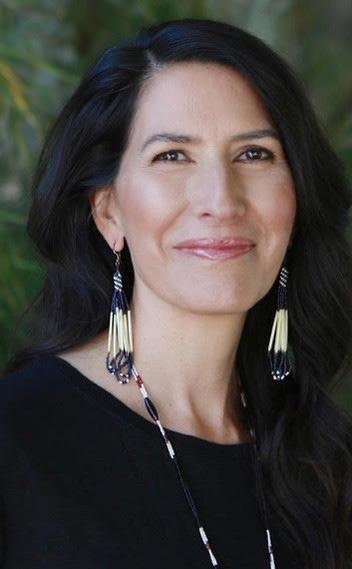
Piatote, a professor of University of California, Berkeley and a member of the Confederated Tribes of the Colville Reservation, was the featured guest for the series on June 18 to read poems from her most recent publication “Distant Water.” The collection’s title is the translation of the Nez Perce word ˀeteyékus, meaning “ocean.”
The First Draft Writers series, held on the third Thursday of each month, brings noted authors and poets to the Pendleton stage to share new work.
“ This book is a sort of a set of experiments in playing with language and in using Nez Perce language,” Piatote said to the crowd.
Piatote rooted her collection in the revitalization of language, noting that her aunt was the first person to speak the Nez Perce language to her during a visit to Pendleton.
“ My hope is to encourage other people to use all your languages and idioms and arts in your work, and I’m especially grateful to this land and to our language that comes from this land,” she said.
Languages are deeply rooted with the homeland, with every orientation of the language there is also an orientation of the self, she added.
“ The poems are experiments in showing how the language works, how it moves, how it sounds, how to use it, and also impressions of the feeling of what the word feels like,” Piatote said. “And then some of them are also just studies of a single
word and how that word gives us a new way of being in the world.”
She said the reason the language has its vitality is because it lives through the body, bleeding into creativity and taking new forms as time passes and moving with the world.
“One of the reasons I’m encouraging people to use creativity in their language journey is to help them feel like they can play with the language and they can invent with the language. I think there’s so much pressure in situations of endangered languages that people are afraid to make mistakes, afraid to vary, make any variations from how people talked in the 1930s, 40s or 60s or like their grandparents,” Piatote said. “This feeling that it’s just a minefield is because we care so much, I think it’s okay, we can trust that the language can, can play with it and we can trust ourselves and we can make mistakes and we can get corrected even publicly or whatever. It’s okay.”
Piatote described the revitalization of language as vibrations, revibrating throughout the land.
In addition to being an accomplished writer and poet, Piatote also spoke about her play “Antíkoni,” a retelling of Sophocles’ “Antigone.” Set in a museum of Indigenous belongings, the play follows a Nez Perce family navigating modern life while working to preserve tradition. The story mirrors the Greek tragedy’s themes of loss and betrayal while centering the preservation of Indigenous culture.
Piatote’s other works include “The Beadworkers” and the monograph Domestic Subjects. Her play “Antíkoni” premiered with Native Voices in Los Angeles in November 2024 and ran at the Vault Theater in Hillsboro from June 4 to June 21.
Ladies Flight
1ST LOW GROSS
Megan George, Mission OR - 145
2ND LOW GROSS
Marilyn Sheldon, Tulalip Wa - 150
3RD LOW GROSS
Alyssa Lane, Lummi Nation WA - 167
1ST LOW NET
Kristine Riggers, Clarkston WA - 146
2ND LOW NET
Justine Miles, Lapwai ID - 149
TIE 3RD LOW NET
Laurie Ann Cloud, Lapwai ID - 153
MaryAnn Sam, Victoria Island BC - 153
Championship Flght
1ST LOW GROSS
Wyatt Brook, Vancouver BC - 141
2ND LOW GROSS
Leighton Pennington, Mission OR - 147
3RD LOW GROSS
Dillon George, Mission OR - 152 1ST LOW NET
Paul French, Pendleton OR - 138
2ND LOW NET - 147
3RD LOW NET
Dazon Sigo, Mission OR - 151
Men’s 1st Flight
1ST LOW GROSS
Austin Domebo, Lapwai ID - 156
2ND LOW GROSS
Mike Bisbee, Lapwai ID - 169
3RD LOW GROSS
Pepper Morse, Anacortes, WA - 173
1ST LOW NET
Aaron Blackburn, Aberdeen WA - 139
2ND LOW NET
Frank Reese, Warm Springs OR - 146
3RD LOW NET
Jon VanWoerkom, Lapwai ID - 155
1ST LOW GROSS
Shannon Wheeler, Lapwai ID - 147
2ND LOW GROSS
Foster Kenton, Carson City NV - 154
3RD LOW GROSS
Randy Friedlander, Nespelem WA - 160
1ST LOW NET
Mitch Gonzales, Boise ID - 138
2ND LOW NET
Greg Edwards, LaConnor WA - 153
SS Championship Flight
1ST LOW GROSS
Steve Edwards, LaConnor WA - 152
2ND LOW GROSS
Chris Inglis, Toppenish WA - 153
3RD LOW GROSS
Carl Lane, Lummi Nation WA - 154
1ST LOW NET
JR Inglis, McCall ID - 145
2ND LOW NET
Jon Bergstrom, Aberdeen WA - 146
TIE 3RD LOW NET
Terry Evans, Wellpinit WA - 149
Dave Johnson, Lummi Nation WA - 149
Super Senior 1st Flight
1ST LOW GROSS
Phillip Blackburn, Aberdeen WA - 172
2ND LOW GROSS
Alan Roberts, Republic, WA - 173
3RD LOW GROSS
Turk Holford, Spokane WA - 174
1ST LOW NET
Jerry Sam, Nespelem WA - 128
2ND LOW NET
Denny Mojado, Riverside CA - 143
TIE 3RD LOW NET
Jerry Sampson, Warm Springs, OR - 146
Chris Webb, Lapwai ID - 146








The CUJ
MISSION – The Umatilla Tribal Fire Department (UTFD) is prohibiting any open burning on the Umatilla Indian Reservation (UIR). The ban took effect on June 19.
UTFD Chief James Hall said the burn ban will remain in effect until the end of the fire season or until conditions allow the restriction to be lifted.
“Fire season has developed earlier than normal due to a combination of well-above average spring
temperatures, prolonged drying conditions and a significantly below-average mountain snowpack throughout Eastern Oregon and the Blue Mountains,” Hall said. “Reduced snowpack has resulted in lower soil moisture levels, earlier curing of grasses and vegetation and increased wildfire potential across the region.”
The ban includes debris burning, burning of yard waste, burning in barrels, disposal fires and any other unauthorized open burning activities. Sweathouse
and ceremonial fires are exempt from the burn ban. However, these types of fires must be reported and approved via verbal authorization.
Permits may be obtained by calling the Umatilla Tribal Dispatch at 541-278-0550. Approval will be based on current weather conditions, fire danger levels and available firefighting resources.
For information regarding agricultural burning, air quality regulations or burn permit requirements, call the CTUIR Office of Air Quality at 541-429-7080.
MISSION — The Confederated Tribes of the Umatilla Indian Reservation (CTUIR) Capital Improvements Committee (CIC) invites CTUIR community members to provide feedback on future capital improvement projects.
The committee has posted planned and potential capital improvement projects on an interactive online web map. Community members can use the map to view project information and submit comments on individual projects.
According to the committee’s press release, capital projects are larger development projects that provide services, protect resources, and improve the community. There is a range of projects such as housing, community services, recreation, natural resources and economic development.
“Major capital projects can take years to plan and implement, so some of the projects on the list are projected for future development in the long term or medium term, while other projects are in process or will start within the next couple of years,” the release stated.
Many projects depend on available grant funding or other funding programs, the release noted. The Board
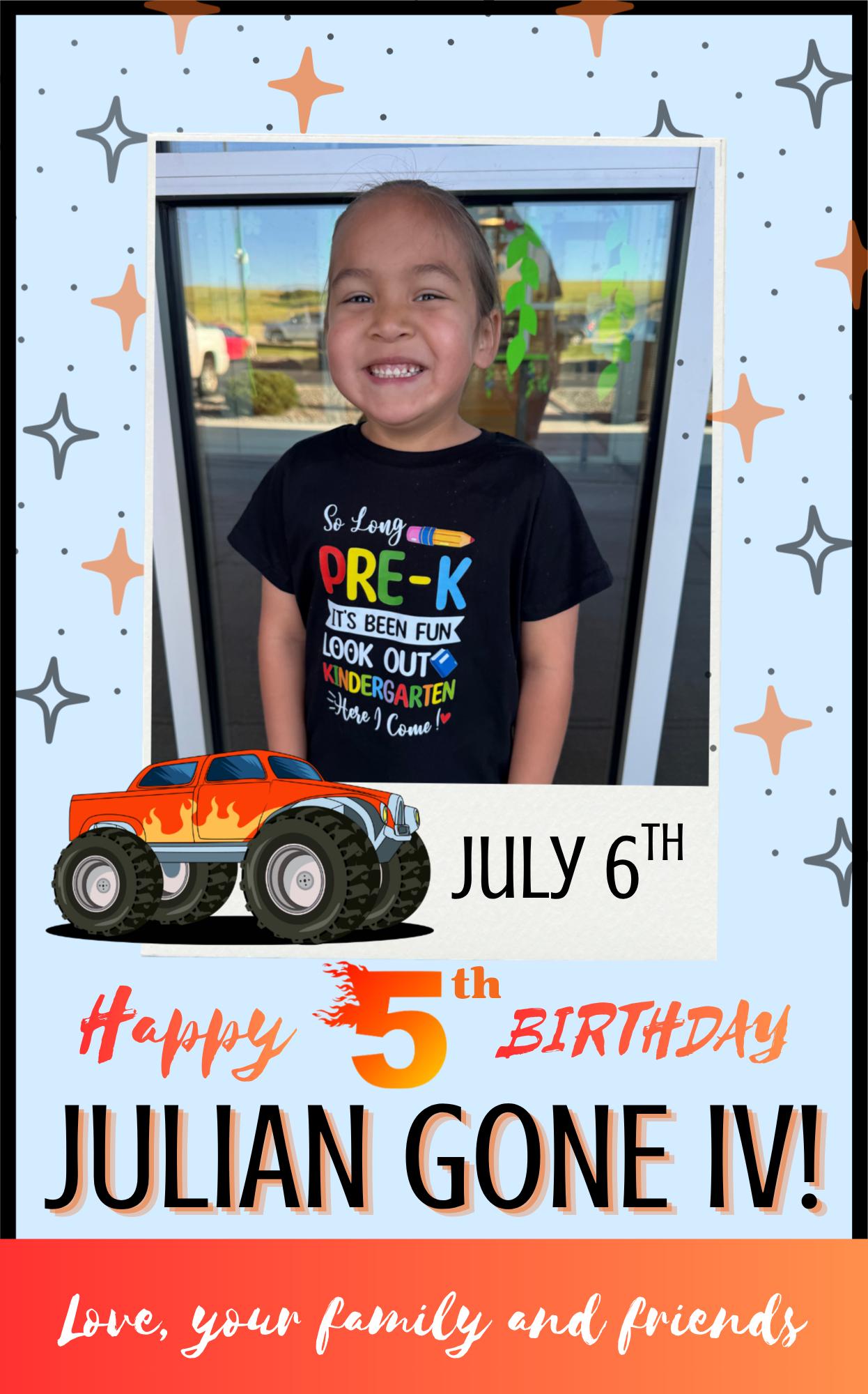
of Trustees also allocates money to prioritized projects on a case-by-case basis after reviewing feasibility studies and preliminary cost estimates.
Updates for projects already underway reflect changes in their status.
This year’s list also includes three proposed projects to address previously identified needs:
• Purchase and renovate the former Seventh-day Adventist School and Church for early childhood education.
• Purchase the Oregon Department of Fish and Wildlife facility at Mission Road and Mytinger Lane for the Department of Natural Resources shop facilities.
• Mitigate flooding on Confederated Way in the July Grounds based on recommendations from a completed engineering analysis.
Community members who want to submit comments but do not have internet access can contact the Tribal Planning Office at 541-276-3099 or TPO@ctuir.org.
Community members with questions about a project, or who want to propose a project not included on the list, can contact the Tribal Planning Office and complete a New Project Application form.
Public input on the capital improvement projects will be gathered through July.

PUBLIC HEARING NOTICE
NOTICE IS HEREBY GIVEN that the Land Protection Planning Commission (LPPC) of the Confederated Tribes of the Umatilla Indian Reservation (CTUIR) will hold the following public hearings: Conditional Use File #CU-26-001 –Applicant, CTUIR Department of Natural Resources, seeks approval from the Land Protection Planning Commission to conduct a timber harvest on 341 acres of the site referred to as Tátwin Wildlife Area (formerly Rainwater Wildlife Area). The subject property is held in trust for the CTUIR and is identified as trust parcel T5600. Located outside the external boundary of the Umatilla Indian Reservation in Columbia County, Washington, the proposed timber harvest would remove timber through mechanical and hand thinning methods to reduce fire danger and improve forest health. Chapter 3 of the CTUIR Land Development Code (LDC) lists timber harvests of this size as a Conditional Use. Conditional Use approvals are subject to Chapters 6 and 13 of the LDC.
This hearing has been rescheduled from June 23, 2026. The hearing will now be held on Tuesday, July 14, 2026 beginning at 9:00 a.m. Individuals may attend the meeting in the Walúula and Wanaqit conference rooms at the Nixyáawii Governance Center, virtually, or by phone. Information on joining the meeting online is available at https:// www.ctuir.org. Participation in the hearing will also be available by phone at 872-2427793 starting at 9:00 a.m. on the day of the hearing. The meeting ID will be 399 309 222#.
Staff reports and other materials related to the hearing will be available at least ten days in advance. They will be posted online at the link above or may be requested from the Tribal Planning Office by calling 541276-3099.
The public is entitled and encouraged to participate in the hearing and submit testimony regarding the request. Written comments may be sent to tpo@ctuir.org or
to the Tribal Planning Office at 46411 Timíne Way Pendleton, OR 97801 for receipt by 4:00 p.m. July 13, 2026.
PUBLIC NOTICE June 29, 2026
TRIBAL MEMBERS: This notification formally announces that applications are now being accepted from tribal members who wish to serve on the Commission(s)/ Committee(s) listed below. Members will receive a $125.00 stipend per meeting once the minutes have been approved and processed on CTUIR paydays. CTUIR is advertising the following positions:
1 Position - Education and Training Committee: meets 1st and 3rd Tuesdays at 1:30 pm
1 Position - Farm Committee: meets 2nd and 4th Tuesdays at 2:30 pm
1 Position - Land Protection Planning Commission: meets 2nd and 4th Tuesday at 2 pm
1 Position - Science and Technology: meets 2nd and 4th Tuesdays at 1:30 pm
All completed applications are due by 4:00 PM on Friday, July 17, 2026. A BOT work session is scheduled for Wednesday, July 22, 2026, at 8:30 AM to review applications. Appointments will be made on Monday, July 27, 2026. Applicants must have access to meet in person, via Teams, or via a teleconference with a landline or smartphone.
Applications are available online, or you may pick up a paper application at the front desk in the Nixyáawii Governance Center rotunda. Please return your paper applications to the front desk or the BOT Secretary’s Office. URL Link to fill out and submit your completed online application(s): https://ctuir.org/our-government/ committees-commissions/committee-andcommission-application/
Feel free to reach out if you need assistance with accessing a computer or filling out the application. For questions, please call BOT Secretary Monica Paradise - 541-429-7372 or email monicaparadise@ctuir.org