History comes home
Fred L. Mitchell transfers collection of Columbia River Plateau tribal artifacts to CTUIR, Tamástslikt
BEAU GLYNN
The CUJ
MISSION — In a landmark acquisition, the Confederated Tribes of the Umatilla Indian Reservation (CTUIR) secured thousands of historical artifacts, marking a significant moment in preserving the Columbia River Plateau culture.
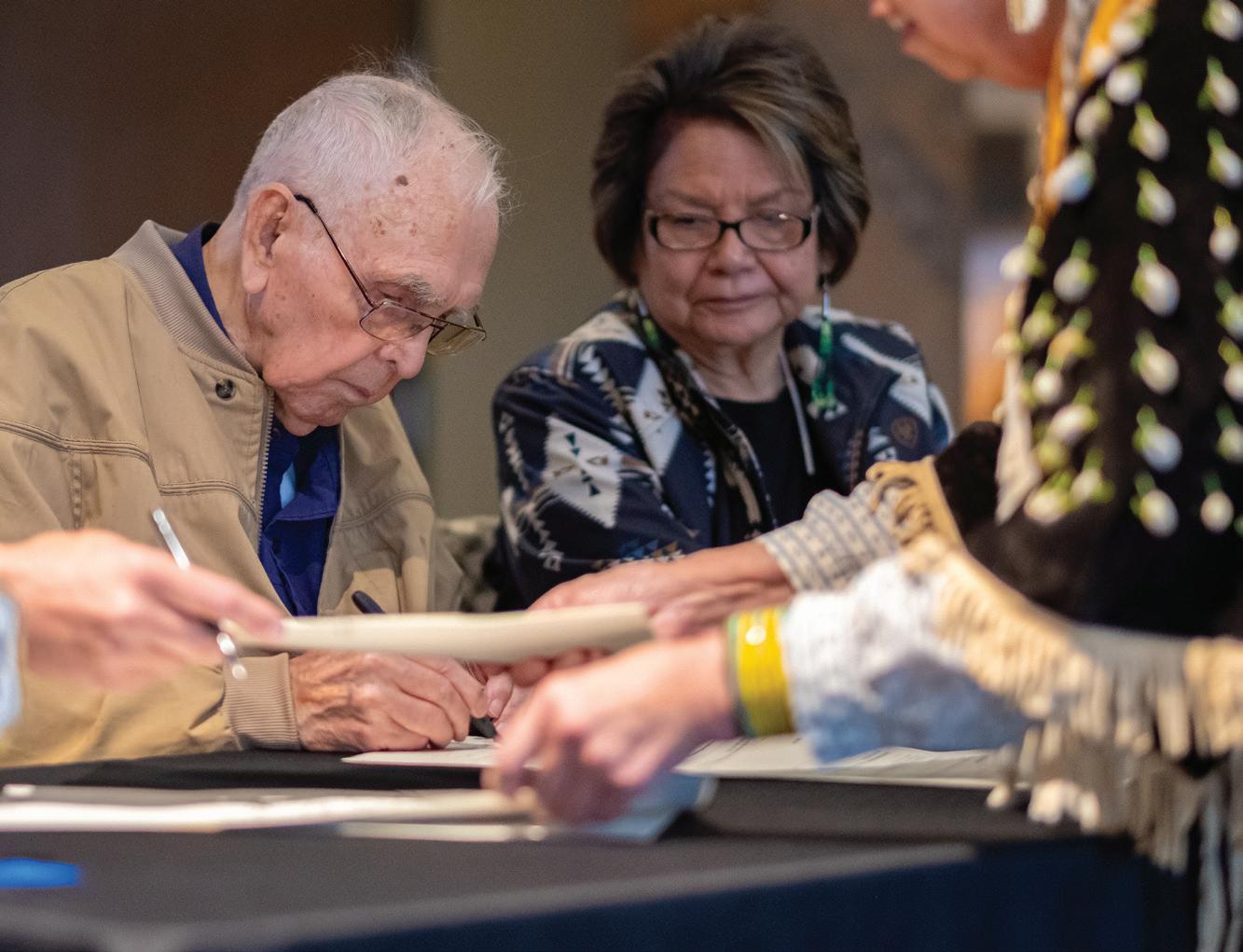
Collector Fred L. Mitchell, 91, signed the formal agreement March 31 at a public ceremony at the Nixyàawii Governance Center, transferring the entire collection, known as the Fred L. Mitchell & Family Collection, to the CTUIR and Tamástslikt.
The collection will be preserved and displayed at Tamástslikt as artifacts representing the Columbia River Plateau.
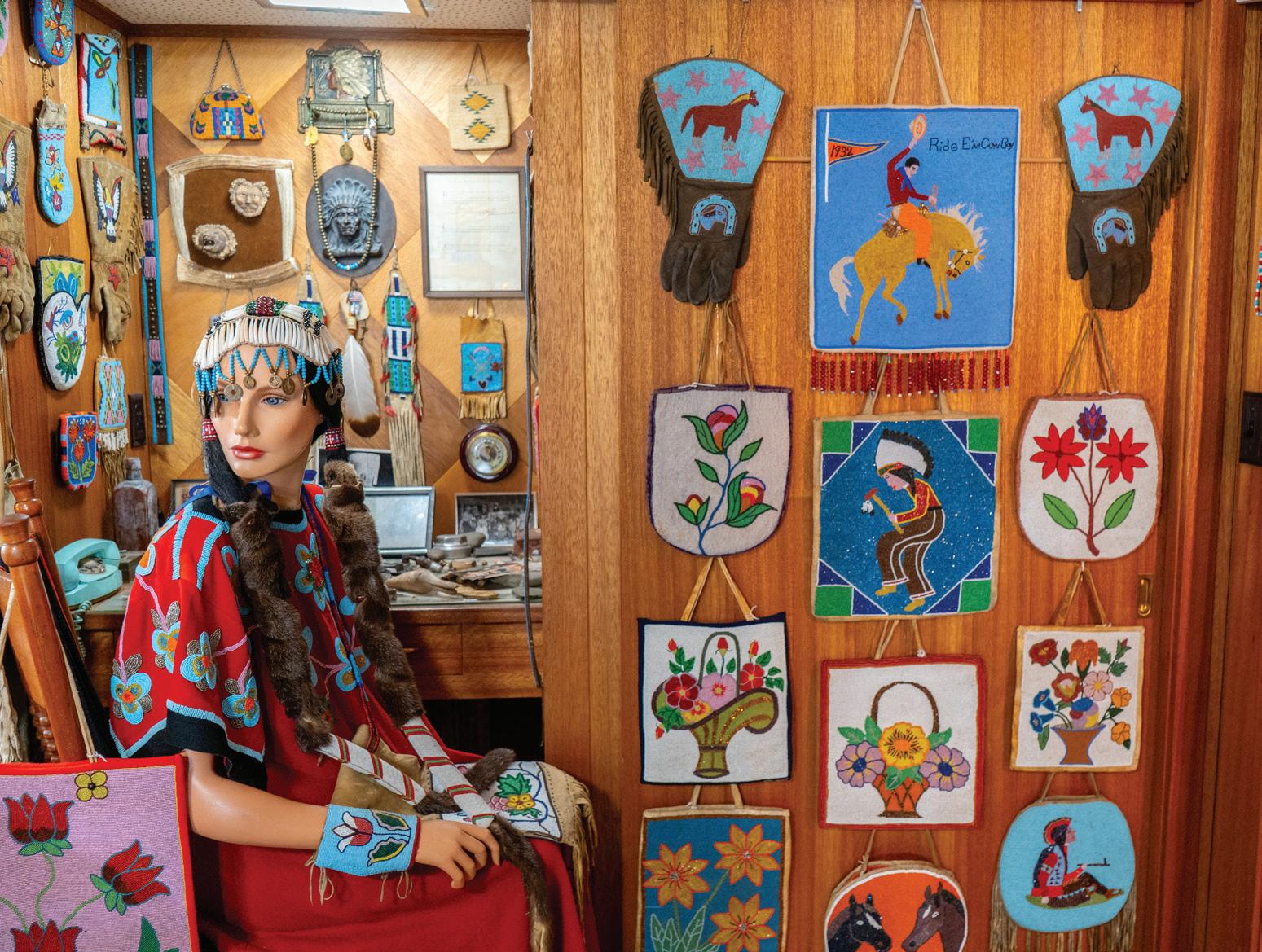
The Fred L. Mitchell & Family Collection includes hundreds of beaded bags and pouches, cradleboards, dresses, vests, gauntlets, horse-trappings, cornhusk bags and huckleberry baskets. It also features more than 1,250 photographs from See COLLECTION, Page A3
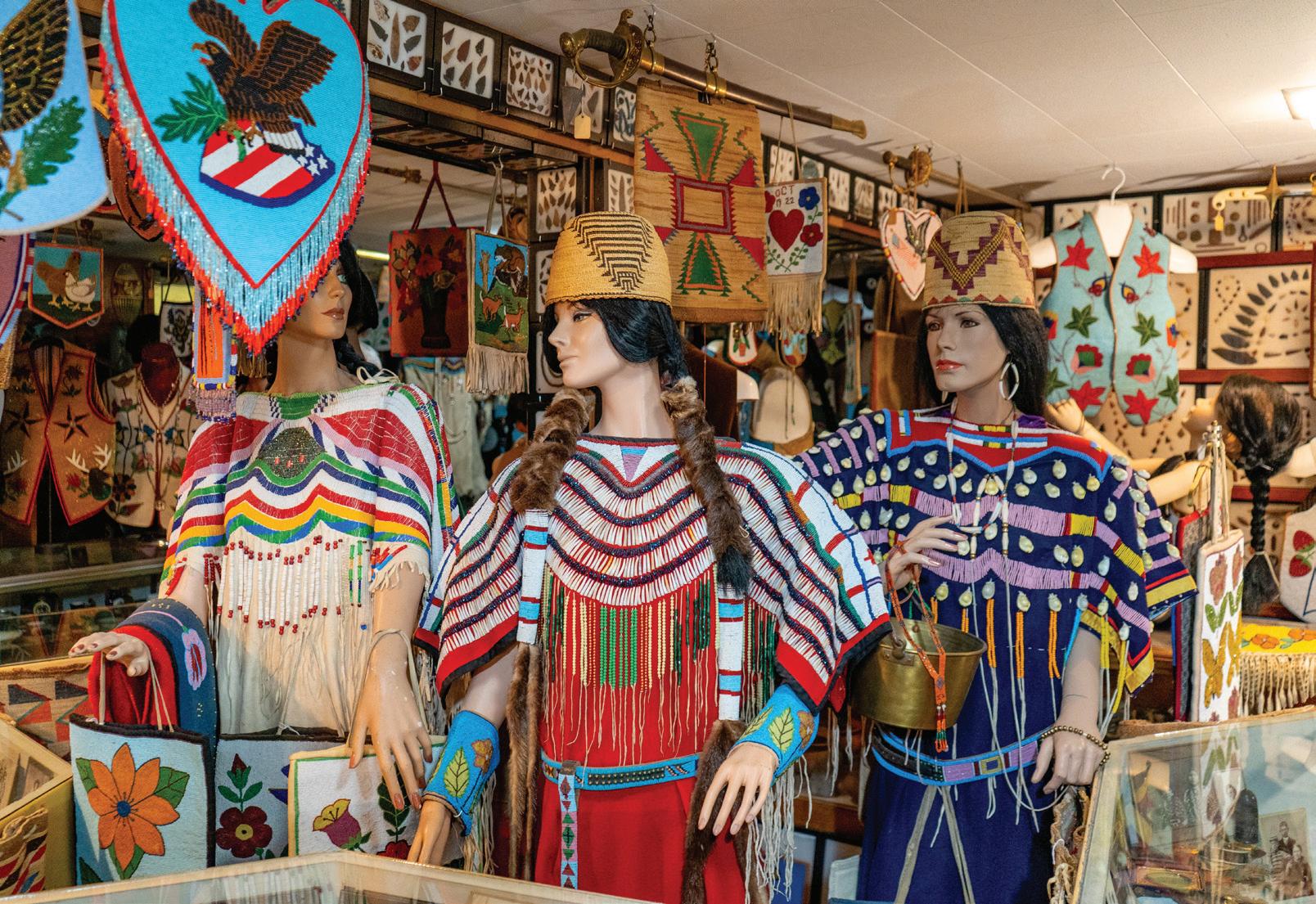
Three mannequins dressed in full regalia stand among hundreds of Columbia River Plateau tribal artworks and artifacts on Feb. 28, 2025, at the home of Fred L. Mitchell in Walla Walla, Washington. (Lee Gavin / The CUJ)
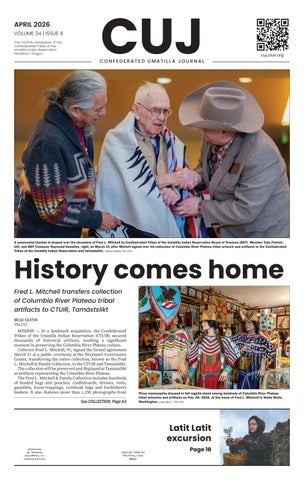
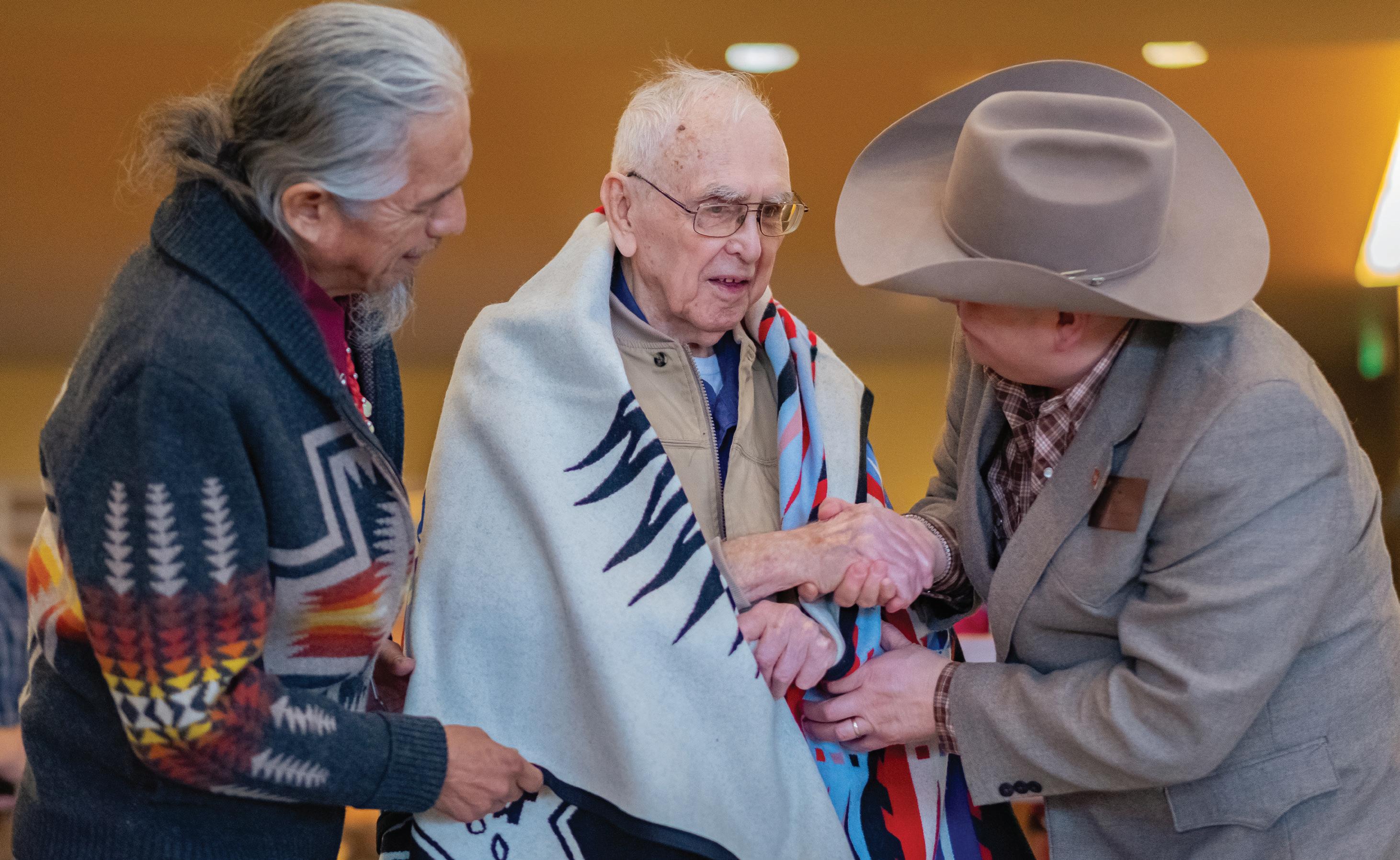
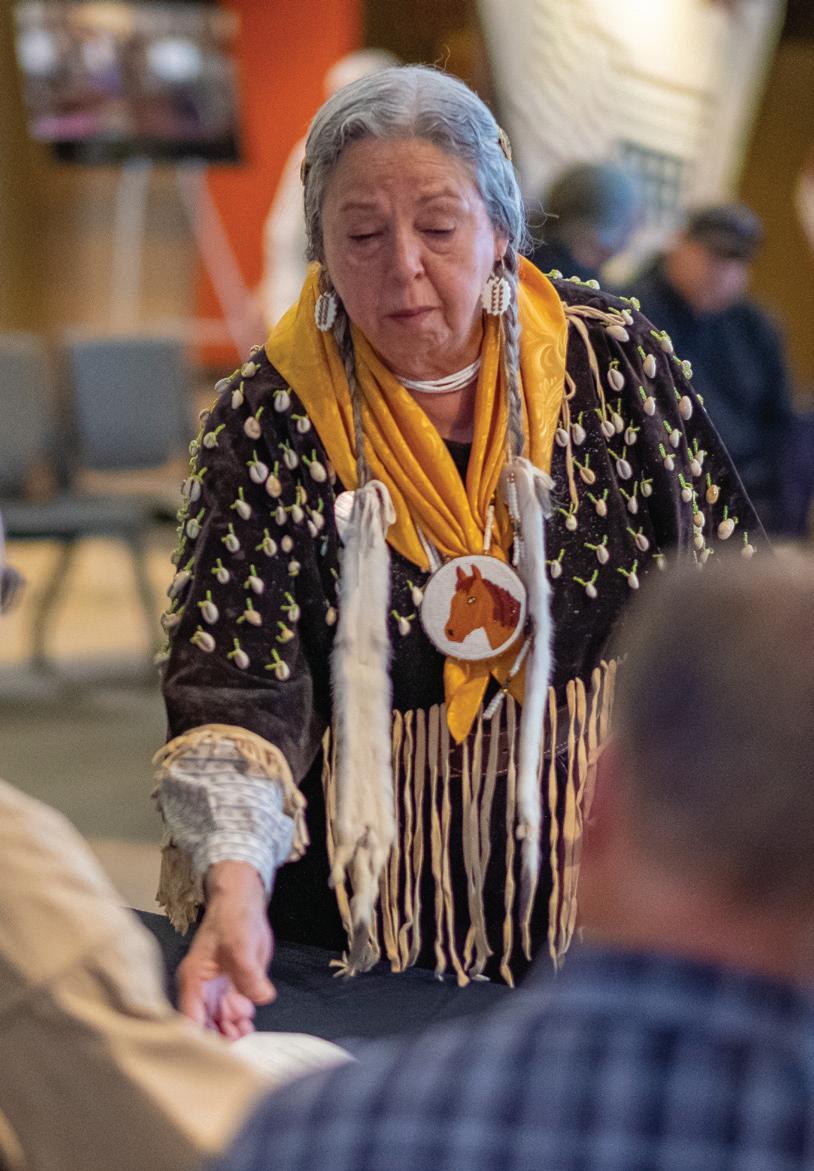
A ceremonial blanket is draped over the shoulders of Fred L. Mitchell by Confederated Tribes of the Umatilla Indian Reservation Board of Trustees (BOT) Member Toby Patrick, left, and BOT Treasurer Raymond Huesties, right, on March 31 after Michell signed over his collection of Columbia River Plateau tribal artwork and artifacts to the Confederated Tribes of the Umatilla Indian Reservation and Tamástslikt. (Yasser Marte/The CUJ)
on
CUJ
ABOUT THE CUJ
The Confederated Umatilla Journal (CUJ) was created in 1975 as the official publication of the Confederated Tribes of the Umatilla Indian Reservation (CTUIR), which includes the Cayuse, Umatilla and Walla Walla people. The CUJ is produced monthly by the CTUIR Communications Department.
PUBLISHER: Kaeleen McGuire kaeleenmcguire@ctuir.org
EDITOR: Yasser Marte yassermarte@ctuir.org
REPORTER: Beau Glynn beauglynn@ctuir.org
ADVERTISING: M. Moses-Conner cuj@ctuir.org
CONTRIBUTORS: Kathy Aney Dallas Dick Annie Fowler Lee Gavin Wil Phinney Travis Snell Aaron Wooden Sammantha McCloud
Director Bobbie
acquisition agreement documents on March
at the
Governance
“We are acquiring this collection from a man of integrity and dignity, and we have complete faith in our relationship with him and his relationship with the collection.”
- BOBBIE CONNER, Director, Tamástslikt
of the Umatilla Indian Reservation (CTUIR) and Tamástslikt as CTUIR Board of Trustees Chair Kathryn N. Brigham looks on. (Yasser Marte/The CUJ)
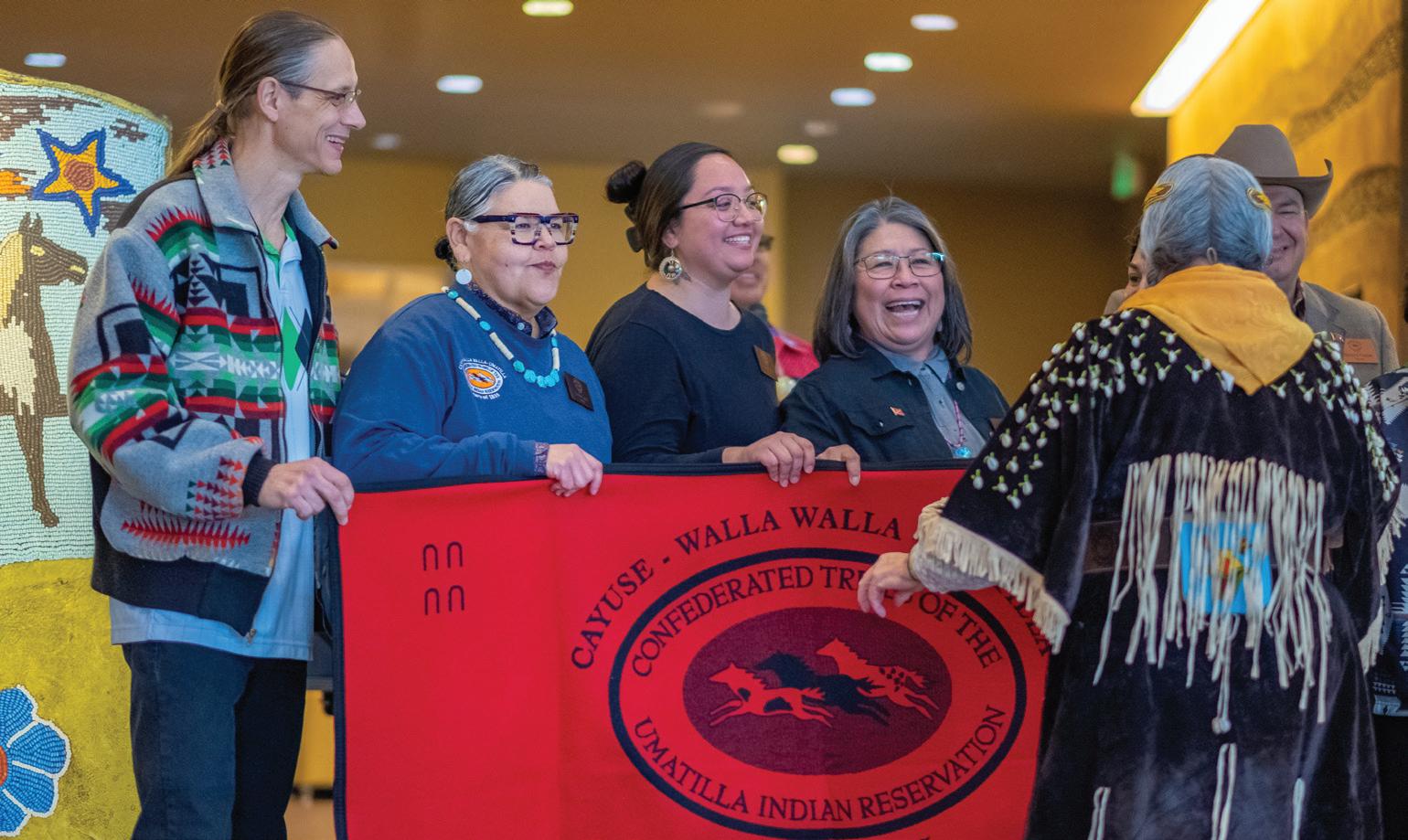
LEFT: Tamástslikt Director Bobbie Conner presents a ceremonial blanket to CTUIR tribal leaders on March 31, 2026, at the Nixyáawii Governance Center. From left to right: CTUIR General Council Chairman Lindsey X. Watchman, Board of Trustees (BOT) members Corinne Sams, Sierra Quaempts, and Lisa Ganuelas, Conner, who is handing the blanket and BOT Treasurer Raymond Huesties.
CONTACT US Confederated Umatilla Journal 46411 Timíne Way Pendleton, OR 97801 email: cuj@ctuir.org phone : 541-429-7005
EMAIL ADVERTISING, LETTERS TO THE EDITOR, AND OTHER SUBMISSIONS TO: cuj@ctuir.org
ADVERTISING DEADLINE: 20th of the month prior to publication. The CUJ prints on the first Thursday of each month.
SUBSCRIBE: The CUJ is free to pick up at tribal entities and area businesses. However, a mailed subscription can be purchased for the price of shipping and handling by contacting the CTUIR Finance Department. Call 541-429-7150 or visit the Finance Department in person at Nixyáawii Governance Center, 46411 Timine Way, Pendleton.
One Year: $15 Two Years: $28
For more information or daily news, visit the CUJ online at: cuj.ctuir.org
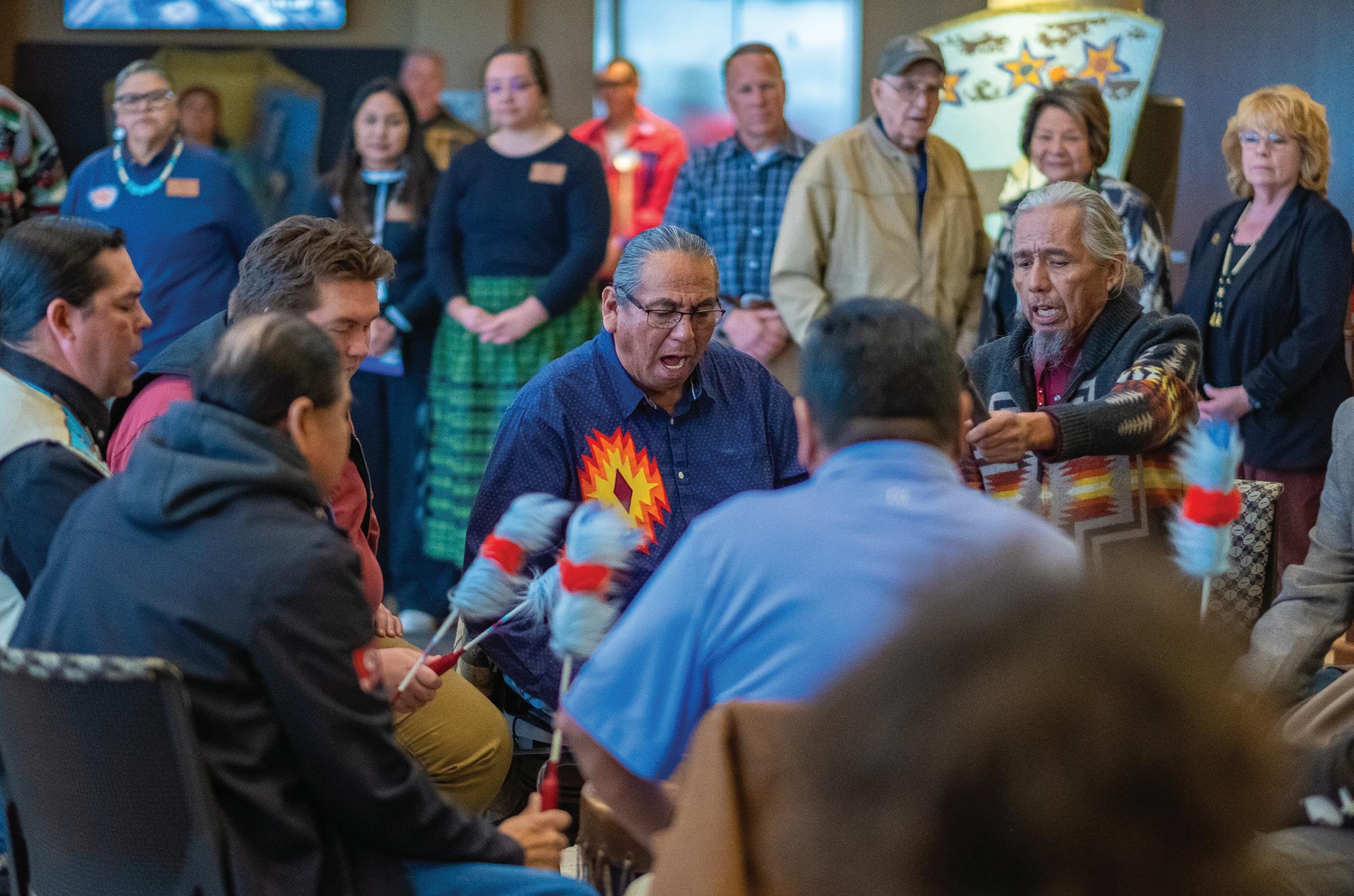
A group of drummers sing an honor song in the drum circle after Fred L. Mitchell signs an acquisition agreement
March 31 at the Nixyáawii Governance Center. Among the drummers playing are Umatilla Master Speaker Fred Hill Sr., center, and Board of Trustees Member Toby Patrick to the right. (Yasser Marte/The CUJ)
ABOVE: Fred L. Mitchell signs an acquisition agreement on March 31 at the Nixyáawii Governance Center, transferring ownership of his extensive collection of Columbia River Plateau tribal artwork and artifacts to the Confederated Tribes
(Yasser Marte/The CUJ)
A mannequin dressed in full regalia sits in a room showcasing the craftsmanship of Columbia River Plateau tribal artwork and artifacts on Feb. 28, 2026, at the home of Fred L. Mitchell in Walla Walla, Washington. (Lee Gavin / The CUJ)
Tamástslikt
Conner assists with
31
Nixyáawii
Center, after Fred L. Mitchell signed over his collection of Columbia River Plateau tribal artwork and artifacts to the Confederated Tribes of the Umatilla Indian Reservation and Tamástslikt. (Yasser Marte/The CUJ)
COLLECTION: Mitchell gathered items for 75 years
CONTINUED FROM PAGE A1
the late 19th and early 20th centuries and roughly 15,000 lithic points and tools.
The assemblage began when Mitchell was just 5 years old. What started with a single arrowhead has become a vast expansion of artifacts preserving the art, history and culture of the Columbia River Plateau.
It represents 75 years of gathering along the Columbia River mainstem, as well as the Snake and Clearwater rivers and other tributaries.
“Today was very exciting in that we worked on this a long time, and it was finally good to see these items come home,” Board of Trustees Chair Kathryn Brigham said. “In talking to Fred, he is so honored and pleased to be giving his collection to Tamástslikt because we will take care of it, we understand it and we’re honored to get it.”
In a press release from Tamástslikt, Mitchell’s collection is referred to as the “finest collection of twentieth-century Columbia River Plateau beadwork in existence,” according to author Steve Grafe, who wrote a book focused on the collection being acquired called “Plateau Pictorial Beadwork: The Fred L. Mitchell Collection”.
With the inclusion of Mitchell’s collection, the Tamástslikt’s capacity to represent the Columbia River Plateau’s tribal narratives changed dramatically. While speaking prior to the signing ceremony, Tamástslikt Director Bobbie Conner recalled a time when the museum struggled to fill exhibits, often renting out displays from other institutions.
“Now we may be out of space for storage in the vault,” Conner said.
Conner spoke highly of Mitchell’s dedication as a collector, noting how carefully he preserved the artifacts for seven decades before formally transferring them through the acquisition.
“We all know that we have had things leave our families in very un-ceremonial, possibly illegal and unapproved ways,” Conner said to the crowd. “Whether it’s members of our family who are suffering from addiction who hocked items or sold items, or whether it was to an unsavory collector who preys on poor people on our reservation. We are acquiring this collection from a man of integrity and dignity, and we have complete faith in our relationship with him and his relationship with the collection.”
In the signing ceremony, in conjunction with transferring the collection to the CTUIR, Mitchell also signed over the copyright of the book written by Grafe regarding his collection, so that CTUIR
and Tamástslikt can continue to publish copies.
While speaking prior to the signing ceremony, Conner quoted a portion of the agreement Mitchell signed.
“The transfer of ownership by Fred represents his faith in us to care for, house, display and share for display the items he has devotedly collected for more than 70 years,” Conner said.
Mitchell noted how his collection was revered in the same way he revered it, and this reverence was a catalyst to the relationship between himself and the CTUIR.
“The artifacts represent the ancient connection to this place,” Conner said, speaking of their connection to the Columbia River Plateau. “The artifacts, the stories they represent, the ancient connection our ancestors have to a contemporary generation.”
As a collection of art and artifacts originating from the Columbia River Plateau, CTUIR felt it imperative for them to remain there, as did the Roundhouse Foundation, an Oregon-based organization that supports rural cultures and landscapes of the Pacific Northwest and their associated challenges.
To support the collection’s acquisition to the CTUIR, the Roundhouse Foundation pledged $500,000.
“We talked about it at a foundational level, at
our board level, and said, ‘how can we put in some support to say this is something we believe in and that we believe the tribe is the right place for this collection?,’” Roundhouse Foundation Executive Director Erin Borla said.
Before CTUIR had even made the decision to move forward with the acquisition, the Roundhouse had made the pledge to move forward in conjunction.
“We are so grateful that the Roundhouse Foundation learned that Tamástslikt plans to loan Mitchell Collection objects to museums in the Columbia River Plateau region and was the first donor to contribute to the acquisition fund,” said Conner in a Tamástslikt press-release. “Specifically, Roundhouse wanted to ensure that many locales and public audiences will benefit from the decades of Mr. Mitchell’s collecting.”
While the Roundhouse Foundation was the first private party to pledge funds for the acquisition, they were also joined by other organizations and private citizens.
The acquisition project, which took root nearly 10 years ago, results in the transference of cultural history in the form of a multitude of pieces of art and artifacts rooted in the history of the ancestors who crafted them.
“We’re also delighted to know Fred,” Conner said, “Fred Mitchell is our friend.”
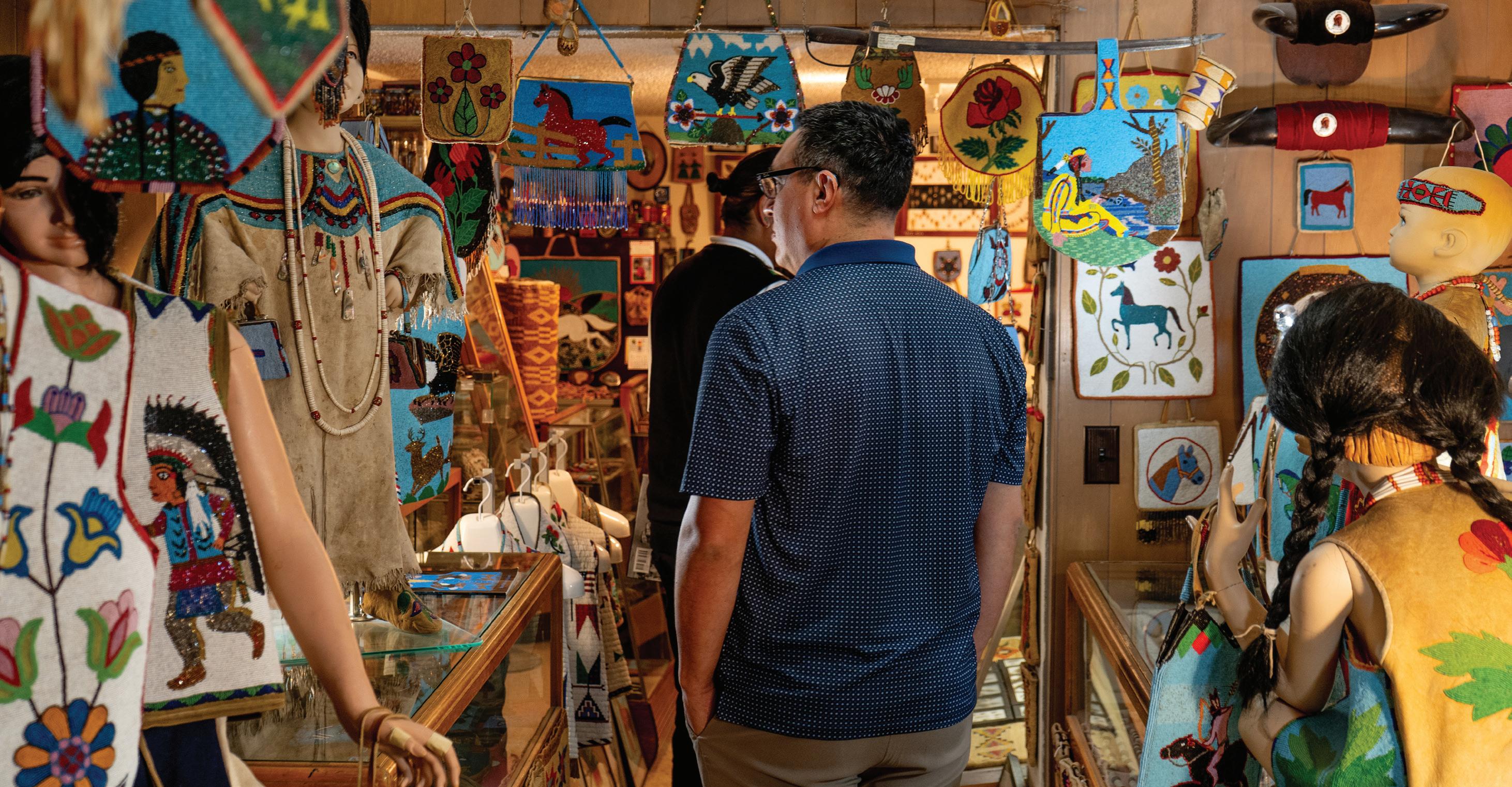
Randal Milton, assistant director of operations at Tamástslikt, and former CTUIR Board of Trustees member Steven Hart tour the collection of Columbia River Plateau tribal artwork and artifacts on February 28, 2026, at the home of Fred Mitchell in Walla Walla, Washington. (Lee Gavin / The CUJ)
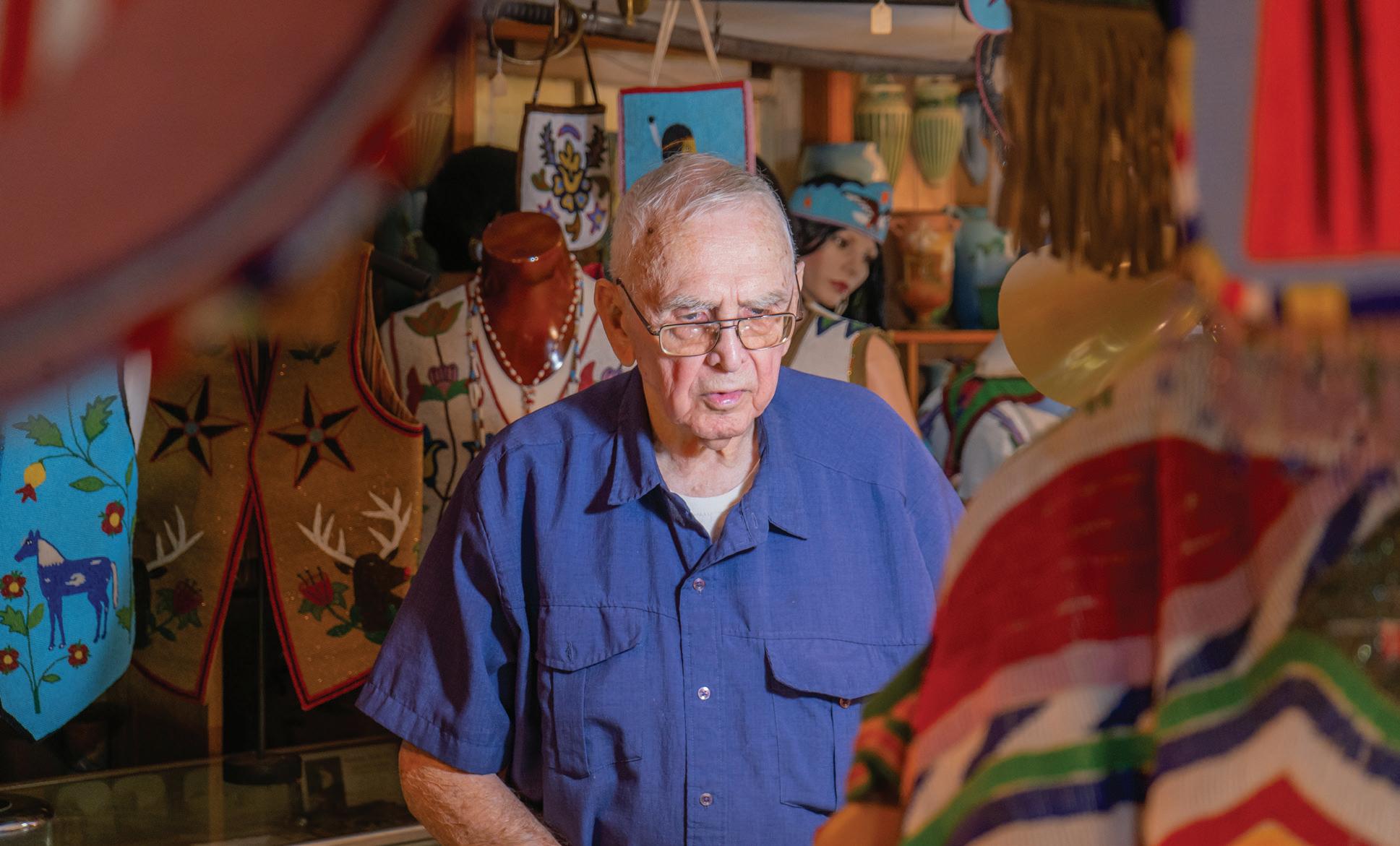
Fred L. Mitchell stands amongst his vast collection of Columbia River Plateau tribal artwork and artifacts in his Walla Walla, Washington, home on Feb. 28, 2025. (Lee Gavin / The CUJ)
MESSAGES FROM CTUIR LEADERSHIP
Prioritize health for a stronger community
When you drive onto the Umatilla Indian Reservation from Pendleton, there’s a welcome sign that states simply “Be Healthy.” It might sound obvious, but honestly, it’s a good reminder.
Your voices are valuable
kíi híiwes qeqít’aal (it’s April)! This month’s General Council Chairman’s Corner focus is on civic engagement. Let’s take a few moments to ensure everyone knows the various ways in which you can communicate with your elected officials and participate in our tribal government.
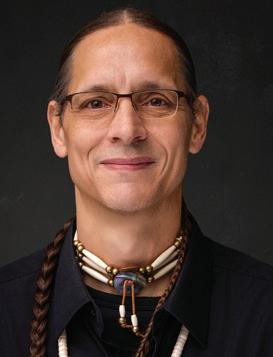
By the time you read this, I expect to be back at work after being laid up for three weeks (doctor’s orders) in March. It wasn’t planned, and it definitely wasn’t fun. A lot of you know what I mean. You’ve had the same crud that’s been going around. My family and friends kept reminding me to take care of myself because if I don’t, I can’t take care of my family or do my job as chair of the CTUIR Board of Trustees.
First, you can call the main phone numbers and leave a message. For the General Council, call 541-429-7378. For the Board of Trustees (BOT), call 541-2763165.
KATHRYN BRIGHAM Chair, CTUIR Board of Trustees
So, this is just me passing along that reminder: you are important to your family, to your friends and to this community. Sometimes we all need to slow down and put our health first.
I hope I can take my medicine because there are lots of small things we can do, especially if we get a little help remembering. Yellowhawk Tribal Health Center (Yellowhawk) offers all kinds of events that focus on preventative health, basically taking care of yourself before you get sick so you can either stay well or bounce back faster.
Start with regular checkups. Get your yearly physical. Do the screenings your doctor recommends: blood sugar, cholesterol, mammo-grams, colonoscopies or whatever’s right for your age. Stay up to date on vaccines for flu, COVID and anything else that helps protect our community. And don’t forget your teeth and eyes.
When it comes to food, we could all eat better. Choose more First Foods: water and whole foods such as fruits, vegetables, fish, lean meat, elk or deer if you have it. Plan family meals when you can. They’re good for more than just your stomach. They bring everyone together.
Try not to eat too many processed foods loaded with sugar and salt. Sometimes you just have to say “no” to chips, cookies and pop loaded with sugar.
And drink plenty of water. It may be boring, but it’s the first and last First Food, and it’s what your body runs on.
Being active is even tougher. We’re busy with school, jobs, babies and grandbabies, but even a small amount of movement helps. Walk around the house, go outside to get the mail or take a short walk with someone. I have a personal goal to take 6,000 steps a day.
Encourage your babies and grandbabies to play outside instead of being glued to the TV or their phones. And if you are worried about their screen time, Google some info about internet safety and setting healthy limits.
Getting enough sleep is another big one. Adults need at least seven hours of sleep a night, but that is hard if you’re staying up watching TV or scrolling on your phone. Stress can also get in the way, but hobbies and time with loved ones help a lot. Just relax or do something fun. Take your kids and grandkids to traditional events sponsored by tribal departments and other community groups. Those events are usually advertised in the CUJ.
There are also a few clear don’ts: don’t smoke and don’t vape (Medical experts say that’s even worse). Always wear your seatbelt and stay safe.
I want to give credit to Yellowhawk for leading the way with prevention. Their latest Community Health Improvement Plan focuses on three things: physical activity and nutrition, behavioral health and community engagement, which really means staying connected. They hold family activity nights, community training and events that mix healthy living with our traditional ways. Those are also in the CUJ.
Yellowhawk also runs a strong Diabetes Prevention Program that helps people living with or are at risk for diabetes make small steady lifestyle changes to lower their risk of Type 2 diabetes, something that is devastating many tribal communities across Indian Country.
Yellowhawk’s goal is simple but powerful: helping us all live healthy connected lives with prevention that starts at birth and continues all the way through to our elders. Being healthy sounds easy, but it isn’t always. Everyone has personal challenges that can get in the way. Still reminders like the welcome-to-the-Rez sign and support of our families and community can make a difference. So try to stay active, have fun and keep your connections strong.
If you ever want to connect, you can reach me at katbrigham@ctuir.org or 541-975-4877.
I’m glad to be back at work, and again, be healthy.
Second, you can participate in one of our 21 commissions and committees. This is where subject-matter expert staff and your experiences as a community member can come together to identify resources and build capacity. Terms vary from two to four years. Meetings typically occur twice a month, and a stipend is provided for attending. Current vacancies and application deadlines are posted monthly on ctuir.org. The adoption of Zoom and Teams virtual meetings now affords both on- and off-reservation members to contribute.
Third, you may listen in on BOT work sessions, as long as the session is not closed. Find the meeting calendar on ctuir. org under the Government tab for the current and upcoming week. Hard copies are also posted at the BOT reception desk. Email Helen Morrison at helenmorrison@ ctuir.org for a Teams link.
Fourth, attend monthly General Council
meetings, if you are age 18 and over, in chambers or via Zoom. Both Zoom and Teams apps are free. We meet on the third Thursday of each month, starting at 2 p.m., and usually adjourn by 5 p.m. Per the Constitution, a draft agenda is published at least 20 days prior. Questions can be emailed to generalcouncil@ctuir.org, which is monitored by Secretary Shawna Gavin.
LINDSEY X. WATCHMAN Chair, CTUIR General Council
Fifth, on social media, follow the Facebook pages for the CTUIR (also on Instagram), General Council, the CUJ and Yellowhawk Tribal Health Center. As the General Council continues to develop its communications plan, we may also explore podcasts, Instagram and text messaging options.
Last but not least, whenever you see one of your elected officials in person, feel welcome to stop and say hello, share your ideas and raise any concerns. One of our major roles is to listen to and to serve you. In closing, if you want to engage and participate in our tribal government, there are many ways to do so. Choose the methods most comfortable for you, but please share your observations, ideas and concerns. Your voice is valuable. Yox kalo.
Efficient resolutions, poll updates
Happy spring to you all. I am happy to share updates from the Board of Trustees (BOT) secretary’s office. The BOT, its executive administrative team and I have worked diligently to meet the timelines outlined in the Secretary’s Procedure Code, including an annual review of the resolution and polled actions formats.
Section 4.02 of the code states, “The Secretary of the Board of Trustees shall designate a standard format which shall be used for all Board of Trustees resolutions and motions. The Secretary may recommend a change in this format from time to time for Board review and approval. The Secretary shall also designate a standard format for ‘polled’ actions. A voting section, recording each Board member’s vote, shall be included in each Board motion or resolution.”
On Feb. 23, during that day’s meeting, the BOT reviewed a resolution template under other board action items. The BOT approved the resolution 8-0-0. Changes included using the CTUIR branding guide’s font to create documents that are easier to read. A footer was incorporated into the resolution, including the form number and revision date. Having this information is crucial for efficiency, ensuring that the departments are utilizing the most current and accurate resolution format. The template was created with fillable gray boxes to save time and reduce errors in preparing resolutions.
The modifications made are in line with archiving best practices recommended by CTUIR’s Records staff. Of course, with changes come errors, so for now the form is back to being a Microsoft Word document rather than a template. The only thing removed was the fillable gray boxes. With the help of Records staff, we will collaboratively develop a template for 2027 and eventually (no set timeline yet) have an electronic version of the resolution available in Laserfiche, the CTUIR’s document management system.
So why are resolutions and the resolution process important?
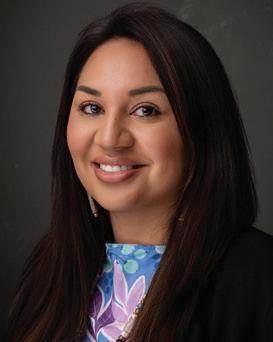
Under the BOT procedures code, “a resolution is a document that records certain official decisions of the Board of Trustees in a standard format.” Resolutions matter because they guide our actions and provide directions to our tribal government on a range of topics, including protecting First Foods, land purchases, economic ventures, budget appropriations, health care and much more. Resolutions also tell our story: where we started; the decisions made over time; how our government, community and people have grown; and how we can continue to expand and thrive.
Underway will be a resolution training, a poll motion form update and forms to meet the new branding guidelines approved by the BOT in 2025. In addition to these process improvements, I am also looking at dates in early fall for the annual committees and commissions training. Tribal members who serve in these roles will be in attendance to learn. There will be a save-the-date and more details announced soon.
Another reminder for tribal members interested in learning what the BOT and departments are working on is by visiting the ctuir.org and under the Government tab clicking Board of Trustees, where you will find a recap of the weekly Monday meetings. You may also join Monday meetings by clicking the link at ctuir.org/ our-government/board-of-trustees/botcalendar/. Other ways to review meeting minutes are to review them in the CUJ and visit cuj.ctuir.org. I look forward to sharing more about the work underway to make processes more efficient, effective and streamlined.
MONICA PARADISE Secretary, CTUIR Board of Trustees
NCS students walk out to protest math teacher layoff
The CUJ MISSION — Students protested outside Nixyáawii Community School (NCS) on March 19, holding signs opposing the administration’s decision to lay off math teacher Amanda Meyer.
Students staged a walkout around 11:30 a.m., leaving the building and gathering in front of the school. They voiced their support for Meyer and expressed frustration over the decision.
In an email, Principal Ryan Heinrich said Meyer’s layoff was part of a “reduction in force” decision.
“Due to declining enrollment and projected student numbers, the Nixyáawii Community School Board, along with the (Confederated Tribes of the Umatilla Indian Reservation) Finance Department and administration, has made the difficult decision to implement a reduction in force for the 2026-27 school year,” Heinrich wrote. “The position selected for reduction was determined based on what responsibilities could be absorbed by remaining staff and was not based on employee performance.”
“Math is a core subject; we need it to graduate,” Eleanor Kenney, NCS freshman and protest organizer, said. “We don’t deserve halfbaked plans or teachers who aren’t qualified to teach us math. She’s made learning really easy. Easy and fun.”
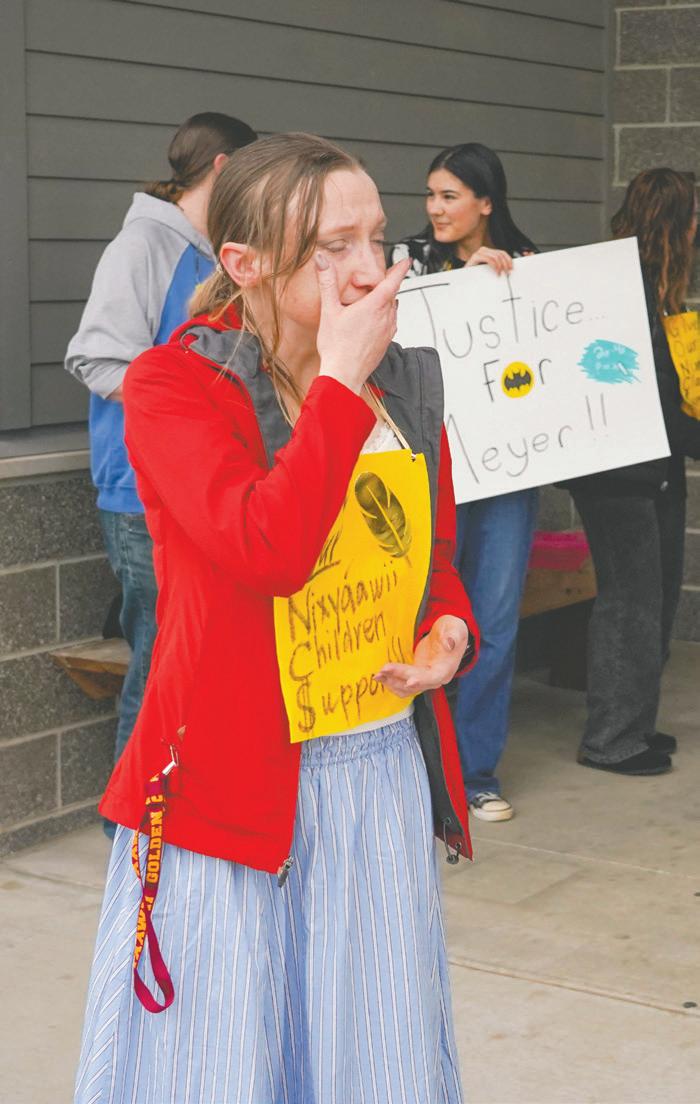
Shortly after the walkout began, students greeted Meyer with cheers and applause. She appeared moved by the show of support for her and her three years of teaching at NCS.
“It feels like I’m leaving and they’re being set up for failure, and that’s really heartbreaking,” Meyer said, referring to the reduction decision.
NCS budget
Students raised budget concerns, saying Heinrich’s salary and benefits account for roughly 8% of the school’s budget.
“It feels like I’m leaving and they’re being set up for failure, and that’s really heartbreaking.”
— Amanda Meyer, Nixyáawii Community School math teacher
According to public payroll records from the GovSalaries website, the latest records show that Heinrich earned $130,563 in 2024, about 8% higher than the average principal salary in Oregon.
Charter schools like NCS receive funding largely based on enrollment through the state’s public school financing system and have fewer funding sources than traditional public school districts.
According to the NCS 2025 Audited Financial Statement, the school’s 2024–25 budget was estimated for 75 students, the same as the previous year, with a beginning fund balance of $680,000. Actual enrollment during the budget cycle averaged 82 students, while the beginning fund balance totaled $445,319. Total appropriations for the year reached roughly $1.84 million according to the NCS 2024-2025 Adopted Budget Document.
The 2025–26 budget, also estimated for 75 students, sets total appropriations at roughly $1.72 million, a decrease of $120,000 from the previous year.
NCS receives the majority of its revenue from the State School Fund (SSF) and the CTUIR, which provide 70.8% and 23.7% of total revenue respectively, according to the audit report.
Additionally, funding comes through state education programs and grants, including the Student Investment Act and High School Success, which support instruction, student service and career exploration.
By contrast, according to the Oregon government website, traditional public school districts receive funding from multiple sources. State funding provides the largest share, which is about 50%, through the SSF. Local property
taxes contribute roughly 40% of total funding and federal funding makes up around 10%, primarily supporting specialized programs like special education and school nutrition.
This combination of funding sources provides district-run schools with more revenue per student, while charter schools must operate within a more limited budget.
Moving forward at NCS
Although Meyer expressed disappointment that the math program was being cut, remaining staff members will take over the math classes, regardless of their expertise.
“For whatever reason, math seems to be a subject that people just say, ‘Oh, I can’t do it. I’m not a math person.’” she said. “And so, to have a bunch of people that don’t necessarily feel that math is their strong suit, try and take over and teach math, especially higher-level classes, it worries me.”
With the change affecting her education, Kenney said she isn’t sure what to do next.
“Either I would have to stay here and take math classes taught by teachers who don’t really know exactly what they’re doing, or I could change schools, and that’s a big change,” Kenney said.
Reflecting on her three years teaching at NCS, Meyer said she has collected many stories about her students and was amazed by their support during the walkout.
“There are a lot of kids that I’ve had for all of their high school math classes, and that’s been really awesome, to see them grow and develop,” she said. “I am blown away by the support. I would have
bet my life none of this would have happened. This still does not quite feel believable.”
During the walkout, students distributed flyers calling for certified math teachers, budget decisions that prioritize core academic programs, a leadership structure with accountability measures and a complaint system that does not funnel all concerns through one person.
Rather than cutting staff, students are urging the school board to consider promoting two teachers to principal and vice principal while allowing them to continue teaching part-time. With lower salaries for teachers in these roles, students said they believe the school could preserve enough of its budget to retain the positions it plans to eliminate.
Students staged their protest, aiming to remain calm, organized and focused to ensure their concerns about the loss of a certified math teacher and their futures at NCS were taken seriously.
Surrounded by students voicing their concerns about the school’s decisions, Meyer said she feels the future is in good hands.
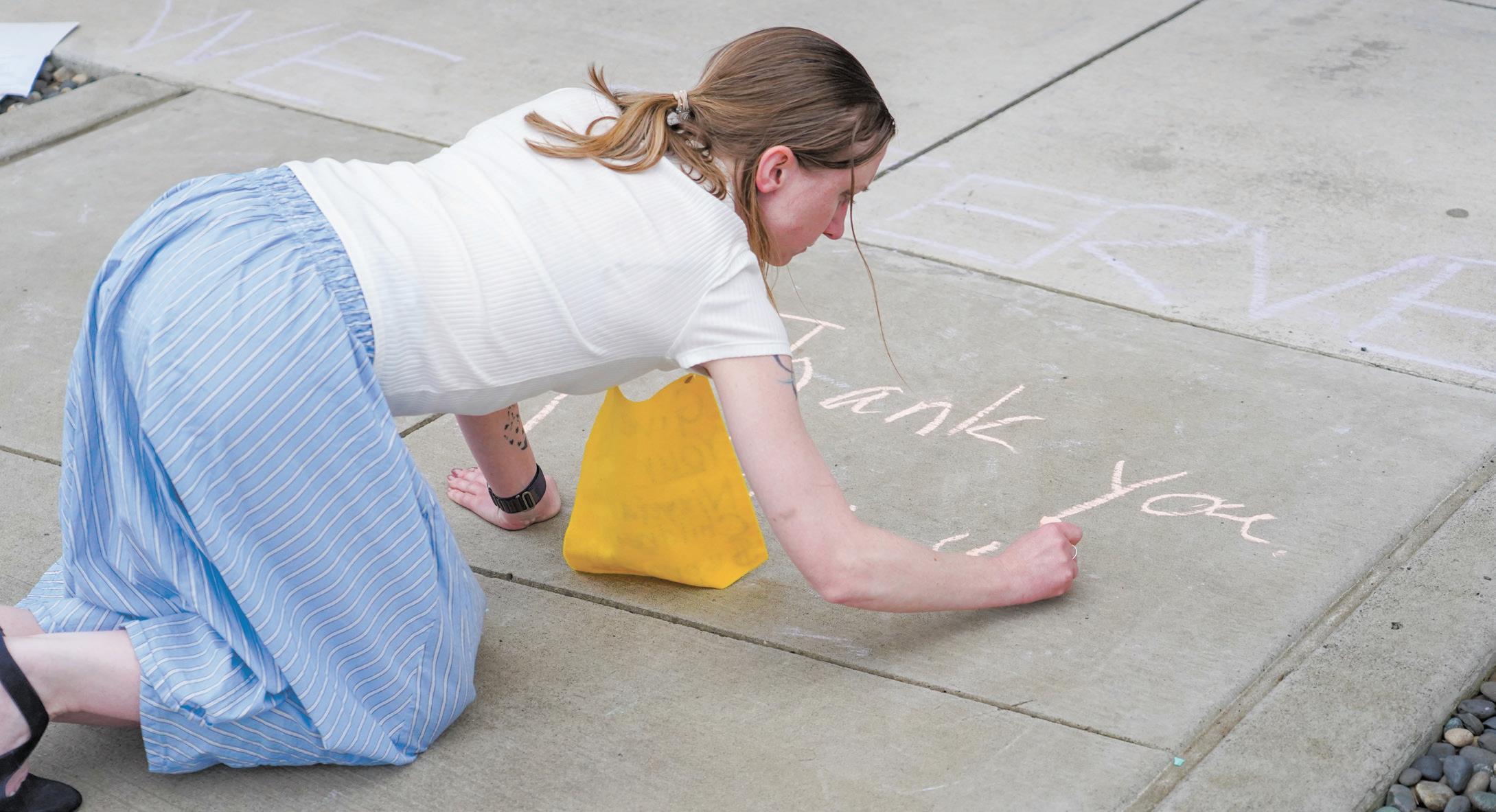
As students filled the area with protest signs and messages chalked across the sidewalk, Meyer joined them, wearing a sign of her own. In orange chalk, she wrote: “Thank you, I love you all so much, I believe in you, I will hold you in my heart forever.”
BEAU GLYNN
Amanda Meyer, math teacher at Nixyáawii Community School, writes a thank-you note to a student who left a supportive chalk message on the school grounds on March 19. (Beau Glynn/The CUJ)
Overcome with emotion, Amanda Meyer, math teacher at Nixyáawii Community School, reacts to a student protest on March 19 opposing her layoff due to budget cuts. (Beau Glynn/The CUJ)
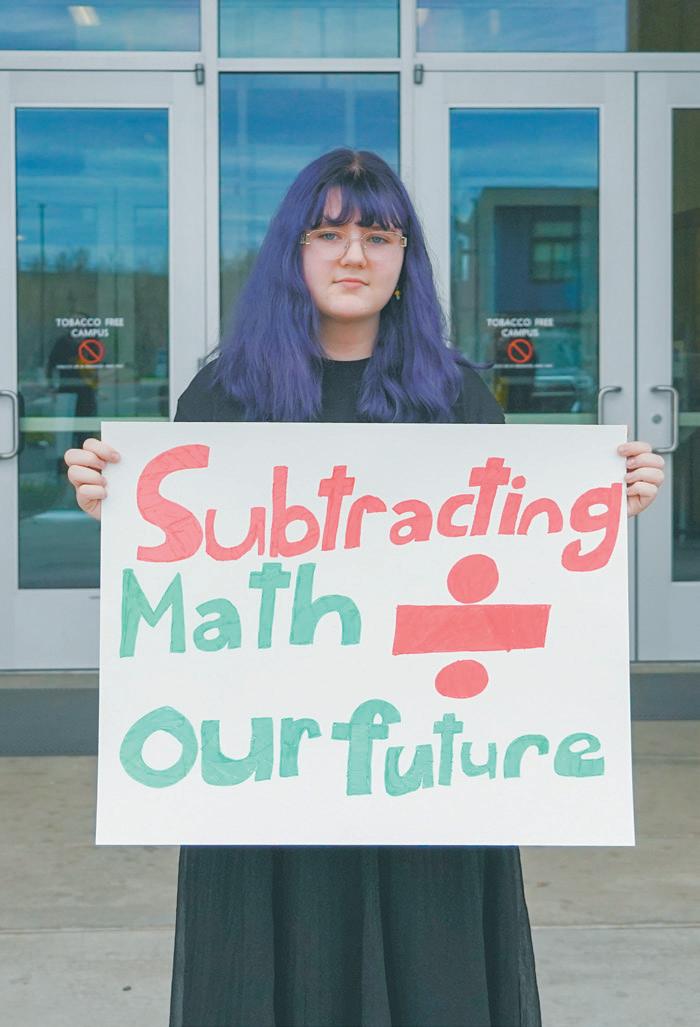
Nixyáawii Community School student Eleanor Kenney displays a sign March 19 opposing the layoff of math teacher Amanda Meyer. (Beau Glynn/The CUJ)
Native remains in Walla Walla still await reburial
BEAU GLYNN
The CUJ
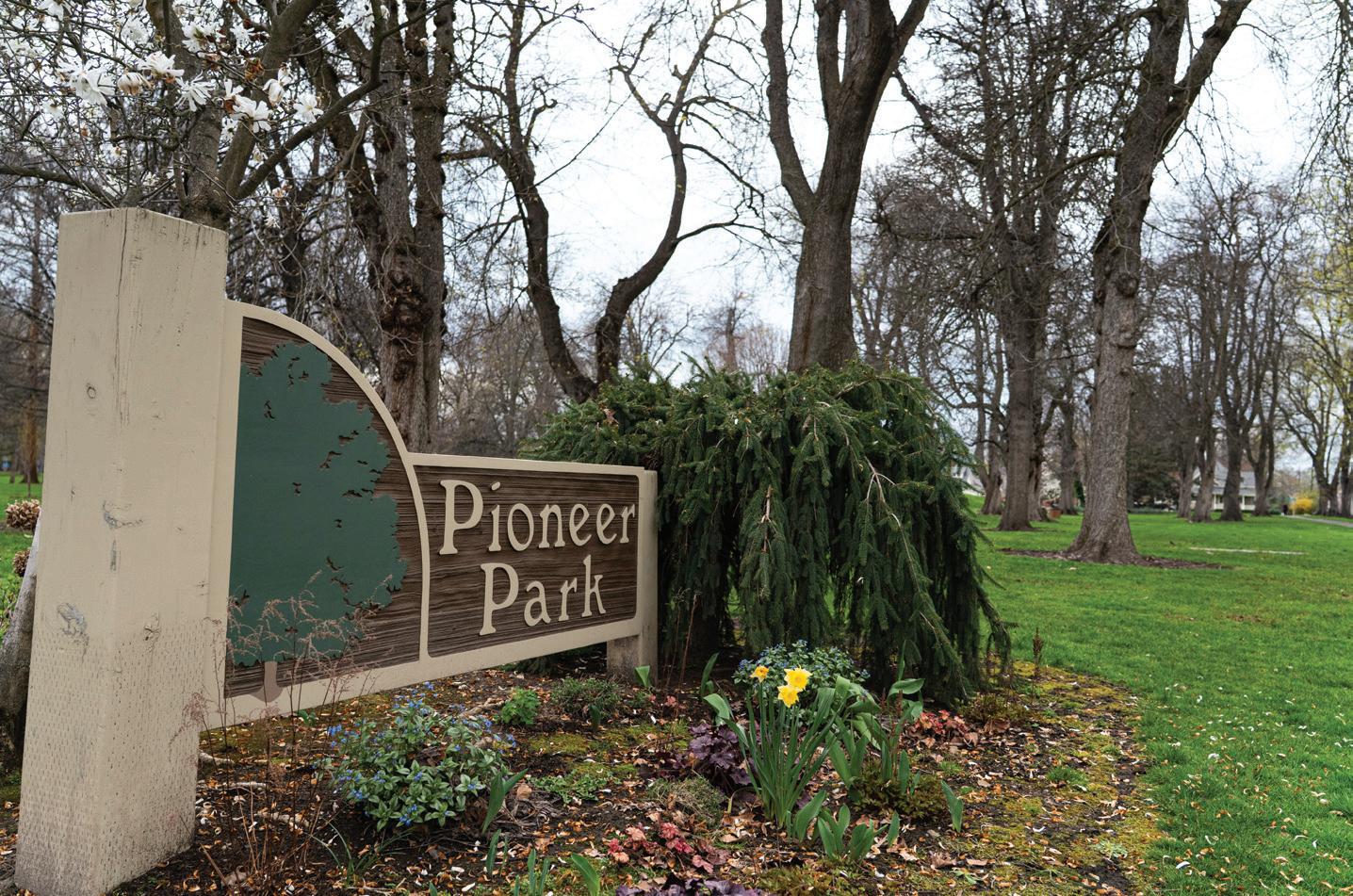
WALLA WALLA — More than a year after crews uncovered a Native American burial site during sidewalk improvements at Pioneer Park, ancestral remains have yet to be returned to their resting place.
The Confederated Tribes of the Umatilla Indian Reservation (CTUIR) Board of Trustees (BOT) sent a letter to the city of Walla Walla and the Washington Transportation Improvement Board (WTIB) on Jan. 31, expressing frustration over the discovery and how officials have handled it.
The contractor exposed the ancestral remains on Dec. 6, 2024, while working on a Pioneer Park and Whitman Street project.
Workers did not identify them as human remains until two days later when two individuals posted photos on social media, drawing the Walla Walla Police Department’s attention.
Dirt from the excavation where the ancestor had been found was placed at different locations along the street, and the city hired an archaeological firm to conduct screenings, CTUIR Cultural Resources Protection Program Manager Teara Farrow Ferman said. While the remains are held in Olympia, the city-hired archaeologist must rebuild the retaining wall from which the ancestor was discovered, which should be happening soon, said Farrow Ferman.
“Then we’ll rebury the ancestor with some protective measures placed on top of the ancestor,” she said.
After Washington State Physical Anthropologist Guy Tasa confirmed the remains were Native American, the CTUIR and Yakama Nation sought to work with the state to address the discovery, meeting with the city for the first time on Jan. 13, 2025.
The BOT said the city did not consult with the tribes on potential cultural resource impacts for the WTIB-funded project, citing Gov. Jay Inslee’s Executive Order 2021-02. It also said the city was not following its 2023 Historic Preservation Plan for consultation with CTUIR.
“The City of Walla Walla should be aware of the long, troubling history of the routine and casual excavation of tribal burials that has occurred over the last two centuries, including a significant black market for tribal artifacts, something we could have discussed given the opportunity for consultation,” the BOT stated in its letter.
On Dec. 23, 2024, the city government posted a Facebook update with burial site photos, stating the area had been designated an archaeological site. While the photos have been removed, the post remains and has been shared approximately 100 times.
“We have found whenever tribal burials are identified publicly;
people tend to visit those sites in search of artifacts,” the BOT wrote. “Given that the discovery site was located at a public park with high pedestrian traffic that was not adequately protected until after the January 13 meeting, disclosure of the location is unacceptable.”
The handling of the discovery left the BOT with questions for the city, including why tribal consultation wasn’t sought, why a cultural resource monitor wasn’t on site, why excavation continued after bones were uncovered and whether the contractor was aware of the inadvertent discovery policy and its requirements.
The BOT suggested solutions such as proper consultation with the tribes and the Washington Department of Archaeology and Historic Preservation rather than delegating to an entity without tribal consultation experience as well as ensuring contractors have the expertise to comply with the law in such cases.
“The CTUIR member tribes and our ancestors have occupied the area that is the Walla Walla Valley since time immemorial,” the BOT wrote. “Many of our ancestors remain buried on lands within the city of Walla Walla. We hope that our work together on this incident and the full implementation of your Historic Preservation Plan will reduce the likelihood of future incidents such as these on all cityled projects.”
Be part of the intertribal work to protect salmon and treaty fishing rights!

Applying is fast & easy.

Visit critfc.org/jobs or scan the QR code for full position details and application materials.
Main Office (based in Portland, OR) • Principal Legal Counsel and Dept Manager • $156-180K annual • Fishery Scientist-Predation Coordinator • $89-122K annual • Mt Hood Community College Intern • $19-20 per hour Fisheries Enforcement (based in Hood River, OR) • Police Officer • $32-38 per hour • Dispatcher • $25-28 per hour
(based in Hagerman, ID) • Genetics Lab Technician • $24-27 per hour • Summer Salmon Genetics Research Internship • $18 per hour + housing
More than a year after their inadvertent discovery in December 2024, ancestral remains still wait to be reburied where they were found at Pioneer Park in Walla Walla, Washington. (Beau Glynn/CUJ)
UTPD still receiving tips in Jones disappearance
THE CUJ MISSION –
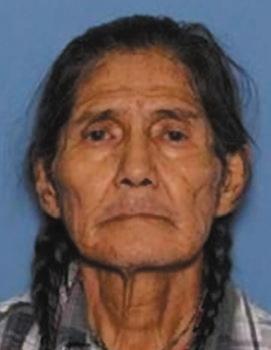
Umatilla Tribal Police Department (UTPD) officials say they are still receiving tips in the case of Confederated Tribes of the Umatilla Indian Reservation (CTUIR) member Wesley Dixon Jones, who was last seen Oct. 5, 2025.
UTPD Det. William Morris said he received four tips in the past month with some leading to searches at local and distant sites. However, the tips did not lead to the discovery of the missing 71-year-old.
“Even though the tips did not lead to any significant discovery, we would rather receive tips and look into them than not receive them at all,” he said.
Morris said as long as tips regarding Jones’s disappearance keep coming in, the UTPD would follow up on them and not label the case cold. A cold case is an unsolved investigation that remains open but is not active pending the discovery of new information.
Anyone with information can call the UTPD at 541-278-0550.
Jones was last seen along east Short Mile Road on the Umatilla Indian Reservation in a gray 2003 Ford Escape with Oregon license plate SM15454. When the vehicle returned west on the same road Jones was no longer visible in it. The driver’s identity hasn’t been disclosed because of the
investigation.
He is described as a 5-feet, 8-inchtall Native American weighing approximately 140 pounds with long black hair and brown eyes. Jones was last seen wearing a black and red TigerScot jacket, black shirt, black sweatpants and boots.
Since Oct. 6, the UTPD has conducted searches with the Umatilla County Sheriff’s Office Search & Rescue, aerial drone searches over parts of the Umatilla River and searches on foot. Other areas searched were between Cayuse and Bingham roads as well as Short Mile Road to Cayuse Road, including River Road.
From Oct. 31 to Nov. 2, the MMIW Search & Hope Alliance used sonar at deeper spots in the Umatilla River. That search also included an area east of Sampson Lane and Short Mile Road along the railroad right-of-way, as well as upriver around the Cayuse community.
On Nov. 18, the UTPD, with the help of CTUIR’s Geographic Information Systems, conducted an aerial drone search in three previously unsearched locations. Citing the investigation, Morris did not specify the locations other than they were farther away from the Umatilla River.
On Dec. 3, a five-member FBI dive team searched Johnley Pond near Cayuse with boats using specialized equipment, including an underwater drone.
Morris said although the UTPD has no plans for additional searches
without new information, the MMIW Search & Hope Alliance was planning another search.
Jones’s daughter, Molly Jones, said although no date or location for the new search had been
provided as of publication, the MMIW Search & Hope Alliance would accept volunteers for the search as long as they signed nondisclosure agreements because of the open investigation.


Wesley Jones
CTUIR and partners celebrate new fish ladder at Lookingglass Hatchery
TRAVIS SNELL
The CUJ
ELGIN — The Confederated Tribes of the Umatilla Indian Reservation (CTUIR) and its partners are singing the praises of a new fish ladder at the Lookingglass Fish Hatchery on Lookingglass and Jarboe creeks.
Rod Engle, fish biologist-science coordinator for the U.S. Fish and Wildlife Service’s (USFW) Lower Snake River Compensation Plan (LSRCP) Office, said the new ladder replaces one that was smaller and of a different style.
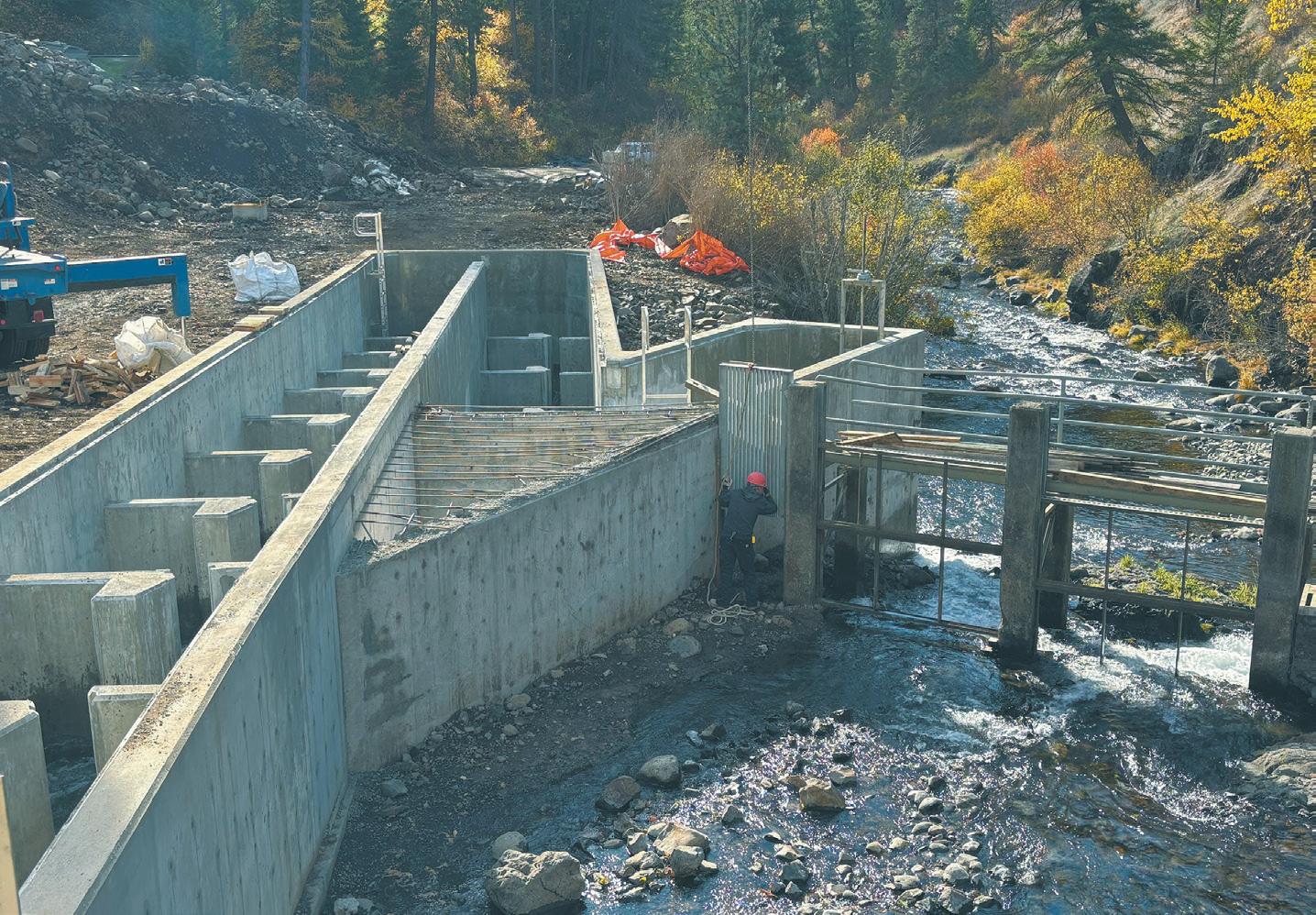
“The elevation gain from the bottom to the top of the ladder is about 10 feet, and the length of the ladder is approximately 120 feet,” he said. “It’s made from 540 cubic yards of concrete, steel and fiberglass rebar and represents a lot of work by engineers, contractors and fish biologists who played parts in its completion.”
Engle said the ladder resembles a meandering walkway with a slotted floor, but within the ladder there are 5-feet-deep pools with passages between them for fish to “climb.” Fish enter the ladder by being attracted to water flow near the entrance or coming from inside it, he added.
“Once inside, they swim up successive pools connected by
narrow slits of flowing water, each pool slightly higher in elevation than the last until they reach the top,” Engle said. “Once at the top pool, they are either collected by the hatchery as brood stock for the next hatchery generation of spring Chinook salmon or passed upstream to continue their spawning journey or migration.”
Jen Krajcik, CTUIR Department of Natural Resources artificial production supervisor, said the old ladder also did not meet Oregon Department of Fish and Wildlife (ODFW) and National Oceanic and Atmospheric Administration (NOAA) fish passage criteria.
“This one does, which will make it easier for both adult and juvenile fish to move up and down the creek,” she said. “The new design allows our staff to work with fish in the trap and pass them directly upstream.”
Krajcik said fish previously had to be removed with a net, moved into a nearby shed before being put in a tank on the back of a truck for release upstream.
“We think that being able to work fish inside the trap will be better for the fish, particularly Endangered Species Act-listed fish like bull trout, and better for our staff,” she said.

The hatchery is operated by the ODFW with co-management by the CTUIR and the Nez Perce Tribe for the fish they raise and release in the Imnaha and Grande Ronde River basins. It was constructed in 1982 to mitigate for spring Chinook and summer steelhead losses caused by four federal dams constructed on the lower Snake River. It’s used to rear spring Chinook for the Grande Ronde and Imnaha rivers and serves as an adult collection, egg incubation and rearing and release site for the spring Chinook destined for the Grande Ronde River systems.
Krajcik said the previous ladder had reached its lifespan and the new ladder’s design should allow better upstream and downstream passage for fish of varying types, sizes and ages within Lookingglass Creek. It also provides fish passage over Lookingglass Falls for adult salmon and steelhead as well as resident fish such as bull trout or rainbow trout, she said.
Along with the new ladder, the hatchery’s intake screens were replaced, which will keep natural origin fish from entering the hatchery. Engle said it’s highly likely some juvenile and resident fish have already used it and that the return of steelhead spawners was expected in March and April as well as the return of spring Chinook from May to August.
“Pacific Lamprey may also use the ladder or navigate Lookingglass Falls,” he said. “Fish biologists for the USFWS, CTUIR and ODFW expect the ladder to help immediately and the new intake to considerably reduce negative impacts to fish in Lookingglass Creek.”
Although the project’s planning
began in 2021, physical work on it didn’t occur until May 2025. The ladder was completed on Oct. 22. The $5.8 million it took to build it stemmed from Bonneville Power Administration (BPA) funds earmarked for high priority, nonrecurring maintenance needs of existing BPA Fish & Wildlife assets, Engle said.
CTUIR staff biologists and technicians helped with the ladder’s design and constructionrelated monitoring. They will also enumerate and pass steelhead navigating the ladder annually as part of a monitoring project. CTUIR staff also work with the ODFW collecting spring Chinook for brood stock at the hatchery to ensure continued fishing opportunities.
“CTUIR staff were involved in implementation meetings where they gave input on the timing of adult fish passage through the construction area, offered expertise in helping to design and set up a weir to keep adult fish from entering the work area, monitoring redds when fish were allowed into the work area and offering input into the design of the fish trap that was installed at the ladder,” Krajcik said. “Additionally, they have been active in helping ODFW staff problem solve by making modifications to the trap fyke and grizzly, the ladder grating and working to determine how best to operate the trap.”
Krajcik said the CTUIR Fish & Wildlife Commission has requested to hold a blessing ceremony for the new fish ladder at the hatchery in April before the spring Chinook salmon return.
Construction crews work on a new fish ladder at Lookingglass Fish Hatchery on Oct. 22, 2025, along Lookingglass and Jarboe creeks in Elgin. (Rod Engle/Contributed photo)
Restoration projects to reconnect rivers and fish
BEAU GLYNN
The CUJ
MISSION — More than 100 miles of historic salmon and steelhead habitat could eventually reopen under a $1 million federal investment to restore fish passage at the McKay Creek Reservoir Dam in the Umatilla River Basin.
The Oregon Department of Fish and Wildlife (ODFW) announced the project on March 5 to lay groundwork for reconnecting fish to their upstream habitat. The funding is part of more than $100 million in federal spending directed to 54 community projects across Oregon.
U.S. Sens. Jeff Merkley and Ron Wyden helped secure funding to support an alternatives analysis and engineering design for potential fish passage solutions at the dam on McKay Creek, a tributary of the Umatilla River.
According to ODFW, the dam ranks as the fourth-highest priority barrier on its statewide fish passage list.
The project follows years of collaboration among the ODFW, Confederated Tribes of the Umatilla Indian Reservation (CTUIR), Bureau of Reclamation and other federal partners with support from Oregon’s congressional delegation.
CTUIR Fisheries Program Manager Jerimiah Bonifer said restoring passage to this upstream habitat would see almost immediate benefits.
“The Upper McKay Basin, above the reservoir, contains about 24% of the suitable habitat within the Umatilla Basin,” he said.
The McKay Creek Reservoir Dam, built in 1927, blocks access to more than 100 miles of upstream habitat for native migratory fish, including about 25% of suitable steelhead spawning and rearing habitat in the Umatilla Basin.
Historically, the McKay Creek drainage supported Chinook salmon, Pacific lamprey and bull trout, and it still provides some of the coldest water in the basin, according to the ODFW. Reconnecting that habitat could improve conditions for those species.
Bonifer said the criteria for getting mid-Columbia steelhead de-listed as a threatened species include geographic distribution
and abundance, which the project could contribute to within the Umatilla Basin.
The collaboration between the CTUIR and ODFW has led to a way to jump-start the restoration of fish passage beyond the lower 6 miles of McKay Creek.
“Restoring First Foods to the landscape is a top priority for the Department of Natural Resources and the Fisheries Program,” Bonifer said. “This is a key effort in being able to do that, restore these First Foods to places where they’ve been removed.”
Steps to reconnect fish with the McKay Basin habitat include radio-telemetry studies, which use radio waves to track outplanted steelhead, and spawning ground surveys showing the fish are using the lower 6 miles of McKay Creek.
From there, Bonifer said they will assess the feasibility of providing passage or developing alternative methods such as a fish ladder.
“This would be a tremendous benefit to the tribal community, restoring our First Foods to the landscapes where they’ve been missing, and reestablishing that connection is of the utmost importance to the Department of Natural Resources and the tribal government,” he said. “We are here to serve the tribal community, and one of the ways that we best do that is to ensure that they can exercise their treaty rights.”

Restoring Native plants, fish and ecosystem
The Blue Mountain Land Trust (BMLT) is also working on a restoration project guided by the CTUIR’s First Foods mission and River Vision, culminating in the Túuši Wána Conservation and Restoration Easement, which permanently protects 438 acres along the Touchet River.
The project reconnects the river to its floodplain by reversing channelization and revitalizing habitat that once ran over a broad floodplain prior to upstream erosion. As a conservation easement, the
floodplain’s environmental values are protected long-term.
Restoration plans include lowering parts of the floodplain and carving new side channels, giving the river more space to wind and slow its flow. Slower waters benefit juvenile migratory fish, which rely on sheltered waters and food sources in the side channels during winter.
“This 450-acre floodplain conservation easement along a 3-mile-long stretch of the mainstem Touchet River will allow the CTUIR the opportunity to reconnect the floodplain to the river and add much-needed instream diversity, which will benefit winter rearing habitat for juvenile salmonids,” DNR Resources Project Leader Jerry Middel said.
Part of the project includes reintroducing native plants and removing invasive species. It also calls for planting more than 40,000 native trees and shrubs and 17,000 pounds of native seeds. Later plantings would include culturally important and wildlife-sustaining berry species sourced from CTUIR’s plant nursery.
As the plants take root, wildlife is expected to follow, creating a diverse ecosystem ranging from bald eagles to amphibians. Anton Chiono, DNR Habitat Conservation Project leader, said a moose had already been spotted in the floodplains.
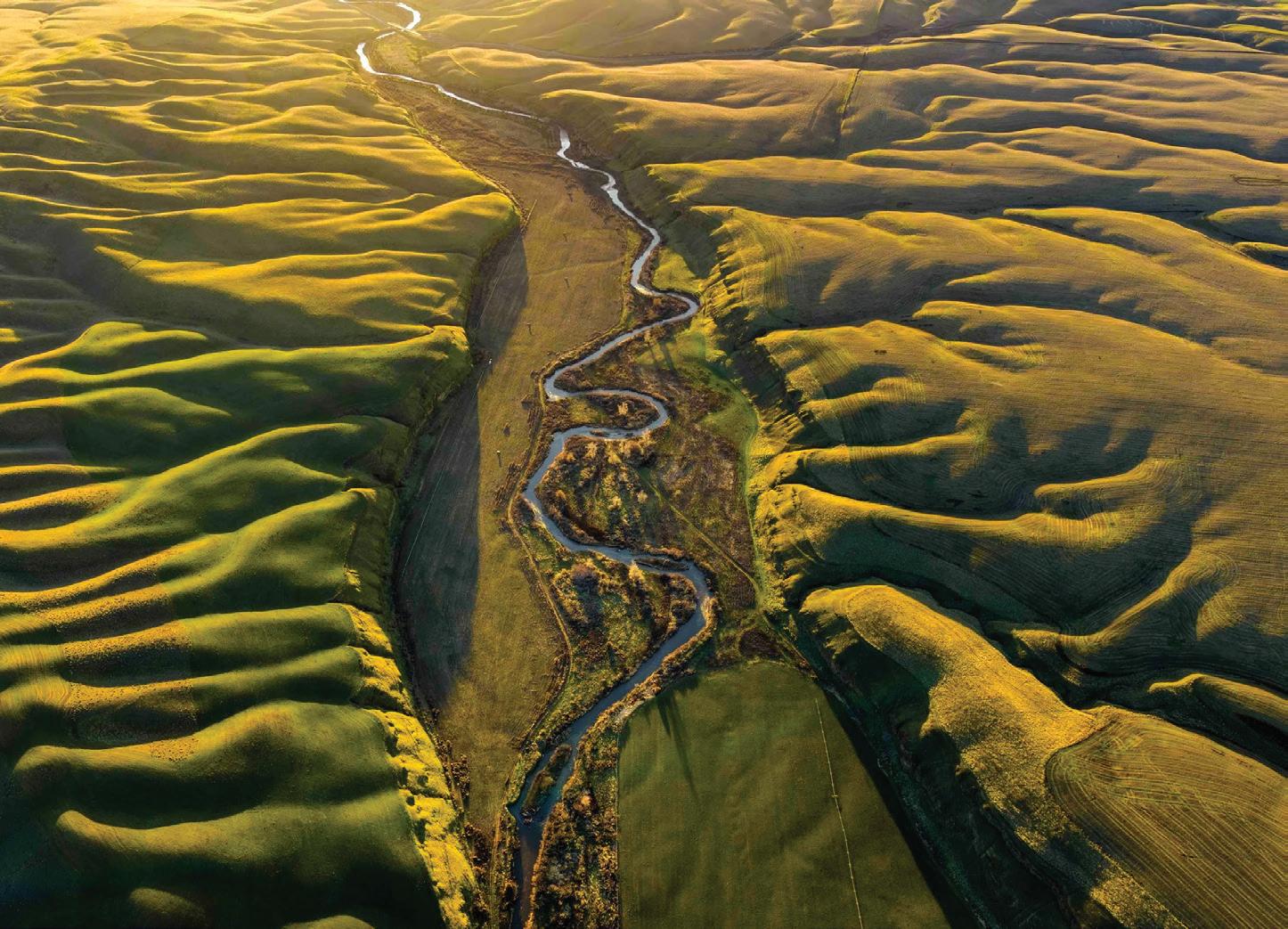
A view of the Touchet River from above. The Túuši Wána Conservation and Restoration Easement and the McKay restoration project are restoring First Foods to the landscape and reintroducing ecosystems along shorebanks. (Blue Mountain Land Trust/Contributed)
AIRPORT ANTIQUES & THE FURNITURE LADY

Free Spay/Neuter Clinic returns to UTFD
THE CUJ
MISSION – The Confederated Tribes of the Umatilla Indian Reservation (CTUIR) is again hosting a free spay/neuter clinic for pets this year in conjunction with First Nations Veterinary and the 15/10 Foundation.
•
For specials, follow Airport Antiques & The Furniture Lady on Facebook! Celebrating 25Yearsin Business
• Antique Furniture
• Depression Glass
• Kitchenware • Collectibles • Vintage Art
MONTHLY
15% OFF SELECT ITEMS

1816 NW 51st ST • PENDLETON 541-278-0141 • 888-222-2397 www.pendletonfurniturelady.com
Watch our website and Facebook page for monthly and special sales!

Specializing in furniture repair & restoration

Kendyl DeJong, CTUIR animal control officer, said the clinic will be held May 2-3 at the Umatilla Tribal Fire Department at 73382 Confederated Way.
“The goal is to prevent unwanted litters from roaming our reservation and to provide the community a high-volume, no-cost clinic with vaccinations due to the high cost of veterinary services in our area,” she said.
The approximate cost for each pet seen at the clinic runs between $110 to $125 with a $10 dollar rabies vaccination, if needed, DeJong said. However, with the sponsorships from First Nations Veterinary and the 15/10 Foundation, all fees are waived.
“Dogs will receive spaying and neutering, vaccinations, a microchip and flea and tick medication. Cats receive spaying and neutering and vaccinations. We can’t do vaccine-only appointments. We only get enough vaccines donated for our surgical patients.”
DeJong said pets must be between 2 months old and 5 years old, weigh 60 pounds or less and live within the Umatilla Indian Reservation.
“The age 5 is given because of difficulties or complications during the procedure that can and do
happen with older dogs and cats,” she said. “And the surgical table is a portable unit and can only hold up to 60 pounds, and if it breaks it will shut down the clinic.”
For owners of dogs over the weight limit, DeJong said the Pendleton Animal Welfare Shelter (PAWS) has a low-cost spay and neuter clinic available.
During the 2025 clinic, approximately 100 pet owners received the free help. And though she didn’t know the number of available spots for this year’s clinic, DeJong said pet owners must register at https://firstnationsvet. com/umatilla-nation with a dropoff time for dogs at 7:30 a.m. and 11 a.m. for cats on both days.
DeJong also said she expects the CTUIR to host the clinic on an
annual basis.
First Nations Vet is a volunteerbased organization that provides veterinary services to pets living in First Nations communities. The organization aims to support pet health and welfare in such communities and rely on volunteers, including veterinarians and technicians, to operate the clinics For more information, visit https://firstnationsvet.com.
The 15/10 Foundation is a nonprofit organization that helps people pay people their pets’ medical bills, encourages people to get pet insurance and fills a void in the animal welfare world by sponsoring pets with behavioral or medical issues unlikely to ever make it out of a shelter. For more information, visit https://15outof10.org.
2026 ArtWORKz JUNIOR ART SHOW & COMPETITION
Exhibit opens Friday, April 3
Come view the incredible artwork submitted by talented youth from all over the region. Over 100 pieces of art are on display featuring paintings, drawings, sculptures, photography, quilting, ceramics, and leatherwork. You will be amazed at the level of expertise and creativity!
Thank you

MUSEUMS for ALL
Free admission to visitors presenting their EBT card. Good for up to four people per card. Available all year!
FREE FIRST FRIDAY!
April 3, 10am-5pm Indian Tacos ($13) in Kinship Café. Free admission to the museum.
PENDLETON BEACH TOWEL SALE!
2 for $90 all month! (save $29!)
Everyone loves the luxurious, oversized Pendleton beach towels with their unique designs. They make great gifts, look incredible next to your shower or bath, and keep you dry and comfortable at the pool or your favorite swimming spot. Take advantage of this generous markdown through the month of April!
O er may not be combined with other o ers/ discounts. Minimum purchase of two towels.
ARTISTS RECEPTION & AWARDS CEREMONY
2026 ArtWORKz Junior Art Show & Competition
Saturday, April 18 1pm-3pm
Join the artists and their families to see who won awards and celebrate the incredible talent of these young artists. Free and open to the public. Refreshments will be served.
Thank you
Museum Store
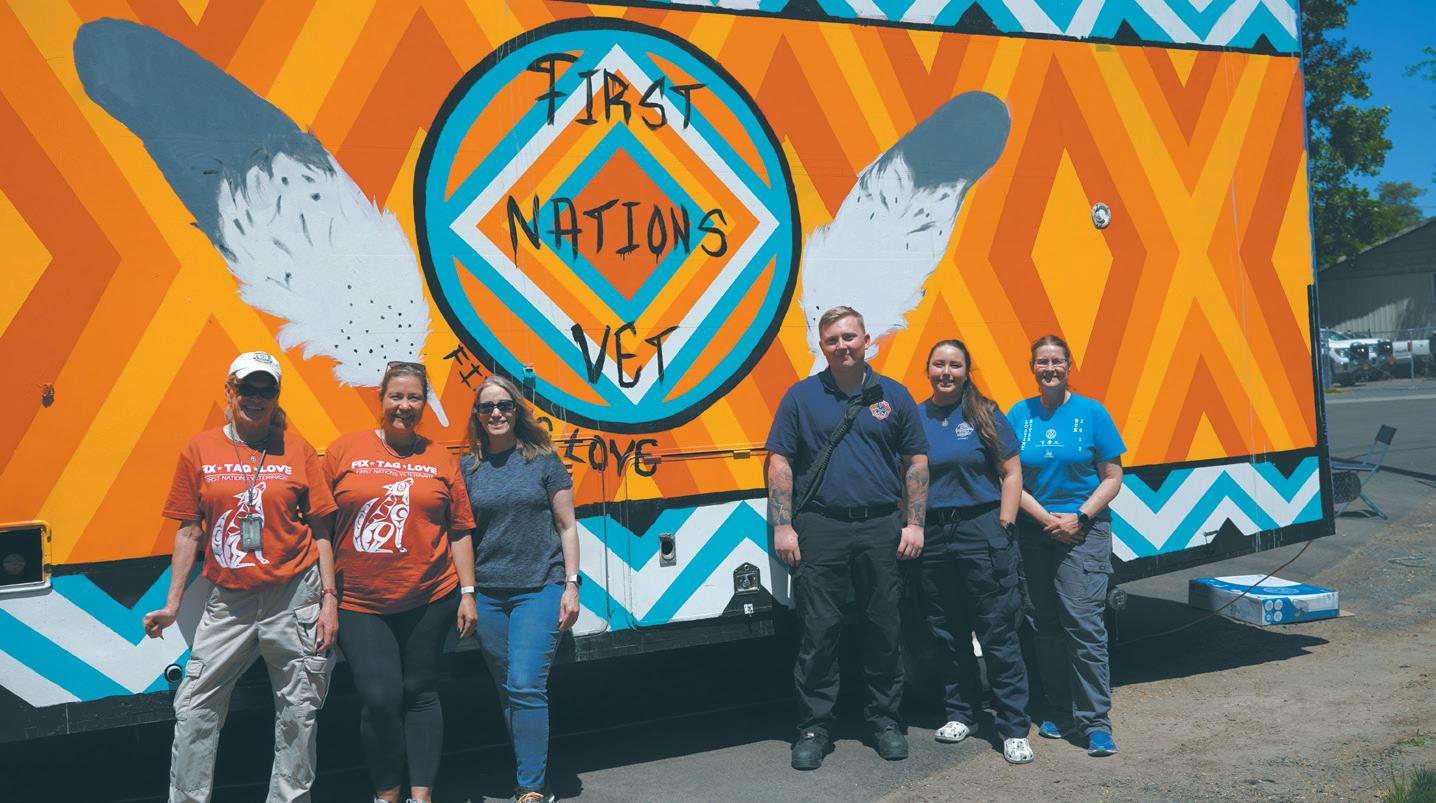
From left to right, is Kendyl DeJong, animal control officer with Umatilla Tribal Police Department, Gina Clemmer, founder of Clinic HQ and First Nations Veterinary, Shaindel Beers vice president of Pendleton Animal Welfare Shelter (PAWS), Mark Pursel EMT/ Fire Fighter for Umatilla Fire Department, Alexiss Hughes EMT/ Fire Fighter for Umatilla Fire Dept and Robin Harris, secretary of PAWS of Pendleton. (Contributed photo)
BOT approves Columbia River Shoreline Reconveyance
BY BEAU GLYNN
The CUJ
MISSION — The Confederated Tribes of the Umatilla Indian Reservation (CTUIR) Board of Trustees (BOT) is partnering with the U.S. Army Corps of Engineers on the Columbia River Shoreline Reconveyance, a project that began in 2018.
On March 16 the BOT unanimously approved draft legislation, a memorandum of agreement (MOA), a Cultural Practices Easement and the Napúutkwit Ground Disturbing Protocols.
Trustee Lisa Ganuelas traveled with the Shoreline Reconveyance Working Group to Washington, D.C., to meet with Congress and advocate for the project.
“The high-level summary of the legislation is that this bill transfers part of the Columbia River Shoreline within the CTUIR’s ceded treaty territory out of federal ownership to local governments or in trust for tribes,” said CTUIR Cultural Resource Protection Program Manager Teara Farrow Ferman.
Farrow Ferman, who has been with the project every step of the way, gave the BOT an update at a March 11 work session on the MOA, which outlined the governmentto-government relationship between the CTUIR and the cities of Richland, Kennewick and Pasco; Franklin County; the ports of Benton and Pasco; and the Tri-Cities Development Council (TRIDEC).
Key stipulations in the MOA focus on government-to-government relationships, established through the annual meetings it requires. Another critical element is the protection and exercise of CTUIR treaty-reserved rights, which led to the creation of the Cultural Practices Easement and the Napúutkwit Ground Disturbing
Protocols. These two documents were developed over the past five years.
The BOT appointed an internal Shoreline Reconveyance Working Group in 2020. Since then, through monthly meetings, the group has developed the MOA, the Cultural Practices Easement, and the Napúutkwit Ground Disturbing Protocols.
“We went through all of these documents together, line by line, making adjustments so that everybody’s in agreement with them,” Farrow Ferman said.
The Cultural Practices Easement is intended to permanently protect tribal treaty rights and cultural resources. The document, originally drafted by the Yakama Nation, was adjusted for the CTUIR.
The Napúutkwit Ground Disturbing Protocols designates a committee that will meet monthly with designated representatives of TRIDEC and the municipalities as developments or other forms of ground disturbances take place. They will confer how to best comply with cultural resource protection procedures that have been detailed in the MOA.
The Napúutkwit Ground
Disturbing Protocols are also a key component of the BOT stipulation for protection and management of cultural and natural resources, alongside cooperation with the State Environmental Policy Act and developing a long-term strategy and management plan as developments take place.
Other stipulations focused on by the BOT in the MOA include the focus on tribal history and interpretation and economic development, which could include tourism and recreational or community development.
Farrow Ferman said the BOT had several priorities for the legislation.
“The first and foremost is ensuring that our treaty-reserved rights are protected and that we have access to those lands to continue exercising those rights,” she said.
Other priorities included concerns over Environmental Review, which prompted the Napúutkwit Ground Disturbing Protocols, formalizing government-to-government relationships through MOAs and developing a long-term strategy and management plan with other municipalities.
At the work session, Farrow
“... first and foremost is ensuring that our treaty-reserved rights are protected and that we have access to those lands to continue exercising those rights.”
— FARROW FERMAN, CTUIR Cultural Resource Protection Program Manager
Ferman also outlined lands requested for conveyance into trust status to support economic development, protect cultural sites and pursue joint ventures with local governments.
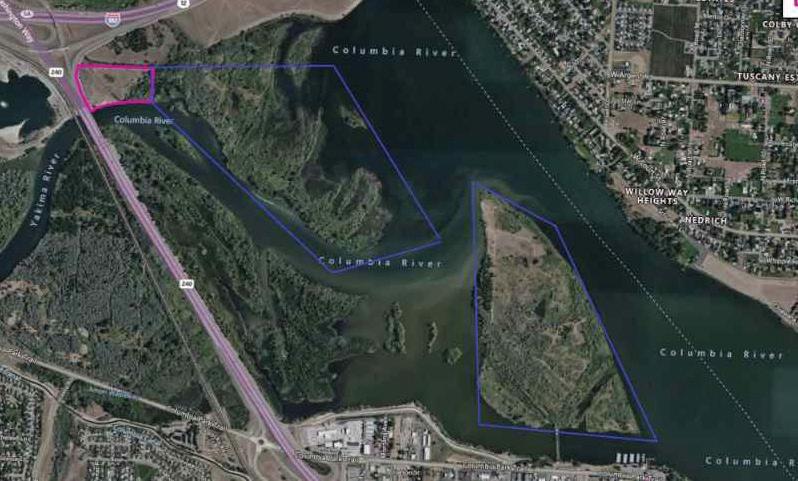
A key parcel is Columbia Point, specifically mentioned in Article Five of the CTUIR 1855 Treaty, which the BOT discussed with the city of Richland. Another land request is Plymouth Island, offered by the Port of Kennewick.
“The partnerships that we’ve established with the local governments, the years of work that we’ve put into this has really strengthened our relationship with one another,” Farrow Ferman said.
“Us providing a lot of education to those local governments has been really insightful for them, to learn about the processes we have to go through and how those different processes affect different rights of the tribe. This is a collaborative joint-effort and the relationships are really strong.”
Culture lives in the land, people, stories around us
Spring is a reminder of how wonderful change can be. It brings people outside exploring. It is a season of connection, community and renewal. In these warmer day traditions, communities, creativity and culture begin to blossom.
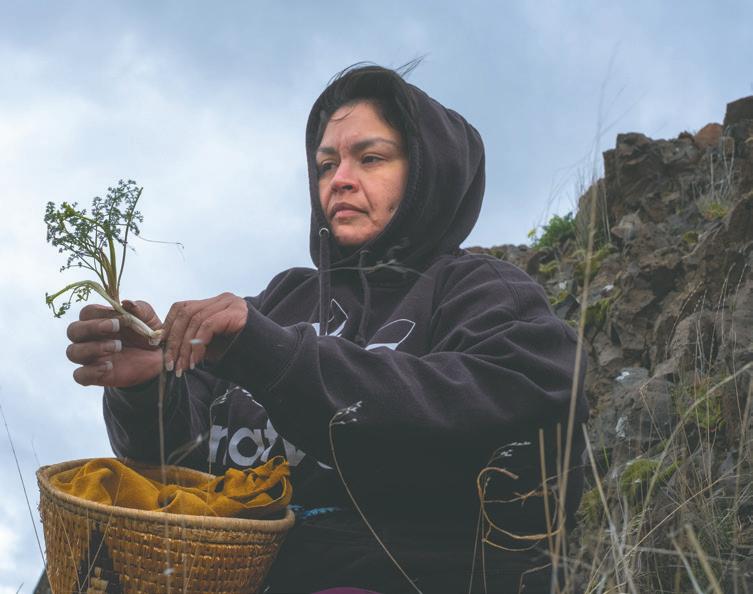
In March, I had the honor of joining families from the Confederated Tribes of the Umatilla Indian Reservation (CTUIR) on the Latit Latit excursion. Like many of the children who joined, it was my first time experiencing it. The day began cold, gray and rainy, but later the sun poked through clouds as we hiked through the rocky hills of Eastern Oregon to gather for Latit Latit (wild celery), one of the CTUIR’s First Foods.
Generations dug tender stalks from the earth, tasting the celery straight from the ground, swapping stories and savoring and feeling the connection to the land and keeping a tradition alive for countless
generations.
It was a vivid reminder that culture is not something static. It lives in the land, in the hands that gather and in the stories and knowledge passed from one generation to the next.
YASSER MARTE Editor, Confederated Umatilla Journal
A few days later, culture came alive in words. At the Mission Longhouse, elders and youth gathered for a Culture Night, crafting side by side and learning to identify their work in the Umatilla language.
The energy in the room was humbling and joyful. It was proof that even a single word can help keep a language alive. Watching young people engage with elders, ask questions and create alongside them showed that culture grows when knowledge is shared, spoken and celebrated.
On the topic of preservation, history found its way home this spring.
Thousands of artifacts, from beaded bags to cradleboards, along with more than 1,250 photographs, have returned to the CTUIR and will be preserved and displayed at the Tamástslikt Cultural Institute. While I have not seen the artifacts in person, I have seen hundreds of photographs from the collection. These items are more than objects. They carry cultural identity, artistry and the living connection to the tribe’s history. These treasures ensure that the skills, stories and spirit of the ancestors remain echoed in our memories.
This issue is about digging, speaking, crafting, playing, and
remembering. It is about the patience and dedication it takes to hold onto what matters. Traditions and community are rarely tidy. They are alive, vibrant, and full of energy. They are in the soil of the hills, in the words shared between elders and youth and in the artifacts that carry stories across generations.
Through these pages, readers will see the enduring strength of the community, from the energy of the annual BAAD Tournament to the joy celebration and living traditions. Spring reminds us that new beginnings are on the horizon. Renewal is reflected in the choices we make to honor the past and engage with the present.
As always, my gratitude goes to the Communications team that helps bring this paper to life, to our new reporter, Beau Glynn and to the CTUIR community members whose stories fill up these pages. Thank you, gracias and qayciyáwyaw.
Satellite image of Columbia Point, a key parcel of land mentioned in Article Five of the CTUIR 1855 Treaty, included in the reconveyance agreement. (Contributed Photo)
LETTER FROM THE EDITOR
Cairnspring, Blue Mountain Mill to host hiring event
YASSER MARTE
The CUJ
PENDLETON — Cairnspring Mills and the soon-to-open Blue Mountain Mill are hosting a hiring event for members of the Confederated Tribes of the Umatilla Indian Reservation (CTUIR).
The CTUIR Department of Economic and Community Development will hold the event on April 15 at the Workforce Development Building, 73239 Confederated Way. Sessions run from noon to 2 p.m. and from 5 to 6:30 p.m.
The project is set to add up to 20 jobs, expanding employment options for tribal members and the East Oregon regional workforce.
Jill Costelow, general manager and senior food safety quality assurance manager at Cairnspring Mills, said the company will hold its first job fair on April 15 for CTUIR members, with two events planned that day to launch the hiring process. She said the company is working closely with the CTUIR to coordinate recruitment.
Depending on the response from tribal members, the company plans to expand its hiring to the general community in early May, targeting the Pendleton and Tri-City areas, she noted.
Costelow said some employees are expected to start in mid- to late July, with additional hires in August. She said the mill should be fully staffed by September, with roughly 18 to 20
employees covering administrative, milling and warehouse operations.
Representatives of Cairnspring Mill, including CEO Kevin Morse, hosted a meeting on March 27 to share updated information about the mill and its potential benefits for the community. Nearly a dozen people attended, including representatives from the CTUIR, Umatilla County commissioners,

Nixyaawii Community Financial Services, a state representative and Oregon state rural development officials.
Costelow said the company plans to begin commercial production on Sept. 15. Preparatory testing at the mill will start at the end of July, with the stone mills activated first, followed by the traditional mills for flour production. Testing will continue through August, followed by training for new employees.
“Our goal is to be ready to go by mid-September,” she said.
The company also must finalize its food safety plan and achieve Safety Quality Food certification through a Global Food Safety Initiative audit. Costelow said the team expects to pass the audit within 30 days of first production.
“It’s a tall order to make sure everything is buttoned up,” she said. “But we’re confident in our programs and our team. Once we’re qualified, we’ll open the doors and get running.”
Paul Glowaski, sustainability manager for Crainspring Mills, said farmers began planting grain last fall to supply the mill this September, starting with hard red winter wheat. He added that farmers are now planting dark northern spring wheat.
The company contracts directly with farmers rather than buying from the general commodity market.
“We pick specific varieties and negotiate prices directly with them,” he said, noting that it requires a good-faith effort to coordinate planting.
He added that the team is working to ensure the mill is ready as the grain is harvested.
CEO Kevin Morse said the company prioritizes taking care of its employees. He said the company covers 75% of health insurance for all employees and their dependents, a significant commitment for a small business.
Morse added that after a defined period, employees become eligible for stock options, allowing them to benefit directly from the company’s
growth and their contributions. He said these measures help create a workplace culture where people want to be part of the team.
Costelow said the mill will begin operations at a slower pace to ensure production is done correctly, then gradually ramp up to run fulltime — seven days a week, 24 hours a day — by year’s end.
The mill project marks the tribes’ first major investment in a private company, combining regenerative agriculture with tribal-led financing to advance local ownership and regional food systems.
The total cost of the facility is nearly $50 million. Mission-Driven Finance contributed $9 million, working with about eight Native community development financial institutions to assemble the loan package, while the CTUIR invested $5 million.
In addition, the U.S. Department of Agriculture Rural Development, in partnership with the lender Native American Bank, provided a $25 million investment in support of the project. The Oregon Department of Agriculture awarded $755,077 through its Resilient Food Systems Infrastructure Program.
Morse said the project was a major undertaking that would not have been possible without these key partners.
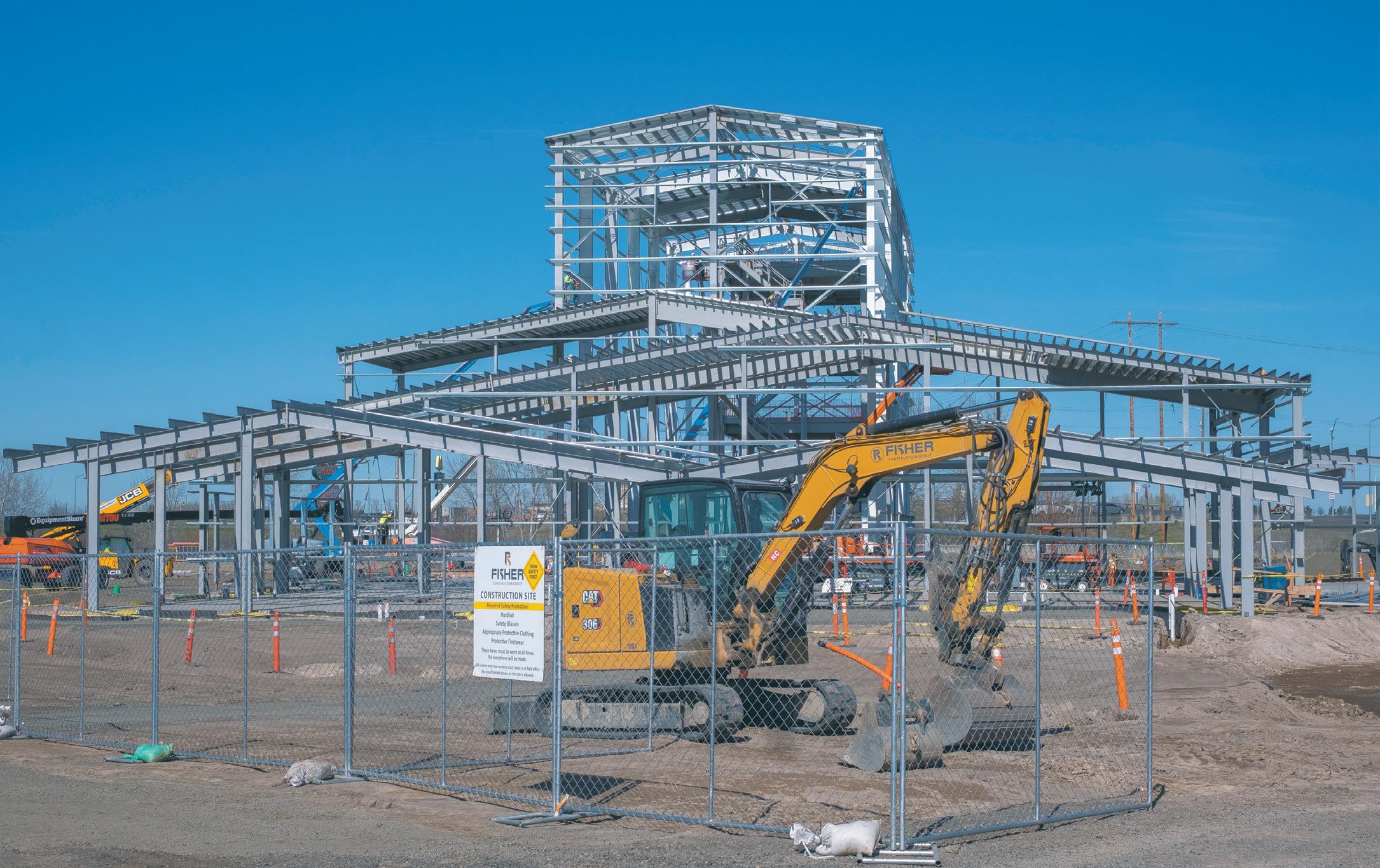
The new Blue Mountain Mill will occupy a 5.7-acre site and include approximately 27,000 square feet of building space. The facility will feature a four-platform milling system covering about 10,000 square feet, plus a 12,000-squarefoot warehouse.
The mill is expected to produce about 6 metric tons of flour per hour, or roughly 300,000 pounds per day, totaling around 110 million pounds of flour annually.
“I couldn’t have imagined a better partnership,” he said. “It creates a model that other communities, such as Umatilla County, could follow to bring similar infrastructure and jobs back to their regions.”
Construction continues on Cairnspring Mills and the upcoming Blue Mountain Mill on March 27 at Coyote Business Park South in Mission. (Yasser Marte/The CUJ)
Wildhorse expansion tops off at 10 stories
The CUJ
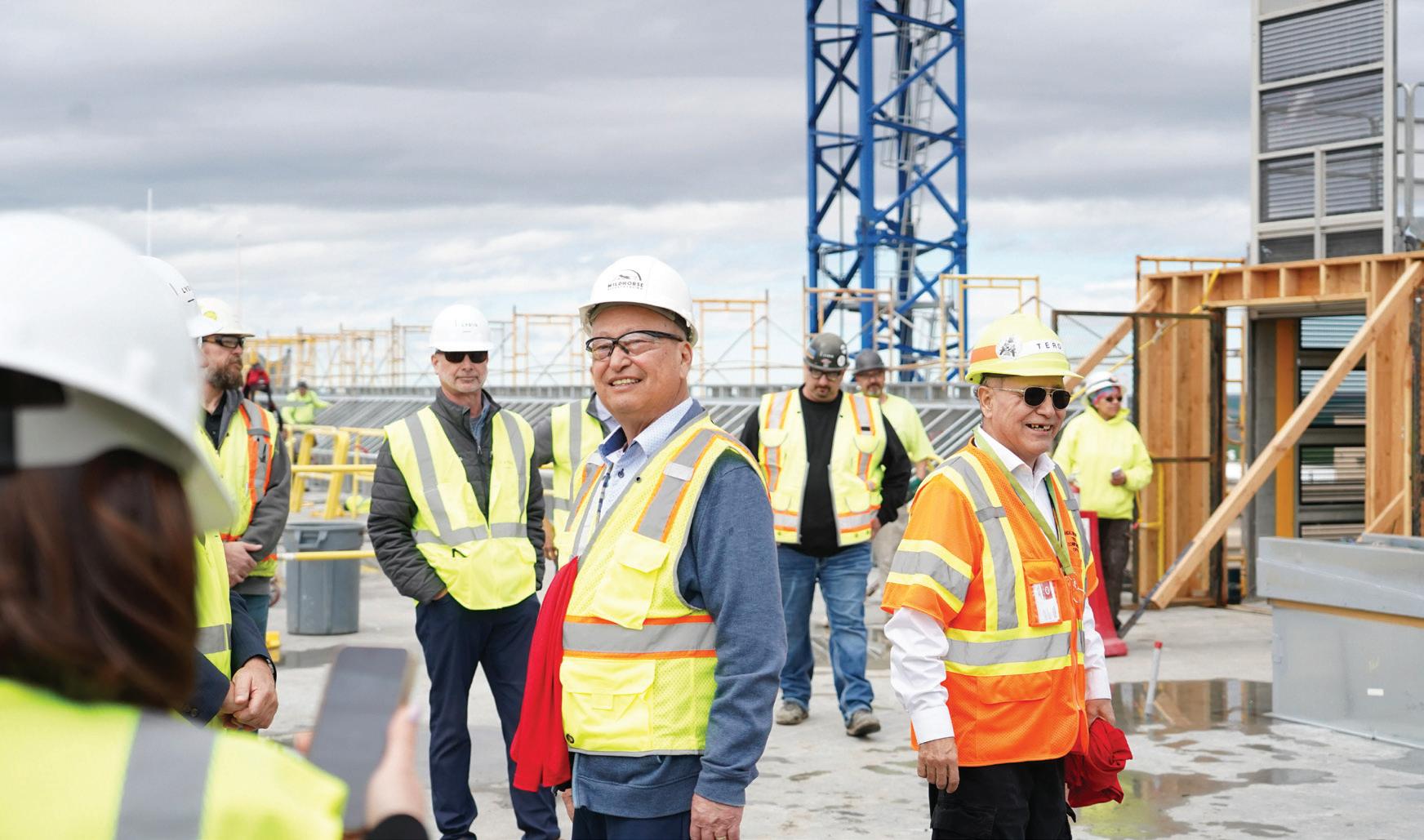
MISSION — One final beam was placed on top of the Wildhorse Resort & Casino (WRC) second hotel tower, 10 stories up in the air during a topping-off ceremony signifying the end of the outer structure’s construction.
Prior to the March 25 ceremony, guests watched presentations from employees with Cuningham Architecture, Lydig Construction and the Wenaha Group outline the progress made during the past 11 months and what will happen as the project moves forward.
WRC CEO Gary George led the program, acknowledging the work of those participating in the project along with the Confederated Tribes of the Umatilla Indian Reservation’s (CTUIR) Planning Office and Cultural Resources.
Wenaha Senior Project Manager Jose Aparicio spoke about the ceremony’s significance.
“In construction, that term carries deep and meaningful significance. Historically, toppingoff marks the moment when the highest structural element of a building is set in place,” Aparicio said. “It signals that the building has reached its full height and that the structure, the literal backbone of the project, is complete.”
Aparicio said it represents more than steel or concrete but was a moment to pause, reflect and give thanks.
Brett Ewing, Cuningham principal national market leader in gaming and hospitality, gave an architecture update with Cunningham Senior Associate Elena Gonova detailing the building’s interior with renderings of rooms, restaurants, event spaces and meeting rooms.
CTUIR Tribal Employment Rights Office (TERO) Program Manager John Barkley commended the collaboration among Lydig, Wenaha and TERO.
“From a TERO perspective, we’re very happy with Lydig and Wenaha Group and everyone that’s been involved,” he said, “This has been a concerted effort.”
TERO works with Coyote Business Park construction contractors to promote Native American employment and subcontracting opportunities. Barkley said it was an opportunity to train tribal members
in pre-apprenticeship construction and orient them in trade unions.
“We have people getting their apprenticeship hours on this project to reach journeyman status,” he said.
Lydig Senior Project Manager Joe Kelly echoed Barkley’s appreciation toward the collaboration.
“We are just as excited as everyone else and thankful to get to play a part in such a significant project on campus here,” Kelly said. “This is a monumental project.”
CTUIR Board of Trustees (BOT) Vice Chair Aaron Ashley said it was awesome to see tribal members working on the expansion and gaining skills.
“These tribal members will be able to say ‘I helped build that.’” he said. “We’ve come a long way, and I am excited to see what the future holds for CTUIR.”
Lydig officials also showed a timelapse from August 2024, when demolition began, to March 2026.
After the presentation, guests toured the site led by Lydig Project Superintendent Ian Heyn. The tour included walking the event center and spaces on the ground floor, as well as the building’s second floor and its hotel rooms.
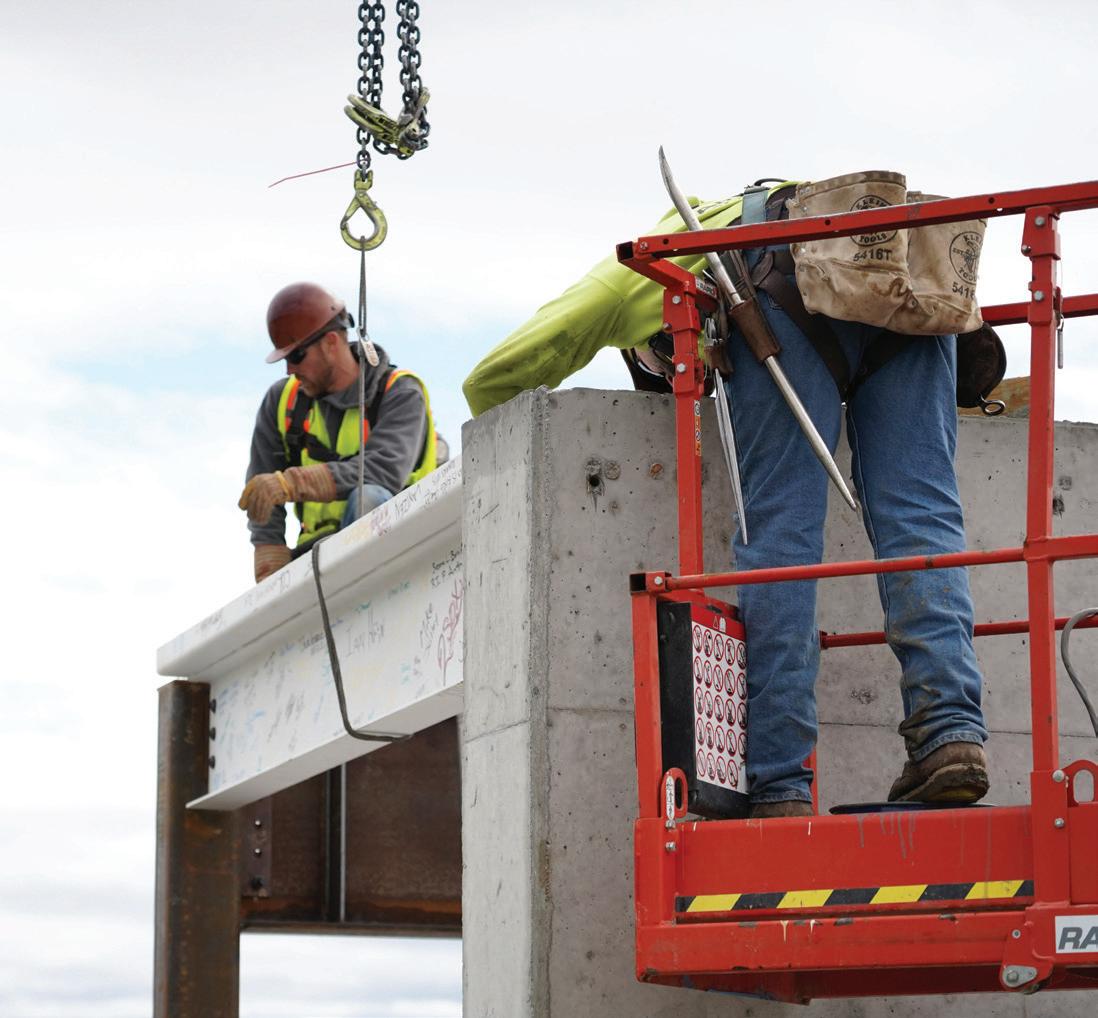
It culminated in a ride to the roof where guests watched as a crane lowered the final beam onto the building. Written on it was the date and attendees’ signatures.
Ashley said the significance and symbolism behind the ceremony were reminders of the CTUIR’s selfsufficiency, sovereignty and selfdetermination.
“Wildhorse Resort & Casino is our economic engine that generates revenues that we use to provide services to our people, our community as well as provide grant dollars through our Wildhorse Foundation to our friends and neighbors within our ceded territory,” he said.
At the same time, the Lydig and TERO construction crews were holding their topping-off celebration as lunch was provided to the employees.
“That is a huge gesture of gratitude and respect,” Ashley said, “I respect that, and I know the employees respect that.”
BOT Secretary Monica Paradise said the ceremony was a great way to reflect and celebrate.
“As the last beam was placed, I felt a huge sense of gratitude and pride in what the tribe has accomplished in the last 30-plus years, and I am looking forward to the opportunities and positive impacts for our economy and community,” Paradise said.
General Council Chairman Lindsey X. Watchman said it has been remarkable to witness the changes the CTUIR has accomplished over the last thirty years, from what was formerly a wheat field at the base of the Blue Mountains.
“Casino revenue significantly aids the tribal government’s ability to protect our Treaty, to care for our
people and to be good stewards of our natural resources,” Watchman said.
With the final beam in place, construction moves to the inside. The hotel tower boasts 214 guest rooms, an event center with a configurable space, multiple dining areas and meeting rooms.
“The structure we see today represents thousands of hours of coordinated work completed with a shared commitment to safety and accountability that makes today worth celebrating,” Aparicio said, “As we look ahead, the project now shifts from building up to building in.”

BEAU GLYNN
Wildhorse Resort & Casino CEO Gary George stands atop the Wildhorse expansion’s roof prior to the topping-off ceremony on March 25. (Beau Glynn/The CUJ)
Construction workers place the final beam on the Wildhorse Resort & Casino expansion on March 25. (Beau Glynn/The CUJ)
CALL FOR CTUIR TRIBAL MEMBER PARTICIPANTS
The Cultural Resources Protection Program (CRPP) is seeking CTUIR tribal members to participate in oral history interviews to document traditional knowledge, land use, and community history. CRPP has conducted over 700 oral histories to preserve cultural knowledge and protect cultural sites for future generations.

If
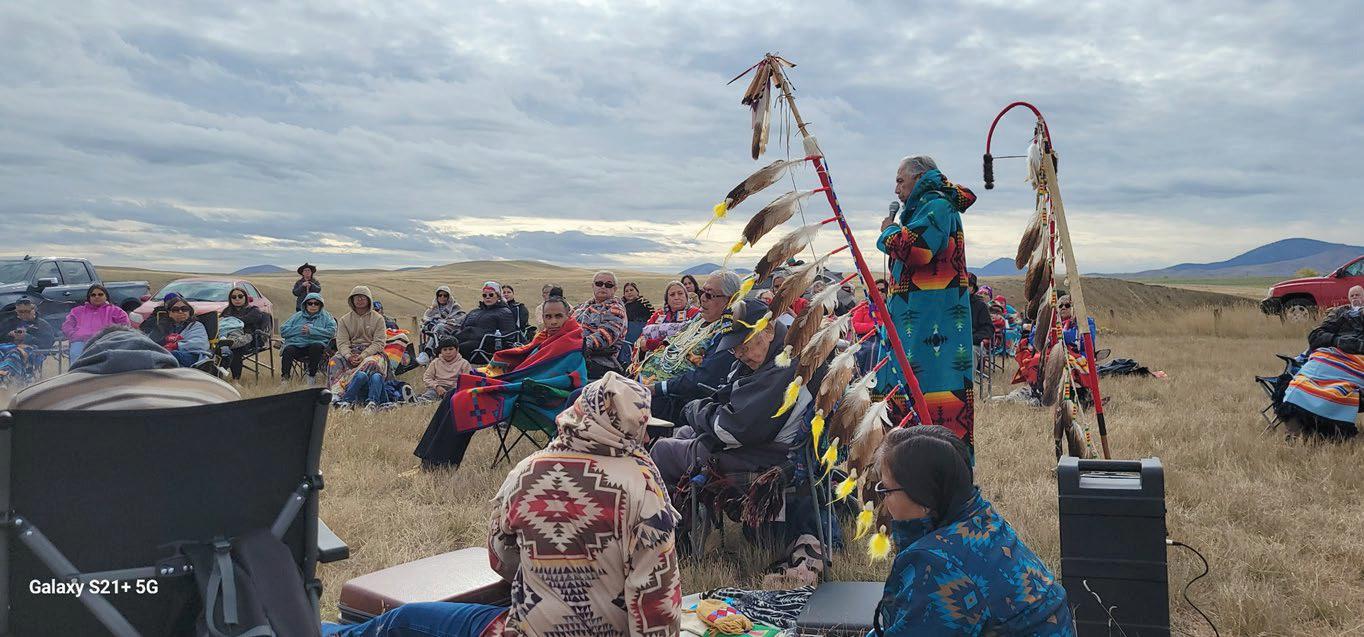

or
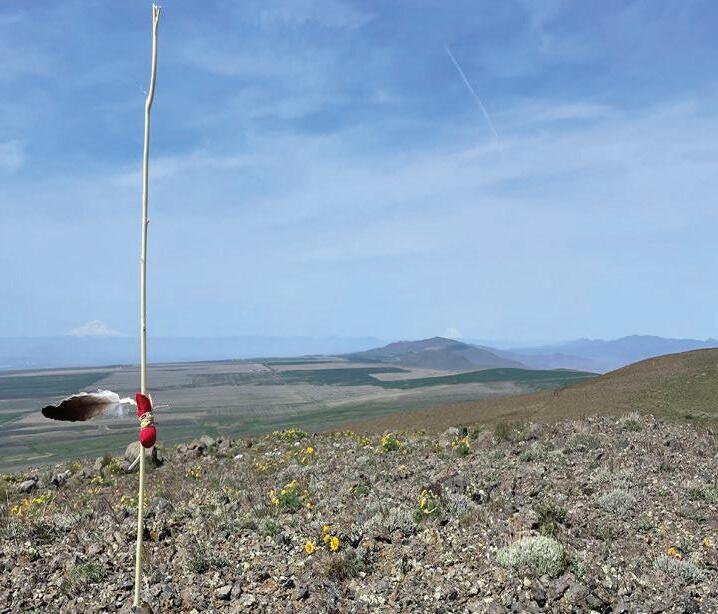

–
Oregon Department of Forestry Forest stewardship and cultural burning knowledge Ceded Lands - Forest Areas
North Powder Ethnobotanical knowledge and local history North Powder, OR Tutuilla Church History of Tutuilla Church Tutuilla, OR
Washington Elders in Residence Traditional use and cultural knowledge Washington Elders in Residence Interviews CTUIR historic and cultural knowledge CTUIR ceded and traditional use areas
UPCOMING FIRST FOODS FIELD EXCURSIONS
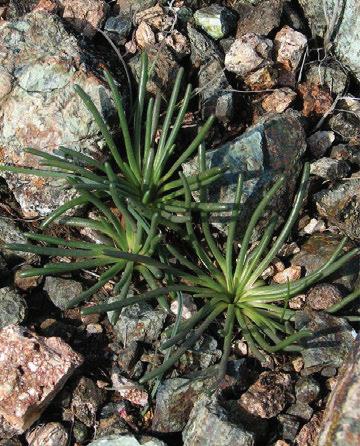

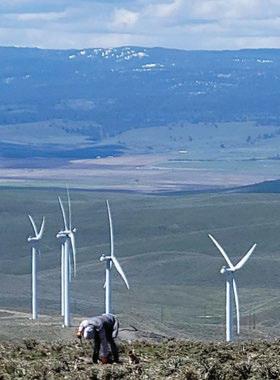


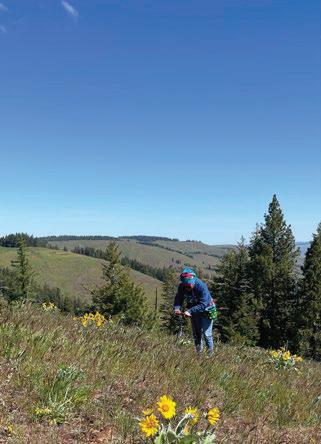

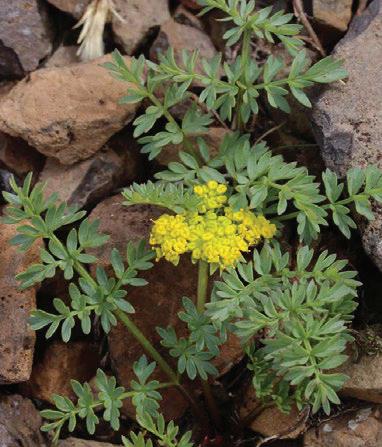

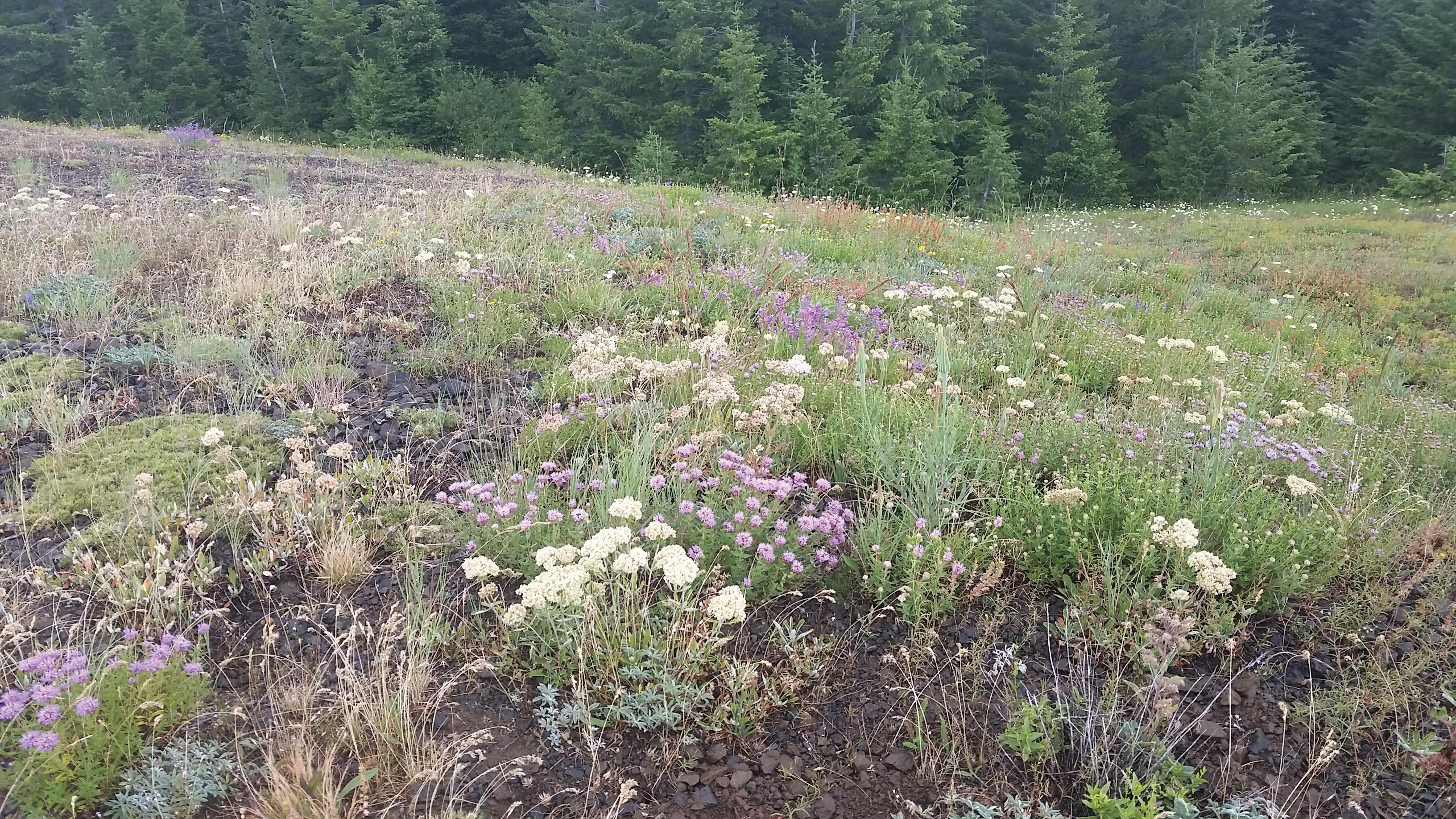
Tentative gathering dates are May 7–10 or May 23–26, depending on root readiness. Once roots are ready and dates are confirmed, Wallowa Land Trust will share the 2026 Wallowa Gathering Event Registration Form by link. For additional information in your area, please reach out to the appropriate Tribal Liaison.
CUJ welcomes new reporter Beau Glynn
YASSER MARTE
The CUJ
MISSION — The Confederated Umatilla Journal (CUJ) has added a new reporter to its newsroom.
Beau Glynn, who started on March 2, is already covering community events and issues at the CUJ office in the Nixyáawii Governance Center.
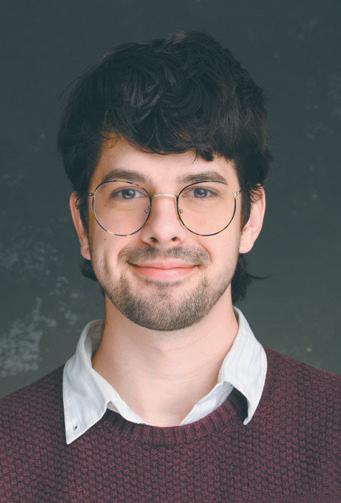
Glynn, a native of Pilot Rock, grew up in the area before enrolling at the University of Oregon in Eugene in 2018. While majoring in English, he wrote for and contributed to Align, a University of Oregon lifestyle and fashion magazine that publishes a new issue each term.
He took a gap year in 2022-23 and landed a reporting job with EO Media Group, where he wrote for the Hermiston Herald and the East Oregonian.
Glynn said transitioning from creative writing in school to newspaper reporting was a challenge.
“In school, I was used to a very creative style. At the newspaper, everything is AP (Associated Press) format. Facts come first, emotions are secondary,” he said.
Over time, he said, he found a rhythm, balancing the demands of factual reporting with his creative instincts.
Glynn covered local news in Hermiston, focusing on city and county government and occasionally state issues. The Hermiston Herald covers Hermiston and nearby communities, including Echo, Stanfield, Umatilla, Boardman,
Irrigon and Heppner, across parts of Umatilla and Morrow counties.
Working largely as a reporter, Glynn balanced print and digital demands. The newsroom prioritized web-first publishing, with stories appearing online before print, allowing timely reporting while maintaining a regular print cycle. The experience helped him learn to manage priorities, from daily news coverage to broader community stories.
His contribution as a reporter also expanded to other publications in Eastern Oregon, including the Baker City Herald and La Grande Observer. But after a year in the news workforce, Glynn decided to return to the university and complete his degree.
Glynn noted that his newsroom experience taught him skills beyond writing and interviewing. He learned how to manage deadlines, multitasking and juggling multiple projects helped him adjust when he returned to school.
“Working at the newspaper helped me figure out how to switch between tasks without losing track, which I struggled with in school,” he said.
Glynn said that working in a newsroom also shaped his writing. Naturally, Glynn gravitates to creative writing, poetry and essays in his free time. But his passion for storytelling drew him back to journalism after graduation.
“What keeps me inspired as a reporter is storytelling,” Glynn said. “There’s so much happening here — significant events, local issues, celebrations and sometimes people aren’t even aware of it,” he said. “If I can share a story that helps someone learn about their own
community, I’m doing my job.”
Glynn said that, despite his familiarity with the area, covering the Confederated Tribes of the Umatilla Indian Reservation (CTUIR) community is a new experience.
“It’s nothing I’ve ever done before,” he said. “As exciting as it is to be back in this job, there’s a lot to learn.”
He said he looks forward to expanding his knowledge and learning about communities beyond the one where he lived for 18 years.
“It’s our duty to share information and create a shared understanding of issues and celebrations — the good and the bad,” he said.
Glynn said support from colleagues has been essential while settling into his role.
“Everyone is eager to share,” he said. “If I have questions or I’m unsure how to approach something in writing, I can talk to someone with more experience.”
He said collaboration is key in any workplace and that reporting on culturally significant topics requires care and guidance, noting that local journalism plays a vital role in informing and connecting the community.
“Local news is genuine because it directly impacts the community, whether the story is big or small,” he said. “Even sharing small pieces of information matters.”
As he begins his work at CUJ, Glynn said he’s eager to continue learning and telling stories that resonate with the community.
Youth Voices participants Harley Schofield and Lainey Surber contributed to this article.

Beau Glynn
Water use permits under review
TROY BAKER, CTUIR Water Resources Program Manager
the Water Resources Program to notify permit holders by certified mail when a permit may need to be renewed or when additional information is needed regarding continued water use.










The Confederated Tribes of the Umatilla Indian Reservation (CTUIR) Department of Natural Resources Water Resources Program is conducting a review of water use permits issued under the CTUIR Water Code.








As part of this effort, some landowners and water users may receive a certified letter regarding an existing water permit.


Receiving a certified letter can sometimes cause concern, but these notifications are part of a routine process required under the Water Code to ensure permits remain current and accurate.
This notification process ensures that permit holders receive official notice and have the opportunity to respond. In many cases, the letter simply asks the permit holder to confirm whether water is still being used under the permit and whether they would like to renew it.
What permit holders should do
Why this review is taking place








If you receive a letter from the Water Resources Program, review it carefully and follow the instructions provided. The letter will explain what information is needed and outline the steps required if a permit needs to be renewed.








The Water Resources Program is reviewing Water Use Permits to ensure that program records accurately reflect how water is being used on the reservation and to ensure that water management efforts continue to guide responsible water stewardship across the reservation. Over time, land ownership can change, water uses may be modified, or permits may expire without renewal.
Maintaining accurate and up-todate permits is an important part of implementing the CTUIR Water Code. Ensuring that permits are current helps the Tribe manage water resources responsibly and protect them for present and future generations.
Why certified letters?
The CTUIR Water Code requires
If you have questions about your permit or the renewal process, contact CTUIR Water Code Administrator Devan Noblit at (541) 429-7273. He can assist permit holders and provide additional information.
Supporting responsible water management
Maintaining current permits helps ensure that water resources on the reservation are managed fairly and in accordance with the CTUIR Water Code, helping protect these resources for future generations. The Water Resources Program is committed to working with water users to keep records up to date and ensure compliance.

Feb. 09, 2026
BOT Present: Aaron Ashley, Vice-Chair; Raymond Huesties, Treasurer; Monica Paradise, Secretary; Toby Patrick, Member; Lisa Ganuelas, Member; Corinne Sams, Member; Sierra Quaempts, Member and Lindsey X. Watchman, General Council Chairman. Kat Brigham, Chair. Toby Patrick, Member, departed at 9:12 a.m. on personal leave. Quorum Present.
Old Business: None
New Business: Proposed Resolutions: Next resolution number is 2026-007. Other BOT Action Items: None
BOT Travel or External Meeting Reports:
1. Raymond Huesties, trip report for his trip to the Affiliated Tribes of Northwest Indians Winter Convention in Portland on Feb. 02-05.
2. Lisa Ganuelas, trip report for her trip to Olympia, Washington, from Jan. 12-14 to attend the Governor’s State of Address.
MOTION: Lindsey X. Watchman moves to approve travel reports. Corinne Sams seconds. Discussion. Question. Motion carries 6-0-0.
BOT Leave and Travel Requests:
1. Aaron Ashley, travel request to Albuquerque, New Mexico, from March 20-25 to attend Enrollment Conference.
2. Corinne Sams, personal leave from Feb. 17-20.
3. Lisa Ganuelas, travel request to Walla Walla on Feb. 11 to attend Shoreline Reconveyance Group meeting with the Army Corps, Walla Walla district leadership.
4. Lindsey X. Watchman, two polled leaves for Feb. 6 and 13, both all day.
MOTION: Lindsey X. Watchman moves to approve leave requests. Raymond Huesties seconds. Discussion. Question. Motion carries 6-0-0.
Feb. 23, 2026
BOT Present: Kat Brigham, Chair; Aaron Ashley, Vice-Chair; Raymond Huesties, Treasurer; Monica Paradise, Secretary; Lisa Ganuelas, Member; Corinne Sams, Member; Sierra Quaempts, Member; Toby Patrick, Member and Lindsey X. Watchman, General Council Chairman. Quorum present.
Kat Brigham, Chair, departed at 10:28
CTUIR BOARD OF TRUSTEES MINUTES
a.m. on travel.
Old Business: Polled Letter and Motion. Next number 2026-006:
Polled Letter: 2026-004 Subject: Upper Columbia Water Adjudication.
MOTION: Corinne Sams moves to ratify polled letter 2026-004. Raymond Huesties seconds. Discussion. Question. Motion carries 8-0-0.
Polled Motion: 2026-005: Subject: Approve testimony for amendment to Data Center Bill.
MOTION: Raymond Huesties moves to ratify polled Motion 2026-005. Toby Patrick seconds. Discussion. Question. Motion carries 8-0-0.
New Business: Proposed Resolutions: Next resolution number is 2026-007.
Resolution 2026-007: Topic: US Army Corps of Engineers Milton-Freewater Walla Walla Nursery Reach General Investigation Study Memorandum of Understanding. RESOLVED, that the BOT hereby approves the attached Milton-Freewater Walla Walla Nursery Reach General Investigation Study Memorandum of Understanding between the Confederated Tribes of the Umatilla Indian Reservation (CTUIR), the Milton-Freewater Water Control District, the Walla Walla River Irrigation District and the Hudson Bay District Improvement Company, to initiate the Milton-Freewater Walla Walla Nursery Reach General Investigation Study and authorizes its Chair to execute it on behalf of the CTUIR and to take such further action and execute other documents, if any, that are necessary to carry out the purposes of the Memorandum of Understanding and this Resolution; and, that said Resolution has not been modified, amended or repealed and is still in full force and effect.
DATED: Feb. 23.
MOTION: Raymond Huesties moves to adopt Resolution 2026-007. Corinne Sams seconds. Discussion. Question. Motion carries 8-0-0.
Resolution 2026-008: Topic: YouthBuild Grant Application. RESOLVED, the BOT approves $295,450 for the Workforce Development Department to apply for Department of Labor, YouthBuild 2025 FOAETA-26-38; RESOLVED, the BOT approves
using the Contingency funds if the grant is awarded; AND, that said Resolution has not been modified, amended or repealed and is still in full force and effect.
DATED: Feb. 23.
MOTION: Raymond Huesties moves to adopt Resolution 2026-008. Seconds. Discussion. Question. Motion carries 8-0-0.
Other BOT Action Items: Commission/ Committee Update by Monica Paradise, BOT Secretary.
Culture Resources Committee, two-year term, one position advertised.
MOTION: Corinne Sams moves to accept Mary Halfmoon’s resignation and advertise one position on the Culture Resources Committee. Toby Patrick seconds. Discussion. Question. Motion carries 8-0-0. Election Commission, four-year staggered term for General Council, 2 positions advertised, applications from Martina Gordon, Shena Frank and Tami Rochelle. GC appointed Shena Frank and Tami Rochelle. One General Council position expiring on March 13, 2026, to be advertised.
MOTION: Corinne Sams moves to advertise for the position expiring March 13, 2026. Raymond Huesties seconds. Discussion. Question. Motion carries 8-0-0.
Enrollment Commission, four-year staggered terms, BOT and General Council appointed. One position advertised to be appointed by the BOT. No applications were received.
MOTION: Raymond Huesties moves to keep the position advertised. Toby Patrick seconds. Discussion. Question. Motion carries 7 for -(Raymond Huesties, Toby Patrick, Lisa Ganuelas, Sierra Quaempts, Monica Paradise, Lindsey X. Watchman and Corinne Sams) -1 against (Aaron Ashley) – 0 abstaining.
Fish and Wildlife Commission, three-year staggered term. One position advertised.
MOTION: Corinne Sams moves to advertise for the Fish & Wildlife Commission position that expired March 13, 2026. Raymond Huesties seconds. Discussion. Question. Motion carries 8-0-0.
Gaming Commission, four-year staggered term. One position with two applications from Kim Minthorn and Joann Malumaleumu.
ACTION: Joann Malumaleumu was appointed by secret ballot to fill the remaining position, which expires Sept. 06, 2027. Health Commission, three-year staggered term, one position advertised, with one application from Alan Crawford.
MOTION: Corinne Sams moves to appoint Alan Crawford by acclamation to the position expiring Feb. 09, 2029. Raymond Huesties seconds. Discussion. Question. Motion carries 8-0-0.
Housing Commission, two-year term, one position advertised with one application from Katrina Burnside.
MOTION: Corinne Sams moves to reappoint Katrina Burnside and to advertise for the position expiring March 1, 2026. Lindsey X. Watchman seconds. Discussion. Question. Motion carries 8-0-0.
Tiicham Conservation District, two-year term, one position advertised with one application from Joann Malumaleumu.
MOTION: Raymond Huesties moves to reappoint Joann Malumaleumu to the position expiring Feb. 12, 2028. Corinne Sams seconds. Discussion. Question. Motion carries 8-0-0.
Tribal Water Commission, two-year term, one position advertised to expire March 01, 2026.
MOTION: Raymond Huesties moves to advertise for one position with a term expiring March 01, 2026. Corinne Sams seconds. Discussion. Question. Motion carries 8-0-0.
Wildhorse Foundation, two-year staggered term, one position advertised with two applications from Clarise Huesties and Sonara Malamaleumu.
Action: Sonara Malamaleumu was appointed by secret ballot to fill the position expiring November 27, 2027.
Wildhorse Foundation, City of Pendleton nomination of McKennon McDonald.
MOTION: Lindsey Watchman moves to accept the City of Pendleton’s nomination of McKennon McDonald to the position on the Wildhorse Foundation. Raymond Huesties seconds. Discussion. Question. Motion carries 8-0-0.
Nixyáawii Community Financial Services
continued on Page A18

Board of Directors (NCFS).
CTUIR BOARD OF TRUSTEES MINUTES
MOTION: Corinne Sams moves to accept the NCFS Board of Directors’ letter dated Nov. 24, 2025, to reappoint Gabe Moses to another three-year term. Aaron Ashley seconds. Discussion. Question. Motion carries 8-0-0.
Feb. 23, will advertise the following positions through the Public Notice:
1 - Culture Resource Committee: meets first and third Tuesday at 1 p.m.
1- Election Commission: meets second and fourth Wednesdays at 4-6 p.m.
1 - Enrollment Commission: meets second Thursday at 2:30 p.m. as needed
1 - Fish and Wildlife Commission: meets second and fourth Tuesday at 9 a.m.
1 - Housing Commission: meets first and third Tuesday at 9 a.m.
1 - Water Commission: meets first and third Tuesdays at 8:30 a.m.
BOT Travel or External Meeting Reports: None
BOT Leave and Travel Requests:
Kat Brigham polled travel requests March 11-12 to Central Washington University at Ellensburg, Washington, to be a panelist.
Monica Paradise traveled to Yakima, Washington, to attend the University of Idaho for the NAAC Spring Meeting from April 2021.
Monica Paradise is attending the CTUIRNixyáawii Neighborhood Groundbreaking on Feb. 25 from 1:30 to 3 p.m.
Sierra Quaempts travel request for March 11-12 to Central Washington University at Ellensburg, Washington, to be a panelist.
Sierra Quaempts, local travel request for Health Commission Retreat from March 0506.
Toby Patrick, traveled to Portland February 24-26 to attend Willamette Falls Lock Board meeting and luncheon.
Corinne Sams, polled travel request to Portland.
Lindsey X. Watchman polled Personal Leave for Feb. 23.
MOTION: Corinne Sams moves to approve leave requests. Raymond Huesties seconds. Discussion. Question. Motion carries 7-0-0.
March 2, 2026
Board of Trustees (BOT) present: Aaron Ashley, Vice-Chair; Raymond Huesties, Treasurer; Monica Paradise, Secretary; Toby Patrick, Member; Lisa Ganuelas, Member; Corinne Sams, Member; Sierra Quaempts, Member and Lindsey X. Watchman, General Council Chair. Kat Brigham, Chair, on personal leave. Quorum present.
Old Business: Polled Letter and Motion. Next number 2026-007:
Polled Motion 2026-006: Topic: Salmon Protection Amendments.
MOTION: Raymond Huesties moves to ratify Polled Motion 2026-006. Sierra Quaempts seconds. Discussion. Question. Motion carries 7-0-0.
New Business: Proposed Resolutions: Next resolution number is 2026-009.
Resolution 2026-009: Topic: 2026 Noxious Weed Proposal. RESOLVED, that the BOT supports the three cooperative projects outlined in the 2026 Noxious Weed Proposal for the Umatilla Indian Reservation (UIR), attached Exhibit 1 and supports the request for $80,500 to carry out these efforts and authorizes the Department of Natural Resources to submit the proposal to the Bureau of Indian Affairs (BIA) on behalf of the Confederated Tribes; AND BE IT FINALLY RESOLVED, that the BOT request that the BIA fund its 2026 Noxious Weed Proposal for the UIR in its entirety; AND, that said Resolution has not been modified amended or repealed and is still in full force and effect.
DATED: March 2, 2026.
MOTION: Raymond Huesties moves to adopt 2026-009. Corinne Sams seconds. Discussion. Question. Motion carries 7-0-0. Resolution 2026-010: Topic: USDA FSA Signatory Authorization. RESOLVED, that the BOT approves continued participation in any and all agricultural programs under the jurisdiction of the United States Department of Agriculture (USDA), including those administered through the Farm Service Agency (FSA) and Natural Resource Conservation Service (NRCS), and authorizes the following officers and staff to execute any and all documents required to participate in
and comply with the requirements of USDA FSA programs: Executive Director, Director, Department of Economic and Community Development, Farm Manager, Assistant Farm Manager and Chair, Tribal Farm Committee; AND BE IT FURTHER RESOLVED, that the attached Exhibit 1 includes the names and positions of the people currently holding the aforementioned positions and this Resolution authorizes updates to those names if different individuals are hired or elected to those positions in the future; AND BE IT FINALLY RESOLVED, that the Chair of the BOT and Executive Director are authorized to take all actions necessary to implement this resolution in a timely manner; AND, that said Resolution has not been modified, amended or repealed and is still in full force and effect.
DATED: March 2, 2026.
MOTION: Corinne Sams moves to adopt 2026-010. Raymond Huesties seconds. Discussion. Question. Motion carries 6 for (Corinne Sams, Lindsey X. Watchman, Lisa Ganuelas, Sierra Quaempts, Monica Paradise and Raymond Huesties) – 1 against (Toby Patrick) – 0 abstaining.
Resolution 2026-011: Topic: Kilby Bus Barn Acquisition. RESOLVED, that the BOT does hereby approve the Real Estate Purchase and Sale Agreement between the Confederated Tribes and Michael J. Kilby and Marshall Jon Kilby that is attached to this Resolution as Exhibit 1C; AND BE IT FURTHER RESOLVED, that the BOT hereby authorizes its Chair, or her designee, to execute the Real Estate Purchase and Sale Agreement attached hereto as Exhibit 1C, or an Agreement containing substantially similar terms; AND BE IT FURTHER RESOLVED, that the BOT hereby approves the Kilby Property improvements and their associated costs as set forth in the Kilby Property Budget attached to this Resolution as Exhibit 2C and appropriates the amount of the Kilby Property Budget from the Contingency Fund; AND BE IT FURTHER RESOLVED, the Public Works Department shall be responsible for the restoration and management of the Kilby Property, which will be paid for under the Public Works Department budget; AND BE IT FURTHER RESOLVED, that property taxes on the Kilby Property will be paid from the
Water and Sewer Fund until such time the Kilby Property can be converted to Tribal Trust status; AND BE IT FINALLY RESOLVED, that upon receipt of title to the Kilby Property, the Land Program Manager shall expeditiously file a fee-to-trust application for the Kilby Property AND, that said Resolution has not been modified, amended or repealed and is still in full force and effect.
DATED: March 2, 2026.
MOTION: Corinne Sams moves to adopt 2026-011. Lindsey X. Watchman seconds. Discussion. Question. Motion carries 6 for (Corinne Sams, Lindsey X. Watchman, Lisa Ganuelas, Sierra Quaempts, Monica Paradise and Raymond Huesties) – 1 against (Toby Patrick) – 0 abstaining.
Resolution 2026-FAILED: Topic: Alternative Funding. RESOLVED, that the BOT hereby authorizes investment into the opportunity outlined in Exhibit 1C pursuant to the Convertible Promissory Note, Note Purchase Agreement and Side Letter that are attached to this resolution as Exhibits 2C, 3C and 4C, each of which is approved; AND BE IT FURTHER RESOLVED, the BOT hereby authorizes an investment in the amount listed in Exhibit 1C, which shall be made from the Perpetual Fund portfolio; AND BE IT FINALLY RESOLVED, the BOT hereby authorizes its Chair to execute the Agreements and Letter attached to this Resolution as Exhibit 2C, 3C and 4C and further authorizes its Treasurer, Executive Director and Finance Director to take all actions necessary to carry out the purpose of this Resolution and to implement the investment outlined in Exhibit 1C; AND, that said Resolution has not been modified, amended or repealed and is still in full force and effect.
DATED: March 2, 2026.
MOTION: Raymond Huesties moves to adopt proposed Resolution 2026-FAILED. Monica Paradise seconds. Discussion. Question. Motion fails 2 for (Raymond Huesties and Monica Paradise) – 5 against (Lisa Ganuelas, Sierra Quaempts, Lindsey X. Watchman, Corinne Sams and Toby Patrick)0 abstaining. Other BOT Action Items: None.
continued on Page A19

CTUIR BOARD OF TRUSTEES MINUTES
BOT Travel or External Meeting Reports:
Corinne Sams, two reports: Feb. 12 virtual re: Columbia River InterTribal Fish Commission (CRITFC)/SPOD meeting. Feb. 4-6 at Portland for CRITFC meeting re: U.S. v. Oregon/Tribal Caucus meeting. Kat Brigham, two reports. Deferred
MOTION: Raymond Huesties moves to approve reports. Toby Patrick seconds. Discussion. Question. Motion carries 7-0-0.
BOT Leave and Travel Requests:
Corinne Sams, three requests: 1.) Polled travel March 17 and 18, to Reimagine the River Event at the REDD in Portland 2.) Personal leave request, March 2 from 1:304 p.m. 3.) Personal leave request, March 6, all day.
Lindsey X. Watchman Polled leave request, Feb. 26 from 7:30-8:30 a.m.
Lisa Ganuelas, five requests: 1.) Polled personal leave for Feb. 25 from 2 to 4 p.m. 2.) Polled personal leave for Feb. 27 from 1 to 4 p.m. 3.) Travel on March 12-13 to Pullman, Washington to attend Washington State University Spring Native American Advisory Board meeting. 4.) Polled personal leave on Feb. 24 from 2:15 to 3:15 p.m. 5.) Personal leave on March 2 from 1 to 4 p.m.
MOTION: Raymond Huesties moves to approve the leave requests. Toby Patrick seconds. Discussion. Question. Motion carries 7-0-0.
March 9, 2026
BOT Present: Aaron Ashley, Vice-Chair; Raymond Huesties, Treasurer; Monica Paradise, Secretary; Toby Patrick, Member; Lisa Ganuelas, Member; Corinne Sams, Member; Sierra Quaempts, Member and Lindsey X. Watchman, General Council Chair. Kat Brigham, Chair, on personal leave. Quorum present.
Old Business: Polled Letter and Motion. Next number 2026-008: Polled Motion 2026-007 Subject: Six Sovereigns joint letter FY 2027 Appropriation.
MOTION: Corinne Sams moves to ratify polled letter 2026-007. Raymond Huesties seconds. Discussion. Question. Motion carries 7-0-0.
New Business: None.
Other BOT Action Items: None.
BOT Travel or External Meeting Reports:
Toby Patrick, Feb. 23-26, to Eugene to attend the Indigenous Peoples Reception and two other meetings with Willamette Falls Board of Directors and with the Governor’s staff.
Raymond Huesties, Feb. 25-26, at Wildhorse Resort and Casino to attend the Annual Northern Blues Restoration Partnership meeting.
MOTION: Lindsey X. Watchman moves to approve reports. Sierra Quaempts seconds. Discussion. Question. Motion carries 7-0-0.
BOT Leave and Travel Requests:
Lindsey X. Watchman, polled personal leave for March 3 for six hours and March 6 for two hours
Lisa Ganeulas, personal leave for both days March 5-6.
Toby Patrick, traveled Feb. 25-28 to Oregon City to attend the Willamette Falls Trust Board meeting.
MOTION: Raymond Huesties moves to approve travel land leave requests. Monica Paradise seconds. Discussion. Question. Motion carries 7-0-0.
CTUIR BOT Minutes – March 16
BOT Present: Aaron Ashley, Vice-Chair; Raymond Huesties, Treasurer; Monica Paradise, Secretary; Toby Patrick, Member; Lisa Ganuelas, Member; Corinne Sams, Member; Sierra Quaempts, Member and Lindsey X. Watchman, General Council Chair. Kat Brigham, Chair, on personal leave. Quorum present.
Old Business: None.
New Business: Proposed Resolutions: Next resolution number is 2026-012 Resolution 2026-012 Topic: Shoreline Reconveyance Memorandum of Agreement (MOA). RESOLVED, that the BOT approves the MOA between Benton County, the City of Kennewick, the City of Pasco, the City of Richland, Franklin County and the Port of Pasco and the Confederated Tribes of the Umatilla Indian Reservation (CTUIR) Regarding Columbia River Shoreline Reconveyance Legislation, attached hereto as Exhibit 1, MOA; AND, BE IT FURTHER RESOLVED, that the BOT authorizes its internal team to finalize

any minor changes that may be needed to the MOA while the municipalities finalize their review and approval with their respective councils; AND BE IT FINALLY RESOLVED, that the BOT authorizes its Chair to sign the MOA, or an agreement containing substantially similar terms and all necessary documents to enter into this agreement; AND, that said Resolution has not been modified, amended or repealed and is still in full force and effect.
DATED: March 16, 2026.
MOTION: Toby Patrick moves to adopt Resolution 2026-012. Corinne Sams seconds. Discussion. Question. Motion carries 7-0-0.
Other BOT Action Items: None.
BOT Travel or External Meeting Reports:
Sierra Quaempts report on the Health and Welfare Commission retreat on March 5-6 in Pendleton.
Lisa Ganuelas reports on her trip to the Washington State University Native American Advisory Board meeting March 12-13.
MOTION: Corinne Sams moves to approve the trip report. Raymond Huesties seconds. Discussion. Question. Motion carries 7-0-0.
BOT Leave and Travel Requests:
Corinne Sams, personal leave from March 23-27.
Corinne Sams polled personal leave on March 12 from 10:30 a.m. to 4 p.m.
Corinne Sams traveled to Portland from March 19 to March 20 to attend a CRITFC meeting.
Lindsey X. Watchman, polled leave for March 9 for more than an hour, March 10 for about an hour and a half and on March 11 for nearing two hours.
Lisa Ganuelas, traveling to Washington, D.C. from March 16 to March 21 as a participant of the Shoreline Reconveyance Working Group, is attending advocacy meetings with Congress.
Monica Paradise, travel to Pasco, Washington, to attend the Rural Prosperity G2G meeting on March 26.
Sierra Quaempts, personal leave from 12:30 to 4 p.m. on March 19 and March 20.
MOTION: Raymond Huesties moves to approve the travel and leave requests. Corinne Sams seconds. Discussion. Question. Motion carries 7-0-0.
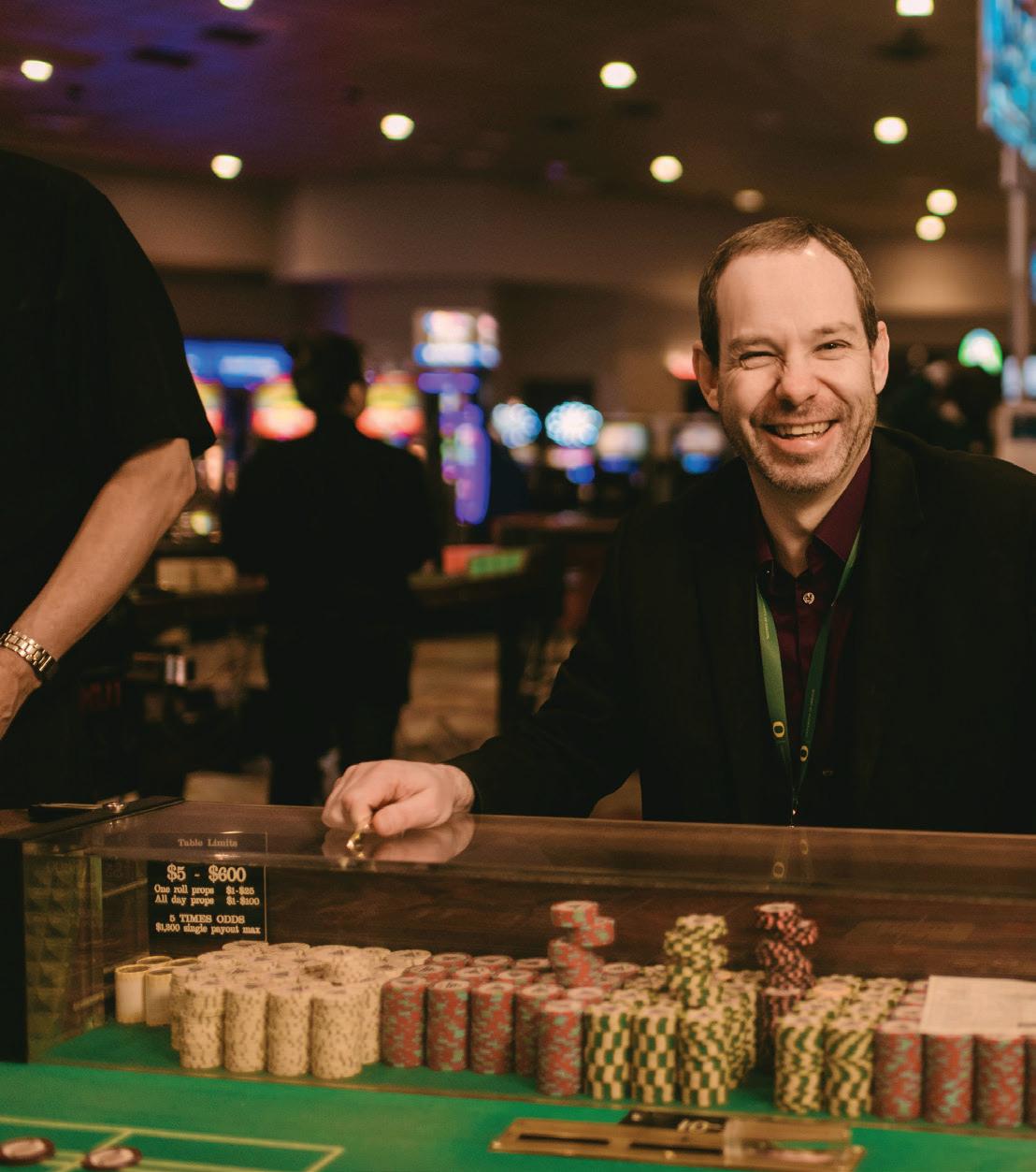























Latit Latit Annual Excursion
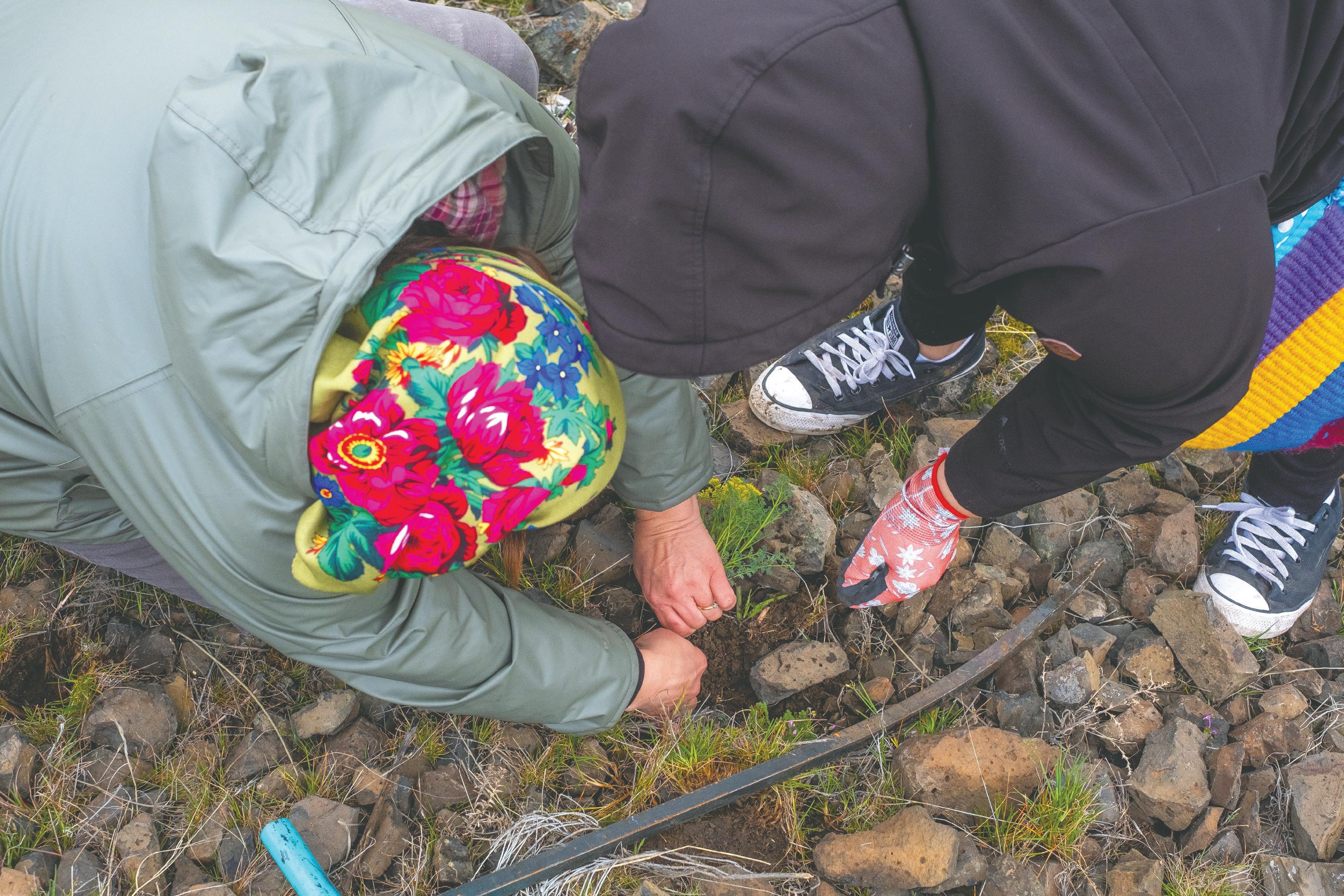
Dionne Bronson, Family Engagement Program manager for CTUIR, holds freshly harvested Latit Latit during the tribe’s annual Latit Latit Gathering Excursion on March 14 near Pilot Rock. (Yasser Marte/The CUJ)
Dionne Bronson, Family Engagement Program manager for CTUIR, and Sarah Johnson, also of CTUIR, dig for Latit Latit on March 14 during the tribe’s annual Latit Latit Gathering Excursion near Pilot Rock. (Yasser Marte/The CUJ)
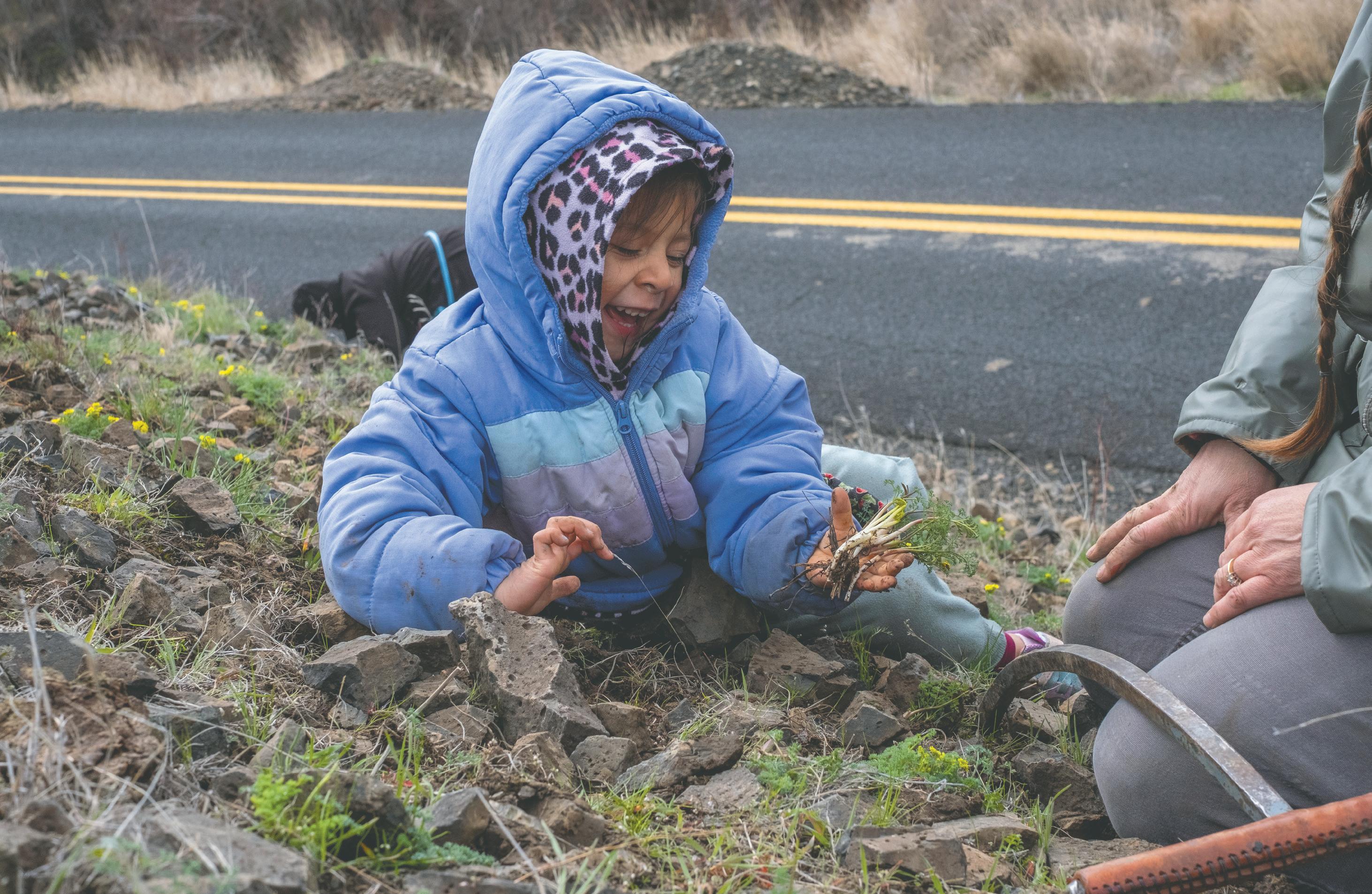
CTUIR families learn, share traditions at Latit Latit excursion
The CUJ
PILOT ROCK — Family, friends and elders hiked the rocky hills of Eastern Oregon on March 14, digging for Latit Latit during the Confederated Tribes of the Umatilla Indian Reservation’s (CTUIR) annual Latit Latit Gathering Excursion
The harvest, led by the CTUIR Family Engagement Program and Department of Natural Resources’ Cultural Resource Protection Program, guided participants through the hills between Pilot Rock and Heppner to harvest the First Food and continue a tradition passed down through generations.
Latit Latit, also known as Indian celery or wild celery, is a traditional early spring First Food harvested by Columbia River Plateau tribes. Gatherers use metal rods called kupin (in Nimiipuu - Tùkes) to harvest the tender stalks from the hillsides, typically in late February or early March, often followed by a celebratory feast.
Dionne Bronson, Family Engagement Program manager, said Latit Latit is important to the CTUIR because it is a sacred food.
Once part of DNR’s educational outreach, the trips now fall under Family Engagement and help youth and families learn about First Foods, she added.
“The goal of our program is to support families in unity and identity,” Bronson said. “To be unified, we need to do things together, especially to learn these
lifeways. We follow a seasonal round to show our families what foods are available throughout the year and where to gather them.”
Community and traditional
connections
About a dozen people met that morning at the Family Engagement facility before setting out for the excursion. Gray skies, chilly rain and cold winds did little to dampen spirits as gatherers bundled up and climbed the hillsides.
Before gathering, participants offered a prayer and a song, then scaled the hillsides equipped with gloves, hand warmers and woven harvest bags to collect the plants.
As gatherers climbed, they watched for clusters of yellow, webbed umbels poking through the soil — the Latit Latit. Bronson showed the children which umbels were ready to harvest by the height of the stalk. She also showed them how to use their kupin.
“And when we’re digging, we’re gonna push down and then we’re gonna wiggle, wiggle,” she said gently working the kupin into the dirt. “We’re gonna wiggle that kupin in there to get down into the soil beneath the roots, then pull back, pull back and pull up that root.”
After pulling the Latit Latit from the ground, she brushed off the dirt and bit into the celery while noting its crisp texture, sharp taste and slightly peppery flavor, particularly when young, along with an earthy, herbal aroma.
At the top of the hill, CTUIR member DeArcie Abraham, who gathered with her 7-year-old son Messiah Abraham, said she looked for watersheds with rocky soil.
“The root under the rocks will make its way up through the rocks to reach the sun,” she said. “When you move a rock, you can see they’re actually really long and really big. The watershed also helps nourish them so they grow large.”
She said the excursion connects her with her family and allows them to connect with community members as they learn from one another.
“I really look forward to connecting with my community instead of going on my own,” Abraham said. “We get to come here and have a safe space to gather together.”
Across the hills, generations joined to teach, learn and harvest Latit Latit. Elders and youth spent the day passing on knowledge, gathering the plants and engaging with the environment.
CTUIR member Sienna Pacheco, 21, dug for Latit Latit with her 11-month-old child, Kh’mari Pacheco, strapped in a baby backpack. She said she tries to be more involved because she doesn’t see many people her age participating.
“I try to encourage people my age to get into our First Foods, go to root digging and reconnect with what our ancestors taught us,” she said.
The sun peeked through gray skies as the group gathered for lunch.
Afterward, everyone returned to the Family Engagement facility for the excursion’s second half, where families learned how to wash, clean and process the Latit Latit.
The plants were first dipped in water to scrub off the dirt, then placed on a towel to dry before being sealed in resealable bags.
CTUIR member and Umatilla Master Speaker Mildred Quaempts said she remembered learning from her grandmother and aunt. Her aunt, she said, was strict when she was growing up. As soon as her aunt entered the house, she knew she had work to do, Quaempts said. Whether it was gathering, picking berries or apples or traveling to harvest strawberries, raspberries and beans, they were always busy, she said, helping her aunt can food, peel it, prepare it for drying and tending to other tasks.
Quaempts said her grandmother had a small house, but she organized everything carefully. Canvas and produce were stored and covered, wired and sealed with mud and ash. The children were not allowed to handle it directly, but they learned by watching.
“That’s how you learned,” Quaempts said. “Like any other elder, a lot of teaching was done by showing, not just telling. You had to pay attention. You’ve got to take care of your people, take care of the land and take care of the food every year, not just during certain times. Our elders used to go out as much as they could to gather food sustainably for their livelihood, to live.”
YASSER MARTE
Isabella Johnson, 4, smiles after pulling fresh Latit Latit from the ground on March 14 during the tribe’s annual Latit Latit Gathering Excursion near Pilot Rock. (Yasser Marte/The CUJ)
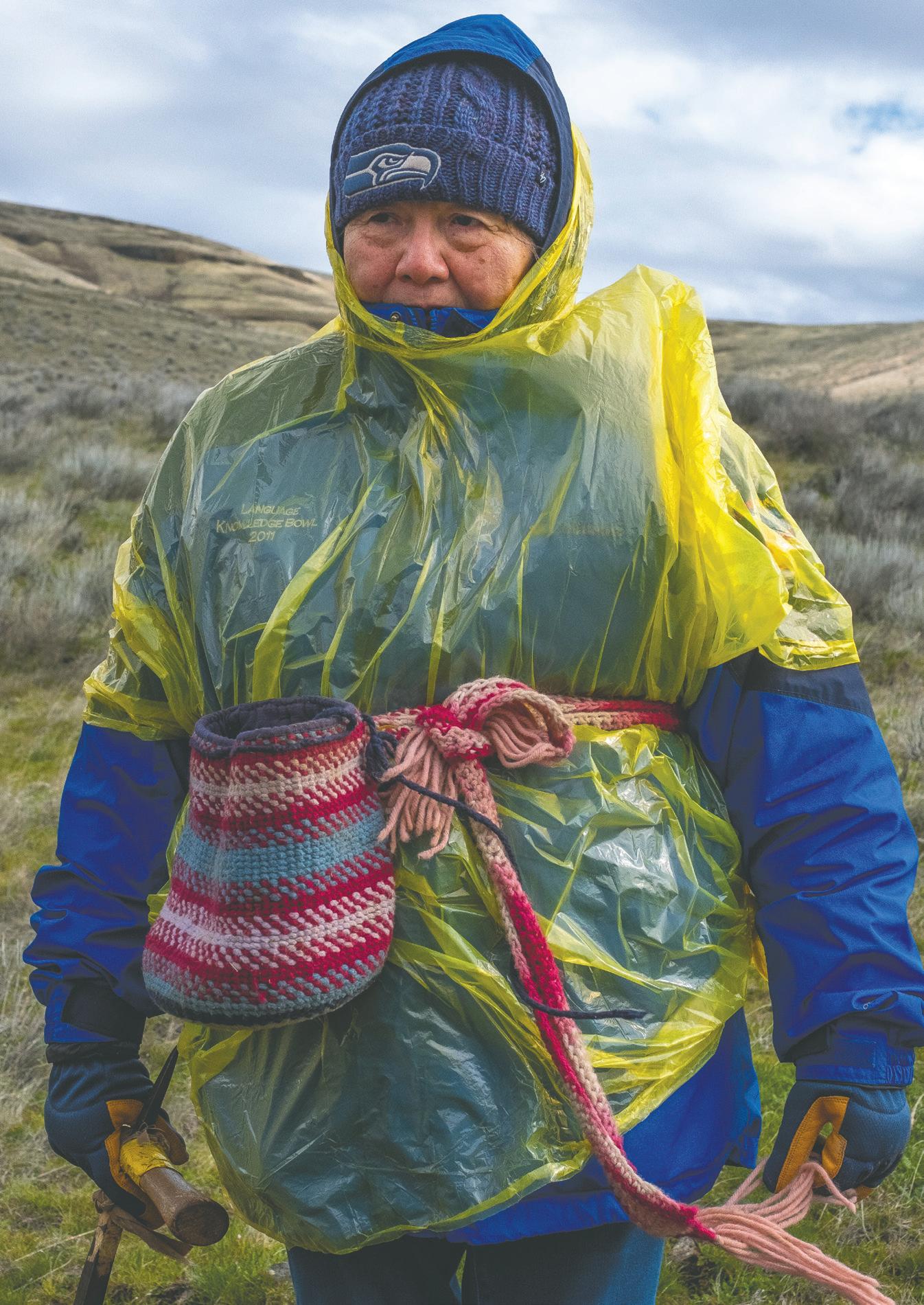
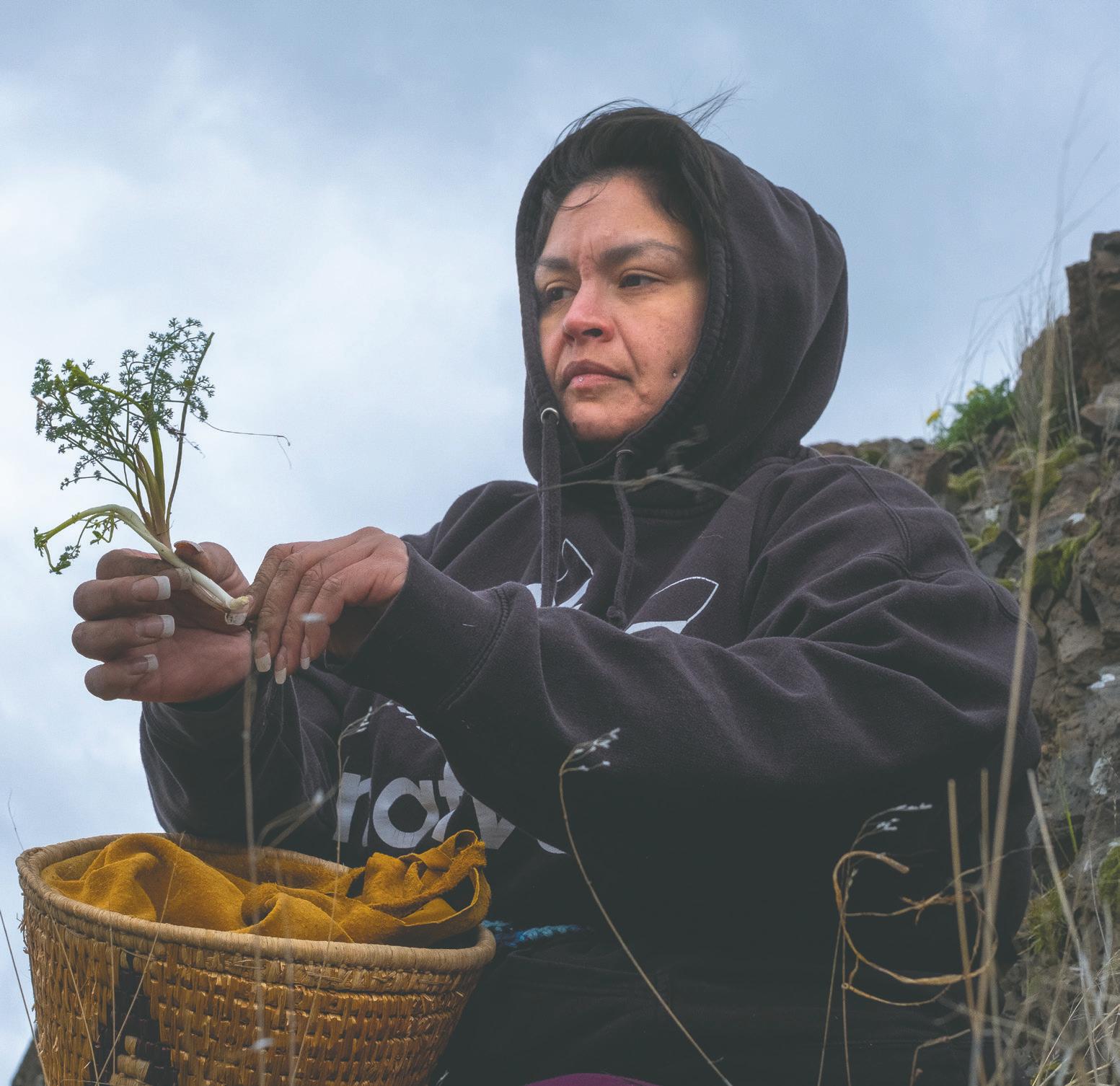
“You’ve got to take care of your people, take care of the land and take care of the food every year, not just during certain times.”
-Mildred Quaempts, CTUIR member and Umatilla Master Speaker
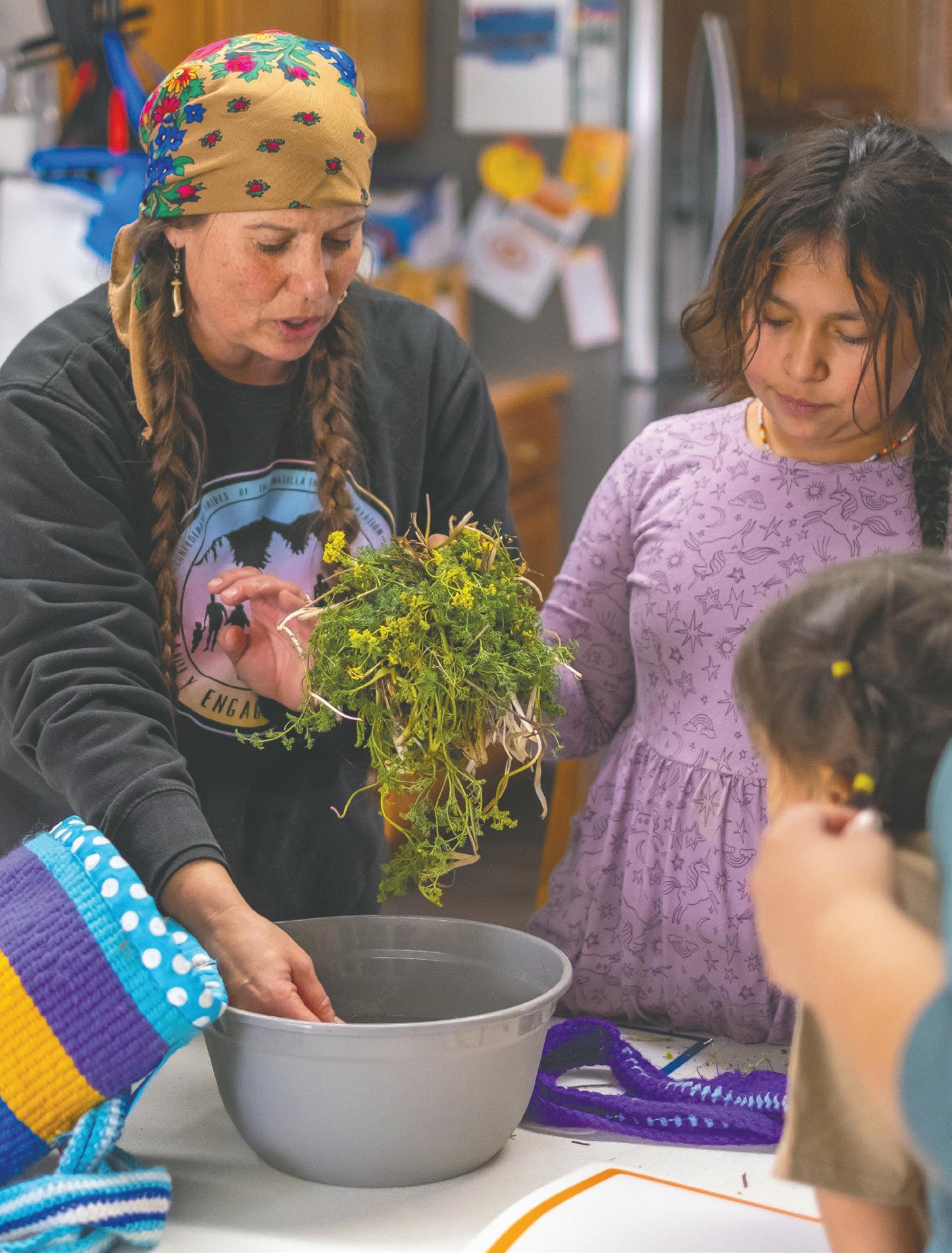
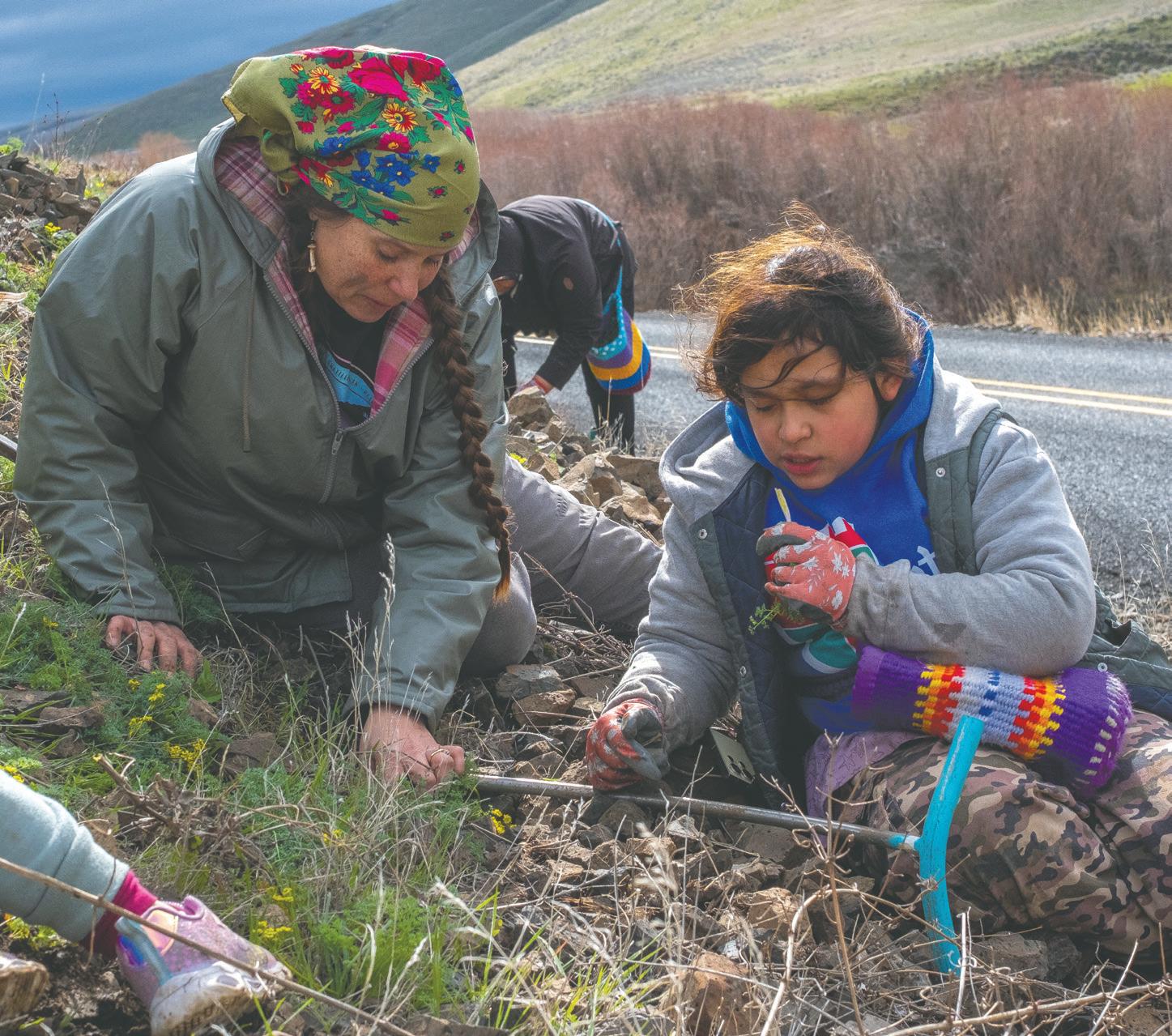
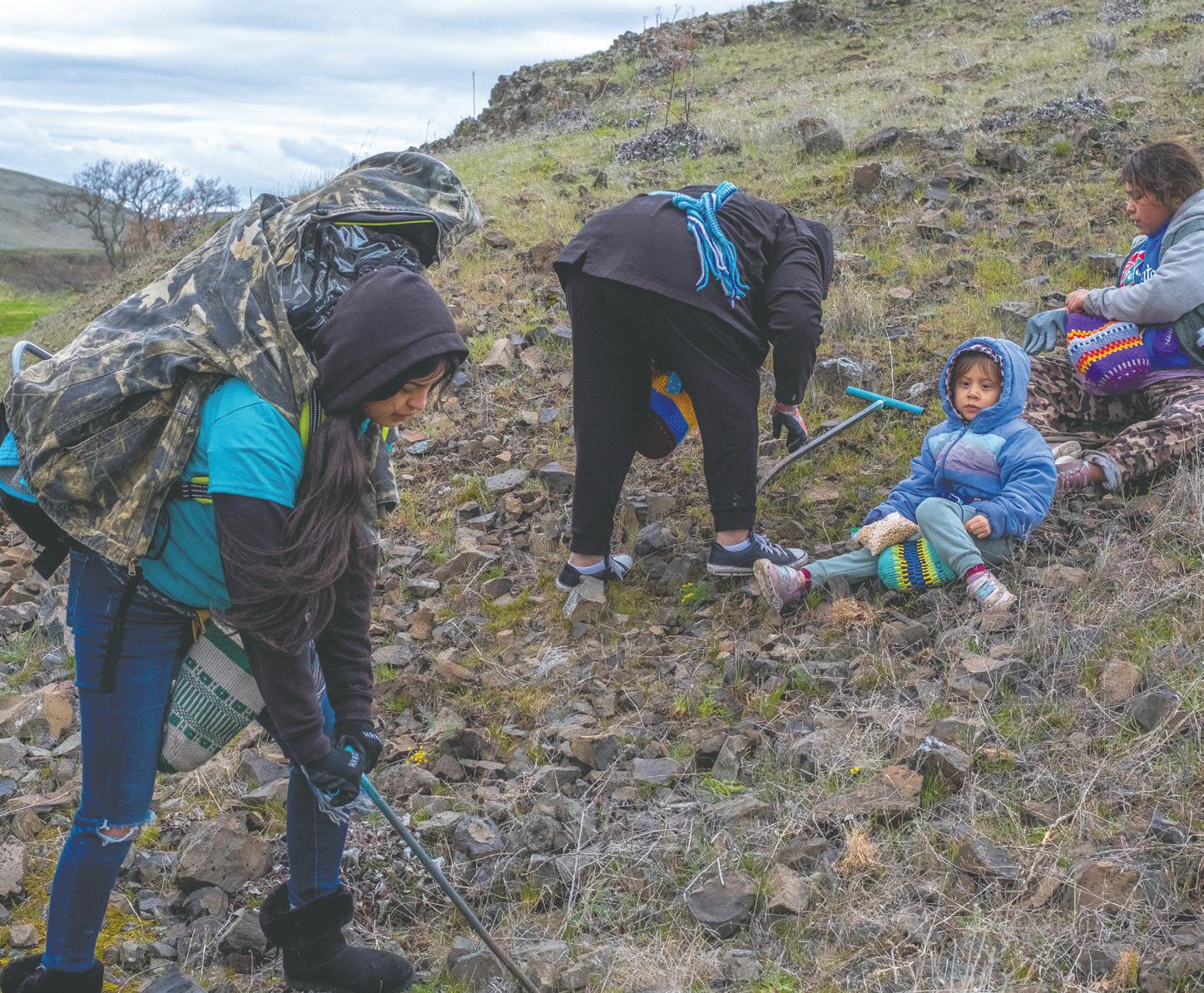
CTUIR member Mildred Quaempts surveys the hills, holding her kupin and carrying a woven basket strapped at her waist for collecting Latit Latit.
CTUIR member DeArcie Abraham sits atop a rocky hill while foraging for Latit Latit.
Photos by YASSER MARTE
Video by LEE GAVIN
Dionne Bronson, CTUIR Family Engagement Program manager, left, shows Gwen Johnson, 10, how to clean Latit Latit at the Family Engagement Program in Mission.
Dionne Bronson, Family Engagement Program manager, left, teaches Gwen Johnson, 10, how to identify Latit Latit.
CTUIR families learn how to gather Latit Latit. From left, Sennia Pacheco, 21, digs for Latit Latit with her child, Kh’mari Pacheco, 11 months, in a baby backpack; Shannon Johnson; Isabella Johnson, 4; and Gwen Johnson,10.
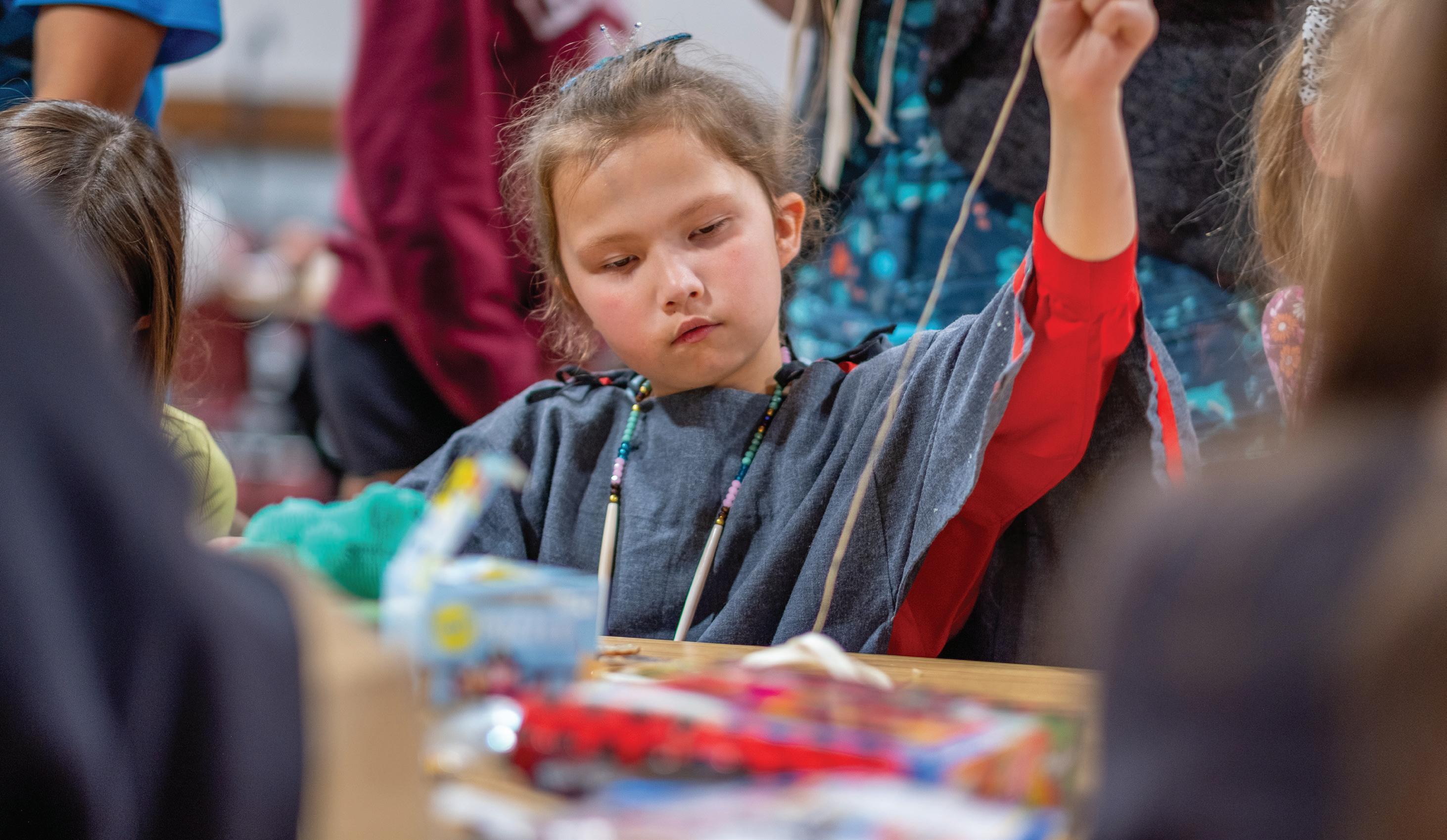
Preserving language, one word at a time
YASSER MARTE
The CUJ
MISSION — Remembering a single word or phrase can help preserve a language. That was the message reflected on March 18 as Confederated Tribes of the Umatilla Indian Reservation (CTUIR) community members gathered for Culture Night at the Mission Longhouse to share crafts and learn the Umatilla language.
About 30 family members and friends joined the evening’s activities, with elders and youth sitting side by side, speaking the Umatilla language and crafting pieces for their regalia. The event blended learning and connection as participants passed down cultural
knowledge through conversation and craft.
Keeyana Mata, CTUIR Family Engagement Program specialist, said the event aimed to emphasize the importance of language to younger generations.
“We wanted to use this time so they could learn words and phrases while doing something hands-on,” she said. “The Language Program (Imatalamłaamí Sɨ́nwit) also brought materials to share during the session.”
Mata said combining activities with language instruction helps reach children who may not otherwise engage.
“It’s a good way to bring the language in, especially for kids who
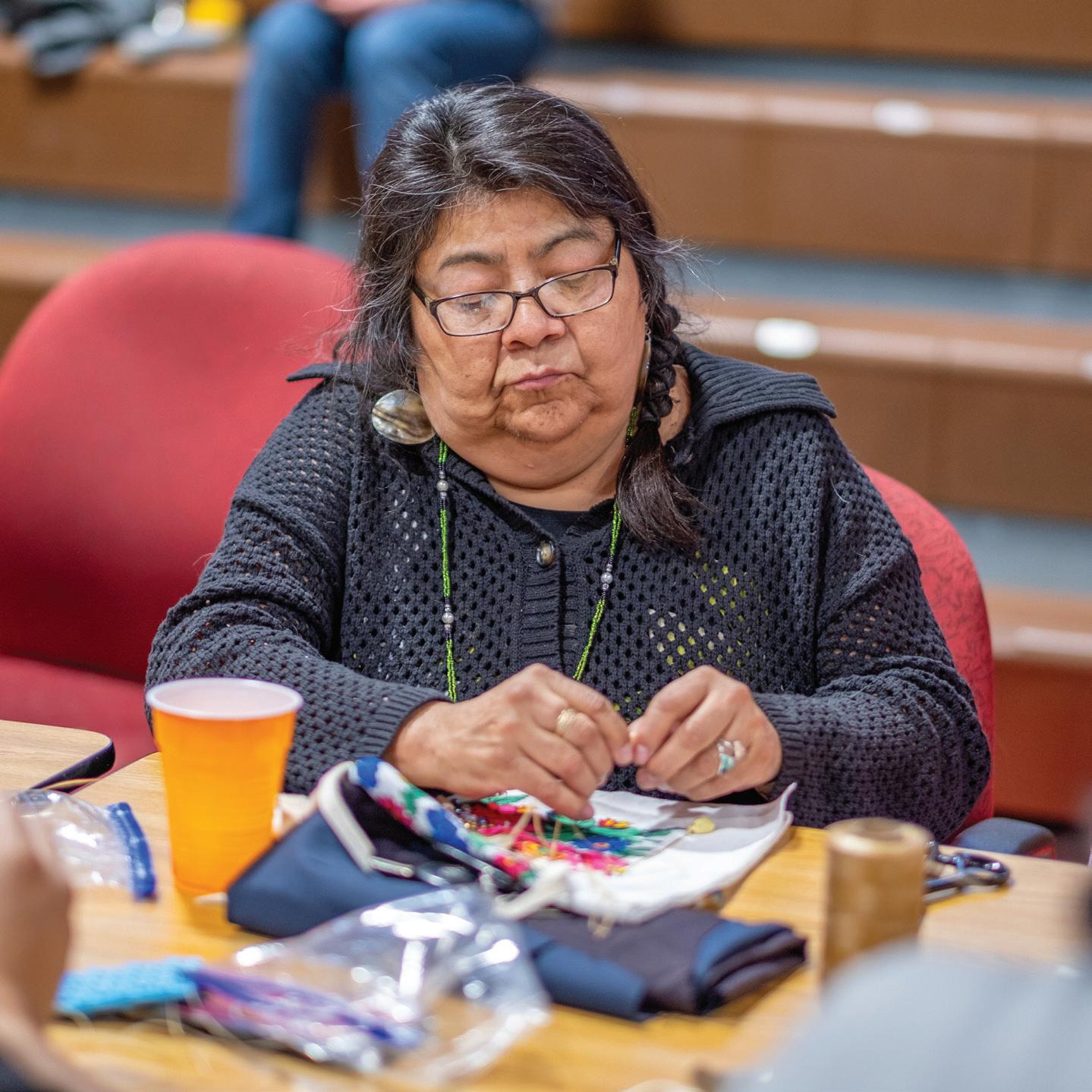
don’t always get that exposure,” she said.
Mata said the program is rooted in cultural preservation, focusing on equipping youth and families with meaningful tools and connections.
“Our biggest thing is that cultural preservation piece,” she said. “We’re giving our participants — our kids and families — tools to be productive, to learn and to understand who we are as a people.”
She said each Culture Night is designed to reflect those values, blending tradition, language and community to create a space where culture is not only taught but lived and shared.
The craft stations were split into two sections. One featured dance
bell straps, the other shell disk hair ties. Each table offered instructions and tools for participants to complete their crafts. Elders at each station guided youth, helping them build skills and techniques.
Umatilla Master Speaker Fred Hill taught children how to make bell straps and the proper way to punch holes into the leather with a pair of revolving punch pliers. Hill said the hands-on craft gives boys a chance to create something while connecting to tradition.
The materials and tools used today are more accessible, Hill noted, but the meaning behind the work remains rooted in tradition. He reflected on how past generations created regalia using
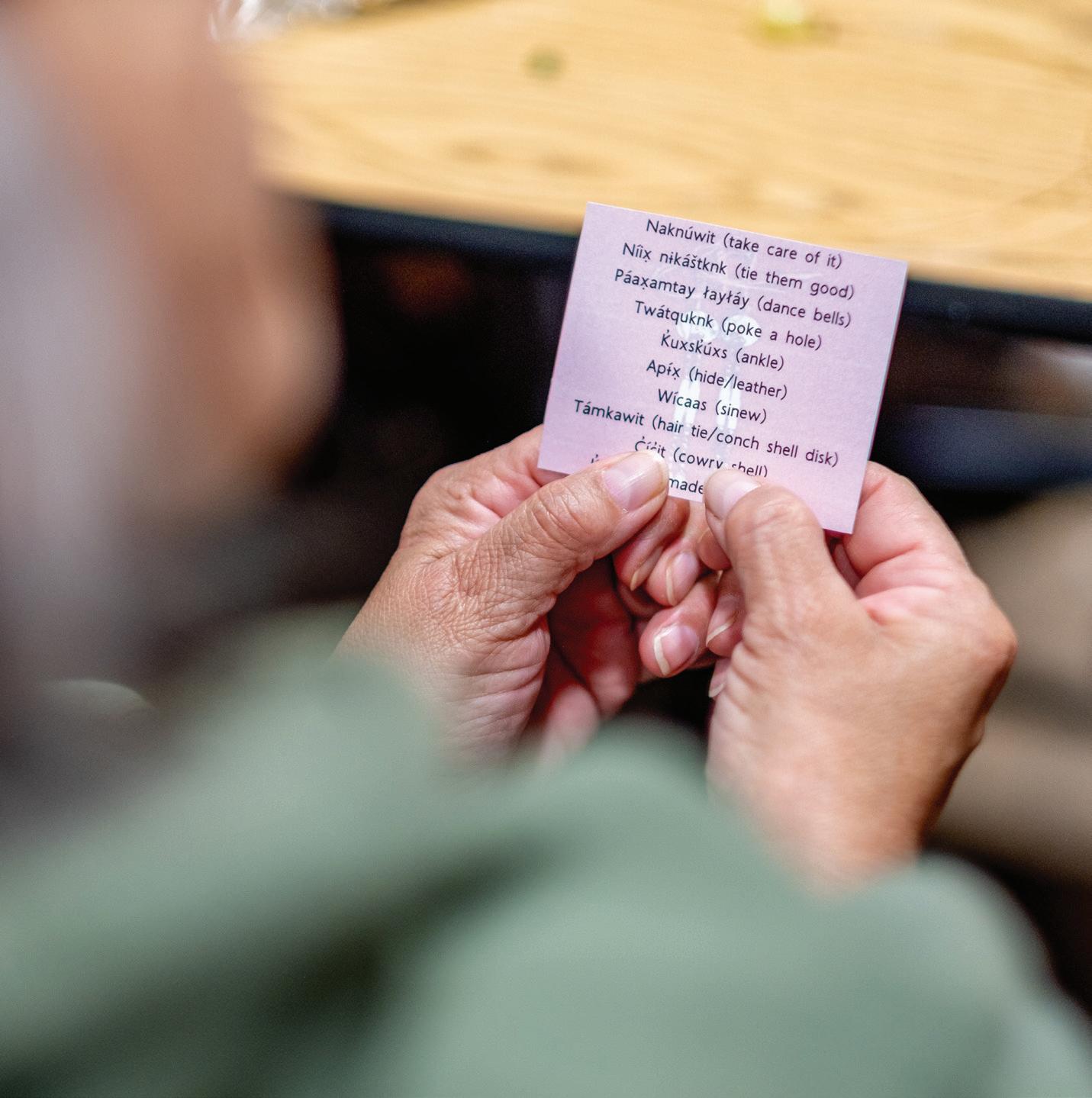
CTUIR member Lyla Welch, 7, ties her conch shell disk (Támkawit) on March 18 during Culture Night: Language at the Mission Longhouse in Mission. (Yasser Marte/The CUJ)
CTUIR member Dana Conner crafts a conch shell disk while learning its Umatilla name, Támkawit. (Yasser Marte/The CUJ)
CTUIR member Shirleen Speedis holds a Umatilla language card to learn the words for her arts and crafts. (Yasser Marte/The CUJ)
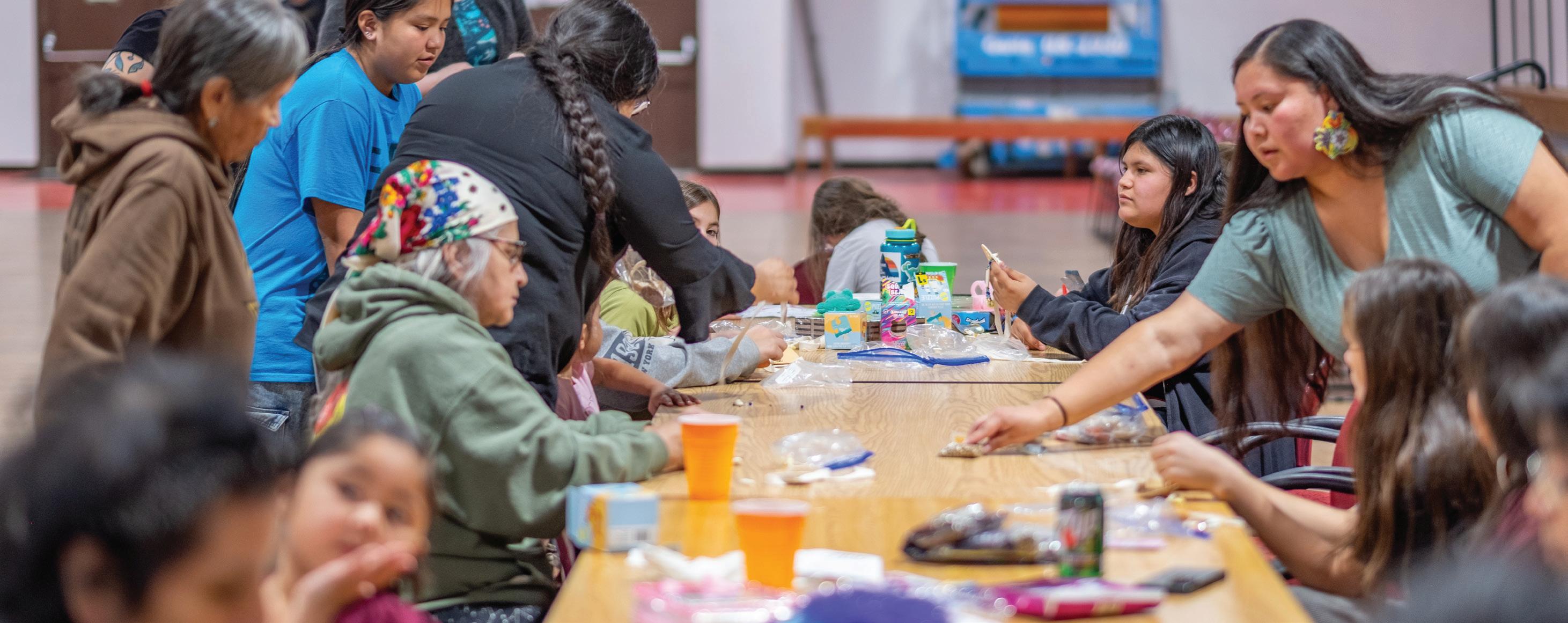
natural materials such as deer, buffalo and other hides to enhance their dancing and connect with the rhythm of songs and drums.
Hill, a dancer himself, said the sound of bells was once a defining part of traditional dances, with groups of men moving in unison to create a powerful layered rhythm.
“That’s kind of rare. Nobody does that anymore,” he said. “Not like how it used to be, when I remember the men would do that with all their big-sounding bells. Maybe that’s something we can eventually teach our young people, for the sake of memory and honoring their dancers.”
Hill said crafting is closely tied to language and cultural knowledge, which were historically passed
“We’re giving our participants — our kids and families — tools to be productive, to learn and to understand who we are as a people.”
-Keeyana Mata, CTUIR Family Engagement Program Specialist
down together before the tribes had the English language.
“I remember when we were kids, we used different animal hides — bear, buffalo, cougar — and we learned how to take care of them,” Hill said. “But a lot of it was also for their own spiritual essence, making connections. That was their way of free communication before what we use today.”
Umatilla Master Speaker Mildred Quaempts stood before the youth and taught them Umatilla phrases
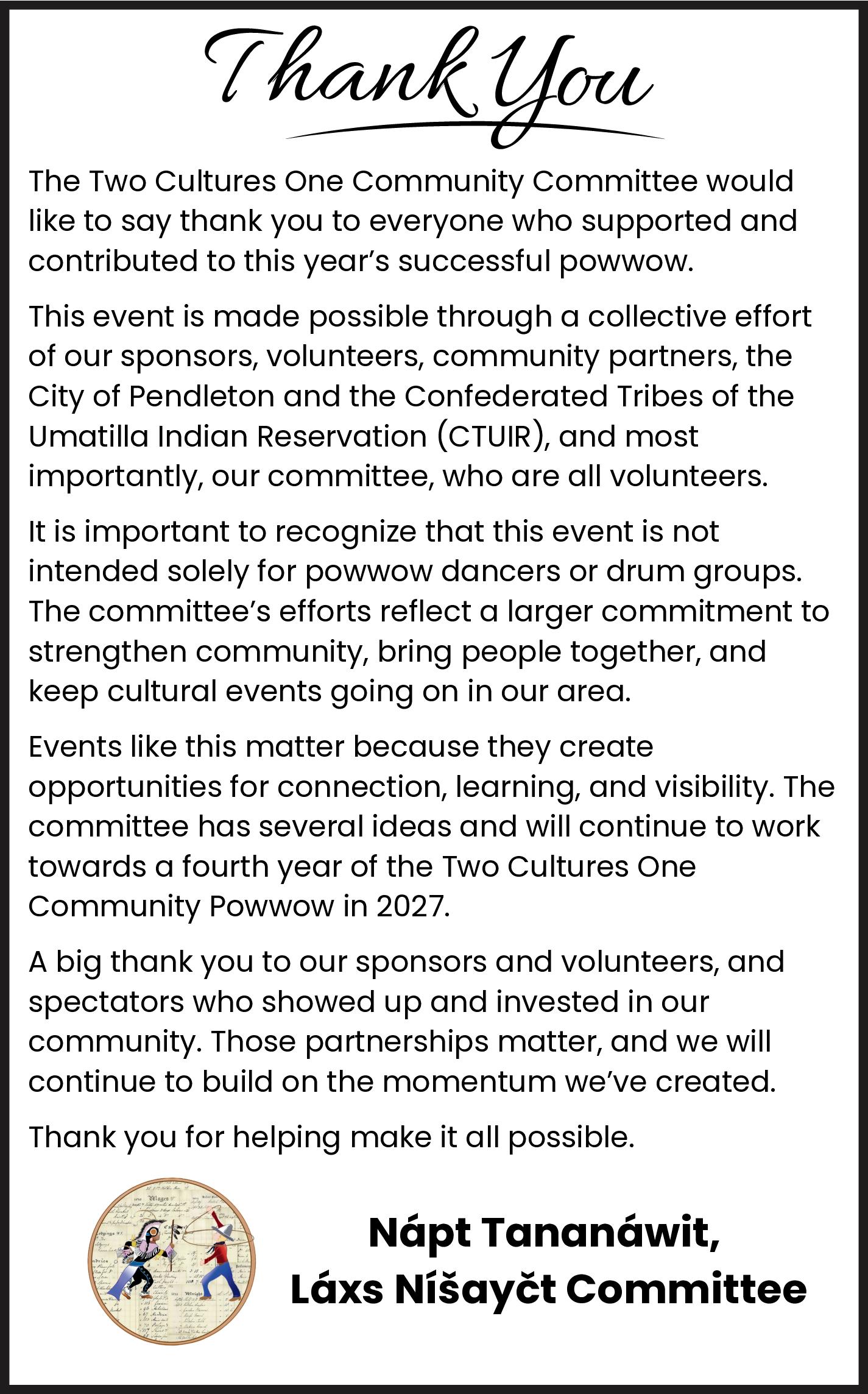
such as twátquknk (“poke a hole”), apɨx (“leather” or “hide”), támakawit (“hair tie” or “conch shell disk”) and naknúwít (“take care of it”), among others. The children followed along with cards that helped them learn the words alongside Quaempts.
While growing up, Mata recalled being immersed in language learning through her mother’s work in a language program, spending time after school with elders and participating in classes. Now, she sees the same importance for her
daughter, Mavis Mata, especially as her family reconnects with language and culture in a new place.
“I grew up in Warm Springs, and she’s growing up here (Umatilla Indian Reservation), so it’s important for her to learn this dialect,” she said. “They’re sister languages, technically the same, but the words and phrases differ. I’m learning that piece of myself as well.”
Mata said even limited exposure can have a lasting impact on language revitalization.
“Having elders and speakers come in, even once a month, makes an impact,” she said. “Even if it’s just one word or a phrase, they remember it. It helps keep the language alive.”
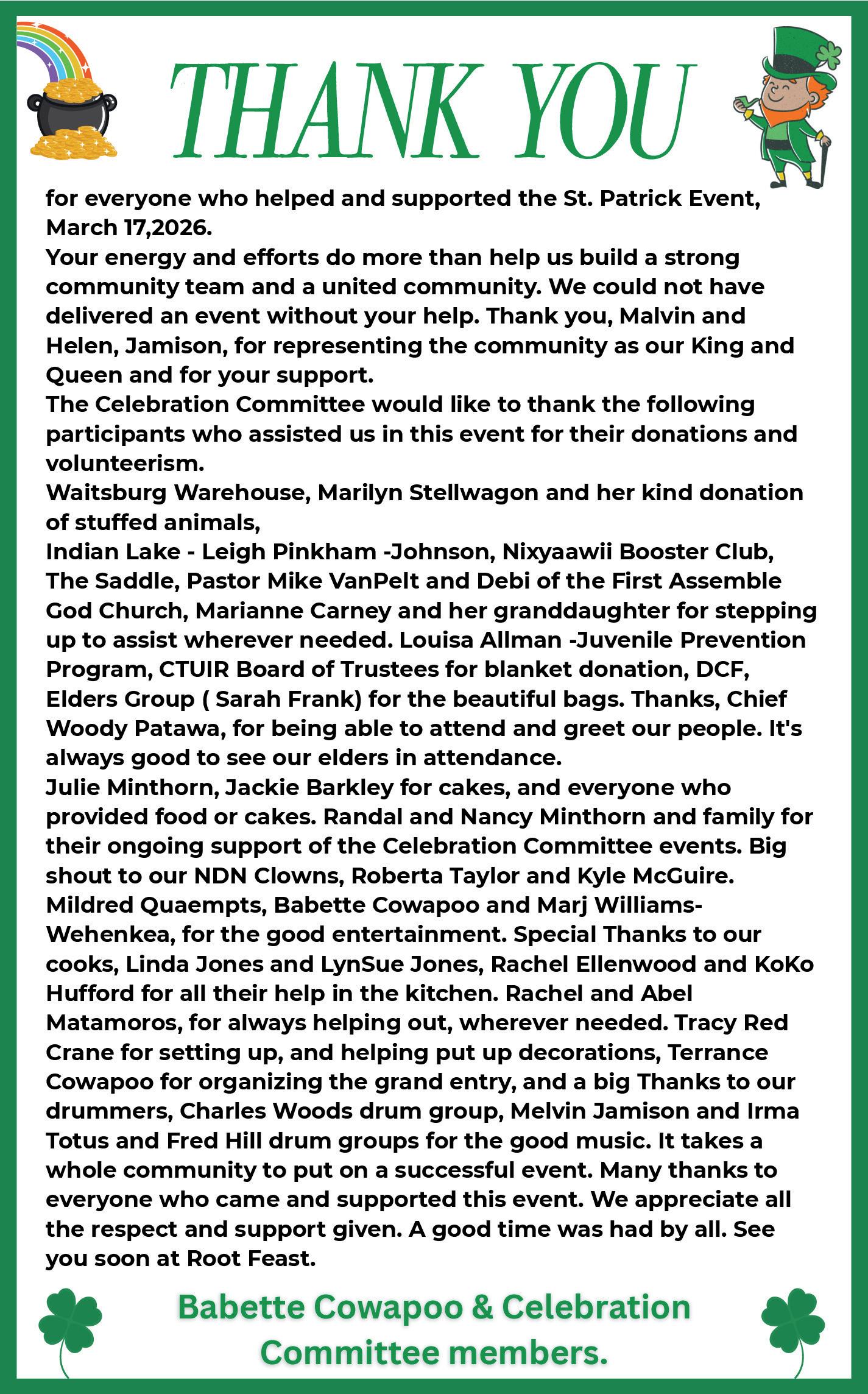
CTUIR community members learn Umatilla words by connecting them to the crafts they make. (Yasser Marte/The CUJ)
Crow’s Shadow Institute welcomes museum visitors
The CUJ
MISSION — Nationally renowned artists have hung their hats at Crow’s Shadow Institute of the Arts (CSIA) in the past, leaving prints from their residencies on studio walls and entries in the guestbook.
Institutional guests from the Portland Art Museum (PAM) toured the CSIA studio on March 17, where artists and staff highlighted the institute’s impact on contemporary and traditional art.
PAM visitors were Greg Tibbles, board of trustees community leader; Sara Krajewski, a modern and contemporary art curator; Karie Burch, director of development; and Camille Idedevbo, the director of data strategy and organizational learning with the 1803 Fund, a public benefit nonprofit dedicated to rebuilding and strengthening the historically Black community in North and Northeast Portland.
CSIA Vice Chair Pat Walters, a founding CSIA board member involved since 1992, said the
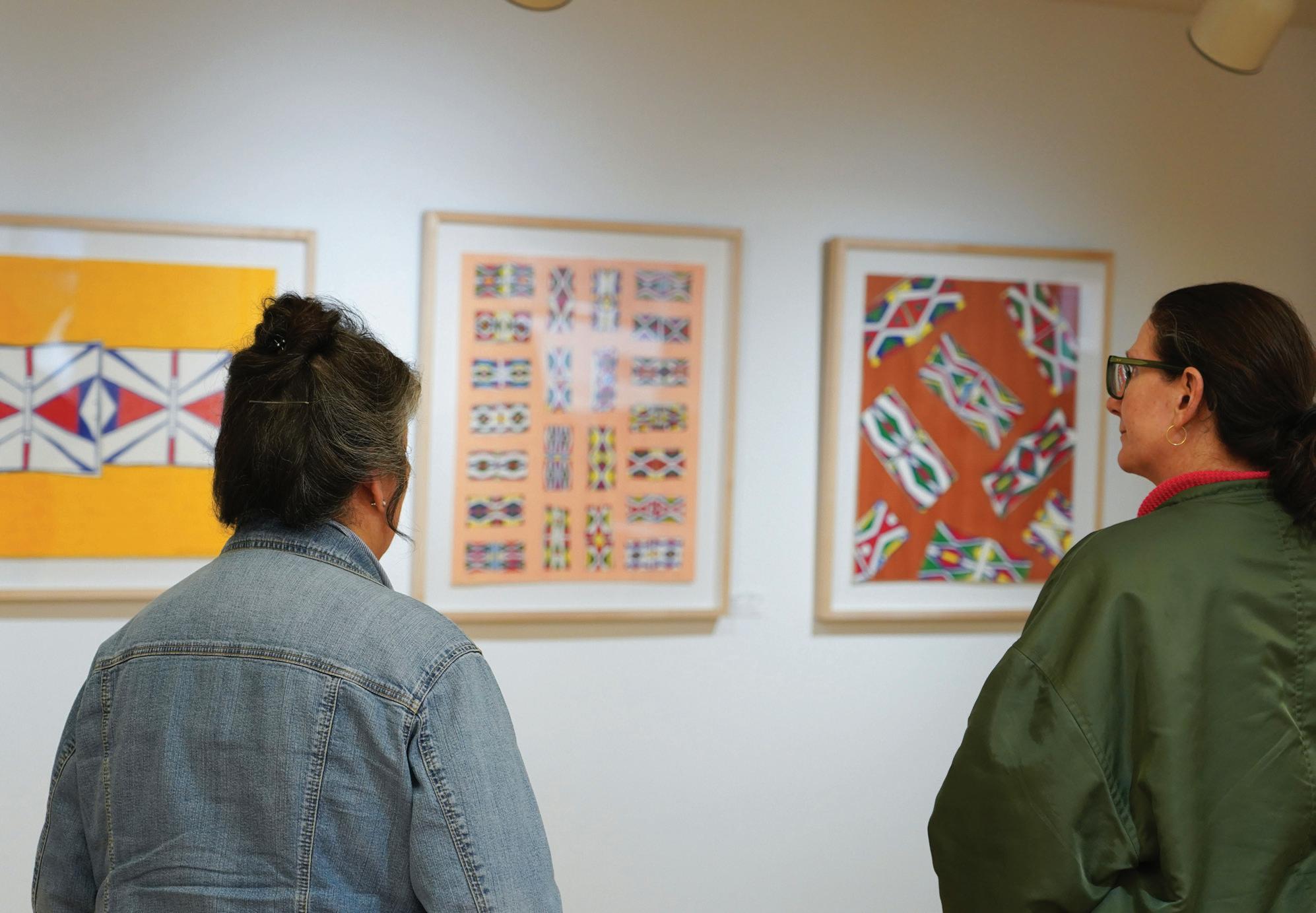
institute has evolved significantly over time.
“We started out as an art institute without really knowing what we were doing,” Walters said. “And it turned into more of a help-thing for the artists, to start learning how to market themselves.”
Alongside its artist-in-residence program, CSIA hosts 14 to 16 workshops annually focused on traditional art forms. Led by Jacy Sohappy, CSIA traditional arts manager, the workshops range from beading and sewing to quillwork and dogbane hemp processing and twining.
Walters said printmaking has become the institute’s most nationally recognized offering, while traditional arts programming is aimed at encouraging local participation
Sohappy, who first attended a CSIA workshop as a child, reflected on her connection to the space.
“My first workshop that I took here was when I was 12, in this room with Joey Lavadour (local basket weaving artist),” Sohappy
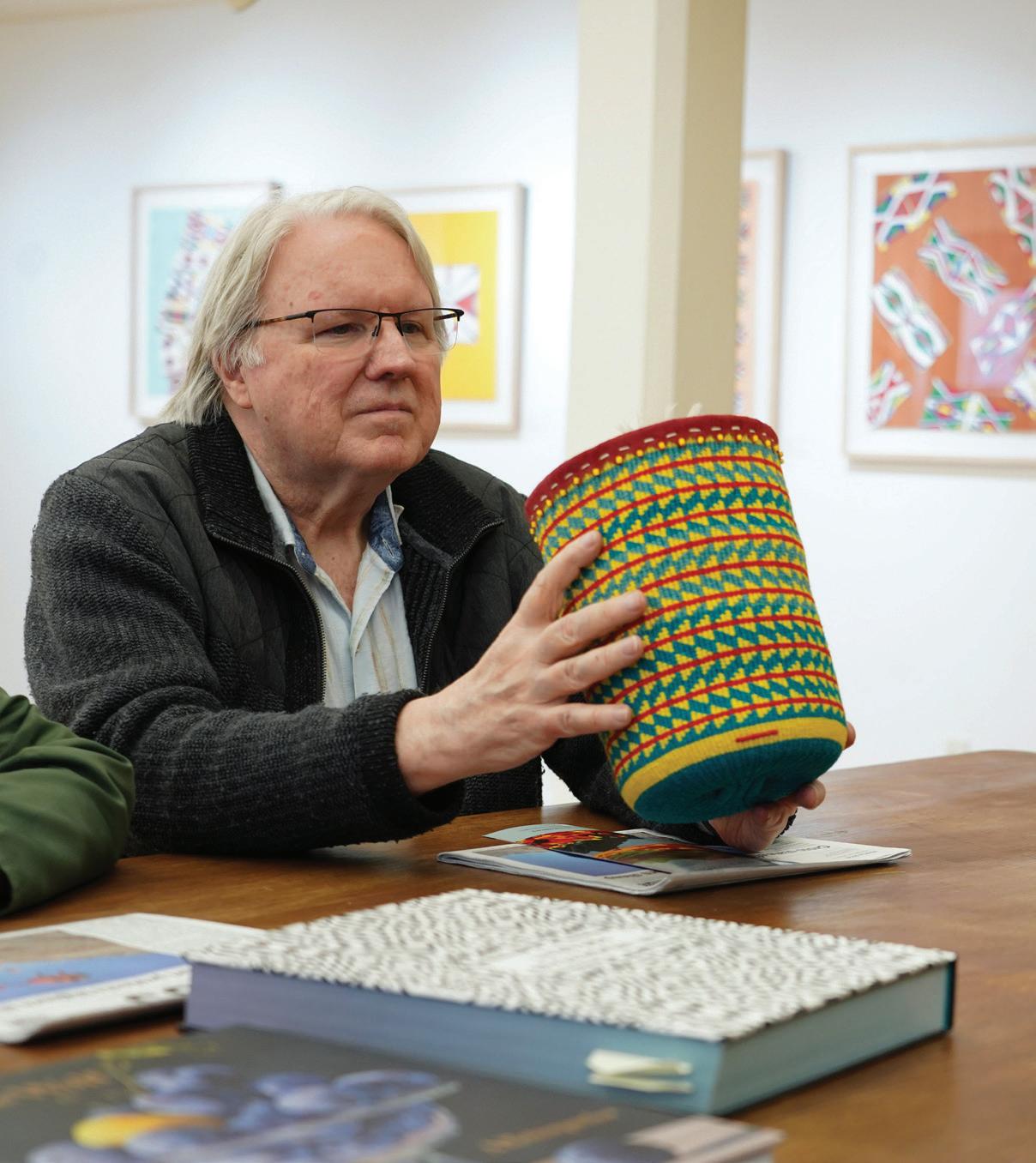
said. “When I turned 38, I started working here and the first workshop I got to host was with Joey. So, it’s this big circle of passing on our knowledge.”
During the tour, Sohappy described the importance of preserving and continuing artistic traditions passed down through generations, including dogbane hemp twining.
“It always blows my mind to think of how they did it then and how much more work it was,” she said. “They were like, ‘This is what we need to use for our bags … but let’s make it pretty, too.’”
She added their work can help people process experiences, learn and stay connected and that it continues to evolve.
The studio reflects that evolution, filled with artwork created by past resident artists. Figures such as Phillip Cash Cash, RYAN! Fedderson and Yoonhee Choi have spent time at CSIA, developing their work while drawing inspiration from the Blue Mountains.
Some of those works were
featured at the Portland Fine Print Fair in January, where many of the visiting guests first became familiar with CSIA.
“To understand the scope of people who have been through here, you go back over 20 years,” Tibbles said. “A lot of big names have come through here and spoken highly of it.”
Idedevbo said the visit revealed a depth of talent that often goes unnoticed.
“There’s all of this hidden talent sitting right under our noses,” she said. “You can tell there’s a level of excellence that has gone into the cultivation of people’s skillset.”
The studio reflects a spirit of creativity and continuity, filled with artwork by past resident artists. Artists past and present have left their mark on CSIA, from prints on the walls to notes in the guestbook.
A note left by a past artist in a studio book captured the spirit of the place: “P.S. Go to the top of the hill (walk through the fence) and watch the sun go down.”
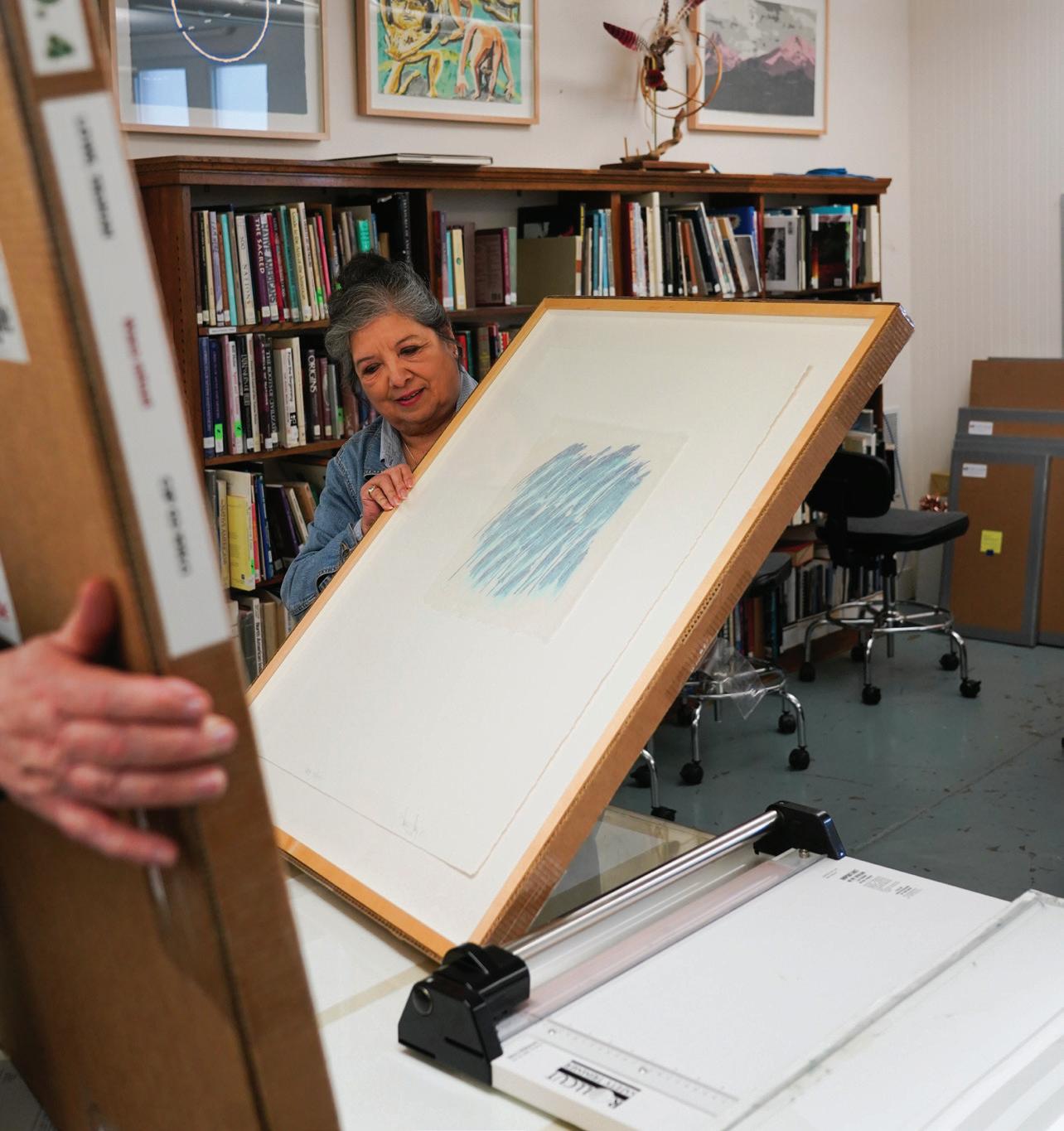
Left: Greg Tibbles, a Portland Art Museum trustee, admires a woven basket made by artist Joey Lavadour on March 17 at the Crow’s Shadow Institute of the Arts.
(Beau Glynn/CUJ)
Right: Crow’s Shadow Institute of the Arts Vice Chair Pat Walters holds up a print by Truman Lowe called “Wana naxs” on March 17.
(Beau Glynn/The CUJ)
BEAU GLYNN
Crow’s Shadow Institute of the Arts Vice Chair Pat Walters, left, shows prints by Wendy Red Star to Sara Krejewski, a curator of modern and contemporary art at the Portland Art Museum, on March 17 at Crow’s Shadow Institute of the Arts. (Beau Glynn/CUJ)
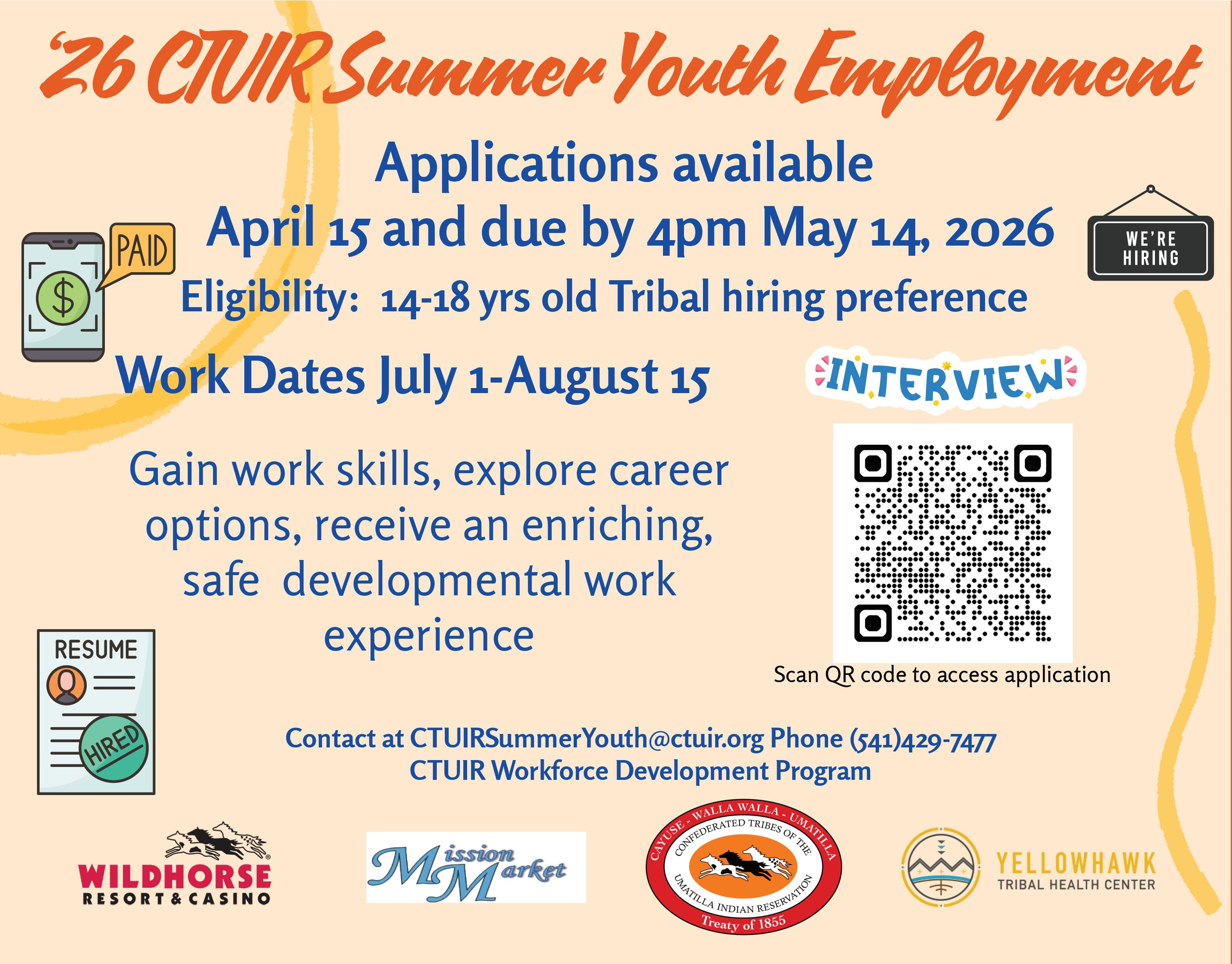
The 2026 Pášxapa Powwow will welcome dancers, drums and community members from throughout the Pacific Northwest. With a special performance by Ballet Folklórico and a blanket ceremony celebrating the upcoming graduation of Whitman’s first Šináata Scholars.
JOIN OUR EVENT
Saturday, May 2, 2026 ∙ 11:30 a.m.
SHERWOOD ATHLETIC CENTER

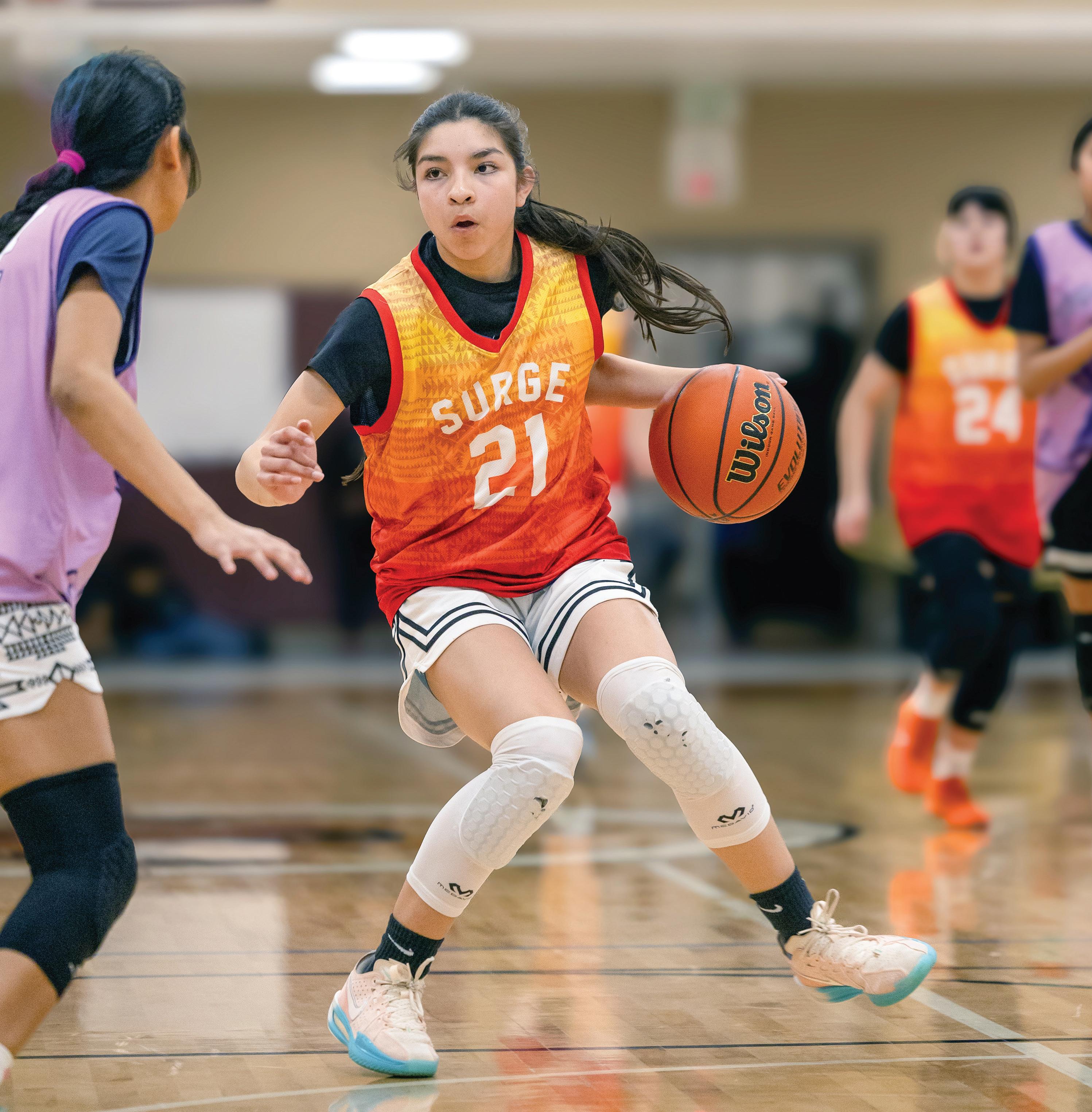
Competitive games, positive message highlight tourney
ANNIE FOWLER
The CUJ
MISSION — Last year, AJ Phipps brought his 541 Hustle team to the Basketball Against Alcohol & Drugs (BAAD) Tournament at Nixyáawii Community School after a friend asked why his team hadn’t played in the event.
This year, Phipps brought his team back to the 36th annual event because he liked the message the tournament offers the kids, as well as the competitive games.
“I wasn’t really aware of the tournament until friends asked why we weren’t there,” Phipps said. “I was a big advocate after the first year with the atmosphere and the alcohol and drug prevention along with basketball. This tournament is a positive thing for the community.”
Like last year, Phipps’ team won the 12-14 boys title. This year, they defeated Zone 6 from The Dalles 61-47 in the championship game.
“We had good games,” Zone 6 coach Jason Bay said. “They (541 Hustle) were a good team and it was a fun game. It was a good experience for the boys. It’s just my three boys (Raymond, Andrew and Lester) playing with friends. We have been going there since my boys were 5 years old. They have played on various teams.”
The Zone 6 team won the Balla Valley Madness Tournament in Toppenish, Washington, then turned around and played an 8 a.m. game at the BAAD Tournament the following day.
“In four days, we played 11 games,” said Begay, who is an enrolled member of the Confederated Tribes of Warm Springs.
The 541 Hustle team is Phipps’ AAU team, with a couple of players added in for the tournament.
“Some of the guys moved up from last year, but some got to stay with me for one more year,” said Phipps, a 2006 graduate of Riverside High School. “It was a cool experience for a coach.”
The team included players from Hermiston, Umatilla, Boardman, Irrigon and Eddy Erickson from Richland, Washington.
“Eddy was a rival in the AAU season,” Phipps said. “He asked to play tournaments with us.”
Also on the team were Jeremiah Chapa, Hayden Vera, Alijah Phipps, Jack Lathrop, Ismael Nunez, Jaquan Correy, Jax Rasmussen and Romeo Bombela.
“Basketball brings them together,” Phillps
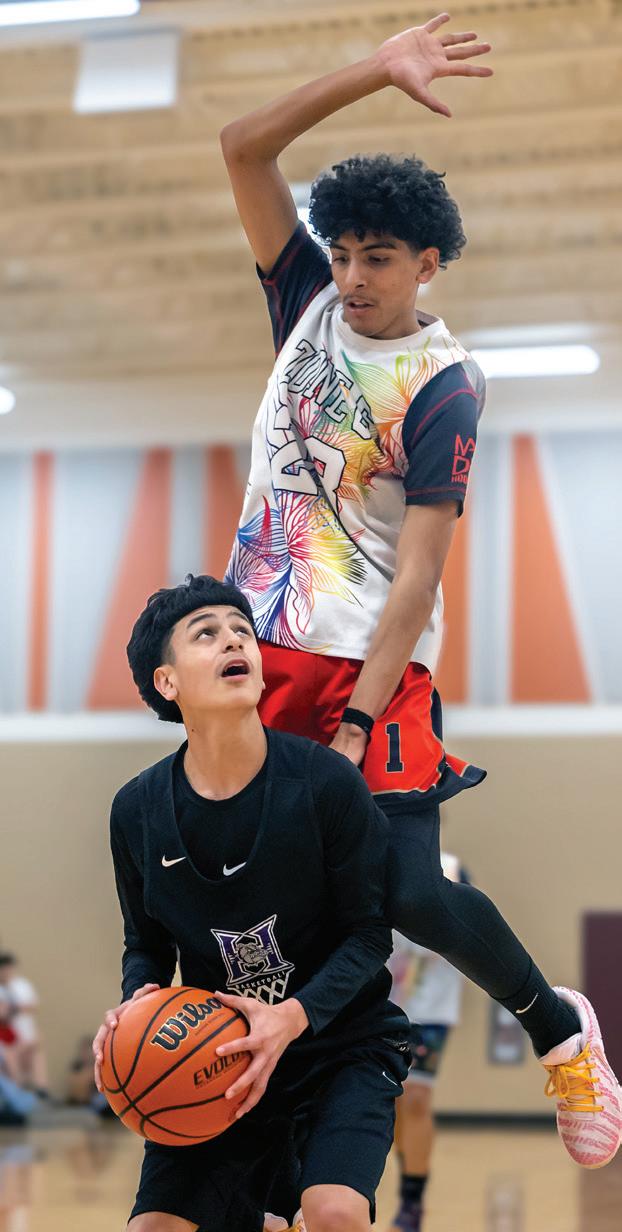
B A A D
said. “They are hard-working, humble kids. It has been a joy to see them grow up and mature through the game. They have been on the same team here and there since they were in the second or third grade.”
Vera was a standout freshman at Irrigon High School this season, and just made the cut to stay with his 541 Hustle team. He was named the tournament MVP for the second year in a row.
“It was a joy to see Hayden play high school ball,” Phipps said. “It’s very gratifying to see where he is today with the work he has put in.”
Chapa and Erickson were named to the all-tournament team, along with Rogelio
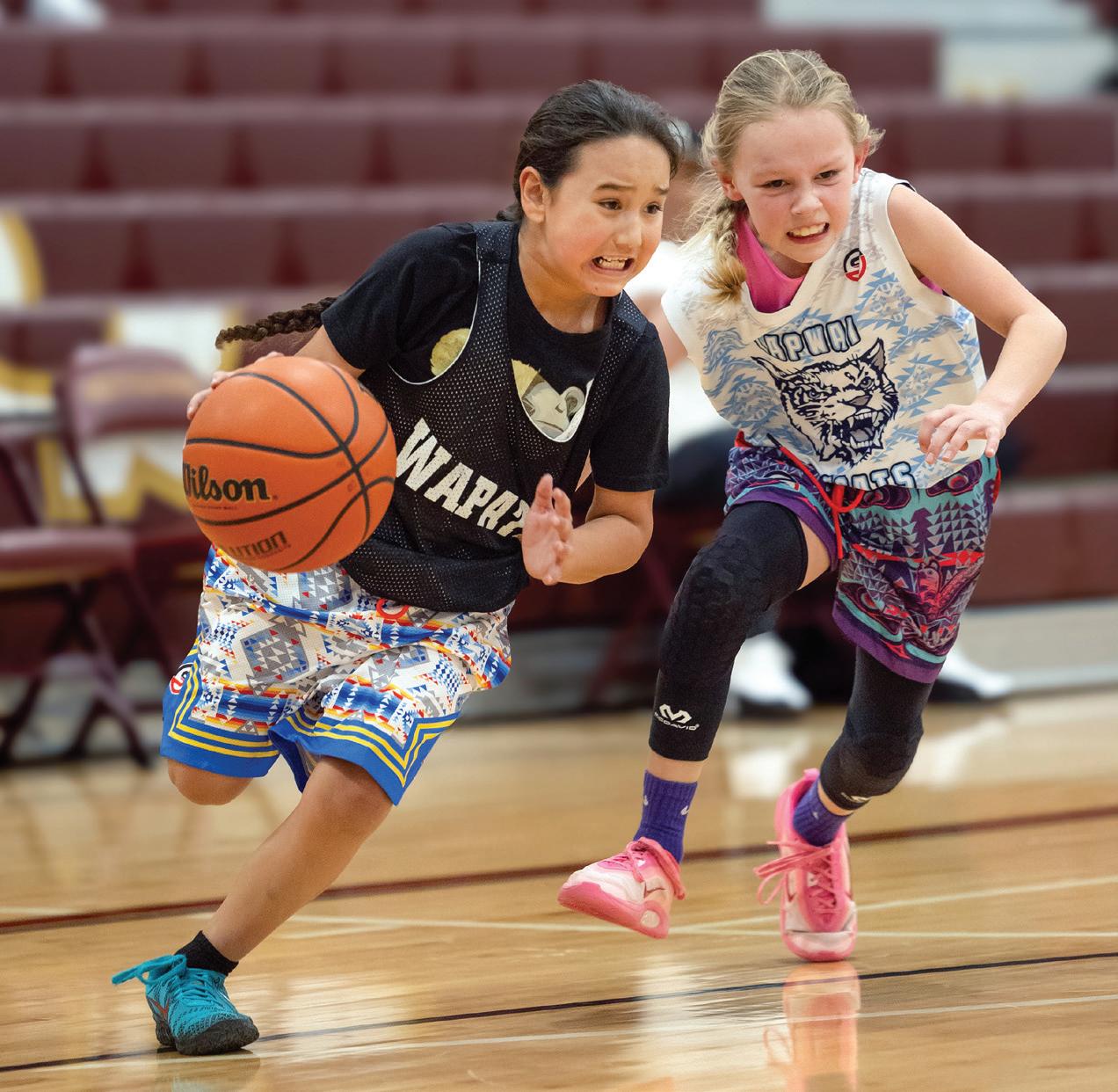
Ari Morano of Surge drives to the key during the 12-14 girls championship game against WSJLJXZ on March 24 at the annual BAAD tournament in Mission.
Photos by KATHY ANEY
Jeremiah Chapa, of 541 Hustle, eyes the basket as he is fouled by Rojelio Castellanos (23), of Zone 6.
Jameson Nunez, of Owna Yakama, cuts to the basket as Brielle Guzman, of the Lapwai Wildcats, gives chase on March 27 during the 6-8 co-ed championship game
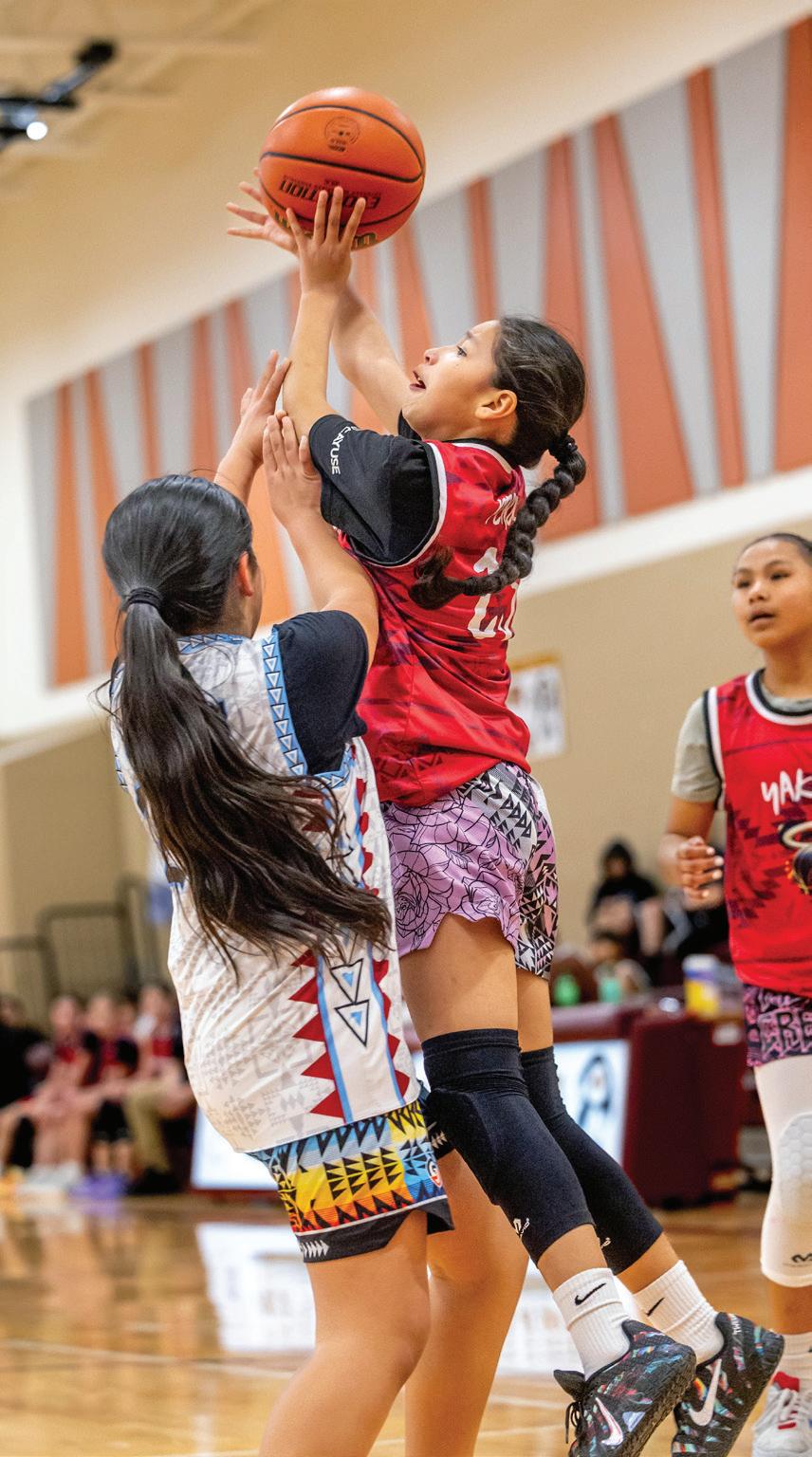
Castellanos from Zone 6. Julian Romero was named Mr. Hustle.
Also named to the all-tournament team were Sebastian Moses and Dean Arthur from the third-place Autobots.
North Blackfoot won the sportsmanship award.
Phipps said it’s not hard to see why the tournament has been successful over the years.
“We played a team earlier in the tournament that was from Alberta, Canada,” he said. “The distance teams travel for two days shows their love of the game. When you sign up for these tournaments, you get good teams going. It’s fun, and the whole message behind it all for these impressionable young minds is important.”
12-14 Girls
Surge returned to the tournament and defended its title, beating WSJLJXZ 77-59 in the championship game.
Surge had a bye in the first round, then beat The Girlz to advance to the semifinals, where they beat WSJLJXZ.
WSJLJXZ came bad through the consolation bracket with a win over the Blue Mud Ballers to reach the title game.
Ari Moran, of Surge, was named tournament MVP for the second year in a row. Teammates Ana Lopez and Charlie Contraro were named to the all-tournament team.
For WSJLJXZ, Aiyanna Suppah was named Ms. Hustle, while Alaina Sanchez was named to the all-tournament team.
Also on the all-tournament team were Isabella Villavicencio and Chalye Powaukee, of the Blue Mud Ballers, who finished third.
The sportsmanship award went to the Warm Springs Lady Tigers.
15-18 Boys
Former Nixyáawii standout Symon Picard coached Hanks to a 73-57 victory over Shadow Wolves in the championship game. Picard was a player on the winning team War Hammer last year.
Spencer Greene (Skyline High School, Idaho Falls) was named

tournament MVP, while Hanks teammates Davien Parks (Tualip Heritage High School) and former Nixyáawii player Rylen Bronson were named to the all-tournament team.
Shadow Wolves’ Jeremy Garcia was named Mr. Hustle, while teammate Daunte Van Pelt was named to the all-tournament team.
Ball Hawgz, who finished third, had Jarvis Peters Jr. and Eli Borrego named to the all-tournament team.
The Bulldogs won the sportsmanship award.
15-18 Girls
The Black Bison Bandits, led by tournament MVP Abreann Yearout, defeated Tribal Petals 46-38 in the championship game.
The Black Bison Bandits, from Lapwai, featured seven freshmen, one junior and one senior. They started the tournament with a win over Grindstone, then beat the Tribal Petals in the semifinals.
The Tribal Petals won their consolation bracket game to earn a spot in the title game.
Joslyn Marks and Taya Yearout were named to the all-tournament team, along with Grace Chartow from the Tribal Petals, and Lucy Bridgett from the Thunder Kitties, who placed third.
Ina McCloud of the Tribal Petals was named Ms. Hustle.
The sportsmanship award went to the Thunder Kitties.
9-11 Girls
The Yakama Heat walked away with the title after beating Blaze 45-5 in the title game.
Yakama’s Gianna Lewis was named tournament MVP, while teammates Ellie Perez and Aliyah.
Gallegos were named to the alltournament team.
Also named to the all-tournament team were Spencer Greene and Breia VanPelt from Blaze, and Janiya Chavez and Aria Thurby from the Little Lady Warriors, who placed third.
The sportsmanship award went to the Lady Cat Blaze.
9-11 Boys
Led by tournament MVP Davion
BAAD Tournament Winners
6-8 YEAR OLD CO-ED
First place: Owna Yakama
MVP: Jameson Nunez
All Star: Arya Vivette and Nakoa Fiander
Coach: William Vivette
Second place: Lapwai Wildcats
Ms. Hustle: Brielle Guzman
Mr. Hustle: Kylan Reynolds
All Star: Robert Taylor
Allstar: Layla Castilleja and Canaan Peters
Coach: Chantal Ellenwood
Sportsmanship: Wadatika Warriors
9-11 YEAR OLD BOYS
First place: Yakama
Mvp: Davion Rameriz
Allstar: Levi Murguia and Ozzy Scott
Coach: Vivian Sohappy and Adonis
Second place: White Swan Warrior
All Star: Vance Berys
Mr.Hustle: Anthony Gepner
Coach: Makinley Lee
Third place: 55ers
All Stars: Markel Fong and K’iis Taula
Sportsmanship: Turtles
9-11 YEAR OLD GIRLS
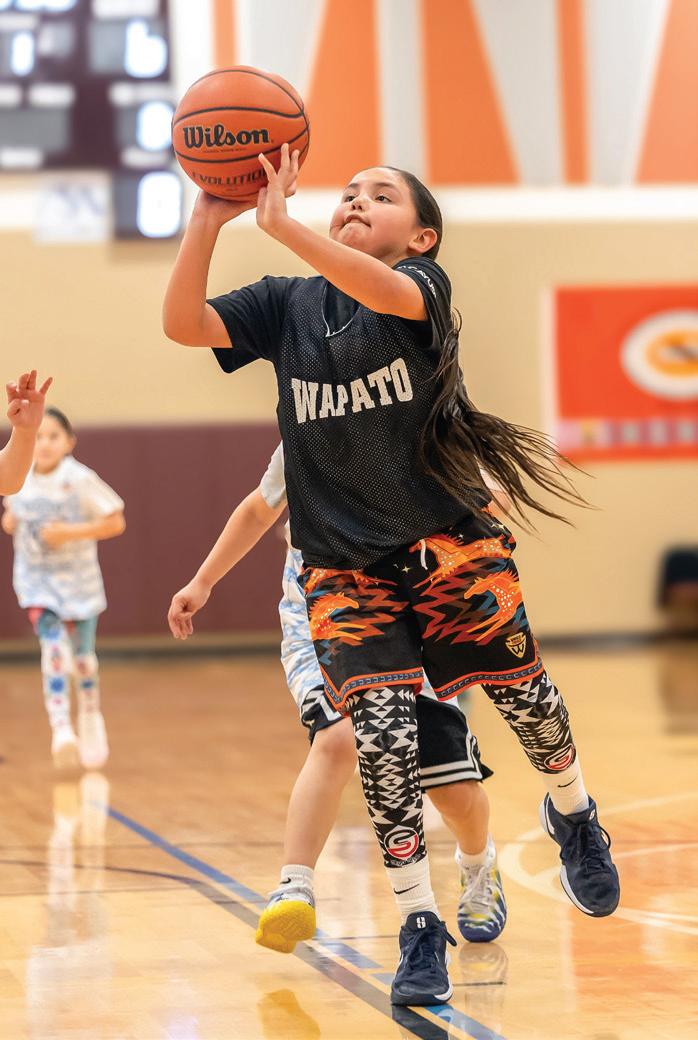
Ramirez, Yakama escaped with a 69-66 victory over the White Swan Warriors in the championship game.
Yakama’s Levi Murguia and Ozzy Scott were named to the alltournament team.
White Swan, which won the title last year, had Anthony Gepner named Mr. Hustle, while Vance Berys was named to the alltournament team, along with Markel Fong and K’iis Taula from the third-place 55ers.
The Turtles won the sportsmanship award.
6-8 Co-ed
This age group of up-and-coming players is a fan favorite.
Owna Yakama won the title with a 16-4 victory over Lapwai.
MVP for the age group was Jameson Nunez of Owna Yakama.
Ms. Hustle was Brielle Guzman from Lapwai, while Mr. Hustle was Kylan Reynolds from Lapwai.
Named to the all-tournament team were Arya Vivette and Nakoa Fiander of Owna Yakama, Robert Taylor of Lapwai, and Layla Castilleja and Canaan Peters of Yakama.
The Wadatika Warriors won the sportsmanship award.
First place: Yakama Heat
MVP: Gianna Lewis
All Star: Ellie Perez and Aliyah Gallegos
Coach: Buddy Cultee
Second place: Blaze
All Star: Spencer Greene and Breia Vanpelt
Third place: Little Lady Warriors
All Star: Janiya Chavez and Aria Thurby
Sportsmanship: Lady Cat Blaze
Coach: Emmit Taylor
12- 14 YEAR OLD BOYS
First place: 541 Hustle
Mvp: Hayden Vera
Allstar: Jeremiah Chapa and Eddy Erickson
Coach: Aj Phipps
Second place: Zone 6
Mr. Hustle: Julian Romero
All Star: Rojelio Castellanos
Coach: Jason Begay
Third place: Autobots
Allstar: Sebastian Moses and Dean Arthur
Sportsmanship: North Blackfoot
12-14 YEAR OLD GIRLS
First place: Surge
Allstar: Ana Lopez and Charlie Contraro
Mvp: Ari Moran
Coach: Ken Hamilton
Second place: WSJLJX2
Ms. Hustle: Aiyanna Suppah
Allstar: Alaina Sanchez
Coach: Merima Made
Third place: Blue Mud Ballers
Allstar: Isabella Villavicencio and Chalye Powaukee
Sportsmanship: Warm Springs Lady Tigers
15-18 YEAR OLD BOYS
First place: Hanks
Mvp: Spencer Greene
Allstar: Davien Parks and Rylen
Bronson
Coach: Symon Picard
Second place: Shadow Wolves (57)
Mr. Hustle: Jeremy Garcia
Allstar: Daunte Vanpelt
Coach: Casey Eneas
Third place: Yn Ball Hawgz
Allstar: Jarvis Peters Jr. and Eli Borrego
Sportsmanship: Bulldogs
15-18 YEAR OLD GIRLS
First place: Black Bison Bandits
Mvp: Abreann Yearout
Allstar: Joslyn Marks and Taya Yearout
Coach: Austin Domebo
Second place: Tribal Petals
Allstar: Grace Chartow
Ms. Hustle: Ina Mccloud
Coach: Yolanda Yallup
Third place: Thunder Kitties
Allstar: Lucy Bridgett
Sportsmanship: Thunder Kitties
Arya Vivette, of Owna Yakama, shoots on March 27 during the 6-8 co-ed championship game against the Lapwai Wildcats.
ABOVE : Yakama’s Jason John works his way around a White Swan defender during the 9-11 boys championship game.
LEFT: Ellie Perez, of Yakama Heat, goes up for a shot during the 9-11 girls championship game against Lady Cats Blaze.

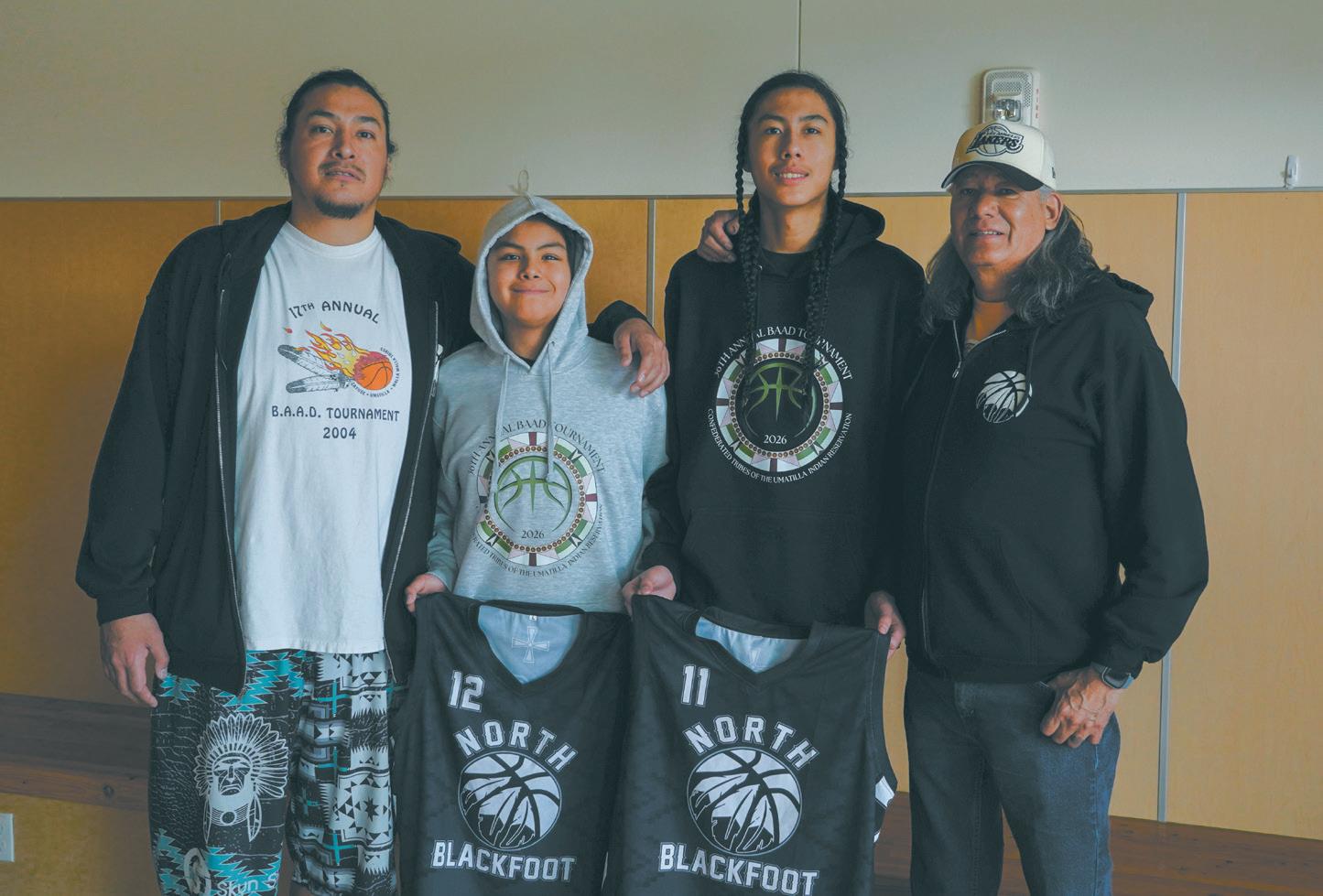
Canadian team returns to BAAD Tournament
BEAU GLYNN
The CUJ
MISSION — The last time Lanny McHugh made his way to the Basketball Against Alcohol and Drugs (BAAD) Tournament from Alberta, Canada, it was 2004 and his father, Ira, was his coach. Now a coach himself, he brought his sons to play in the BAAD Tournament.
The tournament joins basketball and alcohol and drug prevention classes to inform young players of the dangers of alcohol and drug abuse. Teams from across the region, in this case the continent, compete.
Lanny, sporting his tournament shirt from 22 years ago, recalled the experience all that time ago, on March 24 at Nixywàaii Community School.
“From what I remember, we had such an awesome time here, and I’ve been searching for this tournament for years now,” he said, “and I found my old Umatilla shirt tucked away, so I started searching and finally found the announcement on the site.”
Lanny brought his two sons, Lanayson and Lawrenzo, to play in the tournament that his father brought him to 22 years ago.
“I’m the driver now, though, he’s the coach,” Ira said.
The McHughs made their journey from the Siksika Nation in southern Alberta, travelling for 12 hours to
compete in the tournament Lanny had fond memories of.
“It has always been an awesome tournament. The experience has been great, the hospitality and the sessions, too,” Lanny said. “The Youth Health Sessions they provide definitely help them learn a lot of good things.”
To be eligible to compete in the tournament, all teams are required to participate in prevention awareness sessions after their first game. The classes utilize special guests and activities to educate players about the dangers alcohol and drug abuse pose.
After competing in their own March Madness tournament on March 21, Lanny’s Blackfoot team arrived late Sunday night.
“It was a tough schedule for us,” he said. “Our boys played four games yesterday and then they had to play at 9 this morning. A good couple battles here, but we definitely had fun though.”
Lanny said he was happy to find out that 22 years after he played in the BAAD Tournament, it’s still going strong.
“I’d been wondering for a few years where this tournament had been and if it was still going. Come to find out, it’s been happening every year since, so it’s definitely awesome to be back out here,” he said.

From left, Lanny McHugh with his sons, Lawrenzo and Lanayson, and his father, Ira, at the Basketball Against Alcohol and Drugs (BAAD) Tournament on March 24. Lanny sports a 2004 BAAD Tournament T-shirt that he got the last time his North Blackfoot team from Alberta, Canada competed. (Beau Glynn/CUJ)
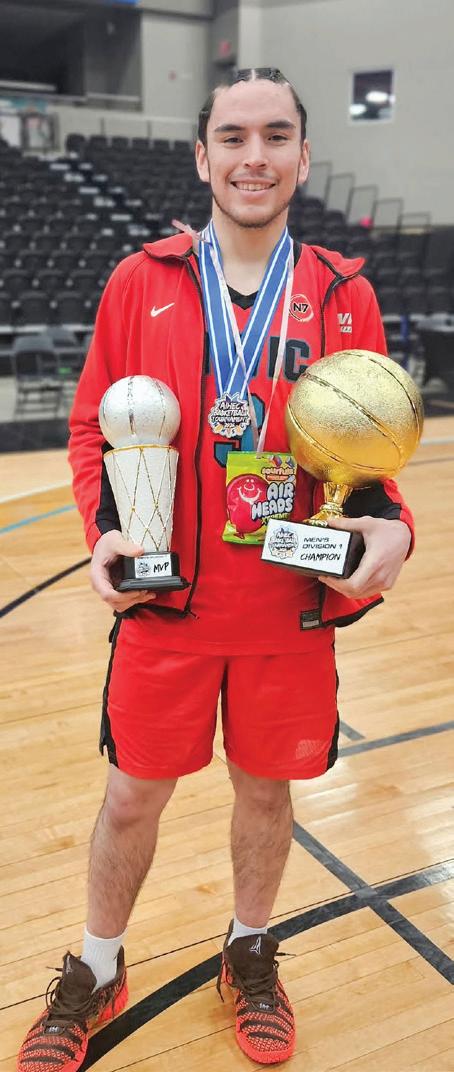
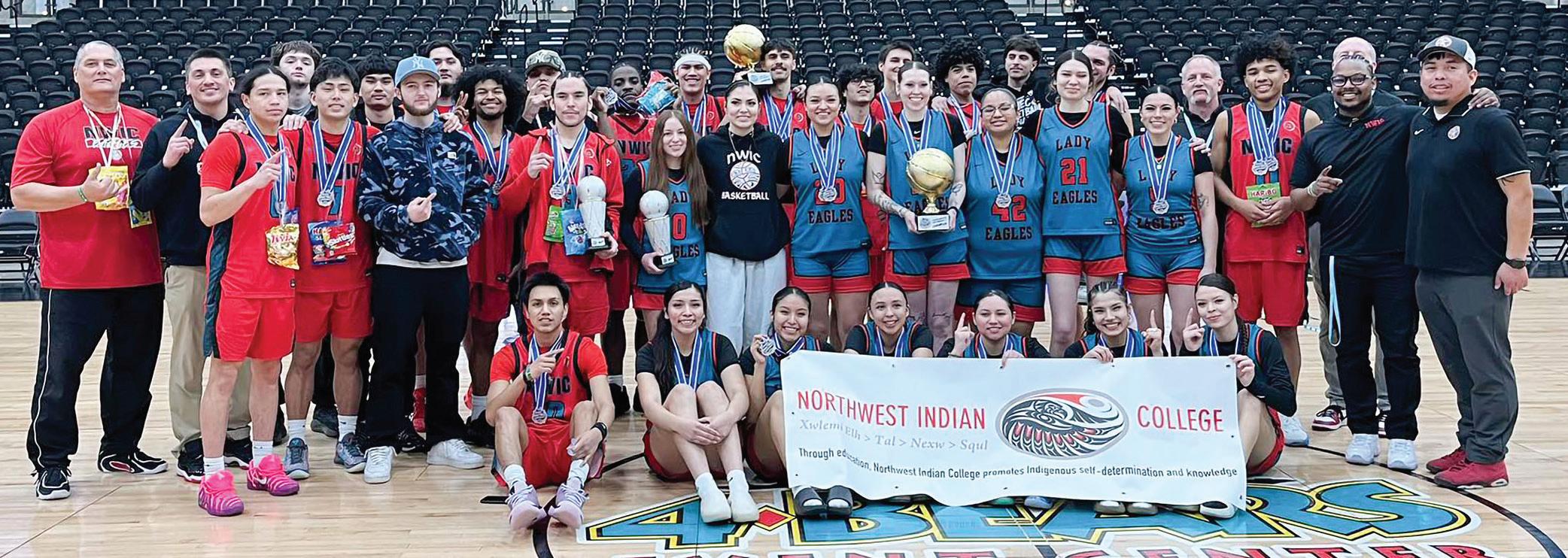
ABOVE: The Northwest Indian College men’s and women’s basketball teams pose with their championship trophies won at American Indian Higher Education Consortium Division 1 National Basketball Tournament on March 29, 2026, in New Town, North Dakota. (Northwest Indian College/Contributed photo)
LEFT: Northwest Indian College’s Tyasin Burns was named the MVP of the American Indian Higher Education Consortium Division 1 National Basketball Tournament for the second year in a row. (Milo Abrahamson/Contributed photo)
Burns, Bronson lead NWIC teams to national titles
NEW TOWN, North Dakota — For the first time in school history, Northwest Indian College won the men’s and women’s titles at the 51st annual American Indian Higher Education Consortium Division 1 National Basketball Tournament on March 29.
Both teams were led by former Nixyáawii Community School (NCS) graduates and Confederated Tribes of the Umatilla Indian Reservation members Tyasin Burns and Sophie Bronson.
The tournament ran March 2629 at the Johnny Bird Memorial Gym at Nueta Hidatsa Sahnish College.
It’s the second consecutive title for the men’s team, and the firstever title for the women.
NWIC, located in Bellingham, Washington, opened the tournament March 27 with pool play. In the men’s bracket, the Eagles beat Navajo Technical University 104-19, then followed with a 72-35 win over Little Big Horn College, and earned a trip to the quarterfinals with a 50-6 win over Chief Dull Knife College.
In the quarterfinals, NWIC topped the Salish Kootenai College Bison 72-40, followed by an 81-64 win over the Cankdeska Cikana Community College Wolves in the semifinals.
In the championship game, the Eagles defeated the Stone Child College Bear Paws 94-60. Burns, a 2021 graduate of NCS,
was named the tournament MVP for the second year in a row.
“It was kind of expected with how many returning players we had (nine),” Burns said of the title. “It’s a different experience each time.”
Burns, who is majoring in business and entrepreneurship, had two more years to play at NWIC.
“I will probably end up staying,” he said. “It’s fun with the schedule we have. We played Portland State, Montana State and a couple of DIII schools.”
In the women’s tournament, the Lady Eagles opened pool play with a 76-17 win over Sisseton Wahpeton College, then beat Nueta Hidatsa Sahnish College 5216, a game they led 32-7 at the half.
NWIC finished pool play with a dominating 79-15 win over Navajo Technical University.
In the semifinals, the Lady Eagles beat the Turtle Mountain Community College Mikinocks 7334 in the semifinals.
In the title game, NWIC beat the Oglala Lakota College Lady Bravehearts 72-42.
“It’s something we wanted all year long,” said second-year NWIC coach Tony Lalonde. “It’s nice to get the job done. Most of the schools at this tournament play a pretty limited schedule. We play about 30-40 games a year. It’s a big accomplishment for us, having never done it before.”
NWIC’s Jasmyne Torres was named tournament MVP, while

Ashlyn Gravy, Lauren Gould, Tala Mitchell were named to the alltournament team. It was a special week for Gravy, who is from New Town.
Bronson, a 2023 NCS graduate, said the teams’ tough schedule before the tournament paid off.
“I feel like everything we’ve been through this season led us to this point,” she said. “We have played good competition. We played in Hawaii, played NAIA teams and a couple of schools from Canada. I think we were better prepared.”
Lalonde said Bronson is a key player for the Lady Eagles.
“To get here, we brought in good people, and Sophie is part of that,” he said. “She is a leader
on the team. She gets us started at practice. She has the loudest voice on the team, saying what needs to be said. She is a floor general out there. Sophie knows what I want to do without saying it. She is so in tune with the game. We’d like her to come back next year. She’s the hardest worker on our team and she has some toughness about her.”
Bronson said she is on the fence as to whether she will return to NWIC next year.
“I would like to go to a higher level, but I may come back for another year,” she said. “I want to keep my options open.”
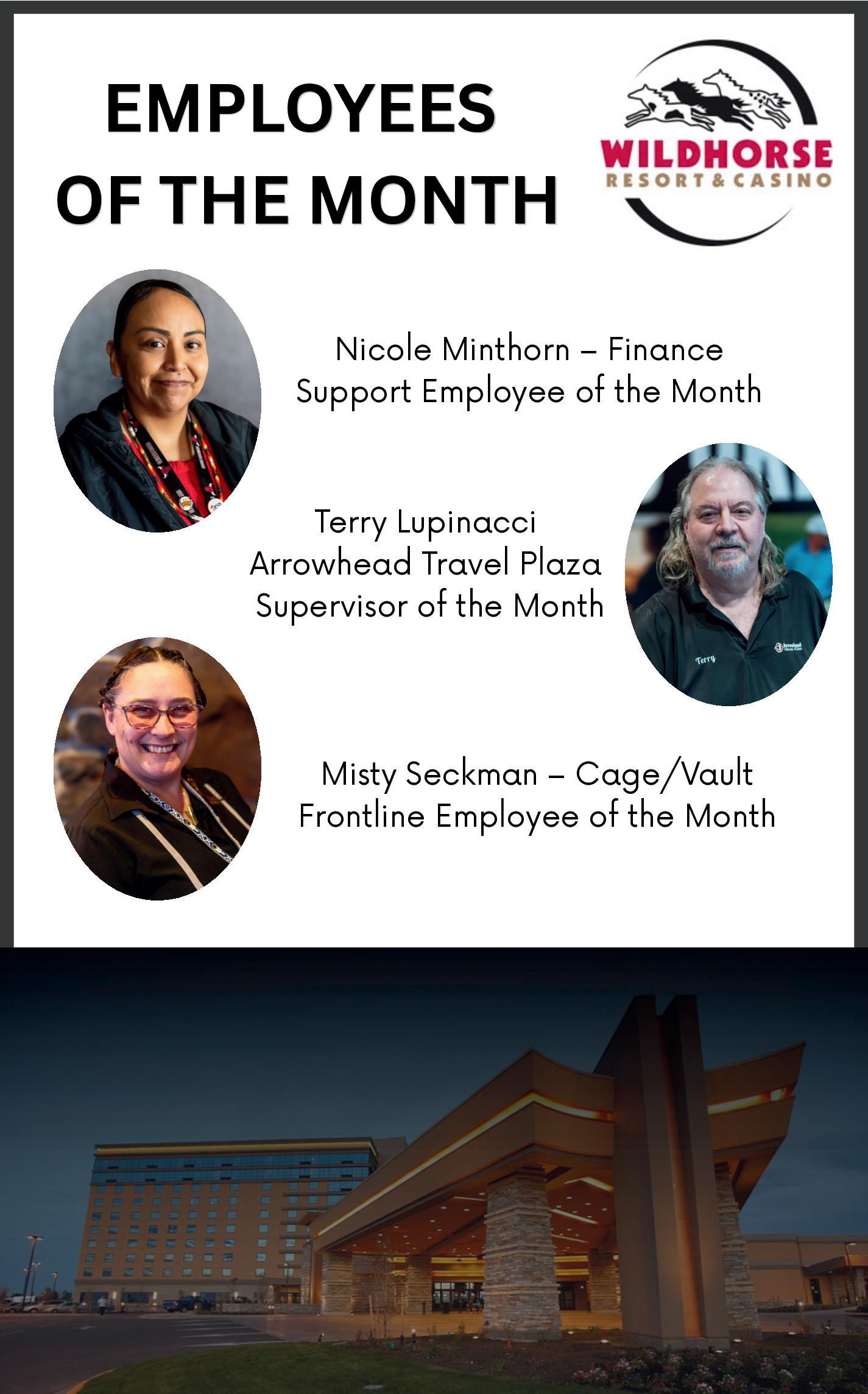
ANNIE FOWLER
The CUJ
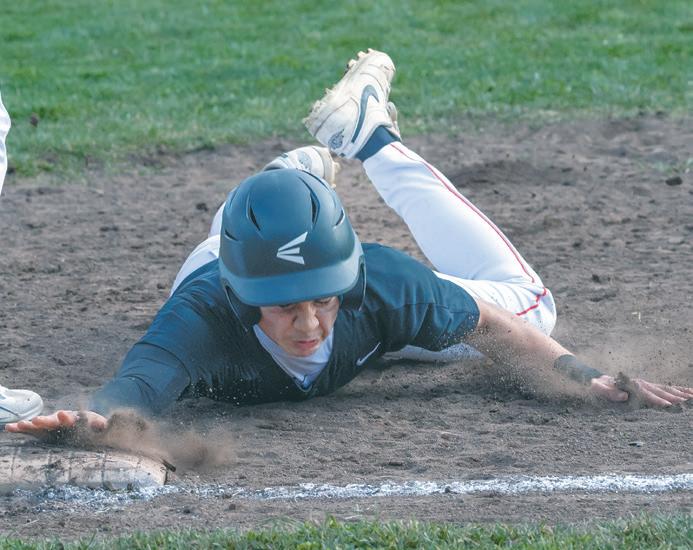
Thursday, April 2
TENNIS
• Baker at Pendleton 3 p.m.
• Irrigon at Sherman 3 p.m.
• McLoughlin at La Grande 3 p.m.
Friday, April 3
BASEBALL
• Weston-McEwen at Heppner (2) 1 p.m.
• Cove/Union at Pilot Rock (2) 1 p.m.
• Redmond at Pendleton (2) 2 p.m.
SOFTBALL
• Pendleton vs. Astoria (Estacada HS) 1:30 p.m.
• Weston-McEwen at Knappa 3 p.m.
• Pendleton vs. Sandy 5 p.m.
TRACK AND FIELD
• Elgin, Heppner, Imbler, Ione, Irrigon, McLoughlin, Nixyáawii, Pilot Rock, Powder Valley, Riverside, Umatilla, Weston-McEwen at Buck Track Classic, Pendleton 11 a.m.
• Stanfield at Prairie City Meet noon
GOLF
• Union, Pilot Rock, Umatilla, Weston-McEwen, Nixyáawii at Big River, Umatilla 9 a.m.
• Pendleton at Crooked River Ranch (Madras) 11 a.m.
TENNIS
• Riverside at Weston-McEwen 3
Saturday, April 4
BASEBALL
• Philomath at Pendleton 1
• Pilot Rock at Enterprise/Joseph/ Wallowa (2) 1 p.m.
Monday, April 6
GOLF
• Pendleton, Pilot Rock, Echo, Weston-McEwen at Nels Nelson Tournament, at Wildhorse noon
Tuesday, April 7
BASEBALL
• Pilot Rock at Stanfield/Echo 3:30 p.m
• Weston-McEwen at Riverside 4 p.m.
• The Dalles at Pendleton 4:30 p.m.
• Heppner at Weston-McEwen 4 p.m.
• Pilot Rock at Irrigon 4 p.m.
• Pendleton at The Dalles 4:30 p.m. TENNIS
• Pendleton at Ontario 3 p.m. (MT)
Wednesday, April 8
GOLF
• Nixyáawii at Wildhorse 1 p.m.
Thursday, April 9
BASEBALL
• Pendleton at St. Helens 5 p.m. SOFTBALL
• Vale at Pendleton 2 p.m.
• Weston-McEwen at Ione
• Nyssa at Pendleton
Friday, April 10 SOFTBALL
• Grant Union at Weston-McEwen (2) 1
• Echo, Pilot Rock, Pendleton girls, Union, WestonMcEwen at Echo Hills 10 a.m.
Spring Sports Schedule
Saturday, April 11
SOFTBALL
• Pendleton at Marist Catholic 11 a.m.
• Pilot Rock at Country Christian (2) 1 p.m.
• Pendleton at Junction City 2:30 p.m.
TRACK AND FIELD
• Pendleton at Wilsonville Invitational
• Elgin, Griswold, Heppner, Imbler, Pilot Rock, Powder Valley, Riverside, Umatilla, Union, Weston-McEwen, McLoughlin at La Grande Invite
Monday, April 13
GOLF
• Pendleton, Echo, Union, Weston-McEwen at Birch Creek
Tuesday, April 14
BASEBALL
• Irrigon at Weston-McEwen
• Grant Union at Pilot Rock
• Weston-McEwen at Heppner
• Irrigon at Pilot Rock
• Weston-McEwen at Condon
• La Grande at Pendleton
Thursday, April 16
TENNIS
• Pendleton at Four Rivers
• Weston-McEwen at Irrigon
GOLF
• Pendleton boys, Echo at Brasada Golf Course (Bend)
• Pendleton girls, Pilot Rock, Union at Willow Creek Country Club (Heppner)
Friday, April 17
BASEBALL
• Weston-McEwen at Pilot Rock (2)
• Pendleton at Ontario (2)
• Pendleton vs. Gladstone (at The Dalles)
• Weston-McEwen at Union/Cove (2)
• Pendleton vs. Sweet Home (at The Dalles)
TRACK AND FIELD
• Ione, Irrigon, McLoughlin, Pilot Rock, Riverside, Weston-McEwen, Pendleton at Rivers Edge, Umatilla
TENNIS
• The Dalles girls at Pendleton
• Pendleton boys at The Dalles
GOLF
• Pilot Rock at John Day
Saturday, April 18
BASEBALL
• Vale at Umatilla (2)
TRACK AND FIELD
• Pendleton at The Willamette Falls Invitational, Oregon City
• Heppner, Elgin, Echo, Griswold, Imbler, Ione, Nixyáawii, Pilot Rock, Powder Valley, Union at Cove Regional 1A/2A/3A Invitational, EOU

Monday, April 20
GOLF
• Pendleton girls at Quail Ridge (Baker), noon
Tuesday, April 21
BASEBALL
• Weston-McEwen at Irrigon 4 p.m.
• Pilot Rock at Grant Union 4 p.m.
• Pendleton at Scappoose 4:30 p.m.
SOFTBALL
• Weston-McEwen at Pilot Rock 4 p.m.
• Scappoose at Pendleton 4:30 p.m.
TENNIS
• Vale at Pendleton 3 p.m.
• Weston-McEwen at Riverside 3 p.m.
GOLF
• Pendleton girls, Echo Union at La Grande Country Club noon
Thursday, April 23
TRACK AND FIELD
Imbler, Pendleton, Riverside, Weston-McEwen at Nike/Jesuit Twilight Relays, Portland 2 p.m.
TENNIS
• McLoughlin at Pendleton 3 p.m.
• Weston-McEwen at Stanfeld/Echo 3 p.m.
Friday, April 24
BASEBALL
• Irrigon at Pilot Rock (2) 1 p.m.
• Weston-McEwen at Grant Union (2) 1 p.m.
• Baker at Pendleton (2) 2 p.m.
SOFTBALL
• Pilot Rock at Union/Cove 1
• Baker at Pendleton (2) 2 p.m.
TRACK AND FIELD
• Imbler, Pendleton, Riverside, Weston-McEwen at Nike/Jesuit Twilight Relays, Portland 2 p.m.
• Echo, Elgin, Griswold, Heppner, Ione, Irrigon, McLoughlin, Nixyáawii, Pilot Rock, Powder Valley, Riverside, Stanfield, Umatilla, Union, WestonMcEwen, Pendleton at the Carnival of Speed, Milton-Freewater
GOLF
• Pendleton boys, Echo, Union at La Grande Country Club noon
• Weston-McEwen, Pilot Rock at Mac-Hi Invitational noon
Saturday, April 25
TRACK AND FIELD
• Pendleton at Prosser Rotary Invite 10:30 a.m.

Monday, April 27
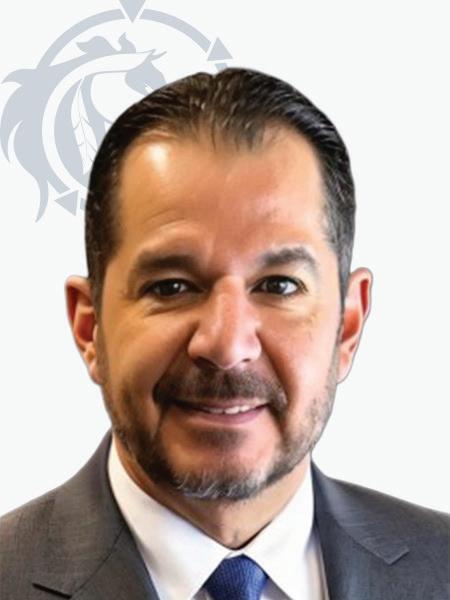
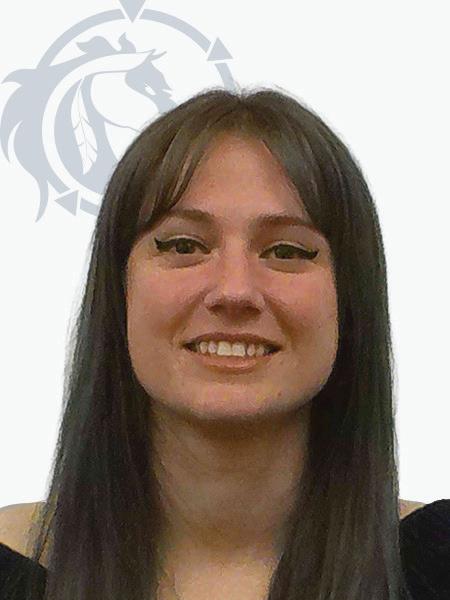

Golf returns to Nixyáawii
ANNIE FOWLER
The
CUJ
MISSION — It has been three years since Nixyàawii Community School has had a golf team, but thanks to Leighton Pennington, the Golden Eagles are back on the golf course.
Pennington took over the program this spring, and with three players, he has a solid core of golfers to work with.
“My decision to apply for this position stems from a desire to help grow the game and provide opportunities for young players that I wish I had experienced for a longer period,” Pennington said.
Pennington said all three players are in the early stages of their golf development.
“Their experience levels vary, with some having limited exposure to the game, and others just beginning from scratch,” he said. “This creates a unique and exciting opportunity to introduce foundational skills while also fostering a passion for the sport. I am genuinely excited to guide these players and support their growth, both as golfers and as individuals.”
Teeing off for the Golden Eagles this season are senior Harley Gone and juniors Evan Minthorn and Jeffrey Van Pelt.
Pennington, an enrolled member of the Pyramid Lake Paiute Tribe, played golf for two years at Riverside Indian School in Anadarko, Oklahoma, before the
“I am genuinely excited to guide these players and support their growth, both as golfers and as individuals.”
- Leighton Pennington
school cut the program. But his love for the game never wavered.
“Although my time in organized school golf was cut short, the experience left a lasting impact on me and shaped my appreciation for the game,” Pennington said.
“Since then, I have remained active in golf and I am currently a member at Wildhorse Resort and Casino, where I had the opportunity to win a club championship (2021).”
By the end of the season, Pennington said he hopes to leave a lasting impression on his players.
“Reflecting on my own journey, I recognize that golf is more than just a sport — it is a discipline that teaches patience, resilience and self-awareness. These are qualities that extend far beyond the course and into everyday life.”
Off the course, Pennington is the CD Prevention Coordinator at Yellowhawk Tribal Health Center.



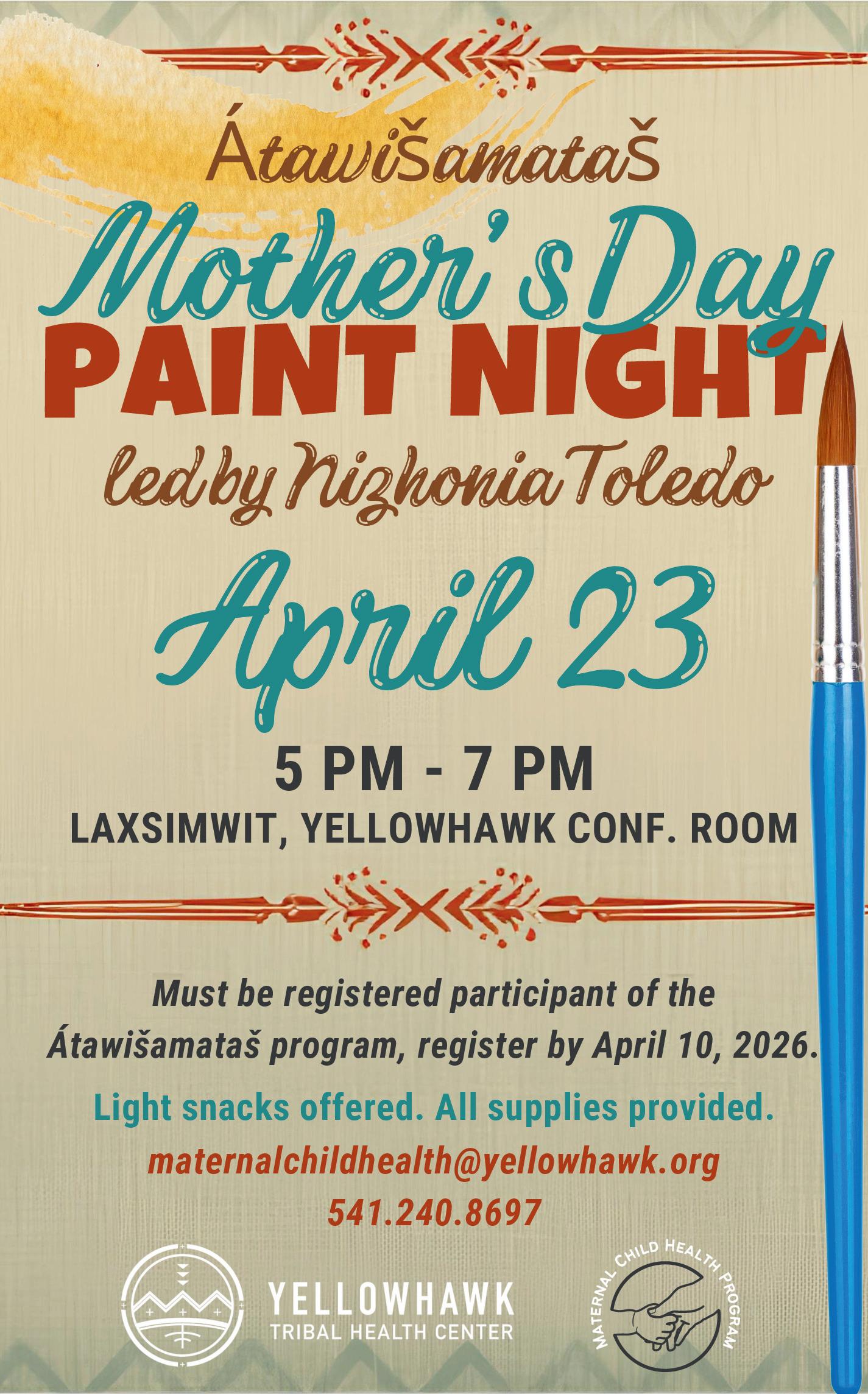










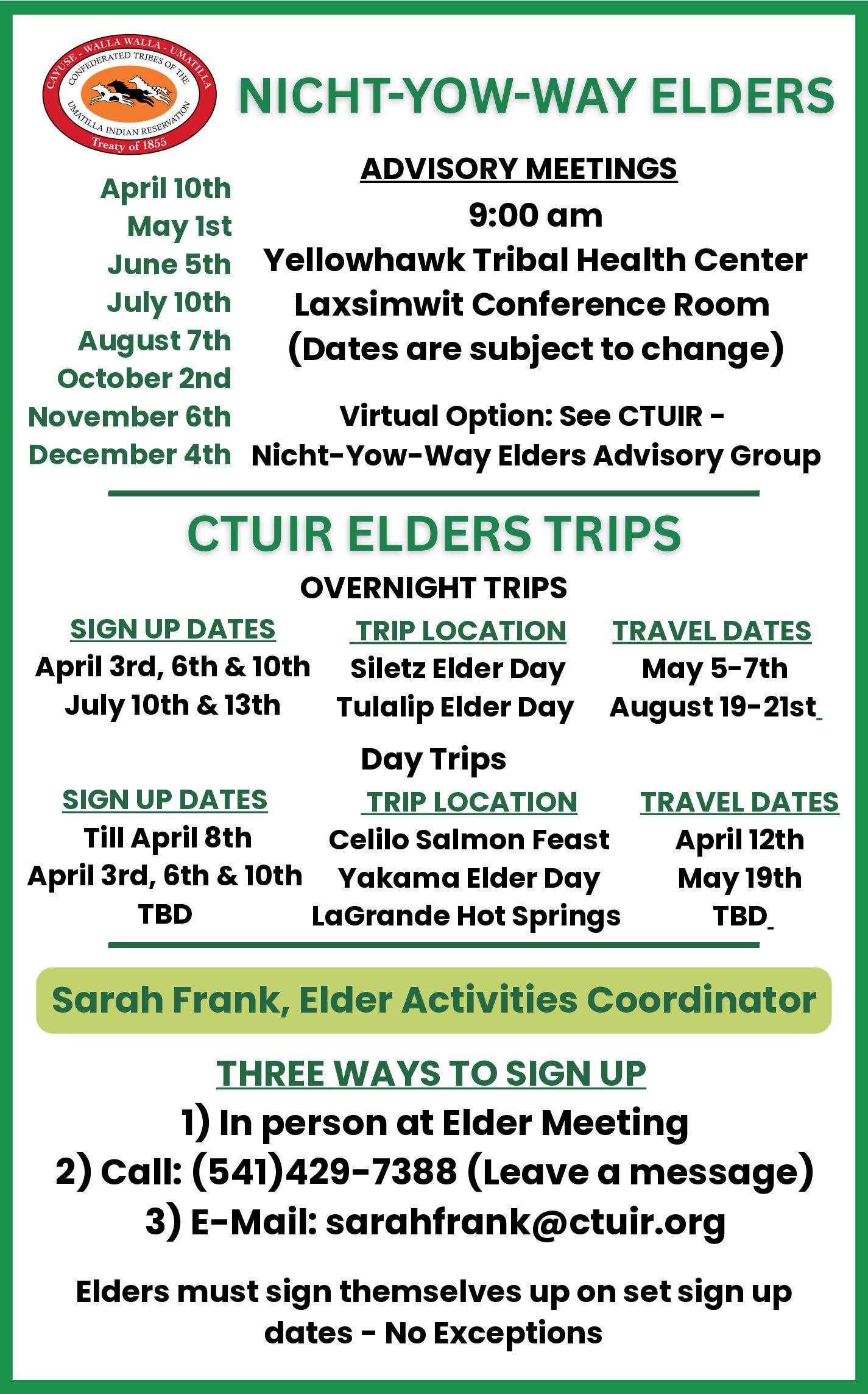










Up to $7,500 : 8.50% APR/OAC* (48mo)
$7,501 $10k : 8.75% APR/OAC* (60mo)
$10,001 $15k : 9.75% APR/OAC* (60mo)
$15,001 $20k : 10% APR/OAC* (60mo)




Youth Voices on the radio
BEAU GLYNN
The CUJ
MISSION — A group of prospective young journalists spent the week learning the insand-outs of audio journalism through the Youth Voices program at Nixyáawii Governance Center.
On March 24, a small group of students ranging from middle-school aged to a college freshman met Youth Voices instructors Mike Green, Madeline Jorden and Owen Preece, hailing from the nonprofit Montana Media Lab at the University of Montana School of Journalism.
“We show up at the beginning of the week and introduce kids to audio-journalism, and a lot of times we’re working from zero and bringing them up to 100 by the end of the week, or as best as we can,” Green said.
Jorden said she got involved with the program as a grad student at the University of Montana.
“The program is just about taking audiojournalism into schools around Montana and the region and teaching kids about audio-journalism and how to create a radio story,” Jorden said.
While the program is typically Montana-based, it has recently branched out further as groups have reached out to take part. Confederated Tribes of the Umatilla Indian Reservation (CTUIR) Director of Communications Kaeleen McGuire reached out to the Montana Media Lab in the Fall of 2025.
“Our partnership with the Montana Media Lab was a great first step, and what a team they have,” McGuire said, “Invested in every community they are a part of, and shared so much knowledge with the group even in the short time they were here. We are very thankful and I hope we can continue to build on the partnership.”
McGuire said she was thankful for the successful inaugural venture into the project.
“The teens involved were sharp, I am proud of how they contributed their time and energy to the project and it is so exciting to hear their ideas for the future,” McGuire said, “As we continue to revamp KCUW, we will continue to focus on opportunities for our young people to share their voices.”
Green explained that the program begins the week with playing some stories to lay out an example, inviting in reporters via Zoom to talk about their jobs and then help them develop an idea of what a news story is.
Students Harley Schofield, a Sunridge eighthgrader, and Lainey Surber, a Pendleton High School freshman, found the opportunity through a Facebook flyer.
“I think it’s cool that people get to do this and they’re hosting it for people my age,” Schofield said.
Over the course of the week, the students ventured into the world of journalism through the Basketball Against Alcohol & Drugs (BAAD) Tournament — interviewing, transcribing and editing recordings for their final project.
“We had heard about the BAAD Tournament before we got here and thought it was something
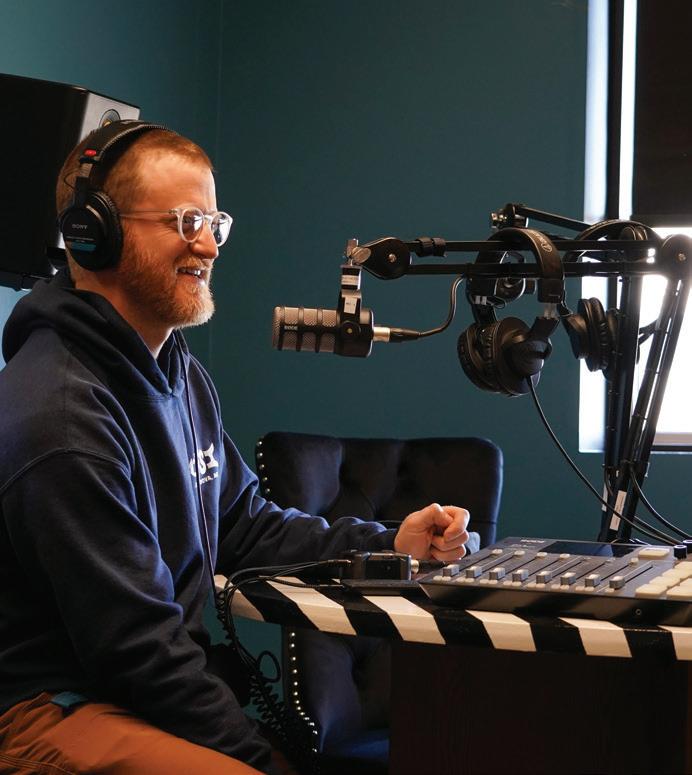
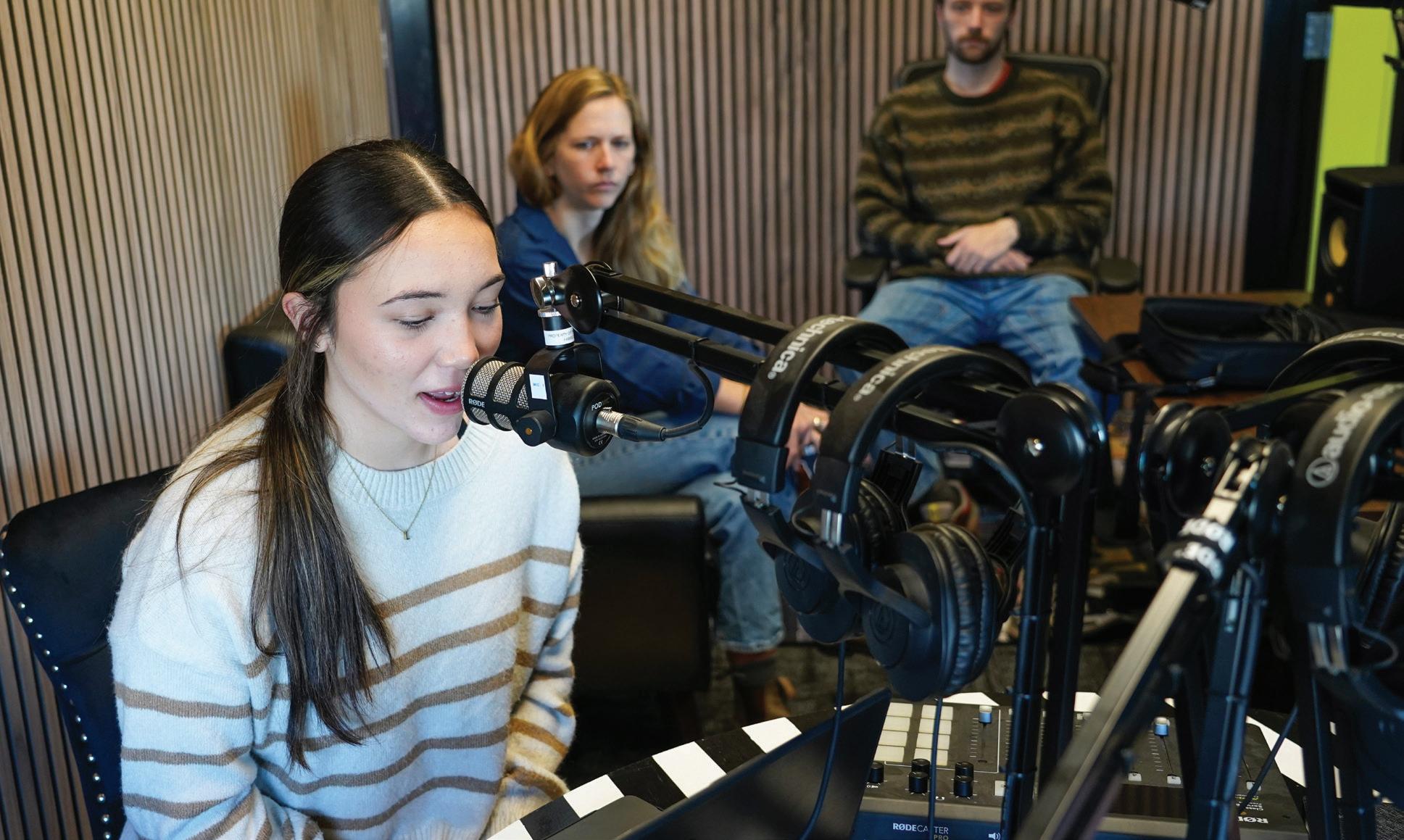
that the kids might be interested in doing,” Jorden said. “And one of our students had played in the tournament earlier this week. So, I think they had a pretty good sense of what the program is, what the tournament’s all about and why it’s important.
The core of the students’ coverage revolved around the tournament’s movement: the effects of drug and alcohol abuse in the community, as well as the history of the BAAD Tournament itself.
Interest in journalism
The week was a good opportunity to pursue piqued interests for the students, introducing them to the different facets of journalism
“I just like how you can meet new people and talk about situations and help with it,” Schofield said. “Like with the one we’re doing about the BAAD Tournament, that’s what I like to do. Just learning how to talk to people without being nervous or weirded out by it.”
Surber said the part of the Youth Voices program that interested her the most was being able to make a difference with what she was creating, even if it was a small difference.
Surber also said her view of journalists had changed over the course of the week, after spending some time in their shoes.
“I’ve always seen journalists as kind of annoying,” she said,” because that’s what they’re framed as in movies, but I really found out a lot of the deeper meanings of journalism and how much it can help the community. Just how much fun it would be, to be able to write and talk and be able to help in any way you can.”
After holding interviews at the BAAD Tournament and making calls to community members, the students recorded voice-overs at KCUW to prepare the final version of the audiojournalism enterprise.
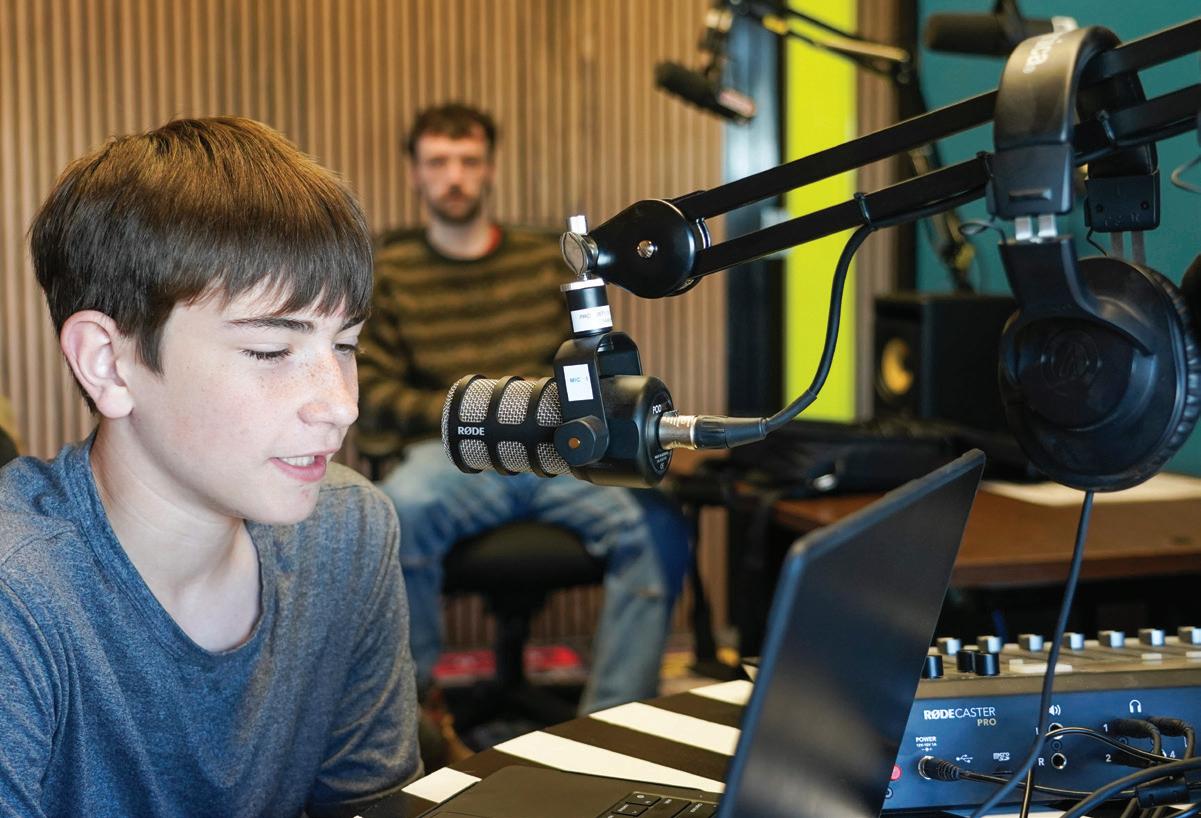
“I think one of the gifts of using audio for something like this, is that it’s not a format that a lot of people, especially kids, are introduced to,” Owen Preece said, “and it’s not necessarily what they always think of when they think of journalism at first.”
Preece said, in that way, it’s almost like starting from scratch — representing yourself and members of the community in an authentic way.
“We get to talk about the differences between audio and photos, or a written story,” he continued, “How you can hear inflection in people’s voices and feel like you’re sitting across from them. So, I think in that way, it’s easier to talk about audio and introduce people to journalism through that, because it’s, in a lot of ways, I find it to be more relatable.”
The impact of introducing journalism
One of the core benefits iterated by the instructors was exposure to the field and learning how to get their voices out there and find what they’re interested in, in both the community and prospective career fields.
“At least in my experience as a kid, you don’t get a whole lot of exposure to what jobs actually are in a lot of ways,” Jorden said. “So, I think just giving them a little preview of ‘This is what journalism is and how it works’ can be helpful in either piquing their interest in something that they might be interested in studying down the road or not.”
Jorden added that it was a benefit to also get to tell a story told by kids from a community for that community.
Green emphasized the way kids are seeing everything through social media that is happening outside of their community, this kind of local journalism empowers them to speak up and recognize the good things that are going on around them.
Preece hopes the impact on the students is that they internalize some of what they’ve learned as not only a potential career path, but also as a way of seeing the stories unfolding around them.
“As a journalist doing that process, you learn a lot more about your community and can participate more actively. So, regardless of where they go from here, if they’re interested in pursuing more journalism, then great,” Preece said. “But if not, hopefully they’ve gotten something from that experience and can carry it on with whatever they do.”
When asked whether the Youth Voices program had piqued their interests in pursuing careers in journalism, Schofield said probably later on, and Surber was deeply interested.
“Before this week, I just wanted to try this just to see if I would like it or not, and I love it. So I think I definitely will be,” Surber said.
Youth Voices instructor Mike Green listens to audio of student Lainey Surber as she records a voice-over of a studentled interview on March 27.
Harley Schofield records a voice-over for a student-led interview at KCUW on March 27 during the Youth Voices Spring Program as instructor Owen Preece looks on. (Beau Glynn / The CUJ)
Lainey Surber records a voice-over for a student-led interview through Youth Voices Spring Program at KCUW on March 27. Behind her are instructorss Madeline Jorden and Owen Preece. (Beau Glynn / The CUJ)
St. Patrick’s Day Gathering
Photos by YASSER MARTE / The CUJ
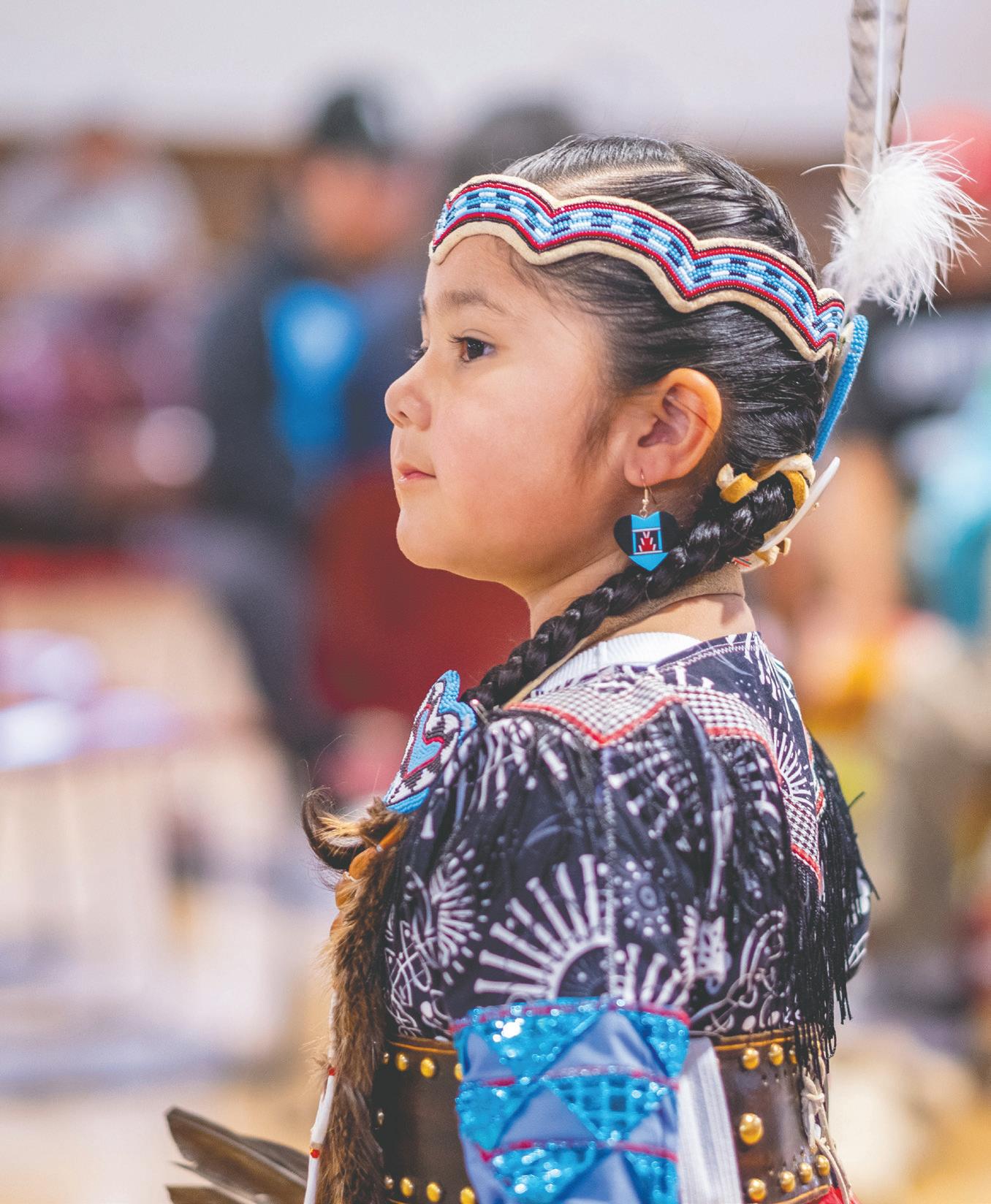
MOST OF OUR ENERGY IS SPENT HELPING YOU GET THE MOST OUT OF YOURS.
We offer resources and cash incentives to reduce your energy costs and generate clean power. Learn more at energytrust.org.
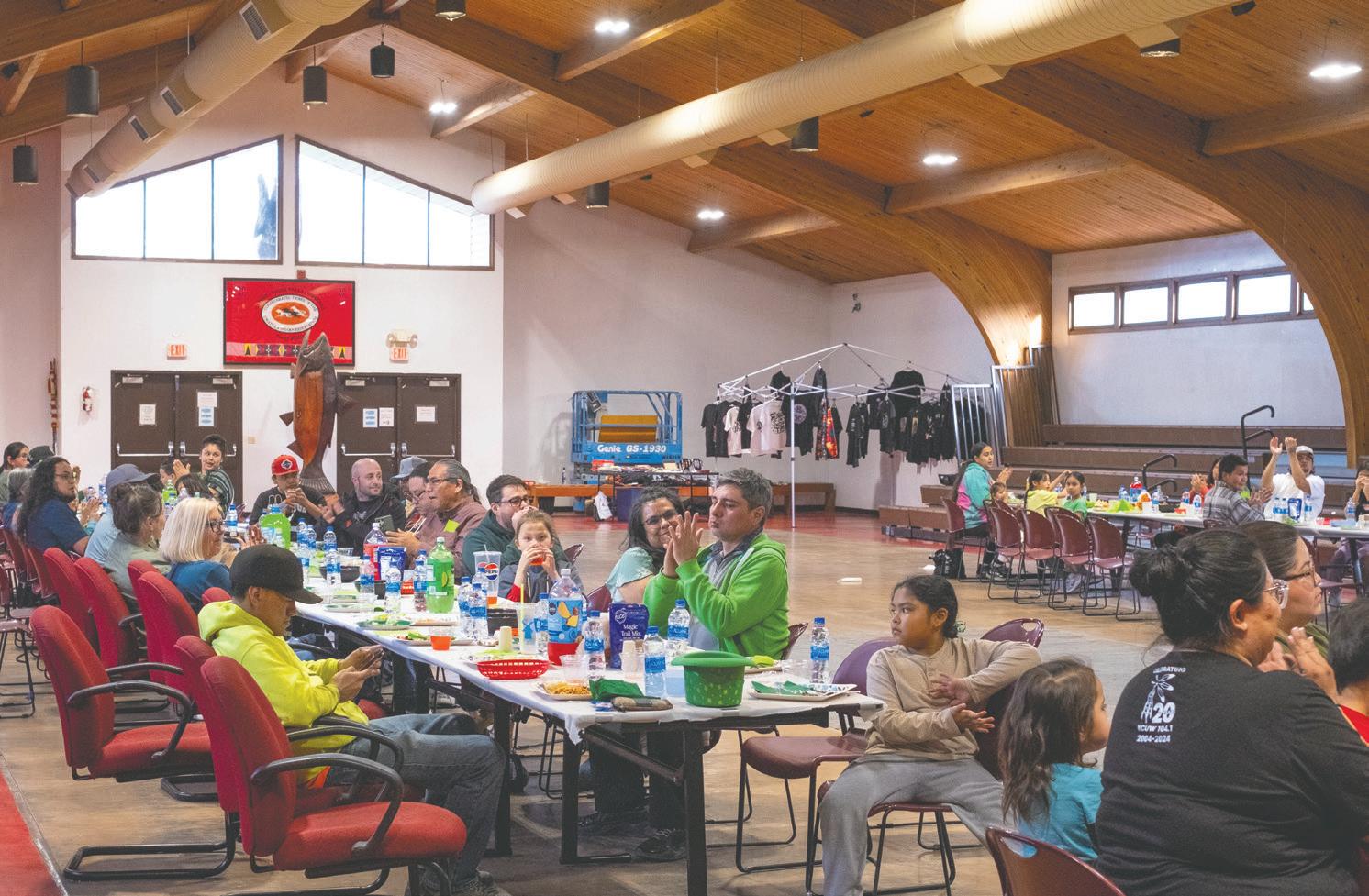
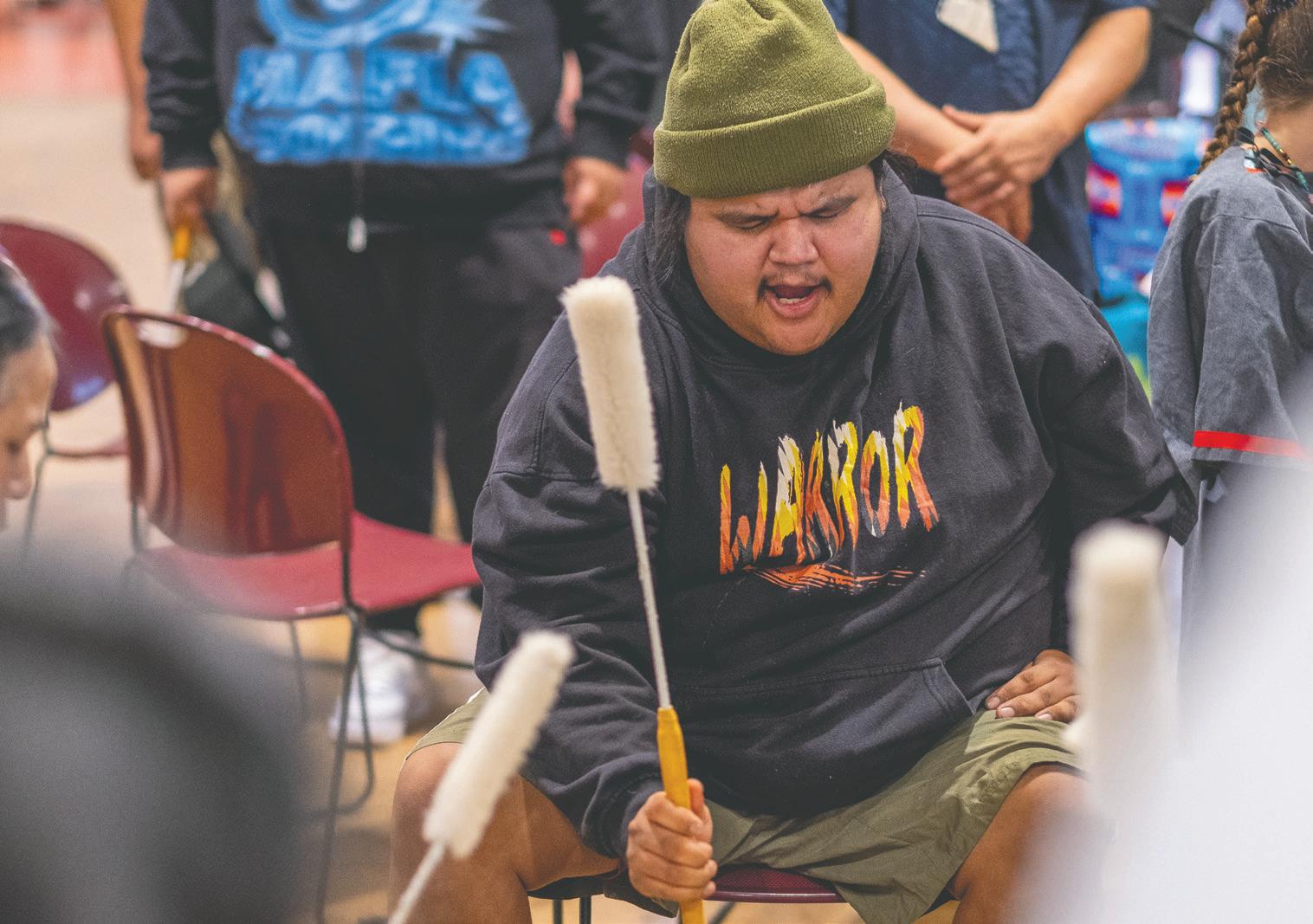

Mavis Mata prepares to dance at the St. Patrick’s Day Gathering in the Mission Longhouse.
Leon Totus sings and plays the drum on March 17 at the St. Patrick’s Day Gathering in the Mission Longhouse.
Community members gather for dinner, dancing and drumming on March 17 during the St. Patrick’s Day Gathering in the Mission Longhouse.
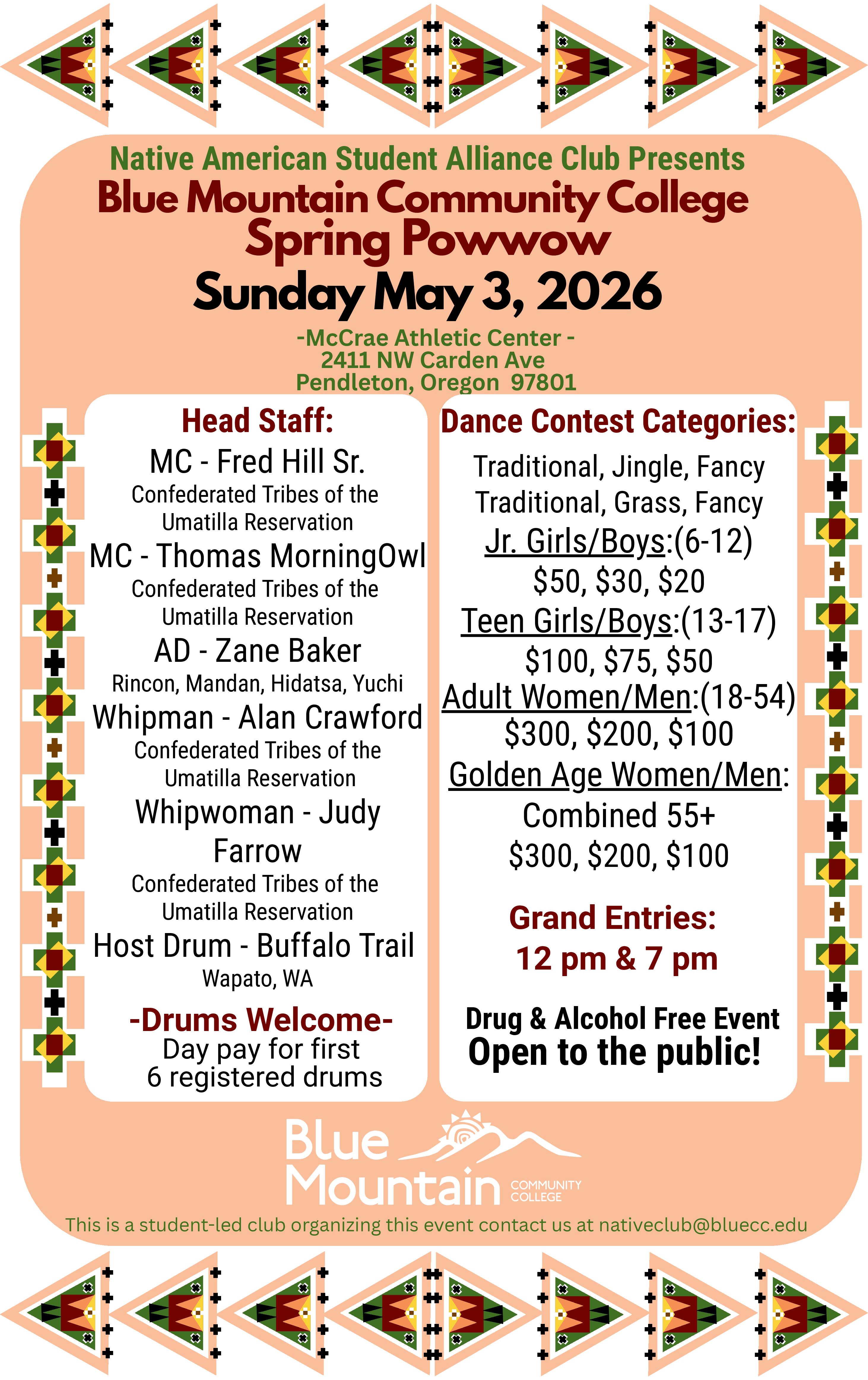
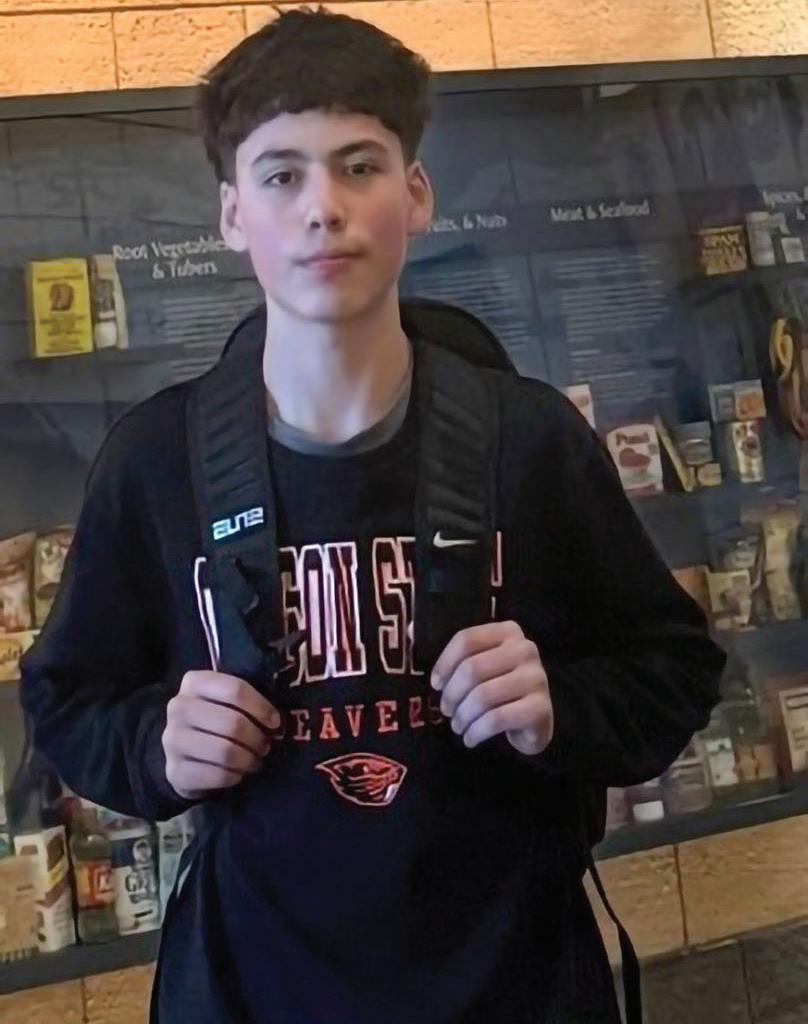
Quincy Sams of Pendleton was named the eighth grade basketball player of the year by the 24 Oregon State Tournament coaches. A student at Sunridge Middle School, Sams averaged 24 points, six assists and five rebounds a game for Pendleton, which won the Oregon State Middle School Championships on Feb. 21. Sams helped Pendleton to a 27-7 record and the team won four tournaments. He is an enrolled member of the Confederated Tribes of the Umatilla Indian Reservation. (Ryan Sams/Contributed photo)


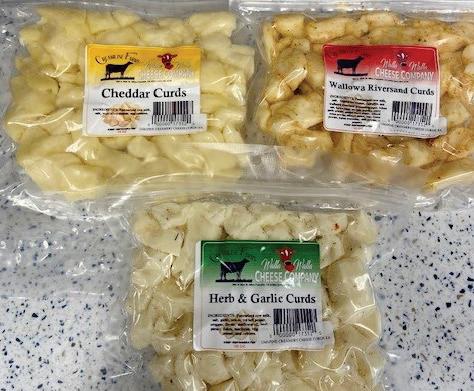
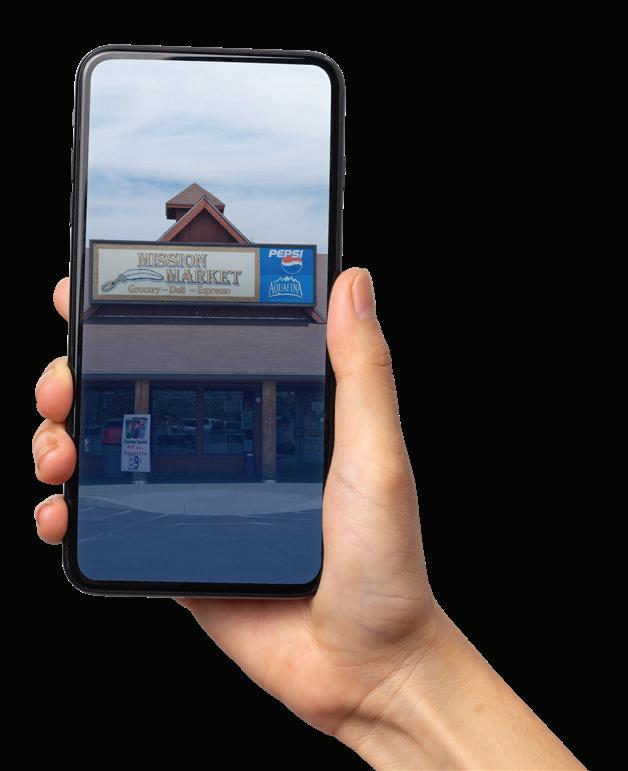




SUNDAY,
SUNDAY,
9
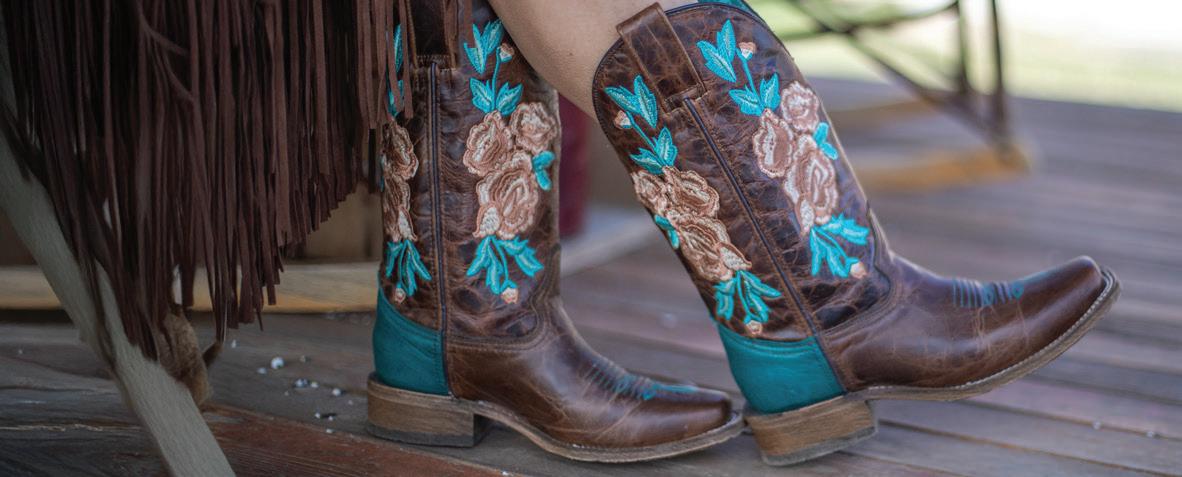





AFFORDABLE HOUSING
Viridian Management, Inc. is a full-service property management company specializing in affordable housing. To learn more about the selection criteria for these properties, or apply online, visit www.viridianmgt.com
Barrel Brook Cottage Grove Apts 900 N DOUGLAS
Barrel Brook Grants Pass Apts 1465 NE 10TH ST
Beaver State Cascade Valley 455 W MARQUAM ST
Beaver State Montebello 29796 SW MONTEBELLO
Beaver State Spyglass 950 SE 32ND ST
Beaver State Stratford 553 CLAY ST
Beaver State Willamina Villa 320 NE 1ST ST
wil@viridianmgt.com 503-876-2557 0-3BR Family
Big River Apts 345 N 16TH ST SAINT HELENS bgr@viridianmgt.com 503-397-4938 0-2BR Family
Big Valley Jacksonville Apts 556 G ST JACKSONVILLE jax@viridianmgt.com 458-345-1942 1BR Eld/Dis
Big Valley Sutherlin Apts 1350 E FIRST AVE SUTHERLIN suth@viridianmgt.com 541-459-1686 1-2BR Eld/Dis Bluffs at Ratcliff 3202 BLUFF AVE SE SALEM blf@viridianmgt.com 503-910-0688 1BR Eld/Dis
Brookside Rose Brookside Village 933 N ROSE ST PHOENIX bv@viridianmgt.com 541-535-5916 1BR Eld/Dis
Brookside Rose Rose Court 933 N ROSE ST PHOENIX rc@viridianmgt.com 541-535-5916 1BR Eld/Dis
Clover Glen Apts 2212 COVE AVE LA GRANDE cg@viridianmgt.com 541-963-0906 1-2BR Eld/Dis
Cove Ave Apts 1906 COVE AVE LA GRANDE cov@viridianmgt.com 541-963-0906 1-3BR Family
Crest Butte Apts 1695 NE PURCELL BLVD BEND cb@viridianmgt.com 541-389-9107 1-2BR Family
Crooked River Apts - Madison 950 SW MADISON ST MADRAS mad@viridianmgt.com 541-475-3007 1-3BR Family
Crooked River Apts - Willow Cr 410 NE OAK ST MADRAS wc@viridianmgt.com 541-475-2028 1-3BR Family
Crooked River Wintergreen 2050 SW TIMBER AVE REDMOND wg@viridianmgt.com 541-548-7816 1-3BR Family
Cypress Hills Flora Thompson 1220 W 8TH ST THE DALLES flor@viridianmgt.com 541-298-1715 1-2BR Eld/Dis
Cypress Hills Riverview Terrace 24 NW CLARK ST CASCADE LOCKS cypr@viridianmgt.com 541-370-2332 2BR Family
Cypress Hills Woodland Apts 2401 LONGWOOD DR REEDSPORT cypw@viridianmgt.com 541-361-6072 1-2BR Family
Deborah Court 1412 N DEBORAH RD NEWBERG debo@viridianmgt.com 503-538-8825 1-3BR Family
Duck Country Dunhill 500 SW 11TH ST DUNDEE dh@viridianmgt.com 503-537-7015 1-3BR Family
Duck Country Linnwood 23455 SW MAIN ST SHERWOOD lin@viridianmgt.com 503-925-0763 1-3BR Family
Duck Country Wilsonville Heights 30125 SW BROWN RD WILSONVILLE wh@viridianmgt.com 503-878-4935 1-3BR Family
Eagle Cap 2nd St 607 SW 2ND ST ENTERPRISE ec2s@viridianmgt.com 541-426-6474 1-2BR Family
Eagle Cap Cottonwood Apts 2 S MILL ST JOSEPH eccw@viridianmgt.com 541-263-2531 1-2BR Eld/Dis
Eagle Cap Highland View 801 N 15TH ELGIN echv@viridianmgt.com 541-437-0452 1-3BR Family
Eagle Cap Pineview Apts 304 W ALDER STREET JOSEPH ecpv@virdianmgt.com 541-263-2531 2-3BR Family
Elkhorn Village 3085 RESORT ST BAKER CITY elk@viridianmgt.com 541-523-0833 0-2BR Eld/Dis
Fenner Gold Beach I 94141 CAUGHELL ST GOLD BEACH gb1@viridianmgt.com 458-345-1848 1-2BR Family
Fenner Gold Beach II 29830 HILLCREST GOLD BEACH gb2@viridianmgt.com 458-345-1848 1-2BR Family
Garden Grove 1100 FRUITDALE DR GRANTS PASS ggrv@viridianmgt.com 541-474-1764 1-3BR Family
Glenhaven Park Heppner 200 PIONEER DR HEPPNER ghh@viridianmgt.com 458-345-1962 2-3BR Family
Glenhaven Park McMinnville 1750 SW SESAME ST MCMINNVILLE ghm@viridianmgt.com 503-472-1044 1-3BR Family
Glenhaven Park Newberg 1209 N SPRINGBROOK RD NEWBERG ghn@viridianmgt.com 503-538-8825 1-2BR Eld/Dis
Glenhaven Park Tillamook 403 PINE AVE TILLAMOOK ght@viridianmgt.com 503-842-2723 1-3BR Family
Hazelwood Community Apts 11939 NE DAVIS ST PORTLAND hzl@viridianmgt.com 503-255-4757 0-2BR Eld/Dis Hillcrest Apts 154 SUNSET DR ONTARIO hco@viridianmgt.com 541-889-7483 1-2BR Eld/Dis
Holiday Garden Grants Pass 1051 E PARK ST GRANTS PASS gp@viridianmgt.com 541-471-6384 1BR Eld/Dis
Holiday Garden Sandy Apts 39665 EVANS ST SANDY snd@viridianmgt.com 503-668-4642 1-2BR Eld/Dis
Holiday Gardens Talent Apts 220 HOLIDAY LN TALENT tal@viridianmgt.com 541-535-5866 1BR Eld/Dis
Indian Hills 1335 SW 2ND ST PENDLETON ih@viridianmgt.com 541-276-2195 1-3BR Family
La Grande Plaza 713 12TH ST LA GRANDE lgp@viridianmgt.com 541-963-7015 2-3BR Family
La Grande Retirement Apts 1612 7TH ST LA GRANDE lra@viridianmgt.com 541-963-7015 0-1BR Eld/Dis
Leisure Way Apts 203 N STORIE WALLOWA lw1@viridianmgt.com 541-437-0452 1-2BR Eld/Dis
Leisure Way Too 209 N STORIE WALLOWA lw2@viridianmgt.com 541-437-0452 1-2BR Eld/Dis
Majestic Gardens Eric Park Apts 292 OAK ST JUNCTION CITY eric@viridianmgt.com 541-234-2035 1-2BR Eld/Dis
Majestic Gardens Fountain Court 225 FOUNTAIN ST HARRISBURG fca@viridianmgt.com 541-361-6072 1BR Eld/Dis
Majestic Gardens LaSalle Court 255 LASALLE ST HARRISBURG lsc@viridianmgt.com 541-361-6072 1BR Eld/Dis
Majestic Gardens Sunburst Manr 88078 6TH ST VENETA sbm@virdianmgt.com 541-361-6072 2BR Family
Moorehouse Apts 224 NW 12TH ST HERMISTON moor@viridianmgt.com 541-481-2855 1-3BR Family
Mountain Crest Apts 206 DEPOT STREET ENTERPRISE mtc@viridianmgt.com 541-426-6474 1-2BR Family


AFFORDABLE HOUSING
Viridian Management, Inc. is a full-service property management company specializing in affordable housing. To learn more about the selection criteria for these properties, or apply online, visit www.viridianmgt.com
Orchard Homes 311 N ELIZABETH
Pacific Park Canby Apts 621 N DOUGLAS LN
Pacific Park Sherwood Apts 21961 SW SHERWOOD BLVD
Pacific Trail Apts Canyonville 745 S MAIN ST
Pacific Trail Apts Lebanon 2411 S SECOND ST
Pacific Trail Apts Lincoln City 1550 SE 14TH ST LINCOLN CITY ptli@viridianmgt.com 541-994-4202 1BR Eld/Dis
Pinehurst Apts 1502 21ST ST LA GRANDE ph@viridianmgt.com 541-963-9292 1-2BR Family
Ridgemont Apts 2210 SW 19TH ST REDMOND rm@viridianmgt.com 541-548-7282 1-2BR Family
Rogue Valley Apts Eagle Point 333 LORRAINE AVE EAGLE POINT ept@viridianmgt.com 541-398-8694 1-2BR Family
Rogue Valley White City I 7700 DIVISION RD WHITE CITY wc1@viridianmgt.com 541-826-4409 1-2BR Family
Rogue Valley White City II 7655 GARRISON WAY WHITE CITY wc2@viridianmgt.com 541-826-4409 1-2BR Family
Sagebrush Boardman Apts 331 NW BOARDMAN AVE BOARDMAN ba@viridianmgt.com 541-481-2118 2-3BR Family
Sagebrush Buttercreek Apts 405 SW 11TH HERMISTON bc@viridianmgt.com 541-567-7595 1-2BR Family
Sagebrush Fairview Apts 555 NW 9TH ST ONTARIO fv@viridianmgt.com 541-889-7412 1-3BR Family
Shelly Cove 1250 ARIZONA ST PORT ORFORD shel@viridianmgt.com 458-345-1848 1-3BR Family
Spring Garden Apts Rogue River 621 N RIVER RD ROGUE RIVER sgrr@viridianmgt.com 541-582-0088 1-2BR Eld/Dis
Spring Garden Apts Talent 233 EVA WAY TALENT sgt@viridianmgt.com 541-512-0106 1-2BR Eld/Dis
Spring Garden Gold Hill 459 4TH ST GOLD HILL sggh@viridianmgt.com 541-582-0088 2BR Family
Sunset Senior Apts 425 E CURRANT ST ATHENA ssa@viridianmgt.com 541-263-0835 1-2BR Eld/Dis
Sunset Senior Housing II 425 E. CURRENT ST ATHENA ss2@viridianmgt.com 541-263-0835 1BR Eld/Dis
Terrace Manor 1051-1053 E CENTRAL AVE SUTHERLIN tms@viridianmgt.com 541-223-4962 2BR Family
The Commodore II 312 COURT ST THE DALLES como@viridianmgt.com 541-298-7600 0-1BR Family
The Greens at Montclair 141 W BROADWAY AVE MIL-FREEWATER mont@viridianmgt.com 541-786-1134 1BR Eld/Dis
The Greens at Ridings 511 RIDINGS AVE MOLALLA rid@viridianmgt.com 541-263-0453 2-3BR Family
Thunderbird Apts 307 20TH ST LA GRANDE tb@viridianmgt.com 541-963-3785 1-3BR Family
Timber Grove Estacada Village 855 NE HILL WAY ESTACADA est@viridianmgt.com 503-630-3935 1-3BR Family
Timber Grove Firwood Village 39501 EVANS ST SANDY fir@viridianmgt.com 503-482-0830 1-3BR Family
Toliver Terrace Apts 615 W HEINTZ ST MOLALLA tol@viridianmgt.com 503-829-7360 1-2BR Eld/Dis Treasure Valley Estates SE 10TH AVE ONTARIO tve@viridianmgt.com 541-709-0280 3BR Family
Two Rivers Apts St Helens 544 N 10TH ST SAINT HELENS sh@viridianmgt.com 503-410-5585 1-3BR Family
Two Rivers Apts Winston 189 NW GLENHART AVE WINSTON win@viridianmgt.com 541-671-2851 1-3BR Family
UCSL Emily Drive Apts 10700 EMILY DR ISLAND CITY ed@viridianmgt.com 541-963-9292 1-2BR Eld/Dis
UCSL Mallard Heights 870 N 15TH Ave. ELGIN mh@viridianmgt.com 541-437-0452 1-2BR Eld/Dis
UCSL Ramo Flats Apts 1091 SOUTH MAIN ST UNION rf@viridianmgt.com 541-963-3785 1-2BR Eld/Dis Washington Park Apts 923 COWL ST MIL-FEEWATER wp@viridianmgt.com 541-938-7447 1-2BR Family
Wildflower Apts 1046 SW 18TH ST PENDLETON wflr@viridianmgt.com 458-300-6369 2-3BR Family
Program information may be made available in languages other than English. Persons with disabilities who require alternative means of communication for program information (e.g., Braille, large print, audiotape, American Sign Language) should contact the responsible State or local agency administering the program or USDA’s TARGET Center at (202) 720-2600 (voice and TTY), or contact USDA through the Telecommunications Relay Service at 711