• MESSAGE FROM THE CHAIRMAN OF THE BOARD OF DIRECTORS AND CHIEF EXECUTIVE OFFICER
• VISION & MISSION
• LPN WAY : MOVING THE ORGANIZATION TOWARDS SUSTAINABILITY
• LPN’s BUSINESS VALUE CHAIN
• STAKEHOLDER ENGAGEMENT
• AWARDS RECEIVED BY LPN IN 2025
• SUSTAINABILITY HIGHLIGHT
• LPN’s GREEN JOURNEY OF SUSTAINABLE DEVELOPMENT
• SUSTAINABILITY GOVERNANCE AND
•
•
•
• PRODUCT INFORMATION
• ABOUT THIS REPORT
• LPN’S MATERIALITY MATRIX
• ENVIRONMENTAL PERFORMANCE
•
MESSAGE FROM THE CHAIRMAN OF THE BOARD OF DIRECTORS AND CHIEF EXECUTIVE OFFICER
Dear Shareholders,
In 2025, L.P.N. Development Public Company Limited (LPN) has demonstrated a significant milestone in its sustainability journey, reflecting over three decades of continuous commitment under the ‘LPN Way,’ which comprises “Continuous Development” and “Respect for Stakeholders.” This is reinforced by the 6 GREEN LPN strategy, which establishes standards for environmental stewardship, livable community development, and organizational resilience.
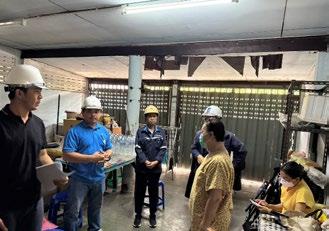
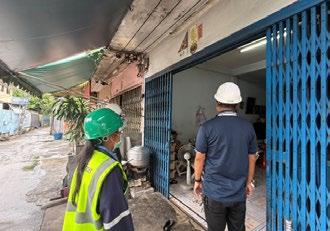
The Bangkok Earthquake on 28 March 2025 demonstrated the results of our continuous efforts in community relations and strong stakeholder engagement. The Company’s prompt response to this natural disaster served as a critical test of its sustainability practices. LPN demonstrated robust emergency response capabilities, enabling residents to safely return to their units within six hours. This event underscored the effectiveness of LPN’s project management and its responsibility toward society, customers, and the Lumpini community, in alignment with the principles of Green Community Management, Green Construction Process, and Green Design Concept
Sustainability is no longer merely a future destination for organizations to pursue; it is a strategic foundation that enables us to mitigate natural risks and ease the concerns of stakeholders across every stage of our business journey. The appreciation expressed by co-owners and residents within the Lumpini community, together with the strong endorsement from our business partners, stands as a testament to LPN’s enduring commitment to conducting business with social and environmental responsibility.
The Company was honored to receive strong commendation from co-owners and residents across projects managed by LPP Property Management Co., Ltd. (LPP), a subsidiary of L.P.N. This recognition reflects the dedication and unity of our employees and management, who worked tirelessly to alleviate hardship and support our customers. Through this collective effort, co-owners and residents were able to safely return to their units within six hours after the incident, restoring confidence at a critical time. While, our business partners whom we regard as trusted allies also played a vital role by expediting safety inspections and damage assessments across all projects, delivering results within the required timeframe and to the satisfaction of all parties. Such a swift and effective response would not have been possible without L.P.N.’s strong stakeholder network, built on trust, close collaboration, and continuous engagement.
In 2025, LPN strengthened its sustainability governance by appointing the Chief Executive Officer as Chairperson of the Corporate Environmental and Social Responsibility Subcommittee. This marks a significant enhancement in integrating environmental, social, and governance (ESG) considerations across all business functions.
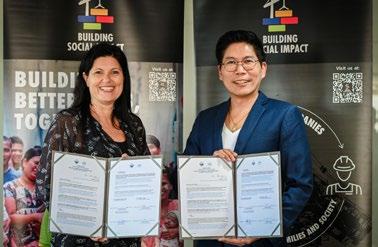
LPN continues to expand its sustainability partnerships, particularly in waste management through the ‘LPN x LPP Waste for Goods’ initiative in collaboration with OGGA Circular. This initiative promotes proper waste management practices, recycling, and value creation from waste materials within Lumpini communities.
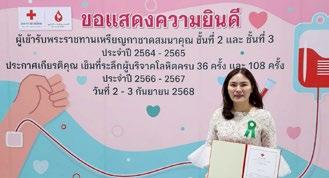
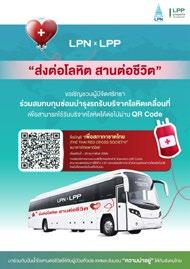
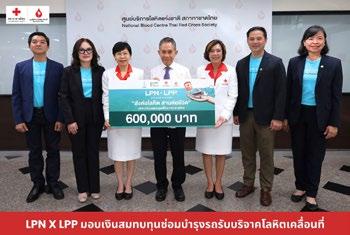
The Company also maintained its long-standing partnership with the Thai Red Cross Society, with 19 Lumpini communities serving as blood donation centers, contributing a total of 1,824,200 cc of blood in 2025, with a target of 2 million cc in 2026.
Additionally, the PUNN Tower was awarded LEED v4 Gold Certification (BD+C: Core and Shell) by the U.S. Green Building Council in May 2025, reinforcing LPN’s commitment to green building development. The Company continues to enhance energy efficiency and increase the use of solar energy as part of its carbon footprint reduction strategy. LPN has set a long-term target to achieve net-zero greenhouse gas emissions by 2050, aligned with Thailand’s Nationally Determined Contribution (NDC 3.0).
Ultimately, the Board and Management extend their sincere appreciation to all employees, partners, shareholders, and stakeholders for their continued trust and support. LPN will continue to advance its products and services to create truly livable communities and foster sustainable well-being for all, for generations to come.
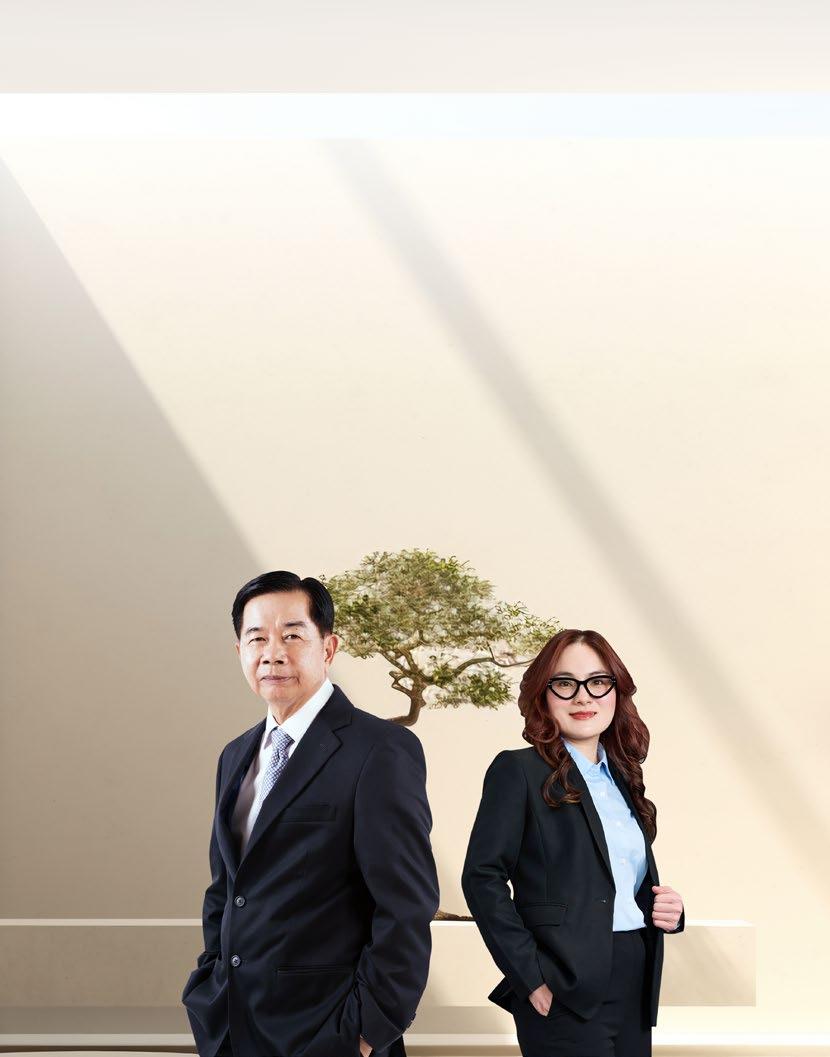
Mr. Amornsuk Noparumpa Chairman of the Board of Directors
Miss Daranee Chatphiriyaphan
Chief Executive Officer, and Chairperson of the Corporate Environmental and Social Responsibility Subcommittee
REBUILD STRENGTHENING THE CORE
A commitment to creating balance in all competitive dimensions through the development of products, processes, and organizations that prioritize customers and stakeholders to foster sustainable growth and long-term value. VISION FOR 2024-2026
ORGANIZATIONAL MISSION 2026
Shareholders
SUSTAINABILITY
Maintain prudent and disciplined financial management to strengthen financial stability and deliver sustainable long-term returns.
Customers
LIVABLE SOCIETY
Develop high-quality residential projects that enhance quality of living and effectively address the diverse needs of all customer segments.
Society and Environment
COMPLIED WITH ESG GOALS
Reduce environmental impact through efficient resource utilization and strict compliance with ESG principles.
Business Partners
SUSTAINABLE GROWTH
Partner with strategic allies to enhance organizational resilience, mitigate risks, and achieve sustainable shared growth.
Employees
SMART & COMMITTED WORKFORCE
Strengthen capabilities and continuously develop our workforce to ensure adaptability, accountability, and responsible performance.
LPN WAY : Driving the Organization Toward Sustainability
Corporate Business Policy
LPN Way is founded on two core pillars: Continuous Development and Respect for Stakeholders. These are supported by seven core values, encapsulated in the acronym “C-L-A-S-S-I-C”, which guide all aspects of the Company’s operations. These values have evolved into the Company’s corporate values and form the foundation of the LPN Way, driving sustainable development and growth.
The project management which realizes the importance of the careful utilization of resources and the efficiency of project management which focuses on the reduction of direct costs and hidden costs as well as the reduction of extra expenses in all departments without affecting the planned target and quality.
The new way of thinking that is flexible and different without any fear of obstacles in order to improve, change, develop and create new products and services. The implementation and assessment of the new process must be possible. The aim is to add value to the products and services as well as the growth of the organization.
The way of treating long-time and trustworthy business alliances with trust and fairness with the willingness to collaborate and develop the work continuously as if being in the same organization for the achievement of a common goal.
Business Philosophy
Since its establishment, LPN has conducted its business with responsibility and fairness, striving to balance returns for all s takeholders while strengthening internal processes and continuously developing its people. Following the 1997 economic crisis, the Company has focused on developing projects aligned with its strategic direction and prevailing economic conditions, while maintaining appro priate and sustainable growth. LPN has also adopted the Sufficiency Economy Philosophy of His Majesty King Bhumibol Adulyadej The Great (Rama IX) as a guiding principle for its business operations.
Three Principles
1
• Regularly assess organizational capacity
• Avoid taking advantage of customers and society
• Use resources efficiently
• Contribute value back to society
Two Conditions
1
• LPN Academy
4 Dimensions
2
Reasonableness
• Define target customers and develop projects in alignment with economic conditions and relevant factors
3
• Implement appropriate risk management
• Maintain readiness for crises
• Operate with caution and due diligence
• Continuously develop innovation
• Prioritize human capital development
Generate reasonable revenue and profit without creating negative impacts on other dimensions
2
• Integrity as a core corporate value, emphasizing ethics and honesty
Foster positive relationships with communities and society, and respect stakeholders at all levels
Use resources efficiently to maximize effectiveness while minimizing environmental impact
Preserve cultural values, respect diversity, and operate with strong ethical principles
Sustainability Policy
LPN is committed to conducting its real estate development and related services in alignment with the United Nations Sustainabl e Development Goals (SDGs 2030). The Company integrates the Triple Bottom Line approach (Planet, People, Profit) with the LPN Way, alongside the Sufficiency Economy Philosophy, to formulate its “6 GREEN LPN” strategy, which serves as the Company’s sustainability framework. In addition, LPN adopts relevant international sustainability frameworks and standards, aligning its business processes with stakeholder expectations.
To ensure tangible outcomes in sustainability while balancing environmental and social impacts alongside business performance the Company has established policies across Environmental, Social, and Governance (ESG) dimensions as follows:
Environmental Social Governance G
E S Environmental E Governance G Social S Environmental E Governance G Social S Environmental E Governance G Social S
Environmental The Company develops projects with a commitment to minimizing environmental impact. This includes improving operational processes, adopting environmentally friendly construction practices and materials, reducing greenhouse gas emissions across development and service activities, enhancing waste management, reducing waste generation, and increasing energy and resource efficiency to ensure longterm environmental sustainability.
Social LPN upholds the principle of “Togetherness, Caring and Sharing” in engaging all stakeholders. The Company undertakes social initiatives and qualityof-life development programs, such as blood donation drives, construction worker welfare programs, and creating opportunities for underprivileged women through both corporate operations and social enterprises. The Company also shares knowledge in real estate development with external organizations, contributing to a stronger, more resilient society and supporting solutions to social challenges.
Governance LPN is committed to transparent, ethical, and accountable business practices. The Company adheres strictly to good corporate governance principles, respects human rights, implements anti-corruption measures, complies with applicable laws and standards, and adopts comprehensive risk management practices. Accurate and transparent disclosure is maintained to build stakeholder confidence and support sustainable organizational growth.
LPN’s BUSINESS VALUE CHAIN
Sustainable Development Strategy
To achieve its sustainability goals, LPN has established the “6 GREEN LPN” strategic framework as a key mechanism for managing stakeholder impacts and balancing business operations with environmental and social responsibilities.
The Company has also developed a structured monitoring and performance measurement system (6 GREEN LPN Checklist) to ensure effective implementation. This framework is designed to create shared value for eight stakeholder groups, across ten stages of the real estate development process (LPN Development Process). Collectively, this integrated strategy is known as the “LPN Platform 3-6-8-10”, which serves as a foundational framework for driving sustainable business practices.
1. Green Enterprise
Emphasizing organizational and human capital management
2. Green Financial Management
Ensuring appropriate returns and sustainable growth
3. Green Design Concept
4.
5. Green Construction Management Managing
6. Green Community Management
Enhancing residents’ quality of life through post-handover management
ROADMAP PLATFORM 6
All through the 37 years, the business operation of the Company has always been done in a socially and environmentally responsible manner in all processes. “6 GREEN LPN” concept is developed from our extensive experiences in property development and community management as a practice to ensure a balanced and sustainable operation for the benefit of all stakeholders. At present, 6 GREEN LPN concept is inclusive of six aspects of environmental and social responsibility as follows:
8 STAKEHOLDERS
The Company identifies the first tier stakeholders involved in various operational processes based on the assessment of the level of involvement of each group of stakeholder. The level of involvement of the stakeholders is assessed by the level of influence they have on the organization and operation along with the level of impacts from the operation of the Company in order to be able to identify the importance of each stakeholder and establish a strategy to encourage their participation. The operational framework is established and the impacts on all stakeholders are minimized to enhance sustainable development and growth. The first tier stakeholders of the Company is categorized into eight groups as follows:
1 2 3 4
SHAREHOLDERS STAFF
refer to shareholders of the Company, whether they be companies, funds or individuals who are benefited from the operation that emphasizes good corporate governance and environmental and social responsibility.
refer to those who are working for the Company and driving the operation of the Company to move forward in a sustainable manner, inclusive of staff in the operational level and managerial level.
CUSTOMERS SUPPLY CHAIN
refer to those who are interested in the project developed by the Company and have reserved to buy and made a down payment. In the future, when the project is completed, the customers will become joint owners /residents. In addition, the customers also refer to those who are interested in renting the Company’s condominium units and have made rental contracts and paid rental fees. In the future, this group of customers may become buyers and residents.
refers to trade partners or business alliances of the Company who take part in the design and construction of projects as if they are one of the staff of the Company. The objective is to achieve the mutual goal. LPN team also refers to co-investors in project development. They can be persons or companies.
5 6 7 8
NEIGHBORS RESIDENTS
refer to those who live in the communities surrounding the projects of the Company that are under construction and are affected by the impacts from the start of the project development through to after the project is being handed over.
LABORS ENVIRONMENT
refer to those who live in the project of the Company that has been handed over as customers or renters and are parts of the community taken care of by the Company.
refer to workers of the business alliances (trade partners) that are responsible for constructing the projects of the Company, inclusive of Thai and migrant workers.
refers to the components of sustainability that is at the foundation of all business operations. The operation of real estate development business directly impacts the environment, therefore, the Company focuses on the conservation of environment nearby the project.
10 PROCESSES
PROCESS 1
PROJECT LOCATION
The development concept is designed to be appropriate with the project location. The two concepts for project development are pilot project i.e. project development in new locations with minimum competition (Blue Ocean Strategy) and expanded project i.e. project development in highly successful locations where demands for residential property are high.
PROCESS 2
PROJECT DEVELOPMENT
PROCESS
Projects are analyzed and development goals are set in order to specify project’s characteristic and size and development steps, including brand and product value that will be delivered to customers, by considering the return on investment, the location suitability and the project development pattern.
PROCESS 3
01 02
The decision made by the Management to buy a piece of land is based on the vision as well as information from the Research and Development Department and Marketing Department. The demand, supply and feasibility for project development are carefully studied beforehand in order to ensure that the project development is in accordance with the strategy of the organization and customers’ needs.
03 04 05
PROCESS 4
DESIGN CONCEPT
Products are designed with environmental and social responsibility in mind in response to the needs that are in ‘balance’ with every dimension of living. It uses the LPN Green Design Concept Standard which is developed by LPN and is consistent with internationally accepted Green Building Standard. This is to standardize the product making it a residence that promote resource conservation and truly minimize environmental impact.
PROCESS 5
SALES & MARKETING MANAGEMENT
The marketing activity of the Company is “Human Centric” or directly focuses on the needs of the customers. The policy of the Company is to build the first home for those who do not yet own a house. It is to give something back to the society. Furthermore, the Company respects the rights of customers and keeps our promise.
PROCESS 6
PROCESS 7 PROCESS 8
FINANCIAL MANAGEMENT PROJECT MANAGEMENT
The business growth and returns for stakeholders are identified in line with the annual business plan. The construction costs and profit of each individual project is appropriately prepared. The financial statements are accurate and reliable and are prepared in a transparent and auditable manner without any hidden agendas. In addition, financial risks have always been managed.
PROCUREMENT
Operational standard is set and the procurement inspection is regularly and concisely performed according to international standard. This includes choosing quality and environmentally friendly materials and promoting the use of materials that contained recycled content to reduce the natural resource consumption.
The Company does not only apply Q-C-S-E-S+P strategy in its management, but also keeps in mind the impact on surrounding society, community and environment in every dimension. Moreover, it manages possible risks during construction by cooperating with alliances and following the Green Construction Process Standard strictly.
PROCESS 9
PROCESS 10
CONDOMINIUM UNIT HANDOVER COMMUNITY MANGEMENT
The quality of condominium units and common area is fully inspected before the condominium units are handed over to reassure the customers that they receive up-to-standard and good quality products. As a preparation before moving in, the Livable Home policy and residential rules are communicated and informed to residents to create understanding, acceptance and happiness in living together.
“Livable Home Strategy” is one of the core strategies of the organization. The Company does not only manage the building but also the quality of life, society and environment and promote “togetherness, care and share” culture.
STAKEHOLDER ENGAGEMENT
The Company is able to identify major stakeholders who are involved in different operational processes. It is based on the assessment of the level of their involvement both in terms of their influence that affects the Company and its operation as well as the impacts from the operation of the Company. The level of importance is measured following the guidelines of the Stock Exchange of Thailand (SET), Thai Institute of Directors (IOD) and ASEAN Corporate Governance Scorecard. The treatment, method and frequency of communication and expectation of each group of stakeholder are established as follows:
SHAREHOLDERS
• Respect basic shareholders’ rights in accordance with the law and Articles of Association.
• Treat all stakeholders equally.
• Have a mechanism in place that will ensure shareholders that they will receive accurate information and a sound profit and dividend according to the policy of the Company.
• Monitor connected transactions, determine measures to prevent conflict of interest and prevent the use of internal confidential information for personal benefit.
• Treat staff with fairness in regard to career opportunity, remuneration and appointment or transfer, all of which should correspond to the performance of each staff and business success of the Company.
• Establish a short-term structure of remuneration of staff which is decided from the profit of the Company and the staff’s contribution to the success of the Company each year.
• Consider the overall remuneration of staff based on Key Performance Indicators (KPIs). The remuneration rate must be in accordance with the market rate. The knowledge, ability, experience and performance of each staff will be taken into account, as well as equality and fairness, inflation rate and Gross Domestic Product.
• Offer annual bonus based on the annual performance of the Company.
• Provide welfares e.g. health insurance, annual medical check-up, provident fund, financial loan, financial aid in case of death of staff’s parents or spouse and fitness area.
• Promote work-life balance of staff and regular workplace inspection. Provide safety equipment to staff and organize fire drills.
• Give importance to and be responsible for all customers on a regular basis. Enhance customers’ satisfaction and confidence, develop products, be liable for the quality and standard of products as promised, improve customer service quality and maintain customer confidentiality.
• Establish a Call Center and Customer Experience Management Department Tel. 02-689-6888 to receive complaints.
Business alliances are trade partners of the Company. It is the network of entrepreneurs such as architects, engineers, consultants, construction companies, construction materials manufacturers, transport companies and security services providers.
• Promote collaboration among “alliances” by developing LPN Team which is treated as a subsidiary company of the Company.
• Offer appropriate return, do not exploit trade partners or only take into account the profit of the Company, conduct business based on fairness.
• Set out clear purchasing policy. All trade partners must submit a cost proposal and the Company will select the one with fair and reasonable price and high-quality services based on the purchasing guideline of the Company.
Stakeholder (8S)
Treatment of Stakeholder
SHAREHOLDERS STAFF CUSTOMERS SUPPLY CHAIN
Concern and Expectation
• Generate appropriate growth and profit.
• Take environmental and social responsibilities.
• Generate a balanced return for all stakeholders.
• Adhere to corporate governance principles.
• Manage risks.
• Act against corruption.
• Respect shareholders’ right.
• Implement 6 GREEN LPN policy to achieve sustainable development.
• Promote work-life balance.
• Promote learning and career advancement.
• Promote “Livable Organization” concept and happiness at work.
• Build capacity and promote organization values.
• Provide appropriate remuneration and welfare.
• Promote equality and basic rights.
• Annual Report and Sustainability Report
• Annual General Meeting of Shareholders
• Project visit
• Meeting with analysts
• Meeting with Investors and Fund Managers
• Project progress report
• Happiness at Work Survey
• LPN Academy
• Activities promoting participation
• Staff Relations Team
• Performance Evaluation
• Internet website and email
• Executive Knowledge Sharing
• Welfare Committee
• WhatsApp / Line OA
• Build affordable home with appropriate and fair price.
• Promote product and service value and brand’s credibility.
• Enhance customers’ satisfaction and manage complaints.
• Respect consumers’ rights.
• Promote unity.
• Establish a joint business plan.
• Share knowledge.
• Generate a balanced return.
• Support organizational development process of trade partners.
• Build environmental and social awareness to mutually achieve growth and development.
• Call Center
• Various activities
• Satisfaction Survey
• Touchpoint
• Customer Experience Management
• Market Research
• www.lpn.co.th
• Line OA
• Meeting with LPN Team (Executive Level)
• Meeting with LPN Team (Operational Level)
• Training and knowledge sharing
• Relationship building activities
Stakeholder (8S)
S5
RESIDENTS
Treatment of Stakeholder
• Enhance the quality of life and build good relationship with residents through various activities on a regular basis.
S6
LABORS
S7
NEIGHBORS
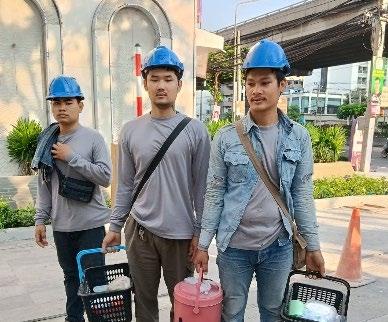
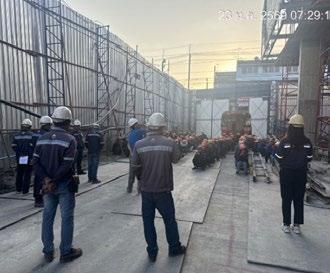
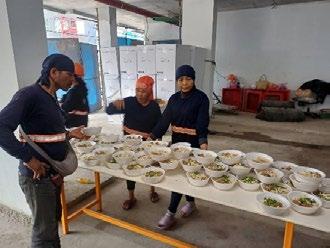
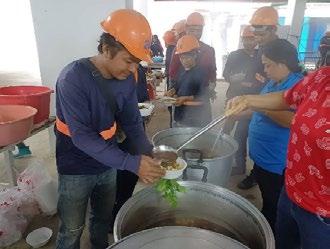
• Enhance the quality of life of construction workers and provide necessities of life such as food and sanitation. Accommodation of construction workers in construction sites is inspected to ensure the cleanliness and tidiness of the site and provide assistance if needs be. Various activities are regularly organized, for example,
- Provision of free haircut and lunch to construction workers.
- Drug test.
- Monitoring the amount of waste at the site for proper waste management.
- First aid training and training on medicine use.
- Annual medical check-up and vaccination.
• Monitor the environmental quality in construction sites.
• Manage wastewater and waste in Lumpini communities.
S8
ENVIRONMENT
• Establish a clear policy and guideline to build awareness of staff, trade partners and communities managed by the Company.
• Appoint a Corporate Environmental and Social Responsibility Committee to monitor the operation and ensure that it is in line with the policy. A Charter is to be established. Crucial operational processes are to be supervised by high-ranking executives.
• Apply the Triple Bottom Line (3P- Profit, Planet, People) approach in the operation, establish 3-6-8-10 guideline i.e. 6 GREEN LPN, 8 Stakeholders, 10 Processes and emphasize CESR In Process. The concept of 6 GREEN LPN includes the six areas of environmental and social responsibilities as follows:
1. Green Enterprise
2. Green Design Concept
3. Green Financial Management
4. Green Marketing Management
5. Green Construction Process
6. Green Community Management
• Regularly organize CESR Out Process activities.
Concern and Expectation
• Promote product and service value.
• Enhance customers’ satisfaction and manage complaints.
• Respect consumers’ rights.
• Promote “care and share” culture.
• Promote participation in CESR activities.
• Promote learning among youth residents.
• Provide an opportunity for the residents to decide the guidelines for management of community.
Method of Promoting Participation
• Annual General Meeting of Joint Owners
• Mobile App
• Call Center
• Various activities
• Satisfaction Survey
• Chairman of Juristic Persons Seminar
• Touchpoint
• Customer Experience Management
• Market Research
• www.lpn.co.th
• Line OA
• Ensure safety at work.
• Enhance the quality of life and sanitation of construction workers.
• Offer standard remuneration rate and respect basic rights.
• Treat all workers equally.
• QCSES+P
• Activities promoting the quality of life of construction workers
• Medical check-up
• Minimize noise, dust and impacts from construction.
• Be open to suggestions.
• Comply with the Environmental Impact Assessment Report.
• Take sustainability of the neighboring area into consideration in project design.
• Minimize construction impacts.
• Campaign for waste segregation in communities managed by the Company.
• Promote energy conservation.
• Use resources efficiently.
• Promote sustainable project design.
• Raise CESR awareness in communities managed by the Company.
• Create jobs and enhance quality of life of underprivileged women.
• Share knowledge with other organizations via LPN Academy.
• Public Hearing
• Visiting, Meeting, Discussing
• Increase of Green Space
• Space Improvement
• Sustainable Project Design
• Suggestion Box
• 6 GREEN LPN
• LPN Green Signature Project
• QCSES+P
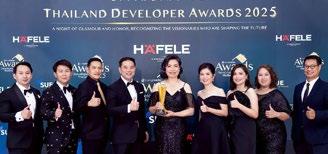
AWARDS RECEIVED BY LPN IN 2025
LivingInsider Awards 2025
1
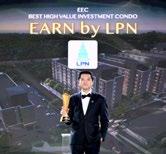
Best High Value Investment (Condo - EEC)
Project/Organization : EARN by LPN
An award recognizing outstanding investment value for a low-rise condominium project in the Eastern Economic Corridor (EEC). The project is well-suited for investors due to strong rental demand, comprehensive facilities, and over 6 rai of green space, enhancing long-term investment value.
2
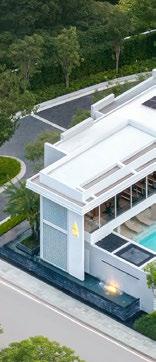
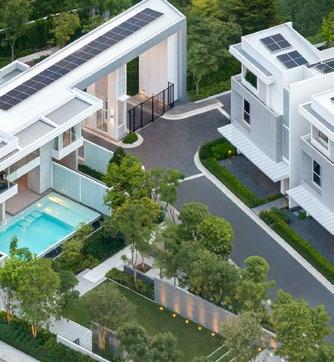
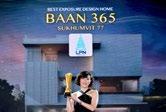
Best Exposure Design Awards (Landscape & Architectural Design)
Project/Organization : BAAN 365 Sukhumvit 77
Presented to a project with excellence in landscape and architectural design, featuring a Modern Minimal style that is aesthetically pleasing and highly functional for everyday living.
3
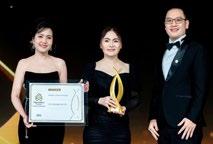
Best Customer Services in Property Management Award
Project/Organization : LPP Property Management
Recognizes excellence in customer service and professional property management.
Property GURU Thailand Property Awards 2025
4
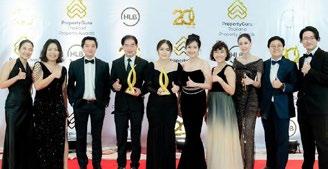
People’s Choice Awards
Project/Organization : L.P.N. Development PCL.
Awarded to a property developer voted by the public as one of the most favored real estate brands in 2025.
Project/Organization : BAAN 365 Sukhumvit 77 5
Best High End Housing Development (Bangkok)
A premium single-detached housing project recognized for outstanding design and development quality, catering to all generations and diverse lifestyles.
Thailand Greenhouse Gas Management Organization (TGO)
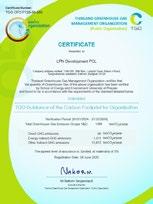
Based on the assessment of greenhouse gas emissions from company operations throughout the year, reflecting a strong commitment to sustainable business practices. Certified for the 5th consecutive year.
7
HR Excellence Awards 2025 – Gold
Project/Organization : LPP Property Management
Awarded for excellence in In-House Talent Pipeline Strategy through the Community Management Training Course (CMTC).
This program is a personnel development initiative designed to establish a strong foundation of essential knowledge and competencies required for comprehensive real estate project management. The curriculum emphasizes experiential learning, the development of service-oriented capabilities, and the cultivation of in-depth professional expertise in project management. Ultimately, the program aims to enhance the organization’s ability to deliver sustainable value and an improved quality of living for residents.
Hubexo Asia Awards 2025
8
Top Ten Developer 2025
Project/Organization : L.P.N. Development PCL.
An international award recognizing outstanding real estate developers based on project value, progress, and green building standards.
Thai Red Cross Society
Certificate of Recognition
Project/Organization : L.P.N. Development PCL. 9
In recognition of over 29 years of continuous support for blood donation activities, providing donation venues across more than 19 LPN projects. to encouraged the people to participate in blood donation activities, with a cumulative total of over 29 million cc of blood donated to help save and improve the lives of others.
Certificate of Membership
Project/Organization : L.P.N. Development PCL. 10
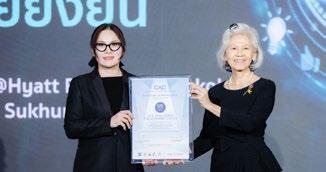
Recognizes commitment to transparent business practices and zero tolerance for corruption.
ASEAN Energy Awards 2025
Runner-up – ASEAN EE&C Best Practices Award (New Building)
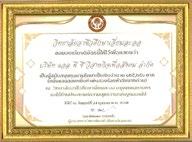
PUNN Smart Workplace
Recognizes excellence in energy-efficient building design meeting LEED green building standards. By integrating smart technologies with efficient and sustainable energy conservation, the Company aims to maximize energy efficiency and performance.
Department of Older Persons, Thailand
Honorary Plaque
Project/Organization : LPC Social Enterprise 12
Awarded for promoting the value and well-being of older persons.
LPN’s head office electricity consumption
LPN’s head office water consumption reduced by 0.49%
Zero incidents
reduced by 17.74% reduced by 27.00% LPN x LPP OGGA Circular initiative building a sustainability network for Lumpini community waste management
of corruption, ethical misconduct, governance violations, or human rights breaches reduced by Scope 1 & 2 greenhouse gas emissions (base year: 2023)
LPN’s GREEN JOURNEY OF SUSTAINABLE DEVELOPMENT
• Commenced business operations with the philosophy “Commitment, Creativity, and Sincerity.”
• LPC - Establishment of Lumpini Property Service and Care Co., Ltd. to generate employment and improve quality of life for underprivileged women. 2011
2015
• First LEED Certified Project - Mill Place Pho Sri (Silver Level).
• The Seeds: Idea Suggestion - Employee innovation program.
• Thailand Sustainability Investment (THSI) - Enlisted on the THSI for the first year
• Kick-off LPN Signature CourseCommunity Management Training Course (CMTC) to develop professional community management personnel and support sustainable growth.
• “Baan San Fun Project” - Supporting first-home ownership through financial tools and promoting financial discipline.
• “Livable Community” - Establishment of a key strategy defining LPN’s identity and competitive advantage.
• LPN GREEN - Initiation of sustainable business practices, marking the foundation of the 6 GREEN LPN strategy.
• F-B-L-E-S+P - Establishment of standards covering Facility, Budgeting, Life Quality, Environment, Security & Safety, and People.
• “Model Community” - Development of sustainable communities based on F-B-L-E-S+P management.
• B.I.M. - Adoption of Building Information Modeling to improve design accuracy and resource efficiency.
6 GREEN LPN
• LPN WAY - Implementation of business operations integrating the Sufficiency Economy Philosophy.
• 6 GREEN LPN - Formal integration of sustainability strategy across all operations.
• First Sustainability Report issued.
• LPN Signature Green Project - Lumpini Park Nawamin-Sriburapha and Mill Place Pho Sri.
• BEC Awards - Recognition for energy -efficient building design.
• LPN Signature Course - Service Community Management Training Course (SCMTC).
• 100% B.I.M Implementation - across all LPN projects. 2016
• International Standard Kick-off Year started business operations under ISO 9001:2015 Quality Management Systems (QMS) and ISO 14001:2015 Environmental Management Systems (EMS)
• International Standard Certification - –Lumpini Property Management Co., Ltd. and LPC Social Enterprise Co., Ltd. were certified under ISO 9001:2015 (Quality Management System). In addition, Lumpini Project Management Services Co., Ltd. obtained certification for both ISO 9001:2015 (Quality Management System) and ISO 14001:2015 (Environmental Management System).
• TREES-CS Silver Certification - The Lumpini Tower Vibhavadi-Chatuchak Project was developed in accordance with the Thai’s Rating of Energy and Environmental Sustainability (TREES) green building assessment framework, with a focus on energy-efficient design and construction while minimizing environmental impacts.
2019
• LPN Zero Waste Management Project 2022 Kick off - established a target to become a Zero Waste Company, focusing on effective waste management across both construction sites and residential communities under its management, with the aim of eliminating waste and enhancing quality-of-life management for residents.
• LPC Social Enterprise - LPC Social Enterprise Co., Ltd. was officially certified by the Ministry of Social Development and Human Security as one of Thailand’s first registered social enterprises, reflecting the Company’s commitment to addressing social challenges through its business operations.
• LESS - The Lumpini Place Borommaratchachonnani–Pinklao Project received official recognition for its waste separation activities under the Low Emission Support Scheme (LESS), granted by the Thailand Greenhouse Gas Management Organization (Public Organization).
• Carbon Neutral Company - recognized by the Thailand Greenhouse Gas Management Organization (Public Organization) as a carbon neutral organization for the first time.
2021
• LEED Certification Anticipated (Punn Tower) - developed in accordance with LEED Certification standards under Building Design and Construction: Core and Shell (Version 4.0), with a target to achieve Gold Level certification.
2022
• LPN x Recycleday Thailand - piloted a waste management initiative in the Lumpini Suite Din Daeng-Ratchaprarop Project, where waste was sorted and delivered through the Recycleday Thailand platform for recycling. Waste volumes and the reduction of GHG emissions resulting from waste separation were tracked via digital platforms
• Solar Rooftop Installation - expanded its use of renewable energy by installing solar rooftop systems in one common area project and two sales offices, thereby increasing the proportion of environmentally friendly energy consumption.
- 2024
• Climate Resilience Partnershipparticipated in sustainability networks and collaborations focused on reducing greenhouse gas emissions, including the Thailand Carbon Neutral Network, the Climate Care Collaboration initiated by the Stock Exchange of Thailand, and environmental initiatives such as Care the Bear and Care the Whale (2023), as well as Care the Wild (2024).
2025
• LEED “Gold” Level Certification (Punn Tower) - successfully achieved LEED Gold Certification under Building Design and Construction: Core and Shell (Version 4.0), in line with the Company’s sustainability targets.
• Best Practices Awards 2025 - The PUNN Tower office building received the Runner-up Award under the ASEAN Energy Efficiency and Conservation (EE&C) category, recognizing excellence in energy-efficient building design (new building category).
• ISO 45001 Occupational Health and Safety Management System - LPP Property Management Co., Ltd. has been certified to the ISO 45001:2018 Occupational Health and Safety Management System standard
• LPN x LPP OGGA Circular Partnership - strengthened its circular economy approach by establishing a sustainability partnership in waste management and installing AI-powered waste management systems (“TrashEX by OGGA”) in four pilot buildings under LPN projects.
SUSTAINABILITY GOVERNANCE
AND ROLES OF THE BOARD AND SENIOR MANAGEMENT IN DRIVING SUSTAINABILITY
Governance Structure in Driving Business Sustainability
LPN’s sustainability operations are driven through a structured governance framework, with clearly defined roles, duties, and responsibilities across the Board of Directors, Committees, Sub-committees, and operational office. Oversight is established fr om the corporate-wide policy level to the operational level, with regular reporting for acknowledgement and consideration. The Chi ef Executive Officer is responsible at the management level for ensuring effective implementation, while the Board of Directors ov ersees performance, provides guidance, and approves sustainability-related policies.
Roles and Responsibilities
(2-18)
This Committee serves as the primary governance body at the Board level for driving sustainability. It has been appointed by the Board of Directors to support its responsibilities and those of shareholders. In addition to overseeing nomination and remu neration processes, the Committee is responsible for establishing, reviewing, and improving policies related to corporate governance, business ethics, anti-corruption practices, and sustainability. The Committee also oversees implementation in alignment with Bo ard policies and supports the development of the Company’s vision and mission in line with sustainable business practices.
As of 31 December 2025, the Committee consists of four members: two independent directors, one non-executive director, and one executive director (Chief Executive Officer), ensuring a balance between oversight and effective execution.
(2-9)
Environmental and Social Responsibility Subcommittee
Roles and Responsibilities
(2-18)
This Subcommittee operates at the management level to drive sustainability practices across the Company, its subsidiaries, and affiliated companies, with a focus on environmental and social impacts on stakeholders. Members consist of executives and staff from the Company, subsidiaries, and business partners (collectively referred to as the LPN Team).
In 2025, the Subcommittee held two meetings and reported progress to the Nomination, Remuneration, Corporate Governance and Sustainability Committee and the Board of Directors for acknowledgement and consideration.
Members of the Corporate Environmental and Social Responsibility Subcommittee
1. Mr. Prapansak Rakchaiwan Chairman of the Corporate Environmental and Social Responsibility Subcommittee
7. Miss Suttiwan Dechpae Subcommittee Member, LPC Social Enterprise Co., Ltd.
8. Mrs. Jariya Nataphan Subcommittee Member, L.P.N. Development Public Co., Ltd.
9. Miss Piyawan Kongprasert Subcommittee Member, L.P.N. Development Public Co., Ltd.
10. Miss Supinyalak Chantharawong Subcommittee Member, L.P.N. Development Public Co., Ltd.
11. Miss Mayura Mantapong Subcommittee Member, L.P.N. Development Public Co., Ltd.
12. Mr. Yanawut Kongrod LPN Team (Trade partner company)
With Miss Suraswadee Suewaja Subcommittee Member, LPC Social Enterprise Co., Ltd. and Secretary (As of 31 December 2025)
Social and Environmental Office
Roles and Responsibilities
(2-18)
The Social and Environmental Office is responsible at the operational level for implementing sustainability policies and strate gies communicated by the Subcommittee and the Chief Executive Officer. Its responsibilities cover environmental and social aspects, including monitoring and evaluating performance against sustainability targets. Key areas include environmental management in construction operations, community relations management, environmental management within Lumpini communities, and monitoring compliance with sustainability frameworks and standards.
GREEN DESIGN CONCEPTGREEN CONSTRUCTION PROCESSGREEN COMMUNITY MANAGEMENT
EENVIRONMENTAL
6 GREEN LPN REBUILDING WITH RESPONSIBILITY STRENGTHENING THE CORE
ENVIRONMENTAL
Sustainable Development Goals: SDGs
Energy
Targets & Goals
(3-3)
• Reduce electricity consumption by 20% by 2035 to align with greenhouse gas emission reduction targets
• Increase the use of environmentally friendly energy at sales offices to 15% of total electricity consumption, or 10% of total energy consumption
• Implement or support at least one environmentally friendly energy initiative across all business units
Business opportunities and risks
Opportunities
Effective energy planning enables the Company to manage long-term energy costs efficiently, while creating business opportunities to respond to increasing demand for environmentally friendly solutions, such as solar rooftop systems and energy-efficient housing design.
Energy consumption is directly linked to greenhouse gas emissions. Businesses that proactively address this issue can create opportunities to attract environmentally conscious customers, investors, and stakeholders.
Risks
Energy uncertainty and reliance on non-renewable energy sources may increase operational risks. Transitioning toward alternative energy sources helps reduce dependency on limited resources and mitigate future environmental impacts. At the same time, growing demand for low-energy and environmentally friendly products presents a challenge that requires continuous business adaptation.
(3-3)
Management approaches
Implementation of the 6 GREEN LPN strategy
Green Design Concept Standard
• 2.3 Energy Efficiency
• 2.4 Materials and Resources
• 2.9 Innovation
Green Community Management Standard
• E Section: Environmental Management No. 4 Energy Management in Community
Design buildings for high energy efficiency
and locate projects in areas with adequate infrastructure to reduce environmental impact
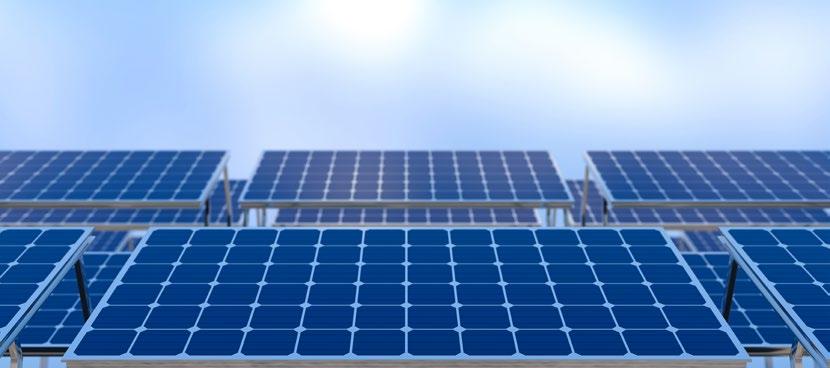
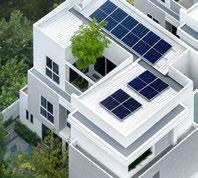
Install Solar Rooftop systems
in sales offices and show units to increase renewable energy usage
Upgrade air-conditioning systems
to environmentally friendly refrigerants, install LED lighting, and adopt other energy-saving technologies
Performance (302-1, 302-2, 302-4)
• Total electricity consumption at the LPN head office decreased by 0.49%
• Proportion of solar energy consumption at sales offices is 4.09%
Energy Efficiency Design
The Green Design Concept focuses on environmentally and socially responsible product design, addressing all aspects of living quality from project planning and layout to environmental impact reduction and efficient space utilization.
LPN buildings are designed to enhance energy efficiency by: allowing natural light to reduce artificial lighting usage, using insulation materials and heat-reducing glass, reducing heat transfer, resulting in lower air-conditioning energy consumption All buildings are designed to comply with the Building Energy Code (BEC) to ensure effective energy-saving performance.
Energy-Efficient Design Features
Utilization of natural lighting
Heat insulation and energy-efficient glass
Compliance with Building Energy Code (BEC) etc.
Energy efficiency is a key evaluation criterion under the 6 GREEN LPN Checklist, which has been continuously developed since 2015. The Company integrates international standards such as LEED (USA), TREES: Thai’s Rating of Energy and Environmental Sustainability (Thailand), and WELL Building Standard, to enhance environmental performance, optimize resource utilization, and promote the well-being of residents.
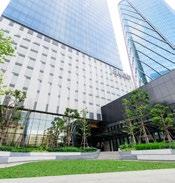
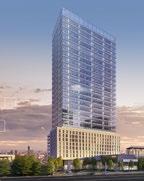
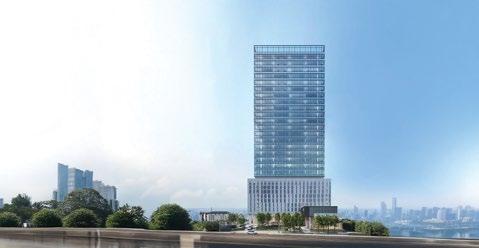
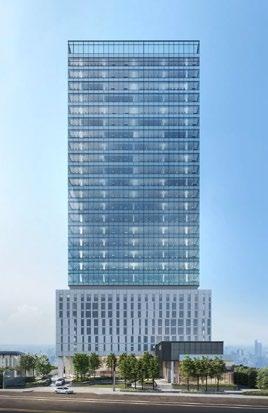
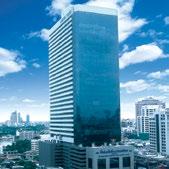
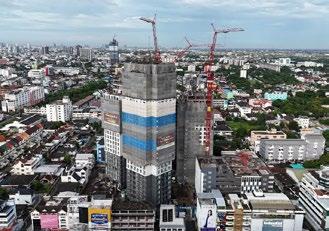
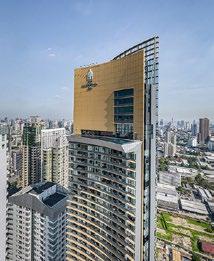
PUNN Tower
PUNN is an office building developed by Dolsiri Development Co., Ltd., through a collaboration between LPN and Nye Estate Co., Ltd., under the concept of “PUNN Smart Workspace,” which emphasizes both the quality of life of building users and environmental performance. The project is designed with the intention of creating “a health-conscious workplace,” integrating systems and design that support user well-being alongside smart technologies, in order to create a working environment that promotes long-term health, well-being, and sustainability.
The project was officially awarded LEED Gold Certification under LEED v4, Building Design and Construction: Core and Shell (BD+C: Core and Shell) in May 2025.
Key PUNN’s sustainability and innovation features
Air Quality & Well-being
• MERV 15 air filtration system reduces PM2.5
• Real-time CO2 monitoring system
• Thermal comfort optimization
Energy Efficiency
• Flexible air-conditioning system
• Smart lighting system
• Laminated IGU glass to reduce heat transfer
Resource Efficiency
• Water-efficient systems
• Sustainable material selection
Biophilic Design
• Distributed green spaces
• Natural lighting integration
Smart Technology
• Smart access and elevator systems
• Face scan & QR access
• Healthy common pantry facilities
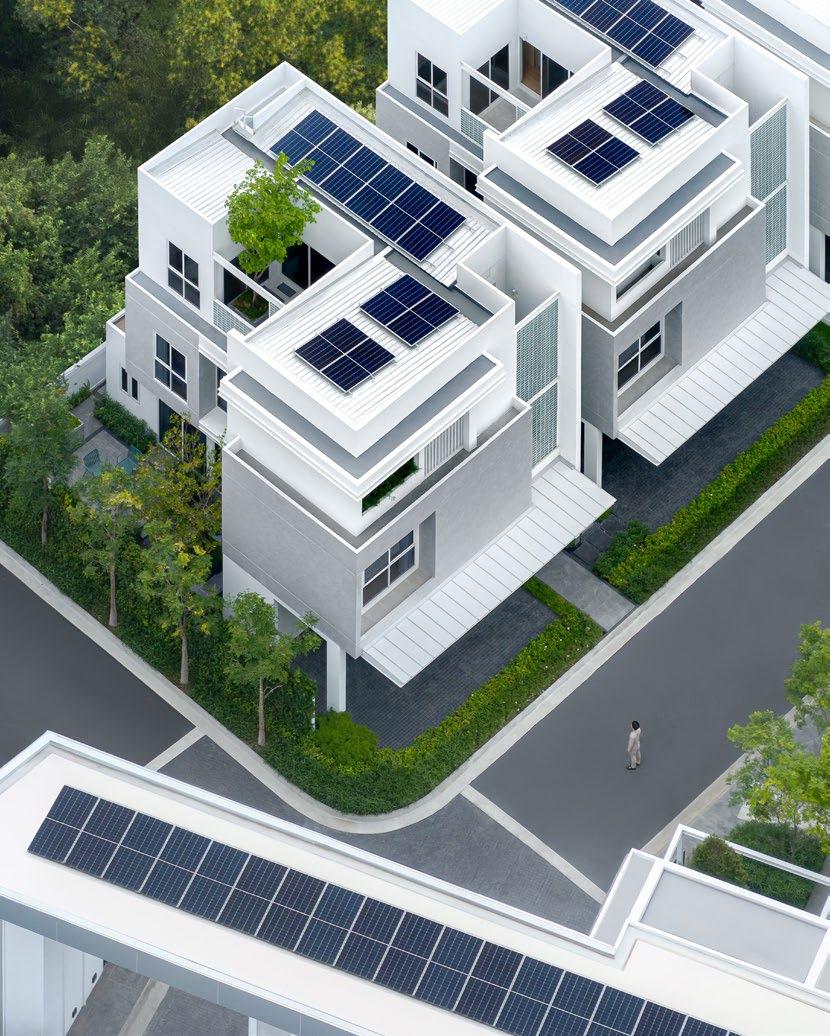
Solar Rooftop Installation at Sale Offices and Show Units
In 2025, the Company installed Solar Rooftop systems across four sales offices and show units, with total electricity generatio n of 20,153.56 kWh, representing 4.09% of environmentally friendly energy consumption relative to total energy usage at these locati ons.
LPN’s Electricity Consumption
In 2025, the Company reduced the number of its sales offices by 3 projects, as these projects had been fully completed and handed over. This resulted in a significant decrease in electricity consumption in the sales offices and show houses.
Overall, the Company’s total electricity consumption decreased by 14.58%. Meanwhile, electricity generated from environmentally friendly sources, such as solar rooftops, accounted for 2.19% of total electricity consumption. This aligns with the organization’s goals in energy management and greenhouse gas emission reduction.
• Electricity Consumption at Sales Offices and Show Units
• Electricity Consumption from Solar Rooftop at Sales Offices and Show Units
• Proportion of Environmentally Friendly Energy at Sales Offices and Show Units
• Proportion of Environmentally Friendly Energy of Total LPN Consumption Remark * Electricity consumption of residential and commercial businesses is excluded.
Greenhouse Gas Emission and Climate Change
(3-3)
Targets & Goals
• Reduce greenhouse gas emissions by 35% compared to the base year (2023) by 2035
• Reduce greenhouse gas emissions by 40% compared to the base year (2023) by 2065
However, the Company is currently considering revising its targets in 2026, with a plan to achieve Net Zero emissions by 2050, in alignment with Thailand’s Second Nationally Determined Contribution (NDC 3.0), which was announced in November 2025.
Opportunities and risks
Opportunities
Real estate projects that are designed, constructed, or certified in accordance with green building standards have gained increasing interest from stakeholders. In addition, Thailand’s policy direction under the BCG Economy Model (Bio-Circular-Green Economy) presents opportunities for businesses to align with future government strategies.
For residential developments, customers are increasingly interested in energy-efficient, comfortable, and climate-resilient housing. For office buildings, investors and tenants are seeking environmentally friendly buildings to comply with international regulations and business standards.
Risks
Thailand’s transition toward a low-carbon economy to achieve the United Nations Sustainable Development Goals (SDGs) is driving structural changes in regulations, measures, and laws related to corporate carbon emissions. Failure to adapt may expose the Company to regulatory risks, as well as other related business risks arising from such changes.
(3-3)
Management Approaches
Implementation of the 6 Green LPN Strategy Green Design Concept Standard
• Category 2.3 Energy Efficiency
• Category 2.4 Materials and Resources
• Category 2.9 Innovation
Increase the proportion of environmentally friendly energy usage, such as Solar Rooftop installation at sales offices, show units, and various LPN projects
Select environmentally friendly products, such as air-conditioning systems that use low greenhouse gas emission refrigerants and other sustainable products
Participate in the Climate Care Collaboration initiative by the Stock Exchange of Thailand across all
• LPN
1 Bioeconomy, Circular Economy, and Green Economy Model
Carbon Footprint Organization
The Company has been preparing its organizational carbon footprint since 2019 to assess which activities generate significant greenhouse gas emissions, in order to effectively plan for emission reduction and management.
In 2025, the Company prepared its greenhouse gas emissions report in accordance with the standards of the Thailand Greenhouse Gas Management Organization (Public Organization), or TGO, 6th revised version (July 2022). The report is based on retrospective data from 2024 (January-December 2024), with the boundary limited to L.P.N. Development Public Company Limited only. In 2024, the Company’s greenhouse gas emissions were 1,065.32 for Scope 1 and Scope 2 combined, and 13,672.89 for Scope 3. When measured in terms of carbon intensity, the Company achieved a 27% reduction in emissions. The Company also plans to expand its data collection boundary to include its subsidiaries in the future, to enable more comprehensive carbon management.
Other Operational Boundaries (Reported Separately)
Carbon Offsets Purchased (Carbon Credits)2
Remarks : 1. Base year previously established and the most recently revised base year in 2023.
2. Carbon credits permitted for offsetting include Certified Emission Reductions (CERs) from Clean Development Mechanism (CDM) projects, Verified Emission Reductions (VERs) from voluntary greenhouse gas reduction projects under international standards, limited to projects located in Thailand only, and Carbon credits from Thailand Voluntary Emission Reduction (T-VER) projects.
3. Revenue of L.P.N. Development Public Company Limited, based on the company’s revenue structure.
LPN’s Carbon Intensity
(tCO2e/ Million Baht/ Year)
Remark: Greenhouse gas emissions data collection was first initiated in 2019, with the most recent base year revision completed in 2023.
Design for Climate Resilience
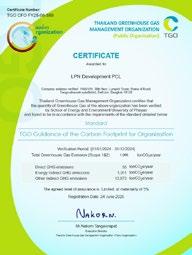
Carbon Footprint for Organization (CFO) Registration Document
In addition to reducing greenhouse gas emissions within the organization, the Company places importance on project design that helps reduce ambient temperatures surrounding its development, as well as providing environmentally friendly energy options for customers in both housing and condominium projects. Examples include the installation of solar rooftops in housing projects and the preparation of infrastructure to support electric vehicle (EV) charging systems in both housing and condominium development s. LPN recognizes that responsibility for addressing climate change requires collective action to reduce global temperatures in line with sustainable development goals.
The Company has established the Green Design Concept as part of its “6 Green LPN” strategy for social and environmental responsibility. This concept incorporates elements from internationally recognized standards such as the U.S. LEED (Leadership in Energy and Environmental Design) and Thailand’s TREES (Thai Rating of Energy and Environmental Sustainability) standards. Design guidelines include selecting project locations within a 500-meter radius of mass transit systems, providing green spaces exceeding legal requirements, using refrigerants that do not deplete the ozone layer, selecting energy-efficient products, and using roofing materials with high solar reflectance.
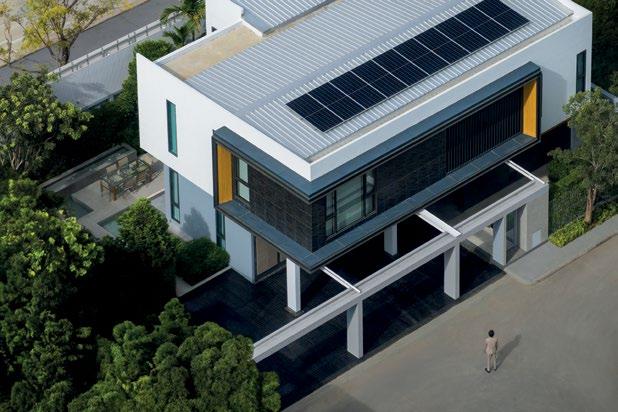
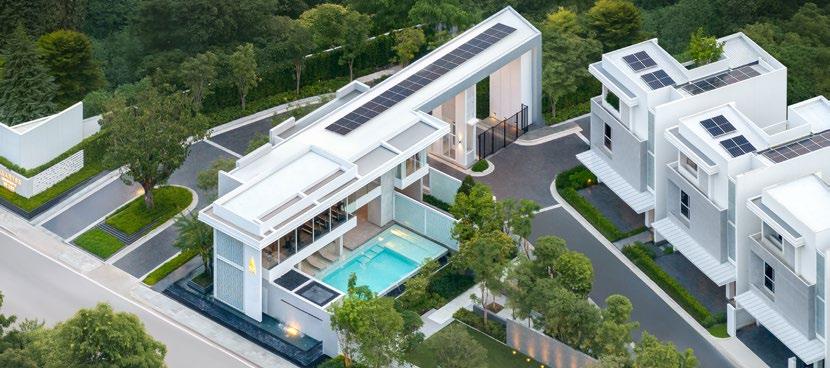
Housing Project offers solar rooftop installations to customers, providing energy-saving options.
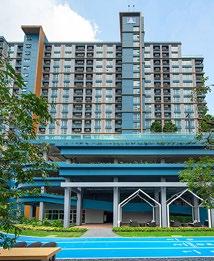
Selected Charan 65 – Sirindhorn Station and Lumpini Park Phahon 32 are located near mass transit systems, approximately 150 meters from MRT Sirindhorn Station and 300 meters from BTS Sena Nikhom Station, respectively, helping reduce reliance on private vehicles
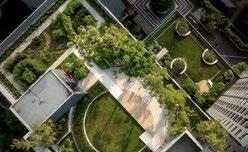
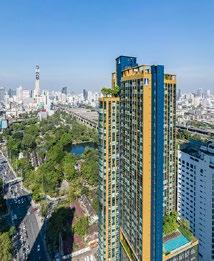
Lumpini Park on Nineteen features over 2,400 square meters of green space
Lumpini
Climate Care Collaboration
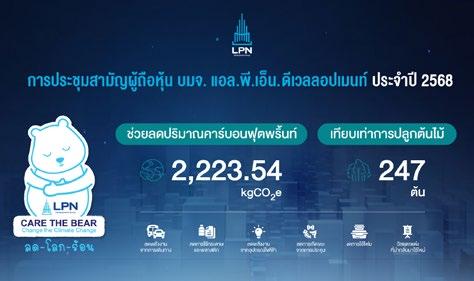
The Company has participated in the Climate Care Collaboration initiative led by the Stock Exchange of Thailand (SET), which brings together the business sector, civil society, and government to promote sustainable environmental management.The initiative aims to reduce greenhouse gas emissions and maintain environmental balance through programs; Care the Bear: Encourages environmentally responsible event management and behavioral changes within organizations, Care the Whale: Promotes waste reduction by ensuring that “invisible waste” is minimized and nothing becomes waste unnecessarily, and Care the Wild: Supports ecosystem balance through reforestation and carbon sequestration
In 2025, waste separation activities under the Care the Whale project reduced greenhouse gas emissions by 13.13 tCO2e, and carbon reduction activities recorded under the Care the Bear project accounted for 11.65 tCO2e
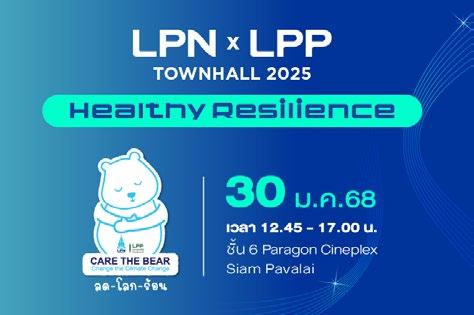
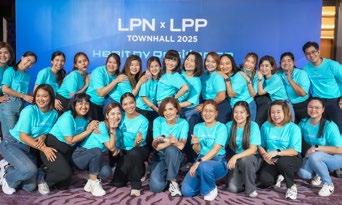
Care the Bear: LPN x LPP Townhall 2025
Care the Bear: LPN’s e-AGM 2025
Water and Wastewater
Targets & Goals
(3-3)
• Reduce water consumption by 5% by 2029 (base year: 2024)
Business Opportunities and Risks
Opportunities Risks
Efficient water resource management starting from the use of water-saving products to design and construction practices that optimize water use can help reduce operational costs and mitigate risks during periods of water scarcity.
Thailand is located in a water stress area, facing risks such as droughts, floods, rainfall variability, water quality issues, and limited water storage capacity. As a business operating in a sector that fulfills one of the four basic human necessities, the Company must assess these risks and design residential and office buildings to ensure efficient water usage.
In addition, proper wastewater treatment and water quality management before discharge to public systems help reduce the risk of regulatory penalties and serve as a license to operate, enabling businesses to coexist sustainably with surrounding communities.
(3-3)
Management Approaches
• Category 2.2: Water Efficiency
• Category 2.4: Materials and Resources
Apply the 6 GREEN LPN Strategy Green Design Concept Standard Green Community Management Standard
Design water systems within projects to achieve maximum efficiency and select water-saving sanitary ware certified under the “Green Label” standard
Install wastewater treatment systems within project construction sites in compliance with legal requirements; monitor wastewater quality to ensure it meets regulatory standards before discharging into Bangkok’s centralized treatment system, and reuse treated wastewater for maintaining green areas within the projects
Design for Sustainable Water Use
Under the 6 Green LPN Strategy, the Company has established key checklists for effective water resource management as guidelines for project development, as follows:
Green Design Concept Standard
Water Efficiency
Select plant species that are native, drought-tolerant, and non-invasive
Provide areas for edible or kitchen gardens
Limit lawn areas to no more than 30% of total green space to reduce water consumption
Use efficient irrigation systems
Reuse treated wastewater for maintaining green areas within the project
Select sanitary ware, faucets, and equipment with water-saving labels or equivalent efficiency
Use equipment with certified water-saving labels
Install separate water meters
Provide coin-operated laundry facilities
Provide coin-operated drinking water dispensers
Implement wastewater management systems within the project before discharge to public systems
Install piping systems to utilize swimming pool water as a reserve supply for firefighting systems
etc.
LPN Water Management
The Company’s assets under water management include head office on 36th floor, LPN Academy on 11th floor at Lumpini Tower, sales offices for housing and condominium projects, show houses and units, as well as LPN’s rental properties. Although each location has different water infrastructure systems, the Company applies consistent water management guidelines and plans across all areas, focusing on efficient water use and reducing overall consumption.
Water Management in Lumpini Communities
Lumpini communities are managed by LPP Property Management Co., Ltd. (LPP), a subsidiary of LPN. LPP is entrusted by residents to manage both LPN’s original projects (Lumpini) and other external projects (Non-Lumpini) where the Company has been appointed to manage residential communities or office buildings. As a result, water management infrastructure varies across projects.
However, overall, the Company adopts a consistent approach to water management, particularly wastewater management through treatment systems. These include treating wastewater within the community for reuse (reuse water), safely discharging treated water into public systems, and/or sending wastewater for external treatment in accordance with proper procedures. LPP has established the following management procedures:
The average used water per person is 70-75 liter per day.
Wastewater Management
Waste Management
Targets & Goals
• Reduce landfill waste by 5% by 2029 (base year: 2024)
Business Opportunities and Risks
Opportunities
Collaboration with external organizations to establish partnerships for systematic waste and construction material management across the head office, office buildings, Lumpini communities, and construction projects can help reduce management costs. It also fosters stakeholder engagement, enables knowledge exchange on new technologies, and creates opportunities to develop new products and services that use materials more efficiently and are more environmentally friendly.
Risks
Improper waste management may lead to penalties or increased operational costs. For example, waste collection fees imposed by the Bangkok Metropolitan Administration vary depending on whether waste is properly sorted. In addition, inadequate waste separation can negatively affect the livability of Lumpini communities, posing a reputational risk to the business. The Company may also lose competitive advantages if competitors are able to establish more effective waste and resource management networks within their supply chains.
Apply circular economy principles together with the 5Rs concept: refuse environmentally harmful products, reduce consumption, reuse materials, recycle resources, and use renewable resources
Collaborate with external organizations to ensure proper waste management, improve resource efficiency, and reduce the amount of waste sent to landfills
Performances
• Total waste generated at Head Office: 7,386.30 kilograms, decreased by 10% compared to the previous year
• Waste separated under the Care the Whale project: 7,293.82 kilograms
Waste Management at Head Office
L.P.N. Development Public Company Limited, its subsidiaries, and affiliated companies have continuously implemented the LPN Zero Waste initiative by applying circular economy principles in conjunction with the 5Rs concept: Refuse, reduce, reuse, recycling and renewable.
In 2025, total waste generated at the Head Office comprised of 4,999.50 kilograms of general and residual waste, 2,203.20 kilograms of recyclable waste, and 183.60 kilograms of hazardous waste, totaling 7,386.30 kilograms. These figures exclude waste generated from collaborative projects with external organizations, such as the Care the Whale project, the LPN x LPP “Waste for Household Items” initiative with OGGA Circular, and the Big Clearing Day campaign, which was a special activity conducted in 2025.
Amount of Waste at LPN Head Office (kilogram)
LPN Zero Waste Project
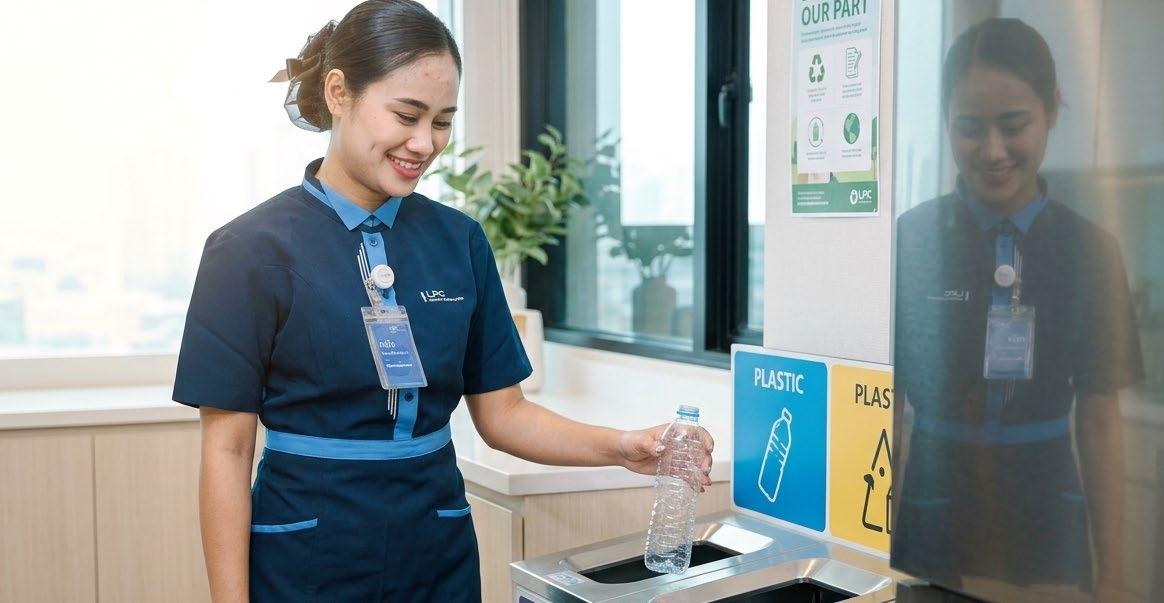
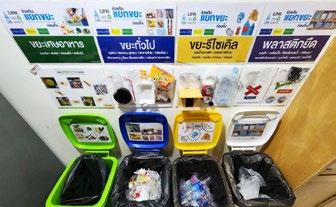
The Company has provided properly segregated waste bins, along with continuous awareness-building, training, and participation campaigns for employees and community service staff. As a result, the proportion of waste that is effectively separated for recycling has steadily increased.
In addition, during the past year, LPN and LPP jointly organized a Big Clearing Day activity to remove unused materials from the Head Office. From this activity, 396.2 kilograms were classified as recyclable waste, and 18.6 kilograms were identified as reusable items.
LPN x LPP BIG CLEARING DAY 2025
Summary of Activities
Waste Separation for Recycling = 396.2 kg
• Greenhouse gas emissions reduction: 2.60 tCO₂e
• Equivalent to the carbon absorption of 289 trees
Office equipment (Reuse) = 18.6 kg
• Greenhouse gas emissions reduction: 0.08 tCO₂e
• Equivalent to the carbon absorption of 9 trees
• Cost savings for the organization: 6,785 THB
Care the Whale Project
The Company has participated in the Care the Whale project initiated by the Stock Exchange of Thailand to reduce waste at the source and lower greenhouse gas emissions. In 2025, the Company was able to separate and contribute 7,293.82 kilograms of waste to the project (data from January–June 2025).
Proportion of Waste Sorting of 2024-2025 Care the Whale project
Remark: * 2025 data may represent partial-year results (January - June 2025).
LPN x LPP ‘Waste-to-Value Exchange’ Initiative” with OGGA CIRCULAR
The Company recognizes the importance of collaboration for sustainable development (Partnerships for the Goals) to achieve the best possible environmental and social outcomes.
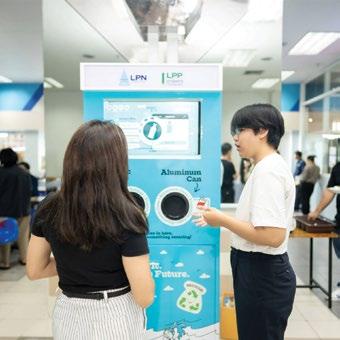
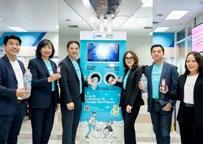
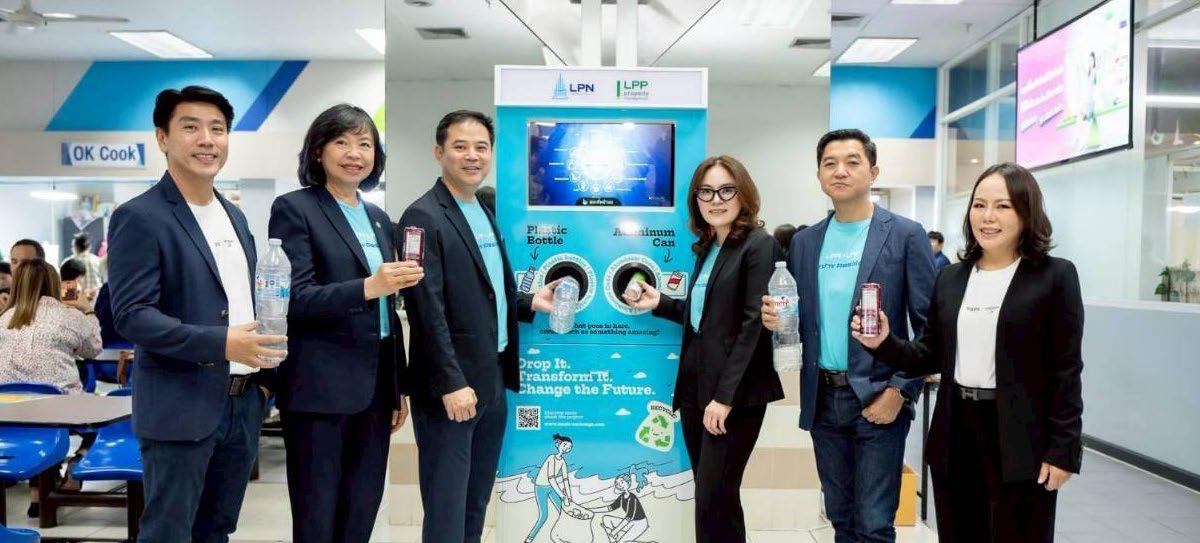
In 2025, LPN and LPP partnered with OGGA Circular to organize the “Waste-to-Value Exchange” initiative by introducing and installing the AI-powered waste management machine, “TrashEX by OGGA,” for the first time at the LPN Head Office in Lumpini Tower. This initiative encourages residents of LPN projects, as well as office employees, to raise awareness and actively participate in waste separation specifically PET plastic bottles and aluminum cans—for recycling or upcycling into useful products in the future.
OGGA is an innovator in sustainable premium products, specializing in the design and manufacturing of goods made from recycled materials. With a shared vision of addressing environmental challenges, OGGA is considered a strong environmental partner for LPN.
The “Waste-to-Value Exchange” initiative reflects LPN’s commitment to promoting a “livable” society. The AI waste management machines were first installed at LPN Head Office and later expanded to three condominium projects in 2025; Lumpini Ville Chaengwattana – Pak Kret Station, Lumpini Place Tao Poon Interchange and Lumpini Phahon 32
Pilot Locations for “TrashEX by OGGA”
LPN Head Office, Lumpini Tower
Lumpini Ville Chaengwattana – Pak Kret Station
Lumpini Place Tao Poon Interchange
Lumpini Phahon 32
From August to December 2025, the Company collected 428.31 kilograms of PET plastic bottles and 19.04 kilograms of aluminum cans from the TrashEX machines across all four locations.
TrashEX by OGGA
Waste Management in Construction Projects
Waste generated at construction sites can be classified into two main categories; construction waste and daily waste generated by construction workers. Each type is managed differently. General waste from workers is collected and transferred to government agencies for proper sanitary disposal. Construction waste, although minimized through LPN’s Modular System design approach to reduce material loss from the early stages, cannot be entirely avoided.
The Company therefore implements specific processes to manage construction waste, including; sorting materials into categories, controlling designated disposal areas within project sites, establishing procedures for transporting waste off-site, and reusing certain construction materials in subsequent projects.
Type of Waste and Management
Waste Management in Lumpini Communities
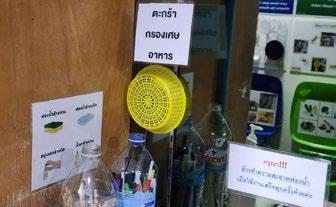
The Company also promotes waste separation within Lumpini communities to create broader positive environmental impacts and raise awareness among all stakeholders - not only employees but also residents in projects managed by its subsidiaries. Currently, waste management has been implemented in 179 out of 239 projects (75%), total waste separated amounts to 2,238.80 tonnes.
The Company collaborates with various partners depending on project location and waste types, such as Waste Buy Delivery, Recycle Day, and “Won” Project (circular waste initiatives)
Amount of Sorted Plastic Bags and Films, ‘Won’ project at Lumpini Tower (kg.)
Proportion of Waste Sorting in Lumpini Community
Remark: The data applies only to residential condominium
and
Proportion of Waste Sorting in Lumpini Community
SSOCIAL
L.P.N. DEVELOPMENT PUBLIC COMPANY LIMITED
6 GREEN LPN REBUILDING WITH RESPONSIBILITY STRENGTHENING THE CORE
GREEN DESIGN CONCEPTGREEN CONSTRUCTION PROCESSGREEN COMMUNITY MANAGEMENT
Occupational Health and Safety
• Zero-accident target
Business Opportunities and Risks
Opportunities
Ensuring that employees, contractors, partners, workers, as well as residents and building users have good health and safety is one of the company’s key responsibilities and reflects good corporate governance. It also serves as motivation for work and encourages people to want to work with LPN.
Risks
Targets & Goals Management Approaches
Since the COVID-19 pandemic and the 2025 earthquake, project design that emphasizes structural strength and safety, together with “livability” through interior architecture that promotes well-being, has had a significant impact on customers’ decisions to reside.
Safety is a risk issue that may affect the lives of stakeholders within the business value chain. It also constitutes a reputational risk to the company in the event of unexpected incidents. In addition, occupational health and the well-being of employees, contractors, partners, and workers may affect work efficiency, delays in project delivery, and potential costs arising from compensation, non-compliance with laws, or failure to meet stakeholder expectations.
Apply the 6 GREEN LPN strategy and Q-C-S-E-S+P strategy:
Green Design Concept
• Categories 5 and 6: Quality of indoor environmental conditions (common areas and residential units)
• People management (3-3) (3-3)
• Categories 7 and 8: Universal design for all ages (common areas and residential units)
Green Construction Process (Condominium Projects)
• Categories 6 and 7: Safety and welfare within construction sites and worker housing areas
Green Construction Process (Housing Projects)
• Category 3: Construction systems (Conventional Process / Precast Process)
Green Enterprise
• Category 2: Human capital management
Q-C-S-E-S+P
• Safety of workers and participants
Development Business applies the 6 GREEN LPN and Q-C-S-E-S+P strategies as standards for assessing, preventing, and monitoring occupational health and safety risks, including accident statistics, for employees, workers, partners, neighboring communities, customers, and residents to ensure a safe and livable environment.
Service Business, led by LPP, adopts the international occupational health and safety management standard ISO 45001 in managing PUNN Tower and plans to expand this to Lumpini communities under the company’s management in the future.
Performances (403-1,403-3, 403-5, 403-6)
• ISO45001 : 2018 certified
• 0 accident at PUNN Tower
• 3 LPN’s condominium were assessed with Internal ESG On-site audit on safety, with 100% score
Occupational Health and Safety Policy
The Company places importance on occupational health and safety as a fundamental aspect of conducting business responsibly toward society. It is also one of the topics defined in the Company’s Code of Conduct under the section “Health and Safety,” covering all stakeholder groups throughout the value chain, including employees, workers, partners, neighboring communities, customers, residents, and Lumpini communities. This aligns with LPN’s concept of “Livable Living.” The Company applies the 6 GREEN LPN strategy, the Q-C-S-E-S+P framework, and internationally recognized standards to improve work processes, enhance credibility, and ensure that occupational health and safety operations are rigorous and well-managed, thereby reducing risks from unexpected incidents.
Occupational Health and Safety Committee
The Occupational Health and Safety Committee has been established under the supervision of LPP Property Management Co., Ltd., to oversee and be responsible for occupational health and safety of LPP employees, partners, and properties under LPP’s management. The Committee consists of four members from relevant functional departments and convenes on a monthly basis.
In 2025, the Committee acknowledged the occupational health and safety performance of PUNN Tower, where the building recorded zero accident cases, and received ISO 45001:2018 certification, granted by BSI Group (Thailand) in 2026.
Design for the Safety of Residents and Building Occupants
Product design under environmental responsibility (Green Design Concept), one of the 6 GREEN LPN strategies, not only focuses on environmental friendliness but also emphasizes the safety of residents and building users. Designs are user-friendly and accessible, incorporating Universal Design principles to ensure safety for people of all ages, including people with disabilities, promoting equal access and reducing accident risks.
The Company also prioritizes residents’ well-being and “livability” by enhancing indoor air quality, ensuring proper ventilation, maintaining appropriate humidity and temperature, and selecting low-toxicity materials, including paints and coatings with reduced volatile organic compounds (VOCs) and formaldehyde.
These principles are incorporated into the Company’s green real estate design standards, covering both common areas and residential units, and have been applied across many LPN projects.
Examples of Green Design Concept – Design for Safety of Residents and Building Occupants
Walkways and Stairs
• Rounded edges and warning strips at level changes
• Stair width and handrails comply with standards
Community Gardens
• Selection of durable plants; avoid those posing safety risks
• Outdoor exercise equipment suitable for all age groups
• Rounded-edge designs
• Drawer stoppers to prevent accidental dislodging
Safety in Construction Processes
Swimming Pools and Fitness Areas
• Non-glossy, slip-resistant materials
• Handrails installed for safe pool exit
Bathrooms
• Lever-type door handles
• Separation of wet and dry areas
• Avoid level differences within the bathroom
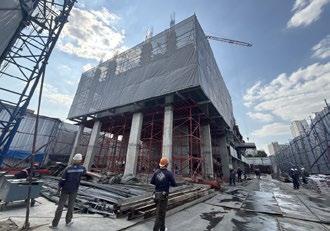
Construction safety is a key component of the Green Construction Process, one of the 6 GREEN LPN strategies. It not only sets standards for environmentally friendly construction but also covers safety and welfare within construction sites and worker housing areas, for both high-rise and residential housing projects.
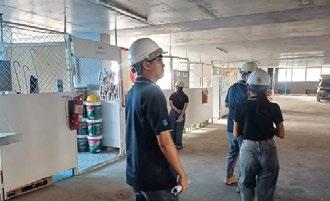
Examples of Green Construction Process – Construction Safety Measures
Safety training for workers
On-site first aid stations and emergency contact signage
Mandatory use of personal protective equipment (PPE)
Safe stairways or ramps with guardrails; safety harnesses required for work at heights above 1.5 meters
Installation and regular inspection of fire protection equipment
Clearly visible warning and mandatory signage throughout the site
All-time fire emergency preparedness
Dust and cleanliness control, including covering soil transport trucks
Dust screens around concrete mixing equipment
Safe and standardized temporary electrical systems
Restricted access for unauthorized personnel
Etc.
Furniture
Etc.
Q-C-S-E-S+P
In addition to construction safety measures under the Green Construction Process, LPN implements safety controls alongside the Q-C-S-E-S+P framework, a long-standing construction management approach of the Company. This ensures that all LPN projects minimize negative impacts on society and the environment while maintaining high standards of safety, quality, and sustainability.
LPN Construction Management Strategy
QQUALITY OF PRODUCT
It is the management of project construction by emphasizing the quality of products i.e. common area and condominium units that meet the expectation of the customers.
CCOST CONTROL AND MANAGEMENT
The costs are carefully controlled and managed not to exceed the estimated amount. Both direct and indirect costs and operation expenses are managed to maintain the benefits of all stakeholders.
S ESPEED OF DELIVERY
It is to ensure that the construction and operational process are completed in a timely manner to reduce the risk of project delay.
ENVIRONMENTAL RESPONSIBILITY
It is the responsibility towards the environment to reduce the impacts both in the construction site and on neighboring communities during the construction process. The measures to reduce the environmental impacts indicated in the Environmental Impact Assessment (EIA) report are to be strictly implemented.
S
SAFETY OF WORKERS AND PARTICIPANTS
The Company ensures the safety of construction workers and related parties during construction by establishing a strict operational standard in terms of safety to prevent any accidents that may occur. Moreover, the Company also stresses the importance of occupational health and good quality of life of construction workers.
+P
PEOPLE MANAGEMENT
It is to manage the impacts on the stakeholders. The Company gives importance to the labor rights and quality of life of the construction workers that are normally ignored by other business operators, the responsibility towards neighboring communities of the construction site as well as mutual growth and development with the business alliances or trade partners. The communities and environment surrounding the construction site are also developed.
Workers’ Safety and Quality of Life
LPN places strong emphasis on the safety and welfare of workers, both within and outside construction sites. Dedicated safety officers are assigned to each project, and regular safety training is provided in alignment with workers’ responsibilities.
In addition, the Company prioritizes improving the quality of life for all workers, starting with personal hygiene and health. Various initiatives are implemented, such as annual health check-ups, basic first aid training, proper use of household medicines, vaccination programs, and random drug testing. LPN also continuously develops its LPN Green Construction Camp standards to enhance living conditions and welfare for workers residing in camps, ensuring appropriate, hygienic, and safe environments for living and daily life.
Furthermore, the Company has established childcare centers that provide a safe space where working parents can leave their children during working hours. These centers offer supervision, basic education, and activities to support morale and well-being.
• Drug Testing for Construction Workers
LPN, together with the LPN Team, conducts drug testing among construction workers on-site to prevent and monitor the presence of illegal substances. The program also raises awareness about the dangers of drug use. If substances are detected, appropriate management actions and disciplinary measures are taken.
• Morning Talk Activity
Every morning before work begins, a “Morning Talk” session is conducted to communicate important information to workers. This includes work progress updates, the proper use of personal protective equipment (PPE), workplace safety practices, and other relevant matters.
Collaboration with Partners for Construction Site Safety
LPN recognizes that creating positive environmental and social impacts requires strong collaboration throughout the value chain. For example, LPN’s partners, 3 Porn Co., Ltd. and its affiliates collectively known as the “LPN Team” actively comply with Green Construction Process standards and have also taken initiatives to elevate safety standards at construction sites. They have collaborated with the Building Social Impact (BSI Initiative), driven by the Child Development Network Foundation and supported by UNICEF along with companies in the construction sector. The initiative aims to improve living conditions and access to public services for workers and children living in construction camps across Thailand.
• LPN Team signed MoU under the Building Social Impact Initiative
The LPN Team has signed a Memorandum of Understanding (MoU) under the BSI Initiative to establish guidelines for managing worker housing and welfare, aiming to enhance worker productivity.
• Proper storage and regular inspection of materials and equipment
• Morning Talk sessions and proper dress code checks
• Promotion of workers’ welfare, occupational health, and safety
Occupational Health, Safety, and Employee Welfare
LPN prioritizes the health, safety, and occupational well-being of employees at all levels. This covers staff working at headquarters, office buildings, sales offices, show houses, as well as commercial and residential rental properties under LPN and its affiliates. The Company follows these practices:
1. Compliance with laws, standards, and health and safety regulations to prevent or minimize potential impacts
2. Regular workplace safety inspections, provision of safety equipment, and annual fire evacuation drills
3. Support and organization of employee activities such as annual health check-ups, exercise promotion, and annual leave programs
4. Provision of qualified physicians to offer consultation and care for employees with health concerns
Occupational Health and Safety Training
In 2025, the Company conducted key occupational health and safety training programs, including training on the international Occupational Health and Safety Management System standard ISO 45001: 2018. The training covered topics such as standard requirements, hazard identification and risk assessment in occupational health and safety, relevant laws, and internal auditing. A total of 50 employees (levels 4–10) participated, each receiving 8 hours of training, totaling 400 training hours.
In addition, other occupational health and safety–related training courses were conducted as follows:
To support LPN’s goal of being a “livable organization” and to promote workplace happiness, the Company organizes activities such as massage therapy to relieve office syndrome. These services are provided by a community enterprise housekeeping group (LPC Happy Relax) and are available to employees at both the headquarters and LPN project sites. In addition to promoting employee well-being, this initiative also helps generate income for the community enterprise group, which primarily consists of underprivileged women.
Engagement with Communities Surrounding Construction Sites
(3-3)
• Zero complaints from communities
• 100% SLA – All community complaints resolved within the specified timeframe
• All construction sites (100%) meet the LPN Green Construction Process standard
Business Opportunities and Risks
Opportunities
Communities surrounding construction sites are considered future “neighbors” of Lumpini communities. Therefore, any project development must respect existing local residents to minimize conflicts and foster mutual coexistence. This approach enables surrounding communities to live peacefully and safely both during and after construction. It also helps secure social acceptance or a “License to Operate” and contributes to creating a “livable society,” benefiting both the business and society in the long term.
Risks
Reputational risk is a key concern if negative impacts are created for surrounding communities. More importantly, failure to gain acceptance from local communities can lead to conflicts between construction projects and nearby residents. Such conflicts may disrupt project development and impact the Company’s overall business plans.
Targets & Goals Management Approaches
(3-3)
Apply the 6 GREEN LPN strategy, particularly the Green Construction Process Standard Strengthen collaboration with partners (LPN Team) to enhance capabilities in line with LPN’s standards and expectations
Performances (413-1, 413-2)
• 100% of LPN construction projects were assessed under the Green Construction Process standard
• 84.62% of projects passed the evaluation criteria, and 69.23% achieved a “good–very good” rating
• Zero community complaints reported 2
2 No significant complaints were received from the community. There were only inquiries and discussions to gain a better understanding of the project.
LPN GREEN CONSTRUCTION PROCESS STANDARD
The Green Construction Standard refers to the management and control of construction processes under environmental responsibility. The Company emphasizes project design and development starting from conceptual design and site planning to reduce environmental impacts, promote comfort and quality of life, and ensure energy efficiency. This approach is based on sustainable architecture principles, focusing on efficient resource use, minimizing environmental impacts, and creating a healthy living environment in line with the concept of “a livable community for all generations.”
The standard focuses on minimizing construction impacts by incorporating internationally recognized environmental building standards for pollution prevention. It is implemented alongside the Q-C-S-E-S+P strategy, which is LPN’s traditional construction management framework.
Green Construction Standard for Condominium Projects
Based on these concepts, LPN developed the LPN Green Construction Process Standard in 2014. In 2015, the standard was further strengthened to comply with legal requirements, respond to increasing environmental challenges, and elevate construction standards in the real estate sector. The standard consists of 7 categories with 71 criteria.
Green Construction Standard for Housing Projects
As LPN expanded its portfolio from condominium projects to housing developments, the Company established a revised Green Construction Standard for housing projects in 2024. This updated standard serves as a guideline for developing residential housing projects under LPN’s responsibility, ensuring that construction processes minimize negative impacts on society and the environment. The housing project standard consists of 4 categories with 36 criteria.
Prevention of Pollution Affecting Communities Around Construction Sites
All construction activities carried out within the Company’s projects must strictly comply with the established construction standards. Measurement, data collection, and analysis are conducted at every stage of operations on a monthly basis. This is undertaken alongside the preparation of Environmental Impact Assessment (EIA) monitoring reports and Green Construction Process audits every two months to monitor and prevent pollution or damage that may affect the environment and surrounding communities. The scope covers four types of impacts, as follows:
Monitoring Parameters
• pH (acidity–alkalinity)
• Suspended Solids (SS)
• Total Dissolved Solids (TDS)
• Biochemical Oxygen Demand (BOD)
• Total Suspended Solids (TSS)
• Oil & Grease (O&G)
• Total Kjeldahl Nitrogen (TKN)
• Sulfide
• Fecal Coliform Bacteria (FCB)
Monitoring Parameters (measured monthly)
• Total Suspended Particulates (TSP)
• Particulate Matter (PM10)
• Sulfur Dioxide (SO2)
• Nitrogen Dioxide (NO2)
• Carbon Monoxide (CO)
• Total Hydrocarbons (THC)
Monitoring Parameters (measured monthly)
• 24-hour average noise level (Laeq, 24 h)
• Maximum noise level (Lamax)
• Noise disturbance levels
• Install temporary drainage systems to prevent water from construction areas flowing into neighboring areas
• Provide sedimentation ponds and wastewater treatment ponds within the construction site
• Ensure all wastewater is treated to meet standards before being discharged into public systems
Monitoring Parameters (every 2 months)
• Green Construction Standard Manual
• Prevent soil erosion
• Limit dust-generating activities within designated areas
• Cover buildings with tarpaulins during construction
• Spray water to reduce dust dispersion
• Restrict working hours
• Divide construction areas into zones and avoid work during off-hours in areas adjacent to neighboring communities
• Designate separate areas for steelwork to control noise and air pollution from such activities
• Separate, store, and dispose of waste by category:
- Construction debris
- General waste
- Recyclable waste
- Hazardous waste
Care for Neighboring Communities
In addition to managing construction impacts, the Company has a policy to build relationships with surrounding communities by coordinating with community leaders. This includes surveying shared community areas and nearby organizations from before construction begins. Special attention is given to areas adjacent to the project or areas likely to experience higher impact (sensitive areas). The Company engages with the community to gather feedback on environmental concerns, potential construction impacts, specific worries, and desired social or environmental support activities. The Company will coordinate and take appropriate actions to support the community, fostering positive relationships and helping to reduce potential complaints in the future.
Survey the environment around the project
Before the construction, the environment around the project is surveyed, the map of neighboring houses indicating house number, name of owner and telephone number is prepared and the officers visit the neighboring houses to introduce themselves.
Build good relationship with neighboring residents
Visit neighboring residents to build good relationship with them, listen to their concerns and ask about the impacts with them.
Establish pollution prevention measures
Put up canvas for dust and noise prevention, clear up the site, build temporary houses for workers, etc.
Monitor the environment and follow up the progress
Regularly monitor the surrounding environment and take immediate action when a problem is found.
Take action to solve the problem
Should there be any impacts or damages caused by the construction, they must be resolved immediately.
Compile the information
6.1 Feelings of neighboring residents
6.2 Problems and solutions
6.3 Points for improvement and outcome
Assess the performace
Collaboration with Partners to Reduce Community Impacts at Construction Sites
Efforts to reduce impacts on communities surrounding construction projects are carried out in collaboration with LPN’s partner (3 Porn Co., Ltd.), which strictly complies with the Green Construction Process standards:
• Installation of dust protection mesh surrounding the building
• Management of impacts on neighboring properties
Lumpini Community
(3-3)
• No significant complaints from the community
• 100% SLA – All community complaints are resolved within the specified timeframe
• 100% of Lumpini communities under the Company’s management are assessed and meet the LPN Green Community Operation standard
Business Opportunities and Risks
Opportunities
Customer satisfaction represents a key opportunity for business growth for the Company and its subsidiaries. Positive impressions, word-of-mouth referrals, repeat purchases, etc., are important factors in building brand loyalty among current and future customers. In addition, a “Livable Community” provides an opportunity for the Company to “Togetherness, Care, and Share,” contributing positive outcomes to the environment and Thai society through Lumpini communities, helping create livable cities for the future.
Risks
LPN recognizes that the responsibility of a real estate developer should not end merely with the “handover of residential units” to customers, but should extend to continuous community management to maintain livability. Currently, there are many competitors providing condominium and juristic person management services similar to LPP. If the Company is unable to create satisfaction, engagement, good relationships, or achieve its goal of a livable Lumpini community, it may lose competitiveness in the future.
Targets & Goals Management Approaches
(3-3)
Apply the 6 Green LPN strategy under LPN Green Community Operation, comprising: Facility Management, Budget Management, Life Quality Management, Environmental Management, Security and Safety, and People Management (F-B-L-E-S+P) Managed by LPP, a subsidiary of LPN specializing in building and juristic person management, using international standards: ISO 9001:2015 (Quality Management System: QMS), ISO 14001:2015 (Environmental Management System: EMS), ISO 45001:2018 (Occupational Health & Safety Management System: OH&SMS) as the foundation to create a “Livable Community”
Performances
• Received positive recognition from Lumpini communities for rapid response to earthquake disaster
• 0 significant complaints from Lumpini communities 3
• 100%-Checked: All Lumpini communities were assessed under the LPN Green Community Operation standard
3 Significant complaints are defined as complaints that result in legal action and/or pose a potential risk to the company’s reputation.
Post-Handover Residential Quality of Life Management
Over more than 37 years of real estate development, LPN has adhered to the principle of maintaining the quality of life of residents after project handover. The Company believes that the responsibility of a real estate developer should not end with merely delivering housing but should extend to building management to ensure readiness for use and a good environment. From this concept, the Company has expanded into community management to foster a culture of living based on “Togetherness, Care, and Share,” enabling harmonious and happy co-living.
Throughout these 37 years, the Company has taken care of “homes” for hundreds of thousands of Lumpini family members, while maintaining environmental quality and residents’ quality of life through the “Livable Home” strategy. In addition to maintaining equipment and assets to ensure safety and usability, the Company places importance on fostering happiness and a positive community environment warm, safe, hygienic, and environmentally conscious under the Green Community Operation standard (F-B-L-E-S+P). These strategies are applied to deliver “livable communities” in both LPN-developed projects (Lumpini projects) and non-Lumpini projects, including: Condominium management services, Office building management, Comprehensive residential property management, Engineering services, and property sales and rental brokerage services
FFACILITY MANAGEMENT
It is to maintain the efficiency of common properties including facility usage management. There must be cleanliness standards and social distancing while using, no matter they are architectural structure, convenient facilities or various systems in the building e.g. elevator, electricity generator, electrical system and sanitation system, to ensure that all components of the building function normally and are safe to operate.
BBUDGETING MANAGEMENT
It involves the management of budget for condominium juristic person to be in line with the policy approved by the Annual General Meeting of Joint Owners as well as the management of the stability of the fund for the financial stability of the community. A financial report that is easy to understand, transparent and auditable will also be prepared.
LLIFE QUALITY MANAGEMENT
It is the management of the quality of life of residents encouraging them to comply with the regulations of condominium and single home, ensuring their comfort and convenience and prevention measures in the residential area. This is to entail the harmony of living together happily and “Togetherness, Care and Share” culture. Various activities are organized to build good relationship within the family and for community development among “Lumpini” members.
EENVIRONMENT MANAGEMENT
The Company puts very much emphasis on environmental issues. Green Clean Lean concept is promoted and various activities are implemented such as tree planting activity, increase of green space in the community and neighboring community, waste segregation program, effective infectious waste disposal, waste water treatment, reuse of treated waste water in the project, energy conservation campaign and promotion of renewable energy.
SSECURITY & SAFETY MANAGEMENT
The security and safety management starts from designing the project plan, inspecting and maintaining the standard of equipment system such as closed-circuit television, alarm system and communication system and training security officers regularly, including COVID-19 prevention training and hygiene project monitoring. Participation of community members and related government agency is also promoted to enhance the utmost security of the members of the community.
PPEOPLE MANAGEMENT
The Company gives importance to the management of related persons in community management work whether it be Community Management Department, Juristic Persons Committee or the residents to ensure their cooperation and satisfaction. The problems and conflicts of residents that may affect the community are also managed. The focus is on attitude and skills of staff. Communication approaches are established to enhance knowledge and understanding on community management of Juristic Persons Committee especially the Chairman so that they are on the same page. The following components are important in building sustainable communities.
i.e. executives, Community Managers and the management team, all of whom play an important role in promoting the sustainability of the community. The Company has developed their capacity through various training programs as well as promoted service culture for the success of the “Vibrant Community” strategy.
i.e. the residents in the project inclusive of the joint owners and renters. Different activities are organized by the management to promote the concept of co-existence in the community, reduce environmental impacts, promote a good society and create vibrant community.
i.e. the representatives of the stakeholders in the project. They drive forward the process of implementing the concept of vibrant community in the project by building the knowledge and understanding of the Chairman and committee members.
Juristic Person Committee
Blood Donation
The Company collaborates with the Thai Red Cross Society as a central hub for collecting and providing blood reserves to the National Blood Centre on a continuous basis. Lumpini communities serve as public service venues, promoting a culture of “Togetherness, Care, and Share.”
In 2025, 19 Lumpini communities served as blood donation units, collecting a total of 1,824,200 cc, equivalent to 91.21% of the Company’s annual target of 2,000,000 cc.
The Company remains committed to serving as a platform for creating a “livable society,” contributing to society while engaging residents in Lumpini communities.
A total cumulative volume of 1,824,200 cc of blood was donated.
Blood donation locations in Lumpini communities in 2025 (19 locations)
1. Lumpini Tower
2. Lumpini Mega City Bangna
3. Lumpini Ville Onnut–Pattanakarn
4. The Politan Rive
5. Lumpini Sukhumvit 77
6. Lumpini Place Ratchayothin
7. Lumpini Mix Thepharak–Srinakarin
8. Lumpini Park Riverside–Rama 3
9. Lumpini CondoTown Romklao–Suvarnabhumi
10. Lumpini CondoTown Bodindecha–Ramkhamhaeng
11. Lumpini Park Nawamin–Siburapha
12. Lumpini Ville Chaengwattana–Pak Kret
13. Market Place Rangsit–Khlong 1
14. P.S.T. City Home
15. Lumpini CondoTown Ramintra–Nawamin
16. Lumpini Ramintra–Lak Si
17. Lumpini Park Pinklao
18. Lumpini Place UD–Phosri
19. Lumpini Ville Pattanakarn–Srinakarin
Additionally, LPP and LPN jointly organized the LPN x LPP Stronger Together Project: “Donate Blood, Extend Lives”, raising funds to repair mobile blood donation units for the Thai Red Cross Society.
The fundraising target was THB 1,000,000, with LPP committing to fully matching the target. Ultimately, LPP contributed the remaining THB 600,000, supporting the repair and maintenance of mobile blood donation vehicles.
Earthquake
Following the earthquake in Bangkok on 28 March 2025, the Company received positive feedback from residents in projects managed by LPP. Employees, executives, and business partners collaborated fully to alleviate impacts and assist residents, enabling occupants to return to their units within 6 hours after the incident.
The Company also continued safety inspections of structural and system components in buildings. Engineering teams were deployed to inspect both completed and ongoing projects. The Company cooperated with co-owners by facilitating building inspections and safety assessments, reporting results within 2 weeks in accordance with Bangkok Metropolitan Administration policy.
This strong stakeholder network and timely response during emergencies demonstrate the Company’s capability in project management and its responsibility toward society, customers, and Lumpini communities.
Employee Care
• Training hours: 26 hours/person/year
Business Opportunities and Risks
Opportunities
Developing personnel, ensuring employee well-being and work-life balance are factors that enable the Company to grow strongly and sustainably. These factors enhance competitiveness, readiness for change, and reinforce the Company’s image as a Green Enterprise. The Company can retain high-performing employees while attracting new talent who share the same values to join the organization in the future.
Risks
Employee turnover and lack of personnel development are costs and risks that affect the Company’s competitiveness. The Company may lose opportunities to retain existing employees and may not be able to attract talented individuals to join in the future.
Targets & Goals Management Approaches
Apply the 6 Green LPN strategy Under the Green Enterprise pillar: Human Capital Management
Establish the “LPN Academy” as a dedicated unit responsible for employee development across the Company and its subsidiaries
- Average employee training hours: 26.42 hours/person/year - LPN Academy training expenses: THB 10.32 million, equivalent to THB 1,822.41/person/year - 0 cases of complaints regarding unfair labor practices
Employee Development Policy
The Company has a policy focusing on developing employee competencies to become capable, ethical, and healthy individuals at all levels. Personnel are developed to achieve professionalism through various learning formats, both offline and online. The system is integrated with Human Resource Management processes, including: Career development planning, Succession planning and talent acquisition, Appointment and rotation, Annual performance evaluation, and Compensation consideration. This ensures effective human resource management and development, helping build and retain talent to lead the organization toward becoming a “Value Organization.” The Company has established the LPN Academy, which plays a role in systematically and efficiently planning and delivering training and development programs for employees across the Company and its subsidiaries.
Policy on Environmental and Social Responsibility Awareness for Employees
The Company conducts business with consideration for environmental and social responsibility and is committed to fostering employees who take pride in organizational values and contribute to society. Therefore, the Company has clear policies to educa te employees on environmental and social matters. Annual development plans and training topics are determined by management and continuously updated to reflect current situations.
In 2025, the LPN Academy continued to implement initiatives in environmental management in alignment with the 6 GREEN LPN strategy and regularly reported environmental and social performance based on the LPN Green Standard Checklist.
Additionally, the Academy invited the Social and Environmental Office (S&E) to share knowledge and updates on environmental conditions through seminars and knowledge-sharing sessions, enhancing employee awareness and responsibility in environmental and social practices.
Business Operations Focused on Human Capital
LPN GREEN ENTERPRISE (Human Capital Management)
The Company’s business operations emphasize management and human capital (Green Enterprise), consisting of two components: Sustainability Management: Conducting business profitably, fairly, and with good governance, and Human Capital Management: Operating responsibly toward key internal stakeholders, including employees, workers, and labor. The framework includes: 1) Corporate Values 2) Livable Organization 3) Learning & Growth (A-S-K) and 4) Work-Life Balance.
Human Capital Management
1. Corporate Value
The Company emphasizes developing personnel to build long-term business success. The LPN Way has been established to develop core competencies and serve as a guiding principle for sustainable and integrated human resource management. It creates organizational identity and sets work standards based on two pillars; Continuous Improvement, and Respect for Stakeholders, supported by seven core values: “C-L-A-S-S-I-C.”
2. Livable Organization
LPN believes that Real Pleasure of Working arises from six livable factors. The Company focuses on employee development, knowledge sharing, and fostering a continuous learning culture under the LPN Way.
1.
Enhance the happiness of staff by organizing internal activities to build good relationship between executives and staff in all departments and promoting participation in various activities e.g. the activities within the organization and environmental activities to raise awareness about doing good deeds.
4.
Remuneration
Provide appropriate, equal and fair benefits and remuneration and enhances the quality of life of staff by promoting work-life balance.
2.
Regularly improve the efficiency of the operation to increase the efficiency of the operational process and encourage staff to develop process innovation at work.
3.
Arrange appropriate working environment and atmosphere and promote occupational health and safety of staff.
5.
Career Opportunity
Provide opportunity for career advancement and signifying career path for staff in all levels equally, whether they be male or female staff as well as build their capacity via trainings.
3. A-S-K Employee Development (Learning & Growth)
6.
Pride in the Organization
Build the reputation of the Company by adhering to the principles of good corporate governance, respecting human rights and operating the business in a transparent manner so that the staff can take pride in being a part of the organization.
The LPN Academy was established with the goal of driving sustainable organizational development by enhancing Knowledge, Skills and Attitudes. Employees are trained through structured programs aligned with business expansion, ensuring they can transfer organizational values and culture effectively, with future plans to extend knowledge-sharing externally.
4. Work-Life Balance
The Company promotes employee well-being by encouraging appropriate time allocation between work and personal life, especially family time. Measures include appropriate weekly working hours, and annual leave entitlements for all employees
6 Factors of Livable Organization
Employee Training and Skill Development
In 2025, the company has a policy focused on developing the competencies of personnel to become skilled, ethical, and healthy individuals at all levels. The aim is to enhance employee potential and quality to become professionals through various learning formats, both offline and online. This is systematically linked to the Human Resources Management Office in areas such as growth planning, succession planning, appointments and transfers, annual performance evaluations, and compensation considerations. This approach is designed to enhance the efficiency in managing and developing human resources, as well as to build and retain personnel, leading the organization toward becoming a "Value Organization." The company has established the "LPN Academy," which serves the role of systematically and effectively defining the development and training of all personnel in the company and its subsidiaries.
As a result, in 2025, the LPN Academy operations successfully provided training for employees within the company and its subsidiaries, summarized as follows:
1. Competency - Based Development
The LPN Academy has the primary mission of developing competencies in collaboration with supervisors to encourage personnel to have the initiative in self-improvement in terms of knowledge, skills, characteristics, or attitudes as expected by the organization. Competencies will be assessed annually in various formats to measure individual behaviors that reflect each competency area, determining how well they are exhibited. The objective is to identify gaps and plan individual training and development, also serving as a tool for managers in planning team growth.
2. Development and Training
In 2025, the company focused on promoting knowledge and skills development through self-development initiatives and offering training courses for employees. The following training programs were conducted in 2025:
MANAGERIAL & LEADERSHIP COURSE
CORE COURSE
MANAGERIAL COURSE
FUNCTIONAL COURSE ELECTIVE COURSE
MANAGERIAL & LEADERSHIP COURSE FUNCTIONAL COURSE
• Managerial & Leadership Course
The company developed a training plan to enhance knowledge and skills, focusing on management, team management, and leadership creation to develop leadership competencies to the expected proficiency level. The company's development plan categorizes training courses into two types :
1. Core Course: Focuses on fostering positive attitudes aligned with LPN work standards, such as the LPN Way, Code of Conduct, corporate social responsibility, and participation in organizational sustainability development.
2. Managerial Course: Focuses on developing knowledge, skills, and competencies related to management and coaching, For example, Team Leader Excellence, and The 6 Critical Practices for Leading a Team, among others. The strategic training plan for managerial courses is divided into four levels:
- Development plan for senior executives (Levels 11-13)
- Development plan for middle-level executives (Levels 8-10)
- Development plan for junior supervisors (Levels 5-7)
- Development plan for operational staff (Levels 2-4)
• Functional Course
The training plan is designed to develop knowledge and skills according to the company's job characteristics, focusing on enhancing knowledge, skills, and competencies relevant to the work. This involves analyzing weaknesses, strengths, past performance results, and essential professional requirements, culminating in a training plan categorized according to key job types, including:
- Employee sales potential development
- Sales, Transfers, Listings, and Rental services
- Project Management
- Community Management
- Engineering and Maintenance services
- Community Services
- Support services
- Service standards
ELECTIVE COURSE
• Elective Course
This course is designed to enhance the knowledge and skills of employees across various functions, allowing employees to choose to learn about different topics according to their interests. Topics may include safety training, fire safety courses, and legal knowledge related to community management, among others.
Learning Framework of 70:20:10
The company has adopted the 70:20:10 learning framework for planning the development and training of employees, which emphasizes the use of workplace settings (On-the-Job Training - OJT) and social learning from peers to continuously improve and promote the application of knowledge gained in the classroom to the workplace.
LEARNING FROM EXPERIENCE
(On-the-Job Learning)
1) Taking responsibility for new projects
2) Resolving actual work-related issues and participating in job rotation
3) Undertaking stretch assignments
4) Engaging in action learning or development projects
signifies learning within processes in the workplace and various support systems.
refers to learning through social interactions and peers, including exchanges, learning, coaching, mentoring, or receiving advice through social networks.
ndicates learning through formal training, workshops, and online learning platforms (like ZOOM, MS Teams).
Results of Training and Development
LEARNING FROM OTHERS
1) Coaching and Mentoring
2) Receiving feedback from supervisors
3) Team-based working
4) Participation in Communities of Practice
5) Sharing best practices across departments
LEARNING FROM FORMAL EDUCATION
(Formal Learning) (Social Learning)
1) Participation in core programs conducted by the L.P.N. Academy / L.P.P. Academy (Offline and Online)
2) Learning through the knowledge repository and E-learning platforms
3) Learning through case studies
In 2025, the company aims to create learning and development opportunities for employees by promoting continuous self-improvement through designated self-learning formats. Employees at various organizational levels are targeted to achieve an average of 26.42 hours per person.
Employees at various organizational levels are targeted to achieve an average of
26.42 hours per person.
3. Promotion of Internal Trainer Development Within the Organization
In 2025, the LPN Academy has coordinated weekly employee communication activities, encouraging staff to rotate in roles as live event hosts and content presenters. This system allows employees to share knowledge and experiences, fostering a sense of pride and engagement among those who have the opportunity to participate. The initiative covers various departments, allowing numerous employees to practice and share responsibilities for presenting different content topics, including both managers and staff within the same line of work.
Furthermore, in 2025, the LPP Academy will offer training courses conducted by 123 internal trainers across 453 different courses. These courses are designed to develop skills relevant to the company’s operations and to review existing knowledge. Notably, the primary focus remains on intensive courses led by internal trainers.
The LPP Academy will offer training courses conducted by 123 internal trainers across 453 different courses. These courses are designed to develop skills relevant to the company’s operations.
4. Promotion of Self-Learning through Online Systems (E-Learning)
In 2025, the LPN Academy, in collaboration with the Information Technology Department, has developed the LPN Academy website for employees in the real estate development sector and the LPP Academy website for service business employees. These platforms serve as channels for learning and provide convenience for employees in reviewing knowledge, registering for training, and assessing understanding post-training.
Additionally, the company has enhanced its online system to record knowledge gained from self-learning, continuously improving learning tools through Viva Engage. This enables employees to further develop themselves. The curriculum includes Digital Literacy courses, which employees can access through user-friendly online channels, including on smartphones via the Line OA: LPN Friends and LPP Friends applications. These resources encompass knowledge modules relevant to the real estate business, learning materials focused on service techniques for creating outstanding customer experiences, management knowledge, and job-specific information tailored to each function.
The various courses promote online learning, increasing opportunities for knowledge acquisition and supporting employees in easily accessing learning resources.
5. Development of Signature Courses for Professional Quality Personnel
In 2025, the LPP Academy will implement signature courses aimed at developing professional personnel across different functions to enhance core competencies in leadership, management skills, team dynamics, and service delivery, fostering Service Excellence in the workplace. Each year, the institute creates quality personnel through these signature courses, focusing on community management and value delivery within a unique management system. In 2025, the institute is set to develop quality personnel through several signature courses, divided as follows:
• Community Management Training Course (CMTC) 1 session with 30 participants
• Operation & Maintenance Training Course : O&MTC 1 session with 33 participants
• Service Community Management Training Course (SCMTC) 1 session with 32 participants
• Security Staff Development: 10 sessions with 475 participants
6. Promotion of Basic and Higher Vocational Education through the Dual Education Program
The company collaborates with educational institutions to offer a dual education program aimed at promoting education and providing students with vocational training that aligns with their fields of work. This initiative is designed to enhance students’ work experience prior to graduation, with the goal of preparing youth to enter the labor market equipped with the relevant knowledge, skills, and professional experience. The students are supported by company mentors who provide guidance and continuous assessment throughout the program.
Participants in this program must be students in Vocational Certificate (Voc. Cert.) and Higher Vocational Certificate (Higher Voc. Cert.) programs in relevant trades or service management, which include fields like Electrical Engineering, Electronics, Mechanical Engineering, Office Management, and Business Computing. From 2023-2025, the program has seen participation from 165 individuals. The company supports participants with various expenses including:
• Living allowances
• Scholarships
• Accident insurance during training
• Skills training
The company has established partnerships with 22 educational institutions for this dual education program, which include:
1. Kanjanapisek Nonthaburi Vocational College
2. Nawaminthrachuthit Vocational College
3. Sri Samrong Vocational College
4. Minburi Technical College
5. Bangkok Industrial Technology College
6. Rama VI Technology College
7. Siam Technology College (Siam Tech)
8. Prachinburi Vocational College
9. Prachinburi Technical College
10. Rasi Salil Technical College
11. Chitralada Technology College
12. Phra Samut Chedi Vocational College
13. Saraburi Vocational College
14. Khao Wong Technical College
15. Surin Technical College
16. Ubon Ratchathani Technical College
17. Sichol Technical College
18. Sukhothai Technical College
19. Roi Et Technical College
20. Kantharalak Technical College
21. Chethuphon Commercial College
22. Nong Khai Industrial and Community Education College
Budget Allocation for Development, Training, and Seminars
External Training Expenses
764,487 Baht
10.32 Million Baht
Internal Training Expenses
2,538,511 Baht
Training Center Expenses
7,019,158 Baht
Fair Employment and Diversity
The Company and its subsidiaries employ a total workforce of 5,675 employees4, comprising 2,862 permanent employees5 (50.43%) and 2,813 temporary employees6 (49.57%). Of the total workforce, 4,097 employees are female (72.19%) and 1,578 employees are male (27.81%).
All employees are full-time and are engaged in the Company’s core business operations in Thailand.
In addition, the Board of Directors consists of 11 members, reflecting diversity in its composition, including 9 male directors (81.82%) and 2 female directors (18.18%). In terms of age diversity, the Board includes 1 director aged 30-50 years (9.09%), 1 director aged 50-60 years (9.09%), and 9 directors aged over 60 years (81.82%) out of the total Board of Directors.
Fair Employment
The Company and its subsidiaries treat all employees, subsidiaries, and partners fairly, respecting human dignity and equality without discrimination based on race, religion, nationality, gender, age, education, or disability. Equal rights are provided to people with disabilities, and personal rights and freedoms are respected both directly and indirectly, as specified in the Company’s Code of Conduct.
Employees are expected to treat each other respectfully and professionally, in accordance with Company regulations and good cultural practices, without negatively impacting the Company’s image.
The Company adheres to good corporate governance and complies with labor laws and regulations, treating both Thai and migrant workers fairly. It does not support or engage in child labor, forced labor, or illegal labor practices. These principles are also embedded in the 6 GREEN LPN strategy.
• Treatment towards Migrant Workers
Given the increasing use of migrant labor, the Company provides translators and multilingual signage to ensure clear communication on important matters such as safety, rights, and health. Providing multilingual communication is also part of the Green Community Operation criteria.
The Company ensures fair employment conditions for migrant workers, including wages and benefits in accordance with legal requirements, while supporting good living conditions, safety, hygiene, and the provision of the four requisites.
4 Excluding employees of LSS Solution Co., Ltd. (security service company) totaling 1,273 employees, as they are maintained in a separate database system from LPN’s central database.
5 Including contract employees.
6 Including temporary employees, daily workers, and dual vocational education interns.
Employee Diversity
LPN promotes diversity across multiple dimensions, including age, gender, education, and disability. The Company values equal opportunity and inclusivity. Employees include persons with disabilities, socially disadvantaged women, and the elderly, working harmoniously in a “Livable Organization.”
4,097 72.19% Female:
Total employees: 5,675
1,578 27.81% Male:
7
• Employment of Persons with Disabilities • Employment of Socially Disadvantaged Women and the Elderly
LPN employs 52 persons with disabilities (0.92%), including individuals with hearing and mobility impairments, across the Company and subsidiaries. The Company also supports disability employment through contributions to the Disability Promotion Fund.
The Company and its affiliates also employ socially disadvantaged women and elderly individuals. Most of these employees are under L.P.C. Social Enterprise Co., Ltd. (LPC), which is a Social Enterprise (SE) established by LPN to address social issues. The initiative specifically aims to support employment opportunities for disadvantaged women and the elderly. LPC operates various community-based service businesses, such as housekeeping services, cleaning staff, and related functions. Employees are provided with fair welfare benefits, employee care, and employment conditions, which are comparable to those of other employee groups, without discrimination.
52 employees with disabilities (0.92%)
1,827 women
LPN employs with socially disadvantages and elderly, equivalent to 32.19% of total employees
52 employees with disabilities (0.92%)
1,827 women
LPN employs with socially disadvantages and elderly, equivalent to 32.19% of total employees
7 Socially disadvantaged women, as defined by LPC, refer to women with limited education (illiterate to primary school level), women who are the sole caregivers and breadwinners of their families, women who have been exploited by previous employers in the workplace, persons with disabilities (holding a disability identification card), and elderly persons (retired).
Treatment towards Employees
The Company provides equal care for employees at all levels, including those within the LPN Team, covering compensation, health and safety, as well as overall well-being and family support. 1. Health Monitoring for High-Risk Employees
The Company monitors employees at risk of occupational diseases, with most results within normal levels. In 2025, there were 58 work-related minor injuries and 0 fatalities.
Wage Comparison to Minimum Wage
The Company pays higher wages than the legal minimum wage, considering rising living costs and employee well-being
Welfare Committee
Each company establishes a welfare committee with 7 members per company, 2-year term.
In 2026, the Company plans to establish a loan welfare committee to support employees in urgent financial situations, meeting at least quarterly.
In addition, in 2026, the Company plans to establish a Loan Welfare Committee for permanent employees. The committee will convene at least once every three months to jointly provide recommendations, propose improvements, adjust, and consider matters related to employee loan welfare programs. The objective is to help alleviate employees’ financial burdens, particularly in cases of urgent necessity.
Renumeration, Welfare, and Other Benefits
The Company provides benefits beyond legal requirements, such as special financial support (marriage, childbirth, illness), educational scholarships for employees’ children 751 scholarships totaling THB 3,004,000 in 2025, emergency financial assistance (38 cases, THB 110,000 total).
Given the mix of permanent and temporary employees, LPN ensures fairness in benefits. Examples of equal benefits such as life and health insurance, health checkups, bonuses, salary adjustments, promotions.
Differences of employee welfare between permanent and temporary employees
Permanent Employees
Language & internet allowances
Health insurance, provident fund, remote location benefits
Remark *In addition to basic education scholarship benefits
Temporary Employees
Savings promotion program
Vocational training, education support
Home repair for good citizens, discounted goods
Special loan programs
Merit-based scholarships for children*
In 2025, the Company received no grievance related to labor practices or unfair treatment.
GOVERNANCE
6 GREEN LPN REBUILDING WITH RESPONSIBILITY STRENGTHENING THE CORE
GREEN ENTERPRISEGREEN MARKETING MANAGEMENTGREEN FINANCIAL MANAGEMENT
Governance
Sustainable Development Goals: SDGs
Good Corporate Governance and Risk Management
Targets & Goals
• Zero cases of corruption
• Zero human rights complaints
Business Opportunities and Risks
Opportunities
Strong corporate governance enhances the Company’s credibility, transparency, and reputation, fostering trust among business partners and customers. This trust supports long-term collaboration, strengthens customer confidence in products and services, and ensures that LPN and its subsidiaries operate in a unified and sustainable direction.
Risks
Inadequate or incomplete governance may create gaps leading to corruption risks, which could result in increased operational costs, reputational damage, legal penalties, and loss of trust. Additionally, unclear governance policies may hinder organizational integration and alignment with corporate objectives and policies. (3-3)
Management Approaches
Implementation of 6 GREEN LPN Strategy, under Green Enterprise – Sustainability Management)
Adherence to 8 principles of the Code of Conduct
Governed by Nomination, Remuneration, Corporate Governance, and Sustainability Committee Provision of communication channels for employees, management, directors, and stakeholders, including complaint mechanisms and response processes
• 0 cases of complaints related to corruption and human rights
• 100% of Board members reviewed and acknowledged governance policies annually
GREEN ENTERPRISE (Sustainability Management)
Beyond human capital management, Sustainability Management completes the Green Enterprise framework through 8 key principles as follows.
Sustainability Management
1. Appropriate Growth and Profit
The Company has developed the management guideline and strategy by establishing appropriate growth and profit target giving sustainable and substantial returns to all stakeholders.
2. Affordable Home
Adhering to the Philosophy of Sufficiency Economy which promotes social well-being, the product development policy of the Company intends to build residence that is “suitable” for living as well as create a better quality of life for residents in every dimension.
3. Good Quality of Life in Great Culture
Apart from developing residential condominiums and homes, the Company also enhances the quality of life of all members of the community under the “Livable Home” strategy. The projects are equipped with convenient facilities and safety systems. More importantly, “togetherness, care and share” culture is promoted through various activities to raise awareness of a harmonious community.
4. Balanced Profit for Stakeholders
The Company focuses on long-term growth which is consistent with the governance and sustainability principles. There is a policy to generate various forms of profits for all stakeholders in a balanced and appropriate manner.
5. Risk Management and Corporate Governance
All aspects of risks are managed to be under control and the returns are determined upon the competitive situation and performance of the Company. Risks are reduced by reserving fund to maintain the liquidity of the Company. All of the above are done in a responsible, transparent and auditable manner in accordance with sustainability principles. The Company does not exploit others or focuses only on profit.
6. Anti-Corruption
The Company is against all forms of corruption, whether it be internal or external, by establishing concise operational process to reduce risks, communicating the importance of anti-corruption policy to employees, identifying integrity as one of the values of the organization, declaring the intention against corruption and complying with law and regulations and paying taxes.
7. Environmental and Social Awareness and Responsibility
The Company takes responsibility for the operational impacts with the 6 GREEN LPN and operational standards in every departments. It also promotes environmental and social awareness and encourage staff participation through various environmental and social operations and activities.
8. Giving Back to the Society
Operating through LPC Social Enterprise Co., Ltd., an affiliated company of L.P.N. Development Group, the Company takes part in building a great society by creating job opportunities for underprivileged women so that they have stable jobs, earn income to enhance their families’ quality of life and develop a better quality of life for themselves. In addition, the Company also imparts knowledge and experiences to the society.
LPN is committed to being a real estate developer that integrates environmental and social responsibility throughout all processes, minimizing impacts and managing stakeholder relationships across 8 stakeholder groups under the 6 Green LPN framework. This includes corporate-level policies, operational standards across all functions and measures to mitigate instability of economic impacts on stakeholders.
Corporate Governance Policy (2-27)
LPN has established a corporate governance framework for the Company and its subsidiaries to ensure operations are conducted in a manner that creates sustainable long-term value. The objective is to build confidence among shareholders and stakeholders, which serves as a key driver in enhancing corporate value and maximizing shareholder returns over the long term. To this end, the Company has defined eight governance principles for the Board of Directors, as the highest governing body, to adopt and implement appropriately, as follows:
Principles of Good Corporate Governance
• Principle 1: Recognize the roles and responsibilities of the Board of Directors as the organization’s leader in driving sustainable value creation.
• Principle 2: Define the Company’s objectives and core goals with a clear focus on sustainability.
• Principle 3: Strengthen the effectiveness of the Board of Directors.
• Principle 4: Ensure appropriate nomination, development of senior executives, and effective human resource management.
• Principle 5: Promote innovation and responsible business conduct.
• Principle 6: Ensure the establishment of robust risk management and internal control systems.
• Principle 7: Maintain financial integrity, reliability, and transparent disclosure.
• Principle 8: Encourage shareholder engagement and effective communication.
(3-3, 205-1)
Anti-corruption
The Company has signed the Declaration of Intent of the Thai Private Sector Collective Action Coalition Against Corruption under the Private Sector Collective Action Coalition Against Corruption Council. Subsequently, in 2016, the Company applied for certification at the Certified level. At the meeting of the Private Sector Collective Action Coalition Against Corruption Council for the fourth quarter of 2016, held on March 9, 2017, a resolution was passed to grant certification to the Company as a member of the coalition. The certification is valid for a period of three years from the date of approval and expired in 2019.
The Board of Directors has continuously resolved to approve the Company’s submission for renewal of the Certified-level accreditation. In 2025, at the Board of Directors Meeting No. 6/2025, held on May 8, 2025, the Board resolved to proceed with the renewal of the Certified-level accreditation under the Thai Private Sector Collective Action Against Corruption (CAC) program. Subsequently, the CAC Council, at its meeting for the second quarter of 2025, resolved to grant the third renewal of the Company’s Certified-level accreditation. The renewed certification shall be valid for a period of three years from December 2025 and will expire in December 2028.
Anti-corruption Policy
• Compliance with the Anti-Corruption Policy shall be monitored and reviewed on a regular basis. Applied for certification Signed CAC Declaration of Intent Achieved Certified Member status
LPN has established a written Anti-Corruption Policy to serve as a clear guideline for conducting business operations. The Policy mandates that all personnel across the Company comply strictly with its provisions, without exception, as part of advancing toward a sustainable organization. The Policy defines key elements, including definitions, roles and responsibilities, operational guidelines, communication and training, disciplinary measures, and whistleblowing and complaint mechanisms. The core principles of the policy are as follows:
• Directors, executives, and employees of the Company and its subsidiaries are strictly prohibited from soliciting, committing, or accepting any form of corruption, whether directly or indirectly, for the benefit of themselves, their families, friends, or associates.
• The Company shall regularly review operational guidelines and regulatory requirements to ensure alignment with evolving business conditions and applicable laws.
LPN conducts its business with integrity, transparency, and accountability, ensuring that all operations are verifiable and in full compliance with applicable laws and the Company’s Anti-Corruption Policy. The Company is committed to avoiding any actions or circumstances that may give rise to suspicion or adversely affect its reputation and corporate image in relation to corruption.
Business Code of Conduct
At the Board of Directors’ Meeting No. 5/2016, held on 21 June 2016, the Board deliberated and approved the Company’s Code of Conduct. The Code has been effective from 21 June 2016 onward until any amendments are made. This supersedes the previous Codes of Conduct for directors and employees issued in 2005. The Code serves as a guideline aligned with principles of good corporate governance, for the benefit of the Company, shareholders, directors, employees, and all stakeholders. The Code of Conduct comprises 14 categories, as follows:
• Category 1: Human Rights and Labor
• Category 2: Environment, Health, and Safety
• Category 3: Anti-Corruption
• Category 4: Gifts and Hospitality
• Category 5: Conflict of Interest
• Category 6: Political Activities
• Category 7: Information and Asset Management
• Category 8: Disclosure and Communication
• Category 9: LPN Business Transactions
• Category 10: Competition Practices
• Category 11: Anti-Money Laundering
• Category 12: Code of Conduct for Directors
• Category 13: Code of Conduct for Employees
• Category 14: Complaint Handling and Protection Mechanisms
Respect for Human Rights
Human rights are fundamental rights to which all individuals are entitled, and all people should be treated equally and fairly. As a company that recognizes the importance of social and environmental impacts affecting stakeholders’ quality of life, LPN has established a Human Rights Policy as part of its Code of Conduct. This policy must be strictly observed by all employees, executives, and directors.
Human Rights Policy
The Company respects human dignity and equality and prohibits discrimination against employees, subsidiaries, and business partners. This applies regardless of differences in race, religion, nationality, gender, age, educational background, or physical and mental conditions. The Company also respects personal rights and freedoms and does not engage in any form of direct or indirect violation.
Employees of the Company and its subsidiaries are required to treat one another and all parties with respect and dignity. They must conduct themselves appropriately in accordance with corporate regulations and good social practices, without causing harm to the Company’s reputation. These requirements are embedded within the Code of Conduct as mandatory practices.
In 2025, the Company recorded no complaints or incidents related to human rights violations.
(205-3)
Whistleblowing Mechanism
The Company has established whistleblowing and complaint-handling measures for reporting violations of laws, regulations, ethical standards, or misconduct that may indicate corruption or improper behavior. These measures include appropriate protection for whistleblowers in accordance with the Whistleblowing Policy, enabling stakeholders to effectively safeguard the Company’s interests.
Whistleblower policy
Complainants may report information or concerns related to corruption, legal violations, regulations, ethical breaches, or any actions affecting the Company’s reputation, values, financial position, or business policies, including those involving senior management. Complainants are not required to disclose their identity and may submit reports through multiple channels, as follows:
Reporting Channels
Email to: director@lpn.co.th
Communication and Training
(205-2)
Post: P.O. Box 21, Y annawa Post Office, Bangkok 10120
To ensure effective implementation of anti-corruption policies and practices, the Company communicates and discloses such policies through internal electronic communication channels. The Company also provides training to all employees at least once per year to ensure awareness and understanding. For external stakeholders, the Company discloses relevant information through its website, annual report, Form 56-1 One Report, and other appropriate communication channels.
Verbal or written submission of employees, executives, and directors acknowledged the Anti-Corruption Policy 100%
100%
100% of Board members reviewed governance and Code of Conduct policies of employees, executives, and directors completed Code of Conduct training and assessment
In addition, the Company has issued formal letters requesting cooperation from suppliers, contractors, and external stakeholders to refrain from giving gifts to executives or employees, in order to mitigate corruption risks.
The Company publicly discloses its corporate governance policies and related policies, ensuring they are easily accessible to all stakeholders via its website (www.lpn.co.th) under “Investor Relations” → “Corporate Governance,” as well as in the 2025 Form 56-1 One Report.
Sustainability Risk Management
The real estate business involves multi-dimensional risks arising from construction activities, including safety risks to workers, communities, and surrounding areas. Additional risks include natural resource use, interactions with government agencies, and reliance on numerous business partners within the value chain.
Accordingly, LPN conducts comprehensive risk assessments across its value chain, identifying key risk factors and establishing appropriate risk management measures.
These measures aim to mitigate impacts on corporate reputation and stakeholder confidence, while ensuring organizational readiness in processes, systems, and personnel to support business continuity and long-term sustainability.
In 2026, the Company identified key sustainability-related risks and established corresponding management approaches as follows:
Operational Risk
• Labor-related risk factors
• Safety-related risk factors
• Risks arising from construction impacts on surrounding communities
Environmental Risk
• Risks associated with construction processes that may impact the environment
Regulatory Risk Corruption Risk
• Risks arising from laws and regulations related to climate change
• Risks of bribery involving employees during business operations
• Risks of corruption in procurement processes
• Risks of corruption in land acquisition for project development
For other risk factors, including business risks, financial risks, and emerging risks, as well as the Company’s overall risk management approach, LPN has provided detailed disclosures in the 2025 Form 56-1 One Report (Annual Report).
LPN conducts risk assessment and management in accordance with its enterprise risk management framework, covering risks related to corruption, safety, supplier activities, as well as social and environmental factors.
Supply Chain Management
The Company is confident that having good relationships with trade partners does not only bring about collaborative success but also build a strong collaboration in going through crisis. The fact that the organization and stakeholders, in this case ‘trade partners’, are able to survive the 1997 economic crisis and continue operating their business operation indicates that business operation of the organization can truly create sustainability in the society.
Although strong identity and values of LPN together with concise risk management play a part in getting the Company through the economic crisis, having good trade partners who are cooperative and supportive during tough time is the turning point and has contributed to the Company’s success until now.
For more than 30 years, the “trade partners” have become “alliances” and are turned into “business alliances”. Now they have become “LPN Team” sharing business development and growth and working as if we are a part of each other. Thus, there are collaboration in every process of operation throughout the Company’s supply chain aiming to achieve the highest goal in supply chain management of the organization.
The Company realizes that to build this kind of business’s supply chain collective values and collective success must be create d. Operating profits do not guarantee business’s survival should there be another economic crisis. Creating collaborative responsibilities and tight bonds that allow business alliances to operate their business indicates that the Company can also maintain its business operation and both can achieve sustainable growth together.
The Supply Chain Management Process
COMMUNICATE
SUPPLY CHAIN
The staff of the Company and LPN Team communicate with each other on a regular basis. It is two-way communication via WhatsApp and Microsoft 365 so that all participating parties are able to learn, share ideas and be up-to-date which generate utmost operational efficiency.
COMMIT
ASSESS
LPN finalizes the business plan.
LPN and LPN Team have a meeting to:
• Recognize the plan and establish collaborative goals.
• Listen to each other’s opinion and expectation.
• Identify and consider any impact that may happen while working together.
• Develop a possible risk prevention plan.
ENGAGE MEASURE
Participation of LPN and LPN Team in each project development.
IMPLEMENT
LPN and LPN Team operate in accordance with the established work plan.
LPN and LPN Team organize a monthly meeting.
• Follow-up the work, assess the performances and analyze problems to improve the operation or adjust the operational plan as appropriate. This will help increase the efficiency of the operation in the supply chain.
Fair Competition and Marketing Practice
Targets & Goals
• Zero complaints related to unfair marketing practices toward consumers and competitors
Business Opportunities and Risks
Opportunities
Delivering the best possible customer experience across all stages pre-purchase, during purchase, and post-purchase through active listening across all channels, while treating customers with sincerity and fairness, enhances customer satisfaction and brand loyalty. This strengthens competitiveness and supports long-term business growth and development.
Risks
A single instance of customer dissatisfaction may influence purchasing decisions in both the short and long term, potentially affecting sales and resulting in a competitive disadvantage. Failure to capture and respond to customer feedback may also hinder business development and limit the Company’s ability to genuinely understand customer needs. Additionally, unfair marketing practices may expose the Company to regulatory risks and reputational risks. (3-3) (3-3)
Management Approaches
Implementation of the 6 Green LPN Strategy Green Marketing Management Standard
• 100% Completed – Full compliance with all Green Marketing Management Standard checklist items
• 0 cases of complaints related to unfair marketing practices toward consumers and competitors
LPN GREEN MARKETING MANAGEMENT STANDARD
The Company has established a Green Marketing Management Standard as an internal framework to ensure that marketing communications are conducted in a fair, transparent, and responsible manner, in alignment with the organization’s Green Marketing strategy. This standard serves as a voluntary code of conduct, developed internally as a guideline for marketing operations, promoting fairness in all customerfacing activities while simultaneously delivering the best customer experience and contributing to social responsibility.
The standard is based on the traditional 6Ps marketing framework: Product, Price, Place, Promotion, People, and Process, which has been further developed into detailed operational requirements. To strengthen sustainability in marketing practices, the Company has incorporated an additional dimension, “Physical Evidence,” resulting in a comprehensive framework of 7 key components, as follows:
Green Marketing Management Standard Checklist
• Hand over product values as promised.
• Inspect the products prior to each handover.
• Provide an insurance and a post-handover service.
total 3 topics total 5 topics
• Price and payment condition are appropriate and match the target groups.
• Profits are appropriate and match the target groups.
• Sales office is ready to serve customers as specified.
• Launch clear and transparent advertisement and sales promotion with no hidden agenda and no attack on competitors.
• Promote home ownership with “Baan Sarn Fun” project.
• Establish Human Touchpoints.
• Train and educate the staff and include the Code of Conduct trainings.
• Establish a clear and accurate communication standard for salesperson to communicate with customers.
• Do not violate Right to Privacy. People
• Sales and purchase condition must be in line with the regulation of the Office of Consumer Protection Board (OCPB).
• All types of sales documents must be clear, transparent, unambiguous, no hidden agenda, and verifiable.
• Train salespersons to become product and financial consultant.
• Give justice to customers in case of a loan rejection or a cancellation of purchase agreement out of necessity and provide them refunds.
• Provide complaint channels for customers to report any problem regarding products or services.
Physical Evidence
• Hand over “Livable” as advertised i.e. having Co-Dining or Co-Living area.
Complaint Management Process
The Company compiles and categorizes complaints so that the information can be used in the operational development and improvement, particularly those involve the delivery of product and service values to customers. The complaints are categorized into two groups i.e. Product Value and Service Value. Each step of feedback and complaint management process is as follows:
Receive complaints from various channels
- LPN Care, Website, Call Center, Line, Facebook
- Direct call to staff
- External website e.g. pantip.com
- Executives
Inform the related department within one day and record it in the complaint system
Related department acknowledges the complaint and contacts the customer within one day after being informed of the complaint Start
Take action to solve the problem and record the outcome in the system and inform the customer of the proposed solution
Related department reports the outcome of the action taken to the Customer Experience Management Department and executives
Contact the customer to follow up on the issue
Prepare a monthly report to be submitted to the executives and related department
File the report and share interesting case studies with other staff in the knowledge sharing session
Receive the complaint report
Take action to solve the problem
Receive complaints Report the complaint and record it in the system
on the complaint report
Investigate the nature of the problem
Explain the proposed solution to the customer
Report the outcome
Follow up on the outcome
Customer Experience Management through Touch Point
Customer Experience Management through Touch Point is provided at 3 periods: before purchase, during purchase, and after purchase. LPN gives importance to the most important stakeholder of the organization which is the customer. The emphasis is put on creating good customer experience, analyzing, developing and matching customer service with customer life cycle and improving customer satisfaction to build brand loyalty. This is a part of our sustainable development goals.
The information provided to customers must be completed and accurate to support informed decision-making of customers. Customers must be able to access information from various sources and the quality of services provided must be impressive.
The customers must be informed of the project progress and operation process of the Company so as to build up their confidence in the project and service value and to be prepared to move in.
After the condominium unit is handed over and the customers move in, their quality of life and safety are taken care of and managed under the concept of “Livable Home”.
Channels for Building Customer Experience
Channels for Receiving Customer Feedback
Customers are given the opportunity to express their opinions on product improvement and development, including having channels for receiving complaints and suggestions to solve problems for customers. LPN has established complaint management process to handle complaints via 4 different channels, both online and offline, to facilitate customers and allow them to conveniently choose the communication channel that suits their lifestyle.
Tel 02-689-6888, every day from 9.00-19.00 hrs.
Through these channels, the company received a total of 239 pieces of feedback used to improve its products and services, categorized as follows:
The number of complaints decreased by
from the previous year (2024).
Customers’ Feedback 2020-2025 (case)
Remark* Since June 2023 onwards, the reported number of feedback cases only includes projects developed by LPN.
Customer Satisfaction Survey
Service Evaluation system was used to evaluate the level of satisfaction with services and the Net Promotor Score (NPS) this year. Customer satisfaction will be evaluated right after services are rendered. The system will report the evaluation result if it failed to reach the Company’s standard. The Company will contact the customers to get more details about the unsatisfied services or the customers’ needs for further improvement.
93% Customer satisfaction measurement is conducted directly with customers through the Service Evaluation system and telephone surveys. The company has set a service standard at 85%.
(Data as of 31 December 2025)
Net
Promoter Score (NPS)
NPS 95% Customer loyalty is measured across two key groups; prospective customers (visitors and purchasers), and residents within the Company’s projects. This reflects the likelihood of customers recommending the Company’s products and services to others. Measurement is conducted directly through the Service Evaluation system, with the Company’s target benchmark for customer loyalty set at 40%
(Data as of 31 December 2025)
Complaint Management Guideline for Sustainability
In addition to handling complaints or feedbacks from customers, the Company is also looking for ways to prevent the same complaints from recurring by using complaints as an example case for relevant employees.
1 Hour
1. Respond within an hour of receiving the complaint.
2. Use repeated complaints as case studies and prepare Q&A in advance.
3. Manage complaints according to the level of urgency and impacts on customers.
Business Performance
• To ensure an appropriate distribution of economic value among all stakeholder groups
Business Opportunities and Risks
Opportunities
Accurate and transparent financial statements not only reflect the reliability and clarity of operating performance in numerical terms, but also provide maximum benefit to shareholders and investors in their decision-making. Furthermore, investments, employment generation, tax payments, and related activities contribute to long-term macroeconomic development, supporting the real estate and construction industries and fostering an environment conducive to the country’s sustainable development.
Risks
Negative financial performance or an imbalance in the distribution of economic value may reduce attractiveness or create concern among certain stakeholder groups. For example, in a business that heavily relies on human capital, insufficient investment in personnel may hinder the attraction and retention of qualified talent in the long term.
Targets & Goals Management Approaches
Appropriate Returns and Sustainable Growth LPN GREEN FINANCIAL MANAGEMENT
Green Financial Management refers to setting business targets that emphasize stable and sustainable growth, with consistent and appropriate profitability. The Company allocates economic value fairly across all stakeholder groups throughout the project development process by managing financial ratios and expenses of both the Company and its subsidiaries in alignment with revenue targets and the business plan. This includes establishing a dividend policy of not less than 50% of net profit for shareholders, providing appropriate compensation to executives and employees, setting reasonable product pricing to deliver value to customers, allocating budgets for social and environmental responsibility in construction activities, in proportion to project budgets.
In addition, the Company ensures that financial statements are transparent and verifiable, and regularly communicates operating results to shareholders on a quarterly basis to build confidence. The Company emphasizes financial discipline and financial risk management, based on the principles of an accountable financial statement, including: Transparency, Auditability, Disclosure , Absence of hidden agendas, Measurability, Discipline, Financial risk management
1st Standard
In terms of goals, determine appropriate returns and growth of the organization.
total 3 topics
1.1 Result of the Board of Directors’ consideration on business plan in terms of feasible and tangible operating results based on review of the Management Committee (MC).
1.2 Result of the Board of Directors’ consideration on budgets which are appropriate according to the business plan in terms of incomes and expenses based on review of the Management Committee (MC).
1.3 Determine a date to review and adjust business plan in terms of operating results to suit the situation based on review of the Management Committee (MC) and propose to the Board of Directors for approval.
2nd Standard
Generate a balanced return or modest operating profits and continuously on the basis of good corporate governance, as well as distributing returns to all groups of stakeholders.
total 4 topics
2.1 Criteria for distribution of annual dividends to shareholders from the Company’s operating results.
2.2 Criteria for distribution of annual bonuses to employees from the Company’s operating results.
2.3 Conditions for entering into business transactions with alliances and trade partners.
2.4 Conditions for entering into financial transactions with financial institutions.
3rd Standard
There is effective internal control and good governance regarding internal control and financial risk management.
total 3 topics
3.1 Create a system to control as much risk as possible (operation manual).
3.2 Check that the works are in accordance with the operation and evaluation manual.
3.3 Review and develop control system in order to keep up with events and increased risks in each situation.
4th Standard
Financial statements and disclosure of reliable financial statement management and tax information, based on transparency and auditability.
total 3 topics
4.1 Result of random tax inspection of the Revenue Department.
4.2 Results of auditing financial statements of auditors in accordance with accounting standards.
4.3 Results of reporting and disclosure of information in accordance with the rules and regulations of the Stock Exchange of Thailand and the Office of the Securities and Exchange Commission (SEC).
2025 Economic value distributed to stakeholders 2025
Economic value distributed
Community Investments Payments to government Payments to providers of capital
3.10% 8.79%
Employee wages and benefits
5.53%
0.04%
7,154.60 million baht
Operating costs
82.55%
• Direct economic value generated 6,734.14 million baht
• Economic value distributed 7,154.60 million baht
• Economic value retained (420.46) million baht
INNOVATION DEVELOPMENT FOR SUSTAINABILITY
L.P.N. Development Public Company Limited is an organization that gives precedence to innovation development and promotes an atmosphere to foster innovation in all operational processes. “Lateral thinking” is identified as one of the core competencies of the organization that will motivate new innovative creations of products and services of the organization. The innovative operation of the Company can be categorized into three levels as follows:
1. Strategic Innovation:
This involves the adoption and application of innovations that support the Company’s vision and corporate strategy to deliver maximum benefits. In particular, following the earthquake that occurred in the first quarter of 2025, which caused damage to the structures and building systems of condominiums and high-rise buildings across Bangkok and its metropolitan areas, LPN established a coordination system involving all relevant teams and promptly conducted damage assessments across all buildings and utility systems of the projects, to restore them to safe operating conditions. In addition, LPN, and LPP, promptly facilitated support for customers seeking to file insurance claims. Customers were able to submit insurance claims through an online platform developed by LPN’s Information Technology team to effectively address the needs of more than 200,000 customers. The online insurance claims could be processed through the LPN Connect Facebook Page and the LINE official accounts of project juristic persons.
2. Product and Service Innovation:
This involves the application of innovation to enhance product value, such as the development and use of simulation studies in the design process. Four key aspects are emphasized, including: wind analysis, which is used to identify optimal wind flow directions for buildings in order to create a cool and comfortable living environment; daylight analysis, which examines how natural light falls on building fa→ades to help reduce the need for artificial lighting during daytime hours; sun hours analysis, which assesses the duration of sunlight exposure on the building envelope that may lead to heat accumulation; and solar potential analysis, which is conducted to estimate rooftop solar panel installation capacity. These initiatives aim to reduce energy consumption and increase the use of sustainable alternative energy sources in condominium projects developed by L.P.N. Development Public Company Limited.
In addition, the Company places strong emphasis on extending innovation across all dimensions. Behavioral-based Design Innovation involves studying changes in residential lifestyles over time and applying these insights to the development of common areas to better respond to residents’ needs and to “promote livability” that accommodates the diverse requirements of people of all age groups. Criteria have been established and the types of fitness equipment have been adjusted. Fitness facilities within condominium common areas have also been improved to better align with the exercise behaviors of today’s residents.
3. Process Innovation:
The improvement of operating process or service provision aims to enhance efficiency, elevate team service excellence and meet customer needs while continuously elevating work standard in 2025. The Company has focused on developing work processes to accommodate the diverse lifestyles of its residents. The Company further enhanced its Green Construction processes in 2025, such as the Green Construction Housing for housing groups, following the initial development of related initiatives in 2024. Furthermore, In 2025, the Company also developed an application for construction project inspections to reduce the frequency of on-site inspections for housing projects, enabling the construction team to submit inspection reports through the application. This approach is consistent with the system implemented for condominium projects since 2024, allowing for comprehensive utilization. In addition, the Company further strengthened its Green Construction framework for condominiums by enhancing the inspection criteria to be more rigorous and up to date. The inspection items were recategorized and reprioritized to improve usability for both reporting personnel and approving authorities.
LPC SOCIAL ENTERPRISE
Sustainable Development Goals: SDGs
LPC Social Enterprise Co., Ltd. (LPC Social Enterprise: LPC) has been certified by the Office of Social Enterprise Promotion (OSEP) as an organization dedicated to improving the quality of life for socially disadvantaged women through a Social Enterprise model.
Given that LPN’s real estate development business encompasses various supporting service operations, one of the key services is cleaning services. Employees within this service group are predominantly female, and most are women with low income, family caregiving responsibilities, and educational attainment below primary level.
The Company therefore places strong emphasis on supporting this stakeholder group, beginning with the establishment of Lumpini Property Service and Care Co., Ltd. to provide care and employment for these workers, which later evolved into LPC Social Enterprise Co., Ltd.
Subsequently, LPC Social Enterprise has been structured as an entity specifically designed to enhance the quality of life for socially disadvantaged women under the Social Enterprise framework since 2011. The initiative is driven by the concept of providing opportunities for “socially disadvantaged women” to gain employment and achieve self-reliance with dignity.
The Company defines “socially disadvantaged women” as follows:
1. Individuals with limited education (illiteracy to primary education level)
2. Individuals who are sole family providers
3. Individuals who have experienced unfair treatment from previous employers
4. Elderly individuals (retirees)
5. Persons with disabilities (holding a disability identification card)
Employment of disadvantaged women
In 2025, LPC Social Enterprise employed a total of 2,981 employees. Of this number, 1,154 employees were general employees, while 1,827 employees10 were classified as socially disadvantaged individuals, based on LPC’s9 definition. This represents 61.29% of the total workforce at LPC Social Enterprise.
Proportion of LPC employee hiring
General employees: 1,154 employees
38.71%
Persons with disabilities: 16 employees
Disadvantaged women: 1,557 employees
employees
0.54% 8.52%
Elderly employees (retirees): 254 employees
LPC Employee Hiring from 2018 to 2025
Disadvantaged groups
LPC Social Enterprise employed a total Non-disadvantaged groups
9 Disadvantaged women, elderly people, and persons with disabilities
10 Including disadvantaged women who are daily wage employees
52.23%
Promoting Social and Environmental Contributions and Employee Well-being
• Promotion of Social and Environmental Engagement
LPC employees actively contribute to building livable communities, both within Lumpini communities and in the broader public sphere. They regularly participate in volunteer activities, including cleaning public spaces, government facilities, and religious sites. Throughout the year, employees have also been consistently recognized and commended for their good deeds, such as providing assistance and returning lost valuables.
• Enhancing Employee Quality of Life
In addition to providing employment opportunities, LPC supports educational advancement to enhance employees’ career prospects and knowledge, for both socially disadvantaged women and general employees. This includes promoting education from basic literacy programs (read-and-write initiatives at pre-primary level) through to higher vocational education (Diploma level).
The Company also implements initiatives to promote happiness and generate supplementary income opportunities for community service employees, including “LPC Relaxation Massage” activities, “Happy Relax” activities, collaboration programs with juristic persons and LPN, providing massage services at events. The “Jaew Serm” (Extra Income Initiative) launched in July 2025 to create additional income channels for LPC employees
On 17 December 2025, LPN Academy organized a training program titled: “Enhancing Awareness and Skills to Combat Online Scams for Self-Protection and Family Safety” The training was held at the seminar room on the 11th floor of Lumpini Tower, with 46 participants.
This training program was a collaboration between LPC, LPP, and the Thai Health Promotion Foundation (ThaiHealth). It aimed to strengthen employees’ knowledge and skills in identifying online fraud, enabling them to better protect themselves and their families. The program also promoted positive attitudes, personal development, family well-being, life balance, and included assessments to support the design of personalized well-being improvement approaches.
85%
91% better living quality while working at LPC *
Remark* The number of survey respondents was 2,091, representing 94% of employees with a tenure of one year or more.
In October 2025, the Company also supported free retail space for vulnerable groups, such as the elderly and persons with disabilities, at the food center on the 11th floor of Lumpini Tower.
In 2025, LPC Social Enterprise fully implemented all 22 items of the Social Enterprise Standard Checklists, covering both the criteria of being a “Social Enterprise”, and the responsibility for impacts on stakeholders.
Social Enterprise Standard Checklists
Volunteer service activities
Recognition for good deeds
Production of bio-fermented solution
Influenza vaccination and annual health check-ups
Education support - Non-formal education (NFE)
Education support - Vocational level
Merit-based scholarships for employees’ children
Annual scholarships for employees’ children
Happiness promotion - Savings program participants
Additional income support - LPC Relaxation Massage Additional Income Program: “Jaew Serm” Initiative
“Khao Mor Deaw Kan” (Shared Meal)
Remarks* Data covers the cumulative period from 2011-2023.*
Awards and Recognition of LPC
• 25 April 2025: Received a Certificate of Recognition for Promoting the Value of Older Persons from the Department of Older Persons.
• 24 September 2025: Received a Certificate of Recognition for Outstanding Social Enterprise Performance under the Social Enterprise Award program.
• 27 November 2025: Received a Certificate of Appreciation as a Scholarship Sponsor for students of Iamla-or Vocational College.
Summary of performance according to the Social Enterprise Standard Checklist
Qualification of “Social Enterprise”
1. Employment of the underprivileged
2. Donation of profit after expenses to non-profit organizations or social activities
3. No dividend paid to shareholders
5. Recruitment of underprivileged women from surrounding communities and provincial areas
6. Paying a higher wage than required by law (Minimum wage: 400 baht)
7. Providing more welfare benefits than required by law (Two welfare benefits as required by
are the
and the
8. Putting happiness before profits
4. Major income coming from sales of products or services 9.
PRODUCT INFORMATION
Types of Products
The Company and subsidiary companies conduct businesses in two business groups i.e. real estate development business and real estate related service rendering business. The details are as follows:
Real Estate Development Business
L.P.N. Development Public Company Limited operates real estate development business with an aim to sell residential projects targeting middle to lower-middle income earners (Focus Strategy). Since 2017, the target group of customers and the product development have been expanded to include lower-middle to upper income earners. The differentiation strategy in creating uniqueness in terms of products and services is applied. The condominiums units and common area of the projects developed by the Company are developed under “LPN Design” concept which is in accordance with the Principles of Universal Design. The common area is specially designed as a co-living space for the residents of all age groups. Moreover, after-sale service in the form of community management under “Livable Community for All” strategy has been developed. The strategy helps create the uniqueness of the Company and builds confidence among customers.
The Company has identified the position of each product for clarity and to cover the Company’s target group. The products of the Company are categorized by objectives into two groups, namely, the urban residential condominium and vacation condominium project and the residential home project. In 2023, the Company launched a new master brand “168” to modernize brand image and products in response to the needs of new generations. The new brand comprises mid-to high-end residential condominium projects and residential home projects at various price levels.
STYLISH
The urban residential condominium:
Apart from developing residential condominiums in Bangkok and peripheral area, since 2012 the Company has also developed projects in other provinces i.e. Chonburi, Udonthani, Phetchaburi and Pattaya. The brand positioning is as follows:
It is the premium brand developed for the special occasion of the 24th year of operation of the Company. The project is located on the highest potential location in Soi Sukhumvit 24 surrounded by convenient facilities. The Lumpini is perfect for luxurious, high class living reflecting the success of a superior life.
It is the high-end brand developed in response to residential needs of business owners or high-ranking executives who are in search of aesthetic life that is simple and yet luxurious. The location for the development of such projects, therefore, is in central business district near major transportation systems such as BTS and MRT stations and major expressways. The project is fully equipped with amenities. The number of units is minimal so the residents are able to enjoy the privacy.
It is the mid-to-high-end brand whose product value is developed to match the unique lifestyle of target groups in each project. The first project development is located opposite to Kasetsart University. Therefore, the project is developed as a campus condominium. The design of common areas is perfect for studying i.e. spaces for group working, quiet reading corners and areas for brainstorming, exercising, and outdoor activities.
The Lumpini
Lumpini Suite Lumpini Selected
Lumpini Place
It is the mid-to-high-end brand developed for the working-age target group. The project location is in densely populated area and near main streets. It may be in or around central business districts and is conveniently located near modern transportation system. The project is fully equipped with technologies and amenities for everyday living. “Lumpini Place” is the model of City Condo along BTS and MRT route with the price of around one million THB developed by the Company since 2001. It was initiated under “LPN Design” concept which focuses on the functionality of space. City Condo projects are successful and positively received by the customers since it meets the needs of the working people in the city.
Lumpini Park
It is the mid-to-high-end brand developed for large-scale community. “Suan Ruam Jai,” a community park which is a green and shady area where family members and residents of the projects can do activities together, is initiated to add value to the product and service. It is in line with the concept of creating a “Livable community” in which residents live together in harmony under “Togetherness, Care and Share” culture. The first project is Lumpini Park Pinklao.
Lumpini Ville
It is a mid-end brand developed from “Lumpini Place” for professionals looking for their first private homes for the convenience in transportation and privacy. The project is located in densely populated area and n ear workplace and convenient facilities such as department stores, schools, etc. “Lumpini Ville” brand is thus an alternative for young people who want to live a life of their own while still maintaining a close bond with their family.
It is the mid-to-low-end brand focusing on building a residence for a great quality of life of those who just start their career and are freelancers. The locations of the projects will be in the fringe of urban-outer area which is densely populated. This is a large group of people who are in need of a residence. It is to be the first quality home and the starting point for those who are about to start their lives and build a happy family.
It is the large-scale, mid-to-low-end brand developed to create an opportunity of owning a home at an affordable price. The “Livable Township” strategy is initiated for middle-and lower-income groups. The first project with over 10,000 units is developed on a 100-rai plot of land is “Lumpini Township Rangsit-Klong 1. The project is fully equipped with convenient facilities such as various recreational areas for a large number of residents, a community mall and convenient stores to enhance the quality of life as well as great environment and society for the residents.
Lumpini CondoTown
Lumpini Township
Vacation Condominium Project:
In addition to living in urban area, which is close to workplace and amenities, the Company has initiated the development of a vacation condominium as the second home. The pilot project is firstly developed in Pattaya and then Cha-am in Phetchaburi Province.
Lumpini ParkBeach
It is the mid-to-high-end brand developed from “Lumpini Park” which combines the atmosphere of Suan Ruam Jai with the liveliness of the seaside atmosphere. The first project developed is Lumpini ParkBeach Jomtien. All the condominium units are designed to have the ocean view. The price is also extremely affordable. Since the project is well-received, the Company has decided to develop another project of the same brand in Cha-am, Petchaburi Province in 2015.
Lumpini Seaview Jomtien
It is the mid-end brand for professionals who would like to buy a vacation home by the beach. “Lumpini Seaview Jomtien,” is the first project developed in Pattaya, not far from “Lumpini ParkBeach Jomtien” which is the first resort condominium of the Company. It is designed as an affordable vacation home for the customers in the middle-income range who are the main target customers of the Company. The residents can enjoy panoramic view of the ocean. The project is managed under the “Livable Community” concept and provides services that cater to the lifestyle of people who want to stay at a resort style condominium.
Residential Home Project
In 2011, to build on the customer base, the Company has expanded the scope of project development to middle to lower-middle residential homes and townhouses, applying the strengths of the residential condominium development namely LPN Design, effective cost management and after-sales service according to “Livable Community for All” strategy. In 2017 the Company expanded the development of projects to cover customers who want premium homes. The product position set by the Company is as follows:
BAAN LUMPINI
It is a flagship project of premium single house and townhome of the Company. The location is meticulously selected. The first project is developed on Rama 3 Road as it is right in the city and yet private. It responds to the need of customers with high purchasing power who tend to expand their family and prefer a city home that can accommodate 3 generations under one roof.
A mid-range single-detached and twinhome brand developed with a simple, straightforward design concept to align with the evolving lifestyles of the new generation. The exterior emphasizes clean, box-like lines, while the interior is filled with warmth, nature, and a clear expression of individuality.
It is the mid-to-high-end housing brand developed for professionals (35 years older). The Company has selected locations that can be accessed from several routes and are close to amenities making everyday life more perfect. It fits the new normal city lifestyle perfectly. The design of the common area and the body of the house are suitable for living. Materials are of good quality. It improves the quality of life and social quality.
BAAN LUMPINI TOWNVILLE
It is the mid-end housing brands developed to meet the needs of residential condominium customers who want to expand the functional space. It is suitable for professionals 25-35 years of age who want to expand their family due to an increase in family members. The house is designed to meet their needs providing proper space allocation to all members at an affordable price. The interior is very functional with the living room, the kitchen, the bedrooms and the elderly room. The provided common areas such as gardens and clubhouses serve as gathering places for residents allowing them to perform social activities together under the “Togetherness, Care and Share” concept.
BAAN 365 BAAN LUMPINI TOWNPLACE
Nowadays, the definition of home is changing to be more than a place to live that serves every aspect of life, not just as a place to relax. A home must reflect yourself and can adjust the space to respond to changing lifestyles both personal space and work area. Supports every need of the family so that they can spend time together to the fullest and most comfortable living. Ready to have peace of mind with technology that makes everything easy.
CONDOMINIUM
This mid-to high-end brand located in prime business districts is developed as a continuation of the Lumpini Place brand, a prototype of the Company’s City Condominium. Commuting is convenient since projects are either on main road or near major public transportation nodes. Its residential design supports the lifestyles of new-gen urban people. The design of new functions for living moves life forward. Technologies are utilized to make life easier. Spaces for relaxation and work are created in order to fulfill the desire to succeed professionally and personally.
This mid-to high-end brand is developed as a continuation of Lumpini Park brand. Its design emphasizes on living urban life in harmony with nature. Proper technologies are selected in order to create balance in life. Residents can rest in relaxing green atmosphere and dwell in happiness that infiltrates everyday life.
A brand developed by the company for investment in a potential location. With the concept of life-long easy earnings for the investors and the joyful living for the residents.
PLACE 168 PARK 168
HOUSING
Residence
168
As a new definition of premium home, the Residence 168 brand pays attention to every detail in life. Designed with understanding, it clearly reflects resident’s personalities. It is outstanding, unique and charming and complements every aspect of life at any moment to ensure that this place is the most perfect place for you.
24
This mid-end detached-home brand offer new-generation houses for modern living. It is developed to accommodate small single families, offers privacy and caters to lifestyle that prefers convenient living and working conditions. Each function in the house can be freely adjusted to suit every lifestyle of modern families.
VILLA 168
This is a mid-to high-end resort-style detached-home brand, designed for privacy and for residents to enjoy the best moment. It is suitable for those who want to relax in a quiet, private and resort-like atmosphere, experience a comfort life with no rush and be ready for the best moment that can happen every day.
Venue
24
This mid-to low-end brand is designed according to lifestyle of new-gen urban families which is considered the utmost importance. It caters to needs of anybody looking for a full functional house to start a family. Areas are adjustable which provide flexibility for current and future living.
MAISON
168
This is a mid-to high-end townhome brand developed to perfectly meet lifestyle of people nowadays. The house is simple but airy and full functional.
Haus
Real Estate Related Service Rendering Business
It is the policy of the Company to provide after-sale services to customers in all projects. Six subsidiary companies are established to provide various services related to property development as follows:
Community management
It is responsible for community management that focuses on adding value of services delivered after the project is handed over to the customers via “Livable Community” strategy which is developed into “Livable Community for All” strategy. It is to uphold the reputation and value of the projects developed by the Company and residential communities. Professional community management team will manage the property, budget, quality of life, environment, safety and stakeholders such as residents, community management team and condominium juristic person committee under F-B-L-E-S+P strategy.
Management of residential condominiums, offices and commercial buildings is responsible for management of common assets and common areas for the sake of building efficiency. It does not only make the building suitable for its use but also take care of operational efficiency under an adequate and suitable environment. Other services include providing management service for rental asset management system, setting up and operating condominium management system and managing office buildings, commercial buildings, superstores or other business buildings as required by clients. In addition to providing building management services and building supervision to ensure the suitability of the building for its uses, the company supervises the operational efficiency under a suitable and worthwhile environment starting from planning, controlling, evaluating, managing database and auditing by personnel and teams who have high experiences in all fields.
Brokerage services
It focuses on managing residential condominium units that the buyers (investors) wish to rent out or sell. The renters are also carefully selected to ensure the safety of the community.
Engineering service is responsible for providing comprehensive condominium engineering services according to customers’ needs. The operation includes supervision of the maintenance and repair of condominiums, such as electrical system, sanitation system, fire prevention system, air-conditioning system, building painting work, etc. Work plan and cost control plan are done by our expert and experienced personnel for the highest benefits such as repairing the interior of condominium units, designing and renovating wastewater treatment system and improving M&E system.
LPP Property Management Co., Ltd. (LPP)
LPS Project Management Co., Ltd. (LPS)
provides project management service to the Company and subsidiary companies. The company is supported by more than 20 companies in LPN Team. In 2017, the business base is expanded to include service rendering to external organizations. The emphasis is put on project management in order to deliver product values to customers as well as quality management, costs control and management, speed of completion, environmental responsibility and safety of construction workers and related parties under “Q-C-S-E-S+P” strategy.
LSS Solution Security Guard Co., Ltd. (LSS)
is responsible for security services by integrating people and system technology. It focuses on providing services to projects developed by the Company to support the comprehensive community service policy, supervise security performance and maintain the quality of “Livable Community” management. In addition, the company provides comprehensive security services to external projects as well.
LPC Social Enterprise Co., Ltd. (LPC)
is responsible for community service works. It provides cleaning services and comprehensive services to both internal projects developed by the Company and external projects. It was originally called LPP Property Management Co., Ltd. Established with an aim to create jobs, incomes and dignity to underprivileged women, it has expanded the target groups to persons with disabilities and elderly people. In 2013 the company has been among the first group of companies that were certified as social enterprises by the Department of Social Development and Welfare, Ministry of Social Development and Human Security.
LWS Wisdom and Solution Co., Ltd. (LWS)
is responsible for providing product and service research and development to the Company and subsidiary companies. The company also provides consultation and research services on green operation, sustainable development and Building Information Modeling (B.I.M.) to the Company and other domestic and international organizations outside LPN Group.
PW Group Engineering Co., Ltd. (PWG)
is responsible for providing maintenance services for building improvements and engineering systems such as sanitary systems, fire protection systems, air conditioning system and building architectural improvements for all types of buildings.
ABOUT THIS REPORT
Reporting Approach
This Sustainability Report 2025 of L.P.N. Development Public Company Limited (LPN) marks the Company’s 12th publication, following the first report issued in 2014. The report aims to monitor and disclose both positive and negative impacts arising from the Company’s and its subsidiaries’ business operations across the environmental, social, governance (ESG), and economic dimensions. It also communicates LPN’s approach to conducting business based on sustainable development, under the “6 GREEN LPN” management framework, in alignment with the Sufficiency Economy Philosophy, which emphasizes moderation, reasonableness, and resilience, supported by knowledge and integrity.
This report presents ESG and economic performance disclosures separately from the 2025 Annual Report (Form 56-1 One Report), and is published in electronic format (e One Report). The reporting period covers 1 January to 31 December 2025, and includes operations of the Company and its subsidiaries within the real estate “Development business”, and the related “Service business”, where LPN has management control or significant influence over operations.
The report content includes general organizational information, management approaches, and performance indicators, prepared in accordance with the Global Reporting Initiative (GRI Standards). The report also demonstrates the alignment between the Company’s operations and the United Nations Sustainable Development Goals (SDGs 2030). Stakeholders may access additional information of interest via the Company’s website.
Material Sustainability Topics Assessment
1. Identification of Sustainability Topics
LPN considered the sustainability context across the business value chain, together with the Company’s 2025 business strategy and 2024-2026 vision, significant events such as earthquake incidents in Bangkok, and evolving laws, regulations, and social and environmental conditions, which prompted the Company to review whether existing sustainability topics remain relevant to the changing environment. The Company continues to apply national and international sustainability frameworks and standards in its assessment.
Key references include:
• Reporting Initiative (GRI Standards)
• United Nations Sustainable Development Goals (SDGs)
• Green building standards at national and international levels, such as:
o TREES (Thailand)
o LEED
o WELL Building Standard
• 6 Green LPN Strategy
• 2025 business strategy and 2024-2026 corporate
• Significant events and regulatory developments during 2025
2.
Topics by Stakeholders
LPN incorporates stakeholder feedback gathered through various channels, including communication platforms, activities and engagement programs, meetings with contractors, customer feedback, community surveys. This input is used to enhance operational performance and inform the Company’s sustainability disclosures.
3. Prioritization of Material Topics
The Social and Environmental Office (S&E) reviewed both sustainability topics and stakeholder inputs, and reassessed the existi ng Materiality Matrix. Material topics were prioritized based on their influence on stakeholder assessments and decision-making, and the significance of the Company’s economic, environmental, and social impacts This approach is aligned with GRI Standards’ materiality principles, and links key ESG issues to risks, opportunities, and long-term value creation.
4.
Validation of Material Topics
The S&E Office conducted a completeness review of all identified topics. The results were subsequently proposed to: the Environmental and Social Governance Subcommittee, the Nomination, Remuneration, Corporate Governance, and Sustainability Committee, and the Board of Directors for review, input, approval, and acknowledgment of LPN’s material sustainability topics.
Stakeholders
Employment,
Customer
Supplier
Marketing
Economic
Anti-corruption
Local
Diversity
Equal
Market
Dissemination Channels
• Website:http://www.lpn.co.th: “SustainabilityReport” in “Good Corporate Governance” under “Investor Relations”
Contact Person for the Preparation of Sustainability Report and Sustainable Operation
Ms. Monnaphat Suphakitchanusan Brand Development Department, Brand Management Division
L.P.N. Development Public Co., Ltd. 1168/109 Lumpini Tower, 36th Floor, Rama 4 Road, Thung Maha Mek, Sathorn, Bangkok 10120
Tel : 02-285-5011-6
Email : bnd@lpn.co.th Fax : 02-285-5017
ENVIRONMENTAL PERFORMANCE
Electricity consumption at head office
Electricity consumption at sales offices and show units (total)
• Sales offices and show units (excluding solar)
• Solar rooftop at sales offices and show units
Total electricity consumption of LPN (excluding solar)
Total electricity consumption of LPN (including solar) *
• Percentage of renewable energy (sales offices and show units)
• Percentage of renewable energy (total LPN)
Total water consumption
Water withdrawal from water metropolitant authority and other sources
waste
waste excluding hazardous waste
waste (landfill)
Remarks
* Excluding electricity usage from commercial sales and leasing operations
1 There was an organizational restructure in 2023, resulted in reporting boundary.
2 LPN head office only
SOCIAL PERFORMANCE
Number of employees
Remark :
1 Due to the Company’s adjustment of its employee database management system in 2025, LSS excludes 1,273 employees who are outside the Company’s MIS data collection system.
2 Including contract employees.
3 The Company does not employ non-guaranteed hours employees, which refers to employees whose employment contracts do not
number of working hours per week.
GRI 405-1 (Employee Category by Functions)
GRI 405-1 (Employee Category by Functions)
(level 11-15 or Head of BU and above)
Middle management (level 8-10)
Entry management (level 5-7)
Operational employee (level 1-4)
Operational level 0 or community service provider
Total Development Business Management (level 11-15 or Head of BU and above)
Middle management (level 8-10)
Entry management (level 5-7)
Operational employee (level 1-4)
Operational level 0 or community service
Total Service Business
with disabilities (Article 33) Empowerment for person with disability (Article 35)
Other disadvantage persons 4
Total vulnerable group (development business)
Employee with disabilities (Article 33)
Empowerment for person with disability (Article 35)
Other disadvantage persons 4
Total vulnerable group (development business) Below 30 years
GRI 401-3
Management (level 11-15 or Head of BU and above)
Middle management (level 8-10)
Entry management (level 5-7)
Operational employee (level 1-4)
Community
hrs./person/year
hrs./person/year
hrs./person/year
hrs./person/year
hrs./person/year
hrs./person/year
hrs./person/year
A) Total employees
B) Total number of employees that were entitled to parental leave, by gender.
C) Total number of employees that took parental leave, by gender.
D) Total number of employees that returned to work in the reporting period after parental leave ended, by gender.
E) Total number of employees that returned to work after parental leave ended that were still employed 12 months after their return to work, by gender.
F) Return-to-work Rate 6
G) Retention Rate 7
Remark :
1 As the Company revised its employee database management system in 2025, LSS excludes 1,273 employees who are not captured in the Company’s MIS data collection system.
2 Including contract employees
3 The Company has no non-guaranteed hours employees, defined as workers whose employment contracts do not specify a fixed number of working hours per week.
4 The number of “other disadvantaged persons, excluding persons with disabilities,” excludes daily employees, as their information is not captured in LPN’s central database system.
5 Exclude PWG employees
6 Return-to-work Rate = (D/C) x 100
7 Retention Rate = (E/D of the previous year) x 100
Remark:
1 Exclude non-employee personnel and/or those working in the company’s operational area, as data is not yet available.
2 High-consequence Work-related Injury (Excluding Fatalities) refers to a work-related accident that may be life-threatening or results in a condition where the body cannot fully recover to its pre-accident state within 6 months after the incident.
3 Calculated from: Number of employees × 2,000 working hours per year.
GRI CONTENT INDEX
L.P.N. Development Public Company Limited has prepared this 2025 Sustainability Report ‘in accordance’ with the Global Reporting Initiative Standards (2021).
General disclosures
GRI 2: General Disclosures 2021
2-1 Organizational details
2-2 Entities included in the sustainability reporting
2-3 Reporting period, frequency, and contact point
2-4 Restatements of information
2-5 External assurance
2-6 Activities, value chain, and other business relationships
2-7 Employees
2-8 Workers who are not employees
2-9 Governance structure and composition
2-10 Nomination and selection of the highest governance body
2-11 Chair of the highest governance body
2-12 Role of the highest governance body in overseeing impacts
2-13 Delegation of responsibility for managing impacts
2-14 Role of the highest governance body in sustainability reporting
2-15 Conflicts of interest
2-16 Communication of critical concerns
2-17 Collective knowledge of the highest governance body
2-18 Evaluation of the performance of the highest governance body
2-19 Remuneration policies
2-20 Process to determine remuneration
2-21 Annual total compensation ratio
2-22 Statement on sustainable development strategy
2-23 Policy commitments
2-24 Embedding policy commitments
2-25 Processes to remediate negative impacts
2-26 Mechanisms for seeking advice and raising concerns
Financial implications and other risks and opportunities due to climate change 201-3 Defined benefit plan obligations and other retirement plans
202-1 Ratios of standard entry level wage by gender compared to local minimum wage 202-2 Proportion of senior management hired from the local community 205-1 Operations assessed for risks related to corruption
Communication and training about anti-corruption policies and procedures
Confirmed incidents of corruption and actions taken
302-1
302-3
302-4 Reduction of energy consumption
302-5 Reductions in energy requirements of products and services
303-1 Interactions with water as a shared resource
303-2 Management of water discharge-related impacts
303-3 Water withdrawal
303-4 Water discharge
303-5 Water consumption
305-1
GRI 3: Material Topics 2021
GRI 403: Occupational Health and Safety 2018
GRI 3: Material Topics 2021
GRI 404: Training and Education 2016
GRI 3: Material Topics 2021
GRI 405: Diversity and Equal Opportunity 2016
GRI 3: Material Topics 2021
GRI 406: Non-discri -mination 2016
GRI 3: Material Topics 2021
GRI 408: Child Labor 2016
403-3
403-4
403-5
403-6
403-7
participation, consultation, and communication on occupational health and safety
training on occupational health and safety
of worker health
GRI 3: Material Topics 2021
GRI 409: Forced or Compulsory Labor 2016
GRI 3: Material Topics 2021
GRI 410: Security Practices 2016
GRI 3: Material Topics 2021
GRI 413: Local Communities 2016
Security personnel trained in human rights policies or procedures
GRI 3: Material Topics 2021
GRI 417: Marketing and Labeling 2016
413-1 Operations with local community engagement, impact assessments, and development programs 413-2 Operations with significant actual and potential negative impacts on local communities
GRI 3: Material Topics 2021
GRI 418: Customer Privacy 2016
Management of material topics 409-1 Operations and suppliers at significant risk for incidents of forced or compulsory labor
Requirements for product and service information and labeling
Incidents of non-compliance concerning product and service information and labeling
Incidents of non-compliance concerning marketing communications