

Gluten free? More like gluten expensive

Goodbye team of 2026!

What I learnt when I wasn't in my lecture
Students fight for visas after immigration crackdown
Micah Petyt Venue Editor
Students are struggling to access visas after changes to regulations have made many options “unattainable”.
These changes include a reduction of the Graduate (Tier 3) visa length for Bachelor’s
and Master’s degree holders, an increase of the Skilled Worker (Tier 2) salary threshold, and a reduction of the jobs eligible for this tier.
“My partner and I wanted [her] to go down the Skilled Worker route so that she wouldn’t be reliant on me,” said one student, explaining that they are trying to apply for an unmarried partner visa when her Tier 3 one ex-
pires.
“It’s just unattainable now that the salary threshold is £41,000. There’s no way anyone can make that fresh out of uni.”
Before 2024, this threshold was £26,200, marking a 59 per cent increase in the span of four years.
Meanwhile, the average salary in the UK has only increased by 18 per cent in this time, going
from £33,000 to £39,000.
“All the big companies [my partner] talked to at job fairs say that they don’t do sponsoring,” “Companies are ridiculously against it,” the student said. Considering the high cost of sponsorship and the administrative hassle required to grant such sponsorships, many companies are turning against it amid policy changes and rising unemploy-
ment.
These visa changes come alongside other immigration crackdowns by the UK government, such as total “visa brakes” for applicants from Afghanistan, Cameroon, Myanmar and Sudan, causing immediate refusal of Student visa applications from all four countries, and Skilled Worker applications from Afghanistan.
Is it goodbye to the LCR?

Emily Pitt-Shaw Editor-in-Chief
Rumours surrounding the future of the LCR have circulated on an anonymous forum, with many suggesting that the music and club venue could change ownership.
The commercial space, which is owned and operated by the University of East Anglia’s Students’ Union,
generates income for the union through events and sales.
But anonymous comments on the Facebook forum Concrete Confessions Between UEA Seshions questioned whether the SU could “give the LCR to the university,” with others implying it could be turned into a conference room.
In a statement, the University of East Anglia confirmed that “options for the future of Students’
Union commercial activities, including the LCR, are currently being explored”.
“The Students’ Union and UEA are working together to look at opportunities to sustain and enhance student support and activities into the future.”
Following an article published by Concrete titled “From A-list to afterthought: How can we save our LCR?” students took to Instagram polling to give their thoughts on the venue.
Almost 80 per cent of respondents agreed that the LCR should continue to be run by UEASU, with just 3 per cent voting in fa-
vour of UEA management.
The Lower Common Room, which is the biggest music venue in Norfolk with a maximum capacity of 2000 people, has been open to the public since 1963.
It’s hosted artists and bands such as Fontaines D.C, Wet Leg, Charli XCX and The 1975.
Live music was ranked the second most popular event to attend at the venue, but was topped by 41 per cent of students voting club nights as their favourite thing about the LCR.
One student, who will remain anonymous, reported that it was the reason they came to the University of East Anglia. They acknowledged the venue’s faults, but said that “without it, we [as students] would lose a part of our identity.”
Many agreed that it was a “great space” and “super convenient,” but accepted that club night playlist were “repetitive”.
You
It's bananas! Unethical farm produce sold on campus
Pay the placement: "This isn't education, it's exploitation"
Why fear shouldn't be the driving force for voting
Graduating into uncertainty
Divine right, or not quite?
My student visa is up. Now what?
The uncertain future of the Ziggurats
All smiles as UEA dental training given go ahead
Did we ever say goodbye to the ice-age? Division, disempowerment and democracy SciTech............................................P24
Can we trust AI with our health?
The scienzzz... of dreams
For a time long gone
Gluten free? More like gluten expensive
Childhood snacks we never should have said goodbye to A definitive ranking of Norwich's Wetherspoons
Lifestyle...........................................P28
What I learnt when I wasn't in my lecture
Can long distance friendship actually last?
I hated UEA. Now, I don't want to leave
In defence of the Irish goodbye Sport................................................P30
Twelfth time's a charm for UEA on Derby Day
Will Max Verstappen really retire?
Karren Brady's West Ham legacy Puzzle...............................................P32
Horoscopes
The Making of a Year by Elijah Wilkinson
Hint: Our editors might be leaving Concrete, but you can still find many of them hiding off (or on) grid
It’s bananas! Unethical farm produce sold on campus
Emily Pitt-Shaw and Daisy Hawker
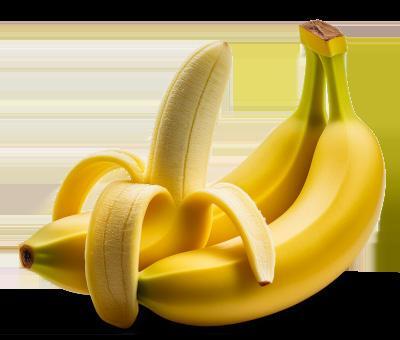
An investigation by Concrete has revealed that the UEA Shop has continued to stock unethically sourced produce – months af ter controversy surrounding Nestle prod ucts.
Bananas from the brand Chiquita, one of the world’s largest banana producers, were found to be in stock on shelves for 35 pence per item.
But the company, which owns farms across Central and South America, were found li able for financing a Colombian paramili tary group in 2024.
As a result, Chiquita was ordered to pay over 38 million dollars in damages to the families of victims killed by the para militaries between 1997 and 2004. Further human rights violations were revealed in an investigation by the Public Eye, which highlighted below minimum wages and staff exposure to agrochem icals.
In a statement, the Univer sity of East Anglia said that it was “committed to responsible and ethical sourcing across our operations, and we take concerns of this nature seri ously.”
“We are currently reviewing the issues
raised and will engage with our suppliers to better understand the situation
forced labour and water privatisation. Students boycotted items from the manufacturer, resulting in the removal of Nestle branded stock.
Pay the placement: “This isn’t education, it’s exploitation” To AI, or not to AI?
Lilia Colledge Deputy Books Editor
Nursing students keep the NHS running - but they’re doing it for free, according to a new campaign called Pay the Placement.
Now, the Vice President of Education at Essex Students’ Union is demanding for wider call nationally to end unpaid placements for healthcare students.
Pay the Placement is a national campaign, set up by Essex’s Students’ Union, and is calling on the wider higher education sector to join the 20 bodies already backing the movement.
“Students are being forced to choose between showing up for placement or keeping a roof over their heads. That isn’t education. It’s exploitation,” said the campaign.
Healthcare students are required to complete 2,300 unpaid hours of real patient care, 700 hours a year, putting significant financial strain
on students, with 70 per cent of nursing students have considered quitting their course because of it, compared to the overall undergraduate percentage of 26 to 41 per cent..
“Everyone will require the care of a nurse... our students are stepping into one of the most challenging and valuable industries, and the very least they deserve is to be paid for their dedication and hard work in supporting real patients,” said Chloe Jeffery, the vice president of education for Essex University.
Travel also causes further pressure, with it costing, on average, £30 to £70 weekly.
Placements also cause healthcare students to sacrifice student life.
At Essex, healthcare students make up 17 per cent of the student body, but only 6 per cent attend events and 3 per cent are sports members.
“We rarely see them at events or sports... but we do see them, in large numbers, at our Advice Centre,” said Michelle Malone, Education Manger at Essex.
This is where Pay the Placement
comes in.
Placements are dubbed a “learning opportunity,” but it’s still “free labour,” so they’re advocating for paid placements for all nursing and healthcare students, while backing the Royal College of Nursing’s demand for a full review of healthcare students’ funding.
On a local level, they’re providing transparency on healthcare courses’ costs, including DBS checks, uniforms, travel and parking, while also launching a second-hand uniform sale, alongside creating a healthcare student pre-placement guide and pushing for lower travel costs, increased Hardship Loans and further discounts.
The campaign aims for healthcare students to “have the full university experience, to be rested, financially secure, and able to enjoy their time” at university.
Malone makes one final plea: "Please support this campaign so we can make a real difference to their lives and ensure the NHS has future health professionals who are valued, supported and able to thrive.”
Students form new magazine
Lilia Colledge Deputy Books Editor
Three MA UEA students have founded a new magazine called “the wrangle”.
It aims to cultivate a writing community for MA Creative Writing students and aspires to give the MA cohort a platform to share work globally and continue momentum after their courses’ finish.
Richard Ettinger, one of the founding members, said finishing a Creative Writing MA can open doors, but often leaves people with one question: “where do we want to go next?”
The wrangle, which uses lower case as a style choice, answers this.
“Writers often keep their projects to themselves,” Ettinger states, “but creativity can be honed and fostered within a community of like-minded people,” bringing people together.
The wrangle overcomes writing’s solitary nature, to create an international writing community.
“It comes down to ambition, time, and the belief we are willing to invest in a project that begins from zero.”
Ollie Wheaton, another founding member, highlights the importance of camaraderie.
“Just as it feels like the community is properly coming together, we’re leaving,” with many MA courses only lasting a year.
“With this magazine, we want to keep the community spirit going.”
But The wrangle doesn’t aim to stop after this year.
“Our hope too is that we can keep getting new MA students to contribute, to keep the cohort growing, and keep us tied to UEA, the place we started.” Ettinger implores anyone in this MA Creative Writing cohort to take part, “to bring something to life that we can call our own, and that will keep us connected in the future, no matter what comes next.”
Their first call for submissions with be released soon, themed: beginnings. The wrangle is currently looking to hire content editors, a graphic designer and editor.
For more information on how to get involved, see their Instagram: @the.wrangle. To get in touch, email: writeangles@ proton.me. And to see their work, see their Substack: @thewrangle
Daisy Hawker News Editor
A student led anti-AI initiative has sparked debate of the use of artifical intelligence across the school of Literature, Drama, and Creative Writing (LDC) at the University of East Anglia. The petition, known as the Anti-AI Initiative, went live in late April. It was founded by Creative Writing and English Literature students Sophia Needham, Molly Postle, Rowan Fenwick-Scarr, and Samuel Haines.
“Our petition is to remove the AI element on our course, because, we, as creative writing students, have been asked to put our own work into Microsoft Co-Pilot and ‘collaborate’ with it to generate new work, which most of us are really, really, not happy with,” said Sophia Needham, one of the founders of the Anti-AI Initiative.
She cited having her own work scaped by AI as a reason for starting the petition.
“I personally have had 245,000 words of mine stolen, alongside millions of other writers, and that dataset was downloaded 71 times."
“So, I know my work is already very likely to be flagged as AI, because it’s being used out there to train models.”
Founder and campaigner Rowan Fenwick-Scarr added: “We look at a load of these AI-generated pieces; they’re awful. They’re not good writing.
“It just proves to you that a human writer is important, because at the end of the day, AI can’t grasp the subjects that we can. It can’t put it into words, because it doesn’t understand.”
The petition has sparked wider debate of AI’s place at the University of East Anglia. In the school of LDC particularly, feelings towards AI at UEA remain largely negative.
According to Concrete’s research, when surveyed, 61 per cent of students in the school of LDC have said they never use AI for anything. Furthermore, 39 per cent believe AI should have absolutely no place at the University of East Anglia.
However, not all LDC students believe AI should be kept out of UEA.
“With the amount I have to do sometimes, it feels like it's the only way I can manage my workload,” confessed one anonymous student in Concrete’s survey.
“I work and pay for absolutely everything, and that's not easy.”
Another anonymous student said that AI can be used “as a tool to inspire the creative juices flowing.”
“It depends on how people use AI. If it’s just as a supportive tool it’s fine, if people use it to supplement their own work, then it is a problem.”
You can read more about the use of AI at university on the Concrete website at www.concreteuea.co.uk
COMMENT
Ciao, UEA, for now
Evie Smith
Comment Editor
As the academic year comes to an end, many of my friends will be entering their final years here. My decision to do a year abroad next year was not done on a whim - UEA’s broad choice of destinations is one of the main reasons I chose it as a first choice.
The late chef Anthony Bourdain’s advice to “Move. As far as you can, as much as you can” resonates with me as travelling to places such as Japan and Vietnam taught me things I would have never gained from staying in my hometown. From a young age my family have highly recommended travelling, especially while I am young and the more, I have travelled, I understand why. If you asked me how many countries I have been to it would take me a minute to work it out, which I am grateful for.
My last two years at UEA have been eventful to say the least. When I look back at what I was like last year I've changed a lot, but at the same time the bedrock of my personality persists. Being a painfully selfaware person means I relate to the character Mark Corrigan from Peep Show, however the older I get the more I embrace the phrase “ignorance is bliss” when it comes to this characteristic- especially when I realise the sheer amount of people with not enough self-awareness. As a history student getting accepted into the University of Bologna for next year is very fitting. The university was founded in 1088, making it the oldest university in the western world. I went to Bologna last summer for a couple of days and I can say for certain the Italian way of life in this city attracted me to put it as my first choice. The social interlude called aperitivo in the early evening where people sit and have a drink with friends or family before dinner can explain why Italy is seen as
a sociable culture. Bologna is situated in Northern Italy making travelling to places such as Venice simple. Since the end of sixth form, I’ve wanted to go interrailing around Europe but for the last couple of years the plans have fallen through. This opportunity to spend a year in Italy has satisfied the urge to travel around Europe.
Has the application process been simple? No. Can I speak Italian? No. I still have a couple of months to learn the language. Of course, it’s daunting to move to a country where I know no one, however I was in a similar position when I came to UEA where it seemed like 90% of the people I met was from either Essex or Norfolk. There were many times when people said my hometown Reading was “basically London”, it’s not. Starting university with no connections is a good way to get used to small talk. There is no expectation to become best friends with every person you meet during fresher's week, in fact I would say you only need one or two close friends to enrich your time at university.
It is too early to personally recommend study abroad. I intend to make the most of the opportunities it will bring me both academically and professionally. This year's Concrete team have worked incredibly hard to carry on student media, especially when print readership is steadily decreasing. I am grateful to everyone I have met and worked with this year and will rejoin this society when I come back.
Why fear shouldn't be the
driving force for voting
this is by using our voices to ensure that we get heard in the voting process.
ceives.
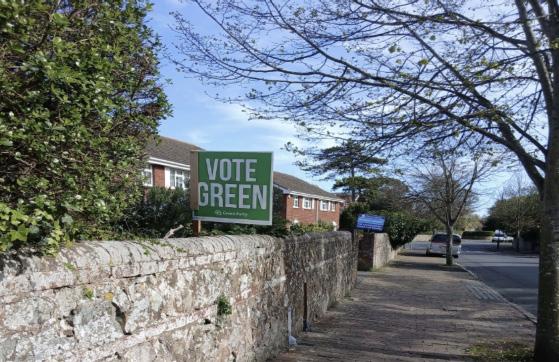
With current conversations and increased political awareness, perhaps thanks to social media, I believe more people are abstaining from voting. But despite the overwhelming world of information (and misinformation), this is not beneficial in any way. The bottom line is this: if you can vote, you should do so. In 2024, around 60 per cent of people registered to vote participated in the general election. That is the second lowest it has been since universal suffrage in 1928, with the previous being 2001.
Do you want to know what’s worse?
54.5 per cent of people 18-24 vote, while 78.5 per cent of people over 65 vote (according to the UK Parliament). Young people are having their voices left unheard because they do not vote, this number remains practically unchanged until 35. Almost half of people under the age of 35 are refraining from voting. And yet, many young people are upset with government policies favouring older people.
But what else can be done, when the demographic is voting in such larger numbers in comparison to their younger counterparts? The only way to prevent
I know it’s difficult. You may not fully agree with any party- however choosing one to vote for is still important. In local council elections, read what the exact member wants to do, and decide whether you agree with their policies and ideas. In general elections, consider the values of the party and which are closest to what you believe.
I’m not going to ignore that in the current climate, a large part of why we vote is changing. It is often no longer voting in favour of someone you support. Instead, much of our voting is dictated by what we fear. Are we afraid of a certain party gaining control?
Are we afraid of a certain thing that is occurring (in our economy or socially)? Are we afraid of something that may not even be happening, but is being weaponised to make people scared?
It is okay to be afraid of what is going on in the world, but we need to remember to not let our fear completely dominate us when voting. We need to fact check what we are scared of.
As I mentioned earlier, social media is riddled with misinformation, especially with politics. Everyone is biased, and social media often regurgitates things that are not true, and the more extreme, the more virality it re-
I know you’re probably thinking that you wouldn’t refrain from voting, or make a decision on who to vote for, based on social media - but these things build up over time. I am not claiming that you see one TikTok and decide you’re never going to vote again, but repeated exposure to these ideas can start to impact you. Especially considering the amount of young people on social media that perhaps believe there’s no point in voting because everyone sucks.
Separate your fear from voting. Do not be afraid of it. Yes, you don’t know everything about who you’re voting more, and yes, you may decide you dislike them if they get into power, but you have this opportunity to use your voice. So, research candidates and party policies, understand the different forms of elections and ensure that you’re registered to vote. Because in the end, the most important thing is that your voice was heard, and you let your opinion be known, regardless of what happens in the world. Image credit: Parker Job
Parker Job
Divine right, or not quite?
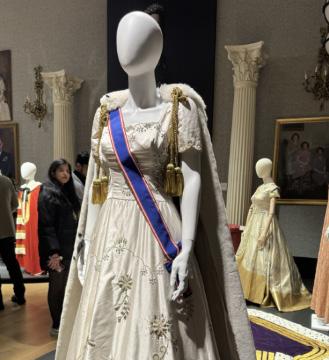
We have come a long way from the “divine right of kings”, but even now when the theme of hereditary monarchy comes up it can leave a sour taste in people’s mouths; especially those of my generation who face skyrocketing house prices, scarcity of jobs, and the extraordinary cost of living. So many ask why their money should be taxed to fund these people, when instead it could be put into public services. The UK taxpayer contributed £72 million alone to fund the coronation of King Charles, that’s along with the £86 million from the state-funded Sovereign Grant. However, “Republic”, an anti-monarchy group, puts the cost for the UK taxpayer at
£510 million, adding the hidden security costs and “lost income” to this figure. This “lost income” includes £99 million from the property businesses of the duchies of Lancaster and Cornwall, which reportedly should go back to the public purse. The most trending topic over the last few years has been the former prince Andrew whose relationship with Jeffrey Epstein has brought scrutiny on the Royals; the British taxpayer hasn’t forgotten that they helped fund Andrew’s lifestyle. Access to Epstein and other wealthy people was made possible through exploiting his position as an unpaid trade envoy for the British government, hence why he earned much more than the usual public-funded royal stipend of £249,000. However, many have looked more favourably on the Royal Family since seeing the consequences Andrew has faced, most notably, his removal of titles and patronages, his eviction from the royal lodge, and his arrest – it's a firm reminder that being a Royal does not stop you from facing consequences. It’d be impossible to talk about the monarchy without mentioning tourism as it’s reported that
60 per cent of tourists visit sites associated with the Royals; but many claim that tourism could be boosted if further royal residences were used for commercial purposes. I spoke with several students who believe that King Charles isn’t the figurehead that Queen Elizabeth was, with some suggesting the monarchy practically died with her. But for 51 per cent of British people the Monarchy is still deeply important to them; while this doesn’t seem like many, it’s reportedly only 15 per cent of the country that believes in the abolition of the monarchy with the rest being ambivalent or moderately in favour.
After King Charles’s speech to Congress, I’ve noticed his popularity increasing, perhaps his witty speech resonated with us, and in these “times of great uncertainty” maybe a measured, nuanced, and intelligent voice was direly needed. I’d be interested to see whether people think the monarchy can be redeemed, or whether the misdeeds are simply far too unforgiveable.
Graduating into uncertainty
Ruby-May Elgar Social Media Editor
We’ve all been there at this point. Staring at a job posting from less than an hour ago, with hun dreds of applications somehow already submitted. Frustrating, yes. Disheartening, definitely. I’ve reached the point of hav ing a spreadsheet to keep I added a ‘No response in more than 4 weeks’ option, hoping it wouldn’t be used. It's of my applications; the rest is filled with rejections. One mas sive spreadsheet (that hurts too much to count the total handful of interviews, and zero joy. And most of these are 0 hours, or part time. I’m hoping to do a PhD, something that has also been a humbling experi ence. Not because of the academ ic side, I’ve been so lucky to have met many a kind academics the past few months. But the

Image credit: Evie Smith
Thomas Byrne
OF THE WONDERFUL
My student visa is up. Now what? HOME
Micah Petyt Venue Editor
When I moved to the UK for university, I didn’t give much thought to if—or how—I would stay in the country after my degree. At 17, fourth year seemed light years away, and, since I was planning on doing a master’s degree anyway, leaving the UK did not cross my mind.
In 2022, when I started university—just two years after the end of the post-Brexit EU Settlement Scheme—the minimum salary threshold for a Skilled Worker visa was £26,200 (or the standard ‘going rate’ for your field if this number is higher than the threshold), or 70 per cent of this salary for
recent graduates. This meant that, after attending a UK institution, remaining in the country was an accepted reality for international graduates. This was aided by the two-year Graduate visa, granting you the right to live in the UK with no work restrictions immediately following your degree, allowing you the time to reach this minimum salary. In 2024, this was raised to £38,000, and as of January 2026, it now stands at £41,700, a number that is out of reach not only for recent graduates, but for most working professionals, in a country where the median salary is £39,000. I decided, during my third year, that I would take a year out before doing my master’s degree. Returning from my year abroad,
the prospect of a final year at UEA was exhausting enough, I couldn’t imagine adding a whole other year on top of it. Without bothering to fact check, I figured I would go the Graduate route, work for a year, get my master’s, get another Graduate visa for two years, and that by then, I would surely qualify for Indefinite Leave to Remain, after spending five continuous years living in the UK. I didn’t yet know that you can only qualify for the Graduate route once, nor that the time spent on Student and Graduate visas does not count towards ILR. My next plan was that I would return home to Paris for a year before my master’s, get my two-year visa after that, and figure out the rest later. Maybe,
All smiles as UEA dental training given go ahead
Samuel Haines HOTW Deputy Editor
The University of East Anglia has been awarded 25 funded places per year to establish the first dental school in Eastern England and welcome the first students provisionally in September 2027. This is part of the Government’s intention to tackle ‘dental desserts’ and marks a significant step forward for the university, having been awarded half of training places available nationally.
Prof Phil Baker, Pro-Vice-Chancellor for the Faculty of Medicine, said: “UEA’s success in provisionally securing undergrad-
uate training places the strength of our existing medical and healthcare pro vision”.
UEA Vice-Chancellor Prof David Maguire has described Norfolk as “significantly un der-served by dentists” with the East of England having some of the low est dental access rates in the coun try.
The Vice Chancellor hopes for this to increase student reten tion within Norfolk beyond graduation: "UEA’s civic mis sion is central to our am
by then, I’d have grown sick of England anyway. That plan fell through last month, when another Concrete editor informed me in passing that visa rules had changed: starting in January 2027, the Graduate route will last a year and a half instead of two. Now, a new problem has emerged. Either I throw caution to the wind (and cover letters to employers) to get a two year visa now, and risk wasting my time on part-time jobs and pub work while knowing that I’ll have to leave the country where I’ve spent all my adult life the moment my master’s ends, or I go home anyway, knowing that I’ll have to leave the UK permanently barely a year after my MA.
Although these changes affect
bition for new dentistry provision. Training dentists locally is proven to help recruit and retain them in the region - and this region needs them urgently. We are grateful for the strong, cross-party support of our local MPs, whose sustained advoca-
all graduates, they disproportionately affect those in the arts and humanities, where official ‘going rates’ rarely surpass £35,000, even less for entry-level positions. Most of us will never get to see £41,000 a year, especially not in the eighteen months following graduation. The job market is in enough of a crisis already, and the changes in the last few years make it impossible to even dream of staying in the UK after university.
As I apply to job after job, practically begging employers to let me answer emails for minimum wage, I can’t help but ask myself what my end goal is. What’s the point of career progression, if any progression is halted the second the Home Office decides that my time is up?
based allocation, we can open applications for students to begin training with us in September 2027”.
UEA was previously awarded accreditation from the General Dental Council to provide undergraduate dental training, with the Edith Cavell Build-
ty Hospital being expanded to create
MP for Norwich South Clive Lewis previously wrote to the Education
dents to release undergraduate dentistry training places. Lewis stated: “Norwich has lived with some of the lowest levels of NHS dental provision for many years. The East of England is still the only
MP for Waveney Valley Adrian Ramsey also spoke in the
ary about the need to build land through funded

HOME OF THE WONDERFUL
The uncertain future of the Ziggurats
Ruby-May Elger
Social Media Editor
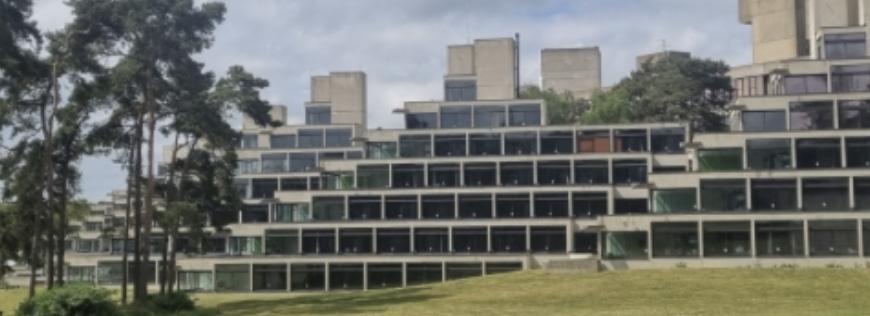
The Ziggurats (or Ziggs) have long been one of the defining features of UEA’s campus. Not just the site of a few broken bones falling off one of the ledges, (allegations I can neither confirm or deny) they are a key part of UEA and Norfolk’s identity. From the website to the bucket hats, they are everywhere. When SPANC26 came to Norwich, its logo featured a cartoon version of the Ziggs, as do countless Norwich travel guides. But, the days of living there, or even seeing inside them, now seem well and truly over.
Designed by Lasdun, constructed during the 1960s and completed in 1967, the unique student residences accommodated around 600 students each year. It became one of the more affordable and most social housing options.
“There was a sense of community there I will always long for,” said Hannah Foley, who lived there in the 2022/23 academic year.
“People would roll out of bed, grab speakers and snacks, and cluster out the front on the grass. Later in the day you could tap on the window of your friend’s ground floor flat, pass
ingredients out of the window, and cook dinner right by the water on a barbecue.”
Daisy Hawker, who also lived there that year, agreed “The Ziggs were definitely the party block, but I think in your first year of uni that's all you need to be doing! The way they were structured meant they were so much more open, you could just call out to a friend from the block over and come over or invite your friends to the green.”
In September 2023, the Ziggs were found to be one of four accommodation blocks at UEA to contain RAAC concrete, considered a safety risk. And, since then, they have been (mostly) empty of students. But it is not entirely clear why. The remaining three accommodation areas, Nelson Court, Constable Terrace and the Broadview hotel, have all been reopened. Yet the Ziggs remain shut.
Several explanations have emerged as to why. The BBC reported that the University has already spent £2 million on “remedial work” to remove the unsafe concrete and that the university selected multiple construction consultant services for £12.7 million pounds. In 2025, a competition was launched to select a team to “deliver a viable future use for the two Brutalist-structures.”
However, because of the Ziggs’
Grade II-listed status, significant redevelopment appeared unlikely.
This year marks the graduation of many of the final students who previously lived in the Ziggs.
"In some ways, it's nice to know that room in Norfolk A block will always be mine,” Daisy said.
“But in others, it's kind of heartbreaking that UEA students don't get to live there anymore. My year in the Ziggs produced those kinds of stories you tell your grandkids about.
“It's not that you can't have fun in other accommodations, but the Ziggs are the face of UEA, and that came across in the life and heart of the place. Now, every time I walk by, I see a ghost town where we once lived, the kitchens we had potlucks and movie nights, parties and DJ sets, the bedrooms we all squeezed into for after's, the rooftops we climbed, all empty.”
The future of the Ziggs still looks uncertain. Despite promises of improvements being made, and short-term safety, at least from the outside, there's still no sign of it reopening in the next academic year, let alone in the near future.
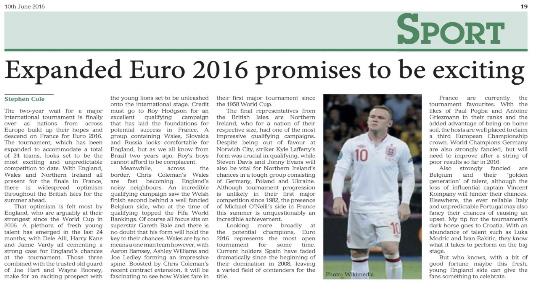
Ten years later: England are dreaming again
When looking for an archive article for this month’s issue, I found myself going back and forth between different pieces. However, as a big football fan, and with the World Cup just around the corner, I was naturally drawn to Concrete’s past football coverage. In the June 2016 issue of Concrete, sandwiched between reports on campus life and local news, the Sport section looked outward, toward France, with a familiar sense of anticipation. “Expanded Euro 2016 promises to be exciting,” the headline read, capturing the excitement of England fans ahead of the tournament.
Nearly a decade on, looking ahead to the 2026 World Cup this summer, that same anticipation lingers. While it is a different competition, in a completely different continent, there remains a growing sense of hope that this could finally be England’s year. Looking back at Concrete’s coverage of Euro 2016 reveals how student journalism was able to reflect the wider national feeling at the time. Stephen Cole, who wrote the article, balanced his analysis with cautious optimism, aware of England’s history of falling short at major tournaments, but remaining optimistic. That optimism, of course, was tested. Euro 2016 ended in one of England’s most shocking defeats, with a 2-1 loss to Iceland, a nation of around 330,000 people at the time. For comparison,
Norfolk alone is home to over 900,000 residents. However, what stands from the article is the tone, which was hopeful and quietly excited for the summer of football ahead.
In revisiting Euro 2016 through Concrete’s archives, we can see more than just coverage of another international tournament. The article captures a snapshot of student life, while also reflecting a recurring national mood that resurfaces each time England head to a major tournament – a mixture of hope, expectation and the fear of disappointment,
The parallels looking ahead to this summer’s world cup are hard to ignore. Once again, England are entering a major tournament with a talented squad and rising expectations. With Harry Kane still leading the line, alongside stars such as Jude Bellingham and Bukayo Saka, there is renewed belief that this generation can finally deliver success on the international stage. Nearly ten years on from Stephen Cole’s article, the feeling surrounding the national team is strangely familiar – cautious optimism mixed with the lingering fear that football history may repeat itself one again.
Concrete's archives are stored digitally on Issuu and in the office on campus. If you'd like to request to visit the archive in person, email us at concrete.editor@uea.ac.uk
Image credit: Ruby-May Elger
Angus Coulson HOTW Editor
Did we ever say goodbye to the ice age?
Most people will look back on the ‘iceage’ and assume this is one of the earth’s
on one second, the ‘last’ ice-age? Yes, this was not the only ‘ice-age’ nor is it necessarily the last the earth will know. What we referred to as the ‘ice-age’ is actually a ‘glacial period’ within the glacial and interglacial cycle. Currently, we are in an interglacial period, but as a cycle would suggest, this is not a permanent state and we will in fact enter an
Lorraine Lisiecki of the University of California, “human emissions of carbon dioxide into the atmosphere have already diverted the climate from its natural course, with longer-term impacts into the future,” indicating that we may be waiting longer than expected to reunite with the ice-age. So did we really ever say ‘goodbye’

Division, disempowerment, and democracy
Petra Todd Environmental Correspondent
We all know someone who shrugs off the news, saying that politics isn’t really their ‘thing’, or that they’re just ‘not interested’. This narrative has become so normalised that it is often not questioned, and that apathy is playing straight into the hands of the far-right. Let’s cast our minds back to 2019, when the Greta Thunberg-inspired school strikes for climate essentially woke the world up to the climate crisis and saw a mass increase in political mobilisation and protest. As a result, the climate conversation became much more mainstream, with many governments declaring a climate emergency, and climate crisis news coverage increasing threefold in UK editorials from 2018-2019. Since then, however, political engagement has fallen. The 2024 election voter turnout was the lowest since 2001, helped by the rise of right-wing populist narratives, which have caused political polarisation against the ‘elite’, as
well as political confusion and disempowerment. These discourses likely contributed to the 2024 election success of Reform UK.
Individualism essentially creates a perfect environment for apoliticism to thrive, and notions of prioritising the ‘self’ have been pushed since the 1980s, with Margaret Thatcher claiming there is ‘no such thing as society’, and Ronald Reagan famously stating ‘The nine most terrifying words in the English language are: I’m from the Government, and I’m here to help’. These statements pushed themes of the individual ‘freedom’, competition, as well as a lack of social responsibility through opposition to policies such as the welfare state. These narratives spiralled into hyper-individualism and extreme consumerism, which defined the 2000s, especially affecting the millennial generation and causing increased isolation due to the loss of communities. This is summed up well by Grace Blakeley, who states ‘we’re all encouraged to believe that life is like a market, and we have to compete to survive.’
The political polarisation caused by the right benefits only individuals like billionaires and the institutions they control. For example, most will agree that the NHS waiting times are a serious problem, but rather than pointing to years of underfunding from the Conservative government, Reform will claim immigration is putting too much strain on the service. They create societal divisions to disguise the greedy individuals who are actually to blame.
Years of emphasis on egoism and self-interest have fostered political disempowerment and isolation, creating a cycle of helplessness that ultimately only benefits a few. Elections are coming up on May 7th, and Reform are predicted a big win, which will only worsen social injustice and the climate crisis. It is therefore more important than ever that we push against these narratives and come together to vote for a fairer society.

Image credit: Pexels
BOOKS - CREATIVE - FASHION - FILM + TV - MUSIC - EVENTS

Debating posthumous literature - Finding your perfect grad outfit - TV goodbyesDMTS' Legally Blonde - Feminists in fashion - Movie reviews - And more!
Letters from the editors
Dear reader,
Well, this is it. Twelve months, six print issues, too many articles written, and my time as your Venue editor has come to an end. If you had told me, back when I was hired, that the UEA newspaper would become my entire life, I would never have believed it. My plans to join as many societies as possible in my final year flew out the window, and I could not be happier. I came into this role hoping to gain some newspaper experience, and I leave with the coolest friends I could have asked for. I am so lucky to have met such interesting, genuine, fun people through Concrete, and I am so grateful to all the editors that have my job a whole lot easier. This last issue has been a bittersweet one to work on. On one hand, there was the pressure to make this the culmination of all the work myself and the rest of the Venue team have put into this paper throughout the year; on the other, my dissertation and postgrad job search have kept me so busy that I haven’t been able to dedicate as much time to it as I would have liked. Still, I can’t think of a better way to say goodbye to Concrete—and to UEA— than with SPAR Prosecco, the Ziggs, and hours spent staring at Adobe InDesign.
I want to say that you can tear Venue out of my cold, dead hands, but I am simply too excited about next year’s editorial team to overstay my welcome. This may be a goodbye from me, but you are in great hands.
This is Micah, signing off.

What a year it’s been!

Books....................................................................p12
The myth of endings in apocalyptic fiction
The question of posthumous publishing
New and upcoming fiction
Reviews: Lightlark by Alex Aster, Wandering Souls by Celine Pin, Kitchen by Banana Yoshimoto
Fashion................................................................p14
The MET Gala - Who cares?
How to let clothes go when they're too sentimental
Venue En Vogue: What’s in for the summer?
Creative................................................................p16
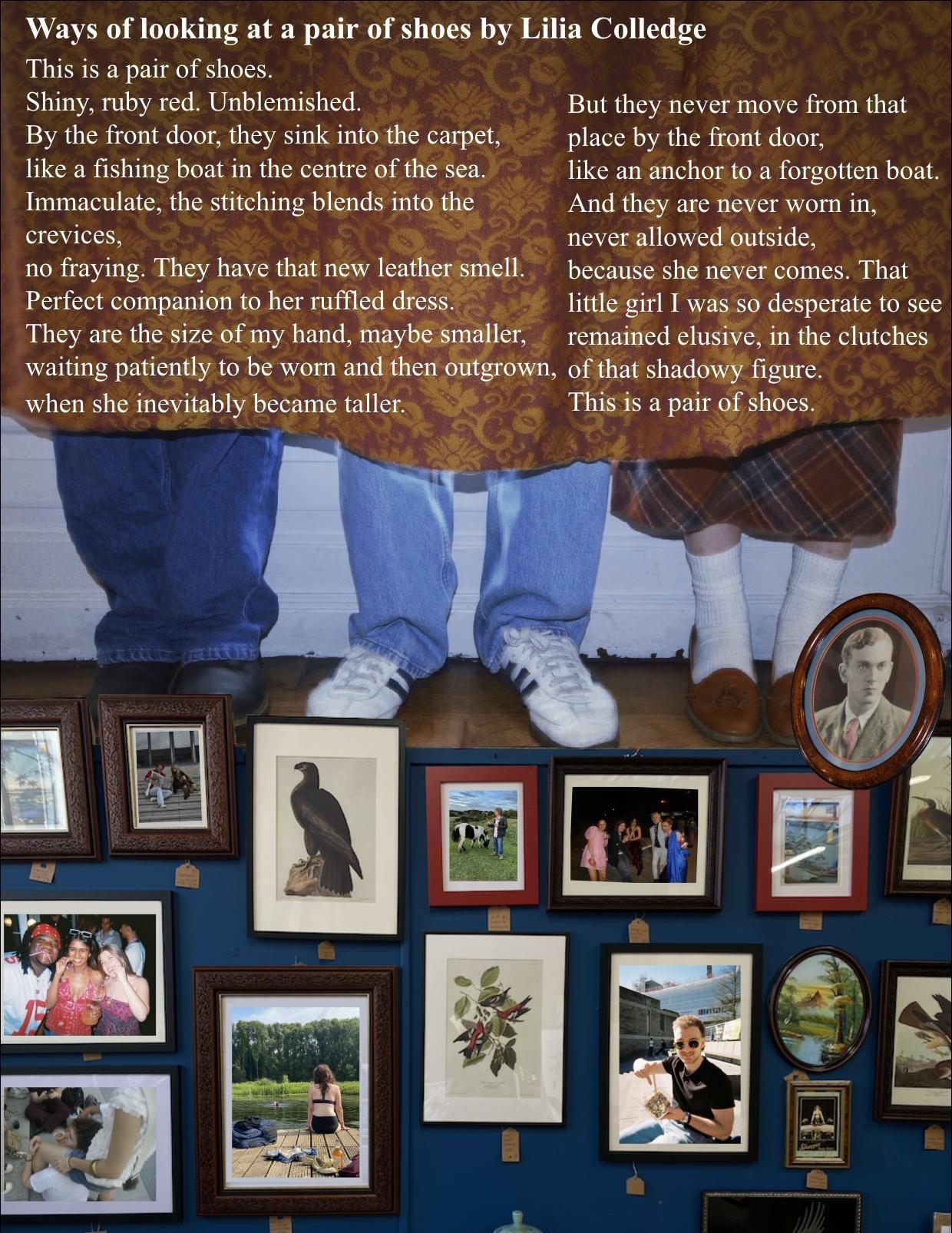
Ways of looking at a pair of shoes by Lilia Colledge
Portrait of a boy by David Quinn
Photo spread by Jess Knight
On watching the new Harry Potter
The politics of cinematic memory
Reviews: The Drana, One Piece, The Devil Wears Prada 2
Music...................................................................p20
Artist swan songs
Breaking up the band
Reviews: The Great Divide by Noah Kahan, 'Drop Dead' by Olivia Rodrigo, 'Living Room' by Not for Radio
Events...................................................................p22
It’s the time of year where everyone’s feeling a peculiar mix of assessment stress, excitement for the holidays, and the nostalgia that comes only when things are ending. A pretty big thing is about to end for me – Concrete!
I almost can’t believe it. It’s been such a big part of my life ever since I joined almost two years ago. I’ve met so many amazing and talented people and done so many exciting things just because I thought the student newspaper would be a fun thing to give a go. Being not just the end of my time at Concrete but the end of my life at university has been sending me on wistful journeys down memory lane nearly every day. When I was in first year, I don’t think I even knew what Concrete was, and it wasn’t until third year that I joined the team as Venue’s fashion editor. The first article I ever wrote was ‘Norwich Pride and Self Expression Through Dress’, which is perhaps the most boring title ever, but I still recall the feeling of pride when a creative writing student I barely knew messaged me and told me that it was a really well written piece. I didn’t expect to love Concrete as much as I did. Those rare few who remember my September editorial will know that I applied to be Venue editor with a bit of a why-not mindset, not expecting anything, and it magically paying off. I’m far from the most remarkable person on the Concrete team, but when I look back on everything I have achieved, I can’t help but feel proud of myself.


I’m both scared and excited for the future, and I hope you are too, lovely reader.
DMTS' Legally Blonde
What's on in Norwich?
Cover by Micah Petyt

"Do Different": How one man came to the UEA almost 50 years ago - and never left
Robyn Srikandan Venue Editor
When the academic year comes to a close, everyone starts to feel a bit nostalgic. Even within just a year, countless things can change – so trying to imagine all the things that would have changed in fifty years feels staggering. One man, however, has been a part of UEA for almost that entire duration: Gavin Hudson. He came to UEA in 1979 to study Global Development, however at the time it was more typically referred to by its three-letter school acronym, DEV.
‘You could either divert into economics, politics or soil science, you had to do of the three courses. And I was in the politics and the social side of it.’
‘I wasn’t a good student. I was very easily distracted. I apologise now to my lecturers. I was difficult. I asked awkward questions, didn’t do lots of the reading.’ At the time UEA had only been established 16 years prior, and thus wanted to be more forward thinking than other universities.
‘One of UEA’s mottos at the time was Do Different. In your studies, everything was broken down into modules and you could swap between schools, so quite a few of my peers went and did two semesters with ENV.’
‘It was unusual that you could pick and choose through your three years.’
The experience of starting university also used to be very different to how it is now.
‘Open days didn’t exist. That’s not to say you couldn’t go and visit a university, but the concept of open day that you see now, six days a year given over to just inviting students to come and visit. Show them around campus, show them the rooms, show them the course – that wasn’t a thing.’
Life day-to-day as a student was also very different in the early eighties than it is now. Nowadays, the library is a database of online resources, with physical books being searchable on computers. Before the internet, however, the system was entirely analogue.
‘You found your books in the library through an index card system. On floor
one of the library, there were rows and rows of little wooden boxes that were alphabetised, and you would search through the box, find the card for the book that you wanted.’
The library shelf numbering system is the same now as it was then, and this was due to the index cards. The cards corresponded to the shelves and the subjects, so using the card you would find the book you needed.
‘You would take the card and the book to the front desk and they would sign and stamp them out to you and they would then keep the card. So when the class tutor says, everybody get this book out, if you were slow to the library there was no card in the index because the four copies had gone out.’
The campus also used to have a much wider variety of student union run organisations. ‘Lots of unis had cafes, small supermarkets, bookshops, sports shops, all the things a student needs. All the things that a student needs.’
‘[The student union] owned and operat ed all of those. So we used to run the shop. We used to have a shorts shop. We had an insurance. We had a travel shop. There’s no internet tickets to get a train. You needed a piece of paper that you would buy here. We took over the bar in ’83. The LCR, the social, party side of it had always been with the union. The university never had any interest in that.’
One of the biggest differences student life then and now was life after dark. Rooms – most of which are no longer used for social events except for the LCR – were booked out for parties.
‘They just locked the doors at quarter past 11 and that was it.’
‘It was different. It all happened earlier, the very late night stuff just didn’t exist.’
Going to the pub was also very different before group chats.
‘You would go with your gang and if you missed the bus and got the next bus into town. You probably
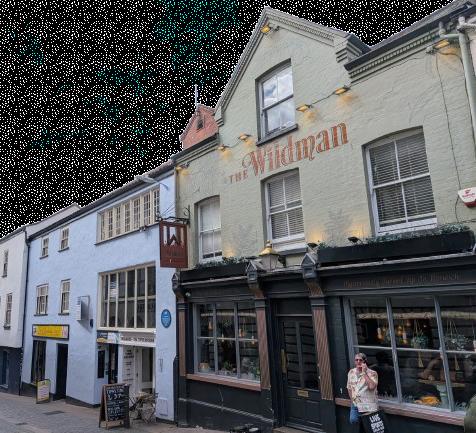
go to the Wildman pub because that’s the first pub. And you would go in and say ‘oh yeah, I’m looking for Johnny and the guys, have you seen him?’ ‘Oh yeah, they were here. They’ve gone.’
‘You would just try and follow a route that they might have said.’
‘But every pub in the city closed at 11 o’clock, that was the law. The pub had to be emptied and locked by 11.’
‘If you wanted to stay drinking, you had to go to a nightclub, but you weren’t allowed in the nightclub with trainers, with jeans, with T-shirts. So if you just come drinking with the gang and you’re starting to think, oh yeah, should we have some more drinks? What are we gonna do? Let’s go to a club.’
Norwich was a vastly different place in the eighties, however there are some things that never change. There are many ways people have tried to segment students into different groups, however Gavin described how it is people’s outlooks to
that defines you.’
Students who play lots of sports are one of these tribes. ‘You’re at university because you just do sport 24/7, but you also like to party, which is why Sports Night is the success it is.’
‘You’re in a big gang and a community that you have and they support each other and they’re really strong. When I watch those cheer dance people support each other when somebody’s having a bad day or a crisis moment, they’ve got 15 friends all there taking care of them.’
‘I was part of the political group. I was outspoken. I would protest.’
‘Then there’s some academic types. Heads in books. They don’t socialise in anywhere near the same way because they are so focused on that. That’s what drives them.’
‘That’s one commonality. Society is full of different types of people, and a university is a place where people should explore that.’
Lightlark by Alex Aster Mary Bennet finally gets her flowers
review by Ollie Wheaton
Romantasy is all the rage right now. Every few months a new series comes along trying to be as successful as A Court of Thrones and Roses (ACOTAR) or Fourth Wing In 2022, Alex Aster’s Lightlark attempted to do just that. But when I picked it up, I found Lightlark was just a poor copy of ACOTAR
Both books have the same confused marketing: it’s both adult romantasy and young adult. All tropes, no unique perspective or gripping plot. It’s brimming with shallow worldbuilding, cardboard characters, lacking anything romantic or remotely sexy.
One hundred pages was enough for me, but I skimmed through the rest and was quite accurate in guessing where it went. Four more have been published with another coming this year, so it has found a reader base. Perhaps only reading tropes is comforting to some, but these readers deserve better ones.
Wandering Souls by Cecile Pin
review by Kathryn Bailey
Cecile Pin depicts the treacherous journey of Anh and her younger brothers as they flee Vietnam and seek asylum abroad, with the hope of a better life as their anchor. During their unsteady journey, the siblings lose half their family to the dangerous boat crossing, leaving Anh as her brothers’ parental figure, despite being only 13. The family experience multiple camps across the globe, unsure when they will finally experience the better life they were promised.
The narrative’s three perspectives represent the past, present and future of Pin’s story, using events from her own family history in Anh’s journey. The novel is not only a phenomenal debut, but also an educational tribute to the history of the Vietnamese Boat People. It brings out the light and darkness to the hardships that asylum seekers experience, grieving not only family, but also country, culture and community.
Kitchen by Banana Yoshimoto
review
by Eve Roberts
This short read is a bittersweet meditation on how grief can transform us. After the passing of her grandmother, Mikage is left with the broken remains of her childhood home until her similarly grieving friend, Yuchi, offers her residence. Inhabiting the kitchen to avoid confronting reality, Mikage surrounds herself with domestic comfort, labouring manically until the line between coping and obsession blurs completely. Yuichi is both her escape and enabler, encouraging her to look after him and personally shoulder the roles of mother, wife, and daughter. Yoshimoto’s exploration leaves us asking when processing grief becomes an escape, and when that means acceptance is near impossible. Ultimately, Mikage’s story reminds us that nostalgia cannot shelter us from the reality that old recipes which once brought happiness aren’t made to last. While we may mourn the past, those tender memories will go on to create something entirely new.
Polly Dye Books Editor
The period drama on everyone’s lips right now is undeniably The Other Bennet Sister. Originally a novel by Janice Hadlow, it pays affectionate homage to Jane Austen’s Pride and Prejudice, centring the long-overlooked Mary in her own coming-of-age tale. In Austen’s original, Mary is a background character. Sandwiched between four livelier, prettier, wittier sisters, Mary is often the butt of the joke. Hadlow’s novel transforms her from a caricatured, awkward woman into a fully realised character with desires, interests and agency. Crucially, Hadlow converses with Austen and never attempts to replace her. By filling in the spaces Austen left open, Hadlow demonstrates that classic books endure because they are aplenty with fresh material for each new generation of bibliophiles. While adaptations of Austen, namely Helen Fielding’s Bridget
Jones’ Diary, have certainly made the rounds in pop culture, Hadlow proves the well is not yet dry. Her novel works precisely because readers are familiar with the witty world of Pride and Prejudice. And, perhaps unfortunately for readers, Austen’s narrative interests remain stubbornly persistent. Like her characters, we are still searching for identity, navigating social pressures, and coping with the annoyance of unexpected guests appearing on our doorsteps (heavy on that last one). Hadlow isn’t trying to be Austen, she is proving how relevant she still is. Her Mary feels refreshing and classically modern rather than a Tesco’s own-brand version of the original.
Ultimately, Mary Bennet’s iconic comeback makes one thing clear: the classics will never be sat gathering dust, no matter how often we try to shelve them.
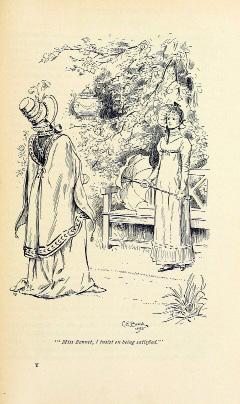
There is a case to be made that classics are dubbed ‘classics’ because they invite reinterpretations. Each retelling, spin-off and sequel becomes part of an ever-expanding literary conversation. In fact, it may be physically impossible for readers to ever say farewell to them. Like that one handsome (but intensely awkward) man who called you barely “tolerable” once, we cannot stop thinking about them. As long as writers keep finding fresh angles to explore, authors like Austen will remain immortal.
The myth of endings in apocalyptic fiction
Lilia Colledge Books Editor
Every apocalyptic novel culminates towards an end; the end of a life, the end of the world, or the end of the world as we know it... and yet, these endings never really appear to be endings at all. Looking towards H.G. Well’s The War of the Worlds, perhaps the most well-known apocalyptic novel, we see this.
Following an unnamed narrator as he journeys through calamitous Martian invasion searching for his wife, Wells ends the novel with their reunion. Despite being a happily ever after, it doesn’t feel like an end at all. The Martians have died unexpectedly from illness, allowing humanity to begin rebuilding civilisation. This isn’t the end of the world; instead, it’s a moment of hope, as the reunited couple teeter on the precipice of new
beginning. For Wells, apocalypse is a chance to start again; the destruction of old society facilitating a new, better one being reborn.
Something similar is seen in Doris Lessing’s The Memoirs of a Survivor. Technology has broken down, humans begin to revert to their animalistic selves, and the unnamed narrator goes through the motions, trying to survive this apocalyptic world. To cope with the trauma of the apocalyptic present, Lessing narrator uses the Wall, a mental construction. This place seems to be the collision of past and future, simultaneously a reminder of what has been suffered, while also a manifestation of what will come from it.
As we approach the novel’s end, the room behind the Wall becomes a prosperous garden; one that seems to represent Paradise. And as the failing apocalyptic world hits crisis, the characters of Memoirs are guid-
ed to this Paradise. The ending is not an ending, but an ascension into a better world. Although not strictly apocalyptic fiction, Hideo Furukawa in Horses, Horses, in the End the Light Remains Pure, also presents the end as a beginning. Depicting the aftermath of 3/11, Furukawa presents a Fukushima in desolation. While most of the novel is consumed with hopelessness, the end, which details light streaming into a field, is overwhelmingly hopeful. This tragic man-made destruction didn’t result in the end of the world, although it seems that way at first; instead, it presents an enduring world, one where the land can replenish and the hope to begin anew can instil. Therefore, in apocalyptic circumstances, the end is never really the end; it’s a beginning.
The Dead Writers' Society
Ella Stone Books Correspondent
There’s something eerie about a “new” book by a dead author. It arrives on shelves with the usual fanfare, yet its creator is no longer around to approve the cover, argue with the editor, or insist that chapter seven be cut entirely. Posthumous literature is part literary gift, part ethical headache. At the centre of the debate is a deceptively simple question: who gets the final say? For some authors, the answer was clear. Franz Kafka, for instance, famously instructed his friend and literary executor Max Brod to burn all his unpublished manuscripts. Brod, deciding that literary history knew better than Kafka, ignored him entirely. The result? The Trial, The Castle, and Kafka’s place in the canon. It’s a win for readers, but the ultimate betrayal of a
friend’s dying wish. If your legacy depends on someone doing the exact opposite of what you asked, it raises an uncomfortable thought: should we be grateful, or horrified?
This is the tightrope posthumous literature walks. On one side is authorial intent—the idea that writers should control their own work, even after death. On the other is public interest—the argument that great literature belongs to everyone. When those two collide, things get messy.
Take Sylvia Plath. Her poetry collection Ariel was published after her death, but not exactly as she had left it. Her husband, Ted Hughes, edited and reordered the poems, shaping the version most readers know today. The result is undeniably powerful, but it isn’t entirely hers. When we read Ariel, whose voice are we really hearing?
Uncertainty is part of the prob-
lem. Unfinished drafts, early versions, and scribbled notes were often never intended for public eyes. Publishing them can feel a bit like rummaging through someone’s diary. Readers may gain insight into an author’s process, but at the risk of mistaking rough work for final intention. Not every half-formed idea deserves a hardback release and a Waterstones window display. Of course, there’s a compelling counterargument: without posthumous publication, we would lose a vast amount of literature. Emily Dickinson was barely published during her lifetime, yet her poems are now central to American poetry. In cases like hers, posthumous publication doesn’t distort a legacy, it creates one. The alternative would be silence, and arguably, that’s the greater loss.
On reading sustainably
Grace Barnett Books Correspondent
How often do you think about your impact on the planet? Do you think about what you wear, what you eat, where you go? Our small actions can impact the planet more than we suspect. Have you ever thought about reading - is that sustainable? Well, it’s all about how we do it, how we choose to read. Of course, we know that paper can be recycled, and eBooks could decrease the amount of paper being produced. But the production of eBooks can be harmful as well, and books can be difficult to recycle. Penguin suggests that if you are casual reader, only reading now and again, then it is more sustainable to buy paperback books. However, if you are a frequent reader that reads every night, then it is better to use an e-reader. Reading has developed and changed over time. With BookTok becoming more popular on social
media, it seems like it has become a symbol to have books rather than just to read them. For some people, books and literature are a sign of intellect, showing their intelligence and nuanced understanding. For others it is a sign of com -

same books as others. Au- thors are often churning out multiple books a year, with Ali Hazelwood releasing six books in 2025, and for some critics this may raise doubts about the quality of the work being produced. But more
importantly, it may mean that people are buying books from their favourite author that they do not have time to read before the next one comes out. It is not good to consume too much; I think that is a general rule to agree on. We do not need to be buying the same book but with different covers, we do not need the special edition of every classic. I do not want to suggest that we stop reading, where would the fun be in that? Instead, let us turn to our communities. Let us turn to our second-hand book shops, our charity shops and our friends. Search your mother’s bookshelf and open the book she read at your age. Books that have been loved and reread and annotated, hold the memories and the fondness of other people. Luckily for us, it appears that reading is one of the easiest things to make more sustainable.
But let’s not pretend the publishing industry is driven purely by cultural duty. There’s also money on the table. A “lost” manuscript by a beloved author is as much a marketing opportunity as it is a literary discovery. Estates and publishers often hold the legal rights, but legal ownership isn’t quite the same as moral authority. Just because something can be published doesn’t always mean it should be.
So where does that leave us?
Somewhere awkwardly in the middle. Respecting an author’s wishes sounds straightforward (until those wishes would deprive the world of something extraordinary.) Publishing everything, on the other hand, risks turning private thoughts into public commodities.
Perhaps the most sensible approach is also the least glamorous: honesty. Be clear about
what a text is. Is it unfinished? Edited? Reconstructed from notes? Readers are more than capable of appreciating a work while understanding its limitations. Transparency doesn’t solve the ethical dilemma, but it stops us pretending it isn’t there.
In the end, posthumous literature forces us into a slightly uncomfortable role. We are both audience and intruder, benefiting from words that were never meant for us. The next time you pick up a “new” book by a deceased author, it’s worth asking: are you reading what they wanted you to read, or what someone else decided you should?
Image credit: Wikimedia Commons
New and upcoming
Polly Dye Books Editor
Yesteryear by Caro Claire Burke - Out now
Burke’s addictive debut novel exposes the realities behind the immaculate social media presence of an American tradwife. Natalie Heller Mills believes she is perfect at being alive. She has everything any woman might want: a charming farmhouse, handsome husband and perfect sourdough starters. But, one morning, Natalie wakes up in a strange, uncanny version of her reality. She still has her house, her husband, her children – but something is off. All Natalie knows is that this is not her flawless life, and she needs to escape.
Now being adapted into a film starring Anne Hathaway, this book is sharp and thrilling, complete with a morally complex protagonist that will leave you intoxicated.
Land by Maggie O'Farrell - Out 2nd of June
From the bestselling author of Hamnet comes an evocative new novel. Inspired by the mapping of Ireland in the nineteenth century, Land is an intimate illustration of a family who is pulled apart by loss and upheaval.
Set in the aftermath of the Great Hunger, Tomás and his son, Liam, are working for the great Ordnance Survey project to map the whole of Ireland. Though Tomás is determined to finish the task, he is left reeling from an unsettling encounter. His life, and that of his family, will be forever changed. Land is a spellbinding novel, reminding us that landscapes and history never fade. Both emotional and geographical, its brilliance is nothing short of what we would expect from O’Farrell’s genius.
John Lewis and Little Lifts stage fashion show for Breast Cancer Awareness
Tabitha Woolcott
Little Lifts, a local charity working to provide care boxes to patients with breast cancer, will join John Lewis Norwich to host the event at All Saints Green on the 4th of June. Tick ets are £16, and include drinks, a goodie bag, and in-store rewards for attendees to redeem at John Lewis. With live music and event proceeds going towards the foundation, it’s set to be an uplifting evening — and all for a great cause.
Young Norwich designers set to take the stage at London’s Graduate Fashion Week
Tabitha Woolcott
From the 15th to the 18th of June, the Graduate Fashion Foundation’s annual showcase will return to the iconic Truman Brewery in East London for its 35th year. A selection of emerging talent from Norwich University of Arts will join the prestigious line-up, alongside major brands like F&F and leading industry voices, including Damson Madder founder Emma Hill.
How to say goodbye to your old clothes
It’s a heartbreaking feeling to try on a piece of clothing with a memory attached, only to find it doesn’t fit you anymore. Maybe it’s a jumper from your favourite artist’s concert, or the jewellery you wore to prom, or the first pair of shoes you saved for and bought for yourself, or maybe it's a pair of jeans that are just really comfortable.It can be difficult to know what to do with these articles, keeping them hung up in your wardrobe feels like clutter and waste, but throwing them away feels like losing a part of yourself. If you’re in this situation keep reading to get some ideas of what you can do with your cherished possessions.
Donating your old clothes that are in good condition to charity is a great option, as it means that they will get to be loved by new people who can make their own memories in them! You can hand in your clothes to many local charity shops across Norwich such as EACH and Samaritans who will be grateful for the money raised for their great causes. Another charity option is placing your clothes in a British Heart Foundation clothing bin, one of which can be found outside Dr Bike on campus. These clothes will be sent to places where people do not have easy access to clothes that fit or are clean. This is a great way to rehome your special clothes, giving people the ability to feel comfortable and happy in the way they look. If you are a crafty person, why
turned into a patchwork quilt, or a blouse can make a sweet teddy bear. Having an object made of a sentimental piece of clothing can keep the memories that you made in it alive.
Finally, if it really is too hard to get rid of one or two items because of their sentimental value, you can make a memory box. A small collection of items, including some clothes, that remind you of that special time in your life. You could put the clothes in the box, or use the material to decorate the outside or line the inside.
What to wear to graduation
Hannah Foley Lifestyle Editor
My biggest nightmare for three years was the navy blue robes of UEA graduates.
With black cap, and a hood of bright coral - I spent years attempting to calculate the perfect shade that might redeem it. I spent hours wishing I’d never done a Bachelor of Arts… if only I had been a Law student and I could have had hot pink. That’s a far better combination than navy and coral.
There are many Concrete Confessions from over the years voicing the same dilemma.
#ConcreteUEAconfessions42666
Dear UEA, first you make me pay for my families [sic] graduation tickets. Next you force me to try and find a dress that matches navy and CORAL
#ConcreteUEAconfessions38798
At this point I'm less stressed about my final grade and more stressed about what people are going to be wearing at graduation?
I never realised you needed the circumference of your head to order your cap correctly - I thought they were adjustable. I can remember I didn’t own a tape measure. I envisioned a cap so large it would slip over my
#ConcreteUEAconfessions43905 UEA! I’m sorry but what are these graduation gowns ??? Navy blue with a black hat and basic sashes ??? You are not giving the girlies what you were supposed to gave…. [sic] How and where do we get this changed?
eyes and I’d trip onto the stage! (If anyone has the same fears, I suggest you do as I did: wrap a ribbon, or any cord, around your head, then a ruler to see the length.)
I spent hours looking at what those who came before me had worn. I researched options of dress so thoroughly it was dissertation-worthy. If I created a bibliography, it would have been pages and pages long. It’s built up to be the day to remember. You know you’ll look back on these pictures: it’s the most important outfit of your life… or perhaps second-most, just behind a future wedding dress.
But when the day arrived: I was just happy.
Perhaps you can say I only chose to do a MA to wear those gowns again - but either way, there is something magical about sleep-
less nights and hard work transforming into a ceremony. There are times I feel my smile looks awkward in images, but something about that day created pictures of me I genuinely love. I seem to glow with excitement. I remember swishing the voluminous sleeves, and the cape – if you can call it that – trailing behind me in the wind. You barely see what people wear underneath – though please don’t show up naked now I’ve said that!
I didn’t look at anyone else’s outfit, and I didn’t doubt mine once I had those robes on.
But if you are reading this, chances are you’re at the first stage: the panic. So to answer the questions
I once frantically searched for answers to:
Matching the dress to the colour of your hood will always look good (Then again so will contrasting colours, so pretty much
whatever you fancy.)
I ended up getting mine from a Norwich charity shop and I think it cost me about £4. I like that I have a souvenir from the city I studied in, and a memory of one of my favourite second-hand-stores. You can also find fantastic options on Vinted, or buy something new.
Don’t even worry about the blue gown with black cap, you won’t even have time to notice — you’ll be too busy posing for pictures, chatting to coursemates, and thanking lecturers.
In my opinion, the much more important question is which restaurant will you go to for dinner afterwardsthough perhaps that is for another article…
The impact of the MET gala
Violette Douglas
The MET Gala is a pop culture melting pot, in which the famous and fabulous take to the steps of the Metropolitan Museum of Art overseen by Anna Wintour to show off their glitzy glamour. Whilst it might not quite be an SU fashion parade I believe many students still feel its pull.
Attractively, the general public
get a taste of the celebrity socialising that happens off-stage out of the spotlight. Historically it’s been a night of iconic budding relationships — like the meeting of actor Joe Alwyn and record-breaking singer Taylor Swift — carefully pushed by old school fashion houses who compete for the attention of big names, hoping that they will wear their clothes and sit at their table. For celebrities, being invited is ‘I have made it moment’ that rivals the Hollywood award
ceremonies. Why should students care though? It’s a way to check the cultural pulse. For example, each year the Kardashian-Jenner sisters parade themselves down the red carpet, more memorably during 2022 when Kim Kardashian was outfitted in a fragile archived dress of Marilyn Monroe’s. The dress became damaged and she received a lot of backlash for being ‘selfish’ and ‘out of touch’, with fans calling attention to the way her star privilege gave her unique, unqualified access to this important piece of history. The conversation that ensued about the significance of preserving costume, the theme of this year's event, is a reminder of the ways the Met Gala is about more than
fashion.
In fact, it is archival, it is history, it is political. Celebrities have been known to hijack the occasion to show support for social movements, for example Alexandria Ocasio-Cortez’s ‘tax the rich’ dress. It has long been a place for people to voice opinions and serves as a great reminder of the platform that celebrities have access to. Importantly, it reminds us they have the capability to create change with the visibility they have — and whether they do or don't is significant, too.
Whether you are a fashion fanatic or not it's hard to ignore the hype that surrounds the event. People watch all night waiting to deduct who wore what best
by 9am the following morning. Alternatively to fashion shows and weeks, the MET Gala is a standalone event which allows celebrities and designers to voice what they find important in fashion and the world. It’s the ideal place for them to express the culture’s current style and beliefs, all at the same time! I would argue it is not just a peacocking performance of dresses and suits – instead it underpins wider contemporary culture, and displays the current obsessions and issues taking root.
Rom-coms and fashion journalists
Una Wilde
‘Where did my long held notion that my job was supposed to be chic, sexy, and/or glam even come from?’ Culture writer Emma Spector questions in a Vogue article. The answer, of course, is 2000s romantic comedies. Watch almost any and you are swept into a world of glamour, vitality and dazzling allure. Even now, it’s easy to get caught up in the dream they present. The sense of possibility for an unlikely protagonist in The Devil Wears Prada — when in reality Andy Sachs wouldn’t have got a foot in the door in the first place. Carrie Bradshaw in Sex and the
City, spending most of her income on designer fashion and sauntering back to her beautiful NY apartment. Andie Anderson’s romance and creative freedom in How to Lose a Guy in 10 Days. All of these young women are stylishly dressed, suggesting a world of lavish decadence and luxury which can transform even the unfashionable Andy Sachs into a cultural mogul. Perhaps what made fashion journalism such an alluring subject in the early 2000s, was not just the glamour and beauty of its world, but the drive and confidence it still seemed to come with: we watch Andy’s determination to please her impossible boss, eventually leading to her success. These rom coms acted
as an advertisement for fashion journalism as well as living in New York or London, with many drawn in by the protagonists vibrant, fast paced lives and a sense of purpose gained through the industry, not to mention the romance which accompanied this.
Fast forward twenty years, and the lifestyle of fashion journalism has faded into an idealistic fantasy. Whilst the films sparked ambitions for many, these were soon found to be far from the promises of affluence and thrill.
As Spector notes, fashion journalism’s fictional portrayals ‘largely elide the realities of the job, focusing instead on the expensive accounts and luxurious perks.’
Now, we see young protagonists
Venue en Vogue: May ‘26
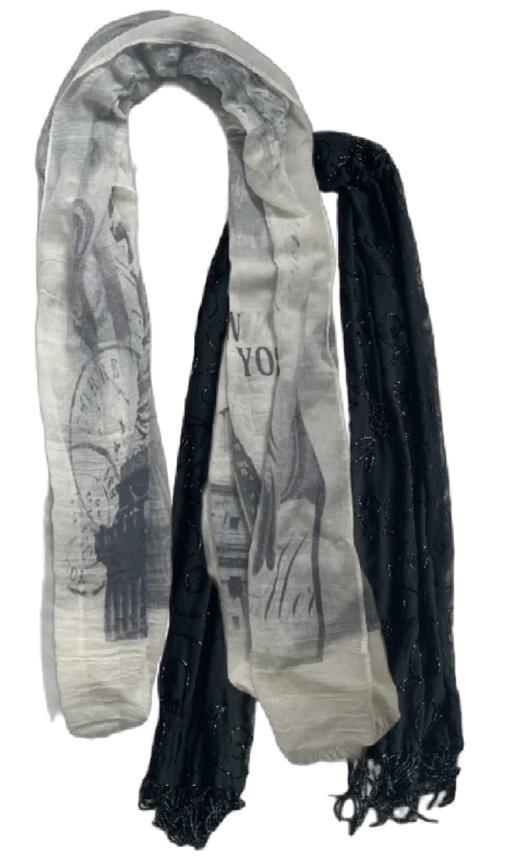
Icy pastels
Enjoying the warmer weather, but missing a few of your favourite wintery scarves? Incorporate them into your transitional wardrobe by knotting them around your waist! Go whimsical and '70s-inspired with a wide, tasselled moment, or add a simple defined waist to subtly spice up an outfit with a plainer scarf.
Capris, culottes, bermudas...
becoming successful podcasters, chefs, lawyers and influencers. Interestingly, whilst journalism is a field dominated by men, women make up around 84% of social media influencers. And with women waking up to the realities of fashion journalism, the rose-tinted glow has certainly faded from the industry, making its allure dim for audiences and filmmakers alike.
Watching The Devil Wears Prada 2, it felt like the smooth facade of the original film had been stripped back to reveal (at least some of) the truth. Suddenly, there is the unglamorous pressure and high stress of budget cuts and the fact that even a woman as powerful as
Miranda Priestly is having to make compromises. As Vogue editor Leen Al Saadi notes, ‘parts of it felt less like satire –and more like documentation.’ But Saadi also suggests that the film still idealises the industry, that she’s spent ‘more time adjusting image crops than walking into glamorous rooms.’ Tired of the romanticised view of fashion journalism, the world has largely taken a more practical stance. Even so, it doesn’t take away from the fact that the 2000s rom-coms inspired many young women, and perhaps there’s still something to be said for the dream they present – as long as you remember it’s a dream.
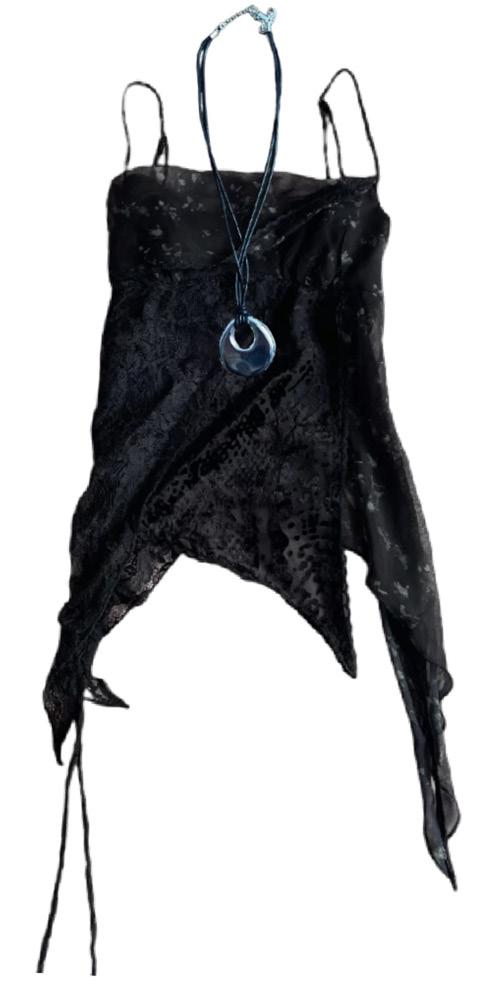
This trending detail is the perfect way to spice up an outfit without overheating under tons of layers. Look out for asymmetrical hemlines, fastenings, or even sleeves -- I love styling a shark-bite cami under a t-shirt! There are plenty of ways you can DIY this one, too!

Fringes galore!
Certainly my preferred silhouette for unpredictable temperatures (it's much easier to add or remove an extra layer from your top half!), this styling hack brings together a ton of the summer's emerging trends. Playful sporty jackets, brightly-coloured mini shorts and oversized colour-block blouses all lend themselves perfectly to outfits that pair big tops with shorter or tighter bottoms!
Photos [L-R]: Violette Douglas, Tabitha Woolcott

A graveyard of great shows
Alex Adepoju Deputy Film & TV Editor
We say everything must come to an end. But not our shows, never our shows! Either we finish it, or worse, it gets cancelled, always leaving a gap you notice the next time you open Netflix or Amazon Prime. Over the years, a few series have really stuck with me. Saying goodbye to them isn’t dramatic, but it does feel a bit strange, losing part of your routine you didn’t realise mattered so much. One of the biggest ones for me is Superstore. If you watched it from the start, you probably
feel the same as me. It’s just a comforting comedy show, similar to Modern Family or The Office. However, when it ended - the friendships, the groups, and the way it mixed fun with real emotion - left me in tears. By the end, it felt less like finishing a show and more like closing a chapter of my life.
Ozark is another one that’s hard to replace. It had this constant tension that never really let up. Every episode felt like something could go wrong at any second, and usually it did. What made it stick, though, was how grounded it felt. The characters weren’t perfect, and their choices weren’t easy to watch. When it ended, it
didn’t feel like everything was neatly wrapped up, but maybe that’s why it stayed with me. I would add in Sex Education here too, because it brought something completely different. It was funny, awkward, and surprisingly honest. It handled topics people don’t always talk about openly, but did it in a way that felt natural, not forced. The characters felt real, like people you would know in your own life. When it finished, it left that quiet kind of sadness. Not dramatic, just a sense that you’ll miss checking in on them.
Then there’s The Good Place, which I still think ended exactly how it should have. It managed to be light and funny while also asking big questions about what it means to be a good person. That’s not easy to pull off. It didn’t drag things out, and even though the ending hit hard, it felt right. Still, it’s one of those shows I wish I could watch again for the first time. BoJack Horseman is a different kind of goodbye. It starts off feeling like a typical animated comedy, but it quickly turns
into something much deeper. It gets into mental health, identity, and all the extremely messy parts of being human. Some episodes are genuinely hard to watch, but in a good way. When it ended, it felt like it had said everything it needed to say, but that doesn’t make it easier to let go.
I also can’t not mention Dark This is one of those shows where you really have to pay attention. It’s layered, complex, and sometimes confusing, but that’s part of the appeal. It re wards patience. Finishing it felt satisfying, but also a bit sad, like solving a puzzle you didn’t want to end.
And more recently, Gen V made us ex claim, “Wait, why was it cancelled?”
It brought a fresh angle to the world of su perheroes, mix ing dark humour with some in tense moments. It didn’t feel like just a spin-off, it had its
own identity. Even though it hasn’t been around as long, it has gained a lot of fans and interest. Especially the first season: it made an impact quickly. Nonetheless, the death of lead actor, Chance Perdomo, left a void in the show, resulting in a cancellation.
What all these shows have in common is simple. They gave you something to watch day in and day out. A reason to sit down, press play, and get pulled into another world for a while. When that’s gone, you feel lost. And even though there’s always something new coming out, not everything sticks the same way. Some shows are just harder to say goodbye to than others, and others leave you in tears.

The politics of memory on cinema
Parker Job
Content warning: this article discusses violent hate crimes.
How do we decide which stories get remembered, and which get pushed to the wayside? It’s a question that has existed in historical debate for years, and is ever-present in the arts. If you are interested in film history, you are likely keenly aware of this.
Consider the first film with synchronised recorded sound, often just described as the first film with sound, The Jazz Singer – a film that is only recently being pushed out of film history studies, due to its racist song titles and the entire plot centring on performances in blackface.
While Al Jolson, the lead actor, was an advocate for black performers and even pushed for their inclusion in many of his films, this film does not show-
case this and instead forefronts racism.
Even defenders of the film, who claim it helped to prevent antisemitism given Jolson’s and the lead character’s Jewish faith, overlook the fact that Jolson was frequently treated as an “exception.”
Yes, the synchronised sound is impressive, but many overlook that prior to this film, there was the release of Sunrise: A Song of Two Humans, which also included synchronised sound but no dialogue.
Something odd is that The Jazz Singer always ranks highly on ‘Most influential films of all time’ lists, even though its influence is less to do with the film itself and largely to do with the technology. So, why do we still praise this film? Why is it still studied in many film schools?
It’s largely because it is defended as being an attitude of the past, something that we can look
at from a technical perspective – but this is an idea that only seems to fit if you are not a part of the group being attacked in the media.
On a more recent note, Boys Don’t Cry, a 1999 film based on the real story of Brandon Teena, a transgender man who was murdered in a hate crime motivated by his gender identity. This film has received criticism since Teena was played by a woman who went on to win Best Actress for her performance. Many claim this criticism is more modern, and that at the time, people didn’t care, but that is probably due to the lack of trans voices being highlighted. Peirce, the director, has argued against these claims on account of being genderqueer. However, this does not change their explicit choice and search for a ‘masculine woman’ to play a trans man, and not even a fictional one. There may have
been fewer openly trans actors, but it still feels harmful to have a woman essentially dressing up as a man and implying that this is what trans people are. Furthermore, there is also the exclusion of one of the victims of the hate crime, Phillip DeVine, who was black and disabled. As Peirce has stated, this film made people more interested in the case and trans justice, but it also meant that DeVine, who also lost his life, was forgotten about as a victim. This may not have been done with intentional malice, but the issue is that the film helped set a precedent for the depiction of trans people in media, given how influential it was.
So, what do these two case studies actually tell us about the stories that get remembered? People will value something and continue to present it because of its technological or so-
cietal value, and forget the harm it caused, and may even still cause, to marginalised communities. We can understand the value these films had without needing to watch them. Even if criticism is based on how ‘times have changed’, it is still valid. We need to stop watching and celebrating films that misrepresent and harm marginalised groups, and are often created by people who do not understand said groups. Watch Do The Right Thing, Moonlight, Something You Said Last Night, instead.
And, if you want a list of the best films that doesn't just focus on Western films by white men, look at the BFI’s top 100, which is voted on every ten years, and whose current number one is a non-English language film directed by a woman, Jeanne Dielman, 23 quai du Commerce, 1080 Bruxelles.
Photo credits: Wikimedia Com-
Nostalgia, the real villain of Harry Potter
Lilia Colledge Deputy Books Editor
Home Box Office (HBO) has recently offered fans their first glimpse at its upcoming Harry Potter series, a project already carrying enormous expectations.
Harry Potter is undeniably one of most beloved fantasy series of all time, with its domination of the 2000s bestseller lists and the success of the Warner Bros movies, and with the series’ first episode set to be released on Christmas Day 2026, it’s stirred much buzz amongst fans.
And yet, despite this budding excitement, it’s no secret that J.K. Rowling has made a name for herself as a controversial figure. Starting all the way back in 2018, she was criticised for liking a tweet that described transgender women as “men in dresses.” More recently, in October 2025, Rowling spoke out against Glamour UK for allegedly showing girls that “men are better women than they are,” by featuring nine transgen-
der women in their ‘Women of the Year’ list. In March 2026, she also celebrated the International Olympic Committee's decision to limit eligibility to female events at the Olympic Games, or any other IOC event, to biological females. Rowling continues to publicly display contentious views on the transgender community.
Namely, she set up her own organisation in 2025, called ‘The J.K Rowling Women’s Fund,’ which “offers legal funding support” to “retain women’s and girls’ sex-based rights... including the workplace, sports and clubs, and protected single-sex spaces.”
Described by some as “dedicated to removing transgender people's rights,” Rowling has announced that her personal fortune will fund this organisation.
While many fans have expressed their condemnation of Rowling’s views, several have argued that they can still enjoy Harry Potter regardless.
Through popular fanfictions such as All the Young Dudes, which imagines the world of Hogwarts pre-Harry Potter and depicts
queer relationships as canon, fans argue that the fantastical world becomes a refuge for minority communities, rather than being exclusionary.
But can one ever truly separate the art from the artist?
Despite arguments stating that Rowling has little involvement in the show, she’s still titled Executive Producer and is making an estimated £37-74 million every year from Harry Potter royalties.
This is why nostalgia is the real villain of HBO’s Harry Potter
While watching the new series may seem unrelated to Rowling’s personal “gender-critical views” - as Harry Potter itself doesn’t contain any explicit references to transgender issues - when people continue to support the franchise, they’ll continue to directly support Rowling. Amid the building excitement for HBO’s new show, nostalgia comes face-to-face with accountability, as viewers recognise what impact support for the show will have.
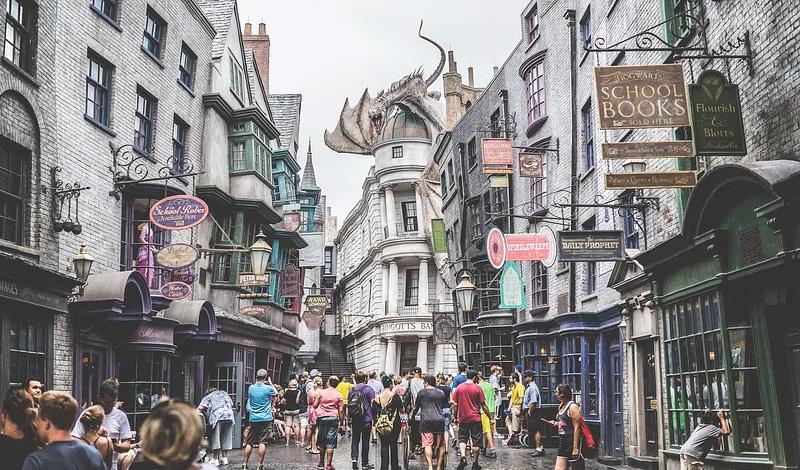
The Drama (2026)
review by Esme Holkham
To watch ‘The Drama’ is to be an accomplice to its tension; you aren’t just an observer, you’re a witness. From start to finish, you will find yourself on the edge of your seat as you follow the relationships of the two protagonists, Charlie and Emma.
Two ordinary people, one ordinary relationship – or so it seems. If you have seen the trailers, you will know this is no rom-com and, in fact, will become the most tense film you will have seen yet in 2026. Charlie, played by Robert Pattinson, and Emma, played by Zendaya, pull you straight into their lives, from their strategically planned first meeting to their dreamlike engagement photos. However, the film might look like it focuses on only two people, but it’s actually tackling the complex reality of America today. To see why, watch in cinemas now, or buy on digital very soon!
One Piece Season 2 (2026)
review by Ollie Wheaton
In a landscape oversaturated with live-action remakes, the property that should never have worked became the best one. Now back for season two, Netflix’s One Piece shows no dip in quality. As a rare eight-episode streaming season with good pacing, it still can’t escape the trap of second screen dialogue, but what it lacks in writing is recovered through strong ensemble performances. Charithra Chandran and Lera Abova are the standouts of the season’s additions. Visually, it is remarkable, each island featuring incredibly intricate sets. This is all enhanced by Sonya Belousova and Giona Ostinelli’s incredible score, which provides the show with its own identity whilst incorporating beloved tracks from the anime when appropriate. It was an almost three-year wait between seasons, but it was worth it. And with season three confirmed for a 2027 release, the adventure will continue soon.
The Devil Wears Prada 2 (2026)
review by Charlotte Ward
With a marketing campaign styled like a glossy double-page spread, all high-fashion confidence and set to Madonna’s “Vogue”, The Devil Wears Prada 2 arrives nearly two decades on as one of the year’s most anticipated sequels – and one acutely aware it can no longer hide behind the industry it once mythologised. Print is shrinking, influence has splintered, and the film wastes little time acknowledging it: layoffs loom, relevance is fragile, and – heck – even Miranda has to hang up her own coat. The icy sheen of the 2000s has softened into something more exposed, more knowingly brittle.
What replaces it is a film preoccupied with the fault lines of modern fashion: the erosion of magazine authority and the rise of an increasingly digitised landscape. There is still pleasure in the spectacle, watching the cast slip back into rhythm, but it feels less like escapism and more like a carefully staged echo. For all its gestures toward relevance, the resolution can’t bear the weight of what precedes it, settling instead for a fantasy filtered through recession-proof Dior sunglasses.
The Great Divide by Noah Kahan
review by Avery Hewitt
Noah Kahan is a legend at teasing music, posting and playing snippets of his new album since 2024. He released the album The Great Divide on the 24th of April and I decided to listen to it all in one go while I was in the gym. I sobbed on the stair master. Just when we thought it was over, the next day he rereleased the album with 4 extra songs, giving its current title. This is a no-skip album that takes you through a rollercoaster of emotions with lyrics that speak to the heart and melodies that you’re not sure whether you want to dance to or crawl up in a ball to. There’s no doubt that his upcoming tour is going to be a great success and an emotional whirlwind.
Living Room by Not For Radio
review by Eleni Lucas
‘Living Room’ by Not For Radio is a thoughtful ballad, depicting a once independent individual turned lover-girl imagining a future goodbye. María describes a relationship that has made her ‘[forget her] past,’ to whom she is ‘giving [her] best.’ Though the song is a beautiful appreciation of a relationship that has allowed María to shed her emotional armour, she also exploresthe fear that the relationship may lead to a dreaded goodbye. In her usual fashion, María sings close to the microphone, as though she is whispering to us her inner thoughts and deepest secrets, which adds to the narrative about unwanted fears. She ‘wants to believe’ the relationship is destiny and will survive life’s never-ending tests, but she can’t quite commit to this belief herself. She repeats the line ‘don’t let me down’ and the song ends with the uncertainty of ‘I have you now.’ Why only ‘now’?
Drop Dead by Olivia Rodrigo
review by Claudia Allison
The first single from her hotly anticipated third album You Seem Pretty Sad For a Girl So In Love, ‘Drop Dead’ by Olivia Rodrigo,is a danceable and dreamy 80s synth inspired soundscape. It acts as a departure from her familiar pop-rock sound associated with feelings of teenage angst, fear and melancholy from her previous two albums. Despite not being a traditional ‘goodbye’song (it details the thrill and optimism after a first date), it is about moving on and embracing new beginnings, as shown when she sings, “The most alive I’ve ever been/ But kiss me and I might drop dead”. This is also reflected through the album cover, which bids farewell to the colour purple used in her past discography in favour of light blue and pink to match her new sound. This song teaches you about how saying goodbye to something can develop and improve you as a person.
Prince of Wales: The stunted strip
Saffron Pennycooke Music Editor
It becomes increasingly hard not to notice the poor state of Prince of Wales Road in a town as vibrant as Norwich. The stunted, desolate atmosphere clashes with the air of creativity, wonder and life which travels airborne through Norwich like a virus – one which I, and many other music appreciators, would happily be infected by.
Prince of Wales Road seems like a strip of boarded up clubs, a tingle of what clubbing in Norwich once was and a testament to how some of the popular clubbing spots are not living up to expectations, such as Loft. Many UEA students have drunkenly found themselves here after an already rowdy Sports Night, pushing and shoving in the confined capsule of music and geezers. Its densely packed rooms feel like a pressure cooker, goading all the drunk and irritable attendees to start a fight. Countless students have found themselves in situations where they’re being threatened with a fist to the face when all that was on the agenda was good music to dance to. This is put even more into per-
spective when you acknowledge the fact that Loft is supposedly a gay bar, a place for people to mingle and dance. Now, for a lack of better words, Loft feels like a pit of alcohol fuelled hate, where you hear the first few notes of a good song before being knocked over by a 6 ft rugby lad. Music wise however, Loft promotes a range of songs. Its gay bar roots still shine through when RuPaul songs are played but also has remixed versions of popular songs for Loft’s current atmosphere. If you’re in need of good music and better vibes, 11th and Social is a great night out spot. Stationed on Upper King’s Street, a connecting road to Prince of Wales, 11th is fashioned as a bar but still manages to maintain its club etiquette. It holds a mature atmosphere, feeling sophisticated and tasteful, until you hear a UK garage classic blasting through the speakers, and you’re dragged to your feet by the dirty stinking bass that shakes the floor. 11th is the perfect place for getting your groove on and/or sleuthing in the corner, head turned in close to your counterparts, a candlelight palming your faces and music
ringing in your ears. Of course, it would be foolish not to mention the likes of Voodoo Daddy’s, Space Studios and Dead Wax as great music venues of Norwich. If you’re after an intimate, more artistic soundscape, these venues couldn’t be recommended enough. When there’s another brawl down Prince of Wales Road, there’s always a club night and a slice of pizza at Voodoo’s to help. When there’s another closed establishment teasing us with its past existence, there’s a gig at Space Studios to support local and student led music. When there’s a litter of inconspicuous looking stripper bars blending into the abandoned trail of Prince of Wales, there’s always a sparkly DJ set at Dead Wax to lift spirits. The Norwich music scene is much more than what Prince of Wales Road is depicted as on the news. Despite its less than peachy atmosphere, the off shoots of Prince of Wales Road house some of the most inspired and unique music experiences. A vibrant concoction of creation and vibration is still at large in Norwich; you just have to seek it out.
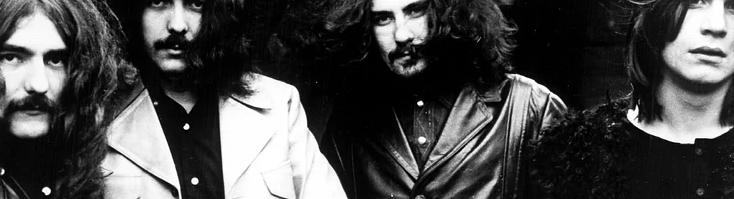
The lone wolves of music: Breaking up the band
Izzy Hollyhead Music Correspondent
What do Ozzy Osbourne, Elliott Smith and Zayn Malik all have in common? They all left their original bands to start a solo career. Why do we continue to see this happen throughout music history and does this method of kickstarting your own career pay off? One Direction were one of the biggest boybands of their time and were nothing short of successful with over 300 award nominations across the band’s career. So was it the four number one
albums that made Zayn take his leave, or was there a bigger issue lying under the surface?
Well, after having gone on X Factor there was no more silence for all five members of the band – which wasn’t what Zayn had signed up for. He took a step back to focus on his own creative direction and to experience life in a more normal way, away from all the cameras.
Elliott Smith formed the rock band Heatmiser in 1991 three years before releasing his own indie-folk music. The band had a very different sound to what
The final mark of an artist
Content warning: the following article discusses substance abuse and suicide.
So many talented artists struggle with drug abuse, mental health issues and trauma. Think the 27 club, Cobain, Winehouse, Hendrix. To be a successful musician, do you have to be in pain?
Rubble, rain and resignation. Manchester in the 70s was going through major redevelopment: it was damp, gritty, and think The Smiths, Factory Records, New Order, The Hacienda and, most importantly, Joy Division. The band formed in 1976 when an Ian Curtis saw an ad put in Virgin Records for a singer by Bernard Sumner, who thought it would be easier to pick up girls if he was in a band. Curtis struggled with severe epilepsy on and off stage, being
we would associate Smith with today, acting as a melting pot of post-hardcore grit whilst still encompassing the deeply personal and political lyrics we know him to write. The band used their music as a form of activism for mental health and LGBTQ+ rights in a time that was filled with a lot of homophobia and hatred. Eventually Elliott Smith garnered great commercial success that overshadowed that of Heatmiser, prompting him to continue his solo work and leave Heatmiser behind.
Everybody knows who Black
told by doctors his life would be obsolete, which lead him to believe the band would move on and leave him behind. His struggles with epilepsy, a failing marriage and depression eventually led to his suicide at only age 23.
Joy Division’s last song recorded with Curtis was “Love Will Tear Us Apart”, which became their most popular song. It’s not much of a love song, being full of resentment, bitterness and guilt at his failing marriage. This song really demonstrates how unhappy Curtis was with his life.
The band moved on to form “New Order” to immortalise Curtis’s contribution to music. Curtis’s legacy lives on, and New Order recently
Sabbath are, so what was it that prompted Ozzy Osbourne to take on solo projects? After forming in 1968 and received two No. 1 album awards, the band decided to officially part ways in 2017 but continued to sporadically hold performances up until Osbourne’s unfortunate passing. Clearly he loved Black Sabbath or they wouldn’t have continued for so long, but his personal struggles with alcohol and drugs led to him seeking a more personal creative outlet through his solo music.
Being in the industry and the
were inducted into the Rock and Roll Hall of Fame. So many new bands have been influenced by Joy Division: think Radio Free Alice, The Murder Capital and the incredible Interpol. Elliott Smith was born in Omaha Nebraska in 1969 but later grew up in Texas. Smith went through a rough childhood having a difficult relationship with his stepfather which lead him to struggle with drug abuse. At 14 Smith moved to the moody, mountainous, picturesque city of Portland, Oregon, where his incredible journey with music began as he started experimenting with recording.
Smith struggled with his mental health, as well as alcohol and drug abuse, which was often reflected in his lyrics. His last re-
spotlight is a very difficult thing to navigate, evidently. People will create stories and try to stir up drama like ‘who hates who’ but ultimately, all these musicians want is to pursue their passion without being told what to do by managers or being followed by fans across the country. It’s the pressure that comes with being a successful musician that pushes people to step back from the industry.
credit [L-R]: Geograph Britain and
corded song, “Kings Crossing”, was about a small grove near Portland where addicts and dealers would frequently be seen. In this song he tells tales of his struggles with depression and the belief that he was only popular because of his pain. This song also highlights Smith’s struggles with staying clean from heroin, referring to The Velvet Underground’s song “Heroin”.
Smith tragically died in 2003. While he isn’t with us anymore, he is still influencing incredible musicians such as Wunderhorse, Beabadoobee and Alex g.
Image
Ireland and PICRYL
Erin Hefferman
MUSIC
The 2026 Green Film Festival
Kathryn Bailey Events Editor
Norwich’s annual Green Film Festival commenced on the 22nd of April at Cinema City with an inspiring screening of Barbara Santi’s Gentle, Angry Women (2025). The documentary highlights the widely forgotten events of the Greenham Women’s peaceful protests, as well as their 20-year-long protest camp at Greenham Common between 1980 and 2000. Their stance was strongly against nuclear weapons being placed in Greenham and was focused on the power
of female-led peaceful protest. Alongside this historical approach in the documentary, we are introduced to three young female activists – Poppy, Xanthe and Evie. They, much like many of the film’s audience, are learning about Greenham’s history for the first time. They retrace the steps of the women before them and conclude the documentary at Greenham Common. The film reflected on the importance of remembering female history and the power it can hold.
The second event of the festival was not only a film screen-
DMTS does Legally Blonde
Terrell Bryan Deputy Creative Editor
At the UEA Drama Studio, DMTS’s production of Legally Blonde: The Musical proved to be an energetic and impressive showcase of student talent, with a sold-out audience creating a lively and responsive atmosphere. From the opening number, the cast established a confident tone that carried throughout, blending humour, musicality, and strong ensemble work.
The standout performance came from Saffron Pennycooke, playing Elle Woods, who delivered a consistently engaging performance both vocally and dramatically. Her singing was controlled and expressive, while her portrayal perfectly captured Elle’s charm and determination. That said, the strength of the production was most evident in its ensemble work. The overall vocals were highly impressive, with group numbers feeling engaging and well-rehearsed. A particularly enjoyable aspect was the versatility of the cast; some performers took on multiple roles, including one who transitioned seamlessly into the role of the judge, demonstrating both range and strong character
work.
The live band also deserves recognition. The use of instruments added a rich, layered sound that elevated the musical numbers and helped maintain momentum throughout the performance. Behind the scenes, the technical elements were equally effective. Lighting cues were used creatively to emphasise comedic beats and transitions, often enhancing the humour and keeping the audience engaged. These choices contributed to a lively atmosphere, with the audience responding enthusiastically throughout. The set design was used efficiently to support quick transitions and maintain the show’s pace. Overall, this production of Legally Blonde was not only entertaining but also a clear showcase of the collaborative effort behind it. It balanced strong individual performances with cohesive ensemble work, making it clear that the production’s success was a result of every contributor on stage and behind the scenes.
ing but also an art exhibition, VR experience and a social reception. Also held at Cinema City, the Embassy of El Salvador in the United Kingdom supported the screening of Reefs: Our Sustenance Beneath the Waves (2026). The documentary comments on El Salvador’s rich underwater ecosystem and the impacts of climate change on it.
The third and final screening of the first week was held at St Andrew’s Crypt, the screening being Silent Running (1972). The director of this film, Douglas Trumball, is also known for his visual effects work on iconic science fic-
tion films such as 2001: A Space Odyssey (Stanley Kubrick, 1968) and Blade Runner (Ridley Scott, 1982). Silent Running itself follows ecologist Lowell aboard a spacecraft, who nurtures a previously extinct ecosystem in multiple dome-shaped greenhouses on the ship. When threatened with their destruction, Lowell’s actions become dangerous and erratic.
The film reflects on the bond humans can have with nature, and the care that is required when nurturing a habitat and helping it to grow.
The film festival’s first three
Albatross at UEA Drama Studio
Kathryn Bailey Events Editor
As part of this year’s Norfolk and Norwich Festival, the Menagerie Theatre Company’s production of Albatross took centre stage on Saturday, the 9th of May. The performance took place at the UEA Drama Studio for one night only, resulting in an intimate and up-close experience. The story centres on mother and daughter, Eve and Alice, with Alice a glaciologist who spends months away from home and Eve acting as the temporary caretaker of Alice’s daughter, Alba. The play's conflict lies in the generational differences between the two women and explores the common question women face: do you put your career first or your family? How do you balance both as a single mother and as a scientist? The play was incredibly captivating, with a script that accurately depicted a familiar mother-daughter relationship. However, at times, the conversations between charac-
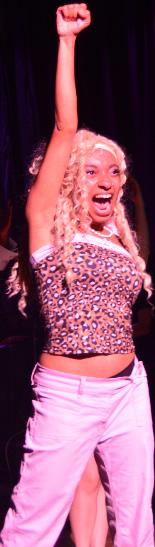
events were a success, and I feel fortunate to have been able to attend all three screenings. The connection of sustainability and nature with film promotes the power of film to an audience.
The film festival events will continue on the 27th of May at the Norwich Theatre Royal’s Stage Two with a screening of Sally Aitken’s Every Little Thing (2024).
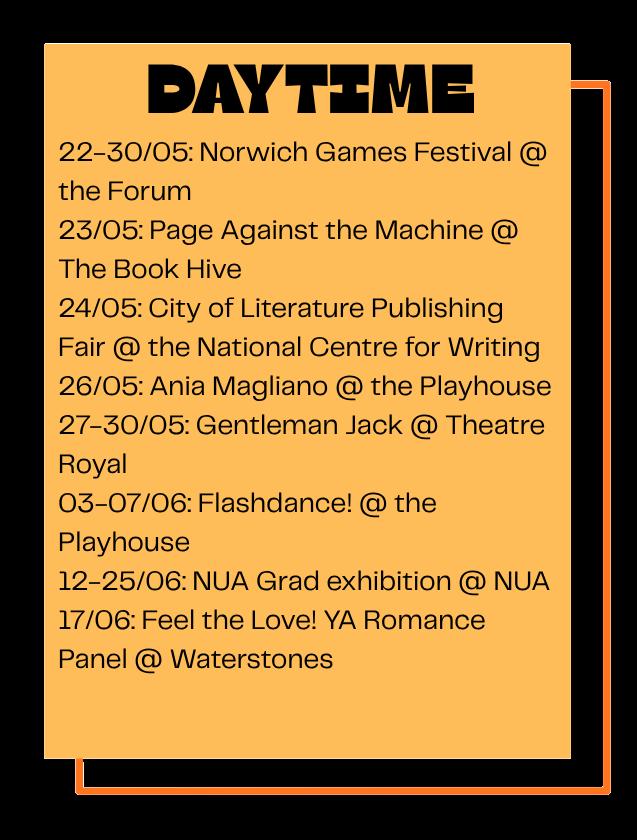
ters did feel slightly clunky, reducing the realism of the scene slightly. Nevertheless, the play prompted important questions surrounding the beliefs and scepticism of the climate crisis and the not often thought about realities scientists have to face. It reflected a unique yet familiar idea of chasing something that is larger than you on a global scale, or being there for those you love, and supporting your child as they grow up. I would highly recommend this play – the performances were brilliant and the element of comedy in a quite serious and intense scenario was excellently used.
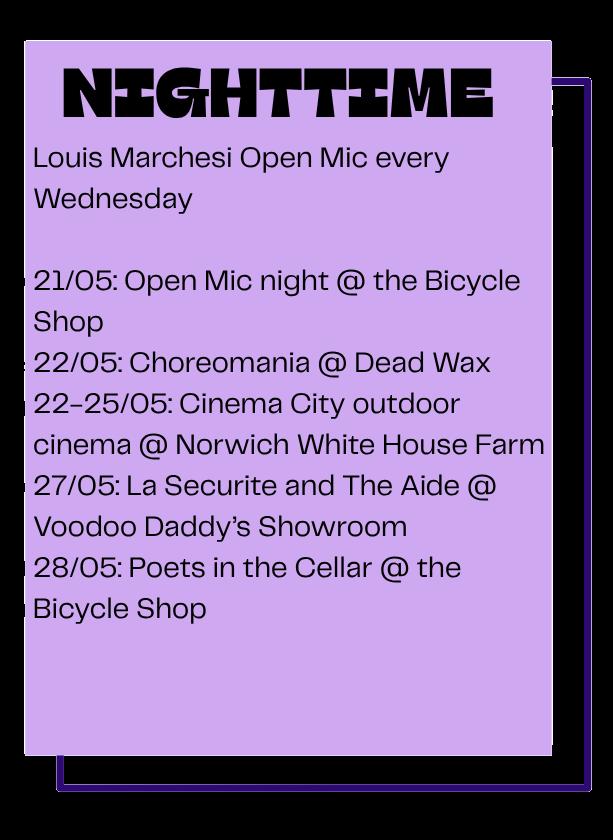
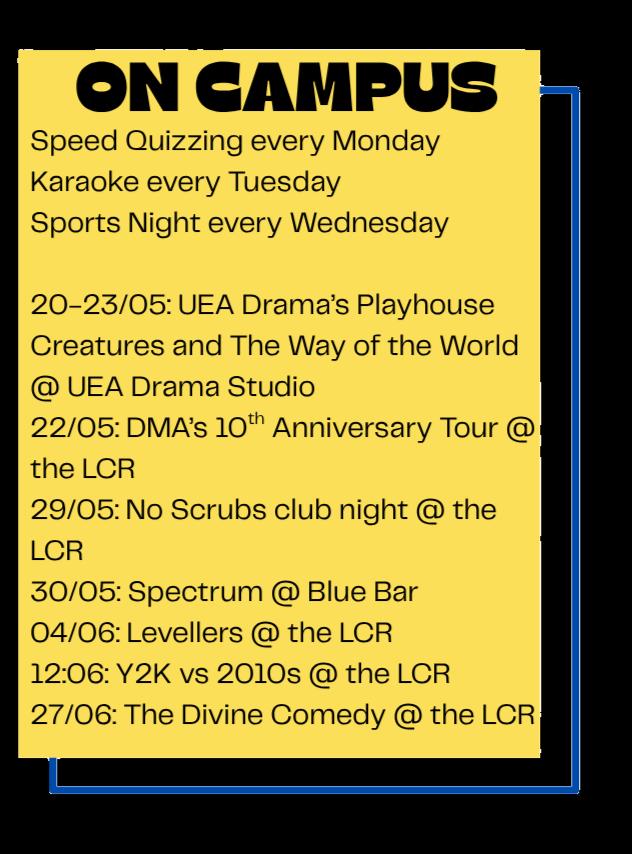
Image credit: Mai Stacey
STUDY BREAK












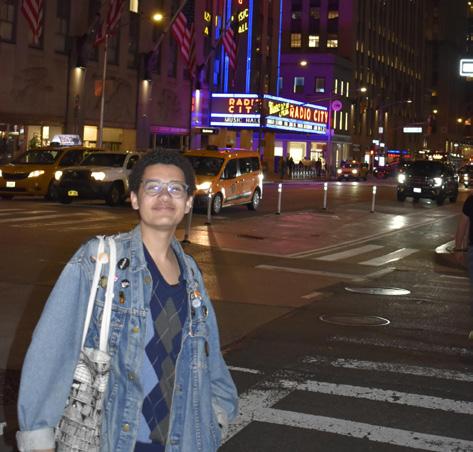
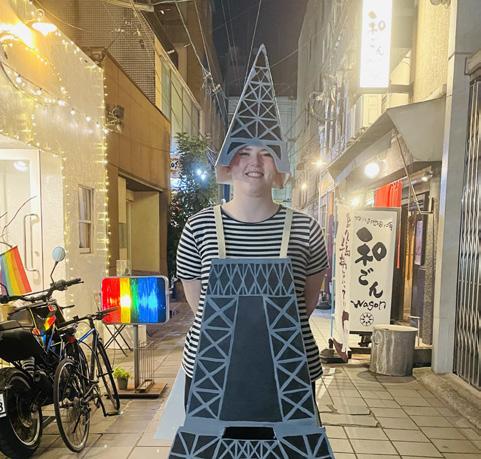
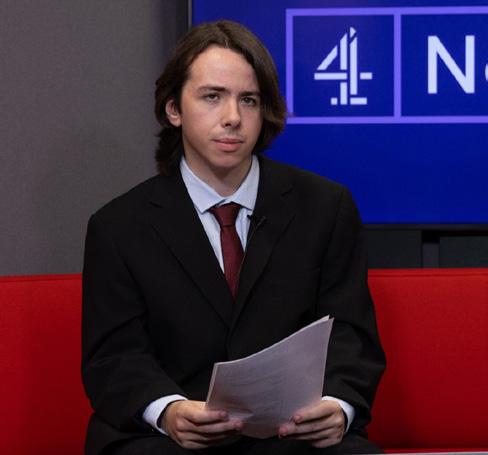
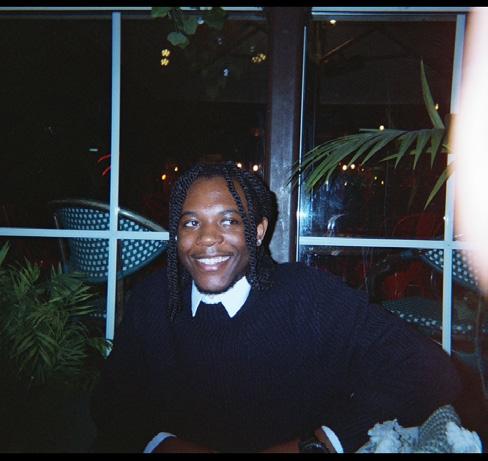

Not pictured, but equally amazing: Angus Coulson, Samuel Haines, Grace Mahon, Cagla Yegin, Anya Hughes, Melissa Battley, Isaac Minah, Ella Stone, Ben Heiss, Grace Barnett, Alicia De Goni-Parks, Hannah Burns, Dhara Ranavaya, Petra Todd, George Marsden and Izzy Hollyhead
Can we trust AI with our health?
Lilia Colledge
Artificial intelligence (AI) is being used to detect cancers, predict disease risk, and even assist with diagnoses. It’s undeniably transforming medicine; but can we trust it?
As a tool used by medical professionals, AI is highly useful.
In March 2024, an AI tool, called Mia, was used in NHS Grampian. Used to analyse 10,000+ female mammograms, Mia successfully flagged all cases for concern highlighted by hospital radiologists, as well as 11 that they missed.
Able to spot tiny, early signs of cancer that humans struggle to see, Mia can detect 10.4% more cancers than standard practice, while increasing survival rates to 90% over the ensuing 5 years after treatment. Mia also has the potential to lessen result wait times from 14 to 3 days, optimising screening processes.
While Mia isn't “perfect,” with it being in its early stages, including its restricted access to patient history, that causes it to flag things that have already been spotted and dismissed by doctors as non-harmful, which makes it less time
efficient. However, Mia certainly demonstrates how AI has the potential to significantly improve the speed of diagnoses. AI’s usefulness can also be seen in opportunistic screening. This tool, which has AI looking over imaging that has been taken for different clinical purposes in the hopes of spotting missed diagnoses, means that AI can catch diseases in early stages. At points where it often fails to show up on regular physical exams and blood tests and when the conditions are easier to treat!
Additionally, when certain diseases show up more commonly in certain types of groups (such as osteoporosis in thin, elderly white women specifically), Ai is able to reduce bias. A middle-aged man, for example, could have this, but because he’s less likely to, he’d be far less likely to be diagnosed with it. This is how opportunistic screening is able to remove this bias, and give that middle-aged man the diagnosis he needs – and faster. By only analysing scans, the screening takes away the ability to discriminate based on stereotypes, making it a fairer and more effective process.
So, AI in the hands of medical professionals seems highly effective, but what about in the hands of the everyday person?
AI appeals to many because it’s readily available, while GP appointments often seem unattainable. One described a chatbot as giving “more tailored advice than an internet search,” making it comparable to “chatting with your doctor.”
But should the answers it gives be trusted?
While AI chatbots were 95% accurate when given the full picture of a medical condition, this quickly falls by 35% when it involves human interaction.
In an experiment including 1,300 people conversing with a chatbot, it proved that subtle differences in how people described their symptoms majorly impacted the advice AI gave.
For example, when two people detailed brain haemorrhage symptoms, AI told one to seek immediate medical attention, while the other was told to practice bed rest, which is inadvisable for someone suffering a brain bleed.
These vastly different responses make AI chatbots unreliable in health situations, and should be avoided – says Dr Nicholas Tiller, research associate at the Lundquist Institute – unless the person using it has the knowledge to tell when AI is making mistakes.
An example of AI doing exactly this is Google AI, in 2024, telling people to use
non-toxic glue to get cheese to stick to pizzas better.
Although deemed an isolated example and widely ridiculed online, the potential harm of such an answer is prevalent, with ingested glue being able to cause stomach pains or more serious internal blockages.
More recently, in January 2026, Youtuber RawBeautyKristi detailed the near fatal impact AI’s advice had on her friend. When sending a picture of a plant in her garden to ChatGPT, to verify what it was, it told her it was carrot foliage.
ChatGPT repeatedly failed to identify the plant as poison hemlock.
“I don’t know if you guys know this, you eat it, you die. You touch it, you can die,” she said.
There’s no known antidote for it, meaning that AI’s advice, in this case, could have been fatal.
Therefore, in regard to health concerns, AI seems far more successful in the hands of medical professionals, with its ability to catch early diagnoses, rather than the everyday user. as AI chatbots produce highly variable answers, from ridiculous to life-threatening, it seems to be a highly unreliable form of health assistance.
The scienzzz... of dreams
Anya Hughes
In ancient civilisations, dreams were thought to be messages from the gods bestowed upon the dreamer. However, as more scientific research has been conducted into dreams, this theory is no longer widely accepted. Despite this, there is a lot that neuroscience cannot tell us about our dreams – like why we dream at all. So, what do we actually know about dreaming? Let’s take a look at what science can and cannot tell us about these unconscious phenomena… We have all had dreams. Good dreams, strange dreams, nightmares! People will have varying levels of vividness within their dreams, and some people can have dreams including other senses. In fact, blind people often have dreams more heavily involving components of sound and smell. But why do we produce these involuntary stories?
Well, while this remains relatively unclear, there are some credible theories among researchers.
tivation-synthesis dream theory. This theory suggests that due to activation of the amygdala and hippocampus, our brain produces an array of images, memories and random thoughts that are all collated in a meaningful way.
Similarly, scientists have suggested that dreams are a way for us to process emotions by providing us with imagined scenarios that allow us to work through our feelings.
through the understanding of dreams, we could overcome our fears and have more control over our emotions. So, does that mean our dreams have meaning?
in comparison.
You may be wondering why dreams can be bizarre and interesting at times. Well, as we start to dream, our prefrontal cortex (the logical part of our brain) slows down brain activity, allowing our mind to be as creative in our dreams as it wants, making up some rather curious scenarios.

One theory of dreaming is called the ac-
Additionally, it is also thought that dreaming is a way of consolidating memories as the brain gathers those which it deems similar in order to process them. This would explain why dreams often include elements of our daily life, but are often unorganised and illogical. Another suggestion is that the brain is getting rid of information it doesn’t need to store anymore; a form of mental housekeeping. Of course, one of the first psychologists to suggest that dreams hold a significant meaning was Sigmund Freud, who thought dreams represented our fears and anxieties as well as hidden desires in our subconscious. He suggested that
Not necessarily. It’s highly debated by psychologists whether there is something about ourselves we can learn from last night's dream or whether it is just a byproduct of cognitive functioning. Some psychologists say that dreams are too random and incoherent to give meaning. However, it is almost universally agreed that dreams incorporate details of our waking lives, so some researchers argue that these images can be decoded to give insight into people’s minds.
One thing that we do know about dreaming is that most dreams occur during Rapid Eye Movement (REM) sleep. This period of sleep is the one involving the most brain activity and shares qualities similar to consciousness. You can also have non-REM dreams, although REM dreams tend to be more vivid and memorable, whereas non-REM dreams are more often like thoughts and less visual
So, to sum up, we know a lot about the process of dreaming, but there is a large debate on why it occurs. However, while research is ongoing, our own experiences with dreams may help us understand more about our lives. If a particular person keeps popping up or a particular scenario keeps replaying, perhaps you need to pay attention to it. Although I may ignore that dream about all my deadlines. I’m sure it doesn’t mean anything!
Microplastics: The invisible enemy
Sean Chitakunye
Microplastics are small plastic particles that form from the slow breaking down of plastics. They are under 5 millimetres in length and many are not even visible to the naked eye. They have long been found in oceans and the soil, but concern about them has increased, in recent years, because they have been discovered in the human body. Is the concern about microplastics genuine or is there nothing to worry about?
To answer this question, knowledge of the lifespan of microplastics is important. Research shows that microplastics can take up to, and even over, 1,000 years to decompose in the environment. Their
sustained presence in the environment, causes harm to animals that eat them and poisons the soil that plants absorb, which negatively affects the proper function of the global ecosystem. Humans consume microplastics through ingestion of food and inhalation in the air. The average person consumes around 125 grams of plastic every 6 months – that’s enough to fill a cereal bowl! It is also clear that not all the plastic consumed is removed by the human body, as microplastics have been found in human blood, vital organs and bodily fluids. Research shows that there is a link between the presence of mi -
croplastics in a person’s body and health issues like cellular inflammation and oxidative stress (where cells work harder to remove toxins and forego their intended functions). It is also linked to more serious problems such as cancer, heart attacks and reproductive issues in women. However, this research is still in its early stages, and it is difficult to apply a definite causality to these health problems. Either way, the human body isn’t designed to have plastic inside of it, so making necessary changes to avoid consuming microplastics is a logical choice. Here are some easy changes that can be made:
Up - grading kitchenware: Swap plas -
tic, non-stick pots and pans for stainless steel kitchenware and plastic spatulas for wooden ones. This will stop the scraping of microplastics into food.
Filtering Water: Bottled water contains more microplastics than tap water. Using a non-plastic water filter ensures that many of the toxins in the water are removed.
Whilst the negative effects of the consumption of microplastics on health cannot be decisively proven, the concern is genuine. Cutting down on the use of microplastics now is a wise move, to protect human health and the en - vironment for the future.

For a time long gone
Satish Gurung
The word nostalgia is derived from two Ancient Greek words, nóstos (homecoming) and álgos
(pain), put together - ‘the pain of returning home.’
Recognised as medical condition in the 18th century nostalgia was characterised by extreme homesickness, in the army, soldiers diagnosed with
nostalgia would be sent home on leave to recover. Even in the midst of the American civil war, there was a recorded 5213 cases of nostalgia among the troops of the northern state in the first year alone. In the present day, nostalgia is a mixed emotion associated with the feelings of pleasure and slight sadness for a specific period or place in the past.
Nostalgia can sometimes lead individuals to perceive the past more favourably than the present and view the future negatively, a cognitive bias known as the rosy retrospection.
Studies have found that nostalgia serves important psychological functions, such as to improve mood, increase social connectedness, enhance positive self-regard, and provide existential meaning. Existentially, it has been discovered nostalgia can have a positive impact on one’s sense of meaning in life. Researchers learnt nostalgia increases an individuals perceived meaning in life, concluding that nostalgic people have greater perceived meaning, search for meaning less, and can better buffer existential threat. While nostalgia has many pos-
itive effects supported by empirical research it’s important not to declare it a positive emotion overall, the latest research is determined that it’s a mixed emotion. The latest studies challenge these results by exploring the effects of nostalgia in daily life, comparing recalled nostalgic events to daily ones. Research findings concluded daily states of nostalgia are more negative and less beneficial for well-being than recalled nostalgic experiences. So before you look to the past, make sure you're grounded in the present.
Gluten free? More like gluten expensive
Kelly Wu Food + Drink Editor
In the last decade, the gluten free (GF) market has grown exponentially and with the most recent figure estimating the market size to be around $8 billion in 2025; it’s no surprise it’s estimated to grow to $18 billion by 2033. The heightened interest in the market can be explained through the ever-growing awareness of coeliac disease and health-conscious eating.
Every food outlet on campus offers gluten free options, but is that enough? Well, Dhara Ranavaya doesn’t think so, she highlights how “choice
is limited” when comparing the gluten free range with the gluten-containing options. Additionally, the practice of removing an ingredient to make it GF doesn’t make it cheaper; you’re still charged the same price as gluten-containing. Another student who wishes to remain anonymous, X says there aren’t enough options and that he avoids Campus kitchen for its ‘conveyer belt system’ that increases risk of contamination. Even though X believes UEA should improve the cooking system, he praises BarSu for its freshly made GF pizzas.
Moving on to the topic of the industry overall, Dhara notes that ‘gluten tax’ is a joke in the GF community but in all seriousness; no one should pay more so their health doesn’t deteriorate. Coeliac
A uni grub goodbye
When I think back on university, it is not the lectures or deadlines that come to mind. It is the food.
Cooking and eating with friends quickly became routine. Kitchens became social spaces. Meals took way longer than they needed to, recipes were loosely followed, and something would almost always go wrong. My hazy memories across the last three years are filled with group settings, constantly eating, talking, and staying in the kitchen far longer than planned. Me and my friends would cook big, slightly greedy meals, the kind where you make far too much food and still somehow finish it. It was never organised. Everyone would do a bit, someone would take over, and it would all come together in a way that shouldn’t really work. There were also friends’ birthdays where we would go out for meals in Norwich, usually ending up buying too many dishes and spending longer deciding what to order than eating. We also started using food as an excuse to do more than just eat. There were Christmas dinners cooked in flat kitchens, summer BBQs squeezed into whatever outdoor space we could find, and even nights where we would attempt full three-course meals just for
disease is an auto-immune condition where gluten consumption causes the immune system to attack its own tissues and damages the gut. Coeliac UK reports that 1 in 100 people are coeliac, yet a hefty 36% are unaware hence they’re undiagnosed. Since being recently diagnosed, X has found that his supermarket shop total has doubled which shouldn’t be the case because coeliacs can’t control it. With acknowledgement that companies have struggled to find the right ingredients in this economy, the government should do more to bring the cost of living down for us all.
Dhara credits the trend of ‘cutting out gluten for weight loss’ with raising awareness however this awareness has had negative effects. Despite the increased range of products, influencers have “trivialised it into a social media trend” when it should be treated as what it is: a serious condition and not a lifestyle choice. This trivialisation has made it harder for those like Dhara as it may not be taken as seriously in shared kitchens or eating out. Whereas X thinks “you should do you” however, he personally wouldn’t take medical advice from the internet.
For the newly diagnosed, both X and Dhara stress that research before go-
ing out to eat is the way to go, as it’s a timesaver and prevents the awkward situation. X also recommends downloading Coeliac UK’s ‘Live Well Gluten Free’ app. A word of advice from Dhara is that “being your own best advocate, standing up for yourself, walking out of the restaurant or clarifying things” is key. You should always prioritise your own health and trust your instincts, focusing on what you can eat is forever better than focusing on what you can’t.
Dhara and X’s top Norwich GF food spots:
• Pizza Express - almost all items can be made GF
• Lucy’s Fish & Chips
• Pho Norwich - 90% GF menu and accredited by Coeliac UK
• Harry’s Soul Station – large range, accredited by Coeliac UK and has the best GF crispy chicken burgers
• Blue Johanna - entirely GF menu
• East Chinese - Chinese takeaway that does some GF dishes
the sake of it. Although we didn’t always cook, sometimes the effort was too much, and that is where eating out came in. In Norwich, places like Brick Pizza are an easy choice. It is simple, reliable, and perfect for groups when no one wants to think too hard about what to eat. Mr Postles' Apothecary is another well-known spot with a relaxed atmosphere that makes it suitable for more casual evenings out. Namaste Village also stood out as a popular option, particularly for group meals, offering a different type of cuisine. Bodega also became part of the rotation, especially for more casual meals where the focus was on quick eating at Norwich Market.
On the other end, Tallow feels like more of an occasion. It is somewhere I would recommend if you wanted something that feels a bit more special. A Christmas ball I went to also stood out, where the formal meal felt very different from the usual student meal.
These occasions often extended beyond the food itself, functioning as social events that brought groups together in shared spaces, whether preparing meals in shared kitchens or ordering food in. As final year comes to an end, it is these moments that stand out. Whether it was cooking in a shared kitchen or eating out after a long day, those are the memories that have stuck.

Childhood snacks we never should have said goodbye to
Walkers BBQ Rib crisps
The best flavour of walkers ever, sadly discounted far too early. They ‘revived’ in 2024, but they just were not the same.
What’s better than crisps and chocolate?
A chocolate that is also a crisp. I wish these were still around, I crave them all the time. They were made of the thinnest chocolate and shaped like Pringles. So satisfying to eat and a Christmas essential.
Smartie cupcakes
I wish I got to say goodbye to smartie cupcakes. I have tried to remake them, and it is just not the same. The chocolate on top was the best chocolate I’ve ever tasted and it was always a good day if they were in your lunch. They were identical to choccy cupcakes.
Calippo shots
These strawberry and lemon flavoured pieces of ice were my go-to every summer. They were so refreshing and fun to eat, everyone at school was obsessed and would beg for them if the ice cream van came.
.Juicy Fruit chewing gum
Apparently juicy fruit is still available in niche shops, but it used to be everywhere. It was the only gum I was allowed, and it smelt incredible like Fanta fruit twist.
Mia Lutchman Cadbury snaps
Terrell Bryan
FOOD AND DRINK
A definitive ranking of Norwich's Wetherspoons
Micah Petyt
If you’re looking for the perfect place to drink away summative stress without breaking the bank, look no further. Sure, everyone has their Spoons of choice, but which is the correct option, and should the Whiffler even be considered?
Spoiler alert: if it’s a fifteen-minute bus ride away from the city centre, it’s automatically disqualified.
Price
Although most of the menu is priced evenly across the Big Three (Glass House, Bell Hotel, and Queen of Iceni), with
the Queen of Iceni is a shorter walk away from the clubs on Prince of Wales Road if you fancy a couple of drinks before braving the Loft queue, and the Glass House is by Elm Hill and Tombland if you want a nice evening stroll, the Bell Hotel is unbeatable. Right at the heart of the city, by the buses, Castle Quarter, and the Market, the Bell Hotel is the perfect location for any time of day. Plus, with a bustling beer garden that opens up onto Castle Meadow (and most of the cities most popular bus routes), travel too and from this pub couldn't be easier.
share a Spoons dancefloor with tipsy wine mums). In the daytime or on a weekday, the Glass House, with its big windows and open space, is the place to be. However, with less seating than its Red Lion Street counterpart, it quickly overcrowds, and you’ll likely find yourself standing at a tiny table or end up migrating to the Bell after all.
Conclusion
Winning two out of three categories, with the best location and ambiance (and slightly cheaper Stellas), The Bell Ho- tel is the best Spoons in the
city, though this won’t come as a surprise if you, too, have run into classmates on your way to the bar. If you finish your degree without having spent at least one night taking Bell bathroom selfies with your friends before nearly spewing a mix of pizza, pitchers, and 4-for-£5 shots, have you even really lived?
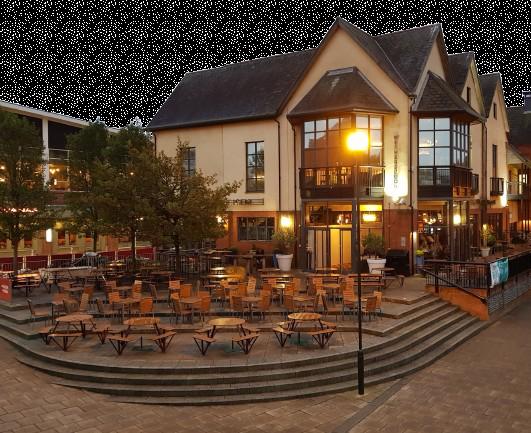
Vibe
What I learnt when I wasn't in my lecture
Tabitha Woolcott
My room in the Ziggurats was like a greenhouse, claggy and hot. I was on the phone to my mum, staring dismally down at Timetabler: I’d just received my weekly schedule, and it was looking very sparse.
I only have five contact hours a week! Am I going to learn anything at all?
This was four years ago. I came to university fresh out of college, head still spinning with the adrenaline of A-Levels. In this strange new world of no exams, where just a few coursework-dump deadlines sat on the other side of Christmas, I didn’t know what to do with myself. Am I going to learn anything at all?
I’d love to grab that version of myself by the shoulders, shake her, and shout four years of learning through her brain. Then crack open the window. Hot take: lectures are perhaps the least educational part of university (but you should still go to them!). Sure, a few slides summing up a literary movement might help out with an essay someday, but the most essential learning happens firmly outside the classroom — it’s all about how you do things on your own. Outside the classroom, through a lot of trial and error, I learned to make ‘on my own’ reliable, enjoyable, liveable.
My first lesson came along with those measly deadlines: I remember staying up
all night, turning in a product I was deeply unhappy with at 2:58pm, and promptly having a panic attack. The worst grades of my university career had to happen for me to understand that in higher education, you aren’t meant to view the classroom as educational ground zero. I soon understood that the key to success is an early start, one that allows for deep, proper research — not just citations from slides I’d been spoon fed. I allowed time for research rabbit-holes, started coming away from essays feeling like I could talk about them forever, began generating ideas that were exciting and original. It wasn’t by taking lots of notes that I became knowledgeable in my area: it was by developing my self-motivation and intuition, following my own lead… and granting myself the time to do so. Similarly, no module is going to teach you how to tend your social life. Like many, I struggled to find my place during my first semester of uni. There were many nights of FOMO, quite a few friendships that ‘mysteriously’ fizzled out — until I finally understood that, just like my degree, a social life requires you to be proactive. It requires asking for Instagrams, following up on that drink, hosting pre-drinks even though you’d rather not be washing up all those cups hungover. Then it requires attention: knowing when to check in, remembering birthdays, giving thoughtful gifts. You don’t need to transform into the life
of the party (that’s never been me!), but waiting to be rescued by a soulmate in shining party gear is not the way. Everyone’s shy, everyone’s embarrassed, and everyone thinks you’re cooler than you think you are -– the momentary discomfort is worth it when you finally find those friends you’ll remember for life. By the way, you’re cooler than you think you are. And you deserve a proactive person who looks out for you, too. I didn’t need assigned reading to figure out that bedrotting in a messy room and eating hummus sandwiches for dinner (I had a good two-month streak…) wasn’t me living my best life. I learned to air my stuffy Ziggs room, buy flowers for my desk, invest in quality essentials, schedule regular ‘reset’ days where I cull my
emails and declutter. I learned how to deglaze a pan, saute and stir-fry. I learned to love and expect a healthy, organised life, to dedicate time to making everyday feel beautiful and special — and worked hard to build habits that means I actually do it, instead of just dreaming about it. As my time at university draws to a close, I’m hardly ever in the classroom. I think that’s the point, though: life is the classroom, and if you’re self-motivated (and paying attention), you can take so much from it. And while ‘proactive', ‘organised’ and ‘reliable’ are valuable stamps for my CV, the true payoff has been the slow, steady approach of maturity. ‘You’re a real adult now,’ my mum said recently, over the phone.

Can long-distance friendships actually last?
Tring tring! You are out with your new friends.
Tring tring! She’s busy at work. Welcome to the never-ending cycle of getting frustrated and staring teary-eyed into your phone as finding a common slot to vent feels so impossible!
And then, it got worse. This time, I had to attend my best friend’s wedding on the phone.
I am in all the group pictures, but I was on video call. The gesture was cute and funny, but it was also so painful that I bawled my eyes out for a week. And she couldn’t even console me; it was her wedding day! The first real foe is the time zone. You can
only really beat it if you both choose to show up, together – mindful and real. The second foe is over expectations. She might be the person who rolled you out of bed after a crazy night out or sat with you when you were sick, in university. She might be the same person who listened to you go on and on about your new crush, but the situation is different this time. She would be there when it really counts. But trying to fit a hundred dif ferent conversations into just one phone call is exhausting. And yes, there is a third foe – not being able to grasp who
really had your back in the first place. This one is vicious. You might keep trying to pour your energy into a cup that has holes in it, without realising why it’s not even half full.
I think friendships that develop at any stage of your life could be divid-
ed into three categories. The first type is the kind which you nurture because you don’t want to feel lonely – the one where you swallow your opinion. The second type is genuine ones who connect with you very deeply. Friendship stays the same despite the days, months or years where you have not exchanged a word with each other. They are phenomenal.
But then there is the kind that stays with you through the thick and thin. The kind that would work hard alongside you to find that slot. The kind whose wedding makes you emotional. So, to answer the question, Can Long-Distance Friendships Actually Last? It completely depends on the person you choose to build the relationship with.
Aparna Shiva Manoj
Image credit: Micah Petyt
It's time to face the post-grad anxiety
Terrell Bryan
After years of structured education, from the age of 5. Experiencing life with a defined path, the transition into life after graduation can feel sudden and disorienting. For many, this period is marked by stress, uncertainty, and a growing sense of falling behind. Graduate panic, often referred to as post-graduate anxiety, is that feeling almost all students experience as they approach the end of university.
One of the main reasons is the loss of structure. University life, despite its pressures, provides a routine. There are lectures to attend, assignments to complete, and a clear sense of progression. When that ends, so does the framework that guides our daily life. Without it, even simple decisions about how to spend time or
what to prioritise can feel overwhelming. The competitive job market also plays a significant role. Students are often encouraged to secure internships, build experience, and plan their careers early. By the time graduation approaches, it can feel as though everyone else has already secured opportunities or has a clear direction. It only takes one LinkedIn post to send me spiralling. Social media only intensifies this feeling, presenting a constant stream of success stories that make comparison almost unavoidable. These rarely reflect the full picture, but they can still impact how we compare our own success.
The question of identity. For years, being a student provides a clear sense of purpose. When that label is removed, it can leave a gap. Many graduates find themselves asking what they are working towards and how they define success outside of academic achievement. This uncertainty
I hated UEA. Now, I don't want to leave
Hannah Foley Lifestyle Editor
When I first viewed the University of East Anglia it was raining. I saw Congregation Hall, The Hive, and then could only wander round gazing at grey buildings against a grey sky. The campus was desolate, we were in between covid lockdowns and we couldn’t go inside. My dad kept repeating “You don’t have to go here if you don’t want to.” But I stayed.
And somewhere along the way those feelings passed. Now when I walk around campus, even on the gloomiest of days, it feels warm. Familiar. Those same brutalist buildings that once looked miserable now feel comforting.
This is probably why when my undergraduate degree ended, I wasn’t ready to let go.
I couldn’t fathom what sort of job I’d want, so it felt easier to just stay put. I did what some might call a Panic Masters.
And if you’re currently considering doing the same thing, let me offer you a cautionary tale.
People will warn you an MA is tough. I already did a drama degree and, despite popular belief, they aren’t easy. I
was eating breakfast at 6am before my placement my flatmates were still doing vodka shots. You do practical group work, and if you’re the lighting technician - nobody can perform in the dark. The show must go on and all that. It’s not just the workloads, it’s watching everyone move on whilst you’re suspended in student life.
Your friends start earning salaries. They talk about mortgages, engagements, sixmonth backpacking trips… Meanwhile, you’re applying for seven-day extensions and in your overdraft. They’ve been there, done that and got the diploma.
I’m brought back to my dad’s comment: “You don’t have to go if you don’t want to.”
When I finished my undergrad, I don’t think I stayed because I loved studying. I stayed because I was frightened of uncertainty.
I realise I never did hate the UEA campus - it was just panic, and doubt, and dread. The idea of picking a new place and moving there alone felt terrifying.
I’m still not entirely ready to leave university life behind, I don’t know if anyone ever is, but I feel a hell of a lot closer than I was five years ago standing in the rain wondering if I was about to make a big mistake. I hate saying goodbye.
is not unusual, but it can feel isolating in a culture that often celebrates certainty and quick success.
So how can this be managed? One approach is to reframe expectations. It is unrealistic to expect clarity immediately after graduation. Or, as Jake the Dog from Adventure Time puts it, “Sucking at something is the first step to being sorta good at something.” Careers are rarely linear, and most people do not have everything figured out in their early twenties. Even if it looks like they do. Recognising this is just the beginning of your adult life not the end. Creating a sense of structure can also help. This does not have to replicate university life. This might include dedicating days to job applications, developing skills, or even taking time to rest. Establishing a routine can provide a sense of direction without becoming restrictive.
It is also important to limit comparison. While it is natural to look at what others are doing, constantly measuring progress against peers can be damaging. Everyone’s timeline is different, and success is not a fixed outcome. Focusing on personal goals rather than benchmarks set by others can make the transition feel more manageable.
Finally, it is worth acknowledging that uncertainty is a normal part of this stage of life. While this period can feel uncomfortable, it also allows for flexibility and the opportunity to try different paths. Graduate panic is not a sign of failure. It reflects a major life transition. By adjusting expectations, creating small structures, and resisting comparison, it becomes possible to navigate this uncertainty with more confidence.
At the end of the day, you have made it this far. That is worth recognising.

In defence of the Irish goodbye
Emily Pitt-Shaw Editor-in-Chief
Sweaty palms, hundreds of thought-flies buzzing around my brain, and the deepening stomach pit from which rumbles: what if they try to convince me to stay, when I really want to leave?
I’ve never understood why it scares me so much; why I have such a visceral response to simply being wanted. How dare they enjoy my presence! I want my bed! I want to leave!
It takes me back to rural family reunions, often held in a community hall, often by people that I didn’t know. I’d sit in the corner, fondant fancy in hand, watching my parents socialise through gritted smiles and awkward handshakes.
After no more than an hour spent listening to people complain about children that we didn’t even know the names of, we’d leave - the goodbyes taking more time than we’d spent at the event itself.
I'd depart smelling of Yardley rose perfume and with a collection of new names of people that I was supposedly related to.
I've grown up with the privilege of living
in the same 1920s semi-detached townhouse since the day I was born. Over the years, little has changed but the occasional painting of walls or new furniture. I used to use it as an excuse to say goodbye. My home, a mere 10-minute walk from the city centre, was waiting for me - central heating and all.
But, as I reflect on nights out where I'd stumble over words (and pavements) trying to excuse my exit, I realise that the same home is why I hate goodbyes. Leaving was unfamiliar to me.
I didn't have to pack my life into cardboard boxes until 18-years old and, when I did, I couldn't even look my family cat in the eyes as I shut the doors behind me. I felt like I'd done something wrong, like I should have a better reason to leave going to earn a degree.
I'm no different now. When friends text asking where I've gone, only to be met the morning after by some poor excuse - that I felt ill or was tired - the headache of guilt puts me on trial, accusing me of betrayal as I left without letting them know.
So, when I next disappear on a night out, just know that it wasn't you.
It was me, and I hate saying goodbye.

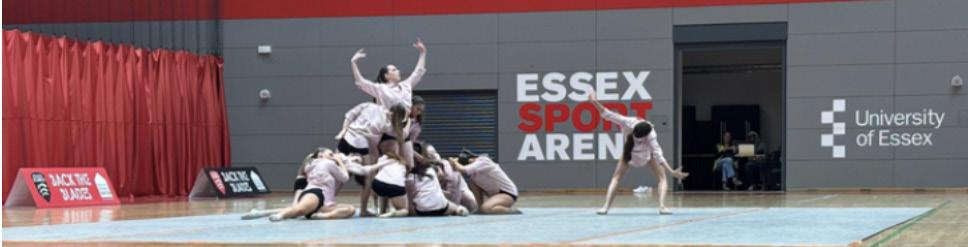
Twelfth time's a charm for UEA
Colledge Books Deputy Editor
Derby Day kicked off with Archery, Baseball and Women’s badminton, with UEA narrowly pushing ahead with 2-1 over Essex. It then moved onto Men’s Volleyball, Women’s Basketball, Fencing, and Women’s Tennis, which saw Essex push ahead to 3-5.
UEA Fencing had a women’s team for the first time in six years, marking a significant milestone for club, despite their 74-113 loss to Essex.
Women’s Table Tennis allowed UEA to close the gap to 4-5 with a hard-fought win of 3-2 over Essex.
Then, the day’s action began at UEA with Athletics. Over the five hours of competing, UEA proved to be dominant, accruing a score of 149 to Essex’s 63.
Back at Essex, UEA won Golf 5.5-0.5 and Squash Open 4-1, seeing the overall scores move to 7-5 in favour of UEA.
After a valiant effort from UEA’s Panthers in the first quarter of Men’s Basketball, where the score was 23-24, the game slowly slipped away to the infamous Essex Rebels, where they dribbled to success, finishing with 118, to UEA’s 72.
Essex’s Women’s Volleyball team spiked to a 3-0 win, while UEA spun to victory in Pole Fitness with 344 to Essex’s 304.
For Apollo Bull, UEA Pole Fitness’ First Year Representative, this was her fourth ever competition. She said it wasn’t “about winning,” but having fun.
This led the overall scores to UEA 8, Essex 7.
Next, we saw much of the action moving to the fields. UEA were standout in American Football, winning 32-0, but less so in football, where Essex took the win in both the Men’s and Women’s matches.
UEA soon made a comeback in Rugby, Lacrosse, Hockey and Cricket, with a standout performance in Men’s and Women’s Rugby, with Essex only managing to score 5 in both,
compared to UEA’s 118 (men’s) and 48 (women’s).
After the field events, UEA stormed into a 16-8 lead over Essex, which only increased with UEA dodging losses in Dodgeball, breaking in Pool, winning 41-21, and smashing to victory in Men’s Badminton.
Back at UEA, the action moved to the pool, where UEA swam to a 65-21 win, as action in Essex moved to the Show Court for Dance.
From Contemporary to Tap to Street and Hip Hop, the judges added the scores for all teams to determine who won.
Proving to be one of the scores of the day, UEA lost out to Essex, finishing just 21 points behind, but this didn’t dampen UEA’s spirit.
When speaking to UEA Ballroom and Latin, Lukas Uzkalnis was pleasantly surprised by the atmosphere. “The support was immense,” he remarked, saying it “was a pleasure to be there.”
UEA rallied together in Men’s Table Tennis, slicing to a 12-5 win, while UEA proved to be
hitting double faults on court for Men’s Tennis, losing 0-6 to Essex.
Men and Women’s Judo, taking place between 2-6:30pm saw UEA come out on top, scoring 15-8, moving UEA up to 23-10 overall over Essex.
As the day continued, most of the action moved back inside, with Cheerleading Stunt and Dance taking centre stage. While UEA tumbled down the order in Stunt, losing 0-2 to Essex, they jumped to success in Dance, winning 2-0.
Meanwhile, Men’s and Women’s Futsal kicked into action. Both matches proved to be highly contested, with UEA narrowly missing out on wins in both, scoring 7-8 (Men’s) and 2-3 (Women’s).
To close, the Show Court saw UEA take on Essex in Netball. Bouncing to victory, UEA won with an impressive 68-25.
This took the final scores for the day to 33-24, securing UEA their 12th Derby Day win.
Image credit: Maddie Reader
Will Max Verstappen really retire?
Jamie Mann
Formula 1 in 2026 is different.
Speaking to fans of the sport and reading about opinions on the new ruleset that came in at the Australian Grand Prix in March, it would be an understatement to say that it’s been divisive.
Drivers too are divided. Star driver Max Verstappen even questioned if F1 was “worth it” after a difficult race in Japan. The sport is the pinnacle of motoring design and innovation. Manufacturers such as Ferrari, McLaren and Mercedes use their learnings from the racetrack as inspiration for their latest high tech consumer sports cars.
New rules are created every few years changing the requirements on car shape, weight and engine designs. This resets the competitive order amongst teams, who then race to develop their
car’s performance ahead of hitting the track, with the aim of having the fastest possible machines.
2026 is one of these reset years - but this time the change is possibly the most extreme in the sport’s 76-year history:
Electric power has been dramatically increased to almost 50% of the car’s power. This reflects the reality that the wider car industry is expected to phase out petrol and fossil fuels in the next few decades.
The 2026 cars are also smaller, shorter and lighter than last year, with completely different aerodynamics thanks to narrower front wings and rotating rear wings. The rules for deploying electrical energy during races have been amended thanks to new ‘Boost’ and ‘Overtake’ modes.
Early results have seen cars use all their electric energy to blast past their rivals, only to get overtaken in turn when their battery ends - a new phenomena known
as ‘yo-yo racing’.
UEA Motorsport Society President, Robin Denyer, said:
“I think the smaller cars will be good. You see more wheel-to-wheel action as drivers figure out where they can position their cars now,” the third year said.
“I think from what I’ve seen, its mostly people saying it isn’t working. There are obviously people who are enjoying it, mostly because their drivers might be benefiting from it more than others. That’s always a big part of it. People saying ‘I don’t like these regulations’, because their favourite isn’t doing well. I’m a Fernando Alonso fan [currently ranked 21st and second-last], so it’s not been the best so far.”
“A lot of people aren’t really happy with it, especially all the overreliance on all the electrical sides. There’s been discussions about F1 going back to V8’s or V10’s. But then again, we’re still so early on
and we’re still yet to see where we’re going with these current regs.”
So, could we really see four-time World Champion Max Verstappen depart at the end of this year?
“We’ve seen him threatening to leave. But at the end of the day he generates views, headlines. Wherever he goes, he’s a good driver. Great driver even. I could realistically see him going to more endurance stuff, especially like the Nürburgring and potentially Le Mans.”
The risk of losing its star name might make the future of F1 seem unpredictable, but Robin predicts that the sport will keep growing regardless:
“I think we will see a full time female F1 driver in the next few years. I think that’s the next big step F1 will take. Loads more women are coming to races now. The majority of my UEA Motorsport committee are women, which is so lovely to see.”
Lilia
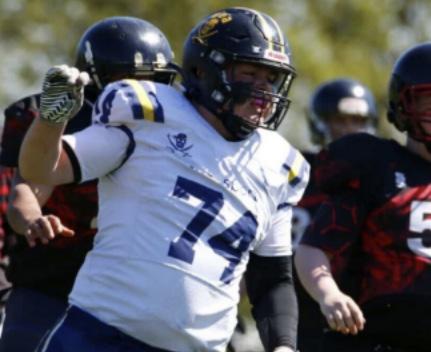
From fresher to graduate: The bittersweet final Derby Day
Grace Mahon Deputy Sport Editor
For many students at UEA, Derby Day is a crucial part of their academic year, and after recently celebrating their 12th consecutive win against Essex university, it was a day to remember – especially for the soon to be graduates knowing this was their final chance to make UEA proud. American Football’s team captain Tom Watkins reflected on his experience of his final Derby Day this year, highlighting how amazing it was to see the club so dedicated and united, leading them to a 32-0 victory, as well as being voted MVP for his incredible defending and leadership throughout the game. This season’s Derby Day game felt different to prior years, as the team have had an unpredictable season and so this win was exactly the ending Tom wanted for his team’s season.
Joining the sport in his first year, American football has formed the core element of Tom’s university experience and provided him with the opportunity to express himself outside of academics and find his group of people to rely on and connect with. It was really spe-
cial seeing everyone in good spirits on the Essex campus, and being welcomed back to UEA by so many people coming up to him with congratulations on the score was a key part of Tom’s Derby Day experience, commenting that the community coming together in such a positive way is what makes Derby Day so amazing. Tom’s advice to anyone considering joining a sport, no matter what year you’re in, is that it’s never too late, to just go for it - and if you’re looking to join American football next year the club is patient and welcoming, as they understand the vast majority of people have never played the sport before – all you need to bring is drive and the willingness to learn and there will be a role for you.
While planning to continue his American football journey after graduation, Tom will definitely be missing the weekly sports nights and the long evenings of training at a dark, rainy, and windy Colney Lane – as it’s those sessions which makes him love the sport even more. His experience with American football has been challenging, rewarding, and unforgettable, and we wish Tom the best of luck on his post-grad journey, and a huge well done for his participation.
The legacy of Salah
Lola Sears
Liverpool FC legend Mohamed Salah has announced he will be leaving the club at the end of the footballing season. So, let’s look back on how this footballer turned himself into the Egyptian king.
With 440 appearances, 257 goals and 122 assists in 9 years, it’s no wonder that Mo Salah has become a Liverpool FC legend, being regarded as one of the greatest footballers the world has ever seen.
He broke many records from day one,
setting the record for most goals scored in a 38-game season his first year at Liverpool, which he then went on to break. He is also Liverpool’s 3rd top goal scorer as well as the Premier League’s 4th top goal scorer, the highest scoring African player in the Champions League and many more.
Salah has been an inspiration for many, an iconic African, Muslim man who fought his way from a small village in Northern Africa to the biggest football league in the world. From spending 10 hours a day travelling to and from training, to becoming a Liverpool hero, He will surely never be forgotten.
Karren Brady's West Ham legacy
ure, 4 in the past 2 years.
After 16 years, Karren Brady has stepped down as vice-chairman of West Ham United. A tenure that often involved fan protests against her and owner David Sullivan, it has featured several moments of triumph and agony on the pitch. The most notable being the 2023 Conference League triumph, beating Italian side Fiorentina 2-1 for the club’s first trophy since 1980, and their first European success since 1965. The season before, they reached the semi-finals of the Europa League, knocked out by eventual winners Eintracht Frankfurt. The £105 million sale of Declan Rice to Arsenal, one of the most expensive transfer fees for an English player, happened not long after. Although that has not led to more domestic or European success via their transfer activity. Their top flight status has been at risk more often than not. They have had 10 permanent managers since the start of her ten-
A year and a half into Brady’s tenure they were relegated to the Championship, although they bounced back the following season via the playoffs after missing out on automatic promotion by 2 points.
One of the most impactful and controversial choices during her tenure was the decision to move the club from their stadium the Boleyn Ground, also known as Upton Park, after 112 years. They took up residence in the Olympic Stadium, now the London Stadium, with a lease agreement for 99 years. Dissatisfaction with the stadium has been one of the consistent reasons for fan protests.
She has also been involved in developing the woman’s team, being one of the only teams in the WSL to play their home games in the same stadium as the men’s. They reached the WSL for the first time in the 2018-19 season and have remained there since.
Spurs' hope for survival
Maddie Reader
Spurs went into the 2025/26 season on an unbelievable high, having finished the previous season with a Europa League win and a steady confident team led by Ange Postecoglou.
But now, they sit just outside the relegation zone in 17th, with only 2 points separating them and 18th place West Han. They are also on their 4th manager of the season – Roberto De Zerbi. Since joining there has been some change to Spurs: a new-found confidence was definitely seen in the Lilywhites in all three of De Zerbi’s games. Injuries however have not helped spurs this season. Key players such as goalkeeper Guglielmo Vicario, de-
fender Ben Davies and a plethora of attacking including Dejan Kulusevski, Dom Solanke and most recent Xavi Simons has limited squad numbers, but other players have excelled: Conor Gallagher scoring in the 2-1 Villa win in only his third full 90 minutes of football since signing for Spurs in the January transfer window. Brazilian striker Richarlison also scored in this game, having scored 10 and assisted 4 in 29 matches, including a 40-yard screamer which was only a consolation goal in the North London Derby (4-1 vs Arsenal)
Will spurs manage to beat the drop?
The stars do look like they will just do it & momentum is on their side. But football is a 90-minute game and we will have to wait until 24th May to find out for certain.
Ollie Wheaton

DOWN The Making of a Year
37 Narcissist's main concern (2)
by Elijah Wilkinson
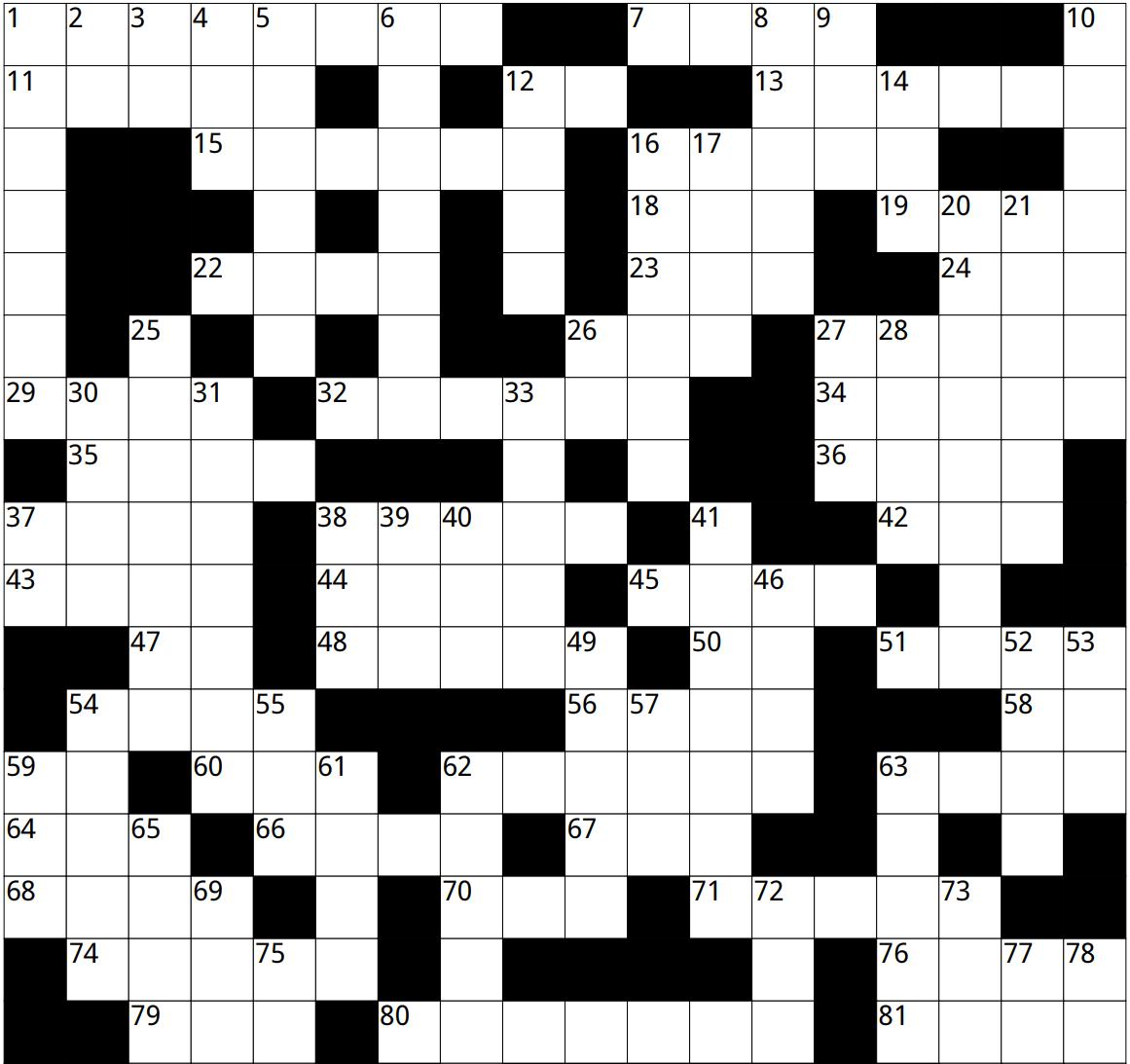
1 Publication at UEA (8)
7 Acorn droppers (4)
11 Helpful (2,3)
12 "___ I was saying ..." (2)
13 "I've got it!" (6)
15 "Pulp Fiction" co-star ___ L. Jackson (6)
16 "___ want a cracker?" (5)
18 Building wing (3)
19 Kitchen item: Abbr. (4)
22 Look closely (4)
23 Mystery writer Josephine (3)
24 ___ v. Wade (3)
26 Sci-fi suffix (3)
27 "She loves me, she loves me not" flower (5)
29 Actor Morales (4)
32 What takes the L in a famous board game? (6)
34 "Knives Out" actress Ana de ___ (5)
35 Point ___ return (2,2)
36 Hospital section (4)
37 Tick off (4)
38 "Monty Python's Life of ___" (5)
42 ___ constrictor (3)
43 French 101 verb (4)
44 Kind of year: Abbr. (4)
45 Title partner of Hobbs in a hit 2019 film (4)
47 Choice word (2)
48 ___ artist (sound effects specialist) (5)
50 Exists (2)
51 ___ mortals (4)
54 Actress Kendrick (4)
56 Rebuke from Caesar (4)
58 Hesitant sound (2)
59 Light switch position (2)
60 ___ for owl (1,2)
62 UK Purveyor of Washing Machines, Kitchen Stuffs, TVs and More (6)
63 Browser divisions (4)
64 Org. with lots of clubs (3)
66 A Mediterranean coastal municipality in the Baix Llobregat region of Catalonia, Spain (4)
67 401(k) alternative (3)
68 Witty remark (4)
70 Come out on top (3)
71 Batman's sidekick (5)
74 Granny ___ apple (5)
76 Couch (4)
79 "Who am ___ judge?" (1,2)
80 Singer Etheridge (7)
81 ___ of Fame (4)
82 Train stop: Abbr. (3)
83 Weeding tool (3)
Hi! I’m Eli the Puzzle Editor and I wanted to share my gratitude for all the love my puzzles get. Huge shoutout to our EIC, Emily Pitt-Shaw and to the rest of the team for making a fantastic set of papers over the year. If you get stuck on this crossword, check out page 2 for an editorial hint. Happy Solving!
1 Community __ (7)
2 Piece __ Mind (2)
3 Greek letter (2)
4 HTML formatting language (3)
5 Bookworm (6)
6 Colin __ writer of "Shadow of the Silk Road" (7)
8 Sparkly shoe brand, Lelli __ (5)
9 South, in Brazil (3)
10 Liqueur in some coffee cocktails, familiarly (7)
12 "Jeopardy!" host Trebek (4)
14 Scandinavian rug (3)
16 Small size (6)
17 Type of handheld gaming display (4)
20 Proper-sounding spring flower? (8)
21 Spanish inn (6)
25 Paella spice (7)
26 "No kidding!" (2)
27 "See-saw, Margery " (old nursery rhyme) (3)
28 United ___ Emirates (4)
30 " __ would seem" (2,2)
31 The Trammps sing "Disco __" (7)
33 Pre-meal prayer (5)
38 Pal 4 life (3)
39 ___ de Janeiro (3)
40 Atlas abbr. (3)
41 A dresser of white leather, someone who tawed skins into white leather (8)
46 Taiwanese laptop brand (4)
49 Turkish name to mean brave or valiant (5)
52 Slippers' color in "The Wizard of Oz" (4)
53 Canadian interjections (3)
54 Beef variety (5)
55 2008 bailout recipient (3)
57 Mon. ___ Fri. (3)
59 Middle of the Pack Alphabetic trio (3)
61 Merit badge holder (4)
62 News Editor looking at Pigeons? (6)
63 Actress Van Devere (5)
65 "My ___ True" (Elvis Costello album) (3,2)
69 Brad of "Fight Club" (4)
72 Egg cells (3)
73 Ark builder (4)
75 Heavy weight (3)
77 Rapper ___ Rida (3)
78 Ginger ___ (3)
Horoscopes
Apr 20 - May 20
Mar 21 - Apr 19
As summer looms, take a look at your finances; the stars say you will be doing well this time of year and you might want to invest those savings into a summer project, like gardening, a renovation of your room or that valuable thing you have had your eye on for the past month. When the sun is at its shiniest, consider splurging on a lover or loved one; you’ve earned it.!
As summer looms, you're looking fine and feeling great! Take that spring step downtown and show off your summer fashion. (Check out the fashion section for some inspiration!) Get creative at home and say goodbye to the old and in with the new. But be warned; shop responsibly and don’t splurge too much on anything that's not second hand; use that creative spark!

May 21 - June 20
As summer looms, the sun shines on you! It's right over your head and a celebration is in order! Speak up about things you care about, buy a brand new outfit, invent a whole new look and just strut! While you're at it, feel the summer glow of creativity beaming down and get to channelling that project you have been putting off.