Exclusive subscriber digital access via ATLAS to Concordia Journal & Concordia Theology Monthly http://search.ebscohost.com
User ID: ATL0102231ps
Password: concordia*sub1
Technical problems?
Email: support@atla.com
Ronald Mudge
Peter Nafzger
Glenn Nielsen
Joel Okamoto
Jeffrey Oschwald
Philip Penhallegon
David Peter
Stephen Pietsch
Ely Prieto
Paul Robinson
Mark Rockenbach
Timothy Saleska
Leopoldo Sánchez M.
David Schmitt
Bruce Schuchard
W. Mart Thompson
Ryan Tinetti
Jon Vieker
All correspondence should be sent to: CONCORDIA
Editor’s Note
How does one even begin to read and understand the New Testament apart from the Old Testament? Likewise, without the New Testament and its comprehensive consummation of all that is written in the Old, those first thirty-nine books are an unfinished and ultimately pointless narrative. The longer one reads and studies Scripture, the more insistent this realization becomes.
On the other hand, read as distinct yet deeply integrated testaments, they add up to more than the sum of their parts. They weave the details of Israel’s history, her patriarchs, prophets, and poets together with and toward Christ and his completion of the great story. God speaks judgement and punishment, then hope and redemption to his Israel through all the troubled twists and turns of their story. Finally, he brings forth from the melee the one, the Holy Son of the living God, as the eschatological ordering-together of all that history’s tangled threads. It is not a simplistic, open-shut narrative arc. It is complex and fraught with complication, ambiguity, and suffering. Yet it moves toward a profound focused hope in Christ, the Son of David and the Son of God.
As a professor currently teaching ministry students how to preach the Old Testament, I am myself constantly learning the depths of this treasure house of Old and New. I am continually boggled by the inner unity of the Bible; the way Old Testament texts defy my poor plodding attempts to find some kind of interpretive continuity, making their own completely unexpected prophetic “leaps” into the life, death, and resurrection of Jesus.
In this issue our authors seek to lead us into such “Old Testament discovery” with four pieces that explore the Old Testament’s vital speaking to the church today.
• Tim Saleska’s article, “Job: An Essay,” accompanies the reader through the maze of this puzzling poetic epic that is again today fascinating readers from inside and outside Christianity. He asks searching and sometimes troubling questions. He clears away popular but false theologies, which all, in the end, add up to Job’s being redeemed by God because of his piety or good works. His final suggested reading is one of those “leaps” I mentioned above, a leap in which Job himself takes us from the heart of human suffering to the very heart of hope and redemption in Jesus Christ.
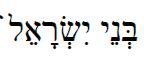
• Kevin Golden’s essay, “Sons of the Living God: Divine Fatherhood in Hosea” meditates on four passages in the prophet Hosea which speak of Israel as the
“sons of God”: 1:2; 11:1, 13:13 and back to 2:1. Despite Israel’s unfaithfulness and subsequent judgment in 1:9—where they were deemed “not my people” (Lo Ammi)—they were forgiven, restored, multiplied, and recognized as the living God’s offspring. Out of this story of redemption, the author traces the textual and historical pathway by which God called his Son out of Egypt (Hos 11:1) to make that Son the savior (Mt 2:15) of all the “Sons of the living God” (Hos 1:10). Hosea saw only in part the full meaning of his prophecy, which pointed forward in history to Christ, and we too only see in part as we await the eschatological unveiling of the “Sons of the living God” in the heavenly kingdom.
• In his article “Why Does the Old Testament Play Second Fiddle?” Paul Raabe dismantles the false devaluating judgements popularly made over the years about the “BC Scriptures” (his preferred name). Many preachers still shy away from the hard work involved in studying and interpreting the Old Testament, which spans centuries of history and culturally and theologically complex milieus. In doing so they lose so much of the New Testament’s underlying texture and substance. They miss the anticipatory sacramental Christology which sets the stage for the Gospels and provides the basis of the New Testament’s Epistles. This results in the loss of the deep typological connections which hold the whole biblical narrative together in the church’s catechesis and proclamation, and points to positive ways to redispose our thinking and attitude to embrace the Old Testament’s necessity and importance.
• Saleska’s second article in this issue, “Ecclesiastes: An Essay” takes a somewhat similar wisdom-perspective on life’s fortunes and misfortunes as his piece on Job. He reflects on the words of the “Collector” who, over the course of the book, gently returns the reader to the insight that life is not about our doing, however successful it might look or be in material terms. It is about receiving God’s gifts; being present in the moment to enjoy them and see in them glimpses of the delight we lost in Eden but will regain in Christ’s eternal kingdom.
Our authors in this issue do not seek so much to goad us into studying the Old Testament, as to revive our joy in the Old Testament. They provide insights into the narrative and theological richness waiting for those who will open themselves to it. Those who enter its stories, prophecies and poetry are ushered into the old-and-new kingdom of God, promised in antiquity and finally realized in Jesus Christ.
Stephen Pietsch Dean of
Theological
Research
and Publications
Job
An Essay
Timothy E. Saleska
Timothy E. Saleska is the Gustav and Sophie Butterbach Professor of Exegetical Theology at Concordia Seminary, St. Louis, a faculty member since 1997. His areas of interest and expertise include Hebrew and the history of exegesis. He is particularly interested in the book of Psalms and is the author of Psalms 1–50 in the Concordia Commentary Series, as well as numerous other publications on wisdom literature.
RIf creation took just six days, why does re-creation take so agonizingly long?
If your conquest of primeval chaos went so quickly, why must your conquest of sin and death and suffering be so achingly slow?
Nicholas Wolterstorff, Lament for a Son, 78
ecently, a colleague asked me why Job is not one of the central books in our curriculum at the seminary where we both teach. A student had asked him, and he wanted to know what I thought. “Theologically, it seems pretty important,” he said. I agreed. But why? Why should Christians bother with these books?
It is a question that I have asked myself a lot, and in the following essay, I have attempted to order some of my thoughts into a coherent answer. However, be advised. This essay is by no means a (my) final word. It cannot represent my final thoughts, because my final thoughts seem to take a different direction every time I read the book. But here is where I am for the moment, and I am happy to share my place with you.
What’s Love Got to Do with It?
Freud’s Last Session is a movie set in London, September 1939, a few weeks before Sigmund Freud dies. The movie imagines a conversation between Freud, the atheist, suffering terminal cancer in his jaw, and C. S. Lewis, the Christian. Near the end of their conversation, Freud sneers at God.
“Ja,” he says. “I’ll show you something [he shows Lewis a picture] . . . that was . . . that was my daughter. Sophie. She . . . she was the apple of my eye. And she died from the Spanish influenza at 27 years old. She was a mother . . . and a wife.
And my little grandson. He was plucked from us. Killed by tuberculosis at the age of five. Five years . . . Ja. What a wonderful plan for God . . . to kill a little boy. I’ll tell you something. I wish that cancer had eaten into my brain instead of my cheek and jaw, so that I could hallucinate God and seek my bloody vengeance on him.
Bloody hypocrites. There’s so much pain in this world. And that is God’s plan?”1
Freud is grieving the terrible loss of his loves, and he cannot stomach the platitudes of Christians who insist on the existence of a loving God in the face of this gruesome world. How could any God consign innocent people like Sophie and her son to such senseless suffering? If I am honest, I must admit that Freud has a point. The evidence that we are alone in the universe is overwhelming. Why continue the charade? Why indeed? William Lobdell asked himself that question and could find no good answer. Lobdell is an author and former Christian who was unable to reconcile his belief in God with the senseless suffering he saw all around him. He felt relief when he gave up his faith.
At least now when I see injustice and suffering—my guitar teacher’s beautiful boy, all of three years old, died of a brain tumor the day I’m writing this—the randomness is just that. A God in heaven didn’t sit by while the little boy died. To simply know that tragic stuff just happens is a much more satisfying and realistic answer.2
Other former Christians feel the same way.3 What do we say in response? What do we do when Freud’s and Lobdell’s arguments exert pressure on our souls?
In Freud’s Last Session, C. S. Lewis didn’t say anything in response to Freud’s argument. Freud’s utterances rendered him silent. A silence thick with Freud’s anger and bitterness. The silence spoke volumes, of course. Many of us have stood in the same awkward silence. It’s uncomfortable. But I don’t think that this is always a bad thing. Silence is not a bad place to start because, ironically, I think that it is in such silent places that Job can be best heard.
Job knew the darkness of which Freud and Lobdell speak. Job knew the suffering, the bitterness and anger. He knew the cruel hand of God. As Carl Jung says:
Without further ado Job is robbed of his herds, his servants are slaughtered, his sons and daughters are killed by a whirlwind, and he himself is smitten with sickness and brought to the brink of the grave. . . His justified complaint finds no hearing with the judge who is so much praised for his justice. . . This is further exacerbated by the fact that Yahweh displays no compunction, remorse, or compassion but only ruthlessness and brutality.4
Yet Job did not come to the angry or resigned conclusion that there is no God. Quite the contrary. And herein lies the story.
Job Responds
The book of Job begins with an introduction that sets the stage for the dialogues to follow. The introduction describes a series of strange conversations between Yhwh and Satan that end with Satan raining terrible calamities on Job. Job, of course, is unaware of the divine meeting. And God remained quite silent. So, Job suffered in the dark. Blessing had inexplicably turned to curse.
How did Job respond? Well, initially—incredibly—Job didn’t seem troubled. Job did not rail against God. He did not question God’s justice. He did not even question his suffering.
In fact, his first response, “Naked I came from my mother’s womb, and naked shall I return. The Lord gave, and the Lord has taken away. May the name of the Lord be praised,” finds such wide admiration that it is still today one of the scriptures we read at a funeral. The author himself approves, “In all this Job did not sin, and he did not give an insult to God (Job 1: 21–22).”5 And yet . . .
Job’s second response was to his wife while he was sitting in ashes scraping the boils that had erupted from head to toe. She had had enough, “Do you still hold fast to your integrity? Curse God and die.” But Job does not waver, “You speak as one of the foolish women would speak. Should we accept the good from God and not accept the bad?” Again, Job shows remarkable resilience. And again, the author observes, “In all this Job did not sin with his lips” (Job 2:9–10; italics mine).
In both responses, the author indicates that Job spoke as upright and pious people should speak, even in extreme circumstances. Job was a wise man. And wise men assume that there is a bigger picture in which all that happens in this world makes sense and squares with the belief that the almighty God rules the world with justice and wisdom. If it was a mark of impiety to criticize God, as the author implies, Job remained beyond reproach. Perhaps this is why Job accepted God’s actions without complaint.
Or, perhaps Job responded to his suffering as he did because his piety had always worked well for him in the past. The prelude to the book implies that Job’s upright
and blameless life, his fear of God, and his avoidance of evil had brought him riches and fame. He was the richest of the rich, the greatest of all the people of the east (Job 1:1–3). Perhaps he was holding on to his stature and piety to see him through this moment as well.
At first glance, Job’s responses do look admirable, even heroic. But Job’s responses sound like platitudes to people like Freud and Lobdell and drive them crazy. Who are we kidding here? Frankly, I don’t buy Job’s responses either and in fact, I think that they have caused more problems than they solve.
I say this in spite of the fact (or maybe because of the fact) that they have become so universally admired that they serve as models for how God’s people are taught to respond to suffering and death. Isn’t it the case, ironically, that Job’s responses are so well known precisely because we impose them—and thereby Job’s piety—on each other at funerals?6 By doing this, don’t we imply that in life’s darkest moments, these are the things we should say to each other—these are the thoughts we should use to comfort ourselves in the midst of suffering? But doesn’t this reinforce the idea so common among us that we should all be little Jobs ourselves in the midst of our own pain or grief?
No, I am not enamored with Job’s responses. After all, the book doesn’t end at Job 2:10. This in itself suggests that there is a problem. It is obvious that Job’s responses don’t fit the horrors of his situation, and so he sounds inauthentic. It is as if he follows a script—he plays the part of a pious, righteous man—a part which he had learned and up to this point in his life had played very well. When I read on, I see that in his initial responses Job suppressed his fear and anger and grief and doubt as if these emotions were not part of the experience of his suffering and were not even part of him. I have trouble empathizing with this character.
Finally, from a theological perspective, Job’s responses imply that he thinks the all-wise God had his good reasons for doing what he did. That’s why in his first response he says, “May the name of the Lord be praised.” (“Praise” suggests that Job is thankful for what God has dealt to him.)
And in Job’s second response, he admonishes his wife for her foolish speaking. Job’s rush to defend God suggests that he thinks God’s actions can be defended. However, the trouble with this is that we already know that God was incited by Satan to destroy Job without reason (Job 2:3).
So, there is no broad picture into which Job’s suffering fits reasonably with our notions of a just and wise God. The God we meet in these initial chapters is capricious and unpredictable. “No reason” is the answer to the question “Why?” This is a daunting description of God, different than how many Christians (but not atheists) have learned to think about God. An uncomfortable truth, to be sure. What do we do with this truth? Perhaps the debate that follows sheds some light.
Job Goes Through a Wringer
In chapter 3, Job begins to speak differently than he did in his initial responses. In Job 2:10, the author said that Job did not sin with his lips. But starting in chapter 3, it’s the lips that change. What happened? William Hulme suggests that it is not uncommon for people who have the reputation for being models of piety and uprightness to give the accepted pious and reverent responses to their calamities. In this way, they can be strong for those around them, and they can continue to serve as examples (i.e., moral examples). However, what was going on in Job’s heart may have been different, and this accounts for the difference in Job’s speeches.7
This may be true. But in addition, it may also be the case that Job was still worried about avoiding sin (cf. Job 1:1–5), and he thought he could avoid it by speaking as the pious person he was. He may also have thought that God would be placated by speaking “correctly” (in contrast to the foolish talk of his wife). Or maybe he was worried that God would get angrier if he challenged God.
I don’t think that Job’s initial responses were honest because he didn’t say what was really in his heart. His lips and heart didn’t match. Maybe he was more worried about appearances and underestimated God’s ability to read his heart. Or maybe Job didn’t yet see that God was his big problem, and this is what needed to change. Maybe Job needed a change in perspective.
At any rate, through his own suffering and the speeches of his three friends, the truth was finally wrung out of Job. Psalm 39 can serve as a commentary on the change in Job’s speech. In Psalm 39, David was determined to guard his mouth and not sin with his tongue. He was silent as he watched the wicked around him. But he could not keep up the pretense. He says,
I was mute—totally silent I kept silent beyond good and my pain worsened
My heart became hot within me
In my groaning, a fire was burning I spoke with my tongue.
(Psalm 39:2–3)
I think that this is what happened inside of Job. What comes out of David’s mouth, especially in Psalm 39:9–11, 13 also reminds me of Job.
I am mute—I do not open my mouth
For it is you who did it
Remove from upon me your blow
By the attack of your hand I am finished
With punishment for iniquity you chastise a person And you melt his pleasure like a moth
Surely all humans are mere breath. Selah
Look away from me so that I might smile Before I go and am no more.
When Job finally speaks his mind, he does not reject God, nor does he try to defend him. Job takes God to task. He realizes that the almighty God is the problem. And so, he wails and complains to God throughout his speeches. He curses his birthday. He loathes his life and longs for death. He refuses to restrain his mouth. He questions God and belittles the friendly advice of his friends. He is not interested in explanations. He wants to contend with God over the unjust way he is being treated.
Still today, there are many people in our world who choose to turn a blind eye to the horrible nature of human suffering. The suffering of others doesn’t seem to bother them. And there are some in the church who would prefer silence to the things Job says to or about God. But in Job we see both the reality of his suffering and his determination to give a voice to his utter anguish. Indeed, both suffering and speaking belong together. They cannot be separated because to deny the one is to diminish the other.8 In his speeches, Job asserts both the reality of his suffering and his determination to speak.
Job knows that his suffering is not because of some sin he committed, the randomness of the universe, bad luck, or because God decided to remain uninvolved. He knows that he is suffering because God is attacking him. At one point he begs God to let him be, “Are not my days few? Then cease, and leave me alone, that I may find a little cheer” (Job 10:20).
Job saw a different truth than do most modern people. The truth is not that God doesn’t exist or that God is sitting back allowing suffering, but as Oswald Bayer says,
[God’s] hiddenness besieges us in the experience of blind and furious natural catastrophes, irredeemable injustices, innocent suffering, starvation, and murder, in each and every war, and in the experience of incurable disease. “God” remains in these things . . .
This is the same God that others have experienced throughout history, and Job leans into the truth that is hard for people to stomach:
[God] has torn me in his wrath and hated me
He has gnashed his teeth at me
My adversary sharpens his eyes against me.
I was at ease, and he broke me apart
He has seized me by the neck and dashed me to pieces
He has set me up as his target
His archers surround me
He slashes open my kidneys and does not spare
He pours out my gall on the ground.
(Job 16)
Job’s Friends Respond
God remains silent through Job’s verbal assaults. This is another difficult truth. Not only does God bring the suffering, but as the Watcher of Mankind (Job 7:20) he silently watches as it unfolds. In contrast, Job’s wise friends can’t stop talking. Like some modern Christians, these men are uncomfortable with the way Job talks to and about God. Job offends them, and they feel the need to correct him. In their eyes, God is not the problem. Job is the problem. You could say that they were less concerned about saving Job from God and more concerned about saving God from Job.
For example, near the end of the speeches, Elihu, even says, “Would that Job were tried to the end, because he answers like wicked men. For he adds rebellion to his sin; he claps his hands among us and multiplies his words against God” (Job 34:36–37). They believe that if Job tweaks his behavior, and if he talks to God better, he could turn things around to his favor.
In their advice, these theologians operate with some wrong assumptions about God. For example, when Eliphaz says, “Has not your reverence been your confidence? And the integrity of your ways your hope? Remember: who that was innocent ever perished? Or where were the upright cut off? As I have seen, those who plow iniquity and sow trouble reap the same” (Job 4:6–8), he advises Job that he simply needs to stay the course. His piety is his hope, and sooner or later God will end his suffering. However, putting your confidence in your pious life is to misunderstand both the nature of sin and especially the function of the law. Eliphaz assumes that sin is mostly a matter of external deeds—doing this rather than that—correctable and avoidable behaviors. And because of this, he thinks that God’s law functions as a shield—avoiding sin is possible, and obedience can keep evil (sin) and evil (disaster) away from our door. The fact that Job has been a blameless, upright, and God-fearing man (Job 1:1) should give him all the hope he needs. Eliphaz assumes that Job can win back God’s favor with good behavior.
They believe that if Job tweaks his behavior, and if he talks to God better, he could turn things around to his favor.
This is the dreadful mystery of the book of Job.
But Eliphaz has forgotten that real evil doesn’t only come from the outside of us, but from our insides.
“Out of the heart come evil thoughts, murder, adultery, sexual immorality, theft, false witness, slander” (Mt 15:19). The enemy is within the gates. And Eliphaz doesn’t realize that the law isn’t a shield that gives us a way to keep evil out. It’s a light that illuminates the evil in our hearts. The law is a goad that spurs sin into action and then accuses the sinner when we fall (Rom 7:7–12). The law brings wrath (Rom 4:15). The integrity of someone’s ways does not offer hope when the heart is the root of the problem, and obeying the law doesn’t offer the saving guarantee he thinks it does.
Another bad assumption of Job’s friends is that everything that happened to Job can be explained—and so God’s actions can be explained—within the framework of the Deuteronomic Law’s system of rewards and punishments—the broad picture that I mentioned at the beginning of this essay.9
Job’s friends assume that God does not operate outside the framework of his own Law. Therefore, God always balances his mercy with his justice so that in the end, everyone gets what they deserve. They also assume that it is the job of theologians to balance the scales of justice and mercy for someone if, in that person’s life, the scales appear to have become unbalanced. They assume that at the heart of God is mainly his righteous law, his sense of justice according to the law, and he would never violate its precepts for administering justice.
This is why Bildad says, for example, “Does God twist justice? Or does the Almighty twist what is right? If you would diligently seek God and seek compassion from the Almighty, if you are pure and upright, surely, then, he would protect you, and he would restore your rightful estate” (Job 8:3, 5–6). And Elihu, the budding theologian, says the same thing, “In truth, God does not do evil. And the Almighty does not pervert justice” (Job 34:12).
Their explanations as to why evil has come to Job also offer a way out for him. Stop sinning. Pray to God. Get rid of the sin in your midst, God will respond kindly, “If you prepare your heart and spread your palms to him, if there is iniquity in your hand, put it far away, and do not let iniquity dwell in your tents . . . and (your) life will rise (brighter) than noontime, (your) darkness would be like the morning,” Zophar says (Job 11:13, 14, 17). The remedy is reasonable, and it is obtained within the framework of God’s own Law. Job’s friends believe that Job has it in his power to turn God’s wrath to mercy.
Job’s friends talk this way throughout the dialogs. They assume that not even God is above his Law. This is why God’s treatment of Job is comprehensible to them. There is a reasonable explanation for it, and they do not hesitate to let Job know the reason: God is afflicting him because of his sins.10 They can justify God much easier than they can justify Job.
Truly, Job’s friends have a point. After all, God had given them his Law and promised blessings if they faithfully obey God and curses if they disobey (Dt 28; Prv). Were they not simply living within the framework that God had given them?
But Job comes to see that none of this is right. God’s treatment of Job is not explained in terms of the Law because he kept the Law better than anyone. Satan and God both agree that Job was a blameless and upright man, a man who fears God and turns away from evil. He was not guilty of some triggering transgression for which God is brutalizing him. Job protested that any sin he may have committed did not explain why God had turned against him. He protested that God was not acting reasonably, according to the dictates of his own Law, but irrationally, incomprehensibly, outside the conditions he established in his Law (Job 9). This is the dreadful mystery of the book of Job. God chooses to work outside of the framework that he has given in his word. He works without a word, and so God’s actions are unexplainable.
Therefore, contrary to the advice of his friends, Job knew that he had no power to move God to show him mercy. There was nothing he could do that would ensure God’s favor. God was crushing him, and he had no wriggle room.
If I sin, you watch me and do not acquit me of my iniquity.
If I am guilty, woe to me!
If I am in the right, I cannot lift up my head, for I am filled with disgrace and look on my affliction.
And were my head lifted up, you would hunt me like a lion and again work wonders against me.
(Job 10:14–16)
How many are my iniquities and my sins?
My transgression and my sin—tell me what they are.
Why do you hide your face and consider me as your enemy?
(Job 13:23–24)
Know then that God has put me in the wrong and closed his net about me. He has kindled his wrath against me and counts me as his adversary.
(Job 19:6, 11–12)
The End of Job
God finally speaks to Job from a windstorm. The storm symbolizes God’s wrath and judgment (Jer 23:19–20; Jer 30:23; Is 29:6; Ez 13:11–13; Zec 9:14).11 Thus, the tempest signals that before God even speaks, we should know that God’s posture toward Job is going to be threatening, not compassionate.
Indeed, God does not comfort Job, nor does he answer any of his questions (Job 38–40). Instead, God relentlessly questions Job about his ability to do anything. Who created the universe and everything in it? Was Job there? Did Job make any of this? God’s point is that he made nature, natural law, and everything else. But he is outside of it all. “Shall a faultfinder contend with the Almighty?” he asks. “Will you even put me in the wrong? Will you accuse me of wrong so that you may be in the right?” (Job 40:2, 8).
God can’t be measured by any law. Nor does he always operate according to our definitions of “just” and “unjust.” Nor does he extol the virtues of hard work and pious living as the way to prosperity.
At the end of his first speech, God says to Job, “Shall an accuser contend with Shaddai? Shall God answer a rebuker?” (Job 40:2) Like every one of God’s questions, the answer to this one is “No.” Job responds, “Look, I am insignificant. How can I respond to you? I put my hand over my mouth. I have spoken once, and I will not answer; and twice, but I will proceed no further” (Job 40:4–5). At this point, it seems as if Job is done.
But God isn’t finished with Job. After Job’s reply, for almost two additional chapters, God continues to challenge Job,
Adorn yourself with majesty and dignity; clothe yourself with glory and splendor. Pour out the overflowings of your anger; and look on everyone who is proud and abase him. Look on everyone who is proud and bring him low and tread down the wicked where they stand. Hide them all in the dust together; bind their faces in the world below. Then will I also acknowledge to you that your own right hand can save you.
(Job 40:10–14)
God is reminding Job that judgment and salvation belong to him alone. Not human creatures. In his Comm on Psalm 51, Luther describes the God that I see in these chapters. He says that the absolute God is like an iron wall, against which we cannot bump without destroying ourselves (LW 12.312).
Job has hit that wall. Yet, even now, he is not done talking. Job speaks one more time in Job 42:1–6. How does he respond? Most translations lead readers to assume that here at last Job acknowledged the error of his ways and repented. Job 42:5–6 seems to make this clear, “I had heard of you by the hearing of the ear, but now my eye sees you; therefore, I despise myself and repent in dust and ashes” (ESV; italics mine). The
translation suggests that Job realized that he was in the wrong, that he was a guilty sinner, and that he was brought to his knees in repentance.
However, things are not that simple. In Hebrew, Job’s final words are enigmatic, and their interpretation debated. I am one of those who does not think that Job repented of wrongdoing or wrong speaking, nor that he despised himself. Instead, along with some other readers, I think that Job’s words showed defiance and resistance, not self-loathing and repentance.
In Hebrew, Job’s final words are enigmatic, and their interpretation debated.
First, in Job 42:4, when Job says to God, “Hear please, and I will speak. I will ask you, and you help me to know,” he is not using his own words. He is echoing (mimicking?) God’s own words back to him (Job 38:3; Job 40:7). This is a shockingly bold way to talk to the almighty God, especially if you are truly penitent.
In his final response, Job throws caution to the winds, “I have heard you by the hearing of the ear, but now my eye has seen you. Therefore, I feel contempt, and I take pity on dust and ashes” (Job 42:6; italics mine). The translation takes its cue from Edward Greenstein, who translates this line as, “That is why I am fed up; I take pity on dust and ashes (“dust and ashes” is a metaphor for mortal human creatures).”12
I agree with those who think that after everything that happened to Job and everything that God said to him, Job continues to show his frustration and even resistance to his plight (which is the human plight).
I am intrigued with this interpretation because it better accounts for the oddities of the Hebrew text. I also think that it fits the theme of the rest of the book in a way that the traditional translation does not. The book of Job is not about Job’s sin and Job’s need for repentance. It is not about Job’s need to recognize that he really was a sinner.
Job was dealing with a God who turned against him for no reason (Job 2:3). From the perspective that the book gives us, Job suffered, not because he was being punished, as Job’s friends insisted, but because of a bet between God and Satan. He was the object of a test. Nothing more. Certainly, nowhere else in the Bible are the lines between Satan and God blurred as they are in this book.13
How do you respond to the agonizing struggle into which God thrust Job? With passive acceptance? With platitudes and pious clichés? The book of Job, the lament psalms, and even the prophets (cf. Jeremiah) say differently. In texts like these,
The wrath, the destroying fury of the Creator of all things, the Maker of life (1 Tm 6:13), in which fury he brutally destroys life, is held before him, bewailed before him in complaint, as manifested paradigmatically in Job 16:7–14, Lamentations 3:1–18 and Psalm 88. As he ascribes the savage destruction of life that
has befallen him to whom he is complaining . . . the one who prays is not seeking any justification of, or explanation for, these dire circumstances. He will not simply accept that which has befallen him by resigning himself finally and entirely to some wise and reasonable providence; . . . Rather, the one who prays, the one who laments and complains, manifests precisely his lack of understanding for that which he is experiencing, and thus asks, “Why?” (see, e.g., Ps 22:1). It is precisely his impatience that we see manifested as he asks: “How much longer?” (Ps 13:1f.). The reality is unintelligible, and he calls it into question. Rebellion and resistance—not resignation!14
Instead of forbidding us to utter the dark thoughts of our hearts, God wants us to hide nothing. He wants honesty not duplicity, rebellion and resistance not resignation, authenticity not piety.
I think this partly explains why God approved of Job’s tirades and not the speeches of Job’s friends. God said to Eliphaz, “My anger burns against you and against your two friends, for you have not spoken about me truthfully, as my servant Job has” (Job 42:7).
The phrase “you have not spoken about me truthfully” reflects the Hebrew phrase, . However, the phrase is ambiguous because followed by the preposition normally means “to speak to someone.” It introduces person-to-person speaking. Indeed, Job speaks both to and about God in his speeches.
The book of Job is not about Job’s sin and Job’s need for repentance.
I think that God approved of Job, not only because Job spoke correctly about him, but because Job spoke truthfully (or honestly) to him.15 Job spoke from his heart, without hiding his true thoughts, no matter how angry or ugly. Rather than suppressing his words and his feelings, like his friends advised, God is always more interested in our hearts than in external acts of piety.
The Enigma of the Epilogue
After commending his servant, Job’s story moves to a surprising and swift resolution. God restored Job’s fortunes (Job 42:10–17), giving him even more in his latter life than he had in his former life. Job got double his livestock. And he got seven more sons and three more daughters, the most beautiful of women, whom he named “Turtledove,” “Cinnamon-flower,” and “Little make-up box.” Life went back to
the way it was at the beginning of the book. Job lived 140 more years, saw four generations of his offspring, and then died, an old man full of days—like the patriarchs Abraham and Isaac (Gn 25:8; Gn 35:29). Like King David (1 Chr 23:1). In the story, peace is restored.
But not in me. The ending brings me no peace because I have no idea what the point of it is. I confess that after entering into Job’s extraordinary struggle with God over the problem of innocent human suffering, a wrestling match unfolding in fortyone chapters, the quick two paragraph wrap-up of the epilogue confuses me. What’s the point?
It has taken me a lot of work to get to the end of a complex, dense book— mysterious and captivating. But it is that complexity—the grand poetry—the powerful speeches—that has kindled my expectation that at the end the author will give me an insight—some sort of truth about God and suffering—something that gives me, and maybe the human race—some . . . understanding?
Yet, the end provides no such thing. Of course, everything in me is tempted (by Satan?) to conclude what seems most reasonable: that Job’s fortunes were restored because he was, as the book says, a righteous man who avoided evil, and God did not overlook that. In spite of everything Job suffered, in spite of what his friends said, at the end of the day Job was more innocent than guilty. The good that he had done outweighed the bad, and God finally rewarded him as the scales of justice demanded.
God is always more interested in our hearts than in external acts of piety.
The lesson for us then would be that hope is to be found in the integrity and piety of our lives. The lesson would be that God does help those who help themselves, even though into everyone’s life a little rain must fall. Suffering and misfortune may come, but stay the course, and eventually God will turn the universe in your favor.
However, if I have followed the argument of the book correctly, I know that this can’t be right. I have learned that God is powerful. I have learned that God is not always just, at least as humans usually conceive of justice. I have learned that there is no clear relationship between one’s faith, one’s faithfulness, one’s pious actions, and favorable consequences in life.
Neither Job’s suffering, nor his piety, nor his moral behavior guaranteed blessings from God. I learned that God isn’t impressed with pious words, nor does he necessarily reward people because they are diligent in following his ways. You can’t work your way into being God’s servant, apparently.16 To think that God operates in this way is to think like Job’s friends and to incur God’s wrath, not his mercy.
In other words, it can’t be that Job’s friends were right after all. The entire
Should I conclude that a good ending makes up for all the evil that went before?
book has argued against it. In this life, don’t count on the law’s scales of justice balancing out. Don’t think that because you have played by the rules, God will too. Don’t think that God will be soothed by your sacrifices, personal or otherwise.
So, if the rest of Job resists these conclusions, what is the point of the epilogue? Should I conclude that a good ending makes up for all the evil that went before? Because Job gets everything back and more, his suffering was of no consequence? Que Será, Será? All’s well that ends well? Is this the motto of Job? And of my life? Really?
That’s how a fairy tale works—not real life. Does getting ten more children really make up for the loss of his other children? Does getting double the cattle make all his suffering worth it, or give meaning to it? The problem is, we don’t read Job as a fairy tale. Job’s plight has gripped people through the ages, not because it’s such a well-written yarn, but because his suffering and the cries from his heart capture actual human experience. Terrible things happen in our world every day . . . to us. The injustice of it all is overwhelming. And as much as we want it to make some sense, it does not.17
Two Suggestions
So, what do we do with the ending of Job? I am left with two possibilities. One simple suggestion is to think of the ending as a test of us, the readers.18 Job has been tested throughout the book and has no idea why he suffered as he did. God hid his reasons from Job. We, on the other hand, have been in on the reasons from the start. Job’s suffering is all the result of a bet God made with Satan. As a result, we have observed the test of Job but have not been part of the test. We have been “in the know.” But now, we are being tested. This time, God blesses Job, but his reasons for such blessings are withheld from us. We don’t know why God blessed Job this way. We are not “in the know.”
How will we respond to the test? On the one hand, if you think the truth to be learned is that God blessed Job for his piety after all, or that Job’s happy ending makes up for all his suffering, then you are a fool and have learned nothing through seeing Job’s experience.
If, however, you learn the truth that none of the things that happen to us in our lives—neither our status, nor our wealth, nor our fortunes, nor our misfortunes—tell us anything about how God regards us or how he truly feels about us, then you are wise and have learned the lesson of the book.
This, of course leads to the obvious question, “Well, if that’s true, how can we know how God feels about us?” What’s the answer to that question?
My second suggestion is to take a closer account of the literary structure of the book. As much as I resist concluding that Job is a fairy tale, there is no escaping the fact that the ending gives Job the structure of one. Most fairy tales follow a comedic structure, in contrast to the structure of tragedies. The literary critic Northrop Frye explains that in comedy, as opposed to tragedy, there is often some gimmick that the writer has thought up whereby the action is suddenly twisted from complication and trouble to a happy ending.19 This is certainly the case with Job.
In comic action, our normal reaction to the twist at the end is to say that this kind of thing happens in stories—fairy tales—but not real life. Our acceptance of it is based on our own preferences for a happy ending, but not on our sense that this could actually happen in the normal scheme of things. “Fate,” Frye says, “specializes in practical jokes in bad taste: fate very seldom pulls out a card from the pack to help you.”20
So, according to the way it is structured, Job is a comedy. All’s well that ends well. True of the structure of comedy but nonsense as a statement about human life—at least as we normally conceive of our lives. For as Frye notes, in real life, even in a patriarchal society like Job’s, a father who had lost three daughters would not be completely consoled by three brand-new daughters, no matter how beautiful or impressively named. The loss of his daughters would be a permanent scar on his existence. 21
So, the comedic ending of Job simply reinforces my frustration. And there seems to be no relief . . . Or, maybe, I need to think in another way about the book. Maybe my perspective on Job is too narrow. Northrop Frye, for one, thinks I need to take a broader view. He suggests that even though Job is classed as Wisdom literature, I need to adopt a prophetic perspective to understand it.22 Perhaps Job, he says, made the leap of a prophet from hearing to seeing. Perhaps Job was granted a flash of prophetic insight and the knowledge that even in the midst of death we are in life.23
Frye imagines that if we had seen Job in the middle of his restoration to prosperity, perhaps we might not have seen his multitudes of livestock, his brand-new sons and three beautiful daughters. We might have seen nothing but a beggar on a dunghill. And yet that beggar on that dunghill would have seen something that we have not seen and would know something that we do not know. If so, Frye says, the credibility of the restoration of Job would have to involve different levels of existence.24 That’s interesting. Please indulge me while I think a little about that . . .
In his book Zero at the Bone, Christian Wiman describes an afternoon he spent in a cancer chair receiving an infusion for his immune system. On this particular day, he used the time to prepare a lecture for one of his classes. The title of his class was “Suffering,” and his lecture was on the book of Job. As he’s thinking about the class and his lecture (and his own life), it occurred to him that he didn’t know how to talk about suffering without talking about God.25
His words have stuck with me because I keep wondering if Christian Wiman’s experience touches a bigger reality. Perhaps none of us can talk about suffering without talking about God. In the imagined conversation between Sigmund Freud and C. S. Lewis, Freud didn’t do it. William Lobdell certainly didn’t do it. And of course, neither did Job, nor his friends.
People talk about God. People talk about and to God when suffering comes. Most of the book of Job is people talking about God with a man sitting in dust and ashes, scraping his boils with a piece of clay. It’s a bad situation.
But ironically, when God finally talks to Job he doesn’t speak to Job’s suffering.26 He’s the one voice in the book that doesn’t speak to the subject! I guess he doesn’t want to. He praises his works—the sea, the stars, the planets, the animals. He is especially proud of Behemoth and Leviathan. But he ignores the elephant in the room. God talks about God without talking about suffering. It is impressive poetry. But his silence is maddening.
About that silence. I do not understand it. Nevertheless, as a Christian, in the face of all the unanswered questions, and God’s apparent callousness, and the anger and despair that suffering evokes, I try to remember that this is the same almighty God whom I am asked to trust and fear and love . . . To so many people, to love such a God is scandalous.
As scandalous as it seems, I am also struck by the humbling recognition that I can only begin to do this—I can only begin to love this God—because I have heard another Word from him, another Word that God has finally spoken to us, and—at the end of the day, I believe—that he speaks to our suffering world: “In these last days, God has spoken to us by his Son whom he appointed the heir of all things, through whom also he created the world” (Heb 1:2).
Now, God’s in-the-flesh Word certainly does not explain our incomprehensible suffering or somehow give suffering meaning or nobility. God did not answer Jesus’s question from the cross, “My God, my God, why have you forsaken me?” He gave no enlightenment to David’s anguished utterances, “Why are you so far from saving me, from the words of my groaning? O my God, I cry by day, but you do not answer, and by night, but I find no rest.” If God said nothing to them, I don’t expect that he will say anything to us.
No explanations. But we do get something else. Something as wonderful as it is mysterious. We get a resurrection. We hear that Jesus, God’s Son, also experienced a sudden reversal of his fortunes when God raised him from the dead. Instead of explaining the suffering of his own Son, we hear that God brought him through it and ended it—through the judgment, through his wrath, through the darkness—to a new and eternal life.
And God asks us to trust that in Christ, he has spoken a promise of resurrection to us. “This is it,” he says. “Resurrection is what I promise you. No explanations needed.
No need to justify my ways with you. But I will give you this promise. In the name of my Son, I do promise to reverse your fortunes too, to raise you too, to restore you to a new and abundant life too. That’s it. You will get no other word from me on this topic. Trust me.” It is as Jesus himself says, “I am the way and the truth, and the life. No one comes to the Father except through me” (Jn 14:6). If true, it would mean that our lives are the ultimate comedy.
Obviously, the wait for God to deliver on that promise has grown long, and patience wears thin. As Christians living in this present age, we can feel it. God’s silence in the face of unthinkable suffering is deafening. How can those of us who for now sit in a pretty good place (but after reading Job, should at least realize that our place is more precarious than we might think) avert our eyes from the endless beggars sitting on dunghills testifying to the unendurable misery that is their life?
We should not. However, at the same time, our gaze should also not turn from the vision that our faith in Jesus enables us to see. This is why I resonate with Frye’s imaginative idea, though he does not draw the same conclusions from it that I do. Perhaps Frye is right. Perhaps Job, that miserable beggar sitting on a dunghill, saw something that we have not seen and knew something that we do not know. A reality that involves a whole other level of existence.
What no eye has seen, nor ear heard, Nor the heart of man imagined, What God has prepared for those who love him.
(Paul, 1 Corinthians 2:9)
On one level, the epilogue with its sudden reversal is one example of the larger scriptural truth that this is the kind of thing that God does for his children. In Israel’s history, God repeatedly did for his people what he did for his Son. Sudden reversal was the dynamic of their history. Israel’s poets and prophets celebrate God’s past reversals of their fortunes and urge Israel to trust that what he did before he will do again. Israel’s story is indeed a serious comedy.
But perhaps, on another level, Job was also seeing that distant reality waiting for him (and all of us) on the far side of Jesus’s resurrection. Ironically, it was Job, a non-Israelite man, who in the midst of his suffering said most famously, “I know that my Redeemer lives, and at the last he will stand upon the earth. And after my skin has been thus destroyed, yet in my flesh I shall see God (Job 19:25–28).”27 It is easy to overlook Job’s faith. But maybe it is Job’s faith that enables the vision suggested by Frye.
It can be argued that the epilogue itself invites us to see it as a vision of the eschaton.28 The materialistic ending in itself, is not an insurmountable problem because in biblical thought there is a unity between the material and the spiritual that
we often forget. Wisdom literature, like Job, tends to use a nature or creation base to discuss spiritual realities, and this unity extends to the indissolubility between the immortal soul and the resurrection of the body.
In regard to the details of the epilogue itself, the phrase in Job 42:10 that God “restored the fortunes of Job” translates a phrase that is commonly used in the Bible to refer not only to a this-world reversal of fortune, but also to the ultimate, eschatological turn at our Lord’s second coming. If so, then the doubling of Job’s possessions emphasizes the magnitude of God’s mercy. It can be described as “a kind of resurrection in flesh,” a visible, material, historical mark of Job’s reconciliation with God. On the other hand, Job’s children are not doubled on the presumption that this is because they were never really lost to him.
The one reference to Job in the NT also seems to suggest we see in Job the leap from hearing to seeing that we will all experience on the last day, “Be patient, therefore, brothers, until the coming of the Lord . . . Behold, we consider those blessed who remained steadfast. You have heard of the steadfastness of Job, and you have seen the end (τέλος) of the Lord, how the Lord is compassionate and merciful” (Jas 5:7, 11).
The LXX (Greek) translation of Job has an addition to Job 42:17 [17a] that extends the promise of the resurrection to Job himself: γέγραπται
(and it is written that he will rise again with those whom the Lord raises up).
Finally, other wisdom texts reinforce the resurrection intent of the ending of Job (Pss 49, 73, 139; Dn 12). As Hummel says, “apparently wisdom reflection on the problem of innocent suffering was one of God’s major means in nourishing and preparing for His final resolution of the problem of evil in the resurrection of His Son.”
The final resolution of the problem of evil? “Resolution,” in this context means “the solving of a problem.” Can it be that Christ’s resurrection, and our resurrection, offer us a solution to the intractable problem of suffering so complete that all the grief, and regret, and pain and injustice and anger is burned away in its wake (1 Cor 3:13–15)? The ultimate solution really is ultimate in the sense that we will experience a joy and peace that expels every shadow or cloud from our hearts? All those old questions will die away? All the old problems that perplex and trouble us will forever loosen their grip? Such a reality, as Paul says, is impossible for our hearts to imagine. To think that the all’s well that ends well ending is the Christian’s sober reality—well—I am eager to see God do that.
2 William Lobdell, Losing My Religion: How I Lost My Faith Reporting on Religion in America and Found Unexpected Peace (Harper, 2009).
3 For recent testimonies of people who lose their religion, see, Jessica Grosse, “Why Do People Lose Their Religion? More Than 7,000 Readers Share Their Stories,” NYT, June 7, 2023, (on-line).
4 Carl Jung, Answer to Job (Princeton University Press, 2010), 14.
5 The Hebrew word is , and its meaning is uncertain. The context suggests that, in contrast to giving God praise, it involves saying something unseemly or offensive to him.
6 I am thankful to my friend and colleague, Dave Schmitt, for his thoughts and ideas in this part of my essay.
7 William E. Hulme, Christian Caregiving: Insights from the Book of Job (Concordia Publishing House, 1992), 20.
8 Again, I am thankful to my colleague, Dave Schmitt, for his observations on this point.
9 In Northrop Frye, The Great Code: The Bible and Literature (Harcourt, 1982), 49, Frye calls this legal system of rewards and punishments the legal metaphor which runs through the Bible and sees mankind as always under trial and subject to judgment based on the record of what he/she has done.
10 Bildad makes no bones about it when talking about the death of Job’s children, “Does God pervert justice . . . If your children have sinned against him, he has delivered them into the hand of their transgression” (Job 8:3–4).
11 Edward L. Greenstein, Job: A New Translation (Yale University Press, 2019), 165, cites Nahum 1:3–6 and Psalm 18:8–16.
12 The translation of Job’s last words is neither obvious nor uncontested. The Hebrew text is, like much of Job, enigmatic. For example, the word translated by the ESV as “I despise myself” , usually means “to reject,” and takes a direct object. But in Job 42:6 there is no direct object, no “myself.” (See Job 7:16; 34:33; 36:5 for other examples of the same word used without a direct object.) Thus, translators will either have to supply a direct object based on their best guess, or they will have to come up with another English gloss that makes sense in the context. My interpretation is based on Edward Greenstein’s understanding of this text. Greenstein thinks that Job is expressing his disdain for a deity who cares so little for his people. Job, rather than acquiescing, remains defiant. He translates Job’s final words as, “That is why I am fed up; I take pity on ‘dust and ashes’” (cf., Edward L. Greenstein, Job: A New Translation [Yale University Press, 2019], 185). In Greenstein’s translation, “dust and ashes” refers to wretched humanity (cf., Gn 18:27; Job 30:19). For all the interpretive possibilities of this verse see David J. A. Clines, Job 38–42 WBC (Thomas Nelson, 2011), 1205–1211.
13 Indeed, this God, as Oswald Bayer says, “remains for the moment so dark and vague, that he can be mistaken for the Devil (LQ [Vol 23, 2009], 91).”
15 Most translations translate the phrase in Job 42:7, something like, “You have not spoken rightly about me.” But normally means “you spoke to me.” The participle is more difficult. With Greeenstein, Job, 187, I take it as an adverb “honestly” because I think that the point of what God is saying is not only that Job spoke correctly about God theologically, but also honestly or truly to God. That is, he spoke what was in his heart and didn’t speak duplicitously. Nor did he cover up what he was really thinking.
16 God calls Job “my servant” in Job 1:8, 2:3, and 42:7–8, but he does not ever call Job’s friends his servants.
17 Clines, Job 38–42, Vol. 18b, 1230, notes that the epilogue seems so incongruous with the rest of the book that many scholars wonder if it really belongs here or if it is a latter addition designed to save God and avoid the difficult questions that the book raises.
18 Again, I am thankful to my colleague, Dave Schmitt, for suggesting this interesting twist on the function of the Epilogue.
19 Northrop Frye and Jay Macpherson, Biblical and Classical Myths: The Mythological Framework of Western Culture (University of Toronto Press, 2004), 196.
20 Frye, Biblical and Classical, 196.
21
22
23
24
25
Frye, Biblical and Classical, 197.
Frye, The Great Code, 198.
Frye, The Great Code, 197.
Frye, Biblical and Classical, 197.
Christian Wiman, Zero at the Bone: Fifty Entries Against Despair (Farrar, Straus and Giroux, 2023), 263.
26 Wiman, Zero at the Bone, 269, gives a summary of Job’s story written by Wislawa Szymborska.
27 Again, this verse is enigmatic and full of difficulties. Similarly, in Job 13:15, Job says, “Though he slay me, I will hope in him; yet I will argue my ways to his face (ESV).” It seems clear in English, but it is not in Hebrew, and if the text is read another way, it is an expression of Job’s hopelessness, not hope. See also Job 14:13–17, for a possible expression of hope from Job.
28 The ideas in the following paragraphs are based on Horace Hummel, The Word Becoming Flesh: An Introduction to the Origin, Purpose, and Meaning of the Old Testament (Concordia Publishing House, 1979), 488–489.
Sons of the Living God
Divine Fatherhood in Hosea
Kevin Golden
Kevin Golden is associate professor of Exegetical Theology and, most recently, Dean of Ministerial Formation at Concordia Seminary, St. Louis. His research and interests include Hosea, Jonah, and the Book of the Twelve (Minor Prophets). He is the author of Hosea in the Concordia Commentary Series.
Hosea’s marriage to Gomer is a powerful sign-act proclaiming that Yahweh’s bride Israel has been unfaithful. It is such a powerful sign-act that the inattentive reader may not give due consideration to other aspects of Hosea’s prophetic discourse. Yet the significance of his marriage should not be understated. His call to marry a whoring1 wife is also his call as a prophet (Hos 1:2). Hosea’s prophetic call is the antithesis of subtlety. Yahweh’s word in Hosea 1:2 includes the infinitive absolute of “to whore” in coordination with the imperfect of the same root. It also includes the cognate “whoring; whoredom” twice so that Hosea’s prophetic call by Yahweh can be rendered “Go, take for yourself a whoring wife and whoring children, for the land whoringly whores away from Yahweh.”2 This four-fold use of “whore” from the mouth of Yahweh as his initial word to his prophet is intended to shock and offend the reader because that is just how shocking and offensive Israel’s (and our) idolatry is.3 The offense will not stop there. will occur twelve more times in Hosea while will occur four more times in Hosea. A similar cognate noun “whoredom” will occur twice in Hosea. Thus, these three related terms will be used a total of twenty-two times in Hosea with a particular concentration in Hosea 4. Following that concentrated use of “whore” in Hosea 4, these three terms become quite infrequent, found only in Hosea 5:3, 4; 6:10; 9:1. The “whoring” terms are absent in Hosea 10–14. This is not to say that the sign-act of the prophet’s marriage is ever completely lost. It remains ever present as the foundation of Hosea’s prophetic
word. Yet other terms rise to the fore as Yahweh’s potent means to proclaim his word of law and gospel.
Among the other means within Hosea, Yahweh particularly delights to proclaim that he is Father to Israel. This dynamic is present already in Hosea 1:2 where Hosea is called to take not only a whoring wife but also whoring children. Yahweh instructs Hosea to give each of his three children specific names that are revelatory of Israel’s status as his child.4 While marital language fades away in the latter half of Hosea, father-child language remains ever present. Thus, this article will examine four texts (two from the early chapters of Hosea and two from the latter chapters) that explicate divine Fatherhood in Hosea. Before beginning it should be noted that what is said of divine Fatherhood in Hosea is bound to what is said of Israel’s role as son. A full grasp of Yahweh as Father includes a grasp of the kind of son that Israel is (and we are).
Whoring Children – Hosea 1:2
Arguably more shocking than Hosea’s call to take a whoring wife is his call to take whoring children. The offensive adjective is applied to Gomer because of her offensive actions. But the children bear the shameful title of “whoring” apart from their own action. Yet, what does it mean for them to be “whoring children”? Some have argued that the children were conceived through Gomer’s adultery. An examination of the text rejects that possibility.
The first child, Jezreel, is conceived and born “for him (i.e., Hosea)” (Hosea 1:3). The preposition (with the third singular masculine pronominal suffix referring to Hosea) in this instance has two potential readings. First, it can be read as expressing advantage (hence, the translation “for”). This reading is akin to the usage of in the preceding verse where Yahweh called Hosea to take a wife “for you.” A second possibility is the of possession. No matter which reading you prefer, the child is Hosea’s offspring. The arrival of the second child, “No-Compassion,” is reported as “and she [Gomer] conceived again.” Of particular significance is the adverbial particle “again” which expresses the repeated nature of the verb.5 In other words, this conception is like the previous conception; the child is begotten from Hosea. The third child, “Not-My-People,” arrives with neither the of advantage/possession declaring him to be Hosea’s child nor the adverbial particle stating that his conception was like the previous two. Does this mean that the third child is not begotten from Hosea? A closer look at the report of the three conceptions, births, and namings (set forth below) is instructive. I have added spacing between words so that repeated vocabulary lines up in columns.
Hosea 1:3–4
Hosea 1:6
Hosea 1:9
The report of the first child is fullest, lacking only the adverbial particle which would be senseless since it is the initial conception, birth, and naming. The report of the second child does not include the divine name “Yahweh,” but it is easily understood from context. It adds the adverbial particle and switches from “unto him” to “to him” to identify Hosea as the one to whom Yahweh speaks. The report of the third child not only omits the divine name, but also does not include either “unto him” (as with the first child) or “to him” (as with the second child) as means to report that Yahweh commanded Hosea to name the children accordingly, yet it is contextually apparent that Yahweh is telling Hosea the name of the third child. The comparison of the three renderings reveals that a deliberate process of condensation is being employed. What was mentioned in a previous conception, birth, and naming is elided/gapped so that the reader supplies that information from the previous statement. This pattern also applies to the lack of either a prepositional phrase or the adverbial particle to indicate that the third child is Hosea’s biological offspring. That the third child is begotten of Hosea is elided from the report of the previous two conceptions.
There is a theological point to this analysis. All three children are Hosea’s biological children just as Israel is Yahweh’s son (this will be underscored in the next text to be examined). The sign-act of Hosea’s marriage and of his children is that Yahweh’s own bride and his own children have “whoringly whored away from Yahweh.” It is not difficult to describe Yahweh’s children as having whored away from him. The people of Israel had run after the baals, the leaders of foreign nations, and others, rather than trust in Yahweh. But how could Hosea’s children be said to be “whoring children” when they are conceived within the marriage? The most likely answer is that of “corporate personality.” The children did not engage in the mother’s sin, yet they are connected to their mother. Thus, her whoring becomes theirs. The biblical teaching of “corporate personality” is difficult for westerners to grasp due to our fierce individualism. Yet the scriptural witness to believers being one body illustrates that the actions of believers are not isolated from each other.6
Hosea’s children reveal the kind of children that Yahweh has. We learn the kind of Father that Yahweh is by his response to such whoring children. Most specifically, Yahweh transforms the children by reframing and/or changing their names as recorded in Hosea 2:23–25 [ET 2:21–23]. The first child, Jezreel, is not renamed per se, but the name is given new context as Yahweh takes the verbal root within Jezreel, , and repurposes it as his promise “I will sow her for Me in the land.”7 The names of second and third children are transformed by the removal of the negative particle . The transformation of the names is significant, yet the setting of that transformation is more important for the purposes of this paper. The transformation is introduced in Hosea 2:23 [ET 2:21] with the weighty phrase “and it will be in that day.” This is classic prophetic eschatological language. The
transformation will take place “in that day,” namely, the day of Yahweh. This eschatological focus is instructive for the other texts examined in the rest of this paper.
Out of Egypt I Called My Son—Hosea 11:1
Hosea 11:1 is one of the most well-known verses from this prophet due to its use in Matthew 2:15. Having been instructed by an angel of the Lord in a dream, Joseph took Mary and Jesus to Egypt, remaining there until the death of Herod. Matthew reports that this was done ἵνα
“in order that the thing spoken through the prophet be fulfilled: ‘out of Egypt I called my Son.’” Thus, Jesus is identified not only as the Son of God but also as one who takes the place of Israel (the referent of “my son” in the literary setting of Hosea 11:1). The significance of Christ’s fulfillment of Hosea 11:1 cannot be overstated, yet his fulfillment stands out even more when the verse is understood more fully within its literary and historical context which poignantly describes not only Israel’s role as God’s son, but also Yahweh’s fatherly care for Israel.
Hosea 11:1 says “When Israel was a lad, I loved him and out of Egypt I called my son.” The reference to Egypt prompts the alert reader to recall the exodus narrative. That background is further underscored by the specific vocabulary of Hosea 11:1. First, Yahweh calls Israel “my son” which recalls Exodus 4:22 where Yahweh instructs Moses that he is to tell Pharaoh “Thus says Yahweh, ‘Israel is my son, my firstborn.’”
Though Hosea 11:1 and Exodus 4:22 are familiar, their reference to Israel as Yahweh’s son is rather uncommon. Explicit Old Testament references to Israel being the son of Yahweh are quite limited which will factor into the discussion of Hosea 2:1 [ET 1:10] later in this article.8 Not only is Israel said to be Yahweh’s son, Hosea 11:1 describes Yahweh as loving Israel when he was a “lad.” Drawing from the intertextual connection to the exodus narrative, this term emphasizes Israel’s dependency upon Yahweh. For example, when the servant of Pharaoh’s daughter finds Moses in a basket in the Nile, he is said to be “a crying lad” upon whom the servant takes pity (Ex 2:6). This description of Israel as Yahweh’s dependent child is a fit opening for Hosea 11:1–4 which looks back in time upon Yahweh’s love for his son Israel, a love which is repaid by Israel’s rebellion.
Yahweh’s love for his dependent son is apparent in Hosea 11:3 where he recalls that he taught Ephraim9 to walk.10 The verse presents a compelling description of Yahweh’s fatherly love for Israel. The pleonastic use of the first-singular personal pronoun acts as the emphatic subject of the verb so that the verse could be translated as Yahweh saying, “I—yes, I!—taught Ephraim to walk.” Yahweh’s teaching Ephraim to walk is further described as “taking them upon my arms.”11 This gripping depiction of Yahweh’s fatherly love is echoed in the next verse. “With humane bonds, I kept
pulling them, with cords of love. And I was for them as one who lifts the yoke from their jaws. And I inclined to feed them” (Hos 11:4).
Yahweh’s fatherly love is met with rejection. His calling of his son out of Egypt is answered by Israel rejecting the prophets whom he sent to them as they instead kept sacrificing to idols (Hos 11:2).12 Yahweh’s teaching them to walk demonstrated his physical care and provision for them, yet Ephraim was ignorant that he healed them (Hos 11:3).13 Thus, Hosea 11:1–4 presents Yahweh as the loving father whose love is rejected by his son Israel. In this way, Israel is rightly described as “whoring children” as discussed in the previous section of this paper. Yet the rhythm of Hosea 11:1–4 leaves the accent on Yahweh’s fatherly love. The section begins with his love (calling them out of Egypt), describes Israel’s rejection of Yahweh as they sacrifice to idols, returns to Yahweh’s fatherly love as he teaches them to walk, further depicts their rejection of Yahweh in terms of ignorance, and then ends with Yahweh’s fatherly love as he draws them with cords of love. This four-verse unit begins, ends, and is centered upon Yahweh’s fatherly love.
Tragically, Israel would bear the just consequence of their rejection of Yahweh as described in the next textual unit, Hosea 11:5–7. While Hosea 11:1–4 looked back at what Yahweh had done for Israel in the past and how they had rejected him, these verses look at the present punishment that Yahweh was bringing upon his rebellious son Israel in the eighth century BC. Since they had rejected the one who had called them out of Egypt, they are facing a return to Egypt (Hos 11:5a), yet it will be Assyria to whom they are subject (Hos 11:5b) as would come to fruition in 722 BC when Assyria defeated Israel’s capital city of Samaria, completing the exile of the norther kingdom. The horrors of exile to be visited upon them by Assyria are described via a tri-colon in Hosea 11:6.
The sword will whirl in their cities; it will destroy their hands; it will consume because of their plans.
“Because of their plans,” indeed. So, Yahweh makes clear what Israel’s plans have been when he says, “My people are bent on apostasy from me” (Hos 11:7).
Hosea 11:5–8 is difficult to read. Yet the fatherly response of Yahweh in Hosea 11:8–11 delivers peace because it describes the future restoration of Israel. The reader hears Yahweh’s inner turmoil, rich in pathos,14 as he considers Israel’s future. Yahweh says,
How can I give you up, O Ephraim? How can I deliver you up, O Israel? How can I make you like Admah? How can I make you like Zeboiim?
My heart is turned upon Me
My compassion grows altogether hot. (Hos 11:8)
The second pair of parallel questions references Admah and Zeboiim, small villages geographically close to Sodom and Gomorrah which were destroyed along with them.15 As Yahweh gives thought to Israel’s future, his fatherly heart and compassion prompt his verdict set forth in Hosea 11:9.
I will not execute My burning anger. I will not again destroy Ephraim.
Yahweh, the compassionate father, stays his hand. But how do we understand this verse in conjunction with the clear statement of judgment found in Hosea 11:5–8 and even the rest of Hosea along with the historical record in which Israel is not only exiled but never returns from exile? Furthermore, how do we understand Yahweh’s words in the ensuing verses where he promises that they would return from Egypt and Assyria to once again dwell in their own homes? (Hos 11:10–11). This promise will be fulfilled at the eschaton. It is noteworthy that Hosea 11:10–11 does not mention Israel by name but simply refers to those who “come after Yahweh,” that is, those who respond to his voice. The eschatological restoration is not restricted to the Northern Kingdom but includes all who listen to Yahweh’s voice. His voice comes as that of a lion which is unique in that the regular reference to Yahweh as a lion throughout the prophets is persistently associated with his judgment. Yet in Hosea 11:10, Yahweh’s roaring leonine voice calls his people not to judgment but to return home. The voice of lion Yahweh, however, does bring them home trembling.
This future restoration is certain and sure so that it is concluded with “the utterance of Yahweh.” This construct phrase is akin to “Thus says Yahweh” in its rhetorical force. This is the fourth and final time that appears in Hosea. The previous three occurrences are concentrated in the second half of Hosea 2 (Hos 2:15, 18, 23 [ET 2:13, 16, 21]). The first of those occurrences concludes Yahweh’s words of judgment against unfaithful Israel. The second and third occurrences conclude his eschatological promise of restoration for his people which is echoed by its usage in Hosea 11:11.
An Unwise Son—Hosea 13:13
While the previous two texts regarding Yahweh being Father to Israel were familiar, Hosea 13:13 is not as well known. It is part of a brief five-verse literary unit comprised of Hosea 13:12–14:1 [ET13:12–16]. This short unit is a final word of judgment from Yahweh due to Israel’s sin before the concluding textual unit of Hosea (Hos 14:2–10 [ET 14:1–9]) promises that Israel will eventually repent and
be restored by Yahweh. Quite possibly, Hosea 13:12–14:1 was delivered during the closing days of Samaria’s fall to the Assyrian horde. It is overwhelmingly law which is captured in the concluding colon of Hosea 13:14 as Yahweh proclaims “compassion is hidden from my eyes.”
Why is compassion hidden from Yahweh’s eyes? Because the kind of son Ephraim has proven himself to be so that his iniquity is bound up and his sin recorded (Hos 13:12). Thus, Hosea proclaims:
The labor pangs of a woman giving birth will come for him.
He is an unwise son,
Because at the time [of birth] he is not present at the birth canal.
It is rather unique for Israel to be depicted as a son who refuses to be born. This metaphor presents two significant rhetorical matters. First, Hosea’s eighth century BC audience well understood the dangers presented by birth complications. The death of mother, child, or both during birth was tragically common. Yahweh’s unwise son, Israel, is inviting death by his actions, an apt description of what Israel’s idolatry had invited at the hands of the Assyrians. Second, birth language foreshadows an eschatological transformation, though the context of Hosea 13:12–14:1 is temporal judgment as the Northern Kingdom falls to the Assyrians. In the prophets, birth pangs are used to describe destruction (Is 26:17–19; Jer 6:24; 22:23). The New Testament, however, uses the metaphor of birth pangs to describe the eschaton in Matthew 24:8//Mark 13:8; Romans 8:22; 1 Thessalonians 5:3.
The troubling imagery of death brought on by an unwise son at birth and Yahweh’s declaration that compassion is hidden from his eyes frames a series of damning questions in Hosea 13:14.
Shall I ransom them from the power of Sheol?
Shall I redeem them from death?
Where are your plagues, O death?
Where is your destruction, O Sheol?
The first pair of questions have occasioned debate amongst translators. Each employs an imperfect first-singular verb (Yahweh is the implied referent/subject) with a third-plural-masculine object suffix (referring to the people of Israel). Both verbs are missing the interrogative-he which prompts some to translate them not as questions but as future indicative verbs that proclaims Yahweh’s promised deliverance (“I will ransom them from the power of Sheol. I will redeem them from death.”).
Such a reading is joltingly out of place within the literary context. But when read as questions, both statements flow naturally from the preceding metaphor of the
unwise son and then flow into the next set of questions which are followed by the weighty statement that compassion is hidden from Yahweh’s eyes (something that would not be the case if he promises to ransom and redeem them). Furthermore, it is not grammatically difficult to read them as questions since Hebrew can indicate a question through means other than the interrogative-he, an interrogative pronoun, or an interrogative adverb such as in the second set of questions. At times, Hebrew indicates a question simply by context which is the case here.16
The context not only calls for the first two colons of Hosea 13:14 to be read as questions, but it also calls for them to be read as rhetorical questions. “Shall I ransom and redeem them?” No way! This prompts the ensuing questions to be read contextually not as questions to be answered (Yahweh is not lacking in knowledge) but as having the illocutionary force of an invitation, even an authoritative call from Yahweh. “Where are your plagues, O death? Where is your destruction, O Sheol?” In other words, bring it on! It is time for death and Sheol to bring death and destruction upon Israel.
The rhetorical weight of these questions cannot be overstated. This is high-octane law which makes the transformation of this verse within 1 Corinthians 15:54–55 both shocking and overwhelmingly delightful. In 1 Corinthians 15:54–55, the apostle Paul conflates Hosea 13:14 with Isaiah 25:8. Paul utilizes many of the Greek terms found within the Septuagint of both Hosea 13:14 and Isaiah 25:8, but he does not simply reproduce the Septuagint translations. He reorders words and even uses alternate terms. For example, instead of the Septuagint’s use of δίκη “judgment” in Hosea 13:14, Paul uses νῖκος “victory.” This shift to νῖκος is drawn from the apostle’s rendition of Isaiah 25:8 in the previous verse which also deviates from the Septuagint. Most important is not the lexical transformations, but the rhetorical and theological transformation. As noted above, the questions in Hosea 13:14 are a divine call for death and Sheol to bring destruction upon Israel, temporal judgment that would soon arrive through the Assyrian conquest of Samaria, the capital city of the Northern Kingdom. Paul moves both from temporality to the eschatological/ eternal as well as from judgment to deliverance. In 1 Corinthians 15:55, the questions remain rhetorical but invite an opposite answer. “Where, O death, is your victory? Where, O death, is your sting?” The questions are not only rhetorical but even mock death, declaring that its power has been neutered. So, Paul declares that the victory (νῖκος) belongs to the Corinthian Christians because it has been given to them by God through our Lord Jesus Christ (1 Cor 15:57).
Such is Christ’s transformative death and resurrection. What the Father has done in Christ grants certainty that death’s temporal destruction is eclipsed by the eschatological victory over death that we have in Christ. To put this back into the context of the metaphor of Hosea 13:12, the Father’s unwise son (eighth century BC Israel as well as us) has brought death by his actions. Yet the Father’s wise Son has
overcome death so that victory is given to the unwise son who is made wise in the wise Son.17
Sons of the Living God—Hosea 2:1 [ET 1:10]
The themes found in the previous three texts come together gloriously in Hosea 2:1 [ET 1:10]. The textual structure helps bring the beauty of this verse to the fore. Hosea 2:1–15 [ET 1:10–2:13] is a textual unit comprised of three sub-units. Hosea 2:1–3 [ET 1:10–2:1] is eschatological promise. Thus, the first two verses of the unit begin with vav-consecutive perfect verbs, indicating future discourse. The content further specifies that future as eschatological by the description of the sons of Israel and the sons of Judah being joined together under one head, a reference to a reunified kingdom under one head of that kingdom, the Davidic king fulfilled in Christ (cf. Hos 3:5).18
The second sub-unit, Hosea 2:4–10 [ET 2:2–8], sets forth Yahweh’s contention against Israel for being unfaithful to him. The verbs decidedly shift to vav-consecutive imperfect, indicating a description of Israel’s past-time actions. Having made his case against Israel, Yahweh then declares judgment against Israel in the final sub-unit, Hosea 2:11–15 [ET 2:9–13], in which imperfect and vav-consecutive perfect verbs set his judgment as taking place in the future. More specifically, this is describing impending temporal judgment as the sub-unit is without the eschatological content of the first sub-unit.
The initial promise of eschatological restoration in the first sub-unit prepares Israel (and us) to hear the accusation and judgment properly. The weight of Yahweh’s just judgment cannot be thrown aside. Yet those who trust in him can endure the temporal consequences of their sin only as they are sustained by the sure promise of his eschatological deliverance. And what a promise of deliverance it is! In the context of this paper’s discussion of Yahweh as Father of Israel (and us), Hosea 2:2b–3 [ET1:11b–2:1] speaks powerfully as the names given by Yahweh to each of Hosea’s children in proclamation of what Israel has done by their rebellion are transformed from law to gospel. Yet the eschatological promise of Hosea 2:1 [ET 1:10] is even more powerful.
“They will be called sons of the living God.” The significance as well as the uniqueness of this appellation is readily missed by those who are accustomed to calling upon Father as Christ has taught us and who thus also refer to themselves as the children of God. Two components of this appellation—sons of the living God—deserve closer attention. First, Yahweh is referred to as “the living God” throughout the Old Testament which is echoed in the New Testament.19 This designation sets Yahweh in contrast with the false gods who are lifeless. Hosea’s contemporaries had trusted in Baal, a dead god, but the living God Yahweh promised that the day would come when he would make Israel to be his own
again. More specifically, they will be his sons, which is shockingly unique. There are over five hundred occurrences of “sons of Israel” in the Old Testament including two occurrences in Hosea 2:1–2 [ET 1:10–11]. Similarly, there are over one hundred occurrences of “sons of Judah” in the Old Testament including its appearance in Hosea 2:2 [ET 1:11]. By contrast, there are only five times in the Old Testament in which “the sons of God” appears.20 The referent for “the sons of God” is unclear and hotly debated in four of those occurrences (Gn 6:2, 4; Job 1:6; 2:1). The fifth occurrence is Hosea 2:1 [ET 1:10] has a clear referent, namely, Israel. The uniqueness is furthered by the adjective “living.” This is the sole occurrence of “sons of the living God” in the whole of the Old Testament—that should grab our attention.
This unique appellation has significance within the New Testament. First, the apostle Paul quotes it Romans 9:26 as he teaches that Christ has won salvation for the gentiles as well as Jews, making both to be sons of the living God. Second and even more significant are the words of Peter who confesses that Jesus is the Christ, the son of the living God (ὁ υἱὸς τοῦ
) in Matthew 16:16. Peter’s confession is acknowledged by Christ as faithful and true for flesh and blood did not reveal this to Peter but ὁ πατήρ μου “My (Jesus’s) Father” (Mt 16:17). Just as the plural appellation “sons of the living God” is unique to Hosea 2:1 [ET 1:10], so the singular appellation “the Son of the living God” is unique to Matthew 16:16. Just as Matthew’s account of the gospel proclaims that Christ is the fulfillment of Hosea 11:1 which describes God’s son Israel (Mt 2:15), so also Matthew 16:16 connects Christ to the eschatological promise of God’s sons who are Israel. While we cannot say how Paul (inspired by the Spirit) determined that the eschatological promise also applied to gentiles as he writes in Romans 9:26, there is a clear trajectory. Christ takes into himself the promise given to Israel in Hosea 2:1 [ET 1:10]. The promise is realized in Christ, the Son of the living God, so that all who are in him, whether Jew or gentile, are the sons of the living God. Furthermore, that means the eschaton was dawning in the earthly ministry of Christ and will find its consummation in him. Only in Christ will the sons of Israel and the sons of Judah (along with the gentiles) be gathered together under one head. This is how the Father delivers Israel (and all others who trust in Christ) so that they are truly his sons.
So, What Kind of Father is Yahweh?
On the basis of the four Hosea passages examined in this brief paper, the following observations can be made regarding Yahweh as Father.
1. In Hosea, divine Fatherhood is eschatological. Yahweh acts in time so that he brought temporal judgment upon Israel due to their infidelity. That judgment is epitomized by the destructions of Israel’s capital city, Samaria, in 722 BC at
the hands of the Assyrians. While Yahweh brings temporal punishment upon his rebellious son, his eschatological promise holds fast.
2. In Hosea, divine Fatherhood is compassionate. Even though compassion is hidden from Yahweh’s eyes as he enacts temporal punishment, his eschatological actions are driven by his compassion. His love for his son drives him to say, “How can I give you up?” He is God and not man, so he acts differently than we do. His proper work is compassion and grace even when he engages in his alien work of judgment.
3. In Hosea, divine Fatherhood cannot be separated from the identity and actions of his son. Yahweh’s rebellious son is met with Yahweh’s fatherly discipline that calls death and Sheol upon them. Yet his desire is for Israel not to face eschatological judgment, so he brings forth his eternal Son, the Son of the living God, to take Israel’s calling upon himself so that all who are in Christ are the sons of the living God; it is christological . . .
4. In Hosea, the original audience has limited understanding. A lack of knowledge is a theme throughout Hosea which describes Israel’s shortcoming as a son. Eighth century BC Israel’s understanding (and even that of Hosea) was also limited. While Hosea and his contemporaries could recognize eschatological promises that he was given to prophesy, their understanding was limited because the christological fullness was awaiting its unveiling. For example, Hosea would not have known how over seven centuries later Yahweh would call his Son out of Egypt in fulfillment of Hosea 11:1. Just as they saw in part, so do we. While we are blessed that the christological fullness has begun to be unveiled, there is further unveiling to take place upon his return. We await the further unveiling with confident and joyful anticipation because of the kind of Father Yahweh has revealed himself to be and the kind of Son in whom he has made himself known. Such a Father and such a Son grant certainty that we shall be called sons of the living God.
Endnotes
1 While “prostitute” is often used to translate and its cognates in Hosea, I consistently use “whore” for two reasons. First, “prostitute” often connotes a financial transaction, a connotation that is not inherent to . Second, “whore” potently delivers the offense and shock which is inherent to
2 Scriptural translations within this paper are the author’s.
3 The “whorish” offense of this proclamation of the Law is eclipsed by Yahweh’s Gospel response to Israel’s infidelity. In Hosea 2:16 [ET 2:14], after an extended description of Israel’s waywardness, Yahweh declares “Therefore behold, I am going to woo her.” Introduced by “therefore” which is regularly used in prophetic discourse to introduce the judgment of sin, Yahweh shocks the reader by doubling down on his love for his bride so that he woos her with the ensuing description being akin to his choosing to engage in a second honeymoon.
4 This paper does not address the significance of those names though they are treated at length in the author’s commentary, Kevin Golden, Hosea (Concordia Publishing House, 2025), 39–43, 47–51.
5 B. T. Arnold and J. H. Choi, A Guide to Biblical Hebrew Syntax (Cambridge University Press, 2003).
6 Paul’s discussion of the body in 1 Corinthians 12:12–27 is helpful in this regard. Even more insightful is Isaiah’s words of woe upon seeing the Lord because he is a man of unclean lips and he is among a people of unclean lips (Is 6:5). The latter statement captures the prophet’s awareness of the sin that is his because of “corporate personality.”
7 is translated “God will sow” as the Qal imperfect third-singular-masculine of “to sow” with “God” affixed as the subject.
8 Other explicit references to Israel being Yahweh’s son are found in Deuteronomy 1:31; 8:5; 14:1; 32:6; Isaiah 1:2; Jeremiah 3:19, 22; 4:22; 31:9, 20; Malachi 2:10.
9 Ephraim is used often by Hosea as an alternative designation for the Northern Kingdom of Israel.
10 The verb translated as “walk” is which is easily parsed as a Perfect first-singular-common verb. There is significant discussion amongst commentators and grammarians regarding the root. Some grammarians suggest that it is a rare occurrence of the Tiphel conjugation. (P. Joüon, A Grammar of Biblical Hebrew, trans. and rev. T. Muraoka, 2nd ed. 2 vols. Subsidia biblica 27 [Pontifical Biblical Institute, 2006], § 59e; Gesenius’ Hebrew Grammar, ed. E. Kautzsch, trans. A. E. Cowley, 2nd ed. [Clarendon, 1910], §55h) as a denominative form derived from “foot,” prompting the translation of “teach to walk” as attested in The Dictionary of Classical Hebrew, ed. D. J. A. Clines, 9 vols. 1st ed., (Sheffield Phoenix, 2018–2023), s.v. VI.
11 The text has which presents significant grammatical and lexical challenges. For an explanation of the translation offered above, see Golden, Hosea, 326.
12 The prophets are not explicitly referenced in Hosea 11:2. For the prophets being the referent of the third-plural-masculine pronouns within this verse, see Golden, Hosea, 344–345.
13 Israel’s lack of knowledge—specifically knowledge of Yahweh—is a recurring theme in Hosea; cf. 2:10 [ET 2:8]; 4:1, 6; 5:4; 6:6; 7:9.
14 The emotional intensity of this verse is captured well in Bach’s cantata BWV 89 which is based on this verse.
16 P. Joüon, A Grammar of Biblical Hebrew, § 161a; Gesenius’ Hebrew Grammar, §150a.
17 There is a strand of wisdom theology in the tapestry of Hosea’s prophetic work that is reflected in the metaphor of the unwise son.
18 Francis Andersen and David Noel Freedman, Hosea Anchor Bible 24 (Doubleday, 1980), 200 notes: “The scope of Hos 2:1–3 [ET 1:10–2:1] points to a future that history cannot con¬tain; the eschatological dimension is remote, not in the sense of being far distant in time, but as something beyond historical possibility without the direct intervention of God.”
20 Deuteronomy 14:1 declares “you are sons to Yahweh your God.” Psalm 82:6 uses the similar title “sons of the Most High” (cf. Lk 6:35). While the Masoretic text of Deuteronomy 32:8 uses “sons of Israel,” the Septuagint and the Dead Sea Scrolls have readings that point toward “sons of God.”
Why Does the Old Testament Play Second Fiddle?
Paul R. Raabe
Paul Raabe is a professor emeritus at Concordia Seminary, St. Louis. He retired in 2018 after 35 years of distinguished service as professor of Exegetical Theology. His areas of interest and expertise include the Hebrew Prophets and Old Testament theology.
Brent Strawn demonstrates that among Christians in general the Old Testament is increasingly marginalized, resembling a dying language like a pidgin or a creole language.1 In the Lutheran Church—Missouri Synod, at least, there can be little doubt that the Old Testament plays second fiddle to the New Testament. Having taught countless lay Bible classes over the decades, I can attest to our laity’s general unfamiliarity with the first thirty-nine books.2 I remember years ago at a joint seminary faculty meeting one prof, who will remain unnamed (he is deceased), asserted that “Lutherans should always preach from the Gospel lesson. It is Reformed to preach from the Old Testament.” During the break time I accosted the man: “Well, I guess Jesus isn’t a good Lutheran. I guess the apostles aren’t good Lutherans. I guess the apostle Paul isn’t a good Lutheran. Don’t you think it’s possible to preach the gospel from the Old Testament?” After I pummeled him for five minutes, he conceded, and I quote, “Well, I guess it wouldn’t be a sin to preach from the Old Testament.” There can be little doubt that the first thirty-nine books are on the B-team. Here I want to consider the question of “Why?” What are the causes behind the marginalization of the first thirty-nine books? I suggest that there are at least seven movers driving the marginalization.3
1. The Term “Old Testament” Itself
In the Scriptures themselves the term “Old Testament,” namely the old in
Hebrew, the old διαθήκη in Greek, the old testamentum in Latin, refers to the bond or covenant that God “cut” with ancient Israel at Sinai. Now in Christ we live in the new / διαθήκη / testamentum in fulfillment of the ancient prophetic promises given by Isaiah, Jeremiah, Ezekiel, and Malachi. But beginning with Melito of Sardis (who died about AD 180) the term changed its referent from the old covenant to the first thirty-nine books of the Bible. Such a lexical shift was most unfortunate. We in Christ are no longer under the authority of the old covenant, but we are still under the authority of the first thirty-nine books. The first thirty-nine books remain fully Sacred Scripture for us. Jesus and the apostles considered them fully authoritative and referred to them as “Moses and the Prophets” or simply “the Scriptures.” For clarification, I like to call them “the BC Scriptures.” As much as practically possible, we should move away from the label “Old Testament” for the first thirty-nine books and instead talk of them as simply Sacred Scripture. The first thirty-nine books comprise our Scriptures along with the last twenty-seven books. We should not unintentionally disconnect the two parts of the Bible. The Marcionite temptation must always be resisted.
2. The Pressure of the Lectionary
Why are the BC Scriptures marginalized? One reason I suggest is the pressure of the lectionary system. The lectionary system is certainly a blessing. It forces the preacher to preach from appointed biblical lessons instead of simply riding his own hobby horses and giving sermons that amount to “Thoughts I had this week.” The threeyear lectionary disciplines the preacher to be textual. And generally, the three-year lectionary includes passages from every book of the Bible.
It has not always been that way. The old one-year lectionary used in The Lutheran Hymnal had only the Epistle and Gospel lessons.4 That official hymnal withheld from the congregation readings from the first thirty-nine books. By including the BC Scriptures, the three-year lectionary is an improvement. We should remember that Martin Luther preached from the first thirty-nine books.
But the three-year lectionary has a downside as well. The congregation hears Matthew for an entire year, then Mark for an entire year, then Luke for an entire year, and then the cycle is repeated. After fifteen years the congregation has heard Matthew for five years, Mark for five years, and Luke for five years, but they have never heard Exodus, Deuteronomy, or Ezekiel. And how does the lectionary system use the first thirty-nine books? It helicopters down and then hoists a paragraph out from that book to correlate it with the Gospel lesson.5 It ends up treating the first thirty-nine books as a random collection of isolated pericopes. I do not object to such a lectionary correlation, since it rightly reaffirms that Jesus of Nazareth is the fulfillment. But it becomes tempting for the preacher to jump immediately from the first lesson to the Gospel lesson and ignore the first lesson itself in its own context.
As a result, the hearers start to think of the BC Scriptures as secondary, as unable to convey the gospel on their own, even though Jesus stressed that the BC Scriptures are sufficient to lead to repentance and faith (Lk 16:27–31) and that they testify to him and his work (Lk 24:25–26, 44–47; Jn 5:39).
3. Pieper’s Dogmatics
Why are the first thirty-nine books marginalized in the Lutheran Church—Missouri Synod? One reason I suggest might be Pieper’s dogmatics. Doctrine, what the church believes, teaches, and confesses, the fides quae, is crucial. The Lutheran Church is a doctrinal church and rightly so. For about a century in the Lutheran Church— Missouri Synod Christian Dogmatics by Francis Pieper has been the main textbook.6 His three volumes certainly articulate the corpus doctrinae in a sound, orthodox, and thoroughgoing way. But the downside is that the BC Scriptures play second fiddle. They come up in his discussions of some loci such as creation, but they are generally absent from many of the loci. One could easily gain the impression from Pieper’s dogmatics that for work in dogmatics and systematics the only biblical source you need is the New Testament.
The apostle Paul stated, “All Scripture is inspired by God and profitable for doctrine,” and the apostle Paul was referring, first, to the BC Scriptures (2 Tm 3:16). In this respect the new two-volume dogmatics is a helpful corrective in approach, Confessing the Gospel: A Lutheran Approach to Systematic Theology.7 In this dogmatics every locus includes a section on the Pentateuch, Prophets, and Writings. Hopefully, in the future, that work in dogmatics and systematics will include the first thirty-nine books.8
4. Lack of Typological Glasses
Why are the first thirty-nine books marginalized? One reason I suggest is the lack of typological glasses.9 What do you do with the entire history of ancient Israel? Much of the BC Scriptures is devoted to narrating this ancient history, the Pentateuch plus Joshua, Judges, Ruth, Samuel, Kings, Chronicles, Ezra, Nehemiah, and Esther. It is tempting to treat it as flyover territory, to begin with Adam and Eve and then leap-frog to Isaiah and then leap-frog to Matthew. I constantly encounter the hermeneutical question: “Why should we even read the narratives recounting ancient Israel’s history?”
Without theological and typological glasses all the historical narrative of ancient Israel is of no relevance to the church. Where does the history of the church begin? Does the people of God have a BC history or did the people of God begin de novo in the first century AD? To do anything with the history of ancient Israel as recorded in the first thirty-nine books you have to wear typological glasses and see the ancient Israelites as your forefathers.
Consider what the apostle Paul writes in 1 Corinthians 10, “For I do not want you to be ignorant, brothers, that our fathers all were under the cloud, and all passed through the sea, and all were baptized into Moses in the cloud and in the sea” (10:1–2).10 Paul says to the Greeks at Corinth that the ancient Israelites were “our fathers.” How can he say that? Because Gentiles have been baptized into Jesus, Israel’s Anointed One, and thereby Christ’s ethnic forefathers have become our baptismal forefathers (cf. Gal 3:29). It means that for Gentile Christians the history of ancient Israel is our own history, not our ethnic or national history to be sure but our baptismal history. Paul says that ancient Israel’s crossing of the sea and under the cloud was their “baptism.” Just as we were baptized into Christ, so they were baptized into Moses. Moses in this text is seen as a BC Christ-figure, as a gospel Moses. Moses was the covenant mediator and not only a lawgiver. Then Paul goes on to say that our fathers “all ate the same spiritual food, and all drank the same spiritual drink.” Just as the ancient Israelites received a BC version of baptism, so the manna from heaven and the water from the rock were their BC version of the Lord’s Supper.
Paul goes on to warn his Christian readers. “But not with most of them was God well-pleased, for they [i.e., the first generation] were laid low in the wilderness” (10:5). It was the second generation that inherited the promised land (Nm 14; 26). Paul concludes, “So then, let him who thinks he stands take heed lest he fall” (10:12). What happened to the ancient Israelites serves as a warning also to Gentile Christians. What is Paul doing in this text? He is describing ancient Israel’s history in terms of AD realities, as a BC version of baptism and a BC version of the Lord’s Supper. Paul calls these events “types” (τύποι, 10:6) and says that these things happened “in a typological way” (τυπικῶς, 10:11). Paul assumes that there is a correspondence between the BC events and the AD Christ-event. We study ancient Israel’s history because ancient Israel’s history is the history of our own forefathers, because the same God was doing the same sort of actions toward them that he has now done toward us in Christ.
But the key difference is this as Paul states: “And these things were happening to them typologically, and they were written for our instruction, to whom the ends of the ages have come” (10:11). We now live in the ends of the ages, in the eschatological age-to-come which broke into history ahead of time through Jesus of Nazareth. It is crucial to see Jesus of Nazareth and his Church as the eschatological fulfillment of Moses, the Prophets, and the Writings, not only of prophecy but also of ancient Israel’s history.
In 1 Corinthians 5:7–8 Paul says to the Corinthians, “Clean out the old leaven, so that you may be a new lump, just as you are (already) unleavened. For also our Passover, Christ, has been sacrificed. So then let us keep on celebrating the feast, not with old leaven nor with the leaven of malice and wickedness, but with the unleavened breads of sincerity and truth.” Here Paul reads typologically ancient Israel’s festival of Passover and unleavened bread.
The history recorded from the Pentateuch through Ezra-Nehemiah and Esther was real human history that took place in space and time. These are not made-up fictional stories. It is the history of ancient ethnic Israel. We gentile Christians need to see this ancient history as the history of our own forefathers by virtue of our baptism. Our God delivered our forefathers from bondage to Pharaoh, and our God sustained our forefathers in the wilderness for forty years, and our God tabernacled among our forefathers and gave them forgiveness through the sacrificial system he set up, and our God brought our forefathers into his BC promised land. Typological glasses allow us to read the history of ancient Israel and to see our God doing his judging and saving actions and setting up BC institutions and offices, events and institutions that pointed to the eschatological future we experience both now and not-yet in Christ.
We can discuss the differences between typological reading and allegorizing, and that would be a good discussion to have. But the point here is that you must wear typological glasses when reading the historical narratives of ancient Israel. Otherwise, all this BC history will be seen as irrelevant. I have heard pastors say, “The Old Testament is fine if you are doing evangelism toward the Jewish people, but I am trying to reach other groups of people.” Yet the apostle Paul was speaking of ancient Israel’s history to his Gentile Greek hearers at Corinth. The first thirty-nine books are about our God and our baptismal ancestors. They are Sacred Scripture for all Christians. Maybe the lack of typological glasses is why Christians ignore much of the BC Scriptures.
One negative effect of this avoidance is that the person and work of Jesus and his Church end up looking completely novel and unanticipated, like a comet or lightning bolt in the black sky, rather than as the fulfillment of Moses, the Prophets, and the Writings (Luke 24:44-47). We should remember that the desire to see the Christevent as completely novel without previous precedent was an impulse that drove the heretic Marcion.11
5. The Challenge of the BC History of Salvation
Why are the BC Scriptures marginalized? One reason I suggest is the requisite knowledge for understanding a given text. The reader/hearer must be able to place a text from Moses, the Prophets, and the Writings in its historical context, and this poses an intimidating challenge. Whereas the chronological span of the New Testament is one century, the span from Abraham to the birth of Jesus covers over 21 centuries. And one needs to know about the ancient Near Eastern context and the other nations surrounding ancient Israel.
Yet there is a deeper issue here. Where does the long BC history of salvation fit into your theology? While the loci method of doing dogmatics seeks to cover what the entire Scriptures teach about a given topic, there is no locus on the BC history of salvation. The temptation is strong to go immediately to “the fulness of time.” I
was once asked in a Bible class, “Why the delay? Why did God wait so long before sending his Son into the flesh to carry out his public ministry?” That is a great question and deserves reflection. My response goes like this. While the BC believers were justified by faith alone like Abraham, they were also being called by God to await in hope for the future God was preparing. What God was doing and giving in BC time was preparing for the future, setting up a miniature train set as it were, which gave a foretaste, a downpayment, a sacramental anticipation of the age to come. Or to change the analogy God was establishing the lexicon and grammar for understanding him and his ways. And this BC preparation for the incarnation and the saving work of his only begotten Son in the flesh was crucial. It took time and needed to be instantiated in concrete ways in BC history.
I have heard it said that to do theology you must begin with Jesus. Wrong. The Scriptures do not begin with Matthew. Because God’s self-revelation and his historical acts of salvation did not begin first with the public ministry of Jesus, our theological task must begin with the first thirty-nine books. It is important to see the value of studying the BC history of salvation as it was being worked out by God in days of old, all leading up to “the fulness of time.” We are surrounded by “a cloud of witnesses” from BC time (Heb 11).
6. Not recognizing the New Testament as Permeated by the BC Scriptures
Why are the BC Scriptures marginalized? One reason I suggest is the failure to recognize how the theology and language of the BC Scriptures permeate the New Testament.12 I am referring to its theology and language and not only explicit citations. Theologians debate theories of atonement, whether Anselm or Abelard, when it is Leviticus and Isaiah 53.13 New Testament scholars debate supersessionism and the extent to which the apostle Paul remained Jewish.14 Much of the debate seems to circle around the definition of “Jewish.” I would say that the Christian Paul remained a Hebrew of Hebrews from the tribe of Benjamin but no longer “under the law” as he says (cf. Acts 16:20; 1 Cor 9:20; Phil 3:4–6). In any case, when I read the Pauline epistles, I see the theology and language of the BC Scriptures on every page. Paul’s claim in Romans 3 that there is no one righteous is demonstrated from the BC Scriptures. His discussion of justification in Romans 4 is based on Genesis and the Psalms. His assertion that the righteous by faith will live by faith comes from Habakkuk. The apostle Paul was focusing on what the BC Scriptures teach.
The pages of the Journal of Biblical Literature show some scholars rummaging around in Qumran and intertestamental literature and in classical Greek and Latin literature, searching for sources of influence on the New Testament. I do not mean to disparage these other fields. I myself did an MA in Classics. But by far the overwhelmingly dominant influence on the New Testament is the BC Scriptures. Consider First Thessalonians. Scholars propose different kinds of Greco-
Roman influence on First Thessalonians.15 I see the theology and language of the BC Scriptures there. First Thessalonians 1:10 says that Jesus “delivers us from the wrath to come.” The mention of “the wrath to come” comes straight from Moses and the prophets (e.g., Dt 32; Is 13; Zep 1). At the end of the epistle Paul writes, “And may the God of peace himself sanctify you quite complete and may your spirit and soul and body be preserved in whole integrity, without blame at the coming of our Lord Jesus Christ. The One who calls you is faithful, who will also do it” (5:23–24). Such a prayer exhibits the theology and language of the BC Scriptures, not Greek philosophy.
Moses, the Prophets, and the Writings are not only for a Jewish audience. The Pauline epistles, First and Second Peter, and John’s Apocalypse to the seven churches in Asia Minor are filled with Moses, the Prophets, and the Writings, and their firstcentury churches were not only Jewish.
The theology and language of the BC Scriptures permeate the New Testament. Consider, for example, 2 Corinthians 6. The apostle Paul writes, “And what agreement has the temple of God with idols? For we are the temple of the living God; just as God said, ‘I will dwell among them and I will walk around among them; and I will be their God, and they shall be my people’” (2 Cor 6:14–18).
Here Paul cites Leviticus 26:11–12, where God promises to tabernacle among ancient Israel and to walk among them in their camp as they journey through the wilderness, and to be their God with Israel as his people. Paul was theologizing about the church from the tabernacle discourse in Exodus and Leviticus. Then Paul goes on to write, “Therefore, come out from their midst and be separate,’ says the Lord. ‘And do not touch what is unclean; and I will welcome you.”
Here Paul cites Isaiah 52:11, where Isaiah in his vision about Israel’s future exhorts the exiles to leave the nations and return to Jerusalem, and those carrying the temple vessels were not to defile themselves by touching anything unclean. Paul theologizes that the eschatological people of God are to leave behind Greco-Roman polytheism and have nothing to do with it, not to be bound together with unbelievers but instead to belong to Zion. He even theologizes from the separation between clean and unclean, where the unclean must not encounter the holy. Paul goes on to cite the BC Scriptures where God says, “And I will be to you as a father, and you will be to me as sons and daughters,’ says the Lord Almighty.”
Here Paul draws from passages where God says that he will be a father to Israel and the Israelites will be his adopted sons and daughters (Is 43:6; cf. Dt 14:1; Hos 1:10). Through Christ the privilege and status of ancient Israel is given to the Corinthians. Then Paul summarizes his previous discussion by using the language of the BC Scriptures, “Therefore, having these promises, beloved, let us cleanse ourselves from all defilement of flesh and spirit, perfecting holiness in the fear of God” (2 Cor 7:1).
With the reference to “promises,” Paul can see the BC Scriptures as giving future eschatological promises for those in Christ. In the rest of the verse Paul exhorts the Corinthians with BC language about clean versus unclean, defilement, holiness, and the fear of God. Paul considered all this theology of the BC Scriptures through Christ as applying to the Christians at Corinth, many of whom were Gentiles, and Paul assumed that these Gentile Christians would know what he was talking about. About ten years ago to foster harmonious relations Pope Francis made an offer to the synagogue that the synagogue could have exclusive ownership of the Torah, Prophets, and Writings, while the church would limit herself to the New Testament. Okay. Let’s play that out. If the church were to limit herself to the New Testament, then we would have to revise the New Testament. We would have to delete all citations and idioms and theology of the Torah, Prophets, and Writings. And what would we be left with? A Greco-Roman religion that talks about Jesus. That would be okay with Marcion and maybe with Thomas Aquinas, but that ain’t biblical Christianity. For Christianity, the two parts of the Bible cannot be separated. The theology and language of the Hebrew Scriptures permeate the New Testament. Apparently, the pope did not realize that the church has scholars of the Hebrew Scriptures. Both the synagogue and the church have the Hebrew Scriptures in common. In fact, the church owes a huge debt of gratitude to the synagogue for preserving Moses, the Prophets, and the Writings in Hebrew (cf. Rom 3:1–2; 9:4–5). Some call it the “Protestant” Old Testament, but it has the same books as the synagogue’s TaNaK.16 And our standard text is the synagogue’s Masoretic Text, the Aleppo Codex, and the Leningrad Codex. We do not have in common the Mishnah, the Talmuds, or the non-biblical Qumran documents for that matter. I think the church’s Hebrew scholars and the synagogue’s Hebrew scholars should gather and respectfully discuss the Hebrew Torah, Prophets, and Writings book by book. We would have a lot to talk about. (This kind of conversation will be helpful only if participants are holistic and non-revisionist readers of the TaNaK. The discussion of the Pentateuch, for example, should not be based on source-form-redaction criticism or Religionsgeschichte.)
At any rate, the church cannot avoid the Torah, Prophets, and Writings. Its theology and language permeate the New Testament.
7. A Reductionistic List of Theological Interests
Why are the first thirty-nine books marginalized? One reason I submit is simply that our list of theological interests is too short. We need to expand the list. For example, a pastor could preach on the futility of life apart from faith in Christ, and a key voice could be Ecclesiastes: “Vapor of vapors; under the sun all is vapor ( ) and chasing after the wind.” Or a pastor could teach on practical wisdom for daily life, and the key text could be Proverbs, or on understanding human suffering based on the
speeches in the book of Job. The book of Job needs to be rediscovered. The church in her not-yet situation should incorporate the book of Lamentations and ancient Israel’s prayers given amid God’s delay and alien work (e.g., Pss 6, 44, 74, 88, 90) as Godpleasing ways to express our eschatological yearning for the Parousia.17 We need to expand our list of theological interests.
One dire need in our place and time is developing a robust biblical theology of corporate worship. Most self-identified Christians in America do not go to church, maybe a few times per year if at all. The Covid lockdown only exacerbated the problem. To develop such a full and strong theology of corporate worship, the first thirty-nine books have a lot to contribute. I remember as a seminarian taking a course under Horace Hummel on the worship of Israel. The course blew me away. There is so much material to work with: the tabernacle materials in Exodus, Leviticus, and Numbers, the Zion theology of Isaiah, the temple theology of Ezekiel and Chronicles, the liturgical theology of Israel’s festivals, corporate prayer and praise in the Psalms, and the theology of Israel’s sacrificial system.18 Christians in America need a stronger theology of corporate worship, and the first thirty-nine books can play a major role in the project.19 And this biblical theology of corporate worship has a strong sacramental dimension, which especially needs emphasis in our American Protestant context. Christians need more than a screen to view with some praise songs and a motivational speech giving tips for successful living. A robust biblical theology of corporate worship can lead your people to say with Psalm 122, “I rejoiced in those who said to me, ‘To the house of Yahweh we will go.’”
In short, we must resist the temptation of reductionism. The first thirty-nine books can expand our list of theological interests and concerns.
Conclusion
In our theological work we need to bring together the two parts of the Scriptures and reassert as the sole norm and authority tota scriptura. In churches and schools more sermons and Bible classes should be based on the first thirty-nine books, and congregations should offer classes that survey them. In graduate school, in my opinion, exegetes should minor in the other part of the Scriptures. It is time for the first thirty-nine books to play first fiddle along with the last twenty-seven books.20 It is time we reaffirm and put into practice what the Holy Spirit through the apostle Paul says to Timothy, remembering that the immediate referent was the BC Scriptures: “that from childhood you have known the [BC] Sacred Scriptures, which are able to make you wise unto salvation through faith which is in Christ Jesus. All [BC] Scripture is inspired by God and profitable for doctrine, for conviction (of sin), for correction, for training which is in righteousness in order that the man of God may be prepared, equipped for every good work” (2 Tm 3:15–17).
Endnotes
1 Brent A. Strawn, The Old Testament Is Dying: A Diagnosis and Recommended Treatment (Baker Academic, 2017).
2 Technically it is the first thirty-six books, since Samuel, Kings, and Chronicles are each one book.
3 A preliminary version of this paper was presented at the Reading Two Texts conference in Mundelein, Illinois, June 11, 2025 (readingtwotexts.com).
4 The Lutheran Hymnal (Concordia Publishing House, 1941).
5 The image comes from James Voelz in personal conversation.
6 Francis Pieper, Christian Dogmatics (Concordia Publishing House, 1950–1953), translated from the German, Christliche Dogmatik (1924).
7 Samuel H. Nafzger with John F. Johnson, David A. Lumpp, and Howard W. Tepker, eds., Confessing the Gospel: A Lutheran Approach to Systematic Theology (Concordia Publishing House, 2017).
8 A good presentation of the Trinity in the BC Scriptures is given in a dogmatics treatment by Carl L. Beckwith, The Holy Trinity, Confessional Lutheran Dogmatics 3 (The Luther Academy, 2016), 132–161.
9 A classic work on typology is by Leonhard Goppelt, Typos: The Typological Interpretation of the Old Testament in the New, trans. D. H. Madvig (Eerdmans, 1982).
10 All translations are by the author.
11 See Jaroslav Pelikan, The Emergence of the Catholic Tradition (100–600), vol. 1 in The Christian Tradition: A History of the Development of Doctrine (The University of Chicago Press, 1971), 71–81.
12 The secondary literature on the theology of the BC Scriptures is vast. To enter the field, see Horace D. Hummel, The Word Becoming Flesh (Concordia Publishing House, 1979); John Kessler, Old Testament Theology: Divine Call and Human Response (Baylor University Press, 2013).
13 For example, see John Kleinig, “Sacrificial Atonement by Jesus and God’s Wrath in Light of the Old Testament,” Concordia Theological Quarterly 84 (2020): 195–208; Paul R. Raabe, “Isaiah 53 in the Theology of the Book of Isaiah,” Journal of Biblical and Theological Studies 3.2 (2018): 326–337.
14 For a helpful introduction to the debate, see Michael F. Bird and Scot McKnight, eds., God’s Israel and the Israel of God: Paul and Supersessionism (Lexham Academic, 2023).
15 See Edgar M. Krentz, “Thessalonians, First and Second Epistles to the,” The Anchor Bible Dictionary 6:515–523, especially 516–517.
16 The books of the TaNaK according to the Leningrad Codex are Genesis, Exodus, Leviticus, Numbers, Deuteronomy, Joshua, Judges, Samuel, Kings, Isaiah, Jeremiah, Ezekiel, the Twelve “Minor” Prophets, Chronicles (BHS changed the order here), Psalms, Job, Proverbs, Ruth, The Song of Songs, Ecclesiastes, Lamentations, Esther, Daniel, Ezra, and Nehemiah. See David Noel Freedman, Astrid B. Beck, Bruce E. Zuckerman, Marilyn J. Lundberg, and James A. Sanders, eds., The Leningrad Codex: A Facsimile Edition (Eerdmans, 1998).
17 See the recent commentary by R. Reed Lessing, Lamentations, Concordia Commentary (Concordia Publishing House, 2024). On these Psalms, see Timothy E. Saleska, Psalms 1–50, Concordia Commentary (Concordia Publishing House, 2020), and Ingvar Fløysvik, When God Becomes My Enemy: The Theology of the Complaint Psalms (Concordia Publishing House, 1997).
18 Many of the worship connections have been developed by Horace D. Hummel, The Word Becoming Flesh (Concordia Publishing House, 1979).
19 See the classic by Jean Daniélou, The Bible and the Liturgy (University of Notre Dame, 1956). On the liturgical theology of ancient Israel’s worship practices, see John W. Kleinig, Leviticus, Concordia Commentary (Concordia Publishing House, 2003), and Robert D. Macina, The Lord’s Service: A Ritual Analysis of the Order, Function, and Purpose of the Daily Divine Service in the Pentateuch (Pickwick, 2019).
20 On the necessity of the BC Scriptures, see Paul R. Raabe, “Why Are the BC Scriptures Necessary for the AD Church?” Concordia Journal 45 (2019): 23–31; an earlier version appeared in Lutheran Forum 32/2 (1998): 11–15.
Ecclesiastes An Essay
Timothy E. Saleska
Timothy E. Saleska is the Gustav and Sophie Butterbach Professor of Exegetical Theology at Concordia Seminary, St. Louis, a faculty member since 1997. His areas of interest and expertise include Hebrew and the history of exegesis. He is particularly interested in the book of Psalms and is the author of Psalms 1–50 in the Concordia Commentary Series, as well as numerous other publications on wisdom literature.
Everybody has a plan until they get punched in the mouth.
Mike Tyson
In Uri Friedman’s 2016 article for The Atlantic, “7 Ways to Find Meaning at Work,” David Brooks says, “There is no income level at which people are not desperate for meaning.” Later in that conversation, Brooks underlines his assertion with an observation of Thomas Aquinas that unhappy people are often chasing money, power, pleasure, and fame.1 Qohelet would have chuckled at the lines. Yeah, I could have told you that. But Brook’s words and even the title of the article point out the obvious: Qohelet’s struggles and the search for meaning in his life are problems that we are all familiar with. Because his restlessness lives in us, he lives in us all. And this implies that Ecclesiastes, and his reflections on “life under the sun,” still have something to say to us.
Qohelet. His reticence to give us his real name is, ironically, frustrating. The author obviously intends to evoke the great King Solomon and his story (1 Kgs 3–11), although most scholars don’t think Solomon actually wrote the book.2 He calls himself by what appears to be a function-title. Qohelet means Collector or Gatherer. Once, he even calls himself The Qohelet. The Gatherer.3 In the OT, the root of the word Qohelet always refers to the assembling of people, and it is not mere coincidence that this basic word appears frequently in 1 Kings 8 where Solomon assembles Israel or Israel’s leaders.4
But clearly, this king assembled more than people. He built houses. He constructed gardens and parks and pools of water. He bought a lot of slaves, and herds of cattle, and sheep. He piled up silver and gold, and provinces, and kingly treasures, and musical entertainment. He lived and breathed wealth.5 He also gathered knowledge: collecting, studying, and ordering many proverbs.6
Too often the wicked receive the reward due to the righteous and visa-versa.
The Collector stood atop a mountain of stuff, and yet he was a man adrift. He had everything a person could want . . . and yet he didn’t. Why? William James says it’s because this was the Collector’s fate. In The Varieties of Religious Experience, James divides humanity into two groups separated by what he calls a “misery line.” On one side of the line live people like the Collector. The blinders to the world’s bleakest truths have been removed from their eyes, and now there is no way for them to unsee. They have to live with their insight.
On the other side of that line live people who seem oblivious to the things that the Collector saw. They are blind. James calls them naïve and insensitive.7 The two groups are like two ships passing in the night. To people on the misery side, everyone else is living a delusion. And their naivety is frustrating.
Above all, I was baffled by the fact that the middle-aged, who were so close to death, tended to be even more cheerful than the young. In some of my moods they seemed to me like a lot of lunatics chuckling dementedly while the asylum burnt down and turned them to ash.8 (Bryan Magee)
The Collector was fated (it was not in his control) to see evil’s workings everywhere he turned. In contrast to the naïve and insensitive who manage to avert their eyes from life’s dark truths, the Collector could not turn a blind eye. I think that Ecclesiastes is his attempt to give sight to the blind.
The Shadow in the Collector’s Heart
The Collector’s lived experience contradicted some of his most deeply held beliefs. For example, like the wise men in the book of Job, he believed that there was a God-given moral order underlying God’s creation.9 He took for granted the distinction between the righteous and the wicked, the good and the bad. And to his way of thinking, the fact that God had given humans such distinctions, means that there should be predictable outcomes for those who choose one path or the other.10
But the truth is, life does not operate according to that expected pattern. His moral distinctions don’t always lead to real world results.11 In fact, most of the time
there seems to be no rhyme or reason for why things happen as they do. Too often the wicked receive the reward due to the righteous and visa-versa. “I saw under the sun that in the place of justice, even there was wickedness, and in the place of righteousness, even there was wickedness.”12
However, the failure of his moral order was only the beginning of the Collector’s distress. Outside of the strictly moral spheres of life, he also observed the same lack of alignment.13 For example, work is not intrinsically satisfying. Often, it is toilsome labor , frustrating, endless, and aimless.14 The rich have no guarantee that they will enjoy their money, which often robs its owner of sleep.15 The wise person ends up like the fool. They both turn to dust and are quickly forgotten. So why pursue wisdom?16 Ability, strength, talent, wisdom—nothing—gives humans a hedge against the vicissitudes wrought by time and chance. “The race is not to the swift, nor the battle to the strong, nor bread to the wise, nor riches to the intelligent, nor favor to those with knowledge, but time and chance happen to them all.”17 Death always erases us.18
William James says that for people like the Collector, even the quality of the good moments that come with life’s pleasures is spoiled because they can’t shake the realization that “all natural goods perish. Riches take wings; fame is a breath; love is a cheat; youth and health and pleasure vanish . . . Back of everything is the great spectre of universal death, the all-encompassing blackness.”19
The Collector does not conclude that there is no God. Instead, like Job, he doubles down on God.
This world does not make sense. And the Collector knows that humans will never be able to make sense of it because in addition to the uncertainty and inconsistency that he observes, he is also aware of the limits of human knowledge.20 Even the wisest person is hopelessly ignorant, and even when humans discover some truths, their validity is shaky, and they clash with other things they know.21
The Collector cannot do what many optimists advise when they say things like “Look on the bright side.” He is not comforted by platitudes such as, “Every cloud has a silver lining.” The realities he observes are heavy enough to sink him into despair.22
So, I hated life, because what is done under the sun was grievous to me, for all is vanity and a striving after wind. I hated all my toil in which I toil under the sun, seeing that I must leave it to the man who will come after me. (Eccl 2:17–18; italics mine)
Vanity of vanities, all is vanity. The KJV translators had the Latin word vanitas in mind with their translation of the Collector’s cries. Here vanity (vanitas) means
emptiness, absence of purpose, futility, pointlessness, not—as it does today—self-conceit. Vanity is a translation of the Hebrew word (hevel), breath, invisible dissipating breath. An airy and breathy Hebrew word to describe our life under the sun. What is the best English abstraction for such a word? Empty? Meaningless? Absurd? Pointless? Futile? Fleeting? Fragile? Contradictory?23 Discovering the one “right” translation is like chasing the wind.
Regardless of the translation, this is not a philosophical or academic problem. For people who live on the Collector’s side of the misery line, it’s a visceral experience. A dark place. In the HBO Series, Six Feet Under, one of the central characters, Brenda Chenowith, had this very real exchange with her boyfriend, Nate Fisher:
Brenda: You don’t really believe in God, do you?
Nate: Well, yeah. I mean, I don’t believe in some bearded, old, white man up in a cloud, but I believe in something. Some sort of undefinable creative force.
Brenda: I think it’s just all totally random.
Nate: Really?
Brenda: Yes. We live. We die. Ultimately, nothing means anything.
Nate: How can you live like that?
Brenda: I don’t know. Sometimes I wake up so f****** empty, I wish I’d never been born, but what choice do I have?24
The philosopher Bryan Magee, whom I quoted above, moved to the misery side of James’s dividing line during an unnerving midlife crisis of his own.25 He was struck by the thought that his life might be totally meaningless. And it terrified him:
In the face of death, I craved for my life to have some meaning. I found the thought that it might just mean nothing at all— might, in a long perspective, be nothing at all—terrifying. . . The meaninglessness of everything was a real possibility. Confronted with this fact, I felt what can only be described as existential terror, a horror of nothingness.
It’s hard to offer consolation to people like Brenda and Bryan Magee because from their perspective there is almost nothing which bears witness to the existence of God, the existence of a telos or goal to life, the existence of a purpose, nor even the existence of any overarching and lasting values. What is the point of it all? Indeed, the Collector’s experience resonates with a lot of people.
Although Qohelet lived more than two thousand years ago, he seems to us almost like a contemporary. When he looks at the
world, he, too, perceives little in it which tells him of God. All he finds in it is contradictions, which do not fit in with God. He cannot pile up enough contradictory concepts to describe the ambiguity of existence . . . The world he describes is enigmatic, discordant, and contradictory—it is the world in which we live. But where is God in it? . . .The utmost we can say with confidence is, in the words of Pascal: “All appearances indicate neither a total exclusion nor a manifest presence of divinity, but the presence of a God who hides Himself. Everything bears this character.”26
However, unlike Brenda, the Collector does not conclude that there is no God. Instead, like Job, he doubles down on God. He takes it for granted, not only that God exists, but that God controls all things, and it is with this assumption that he interprets the meaning of all his experiences in life under the sun.27
Therefore, the Collector assumes that the interweaving of good and evil, both in nature and history, is from the hand of God himself. In his famous poem, “For everything there is a season, and a time for every matter under heaven . . . ”28 the agent moving us between all the dichotomies that the Collector lists: birth and death, planting and plucking, weeping, and laughing, war and peace, and so on, is God and not us.29 All matters are in God’s hands, not ours. He moves and works all things.30
In addition, the Collector warns that . . . sometime . . . someway. . . God will judge us for how we have lived our lives. “I said in my heart, God will judge the righteous and the wicked, for there is a time for every matter and for every work.”31 In the epilogue, the Collector ends his book with the news that God will bring every deed into judgment, with every secret thing, whether good or evil.32 Several scholars argue that in the final, enigmatic, chapter of Ecclesiastes, the Collector implies that the threat of God’s judgment is not only temporal, but cosmic and eschatological, and that this is what accounts for the terror depicted in the text.33
The Collector’s final bit of advice is given in the light of his conviction that God will judge. “The end of the matter; everything has been heard. Fear God and keep his commandments, for this is the whole of humanity.”34
These closing thoughts, like most of Ecclesiastes, provide little comfort. Throughout Ecclesiastes, the Collector, from his place on the misery side of James’s line, has worked to undercut our self-assurance. Speaking to life’s sunny siders, he is quick to point out that to every upside there is a downside. Along with many other poets and philosophers, he is one of those authors who tries to open our eyes to some things we would rather not see. Be mindful, he advises. The means by which you try to fill the holes in your hearts are nothing more than temporary plaster jobs. Time and Circumstance bind us all, and you best consider this in the time you have been given under the sun.
The Collector and a Word to the Wise
Does the Collector have any “advice” for those who dwell on the far side of life’s “misery line”? Any hopeful note, however small? I think he does, but how you understand his wisdom and the significance of what he is saying, and how it might influence you, depends on who you are
When you read Ecclesiastes, it is easy to notice a chain of thematically related texts woven into the sober tapestry of his work. In these texts, the Collector seems to suggest that there are experiences under the sun that provide at least a glimmer of contentment for those who are given eyes to see.
Out of the multitude of human experience, there are a couple that captivate the Collector. There is nothing better for a person than these: “to eat and drink” and “to find pleasure in one’s labor.”35 Eating and drinking and enjoying your work. Two ordinary experiences. Why does he choose these two? What is the significance of what he says? This is what I want to explore.
Although there are a number of ways that people interpret the wisdom in these texts, I’m going to focus on two ideas and two ways of life that might emerge, depending on how you apply their wisdom. And how you apply their wisdom depends, as I said above, on who you are.
One way of embodying the Collector’s wisdom is what I am going to call the parody path, the distortion of the real thing. The other way is what I am going to call the apocalyptic path, which I think is the real thing.
The rich fool in Luke 12 is an example of the former. This guy is the ultimate sunny sider. He thought he had life figured out. He planned to amass a fortune and then indulge himself in the lifestyle his wealth could offer. “Soul,” he said, “You have ample goods for many years. Relax, eat, drink, and be merry.”
But God had other plans. “Fool!” he said, “This night your soul is required of you, and the things you have prepared, whose will they be?” The Collector had seen this scenario play out too.36
The Collector seems to suggest that there are experiences under the sun that provide at least a glimmer of contentment for those who are given eyes to see.
The fool was one of those lunatics chuckling dementedly that exasperated Bryan Magee. He made the mistake of thinking that he had all the time in the world to do what he wanted with his money, and that his money would deliver on its promises. Of course, he is not unique. Many who live on the sunny side of James’s misery line make the same mistake that he did. We lack wisdom, and this blinds us and leaves us unprepared for any final reckoning. It’s a sad parody of the real thing.
There is another distorted turn of the Collector’s wisdom in Isaiah 22.37 Imagine the capital city, Jerusalem, surrounded by Assyrians, Israel’s mortal enemy. It’s definitely a time for prayer. Instead, the people were slaughtering animals, not for sacrifices, but for a party. Isaiah says in astonishment, “In that day, Adonai, the Lord of armies called for weeping and for mourning, and for baldness, and for wearing sackcloth. But look! Happiness and gladness, killing cattle and slaughtering sheep, eating flesh and drinking wine!” Isaiah then mimics their foolish words, another parody of the Collector, let us eat and drink for tomorrow we die. Party like it’s 1999:
But when I woke up this mornin’
Could’ve sworn it was judgment day
The sky was all purple
There were people runnin’ everywhere
Tryin’ to run from the destruction
You know I didn’t even care . . .
Everybody’s got a bomb
We could all die any day . . .
But before I’ll let that happen
I’ll dance my life away38
This isn’t the thinking of the naïve fool. The people of Jerusalem “Could’ve sworn it was judgment day. . . We could all die any day.” In view of looming death, what else to do but “eat and drink” or “dance your life away?” Both are metaphors that take a defiant tone against the most powerful enemy that we all must face. They reveal human arrogance and pride. Spit in the eye of Death. Dance with the devil (or eat, drink, and be merry with the devil at the table.) But again, this is a parody of the experience that the Collector describes.
Of course, all parodies contain a grain of truth, and these parodies are no exception. We all know, for example, that in life under the sun, certain circumstances are more likely to make us happier than others. Eating good food, drinking good wine with friends, sleeping in a warm bed, purchasing the creature comforts that money provides—we all know that these things have more of a potential to make us happy than the deprivation side of life’s coin toss. We call these circumstances good for a reason.
The Collector knew this too. When he decided to test himself with pleasure and encourage himself to experience good ( ; Eccl 2:1), he did it, not by joining a monastery and whipping himself, but by buying and gathering all the things that delight human beings.39 It is a familiar strategy, and from the outside looking in, an enviable position in which to be.
It is also true that we should not reject the material circumstances in which many of us live as if this is an evil thing. The Collector advises us, “Go eat your food with joy and drink your wine with a good heart because God has already approved of the things you are doing.”40
The rich fool and the leaders of Jerusalem knew all this. But they are parodies of the real thing because they leave God out of the picture. In the same way that pagan worshippers are parodies of those who worship the true God, so these men and all like them, if they forget that the almighty God is the Giver, if they fail to acknowledge him, if they think that they are in control of their possessions and their lives, become sad distortions of the truth.
Contentment Moves in a Different Direction
The Collector also knew these things and advised us not to forget them. The gift of food and drink, the gift of labor, the gift of people to share life with and even the ability to experience the joy and good in the things of this life all come from the hand of God. He says that they are gifts of God. These are the portion that God has given to people, which he by no means gives to everyone. The Collector knew this too.41
It’s not the case that on our own we can achieve life’s most precious treasures like happiness, purpose, meaning, contentment, and so on.
Given all of this, I do not believe that it is helpful to think about the Collector’s wisdom in these passages as a prescription that we can follow to find meaning or joy in our lives. It’s not the case that on our own we can achieve life’s most precious treasures like happiness, purpose, meaning, contentment, and so on. It is more the case that riches of this kind find us rather than the other way around.42 They are gifts.
It is more helpful to think of the Collector’s claim that there is nothing better for humans than to be happy, to eat and drink, and to experience joy in their labor, as his reminiscing on pleasurable moments in his own life when he felt life at its fullest. When the Collector says that there is nothing better than this, I think that his memories are recreating for him the joy and satisfaction that he felt at those times, much like our memories of past celebrations or family gatherings bring back (at least partially) the experience and feeling. The Collector says, “There is nothing better than this . . .” not as a dreary, resigned conclusion, but more like, “Appreciate these moments for what they are. Don’t miss them when they come.”
But of course, it’s easy to miss out, and in Genesis 3, God tells us why.43 There we read how Adam and Eve, who lived in a paradise, fell for the Serpent’s tricky promise
that they could be like God (gods?), knowing good and evil. All they had to do was eat the fruit. So, they ate the fruit. And they found out that, indeed, Satan was not lying about the good and evil part.
You will know both good and evil, is what you might call a post-fall law of nature. It is universal, and all-encompassing, and we cannot escape its power or its effects. In fact, all of human history (and the individual histories of each one of us and what we experience daily inside of us) is a commentary on what it looks like, what it feels like, to know both good and evil.
Part of the yin and yang of the law of good and evil is what it has done to activities central to our daily lives: our work and even our “eating and drinking.” Joy in one’s work, the satisfaction that comes with good food shared with loved ones, the easy conversation and laughter, the shared life—all those experiences that are included in the phrase “eat and drink” are no longer foregone conclusions.
By the sweat of your face you will eat bread
Until you return to the ground
For from it you were taken
For dust you are, and to dust you will return. (Gn 3:19)
Joy and work would no longer come as a packaged deal. “Eating and drinking” would often become a grim end to a day of hard labor, and as we know, often a time when divisions between family and friends erupt. Daily, millions of people go hungry. This is the “normal condition” until we return to dust. Yes, it is easy to miss out.
Yet, God does not totally forsake his creatures. Even in this hevel world, evil does not totally eclipse the good. The Collector suggests that in this world of good and evil, there are experiences where evil relaxes its grip a little, where its shadow retreats and what is good—“eating and drinking” and finding joy in one’s labor— have their day in the sun.
Down the Apocalyptic Path
If you have followed me this far, perhaps you will follow me a little further as I reflect on the possibility that in these experiences—joy in our work, and “eating and drinking” in the full sense of what that phrase entails—God is giving us a bigger gift than we might realize, if we are given the eyes to see it.
It seems to me more than coincidence that when the prophets and apostles talk about the coming kingdom of God and what his salvation will feel like when it comes, they so often describe it in terms of a banquet or feast, where the food and drink is abundant and joy fills the air.44
In a few texts that anticipate that future salvation, “eating and drinking” and rejoicing are what God’s people actually experience in their present time and place.
There is in all of us, I presume, an intuition that something is not right in us or the world. Call it a sense of longing or emptiness.
For example, In Exodus 24:1–11, after the covenant between Israel and Yhwh is confirmed by blood sprinkled on the altar and on the people, Moses, Aaron, and other leaders go up to Sinai where, “they see the God of Israel.” That scene ends with what seems like a strange thing to do when gazing at God, “They beheld God, and they ate and drank.” Why eat and drink? I think it’s because “eat and drink” is a shorthand way (it’s symbolic) of describing the full nature of what Moses and the others experienced when they saw God. The sense of satisfaction and fulfillment, the joy and laughter, the conversation and so on. Life as humans were created to live. In other words, the eating and drinking symbolize more than the bare act of putting food into their mouths. God gave them a taste of salvation, and so, in its retelling, Israel’s leaders eat and drink. There is nothing better than this.
Likewise, in Deuteronomy, Moses says something surprising. He is talking about the yearly tithe that Israel was to bring to God. He gives the people instructions on what they are to do with their tithe, “Spend the money for anything which you desire, for cattle and sheep and wine and beer, whatever you want, and eat it there before the Lord your God and rejoice, you and your family.”45 Very strange. Why go to Jerusalem and spend the tithe on food and drink? Why create this time of rejoicing? Again, God wants them to get a glimpse of salvation, and so they eat and drink and rejoice before him. There is nothing better than this.
A similar thing happens in the story of Solomon.46 It is early in Solomon’s reign and hopes ran high that this was the one whom God had promised his people through Abraham and his descendants. This was the one who was going to fulfill the extravagant promises God made to the patriarchs. Israel’s hoped for future had at last become a present reality. The author of Kings writes, “Judah and Israel were many, in a multitude, like the sand which is by the sea, eating and drinking and rejoicing.”47 Another salvation scene. A taste of the future, and so the life of the people in Solomon’s kingdom is described as eating and drinking and rejoicing. There is nothing better than this.
Conclusion: Where am I Leading You?
The philosopher Charles Taylor says that we all have a sense that somewhere, in some activity or condition, lies a fullness or a richness, and in that activity or condition life is fuller, richer, deeper, and more what it should be. Sometimes, he says, we get no more than a glimpse from afar. But at other times there will be these moments of experienced fullness, of joy and fulfillment, where we feel ourselves “there.” Or maybe
just moments when the divisions, worries, sadnesses, and distractions that seem to drag us down are somehow dissolved.48
This seems true to my own life. There is in all of us, I presume, an intuition that something is not right in us or the world. Call it a sense of longing or emptiness. All is not well. Our decisions and habits have pulled us out of step with the way God designed us.49 Most of the time we manage to ignore the whispers, but not always. And as I have been saying in this essay, I think that the Collector felt this deeply.
But the Collector also bears witness to the fact that in his life there were “moments of experienced joy and fulfillment, where he felt himself ‘there.’” Or simply moments when “the divisions, worries, sadnesses, and distractions that seem to drag us down are somehow dissolved.” “Eating and drinking” and finding joy in his labor. Here is where life “feels more like it should.”
For us Christians, the meaning of these experiences points in two directions. First, as first article gifts, they take us back. They are remnants of the “very good” of the world God created, and we should think of them as such and enjoy the reminder. Ah, this is how life was meant to be lived. Second, as third article gifts, they take us forward, to the new creation, when our joy in God’s kingdom will be complete and when “the feast to come” will have come. They are little tastes of that day, and we should enjoy the anticipation. Ah, so this is what it will be like on that day.
Most of the time, unfortunately, we fail to be fully present for these moments of “good” when they come. This is certainly true for me. I often lack the eyes to see, and so the pleasure of those moments passes me by without registering. They stay hidden, and I fail to fully appreciate what God is giving me. The daily worries and troubles that exert their own pressure on my inner life distract me.
So, recently I have started to incorporate a new practice into my life which I hope will become a habit, and I am happy to recommend it to you. Whenever I am eating a meal with friends or family, and we are talking and laughing and having a good time, I try to take a few minutes in the moment to remember the Collector’s wisdom. Ah, there is nothing better than this. I take the time to appreciate the experience and thank our Lord for this gift and for the kingdom that he has prepared for us in advance.
Same thing in my daily vocation. I take some moments to reflect on the joys that God has given me in that day (toil is hardly the right word for me). It is a blessing so many others don’t get. And through this small habit of mindfulness, it is funny how often some of the worries in my heart begin to fade. It is funny
And through this small habit of mindfulness, it is funny how often some of the worries in my heart begin to fade.
how the pleasure sharpens, and I begin to understand what Taylor meant by getting “an experience of fullness,” of being “there.” Perhaps this is a gift of the Holy Spirit. I like to think so. The Gospel, the Good News of our salvation, which lives in our hearts, has tangible effects. And that’s a wonderful gift to get in our life under the sun.
We have but faith: we cannot know; For knowledge is of things we see And yet we trust it comes from thee, A beam in darkness: let it grow.50
2 Franz Delitzsch, The Book of Ecclesiastes, trans. M. G. Eason (Eerdmans, 1976), 190, famously said that if the book of Koheleth were of old Solomonic origin, then there is no history of the Hebrew language. The linguistic profile of Ecclesiastes is indeed unique. However, modern linguistic research has made Delitzsch’s assertion anything but the slam dunk argument. For an entrée into the linguistic debate, see Ian Young, Robert Rezetko and Martin Ehrensvärd, Linguistic Dating of Biblical Texts, vol. 2 (Routledge, 2008), 62–65; for a concise and clear overview of the discussion of the authorship and date of Ecclesiastes, see Horace Hummel, The Word Becoming Flesh (Concordia Publishing House, 1979), 526–530.
3 Ecclesiastes 12:8.
4 However, in Syriac the word is used to refer to compiling a book (cf., R. Payne Smith, A Compendious Syriac Dictionary (Clarendon, 1903), s.v. qahal.
5 Ecclesiastes 2:1–11.
6 Ecclesiastes 12:9.
7 William James, Writings 1902–1910: The Varieties of Religious Experience, A Pluralistic Universe, The Meaning of Truth, Some Problems of Philosophy, Essays (Library of America, 1988), 126; James, Writings, 77–120, observes that not everyone is so fated.
8 Bryan Magee, Confessions of a Philosopher: A Journey Through Western Philosophy (Random House, 1997), 253.
9 Craig Bartholomew, Ecclesiastes (Baker, 2009), 91, says that law and wisdom share an underlying and often tacit presupposition of God’s order carved into his creation, and this is their shared reality. Thus, instruction from Yhwh does not conflict with the way he ordered his creation but provides the ethical principles for discovering that order; Michael Fox, Qohelet and His Contradictions (Almond Press, 1989), 32, 132–133, says that Qohelet believes that the universe should work in this reasonable way. But he finds that his expectations are constantly frustrated. In his complaints, Qohelet parallels others in the Hebrew Bible who complain when this does not happen (cf., Jer 12:1b–2a; Job; Pss 49 and 73).
10 Though, as Bartholomew, Ecclesiastes, 85–87, says, not in a mechanical act-consequence way; Fox, Contradictions, 133–137, also says that Wisdom does not assume strict causal links between deed and recompense.
13 Arthur Keefer, “The Meaning of Life in Ecclesiastes: Coherence, Purpose, and Significance from a Psychological Perspective,” HTR 112:4 (2019): 452–453.
21 Michael Fox, A Time to Tear Down and a Time to Build Up: A Rereading of Ecclesiastes (Eerdmans, 1989), 251.
22 Ecclesiastes 1:13, 18; 2:20–21; 4:7–8.
23 In Ecclesiastes, the word hevel means various things. Therefore, it is a fitting word for the complex, ambiguous, contradictory experiences of Qohelet. Scholars debate the best translation for the Hebrew word hevel (cf., Fox, Contradictions, 29–48; Bartholomew, Ecclesiastes, 93–96; Roland Murphy, Ecclesiastes [Word Books], lviii–lix); Keefer, “Meaning,” 447–446, applies the conceptual tools of psychological research on the meaning of life to a study of hevel in Ecclesiastes. His research provides much help in
Saleska, Ecclesiastes: An Essay 63
resolving what seem to be intractable debates. He shows how scholars agree on the message of Ecclesiastes and the meaning of hevel more than it first appears.
24 Six Feet Under, Season 1, Episode 5 (Netflix).
25 In Magee, Confessions, 228, Magee says that he, like many men, was hit by a crisis of cataclysmic force. The sense of his mortality hit him like a demolition crane. His fear was hyper-vivid and preternaturally powerful.
26 Heinz Zahrnt, What Kind of God: A Question of Faith, trans. R. A. Wilson (Augsburg, 1972), 152–153.
27 Ecclesiastes 1:13; 2:26; 3:10–11; 3:15; 7:13–14; 8:15–17; 11:5; it is no coincidence, since God’s almighty power is the great theological truth of his book, that Qohelet uses Elohim to refer to God, the name Israel used when focusing on the God of power, not goodness (cf. Greenstein, Job: A New Translation, 15–16); God’s personal name Yhwh , does not appear in Ecclesiastes.
28 Ecclesiastes 3:1–8.
29 I agree with the majority of scholars who argue that in this poem, the Collector means to say that all events are beyond human control. The Collector is not implying that people have the ability to discern the right times for the right acts, and when they do, the result is beautiful (for the latter view, see J. Stafford Wright, Ecclesiastes, vol. 5 of The Expositor’s Bible Commentary [Zondervan, 1991], 1160); for a summary of the discussion between those who argue for a deterministic view of the Collector and those who opt for some human freedom, see Antoon Schoors, Ecclesiastes (Peeters, 2013), 232–236; Luther says that Ecclesiastes 3:1–8 is spoken in opposition to free will. Everything comes and goes at the time that God has appointed (LW 15.49).
30 In Ecclesiastes 1:13; 2:26; 3:10; 3:13; 5:17–18; 6:2; 8:15; 12:7, Qohelet describes his God as a God who gives , and in Ecclesiastes 3:11; 3:14; 7:13–14; 7:29; 8:17; 11:5 as a God who acts and does ; Murphy, Ecclesiastes, lxviii, says that Qohelet’s God, like Israel’s God, is a very active God (cf. C. L. Seow, Ecclesiastes: A New Translation with Introduction and Commentary [Doubleday, 1997], 49.)
33 Seow, Ecclesiastes, 53, 368–369, and Fox, Contradictions, 289–298, say that Ecclesiastes 12:1–8 implies a threat that is cosmic and eschatological, and this accounts for the terror depicted in the text.
34 Ecclesiastes 12:13; cf. Ecclesiastes 3:14; 5:7; 7:18; The MT, is enigmatic; ESV translates, “For this is the whole duty of man.”
40 Ecclesiastes 9:7; in 1 Timothy 4:4, Paul reminds us that everything God created is good, and nothing should be rejected if it is received by thanksgiving.
41 Ecclesiastes 4:1; 5:18–6:6.
42 Iain McGilchrist, The Master and His Emissary: The Divided Brain and the Making of the Western World (Yale University Press, 2009), 345 (Kindle edition) says, “The American Revolution, with its famous claims for the individual right to pursue happiness, expresses the left hemisphere’s belief that any good— happiness, for example—should be susceptible to the pursuit of the will, aided by rationality. In doing so it has illuminated the paradoxical nature of rationality: that while the rational mind must pursue ‘the good,’ the most valuable things cannot be pursued (the pursuit of happiness has not generally led to happiness).”
43 William H. U. Anderson, “The Curse of Work in Qoheleth: An Exposé of Genesis 3:17–19 in Ecclesiastes,” EQ 70:2 (1998): 99–113, says that scholarship has long noticed Qoheleth’s dependence on Genesis 1–4.
44 In the OT see, for example, Isaiah 25:6–9, 55:1–3; Psalm 23:5; Joel 3:18; Amos 9:13–15; Zecheriah 8:19; Jeremiah 31:12–14; in the NT see, for example, Matthew 8:11; 22:1–14; Luke 14:15–24; of course the “eating and drinking” in the Lord’s Supper as a foretaste of the feast to come is also in view (Mt 26:26–29; 1 Cor 11:23–26).
45 Deuteronomy 14:26.
46 1 Kings 3–11.
47 1 Kings 4:20.
48 Charles Taylor, A Secular Age (Belknap Press of Harvard University Press, 2007), 4–5.
49 These thoughts are based upon a sermon my colleague Dave Maxwell preached at Timothy Lutheran Church. Here is a link to the sermon: https://scholar.csl.edu/plw/honest_repentance/sessions/5/
50 Quote taken from Malcolm Guite, Waiting of the Word: A Poem a Day for Advent, Christmas and Epiphany (Canterbury Press, 2015), 50.
Ecclesiastes: An Essay
Homiletical Helps
Tangible: Theology Learned and Lived
Job’s Platitudes
Tangible: Theology Learned and Lived is produced by the department of Theological Research and Publications at Concordia Seminary, St. Louis. The following is a transcript of portions of the episode “Job’s Platitudes” recorded in February of 2025. You can find it and other episodes of the podcast on all major podcast hosting apps and on our website, concordiatheology.org.
Welcome to Tangible: Theology Learned and Lived. We’re exploring the ways in which theology permeates all aspects of life. Through conversations with faculty at Concordia Seminary St. Louis, we will challenge you to deepen your theology and live out your faith in Christ. I’m your producer and host, Jessica Bordeleau. I’ll talk with a variety of professors on a variety of topics, something different every episode, but all pointing to the intersection of faith and daily life because it’s tangible theology learned and lived.
Jessica Bordeleau:
Today we’re talking about a book of the Bible that many of us find utterly confusing. Here to shed some light on the mysterious book of Job is Dr. Tim Saleska. Dr. Saleska is professor of exegetical theology, on faculty since 1997. He served as dean of Ministerial Formation (2011–2025), editor of Concordia Theology Online (2006–2008) and director of the Master of Divinity residential certificate programs (2008–2011). Much of his area of study has been the book of Psalms. He wrote the first volume of the Concordia commentary on Psalms, as well as numerous other publications on wisdom literature. Dr. Saleska, welcome back to the show.
Tim Saleska:
Thanks, Jessica, it’s a pleasure as always.
Bordeleau: On campus, you’re known as the psalms guy; the expert on the book of Psalms. Recently, you’ve turned your eyes to the book of Job. What is it about Job that interests you?
Saleska: It wrestles with the big problem of suffering. It’s such a relevant issue for people today; especially people who have rejected the Christian faith because of the incomprehensible suffering in the world. Job helps us wrestle with those issues.
Bordeleau: Job definitely talks about those issues, but I need help understanding what he means. I think that, as Christians we have come to all kinds of conclusions about Job’s hidden meaning, and we’ve created sayings to express them. Some are words of wisdom, others just sound like platitudes. I have a few of these sayings ready and thought it’d be fun to throw them at you and hear what you think.
Saleska: Okay.
Bordeleau: So the first word of wisdom is “sometimes you’ve just gotta grin and bear it.” That’s what Job did, at least for the first two chapters. We read in Job 2:10 that “in all this, Job did not sin with his lips.”
Saleska: Job gives a line to that, as does the rest of the scripture. I think that becomes a platitude and it can really cause a lot of damage if it suggests that if you have enough faith, you’d be able to handle this, or that God doesn’t send you any more than you can endure. That implies that somehow this is manageable if you’re just able to do it. Job starts out the book speaking in that way and then things really change. That’s when the book gets very interesting for me.
Job suffering is not just meant to be this individual experience that he alone had. Job and the experience that he has gives access to the terrible, terrible suffering that goes on in our world. He lost all his possessions. He lost his children. He lost his physical health. He basically lost everything. If you think it’s just about this individual guy, you misunderstand the framework of the book. Let me give you an example. My wife is a nurse. She has seen human suffering in as many different contexts, almost as
anyone can see. She’s seen people that have been abandoned, that are totally alone. People who have been in such terrible accidents or with such terrible illnesses that they’ll never get out of bed. She sees human suffering on this very visceral level. God seems silent in the face of all that. The problem is a visceral, emotional one, not just an intellectual one.
Bordeleau: There’s no way to talk about Job without seeing it at a personal level.
Saleska: I don’t think so. I think that’s an important point to see.
Bordeleau: Another word of wisdom that people cite from Job is “everything happens for a reason.” In Job 4:6, his friends tell him “The integrity of your ways is your hope.” If he cleans up his act God will bless him again. Everything’s happening for a reason.
Saleska: Yes. The book tells you that that is mistaken right from the start. Remember what God said to Satan about this whole thing. He said, “you incited me against him to destroy him without reason” (Job 2:3). The Hebrew word khinam means “for no reason.” Job doesn’t know this, but we are challenged to see his suffering as a result of this bet between Satan and God.
Bordeleau: That whole thing is really hard to swallow. Tell me about it.
Saleska: We like to try to defend God and get God off the hook by saying he has his reasons for doing things, we just may not know them. The book of Job tells us that’s not true right at the beginning. You have to realize God did this. He was incited for no reason. Now, that’s a tough line to take. It’s a daunting way to think about God that we as Christians are simply not used to thinking. Job’s friends are operating within that assumption as well. They’re operating within what could be called the Deuteronomistic framework of the law. All you’ve got to do is read Deuteronomy 28, and it will show you that. Moses tells Israel that if you obey God, you’re going to be blessed, but if you sin, you’re going to be cursed. Within that framework, suffering is explainable, and God is always justified, right? The friends operate on this assumption that the reason Job is suffering is because he must have done something wrong. Their arguments take different formats, but they stay within the idea that suffering is somehow explainable. I think some Christians are clinging to that, but the book of Job and Job himself rails against
that idea. Sometimes the righteous people are the ones that suffer, and the unrighteous and evil ones are the ones that prosper. Suffering is way out of bounds with what we would say is reasonable for who a person is or what they have done. Job deals with a kind of suffering that’s incomprehensible. God is acting in incomprehensible ways deeply hidden, as Luther says in Bondage of the Will. Sometimes he looks more like Satan than God. You’ll notice in the book of Job that those lines get blurred pretty quickly.
Bordeleau: But God wouldn’t lie, right? God tells us that he loves us. Just think of the psalms that talk about him carrying us on the wings of eagles, that no distress shall come near our tent. How does Job fit with all those psalms?
Saleska: Yes. So my question to you is; how do you know that’s true? Why do you know that’s true about God? How do you know that God actually is a God of love, that God actually cares for you?
Bordeleau: Because he sent his son to us.
Saleska: So notice that outside of the word that he has given to you in Christ, God is exactly like he’s pictured in Job. If you don’t have his word of promise, the ways of God seem arbitrary and absurd. The word that he gives us in Christ is where we see the real heart of God towards us, even in the face of suffering. Paul says that all things work together for good to those who love God. That doesn’t mean you’re somehow going to understand that in this life. You’re only going to see it in the rearview mirror, in the eschaton and the resurrection. We trust and go by faith, not sight. I don’t think we’re going to see any of that this side of the grave.
We can’t justify God in the abstract or God in his majesty. What we cling to is the God who has revealed himself in the promise. That’s finally and ultimately in his son. We give space to the God who can be proclaimed in Christ. That’s the value of the book; it gets us into these kinds of discussions.
So, you know, the Old Testament talks about things like “weeping in the evening, but joy in the morning”; God’s anger lasts but for a minute and passes over. Those kinds of images are really important to me as a reminder of the nature of God’s promise.
Bordeleau: Shouldn’t we defend God to those turning their back on him because of suffering in the world?
Saleska: Listen to them very carefully and then actually agree with what they say. Then say, but here’s something else you need to know about our God. You always lead to where our certainty is and where it’s to be found rather than trying to win the battle of “God is love” without talking about the gospel. I think that’s what a lot of people try to do.
I’ve had conversations with people who are kind of surprised when I agree with them, when they’re expressing their anger at God. But many, many of the psalms do that, Habakkuk right at the beginning does that, Jeremiah does that, so does Job.
Bordeleau: What should we do with that anger towards God?
Saleska: God knows whether you’re mad at him. He sees the storm so you’re not hiding anything anyway. The Psalms and certainly the book of Job give us permission to speak very differently to and about God. You’re speaking correctly about the kind of God we’re dealing with outside of Christ. So that’s why the beginning of wisdom is the fear of God. Where do we find our consolation? That’s where we listen very attentively to the Word that he has given us in his son.
Bordeleau: If hardship is so arbitrary, why should we ask God to do differently? What’s the point of praying about it?
Saleska: It’s so weird that you asked that question! Just last week I read C. S. Lewis’s 1959 article [The Efficacy of Prayer] from The Atlantic [59–61] on why we pray. The basic answer is it’s not for God’s benefit, but for ours. And then Lewis says, I’m still thinking about this line, that God grants to us humans the dignity of causality. In other words, our experience in life is not just that we’re robots doing whatever he wants or pulled along by strings. It’s a mystery of the omnipotent God who controls all things, who bids us to pray and promises to hear us and answer us. We live with that mystery and wonder. It’s the way that God gave us to communicate to him; we communicate our heart and our souls and our being to him with the promise that he’s not turning a deaf ear and that he is listening. I find comfort in that. That’s part of the gospel; you’re his child and he promises to hear and listen to you. That’s what we know as God’s people
who are in Christ. The promise that he’s taking care of us, watching over us, guarding our ways, and leading us where he wants us to go. All those statements are part of what it means to live by faith and hardly ever by sight.
Bordeleau: How are those things true if God is arbitrary?
Saleska: Yeah, well, this is the great paradox, right? As Luther said, you’re only banging your head against a wall if you try to figure him out. Instead, we cling to God who has put clothes on in the babe in the manger, and who clothes himself in human language in the Word to reveal himself to us. That’s where we find our certainty. If you don’t know Jesus, the things that happen in this world seem like it makes no sense. We can’t explain God, and we shouldn’t try. That’s where we have to leave God alone and cling to the Word that he has given us.
Bordeleau: So how do we know or expect him to keep his promises?
Saleska: Sometimes it’s more like you’re holding on to a piece of wood floating in the ocean. Nevertheless, it’s not the strength of our faith that matters. It’s the strength of God’s promise that finally matters. So, when you doubt or get frightened, double down on the promise because it’s only that message that awakens and strengthens faith. Doubts are going to come, right? Can God really be trusted in this word of promise? We have to keep repeating the promise, repeating and proclaiming the gospel to people.
Bordeleau: And to ourselves.
Saleska: And to ourselves.
Bordeleau: So then we get to the end of Job. He repents of all this business, he sits in ashes, and says, “God, I’m sorry.” Then God blesses him again.
Saleska: Yeah. I think that’s wrong.
Bordeleau: But chapter 42:6 says that he repented.
Saleska: I think that that is obviously an interpretive decision that translators have made, but I think it leads us astray from the message of the book. The framework of the book tells us that that’s not the case. God was doing
this on a bet with Satan for no reason, as hard as that is for people to swallow. Why did God bless him? Because he was actually a pious and righteous man? There’s no straight line between your obedience and God’s blessing. Sometimes God brings terrible things for no reason at all, as the book says. Saying that everything was restored to him because he was a pretty good guy or God’s just balancing the scales undercuts the whole argument of the book.
I don’t think the ending of the book can be justified in terms of Job’s obedience to the law. The platitude “all’s well that ends well” is problematic. Literary critic Northrop Frye in his book The Great Code, says if we looked at Job, what we would see is a man sitting on a dunghill, but perhaps Job sees something that we don’t see. If he does, it’s on a whole other level of existence. My former professor Horace Hummel, in his book The Word Becoming Flesh: An Introduction to the Origin, Purpose, and Meaning of the Old Testament, said that the ending can be seen as an eschatological vision that Job has. Job was the one who famously said “For I know that my redeemer lives, and at the last he will stand upon the earth. And after my skin has been thus destroyed, yet in my flesh I shall see God” (Job 19:25–26).
The whole book is preparation for the gospel to come in. It’s making a place for God’s promises of hope to us who are miserable dust and ashes. I’m not the only one who translates it like that. There are a number of others who see that as a more faithful translation of the text.
So notice, if you think of it that way and put the book of Job within the whole story of scripture, Job saw something through the eyes of his faith. The ending is a sketch of what will happen at the end of time. Some of our greatest, clearest texts in the Old Testament for a resurrection come from wisdom literature. I think it’s right that Job and the wisdom literature in general are preparation for the ultimate solution to evil that we find in Jesus and in the resurrection.
Bordeleau: So maybe “all’s well that ends well” isn’t a platitude after all.
Saleska: It only becomes true in the eschaton. The problem of evil is ultimately solved in Jesus to such an extent that our old questions, our old fears, our old grief, our lingering despair, all of that is swept away in the glory of the resurrection. You won’t even remember it anymore. You don’t even
think of it anymore. So the ultimate solution to evil and to suffering is actually done away with in the glories of the resurrection and the resurrected body where all that other stuff has been burned away, gone.
Bordeleau: The final question on the show is always this. What do you want listeners to remember?
Saleska: I want them to remember that the center of our faith and theology is on the proclaimed word of God that he made known to us in the person of Jesus. That we have a sure word of promise that ensures us and promises us that we are going to pass through whatever troubles and heartaches we have now. We’ll pass through them to this glorious and certain future that our Lord has given us, and that we cling to that promise when we’re in the depths of despair. When everyone else seems to have abandoned us, when even God has seemed to abandon us, that’s when we listen. Listen to that still, small voice of Elijah. Listen to the gentle whisperings of that gospel promise that Jesus gives us and promises us.
Bordeleau: Well this is the first time that Job has made any kind of sense to me.
Saleska: I’m glad about that!
Jessica: Dr. Tim Saleska, that you for being on the show.
Saleska: You’re very welcome. It’s a pleasure.
Bordeleau: You can find more episodes of Tangible on all the major hosting apps or on our website, concordiatheology.org. We have a lot more free resources there. Check it out. If you’d like to see the show continue, please subscribe for free, share, leave a review. I’m your producer and host Jessica Bordeleau. Join me next time when we talk about the intersection of theology and daily life, because it is tangible. Theology is learned and lived.
Reviews
THE CHOSEN. TV Series. 2019 -
There is no shortage of filmed biblical material, going back to the early twentieth century. From Cecil B. DeMille’s The Ten Commandments (1956; a remake of his earlier, silent, 1923 film) to Nicholas Ray’s King of Kings (1961) and George Stevens’s The Greatest Story Ever Told (1965). Though movies based on various scriptural accounts or on the Gospels never stopped being made, the early 2000s saw a revival (so to speak) of what is now called “faith-based” filmmaking. Left Behind: The Movie (2000) and its sequels tried to capitalize on the novels, but The Passion of the Christ (2004; until 2024, it was the highest grossing R-rated film ever) probably pushed open the doors to the financing and production value that sell modern movies. More recently, by taking advantage of social media and church advertising, theaters have been filled for films like Courageous (2011); God’s Not Dead (2014, with sequels in 2016, 2018, and 2021); War Room (2016); I Can Only Imagine (2018); and Jesus Revolution (2023).
Even so, most of those more recent films have been marketed to and watched primarily by Christians, who might, understandably, want an alternative to pervasive vulgarity, sex, and violence in many films. Yet, the alternatives, while sanitized, were not always well-made. While (Christian) audiences found the stories safe to watch, the writing, acting, and cinematography sometimes did not match the best movies being
made. However, one can still identify a gradual shift toward higher production values, better writing, and more complex characters and stories. But perhaps the best example of how one might combine biblical storytelling with artistically excellent filmmaking is not a film but the television series The Chosen.
The Chosen raises questions for both sides of that artistic-theological combination: what does it look like to take the Bible, especially the story of Jesus, and put it on the screen in a way faithful to the scriptural story? What would it mean to tell that story in a way that refuses to compromise on production quality? Can filmed productions of the Jesus story edify Christians, and how? Is it evangelistic and, if so, might non-believers find it compelling? Following Paul Schrader in Transcendental Style in Film, what does it mean for our encounter with transcendent things to see them on screen? If we see a miracle and we know it is accomplished by a cinematic trick, does that undermine our belief in the things Jesus is reported to have done?
For Christians and their pastors, The Chosen presents a significant opportunity to think about what the Bible is for and how it is interpreted, who Jesus is, and how we receive his words, written and spoken. Its artistic excellence and the narrative decisions made by Dallas Jenkins (who created it and has directed all its episodes) keeps it from being either Christian propaganda or easily relegated to a Christian entertainment ghetto.
Those questions and concerns can be
summarized under two. First, what does The Chosen do? And second, what is it for? Using these questions to interrogate ourselves and what we think about the Bible and the story of Jesus may produce a fruitful consideration of The Chosen in particular, as well as the general production and use of film and television by Christians.
What does The Chosen do? It would probably not be compelling to take the Gospel accounts of Jesus’s words and actions and simply put them on screen one more time. Instead, Jenkins has taken another approach, an attempt to understand Jesus from the experiences of those around him, including some who do not appear in the Bible. The nature of film and television requires that one explicitly fill in the gaps in the biblical record. To some extent, we all do that when we read the Bible (or any other book). There are things we cannot see, so we imaginatively fill in what it might have looked like. There are things we can’t hear, so we look for clues to how something might have been spoken. The Chosen, because we can see it, must make decisions about things that the text leaves open. It is akin in some ways to Concordia Seminary’s dramatic recitation of the Gospel of Mark (online here: https://scholar.csl.edu/ gospelmark_dvd/). To recite something orally, rather than read it silently from the page, it is necessary to make decisions about inflection, tone, volume, and so on. Different people might make those decisions differently, which is an inherent challenge in interpretation. As soon as
one begins to read, one is automatically interpreting. Interpretation is not just filling in gaps but reading carefully with an eye to the words themselves, the nearer and broader context, and the text’s place in the whole story of Jesus being told in the Scriptures.
To put the story on television with actors in a setting multiplies the interpretive layers, in at least two senses: first, interpretive gaps are filled so that there is visual continuity in how a character gets from place to place, or in the setting of the words, or in the physical aspects of communication, or in camera angles that make words and actions believable within the world that has been put on film. Second, the viewer has additional layers through which interpretation must move. Is this accurate? Does it match not only my imagining of this event, but the context of the scriptural passage? Is this what people in this time and place would have done or said? Is this decision by the filmmakers the most faithful to the wider story? How would it change the meaning if a different decision had been made?
Not all these questions can be answered definitively, of course, but for someone who cares about the integrity of the scriptural text, they are helpful. We may simply watch to be entertained, but for my own part, I did not find myself passively watching this series. As a Christian and a pastor, I am interested in the accuracy of the show to the Bible, but I was also challenged to deal with the words and actions of Jesus as filmed, and my own responses to them. That activity
overlaps in some ways with reading or hearing the Scriptures, but I experienced it more as a reminder not to take the Scriptures for granted and assume I know what it was to hear Jesus’s words when they were spoken. Your mileage may vary!
To film a narrative script is, among other things, to interpret it. The Chosen visually interprets accounts of the life of Jesus, filling in the life histories of the disciples, which are mostly not given in the Scriptures. Matthew (Paras Patel) appears to be on the autism spectrum and has been disowned by his parents for being a tax collector. James the Lesser “Little James” (played by Jordan Walker Ross) has, at first, an unhealed disability. Mary Magdalene (Elizabeth Tabish) not only has demons cast out of her but also struggles with addiction. Other episodes give background into the lives of other disciples. These details, while not necessarily true, do not contradict the Scriptures. We know, if we think about it, that they must have lived their lives prior to the appearance of Jesus, but we have no specific information about them. The Bible is not a novel, and it intends to tell the story of Jesus, the fulfillment of God’s salvation plan, and not the stories of all the people to whom he speaks and interacts. We certainly do not need to know any of the back stories to the disciples. We can be confident that we have everything we need in the text itself. Though not necessary, is there a benefit to including things in a show that we do not have in the text? One possibility is that by adding details to
“supporting characters,” we are drawn in to the story by the ways that those characters’ experiences might match our own. One thing The Chosen does particularly well is give human detail to people in Jesus’s orbit. The acting is, with few exceptions, professional and evocative, and the stories are genuinely moving. Biblical texts are interwoven with interpreted experiences of people at the time of Jesus.
In one interview, Jenkins says that his goal is not to create humanity for Jesus or others, but to focus on the humanity that was there, because it is possible, if not easy, with religion and religious art to formalize and make these real people only stained-glass figures. None of this is to say that the Bible itself does not give a real human face to the people who populate its pages; only that it is possible for us who know the Bible well, or who hear it often, to flatten the people we encounter in the text. By reconsidering them in a “real” world, we may be brought again to realize just how astounding was the entry of the Son of God into flesh. Do we need a television show to do this? Obviously not. Is it one available way to expand our imagination? I think so.
To speculate about those stories is not inherently wrong or sinful. Nor, we should add, is such speculation, or filling in the gaps, necessary. We may object to certain depictions of characters or stories, as when any book is made into a television series, because the filmed version changes or contradicts the visions we have in our heads as we read or hear
the story. Christians will be particularly wary of changes made to the biblical text and of visual elements that contradict the sense of the text. In the same way that people can know false teachings only if they know the true teaching, they can be aware of falsification or contradiction only if they read, hear, learn, and meditate on the actual text of the Scriptures.
Artists such as painters and sculptors have made numerous pieces that depict scenes from the Bible. Clearly, Mary, Jesus, the shepherds, and others did not wear medieval, Renaissance, or modern clothing. Clearly, Luther was not at the Passover with Jesus, as depicted on the altarpiece in Wittenberg. We don’t have contemporary portraits of Jesus or the disciples, let alone pictures of those in the Old Testament, so we cannot know what any of them looked like. Such art is and must be interpretation—theological interpretation—of what people have read in the Scriptures.
What is The Chosen for? If it is to be used profitably and for Christian edification, it ought to be used in ways similar to any other work of art. We do not look to art to find out how things actually were, or how people actually looked, or what people actually said. We view art as physical interpretation or meditation. Christians should not watch The Chosen to hear the voice of Jesus. Neither should they seek out the actor who portrays him in order to touch the hem of his garment or so that he can lay his hands on them. Instead, we go to the Scriptures to see Jesus and hear his voice.
We listen to a preacher to proclaim the scriptural Jesus to us. We receive Jesus’s death and resurrection in baptism and are renewed in our baptismal life by the absolution. We eat and drink Christ’s body and blood in the Supper he has instituted. To replace those things with a movie or television show would be foolish and a denial of what the Jesus commanded and promised.
Accordingly, the first episode of the show has a disclaimer that “all biblical and historical context and any artistic imagination are designed to support the truth and intention of the Scriptures. Viewers are encouraged to read the gospels.” There is a danger that people may think that they are learning the Scriptures or listening to Jesus by watching this show. Mature Christians and pastors have the responsibility of encouraging their friends and family to use The Chosen as an opportunity to think more deeply about the Scriptures, what they say and do not say, and why the Scriptures do not fill in every gap the way we might like them to. It is an opportunity to realize that the Scriptures give us the answers to the questions that we should be asking and to learn to ask those questions.
Allowing for that large qualification, The Chosen does its artistic theological interpretation in a more complex and sophisticated way than maybe any show or film I’ve seen. This is closely related to how Dallas Jenkins credits the show The Wire with the inspiration for how to make seven seasons of The Chosen: by “writing to the end.” More
than in a fictional series, we know how this story ends. Considering that, how do you make seven seasons of a show and bring everything together in that climactic moment? Creatively adapting that pattern for Jesus’s disciples, among others, sets The Chosen apart.
Two examples of the show’s artistic quality may be sufficient. First, season 3 ends with Simon Peter (Shahar Isaac) and his wife, named Eden (Lara Silver) in the show, find healing after Eden’s miscarriage. Walking on water and the calming of the storm are put into the context of the pain that is separating Peter and Eden in their marriage. Their questions are surrounded by other characters’ questions about God’s hiddenness and what Lutherans call the “theology of the cross.” The viewer is led, by both theological and artistic motifs, to consider the purpose of suffering and what God is doing about it in Jesus Christ.
The second example is season 5, the most recent season, which takes up the events of Holy Week, but interweaves them with Jesus’s teaching in the Upper Room from John’s Gospel (Jn 13–17). I thought that this approach meant they were going to avoid the question of Jesus’s words instituting his Supper, and I was pleasantly surprised that the words show up without alteration and without explanation. The show simply lets the verba be.
One might also question the use of the Dayenu, since we only know it from the ninth or tenth century, and it may have been produced in response to
Christians’ Good Friday Reproaches. Apart from that, the words themselves provide a thread running through the questions and doubts of the disciples. Season 5 winds together Jesus’s teaching surrounding his final Passover meal with the increasing opposition to his teaching, as well as with the confusion of the disciples and Judas’s mounting unease with the approach Jesus seems to be taking. Further, it puts those events together with prophetic background from Ezekiel and David. Overall, like most of the show, it is effective at bringing together artistic achievement with theological interpretation. And that is about as much as one could want from a fictional show based on the Bible.