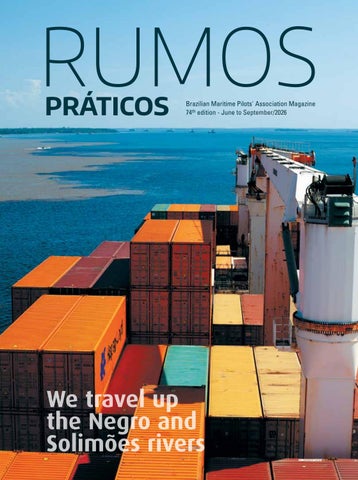
Brazilian Maritime Pilots' Association Magazine 74th edition - June to September/2026
We travel up the Negro and Solimões rivers
editorial For six years, we traveled through Brazil's 20 pilotage areas. Journalist Rodrigo March and photographer Gustavo Stephan accompanied more than 50 maneuvers on board, documenting areas with specific environmental and infrastructure conditions, posing all kinds of challenges to pilots from north to south. For the final report in the series, they disembarked in the Western Amazon Basin (Pilotage Area 2), where navigating means covering vast distances on rivers whose traffic is intense and whose water levels and riverbeds shift throughout the year. Precisely because of this dynamism, regions such as the rivers and the mouth of the Amazon are particularly well suited to testing the modern applicability of the nautical bottom concept, as explained further on by Professor Edson Mesquita, PhD, a consultant to the Brazilian Maritime Pilots’ Association. From the Amazon, we head toward the Northeast, where the pilotage service played a decisive role in the first maneuver at the new port of Piauí, integrating the state into global maritime trade after rigorous feasibility studies. The profession's international reach takes center stage in our coverage of the 27th Congress of the International Maritime Pilots' Association (IMPA), held in Bali. The Brazilian delegation, made up of 13 members, presented its preparations to host the next meeting, in Bahia in 2028. That is also the year new rules for boarding and disembarkation arrangements will come into force. The results of the last IMPA survey reveal that the percentage of non-conformities in the rigging and maintenance of transfer arrangements remains high, as readers will see further on. To change this reality, continuous crew training is essential – a concern we have always had in the Updating and Refresher Training Course for Pilots (ATPR). We take a close look at the plans for the fifth refresher cycle, which will cover the 2027–2031 term, focusing on navigation technologies, simulations, and case studies, as well as pilots’ physical and mental well-being. The social and environmental commitment of the Brazilian Maritime Pilots' Association is reflected in the launch of the profession's first greenhouse gas emissions inventory, reinforcing a proactive stance within the global decarbonization agenda. We also spotlight projects that share this vision, such as the MAQUA Laboratory's 34 years of work preserving whales and dolphins off the coast of Rio de Janeiro. Another initiative, in the social area, comes from Olympic athlete Roberto Maehler, who is changing the lives of young people from underprivileged communities through canoeing. Enjoy your reading! Otavio Fragoso is the editor in charge
Brazilian Maritime Pilots’ Association Av. Rio Branco, 89/1502, Centro, Rio de Janeiro, RJ, ZIP Code 20040-004 Tel.: +55 (21) 2516-4479 praticagemdobrasil@praticagemdobrasil.org.br praticagemdobrasil.org.br director president of Brazilian Maritime Pilots' Association Bruno Fonseca director vice-president Marcio Fausto directors Evandro Saab Marcello Camarinha Pedro Parente director / vice-president of IMPA Ricardo Falcão
Rumos Práticos planning Otavio Fragoso/Flávia Pires/Katia Piranda editor Otavio Fragoso writer Rodrigo March (journalist in charge) MTb/RJ 23.386 translation Julia Grillo revision Raquel Furtado layout and design Katia Piranda print Gráfica Trena cover photo: Gustavo Stephan
The information and opinions expressed in this publication are the sole responsibility of the authors and do not necessarily express the Brazilian Maritime Pilots' Association viewpoint.
index
6 Western Amazon preserved
6
16 The nautical bottom concept and its modern applicability
18 Pilotage performs the first
maneuver at the new port of Piauí
20 The profession gathers at the
16
world congress in Bali
24 IMPA survey: 13% non-compliance
rate in pilot transfer arrangements
26 Training course for pilots to begin its fifth cycle in 2027
29 For 34 years, researchers have
been tracking whales and dolphins
32 Pilotage in Brazil publishes its first
20
emissions inventory
34 Youth from Rio de Janeiro learn sprint canoeing
29
6
pilotage in Brazil
Western Amazon preserved
Super Terminais Public Port Moageira Terminal N
eg
Chibatão Terminal ro
Ri
ve
r
So
lim
õe
sR
i ve
r
Dynamism of rivers, low-water period and traffic are some of the main challenges in the world's second-largest pilotage area
Manaus
COLOMBIA
PERU Coari Terminal Tabatinga
pilotage in Brazil
Amazon Aço
Atem Ream
Cimento Vencemos Terminal
A
m
a
n zo
R
iv
er
Itacoatiara Hermasa Terminal Novo Remanso Terminal Am
n a zo
Riv
er
Terminais Fluviais do Brasil
7
8
pilotage in Brazil
Navigating the monumental waters of the Western Amazon Basin requires attention, study, and investment. In the world's second-largest pilotage area, river levels vary significantly throughout the year, along with intense modification of the riverbed and challenging traffic. The quiet work of the 38 licensed pilots enables the transport of vital supplies and supports tourism in the region, turning geographical and structural bottlenecks into safe routes for local and international trade. Most importantly, this is achieved without harm to the environment. The pilotage area extends from Itacoatiara to Tabatinga, in the state of Amazonas, over a stretch of approximately one thousand nautical miles. Pilotage Area 2 was created in the early 1990s, ensuring the presence of a State representative on board all the way to the tri-border with Peru and Colombia. Without these pilots, foreign vessels would navigate almost 900 miles within Brazilian territory west of Manaus.
In the main channel of the Amazon River, depth can reach more than one hundred meters in some stretches. The maximum current speed is around four knots, reaching six knots at certain points. River levels vary by 12 to 16 meters each year, between the Amazonian summer (low-water period) and winter (flood). The dry season normally occurs from June to November. From July onwards, water levels drop by 20 to 30 centimeters per day. This year, the less rainy period began two months late and, therefore, it is expected to last until December. The water regime alters the outline of the banks and the depths at a pace that requires regular monitoring. Sandbanks change position, riverbanks collapse – a phenomenon known as terras caídas, or “fallen lands” – and islands appear and disappear. Within five months, submerged sediment dunes can migrate as much as 200 meters. The local pilotage has high-tech bathymetric boats to survey the riverbed.
photo: Gustavo Stephan
The public port of Manaus and its terminals are located on the Amazon, Negro and Solimões rivers (Solimões is the name given to the Amazon River from the point where it meets the dark waters of the Negro River). The Madeira, Branco, Purus, Acre, Japurá, Juruá and Içá rivers are also considered waterways within the pilotage area.
In addition to merchant vessels carrying all kinds of cargo, the pilots guide cruise ships to Tabatinga and along the region's tributary rivers. These ships, however, are less frequent. From time to time, special cargo vessels are also taken to the border, as occurred during the construction of a refinery in Peru. Pilotage operations also include ship-to-ship mooring.
JOÃO GILBERTO DISPLAYS A CHART HAND-DRAWN BY A PILOT IN 1993
pilotage in Brazil
During the dry season, the challenge increases in the shallower parts, which undergo faster variation. In the first hundred miles to Manaus, there are three such areas: the Enseada do Rio Madeira, Ponta do Tabocal, and Faroletes. In the Solimões River, there are more than 30 critical points. “Up until Coari, where navigation is more intense, we have the habit of taking a spreadsheet on board to record the passages and check for any changes. Over the period of a year, from one dry season to the next, we identify the locations that have changed the most and carry out a specific survey there. As for the 600-plus miles from Coari to the border, where ship frequency is lower, we assign a boat to measure the usual critical points," explains pilot João Gilberto Coelho.
“This is a quiet job, often not acknowledged by shipowners," points out pilot André Oliveira. José Benedito Silva was part of the first group of pilots in Pilotage Area 2, in 1993. He fell into the water twice while surveying the river, when the pilotage service did not have its current infrastructure. “The first time happened near Tabatinga. We were trying to move a vessel that had run aground coming downriver with Peruvian maritime pilots – back then, they were still authorized to work on vessels flying their country's flag. To help with the operation, a very powerful tug came, a barge pusher. I climbed down into the boat to take soundings. We would use a fishing sounder or a hand lead. When the engine was started, I fell into the river because the boat was very unstable. With the volume of water being drawn toward the tug's propeller, I preferred to let the current carry me away, and I was rescued. In the second incident, we were looking for a navigation channel for a Petrobras vessel in the vicinity of Jurupari Island, between Codajás and Coari. When the engine started, I fell in again. The system was different from another engine we had, which would not start when in gear. Both were very difficult situations.” photo: Gustavo Stephan
Before the establishment of a pilotage service with its own bathymetric survey equipment in Pilotage Area 2, vessels were restricted in size and, during the low-water period, cargo had to be transferred to barges that completed the journey to Manaus starting from Tabocal. Navigation was limited to daylight hours. Today, vessels exceed 200 meters in length and do not need to transship cargo.
9
ANDRÉ OLIVEIRA ON THE BRIDGE WING OF THE NC BRUMA
pilotage in Brazil
photo: Gustavo Stephan
10
JOSÉ BENEDITO USES A PPU WITH THE UPDATED NAUTICAL CHART
The journey to Tabatinga takes from four to ten days, depending on the month and the vessel's speed. “When the river is very low but there are conditions to make the passage, we plan everything in advance. At some very critical locations we must anchor, survey the area, and check if it remains as it was during the last passage. Only then do we weigh anchor and proceed. There are spots where we establish that the vessel must pass only during daylight due to changes in the riverbed," explains pilot João Gilberto.
sandbank, and I was the first to notice. It grounded on the upper bank, as we say, which is where the current comes from – the best-case scenario, because it pushes the ship toward the deeper part. I called my fellow maritime pilot and we quickly managed to get free, using the engine power and rudder. One of the greatest fears of grounding in the Amazon is the risk of an oil spill, because the current is so strong that pollution would quickly reach Fazendinha (Macapá) and the ocean.”
When bathymetry facilities were not yet available, pilot Rubson Viana faced a complicated situation near Belém dos Solimões, less than 24 hours from Tabatinga:
Sandbanks, when exposed during the dry season, contribute to reduced visibility when strong winds occur, lifting fine sediment from the surface. During this period, pilots also encounter smoke from wildfires. And throughout the year, they may deal with rain and fog obscuring visibility from the bridge.
“I was used to passing by there with plenty of clearance. However, the Solimões River had changed. It has a very strong current, and the sediments shift from one side to the other. The ship touched a
At the newest operating terminal, the Amazon Aço, wind is a point of concern. There are rocks in the riverbed, both ahead and aft of the moored vessel, as well as along the riverbanks:
pilotage in Brazil
11
photo: Gustavo Stephan
During a nighttime voyage to Itacoatiara, Rumos Práticos witnessed a pilot using a laser pointer available on board to alert an unlit vessel. Only then did the vessel switch on its lights. Pilot João Gilberto went through a difficult moment in the early hours of the morning, heading up the Solimões River:
SMALL-CRAFT TRAFFIC AT THE MEETING OF THE WATERS
“The berth is literally a drawer. To complicate things, we sometimes have traffic around us and gusts of up to 30 knots. People think there is no wind in the Amazon, but it does happen from time to time," says pilot Luiz de Oliveira Bezerra. Dealing with heavy traffic is a constant concern in a region where many cities are not connected by roads. Common problems include vessels that do not have or do not turn on the AIS (Automatic Identification System), that lack communication or do not respond to the radio, that navigate with no lights or poor lighting, and that get too close to ships or cross their bow.
Encounters with barges can also be tense, as pilot Claudia Gonçalves reveals: “Barges have very little maneuverability and, in most cases, do not turn on their AIS. Without seeing them on the electronic chart, it is impossible to identify them by name. Once, two of them were coming in my direction and I called on the radio the one that was further ahead. The one behind ended up responding. I thought I had coordinated the passage with the one in front, which got confused and came too close to my ship, trying to cross my bow.” These vessels normally navigate close to the banks. Pilot Bezerra was caught by surprise during a berthing operation:
photo: Rodrigo March
“At night, just by observing, we can tell that a certain vessel has no communication radio. We monitor it on radar, and many times it comes straight toward the ship. We then have to shine a spotlight on it, sound the whistle to attract its attention, or ask a nearby boat to warn the navigator of the danger,” says José Benedito.
“It was past midnight, and I was guiding a cruise ship toward the border. With binoculars, I had difficulty spotting two distant vessels, because the coating was reflective, and the lights from the dashboard reflected off the ceiling and the porthole. When I got closer, I realized they were two small vessels, with no radio, towing a long raft. I had to put the rudder hard to port and managed to avoid a collision, but the raft grazed the starboard side a bit. It made a huge noise. Fortunately, no one was injured, and there was only a mark left by the tree trunk.”
AT THE AMAZON AÇO TERMINAL, BUOYS MARK ROCKS AHEAD
pilotage in Brazil
photo: Gustavo Stephan
12
LUIZ BEZERRA ABOARD THE PILOT BOAT
“We were already passing the mooring lines to the launch when the barge passed between the ship and the terminal. We had just enough time to let go of everything. It was a small barge carrying fuel.” The pilotage service also deals with structural issues. The tugs serving the pilotage area are adequate, but the public port and two of the terminals have poor fendering. There is also a need for maintenance dredging in the critical stretches of Enseada do Rio Madeira and Ponta do Tabocal. In 2023 and 2024, ships were unable to travel up to Manaus for almost two months due to the depth limitations during the low-water period. “Dredging was carried out without adequate study and did not effectively improve the navigation channel. What would really make a difference would be to properly maintain these stretches and ensure the arrival of ships with a ten-meter draft all year round," argues Claudia. During the dry season, in special cases, the pilotage offers temporary buoyage services if shipowners do not want to wait for the river to rise or lighten the cargo load. Approximately 24 hours before the maneuver, a complete bathymetric survey of the area is carried out, identifying shallow points, where the under-keel
clearance is unsafe. The electronic nautical chart is updated on the pilot's tablet (PPU) and, before the approach, survey boats deploy physical buoys marking the hazards. In addition, virtual buoys are transmitted to the ship's navigation equipment. The main survey boat goes ahead, guiding the passage and assisting as needed. As for the service logistics, the pilots face long distances. To board in Itacoatiara or return to Manaus after disembarking, travel 270 kilometers by road – a route that, until recently, was in poor condition. For operations at the terminal in Coari, 240 miles from the Amazonas capital, the same pair of pilots who alternate on the bridge during the outbound journey wait for the port operation and return with the vessel. Oil tankers and gas carriers operate in the municipality. Maintenance of the pilot boats used for pilots’ boarding and disembarking is costly, due to the presence of logs in the rivers and the poor quality of the local fuel. In 2025, Amazonas port facilities handled 40.5 million tons, according to the National Waterway Transportation Agency (ANTAQ). In addition to passenger ships, the main cargo types handled are grains, containers, fuel, cement, steel, and general cargo. The pilotage service carried out 1,227 maneuvers in the Western Amazon. The environment and society are grateful.
13
photos: Gustavo Stephan
pilotage in Brazil
BARGES USUALLY NAVIGATE CLOSE TO THE RIVERBANKS
RUBSON VIANA AND CLAUDIA GONÇALVES HEADING TO BOARD
14
pilotage in Brazil
SUNRISE DURING THE START OF A MANEUVER IN ITACOATIARA
photo: Gustavo Stephan
pilotage in Brazil 15
16
article
The nautical bottom concept and its modern applicability Bathymetric variability, in itself, cannot make navigation infeasible. Ship behavior and risk tolerance must be taken into account Edson Mesquita PhD in Naval and Ocean Engineering and consultant to the Brazilian Maritime Pilots’ Association
The concept of nautical bottom developed by the World Association for Waterborne Transport Infrastructure (PIANC) represents a significant evolution in the definition of navigable depth, by shifting the focus from geometrical depth to an approach based on the ship's operational performance and navigational safety. Although this concept is frequently associated with navigation over muddy bottoms, such interpretation is an inadequate simplification of the technical definition established by PIANC. As originally established by PIANC in 1997, the nautical bottom corresponds to the level at which the physical characteristics of a navigable waterway bottom reach a critical limit, beyond which contact with a ship's keel causes either structural damage or unacceptable effects on the ship's controllability and maneuverability. The definition of nautical bottom is, therefore, based on the behavior of the ship/water/bottom interaction, rather than exclusively on the lithological or rheological nature of the material comprising the bottom.
The fundamental question thus shifts from determining a “minimum authorized depth” to determining an “admissible operating condition,” simultaneously conditioned by the instantaneous geometry of the bottom, the hydrodynamic state, the characteristics of the ship, and its local control and maneuvering capabilities. Determining the safe operational depth of a navigable channel should result from an integrated research methodology, in which full-scale trials characterize ship behavior under operational conditions, physical models isolate and quantify the fundamental hydrodynamic mechanisms involved, and numerical CFD models reproduce, in space and time, the flow field, pressure distribution, and body motions associated with reduced depth. Combining these approaches, complemented by a maneuvering simulation and probabilistic risk analysis, makes it possible to replace purely geometrical under-keel clearance criteria with criteria based on physical and operational limit states.
From the standpoint of port engineering and ship hydrodynamics, this interpretation significantly broadens the field of application of the operational limit concept. The nautical bottom can be used as a tool for sizing access channels, defining under-keel clearance (UKC), managing operational risk and establishing draft limits in different hydrographic environments. This requires an understanding of the predominant physical mechanisms of the ship/water/bottom interaction and the technical criteria used to characterize a safe operational limit.
photo: Publicity
The purpose of the definition is philosophical: to define an operational limit based on the physical behavior of the shipbottom system and on acceptable levels of navigational risk, replacing purely geometrical criteria with an approach grounded in performance, limit state, and risk.
YELLOW: THE MUDDY ARC. GREEN: THE GRANDE DO CURUÁ CHANNEL
article
17
photos: Publicity
The alternative does not consist in reducing safety requirements, but in changing the nature of the information used to demonstrate compliance with them. Instead of authorization based exclusively on a nominal depth, the proposal is to base authorization on a validated operating envelope, in which speed, draft, water level, position relative to the navigable axis, environmental conditions, and the hydrodynamic characteristics of a given reach or channel are continuously checked against previously determined limit states. The scientific and operational benefit of this formulation lies in the fact that safety becomes associated with observable and quantifiable physical states, rather than exclusively with a static cartographic representation of the bottom. Thus, even in the presence of dynamic variations in depth, operations can be maintained within a previously validated envelope, provided that the determining variables remain within the safety envelope.
AN APPROACH PARTICULARLY SUITED TO RIVERS The goal is not to eliminate the need for bathymetric knowledge, but to integrate it into a decision-making system capable of recognizing that bathymetry is a dynamic variable. In this sense, bathymetric information ceases to be exclusively a basis for authorization and becomes one of the inputs to a dynamic navigation management system. From the standpoint of port engineering, then, the question should not be framed as a choice between “authorizing” or “not authorizing” navigation on the basis of a fixed depth. The more scientifically appropriate question is to determine under which physical and operational conditions navigation remains safe, taking into account the uncertainty and variability inherent to the system.
THE BEHAVIOR OF THE CL DAYANG HE WAS TESTED IN THE MUDDY ARC
The central hypothesis that emerges is that bathymetric variability, in itself, should not be interpreted as synonymous with navigation infeasibility. Infeasibility is only established when the resulting hydrodynamic and operational condition exceeds the previously determined limit states for the ship/ water/bottom system. The scientific contribution of this approach, therefore, lies in proposing a framework in which navigability is not treated as a permanent attribute of a channel, but as a dynamic operational condition that is measurable and can be characterized probabilistically. This concept is particularly appropriate for regions such as the Amazon river network and its mouth, where the system’s morphological evolution can outpace the response capacity of administrative procedures based exclusively on hydrographic criteria.
PROFESSOR MESQUITA ADJUSTS A PPU FOR MEASUREMENTS AT THE NORTH BAR
18
port projects
Pilotage performs the first maneuver at the new port of Piauí photo: Yuri Vianna
The area was designated as compulsory pilotage waters by the Brazilian Navy and placed under the responsibility of Pilotage Area 4
FIRST SHUTTLE VESSEL DURING THE TURN
The Brazilian Maritime Authority - Directorate of Ports and Coasts (DPC) declared the geographical area encompassing the new port of Piauí as compulsory pilotage waters, placing it under the responsibility of Pilotage Area 4, in the neighboring state of Maranhão. The order issued by the Director of Ports and Coasts, Vice-Admiral Carlos André Coronha Macedo, was published on June 18.
A 109-meter vessel berthed at the first operational terminal to load iron ore. After loading – and following dredging of a bend and a shallow stretch – the vessel proceeded on August 5 to an anchorage area, where a transhipper vessel was waiting alongside another vessel to receive the cargo, forming an arrangement known as triple banking.
The first maneuver at the port, located in Luís Correia, on the right bank at the mouth of the Igaraçu River, took place on June 29, following a technical and safety feasibility study.
Due to existing depth limitations, the largest vessel that transports ore for export cannot enter the access channel. Therefore, a shuttle vessel receives the cargo and proceeds to the anchorage. Since it
port projects
19
has no crane, a transhipper equipped with a grabber is required in the middle of the arrangement, accumulating the cargo and transferring it to the largest vessel (Baby Capesize class).
PAC), a federal initiative funding infrastructure works. Authorization for the facility as a Private Use Terminal (TUP) by the National Waterway Transportation Agency (ANTAQ) was signed in 2024.
The pilotage service took part in two real-time simulations at Technomar, along with a site visit, to establish operational and support conditions for entry and departure maneuvers. These included the need for an AIS receiving station, a remote VHF station, and a pilot boat to ensure the pilot can board safely. Maneuvers must take place during daytime high tide (slack before flood for entry and slack before ebb for departure) with the assistance of two tugs.
The project has three main cargo flows. The first is the export of soybeans and other grains from the Matopiba region, transported via the Parnaíba River waterway. The second is the export of iron ore from the Piripiri mine in Piauí, located approximately 150 kilometers from the port, with a planned railway to connect it to the terminal (transport is currently by road). The third is container and general cargo handling. According to the port management, its hinterland spans over a thousand municipalities across 109 microregions in the Northeast and Tocantins.
The pilotage service also took part in three further training and familiarization simulations involving the shuttle vessels’ captains. The first entry operation was conducted by maritime pilot Eduardo Barbosa. The maneuvers were authorized by the Navy, which approved 12 loading cycles (12 inbound and 12 outbound transits); any future operations will be subject to a new feasibility study.
photo: Yuri Vianna
The Porto Piauí project provides for the handling of iron ore, agricultural bulk commodities, containers, and general cargo. The project is part of the New Growth Acceleration Program (Novo
The implementation plan comprises three phases. Phase one is currently underway. In phase two, scheduled for 2027, Handysizeclass vessels are expected to berth at two new berths with full railway integration. Phase three (2029) envisions Capesize-class vessels, with four additional berths and a 17-meter draft. The total declared capital expenditure (Capex) exceeds US$1.6 billion. The state government, which is a shareholder in the mixed-capital company responsible for the project together with Investe Piauí S.A., has invested US$50 million to date.
THE FIRST OPERATIONAL TERMINAL LOADED IRON ORE
20
events
The profession gathers at the world congress in Bali photo: Publicity
Brazil presents preparations to host the IMPA meeting in Bahia in 2028. Pre-registration is available on the website
MARITIME PILOTS HEGGENDORN, SILVA, PEDRO, PORTHOS, FAUSTO, BRUNO, FALCÃO, BOSCO, MARTINELLI, ANDRADE, SINOHARA AND MATSUMURA
The International Maritime Pilots’ Association (IMPA) held its 27th congress in Bali, Indonesia. Delegations from more than 40 countries – along with sponsors, international organizations, and industry partners – attended from August 23 to 28 to discuss the future of the profession and the transformations in global maritime transport. With a delegation of more than ten pilots, Brazil presented its preparations to host the event in Bahia in 2028 and invited the global pilotage community to attend. In his opening speech, IMPA President Simon Pelletier highlighted the benefits of the service to society:
tug operators, and with the port. A pilot brings the one thing that no one else, no chart, textbook, or computer can supply: deep, current knowledge of a particular stretch of water, and the judgment to apply it when conditions change. Expert research tells us that pilotage (associated with tugs) reduces the risk of a navigational accident by a factor of 528. A very serious maritime casualty now occurs only once in every ten million acts of pilotage. And for every dollar spent on pilotage, close to sixty dollars are returned to society – through safety, and through the smooth flow of trade. Few public services demonstrate value on that scale.”
“In 2025, our community performed an estimated four million acts of pilotage around the world. Every safe passage is a partnership with the ship’s master and crew, with vessel traffic services, with
The president also addressed the challenges facing the activity, beginning with pressure for deregulation and openness to competition, in the name of lower costs and supposedly
events
improved service. This year, the Argentine government made an attempt of this kind, contrary to the safety principles of the International Maritime Organization (IMO). In the United States, in 2025, a similar case occurred through legislation in New Bedford (Massachusetts). In both countries, the proposals were defeated.
21
machine replacing human judgment in conditions of genuine uncertainty – and directing the safe navigation of a great ship is very rarely a predictable task. So, we should meet these tools with cautious optimism, adopting them where they demonstrably improve the safety and effectiveness of pilotage, and rejecting their use where they do not.”
photo: Publicity
Regarding remote pilotage (carried out from shore), IMPA is studying its benefits and risks by testing solutions developed by system manufacturers. So far, the two proposals submitted have been considered insufficient. For this reason, a new call has been issued. The project is a partnership with Canada's National Centre of Expertise on Maritime Pilotage (NCEMP) and the Canadian Coast Guard. On the first day of the congress discussions, the new members of IMPA's executive committee were elected and re-elected. In addition to the president, Simon Pelletier (CAN), the group comprises Alvaro Moreno (PAN), senior vice-president; and Ricardo Falcão (BRA), André Gaillard (FRA), Bongsuk Kang (KOR), Adam Roberts (AUS), and Jason Wiltshire (UK), vice-presidents. Gaillard's term had already been renewed in 2024.
PRESIDENT SIMON PELLETIER IN HIS OPENING SPEECH
“The value of pilotage as a public safety service will be obscured when only a narrowed focus on its immediate cost prevails. When pilotage is viewed through this lens, one thing is for certain: there will be a race to the bottom. This is a classical case where, without appropriate regulation, the market will fail and result in a transfer of risk to the public and its social, environmental, and economic interests. Experience demonstrates that safety is compromised and inefficiency emerges.” US pilots argued to lawmakers that the activity has a non-commercial character and that competition subordinates the professional to the interest of those purchasing the service, while also discouraging investment in qualification and safety. At the same time, customer-service structures for shipowners grow, as does the regulatory burden on the State. The second challenge pointed out by President Simon Pelletier was technology. Topics such as remote pilotage and the growth of artificial intelligence (AI) were discussed at the meeting: “Digital tools and artificial intelligence hold real promise, and pilots have always embraced technology that makes us better. But our test is simple: technology is progress only when it solves a real problem and improves performance. I cannot imagine a
“It is a privilege to continue serving the pilotage community over the next four years, working together to strengthen the profession, uphold the highest standards of maritime safety, and ensure our voice remains strong around the world. At the same time, it is a great responsibility, especially as we prepare to host the IMPA congress in Brazil in 2028," thanked Ricardo Falcão. In addition to moderating two panels, Falcão took part in the session “Piloting under pressure". He presented cases from his own experience involving accidents that were averted in the Amazon after facing problems on ships. The first one occurred on the Trombetas River in 2009, when a Panamax vessel suffered engine failure during the turn, after unberthing. The second happened on the Amazon River in 2020. This time, the rudder of a gas carrier jammed to starboard while underway. According to Falcão, the training he received at Port Revel, in France, was crucial to overcoming the first situation, while the Updating and Refresher Training Course for Pilots (ATPR), in Brazil, contributed to his decision-making in the second incident. Pilot Chris Hoyle (UK), in turn, reported the incident in which he prevented a ship from grounding in 2023. He and pilot Neil Dunn were guiding a 400-meter container ship out of the Port of Southampton when, after one hour of navigation in the Strait of Solent, there was a significant reduction in engine power. With the support of a tug escorting the container ship, three additional tugs sent by the vessel traffic service (VTS), and a third pilot who boarded (Richard Harding), they managed to control the mammoth vessel for more than ten hours and safely maneuver it back to port.
events
photos: Publicity
22
CULTURAL PERFORMANCE DURING THE CONGRESS
One of the lessons Chris drew from the incident underscores the importance of crisis planning, which involves communication, as he highlighted in one of his slides:
the Indonesian representative. Event coordinator Ricardo Falcão presented two videos. The first one showcased the venue for the
“Reputational exposure starts the second an incident unfolds, not when the investigation report is released. Institutions lacking a solid communication plan and the appropriate response will improvise very poorly. The fastest way to correct the record of a situation is not to react, but to publish your truth first.” One of the panels moderated by Falcão discussed the adoption of the next generation of electronic navigational charts (S-100 model), which will be able to receive updated information during navigation, such as wind and current data. Starting in 2029, all ships’ ECDIS must be capable of reading the S-100 charts – this will increase the pressure to maneuver ever closer to operational limits, as more precise and reliable data becomes available. On the final day, Brazil was introduced as the host of the 2028 congress, preceding the formal handover of the IMPA flag from
CAPTAIN TURT, MASCOT OF THE BRAZILIAN EVENT, AND COORDINATOR RICARDO FALCÃO
events
upcoming meeting – Costa do Sauípe Resorts on the northern coast of Bahia, a state celebrated for its rich culture and striking natural environment. In the second video, Captain Turt, the congress mascot, traveled through Brazil's pilotage areas, highlighting the unique operational challenges pilots face from north to south. At the end, Falcão invited everyone to pre-register free of charge on the website impa2028.com and receive news first-hand:
In addition to Falcão (Pilotage Area 1), the following pilots attended the event in Bali: the president of the Brazilian Maritime Pilots’ Association, pilot Bruno Fonseca (Pilotage Area 5); the vice-president, pilot Marcio Fausto (Pilotage Area 18); the technical director, pilot Pedro Parente (Pilotage Area 5); and pilots Carlos Benedito (Pilotage Area 1), Fábio Andrade (Pilotage Area 14), Helio Sinohara (Pilotage Area 17), João Bosco (Pilotage Area 19), Marcelo Silva (Pilotage Area 14), Marco Antonio Heggendorn (Pilotage Area 15), Marco Matsumura (Pilotage Area 1), Marcos Martinelli (Pilotage Area 3), and Porthos Lima (Pilotage Area 15).
Pre-register for the 2028 event at: impa2028.com/pre-registration
photo: Publicity
“We will share updates and service information as the event takes shape. We want to keep this connection with you all the way to Brazil. We look forward to welcoming everyone to Bahia in 2028.”
23
PRESIDENT BRUNO FONSECA RECEIVES THE IMPA FLAG FROM PASOROAN HERMAN, OF THE INDONESIAN PILOTAGE
24
safety
IMPA survey: 13% non-compliance rate in pilot transfer arrangements photo: Gustavo Stephan
“If we ignore minor failures, the cumulative effect of a poor safety culture builds up until somebody dies", warns IMPA vice-president
RETRIEVAL LINE LEADING FORWARD, BUT RIGGED TO THE FIRST STEP
PERCENTAGE OF NON-CONFORMITIES BY REGION
The International Maritime Pilots’ Association (IMPA) has completed another survey on ships’ pilot transfer arrangements. During the survey, pilots from around the world reported whether the transfer devices in use comply with international regulations.
pilot ladder steps in poor condition or otherwise unsuitable. At the global level, these are also the most reported non-conformities.
In line with the historical average, in 2026, 13% of the 4,051 reports submitted showed non-conformities that could lead to accidents during pilot boarding and disembarkation. The highest rates of non-compliance were found by pilots from Asia and the Middle East (24%) and Africa (22%). Brazil contributed with 1,335 reports, accounting for 97% of South America's participation. Brazilian maritime pilots identified a percentage of irregularities below the global average (6.82%). A total of 91 deficiencies were reported: 39 in pilot ladders, 51 in combination arrangements, and one in a ship side door with a pilot ladder. In Brazil, approximately 69% of the problems were found on bulk carriers and container ships, and 40% involved Brazilian-flagged vessels. Among the irregularities were pilot ladder retrieval lines rigged to the wrong step or in the wrong direction, accommodation ladder platforms positioned below the recommended height, and
Although apparently a minor irregularity, an incorrectly rigged retrieval line can get caught in the pilot boat or hinder the pilot's climbing. Furthermore, if the retrieval line is too taut, it can tilt the ladder steps, making it difficult for the pilot to climb aboard the ship. “I once had a problem with a retrieval line rigged to a very low step on the ladder. After I boarded, the pilot boat moved away, but the line got caught in it, and the ladder began to tilt as the boat moved, leaving me sideways instead of vertical in relation to the ship’s side. The pilot boat operator noticed what was happening and, when he released the line, the ladder swung back to its original position with considerable force. I was only startled, although the consequences could have been much more serious," recalls a Brazilian pilot. The IMPA survey also examines mandatory safety equipment. For example, 29% of pilots worldwide did not find a lifebuoy on deck, for use in case of a fall overboard. In addition, 23% were not met by an officer, as required by the regulations.
safety
Maritime pilot Ricardo Falcão, one of the organization's vicepresidents, believes that the problem of non-compliant devices is related to different factors, beginning with a lack of individual safety awareness: “It is the old issue of each person taking responsibility for their own safety, wearing personal protective equipment (PPE) and demanding the correct ladder. I, for example, refuse to board if I see a noncompliant arrangement. It is much more efficient. The ladder is fixed immediately, because a stopped ship is expensive, and the master will be held responsible. Afterwards, he receives me normally on the bridge, without any criticism. If everyone did the same, the system would improve. But if we ignore minor failures, the cumulative effect of a poor safety culture builds up until one day someone dies and it becomes a commotion which could have been avoided." Falcão notes that regional differences in the percentage of nonconformities are related to the level of commitment of the pilotage authority in each country. One example, he says, is Argentina, where the situation is aggravated by competition within the profession:
At the other end of the spectrum, the vice-president cites the United States, where enforcement is so strict that pilots may not be attentive to irregularities, as the system works very well: “Every ship I know makes a point of fixing everything that had been postponed when it starts having the United States as a route. The shipowner knows that anything may result in a very high fine or the detention of the vessel. Three ignored safety notices can result in the company being banned from operating in the country.” He also considers that crew well-being on board influences safety attitude – a dynamic he personally experienced while working as a pilot in the Eastern Amazon Basin. “Operating a ship in the Amazon exposes crew members to absurdly high daytime temperatures when air conditioning systems are not working properly, leading to sleep deprivation and poor rest. This exhaustion is visibly apparent in the strained expressions and sluggish reactions of the helmsman and officers. Ultimately, prioritizing crew welfare underpins every dimension of operational safety, including the proper rigging and maintenance of pilot ladders." With the adoption of new requirements for the devices under the International Convention for the Safety of Life at Sea (SOLAS) and its amendments, a reduction in deficiencies in pilot boarding and disembarking arrangements is expected. The measures will only enter into force in January 2028, but the International Maritime Organization (IMO) encourages early adoption.
photo: Gustavo Stephan
“There are no reports of deficiencies where there is competition among pilots. If you refuse to board, someone else may accept boarding under those conditions. On the other hand, the pilotage authority, which should be looking after maritime safety, ends up becoming the Queen of England and doing nothing. I was there earlier this year, and the Naval Prefecture reported 300 instances of ships touching bottom over a 12-month period, without considering the number particularly serious.”
25
RETRIEVAL LINE BENEATH THE BOTTOM SPREADER AND LEADING AFT
26
ATPR
Training course for pilots to begin its fifth cycle in 2027 photo: Pedro Ladeira
The next five-year program will build on recent advances, such as case studies and simulator exercises
PILOT-TO-PILOT LEARNING AND USE OF SIMULATORS
As the fourth cycle of the Updating and Refresher Training Course for Pilots (ATPR) approaches its conclusion, the Brazilian Maritime Pilots’ Association is already preparing the curriculum for the next cycle, which will run from 2027 to 2031. Launched in 2019 and scheduled for conclusion in November this year (with an interruption during the pandemic), the current cycle brought important advances and will serve as the reference base for planning the next one. The course began by covering topics related to navigation resources,
such as the concept of e-Navigation and practical activities involving ECDIS (Electronic Chart Display and Information System), DP (Dynamic Positioning), and Azipod (azimuth propulsion). Other topics were also incorporated, including MPX (master-pilot exchange of information); interpersonal relations; safety in pilotage; simulator exercises; accidents and emergency-situation analysis, through case studies; environmental accidents; PPU (Portable Pilot Unit), and MASS (Maritime Autonomous Surface Ships).
27
photo: Pedro Ladeira
ATPR
FOCUS ON PHYSICAL FITNESS
On the simulations and port planning side, the course addressed hydrodynamic effects and the use of simulators, as well as their limitations. The program also included simulator-based emergency exercises and post-accident responses. Another advance introduced during the fourth cycle was pilot safety, broadening the focus to aspects directly related to the conditions under which the professionals carry out their work. The approach considers issues related to health, physical fitness, and quality of life as fundamental to the safe performance of such a high-responsibility service. The use of maneuvering simulators remained an important part of the ATPR methodology, particularly for emergency-situation exercises. The possibility of reproducing operational scenarios in a controlled environment, followed by a debriefing, contributes to the analyses of decisions made, discussing alternatives and sharing experiences among participants. In the fourth cycle, 541 pilots were divided into 57 classes: 46 completed the in-person component at the Almirante Graça Aranha Training Center (CIAGA), in Rio de Janeiro; four at Almirante Brás
de Aguiar Training Center (CIABA), in Belém; and seven at the Brazilian Pilotage Institute, in Brasília, which since 2023 has been an alternative to the two units of the Brazilian Navy. The first stage is remote, with professionals accessing a virtual learning environment containing texts, images, and videos. After completing the online activities, they take objective tests within the same system. According to Walid Seba, technical manager at the Brazilian Maritime Pilots’ Association, the challenge for the fifth cycle will be to evolve while preserving the features that have proven successful and, at the same time, adapting content, methodologies and resources to the technological, operational and human changes underway in the maritime sector – particularly in pilotage. In this regard, he says, the intention is to strengthen the practical and applied nature of the ATPR, expanding the use of case studies, accident analysis and prevention, and simulator exercises. The students themselves suggested these topics in their evaluations, as well as deeper discussions of maneuvers involving two pilots on board. Emergency exercises and debriefing are expected to remain
28
ATPR
prominent, turning individual experiences and simulated situations into collective learning.
calls on the competent authorities to promote programs designed to ensure the proficiency and updating of pilotage professionals.
One of the goals is to improve the use of maneuvering simulators, seeking scenarios and exercises that increasingly reflect the conditions encountered in the pilotage areas.
Established in Brazil in January 2005 – just over a year after the resolution was adopted – the course is applied by the Brazilian Maritime Pilots’ Association under delegation from the Brazilian Maritime Authority - Directorate of Ports and Coasts (DPC). Pilots are required to participate every five years.
Keeping pace with the technological developments in navigation and the maritime industry is another challenge, Walid notes. For this reason, some topics covered during the fourth cycle – such as DP, Azipod, PPU, and MASS – will need to be updated to reflect changes in the operational environment in which pilots work. The experience initiated in the fourth cycle also showed the importance of expanding discussions related to pilot safety, including physical fitness, mental health, prevention of personal accidents, and risks associated with boarding and disembarking from vessels. “The ultimate goal will be to ensure that the ATPR remains a dynamic and continuous process of professional development, capable of keeping pace with the evolution of the activity, and contributing to maintaining the competence of Brazilian pilots," highlights the manager.
The Brazilian Maritime Pilots’ Association has developed a unique refresher-training model that stands as an international benchmark. One of its key features is that it is a course ‘by pilots, for pilots.’ Part of the content is delivered by instructor pilots trained abroad and by guest-speaker pilots, who voluntarily share the knowledge and experience acquired throughout their careers. This professional experience is complemented by specialists in specific fields, hands-on activities, case studies, and simulator training. “The voluntary participation of pilots constitutes one of the pillars of the course and embodies the spirit of cooperation among professionals. It is no coincidence that Brazilian pilotage stands as a model of navigational safety and operational efficiency," Walid points out.
photo: Pedro Ladeira
The ATPR course is based on the recommendations of Resolution A.960(23) of the International Maritime Organization (IMO), which
PARTICIPATION OF SPECIALISTS IN SPECIFIC AREAS
environment
29
For 34 years, researchers have been tracking whales and dolphins photo: Maqua/UERJ Archive
MAQUA Laboratory monitors cetaceans in Rio de Janeiro, helping preserve the animals and the marine environment
GUIANA DOLPHIN MONITORING IN GUANABARA BAY
Even before spotting a dolphin or whale, the researchers at the Laboratory of Aquatic Mammals and Bioindicators (MAQUA), at Rio de Janeiro State University (UERJ), know that the work may be a long one. The routine starts early, still at the lab. After preparing the equipment, the team heads to the marina. Once at sea, a visual search begins that may last for hours. Navigations take place both inside bays, such as Guanabara and Ilha Grande, and offshore, along the coastal region. On some days, even after more than 50 nautical miles of navigation, not a single animal is sighted.
30 feet, cameras, drones, acoustic recorders equipped with hydrophones, and multiparameter probes to collect environmental variables.
When they show up, though, a meticulous operation begins. The researchers identify the species, record images for individual identification catalogues, capture sounds, collect geographic coordinates and gather information on behavior, size, and group composition – that is, how many adults and calves are present. They also check the local water depth and take aerial footage.
“With this information, we put together a huge puzzle for each species we have monitored over these years," explains Rafael Carvalho, a MAQUA researcher.
For monitoring at sea, the team uses vessels ranging from 18 to
Back on land, the data is compiled at the lab. Images are analyzed to identify and catalogue each member of the group, while the sounds produced by the animals are examined to assess different acoustic parameters. All geographic coordinates are mapped, and observed behaviors are processed.
The work has been under way for 34 years. In Guanabara Bay, the Guiana dolphin – monitored since the 1990s and a symbol of the city of Rio de Janeiro – has seen its population drop to fewer than 30 animals. In the 1980s,
environment
photo: Maqua/UERJ Archive
30
HUMPBACK WHALE NEAR A SHIP
the first population estimate indicated around 400. The figure reflects years of human pressure on the bay.
Guiana dolphin (Sotalia guianensis), common dolphin (Delphinus delphis), orca (Orcinus orca), and franciscana (Pontoporia blainvillei).
MAQUA was established in 1992 at the Faculty of Oceanography of Rio de Janeiro State University (UERJ) by undergraduate students interested in monitoring and conserving whales and dolphins along the Rio de Janeiro coast. At the time, cetacean studies were scarce in Brazil. The project initially received support from Professor Izabel Gurgel and the university itself. Today, its research encompasses ecotoxicology, ecology, genetics, and trophic ecology of cetaceans from the Brazilian coast and beyond.
Guanabara Bay has approximately 360 square kilometers of water surface and a drainage basin of more than 4,000 square kilometers. The area encompasses several municipalities that grew in a disorganized way, discharging domestic and industrial waste, often without proper treatment. Cetaceans serve as a strong indicator of the health of this environment where they live.
The team also monitors animals found stranded or dead along the coast, in an area extending from Praia da Vila, in Saquarema, to Trindade, in Paraty. At least four whale species and seven dolphin species are regularly monitored: humpback whale (Megaptera novaeangliae), southern right whale (Eubalaena australis), dwarf minke whale (Balaenoptera acutorostrata), Bryde’s whale (Balaenoptera brydei), rough-toothed dolphin (Steno bredanensis), bottlenose dolphin (Tursiops truncatus), Atlantic spotted dolphin (Stenella frontalis),
“In general, they are considered environmental sentinels, and many of them are at the top of the food chain. As apex predators, they carry with them a picture of everything that has moved through this chain from the base up. In the case of Guanabara Bay, the Guiana dolphin may be considered an apex predator, meaning that there is no species that preys on it. So, the dolphins end up carrying in their bodies practically everything that has passed through the chain before reaching them, such as contaminants. Apex predators also play a regulating role. If one of them goes extinct, the whole chain can become unbalanced, and consequences for the system as a whole are often unpredictable," notes Rafael Carvalho.
environment
31
In the case of dead animals, MAQUA goes to the site and removes the carcass for necropsy. At the laboratory, tissue samples are collected for several purposes, such as analysing levels of different contaminants, screening stomach content for diet study, and identifying possible causes of death and various pathologies. With a single tooth, for example, researchers can estimate the animal's age. Tissues and skeletons are deposited in the collection. If the animals are very large, such as whales, samples are collected on the beach. Chemical pollution adds to other threats, such as noise pollution, habitat degradation and loss, and bycatch.
Highly active, the animals jump a great deal, and, at times, ride the bow of the boat. When they occur in large groups, they put on quite a show, both for the sheer spectacle and for the quality of the data collected.
Dolphins can show up at the coast of Rio any time of year. Some migratory whales, however, such as humpback whales and southern right whales, are more closely associated with autumn and winter, particularly between May and July. Unusual days sometimes bring surprises for the whole team. Rafael recalls one particularly memorable case:
“Our first encounter with franciscanas was another significant moment because it involved one of the most threatened cetacean species in South America, in a coastal environment of our state – Ilha Grande Bay. We understood that they weren't just passing through; they are residents of that region," informs Rafael.
“We always remember when we identified the arrival of four adult Guiana dolphins in Guanabara Bay. Comparing photographic catalogues, we found that they came from the dolphin population in Sepetiba Bay. They spent a few months using only the waters near the mouth of Guanabara Bay before being observed inside the bay, interacting with the local dolphins. It was a very important record, because the arrival of outside populations is rare.”
The appearance of newborn whale calves is also among the special moments. Respecting the moment shared between the female and her calf, the team has, in recent years, recorded very interesting images and behaviors of humpback and southern right whales with their newborn calves in Rio's waters.
MAQUA has several ongoing projects with important funders, which help maintain the excellence of its work conserving cetaceans and the marine environment. The public can help not only by reporting the presence of animals, but also by becoming aware that a healthy marine environment directly affects everyone's life, whether in aspects as simple as a recreational activity or global climate regulation.
Did you see a whale or dolphin in the sea or stranded? Report it to (21) 99784-0777 (WhatsApp). If you have photos, send them to maqua.uerj@gmail.com.
photo: Maqua/UERJ Archive
Encounters with orcas are always memorable, since they are not frequently seen in Rio, making it a special opportunity for collecting information. On other occasions, researchers have found themselves surrounded by hundreds of Atlantic spotted dolphins.
ORCAS AT ITAIPUAÇU BEACH
32
environment
Pilotage in Brazil publishes its first emissions inventory photo: Gustavo Stephan
The operational efficiency of pilotage significantly contributes to reducing environmental pollution, report finds
PILOT BOATS UNDERGO REGULAR MAINTENANCE, REDUCING EMISSIONS
The Brazilian Maritime Pilots’ Association has concluded its first greenhouse gas (GHG) emissions inventory, covering 2025. The report, produced by the Via Green Institute, also provides an overview of environmental management and climate change initiatives across the pilotage areas. Data were collected from member organizations through an online questionnaire and technical visits.
Total accounted emissions add up to 15,912.80 tons of carbon dioxide equivalent (tCO2e), with Scope 1 emissions predominating, accounting for 99.6% of the total. These emissions result from fuel combustion in maritime operations and road transport used for support or administrative purposes. Indirect Scope 2 emissions are associated with the purchase of electricity, and account for the remainder.
environment
Broken down by source, pilot boats account for 97.58% of emissions, automobiles for 2.06%, and energy consumption for 0.37%. In about 32% of pilotage areas, some structure has been established for managing environmental data. According to Via Green, formally assigning responsibility for environmental matters helps organize information, monitor indicators, and plan actions. Pilotage Area 16 (São Paulo) conducts its own emissions inventory, also with the support of the institute. While some pilotage areas have relevant initiatives underway, measures aimed at reducing fuel consumption are still at an early stage, as is the adoption of renewable energy sources such as solar panels. The analysis of the effects of climate risks on operations is included in the planning of 11% of respondents. This tool makes it possible to anticipate the impacts of extreme events, such as sea-level rise and changes in rainfall patterns. Pilotage makes a significant contribution to the sustainability of the maritime-port system, the report points out, although this contribution was not quantified at this initial stage. The efficient work of pilots and Pilotage Operations Centers helps optimize maneuvers and reduce fuel consumption of the ships they serve. The International Maritime Organization (IMO) has been driving a global agenda for the decarbonization of maritime transport, and the sector's transition involves both the development of new fuels and technologies and improvements in operational efficiency. Calculating greenhouse gas emissions is a fundamental step in any decarbonization strategy. Understanding an organization's emissions profile transforms operational information, such as fuel consumption, into measurable environmental data, making
GHG Protocol Category
33
it possible to monitor performance and assess mitigation opportunities. The pilotage sector's inventory brings an added benefit to the system. Corporate climate management has increasingly emphasized the importance of accounting for indirect Scope 3 emissions, which are associated, for example, with members of the supply chain. In this context, ports, shipowners, and other stakeholders require environmental information from the different links in the chain, including pilotage, which will be able to provide standardized data in line with the Greenhouse Gas Protocol (GHG Protocol). According to Via Green, a Scope 3 approach is extremely relevant to the sector because of the complexity of its operations and the interdependence among the various parties involved. “The study provides a baseline for monitoring the evolution of GHG emissions and the environmental, social, and climate management practices of the Brazilian Maritime Pilots’ Association. Increasing participation by member organizations, combined with stronger standardization of data collection and information management processes, will make it possible to expand the scope, comparability, and robustness of analyses in future updates," concludes Conrado Bertoluzzi, Executive Director of the Via Green Institute. The president of the Brazilian Maritime Pilots’ Association, pilot Bruno Fonseca, says member organizations need to improve their participation in submitting information, but stresses that this is the first step towards consolidating environmental management within the profession, and demonstrates a proactive stance in the face of climate challenges: “Even though our share of emissions is small, we cannot fail to understand it and seek ways to minimize it. Environmental protection is in the DNA of the pilotage service.”
Emissions in tCO2e
% of emissions
Biogenic emissions tCO2
15,854.42
99.6
136.03
58.38
0.4
–
15,912.80
100.0
136.03
Scope 1 – Direct Emissions Mobile combustion Scope 2 – Indirect Emissions Purchased electricity Total – tCO2e
TOTAL EMISSIONS FROM THE PILOTAGE AREAS
34
social
Youth from Rio de Janeiro learn sprint canoeing Olympian Roberto Maehler's project aims to inspire citizens, but students already stand out in competitions Before succeeding in sport, canoeist Roberto Maehler discovered it was possible to dream. As a teenager in Cascavel, Paraná, he practiced athletics when, during a running session, he saw some children paddling, falling out of their boats, swimming, and having fun in the municipal lake. Roberto did not even know how to swim, but he saw an opportunity to cool off in the lake, where swimming was prohibited.
Through the institute that bears his name, he offers free sprint canoeing sessions to children and teenagers in situations of social vulnerability. The project is aimed at students aged 8 to 17,
photo: Gustavo Stephan
That was how he joined the Pescar social project. On his very first lesson, the coach told him he had a future in the sport. Roberto didn't think much of it. At the next training session, he heard the same thing. It was then, on his way home, that he thought: “I’m going to have a future, I'm going to be somebody.”
Twenty-eight years later, Roberto Maehler became champion at the Rio de Janeiro Pan American Games (K4-1000m), in 2007; a finalist at the Rio Olympic Games (K4-1000m), in 2016; and world champion (K1-20km), in 2021. The most important consequence of that first lesson, however, lies not only in the medals, but at Rodrigo de Freitas Lagoon (Lagoa), in Rio de Janeiro. It is there, in the same setting that hosted the canoeing events at the Pan American and Olympic Games, that Roberto is seeking to recreate the transformation he experienced as a teenager.
LESSON AT RODRIGO DE FREITAS LAGOON
social
selected in partnership with the Forças no Esporte Program (Profesp), a federal initiative developed at the Brazilian Navy's Physical Education Center Almirante Adalberto Nunes (CEFAN). Since the project began, on July 4, 2025, around 200 children and teenagers from communities in Rio's Northern Zone have taken part in the activities. Ten have made it to the high-performance team and train daily. The routine starts with two sessions a week, on Tuesdays and Thursdays. Those who stand out can progress to the high-performance squad, which trains from Monday to Saturday. One of the stories that moves Roberto most is that of 12-year-old Davi Militão. Living in the Complexo da Maré, he wakes up before dawn to make it to training at the Lagoa. He travels a long way on public transportation and crosses dangerous areas alone so as not to miss practice. Just a few months after taking up the sport, he won a medal at a Brazilian championship. Davi looks up to Roberto and says he intends to make the most of every opportunity he gets. “His dedication shows how sport can transform lives and open new paths for children and teenagers,” Roberto says proudly.
photo: Publicity
The project's founder is also its coach. In addition to closely following the athletes, he takes part in training sessions and paddles alongside them in the team boats to highlight technical details:
35
“My experience as an Olympic athlete allows me to pass on knowledge, but above all, I try to teach values such as discipline, respect, perseverance, and teamwork. I believe that shaping citizens is as important as preparing champions.” His own story illustrates why he places such emphasis on providing opportunity. When he first took up canoeing, he joined his club's core team and moved in with his coach and fellow promising athletes. From that moment on, sports ceased to be simply a way to beat the heat in the lake and became a gateway to a completely different life. “Through sport I gained access to education, travel, and both national and international competitions. I had experiences I could never have imagined,” he recalls. As a Brazilian Navy officer, Roberto also serves as the military institution's sprint canoeing coach. He holds a degree in Physical Education, a postgraduate degree in sports training, and credentials in coaching. He is one of the members of the Athletes’ Commission of the Brazilian Olympic Committee (COB). Despite being a young project, the institute's athletes are already making their mark in competition, winning state titles and podiums at Brazilian championships. This work is made possible through public and private partnerships, including support from the Brazilian Navy via Profesp/CEFAN, and the Rio de Janeiro State Secretariat for the Environment and Sustainability (SEAS), which provides the facility for the project's headquarters at the Lagoa. There is also an option for individuals who wish to contribute. The “Adopt an Athlete” program accepts monthly or one-time donations. The funds are used for expenses such as equipment, boat maintenance, transport, meals, and competition costs.
photo: Gustavo Stephan
Find out more at institutorobertomaehler.org.br
ROBERTO MAEHLER AND DAVI MILITÃO
STUDENTS FROM COMMUNITIES IN RIO DE JANEIRO'S NORTH ZONE
photos: Publicity
fast & focused
VISIT VICE-ADMIRAL BELARMINO VISITS THE BRAZILIAN PILOTAGE INSTITUTE The director of the Brazilian Navy's Strategic Communications Center (CCEM), Vice Admiral Vagner Belarmino de Oliveira, visited the Brazilian Pilotage Institute, in Brasília. He and the CCEM's deputy director, Captain Alexsander Moreira dos Anjos, along with their team, were received on June 23 by the president of the Brazilian Maritime Pilots' Association and of the Institute's board of directors, pilot Bruno Fonseca, as well as by executive director Jaqueline Wendpap.
EVENT THE PILOTAGE SERVICE'S CONTRIBUTION TO BRAZILIAN HYDROGRAPHY How the pilotage service contributes to Brazilian hydrography and to the protection of the 5.7 million square kilometers of the Blue Amazon. This was the topic of the presentation by the president of the Brazilian Maritime Pilots’ Association, pilot Bruno Fonseca, during the 2026 Brazilian Hydrography Symposium. Pilotage consultant Edson Mesquita noted that, in renewable energy projects, hydrography goes beyond its cartographic role, emerging as a driver of technical, operational and environmental feasibility. The event, held by the Brazilian Hydrography Society (SBHidro), took place at Sebrae Rio, on September 9 and 10.
photo: Wilson Leandro
EVENT THE IMPORTANCE OF THE ACTIVITY FOR NAVIGATION SAFETY
photo: Publicity
On August 26, Arionor Souza, executive secretary of the Brazilian Maritime Pilots' Association, spoke on the importance of pilotage for navigation safety at the 1st National Ports+Cities Forum, in Paranaguá, Paraná. The event took place at the Instituto Superior do Litoral do Paraná (ISULPAR).
SAR RIO DE JANEIRO PILOTAGE SAVES VESSEL FROM ACCIDENT
CONDOLENCES IN MEMORIAM: FORMER PRESIDENT CARLOS ELOY The Brazilian Maritime Pilots' Association mourns the passing, in July, of former president Carlos Eloy Cardoso Filho. One of the entity's founders, he served as a pilot in São Paulo for 52 years and led the organization as its president in 2007 and 2008. In 2025, he was honored at the institution's 50th-anniversary celebration in Rio de Janeiro. The Association extends its heartfelt condolences to his family and friends.
photo: Gustavo Stephan
Shortly after boarding a pilot onto a ship, a pilot boat crew from the Rio de Janeiro pilotage service intercepted a distress call from a vessel near Cotunduba Island. Although the boat was at anchor, its anchor was dragging along the seabed. Given the wind and current conditions, there was an imminent risk of collision with the island's rocks — with women and children on board. The pilotage crew managed to retrieve the endangered vessel's line and began the tow. The convoy then sailed to a sheltered area near Jurujuba Beach, in Niterói. The incident took place on June 23.
ONE VIDEO, 13,000 FOLLOWERS Another video featuring footage provided by pilot Adriano Dias went viral, becoming one of the most-viewed posts on our social media. This time, he captured an orange juice carrier unberthing from the Port of Santos, turning to port. For many of our followers, seeing this type of vessel was a novelty in itself. The video, edited by the Brazilian Maritime Pilots’ Association, generated more than 1.1 million views and brought 13 thousand new followers to our Instagram profile.
ONE VIDEO, 2,000 COMMENTS Another video with over 1.1 million views featured a maneuver by pilot Bruno Fonseca, who filmed the unberthing of an oil tanker from the Port of Fortaleza. The content attracted 7,000 new followers to Instagram and more than 2,000 positive comments about the pilotage service, including one from a teacher who said she would show the video to her students.
ONE PROFILE, 105,000 FANS At the end of August, we reached the milestone of 105,000 followers on Instagram. The achievement was highlighted in a special post narrated by the president of the Brazilian Maritime Pilots’ Association: “When we created our Instagram profile, our goal was to bring pilotage closer to society, showing its relevance to our daily lives and the environment. Even though most of us live near the coast, many people are not aware of the existence of maritime pilots and the importance of maritime trade. And it is wonderful to see, with every comment, that our goal is being achieved.”
Video reproductions
media success
48 NATIONAL PILOTAGE MEETING th
Fortaleza, CE November 30 - December 2, 2026 More information coming soon.
Fabio Mello Fontes, A Legend of the Seas As a child, while boys his age were out playing ball games, all he wanted was to be at Ponta da Praia, watching ships enter and leave the Port of Santos. But Fábio Mello Fontes wasn't content just to watch. He moved to Rio de Janeiro, trained as a nautical officer, and spent seven years in the merchant navy before deciding to return home and become a maritime pilot, so he could spend more time with his family. Today he has some 30,000 maneuvers to his name and countless stories — now told in the book Fábio Mello Fontes, uma lenda dos mares (Fabio Mello Fontes, A Legend of the Seas). “I found myself in this profession. So I can say that for over 50 years I haven't been working. It's as if I was going to the movies," he often says. Fontes comes from the era of celestial navigation, and in the early days of pilotage, things were quite different. There were no radios, no fenders on the quay, and ships did not have bow thrusters or high-performance rudders. Without such resources, maneuvering vessels – even smaller ones – was much more difficult. After nearly 58 years in the profession, he has watched ships grow ever larger in the pursuit of economies of scale, creating new challenges in a narrow, winding channel. When he started, the port received vessels averaging 140 meters in length. Today, container ships measuring 366 meters call at the port. Despite everything he has experienced in Santos and São Sebastião, Fontes considers his story a simple one:
I don't do anything different from what other pilots do. But when I finish each maneuver, I always have the peace of mind that I did the best I could.
Coordinated by José Rodrigues, with writing and editing by Ivani Cardoso and Maria Fernanda Rodrigues, the biography can be obtained through a donation to charitable organizations. Those interested should contact: secretaria@santospilots.com.br.