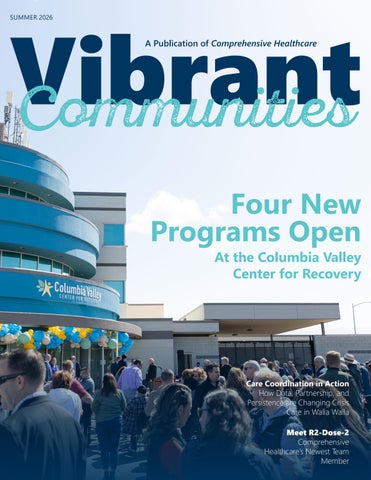
Vibrant Communities
Summer has a way of arriving with momentum – and this year, it brought a lot of it with it.
As we put together this issue of Vibrant Communities, we found ourselves reflecting on just how much has taken shape in a short period of time. New facilities. New technology. New ways of connecting people to care before a moment of crisis becomes a turning point in the wrong direction. Reading through the stories in these pages, we kept returning to the same thought: this is what it looks like when a community decides that behavioral health matters.
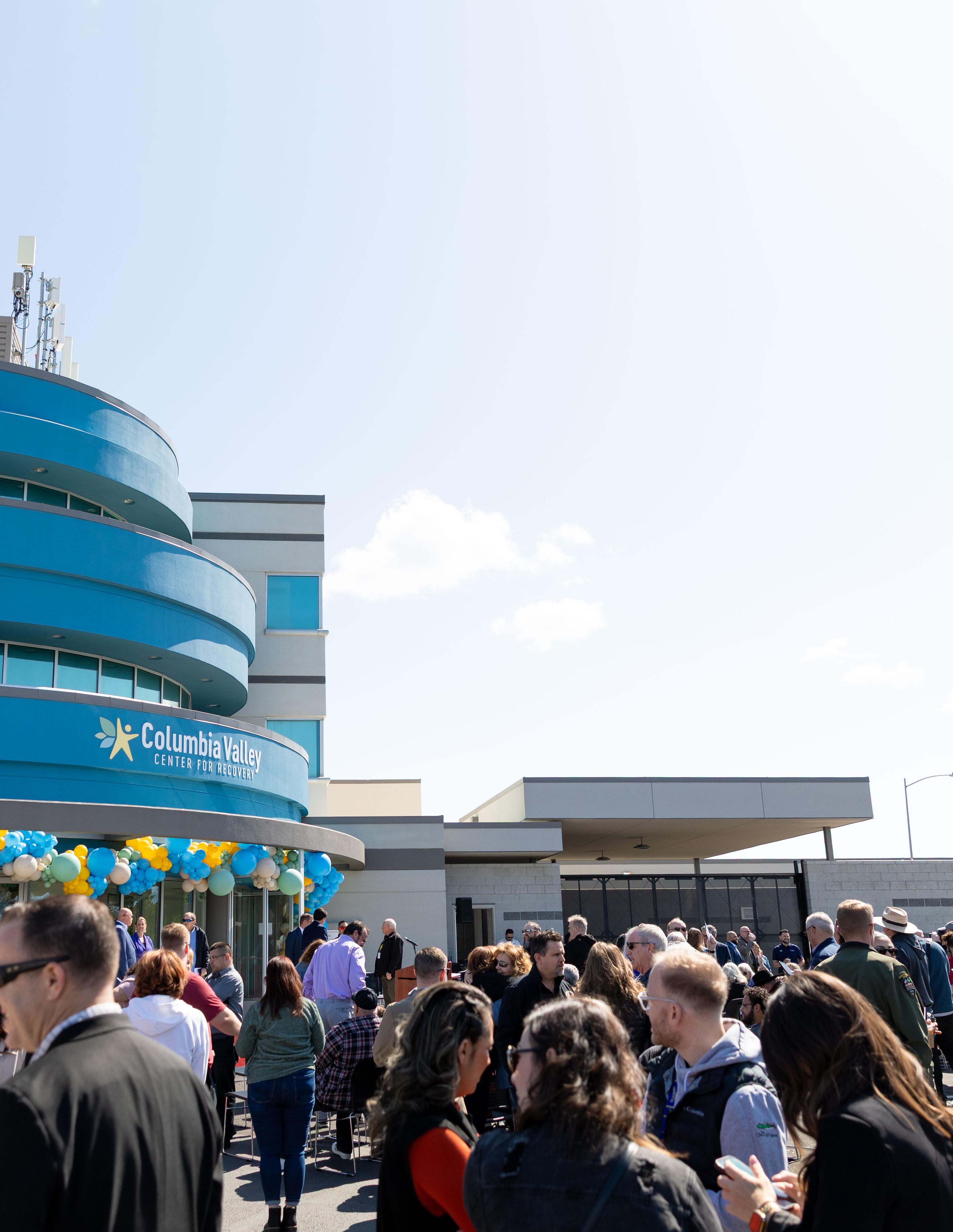
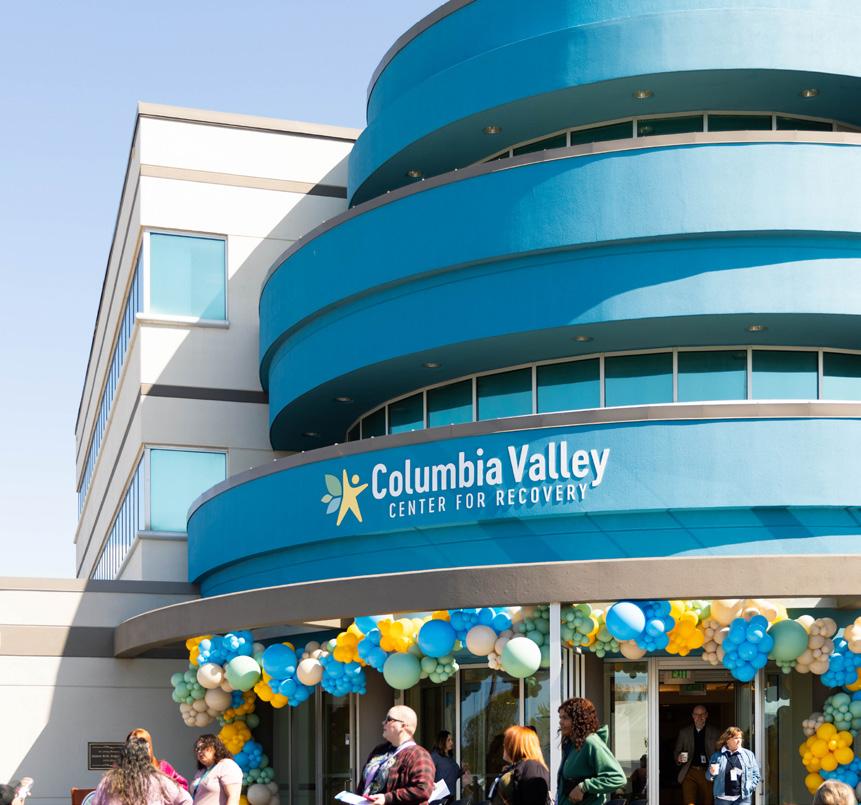
The Columbia Valley Center for Recovery opened its doors in the Tri-Cities – a county-owned facility years in the making, built through the advocacy and persistence of the Benton-Franklin Recovery Coalition and countless community partners. Comprehensive Healthcare is proud to bring four specialized programs to CVCR, expanding our continuum of care in the region for individuals navigating crisis, withdrawal, and recovery. It is one of the most significant milestones our region has seen in behavioral health, and we do not take lightly the trust that has been placed in us to be part of it.
Across our service area, we’ve also been investing in the ways people first encounter our care. Same Day Access and Just in Time prescribing are changing what it means to reach out for help – removing the wait, reducing the barriers, and meeting people at the moment they’re ready, rather than asking them to hold on until the system has a slot for them. In Walla Walla, our care coordination work is deepening those same connections, ensuring that individuals don’t just get a referral – they get a hand on the door.
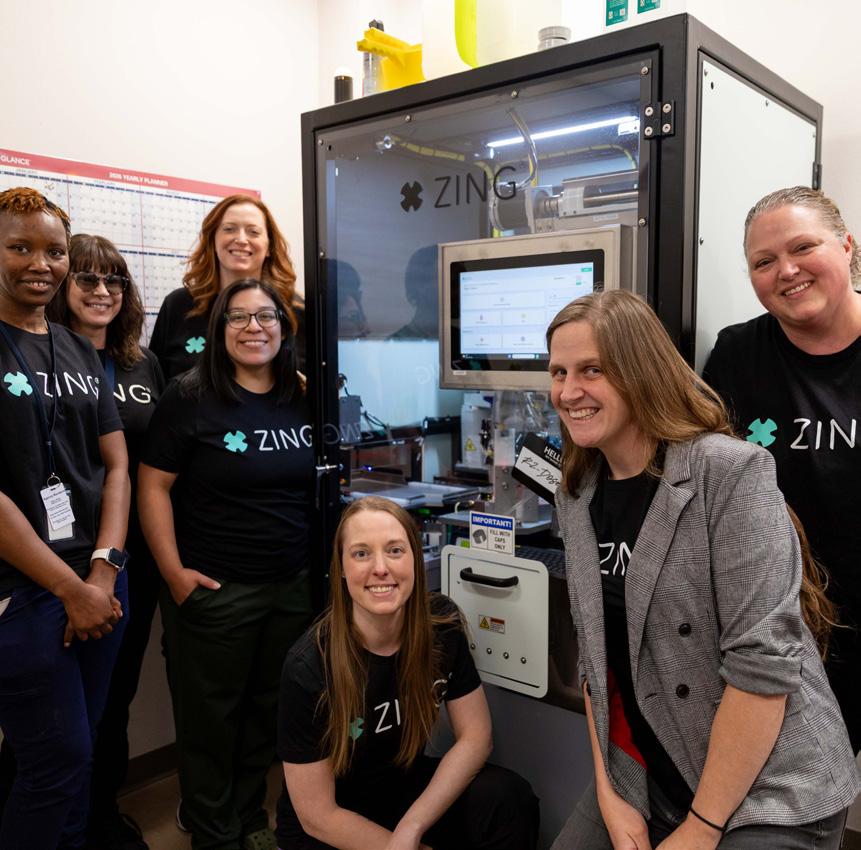
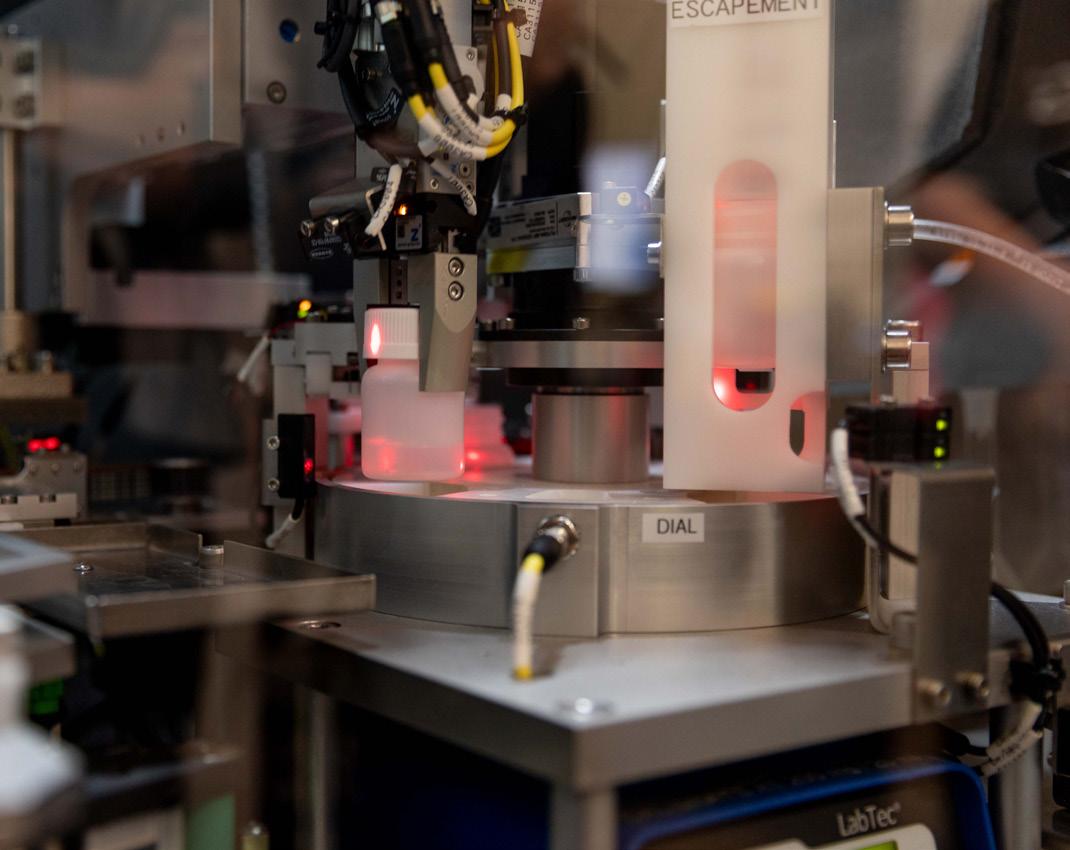
And in Yakima, our Medication-Assisted Treatment Clinic welcomed a new kind of team member: R2-Dose-2, our ZING robotic dosing system and only the third of its kind in Washington State. In the middle of a national nursing shortage and opioid crisis that has touched every county in this state, R2-Dose-2 represents our commitment to giving our clinical staff what they need so they can keep showing up for our clients.
The annual report data you’ll find in these pages tells a story of reach and resilience. Behind every number is a person who made an appointment, kept it, and came back. We are grateful to the staff who made that possible, to the partners who trust us with their clients, and to the communities that continue to call us in.
There is still much to do. The need in Central and Southeast Washington remains urgent, and we approach every new initiative knowing that urgency personally. But we also approach it with real optimism – because the evidence of what’s possible is right here in this issue.
Thank you for being part of this work.
Jodi Daly, PhD, Chief Executive Officer, Comprehensive Healthcare
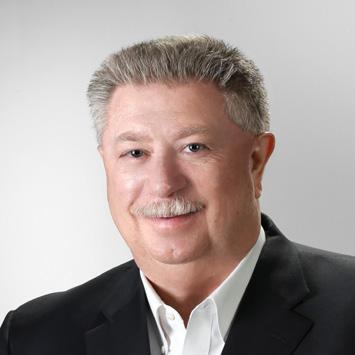
Ralph Conner, Chair, Board of Directors, Comprehensive Healthcare
“We have seen lives changed, barriers overcome, and hope restored.”
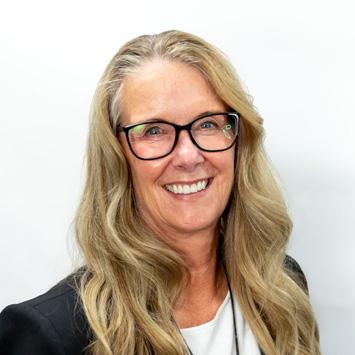
Jodi Daly, PhD is the Chief Executive
Officer
at Comprehensive Healthcare. Ralph Conner is the Chair of Board of Directors.
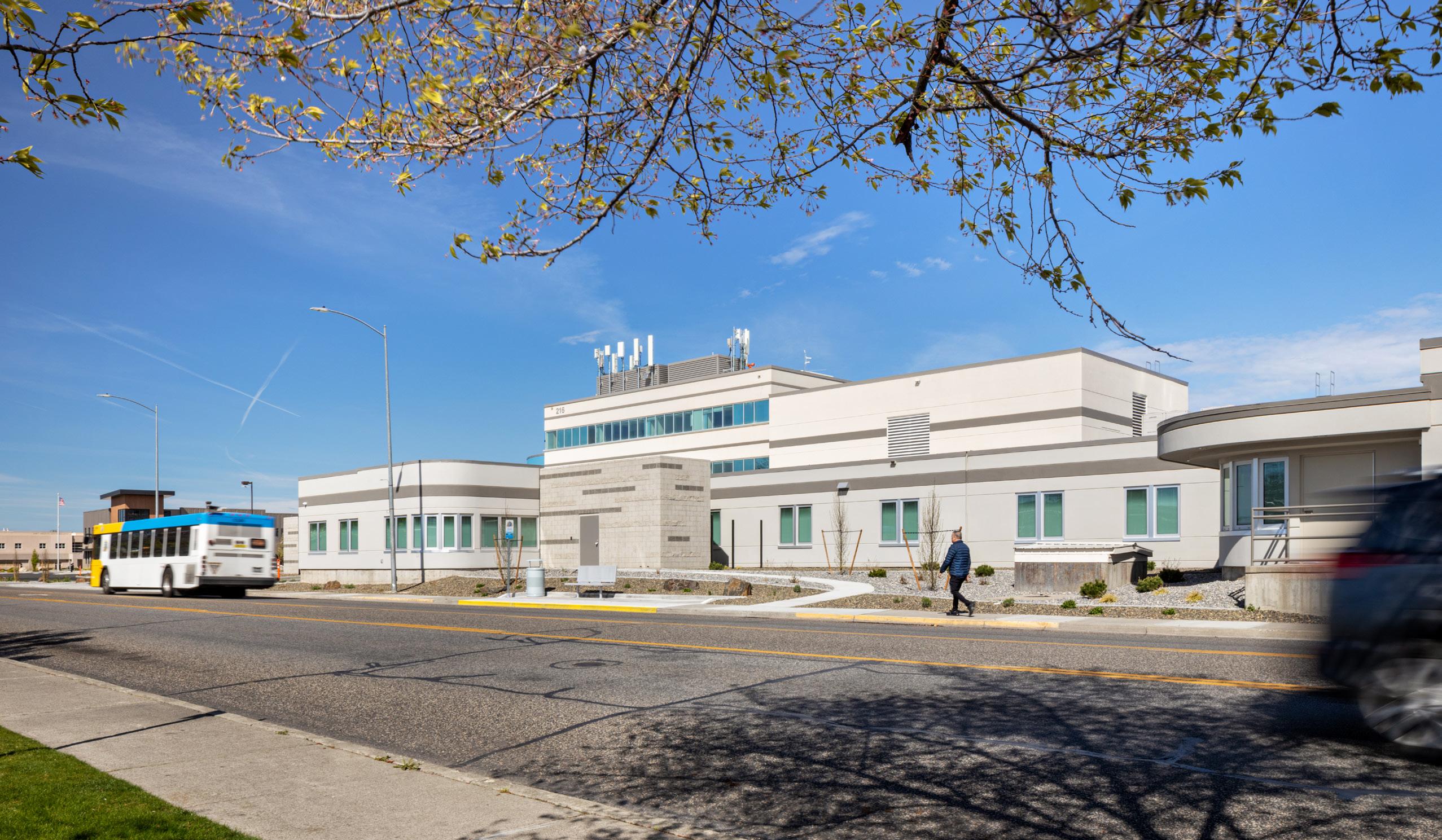
New Healthcare Services Begin Operations in Columbia Valley Center for Recovery
Years of community advocacy take shape in the Tri-Cities as the Columbia Valley Center for Recovery welcomes its first clients.
The Columbia Valley Center for Recovery (CVCR) has opened it’s doors – a landmark moment for the Tri-Cities region and a testament to what communities can accomplish when they come together around a shared cause.
CVCR is a county-owned facility made possible through a grassroots effort spearheaded by the Benton-Franklin Recovery Coalition, bringing together community advocates, organizations, and local leaders united by a common goal: creating a place where people can access the behavioral health care they need, close to home.
Comprehensive Healthcare is proud to be part of that vision. As a founding program partner, we are opening four specialized programs within CVCR. These four programs will expand our
continuum of care and contribute to a facility that will serve this community for years to come.
“CVCR is the result of a community that refused to accept the status quo,” shared Jodi Daly, PhD, CEO of Comprehensive Healthcare. “We are deeply honored to bring our programs and expertise to what has been built.”
Four Programs, One Continuum of Care
Comprehensive Healthcare’s four programs within CVCR are designed to meet people at every stage of crisis and recovery, and to work together seamlessly as individuals’ needs change over time.
The Crisis Relief Center
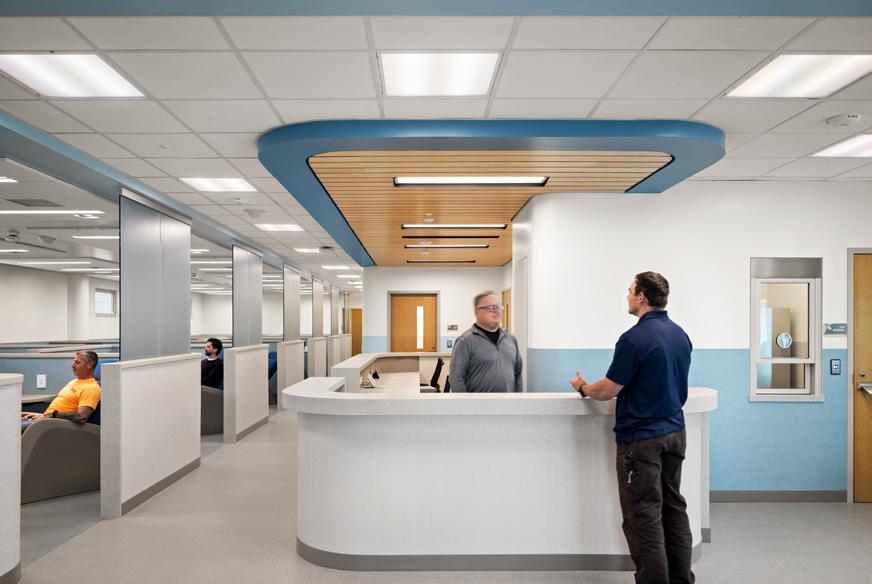
For individuals experiencing a behavioral health crisis, the Crisis Relief Center offers an immediate, welcoming alternative to emergency rooms or law enforcement intervention. This short-term stabilization program provides a safe space where people can receive rapid assessment, support, and connection to next steps. Clients are able to stay in the Crisis Relief Center for up to 23 hours and 59 minutes, as this step in the recovery process is intended to function as a triage center for behavioral health.
The Crisis Relief Center functions as a sort of emergency room for behavioral health. This is a place where individuals can land before moving on to the appropriate levels of care, effectively freeing up the medical emergency rooms in our community to focus on what they do best.
Crisis Stabilization Unit
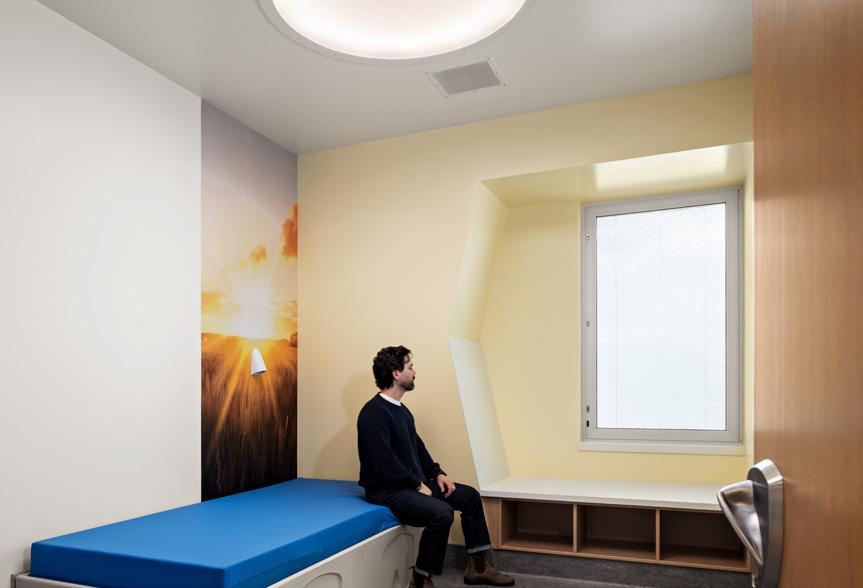
For those who need a higher level of support during a mental health or substance use crisis, the Crisis Stabilization Unit (CSU) provides short-term, intensive stabilization services. The CSU bridges the gap between crisis and ongoing care, helping individuals stabilize and develop a plan for continued recovery before transitioning to the appropriate level of support. The typical stay in CSU is 2-3 days before transitioning on to either a lower or higher level of care, as needed.
Secure Withdrawal Management/Evaluation and Treatment
Recovery often begins with the difficult, and sometimes dangerous, process of withdrawal. Our Secure Withdrawal Management/Evaluation and Treatment program provides medically supervised detoxification in a safe, structured environment. Clinical staff support individuals through withdrawal while beginning to lay the groundwork for longterm recovery, ensuring that the first step in the journey doesn’t have to be taken alone. This unit is our highest level of care, offering both voluntary and involuntary treatment as needed.
Co-Occurring Residential Treatment Center
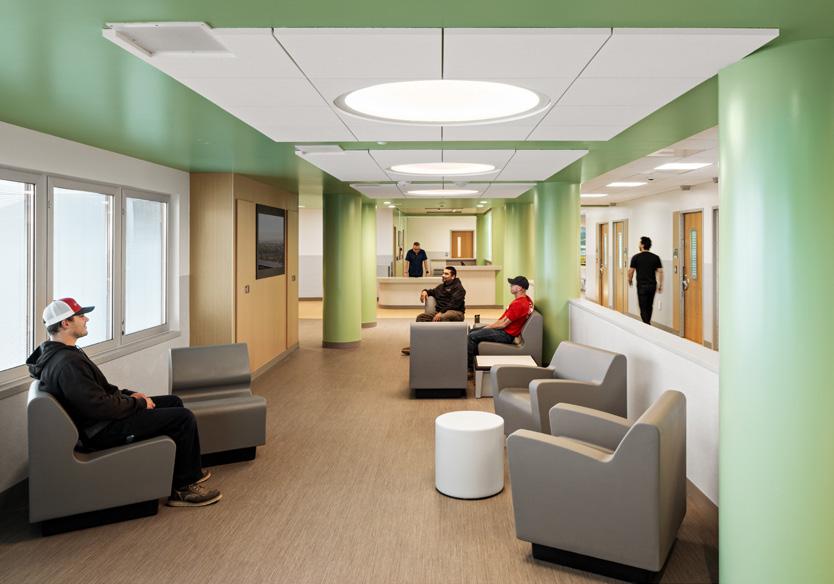
Many people facing substance use disorders also live with mental health conditions – and treating one without the other often isn’t effective. The Co-Occurring Residential Treatment
Center provides integrated, long-term residential care for individuals navigating both substance use and mental health challenges together, offering a more complete path toward lasting recovery.
A Community Effort Years in the Making
The opening of CVCR is the result of years of advocacy, coalition-building, and community investment. That it exists at all is a reflection of what this region decided it deserved – not a patchwork of crisis responses, but a dedicated space designed from the group up to support recovery.
Across Washington State, the demand for behavioral health services continues to outpace availability. For communities in the Tri-Cities and Yakima Valley, that gap has had real consequences: longer wait times, missed intervention opportunities, and people falling through the cracks of a fragmented system.
“The opening of CVCR is a meaningful step toward closing that gap,” said Daly. “We look forward to serving our neighbors here for years to come.”
Recovery is Possible – And Now, More Accessible
As we welcome our first clients through these doors, we do so with deep appreciation for the community that built this place and the staff who will bring it to life. Recovery looks different for everyone. CVCR – and the programs within it – exist to make sure more people have a place to begin.
“CVCR is the result of a community that refused to accept the status quo.”
Jodi Daly, PhD, CEO of Comprehensive Healthcare
Same Day Access is Meeting People in the Moment That Matters
This model reflects a fundamental shift in how care is delivered: prioritizing immediacy, engagement, and continuity from the very first interaction.
How Comprehensive Healthcare Brought Same Day Access to Life
Most
When someone reaches out for behavioral health support, it is often at a critical moment, when they are finally ready for change. Traditional systems, with delays between initial contact and the first appointment, have too often created a barrier. Same Day Access was developed to address this challenge by ensuring that when someone asks for help, they are seen the very same day.
Same Day Access was built on a clear understanding of the gaps in traditional care—particularly long wait times for intake and delays in starting treatment. These barriers can lead to worsening symptoms, increased risk of crisis, and missed opportunities to address broader health needs.
To close these gaps, Comprehensive Healthcare reimagined access from the ground up. Implementation included restructuring schedules to allow for open-access hours, re-allocating staff resources, and developing workflows that support real-time engagement. Dedicated intake specialists were trained to assess and connect individuals to services quickly, while contingency staffing plans ensure the organization can meet fluctuations in demand.
The model also brought about a cultural shift. Access to care became a shared responsibility across the organization. From client services representatives to clinicians and care coordinators, every team plays a role in ensuring each individual’s experience is a smooth and supportive entry into the services they need.
Core Components of the Model
Several key elements make Same Day Access effective:
• Open-access hours that eliminate the need to wait for scheduled intake appointments
• Dedicated intake staff who can quickly assess needs and initiate care
• A “no wrong door” approach, ensuring individuals are guided to the right services regardless of where they enter
• Streamlined workflows that reduce administrative barriers and prioritize the client’s experience
• Flexible staffing models that maintain access even during high-demand periods
“Together, these components create a system that is responsive, efficient, and centered on the individual,” says Natalie McGillen, Executive Vice President of Outpatient Services. “Same Day Access is more than a scheduling model—it’s a commitment to meeting people in their moment of need, reducing barriers to care, and building
a system that truly responds to the whole person.”
Enhancing Care Through “Just-In-Time” Scheduling
A critical enhancement to Same Day Access is the integration of Just-In-Time (JIT) Scheduling. This approach allows individuals to receive timely psychiatric evaluation and medication support as needed, whether for new prescriptions, adjustments, or urgent concerns.
By removing the need to wait weeks for prescribing appointments, JIT Scheduling strengthens the overall model. It supports faster stabilization, improves clinical outcomes, and ensures that care remains aligned with each individual’s immediate needs.
The Impact So Far
Since implementation, Same Day Access has significantly improved both access and engagement. More individuals are entering care, and the ability to be seen at the time of initial contact has effectively eliminated missed intake appointments. Clients are also connecting to follow-up services more quickly, supported by expanded care coordination.
In substance use disorder services, the impact has been particularly notable, with the number of individuals served doubling within the first year.
“The growth speaks to the great need for substance use disorder treatment in our community. When an individual is suffering from addiction, often times when they finally reach out for help, they may need to wait days or even weeks before they are seen,” says Jon Schlenske, Clinical Supervisor, SUD Practice and Workforce Development. “With Same Day Access, they are able to be seen
almost immediately, which provides quicker and more efficient intervention, more equitable access, and more options for ongoing care. The volume of assessments that are being performed speak to the efficiency of this model and why timing is so important when treating people that are suffering from addiction.”
Overall, Same Day Access has created a more responsive system—one that reduces delays, improves continuity, and better supports individuals on their path to wellness.
Looking Ahead
Same Day Access will continue to evolve to meet the needs of the communities Comprehensive Healthcare serves. Future priorities include expanding hours, strengthening partnerships with community resources, and enhancing care coordination to support ongoing engagement.
There are also opportunities to further integrate services across our continuum of care, ensuring not only rapid access when clients are ready, but timely follow-up and whole-person support throughout the entire care journey.
“When someone reaches out for care, that moment matters,” states Kamran Khatri, Chief Operating Officer. “Same Day Access ensures we don’t miss the opportunity to engage when they need us most.”
Same Day Access represents Comprehensive Healthcare’s commitment to meeting individuals where they are, at the moment when it really matters.
Same Day Access is available at any Comprehensive Healthcare Outpatient location. Hours for Mental Health Assessments: M-F, 7:30 AM - 3 PM. Hours for SUD Assessments: M-F, 8:00 AM - 5:00 PM.
“When someone reaches out for care, that moment matters.”
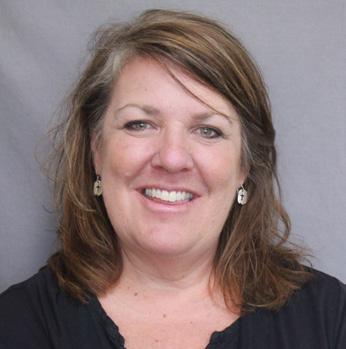
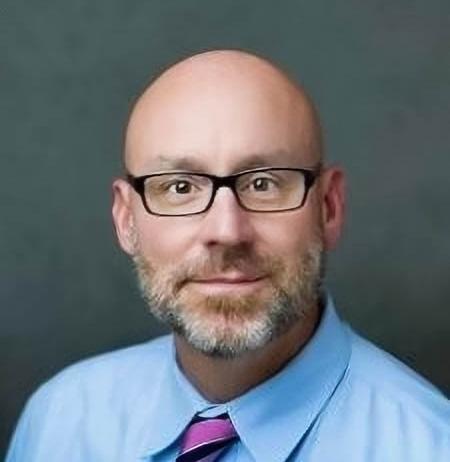
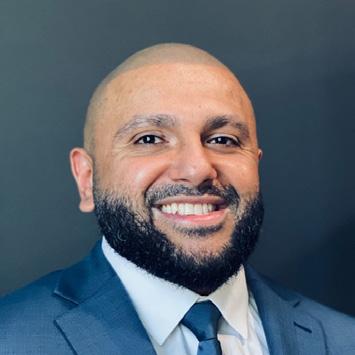
Natalie McGillen is the Executive Vice President of Outpatient Services. Jon Schlenske is the Clinical Supervisor of SUD Practice and Workforce Development. Kamran Khatri is the Chief Operating Officer.
Kamran Kahtri, Chief Operating Officer
Care Coordination in Action
How Data, Partnership, and Persistence are
Changing Crisis
Care in Walla Walla
On any given day in Walla Walla, the emergency department at Providence sees patients at the most vulnerable moments of their lives.
Some arrive in a medical crisis. Others arrive in emotional or psychological distress, overwhelmed and destabilized, searching for help.
But an emergency room visit is only a snapshot in time.
“The reality is,” said Krystal Norris, Emergency Department Manager at Providence, “this person has their whole life that they’re trying to navigate with complex housing situations, complex relationships, or even substance use disorders in addition to behavioral health conditions.”
The challenge for modern healthcare systems is not simply how to stabilize a crisis, but how to prevent the next one.
As Comprehensive Healthcare continues expanding and aligning our systems, partnerships, and services, one principle remains at the center of that work: no one should fall through the cracks.
Care coordination is the mechanism that makes that principle real. And in Walla Walla, our partnership with Providence St. Mary Medical Center is showing what that looks like when it’s done well.
“What this partnership allows us to do is look more broadly than the one moment in crisis that we’re encountering these individuals,” Norris says. “We’re able to link them with a resource that is able to follow them out into the community and then work together to make sure that they have all of the tools and resources that are available to them in order to be successful.”
For years, Comprehensive Healthcare and Providence have worked alongside one another. The partnership between the organizations is not new, but in recent years it has become more polished and accountable, strengthening operations for both organizations.
contact within 24 hours.
“We didn’t want to just talk about partnership,” said Abby Harnett, Comprehensive Healthcare’s Site Director in Walla Walla. “We wanted to see the data – and ask, what are we going to do with it next? How do we get the best outcome for the clients?”
That question – what do we do next – has become the centerpiece of their work.
Few people sit closer to that intersection than Lindsey Fuchs, Program Manager overseeing Acute Care Services and Youth Mobile Outreach in Walla Walla.
“My role really is that of a community partner,” Fuchs said. “We serve the same population, and it’s about ensuring the issues needing to be addressed are being addressed for the whole person – not just the issue at hand.”
“We’re able to link them with a resource that is able to follow them out into the community and then work together to make sure that they have all of the tools and resources that are available to them in order to be successful.”
Krystal Norris, Emergency Department Manager at Providence St. Mary’s
Through a Certified Community Behavioral Health Clinic (CCBHC) Planning Grant from SAMHSA, Comprehensive Healthcare built stronger infrastructure for this work: clearer agreements, shared metrics, and consistent review.
“The CCBHC framework helped formalize the partnership we already had and strengthen it,” said Louise Dyjur, Chief Nursing Officer at Providence. “It made clearer what services each of us offers, how we could work together, and set up ways to see whether we’re meeting what we set out to meet.”
The shift, colleagues say, is subtle but meaningful: from collaboration by proximity to collaboration by design.
Melissa Bowe, RN Manager at Providence, described it this way: “This allows us to show it on paper – from both sides – and have a clear understanding of our common goals so we can prove we’re moving in the right direction for our community.”
Now, every other week, leaders from both organizations meet to review shared key performance indicators: emergency department utilization, crisis response times, and follow-up
Fuchs both supervises frontline staff and provides services herself. She understands the mechanics of the system – its capabilities and its limitations.
“It’s important to have a handle on how the system should work and what our capabilities and barriers are to be the best partner,” she said.
Because there is only one emergency department in Walla Walla, she explained, individuals unfamiliar with behavioral health services often default there.
“When people don’t know about the behavioral health system, they go straight to the ER because they know they can go there for help,” Fuchs said. “Acute Care Services really works on providing education to our partners there as well as responding to provide outreach to educate. Comprehensive’s outreach model allows for us to provide that education and support in navigation by connecting individuals with appropriate resources.”
That navigation is critical. Without it, emergency visits become repetitive. With it, they become transitional.
Across the country, hospitals struggle with individuals who return to emergency rooms repeatedly – not always for medical emergencies, but because underlying social and behavioral needs remain unmet.
Walla Walla is no exception.
During one recent review meeting, a familiar name appeared on the data sheet.
“We realized we were both working with the same individual,” Harnett said. “We identified the gaps – what needs weren’t being met – and we created a plan.”
The hospital clarified how it would respond if the individual returned, and Comprehensive’s crisis team reached out proactively to help wrap around services.
The aim was not to shift responsibility. It was to close the loop.
“What we’re really trying to accomplish is to reduce those emergency room visits for them, but also for us as a healthcare system,” Dyjur explained. “We want people to get the care they need in the appropriate spaces that they need it. Whether it’s a social need, a financial need, or whatever it is that Comprehensive can help with, the more that we have those resources to serve the community for medical care needs. It really is a very close, symbiotic kind of relationship.”
Repeated visits, leaders emphasize, are signals of an unmet need.
“If someone is utilizing the emergency department more frequently,” Norris said, “that should be an indicator that their needs aren’t being met. How do we take that one step further to make sure we get them what they need?”
One of the clearest examples of responding to those signals emerged
during the pandemic, when pediatric behavioral health visits to the emergency department surged.
Through their partnership, Providence identified a growing need among youth experiencing behavioral health crises – many of whom lacked immediate access to appropriate community-based support.
That insight helped shape Comprehensive Healthcare’s Youth Mobile Outreach team.
Youth Mobile Outreach is part of Comprehensive Healthcare’s Acute Care Services and functions as a communitybased crisis response for youth and their families. Instead of defaulting to emergency departments, trained behavioral health professionals meet youth where they are – often in their homes – to assess safety, stabilize the situation, connect families to services, and build skills that reduce future crises.
“Increased youth behavioral health needs are what moved the healthcare authority to build youth mobile outreach programming,” Fuchs said. “Our youth team steadily works with youth and their families in acute distress to keep them out of the emergency rooms and high cost psychiatric hospitalization placements, and in our communities working on the skills and addressing the barriers that they have.”
It is a model shaped by a real, observed need in the community rather than theory. Over time, the results have been evident in both metrics and trust.
“Our clients get more targeted care, especially those who are more acute,” Fuchs said. “We’re able in real time to call meetings, troubleshoot over email, provide consultation on safety measures. These small things impact client care by providing guidance to the teams doing the work.”
Harnett describes the environment now as transparent and accountable.
“It’s become a safe space to say, ‘We experienced this – how do we resolve it? We’re not operating in silos anymore.”
As healthcare grows more complex –with social drivers of health increasingly shaping outcomes – leaders on both sides say collaboration is no longer optional.
“We continue to see more complexity in our patient population when it comes to social drivers or social determinants of health,” Norris states. “I think these partnerships will continue to be extremely beneficial to our patients and our community at large.”
This partnership is just one way to address those complexities, providing flexible services that meet clients where they are, while ensuring medical resources are used appropriately.
“Our community is constantly developing, so we have to be able to as well,” Bowe says. “We can’t do the same thing over and over again forever. We have to be able to adjust and be resilient to those changes.”
Harnett agrees.
“I don’t think one organization can do it all alone. We all need each other.”
Bowe adds one final thought: “The more that we learn about one another’s capacity, the more we can build processes that work for our community. Every chance we get, we take the opportunity to learn from one another and strengthen that partnership even more.”
In coordinated care, success is measured in relationships – between systems, between providers, and between people determined that crisis should not be the final chapter.
Comprehensive Healthcare by the Numbers Client and program data from Fiscal Year 2025.
Clients Served by Age

Every number here reflects a unique individual who received care.
19,519
Clients Served by Race/Ethnicity
Percentages across the categories do not add up to 100%, because data is being reported from two different data sources.
16 Physical Locations across 5 counties.
488,822
Clients Served by County Some clients receive services in more than one county.
Meet R2-Dose-2
Comprehensive Healthcare’s
Newest Team Member at the Opioid Treatment Program in Yakima
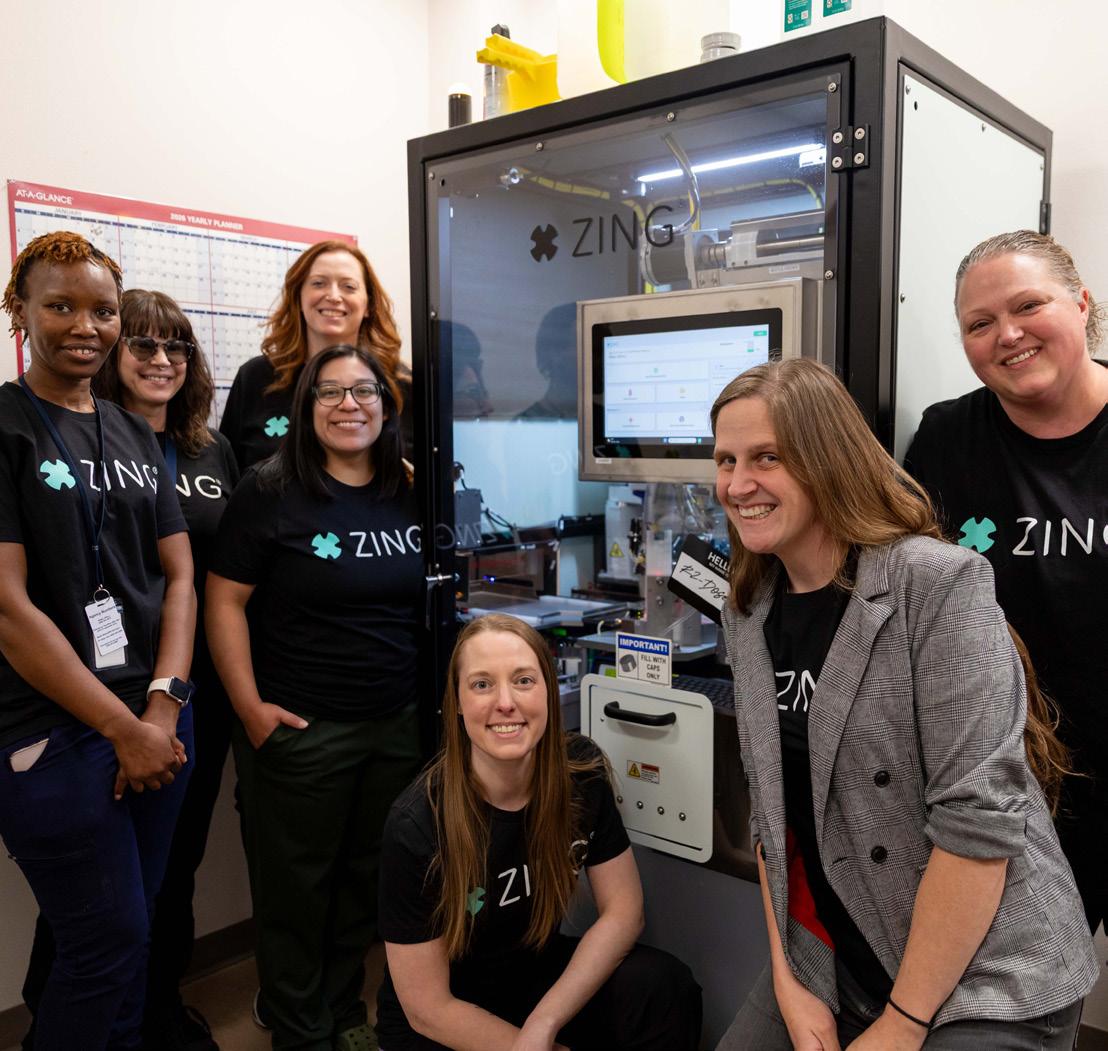
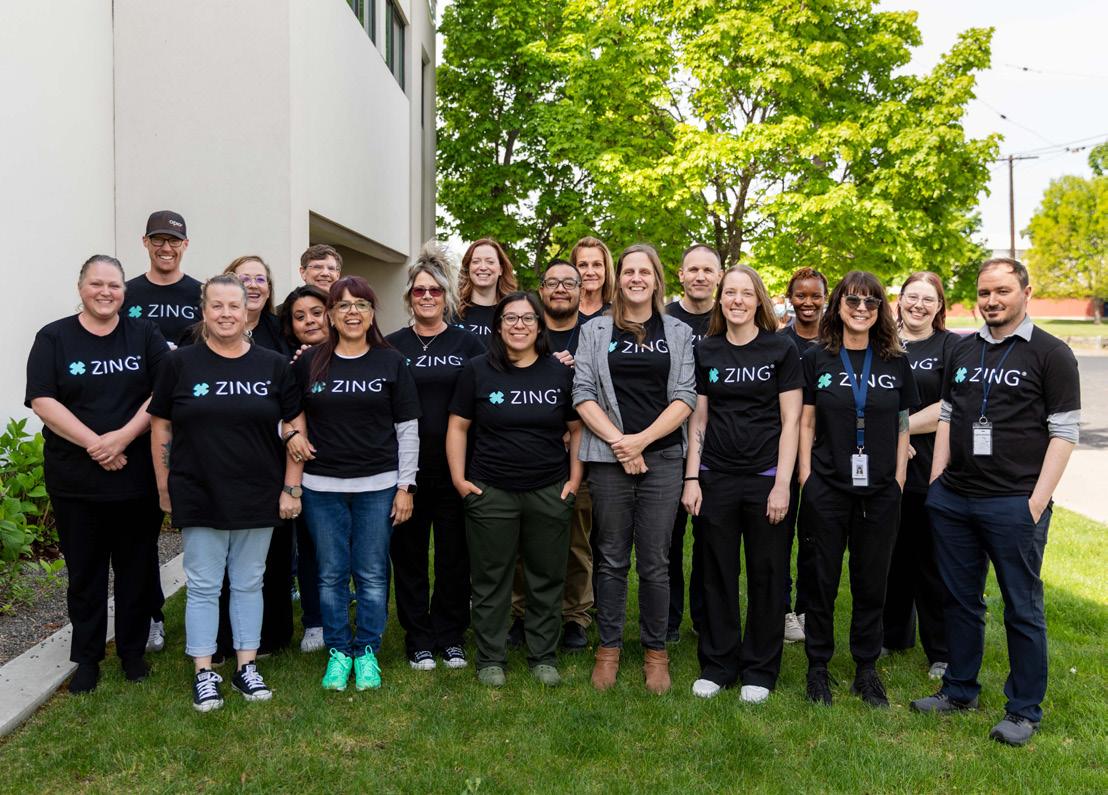
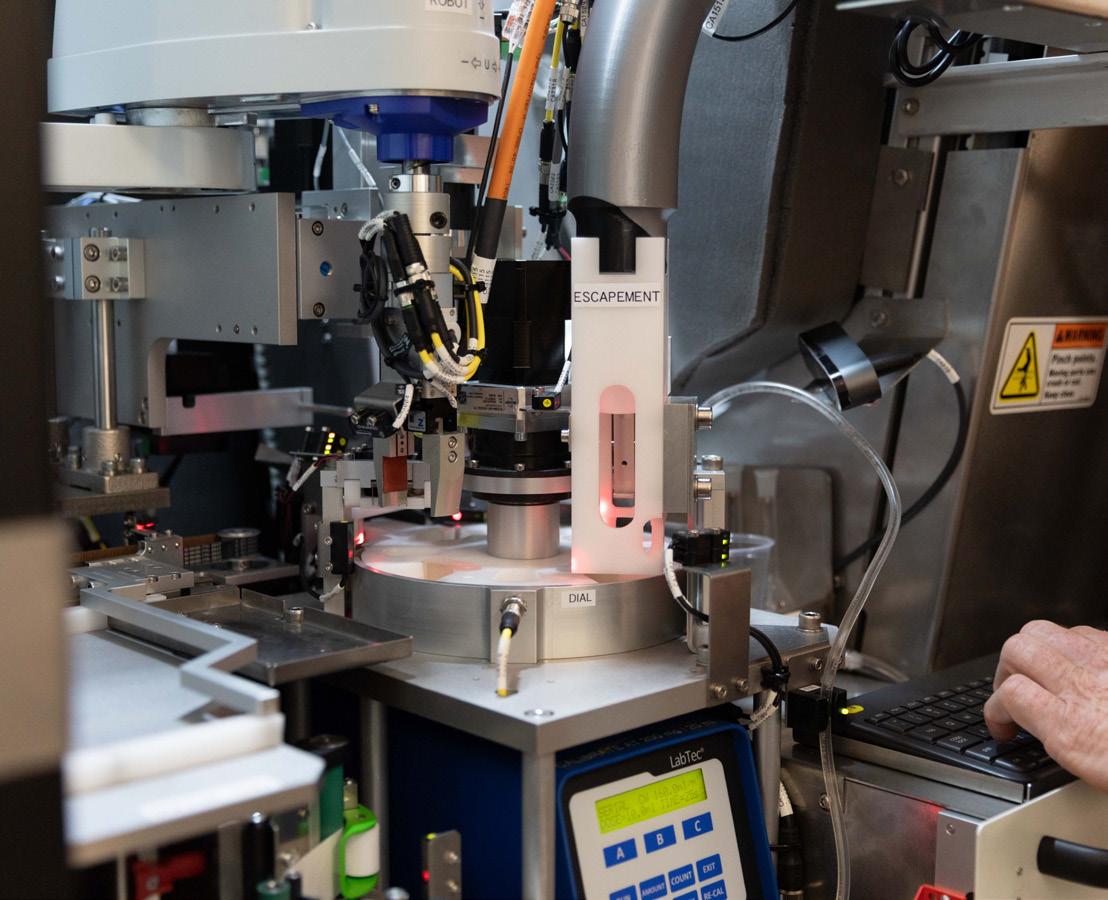
Comprehensive Healthcare has a new team member, a ZING® robot named R2 Dose-2. Our nurses named him, and they will oversee his automated medication dosing, which allows the center to pour and label methadone doses nearly five times faster than is possible by hand.
Clients can expect to see shorter wait times when picking up their medication, as we will be able to prepare batches of doses in advance, so even those with larger orders move swiftly through the line.
“Previously, nurses manually poured, sealed, and labeled each dose of methadone at the dosing window while clients waited, sometimes for up to 30 minutes,” said Comprehensive Healthcare’s addictionologist, Dr. Gillian Zuckerman. “Nurses can prepare about 85 doses an hour by hand, while R2 Dose2, our new ZING robot, is capable of preparing up to 400 doses an hour.”
Comprehensive Healthcare is among the first Opioid Treatment Programs (OTPs) in Washington state to implement ZING, and the first clinic east of the Cascades to do so. The system will allow the organization to serve more clients more quickly, while reducing the time-consuming workload that has limited nurses’ capacity to engage directly with clients.
“Our team members are excited to refocus their time on what matters most, patient care,” said Dr. Zuckerman. “As demand for opioid treatment continues to grow, so does the need for human-centered care. By automating methadone dosing, our nurses will have more time for meaningful interaction with clients.”
Comprehensive Healthcare is proud to bring solutions like ZING to behavioral healthcare in central Washington, furthering our mission to provide innovative, integrated healthcare, community education, and services to individuals, families, and organizations.
Beyond the Waiting Room
How
Comprehensive
Healthcare Meets People Where They Are
Not everyone who needs help knows how to ask for it. And not everyone in crisis finds their way to a clinic, a waiting room, or a front desk. Sometimes, help has to come to them.
That belief shapes some of the most vital work Comprehensive Healthcare does. Across our service area, our teams don’t just wait for people to arrive at our front door - they go out to meet them.
It begins with a phone call. Across our service area, Comprehensive Healthcare is contracted to respond to all 988 Suicide and Crisis Lifeline calls, ensuring that when someone in our region reaches out, a trained professional from our team is on the other end of the line. And when a call requires more than conversation, we send someone out. Our outreach teams—from the Field Response Team in Yakima to Youth Mobile Outreach across our service region to Acute Care Services—are ready to meet people in the community: at home, at a school, on a street corner, or alongside a first responder. But going to the person rather than waiting for the person to come to us extends well beyond crisis response. It’s the same principle that takes our staff to Camp Hope and our Mobile Unit to Ellensburg. This is what our continuum of care looks like at its outermost edge—and it is just as vital as any clinic or treatment program we operate.
988: When Someone Reaches Out, We Answer
The 988 Suicide and Crisis Lifeline was designed to give people in crisis a simple, memorable number to call – a direct line to help. But a phone call is only as powerful as what happens on the other end.
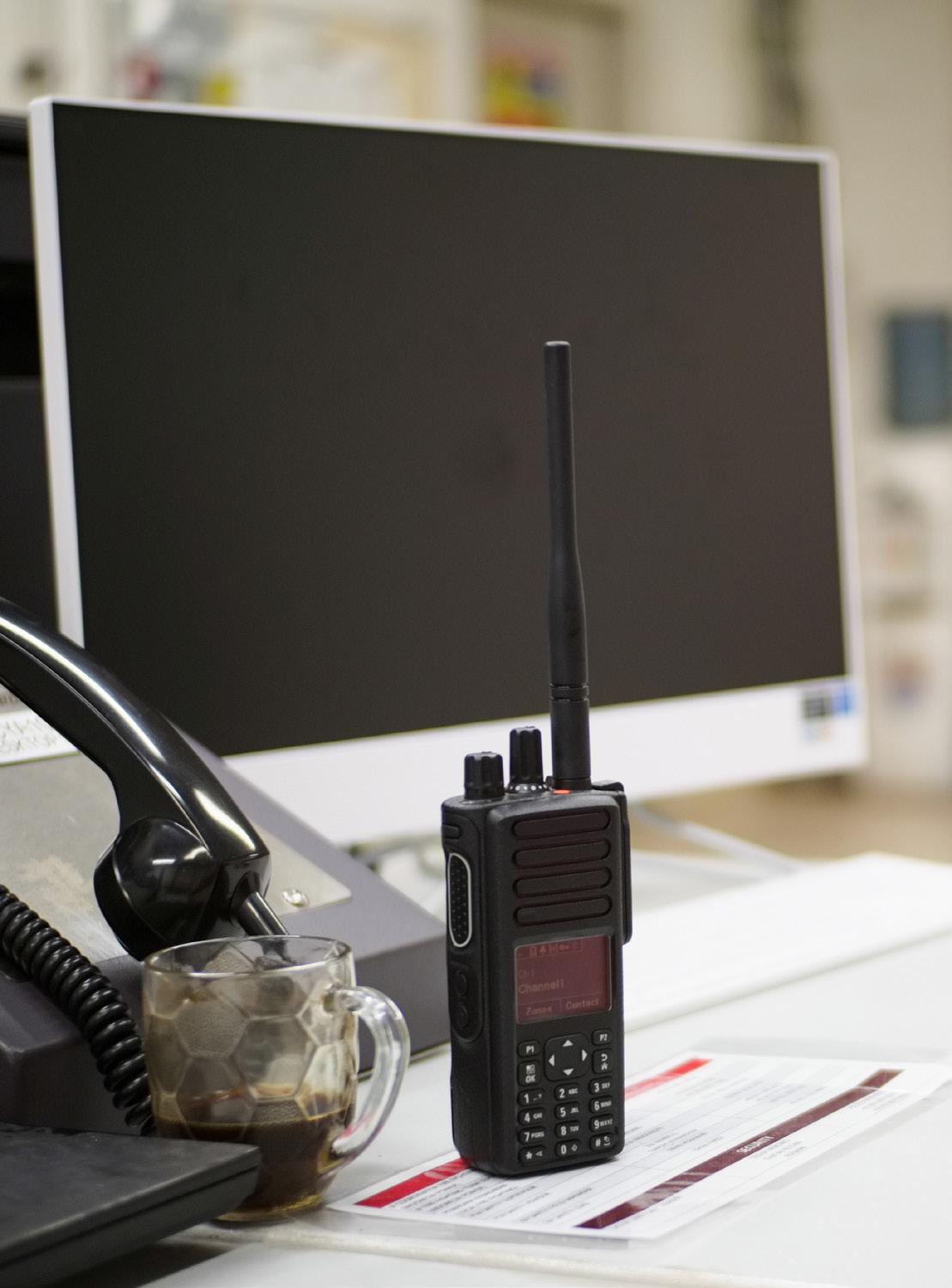
When someone in our service area dials or texts 988, their call is answered by Volunteers of America (VOA) or 988 call specialists who follow a structured protocol to triage and assess the level of care needed. Some crises can be resolved in that first conversation, and when that’s the case, VOA and 988 specialists work directly with the individual to help them
through their difficult moment.
When the situation calls for more, the call is forwarded to Comprehensive Healthcare’s Designated Crisis Responder (DCR) offices, where Mental Health Associates, Case Managers, and DCRs are available to respond 24 hours a day.
The result is a layered, around-the-clock system designed to meet each person at exactly the level of response their situation requires – from a supportive phone conversation to a full in-person crisis response.
Into the Community: Crisis Outreach Across Our Service Area
Comprehensive Healthcare’s acute care service teams don’t wait for people to find us. Across our service area, crisis outreach professionals are embedded in communities — partnering with law enforcement, schools, primary care providers, and other community organizations to reach people where they are and when they need it most.
This community-based model recognizes a simple truth: the people who most need behavioral health support are often
the least able to navigate a traditional system to get it. Barriers like transportation, stigma, distrust of institutions, or simply not knowing where to turn can keep someone from ever making an appointment. Our outreach teams are designed to remove those barriers entirely — by going to the person rather than waiting for the person to come to us.
Two programs offer a window into what that work looks like on the ground.
The Field Response Team: A Different Kind of First Responder
When someone in Yakima County calls 911 in the middle of a mental health or substance use crisis, the response looks different than it used to.
Since launching in November 2024, Comprehensive Healthcare’s Field Response Team has embedded behavioral health professionals directly alongside law enforcement across Yakima Valley. The teammade up of four designated crisis responders (DCRs), eight case managers, and five peer support specialists – is stationed at the Yakima County Sherriff’s Office and the Sunnyside Police Department, and is available from 8 a.m. to 11:30 p.m. every day.
Rather than sending only a law enforcement officer to a behavioral health call, the community now has a team specifically trained to de-escalate, assess, and connect – with their own fleet of vehicles, allowing them to respond independently when it’s safe to do so.
The results have been significant. In 2025, the Field Response Team provided more than 3,400 services to over 1,200 clients — a 200% increase compared to the previous year, when Comprehensive Healthcare operated a smaller co-response model.
For designated crisis responders like Olga Romo, the work often extends well beyond a single call. Romo recalled a shift where she spent nearly eight hours sitting with someone who had been involuntarily hospitalized, coordinating with medical staff and working to secure a psychiatric placement. The next
morning, she was back at her desk by 8 a.m., picking up where she left off. “For me, it’s whatever time is required,” Romo said. “You know, it’s worth it.”
For many of the individuals our field team encounters, that initial contact is the first time anyone in a professional capacity has simply listened to them without an agenda. And often, it’s that moment of being heard that makes the next step possible — whether that’s a warm handoff to outpatient services, a connection to housing resources, or a ride to one of our facilities offering a higher level of care, like the Crisis Stabilization Center.
Youth Mobile Outreach
The Youth Mobile Outreach program serves young people experiencing a crisis that is urgent, but may not meet the threshold for a higher level of care. That might mean mental health challenges, behavioral issues, substance use, or family instability. In the past, these young people often fell through the cracks — unable to qualify for more intensive services, but too close to the edge to be left without support. Now, Comprehensive Healthcare’s outreach teams meet them in the community, building the kind of connection that can change the entire trajectory of what comes next.
Most families are connected to the program
“Barriers like transportation, stigma, distrust of institutions, or simply not knowing where to turn can keep someone from ever making an appointment.”
IMAGE
Comprehensive Healthcare’s current facility at Camp Hope
IMAGE
Field Response Team at the Yakima County Sherrif’s Office

through the 988 crisis line, local schools, or primary care physicians. From there, the team conducts an assessment and, when it’s a good fit, begins what is typically an eight-week engagement – though the timeline is always shaped by each family’s needs.
The program is covered through Medicaid or private insurance for most families, and for those without coverage, Comprehensive Healthcare works to eliminate cost as a barrier entirely.
Camp Hope
For residents of Camp Hope, Yakima’s sanctioned homeless encampment, accessing behavioral health care isn’t always as simple as making an appointment. Transportation, distrust, the weight of daily survival – any one of these can stand between a person and the help they need. So, rather than waiting for Camp Hope residents to find their way to us, Comprehensive Healthcare brings care directly to them.
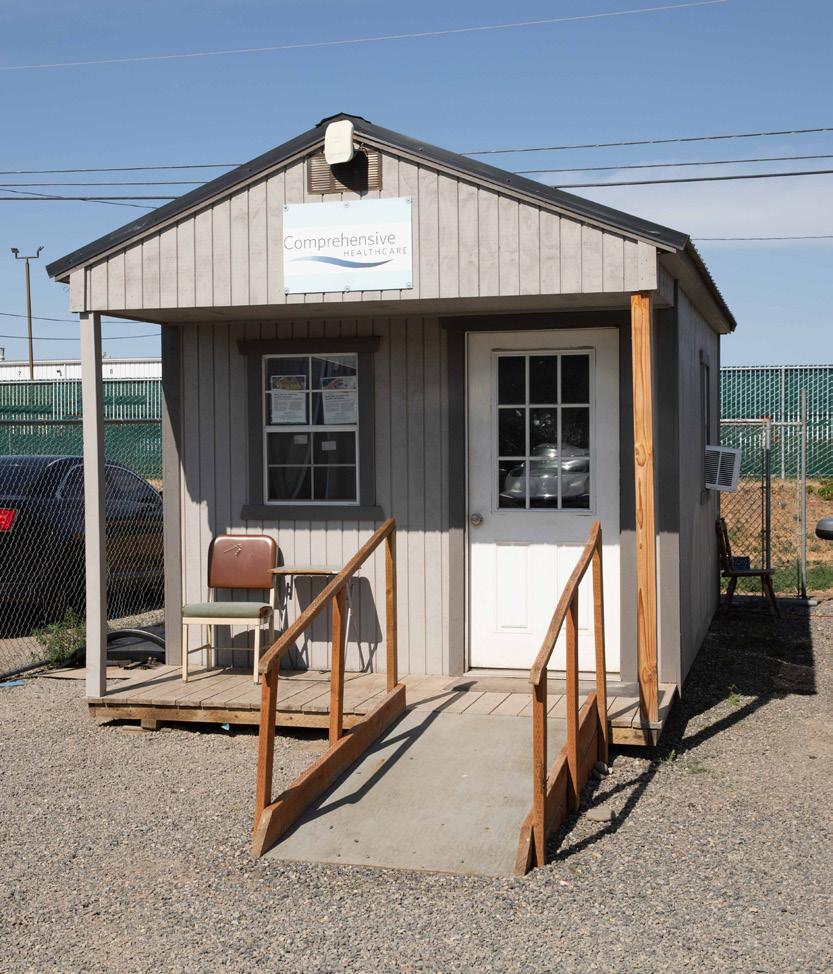
Nearly every weekday, a team that includes medical providers, peer support counselors, care coordinators, and other staff makes the trip out to Camp Hope to engage with residents on their own turf. The visits aren’t transactional – staff aren’t simply dropping off resources and leaving. They’re building relationships, conducting health screenings, supporting residents in navigating benefits and services, and walking alongside people at one of the most vulnerable points in their lives.
In FY2025, the team served 195 residents and provided 748 services — including peer support, outreach and engagement, office visits, community support, and primary care. Each number represents not just a visit, but a relationship built, a barrier removed, and a door opened.
For many residents, this consistent, unhurried presence is the first step toward something more. A conversation with a peer support counselor can lead to a first therapy appointment. A care coordinator helping someone navigate Medicaid enrollment can open the door to treatment that was previously
out of reach. The trust built at a picnic table at Camp Hope can carry someone all the way into our clinics, our housing programs, and beyond.
The Mobile Unit
For someone in recovery from opioid use disorder, treatment can mean a daily dose of medication. Until recently, for residents of Kittitas County, it also meant a daily hour-long drive. Methadone, one of the most effective medications for opioid use disorder, can only be dispensed through a certified Opioid Treatment Program, and the nearest was Comprehensive Healthcare’s program in Yakima. For people already navigating the demands of early recovery, that distance went beyond an inconvenience. Research consistently shows that the farther someone lives from treatment, the less likely they are to receive it at all.
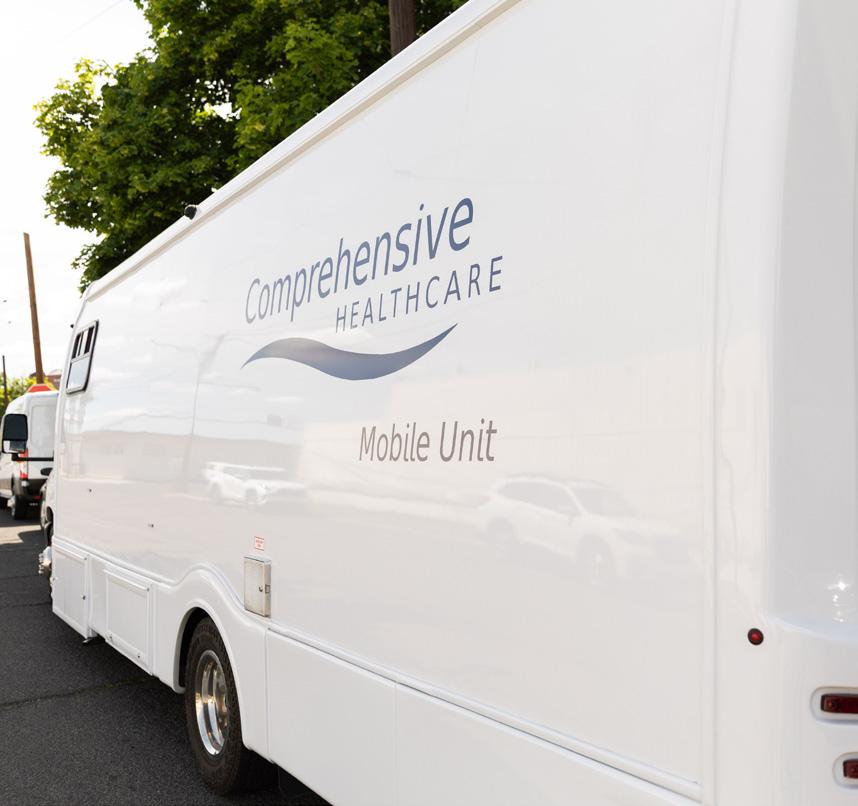
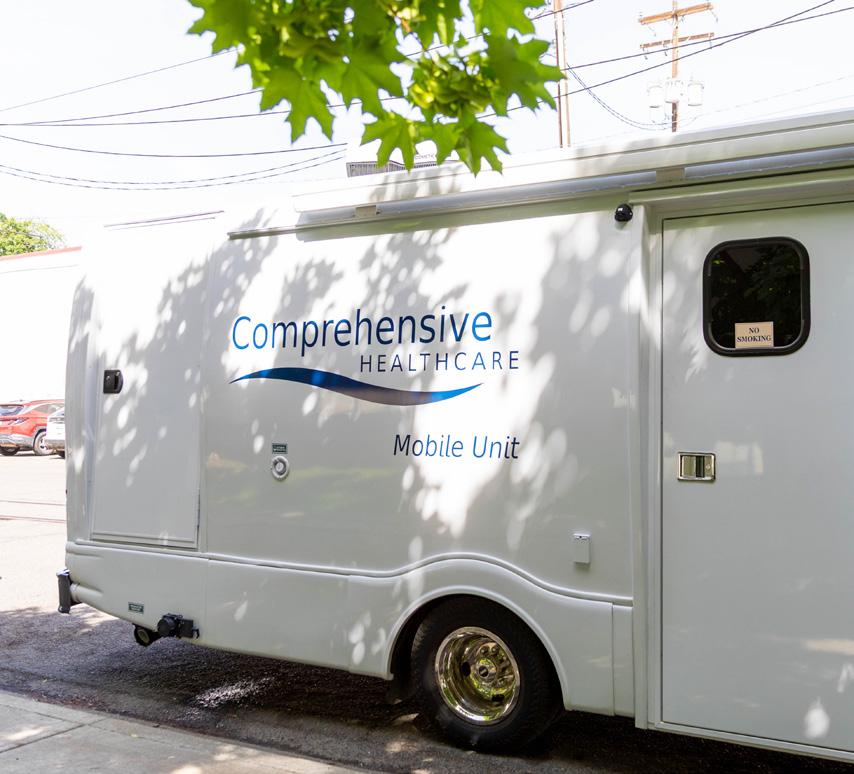
Comprehensive Healthcare’s Mobile Unit was built to bridge that gap. Operating in Ellensburg six days a week, the unit brings medication-assisted treatment directly to the community - offering provider visits, counseling, methadone and buprenorphine dosing, and connections to other local services.
One Organization, Many Points of Entry
The Field Response Team, Youth Mobile Outreach, and Camp Hope are three expressions of something larger – an organizational commitment to meeting people where they are, across every corner of our service area. From the moment someone dials 988 to the outreach worker who shows up at a school or a doorstep, Comprehensive Healthcare is working to ensure that the distance between a person in need and the help they deserve is as small as possible. This is what a true continuum of care looks like. Not a single front door, but many points of entry – each one staffed by people who believe that showing up is the first and most important act of care.
In crisis? Call or text 988 to reach the Suicide and Crisis Lifeline. To learn more about Comprehensive Healthcare’s crisis and outreach services, visit comphc.org.
Yakima Center
402 S. 4th Avenue
P.O. Box 959
Yakima, WA 98907
(509) 575-4084
comphc.org
Ellensburg Center
707 N. Pearl Street
Ellensburg, WA 98926 (509) 925-9861
Cle Elum Center 402 1st Street Cle Elum, WA 98922 (509) 674-2340
Sunnyside Center 1319 Saul Road Sunnyside, WA 98944 (509) 837-2089
Pasco Center
2715 Saint Andrews Loop, Suite C Pasco, WA 99301 (509) 412-1051
Walla Walla Center 1520 Kelly Pla ce, Suite 234 Walla Walla, WA 99362 (509) 524-2920
Kennewick Center 7404 West Hood Place Kennewick, WA 99336-6718 (509) 792-1747
We’re Hiring - Help Our Community
If you want to make a difference in our communities, we have roles for you!
We value our team members with competitive benefits including tuition reimbursement, holiday pay and student loan forgiveness. Our employees are teamminded, creative and compassionate individuals who enjoy being challenged and continually strive for excellence. We have a variety of openings from clinical and medical providers, to care coordinators, crisis outreach experts, and beyond. Scan the QR code to learn more about job openings.
Why Work for Us
• Bonuses for eligible staff • Tuition Reimbursement Program • Student Loan Repayment Assistance
• Employee Assistance Plan
• Online, text-based primary health care – 98point6
• Legal Service Plan
• Funded team-building activities For employment opportunities with Comprehensive Healthcare