COMPENDIUM
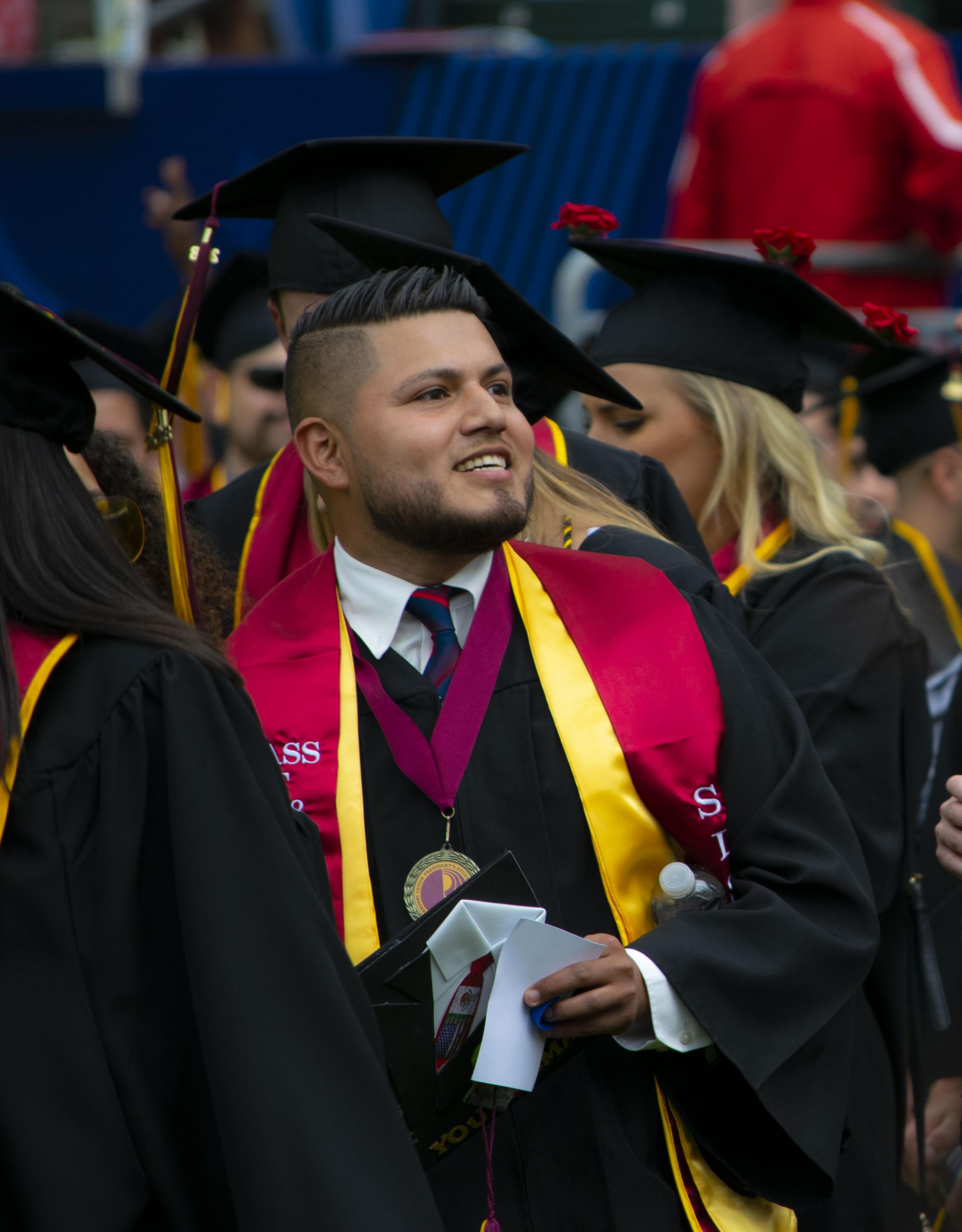

Communication students beam as they look to life after college
Alumna Kalie Calder leaves behind a newly developed student-run news broadcast channel

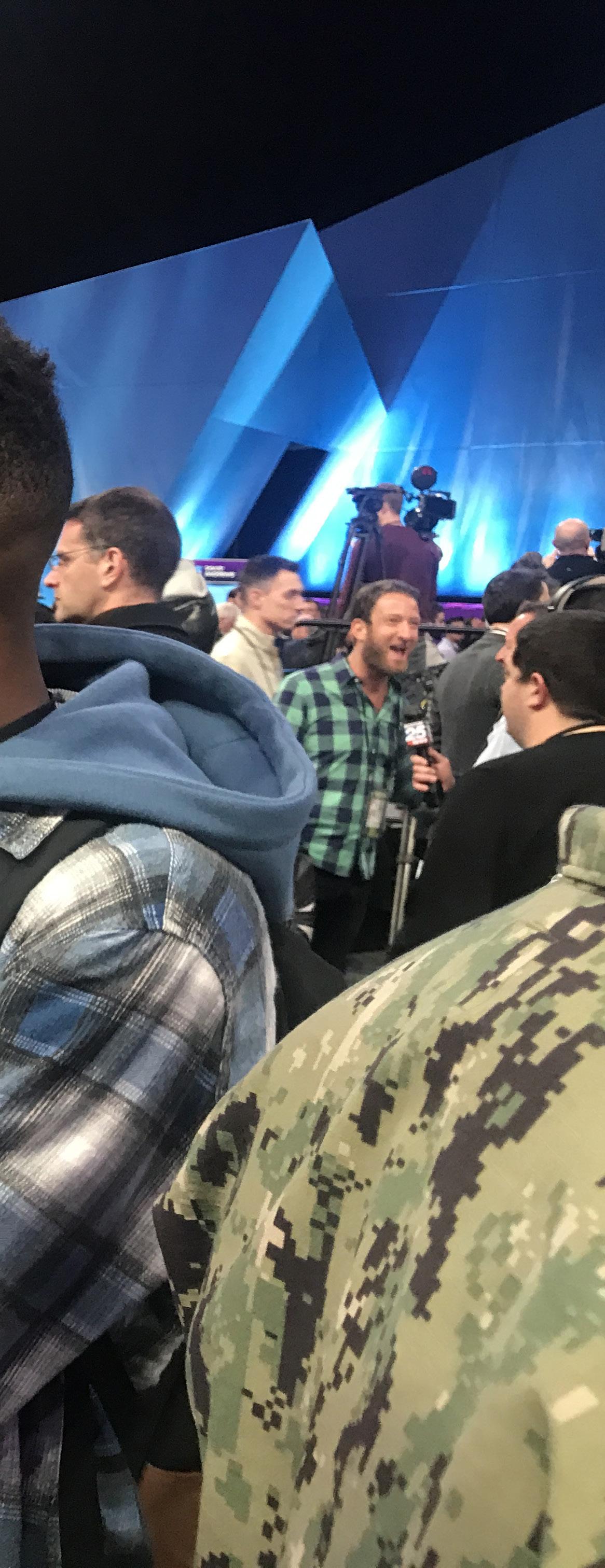
Communications alum Da’ Ron Frost (C/0 2017) covers the 2018 Super Bowl LII between the Philadelphia Eagles and the New England Patriots. This was his second year in a row reporting on a Super Bowl game for Pro Player Insiders. In this photo, Frost is interviewing former New England Patriots running back Dion Lewis (now with the Tennessee Titans).
“It was a dream come true,” Frost said. “I would have never imagined to cover a Super Bowl so early in my career, let alone two. It just makes me want to work harder and continue the journey I am on now. Recently I just got hired by the NFL Network as a Closed-Caption Operator. It’s an entry level position, but working for the NFL is a dream of mine. This is only the start of something bigger.”
Dr. Nancy Cheever introduces issue two of Compendium . . . pg 4
The Communications Chair receives a prestigious award . . . pg 5
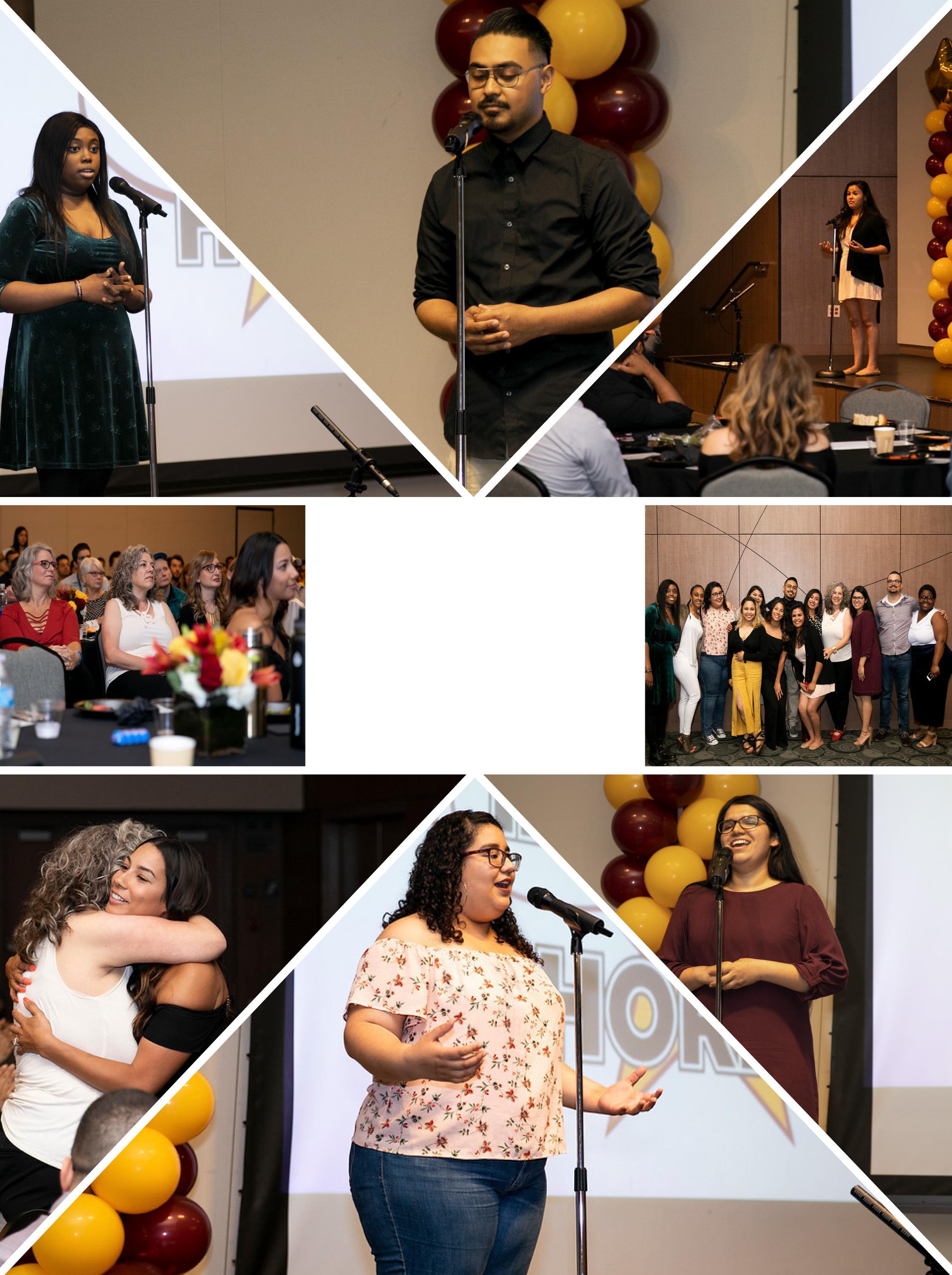
Students embrace their inner vulnerability at the Fourth Annual Story Slam . . . pg 6
Three professionals from the video game industry share their expertise with students . . . pg 7
New COM 106 and COM 496 professor prepares students for life after graduation . . . pg 8
A CSUDH alumna dances her way back to CSUDH as a choreographer . . . pg 10
Alumna Kalie Calder leaves behind a new student-run television news broadcast . . . pg 12
When all seemed lost Patricia Franklin persevered . . . pg 16
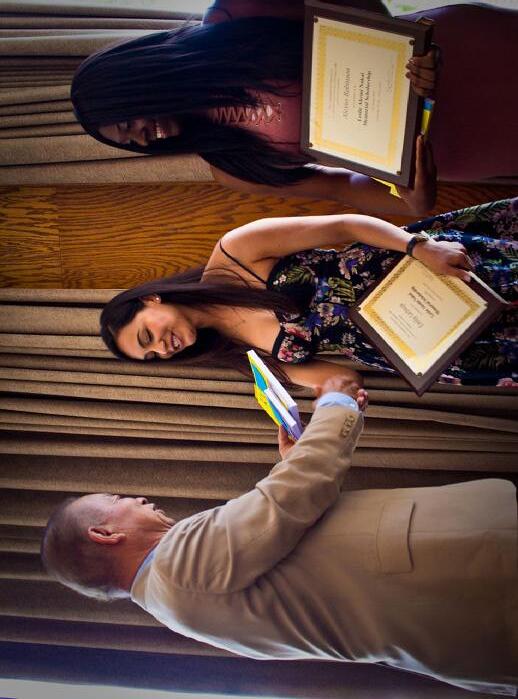
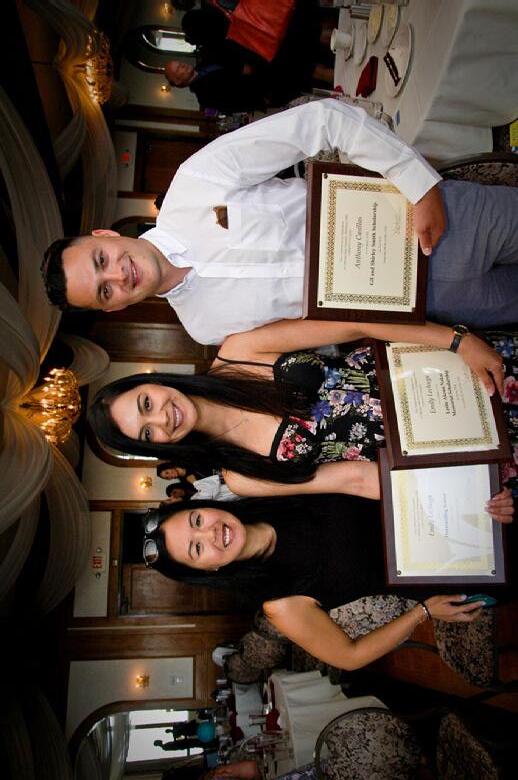
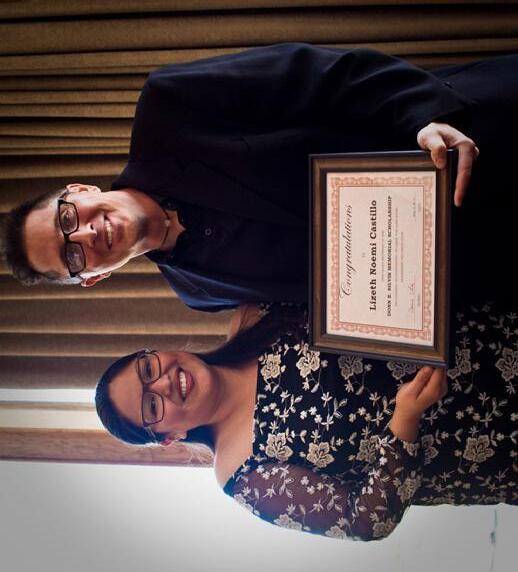
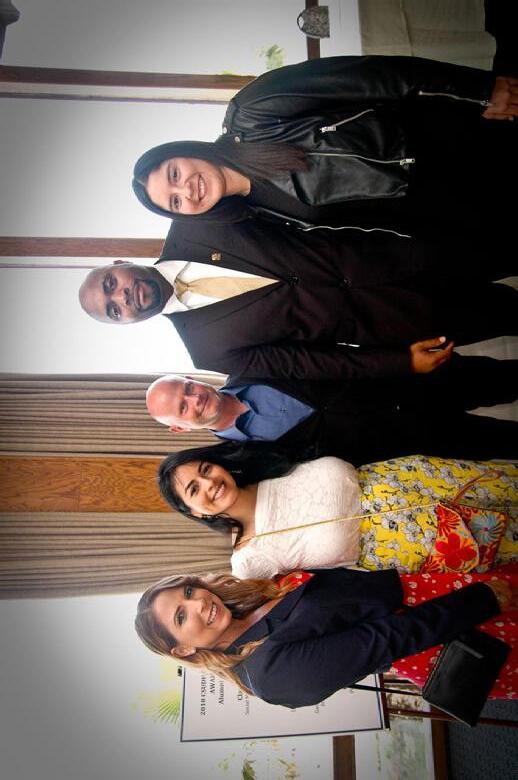
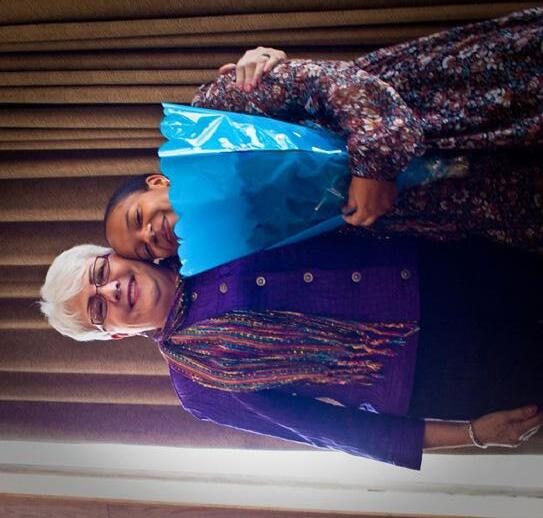
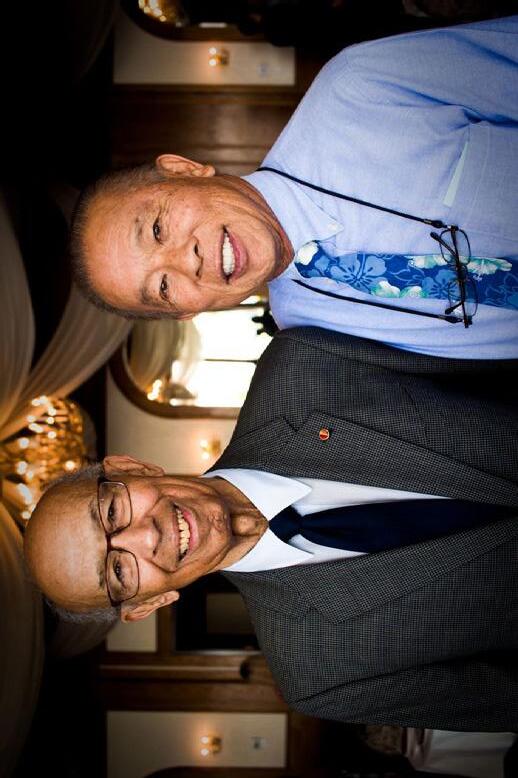
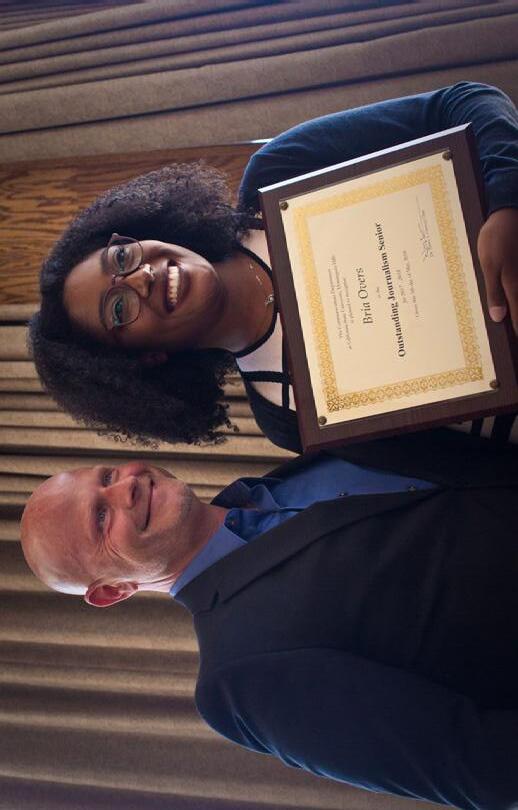
A glance at stude nts b eing awarded for their hard work throughout t he year . . . pg 19
KDHR coordinator uses his personal experiences to help his students strive . . . pg 20
Three professoinal journalists talk to students about the importance of press freedom . . . pg 22
A look into fellow alumni lives after graduation . . . pg 23
Graduating seniors no longer need a 30-page research paper in order to walk . . . pg 26
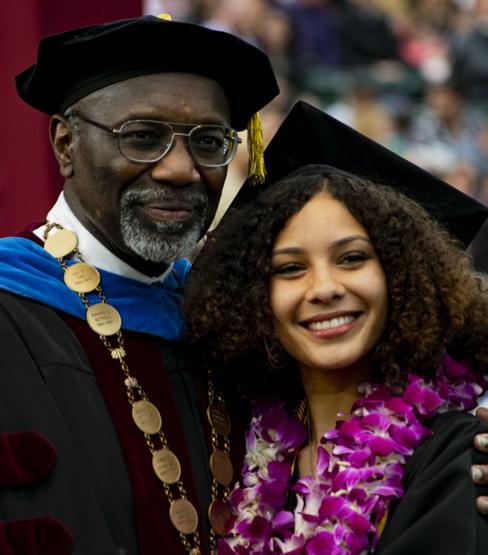
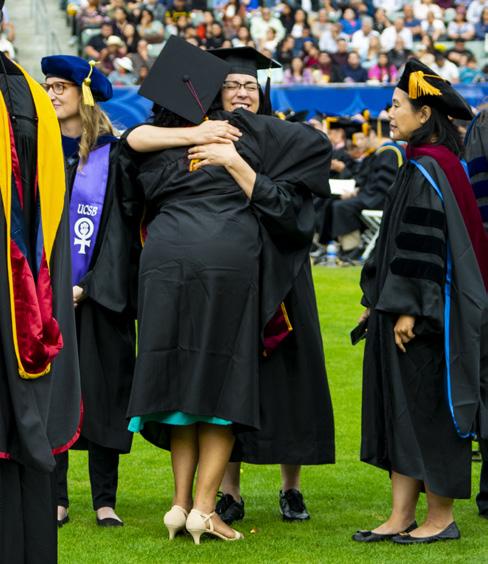
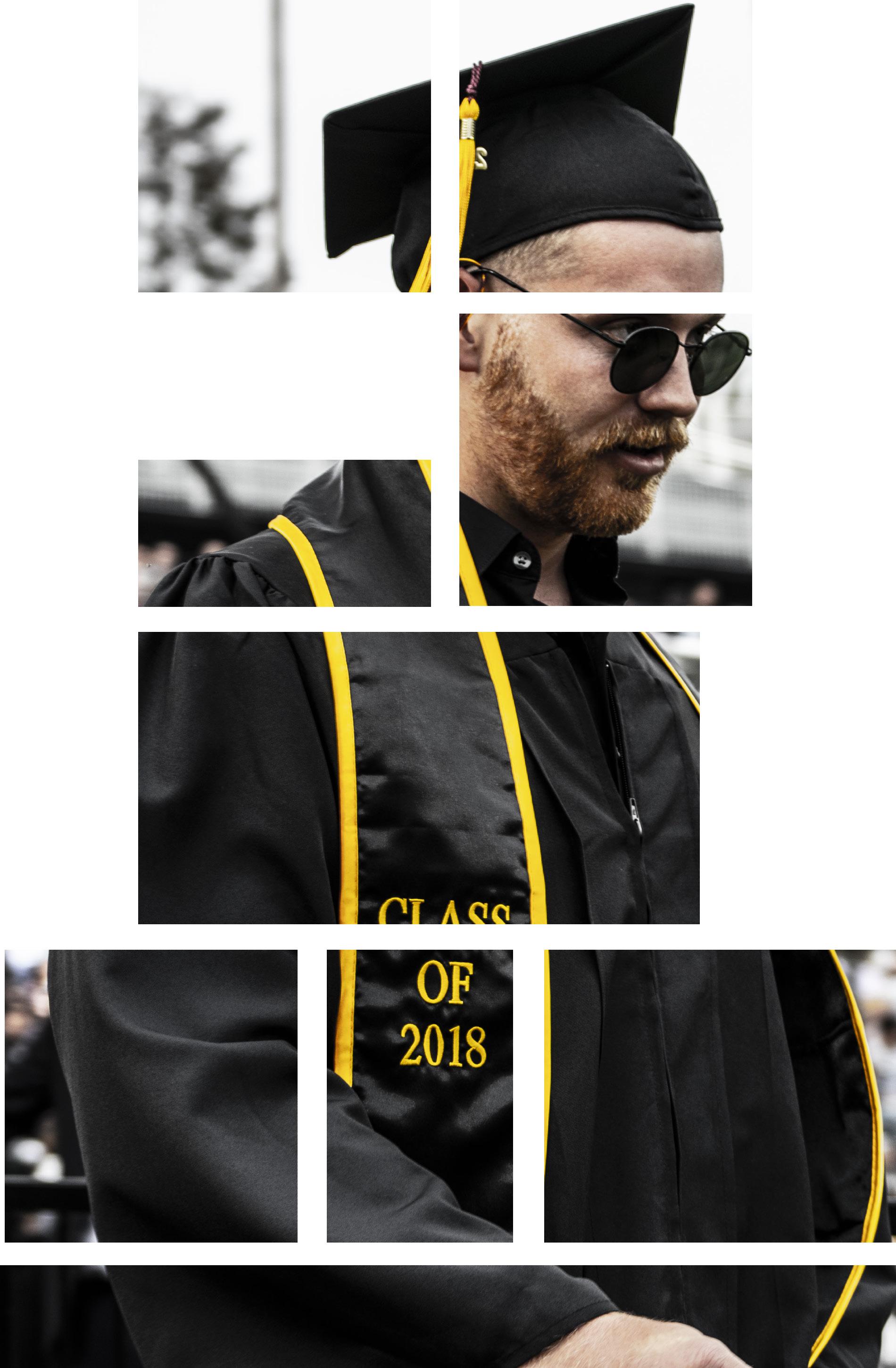
CSUDH seniors walk into their futures . . . pg 27
Dr. Brant Burkey, Assistant Professor, Dept. of Communications
Erika Arreola, Carissa Diaz, Patricia Franklin, Jesse Garcia, Anthony Peterson, Fernanda M. Tovar, Maria Isabel Villa
Da’ Ron Frost, Russell McCubbin Chris Russo, Kyle Umeda, Anthony Casillas, Anthony Peterson, CSUDH Campus PhotographyPhoto Archive, The Bulletin Newspaper, Adrianne Valencia, Patricia Franklin Mercedes Del Real
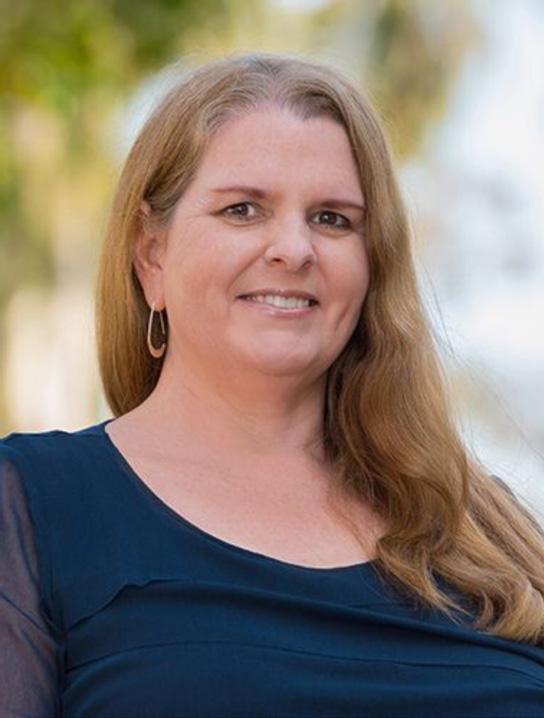
Greetings alumni! This is our second edition of Compendium, the CSUDH Communications Department’s alumni magazine. It is our ongoing commitment to connect with you, to keep you informed about student and alumni successes, new programs and faculty accomplishments, and to celebrate your achievements and activities post-graduation.
First, let me share some exciting news about our curriculum. The Chancellor’s Office has approved our new degree programs and we are ready to share them with the campus and alumni communities. We will now have three distinct degree programs: Advertising/Public Relations; Film, Television and Media; and Journalism. We welcomed a record 225 new students this summer, and with the help of our academic advisor will move them into their new degree programs. To learn more visit our website this fall at www.csudh.edu/communications.
This fall we welcome a new faculty member, Dr. Ana de la Serna (journalism and public relations), who recently completed her doctoral studies at the University of Kentucky. Dr. de la Serna is a former photographer and community relations professional with the Mexican government, serving two presidents.
Our student clubs continue to hold stel-lar programs, including the Story Slam and World Press Freedom Day, in which the Soci-ety of Independent Student Journalists hosted Pulitzer Prize-winning journalists Ruben Vives of the Los Angeles Times and Megan Garvey of National Public Radio, and Melissa Etehad, a Middle East conflict reporter.
An exciting new product produced 100% by Communications students is Bulletin TV, our
broadcast news channel that covers stories from around campus and the surrounding community. Spearheaded by alumna Kalie Calder, Bulletin TV began as an extra-curricular activity shot mainly out of a small classroom. This fall the crew will have their own space in LCH. Check it out on YouTube.
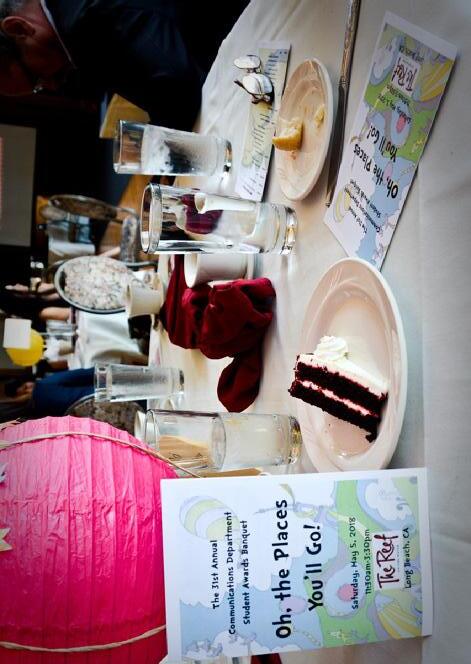
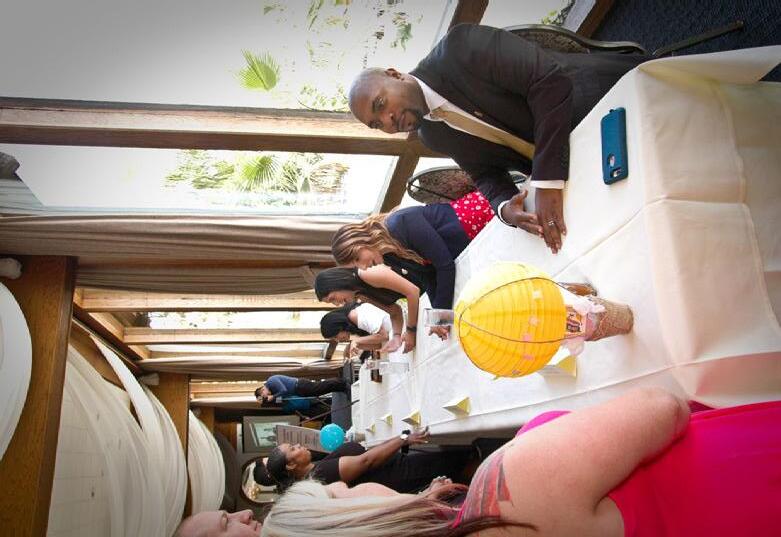
This past May we held our 31th annual Communications Department Student Awards Banquet at the Reef Restaurant in Long Beach. We awarded almost $10,000 in scholarships, and honored outstanding students in several categories. Media Studies alumna Erin Hardimon, who works at Paramount Pictures, delivered an inspiring keynote address.
On a personal note, I was honored to receive the 2018 Presidential Outstanding Professor Award this past April. My research continues to gain media attention, with appearances on “America Inside Out with Katie Couric,” Good Morning America and the BBC program Panorama. I am also featured in a Buzzfeed production that will be shown on Netflix starting in September.
Finally, we would love to hear about your successes and accomplishments. In a few weeks you will receive an email from me with a link to our alumni survey. Please be sure to complete the survey so we can learn more about you after graduation. Also, you can follow us on Facebook and Twitter, and we have a new website coming out very soon. If you have something to share or would like to be featured in our next edition, please contact Dr. Brant Burkey at bburkey@csudh.edu. I hope to see you at a future banquet, and you can always call or stop by our office. We look forward to hearing from you and reconnecting.
Dr. Nancy A. Cheever Chair, Communications Department


By Erika Arreola
Dr. Nancy Cheever, professor and chair of the Communications Department, was the recipient of the 2018 Presidential Outstanding Professor Award in recognition of her demonstrated teaching, advising, research, service, and leadership on campus. .
She received the prestigious award at this year’s Faculty Awards Reception in March. While receiving her award, Dr. Cheever was quick to acknowledge the importance of teamwork and support of the students, faculty, and staff that were at the event to celebrate her success.
“I know there are a lot of outstanding faculty and I would not be here without the support of others,” Dr. Cheever said. “I want to thank my colleagues from the Communications Department. It is important to help each other and have each other’s backs.”
Some students were there in attendance to applaud her achievement and to let her know the role she had played in inspiring and supporting them.
“It was such an honor to see Dr. Cheever receive this award,” said COM major and graduating senior Kalie Calder. “Not only has she gone above and beyond for students who need advice or mentoring, she has also conducted research on the psychology effects of social media…talk about an amazing woman!”
A journalist for nearly 15 years, Dr. Cheever worked as a newspaper and magazine reporter and editor for a variety of Southern California publications and co-authored three books, and dozens of peer-reviewed journal articles and book chapters. In addition to being chair of the Communications Department, Dr. Cheever is also the
Journalism Option Coordinator, the advisor to the Society of Independent Student Journalists (SISJ), and a founding mentor of the interdisciplinary George Marsh Applied Cognition Laboratory.
Dr. Cheever teaches courses in journalism, media literacy, media psychology, and communications research methods. She has also overseen the efforts to get the Journalism and AD/PR options nationally accredited, as well as the process to rewrite the entire Communications Department curriculum.
Much of Dr. Cheever’s research examines the ways in which technology affects people’s psychological health, including wireless mobile device use and anxiety, technology’s contribution to sleep disorders, online dating, psychiatric disorders associated with modern technologies, and multitasking in the digital age.
Most recently, Dr. Cheever’s media psychology research on cell phone addiction has garnered national attention and appeared on segments of “60 Minutes,” “America Inside Out with Katie Couric,” and “Good Morning America.”
This year’s Faculty Awards Reception was well attended and even outgoing university president Willie Hagan made an appearance, one of his last in this role before his retirement, in order to honor Dr. Cheever’s accomplishment.
In the end, all eyes and ears were on Dr. Cheever as she received recognition for her outstanding achievements as a scholar and a teacher, especially when she showed her gratitude by saying how important the moment was for her.
“This has always been a dream of mine,” Dr. Cheever concluded in her acceptance speech. “I can’t believe I’m here. Thank you for selecting me.”
April 29, 2018
During the Spring 2018 semester, three professionals from the video game industry gathered at CSUDH to share their expertise with a group of eager students as part of a Deconstructing the Entertainment Industry panel focused on digital games.
Hollywood by the Horns sponsored the event, which brought together three gaming industry professionals to discuss their responsibilities and some of the issues facing the video game industry and its workers today. The panel included producer and voice actress Melanie Ehrlich, user interface designer and consultant Kylan Coats, and vice president of product for an indie game company Jasmine Bulin.
Communications Professor Dr. John Vanderhoef co-organized the panel with Dr. Ryan Bowles Eagle. As a scholar of digital media, indie games, and the video game industry, Dr. Vanderhoef moderated the panel, offering questions and commentary along the way.
“I’m thrilled to have finally been able to connect some of our students with the local game industry,” Dr. Vanderhoef said. “While our students are not game developers, many of them have ambitions to become part of the industry as game journalists, public relations professionals for game companies, game casters, community managers, and other
roles one does not automatically think of when thinking about the game industry.”
In the fifth floor space of Library North, the same space filmed for film and television shows like HBO’s Silicon Valley, the panel guests spoke in front of a group of more than 35 students. The panelists discussed how they got into the industry, their day-to-day jobs, and some of the major issues that workers in the industry confront, such as sexism and precarity of employment.
“One of the goals of the event was to illuminate some of the labor issues that need addressing in the industry,” Dr. Vanderhoef said. “My plan is never to scare students away from careers in the entertainment industries but instead to arm them with the knowledge of problems they can help fix by joining these industries.”
Hollywood by the Horns’ Deconstructing the Entertainment Industry events are designed to provide CSUDH students with an overview of potential roles across a number of entertainment and media industries. Events have been held with professionals from the film, television, and music industries. These events contribute to the mission of Hollywood by the Horns to bridge CSUDH students with the local southern California entertainment industries and provide them with the knowledge necessary to pursue careers in these fields.

By Jesse Garcia
In the past year, Professor Lisa Mastramico has brought a new focus on giving students the tools they need to thrive as aspiring media professionals. In 2017, Mastramico joined the Communications faculty to teach the COM 106 Digital Toolkit course and stepped into the role of COM 496 internship coordinator.
While she technically serves as the internship coordinator for the College of Arts & Humanities (CAH), she has focused most of her attention and effort on the Communications Department and its requisite COM 496 course.
COM 496, an internship course for Communications students at California State University, Dominguez Hills, gives students the chance to build their resumé, develop a cover letter and take the first step into the industry related to their major.
Intended for graduating seniors, the
class offers a range of tools and assistance that help students find internship programs and establish connections as they transition away from undergraduates to professionals.
The course, guided by Mastramico, is designed to help students prepare and succeed in their professions. A goal she has for her students is to identify and validate their skill sets.
“I want students to feel confident and use those transferable skills they already have,” said Mastramico.
For CSUDH Communications majors, COM 496 is a required course for graduating seniors. The guidelines for completing the course require students to work a minimum of 120 hours as an intern in the industry they are passionate about pursuing. During this time students can gain experience and apply the skills they’ve learned in the classroom into their work.

Additionally, this semester-long class helps students fine-tune their resumés and cover letters.
All enrolled students are encouraged to seek advice from their networks and schedule appointments with the career center to go over their resumé and cover letter in detail. The intended goal is to have as many eyes look at it as possible.
“Get it proofed,” said Mastramico. “Students should take responsibility. I encourage them to reach out to their own network to review their resumés.”
Since taking over as the internship coordinator at CSUDH in 2017, Mastramico has reached out to her network and helped many students find internships and created a professional contact list to help students to reach out and apply for internships.
“Internships are always so fluid,” said Mastramico.
“We have a list of previous placements and I am constantly creating placements. This semester I placed seven students towards my own network.”
Although she has only been the internship coordinator for a short time, Mastramico and the internship students have helped establish good standing
and connections with large media companies. Some of these media companies like Vox Pop Films, Padnet and ID expect CSUDH student applicants every semester.
A few students have been offered positions after their internship. Although it is not common, Mastramico is confident it will start occurring more.
As Mastramico starts her second year as the internship coordinator there are many things she is excited to implement for the following semesters.
“One thing I want to implement in COM 496 is to have everyone come back together at the end of the semester,” said Mastamico. “I want students to have a discussion, share experiences, talk about etiquette and use LinkedIn.”
Another goal Mastramico has for following semesters is to combine the orientation class students must attend at the beginning of the semester with a workshop geared towards improving their resumés and cover letters. This will help prepare students early on, so they can focus their energy the rest of the semester on finding an internship.
Mastramico is also teaching the newly offered, low-
er-division COM 106 Digital Toolkit course, which helps students learn the fundamentals of foundational and emerging tools, platforms, and digital skills essential for students interested in pursuing careers in any communications or related field, including data management, presentational, media content creation, web publishing, and design/editing software and programs. Students in this course will also be taught the basics of web publishing platforms and design/editing programs, including Excel, PowerPoint, Photoshop, InDesign, Audacity, and Wordpress.
By introducing Communications majors to these media content and publishing platforms early in their academic careers, the long-term goal is to give students all the tools they need to be prepared for the culminating COM 496 Internship requirements as well as future careers in the media industries.
Many students at CSUDH have already taken advantage of the skills they have learned in the classroom and have felt confident about the work they have contributed to their internships.
“I did feel confident
in what I brought to the table, and I owe a good amount of that to the journalism program at Dominguez,” said Julissa James, Journalism major.
Other students have had the opportunity to take what they have learned at CSUDH and develop their skills further with the help of mentors in their internships.
“I was lucky to have gained experience from both Univision and NBC,” said Journalism major Maria Villa. “Both news directors I worked with have guided me when I approached news stories and have overseen small projects I have worked on in my free time.”
Getting students prepared to meet their professional goals is a core part of any CSU. Being able to apply those classroom practices to real life experiences is what makes this internship course so important. And with Mastramico’s guidance, the course will continue to offer tools to help CSUDH students succeed.
“This is a great program and we have amazing students,” said Mastramico. “Our students have an amazing work ethic. And this program will just continue to get better.”
CSUDH Communications alumna
Adrianne Valencia has finally found her groove as a dance choreographer back here at her alma mater. But it was not without a few extra steps and miscues along the way.
Looking back as a 19-yearold living in the Bay Area, Valencia recalls only having vague dreams of getting a college degree and establishing a career as an artist. However, it did not take long for her to decide being an art/animation major at San Jose State University was not as fulfilling as her other passion – hip hop dance. That is when Valencia dropped out of SJSU in order to turn her hobby into a reality and follow her dreams of dancing professionally.
“[It was] a change that needed to be made,” said Valencia.
By Maria Isabel Villa
Valencia got the best of both worlds in 2012, when she began attending Sacramento City College, where she was able to pursue an associate’s degree in Communications and do what she loved by joining the dance organization SAC Modern. She eventually continued her training with hip-hop dance crews like Press P.L.A.Y. and the Super Galactic Beat Manipulators.
By 2015, Valencia received her associates degree in Communications with an emphasis in media studies from SCC and then transferred to California State University, Dominguez Hills, to continue her education as a Communications major. During her time at CSUDH, Valencia made a lot of friends in the dance department and attended quite a few of their events but never actually took any dance classes.
“I did go to a lot of


concerts and showcases,” said Valencia, “but it never crossed my mind to be enrolled in any of the classes.”
Valencia received her Bachelor of Arts degree in Communications with an emphasis in Media Studies from CSUDH in spring 2017 and after graduation returned to her hometown of San Francisco. It was there she got the opportunity to dance professionally with Jabbawockeez Trybe, which contracted her to go on tour to Las Vegas, China and Universal Studios Horror Nights.
Despite being told that hip-hop dance is considered a male-dominated culture and dance style, Valencia feels lucky to have danced with Jabbawockeez Trybe so that she could prove people wrong and pursue her dreams of dancing professionally.
“Women are now breaking through that glass ceiling,” said Valencia, “which [makes it] possible for women to dance hip hop.”
Valencia was subsequently invited this past year to assist teaching a master hip-hop class here at CSUDH, her alma matter, where she choreographs hip-hop routines for a dance class with Marco Carreon, a dance professor at CSUDH.
Now, at 25, Valencia is an inspiration to many dancing students here at CSUDH. She enjoyed showing students at CSUDH her professional hip-hop moves. She encourages students to pursue their passions and reminds them anything is possible, even if someone tells them it isn’t.
“My biggest advice and recommendations is to not stop what you love to do,” said Valencia. “A lot of people told me I couldn’t do it but I did.”
By Fernanda M. Tovar
Communications alumna Kalie Calder has left an indelible mark on the department and the university. Through her own initiative and hard work, Calder launched The Bulletin TV last fall as the broadcast component to the school newspaper for students interested in television news production.
Calder felt it was important for the campus and Communications students to have a broadcast channel for news on campus, not just for students to learn this type of journalism, but also because it gives Communications students a chance to showcase what people are doing on campus.
“We have such an amazing campus and I don’t think it gets the credit or recognition it deserves,” Calder said. “I think the students and faculty are amazing and the things they do are, too.”
With encouragement from professors and faculty, Calder created an outline and proposal for Communications Department Chair Dr. Nancy Cheever. In the summer of 2017, she pitched the idea and Dr. Cheever gave her the green light. Calder spent most of that summer with professor Paul Fornelli going over things she learned in his media production class.
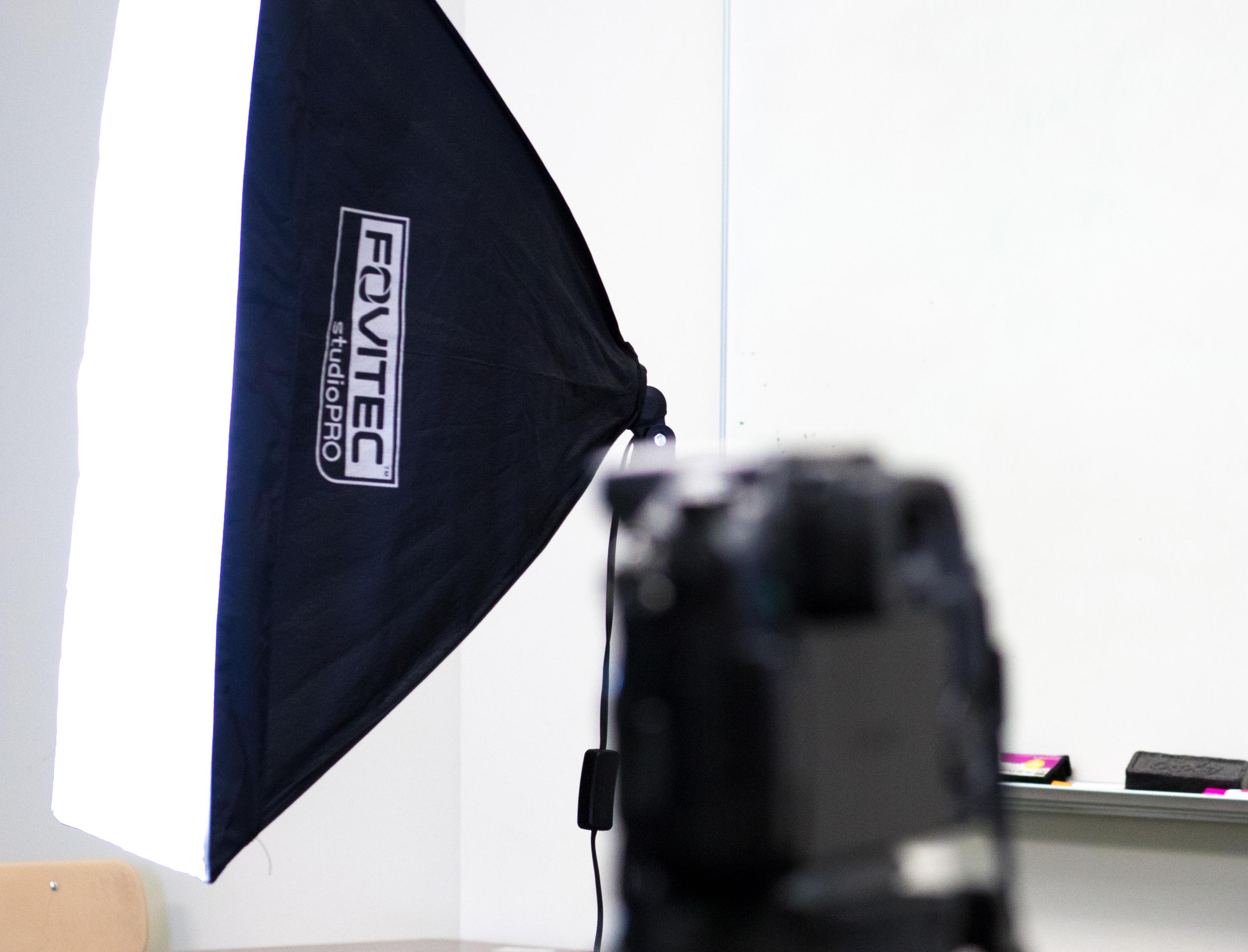
Along with the extra help of professor Fornelli, professor Joel Beers, professor John Canalis and Dr. Cheever, Calder launched The Bulletin TV in the fall of 2017
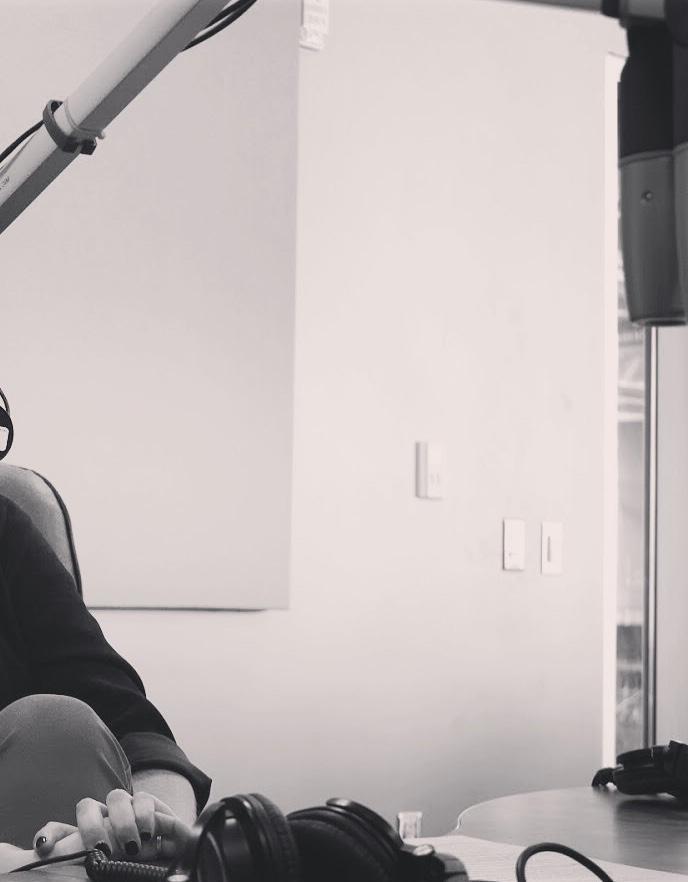
without a designated classroom space and armed only with a green screen and cameras. Despite the limiting circumstances, Calder was able to produce a professional-level newscast production, complete with news anchors and field reporters.
Launching the show also gave Calder the opportunity to produce, write, and direct the entire show herself. It also put her in the position to lead her own crew. Calder said she had to be prepared and know everything about journalism, from the writing to camera work to production to props to location scouting.
“I just felt like I had an eye to find things that were maybe not seen by others,” Calder said. Though it can be hectic overseeing a staff of up to 14 at a time, Calder is thankful for the team that came together to make The Bulletin TV possible.
“They donated and volunteered their own time and wanted to come on this journey and really had my back,” Calder said. “They really give 120% and I just applaud them for coming in every week and really being prepared as they can.”
With almost a year in action, Calder is proud of the exposure and milestones The Bulletin TV has reached. Instead of them having to reach out to people, people are reaching out to them now. A student interviewed former CSUDH President Willie J. Hagan before his retirement before his
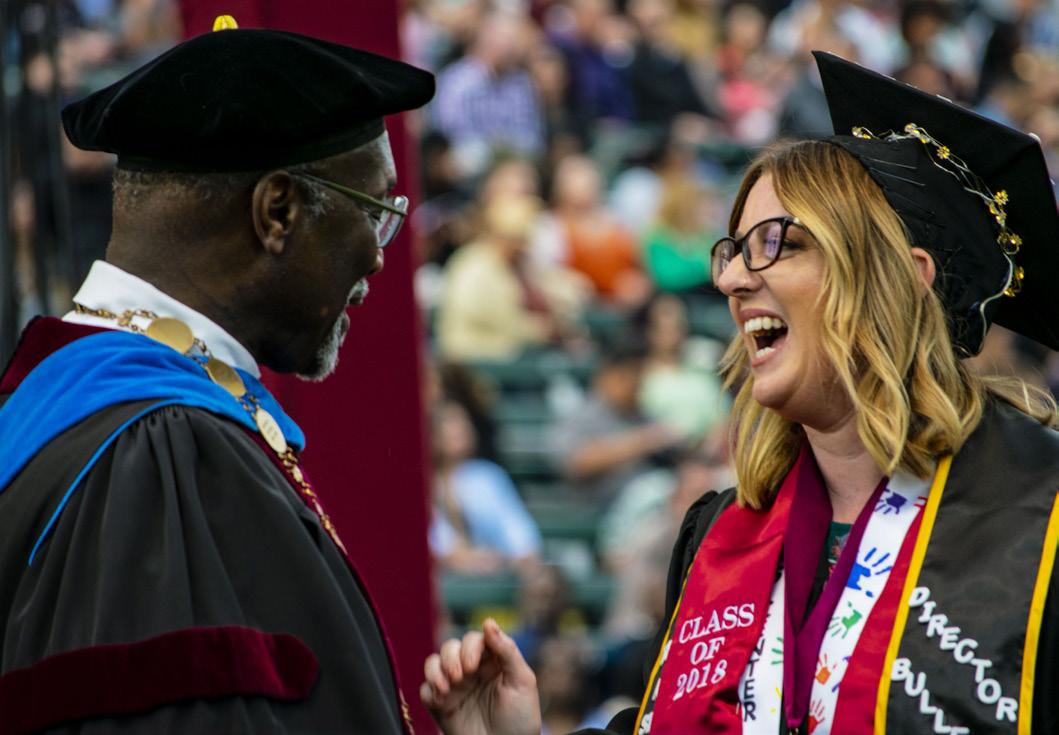
retirement and KDHR reached out to The Bulletin TV to do media coverage at this year’s Spring Fling event. Calder considers both wins for the team.
However, the major success was completing season one and knowing they were coming back for season two. Calder was relieved that no one said, “What are you doing? This is crazy, goodbye,” and pulled the plug.
Calder is proud of the work The Bulletin TV has produced but is excited for what can possibly come next.
“I want us to be everywhere,” Calder said. “I want us to be in the LSU. I want us to be on our giant marquee. I want people to be able to have this opportunity.”
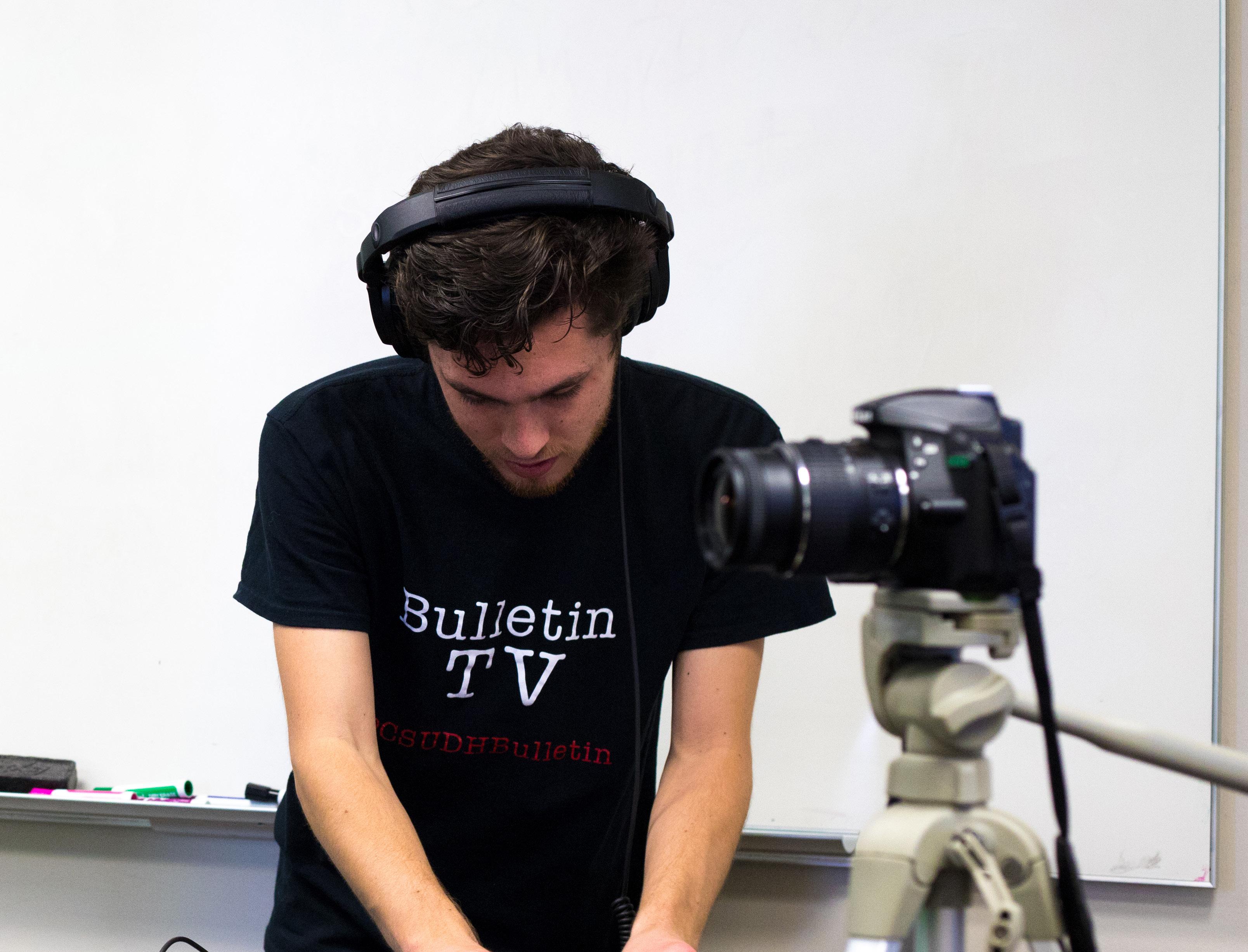
Calder firmly believes broadcast journalism has a place in the Communications Department.
Writing, producing and directing a show is a full-time job on its own but Calder always has more than a couple things going on under her sleeve. Before attending CSUDH, she had already been in front of the camera as a child actor in commercials, an extra in numerous movies, and behind the camera as a photography at Long Beach City College.
She has always aspired to be a photographer for National Geographic Magazine but her time at CSUDH as a Communications major with an emphasis in Media Studies has given her broader interests that now include writing, producing, and directing.
“If you know me, you know that
I’m a Type A personality,” Calder said. “I’ve always had more than three jobs the entire time I’ve been in college.”
Among those three jobs, Calder was a lead travel rep for a hair company for six years. She traveled around the U.S. setting up hair shows in places such as New York and Texas. Even with the constant traveling, Calder made it fit into her school schedule. She was also a server at Shannon’s on Pine St. in Long Beach on the weekends and worked as an office aid at the Children’s Center on campus.
Before graduating in Spring 2018, Calder was the social media manager and web coordinator for The Bulletin newspaper. She was the vice president of TEAMS, Toros Entertainment and Media Society, and she was vice president of SISJ, Society of Student Journalists, in
the fall 2017 semester. She also happened to serve as their web coordinator. She spent her last semester interning with Focus Features at NBC. Lastly, Calder was given an inaugural leadership award at this year’s Communications Banquet.
Calder encourages future communications students to go to class, ask questions and learn as much as possible because this led her to make her own opportunities happen. Getting to know the faculty also helped her push through some dark times and served as motivation as they showed nothing but support.
“I was just another student who had an idea and people seemed to really like it,” Calder said. “I truly can’t say thank you enough because it has taught me so much. I can’t wait to see what the future holds.”
By Patricia Franklin
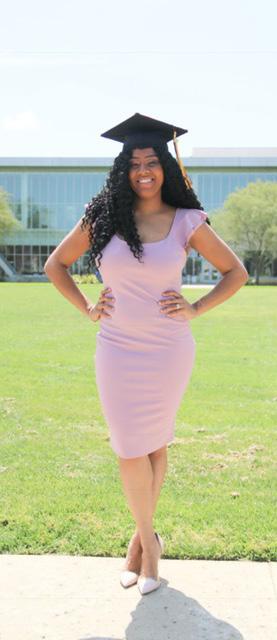
My name is Patricia Franklin and I am a graduating senior at California State University, Dominguez Hills. I am receiving my bachelor of arts in Communications with a focus in Journalism this May and plan to further my education with a Master’s in Public Administration. Although I am headed to the next chapter in my life, I take pride in being a Toro and appreciate all of the wisdom, guidance and support I have received from the Communications Department. I began my college journey in 2010 by attending Long Beach City College. I knew I wanted to attend college and was confident that at some point I wanted to pursue my master’s degree. I just didn’t know what route to take or where to begin. My grandmother encouraged me to look into journalism since I had a passion for poetry. Education is something that I am passionate about and have grown to love. It was at LBCC where I had my first encounter with CSUDH. There was a university recruitment fair and, although I had only completed my first semester at my community college, I knew that I had to attend a university to pursue my dream degree. I approached the CSUDH table and the people there were friendly, warm, patient and open to answering any of my questions.
It was that very moment when I realized I wanted to attend CSUDH. The way I was treated and spoken to made me feel like I mattered, I was important and they wanted to invest their time in me. Several semesters later, I applied to the university and was accepted.
The first time I stepped foot on the CSUDH campus was June 24, 2015. I was five months pregnant with my daughter and headed towards my last year at LBCC. I made a prema-

ture appointment with an academic advisor just to get my feet wet with my major and see what CSUDH had to offer. I met with CAH Academic Advisor Chanel Shorter, who changed my life personally, educationally and spiritually. When we first met, she was sweet, warm and encouraged me to “wear as many cap and gowns as possible.”
She and I spoke about the communications program and how it would suit my love for writing. I was torn between choosing the public relations or journalism options but Chanel insisted that I pursue journalism since I wanted to challenge my writing skills. I was on cloud nine that day and even remembered feeling enamored with the
campus and having high hopes for the future. I went home and immediately went on the student portal to look for classes. Although I was in my senior year at LBCC, I wanted to start taking classes at CSUDH.
A few hours after leaving campus, I received a tragic phone call that my sister was found murdered earlier that day in an alley. The same day I was stepping into my educational dream was the same day I felt someone took it away. Though I can’t begin to describe how heavily my sister’s passing weighed on me, I was determined to finish what I started. But dealing with my sister’s murder and the subsequent court case also meant that I needed time to grieve, so I put my
CSUDH application on hold and had to think long and hard about what was best for me as a new mother.
There’s something about tragedy that pushes you to your limits, so I decided I wasn’t ready to give up yet, I only had five more classes to receive my associates and my desire to graduate pushed me to finish.
The day after I started my online classes that fall at LBCC, my daughter Melanie Rose-Marie was born prematurely due to all the stress and grief. Somehow, I managed to keep going.
In June 2016, I graduated from LBCC with my associates in social sciences. I beamed with happiness knowing that I was taking the first steps to pursuing my baccalaureate degree.
I reapplied to CSUDH and was accepted once again. This time around I was felt prepared to take on my communications classes.
As a COM student, I grew close with my peers and decided to take the initiative in certain subjects. I maintained a professional relationship with my professors and I kept myself open to helping any of my colleagues in need. I enjoyed uplifting people, challenging myself academically and going beyond my own expectations. I also made the commitment to myself that being a mother, wife, worker and student would not stop me from pursuing my educational goals.
Last year, I was once again faced with tragedy. I lost my grandmother and two great-
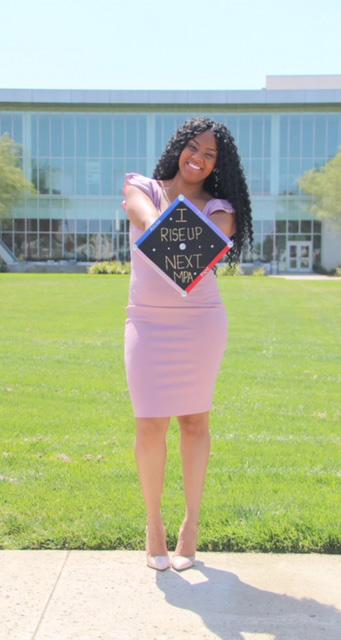
aunts whom were all mother figures to me. I call them my “concrete support” system. All three of these women had a hand in molding, shaping, and guiding me through my educational goals. The hardest part was that my grandmother suffered from a heart attack and I remember going back and forth to the hospital every chance I could. After several surgeries and different medical routes, we decided to let her go. It was fall semester and I was taking 15 units, which included Com 490, the writing-intensive senior seminar class where I had to conduct a research study and write a 30-page thesis. During this difficult time, I was blessed to have the support and encouragement of three communications professors, Dr. Brant Burkey, Dr. Karina Kim and Professor Jennifer Peters. If it wasn’t for these professors who understood what I was going through, who kept their door open and had empathy for me I don’t think I would have survived that semester.
Not only did I conquer the semester and never missed an assignment, I also reached my academic goal of receiving all A’s. It takes courage, commitment, discipline, support and certain professors to get students like myself through the trenches of life. At least, that’s how I made it through.
Looking back on my own academic journey, I take pride in being a Toro but I also take particular pride in being a Communications student. It was an honor to be a part of such a devoted, supportive and encouraging department that not only wants their students to fly in their academics but to soar in life and, with their help, I’m now ready to rise up to any challenge ahead.
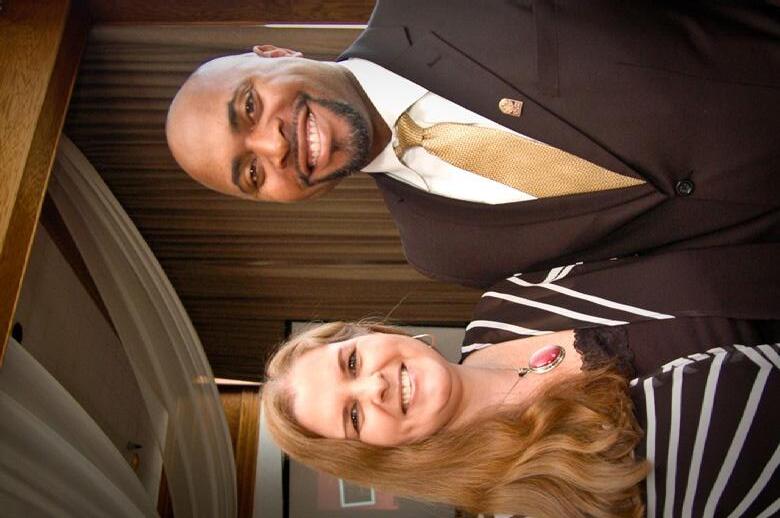
By Anthony Peterson
Former Communications
alum Stephen Janes came back to his alma mater hoping to make a difference by doing what he knows best.
As the coordinator of the university radio station, KDHR, Janes now uses his personal and broadcasting experience as a reference to guide his student staff, encouraging them be bold
and courageous enough to take the leap toward their futures.
Getting his foot in the door early, Janes hosted his own radio show his junior year at CSUDH, which was his first introduction to the broadcasting world. It was not long before he started experimenting with freelance jobs on the side and, after graduating in 2010, he and a few friends came together to create their
own production company.
With experience from KDHR, Janes teamed with his old colleagues, forming an independent production company with hopes of recording albums and filming music videos. They brought all their equipment to a “lockout studio” — a location they rented

out dedicated to their business — and got to work.
“We frankensteined our own studio together and we were actually surprised by the quality of the music,” Janes said with a laugh. “We had outside contractors wanting us to produce soundtracks for short films and background music for apps and video games.”
With more and more artists looking to work with Janes’ company, the money became an issue. Without any prior financial knowledge, Janes and his co-workers were unable to establish an adequate charging rate and found themselves making as little as $50 a piece after each project.
With bills to pay, Janes
and his teammates eventually felt compelled to find more stable paying jobs, ultimately resulting in the downfall of their company.
According to Janes, the important lesson that he learned was that life after college is a process to find yourself and what you’re good at through trial and error.
“We didn’t regret [the production company] it because we actually did it,” Janes said proudly. “We put an effort in and that’s all that matters. We gave it a shot.”
Another lesson he learned is that it is important to take time off after graduation, however long is needed, to have fun and “just get it out of your system,” advice he now offers to the undergraduate students who come to work for KDHR. “Throw a party, go on a trip, sleep in,” Janes said, “because after that grace period, your full-time job is finding a fulltime job.”
Janes also tells his student staff they need to know their value but that they also need to pay their dues. “If the opportunity arises, take it,” he said. “Look for jobs that have the potential to grow, and work your way up from there. If it’s where you want to work, even if the job offering is for a low position, give it a try.”
Janes also gives advice to his student staff on how to organize their resumés, claiming the best way to show off skills is by including specific descriptions on events or projects
they’ve contributed to.
“You want to ‘wow’ them on paper before you ‘wow’ them in person,” Janes said.
Working with KDHR, Janes hopes to continue developing a strong working relationship between the student staff, ASI, and faculty with a strong focus on programming and dreams of getting the radio station its own facility closer to Loker Student Union (LSU).
Based on his own experience, Janes makes clear that going out into the real world is scary and everyone’s path is going to be different but it is also important to stay focused on the future.
“It took me seven years to realize this was my career path,” Janes says. “You’ll find a job at your own rate — just don’t be afraid to create your own path.”

By Erika Arreola
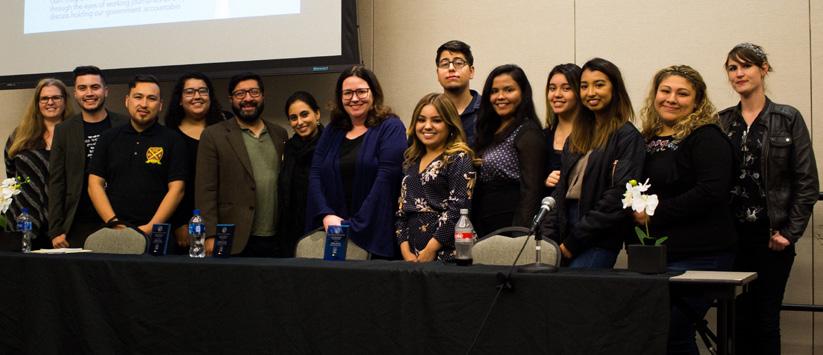
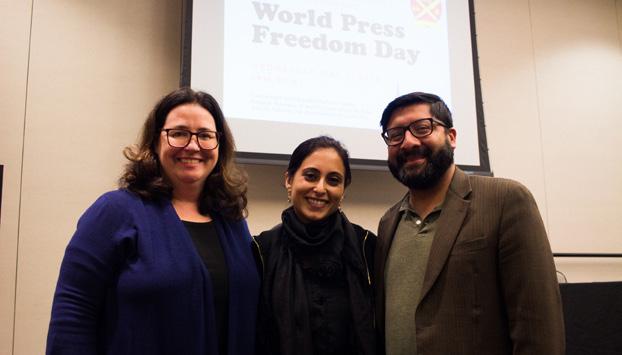
On May 2, 2018, the Society of Independent Student Journalists (SISJ) club held an event in Loker Student Union Ballroom B to recognize World Press Freedom Day.
The purpose of the event was to highlight the importance of maintaining press freedoms, especially in light of journalism’s role in holding institutions of power accountable during the current socio-political climate, increasing violence and vitriol toward journalists, and era of “fake news.”
The event featured a panel discussion with three professional journalists from the Los Angeles Times and the Southern California Public Radio (SCPR) station KPCC 89.3 FM.
Guest speakers for the event included Pulitzer Prize-winning journalist Ruben Vives and Melissa Etehad, both from the Los Angeles Times. Also on the panel was the Pulitzer Prize-winning managing editor of KPCC Megan Garvey, who is also a former deputy managing editor from the LA Times Garvey earned her Pulitzer Prizes both as one of the lead writers for the 2004 California wildfires coverage and again as editor for live coverage of the San Bernadino terrorist attack in 2015. Vives landed his Pulitzer Prize for his 2010 investigative reporting on the financial corruption by city officials in the city of Bell. Etehad, who previously worked for Al Jazeera English and the Washington Post’s foreign desk, also brought her international perspective to the lively discussion.
The wide-ranging panel discussion was moderated by Dr. Brant Burkey, one of the full-time faculty members of the journalism option. The personalized question-and-answer panel covered discussions that examined some of the current threats to press freedom locally, nationally, and internationally, as well as the importance of journalism in confronting abuses of power in these polarizing times. Students in attendance were then invited to ask questions of the discussants, followed by refreshments and networking opportunities with the journalists.
Three-time Emmy Award-winning anchor of Telemundo 52 Los Angeles Alejandra Ortiz Chagin was also scheduled to appear as the keynote speaker for the World Press Freedom Day event but was unable to attend because of a last-minute emergency. The event was sponsored by the Society of Independent Student Journalists (SISJ), club advisor Dr. Nancy Cheever, and organized by graduating senior and SISJ president Jesse Garcia.
The World Press Freedom Day was only one of several events SISJ held this year, including fieldtrip visits to the newsrooms of Telemundo, KTLA Channel 5 and the Los Angeles Times, as well as several fundraisers, mixers, and a retreat to Bolsa Chica State Beach.
“They’ve taught me that being a journalist never ends,” SISJ member Veronica Velasquez said of her interactions with professional journalists. “If you’re willing to put in the time, it will pay off big time.”
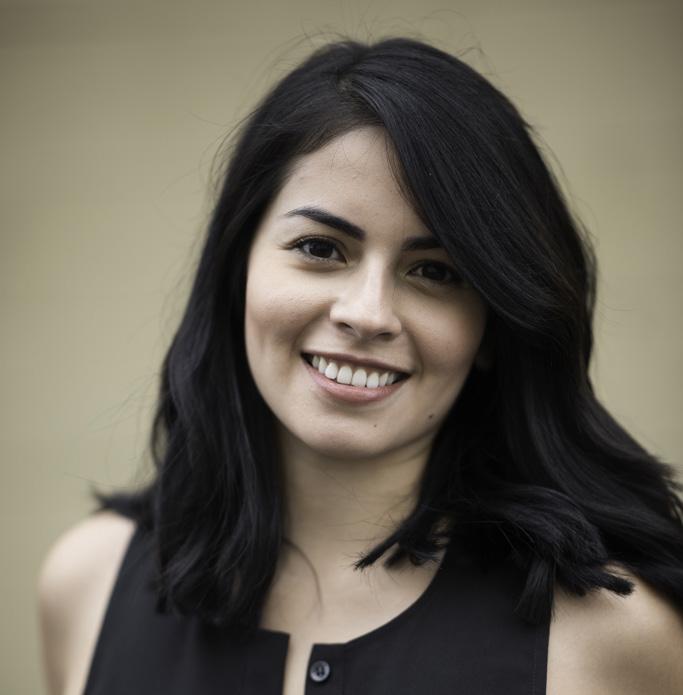
Since graduation, I’ve been up to a couple of things. In 2016, I won a trip to New York to appear in the magazine, Siempre Mujer, representing Latina women in the USA. I then won another contest for Latina bloggers; sponsored by Neutrogena. I represented Latinas and dreamers during a fashion runway show in Long Beach, and attended the #WeAllGrow Latina conference, which helped me network with others.
I started my carrier path here at Cal State Dominguez Hills. When I first arrived here, in 2016, my past experiences in layout design landed me the position of Layout Manager for The Bulletin. This role propelled me into the world of paper media, deadlines, and multitasking. With the guidance from the papers adviser, the following summer, I started an internship at the OC Weekly as an editorial art intern. My internship involved
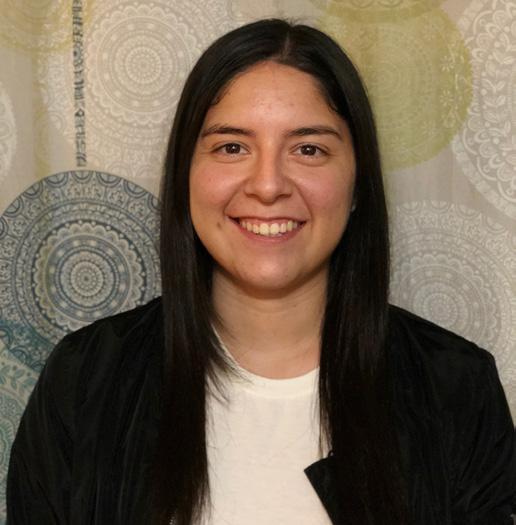
Currently, I work as a Social Media Coordinator for Lakeshore Learning Materials in Long Beach. My duties mainly include managing projects/timelines, brainstorming and implementing creative ways to promote Lakeshore’s brand on digital platforms and learning/analyzing current trends on social media. I want to pursue a Masters in Journalism, fine tune my skills, gain new ones and hopefully become a TV reporter.
working side by side with the Art Director and assisting with producing all of the editorial layouts for the Weekly. After graduation I was immediately hired by the OC Weekly as an Assistant Layout Designer. I am now the Layout Designer/Production Artist, still with the OC Weekly. I design advertisements and layout of all of the editorial content. In the future I hope to become an Art Director for a print and digital publication.
Since graduating in 2016, I have been promoted to supervisor of the Communication/PBX department at Providence Little Company of Mary Medical Center in Torrance. I manage a staff of 11 telephone operators who are responsible for acquiring and disseminating information about the hospital, dispatching care teams to emergency codes, and monitoring medical alarms, on top
It has been two years since I graduated and entered the “real world.” I currently am an Attendee Relations Executive at Quartz Events, which puts on invitation-only, executive events. I lead strategy development of national campaigns for industry-specific events; design and produce promotional products, such as brochures, websites, and logos; market events through customer relationship management (CRM) software and social media platforms; and
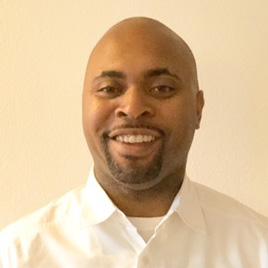
of answering an average of 1,000 phone calls per day. I am still pursuing a career in journalism. I’m a freelance sports reporter for various online publications, covering the local NBA, NCAA basketball, and NCAA football teams. In addition to that, I am a copy editor for ProPlayerInsiders.com. My goal is work in media for a major publication or sports organization.
collaborate with corporate sponsors. I also work for the Los Angeles Kings as a Games Presentation and Events-Operations Assistant, which entails promoting the Kings Care foundation and partnered charities, implementing fan interactivity platforms, and supervising arena performances and entertainment. As for the future, I plan to use my current position to take advantage of networking opportunities to excel within my industry.

“IBy Carissa Diaz
f you are creative in any way, literally you can be a part of any major or if you just want a place to hang out, I would definitely say join the One Club,” said the club’s vice president Lauren Ordaz.
The One Club is a new professional organization focused on advertising, marketing and a variety of creative industries. The CSUDH chapter of the national professional organization originated Spring 2017 by students Crystal Hernandez, president, and Ordaz.
Being involved in the One Club has the same concepts as an advertising agency. It allows students to take on actual clients and promote them. The club members work as a group to make sure their clients are getting every aspect of the promotional campaign process, from videos to flyers to social media campaigns.
Some of the positions within the club include account executives, actors, photographers, and advertisers, in other words from across the spectrum of strategy, creative and media departments. While collaborating, students are also getting hands-on experience in the professional fields they are interested in pursuing.
“One of the benefits that the members and board members receive is a letter of recommendation from the clients, so hopefully getting them to produce work that they can all benefit from,” said Ordaz.
Comedian Vince Royale is one of the club’s clients. He allows the members to help come up with ideas for his social media and
marketing. In the past, they have promoted his work on campus and it included free admission for college students. As a project, the One Club filmed a show of his, which they then edited it and gave it to him to use for future promotion.
Royale worked closely with the Production Director of the club, Edgar Perez, on incorporating an Amazon Prime pilot. Unfortunately, Perez was killed in a car accident this past February, leaving the members in shock and unsure where the club stood without their late member.
“We didn’t know if the One Club was still going to go on because we didn’t feel right working all together without him there,” said Ordaz.
As close as they all were before, the tragic loss of Perez brought them even closer. He made them realize you can’t take anything for granted and became the club’s motivation to achieve their goals. They want to do everything they can to make him proud.
The One Club’s main goal for this year is to attend an award ceremony, the One Show, in New York. They plan on submitting work from projects such as the campaign items of Closed Eyes Open Heart, which deals with youth homelessness. It is an important show for them to go to because it was something that the late Perez was passionate about.
“Edgar was a big part of that and obviously, he would have been going with us, so I think we just want to keep that going and make sure that we still go,” said Ordaz.
The events that the One Club offers are agency tours
If you are creative in any way, literally you can be a part of any major...
”
such as 72andSunny and Giant Spoon. This gives the students an inside look on how things are ran and what they can expect to come across in their future careers. They also have guest speakers from advertising companies give tips and insights to students who are majoring in the field.
Originally devised as a club affiliated with the business and marketing programs, the One Club is now more closely connected to the Communications Department, particularly as Communications professor Dr. Burkey took over as the club advisor in the spring of 2018. However, it is still considered an interdisciplinary club, so anyone interested in creative industries, regardless of their
major, is welcomed to join the One Club.
For example, to fulfill their clients’ wishes, students from a variety of majors might be required to create and maintain their promotional activities, including those in theater, English, photography, graphic design, advertising, and public relations. Whether for acting, writing, or social media campaigns, the One Club is open to finding a position for any student interested in applying their skills.
The club’s meetings are held Tuesdays to inform every member on the projects they’re working on and then Saturdays are for board meetings with clients to make sure that the work is on track and distributed to all members.
Graduating Communications majors have for years had to successfully complete the challenge of the COM 490 Senior Seminar course to graduate, which entailed conducting a semester-long research study and writing a 30-page thesis paper.
However, in spring 2018, the Communications Department re-named and re-structured the COM 490 course so that it is now the Senior Project course, where graduating seniors instead developed their own digital portfolios.
While conducting a Communications research project and writing a 30-page thesis has always been considered a valuable exercise, particularly for preparing students interested in pursuing graduate school, it was decided that Communications majors needed more experience creating a body of work that could build on their academic performance and more easily translate into employment as media professionals.
The intent was also to meet the demands of a transforming industry by giving students the skills they will need in the digital age. That is why beginning in Spring 2018, the COM 490 Senior Project course now requires graduating seniors to build digital portfolios as the culminating activity for the major to help them transition more easily into their prospective fields.
To achieve this, students created their digital portfolios using a variety of online platforms, including WordPress, Weebly, Wix, and Pathbrite. Part of the course requirements also entailed creating a variety of digital content on a social justice topic, including a podcast, video, and critical essay. Seniors also highlighted other



academic and professional work they wished to showcase, as well as developed their professional resumés.
In addition to showcasing their own work, students were also encouraged to think critically about how to leverage their social media platforms and develop their digital presence as they prepare to enter their prospective media industries.
As with any newly designed course, there were a few kinks in the launch this spring but the project was met with a great deal of enthusiasm from most of the graduating seniors. To be certain, some students expressed relief about not having to write a 30-page thesis but most also voiced their excitement about developing their own digital presence and having the opportunity to create content they could use on the job search, post-graduation.
“One of the key elements to the new requirements of this course is that we are trying to give our students the tools they need to be successful in a convergent landscape,” said Dr. Brant Burkey, who taught two sections of the class this spring, along with Dr. John Vanderhoef and Dr. Linda Dam. “By focusing on social justice issues, our students are being invited to participate in their wider communities and, by allowing them to produce content for their digital portfolios, we are also preparing them for their future careers.”
In Fall 2018, Communications students can expect to see more changes to Communications classes on the horizon, as full-time faculty continue their commitment to keeping the program on the cutting edge of industry trends and standards.
MAY 19, 2018