advocate







Become an AARP Massachusetts volunteer and make a difference in your community by supporting causes that matter to you, participating in local in-person and virtual events, reaching out to community members, and advocating for change.

REQUIREMENTS FOR UPLOADING YOUR OWN
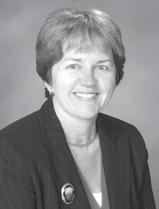
By Jennifer Benson, AArP MAssAchusetts stAte Director
Giving back. Making friends. Changing lives. Volunteer opportunities are open to people of all ages. Find your place at aarp.org/volunteerhere

PHOTO: You may upload a photo to the template if (1) it was downloaded from the Digital Asset Hub, or (2) you can document that AARP has all necessary legal rights to use the photo, including identifiable individuals, artwork and trademarks in text and logo, in this template.
Across Massachusetts, scams are becoming more sophisticated, more personal, and more financially devastating. One of the fastest growing tools scammers are using is something many people encounter during everyday errands: cryptocurrency ATMs.
These machines, often found in convenience stores, gas stations, and grocery stores, look a lot like traditional bank ATMs. But they operate very differently. Instead of connecting users to a regulated financial institution with consumer protections in place, crypto ATMs allow cash to be converted into digital currency and sent instantly to an unknown wallet. Once that money is gone, it is usually gone for good.
The minimum suggested size for the photos is 4500 x 2700 pixels.
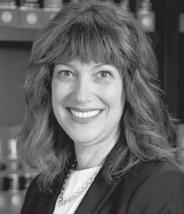
Image resolution is best reviewed in “Preview” mode.
At AARP Massachusetts, protecting people’s financial security is a top priority. We believe strongly that cryptocurrency ATMs pose a serious and ongoing risk to consumers, especially older adults, and that regulation alone has not gone far enough to address the harm. That is why we support banning cryptocurrency ATMs in the Commonwealth.
For more information about photography and usage rights, please review the Local Photography Guidance & Rules One-Sheet on InfoNet.
Jennifer Benson
Law enforcement agencies, consumer advocates, and AARP have documented a steady rise in scams involving crypto ATMs. These scams often rely on urgency and fear. A scammer may pose as a bank representative, tech support agent, or government official, convincing someone that they must act immediately to avoid arrest, financial loss, or account closure. Victims are directed to withdraw cash and deposit it into a crypto ATM, often while staying on the phone with the scammer the entire time.
Because crypto transactions are fast and irreversible, scammers are able to move stolen funds quickly and anonymously, making recovery extremely difficult. AARP research shows that older adults are disproportionately harmed by these schemes, losing a significant share of reported dollars to crypto ATM fraud nationwide.
AARP has long supported consumer protections like transaction limits, clear warnings, licensing requirements, and refunds for victims. In many states, including Massachusetts, those measures have been proposed or adopted. But experience has shown that even strong safeguards can be exploited or ignored, and that scammers adapt faster than regulations can keep up.
In some cases, crypto ATM operators have continued to profit from transactions even after knowing that many customers were being scammed. This reality raises serious questions about whether these machines can be operated safely at all. When a product repeatedly causes irreversible harm, banning it becomes a reasonable and responsible option.
AARP Massachusetts is not opposed to innovation, and we are not opposed to cryptocurrency itself. What we oppose are systems that put people’s life savings at risk with little oversight and few protections. Financial tools should help people build security, not expose them to devastating losses.
Some communities here in the Commonwealth have already enacted bans on crypto ATMs after determining that regulation alone was insufficient to protect consumers. These efforts reflect a growing understanding that the risks posed by these machines outweigh their benefits.
Everyone deserves to feel safe when managing their money. At AARP Massachusetts, we believe banning cryptocurrency ATMs is a necessary step to protect residents, prevent fraud, and stop criminals from exploiting new technologies to steal hard-earned savings. We will continue to advocate for strong policies that put people first and help ensure that financial security remains within reach for all.
Learn more at aarp.org/ma.
REQUIREMENTS FOR UPLOADING QR CODES:

Jennifer Benson is the State Director for AARP Massachusetts. For more articles visit www.fiftyplusadvocate.com.
The QR code seen on this template must be deleted or changed. QR codes must be created in the Uniqode platform using your AARP account. Download either .jpg or .png format for use in the template.
For information about licenses, training and support, review the QR Code Guidance on InfoNet or contact BrandHelp@aarp.org.
By sAnDi BArrett contriButing Writer
REGION – As the sun shines higher in the sky, we turn our attention to outdoor activities, which for many New Englanders, includes a visit to Cape Cod. The mid-Cape region: Barnstable, Yarmouth, and Dennis are perfect anchor spots to enjoy the entire Cape. Whether you are heading over the bridge for a weekend or a week-long getaway, Cape Cod always has great eats, wonderful sandy beaches, and fun outdoor adventures.
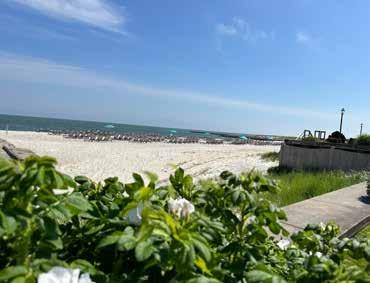
Seven charming villages make up the town of Barnstable. They are Barnstable Village, Centerville, Cotuit, Hyannis, Marston Mills, Osterville, and West Barnstable.
Numerous beaches including the popular Craigville Beach, Sandy Neck Beach, and Kalmus Beach join several other lovely sandy spots to soak up the summer sun. Covell Beach is perfect for families with young children, offering a mild surf and plenty of sand to dig into.
Hy-Line Cruises in Hyannis runs ferries to Martha’s Vineyard and Nantucket enabling you to extend your Cape visit to the beautiful islands.
The John F. Kennedy Hyannis Museum in downtown Hyannis is a pictorial tour of JFK’s family life and his love of Cape Cod.
Yarmouth
Yarmouth is split into three villages: Yarmouth Port, South Yarmouth, and West Yarmouth. Here you will find great beaches, delicious seafood, and plenty of outdoor recreation.
The beautiful soft sands of Seagull Beach along with ample paid parking make it a desirable destination for
Resort in
has a beautiful beach just steps from your room.
lar beach is Bass Hole, aka Gray’s Beach. This family-friendly spot offers a small beach with calm, shallow water and a boardwalk.
Get your steps in at the Call ery-Darling Conservation Area and enjoy a 2.5 mile walk through aban doned cranberry bogs and marsh es. It also passes by the Bass Hole boardwalk.
There are three distinct golf op tions in Yarmouth, Bass River Golf Course, Bayberry Hills Golf Course, and the Links at Bayberry Hills. Whether you are a seasoned golfer or a newbie duffer, there is an opportunity to get out and practice your swing.
beaches in Dennis. The bayside beaches include Cold Storage Beach, Corporation Beach, Mayflower Beach, Chapin Memorial Beach, and Harborview Beach. The Nantucket Sound
Pottery near Scargo Lake in Dennis is a popular shopping destination.

beaches include West Dennis Beach, Haigis Beach, and Sea Street Beach.
Dining at Capt. Parker’s Pub is an exploration into classic New England coastal fare. It is imperative you begin with a cup of their New England clam chowder. Other traditional seafood options include stuffed quahogs, cod fish cakes, and the ubiquitous lobster roll.
Dennis is known for its beautiful beaches so the parking fills up early on weekends. It comprises five distinct villages: Dennis Village, East Dennis, South Dennis, West Dennis, and Dennis Port.
There are more than a dozen


moves quickly. While one person orders, the other should scout for a picnic table — it can take a minute to find a seat. The cafe is cash only and BYOB — bring a cooler of your favorite adult beverages and enjoy some of the best seafood on Cape Cod while relaxing with views of Cape Cod Bay.
Where to stay
Heading to the Cape for a day can be a traffic challenge. Most visitors plan on a long weekend or week-long vacation. Either way, there are several wonderful spots to rest your head after a day of toes-in-the-sand fun.
The Red Jacket Beach Resort in South Yarmouth has everything you would want in a beachy resort town. Located on Parker’s River, there is a beautiful beach just steps from your room — no car, no shoes, no problem.

A favorite spot for uniquely crafted gifts is Scargo Pottery. Tucked away in the woods near Scargo Lake, the indoor/ outdoor showroom is home to a beautiful gallery filled with must-have items.
Golf at Dennis Pines where challenging approach shots are hemmed in by a pine forest. Alternatively, Dennis Highlands showcases the best of Cape Cod golf. If you are looking to practice your swing for an hour, the Highlands offers a beautiful practice range.
Head over to Sesuit Harbor Cafe for a quintessential clam shack dining adventure. The queue is always long but
The Chapter House in South Yarmouth is a picturesque Victorian mansion transformed into a charming inn. It is the perfect spot for a refined getaway stay.



By shAron oliver contriButing Writer
SPRINGFIELD – Born Aurore Dolores Daigle in 1893 in Springfield, Ora Nichols was the first and only female to head a sound effects department during the golden age of radio. She, along with Amelia Earhart, Kate Smith and Eleanor Roosevelt were ranked as some of the most influential women at the time and “Radio Stars” magazine named her one of the “Nine Greatest Women in Radio” in December 1934.
Start in vaudeville She and husband Arthur Nichols started out in vaudeville in 1905 as musicians with Arthur playing the violin and Ora on piano. Nichols, who believed the best sound effects came from sources other than the object itself, employed techniques such using an egg beater to mimic the hum of a lawnmower, clanking metal to create alien sounds, chopping cabbage to fool listeners into believing they heard a decapitation and banged on an air conditioner vent to imitate the sound of rockets.
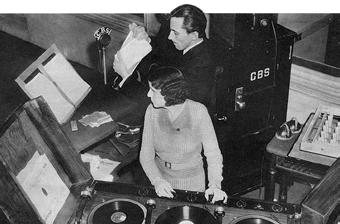
Nichols built a one-of-a-kind, giant cube of a sound machine with pneumatic pumps, whistles and engines that could perform hundreds of sounds ranging from gun fire to birds chirping. As head of the Columbia Broadcast-
ing System (CBS) sound department, she supervised six men and concocted 1,000 sounds.
Some of her most significant work was with actor and filmmaker Orson Welles. In “The March of Time,” she tapped out the “SOS” signal on a telegraph key and provided sound effects for “The Mercury Theatre on the Air.”
As the head sound engineer at CBS, Nichols curated the sound effects for Welles’ broadcast of a “desert play.” She designed, created and performed sound effects, using a “sand box” while the actors were walking, for ambiance. Welles had a problem with the sandbox looking like a cat’s bathroom, so he filled the whole floor of the studio with sand from Coney Island. However, the mics picked up too much feedback from the use of real sand.
falls in snow.
During the production “The War of the Worlds,” a 1938 Halloween episode of the radio series “The Mercury Theatre on the Air,” Nichols and Welles famously clashed. Welles argued about how to produce sound effects, wanting to use actual sounds instead of manufactured ones.
He angrily called Nichols a “screwball,” prompting her to throw off her
Clashes with Orson Welles Their differing ideas continued. Being a realist, Welles wanted a man with a mower in the studio if there was to be a lawn being cut in the radio play. Ora, on the other hand, worked in metaphor. She knew Argo cornstarch when pressed rhythmically, sounded like foot
format. The “Mercury Theatre on the Air” had few commercial interruptions. The first break came after fictional reporters had described a devastating alien invasion and the fall of New York City, inciting a panic among radio listeners who were convinced that a Martian invasion had actually taken place. Following widespread media outrage, Welles apologized at news conference the next morning, and no punitive
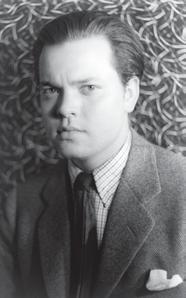
Oral Nichols created the sound effects for Orson Welles’ infamous “War of the Worlds” radio broadcast in 1938 about a fictional alien invasion of New York City.
Photo/Library of Congress/ Carl Van Vechten
action was taken.
the live CBS Radio Network broadcast.
Welles quickly apologized (which Nichols demanded) and subsequently wrote her a note saying: “Dearest Ora: Thanks for the best job anybody could ever do for anybody. All my love, Orson.”
The first half of the program was delivered in a realistic “breaking news”
The broadcast and ensuing publicity brought the then-23-year-old Welles to the attention of the general public and gave him the reputation of an innovative storyteller and “trickster.” To her credit, Nichols provided much of those believable sounds that made an audience think little green men were here. Ora Nichols died in Richmond, New York in 1951.

By MichAel PernA Jr contriButing Writer
SHREWSBURY – The Old Farmer’s Almanac. Most people have probably looked through an issue at one time or another through the years, most likely to check on what the winter weather predictions were. The Almanac has been in publication since 1792. Its founder was Robert Bailey Thomas, who was born in 1766. In reviewing the history of The Old Farmer’s Almanac, an amazing discovery was made: Thomas, who was born in the town of Grafton in 1766, moved with his family at an early age to a farm his father had bought in 1764, which was located in Shrewsbury. The part of Shrewsbury where the farm was located later became the town of West Boylston.
ly, neither of them would help him, much to his dismay. “I was mortified and came home with a determination to have an Almanack of my own,” he stated.
The Old Farmer’s Almanac, founded in 1792 in Shrewsbury, is still being published.
Photo/Wikimedia Commons

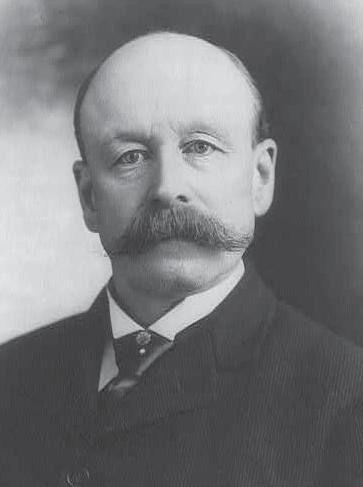
Robert Bailey Thomas, the first publisher of The Old Farmer’s Almanac, grew up on a farm in Shrewsbury and worked as a schoolteacher in Princeton and Sterling before beginning his renowned publishing career.
Interest in astronomy Thomas, who had a great interest in the study of astronomy, reportedly as a result of reading a copy of “Ferguson’s Astronomy” he found in his father’s library, had worked as a schoolteacher in Princeton and Sterling before deciding to write what would become the Old Farmer’s Almanac. Thomas, relating how he came to be involved in this endeavor, said: “My father possessed a larger library than usually found in a country town. Among many scientific works, no one engrossed more of my attention than Ferguson’s Astronomy. From this work, I first acquired the idea of calculating an Almanack (sic).”
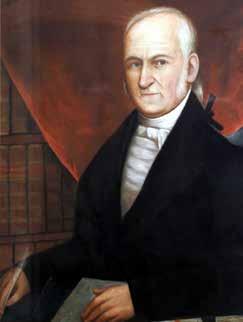
Photo/WikimediaCommons/1836 oil painting by Zedekiah Belknap
In 1792, he went to Boston to consult with Osgood Carlton, who he hoped would “instruct me in astronomy as related to calculating an Almanack. This he readily consented to do.”
By August of 1792, he had “made all the calculations for an Almanack for 1793. Before I left town, I disposed of my copy to two young printers for a certain percentage on all those that should be sold.”
The first edition of The Farmer’s Almanac was an instant success — by the time the second edition was published, circulation had grown from 3,000 to 9,000 copies.
Thomas himself continued to publish the Almanac until his death in 1846 at the age of 80. By that time, the Almanac was the longest running publication of this type in the country.
The Almanac passed into the hands of John Jenks, who added the word “Old” to the title in order to set it apart from other publications of this type.



He attempted to gain some insight into this endeavor by contacting a Dr. S. Sternes and the famous Isaiah Thomas, both of whom had been involved in publishing an almanac. Unfortunate-
The Old Farmer’s Almanac has continued in publication until the present day. Readers still are fascinated by the mixture of weather forecasts, gardening tips, recipes, home remedies, information on tides, sunrise/sunsets, and old-fashioned humor. It is the oldest continually published periodical in North America, with each edition continuing the tradition of having a small hole in the upper corner to allow it to be hung up for easy reference.
After all these many years, who knew that the Old Farmer’s Almanac had its roots in Shrewsbury?



By MAtt roBinson contriButing Writer
REGION – As his son prepared to head off to college, Glenn Cort decided to write him a letter to share the life lessons he had garnered through years as a lawyer and member of a family business.
As we age, experience turns to learning, and knowledge turns to wisdom. Unfortunately, not everyone is able (or, more accurately, willing) to share that wisdom with others.
Perhaps they think their ideas do not matter and that people have heard similar stories before. If only they could see how advice, even meant for one person, could change the lives of many people.
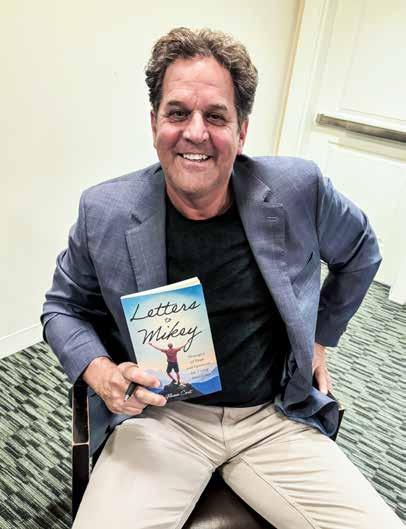
From letter to book Cort’s letter eventually became a book called “Letters to Mikey.”
“I found myself at a loss as to what to tell him about the world we lived in,” Cort admitted. “It seemed to me
that the society had changed in ways that I couldn’t understand … and so I went searching as to whether or not there were any sources of reality or truth or essential grounding authority that could unite us.”
In writing to his son, Cort came upon what revealed themselves to be universal truths.
“What I found … are reasons for optimism,” he maintained, “rooted mostly in the idea that when we were born, we were born with incredible talents, and an incredible capacity to get along with one another.”
A wide audience
While the book was intended for one person and while its subtitle is “Messages of Hope and Optimism for Young Americans,” Cort’s letter has gone on to touch thousands of people of all ages and has also inspired many people to share their own gems of wisdom.
“I believe we can do a better job of teaching these time-tested vir-
The noise and confusion of American culture dominated our classrooms and left me searching for answers to help the young people, and myself, make sense of it.


For those recovering from a
regaining your
of
or
begins with your ability to choose. Choose us for exceptional results.
tues,” he suggested, “and helping kids hold onto the great traits that they’re born with.”
When asked how he first came to appreciate learning, Cort admits that he was “very green” in college and “did not apply myself to studies.”
However, he countered, he “liked to learn” and so chose to go to law school so he could “become a learner.”
After practicing as a prosecuting attorney, civil litigator, and criminal defender, Cort also served in the civil rights division of the Massachusetts Attorney General’s office.
Eventually, however, he was called into the family business, which was involved in construction.
“Although it was ultimately my decision,” he mused, “I wondered for years if it was a cowardly one.”
Eager to contribute in other ways, Cort made a promise to a friend that he would volunteer with an educational nonprofit that was affiliated with the Boston Public Schools.
“I was given an opportunity to teach a group of high school seniors … through a non-profit called Digital Ready,” Cort recalled. “We were advancing their skills with using technology, and at the time my modular construction business was applying a lot of technology to our work.”
Though the lessons themselves may have been old hat to Cort, the experience changed him profoundly.
“Everything in the experience changed the trajectory of my life,” he maintained.
As he had studied sociology in college, Cort was fascinated with what he
saw as a “fragmentation” in American society. When he was given a chance to work with the next generation of citizens and leaders, Cort took the opportunity to explore this issue with them, in the hopes of doing what he could to change and correct it.
“The experience I had in that classroom motivated me to research the factors which would cause the children to be so cynical about the world they were living in,” he explained. “We were all struggling in that classroom to make sense of the chaos and confusion and distrust, which is the new normal in America. The noise and confusion of American culture dominated our classrooms, and left me searching for answers to help the young people, and myself, make sense of it.”
Perhaps realizing that changing an entire culture would be too much of an ask (at least right off the bat), Cort decided to focus on his own society and wrote a letter to his then 18-yearold son. That letter eventually grew into a book that Cort has been selling and giving away in an effort to share his ideas and learnings about society and how people can learn (or re-learn) to discuss without arguing and, in a general sense, to get along.
Despite the personal and general importance of the boom, Cort has faced the same challenges many first-
time authors do.
“It’s been very hard to distribute the book,” he frowned, “even for free!”
Civics curriculum
In an effort to expand his audience and share his ideas and those of the many whom he has been able to engage in his campaign for civility, Cort has created an entire curriculum and program called Getting Along Academy (https://www.gettingalong.com).
“I started to see a workshop or a curriculum,” Cort replied when asked how the idea for the larger movement began, “a civics curriculum for teenagers that I believe might be able to give them a framework which they could latch onto, like a life raft, to help better navigate their differences and disagree without dividing.”
Though the hill remains challenging, Cort keeps climbing one person and shared idea at a time.
“To achieve the type of counterculture transformative change we will need to muster to overcome the many complex forces that hold us down by confusing, blinding, and dividing us,” Cort observed, “it will require much work by all of us.”
In an effort to stem (or even turn) the tide, Cort continues to expand his offerings, in an effort to reach more people in more profound ways.


Glenn Cort’s book “Letters to Mikey: Messages of Hope and Optimism for Young Americans” has gone on to touch thousands of people of all ages and has also inspired many people to share their own gems of wisdom.
Photos/Matt Robinson
“We have developed a platform in an effort to help,” he said, noting how he is working to get the book into more people’s hands and also working on a curriculum, an ambassador program, and even a movie.
Connecting non-profit organizations
“We are also working on Positivity
Portal … to showcase and connect all non-profits in America using AI,” he said. “We’re going to flood the zone with all the good that’s happening every day in America that our children never see, and that are not taught. I think this will serve as an important counterbalance to all the negative information they are fed every day.”

By Anthony DrAggA contriButing Writer
REGION – So many aspects of our lives are stored behind a screen. Online banking, digital currency, and cloudbased storage are just a few examples. Preparing for what happens to these digital assets when we’re gone is an essential part of modern-day estate planning.
Alongside more traditional property, like a house, car, jewelry, and other tangible possessions, your “digital property” must also be accounted for in your estate plan to not only protect these assets but also preserve memories for future generations.
To ensure your digital estate is accounted for, here are four essential steps to walk you through the planning process.
Compile your digital assets
To start your estate planning process for your digital assets, you first need to identify what they are. Typically, your digital assets will fall into three categories: financial, sentimental, and intellectual. For financial assets, this includes electronic bank and investment account statements or cryptocurrency. Sentimental assets are non-financial digital items with emotional value, such as social media accounts, photos and videos stored on iCloud or Google, or personal emails. Lastly, intellectual assets include domain names, monetized social media accounts, or unfinished manuscripts, to name a few.
Things you buy online, like music or other media content, may be subject to a licensing agreement and are therefore non-transferable. It’s essential to both identify your digital assets and know what can be legally transferred to heirs.
How can family members and loved ones access your digital assets?
Each of your digital assets will have different “access points.” From simply logging into your laptop or phone to two-factor authentication, there are many different steps required
Preparing for what happens to your digital assets is an essential part of modern-day estate planning. Photo/Pixabay

to access digital assets. You may think that simply leaving a list of passwords will suffice. But there are specific steps to follow to ensure your loved ones can access these accounts.
In your estate plan, your will, trust, and durable Power of Attorney should contain specific language authorizing your fiduciaries to access your digital accounts and other assets. By including this language in your estate plan, this will keep service providers, such as online banks and social media websites, from denying access to the account down the road.
It’s important to note that you should never include passwords or digital account access details in your will, as it becomes a public document after your death. You can physically list out your passwords on paper and store them in a secure place or with your estate attorney. There are also digital vault options, and platforms like Google and Apple have digital legacy tools that will allow you to grant your fiduciaries access to your accounts ahead of time. If there are specific accounts, for example financial ones, that you want your children to have access to, you can grant them access in advance.
These are simply just a few of many strategies to stay organized when it comes to loved ones accessing your digital assets. In the event your passwords are not working or cannot
Spacious
be recovered, you should make plans to regularly back up your data. Anything stored online, like photos, videos, and documents, should be saved on a local drive.
cryptocurrencies
Investing in cryptocurrencies, like Bitcoin, has become increasingly popular. Today, these investments can be managed like a standard investment account through regulated financial institutions, like Fidelity.
When digital currency is held in custodial accounts, you can designate a beneficiary directly, commonly known as a “Transfer on Death” desig-
nation. This avoids probate, a lengthy and public court process governing the disposition of assets, and instead grants your beneficiaries direct access.
Management and disposal instructions
For each digital asset, you must specify “where” it goes or “what” should be done with it. For example, do you want your Facebook profile to remain up as an archive of memories or permanently deleted? For intellectual property, ranging from a monetized YouTube channel to a manuscript, you will need to decide who inherits them. For your own privacy, you should also identify if there are certain accounts, like personal emails, that you wish to be deleted without heirs reading them.
Digital assets are still a developing phenomenon, and the laws that deal with them are changing rapidly. Talk with your estate planning attorney about the steps you can take now, and check in regularly to update your estate plan to reflect any changes in the law or in what will become part of your “digital estate.”
Anthony Dragga is a partner at Bowditch & Dewey, working in the firm’s estate, financial and tax planning practice.



By Sharon Oliver Contributing Writer
BOSTON – As part of an experiment to connect the young with the old, the biotech company Matter Neuroscience temporarily placed a bright, yellow phone booth called a “boomer” phone near the Boston University campus outside Pavement Coffeehouse. In the interim, another phone rests inside the lobby of Sierra Manor, an affordable housing building for seniors in Reno, Nevada. The boomer phone enables callers to pick up the receiver and automatically call another party on the other side of the country free of charge. Also, Matter posts snippets of these recorded conversations from the internet phone on social media.
Finding common ground
The goal of the experiment is to connect people with the purpose of encouraging them to overcome polarization and find common ground. According to an interview WCVB-TV conducted with Calla Kessler, a social strategist for Matter, “A lot of people feel disconnected from their communities and feel alone and upset. And all of these negative feelings cause a spike in our cortisol, which is our brain’s primary stress hormone. And so, we’re trying to figure out
a way that we can get people in conversation to find their common ground and connect with people they might not otherwise meet.”
Self-described Boston “boomer” Mark Krone said, “What young people may not know is we’re still them on the inside, but we look really crappy!” Another Bostonian called the concept “sweet.”
A plaque on the phone read: “Younger adults and older adults tend to experience the highest levels of loneliness of any age group, so the goal of this project is to inspire generational connection through meaningful conversations, despite differences in age, lifestyle, or politics.”
Sharing wisdom Not only does the idea offer a chance for callers to pass on words of encouragement, but it is also an

opportunity to share thoughts, pass along wisdom and uplift someone living a dark space filled with loneliness and depression, no matter the age.
A statement on the company’s website reads: “Right now, we’re in the midst of a growing mental health crisis, with over 200 million people living with major depressive disorders. We can reverse this if we start paying attention to what makes us happy — internally, molecularly. Luckily, we all have built-in biological reward systems that already do this for us.
Most of us just haven’t had the tools to use and understand them until now.”
Earlier in the year, the company installed the setup in San Francisco and Abilene, Texas. It was a huge success resulting in over 350 conversations and 400
As part of an experiment to connect young and old people, a biotech company temporarily placed a phone booth near the Boston University campus that directly connects to a senior housing facility in Reno, Nevada. Photo/Courtesy of Matter Neuroscience

voicemails. Boston was identified as a prime candidate due to its large number of students with close proximity to a college campus with a high concentration of foot traffic and young people in general who are civically engaged and open to participating in such a project.
A hit with young people Boston University graduate Clark Fumiatti believes the phone booth gives his generation a chance to learn from the “vast wealth of knowledge” elders have. He explained to The Boston Globe, “Here is someone who has lived three times as long as I have, and that’s a lot of time to learn things, a lot of time to make mistakes, a lot of times recover from those mistakes. I would want to learn how do you keep going when you stumble?”
The boomer phone is such a hit likely because old and young alike feel understood when someone listens or is at least willing to lend an ear. The phones are refurbished payphones the company bought online and the one in Reno only differs by asking seniors to call “Zoomers.”
A spokesperson told NBC10 Boston that the phone will be up for a month but could stay longer if the businesses choose to extend the agreement.
Experience a new standard of 55+ living at Arbella at Bramble Hill, Worcester’s premier lifestyle apartment community.
Enjoy spacious one- and two-bedroom residences with modern finishes, private balconies, and open-concept designs— crafted for comfort, style, and ease.

Resort-Style Amenities Include:
• Indoor pool & fitness center
• Golf simulator & pickleball court
• Pet-friendly with dog park
• Social events & wellness programs

Schedule YourTour Today!

Stay active and connected with resortstyle amenities including a golf simulator, pickleball court, fitness center, and beautifully designed community spaces.

Our award-winning lifestyle program offers engaging social events, wellness activities, and lifelong learning opportunities—all designed around your health, happiness, and independence.
Located on Worcester’s desirable West Side, you’ll enjoy the perfect balance of peaceful surroundings and convenient access to everything you need.
By MAtt roBinson contriButing Writer
BOSTON – Growing up in Boston, Tony Levin was surrounded by music, but it was not the type you might expect from the Grammy-nominated bassist who has played with such progressive powerhouses as Peter Gabriel and King Crimson.
“My older brother Pete and I were raised with a strong interest in classical music,” he recalled, noting that they were both raised on piano lessons. “Pete went on to French horn, me to bass.”
Drawn to bass
When asked why he was drawn to the lower end of the scale, Levin remarked, “I don’t know — I just like it!”
Though he may be best known for working in the realms of jazz, rock, and fusion, Levin maintained his classical chops throughout his academic career. In fact, as a member of the Greater Boston Youth Symphony Orchestra, Levin played his first “touring gigs” in no less legendary places than Carnegie Hall and the White House.
“I was on the road,” he reminisced in an interview with the musically-minded YouTube host Rick Beato, “and I loved it!”
Levin particularly remembered how President Kennedy pledged his support to Levin and the other young musicians at the White House engagement.
“He saw how important it was that the government … support musical education for children,” Levin maintained. “I surely benefitted from it!”
Encouragement at school
He also recalled the “encouragement” he received as a musician in the Boston public school system, where he participated in the marching band, symphony, and chorus, among other performance programs.
“There was not much rock going on there when I grew up,” Levin observed when asked about the Boston music scene he knew as a younger player, “but a lot of classical to be heard, and I think jazz clubs too.”
At a recent performance at The Center for the Arts in Natick (TCAN), Levin took the stage with his long-standing trio Stickmen wearing a shirt from Scullers Jazz Club, where he will perform with his brother on May 30.
Quality is the common factor As he is involved with so many artists
and ensembles and also with so many genres and styles, it might be difficult to find a throughline to Levin’s playing. But whether he is playing bass with Peter Gabriel, forming a rhythm section with percussion powerhouses like Steve Gadd, or popping in and out of King Crimson to beef up their famed “double duets,” Levin maintains that the common core is quality.
“We just try to make good music,” he said. “There are no thoughts on what’s making it work or not work. Usually, it does!”
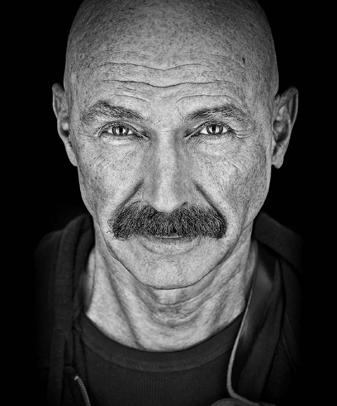
When asked how he chooses partners for his various projects, Levin leans towards “players who’d be happy making the kind of music that band was setting out to do.”
On his latest solo album, “Bringing it Down to the Bass,” Levin called on a wide range of musical friends,
Now accepting Applications for 62 years of age and older and those that are under 62 years of age and are permanently disabled.
“I gave myself the treat of using a lot of different players,” he reasons.
“Each piece I wrote, my first thought was [who] will surprise me with what he plays on this one?”

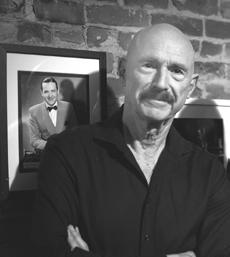
In addition to music, bass player Tony Levin also finds creative expression as both a writer and photographer.

Bass player Tony Levin works in several musical genres, including rock, jazz, and fusion.
Unique instrument
While most may have seen him on the traditional bass (either upright or electric), Levin has made his mark (and named one of his bands after) with the Chapman Stick, an instru-
ment that has 10 or 12 strings and a fretboard that is played with both hands simultaneously.
“I’d done an album named “Stick Man” … with the Chapman Stick,” Levin explained when asked how the group came together.
When asked what appealed to him about the more avant-garde instrument, he says that, “because it’s got bass and guitar strings, you can do a lot!”
In an effort to do even more with his beloved bass, Levin also invented Funk Fingers, which are drumsticks chopped off and attached to the fingers to get “a very percussive bass approach.”
Other creative pursuits
As if his musical talents were not diverse enough, Levin is also a writer and photographer.
“I just try to be creative and please myself with what I can come up with,” he reflected, mentioning a new photography book that is due in June and a memoir that is in the works as well, “be it musically, or photos, or writing.”
With all this creative ability, it is no wonder that every Levin performance is a unique experience.
“We improvise a lot within the show,” he observed, “so each night is quite different.”

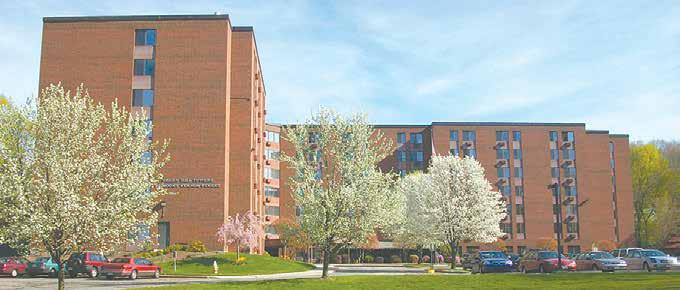
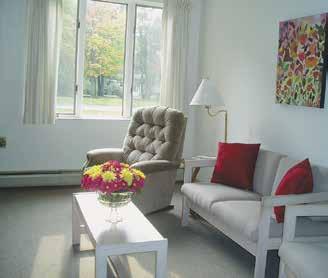
Within the building amenities include:
• A Theater-like media center
• Handicap-accessible lounges on every floor
• Library equipped with two computers and free internet access
• Physical fitness center
• Game room with billiard table
• Community room with bingo board and large screen TV
27 Mount Vernon Street, Worcester, MA • O ffice O pen D aily 8:00 am - 4:30 pm
To receive an application please call 508-755-6062 TDD# 508-755-0228
Now accepting applications for 62 years of age and older and those who are under 62 years of age and are permanently disabled.
Applicants must meet HUD
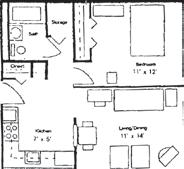
• Contemporary styled 1 & 2 bedroom apartments
• New kitchens with built-in microwaves and granite-like countertops
• Small pets welcome
• Heat and Hot water included
• Bus route / ample parking
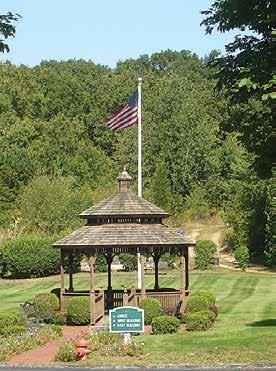
• Beautiful landscaped grounds with gazebo



By soPhiA oPPeDisAno contriButing Writer
NORTHBOROUGH – In 1984, Ralph S. Metcalf sat down with a tape recorder. “This is Ralph Metcalf – 86 Maple Street, Northborough, Massachusetts. I am 65 years old. I am recording this at the request of my grandchildren,” he spoke into the machine.
After Ralph’s passing in 1994, his grandson, Eric, transcribed the tapes and turned them into a book.
Forty years before creating the tapes, Ralph left for England aboard the Queen Elizabeth for his assignment to the 8th Air Force, 390th Bomb Group, 571st Squadron. He flew 16 missions between December 1943 and May 1944 in World War II.
It was during his last mission — a 13-minute bomb run over an aircraft factory in Strasbourg, France — when Ralph and his crew were shot down over enemy territory. Those who survived were taken to a Nazi prison camp in Frankfurt, Germany.
Ralph spent 13 days shy of one year as a Prisoner of War (POW) in three different Nazi prison camps. After he was liberated, he was awarded

two Purple Hearts and promoted to Technical Sergeant.
Recently, Ralph’s son, Dave, who works part-time for the Northborough Senior Center, sat in his kitchen with his wife, Barbara, at their home in Shrewsbury. Their walls are adorned with photos of a big, loving family, and mementos of military service fill
Colony Retirement Home III is congregate housing for seniors. Enjoy nutritious “Home Cooked Meals,” served in our attractive dining room with your neighbors and friends.
the space.
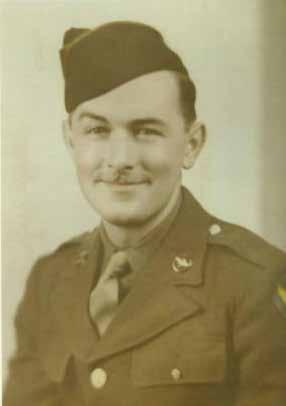
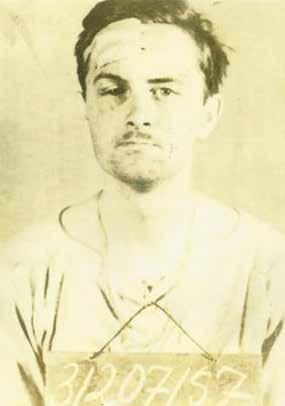
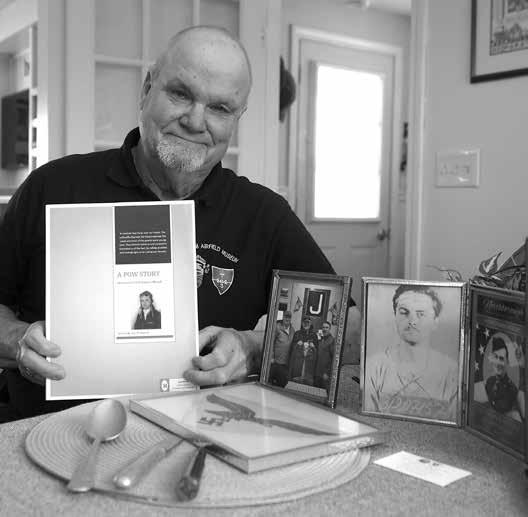
On the kitchen table, a spoon from a Nazi prison camp rests next to two photos of Ralph: one when he left for England and weighed 155 pounds, and one when he was liberated and weighed only 100 pounds. Also on the table: a 50-caliber bullet that hit Ralph in the heel while he was held captive.
apartments
Call Monday thru Friday, 9am to 5 pm for more
In another photo, Dave, flanked by his sons Eric and Brian, holds up his father’s uniform at the Parham Airfield Museum in Parham, England. The family recently loaned it to the museum’s POW annex. Dave believes his father had Post-Traumatic Stress Disorder, which was not recognized among veterans at the time, that led to him shielding from his family what had happened to him.
When Dave would ask his father about what happened during the war, Ralph would say, “Nothing really.”
“He kept everything inside. … I’d say, ‘Dad, I want to know what happened,” and he would say, ‘You don’t want to know. You don’t need to know,’” said Dave. “What I gleaned out of this whole experience was that he was a really, really good guy. … But I never realized that until much later in life, and it kicks me.”
Dave and Barbara both recall how Ralph refused to enter closets because of his time in solitary confinement. He wouldn’t eat sauerkraut and Brussels sprouts — even the smell would trigger his memories of the prison camps. Barbara said he always had trouble with his feet from the frostbite he got


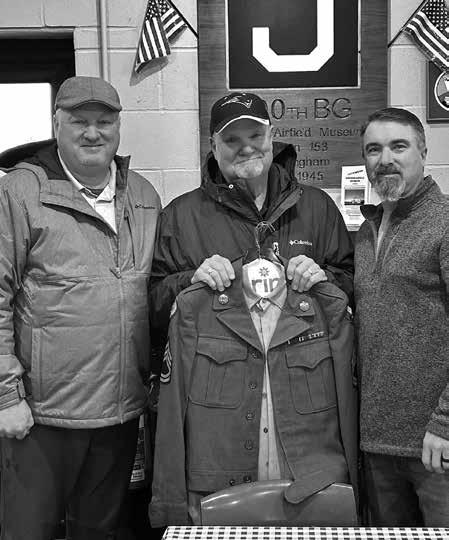
“This is our way of honoring him,” says Dave Metcalf, of the book his son Eric wrote about his grandfather Ralph Metcalf’s World War II military service.
Ralph Metcalf’s son Dave, flanked by his sons Eric and Brian, holds up his father’s U.S. Army Air Corps uniform at the Parham Airfield Museum in Parham, England.
By MAriAnne lyons Delorey, Ph.D.
flying one of his first missions.
Ralph never discussed any of this, but the family knew the war always weighed heavily on his shoulders.
Despite his quiet nature around his family, Ralph was always the “the life of the party” when family or friends were around. He hosted a clam bake in town every year, and his customers at the tire shop he worked at adored him, Dave said.
“But then, when everybody’s gone, I just had to leave him alone. You could tell that’s what he wanted — just let it go,” he said.
It was only when Eric, Dave’s eldest son, joined the U.S. Navy in 1990 that Ralph began to open up about what happened during the war. The tapes were Ralph’s way of letting Eric know that he understood what Eric was going through and that he wasn’t alone in those experiences, Dave said.
Eric transcribed his grandfather’s tapes into a book he wrote for his family — “A POW Story: Memoirs of T/ SGT Ralph S. Metcalf.” Eric conducted research for the book, including photos, newspaper clippings, and original telegrams.
In the prologue, Eric writes about
his own tours throughout his 25-year military career. “The one thing I could rely on during my first experience in a combat operation was care packages from home,” Eric wrote. “These care packages always consisted of the same thing. A carton of Camel Cigarettes, magazines of all types, newspapers from home, and a note. This note read: ‘These are the items that I missed the most while I was a POW. Be safe and make it home. Love Grandpa Ralph.’”
“They had a lot in common,” Dave said. “The reason he went into the service was because of his grandfather.”
Ralph’s tapes and Eric’s book gave Dave a newfound sense of empathy for his father. “It was extremely emotional. I read this thing, and I had emotions going all over the place. But, since [I read the book] and we’ve donated the uniform — that’s where that uniform belongs,” he said.
And with Eric’s book, a heroic, long-hidden story is finally being told.
“This is our way of honoring him,” said Dave. “I want to do this now to let my dad know that I can appreciate what [he] did and I understand what [he went] through. It needs to be told — it just does,” he said.
John Andrew Holmes once wrote, “A child enters your home and makes so much noise for 20 years that you can hardly stand it. The child departs, leaving the house so silent that you think you are going mad.” Therefore, many seniors, having lived in relative solitude for decades, find living in an apartment building very challenging. The hardest thing for them to get used to? The day to day noise living in tight quarters — squeaky floors, closing doors, televisions and radios, rocking chairs and pets.
Most people adjust to the inconveniences of living in such close proximity. There are a few, however, that take matters into their own hands and start banging on ceilings or walls, exacerbating the noise problem. Surprisingly, I’ve found that this behavior rarely makes their neighbor feel like they should be part of the solution.
Usually, management only hears about noise issues when the relationship between neighbors has deteriorated into something resembling paranoia. Often, people are convinced the neighbor is deliberately trying to anger them.
Complicating the situation, housing managers try to help the neighbors decide what is “reasonable” for each time of the day. Many leases reference “quiet hours” which are typical sleeping hours during which people are expected to be particularly mindful of noise. Unfortunately, housing mangers aren’t the ones who live with the noise and rarely are able to witness or take immediate action to noise concerns at exactly the right time.
Fortunately, if the parties are willing to work together, there are some solutions. For instance, a good pair of headphones can help a person watch TV without bothering neighbors. The aggrieved neighbor can also record the levels of noise in the unit to help reality check the neighbor about how it sounds to them (be mindful that recording conversations may get you in hot water). Having housing management staff meet in the units to try to determine what is causing the noise can also help. One time, we walked through an upstairs apartment trying to replicate the noises that were troublesome only to find that the banging was the closing of a particular drawer in an armoire. The upstairs neighbor offered to keep that drawer empty. Our success hinged on that neighbor’s active role.
Management may also be able to help — fixing door closures, cushioning cabinet doors with felt pads or screwing down squeaky floor boards may reduce the noise enough to make it tolerable for the downstairs neighbor and shift blame away from the upstairs neighbor. Sometimes, offering a transfer to a heavy footed, nocturnal or clumsy person to a different unit is a kinder solution for everyone involved.
It is important to note that disabilities can play a role for either the person who is making too much noise or the person who is too sensitive to noise. Every case is different and a sensitive housing manager needs to listen to both neighbors carefully.
Unfortunately, there is a time and place to involve the authorities and to document the case for further action. With any luck, and with the help of housing management, you can survive the noise, insanity and your second empty nest when it is over.
Marianne Delorey, Ph.D., is the executive director of Colony Retirement Homes. She can be reached at 508755-0444 or mdelorey@ colonyretirement.com and www.colonyretirementhomes. com. Archives of articles from previous issues can be read at www.fiftyplusadvocate.com.

By JAnice linDsAy contriButing Writer
Sometimes the problems of this dear old suffering world seem too huge for me to comprehend, try as I might to understand them or to consider what I, one insignificant aging lady, can do about them.
So my brain takes a time out.
I suppose I’m following the advice in that old song, made famous by Bing Crosby: “When I’m worried and I can’t sleep, I count my blessings instead of sheep…”
I never had much success counting sheep — and why sheep? — but I’ve found that I didn’t realize I had so many blessings, or hadn’t thought of some things as blessings, until I started counting them.
Some blessings are obvious, like my family, most of whom live far from me, but distance doesn’t fray the ties among us. Photos of my two granddaughters adorn my refrigerator door. They live on the opposite coast from me, so I don’t see them often enough. But I get photos.
And there are those women with whom I share a warm friendship, some near and some far, some that
are recent and some that go back decades, some I see often, some occasionally.
And the blessing of being in fairly good health, living in a safe place, having clothes to wear and food to eat — not blessings enjoyed by everybody, sad to say.
We all have the blessing of the sky, fascinating, ever-changing, the messenger of pending storms or lovely weather.
We all have the blessings of nature’s birds and wildflowers. This month, here in New England we enjoy the return of hummingbirds, those tiny miraculous bundles of energy. There’s the sweet, promising smell of earth after a spring rain.
And we all have public libraries, one of democracy’s greatest inventions, fulfilling the belief that all knowledge and all literature should be available to all people.
And elected government, embodying the idea that citizens should have a say in writing the laws they’ll be expected to follow.
And the blessings of music. In my case, it’s a ukulele and friends to join me in strumming and singing.
Each of us has our own little bright spots that bring bits of joy and peace to our troubled minds.
One of my bright spots is elephants. When I was in high school, I read a novel that takes place in Africa and features elephants. I’ve been fascinated ever since. I’ve had only one close-up view of a


live elephant, at a sanctuary, but my house is full of elephants.
A few years ago, a friend discovered my love of elephants and gave me a toy elephant. Other friends and family members noticed. I now have a collection of elephant greeting cards. I have elephant coffee mugs and tote bags and figurines and other toy elephants and jewelry and an elephant candle holder and a mobile of elephants and key chains and Christmas tree ornaments and stationery and a pouch to hold my ukulele tuner and books about elephants and an elephant bedspread and a planter – most of which I did not buy. Every one of them brings me a little bit of joy.
In my opinion, we all have a responsibility, as participants in a democracy, to try to make the world a better place for our fellow travelers. It’s not easy. None of us can do it all or do it alone. But we can each pick something where we can make a positive difference. And when it all feels overwhelming and undoable, our brains can take a time-out and find restful joy in some little blessing, even if it’s only an elephant design on a pair of socks.
Contact jlindsay@tidewater.net.
By shAron oliver contriButing Writer
LEE – Although there were no books written or movies made to give a chilling account of their alleged harrowing experience, Lui and wife Dale Passetto made headlines just like the Lutz family of the Amityville Horror fame. Unlike the Defeos (murdered occupants of the Amityville home), the Passettos were fortunate enough to live to tell their story including during an appearance on the “Geraldo Rivera” TV show.
Dale and Lui
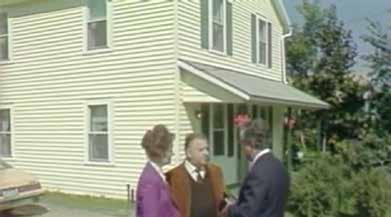

Passetto being interviewed in 1981 by WRGB-CBS-6
Albany outside of their Lee home that reputedly had supernatural visitations and required an exorcism.

Ed and Lorriane Warren, the notorious couple behind the inspiration for films such as “Amityville Horror,” “The Haunting in Connecticut” and “The Conjuring” franchises, sought to bring attention to the paper factory worker, his wife and their unwelcomed malevolent force.
Grandparents’ house in small town
The Passettos had been living in the house Lui’s grandparents built in the small town of Lee in Berkshire County for two years without incident. By 1981, from March to September, the young parents of two children made claims of encountering supernatural visitations that desperately required an exorcism. According to the couple, it all began on March 19, 1981, when Dale saw an apparition of a young boy dressed in white who spoke kindly and did not appear to fear her.
Lui further stated when he walked into the room, his wife was in a state of shock, holding a crucifix in one hand and a bottle of holy water in the other. After a stuffed animal changed into an animated nightmare in one of the kids’ bedroom, the Passettos decided it was time to leave.
Enter Ed and Lorraine Warren, who deemed the home demonically active and contacted an exorcist who Ed said performed the exorcism but became violently ill. Soon afterwards, a pair of Roman Catholic priests were called in to perform the religious practice, but some accounts suggest they merely blessed the house. The Warrens, who were self-proclaimed demonologists, founded the New England Society for Psychic Research and were the subject of controversy throughout the years.
Locals remember At the time, memories of the 1975 hit
movie “The Exorcist” were probably still fresh on the minds of many and locals were likely to never forget those rumored ghostly days in Lee. Heather Ann recalled on Facebook:
“I remember this case very well. I went with grandparents, met the family and while I was in the house got very sick and had a horrible headache. Gram had me leave the house and sit outside while they continued the investigation. Once outside my symptoms subsided. There was undoubtedly something evil in that house!”
Incidents continued Believing their home was now free and clear of frightening entities, the Passettos moved back into the house only to discover the ghost of the young boy had now taken on the shape of a towering hunchback creature that growled and snarled vulgar things, calling itself “The Minister of God.”
While there were no more stories of stuffed animals giving chase this time, there were eye-popping tales of day and night terrors. This included refrigerators being ripped from the walls, bookcases toppling, a crucifix getting yanked from the hand of their son and Dale clinging to her elevated bed with claw-like scratches on her stomach, back and face.
Dale described the creature as “a little taller than my husband. It was black. It looked like it was hooded. And it was sort of hunched over and it had very, very large feet, tremendous feet.” Matthew Schmalz, director of religious studies at Holy Cross College says the church often equates demons with souls in purgatory, adding that cases of possession are very rare.
The family left their two-story wood-frame home and the state for good in 2004. Their experience reportedly influenced the blockbuster films “Poltergeist” and “The Conjuring.”
You’ve Worked Hard All Your Life, Now Let Your Home Work For You
• Need more money each month to cover the higher cost of living?
• Still have a mortgage payment or high credit card balances?
• Need money for house repairs or improvements?
• Feel anxious about NOT having enough money today or in the future?
Looking for a Solution? Maybe You Fit:
Are you 60 years old or older? Do you own a home?
A REVERSE MORTGAGE MAY BE THE ANSWER
I Will Guide You & Create a Plan
After a short conversation, I will be able to determine if you qualify and then share the exact action steps to successfully implement a plan.
Please call or text me at (781) 724-6221 or email me at av@powhse.com
I am passionate about educating people about reverse mortgage and will explain the pros & cons so that you will be fully informed if a reverse mortgage is the best choice for you.
of
There is no cost to learn about reverse mortgages. But the cost is immense to realize later that a reverse mortgage may have overcome your financial concerns, needs, and challenges. Over my 30 plus year career, the one word that hurts the most is – regret, regret of not taking action. Please feel comfortable contacting me.
When used properly, a reverse mortgage allows a qualified borrower the option to receive tax free cash up front, or a monthly check, or a line of credit to access cash when desired with NO minimum or required monthly mortgage payment. A reverse mortgage has no impact on Medicare or Social Security benefits. You still own your home and can prepay without penalty. Top uses include paying off a current mortgage and credit cards, augmenting retirement cash flow, medical needs, home improvements, and peace of mind knowing cash is available. I look forward to learning what success looks like for you. (Note – you are required to pay ongoing real estate taxes and property insurance and meet other loan guidelines.)

Alain Valles
Reverse Mortgage Specialist
781-724-6221
A great place to start is get your free “How to Use Your Home to Stay at Home” 36-page book. This is the official reverse mortgage consumer booklet approved by the U.S. Department of Housing & Urban Development and published by the National Council on Aging.
To receive your free copy, please call me at (781) 724-6221 or email me at av@powhse.com
I am also available to evaluate your specific situation, answer your questions, and calculate how much money is available to you.
Alain Valles was the first designated Certified Reverse Mortgage Professional in New England. He obtained a Master of Science from the M.I.T. Center for Real Estate, an MBA from the Wharton School, and graduated summa cum laude from UMass Amherst. He is the senior reverse mortgage loan officer MLO#7946 at Powerhouse Funding Corp. NMLS #1740551. He can arrange but does not make loans. Alain can be reached directly at (781) 724-6221 or by email at av@powhse.com
By shAron oliver contriButing Writer
BOSTON – There are thousands of small dive bars scattered throughout the U.S. that are notorious for not only good times but served as places for back room deals and clandestine meetings. One such watering hole was The Dugout Café on Commonwealth Avenue in Boston, which closed in early 2026, and was a favorite to many including Red Sox fans and also to two members of an infamous crime group who were the subject of books and four movies.
Prohibition ties
Allegedly, the Dugout started out as a speakeasy during Prohibition and has been a haven for anyone from sports players to students to professors to career criminals. Interestingly, the former establishment did not accept credit cards or have air-conditioning, yet it remained a popular hangout spot for decades.
The Dugout was initially owned by a former bootlegger, and racehorse owner who was so well connected it was said that he swayed elections and even punched Governor Maurice Tobin for refusing to help out a friend. His name was Jimmy O’Keefe. In 1941, a fight broke out in the Dugout, result-
ing in prison sentences for the two patrons. The next year, the Boston Health Department briefly closed the Dugout as part of a citywide crackdown on nightspot code violations following the devastating Cocoanut Grove fire that claimed the lives of 492 people.
Brink’s robbery
But in 1950, two of the Dugout’s most loyal customers would attain national notoriety when they took part in what was then the biggest heist in American history. In January of that year, Adolph “Jazz” Maffie, Joseph “Specs” O’Keefe (no relation to Jimmy), and nine other men wearing Halloween masks and chauffeur’s hats robbed the Brink’s, Inc. armored car depot in Boston’s North End, escaping with more than $2.7 million.
Less than $60,000 of the stolen money was recovered. At the time, the robbery was considered to be the Crime of the Century.
The late Frank Kennedy, a longtime Dugout bartender, used to point to the corner booth where the Brink’s rob-
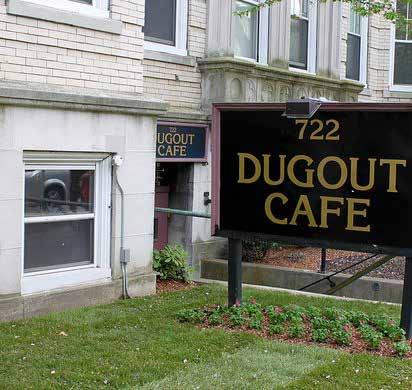
Dugout
from

The Great Brink’s Robbery had the FBI stumped for almost seven years and was dramatized in several movies including the 1978 film “The Brink’s Job,” starring Peter Falk and Peter Boyle. Of the eleven people involved in the robbery, eight would receive life sentences, with two others dying before they could be convicted.
Worcester Talking Book

bers planned the heist, allegedly. The crooks were also said to have met in a back room for privacy. Furthermore, it is documented that Maffie and “Specs” knew Jimmy O’Keefe and Maffie even used Jimmy O’Keefe’s restaurant at Boylston Street and Massachusetts Avenue as his alibi.
Maffie’s wife even testified that she was having dinner with her husband there when the robbery took place. However, the jury did not believe her and a postal worker later told the Boston Globe he remembered seeing Maffie and his bodyguards at the Dugout. Jimmy O’Keefe himself was arrested at the Dugout in 1961 after Boston police tried charging him with using a payphone in the bar to run numbers.
When over two feet of snow fell over the city during the Blizzard of ’78, the Dugout graciously opened its doors to provide shelter for weary fans who were unable to travel home due to dangerous weather conditions after watching a hockey game at the Boston Garden. Former Boston University sports information director Ed Carpenter recalled in Boston Magazine: “We get to Commonwealth Avenue, and we stop at Marsh Chapel, and Jack Parker says, ‘Anybody who wants to get out and go into the chapel and pray may do so.’ Well, half the bus got off, but they weren’t going to Marsh Chapel. They went across the street to the Dugout. The bar was their home for a week.” The Dugout is now closed, but its countless memorable stories will live on.

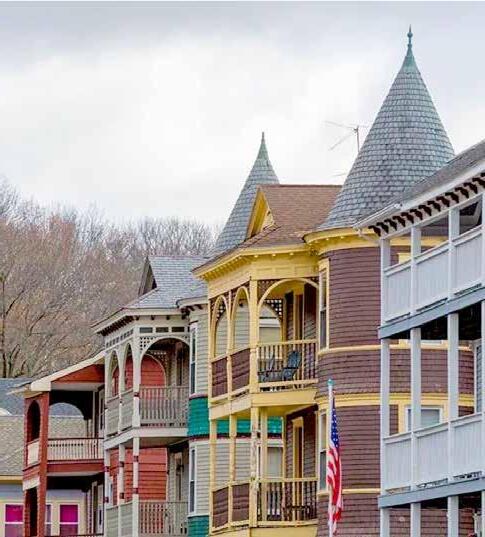
Three-decker houses were invented in Worcester during the late 19th century to help meet the housing needs of the thousands of immigrants that flooded the city to work in its many factories.
By MichAel PernA Jr contriButing Writer
WORCESTER – During the late 1800s and into the early 1900s, a new style of housing, the three-decker, was created in Massachusetts, with most accounts stating it originated in Worcester. The style of home was created in order to meet several demands created by the influx of immigrants from a number of different countries during those years.
Practical considerations
First, the three-decker houses would require smaller lots due to smaller, shared yards and would house more people. Second, large numbers of workers would be able to live closer to the many factories that existed in the area back in that era. Extended families were able to live in the same houses together. In addition, many of
the units were owner-occupied, with the owner living on one floor (usually the ground floor), with tenants on the other two floors.
Large numbers of three-deckers were built in certain areas of the city, including the Vernon Hill neighborhood, where most residents were Irish, Swedish, Polish, and Lithuanian. Shrewsbury Street and adjacent areas housed Italian families; and the area known as Main South, was where Irish, Polish, and Lithuanian families, along with some Italians, lived.
The houses themselves were of light-framed, wood construction, usually with each floor having identical floor plans. Most had two or three bedrooms, along with a kitchen or pantry, a bathroom and living room. Some houses were somewhat larger and divided into three apartments on each side.
The closeness of the houses, made possible by very small (if any) yards and virtually no driveways, made for tight-knit little communities within the community.
Close proximity to all their needs
Some area residents spent their entire lives living in their three-decker apartments, with the close proximity to neighborhood shopping, public transportation and employment eliminating the need for having an automobile. As an example, this writer’s aunt and uncle spent their entire adult lives (1920s-1990s) in the same third-floor apartment of a three-decker located on Granby Road, in the then predominantly Italian Shrewsbury Street neighborhood of Worcester.
The three-decker was usually thought of as a New England phenomenon, with many thousands of them being constructed in the Worcester and Boston areas. This was in contrast to other urban areas such as New York City, Baltimore, Philadelphia, and Washington, D. C., where narrow, single-unit row-housing was more widely used.
Most three-deckers featured a bay window on the front side, windows on all four sides, and a utility porch on the rear of the building. The buildings

typically were either gable-, flat- or hip-roofed.
They endure despite drawbacks Due to a number of reasons including the fact that they were constructed using only wood, mostly used what was known as “balloon framing,” had primitive electrical systems, and used gas-on-gas appliances and had petroleum-based shingles on the outside walls, three-deckers have become well-known for their susceptibility to large, destructive fires.
Despite that fact, the three-decker has continued to endure over the years, into the 21st century. Many units have been updated to make them safer and more energy efficient. Although many of the original occupants and their descendants have moved to single-family homes in the suburbs, the three-deckers still house thousands of people in Worcester’s various neighborhoods, although the population has become even more diverse. A number of three-deckers have become local historical landmarks and have been added to the National Register of Historic Places.
Worcester’s trademark threedeckers — approximately 4,000 remain standing in the city — will serve the area’s residents for many more years to come.




By shAron oliver contriButing Writer
NANTUCKET – Two very different men from Kentucky had one thing in common — finger-licking good chicken. Colonel Harland Sanders, creator of Kentucky Fried Chicken (KFC) has long been famously known for his southern fried chicken. However the delicious flavors created by a lesser-known man by the name of William “Willie” House was pretty much contained to Nantucket residents and outof-town visitors.
Start as chauffeur
Described as a “country boy” and dubbed the “black Colonel Sanders of Nantucket,” House was born in 1914 in Kentucky, parts unknown. He married a home economics teacher from Georgia named Lena Day and moved to New York City to work as a chauffeur but House, along with his wife and other staff from his job would accompany their employer to Nantucket during summer months.
During this time, Nantucket’s African American population grew, in large part, due to wealthy white families bringing their domestic staff with them on vacation. While Day earned her bachelor’s degree in home economics from the Tuskegee Institute in 1948, House bought a large parcel of land along Pleasant Street. In 1949, he renovated a small shack into a restaurant he called the Chicken Box where he served his signature honey-fried chicken and southern comfort food.
Evolution to nightclub House moved to Nantucket permanently after business began to boom. Rumor has it that local leaders were hesitant to issue the new entrepreneur a liquor license unless he beat them in a winter poker game. Nevertheless, with the addition of a bar, he took advantage of his connections in New York and hired up-and-coming jazz and blues musicians to perform in the summer. The Chicken Box also became a popular venue for an annual fashion show.
After House’s health started to decline in the early 1970s, customers and friends chipped in to help keep the restaurant in operation. At age 63, he retired and sold “The Box” to the eccentric Robert “Cap’n Seaweed” Reed in 1977. Willie House died in 1995 at the age of 80 and was buried in Newtown Cemetery.
Reed maintained the blues and soul ambiance but added other music components as well, like introducing reggae to Nantucket. This led to “The Box” gaining a reputation as a spot where top reggae bands, including Ziggy Marley, son of reggae icon Bob Marley, could perform and at some point, it stopped being a restaurant and became a concert venue.
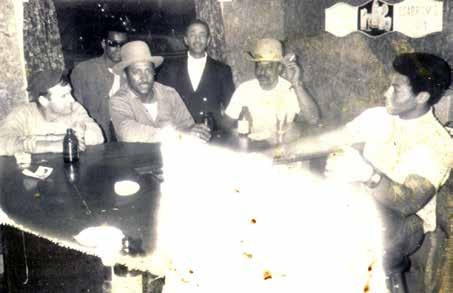
David B. Rose posted on Facebook: “I remember going to the Box with my father once about 1966 to pick up our order of fried chicken and coleslaw. I was 6 years old and sat at the bar while we waited. Willie gave me a coke with lemon which I thought was the greatest combination. Was the best
ASSISTED LIVING FACILITIES
The Chicken Box on Nantucket evolved into a renowned nightclub, hosting reggae acts like Ziggy Marley, who will play there for two nights in July. Photo/Wikimedia Commons/Alex Marshall
fried chicken on earth!”
Diane Dietle added: “Great info — wish they could find the original recipe and sell it curbside.”

William “Willie” House, a former chauffeur, opened The Chicken Box restaurant on Nantucket in 1949 to serve his famous fried chicken and other southern comfort food and host blues and jazz bands. the place in her best-selling books, inspiring her fans to make visits.
David Spears wrote: “I met Samuel L. Jackson one night at the Box.”
In 2000, Reed sold the Chicken Box to its current owners, three former employees: Thomas “Packy” Norton, John Jordin, and Anthony “Rocky” Fox. Jimmy Buffett often threw in a verse about the venue during his arena shows and Elin Hildebrand, known for her beach novels, writes about
The Chicken Box did not evolve into an international franchise like KFC, but Willie House did put his own spin on his restaurant by adding a bar and live music. Unfortunately, most of the world may never know which finger-licking good recipe from the Derby State would be the overwhelming favorite. Allegedly, co-owner “Rocky” Fox has the recipe for the tasty honey-fried chicken locked in a safe.
Bigelow Village – Rutland
Congregational Retirement –Melrose
Brookhaven Assisted Care – West Brookfield
Heywood Wakefield Commons – Gardner
SUBSIDIZED HOUSING
Colony Retirement – Worcester
Green Hill Towers – Worcester
Sherwood Village – Natick
By shAron oliver
contriButing Writer
LOWELL – Shirley Martin came from money, traveled extensively with her politically influential family and once lived in a 149-year-old Italianate-style home across from Kittredge Park.
However, most residents of Lowell probably did not know this, judg
Massachusetts Lieutenant Governor John Nesmith. Her grandfather proclaimed the first Patriots’ Day, ending the 200-yearold Fast Day celebration in the state.
A few residents took to Facebook to share their memories.
Kathleen Hayes wrote:

While “cat ladies” like the one pictured here are sometimes stereotyped as loners with mental health issues, by several accounts Lowell’s Shirley Martin is described as a kind widow who was friendly with some people but mostly kept to herself. (Photo/Anthony Majanlahti, Wikimedia Commons)

A cat lady is a cultural stereotype, often described as a middle-aged or elderly woman without children who lives alone with many cats. The term may be negative, or it may be seen as an endearing label. While some may have underlying psychological issues that make it easier for them to form relationships with pets rather than people, others are just normal animal lovers.
Prominent family
By some accounts, Martin, a retired switchboard operator who bothered no one, enjoyed writing poetry, had extremely beautiful handwriting and was particularly fond of cats. She was also a granddaughter of Massachusetts’ 38th Governor, Frederic Thomas Greenhalge (her mother being his daughter Harriet Nesmith Greenhalge) and a maternal granddaughter of
The lounge has a retail section with books and merchandise which includes handmade goods by local artists, serves baked goods, other snacks and beverages. There is, of course, a cat room where visitors can book a time slot to spend with a cuddly feline. Reservations start at $20 and last 50 minutes.

husband owned the yellow Italianatestyle home on Nesmith Street across from Kittredge Park. Her back yard abutted mine. For twenty years we lived there. Those who know the home saw it fall to ruins. Her husband had long passed when we knew her. The story we were told is that he built that house for her and then sadly passed away. We found out that she was not the original owner later on. Long-time neighbors there said she did pay her taxes on the property every year. She was often at the house and was always kind to my children. One of my sons would bring her something to eat. She did not want to be placed in care although I believe she did eventually go to some housing which social services secured for her. She was a lovely lady with a sad story.”
June Brawner responded:
“Kathleen Hayes, she did end up in a nursing home in Worcester. I worked there and she was very quiet old lady. I’m sure that’s where she passed away as well. It was in the early 90s when I worked there.”
John Wojcik added:
“Thanks for posting, very interesting story, never knew she was the granddaughter of a Massachusetts governor.”
“She (Shirley) and her Proverbs 14:30
Close call after fire Firefighters once had to rescue Martin from her smoke-filled home as fire engulfed the front porch. Officials who investigated the fire believed it to be of suspicious origin and initially thought the home was vacant until neighbors insisted a woman lived there. In fact, it was Martin who called the fire department to say she was choking on smoke and trapped in a room.
If Martin were alive today, she would most likely appreciate the city’s first-ever cat café, Lazy Cat

Lounge. According to the café’s web site: “Lounge is intended to be a small, relaxing, home-away-fromhome space in the heart of downtown Lowell where people of all ages can work, study and interact with resident and/or adoptable cats.”
Enoch Healthcare in Northborough at the age of 89. Widowed with having only cats for companions later in life, she had no surviving family members. The city of Lowell eventually had her house, which was deemed uninhabitable, torn down.
CONTRIBUTE TO THE UNDERSTANDING OF AGING AND COGNITION
Are you healthy and vaccinated, mentally active, and over the age of 65?
Schacter Memory Lab is looking for participants!


“A Sound Heart is Life to the Body.”
God’s command for us is to love ourselves means, in part, that we are to do nothing that will bring harm to ourselves... God gave His law to mankind not to diminish man’s fun or to put damper on man’s ability to experience life fully: Rather, He gave the law so that man might avoid circumstances that would produce physical, material, emotional or spiritual harm.
- Charles F. Stanley

By MichAel PernA Jr contriButing Writer
REGION – Located in the towns of Stow and Hudson, Lake Boon has a long and interesting history, dating back to the 1600s. The lake actually consists of four different basins, which are connected by narrow waterways. The total area of the basins is approximately sixty-three acres, with the average depth being about eleven feet, although at some points it is as deep as twenty-three feet. Only one portion of the lake is entirely within the town of Stow, this being the largest basin. The second basin is roughly half as large as the first one and is located right between Stow and Hudson. The other two basins are smaller, more shallow and harder to navigate because of plant growth.
Named after early settler
The largest basin was named after one of the first two settlers in Stow, Matthew Boon, who came to the area from Charlestown. He was reportedly killed by Native Americans on February 14, 1676. The basin was named Boon Pond after him and a monument was erected in his memory in 1883.
It was purchased by a man named Amory Maynard in 1847, who had a dam erected in order to increase the water supply so as to power what was known as the Assabet Woolen Mill in Maynard. At this time the name was changed to Lake Boon. The addition of the dam caused the water level in the lake to fluctuate significantly. Later on, the mill was converted to coal power, which then allowed the water level to stabilize throughout the year.
Visit from Thoreau
One notable visitor came to the lake on September 4, 1851 — Henry David Thoreau. He
made note of the visit in his journal: “And now we leave the road and go through the woods and swamps towards Boon’s Pond, crossing two or three roads and by Potter’s house in Stow; still on east of river … Part of it called Boon’s Plain. Boon said to have lived on or under Bailey’s Hill at west of pond. Killed by Indians between Boon’s and White’s Pond as he was driving his ox-cart. The oxen ran off to Marlborough garrison-house. His remains have been searched for. A sandy plain, a large level tract. The pond shores handsome enough, but water shallow and muddy looking. Well-wooded shores. The maples begin to show red about it. Much fished.”
By the end of the nineteenth century, Lake Boon had become a popular tourist attraction. Visitors came from all over the area, including Boston, by way of two railroad lines. This increase in tourism resulted in the area becoming more developed — a hotel, nu-
merous clubs, stores, and churches, in addition to two post offices were built. A steamship, named the “Cleo,” was put into service, which allowed people to visit the various attractions. The Cleo was replaced by a gas-powered ferry named the “Princess” in 1910.
After automobiles became more prolific in the 20th century, people began to travel more extensively, and the number of visitors to Lake Boon dropped off. The hotel closed and many private residences were built on the shores of the lake. A semi-public beach was eventually opened, named Pine Bluff. This is located on the shore of the north basin in Stow, and features swimming, picnic tables and grills, a playground and sports fields.
The Lake Boon of today is much different than it was so many years ago, in the days when it was frequented by Native Americans and Thoreau, being mostly lined with private homes, although the Pine Bluff Beach has endured.

Experience a community where comfort, elegance, and meaningful connection come together effortlessly. With chef-prepared cuisine, attentive services, and a vibrant social calendar, every detail is designed to help you live confidently, joyfully, and on your own terms, all for one simple monthly price. No hidden costs. No long-term commitments. Just a lifestyle that delivers — experience it for yourself.
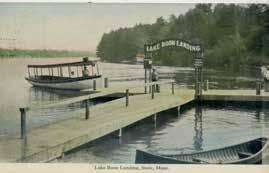
By the end of the nineteenth century, Lake Boon had become a popular tourist attraction, with visitors coming from all over the area, including Boston, by way of two railroad lines.