
(Photo/ Christopher Padgett)

People today can spend nearly half their lives over the age of 50. That’s a lot of living. So, it helps to have a wise friend and fierce defender like AARP in your corner and in your community so your money, health and happiness live as long as you do.
AARP offers resources, guidance, and local insight you can count on to help you achieve your goals and stay connected.
Find us at aarp.org/ma.

By Jennifer Benson, AArP MAssAchusetts stAte Director
From safer crosswalks and new park benches to accessible community gardens and improved digital access, the AARP Community Challenge helps local communities make quick, practical improvements. Now in its 10th year, the nationwide grant program funds projects that help towns, cities, and neighborhoods become great places to live for people of all ages. It has a particular focus on residents aged 50 and older.
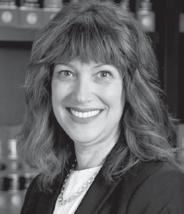
Jennifer Benson
The 2026 AARP Community Challenge grant recipients will be announced on June 24. The announcement kicks off a new round of “quick-action” projects designed to deliver visible improvements and build momentum for long-term community benefit. Through AARP’s broader Livable Communities initiative, the program helps local leaders improve streets, housing, public spaces, and services, so residents can stay connected as they age. Since its launch in 2017, the AARP Community Challenge has awarded more than 2,100 grants totaling over $24 million to nonprofit organizations and local governments across all 50 states, Washington, D.C., Puerto Rico, and the U.S. Virgin Islands. What sets the program apart is its emphasis on tangible, community-driven projects. These are improvements residents can see, use, and benefit from right away, such as enhanced walkability, safer streets, and more welcoming public spaces.
Massachusetts communities have long embraced the AARP Community Challenge to advance Livable Communities goals locally. Recent projects have improved downtown plazas in Amherst and expanded telehealth access hubs in North Central Massachusetts. Grants have also enhanced accessibility at a Boston community garden and boosted pedestrian safety with artistic crosswalks in Worcester. Earlier grants have supported accessible gardens at senior centers, on-demand transportation pilots, dementia friendly caregiver programs, and outdoor gathering spaces that bring neighbors together. While each project is different, they share a common purpose: helping people of all ages remain active, engaged, and connected in the places they call home.
AARP’s work on livable communities starts with a simple idea: where you live should support your health, independence, and well-being at every stage of life. Most people want to remain in their homes and communities as they grow older, close to family, friends, and the places that matter most. That’s why AARP partners with local leaders and residents to strengthen transportation options and public spaces, and to support other community features that help people stay active and engaged.
A cornerstone of this effort is the AARP Network of Age Friendly States and Communities. The network brings communities together to share best practices, learn from one another, and commit to creating places that work for everyone. More than 125 communities across Massachusetts have joined, including cities, towns, and the entire Commonwealth. This reflects a strong, statewide commitment to livability. The AARP Community Challenge helps turn ideas into action with flexible funding for quick, visible projects. These projects respond to local needs and help move long term age friendly plans forward.
When grant recipients are announced on June 24, selected projects will roll out soon after, bringing quick, practical improvements that help communities become even better places to live. You can find a list of the grantees at aarp.org/ma beginning on June 24.

Jennifer Benson is the State Director for AARP Massachusetts. For more articles visit www.fiftyplusadvocate.com.
‘Romper
By MichAel PernA Jr contriButing Writer
BOSTON – Many people of a “certain age” might fondly remember a children’s television show which ran throughout the country — “Romper Room”! The show, which aired from 1953 to 1994 in various cities, was created by Bert and Nancy Claster.
Television version of pre-school The show was hosted by a hostess (always known as “Miss ___”) and was designed to teach young, mostly pre-school children such things as good manners, kindness, colors and shapes, and to be good “Do-Bees” — to do good things for others — which was taught by a bumblebee character named “Mr. Do Bee”. There were also segments taught by “Mr. Don’t Bee,” which were used to teach the children about “what not to do.”
Each program started (in the USA) with the Pledge of Allegiance. This would be followed by the children chanting “We’re ready Mr. Music” or “Mr. Music please!” to prompt background music. The children on the show, who were usually four to five years old, were rotated every two months.
Etiquette was taught while milk and cookies were served — before the children began eating, they would recite the “Romper Room grace: “God is great; God is good. Let us thank him for our food. Amen.”
Boston version
In the Boston version of the show, Miss Barbara (Barbara Plummer) hosted the show beginning in 1958. She was followed, in the 1960s and 1970s by Miss Jean (Jean Durkee). A widely remembered part of the show is the “Magic Mirror” segment. The host would recite a rhyme — “Romper, stomper, bomper, boo. Tell me, tell me, tell me, do. Magic Mirror, tell me today, did all my friends have fun at play?”
Then she would call out the names of children in the TV audience (“Television Land”) that she “saw” through a prop mirror — actually an open frame with a handle that was the size and shape of a mirror. The children whose names (first names only) she would call out, saying, “I can see Kathy, John, Peter, Susan, Sandy, and Kevin,” would actually have mailed their names in with hopes that they would be mentioned on the show.
The show was wildly successful and so popular that there were re-
portedly long waiting lists of children that wanted to appear on the show. It was reported that one waiting list was over three years long. In Baltimore, it was reported that the list was so long that some children would not make it on to the show until they were 40 years old! Some children, who were “comfortable” with the show, were actually invited to appear in multiple episodes.
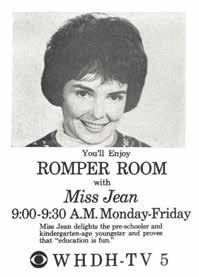
Miss Jean (Jean Durkee) was the host of the Boston version of the children’s TV show “Romper Room” in the 1960s and 1970s.
“Romper Room” was so wellknown that other countries — including Canada, Japan, the Philippines, Finland, New Zealand, the United Kingdom, Brazil, Paraguay, Australia, Argentina, and Greece — obtained franchises, with some programs being broadcast in Spanish.
The format of the program was revised in 1981, featuring different songs and characters.
Romper Room was a true American children’s television classic. The last episodes of the program were made in 1992, although they were aired until 1994.

REGION – The Massachusetts Senior Medicare Patrol (SMP) Program is part of a national initiative with a mission to reach, educate and counsel Medicare and Medicaid beneficiaries, family members, and caregivers on preventing, detecting, and reporting healthcare errors, fraud, and abuse. The MA SMP Program works in partnership with governmental, non-governmental, Statewide, and
local agencies, community-based and grassroots organizations, and a corps of dedicated and trained volunteers to activate consumers to become better engaged in their healthcare.
The MA SMP Program has the capacity to educate and counsel diverse populations across the state on the importance of understanding their health benefits and how to detect and report irregularities with their Medi-
care Summary Notices, Explanation of Benefits, and medical billing statements. Healthcare errors, fraud, and abuse not only cost American taxpayers billions of dollars annually but can have devastating health outcomes.
The Massachusetts SMP Program’s Advisory Committee is comprised of representatives from a diverse group of governmental and non-governmental statewide orga-
nizations. It is charged with guiding the MA SMP Program with its mission to reach and educate Medicare and Medicaid beneficiaries, particularly hard-to-reach, low-income, underserved, un-served, limited English proficient, Native American, rural, and other isolated and vulnerable populations.
More information is available at masmp.org.



By leighAh BeAusoleil contriButing Writer
SOUTHBOROUGH – Sally Watters has never run the Boston Marathon herself, but the Southborough resident has been involved with the iconic race for the long haul.
Over the years, she has met runners from across the globe, raised money for important causes, and made life-long friends without ever crossing the finish line. Her upstairs closet is filled with 31 windbreakers, each representing a year she has volunteered with the Boston Athletic Association. The accompanying credentials hang like decorations.
Peace in the excitement Watters, who always arrives in Hopkinton by 5 a.m. on marathon day, says she’s always amazed at how the small town transforms in mere hours as hundreds of volunteers and thousands of runners arrive for the legendary race.
“The spirit is very hard to define,” Watters said.
Though the morning tends to be “pretty chaotic,” she finds peace in the excitement that fills the atmosphere, and as a veteran volunteer, she knows precisely what to do.
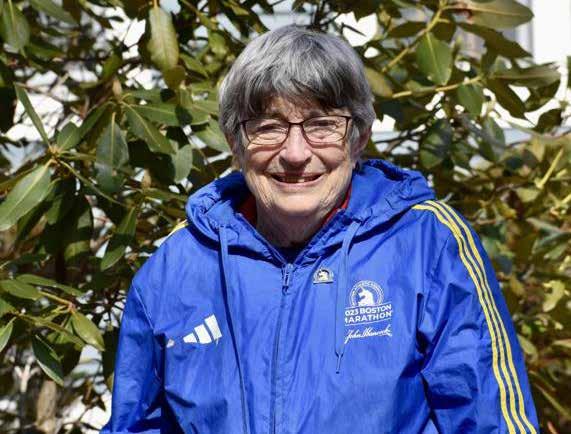
Boston Marathon volunteer Sally Watters of Southborough leads a team of about 100 volunteers who help ensure all runners are in the correct grouping when the race begins.
• Diabetic Footcare
• Ulcers &
• Tendonitis
• Fractures
• Fungus
• Bunions/Corns
When Watters first started out, she was assigned the simple task of handing out water. To this day, she’s unsure if it was a play on her last name. She was immediately hooked. A few years later, she took over as captain of the “corral monitors.”
In this role, Watters leads about 100 volunteers who help ensure all runners are in the correct grouping
when the race begins. Despite working with the runners for so many years, she still finds herself tickled when asked, “Which direction is Boston?”
For Watters, the Boston Marathon has been a constant.
When she was first married, she lived on Main Street in Hopkinton, just west of the starting line. By the time her children were born, she was
in Southborough, and the whole family would head to Ashland to catch a glimpse of the action.
Her passion was infectious and would eventually inspire her daughter, Amanda, to get into running. After a successful athletic career at Algonquin Regional High School, Amanda officially qualified for the marathon in college. She is now going onto her 22nd year running the race, while her husband is racing for the 25th time.
As a qualified runner, Amanda isn’t required to fundraise, but when a cousin’s daughter was in the hospital with a heart condition, she decided to begin raising money for her. Sadly, just before she turned 2 years old, the young girl lost her battle with the condition.
Despite the many years that have passed, Amanda has continued to raise money for the last 15 years to honor her memory.
Leading by example Watters has a track record of inspiring other volunteers through her community involvement in town. For years, she’s served on the Open Land Foundation, volunteered at the polls, and has been on credential duty at Town Meeting. Throughout that time, she even convinced South-

borough Town Clerk James Hegarty to volunteer at the marathon for a few years.
“People — once they start doing it, there’s something about it that is so rewarding,” she said, noting that Town Administrator Mark Purple was bitten by the marathon bug decades ago and is celebrating 30 years as a volunteer.
Watters remembers fondly hosting runners at her home, serving up a huge pasta dinner as they prepared for the big race the following day.
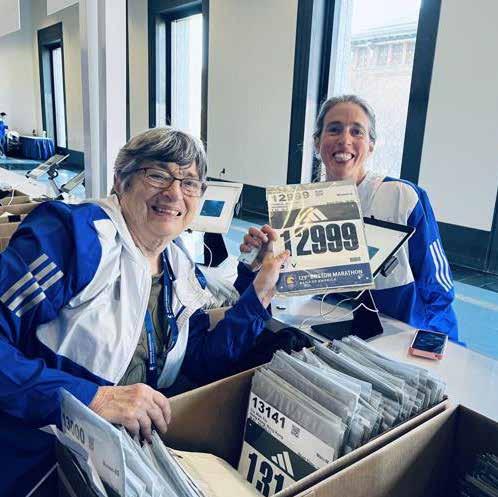
One of her favorite parts of the marathon is heading up to Boston for the annual expo, where she helps check runners in and hands out the bibs. Some runners arrive just after their planes land, pulling their luggage behind them. Some take pictures with her excitedly.
“It’s gratifying,” she said. Looking back on her three decades of volunteerism, 2013 continues to stand out.
After finishing up her volunteer duties, she would typically head to Boston to meet up with her daughter, who was working at the time in a building located by the finish line.
She was standing on Boylston Street as the bombs went off.
Watters helped lead two runners — a mother and son from Oklahoma City — across the Charles River to her friend’s apartment, where they stayed until they knew it was safe to leave.
“It used to be carefree — lots of fun,” she said. But in the aftermath, “It just changed the atmosphere.” Security became heightened. There were less “bandit runners” attempting to join the race unofficially.
After the tragedy of the bombings, some runners got together to complete a symbolic mile-long run to complete their journey. In a framed photograph hanging on Watters’ wall, Amanda can be seen carrying one of the four flags representing the lives lost.
“The sense of camaraderie is unbelievable,” Watters said. “Every time I think about not doing it, I really can’t imagine not being part of the incredible team that is putting this together.”





By sAnDi BArrett contriButing Writer
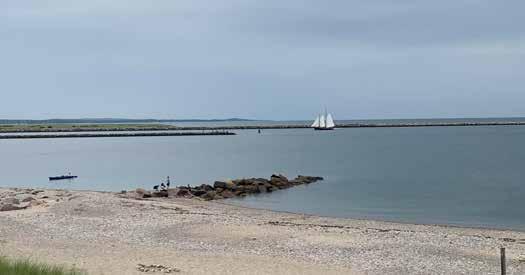
REGION – The quartet of towns comprising the Upper Cape include Bourne, Sandwich, Falmouth, and Mashpee. You can almost feel your blood pressure lower as you pass through the bridge traffic to your beach getaway.
Bourne
The pretty town of Bourne, aka “Gateway to the Cape,” sits snuggled up to the Cape Cod Canal and Buzzards Bay. It has seven villages (definitely
or ride with views of the canal comings and goings.
Sandwich
Sandwich villages include Sandwich (the historic village center), East Sandwich, and Forestdale. Founded in 1637, Sandwich is the oldest town on Cape Cod.
Historic and luxurious, the Dan’l Webster Inn & Spa offers quintessential colonial accommodations. The inn has several packages including the popular “Whale of a Time” which includes whale watching excursion tickets.
pair. Shipwreck Ice Cream is the go-to spot and has the most amazing flavor combinations, it is difficult to choose just one.
Falmouth
Beautiful beaches with warm(ish) summer Gulf Stream waters and picturesque views are the hallmark of Falmouth. Eight villages come together each filled with their own unique charm; Falmouth, East Falmouth, North Falmouth, West Falmouth, Hatchville, Teaticket, Waquoit, and Woods Hole.
A quick 45-minute Steamship Authority ferry ride takes you from Woods Hole to Martha’s Vineyard. It is a perfect day trip to enjoy everything the Vineyard has to offer without.
Glamping is a fun way to enjoy the outdoors — right on the edge of roughing-it. AutoCamp Cape Cod offers fully equipped Airstream trailers and Adventure Tents taking care of all your camping needs. All of nature’s camping fun without the hassle of packing and unpacking camping gear.
Filled with galleries, shops, cafes, and restaurants, Falmouth is a wonderful jumping off spot for your Upper Cape escape. Classic Cape weathered homes with white picket fences
transport visitors to Colonial days and simpler times. Sunsets on Chapoquoit Beach and the white sand of Old Silver Beach join a host of beautiful shorelines. Enjoy a ride on the picturesque Shining Sea Bikeway; it covers over 10 miles between North Falmouth and Woods Hole.
If you are in search of a tasty lobster roll, stop by Quahog Republic Dive Bar. The decor is beachy and simple but they offer some of the best seafood on the Cape.
Mashpee


By MichAel PernA Jr
contriButing Writer
REGION – Throughout Massachusetts, vestiges of the Cold War can sometimes be seen, curious reminders of a time when the world’s nuclear superpowers kept a wary eye on each other through various means.
The Texas Towers were part of the United States’ efforts to have an early warning radar system in place to provide warning of any Soviet attack. The original plan was to have five Texas Tower installations along the East Coast, however only three were actually built. The name Texas Tower came from the resemblance of the structures to the many oil drilling platforms located off the coast of Texas, in the Gulf of Mexico. Work was begun on Texas Tower 2 in 1955 at the Fore River Shipyard in Quincy. By June of that year, enough of the tower had been completed to allow it to be towed to its permanent location, on Georges Bank in fifty-six feet of water, 110 miles east of Cape Cod. After it had been put in place, three early warning radars, one AN/FPS-3 search radar and two AN/FPS-6 height finder radars were installed, this being completed in December 1955. The radar systems
were developed by the U. S. Air Force’s Rome Air Development Center in Rome, New York.
The tower had a crew of six officers and forty-eight enlisted personnel. The crew was assigned to the 762nd Aircraft Control and Warning Squadron, which was based at the North Truro Air Force Station in North Truro on Cape Cod. It was estimated that, due to its location, the tower would be able to detect an attack between 300 and 500 miles further offshore than radar systems on the shore, which would give an additional thirty minutes’ warning.
shaking and swaying due to the ocean’s waves and wind and the frequent use of fog horns on the towers made life pretty miserable most of the time.

Texas Tower 2 was an early warning radar station during the Cold War, located on Georges Bank in 56 feet of water, 110 miles east of Cape Cod.
Challenging living conditions
Texas Towers 2 and 3 became fully operational in 1958, followed by Tower 4 in April 1959. Two other towers, 1 and 5, never came to be built. The Texas Towers were known to have poor living conditions for their crews — they were noisy due to vibrations from the radar equipment; this, combined with


The most unstable of the towers was Texas Tower 4 off the coast of Long Island in New York, due to it being positioned in much deeper water than the others. Despite a number of attempts to install braces on the tower’s legs in order to stabilize it, it shook constantly, leading it to be nicknamed “Old Shaky.” The tower’s crew experienced frequent sea sickness due to the shaking.
In September 1960, Hurricane Donna struck the tower, causing a good deal of damage. After conducting a damage assessment, it was determined that the tower should be shut down, however a skeleton crew remained on board due to fears that the Soviets would be able to board the structure and access classified equipment if it was completely abandoned.
This resulted in a horrific disaster in January 1961, when a second storm hit the tower, causing it to completely collapse and sink. Efforts to evacuate the tower’s crew by ships before the storm struck were unsuccessful — there were no survivors — twenty-eight airmen and civilian contract workers died and only two bodies were recovered from the site of the wreck.
This event, combined with advances in the Soviet Union’s ICBM capabilities that reduced the threat of airborne attacks, prompted the closure of the two remaining Texas Towers in 1963. Tower 2 off the coast of the Cape was supposed to be returned to shore to be turned into scrap but collapsed into the ocean as it was being prepared to be moved. Tower 3 was filled with foam, then dismantled and floated to shore and turned into scrap. The mission that the Texas Towers had performed was then taken over by EC-121 Early Warning Aircraft based at what was then Otis Air Force Base (now Joint Base Cape Cod) in Falmouth. Today, the remains of Texas Tower 2 sit on the ocean floor, mostly forgotten except for a handful of scuba divers that still occasionally visit the site of this once important part of our national defense.
By MichAel PernA Jr. contriButing Writer
SCITUATE – For residents of the South Shore town of Scituate, St. Patrick’s Day in 1956 delivered what is perhaps their biggest holiday surprise ever.
During what was supposed to be a routine voyage from Germany to Boston in March 1956, disaster struck the SS Etrusco, a 411-foot-long Italian cargo ship that weighed 7,000 tons. The ship ran into a storm just before St. Patrick’s Day — the seas turned rough with huge waves, strong winds and falling snow quickly turning into blizzard-like conditions. The Port of Boston was closed to shipping because of the storm, so the ship had to turn around and planned to ride out the storm in the open ocean.
The crew of the ship lost their bearings. Soon, a blinking red light could be seen off in the distance. The crew called the Coast Guard, and it was determined that the light they were seeing was located on the jetty at the entrance to Scituate Harbor. By the time the ship received this information, the huge swells and high winds,

estimated at 60 knots, pushed the ship aground, onto the rocky shore close by the historic Scituate Lighthouse, on what is known as Cedar Point.
The crew had to spend a fear-filled night, not knowing what would come next. After ten hours, on St. Patrick’s Day, the Coast Guard was able to assist them, with crews from lifeboat stations at Scituate and Point Allerton.
A cable was run from the ship to the shore, and the crew was evacuated one at a time, using what was known as a breeches buoy.
Luckily for the crew, one of the closest houses to the ship was home to Ms. Eva Russo. Ms. Russo was an Italian émigré, who still spoke Italian fluently, allowing her not only to communicate with the crewmen, but to interpret for them with the Coast Guard personnel.
Ms. Russo then took the crew in, allowing them to stay with her and preparing home cooked Italian meals for them until the situation could be resolved. Other townspeople helped the crew out by dropping by with meals and clothing items.
Surprisingly, this columnist (at
Do not be conformed to this world, but be transformed by the renewal of your mind, that you may prove what is the good and acceptable and perfect will of God.
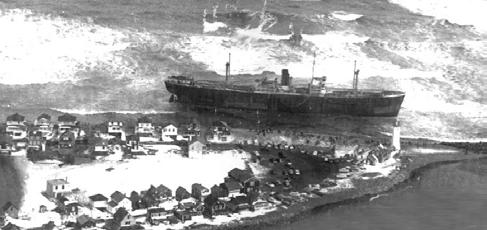
the age of 75 now) remembers seeing the grounded ship as a six-year-old. Friends of my parents owned a cottage located on Rebecca Road, overlooking the open sea and within a few hundred feet of the Etrusco. During visits in the time following the wreck, I was totally in awe looking out the window of the cottage or playing on the deck between the house and the seawall, seeing the huge freighter on the rocks.
Tourist attraction
The ship itself became a popular tourist attraction, with people travelling from all over to the little town of Scituate to view the freighter. One period photograph shows the parking lot near the lighthouse jam-packed with cars, with long lines of people standing waiting to get a view of the wreck. Another photo shows an old school bus that had been converted to a
The grounding of the Italian cargo ship SS Etrusco in Scituate became a tourist attraction that lasted from the spring to the fall.
mobile hot dog and coffee stand parked near the ship, with large crowds waiting their turn to grab a “dog.”
After eight long months, the ship was finally repaired. The company that owned the vessel had decided to sell it off for scrap. As a token of appreciation for the people of Scituate, it was decided to rename the ship the “SS Scituate.”
When the ship was refloated and brought out to sea, it was big news — The New York Times noted the event with the headline:
“GROUNDED VESSEL MOVES OUT TO SEA
Ex-Italian Freighter Etrusco, Driven Ashore at Scituate, Mass., Is Refloated”
Later, a marker was placed near the site of the Etrusco’s grounding — this can still be seen by visitors today.




By nAnce eBert contriButing Writer
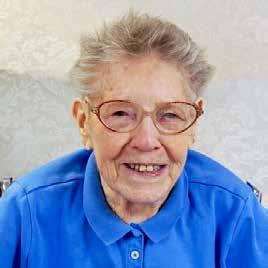
FRAMINGHAM – Living 100 years is a rare milestone. Kathleen Garvey marked her 100th birthday on Thursday, April 16 and celebrated with other residents of St. Patrick’s Manor retirement community.
Glenda Thomas, who has worked for Garvey for almost four years helping her with her bills, stated that Garvey only moved into St. Patrick’s in February. She was having knee issues and was concerned about outliving her money. She and one of her younger brothers found this new home for her.
Independent and astute “Kat is such an independent and astute woman. Even though she has challenges because she is legally blind and has difficulty hearing, she has adjusted nicely to her new environment,” said Thomas.
Born in 1926, Kathleen and her husband, Thomas Garvey, both grew up in Wayland. While they did know one another, they did not become a couple until many years later. When she was thirty-two, Kathleen and Thomas married two days after Christmas and resided in Acton. He had recently returned from military service. They were married for thirty-two years when he passed away.
that was a no-no,” said Garvey.
Held many jobs
Kathleen Garvey of Framingham celebrated her 100th birthday in April at St. Patrick’s Manor retirement community after living independently for 99 years.
Photo/Glenda Thomas
“I never really wanted to get married and, while Thomas was very persistent, I always said when hell freezes over, I’ll marry. Well, I guess it froze,” she said laughing.
Traveling the country Thomas worked initially at the local post office in Wayland and then in Acton and Kathleen enjoyed being involved in the women’s auxiliary that the postal workers’ wives had organized. She even held the role as president of the National Rural Letter Carriers’ As-

sociation (NRLCA) Auxiliary. They were both very active and traveled the country to national conventions as delegates, making friends wherever they went.
While they never had children, Kathleen always had a dog and reminisced about a poodle that she especially loved.
“We lived in a split-entry ranch style home, and I came home one day to find my dog laying on her back squealing. She had an accident on the steps but the way she looked at me, I could only laugh and not get mad. She knew
Garvey held many different jobs but one that she especially enjoyed was being the manager of Hebert Candies store, which was located in Framingham at the time.
“I still absolutely love milk chocolate,” she said. When asked how she felt about turning 100 or what the secret to her longevity is, Garvey just chuckled.
“It’s just something that’s happening. Naturally, I’m not able to do many of the things that I used to enjoy like gardening and cooking, but I have worked hard all my life and made many friendships. Perhaps because I never had any children to worry about,” she said.
Framingham Mayor Charles Sisitsky and City Councilor Phil Ottaviani visited with Garvey on her milestone birthday and presented her with a proclamation.
Experience a new standard of 55+ living at Arbella at Bramble Hill, Worcester’s premier lifestyle apartment community.
Enjoy spacious one- and two-bedroom residences with modern finishes, private balconies, and open-concept designs— crafted for comfort, style, and ease.
Stay active and connected with resortstyle amenities including a golf simulator, pickleball court, fitness center, and beautifully designed community spaces.

Resort-Style Amenities Include:
• Indoor pool & fitness center
• Golf simulator & pickleball court
• Pet-friendly with dog park
• Social events & wellness programs



Our award-winning lifestyle program offers engaging social events, wellness activities, and lifelong learning opportunities—all designed around your health, happiness, and independence.
Located on Worcester’s desirable West Side, you’ll enjoy the perfect balance of peaceful surroundings and convenient access to everything you need.
By MichAel PernA Jr contriButing Writer
REGION
– In the late 1870s, it had become apparent that the city of Boston and surrounding communities were in dire need of an updated water supply. This was caused by a huge expansion in the city’s population — in the century from 1795 to 1895, the population had increased from 19,000 to 750,000 people — and an antiquated distribution system that used hollow wooden logs to distribute water. Other factors
included the introduction of indoor plumbing in the late 1800s and the Great Boston Fire of 1872. This disaster resulted in one of the greatest losses of homes and businesses in the history of the United States.
Nashua River dam
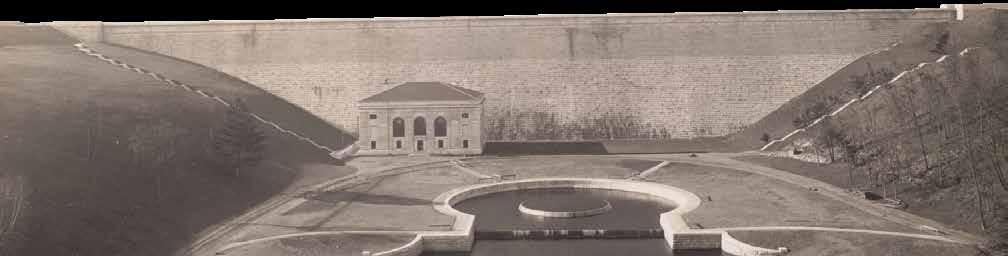
After some investigation, the Metropolitan Water Board settled on the idea of building a dam across the Nashua River in the town of Clinton.
Construction on what would become known as the Wachusett Reservoir (known today by many locals as “the Res” or “the Chu”) began in 1897. When
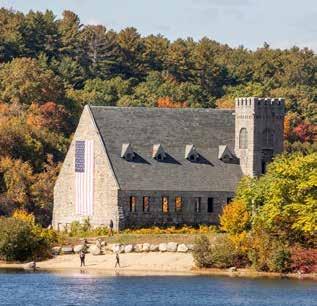
it was completed, it was the largest man-made water supply reservoir in the entire world.
A contract was awarded in 1900 to the McArthur Brothers from Chicago, Illinois. Construction of the reservoir did not come without sacrifices. More than 4,000 acres of land had to be cleared, resulting in entire neighborhoods being wiped out. Some 500 buildings were destroyed, and 4,000 graves removed and reinterred away from the site. West Boylston was the most severely impacted of any of the towns involved — which included Boylston, West Boylston, Clinton and Sterling.
It was reported that West Boyl-
ston had 300 homes, eight schools, six mills, four churches, and a hotel — to say nothing of the 1,700 residents displaced — moved to other locations.
Huge undertaking
The Wachusett Dam alone required the building of 27 linear miles of tunnels and the removal of 6.9 million cubic yards of soil. The work, much of which was done underground and under extremely harsh conditions, was not something most local residents were interested in doing. Many Black Americans and Irish and Italian immigrants were hired. They were required to live on the site in
Now accepting Applications for 62 years of age and older and those that are under 62 years of age and are permanently disabled.
• Manicured walking paths with garden plots


extremely poor conditions, which are reported to have resulted in thirty-five workers losing their lives due to fires, falls, poor air quality — even murder.
The local towns were less than thrilled with the worker population and discrimination was apparent. The town of Clinton barred alcohol sales for two years because of a fear of disorderly conduct. The worker’s pay was poor and intermittent. A number of strikes were without success until the Italian workers or -

ganized one that resulted in a stable wage of $1.50 a day, to be paid weekly, and eased the requirement for workers to live at the construction site.
The dam was completed in 1905, but the reservoir itself was not filled until 1908. This resulted in the creation of thirty-seven miles of shoreline.
Legacy today
Today few vestiges remain of what once comprised a good part of the town of West Boylston. The most notable is certainly what has become known as the Old Stone Church. This iconic structure, despite deterioration over the years, has become an extremely popular tourist attraction, the subject of countless photographs for any number of occasions and the subject of many paintings as well.
The area surrounding the church site hosts many walking and biking trails and is a popular spot for local food trucks to serve meals to visitors. Being a protected water supply, swimming and boating are not allowed, however fishing from shore is permitted. Wachusett Reservoir is known widely in the region as a destination for trophy-sized lake trout and smallmouth bass.

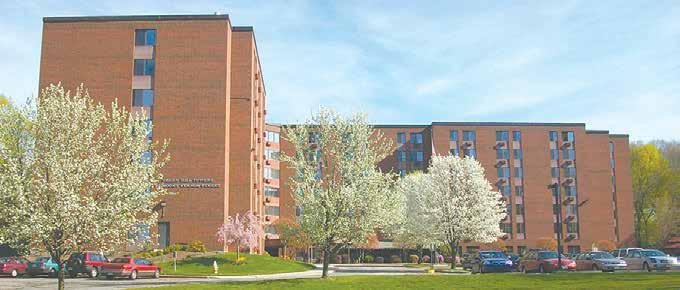
Within the building amenities include:
• A Theater-like media center
• Handicap-accessible lounges on every floor
• Library equipped with two computers and free internet access
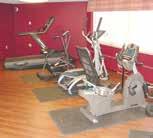
• Physical fitness center
• Game room with billiard table
• Community room with bingo board and large screen TV
27 Mount Vernon Street, Worcester, MA
• O ffice O pen D aily 8:00 am - 4:30 pm
To receive an application please call 508-755-6062 TDD# 508-755-0228
Now accepting applications for 62 years of age and older and those who are under 62 years of age and are permanently disabled.
Applicants must meet HUD annual low income guidelines. Preference is given to individuals 62 and older.
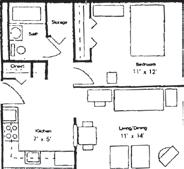
• Contemporary styled 1 & 2 bedroom apartments
• New kitchens with built-in microwaves and granite-like countertops
• Small pets welcome
• Heat and Hot water included
• Bus route / ample parking
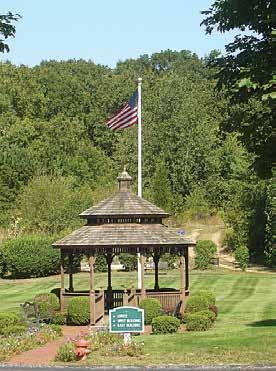
• Beautiful landscaped grounds with gazebo



By MichAel PernA Jr. contriButing Writer
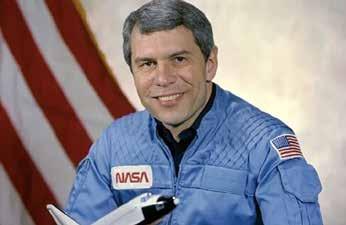
SHREWSBURY – As the entire world has been following the Artemis II lunar mission, it was with great surprise that a bit of history recently came to the surface. Did you know that a Shrewsbury resident became an astronaut back in the 1960s?
Robert Allen Ridley Parker, who was born in New York City on December 14, 1936, grew up in Shrewsbury. He attended schools in Shrewsbury, then went on to earn his bachelor’s degree in astronomy and physics from Amherst College in 1958. He later earned his doctorate degree in astronomy from the California Institute of Technology in 1962. His thesis was entitled “The Physical Conditions Pertaining to Some Possible Supernova Remnants.” After his graduation, he became an associate professor of astronomy at the University of Wisconsin — Madison.
In August 1967, Parker was selected by the National Aeronautics and Space Administration (NASA) to become a scientist-astronaut. He served as a member of the Astronaut Support Crews on the Apollo 15 and 17 missions. Later, he became the

program scientist for the Director’s Office of the Skylab program, serving during three Skylab missions.
From 1988 to 1989, Parker served as the Director of the Space Flight/ Space Station Integration Office at NASA Headquarters in Washington, D.C.
Parker flew as a mission specialist on two different Spacelab missions: STS-9/Spacelab-1, from November 28 to December 8, 1983, and STS-35, from December 2 to 10, 1990. He accrued a total of 19 days, six hours, and 52 minutes of space flight. It should be noted that he was the person to whom the final words spoken by a man standing on the surface of the moon (Gene Cernan) were addressed.
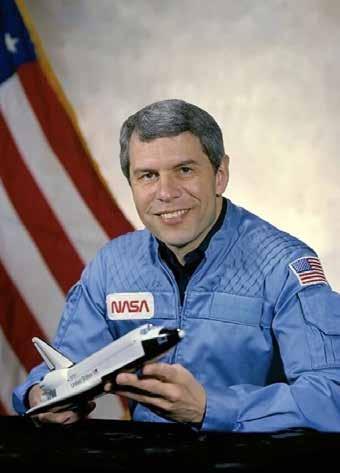
Retired NASA astronaut and professor of astronomy
Robert Allen Ridley Parker grew up in Shrewsbury.
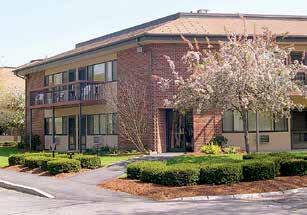
Colony Retirement Home III is congregate housing for seniors. Enjoy nutritious “Home Cooked Meals,” served in our attractive dining room with your neighbors and friends.
Following his space missions, Parker went on to serve in a variety of different assignments with NASA. In 1991, he was the director of
the Division of Policy and Plans for the Office of Space Flight at NASA Headquarters. For the next two years (1992-1993), he was the Director of the Spacelab and Operations Program, followed by an assignment as the manager of the Space Operations Utilization Program. In August 1997, he became the Director of the NASA Management Office at the Jet Propulsion Laboratory in Pasadena, California. He retired from NASA on August 31, 2005.
During his career, Parker became a member of the American Astronomical Society and the International Astronomical Union. He was awarded the NASA Exceptional Scientific Achievement Medal in 1973 and the NASA Outstanding Leadership Medal in 1974. During the 1998 HBO twelve-part television miniseries “From the Earth to the Moon,” directed by none other than Ron Howard and Tom Hanks (among others), actor Chris Ellis portrayed Parker.
Robert Allen Ridley Parker — who will be remembered as one of Shrewsbury’s most prominent historical figures - will be 90 years old in December 2026. He currently resides with his wife, Judy, in La Cañada Flintridge, California.

By shAron oliver contriButing Writer
BOSTON – Practically everyone enjoys a good road trip, right? For some, even if the mode of transportation came with patches of sketchiness here and there, at least it made for hassle-free driving. Such was the case with the once very popular, especially among students, Fung Wah Bus service that began in 1996. Past passengers can attest to the fact that there was rarely a dull moment on those Boston to New York City travels, often taking a risk for the thrill of an adrenaline rush. Besides, fare was pleasantly cheap.
Wild experiences
Wild experiences like observing the driver puff on a cigarette while refueling a busload of passengers or waiting on the side of the road for a replacement bus were relatively common. Those who rode remember well.
RoRo Eugene wrote on Facebook:
“Here is a ghetto story y’all! I was on one heading to NYC and once we got to the Bronx there was traffic. Why did someone open the emergency window and jump out the bus! Talking about my stop is here! I was in disbelief.”
Will Dickerson added:
“We risked it all for $10.”
And Rachel Devaney posted:
“This is so true! Ahhhhh, the days of Fung Wah. I will say I loved their stops at Chinese food buffets — I lived for that.”
chusetts Turnpike in Allston. No injuries were reported. Other citations collected by the company included failure to use care in stopping, negligent care while operating a vehicle and maintaining a false driver’s log.
In 2013, the US Department of Transportation ordered all of the Fung Wah buses off the road, but the company continued to operate through charter buses, even re-securing its Manhattan pickup stop. By 2015, Fung Wah Bus Company closed down for good.
Over the years, more bus companies rose through the ranks. Those that provided better services with a focus on safety issues survived. Others did not.
By MAriAnne lyons Delorey, Ph.D.
“Anyone who thinks they’re too small to make a difference has never met the honey bee.” — author unknown.
A couple of years ago, I decided I wanted to try keeping bees. I watched videos, I took online classes, I went to demonstrations, and then, I decided I was ready.
The bus had such a reputation that even the animated sitcom “American Dad” gave a nod in a Season 10 episode titled “American Fung,” featuring a Chinese billionaire character named Fung Wah who buys “American Dad” after Seth MacFarlane parts with the show.
Not without troubles
The motorcoach company was not without its troubles. Several of them, in fact. For example, on August 16, 2005, a New York-bound bus caught fire on Interstate 91 near Meriden, Connecticut. Although the passengers later criticized the driver for being less than helpful and untrained in evacuating the bus, they were evacuated and no injuries were reported.
On September 6, 2006, a bus rolled over in Auburn, injuring 34 passengers. Excessive speed was cited as a factor and the bus company was fined and in February 2007, the driver of a New Yorkbound bus lost control in a winter storm and hit a guardrail on the I-90 Massa-
Lucky Star
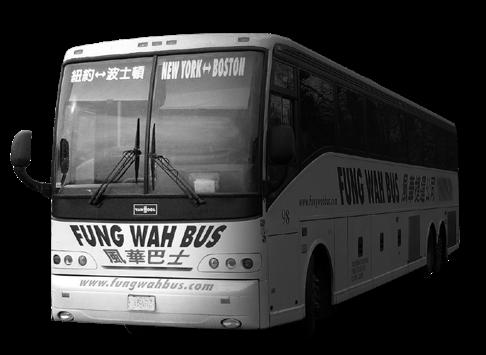
The Fung Wah bus that ran between Boston and New York City from 1996 to 2015 was a dirt-cheap, if sometimes hairraising option to travel between the two cities.
was another budget-friendly favorite until the U.S. Department of Transportation’s Federal Motor Carrier Safety Administration (FMCSA) ordered Boston-based passenger carrier Lucky River Transportation Corporation, which did business as Lucky Star to immediately cease all operations, declaring that its vehicles and drivers posed an imminent hazard to public safety in 2019.
Other bus lines
In November 2022, FlixBus welcomed Lucky Star passengers after partnering with the company in providing daily transportation service between New York City and Boston, with an additional stop in Framingham.
Other regional bus lines like Yankee Line promise safety measures as a priority and is a Department of Defense-approved carrier. Headquartered in Springfield, Peter Pan Bus Lines operates service to and from Connecticut, the District of Columbia, Maryland, Massachusetts, New Hampshire, New Jersey, New York, Pennsylvania, and Rhode Island. Named after his son’s favorite storybook, “Peter Pan,” the company was founded by Peter Carmine Picknelly in 1933 with two Buick limousines for public transportation.
Spoiler alert — I was not ready.
But I did it anyway. I was stretching my brain in ways I had not stretched it in a long time. There was so much to learn, and it was more unfamiliar than I expected. But even as I learned about bees, they taught me about life and aging. Here are my 10 lessons from keeping bees that are easily applied to aging.
1. Stay clean. As soon as a new bee emerges from their cell, their first job is to clean the cell they were in. They do this so that the queen can lay a new egg in that cell. Later in life, those bees who can keep themselves and their hives clean are less likely to have health issues related to a mite overload.
2. Learn your job but keep doing the thing that makes you feel young. During the life cycle of a bee, their job for the hive keeps changing. Young bees stay at home and become nurse bees for the colony. Older bees collect nectar and pollen. While everyone has a role to play, scientists have determined that older bees that are required to become nurse bees again have a revitalization of sorts and start acting like younger bees.
3. Take care of your community. The life of every bee depends on the health of the colony as a whole. Take care of the people around you so they can take care of you in turn.
4. Whatever life gives you, turn it into something sweet. Bees gather pollen and nectar from flowers. If you have ever eaten a flower, you probably know they don’t taste sweet. However, bees turn this food into honey. Be your best self and turn the gifts you are given into something sweet.
5. Use your defenses carefully. The worker bees only can sting one time. Once they sting, they die. We all have defenses, but as we age, we need to learn to use them sparingly.
6. Kick people out of your life if needed. Heading into winter, bees kick out the unproductive members of their hives to make sure there are enough resources for the colony for the winter. Similarly, as we age, we should get rid of people who do not bring us joy or comfort.
7. Huddle together — in the coldest days of winter, bees huddle together for warmth. Keep your family and friends close and you will survive the hardest parts of life.
8. Enjoy the flowers — really, this needs no embellishment.
9. Even pain can have a purpose. It turns out that bee venom has the potential to help reduce inflammation in people with arthritis. It turns out that a little pain can bring a great amount of relief to those without allergies.
10. We like to think that we have contributed to this world in some meaningful way. Each honey bee only creates about 1/12th of a teaspoon of honey in its lifetime. It helps to remember (as American author and clergyman Edward Everett Hale said): “I am only one but still I am one. I cannot do everything but still I could do something because I cannot do everything. I will not refuse to do the something that I can do.”
As with all of nature, if you listen, you can learn. And bees have a lot to teach us if we can listen carefully.
Marianne Delorey, Ph.D., is the executive director of Colony Retirement Homes. She can be reached at 508-755-0444 or mdelorey@colonyretirement.com and www.colonyretirementhomes.com. Archives of articles from previous issues can be read at www.fiftyplusadvocate.com.

By JAnice linDsAy contriButing Writer
My friendship with my remarkable crow neighbors began with mice.
Specifically, with deceased mice. I don’t like being the cause-of-demise of any woodland creature but, darn it, I did not invite them into my garage. And I definitely did not invite them into my car. I sensed a mousy automotive invasion (the nose knows). The folks at the service station removed the miscreants and replaced damaged parts. They fastened a grid over the air-intake pipe, the port of entry.
In the meantime, I laid traps in the garage. To calm my conscience about being an assassin, I considered this to be recycling, from nature back to nature. I left the deceased in a spot in the driveway that I call Crow Corner. The crows learned to watch for snacks.
In the spring of 2024, I discovered that during the winter, mice had built nests on the steps under my bulkhead door that lead to the interior cellar door. When I evicted them, most escaped alive, but some returned. More treats for the crows.
The crows, who can remember individual
people, came to recognize me as the person leaving treats.
Later that spring, I had run out of mice. But I realized that when the local crow family saw me outside, they perched on oak trees at the edge of the driveway, watched me, and tried to look hungry.
I had read that puppy kibble is a relatively nutritious food for crows. I have a friend who cooks chicken and assorted giblets for the crows, which is kind but not totally necessary for creatures that happily eat road kill. I decided that, for my crows and me, Purina Puppy Chow would do.
So whenever my crow friends seemed to ask, I went into the house, fetched a cup of Puppy Chow, sprinkled it in Crow Corner and left. By the time I had walked a few feet away, they were gobbling up the kibble.
It’s not a good idea to get too close to the crows or try to tame them. It’s too dangerous for them, as other people might not be well intentioned. So I kept my distance, and they kept theirs, but the distance was small.
After a while, I realized that, when the crows saw me out walking, they were following me home. Rather, they preceded me home. They perched in the trees several yards ahead of me; when I reached those
trees, they swooped ahead to others. When I arrived home, they were waiting for me, in the oak trees, gazing at me. Of course I gave them treats.
All that stopped as we approached the winter of 2024/2025. In the winter, I usually don’t see the crows so much. I assume the various crow families gather into a flock with other crow families and are occupied elsewhere.
In spring, the families spread out again and divide the territories among them.
In the summer of 2025, it was clear that the crows in my yard did not recognize me. I did not need Puppy Chow.
But recently, as I walked toward the house after leaving my trash bucket for pick-up at the end of the driveway, a crow swooped through the trees, perched in an oak tree near the house, and watched me expectantly.
It must have recognized me from two years ago. I fetched cat kibble as a temporary substitute, tossed it into Crow Corner, and returned to the house. Before I had reached the steps, Crow was scarfing the snack.
The crows have trained me well.
Contact jlindsay@tidewater.net.
By shAron oliver contriButing Writer
BOSTON – In 1981, The Dogmatics were playing “garage punk” rock with a hint of rockabilly just when the genre took off and the live music scene in the city was arguably at its peak.
Twin brothers
Formed in 1981, Boston band
The Dogmatics released two albums in the mid-1980s on New Yorkbased Homestead Records before the death of founding member Paul O’Halloran in 1986.
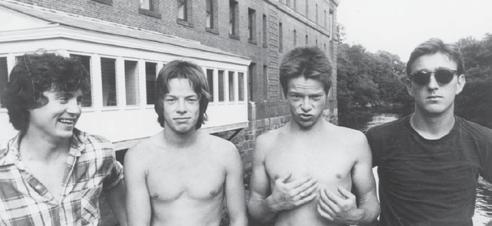


The band was formed in Boston by bassist Paul O’Halloran with an original lineup that included his twin brother Peter, Jerry Lehane (cousin of crime fiction writer Dennis Lehane) and Dan Shannon, who was replaced by Thomas Lang a year later. Although all the major record labels had main offices in nearby New York City, their A&R teams kept a close eye on the burgeoning Boston music scene.
The band released a single in 1984 with “Gimme the Shakes” on the A-side and the Eddie Cochran classic “20 Flite Rock” on the B-side. Two albums followed — “Thayer Street” in 1985, and “Everybody Does It” on Homestead Records. They traveled across the country in a van and toured with well-known artists such as The Bangles, The Beastie Boys, The Fleshtones and The Replacements. Bands like The Mighty Mighty Bosstones covered a few of their songs.
The Paul O’Halloran-penned song “It Sure Don’t Feel Like XMas Time” was included on the “Midnite XMas Mess 1984” compilation, a garage rock compilation by the New York based label Midnight Records. Two years later, tragedy would strike in a life changing way for The Dogmatics.
On October 23, 1986, and after having just returned home from a Midwest and West Coast tour, Paul O’Halloran was struck and killed by a truck as he was in the process of fixing a flat tire on his motorcycle. And for several decades, the music practically stopped for the local icons.
A never-before-seen picture of Paul is posted on The Dogmatics’ Facebook page along with a caption which reads:
“…Getting back to the story, Peter came into rehearsal with unearthed pics, his brother Paul’s wallet and many other treasures from his parents’ home in Rocky Nook before we rehearsed. We laid everything out on the table and there’s so much to go through and it brought back incredible loving memories. So, we share this one picture with all of you that we have never ever seen before, and I
Forty-five years after their formation, Boston band The Dogmatics are still playing their raucous band of “garage punk,” releasing new material, and are the subject of a recent documentary.
recognize lots of friends in the front and I’m guessing it’s from the Rathskeller, probably 1985. Check out Bob Bishop with the Nervous Eaters shirt!”
Cindy Richard Garcia responded:
“Hard to believe it’s been FORTY years. My God. Where does the time go?”
Babs O’Brien wrote:
“Paul was a funny sweet guy. He is very missed.”
Cassandra Cohen recalled:
“Paul, and all of the Dogmatics, played at our wedding. June 1986. We all had a blast!”
New material and film
In 2019, surviving band members teamed up with Rum Bar Records to release their first new material in over 30 years with O’Halloran’s older brother Jimmy on bass.
In 2023, O’Halloran family niece Jada Maxwell, local film director Rudy Childs and others completed a fouryear documentary as a tribute to Paul. Titled “The Dogmatics: A Documentary (They Were Boston’s House Band),” the documentary won awards across film festivals throughout 2024 and was released in 2025 on Roku, Tubi and YouTube.
Faster and Louder posted: “What I admire about Dogmatics is that they’ve built a body of work in recent years (2019’s “She’s the One” EP and last year’s “Drop That Needle” EP) that stands on its own merits. Even if you’d never heard the group’s classic releases, you’d still consider them one of the best rock ‘n’ roll bands going just based on what they’ve put out there since reuniting.”
Devoted fans will be pleased to know that The Dogmatics are still going strong with a dogged determination to entertain. In 2025, the band released a full-length, 12-track album titled “Nowheresville” and are still playing concert gigs.
You’ve Worked Hard All Your Life, Now Let Your Home Work For You

FACING ANY OF THESE CHALLENGES?
• Need more money each month to cover the higher cost of living?
• Still have a mortgage payment or high credit card balances?
• Need money for house repairs or improvements?
• Feel anxious about NOT having enough money today or in the future? LOOKING FOR A SOLUTION? MAYBE YOU FIT: Are you 60 years old or older? Do you own a home?
A REVERSE MORTGAGE MAY BE THE ANSWER
I WILL GUIDE YOU & CREATE A PLAN
After a short conversation, I will be able to determine if you qualify and then share the exact action steps to successfully implement a plan.
Please call or text me at (781) 724-6221 or email me at av@powhse.com or visit www.alainvalles.com I am passionate about educating people about reverse mortgage and will explain the pros & cons so that you will be fully informed.
COST OF NOT OVERCOMING YOUR CHALLENGES
There is no cost to learn about reverse mortgages. But the cost is immense to realize later that a reverse mortgage may have overcome your financial concerns, needs, and challenges. Don’t regret learning if a reverse mortgage is right for you.
When used properly, a reverse mortgage allows a qualified borrower the option to receive tax free cash up front, or a monthly check, or a line of credit to access cash when desired with NO minimum or required monthly mortgage payment. A reverse mortgage has no impact on Medicare or Social Security benefits. You still own your home and can prepay without penalty. Top uses include paying off a current mortgage and credit cards, augmenting retirement cash flow, medical needs, home improvements, and peace of mind knowing cash is available. I look forward to learning what success looks like for you. (Note – you are required to pay ongoing real estate taxes and property insurance and meet other loan guidelines.)
A great place to start is get your free “How to Use Your Home to Stay at Home” 36-page book. This is the official reverse mortgage consumer booklet approved by the U.S. Department of Housing & Urban Development and published by the National Council on Aging.
To receive your free copy, please call me at (781) 724-6221 or email me at av@powhse.com or visit www.alainvalles.com
Alain Valles Reverse Mortgage Specialist 781-724-6221
Alain Valles was the first designated Certified Reverse Mortgage Professional in New England. He obtained a Master of Science from the M.I.T. Center for Real Estate, an MBA from the Wharton School, and graduated summa cum laude from UMass Amherst. He is the senior reverse mortgage loan officer MLO#7946 at Powerhouse Funding Corp. NMLS #1740551. Massachusetts Mortgage Broker License MB1740551. He can arrange but does not make loans. Alain can be reached directly at (781) 724-6221.
By colin MccAnDless contriButing Writer
BOSTON – Boston hardcore punk fan
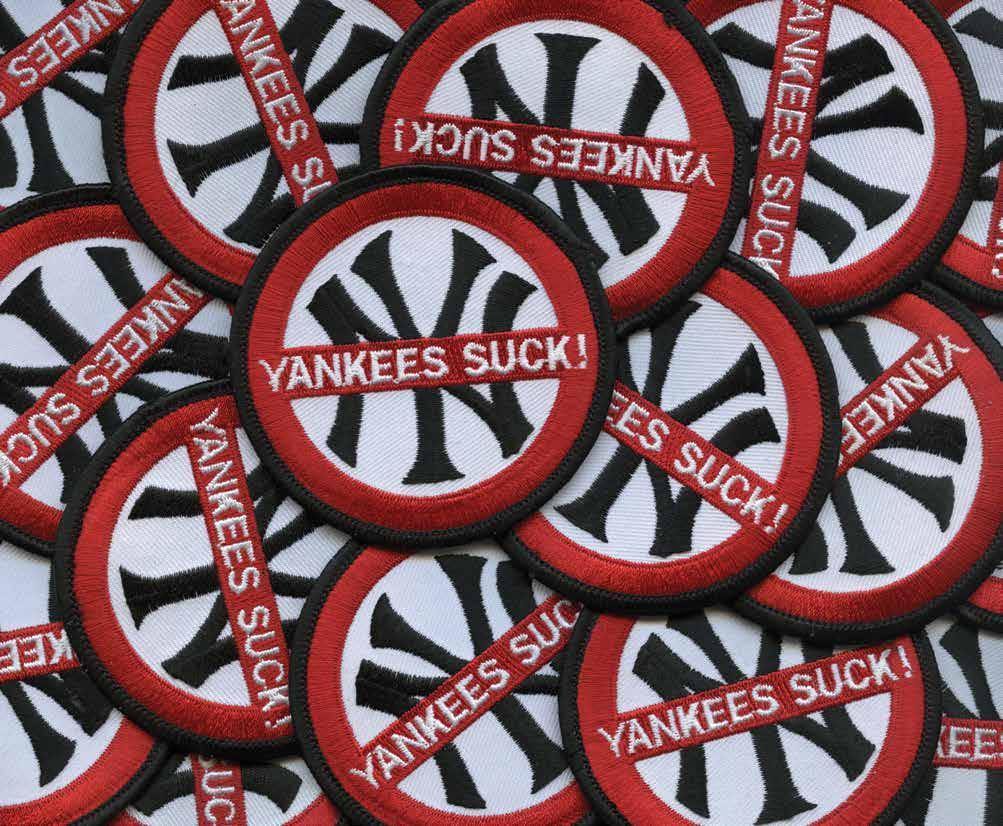
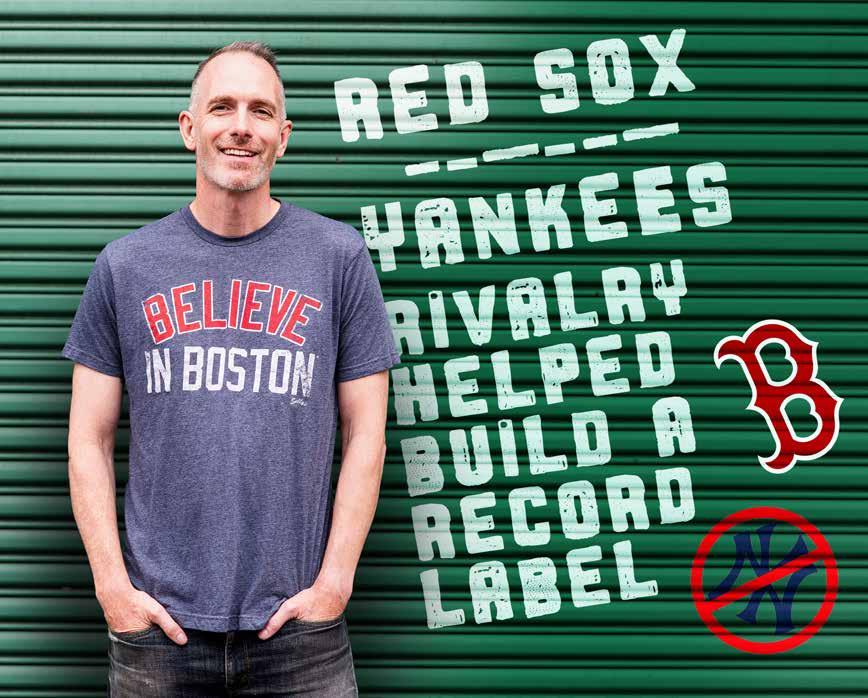
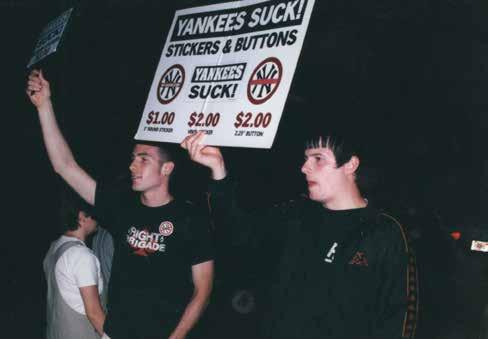
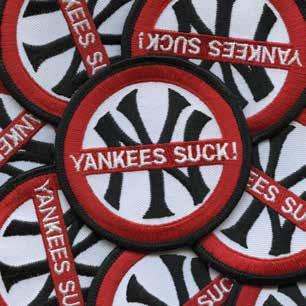
Chris Wrenn has made a career out of hating on the Yankees. Last February, the Beverly resident, who grew his record label by selling “Yankees suck” merchandise outside Fenway Park, released his book “Fenway Punk: How a Boston Indie Label Scored Big on Baseball’s Greatest Rivalry,” where he tells his improbable tale.
Wrenn, now 50, launched his independent hardcore punk record label Bridge Nine Records in 1995 during his sophomore year at Green Mountain College in Poultney, Vermont. He said he attended school there to stay connected to Boston’s fertile punk scene.
Bootstrap start
As one might surmise, Wrenn started the project with scant resources. “Everything was bootstraps,” recalled Wrenn. He followed in the DIY spirit of the punk/hardcore ethic and its grassroots approach, where people from an early age often release their own records, tour as teenagers, print their own T-shirts and book their own shows.
He had plenty of examples to emulate in the punk music scene. “You kind of see people creating these opportunities. And when you see it happening, it makes it more real, and more attainable. It’s no longer just a concept, it’s something that you can see executed,” noted Wrenn.
He initially funded Bridge Nine by selling novelty slogan bumper stickers to the national retail chain Hot Topic in the mid-1990s, which afforded him enough money to release one or two records a year. Wrenn sold tens of thousands of stickers nationwide before this entrepreneurial opportunity dried up in the late ‘90s.
Red Sox rivalry with Yankees
Now Wrenn turned his attention toward the next economic venture that could keep his musical enterprise going. In real estate lingo, they say location is everything, and in 1999, Wrenn, along with many of his friends, lived in the Mission Hill neighborhood less than a mile from Fenway Park. Around this time,

no-brainer. But he is quick to point out that his group of entrepreneurs weren’t the first people to push these items. Wrenn discovered while researching his book that vendors peddled ‘Yankees suck’ or ’Yankee hater’ (which Wrenn also sells) emblazoned merch as far back as the ‘70s. “So there’s a proud tradition of wearing your emotion on your T-shirts,” he said.
Wrenn’s crew included local bands from the punk hardcore scene such as American Nightmare, roommates of his at the time who had agreed to release their first record through Bridge Nine. As a band aspiring to tour regularly around the country, they sought opportunities to earn money on a gig basis, which Wrenn could offer at Fenway. He was joined by friends, other members of multiple bands he worked

One chant heard at games, whether the Red Sox were playing their hated rivals or not. You also overheard it at wedding receptions, concerts — well, you get the picture — Bostonians generally despise the team in pinstripes. “Red Sox fans, it resonated with them, so making merchandise that said, ‘Yankees suck’ was a very easy opportunity to kind of jump on,” reflected Wrenn.
The decision to sell merchandise (T-shirts, bumper stickers, patches, pins) bearing the slogan was a

Chris Wrenn recently released his book “Fenway Punk: How a Boston Indie Label Scored Big on Baseball’s Greatest Rivalry,” where he tells his improbable tale.
with and even unpaid interns at his record label. “It was a win-win,” he recalled.
Facing challenges
The first issue to address was the other competitors selling merch outside the stadium. “We had to establish ourselves,” recounted Wrenn. There would be anywhere from a dozen to 20 of them working together at any time, which they used to their advantage.
“We were able to protect our interests with just our sheer numbers,” asserted Wrenn.
Another problem involved the code

enforcement police, who patrolled the grounds requesting permits for mobile vendors. The permit imposes tight restrictions on vending times and was only valid from 8 p.m. to 8 a.m. Wrenn explained that they black out the times during the day because they don’t want hawkers competing with brickand-mortar retail stores. That put their crew in a position where they could only sell to the outgoing crowd.
Early on they attempted to sell to people coming into games, but code enforcement put the kibosh on that. For several years his squad would play cat and mouse games with code enforcement, paying people to monitor the cops’ location and communicate their coordinates via walkie talkies. That is until Wrenn became friends with the head of code enforcement officials (Wrenn refers to him as Tiger in the book). They developed a strong bond and even later attended each other’s weddings.
Success comes quickly
Hating on the Yankees is a favorite pastime of Sox supporters, but did Wrenn ever imagine he would make enough money to support and grow his label? He didn’t have to wait long for the answer.
By 2000, within just one year of selling “Yankees suck” merchandise, Bridge Nine had already gone from promoting two bands to three. That number skyrocketed to 12 by 2001 and 14 in 2002. Subsequent years saw Bridge Nine promoting up to 25 releases. “The money I was making at Fenway Park basically allowed me to ramp up very, very quickly,” related Wrenn. When he started, Wrenn worked a day job in the art department at Tower Records where he made only $1 an hour above minimum wage. He earned more money on his first day hawking bumper stickers at Fenway than in two weeks at Tower. “So it was eye opening,” he said.

Wrenn continued his Fenway op erations through 2017. By this time, his company had a presence, and he farmed out the business to a magazine vendor who sold products to people coming into the game. Also in 2017, Wrenn began a partnership with retail giant Target, which dedicated around 400 to 500 square feet of space inside the Fenway Park Target store to his “Yankees suck” brand.
A blend of subcultures
Regaining your quality of life begins when

His endeavor highlights a unique melding of subcultures between the Boston punk and sports scenes. Is this the exception or the norm? “So Boston is, I believe, the exception,” stated Wrenn. “Growing up in central Connecticut, there was a very large gap between the punks and the jocks. There was not a lot of overlap. And that’s true in most cities. For whatever reason, Boston has embraced the sports fan identity through music.” He cited high-profile examples like Boston punk legends Dropkick Murphys, who have performed at Fenway Park. Additionally, the Red Sox pitched the song “Tessie” to Dropkick Murphys, a tune they completely reworked in summer 2004 that became a Sox anthem.
Bridge Nine Records has now released more than 300 recordings,
building the reputations and exposure of hardcore bands such as Terror, Defeater, Have Heart and Death Before Dishonor, while also working with established groups including H20 and New Found Glory and even releasing a single from Dropkick Murphys. Selling “Yankees suck” merchandise, which has financed the plucky independent record label Wrenn launched in his college dorm room and helped promote and cultivate the hardcore bands he loves, made it all possible.
Bridge Nine has a punk records store in Beverly that provides a visual illustrating the symmetry between the two seemingly incongruous worlds of punk music and sports, where both punk T-shirts and Boston sports rivalry apparel are sold side by side. “To anyone that’s from out of state, it’s strange that there’s punk music and sports apparel,” acknowledged Wrenn. “Once I realized there was so much crossover, I said ‘we should do a very front-facing retail space that has both brands.’ And it’s been successful, so we’re happy.”
Regaining your quality of life begins when you CHOOSE exceptional results in rehabilitation.
Regaining your quality of life begins when you CHOOSE exceptional results in rehabilitation.
Regaining your quality of life begins when you CHOOSE exceptional results in rehabilitation.


For those recovering from a stroke, injury or illness, regaining your best quality of life begins with your ability to choose. Choose us for exceptional results.
For those recovering from a stroke, injury or illness, regaining your best quality of life begins with your ability to choose. Choose us for exceptional results.
For those recovering from a stroke, injury or illness, regaining your best quality of life begins with your ability to choose. Choose us for exceptional results.
For those recovering from a stroke, injury or illness, regaining your best quality of life begins with your ability to choose. Choose us for exceptional results.

Talk
Talk to your medical professionals about choosing us for rehabilitation.
Talk to your medical professionals about choosing us for rehabilitation.
Talk to your medical professionals about choosing us for rehabilitation.
fairlawnrehab.org
fairlawnrehab.org



•
•
•
•
•
•
•


By John BishoP contriButing Writer
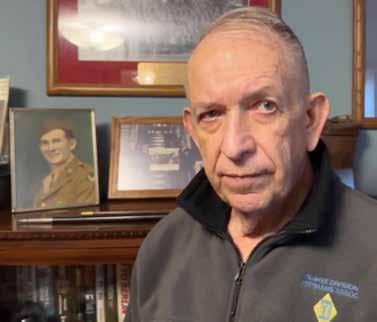
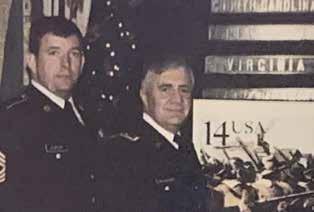
HUDSON – Sitting in his home office, complete with an antique roll top desk and decorations representing his many career accomplishments and experiences, Command Sergeant Major (ret.) Anthony “Tony” Kurgan Jr., 79, reflected on his life.
Law enforcement and military experience
His decades of experience with the Massachusetts State Police and the Army National Guard were life-changing in several off-duty moments. They were instances when his training helped save a family friend, a neighbor, his father, and his beloved wife.
“I liked serving my country and being a patriot, being part of the defense of our nation — part of the best army in the world,” he said, searching for words. “And following in my father’s footsteps.”
Trying to give a quick synopsis of his long career was hard for Kurgan. However, it was in describing moments when his friends and family really needed him that he easily found an overriding philosophy for his life’s work: helping people.
Saving lives
“She had a stroke one morning,” he said, gesturing down the main hall of his home to where his wife, Josephine, sat watching television. “As a result of my state police training, I was able to identify the oncoming signs of a stroke.
“So I popped her a couple of baby aspirin…called 911, and we went to the
hospital right away.
“The doctors and the nurses said, ‘If you didn’t do what you did, [Josie] wouldn’t be here with you now.’
“My father [the late Anthony Kurgan Sr.] went down once at his home,” Kurgan continued. “We were having
ing,” said the over-37-year veteran of the National Guard. “I’m glad I had it, and I’m glad I was able to help somebody out.”
The Guard
“Help somebody out.”
dinner there one night, and he choked on a piece of meat. So I got it up quickly, acted and cleared the airway.
“My neighbor over here had a heart attack,” added Kurgan, gesturing again, this time into the heart of his quiet neighborhood. “I was able to give him CPR and revive him.
“And then my best friend’s uncle went down at his wedding, I did CPR on him … the CPR worked,” he said.
Kurgan thought for a moment, trying his best to sum up the narrative.
“I mean, it was good, good train-
ASSISTED LIVING FACILITIES
Bigelow Village – Rutland
Congregational Retirement –Melrose
the Hudson Armory (to raise funds for the Children’s Cancer Blood Program), were meant as a sort of “thank you.” A sense of gratitude for the circumstances that allowed Kurgan to be sitting in his den, talking about his life. He said he is appreciative that he was literally and
Kurgan, a Boy Scout with Troop 1 in Hudson as a youth, said those words without any measure of bravado or self-aggrandizement. Rather, the recollections served only as a coda to a nearly two-hour conversation about his time with the Massachusetts National Guard and Mass. State Police.
Most of those stories were about others, fellow soldiers and troopers, and his father.
Indeed, it seemed like the often-poignant tales, especially a note about organizing charity boxing matches at
Brookhaven Assisted Care – West Brookfield
Heywood Wakefield Commons – Gardner
SUBSIDIZED HOUSING
Colony Retirement – Worcester
Green Hill Towers – Worcester
Sherwood Village – Natick
*Your
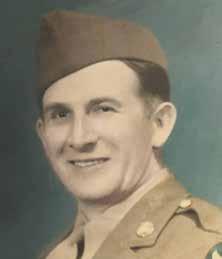
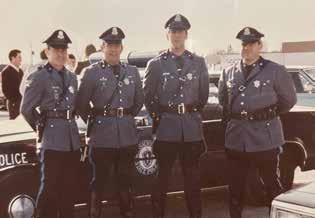
Anthony “Tony” Kurgan Jr. of Hudson’s father served in the Yankee Division of the Army National Guard during World War II, the same unit his son would later join.
figuratively a member of “The Guard,” embodying training that was able to help many people close to him. However, Kurgan — like many other Cold War warriors (and members of the Greatest Generation, such as his father, a fellow U.S. Army veteran) — helped so many people live comfortably in Hudson, in Massachusetts, and, indeed, all around the free world.
His dad, Tony Sr. (1919-1988), also of Hudson, was drafted shortly after Pearl Harbor. For much of
the next couple of years, he traveled the East Coast, to and from Tampa, Florida, transporting prisoners to the military stockade in Portsmouth, New Hampshire.
From there, and once the Allies made their push into Nazi Germany,
the State Police Academy, his civilian job saw Kurgan in the blues of the Massachusetts State Police as a uniformed officer for 17 years, followed by 15 more years as a plainclothes officer (Court Prosecutor/Liaison Officer).
Along the way, Kurgan, the father of three, earned degrees from Quinsigamond Community College, UMass Boston, and Anna Maria College.
like many soldiers in non-combat positions, Tony Sr. made his way overseas and saw intense combat with the 14th Armored Division.
After the war, the elder Kurgan joined the 26th Yankee Division via the Massachusetts National Guard at the Hudson Armory, where he served as the military custodian for over 23 years before retiring as a Chief Warrant Officer in 1970.
Big boots to fill Kurgan Jr. picked up where his father left off, helping his dad at the Armory as a boy, and learning the tricks and trade of the Army.
After graduating from Hudson High in 1964, Tony Jr. joined the National Guard and received Basic Combat Training in August of 1966 at Fort Dix, New Jersey. From there, and over the next three decades (much of which was with the Yankee Division), Kurgan traveled the United States and Europe with his final duty posting with the 181st Engineer Battalion in Whitinsville.
Meanwhile, after graduation from
forged while in service and meticulously maintains the memory of those men who fought wearing the “YD” in WWI, WWII, and beyond.
But speaking to Kurgan, it sounded like the Army, and his work in and around the Hudson Armory, maintained top billing in his memories.
“I had an interest in firearms, and I wanted to become an armorer,” explained Kurgan. “As a little kid, I would go to the Armory when my dad was working, and he’d let me go up to the gun room. I’d clean up the stuff there for them, keep things organized and keep things squared away.
“The guys are coming from the field, and they, they would draw the individual weapons that were assigned to them, and use them in the field and carry them, and train with them.
“And when they come in, they have to clean them. They put me in charge of accepting or denying them,” explained Kurgan with a big smile. “You know, and it was kind of funny some little civilian kid, checking the weapon out, saying, ‘Hey, look at all the carbon here, and the barrel, that’s got to be recleaned, too [chuckles].’”
Veterans work
It was a big responsibility for a youngster, but Tony Jr. always seemed destined for the U.S. Army.
Suffice it to say — Kurgan, who will soon be the only enlisted man to have a display in the National Guard Museum in Concord (“Very humbling,” said Kurgan) — did his family and his Hudson community proud.
“I tried to be in the same unit with my father,” he said, matter-of-factly. “I like tanks, I like weaponry and dealing with that.”
Even today, he is still dealing with “that,” as the Senior Vice Commander of the Yankee Division Veterans Association (YDVA). It is a group that continues the camaraderie and relationships
The YDVA has, in recent years, helped complete roof renovations of a Belleau, France church damaged during a Great War battle in which the 26th Yankee Division (and many local) doughboys participated. The project, which included a $9,400 donation, began during the 100th anniversary of the liberation of France (during the First World War), and allowed Kurgan a bit of pride.
The familiar “YD” symbol, which has started to fade from local memory, remains important to the people of France and the repaired church is known as the “YD” church.
“With the YD, and the recognition factor there, it really made me feel good,” Kurgan, the commander of the Worcester chapter of the YDVA, said of the grateful nature of the French people he met and worked with when he visited.
“A lot of times, the hair on the back of your neck stands up, you know?”


By MichAel PernA Jr contriButing Writer
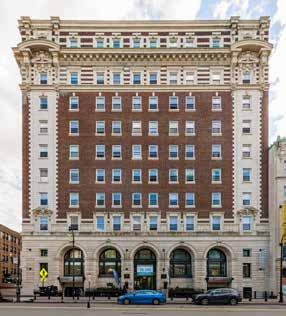
WORCESTER – When it was first opened in 1913, the Hotel Bancroft immediately became Worcester’s premier destination not only for hotel use, but for occasions such as weddings, conferences, and all kinds of events. The hotel itself, located at the corner of Franklin and Portland Streets, had been built on the site of the city’s first Notre Dame des Canadiens church, which had burned down in 1908.
Lavish and fashionable The hotel was originally going to have 225 rooms, but during its construction it was expanded to 325 rooms. Another expansion in 1929 brought the total number of rooms up to 500. The hotel, which was constructed in what is known as the “Beaux-Arts” style, was lavish and fashionable. The total cost of the original nine-floor building was $1.2 million, which would be roughly equivalent to $40 million dollars today.
The hotel was built by New York businessman Frank A. Dudley and was designed and constructed by the Buffalo, New York architectural firm of Esenwein and Johnson.
Opened on September 1, 1913, the hotel was named after Worcester politician, diplomat, and historian George Bancroft.
This elegant hotel quickly became Worcester’s most upscale venue. Just being able to work at the hotel was considered a privilege.
Former employee shared memories
As an example, Shrewsbury resident Joseph Mazzari (who is now deceased), who had served as his class president at Shrewsbury High School, began working as a waiter at the hotel after his graduation in 1933. Imagine how excited it must have been for a young, inexperienced teenager to work at the hotel that had so many wealthy and famous guests.
In a 1985 interview, he related how excited he was to work there: “I was thrilled to be able to work at the Hotel Bancroft, especially considering the tough times everyone was going through during the Great Depression. It was a classy place, that’s for sure!”
Joseph Mazzari entered the U. S. Army during World War II and was the first military member from Shrewsbury to become a prisoner of war, having been captured in North Africa in 1942.
He returned home in 1945 and passed away in 2000 at the age of eighty-five.
Sale and decline
In 1942, the Hotel Bancroft was bought by the Sheraton hotel chain and renamed the Worcester Sheraton Hotel.
In April 1952, John F. Kennedy was running for a seat in the United States Congress. The hotel hosted a lady’s tea for his campaign. He was running against Henry Cabot Lodge, who was at the hotel on the same day.
By 1955, the hotel was sold again, with it becoming known as the Hotel Bancroft once again.
By the early 1960s, the hotel began to experience a slowdown in business. More and more city residents were moving to the suburbs; construction of more interstate highways, along with the fact that more families owned automobiles, was having an adverse impact on Worcester’s downtown area as a whole.
Closure and redevelopment
The once luxurious Hotel Bancroft closed in 1964. The former hotel build-
ing was then converted into a two-hundred-fifty-five-unit luxury apartment building. It then became known as the Bancroft Commons for a number of years. In more recent times, it was renamed Bancroft on the Grid.
The building itself is located in what is now known as the Main and Franklin Streets Historic District. It was added to the National Register of Historic Places in 1980.
Although the former landmark looks much the same as it did during it’s “glory days,” it is now just a fading memory in the minds of many area residents.