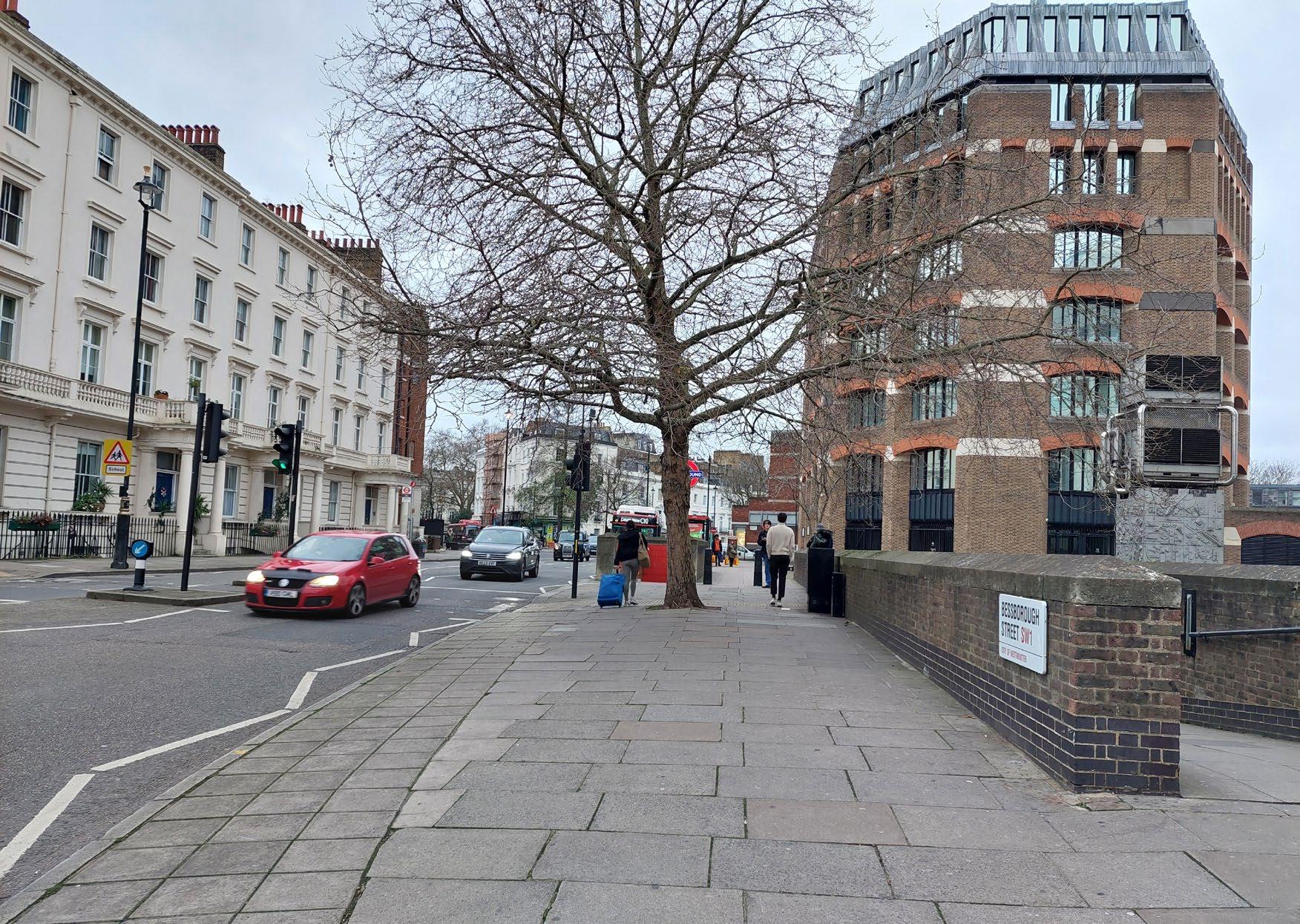



The Lupus Street Place Strategy is being developed as part of Westminster City Council’s wider Pimlico Programme. It will set out a long-term vision for the high street, providing a roadmap to guide future proposals. The strategy is based on the three themes of the Council’s High Streets Framework to help unlock the potential of Lupus Street:

Safe, sustainable and welcoming places

Vibrant and resilient economy

Connected communities
Engagement overview
The draft Place Strategy was developed based on previous engagement with Pimlico’s local communities, namely through ‘Pimlico Conversations’ in early 2024; a high street user survey and a business survey with local businesses in Summer 2025 (304 and 53 respondents, respectively).
The draft Place Strategy was shared with the public from 27 October to 19 December 2025, to help understand the level of support for the objectives and proposed improvements. Multiple engagement methods were used to collect feedback:
ideas and a mix of general concerns and localised commentary.
The most prevalent themes are:
1. Pedestrian experience
2. Traffic management
• Online survey on Commonplace
• (430 responses)
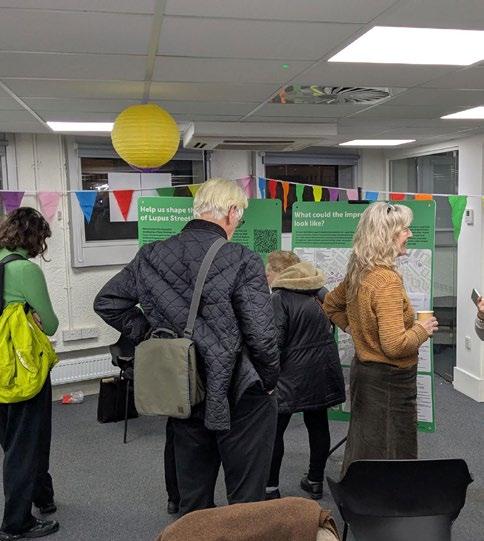
• Four drop-in sessions with Council officers (attended by around
• 100 visitors)
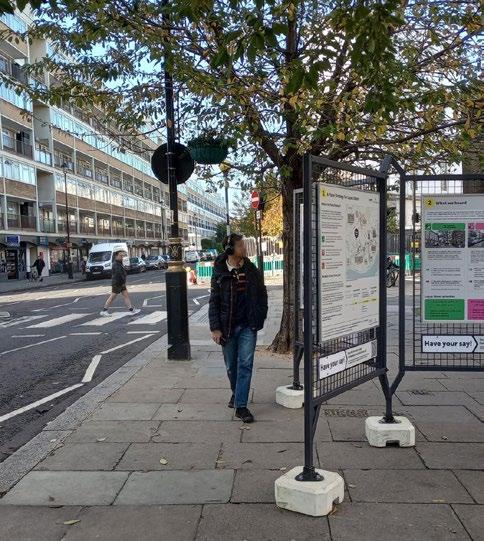
• Online and in-situ exhibitions of the draft Place Strategy
• Communication campaign (leaflet distribution and social media)
• Continued engagement via email and focused meetings with key stakeholders
Feedback from the online survey showed strong support of the draft Place Strategy, with 66% of respondents supporting the design objectives and 65% supporting the proposed improvements for Lupus Street. Respondents also shared constructive feedback, with a substantial number of
3. Greening 4. Support for local businesses
Feedback from some of the key stakeholders, including residents’ associations and landowners, also showed broad support for the draft Place Strategy but focused more intently on specific aspects of proposed improvements. These ranged from the approach to traffic management and cycling, the placement of street furniture and greening, to concerns around antisocial behaviour and future maintenance.
Next steps
The feedback will be used to refine the vision, finalise the Place Strategy and guide the priorities for the Council’s investment.
The Lupus Street Place Strategy will be published in early Spring 2026.
Overview of Commonplace survey
The survey results are based on the analysis of 430 responses submitted to Commonplace, which include 555 free-text comments.
Levels of agreement to the draft Place Strategy Key themes for Lupus Street
Pedestrian experience
agree and strongly agree to the objectives 66% agree and strongly agree to the proposed improvements
A clear call to improve safety, accessibility, and comfort for people walking.
Traffic management
total number of responses
Themes mentioned in the respondents’ feedback
total number of free-text comments
25-34 and 65-74 are the largest age groups among respondents
85% of respondents live in Pimlico area
The two common themes (over a 100 mentions) are: pedestrian experience and traffic management. Other highly mentioned themes are greening and planting and support for local businesses.
Support for balanced and practical traffic movement, alongside concerns about potential impact. Greening
Support for greenery to create a more welcoming street, with an emphasis on low-maintenance planting.
Support for local businesses
Support for improvements that help enliven and diversify the high street experience.
Executive summary
About this report ............................................................p.6
1. Engagement overview
Project bacground ...........................................................p.8
Engagement timeline ....................................................p.10
Engagement methods ...................................................p.12
2. Engagement findings
Commonplace survey
• Demographics ......................................................p.14
• Levels of agreement ............................................p.16
• Emerging themes..................................................p.18
• Aspirations and concerns ...................................p.19
• Examples of comments ......................................p.21
• Feedback on focus areas ...................................p.22
Key stakeholders’ feedback .........................................p.24
Appendices
Appendix A: Aspirations and concerns
Appendix B: Key stakeholders’ feedback
Appendix C: Local business survey
Appendix D: High street users survey
Key takeaways .............................................................p.26
This report presents the process and findings of the comprehensive public engagement on the draft Lupus Street Place Strategy, conducted from October to December 2025. The findings from this engagement will inform the final Place Strategy, helping to plan and deliver improvements that are practical, inclusive, and shaped by the people who use Lupus Street.
Westminster City Council created this report for everyone who lives, works or visits Lupus Street and its surroundings in Pimlico area. It’s also meant for important local community groups like residents’ associations, business owners, landowners, and other key stakeholders in the area.
This report consists of three main chapters and appendices providing more details which can be read sequentially or independently:
Engagement overview
Summary of the project’s background, engagement timeline and process.
Engagement findings
Analysis of feedback from all engagement methods.
Key takeaways
Overall recommendations and next steps.
We value your input and encourage your participation in shaping the future of Lupus Street. If you have any queries, or would like more information, please contact us via email: highstreets@westminster.gov.uk
To find out more about the Pimlico Programme, please visit and sign up for regular updates at: https://pimlicocommunityconversations. commonplace.is/
Key Westminster initiatives in Pimlico
Since 2022, the Council has been working with key stakeholders and partners to develop and deliver a range of programmes in Pimlico, aimed at responding to the needs of local communities. These include:
Pimlico Neighbourhood Plan: Developed by the Pimlico Neighbourhood Forum and adopted in 2022, this policy document now forms part of Westminster’s statutory Development Plan.
Warwick Way Town Centre Highways Scheme: Delivering public realm and accessibility improvements along Warwick Way and the Churton Street area.
Westminster School Streets Programme: Considering active travel plans and creating safer, pedestrian-friendly zones outside the main entrances of Pimlico schools.
Westminster Community Hubs
Programme: Transforming the former Pimlico Library site at Rampayne Street into a community hub for south
Westminster, improving access to services and strengthening local connections.
Pimlico Programme and Pimlico Community Conversations
Aligning to the Fairer Westminster Delivery Plan, the Pimlico Programme is a councilwide, phased plan launched in 2023 to deliver place-based improvements across the Pimlico area.
As part of the programme, Pimlico Community Conversations, a series of engagement events across the Pimlico area, were held in early 2024 to help understand local priorities. The following recommendations, specific to Lupus Street, were identified:
• Adopt the Westminster High Streets framework to improve Lupus Street, focusing on the public realm and other council-owned assets;
• Improve the surroundings of Pimlico Station to create a more welcoming environment;
• Work with landowners to explore opportunities to enhance the local high streets;
• Improve access to community spaces;
• Support local businesses.
Building on this work, the Lupus Street Place Strategy is being developed as part of the wider Pimlico Programme. It responds to earlier community engagement and aligns with existing local initiatives and services. The Strategy will set out a long-term vision for the high street and provide a clear roadmap to guide future proposals.
It is shaped around the three themes of the Council’s High Streets Framework, to help unlock the full potential of Lupus Street.
Safe, sustainable and welcoming places
Identifying opportunities that improve safety, accessibility and the quality of the public space.
Vibrant and resilient economy
Strengthening the local economy through area-wide programmes that support local businesses.
Connected communities
Fostering a sense of community, supporting local initiatives and encouraging participation.
Public engagement has been central to shaping the Place Strategy from the outset. Listening to residents, businesses, and high street users ensures proposals are grounded in local experience and focused on what matters most to the local communities.
To inform the draft Place Strategy, the Council conducted two surveys in summer 2025: one to better understand the day-to-day needs of Lupus Street’s users, and another targeting local businesses.
In Autumn 2025, the draft Place Strategy was presented to the public to gauge levels of support and understand the key aspirations and concerns.
Engagement events held across Pimlico to understand the local priorities (400 contributions)
In-person surveys with Lupus Street’s users focusing on the public realm (304 responses) and with local businesses to understand their priorities (53 businesses)
Vision, design objectives and proposed improvements for Lupus Street based on local priorities and the assessment of the high street’s conditions.
Leaflet distribution, social media campaign, exhibitions and 4 dropin sessions (around 100 visitors) to present the draft Place Strategy. Online survey on Commonplace to gather feedback (430 responses).
‘I do enjoy Lupus Street and Pimlico very much. I find the pavements to be wide and overall well maintained. The local shops are an integral part of the Pimlico community because they are authentic, independent and fairlypriced.
Traffic tends to be intense in Lupus Street and Bessborough street and chaotic for bicycles and pedestrians, so that would be the main thing I would improve.’
‘Pimlico is a really beautiful neighborhood but Lupus Street as its high street feels a bit behind. While the range of shops and facilities is quite practical, it could do with a few more things to add some charm - a few boutiques, flower shops, book shops etc. Perhaps trying to emulate more Warwick Way, for example.’
Safe, sustainable and welcoming places Vibrant and resilient economy Connected communities
‘Lupus Street could be much more of a community location. Right now, it does feel quite run down and poor.’
‘Lupus Street is such a mixed bag of amenities. In some areas rather run down and unsightly. In other areas friendly and community orientated. It would be great to get a more coherent community feel established.’
‘The area feels neglected and unfriendly. It’s not safe for cycling with dangerous pinch points and side street entries hidden by parked cars, so any improvements here would be welcome.
The recycling area by Pimlico Station is a mess and needs firmer.’
‘I like Lupus St as is (I live on corner of Lupus St and St Georges Square) but additional planting! Seats! Whoever heard the like! There’s a great mix of shops and cafes that we need to keep.’
‘Shop are mixed quality / high turnover of lessees which does not assist with vibrant high street feel. Very sad feel about it all - especially now with changes to post office.’
‘It would be nice if we could keep the feel of a community High Street with small local businesses across the whole of Lupus Street including in the Lupus Street East section’
‘Respect the diversity of the local community but make it a more inviting place for people. Particularly young families.‘
The public engagement process for the draft Lupus Street Place Strategy was designed with Equality, Diversity and Inclusion at its core.*
A range of in-person and digital methods was used to maximise reach and ensure everyone had an opportunity to take part. This inclusive approach helped ensure feedback reflected a wide range of voices and local experiences.
*The Equality Impact Assessment (EQIA) was completed in October 2025 to demonstrate the project’s anticipated positive outcomes, greater collaboration across stakeholders and the local communities’ representation.
• Door-to-door distribution of leaflets to all residences and businesses in Pimlico North and Pimlico South (c. 11,000 leaflets) in early November 2025.
• Additional leaflet distribution in Churchill Gardens Estate and Lillington & Longmore Estate (c. 2,800 leaflets) in mid-November 2025.
• Flyers and posters distributed in community venues and areas of high footfall (such as community centres, youth clubs, foodbank, WCC Housing offices, etc)
• Lamppost collars along Lupus Street
• Social media campaign on LinkedIn, X, Facebook and Instagram.
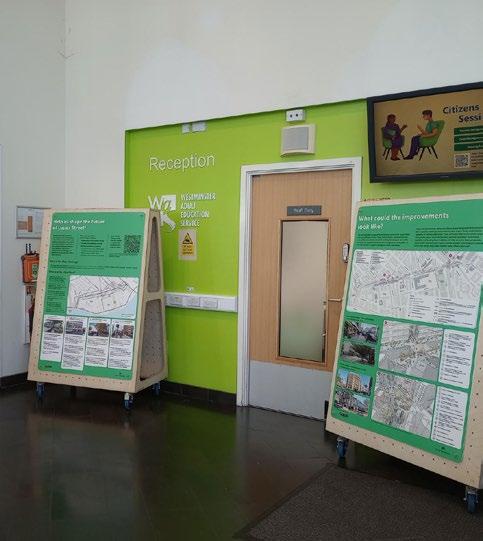
• Exhibition boards installed at Pimlico Library (ground floor level)
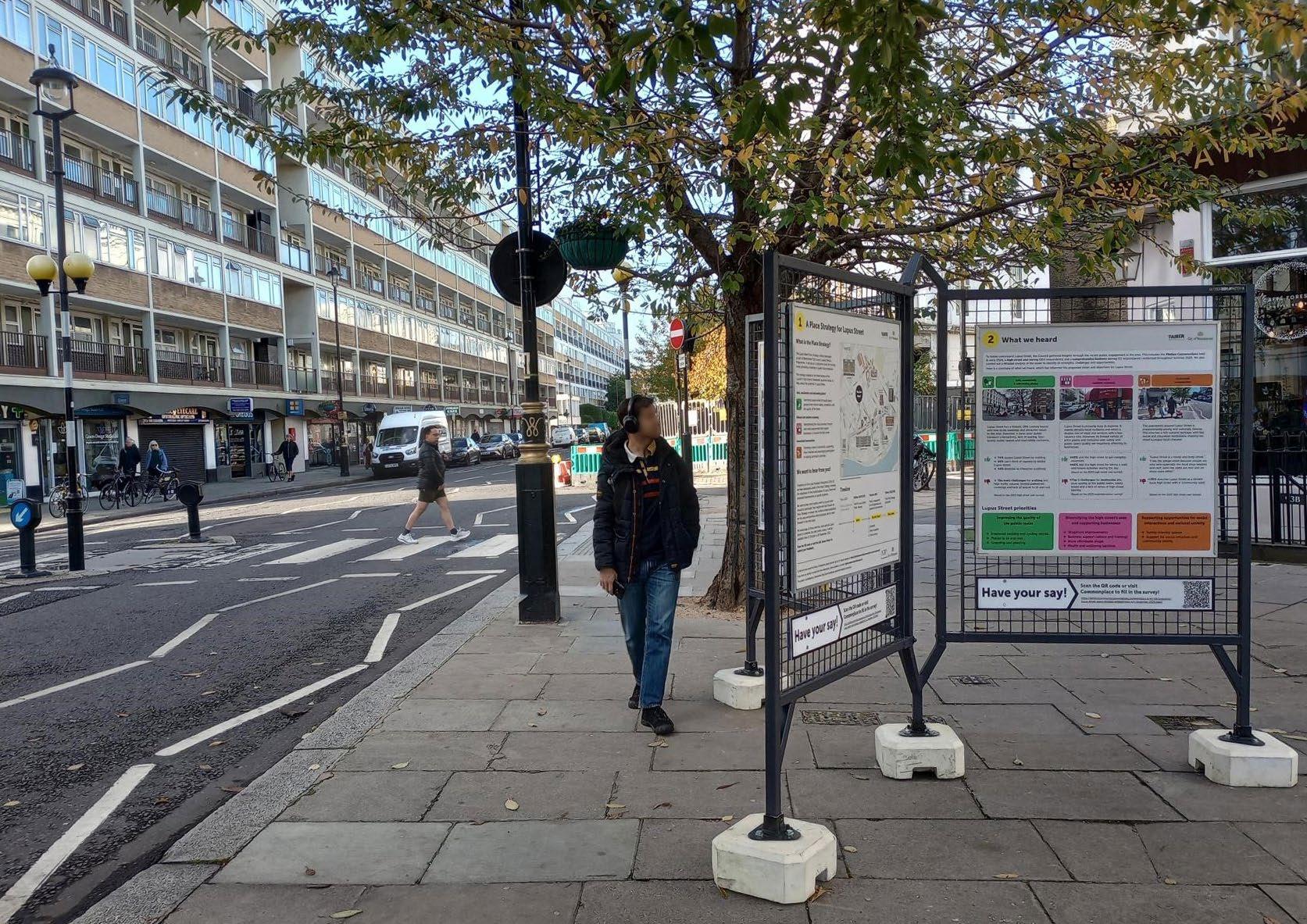
• Exhibition boards installed along Lupus Street at the junction of Charlwood Street piazza
• Digital copy of the exhibition boards to view and download
Drop-in sessions
• 3 public drop-in sessions at Pimlico Library
• 1 joint public drop-in session with other Council teams at Rampayne Street Community Hub
• 1 additional dedicated session with key stakeholders
Online survey on Commonplace
A digital survey on Commonplace to submit feedback on proposals
• 430 responses to the survey
• 555 free-text comments mentioning 15 common themes


Demographics
Throughout October-December 2025, the public was invited to share their feedback on the draft Place Strategy though an online survey on Commonplace.
In total, the survey was answered by 430 respondents. Respondents were asked to supply demographic information about themselves if they wished to do so.
Ages of respondents ranged from young adults to over 75, with strong representation from the 25–34, 35–44, and 65–74 groups.
Can you please tell us your age on your last birthday?
survey
Demographics
A high percentage of respondents to the survey (85%) indicated they live in the Pimlico area.
Other and/or additional answers indicate that respondents frequently visit Lupus Street (24%).
This data brings diverse perspectives to the understanding of Lupus Street’s challenges and opportunities, reflecting daily routines and lived experiences.
What is your relation to Lupus Street?
25-34 and 65-74 are the largest age groups among respondents
Among 430 respondents to the survey, 336 provided information on their age. Respondents were spread across all age groups as shown on the graph.
of respondents live in Pimlico area
Respondents could select multiple options to describe their relation to Lupus Street, indicating different types of connection and relationships to Lupus Street. A total of 615 answers was received to this question.
Overall, the draft Lupus Street Place Strategy was well received. Survey responses (430 responses) showed strong support for the proposals, with 66% strongly agreeing and tending to agree with the objectives for focus areas. However, a minority expressed reservations. Around 22% of respondents disagreed and strongly disagreed with the objectives, and a smaller proportion of respondents remained neutral.
When asked about the proposed improvements, survey responses also showed strong support, with 66% strongly agreeing and tending to agree, backing the overall proposals. Around 25% of respondents disagreed and strongly disagreed with the proposed improvements, and a smaller proportion of respondents remained neutral, neither agreeing nor disagreeing.
This feedback reflects a good degree of enthusiasm for investment and changes to the area, with some levels of disapproval.
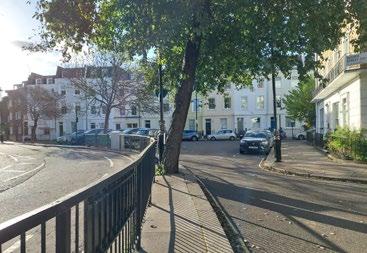
Lupus Street West
A neighbourhood focal point
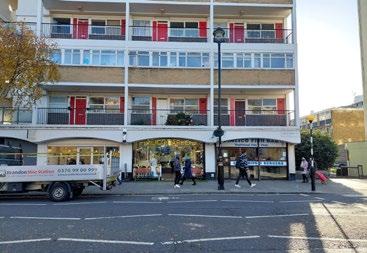
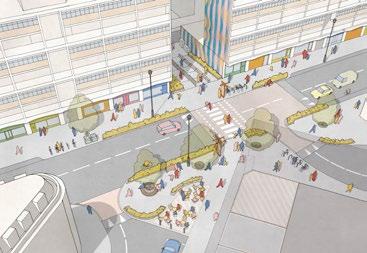
Lupus Street Centre, Churchill Gardens:
A vibrant high street
• Improving pedestrian accessibility and connectivity
• Addressing road safety and accessibility issues along the western bend
• Improving the cycling experience
• Celebrating the unique urban fabric, a network of small piazzas and public spaces
• Delivering public realm improvements in support of the Town Centres
• Improving north-south connectivity
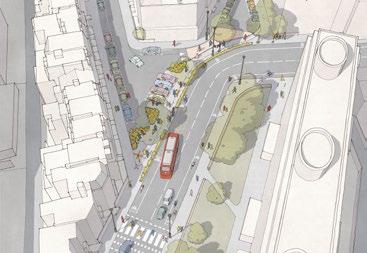
Lupus Street East:
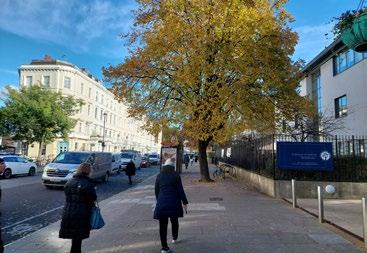
A cultural and educational cluster
• Improving access and celebrating local community assets and landmarks
• Addressing greening and SuDS where appropriate
Pimlico Station, Bessborough Street:
A welcoming gateway
• Improving access and connectivity to Pimlico Station and surrounding community facilities,
• Delivering additional amenity and greening
• Creating an enhanced gateway to the area
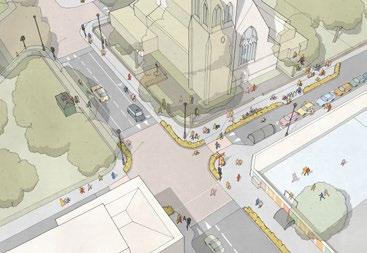
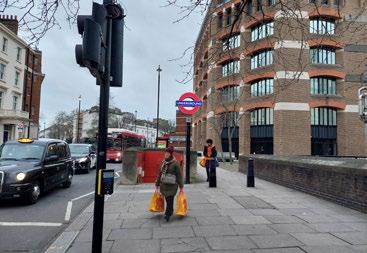
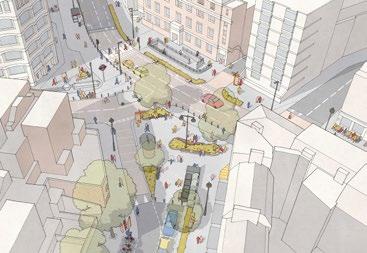
Respondents to the survey on Commonplace provided one or two free-text comments to explain their level of agreement to the objectives and/or proposed improvements.
In total, 555 free-text comments were received, capturing more detailed feedback on the draft Place Strategy (284 comments on the objectives and 271 on the proposed improvements).
All comments were analysed to identify overall sentiment and key viewpoints. They were systematically categorised using 15 themes aligned with the Westminster High Streets Framework (see table opposite).
Feedback highlights the top mentioned themes for Lupus Street. With more than 100 mentions, the top two themes are:
• Pedestrian experience: How safe, comfortable, and accessible pedestrian movement is for all, including people with limited mobility. It considers accessibility, crossings, and distance between spaces to stop and rest.
• Traffic management: How traffic movement is organised (including potential road closures) to improve safety, reduce congestion, and ensure smooth traffic movement.
The following pages summarise the key aspirations and concerns for the highest mentioned themes.
Prioritisation of the pedestrian experience through new crossings, improved and decluttered footways, better access to local services and Pimlico Station, and added features such as traffic calming, wayfinding, greening, and seating.
(Half of all mentions)
Concerns that footway widening is unnecessary and may restrict business access, that al fresco areas and planters could reduce pedestrian space, that traffic restrictions could have negative impacts, and that prioritising cyclists may compromise pedestrian safety.
(Above a third of all mentions)
Support for traffic calming measures to improve safety on Lupus Street with priority given to maintaining bus services, emergency routes, and taxi access at key locations. Requests for traffic modelling studies to better understand the impact.
(A third of all mentions)
This approach enables robust qualitative analysis and highlights the issues that matter most to respondents. 1. Pedestrian experience (146 mentions) 2. Traffic management (118 mentions)
Concerns over the impact of the proposed traffic restrictions in terms of congestion, bus routes, servicing and traffic displacement onto narrower side streets.
(Above half of all mentions)
Aspirations and concerns
With more than 60 mentions, the other frequently mentioned themes are:
• Greening: Street trees, plants, and greening solutions that enhance the street environment, health and wellbeing, increase biodiversity and climate resilience.
• Support for local businesses: The range of retail offer and high street uses.
Overall, the feedback points to a street where movement, safety, and everyday functionality matter most, with concerns about the proposed improvements’ impact on traffic movement, considerations to maintenance and overall value for money.
Additional information on the emerging themes, aspirations and concerns can be found in Appendix A.
3. Greening (65 mentions)
Strong support for additional planting to make Lupus Street more attractive, safer, and less polluted with a specific support for greening around Churchill Gardens.
(9 out of 10 mentions)
4. Support for local businesses (61 mentions)
of comments
Pedestrian experience
Traffic management
Strong support to diversify the retail offer, improve shopfronts, and integrate al fresco dining to create a more vibrant and welcoming atmosphere in the day and night. Strong emphasis on supporting small businesses.
(Above two thirds of all mentions)
Some concerns that additional planting could lead to littering. Emphasis on careful maintenance of both existing and new planting.
Some concerns that the current offer does not meet local needs, that existing accessibility challenges are negatively affecting local shops and businesses, and that the removal of taxi ranks could adversely impact long-standing businesses.
‘Adding protections for pedestrians and cyclists while slowing automobile traffic is crucial.’
Street maintenance and cleanliness
‘The street has become really dirty. Some shops have to look after this rubbish.’
‘I am seriously disabled and need to park close to places I visit. The Council’s recent changes around Warwick Way cause me a host of problems getting around and I am very worried about its plans to reduce parking along Lupus Street.’
‘I don’t have problems with putting greenery providing you could afford to pay for a gardener for maintenance.’
Support for local businesses
‘I feel that there are not enough traffic calming measures along Lupus Street.’
Cycling experience
‘The area feels neglected and unfriendly. It’s not safe for cycling with dangerous pinch points and side street entries hidden by parked cars, so any improvements here would be welcome.’
Costs and value for money
‘We are happy as it is, spend the money elsewhere where they need it (social services etc).’
‘This part of Pimlico lacks a high street similar to other trendy neighbourhoods! Should focus more on getting businesses, shops and cafes there so it becomes a trendy spot!’
Anti-social behaviour and crime
Community spaces
‘Respect the diversity of the local community but make it a more inviting place for people. Particularly young families.’
to sit
‘I think the area needs more sitting, not just around Churchill Gardens but around Tachbrook market, and Pimlico as a whole. We don’t need more coffee [places] but places where you can sit down without the pressure of buying.’
‘I really welcome any improvements to Lupus Street. Parts of Lupus Street are incredibly run down and attract school children in groups and drug dealing.’
Quality of the public realm
‘Public space improvements are necessary. The street feels unloved with uninteresting spaces.’
Feedback on focus areas and specific locations was also collected from the Commonplace survey’s free-text comments.
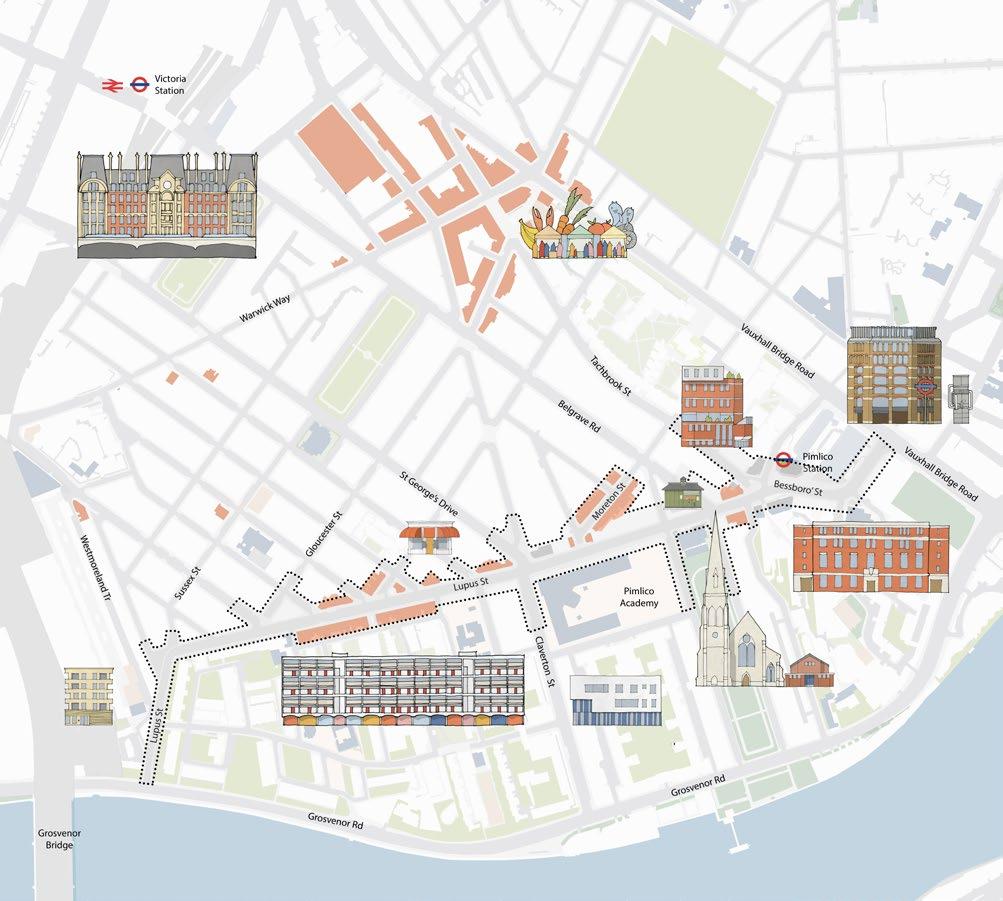
Pimlico Station, Bessborough Street (63 mentions)
• Support for creating a new welcoming and accessible gateway with better pedestrian access to the Station
• Mixed views on improvements to Tachbrook piazza: support for seating and greenery, with concerns over existing bins and toilets’ location and anti-social behaviour
• Concerns that more needs to be done to tackle anti-social behaviour and crime, including CCTV, improved lighting and area wardens
• Concerns over the impact of proposed traffic measures and footway widening on Drummond Gate and the wider network
Lupus Street Centre, (61 mentions)
• Support for improving pedestrian safety and access to the high street
• Support for introducing al fresco dining and improvements to piazzas
• Concerns over the potential impact of proposed traffic restrictions and pavement widening on access to the town centre and traffic congestion
• Concerns about seating proposals due to existing anti-social behaviour issues
Lupus Street East, St George’s Square, St Saviour’s Church, and Pimlico Academy
(37 mentions)
• Support for new pedestrian crossings
• Support for footway widening outside of St Saviour’s Church
• Concerns over impact on parking and reduced vehicle access to the church and nursery
• Suggestions to open St George’s Triangle to the public, along with calls to address litter and improve maintenance
Lupus Street West (33 mentions)
• Support for improving pedestrian accessibility around Westmoreland Terrace
• Concerns over safety and the proposed removal of existing railings
• Concerns over parking loss and antisocial behaviour
• Support for improving pedestrian safety by introducing a new crossing outside Pimlico Academy
• Support for introducing more greenery with concerns over maintenance
• No support for public art in this location
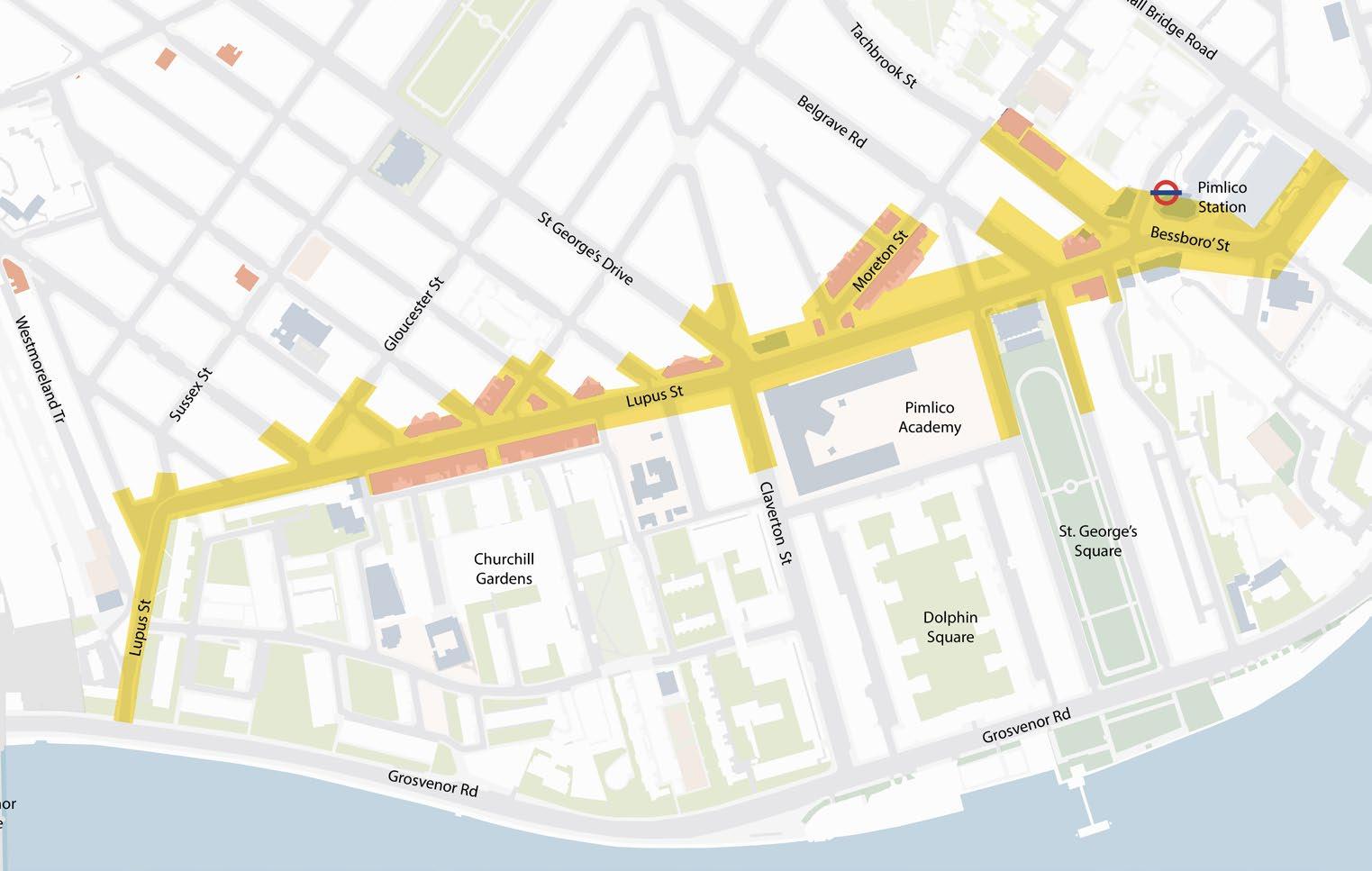
Lupus Street West (33 mentions)
Lupus Street Centre (61 mentions)
Pimlico Station, Bessborough Street (63 mentions)
Lupus Street East Pimlico Academy and St. George Square (37 mentions)
Map showing the number of mentions per location, based on 555 free-text comments.
Continued engagement with stakeholders is essential to delivering a successful and inclusive Place Strategy for Lupus Street. It ensures local knowledge, aspirations and concerns are fully understood and reflected in the proposals.
Across all responses, there was shared agreement that any investment must deliver demonstrable, locally-recognised value and be refined through detailed design.
The full details of stakeholders’ feedback are found in Appendix B.
The feedback from key stakeholders shows broad support and a shared ambition to improve Lupus Street. However, concerns were raised about:
• Plans for St. George’s Square area; protection of the cabmen’s shelter and taxi ranks
• Impact of traffic management measures to the wider network
• Road safety along the west end of Lupus Street
• Cycling proposals and pedestrian safety throughout the corridor
• Protection of bus stops and routes;
• Clear maintenance plans for any proposed greening
• Accessibility of the engagement boards and reach within Pimlico
• Scheme costs and value for money
• Reach and accessibility of engagement exercise
• Concerns around impacts of traffic management measures and public realm proposals onto the wider area (pedestrian safety; traffic displacement; anti-social behaviour)
• Perceived gaps in supporting data such as traffic modelling, cost–benefit analysis, EQIA, etc, to justify proposals
• Specific feedback to Lupus Street West – support for enhancing pedestrian and cyclist safety and traffic calming, especially around the western bend of Lupus Street.
• Support to being more ambitious on greening proposals by removing additional car parking spaces at Westmoreland Terrace to create a well-designed green piazza with emphasis on maintenance plans
St. George Square Residents’ Association FREDA
• Scheme costs and value for money
• Reach and accessibility of engagement exercise
• Strong objections to cycling proposals
• Strong objections to any changes to St George’s Square area – emphasis on preserving local character and tranquillity
St. Saviour Church
• Support for public realm improvements
• Specific design requirements (maintain vehicular access to Church for functions; contextsensitive greening; and pedestrian safety)
The Crown Estate
• Support for public realm improvements around Pimlico Station
• Willingness to collaborate with WCC
• Caution attention to heritage context and listed status assets
Future Academies
• Desire to be kept informed and involved
• Willingness to collaborate with WCC over the use of their assets (suggestions include engagement with school pupils and co-creation of public art to activate blank walls)
Transport for London - Bus Operations
• Call for more emphasis on bus operations as key element of sustainable transport
Taxi drivers -
St. George’s Square
• Call to protect the cabmen shelter
• Concerns about loss of taxi ranks
Transport for London- Taxi ranks
• Call for clarification about loss of taxi ranks at St George’s Square;
• Support with liaising with taxi drivers
Westminster Cycling Campaign
• Support for improvements to walking and cycling along Lupus Street
• Support for more ambitious measures to reduce motor traffic to achieve transformative change
Transport for London - Active Travel
• Support for active travel improvements with different approaches to different sections (rather than segregated cycle lanes)
• Suggestion of traffic calming measures to improve overall safety
• Priorities include improving pedestrian provision and safety at major junctions, reducing severance, enhancing access to Pimlico Academy
• Suggestions to reposition cycle lanes to reduce dooring; restoring cycle access on side routes to Lupus Street
The feedback shows high degrees of participation in the engagement exercise and demonstrate how Lupus Street’s local communities are deeply invested in the future of the area.
It highlights a strong desire for practical, meaningful improvements that address safety, cleanliness, anti-social behaviour, and improve the economic vitality of the high street without compromising essential access or burdening residents with unintended impacts.
The outcomes of this public engagement will help refine the vision, finalise the Place Strategy and identify the priorities for Council investment.
The Lupus Street Place Strategy will be published in early Spring 2026.

• Prioritise simple and incremental improvements to pedestrian routes along Lupus Street;
• Enhance the public realm around Pimlico Station to improve safety and accessibility;
• Protect the high street’s functionality, as much as possible, in terms of servicing, parking and loading;
• Ensure proposed improvements to cycle routes and infrastructure are balanced against the needs of all other user groups (pedestrians, motorists and cyclists);
• Ensure greening proposals are low-maintenance and incorporate long-term maintenance plans;

• Work with businesses to support the local economy and diversify the retail offer on Lupus Street;

• Collaborate with council teams, other statutory services and the Met Police to consider street management and maintenance and help mitigate anti-social behaviour issues;
• Clearly communicate the project’s milestones, funding considerations and maintenance plans to stakeholders.
1. Pedestrian experience (146 mentions)
How safe, comfortable, and accessible pedestrian movement is for all, including people with limited mobility. It considers accessibility, crossings, and distance between spaces to stop and rest.
Aspirations
Prioritisation of the pedestrian experience through new crossings, improved and decluttered footways, better access to local services and Pimlico Station, and added features such as traffic calming, wayfinding, greening, and seating.
(Half of all mentions)
Concerns
Concerns that footway widening is unnecessary and may restrict business access, that al fresco areas and planters could reduce pedestrian space, that traffic restrictions could have negative impacts, and that prioritising cyclists may compromise pedestrian safety.
(Above a third of all mentions)
2. Traffic management (118 mentions)
How traffic movement is organised (including potential road closures) to improve safety, reduce congestion, and ensure smooth traffic movement.
3. Greening (65 mentions)
Street trees, plants, and greening solutions that enhance the street environment, health and wellbeing, increase biodiversity and climate resilience.
4. Support for local businesses (61 mentions)
The range of retail offer and high street uses.
5. Street maintenance and cleaning
(53 mentions)
Street operations such as waste collection and maintenance.
6. Cycling experience (52 mentions)
Safety and convenience of cycling routes and infrastructure for people choosing to ride bicycles as an active travel mode and/or for leisure.
Support for traffic calming measures to improve safety on Lupus Street with priority given to maintaining bus services, emergency routes, and taxi access at key locations. Requests for traffic modelling studies to better understand the impact.
(A third of all mentions)
Strong support for additional planting to make Lupus Street more attractive, safer, and less polluted with a specific support for greening around Churchill Gardens.
(9 out of 10 mentions)
Strong support to diversify the retail offer, improve shopfronts, and integrate al fresco dining to create a more vibrant and welcoming atmosphere in the day and night. Strong emphasis on supporting small businesses.
(Above two thirds of all mentions)
Support for cleaner and decluttered footways through measures such as relocating and/or adding bins and improving waste collection in front of shops while increasing maintenance and enforcement against illegal dumping.
Support for improving cycling routes to ensure safety. Suggestions include protected routes and additional infrastructure such as improved cycling lanes and crossings.
Concerns over the impact of the proposed traffic restrictions in terms of congestion, bus routes, servicing and traffic displacement onto narrower side streets.
(Above half of all mentions)
Some concerns that additional planting could lead to littering. Emphasis on careful maintenance of both existing and new planting.
Some concerns that the current offer does not meet local needs, that existing accessibility challenges are negatively affecting local shops and businesses, and that the removal of taxi ranks could adversely impact long-standing businesses.
Concerns with the overall current conditions of Lupus Street such as waste, particularly near Pimlico Station and St. George Triangle, cluttered footways and long-standing hoardings or scaffolding. There were also doubts about the ongoing upkeep of any new features.
Concerns over the safety of pedestrians due to cyclists’ behaviour. Additional cycling improvements viewed as unnecessary, and a duplication of existing routes.
Costs and value for money (50 mentions)
Comments related to costs and demonstrable benefits of the proposed improvements.
8. Anti-social behaviour and crime
(48 mentions)
Actions that cause harm, alarm, or distress to individuals, communities, or the environment such as noise nuisance, littering, vandalism, drug use.
9. Servicing (46 mentions)
Basic street operations that comprise activities by businesses, residents and visitors such as parking, loading and unloading, and waste collection.
10. Community spaces (46 mentions)
Opportunities for the community to spend time and socialise, creating a sense of community.
11. Quality of the public realm (42 mentions)
Overall appearance, comfort, and usability of streets, pavements, and open spaces for people spending time outdoors including lighting, wayfinding.
12. Spaces to sit (35 mentions)
Availability and comfort of seating that encourages rest and socialising.
Support for investing in services and practical, achievable objectives, such as repairing and maintaining existing infrastructure and delivering incremental upgrades. Requests to publish cost–benefit studies to inform decisions.
Support for enhancing CCTV and increasing police presence to address anti-social behaviour. Creating cleaner, greener spaces with visible management to contribute to a safer environment.
Support for improving parking provision for residents and ensuring smooth street operations (loading and unloading and waste collection).
Strong support for creating more social activities for young people and children, such as a creative hub or toy library, to foster a stronger sense of community, while also integrating social spaces and venues for adults.
Strong support to improving existing public spaces and buildings to enhance the street and make it more attractive and usable.
Improving lighting for safety and creating a more welcoming environment around Pimlico Station.
Support for adding spaces to sit to create focal points for community activity, relaxation and socialising.
Concerns over the need for the proposals in the current economic climate and risk of them being merely ‘cosmetic.’
Concerns over long-term maintenance costs and the lack of clarity on implementation and impacts.
Concerns over existing anti-social behaviour around Pimlico Station, including noise, littering, drug-related activity, theft, rough sleeping and begging. Concerns that adding seating or planting near the station could attract further rough sleeping or street drinking.
Concerns over loss of parking spaces for residents, and loading activity shifting to residential streets, causing early-morning noise and disturbance. Objections to the removal of taxi ranks, noting its importance to users and local businesses.
Concerns that the proposals could attract tourists to the area and cause nuisance to residents.
Concerns mainly address current safety and cleanliness issues and overall street environment.
Concerns that additional seating provision might inadvertently encourage anti-social behaviour.
13. Miscellaneous (34 mentions)
General comments and/or comments that do not relate to this consultation.
Aspirations
Support for introducing an urban farm to help educate residents - particularly young people - about how healthy food can be grown within an inner-city environment. Additional housing in the area would benefit residents that do not have somewhere to live.
Concerns
Concern about perceived gentrification.
An objection raised related to women’s attire. Comments related to other projects.
14. Engagement-related comments
(26 mentions)
Difficulties experienced around accessing and consulting the engagement materials such as readability, clarity of drawings, and/or technical issues.
15. Public art (14 mentions)
Visual or interactive public artworks that animate the street, inspire people, and reflect local culture or identity.
Requests to provide ongoing updates on the progress of the project and to provide greater clarity on what is being proposed.
View that public art will make the area feel more vibrant and help strengthen its identity.
Concerns around proposal drawings perceived as unclear and/or hardto-interpret, insufficient detail to allow people to comment effectively, and images that did not realistically represent suggested changes.
View that public art is unnecessary as it is often not well maintained.
The following tables summarise the main feedback raised by some of the key stakeholders on Lupus Street.
Council officers have responded to all enquiries and relevant design-related feedback will be incorporated as the Place Strategy is finalised
Transport for London Active Travel (Principal Sponsor – Cycling, Health & Safe Streets)
• Support of meaningful active travel improvements with different approaches on different sections of Lupus Street: north–south cycle crossings, traffic calming, wider footways, greening, and improved bus movement rather than continuous segregated cycle lanes.
• Key priorities include improving pedestrian provision and safety at major junctions, reducing severance, enhancing access to Pimlico Academy, improving wayfinding, and lighting and night-time safety.
• Concerns that a full cycle route along the entire street would require significant parking removal, but suggest selective parking consolidation and traffic calming to improve safety overall Bus operations (Principal Client Officer – Bus Operations)
• Emphasis on maintaining reliable and efficient bus operations due to the importance of buses for lower-income residents, people with disabilities, and children accessing schools, libraries, shops, and open spaces, and key element of sustainable transport Taxi Ranks (Rank Liaison Officer)
• Clarification on removal of taxi ranks at St. George Square; support with liaising with taxi driver community
St. Saviour Church (Vicar)
• Support of the shared ambition for long-overdue public realm improvements on Lupus Street with community-focused street design and rest spaces, while addressing anti-social behaviour
• Proposals to accommodate specific design requirements – vehicular access to the Church for ceremonial uses (e.g. weddings, funerals, etc)
• Proposals to consider pedestrian safety and careful, context-sensitive greening
Westminster Cycling Campaign (Representative)
• Support of improvements for walking and cycling on Lupus Street
• Support of more ambitious measures to reduce motor traffic, considered key to achieving transformative change.
• Additional opportunities include repositioning cycle lanes to reduce the risk of dooring, and restoring cycle access between Lupus Street and Moreton Terrace, as well as from Rampayne Street into Tachbrook Street
The Crown Estate (Senior Portfolio Manager and Development Managers)
Churchill Gardens Residents’ Association
(Chair and other representatives)
• Support of public realm improvements around Pimlico Station.
• Emphasis on the importance of collaborations with Westminster City Council (WCC) to ensure improvements are sustainable, inclusive, and climate-resilient.
• Heritage context - proposals for public realm improvements (seating, greening, lighting, wayfinding) must respect the listed status of assets around Pimlico Station
• Support of the public engagement process and shared ambition to improve Lupus Street
• Support of the allocation of a £1m budget to deliver agreed improvements - shared agreement that the budget should deliver demonstrable value recognised by local residents (value for money)
• Concerns around impacts of traffic management measures and public realm proposals onto the wider area in terms of pedestrian safety traffic displacement and antisocial behaviour
• Perceived gaps in the supporting data to justify proposals (including traffic modelling, cost–benefit analysis, equality impact assessment, etc). Enquiries about feasibility and detail design phase
• Concerns about reach and accessibility of engagement exercise within Pimlico North and South
• Perceived conflict of interest in relation to Cycling Scheme Consultation
Pimlico Neighbourhood Forum
(Chair and Vice-chair)
• Specific feedback to Lupus Street West - Support of greening, improving pedestrian connectivity between the Churchill and Peabody Estates, and enhancing cyclist safety and traffic calming, especially around the western bend of Lupus Street.
• Support to being more ambitious on greening proposals by removing additional car parking spaces at the southern end of Westmoreland Terrace to create a well-designed green piazza with trees and seating,
• Emphasis on the importance of maintenance plans
• Design considerations to the turn on Grosvenor Road (cycling safety)
• Concerns about pedestrian safety along Lupus Street (towards to the west end of the street)
St. George Square
Resident Association & FREDA (Chair)
• Scheme costs and value for money
• Reach and accessibility of engagement exercise - survey accessibility issues
• Strong objection to any improvements at St George’s Square and the east end of Lupus Street
• Explicit opposition to cycling approach - turning Lupus Street into a “cycling super-highway.”
• Concerns around political motivations behind proposals, particularly ahead of May elections
• Concern that local residents’ priorities are being overlooked
• Emphasis on preserving the local character and tranquillity of Pimlico
Taxi drivers
Future Academies (Representative)
• Desire to be kept informed and involved
• Willingness to collaborate with WCC over the use of their assets (suggestions include engagement with school pupils and cocreation of public art to activate blank walls)
• Call to protect the cabmen shelter as a vital amenity to taxi drivers and a space that fosters a sense of community in the area
• Concerns about loss of taxi ranks and its negative impact on taxi drivers
• Requests to revise proposals
Summary of engagement with Lupus Street’s businesses
In June 2025, WCC’s Economy and Growth team conducted a survey with all 53 businesses along Lupus Street aiming to:
• Map out and initiate early engagement with all businesses on the high street
• Gather feedback from business owners on challenges and priorities for support
A quick overview of the results of this survey shows:
• 96% businesses rent their premises
• 85% of businesses have less than 10 employees

Examples of comments
‘Lupus Street is like a little village, people know each other, the buildings are similar and nice to look at. With lovely little shops.’
‘The street is very quiet and needs more people drawn into our business and street.’
‘There is a problem of antisocial behaviour among the young people here. There is a lack of support for young people here.’
‘Any form of financial support, lights, awning for our roof. Signage on the outside for our business is desperately needed. New Gates for our business and security. Floor needs levelling.’
‘A little bit more security for outside as it sometimes can be tricky for my customers feeling safe. We experience theft and anti-social behaviour.’
‘More help from the council to improve the front of the shop and widen the pavements.’
In June-July 2025, the Council commissioned Lake Research consultants to conduct a face-to-face survey with Lupus Street’s users aiming to:
• Gather community feedback on uses, access and perceptions of the high street;
• Capture the priorities for physical improvements;
• Capture the priorities to improve the high street’s retail offer;
• Understand how people use the other high streets in Pimlico
The survey was conducted in three main locations on Lupus Street (at the corner of Moreton Street, Winchester Street and around St. George Square).
In total, 304 responses were collected. The demographic profile of respondents was as follows:
• 50% female and 49% male respondents
• 53% White ethnic group and 17% Black, Black British, Caribbean or African
• 23% of respondents between 25-34 and 35–44 years old
from residents living in Pimlico (North and South)


69% visit the high street to get everyday essentials
65% spend more than 30 min on the high street
Most residents visit during the morning and afternoon, significantly less in the evening
Planting and greening and affordable shops are among the priorities
Reasons for visiting Lupus Street
Access to Lupus Street
Main challenges for walking
Main challenges for public transportation 23% availability and frequency 18% long journey to destination 12% safety and accessibility
are the priority improvements that respondents would like to see on Lupus Street?


Every successful programme requires a ‘village of collaborators’, and we would like to acknowledge the many partners who contributed to the public engagement on the draft Lupus Street Place Strategy during October –December 2025.
Firstly, we would like to thank the key stakeholders, landowners, residents’ associations, and amenity groups, for their valuable contributions and insights.
We would also like to thank George Allen for producing the clear and compelling visuals used in the exhibitions; the Pimlico Library and WAES teams and the Rampayne Street Community Hub and Communities teams for providing their premises and help facilitate our drop-in sessions.
Last, but certainly not least, we are grateful to the more than 500 members of the public who generously gave their time by completing the survey and attending the drop-in sessions. Their views will help shape the next steps of the Lupus Street Place Strategy.
To access a copy of the draft Place Strategy and Commonplace survey questions, please follow the link below:
Look Back at - Lupus Street Place Strategy engagement: OctoberDecember 2025 - Pimlico Community Conversations