Contents Foreword
Ambitious mobility for a thriving borough
Richmond upon Thames is rightly recognised as one of the best places to live. Its potential to be even more fabulous is the lesser spoken story. It may be 2026, but Richmond upon Thames relies on a transport network that is aged and requires strategic innovation to meet the demands of a modern London borough and the ambitions of its residents.
For decades, other parts of London have experienced transformative investment, new rail capacity, upgraded stations, enhanced bus networks, modern bridges, step-free accessible infrastructure and redesigned streets. All this enabled by sustained capital programmes that have reshaped connectivity and economic potential.
This Council is already modernising its road and pavement network with record investment, but the public transport system too frequently relies on ageing infrastructure and organisations that seem to be “sweating their assets” and “managing decline”, rather than delivering renewal, innovation and improvement.
Residents and businesses feel this imbalance. They experience rail frequencies that lag comparable corridors. They navigate delays caused by the demands of strained infrastructure at the intersection of road, rail or river. They rely on bus routes that do not always provide true turn-up-andgo connectivity. The see infrastructure, but it rarely excels.
This Strategy is a decision to change that trajectory. It is not simply a transport document. It is a commitment to behave differently as a Council.
The first change is cultural. We will treat the Borough’s transport infrastructure as a strategic asset, requiring active stewardship, investment and enhancement.
We have rejected the reactive approach to deterioration and will instead secure, protect and enhance what we already have. Preventative maintenance is prioritised. Renewal works are opportunities to upgrade accessibility, safety, and environmental performance. Asset condition should be transparent and infrastructure risk needs to be actively managed.
This professional stewardship is the foundation for our greater ambition. Having secured the fundamentals, the Borough needs to signal greater belief in its own future. For too long, this Borough has been denied the resources and support to advance major transport propositions. Measured demands and careful advocacy will not deliver the investment outcomes that our communities deserve.
This Strategy signals a greater ambition and confidence from Richmond upon Thames. Such leadership means identifying and preparing schemes before funding is made available. It means developing business cases for new bridges, rail service improvements, new infrastructure, and connectivity upgrades. It means establishing a visible pipeline of borough-wide walking and cycling improvements. It means demonstrating that the Council is hungry to deliver, not merely ready to be asked.
Richmond has a higher share of residents who use active travel than any other outer London borough. Most residents are not defined by one mode of travel but use a mix of modes to complete their various journeys. The Council’s aim is to make active travel modes practical options for everyday journeys. Providing residents with safe and accessible travel options is therefore a central part of this strategy. In turn, this will help reduce congestion, improve air quality, and support local high streets.
There is, however, a further reality that this document directly confronts: the Council does not control most of the transport system that shapes residents’ daily lives. Rail services are determined by Network Rail and train operating companies. Bus networks are managed and controlled by Transport for London. Key river crossings and corridors involve national agencies, Transport for London and major landowners.
Royal Parks routes, river infrastructure and strategic highways sit beyond the Council’s direct authority. However, if the Council limits its ambition to what it directly controls, then progress will always be incremental.
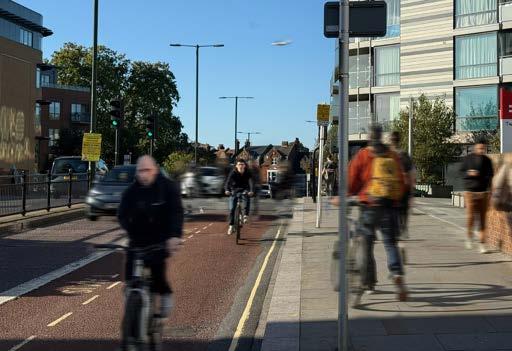
This Strategy therefore marks an institutional shift. This Council will become and enabler, an organiser, a persistent advocate and, where necessary, a spirited challenger of regional and national partners. It will build stronger evidence, articulate the case for investment and report publicly on service performance and funding flows. It will engage assertively and systematically with partners whose decisions determine the Borough’s future.
Within our communities, transport equality is also a priority. While infrastructure across the whole Borough requires improvement, neighbourhoods such as Ham, Hampton and Heathfield experience weaker public transport and fewer alternatives to private car use.
If we spread our focus evenly, inequality will persist. This Strategy therefore instils prioritisation in our work. Investment, energy, and political capital will focus where connectivity gaps are the greatest. Area-based transport planning will inform capital programmes and advocacy priorities. Equity of provision, rather than uniformity of action will guide decisions.
This Strategy is therefore about purpose. It levels-up this Council from proactive to future-ready. From asset management to asset aspiration. From confident advocacy to indisputable demands for better. From willing recipient of funding streams to architect of investment pipelines.
This document commits us to that change - and to transport infrastructure that reflects a Borough of fairness, ambition, and globally competitive connectivity.
Alexander Ehmann
Chair - Transport and Air Quality Committee
London Borough of Richmond upon Thames
Mission and strategic purpose
The Borough of Richmond upon Thames will provide a transport system that enables residents, visitors and businesses to move efficiently and safely while enhancing environmental quality, supporting inclusive growth and protecting the Borough’s distinctive character.
Transport is fundamental to economic vitality, public health, social equity, town centre resilience and environmental sustainability. Decisions taken about roads, bridges, bus routes, parking and public space shape the daily lives of our communities and the long-term trajectory of the Borough.
This Strategy sets out how the Council will:
Maintain and improve the transport infrastructure on which we depend
Help enable sustainable housing and economic growth
Improve accessibility and reduce inequality
Deliver environmental improvement and climate resilience
Prepare for technological and behavioural change
The Strategy provides a structured but flexible framework to 2040. It establishes clear objectives and priority areas for action, while recognising that funding, technology and travel behaviour will evolve over time.
The required supporting plans
To deliver this mission and strategic purpose, the Council will:
Publish and maintain a Transport Strategy Action Plan aligned to this Strategy
Produce an Accessibility and Inclusion Plan, setting out how the roads and public transport will evolve to better serve the needs of our transport users, particularly those with limited mobility
Report annually on progress toward the strategic objectives within the Transport Strategy Action Plan
Develop Area Transport Improvement Plans for those areas with lower levels of transport accessibility and choice
Maintain an Asset Management Plan setting out the condition of roads and other transport assets and the programme for their improvement
Re-energise the Active Travel Advisory Group and Public Transport Liaison Group and strengthen our relationships with partnerships and stakeholders
Develop and publish a new Walking and Cycling Strategy
Focus spending priorities on the objectives set out in this Strategy
Report annually on public transport planning and performance in a Public Transport Plan
Undertake a five-year formal review of our long-term strategy, achievements and direction
Infrastructure Stewardship
• Implement a rolling five-year Asset Management Plan for roads, pavements, bridges and other transport infrastructure under the direct control of the Council, inclusive of a new Council approach to reactive repairs, known as “Repair for Good”, where works are undertaken to the highest possible standard at the earliest opportunity within a defined KPI period
• Prioritise preventative maintenance over reactive repairs and publish forward infrastructure pipeline priorities for the next 5 years
• Integrate accessibility and safety upgrades and climate resilience into renewal works
Urban Quality, Safety and Environment
• Identify and address road casualty hotspots
• Expand School Streets to all schools where practicable
• Increase and upgrade road crossings
• Improve the night-time travel experience for residents and workers, and particularly women, older and younger people
• Support the delivery of a universal zero-emission bus fleet by 2035
• Integrate sustainable drainage and climate resilience into all scheme opportunities
• Expand electric vehicle charging aiming for all residents to access a chargepoint within a 5 minute walk
We Will:
We Will:
Sustainable Mobility and Public Transport Accessibility and Inclusion
We Will:
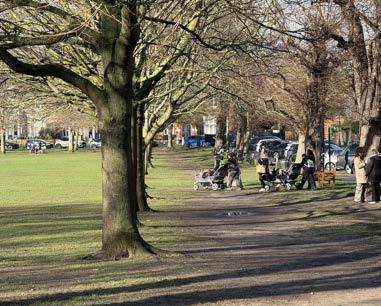
• Deliver a measurably improved walking network within the Borough prioritising routes linking town centres, stations, bus stops and community services
• Deliver a comprehensive, well designed cycling network
• Advocate for the restoration of Hounslow Loop services at all local stations, and additional trains to Shepperton
• Conduct annual bus network reviews (and submit service recommendations to Bus Providers/TfL)
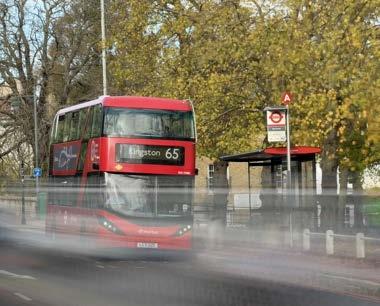
• Implement bus priority measures that improve bus reliability on all the Borough’s bus network
We Will:
• Produce an Accessibility and Inclusion Plan with clear milestones, including
• Conducting an access audit of highways prioritising unnecessary barriers, signage and other clutter removal by 2028
• Assessing the useability of each bus stop
• Improving the quality of interchange between transport nodes
• Advocating for full step-free access across the Borough’s railway network by 2040
• Protect Blue Badge, Taxi Card, and Freedom Pass provision for Borough residents
Growth and Development Regional Advocacy
• Secure developer contributions for transport improvements in line with our Local Plan and seek new forms of funding from new transport service providers
• Support good quality transport connections for businesses and employers and integrate wider economic benefits into investment cases
• Review Council-owned car parks and other highways assets to maximise their sustainability for transport and/ or alternative use
• Monitor and develop plans for improved traffic improvement, particularly in areas of economic activity and proposed large development
• Strengthen South London Partnership engagement
• Develop the case for Public Transport Accessibility Levels (PTAL) improvements and equitable investment
• Integrate transport improvement with the Richmond Growth Plan
• Enhance active lobbying with TfL and national government
We Will:
We Will:
Vision for Richmond in 2040
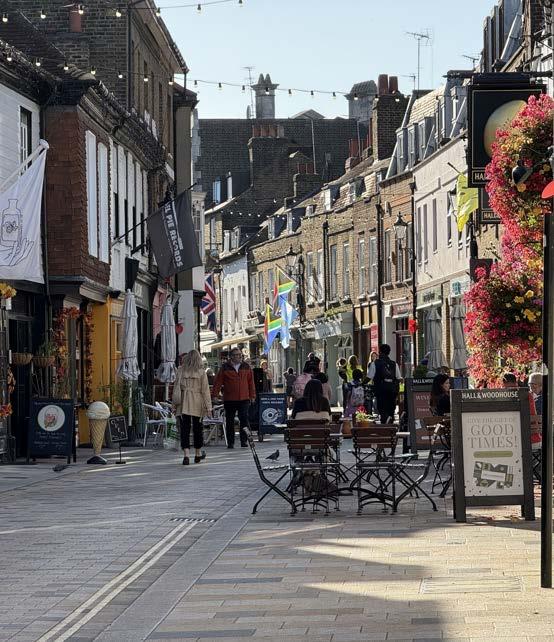
By 2040, Richmond upon Thames will be a borough in which:
Walking, cycling and public transport will be sufficiently safe, reliable and accessible to be the backbone of everyday travel
Most residents can reach a town centre, school, GP surgery or green space within around 20 minutes by sustainable modes, regardless of age, neighbourhood, or physically abilities
No one is killed or seriously injured on the Borough’s roads
Streets are safe, attractive and inclusive public spaces rather than motor vehicle dominated
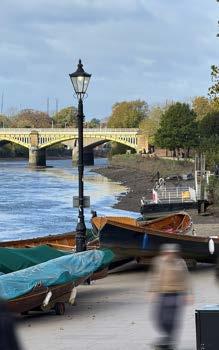
Pavements and paths are well maintained
The River Thames, major roads and railways no longer present disproportionate barriers to movement
Public transport provides a genuinely reliable and accessible travel option in all areas
Commercial traffic operates efficiently and cleanly, using vehicles and logistics systems appropriate to an urban setting
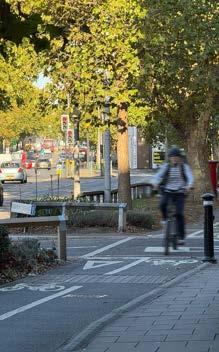
Private cars and vans are likely to remain an option for many journeys. However, by 2040, they will be electric and their use will be increasingly focused on trips where alternatives are not practical. The transport system will provide genuine choice.
To progress towards the 2040 vision, the Council will within the Transport Strategy Action Plan:
Develop measurable indicators for each element of the vision
Establish interim milestones for 2030 and 2035
Publish annual monitoring against vision indicators
Engage residents and businesses to test progress and priorities
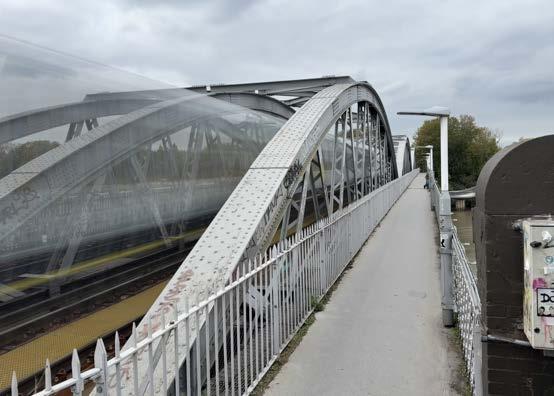
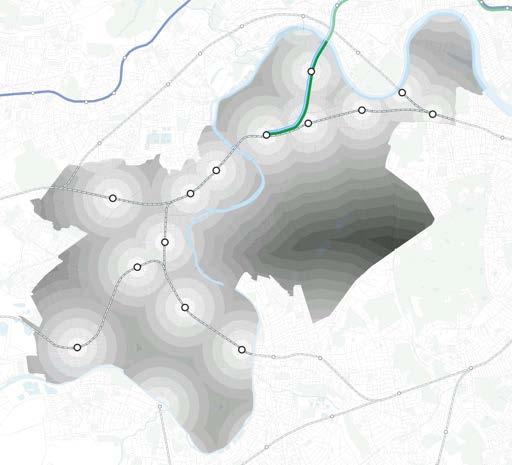
Locations in the Borough more than 400m from a bus Stop
• North Barnes
• East Kew
• Areas surrounding Richmond Park
• Ham/West Petersham
• South St Margarets
• South Heathfield
• West Hampton Hill
• Southern Hampton
• Richmond Park
Areas
along the Thames farther than 1km from a Pedestrian River Crossing
• Southwest Hampton
• Hampton Court Palace Golf Club
• Broom Road Recreation Ground
• Twickenham Riverside/Strawberry Hill
• Kew Riverside Walk
• Thames Path in Northwest and Southeast Barnes
1 Strategic Objectives
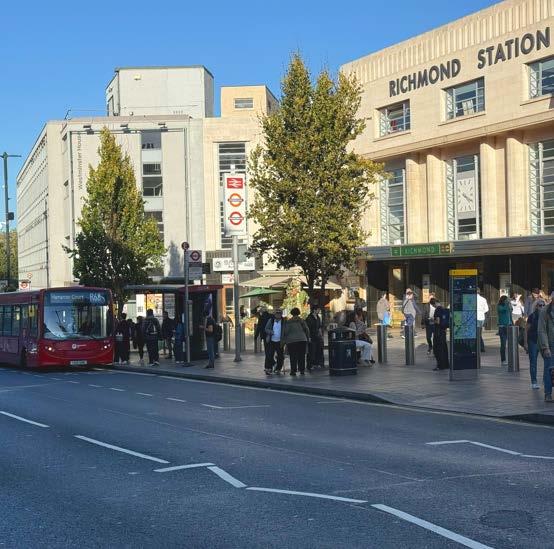
Drawing on the Borough vision and informed by best practice in European metropolitan planning, our objectives are grouped into four interlocking fields.
Environmental and Health Objectives
Motor transport is a major contributor to greenhouse gas emissions and local air pollution but, by contrast, walking and cycling is not only more sustainable but healthier and more affordable. The Council will aim to:
• Reduce transport-related carbon emissions in line with the Council’s climate emergency commitments
• Maintain nitrogen dioxide concentrations below legal limits across the borough
• Reduce noise exposure along major corridors
• Encourage sustainable and active travel through improved walking and cycling conditions
• Make design and planning decisions which mitigate flood risk
The above will be achieved in part by improving access to active travel and public transport, and enhancing electric vehicle charging opportunities.
Richmond has more EV Chargers per Resident than any other Outer-London Borough.
Borough
Ham. & Fulham
Westminster
City of London
Tower Hamlets
Ken. & Chelsea
Richmond
Southwark
Hackney
Wandsworth
Waltham Forest
Merton
Brent
Islington
Camden
Barnet
Kingston
Lambeth
Hounslow
Ealing
Haringey
Redbridge
Croydon
Newham
Sutton
Bexley
Enfield
Lewisham
Greenwich
Barking & Dag.
Hillingdon
Havering
Bromley
Harrow
Social and Accessibility Objectives
Mobility is a precondition of independence and opportunity. With our partners, the Council will:
• Provide equal mobility opportunities regardless of age, disability, income or digital access
• Ensure everybody lives within 400 metres of a bus stop or are supported with improved access to bus stops where they do not, progressively improve bus service frequency, and work with TfL to improve services at bus stops such as shelters and countdown boards
• Seek the delivery of step-free access at all rail stations by 2040, beginning with Kew Gardens, North Sheen and Hampton Wick
• Address severance caused by the Thames, the A316 and other major roads, railway corridors and large open spaces
Residents Achieving at least 20 minutes/day of Active Travel
Economic Objectives
Transport must support Richmond’s economy and town centres. The Council will:
• Improve access to Richmond, Twickenham, Teddington and other key employment, retail and leisure locations
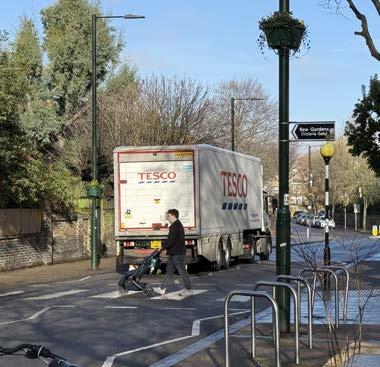
• Support efficient freight and servicing
• Improve reliability for buses and essential car journeys
• Advocate for improved regional and national rail connectivity and reliability
• Support design improvements and access to local high streets, promoting improvement of local economies
Institutional Objectives
Effective delivery depends on governance. The Council will:
• Maintain a public register of transport assets and their condition within the Asset Management Plan
• Integrate transport planning with housing, economic growth, regeneration and environmental policy led by the establishment of the Growth and Place Directorate bringing these functions together
• Publish annual updates of the Transport Strategy Action Plan and undertake quintennial reviews of the Strategy
2 Investment and Infrastructure Stewardship
Transport infrastructure represents one of the Borough’s most valuable public assets. Roads, pavements, bridges, rail stations, bus stops, towpaths and traffic signals collectively underpin everyday life.
The Council will adopt an asset stewardship approach structured around three strands: maintenance, enhancement and new provision.
Maintaining What We Have
All transport infrastructure in the Borough, regardless of ownership, will be subject to defined inspection and maintenance regimes, utilising the latest technologies and processes. This includes:
• Carriageways and footways
• Cycleways and shared-use paths
• Footpaths, alleyways and rights of way
• Routes through parks and open spaces
• Council-maintained bridges, retaining walls and subways
• Bus stops, shelters, seating and real-time information displays
Maintenance will increasingly be used as an opportunity to upgrade quality and accessibility. When pavements are renewed, tactile paving and dropped kerbs will be incorporated. When roads are resurfaced, drainage and safety improvements will be considered. Lighting upgrades will improve safety for women, children and vulnerable users.
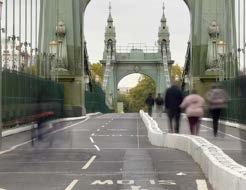
The prolonged closure of the Hammersmith Bridge owned and managed by a neighbouring Council has demonstrated the consequences of deferred maintenance. Richmond Council will prioritise early intervention and planned renewal to avoid similar outcomes.
Enhancing and Upgrading Existing Assets
While maintenance preserves function, many parts of the network require enhancement to meet current standards, specifically to be useable by disabled people.
Priority areas include:
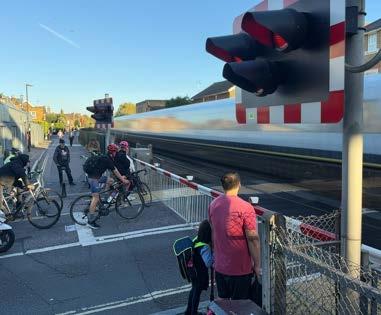
• Level crossings that adversely affect rail services, cyclists and pedestrians – especially those with disabilities
• Roads lacking pavements, for example Hospital Bridge Road, Park Road in Ham, and Oldfield Road in Hampton
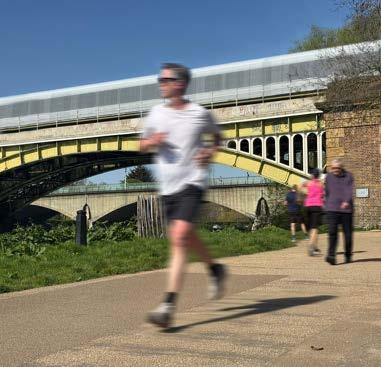
• Sections of the Thames towpath that are narrow, uneven or inaccessible
• Stations lacking step-free access
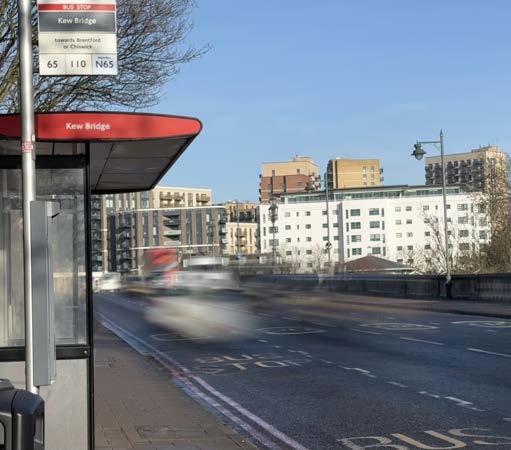
• Road bridges, including Kew, Richmond and Twickenham, which do not provide cycling quality consistent with surrounding routes
• Subways that feel unsafe or inaccessible
When works are undertaken on any part of our transport infrastructure, we will take the opportunity to evaluate opportunities to improve adjacent aspects. For example, when resurfacing a road, we will consider drainage, signage, road lining and parking arrangements to optimise transport value.
Improvements for walking and cycling will be delivered alongside bus priority measures where appropriate. Public realm enhancements and greening will be incorporated to improve environmental quality, place-making and urban character.
The cumulative effect of these changes will be visible. People will see more proactive maintenance and fewer crisis interventions. They should see safer crossings, better walking routes and more coherent cycling links. They should experience improved bus reliability and stronger rail advocacy.
They should see that the Council is prepared with proposals rather than waiting for opportunity to pass by. Over time, the Borough’s infrastructure should no longer feel like a legacy reluctantly maintained, but like a network deliberately shaped.
Building the Infrastructure the Borough Needs
Some improvements require new infrastructure.
The Council will continue to advocate or develop business cases for:
• Crossrail 2
• A new pedestrian and cycle bridge between Ham and Twickenham
• Rail service improvements on the Hounslow Loop and Shepperton line
• Improved rail access to Heathrow
• Expanded cycle parking at stations and town centres
• Connecting cycle routes to reduce gaps in journeys, allowing a wider range of users to feel comfortable cycling
• Mobility hubs combining cycle hire, car clubs and charging infrastructure
• Freight consolidation hubs to facilitate last-mile delivery by smaller, cleaner vehicles
The Borough’s main bottlenecks, including where roads pass over and under the railways and where main roads meet, will be identified and prioritised for improvement according to their impact on safety and those traveling on foot, by bike and bus. Accepting that many of these larger capital projects and resolving bottlenecks are outside direct Council control, the Council will play an active role in safeguarding routes, building evidence and lobbying for delivery.
The Asset Management Plan
To ensure effective infrastructure stewardship, the Council will produce an Asset Management Plan that will help:
• Implement a rolling five-year asset management programme
• Prioritise preventative maintenance
• Integrate accessibility upgrades into renewal works
• Develop prioritised enhancement schemes
• Maintain a pipeline of future infrastructure works
• Actively lobby for funding and delivery of strategic infrastructure schemes
• Maintain an annual forward transport infrastructure programme within the Transport Strategy Action Plan
Urban Quality, Safety and Environment 3
First and foremost, the transport system must be safer, particularly for vulnerable road users and those with health problems. Richmond supports Vision Zero and aims to eliminate deaths and serious injuries on its roads by 2041. However, London-wide the trajectory is not on target. Any collision hotspots will therefore be reviewed and addressed. 20mph compliance will be strengthened. School Streets will expand where practicable. Pedestrian crossing times and countdown facilities will be improved.
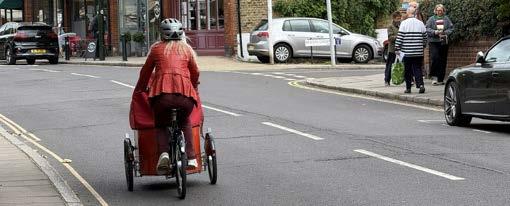
Given the impact of larger vehicles on the environment and to help reduce conflict with other road users, particularly pedestrians and cyclists, the Council will support the movement of freight by smaller, more environmentally friendly vehicles and cargo bikes. We will support and expand opportunities for community cargo bike schemes.
To support sustainability and public health, the Council will expand electric vehicle charging infrastructure and support transition to a fully zeroemission bus fleet by 2035. Nitrogen dioxide levels will remain below legal limits by 2040.
Sustainable drainage and greening will be integrated into major street improvements and other improvements where opportunity allows. Transport assets and the public realm are key factors in the quality of the urban environment and how it is experienced.
Richmond benefits from better air quality than many London boroughs. However, areas adjacent to major roads and junctions experience NO2 emissions that exceed annual objectives. With air quality having a direct link with health inequality, the Council will take action to reduce the impact of transport-related pollution across the whole borough.
Areas in the Borough with Poor Air Quality
• Hospital Bridge Roundabout
• Whitton Road Roundabout
• King Street, Twickenham
• St. Margarets Road Roundabout
• Lower Richmond Road at Clifford Avenue
• Hampton Court Road at Kingston Bridge
Source: Annual Pollution Maps, londonair.org
•
To improve urban quality and safety, the Council will:
• Identify and remediate collision hotspots
• Strengthen 20mph compliance
• Expand the School Streets programme
• Upgrade
• Expand
• Support zero-emission
• Expand
transition by 2035
• Support
• Improved
• Integrate sustainable drainage and greening into major schemes
• Promote use of sustainable materials such as floodresilient bike paths
Source: TfL
Severity of Casualties at Given Vehicle Speeds
& Serious Casualties on Richmond Roads (2017-2023)
Source: Office for National Statistics, Number of Cars or Vans
Sustainable Mobility and Public Transport
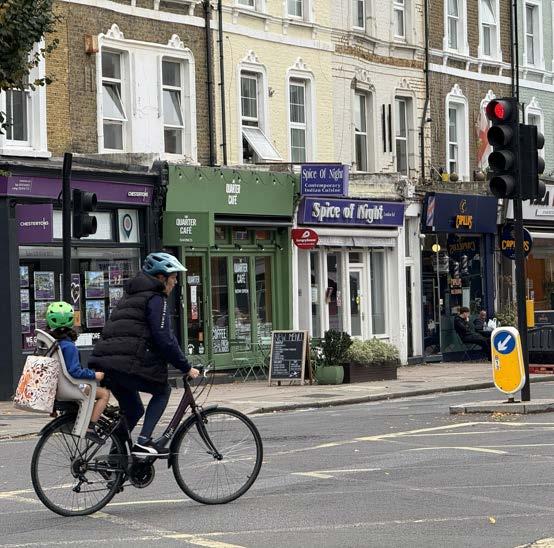
Walking, cycling and public transport form the backbone of a sustainable transport system.
The Council will develop a borough-wide high-quality walking network and a joined-up protected cycling network linking town centres, schools, parks and stations.
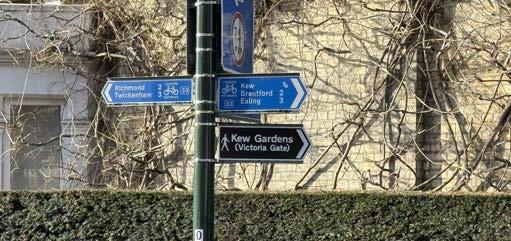
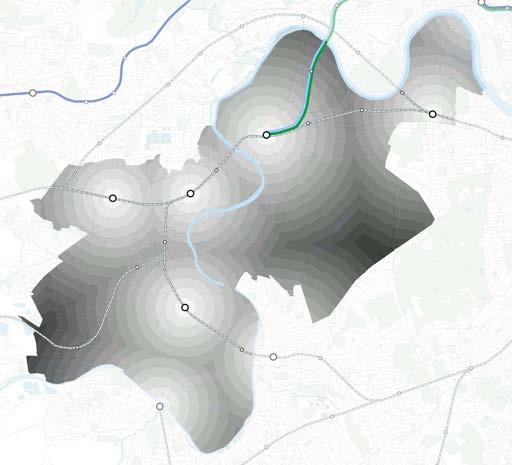
Rail services must be reliable and frequent. The Council will advocate for a minimum four trains per hour at peak across stations, reinstated Hounslow Loop services, strengthened Shepperton line stopping patterns and reliability, and full step-free access by 2040. The borough’s rail corridors are strongly aligned with the future economic drivers identified in the Richmond Growth Plan.
Bus services will be monitored annually. East–west connectivity will be improved. Bus priority measures will be implemented where highway design contributes to delay. Every home should lie within 400 metres of a bus stop and, where this is not possible, walking and cycling connections to public transport will be prioritised.
A new Walking and Cycling Strategy
To strengthen sustainable mobility, the Council will publish a new Walking and Cycling Strategy setting out the strategy for:
• Delivering a phased walking and cycling network programme
• Expanding cycle parking provision
• Making walking and cycling the preferred choice of travel
• Enabling active travel to access town centres and high streets
The Public Transport Plan
A Public Transport Plan, updated annually, will also be published, which amongst other things will:
• Advocate for a minimum four trains per hour at peak times on local services
• Annually review train and bus performance and services
• Recommend rail improvement and expansion schemes
• Consistently monitor for gaps in bus routes, and recommend bus priority schemes to improve speeds in the borough
Current Train Frequency by Station Trains per hour, single direction, peak hour
5 Accessibility and Inclusion
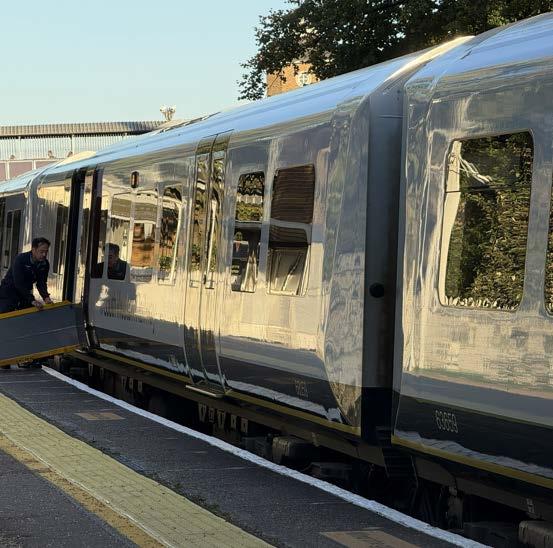
Despite improvements over recent decades, many people still experience barriers to movement.
Notwithstanding the measures already discussed in this document, the Council will implement a borough-wide accessibility programme addressing:
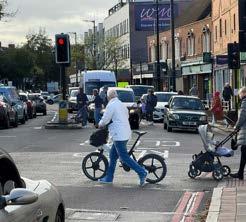
Dropped kerbs and tactile paving
Prevention of vehicles blocking dropped kerbs
Removal of unnecessary street clutter
Proper maintenance of pavements, including street gritting
Improved lighting
Step-free station access
Accessible bus access
Accessible bus stop infrastructure
Equitable access to active travel opportunities
Equitable access to green and open spaces
Advocacy for affordable transport and discounted fare programmes
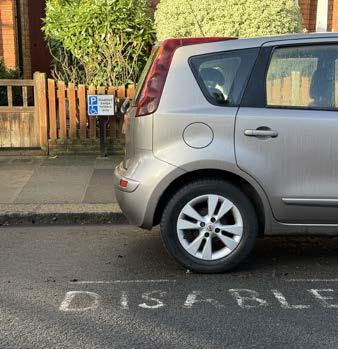
Sufficient disabled parking
Severance caused by the River Thames, major roads such as the A316, railway corridors and large open spaces will be systematically addressed. Improvements to crossings, bridges and routes through parks will improve connectivity.
Private cars will remain essential for many disabled residents and businesses. Suitable parking provision will be maintained, including Blue Badge spaces. The council will monitor and increase the provision of disabled parking spaces, and ensure that pedestrianisation schemes do not inadvertently isolate those with disabilities. Controlled Parking Zones will be reviewed and adjusted where supported.
The Accessibility and Inclusion Plan
To improve accessibility and inclusion, the Council will publish a borough-wide Accessibility and Inclusion Plan to help:
• Audit and prioritise dropped kerbs, tactile paving, lighting and other street improvements
• Advocate for better bus infrastructure and full step-free station access by 2040
• Address key severance locations through targeted capital projects
• Protect and review Blue Badge parking and Taxicard Provision
• Engage disability groups in scheme design, and improve non-digital engagement
6 Growth and Development
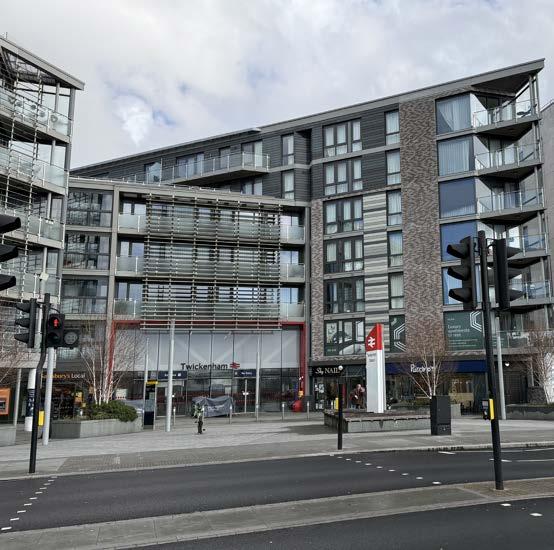
Transport and land use planning is and must be closely aligned if growth is to be sustainable.
Housing-led mixed-use development will be concentrated in locations with good public transport accessibility or where such accessibility can be delivered. New development will be expected to demonstrate how everyday needs can be met within reasonable travel times by walking, cycling and public transport.
The Richmond Growth Plan identifies the key drivers of growth over the next decade. These will drive employment, visits and increased journey demand.
The borough’s businesses and employers have emphasised the importance of good quality and reliable connections within the borough and beyond to support further growth and investment. Parts of the borough have poor connectivity, which prevents residents in those communities from being able to fully participate in economic opportunity.
The Council has a new Local Plan and will produce a new Transport Supplementary Planning Document in 2026 that will be valid for much of the period to 2040 setting out the transport requirements of development.
Council-owned car parks will be reviewed to ensure they are effective for users and efficient for taxpayers. This means considering income and occupancy rates, and consideration of a range of options including:
• Reconfiguration to improve services for users, including through EV charging and improved lighting and security
• Introduction of flexible pricing to manage pressure at peak times
• Complementary uses such as for consolidation hubs to reduce "last mile" traffic congestion for deliveries
• Rationalising provision to support regeneration and housing schemes, including affordable housing
Motor traffic congestion remains a key concern for residents and businesses. The Council will seek to accommodate growth without allowing unrestrained motor traffic growth to undermine network performance. Twenty-minute neighbourhood principles will help ensure that the highway network supports essential journeys while reducing unnecessary longer trips.
Demographic and behavioural changes, including an ageing population, flexible working patterns, new technologies and growth in home deliveries, will further shape transport demand, both in the number of people travelling, where they travel, and the way in which they move. Planning and kerbside management will respond to these trends.
The way we travel is also changing and will continue to do so. The future is not one where all working adults leave home at about the same time each morning.
Greater London travel patterns are less dominated on journeys exclusively in and out of Central London; as suburbto-suburb travel increases, services must reflect that. New types of travel and new business models, supported by automation and electrification, including e-mobility, home deliveries and taxi services, are transforming how people and goods move. In the coming decade our streets and new developments will need to provide ancillary space for these services.
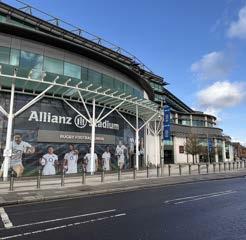
We recognise the economic, cultural and social value arising from the presence in the Borough of so many national and world famous places, including Kew Gardens, Hampton Court Palace, the Royal Parks and Twickenham Rugby Stadium. We appreciate that these places will to varying degrees wish to evolve, develop and diversify their offering.
We will work with them to ensure development is sustainable. This includes ensuring the neighbourhoods in which they are located are adequately served by sustainable transport, particularly where these neighbourhoods are currently in low PTAL areas.
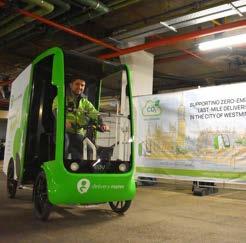
Cross River Partnership’s Pimlico micro logistics hub trial which supported lowemission last-mile deliveries in the City of Westminster - Source: CRP
High Streets, town centres and local parades
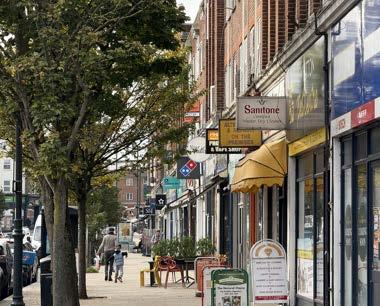
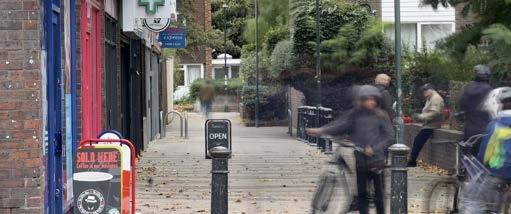
High streets, town centres and local parades in Richmond will remain thriving public spaces and meet the challenges caused by a high cost of living, online delivery alternatives and changing lifestyles. We will help to achieve this by improving the look and feel of places, by improving access to them by active travel and public transport, including improved interchange between different transport modes, and reducing through-motor traffic.
Places will be designed or redesigned to put people first. High Streets thrive when they are designed to be a place where people can and want to linger and enjoy.
Richmond and Twickenham Town Centres will lead the way through planned investments such as Twickenham Riverside.
This means reducing traffic congestion and improving air quality, reallocating space to favour people rather than vehicles, as is happening at Twickenham Riverside, and working with TfL to get buses moving more efficiently through town centres.
Our efforts will help support local businesses to provide a wide offer of services to the communities they serve, avoiding the need for people to travel longer distance to access basic services. We will ensure businesses and visitors are provided with good quality parking and servicing facilities, including for new forms of delivery services and vehicles.
Did you know?
Shoppers who walk to the high street typically spend 40% more than those who drive
Consumers typically refuse to travel more than 20 minutes to make everyday purchases
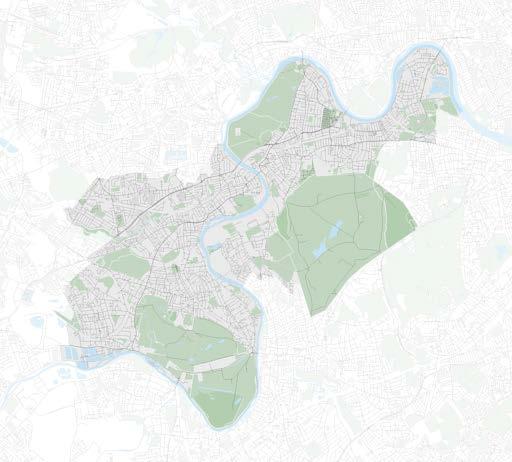
Planned Locations for Development of Housing units
Funding
Private developers will be expected to contribute to the infrastructure necessary to accommodate the Borough’s sustainable growth and add value to their investments. The Council will also set fees and charges for transport services such that those that cause greatest impact on the transport system and environment should expect to pay most. New transport markets, like e-mobility providers and electric vehicle chargepoint suppliers will be expected to provide both quality services to users whilst reinvesting a proportion of revenues into the Borough’s transport offering.
The Council will step up its lobbying for the Borough to receive its fair share of national and Londonwide budgets to make up for decades of underinvestment in local transport infrastructure. We will support the South London Partnership in making the case for greater attention and investment in our part of London.
To align transport and growth, the Council will:
• Require robust transport assessments for major developments
• Secure developer contributions for transport improvements
• Undertake a structured review of Council-owned car parks
• Seek new forms of funding from transport service and infrastructure companies wishing to operate in the borough
• Set fees and charges for Council provided transport and highway services to favour those who travel most sustainably
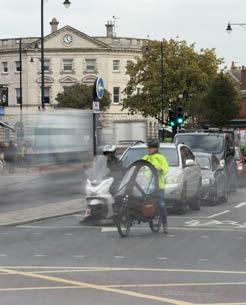
Regional and Strategic Connectivity
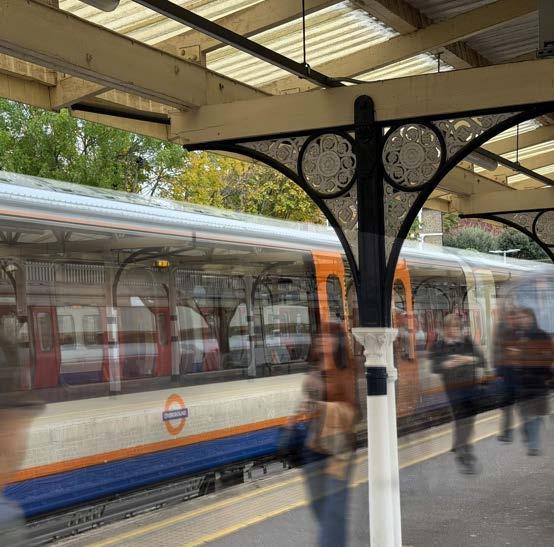
The Borough’s transport outcomes are shaped not only by local policy and investment, but by regional and national funding decisions. The Borough’s ability to meet its environmental, accessibility and economic objectives depends on fair access to strategic transport investment across London.
For many years, residents and businesses in Richmond have experienced comparatively lower levels of strategic transport investment than other parts of the capital. While major schemes have transformed connectivity in central, east and parts of north London, south-west London has not benefited proportionately from comparable levels of funding or network enhancement. This pattern reflects historic prioritisation choices in regional planning and funding allocations. It must not, however, be interpreted as a lack of need, ambition or strategic case from the Borough.
The Borough’s transport challenges are clear and well-evidenced
• Lower Public Transport Accessibility Levels (PTAL) in some neighbourhoods
• Rail lines operating with relatively low service frequencies compared to other parts of London
• Limited orbital public transport connections
• High reliance on private vehicles in outer neighbourhoods
• Historic underinvestment in bus priority infrastructure and rail modernisation
• Bottlenecks created by roads crossing railways that have not been addressed since the roads and railways were built
These outcomes are not the result of geographic inevitability. They are the result of prioritisation decisions. Insufficient or unreliable transport services create a vicious cycle: poor service reduces demand, which in turn leads to further service cuts. The Borough’s future case must therefore be articulated more strongly, not more modestly.
Mode Share of Trips Taken in Richmond (2025)
In 2025, 69% of trips made in the borough were by sustainable modes.
Our goal for 2041 is 75%.
South London Partnership and SubRegional Advocacy
Richmond is a member of the South London Partnership (SLP), alongside Croydon, Kingston, Merton and Sutton. The Partnership plays an important role in advocating for infrastructure investment across south London. However, transport priorities articulated at sub-regional level have often focused on major corridor improvements and interregional connections, without sufficient emphasis on neighbourhoodlevel accessibility, suburban rail enhancement and bus network reform.
Richmond will therefore take a more assertive role within the SLP to:
• Ensure that sub-regional transport strategies incorporate clear metrics on PTAL improvement, rail service frequency and bus reliability in suburban areas
• Promote suburban rail improved service standards across the southwest network
• Prioritise neighbourhood-level connectivity improvements alongside major corridor ambitions
• Embed accessibility equity as a core principle of sub-regional transport advocacy
Source: TfL LB Richmond upon Thames Healthy Streets Data Pack, Dec 2025
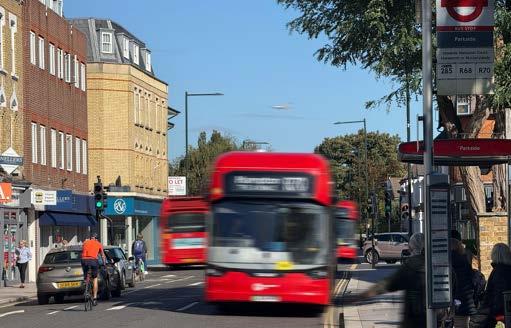
While large strategic schemes are important, the evidence is clear that internal connectivity deficits — particularly in outer residential neighbourhoods — are among the most significant contributors to car dependence in the Borough.
If these deficits are not addressed, progress toward London-wide sustainable mode share targets will remain constrained.
The Council will support the development of a strengthened South London Sub-Regional Transport Plan that includes transparent investment pipelines, performance targets and funding alignment with London’s 80% sustainable mode share ambition by 2041.
We will also forge new relationships with our neighbouring boroughs to the north and west, along with transport operators, to promote joined up transport services and networks and not ones that stop or change at borough boundaries. This includes improved and integrated bus routing, cycle infrastructure, and congruent cycle hire schemes between boroughs that will also help Richmond residents access the wider public transport network available in places like Hounslow and Kingston.
Rail Connectivity
For most residents in the Borough, their nearest station is served by Network Rail services only. Of the 16 stations in the borough, just two (Richmond and Kew Gardens) offer London Overground and Underground services. Richmond is served primarily by South Western Railway services. While these provide important connectivity, service frequencies on some lines — including the Shepperton line — are lower than comparable suburban rail corridors elsewhere in London. Service reliability and cancellation rates have also affected public confidence.
The concept of tube-like suburban rail — delivering higher frequencies, simpler stopping patterns, step-free access and integrated ticketing — has long been recognised as a pathway to unlocking capacity and improving customer experience in south London.
Richmond will continue to advocate for:
• Minimum four trains per hour at peak times across all local stations
• Step-free access at all stations by 2040, beginning with Kew Gardens, North Sheen and Hampton Wick
• Reinstatement and strengthening of local stopping services
• Service integration and branding where it supports clarity and reliability
• Improved rail access to Heathrow Airport
Improved rail frequency and reliability are essential to reducing car dependency in outer neighbourhoods and achieving London’s wider sustainable travel targets. Employers tell us that it is also a key constraint on economic growth.
Bus Connectivity and Orbital Links
The Borough’s bus network is essential to local accessibility, particularly in areas with low PTAL. However, residents have consistently identified gaps in direct routes, east–west connectivity and frequency levels. In outer neighbourhoods, peak frequencies can fall below the four buses per hour threshold that provides a “turn up and go” level of service.
The Council will work with TfL to:
• Improve east–west connectivity between Kew, Sheen, Barnes, Twickenham and Hampton
• Strengthen links between outer neighbourhoods and key town centres
• Strengthen links to neighbouring boroughs
• Enhance bus priority where highway layout contributes to delay
• Ensure service levels support London-wide mode share ambitions
The Borough will also advocate for orbital bus improvements at sub-regional level, ensuring that south-west London benefits equitably from investment programmes.
Area-Based Strategic Planning for Low PTAL Neighbourhoods Investment Equity and Accountability
Ham, Hampton, Heathfield and Whitton exhibit some of the lowest PTAL ratings in the Borough. Addressing accessibility inequity in these areas is critical to achieving both environmental and social objectives.
Ham benefits from an established Neighbourhood Plan that already articulates infrastructure constraints, connectivity needs and sustainable movement priorities. The Council will ensure that transport investment in Ham cascades directly from the objectives and evidence set out in that Plan, aligning capital prioritisation with the community-led vision. For Hampton and Heathfield (including Whitton), the Council will prepare dedicated Transport Plans.
These plans will:
• Identify infrastructure constraints, including severance and missing links
• Assess walking and cycling connectivity gaps
• Review bus frequency, reliability and route structure
• Explore demand-responsive transport potential
• Prioritise investment interventions in line with boroughwide strategy objectives
The outputs of these plans will directly inform future capital programmes, Local Implementation Plans and funding bids. This area-based approach ensures that advocacy at subregional and London level is supported by clear, evidencebased local priorities.
The Council will strengthen transparency in transport investment by publishing annual monitoring that includes:
• Progress toward PTAL improvement in priority neighbourhoods
• Rail and bus service frequency metrics
• Funding secured relative to identified need
• Progress toward step-free station delivery
• Alignment with London’s sustainable mode share and Vision Zero targets
Underinvestment in south-west London must never be defensible on the grounds of silence or lack of ambition. The Council will articulate clearly and consistently the strategic case for fair funding, backed by data, neighbourhood plans and deliverable proposals.
The Council will actively advocate within the SLP, with Transport for London and with national government to rebalance transport investment toward south-west London.
We will ensure that neighbourhoods with the poorest public transport accessibility — including Hampton, Ham, Heathfield and Whitton — are supported by detailed local plans, clear prioritisation frameworks and persistent, evidence-based advocacy for funded delivery.
8
Delivery, Funding and Monitoring
Transport budgets face sustained pressure. TfL grants have reduced in real terms and public finances are constrained. Delivering this Strategy will require careful prioritisation, partnership working and active pursuit of funding opportunities.
The Council will:
Prioritise essential infrastructure and services in its capital and revenue programmes
Improve and diversify delivery methods to help improve infrastructure in the borough that is not owned by the council
Secure developer and other private sector contributions to support sustainable growth
Require new mobility providers to contribute appropriately to infrastructure
Advocate for Richmond to receive its fair share of London-wide and national transport funding
Annual monitoring of the Transport Strategy Action Plan will track:
• Modal share trends
• Safety outcomes
• Air quality performance
• Accessibility improvements
• Rail and bus service levels
• Infrastructure condition and investment equity
The Strategy will be formally reviewed every five years to ensure it remains aligned with evolving funding, technology and policy contexts.
A notable proportion of the Council’s transport budget is provided by TfL to complete schemes in the borough. For simplicity and transparency, the funding breakdown can be represented by the four project types illustrated below. ‘Bus Priority’ projects are those such as SL7 improvements, or upgrades to bus stops. ‘Walking & Cycling’ projects are schemes such as a pedestrian accessibility audit or improvements to cycle infrastructure. ‘School Streets’ schemes focus on improving safety around local schools. ‘Collision Reduction & Traffic Management’ projects focus on improving safety and congestion at hotspots such as St. Margarets Road.
Beyond budgets provided by TfL, transport schemes are also funded by the Council to complete works. However, it is crucial to diversify funding streams, and continue working to secure developer and private sector investment to ensure key projects can be delivered for residents.
Allocation of TfL Funding for 26/27 Financial Year
Project Type
of Funding
9
Governance and Conclusion
This Strategy sets a course to 2040. But its credibility will be judged much sooner.
By the first formal assessment juncture in 2030, residents should be able to see and experience tangible change — not simply in plans, but in infrastructure, accessibility, governance and confidence.
By 2030, the fundamentals must be demonstrably in place. The Borough should have completed a comprehensive accessibility audit across its transport network — covering pavements, crossings, stations, bus stops, subways, signage and street environments. That audit must not sit on a shelf; it should have informed a prioritised programme of physical improvements.
Unnecessary barriers — physical, visual or procedural — should have been systematically removed. Street clutter that restricts wheelchair movement should be eliminated. Signage that implicitly excludes non-standard cycles, adapted cycles or cargo bikes should be reviewed and amended unless there is a clear and defensible safety case. Infrastructure should reflect inclusion by default, not exception.
Dropped kerbs, tactile paving and inclusive crossing timings should no longer be sporadic enhancements but embedded standards. Renewal schemes undertaken between 2026 and 2030 should show a consistent pattern: when we intervene, we upgrade.
By 2030, asset management must also have matured. The Borough should have an established and publicly understood forward infrastructure programme.
Preventative maintenance should have reduced emergency interventions. Asset condition data should be transparent and routinely reported.
In short, the basics should no longer be in question. But 2030 should also mark progress in ambition.
At least several borough-wide connectivity improvements — whether new protected cycle corridors, bus priority schemes or significant public realm interventions — should have moved from concept to delivery or active construction. A prioritised list of business cases for larger strategic projects requiring multimillion pound investments should be prepared and ready for funding windows, not awaiting initial scoping.
Equally important is how the Council engages and advocates. The Active Travel Advisory Group, meeting regularly in advance of Transport and Air Quality Committee sessions, should continue to develop into a meaningful forum shaping scheme design and delivery priorities. The Public Transport Liaison Group, meeting biannually, should be strengthened in its influence, breadth of external representation and transparency, with clearer reporting on service performance, reliability trends and investment requests in advance of meetings. The proposed partnership arrangements to accompany the Richmond Growth Plan will provide a further powerful source of advocacy.
Beyond these established structures, the Borough should have explored and, where feasible, implemented more formalised public scrutiny sessions involving external transport bodies whose decisions materially affect Richmond. Network Rail, Transport for London, train operating companies and other infrastructure partners shape outcomes within the Borough yet are not directly accountable to it.
By 2030, Richmond should have proposed mechanisms to convene public-facing sessions that allow structured questioning, evidence presentation and transparency around service standards, investment priorities and performance metrics. Such scrutiny would not replace existing statutory processes. It would complement them. It would signal that Richmond expects partnership to be active, visible and outcome focused.
Finally, by 2030 the Borough’s targeted approach to inequality should be evident. Area-based transport and movement planning in neighbourhoods such as Ham, Hampton and Heathfield should have produced identifiable interventions — whether improved crossings, bus connectivity, safer walking routes or rail advocacy outcomes.
Public Transport Accessibility Levels may not yet be transformed, but the direction of travel should be unmistakable.
The first assessment point is therefore not about perfection and inevitably some of these objectives may prove too ambitious or reliant on misplaced confidence in other public body co-operation. Nonetheless, 2030 will be about proof. Proof that infrastructure is being properly stewarded. Proof that accessibility is being systematically improved. Proof that ambition is translating into delivery and pipeline. Proof that advocacy has become disciplined, culturally embedded and persistent. Proof that engagement and accountability of transport partners is deeper, broader and more transparent. Proof that location-based transport inequality has been assessed and is being addressed
If by 2030 residents can see that the Borough no longer merely maintains inherited infrastructure, but is actively reshaping it — and if partners recognise the Borough as organised, evidencedriven and assertive — then this Strategy will have achieved its first and most important milestone.
From that foundation, the 2040 vision becomes credible.