5.4 Biodiversity and Greening
Greening Basildon Town Centre presents a valuable opportunity to restore urban ecology, improve air quality, and strengthen climate resilience. The integration of green and blue infrastructure, including native planting, green roofs, and water features, can deliver ecological benefits even in compact urban settings. In-ground planting and rain gardens will help manage surface water and reduce flood risk, while also supporting biodiversity and enhancing the character of streets and public spaces.
A greener Town Centre will promote wellbeing, economic vitality, and residential appeal. Attractive, healthy streetscapes encourage outdoor activity, relaxation, and social interaction. Natural elements such as planting, materials, and views of nature can reduce sensory overload and foster calm. Sensory gardens and outdoor refuges offer multi-sensory experiences, especially valuable in busy urban environments. Tree planting will be prioritised to provide shade and mitigate heatwaves, improving comfort and supporting climate adaptation. These enhancements will help create a healthier setting for new homes and mixed uses.
Urban greening will also be used strategically to improve wayfinding and reconnect the Town Centre with nearby green assets, including Gloucester Park and the open spaces to the south and east. Tree-lined routes, planted gateways, and green corridors will improve access, support active travel, and better integrate the Town Centre into its wider landscape.
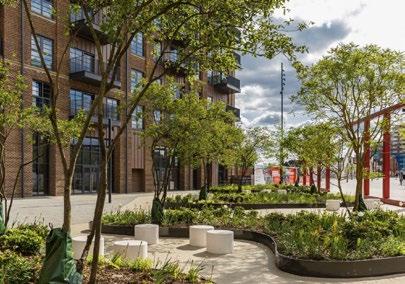

White Horse Square, Wembley (DSDHA) includes biodiverse planting beds with low-maintenance, pollinator-friendly species that provide an urban oasis for locals. Designed in collaboration with local groups. Photo: Dennis Gilbert / VIEW
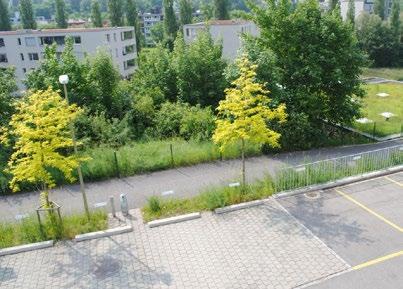
Futuro Office Park, Liestal, Switzerland. This permeable parking strip drains to an adjacent grassy swale and helps protect water quality. Photo: Laura Tam
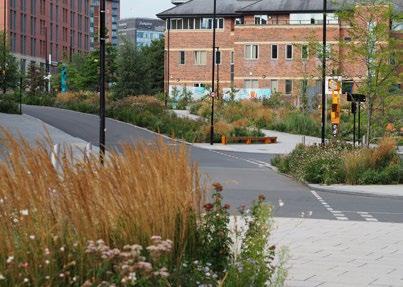
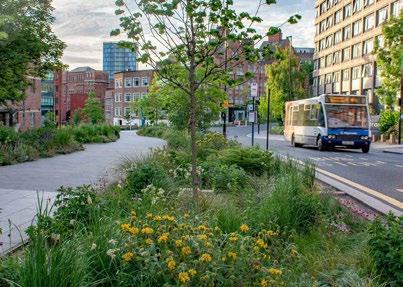
Grey to Green, Sheffield. In addition to its biodiversity benefits and improved surface water management, the project has stimulated economic growth, generating footfall and enhancing the food and drink offering in the area. Photo: Nigel Dunnet
Grey to Green, Sheffield (Sheffield City Council with Robert Bray Associates) is the UK’s largest retrofit SuDS project and also the UK’s largest inner-city ‘Green Street’.
Sovereign Square Park, Leeds (re-form Landscape) provides accessible green space for residents, workers, and visitors. Photo: Simon Vine
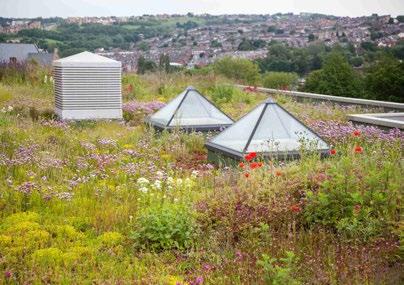
Sharrow School, Sheffield, is an example of a biodiverse green roof.
Policy TC4: Biodiversity and Greening
To promote ecological health through urban greening, all new development within Basildon Town Centre must align with Policy NE1: Conserving and Enhancing the Natural Environment and meet the following criteria:
a. Incorporate green spaces and, where possible, blue spaces that enhance biodiversity, contribute to climate resilience, manage surface water, create a pleasant environment, and support public health.
b. Tree planting must be prioritised to provide shade, mitigate urban heat, and support climate adaptation.
c. Integrate biodiversity-supporting features such as green roofs and walls, swift bricks or boxes, and pollinator-friendly plants.
d. Species selection should prioritise native and wildlife-friendly plants to support genuine ecological enhancement.
e. Provide inclusive and accessible green spaces that support relaxation and social interaction for residents, workers, and visitors.
f. Where appropriate, proposals should include sensory gardens or outdoor refuges to support inclusive design and mental wellbeing.
g. Urban greening should be used to enhance wayfinding and strengthen connections to surrounding green infrastructure, including Gloucester Park and adjacent open spaces.
h. Include educational signage in strategic locations to raise awareness of local biodiversity and nature recovery initiatives.
i. Ensure planting schemes are robust and responsive to local conditions, including microclimate and soil type. Long-term management plans must be submitted to secure the health and longevity of planting and green spaces. These plans should also include measures to prevent vandalism and promote community stewardship.