

Rhapsody in Stu
Holland & Knight’s Stuart Saft is the OG of New York real estate law.

DEI DOA in CRE?
Many firms are rebranding existing diversity initiatives and otherwise curbing inclusivity efforts amid federal pushback.
Won’t Get Fooled Again
A rise in mortgage and rental application fraud due in part to AI creates fertile ground for proptech firms.
Robert Knakal and Chase Garbarino.
Feeling It in Florida

West Palm Beach real estate is about to blow up big time, said experts at a Commercial Observer forum in Florida. Columns
Max Gross
in
Cathy Cunningham Executive Editor
Tom Acitelli
Deputy Editor
Isabelle Durso
New York Digital Editor
Greg Cornfield
Associate Editor
Skip Card
Copy Editor
Andrew Coen, Emily Davis
Julia Echikson, Mark Hallum, Brian Pascus, Amanda Schiavo
Staff Writers
Larry Getlen
Contributing Editor
SALES
Brigitte Baron
Senior Partnerships Director
Sona Hacherian
Strategic Account Director
Olivia Cottrell
Director of Client Marketing
Edward Cohen
Partnerships Director
Alina McInerney
Client Solutions Coordinator
MARKETING & EVENTS
Samantha Stahlman
Director of Audience
Josh Rozbruch
Social Media Manager
DESIGN, PHOTO & PRODUCTION
Jeffrey Cuyubamba
Art Director
Rohini Chatterjee
Senior Visual Designer
Total Frauds
New York City ups its fight against property deed theft as the red-hot housing market tempts criminals.
The Sit-Down
Gibson Dunn’s Krystyna Blakeslee.
Power Player
Holland & Knight’s Stuart Saft.
Thanks a Lot
Real estate gets no relief from Jerome Powell’s last Fed meeting as chairman.


Jim Sewastynowicz
Photo Editor
Eliot Pierce
SVP, Product & Operations
Ashley Roseman
Revenue Operations
Ramon Encarnacion
Reach higher with Ridgewood’s commercial lending solutions. Ridgewood serves the five boroughs, Westchester, Rockland, Long Island, the lower Hudson Valley, Northern New Jersey and Fairfield County, Connecticut. Our real estate experts have extensive experience with multi-family, mixed-use, retail, office and industrial properties. We offer financing up to 75% of the property’s appraised value. Plus, you’ll get personalized service from our all-local team every step of the way.

$22,000,000$15,500,000


$12,500,000$6,500,000





to

YOUR MOVE, YOUR HONOR
Griffin Expanding Miami Office Footprint Amid Mamdani Spat News
Citadel billionaire Ken Griffin is expanding the office footprint at his planned headquarters tower in Miami and is considering whether to take additional space for his companies following a public taunt from New York Mayor Zohran Mamdani
The mogul is already scrapping the hotel component within the 54-story Miami development, turning what was supposed to be a mixed-use high-rise into a stand-alone, 1.7 million-square-foot office building.
“We are focusing this part of our development at 1201 Brickell solely on commercial office space,” a Citadel spokesperson told Commercial Observer. “Miami is open for business, and the unparalleled quality of our development will drive the tenancy of leading global firms, including Citadel and Citadel Securities.”
The move was underway before Mayor Mamdani posted a video in April touting a proposed 5 percent tax on pieds-à-terre Mamdani filmed the video in front Griffin’s
Rithm
penthouse at 220 Central Park South, a parttime residence that cost a record $238 million in 2019.
Griffin has been weighing a larger footprint for both of his companies — hedge fund Citadel and market maker Citadel Securities — at the planned $2.5 billion Miami tower, with the possibility that the two companies could occupy the entire office component.
But no final decision has been made about the future footprints of the companies, per a knowledgeable source. Originally, the companies were expected to occupy between 300,000 and 400,000 square feet, with the remaining space leased out to other firms.
The potential change comes as Griffin threatens to cancel an office skyscraper planned in New York. The billionaire planned to break ground on a 62-story project at 350 Park Avenue this year and had moved up the timeline to buy a controlling
Capital Rebrands
Michael Nierenberg’s Rithm Capital has a new vision for the 16-building office portfolio it purchased from Paramount Group — one that’s going to come with $250 million of new capital improvements.
Rithm Capital is rebranding Paramount Group as Elecor Properties, a real estate platform that will aim to position what was Paramount’s 13.8 million-squarefoot New York and San Francisco office portfolio into upgraded Class A offices built for the changing workplaces of the post-COVID 21st century.
Nierenberg, chairman, CEO and president of Rithm Capital, told Commercial Observer exclusively that his firm aims to bring a hospitality mindset and approach to traditional office assets in two of America’s biggest cities and hottest office markets.
“We want it to be a more of a hospitality and lifestyle experience for folks who will be participants in the buildings, including some of the existing tenants,” said Nierenberg. “And to do that you have to differentiate your product offering from the legacy office buildings here in New York and San Francisco.”
Rithm Capital, an alternatives firm and publicly traded mortgage trust, acquired Paramount Group’s entire office profile in September 2025 for $1.7 billion, a deal that came days after Rithm acquired Crestline, a $17 billion private credit firm, in an ambitious push to expand the firm’s asset base.
stake in the 1.9 million-square-foot development from partners Rudin and Vornado Realty Trust
The mayor’s video promoting the pied-àterre tax proposal seemed to have struck a nerve at Citadel.
“It is shameful that he used Ken’s name as the example of those who supposedly aren’t carrying their fair share of the burdens associated with New York City’s often costly and wasteful spending,” Gerald Beeson, Citadel’s chief operating officer,
wrote in a memo to employees, reported by the Wall Street Journal in late April. “The project — if we move forward — will entail more than $6 billion of spending.”
Site work at 1201 Brickell Bay Drive in Miami is underway, with Related Companies serving as the development partner. The scrapped hotel component was meant to occupy about 413,000 square feet across 212 rooms on some of the upper floors. The 23,600-square-foot retail space is expected to remain. —Julia Echikson
Paramount Group as Elecor Properties

Today, Rithm holds $63 billion in investable assets, a $53 billion balance sheet, with its real estate and credit strategies executed across several operating companies that include Genesis Capital, NewRez and Sculptor
The rebrand of Paramount Group to Elecor Properties was sparked by a desire to distance the office assets that were owned by Paramount from the legacy noise surrounding the movie studio conglomerate Paramount, according to Nierenberg.
“The idea is let’s start something fresh and rebrand, because, quite frankly, Paramount as a brand does not work relative to Paramount the movie and entertainment business,” he explained. “With Elecor Properties,
we tried to come up with a name similar to Rithm: It’s not bravado; it’s unique and sounds nice. Elecor recalls something elegant and elevating.”
Peter Brindley, executive vice president and head of real estate at Elecor Properties, had been with Paramount Group for 15 years prior to the 2025 acquisition. Brindley will oversee the entire Elecor Properties office portfolio together with a group of leasing, acquisition and investment experts.
Nierenberg has empowered Brindley and his crew of office mavens to make decisions and “take the portfolio to the next level,” according to Brindley. The results speak for themselves: Rithm achieved 1.75 million square feet of leasing across its portfolio in 2025 — its highest volume ever.
“Everything we are doing is in recognition of companies that continue to choose to elevate the quality of their real estate,” said Brindley. “And the reason they’re choosing to elevate their real estate experience in this way is to enhance collaborative culture, energize their teams and drive productivity — it’s effectively this flight-to-quality phenomenon you hear about.”
To this end, Rithm will now invest $250 million into the Elecor Properties office portfolio with key joint venture partners.
Rithm’s office portfolio’s occupancy stands at 92 percent leased. —Brian Pascus
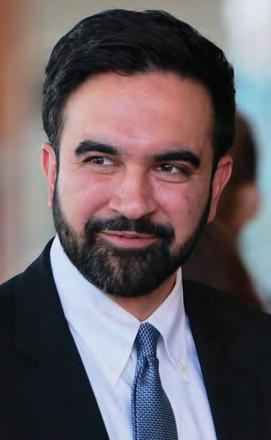
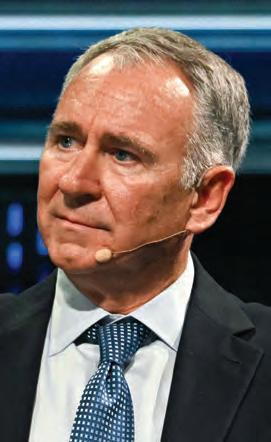
AT EACH OTHER: Zohran Mamdani (left) made Ken Griffin a media target in his recent tax push.
RITHM NATION: San Francisco’s One Market Plaza, part of Elecor.
MICHAEL
SMITH COLLECTION/GADO/GETTY IMAGES







Fetner, PGIM Acquire
Columbia Housing
Fetner Properties and PGIM closed on a $65 million sale-leaseback deal for 3260 Henry Hudson Parkway in the Bronx’s Riverdale neighborhood.
Columbia University sold the 126unit residential property known as Arbor to PGIM and Hal Fetner’s firm for a total capitalization of $73 million after deeming it was no longer a strategic asset for the school, according to sources familiar with the deal. Columbia currently uses the property for student and faculty housing.
The buyers secured a $47.6 million acquisition and bridge loan toward the purchase, upgrades and stabilization of the nine-story asset, sources said. When Columbia’s short-term lease turns over, the building will be converted from student housing to residential use, according to one source.
Newmark’s Adam Spies, Eric Roth, Brett Siegel and Tyler Signora negotiated the sale, and a Newmark team of Jordan Roeschlaub and Max Ralby handled the financing. It’s unclear who the lenders are.
Fetner, PGIM and Columbia did not respond to a request for comment, while Newmark declined to comment.
Columbia bought the then-new property in 2008 for $67.6 million from L+M Development Partners, which originally built it as condominiums. —Mark Hallum
New Hudson Square Resi Tower On the Way

GFP Real Estate Creates New Development Entity

Global Holdings and MAG Partners formed a joint venture to develop a new, ground-up residential tower at 122 Varick Street in Hudson Square under a long-term ground lease with Trinity Church
Kevin Donner from Cushman & Wakefield represented Trinity Church on the ground lease portion of the deal.
The new, 192,000-square-foot tower, being developed under New York State’s 485x development incentive, will include 149 rental units with roughly 25 percent designated as permanently affordable units. Plans also call for 5,000 square feet of ground-floor retail.
MaryAnne Gilmartin, founder and CEO of MAG Partners, emphasized the importance of Trinity’s participation in the deal. The church has owned the land around Hudson Square since 1705, when it was given a 215-acre land grant from England’s Queen Anne.
This is the second partnership for the two companies. Global Holdings, led by chairman and founder Eyal Ofer, and MAG Partners, led by Gilmartin, worked together to develop Anagram Turtle Bay, a 194-unit mixed-income residential building that is currently 87 percent leased. —Larry Getlen
GFP Real Estate is breaking away from the development portion of its company.
The family firm led by Jeff Gural is creating an entirely new entity, GFP Development, which will be led by his nephew Brian Steinwurtzel as CEO. The new entity will focus solely on development projects and opportunities in New York City and Jersey City, N.J.
Steinwurtzel has been in charge of GFP Real Estate’s development efforts for some time now, executing plans for buildings such as 100 Gold Street, 25 Water Street and 222 Broadway, some of the most high-profile office-to-residential conversions in Manhattan.
Now, he will have a little more freedom to move, the two executives told Commercial Observer exclusively.
“Our teams that work on [office leasing] are focused on our tenants and making their employees’ experience as good as possible,” Steinwurtzel said. “There’s almost a completely different team focused on acquiring these larger projects, designing and building them. While we’re all part of the Gural family, we’re all just really focused on two different tasks, even though it is within real estate.
“Our plan is to continue to win business,” Steinwurtzel added. “Our team has grown each year over the last five-plus years, and our investors continue to be extremely happy with the returns that we’re delivering to them.”
Steinwurtzel said the new organization will be “agnostic” in its approach to assets, as it has been in the past under his management involving office developments, life sciences facilities and ground-up residential developments.
Gural said the division of the company was designed in part to clear up any confusion about who is in charge of what the company is building. —M.H.

ABS Partners Plans to Build Housing at 515 West 57th Street
New York City-based investment firm ABS Partners Real Estate filed a rezoning application to build almost 400 units of housing in Midtown, where a television studio currently stands.
ABS is looking for land-use approval from the New York City Council to build a 30-story, 394-unit building 515 West 57th Street, where it signed a 75-year ground lease in October, according to a filing with the Department of City Planning
ABS purchased the ground lease for the three-story property between 10th and 11th avenues for $17.2 million from property owner Anton Duke’s Duke Holdings, according to property records.
If approved, ABS’s proposed development would include 119 affordable units under the city’s mandatory inclusionary housing requirements. At a total of 377,970 square feet, the project would also include a commercial component, but it’s unclear what the use will be.
The ground lease holder did not respond to a request for comment, while Duke Holdings could not be reached for comment. —M.H.
THE FUTURE: Plans call for 394 units.
SQUARE DEAL: The development is due to include 149 apartments.
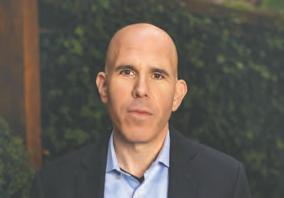
HE’S GOT THIS: Brian Steinwurtzel had long been running GFP Real Estate’s development efforts.
Vornado Buying 49% Stake in Park Avenue Plaza
Vornado Realty Trust is acquiring Zhang Xin’s 49 percent stake in Park Avenue Plaza, sources familiar with the transaction said.
Majority owner Fisher Brothers is remaining in the deal. The property has a current valuation of $1.1 billion, and the transaction includes the assumption of roughly $570 million in debt, sources said.
Newmark’s Adam Spies, Doug Harmon, Adam Doneger, Josh King, Marcella Fasulo and Avery Silverstein arranged the sale, sources said. Newmark declined to comment.
Fisher Brothers has owned the asset, at 55 East 52nd Street, since 1981. Xin’s Soho China purchased a 49 percent stake from Rockpoint Group in 2011. The stake was later transferred to Xin’s Closer Properties News of the trophy asset listing was announced in January. The 45-story tower spans 1.2 million square feet and was nearly fully leased at the time, The Real Deal reported, with firms like Evercore, Morgan Stanley and General Atlantic among its tenants.
The building was refinanced in 2021 with a $575 million commercial mortgage-backed securities debt package consisting of a $460 million senior loan and a $115 million mezzanine loan.
Vornado expects to close the acquisition in the second quarter of 2026, according to a news release, after which Vornado and Fisher Brothers will have joint control over major decisions.
Vornado declined to comment further on the deal. Closer Properties and Fisher Brothers did not respond to requests for comment. Cathy Cunningham and Emily Davis

YS Developers Buys RXR’s 47 Hall Street
Brooklyn-based real estate development and general contracting firm YS Developers scooped up a former industrial and office property in Clinton Hill, Brooklyn, at a nearly $40 million discount from Scott Rechler’s RXR
Rechler’s firm bought the full-block, 2.6acre development site at 47 Hall Street in 2016 for $161 million, according to property
records. RXR has now sold the vacant, 550,000-square-foot development property to YS Developers for $121.4 million, according to a release from broker JLL
But before parting ways with the 10-building assemblage — known as The Hall — between the Brooklyn-Queens Expressway and Flushing Avenue, RXR was able to get zoning approval for 650,000
Oxford Properties Appoints Sara Queen to Lead U.S. Business

Global real estate investor Oxford Properties Group appointed Sara Queen as its new executive vice president and head of U.S. operations, effective July 20.
Queen is currently a managing director and head of real estate equity at MetLife Investment Management, where she has worked for more than five years, according to her LinkedIn profile. During her tenure at MetLife, Queen successfully led a $38 billion real estate platform and managed a team of over 150 people across seven offices.
In her new role with Oxford, Queen will be responsible for overseeing the U.S. division’s growth and performance. Oxford’s U.S. market currently manages approximately $19 billion of assets and accounts for 40 percent of Oxford’s global portfolio, the company said.
“Oxford has built an exceptional U.S. platform, supported by a strategic investment mindset, landmark development projects and a strong operational and asset management foundation,” Queen said in a statement.
Queen will report directly to Oxford CEO and President Eric Plesman, who rejoined the company in November 2025 after stepping away for another role.
square feet of new housing, which YS Developers plans to pursue, according to the brokerage.
JLL’s Ethan Stanton, Michael Mazzara and Brendan Maddigan arranged the sale. RXR did not respond to a request for comment, while JLL declined further comment. YS Developers could not be reached for comment. —M.H.
Premier Equities Sells 1151 Broadway
Premier Equities, through the entity Premier 1151-1153 Broadway, offloaded the office and retail building 1151 Broadway for $29.2 million, according to city records made public April 28.
The New York-based private real estate investment firm founded by Yaron Jacobi and Uzi Ben Abraham lists its own office address inside the four-story building, situated along a prime retail corridor between West 26th and West 27th streets. The building’s new owner, ISL 1151, is a foreign limited liability company registered in Delaware. The LLC is tied to Imperial Sterling, PincusCo reported
The sale was followed by a mortgage agreement between ISL 1151 and J.P. Morgan Chase that consolidated prior mortgages at the property into a single, modified amount of $12 million. Premier Equities purchased the building — also known as 1151-1153 Broadway — in 2014 for $11.25 million, according to city records.
It is unclear whether any brokers were involved in the deal, or whether Premier Equities intends to remain in the building as a tenant. Premier Equities did not respond to a request for comment. ISL 1151 could not be reached for comment. —E.D.
ROYAL PREROGATIVE: Sara Queen will manage Oxford Properties’ $19 billion U.S. market.
THE BIG PICTURE: The full-block, 2.6-acre property in Brooklyn’s Clinton Hill comes with zoning approval for 650,000 square feet of new housing.
COURTESY
EarningsQ1
Demand From AI Firms Drives BXP’s Quarterly Leasing Surge
It was a good 2025 for the biggest Class A office owner in the country, and the first quarter of 2026 was no different.
BXP, which boasts a current portfolio of 50.4 million square feet across 164 properties, completed 68 leases during the first quarter of 2026 totaling more than 1.1 million square feet, including approximately 140,000 square feet of leases signed at 360 Park Avenue South in New York City and roughly 104,000 square feet of deals signed at 680 Folsom Street in San Francisco. Plus, as of March 31, BXP is in negotiations for another 1.7 million square feet of leases.
On an April 29 earnings call, BXP executives attributed much of the firm’s leasing success to high demand from artificial intelligence and technology tenants in its office portfolio, largely focused in San Francisco and in Manhattan’s Midtown South neighborhood. Hilary Spann, executive vice president of the New York region for the real estate investment trust, said that in Midtown South, the first quarter of 2026 captured as much AI demand as the entire first half of 2025, with demand accelerating quickly year-over-year.
Douglas Linde, president of BXP, also emphasized the firm’s focus on AI tenants during the call. “There is a clear acceleration of technology as these new AI-oriented companies absorb the majority of the incremental space in the market,” he said. “These companies are, relatively speaking, aggressively hiring people, and they’ve made a decision that in-place work is critically important to their
business strategies. So those are all great indicators, from our perspective.”
Besides leasing updates, BXP reported first-quarter earnings surpassing estimates, with funds from operations (FFO) for the period hitting $1.59 per diluted share, edging right past analysts’ predictions of $1.58 per share. It was a slight decrease from the REIT’s FFO of $1.64 per share in the first quarter of 2025 and $1.76 per share in the fourth quarter of 2025.

Meanwhile, the REIT’s net income reached $101.6 million in the first quarter, or 64 cents per diluted share, compared to $61.2 million, or 39 cents per share, during the same period last year. While net income certainly decreased from the firm’s reported $248.5 million in the fourth quarter of 2025, BXP’s earnings per share in the first quarter exceeded the firm’s own expectations by 31 cents per share, primarily due to “gains on sales recognized in connection with the disposition activity completed in the first quarter,” the earnings report said.
BXP’s total revenues also hit $872.1 million during the first quarter, compared to $865.2 million during the same period in 2025, according to the earnings report. Revenue was slightly down from the firm’s $877.1 million total in the fourth quarter of 2025 —Isabelle Durso
Newmark Beats Earnings Expectations
Real estate advisory giant Newmark posted better-than-expected earnings for the first quarter of 2026 and raised its full-year guidance, sending its stock price into the green.
Newmark reported total revenues for the quarter of $846.5 million, a 27.2 percent year-over-year growth from the $665.5 million the firm reported in the first quarter of 2025, according to the firm’s first-quarter earnings report. Analysts had expected Newmark’s revenue to come in at $748.7 million.
Adjusted earnings per share (EPS) were 33 cents for the first quarter of 2026, higher than the 21 cents per share reported for the same quarter last year. Analysts had expected Newmark to report earnings of 27 cents per share.
“Newmark continued its strong momentum in the first quarter by increasing total revenues 27 percent, and adjusted EPS 57 percent,” Newmark CEO Barry Gosin said during an April 30 earnings call. “This was our seventh consecutive quarter of double-digit, top-line growth, and eighth quarter in a row of double-digit earnings improvement.”
Office leasing momentum was strong across a variety of markets during the first quarter. Leasing and other commissions were up by 20.2 percent for the quarter, reaching revenue of $250 million, versus $208 million from the year-ago quarter.
Additionally, Newmark raised its guidance slightly for the full year. Revenue is now expected to come in between $3.77 billion and $3.87 billion in 2026, whereas the firm had previously estimated that full-year 2026 revenue would come in between $3.7 billion and $3.8 billion.
—Amanda Schiavo
Alexandria Real Estate Reports Increased Losses, Slow Leasing
The largest life sciences real estate investment trust (REIT) in the country continues to struggle with vacancies and poor balance sheet performance.
Alexandria Real Estate Equities posted first-quarter earnings results on April 28 showing just how saturated the market for lab space is, as funds from operations (FFO) and net losses snowballed into a disposition of assets and vexation among company executives.
Joel Marcus, Alexandria’s executive chairman and founder, lamented the attitude toward scientific research from the Trump administration and the larger trend in which growth in artificial intelligence has been prioritized, despite its inability to take the place of biomedical research.
“We are motivated each and every day by our solemn mission to enable this precious life science industry, one of the most treasured innovative industries on the face of the planet, to discover and bring to patients life-saving and life-changing therapies,” Marcus said during the earnings call. “How many of our friends, loved ones, still suffer from the likes of Parkinson’s, ALS, pancreatic, colon and breast cancer?”
The life sciences sector’s slow downfall was reflected in Alexandria’s first-quarter earnings. About 72 percent of its leasing activity was from existing tenants, totaling
647,356 square feet in the first quarter, down from the 1.2 million square feet leased during the fourth quarter of 2025.
Things were looking up a bit for development and redevelopment space, as Alexandria signed 117,935 square feet in that area, up 135 percent from the average over the last five quarters.
About 747,000 square feet of leases are expected to turn over in 2026, with about 45 percent of that expected to go vacant in the second quarter, according to the earnings report.
Meanwhile, FFO hit $295.9 million in the first quarter of 202, down from both $368.5 million in the fourth quarter of 2025 and $392 million in the first quarter of 2025, according to the REIT. Net losses hit $358.9 million in the first three months of the year.
The net losses have been steadily exacerbating over the last few quarters, with $368.5 million lost in the fourth quarter of 2025, an increase from the $234.9 million seen in the third quarter of 2025 and the $109.6 million recorded in the second quarter of 2025.
Revenue is also down. Total revenue for the first quarter was $671 million, compared to $754.4 million in the fourth quarter of 2025 and $758.1 million in the first quarter of 2025. —Mark Hallum
BXP President Douglas Linde talked up AI.
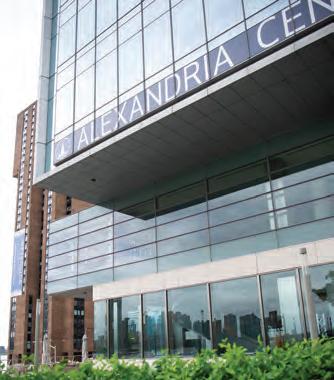
Alexandria Real Estate Equities has found itself caught in a general slowdown in the life sciences real estate market.

Blackstone Mortgage Trust Posts Mixed Results to Start 2026
Blackstone Mortgage Trust (BXMT) registered a first-quarter loss of $6.3 million, but exceeded Wall Street expectations.
The publicly traded mortgage real estate investment trust (REIT) reported a net loss of 4 cents per share with a distributable earnings per share of 49 cents, which beat analysts’ estimates of 38 cents. It had $46 million of realized losses during the quarter connected to the impairment of a San Francisco hotel loan.
First-quarter revenue at BXMT finished at $159.42 million, a 25.6 percent year-over-year increase and well above analysts’ forecasts of $84.8 million.
“BXMT’s first-quarter results clearly demonstrate the breadth of our platform and our ability to execute on both sides of the balance sheet amidst an ongoing real estate recovery,” Tim Johnson, CEO of the REIT, said on an April 29 earnings call. “We have a well-invested portfolio generating strong in-place current income allowing us to maximize return on new capital deployment.”
BXMT’s $19.7 billion loan portfolio ended the first quarter at 98 percent, with 51 percent of the debt concentrated in the multifamily and industrial sectors. The company closed $500 million of new investments for the quarter, which included $300 million of loan originations and $800 million of gross originations when factoring in loan syndications.
The first quarter saw BXMT execute its first data center loan for a fully-leased asset in Northern Virginia, and the REIT is targeting more deals in the sector by leveraging Blackstone’s equity platform, according to Austin Peña, president of BXMT.
“Blackstone is the largest financial investor in data centers globally,” Peña said on the call. “As a result, BXMT sits in an extraordinary position to identify and underwrite investments in this space.”
Johnson noted that BXMT has a pipeline of around $1 billion of originations lined up in the second quarter.
The mortgage REIT had its most active quarter in the net-lease space, according to Peña, with $192 million of investments in the first quarter, and has a pipeline of roughly $120 million in place for the second quarter. Peña said the net-lease platform has potential to grow two years after it established the business. —Andrew Coen
JLL Revenue Up by Double Digits — Again
Brokerage services giant JLL reported double-digit revenue growth during the first three months of 2026, the eighth consecutive quarter that overall revenue has increased by at least 10 percent.
JLL’s revenue increased by 11 percent during the first quarter to $6.4 billion, compared to increases of $5.7 billion during the first quarter of 2025 and $7.6 billion in the fourth quarter of 2025, according to the firm’s first-quarter earnings report released April 30.
JLL’s business lines led a lot of that revenue growth. Its real estate management services revenue increased 7 percent annually, while leasing advisory rose by 16 percent and capital markets services jumped 21 percent, with the latter largely led by investment sales, the report said.
Diluted earnings per share (EPS) was $3.33 for the quarter, up 192 percent annually. Share repurchases were $300 million during the period, the report said. Both the brokerage’s revenue and EPS were above analysts’ estimates.
JLL’s jump in earnings was supported by strong leasing momentum in the office and industrial sector, as well as a rising interest in data centers and artificial intelligence, JLL executives said during a Thursday morning earnings call.
“JLL achieved very strong results to start the year,” Christian Ulbrich, CEO of JLL, said in a statement. “We continue to deliver robust growth with margin expansion and market share gains as clients focus on trusted partnerships and the highest-quality insight and execution. In a fluid macro environment, our strategy positions JLL for long-term sustainable growth and expanding returns as we further build on our data and AI advantage and scale our core services.”
Ulbrich added that the artificial intelligence boom
has led to success in its leasing business, as a pickup in AI startup companies is causing an uptick in office demand, particularly in San Francisco and New York City.
After reporting the firm’s healthy revenue and leasing numbers, Ulbrich highlighted JLL’s cautious stance when it comes to the ongoing effects of tariffs and the conflict in the Middle East.
“The imposement of tariffs was an immediate kind of load to the economy and an additional cost. And, if the conflict [in the Middle East] would have been solved within four to six weeks, I would have said the impact outside of the Middle East would have been almost unnoticeable,” Ulbrich said during the call.
“But with every week this is continuing, we have these higher energy prices … and at some point [tenants] all have to pay for that higher energy,” he added. “And, so, the lengthening out of that conflict will have a heavier load on the global economy, and, frankly, especially in those countries where there is very, very high dependency on purchasing energy and on purchasing fertilizers and other products which are coming from the Middle East.” —I.D.

ESRT Reports Strong Balance Sheet Despite Headwinds
Empire State Realty Trust (ESRT) enjoyed its 19th straight quarter of positive leasing spreads in the first quarter of 2026, as pricing power increased despite market headwinds.
The real estate investment trust reported higher-than-expected revenues of $190.3 million in the first three months of 2026, its first quarter since consolidating its entire portfolio to New York City at the end of 2025. That revenue topped the $180.1 million in total revenues for ESRT during the first quarter of 2025, but fell short of the $199.2 million in the fourth quarter of 2025.
“We remain focused on a clear and consistent set of priorities,” Anthony Malkin, chairman and CEO of ESRT, said during an April 30 earnings call. “Lease our space, drive observatory performance, maintain a strong and flexible balance sheet, reallocate capital towards growth, maintain our leadership and sustainability.”
ESRT reported funds from operations (FFO) of 20 cents per share, up modestly from 19 cents per share in the same period of 2025, but down from 23 cents per share in the fourth quarter of 2025.
The first quarter saw several large retail acquisitions for ESRT, including the acquisition of a 22,000-square-foot newly constructed commercial property along North Sixth Street in Williamsburg, Brooklyn, for $46 million. The April deal added six new storefronts to the REIT’s existing 102,000-square-foot portfolio of investments in the popular retail corridor.
The REIT is also currently in contract to sell a 26-story office building at 250 West 57th Street along Billionaires’ Row in Midtown for roughly $280 million.
ESRT’s commercial portfolio reached 93.2 percent leased

last quarter, according to the report. Throughout the threemonth period, ESRT secured 113,484 square feet of new or renewed leases. ESRT’s office portfolio was 93 percent leased, according to the report, marking its 13th consecutive quarter with occupancy above 90 percent.
Marquee deals included J.P. Morgan Chase inking a 21,683-square-foot renewal at One Grand Central in February and footwear designer Steve Madden taking 60,003 square feet at 501 Seventh Avenue. The REIT reported that it recently secured a 38,084-square-foot, full-floor lease with a financial services tenant at 130 Mercer Street, as well.
“In today’s bifurcated market of haves and have-nots, ESRT firmly is in the have category,” Ryan Kass, senior vice president and director of leasing and marketing at ESRT, said during the call.
Approximately 280,000 square feet of leases are now in negotiation, company leadership said, and roughly 15 percent of its available office space in New York City is being held off-market for consolidation. The company has 29 spaces to lease today, 16 of which are full-floor footprints.
ESRT’s multifamily portfolio ended the quarter at 96.4 percent occupied, and was at 98 percent as of April 30, according to company leadership.
However, the Empire State Building’s observatory continues to be a pain point for the REIT, largely due to decreased visitation from international and budget-conscious tourists. Net operating income for the observation deck declined year-over-year by $3.5 million, although the first quarter of the year tends to be their seasonally lightest quarter. Company leaders said a recovery is expected in the latter quarters of this year. —Emily Davis
BXMT CEO Tim Johnson noted a full pipeline.
JLL executives said AI was aiding its business.
AISLE
CBRE Investment, MCB Real Estate Buy Grocery-Anchored Portfolio Retail
CBRE Investment Management, an independent affiliate and specialized investment arm of CBRE, has expanded its U.S. retail platform with the acquisition of a grocery-anchored portfolio spanning five states, according to an April 29 announcement
In a joint venture with Baltimore-based investment and management firm MCB Real Estate, the firms bought a retail portfolio that spans 1.1 million square feet across seven grocery-anchored properties in Hawaii, Louisiana, Minnesota, North Carolina and Texas. A spokesperson for CBRE Investment Management declined to disclose the portfolio’s purchase price.
“We’ve been building conviction in the durable income thesis of necessity retail for some time,” Liz Troni, portfolio manager for CBRE Investment Management’s U.S. direct core strategy, said in a statement. “New retail supply has been structurally constrained since the GFC [Global Financial Crisis], and grocery-anchored centers combine that scarcity with the daily-needs tenancy that holds up across cycles. This acquisition fits squarely with that conviction.”
The largest of the portfolio’s assets is the 285,518-square-foot Marketplace Shopping Center in Temple, Texas. Two other groceryanchored Texas complexes, Preston Trail Village in Dallas and Spouts Crossing in Hurst, are also in the portfolio.
The other locations in the portfolio are Riverview Shopping Center in Durham, N.C., Northlake Shopping Center in Mandeville, La., Eagan Town Centre in Eagan, Minn., and Kauai Village Shopping Center in Kapa’a, Hawaii.
MCB will serve as the portfolio’s operator, overseeing asset management and leasing. The platform currently reports 22 million square feet of real estate assets totaling $4 billion in value. More than $1 billion of that value has been acquired over the past 12 months, according to the April 29 announcement.
“Adding these institutional-quality and high-performing assets to our rapidly expanding national portfolio reflects both our conviction and the continued confidence investors have in grocery-anchored retail,” P. David Bramble, MCB’s co-founder and managing partner, said in a statement.
MCB most recently secured Costco as its retail anchor tenant at a 280-acre development north of Washington, D.C., in March, and it purchased a Bay Ridge, Brooklyn, department store at 458 86th Street in a joint venture in August.
News of the portfolio acquisition also comes as grocery-anchored retail centers continue to draw investment due to stable income and high foot traffic. Before CBRE and MCB, Nuveen Real Estate was the latest to follow that trend, raising $330 million in March to acquire grocery-anchored hubs across the U.S. —Emily Davis
Italian Restaurant Olio e Più to Open Eatery at Solil’s 106 Third Avenue
Italian restaurant Olio e Più signed a roughly 5,000-square-foot lease at 106 Third Avenue in Manhattan’s East Village, the former home of craft beer pub Brazen Fox.
The eatery’s new space is spread over two floors, with an outdoor patio on the second floor, according to Murro Realty’s Jarrett Sharp, who brokered the deal.
Sharp represented the tenant and worked directly with the landlord, Solil Management, to secure the space for Olio e Più, which has other New York City locations at 3 Greenwich Avenue in Greenwich Village and at 1065 Avenue of the Americas near Bryant Park, according to its website. The restaurant chain also has spots in Chicago and Washington, D.C.
The length of the lease is 15 years, and the asking rent was $45,000 per month. It is unclear when Olio e Più, known for homemade pizzas and pasta, will open its new East Village location.
The restaurant was founded in 2010 by entrepreneur Emil Stefkov, and the menu was crafted by Italianborn chef Danilo Galati. The first Olio e Più opened in Greenwich Village in 2010, and then debuted in Chicago in 2023.
“We’re excited to have a great concept like Olio in the East Village,” Sharp said.
Spokespeople for Solil Management and Olio e Più did not respond to requests for comment. —Amanda Schiavo

Saks Global Sells Scarsdale Shopping Center to Sagehall
A subsidiary of Saks Global — the parent company of luxury retailers Saks Fifth Avenue, Neiman Marcus and Bergdorf Goodman — sold 750 White Plains Road, a 200,000-square-foot mixed-use retail and medical property in Scarsdale, N.Y., to Sagehall, a fund managed by former Extell Development CEO Sush Torgalkar
The transaction is for upward of $80 million and closed on April 10, according to sources close to the deal.
Torgalkar previously purchased 110 High Ridge Road — the site of what was Lord & Taylor in Stamford, Conn. — from Saks Global in October 2025 in a $62 million transaction. The CBRE National Retail Partners team of Jeffrey Dunne, David Gavin and Travis Langer represented Saks in both transactions and arranged the deal with Torgalkar.
In prepared remarks, CBRE’s Gavin spoke to the strong demand for medical and mixed-use retail across the greater New York metropolitan area.
“Properties like 750 White Plains Road provide a unique combination of having stable tenancy with further value-add through lease-up of the remaining vacancy,” he said in a statement.
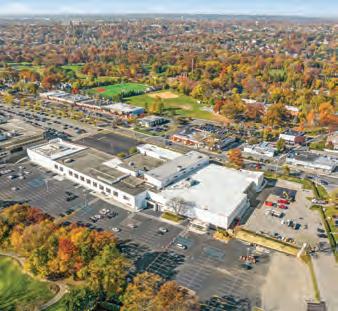
Located on the corner of New Wilmot Road and Post Road in Scaresdale, 750 White Plains Road opened in 1958 and was renovated in recent years, as it was formerly a Lord & Taylor department store.
Presently 64 percent leased, 750 White Plains
Road features a diverse array of tenants. White Plains Hospital, a member of the Montefiore Health System, opened in June 2025. Other tenants include Cava, Pottery Barn, Williams Sonoma and Equinox
The site also includes 670 parking spaces.
“The center’s highly prominent location within the dominant retail corridor in the market, combined with its strong anchor tenancy and surrounding demographics, will help the buyer complete the repositioning and lease-up of the center,” said CBRE’s Dunne in a statement.
The sale by Saks Global marks another turn in the restructuring strategy undertaken by CEO Richard Baker since Saks Global filed for Chapter 11 bankruptcy in January 2026. Saks Global has been under pressure to address its $3.4 billion in debt, much of it generated from the company’s $2.7 billion acquisition of Neiman Marcus Group in December 2024.
“They have a lot of debt, high-cost debt, and the thinking is, ‘We’ll raise money by selling real estate,’ so this is part of that whole plan,” said a source close to the deal.
Torgalkar did not respond to requests for comment. —Brian Pascus
FILLING OUT: The site is 64 percent leased.
CHEF’S KISS: Jarrett Sharp brokered the deal.
Office Leases of the Week



Cleary Gottlieb
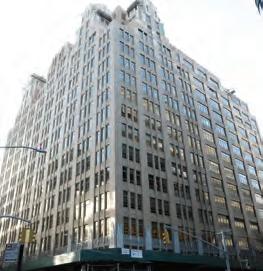
Brookfield Properties’ One Liberty Plaza signed Manhattan’s largest office lease in April, according to an office market snapshot from Colliers
Law firm Cleary Gottlieb Steen & Hamilton took 475,000 square feet at the 54-story Financial District office building, where it has been a tenant since 1990.
The length of the lease and the asking rent were not disclosed. However, the average asking rent for office space in Lower Manhattan was $62.21 per square foot in April, according
Anthropic
Anthropic, the San Francisco-based AI firm, is nearing a deal to lease AEW Capital Management’s entire 465,630-square-foot 330 Hudson Street in Manhattan’s Hudson Square.
While the 16-story building has some subleases running through September 2028, there are other available floors that will give Anthropic the elbow room it needs to expand from its current city digs at 155 Avenue of
to Colliers.
“We are pleased to recommit to our office in downtown Manhattan, with a new space in One Liberty Plaza,” a spokesperson for Cleary Gottlieb told Commercial Observer. “In the coming years, we will be moving to higher, completely redesigned floors, which will accommodate our growth and provide a welcoming environment for Cleary lawyers, professional staff and clients.”
The deal seems to represent a relocation within the building for the law firm. It’s unclear how much space Cleary Gottlieb previously occupied at the property.
Brookfield’s Mikael Nahmias, Daniel Roberts and David Caperna are listed as the
the Americas, where it leased around 15,500 square feet in 2024 and where the lease could expire this year.
It is unclear which brokers are repping the company locally in New York, but JLL has represented Anthropic in past deals in San Francisco, where it is expanding rapidly.
After Beacon Capital Partners signed a 99-year ground lease with Trinity Real Estate in 2011 for ownership control of 330 Hudson, the building was expanded by eight stories and entirely renovated.
The building was turned into two condominium lots in 2014 when Ivanhoe
spokesperson for Tennr did not respond to a request for comment.
in-house brokers for One Liberty Plaza on its website. Brookfield did not respond to a request for comment.
It is unclear who brokered the deal for the tenant.
One Liberty Plaza, located near the World Trade Center, was built in 1972 and is 54 stories tall. Other tenants in the building include law firm Chaves & Perlowitz and media company Business Insider —
Amanda Schiavo
Health care tech platform Tennr, which automates patient processing for referral-based care, signed a 124,733-square foot lease at Hudson Square Properties’ 345 Hudson Street, according to a Manhattan monthly office market report from Colliers
The new Hudson Square deal seems to represent a relocation for Tennr, which appears to currently have an office address at 275 Seventh Avenue in Chelsea, according to press materials dated from 2025. A
Jump Trading
Trading firm Jump Trading secured a new office space at Related Companies’ 50 Hudson Yards in Manhattan, according to Colliers’ April office leasing report.
Jump Trading, founded in 1999, specializes in algorithmic and high-frequency trading across global financial markets. Its new Hudson Yards lease spans 99,305 square feet.
The deal marks Jump Trading’s 13th office location globally and doubles its New York City office footprint and headcount, according to a source close to the deal. The
The length of the lease and the asking rent were unclear, but the average asking rent for office space in Lower Manhattan was $62.21 per square foot in April, according to Colliers.
Hudson Square Properties — a joint venture involving Hines, Trinity Church Wall Street and Norges Bank Investment Management — did not respond to a request for comment.
CBRE’s Benjamin Joseph, Zachary Price, Paul Amrich and Howard Fiddle are listed as the brokers for 345 Hudson Street
company’s LinkedIn page lists its other New York City office at 15 East 26th Street in NoMad, as well as 12 other offices globally.
It is unclear whether the tenant or landlord worked with outside brokerages in the deal. The length of the lease and the asking rent were also unclear, but office asking rents in Midtown South averaged $79.86 in April, according to Colliers.
With 2.9 million square feet of commercial space, Related’s 50 Hudson Yards ranks among New York City’s largest commercial office towers. The 58-story building has claimed a series of high-profile tenants since its 2022 opening, including BlackRock, which in October expanded its footprint
Cambridge and Callahan Properties purchased a 49 percent stake for $148.5 million under the moniker 330 Hudson REIT. They exercised an option to take full ownership in 2016 for $317.8 million.
Boston-based AEW Capital Management purchased the building in 2018 for $385 million from the Ivanhoe Cambridge and Callahan Properties entity.
There is also around 20,000 square feet of retail space in the base of the building. Anthropic will likely be taking over floors over time. — Lois Weiss
on CBRE’s website. The CBRE brokers did not respond to requests for comment. It is unclear who brokered the deal for the tenant. Built in 1931, 345 Hudson Street was redeveloped by Hudson Square Properties around 2023. Other tenants in the building include mobile banking company PayPal, radio streaming service Audacy New York, and digital sports platform Fanatics — A.S.
there to more than 1.2 million square feet, and Meta, which currently leases space across 19 floors.
Jump Trading declined to provide details on the transaction, and a spokesperson for Related did not respond to a request for comment. — Emily Davis
Office Leases of the Week




Sierra, an artificial intelligence firm that provides businesses with customer support, is opening offices in Midtown South.
After announcing in May 2025 that it would establish a New York City presence, Sierra signed a 94,145-square-foot lease at Rockrose Development’s 11 East 26th Street, according to a monthly Manhattan office report from Colliers
The deal represents Sierra’s second office location in New York City, following its first lease for a 14,563-square-foot office space at
Steve Madden
375 West Broadway in SoHo in October.
Spokespeople for Rockrose and Colliers did not respond to requests for details about the length of the lease and the asking rent, but asking rent in the building was $145 per square foot in February, Commercial Observer previously reported
The San Francisco-based AI firm, which has offices in Atlanta, London, Singapore, Tokyo, Paris, Madrid and Toronto, was founded in 2023 by Bret Taylor and Clay Bavor, according to the company website
It’s unclear who brokered the deal, but CBRE represented Sierra in its SoHo deal in October.
Rockrose is owned by Henry and Justin
Elghanayan, a branch of the same family that owns and operates development firm TF Cornerstone
Other tenants at the 22-story office building between Madison and Fifth avenues include Activate Consulting, which expanded to 24,144 square feet in February, and lighting manufacturing company Lutron Electronics, which took 12,074 square feet on the entire 21st floor in October 2025 — Mark Hallum
comment.
Shoe and accessories retailer Steve Madden signed a 13-year, 60,003-square-foot office lease at Empire State Realty Trust (ESRT)’s 501 Seventh Avenue in Midtown, the landlord announced in its first-quarter earnings report
Asking rent was in the low $60s per square foot.
The deal represents an office relocation for Steve Madden, which currently has its
corporate headquarters at 52-16 Barnett Avenue in Long Island City, Queens, according to the company website.
ESRT was represented in-house in the deal by Jordan Berger, Kerry Lavelle and Shanae Ursini, as well as by Cushman & Wakefield‘s Rob Lowe, Ron Lo Russo, Samantha Perlman, Daniel Organ and Harley Dalton Savills‘ Scott Weiss, Erik Schmall and Jack Warren brokered the deal for Steve Madden.
C&W declined to comment, while spokespeople for Savills, Steve Madden and ESRT did not respond to requests for
building owner and operators the Durst Organization and the Port Authority of New York and New Jersey.
The deal marks ECP’s third expansion at One World Trade Center since 2017, when the firm initially leased just 6,173 square feet.
In April 2025, ESRT re-signed another fashion tenant to the office building on the corner of Seventh Avenue and West 37th Street when luxury fashion brand Carolina Herrera renewed and expanded its lease there to 34,000 square feet.
Located near Pennsylvania Station, 501 Seventh Avenue is an 18-story office property built in 1923. Other tenants — both corporate and retail — at the building include Japanese restaurant Roppongi 37, public relations company Coyne PR, and private security firm Allied Universal — A.S.
asking rent were not disclosed. The average asking rent for the Class A office property in the Financial District was $77.18 per square foot in the first quarter of 2026, according Colliers
Energy Capital Partners (ECP), an energy transition infrastructure-focused investment firm, expanded its presence at One World Trade Center to 70,425 square feet.
The company is expanding its office footprint by 44,133 square feet to span the building’s entire 59th floor, while maintaining the 26,292 square feet it currently occupies on the 58th floor, according to
60,003 Relocation Cipher Digital
26,400 Relocation
H.J. Kalikow ’s 101 Park Avenue saw some significant office leasing activity last week.
In the largest of the new deals, data center developer Cipher Digital plans to relocate to the 49-story Midtown office tower from SL Green Realty ’s One Vanderbilt after leasing roughly 26,400 square feet on the entire top floor of 101 Park.
Cipher Digital develops and operates data centers for bitcoin mining
“As we scaled our company, we decided again and again to grow within One World Trade Center,” Murray Karp, managing partner at ECP, said in a statement. “The building offers an ideal commute for our expanding team, amenities, unmatched views, and a shared commitment to innovation and sustainability.”
The length of the new lease and the
and highperformance computing.
The asking rent and the length of the lease were not disclosed, but the average office asking rent for Midtown was $85.11 per square foot in March, according to CBRE
Cushman & Wakefield’s John Cefaly and Nicholas Dysenchuk represented H.J. Kalikow, while David Carlos and Andrew Dzenis of JLL negotiated on behalf of Cipher Digital.
C&W and JLL did not respond to requests for comment.
Other tenants at 101 Park Avenue include law firm Fox Rothschild and
Durst was represented in-house by Eric Engelhardt, Karen Rose and Sayo Kamara, as well as by Newmark’s David Falk, Peter Shimkin, Hal Stein, Nathan Kropp and Paige Raisides Eric Zemachson and Corey Borg from Newmark represented the tenant.
“We are proud that ECP and many other companies have chosen to stay and grow [at One World Trade Center,]” Durst President Jody Durst said in a statement. — A.S.
Robert Half Recruiters & Employment Agency, as well as AKC Museum of the Dog and Five Iron Golf in the property’s retail space. — M.H.
Debt Deals of the Week

TD Bank, RXR Provide $101M Construction Financing for Charlotte, N.C., Development
The Fallon Company has secured $100.5 million in construction financing to build Twelve03 at Centre South, a 329-unit multifamily complex that marks the first phase of a 16.7-acre mixed-use development in Charlotte, N.C.
TD Bank provided the senior construction loan and RXR Realty Investments invested equity capital int the project. The JLL Capital Markets team of Taylor Allison, Alexis Kaiser and Ryan Mueller arranged the debt.
Allison noted in a statement that the South End neighborhood of Charlotte is currently supply constrained but has benefited from the recent redevelopment of The Pearl innovation district and opening of the Wake Forest School of Medicine
“Twelve03 represents a rare opportunity to deliver a differentiated product at one of Charlotte’s most irreplaceable locations,” said Allison.
Located at 1203 South Caldwell Street in Downtown Charlotte — and within the live-work-play nexus South End Dilworth and Uptown — Twelve03 at Centre South is expected to deliver 263 market-rate and 66 affordable units into a six-story building.
Centre South, the larger mixed-use development Twelve03 is part of, will eventually deliver nearly 1,000 new apartment units (of which 195 will be affordable housing), a 180-key hotel, 36,000 square feet of retail, and 1.5 acres of green space across several buildings. The project will sit near the Bland Street light rail station and Interstate 77.
The Fallon Company did not respond to a request for comment.—Brian Pascus
Continuum Lands $344M Loan to Build Resi Complex in Miami’s North Bay Village
Ian Bruce Eichner’s Continuum Company secured a $344 million construction debt package from S3 Capital for a master-planned waterfront development in Miami’s North Bay Village enclave, Commercial Observer has learned.
The gated development, called Continuum Waterfront District, will feature three buildings. The financing includes a $261 million construction loan for the first phase: a 36-story tower at 1755 JFK Causeway that will house 236 condo units, a waterfront restaurant and access to a marina. About half of the residences are under contract, per a representative for the developer.
The second phase next door at 1819 JFK Causeway nabbed the remaining $83 million as a pre-development loan. It will feature two buildings with an additional 300 condos, a hotel, a 20-slip marina, and a waterfront restaurant. The hotel, Continuum’s first, will house 96 rooms as well as 114 furnished hotel residences.
“Our vision is to create a gated community that brings together branded residences, hospitality and rare waterfront access, transforming an underused edge of the bay into an active destination for residents, tourists and locals alike,” Eichner, chairman and CEO of Continuum Company, said in a statement.
Construction for the first phase got underway a year ago and is expected to be completed in 2028. Although construction has yet to begin for the second phase, it’s expected to be done by 2030.
The developer assembled the 3.7-acre site between 2023 and 2024, paying a combined

A
$108.5 million, according to property records.
A five-story motel stands on a portion of the parcel, where the second phase will rise.
The complex also houses the Palm Tree Club, founded and owned by chart-topping DJ Kygo and his manager Miles Shear The club has hosted events with other DJs Calvin Harris and the Chainsmokers
The day club, which replaced the Shuckers Waterfront Bar & Grill, is expected to eventually shutter, although a representative for the Continuum Company declined to provide an exact closing date.
“This project represents the type of design-driven development we look to support, particularly in markets like South Florida where demand remains exceptionally strong,” Steven Jemal, managing,
director of originations at S3 Capital, said in a statement.
The loan marks somewhat of a deviation for S3 Capital, led by Robert Schwartz and Joshua Crane, which has mostly originated midsize construction loans for multifamily projects.
The Continuum Company first made a name for itself in South Florida by developing the Continuum on South Beach condo complex, which was completed in 2008 at the very southern tip of Miami Beach. In recent years, it has stepped up its development pipeline in South Florida with condo projects such as the waterfront La Baia complex in Bay Harbor Islands and another waterfront project in North Miami, where it completed a condo buyout.—Julia Echikson
Dwight Capital Provides $130M Refi for North Miami Apartments
Omega Real Estate Management has sealed $130 million of agency-backed debt to refinance a newly completed multifamily property in North Miami, Commercial Observer has learned.
Dwight Capital closed the cash-out Department of Housing and Urban Development (HUD) 223(f) loan for the developer’s nine-story the Gardens Residences development that debuted in 2024. The transaction, which was originated by Dwight’s Keith Hoffman and Aaron Kirshtein, marks the largest HUD loan ever executed in Florida, according to the private lender.
The refi retired an existing bridge loan provided by Dwight Mortgage Trust, an affiliate of Dwight Capital, while also providing new long-term debt with a 35-year, “fully amortizing” fixed-rate loan.
Located at 1155 NE 126th Street, 11 miles north of Downtown Miami, the
358-unit project benefited from a tax abatement under the Florida Live Local Act since the apartments are restricted to tenants earning 80 percent to 120 percent of area median income. Community amenities include a swimming pool, a spa, a fitness center, a yoga lawn, a pet spa, grilling areas and lounges.
“Successfully closing this record-setting HUD loan is a strong endorsement of Gardens Residences and a clear reflection of Florida’s strength as one of the nation’s most dynamic multifamily markets,” said Sebastien Scemla, Omega’s CEO and managing partner, who runs the development firm with John Lago and Shawn Chemtov. “Omega led the project through every phase from acquisition, development, lease-up, operations and the final refinance, ensuring consistent execution from start to finish.”—Andrew Coen

CHARLOTTE’S WEB!
rendering of the Continuum Waterfront District in Miami’s North Bay Village enclave.
A rendering of Twelve03 at Centre South.
Omega’s Gardens Residences in North Miami.


Maxim Capital Lends
$53M on Windsor Terrace Development
A joint venture between Dornin Investment Group (DIG) and Torchlight Investors has secured fresh capital for a nearly completed Brooklyn multifamily development four months after purchasing the property’s nonperforming note.
Maxim Capital Group provided $53.2 million of senior participation financing for DIG and Torchlight’s purchase of the debt tied to the 131-unit apartment project at 57 Caton Place in Brooklyn’s Windsor Terrace neighborhood, Commercial Observer has learned. DIG in partnership with Torchlight acquired a nonperforming senior loan secured by the development for $78 million in December, CO first reported at the time.
Ripco Real Estate negotiated the financing on behalf of Maxim with a team consisting of Adam Hakim, James Murad and Michael Winter. Maxim’s Josh Greene led the deal on behalf of the lender.
“This financing demonstrates continued lender confidence in high-quality multifamily opportunities across Brooklyn,” Winter, managing director at Ripco, said in a statement. “We were pleased to structure a solution with Maxim Capital Group that provides the capital needed to advance this exceptional development.”
Located at between Caton Place and Ocean Parkway near the southern tip of Prospect Park, the roughly 101,000-square-foot development is slated for completion this year.
An affiliate of the project’s developer, Abraham Leifer’s Aview Equities, landed a $66 million construction loan from Parkview Financial in January 2022. Parkview filed a suit in late 2023 against PV Caton Ocean, an entity controlled by Leifer, over alleged unpaid debt totalling $66 million supporting the project, Crain’s New York Business previously reported
Maxim Capital Group, DIG, Torchlight and Aview Equities did not immediately return requests for comment.—A.C.
BridgeCity Capital Provdies $47M Loan for Prospect Heights Multifamily Project
Castell Group has secured $47.4 million of construction financing to build a multifamily development in Prospect Heights, Brooklyn, Commercial Observer has learned.
BridgeCity Capital originated the two-year loan with extension options for the developer’s planned 170-unit apartment project at two adjacent sites on 1029 Dean Street and 1104 Pacific Street. The deal closed Tuesday at an 81 percent loan-to-cost ratio, according to BridgeCity.
EJ Ehrlich, director of originations for BridgeCity, said the deal was attractive since Castell is a repeat borrower and demand for rental housing in Prospect Heights has been strong. The 10-story project is slated for completion in mid-2027.
“The transaction reflects the firm’s continued focus on supporting experienced sponsorship in fundamentally strong urban submarkets,” Ehrlich said.
Ehrlich added that the Castell Group project in Prospect Heights reflects a “growing pipeline” BridgeCity has for bridge loans on multifamily, condominium and mixed-use assets in “Class A markets” across the country. He noted that Meral Property Group and Loketch Group, affiliates of BridgeCity, are bullish on Prospect Heights, with development projects at 630 Grand Avenue, 817 Classon Avenue and 755 Washington Avenue.
“The proximity of the subject location to Prospect Park, Park Slope and the Barclays Center play a key component in attracting occupants to the newly rezoned Atlantic Avenue corridor,” Ehrlich said.
The Brooklyn-based Castell Group, in partnership with Montgomery Street Partners, acquired the adjacent 1029 Dean Street and 1104 Pacific Street sites for $25.15 million, according to JLL,
which arranged the sale for both the buyer and the sellers. The sellers were two LLCs named after the respective addresses.
JLL arranged the transaction with a capital markets team led by Mike Mazzara, Ethan Stanton and Brendan Maddigan
“The area continues to see strong demand for housing, particularly when there is good access to transit and proximity to established employment and cultural hubs,” Mazzara said in a statement.
Castell Group did not return a request for comment.—A.C.

Clear Investment Group Secures $50M Refi for D.C. Multifamily Complex
Chicago-based private real estate investment firm Clear Investment Group has secured a $50 million loan to refinance a multifamily property in southeast Washington, D.C., Commercial Observer has learned.
Clear acquired Langston Views, a 671-unit complex at 2300 Marion Barry Avenue Southeast, from a foreclosure auction in December 2024. It has since undertaken a repositioning strategy of renovations, operational upgrades and a full rebrand from the complex’s previous name of Marbury Plaza.
NewBridge Lending, a newly established private credit firm, supplied the recent loan through a new bridge-to-agency program. Meridian Capital Group, which arranged the financing, partnered with NewBridge to design the program, which offers loans up to 30 months in duration.
Meridian’s Zev Karpel, David Shahar, Gershon Friedman, Yehuda Rubelow and Carole Geffen arranged the deal. Karpel, executive vice president and head of agency and proprietary lending, oversees originations from NewBridge Capital, a proprietary lending platform.
“Clear Investment Group has taken a deeply engaged approach to transforming the asset, and NewBridge recognized that vision from day one,” Karpel said in a statement. “Their willingness to underwrite beyond the asset’s current profile and align with the long-term business plan was instrumental in bringing the
transaction to a successful close.”
Langston Views consists of two 12-story residential towers and multiple garden-style buildings constructed in 1966. The apartments are roughly 85 percent occupied and are being “aggressively leased up,” according to Meridian.

“This refinancing validates the progress we’ve made and positions us to continue delivering on our vision for a best-in-class workforce housing community,” Amy Rubenstein, CEO of Clear Investment Group, said in a statement Emily Davis


Maxim’s Greene and Ripco’s Murad.
A rendering of the new multifamily development in Brooklyn.
ChartFinance
Office Distress Dominates Largest U.S. CMBS Markets
By Mike Haas
Across the 50 most populous U.S. metropolitan statistical areas, CRED iQ’s proprietary loan analytics platform recorded an aggregate commercial mortgage-backed securities (CMBS) distress rate of 12.2 percent as of April. The overall distress figure encompasses loans that are delinquent, in special servicing or classified as real estate owned (REO) — providing a comprehensive view of loan-level stress within each market.
CREDIQ
Office remains the most distressed major property type at 17 percent, followed by mixed-use at 14.6 percent, while industrial continues to post the lowest distress reading at 1.7 percent
Among individual markets, Providence-New Bedford-Fall River (a metro area in Rhode Island and Massachusetts) ranks first in the top 50 cohort with a 71 percent distress rate, followed by Hartford-West Hartford-East Hartford (Connecticut) at 44.1 percent and Denver-Aurora (Colorado) at 42.3 percent. At the other end of the spectrum, major Sun Belt metros including Miami, Phoenix, Dallas, Houston and Atlanta continue to post sub-10 percent distress rates, reflecting more resilient loan performance underpinned by population growth and stronger absorption dynamics.
Which large markets are seeing the highest multifamily CMBS stress?
Multifamily — long considered a defensive asset class within CMBS — has emerged as a growing source of distress in several top 50 markets, with the aggregate multifamily distress rate across the cohort reaching 11.4 percent in April 2026. This represents a meaningful shift from the sector’s historically low stress profile, driven by a combination of rent normalization, elevated floating-rate debt service burdens, and loan maturity pressure on vintage 2021–2022 originations.
San Francisco-Oakland-Fremont (California) stands out as the most stressed major multifamily market within the top 50 universe, with the sector posting
an elevated distress rate reflective of outsize rent declines and elevated vacancy in tech-adjacent submarkets. Minneapolis-St. Paul (Minnesota, including Wisconsin) also logs notable multifamily stress, reinforcing a broader pattern of elevated distress in Midwest and legacy gateway markets where rent growth has stalled and cap rate expansion has pressured values.
By contrast, markets including Dallas-Fort Worth, Nashville and Charlotte, N.C., continue to report low multifamily distress readings, consistent with stronger demand fundamentals and less severe debt service compression.
What is driving overall distress in Chicago, Denver and Minneapolis?
Three of the most populous metros in the top 50
Source
cohort — Chicago (25.6 percent), Denver (42.3 percent) and Minneapolis (39.5 percent) — account for a disproportionate share of total distressed loan balance across the universe.
In Chicago, office and hotel exposure drives the bulk of distress, with central business district office vacancy continuing to weigh on debt service coverage across a concentrated pool of conduit loans. Denver’s distress rate has increased materially from prior periods, reflecting accelerating office impairment and select mixed-use exposure. Minneapolis distress remains elevated across both hotel and office categories, with several big single-borrower, large loans in special servicing contributing to the market’s outsized reading.

Mike Haas is the founder and CEO of CRED iQ.
Mayor Zohran Mamdani has declared open season on property deed thieves in New York, but past crackdowns suggest the fight ahead is thorny
BY MARK HALLUM
ow, there’s a surprise: Deed theft became formally illegal in New York state only in 2023.
But it’s long been a perennial issue for owners of single-family homes in New York City, taking an unexpected toll on the housing supply.
To make matters worse, prosecuting these cases has proved difficult, with the burden of proof mainly placed on the victims who are often served eviction notices for homes that they thought they owned and had no clue that the properties were sold out from under them.
About 3,500 deed theft complaints were filed in New York City from 2013 to 2023, according to the New York attorney general’s office, and laws meant to curb the growing trend have mostly been unsuccessful, with 517 complaints in 2025 alone compared to just 149 recorded in 2023.
Deed theft is exactly what it sounds like: a fraudster who takes the title of a property through illegal means.
The biggest factor driving the increase in deed thefts — a crime that occurs in spite of the risk of harsh penalties, including prison time — is the red hot New York City housing market.
Ever-increasing real estate prices paired with a housing shortage make single-family homes a desirable target for criminals willing to take a risk to score a major payout, either by liquidating the property or renting it out.
Scott Kohanowski, general counsel for the Center for New York City Neighborhoods, a mortgage brokerage and federally approved counseling group, has been working on these types of fraud cases for 15 years. He said the problem with taming scam artists is that they truly are artists, and will find ways to dodge regulations.
“It’s like a game of whack-a-mole, because every time we detect a new scam and figure out how to protect homeowners, the bad people figure out a new scam or how to get around it, so it’s probably not an issue that’s going to be resolved anytime soon,” Kohanowski said. “Fraud, bad people, scams — it’s always gonna exist. But I think what’s good about what’s happening is there’s a lot more information getting out to the public, a lot more awareness, and that’s really important.”
Another problem that remains persistent is that New York State still allows shell corporations to own property without the public having access to the beneficial owners, despite an attempt to shine a light on them in 2023 with the LLC Transparency Act
That law was ultimately enacted with some concessions: Instead of the names of the people behind shell corporations being made public, they are transparent only to some government entities, such as the attorney general’s office and the New York City Department of Finance.
“We’re being so protective of these economic interests, and that’s being manipulated, and it’s really harming New York communities and individuals,” Kohanowski said. In November 2024, for example, Brooklyn District Attorney Eric Gonzalez managed to secure a conviction against Sanford Solny, who was found guilty of possession of stolen property, scheme to defraud and grand larceny. Solny was sentenced to up to seven years in prison for stealing 11 homes across the borough and transferring the titles to 12 shell corporations he owned.
How did he accomplish these heists?
Solny presented himself to his victims as a financial adviser who could negotiate with lenders for a short sale of a property for less than what was owed on the mortgage. That way, an owner could avoid having a foreclosure on their record.
Solny misrepresented what was contained in documents. In signing their name, the victims unwittingly turned over their homes, according to the Brooklyn DA.
Public awareness about deed theft has been spotty at best, with prosecutors and local outlets picking up daily news stories on isolated incidences. However, in mid-April the issue was given a new emphasis when New York City Councilmember Chi Ossé was arrested by the New York Police Department in front of a home in Brooklyn where the resident has been fighting eviction.
It wasn’t the first time Ossé has been in the spotlight over real estate matters.
In 2023, Ossé led the charge in banning landlords from passing broker fees on to tenants. If the landlord uses a broker, they now have to be the ones footing the bill for the broker’s fees.
The legislation was controversial in commercial real estate, with the Real Estate Board of New York filing suit to stop the law. It passed in 2024 and went into effect in 2025,
‘It’s like a game of whack-a-mole.’
and drew intense debate at City Hall ahead of its passage.
State Attorney General Letitia James’s office determined that the Bedford-Stuyvesant dispute that led to Ossé’s arrest was not a case of deed theft, but rather a complicated case of competing homeownership claims between family members, one of whom approved the sale to 227 Group, an investment firm operated by Etai Vardi and brothers Elliot and Joseph Ambalo, for $1.4 million.
Ossé, whose district includes Bedford-Stuyvesant and part of Crown Heights, has also called on Gov. Kathy Hochul to enact a moratorium on evictions that might be the result of deed theft.
Deed theft prevention laws passed in 2023 and 2024, however, do essentially that by pausing evictions and foreclosures, voiding fraudulent deeds, and extending the criminal statute of limitations to eight years. Those laws also made the crime punishable as grand larceny.
Ossé did not respond to a request for comment.
“Ensuring New Yorkers are able to stay in their homes is a priority for the governor, which is why she has enhanced deed theft protections, provided prosecutors stronger tools to crack down on this crime, and proposed $40 million this year to provide legal assistance to at-risk homeowners,” a Hochul spokesperson said in a statement. “No New Yorker should be cheated out of the opportunity to keep their home, and Gov. Hochul will continue working with state and city partners on this effort to protect New Yorkers.”
Prior to these 2023 and 2024 reforms, determining whether to charge defendants for grand larceny was
complicated by the value of the property and questions over whether the house qualified as the victim’s home or livelihood. The new legislation standardized how deed theft was categorized in the eyes of the law.
How much further the law can go in these matters is unclear.
But Ossé’s arrest, shocking to members of the public who saw footage of the star lawmaker being thrown to the ground by police and charged for obstructing governmental administration and disorderly conduct, got the wheels of government turning.
The April 22 arrest was followed two days later by Mayor Zohran Mamdani announcing the creation of the Office of Deed Theft Prevention within City Hall. The mayor said it will be led by attorney Peter White, who has helped homeowners with fraudulent claims through the organization Access Justice Brooklyn.
“I know in the past the city government has too often stood idly by while deed theft occurs rather than acting to prevent it. With Peter’s leadership, we are bringing that era to an end,” Mamdani said in a press conference on April 24. “The office will also be tasked with exploring legislation on the city and state levels to build on the work that is being done. We know deed theft is not the only thing pushing families out of their homes.”
To illustrate the shifting patterns in which deed theft manifests, White used a hypothetical of a grandmother contracting a handyman for discounted work on a house that has already been paid off. In signing the contract, she signed away her home and is later issued an eviction notice.
“I understand that deed theft is amorphous, pernicious and consistent in many working-class communities and neighborhoods of color in New York City,” White said at the same press conference. “I intend to work with groups and organizations that promote economic stabilization and aging-in-place of senior citizens. Deed fraud has especially affected seniors, many of whom live in Brooklyn and Queens. Many potential scammers see these people as being the most vulnerable population in New York City, and we’re going to try to help correct that.”
Mamdani has also placed a moratorium on tax lien sales, another way people are often forced out of their homes over outstanding debts not directly tied to mortgages.
White did not respond to questions about how the office will handle matters on a case-by-case basis or what kind of legislative changes are necessary to limit scammers’ opportunities.
James’s office has been busy taking alleged con artists to court. She indicted two men in Queens for hijacking the home of a woman receiving end-of-life hospice care in August, and charged another duo in Queens for not only nicking their elderly neighbor’s house but also taking $790,000 in personal funds, the attorney general’s office said.
Deed theft and title fraud is most common in the Northeast, with 92 percent of the region’s real estate professionals reporting they had heard of cases in their market within the preceding 12 months, according to a survey by National Association of Realtors.
The Midwest saw the lowest rate of reported deed theft, with just 53 percent of respondents saying they were aware of the crime taking place in their neck of the woods.
The scam of forging a homeowner’s signature on a deed transfer and liquidating the asset is complicated, needless to say, and the perpetrators can be attorneys themselves. And attorneys run another gantlet altogether for committing fraudulent activity, one that includes disciplinary and grievance committees.
The New York State Bar Association holds attorneys who violate the law or its code of conduct accountable in the Appellate Division of state Supreme Court, which appoints volunteer members to these committees who then refer serious violations to the court for further action.
The attorneys can face “admonishment, reprimand, censure, suspension or loss of his or her license,” according to the bar association.

Krystyna Blakeslee learned valuable lessons in the Marine Corps — including in Iraq — that aid her legal work today at Gibson Dunn
BY LARRY GETLEN PHOTOGRAPHY BY CHELSEA MARRIN
rystyna Blakeslee was a United States Marine stationed at Camp Pendleton during 9/11, and wound up spending time in Kuwait and Iraq, performing essential duties like collecting the bodies of fallen compatriots.
After her service, Blakeslee earned her bachelor of arts and then, in 2009, her law degree at the University of Connecticut. After a year clerking for a bankruptcy judge, handling workouts, she spent over a decade at law firm Dechert, getting an in-depth education in real estate finance and working her way up to partner in 2017. After almost four years at Willkie Farr & Gallagher as the chair of its real estate finance practice, she joined Gibson Dunn as a partner in 2024.
Blakeslee, 44, credits her time in the Marine Corps with instilling in her a sense of discipline and purpose that she said has provided stark advantages for herself, her associates and her clients.
Commercial Observer spoke to Blakeslee — who lives in New Canaan, Conn., with her husband of 17 years, Alton, and their daughter and son, ages 12 and 9 — about her circuitous path to the law and her views on real estate finance in today’s ever-shifting economy.
This interview was edited for length and clarity.
Commercial Observer: How did you wind up practicing real estate finance law?
Krystyna Blakeslee: I was a summer associate at Dechert and everyone there was a real estate finance lawyer, and I loved it there. There was never really a choice. A few partners there — Laura Ciabarra, Kathy Burroughs and Dave Forti, who is now co-chairman — taught me not only the importance of being a good lawyer, but the importance of building relationships. It was obvious to me early in my career that those two things were equally important.
Talk about your work at Gibson Dunn. What is your specialty?
I represent mostly lenders, whether banks or non-banks making loans somewhat related to real estate, whether
mortgage loans, mezz loans or preferred equity. Probably 10 to 15 percent of my practice now is also representing borrowers in terms of their financings.
I’d love to hear about your approach to a case you worked on at Gibson Dunn that was either challenging or fulfilling, and how it came to feel defining for you.
The firm represents a public company that started its first real estate debt fund last fall. They got this $2 billion deal in January, a big portfolio of senior housing. We had to do a lot of diligence on it.
We had a great team of Gibson associates on the deal. We were negotiating the underlying loan with a big institutional sponsor, but also another financing. We were dealing with taxes and other issues, too, and it was on a tight, compressed time frame. Everybody was thrilled with the result. It was a chance to see people on my team doing things they’ve never done before. We did a really great job under intense internal and external scrutiny, and we did it with humor and humility. It was awesome to watch and be part of.
Is there a certain type of deal you most enjoy working on?
I really like doing big deals with lots of properties, especially if you add in mortgage, mezzanine debt and a lot more loans. The interplay between the senior and subordinate lenders is really interesting, as is having lots of different properties. It gets more complicated. It’s more paper.
So, if I had to pick, it would be deals with 40-plus properties with mortgage and mezz — all the things most people hate.
When you’re working on a complex financial transaction, what do you enjoy most?
What I enjoy most is learning about the people on the transaction. Let’s say we’re doing a really hard transaction and we’re negotiating. A really fun part is figuring out opposing counsel. What is the best strategy for getting them to say yes, or to meet in the middle? What is the best way to get my team to stay up all night to do the thing I
need them to do? Some people like free dinners. Some people like “attaboys.” It depends.
That part is really fun because at the end of the day I don’t see that much that’s new. You talk to your client about where we need to end up, or what’s going to be acceptable and not. They know that, too. It’s not a big secret. So those things are probably the most fun, especially if they’re people that I haven’t dealt with before.
I can’t help but notice that no matter what I ask you, your answers focus on how it affected the people involved, as opposed to the particulars of the thing itself.
Well, the particulars are less interesting.
A lot of lawyers would say, “Oh, we have to do this and this, and deal with this statute.” You take a very different approach. What do you think that says about you?
Maybe that people matter first. I don’t mean to suggest that the documents or the paperwork weren’t important. Of course they were — that’s what we were all talking about and arguing over and learning about.
But the difference between a transaction that feels like a home run and one that just feels closed is how everyone behaved during the transaction, and how everyone feels about each other after that. On my transactions, I always want everyone, especially the people working directly for me, to feel really good about the work they did, even if there were mistakes and difficulties along the way.
There’s so much volatility in finance today, with tariffs, rate issues, political shifts, war. How has that affected the challenges you face in getting deals done?
The new deal pipeline has slowed a bit. I think the war in Iran is probably to blame for that. But the stock market’s still doing well, so it’s hard to say. You look at the news, especially in Europe and elsewhere, and people elsewhere are much more concerned about the impact of the war than it feels like — if you look at our stock market, at least — we are here in the U.S. So it’s hard to square it all together.
But I think where we’re at right now will continue for a bit through the summer, almost like last year with the tariffs, where, by the end of the summer, even though they were still in place, everyone just moved on.
Certainly the interest rate increases meant there weren’t a lot of deals. It’s harder for owners, developers and sponsors of property to make the numbers work, and for banks to find deals. The real estate M&A market hasn’t really opened up. You see green shoots of that coming, but the floodgates have definitely not opened up, and you need that to open up transaction value.
And there’s a lot of competition, especially on the debt side, although there’s also competition on the acquisition side, especially for top-tier properties and portfolios. All of that means that if the economics and the terms are otherwise the same, now you’re just competing on relationships and reputation. I think you’re seeing that play out with who’s winning deals, whether large acquisition deals or financing deals. A lot of people are winning deals on certainty of execution, because the other features are so similar there’s not really a path to deciding.
Also, regarding competition, there are a lot of new entrants in the market, not only on the non-bank level, which is primarily where all of the new entrants used to be, but also at the bank level. You’ve seen a lot of people move from banks to other banks, which hasn’t happened for a long time. I think people want to transact. It’s just a matter of timing it right.
On a local level, how has the changing economic environment here in New York, in part due to Mayor Mamdani, affected the commercial real estate landscape here?
I’ve had clients that have wanted to talk to folks at Gibson who have connections with the administration

Krystyna Blakeslee at Gibson Dunn’s 200 Park Avenue offices.
to talk about where they potentially see things changing. People are really interested in that conversation. But I haven’t seen it affect deals in a way that I could tell, “This is a New York issue versus a Trump issue or a war in Iran issue or the issue that interest rates are still too high.”
It’s hard to know exactly. People are definitely interested in talking about it, but I haven’t seen that be the driving reason for not transacting.
Where did you grow up?
I grew up in Waterbury, Conn. My mother was a single mother, so it was me, my mother and my brother. My mom was a nurse. My dad was around, but not particularly involved. Mom worked nights so she could spend a lot of time with us. She coached all our sporting events. She was always around.
When and how did the idea of going into the military occur to you?
Probably senior year of high school. I had applied to colleges, and my mom said, “You can’t really go that far unless you get scholarship funds.” I wanted to join the Peace Corps, but that had some obstacles. Then a Marine recruiter called and told me that they had scholarship funds if I did well on the Armed Services Vocational Aptitude Battery (ASVAB) — which is the aptitude test for enlisting — plus this other bucket of incentive money, and the GI Bill.
Each of those buckets of money was more money than my mom made in a year. So I took the ASVAB, and they were like, “You’re entitled to all three buckets.”
Before that came up, what did you think your career would be?
I always wanted to be a lawyer. I grew up watching Perry Mason and Ben Matlock. I didn’t know what kind of lawyer, but I definitely wanted to be a lawyer. My mother was big on, “You have to go to college. That’s the path toward success.” Part of the fear about me joining the military was, “You’re not going to go to college after this.”
I thought my life was going to take a normal trajectory, and in some ways it’s better that it didn’t, because when I think about taking leaps of faith on myself and other people, the military teaches you so much more about who you are and what you’re made of than if I had taken the easy route in life and just checked the next box.
You were in the Marine Corps for four years and achieved the rank of sergeant. When did you first enlist? About 1999.
Where were you stationed?
I was in Camp Pendleton in California. Around the time when people normally get orders to go to a different base, Sept. 11 happened.
We were basically figuring out what to do for awhile, and then we got sent to Kuwait and Iraq to offload. The military has pre-positioned fleets of ships that have enough stuff on them to fight a war for about 30 days. So we were offloading all those vehicles.
When you first got there, how did you find it and what were your biggest challenges throughout all this?
The biggest challenges were that you’re pretty alone. I mean, you’re there with the people you’re serving with, but I had just turned 18. I didn’t know anyone. But it was really fun and exciting. We were basically working out all the time. The military does a lot of drills, and you’re doing that with the same 50 people all the time.
The hard part was that there were almost no women, and it was a bit of a culture shock. But I was taking classes part time at a community college nearby nights and weekends, and then working all day, which included a platoon-level workout — running on the beach. We were a support battalion, so we made sure that whatever was
needed, whether it was vehicles or gear, was ready.
What was it like being one of the only women there?
When I look back, it was fine. There were probably times I should have been more offended, but I never felt afraid or “less than.” The harder part was always knowing that whatever relationships the men had with each other was never going to be like my relationship with them.
So I always did feel a bit on the outside. But I wouldn’t say anything was their fault. There’s nothing they could have done to change that.
Talk a bit more about what it was like being a Marine on 9/11. What was it like on the base?
It happened very early California time, probably 6 a.m. or so. The base was on complete lockdown. We didn’t leave for days. Nobody knew what was happening, or if there was going to be another attack. Most of the information we got, especially initially, was from CNN. We were glued to the TV all day long.
Then, after a few days, we were allowed to leave. At that point, you could tell there were going to be orders coming down for people to go to wherever. I wasn’t part of a specialty unit, like the Navy SEALs or the Rangers. But there were people at the base who did stuff like jump out of helicopters. Those kinds of people were much more in the know about what was happening early on.
But for probably nine, 10, 11 months, you just went to work every day not knowing if today was the day you were going to be told you were going. Even into the summer of 2002, when we were getting ready to go to the Middle East and knew we were going, we didn’t know when. They would basically be like, “Pack your stuff, be ready to go tomorrow.” That went on for a long time.
What was the mood on the base throughout this?
People were angry, but very much like, “We’re gonna win. We will fight back.” People weren’t afraid. I mean, on the day, on Sept. 11, people were pretty afraid because it was like, “What is happening and how did we miss this?” But when it was obvious there wasn’t another attack on the way, people were just angry.
Did you see combat?
Not technically, but we saw things. We were there for support, tracking personnel and equipment. We had lots of vehicles, and all of those vehicles were the supply chain for infantry men. So whether they needed garbage pickup, ammunition, food or help with removal of the dead, you would be sending in vehicles to pick that up.
We went into Baghdad. You would hear guns off in the distance.
You were picking up the bodies of fallen soldiers. What was that like?
It was hard. The hardest for me was that we had this private first class who was in my unit who had been on a convoy with a different team, and he died in an accident. Having to identify his body was probably the hardest, because I knew him. It was just really sad.
When did your service end?
July of 2003, but I was still in Iraq around that time, so I think I got out around August or September of 2003.
When you look back on it, what were some key lessons you learned, or ways the military changed you?
One really important thing I took from it is the sense that time is running out every day. I don’t mean like doomsday — I just mean life is really short, and you have to pack as much as you can into every day, which means I often have very little patience. But it also means that I feel like, “Well, we should just do this now. Why wait two weeks? Now is better than any other time.”

Being in Iraq was a lot of doing nothing, just waiting for something to happen. There was a lot of thinking time. And I remember sitting in Iraq one night with a bunch of other people just feeling like, “I don’t want to die, and, if I get out of here, I’m definitely going to do a lot.” I was just feeling like life is really short, especially after seeing a lot of young people die. That’s what war is.
So that’s one thing. Another is the sense that, compared to war, not that much is a big deal. If you take a breath and put everything in perspective, things will blow over or get better, or there’s a path out of it.
What the military also does a really good job of in particular is, for every mission, you would be told that the commander’s intent is X, the overall objective. But, if you were supposed to achieve the objective by doing steps one through 10 and you ended up doing steps 17 through 20, that was also fine. That lends itself to a lot of freedom in terms of making decisions about work, how to implement something, how to think about ideas — that there’s really
‘Compared to war, not that much is a big deal.’

not one right path to get somewhere as long as everyone knows what the end goal is and you’re all achieving the end goal.
The military taught me that the objective is what matters. How you get there matters less.
You’re a strong advocate for women at the firm. Talk about your work in that area.
It’s really important to me that women see there is not a straight-line path to their career — you don’t have to check all the boxes to achieve your goal. You can get there in a sort of circuitous way. You don’t have to take the traditional path.
It’s also important to me that they see that no one’s going to give it to you. You have to take leaps of faith in yourself and tell the world what you want, and then you have to try to get what you want. The idea of, “Well, I’ll just put my head down and do good work, and someone will notice me one day,” isn’t going to be enough. It’s always been obvious to me that you have to both maintain and
have really good relationships, and also do good work. You have to do both of those things.
We do quarterly women’s meetings on various topics, and I do a lot of women’s events with clients. We also do a lot of growth training for associates on topics like how to become a leader even if you don’t have the title. That kind of stuff is really important to me.
Where do you see your career going over the next few years? Do you see any significant shifts, or a straightforward, more-of-the-same path?
Definitely not more of the same. I have spent a considerable amount of time learning. I mean, AI is here to stay, and I think the practice of law is fundamentally going to change. I think we’re at one of those transformational periods in history with technology, as a civilization. The impact AI can have on the way humans work and the way we do business is pretty revolutionary.
If you have access to it, it is imperative that you learn
how to use it, to talk to it, and, in some ways, to do your job through it.
Do you think there’s a risk of your job, at the partner level, being taken over or made obsolete by AI?
Yes and no. AI is not good — at least today — at judgment and thought. It has no situational awareness. AI is really good at hard tasks that are measurable. It can surf through thousands of pages of documents in seconds.
But I think that AI will definitely change not only the way we practice law, but the way that law is used — the way clients use law firms. In that way, my job might be different, but I don’t think it will be obsolete.
Maybe this is naive of me, but AI will fundamentally replace the administrative work of the job, in the same way that computers, typewriters, fax machines and printers replaced hundreds of secretarial staff. But the need for people who can problem-solve and think and be creative is still going to be there.


Holland & Knight’s Stuart Saft has been in the room on some of New York’s biggest real estate deals — and then there’s the government work with Rudy Giuliani and Hillary Clinton
BY AMANDA SCHIAVO
PHOTOGRAPHY BY EMILY ASSIRAN
e wrote the book on real estate law … literally.
If you had told shy, young Stuart Saft, son of a World War II hero father and a hardworking secretary mother, that one day he would be a practice group leader at one of the most prestigious law firms in the world and a Yoda-like authority in the real estate law space, having written numerous books on the subject, he’d never have believed you.
Wanting to be the first in his family to attend college — the Brooklyn native graduated from Hofstra University with a bachelor’s degree in 1968 — young Saft knew he had to make a change and shed his painfully shy shell.
“I decided the summer before I went to college that if I didn’t change myself, then college would be exactly like high school,” Saft said. “But I said, ‘How can I change myself when I’m so shy?’ So I decided the craziest thing you can imagine: I ran for freshman class president. It gave me the ability to walk up to strangers and say, ‘Hi, I’m Stewie Saft.’ I had to speak in front of 1,800 freshmen. I was so nervous I thought I would die.”
But young Stewie Saft survived giving the speech, and got elected. He said the experience in student government would change his life, ultimately setting him on a path to earning a law degree from Columbia University Law School in 1971. But, before he could conquer the real estate law sector, he’d serve in the Army training soldiers.
“I had since gotten married and we were stationed in Virginia,” Saft said. “The Army [trained me in leadership]. They didn’t trust me with a rifle or leading anybody into combat, but in terms of accomplishing things and the chain of command and how things should be done, they were really good at it.”
As valuable as his experience in the Army was, Saft felt like he was trailing behind his law school classmates at the time, and was champing at the bit to get into the legal field. Finally he exited the service as a captain and headed back to New York City with his family, getting hired at a small firm on Wall Street in the mid-1970s.
“When I started working, I was totally focused on trying to catch up, because I was now two years behind my
class in terms of experience,” Saft said. “So I was working seven days a week. I was getting in at 6 o’clock in the morning and working till 10 o’clock at night. I was doing mergers, acquisitions, securities work, corporate work, and had still never touched real estate.”
Finally, after spending time as a litigator — which he absolutely detested — Saft found his way to real estate law.
“A pension fund adviser came into the office and said that he wanted to make a second mortgage loan on a small office building,” Saft said. “In those days Wall Street firms did not do real estate, so the management department called me in, introduced me to the client, then told me this is what I was going to do.”
After that, Saft was off to the races in real estate law — no, seriously. In 1988, he represented the developer of a 150-acre equestrian center in northern Westchester County and the owners of breeding operation DJ Stables.
At one of his earliest experiences at a closing, Saft arrived early and without his lender client — a choice made by the client at the time. He was maybe 29 years old, he said, earning around $18,000 a year, and tucked into his pocket was a check for $350,000 — an astronomical sum for the young lawyer at the time — which his client was about to lend the borrower. The borrower was a former Yale professor and on the cusp of inventing the real estate tax shelter.
The borrower was there with his own lawyer, an experienced legal veteran who had decades more experience than Saft. The client had asked their lawyer a question — which Saft did not disclose — but the answer that the older lawyer gave set Saft’s eyes spinning.
“He asks his lawyer, who is probably about 60 years old at the time, a question, and the lawyer answers the question,” Saft said. “If what the lawyer responded was right, then everything I had done so far as a real estate lawyer was wrong. I’m sitting there now panic stricken, and the thing that came into my mind, and I don’t know why, was, ‘I’m going to get fired and I’m going to wind up having to sell socks.’
”
To this day, Saft doesn’t know why his mind went to selling socks, but that was the future he saw for himself had the lawyer been correct. Spoiler alert: The veteran lawyer was wrong about what he had told his client.
CAPTAIN FANTASTIC: Stuart Saft at Holland & Knight’s 787 Seventh Avenue offices.
Trusting his instincts, Saft turned to the older lawyer and asked: “Are you sure about that?”
“He said, ‘Of course I’m sure about that,’ ” Saft continued. “But the client asked me why I disagreed. I had all my notes and drafts, I had everything laid out on the table, and I went through an analysis and how I structured the thing, and worked it out. The client asks his lawyer if I am wrong, and the lawyer says I’m right.”
The relief Saft felt in that moment must have been incredible.
“The client turns to his lawyer and asks why he disagreed at first,” Saft said. “This had to be 45 years ago, and to this day the guy gave the stupidest answer I have ever heard. He could have said ‘I forgot,’ or ‘I confused it with another deal.’ What he chose to say was, ‘Oh, I don’t look at the documents until I put together the closing report.’ ”
The next day, that client called Saft and asked him to be his lawyer.
Over the course of his career, Saft has worked on a wide variety of real estate deals covering development, financing, leasing, conversions and property exchanges, as well as the restructuring and the acquisition and sale of different properties around the country. He’s also acted as general counsel for hospitality companies, including the Pierre Hotel and the Trump International Hotel and Tower, to name a few.
Saft has represented the developer of the flagship Aman Resorts and Residences in the Crown Building. He’s represented the developers of the flagship Baccarat Hotel & Residences, the Downtown W Hotel and Residences, and the Bryant Hotel and Residences in Bryant Park.
Saft has also represented the developers of the Oosten, a residential building encompassing an entire block in Williamsburg, Brooklyn, and the developers of Sutton Tower, a 60-story residential building on Manhattan’s East Side.
Saft has also represented Naftali Group on several developments, including Williamsburg Wharf, a 3.75-acre waterfront residential complex featuring five 22-story buildings and 850 residences, plus amenities and retail. He also worked with Naftali on the Henry at 211 West 84th Street, a luxury condo building complete with a rooftop garden and a bowling alley, and 255 East 77th Street, a 50-story condominium building.
Saft worked with Naftali Group on those two condo projects “from the get-go,” Miki Naftali, chairman and CEO of his namesake development firm, told Commercial Observer. Naftali said he’s known Saft for about 20 years, highlighting his work ethic and due diligence to ensure everyone on both sides of the table works well together and comes out the other side happy.
“When we started to sell units in those buildings, buyers came in with their own lawyers and they communicated with Stuart and his team on a variety of things,” Naftali said. “[Saft] made sure they felt comfortable — whether they were buying a $2 million unit or a $40 million unit — they had someone on our side that was responsive, giving them information, and walking them through what rights they had as buyers.”
Naftali said he has seen Saft work with buyers and their lawyers who may not know all the ins and outs of acquiring property in New York, and that Saft doesn’t leave those on the other side of the deal to fend for themselves.
“Buying a unit in New York City is different than buying a unit in Los Angeles,” Naftali said. “So they might be nervous about getting into a different [buying] process. Stuart really walks them through the process, making sure they have every answer they need, and they are comfortable. He’s methodical, patient, and he’s very articulate. He knows how to explain and walk the other side through the process.”
Imagine what shy Stewie Saft would be thinking after hearing one of real estate’s most prolific developers speak about him in such a way. Not only that, but imagine what that freshman kid who was nervous to speak in front of a crowd would think when he began shaking hands with
‘The thing that came into my mind, and I don’t know why, was, “I’m going to get fired and I’m going to wind up having to sell socks.” ’
some of the most prominent people in both the New York State and U.S. governments.
Saft spent time as the chair of the board of directors of the National Cooperative Bank and the New York City Workforce Investment Board. He worked alongside current U.S. Senate Minority Leader Chuck Schumer, former Queens Borough President Claire Shulman and former Manhattan Borough President Virginia Fields. He also served on the Private Industry Council, a now-defunct panel that was once responsible for the federal job training money coming into New York.
“I realized that the Job Training Partnership Act really wasn’t working very well,” Saft said of the federal legislation designed in the early 1980s to provide employment training. “So, I started working with the U.S. Department of Labor and with the Senate Committee on Labor that was headed by Teddy Kennedy in writing the Workforce Investment Act, which was the next generation on dealing with workforce issues.”
New York City Mayor Rudolph Giuliani asked Saft to implement the program in New York City, and he ended up chairing the Workforce Investment Board in New York. Then 9/11 happened.
“With the collapse of the World Trade Center, it occurred to me that there was going to be massive unemployment in New York as a result,” Saft said. “So, the next morning, I sent out an email to everybody I knew who worked on workforce issues and invited them to a meeting at my office. We had 50 people in a conference room, and I said we have to think through what’s going on, what’s going to happen, how we’re going to deal with it, and what we need to get done. And, so, we spent five days working on a plan as to how to deal with the huge amount of unemployment we were expecting to have.”
After the plan was created, Giuliani sent Saft down to Washington, D.C., to the city’s congressional delegation to explain what was happening in New York and what funds the city needed to rebuild.
After a three-hour meeting with then-New York Sen. Hillary Clinton — during which Saft said he felt like he was being cross-examined by someone preparing for trial — Clinton headed to the Senate chamber and then to a meeting at the White House, where President Bush committed to putting $20 billion toward the workforce budget.
“That night I had drinks with the commissioner of labor, and she’s telling me that she just came from a meeting at the
White House where Hillary Clinton was unbelievable,” Saft said. “She took control of the conversation, and she knew every detail about what was going on in New York City. I realized that Clinton looked at her meeting with me as ‘Hey, he’s going to prepare me for this meeting.’ And I did. They took the $20 billion and put it on my workforce budget.”
Amid all that, Saft was still doing real estate law. Along the way, he turned out several books, including Commercial Real Estate Forms, an 11-volume tome spanning about 8,000 pages, and Commercial Real Estate Transactions, a two-volume, 2,000-page read.
During his career, Saft has seen the impact of 9/11, the Great Recession and the COVID-19 pandemic on New York City and the real estate sector, and each time both the city and the industry emerged from the ensuant chaos. That is the lesson he imparts on the younger associates that he trains.
“I love training young associates,” Saft said, “and what I tell them each time we have a crisis is to hold on to the papers that we’re going to negotiate over the next couple of years, because every 10 years or so, you’re going to go through this.”
Now an industry veteran, Saft said training and mentoring young associates, and watching them grow — not only professionally as they become senior associates and lead counselors, but also personally, as they become parents and citizens of the world — gives him a profound sense of pride.
“I’ve had 21 children born to my associates and partners since about 2000,” Saft said. “I have one rule: Whoever is going on maternity leave is not giving away their portfolio of clients. They’re turning it over temporarily while they’re gone, and, when they come back, they get back everything they were working on. That’s the thing I am most proud of. I tell my entire team that I want them to go to the teacher meetings. I want them to go to the school events. There will always be another deal — you can’t recapture that time with your kids.”
But it’s not just the children of the people working at his firm that Saft is proud of. As the father of two adult sons with three granddaughters and a grandson, Saft said getting to see them grow and mature has been the best.
“The best part,” Saft said, “is seeing them grow from infants into intelligent, loving, curious individuals and being able to answer their questions about life, the universe and everything, and knowing that there is nothing they are unable to do.”

Late last month, a path was cleared for Warsh’s confirmation when the Department of Justice dropped its criminal probe into Powell and referred the matter to the Fed’s internal inspector general. U.S. Sen. Thom Tillis, a North Carolina Republican and Banking Committee member, had previously vowed to block Warsh’s nomination until the investigation into Powell ended.
Powell said April 29 that part of the reason he was staying on as Fed governor was recent attacks on the institution from the White House that threaten its future independence in crafting monetary policies without political influence.
“I’m not looking to be a high-profile dissident or anything like that,” Powell said. “I’m more looking at the other aspects of this and wanting to see that things have calmed down and returning to a traditional model of working with the people that you have, and bring them to consensus and respecting that consensus.”
Powell’s choice to remain on the FOMC after his term as Fed chair ends is highly unusual. The last Fed chair to do so was Arthur Burns, who stayed on the board for two months after his term as chairman ended on Jan. 31, 1978.
Fed governor Stephen Miran of New York, who joined the Fed board in September 2025, was one of the four no votes and argued for a quarter-point reduction in the benchmark rate. The other three dissenting members were Neel Kashkari of Minneapolis, Beth Hammack of Cleveland and Lorie Logan of Dallas, who, in fact, agreed with the pause but did not support including what’s known as an “easing bias” in the vote’s accompanying policy statement — and therefore voted the way they did. That easing bias would signal a cut is likely at the next FOMC meeting.
Last week’s Fed decision came on the heels of the CRE Finance Council (CREFC) releasing its first-quarter Board of Governors Sentiment Index survey, which measures the Fed governors’ confidence in the overall state of CRE finance markets. The survey showed a 20.2 percent drop in the first quarter, from 125.1 down to 100.1. Only 7 percent of those polled indicated that Fed policy would have a positive impact on CRE finance, with 61 percent saying the war in Iran would keep borrowing costs elevated.
“What the war did was put off any rate relief hope in the near term,” said Raj Aidasani, CREFC’s head of research. “It’s not like the markets are frozen. It is just now a little bit harder to get these deals done.”
Jerome Powell’s final Federal Reserve meeting as chairman ends with higher-for-longer borrowing costs for commercial real estate and everyone else
BY ANDREW COEN
ederal Reserve Chairman Jerome Powell’s last scheduled meeting leading the Federal Open Market Committee (FOMC) ended with a third straight interest rate hold and signs of growing dissent among the board.
The widely anticipated rate pause two weeks before Powell’s second term as chair ends May 15 and two months after the onset of war in Iran produced another reality check of sustained elevated borrowing costs confronting commercial real estate.
The Fed, in an unusually divisive 8-4 vote on April 29, maintained its benchmark interest rate at between 3.5 percent and 3.75 percent while noting elevated inflation trends related to the Middle East conflict. The four no votes marked the highest level of dissent on the FOMC since October 1992.
“Developments in the Middle East are contributing to a high level of uncertainty about the economic outlook, and we will remain attentive to risks to both sides of our dual mandate,” Powell said in a post-meeting press conference,
referencing the Fed’s remit to keep unemployment low and inflation under control. “Near-term measures of inflation expectations have risen this year, likely because of a substantial rise in oil prices.”
Powell, who was nominated as Fed chair by President Donald Trump in late 2017, is eligible to remain on the board a Fed governor until January 2028. Powell said during the press conference that he will continue to serve as governor when his chair term ends “for a period of time to be determined” and keep a “low profile” pending the finality of a federal investigation into Powell connected to renovations to the central bank’s Washington, D.C., offices.
The Fed’s interest rate pause was announced hours after the Senate Banking Committee advanced the nomination of Kevin Warsh, Trump’s pick to replace Powell as Fed chair, in a 13-11 vote that split along party lines. Warsh, a former Fed governor, had stressed a commitment to maintain Fed independence from White House influence in his first confirmation hearings held April 21.
Aidasani noted that while concerns about macroeconomic conditions drove some negative sentiments, 41 percent of respondents said they expect CRE fundamentals to improve over the next 12 months, with 71 percent projecting higher borrower demand for financing.
Jay Neveloff, chair of U.S. real estate at law firm HSF Kramer, said deal activity remains very active despite some of the uncertainty emanating from the Middle East.
“It’s not moving the needle,” Neveloff said. “Iran causes higher fuel prices, and that increases the cost of construction and it probably delays new deals, but the construction deals that are already in progress are not slowing down.”
Interest rates remaining elevated this year will only add to the increasing level of distress, with loans issued during the near-zero borrowing levels that existed before 2022 coming due or facing refinancing at higher rates, according to Mark Silverman, a partner at Troutman Pepper Locke who leads the law firm’s commercial mortgage-backed securities practice.
Silverman said loan defaults are up “significantly” this year, with continued distress in the office sector along with increasing signs of trouble for multifamily and industrial as well. He said that while higher long-term interest rates make it harder for refinancing deals to pencil, lower property values on some of these assets could be the bigger headwind.
“Whether interest rates go down a point or even a point and a half, or if it goes up a point and a half, I’m not sure that that’s what’s upending these deals,” Silverman said. “Ultimately, if you’ve got fundamental issues at a property, I’m not sure the interest rate alone is going to solve it.”
HERE TO STAY: Jerome Powell said he would remain a Fed governor after he steps down as Fed chair.
KEVIN
Commercial real estate has undertaken a ‘rebranding’ of DEI initiatives in the wake of the Trump administration’s dictates on diversity
BY ISABELLE DURSO
t’s time for a rebrand.
The U.S. is well into the second year of President Donald Trump’s second term, and, while he’s reversed course on some policies (like tariffs), he’s remained bullishly steadfast on the executive order he signed during his first week in office to dismantle diversity, equity and inclusion (DEI) programs across the country.
In January 2025, Trump overturned a President Lyndon B. Johnson mandate that every federal contractor must ensure equal employment opportunity and take affirmative action into account to prevent discrimination based on race, color, religion, sex or national origin — otherwise known as Executive Order 11246, or the “Equal Employment Opportunity” law. Trump’s revocation aimed to eliminate those requirements, which he deemed as “illegal” and “divisive” because they “pit Americans against each other based on immutable characteristics.”
By December 2025, the administration had already fired “thousands of workers” across agencies with DEI-related jobs, canceled grants for DEI training, and closed DEI offices at government agencies such as the U.S. Foreign Service. The federal government has also gone so far as to launch investigations into the use of diversity initiatives in hiring and promotion at major private companies in the country.
DEI-related initiatives in commercial real estate have included ongoing fellowships aimed at increasing diversity, such as those from the Commercial Real Estate Development Association (better known as NAIOP) and industrial giant Prologis, which have invested in nonprofit partners focused on expanding access to real estate careers.
The New York Project Real Estate Associate Program, which has an open access initiative aimed at increasing diverse representation in community development finance, said it “identifies high-potential professionals the industry has historically overlooked” and “connects them with firms that need that talent.”
The Real Estate Board of New York (REBNY) also currently offers a six-month fellowship program aimed at training real estate leaders from diverse backgrounds. It reflects “the industry’s commitment to cultivating leadership and expanding pathways for talent across the sector,” according to Yvonne Riley-Tepie, REBNY’s senior vice president for social impact.
CRE Analyst’s Spark Executive Fellowship is designed to aid careers for individuals from diverse backgrounds.
Project Destined, a nonprofit real estate educational platform led by Cedric Bobo, also partners with JLL, CBRE, BGO and Walker & Dunlop — among several other companies — to train diverse students for careers in CRE.
These types of DEI programs are vulnerable, as the current
administration is forcing a lot of companies, including many in CRE, to re-evaluate their DEI initiatives, whether it’s through a “rebranding” of language related to diversity efforts or through a complete shutdown of their DEI agendas.
“As it relates to the broader industry, [DEI] is seeing a rapid reversal of policies,” Sarah Schwarzschild, chief operating officer at commercial real estate investment firm Mavik Capital Management, told Commercial Observer.
“If I think back before the current administration, DEI was a focus,” Schwarzschild added. “All of these different firms said that DEI was critical, not just for fairness and equality, but that it was essential for generating strong returns, because more diverse teams make better decisions. And it feels like overnight these policies were just abandoned.”
If they weren’t abandoned, they were rebranded. Words like “diversity” and “equity” — which are all but taboo in today’s lexicon — have been removed from countless companies’ annual reports and been replaced by words like “community” and “talent.”
“There’s definitely a rebranding,” said Zev GrumetMorris, a senior associate specializing in employment law at Duane Morris. “A rebranding to keep yourself out of the crosshairs of not only the federal government, but also [away from] these private, conservative-backed organizations that might otherwise take up the torch of filing reverse discrimination lawsuits in the wake of various executive orders that the president was signing.”
Since Trump’s return to office, the federal government has launched investigations and lawsuits against the use of diversity initiatives at major private companies in the U.S. using the False Claims Act, a federal law meant to punish businesses that cheat the government, the Wall Street Journal reported in December.
In the past, the False Claims Act was used to resolve matters such as contractors billing the government for work they never completed. Now, it is being used to investigate both federal contractors and private companies that, in the government’s eyes, are committing fraud by holding federal contracts while still considering diversity when hiring.
The Department of Justice has used the False Claims Act to target major companies regarding their DEI initiatives, including Google and Verizon, Reuters reported in December. Other companies under scrutiny include those in sectors like pharmaceuticals, defense and utilities, according to the outlet. Most recently, IBM agreed in April to pay approximately $17 million to the U.S. Department of Justice to settle claims that its DEI programs were discriminatory and violated federal contracting regulations.
Some companies have vowed to keep their DEI programs
alive despite the Trump administration’s moves, including maintaining efforts such as bias training, inclusive management training, anti-racism training, talent development programs, supplier diversity programs and employee resource groups. But that move comes with major risk, Grumet-Morris said.
“[The federal government is] not hiding their cards, or keeping their cards close to their chest,” he said. “They have made no secret that they want to get rid of DEI, certainly within the federal government, but also within the federal industry and federal contractors, and within the private sector as well. … The companies that decide to proceed with those programs, whatever they may look like, they do so with risk.”
While some companies are chugging forward brazenly with DEI policies — including Delta Airlines and Costco — most companies have decided to instead pursue a rebranding.
“I think a lot of people are trying to rebrand their programs to make it clear that they’re not engaged in anything illegal,” said Jennifer Cluverius, leader of Maynard Nexsen’s labor and employment practice group. “[DEI] has become associated with what the administration refers to as illegal DEI initiatives. So I think in order to stave off potential unwanted attention, a lot of people have rebranded those programs … to help at least with their outward appearance.”
Both Grumet-Morris and Cluverius said that immediately following Trump’s revocation of Executive Order 11246 in January 2025, they reviewed websites and programs with almost all of their clients (which span a variety of business sectors). At the very least, most of their clients “revised language to remove trigger words” that might “raise red flags,” Grumet-Morris said.
“When these executive orders came down, there was just a large amount of confusion and sort of looking around like, ‘Well, what do we do?’ ” he said. “What exactly is an illegal DEI program? What is allowed and what is not allowed?
“For the most part, companies have adjusted, but the scale of that adjustment has varied,” Grumet-Morris added. “Some of them got rid of programs. Some of them kept their programs. Some of them rebranded. Some of them scaled certain things back. Some of them shifted policies to have a little more neutral language. And then there were ones that decided that it was better for their client base to continue down the path [with DEI].”
The current initiative to eliminate DEI language and rebrand diversity efforts comes after a lot of private firms — especially in the CRE world — had spent the early 2020s going to great lengths to do the exact opposite.
BlackRock, one of the world’s largest global asset managers, pledged in 2020 to increase its number of Black and Latino employees by 30 percent by 2024. By early 2025, BlackRock had officially dropped its pledge and said it would no longer require hiring managers to interview a diverse slate of job candidates. The company’s executives said at the time that the firm took action because of “significant changes to the U.S. legal and policy environment related to DEI,” Fortune reported
While most spectators harped over BlackRock’s quick reversal of its diversity pledge, Cluverius pointed out a larger problem with the company’s quota goal: It was illegal.
“Making employment decisions on the basis of a protected category, including race, has always been illegal,” she said. “Whether it was under the Biden administration, the Trump administration, the Obama administration, that is illegal, because you cannot ever make a hiring decision on the basis of a protected category.
“I think companies had good intentions in trying to increase diversity in all respects within their company … but I think people got a little too zealous in certain circumstances with their DEI initiatives, where they went beyond what the law permits,” Cluverius added. “Maybe thinking they were doing something really good and noble and helpful, but unknowingly stumbled into a world where they
were engaged in illegal discrimination.”
BlackRock certainly followed a rocky path to its current diversity policies, which have been rebranded to a group of staff called “talent and culture.” But it’s not the only company in the commercial real estate realm to promise increases in diversity and then reverse its agenda.
After once making “aspirational” targets for diversity hiring, Bank of America in February 2025 dropped the word “diversity” in an annual report and replaced it with “talent” and “opportunity,” Bloomberg reported at the time BXP, the country’s biggest Class A office owner, said six years ago in its 2020 annual report that it had created a Diversity & Inclusion Committee and had taken “concrete steps” to “elevate [its] focus on diversity and equity within [the] company.” Things changed in the real estate investment trust’s 2025 report. That report did not include the words “diversity” or “equity” when it comes to the company’s employee hiring or retention.
Similarly, Vornado Realty Trust, a major office and retail owner, added a diversity and inclusion section to its 2022 annual report. That section, along with employee demographic data, disappeared from the report in 2025.
Empire State Realty Trust, another owner, as well as major lenders J.P. Morgan Chase, Morgan Stanley and Citigroup, all reviewed their language around DEI following Trump’s second inauguration. Goldman Sachs even said in February 2025 it would drop a requirement that a company it takes public have at least two diverse members on its board of directors, one of whom had to be a woman, according to Axios
In addition, brokerages JLL, Cushman & Wakefield, CBRE and Newmark eliminated DEI sections from their annual reports in 2025.
As seen in outreach for this story, the topic of DEI is a touchy one for corporate executives. Spokespeople for Bank of America, BlackRock, ESRT, J.P. Morgan Chase, Morgan Stanley, Citigroup, BXP, Vornado, JLL, C&W, CBRE and Newmark either declined or did not respond to requests for comment. One of Commercial Observer’s requests for an interview about DEI in commercial real estate even led to a brokerage sending a blanket email to employees asking them not to speak to CO.
In general, 20 percent of U.S. companies scrapped their DEI programs between January and July 2025, with another 16 percent saying at the time that they would cut their programs by the end of 2025, according to a report from Resume.org, which surveyed 965 U.S. companies that had DEI programs before Trump was elected again in November 2024.
In addition, 57 percent of the companies that eliminated DEI reported decreases in hiring of one or more under-represented groups, and half of those companies also said morale was down, the report shows.
Among those companies in the Resume.org report that ditched DEI programs, 57 percent already reported hiring fewer under-represented workers. That included 37 percent who said the hiring of women of color has declined, 33 percent who reported fewer LGBTQ+ hires, 33 percent who said fewer men of color have been hired, and 26 percent who claimed the hiring of people with disabilities has decreased. Meanwhile, only 12 percent reported a drop in the hiring of white men.
The sheer number of companies to quickly ditch or disguise their DEI programs following Trump’s second inauguration seems to reveal a certain “hypocrisy” in the commercial real estate industry, Mavik’s Schwarzschild said.
“It seems to me to be pretty clear that the companies who abandoned their policies didn’t care about them in the first place,” she said. “If you do believe that you need diversity to drive returns, then as a fiduciary you could never abandon it overnight. And I think it shines a light on the hypocrisy of it all in our industry.”
While many frown upon companies’ hiding or eliminating DEI policies, the recent shift in DEI practices doesn’t mean diversity hiring isn’t actually taking place or expanding within the commercial real estate world. It’s just not being reported.

The Commercial Real Estate Women (CREW) network completed a benchmark study last year that shone a light on gender equity in the commercial real estate industry in particular. The results show an industry that is continuing to diversify, come what may out of Washington.
The study, which was conducted between Jan. 20 and April 30 of 2025 and surveyed a total of 2,450 professionals in the industry, found that 79 percent of men agree that gender equity in their companies has increased in terms of equal opportunities, advancement, support, culture and compensation for women since 2020. Sixty-two percent of women agreed with that finding.
Six percent of women in commercial real estate experienced sexual harassment in the workplace last year, and 32 percent experienced offensive, sexist behavior, according to CREW’s report. Those numbers represent decreases from the 7 percent and 45 percent reported, respectively, in 2020.
In addition, 23 percent of respondents reported that at least a quarter of their co-workers were racial or ethnic minorities, which is an increase from 16 percent in 2020. And 46 percent of companies offered career advancement or support programs for women at the time of the study, while 39 percent offered similar programs for racial or ethnic minority groups. (The latter questions were added to the study in 2025, so there are no comparable numbers.)
Schwarzschild herself said she has worked with an “extremely supportive” group of people throughout the years, and it’s up to those people to keep pushing for equality.
“Over the course of my career, I have been incredibly lucky to work with people, both men and women, who were extremely supportive of me and of diversity in general, whether it’s across gender, race or thought,” she said. “I’m a very strong believer that diversity of thought is really important for decision-makers. Groupthink is the biggest enemy of any investment committee, and the more different perspectives that you can have in those groups, then the better your outcomes are going to be.”
Bobo, a former Carlyle Group executive who co-founded Project Destined, was also optimistic that diverse hiring would continue in real estate, despite the anti-DEI push from D.C.
“Laws have changed, and I think companies are appropriately adjusting to the new reality,” Bobo said. “But real estate has always been a hyper-entrepreneurial sector, where they want as many smart people as possible trying to get into the sector so they can hire them. … I
always compare it to sports, where they just want to find the best talent to put on the field. But, to get the best talent, you have to make sure people are playing baseball in both high-income ZIP codes and other ZIP codes.”
One brokerage firm that has been open about its stance on DEI and increasing diversity at its company is Okada & Company, a progressive New York City-based brokerage and investment and advisory firm founded in 2006 by CEO Christopher Okada.
Okada & Company, which represents 130 office buildings in Manhattan, is a minority business enterprise, being founded by a person of color and having a 57 percent makeup of minorities, including women, according to Okada. While the brokerage does not currently have any DEI programs in place, Okada said diversity is “ingrained” in the company’s background, and that the firm will look to instate specific DEI programs in the near future.
“I think it’s a wonderful time to stand out,” Okada said. “I do believe that DEI long term will continue to increase through larger and more global companies. … We do not have DEI, but that is ingrained in our Asian American [background] and the American Dream story.”
Okada couldn’t say the same about fellow brokerages in New York City’s commercial real estate world, which are largely rebranding away from diversity hiring.
“I think that there is little or no DEI push at all whatsoever with any of the larger commercial real estate firms that are brokerages and service companies,” Okada said. “I think there’s nothing, zero, no effort put in.”
As an aside, Okada said he does see DEI being pushed by larger financial institutions when it comes to large-scale developments using large tax abatements in New York City, where he claims DEI has “evolved a bit” and has “become stronger” since Mayor Zohran Mamdani took office in January 2026.
“Companies sort of sway depending on their stance and their client base and their values based on politics, both local and national,” Okada said.
While the rebranding of DEI initiatives seems to be a direct result of a changing political landscape, it’s also a result of legal liability, especially as the federal government continues to investigate companies’ diversity programs. The two concepts go “hand in hand,” Grumet-Morris said, as “the reason why the legal exposure is higher is because of the changing political landscape.”
Cluverius agreed. “The administration has been very vocal about the fact that they will use the False Claims Act to enforce these provisions,” she said. “So, in addition to potentially getting your federal contract withheld and being debarred for failure to comply, there are potential criminal penalties under the False Claims Act that the administration has said that it will use.”
Trump signed another executive order on March 26 to further his push against DEI programs. The order is aimed at “eliminating racially discriminatory ‘diversity, equity and inclusion’ practices by federal contractors and their subcontractors, ensuring merit-based and efficient contracting and employment,” according to the White House.
A complaint filed in the U.S. District Court for the District of Maryland in April claimed the president’s latest anti-DEI order was in direct violation of the First Amendment, as it restricted free speech and association rights of federal contractors, Bloomberg reported
While the exact parameters of Trump’s ongoing crackdown on DEI are unclear, Cluverius said the new executive order seems to mean the president is looking to instate “additional regulations that are going to frame how this will be implemented.”
As U.S. companies continue to navigate a complex political environment regarding DEI, Okada said one thing is clear: It’s a “pure example of democracy.”
“I think as a society as a whole, there is a constant going back and forth of what’s right and what’s wrong,” he said. “And that is a pure example of democracy. So, in my opinion, even though there’s a tightening of DEI, that’s democracy.”
With AI everywhere, it’s easier than ever to fake a driver’s license or a credit history — which is where these proptech companies come in
BY PHILIP RUSSO
t doesn’t take a Columbo or a Holmes to uncover financial fraud in real estate, because artificial intelligence is on the case.
As rental and mortgage fraud is a growing problem — in part due to AI — owners and proptech entrepreneurs are increasingly applying the technology to stem the tide.
Overall, U.S. consumers reported more than $10 billion in losses due to fraud in 2023, according to the Federal Trade Commission (FTC), with identity fraud reaching over $40 billion, per Javelin Strategy & Research, an independent financial services research and insights firm.
Property managers and landlords are suffering a lot of fraud-related losses, too. In 2025, more than 12,000 complaints related to real estate fraud were filed with the FBI, totaling more than $275 million in reported losses, according to bureau data. Since 2020, $65 million has been lost in rental scams alone, a December 2025 FTC report noted.
Mortgage fraud is also growing, with an estimated 1 in 118 mortgage applications having indications of scams, according to a November 2025 report from Cotality, a property information, analytics and data-enabled solutions provider. Its National Mortgage Application Fraud Risk Index for the third quarter of 2025 found mortgage fraud risk increased by 8.2 percent year-over-year.
Vero, a multifamily leasing platform that replaces manual renter screening with real-time identity and income verification, is a company attempting to address rental fraud. The Manhattan-based company raised $810,000 in May 2025, led by Sunriver Capital and Fifth Wall, bringing its funding total to $19 million, according to Crunchbase
“Vero was one of a few first movers in what I would consider to be Version 2.0 of screening in multifamily,” said Copley Broer, chairman of the board of Vero, as well as managing partner and co-founder of Sunriver Capital. “Historically, screening was relegated to credit criminal eviction, and those are fairly commoditized by businesses such as TransUnion, Experian and people like that. Vero was really early on into the next phase, which was ID verification, income verification and more fraud-related documents. So we felt it was a very good technology platform and a good place to build off of.”
The exponential growth of artificial intelligence has quickly increased what Broer called “the front end of fraud,” the aforementioned ID verification, income and document fraud.
“AI has made it really easy to tamper with stuff,” he said. “So it’s now not that big a deal for somebody to change the amount of money they make on their W2 and upload it, or to change the name on what looks like an otherwise valid driver’s license. AI has made that super simple for people to commit that sort of fraud.”
This has resulted in leasing teams often being expected to spot fraudulent documents with little to no formal training, while AI-generated financial documents are making traditional screening methods increasingly unreliable. Additionally, the industry is shifting from document-based verification to direct-source data, including payroll and banking data. The AI-driven automation velocity is also increasing the tension between faster leasing decisions and rising bad debt and fraud risk, according to Vero.
Industry groups and credit bureaus are warning that generative AI is accelerating synthetic identity creation and documentation manipulation.
Some instances of real estate fraud still go overlooked, though, said Steve Carroll, co-founder and CEO of Findigs, an AI-native leasing platform that automates rental screening for property management companies and owner operators.
“The real estate business is a significant affair, with many people and extensive documentation involved,” Carroll said in an email. “This combination of factors leaves room for manipulation. One can say with certainty that the $275 million figure in reported losses is underestimated, as much of the rental fraud goes unreported due to property managers absorbing the loss quietly or not realizing what happened until well after an eviction.”
While the rental sector has long relied on credit score checks and one-time document verification to weed out fraud, generative AI is posing an increasing challenge for the industry, Carroll said.
Vero’s Broer noted that the rental industry has a tremendous number of applicants who have multiple incomes, with approximately 65 percent having extra income in addition to their standard W2 earnings.
“The ability for a quote-unquote underwriting or screening provider to accurately underwrite income has become increasingly difficult,” he said. “Vero works to put those technologies that are more difficult and less commoditized ahead of what you would consider to be traditional screening. It then takes all the data that it learns through that process of onboarding and underwriting and feeds it into our decision engine, which weeds out fraud at a higher pace than than other solutions.
“It is also able to make better decisions on how to get folks into buildings that do need to be there, that are not fraudulent, increasing leasing velocity as a result. So we try to toe a fine line between being a blocker of fraud, but also not inhibiting the occupancy rate or the rate at which these apartment owners are able to fill their units.”
Affordability is driving some of the growth in rental fraud, particularly in Class B buildings and in areas such as Atlanta, Houston and parts of Florida, said Broer.
“We see an affordability mismatch in Florida that we

don’t see in Texas,” he said. “Things like that tend to pile up in a specific geography because rents have gone up — especially in some major metropolitan areas at a really precipitous rate compared to wages. So there is just the fact that fewer people are able to afford the rent-to-income ratios on fewer units.”
The rental world is not alone in battling fraud.
Cyber scamming is such an issue in the mortgage industry that large mortgage originators have already started incorporating technology into their operations, said Dave Parker, CEO at LoanLogics, a Jacksonville-based provider of technology, software and automation for the industry. And, now, even smaller lenders are researching AI tools to help improve their operations as well as prevent fraud, he said.
“It’s always there,” Parker said of mortgage fraud. “And,

during periods, there’s always upticks. If it’s not growing now, it will in various areas, so you have to be ever-vigilant to detect it.
“In regard to detection, a lot of that’s around triangulation of a lot of the data inputs. If you say you’re making a million dollars, but you’re working part time at a fast-food restaurant, then that’s not adding up.”
Founded in 2006, LoanLogics has more than 500 clients, including over 50 percent of the largest originators in the U.S. The company provides a product called LoanSphere, which helps determine monthly qualifying income for representative and warranty relief immunity from Freddie Mac and Fannie Mae repurchasing demands.
In addition, LoanLogics uses data triangulation and integrity checks to detect fraud, including altered PDFs and inconsistencies in loan data, from among 1.34 billion
unique documents and 4.8 billion loan pages processed. It also employs a software called LoanHD to identify variances and flag risks.
LoanLogics is already seeing that the next wave of AI will automate many of the functions previously assigned to offshore businesses, leading to enhanced security and reduced operating expenses. But as AI adoption continues to accelerate, safeguarding the path and integrity of mortgage data will become just as important as the technology itself.
“I think it’s an issue,” Parker said of the potential increased use of AI to commit mortgage fraud. “When you go and ask AI to generate bank statements, for instance, it’s very smart, very savvy, and it can do that, which makes triangulation of data even more important. Data that you used to always be able to take from statements and treat it as evidence is now something that you have to cross-check
and validate from other sources more and more.”
The current state of mortgage fraud defense has caused an AI race between companies like LoanLogics and scammers, said Parker.
“Without a doubt, it is a race,” he said. “And you have to understand all the flavors of AI, how you want to use it. There’s an incredible learning curve, and it changes in real time. You have to be very assertive to be able to keep up with it, and very aggressive at how you test it and determine the applicability of different types.
“We’re very cautious about AI, where the logic can drift on you, particularly when you’re making any type of decisions around lending, which is very rule-based, very black and white,” Parker added. “So, depending on your need, there’s different vintages, different tools of AI that you want to employ.”
COLUMNS
CONCRETE THOUGHTS
New York City’s Class B and C Office Recovery Is Real — and Accelerating
For several years, the narrative surrounding New York City office buildings, particularly Class B and Class C assets, was relentlessly negative. The headlines were dominated by remote work, shrinking footprints, weak leasing demand, rising vacancy and the notion that traditional office use might never fully recover.
Many owners felt trapped. Buyers stayed on the sidelines. Lenders became cautious, and some even abandoned the asset class. Values declined sharply, and in some cases dramatically. It became fashionable to suggest that older office buildings in Manhattan had entered a permanent state of obsolescence.
As is often the case in New York real estate, that consensus is now proving to be wrong.
At the low point of the cycle, many of the same Class B and C office buildings that had traded 10 years earlier for $800 to $900 per square foot were selling in the high $100s per square foot. That kind of reset was stunning. It reflected not only diminished income expectations, but also fear — fear of continued vacancy, fear of capital expenditure requirements, fear of changing tenant preferences, and fear that the city’s office market had fundamentally, and permanently, changed for the worse.
When fear becomes the dominant market force, pricing often overshoots to the downside. That is exactly what occurred.
Today, however, the landscape looks very different. It is increasingly difficult to find office assets trading in the $200-per-square-foot range, and even opportunities in the $300s are rare. That movement is not theoretical. It is happening in real time, transaction by transaction, as buyers recognize that the bottom of the market is well behind us. Those waiting for one more leg down are encountering a lesson that repeats itself in every cycle: By the time the bottom is obvious,
it is already gone.
One of the most important drivers of this recovery has been the extraordinary impact of the 467m tax abatement program, which has materially accelerated office-to-residential conversions. The program has proved so compelling that Manhattan now has 84 office conversion projects underway, totaling approximately 25.7 million square feet.
That is an enormous amount of obsolete or underperforming office inventory being removed from the competitive supply pool. When supply is reduced at that scale, vacancy pressure eases, availability tightens, and surviving office product becomes more valuable. This is Economics 101, but magnified by New York City scale.

The importance of those conversions cannot be overstated. For years, many older office buildings suffered from a mismatch between product and demand. Some floor plates were inefficient. Some systems were outdated. Some locations were better suited for residential than office use. The 467m program created a rational economic pathway to reposition many of those assets into housing, where demand remains substantial. In doing so, it not only helped address the city’s housing shortage but also strengthened the remaining office market by shrinking excess supply.
At the same time, leasing activity has returned with far more strength than many anticipated. We are now seeing not only a healthy volume of lease signings, but also upward pressure on rental rates in many segments of the market. Tenants who delayed decisions for years are now making them. Companies that downsized too aggressively are recalibrating. Others continue to prioritize in-person collaboration, culture
building, training and client-facing presence.
The result is that quality office space is becoming harder to secure
An especially telling sign of the market’s improvement is that some buildings acquired for residential conversion are now being reconsidered as office assets and upgraded to remain office. That is a remarkable shift. It means that, in certain cases, the economics of continued office use have improved enough to compete with conversion alternatives. Markets send signals through capital allocation, and that signal is clear: Office value is recovering faster than many expected.
This should also serve as another reminder of something longtime New Yorkers understand well: Betting against New York City has historically been a losing strategy. Time and again, the city has been declared finished — after fiscal crises, crime waves, terrorism, recessions, financial shocks and now a pandemic. Yet it continues to reinvent itself because people still want to live here, work here, build businesses here, and participate in the unmatched energy that only New York can provide.
As long as ambitious people continue to come to New York City, demand for workspace will exist. It may evolve. It may modernize. It may distribute differently across asset classes. But it will not disappear.
For owners of Class B and C office buildings, the message is encouraging. For investors, the message is urgent. If you are waiting for the market to bottom before acting, you are likely too late. That is always how bottoms work. You never know you were there until you are well past it.
And, in New York City’s office market, we are well past it now.
Robert Knakal is founder, chairman and CEO of BK Real Estate Advisors.
The Office Operating Model That Converts Uncertainty Into Occupancy
The office market has spent the better part of four years recovering. Occupancy is stabilizing in gateway markets. Leasing activity is up. And, across the industry, a quiet consensus is forming that the worst is behind us.
That consensus may be premature. Not because demand is about to collapse again, but because the industry is preparing for the wrong kind of downturn. The next contraction will not expose a demand problem. It will expose a rigidity problem.
Occupiers are not exiting the market; they are entering it differently. Decision cycles have slowed. Lease durations are compressing. Chief financial officers who would have signed a 10-year commitment in 2019 are now stress-testing every long-term obligation. That is rational portfolio management in a volatile macro environment, not a failure of conviction.
When interest rates shift, headcount fluctuates and geopolitical disruption ripples through business plans, then flexibility becomes a requirement rather than a preference. More than half of corporate real estate executives surveyed by CBRE say their tenants are actively seeking shorter lease terms for new or renewed space. The average new lease size has already fallen 32 percent from pre-pandemic levels. Nearly half of senior corporate real estate leaders identify flexibility of space and lease terms as the single biggest gap between what the market is offering and what they actually need.
The buildings not built for this reality carry a specific and underpriced risk: duration risk. A portfolio structured entirely around seven- to 10-year leases performs beautifully in a stable cycle. In a volatile one, it becomes a liability. When occupiers hesitate, and hesitation spreads quickly in contractions, static assets have no mechanism to absorb the pressure. The vacancy
exposure that follows is self-inflicted, baked into the building’s architecture long before the downturn arrived.
The industry has largely misread what separates resilient buildings from vulnerable ones, and that misreading matters now more than ever. The conversation has focused on flex space as the answer: shorter suites, managed space, month-to-month options. Those are useful. But flex alone is not what makes a building resilient. It’s a byproduct of something more fundamental.

The buildings that maintain occupancy through contraction are those built around experience as an operating model. They have the infrastructure to understand how tenants are actually using space. They can respond to changing headcount with programming adjustments, service changes and space reconfigurations, not just a different lease structure. They have built a relationship with the occupier that survives a renewal decision because the tenant’s connection to the building runs deeper than the square footage they committed to.
That is the operating model that converts uncertainty into occupancy. Flexible lease terms are one expression of it. But a building with short-term suites and no underlying experience infrastructure has not solved the problem. It has repackaged it.
The industry has trained itself to optimize for rent premiums. Top-of-market rents and headline deals still matter. But, in a contraction, the buildings that outperform will not necessarily be the ones that commanded the highest rents on the way up. They will be the ones who stayed leased.
The data already points in this direction: Effective rents for top-tier office buildings rose 2.4 percent since 2023, while lower-tier assets fell 1.2 percent over the same period, according to CBRE. That divergence will accelerate in a downturn. The share of corporate portfolios where flexible space accounts for more than 10 percent of total holdings nearly doubled in a single year, reflecting how quickly occupier behavior is shifting.
The buildings that capture that demand are not winning on lease terms alone. They are winning because they have built the operational capability to respond to what occupiers actually need, in real time, across an entire relationship.
There is a version of the next few years in which the office market recovers gradually, experience-led operations become table stakes, and the landlords who built that infrastructure early find themselves with structurally healthier portfolios. There is also a version in which the next macro shock arrives before that shift happens, and the gap between adaptive and static assets widens faster than anyone expects. Both versions are plausible. The difference between them is almost entirely a function of the choices being made right now.
Static assets do not fail because demand disappears. They fail because they cannot bend. The buildings that outperform the next cycle will be those with operational infrastructure to absorb volatility, convert hesitation into occupancy, and sustain tenant relationships through conditions the lease alone cannot withstand.
The next downturn will not forgive rigidity. The question is how many portfolios are still entirely organized around it.
Chase Garbarino is the co-founder and CEO of tenant experience platform HqO.
WATCH THIS SPACE
Chase Garbarino.
Robert Knakal.
Stay Connected on Social







At
a recent Commercial Observer forum in West Palm Beach,
there was a feeling that the enclave is on the cusp of something transformative
BY JULIA ECHIKSON PHOTOGRAPHY BY LILA PHOTO
est Palm Beach’s transformation is only getting started. That was the consensus at Commercial Observer’s Executive Leadership Reception held the evening of April 16 at the Related Ross Experience Center on South Rosemary Avenue in West Palm Beach, Fla.
After introductory remarks from CO Deputy Editor Tom Acitelli, attorney David Scharf of Morrison Cohen moderated a panel between Tony Fineman, ACORE Capital’s senior managing director and head of originations, and Jordan Rathlev, an executive vice president at Related Ross, which was followed by an awards ceremony.
Since launching Related Ross in 2024, Stephen Ross has plunged headfirst into transforming West Palm Beach from a seasonal vacation city into a hub for cutting-edge industry. J.P. Morgan, Goldman Sachs, Elliott Management, Point72 Asset Management and Millennium Management have already signed on to Related Ross buildings.
Earlier this year, Wells Fargo inked a 55,000-square-foot lease at One Flagler to relocate its wealth division from San Francisco. (The 25-story tower, designed by the late David Childs, won the evening’s Office Development of the Year award.)
More lease announcements should be on the way. About 100 banks have expressed interest in taking space at 10 CityPlace and 15 CityPlace developments, Rathlev divulged. These organizations “probably never would have thought about West Palm Beach five or 10 years ago, but the momentum has come here,” the executive said.
Last year, the 1 million-square-foot development scored a $772 million construction debt package, which won the evening’s Financing of the Year award. David Gahagan, Northmarq’s managing director, presented the award to David Proctor and Bryan Donohoe, who accepted the honor on behalf of lender Ares Management
The demand that Related Ross is generating has boosted other properties, including 300
Banyan, the only new Class A office building in West Palm Beach not owned by Related Ross. ACORE Capital provided construction debt.
“We underwrote probably $40 to $50 in rents — we thought we were being a little bit pioneering,” Fineman said. “They’re topping $85 to $90 a square foot today.”
The change in West Palm Beach has been stark, Fineman added. “We had to have an office across the bridge on the other side in Palm Beach because the people in Palm Beach wouldn’t come over. The city was the armpit of South Florida.”
Related Ross is building out not only the required offices for these high-flying companies, but also condos, schools and retail spaces to ensure a smooth transition for executives and their families.
“Once the company gets here, you have to build out the entire environment,” Rathlev said. “Paramount is making sure the employees want to be here.”
Other developers are taking notes, including Chris Schlank and Nick Bienstock’s Savanna, whose Olara project won Condo Development of the Year.
Momentum is also building in mixed-use development, with projects like the Nora District, where a Balthazar French bistro is slated to open. The development district — and its sponsors Ned Grace, Sam Grace and Damien Barr of NDT Development; Joe Furst and Giancarlo Sainato of Place Projects; and Claude Chandonnet of Wheelock Capital — won the Mixed-Use Development of the Year award.
The migration to West Palm Beach could continue, if New York lawmakers pass legislation that’s antagonistic to business interest. “I just flew in from New York, where our governor is proposing a tax on second homes worth more than $5 million,” Scharf said. “The regulatory environment is driving people down here.”
Don’t count out California, Rathlev added: “In California, nobody knows what Florida is. This is still kind of a foreign territory. So this will be an ongoing awareness campaign as we get in front of companies. You’re seeing some of those first movers. Hopefully by the end of this year, you’ll hear some other blue-chip names.”






DAVID GAHAGAN AND DAVID PROCTOR.
(L-R) TONY


‘We
underwrote probably $40 to $50 in rents — we thought we were being a little bit pioneering. They’re topping $85 to $90 a square foot today.’


(L-R) SAM GRACE, JOE FURST, DAMIEN BARR, NED GRACE AND CLAUDE CHANDONNET.
TONY FINEMAN, JORDAN RATHLEV AND DAVID SCHARF.
The Plan
By Amanda Schiavo
Student housing — whether it’s owned by a school or by private organizations — isn’t exactly known for being luxury living, but a new development coming near Fordham University in the Bronx might just change that.
Maddd Equities and the Stagg Group have partnered to bring a 225,000-square-foot, 12-story student housing project to 2740 Webster Avenue, just a 10-minute walk from Fordham’s main campus next to the New York Botanical Garden.
More than 50 percent of Fordham’s student population lives off campus, according to Maddd and the Stagg Group. With that in mind, the partners decided to create a more sophisticated and enriching environment for students to call home, as existing off-campus housing options are less than ideal, according to the developers.
2740 Webster Avenue is currently a surface parking lot across the Metro-North train tracks from Fordham’s main Rose Hill campus. The future residence hall is expected to house up to 600 students, and will feature a vast array of amenities. No interior designer is attached to the project yet.
“We’re having conversations to better define what the final build scope will look like,” said Mahesh Katkar, a partner and senior adviser at Maddd Equities. “We’re talking about an approximately 25,000-square-foot amenity space, which is really dedicated solely for the purpose to be a live, work and play environment for the student population who will reside within the building.”
Ideas for the amenity space include a communal kitchen, study and lounge areas, a gaming room with ping-pong and pool tables, as well as an athletic space with a half-size basketball court and potentially a pickleball court or a squash room. There have also been conversations about adding a swimming pool to the residence, but nothing has been decided.
“Thinking about it holistically, you’re in a submarket that has been extremely deficient in terms of supply of quality housing for students,” Katkar said. “We’re also fully aware of some competitive landlords in that submarket, and not all of them have the best of reputations with respect to the maintenance of their buildings.”
The new building at 2740 Webster Avenue will also have 24/7 security and other safety features. Katkar and Jorge Madruga, founder and managing principal of Maddd, noted anecdotally that a lot of the off-campus student housing near Fordham is in poor condition, and that nearby single-family homes have been illegally divided to
WHO’S WHAT AT 2740 WEBSTER AVENUE
OWNER/DEVELOPER: MADDD EQUITIES, THE STAGG GROUP
ARCHITECT: AUFGANG

make room for students.
“This would be a true dorm building,” said Madruga, whose daughter attended Fordham. “It’ll be legally built as a community facility, and operate to be a legal dorm.”
Fordham has not come in as a partner on the $125 million project, but those conversations are taking place with the university’s senior leadership.
“They have not committed to it yet,” Madruga said of
the university. “But they are analyzing it, looking at it, and they’re giving us advice on some of the buildout. There’s a new STEM building being built at Fordham University that is meant to grow the student population. So we’re trying to solve their future needs.”
The new student housing development is expected to be completed by July of 2028 and open for the 2029 academic year.
PICTURE IT: The 225,000-square-foot student housing project at 2740 Webster Avenue, a 10-minute walk from Fordham’s Bronx campus, is in the planning stages. It’s expected to house up to 600 collegians and include 25,000 square feet of amenities.

May 28, 2026 | New York City | 8:00 AM - 12:30 PM
Join leading real estate owners, developers, investors, lenders, brokers and architects for a premier forum dedicated to the state of market-rate, luxury, and ultra-luxury residential real estate. This executive-level forum will convene the industry’s most influential decision-makers to discuss evolving buyer demand, capital markets dynamics, design innovation, and the next wave of high-end residential developments.

DANIEL BERMAN Executive Director MetroLoft

ELYSA GOLDMAN Senior Vice President, Development Extell Development Company

WILLIAM
Chief Executive Officer William Macklowe Company

Executive Vice President of Operations & Head of Residential Rudin









JASON HERSHKOWITZ Partner Belkin Burden Goldman MODERATOR
RAY HOUSEKNECHT
RAVI KANTHA Founder & Principal of The Kantha Team | Licensed Associate Real Estate Broker SERHANT.
S. MACKLOWE
JAY ROBERTS Founder & CEO Prosper Group
ANNA ZARRO President of Sales One Wall Street
GENGHIS HADI Co-Founder and Managing Principal Nahla Capital

NYC | 8:00 AM - 12:00 PM

ADI CHUGH Chairman & CE0
Capital

KARA MCSHANE Managing Director, EVP and Head of Commercial Real Estate (CRE) Wells Fargo

CHRIS LAWTON Managing Director, Head of Originations Nuveen Green Capital

NOAH HABERMAN Partner Gibson, Dunn, & Crutcher MODERATOR

ROB VERRONE Principal Iron Hound

ERIC RAMIREZ Managing Director, Head of Eastern Region Originations ACORE CAPITAL

JOE LANZKRON Partner Cleary Gottlieb Steen & Hamilton LLP MODERATOR


REBECCA BAYARD Managing Director, Real Estate Financing Group Goldman Sachs
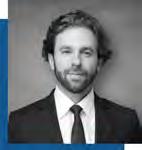
SEAN REIMER Senior Managing Director, Capital Markets and Co-Head of Institutional Advisory Walker & Dunlop


MORRIS BETESH Founder & Managing Partner Arrow Real Estate Advisors

NICK SCRIBANI Vice Chairman, Global Debt & Structured Finance Newmark

LEO V. LEYVA Member of Cole Schotz & CoChair of the Litigation, Real Estate and Real Estate and Special Opportunities Departments Cole Schotz P.C. MODERATOR
BONNIE A. NEUMAN Partner & Global Head of Real Estate Practice Group Sidley Austin LLP MODERATOR




JUSTIN HOROWITZ Senior Managing Director Cooper Horowitz

YORICK STARR Managing Director & Investment Officer Invesco Real Estate
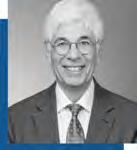
JAY NEVELOFF Partner, Chair of Real Estate, US HSF Kramer MODERATOR


DYLAN KANE Managing Director Colliers Capital Markets

MICHAEL TRACHTENBERG President Safehold Inc.

ARON M. ZUCKERMAN Partner Simpson Thacher & Bartlett LLP MODERATOR
MARKO ANGELO J. KAZANJIAN Senior Managing Director IPA Capital Markets, NYC & MiamiMarkets

PAUL VANDERSLICE Head of CMBS Originations BMO Capital Markets

CATHY CUNNINGHAM Executive Editor Commercial Observer EMCEE