

There Will Be Plugs
The wildcatter developers cornering the market on power-hungry data centers







BIG BLOCKS BIG VIEWS
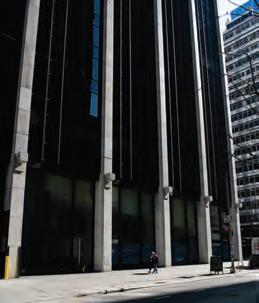
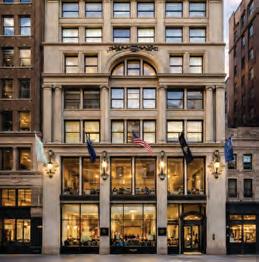
Over 735,000 RSF across two contiguous blocks with the advantages of new construction, positioned in a premier location between Tribeca and the World Trade Center campus.




Get Your Pause Off Me!
Some in the
Land, Ho!
Powered parcels are the black gold in the race for data center space, and these investors are moving the fastest.
MADE in Brooklyn
A recent Commercial Observer event at Brooklyn’s MADE Bush Terminal hinged on light industrial.
No Conversion Aversion

The Sit-Down
The Gotham Organization’s Matthew Picket, Nicole Picket and Ben Picket.
Sweetener vs. Sweetener
The numbers are starting to come in regarding New York’s 467-m and 485-x multifamily development incentives.
Power Player
CREFC’s Lisa Pendergast.
The X Factor
Some developers are trying to make New York’s 485-x multifamily incentive work, despite a key regulatory hurdle.


So far, it looks like the buckling of the Pfizer office-to-residential project will not slow New York’s historic conversion pace.
Suspense in Downtown L.A.
The 7.6-acre mixed-use project Fourth & Central could change the narrative about the long-struggling area.

Max Gross
Editor in Chief
Cathy Cunningham
Executive Editor
Tom Acitelli
Deputy Editor
Isabelle Durso
New York Digital Editor
Greg Cornfield
Associate Editor
Skip Card
Copy Editor
Andrew Coen, Emily Davis
Julia Echikson, Mark Hallum, Brian Pascus, Amanda Schiavo
Staff Writers
Larry Getlen
Contributing Editor
SALES
Brigitte Baron
Senior Partnerships Director
Sona Hacherian
Strategic Account Director
Olivia Cottrell
Director of Client Marketing
Edward Cohen, Mark Rossman
Partnerships Director
MARKETING & EVENTS
Samantha Stahlman
Director of Audience
Josh Rozbruch
Social Media Manager
DESIGN, PHOTO & PRODUCTION
Jeffrey Cuyubamba
Art Director
Rohini Chatterjee
Senior Visual Designer
Jim Sewastynowicz
Photo Editor
Eliot Pierce SVP, Product & Operations
Ashley Roseman
Director, Revenue Operations
Ramon Encarnacion
IT Manager
OBSERVER MEDIA
Joseph Meyer Chairman








As KPF celebrates 50 years of transforming cities around the world, we are grateful to our clients and collaborators for their continued support as we build New York together. Here’s to the next five decades, and beyond.

BXP Wants Up to $750M for 7 Times Square Ground Lease News
BXP hired Will Silverman and Gary Phillips at Eastdil Secured to market the ground lease at 7 Times Square
BXP expects to ask from $700 million to $750 million. A source close to the deal said the price will be just north of $700 million.
That price is just over the $684 million Norges Bank Investment Management paid in 2013 for a 45 percent stake in the primarily Class A office property, which then revalued the building at $1.52 billion. Bids for the new sale were due soon, sources said early last week.
The 1.2 million-square-foot tower was developed in 2004 as part of the overall Times Square redevelopment. Also known as Times Square Tower, it operates on a 99-year ground lease that commenced on April 18, 1990, and includes an option to purchase the site from the city.
The sale of the lease will be a test of the
local market that is filled with tourists, as its neighbor at 5 Times Square is already undergoing a conversion to residential units by RXR, while SL Green Realty is considering changing 1515 Broadway into a hotel.
The news of the marketing was first reported by Green Street’s Real Estate Alert, which noted the 91 percent occupied tower has roughly 100,000 square feet available at the most valuable top floors. Green Street’s Sale Comps Database said only nine single-property office buildings have traded for at least $700 million since 2020. Two of those deals were after 2022, including the $1.08 billion sale of 590 Madison Avenue to RXR and Elliott Investment Management and the purchase by SL Green of Park Avenue Tower at 65 East 55th Street for $720 million, with both marketed by Eastdil.

Electronic billboards cover much of the first four stories, with an office sky lobby on the fifth floor. Amenities include conference rooms, a client lounge and a café. There is also an opportunity to increase sign revenue through digitization, Real Estate Alert reported. At 724 feet high with 47 stories, it also overlooks One Times Square — known as the Ball Drop Tower — thus providing views of New Year’s Eve festivities. Tenants at 7 Times Square include the
New York City Investment Sales Exceeding 2025 Pace: Report
New York City investment sales
dipped 10 percent over the second quarter of 2026, according to Avison Young’s latest property sales report. Under the hood, however, the city’s commercial real estate market is barreling past its 2025 pace.
Overall investment sales in New York City rose annually by 60 percent in the first half of 2026 as capital markets and office financing reopened, according to the report, with transaction counts and dollar volumes rising annually across Manhattan, Brooklyn, Queens and the Bronx. The report did not track Staten Island.
The geopolitical and economic upheaval that defined early 2026 did not go unfelt, however, as quarterly sales volume declined to $5.42 billion citywide from $5.68 billion.
Above the quarterly noise was a market in a welcome recovery cycle. The city is on pace for $22.87 billion in annual sales in 2026, according to the report, approaching New York City’s 10-year average of $23.4 billion.
Brandon Polakoff, a principal and head of New York City investment sales at Avison Young, compared the city’s path of recovery since 2023 to the years

following the Global Financial Crisis, which culminated in a 2015 peak for New York City investment sales.
“Year by year, we’re working in the right direction,” Polakoff said.
Manhattan counted 94 sales in the second quarter of 2026, led in volume by Extell Development’s $451 million move on 405 Park Avenue in May. Other defining deals included Sovereign Partners’ $378 million purchase of 575 Fifth Avenue and the $280 million sale of 250 West 57th Street to Namdar Realty Group Development was Manhattan’s
breakout asset class for the second quarter, according to Polakoff, climbing year-over-year from three to 13 sales totaling $707 million.
Manhattan’s office market, not to be outdone, boasted the largest dollar volume for the quarter, at $1.51 billion. Compared to the first six months of 2025 — a year hampered by economic and election anxieties — office sales’ total dollar volume is up 110 percent year-to-date, according to the report, at $3.3 billion.
Multifamily sales in Manhattan are similarly outpacing 2025 by triple-digit percentages, yet sales remain bifurcated between the A-plus trophy assets and everything else. Dollar sales declined over the quarter by 18 percent to $880 million.
Meanwhile, foreign buyers in Manhattan made up just 9.7 percent of first-half sales volume in a 10-year low. The number of foreign sellers hasn’t spiked, however, indicating that these owners are in a wait-and-see period rather than a full-on flight.
“Even with a lot of the negative macro noise, from a micro standpoint, the fundamentals are incredibly strong,” said Polakoff. —Emily Davis
newly signed data platform Snowflake with 83,000 square feet, KnitWell Group with 246,000 square feet — which still has an Ann Taylor Loft store in the retail base — along with holding company GSI Exim America and law firms Friedman Kaplan and Norris McLaughlin Silverman declined comment on the marketing of 7 Times Square, while BXP and Norges did not return requests for comment. —Lois Weiss
Brookfield, CPP Investments to Acquire LXP Industrial Trust
Brookfield Asset Management, the global alternative asset manager with more than $1 trillion of assets under management, teamed with the Canada Pension Plan Investment Board (CPP Investments) to acquire LXP Industrial Trust in an all-cash deal valued at approximately $5.2 billion, the firms announced July 20.
LXP, a real estate investment trust (REIT) focused on Class A warehouse and distribution investments, owns one of the largest portfolios of warehouse and logistics facilities in the country, comprising approximately 53 million square feet across 108 properties in 12 markets in the Sun Belt and Midwest, according to the announcement.
Thomas W. Eglin Jr., chairman and CEO of LXP, said in a statement that the transaction is the “culmination of the LXP team’s successful execution of [its] strategic plan to transform LXP into a pure-play industrial REIT.”
Meanwhile, the deal was part of a continued interest in the U.S. industrial sector for CPP Investments, according to Sophie van Oosterom, the firm’s managing director and head of real estate.
The merger is expected to close in the fourth quarter of 2026. Bank of America Securities and J.P. Morgan Securities acted as financial advisers in the deal. —Isabelle Durso
PRIME SPOT: Electronic billboards cover much of the office and retail tower’s first four floors.
HIS TAKE: Avison Young’s Brandon Polakoff.
Mamdani Fills Top Economic Development Roles for NYC
New York Mayor Zohran Mamdani tapped two familiar figures for top economic development roles in his administration.
Mamdani appointed Lina Khan, the former chair of the Federal Trade Commission and the head of his postelection transition team, as the new board chair of New York City’s Economic Development Corporation (EDC).
Khan, also a progressive antitrust regulator, will lead the EDC’s 27-member board and help guide the city’s major development projects. She succeeds Margaret Anadu, who was appointed by then-Mayor Eric Adams in 2022.
Mamdani also appointed Anthony Shorris, whose government resume stretches back to the Koch administration and who once ran the Port Authority of New York and New Jersey, as president of the EDC. He was most recently a partner with global consulting firm McKinsey & Company. The EDC presidency, which has oversight of the agency’s day-to-day operations, had been vacant for several months.
—Amanda Schiavo and I.D.
Brookfield Takes a Major Stake in Healthpeak Properties
Brookfield Asset Management established a joint venture with Denver-based real estate investment trust (REIT) Healthpeak Properties for an interest in its vast medical property portfolio.
The capital partnership, announced July 20, hands Brookfield and its affiliates a 49 percent interest in Healthpeak’s 86 outpatient medical buildings nationwide, valued at approximately $2.1 billion.
The collection of facilities totals roughly 5.6 million square feet and spans 11 states, including Kentucky, Indiana, Pennsylvania, Arkansas, Illinois, Minnesota, New Jersey and New York. The portfolio is currently 95 percent leased, according to the announcement.
Newmark acted as a financial adviser in the transaction, and Kirkland & Ellis served as a legal adviser to Brookfield.
Formed in 1985, Healthpeak owns, operates and develops properties for the health care industry, including life sciences laboratories and senior housing communities. The REIT is involved in approximately 700 properties nationwide, according to its website.
Healthpeak will retain a 51 percent controlling interest in the portfolio, thereby preserving its ownership and operational control while accessing new, long-term capital. The REIT received gross proceeds of roughly $1 billion from the deal. —E.D.
10 Bryant Park On Sale Again, Seeks $800M-Plus
The office tower at 10 Bryant Park, also known as HSBC Tower, is for sale with an asking price of over $800 million, sources familiar with the plans told Bloomberg last week.
Newmark’s Adam Spies, Adam Doneger and Avery Silverstein have been tapped
to represent the landlord, Tel Aviv-based Property & Building Corporation (PBC).
Newmark’s Spies declined to comment on the reported plan. PBC and Discount Investment Corporation could not be reached for comment.
Innovo Property Group previously attempted to purchase 10 Bryant Park for $855 million in 2021, but the deal faced roadblocks in 2022. The circa-1980s tower was recently renovated, according to reports, and features a new lobby. —E.D.
GO Residential Finishes Brooklyn Apartment Buy
GO Residential REIT completed its previously announced acquisition of an approximately 81 percent managing interest in a multifamily building in Crown Heights, Brooklyn.
The real estate investment trust, using the LLC GO 409, acquired control of the 186unit residential building at 409 Eastern Parkway for $109 million, according to property records made public July 20. GO 409 purchased the stake from a trio of sellers: FBE Limited, Adam America Real Estate and Zev Marmurstein. Adam America will retain a 19 percent stake in the property.
The deal, first announced in March, closed July 1 and was recorded July 20, records show. The property has 197,395 square feet of built space and three ground-floor retail units. PincusCo first reported the sale. Current retail tenants at the 11-story building include restaurant Cornbread Brooklyn and physical therapy clinic JAG Physical Therapy
The property has a tax exemption under the now-sunsetted 421-a program, PincusCo noted. The tax exemption took
effect in 2020, and will expire in 2056.
Max Kaufman, chief operating officer at GO, signed the deal for the buyer, records show. Yehoshua Fruchthandler, a managing member at FBE Limited; Florin Radu, chief commercial officer at Adam America; and Marmurstein signed the deal for the sellers. A CBRE team of Doug Middleton, Ariel Aber, Daniel Kaplan and Pierre Hills represented the sellers.
The sellers could not be reached for comment. —A.S.
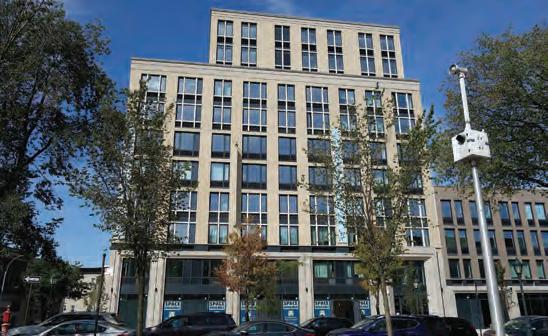
Empire State Realty Trust is selling 1359 Broadway. The property is expected to fetch around $225 million, with the winning buyer owning the fee simple interest in the 486,000-square-foot, 22-story office and retail property at West 36th Street.
Newmark’s Adam Spies, Josh King, Adam Doneger, Avery Silverstein, Marcela Fasulo and Doug Harmon are leading the sale, sources said, and no debt currently encumbers the property. The building is roughly 95 percent leased.
The sale of 1359 Broadway follows lots of portfolio comings and goings for ESRT. Last month, the real estate investment trust (REIT) closed on the $114 million acquisition of the land beneath 111 West 33rd Street and 1400 Broadway. Two months earlier, in April, it went under contract to sell its 26-story office building at 250 West 57th Street to Namdar Realty Group for roughly $280 million. Last, but certainly not least, in December the REIT made headlines when it bought Scholastic’s building at 555557 Broadway in SoHo for $386 million in a deal arranged by the same Newmark team.
Sources familiar with the moves said ESRT is in the process of upgrading its portfolio and recycling capital in the process.
ESRT and Newmark did not return requests for comment. —Cathy Cunningham
PROGNOSIS LUCRATIVE: Healthpeak’s 11-state portfolio is valued at $2.1 billion.
Retail
Meal Delivery Service to Open Storefront at NoMad Hotel
CookUnity, a subscription-based meal delivery platform, inked a deal for 4,721 square feet of ground-floor retail space at Lam Group’s 1227 Broadway, also known as Virgin Hotel New York City, in Manhattan’s NoMad neighborhood.
The deal represents the chef-prepared meal service company’s first flagship storefront in New York City, a source close to the deal told Commercial Observer. The store is expected to open in the first half of 2027.
CookUnity launched in 2015, and is headquartered in Brooklyn at 630 Flushing Avenue. The company also has an existing Manhattan kitchen hub at 534 West 50th Street in Hell’s Kitchen and a Flatiron District office at 36 Lexington Avenue. It’s unclear whether its new NoMad spot represents a fourth location or a relocation of an existing site.
The asking rent and the length of the lease were also not available. The average asking rent for retail space in the nearby neighborhood around Herald Square was $394 per square foot during the second quarter of 2026, according to data from CBRE
The landlord was represented by Adam Weinblatt and Harley Bonn from Newmark, according to the source. CookUnity was represented by Alexandra

Yanoff and Christine Nebiar from Brand Urban. Newmark declined to comment.
“We’re excited to see CookUnity’s first flagship land at the Virgin Hotel in NoMad, a great signal for the brand’s evolution from delivery only to a space where people can finally interact with it in real life through fine dining and retail,” Nebiar said in a statement.
CookUnity’s new outpost will feature dining and retail options, as well as space
for community gatherings for lovers of the culinary arts. The company delivers in New York, Chicago, Los Angeles, Miami, Atlanta, Austin, Chicago, Seattle and Toronto. Virgin, a 38-story hotel tower on Broadway between West 29th and West 30th streets, opened in 2023 and provides guests with over 400 hotel rooms, a rooftop pool and restaurant Everdene, which occupies the hotel’s entire third floor. —Amanda Schiavo
Retail Veterans Joshua Strauss and Scott Zinovoy Join JLL
Joshua Strauss and Scott Zinovoy, who co-founded retail and entertainment real estate firm Dreamscape, joined JLL as executive managing director and senior vice president, respectively, to help further drive the firm’s experiential retail, entertainment and mixed-use leasing initiatives.
“Josh and Scott have built exceptional careers helping owners and brands create compelling destinations that resonate with today’s consumers,” Patrick A. Smith, vice chairman at JLL, said in a July 20 statement. “Their relationships, creativity and deep understanding of the retail landscape will be a tremendous asset to our clients and further enhance the capabilities of both our New York and national project leasing platforms.”
The pair have advised on some of the most notable mixed-use and entertainment leases in the country over the last 10 years, including deals at the South Street Seaport in New York City, retail marketplace the Arcade in Nashville, and shopping center Bayside Marketplace in Miami.
“Scott and I are excited to join JLL at a time when retail continues to evolve across both urban and suburban markets,” Strauss said in a statement. “While experiential retail has become an increasingly important driver of consumer demand, we remain deeply focused on helping landlords and tenants navigate every aspect of the retail landscape.”
Before joining Dreamscape, Strauss and Zinovoy also worked together at independent real estate firm RKF and Newmark, which acquired RKF in 2018. —A.S.
Infinity Real Estate, KB Realty Partners Bag 75 Kenmare Street’s Retail Condos for $12M
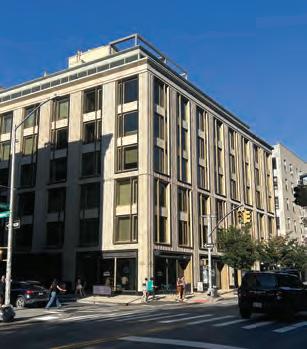
Infinity Real Estate and KB Realty Partners acquired the retail condominiums at 75 Kenmare Street in Manhattan’s Nolita neighborhood — just outside of SoHo — for $11.75 million.
The transaction, which closed earlier this month, adds to Infinity’s continued push into SoHo retail, and KB Realty’s expanding portfolio in the neighborhood via both retail and mixed-use investments.
75 Kenmare Street sits in a prime position at the corner of Kenmare and Mulberry streets. Its 10,000-square-foot retail component comprises two commercial units that are fully leased to tenants Undefeated, Nemesis Coffee, Bondi Sushi and M Jewelers. Atop the retail sits a luxury condo component — not included in the purchase — with 38 residential units designed by none other than Lenny Kravitz. First Atlantic Realty was the seller, and was advised by Masonre in the deal. ConnectOne Bank provided Infinity and KB Realty with acquisition financing.
“Manhattan retail is where Infinity got its start nearly 20 years ago, and this acquisition marks a deliberate return to that core focus,” Steven Kassin, a managing partner at
Infinity Real Estate, said in a statement. “75 Kenmare Street is an attractive asset to continue growing our footprint in Manhattan retail.”
Kassin founded Infinity Real Estate in 2005. The firm — which develops, owns and manages real estate across the U.S. — is headquartered in New York, but also has an office in Miami.
“This is exactly the kind of asset we look for,” David Berg, a partner at Infinity Real Estate, said. “Strong in-place tenancy, dependable cash flow from day one, and a tenant mix that genuinely fits the neighborhood.”
The deal follows Infinity Real Estate’s acquisition of 40 Bleecker Street in late 2024. The firm paid $13.3 million to Broad Street Development and Crow Holdings for the similar size retail condominium, also at the base of a luxury condo building.
At the time, Berg said the 40 Bleecker Street deal signified the firm’s interest in “redeploying capital back to New York, particularly in the retail sector, which has always been a core focus for much of the company’s history.”
Cathy Cunningham
YUMMY: CookUnity is expected to open the nearly 4,800-square-foot storefront early next year.
CORNER SHOP: The building’s retail units total 10,000 square feet.
Reach higher with Ridgewood’s commercial lending solutions. Ridgewood serves the five boroughs, Westchester, Rockland, Long Island, the lower Hudson Valley, Northern New Jersey and Fairfield County, Connecticut. Our real estate experts have extensive experience with multi-family, mixed-use, retail, office and industrial properties. We offer financing up to 75% of the property’s appraised value. Plus, you’ll get personalized service from our all-local team every step of the way.

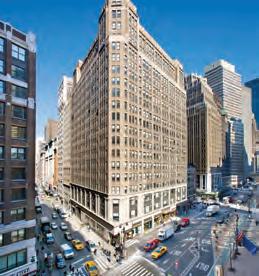
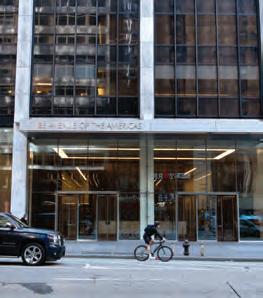
$22,000,000$15,500,000
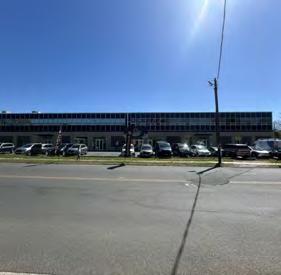
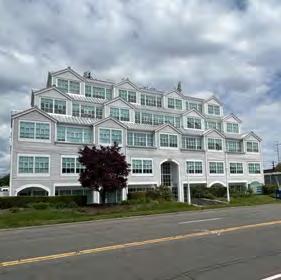
$12,500,000$6,500,000






Office Leases of the Week


United Talent Agency
Los Angeles-based United Talent Agency (UTA), known for its high-profile clients, aptly selected New York City’s most famous office building for its new East Coast headquarters.
UTA leased 100,948 square feet at the Empire State Building in a move that will consolidate its various office locations across Manhattan, the company announced.
The new headquarters will occupy the 32nd through 35th floors of the 1,454-foottall tower at 20 West 34th Street owned by
Legora
Legora, a company that developed a collaborative artificial intelligence-driven workspace for the legal profession, signed a new 10-year lease for 98,420 square feet — the entire 11th floor — at SL Green Realty’s 11 Madison Avenue
This brings the building to 100 percent occupancy.
SL Green was represented by Brian Waterman, Brent Ozarowski and Erik
Wall Systems
Infinium Wall Systems, a company that designs, engineers and installs wall systems and doors for offices, inked a new office and retail lease spanning 30,017 square feet at Empire State Realty Trust (ESRT)’s 1359 Broadway, the landlord announced.
“We are pleased to welcome Infinium to 1359 Broadway,” Ryan Kass, executive vice president, co-head of real estate and chief revenue officer at ESRT, said in a statement. “Innovative companies continue to seek
Ryan Specialty
An insurance firm is more than doubling its footprint at SL Green Realty’s 1185 Avenue of the Americas
Ryan Specialty, an international specialty insurance firm, signed a 10-year renewal and expansion lease at the 42-story office property, taking 29,166 square feet across the building’s entire 38th floor, according to the landlord.
The company will move within the building from part of the 23rd floor, where it occupied 12,803 square feet. The asking rent was
Empire State Realty Trust (ESRT). Asking rent was $96 per square foot, while the length of the lease was unclear.
JLL‘s Mitchell Konsker, Benjamin Bass and Harrison Potter were tapped to represent UTA in the negotiations.
“Beyond the prestige of the address, the Empire State Building provides them with an incredible range of amenities and flexible floor plates that can adapt as they evolve,” Bass said.
ESRT’s Jordan Berger, Shanae Ursini and Kerry Lavelle negotiated in-house on behalf of the landlord, alongside a Newmark team of Scott Klau, Erik Harris, Neil Rubin, Brent Ozarowski, Zachary Weil and Cole
Harris at Newmark. Legora was represented by Justin Haber and Kyle Riker at JLL
It’s not clear if the deal represents a second office or a relocation for Sweden-based Legora, which opened its New York City headquarters in 27,238 square feet at 838 Broadway last year.
The asking rent was unclear, but the office asking rent at 11 Madison Avenue was $90 per square foot as recently as March
“We are excited to welcome another premier tenant to the already impressive tenant roster at 11 Madison Avenue, which includes Sony, UBS, Jim Beam Brands, WME and Pinterest,” said Steven Durels, executive vice president and
well-located, modernized office space in New York City.”
The asking rent and the length of the lease were not disclosed. The average asking rent for office space in Midtown was $84.99 per square foot during the second quarter of 2026, according to Colliers
Sarah Pontius, Jerica Lam, Carleigh Bettiol and Charlotte Reaman from Artisan Alliance represented Infinium in the deal. Jordan Berger, Shanae Ursini and Kerry Lavelle represented ESRT in-house, along with Robert Lowe, Ron Lo Russo, Anthony LoPresti and Dan Organ from Cushman & Wakefield
not disclosed, but the average asking rent for office space in Midtown was $84.99 per square foot during the second quarter of 2026, according to data from Colliers Ryan Specialty was represented in the deal by Howard Grufferman, Catherine Soderquist and Ryan Barr from Colliers. The landlord was represented by Brian Waterman, John Fanuzzi, Brent Ozarowski, David Waterman and Kevin Sullivan from Newmark
Steven Durels, executive vice president and director of leasing and real property at SL Green, said in a statement that the transaction “underscores the ongoing strength of tenant demand for well-located, high-quality
Gendels. The move to the Empire State Building, slated for next summer, will be a consolidation and an expansion for UTA. UTA’s website currently lists office locations at 888 Seventh Avenue and 27 West 24th Street
Other Empire State Building tenants include law firms Hecker Fink and Elsberg Baker & Maruri, management consulting firm Kearney, human resources platform Workday and LinkedIn — Emily Davis
director of leasing and real property at SL Green. “This new lease is a testament to the building’s status as one of the most prominent properties in the exciting Midtown South neighborhood, and further evidence of the incremental demand that AI and technology tenants are bringing to an already strong leasing market.”
11 Madison Avenue serves as a home base for a number of high-level tech tenants, fitting perfectly into the Flatiron District’s tech-friendly area around Madison Square Park. Other tenants at the property include social media platform Pinterest, health technology company Tempus AI and AI firm Clay — Larry Getlen
“We evaluated numerous locations throughout Midtown, and 1359 Broadway consistently stood out,” said Shawn Gaffney, founder of Infinium Wall Systems. “Beyond the quality of the building itself, ESRT’s commitment to sustainability, long-term ownership, and partnership aligned closely with our own values.”
This deal represents an expansion for Infinium, which also has an office and showroom address at 44 East 32nd Street
Other tenants at 1359 Broadway include artificial intelligence company Scaled Cognition and nonprofit Braven — Amanda Schiavo
office space in Midtown.”
Other tenants at 1185 Avenue of the Americas include energy company Hess and law firm Groombridge, Wu, Baughman & Stone. — A.S.
Office Leases of the Week


Solil Management
27,508 New
In another new deal signed at SL Green Realty’s 1185 Avenue of the Americas, property management company Solil Management signed a new lease for 27,508 square feet, according to the landlord.
The five-and-a-half year lease covers the property’s entire 10th floor. The landlord and the tenant each represented themselves in the deal.
The asking rent was unclear, but a report from Newmark found office rents in Midtown averaged $83.44 per square foot
during the second quarter of 2026.
The deal represents a permanent new lease — but not a relocation — at 1185 Avenue of the Americas for Solil Management, which had been operating under a 27,500-squarefoot sublease on the property’s 10th floor since 2013. The firm had been subleasing space from oil giant Hess
Solil Management’s lease also coincided with a 29,166-square-foot renewal and expansion deal for insurance firm Ryan Specialty at the 42-story Midtown office tower.
“We’re delighted to have both of these highly regarded firms as part of the building’s premier tenant roster,” Steven Durels,
Flatiron office location after it opened its first office at 54 West 21st Street four years ago.
executive vice president and director of leasing and real property at SL Green, said in a statement. “These transactions underscore the ongoing strength of tenant demand for well-located, high-quality office space in Midtown Manhattan.” — A.S.
Another artificial intelligence firm is planting roots in Midtown South.
Chalk, a data platform that provides companies with infrastructure to deliver data to AI agents, signed a lease for 26,607 square feet at Castro Properties’ 43 West 23rd Street in the Flatiron District, according to landlord broker Okada & Company. Asking rent was $85 per square foot.
The deal represents Chalk’s second
Instacart
Grocery delivery app Instacart is getting a bigger home in Midtown.
The San Francisco-based technology company signed a 26,134-square-foot lease at Empire State Realty Trust (ESRT)’s 111 West 33rd Street, the landlord announced.
The seven-year lease was signed during the second quarter of 2026, according to ESRT, at an asking rent of $75 per square foot.
In 2023, Instacart signed a sublease at 50 West 23rd Street for 21,000 square
The AI firm’s new lease also brings the eight-story office building one block west of the landmark Flatiron Building to 100 percent leased, according to Okada.
“We are absolutely thrilled to welcome Chalk to 43 West 23rd Street and to bring the property back to 100 percent occupancy,” Okada’s Christopher Okada, who represented the landlord in the deal, said in a statement. “Our firm has seen an increase of more than 200 percent in the square-footage requirements submitted by AI tenants
feet, taking space previously occupied by software company Bizzabo. It’s unclear if Instacart will exit 50 West 23rd Street permanently, or if the new lease at 111 West 33rd Street is an expansion of its current New York City footprint.
Instacart did not respond to a request for comment.
ESRT also announced another new tenant at 111 West 33rd Street. Biopharmaceutical company Hansa Biopharma inked a 7,052-square-foot lease, bringing the 26-story building to 100 percent leased.
“100 percent leased at 111 West 33rd Street is a testament to the strength of these assets
asking rent was in the high $80s to $90s per square foot.
compared with last summer. These companies are predominantly targeting well-located, renovated Class B office buildings throughout Midtown South.”
The length of the lease was not disclosed. Venture Commercial’s Jason Majlessi and Arash Sadighi represented the tenant. San Francisco-based Chalk was founded by Marc Freed-Finnegan, Elliot Marx and Andy Moreland in 2022. Last year, the company raised a $50 million Series A funding round at a reported $500 million valuation. — Isabelle Durso
and the demand for well-located, modernized and amenitized office space in New York City,” Ryan Kass, executive vice president, co-head of real estate and chief revenue officer at ESRT, said in a statement.
Instacart was represented by Josh Pernice, Timothy Kazul and Conor Famulener from CBRE Jordan Berger, Shanae Ursini and Kerry Lavelle from ESRT, along with Scott Klau, Erik Harris, Neil Rubin, Cole Gendels and Zachary Weil from Newmark, represented the property owner in both deals. — A.S.
One World Trade Center is almost 100 percent leased thanks to the latest deal with an artificial intelligence company.
Mercor, which employs human experts to train AI algorithms, inked a five-year, 25,550-square-foot deal on the 77th floor of the Lower Manhattan office tower, the Durst Organization announced. Durst owns the 104-story building along with the Port Authority of New York and New Jersey
The exact asking rent was not disclosed, but a source close to the deal told CO that the
Durst was represented in-house by Eric Engelhardt, Karen Rose and Sayo Kamara, along with David Falk, Peter Shimkin, Hal Stein, Nathan Kropp and Paige Raisides from Newmark Harry Singer from CBRE represented Mercor.
“One World Trade Center was built for forward-looking, cutting-edge companies looking for a world-class home in New York City,” Jody Durst, president of Durst, said in a statement. “We look forward to welcoming Mercor to the building.”
Mercor’s website says its headquarters is located in San Francisco, and does not list a
current New York City address.
One World Trade Center, the tallest building in the Western Hemisphere, was built by the Port Authority and Durst in a public-private partnership. Other tenants include fashion and culture publication W Magazine, global financial services company Ameriprise Financial, and energy investment firm Energy Capital Partners — A.S.
Debt Deals of the Week
Affinius Capital, Axonic Capital Provide $43M Refi for MiamiArea Self-Storage Properties
UTEX Storage Partners has secured a $42.5 million loan to refinance a two-property self-storage portfolio in Miami-area cities Coral Gables and Pembroke Pines, Commercial Observer can first report.
Affinius Capital and Axonic Capital provided the debt — the fifth such joint origination between the two firms — while Greysteel’s Daniel Hartnett arranged the transaction.
The facility in Pembroke Pines will be four stories and feature 1,097 units, while the Coral Gables facility will expand from just under 1,000 units to 1,500 following the refinancing.
Tyler Figley, Affinius Capital senior vice president, described both assets in a statement as “institutional-quality self-storage” properties. Figley noted that the two cities near Miami are both supply constrained for self-storage facilities and have exhibited “sustained population growth.”
“Both properties are well positioned in high-visibility locations serving premier residential areas with limited new self-storage supply,” said Figley.—Brian Pascus
Systima Capital Management Closes $153M
Tax-Exempt CMBS
A private-label securitization closed by Systima Capital Management for a portfolio of nearly 1,300 subsided apartments underscores the potential for use of the commercial mortgage-backed securities (CMBS) market in affordable housing deals.
Systima closed the $153 million tax-exempt affordable housing bond deal through the Public Finance Authority securitized by a pool of loans on seven properties by the federal Low-Income Housing Tax Credit (LIHTC) program. The transaction, which utilized taxexempt CMBS debt for the 1,272-unit portfolio across Wisconsin, Illinois, Florida, Tennessee and Texas were “significantly oversubscribed” with more than $1.2 billion in orders from 19 institutional investors, according to Systima.
Ryan Paszczykowski, head of structured investing at Systima, said the tax-exempt CMBS offering in the deal is poised to become more mainstream going forward thanks to strong investor appetite.
J.P. Morgan led the transaction as the lead underwriter with Wells Fargo as co-manager, while Systima retained the subordinate Class B certificates.
“I think institutional investors are starting to realize the credit protections that currently exist in affordable housing and the significant need for affordable housing,”
Paszczykowski told CO. “I think the market is going to grow going forward.”
Paszczykowski noted that tax-exempt CMBS financings have been used for affordable housing projects in the past but were typically “one off” that banks executed to free up their balance sheets.
He said Systima is seeking to become
Affordable Housing Deal


one of the first dedicated managers to bring this capital markets strategy to the forefront as an avenue to deliver high-risk adjusted returns to investors.
The original loan proceeds were used to fund acquisition, construction, rehabilitation and preservation of the affordable housing communities geared toward families earning at or below 60 percent of area median income. The exact locations and names of the individual properties were not
provided by deal participants. Jason Kahn, executive director at J.P. Morgan, said in a statement that strong credit ratings of A-minus for Class A-1 certificates and BBB-plus for Class A-2 certificates by S&P Global Ratings “reflect the quality of the housing development associated with the loans, historically low delinquency and foreclosure rates of LIHTC multifamily housing.”
Andrew Coen
Rialto, Hines Refi 295 Fifth With $229M Loan
A joint venture consisting of PGIM, Tribeca Investment Group and Meadow Partners has landed a $228.9 million loan to refinance a newly-renovated 19-story office tower in Manhattan’s Midtown South neighborhood.
Rialto Capital Management, as part of a joint venture partnership with Hines, supplied the floating-rate, interest-only bridge debt for the sponsorship’s 295 Fifth Avenue property — also known as the Textile Building
The deal closed nearly four years after the 707,181-square-foot building sealed a $150 million refi from Deutsche Pfandbriefbank in November 2022.The transaction garnered a half-dozen proposals and came down to in a battle between Rialto in their JV with Hines and another
“massive balance sheet lender,” according to a source familiar with the deal. The building is now around 50 percent occupied and on a quick path to stabilization with “momentum” firmly on its side after renovations, the source said.
Located between 30th Street and 31st Street, the office building inked a 60,000-square-foot lease from hedge fund Bridgewater Associates in September 2024 following its renovation. It also secured a 132,000 square-foot lease from law firm Quinn Emanuel Urquhart & Sullivan in November 2023.
Walker & Dunlop negotiated the debt with a capital Markets institutional advisory team of Dustin Stolly, Aaron Appel, Jonathan Schwartz, Keith Kurland, Adam
Schwartz, Sean Reimer, Michael Brown, Christopher de Raet and Jack Krentzman
“295 Fifth Avenue exemplifies the type of high-quality, well-positioned office asset that continues to attract strong tenant demand in Midtown South,” Stolly, senior managing director of capital markets institutional advisory at Walker & Dunlop, said in a statement. “With its premier tenant roster and location in one of Manhattan’s most active and supply-constrained office corridors, the property is exceptionally positioned to benefit from continued demand for high-quality office space.”
Rialto Capital Management, Hines, PGIM, Tribeca Investment Group and Meadow Partners did not immediately return requests for comment.—A.C.
MIAMI NICE!
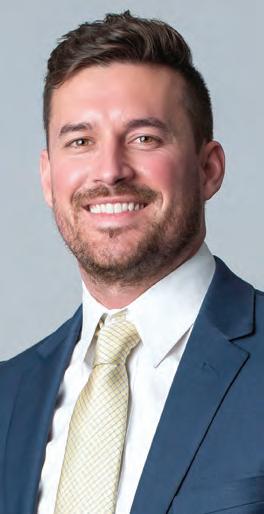
Affinius Capital’s Tyler Figley
Systima’s Ryan Paszczykowski and an apartment building currently being developed in Texas.

M&T Realty Capital Refis Resi Tower at 300 East 50th Street With
A joint venture consisting of Global Holdings, MAG Partners and Safanad has sealed $141.4 million of bridge debt to refinance a newly built luxury apartment tower in Midtown Manhattan’s Turtle Bay neighborhood, Commercial Observer has learned
M&T Realty Capital provided the loan on the sponsorship’s 194-unit Anagram Turtle Bay property at 300 East 50th Street. The deal closed nearly three years after MAG Partners and Safanad joined Eyal Ofer’s Global Holdings as joint venture partners for the project in late 2023 as part of a capitalization that involved Bank OZK supplying $95 million of construction financing.
“Anagram Turtle Bay represents a premier multifamily asset backed by an outstanding sponsorship team,” Joe Pizzutelli, head of national production at M&T Realty Capital Corporation, said in a statement.
The BKSK Architects-designed development features more than 142,000 square feet of residential space with apartment layouts ranging from one to three bedrooms. Community amenities include a rooftop terrace, a coworking lounge, a library and a fitness center.
Anagram Turtle Bay also has nearly 5,000 square feet of ground-floor retail space leased to restaurant group Serafina Mare

Midwood Group has landed $50 million of construction financing to build a multifamily project in Brooklyn, Commercial Observer has learned.
Ponce Bank supplied the loan for the ground-up development of two contiguous apartment buildings with 99 units each at 937 East 108th Street and 951 East 108th Street in Brooklyn’s Canarsie neighborhood.
“This residential development represents an important investment in Brooklyn and in New York City’s growing housing supply,” Carlos Naudon, president and CEO of Ponce Bank, said in a statement.
Arrow Real Estate Advisors arranged the transaction, which closed July 13, with a team led by Israel Mermelstein, Morris Betesh and Louis Halperin
The 198-unit apartment complex will span 143,083 square feet with 71 parking spaces and is slated to begin construction in early 2027. The project benefits from tax abatements under New York State’s 485-x program since a portion of the apartments will be designated as affordable.
“Deals like this come together when the right sponsor, project, and capital partner are aligned,” Mermelstein, senior director at Arrow, said in a statement. “Ponce Bank understood the specific dynamics of the transaction and recognized the strength, ability, and experience of the sponsorship.”
A spokesperson for Midwood Group, which is run by Abraham Posner, said the nearly 200 units will be ready for occupancy in December 2026.—A.C.
“Our goal from day one was to create a residential community that would resonate with today’s renters while contributing to the continued evolution of the Midtown East neighborhood,” Josh Feder, chief investment officer at Global Holdings, said in a statement. “Achieving full lease-up so quickly and securing long-term financing
A joint venture between Centerbridge Partners and Henderson Group has landed a $208.5 million debt package to recapitalize 40 industrial assets in Pennsylvania and South Florida, Commercial Observer has learned.
J.P. Morgan Chase supplied the five-year,

speaks to the strength of that vision and demonstrates the enduring demand for thoughtfully designed, amenity-rich housing in Manhattan.”
Global Holdings and MAG Partners also partnered in April 2026 to develop a multifamily tower at 122 Varick Street in
floating-rate loan on the sponsorship’s logistics portfolio comprising 2.3 million square feet and featuring a mix of last-mile warehouses, distribution sites and shallow-bay facilities. The properties, which have buildings ranging from 16,000 to 155,000 square feet, are 95 percent leased to 110 tenants.
Manhattan’s Hudson Square neighborhood.
“Anagram Turtle Bay leased quickly because it resonated with our residents,” Jeff Rosen, managing principal and chief investment officer at MAG Partners, said in a statement. “This refinancing is the market’s second vote of confidence.” —A.C.
CBRE negotiated the debt with a team consisting of Tom Traynor, Tom Rugg, Mark Finan and Henry Fenmore
J.P. Morgan, Centerbridge and Henderson Group did not return requests for comment. CBRE declined to comment.—A.C.
ChartFinance
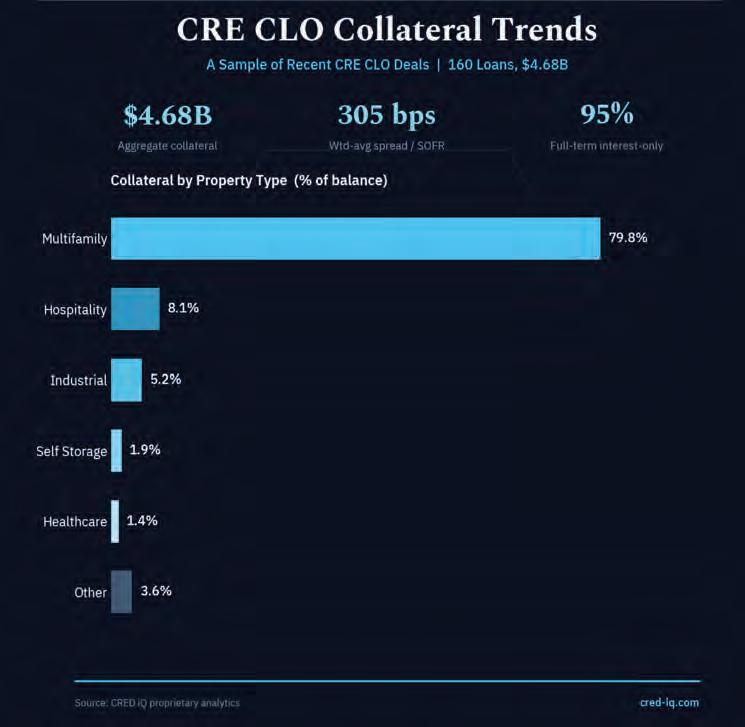
Multifamily Comprises 80% of CRE CLO Collateral in Recent Deals
By Mike Haas
A handful of the latest commercial real estate collateralized loan obligation (CLO) deals lean hard into multifamily collateral and full-term interest-only structures. CRED iQ analyzed loan-level collateral across a handful of the latest CRE CLO deals totaling $4.68 billion and 160 loans of collateral with the profile pointing to lenders concentrating risk in the sectors and structures they trust most in a higher-rate environment.
Apartment collateral makes up 79.8 percent of aggregate balance in the sample, followed by hospitality at 8.1 percent and industrial at 5.2 percent. Office, retail and health care each account for roughly 1 percent or less. The concentration confirms that CRE CLO issuers remain committed to transitional multifamily lending even as other property types stay largely on the sidelines.
Interest-only (IO) terms are nearly universal. Full-term IO loans represent 95 percent of collateral balance, with the small remainder carrying partial IO or amortization. The structure preserves borrower cash flow as business plans are executed, but it also means principal paydown is minimal until maturity, keeping refinancing pressure front and center. The sampled pools carry a weighted-average spread of 303 basis points over the Secured Oversight Financing Rate and a weighted-average coupon near 6.68 percent.
These deals point to a familiar core: multifamily assets, floating-rate coupons and IO structures that maximize early cash flow. Future funding commitments total $244 million across these deals, signaling continued appetite to finance value-add and lease-up business plans. Geographic exposure skews toward New York, Florida and Texas, which together account for more than 43 percent of balance.
For investors, the takeaway is concentration. These deals offer exposure to a tightly defined slice of the market, and the reliance on full-term IO means credit performance will hinge on borrowers refinancing or selling at maturity rather than de-leveraging along the way.

CREDIQ


(l-r) Nicole Picket, Ben Picket and Matthew Picket at 55 Suffolk Street, one of Gotham’s projects.
Siblings Matthew and Nicole Picket have plans for their new senior roles at developer and owner the Gotham Organization — and then there’s brother Ben waiting in the wings
he Picket family has been running the Gotham Organization, an owner, developer, operator and investment manager, since 1912, and has only ever handed over the reins to the next generation — never an outsider.
The New York City-based (and -focused) firm was founded by Nathan Picket, great-grandfather of current CEO David Picket, who says Gotham is run under the mantra “Do good to do well.”
“It’s something we live by,” David Picket said. “We’re not in this for short-term gain. We’re in this for the long haul. It’s been 114 years. That we’ve made it this far — five generations — what are the odds? It’s about taking a long-term view and about being fair with your lenders and partners, and treating your tenants with respect.”
That’s five generations and counting at Gotham. Picket’s three children — Matthew Picket (35), Nicole Picket (32) and Ben Picket (30) — each work in the family business, with Matthew and Nicole recently taking on more senior leadership roles. Ben is currently working toward his MBA at Columbia University, but all of the Pickets got their undergraduate degrees at Cornell. The Picket children were raised with the principle that education and intelligence are valuable tools, and they say they bring that to their work at Gotham.
Matthew Picket is a principal at Gotham, where he is focused on driving the firm’s development pipeline, while expanding into new markets, like South Florida.
Nicole Picket is also a principal, and spends her days overseeing the refinancings, recapitalizations and dispositions of Gotham’s existing assets, in addition to finding new opportunities to grow the firm’s portfolio through multifamily acquisitions. Nicole helped build the firm’s 2024 acquisition of the Aire, a luxury rental property at 200 West 67th Street, in a $265 million joint venture with Carlyle Group.
BY
AMANDA SCHIAVO PHOTOGRAPHY BY AXEL DUPEUX
Though not in a role as senior as those of his older siblings — yet — Ben Picket is Gotham’s director of strategic operations, focusing on technology initiatives across the portfolio, including the integration of artificial intelligence and data infrastructure to improve the resident experience.
Gotham’s portfolio is made up of multifamily, mixed-use and retail assets across New York and has now expanded into Florida. Multifamily, particularly those projects with an emphasis on public-private partnerships that drive affordable housing and mixed-income development, is where the firm shines. By the numbers, Gotham has 3,700 units currently under management, and is in various stages of pre-development construction or leasing on 6,000 apartments, which represents about $5 billion dollars of total development.
The younger Pickets clearly have passion, respect and love for their family business, which their father David speaks about with pride. The elder Picket never insisted his children follow him into the business, wanting only that each made choices that would result in their happiness — and they have.
“I would have been just as proud of them if they had done something else,” David Picket said. “All three of them are extremely capable, and really bright. There are lanes that have developed at Gotham over the last five to 10 years that require leadership, and they each bring particular skills to the table that really work well within these different lanes and opportunities. So, if you can hire really good and smart people that also happen to share your blood, it’s not a bad thing.”
Commercial Observer recently caught up with the younger Picket generation to discuss their projects, their journeys in the family business, and how to work well with your siblings.
This conversation has been edited for length and clarity
Commercial observer: When did you each join Gotham and had you all always known you wanted to join the family business?
Matthew Picket: I started at Gotham nine years ago. Prior to joining Gotham, I worked at Bank of America, and I’ve worked at Norges Bank Investment Management doing real estate investing for them. I knew it was just a matter of time before I got the right experience so that I could step in at Gotham and hit the ground running.
But, prior to that, in college, I really didn’t know what I was going to do. I was a history major and really into academia, and there was a moment where I could see myself becoming a history professor.
Nicole Picket : I walked a somewhat similar path to my brother Matthew. I started on the private equity side. I spent six years there, and about three and a half, four years ago, I started at Gotham. But I was at Morgan Stanley for my first two years. I was at Northwood Investors, and then I was at Affinius, which I thought laid the groundwork really nicely for joining a family business.
I felt I had the requisite hard and soft skills to come here and do the same thing, hit the ground running. I also immensely benefited from the mentorship of my dad and Brian Kelly, our head of development. I started on the development side and have since pivoted.
Ben Picket: My path wasn’t as clear as my siblings. I studied biology, psychology and food science at Cornell, and was always interested in the world of food and hospitality, and a lot of the science behind what makes us so interested in the food that we eat and what makes it addictive. So I started in the hospitality industry, and as I graduated I thought about how I could
apply a lot of that to the world of startups and technology. So I ended up working for a health care startup for about two and a half years, then a food startup called Wonder.
After about two years there I had a conversation with my dad about my next steps. Gotham had been experiencing such tremendous growth over the last five to 10 years, and there was a real opportunity here to explore that and put in some infrastructure around technology and systems and new revenue opportunities. So I joined Gotham four years ago.
What projects does Gotham currently have in the works?
Matthew: We have a lot under construction and in pre-development in various different phases. The Urban Village in East New York, Brooklyn, is a 2,000-unit, master-planned community, where we partnered with the Christian Cultural Center. The first 600 apartments are delivering this year, and we’re hoping to start construction on another few hundred units by late this year or early next year.
There is also Monitor Point, in Greenpoint, Brooklyn, which was recently rezoned, and it’s ultimately going to be over 1,300 homes, 50 percent market rate, and 50 percent affordable across three buildings. It’s called Monitor Point because, in addition to partnering with the Metropolitan Transportation Authority, we’re partnered with the Monitor Museum to build them a new museum facility. There is historic significance since that’s where the U.S.S. Monitor was initially built and departed from during the Civil War.
Then we have the Intrepid on Manhattan’s West Side. That will be roughly 1,100 units that will include roughly 100 condos in that 1,100 apartments, and that will be a similar mix of market-rate condos as well.
Also, we were designated by the Metropolitan Transportation Authority to redevelop the train station parking lot in Westbury, Long Island, for housing. It will have nearly 200 apartments and a total development cost of $100 million. We expect to break ground on Gotham’s first project on Long Island next year.
What’s Gotham’s view on residential development in New York City as a whole?
Matthew: In terms of development, it’s become a fairly bifurcated market, where you’re seeing a lot of 99-unit buildings or less, utilizing 485-x
Or you have just more bespoke opportunities like we did with Intrepid, where it’s a public-private partnership, and the public entity wants to see you use 485-x as the tax abatement so everyone’s on a level playing field, and that’s why you’re able to see the type of density that we’re doing at Intrepid.
And then you’re seeing a lot of what we’re doing otherwise with our pipeline. We have two other projects that we’re working on that similarly are 100 percent affordable housing tax credits, and lots of subsidy from the city and state. One of those projects has been announced, the Parsons Garage redevelopment in Jamaica, Queens. That’s currently planned to be about 400 apartments with mostly rentals, but also an affordable home ownership component there as well.
The Mamdani administration is prioritizing a lot of affordable housing and deeply affordable housing getting built, and that’s obviously in our core expertise. So, we’re certainly leaning into that. And, when special opportunities like Intrepid come up, that’s always something that is going to interest us.
Matthew and Nicole, you both recently stepped into more senior roles at Gotham, each having served as vice president and now also principals at the firm. What are your priorities in your new roles?
Nicole: As I mentioned, I started on the LP side in private equity. Those roles were acquiring existing assets and also looking at ground-up development. So, coming to Gotham, I really wanted to focus first on our bread and butter, which

is development.
I worked on the development team for the last few years, and I got to immerse myself in that side of the business. I learned those skills but found that I still really enjoyed working on the acquisition of existing assets. And, at my previous jobs, I had also spent some time in asset management and portfolio strategy, and so I wanted to pull that in as well. Given that our portfolio has expanded so much, I thought I could really lend my skills to refinancings, dispositions, recapitalizations.
Now I’m spending a lot of my time finding value for our existing portfolio.
Matthew: For me, the focus has been trying to expand into new markets. About five years ago, I started focusing on expanding the business into Florida, which I found out pretty quickly was not an original thought in 2021, because a lot of our peers were trying to do the same. By the time I got comfortable with and understood that market, there was a tremendous run up in prices, and it was an entry point that just didn’t make sense at the time.
But I knew that I wanted to still stick with Florida. That’s where the population was going, where you have a lot of business-friendly policies and job growth, and so I ended up finding an opportunity in the Tampa area with a friend that lives there and who was also a developer. We’ve now broken ground on 400 apartments in Downtown Clearwater, in a public-private partnership with the City of Clearwater. That’s our first project in Florida. We broke ground on that in February of this year, and are targeting opening in the middle of 2028.
Being that this is a family-run company, and you two have stepped into these new leadership roles, does it feel like a passing of the torch in some way?
Matthew: It’s a path to growth. It doesn’t feel like a passing of the torch. It really just feels more like organic growth at the company in terms of thoughtfully expanding on our strengths. That’s what’s really great about the growth that we’ve experienced in general — it’s not a passing of the torch because any big decision, I’m still asking my dad. He’s not going anywhere.
I definitely feel like I have a lot of confidence in terms of what I’m focused on, and I know my dad has a lot of confidence in me in terms of being able to execute on the strategies that I’m focused on. It feels very gratifying to have a lane where you have autonomy and the knowledge and confidence that you can execute it.
Nicole: Matthew said it very well, and our dad’s door is always open. He’s not going anywhere. For me, in my role,
I understand that I have autonomy, but I’m always coming back and checking in with my dad, with Phil [Lavoie, chief operating officer] with Brian [Kelly, the head of development] with Matthew, with Ben. It’s a team effort.
Ben, how do you integrate your passion for technology and hospitality into your role at Gotham?
Ben: In continuing along that path of strategy and operations, I do the same thing here at Gotham, which has always been about exploring new revenue opportunities, putting new infrastructure into place to help make people both internally at Gotham more efficient, but also provide a better tenant experience.
The best example of that is the Gotham Living app by Venn, a resident management platform, which we just launched a couple of months ago. My dad had always been thinking about how we really make our tenants the most happy and give them access to all of the resources that are at their fingertips in a really accessible manner, and Venn does just that.
It’s a white-labeled app that has all of our Gotham branding and helps people with their moving experience, reserving elevators, going to fitness classes. All of the pieces that are in the Gotham building are now fully accessible through the application. All of the feedback that we’ve gotten from tenants has been fantastic.
How is your dynamic as siblings who also work together?
Matthew: It is very easy to collaborate because no one’s stepping on each other’s toes. There’s a lot that we can bounce off of each other.
Nicole: I think we’re really lucky that we each have our own unique set of skills, and we don’t need to be merging into each other’s lanes. That helps a lot. Plus, they are both extremely smart, so as much as we may argue about the ending of “Game of Thrones” and whether or not we liked it, I really respect both of their opinions.
Matthew’s been doing this for well over a decade now. He’s seen everything in the market. I respect Ben’s understanding of tech and how he’s integrating all his startup background into our company now. When I’m looking at how we strategize as a company, how do I maximize revenue, I’ll work with Ben on optimizing expenses, and talking to investors. Ben’s working on all these outputs for me that make my life easier.
I know my dad’s always a resource for advice, but knowing that my brothers are also a wealth of information makes it easy to work as a team.

‘The problems with the 485-x program were well known at the time it passed.’
New York’s 467-m incentive is slated to spur nearly 21,000 new apartments, about 10,000 more than those under the 485-x program, a new study finds
BY LARRY GETLEN
t’s been well documented and much lamented just how few ground-up residential units are being developed and constructed in New York City due to the limitations of 485-x, a 2-year-old state tax incentive that appears to guide most developers to a 99-unit limit on new multifamily buildings in much of the city in order for them to avoid paying construction wage minimums of $40 an hour.
This becomes especially stark when compared to the robust productivity of 467-m, another 2-year-old state tax break, this one for office-to-residential conversions and without any wage requirements for construction workers.
Now, one enterprising industry professional has put the comparison in stark terms, and it doesn’t bode well for 485-x.
According to Nate Bliss, founder and principal of Latent Urban Ventures and a former chief of staff to the deputy mayor for housing in Eric Adams’s administration, the average office-to-residential conversion project in the city — including completed and planned projects
under 467-m — produces 298 apartments. By comparison, the average new construction project under 485-x creates a grand total of just 39.4 apartments per project.
“The problems with the 485-x program were well known at the time it passed,” said Bliss. “The biggest surprise to me is just how much has been generated under the 467-m program. If you look at this first wave of projects, we’ve got over twice as many permanently affordable apartments delivered with 467-m as we do with 485-x.”
Bliss, who utilized pipeline data — meaning that his numbers included both projects that are underway and projects in the application stage — found that there are currently 55 conversions filed or underway under 467-m, with another 15 in active plan review. In total, these projects are slated to produce up to 20,876 apartments, 5,219 of them potentially designated permanently affordable.
As for new construction under 485-x, he found 301 prospective registrations for a total of 11,869 intended apartments, with 2,557 affordable. Of these, Bliss found 30
registrations at exactly 99 units, and only three projects above the 99-unit threshold.
Bliss said he believes that the construction wage requirements are only one aspect of 485-x that is standing in the way of progress.
“485-x is a mix of a lot of different requirements, incentives and benefits,” said Bliss. “On the requirements side, there are wage standards, income thresholds and depth of affordability. On the incentives side, there is the length of the abatement and the other economic features of the program. What is clear is that the mix the state landed on does not work. One of those dials needs to be turned if the market is going to successfully make use of this program.”
Another interesting aspect of the dueling incentives is that 84 percent of the projects being converted under 467-m are in what Bliss refers to as Manhattan’s prime commercial core. These are mostly centered around Midtown and Lower Manhattan where, he noted on his website, “housing is expensive, developable land is scarce, and affordable apartments are especially difficult to produce.”
By comparison, 96 percent of the new construction projects completed or underway under 485-x are in Brooklyn, Queens or the Bronx.
“We’ve spent a lot of time in this city thinking about how to build affordable housing not just in the farthest reaches of the city where the land is cheap, but in our most amenityrich, transit-rich neighborhoods,” said Bliss, who wrote on his site that “a single 1,200-unit conversion complying at the statutory minimum can create approximately 300 permanently affordable apartments in a high-cost neighborhood — comparable to the affordable component of many smaller projects combined.”
Bliss is currently working on a project that he hopes will assist in the creation of new housing.
“Having come out of the policy space and been part of a lot of the regulatory reform efforts to encourage more housing over the past several years, I’ve been focusing on building a way to get information out there about the latent potential for sites around the city to produce housing,” said Bliss. “I’m working on building a tool where you can enter any address, and it gives you a quick report as to the unbuilt potential of that property.”
As part of this, Bliss hopes to further the city’s success with office-to-residential conversions.
“I’m looking at how I can create a predictive analytical framework that looks at office conversion history over the past several years, and tries to forecast where there are opportunities to convert in the next wave,” said Bliss.
As for the current wave, while there have been no signs of government action to adjust 485-x, Bliss believes there are other potential avenues to finding solutions that can increase the level of ground-up residential development in the city.
“I think that labor and industry are going to find a way to come together and solve a problem that is an issue for both,” said Bliss, “because a stifled new construction pipeline is good for no one.”
Lisa Pendergast exits the top role at the CRE Finance Council after 10 years of driving large-scale growth in numbers and influence
BY ANDREW COEN | PHOTOGRAPHY BY CHELSEA PEPPER
decade ago, Lisa Pendergast was enjoying her role heading up commercial mortgage-backed securities (CMBS) strategy at financial giant Jefferies when words of encouragement set her off on a new career path.
Pendergast, who at the time had nearly 30 years of capital markets experience under her belt, was urged to apply to lead the Commercial Real Estate Finance Council (CREFC), the trade group she had previously chaired.
“A bunch of people said, ‘Lisa, this might be something you want to do,’ and I remember being really angry with them and pounding sand since I really loved my research job,” said Pendergast, who was head of CMBS strategy and risk in Jefferies’ fixed-income line from 2009 to 2016. “I talked to my husband and he was like, ‘You’ve been a member of CREFC, you were chair of CREFC, and you really love this organization,’ and it took me about three months to say I would talk to them and see how it goes.”
Prendergast quickly embraced the opportunity. She began her leadership post with the advocacy organization for the CRE finance industry in September 2016 as executive director. Her titles changed to president and CEO in early 2025. She had previously served as CREFC’s chair in 2010 and 2011, and was a member of its board of governors for more than nine years.
After nearly 10 years of captaining CREFC through myriad market cycles and challenges, Pendergast will be retiring from the leadership post effective Aug. 3. CREFC’s board of directors is still interviewing potential replacements.
Filling Pendergast’s shoes will be far from easy given the strides made during her run at the top, including guiding
a 30 percent membership increase while firmly establishing the organization as an influential voice for a range of CRE issues in Washington, D.C., and beyond. In addition to her role at Jefferies, Pendergast, who throughout her CRE finance career was consistently ranked as a top research analyst, also held senior positions at Royal Bank of Scotland and Prudential Securities.
“Lisa Pendergast has been one of the defining voices in commercial real estate finance for decades,” said Sam Chandan, director of the Chen Institute for Global Real Estate Finance at New York University. “She was the ideal choice to lead the organization, and under her stewardship CREFC has evolved from an association still closely identified with CMBS into the premier forum for the full spectrum of commercial real estate finance and capital markets.”
The decade Pendergast led CREFC saw a number of challenges, none more challenging than the March 2020 onset of the COVID-19 pandemic that brought uncertainties to the CRE market along with logistical obstacles to the organization. The sudden global health crisis prompted a shift to Zoom for CREFC’s many meetings and industry events, including its two big annual conferences normally held in New York and Miami.
Shortly after returning to in-person events with its January 2022 Miami conference, CREFC was faced with fresh market uncertainties starting with Russia’s invasion of Ukraine in late February followed in the ensuing weeks by the Federal Reserve aggressively hiking interest rates to combat inflation. The sudden shift in borrowing costs from their previous nearzero levels accelerated distress for property owners grappling with maturing debt — with fewer capital options to boot, as many banks stepped to the lending sidelines.
Strengthening CREFC’s advocacy presence in Washington has been another hallmark of Pendergast’s tenure. She hired David McCarthy as head of legislative affairs and Sairah Burki as head of regulatory affairs. Both have successfully lobbied on Capitol Hill on behalf of the CRE finance industry on a range of issues.
CREFC, for instance, successfully lobbied earlier this year to remove a provision in the final bipartisan housing affordability bill that would have required institutional investors nationwide to sell build-to-rent single-family homes to individual buyers after seven years.
Another big policy win Pendergast led the charge on was advocating for decreasing capital burdens on U.S. banks under a revamped Basel III proposal released in March 2026. The new proposal lowered capital requirements for the largest banks by 4.8 percent compared to the current requirements. The initial 2023 Basel III proposal would have resulted in a 16 to 19 percent average capital requirements increase for the biggest banks from the current status.
“It ended up being much, much better than we thought it was going to be, as we thought it would be far more stringent,” Pendergast said. “I think it gives our banking community a better playbook than they’ve had in a very long time.”
The uncertainty with Basel III coupled with elevated interest rates caused many banks to pull back from CRE lending and accelerated growth in debt funds, an area Pendergast had already focused CREFC on. She spearheaded the launch of a debt fund index rolled out in 2023 in partnership with the National Council of Real Estate Investment Fiduciaries to track market performance across the industry, bringing transparency for debt funds more in line with that for CMBS. CREFC’s outreach to debt fund professionals also

Lisa Pendergast at the CRE Finance Council’s 10
East 53rd Street offices.
increased under Pendergast’s watch, with added programming that included an alternative lenders and high-yield investors forum held at the New York Athletic Club.
Pendergast also collaborated with Chandan to create the CREFC Center for Real Estate Finance at the NYU Schack Institute of Real Estate in June 2020 in an effort to boost program and research offerings for college students interested in entering the CRE finance profession.
“Together, we envisioned a platform that would serve as an important source of education and professional development for the industry while investing in the next generation of commercial real estate finance leaders,” said Chandan, who spent six years as dean of NYU’s Schack Institute until 2022. “We intended it as a model for what industry and academia can accomplish when they work together with a shared purpose.”
The growth of CREFC under Pendergast was evident in many areas, including a rise in full-time staff from nine when she was chair in the early 2010s to close to 20 now. One of her many hires included Raj Aidasani as head of research. He launched CREFC’s first sentiment index now administered every quarter to its board of governors to gauge shifts in CRE market conditions.
‘There aren’t a lot of people who would have been able to go through all that she went through leading CREFC.’
Jay Neveloff, chair of U.S. real estate at HSF Kramer, credits Pendergast with expanding CREFC into an organization previously known to have a largely CMBS focus into one that represents the entire CRE lending community. Neveloff has worked closely with Pendergast over the last couple of years on efforts to broaden its programming schedule at its conferences.
“There aren’t a lot of people who would have been able to go through all that she went through leading CREFC and come out having really helped it grow and expand and become more relevant,” Neveloff said. “She has high energy, great insight, and is a visionary not afraid to speak her mind, and she brought CREFC to a different level.”
The expanded role CREFC now plays in the CRE debt markets is reflected in its annual Miami conference, which set an attendance record of 2,440 in 2026. CREFC is also debuting its first West Coast Finance Forum on Oct. 22 in Newport Beach, Calif.
Pendergast, too, has played an integral part in expanding the CREFC Women’s Network and Young Professionals Network, which both host numerous events throughout the year.
While her post-CREFC plans are not yet clear, Pendergast said she would like to remain involved in advocacy efforts for either commercial real estate or governmental causes. A Massachusetts native who in recent years has become a full-time resident of Westerly, R.I. , Pendergast hopes to play plenty of golf this year while spending more time in New England. She will also be busy planning her daughter’s October wedding.
Pendergast said she still plans to attend the CREFC Miami conference in January, and will be far more relaxed not having to attend board meetings or write a speech. Whoever takes the baton from Pendergast and leads the conference at the Loews Miami Beach Hotel will surely have a tough act to follow.
“I’m very pleased with the way in which I am leaving CREFC as I feel like we have significantly grown our membership and we’ve added to our forums and created a very cohesive ecosystem for our members,” Pendergast said. “This has been a blast of a job.”

99 Percent Certain
Meet the New York developers trying to make the infamous 485-x multifamily development incentive work
BY MARK HALLUM
t’s become fashionable in New York City commercial real estate to bash the state’s 485-x program, which provides tax incentives for new residential development in certain areas of the five boroughs in exchange for including affordable housing.
The criticism revolves around 485-x’s higher construction wage requirements in much of Manhattan and large swaths of the outer boroughs for projects with more than 99 units. Hence, the number of 99-unit projects. There were at least 154 such permits between April 2024 — the month 485-x took effect — and April 2026, per the City Reporter
But only 1 percent of those projects were over 100 units, according to the City Reporter, which cited data from the New York City Department of Housing Preservation and Development.
By comparison, more than half of the buildings under the old 421-a program were over 100 units in the years before that incentive expired in 2022, BK Real Estate Advisors Chairman and CEO Bob Knakal wrote in a February Commercial Observer op-ed
For some developers, though, especially those not among

the city’s largest, the de facto magic number under 485-x works. Or at least they’re willing to try to make it work.
Andrea Gjini, the founder of AG Holdings Group, is one such developer. He’s not going above the 99-unit mark, though he would if the arithmetic was favorable in the long run — but it isn’t, he told Commercial Observer.
“I just did the filing in a project and I wanted to make 120 units, and I let 21 units go, because the math for the project was not making sense,” Gjini said in an interview in June.
“Expenses are 25 to 30 percent higher, and when you see the refinances that are coming up, and when you see the interest that they keep going up and down, it feels very uncertain to take a shot and to go beyond that number.”
Building more units can equate to greater delays on the regulatory side as well, with one three-month delay on a project at 19 East 198th Street resulting in Gjini making three $150,000 monthly interest payments on a project that wasn’t advancing due to delays at the New York City Department of Buildings, he said.
Geopolitical instability has also played a huge role in the amount of risk these developers are willing to take, with not
only the cost of materials increasing since the war with Iran started, but also the logistics shifting.
“As we speak, I’m getting emails from my suppliers that they’re gonna raise the amount of money that they’ve been charging us for the deliveries because of high fuel prices,” Gjini said.
Tariffs have made shipping building materials internationally more complicated, and wait times and prices for things like steel are adding to budgetary and timeline constraints. Buying American-made materials doesn’t seem to be saving developers any money, either.
“I agree up to a certain point that we need to buy American products, we need to have the industry over here, but they have to work out the speed,” Gjini said. “We need to see better prices, but, with fewer options of where to buy products, the price has been higher, which is something that I don’t understand — why the price needs to be higher.”
The cost of lumber for Gjini has risen 10 to 15 percent since the steeper tariffs in early 2025, while milled steel costs have risen 5 to 20.7 percent between February 2025 and February 2026, according to the Associated General Contractors of America
Spencer Levine, president at RAL Companies, said he sees 485-x as a “shortsighted” piece of legislation that didn’t take into consideration the likelihood that less affluent developers wouldn’t be able to swing all the cost of more labor while dealing with myriad other variables.
“The instability in the construction material and labor market certainly impacts everyone — the tariffs, and what’s going to happen today, tomorrow or next week with those, I think, is continuing,” Levine said in a June interview. “Those are conversations that are almost secondary to everyone. But what we’re seeing is this knee-jerk reaction to build under 100 units in order to avoid the union labor requirement.”
There aren’t a lot of excuses for developers to follow the 99-unit trend regardless of broader economic conditions, in Levine’s opinion, considering that the cost per unit on a product usually goes down with higher volume.
“The cost of materials doesn’t change as you make larger orders; you get the critical mass and the buying power,” Levine said. “Yes, obviously you’re spending more money, but you’re delivering a lot more scope. So, if the rental rates work and the operating margins are there, then you could certainly deliver more than that. The 99-unit arbitrary threshold doesn’t impact your cost of materials, in my opinion.”
RAL, however, has not used the 485-x program yet, but plans to use it for future sites.
Lev Kimyagarov, managing principal of Development Site Advisors, also sees the prevailing wage as little more than a speed bump. Kimyagarov penned an article in 2025 explaining why he thinks 485-x works, though it’s far from perfect.
“Yes, the developers are building 99 units if they have a chance to do so, subdividing lots, but I feel like the policy needs to be tweaked on both sides,” Kimyagarov told Commercial Observer in a July 17 interview. “Meaning, there should be more restrictions with 99-unit developments, but also the government should give more freedom for developers building larger developments.”
In the last two months alone, Kimyagarov has been in talks with associates to use a modular home model to manufacture components of larger multifamily developments offsite and assemble them on-site.
“Building vertically elsewhere might be a lot more expensive with modular construction,” Kimyagarov said. “But I think with the city’s rising employment costs and development costs, it has the potential to bridge the gap here with the management. So it’s been a real discussion. … We’re actually working with one of the manufacturers who would like to develop a site with modular in the city. We’re looking for a site for them, and they would want to use that future development as a showcase. And they’re looking to build a nine-story building, so not small.”
One of the major benefits of the 485-x program that is often overlooked is that it means savings over time for developers
looking to play the long game, Kimyagarov argues. The program offers up to 40 years of tax abatement for large projects, which is five years longer than the old 421-a’s maximum.
A prevailing wage also doesn’t necessarily mean that a developer needs to sign a union contract for projects 100 units and above. And, if the project falls under the City of Yes for Housing Opportunity, the zoning overhaul the City Council passed at the end of 2024, there are additional max bonuses for density and deeper affordability, Kimyagarov pointed out.
James Whelan, president of the Real Estate Board of New York (REBNY), said the trade association and the industry at large had little involvement in the formulation of 485-x, and lobbying efforts to reform the tax incentive in Albany have been little more than chatter. But he’s not surprised some developers just aren’t in the position to take on greater risk for a bigger development.
“The reason people are building 99 units or below is because they are making an economic decision to do so,” Whelan said. “If the rules had been more wisely designed, you would see people seeking to make full use of the floor area ratio that is available. People aren’t going to build something that doesn’t make economic sense. … They might make a choice not to build [rental housing]. They might build condos, retail or a hotel.”
New York Gov. Kathy Hochul’s office seems to view the program as a success, however, while putting responsibility on the city government to prevent continuation of the 99-unit trend.
“The governor passed the most significant housing deal in decades to address the state’s housing affordability crisis by building more housing, all while creating good-paying jobs,” a spokesperson for Hochul’s office said in a statement. “While the state does not have a regulatory role in 485-x, the governor has been clear that home prices are too high and building housing must be a top priority.”
REBNY released a report on 485-x in November 2025 which illustrated that the prevailing wage requirement is turning what should be a development boom into more of a pop.
In the third quarter of last year, there were about 11,746 proposed units of housing in New York City, which was 162 percent higher than the historical average. But it was still below the 12,500 units-per-quarter goal set by then-Mayor Eric Adams and Gov. Hochul.
Meanwhile, some developers are finding ways to build more housing without union labor contracts or a prevailing wage.
Ami Weinstock, another developer, was working on a series of six 99-unit buildings in Jamaica, Queens, in 2025, and another 97-unit residential project at 62-65 60th Place in Ridgewood, Queens.
No market in the city seems impervious to all the fluctuating trends influencing the decision to cap things off at only 99 units, either.
Housing developer Vilson Lumaj, for example, recently acquired the land and air rights for two 99-unit buildings at 761-769 East Tremont Avenue in the Bronx, which the brokers on the sale were pretty honest about at the time that the deal closed this past June
“The development is going to be two 99-unit buildings, which will be a work-around for the prevailing wage required under 485-x,” Rosewood Realty Group’s Jonah Corney told Commercial Observer at the time. “I guess it’s a sign of poor policy.
ILLUSTRATION CREATED WITH NANO BANANA
Calculating the cost — and benefit — of New York’s data center moratorium
BY LARRY GETLEN
n July 14, New York Gov. Kathy Hochul signed the nation’s first statewide moratorium on the building of new hyperscale data centers, pausing all state environmental permits for up to one year.
The purpose, according to the governor’s announcement, is to take the time to establish “a nation-leading regulatory framework that protects ratepayers, the environment, the energy grid and communities across the state.”
But, at a time when data center construction has become something of a national gold rush, with states competing for the jobs and economic activity new data center activity brings, many are asking if the moratorium will cost New York dearly in terms of economic growth.
According to engineering and supply chain intelligence platform Accuris, the top five hyperscalers — Amazon, Microsoft, Google, Meta and Oracle — are “projected to spend over $600 billion on infrastructure in 2026, a 36 percent increase from 2025.”
And, for another illustration of just how quickly the industry is evolving, in mid-2025, Goldman Sachs projected that hyperscaler capital expenditure from 2025 through 2027 would reach $1.15 trillion, a massive increase compared to the $477 billion spent from 2022 through 2024.
But the investment bank drastically revised its own estimates barely a year later, and now projects that hyperscaler capex in 2027 alone could reach $1.1 trillion.
It makes sense, then, that some states are fiercely competing for this spending and the jobs it could bring, and that when a state like New York hits pause, states with more lax regulatory frameworks gain ground on bringing those dollars and jobs home.
Texas and Virginia lead the nation in both current data center capacity and the willingness to indulge in as much additional data center construction as possible.
According to market intelligence company Cleanview, which tracks large hyperscale data centers with identifiable power capacity, Virginia currently has 371 operating data centers with a combined capacity of 17,378 megawatts (MW), and 438 more projects currently planned to add 36,406 MW. It’s worth noting that the largest existing data center in the state has a capacity of 243 MW, while the largest planned facility will have 2,400 MW, and at least nine planned centers will eclipse the current 243 MW high. All told, 140 different developers have such facilities in the works throughout the state.
Texas currently has 129 facilities totaling 7,036 MW, with 241 more planned to add 98,633 MW from 95 different

developers. The largest current facility has a 750 MW capacity; the largest planned has 7,650 MW.
New York, by comparison, is an underachieving younger sibling in the data center space, with nine facilities offering 205 MW. Current plans call for 25 more for a total of 9,797 MW from 27 developers.
Predictably, the states indulging mass data center development are also enjoying the spoils.
Virginia’s Joint Legislative Audit and Review Commission (JLARC), which conducts policy analysis on behalf of the state’s legislature, found that Virginia’s data center industry “is estimated to contribute 74,000 jobs, $5.5 billion in labor income, and $9.1 billion in GDP to Virginia’s economy annually.”
But despite this, the news is not all positive for data center-friendly states.
While Virginia’s energy demands remained essentially flat from 2006 to 2020, JLARC estimates that “unconstrained demand for power in Virginia would double within the next 10 years, with the data center industry being the main driver.” It also noted that building enough infrastructure to satisfy this demand — or even half the demand — would be “very difficult to achieve,” and that the increased demand would “likely increase system costs for
all customers, including non-data center customers.”
And while New York is the first to enact a moratorium statewide, other states are taking measures to prevent environmental and economic damage to residents. Similarly, localities throughout the country, including in Texas and Virginia, have been pushing back despite the clear economic advantages.
In January 2025, the Georgia Public Service Commission passed a rule allowing public utility Georgia Power to charge any new customer using more than 100 MW in a way that includes minimum billing requirements, and to “address risk associated with large-load users.” The commission is also currently investigating whether data centers are shifting fuel costs onto the utility’s other customers.
Even in famously business-friendly Texas, Gov. Greg Abbott issued a call in June 2026 for sweeping regulations on the state’s data centers, including ensuring that “Texans are not burdened with the costs of infrastructure driven by data center expansion.”
According to Juan Arias, national director of U.S. industrial analytics at CoStar, data center development nationwide has already had a strong upward effect on the prices we all pay for electricity.

“If you look at electricity prices per kilowatt hour in the United States, they were flat at around 14 or 15 cents per kilowatt hour for over a decade,” said Arias. “In the last four or five years, in line with data center construction, they’ve gone up at a 7 percent compound annual growth rate above inflation, and now they’re closer to 20 cents per kilowatt hour. So there has been an electricity price impact, and a lot of that is due to the capital cost of building out new electricity capacity for these data center projects.”
In light of all this, Lauren Bachtel, a partner at the law firm Linklaters and a leader of its environmental and permitting practice in the U.S., considers the New York moratorium unsurprising.
“It’s a trend we’ve been seeing across the United States as more localities impose new and broader requirements on data centers, though it is the first time we’re seeing it statewide,” said Bachtel. “It looked at one point like Maine’s legislature was going to pass something, but it was vetoed by the governor.”
For that matter, just weeks before Hochul issued her order, the New York State Legislature passed the Responsible Data Center Development Act, which would have imposed a one-year moratorium on data centers over 20 MW in addition to requiring a new electric rate class,
setting energy efficiency goals, laying out benefits for host communities and a slew of other regulatory provisions.
Hochul went with her own broader and less restrictive version of the moratorium instead with, among other differences, restrictions on centers of only 50 MW or higher.
Nina Roket, co-managing partner at law firm Olshan, said she believes that while regulations are necessary, Hochul’s version is still too drastic. Developing the regulatory framework as development proceeds, as other states are doing, is a smarter way to ensure New York enjoys the economic benefits of data center development, Roket said.
“The pause will have long-lasting effects, and really risks sending investment elsewhere,” she said. “Data center deals are years in the making, and, if anything is going to halt a deal, it’s uncertainty. When the data center operator does not have clarity on what operations might look like, financing and interest in site selection are going to go away, and these long-term deals will not be made here. These deals will potentially go to other states, and New York will lose out.”
Throughout New York’s business and legal communities, the thought that Hochul is placing economic growth at risk is pervasive.
“It’s going to put New York behind other jurisdictions that don’t have these moratoriums,” said Brent Gilfedder, a partner at the law firm King & Spalding. “If you’re looking to start construction in the next two to three years, why would you pursue a site in New York given the uncertainty about what’s going to happen? You’re going to go to other states.”
Part of the issue for data center developers, said Gilfedder, is the time it takes to gain access to power.
Proposed data center developments have to join a queue for access to power, a request to the regional grid operator that triggers a series of studies about the effects of that connection. That includes whether the power provided can sustain a 24/7 connection, and any possible effects delivering the requested power might have on the surrounding community.
According to the energy nonprofit RMI, there are currently “more than 2.2 terawatts of generation and storage projects waiting in interconnection queues — nearly double the installed capacity on the grid today.” (A terawatt is equal to 1 trillion watts.) The organization also noted that while the average time from interconnection request to commercial operation had been under two years in 2008, that had risen to almost five years by 2024.
Amazingly, according to RMI, “just 19 percent of projects that requested interconnection between 2000 and 2019 had reached commercial operations by the end of 2024.”
A statewide moratorium, therefore, could cause developers ready to launch a project to look elsewhere, since they are already facing ready-made delays due to the wait times for connection.
(Some data center developers abandon the queue altogether and construct their own power sources, while others begin operations self-powered until the queue approves their connection.)
Gilfedder also noted that some New York-bound projects might just elude the moratorium altogether by downshifting capacity, much the way many of the state’s multifamily developers avoid the wage requirements of the 485-x tax incentive by keeping projects below 100 units
“You may potentially see some people pivot to smaller buildings with 30, 40 or 49 megawatts to avoid the moratorium,” said Gilfedder.
While some fear that the development of the regulatory framework could go beyond New York’s stated one-year limit, others are taking hope from the moratorium’s wording declaring it to last “up to” one year, meaning it could potentially end sooner.
“My hope is that the moratorium is short-lived and that we can create a path forward for these data centers,
because they’re happening all across America,” said Carlo Scissura, president and CEO of the New York Building Congress. “Data centers should be part of the community and should obviously be good neighbors, creating good jobs and economic development. But my fear is that they will go to other states, since those states are already moving forward with them. Those states will get the jobs, the tax base, and the economic development that comes with it.”
While the risks of the statewide delay are clear, some believe the moratorium could bring some unexpected benefits.
Jared Dubrowsky, environmental transaction leader for the insurance firm Howden U.S., noted that many data center operators mistakenly bypass the opportunity to secure specific environmental insurance, an often bespoke form of insurance that can cover costs for a spectrum of potential environmental impacts, including pollution and noise.
“There is a misconception that a general liability policy would cover pollution,” said Dubrowsky. “That is not the case.”
As such, Dubrowsky believes the moratorium could help to educate more developers in this area.
“I think it’s going to drive more people to look for this coverage, because what’s happening is that you’re raising awareness in the community, and any time you raise awareness on environmental issues, you’re opening the door for lawsuits,” said Dubrowsky.
Another potential effect of New York’s moratorium is how it might spread. Given the deepening apprehension about the effect of data centers nationwide and similar moratoriums in communities throughout the country, some are waiting to see if Hochul becomes a trendsetter.
“We have a bunch of clients that want to expand data center growth in the U.S., and they want to know where to focus and where not to,” said Linklaters’ Bachtel, who works with both sponsors and investors in the data center space. “Right after this was issued, we put together an alert to send out to relevant clients, and the reaction was, ‘What does this mean now for X, Y, and Z states?’ ”
There is also another interesting wrinkle to the potential effect of any delays caused by the moratorium: the evolution of technology.
Dubrowsky invokes the possibility that over the next few years, the need for massive data centers, as with everything in technology, could decrease as the process of data storage and delivery becomes more efficient. This means that the longer a data center project is delayed, the closer to obsolete it could be by the time it’s put into action.
“The first IBM computer was the size of a building and had less memory than a floppy disk,” said Dubrowsky. “Our cellphones have more computer technology than the Apollo rockets had. It’s trending smaller and smaller. Some of these facilities will be antiquated before they’re finished. The technology is going to evolve so rapidly that you’ll be able to stick these things in a shipping container. I don’t want to say this is all for naught, but it’s going to reach a point where we rapidly decelerate.”
Time will tell how true this prophecy becomes, and what actual effect the moratorium has both within the state and on the national data center discourse as a whole. But, while addressing residents’ environmental and other concerns is paramount, Hochul’s action will be considered a failure by many if New York misses out on the explosion of spending and jobs to come in the data center industry.
“The priority is that wherever these data centers go, they have to create jobs for the local community,” said Scissura. “The governor has an opportunity to lead across the nation, to bring us all together and say that this is really big for construction jobs, for union jobs, and then for permit jobs. But what can we do to ensure there is progress being made for communities? I think we can all come together on that.”
Wildcatters

A
new generation of entrepreneurs is shaking up data center development
BY BRIAN PASCUS
he hit television series “Landman” stars Billy Bob Thornton as a West Texas oil executive who mines distant plains and deep oceans for the petroleum that powers modern life. If showrunner Taylor Sheridan is looking for a sequel, he won’t have far to turn.
A new breed of businessmen termed “wildcatters” is shaking up the data center and electricity industries, earning fortunes and enemies at equal rates, as they attempt to corner the market for land zoned for the all-sacred power that hyperscalers and commercial real estate investment firms need to make good on the $7 trillion data center boom.
“We’ve seen some guys be successful, others hit a dead end, but I call them ‘wildcatters’ because, in the same way
people would buy tracts of land, drill, and hope to find oil, they buy land with the optimism they can turn it into powered land with 100 megawatts of power,” said Morris Betesh, founder of Arrow Real Estate Advisors, a debt and equity brokerage.
And, while most wildcatters are investment entrepreneurs with some capital markets experience, the data center gold rush has seen businesspeople from all walks of life attempt to scoop up whatever land is still available to literally power the development of the asset class.
“Everyone is getting in on it, from farmers to institutional fund managers,” said Dom Espinosa, senior managing director for Newmark’s Texas industrial capital markets team. “It’s probably as wide a range of people chasing the
same thing — from the technology to the energy sector — as we’ve been able to experience in commercial real estate.”
Courtney Hammond, partner in the real estate group at law firm Vinson & Elkins, noted that a wildcatter often secures an option for land that already has zoning approvals for a future data center, and either has access to transmission or a binding promise of future connectivity — and subsequently presents this lucrative package to the highest bidder.
“Just as the data center space has attracted people outside of traditional real estate developers, we’re seeing private equity firms looking for sites, and energy companies coming in to buy up entire parcels of land, flip a piece of it, and just provide the power,” Hammond explained.
“But then we see people who are really smart — the wildcatters — who see a transmission line and see the opportunity to do the assemblage of a property, to put the pieces together, which they can sell to a developer,” she added.
Seattle startup Cloverleaf Infrastructure, led by former Microsoft executive Brian Janous, has raised and spent $300 million to buy land, secure deals with utility companies, and purchase electrical equipment to outfit land for future data center use.
The New York Times reported in March that Janous and Cloverleaf sold a 1,900-acre site secured by 1.3 gigawatts of power to Vantage Data Centers for $200 million, where that same land will be used to develop a $15 billion data center complex for Oracle and OpenAI.
Another wildcatter, Pine Line, a regional property and equipment company, sold 400 acres in Archbald, Pa., to Archbald Ventures and an unnamed developer who plans to build a $2.1 billion data center campus that will span 17 million square feet.
“Nobody can ignore the demand that is going on in the space right now,” said Carrington Brown, global head of data centers at Affinius Capital. “Everyone is trying to figure out how they can play off that demand.”
Northern Virginia and the Washington, D.C., area were once the epicenter of data center development and growth, especially after the telecommunications boom of the 1990s and early 2000s. Now, however, the spread of data center investment is touching nearly every corner of the country.
“You’re seeing locations that are a little more rural, or where there’s less development, less regulation, and just cheaper land in general,” said Nicole Fenton, a partner at HSF Kramer. “I’m seeing people try to option the land while doing the entitlements that complete the development, and everyone is thinking they’re going to have powered land to sell.”
As these wildcatters put their stamp on the data center space, this stylish term — “powered land” — is suddenly on everyone’s lips.
“It takes a long time, and a lot of variables, to get the land to go from land to ‘powered land’ — powered land is essentially ready for vertical development,” explained Betesh. “Powered land is something that will get a look from Alphabet, Meta, AWS, all the big end users.”
“So there are tons of entrepreneurs trying to figure out how to take a piece of land that might cost $50 million to buy, but make you $300 million,” he added, referring to the price a hyperscaler might be willing to pay.
Empty rural land that might have sold for $2 per square foot three years ago is suddenly worth $25 per square foot once these wildcatters secure transmission lines to power future data centers, along with the water needed to cool them, according to Curt Holcomb, vice chairman with JLL’s global data center solutions practice.
“Smart people realized early on that they could add a lot of value to land,” said Holcomb. “It’s because someone put together the power capacity, along with fiber-optic cable connectivity and access to water, that you’ll ultimately have a successful data center development.”
Adding value to the land, however, is not an easy — or inexpensive — feat. It requires coordination and cooperation with local utility companies; it requires transmission lines getting built; it requires avoiding messy lawsuits over easements and rights of way; and it requires building power substations and water treatment facilities on site. Each of these variables can mandate that wildcatters make full use of any political connections and procure the necessary capital to finance every possible avenue.
“The amount of power required for these sites is so large that it requires a tremendous amount of investments both from developers and the utility companies,” said Betesh.
And that’s if everyone plays by the rules. Hammond noted that some wildcatters aren’t even buying properties or parcels but are merely securing options to eventually purchase land, and sometimes pay lesser monthly rates to keep
that land off the market.
“They’re not putting all their money where their mouth is — they’re putting just enough money to keep the land off the market while they work out the other pieces of the puzzle,” she said.
But like the landmen of the classic West Texas oil economy, there’s tremendous risk amid so much reward, as the new age data center wildcatters have to contend with a real and lurking uncertainty that could turn the entire industry off one day: The U.S. simply doesn’t have the electricity needed to power present and future data center demand.
“Power is at a premium right now, and we’re quickly running out of it,” said Matt Frey, executive vice president and general manager of Skanska USA Building, a construction firm.
“I was recently interacting with a wildcatter, and the big issue he told me was, ‘I have land, I have water, but I can’t get power to the site,’ ” recalled Frey. “So the speculation, the risk that a wildcatter takes, is really starting to come to fruition, where they can see they can’t draw the power, so the hyperscaler isn’t interested. That’s the core risk.”
Power gamble
Perhaps the main reason power generation is becoming increasingly scarce across the U.S. is due to the enormous capital that has flowed into data center development since the AI revolution officially took off in late 2022 with the public release of ChatGPT.
Spending on U.S. data center construction is expected to reach more than $70 billion per quarter between 2025 to 2028, according to S&P Global.
Researchers at S&P Global found that AI hyperscalers are now seeking 85 gigawatts of new power generation for their pipeline of data centers by 2030, which is a fifth more than the U.S. power grid can currently supply, creating a situation where electricity is now as critical as oil to the global economy.
“There’s an arms race to access near-term power, because there’s a fear that if you don’t have power in this first tranche then you might be waiting awhile,” said Newmark’s Espinosa. “The demand is outstripping what they have currently. That’s what the race is, and anyone who can get hold of a powered land site believes they have a way to get it capitalized.”
And the desire for electric power is not just limited to the United States. Stepstone Group, a global investment analyst, found that by 2030 global electricity demand from data centers will increase by almost 128 percent from 2024 levels.
But the ravenous appetite of American industry is causing bottlenecks here at home, exponentially increasing the risk for any wildcatter, but also giving them the opportunity to acquire tremendous leverage if a land and power deal goes their way.
Goldman Sachs found that by 2030, the U.S. is expected to account for almost half of the anticipated global power demands for data centers, as in the third quarter of 2025 alone U.S. hyperscalers leased more power capacity than the rest of the world combined in 2024.
“All the [domestic] suppliers, manufacturers are asking for the same amount of power that doesn’t exist today in our traditional industrial base,” said Espinosa. “We’re heading into this powered industry that’s three to four years from being built out, and we haven’t figured out how to work this demand through the system.”
To this end, the utility companies are telling more wildcatters, and even some hyperscalers, to wait in line, at least until the next decade, as ad-hoc power generation buildouts attempt to meet the growing demand.
Frey said that anyone seeking a power permit for their newly acquired land from any American municipality is being told by the utility companies to wait until 2030, and more realistically 2033, depending on usage levels.
“The demand won’t go away. This is the future,” said Frey. “If we want our lives to continue and grow in the manner they are currently on, we will have to collectively solve this issue of a depleted power infrastructure.”
Texas has become ground zero in the data center power wars. Via ERCOT — Electric Reliability Council of Texas, the nonprofit corporation that manages the electrical grid for 27 million Texans — any corporation or limited liability company applying for new power connectivity must pay $50,000 per megawatt of power request just to find out if a particular powered land site will even be approved by the Texas Public Utility Commission.
“Texas is the greatest example of this phenomenon of any region in the country,” said JLL’s Holcomb, who noted that 50 percent of the large electric load requests in the state have come from wildcat entrepreneurs, and that the state has received demands for over 400 gigawatts of power capacity, even though the entire ERCOT grid is only 100 gigawatts.
“There’s no way that amount of capacity can be supplied. So from that standpoint many entrepreneurs have gummed up the system to the point that ERCOT and the utilities aren’t sure who to allocate the approvals to,” said Holcomb.
The deposit requests are only getting more expensive across the country as power commissions and local utility players aim to siphon out the legitimate powered land requests from the merely speculative applications that aim to monetize land before developing.
Affinius’ Brown said public utility companies have a duty to protect the average American ratepayer

‘I told that farmer he had better stick to farming.’
from covering the cost of infrastructure improvements needed to power data centers. So they are weeding out speculators and charging exorbitant deposit fees to approve binding power commitments for the true players.
“Six years ago, you could tie up land and get a letter of intent for a few hundred thousand dollars,” said Brown. “Today, to have a formal commitment for power you need real capital, and those numbers are in the hundreds of millions of dollars just to secure it.”
Grant Goldman, chief operating officer and executive vice president at Ambrose Property Group, a development firm, said that power companies are now inundated with incessant approval requests, which are often coming from farmers or wildcat developers who argue land that was once worth $20,000 per acre is now worth $400,000 per acre because it can be zoned for a future data center.
“The power companies got wise to it, but, candidly, they’re struggling to process the requests and vet what’s real and what’s not,” said Goldman, who recalled that his own firm issued an application for large-load supply on a parcel it acquired and was told that any application required the equivalent of investment-grade credit just to pass the detailed case study issued by the local utility.
“They are saying you can’t just be a developer, or even a big one. You have to be one of the hyperscalers or Blackstone or someone like that to even get serious consideration from the power companies,” recalled Goldman. “It’s the most extreme case, but it’s not uncommon.”
Complicated rewards
Aside from ever-growing costs, lack of guaranteed electricity, and competition for both land and power generation capacity, wildcatters now face the added complication of political opposition.
In July, New York Gov. Kathy Hochul issued the first statewide pause on data center development, issuing a one-year ban for hyperscalers as the state reviews how to implement better environmental and electrical grid regulations. (See story on page 24.)
But New York may not be alone for long in its opposition. Lawmakers in at least 15 states — including heavy hitters such as Pennsylvania, Virginia, Michigan and Maryland — are considering banning new and ongoing data center development, according to the National Conference of State Legislatures.
All of this has only added to the uncertainty facing wildcat entrepreneurs, who in addition to the difficulties with utility companies now must confront the additional challenge of local approvals and NIMBYism.
“There’s a lot of risks that can take years,” said Arrow Real Estate’s Betesh. “There are dozens of entrepreneurial guys out there buying land, leasing land, optioning land, doing all sorts of deals, trying to take land through this process.”
Hammond said there is now increased pushback from communities toward granting data center approvals, as more citizens are showing up to local meetings to oppose developers being granted zoning exemptions or special use permits to develop new data centers on powered land.
“They’re worried about their increased power costs, they’re worried about water, they’re worried about these assets being close to their homes,” said Hammond. “But some of the wildcatters are going on site, they’re part of the community, they’re getting closer than larger developers would, and they’re finding ways to combat it.”
Aside from political pushback, the biggest players on the block are now taking the wildcatters head on. Knowing that they are the ones creating value on site, and putting the

investment capital in to plug the land into power, an increasing number of hyperscalers are looking to bypass the expensive wildcat dance altogether.
“The hyperscalers don’t want the middleman to make a bunch of money. The middleman is frustrating to the hyperscaler, so the hyperscaler is trying to wildcat themselves,” said Goldman. “They have a bunch of in-house resources that can deal with utility companies directly, or an in-house or outside real estate brokerage to do the assemblage themselves.”
Even so, some wildcatters are profiting from the increased competition among hyperscale giants, according to Scott Rubinsky, a partner at Vinson & Elkins. Rubinsky said wildcatters who’ve already secured the land, water rights and electrical permitting are attractive candidates for investment when time is of the essence in so many data center deals.
“There’s way more demand for data centers than there is supply, so the folks who can move most quickly are the most desirable candidates for investment,” he said. “Folks who are putting pieces of the puzzle together make a site way more attractive to someone who has a bunch of capital to deploy.”
If this sounds dizzying, and, frankly, quite stressful to take part in, Affinius’ Brown emphasized that wildcatters can stand to option several sites at once, and sell off only one or two to the hyperscalers, because “the reality is the upside is so significant that every single deal you do doesn’t need to be a
winner,” he said.
However, Brown and several others repeatedly emphasized that the land acquired doesn’t become “gold” until there’s a clear path to power and the entitlements are secured from the utility players.
“That’s what’s created this race for guys who go out there and can be quickest to power,” said Betesh. “And the multiples are so big that guys are thinking about this in a venture capital type of way, where it’s ‘I’ll place 10 bets, and if two hit, then I’m a rich man.’”
With this much capital at stake, the question, of course, is how long will the wildcat casino stay open?
“I think you’ll only be able to do so much on wildcatting going forward,” said Espinosa, “We might have already had that unique window to grab as much land as you can and get well-positioned sites. It’s just going to get more competitive and harder to do.”
The pessimism is shared by other experts in the data center world.
“The true entrepreneurial wildcatter days are probably over — the cat is out of the bag, so they say,” said JLL’s Holcomb, who noted virtually anyone who owns land is trying to get in on the action.
“I’ve had farmers call me from tractors in far West Texas asking if their land is worth more as a data center just because it has transmission lines running through it,” he said. “I told that farmer he had better stick to farming.”
Commercial Observer’s annual summer networking event drew light industrial experts to Brooklyn’s MADE Bush Terminal
BY LARRY GETLEN
PHOTOGRAPHY BY GREG MORRIS
n a humid and rainy July night in Sunset Park, Brooklyn, people from throughout the commercial real estate industry escaped the elements at the new mixeduse complex MADE Bush Terminal, which hosted Commercial Observer’s annual summer networking mixer.
Amid a series of massive square wooden columns conveying the complex’s industrial feel, attendees networked, enjoyed drinks and small bites, and heard from some of MADE’s pioneering tenants on the benefits of taking space at the complex, which, in addition to sites like a brewery and a new 1,000-capacity music venue, will mostly host companies with light industrial uses.
Bridget Chansakul, assistant vice president at the New York City Economic Development Corporation (NYCEDC), handles leasing for the development, and was excited for people to see the goings-on at Building A, where the event took place.
While several tenants are already in place in that building, as well as in the project’s Building B, the full development and unveiling of MADE Bush Terminal, which will eventually be a five-building complex, will occur slowly over the next few years.
“We’re giving a sneak peek tonight, but it’s just the beginning of what’s happening here in Sunset Park,” said Chansakul. “We’re getting ready to announce a new brewery coming to the site and we’re going to be unveiling a new building, so it’s just the beginning of an exciting and much larger project.”
After brief introductions from Brian Pascus, a finance reporter at Commercial Observer, and Jennifer Brown, senior vice president for the Sunset Park district at NYCEDC, attendees were treated to a deeper introduction to MADE Bush Terminal.
Waverly Neer, vice president of asset management at NYCEDC, moderated a panel with two of the building’s earliest tenants: lighting manufacturer Stickbulb and design studio Pelle
Pelle, run by husband and wife architect team Jean and Oliver Pelle, moved into Building A in February after spending years working out of a small studio in Red Hook, Brooklyn.
Jean Pelle said that the couple was always seeking to “push the boundaries of design,” and that their new studio at MADE Bush Terminal was giving them the space they needed to do that.
“We make and sell our own designs, so we have to have a showroom where we can exhibit the work and interface with clients,” said Pelle. “That’s why we’re here, because we have this really special 12,000-square-foot studio space to do all this work and have our team here, because we cannot work remote. Everything we do is so physical and hands-on.”
As architects, the Pelles were also drawn to the industrial vibe at MADE, an acronym for manufacturers,


artisans, designers and entrepreneurs.
“Given our architectural backgrounds, we’ve always loved these industrial buildings, and they really lent themselves to doing what we do,” said Oliver Pelle. “They’re very flexible, and they have a rawness to them that we’ve always loved.”
Stickbulb had been based in Long Island City, Queens, in a studio with a freight elevator so small the firm would occasionally have to refuse large projects.
When its lease expired, Stickbulb sought a studio that would eliminate that problem and others. It landed at MADE.
“We searched everywhere from New Haven, Conn., to New Jersey, and realized we were looking for something that was actually kind of a unicorn,” said Christopher Beardsley, co-founder of Stickbulb. “We have grown

steadily for the last 13 years, and we realized that one of the reasons we were able to have that trajectory was because we had very close control over every aspect of our operation.”
Between the location, the size of the studios, and the enormous freight elevator, MADE Bush Terminal provided that.
“Having the full-sized, robust setup of the freight elevator and the loading dock is a critical thing for us,” said Beardsley. “But then to also have that in an atmosphere where creative people and clients will want to come here, and where we can have our stuff on display in the same place we’re making it, was a really hard thing to find. So we felt very lucky when we first saw this place. We had all these boxes we were checking, and this place checked every single box.”
MADE IN BROOKLYN: (top l-r) Waverly Neer of the New York City Economic Development Corporation, Christopher Beardsley of Stickbulb, and Jean Pelle and Oliver Pelle of design studio Pelle; (bottom right) the EDC’s Jennifer Brown.
No, the buckling at New York’s largest office-toresi project won’t break the city’s conversion wave
BY EMILY DAVIS
ew York City is relying, in part, on more than 16,000 units planned via office-to-residential conversions to ease its enduring housing crisis. So, when the country’s largest conversion, sitting in the heart of Midtown, starts to buckle, it’s not taken lightly.
The startling structural emergency at MetroLoft and David Werner Real Estate Investment’s Pfizer office building conversion in early July prompted a swift response from the city. Reports of two buckling columns prompted officials to cordon off 40th to 45th streets between First and Third avenues in the immediate aftermath. Several buildings were evacuated, including a school where roughly 400 children were relocated.
In the following weeks, after temporary supports secured the building, the New York City Department of Buildings (DOB) initiated citywide construction safety sweeps, including checks on projects linked to MetroLoft’s contractor, Barone Steel Fabricators, Gothamist reported. A full investigation of the emergency is ongoing, but the final verdict will likely come down to the two columns, and the heavy load above them.
The real estate industry is largely in agreement that the Pfizer emergency was a freak accident. Yet, when a conversion of such fame and magnitude — in which 19 stories and 1,600 apartments are being added to the existing structure — causes such disruption, anxiety is understandable. New regulations from the city, and accompanying cost overruns, may now be the industry’s real worry. Is it enough to spook the market?
Development, real estate and housing advocates sure hope not.
Conversion projects, like any major development, experience pressures to stay on time and on budget, intensified by an inflationary, volatile capital markets environment and heightened construction costs in the Big Apple. Insiders argue that the scare is unlikely to derail New York’s office conversion boom, given the investor appetite and political will behind multifamily housing.
New York City boasts the largest conversion market in the country by far. Conversion starts in the city totaled 5 million square feet last year, marking the highest annual total in 20 years, according to Cushman & Wakefield data. As of February of this year, 9.8 million square feet was planned for future conversions.
The capital involved is substantial. Significant trades for conversion sites in 2025 included a $158.5 million acquisition of 135 East 57th Street by TF Cornerstone, and Vanbarton Group’s acquisitions of 6 East 43rd Street for $135 million and 1011 First Avenue for $103 million
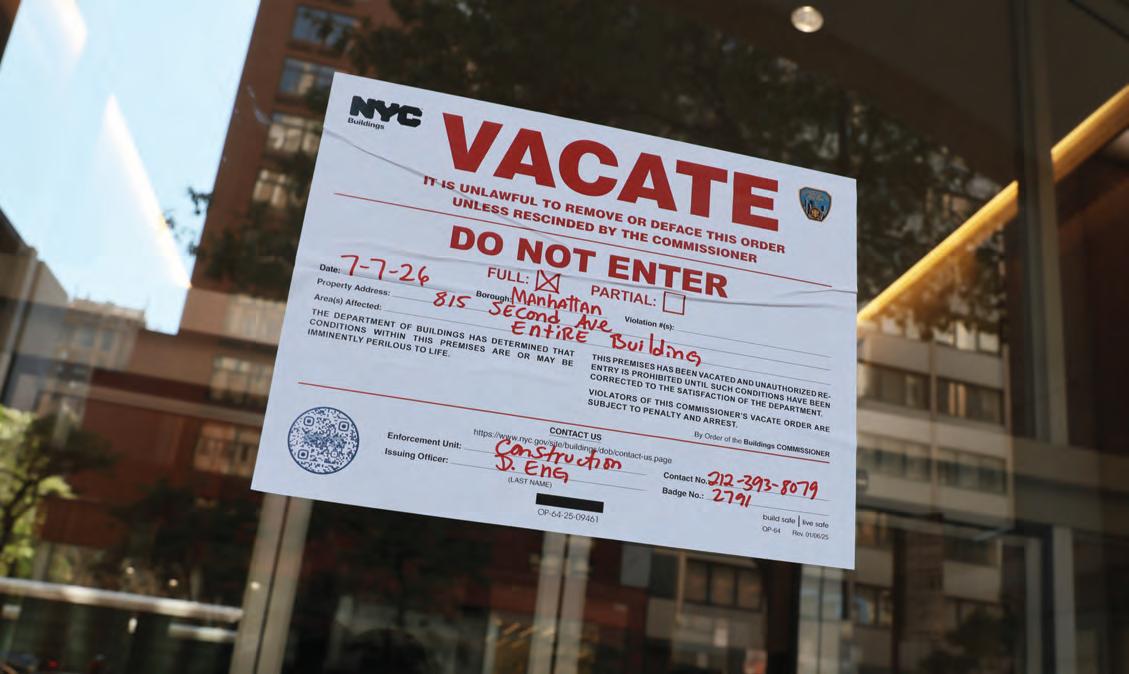
‘When something like this crisis happens, you kind of hunker down, you figure out a way to pay for it, and you deal with it.’
Aaron Appel, senior managing director of capital markets at Walker & Dunlop, said that it’s unlikely the Pfizer building accident, however high-profile, is affecting capital market appetites, which have remained strong and steady over the past year.
“We’re working on a couple of commercial financings now, and we don’t see it having any sort of real bearing,” Appel said.
That doesn’t mean that lenders won’t be taking a harder look at conversion sites and development teams.
“I have to imagine there will be more scrutiny,” said Laura Rapaport, founder of C-PACE lender North Bridge and a former developer. “But I also believe that there will be very successful conversion projects in New York and other cities.”
Future changes in the industry’s pace would be due to renewed office strength as well as current interest rates and cap rates on multifamily assets, Appel said, rather than construction anxieties. In other words, the appetite for conversions hasn’t changed, and the deals aren’t getting any easier.
“They’re not easy assets to come by, and the office market’s extraordinarily strong again,” Appel said. “There are assets that could have been conversion opportunities that may not be any longer. So, appetite certainly hasn’t decreased for them, but they’re not easy deals to put together.”
The city’s response to the temporary crisis remains an open question. Deputy Mayor Leila Bozorg said at a press conference in the days following the emergency that safety is central to the Mamdani administration’s housing work, but that it was too soon to draw conclusions.
“The investigation has kicked off,” Bozorg said. “If we learn something new that requires us to re-evaluate some piece of either a policy or procedure, we absolutely will.”
In the meantime, MetroLoft’s Nathan Berman told Curbed he intends to take down the entire addition above the columns at 42nd Street.
James Whelan, president of the Real Estate Board of New York, said he is unaware of delays caused by the emergency or the DOB’s sweep on any other construction projects in the city.
Much of the work on conversions happens behind walls, and the progress is not inspected floor by floor every time. Based on the city’s investigation and the DOB’s response, that could change, and add to New York City’s already hefty construction costs.
“Everything is substantial in this environment,” said Jay Martin, executive vice president of the industry advocacy group New York Apartment Association.
“But it’s the nature of working in a major city,” Martin added. “When something like this crisis happens, you kind of hunker down, you figure out a way to pay for it, and you deal with it.”
Two unique structural cost pressures predate the Pfizer emergency.
The city’s scaffold law and the conversion tax abatement clock were already shaping how these projects get financed.
New York is the only state that holds owners and contractors strictly liable for gravity-related construction injuries under the city’s so-called scaffold law, rather than apportioning fault among parties. REBNY’s Whelan said the result is construction insurance costs that are “exponentially higher” than in neighboring states.
The second pressure is a countdown. Under 467-m, the 2024 tax exemption behind much of the current conversion wave, developers get less tax relief the longer they wait. Projects that were commenced by June 30 of this year, meaning they received an alteration permit, locked in at 35 years of the tax exemption. That falls to 30 years
JOHN LAMPARSKI/GETTY IMAGES

after June 2028 and 25 years after that. Nothing qualifies after June 2031, and every project must be finished by the end of 2039.
Whelan doesn’t see the city’s investigation as a prelude to a crackdown. Advocates like Whelan and Martin emphasize that the recent emergency is an outlier amid a sea of successful, safe conversion projects, the lion’s share of which have been completed by Berman’s MetroLoft.
The best-case policy outcome for conversions, Martin argues, would consist of brushing up on guidelines and closing loopholes, without adding layers of costly oversight that slow the pipeline.
“It looks as if there were mistakes made, in that the system did not follow its current rules and regulations,” Martin said. “Those systems can be reinforced, as opposed to adding additional time-consuming laws and regulations.”
On the other side sit the city’s union leaders, who believe it’s time for a change in the inspection process that allows what they see as self-policing on the part of developers.
Gary Rosenberg, a real estate attorney and founding member of Rosenberg & Estis, expects a tangible regulatory response.
“Construction is extremely expensive in New York because every time something happens they add another requirement,” Rosenberg said. “I can’t criticize it, but it does add substantial costs.”
Conversions, in all their complexity, carry risk. Converting office buildings to residential is more complicated than ground-up development, with the different floor plates, electrical circuits and plumbing systems that residential buildings demand. Peter Lehrer, CEO of construction adviser PML, framed the Pfizer building’s floor additions as unique, but not beyond the realm of what the industry is capable of doing.
“There is a great deal of money looking for solid opportunities, and these projects are performant,” Lehrer said.
Pricing that risk is the job of smart investors, Appel said,
and loans for office-to-residential conversions typically have terms that are in excess of what the realistic construction period should be.
“If there’s additional costs, then people are going to ultimately look to pay less for the real estate,” Appel said.
When it comes to the city’s reaction to the accident, cooler heads do seem to be prevailing. Mayor Zohran Mamdani has publicly stated that he continues to consider the conversion of office space into residential space as part of the answer to the housing crisis.
“This is not a necessary consequence of an office-to-residential conversion. This, however, is clearly a breakdown in that process,” Mamdani said in a press conference.
The absence of injuries due to the Pfizer accident, too, allows a more rational policy conversation instead of a fever-pitched response. That being said, a wave of litigation between the building’s owners, contractors, design teams and affected nearby businesses is not out of the question. Spokespeople for MetroLoft did not respond to requests for comment.
“There’s a lot of correction that needs to take place. Who’s responsible for doing that? Who’s responsible for paying for it? And do you have to pay for the work that was done that wasn’t done properly? If that’s in fact what happened, that’s the type of litigation I would expect,” said Joshua Wurtzel, a partner at Schlam Stone & Dolan.
Construction is load-bearing for the often-opposing agendas of both the mayor and REBNY. At a time when so many ground-up developers are opting for 99-unit buildings to avoid wage requirements under the state’s 2-yearold 485-x development incentive, that rare consensus on large-scale housing looks increasingly critical.
Political consensus is only half of what’s holding the boom together, however. The other half is the capital that expects concrete to get poured and healthy returns be paid on the investment. The scare on 42nd Street tested whether that money would flinch. It hasn’t yet.
FAVORITE: The $2 billion, 10-building Fourth & Central, which the City Council unanimously approved June 30, signals a shift in the perception of going big on



FAN
Downtown Los Angeles development, industry insiders say.
Can one giant project change the narrative around Downtown Los Angeles?
BY PATRICK SISSON
nveiled in 2021, the Rauch family’s $2 billion Fourth & Central megadevelopment in Los Angeles’ downtown finally earned City Council approval on June 30. It would be easy to cite the five-year delay, including environmental reviews and numerous redesigns, as another sign of the city’s sclerotic development process. But, in important ways, the approval of the 7.6-acre multi-use mix of 1,589 residences, offices and retail came at just the right time.
With institutional sentiment around Los Angeles waning and a former candidate for mayor, reality TV personality Spencer Pratt, making the “downtown is a hellscape” argument core to his pitch to voters, getting a green light for such a significant project injects much-needed optimism into the development market, especially downtown.
“It really signals that Downtown L.A. is not going anywhere,” said Jessica Lall, Downtown L.A. managing director for CBRE. “We still have big projects that are moving forward despite the challenges we currently face. I see it as a critical anchor in an important part of Los Angeles.”
Lall added that the project has become a key part of the pitch deck for any downtown concepts. Had it not been approved, it would have affirmed fears that the city isn’t open for business and not open to transformative visions. But, perhaps with a bottom reached in terms of pricing and property valuations, Fourth & Central further opens the door to creative development and redevelopment.
“The value of this approval is informational, not transactional,” said Marco Chung, a senior market intelligence analyst at Avison Young. “The market already knew downtown land was cheap.”
Sale comps have said so for years, Chung added. Bank of America Plaza traded at near $150 per square foot earlier this year, while the Aon Center transacted at roughly $130 per square foot — steep cuts from the pre-pandemic neighborhood average of $450 per square foot.
Entitlement risk was holding back development, argues Chung, and the City Council’s unanimous approval of Fourth & Central retired that variable.
“It is a live demonstration that the city will let density move at scale in the district where sponsors most doubted it,” he said. “That repositions the entitlement assumption under every eastern-edge site at once.”
Chung was careful to note this momentum applied to housing, and not necessarily office, which has its own issues and capital pool. But, with Downtown L.A.’s growing residential population — currently just above 90,000 — and a desire for more foot traffic to help retail and office properties, the new investment of Fourth & Central sends a positive message to nearby owners, especially on the cusp of
mega-events like the World Cup and Olympics
The new collection of 10 buildings — the Rauch family will relocate their decades-old cold-storage buildings elsewhere in the region — will bridge the gap between neighborhoods, with nearly one in seven units planned as affordable.
“We have literally spent years working on our plan to transform this industrial property into a mixed-use community,” Larry Rauch, president of Los Angeles Cold Storage, said in a statement after the Fourth & Central was approved. “To hear our city’s decision-makers agree with our vision for what Downtown Los Angeles can and should be makes today’s major milestone all the more rewarding.
“We are big believers in the potential of our city, and that’s why we have chosen to make this substantive investment in its future.”
The approval of Fourth & Central is also indicative of better downtown development policy. The city’s Downtown 2040 Plan has helped increase the portion of downtown that allows by-right development from about 30 percent to 60 percent, helping speed up long entitlement processes. Add that to SB 79, the recently approved state law that increases density bonuses for transit-oriented development and which covers a decent portion of downtown, and developers now have opportunities to do bigger, quicker projects.
Kelly Farrell, managing director of Gensler’s Los Angeles office, said that while by-right development alone won’t help potential developments clear every hurdle when it comes to approvals, it’s a “really compelling move” that will help projects move forward. Factor in the city’s updated Adaptive Reuse Ordinance, which offers incentives to projects built as recently as 2011, and there’s suddenly a lot more potential in redeveloping downtown’s aged stock of buildings.
It’s not the only sign of new life downtown. Developers Jamison and Kennedy Wilson, as part of a new 15-project, 4,000-unit office-to-residential push in Los Angeles, plan to spend $200 million transforming the L.A. World Trade Center on Figueroa Street into 512 units, with affordable apartments starting at roughly $1,000 a month. Multifamily developer Jamison Services also announced plans in January to convert the 33-story Health Plan Tower on Seventh Street into nearly 700 residential units
These developments only further downtown’s long-inthe-works tilt towards housing. Nella McOsker, president and CEO of the Central City Association of Los Angeles, which supported the project, said that it’s another example of downtown becoming a center for residential activity. Downtown contributed 25 percent of Los Angeles county’s main housing stock between 2010 to 2025.
“The population downtown is now pushing 90,000, which
is about the population of Santa Monica,” said McOsker. “This project is so important to downtown’s future because it’s another reminder we can get back to residential growth here.”
Along with the $2.7 billion convention center commitment unveiled by the city, the Fourth & Central project sends a great signal to hotels and businesses downtown that there will be more residents, events, and development that they will benefit from, added Farrell. Adding more homes, businesses and cultural institutions, as well as developments and placemaking that start connecting neighborhoods and making them more walkable, and you begin to see “the roadmap for how downtown knits itself together,” said Farrell.
Fourth & Central will break ground in roughly two years with extensive public space such as paseos, plazas and parks to help with the discontinuity issue that has always plagued Downtown Los Angeles, an area made up of numerous neighborhoods that remain poorly stitched together.
Developers also scaled back some elements, including shrinking the residential tower from 44 to 30 stories and eliminating a proposed hotel, in part to calm gentrification fear from local residents. By replacing nearly 8 acres of cold storage, warehouses and parking lots with thousands of homes and new businesses, the development better knits together Little Tokyo, the Arts District and Skid Row.
Chung calls it “a missing tooth in the middle of the mouth.”
He expects land trades, entitlement filings, and activity should pick up fairly soon due to the approval. The eastern edge of the development has created an ideal situation for making residential development pencil, including cheap land, proof that you can entitle at scale. And there will be places to go nearby, including the forthcoming park under the Sixth Street Viaduct, the Bjarke Ingels-designed tower complex near the Leonard Hill Arts Plaza, a proposed Los Angeles River bike path extension, and a future Metro stop at Sixth Street.
This project and the residential shift downtown alter the market calculus, with office becoming more of a byproduct. While office sales and leasing have been improving recently, especially from private investors, downtown still has space to recover after being one of the markets to be hit the hardest during the pandemic.
But investors have seen that residential and mixed-use underwriting in DTLA gets validation, said Chung, while speculative ground-up office development moves from marginal to essentially unfinanceable.
“I think there’s some wrongly placed kind of doom and gloom about Downtown L.A. and maybe downtowns everywhere,” said McOsker. “But Downtown L.A. is really unique in the massive growth that’s experienced in the residential market.”
Downtown still faces significant challenges, including hemorrhaging property values and a relatively soft commercial real estate market, with more than 30 percent office availability and below-average rental rates, per Savills research. Whether it’s a fair symbol or not, the empty, graffiti-covered Oceanwide Plaza tower remains after more than six years a sign of inaction and stagnation. Office workers have not fully returned, and the nexus of the office market has long since moved west to areas like Century City. Decades of failed policies around the unhoused and homelessness continue to vex local leaders and advocates, challenging efforts to create a more vibrant, walkable downtown.
But this Rauch family development constitutes a significant sign that there remains more potential here than many give it credit.
“For a generation, downtown meant the office tower, and everything else was ancillary,” said Chung. “Fourth & Central and the office-to-residential conversion wave are the same trade run from opposite ends: one subtracts obsolete office, the other adds housing, and both point at a downtown organized around a resident base for the first time in its modern history.”
The Plan

WHO’S WHAT AT 114 WEST 47TH
STREET
DEVELOPER: THE DURST ORGANIZATION
ARCHITECT: HOK
LEASING: CBRE AND THE DURST ORGANIZATION

By Amanda Schiavo
Situated just off Sixth Avenue is 114 West 47th Street, a 26-story office building owned by the Durst Organization that is undergoing a major renovation.
By 2029, this 600,000-square-foot Midtown
Manhattan office asset will be equipped with a shining new lobby, high-quality tenant amenities, private terraces on seven floors, elevators, new chillers and other building system upgrades. The building also will feature office environments with ceiling heights between 12 and 14 feet, floor plates running between 18,000 and 32,000 square feet, and an abundance of natural light.
“Durst built the building in 1989, and since then U.S. Trust — which was then bought by Charles Schwab, which was then bought by Merrill Lynch, which was then bought by Bank of America — has always occupied the lion’s share of the base of the building,” said Eric Engelhardt, senior vice president of commercial leasing


at Durst. “Their lease will expire in the early part of 2028, and that has prompted us to bring nearly the entire building to market.”
The four office tenants and one retail tenant currently in the building will remain during the renovations.
“114 West 47th Street presents a rare moment for visionary companies to position themselves in prime Midtown with a renovated, world-class work environment,” Jody Durst, president of the Durst Organization, said in a statement announcing the renovation.
In the lobby, Durst and architect HOK plan to add gray granite floors and concave paneled white oak walls, as well as soft seating to provide some tranquility and calmness for those arriving from the chaos of Sixth Avenue.
“The original lobby was designed in the `80s, and it was really at the pinnacle of Postmodernism, and there was a lot of multi-use of stone,” said Kenneth Drucker, design principal at HOK. “There were three formal rooms,
basically an entry vestibule, and then three spaces before you got to the elevator lobby. And what we wanted to do was unify all those spaces and create a sculpted lobby that had a series of continuous fluted walls and a monolithic look that basically integrated light and material to create a calm and immersive arrival sequence.”
The lobby will extend into a roughly 2,500-square-foot tenant lounge and conferencing center. It will feature a cafe area for tenants to enjoy their morning coffee, but can easily convert into a cocktail lounge for evening socializing. The amenity space will also have seating and areas for group and individual meetings.
“This is an opportunity for scale in a Class A building right off Sixth Avenue,” Mary Ann Tighe, CBRE’s New York tri-state CEO, said in a statement announcing the renovation. “For companies looking for a new headquarters in Midtown, 114 West 47th Street offers an ideal location combined with the quality, sustainability and stewardship that the Durst Organization is known for.”
`80S REMAKE: The Durst Organization and architecture firm HOK are reimagining the 600,000-square-foot, 1989-built office building at 114 West 47th Street. By 2029, it’s slated to have a new, more continuously flowing lobby that leads into a tenant lounge and conferencing center complete with a roughly 2,500-square-foot cafe-slash-cocktail lounge. The offices will have ceilings up to 14 feet.

November 12, 2026 | New York, NY | 8:00 AM - 12:30 PM
Commercial Observer’s State of Office Forum convenes New York’s most influential owners, developers, investors, brokers, corporate occupiers, and other key sector stakeholders to discuss the driving forces advancing the city’s office market. Whether you’re developing or operating office space in New York City, deploying capital, negotiating leases, or shaping the future of workplace strategies, this forum delivers the market intelligence and executive connection needed to stay ahead.

DAVID FALK President, New York Tri-State Region Newmark

CHRIS ROTH Senior Vice President, Head of Office Global Holdings Management Group

JENNIFER STEWART Director – Head of Global Real Estate, Americas, Finance and Operations IBM

L. MECHANIC Chairman, Real Estate Fried Frank










DINO FUSCO COO Silverstein Properties

JONATHAN W. KNIPE Co-Chair, Real Estate Cozen O’Connor MODERATOR

ROKET Co-Managing Partner; Co-Chair, Real Estate Law Practice, Commercial Leasing Practice
Olshan Frome Wolosky MODERATOR





JONATHAN
NINA

September 10, 2026 | CUNY Graduate Center, NYC | 8:00 AM - 12:30 PM

VINCENT GRIPPO SVP, Real Estate & Facilities Services
Northwell Health

DANIEL AHN Vice President of Planning and Design Catholic Health Services of Long Island
DAVID KONTRA AVP, Real Estate Children’s Hospital of Philadelphia

COLIN BARRETT Vice President –Infrastructure & Special Projects Mount Sinai

TYLER LONDON Vice President Sheridan Capital

KENNETH CHIEN Field Director, Facilities Operations New YorkPresbyterian

ANDREW WEINBERG Director of Business Development LF Driscoll Healthcare







MADELINE JULIAN AVP, Capital Project Management CUIMC

BRANDON P. REINER Partner, Construction & Design Tannenbaum Helpern MODERATOR