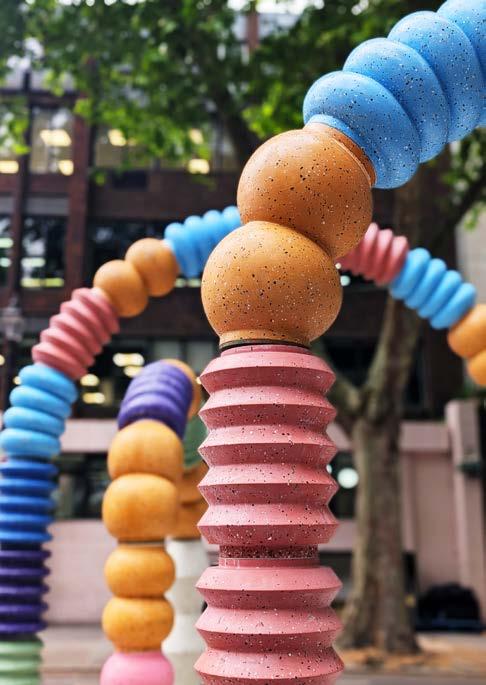
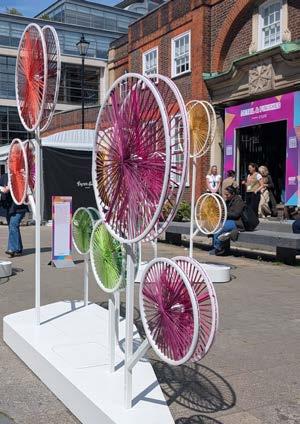
CLERKENWELL DESIGN WEEK CONTINUES TO STEP UP YEAR AFTER YEAR, AND 2026 WAS A JOY TO EXPERIENCE. WITH NEW SHOWROOM OPENINGS, VIBRANT PARTNERSHIPS AND A PACKED PROGRAMME OF LAUNCHES, TALKS AND INSTALLATIONS, CDW ONCE AGAIN SHOWED THE STRENGTH OF CLERKENWELL AS A COMMERCIAL INTERIORS DESTINATION.
This year, one theme came through clearly: the balance between biology and technology. From AI, digital twins and smarter data to biomaterials, circular thinking and human-centred design, the conversations pointed to an industry looking for progress with purpose.
Could Clerkenwell Design Week continue to challenge Europe’s major design events? It certainly feels increasingly confident.
This Event Report captures the standout moments from across the festival, celebrates what caught our attention, and highlights the conversations shaping the future of commercial interiors.
Let’s dive into the details!

INTRODUCTION
PAGE 2
OBSERVATIONS
PAGE 6
DESIGN INSIDER TALKS!
PAGE 52: Design Legacy in the Making
PAGE 56: What Commercial Interiors Can Learn from Fashion, with Mary Portas
WELCOME TO CLERKENWELL: NEW SHOWROOMS
PAGE 8
DESIGN INSIDER TALKS!
PAGE 58: AI in Architecture: Augmentation, Not Replacement
PAGE 60: Sophie Schuller on the Meaning of Objects
PAGE 62: Going Green in the Real World
DESIGN INSIDER TALKS!
PAGE 16: Designing for a New Era of Stay
PAGE 20: Design in Focus
PRODUCT LAUNCH
PAGE 26: New Product Launch
PAGE 28: Furniture Focus
PAGE 42: Textiles Focus
DESIGN WORKSHOPS
PAGE 64: Coloured by Nature:
Biomaterials, Craft and Material Optimism
PAGE 66: Milliken Marks 40 Years with Circular Thinking
PAGE 68: A Kinetic Close to Clerkenwell
Design Week with Phineas Harper
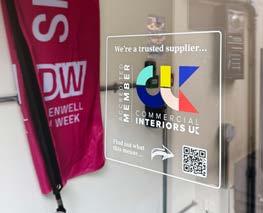
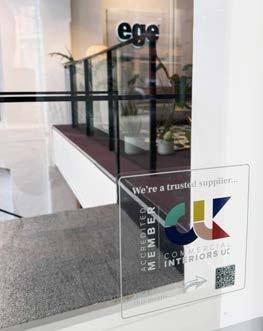
PAGE 70: Commercial Interiors UK Accredited Member Window Mark
THANKFULLY, THE UNWELCOME RAIN THAT GREETED US ON DAY ONE DID NOT LAST. THE SUN CAME OUT, AS WE ALWAYS HOPE IT WILL FOR CLERKENWELL DESIGN WEEK, AND WITH IT CAME THE FAMILIAR BUZZ OF SHOWROOMS OPENING THEIR DOORS, CONVERSATIONS SPILLING ONTO THE STREETS AND THE COMMERCIAL INTERIORS COMMUNITY RECONNECTING ACROSS CLERKENWELL.
One of the clearest signs of a successful design event is when brands choose it as the platform for new product launches. We have certainly seen that at Clerkenwell Design Week in previous years. If not always a global launch, then often a UK launch, giving visitors the chance to experience new thinking first-hand. Product launches also tell us something about market confidence, reflecting investment in R&D, appetite for innovation, and approach to taking risks.
This year, there were new launches to discover, but not in the volume we have experienced before. It did not feel like a shift towards other international events as launch platforms, instead it felt more connected to the wider global climate and the caution currently shaping investment decisions. What we did see, however, was existing collections being expanded, new models introduced, colour palettes broadened and material options refined. Progress was still very much present, but it appeared through considered evolution rather than major reveal.
A joy of our commercial interiors community is the generosity with which expertise is shared and this year’s talks programme was a clear reminder of that. At times the schedule felt enormous, perhaps even excessive, but every conversation we attended was full, often standing room only. The appetite for knowledge sharing was unmistakable. Designers, suppliers, manufacturers and specifiers were not just moving through Clerkenwell looking for products, they were actively seeking ideas, discussion and collective learning.
A particularly fascinating thread was the balance between the human hand and technological development. It was no surprise to see AI on the programme, but it was refreshing to hear the conversation move beyond the everyday tools many of us are becoming increasingly competent in using. Instead, speakers explored digital twins, world models, and the future possibilities that sit where biology and technology meet.
What made this especially interesting was the way those discussions sat alongside a much wider workshop and conversation programme focused on human-centred design, craft, service-led hospitality and emotional connection. Across the week, there was a sense of an industry exploring a future shaped by biomaterials and human judgement: excited by new possibilities, but still deeply invested in touch, care and experience.
And then, of course, there were the parties. Clerkenwell Design Week has become one of the UK commercial interiors sector’s most vibrant opportunities to socialise, and this year did not disappoint. The after-hours events were busy, generous and full of energy. Connection sits at the core of CDW, from conversations during the day with familiar faces and new acquaintances, through to the evening gatherings that keep the city buzzing.
It is the quality of our relationships, and our willingness to share, support and celebrate one another, that makes Clerkenwell Design Week feel so valuable year after year.
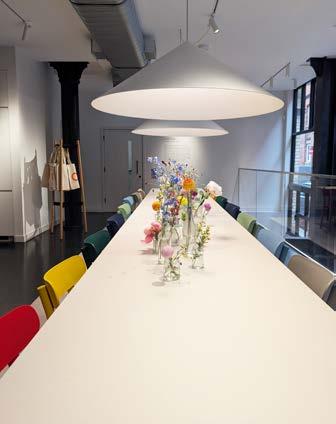

1. Lotti Cafe Chair, NaughtOne
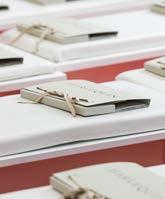
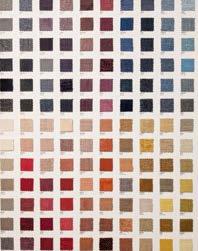
2. Bolon material exhibition
3. Clive Walters, DJ set at Panaz
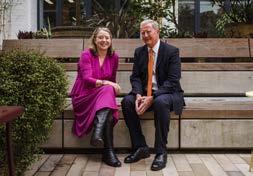
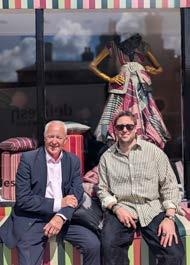
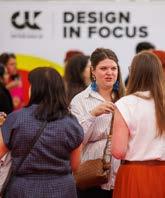
4. Stuart Taylor, CIUK Chairman, with Rollie Attard, CEO of Panaz
CLERKENWELL REMAINS ONE OF LONDON’S MOST IMPORTANT DESTINATIONS FOR COMMERCIAL INTERIORS, BUT THE SHOWROOM MARKET IS FAR FROM STATIC. ALONGSIDE HIGH-PROFILE NEW OPENINGS, BRANDS ARE TAKING A MORE CONSIDERED APPROACH TO LOCATION, BUDGET, VISIBILITY AND LONG-TERM COMMITMENT.
DESIGN INSIDER SPOKE WITH ELISABETH ELSE OF WARWICK BOOKMAN & ASSOCIATES TO UNDERSTAND WHERE DEMAND IS GROWING, WHAT COMPROMISES BRANDS MAY NEED TO MAKE, AND WHY THE RIGHT SHOWROOM IS ABOUT FAR MORE THAN SIMPLY FINDING AN AVAILABLE SPACE.
Several new commercial interior showrooms have opened in Clerkenwell, have you seen consistent growth in demand for new showrooms in the area or has it dipped/accelerated?
It has been clear for the last few years that some design businesses are doing very well and seeking to open new showrooms, while others are struggling a bit. Our conversations with clients really demonstrate that the industry isn’t moving as a single body and brands’ customer sectors, manufacturing, pricing, marketing and more, are all individual.
That said, a stunning new showroom for Social Spaces and a light studio for Trilux, both launched at this year’s Clerkenwell Design Week and their teams are absolutely delighted; Calma by Nurus were in a shared showroom and have now branched out on their own, all showing growth. We have also recently worked with several longstanding clients to negotiate new leases on their existing showrooms.
For brands we are talking with who are considering opening showrooms, it’s probably fair to say that they are taking longer to plan their budgets and commit. We have had open and honest conversations with several furniture companies, who have then decided to postpone their search for a year or two. That’s actually not a problem for us, as we prefer our clients to be certain of the big decision they are making, rather than pushing them into something that isn’t right for them.
With so many showrooms already established in Clerkenwell is demand now outweighing supply?
And what compromise may brands wishing to launch a showroom in Clerkenwell now need to consider?
The nature of break clauses being exercised and leases coming to an end means that showrooms are always becoming available, but it’s certainly not a pure buyer’s market at the moment. We exercise a lot of listening and creative thinking to find good spaces for our clients to display their products, and deals are often concluded off-market, before a property has even been advertised.
Compromises that brands may have to make to meet their budget obviously include size of space and location. One’s perception of size depends on the layout of space and we have put very happy clients in spaces that were smaller than thought they were looking for, but which they’ve been able to fit-out beautifully. We are, however, extremely careful with locations – within Clerkenwell / Farringdon, even just a couple of hundred metres in the wrong place can be disastrous.
What specification are you being asked for by brands looking for a showroom? Are there any commonalities in their requirements?
Almost everyone wants good windows, especially for a first showroom, although established brands who work on an appointment only basis can find great spaces on upper floors. The size of space required obviously depends on the brand’s portfolio and budget. The more intangible requirement is the feel or vibe of a space, which can be hard to describe and often only comes out in the first round of viewings; that’s why our research for each client is completely bespoke.
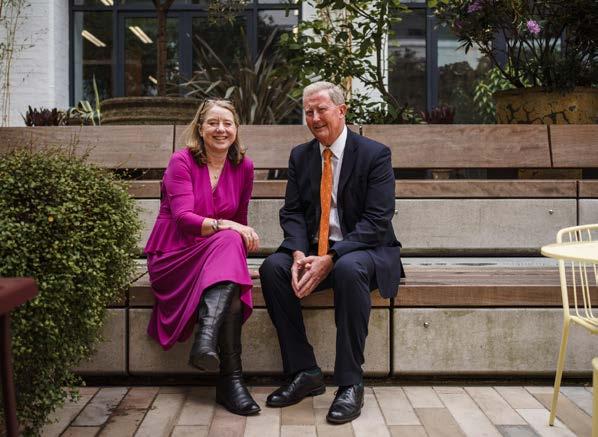
Clerkenwell is such an established destination for design within London, do you see other areas which had previously been design hubs lose brands as they move to Clerkenwell or are you seeing growth in these locations too?
The big move that was expected to Shoreditch a few years ago never happened, with Vitra’s move not being followed by many. This is partly because Clerkenwell / Farringdon remains such a centre of gravity for the industry and also the fact that competition from restaurants, retail, etc, means that Shoreditch isn’t cheaper any more.
Chelsea is a different matter – that area is the strongest for residential sales and is therefore relevant for brands who sell to individuals and interior designers. Our client Christopher Farr is on the Kings Road, for example. Havwoods notably display their flooring in both locations, which is an approach we’d certainly recommend if that fits the business model.
What else is it important to know about new showrooms in Clerkenwell?
We strongly suggest that brands looking to open a new showroom get advice from people with experience in the area – we know what other deals are being done and where negotiation can make a big difference to terms.
In this country, we get used to looking for our homes directly from estate agents, but the commercial market is different. Agents are employed to make the most money for landlords and a supportive guide through the process to find a new showroom can save their fee many times over, not to mention reducing hassle and stress in the process!
Otherwise, realistic preparation makes a big difference. Understanding the budget and objectives gets a project off to a flying start – even if those are refined during the process, a clear understanding of the brief can enable prompt decision-making, which often makes the difference between securing a particular showroom or not.
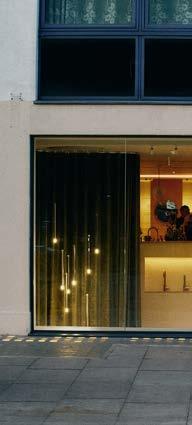
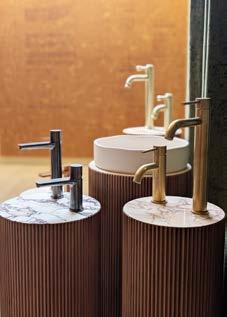
DESIGN INSIDER WAS LUCKY ENOUGH TO SPEAK WITH AMY BLIGHT, SENIOR INTERIOR DESIGNER AT CONRAN & PARTNERS, ABOUT THE THINKING BEHIND ABI INTERIORS’ NEW CLERKENWELL SHOWROOM. THE SPACE INTRODUCES THE AUSTRALIAN TAPWARE BRAND TO A UK AUDIENCE, WHILE KEEPING HOLD OF THE WARMTH AND CLARITY THAT DEFINE ABI’S IDENTITY.
For Amy, the starting point was all about balance: creating somewhere that felt true to ABI, but also at home in Clerkenwell.
“They’ve got a very clear brand identity, but they wanted something that spoke to the locality here,” Amy explained. “We wanted to make it feel like their home.”
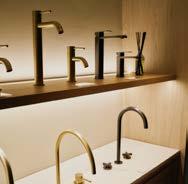
That idea comes through in the way the showroom is planned. Rather than presenting products in a purely display-led way, the ground floor takes visitors through a familiar domestic journey.
“The entrance is the hallway,” Amy said. “You’ve got the kitchen and then at the rear you’ve got the bathroom. We wanted to create the ground floor as more of a display of
the product in the situation where it would end up.”
Downstairs, the showroom becomes more hands-on, with a product library and consultation space designed to support specification decisions.
“They can hand-hold the materials, change the colour temperature, so you can see it in day, night, warm light or cold light,” Amy said. “It’s really interactive.”
Conran & Partners also thought carefully about how to translate ABI’s Australian palette for a UK setting.
“We didn’t want to just lift the ABI brand and bring it here,” Amy explained. “We wanted to take their brand and magnify all the different hues, and maybe make it a
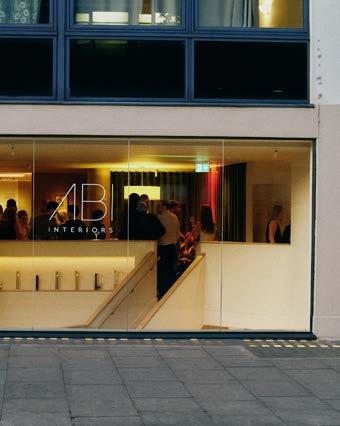
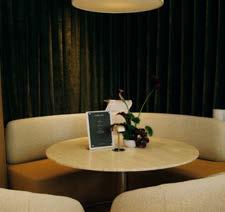
little richer for the UK climate.”
That richer, more tactile feel is supported by layered lighting, including a collaboration with Chelsom on a bespoke lighting piece utilising ABI’s own metal finishes. It is a lovely detail, connecting the showroom’s atmosphere back to ABI’s product language.
The result is a space that feels warm, practical and easy to spend time in: part brand home, part working specification space, and a confident new chapter for ABI in Clerkenwell.
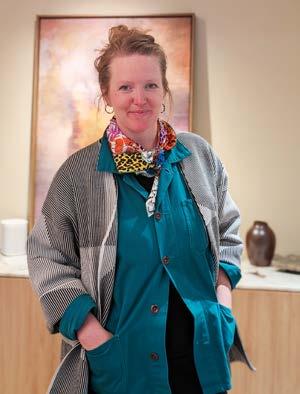
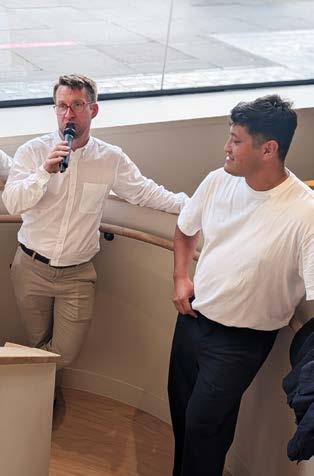
ABI INTERIORS MARKED THE LAUNCH OF ITS NEW CLERKENWELL SHOWROOM WITH A VIBRANT EVENING OF CELEBRATION, BRINGING TOGETHER CLIENTS, PARTNERS AND FRIENDS OF THE BRAND. DESIGNED BY CONRAN & PARTNERS, THE NEW SPACE REFLECTS ABI’S GROWING PRESENCE IN THE UK AND EUROPEAN DESIGN MARKET, AND OFFERS A WELCOMING NEW HOME FOR CONVERSATIONS, PRODUCT DISCOVERY AND FUTURE PROJECTS.
Doug Bewley opened the evening by placing the launch within a wider moment of growth for the business:
“It’s a very special time for us. It’s not only a big move into the design sector and this market for ABI, it’s also our fifth anniversary in the UK, and globally it is our 10-year anniversary.”
He thanked Sukai Farrell, ABI’s Group CEO and co-founder, for his vision, alongside Conran & Partners and Simon Kincaid’s team for creating a showroom that already feels like home. Doug added:
“I’m looking forward to welcoming you all back in the future into our home, whether it’s for a cup of coffee, a conversation about our products, or your next project.”
Having flown in from Australia that morning, Sukai reflected on the transformation of the showroom in just three weeks:
“When I walked into the showroom this morning, it was such a shock. Three weeks ago, I was standing in this spot thinking, oh, we could be in trouble here. The floor was getting ripped up, there was no glass at the front, and in three short weeks the team has done such an amazing job of pulling it all together.”

For Sukai, the launch represented a defining
“For us as a business, this is a real it’s been an incredibly long time, but milestones we’ve achieved, this is definitely
He went on to frame the evening as a celebration their energy, passion and commitment,
“Doug, you need a special mention. For hard, for the last few months you’ve weeks I didn’t think there was anything found another fuel tank.
To see your dedication to the company a day-to-day basis, is really amazing. people, your worries instantly go away,
defining milestone:
crowning milestone. Ten years feels like but actually, in all those years and all the definitely the crowning moment.”
celebration of ABI’s UK team, recognising before giving Doug a special mention:
For two years you’ve been running pretty you’ve been sprinting, and for the last three anything left in the tank, but you somehow
company mission, and everything that you do on amazing. Sometimes when you meet your kind of away, and we’re so lucky to have you.”
Mark Poulain closed the speeches by looking ahead to ABI’s next chapter in the contract market:
“It is a genuine pleasure to be part of this business at this point in time, because we’ve had incredible investment and support from Sukai and the founders of ABI.”
He described the showroom as a powerful new platform for supporting specifiers, hospitality clients and the wider contract environment:
“I’ve been in this industry for 25 years now, and this feels like an opportunity to deliver something really special.”
Mark ended by thanking ABI’s partners and inviting guests to enjoy the evening:
“Have a really fantastic party. Stay and eat the food. Have a great time. We love you.”
CLERKENWELL WELCOMED NEW SHOWROOMS WHILE ALSO SEEING KEY EXISTING SPACES RECEIVE A FRESH GLOW-UP.
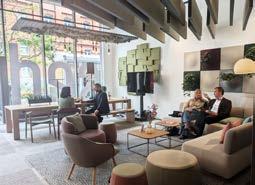
At Sedus, the showroom landscape continued to shift through a major refurbishment rather than a new opening. After a fast-paced 15-day refit, led by Millie Lawrence and the Sedus team, the space felt newly energised. Speaking with Oliver Poulain, it was clear the refresh was about flow and storytelling as much as furniture. The entrance was reworked, the kitchen relocated and the layout redesigned around collaboration, focus, work café and meeting zones, creating what Oliver described as “a story in every location.”
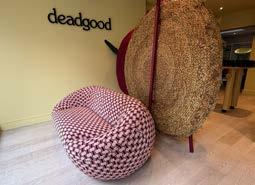
Deadgood also showed the value of reworked spaces, giving its Old Street showroom a full colour glow-up with Trifle*. The reimagined showroom showcases new product collections and designer collaborations while keeping the brand’s playful personality. As Nadia Themistocleous of Trifle* said: “It still feels like Deadgood, it’s full of personality but now it’s richer, softer and much more immersive.” Mapped into functional zones, the space proves that a working environment can feel sophisticated without losing its rebellious soul.
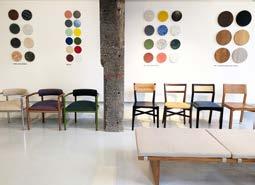
At Reddie, a new showroom opening added another destination to Clerkenwell’s design landscape. The space pairs a ground-floor gallery with a workshop below, where designers can explore the material library, collaborate with the in-house team and view outdoor and workplace products in a more focused setting. Designed as a retreat for visiting designers, the lower level creates space to pause, specify and let ideas develop.





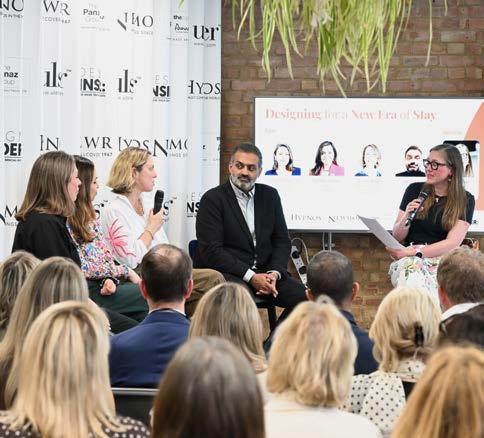
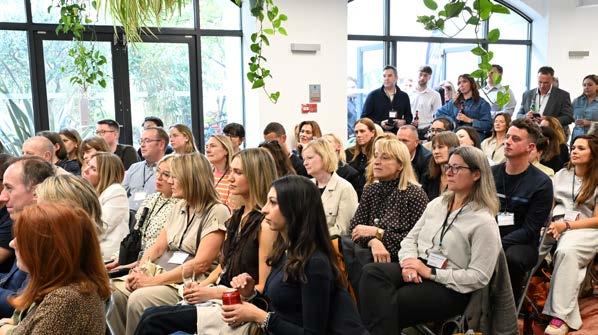
HOSTED BY ULSTER, HYPNOS, NEWMOR WALLCOVERINGS, AND PANAZ, AND ORGANISED BY BANCMARKETING, DESIGNING FOR A NEW ERA OF STAY TOOK PLACE IN THE ULSTER CARPETS SHOWROOM. THE CONVERSATION EXPLORED WHAT HAPPENS WHEN A “STAY” STRETCHES BEYOND THE TRADITIONAL HOTEL VISIT AND MOVES INTO SERVICED APARTMENTS, EXTENDED STAY, BRANDED RESIDENCES, LIFESTYLE HOTELS AND MORE FLEXIBLE PATTERNS OF TRAVEL.
The conversation brought together Sophie Borel, Senior Project & Design Manager at Cheval, Kalindi Juneja, CEO of PoB Hotels, Joanna Knight, Managing Director of Joanna Knight Interiors Ltd, and Arun Rana, Design Director, Accor Group, Europe & North Africa, Premium, Midscale, Economy.
A key theme was behaviour. Guests are no longer simply arriving, sleeping and leaving. They may be working, cooking, hosting, resting, relocating, celebrating or settling into a destination for longer. Arun’s idea of the “living concept” captured that shift well: hospitality interiors now need to support the way people live during a stay, not only how they arrive.
That has practical consequences. Sophie’s serviced apartment perspective highlighted how details such as storage, layout, privacy, lighting and flexibility become more important over time. These are the elements guests notice once they begin to properly inhabit a space.
The panel also discussed the continuing value of character and place. Kalindi’s perspective from PoB Hotels brought independent identity into focus, reminding the room that guests still want connection, story and a stay that feels specific to its location.
For designers and suppliers, Joanna’s contribution was especially relevant: warmth and individuality matter, but hospitality interiors still have to perform. Materials, furnishings and details need to create comfort without compromising durability, cleaning, maintenance or commercial use.
The takeaway was clear. The new era of stay is not about choosing between hotel and home. It is about designing spaces with enough intelligence, flexibility and feeling to support how guests really live, work and unwind while they are there.
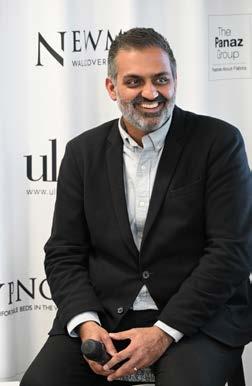
ARUN RANA
Arun’s contribution centred on the idea of the “living concept”, a useful way to think about hospitality that stretches beyond the traditional hotel room. Rather than designing only around arrival, sleep and departure, this approach looks at how guests live during a stay: working, relaxing, eating, socialising and maintaining everyday routines.
This is particularly relevant as hospitality brands move across lifestyle hotels, extended stay, branded residences and more flexible formats.
Arun’s point was that design needs to support behaviour over time, creating spaces that feel adaptable, useful and connected to a wider brand experience, while still feeling intuitive for guests moving between leisure, work and daily life.
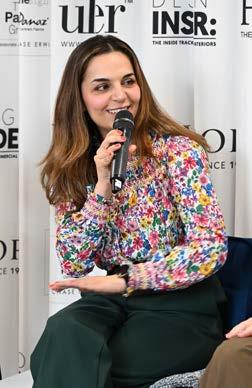
KALINDI JUNEJA
Kalindi brought the independent hotel perspective into focus. For PoB Hotels, individuality, place and experience are central, and that becomes even more important as guests stay for longer. The conversation explored how premium hospitality needs to offer more than facilities and service.
Guests are looking for character, locality and emotional connection, especially when travel becomes slower, more personal or tied to a special occasion.
Kalindi’s point speaks to the continuing value of independent hotels: the stay should feel specific, rooted and memorable, rather than interchangeable with anywhere else, giving guests a genuine reason to choose one destination, one hotel and one experience over another.
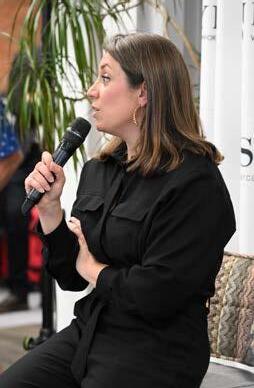
SOPHIE BOREL
Sophie’s serviced apartment perspective highlighted how much the brief changes when someone is staying for longer. At Cheval, guests need independence, service, and to live at their own rhythm, which places greater pressure on space, layout, storage, comfort, privacy and flexibility.
Details that might seem secondary in a hotel room become essential over days or weeks: somewhere to work properly, enough storage to unpack, lighting that supports different moods, and a sense of control over the space.
Sophie makes clear that extended stay design has to feel residential enough to settle into, while still performing as hospitality, with practical details doing much of the heavy lifting.
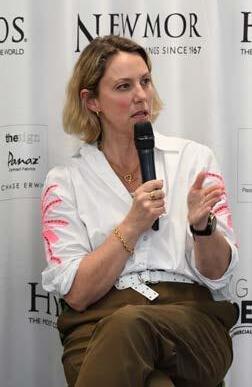
JOANNA KNIGHT
Joanna focused on the balance between residential warmth and hospitality discipline. As interiors become more personal and layered, designers are using texture, colour, furniture, lighting and detail to create emotional connection.
But Joanna’s perspective also brought the conversation back to performance. Hospitality spaces cannot become too delicate or too domestic. Materials need to be durable, maintainable and commercially sensible, while still giving guests that feeling of comfort and individuality.
For suppliers, this is a clear opportunity: the market needs products that bring softness and character, but can cope with the realities of long-term hospitality use, across different guest expectations and operational pressures.
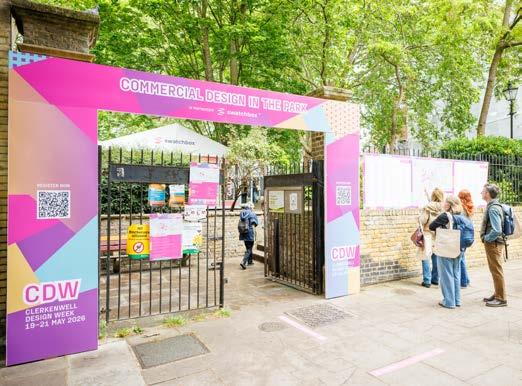
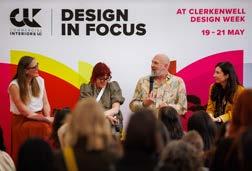
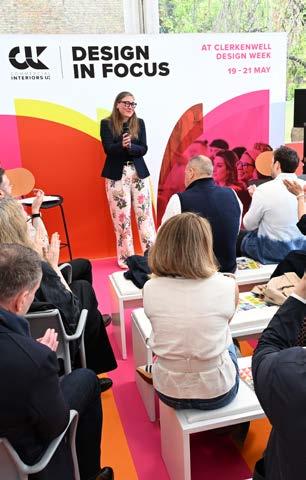
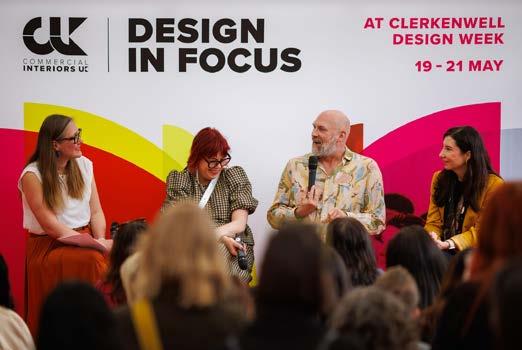
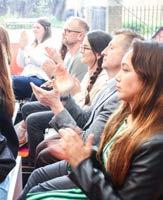
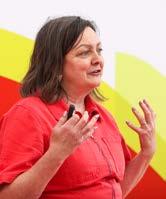
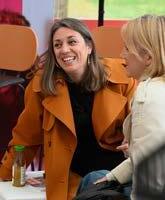
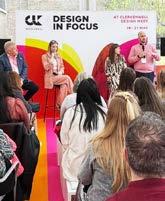
DURING CLERKENWELL DESIGN WEEK, COMMERCIAL INTERIORS UK HOSTED DESIGN IN FOCUS, A CURATED THREE-DAY TALKS PROGRAMME WITHIN THE NEWLY UNVEILED COMMERCIAL DESIGN IN THE PARK.
The programme gave CIUK accredited members a valuable platform to host conversations during CDW, creating an opportunity that may not otherwise have been possible within such a busy festival environment.
For participating brands, Design in Focus offered a live taster of what Clerkenwell Design Week can do for their brand and business: placing them in front of an engaged design audience, supporting thought leadership, and creating meaningful reasons to connect beyond the showroom. For visitors, the programme delivered fascinating conversations, leading industry speakers, practical insights, a creative workshop and opportunities to socialise with peers across the commercial interiors community.
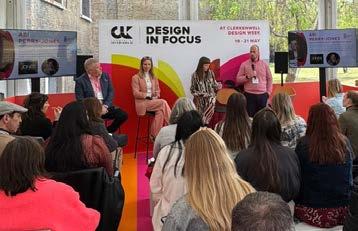
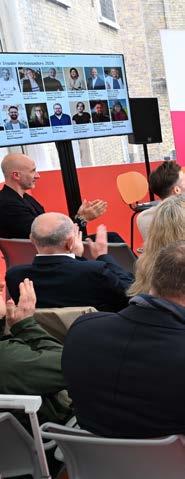
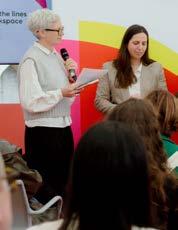

1. The programme opened with the Design Insider Ambassadors 2026 announcement, led by Alys Bryan, Design Insider, introducing the next group of industry voices set to help shape the conversation around commercial interiors.
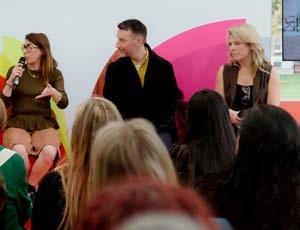
2. The first panel explored performance, sustainability and brand identity in commercial interiors, hosted by Edmund Bell and chaired by Stephen Dobson, Edmund Bell, with speakers Christian Wicks, Contra Soft Furnishing Solutions, Ashley Mooney, Blue Moon Procurement, and Abi Perry-Jones, Jones Architecture + Design.
3. Contract Chair Company hosted a discussion on the blurring of hospitality and workspace, chaired by Clare Dowdy, with speakers Sara Rosselini, Shepherd&, Toby Neilson, BDG Architecture + Design, Maria Framis, Gensler, and Afs Mehrai, Mehrai Design.

For participating brands, the programme offered far more than a slot in a schedule. It created a platform for sharing expertise, meeting an engaged audience and testing what a focused live session could do for brand visibility, thought leadership and meaningful connection.
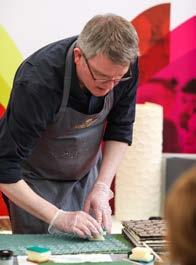
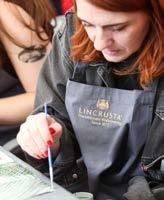
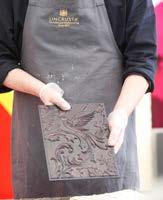
For Lincrusta, the programme created an opportunity to introduce architects and designers to the material in a more hands-on way, exploring how it is still made in the UK, its natural properties, versatility and potential for creating bespoke textural surfaces within hospitality projects.
Alison Griffin, Commercial Director at Lincrusta, reflected that “having this platform allowed us to be part of the conversation, to reach out to our target audience and engage with those that had maybe not yet discovered our wallcovering with its unique proposition for the hospitality arena.” She added that it “felt great to be part of something that was bigger than doing something stand alone.”
From the speaker perspective, the experience was equally positive. Wiktoria Kopycka, Associate Design Director at OBMI, who joined the Beyond Beige panel, described it as “one of the most relaxed and engaging panel conversations I’ve done.” She reflected on how the natural flow of the discussion allowed the conversation to feel authentic, while the mix of perspectives across the panel, audience engagement and atmosphere worked together to create a strong session.
She also praised the experience of working with the Commercial Interiors UK team, describing it as “seamless,” “very well organised, welcoming and thoughtfully curated from start to finish.”
Together, their reflections capture the value of creating space for generous, well-curated conversation: supporting accredited members, giving expert voices room to be heard, and offering audiences something useful, thoughtful and engaging.
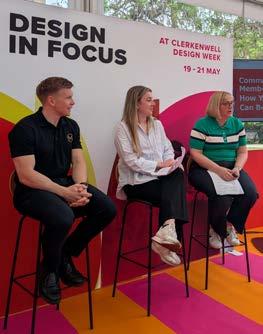
4. GROHE SPA and Buster + Punch explored aligned design styles across luxury bathroom fixtures and fittings, chaired by David Harte, Studio Moren, with speakers Joanna Knight, JK.Interiors, Paul Flowers, LIXIL, and Massimo Buster Minale, Buster + Punch.
5. Lincrusta hosted a hands-on session on bespoke textural surface decoration, led by Alison Griffin, Lincrusta, and Euan Stewart, Lincrusta.
6. Design Insider hosted a panel on the new era of hotel design beyond beige, chaired by Alys Bryan, Design Insider, with speakers Wiktoria Kopycka, OBMI, Claire Vallis, Sanderson Design Group, and Scott Maddux, Scott Maddux Studio and Maddux Creative.
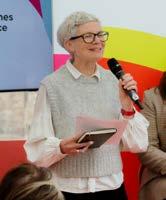
7. The programme concluded with a session on how Commercial Interiors UK membership can support business growth, led by Sarah Laing and Julie Desmette, Commercial Interiors UK, with Emilio Mudrak.





PRODUCT IS ALWAYS AT THE HEART OF CLERKENWELL DESIGN WEEK, BUT THE WAY IT IS PRESENTED CONTINUES TO BECOME MORE LAYERED. ACROSS THE FESTIVAL, NEW FURNITURE, LIGHTING, FLOORING, TEXTILES, SURFACES AND INTERIOR PRODUCTS WERE SHOWCASED THROUGH A MIX OF TEMPORARY EXHIBITION VENUES, RESIDENT SHOWROOMS, CURATED INSTALLATIONS AND BRAND-LED EVENTS.
Some products were launched independently, with a clear focus on specification, performance and design detail. Others were introduced as part of a wider story, woven into showroom takeovers, talks, workshops, sustainability displays and collaborative presentations. This made the product experience feel less like a traditional showcase and more like an invitation to understand how each piece fits into a broader direction of travel for the industry.
The settings themselves played an important role. From established showrooms across Clerkenwell to temporary destinations dedicated to workplace, lighting, surfaces, British design, emerging talent and international collections, the festival offered many different ways to encounter new work. Some brands used CDW to present major launches, while others focused on the development of existing ranges, adding new finishes, materials, models or configurations in response to changing commercial interiors briefs.
That reflected the mood of the wider market. There was innovation to be found, but often through refinement, customisation, repairability, circularity and expanded choice rather than dramatic standalone launches.
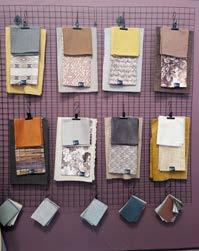
Edmund Bell introduced four new fabrics: Maverick, a recycled blackout; Vibe, a sheer fabric; Evolve, a blackout fabric; and Diversity, a doublesided fabric.
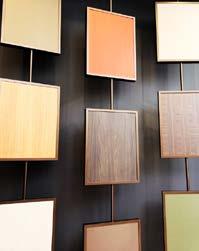
EGGER
Decorative Collection 26+
EGGER’s Decorative Collection 26+ introduces new finishes and material innovation, including PerfectSense® Ambiance, the latest development in the award-winning PerfectSense range.

GEBERIT Aniara Mix-and-match bespoke, individual toilet basin improves

LAUFEN VOLTA by Yves CO2-free production the world’s first alongside VOLTA, washbasin inspired
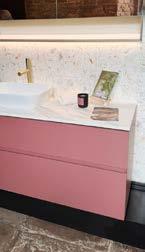
Mix-and-match bathroom furniture for more individual schemes, lip-free asymmetric improves water flow and efficiency.
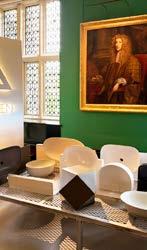
Yves Behar
production story at Clerkenwell, including first electric kiln in Gmunden, Austria, VOLTA, Yves Béhar’s Saphirkeramik inspired by the movement of water.
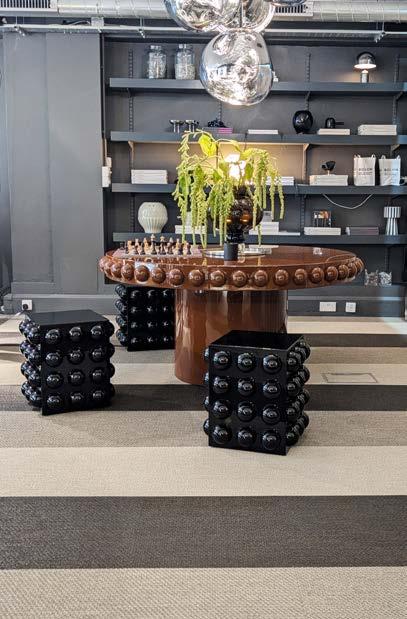
Relaunch of the original BKB Collection Launch Back2Bolon takeback initiative
Bolon collaborated with Tom Dixon to showcase its new outdoor furniture models, alongside the relaunch of the original Bolon BKB collection and the award-shortlisted Back2Bolon takeback initiative. An engaging tabletop display brought Bolon’s sustainability story to life.
IF PRODUCT LAUNCHES WERE MORE MEASURED OVERALL THIS YEAR, FURNITURE WAS THE CLEAR EXCEPTION. THIS WAS THE CATEGORY WHERE WE SAW THE GREATEST VOLUME OF NEWNESS, AND THE CLEAREST EVIDENCE OF R&D INVESTMENT, ACROSS BOTH HOSPITALITY AND WORKPLACE SETTINGS.
Some launches came from experienced in-house design teams, building carefully on existing product knowledge and commercial insight. Gresham, for example, introduced a wide range of new designs and developments, including the Boxcurve table, GD10 with a new light bar, LG20 bar stool and chair, Canopy in timber, Minoko in metal, and new colour-drenched tables. Together, these additions spoke to the growing demand for adaptable, highly specifiable furniture that can respond to varied workplace and hospitality briefs.
Other launches reflected the value of working with leading global designers. NaughtOne’s Lotti Café Chair, designed by Keiji Takeuchi, offered a thoughtful balance of comfort, durability and ease of maintenance. Its carefully controlled proportions, subtly contoured seat, floating backrest and stocky tubular frame create a simple but highly considered product. A concealed fixing system allows the chair to be fully disassembled and serviced, supporting a longer product life, while durable easy-clean materials and efficient material use answer the demands of commercial interiors.
Collaboration with established design studios was another strong route to innovation. String Furniture’s Center Center, designed with Form Us With Love, introduced a non-static storage system that can shift and adapt with the user’s needs. It was a useful reminder that furniture development is increasingly about flexibility over time, not only immediate function.
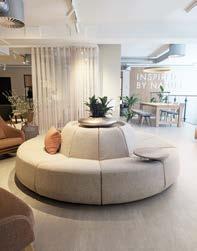

Boxcurve table
Also, GD10 with a new light bar, LG20 bar stool and chair, Canopy in timber, and Minoko in metal. New colour drench tables.
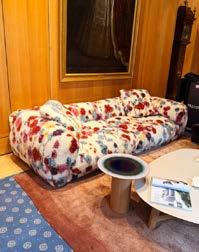
Me-Time sofa by García Cumini
Expanded structure to include a new curved corner element. Demonstrates the true sense of comfort through size.
OCEE & FOUR Sereno Collection Designed to bring environment

interchangeable
CNC-machined
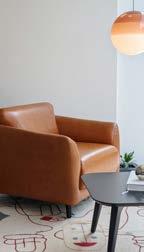
Collection by Yonoh Studio bring the warmth of home into every and available as a 1, 2, or 3 seats.
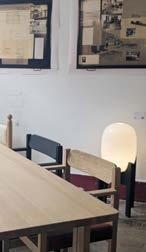
Chair hardwood frame that accepts three interchangeable seat options. Vegetable-tanned Natural textile-weave sling. Precision CNC-machined solid timber seat.
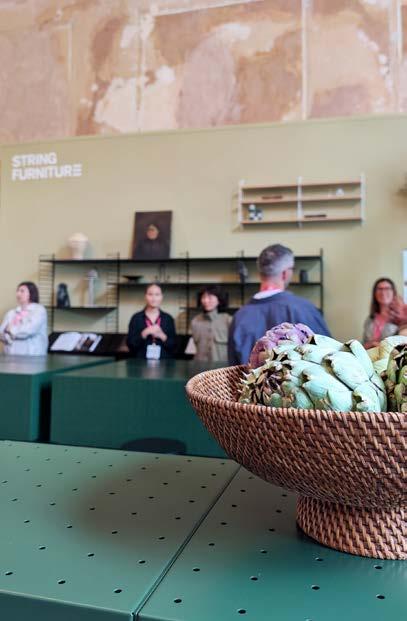
A modular storage system designed to move beyond static storage. Made from perforated sheet metal with a powder-coated finish, the system can be configured in multiple ways, giving specifiers and users flexibility across a range of workplace and commercial settings.
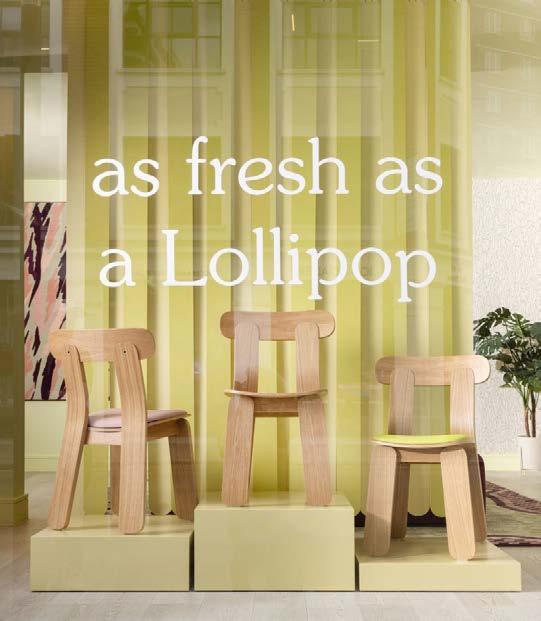
A robust timber chair inspired by the humble wooden lollipop stick, designed to bring playful character into serious workplace settings through chunky pressed-plywood joinery and a distinctive leg detail.
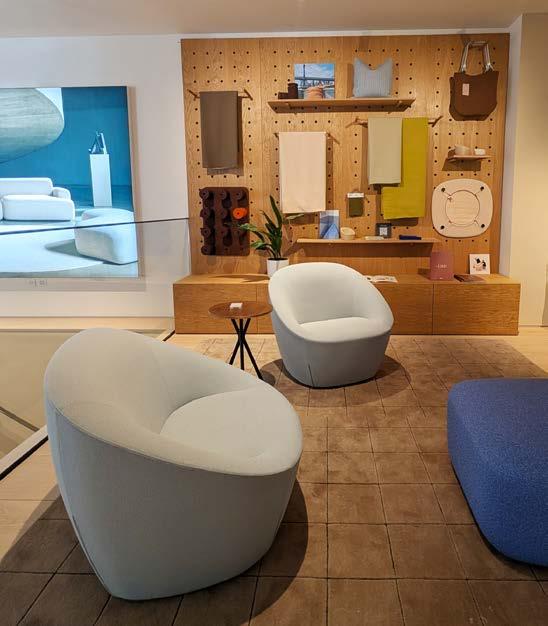
Championing human touch, craftsmanship and circular thinking through a removable, tool-free cover that allows in-situ reupholstery, with old covers recycled into new textile fibres and a structure engineered for longevity using BioPur® foam, a recyclable steel frame, responsibly sourced plywood and minimal fixings for easier disassembly.
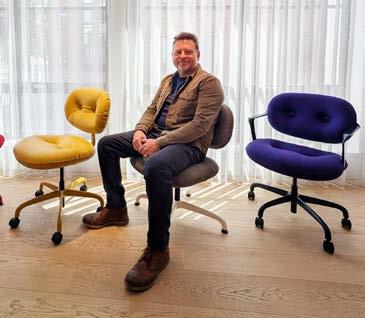
Knoll’s launch of the Morrison Hannah chair brings a joyful new energy to the workplace. Originally designed in 1973 by Andrew Morrison and Bruce Hannah, the chair has been reintroduced for today’s more fluid interiors, where meeting, focus and informal collaboration often happen in the same setting. For Martin Penny, Portfolio Lead for Seating, Europe, the chair’s renewed relevance lies in its personality. It is playful, characterful and quietly expressive, with a form that feels immediately warm, “it smiles at you, as Bruce says.”
Now produced in Italy for the European market, the design has been subtly updated rather than simply reproduced. Advances in foam, mechanism and manufacturing have allowed MillerKnoll to realise details the designers originally wanted, but could not achieve at the time.
Martin described it as “the ultimate chameleon,” able to shift between bright colours, bold fabrics, polished finishes and leather, depending on the personality of the space. Yet its own character remains unmistakable.
Much of that spirit reflects Bruce Hannah himself. “He is an absolute character,” Martin said, describing the designer as someone whose humour, storytelling and sense of fun clearly live within the product. Bruce’s own way of describing the chair captures that charm beautifully. When you approach it, it welcomes you with a smile. Then, once you have used it, Martin explained, “it says ‘you’re welcome.’”
A chair with presence, humour and warmth built in. One that brings joy into the workplace, without ever trying too hard.
Great workplace design gives people choice, setting for focused work. Launched by Herman and booth range creates a calm, comfortable while sitting confidently alongside more
For Chloe Richardson, Senior Director International, the starting point was simple: focus work?” Bound offers a clear answer, little bit of a haven” within the wider office
The design combines 1400mm high rear helping to reduce visual distraction and infill, grown in the north of England, replaces acoustic rating, while supporting a lower
Inclusivity is built into the product too. wheelchair users can pull directly up to style sit-to-stand control is easier to use a neurodiversity perspective, Bound can for hypersensitive employees.
Bound gives designers welcome flexibility, tone options. As Chloe noted, it “reads bringing softness, texture and choice to
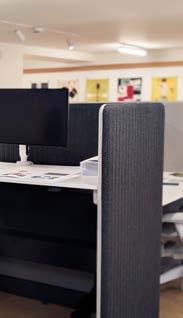
choice, and Bound adds an inviting new Herman Miller, the sit-to-stand desking comfortable space for deeper concentration, more open, collaborative settings.
of Workplace Product for MillerKnoll simple: “Where do we go to do our deep answer, creating what Chloe described as “a office landscape.
rear and side screens with acoustic infill, and absorb sound. Its innovative hemp replaces PET and contributes to a Class A lower carbon material story.
too. With no external legs or actuators, to the work surface, while the paddle for people with limited dexterity. From can also create a less stimulating setting
flexibility, with varied sizes, textiles and duomore like a piece of ancillary furniture,” to the focused workplace.
While many workplaces are opening up, the private office has not disappeared. In sectors such as financial services, legal environments and leadership settings, it remains a valued part of the brief, supporting focus, confidentiality, client meetings and presence. With Konzert, Knoll has answered that brief with confidence, creating a private office system that’s contemporary and relevant. Designed by Paolo Dell’Elce, Konzert brings what Paul Woodman, Portfolio Lead at Knoll, described as “fresh eyes” to a category that can lean traditional. The system can deliver classic configurations, but it also introduces a more progressive planning language, with vertical proportions, open shelving and residential cues.
The shift is also practical. As private offices become less dependent on rows of books and binders, storage is changing too. Paul noted that these spaces are becoming “curated for the user,” with display, personality and atmosphere becoming as important as functionality.
That balance runs through the details. Wardrobes, drawers and work settings sit alongside open shelving, integrated lighting and a relaxed meeting zone, allowing the office to support focused work and video conferencing. Sustainability has also been built into the product’s life cycle, with a design for disassembly that supports repair, replacement and longevity.
Konzert feels like a thoughtful update to the bespoke private office: purposeful, derailed and personal. As Paul put it, the details are “little points of joy.”
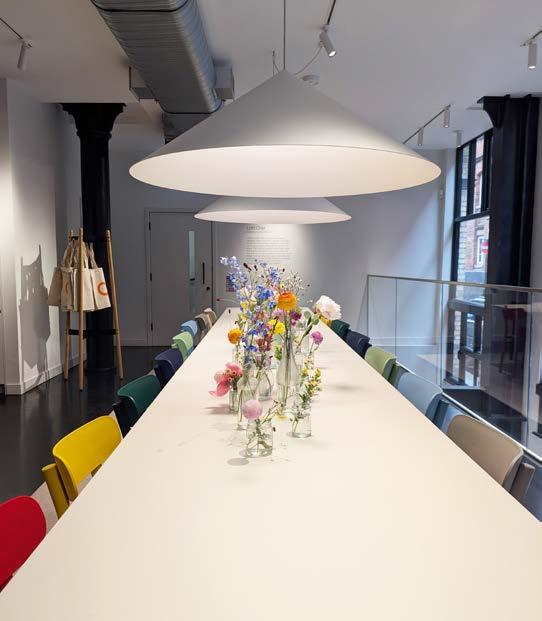
Lotti Cafe Chair by Keinji Takeuchi
Designed for comfort, durability and ease of maintenance. Its proportions are carefully controlled, with a subtly contoured seat, floating backrest and stocky tubular frame. The concealed fixing system allows the chair to be fully disassembled and serviced, supporting a longer product life. Made from durable, easy-clean materials and engineered to minimise material use, Available in 10 polypropylene colours, 16 frame colours, or with an oak seat option.
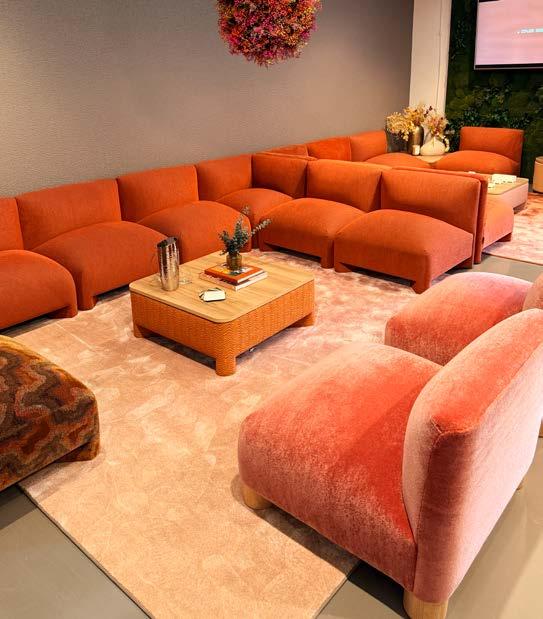
Elmer modular seating system
A modular, multifunctional seating system designed for commercial spaces, with softer, more generous proportions, continuous upholstery and a grounded sculptural base. The design also introduces the brand’s first upholstered legs, giving the piece a fully integrated and more residential feel.
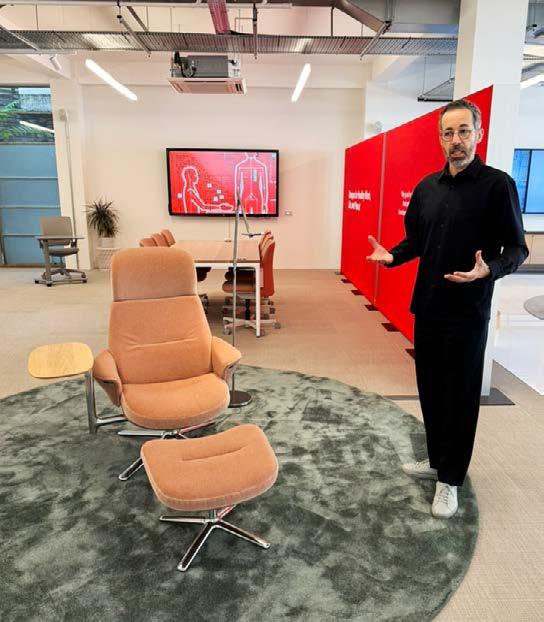
Diffrient Lounge
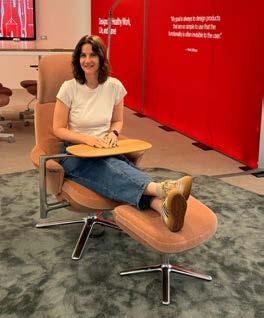
The Diffrient Lounge chair is set to launch in the UK, bringing continuous ergonomic support into a lounge setting. Available with an optional work surface and ottoman, it offers flexibility for relaxed working, focused tasks or informal meeting spaces.
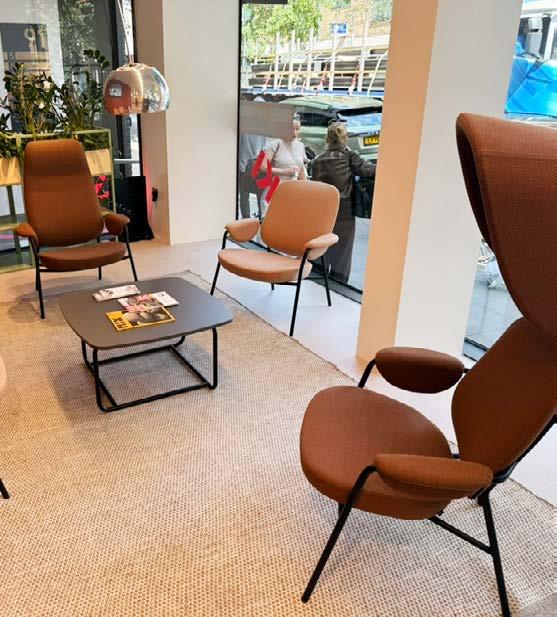
Epocc armchair and chair
KI Europe introduced a series of new additions, including the Epocc armchair and chair, developed through a new collaboration with Polish manufacturer Bejot, with KI Europe holding exclusive rights. The wider Bejot partnership also includes the Belt task chair, Linje soft seating and Fora lounge, while Arckus Work Wall adds a simple, versatile and economical modular framework system designed to transform a range of spaces.
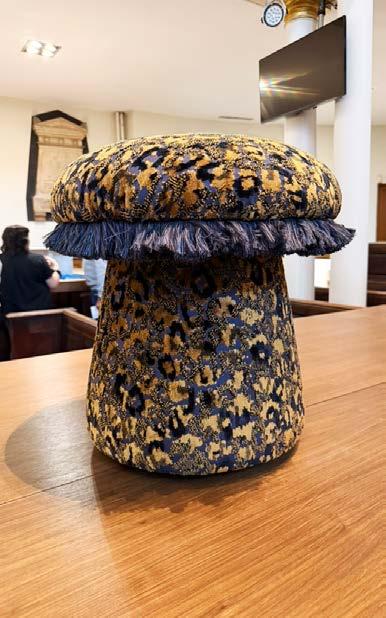
Lacecap Cocktail Tuffet & Seraphine Cocktail Chair
Tamarisk introduced its British-made lounge collections, including the Lacecap Cocktail Tuffet and Seraphine Cocktail Chair, both debuting for 2026.
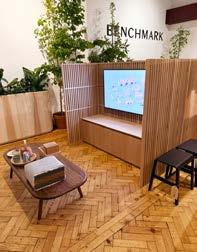
The brand spotlighted digital product passports to reframe longevity around fixing, reusing, refurbishing and reconfiguring, alongside configurable slatted workspace furniture designed to integrate across the wider range.
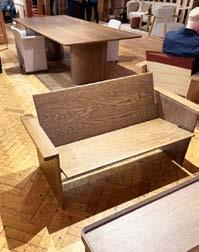
The Gable bench and chair use just four timber panels, combining comfort with low material use, while Daniel Schofield’s Common table uses lower timber grades and a triangular base to reduce waste.
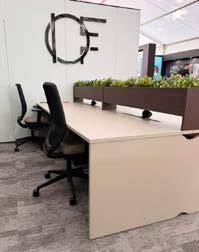
New workbenches expand the range of finishes for greater customisation, while battery-powered bar lighting adds flexibility by removing the need to position desks around fixed plug points.
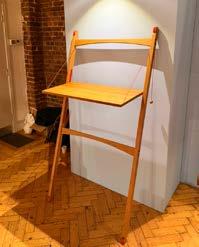
The award-winning foldaway sit-stand desk brings flexibility to smaller workspaces or occasional-use settings, using tension and bamboo Dyneema cord to hold the desk securely in place.
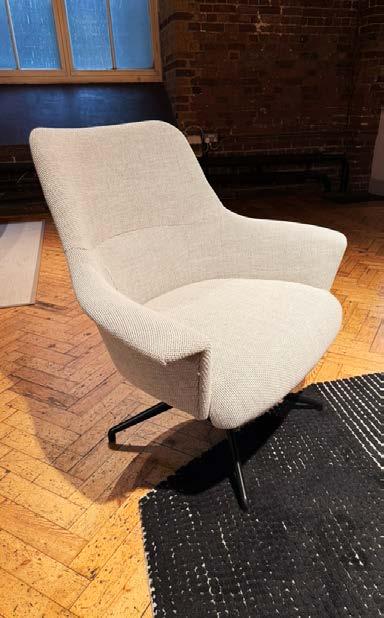
The collection includes Oxbow with a swivel base, designed for commercial spaces, the softly edged Hampton table, the high-back Orchard chair with a paper cord seat, and the sculptural yet simple Larkin nesting table.
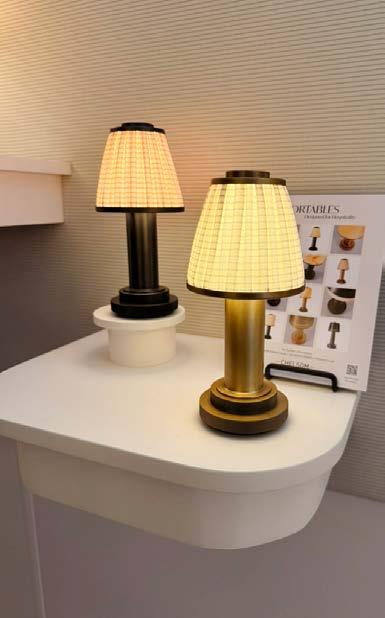
Portables Collection
To mark its 80th anniversary, Chelsom launched a new curated collection of wireless, battery-powered portable table lamps, featuring six individual designs shaped by the brand’s distinctive product language, alongside a collaboration with Ian Rankin.
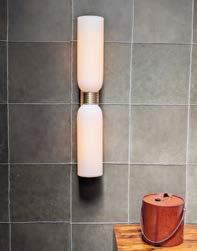
BERT FRANK
Sablier wall light
An additional design to the brand’s existing popular collection.
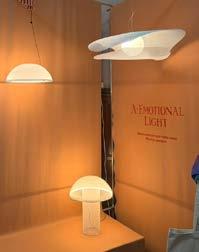
Baleira Pendant and the new Baleira table version, both of them designed by Tomás Alonso, and Mytilus.
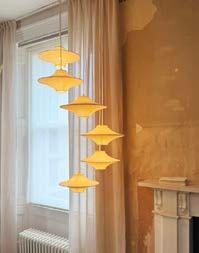
Showcased several designs for the first time. Hand crafted and made to order in England.
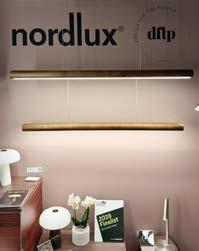
Akeno pendant by Bjørn + Balle
Sleek and beautifully finished in wood and brass portable Glossy Mini by Maria Berntsen - luxury finishes and Scandi simplicity.
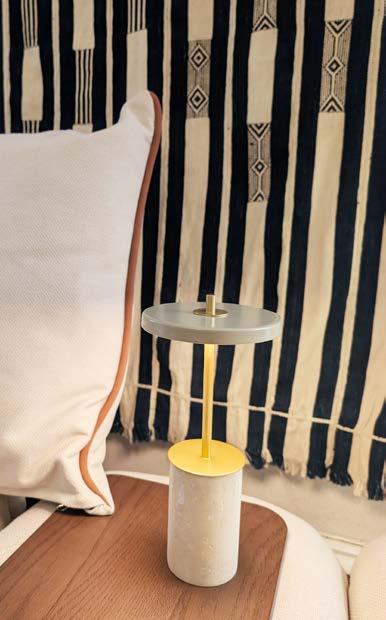
Asteria Move Mini
A compact, portable lamp that brings warm, ambient light to any setting. With four adjustable brightness levels, it lets you create the perfect atmosphere. Its solid marble base adds a timeless, sculptural touch, blending classic sophistication and modern versatility.
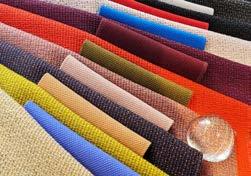
TEXTILE LAUNCHES WERE MORE FOCUSED THIS YEAR, WITH MANY BRANDS CHOOSING TO BUILD DEPTH INTO EXISTING COLLECTIONS RATHER THAN INTRODUCE ENTIRELY NEW PRODUCT STORIES. TEXTURE WAS THE CLEAREST THREAD, WITH VELVETS, MOHAIRS AND CHENILLES TAKING CENTRE STAGE ACROSS UPHOLSTERY AND WALLCOVERING APPLICATIONS.
Tektura showcased Vescom’s Onyx Collection, a mohair launch woven from 70% mohair and 30% cotton. Its two-tone colour combinations, inspired by the allure of gemstones, brought a rich and tactile quality to the category.
That appetite for softness continued with Warwick Fabrics, which has added 26 new colours to its Plush Velvet collection, bringing the range to 90 colours and giving designers even greater choice across hospitality and commercial schemes. ILIV also introduced the Mohara Collection, offering 25 colour options of faux mohair velvet for upholstery.
Alongside these softer finishes, there was interest in more varied surface texture. Cristina Marrone introduced the Perla Collection, a textured chenille, and Capri, a plush mohair velvet.
Colour remained an important part of the story too. Kvadrat brought a joyful celebration of colour, while several suppliers extended existing collections with new shades and softer palettes. Camira offered a gentler expansion of its Monochrome collection, reflecting a broader move towards nuanced colour, tactile comfort and greater choice within established ranges.
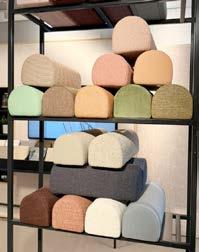
/ VESCOM
Onyx Collection
The Onyx mohair collection introduces twotone colour combinations inspired by the allure of gemstones, woven from 70% mohair and 30% cotton.
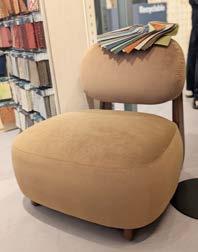
ILIV
Mohara Collection
25 colour options of faux mohair velvet for upholstery.

WARWICK
The Plush Velvet colours. The meaning even

Perla Collection: Capri Collection:
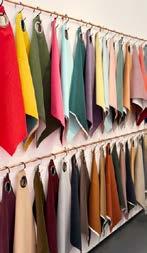
Velvet has recently launched 26 new collection now has 90 colours, even more choice.
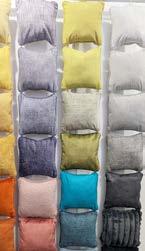
Collection: Textured Chenille
Collection: Plush Mohair Velvet
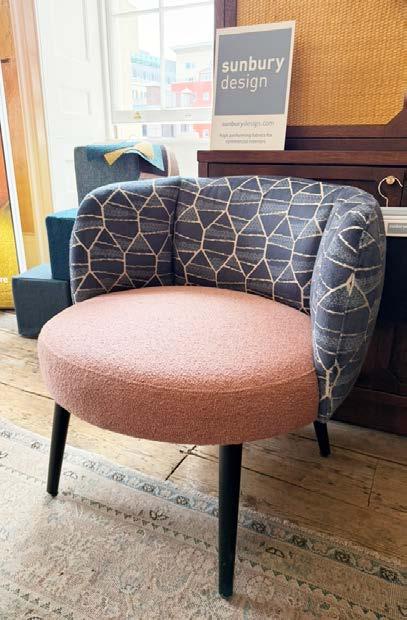
Marquis FR Recycled Collection: Lafayette, Leopold, and Grandby
The collection combines bold, plush jacquard velvet with the contrasting texture of boucle. All coordinating across rich colour tones to add a stylish touch to contract, hospitality and cruise interiors.
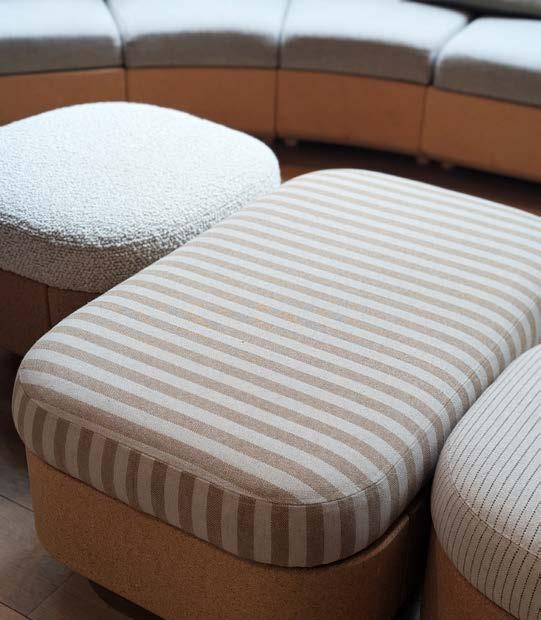
Monochrome Sett II
Monochrome Sett II is the next development in Camira’s wool-flax textile range, introduced a decade after Main Line Flax. Made from renewable wool and flax, the collection features a warm neutral palette with stripes, checks, houndstooth, basket weaves and micro-patterns. Naturally flame-retardant and compliant with Crib 5 Medium Hazard standards, it is designed for highperformance commercial interiors.

KVADRAT
Twisted Flower by Giulio Ridolfo
Twisted Flower is a woollen upholstery textile inspired by the gesture of twisting a flower between the fingers. Bringing together Giulio Ridolfo’s colour expertise and Frans Dijkmeijer’s weaving craftsmanship, the textile features a bespoke twisted yarn that creates rhythm and tactility across the surface.
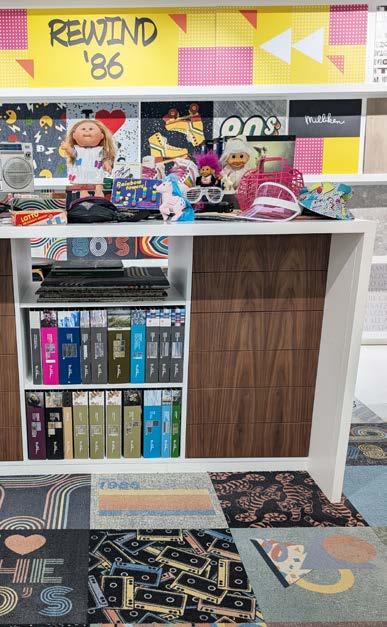
MILLIKEN
Celebration of the 80’s & 40 years of UK manufacturing
Further new product launches include:
Quiet Statement – a collection where texture leads, proving that sometimes the most powerful design says the least.
Open Studio – monochromatic, plush, and rich in subtle detail.
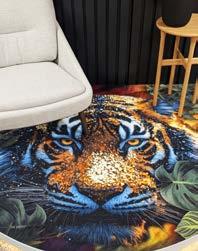
Prisma HD
New technology allowing endless colour possibilities, bringing together imagination and colour, with no limitation on the number of colours within the design.
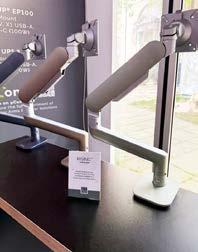
Showcasing their monitor arm colourways.
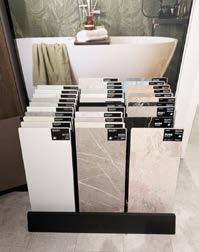
SensoTouch
SensoTouch adds texture and depth to nextgeneration vinyl flooring, using innovative digital printing to create a more authentic natural wood appearance.
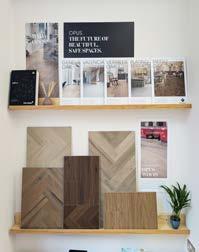
KARNDEAN
Opus: Wood and stone collection
The showroom demonstrated how material choice influences feelings, movement and behaviour in the built environment.
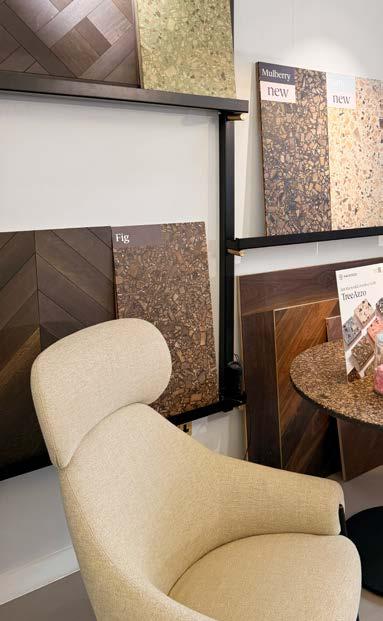
Havwoods x True Lateral collaboration
Havwoods partnered with True Design for a showroom takeover, showcasing an Italian collaboration that included a freestanding kitchen and work table. New launches included Handgrade Premier Patterna, a customisable flooring concept created by piecing planks together in chosen patterns and layouts, alongside new neutral terrazzo colourways and a preview of the forthcoming Japanese Mizunara oak.
BEYOND FURNITURE AND TEXTILES, THE PRODUCT STORY CONTINUED ACROSS BATHROOMS, FLOORING, WALLCOVERINGS AND SURFACES, ALTHOUGH THESE CATEGORIES FELT LESS VISIBLY REPRESENTED ACROSS THE EVENT AS A WHOLE. THAT SHOULD NOT BE MISTAKEN FOR A LACK OF MOMENTUM. EACH REMAINS HIGHLY ACTIVE WITHIN THE COMMERCIAL SECTOR.
Bathroom brands showed a clear move towards greater flexibility and customisation, with new furniture ranges, colour options and more refined technical innovation helping designers create spaces that feel cohesive but individual. Flooring launches also reflected this balance, with new textures, finishes and material effects designed to offer greater authenticity, durability and specification choice. Wallcovering and surface brands continued to build on established strengths, often through expanded palettes, tactile finishes and material developments that support both atmosphere and performance.
Across all product types, sustainability was present, though expressed in different ways. For some brands, it appeared quietly, embedded within the product and already established as part of the company’s design and manufacturing identity. For others, it was communicated more forcefully, used to challenge expectations and show what more ambitious change could look like across the sector.
Sustainability is no longer a single message or isolated claim. It is becoming part of how products are developed, specified, repaired, reused, reconfigured and understood over time. Whether through material innovation, takeback schemes, lowerimpact manufacturing, repairable components or longer product lifecycles, the most compelling examples were those that connected environmental responsibility with practical value for real commercial interiors.
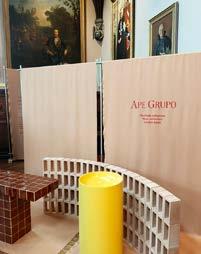

Occhiata, Nour, London and Bristol collections from Ilbagno Relaunched collections. Showcase of Ilbagno, the brand recently relaunched by APE Grupo.

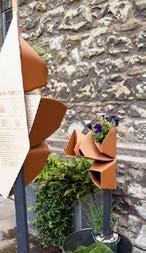
reinvention of the bird box, led by than sterile materiality. Lightweight adaptable
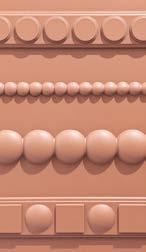
Collection curated Art Deco Collection developed collaboration with interior architect Aurélie
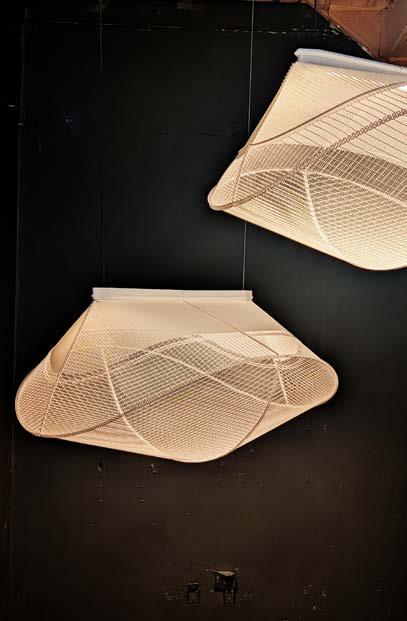
LIGHT MASS 500G AND 650G
LightMass^ is an in-house lighting collection of single-material structures designed to work with LED light sources. The sculptural forms are separate from the light source and interact with the LED beam by capturing, shaping and recasting the light, creating what the brand describes as a “lantern effect.”
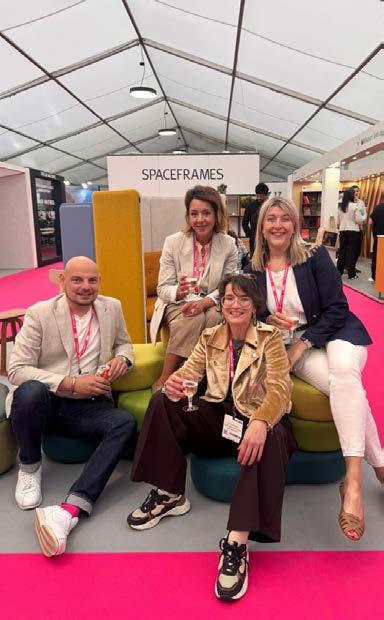
New products included Space Hopper, Dotto posture seat, the “Brainy” folding hotdesk system and the mobile height adjusting “Aero” table. Existing products included the staged breakout seating “Tappa”, desk and workbench system “Clip” and acoustic seating family “Solaris”, also made an appearance.
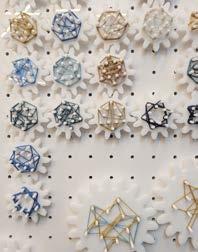
Engaging interative display of the brands solution-dyed synthetic fibres for performance carpets and textiles.
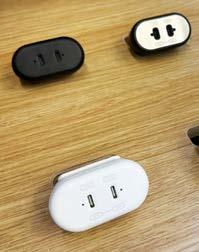
A collection of 100 watt output charges, desk mounted, launching in January 2027.

Puppy Therapy: A daily dose of dopamine!
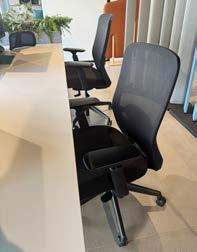
Solus
Solus desk range with single, double bench systems, and meeting tables. A value driven contract range, accessible without cutting corners.
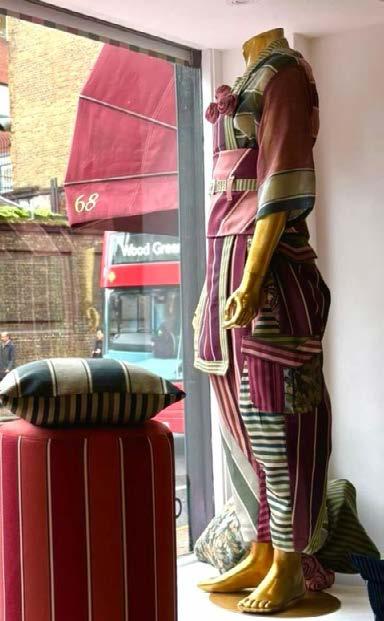
All Stripes
All Stripes reimagines a timeless classic for modern contract interiors, with five distinctive designs exploring scale, texture and pattern. Available to print across a wide range of contract FR base cloths, the collection combines flexibility with a bright, confident colour palette.
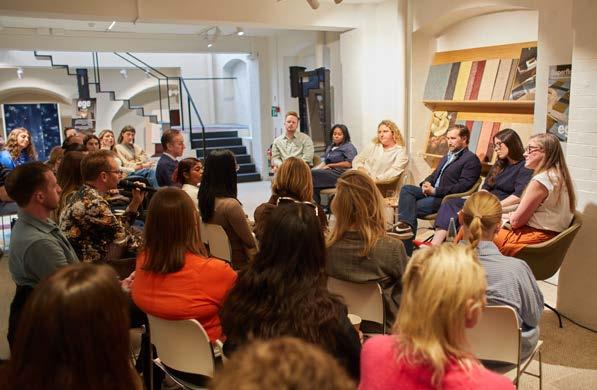
AT EGE CARPETS, ALYS BRYAN, EDITORIAL DIRECTOR OF DESIGN INSIDER, MODERATED A WIDE-RANGING CONVERSATION ON TRENDS, RISK, ORIGINALITY AND LEGACY. THE PANEL BROUGHT TOGETHER GIORGIA HARROD, GLOBAL CONCEPT DESIGN LEAD AT EGE CARPETS, FIDEL SAENZ DE ORMIJANA, CO-HEAD OF DESIGN AT FORA, ANYA GORDON CLARK, MANAGER, INTERIOR DESIGN | EUROPE AT IHG HOTELS AND RESORTS, TONI BLACK, CEO OF HOUSE OF BLACK, AND LIAM SPENCER, MANAGING DIRECTOR AT THIRDWAY.
Alys opened by framing the challenge facing commercial interior designers: with so much inspiration available, how do you decide what deserves attention, what deserves resistance and what deserves to be prioritised?
The word “trend” itself sparked a lively start. For Giorgia, a trend is “a repeating source of inspiration” that appears across interiors, fashion and wider culture. Fidel described a “complicated relationship” with the word, suggesting that trends “should be studied, but maybe not always followed.” Anya agreed, seeing trends as “signals” and “conversation starters”, but warning that “they shouldn’t be the drivers.”
That distinction between awareness and imitation carried through the discussion. Toni put it neatly: “You can use trend for research and to understand your guest profile, but it doesn’t necessarily mean that you need to then take it forward.” Trends can reveal what people are responding to, but the design response still needs to be rooted in the brief, the user and the place.
Giorgia’s contribution was especially relevant for designers working closely with manufacturers. When clients bring in familiar references, she suggested asking more questions before assuming what they want. “What they like about the reference image is actually very different from the initial trend that you might think we’re talking about,” she explained. In flooring, that might mean the client is
responding less to a colour or pattern, and more to scale, movement or the way a surface guides people through a space.
Toni returned to the importance of grounding design in story and place. “Everything needs to be rooted and grounded,” she said. “It’s not about the trend. It’s about the actual space itself and how you expect the end user to interact with it.” That means asking whether a material, colour or detail belongs to the building, the brand and the people using the space, rather than simply echoing something seen elsewhere.
Risk was one of the strongest threads of the morning. Anya argued that bold decisions are defensible when they keep returning to the brief. “If we’re answering the brief, if it’s on brand, if it’s on price, then I think bold decisions are defensible,” she said. Her point was that safe design can easily become default design, while risk, used well, can create delight and memory.
In hospitality, that does not always mean one big visual statement. Anya spoke about “tiny wow moments” and “small dopamine hits”, using examples from Kimpton and Hotel Indigo where layered details invite discovery over time. The aim is not a single Instagram moment, but a richer experience that gives guests something to notice, remember and come back to.
VISIONARY THINKING - 6 THINGS TO REMEMBER!
1. Study trends, don’t chase them
Treat trends as signals, not instructions.
2. Ask what the reference is really saying
A client may be responding to mood, scale, movement or memory, not the obvious aesthetic.
3. Let the brief defend the risk
Bold decisions work when they are rooted in brand, budget, user need and place.
4. Design for discovery, not just impact
Small moments of delight can be more memorable than one loud gesture.
5. Build in longevity from the start
Adaptability, material honesty and emotional connection are what help spaces endure.
6. Treat suppliers as creative partners
Use their material insight to solve problems and sharpen ideas.
For Toni, design leadership is increasingly about communication. Clients often arrive with strong visual references and firm opinions, but the designer’s role is to bring the conversation back to brand pillars and long-term relevance. “What you’re looking at now is what’s been done or what’s good now,” she said, “but it doesn’t necessarily mean that it’s good for the future.” Clear narrative, early alignment and careful briefing help keep a project on track when tempting alternatives appear.
Liam brought a commercial lens, particularly around speed. In design and build, he explained, teams may have only “three to four weeks from brief all the way through to almost getting to site.” That pace can make familiar choices attractive, but it also demands clarity. Sometimes the boldest response is not the loudest one. He recalled recent projects where the client wanted a stripped-back, minimal approach, even though the design team’s instinct was warmer and more textural. The lesson was simple: the right response is the one that answers the brief.
The panel also talked about collaboration between designers and suppliers. Toni emphasised the need for relationships with manufacturers when timeframes tighten, while Giorgia described the supplier’s role as creative problem-solving. “It’s about being humble, not being precious, being willing to ask questions, being willing to say you actually don’t know,” she said.
Longevity brought the conversation into sharper focus. For Fidel, working with a portfolio of flexible workspaces means
thinking beyond the launch moment. “We want to design something that’s going to last 10, 15 years,” he said. When requirements change, the task becomes identifying what can be refreshed and what needs to remain grounded, durable and functional.
The audience question on waste and adaptability opened up one of the most practical parts of the discussion. Anya explained that in IHG’s conversion brands, the starting point is often what can be kept. “We start the report by keeping it,” she said, describing how existing headboards, carpets or curtains might be retained, adapted or upgraded. This approach supports both financial budgets and the carbon budgets IHG is beginning to develop for hotel rooms.
Looking ahead, the panel returned to a desire for depth, integrity and emotional connection. Toni wanted to keep the feeling of comfort and “home away from home”, while Anya predicted a renewed appetite for craft, human touch and the things that feel real. Giorgia echoed that, saying future relevance will come from “depth and integrity”, not surface-level appeal.
The takeaway was clear: trends still matter, but judgement matters more. The strongest commercial interiors will be those that filter influence carefully, answer the brief with confidence, and create spaces with enough meaning, adaptability and material honesty to endure.
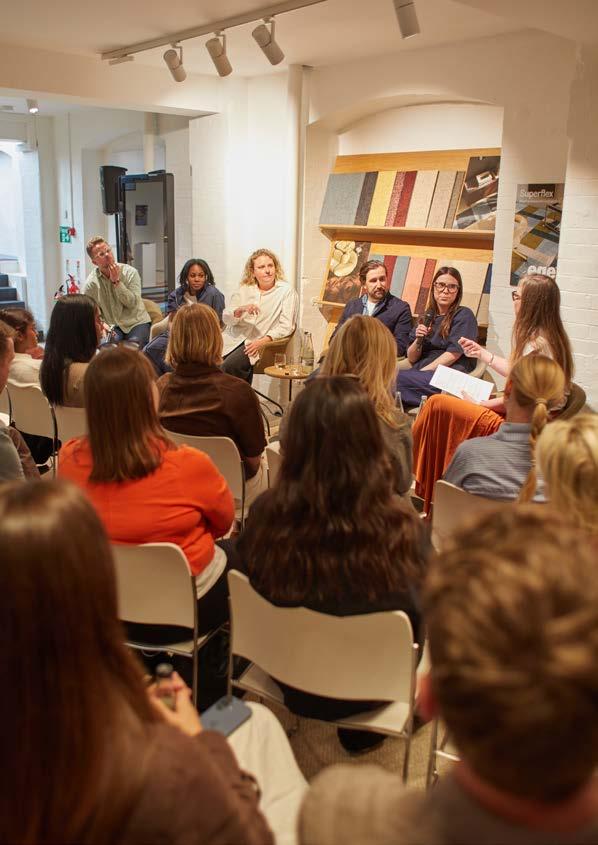
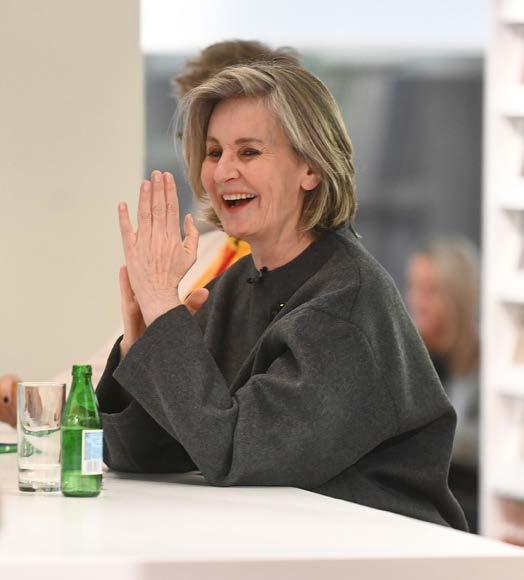
At the centre of the discussion was a really interesting question: if platforms like Vinted have made pre-owned fashion desirable, aspirational and culturally normalised, why does the interiors industry still struggle to do the same particularly within commercial spaces? Rather than framing reuse as compromise, the conversation pushed towards the idea that it could instead become part of a richer design language and a more progressive way of thinking about value.
Mary reflected a lot on her own career too, particularly her time at Harvey Nichols in the early 90s, and how dramatically both retail and consumer behaviour have shifted since then. One of the strongest themes throughout the evening was her frustration with the growing homogenisation across industries, not just in retail or interiors, but culturally more broadly. She spoke passionately about the need for difference, individuality and creative risk-taking to re-enter the conversation, suggesting that looking back at periods when originality and experimentation were genuinely celebrated might help industries move forward again.
What made the talk so compelling was that it never felt overly doom-laden despite tackling some huge issues around sustainability, consumerism and the state of
the world. Instead, it felt optimistic and human-centric. Mary repeatedly returned to the idea that people are instinctively creative and innovative, but that those instincts need to be properly supported and nurtured rather than flattened by systems, trends or commercial pressure. Creativity, she argued, is often the thing that helps industries evolve, and it’s something we cannot afford to lose.
There was also a lot of practical business thinking woven throughout the discussion. Mary spoke candidly about the importance of backing creative ideas strategically, taking calculated risks and understanding that meaningful change often requires industries to challenge their own narratives rather than simply optimise existing models.
More than anything, the conversation highlighted how much commercial interiors still has to learn from adjacent industries. Fashion has already proven that attitudes around ownership, desirability and reuse can shift culturally at huge speed when storytelling and branding align behind them. The challenge now is whether commercial interiors can do the same, making reused materials, reconditioned products and circular thinking feel not like second-best alternatives, but like the future of good design itself.
AT AI IN ARCHITECTURE: AUGMENTATION, NOT REPLACEMENT, HOSTED BY MODULYSS, ANDRE KONG, FOUNDER OF ANDRE KONG STUDIO, MARIANGELA IODICE, BIM COORDINATOR AT MAKE ARCHITECTS, AND ABHINAV CHAUDHARY, SENIOR ASSOCIATE PARTNER AT PLP ARCHITECTURE, EXPLORED ONE OF THE MOST URGENT QUESTIONS FACING DESIGN STUDIOS TODAY: HOW CAN ARTIFICIAL INTELLIGENCE SUPPORT DESIGN WITHOUT REPLACING HUMAN EXPERTISE?
The conversation quickly moved beyond whether designers should use AI. The more interesting question was where its value sits, and where human judgement must remain firmly in charge.
The panel was clear that AI can be a brilliant accelerator, helping with early studies, image refinement, data processing and tasks that pull time away from deeper design thinking. But it cannot replace the lived experience that allows architects and designers to understand how spaces feel, age and perform. As Andre put it, “as humans we have the capability to go into buildings, feel them, understand what works, what doesn’t, how they’ve aged, how they’re used successfully, how they’re not used successfully and learn from that.”
That distinction matters, because AI can make ideas look beautifully resolved before they have been properly tested. The panel suggested that studios will need stronger checking processes, with Mariangela imagining “more of a kind of AI QC” around AI generated information. The point was not to slow innovation down, but to make sure speed does not outpace accountability.
Policy was another clear theme. Some practices are already using AI policies to create shared expectations, guide ethical use and help teams learn together. As Mariangela explained, once a company has defined how it uses AI, “you also propose the AI policy and then the discussions start from there.” For studios, that consistency will be key to making adoption useful rather than uneven.
Looking ahead, digital twins were identified as one of the most exciting directions. By combining 3D building models, sensors and AI, they could help predict how a building will perform, how much energy it will consume, and where maintenance or material interventions may be needed. Abhinav described this potential as “a real game changer” for circularity, waste reduction and sustainability.
The takeaway was optimistic, but grounded: AI may support better decisions, but human judgement remains the thing that gives design its meaning.
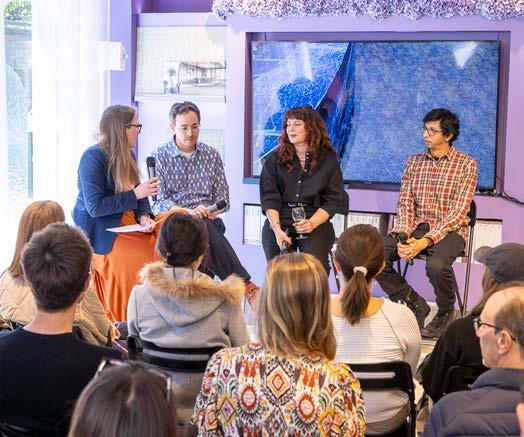
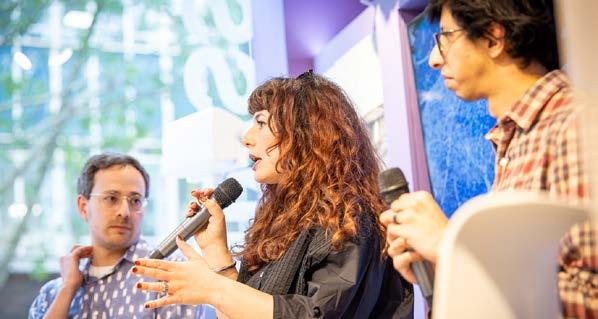
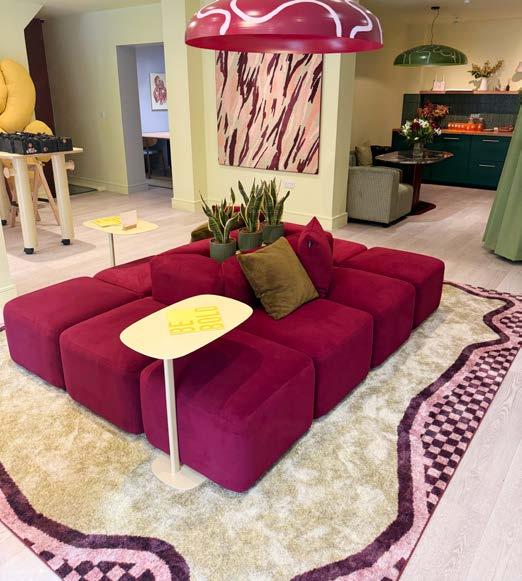
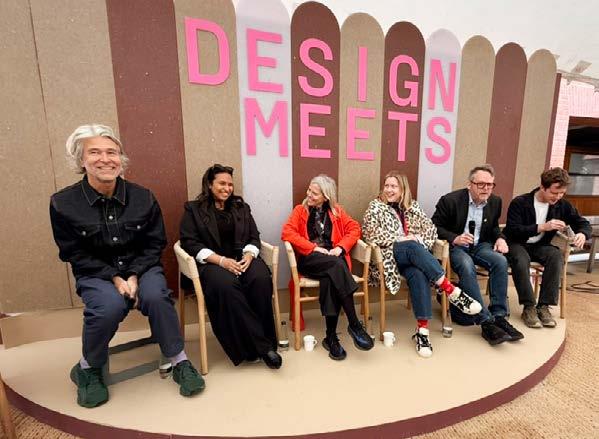
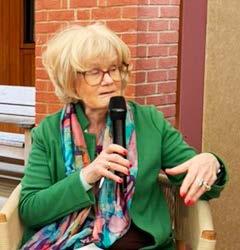
The conversation centred around the psychological relationship we have with the objects around us and how they quietly communicate identity, aspiration and behaviour. Sophie spoke about the idea of objects acting almost as self-portraits, from the colours and patterns we surround ourselves with to the everyday items we choose to display or carry. Even something as simple as a notebook, she explained, communicates something socially about who we are.
One particularly fascinating study explored whether you could understand someone better through a fiveminute conversation or by looking through their personal belongings. The findings reinforced just how much objects reveal about personality, habits and values, often more honestly than words themselves. Sophie described this through concepts such as “identity claims” and “social sorting mechanisms”, the subtle signals that influence everything from the chair we choose in an office to the way we curate our workspace.
A key thread throughout the talk was the gap between the spaces we aspire to inhabit and the reality of many working environments. Sophie questioned what happens when workplaces communicate only professionalism, productivity and KPIs, asking how human those spaces really feel. It opened up a broader conversation around how furniture and interiors might instead invite
individuality, comfort and emotional connection without sacrificing functionality.
This felt particularly relevant within the context of Deadgood’s own products, which have always carried a strong sense of personality and playfulness. The discussion moved into the idea of “behavioural residue” too, whether certain habits are genuinely personal traits or simply responses to environments that fail to support how we naturally work and live. One example that stayed with me was the tension between analogue and digital working, and whether workplace furniture truly accommodates both ways of thinking simultaneously. Is there truly enough or the right space on your desk for laptops, wires, screens and notebooks, pens, papers, books for research?
What made the talk so engaging was how it reframed furniture and objects as active participants in shaping human behaviour. A table is never just a table, Sophie suggested, it becomes somewhere to eat, think, work, gather or create. Even the physical design of a chair can alter physiological responses, from posture to breathing patterns and stress levels.
More than anything, the session served as a reminder that design is never neutral. The objects and spaces we create continuously influence how we feel, interact and understand both ourselves and each other.
Founded in 2021 by design journalist Barbara Chandler, GREEN GRADS was originally created in response to the cancellation of degree shows during Covid, recognising the urgent need to give graduates visibility, support and a platform to continue developing their ideas. Now entering its sixth cohort, the initiative has grown into a network of more than 250 graduates working across disciplines, all connected by a shared ambition to rethink how design can contribute positively to the planet.
What struck me most throughout the talk was the honesty around the tensions of trying to implement sustainable thinking within industries that are often deeply entrenched in unsustainable systems. As Luke Pearson put it, there is something powerful in “working within an industry that is deemed grubby and cleaning it up from the inside.” Rather than positioning sustainability as a niche conversation, the panel repeatedly framed it as something that should become entirely inseparable from good design practice itself.
That idea surfaced strongly in the discussion around aviation design from Olivia at PriestmanGoode, who explained how even subtle changes to materials, finishes and interior weight can have a significant environmental impact at scale. Lighter fabrics and simplified cabin interiors may seem small interventions, but across an airline fleet they directly influence fuel consumption and emissions. It was a useful reminder that sustainability is
often shaped through incremental, systemic decisions rather than singular gestures.
Another recurring theme was custodianship and longevity. Simon from Anglepoise spoke about ownership itself as a sustainable model, suggesting that products should be designed to be maintained, valued and kept rather than replaced. His point that “a product shouldn’t exist if it isn’t sustainable” felt like one of the clearest provocations of the session.
The conversation around materials became particularly compelling through furniture maker Sam’s discussion of native timber. He challenged the industry’s obsession with homogenised materials and perfectly straight imported wood, arguing instead for celebrating the irregularity and character shaped by the British climate itself. Wind, rain and growth patterns become part of the material story, rather than imperfections to remove. That same thinking was echoed by Ella, who spoke about designing directly from place, using timber, wool and materials sourced from the same Yorkshire estate to create objects deeply connected to their environment.
More than anything, the talk highlighted a growing desire to break away from homogenised approaches across fashion, furniture, craft and interiors. The conversation wasn’t simply about making design “greener”, but about rediscovering locality, individuality and material honesty in the process.
WORKSHOPS WERE A PROMINENT FEATURE OF THIS YEAR’S CLERKENWELL DESIGN WEEK, AND THEIR POPULARITY SAID SOMETHING IMPORTANT ABOUT THE MOOD OF THE COMMERCIAL INTERIORS COMMUNITY. ALONGSIDE CONVERSATIONS ABOUT AI, DIGITAL TOOLS AND FUTURE-FACING TECHNOLOGY, THERE WAS A CLEAR APPETITE FOR MAKING, MATERIAL EXPLORATION AND THE HUMAN SKILLS THAT SIT AT THE HEART OF DESIGN.
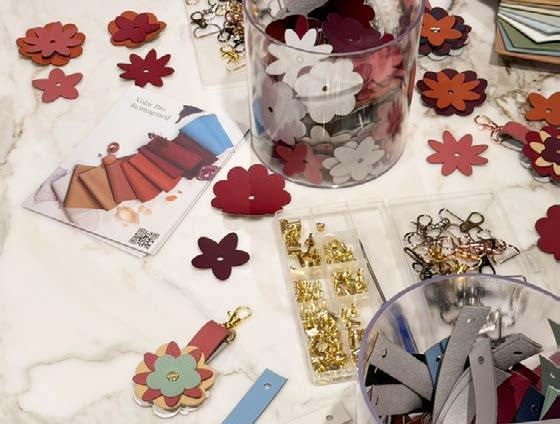
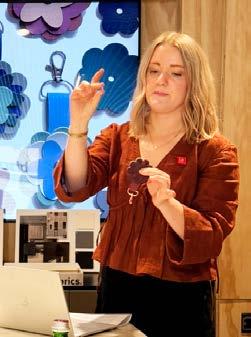
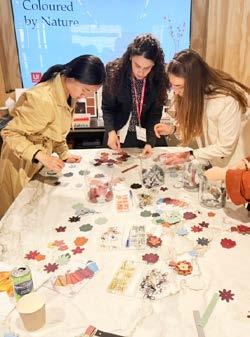
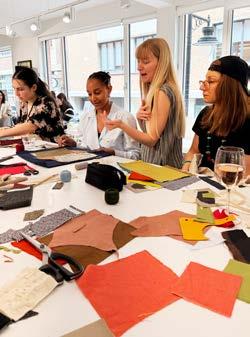
One workshop that captured this balance beautifully was Coloured by Nature, a collaboration between Andreu World and Ultrafabrics exploring biomaterials, responsible interiors, colour, tactility and craft. Hosted at the Andreu World showroom, the session combined material insight with hands-on making, inviting visitors to create floral bag charms while learning more about the innovation behind Ultrafabrics’ Volar Bio and Andreu World’s BIO® Thermopolymer.
The workshop centred around two key material developments. Genevieve Boaler from Ultrafabrics introduced the new colour stories developed across the collaboration, explaining how the palettes had been carefully built to work across both materials. Jose Gonzalez from Andreu World spoke about the application of the new material, describing it as “the plastic that isn’t a plastic.”
BIO® Thermopolymer is developed from living microorganisms through bacterial fermentation and combined with natural fillers and plant-based additives. The material is 100% biodegradable and compostable,
while still delivering the durability expected within commercial interiors.
Seeing the materials in person reinforced how far biomaterial innovation has come. The finish still feels luxurious and durable, while carrying a much lighter environmental footprint. Rather than sustainability feeling like a compromise on quality or comfort, the materials felt designed to sit confidently within premium commercial interiors.
What I enjoyed most was that the session never felt overly technical or overly polished. Instead, it invited people to physically engage with the materials while making something by hand. Creating floral bag charms somehow made the wider sustainability conversation feel much more tangible and human.
What stayed with me afterwards was how much the conversation centred on material optimism rather than guilt. There was less emphasis on what designers should stop doing, and more focus on what new possibilities are emerging through innovation, collaboration and better material thinking.
ONE OF THE MOST MEMORABLE MOMENTS FROM CLERKENWELL DESIGN WEEK TOOK PLACE INSIDE THE MILLIKEN SHOWROOM, WHERE THE BRAND WAS CELEBRATING 40 YEARS OF UK MANUFACTURING AND USING THE WEEK TO SPOTLIGHT THOUGHTFUL APPROACHES TO CIRCULARITY AND MATERIAL REUSE.
Alongside showcasing two new collections, Milliken highlighted the practical sustainability strides it is making through initiatives such as N/XT Life with Recarpet, designed to give carpet a genuine second life and make reuse far more achievable at scale.
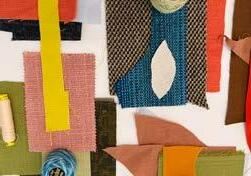
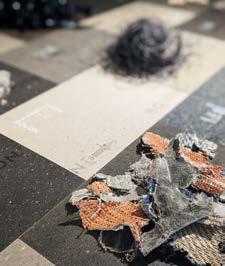
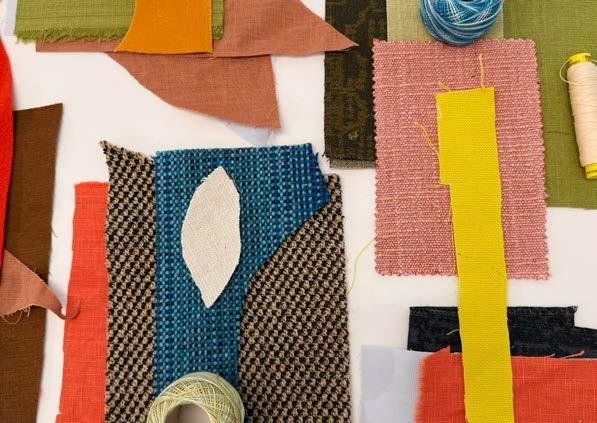
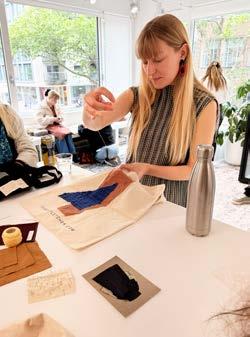
Set against that backdrop, a workshop with textile artist Isabel Fletcher offered a subtle but equally powerful reflection on those same themes. Centred around appliqué using scrap and surplus fabrics, the session explored how waste materials can become something expressive and valuable again. Working entirely with reclaimed textiles is central to Isabel’s practice, something also reflected in her recent commission for the Royal Academy of Dance, created using surplus ballet materials.
What made the workshop feel so special was the atmosphere it created. In the middle of Clerkenwell’s usual pace and sensory overload, it offered a rare opportunity to slow down and focus completely on the task in your hands. We learnt different stitching techniques that became part of the appliqué itself rather than simply functional ways to hold fabric together, turning repair and reuse into something decorative and intentional.
The workshop became very popular, with extra people being let in to accommodate demand, and it drew a real mix of visitors, designers and creatives into the space. More than anything, it felt like a reminder that conversations around sustainability resonate most when they become tactile, social and genuinely engaging experiences.
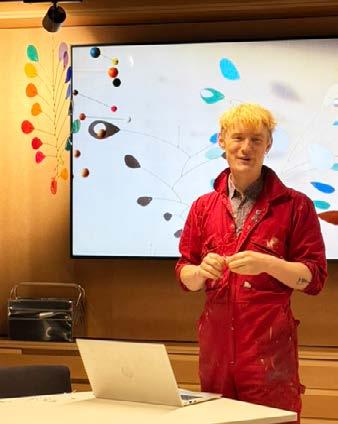
THE NICEST WAY TO ROUND OFF CLERKENWELL DESIGN WEEK WAS AT KRONOSPAN’S DESIGN CENTRE LONDON, JOINING A KINETIC ART WORKSHOP LED BY PHINEAS HARPER EXPLORING THE WORLD OF MOBILES, MOVEMENT AND BALANCE.
The session was part history lesson, part hands-on making workshop, and what made it so engaging was Phineas’ depth of knowledge and obvious passion for the subject. We spent time learning about the origins of the mobile as an art form, including the often misunderstood history around its original creators and how easily certain crafts, references and material knowledge can become lost or oversimplified over time. It felt like being invited into a very specific creative world by someone who genuinely loves it.
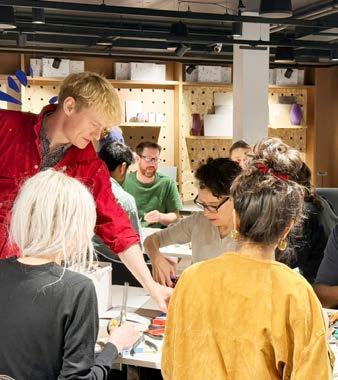
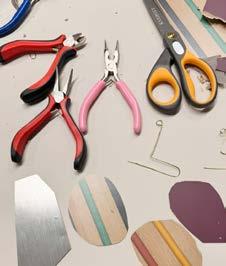
The workshop itself worked brilliantly within the Kronospan showroom, where we were able to use the brand’s materials to create our own kinetic mobiles while experimenting with balance, weight and structure. There was something really satisfying about physically working through how materials interact with one another, understanding not just how something looks, but how it behaves in space and motion.
Like a number of the strongest moments across the week, it also fed into this wider return to craft, tactility and hands-on learning. In an industry that spends so much time discussing concepts digitally or visually, there was something refreshing about making, testing and adjusting things manually and instinctively. It reminded me how important material understanding still is within design, particularly as many traditional making skills risk slowly disappearing from everyday practice.
It also ended up being one of those workshops where the conversations around the table became just as valuable as the activity itself. Surrounded by architects and designers, the session naturally turned into an exchange of reflections on the week, favourite installations, standout talks and recurring themes people had noticed across Clerkenwell. It felt like a thoughtful and collaborative way to close out the festival.
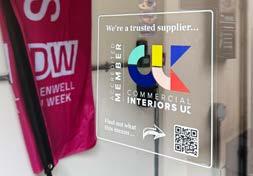
COMMERCIAL INTERIORS UK HAS LAUNCHED
ITS NEW ACCREDITED MEMBER WINDOW MARK
CAMPAIGN, CREATING A VISIBLE SIGNPOST FOR DESIGNERS, SPECIFIERS, BUYERS AND COMMERCIAL CLIENTS VISITING MEMBER SHOWROOMS.
Launching during Clerkenwell Design Week, the campaign introduces a permanent window decal for participating Commercial Interiors UK Accredited Members. Each decal identifies the showroom as part of the Commercial Interiors UK accredited member network and features a QR code linking to a dedicated landing page. There, visitors can learn more about what accredited membership means, explore participating members, and connect directly with suppliers through member website links and Supplier Finder.
For visitors to Clerkenwell, the mark offers a simple way to recognise trusted accredited suppliers while moving through one of the UK’s most important design districts. It highlights businesses that have undergone a robust accreditation process covering design compliance, customer service, financial stability, sustainable operations and ethical practice.
For members, the decal provides a permanent publicfacing expression of their accreditation. It strengthens showroom visibility, reinforces their position within a recognised industry network, and supports traffic to their own websites.
The campaign used Clerkenwell Design Week as its launch moment, but its purpose extends well beyond the festival: to make Commercial Interiors UK accreditation more visible, valuable and recognisable all year round.