














Columbia College Chicago





Columbia College Chicago
In the more than 135 years of its history, Columbia College Chicago has embraced a range of overlapping identities: a provider of rigorous training in a range of creative fields, disciplines, and trades; an exemplar of an imaginative fusing of liberal learning and creative education; an advocate for access to the creative world for young people who might otherwise be closed off from it; an anchor of the creative ecosystem of the city of Chicago; and a powerful influence on generations of alumni who have gone on to remarkable success in their chosen creative fields. Even as it has evolved over time, the college has retained a proud legacy as an institution that embodies a shared belief that creativity, when grounded in purpose, has the power to transform lives and shape the world.
Renaissance Rising: Shaping Tomorrow Together is Columbia College Chicago’s new strategic plan that will guide its direction from 2026 through 2029, strengthening the college’s foundation while advancing its mission of developing creative, entrepreneurial, and socially conscious graduates who shape culture through the arts, media, and business.
Renaissance Rising: Shaping Tomorrow Together articulates a unified institutional strategy to align the college’s academic programs, financial models, and operational systems with the needs of our students and the realities of the creative economy. In developing and implementing this plan, Columbia will clarify its strategic goals, sharpen its competitive identity, and set a course for the future that supports institutional excellence.
More precisely, the plan is designed to advance four institutional priorities, or pillars, that will guide our work: Stabilizing Enrollment, Elevating the College Brand, Strengthening Philanthropy, and Enhancing Operational Effectiveness. These pillars are interdependent, and advancement in one area is unlikely to be sustained without progress in the others. Each reflects the shared commitment of our community to ensuring that Columbia continues to thrive as a creative institution of excellence.
Columbia is committed to attracting, supporting, and retaining students from Chicago, across the United States, and around the world. Expanding access remains a central priority, with initiatives such as direct-admit pilots and stronger partnerships with community colleges and Chicago Public Schools. At the same time, Columbia is strengthening retention efforts through advising, academic support, and bridge programs designed to ensure student success from enrollment to graduation. By focusing on both access and persistence, Columbia will continue to build a global community of creatives.
Columbia’s reputation as a college for creatives, must be amplified nationally and internationally. he institution is investing in telling its story more powerfully, showcasing excellence in film, television, music, design, media, theatre, and the arts. Leveraging its location in Chicago’s South Loop, Columbia is positioning itself as a premier destination for creative education and cultural engagement. By elevating the brand, the Columbia ensures that its students, faculty, and alumni receive the recognition they deserve as leaders in shaping culture.
For Columbia to realize its full potential, philanthropy is essential. The college must expand its fundraising capacity and cultivate deeper engagement with alumni, civic leaders, and philanthropic partners. Gifts to Columbia support scholarships, academic programs, facilities, and student experiences that transform lives. Strengthening philanthropy is not only about dollars raised, but about building a culture of generosity and investment in Columbia’s future.
Operational strength is the foundation of institutional sustainability. Columbia is aligning resources to ensure financial stability while advancing efficiency, transparency, and accountability across all areas of the college. By improving the systems and structures that support teaching and learning, Columbia will be better positioned to deliver on its mission and adapt to a rapidly changing higher education landscape. Enhancing operations ensures that creativity is supported by sound management, enabling Columbia to thrive for generations to come.
The 4R Framework - Redevelop, Restructure, Replace, and Rebrand - will anchor this work, providing a clear blueprint for institutional renewal and a disciplined pathway for aligning Columbia’s priorities with its mission in creative education.
• Redevelop: Cultivate a culture of continuous learning and collaboration among faculty and staff, fostering innovation and shared leadership to advance Columbia’s future.
• Restructure: Align academic and administrative units for impact and efficiency, up to and including organizational redesign or restructuring.
• Replace: Outdated systems, policies, and practices that limit agility.
• Rebrand: Elevate Columbia’s story as the nation’s leading college for creatives.
As has occurred at other times in its past, this is a moment of renewal and reinvention for this institution. Together, we will build upon Columbia’s proud legacy while shaping a bold and sustainable future that advances creativity, access, and innovation. The vision set out in Renaissance Rising: Shaping Tomorrow Today will engage our entire community - students, faculty, staff, alumni, trustees, and external stakeholders - in a common effort to prepare creative professionals for the opportunities and challenges of tomorrow.
Woven into the deep, rich DNA of Columbia’s culture, we strive to always have a “Student First” mentality when making all decisions, which results in faculty and staff demonstrating care, engagement, and accountability that is visible in both actions and outcomes. Further, grounded in academic experience and experiential learning, efforts are underway to integrate these approaches into each classroom where possible, to enhance academic rigor and student development that is applied, immersive, and career connected. And finally, to ensure there is a deliberate focus on the student experience, an investment in faculty and staff remains a priority so the individuals on their academic journey continue to be enhanced by skilled, qualified, members of the Columbia Team where our culture must always reflect care for students and commitment to excellence.
Phase One: Launch and Mobilization (October 2025)
The strategic planning process was launched in October 2025 and is being overseen by a Strategic Planning Task Force with faculty, staff, student, senior administration, alumni, and community representation. The development of specific recommendations has devolved onto four workstreams with similar stakeholder profiles:
• The Enrollment and Academic Portfolio Workstream is exploring strategies to attract, retain, and support a talented student body while strengthening the college’s academic offerings.
• The Brand, Reputation, and Philanthropy Workstream is considering how to elevate Columbia’s public identity and engage alumni, donors, and partners in expanding the college’s reach and impact.
• The Financial and Operational Efficiency Workstream is focused on improving institutional systems, structures, and processes to enhance fiscal sustainability and performance.
• The People and Culture Workstream is addressing the college’s shared commitment to community, ensuring that Columbia remains an inspiring and inclusive place to learn and work.
Phase Two: Discovery and Analysis (November-December 2025)
The planning process was supported by the work of the Dickens Consulting Group (DCG) of San Antonio, Texas. A DCG team came to campus in early December 2025 to conduct an intensive ten-day series of focus groups and individual surveys with key stakeholder groups. In that time, the team met with trustees, the President’s Cabinet, senior and mid-level administrators, other staff, the academic directors of the college’s eight schools, full- and part-time faculty, students, alumni, parents and other family members, and community partners. It held 70 in-person and virtual focus groups, individual interviews, and strategic tools sessions that attracted 350 participants. Two hundred thirty-five people submitted feedback through online surveys and an additional 50 completed and submitted an Organizational Foresight and Cultural Readiness Assessment.
In addition to DCG conducted an environmental scan using STEEPLE, a business planning tool that assesses the Social, Technological, Economic, Environmental, Political, Legal, and Ethical factors that can affect an organization’s operations. It also examined the college’s competitive environment through the lens of the Five Forces Framework developed by Harvard Business School professor Michael Porter. A summary of the results of these two assessments follows in Section 3.
2025-January 2026)
Drawing on the stakeholder feedback and the results of the external assessments, the four workstreams met regularly in December and January to develop strategies, measurable goals, and performance indicators that were aligned with the college’s mission and vision. The Strategic Planning Task Force reviewed, revised, and synthesized these strategies into a series of recommendations for action. These are outlined in sections 5-8.
Jenna Davis, Student Government Association President
Kevin Cooper, Associate Director of Semester in LA Program and Professor in the School of Film and Television
Karla Rae Fuller, Faculty Senate President and Professor in the School of Film and Television
Allison Geller, Staff Union President
Mark Kelly, Art and Civic Community Member – ex officio
Emmanuel Lalande, Senior Vice President of Enrollment Strategy and Student Success
Mary Mazurek ‘11 MFA, National Alumni Board President
Suzanne McBride, Interim Senior Vice President and Provost
Jimmy Noriega, Professor and Allen and Lynn Turner Director of School of Theater and Dance
Colbey E. Reid, Professor and Director of the School of Fashion
Diana Vallera, CFAC President and Adjunct Professor of Instruction in School of Visual Arts
Sharon Wilson-Taylor, Vice President of Student Affairs
Co-Chairs: Beth Ryan, Professor of Instruction, School of Business and Entrepreneurship and Adriel A. Hilton, Vice President of Institutional Strategy and Chief of Staff
Enrollment and Academic Portfolio Workstream Members
Charles Borg — Adjunct Professor of Instruction, School of Film and Television
Jill Goldberg — Communications Manager
Ames Hawkins, PhD — Professor and Interim Director, School of Communication and Culture
Rachel Horton — Director of Student Persistence
Monika Jaiswal-Oliver — Academic Manager, Business and Entrepreneurship
Brian Marth — Associate Vice President for Student Success (Co-Chair)
Tim McCain — Adjunct Professor of Instruction, School of Theatre and Dance
Dardi McGinley-Gallivan — Professor of Instruction, School of Theatre and Dance
Ross Sawyers — Associate Professor, School of Visual Arts
Jeff Sanderson — Columbia Central Counselor
Skye Rust — Senior Director of Undergraduate Admissions and Recruitment
Lauren Targ — Assistant Director, College Advising Office
Wenhwa Tsao — Professor and Interim Co-Director, School of Film and Television (Co-Chair
Brand, Reputation, and Philanthropy Workstream Members
Zeline Bates — Adjunct Professor of Instruction, School of Communication & Culture
Gabriela Diaz de Sabatés — Associate Professor and Associate Dean for Faculty Affairs
Marcus Hamlin — Assistant Director of Alumni Relations and Annual Giving
Abby Hernandez — Student, AMA President
Sandra Kumorowski — Associate Professor of Instruction, School of Business and Entrepreneurship
Deana Lewis ’05 — Senior Director of Marketing, The Mather Group LLC
Allen Lucas — Coordinator of Student Organizations
Duncan MacKenzie — Associate Professor and Interim Director of the School of Visual Arts
Peg Murphy — Associate Professor, School of Business and Entrepreneurship
Anna Ogier-Bloomer — Associate Dean for Career Development and Industry Relations Partners
Jim Rohn — Associate Professor, School of Design
Rajah Varnado — Assistant Director of New Student Programs
Lauren Viera — Adjunct Professor of Instruction, School of Communication and Culture
Jourdan Arnaud Thompson — Senior Director of Campus Communications (Co-Chair)
Kubi Uner — Chair of the Graduate Council; Associate Professor and Graduate Director, School of Audio and Music (Co-Chair)
Michelle West — Assistant Director, Semester in L.A.
Chris Adamescu—Chief Information Security Officer
Nate Bakkum — Senior Associate Provost
Laura Bauknecht — Director of Academic Operations
Jerry Brindisi — Professor and Interim Director of the School of Business and Entrepreneurship (Co-Chair)
Natasha Egan — Executive Director of the Museum of Contemporary Photography (Co-Chair)
Marvery Griffin — Assistant Provost of Finance
Matthew Jaehrling — Associate Vice President, Controller and Treasurer
Ginny Johnson — Assistant Vice President for Student Financial Services
Ann P. Kalayil – Associate Vice President, Facilities Planning and Management
Kathie Koch — Associate Vice President and CIO
Jasmyn Leapheart — Assistant Director of Admissions and New Student Scholarships
John Losacco — Assistant Professor of Instruction, School of Design
Bernie Mack — Adjunct Professor of Instruction, School of Audio and Music
Devon Polderman — Academic Manager, School of Communication and Culture
Jesse Seay — Associate Professor, Associate Dean for Academic Programming
Susan Van Veen — Adjunct Professor of Instruction, School of Business and Entrepreneurship
Rebecca Urzua — Student, School of Audio and Music
Matthew Eiler-Rillie — Coordinator of Education and Community Development
Taylor Hokanson — Associate Professor, School of Visual Arts
Lambrini Lukidis — Associate Vice President for Strategic Communications and External Relations
Nick McCormick — Adjunct Professor of Instruction, School of Communication and Culture
Jesus Monroy — Admissions Officer – Transfer Specialist
Charee D. Mosby-Holloway — Director of Student Diversity and Inclusion (Co-Chair)
Patricia Olalde — Associate Vice President, Human Resources (Co-Chair)
Marcos Palacios ’06 — Honorary Degree Recipient 2025
Pegeen Quinn — Associate Provost for Academic Personnel
Ron Sodini — Associate Vice President for Safety and Security
Laura Sturm — Adjunct Professor of Instruction, School of Theatre and Dance
Krista Wortendyke — Assistant Professor of Instruction, School of Design
The Board of Trustees will receive and review the initial draft of the plan in early February 2026, and additional stakeholder perspectives will be solicited. Based on this feedback, the Strategic Planning Task Force will revise the draft plan with a view to developing a final draft for the Board’s consideration at its annual meeting on May 6, 2026. A more detailed outline of the review and revision process is set out in section 9.
Columbia College Chicago is an undergraduate and graduate institution whose principal commitment is to provide a comprehensive educational opportunity in the arts, communications, and public information within the context of enlightened liberal education. Columbia’s intent is to educate students who will communicate creatively and shape the public’s perceptions of issues and events and who will author the culture of their times. Columbia is an urban institution whose students reflect the economic, racial, cultural, and educational diversity of contemporary America. Columbia conducts education in close relationship to a vital urban reality and serves an important civic purpose by active engagement in the life and culture of the city of Chicago.
Columbia’s purpose is:
• to educate students for creative occupations in diverse fields of the arts and media and to encourage awareness of their aesthetic relationship and the opportunity of professional choice among them;
• to extend educational opportunity by admitting unreservedly (at the undergraduate level) a student population with creative ability in, or inclination to, the subjects of Columbia’s interest;
• to provide a college climate that offers students an opportunity to try themselves out, to explore, and to discover what they can and want to do;
• to give educational emphasis to the work of a subject by providing a practical setting, professional facilities, and the example and guidance of an inventive faculty who work professionally at the subjects they teach;
• to teach students to do expertly the work they like, to master the crafts of their intended occupations, and to discover alternative opportunities to employ their talents in settings other than customary marketplaces;
• to help students to find out who they are and to discover their own voices, respect their own individuality, and improve their self-esteem and self-confidence;
• to offer specialized graduate programs which combine a strong conceptual emphasis with practical professional education, preparing students with mature interests to be both competent artists and successful professionals.




As of Fall 2025, Columbia serves approximately 4,461 students. With a student population that is largely firstgeneration (approximately 57 percent) and Pell- and MAP-eligible (approximately 40 percent), and racially and ethnically diverse (approximately 56 percent students of color), Columbia plays a critical role in advancing educational access, equity, and creative career readiness in the city of Chicago and beyond.
Columbia College Chicago’s recent reclassification by Carnegie marks an important moment in the institution’s national positioning and helps clarify what has long made Columbia distinctive.
The College is now classified as Special Focus: Arts, Music, and Design, a category that reflects Carnegie’s updated methodology rather than a shift in Columbia’s mission or academic intent. This is a highly selective designation. Only 89 institutions nationally fall within this classification, representing approximately 2% of all colleges and universities in the United States.
Within this already small group, Columbia occupies a singular position. Columbia College Chicago is the only Hispanic Serving Institution in the continental United States to be classified as an Arts, Music, and Design college under the new Carnegie framework. This distinction places Columbia at a rare and powerful intersection: a national leader in creative education that is also advancing Hispanic student access, success, and completion at scale. It is a distinction that can be understood through both a Minority Serving Institution and a mission impact lens.
This classification helps resolve an ongoing narrative challenge. Columbia has often described itself as a “liberal arts college for creatives,” a phrase that signals interdisciplinarity and breadth but does not always resonate given curricular evolution and the specialized nature of our programs. Carnegie’s Arts, Music, and Design designation more accurately reflects the College’s academic reality, student experience, and national role. While Carnegie’s “Baccalaureate Colleges: Arts and Sciences Focus” category most closely aligns with the traditional liberal arts model, Columbia’s strength lies in a different but equally rigorous tradition: creative, professional, and interdisciplinary education grounded in arts and media disciplines.
Taken together, this classification affirms Columbia College Chicago as a distinctive national institution, not a generalist liberal arts college, but a purpose-built college for creatives with a demonstrated commitment to access and student success. It provides a clearer external signal to prospective students, partners, funders, and policymakers about who we are, whom we serve, and why Columbia matters in the higher education landscape.
The ten stakeholder groups provided a comprehensive and nuanced understanding of the institution’s current strengths, challenges, and opportunities. Across groups, participants affirmed deep commitment to the college’s mission and students while surfacing consistent themes related to capacity constraints, clarity in decision-making, financial sustainability, and the need for improved coordination and communication. Together, these perspectives informed the identification of shared priorities and grounded the strategic plan in lived institutional experience.
Faculty emphasized deep commitment to students and academic quality while expressing concern about workload, resource constraints, and clarity in decision-making. They highlighted the need for clearer academic priorities, better alignment between strategy and resources, and more consistent communication around change.
Staff shared strong dedication to student service but noted operational inefficiencies, system limitations, and capacity strain. They emphasized the importance of process improvement, clearer roles, and investment in tools and training to improve effectiveness and morale.
Students described a strong sense of connection to faculty and creative learning experiences but cited challenges related to navigation, consistency of support, and financial stress. They emphasized the importance of belonging, advising, career preparation, and clear communication.
Parents and families expressed support for the institution’s mission while seeking greater transparency around cost, value, and outcomes. They emphasized trust, communication, and evidence that students are being prepared for meaningful post-graduate success.
Alumni expressed pride in the institution and a desire to remain connected but noted limited engagement opportunities after graduation. Many indicated interest in mentoring, professional networking, and giving—if pathways were clearer and more intentional.
Community partners highlighted the institution’s cultural and creative value while noting opportunities for deeper, more structured collaboration. They expressed interest in partnerships that support student learning, workforce development, and shared community impact.
Board of Trustees
Trustees emphasized the urgency of financial sustainability, enrollment stability, and institutional clarity. They expressed a desire for disciplined prioritization, measurable outcomes, and a strategic plan that enables informed governance and oversight.
Cabinet members identified the need for alignment across divisions, clearer execution frameworks, and improved systems to support strategic priorities. They highlighted the importance of sequencing initiatives to match institutional capacity.
School Directors emphasized the need to balance academic integrity with market responsiveness and resource realities. They noted challenges related to staffing, enrollment volatility, and the need for clearer guidance on institutional priorities.
These leaders highlighted execution challenges, cross-functional coordination gaps, and change fatigue. They emphasized the need for clearer decision rights, realistic timelines, and support for translating strategy into day-today operations.
The environmental scan provides the external and internal context within which this strategic plan was developed. Through a combination of STEEPLE analysis, Porter’s Five Forces, and a SWOT/SOAR exercise, Columbia College Chicago assessed macro-level trends, sector dynamics, and institution-specific strengths and challenges. These analyses were informed by qualitative and quantitative data gathered from ten stakeholder groups and were used to identify the conditions most likely to influence institutional performance over the life of the plan.
Rather than functioning as stand-alone analyses, the findings from these tools were synthesized to surface strategic insights – areas of risk, opportunity, and leverage that have direct implications for institutional decision-making. For a small liberal arts institution, the value of this environmental scan lies not in predicting the future with certainty, but in clarifying where focus, differentiation, and disciplined choices are required to sustain mission, academic quality, and financial viability in an increasingly competitive higher education landscape.
The STEEPLE analysis examined social, technological, economic, environmental, political, legal, and ethical factors shaping the operating environment for higher education. Collectively, these factors point to increasing complexity, heightened expectations for value and outcomes, and growing pressure on traditional small-college operating models. Key themes emerging from the STEEPLE analysis include demographic shifts affecting traditional-age student populations, accelerating technological change in teaching, learning, and administration, persistent economic uncertainty affecting affordability and philanthropy, and increasing regulatory and compliance demands. At the same time, societal emphasis on equity, inclusion, sustainability, and ethical leadership aligns strongly with the mission and values commonly held by liberal arts institutions, presenting opportunities for authentic differentiation. The complete STEEPLE analysis is in the Appendices Section of this plan.
Porter’s Five Forces analysis highlighted the intensifying competitive dynamics facing small liberal arts institutions. Competitive rivalry has increased as institutions compete for a shrinking pool of students, greater price sensitivity, and heightened expectations for career outcomes. The bargaining power of students and families has grown as consumers demand clearer value propositions, flexible pathways, and transparent outcomes.
The analysis also identified elevated threats from alternative education providers, including online programs, employer-based credentials, and public institutions expanding their reach. Supplier pressures – particularly related to faculty talent, technology, and specialized services – continue to affect cost structures. While barriers to entry remain significant, the cumulative effect of these forces underscores the importance of differentiation, operational discipline, and strategic investment. The complete Porter’s Five Forces analysis is in the Appendices Section of this plan.
The SWOT/SOAR synthesis integrated stakeholder perspectives on institutional strengths, weaknesses, opportunities, threats, aspirations, and results. Stakeholders consistently identified strengths associated with personalized education, close faculty-student relationships, mission-driven culture, and the desire for strong community connections. At the same time, concerns emerged regarding enrollment sustainability, resource constraints, operational complexity, and the pace of decision-making.
Aspirations articulated through the SOAR lens emphasized academic relevance, student success, institutional visibility, financial resilience, and a supportive and inclusive workplace culture. Importantly, stakeholders expressed a desire for clearer priorities, stronger alignment across units, and more consistent communication about progress and outcomes. The complete SWOT/SOAR analysis is in the Appendices Section of this plan.
Taken together, the environmental scan and strategic analyses point to several implications that are particularly salient for a small liberal arts institution:
1. Strategic Focus Is Essential
The analyses reinforce that small institutions cannot pursue all opportunities simultaneously. Success will depend on making deliberate choices about academic programs, markets, and investments that align with mission, demand, and capacity. Clarity of focus enables more effective use of limited resources and strengthens institutional identity.
2. Differentiation Must Be Clear and Evidence-Based
Personalized education, high-impact learning, and close community are widely claimed across the sector. The institution must articulate and demonstrate how these strengths translate into measurable student outcomes, career readiness, and lifelong value. Differentiation must be supported by data, storytelling, and consistent brand expression.
3. Enrollment and Academic Portfolio Decisions Are Central to Sustainability
Demographic and competitive pressures elevate the importance of aligning the academic portfolio with student demand, workforce relevance, and institutional strengths. Regular program review, innovation within mission-aligned disciplines, and attention to new and nontraditional learner markets are critical.
4. Financial and Operational Discipline Enables Mission Fulfillment
The analyses underscore that financial health is not separate from mission but a prerequisite for sustaining academic quality and student support. Operational efficiency, right-sized structures, and strategic investment decisions will be necessary to preserve institutional flexibility and resilience.
5. People and Culture Are Strategic Assets
Faculty and staff commitment, expertise, and relationships are core strengths of small liberal arts institutions. At the same time, workload pressures and change fatigue present risks. Investing in leadership capacity, communication, and a supportive workplace culture is essential for successful implementation of the strategic plan.
6. Agility and Continuous Assessment Are Increasingly Important
External conditions are likely to continue shifting over the life of the plan. The institution’s ability to monitor trends, gather feedback, and adjust strategies in a timely manner will be a key differentiator. Embedding assessment and accountability into governance and operations supports informed adaptation rather than reactive change.
This environmental scan provides the foundation for the strategic priorities that follow. The insights derived from these analyses inform the plan’s focus areas, guiding principles, and implementation framework, ensuring that the college’s strategy is both mission-centered and responsive to the realities facing small liberal arts institutions.
These strategic plan assumptions reflect the institutional conditions under which the college will pursue its priorities over the next three years. They are intentionally candid and grounded in current realities, including enrollment decline, financial constraint, market pressure, and increasing expectations for accountability and impact. These assumptions are not aspirational statements or guarantees, but the conditions that shape expected outcomes and guide implementation. They define the conditions, risks, and constraints that will shape decisions, execution, and accountability throughout the life of the plan.
As a tuition-dependent college, the institution faces heightened exposure to demographic shifts, affordability concerns, and changing perceptions of the value of higher education. At the same time, the college possesses distinctive strengths in creativity, pedagogy, industry connection, and community presence that can be leveraged more intentionally. These assumptions recognize that progress will require coordinated action across academic and administrative units, disciplined prioritization, and shared responsibility at all levels of the institution.
As this strategic planning process evolved, this was the opportunity to pause and allow any relevant assumptions to surface, be addressed through discussion, and agreed upon. As Columbia College Chicago transforms, we recognize in many instances, plans don’t fail because the analysis is wrong—they fail because unstated assumptions go untested. These are 15 critical strategic planning assumptions Columbia College Chicago recognized and focused on—given our size, location, mission-driven focus, unique dynamics of our community, and long history—as we develop, complete, and execute a transformational shift in who we are and what we do with a greater level of clarity about our future.
1. Capacity Is the Binding Constraint, Not Ideas
The institution does not have unlimited leadership, faculty, or staff capacity to execute change. Success depends on prioritization and sequencing, not the number of initiatives included in the plan.
2. Enrollment Recovery Alone Will Not Solve Structural Challenges
Even strong enrollment gains will not fully offset cost pressures and revenue volatility. Diversification, pricing discipline, and philanthropy must be part of the solution.
3. Culture and Trust Are as Critical as Strategy
Execution will stall if faculty, staff, or students do not trust decision-making processes. Transparency, clarity, and shared understanding are prerequisites for progress.
4. Shared Governance Requires Clarity, Not Ambiguity
Effective shared governance depends on clear decision rights, not consensus on every issue. Ambiguity slows action and increases frustration.
5. Change Fatigue Is Real and Must Be Managed
Many stakeholders are already stretched. Initiatives must show early wins, reduce friction, or clearly explain why added effort is necessary.
6. Financial Sustainability Is a Continuous Discipline, Not a One-Time Fix
There is no single decision that “solves” finances. Sustainable institutions embed multi-year planning, cost discipline, and ongoing review into normal operations.
7. Reputational Strength Directly Affects Enrollment and Philanthropy
Brand perception is not cosmetic. Reputation shapes demand, trust, and donor confidence, especially in uncertain markets.
8. Data Must Inform Decisions—but Judgment Still Matters
Quantitative analysis improves decisions, but it does not replace mission-driven judgment, especially in academic and cultural contexts.
9. Students Experience the Institution as a System
Students do not differentiate between academic affairs, student affairs, finance, or IT. Fragmentation shows up as friction, affecting retention and satisfaction.
10. Equity and Access Must Be Designed, Not Assumed
Well-intended strategies can unintentionally disadvantage certain populations. Equity must be explicitly considered in pricing, advising, workload, and policy decisions.
11. Philanthropy Requires Investment Before Results
Fundraising growth is not immediate. Capacity-building, donor trust, and pipeline development precede major financial returns.
12. Speed Matters—but Sequencing Matters More
Some initiatives can pilot quickly; others require policy, staffing, or funding groundwork. Launching too fast without foundations can erode confidence.
13. Not All Legacy Practices Are Strategically Defensible
Tradition alone is not a sufficient rationale. Practices must be evaluated against mission impact, cost, demand, and outcomes.
14. Execution Requires Clear Ownership
Initiatives without a single accountable owner will diffuse responsibility and stall, regardless of good intentions.
15. The Plan Must Be a Living Tool, Not a Static Document
Strategic plans succeed when they guide annual priorities, budget decisions, and performance conversations, not when they sit on a shelf.
The strategic plan is organized around three planning horizons—short-, mid-, and long-term—to align ambition with institutional capacity and ensure disciplined execution over time. These horizons clarify what the institution will launch, build, and sustain, setting realistic expectations for progress while sequencing change to maximize impact. Together, they provide a roadmap that balances urgency with durability across the life of the plan.
The short-term horizon focuses on stabilizing the institution and establishing the conditions for successful execution. During this period, the emphasis is on clarity, momentum, and trust rather than full outcomes. The institution launches pilot-ready initiatives, addresses the most visible points of friction for students, faculty, and staff, and puts governance, accountability, and decision-making structures in place. This is also the time to complete foundational analyses—such as pricing, space utilization, or system reviews—that inform larger decisions later. Success in the short term is defined by early progress, clear ownership, and evidence that the institution can act decisively and thoughtfully.
The mid-term horizon is where the strategic plan does most of its work. Successful pilots from Year 1 are refined and scaled, and more complex structural changes begin to take hold. Academic portfolio decisions, advising and student success redesigns, revenue diversification efforts, and systems modernization are implemented in ways that materially affect enrollment, retention, financial performance, and staff capacity. This period requires sustained leadership attention and careful sequencing, as multiple initiatives are active at once. By the end of this horizon, the institution should see measurable improvements in core indicators and feel a noticeable shift toward a more aligned and sustainable operating model.
The long-term horizon centers on durability and institutional positioning rather than new launches. By this stage, the major strategic choices have been made, and the focus shifts to sustaining gains, embedding practices into normal operations, and realizing the cumulative impact of earlier investments. Endowment growth, philanthropic momentum, brand strength, and diversified revenue streams begin to provide tangible financial resilience. The institution is better positioned to weather market volatility, leadership transitions, and external shocks. Success in this horizon is reflected in stability, confidence among stakeholders, and a clear sense that the institution’s mission and model are viable for the future.
Across all three horizons, the work is layered rather than sequential. Short-term actions enable mid-term change, and mid-term progress creates the conditions for long-term sustainability. Making these horizons explicit in the strategic plan helps set realistic expectations, aligns governance and budgeting decisions, and reinforces that meaningful transformation in higher education occurs through steady, disciplined progress over time—not instant results.
YEAR 1
Stabilize & Launch
YEAR 2
Build & Scale
YEAR 3
Sustain & Position
Cross-cutting themes are institution-wide principles or conditions that shape how Columbia College Chicago will execute the strategy, regardless of workstream or initiative. They don’t stand alone as initiatives; instead, they will show up everywhere and influence decisions, trade-offs, our culture and behavior.
1. Student-Centered Decision Making
Decisions across academic, operational, and financial areas are evaluated based on their impact on student learning, belonging, and success. This theme reinforces a holistic view of the student experience rather than siloed solutions.
2. Financial Sustainability and Stewardship
All initiatives are designed with long-term financial viability in mind, balancing mission priorities with responsible resource management. This theme emphasizes transparency, multi-year thinking, and reinvestment in core academic strengths.
3. Equity, Access, and Belonging
The institution commits to designing policies, pricing, support systems, and workload expectations that promote equitable outcomes. Equity is treated as an intentional design consideration, not an assumed byproduct.
4. Clarity, Transparency, and Trust
Clear decision-making processes, consistent communication, and shared understanding are essential to successful execution. This theme acknowledges that trust and confidence enable change.
5. Academic Quality and Mission Integrity
Innovation and change are pursued in ways that protect and strengthen academic rigor and the institution’s creative and educational mission. Growth and efficiency are evaluated through a mission-first lens.
6. Collaboration Across Silos
Complex challenges require coordination across academic affairs, student affairs, finance, enrollment, and advancement. This theme reinforces shared ownership and cross-functional execution.
7. Data-Informed Judgment
Decisions are grounded in reliable data and analysis while recognizing the role of professional expertise and institutional values. Data informs choices without replacing human judgment.
8. Capacity and Well-Being
The institution recognizes that faculty and staff capacity is finite. Strategic choices will factor in and consider workload, sustainability, and the human impact of change.
9. Responsiveness and Agility
The institution commits to adapting to market, demographic, and industry changes while maintaining stability. Piloting, iteration, and learning are valued over perfection.
10. External Engagement and Relevance
Partnerships with alumni, industry, community, and the city are integral to student success and institutional vitality. The institution views itself as part of a broader ecosystem.
Along with the themes, and before introducing work stream specific initiatives, Columbia College Chicago recognized there were cross-cutting or institution-wide initiatives which are strategic efforts that span multiple functions, divisions, and workstreams, shaping how the institution operates as a whole rather than advancing a single domain. They address foundational conditions—such as governance, systems, culture, financial stewardship, or student experience—that enable or enhance progress across all four workstreams. We refer to these as “Transformative Initiatives” which are executed in parallel with the Strategic Priorities. For a more detailed explanation of each, see them in the Appendices section.
As a result of the information gathered, reviewed, and analyzed, these are the first seven of sixteen transformative initiatives:
1. Develop a Collaboratory of corporate partnerships that sponsor student projects they intend to implement in their organizations using a $35K annual subscription service (e.g. Fashion Lab, Beauty Lab) or $100K three-year partnership service.
2. Reimagine Creative Education Through Foundation Partnerships.
3. Solicit the support of individual and corporate disruption investors currently focused on primary and secondary education interested in sponsoring the kinds of radical transformations in higher education that we are currently endeavoring to launch.
4. Pioneer programming in “the Other AI—Aesthetic Intelligence”.
5. Create and build upon a National Network for Creative Industry Immersion.
6. Grow our profile in the academy and arts/culture scene of the city and nation by offering summer institutes to college professors funded by the NEA, NEH, and NSF.
7. Design and start The Columbia Career Continuum: A customized 4-year career plan built to kick off a lifetime of creative impact.
Through multiple iterations of sound review, analysis, and selection, the work stream teams, task force, and cabinet took significant amounts of data and converted concepts and themes into usable, relevant information. Initially, four workstreams started with 1. Enrollment & Academic Portfolio, 2. Brand, Reputation & Philanthropy, 3. Financial & Operational Efficiency, and 4. People & Culture, which led to the consolidation of all the data, creating work packages, and ultimately into objectives which will propel Columbia College Chicago into what will prove to be a transformative, innovative future.
At Columbia College Chicago, the President has set forth a vision for renewal under the theme of “Renaissance Rising” The following strategic priorities are focused on strengthening the institution today while building a sustainable and vibrant future. These four priorities provide a roadmap for Columbia to thrive as a global center for creativity, innovation, and education.
Columbia is committed to attracting, supporting, and retaining students from Chicago, across the United States, and around the world. Expanding access remains a central priority, with initiatives such as direct-admit pilots and stronger partnerships with community colleges and Chicago Public Schools. At the same time, Columbia is strengthening retention efforts through advising, academic support, and bridge programs designed to ensure student success from enrollment to graduation. By focusing on both access and persistence, Columbia will continue to build a global community of creatives.
Why This Matters: Student success is shaped by academic, financial, and co-curricular experiences. Focusing on the full student journey improves outcomes for students while supporting enrollment stability.
Key Strategic Actions:
a. Articulate a Student Success Mission Statement and map the end-to-end student journey to identify key friction points and support gaps
b. Establish a standard of service that embeds a culture of care, with shared principles across all units to drive accountability and continuous improvement.
c. Strengthen academic advising, early alert, and student success interventions by leveraging opportunities in the new SIS and Advising software to identify leading indicators and more quickly support students’ academic progress and holistic wellbeing.
d. Launch a 360-degree student support model within the Center for Student Success (Summer 2026) that integrates academic and student affairs—delivering coordinated digital and in-person services to address student barriers and strengthen community and belonging.
e. Expand targeted financial support and proactive outreach for at-risk students
f. Improve coordination between academic affairs and student affairs services
g. Use student feedback and data to continuously improve the student experience through recurring Student Success Surveys and other accountability-driven feedback mechanisms.
h. Design a four-semester curricular experience (starting with the first-semester Big Chicago course) for new students that provide support and connection both in and out of the classroom
Metrics of Success:
• First-to-second year undergraduate retention rate (Baseline: 66%, Target 2029: 70%)
• Six-year graduation rate (Baseline: 48%, Target 2029: 50%)
• Increase the number of students taking advantage of resources like the Academic Center for Tutoring, Center for Student Wellbeing, Financial Wellness seminars (Baseline: 15% Target 2029: 45%)
Why This Matters: This clarifies who we are as an institution: a creative hub where rigorous liberal arts education intersects with professional practice. Academic offerings must remain nimble and expansive—responsive to emerging creative fields, evolving technologies, and workforce needs—while grounded in clear program priorities. Strong industry
relationships will inform curriculum design, learning outcomes, and pathways to employment, ensuring graduates are prepared for contemporary creative careers.
Key Strategic Actions:
a. Invest in state-of-the art equipment and technology tied to curricular advances
b. Conduct a comprehensive program review using enrollment, cost, brand impact, outcome data
c. Identify programs for growth, redesign, consolidation, or teach-out
d. Align faculty hiring, workload, and course scheduling with portfolio decisions
e. Develop new interdisciplinary or market-responsive programs where demand exists
f. Establish a recurring academic portfolio review cycle
Metrics of Success:
• Define enrollment and net contribution thresholds including other qualitative cultural, brand and identity measures
• Average class fill rate across undergraduate programs (Baseline: 89%, Target 2029: 90%)
• Net instructional cost per student credit hour (Baseline: $420, Target 2029: $400)
• Undergraduate first-to-second year retention rate (Baseline: 66%, Target 2029: 70%)
Why This Matters: Traditional undergraduate demand alone will not support long-term institutional stability. Expanding access for adult, graduate, and non-traditional learners allows the college to serve new populations while better utilizing existing academic and operational capacity.
Key Strategic Actions:
a. Launch high-margin continuing education, certificate, and pre-college programs aligned with the college’s creative mission
b. Develop online and hybrid graduate programs targeting working professionals
c. Pilot accelerated degree options for select undergraduate majors using year-round and intensive scheduling
d. Establish weekend and evening programming utilizing campus facilities during off-peak hours
e. Build corporate and industry partnerships to deliver employer-aligned credentials and workforce education
f. Create a distinct online and continuing education brand to support national reach and visibility
Metrics of Success:
• Non-traditional learner enrollment (adult, graduate, continuing education) (Baseline: n/a learners, Target 2029: 500 learners)
• Number of active industry and employer education partnerships (Baseline: 4, Target 2029: 15)
Columbia’s reputation as a college for creatives must be amplified nationally and internationally. The institution is investing in telling its story more powerfully showcasing excellence in film, television, music, design, media, theatre, and the arts. Leveraging its unique location in Chicago’s South Loop, Columbia is positioning itself as a premier destination for creative education and cultural engagement. By elevating the brand, the Columbia ensures that its students, faculty, and alumni receive the recognition they deserve as leaders in shaping culture.
Why This Matters: Clearly communicating our shared story—our mission, impact, and strategic priorities—while simultaneously building an effective and efficient development operation will help pave a pathway for compelling engagement and transformative philanthropy.
Key Strategic Actions:
a. Reputation management and amplification. Advertorial placements, op-ed placements, continue thought leadership and public opportunities, continue with advertising and marketing campaigns for FY 26.
b. Unify the brand and streamline messaging. Conduct a comprehensive brand audit informed by stakeholder input, market research, and peer analysis.
c. Activate an updated, mission-aligned value proposition and messaging framework across external audiencesrecruitment, advancement, and alumni communications.
Metrics of Success:
• Prospective student awareness and perception measures (Baseline: 42% | Target 2029: 60%)
• Consistency of brand messaging across major platforms (Baseline: informal | Target 2027: 100% aligned)


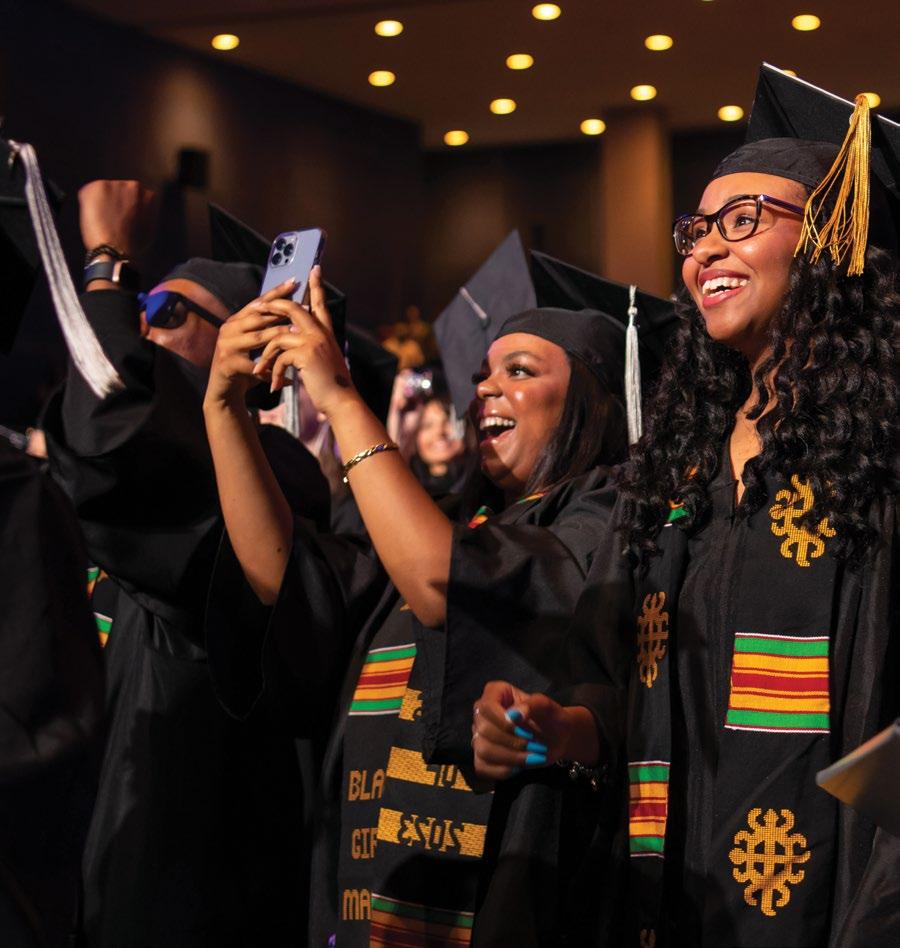
For Columbia to realize its full potential, philanthropy is essential. The President has placed a strong emphasis on expanding the College’s fundraising capacity and cultivating deeper engagement with alumni, civic leaders, and philanthropic partners. Gifts to Columbia support scholarships, academic programs, facilities, and student experiences that transform lives. Strengthening philanthropy is not only about dollars raised, but about building a culture of generosity and investment in Columbia’s future.
Why This Matters: For Columbia to realize its full potential, it will be essential to create meaningful pathways for philanthropy and engagement. Over the next three years, Columbia aspires to establish an efficient and effective Development and Alumni Relations (DAR) team rooted in best practices and a constituent-first mindset that supports and amplifies the college’s mission to provide comprehensive educational opportunities for students pursuing creative careers.
Establish an efficient and effective DAR team to better serve internal partners and external stakeholders.
a. Review and revise the DAR team structure to better support institutional efforts.
b. Hire and retain experienced staff, particularly major gift officers and advancement services roles to best support fundraising goals and the donor life cycle.
c. Provide professional development training and encourage connections for peer learning. (annual thereafter)
d. Audit operations to identify, and ultimately address, functional shortcomings, including completing the transition to a new Customer Relationship Management (CRM) software.
Metrics of Success:
• Increased knowledge and experience within DAR (update JDs and secure new hires)
• Increased fundraising productivity (meeting/exceeding established metrics)
• Active CASE membership and participation
• Increased contributed income to the College (goal to raise $5M annually by end of year 3)
Align philanthropic efforts with institutional mission, vision, and branding.
a. Partner with school leadership on annual plans that outline funding priorities, key alumni partners, potential prospects, and fundraising and/or stewardship events/opportunities, among other information. (annually thereafter)
b. Create and implement an annual calendar of key annual fundraising events and stewardship touchpoints, including endowment reporting, scholarship meetings, giving days, peer-to-peer fundraising events, and appreciation-based events. (annually thereafter)
c. Rebuild strategic efforts around institutional fundraising, including working with Columbia leadership to build philanthropic support into existing vendor contracts. (ongoing thereafter)
Metrics of Success:
• Better rapport with school leadership and clearer pathways for support (outlined in annual plans)
• Clear calendar of activity around philanthropy/stewardship (outlined in annual plans)
• Augmented vendor partnerships (outlined in vendor contracts/separate agreements)
• Donor-first relationships (ask to capacity and welcome multi-interest approaches)
• Materials to support fundraising efforts (one-pagers, brochures, webpages)
• Top three donor market engagement (markets defined and shared)
Create pathways for engagement that promote and amplify Columbia’s mission and institutional priorities with its various constituents.
a. Review the National Alumni Board’s (NAB) mission and revise/expand efforts targeting market-based engagement, support, and activation, as well as launch a sponsorship-based model for Creative Homecoming Weekend. (annually thereafter)
b. Create and implement an annual calendar of events and engagement opportunities in key philanthropic and constituent markets anchored in demonstrating student, faculty, and alumni success. (annually thereafter)
c. Partner with institutional and school leadership to identify and promote opportunities for alumni to leverage their experiences and expertise, including through recruitment and student retention efforts, as well as classroom mentorship and industry connections. (annually thereafter)
Metrics of Success:
• Sponsorship-based Creative Homecoming Weekend (sponsorships created and each NAB member brings on one partnership)
• Top three alumni market engagement (markets defined and shared)
• Leveraging alumni for mentorship and industry connections (3-5 activations within each school)
• College-wide council established (2-3 members per school/area)



Expand and leverage partnerships to enhance academic and career opportunities for students
Why This Matters: To strengthen enrollment, enhance student career outcomes, and diversify revenue, the College must move from ad hoc partnerships to a coordinated, strategic partnership strategy that elevates the brand, helps attract new students, creates paid internships and job paths for students, helps inform programmatic decisions, and generates revenue through sponsorships and paid space rentals, while generating leads for scholarships, grants and Columbia Agency engagements.
Key Strategic Actions:
Build 10 anchor partnerships in Year 1, and 10 in each of year 2 and 3, that will be measured by their contributions to the following: paid internships, and opportunities for employment, joint activities that enrich students’ academic experience, joint communications that elevate Columbia’s brand, paid space rentals and Columbia agency engagements, sponsorships and grants, and other revenue-generating activities. To be considered an anchor partnership, a partnership must meet at least 2 goals of the above
Metrics of Success:
• Number of active industry & community partnerships (Baseline: FY ’26 total | Target 2029: FY26+35%)
• Student participation in internships, co-ops, and experiential learning opportunities (Baseline: FY26 total | Target 2029: FY26+35%)
• Revenue generated through partnership-based programs, sponsorships and related activities: (Baseline: FY26 total | FY26+35%)
• Employer and partner satisfaction with student engagement and collaboration (Baseline: measure by June 1, 2026, | Target 2029: ≥85% positive)
Operational strength is the foundation of institutional sustainability. Columbia is aligning resources to ensure financial stability while advancing efficiency, transparency, and accountability across all areas of the College. By improving the systems and structures that support teaching and learning, Columbia will be better positioned to deliver on its mission and adapt to a rapidly changing higher education landscape. Enhancing operations ensures that creativity is supported by sound management, enabling Columbia to thrive for generations to come.
Why This Matters: As the institution navigates change and positions itself for its renaissance, organizational performance is critical. This initiative seeks to build a high-accountability, high-trust, execution-oriented culture that operates with shared understanding and that consistently delivers on institutional priorities.
Key Strategic Actions:
a. Establish Leadership Expectations and Accountabilities
b. Improve Leader Capability & Enhance Coaching
c. Establish Role Clarity, and Define and Fill Talent Needs
d. Strengthen Faculty & Staff Performance & Accountability
e. Clarify and Improve How Decisions Get Made
f. Reward & Reinforce What We Prioritize and Value
Metrics of Success:
• Leaders with documented performance goals aligned to strategy: 0% g 100%
• Employees receiving quarterly check-ins: 0% g 100%
• Roles reviewed and updated: 0% g 100%
• Critical roles with ready-now successor: Establish Baseline (X%) g (X% + 30 pts)
• Time-to-fill critical roles: Establish Baseline (X%) g (X% – 25%)
• Leaders with active development plans: 0% g 100%
• Engagement scores for “confidence in leadership”: Establish Baseline (X) g (X + 10 pts)
• Major initiatives using business case template: 0% g 100%
• Award nominations across divisions: Establish Baseline (X) g 2X
• Faculty and Staff completing priority skill training: 0% g 100%
Why This Matters: Physical and Digital infrastructures are misaligned with demand, fixed costs and increase in operational complexity. Right-sizing physical infrastructure (e.g., consolidating underutilized classrooms, offices, etc.) and optimizing digital infrastructure (e.g., reducing redundant ERP systems) while increasing automation) will reduce institutional risk, improve service quality, and redirect resources toward mission-critical priorities.
a. Conduct an audit of space utilization, classroom scheduling, and office allocation and align building operating hours.
b. Develop a space consolidation and repurposing plan to reduce underutilized facilities and deferred maintenance liability.
c. Renegotiate major technology and vendor contracts to reduce costs.
d. Modernize and rationalize IT systems, licenses, and platforms to eliminate redundancy, and realize savings.
e. Increase adoption of existing IT tools through training and awareness to improve productivity and service quality.
f. Evaluate strategic outsourcing opportunities for non-core functions using mission alignment, service quality, cost-benefit criteria, and reduce institutional risk.
g. Assess staffing structures to reduce duplication and optimize role alignment through redeployment and upskilling, improving efficiency and driving sustainable cost savings.
h. Expand sustainability initiatives, i.e. Green Buildings program that reduce both environmental impact and operating costs.
i. Increase transparency in financial reporting for campus stakeholders.
• Percentage reduction in underutilized space and operating hours (Baseline: 15% vacancy, 38% underutilized, Target 2029: ≤20%)
• Annual savings from technology contract renegotiation and system consolidation (Baseline: $0, Target 2029: $1.5M annually)
• Number of enterprise systems and software licenses retired or consolidated (Baseline: 96, Target 2029: 65)
• Reduction in utility and energy costs per square foot (Baseline: $1.79/sq ft, Target 2029: $3.80/sq ft)
Why This Matters: Rising costs and constrained revenue demand more deliberate financial stewardship. This initiative ensures resources are allocated transparently and strategically to protect academic quality and institutional resilience.
Key Strategic Actions:
a. Examine and reduce overall college-wide overhead costs to align with current enrollment
b. Real estate expertise to dramatically downsize the physical size of campus
c. Implement a multi-year financial planning and forecasting model tied to strategic priorities
d. Establish clear cost-management guidelines and accountability across divisions
e. Conduct targeted reviews of high-cost and low-return operational areas
f. Align budget development and resource allocation with strategic initiatives
g. Streamline the procurement process to improve transparency, reduce complexity, increase operational efficiency, and drive cost savings.
h. Increase transparency in financial reporting for campus stakeholders.
Metrics of Success:
• Annual operating margin (Baseline: -1.8%, Target 2029: +2.0%)
• Ratio of unrestricted reserves to annual operating expenses (Baseline: 0.35, Target 2029: 0.60)
• Percentage of budget aligned to strategic initiatives (Baseline: 40%, Target 2029: 75%)
• Growth rate of operating expenses compared to revenue growth (Baseline: +4.5%, Target 2029: ≤ revenue growth)
Why This Matters: With 93% of institutional revenue derived from tuition, the college is highly vulnerable to enrollment volatility, making revenue diversification essential to long-term financial stability and strategic flexibility.
Key Strategic Actions:
a. Identify and prioritize non-tuition revenue opportunities aligned with mission and existing assets
b. Expand professional, continuing, and certificate programs using current faculty expertise
c. Centralize events planning to increase summer, conference, and event utilization of campus facilities
d. Strengthen grant development and sponsored research support
e. Develop partnerships with employers, community organizations, and regional institutions.
Metrics of Success:
• Percentage of total revenue from non-tuition sources (Baseline: 7%, Target 2029: 15%)
• Net revenue generated from professional, continuing, and certificate programs (Baseline: $0.6M, Target 2029: $2.5M)
• Annual revenue from auxiliary and facility use (Baseline: $1.1M, Target 2029: $2.0M)
• Number of active external partnerships generating revenue (Baseline: 6, Target 2029: 20)
Effective implementation of the strategic plan requires clear governance, defined roles, disciplined execution, and consistent communication. This section outlines the structures and processes that will guide implementation, ensure accountability, and integrate strategic priorities into the college’s ongoing planning and budgeting activities. Responsibility for execution is shared across governance and leadership, with clear expectations for oversight, coordination, and decision-making.
The successful implementation of the strategic plan depends on clearly delineated roles among the Board of Trustees, Cabinet, and School Directors. These roles are designed to reinforce strategic alignment, avoid duplication of effort, and ensure timely decision-making.
The Board of Trustees provides fiduciary oversight, ensures alignment with mission, and holds the institution accountable for progress toward strategic goals. The Board approves the strategic plan, monitors performance through regular reporting, and engages in focused strategic discussions tied to key priorities and risks. The Board does not manage implementation but provides guidance, asks critical questions, and ensures long-term sustainability.
The Cabinet is responsible for institutional leadership and coordination of strategy execution. Cabinet members serve as executive sponsors for one or more strategic workstreams and are accountable for progress toward defined goals and KPIs. Cabinet ensures cross-functional alignment, resolves trade-offs, allocates resources, and integrates strategic priorities into annual planning and budgeting processes.
School Directors (and equivalent academic and administrative leaders) are responsible for translating institutional strategy into unit-level plans and actions. Directors align academic programs, operational initiatives, and resource requests with strategic priorities and are accountable for implementation within their areas. School Directors provide regular progress updates and contribute data and insights to institutional assessment and reporting.
Recognizing that successful strategy execution requires sustained engagement and adaptability, the college will implement a structured approach to change management and communication. This approach is designed to build understanding, manage transition, and maintain momentum throughout the life of the plan.
Change management efforts will focus on clarifying priorities, sequencing initiatives, and supporting faculty and staff through implementation. Leadership will articulate the rationale for decisions, expected outcomes, and implications for units and individuals. Opportunities for feedback and dialogue will be integrated into implementation phases to identify barriers, address concerns, and refine approaches as needed.
A coordinated strategic communication plan will support transparency and shared understanding. Core elements include:
• Clear articulation of strategic priorities and success measures
• Regular updates on progress, milestones, and adjustments
• Consistent messaging across internal and external channels
• Targeted communication to stakeholder groups affected by specific initiatives
Communication will leverage multiple channels, including campus forums, leadership updates, dashboards, and digital communications. Messaging will be aligned with annual reporting and “You Said / We Did” summaries to reinforce accountability and responsiveness. The entire communications plan exists in multiple forms to include being in the project plan, the appendix of this plan (strategic plan), and the execution plan.
The strategic plan will be fully integrated into the college’s annual planning and budgeting processes to ensure that priorities are translated into action and supported by appropriate resources. Strategy will serve as the primary framework for evaluating initiatives, setting goals, and making investment decisions.
Each year, divisions and schools will develop annual operating plans that align unit-level goals, initiatives, and metrics with the institutional strategic priorities and workstreams. Resource requests will be explicitly linked to strategic objectives, expected outcomes, and performance measures.
The budget development process will reinforce strategic alignment by:
• Prioritizing funding for initiatives that advance strategic goals
• Evaluating trade-offs and opportunity costs
• Supporting strategic investments and reallocation where needed
• Monitoring financial impact and sustainability
Cabinet will review and approve annual plans and budgets with an explicit focus on strategic alignment, progress toward KPIs, and institutional capacity. This integrated approach ensures that the strategic plan informs decisionmaking at all levels and remains a central tool for guiding institutional action.
KPI and Progress Review Reviews dashboard and reports Reviews KPIs; resolves issues
Change Management Ensures alignment with mission Sponsors and manages change
and reports unit metrics
and supports implementation
Strategic Communication Reinforces priorities and accountability Coordinates messaging Communicates within units
Annual Planning Reviews strategic alignment Approves plans and priorities Develops aligned unit plans
Budget Integration Budget Integration Ensures fiscal sustainability
Allocates resources
Manages budgets aligned to strategy
This implementation and governance framework ensures that the strategic plan is actionable, coordinated, and accountable, while remaining flexible enough to adapt to changing conditions.
Columbia College Chicago will employ a coordinated framework of performance measurement, stakeholder feedback, and structured review to ensure the strategic plan is implemented effectively and remains responsive over time. This framework embeds assessment and accountability into existing governance, operational planning, and budgeting processes, with clearly defined roles, reporting expectations, and review cycles. Together, KPIs and dashboards, stakeholder feedback loops, and plan refresh and reporting cycles provide the structure necessary to monitor progress, inform decision-making, and support continuous improvement across all four strategic workstreams.
Key performance indicators (KPIs) and dashboards will serve as the primary tools for monitoring progress and supporting data-informed decision-making. KPIs will be limited in number, clearly defined, and directly aligned to the goals and intended outcomes of each workstream: Enrollment and Academic Portfolio; Brand, Reputation and Philanthropy; Financial and Operational Efficiency; and People and Culture. Where possible, KPIs will leverage existing data sources to ensure consistency, reliability, and sustainability.
A centralized strategic dashboard will be developed to track institutional performance at the enterprise level. The dashboard will include a mix of leading and lagging indicators, trend data, and targets, allowing leadership to monitor progress over time and identify areas requiring intervention. Dashboard views will be tailored to different audiences, including Cabinet, the Board of Trustees, and internal operational leaders, while maintaining a common core set of metrics.
Examples of KPI focus areas by workstream include:
• Enrollment and Academic Portfolio: inquiry-to-enrollment yield, retention and graduation rates, program demand and viability, academic quality indicators, and post-graduation outcomes.
• Brand, Reputation and Philanthropy: brand awareness and perception measures, alumni engagement rates, donor participation and retention, campaign progress, and philanthropic revenue.
• Financial and Operational Efficiency: operating margin, net tuition revenue, cost per student, administrative efficiency metrics, and progress on strategic investments.
• People and Culture: faculty and staff retention, engagement survey results, diversity and inclusion indicators, professional development participation, and leadership capacity measures.
KPIs will be reviewed regularly by Cabinet, task force members, and workstream leads and will inform operational planning, resource allocation, and performance discussions. The dashboard will also support transparency by enabling consistent reporting to the Board and the campus community.
Stakeholder feedback will complement quantitative performance data by providing qualitative insight into institutional experience, perception, and effectiveness. Feedback mechanisms will be intentionally aligned to the four workstreams and integrated into ongoing institutional processes to ensure timely use of information and avoid duplication of effort.
Annual and biennial stakeholder pulse surveys will provide standardized, trendable data across key constituencies, including faculty, staff, students (undergraduate and graduate), parents and families, alumni, donors, and community partners. Survey instruments will be aligned to strategic priorities and KPIs, enabling leadership to assess progress and identify gaps across enrollment, academic quality, brand perception, operational effectiveness, and organizational culture. Columbia College Chicago will maintain standing advisory councils and forums representing students, faculty and staff, alumni, community partners, and parents and families. These groups will meet on a defined cadence and will be charged annually with reviewing progress on selected strategic priorities and workstream goals. Feedback and recommendations will be documented, reviewed by leadership, and incorporated into planning and implementation decisions. Feedback will also be captured through embedded institutional processes, including academic program review, enrollment funnel analysis, advancement and donor engagement activities, and faculty and staff exit and stay interviews. Embedding feedback in these processes ensures that stakeholder perspectives inform decisions related to academic portfolio management, enrollment strategy, philanthropic priorities, operational improvement, and workforce planning.
In addition, Columbia College Chicago will conduct targeted listening sessions and open forums on a rotating basis, aligned to annual priorities or emerging strategic issues. These sessions will be structured to produce actionable themes and will inform both KPI interpretation and operational response.
To close the feedback loop and reinforce accountability, Columbia College Chicago will publish an annual “You Said / We Did” summary highlighting key feedback themes and actions taken. This communication will be shared with internal and external stakeholders and linked to the strategic dashboard and annual progress report.
The strategic plan will be supported by defined reporting and review cycles that ensure ongoing accountability and enable timely course correction. These cycles align with governance structures, operational planning, and budgeting processes, reinforcing the integration of strategy into day-to-day decision-making.
An annual strategic progress report will provide a consolidated update on performance across all four workstreams. The report will summarize KPI results, highlight trends and variances, synthesize stakeholder feedback, and document actions taken or planned in response. This report will inform Cabinet planning, Board oversight, and institutional communication and will serve as the primary public-facing accountability document.
The Board of Trustees will receive regular updates on strategic progress through quarterly or semiannual reporting aligned with board and committee agendas. These updates will explicitly connect enrollment performance, financial health, philanthropic activity, and workforce indicators to strategic goals. Each year, the Board will engage in deeper review of one or more workstreams to support informed oversight and long-term sustainability. Strategic priorities will be reinforced through the annual operational planning and budgeting cycle. Divisions and schools will be required to demonstrate alignment between unit-level goals, resource requests, and institutional strategic priorities. Cabinet review will assess alignment, performance, and trade-offs, ensuring that strategy directly informs resource allocation.
At the midpoint of the plan, Columbia College Chicago will conduct a mid-cycle strategic review to assess progress toward intended outcomes, evaluate the effectiveness of KPIs and governance structures, and consider changes in the external environment. This review may result in refinement of priorities, timelines, or metrics while maintaining continuity of strategic direction.
At the conclusion of the plan period, a comprehensive plan refresh will synthesize performance data, stakeholder feedback, and institutional learning to inform the next strategic planning cycle and strengthen Columbia College Chicago’s capacity for continuous improvement.
Summary of KPIs, Feedback Loops, and Reporting Cycles by Workstream
Mechanism Enrollment and Academic Portfolio
Strategic KPIs and Dashboard Yield, retention, program demand, outcomes
Stakeholder Pulse Surveys Student success, academic experience
Standing Advisory Councils Program relevance, student success
Brand awareness, alumni and donor engagement
Brand perception, donor intent
Margin, net revenue, cost efficiency
Retention, engagement, DEI metrics
Ongoing / Quarterly Review
Value and service effectiveness Engagement and culture Annual / Biennial
Community and alumni engagement Operational priorities Workplace culture and development Semester / Annual
Embedded Process Feedback Program review, enrollment funnel Donor stewardship Process improvement Exit and stay interviews
Listening Sessions and Forums
Academic and student experience
Annual Strategic Progress Report Enrollment and academic outcomes
Reputation and visibility Operational challenges Climate and morale
Advancement and brand metrics
Board Strategic Reviews Portfolio health and demand Philanthropic strategy
Mid-Cycle Strategic Review Portfolio alignment
positioning
Full Plan Refresh Future enrollment and programs Long-term reputation and philanthropy
performance
indicators
sustainability
effectiveness
operating model
/ Semiannual
assessment
strategy
Porter’s Five Forces Analysis
STEEPLE Analysis
SWOT/SOAR Analysis
Transformative Initiatives
CASE Council for Advancement and Support of Education
CCC Columbia College Chicago
CRM Customer Relationship Management
DAR Development & Alumni Relations
DCG Dickens Consulting Group
ERP Enterprise Resource Planning
FY Fiscal Year
JD Job Descriptions
KPI Key Performance Indicators
MAP Monetary Award Program
MarComm Marketing & Communications
NAB National Alumni Board
SOAR Strengths, Opportunities, Aspirations, and Results
STEEPLE Social, Technological, Economic, Environmental, Political, Legal, And Ethical
SWOT Strengths, Weaknesses, Opportunities, and Threats
4R Framework Redevelop, Restructure, Replace, and Rebrand