






































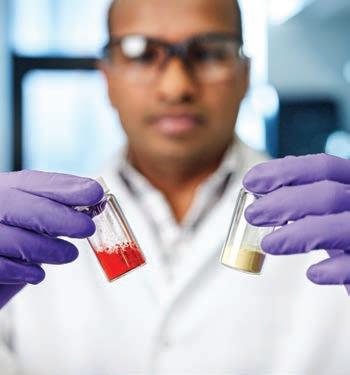
W. Kimryn Rathmell, MD, PhD, MMHC, CEO of the Arthur G. James Cancer Hospital and Richard J. Solove Research Institute and director of The Ohio State University Comprehensive Cancer Center, shares her perspective on the past, present and future of cancer care and research at Ohio State.

Last month marked the 50-year anniversary of The Ohio State University Comprehensive Cancer Center (OSUCCC), an inflection point born of a decision that fundamentally reshaped cancer research, care, and impact at Ohio State and far beyond.
While this milestone will be formally celebrated in October, this moment offers an opportunity to pause and reflect on its enduring significance and the communities it continues to serve.
In the early days following passage of the National Cancer Act, only a small number of institutions stepped forward to pursue designation in the newly established network of National Cancer Institute (NCI)designated comprehensive cancer centers.
Those institutions shared a common conviction: that meaningful progress would require bold investment in foundational research, intentional translation from lab to clinic, and a commitment to ensuring patients themselves could be part of a new era in cancer care. Ohio State was ready to lead.
Fifty years later, the impact of that commitment is clear. Entire fields of study have emerged, along with new approaches to prevention, detection, and treatment.
Cancer mortality in the United States has declined by more than 30%, and many cancers once associated with poor outcomes are now highly treatable. This progress reflects decades of coordinated effort, scientific curiosity, and a shared commitment to improving lives.
From the beginning, Ohio State recognized that the work happening in laboratories and clinics was intended to have broad, lasting impact—reaching patients, families, and communities across Ohio and beyond.
As a land-grant institution, service to all 88 counties of Ohio has always been core to its mission. NCI designation helped amplify that impact, ensuring that research discoveries could translate into meaningful advances in care for people throughout the state.
Today, that commitment continues with a focus on accelerating discovery, expanding access, and delivering better outcomes for patients everywhere. With unprecedented opportunity to advance research and translate it into real-world impact, Ohio State is building on five decades of progress to help shape the future of cancer care.
As The Ohio State University Comprehensive Cancer Center marks its 50th anniversary, the impact and reach forged over the past five decades remain extraordinary—and they position the institution to be even more transformative in the years ahead.
Scan the QR code to learn more about cancer care and research innovation at the OSUCCC – James.





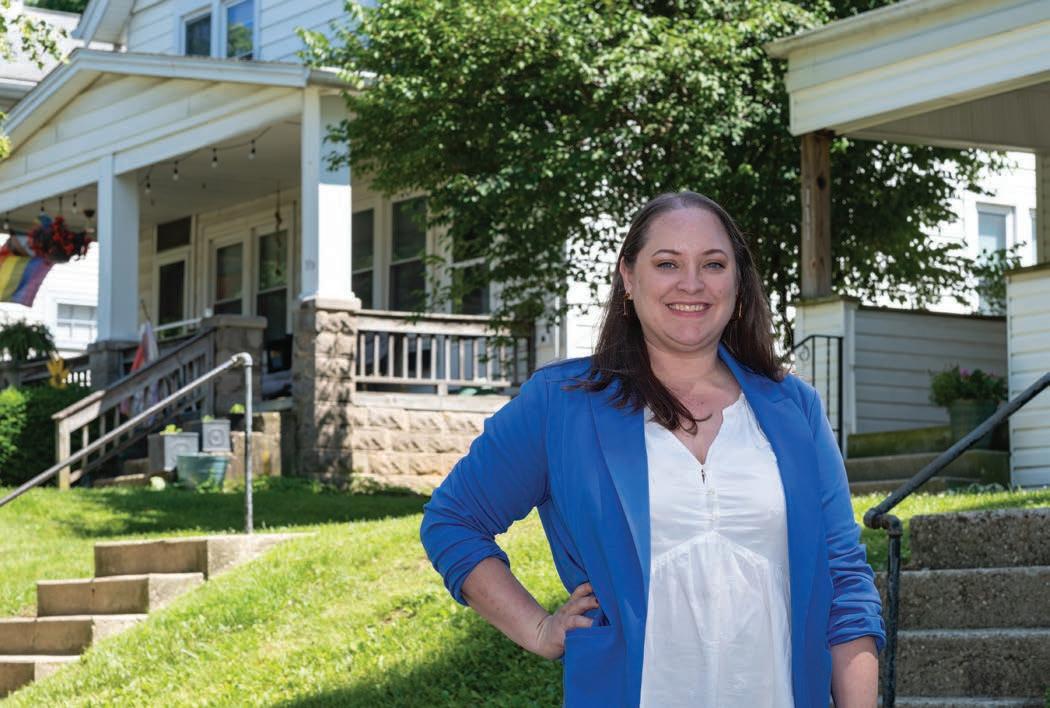
35 MEET BECKY GRIFFIN
You voted. We listened. Find out readers’ choices for people, places, restaurants and things to do around town in the results of our annual reader poll.
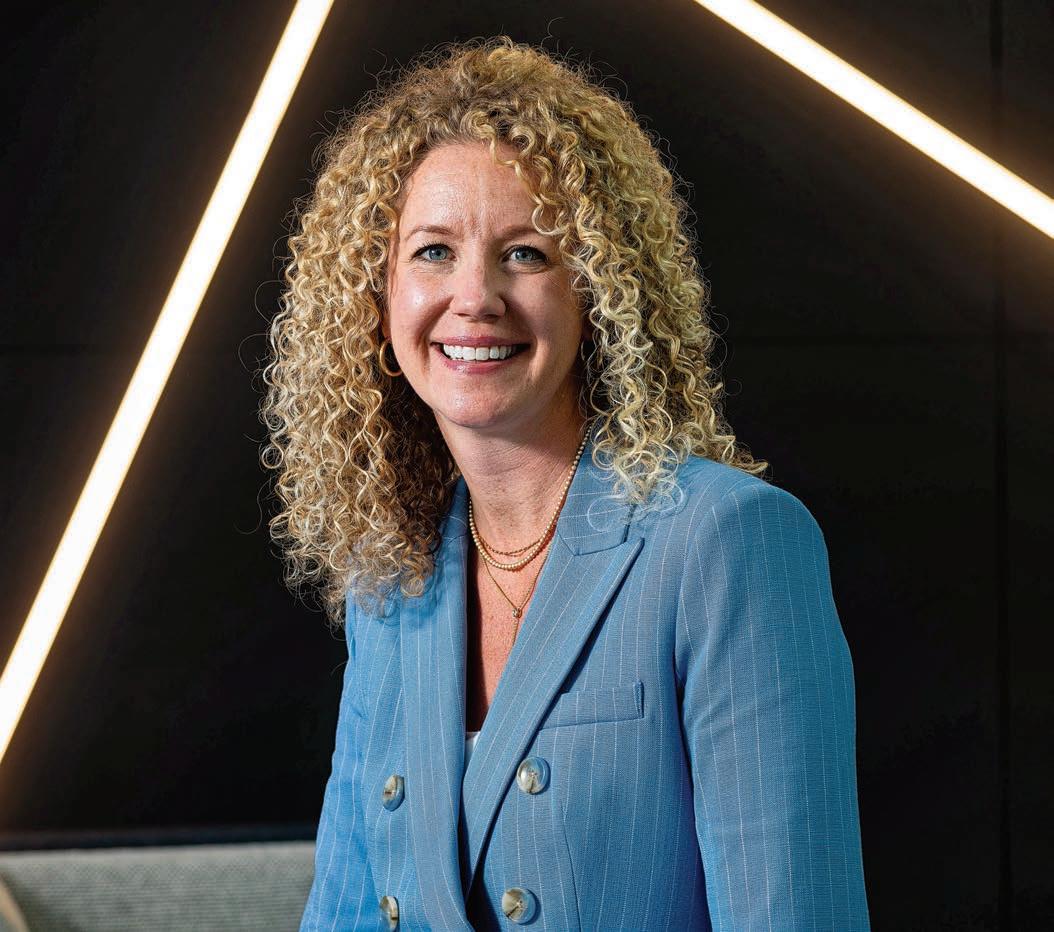
JPMorgan Chase’s new Columbus location leader talks about her first year on the job.
40
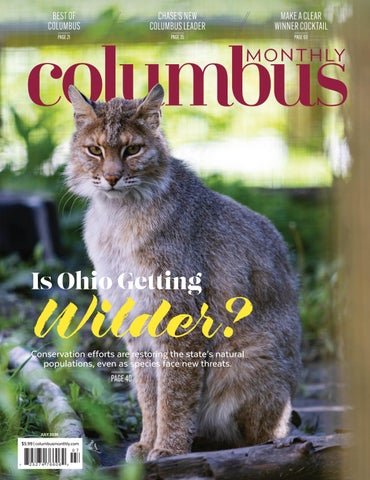
Native species are rebounding in the state as a result of decades-old conservation efforts. What happens now?
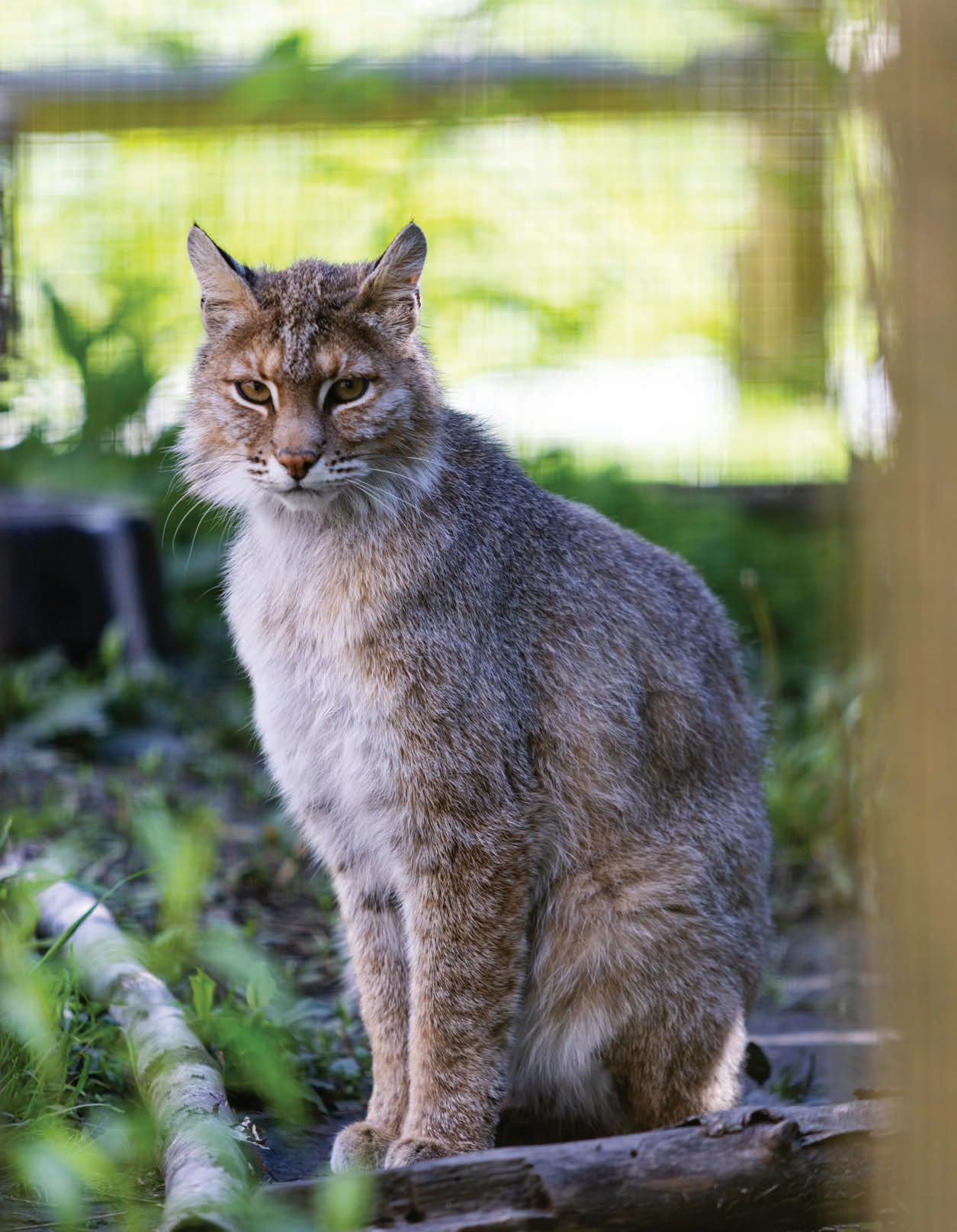
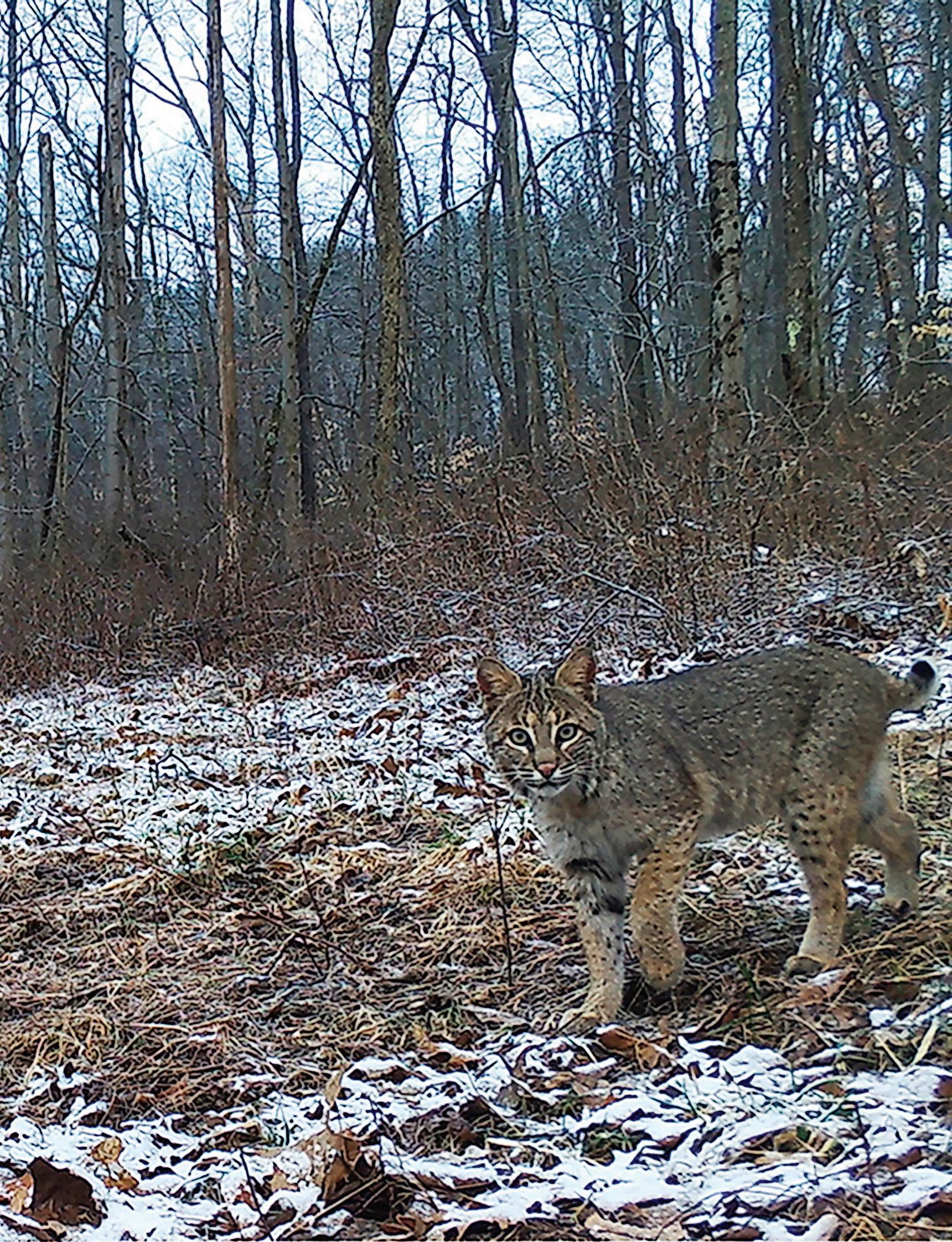
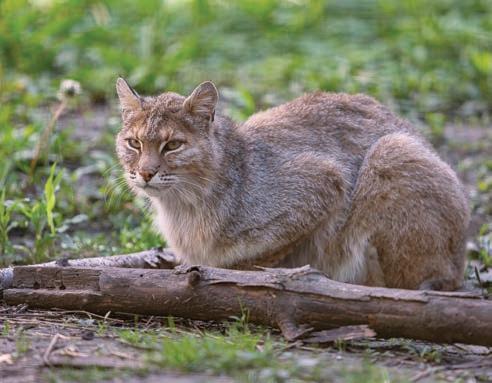
ON THE COVER: Athena, a bobcat, recovers from an injury at the Ohio Wildlife Center.

BY TIM
EDITOR AND GENERAL MANAGER, DISPATCH MAGAZINES
Katy Smith
EDITORIAL FEATURES EDITOR
Linda Lee Baird ASSOCIATE EDITOR
Lucy Clark
CONTRIBUTING WRITERS
Amy Bodiker Baskes, Joshua M. Bernstein, Nicholas Dekker, Randy Edwards, Kevin Elliott, Kathy Lynn Gray, Donna Marbury, Aaron Marshall, Jill Moorhead, Laura Newpoff
DESIGN & PRODUCTION PAGE DESIGNERS
Kathryn Biek, Kelly Hignite, Kaity Athialy, Hannah Patton
DIGITAL EDITOR
Julanne Hohbach
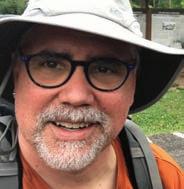
Randy Edwards
The former Nature Conservancy and Columbus Dispatch science writer brings us a masterful summation of the efforts to help Ohio’s plants and animals recover after centuries of destruction, Page 40.
PHOTOGRAPHY
PHOTO EDITOR
Tim Johnson
ADVERTISING MULTIMEDIA SALES MANAGERS
Heather Kritter, Adam Trabitz
PRODUCTION DESIGNER
Rebecca Zimmer
MARKETING MARKETING MANAGER
Lauren Reinhard
LETTERS: letters@columbusmonthly.com
ADVERTISING: advertise@ columbusmonthly.com
EDITORIAL/ADVERTISING OFFICES
605 S. Front St., Ste. 300 Columbus, OH 43215 614-888-4567
SUBSCRIPTIONS/CUSTOMER SERVICE
614-923-9566
columbusmonthly@subscription-team.com
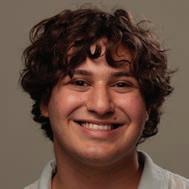
Zach Trabitz
The freelance writer and new Washington University in St. Louis grad talked with NBC4 meteorologist Dave Mazza for a profile in our Best of Columbus section, Page 24.
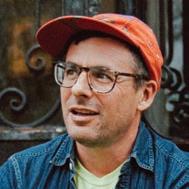
Joshua M. Bernstein
The Clintonville resident looked into where duplexes can and can’t be built in the Columbus region and why. The Affordable Housing Alliance of Central Ohio shared new data with Columbus Monthly for the story, Page 10.
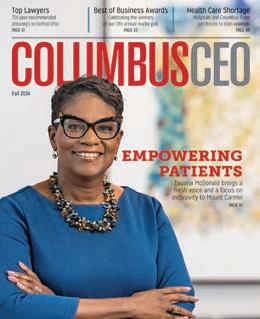

Too many people in Columbus are priced out of housing. Some neighborhoods, like the one I live in, are undergoing demographic shifts that favor those with means, while those without find themselves moving far beyond the city limits and outside the Franklin County line to make ends meet. Incomes simply have not kept pace with housing inflation, which is being driven primarily by a lack of supply.
There are numerous boards, commissions, strategy groups and coalitions working on solutions to the housing problem in central Ohio. The city of Columbus, by far the largest municipality in the region, recently began to overhaul its zoning code for the first time in more than 70 years. The hope is that the changes will spur the development of more housing. One of the principal updates pitched so far (but not yet enacted) is one that allows duplexes, triplexes and four-unit apartment buildings to be built in areas previously zoned only for single-family housing
Katy Smith katy@columbusmonthly.com
without seeking a code variance from the city. The update has its critics. People don’t like the idea of seeing apartments on streets characterized by broad lawns and neat rows of nicely spaced homes with driveways and garages. They don’t like the idea of the additional traffic multifamily could bring. Sometimes, and they might not admit this, I think they simply don’t like the idea of more neighbors. I, however, like having more neighbors. And I’ll tell you why.
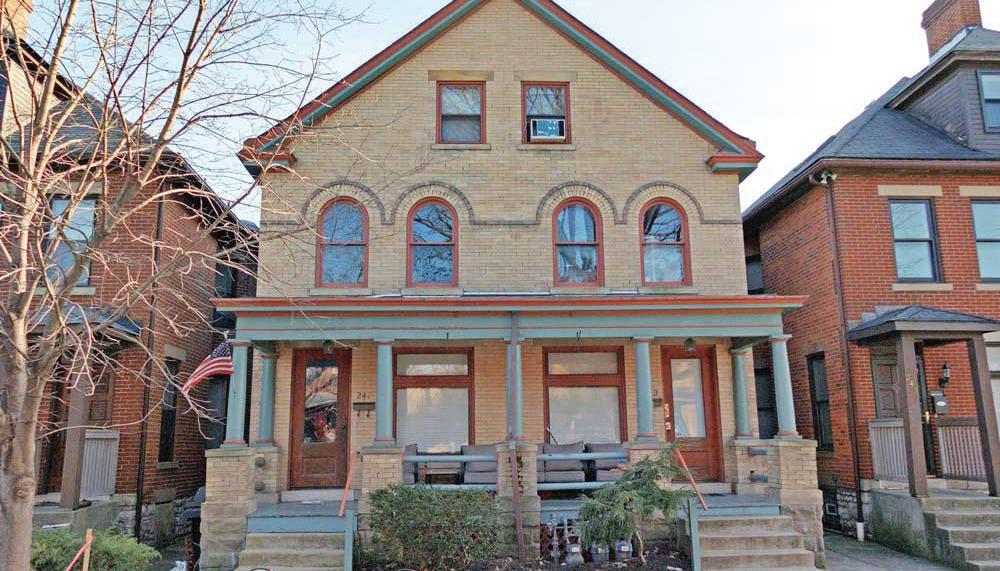
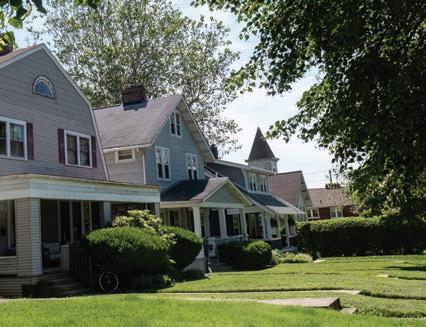
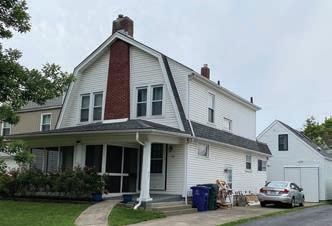
My street is a lovely example of the 1920s urban neighborhood aesthetic. Charming Craftsman bungalows alternate with front-porch duplexes, Dutch colonials and other Sears kit homes, many with pretty front yard gardens.
Send letters to: Editor, Columbus Monthly, 605 S. Front St., Ste. 300, Columbus, OH 43215. Or email: letters@columbus monthly.com. A letter must include the writer’s name, address and daytime phone number. Letters will be edited for length and clarity. All letters sent to Columbus Monthly are considered for publication, either in print or online.
Columbus Monthly @ColumbusMonthly @ColumbusMonthly
Web: ColumbusMonthly.com
Single-family dwellers with children can live next door to owner-occupied doubles housing members of the same family on either side (like my family lives). One also can find single people who wanted an apartment on a street with a true neighborhood feel. Or, perhaps they are retirees who sold their large homes in the suburbs and became renters to be closer to grandchildren while forgoing the expense of homeownership. People from all walks and stages of life mingle here on my street, which is in Clintonville. Some have lived here for decades with slow rent appreciation, while others bought completely renovated homes here recently at much higher prices. Alleys, porches and front yards connect us, where you can be sure to run into a neighbor walking their dog or strolling to a local restaurant or pub.
Having more neighbors enriches our lives. We meet people from different backgrounds who we might never have met otherwise. By knowing them, our own ex-
Email: letters@ columbusmonthly.com
periences are broadened. How can that be a bad thing?
In a story that starts on Page 10 by freelance writer Joshua M. Bernstein, you can learn where in central Ohio duplexes can be built and why. The answer is complex, as you can imagine. Speaking of neighbors, our cover story (Page 40) is about a different kind—our non-human animal friends. Ohio is getting wilder, writer Randy Edwards reports, but we cannot take our focus off conservation efforts, or we’ll risk losing the progress we have made. Wouldn’t you want a bobcat for a neighbor? How about turkeys, beavers, otters, foxes, black bears, coyotes, eagles, osprey, trumpeter swans, sandhill cranes, peregrine falcons and lake sturgeon? I sure would.



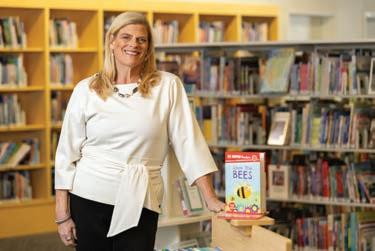
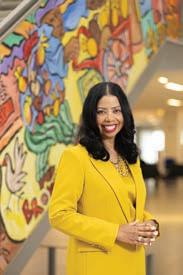
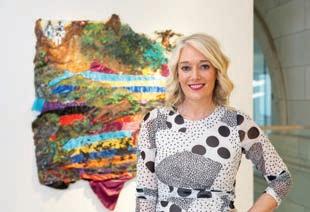
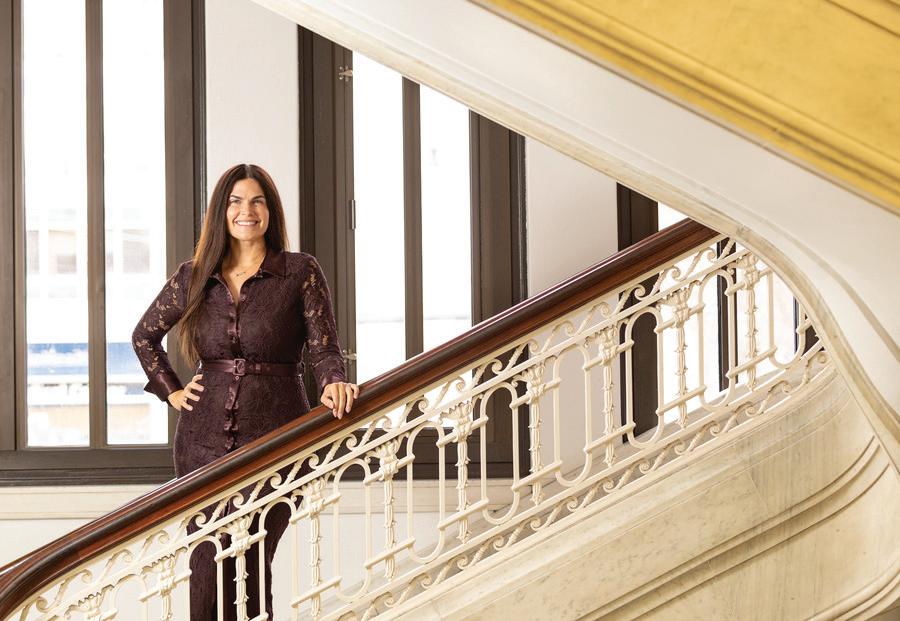

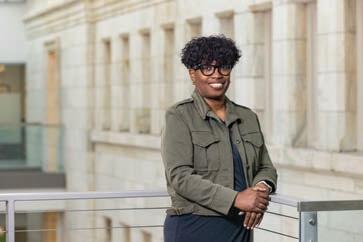
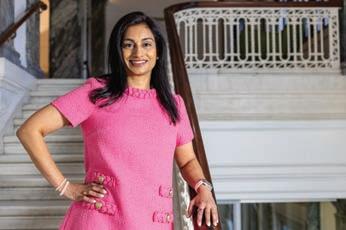
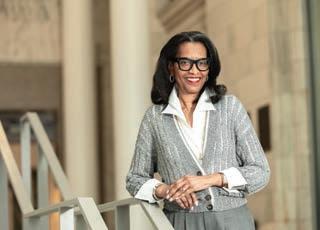
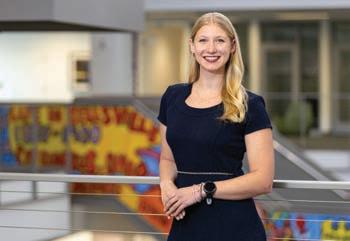
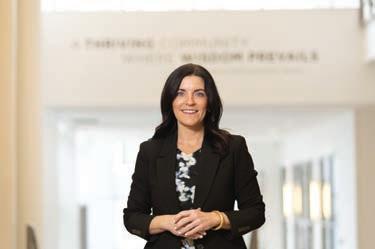
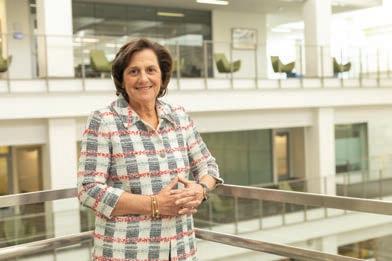
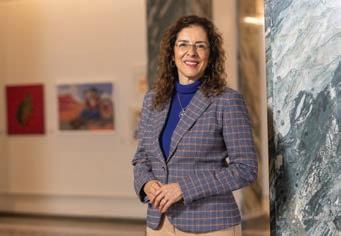
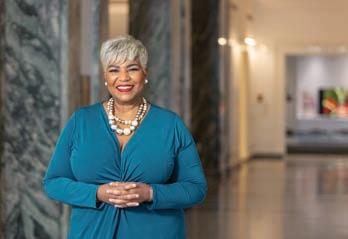

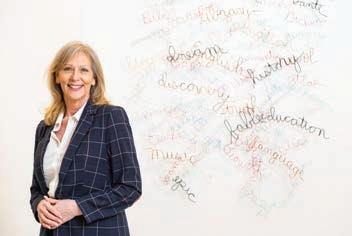
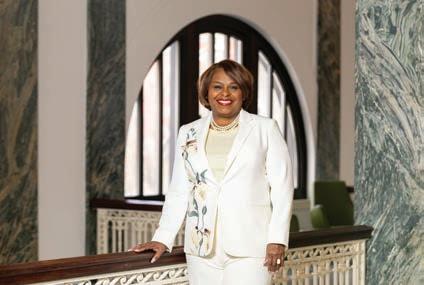
On June 23, our third annual Inspiring Women event celebrated the women profiled in the May issue of Columbus Monthly and summer issue of Columbus CEO.
THANK OUR SPONSORS















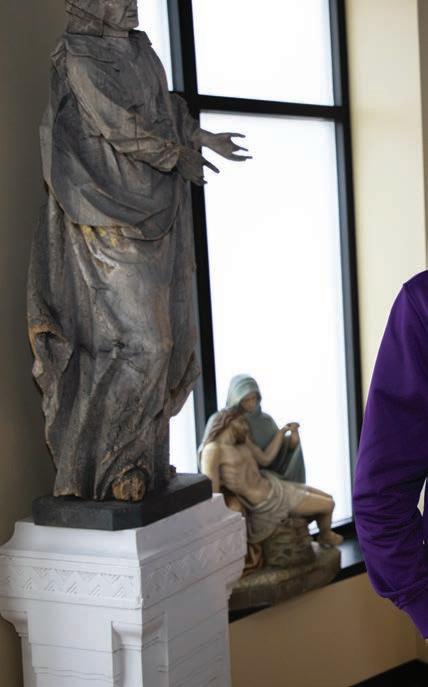
This relic, containing an original piece of the cross Jesus was believed to be crucified on, lives at the temporarily closed Museum of Catholic Art and History. Some are concerned about the museum’s future, Page 14.
To meet the region’s housing crunch, builders could return to an old friend. But their options are limited.
By Joshua M. Bernstein
Growing up in Wadsworth, Ohio, an Akron suburb founded in 1814, Carlie Boos was typically a few steps from family. She lived in a duplex with her parents, and her cousins rented the connected nextdoor unit. Extra eyes came in handy. “I remember my mom banging on the neighbor’s door and saying, ‘I’ve got to run to the store. Keep an eye on Carlie,’” says Boos, executive director of the Affordable Housing Alliance of Central Ohio. “It was lovely, and it was family.”
Neighborly familial bonds are scarcer today. In and around Columbus, prewar duplexes—two independent dwelling units beneath one roof—and larger multifamily housing were integrated into older neighborhoods and municipalities including Victorian Village, Old North Columbus, Upper Arlington and
Westerville, plus the capital’s urban core. But a 1954 zoning change prohibited multifamily housing across parts of Columbus. Policies rooted in racial discrimination prioritized single-family homes, and car-centric suburbs expanded outward, no need to share walls.
The region’s zoning laws allow duplexes on only 17 percent of all parcels, according to Twin Goals, a new AHACO study on building family wealth and affordability through duplexes. They’re prohibited or face discretionary or conditional approval in at least 79 percent of the region. “Governments put their thumb on the scale,” Boos says, driving a “nail in the coffin for middle-class housing.”
Solely building single-family homes exacerbates an acute housing shortage. Columbus has added 120,000 residents
since 2010, and central Ohio’s population is projected to increase to 3 million by 2050 from 2.3 million, a boom spiking prices and threatening the region’s relative affordability. To relieve housing pressure, ease costs and keep up with growth, local governments are rewriting zoning codes to create more “missing middle” housing that sits between single-family homes and high-rise buildings—duplexes, triplexes, quadplexes and accessory dwelling units built in a homeowner’s backyard.
Call it gentle density. “We’re not talking about plopping an eight-story, 50-unit apartment building in a neighborhood,” says Belkis Schoenhals, a planning manager for the city of Columbus. “These types of housing seamlessly weave into a community,” she says.
BY TIM JOHNSON
The Original Workforce Housing Workers regularly drive to jobs far from homes, clenching teeth while caught in I-270 traffic. A century ago, people often lived within walking distance or a quick streetcar ride from work. “Duplexes are the original workforce housing of Columbus,” Jason Reece, associate professor of city and regional planning at Ohio State University, said in the documentary United: The Hidden Story of the Humble Duplex, which was produced by AHACO.
Beyond proximity, the housing diversity in Clintonville and older Columbus neighborhoods “naturally allowed for different housing price points and lifestyle choices,” says Erin Prosser, deputy director of housing strategies for the city of Columbus. A single person might opt for a smaller dwelling, while a growing family would want a bigger home, all available nearby. “You didn’t necessarily need to leave your neighborhood to have those life transitions,” Prosser says. With its ongoing Zone In initiative, the city is updating its zoning code for the first time in more than 70 years. The changes so far have addressed allowing larger residential buildings on major corridors, such as North High Street; overhauling single-family neighborhoods is under future consideration. Columbus does permit duplexes in many residential districts—more will be permitted in future rezoning phases—and new duplexes are sprouting in Olde Towne East and Reeb-Hosack, where empty lots await development. “Many of our partners are picking up little plots of land and vacant areas,” Schoenhals says. “We’re trying to meet that demand by supporting increased development.”
Other cities surrounding Columbus are crunched for space. Suburban Bexley is just 2.9 square miles and surrounded by Columbus on all four sides. “There’s only so much land to be able to build up,” says Alex Silverman, a city council member in Bexley. It’s mostly composed of single-family housing, with duplexes concentrated near Capital University. “We don’t have many empty parcels,” Silverman says. To maximize square footage, Bexley prioritizes mixed-use buildings like the six-story Fitzgerald on Main Street.
Westerville underwent heavy residential construction in the 1970s through 1990s, says David Efland, the city’s planning and development director, and its
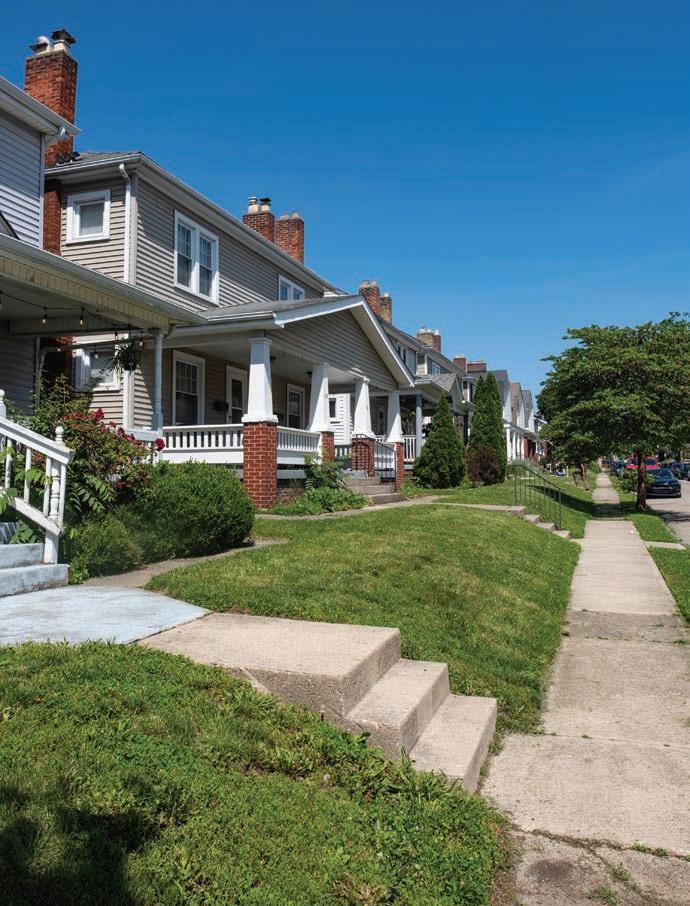
Not everyone dreams of picket fences and grassy expanses. Cozy and not too costly duplexes, shared with those near and dear, are embedded into the region’s housing bedrock, an old idea that feels bold and fresh.
13 square miles are “functionally built out.” Duplexes comprise nearly 3 percent of its housing stock, a fairly high percentage, and around 26 percent of the city potentially could allow a two-fami-
ly dwelling. But tearing down a house to build a duplex often doesn’t make smart economic sense.
Similar land constraints impact Worthington. “In Old Worthington, I can only think of one, maybe two vacant lots to build something new like a duplex,” says Lee Brown, director of Worthington’s planning and building department. Nonetheless, Worthington has entrenched examples of multifamily housing, including several downtown duplexes and a fourplex. “They’re zoned for single family, but for 100 years they’ve been part of the community,” Brown says. Worthington is embarking on a multiyear process of rewriting its zoning code to better meet modern housing needs. “If we truly were ‘no change,’ we’d still be an 1803 outhouse community,” Brown says.
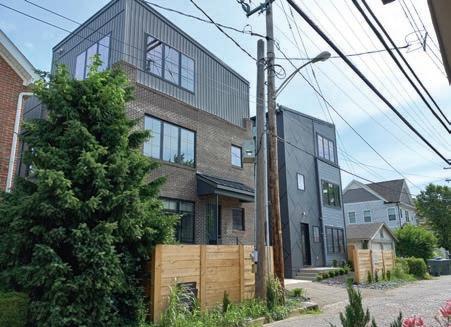
Living Next to Mom for Life Duplexes can ease the burden of homeownership for younger adults. A homeowner can rent out a duplex’s second unit to subsidize a mortgage, earning “income from the other side of the wall,” Schoenhals says. Duplexes also foster denser, livelier communities and offer housing opportunities for aging alongside loved ones. “You’re bringing two more neighbors to the party, and those neighbors might be your grandparents,” Schoenhals says.
For people with developmental disabilities, sharing a duplex can meet needs on multiple levels, from splitting house responsibilities to sharing support staff. “Missing-middle housing can help cut down on those costs,” says Cristy “Critty” Buenconsejo, president and CEO of Creative Housing | Creative Renovations, which provides housing for the developmentally disabled. The goal is to knit these duplexes, triplexes and quadplexes, located from the Hilltop to Hilliard, into neighborhoods and not to create enclaves. “We want to be part of the community,” Buenconsejo says.
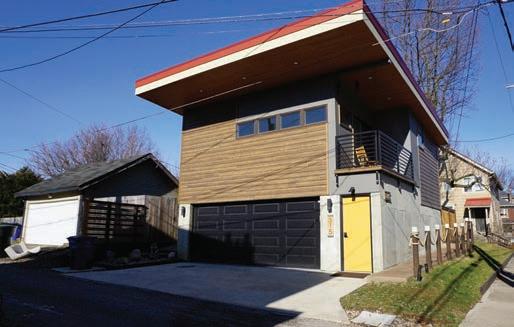
To grow denser neighborhoods, homeowners also can add newly legalized ADUs, which can be built on a home’s existing lot as a smaller standalone structure or an addition. Westerville modified its zoning code in 2023 to simplify adding ADUs, and Efland estimates that around 67 percent of the city could potentially allow them. Last fall Columbus and Bexley also ratified ADU construction. “Single-family homes have square footage on their parcel that can be used to grow without having to tear down and rebuild,” Silverman says.
Since January, Compton Construction in Columbus has fielded around 15 unsolicited leads for ADUs. In any given year, the construction company will receive around 100 leads, so “there’s a lot

Current zoning laws allow duplexes on just 17 percent of all Central Ohio parcels. Here’s a breakdown by community.
Reynoldsburg
Worthington
Pataskala
Pickerington
Upper
percent of parcels allowing duplexes
Amanda
Minerva
Source:
of tire kicking,” says Blake Compton, the founder. Even though ADUs are easier to get approved than they used to be, they’re not easier to build. When Compton built his Olde Towne East ADU, he planned for a $400,000 budget. The appraiser estimated that the house was only worth $300,000, requiring him to make up the difference between bank loan and construction cost.
Material and labor costs are only increasing. “If you don’t want a basic box, you’ll be north of $300,000,” Compton says. Adding a second floor to a garage also can be complicated, especially since the preexisting footers might not support additional structural load. A teardown and rebuild is a “no go for many people,” Compton says.
Despite certain roadblocks, the avenues to broadening the scope and variety of central Ohio’s housing stock are opening wider. Dusty codes are disappearing, replaced by modes of thinking that meet the region’s housing needs. Not everyone dreams of picket fences and grassy expanses. Cozy and not too costly duplexes, shared with those near and dear, are embedded into the region’s housing bedrock, an old idea that feels bold and fresh.
“We talk a lot about culture and who we are as a community, and the duplex fits so perfectly within that because it’s been part of our history,” Boos says. “One reason why it’s so appealing as a solution to the housing challenge is because it’s just so us.” ◆




















































Come to any Columbus Metropolitan Library location to learn more or visit

A Downtown Columbus museum dedicated to Catholic art has closed as the local diocese assesses the future of the large collection.
By Randy Edwards
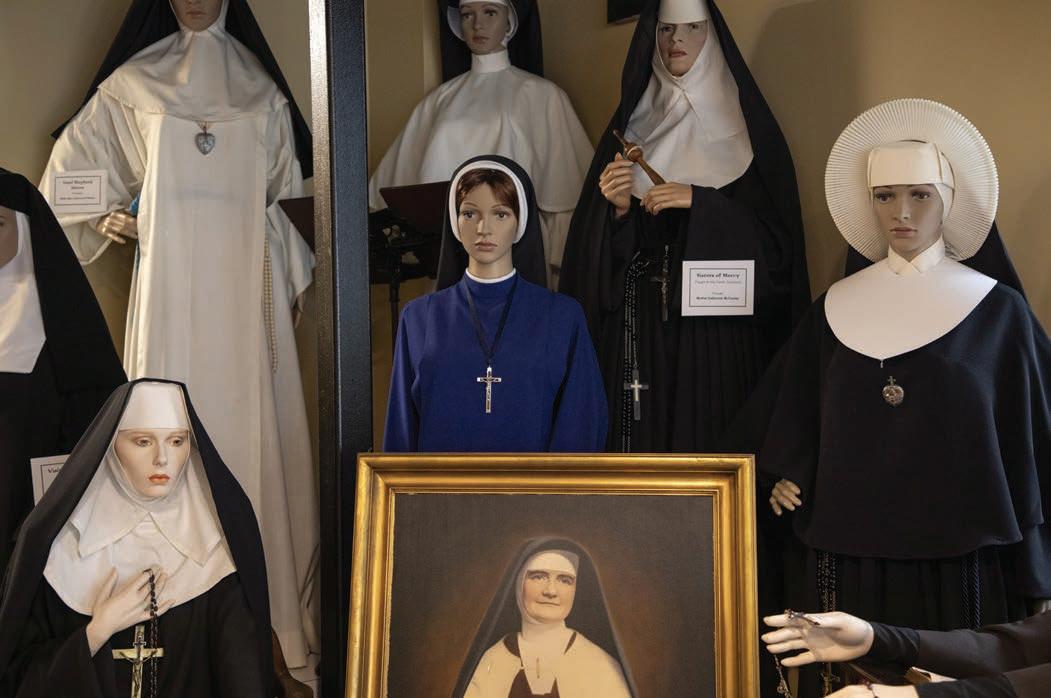
Michael Wihl, a lifelong Catholic whose early education was guided by nuns on Columbus’ West Side, says the Museum of Catholic Art and History includes more than relics of saints and historic manuscripts. It holds the beloved artifacts of his childhood. “There are a few things in that museum that come from Holy Family (in Franklinton) and some of the other churches I’ve been in,” says Wihl, a former museum volunteer.
Wihl says he’s concerned by the decision of the Catholic Diocese of Columbus to close the museum to the public for an unspecified time period. The diocese calls the pause a path to a better museum collection.
“The Museum of Catholic Art and His-
tory will be pausing in-person visits and tours for the foreseeable future,” reads an April 14 post on the museum’s Facebook page. The post says the museum’s collection has grown extensively and needs to be properly documented and cataloged.
“This hiatus is a much-needed break that provides sufficient time to reassess and reimagine the museum for the 21st century,” it says. Representatives of the Catholic Diocese of Columbus declined to be interviewed for this story.
The museum at 257 E. Broad St. is ranked No. 20 on Tripadvisor’s list of “Things to Do in Columbus.” While it draws visitors from countries and faiths all over the world, it isn’t well known to locals, says Shawn Kenney, the museum’s


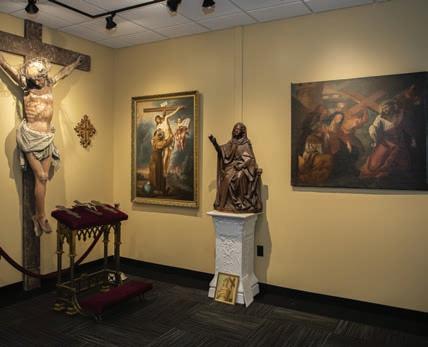

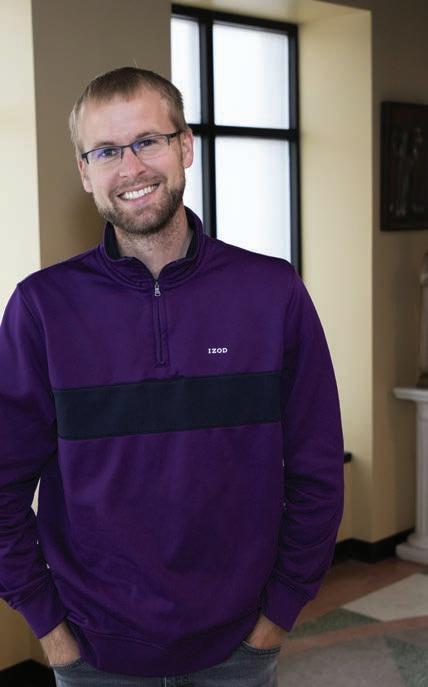
former executive director, during a tour of the museum in January. Kenney spoke of the success of the annual Nativity scene display, which drew about 2,000 visitors during the weeks leading up to Christmas.
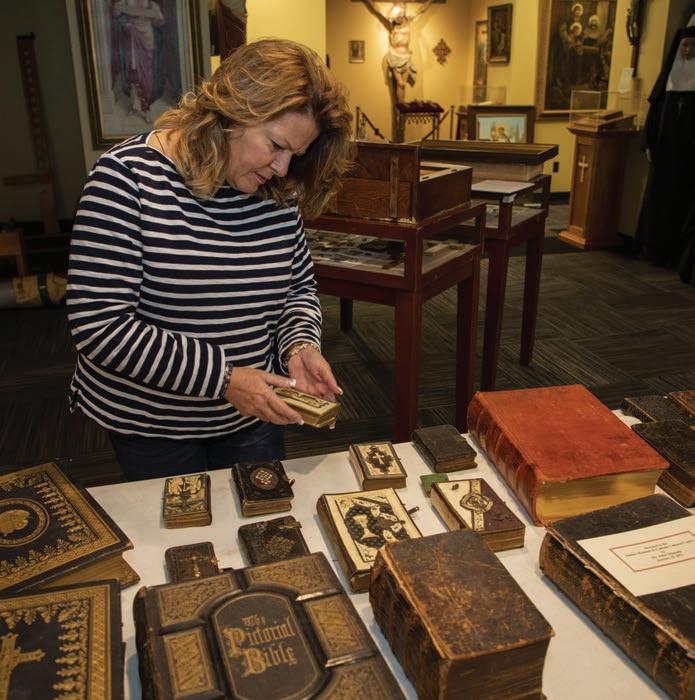
Built over three decades through donations from local churches and those from all over the world, the museum holds only a fraction of the diocesan collection, Kenney says. Among the pieces visitors have been able to see are an original Douay-Rheims New Testament from the 16th century, a 400-year-old crucifix and the original land grant for the property upon which the first Catholic Church in Ohio was built, in 1808 near Somerset in Perry County.
The museum also holds a large collection of relics, which the church teaches are the physical remains of saints (bones, hair, blood), or objects touched by the saints. For example, it has a sliver of bone
said to come from Saint Leo I, or Leo the Great, who was the pope from 440 through 461.
Diocesan officials did not say whether the museum’s indefinite pause will affect the annual display of the life-sized Nativity scene that was donated to the museum in 2022 by Liberty Mutual Group, along with a $250,000 donation for its maintenance. The sprawling diorama, a Downtown Columbus tradition since 1962, previously was displayed at the State Auto building on East Broad Street but in 2023 was moved to the grounds of St. Joseph Cathedral, across the street from the museum.
Wihl holds out hope the museum will reopen. “I hope they find a place for it and when they do, I hope they support it. And that they find people who were just as enthused about that place and the people who worked there were.” ◆
Realtor Carole Greenzalis, founder of Project Refresh, lifts spirits and builds community with the gift of home makeovers.
By Amy Bodiker Baskes | Photos by Tim Johnson
Rocking chairs invite daydreams. That’s where, in the quiet hours holding her infant son, inspiration found realtor Carole Greenzalis. As she was building her family and growing her business, Greenzalis was moved to give back.
“I didn’t want to just be a realtor,” she says. “I wanted to approach it all a bit differently.”
A fan of home makeover shows, Greenzalis started scheming about doing something similar in the Columbus Region.
The result is Project Refresh. In one week, Greenzalis and Sarah Bean, founder of staging and redesign company Altogether Lovely Home, work with a team of 12 small
businesses to deliver a free redesigned room—complete with new furniture, paint and decor—to a deserving Columbus-area family or individual.
For Bean and Greenzalis, Project Refresh also provides the opportunity to bring the talents of their favorite suppliers together. “We have all these terrific vendors on speed dial,” Greenzalis says. “Project Refresh allows us to highlight their good work.” Some of them donate their services, and Greenzalis secures cash contributions to make up the rest of the project’s $5,000 budget.
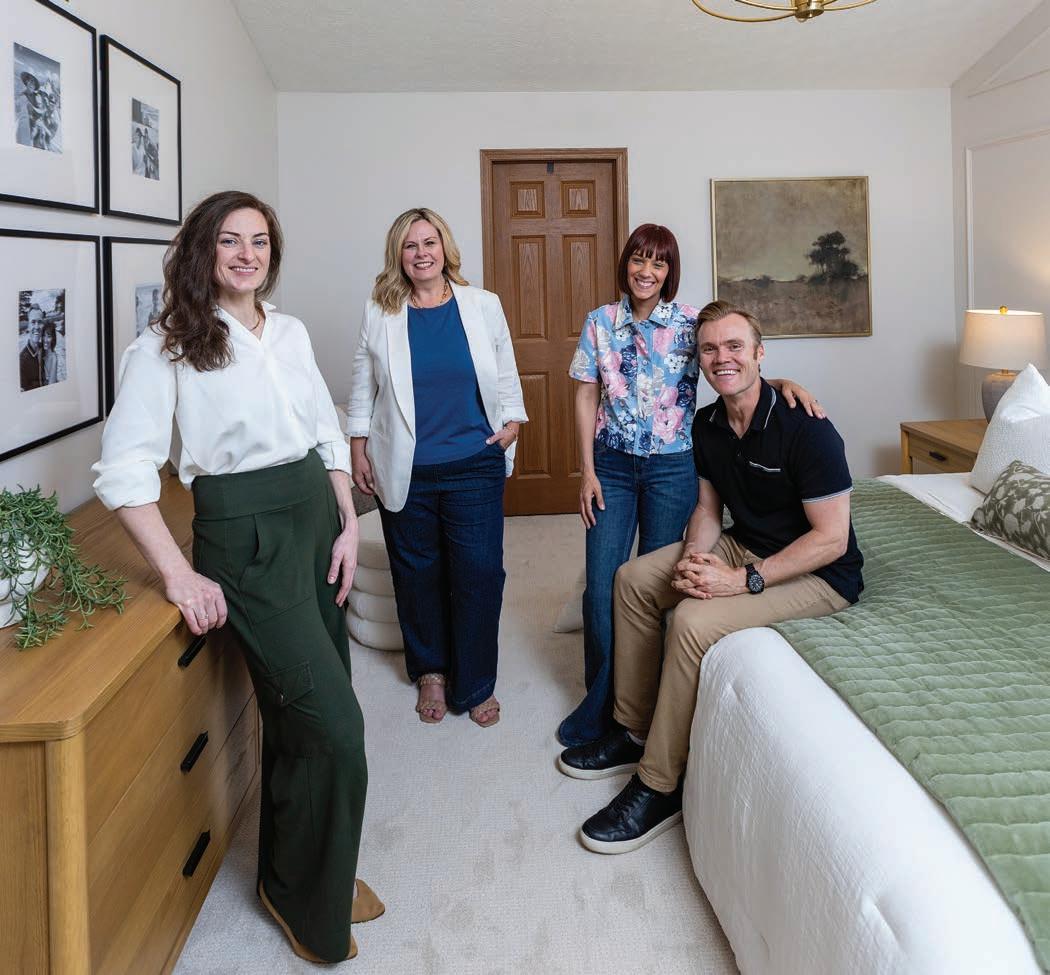
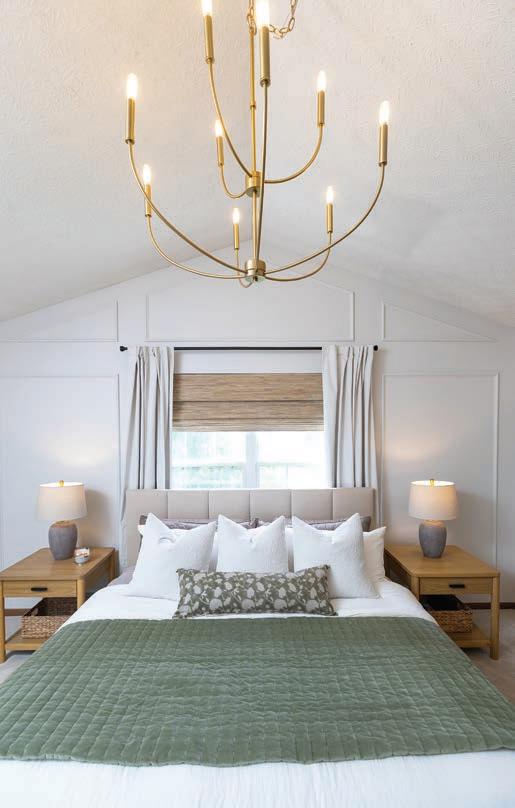
This year, Project Refresh restyled the primary bedroom of Cameron and Katie Fontana’s Pickerington home, following Katie’s two-year journey with throat cancer. Cameron, a host on Good Day Columbus, documented Katie’s diagnosis, treatment and eventual re-
covery on social media with signature high-energy and positivity. They drew strength knowing that sharing their faith and story online could help others.
With two young children at home, Katie’s treatments brought some difficult days for the family. “There were times when Cameron would have to carry me upstairs and lock the bedroom door behind him” so the kids didn’t have to see what was going on, Katie says.
When selected for Project Refresh, the Fontanas directed the team to their bedroom. “It was horrible,” Katie says, with old carpet, broken blinds and mismatched furniture. “It was the last space we put any thought into.”
As Katie’s sickroom, the bedroom had also been “a very dark, sad space,” says Bean. With Katie well, the Project Refresh team wanted to create a positive
space for the next phase of their lives.
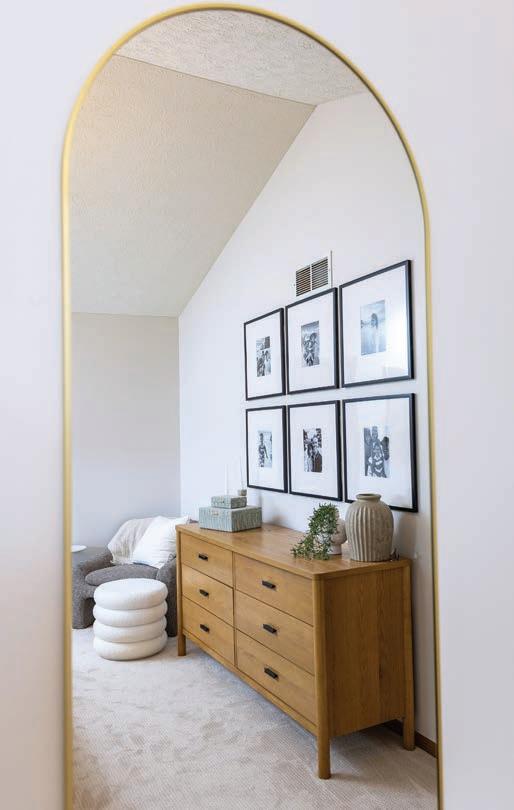
Upfront planning allowed the team to work quickly, replacing the Fontana’s carpeting and furniture, reorganizing the closets, and brightening the walls with fresh paint, custom molding, and a gallery of family photos.
Cameron literally jumped for joy when he saw their new bedroom. “Our room is a sanctuary now,” says Katie. “We didn’t know how badly we needed this change.” Bean says that at the reveal “you could just sense their fresh breaths.”
Greenzalis’ dream to improve people’s lives by improving their spaces was always about more than just redecorating. She knew there was power in collective projects but admitted surprise at “just how much joy we received back in the process.” ◆
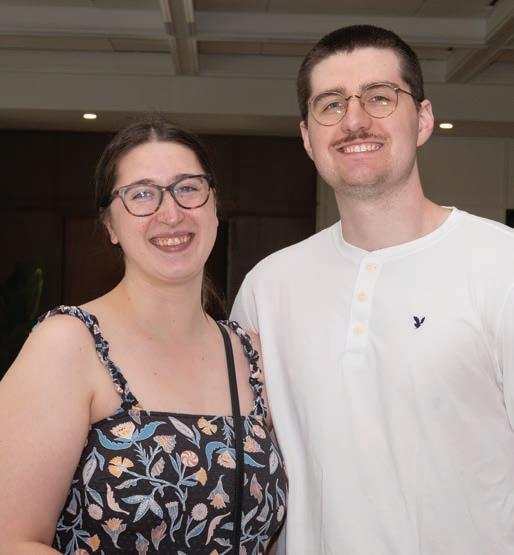
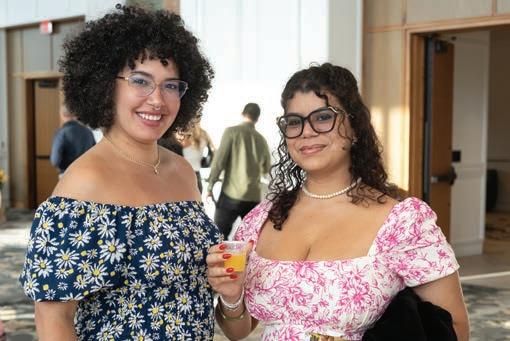
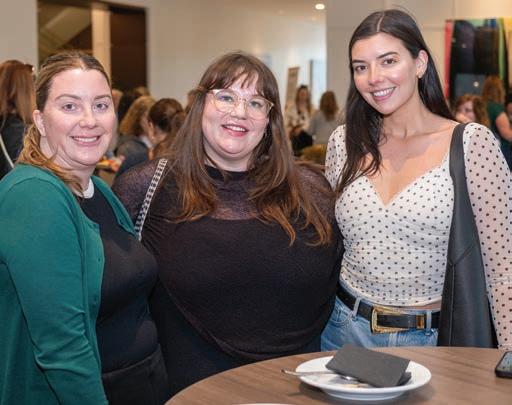
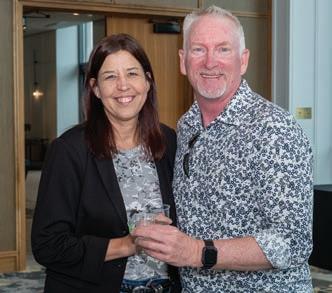
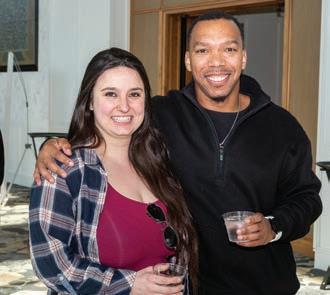
Columbus Monthly’s Spring Cocktail Competition was held May 14 at Vitria on the Square. Twelve area bars and restaurants competed using liquor from sponsor Middle West Spirits, which the crowd of 250 enjoyed along with live music from Hayden Huffman Trio. Coldbar was recognized as the creator of the Best Overall Cocktail, with The Nine awarded Most Creative Cocktail and Harvest claiming the prize for Best Booth Design.
1 Kaylee Grabarkewitz and Eric Bulgrin
2 Margarita Fernandez and Gaby Sine
3 Morgan Schaaf, Joely Kaylor-McCallister and Molly Hughes 4 Traci Warga and Brett Yahn 5 Sarah Spahr and Larry Brown
6 Stephanie Gostomski and Hinal Pujara
7 David and Shanise Kimbrough 8 Ryan and Susan Ristow
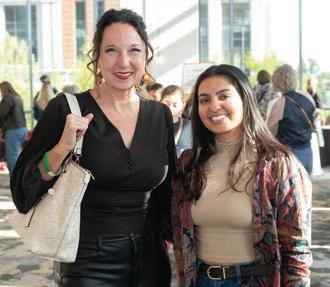
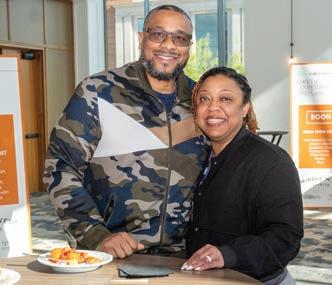
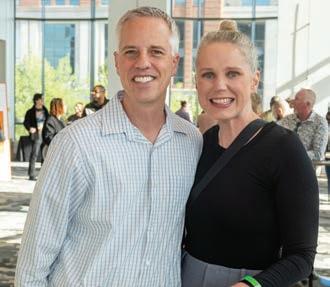

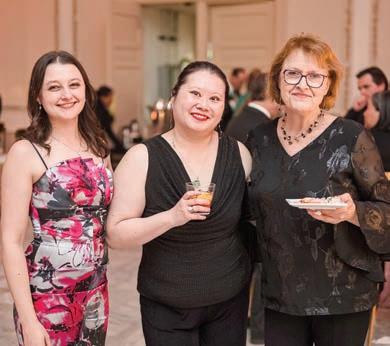
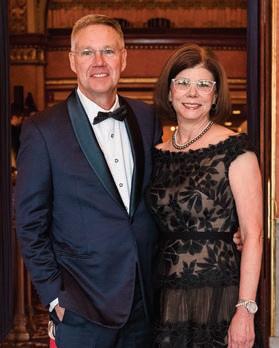
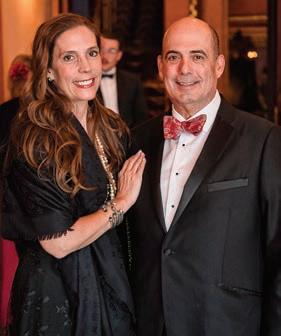
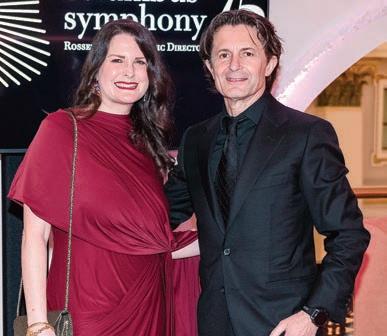
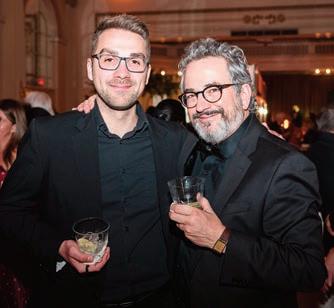
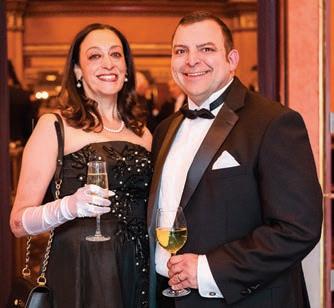
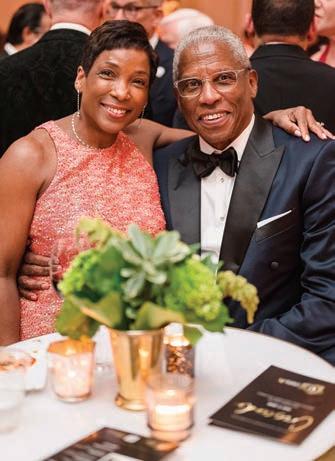
The Columbus Symphony Orchestra hosted Crescendo on May 7, a black-tie event that celebrated the orchestra’s 75th anniversary. More than 260 guests enjoyed a concert at the Southern Theatre conducted by music director Rossen Milanov and featuring Broadway star Morgan James. The event continued with a celebration in the Westin Great Southern Columbus’ Grand Ballroom. Proceeds from the evening support the symphony’s mission to inspire and build a strong community through music.
1 Columbus Symphony Orchestra 2 Alice Risov, Alicia Hui and Wendy Morton 3 Alan and Amy Shore 4 Silvana Hildebrandt and Jim Negron 5 Maureen O’Brien and Giordano Albertazzi 6 Vlad Petrachev and Jeff Korak 7 Rosa Ailabouni and Scott Smitson 8 Janice Innis-Thompson and Stephen Lawrence


Adelyn is a spunky, fun, creative, athletic,


loves books. Those books create special


"I can read the bigger words now."

her world. Reading those short books with one syllable words was fun and easy
mother, Lindsey, an educator, noticed that identifying words didn’t come as easily to Adelyn anymore.
Adelyn had minor speech issues which


discussing the possibilities with the Marshall PediatricTherapy could work for her and help rewire areas


Bootcamp began and Adelyn jumped with its NeuroAnimals, and the interaction them out and comprehending them too. confidence grew. Mom and Dad attribute

more noticeable that she had real trouble differentiating the letter “d” from the letter “b”, and rhyming one syllable words assessment for Adelyn, and after hours of

Today, Adelyn is ten years old and is a three and four syllable words just like she her in the NeuroAnimation theater. And in


Lindsey scheduled a dyslexia learning Lindsey and her husband, Todd, were sounds to letters; it helped considerably, “We knew there was potential for more.”
That “potential for more” came from


see big words and guess them. Now I

Adelyn now has plenty to write and read
aware of its impact on a host of cognitive
impact their own daughter. After


NeuroAnimation can give others the offering both adults and children the only Parkinson’s, Alzheimer’s, cognitive

NeuroAnimation | The Brain Regained

Welcome to Best of Columbus, the city’s original reader-voted contest crowning our favorite people and places. Read on to find out where readers go for Italian food and cocktails (it’s in Powell), and get to know NBC4 weatherman Dave Mazza. And if you want to know the places magazine staffers can personally recommend, they share the spots where they are regulars on Page 25. The complete list of winners and finalists starts on Page 26—we hope you’re inspired to try some new places this summer and beyond.
Best Italian Restaurant/Best Cocktails/Best Chef
By Linda Lee Baird
Photos by Tim Johnson
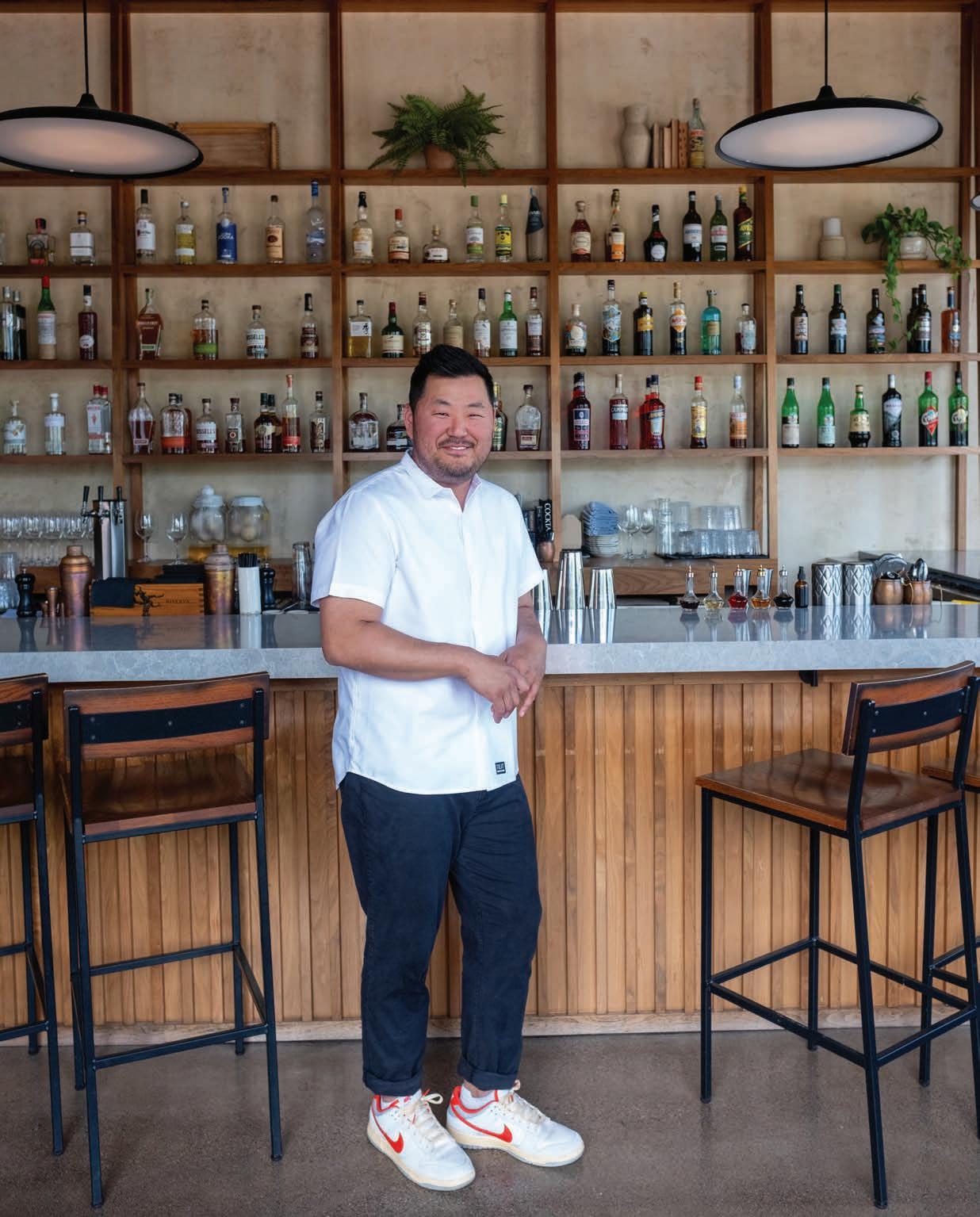
Chef Matthew Phelan honed his cooking chops at the Culinary Institute of America and in New York City kitchens. A highlight of his education was the three weeks he spent in Italy while at the CIA, learning local cooking and winemaking techniques. Yet the Dublin native never forgot his roots.
“I’m a local kid, and the dream was always to come back,” he says from a seat at a table inside Novella Osteria, the Powell restaurant that he opened in 2020. He returned to town with the skills he’d developed and the desire to bring a taste of the big city with him, settling on a “New York vibe” for Novella.
That vibe illustrates the best of New York City: cuisine that is prepared with care and sings with flavor, served by attentive waitstaff. What you won’t find are the common downsides of a New York dining experience, like cramped seating or the sense that you’re on the clock to finish your meal.
The experience offered at Novella was lauded by Columbus Monthly’s readers, who made it among the most-awarded honorees in our 2026 Best of Columbus poll. It won three categories: Best Italian Restaurant, Best Cocktails and Best Chef for Phelan.
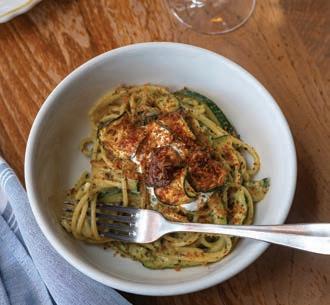
While the restaurant became an area favorite over the past six years, Phelan has advice for those trying it for the first time: Order the Novella Meatballs ($18). Made with veal and ricotta, Phelan says, they are one of his most popular dishes. He also recommends the pappardelle topped with lamb bolognese ($31), noting the restaurant’s pastas and breads are made with organic flour imported from Italy.
On a recent visit, the Ziti Verde ($29), flecked with crisp Calabrian sausage and topped with creamy burrata, and the Saturday night eggplant parmesan special ($28) were highlights. Phelan says the menu changes seasonally but includes some staples, giving guests the option to try something different every time, or return regularly for standby favorites.
The restaurant’s bar program is headed by Lauren Vergara, and Phelan says the cocktails have a common approach. “The mentality that I use for the food, she [uses] for the bar,” he says, noting the drink menu changes seasonally along
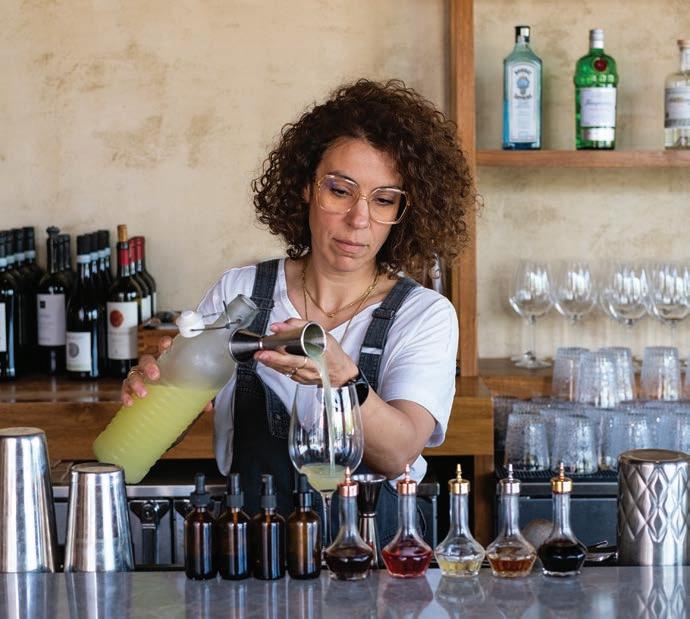
with the menu.
The espresso martini ($16) is a current fan favorite. Its smooth and creamy flavors, punched up by the espresso, could be a stand-in for dessert—though one could instead order a tiramisu ($12) or affogato ($10) for nonalcoholic experiences that hit similar notes.
Reflecting on his experience as an owner and chef, Phelan says that finding his niche has been key to Novella’s success. “There’s so much competition out there. There’s a lot of amazing restaurants,” he says. “If there’s one thing I can say that I’m super proud of is that we know our song. And we play that whether there’s 10 people in the building, whether there’s 100. … We stay very true to that.” ◆
Novella Osteria
170 W. Olentangy St., Powell 614-389-6698
novellaosteria.org
Open Tuesday-Saturday for dinner
If you go: The restaurant offers bar, dining room and outdoor patio seating, as well as private dining and catering services. Reservations are recommended.

Best Weatherperson
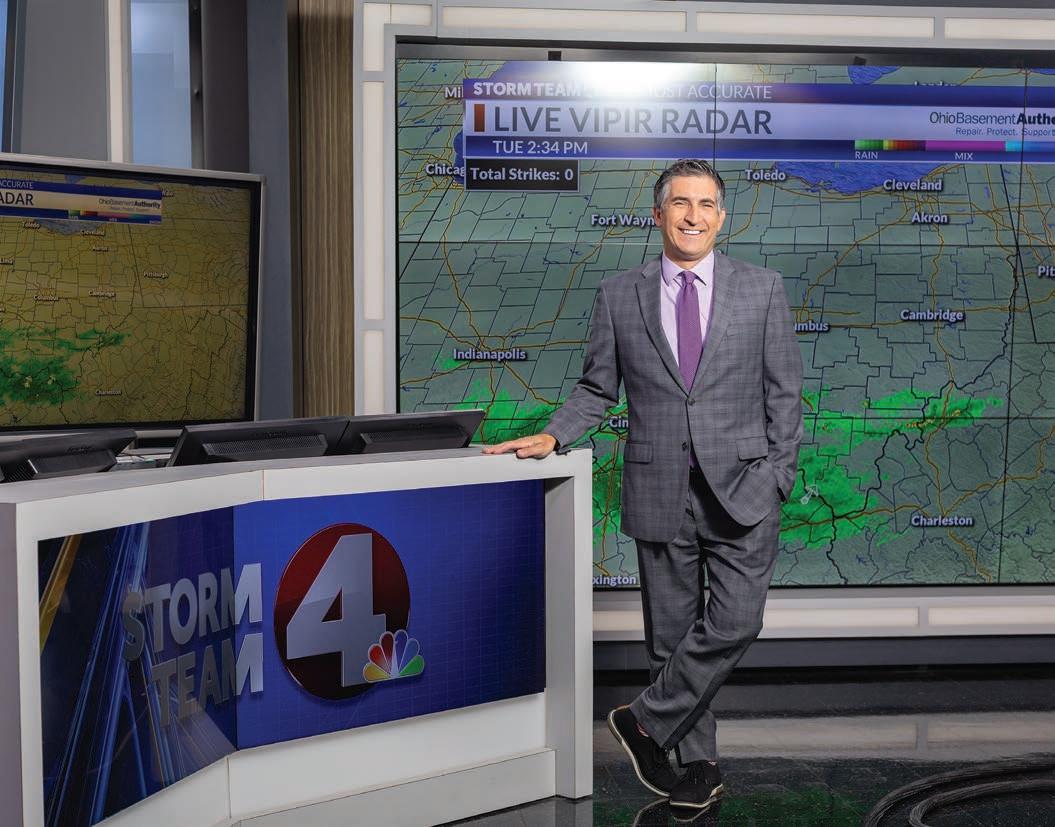
By Zach Trabitz
In an alternate universe, Dava Mazza— who’s been part of NBC4’s meteorology team for 14 years and chief meteorologist for roughly nine of them—might have been a chef. And in this one, he says he makes a mean pot of chili. But he also helps us know when chili is appropriate for the weather: Probably when it’s in the 50s, right?
Mazza, commonly known throughout the Columbus region by his last name, says he has always had an interest in the weather and climate. The Illinois native grew up in Crystal Lake, northwest of Chicago, and studied Atmospheric Science at Purdue Univer-
sity. While he didn’t plan on working in TV, he had a great experience at an internship at a television station going into his senior year.
He likes that the medium offers him an outlet to talk about the weather constantly. “It is awesome, getting to talk about the weather every single night,” Mazza says.
Working in television also resulted in a few outcomes that he didn’t expect, such as meeting his wife, Crystal, who also works at the station. “She and I worked together at one of our first jobs in Texas,” he says. Today, the Mazzas live in Sunbury with their two sons.
“I love my life and this career, it’s pretty special, and not a lot of folks get to say that.”
Mazza says that one of the things he is most grateful for is being welcomed into people’s homes through their televisions. Because of this, he says he’s often recognized outside of work.
“I am who I am on air, in person, [so] I think that a lot of people feel like they know me, just as Dave,” Mazza says. “Or, as Oakley and Davey’s dad, or Crystal’s husband. [People] come up to me like, ‘Mazza, we’re gonna get rain this weekend?’ Everyone treats me as if I’m their neighbor and their friend. And I think that is the most endearing thing.” ◆
Dave Mazza appears on NBC4 weekdays during the evening and 11 p.m. news broadcasts.
Columbus Monthly’s staff shares our personal Best of Columbus picks. These are the spots across town where we consider ourselves regulars.

I have determined through exhaustive research that it’s the only place in Columbus where I can get a top-notch cappuccino and a bagel with cream cheese. This little neighborhood gem opened in 2020 and serves up some of the richest, most complex and most beautiful cappuccinos in town. In my opinion, only one place rivals it—Café Brioso, which, sadly, does not serve bagels. The folks at Florin have made coffee bean roastery their soaring art form, and the frothy whole milk they serve in their concoctions reads as straight up buttery. As for breakfast, you can start your day right at Florin with a fresh Bears Bagels sesame bagel with veggie cream cheese.
- KATY SMITH, EDITOR

If you have ever received a card from me, or do so in the future, I can nearly guarantee it was sourced from this lovely stationery store. Beyond greeting cards—of which there’s a plentiful variety of designs, holidays, occasions, etc.—there’s plenty to satisfy any stationery craving. Sift through a wonderful selection of notebooks, pens, calligraphy sets, wax seals, typewriter paper and ink and, my favorite, postcards printed with an array of unique art, including many with Columbus-specific imagery. As a bonus, you can get a card stamped for each greeting card you purchase—buy eight and get the ninth free. Make sure to leave a message on the typewriter by the door on your way out!
-
LUCY CLARK, ASSOCIATE EDITOR

Living on the northern edge of Clintonville, I’ve seen several restaurants turn over at 4416 N. High St., near the corner of Henderson Road. But I’ve taken it upon myself (with the help of my family) to make sure the current occupant—Habaneros Fresh Mexican Grill—stays for a long time. Soon after they opened in fall 2024, “Habaneros Fridays” became our household’s unofficial celebration of the week’s end. My husband and I get spicy margaritas and tacos—sometimes with birria. My kids each get a plate of cheese nachos. We always get a friendly greeting from the staff, who have helped us celebrate birthdays and other milestones on Fridays and beyond.
- LINDA LEE BAIRD, FEATURES EDITOR

Just about every Tuesday night for the past decade, I’ve been hitting up Java Central in Uptown Westerville. I pick up a soda from the wonderfully friendly baristas and head into the back room. There, I join an eclectic group of musicians who gather to play music together ranging from Frank Sinatra to The Clash. While most of the players are on guitar, standup bass, conga drums, fiddles, banjos, flutes and various whistles can also be heard.
It’s not just Tuesdays, though. When distractions at home get to be too much during the workday, I’ll make a run to Java Central to hunker down with a latte and scone and crank out some serious photo editing.
- TIM JOHNSON, PHOTO EDITOR

Don’t let its location fool you. This delightful restaurant, tucked into a nondescript strip center off Hilliard Rome Road, elevates the enduring build-yourown-bowl trend with food that’s worth a special trip. Quality elevates locally owned Zaytoon above like-minded eateries. The ingredients are fresh and flavorful, and service is quick and friendly. My go-to: chicken gyro on a rice or salad base. Favorite toppings include thinly sliced pickles and crunchy, pickled red cabbage that add a welcome bright note. Portions are typically generous, making for a great next-day lunch—if you have the willpower not to eat it all. Zaytoon expected to open a second location in Powell in June.
- JULANNE HOHBACH, DIGITAL EDITOR

Best African Restaurant
Winner Hoyo’s Kitchen
Finalist Afra Grill
Finalist Lalibela Restaurant
Best Bakery
Winner Resch’s Bakery
Finalist Dan the Baker
Finalist Pistacia Vera
Best Bar Food
Winner Club 185
Finalist Cobra
Finalist Old Bag of Nails
Best Barbecue
Winner Ray Ray’s Hog Pit
Finalist City Barbeque
Finalist Hank’s Texas BBQ
Best Beer Selection
Winner Ohio Taproom
Finalist Seventh Son Brewing Co.
Finalist Studio 35 Cinema & Drafthouse/ Grandview Theater & Drafthouse
Best Breakfast
Winner Delaney’s Diner
Finalist Katalina’s
Finalist Tommy’s Diner
Best Brunch
Winner Valter’s at the Maennerchor
Finalist Cap City Fine Diner and Bar
Finalist Lindey’s
Best Burger
Winner The Thurman Café
Finalist Northstar Café
Finalist Preston’s: A Burger Joint
Best Butcher Shop
Winner Carfagna’s Market
Finalist Littleton’s Market
Finalist Weiland’s Market
Best Chinese Restaurant
Winner Molly Woo’s Asian Bistro
Finalist Ding Ho Restaurant
Finalist Hunan Lion
Finalist Ty Ginger Asian Bistro
WE ASKED, AND YOU ANSWERED.
HERE ARE OVER 100 PICKS BY COLUMBUS MONTHLY READERS. SEE WHO YOU CHOSE FOR THE BEST IN FOOD AND DRINK, SHOPPING, LOCAL PERSONALITIES AND MORE.
Best Classic Pizza
Winner Tommy’s Pizza
Finalist JT’s Pizza & Pub
Finalist Rubino’s Pizza
Best Cocktails
Winner Novella Osteria
Finalist Echo Spirits Distilling Co.
Finalist VASO Dublin
Best Coffee Shop
Winner Fox in the Snow Café
Finalist Crimson Cup Coffee
Finalist Stauf’s Coffee Roasters
Best Deli
Winner Katzinger’s Delicatessen
Finalist The Brown Bag Delicatessen
Finalist Uptown Deli & Brew
Best Desserts
Winner Pistacia Vera
Finalist Belle’s Bread Japanese Bakery and Café
Finalist The Cheesecake Girl
Best Diner
Winner Tommy’s Diner
Finalist Delaney’s Diner
Finalist DK Diner
Best Doughnut
Winner Buckeye Donuts
Finalist DK Diner
Finalist Resch’s Bakery
Best Fast-Casual
Winner Brassica
Finalist Bibibop
Finalist Piada Italian Street Food
Best Food Truck
Winner Schmidt’s
Finalist Cousins Maine Lobster
Finalist Ray Ray’s Hog Pit
Best Fried Chicken
Winner CM Chicken
Finalist The Crispy Coop
Finalist The Eagle
Finalist Tupelo Honey Southern Kitchen & Bar
Best Gourmet Pizza
Winner Sexton’s Pizza
Finalist Dewey’s Pizza
Finalist Harvest Pizzeria
Best Happy Hour
Winner The Top Steak House
Finalist Lindey’s
Finalist The Pearl



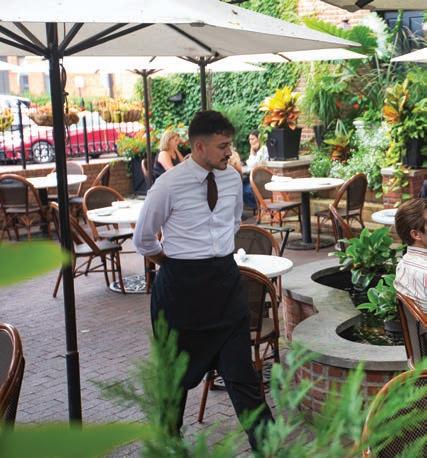
Best Himalayan/Nepalese Restaurant
Winner Momo Ghar
Finalist Everest Cuisine
Finalist Sargam Restaurant & Bar
Finalist Yak N Yeti Restaurant & Bar
Finalist Yeti Express
Best Hot Dogs
Winner Dirty Frank’s Hot Dog Palace
Finalist Ritzy’s
Finalist Village Coney
Best Ice Cream
Winner Graeter’s Ice Cream
Finalist Jeni’s Splendid Ice Creams
Finalist Johnson’s Real Ice Cream
Best Indian/Pakistani
Winner Aab India
Finalist Everest Cuisine
Finalist New India Restaurant
Best Italian Restaurant
Winner Novella Osteria
Finalist Cento
Finalist Lola & Giuseppi’s Trattoria
Best Kid’s Menu
Winner Roosters
Finalist Cap City Fine Diner
Finalist Rusty Bucket Restaurant & Tavern
Best Korean Restaurant
Winner KPot Korean BBQ & Hot Pot
Finalist Gogi Korean BBQ
Finalist Min-Ga Korean Restaurant
Best Latin American Restaurant
Winner Arepazo
Finalist Cilantro Latin Fusion
Finalist Si Señor Peruvian Sandwiches & More
Best Local Distillery
Winner Leather & Oak Spirits
Finalist High Bank Distillery
Finalist Watershed Distillery
BY TIM
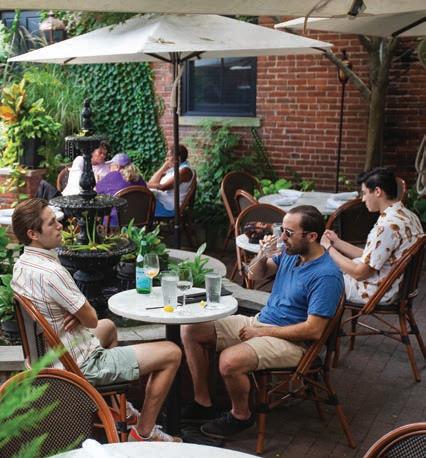
Best Mediterranean/Middle Eastern Restaurant
Winner Lavash Café
Finalist Aladdin’s Eatery
Finalist Mazah Mediterranean Eatery
Best Mexican Restaurant
Winner El Vaquero
Finalist Cuco’s Taqueria
Finalist Los Guachos
Best Patio
Winner Lindey’s
Finalist Barcelona
Finalist The Top Steak House
Best Plant-Based Dining
Winner Comune
Finalist Portia’s Café
Finalist Seitan’s Realm


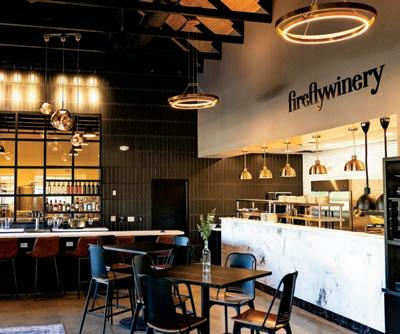



https://www.fireflywineryohio.com



Best Ramen
Winner Fukuryu Ramen
Finalist Kirin Noodle Bar
Finalist Meshikou Ramen
Finalist Slurping Turtle
Finlalist Tensuke Express
Best Romantic Restaurant
Winner The Refectory
Finalist Lindey’s
Finalist The Top Steak House
Best Rooftop Patio
Winner VASO Dublin
Finalist Astra Rooftop
Finalist Lincoln Social Rooftop
Best Sandwiches
Winner Katzinger’s Delicatessen
Finalist The Brown Bag Delicatessen
Finalist Wario’s Beef and Pork
Best Seafood
Winner Hank’s Low Country Seafood & Raw Bar
Finalist Mitchell’s Ocean Club
Finalist Windward Passage
Best Southern/Soul Food Restaurant
Winner Gallo’s Kitchen & Bar
Finalist Modern Southern Table
Finalist Tupelo Honey Southern Kitchen & Bar
Best Sports Bar
Winner Roosters
Finalist Gallo’s Tap Room
Finalist Grandview Café
Best Steakhouse
Winner The Top Steak House
Finalist Butcher & Rose
Finalist The Barn at Rocky Fork Creek
Best Sushi
Winner Akai Hana
Finalist Asian Gourmet & Sushi Bar
Finalist Mr. Sushi
Best Tacos
Winner Condado Tacos
Finalist Dos Hermanos
Finalist Los Guachos
Best Taproom
Winner Henmick Farm & Brewery
Finalist Nocterra Brewing Co.
Finalist Seventh Son Brewing Co.
Best Thai Restaurant
Winner Siam Orchid
Finalist Basil
Finalist Lemongrass Fusion Bistro
Best Vietnamese Restaurant
Winner 6-1-Pho
Finalist Huong Vietnamese Restaurant
Finalist Lan Viet Market
Finalist Pho Social
Best Wine Bar
Winner Firefly Winery
Finalist Napa Kitchen & Bar
Finalist The Wine Bistro
Best Wings
Winner Roosters
Finalist Gallo’s Tap Room
Finalist Shakers Public House
OUT & ABOUT
Best Bar for Music
Winner Natalie’s Grandview
Finalist Blu Note Jazz Café
Finalist Ginger Rabbit Jazz Lounge
Finalist Skully’s Music-Diner
Finalist Woodlands Tavern
Best Beer Shop
Winner Weiland’s Market
Finalist Aardvark Wine & Beer
Finalist The Daily Growler
Best Bike Shop
Winner Johnny Velo Bikes
Finalist Beechwold Bicycles
Finalist Bicycle One
Best Bowling Alley
Winner Pins Mechanical Co.
Finalist Columbus Square Bowling Palace
Finalist Sequoia Pro Bowl
Finalist Star Lanes Polaris
Finalist Ten Pin Alley
Best Clothing Resale Shop
Winner One More Time
Finalist Flower Child Vintage
Finalist Second Chance
Best Concert Venue
Winner Ohio Theatre
Finalist KEMBA Live
Finalist Nationwide Arena
Best Designated Outdoor
Refreshment Area
Winner Dublin
Finalist Arena District
Finalist Hilliard
Best Farmers Market
Winner Worthington
Finalist Clintonville
Finalist Dublin Market at Bridge Park
Best Festival
Winner Columbus Arts Festival
Finalist ComFest
Finalist Dublin Irish Festival
Best Fitness Studio
Winner Studio Glow Fitness
Finalist LIT Life + Yoga
Finalist Noble Method
Best Florist
Winner DeSantis Florists
Finalist 5th Ave. Floral Co.
Finalist Orchard Lane Flowers
Finalist Petals & Leaves
Best Furniture Resale Shop
Winner Grandview Mercantile
Finalist Boomerang Room Vintage
Finalist One More Time
Best Gallery
Winner Hawk Galleries
Finalist 934 Gallery
Finalist Urban Arts Space
Best Garden Center
Winner Oakland Nursery
Finalist Groovy Plants Ranch
Finalist Strader’s Garden Center
Best Grocery Store
Winner Trader Joe’s
Finalist Giant Eagle Market District
Finalist Weiland’s Market
Best Gym
Winner LIT Life + Yoga
Finalist Westerville Recreation Center
Finalist YMCA of Central Ohio
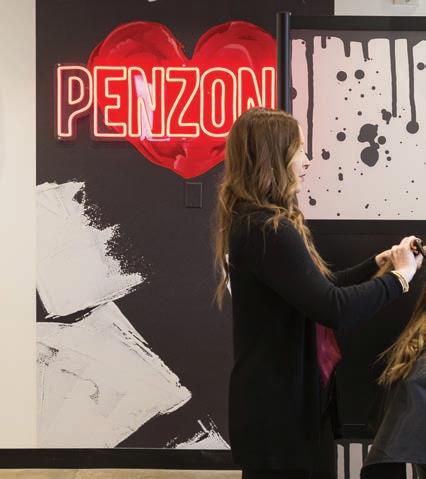
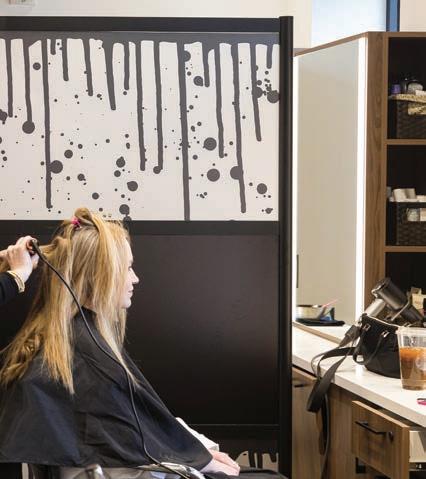
Best Hair Salon
Winner Penzone Salons + Spas
Finalist Kenneth’s Salons + Day Spas
Finalist Virtue Vegan Salon
Best Hardware Store
Winner Beechwold Ace Hardware
Finalist Nutter Hardware
Finalist Zettler Hardware
Best LGBTQ+ Bar/Club
Winner Slammers
Finalist Tremont Lounge
Finalist Union Café
Best Local Band
Winner Caamp
Finalist Hoodoo Soul Band
Finalist MojoFlo
Best Local Musician
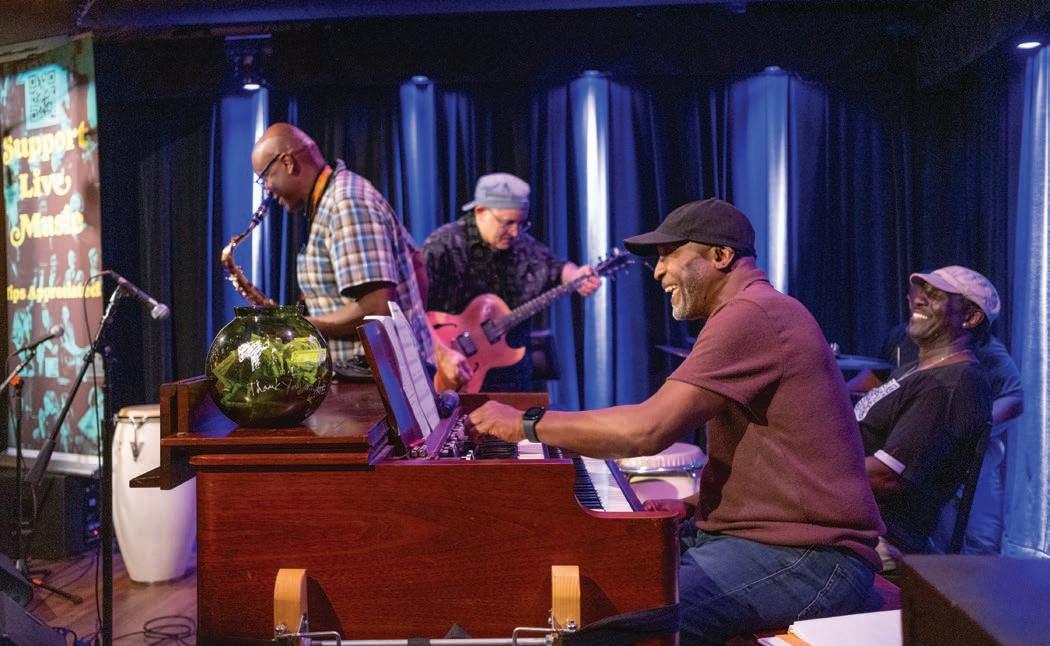
Winner Bobby Floyd
Finalist Angela Perley
Finalist Willie Phoenix
Best Movie Theater
Winner Studio 35 Cinema & Drafthouse
Finalist Gateway Film Center
Finalist Grandview Theater & Drafthouse

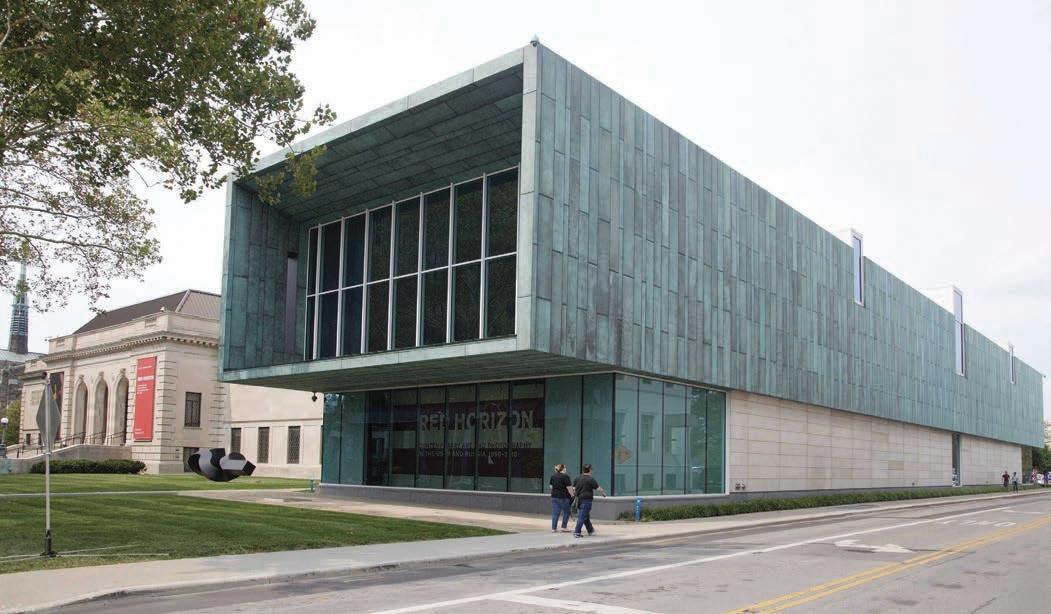
Best Museum
Winner Columbus Museum of Art
Finalist COSI
Finalist Ohio History Center
Best Park
Winner Highbanks
Finalist Columbus Park of Roses
Finalist Schiller Park
Best Place for Home Décor
Winner Oakland HOME
Finalist Elm & Iron
Finalist Grandview Mercantile
Best Place for Last-Minute Gifts
Winner Jeffrey Thomas
Finalist Oakland HOME
Finalist Tigertree
Finalist Wild Cat Gift and Party
Best Place for Men’s Fashions
Winner Jeffrey Thomas
Finalist Godfrys
Finalist Samson Men’s Emporium
Best Place for Ohio-Made Stuff
Winner Homage
Finalist Celebrate Local
Finalist Wild Cat Gift and Party
Best Place for Women’s Fashions
Winner Jeffrey Thomas
Finalist Ladybird
Finalist Vernacular
Best Place to Buy Jewelry
Winner Diamond Cellar
Finalist Leo Alfred Jewelers
Finalist Worthington Jewelers
Best Place to Take Out-of-Towners
Winner Franklin Park Conservatory & Botanical Gardens
Finalist Columbus Zoo and Aquarium
Finalist German Village
Best Public Art
Winner Schiller Park wire-suspended sculptures
Finalist Field of Corn, Dublin
Finalist Goodale Park elephant fountain
Best Running/Walking or Biking Event
Winner Pelotonia
Finalist Nationwide Children’s Hospital
Marathon & Half Marathon
Finalist Susan G. Komen Race for the Cure
Best Spa
Winner Penzone Salons + Spas
Finalist Panacea Luxury Spa
Finalist Woodhouse Spas
Best Store for Housewares
Winner Sur La Table
Finalist Crate & Barrel
Finalist Elm & Iron Home Goods
Best Wine Shop
Winner Weiland’s Market
Finalist Gentile’s Wine Sellers
Finalist The Hills Market
Best Yoga Studio
Winner LIT Life + Yoga
Finalist GoYoga
Finalist Modo Yoga Columbus
Best Blue Jackets Player
Winner Zach Werenski
Finalist Boone Jenner
Finalist Elvis Merz¸ikins
Best Buckeyes Football Player
Winner Jeremiah Smith
Finalist Julian Sayin
Finalist Sonny Styles
Best Chef
Winner Matthew Phelan, Novella Osteria
Finalist Avishar Barua, Joya’s/Agni
Finalist Josh Dalton, Veritas and Speck
Best Crew Player
Winner Patrick Schulte
Finalist Diego Rossi
Finalist Max Arfsten

Best Female TV Anchor
Winner Colleen Marshall, NBC4
Finalist Jessica Ralston, ABC6/FOX28
Finalist Monica Day, NBC4
Finalist Yolanda Harris, 10TV
Best Male TV Anchor
Winner Matt Barnes, NBC4
Finalist Jerod Smalley, NBC4
Finalist Kurt Ludlow, ABC6/FOX28
Best Radio Morning Show
Winner Dave and Jimmy, 97.9 WNCI
Finalist Morning Edition, NPR
Finalist Torg and Elliott, QFM96
Best Radio Station
Winner 89.7 WOSU
Finalist 97.1 the Fan
Finalist QFM96
Finalist WNCI 97.9
Best Talk Radio Personality
Winner Bobby Carpenter, 97.1 the Fan
Finalist Anthony Rothman, 97.1 the Fan
Finalist Mike Ricordati “The Common Man,” 97.1 The Fan
Best Weatherperson








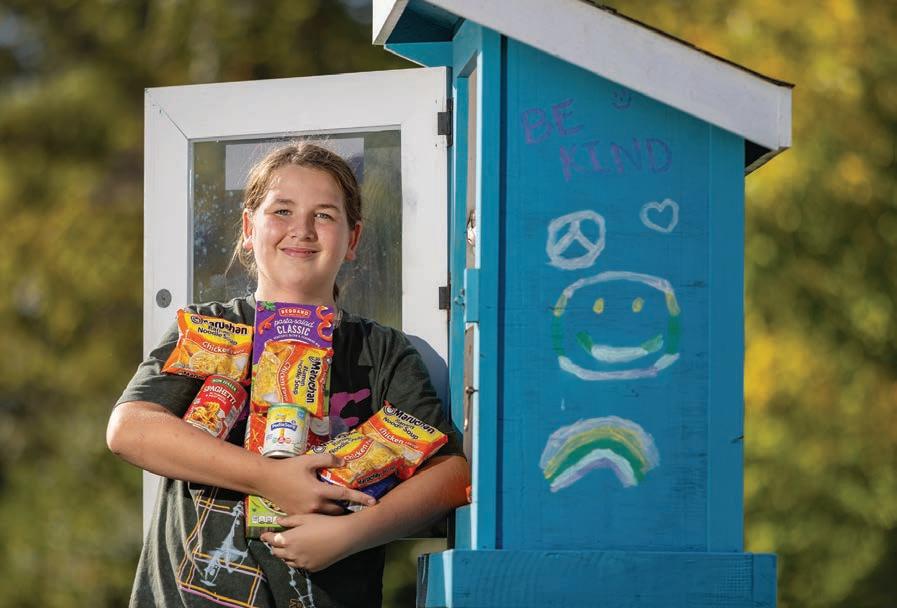


Kindness is all around us.
We look to honor those who improve, heal, and unite our community, one selfless and extraordinary act of kindness at a time.



Look for monthly stories in Columbus Monthly celebrating kindness in Central Ohio.
The Center for HumanKindness at The Columbus Foundation has partnered with The Columbus Dispatch to highlight those making our community a better place. Help us inspire kindness by suggesting people, initiatives, or organizations to feature by emailing kindness@dispatch.com The Dispatch retains full editorial independence for all content.
Nominate your heroes: Learn more at ColumbusMonthly.com/Kindness.



A year into her role as location leader, Becky Griffin talks about successes, challenges and leading the Columbus workforce into the future.
By Julanne Hohbach
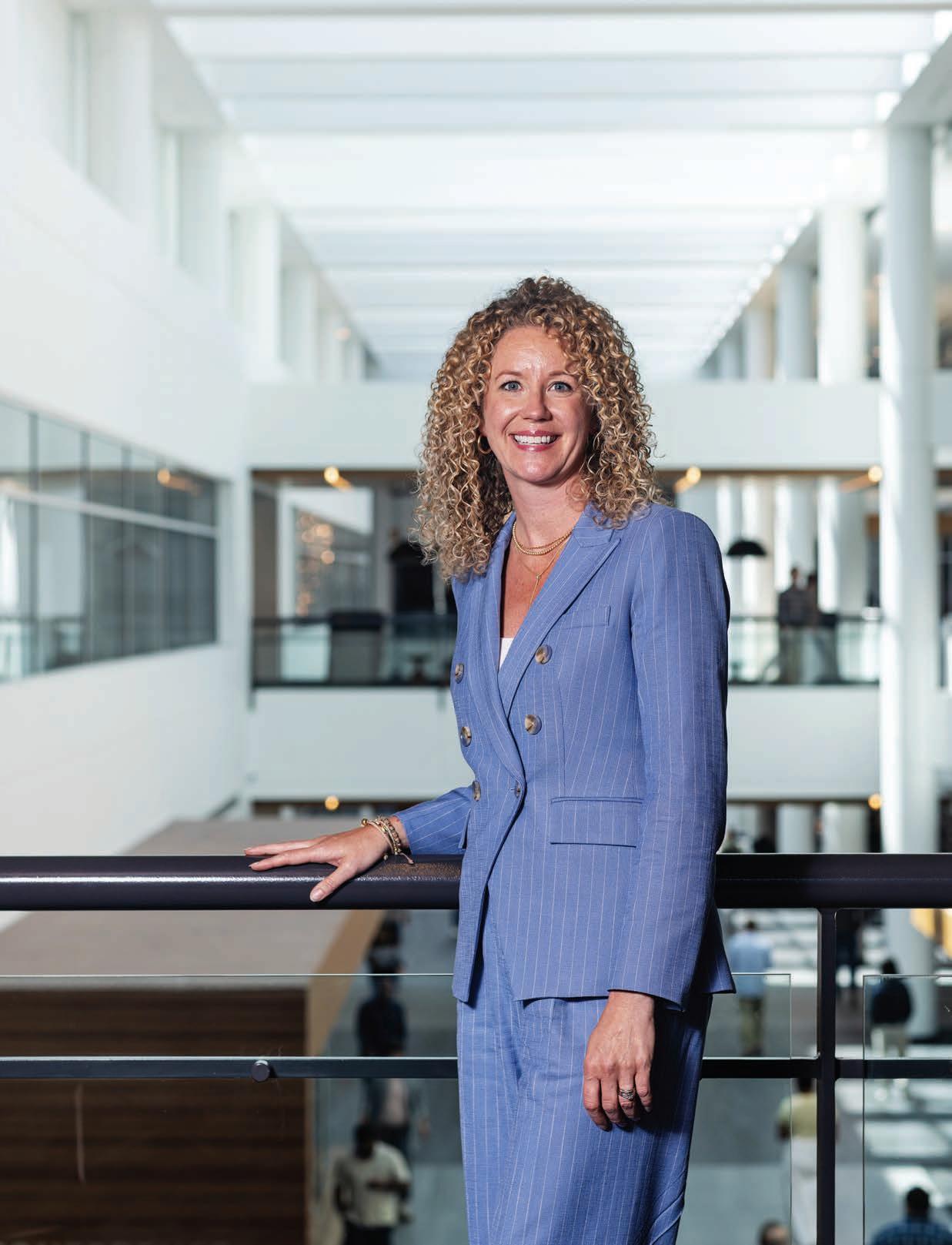
It’s been a whirlwind two years for Becky Griffin. The veteran JPMorgan Chase & Co. executive was named head of servicing and support operations for home lending in mid2024, then quickly followed that career bump by adding Columbus location leader to her resume less than a year later.
Griffin was named location leader in the midst of the company’s return-to-work mandate, so she had to hit the ground running. Sitting in her office 13 months later, fresh off a business trip to the Philippines, the career banker seems to be settling in and taking things in stride. “The advice I always give folks when you take a new job is it shouldn’t be all things that you know how to do already. There should be something new that you’re learning,” Griffin says.
That’s an approach she has taken throughout her career. This time, she’s holding two complex roles simultaneously.
In her home lending job, she manages more than 3,400 global employees, over 3.5 million mortgage customers and almost $1 trillion in loan balances.
As location leader, Griffin oversees workplace and workforce issues for more than 18,300 Columbus region employees—12,000 of whom work at the McCoy Center on Polaris Parkway.
The 2-million-square-foot regional headquarters was the world’s largest Chase facility until its New York City tower opened last fall.
For years, JPMorgan Chase has been the region’s largest private employer and one of its largest financial institutions. According to FDIC deposit market share reports, Chase had $24.63 billion in deposits in the metropolitan statistical area as of June 30, 2025, representing a 20.77 percent market share. Nationwide, the bank had $2.11 trillion in deposits, according to the FDIC.
Griffin became location leader in April 2025 after the retirement of Corrine Burger, who served as managing director and a highly regarded Columbus market leader since 2015.
Burger says Griffin excels at working across the organization to solve problems and serve customers. “That, I think, is a super important quality to be the location leader because you need to understand how the whole firm works, not just the piece that you’re running right now. … She’s really good at bringing in people.”
Business School to Bank One Griffin, an Indiana native, got an early first look at her future career. “My dad actually worked for PNC Bank, so I am a generational banker,” she says. “They moved us a bunch. So we were in Pittsburgh. We lived outside of New York, Chicago, and then back to Pittsburgh is where I graduated from high school.”
She enrolled in Indiana University to study business but was unsure of her career plan. “I was really drawn to process management, operations types of things, and so I ended up majoring in business process management.”
A third-generation IU graduate, Griffin earned a bachelor’s degree in business in 2003 and joined a Bank One training program. “I was in Indianapolis when I started with the firm and sat in an operations facility, literally big machines, check sorters, reading checks, processing lockbox payments. The true guts of the place, I love to say.”
Griffin moved to Columbus in January 2004 to work as an analyst. Not long after, Bank One Corp. was acquired by J.P. Morgan Chase & Co. Concerned, she went to her boss for advice. “He literally looked at me and said, ‘You’ll be fine.’ And here we are.”
Throughout her career, Griffin has seen the business from multiple perspectives. An early role in college recruiting wasn’t a good fit, so after earning her MBA from Ohio State University in 2007, she moved to the corporate internet group and
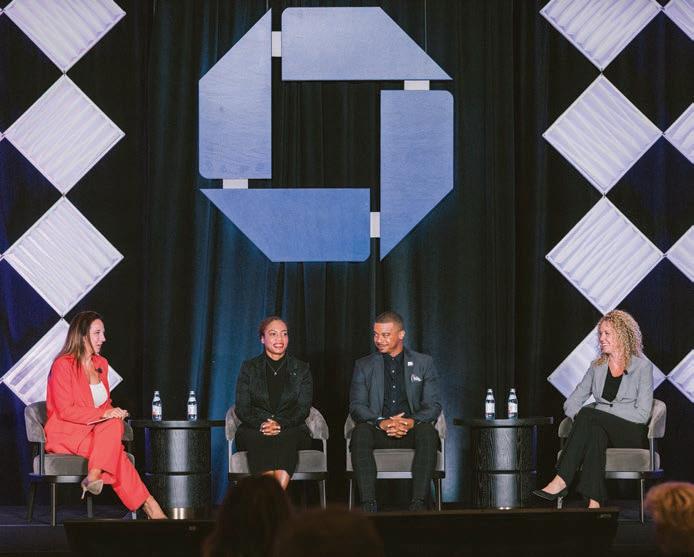
learned about online fraud. “That became the thing that I became really expert at, because there weren’t a lot of tools built to combat this. And so we were on the ground trying to figure out how to stop this problem from happening.”
She developed a relationship with the risk staff, who asked her to join their team. “I was not managing teams at that point and spent a decade there really doing almost all the different fraud strategy roles from a risk perspective, and then ultimately became the chief risk officer,” she says.
In 2021, she made a career shift to chief administrative officer for consumer banking, overseeing a network of more than 4,800 branches and playing a key role in Chase’s ongoing branch expansion plan. “It was a great pivotal moment in my career,” Griffin says. “When the opportunity came to pivot into the business, it was both exciting for me to just think about things from a different lens, but also, I think, a good testament to this firm and their willingness to take a risk on somebody from a career standpoint.”
Cathy Norton, a longtime Griffin colleague who works in control management for consumer banking, says Griffin is a strategic thinker who can create a vision and bring people along. “That’s a really strong quality. And because she’s able to do that, I think that’s part of the reason she brings that followership, that people listen. People trust her and are willing to help support,” Norton says.
Taking a Leap
Griffin was presented with a significant advancement opportunity in 2024 when the executive who led mortgage servicing moved abroad. While she loved her CAO role, such leadership opportunities don’t arise often, so Griffin pursued it.
“When we give people opportunities here, what I feel really comfortable saying and actually really proud of is that we don’t do it in a way that’s ‘throw you into the deep end and see if you can survive.’ We do it, I say, with scaffolding built around you,” Griffin says. “Every single job that I’ve taken that was more than the last one, I feel so incredibly supported by all of the leaders in this firm. I’ve felt that every single time I’ve said yes to something like that.”
Griffin started as head of servicing and support operations for home lending in July 2024, managing a team of 3,400-plus employees in Columbus, Florida, Louisiana, New Jersey and Texas, as well as the Philippines and Mexico City. She travels frequently—every other week, on average.
Spending time with family and her three children is important, so she tries to map out major events. “It’s a week by week, day by day. ‘What’s on the schedule? What’s a priority?’ ” she says. “I’m fortunate that I don’t bear a ton of mom guilt, and part of that is my kids are actually very forgiving and understanding and very supportive. And so I do try to say no to more things, particularly in the middle
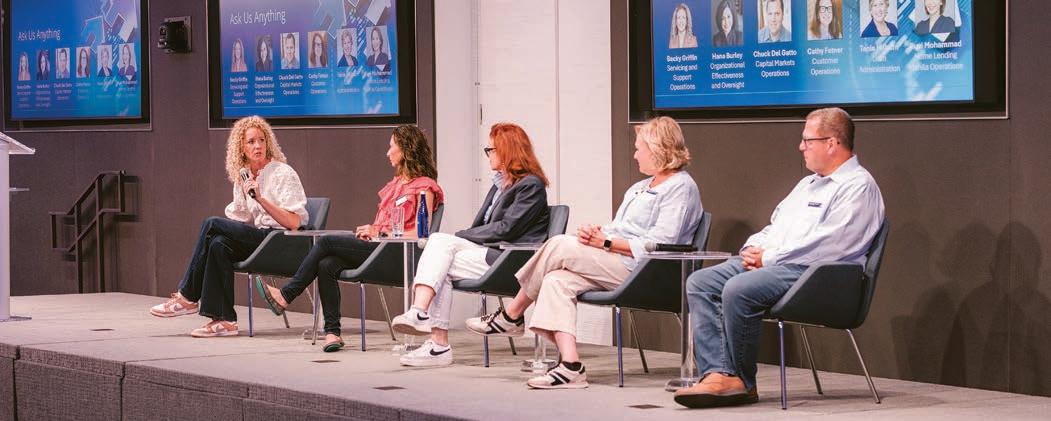
of basketball season, because my preference is to be in the stands cheering them on.”
Griffin took over as location leader at a pivotal time, not long after chairman and CEO Jamie Dimon announced in January 2025 the company would join a growing wave of organizations implementing a return-to-office policy.
Dimon made national news the following month while in Columbus for a series of events, including a Linden branch grand opening and a company town hall. The latter went viral after Dimon gave an expletive-laden response to a question about the policy. He later apologized for the coarse language.
While leading 18,000 employees back to the office “was probably not on my bingo card,” Griffin says the corporate office was invaluable in the transition. “The level of support that we got out of New York was incredible,” she says.
Now, she’s enjoying a chance to think about the long game. “I find it really rewarding to be a part of these really interesting conversations around how we can make Columbus a great place for people to work and to live. … Thinking about our real estate strategy in this market, thinking about making sure that all of our employees in this market feel like they have what they need when they come to work every day. And so that piece of it has, I think, settled in pretty nicely.”
Chase in the Community
JPMorgan Chase has made significant investments in the Columbus region, including community development and workforce initiatives, free financial health and fraud workshops, and more

than $34 million in philanthropic contributions from 2019 to 2024.
In April, the company announced a $4 million commitment in Cincinnati, Cleveland and Columbus to build workforce skills in industries such as IT, health care and manufacturing. “What I love about this place is we don’t just view our role as showing up and running a bank. We think about how we can be leaders in impacting positively the community that we’re operating in. And this is a perfect example of that,” Griffin says.
Griffin has been a member of the One Columbus executive committee since August 2024 and joined the Columbus Partnership in 2025. A more personal cause is serving on the national board of Pink Ribbon Good, inspired in part by her mother and grandmother, who are breast cancer survivors. The Troy-based nonprofit provides meals, rides and other support for breast and gynecological cancer patients and families.
PRG CEO and president Heather Sala-
zar says Griffin is a major asset to the organization. “She brings to the table ideas for growth and what we need to do to scale properly and all of that. She brings that leadership to the table,” Salazar says.
“She’s special because she’s such a strong leader in all of those ways, but she’s so personable and makes everyone feel valued.”
As the banking landscape continues to evolve, so does the role of artificial intelligence. Griffin says Chase came out early with its own internal large language model, teaching it policies and procedures and asking employees to leverage it in their jobs.
An AI agent is now the first point of contact for customers who transfer a mortgage, she says, and email servicing agents use the LLM to make sure their response answers a customer’s questions. In the call center, AI does the math so agents can spend time giving advice instead of running calculations. “It’s a very exciting

Columbus location leader and head of servicing and support operations for home lending
JPMorgan Chase & Co.
Age: 44
Previous: Chief administrative officer for consumer banking, chief risk officer and other leadership roles in risk operations
Education: Bachelor’s degree in business, Indiana University; MBA, Ohio State University
Involvement: Member of the Columbus Partnership, One Columbus executive committee and the national board of Pink Ribbon Good
Family: Husband, Ryan Griffin, and three children
time, but also there’s a lot to learn. And so we’re really encouraging our employees to just be curious about it and see what they can unlock,” Griffin says.
What does the future hold for Griffin? “I’m not somebody that says I have to have this person’s job. That’s not me. That’s not the goal. The goal is to make a meaningful impact in the job that I have. And so I feel excited that I’m able to do that here in Columbus with my location leader hat, and I realize I don’t have to do it all. I can empower all these 18,000 people to be more involved in their community and do that with the backing of this really great firm. And so there’s just a lot more that can be done there.
“And then in my day job, we have over 3.5 million mortgage customers and nearly $1 trillion of balances under our care. … We talk about sustainable home ownership, and we do a lot to support customers going through hardships and things. And so just continuing to double down on how we can do better and more with this customer base that we have is really important.”
Burger, for one, looks forward to seeing what comes next.
“She’s got what I say is still a long runway with the firm. I think she’s one to watch. She will continue to grow and learn, as I’ve seen her do in her current job. So it’s kind of exciting because she’s going to be around for a while, and she’ll continue to grow and take on additional responsibilities within the firm.” ◆
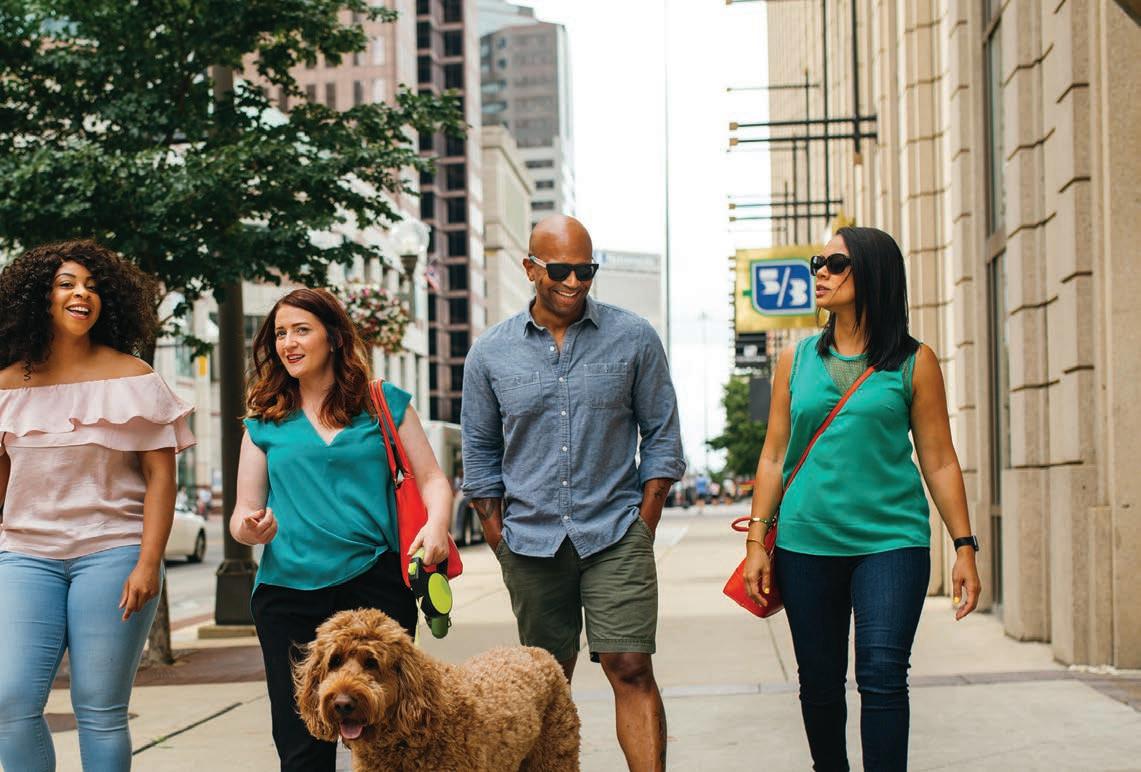






The state’s bobcats, beavers and other native species are benefiting from 20th century conservation policies. Today’s decisions will determine their futures.
By Randy Edwards
Shauna Weyrauch studied bobcats for seven years before she finally saw one in the wild with her own eyes.
“We had picked up a lot of them on trail cams, so we knew they were there,” says Weyrauch, a wildlife biologist and senior lecturer at Ohio State University.
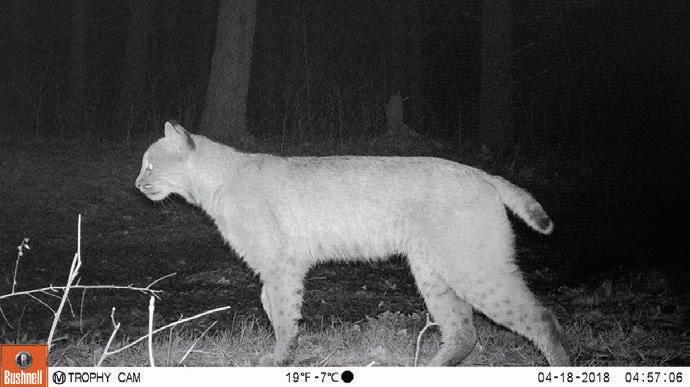
Weyrauch and her students at the Newark campus conducted a 5-year camera-trapping study of bobcats in Coshocton and Holmes counties, ending in 2022. Ohio’s only wild native cat, the bobcat is an elusive creature, preferring large tracts of mature forest and active mostly between dusk and dawn. Males average just 25 pounds, roughly twice the size of your average domestic tom, so they don’t stand out in the landscape as much as you might think, despite their trademark black ear tufts.
One day while waiting in the midwinter gloaming with a wildlife photographer at the forested edge of a beaver pond, Weyrauch had a memorable encounter with her research target.
“One night, right at dusk, we were sitting there in the snow, and a bobcat came down the hill toward the beaver lodge,” she recalls. “Turkeys were starting to roost in the trees near us and the cat stopped and looked up at the turkeys, then turned around and left. He was only there for maybe a minute, but oh my gosh. It was breathtaking.”
Such a scene: a deep wood, a beaver pond, roosting turkeys, a bobcat. All elements of this wilderness tableau, it’s worth noting, would have been difficult—if not impossible—to find in Ohio 100 years ago. All three animals once were extirpated from Ohio (meaning extinct at a state level) and have returned to occupy the forests that are, likewise, recovering after being aggressively cleared by the axes of European settlers.
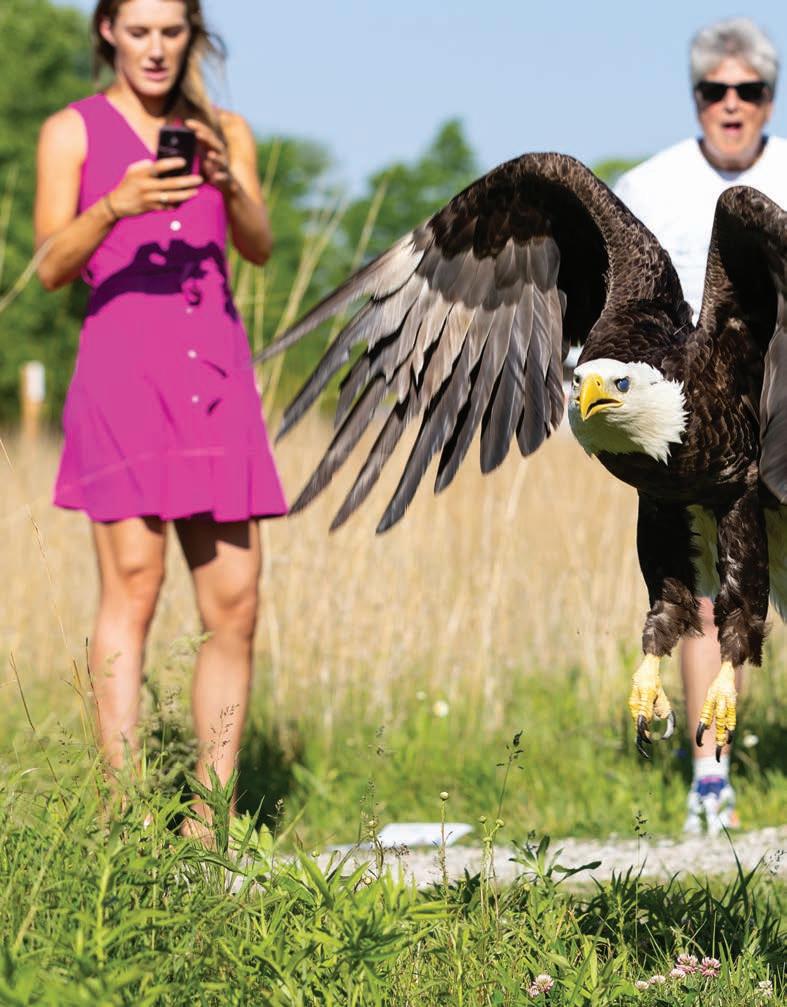
And these comeback critters are not alone. Across central Ohio, even casual wildlife watchers can see animals that would have been distant memories just a few decades ago. Commuters headed Downtown on Riverside Drive witness bald eagles along the Scioto—one pair frequently nests near the Dublin Road
water treatment plant. In 2023, a flock of wild turkeys earned their own Facebook page in Hilliard after they began frequenting a busy shopping area. Signs of beavers and river otters are found in local waterways that had missed their presence for a century. Red foxes boldly take up residence in Clintonville, generating far less hostility than another wildlife repatriate, the ever-present and destructive whitetail deer.
A black bear was captured on security camera in an Obetz neighborhood in 2023. And you can hardly drop an anvil in the Columbus region without hitting a coyote, though like bobcats, they’re elusive and keep to themselves.
The Scioto River, practically a cesspool as recently as 70 years ago, is now a fishing hot spot for smallmouth and spotted bass.
Bobcats are more common in the

heavily forested areas of eastern and southeastern Ohio, but a trail camera captured a ghostly image of a bobcat the week before Thanksgiving in 2025 at Prairie Oaks Metro Park, less than 20 miles from Downtown Columbus and even closer to the city’s rapidly developing western boundary.
Wildlife biologists celebrate the return of birds, fish and mammals as encouraging evidence of ecosystem recovery, the fruits of more than half a century of targeted environmental regulation, public land protection and diligent wildlife restoration programs. Scratch a little deeper, though, and they’ll agree that the success of these charismatic creatures is only part of the story. Substantial threats remain that may undercut existing gains and obstruct future triumphs.
About 8 million acres of Ohio forest has recovered from the excessive harvests of the 19th century and “that’s allowed the bobcats and turkeys and deer to come back,” Weyrauch says. “But I don’t see that trend continuing. You have a lot of land being gobbled up by development.”
The cats can adapt, to a certain extent, she adds. “But it’s going to be on us to adapt and welcome them back.”
After driving out or slaughtering the many native peoples who had lived here for centuries, European settlers found a bit of Eden in the land west of the Ohio River and south of Lake Erie, with abundant mature forests for timber, wild rivers teeming with fish and some of the most productive farmland encountered on the continent thus far (once they cleared the prairies and drained the wetlands).
After the Revolutionary War ended the limits on western expansion, settlers
crossed the Appalachian Mountains, rolled up their sleeves and hiked their skirts, and went to work with rapacious zeal. A century after the first permanent settlement by white Americans in the Northwest Territory was founded in Marietta in 1788, most of the forest—which once covered 95 percent the state—was a sea of stumps. Settlers used the timber for building homes and barns and canal boats and for creating charcoal to feed the prosperous ironworks of the 19th century. But much of the forest was cut down and burned simply to clear the way for farming.
By 1910, only 10 percent of Ohio’s once majestic forests remained. The wildlife that was dependent on these forests was hunted and trapped for food or furs, or simply out of fear. Ohio’s statehood celebration in 1803 coincided with the shooting of the state’s last wild bison. The last beaver was trapped in Ohio by 1830. Elk, wolves, bears, and mountain lions were all hunted out in the early 1800s, many with the help of bounties paid for their skins.
The last passenger pigeon was shot in Pike County, Ohio, in 1900. Soon to be extinct after the last died in captivity at the Cincinnati Zoo and Botanical Garden, the bird once numbered in the billions and was considered the most abundant in North America.
Rivers were dammed to power mills, to provide water for canals and, later, for flood protection and recreation. There was no municipal sewage treatment to speak of; rivers were counted on to dilute the waste and carry it downstream.
“For 150 years we decimated freshwater ecosystems,” says Michael Hoggarth, professor emeritus at Otterbein University. “We caught them on fire. We dammed them. We did as much damage as any group of organisms has ever done, and we did it fast.”
This devastation lasted until around the middle of the 20th century, Hoggarth says, recalling a story from a fellow biologist who was trying to sample the fish population of the Scioto River in the 1960s, navigating his small boat around floating islands of soap foam and sandbars covered with human excrement.
“We polluted that river so badly that they couldn’t find a single fish between Columbus and Circleville,” he says.
“Habitat is king” is a frequent refrain of ecologists, and Ohio is not an exception.
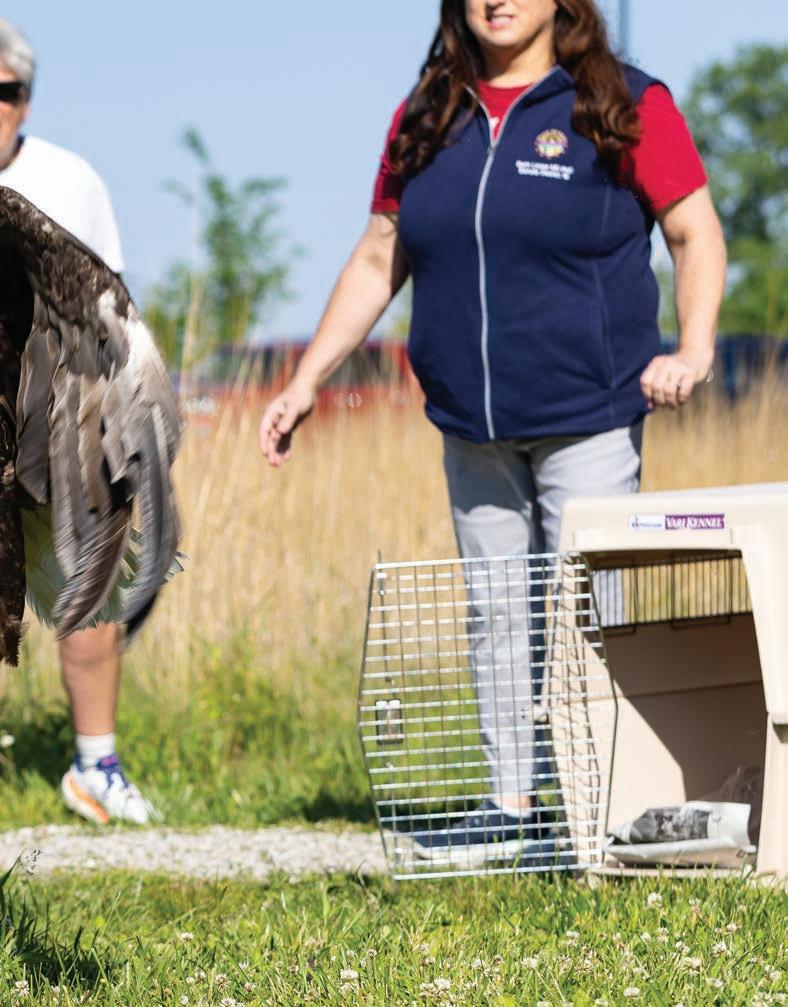
Diligent, persistent efforts at reintroducing individual animals, led by the Ohio Division of Wildlife and the U.S. Fish and Wildlife Service should get plenty of credit. Some reintroductions required decades of work and research.
Even so, none of these successes would have happened without the revival of Ohio’s forests and the rehabilitation of its waterways. Forests now cover more than 30 percent of Ohio’s landscape and some of it is quite mature. The forests recovered partly due to Depression-era abandonment of marginal farms, combined with the steady acquisition of public lands for state and federal forests, and for various local park districts and conservation groups.
In central Ohio, the Columbus and Franklin County Metro Parks have acquired nearly 29,000 acres of parkland over 78 years and some of it, apparently, has become wild enough to attract a bobcat.
The rivers took more work to recover. The landmark legislation known as the Clean Water Act became law in 1972— three years after the Cuyahoga River’s most famous fire—when Congress overrode a veto by President Richard Nixon. Using a combination of carrots
and sticks, the law pushed cities to vastly improve sewage treatment, including industrial waste.
“We gave [water protection laws] some teeth,” says Hoggarth, who studies freshwater mussels, one of the most endangered groups of animals in North America. “And today, the entire length of the Scioto River meets exceptional warm water standards [the Ohio EPA’s highest rating for rivers of this type]. And there are huge numbers of mussels on that river.”
Other laws also helped. Birdwatchers lining up to view eagles on the Scioto can thank the 1972 ban on the pesticide DDT in the U.S. A similar ban on phosphates in detergents ended the floating islands of soapy scum in the Scioto and temporarily alleviated the problem of algae blooms in Lake Erie.
“The story doesn’t get told often enough, but we’ve done a really good job in Ohio at cleaning up sewage treatment plants and other point sources of pollution,” says Brian Zimmerman, a fish biologist at Ohio State in Columbus who works to restore threatened and endangered species.
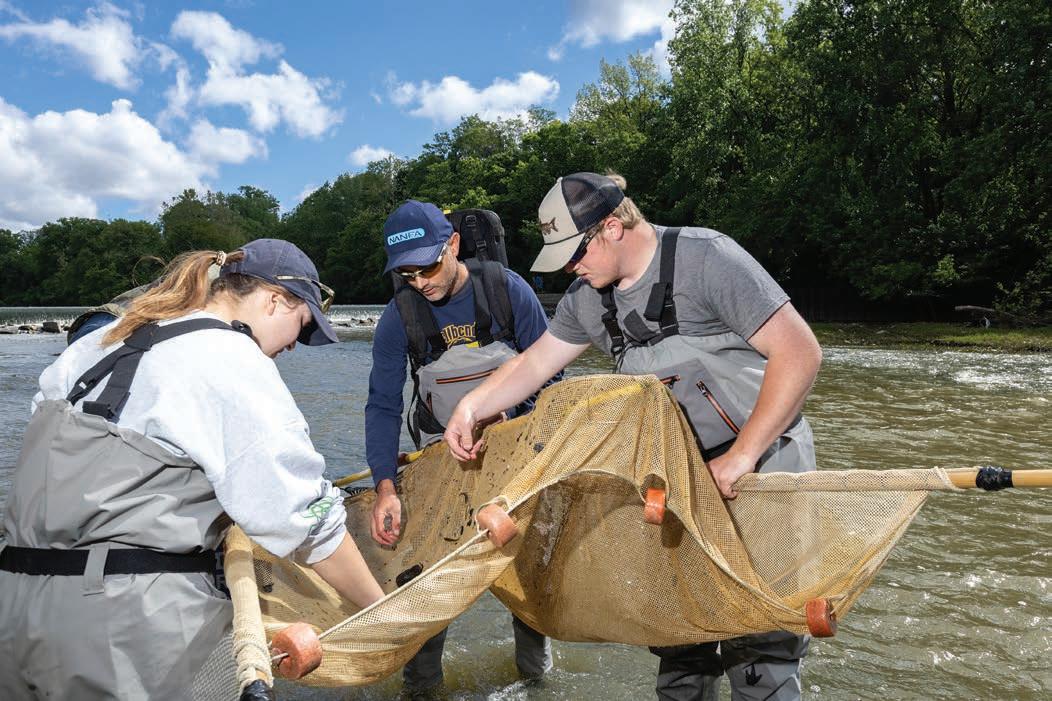
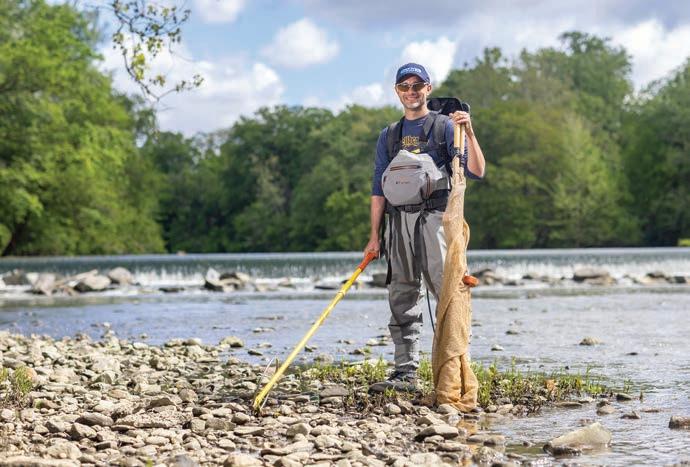
Zimmerman is standing next to the Olentangy River in Columbus, at the
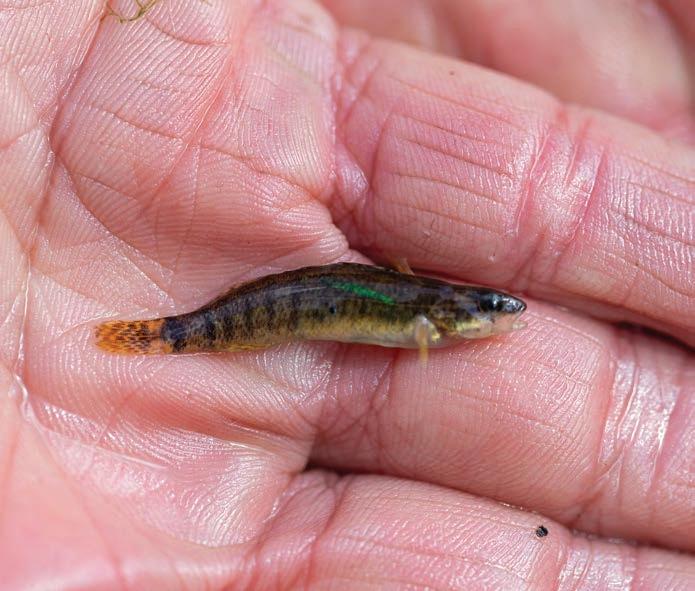
northern edge of Ohio State’s campus. He’s just finished seining for darters at a riffle just upstream of the Dodridge Street bridge. He’s especially interested in the Tippecanoe darter, a tiny fish that has recovered from the brink of extinction as water conditions have improved in Ohio.
Like many fish species, the Tippecanoe darter owes its success to the Clean Water Act, but before the Scioto River was cleaned up, the tiny fish survived only in Big Darby Creek. The Big Darby and a few other Scioto River tributaries are often referred to as refugia, or “sanctuary rivers” because in the days when Ohio’s major rivers were heavily polluted, species survived there. In recent decades, the Tippecanoe darter and dozens of other fish species have spread throughout the watershed, and the state.
“There are more species of fish in the Scioto River than there are anywhere else in Ohio,” says Zimmerman, who has mapped the geographical range of every Ohio fish species for the book, A Naturalist’s Guide to the Fishes of Ohio, which he wrote with Daniel Rice. Many of those fish are popular game fish like smallmouth and spotted bass and sauger. “It’s an excellent recovery story as a whole.”
The work to restore Ohio’s native species continues, because obstacles to natural species recover remain. River dams are a prominent example, Zimmerman says. There are 40 more fish species found in the Scioto River below the dam at Greenlawn Avenue than above it, because most of the sanctuary streams connect to the larger river below the dam, and many fish can’t get past it.
Zimmerman and his colleagues have been moving fish like the Tippecanoe darter to upstream locations, like the Olentangy, with great success.
The Ohio Division of Wildlife has been working to protect Ohio’s wildlife since 1873, when its precursor, the Ohio Fish Commission, became the state’s first attempt at professional wildlife management.
Through much of its history, the division focused primarily on providing game animals, or animals that can be hunted, trapped or fished. One of the earliest efforts brought back the wild turkey, a popular bird for hunting. The river otter, extirpated from Ohio for a century, was restored through an extensive effort in the 1980s and 1990s using live-trapped animals shipped to Ohio from Louisiana. Today otters are well established throughout large parts of Ohio and there is a limited trapping season for the animals.
In 1974, Ohio published its first state list of endangered and threatened species and began efforts to restore non-game species. Eagles, osprey, trumpeter swans, sandhill cranes, peregrine falcons and lake stur-
geon, along with smaller creatures like the Karner blue butterfly and the Allegheny woodrat, all benefited from this work.
Other once-extirpated animals, like bobcats and coyotes, have returned on their own, crossing over from neighboring states. The black bear is another example of a self-repatriating critter. Most bears, including those that have been seen in central Ohio, are likely young males wandering widely in search of territory and mates. But in recent years females have taken up residence and have birthed cubs in northeast Ohio, says Katie Dennison, a furbearer biologist for the Division of Wildlife.
It could be a long time before black bears take up residence close to Columbus, she said. The population is growing in northeast Ohio, but highly populated areas between those bears and central Ohio are discouraging movement toward the center of the state.
“At some point, if we start seeing reproduction in southern or southeast Ohio, we may see more growth happening in this area.”
Some Ohioans may not be entirely enthusiastic about sharing space with bears and predators like coyotes and bobcats, but Dennison reminds us that Ohio once had cougars and wolves, and those predators helped keep nature in balance. Today, without these apex predators, populations of deer and other destructive animals are out of control. Coyotes and bobcats aren’t large enough to put a big dent in the deer population, but they’re still important.
“The rodent populations, the rabbit populations, all of these species evolved together with top-down pressure,” she said. “These are the apex predators we have in the state right now, so they are pretty important.”
Despite multiple comeback narratives about individual species and even widespread improvements in many Ohio ecosystems, there remains ample evidence that plenty still ails Kingdom Animalia Long-term, intractable environmental issues—along with some newly brought to light—are causing continuing declines for some wildlife and could lead to backsliding among those that are recovering. Specifically:
• Songbirds are declining across North America and in Ohio, due to multiple reasons including habitat loss, pesticide use and collisions with well-lighted buildings. A study by Ohio State University published in the journal Science in February, 2026, identified the Midwest (including parts of Ohio) as one of three “hotspots” in the country where bird decline has been accelerating. The dramatic losses in abundance coincided with areas of intense agricultural land use.
• Although data vary regarding overall insect population declines in the U.S., multiple studies indicate regionally specific concerns, especially among native pollinators, which are important both for agriculture and natural systems. A 2025 study by Michigan State University found that 59 out of 136 species of native butterflies in the Midwest declined over the past three decades. And up on Lake Erie, populations of the burrowing mayfly known locally as a Canadian soldier—the resurgence of which has long been touted as a sign of Lake Erie’s ecological recovery—have dropped by almost 85 percent in recent years.
• Amphibians, especially salamanders, are disappearing at an alarming rate across the country. Six species of salamander are listed as “endangered” or “threatened” in Ohio.
• Native plants are the foundation of the food chain for all wildlife, and Ohio’s plant communities are in trouble, says Jim McCormac, a botanist who has written







extensively on Ohio’s wildlife. Over one-third of Ohio’s 1,850 native plant species are threatened or endangered, mostly from habitat loss and competition from invasive species. While forests were cut down, Ohio’s wetlands were drained and grasslands plowed under, making recovery more difficult.
“To protect our animal species we have to protect our plant species, is the bottom line,’ McCormac says.
According to the first draft of a new national nature report, natural systems throughout the United States face a variety of threats including habitat loss, overuse, invasive species, and nutrient pollution, along with new environmental threats like microplastics and PFAS (a class of synthetic chemicals known as “forever chemicals.”) Exacerbating many of these threats is climate change, and a federal government that seems bent on attacking the bedrock environmental laws of the 20th century and the agencies that are tasked with enforcing them.
The report, began during the Biden administration as the first ever national assessment of natural systems, was shut down when Donald Trump became president. But the scientists continued working on it, with the help of private foundation grants.
“It’s a mixed bag,” says Michael Vanni,
an emeritus professor at Miami University in Ohio and one of the authors of the ‘inland waters’ chapter of the report. “There are success stories, about individual species’ restoration. That’s true,” he says.
“At the same time, however, there are sticky issues that are much more difficult to address.” These include the “surprise” issues, like PFAs and microplastics, which “no one was even looking at 20 years ago,” invasive species, like zebra mussels and, of course, climate change which is a “threat multiplier” for dozens of other problems, including algal blooms caused by excess use of fertilizers.
Vanni is likewise concerned about the multiple budget cuts by the Trump administration to regulatory agencies, like the EPA, and to the National Science Foundation.
The federal government has lost a lot of scientists in a lot of agencies,” Vanni said in May, as Congress and the president traded budget proposals. “The budget the president has proposed is devastating.”
Back on the Olentangy River, Zimmerman repeats that the rivers in Ohio are doing well, but adds that continued progress is not a given.
“If we start stripping away regulations for keeping our rivers [clean] back, we could revert. We’re doing well, but that’s not a reason to take away regulations. Because they’re working. And we have direct proof that they’re working.” ◆

BY TIM JOHNSON
SimplyArt Studios strives to make owning and creating art possible for everyone.
By Lucy Clark
Chris Soto opened SimplyArt Studios in Grandview Heights with the belief that everyone should have access to make art.
Soto, a former after-school art teacher, opened the studio and shop in October 2025. In the months since, Soto has cultivated a space that welcomes anyone to stop in, ask questions, take a class or find a piece of art that speaks to them. There’s plenty of art for sale in the shop, from visual art to ceramics, bead work, painted rocks, pens, fiber arts and more—including giant puppets.
“I try to have a variety of prices. You can walk in and find something for $3 or you can buy a $5,000 painting,” Soto says. “I wanted everyone to be able to come in and get art if that’s what they wanted.”
Beyond selling art, Soto invites people to come in and make it. There are open studio hours with rotating suggested activities and crafts, although attendees are welcome to bring their own supplies. There are also several classes, ranging from making tote bags, garden fairy wands, watercolor painting and more. With a recently donated kiln, Soto hopes to have ceramics classes soon. Addition-
1285 Grandview Ave., Grandview Heights simplyart.studio
Hours: 12-6 p.m. Wednesday, 12-7 p.m. Thursday-Saturday, 12-4 p.m. Sunday
If you go: Check online for updated open studio hours and subjects ($5) or peruse SimpyArt Studios’ calendar and social media accounts for a list of classes and events offered at varying price points.
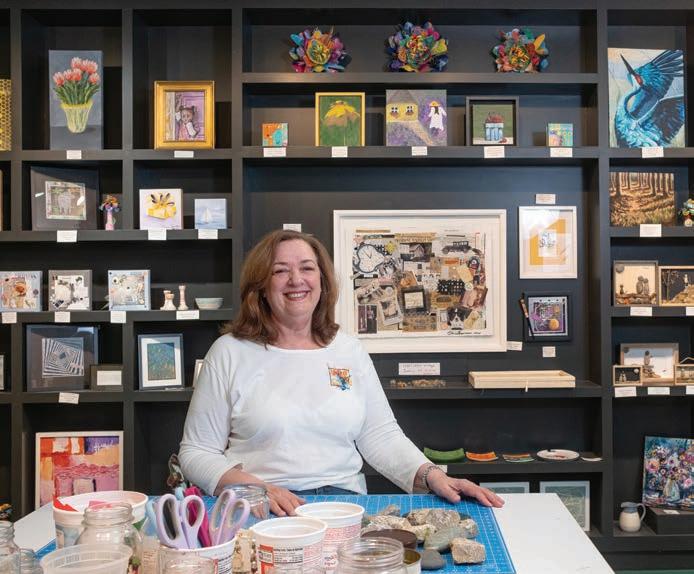
ally, the space hosts artists and author talks, as well as private events.
Soto prioritizes having an assortment of art expressions and styles on display “so people can see that art’s not just one medium.” This is a philosophy that is at the root of SimplyArt Studios, and part of its founding story.
SimplyArt Studios is also a non-profit, which came to be when Soto met fellow artists Susan Dlouhy and Patty Mitchell at their Columbus Winterfair booth.
“This is what I want to do,” Soto recalls thinking. The three women connected, shared their ideas and got to work registering their non-profit status and finding a studio/retail space.
Soto wanted a place that welcomed people from every walk of life. “People who were just starting out in art, people who had disabilities, senior citizens that had spent their whole life in corporate America and realized that really what they wanted to do was be creative. ... I wanted to give all those people a space where they could explore that creativity,” Soto says.
And while she opens her doors to those of any artistic background or experience, the priority of the nonprofit is to make sure that those with disabilities have access to all art mediums at no cost. The profits from classes, open studios and items sold go “towards giving access to people with disabilities to have free art and studio time,” she explains, adding

that some similar programs that aid disabled artists can be limiting.
“I think that sometimes people limit people with disabilities to a finite amount of tools. It’s what they believe they’re capable of, and it’s not true,” she says. She also didn’t want a space exclusively catering to those with disabilities. “People, artists, [they] feed their creativity off each other.”
The passion, Soto says, comes from watching her own brother, Scott Boerner—who has brain trauma from a car injury—have things decided for him. “I always thought he was capable of anything he wanted to do,” she says.
Boerner’s art is on display at the store. ◆
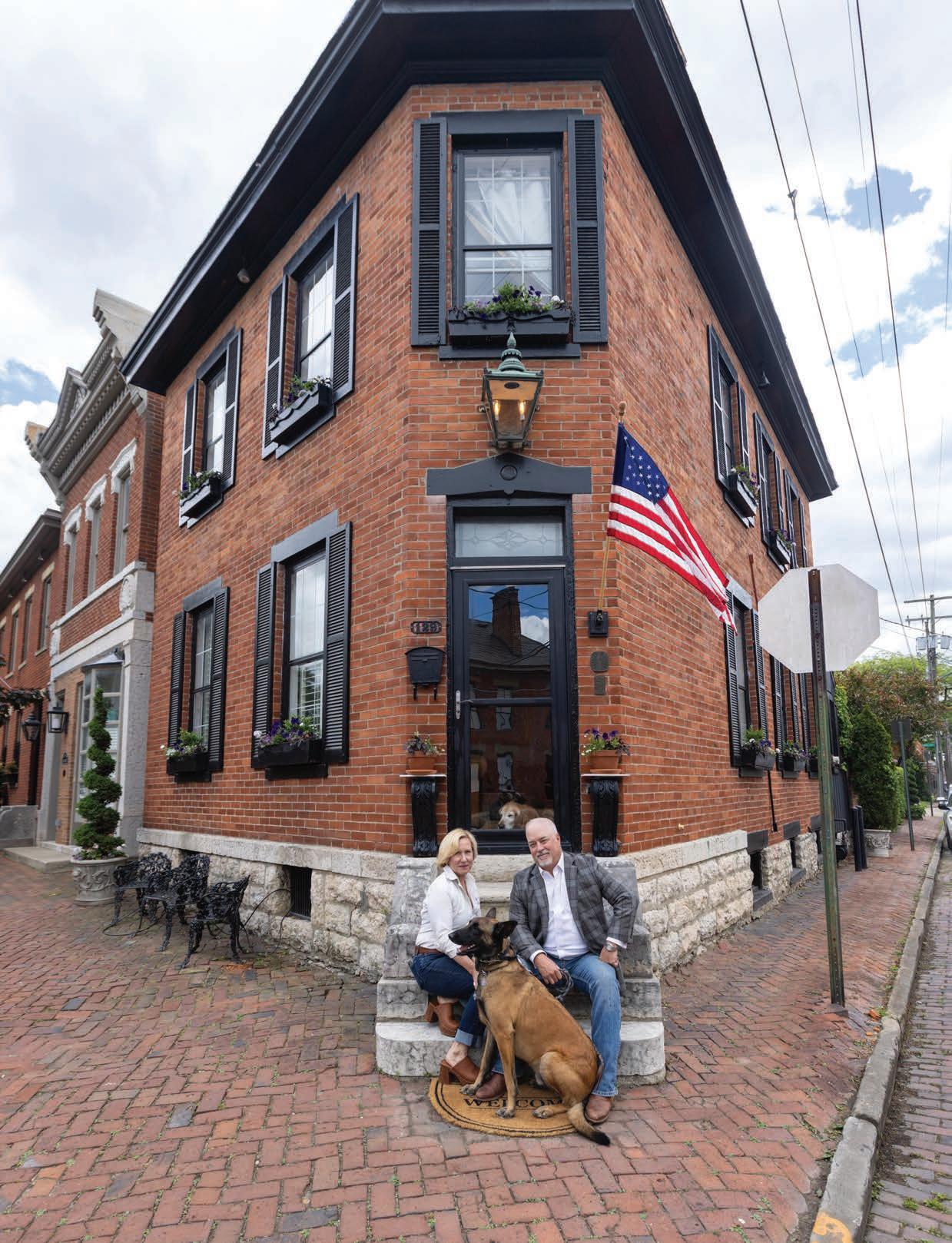
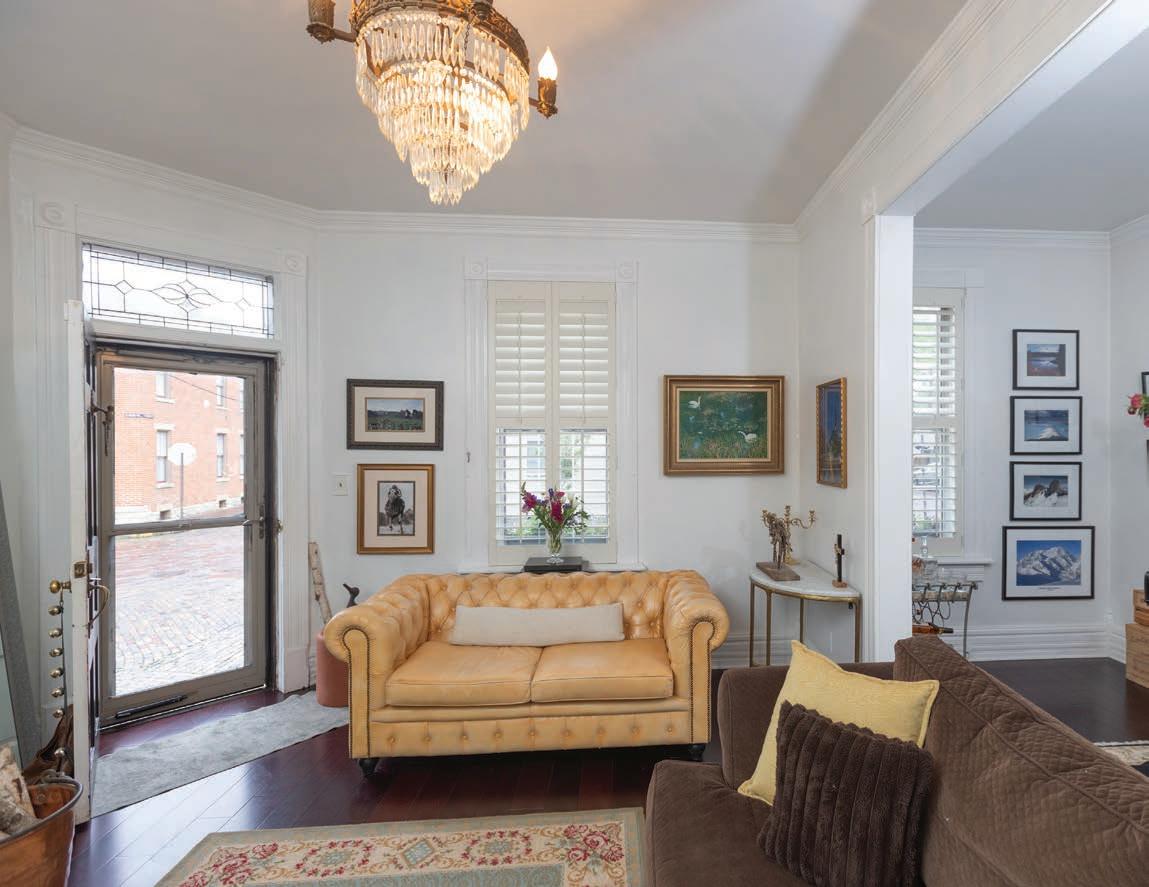
Carolyn
and William Settina’s German Village home
is a historical treasure that honors the neighborhood.
Ogling at the beautiful historic homes in the German Village is part of the visiting experience, but for the district’s residents, it’s an enviable part of their daily routine.
Carolyn and William Settina’s German Village home stands proudly on the corner of East Beck and South Lazelle, and will be featured on this year’s German Village Haus und Garten Tour on June 28. Carolyn is nurse manager for OhioHealth, and William is a criminal defense attorney. If the house looks familiar, check your soap—in 2024, the Settina’s home was featured on the front of Bath & Body Works’ mahogany apple soap battle.
The Settinas have lived in the home
since 2014. Though listed for sale, they first rented it from well-known German Village realtor Virginia Welch and purchased it the next year. That year gave them time to decide what renovation projects would be their top priority.
Those renovations included painting and reorienting the first-floor layout, though Carolyn—who has a love for maintaining historic homes—notes that they didn’t touch the footprint of the home, save for opening one doorway into an archway.
The 1,600-square-foot, two-bedroom, 1.5-bathroom house—which Carolyn describes as the “classic German village footprint”—was built in the mid-19th century. Though the exact year is unclear,
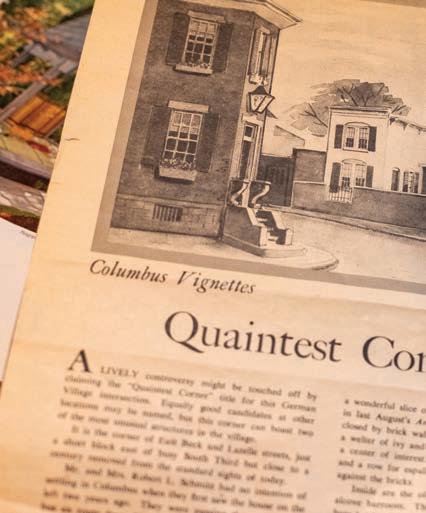
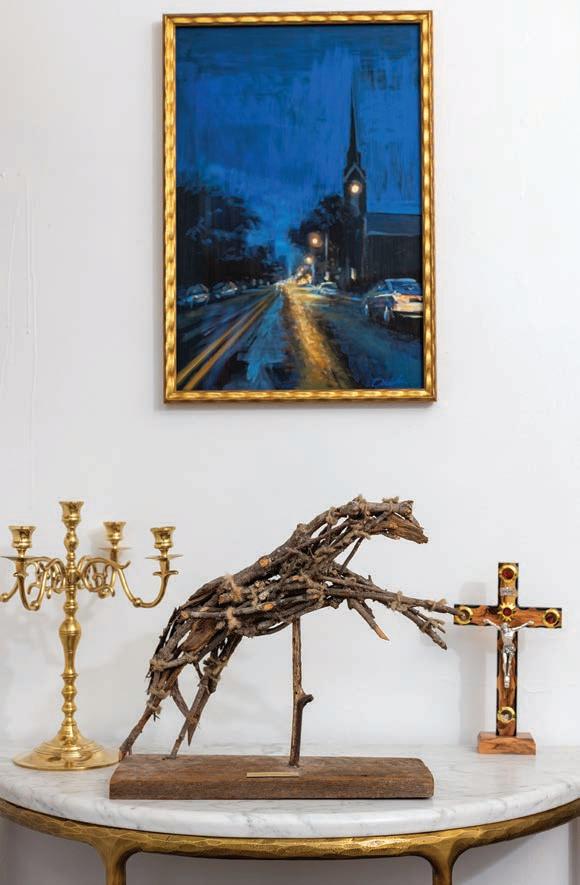
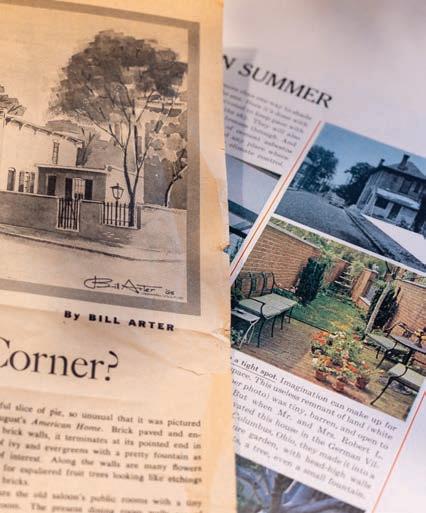
Clockwise from top left: Living room; horse sculpture with painting of St. Mary Catholic Church by Ryan Orewiler; rabbit decoration; reading area; old articles about the home
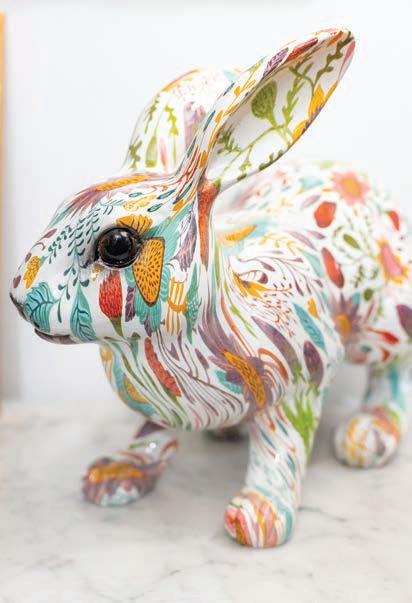
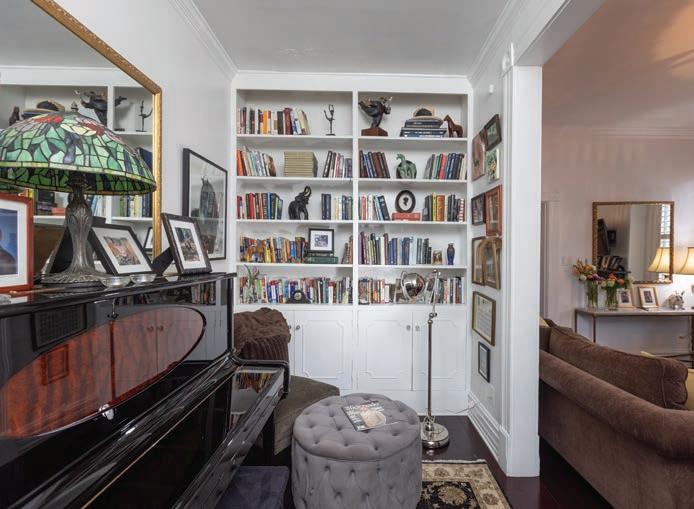
deeds can be found as far back as 1846. The main floor was originally a saloon, and the owners lived upstairs. It was later condemned, until the 1960s when a couple—noted as Mr. And Mrs. Robert L. Schmitz in a 1965 article clipping Caroyln has—saw the house on their road trip from Florida to Michigan and decided to restore it.
The exterior entry sports brick walls, neat black trim and shutters, a large lamp from Scotland that used to burn whale oil, and original window boxes planted with flowers that Carolyn describes as her “labor of love.” She adds that one of their dogs, Ranger, a 14-year-old golden retriever, is often seen lying by the front door and watching passersby. They also have Gunner, a 2-year-old Belgian Malinois.
The living room—as with the rest of
the house—is equal parts cozy and elegant; the warm color scheme punctuated by pops of color. The multi-colored painted bunny on a side table is a nod to “all the Village bunnies,” and ties in the minty hued area rug.
Dotted throughout the home are pieces of art that pay homage to the neighborhood, including a painting of St. Mary Catholic Church by local artist Ryan Orewiler.
Above the original fireplace are photos of the Settinas with their sons Asher, 27, who’s in the Air Force, and Alex, 23, who’s in the Marines and currently enrolled in the Columbus Fire Academy. The Settina family are horse enthusiasts, and photos of their horses, as well as horse paintings and decorations, can be seen throughout the home.
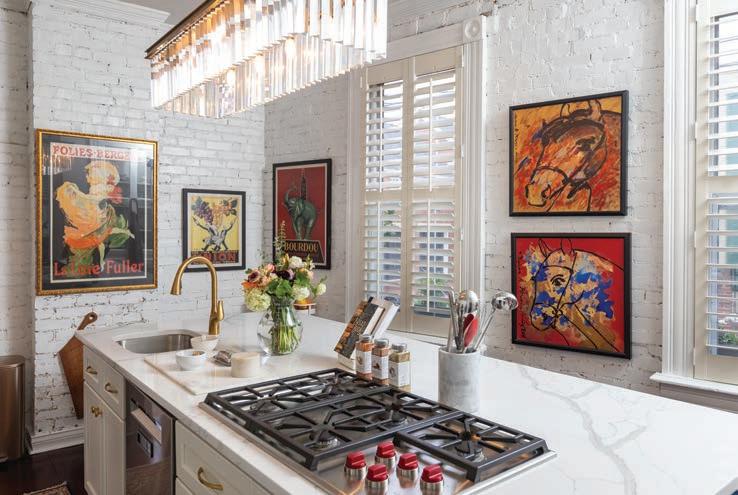
An archway behind the living room leads into a small room that used to house the saloon’s bar area. A bar cart and upright piano allude to the home’s history, and built-in shelves display the Settina’s personal library.
Through the living room is the kitchen, which is part of the major renovations the homeowners tackled, though only in the past few years.
Carolyn notes that the brick walls were already whitewashed when they moved in, and starting to look worse for wear, so they refreshed them with new paint. They replaced the black and white flooring with Brazilian cherry wood, which can be seen in the rest of the home.
The quartz countertops and kitchen cabinets were sourced from L&E Stone and Cabinet Inc. in Columbus, and the
eye-catching chandelier above the island is from Restoration Hardware. The bright, clean white palette is made lively with bold art, including artwork of horse heads made by local painter Juris Kakis. Fresh bouquets are also a staple of Carolyn’s decor, many of which she gets from Sunny Meadows Flower Farm. A bottle of the mahogany apple soap sits on the sink.
The half-bathroom is accessible through the kitchen. Carolyn added a stained-glass window handcrafted by Franklin Art Glass Studios Inc., based in German Village.
Through the kitchen is the current baking room/dining room, which was the kitchen when the Settinas moved in. While the smaller room is well-suited for its current use, “when you opened the dishwasher, it hit the other side,” Carolyn says. “That was the kitchen I lived with for 11 years with two boys.”
The marble bistro table mirrors one outside, and if it looks familiar, odds are you’ve dined at the nearby Lindey’s—Carolyn sourced replica
tables from the esteemed German Village restaurant, as well a replica of one of its paintings.
The back patio is a private oasis in the bustling neighborhood, with lush plants, a fountain, tall brick walls and patio seating. There are also duck statues, which Carolyn says are “a nod to Schiller Park ducks.”
The history of the home is appreciated by the Settinas, but so too is the present. When asked about what memories in the home stick out to her, Carolyn cites her neighbors, and one anecdote in particular.
“My husband and the boys always threw the football outside in the street while the dog would run back and forth,” she recalls. A couple that lives a few houses away passed by one day and asked how their sons were, mentioning how they used to play outside. “They were unaware, but it was right after my oldest was deployed, and of course I cried,” Carolyn says. “I thought it was so kind, and so German Village, that neighbors ask about others.” ◆
INSPIRED DAYS START IN INSPIRED CLOSETS.™ Each customized space is designed around you, providing easy access to everything you need to confidently take on the day. Wherever it may take you. Get inspired at InspiredClosetsColumbus.com

May 1-31, 2026
ADDRESS
$3.2M 7253 Biddick Ct., New Albany
$2.75M 7726 Brandon Rd., New Albany
$2.58M 2006 Cambridge Blvd., Upper Arlington
$2.43M 7705 Ogden Woods Blvd., New Albany
$2.1M 7762 Fenway Rd., New Albany
$2.05M 1201 Wyandotte Rd., Grandview Heights
$2.04M 7030 Hanbys Loop, New Albany
$1.85M 9337 Wilbrook Dr., Powell
$1.8M 4987 Ravines Edge Ct., Powell
$1.8M 5208 Rosalind Blvd., Powell
$1.7M 2324 Abington Rd., Upper Arlington
$1.6M 291 E. Beck St., Columbus
$1.55M 4614 Lanercost Way, Upper Arlington
$1.53M 4680 Goodheart Ct., New Albany
$1.52M 9348 Wilbrook Dr., Powell
$1.5M 2533 Bryden Rd., Bexley
$1.45M 2604 Sherwood Rd., Bexley
$1.43M 213 Wilber Ave., Columbus
$1.42M 4050 Holkham, New Albany
$1.4M 11 Pickett Pl., New Albany
$1.38M 2478 Bryden Rd., Bexley
$1.37M 11294 Cedar Crest Dr., Plain City
$1.36M 2391 Donna Dr., Upper Arlington
$1.3M 2409 Brentwood Rd., Bexley
$1.3M 1247 Lincoln Rd., Grandview Heights

and its six

The Nationwide Children’s Hospital Columbus Marathon is the most meaningful marathon in the country because of our Children’s Champions. For them, it isn’t just a race — it’s a mission to bring hope, healing, and support to kids everywhere.
Luca, age 8
It’s Simple:
Kaden, age 9

Nora, age 9
• Fundraise to help find cures, save lives and create best outcomes for kids here and around the world.
• Anyone can be a Children’s Champion. You don’t have to run in the race!
• Earn perks and swag along the way as you reach new fundraising milestones.
• No minimum fundraising requirement. Every dollar makes a difference!
• Choose the impact you want to make. You can designate the funds you raise to support any program at the hospital.
Learn more and get started helping kids everywhere.





Cheers to 50 Years Commemorative champagne is part of The Refectory Restaurant’s milestone celebration, Page 58.
The iconic Northwest Columbus restaurant celebrates 50 years of service.
By Linda Lee Baird
When you hear a restaurant is celebrating 50 years of service, there are a few words that likely come to mind: Grit. Determination. Commitment. Excellence. In the case of The Refectory Restaurant, which has been serving renowned French cuisine out of an old church on Columbus’ Northwest side for a half-century, a few other descriptors are also appropriate: Stained glass. Elegance. Wine. And then: Kamal.
Kamal Boulos has owned The Refectory since 1991, but he has shaped it since the beginning when he started as a parttime line cook at what was then called the Olde Church-House Restaurant. And he’s navigated through eras of changing diner expectations, building the restaurant’s reputation far beyond Columbus and receiving significant recognition along the way, including from both local and national outlets. (Columbus Monthly named it as a Best Restaurant of 2025.)
But when Boulos thinks back on the media accolades The Refectory has received, it’s one from 1991 that comes to mind. That’s when The Refectory first received a Grand Award from Wine Spectator Magazine, in recognition of its outstanding wine cellar. It was one of just 91 restaurants worldwide to receive the honor that year and the first ever to do so in Ohio.
The award bolstered Boulos’ confidence in the restaurant he’d recently taken over. “It demonstrated that if we could build a world-class wine cellar in Columbus … then we could build a world-class restaurant,” Boulos says. A year later, chef Richard Blondin, a native of Lyon, France, came on board and has been serving elevated French cuisine at The Refectory ever since.
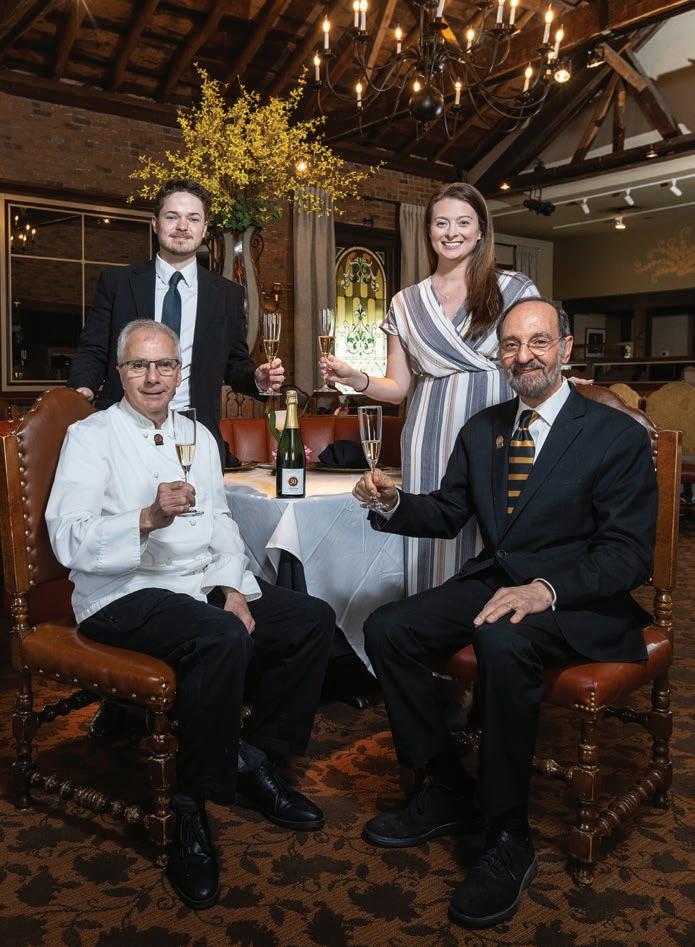
It should be noted that The Refectory’s wine cellar didn’t exactly start out grandly. An early review of the Olde ChurchHouse restaurant in the February 1977 issue of Columbus Monthly called the wine list “above average—but average in Columbus is quite poor.” After lamenting the presence of too many “very expensive ($25-up) wines,” reviewers Jon and Karen Christensen also critiqued the limited options: “A more serious criticism is the lack of even one dry rose: What do you order when one person has fish and the other has red meat?”
Boulos credits the late Jeff Elasky, who began working at the restaurant in 1979, for building the wine program. “We started off, he and I together, with
a dozen bottles and a metal locker. And I told him this was our wine cellar,” Boulos says. “At that time, I knew a lot about wine. He knew very little. And when we finished, he knew a lot more about wine than I did. And he took it over the top.”
Elasky died in 2016, but the restaurant’s wine legacy continues to this day.
When restaurants were forced to shut down at the outset of the COVID-19 pandemic, Boulos didn’t think The Refectory would make it. The team, expecting to close, wanted to end their run “thanking the community that supported us,” he says. They quickly created a carryout business with the food already on hand. “We [decided] we would sell
1092 Bethel Rd., Northwest Columbus
614-451-9774
refectory.com
Open Wednesday-Saturday for dinner
If you go: Visit the restaurant’s website to see daily menus, special events and other commemorations of The Refectory’s 50th anniversary.
the food out the front doorway and give it away out the back to people that needed it,” Boulos says. “And that carryout business just blew up.”
Between carryout and $100,000 in donations from supporters, The Refectory survived. Some pandemic-era changes that carried the restaurant in a new direction have been maintained, including daily menu updates and reduced hours for traditional service. Food, music and wine events are now offered on select Mondays and Tuesdays when the restaurant is closed for regular dining, giving patrons new ways to engage.
Given its history, it’s fitting that wine is part of the restaurant’s anniversary celebration: The Refectory had a commemorative bottle of champagne by Gratiot-Pillière in France produced for the occasion. Bottles are available for purchase ($65) with flutes ($26) sold to-order.
Consider pairing your bubbly with the 1976 classic dishes that chef Blondin is serving for the anniversary. In May, the restaurant featured veal, one of the Olde Church-House’s signature dishes. Bringing things into the current era, the restaurant created Facebook Reels documenting different preparation techniques.
The Refectory is also planning a reservation-only champagne dinner under the stars on June 27.
Meanwhile, marketing and sales manager Leah Jennings is assembling the restaurant’s rich history through an online timeline. “It’s a mountain of things to go through,” Jennings says. She’s reviewing articles written and awards received
over the years to tell the story as an “art piece that’s going to go on the wall for the guests to see.”
Part of this archive includes the restaurant’s commitment to the greater community: One slide notes its devotion to charitable causes, estimating monetary and in-kind contributions over the years exceed $1 million.
As for what’s next, expect more of the elements that have made the restaurant a standout for so long. Boulos says he will continue to focus on diners and their experience. “I think we’ve managed to stay relevant by being true to what we want to do. And that is to create an experience where you can just relax and spend as little or as much time as you want [here] and not feel like you’re going to be rushed out,” he says. The experience in his view is also about trying new foods: “It still amazes me that every few weeks he’ll do something he’s never done before,” Boulos says of chef Blondin.
“I would love to see this place continue, and others will one day build, hopefully, on the foundation that we put here,” Boulos says. ◆
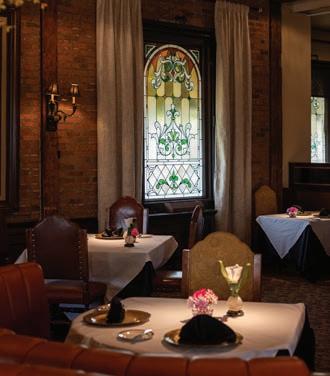

A recipe for the Best Overall Cocktail chosen by the crowd at Columbus Monthly’s Spring Cocktail Competition
By Linda Lee Baird
The name—Clear Winner—says it all: A crystal-clear cocktail poured into elegant, curved serving cups took home the Best Overall Cocktail award at Columbus Monthly’s Spring Cocktail Competition on May 14. The restaurant competing was Coldbar—set to open in Italian Village this August.
While Coldbar may be up-and-coming, its beverage team has experience working together at Mezcla, which was recognized by Columbus Monthly as a Best New Restaurant of 2026. Beverage director Jackson Proctor has built up the cocktail menu at both places (along with the one at Bar Room, inside the Columbus Museum of Art at The Pizzuti, where he serves as beverage operations manager).
Proctor left nothing to chance with Clear Winner, not even the ice cubes, which came from Reynoldsburg-based cocktail ice company Ice Punk and were, of course, completely clear. The drink incorporated celery for a fresh, seasonal flavor.
Clear Winner was made as a batched milk punch using unsweetened soymilk. While the process is ideal for serving 250 people at a cocktail competition, it requires advance planning if you want to make it at home. Or, visit Coldbar later this summer to try their version. ◆
Courtesy Jackson Proctor

1
Make Lime Leaf Gin. Combine 750 ml Vim & Petal Gin (made by Middle West Spirits) with 10 grams fresh or 5 grams dried lime leaf. Allow to sit for 24-36 hours, then strain leaves.
2
Make celery syrup. Juice 1 celery heart. Combine juice with an equal part by weight of white sugar. Blend until sugar dissolves.
3
Make milk punch. Combine Lime Leaf Gin, 280 ml celery syrup, 280 ml lemon juice, 3.5 ml saline (made from 1 part salt to 4 parts water), 15 ml celery bitters (Proctor recommends Bittermens Orchard Street Celery Shrub) and 200 ml water into a batch.
Pour into a container and mix with 460 ml unsweetened soy milk. Let sit for 30 minutes, or until soy milk curdles.
Using a cheesecloth or coffee filter, strain the mixture into a new container. Once the mixture runs clear, usually after a minute or two, refilter the cloudy portion until all liquid is clear.
4
Serve. Shake 4.5 oz of the cocktail with 2-3 ice cubes to achieve a foamy head and strain into a glass with ice. For a cocktail with a heavier body, pour directly over ice. The batched cocktail serves roughly 13 and will keep in the refrigerator for 6-8 weeks.
Editor’s Note: Please call restaurants to check hours and menu availability.
$$$$ Very expensive, $30 and higher
$$$ Spendy, $21–$29
$$ Moderate, $13–$20
$ Affordable, $12 and under
NEW Restaurant has opened within the last few months. B Breakfast BR Brunch L Lunch D Dinner
Outdoor Seating
2026 Best New Restaurant
2025 Best Restaurant
Let’s Eat is Columbus Monthly’s guide to area restaurants. The list is updated monthly with picks from our editors. Send updates and suggestions to letters@columbusmonthly.com.
Ampersand Asian Supper Club
Megan Ada’s Ampersand serves ramen, donburi rice bowls and more. This sister restaurant to Westerville’s Asterisk Supper Club also offers craft cocktails and a variety of sakes. 32 W. College Ave., Westerville, 614423-4454. LD $$
Bendi Wok N’ Bar
This Asian-inspired concept by the owners of Local Cantina is serving up curries, noodles, bahn mi sandwiches and creative small plates. Wash your meal down with a selection from the bar slinging sake and Tiki-inspired cocktails. 277 E. Livingston Ave., German Village, 614-754-7040; 160 W. Main St., New Albany, 614-245-4675. LD $$
Blue Ginger Asian Fusion Bistro
A Pan-Asian restaurant with a traditional side, Blue Ginger offers up a mix of Thai, Japanese, Vietnamese and Chinese cuisines. 6234 Sawmill Rd., Dublin, 614-792-3888. LD $$$
Chi Thai
A welcoming, family-friendly Thai/Chinese place with affordable lunch specials. The menu includes barbecued spare ribs, pad thai, Mongolian pork and Singapore noodles. 5577 N. Hamilton Rd., Gahanna, 614-4718988 LD $$
Visit columbus monthly.com to read about the latest restaurant openings.
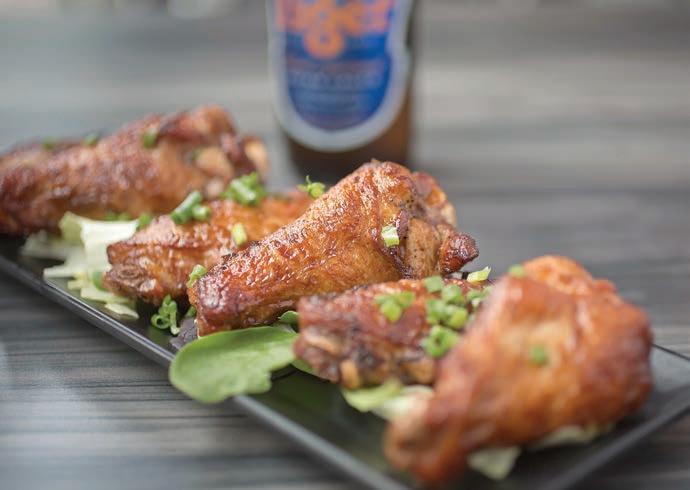
Cobra
Though first-and-foremost a neighborhood bar, Cobra offers a creative menu of sandwiches, skewers and handmade pastas with Pan-Asian flavor profiles. Think: a chicken patty katsu sandwich, dan dan spaghetti and Cacio de Szechuan with mafaldine. The cocktails are on point, and the kitchen stays open late. 684 S. High St., Brewery District, 614-502-8863. D $$
Helen’s Asian Kitchen
A mix of Chinese-American, authentic Chinese and Pan-Asian dishes are served in a casual atmosphere. Don’t miss the pork buns, spicy stir-fried cauliflower and handmade dumplings. 1070 E. Dublin-Granville Rd., North Side, 614-987-5121. LD $$
Saigon Asian Bistro
A casual Asian bistro offering Vietnamese food, including pho-style soups, spring rolls and Vietnamese pork chops. The menu also includes American-Chinese favorites such as General Tso’s chicken and fried rice. 50 Neverland Dr., Lewis Center, 740-657-8887. LD $$
Sakana Sushi Asian Fusion
A pleasant, full-service, Pan-Asian restaurant with a Thai spin offering an extensive sushi lineup and favorites such as steamed dumplings, Vietnamese summer rolls and tom yum shrimp soup. 7952 E. Broad St., Reynoldsburg, 614-866-6160. LD $$
Tiger + Lily Bistro
This inviting Downtown eatery features modern takes on Pan-Asian cuisine, such as lemongrass chicken or teriyaki tofu in a rice or salad bowl, chicken broth-based ramen, bubble milk teas and seasonal crepe cakes. 19 E. Gay St., Downtown, 614-928-9989. BRLD $
ZenCha Café & Tea
This teahouse offers an excellent selection of international teas and an eclectic menu that includes breakfast favorites like pancakes and Japanese-inspired items like yakisoba. Brunch on weekends only. 2396 E. Main St., Bexley, 614-237-9690. BRLD $$
BAKERY
Al Aqsa Sweets
Excellent baklava, petit four cookies, knafeh and other desserts are the focus of this traditional Middle Eastern bakery owned by Fathieh Abdellatif. 1940 Schrock Rd., North Side, 614-806-0293. LD $
Auddino’s Italian Bakery
They don’t make bakeries like Auddino’s anymore. This family-owned old-school Italian retail bakeshop and wholesaler offers sweet and savory options including sandwich buns, pizza dough, pastries, cookies and more. 1490 Clara St., University District, 614294-2577. BL $
Bake Me Happy
This 100-percent gluten-free coffee shop and retail bakery is an extension of Bake Me Happy’s growing wholesale business. Offerings include scones, nostalgic treats, brownies, cakes and more. 6750 Longshore St., Dublin, 614-683-8787; 500 E. Whittier St., Schumacher Place, 614-477-3642. BL $
Belle’s Bread
Tucked away in the same complex as Akai Hana, this French-inspired Japanese bakery is known for its outstanding pastries, cakes and treats. 1168 Kenny Centre Mall, Upper Arlington, 614-451-7110. BLD $
Bite This
Annie Dickson’s bakery celebrates goth culture as much as it does her innovative baked creations. A 12-foot tall skeleton greets visitors who stop in to this take-out shop for cakes, brownies and Dickson’s famous savory Bagel Bombs. 3009 N. High St., Clintonville. BL $
Cherbourg Bakery
This quaint Bexley bakery offers high-quality sweet treats—cookies, muffins and doublelemon bars—without gluten or nuts. 541 S. Drexel Ave., Bexley, 614-835-6133. BL $
Kolache Republic
Inside The Daily Growler, this Czech-inspired bakery offers sweet and savory kolache for breakfast as well as varieties like kielbasa and cheese that pair well with beer. 730 S. High St., German Village. BLD $
Pistacia Vera
The crème de la crème of Columbus pastry shops, with macarons, croissants, éclairs, tarts, quiches and a small selection of sandwiches. 541 S. Third St., German Village, 614-220-9070. BL $
In this shared space, you’ll find sweet and savory baked items, strong coffee and colorful boba options. The Fillipino treats from Three Bites are exceptional, and the central location on Broad Street makes this a worthwhile stop Downtown. 12 E. Broad St., Downtown. BL $
101 Craft
At this expertly executed gastropub (its owners could school others in the art of developing a restaurant), craft brews are paired with madefrom-scratch, seasonal dishes. 7509 Sawmill Rd., Dublin, 614-210-1010; 397 Stoneridge Ln., Gahanna, 614-934-5501; 817 Polaris Pkwy., Westerville, 614-776-4775. BRLD $$
Forbidden Root
This Chicago-based brewpub offers elevated bar fare to go along with craft brews featuring unique flavor profiles. 4080 Worth Ave., Easton, 614-414-6127. BRLD $$
High Bank Distillery Co.
High Bank’s dining room offers plenty of games, TVs and space for large groups. The cocktail menu puts the distillery’s own offerings to good use, while the food menu offers grown-up pub fare such pizzas, locally sourced beef burgers and seared salmon. 28 S. State St., Westerville, 614-380-3130; 1379 E. Johnstown Rd., Gahanna, 614-656-7343; 1051 Goodale Blvd., Grandview, 614-8265347. BRLD $$
The Pearl
Gastropub meets oyster bar at this Cameron Mitchell restaurant with a throwback vibe, craft beer and barrel-aged cocktails. 88 N. High St., Dublin, 614-695-6255; 641 N. High St., Short North, 614-227-0151. BRLD $$$$
Shawnee Station Taproom and Kitchen
This family-friendly restaurant located near the zoo pairs excellent beers from Maumee Bay Brewing Co. with cuisine that takes the brewpub to the next level. The burger and beer combination is a classic here, but you’ll find fish, pasta and salads that are sure to satisfy your whole party. 6058 Glick Rd., Shawnee Hills, 614-376-0754. BRLD $$$
Apna Bazaar
This Pakistani carryout offers excellent haleem chicken, lamb seekh kebabs and more. Apna Bazaar also sells typical Indian and Southeast Asian groceries, including halal meat. 810 Bethel Rd., Northwest Side, 614-326-2762. LD $$
Cumin & Curry Indian Kitchen
This Indian kitchen features food for vegetarians and non-vegetarians alike, including a weekend lunch buffet. 4155 Morse Crossing, Easton, 614-470-6975. LD $$
Daawat Indian Bistro
This traditional Indian eatery boasts plenty of vegan-friendly dishes with a menu including tandoori chicken, goat curry and Hyderabadi chicken dum biryani. 1335 Cameron Ave., Lewis Center, 614-434-6464. LD $$
Indian Oven
A friendly and chic eatery serving Northern Indian and Bengali meals. The menu includes palak paneer, tandoori chicken, biryani and roasted lamb shank. 427 E. Main St., Downtown, 614-220-9390. LD $$
Neehee’s Indian Vegetarian Street Food
This lively, Michigan-based franchise offers a wide variety of vegetarian Indian fare. In addition to several variants on chaat, a traditional savory snack, the large menu also includes Indo-Chinese dishes, sandwiches, veggie burgers, dosas, lassis and more. 6080 Sawmill Rd., Dublin, 614389-6304. LD $$
Rooh
This San Francisco import serves highend, “progressive Indian” fare. Go for the inventive cocktails, buzzy atmosphere and conversation-stoking dishes, such as sweet potato chaat, paneer pinwheels and lamb shank nihari. 685 N. High St., Short North, 614-972-8678. BRD $$$
Taj on Fifth
Taj on Fifth stands out among Indian restaurants for its small, well executed menu and full bar with cocktails incorporating Indian spices and flavors. If you’re new to Indian cuisine, the chicken tikka masala and chicken makhani are sure to make you a fast fan. 1021 W. Fifth Ave., Fifth by Northwest, 614-696-4844. D $$$
Owners Carlos and Carolina Gutierrez serve excellent Venezuelan and Colombian fare and cocktails in a hip atmosphere. Don’t miss the arepas, patacón and lomo saltado. 515 S. High St., Brewery District, 614-914-8878. LD $$
Calero’s Bar & Grill
This Northland restaurant is serving affordable Salvadoran cuisine with a large menu that will leave you wanting to return for more. The pupusas are a must-try, but from breakfasts to steak dinners, anything you sample is bound to leave you satisfied. 1644 E. Dublin-Granville Rd., Northland; 614-3948030. BLD $$
Mezcla
Mezcla’s menu—divided into vegetarian, seafood and meat sections—is easy to follow but complex in scope. Expect elevated Latin American cuisine served on dishes made for sharing. The original cocktails, many incorporating tequila or mezcal, add a punchy bite. 1022 Summit St., Italian Village. D $$$
Ranchero Kitchen
Previously located in Saraga International Grocery, this Salvadoran eatery specializes in pupusas—thick tortillas stuffed with savory fillings. 984 Morse Rd., North Side, 614-9850083. LD $$
Sí Señor Peruvian Sandwiches & More
Owner Guillermo Perez crafts outstanding handhelds at this casual café. The roasted turkey club, meatloaf and fried pork shoulder sandwiches are hard to beat. Don’t skip the cilantro pasta. 155 W. Nationwide Blvd., Arena District, 614-670-4985; 4189 Weaverton Ln., Easton, 614-383-7329; 1456 W. Fifth Ave., Fifth by Northwest. LD $
Adriatico’s
Located next to the Ohio State campus, this longtime spot offers authentic New Yorkstyle pizza, with subs, salads, wings and calzones. 1618 Neil Ave., Campus, 614-4212300. LD $$
Aracri Pizzeria
This family-friendly pizzeria is the creation of an Italian whose father owned a small café in Italy. Expect New York-style pies, garlic knots, pastas and more. 51 E. Gay St., Downtown, 614-224-3013. LD $$
Fibonacci’s Pizzeria
Studio 35’s in-house pizzeria turns out Neapolitan-style, char-crusted pizzas that pair well with the theater’s outstanding cast of beers. 3055 Indianola Ave., Clintonville, 614-262-7505. D $$
GoreMade Pizza
It’s all about the pizza here at Nick Gore’s modest spot. Thin-crust pies are woodfired in an oven imported from Italy, and seasonal toppings are locally sourced. Enjoy solid cocktails and salads while you wait. 936 N. Fourth St., Italian Village, 614-7252115. D $$
Harvest Pizzeria
Some of the best wood-fired pies in Central Ohio are served at this pizzeria owned by Grow Restaurants. 2376 E. Main St., Bexley, 614-824-4081; 940 S. Front St., Brewery District, 614-947-7950; 2885 N. High St., Clintonville, 614-947-7133; 45 N. High St., Dublin, 614-726-9919; 454 S. Main St., Granville, 740-920-4447. LD $$
Mikey’s Late Night Slice
What started as a late-night pizza shack in the Short North has grown into a mini-chain offering thin crust whole and by-the-slice pizza, wacky seasonal toppings and famed hot sauce—a mix of barbecue, ranch and other hot sauces—to top it all off. 268 S. Fourth St., Downtown, 614-737-3801; 457 N. High St., Downtown, 614-869-0249; 200 Georgesville Rd. Hollywood Casino; 1030 N. High St., Short North, 614 737-3488; 6562 Riverside Dr., Dublin, 614-333-5398; 4117 Worth Ave.,
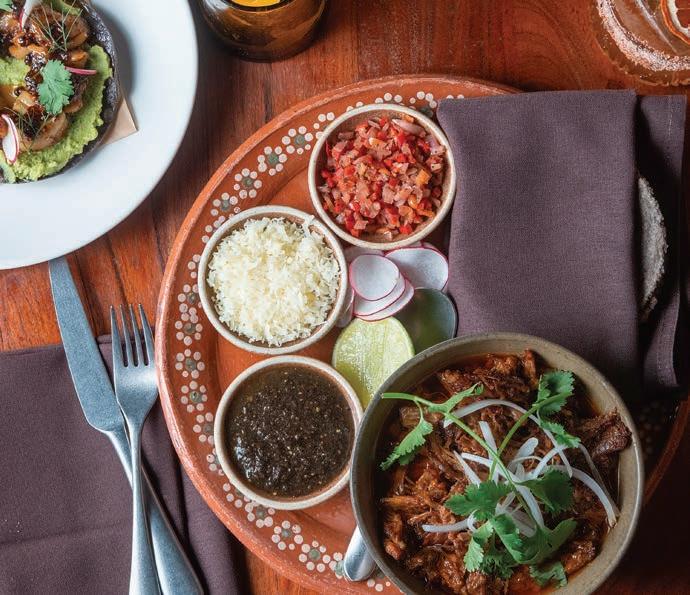
Easton, 614-927-1136; 1839 N. Pearl St., Campus, 614-923-3863; 457 N. High St., Short North, 614-869-0249. LD $
Osteria Pizzeria
The smell of house-made dough is one of the first things you’ll notice walking into Osteria, and the welcoming scent is just the beginning. From fresh pizzas to sandwiches and pasta—and a full bar—the restaurant offers a cozy space to indulge. 892 Oak St. Olde Towne East, 614-869-0119. LD $$
The Avenue Steak Tavern
Cameron Mitchell’s homage to the steakhouses of yore. The restaurant’s retro design and clubby atmosphere are teamed with a menu boasting all the classics: oysters Rockefeller, beefsteak tomato salad, creamed spinach, potatoes in all the steakhouse ways and, of course, numerous cuts of beef. 94 N. High St., Dublin, 614-591-9000; 1307 Grandview Ave., Grandview, 614-485-9447. D $$$$
Butcher & Rose
Cameron Mitchell gives the traditional steakhouse a bit of feminine balance with bright pink chairs and floral chandeliers in the Downtown restaurant located in the Preston Centre. The classic menu complements the modern decor, with steaks and chops taking center stage alongside lighter fare including seafood. 155 E. Broad St., Downtown, 614918-9819. LD $$$$
Eddie Merlot’s
This high-end steakhouse from Fort Wayne,
Indiana, offers a menu of prime aged beef and seafood, plus classics like chateaubriand and Steak Diane served tableside. As the name implies, wine takes top billing here. 1570 Polaris Pkwy., Polaris, 614-433-7307. D $$$$
NEW Losanti
This Italian steakhouse marks the first Columbus location for family-owned Cincinnati-based Crown Restaurant Group. Beef and pasta feature prominently on the menu, complemented by plenty of seafood appetizers, offering many options for different palates. 440 W. Broad St., Franklinton. D $$$$
Hyde Park Prime Steakhouse
Prime beef and an extensive wine list are the highlights at this high-end restaurant. Choose from filet mignon, New York strip, seafood or surf-and-turf combinations. 6360 Frantz Rd., Dublin, 614-717-2828; 569 N. High St., Short North, 614-224-2204; 1615 Old Henderson Rd., Upper Arlington, 614-442-3310. D $$$$
Mitchell’s Steakhouse
Now owned by Landry’s, Mitchell’s retains its high-quality cuts of beef and seafood, perfect for special occasion dining. 1408 Polaris Pkwy., Polaris, 614-888-2467. D $$$$
York Steak House
Head back in time at the last remaining location of this wonderfully retro (and affordable) steakhouse with a popular salad bar and homemade desserts. 4220 W. Broad St., West Side, 614-272-6485. LD $$ Mezcla
Story and photos by Tim Johnson
Local fiber and mixed media artist Char Norman’s love of nature started when she was a child on family hikes and camping trips in her home state of California. Forty years ago, she relocated to the Columbus region where she was immediately enthralled with the hardwood forests.
Norman still walks everyday collecting pieces of bark, branches, old hornets’ nests and anything she feels could add texture, color and meaning to her art. “The natural world is the most important thing; it has such an intriguing quality. It’s meditative and peaceful,” she says.
Norman worked as associate provost and dean of faculty at Columbus College of Art & Design and has now returned to her basement studio in Northeast Columbus to continue her art of combining elements together by hand. Shells, bark, branches and antlers share space with mason jars of dried flowers, looms and colorful yarns.
In addition to her multimedia pieces, Norman is an avid weaver and fiber artist. “My natural affinity for fiber is that it comes from bark. It’s an extension of the natural world.” ◆


Ceremony


THANKS TO OUR GENEROUS FUNDING PARTNERS, PELOTONIA IS ABLE TO DIRECT 100% OF EVERY PARTICIPANT-RAISED DOLLAR TO INNOVATIVE CANCER RESEARCH AT THE OSUCCC – JAMES.
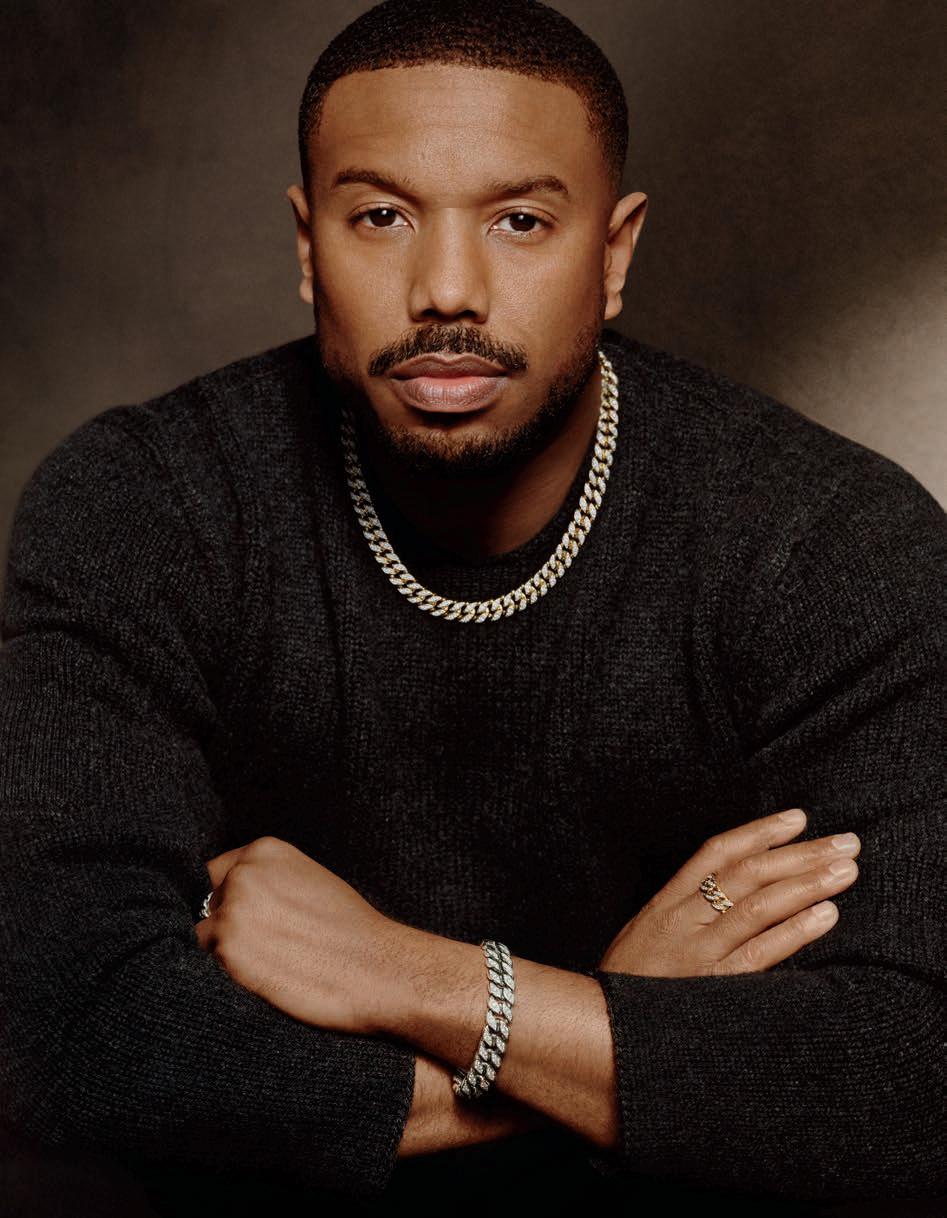
CHAIN