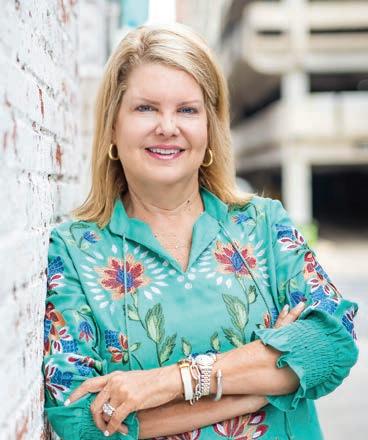
We have entered Spring-masgiving. That time of year where it feels like the holiday season with warm weather. The number of events in the Chattahoochee Valley seems to seriously pick up speed from February and as I write this it doesn’t look to be slowing down. I am slightly perplexed when someone posts a request for ideas of how to fill their day or weekend–check out our What’s Happening? Page. Seriously! Often, I find myself in a situation where I’m trying to decide on which event to attend on any given day and questioning if I have the energy. Our local chambers–Columbus, East Alabama and Harris County always have events lined up as well as helping to launch new businesses with ribbon cuttings. The excitement that there’s the momentum of growth here is palpable. Visit Columbus GA is a hub of activity of all the wonderful things happening here. In true Chattahoochee Valley style entertainment is a collaboration
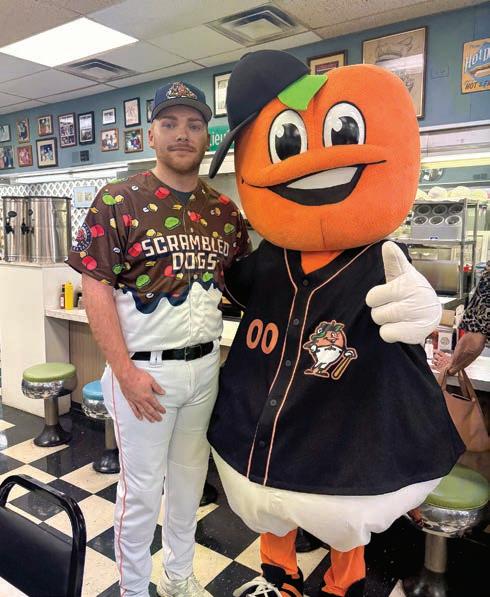
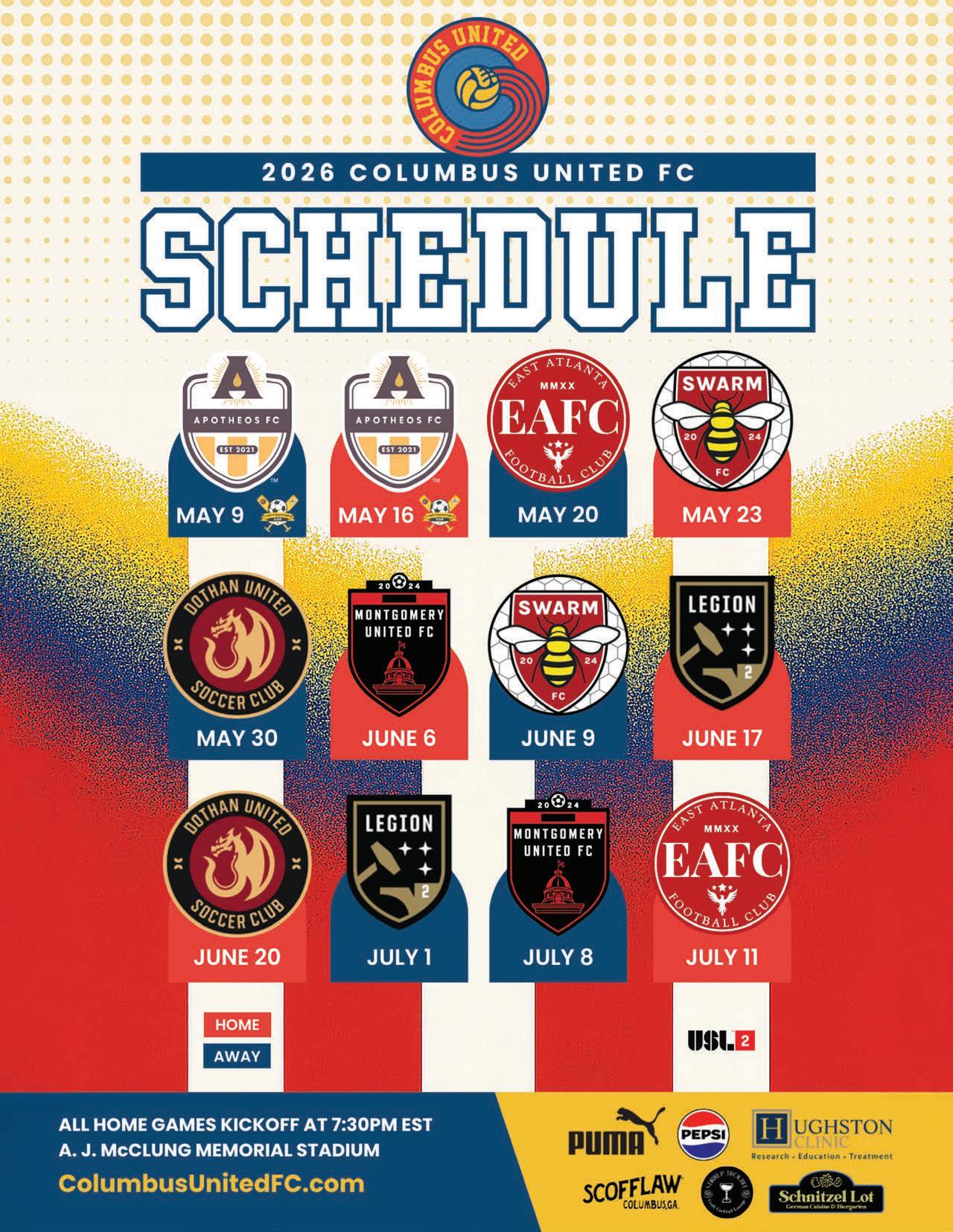
between the many entities that are here to bring the best of the Valley–it’s our signature style. Sports are a big part of our lives here in the Valley. The Clingstones are off to a running start with their much anticipated second season at Synovus Park. Now that the name Clingstones is a part of our vocabulary they threw in another local angle with a collaboration with one of Columbus’s iconic restaurants–Dinglewood Pharmacy. The ‘alternate identity’ uniform for select home games is a shirt depicting their famous scrambled dog with all the toppings! Columbus United FC is about to kick off their third season, and this year will literally be a feast or is that fest of soccer with the World Cup being played in cities in Mexico, Canada and the USA. The action isn’t far away with a few select game being played st Mercedes Benz Stadium in Atlanta—including a semi-final game. If you’re not heading to a game, you can join the international camaraderie and cheer on your country’s team at watch parties being held at Highside Market’s Daisy Park. You can gear up with a visit to the Columbus United FC new store located inside and you’ll be all set for the Summer of Soccer.
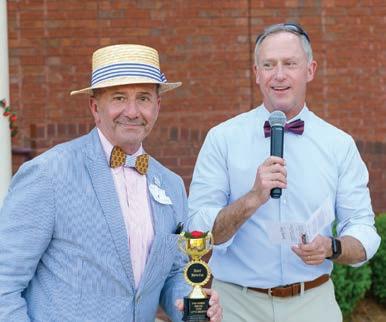
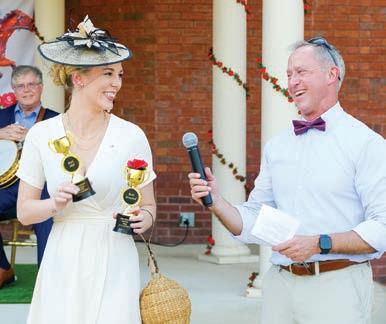
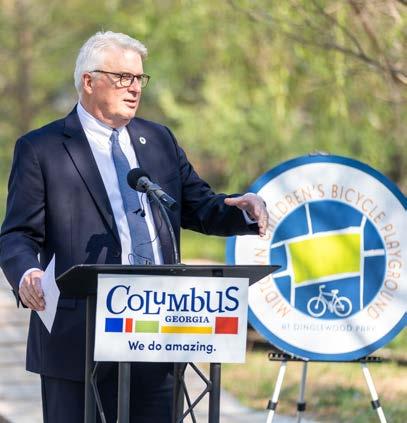
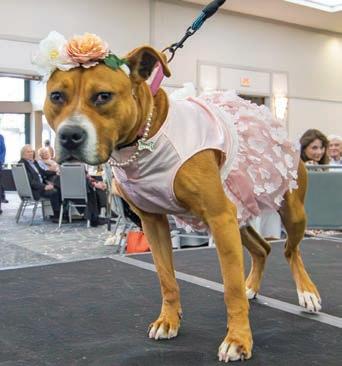
The Columbus Clingstones unveiled their 2026 alternate identity, the Scrambled Dogs at
I
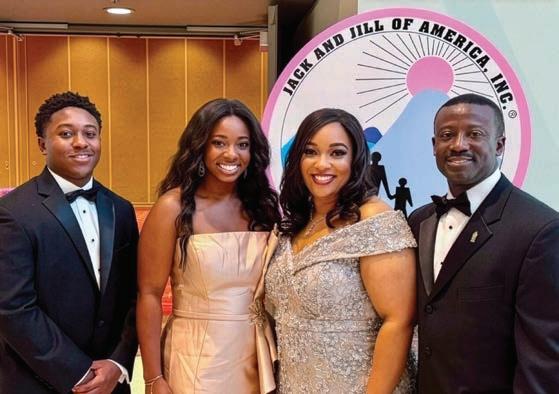
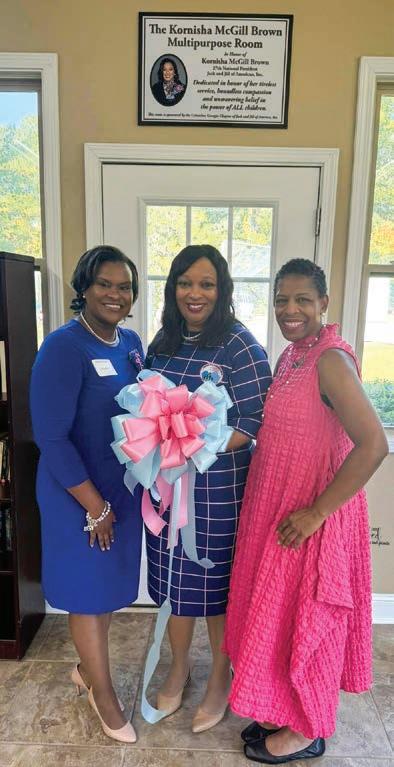
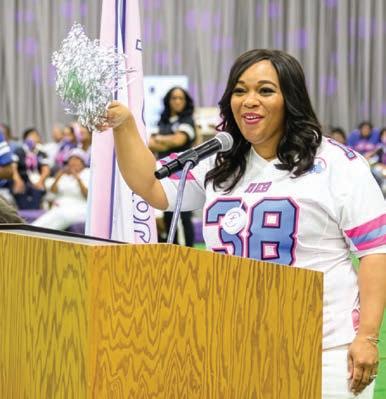
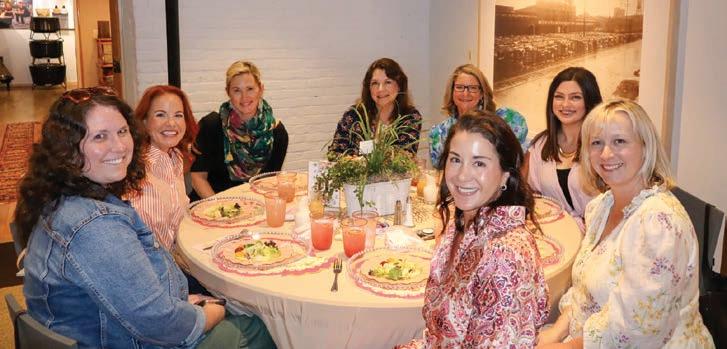
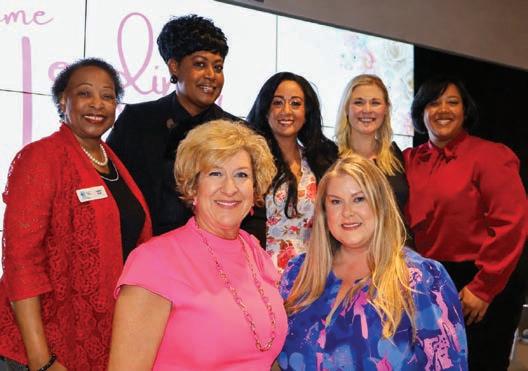
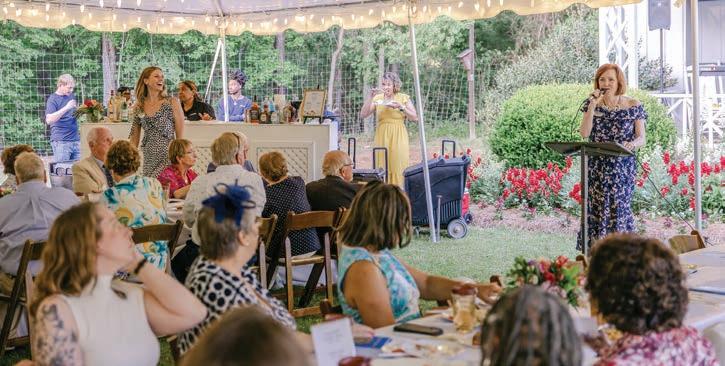
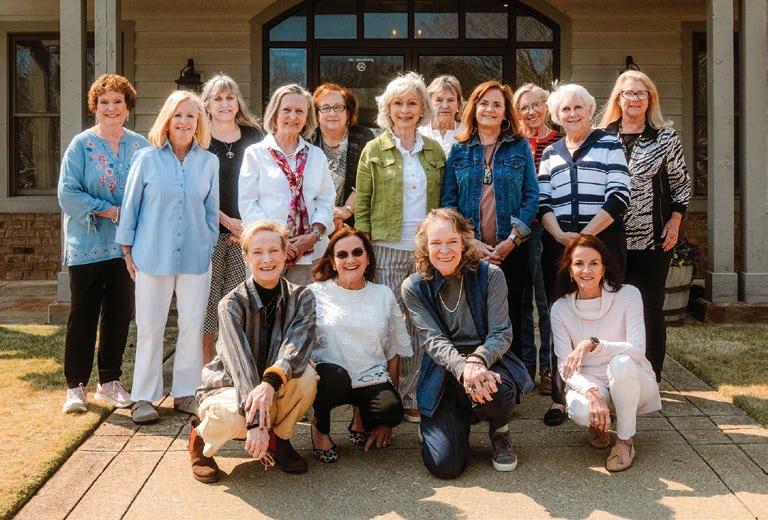
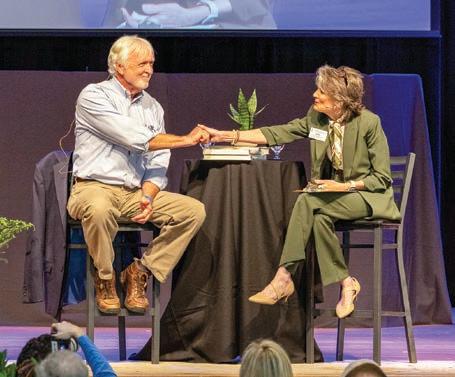
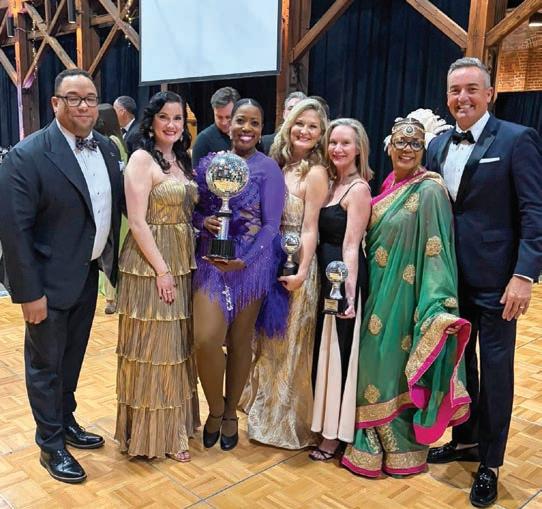
We enjoyed listening to an inspiring panel of women.
Navigating the social calendar is so much better when I get to bring along or support friends. Most of the time it’s my girlfriends. They’re women like me balancing business, jobs and a home life.
I’m living my mantra which is “it’s a blessing
to be busy.” I’m truly grateful to have the opportunity to not only work but exercise my social butterfly skills and share this philosophy with likeminded people. We’re delighted to toot the horn of all the great ladies who feature in this issue who are making a difference in our community and are gamechangers in their field of work in our Women at Work section.
I’m heading out of town soon, and it gives me a case of FOMO as I realize I’m missing yet another great weekend of things to do. But it’s good to garner a different perspective which is usually that right here in Columbus, we have it good, and it’s only going to get better. It’s all about perspective, right? What’s yours? We hope these pages of our magazine makes you proud of our town. While we have a percentage of magazines that are mailed out of state, the majority go out to readers in the Chattahoochee Valley. We aim to inspire all of our readers by continuing to share the stories of the people and places from our community.
Jodi Saunders Publisher/Editor
Dinglewood Pharmacy.
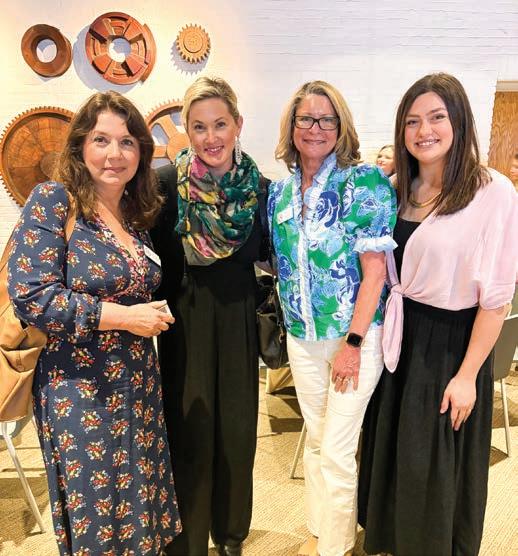
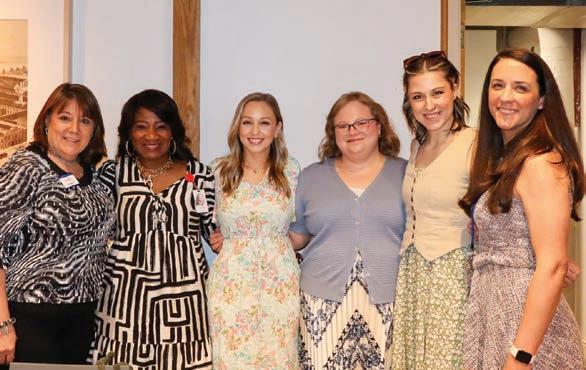
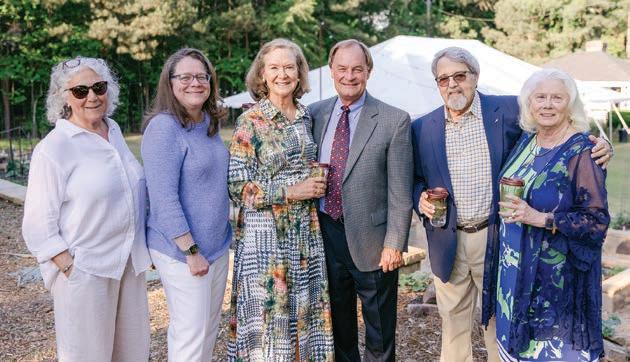
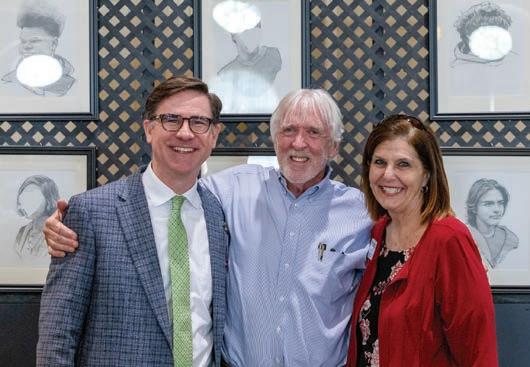
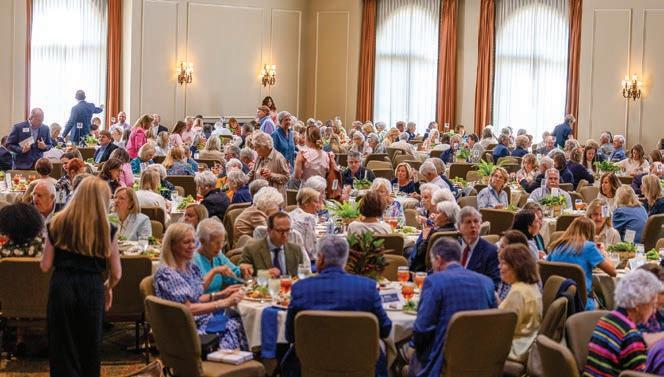
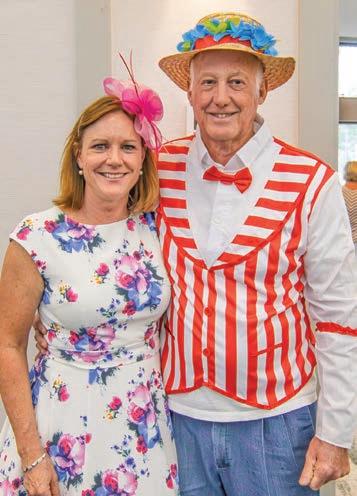
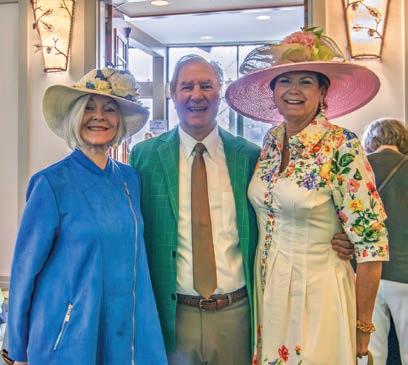
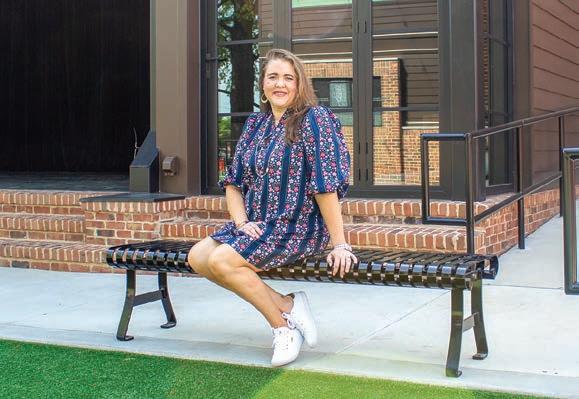
attended the East Alabama LEADing Ladies Luncheon with Brooke Neville, Becky Kenimer and Eleni Hitchcock.
Proud to be a local, independent small business in the Valley area for 30+ years.
We are happy to provide our publications for your events.
Gift a great read showcasing the best of our region.
Digital options available by request. Request at contactus@columbusandthevalley.com.
Please give 6 weeks advance notice
We want to hear from you! Share your stories and ideas with us. Our region is rich in its heritage, arts and culture scene, entrepreneurial endeavors and big business corporations. Everything is happening right here in the Chattahoochee Valley. Connect at contactus@columbusandthevalley.com.
OF
WHAT’S HAPPENING?
Ongoing
Uptown Market Days
NOW THROUGH AUGUST
Each Saturday, three blocks along Broadway host over 100 local and regional vendors. Visitors can expect to find fresh and organic produce, home goods, jewelry, unique crafts and delicious baked goods. Market Days is the perfect Saturday activity for family, friends and visitors. Don’t forget to bring your furry pals to get in on the fun.
AlwaysUptown.com
Vacationland at COMU
NOW THROUGH AUGUST
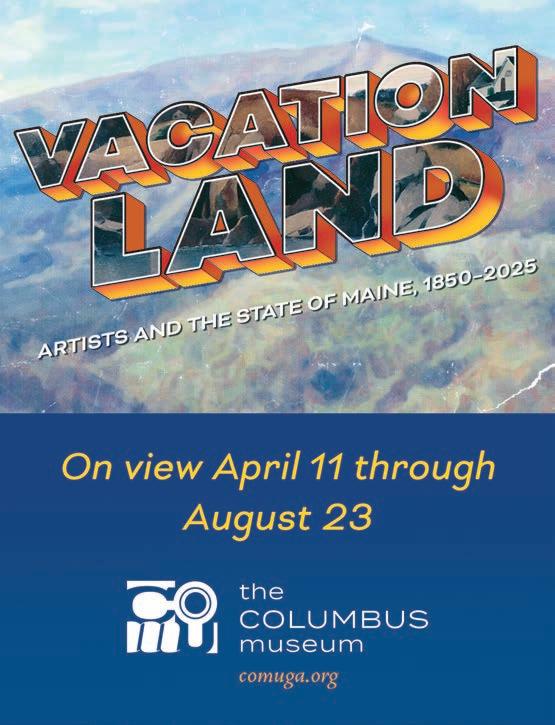
This permanent collection-based exhibition spotlights over 150 years of American artists with ties to Maine. The state’s varied topography and picturesque views have long enthused artists seeking new subject matter or escape from humdrum city life. COMUGA.org
Highside Market Farmer’s Market
SUNDAYS
Spend your Sunday afternoons at Highside Market exploring their Farmers Market — a seasonal showcase of locally grown goods and handcrafted flavors in the heart of Columbus.
HighsideMarket.com
May
Casey Joiner Housekeeping at The Do Good Fund Gallery
NOW-JUNE 6
Housekeeping is a record of the strange and nonlinear landscape of loss. Created over the past several years while navigating the long illness and eventual passing of her father in early 2023, these images by photographer Casey Joiner move between still lifes, interiors and portraits—both real and imagined— reflecting the distortions of grief and the fragile persistence of memory.
TheDoGoodFund.org/housekeeping-exhibition
Midland Commons Concert Series–The Active Ingredients
MAY 8
The Active Ingredients will be hitting the stage from 6:30 to 10pm, bringing a show that might just have a few side effects… like dancing, head banging, and singing at the top of your lungs. Bring your lawn chairs and enjoy the night.
MidlandCommons.com
Big Saxy at Highside Market
MAY 8
Grab a lawn chair and enjoy the smooth sounds of Big Saxy as he plays your favorite jazz melodies from 7 to 9:30 p.m. HighsideMarket.com
Crossroads Folk Art Festival
MAY 9
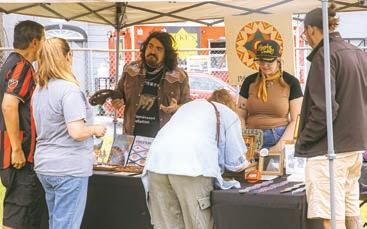
Hosted by the Columbus Collective Museums, this community festival brings together working folk artists, self-taught makers and traditional musicians from across the region for a full day of art, music and storytelling.
Tacos and Margaritas Festival at Columbus Civic Center
MAY 9
Enjoy delicious tacos, refreshing margaritas, live music and an outdoor festival vibe. Free tacos and margaritas from 1 to 3 p.m. while supplies last, so arrive early.
CivicCenter.columbusga.gov
Harris County Airport Open House
MAY 9
There’ll be plenty to see and do—free airplane rides, helicopter rides, inflatables for the kids, static airplanes, military displays, face painting, antique cars and local vendors. Explore the airport, meet pilots and experience the thrill of flight up close.
ExploreHarrisCountyGa.com/events
Sketching Under the Skylight at Bo Bartlett Center
MAY 14
Join other artists at this figure drawing series to catch the creative spirit while drawing under the Center’s skylights. This free event happens every second Thursday of the month and is open to all ages and skill levels. Please bring your own art supplies. ColumbusState.edu/bartlett-center/events.php
Columbus United FC’s First Home Game
MAY 16
Come cheer on Columbus United FC as they play their first home game of the season against Apotheos FC at A.J. McClung Memorial Stadium. ColumbusUnitedFC.com
Playing For Good: Rock & Soul Concert at the Rankin Courtyard
MAY 16
This unforgettable night hosted by The Loft brings together some of the region’s most talented musicians of many backgrounds for a powerful celebration of Georgia’s rich musical legacy, all in support of NeighborWorks Columbus. Doors open at 5pm and the concert begins at 6 p.m. TheLoft.com
Adult Book Fair at Scofflaw Brewing Co.
MAY 16
The 3rd Annual Scholastic style book fair for adults is hosted by Columbus Bound Bookshop. Set-up in Scofflaw’s game room—grab a drink and get your beach/summer/next book!
HighsideMarket.com
The Art of Watercolors at COMU
MAY 17
Unwind and get creative during this relaxed, hands-on watercolor workshop led by local Columbus artist Addie Newcomer. Enjoy an afternoon of painting paired with wine and charcuterie as Addie guides participants through techniques inspired by nature, texture, and vibrant color.
COMUGA.org
Highside Market’s Food Truck & Film Featuring Ferris Bueller’s Day Off
MAY 21
Bring a lawn chair from 6 to 10 p.m. and enjoy dinner and a movie at Highside Market!
HighsideMarket.com
Memorial Day Weekend at Callaway Resort & Gardens
MAY 22-24
Celebrate all weekend with beach activities, great food and drink specials, water recreation rentals and so much more!
CallawayGardens.com
Midland Commons Concert Series–Relative Sound
MAY 23
Settle in for a high energy night of rock covers, the kind you know by heart and can’t help but sing along to. It’s one of those nights where the music carries and the crowd follows Bring your lawn chairs from 6:30 to 10pm and enjoy the night.
MidlandCommons.com
Columbus Clingstones vs. Biloxi Shuckers at Synovus Park
MAY 29
Celebrate 80’s night with Clingstones baseball and fireworks to end the evening.
Clingstones.com
Barks and Blues Music Festival at Woodruff Park
MAY 29-31
This annual festival brought to you by Paws Humane is a community-centered event celebrating live music, local businesses and dog-friendly spaces. Designed as a laid-back outdoor experience, the festival brings together music lovers, dog owners and supporters of local vendors for a day of connection and entertainment.
PawsHumane.org/barks-blues-festival
June
Miss Juneteenth Pageant at Columbus Civic Center
JUNE 1
Crown new queens at the 2nd Annual Miss Juneteenth Pageant in Columbus presented by the Juneteenth Columbus Association, Inc. ColumbusGa.gov/juneteenth
The Big Run on Global Running Day
JUNE 3
Come celebrate this holiday with Big Dog Fleet Feet. The race starts at 6 p.m. at Iron Bank Coffee. RunSignUp.com/Race/GA/Columbus/ TheBigRunBigDogFleetFeet
Gary Allan at RiverCenter
JUNE 5
Gary Allan has spent decades carving out his own lane in country music with a sound that’s equal parts rugged, emotional and unmistakably authentic. After emerging in Nashville in the mid-’90s, he quickly became a staple of the genre with his signature raspy vocals and a catalog filled with heartfelt, lived-in storytelling.
RiverCenter.org
Columbus Lions Military Night at Columbus Civic Center
JUNE 6
Celebrate our military while watching the Columbus Lions Arena Football Team face off against the Carolina Predators at 7 p.m. ColumbusLions.com
Bridal and Wedding Expo at Columbus Civic Center
JUNE 7
The Bridal & Wedding Expo showcases an amazing selection of wedding professionals ready to help couples find the perfect gown, reception venue, invitations, photographer, music, menu, honeymoon destination and much more. CivicCenter.columbusga.gov
Eat Local Food Truck Fest at Bluebelle Local Mercantile
JUNE 13
Bluebelle’s annual Food Truck Fest celebrates it’s 10th year anniversary and will knock your socks off with a great selection of food trucks in our area! Come by to eat, shop and support local!
BluebelleColumbusGa.com
Second Saturday Tours at Historic Westville
JUNE 13
Come to Westville the first Saturday of every month for a 45-minute site tour led by their director of programs and education. These tours will provide a great overview of Historic Westville Village and are free with museum admission. The tour begins at the Thornton Visitor Center at 11 a.m. Westville.org
Tiny Stage Concert at Lakebottom Park
JUNE 13
Bring a picnic dinner and enjoy a concert al fresca happening from 5:30 to 7 p.m. at the Tiny Stage in Lakebottom Park in Midtown.
MidtownColumbusGa.org
Columbus United FC vs. Birmingham Legion FC
JUNE 17
Come cheer on Columbus United FC as they play against Birmingham Legion FC at A.J. McClung Memorial Stadium.
ColumbusUnitedFC.com
Highside Market’s Food Truck & Film Featuring Grease
JUNE 18
Bring a lawn chair from 6 to 10 p.m. and enjoy dinner and a movie at Highside Market!
HighsideMarket.com
Summer Night Market at Midland Commons
JUNE 20
Street Food Saturdays and Midland Commons are bringing you an Evening Market at Midland Commons from 4 to 8 p.m.. Enjoy the vibes with local market vendors, restaurants, food trucks and the TommyG’s outdoor bar—perfect for hanging with your crew. MidlandCommons.com
Columbus Clingstones vs. Rocket City Trash Pandas at Synovus Park
JUNE 26
Enjoy this Friday night baseball game followed by Synovus Park’s first ever post game drone fireworks show!
Clingstones.com
13th Annual Phenix City
Mayor’s Ball
JUNE 27
For over a decade, this extraordinary event has made a lasting difference by awarding over $1.2 million in scholarships, contributing $200,000+ toward dual-enrollment and giving $50,000 to nonprofit organizations throughout our community. With four endowments established at University of Alabama, Troy University, Tuskegee University and Columbus State University, the impact speaks for itself. PCMayorsBall.org
Romance Atlanta Writers and Readers: Columbus Georgia Edition at Columbus Trade Center
JUNE 28
At this in-person event, you’ll have the chance to mingle with talented authors, participate in engaging discussions and explore a wide range of romantic literary works. Discover the secrets behind crafting unforgettable love stories. ColumbusTradeCenter.com
Circa 1776: A Celebration of America250 at Columbus Museum
JULY THROUGH JANUARY 2027
The exhibition will bring together objects created around the time of our nation’s founding, offering an engaging look at early America through a mix of fine and decorative arts. Visitors will see everything from a Revolutionary War battle scene to portraits, medals, furniture, and everyday objects that help tell a broader story of the time. On July 9, 5:30–6:30 p.m., will be an Art & Patriotism Guided Tour led by Lucy Kacir, our Director of Education and Engagement to explore how American artists have used their work to celebrate, question and shape ideas of patriotism over time.
ColumbusMuseum.com
4th Annual 706 Day
JULY 5
Celebrate community at the 4th Annual 706 Day Festival—Cash Flow Cares brings Columbus alive with music, food, vendors and family fun with free admission for all ages (children accompanied by an adult) and plenty of opportunities to support local vendors and food trucks.
This free, family-friendly celebration honoring America’s 250th Anniversary will have historic reenactors, military displays, family activities & bounce houses, local food trucks, live entertainment throughout the day and wraps up with an unforgettable finale concert by military veteran and country music artist Keni Thomas. 10 a.m.-5 p.m.
NationalInfantryMuseum.org
Scan to submit your event, or see more events.
THE AMERICAN REVOLUTION LEGACIES IN THE VALLEY AREA
by Dr. Bryan Banks
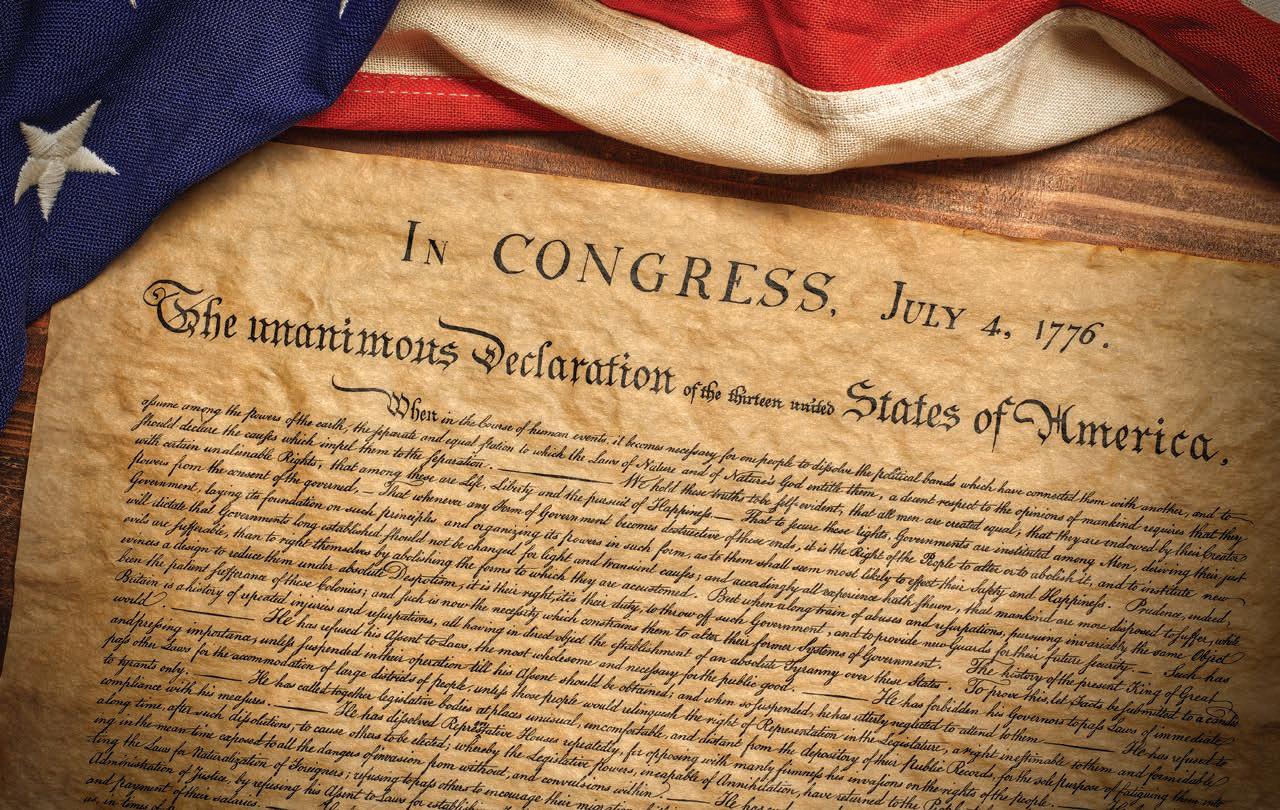
The United States of America is celebrating its 250th anniversary on July 4th. Drive around town long enough, and you will see flags with red, white and blue ribbon swooping around to make a “250” hanging from someone’s front porch. While Columbus was not yet established during the American Revolution, the conflict remains significant to the region. As we approach its anniversary, it’s worth reflecting on its connections to our community and how those ties have been remembered over time.
It should be stated plainly that Georgia was a borderland state during the revolution. Few significant battles occurred, but crops supported soldiers, and after the revolution ended, hundreds moved south and expanded into Georgia. This settling of the South led to the displacement of Native Americans as well. So, you might not see dozens of historical sites across the city like you would in Boston, but the revolution’s legacy is no less present.
MARQUIS DE LAFAYETTE
One of the most critical figures of the American Revolution has a connection to the area. Frenchman and U.S. ally, Marquis de Lafayette, made a celebrated tour of the United States in 1824-1825, and the bicentennial of that journey was commemorated in 2024-2025. His journey took him through 24 states, and he was met with much fanfare by those who waited to see him and who wanted to listen to his war stories. In Yorktown, he had become a celebrity, and only a couple of decades later, his public persona already carried with it the powerful symbolism upon which nations rest. Visitors wanted to hear stories about the drafting of the French Revolution’s Declaration of the Rights of Man and Citizen, which took inspiration from the Declaration of Independence. Lafayette traveled with son, Georges Washington de La Fayette, named after the first president of the United States and Lafayette’s battle buddy. The trip was nostalgic
for Lafayette, but also for those whose living memory of the American Revolution was disappearing in the 1820s.
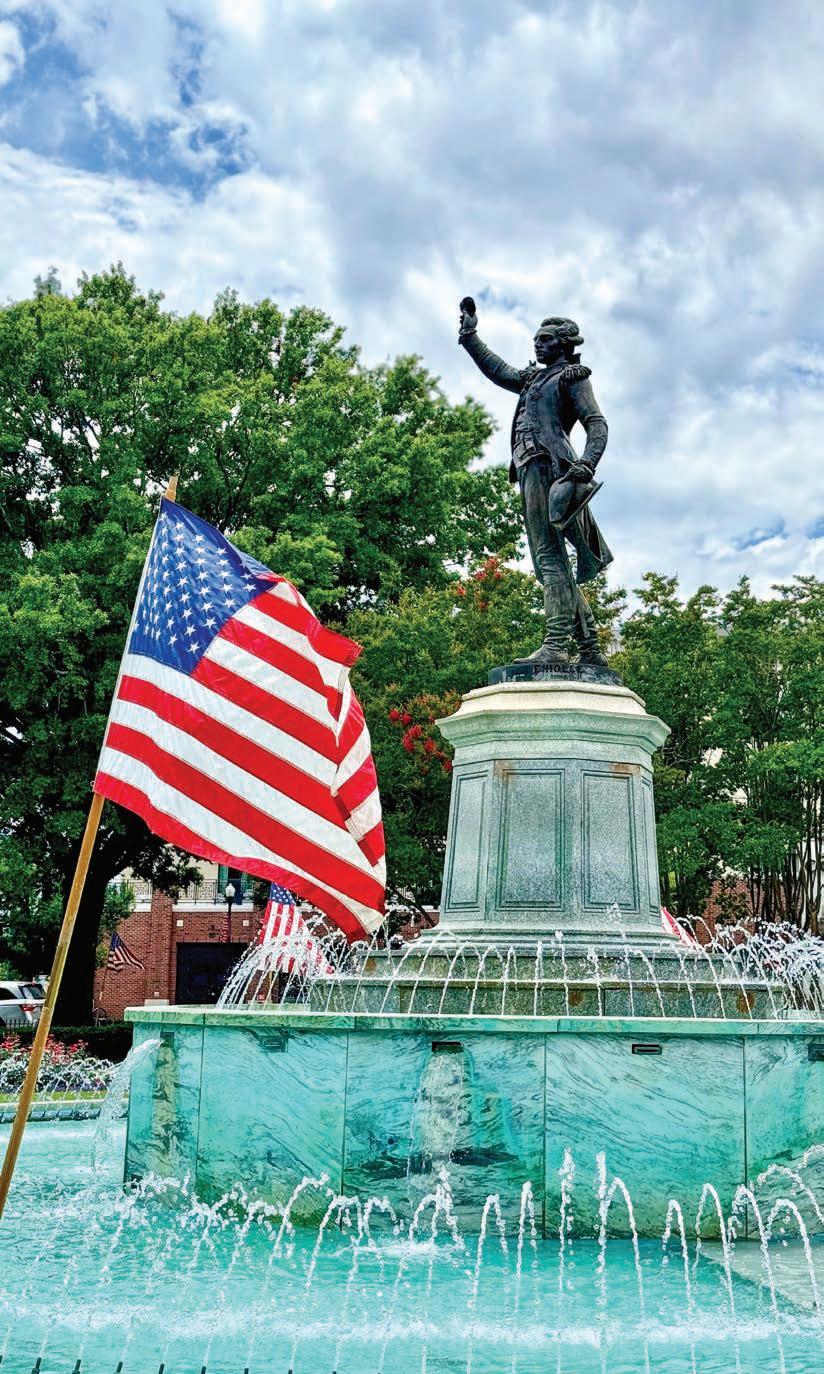
Just a decade later, Benton and Chattanooga, Georgia were combined and renamed LaGrange, Georgia, which was named after Lafayette’s wife’s idyllic country estate in France. Lafayette had commented on their similar geography when he traveled through the region in 1825. The statue of Lafayette that sits in the heart of LaGrange was first installed during the United States bicentennial 50 years ago.
At the height of the Cold War, the 1970s were a prime time for Georgians in the area to celebrate western democracy and the fight to preserve it against authoritarian regimes. The symbolism of Lafayette was an important form of political expression. And Georgia was not the only state to embrace Lafayette’s legacy. Around 36 American Cities and towns bear his name or reference his life like LaGrange.
SAMUEL COOPER
Linking the Chattahoochee Valley to the American Revolution can be done through other figures as well. Lafayette belongs in the pantheon of revolutionary leaders, but the revolution reached thousands of others, and their legacies are worth exploring, too. Samuel Cooper’s is just one example that touches the Valley.
In the 1980s, the Fountain City Civilian
The Marquis de Lafayette has been at the center of LaGrange’s town square since 1976. It is often surrounded with American flags during patriotic holidays.
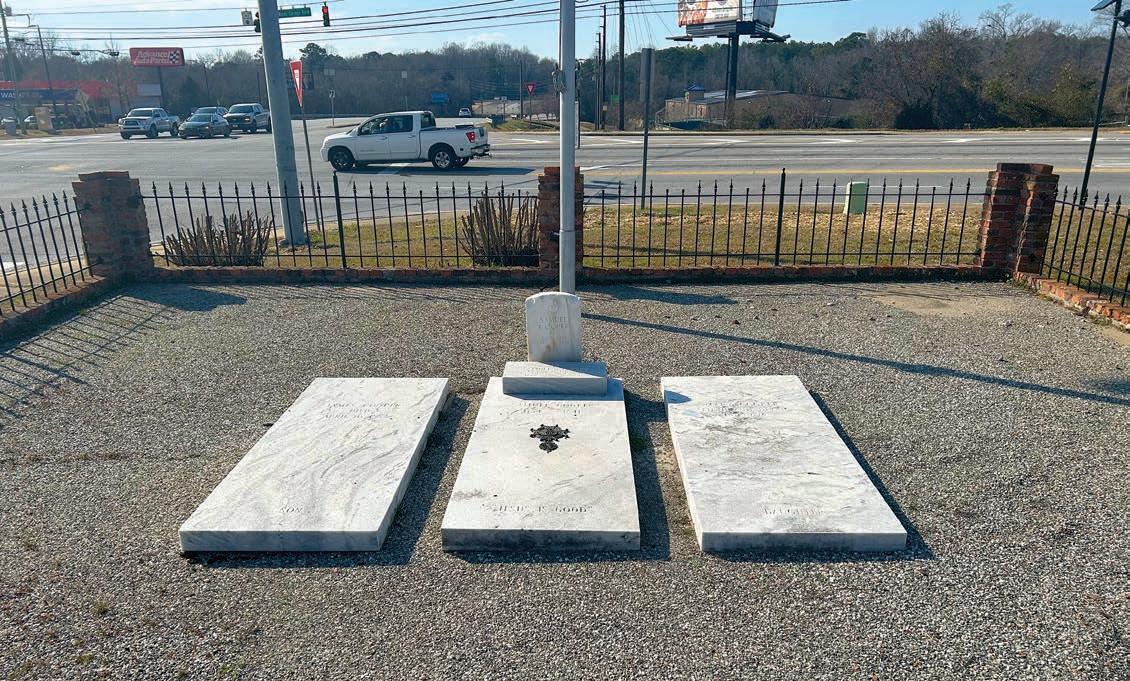
Conservation Corps removed a heap of kudzu to expose the grave markers of Samuel Cooper and his family at the busy corner of Miller Road and Warm Springs Road in Columbus. Nearby Cooper Creek Park bears his family’s name.
Cooper fought in key battles of Brandywine, Germantown and Stony Point. After the American Revolution, Cooper won a land lottery and moved to the area to claim his new homestead. In the 1827 lottery, he drew 202.5 acres of land. He died in 1841 at age 87 and was a member of the Methodist Episcopal Church. His Christian heritage is etched into his gravestone, which reads “JESUS IS GOOD.” He was buried on his small family plot, which later became a prominent corner taken over by nature. In many ways, Cooper’s gravestone makes a more legitimate spot for commemorating the American Revolution. An ordinary soldier’s final resting place speaks to the sacrifice of so many to establish this country.
The small cemetery was in shambles and shortly after the vegetation was cleared, a local community member stole the headstone from the spot. This begs the question: what do you do with a stolen grave marker from a local revolutionary hero? News spread quickly, and the headstone must have come to haunt its abductor because they returned it not long after. An inebriated night was blamed for the incident. My colleague made a joke that the thief must have been British, still lamenting the loss of the “American Rebellion,” as an ancestor of his would have called it. I like to imagine that the thief realized they had stolen a prominent symbol of the nation from the community.
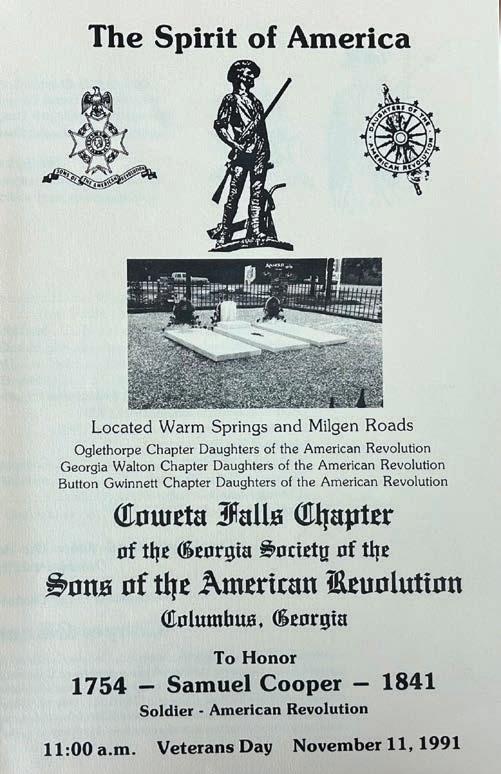
The Coweta Sons of the American Revolution and several local chapters of the Daughters of the American Revolution sprang into action. They spent several years debating with those in the neighborhood about who exactly owned the land on which the gravestones were situated. It also took them a while to get the funds to be able to rehabilitate and preserve the grave site. On Veterans Day in 1991, they commemorated, and in a way, reconsecrated the corner with the “Spirit of America,” as the program suggested. 1991 marked the 150th anniversary of Cooper’s death. I imagine the liberation and restoration of Samuel Cooper’s gravestone carried more weight as the Iron Curtain fell
LEFT: A pamphlet for the 1991 Veterans Day commemoration of Samuel Cooper’s death
BELOW: The busy intersection of Miller and Warm Springs Road is home to the final resting place of Cooper and many of his family members.
in Europe and Americans experienced the end of the Soviet Union and with it, their image of the Cold War. The owner of the property just next door marked Cooper’s death in their own way.
TREASURES FROM LOCAL ARCHIVES
The American Revolution’s legacy is easily traced through people, but it also lives on in artifacts. The other day, I played my favorite game with my colleagues at the archives and special collections at Columbus State University (CSU). I had been talking about the 250th anniversary, the flags I had seen around town, LaGrange to the north and the out-of-place grave of the American revolutionary hero on the street corner of Warm Springs and Miller Road. I asked, “What do we have in the archives that connects to the American Revolution?” Our archive associate immediately told me about the nearly pristine saddle atlas used by a British officer during the revolution.
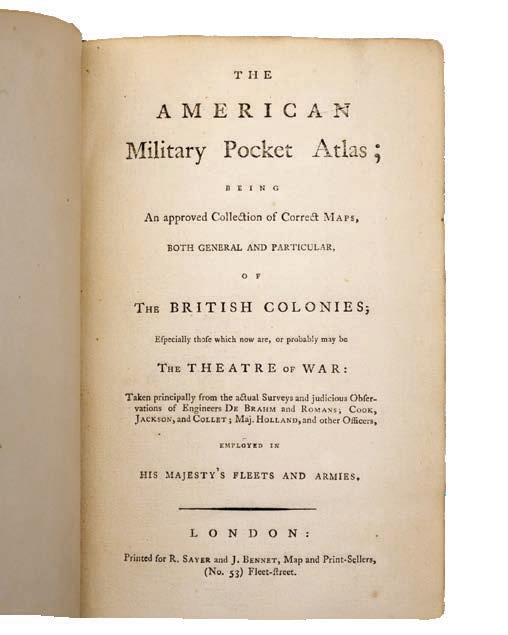
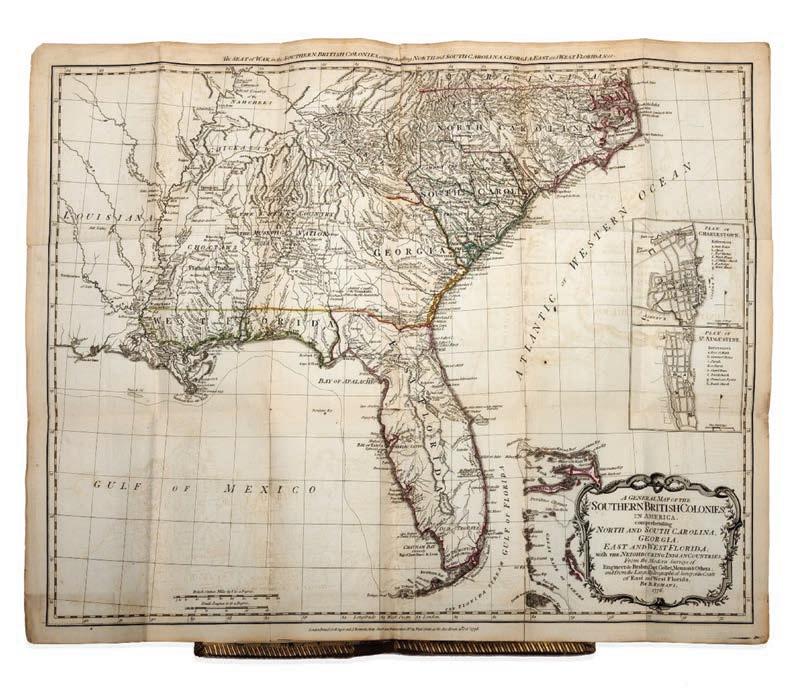
The atlas looks like a book from the outside, but once opened, unfolds into meticulous maps used by military men to move armies and move against one’s foes. Maps, like this one, were tools of power and war. A British officer would have understood this book as critical to military formations and travel. To an American, that map in the hands of a British officer was a threat. In the archives, the atlas comes to represent both of those perspectives, as well as a time capsule of the geographic knowledge of the time period. This saddle atlas is rare, and the fact that it has found its way into the CSU Archives is a story in and of itself. Artifacts of the revolution quickly became the stuff of collectors’ cabinets and archives. This artifact came to CSU as part of the Spencer Map collection, which is one of the most extensive map collections of North America.
The maps that Lafayette used to traverse the United States in 1825 looked a lot like this saddle atlas. I traced my finger along the lines and followed Cooper from Maryland to Stony Point, Brandywine, Germantown and then later in life to Columbus in 1827. I also traced Lafayette’s journey. This map would be lost to time if it were not for the work of our archivists. It could have just as easily been lost on a battlefield or turned to ash in a fire up north after Americans defeated the British in 1783. What are the chances that it would end up in the basement of the Schwob Memorial Library? Archivists, like the Lafayette urban designers or the Sons and Daughters of the American Revolution, shape our memory of the American Revolution by maintaining its material legacies.
A LEGACY TO CONTINUE
Anniversaries are less about the passage of time than about the questions we bring to the past. The Bicentennial in 1976 emerged from a nation reeling from Vietnam, Watergate and the nuclear doom the Cold War threatened, searching for reassurance in founding ideals. The 250th arrives in a different moment, one marked by debate over the meaning of democracy itself, the place of the United States on the global stage and how our citizenry should remember and tell our story as Americans.
Every one of us is a caretaker of the American Revolution’s legacy. We preserve its artifacts. We remove kudzu from corners and restore gravestones. Commemoration is important because it connects us to the past. Those people who stood on the corner from the Sons and Daughters of the American Revolution sensed it as they honored soldier, Samuel Cooper. The city planners of LaGrange chose to place Lafayette on a pedestal and at the center of the town square. Don’t let the 250th anniversary pass by without being a good caretaker. Fly your 250th flag and tell others what the American Revolution means to you. We, as Americans, have been doing this work since the American Revolution itself. And in doing so, the legacy of the American Revolution continues to grow and evolve.
As a historian, I always look to tell the story of the past as accurately as possible, but I appreciate how we tell stories of the past too. I hear stories all the time, but I also see them in the region itself. This column will be a place to reflect on our past and how we tell stories about the past. Those stories often begin with “back in the day.”
Check our What’s Happening section on page 13 to join local America 250 events.
Barnes & Noble
Columbus Park Crossing 5555 Whittlesey Blvd. Columbus, GA 31909
The Cat’s Meow 137 Main St. Pine Mountain, GA 31822
Columbus Bound Bookshop 1328 13th St. Columbus, GA 31901
Columbus Collective Museums 3218 Hamilton Rd. Columbus, GA 31904
Columbus Museum Gift Shop 1251 Wynnton Rd. Columbus, GA 31906
Dinglewood Pharmacy 939 Wynnton Rd. Columbus, GA 31906
Durham’s Pharmacy 1420 17th St. Columbus, GA 31901
Galleria Riverside 1658 Rollins Way Columbus, GA 31901
Judy Bug Books 1033 Broadway Columbus, GA 31901
Piedmont Columbus
Regional Midtown Gift shop 710 Center St. Columbus, GA 31901
Piggly Wiggly
5850 Moon Rd., Columbus 4916 River Rd., Columbus 1359 13th St., Columbus Stadium Plaza, Phenix City
St. Francis-Emory Healthcare
Nancy Saunders Gift Shop 2122 Manchester Expy. Columbus, GA 31904
Whitewater Express 1000 Bay Ave. Columbus, GA 31901
If your business would like to be a vendor, please email ContactUs@ColumbusAndTheValley.com
A pocket atlas from Revolutionary War times reveals detailed maps of the colonies.
WOMEN @ WORK
There is no field in the Chattahoochee Valley where women are not making their marks. From business owners to college presidents, C&V is proud to profile some of these movers and shakers on the following pages.
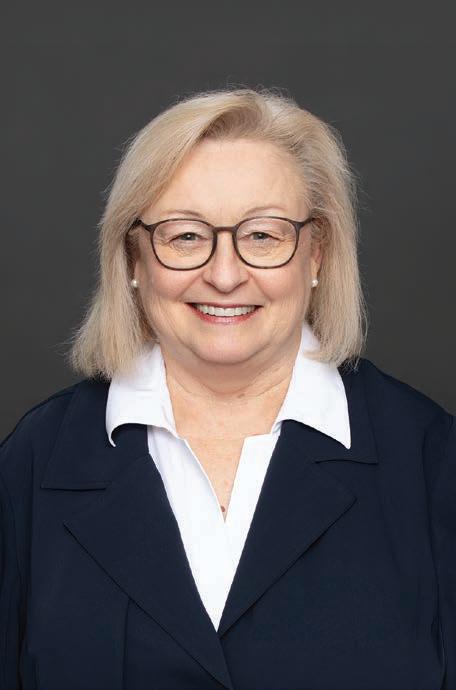
Lanie Morris, PHR
Owner , T he HR Office
It was while working for Dr. William Harper at the Urology Center of Columbus, creating the company’s first human resources (HR) department, that Lanie Morris found her true passion.
“My absolute favorite thing is employee appreciation,” Morris said. “Appreciated, happy employees work harder than those that feel they aren’t valued.”
While with UCC for eight years, Morris earned her bachelor’s degree in HR and obtained both her Professional in Human Resources (PHR) and SHRMCP certifications. She then transitioned to managing dermatology offices, where she then achieved her masters’ degree in management and leadership.
In 2025, after seven wonderful years with Dr. J. Nicole Flandry at Skin Cancer Specialists in Brookstone, Morris decided it was time to start her own HR company, founding The HR Office. “My goal is to help both businesses and employees achieve their potential and ease the stress of handling HR challenges alone,” Morris said. “I decided to start my own HR consulting company to help as many individuals and businesses as possible.”
In her experience, Morris knows that HR can be rewarding but can also lead to costly penalties if
not done correctly. Unfortunately, most businesses can’t afford to employ their own HR staff.
“That’s where we step in,” she said. “We help set up policies, training programs, personnel documents, onboarding procedures, OSHA compliance and much more. We can handle one-time setups or remain on standby to provide document updates when laws change, assist in resolving your employee concerns and give access to services such as notary work and direct hire assistance at discounted rates.”
Clients who contact The HR Office often don’t know where to start.
“They might have an employee issue and need guidance on how to discuss it without creating legal issues,” she said. “Perhaps they want to implement some structure and need to know the state and federal law requirements.”
The HR Office provides:
• employment law compliance review
• performance management
• HIPAA compliance training and prep
• employee appreciation
• disciplinary action and guidance
• employee trainings
• manager and leadership training
• employee satisfaction surveys
• crisis management and conflict resolution
• job description development
• complex employee relations,
• workplace investigations
• termination strategy and support
“We try to be the go-to for a lot of your business needs,” Morris said. “A one stop shop.” Adv.
6361 Talokas Lane, Suite C140, PMB 250 706-505-5315 • theHRoffice.org
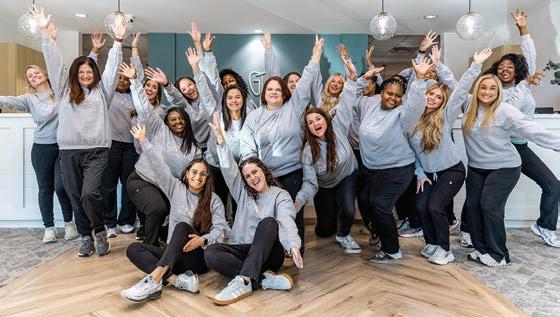
Dr. Devon Paris
Dentist/Owner , Gentle Dentistry of Columbus
After purchasing Gentle Dentistry of Columbus in the Fall of 2018, Dr. Devon Paris has been driven by a singular purpose—to create a place where every patient feels at ease. The name of Dr. Paris’ practice is the very embodiment of that goal—Gentle Dentistry of Columbus. However, her vision doesn’t end with the name of her practice.
“I care so much about my patients that owning the practice outright was very important to me because I can ensure the customer service and family-like atmosphere stays—no one will feel like a number,” Dr. Paris said. As a result, she chose to invest in her patients and hometown. Since 2018, she has owned 100% of her practice—a rarity nowadays as private equity firms are increasingly buying up local dental offices. “We all truly want our patients to feel the same warmth and joy as visiting a cherished relative they see every so often but always look forward to. Also we hope for them to leave feeling heard, and with a smile on their face, having shared a laugh or two.”
“As we continue to cater to the community, grow and evolve,” she said, “we recognize the importance of broadening our perspectives, enhancing our expertise and ensuring that we are always available to see the needs of our patients.”
Gentle Dentistry of Columbus provides:
Crowns and Bridges: These preserve and restore the structure of your teeth to improve a tooth’s appearance and help prevent cracking.
Cleanings and Exams: Hygienists evaluate your dental health, provide the appropriate cleaning and educate patients on proper technique and gum disease, then the dentists come in to check teeth for cavities.
Restoring Implants: Placing crowns or bridges on top of implants in order to create an aesthetic and functioning smile after teeth were extracted.
Hybrids: Removing all teeth on an arch when those teeth are not fixable and replacing those teeth with a brand new set—color of tooth, shape
of tooth, size of tooth to your liking. These are fixed to implants under your gums and do not have to be removed at night. This type of appliance is the closest thing we have currently to natural teeth.
Fillings: Tooth colored fillings restore the tooth to a healthy state once a cavity is removed, and leave it looking like nothing ever happened.
Sealants: One of the most valuable preventative tools in dentistry. It keeps teeth healthy without removing any natural tooth structure. Sealants are just painted into the deep grooves on the chewing surfaces of teeth, so when you eat, nothing gets trapped down in there to create a cavity. Extractions: Tooth removal due to cavities, trauma, or crowding.
Teeth Whitening: The cosmetic procedure that lightens the color of teeth. This can be done on the outside of natural teeth and on the inside of teeth with root canals.
Options for teeth whitening:
• Take home trays: These custom whitening trays fit into your teeth's specific nooks and crannies to better whiten those stubborn areas.
• Opalescence GO! Kits: These kits are a step above what can be bought on the shelf. They will help whiten quicker.
• Internal bleaching: If you have a dark colored tooth that has had a root canal, you could be a candidate for this. Whitening gel is placed inside your tooth and you are given a single tooth-whitening tray to whiten the outside of the tooth as well. By lightening from the inside and outside of the tooth at the same time, it will bring that tooth back to the shade of your surrounding teeth.
Gentle Dentistry holds itself up to the highest standards, meaning every provider shares an unwavering commitment to patient well-being while having a gentle spirit. “From the moment patients step into our practice, they will be met with the same warmth, expertise and attentiveness that have defined our approach for over 30 years in the community.”
Dr. Paris, Dr. Yaseen, and the entire Gentle Dentistry team are deeply committed to their patients, ensuring they continue to receive the outstanding care they deserve, “with expanded perspectives, greater experience and a deeprooted dedication to service.” Adv.
Contact Dr. Paris
New Patients: 706.321.4330
Existing Patients: 706.322.6551
500 Brookstone Centre Pkwy., Bldg. 300 gentledentistryofcolumbus.com
Rhonda Eysel
President & CEO , Master Kleen Dry Cleaners
Rhonda Eysel’s career at Master Kleen Dry Cleaners essentially started when she was around 12 years old. Her father, Warner Wade, started bringing timecards home each week and asked her to add each employee’s weekly hours.
“So, it all kind of started there and just escalated,” Eysel said.
Then, in the summer of 1988 when she was 15 years old, Wade called the house and asked if Eysel could come up to the cleaners and bag clothes because the bagger—the person who bags the laundered garments—needed to leave early.
“Well, she never came back, so I bagged clothes the rest of the summer until school started back.”
Master Kleen Dry Cleaners was founded in 1969 by Rhonda Eysel’s grandfather, J.W. Wade, with one pledge in mind: “To exceed our customers’ expectations by providing the highest quality in clothing care along with exceptional customer service with every single experience.”
It’s a pledge Wade’s granddaughter and Master Kleen CEO, Rhonda Eysel, continues to uphold.
“Our mission and promise remain the same as when my grandfather started the business,” she said. “We have maintained our high standards of quality in both product and service by becoming involved with all aspects of our business and understanding the needs of our customers.”
Master Kleen remains a family affair with Rhonda serving as the president of Master Kleen, and her husband, Chris, supervising operations and plant management. Master Kleen Dry Cleaners has three locations in Columbus, one in Phenix City and was recently awarded a contract for two new dry-cleaning stores located at Fort Benning.
Through her 25 years as CEO, Eysel has honed a particular approach to dealing with her employees.
“I would say my management style is more coaching than anything,” she said. “I like to develop our team members and put our aces in the right places.”
Despite being a part of a third-generation, family-owned and operated business, Eysel once harbored other dreams.
“As a child, I wanted to be a teacher,” she said. “But as I got older, working in the family business, I realized my parents really needed my help. So, I decided to stay home and work in the family business while going to school at Columbus State University.” There, Eysel earned a degree in business management.
Master Kleen Dry Cleaners is Columbus’ only Certified Sanitone Master Drycleaner, meaning it maintains the purity of its cleaning solution and adheres to rigid distillation requirements. Sanitone’s unique process enhances the color, texture and feel of clothing.
Master Kleen also provides:
• DRY CLEANING: Staff have been trained in the use of cleaning solutions for spot cleaning and will give garments the utmost care. Dry cleaning involves many different processes, and its expert staff is skilled in those areas.
• EXPERT STAIN REMOVAL: Skilled and trained “spotters” are your clothes’ best friend.
• ALTERATIONS: Experienced tailors can alter new outfits, and fittings are scheduled at your convenience during business hours. If the alteration is a simple hem or cuff and is marked, garments can be dropped off at the nearest location.
• PICKUP/DELIVERY: Staff will pick up and deliver to homes and offices at no extra charge.
• HOUSEHOLD ITEM CLEANING: Facilities are well equipped to also service comforters, bed sheets and dust ruffles. Have an event and need your linens cleaned and pressed? Master Kleen is there for you whether it’s a caterer, country club or the hostest with the mostest.
Master Kleen also supports those within the community who need it most. For example, they offer to dry clean outfits at no charge for those who are unemployed and preparing to go on a job interview.
“We believe having cleaned and pressed garments,” Eysel said, “helps boost confidence and also makes a great first impression.”
Master Kleen also participates in a coat drive with WTVM every December and January during which they clean gently used coats and deliver them to the Valley Rescue Mission.
Master Kleen is not just a chain of stores; it is a member of the Greater Columbus community.
“Our business is about building relationships with our customers,” Eysel said. “We want to build trust and let our customers know that we care and they’re part of the family. At Master Kleen, every garment has a story, and so does every customer. We’re here for both.” Adv.
Contact Rhonda 706-323-7774 • MasterKleen.net
Martha Ann Todd
President
, Columbus Technical College
For Martha Ann Todd, president of Columbus Technical College, the school’s mission is clear—to develop the workforce our community needs.
“That’s our primary focus in terms of providing education and training,” Todd said. “That’s our promise to the community that we’re going to provide that workforce. We do that by making sure that our students have the opportunity to get the education and training they need so that they’re able to get a job first and build a career.”
Serving as Columbus Tech president since 2019, Todd’s leadership style is to support the college’s faculty and staff.
“My role is to provide support for all the teams that we have working here to make sure that they have what they need to do the jobs that they’re charged with doing and be successful in supporting our students,” she said. “My job is also to build relationships and be an ambassador for the college to the community.”
A major initiative Todd and Columbus Tech have undertaken is the Ralph Puckett Workforce Development Center. Known simply as the “Puckett Center,” it will serve approximately 2,300 service members who exit Fort Benning annually, connecting them with training and potential employers.
“The Puckett Center is essentially a purposebuilt hub for students and employers,” Todd said. “That will serve veterans, exiting military service members, military spouses and community members, giving them access to Columbus Tech educational programs located in South Columbus right outside the gates of Fort Benning.”
It will also focus on the South Columbus community, which has high poverty levels and many veterans. Todd is actively building partnerships with employers who will need this trained workforce. Individuals who come in the door of the Puckett Center will have all the support that they need to figure out the pathway, either from military service or as a military spouse to develop skills.
“Our goal is to connect those through the Puckett Center with the training and skills that they might need and an employer that needs to hire them with those skills and training,” she
said.” We’ll also be looking to align as much as possible with skills they’ve already earned, whatever their MOS is while they’re in service.”
The ultimate hope is that the Puckett Center has the opportunity to strengthen Columbus Tech’s impact within the community.
“Our target is to retain military talent here in Columbus,” Todd said, “to strengthen the regional workforce to drive economic mobility, honoring military service through positive outcomes for those families.”
Columbus Technical College has been formally recognized by the State of Georgia as a Purple Heart College, honoring the institution’s commitment to supporting veterans, active-duty service members and Purple Heart recipients through education, workforce development and community engagement.
grow in Columbus. That is a huge benefit to this program.”
Additionally, the college received state funding to develop an aviation maintenance technician program, which will take two to three years to implement. This FAA-regulated program will serve Pratt Whitney’s workforce needs, offer high-paying jobs and attract exiting military personnel.
“We actually were able to get some funding in the state budget this year to help us get started to develop an aviation maintenance technician program here in Columbus,” Todd said. “That’s a really big deal and something that we are very excited about. It’s a long-term project to build the facility, get the equipment and instructors in place. And it’s a highly regulated program … which is clearly a very good thing.”
Having the aviation program offers a tremendous opportunity, especially for nearby Pratt & Whitney
“It’s going to, one, meet great workforce needs for Pratt Whitney, which is a huge employer in our community,” Todd said. “We want to support them to continue their operations here in Columbus and continue to have opportunities to
Jobs within the aviation field are generally high paying for those who complete this program. “So, it will be a great economic opportunity for individuals who live in Columbus and want to participate and take advantage of that.”
Columbus Technical College opened its doors on December 1, 1961. There were seven instructors, 39 students and eight academic programs. At that time, the school was known as the Columbus Area Vocational-Technical School and operated as a unit of the Muscogee County School District. Expansion came with a $500,000 addition completed at the Manchester Expressway facility in July of 1967.
Columbus Tech is planning to commemorate its 65th anniversary, marking decades of community service and workforce development.
“We’re going to really roll out some great celebration opportunities in December,” Todd said. “It will be special..” Adv.
Learn More About Columbus Technical College
928 Manchester Expressway 706-649-1800 ColumbusTech.edu
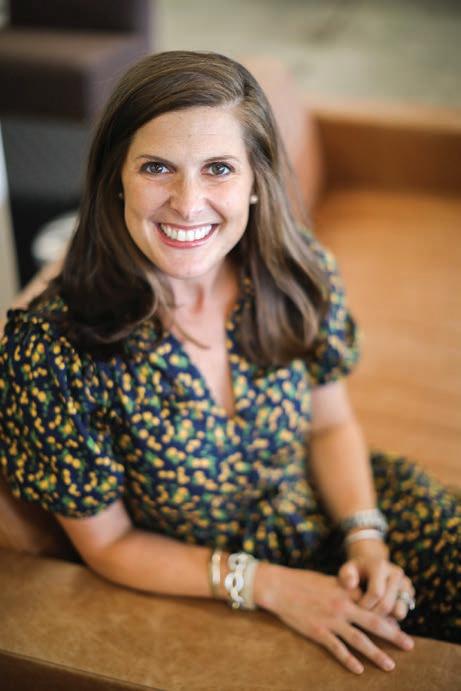
Driven and collaborating. Those are the words Libba Dillon believes that customers and colleagues alike would use to describe her. Chances are, they’d be right. Since 2009, Dillon, 38, has worked for Columbus’ Malone Office Environments, assisting local companies, ranging from Piedmont Columbus Regional and Mercer Medical School to W.C. Bradley Co. and Synovus, creating workspaces that perfectly wed form and function.
It’s a career—a talent—Dillon learned at an early age. “I think it goes back to my grandmother and the way I grew up,” said Dillon, who is the head interior designer and sales executive of furniture sales at Malone. “When I was growing up, I loved watching my grandmother, especially decorating her house and how she set up her house for entertaining. It really inspired me to want to do that for myself.”
However, interior design for businesses was not how Dillon envisioned her career playing out. “I sometimes laugh when I think back to graduating from college,” said Dillon, who graduated from Auburn in 2009. “I thought I was going to be doing high-end residential and didn’t put much thought into the commercial side of the industry.”
However, Sam Buracker, owner of Malone Office Environments, took a chance on her, offering her a job even before she’d graduated from Auburn’s design program. “He hired me without me knowing anything about office furniture, and now I feel like I could write a book,” Dillon said.
Buracker recognized talent when he saw it. “She just has a knack, she has good taste, just has an eye for it,” he said. “She never lets the customer down, which builds loyalty. Then ultimately, they like to buy from her, which keeps them coming back.”
In addition to her skills as an interior designer, Dillon is also a great salesperson, who works well as a member of the Malone team. “It is also very rewarding when I get to work on projects that have a substantial impact on improving the community of Columbus.”
“Amazing,” Buracker said. “She’s played a great role in helping me grow the business. She comes in every day with a great attitude and is just a pleasure to work with.”
But that’s not to suggest that even a job she loves doesn’t come with certain challenges. “One of the most challenging parts of working at Malone’s in our role in the furniture department is trying to get the word out there that they can purchase the same thing from us,” she said. “We can help you create your space locally versus competing with the Amazons of the world.
“Malone Office Environments has been around for almost 100 years, and just celebrated its 90th year, and we are constantly evolving to try to keep up and compete with the internet because it has changed the entire business.
“There are so many details that it is so easy to make mistakes if you are not paying close attention,” Libba said. “Also, the logistics can be challenging when you have an install, and ordering from multiple manufacturers, you have to make sure all those dates align to have the perfect outcome.”
When it comes to her favorite part of the job, for Dillon it’s all about the end result. “I find a lot of joy collaborating with different designers, architects and clients,” she said. “Planning a project and finally seeing it come to life is a great feeling.”
Dillon lives in the very same house that her grandmother once took such pride in decorating. When she’s not at work, she is all about spending time with her husband, Will, two boys, Wells and Graves, and dogs, Piper and Ellis. They are the fourth generation of her family to call Overlook home.
That’s just a microcosm of the deep roots that Dillon has within the community, and they extend into everything she does.
In addition to working at Malone and owning Park Place Interiors in Midtown, Dillon has invested in Fountain City Coffee, owned with her brother, Jud Richardson, and Libba’s husband, Will, and also owns an offshoot of Malone’s that specializes in floor coverings. As a result of
all her endeavors, Libba was named the 2022 Entrepreneur of the Year by the Columbus Chamber of Commerce.
In October 2021, Dillon was named one of Columbus and the Valley’s Five Under 40, and in October 2024 she was named as a Brookstone Distinguished Alumni.
She’s also involved in local fundraising efforts for MidTown Mingle, Steeplechase and Brookstone School. In the Spring of 2024, she was a dancer for the local Alzheimer Association’s Dancing with the Stars fundraiser, where she raised the third highest amount of $47,415. She was dancing for her paternal grandmother who had Alzheimer’s.
“I LOVE COLUMBUS!” she said. “I grew up in the same neighborhood where I am currently raising my children. I grew up with both sets of my grandparents around the corner.
“I went to Brookstone from 4K through senior year and developed very strong relationships with my classmates—many of whom have moved back to Columbus. We are still close and now raising our own children together.” Adv.
Contact Libba
706-322-2513
1345 13th Ave. MaloneOffice.com
Tammy C. White
Branch
Manager , G uild Mortgage
Tammy C. White has had a special interest in the real estate industry for years. While watching her mother’s success as a realtor for 49 years, White is not only familiar with the field that she has chosen for her career path but is chartering her own success story.
She serves as branch manager for Guild Mortgage’s A Team in her hometown of Columbus. “I saw firsthand how meaningful homeownership is,” White said, “It’s important to have trusted professionals guiding people through the process.”
In a previous career, White developed accounting software for auto repair businesses, which might come as a surprise to her coworkers. “Because I’ve spent 24 years in lending and leadership, people do not always expect that I have had that kind of technical background,” White said. “It has given me a strong foundation in numbers, detail and problem-solving that still helps me every day.”
Her accumulative experiences make for a career in lending a natural fit. “It allowed me to combine that analytical background with my passion for helping people,” she said, “building relationships and being part of one of the most important
Ali Hanrahan
financial decisions in their lives.”
As a producing branch manager for Guild Mortgage, White leads the branch’s sales production while personally originating loans. “My role includes driving branch growth, recruiting and coaching loan officers, managing performance and profitability, overseeing customer satisfaction and making sure the branch operates in line with company goals.”
On the production side, White works directly with borrowers and referral partners to structure loan solutions, guide clients through the mortgage process, and help deliver a high level of service from application to closing. “I have to stay focused on my own production while also leading the branch, coaching team members and helping drive overall growth and performance,” she said. “That requires strong time management, adaptability and the ability to prioritize people, service and results all at the same time.
own a home of their own, reach the closing table.
“Seeing the emotion on their face, and sometimes even tears, is a reminder that what we do is about so much more than a loan,” she said. “It’s about changing someone’s future, creating stability and helping them achieve something they may have thought was out of reach.” Adv.
Contact Tammy 118 11th Street, Suite 101 • 706-536-7456 tammy.white@guildmortgage.net
Executive Director , T he Wynn House
When Ali Hanrahan was named executive director for the historic Wynn House in August, she understood the stature it held within the Columbus community.
“The Wynn house is truly iconic and significant,” said Hanrahan who moved to Columbus with her family from Grosse Pointe, Michigan. “It’s absolutely iconic and important. It has a place in people’s history. It has a place in people’s future. It has this visual presence that gives people this sense of belonging.”
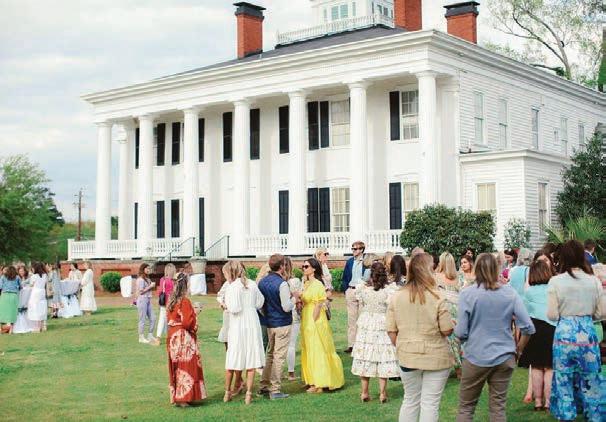
Built in 1839 for Colonel William L. Wynn, a prominent Methodist minister of the Columbus area, the Wynn House has long served as “a wonderful landing spot for life events,” including weddings, bridal showers, baby showers and bridal luncheons. It is also the site of the annual Wynn House Heritage Ball. That history and renown was what attracted Hanrahan to the position of executive director.
“It was the history, the community involvement, just the opportunity to continue to host events of all types within the community,” she said. “I think it’s absolutely wonderful and it’s something that I hope to continue for many years.”
Hanrahan wants to strengthen community outreach in her new position. To that end, the Wynn House has partnered with Girls, Inc.
I think it’ll be great to be able to share the Wynn House and its people with young minds,” she said. “Hopefully, we can support our community and its next generation of young leaders, then host them through their important milestones.”
In addition to weddings, the Wynn House is expanding into hosting
The passion for her industry and client relationships remains strong to this day and even now White experiences the joy of helping a firsttime homebuyer, some believing they would never Contact Ali 1240 Wynnton Road TheWynnHouse.com 706-323-1895 thewynnhousega@gmail.com
new activities including Mahjong groups and “Stitch Nights” for younger women seeking community connections. They are also considering cooking classes during the summer and other ticket events for younger patrons seeking community connections.
“We have a lot of ideas,” she said. “I want people to know that the Wynn House is more than an event space. We’re trying to take on a bigger role in the community, and we are looking to support local organizations and groups and be a spot for all types of events.” Adv.
Annette Funderburk
President , Chattahoochee Valley Community College
Annette Funderburk was recently named president of Chattahoochee Valley Community College (CVCC), following the retirement of former president Jackie Screws.
“It’s an honor and a privilege to serve this community, and to continue the role and plans that President Screws had in place.” Funderburk said.
The appointment came after she served as interim president since December 1.
“I’ve been able to learn of the strengths and weaknesses that any organization has, but specifically here,” she said. “Having known that, now I can get started with some plans where we can move forward. We are here for the community, and we want to serve our students.”
During the transition, Funderburk implemented a comprehensive meeting plan, engaged with the president’s cabinet, directors, instructors, students and attended athletic events to immerse herself in the college community.
“I wanted to get that feedback,” she said. “I’m not someone that wanted to come in and change everything because everything didn’t need to be changed, but we do hope to have more of a
community feel.”
Funderburk’s leadership approach focuses on maintaining CVCC’s position as a “workforce partner for this community, not only for those that are graduating high school, but for those that need a new career and those businesses and industries that want to retrain their employees.”
CVCC is prepared to work with businesses to train potential or current employees, including those needing updated skills for new manufacturing equipment.
Current and upcoming initiatives include continuing the renovation of Adams Hall and the CVCC bookstore.
CVCC is also launching a “campus master plan” that will involve community meetings during the summer with both internal and external stakeholders gathering feedback on facility improvements and community needs.
Potential new programs include a flag football team starting in the fall, which will initially use city recreation fields while the college considers building its own facility. CVCC has also started a CDL (Commercial Driver’s License) program that
may add a CDL track on campus.
“I really hope people will endeavor to enroll at CVCC, through dual enrollment, to begin their associate degree, as they choose a new career or to receive career tech certifications. We want to meet the community’s education needs – wherever they are on their education journey..” Adv.
Learn More About CVCC
2602 College Drive, Phenix City cv.edu • 334-291-4900
Sow It Grows
Oh, deer.
by Brad Barnes
Tips to Keep the Deer Away from Your Favorite Plants
When Andrew Weaver and his wife moved to Green Island Hills 12 years ago, they knew that deer might make an appearance now and again in their neighborhood. Homes there are adjacent to acres and acres of deer heaven—undeveloped property held by the state as a protected watershed.
Weaver, a retired educator, didn’t know just how prevalent they’d be, though.
“I’ll walk the dog at night and see a herd looking at us. Every night,” he said. He likes deer, but they can make things challenging for those trying to garden or even just trying to do a little landscaping. Weaver remembers years ago falling in love with a white hydrangea and wanting to add some to his yard’s palette. He bought four of them and put them in the ground. “They’re not cheap,” he said. “I had high hopes I’d have some really pretty flowers.”
Those hopes were quickly dashed. A week later, his lawn looked like Cookie Monster’s dessert plate. “No flowers, no leaves, just wood stem. I thought maybe they’d grow back, but no,” he said. “That was when I was still trying to be hopeful.”
Since then, the couple has run through a series of trials and failures familiar to many who have chosen a pastoral abode over a more urban setting:
• Deer repellent granules and sprays work only temporarily. They can get expensive and require lots of labor.
• Critter-proof fences need to be taller than a deer is willing to leap—eight feet is usually sufficient. Deer can actually clear an eight foot fence but rarely try. This might be a fine solution for a truly rural setting, but is less than ideal and possibly prohibited by a covenant, in a highly manicured subdivision.
• Electric fences are laborious to install and a constant energy drain. They’re also not the safest. “I got electrified more than the deer did,” said Weaver, after trying this solution. “And electric fences are ugly. At least the deer are cute.”
So at their house, they’ve gone down the path recommended by many experts. They’ve learned to plant things that deer won’t eat.
Luckily there are many. Deer don’t like sharp-edged ornamentals, so lemongrass, pampas and muhly grass are all fairly safe bets that can add fragrance and color to your yard. Annual flowers like marigolds, baby’s breath and snapdragons are also a hard-pass by deer. The list of trees that deer munch on is long, though, so if
you’re trying to start young saplings, you may need to protect them by building a circumference of fencing for several years.
The University of Georgia’s extension office has a six-page list of trees, shrubs, vines, grasses and bulbs—all ordered from “frequently browsed” by deer to “rarely browsed.” (Find that online by searching “UGA Deer-Tolerant Ornamental Plants” or just “UGA Circular 985”.)
For food growers, things are tougher. Several kitchen-garden herbs—basil, tarragon, oregano, rosemary—are safe bets. Onions and garlic are often avoided by our four-legged friends. But if you’re trying to farm many traditional vegetables, you’re in for a fight. Deer love corn and will eat peppers and other nightshades like tomatoes and potato greens on occasion.
Trap crops—where you plant a sacrificial crop of something as a border to sate invaders before they get to the crops you intend to harvest—work for many insect pests, but not for deer, who’ll just see the whole shebang as a buffet. As a comment I recently saw on Reddit put it: “Sounds like a good way to attract even more deer.”
Outdoor dogs as a police force are an option, if they’re a nocturnal breed. But be prepared for having several dogs and spending a lot of time training them.
Since farmers are typically in truly rural areas, most just opt for a tall field fence. For close-to-town homes where optics are more important, privacy or stockade fence for a vegetable garden is probably the most practical solution. Just take care in placement so you don’t shade your crops from the sun they need.
Weaver’s not a vegetable grower and has been able to find enough beauty in deerresistant plants to satisfy his horticultural itch.
“I just plant what they don’t want and live with them,” he said. “Otherwise I’m just feeding them. And if I’m going to feed deer, I’d be better off just buying a bag of corn.”
KNOW AN OUTSTANDING PROFESSIONAL UNDER 40?
We’re looking for our next Five Under 40 top nominees. These notable professionals will showcase the best and brightest in our region.
Previous top nominees have proven to be successful in his or her profession and are passionate about their career, family, philanthropy and community service. Their job alone may prove to make someone a top nominee, but we’re looking for those whose involvement and commitment go well beyond what they are paid to do.
Please complete the form in full for your nominee. Additionally, letters of recommendation and of support are encouraged. The recipients will be chosen by a panel of past recipients and business leaders.
6801 River Road
762-822-7002 GreenIslandGifts.com 4
Dr. Devon Paris Owner Dentist
Dr. Awaz Yaseen
Associate Dentist
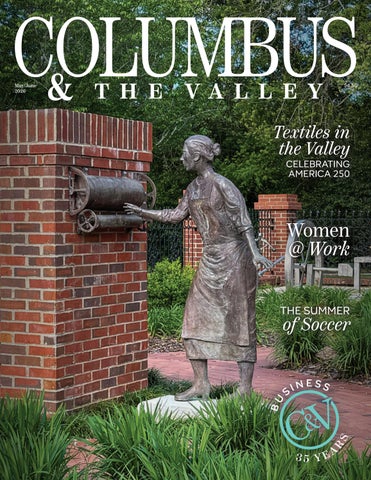
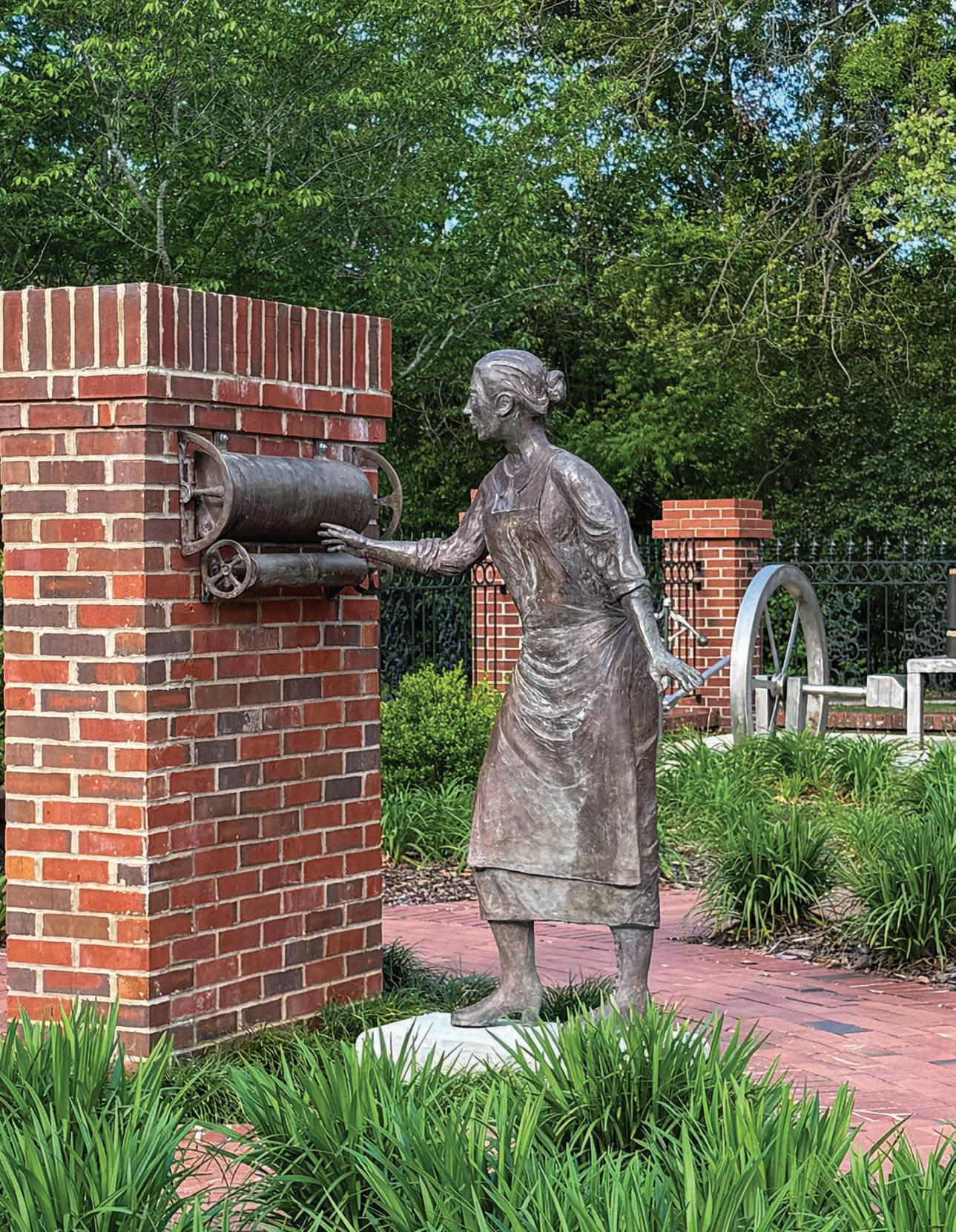
TEXTILES in the VALLEY
PART THREE: FABRIC MANUFACTURING
Although the mills of the Chattahoochee Valley are no longer spinning fabric, the remnants and memories are left behind. Textile production has always been an integral part of the valley and the buildings of this great industry are still woven into the landscape today. The history is the story of legends and young artist’s of today continue to create fabric and weave a new business venture of their own.
Follow along with C&V in 2026 for this series on America 250 where we focus on the skills and industries that were formative in the development of the United States of America and are still present in the Chattahoochee Valley.
Wall Appeal
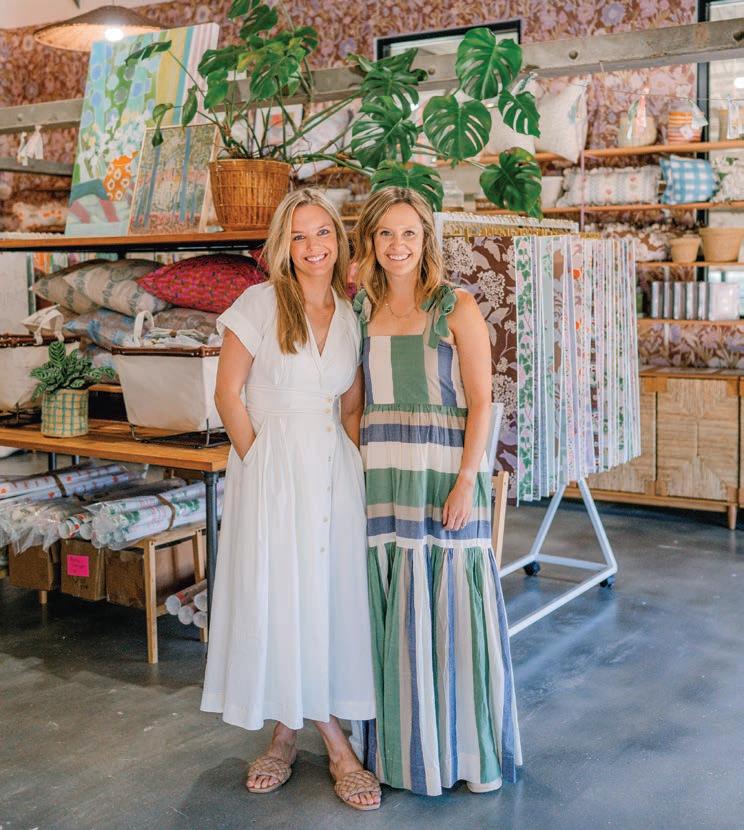
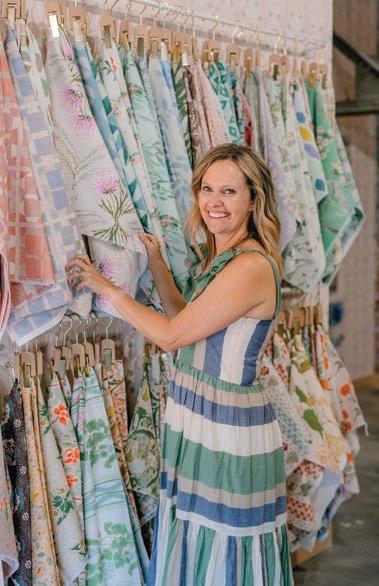
Acclaimed local artists Lulie Wallace and Teil Duncan Henley showcase talent and textiles in their curated brick-and-mortar venture, Mish Mash at Highside Market.
by Frank S. Etheridge IV
photos by Eliza Morrill Photography
The vividly brilliant fine art of Lulie Wallace and Teil Duncan Henley have been well-established, wellearned brands—colorful and fun, sunny and bright, charming and homey—for both Columbus natives for about a decade. Those 10 years stretch back before their individual creative focus expanded from paintings into fabrics and wallpaper with an explosive ‘Yes, please!’ response from interior designers and homemakers alike. Back before the long-time friends took the
plunge into brick-and-mortar retail with the opening of the fab chic Mish Mash on the second floor of Highside Market in Uptown two years ago. Back before husbands and kids and homeward bound life trajectories. And, of course, this was also before the sustained, integrity-first success that helped Lulie grow a following of nearly 150,000 on Instagram—and before Garden & Gun marveled at Teil’s walls in a home profile leading up to Masters week in April, when her husband, pro golfer Russell Henley, made a splash with his Pinnacle-brand sponsorship debut,
followed by a rousing final-round rally— close, but not quite enough—offering a glimpse of green jacket potential in the years ahead.
Gearing up for what he calls “a tradition unlike any other” on a Saturday morning in April at the “Mini-Golfing into the Masters” event at Highside Market, real estate developer Chris Woodruff reflected on the partnership behind Mish Mash. He noted that both Lulie and Teil already had “well-established brands of their own online” when he teamed up with them to create a retail art destination.
Mish Mash, a small but expertly curated space, is what Woodruff considers a natural fit for Highside’s overall vibe. He describes it as “a place for all, made by all”—bringing together fashion, food, art, beverages, live music and good times all in one place.
“What they create with retail art is an opportunity to not only show off their incredible art and textile products,” Woodruff says of the Mish Mash owners, “but to show the Chattahoochee Valley what talent there is here.”
In the following email exchange with Teil and Lulie, both artists seem less interested in tradition than pushing forward, eschewing outdated stereotypes of home decor in favor of seemingly infinite product lines (books, Bible verses, quickdrying towels) drawn from a deep well of inspiration.
In consideration of your fabulous fine art, how do your beautiful colors and forms translate when creating your textile products?
Lulie: I’m always looking to the past for inspiration, both in art and in historic textiles. When I come across a classic abstract painting or even a textile from the 1800s, I’m often drawn to the color palettes and pattern relationships. Those combinations really inspire me and often inform the colors and designs I use when translating my paintings into fabric, wallpaper and other textile products.
Do you feel there’s a new appeal for home-decor textiles—wallpaper and fabric choices specifically—that finds it chic and high-end, as opposed to more grandmotherly, penny-pincher stereotypes?
Lulie: I actually don’t really see older textiles as “grandmotherly.” I find a lot
L-R: Teil Duncan Henley and Lulie Wallace at Mish Mash
of inspiration in vintage fabrics and wallpapers. They really tell the story of the time they came from, which I love. I enjoy taking that feeling or vibe from historic textiles and putting my own spin on them with a fresh color palette that still feels timeless.
Did such a trend inspire your opening of Mish Mash as a viable business opportunity?
Teil: I had recently been exposed to a few fabric and wallpaper showrooms that were so beautiful, and it inspired me to make our own version of that. Lulie and I have been an online brand for so long, so it was also a nice and refreshing thought to have a physical location where people could come and experience what we were producing in person.
With established online platforms to shop and sell your work, does it still help to have a brick and mortar store?
Teil: After a decade of operating online, Lulie and I opened our first brick-and-mortar shop.
Online is a great shopping experience because everybody has access to the internet, but a store adds an element of legitimacy. It’s
almost unfair whenever someone asks, ‘Is there a place where I can come see your work?’ and I say, ‘Well, no, there’s not.’ It’s disappointing. The shop adds more energy and excitement to both of our brands.
We wanted more of a show space rather than a typical retail storefront. We thought it would be nice for our town to have a place where people can come and see, touch and feel our work. Primarily, we were talking about our textile lines and having a place to serve as a showroom for designers or for people that want to buy fabric and wallpaper and for their home. This idea gave birth to Mish Mash which is one-third painting studio, one-third retail shop and one-third packaging, shipping and fulfillment center.
With both of our brands continually making new products and adding to our inventory, the store is always evolving.
As Columbus natives and residents, does the city’s long tradition in textiles manufacturing ever find its way into your approach to creating textile art?
Teil: Technology has come such a long way that my approach doesn’t specifically relate to Columbus’ past traditions of textile production. However, our town is so deeply saturated with various artists of all ages and styles which has been something that has certainly sparked motivation within my work.
Lulie: My creative process has less to do with Columbus’s tradition in textile manufacturing and more to do with the homes I grew up visiting and the inviting spaces that used pattern and textiles to create a cozy space. I specifically remember my aunt’s house here in Columbus and her interesting use of color and pattern. I loved how artistic the space felt while still being warm and livable, and that feeling has always stayed with me.
Visit Mish Mash Thursdays-Saturdays at Highside Market and follow @shop.mish.mash.
Teil Duncan Henley
Lulie Wallace
In February, the Valley lost a beloved historian and former professor, Dr. John S. Lupold. His study of textile production in the Valley uncovers the core of what has made the Valley what it is today in the following sections.
The Industrial Archeology of Columbus 1828-1865 (Part 1)
by Dr. John S. Lupold
Originally published January 2022 Republished courtesy Historic Columbus
Textile production had its roots planted in Georgia soon after the American Revolution, when Eli Whitney, in collaboration with Catharine Green, invented the cotton gin in Chatham County in 1793. The cotton gin transformed cotton into a marketable commodity and became a familiar feature across the cotton fields of Georgia in the 19th century.
The manufacturing of cotton began in the northern states in 1790, when Slater Mill started spinning cotton into yarn in Rhode Island. The industry spread throughout the New England states over the next several decades. In 1814, Boston investors opened the first planned textile mill in Lowell, Massachusetts, which
introduced the power loom. Now, factories could process raw cotton into cloth in one factory. The creation of mill towns, with housing for workers, became popular in the north and spread into southern communities as well.
Georgians began to invest in building textile mills in the 1810s. These were small, water powered cotton factories established along the fall line, a strip of land across the piedmont from Columbus to Augusta where rapids provided sufficient waterpower to operate the mills.
The Georgia legislature established Columbus in 1828 specifically as a “trading town” at the head of navigation of the Chattahoochee River. Crossing the fall line at Columbus, the river drops 125 feet within 21/2 miles and produces a potential energy of at least 66,000 horsepower. This hydropower attracted entrepreneurs, investment capital, and
laborers to Columbus—including those free and enslaved. Those individuals and their contributions were also instrumental in the planning, building, education, and entertainment that has shaped Columbus since its founding.
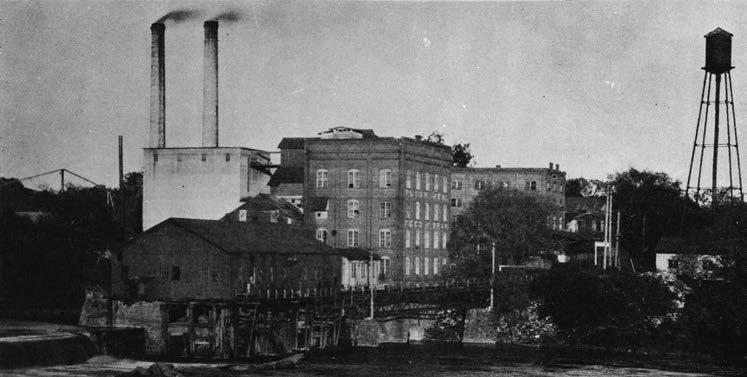
The first industry to harness the river, City Mills (a grist mill) began operating before the end of 1828. This was the year Columbus was established, and the initial dam constructed on the Chattahoochee River would begin powering the new mill.
The surviving structures at this site
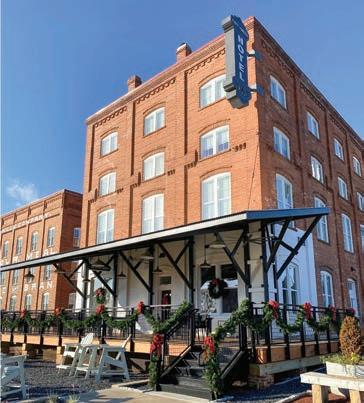
One of the oldest buildings in Columbus, City Mills began operating in 1828. Today, some of the original machinery remains in the basement floor while the upper floors and the warehouse building have been adaptively re-used as the City Mills Hotel.
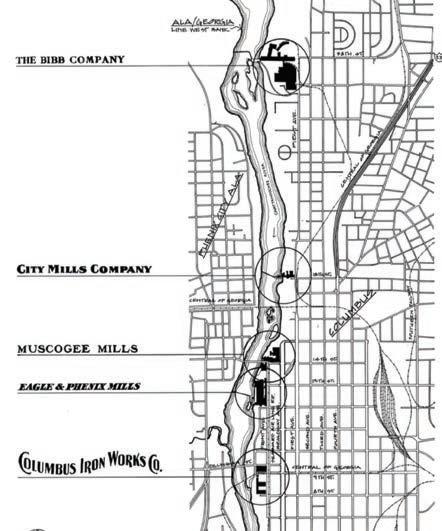
A map showing the major mills that operated along the Chattahoochee River in Columbus.
include the Flour Mill (1890) with some of its original power transmission and grinding equipment installed from 1890 to 1903; the warehouse (1890 & 1914); abutments of the rubble masonry dam (1904-1907, 10-foot head); and the remains and turbines of the Columbus Railroad Company powerhouse (1894-1896), the city’s first central-station hydroelectric plant.
The Richmond City Mill Works of Richmond, Indiana, built the six-story brick structure for our City Mills, known as the Flour Mill (c. 1890-1891). It was the largest, most modern grist mill in Columbus at the time. After building a concrete dam in 1908, the company revamped the power system in this mill. The firm never realized its anticipated market and never modernized this facility. Much of the machinery remained where it was phased out of production starting in the 1940s: three 62 inch Leffel Samson turbines (replaced in 1929); the massive hurst frame (1908) which isolated the vibrations of the drive shaft from the rest of the structure; seven 48 inch grinding stones; an inoperable 175 kilowatt General Electric generator (1919); small flour roller mills (perhaps as early as 1891); Gruendler pulverizers (1929 and later); and, on the other floors, a system of dravers, batch mixers, sifters, and bagging equipment (some 1890).
Today, some of the original machinery remains in the basement floor while the upper floors and the warehouse building have been adaptively re-used as the City Mills Hotel.
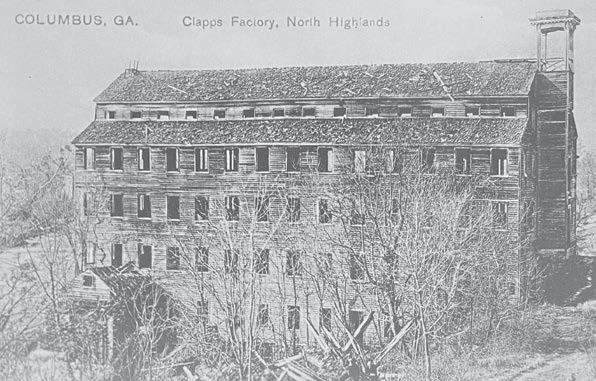
In 1832, construction started on the first local textile mill, Clapp’s Factory, at a site (now Oliver Dam) three miles north of the town. Indicative of the rapidity with which “frontier” Columbus industrialized, the Creek Indian War of 1835-1836 delayed the factory’s completion until 1838. A small dam between an island and the eastern bank powered a yarn mill, a tannery, and a grist mill. Workers lived in the surrounding village. The company reorganized and rebuilt after the war but went bankrupt in 1885. The abandoned, wooden structure, erected in 1866 and built by master builder and former enslaved, Horace King, burned in 1910.
In 1925, the property on which the Clapp’s Factory Cemetery is located is purchased by the Georgia Power Co. from the Clapp family. Oliver Dam was built north of the cemetery in 1955. The dam now covers the old mill site; however, the
area south of the dam remains the site of the operatives’ cemetery.
During the 1840s, the political and economic leadership of Columbus sought to establish industries within the town. The city council sold 19 riverfront lots that would run from what eventually became the Eagle & Phenix Mill to the Muscogee Mill (now FIS), for a nominal price to John H. Howard and Josephus Echols provided they furnish waterpower to all the lots. They constructed a dam (at the present 14th Street bridge) and the Coweta Falls Factory (owned by Howard and others) began operating in 1844.
In 1846, John G. Winter, one of the richest men in Columbus, and William Brooks launched the Variety Mills which manufactured textiles, sawed lumber and ground wheat and corn. Winter also operated the Rock Island Paper Mill just north of the city on the Alabama side of the river.
In 1847, the Georgia legislature passed an act to encourage industrial development. Three years later, Georgia had 50 cotton and woolen mills producing coarse wool and cotton duck. A decade later, six mills (both textile and grist) lined the head race below the dam in Columbus.
Underscoring the community’s commitment to manufacturing was the impressive public ceremony in 1847 when construction began on the Howard Factory. This textile mill was financed by a group of investors and began operation in 1848. Like its neighbors sharing the dam, the Howard Factory sold most of its products in Georgia and Alabama, but it did ship some goods to New Orleans and Memphis and sent its scrap yarns and materials to New York.
In early 1849, the Columbus Enquirer observed: “All that is wanting to make
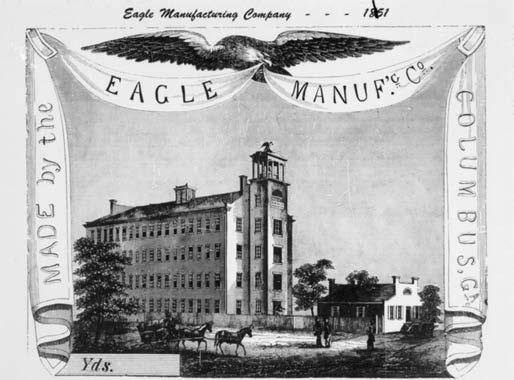
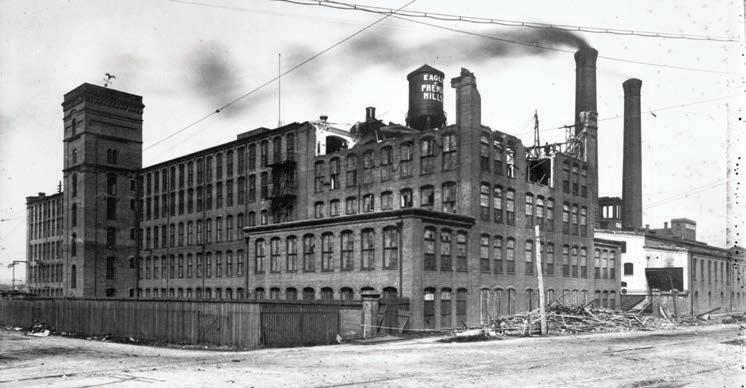
our city not only the Lowell of the South but of the United States is capital, and that is rapidly tending towards it.” More investment came that year with William H. Young, a New Yorker, who had noted the river’s energy in 1827 even before the city existed. After making a fortune as a merchant in Florida, Young returned to begin the Eagle Mill in 1850. It quickly became the city’s most successful mill. In 1860, the Eagle absorbed the faltering Howard Factory making the combine operation one of the largest textile factories in the South. With Young’s commercial knowledge he readily found a market for its products and its dividends ranged between 20 and 25 percent.
Urban slavery thrived in Columbus, and many were apprenticed to local butchers, carpenters, masons, and tailors. The 1860 census reveals that enslaved people made up 36 percent of the city’s population, approximately 3,265 people. While the movements and activities of the 165 free Blacks in Muscogee County, as in other areas of the South were severely limited, the antebellum South was not a segregated society. Blacks and whites participated together in many of their daily activities, though never as equals.
Columbus was one of the Confederacy’s most important centers of industry, and Columbus’ enslaved population played a central role in our town’s economic life. An incredible amount of the raw material of cotton was needed for the textile mills to meet its production needs, so it was up to those enslaved to plant and harvest this cash crop. Although there were no large plantations in the urban parts of the city, these large estates could be found on the outskirts of town and in the surrounding counties.
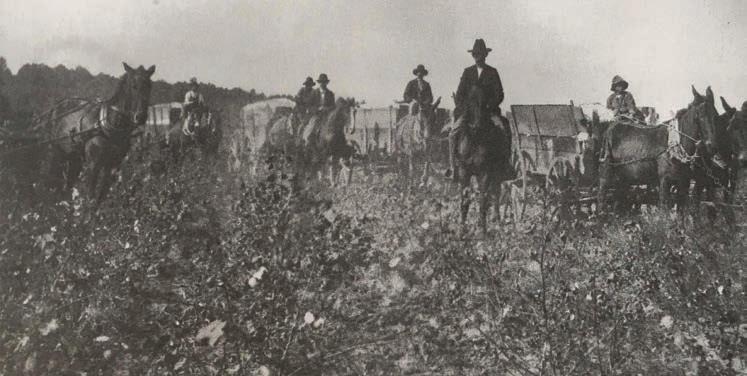
Workers harvesting cotton from the fields.
By 1860, Columbus (Muscogee County) ranked second only to Richmond in southern textile production. In addition, its paper mill, furniture factory, cotton gin manufacturer, and iron foundries made Columbus a rather diversified industrial city. During the Civil War, Columbus supplied the Confederacy with textile products, gun carriages, cannon and shot, Indian rubber cloth, tents, military caps and uniforms, steam engines, and gun boats.
In addition to supplying Columbus and Georgia units, the Eagle’s fabrics clothed soldiers organizing in Alabama, Florida, and Tennessee. This mill’s output mirrored the feverish rate of production reached in Columbus. By 1862, it ran two twelve-hour shifts, and its daily production included 1,500 yards of cotton duck for tents, 2,000 yards of heavy gray tweed for uniforms, and $1,500 worth of other cotton materials and thread. Each week the Eagle Mill also turned out 1,000 yards of India rubber cloth and 1,800 pounds of rope. The Confederate government consumed about three-fourths of the Eagle’s goods.
On April 17, 1865, eight days after Robert E. Lee surrendered, General James H. Wilson’s troops burned every industry in Columbus except the grist mills. During Reconstruction (18651871), the Columbus Freedmen’s Bureau mediated wages between owner and former enslaved. African American women and children would also seek new opportunities through education, the creation of social
organizations, and in politics. Liberated people were oftentimes skilled craftspeople and artisans, but instead of opportunities to ply their trades, they were forced into tenant farming. While the mills used some African Americans to haul cotton bales and perform other menial tasks, they were not allowed to become operatives. The newspaper, at the time, constantly urged the freedmen to go back to the country. With the mills in ashes, hundreds of white factory workers, many who came during the war, formed another destitute group within the city. No agency like the Freedman’s Bureau supported them, but they were called “deserving” and “virtuous” poor by the newspaper. They received relief from the federal government, the state, the city, and private individuals. In addition to those funds, they subsisted by cleaning burned bricks, doing menial jobs, and a lot of fishing. Industrial reconstruction began almost immediately, primarily because of the continuity between the antebellum and post-war mills in terms of managers, investors, and laborers. The presence of these unemployed workers added a sense of urgency to the rebuilding of the mills. Columbus didn’t wait fifteen years for
industrialization. It became one of the first “New South” cities, and its industrial success inspired other Southern towns to imitate it.
In 1867 and 1868, just two years following the Civil War, two of Columbus’ most significant textile mills would be formed— The Eagle & Phenix and Muscogee Mills. During the 1870s, textile manufacturing expanded more rapidly in Columbus than in any other southern city, even though only two companies occupied the Columbus riverfront sites. Muscogee Manufacturing Company (1867) utilized one lot, while the Eagle and Phenix (1866)—the South’s largest mill in the late l870s—eventually controlled the other eighteen lots. By 1880, Columbus led the South in textile production. During the following decade, other southern textile centers such as Augusta grew faster than Columbus, partially because the Eagle & Phenix monopolized the available waterpower. The lack of waterpower forced new mills, two smaller ones in the 1870s (Cleggs & Cotton Steam Mill), two larger ones in the 1880s (Swift & Paragon), and the first commercial electric company (a Brush franchise at Paragon) to locate away from the river and rely on steam power.
TOP LEFT: The Eagle Manufacturing Company opened in 1860.
TOP RIGHT: Clapps Factory was the first textile mill in the area, built in 1832.
RIGHT: The letterhead of Muscogee Manufacturing Company.
The Industrial Archeology of Columbus 1865-1880 (Part 2)
by Dr. John S. Lupold
Originally published January 2022
Republished courtesy Historic Columbus
In the fall of 1865, the Freedmen’s Bureau became active in administering the land program in Georgia and returned much African American labor to the fields, mediating a contract-labor system between white landowners and their Black workers, many of whom they formerly enslaved. Field work—once the province of entire Black families—was transformed as the freedwomen withdrew their labor and their children’s labor to the household. Both children and adults began to take advantage of educational opportunities, usually offered by teachers from the North. Often education was associated with the burgeoning number of all-Black churches that also characterized Reconstruction.
Some of the former enslaved individuals and families were flocking to towns, where they encountered overcrowding and a shortage of food. A large number of Black Georgians fell prey to epidemic diseases. Meanwhile, on farms and plantations that had depended on enslaved labor, harvests were small, with poor planning and miserable weather further diminishing them. Corn and wheat were scarce in late 1865. The state’s traditional money crop, cotton, plummeted following the Civil War to around 50,000 bales from a high in 1860 of more than 700,000 bales. From the 1870s to the 1950s, thousands of rural African Americans migrated to Columbus to build a better life. A commercial revival alone would fail to employ the hundreds of idle workers— white and newly freed—following the Civil War in Columbus. The town still desperately needed a revival of its many industries.
Eagle & Phenix Mills No. 1 (1868) and No. 2 (1871) combined to house 35,000 spindles and 1050 looms, all powered by the river. They are now apartments.
Columbus manufacturers rapidly began after the war. By the early 1870s, Columbus factories and shops manufactured rope, jute bagging, iron, cottonseed oil, carriages, furniture, and cigars. Bricks and lager beer were produced across the river in Girard. Columbus’ chief industry was, of course, the textile mills—which had all been burned by General Wilson. Clapp’s Factory resumed first, as early as December 1865. In 1867 and 1868, two of Columbus’ most significant textile mills would be formed—
The Eagle & Phenix and Muscogee Manufacturing Company.
During the 1870s, textile manufacturing expanded more rapidly in Columbus than in any other southern city, even though only two companies occupied the Columbus riverfront sites. Muscogee Manufacturing Company (1867) utilized one lot, while the Eagle and Phenix (1866)—the South’s largest mill in the late l870s--eventually controlled the other eighteen lots.
Muscogee Manufacturing Company began on water lot #1, the site of Coweta Falls Factory {1844), the city’s first textile mill. In 1868, George Parker Swift, a New Englander who established mills in Upson County, Georgia, before the Civil War, began constructing Muscogee No. 1. In 1880, he built an almost rectangular Mill No. 2 to fill the remaining space on this water lot. (These two structures were demolished in 1978.)
Future expansion occurred north of 14th Street, where the company lacked riparian rights. Steam-powered Mill No. 3 (1887), and electricity from the Columbus Railroad Company powerhouse at City Mills drove No. 4 (1904). Later additions included Mill No. 5 (1918), No. 6 (1928), and No. 7 (1950). In the process, the complex incorporated the Mott House (a three-story 1840s mansion) as offices and the city’s 1907 Carnegie Library as a machine shop. Fieldcrest purchased this company from its local owners in 1963.
In 1997, plans for the international headquarters of TSYS were developed for the Muscogee Mills site. TSYS worked diligently with local, state, and federal preservation groups to develop a plan respecting the history of the area. The new campus would incorporate a stabilized Mott House (later destroyed by fire in 2014) and elements of the Carnegie Library into a new plaza area on the river. A new parking structure similar in architectural design to one of the former mill buildings was also constructed. The city and Historic Columbus partnered to move and save four historic structures that would be impacted by the campus. This move became known as the 1998 Parade of Homes.
William H. Young, with the help of N.J. Bussey and young G. Gunby Jordan, reestablished what had been the Eagle mill. Quite appropriately, they added the name phoenix, the mythical Egyptian bird which rose from its own ashes.
Young purchased land in modern day Phenix City, Alabama and created mill villages for his workers. Browneville, built 1862-1863 and named for an Eagle Manufacturing employee, was an example of one of the thriving mill villages owned by the textile giant. In 1879 the Columbus Daily Enquirer featured a history of Browneville, stating that it boasted good schools, lodges, churches, stores, and more. The company also offered savings accounts for their operatives. Prior to the construction of Browneville, housing for mill operatives consisted of at least five boarding houses in Columbus and 40 mill houses on the Alabama side of the river. Mill No. l (10,000 spindles and 135 looms) of the reorganized Eagle and Phenix Manufacturing Company began operating in 1868. During the 1870s the company expanded more rapidly than any other southern textile firm, adding Mill
No. 2 (15,000 spindles and 350 looms) in 1871 and Mill No. 3 (20,000 spindles and 800 looms) in 1878. During the winter of 1880-1881, the company engineer, John Hill, installed Brush arc lights in Mill No. 3. By 1880, the Eagle and Phenix led the South in the value of its textile product ($1,500,000). Visitors to Columbus, especially during the 1881 Atlanta Exposition, marveled at the company’s size and diversified products (144 different styles of cotton and woolen goods). Its growth leveled off in the 1880s and stagnated in the early 1890s.
The purpose of the mill village was to house workers. Some owners also began to provide schools, entertainment, and churches. Entertainment throughout the latter half of the 1800s included a yearly picnic hosted for mill workers where the Eagle and Phenix Brass Band played for the crowd. These picnics were a very big deal at the time. The tactics of offering housing, savings, schools, churches, etc. were seen by business leaders as a way to keep families committed to working for the mills, but also offered some stability for those families. However, the work hours were long, the job monotonous,
noisy and dangerous and mill owners held tight control over the mill workers’ lives. In 1880, Eagle and Phenix employed 213 children, 555 men, and 917 women.
In 1896, the mill went into receivership and was purchased by G. Gunby Jordan. One of Mr. Jordan’s investors was W. C. Bradley. G. Gunby Jordan owned the mill from 1896 to 1915 while W. C. Bradley served on the Board. In 1915, W. C. Bradley became president and owned the Eagle & Phenix Mill from then until 1947.
From 1947 until 2003 several different companies including Reeves Brothers, Inc., Fieldcrest, and Pillowtex owned the mill property. All of the structures have been modified to some extent during their 150-year history. In December of 2003, the mill property was repurchased by W. C. Bradley Co. The W.C. Bradley Co. Real Estate Division is revitalizing the complex through the adaptive re-use of the site as condominiums, apartments, restaurants, and offices.
The power system of the antebellum industrial riverfront lots consisted of a dam (1844; at the present 14th Street bridge), a head race extending southward along the eastern side, and flumes that carried water
TOP: Eagle & Phenix Mill No. 3 being constructed in 1880. It is now condos.
LEFT: Fieldcrest Mills (originally Muscogee Mills) was demolished in the late 1990s/early 2000s and is now the location of Hotel Indigo and FIS.
across the tail race initially to water wheels and later to turbines.
During the late 1850s, the Eagle Mill built (and then rebuilt in 1866 & 1869) a wooden rafter dam farther down the river. In the summer of 1882, the company engineer, John Hill, designed and supervised construction of the rubble masonry (8,100 cubic yards), gravity dam. Flumes continued to supply water to the rear of each mill building.
The powerhouses have also been adaptively re-used as the other structures within the Eagle and Phenix Mill Complex. The powerhouses now serve as event venues.
Rebuilt in the late 1860s, the warehouse buildings covered two blocks. They were expanded and modified for the next forty years. The modern Bradley Company began as a cotton-factoring business, Bussey-Goldsmith and Company, which W. C. Bradley and his brother-in-law Samuel A. Carter bought in the late 1880s. They changed the firm’s name to Carter and Bradley and expanded the firm’s business to include the manufacturing of fertilizer and the retailing of groceries. In 1895, Carter sold his portion of the company to Bradley, who changed its name to the W. C. Bradley Company. Over the next thirty years, Bradley further diversified his holdings by investing in banks, textile mills, steamboats, farms, Coca-Cola, and the Columbus Iron Works. The W.C. Bradley Company eventually became the owner of the entire two blocks.
Today, the W.C. Bradley Co. is comprised of four companies focused on home and leisure products and services. These include the W.C. Bradley Real Estate, LLC, Zebco Brands, Char-Broil, and Lamplight. Over the past thirty years, the company has restored the many buildings that comprise this city
block. It has included a variety of other businesses in addition to the W.C. Bradley Co. and the W.C. Bradley Co. Museum.
A. Clegg, an Englishman, migrated to Columbus during the antebellum period. On April 2, 1855, he settled in Columbus, where he was employed in the Eagle Mill and later, the Eagle & Phenix. In 1872, he went into the manufacturing of cotton goods on his own account, and in 1882 erected the Clegg Manufacturing Company building – a small, steam-powered factory. He was the president of the company with his son, John F. Clegg, as secretary and treasurer. Mr. Clegg was called one of the best mill men in the South in the 1887 publication The Industries of Columbus, Georgia.
The company employed eighty hands and manufactured the celebrated Mitcheline bedspreads, cotton checks, ginghams, stripe and cottonades. It was located on the east side of the 1600 block of Second Avenue. This mill with its single product was typical of many southern companies launched during the 1870s and 1880s. Clegg died in 1894 or 1895 and the mill stopped operating by 1898. Burnham Van Lines (a national company with headquarters in Columbus) utilized the building as a warehouse for many years.
During the summer of 1977, Historic American Engineering Record (HAER) planners studied the remaining structures (western section, ca. 1875; tower, ca. 1904; and eastern end, ca. 1885) and suggested possible adaptive uses. The mill is one of the earliest examples of adaptive re-use in Columbus. It was renovated and expanded in 1980 to become a convention hotel for the new Columbus Convention and Trade Center (historic Iron Works) across the street.
In the late 19th century, the Eagle and Phenix played a dominant role in the city’s economic life. When the 1873 depression struct, the company issued currency which was the only circulating medium in the area. A New York merchant advertised to exchange his dry goods for $100,000 worth of this Eagle and Phenix script. When telephones were installed in 1880, the Eagle and Phenix was assigned telephone numbers 1 and 2. Even the city’s political factions split according to those who supported the leadership at the Eagle and Phenix and those who opposed it. The leader of the anti-Eagle and Phenix faction, R.J. Moses, readily admitted, however, that without William H. Young Columbus would be a “dead town.”
Read more at HistoricColumbus.com
The former W.C. Bradley Cotton Warehouse is still owned by W.C Bradley Co. and is used as office space.
by Doug Gillett photos by LeVern Danley
Leadership Begins at Home
After four years of leading a national nonprofit, Kornisha Brown reflects on the people and possibilities that shaped her.
Directing a national nonprofit was the furthest thing from Kornisha Brown’s mind in 2007. Brown and her husband Darius had recently moved to the Columbus area so that he could start his medical practice, and with two small children in tow, she says she joined Jack and Jill of America simply to establish a support system in a new and unfamiliar town. “From there, I definitely did not realize how involved I would become in making sure our mission was carried out,” she remembers.
Nearly two decades later, the Browns are deeply involved in the Columbus community, and their two children are grown and thriving. And Brown can look back with pride on four successful years as national president of Jack and Jill of America, Inc. With more than 250 chapters and 70,000 members, it is the largest African American family organization in the United States.
“Jack and Jill has meant so much to me because it allowed me the opportunity to pour into not only my own children, but so many other children,” she says, “especially with the tools to equip them to be confident and have a better awareness of who they are and who they can become. I always say you can’t be what you can’t see, so it gave me the opportunity to see that there were so many other avenues of success that they could take.”
Dreaming Big in a Small Town
As the only child of an AME pastor and a social worker in Thomaston, Georgia, about 50 miles northeast of Columbus, Brown didn’t grow up around wealth or a dizzying array of opportunities. What she did grow up with was a family that encouraged her to dream big just the same.
It was also a family that believed women were capable of anything they put their minds to. “My mom has six sisters, and my dad has a sister,” she says. “The whole family being right there in the Thomaston community and my church really influenced me in ways I’ll never be able to thank them for, especially as a woman. I was brought up with the values of having goals and having the courage and belief in myself to go after my dreams.”
Brown says she was further influenced by her English and humanities teachers at Upson-Lee High School, where she was
salutatorian of her graduating class. “I really feel that being in their classrooms helped me to see the world in a different light,” she remembers. “The books and experiences that they taught about really opened my mind to knowing there’s so much more that this world has in store... Having the influence of teachers like that was part of the reason I wanted to go into teaching, because I know how that impact can really change the trajectory of a child’s life.”
While high school was where she found her inspiration, Brown says Spelman College in Atlanta—where she earned her bachelor’s degree in political science—was “where I truly found my voice, being at an all-women’s college and just being around other young women who shared the same passions. Our tagline was ‘A choice to change the world,’ and that was what was instilled in us, knowing that we could do whatever we put our minds to.”
The next thing Brown put her mind to was a PhD at Brandeis University in Massachusetts, but when the political science program went through a period of upheaval during her first year there, she learned the importance of being able to “pivot.” Rather than risking more time in an unstable situation, Brown made the difficult decision to return to her home state and earn a master’s in education from the University of Georgia. “I had always been a UGA fan anyway, so that worked out,” she says with a laugh.
After earning her master’s and her teaching certificate, Brown spent four and a half years in the Talbot County school system, teaching language arts, reading and social studies to seventh graders. “When we moved to Columbus and started our family, I knew I needed to take some time away from the classroom,” she remembers. But her work with children was just getting started.
How Her Network Went National
When Brown first got connected with the Jack and Jill of America, Inc. in 2007, she wasn’t looking to achieve nationwide influence—she was just a mother of a 4-year-old and a 2-year-old, trying to meet other moms who could help her find her bearings in a new city. “Being new to the Columbus area, I wanted to connect with other mothers in the community,” she says. “And it really gave me an opportunity to not only find friends who have now become lifelong friends, almost like family, but also for our children to be able to connect and grow up together.”
Brown describes Jack and Jill as a mother-member organization dedicated
to nurturing children ages 2-19 through civic, educational and social experiences. Though she says her daughter Jordan and son Darius Jr. (“DJ”) both had great experiences throughout their years at Brookstone School, Jack and Jill “was like that additional support system, especially since we didn’t have family here in the city.”
Not only did the organization introduce Brown’s children to kids outside their own school, it exposed them to volunteer opportunities that instilled the importance of giving back. And as Jordan and DJ got older, they participated in Jack and Jill’s national teen conferences, where they got to make connections with peers from all over the country. They even had the opportunity to take trips to places such as Greece, Italy and Spain, where they expanded their cultural horizons—and gained a better understanding that they live in a deeply interconnected world far bigger than their own community.
Mentored by the late Juanita Booker, a longtime Muscogee County educator and one of the charter members of the Columbus chapter of Jack and Jill, Brown started off as a committee member and later became a chapter officer, then chapter president. Under Brown’s leadership, the Columbus chapter earned Chapter of the Year honors for the impact it had made not only on its members’ children but on kids throughout Columbus.
Brown continued to move up through the organization’s ranks as regional secretary, then regional director and finally national president. That presidential term officially began in August 2020, at the height of the COVID pandemic, with kids across the U.S.
beginning to bear the negative effects of the stress and isolation.
“Seeing what our children were going through, it really opened our eyes to how much more needed to be done,” Brown says. With kids suddenly forced to spend an even greater percentage of their average day in front of screens, Jack and Jill responded by producing engaging, interactive programming and events designed to make sure that time was fruitful and productive.
ABOVE: The Multipurpose Room at the Anne Elizabeth Shepherd Home is named in Brown’s honor.
LEFT: DJ, Jordan, Kornisha and Dr. Darius Brown
RIGHT: Brown speaks at a Jack and Jill meeting.
Under Brown’s leadership the organization also took a more active role in youth mental health advocacy, one it kept up even after the pandemic subsided.
“There wasn’t a guide or a blueprint or anything that we as parents could follow—I think we all just bonded together to try and figure it out,” she reflects. Between the pandemic, a volatile presidential election, and nationwide outrage over the murder of George Floyd, “it was a lot to manage, but I will say that it caused us to have the tough conversations—it caused us to connect with our children and families on a different level.
“I do hope our kids will look back on that experience as, ‘Yes, that’s something that happened, and it was not a good space or point in my life, but we did come through it together.’ And I know that they are much more resilient, knowing that they faced a challenge like that.”
Reflections on a Job Well Done — and a Community Well Loved
By the time Brown’s term as president ended in July 2024, her kids were both grown, which meant that she’s since taken a step back into an “associate” role with Jack and Jill. But she does so as one of the most decorated leaders in the organization’s history. In 2023 Senator Jon Ossoff presented her a Lifetime of Service Award on behalf of Georgia’s families; the following year she received a Presidential Lifetime Achievement Award from the Biden-Harris Administration, and in 2025 Rep. Sanford Bishop presented her a Point of Light Award.
Brown says she’s proud of those awards, but more proud of what they represent. “It was a huge honor to be able to advocate on behalf of the children who really needed their voices to be heard again,” she says. “It’s not just about us as an organization, but what we’re doing in the community to impact the lives of others.”
Her greatest pride, though, still rests in—what else?—her family. Her husband became the ER medical director at Piedmont Columbus Regional in 2018; her daughter Jordan graduated magna cum laude from Spelman a year ago, and is now working in New York as an account manager for the Walt Disney Company. Son DJ, a rising senior and class vice president at Morehouse College, will be joining his sister in the Big Apple this summer to do a finance internship on Wall Street. “We’re so glad that they took all of their positive attributes, all of the things they’d seen me and my husband do, and found their own path,” she says.
As for Brown herself, she wants to continue giving back to the community and maybe do some business consulting—eventually. Right now she’s happy just to spend more time with her husband (“He was so supportive with my hectic schedule”), slow down a bit, “enjoy the moment,” reflect and give thanks.
“Community just means so much,” Brown says. “There’s no way that I would’ve been able to accomplish the things I did if it had not been for my upbringing in Thomaston and right here in Columbus. I owe this community a lot for all it has allowed for me and my entire family. That’s where it all started, and I am thankful for the mothers who continue to serve and are moving forward to make sure the mission is upheld.”
Read more at JackAndJillInc.org
Valley Scenes
Send us photos of your community event or achievement! We will publish as many photos as quality and space permit. Please identify all subjects with a brief description of the event and the date and the photographers name. Email them to: ContactUs@ColumbusAndTheValley.com,
CVCC Hall of Fame
Inducts Three photos by Gi Burton
The CVCC Hall of Fame Awards recognize individuals who exemplify excellence, leadership, and service. Each inductee represents the very best of the Pirate spirit and brings great pride to the College and its extended community. This year’s inductees include Heath Taylor (Distinguished Service), Trevor Kieboom (Distinguished Athlete) and Natalie Kirkland (Distinguished Alumni).
Chambers of East Alabama Collaborate
photo courtesy East Alabama Chamber of Commerce
Representatives from East Alabama Chamber of Commerce met with the Opelika and Auburn Chambers for an event focused on Lee County Public Policy Collaboration.
Front Row L-R: Mackenzie Poole (Opelika Chamber), Jermaine Phillips (EACC Board Member), Senator Jay Hovey, Senator Randy Price, Melissa Gauntt (EACC - CEO), Paige Paquette (EACC Board Member), Clay Lane (Opelika Chamber Chair), Second Row L-R: David Dunn (EACC Board Member), Dave Arwood (EACC Board Member), Anna Berry (Auburn Chamber), Angela Gallops (EACC Board Member), Ali Rauch (Opelika Chamber CEO) Back Row L-R: David Hedges (Auburn Board Member), Anna Hovey (Auburn Chamber CEO), Christian Staats (Government Relations at Auburn University), Representative Jeremy Gray, Representative Joe Lovvorn, Kristie Nelson.
Inductees Heath Taylor, Natalie Kirkland and Trevor Kieboom with CVCC President Annette Funderburk
Miracle Riders Trip Announcement
photos by C&V
Representatives from Columbus State University recognized the Miracle Riders, led by Scott Ressmeyer for reaching their goal of raising one million dollars to help with the CSU Pediatric Nursing Program. The Miracle Riders will set out on May 1st around the USA delivering letters on their Pony Express journey.
East Alabama LEADing Ladies Luncheon
photos by Ella Knight
The East Alabama Chamber hosted the second annual LEADing Ladies Luncheon at the WC Bradley Museum. An inspiring panel of local ladies in business was moderated by Gwen Ruff from Columbus Water Works.
Moderator Gwen Ruff, Dr. Brenda Coley, Tori Evans, Dr. Ronna Pirtle, and Christina Martin. They’re pictured with East Alabama Chamber President Melissa Gauntt and Denise Phelan.
L-R: CSU President Stuart Rayfield, Margie Yates, Dean of the College of Education & Health Professions and Scott Ressmeyer
Dr. David and Daunn Levine with Scott Ressmeyer and fellow Miracle Riders
L-R: Nicole Young, Kim Mixon, Brooke Neville, Jodi Saunders, Becky Kenimer, Eleni Hitchcock, Melissa Thomas and Michelle Hudson.
L-R: Kay Oswalt, Loretta Rose, Meagan Ellis, Ashley Brown, Jules Genung and Christina Gridley-Robles
Pre-Derby Party at National Infantry Museum
photos courtesy National Infantry Museum
The 1775 society gathered in the museum courtyard for a Pre-Derby celebration. With signature cocktails, live music and vintage derby decor. Prizes were awarded for best dressed, hat and bow tie.
RiverCenter Marquee Society Dinner at Columbus Botanical Garden
photos by Morgan Duke Photography
The weather was perfect for an evening at Columbus Botanical Garden. The appreciation dinner honored RiverCenter’s Marquee Society members. Chair of the Board of Trustees, Austin Gibson spoke alongside new Executive Director and CEO, Lee Foster who spoke of ‘The True Cost of Greatness’. Development Director Amanda Donaldson concluded the evening by thanking the RiverCenter team for organizing the event, alongside thanking Parker’s Pantry and hosts, Columbus Botanical Garden.
L-R: Robin Trimarchi, Molly Smith, Cindy Sparks, Jay Sparks, Chuck Hecht and Jane Hecht
RiverCenter CEO, Lee Foster, addresses attendees
L-R: Wanda Rutledge, Pam Collier and Gloria Waits
John Yancey (Best Bow Tie Winner) and BG (Ret) Pete Jones
Melody Goodwin and Kei Robbins
L-R: Bill and Becky Rumer, Dan and Bernadette Murphy, David and Susan Knopf, Sherry and Tom Wade, Bob and Brenda Ammerman and Greg and Joanie Camp
Mary Hayes (Best Hat and Best Dressed Winner) and BG (Ret) Pete Jones
Artist Elizabeth Brim Reconnects with Friends
During Hometown Exhibition
photo by Jake Rhodes
Ahead of her opening reception for her exhibit at The Bo Bartlett Center Columbus native and blacksmith artist Elizabeth Brim (front row, 3rd from left) had a reunion with several of her graduating friends from Hardaway High School along with friends from Columbus High School.
Midtown Children’s Bike Park Opens
by
The Grand Opening and Ribbon Cutting ceremony for the MidTown Children’s Bicycle Playground at Dinglewood Park was held on Wednesday, March 25th The park is a result of MidTown Inc.’s generous donors and a partnership with Columbus Parks and Recreation and Standing Boy Trails.
photos
Joe Paull
Front Row L-R: Martha Brim (CHS), Debbie Hinman (CHS), Elizabeth Brim (HHS’69), Lilah Morgan (CHS); Middle row: Carolyn Hemmings, Debbie Rhodes, Donna Blankenship, Debbie Yates, Joan Loughman (all HHS’69); Back row: Martha Bonner, Pat Diaz Verson, Karen Adkins, Sherry Green, Patti Collins, Pat Hicks (all HHS’69)
L-R: Bruce Huff, Travis Chambers, Lisa Goodwin, Holli Browder, Mayor Skip Henderson, Tyler Pritchard, Blake Melton, Julio Portillo, Judy Tucker, Cameron Bean, Nick Garcia, Amanda Baker, Joanne Cogle
Mayor Skip Henderson
Chattahoochee Valley Sports Hall of Fame Inducts Five
photos by Darrell Roaden
Leo Berard (CVSHOF Chairman) and Scott Miller (event emcee) welcomed Mark Levy, Aileen Morales, John Shinkle, Bobby Wright and Carolyn Wright into the Chattahoochee Valley Sports Hall of Fame in a ceremony on February 21st.
Allen Levi Speaks at Methodist Home Luncheon
photos
by
Sydney Walker
A sold out crowd gathered at St. Luke Ministry Center to hear Allen Levi’s interview with Rev. Lynn MeadowsWhite, VP of Church Relations at The Methodist Home. Allen spoke of his time mentoring the boys at the Methodist Home and he also had the opportunity to present the boys with their portraits by artist Garry Pound.
Allen Levi with Rev. Lynn Meadows-White
Bobby Wright (center)
John Shinkle (center)
Mark Levy (center)
Carolyn Wright (center)
Aileen Morales (center)
L-R: Thad Haygood, Allen Levi and Alison Evans (President and CEO of the Methodist Children’s Home
2026 Dancing Stars of Columbus
photos courtesy Dancing Stars of Columbus
It was a sold out night of glitz, glamour and all of the right moves at the 2026 Dancing Stars of Columbus. Friends, family and colleagues showed up to support the area’s premier fundraiser for the local chapter of the Alzheimer’s Association.
Columbus State University Presents 2026 Legacy Awards
photos courtesy Columbus State University
The 2026 Legacy Award recipients pictured with President Stuart Rayfield and USG Regent T. Dallas Smith (center) also featuring as the keynote speaker T. Dallas Smith is a leading minority real estate executive and business owner along with CSU Provost and Chief Academic Officer Dustin Anderson (front row, far right) Alumni Award - Dr. Tiffany McBride ’08, Civic Engagement Award - The Food Mill and The Food Mill Shared Kitchen representative, Olivia Amos, Community Outreach Award - Andy Knap, Cultural Impact Award - Jameer Bradley, Faith-Based & Humanitarian Award - Michael Campbell, John Townsend Achievement Award - Tymere Britt and Micaiah Byrd, Lavender Alliance Award - Avery Hammond, Outstanding Faculty/Staff Award - Dr. Dan Rose, Trailblazer AwardMary Holmes, W.D. Feeney Award - Mariah Washington, Women’s Leadership Award - Malaysia Lockett
Blooms & Barks at Callaway Gardens
The Harris County Humane Society held their annual Blooms & Barks fundraising event at The Lodge at
photos by Hannah Bloodworth & Candace Hansford
Callaway Gardens.
L-R: Clay Jacobs (Executive Director of GA) Anna Chafen (Sr. Director of Development) Randi Warren (Star and 2nd in Judges Choice), Jennifer Cooper (Chair) , Amy Farmer (Outgoing Chair) , Phyllis Kitchens (Board Chair) & Jamie Coleman (Savannah DWTS committee member)
Star Daniel Thomas- Judges Choice winner for 2026
Karin Davis and Dr. Hank Hall
Brenda Crabtree with Chris and Deb Jones
L-R: Star Ashanti Cogdell (People’s choice winner) andStar Randi Warren (Judges 2nd Place winner)
The Cotillion Club of Columbus announces 22 new members for 2026
This years’ debutantes will be presented at the May 9th Wynn House Heritage Ball at The Wynn House at 1240 Wynnton Road. The ball benefits the preservation of The Wynn House. The Cotillion Ball on December 27th will close the 2026 Debutante season.
Officers of The Cotillion Club:
Grace Elizabeth Farrar, president
Susan Chapman Middlebrooks, co-vice president
Caroline Flournoy Pease, co-vice president
Nancy Susan Laughbaum, corresponding secretary
Ruth Ellington Haygood, social secretary
Lillian Burns White, treasurer
Virginia McMillan Brooks PARENTS
Mr. and Mrs. Raymond William Brooks III SCHOOL Auburn University
Mary Clarke Douglas PARENTS
Mr. and Mrs. John Franklin Douglas III SCHOOL
Samford University
Lane Bowers Brown PARENTS
Mrs. Lynn Bowers Averett and Mr. Dustin Thomas Brown SCHOOL University of Georgia
Elizabeth D. Helton PARENTS
Dr. and Mrs. Brett Denman Helton SCHOOL University of Georgia
Sara Frances Adams PARENTS
Mr. and Mrs. Clayton Matthew Adams SCHOOL Davidson College
Patricia Elizabeth Calhoun PARENTS
Mrs. and Mrs. Walter Wellman Calhoun, Sr. SCHOOL Auburn University
Graycen Elizabeth Jordan PARENTS
Mr. and Mrs. William Roberts Jordan SCHOOL University of Mississippi
Marjorie M. Bickerstaff PARENTS
Mrs. Amy Johnson Spencer & Mr. Arthur Bickerstaff SCHOOL University of Georgia
Ava Parkash Kaur Chhokar PARENTS
Mrs. JoAnn Darlene Chhokar and Dr. Vikramjit Chhokar SCHOOL Georgia Tech
Luo Li Kalish PARENTS
Mr. and Mrs. Todd Erik Kalish, Sr. SCHOOL University of Georgia
Haton
Mary Hall Kinnebrew PARENTS
Mr. and Mrs. David McNeill Kinnebrew SCHOOL University of Georgia
Remington Elizabeth Miller PARENTS
Dr. and Mrs. Edwin Leonard Page SCHOOL Wake Forest University
Siri Robin Stenslie PARENTS
Mr. and Mrs. Joel Burton Stenslie SCHOOL Lee University
Sara Welons Lee PARENTS
Mr. and Mrs. William Lovard Lee IV SCHOOL University of Alabama
Lilian Hinton Rice PARENTS
Mr. and Mrs. William Brooks Rice, Sr. SCHOOL University of Alabama
Mallory Hayes Tucker PARENTS
Ms. Christina Brown Tucker and Dr. Michael Matthews Tucker SCHOOL Auburn University
Wynnifred Marjorie Mayher PARENTS
Mr. and Mrs. John William Mayher III SCHOOL Auburn University
Charlotte Ann Saunders PARENTS
Mr. and Mrs. Gerald Benjamin Saunders III SCHOOL University of Mississippi
Delaney Jane Turner PARENTS
Mr. and Mrs. William Clark Turner SCHOOL University of Alabama
Julia Elizabeth McRae PARENTS
Mr. and Mrs. Steven Robert McRae SCHOOL Auburn University
Isabela Landon Sessions PARENTS
Mr. and Mrs. Lee Moultrie Sessions III SCHOOL University of Georgia
Emma Grace Walker PARENTS
Mr. and Mrs. Brett Farrell Walker SCHOOL Wofford College
Advertisers
A-Com
Alexander Systems Co.
American Red Cross
Beverage South
Big Mama Vietnam Kitchen
By Invitation
The Cat’s Meow
Chancellor’s
Chattahoochee CASA
CVCC
City of Hope
City of Phenix City
Columbus Body Works
Columbus Lions
Columbus Museum
Columbus Tape & Video
Columbus Tech
Country's Barbecue
Fountain City Coffee
Galleria Riverside
The Gardens at Calvary
Gentle Dentistry
Georgia Tech
Gloria Mani Fine Art
Gogue Performing Arts Center
Goldens’ Cast Iron
Green Island Gifts
Guild Mortgage, Tammy White
GPB
The HR Office
High Pines Outfitters
Image Auto Lab
Keep Columbus
Beautiful Commission
Ker-Fox Photography
Kinetic Credit Union
Malone Office Environments
Master Kleen
Fine Dry Cleaners
McMullen Funeral
Home & Crematory
Mellow Mushroom
NG Turf
Pastoral Institute
Poké Sun/Mikata
Ritch Electric/Mr. Sparky
RiverCenter for the Performing Arts
Robinson Grimes & Company
Ruth Ann's Restaurant Schomburg's
Set Fee Realty
Southern Life Insurance Speakeasy
Springer Opera House
Spring Harbor
St. FrancisEmory Healthcare
Star Spangled Tea and Coffee Company
Striffler Hamby Mortuary
Synovus
The Wynn House
Townsend Wealth Management
Uptown Vietnam Cuisine
Uptown Wine & Spirits
Valley Fir & Redwood
WC Bradley Co.
Wasabi Japanese Steakhouse
Libations
Vermouth: A Sophisticated Sipper
We grew up thinking vermouth was a mysterious ingredient in a martini. As we got further along in our beverage journey, it became just another ingredient in different cocktails, but it is much more. Vermouth can be an elegant aperitif, a key cocktail ingredient and a culinary secret weapon.
Vermouth is an aromatized wine that has been fortified. Vermouth is aromatized using botanicals, which give different styles of vermouths their unmistakable flavor profiles. Those botanicals include herbs (juniper, oregano, lavender, chamomile, ginger, coriander, angelica, etc.), spices (cloves, star anise, cardamon, vanilla, allspice, mace, etc.), citrus (orange peel, lemon or lime peel, bitter orange, bergamot, etc.) and bitter roots (licorice root, wormwood, cinchona bark, angelica root, etc.) Fortification of wine involves the addition of spirits to increase the alcohol content of the wine.
The name vermouth is a French word derived from the German word “wermut” meaning wormwood, which is one of the botanicals originally used as an ingredient in its production. The story of vermouth begins in 18th century northern Italy, where herbal fortified wines were consumed medicinally in the Middle Ages. Antonio Benedetto Carpano created the modern style of vermouth in Turin, Italy in 1786 by blending white wine, spirits and a secret mix of botanicals, creating the era of vermouth as a fashionable European beverage, where it was served as an aperitivi (aperitif) and a digestivi (digestif.)
The advent of the cocktail in the late 19th century created a new used for vermouth. French producers followed suit in the early 19th century, developing their own lighter, drier styles. To this day, Italy is famous for its sweet vermouth. France, on the other hand, is noted for producing some of the best dry vermouth. Major cities like Paris, Milan and Turin became the epicenters of vermouth innovation, with famous brands like Martin
& Rossi, Cinzano, Dolin Noilly Prat and Carpano Antica Formula cementing their legacies. The exact recipes and botanicals in these vermouths are top secret and have been handed down for generations.
There are three main styles of vermouth: sweet, dry and bianco. A new and lesser known boutique style is pink rosé vermouth.
Sweet
• Used for many well-known cocktails, such as: negronis, Manhattans, the boulevardier, etc.
• French iterations are more floral and herbal
• Italian iterations are brighter and tangier
• AKA: rosso, rojo or red
• Pairs well with aged spirits like bourbon, rye, scotch and sparkling wine
Dry
• Typically bone dry
• Citrusy & herbaceous
• Pairs well with lighter spirits like gin, vodka, Campari, aperol, and amaro
• Used for classic martinis and cutting the sweetness of saccharine liqueurs
Bianco
• Floral and pleasantly sweet
• Has a bit more depth with notes of baking spices and vanilla
• Can be used in dry martinis, on the rocks or with soda water.
Pink/Rosé
• Herbaceous, spicy, floral and citrusy
• Drink on the rocks or with your favorite mixer
• Fantastic in complex cocktails
Vermouth has a number of great stories related to famous people’s experiences with it:
Ernest Hemingway was a great fan of martinis. He loved small ones, so that they didn’t get warm and was very specific about the recipe: “3/4 oz. gin, and just enough
by Pat Daniel
vermouth to cover the bottom of the glass,” he wrote in a letter in 1949.
Hemingway also wrote a story about vermouth in an article about a fishing trip off the coast of Havana in 1934. During the trip, the skipper Hemingway announced that it was time for a drink. The crew added French and Italian vermouth to an ice-filled glass, with a dash of bitters and lemon peel. This is an excellent, classic vermouth cocktail worth exploring:
• 2 oz French Dr Vermouth
• 1 oz Italian Sweet Vermouth
• 1 dash Angostura Bitters
• 1 Lemon Peel (or citrus peel of your choice!)
More current pop culture saw the martini popularized by James Bond with his classic quote about his preference for “shaken not stirred.”
As we have seen, vermouth earned its place on the bar. Whether you are “long in the tooth” or a novice mixologist, vermouth is a great ingredient to explore, in all its forms. Many vermouths are made for cocktails today, therefore, bottom shelf blends may not be especially pleasant on their own, instead chose a premium (top shelf) vermouth if you are looking to enjoy it neat. When taking vermouth neat, it’s served chilled, or in a chilled glass at the very least. It can also be served alone, over ice, often a citrus twist is added; lemon is best suited to a white blend, while orange complements a darker vermouth.
However, vermouth is not just for the glass! Its distinctive flavors add depth and nuance to a range of dishes. White vermouth can stand in for white wine in sauces, risottos or poultry and shellfish, adding a rich herbal complexity that white wine lacks. Sweet vermouth imparts caramelized, bittersweet notes to desserts and reductions.
Have fun with your new mixology ventures and as always, drink what you enjoy!
Pat Daniel is the owner of Uptown Wine & Spirits in Uptown Columbus.
FOOD & DRINK GUIDE
FOUNTAIN CITY COFFEE
If you’re in the mood for anything from drip coffee to an iced Libbarace, come to Fountain City Coffee to support some locally roasted excellence.
The combination of a great menu, hand-tossed dough, fresh ingredients and friendly service makes Mellow Mushroom a must when you have a taste for pizza. Come for a family-friendly dinner or join your friends in our comfortable neighborhood bar.
A Columbus tradition for families, friends and great food. Ruth Ann’s offers authentic Southern style lunches, and breakfast is served all day. RuthAnnsRestaurant.com W-Su 6:30AM-2PM 940 Veterans Pkwy., 706.221.2154
SPEAKEASY
A local favorite sering great, homemade food and drinks in a comfortable and relaxed atmosphere. Home of the Camel Rider.
Big Mama’s is proud to serve you fresh, homemade food made with local ingredients that you are sure to love. Our specialty involves healthy cuisine with plenty of fresh vegetables and a variety of flavorful spices. BigMamaVietnamKitchen.com
Our authentic, traditional Vietnamese dishes are both delicious and healthy and feature fresh ingredients and a variety of flavorful spices. Dine-in, carry-out and party trays available, and a 10% military discount. UptownVietnamCuisine.com
Contact Becky Kenimer at 706-289-8338 or Margie Richardson at 706-575-7825 to
Conversations on the Couch with Danielle Patterson-Varner
CEO AND EXECUTIVE PRODUCER, SPRINGER OPERA HOUSE
Danielle Patterson-Varner has been at the Springer Opera House for over 20 years. She began as a volunteer and as worn many hats since. She can add another feather to her cap having seen the development of the PATIO (Pierce Anderson Theatre in the Outdoors) which is nearing completion.
What and who was the spark for the PATIO?
Well, it goes way back to the ‘98 renovations when a very young architect named Neil Clark told us that the worst thing you could have on the corner of a theatre is a parking lot. Neil has been a part of the Springer’s history for the past 30 years serving as a member of the board and helping with many projects for us.
It’s something that former Historic Columbus Executive Director, Janice Biggers, also envisioned for us, but constant repairs always demanded our attention. So, when we got the idea to have an outdoor theatre during COVID, the community kept asking us, are you going to do more of this? We wanted something permanent, and when we were about to begin another capital campaign, we knew we wanted this to be a part of it. We’ve had a very successful run of the campaign. Our goal was originally $10.7 million, and we raised $12.5 million.
There’s not enough green space in uptown and this is a great place for people to enjoy being outside, come have lunch here, or just meet before a show. We’re really anticipating partnering and collaborating with other organizations to utilize the space like Uptown, Columbus Museum, Columbus Symphony Orchestra among others.
I’m really proud of what we’ve done here. Being in construction is something new for us, and it was a labor of love. A lot of previous Springer director Paul Pierce’s vision is also out here. When you get into construction, you’re having to pick colors and decide on what kind of doors, walls and brick. There are four different types of brick out here from the academy and studio building to the gateway monument. We tried to pick something that compliments our main building because they don’t make that same brick anymore.
Tell me more about the inspiration behind the name PATIO?
Well it helps that it’s similar to a patio and we thought— Pierce Anderson Theatre In The Outdoors could represent the letters PATIO. It’s named after two beloved Springer trailblazers (Paul Pierce and Ron Anderson). It’s also great for the next generation, some of our Springer Theatre Academy kids didn’t know Ron, and in 15 or 20 years, people may not remember Paul. Now, they will forever know that the PATIO and the success of the Springer has been because of their efforts. Sitting on this stage you have direct eye contact with Paul and Ron’s picture on the donor wall, and I can hear exactly what Paul and Ron would tell me speaking from the stage. Paul would say, “speak up” and Ron would say, “stand tall.” So, they are always facing this stage for inspiration.
In addition to theatre productions, do you see utilizing the PATIO as an event space?
The possibilities are endless. You could have a family reunion, a birthday party, a wedding, church events, concerts, movies and more.
We know that we’re going to do a lot of programming out here throughout the season, but I want the community to know that it’s available for rent.
You just announced your new season. With that in mind, how many shows do you plan on holding on the PATIO?
Well, we’re definitely going to do one that’s for subscribers only—Lady Day at Emerson’s Bar and Grill which is the music of Billie Holiday. We know we’ll do another “theatre for the very young” show out here. We’re working on the schedule to do some movies out here like Rocky Horror. We haven’t put the chairs out yet to see how many seats we can get out here.
by Jhai James
Everything else will be either on the main stage or in the McClure Theatre.
I love seeing the ongoing renovations—new seats, signage and the new roof on the balcony. What other plans are there?
One thing I can say is that when we established our capital campaign, we put together everything that the building needed, and some of the things that the building was demanding. Since we’re a national historic landmark—155 years old—the building is constantly needing upgrades, but I also wanted the public to SEE some things. You know, because a much needed new chiller is not a very sexy item that people get excited about. I wanted us the keep the historic value of the integrity of our building, but also incorporate something new like the cup holders in the seats. We’re having the veranda roof done and painting our exterior.
Tell me about opening night plans for the PATIO.
It’s exciting to think about how people will use this space. Will they use the swings or the benches? Are they excited about the donor wall or the stage? Because that’s going to tell us a lot about how we can use it for events. We want our first event to be a thank you event for donors and the community for all their support to make the PATIO possible. I know they’re going to be just as excited about this as we are. The first show that will be out here will be X Marks the Spot. It’s running for two weekends in May. Weather permitting,
families will be able to sit on the turf. The stage will function as a classroom for our Summer Academy coming up. Once the screen is down there’s HVAC in here, so it can be cool or warm, depending on the weather.
Will the area be open to the public?
Once all the construction’s done, we’ll have it open during the day during our hours of operation, and then we’ll lock it up at night. We will probably have it open, just like the box office, two hours before every show. It will be a great place for people to gather or meet up before the show.
Tell me about the building across from the stage.
The second level is the sound and lighting booth. And the bottom level is for concessions. The concessions area is bigger than I anticipated it being, but we need the space to store chairs.
The landscaping is wonderful. Tell me about it.
We had trees that were already established, and we’ve been working with the city arborist. Because of the easement, everything was just eroding, and it just looked horrible. We cleaned it up and laid pine straw out. One of my favorite features is on the corner of 2nd Avenue and 10th Street with the circle and the benches. The landscaping is just beautiful. We cleaned up the city easement next to the street and laid down sod. Sometimes you’ll see me out here in the mornings watering. I want to be sure that we’re taking good care of it.