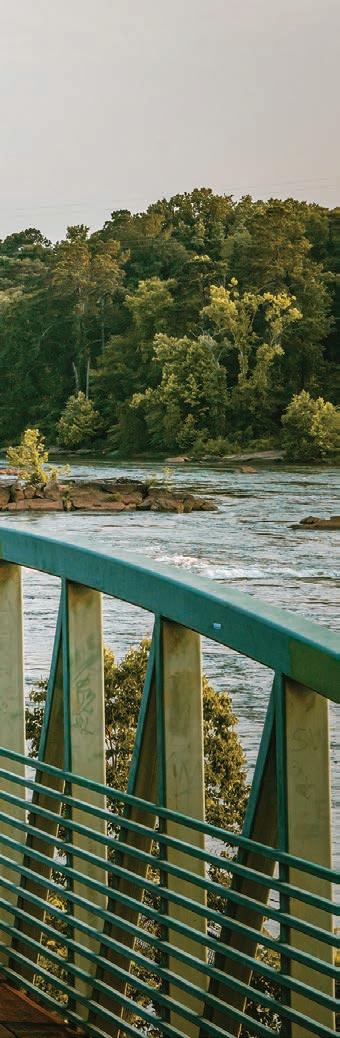
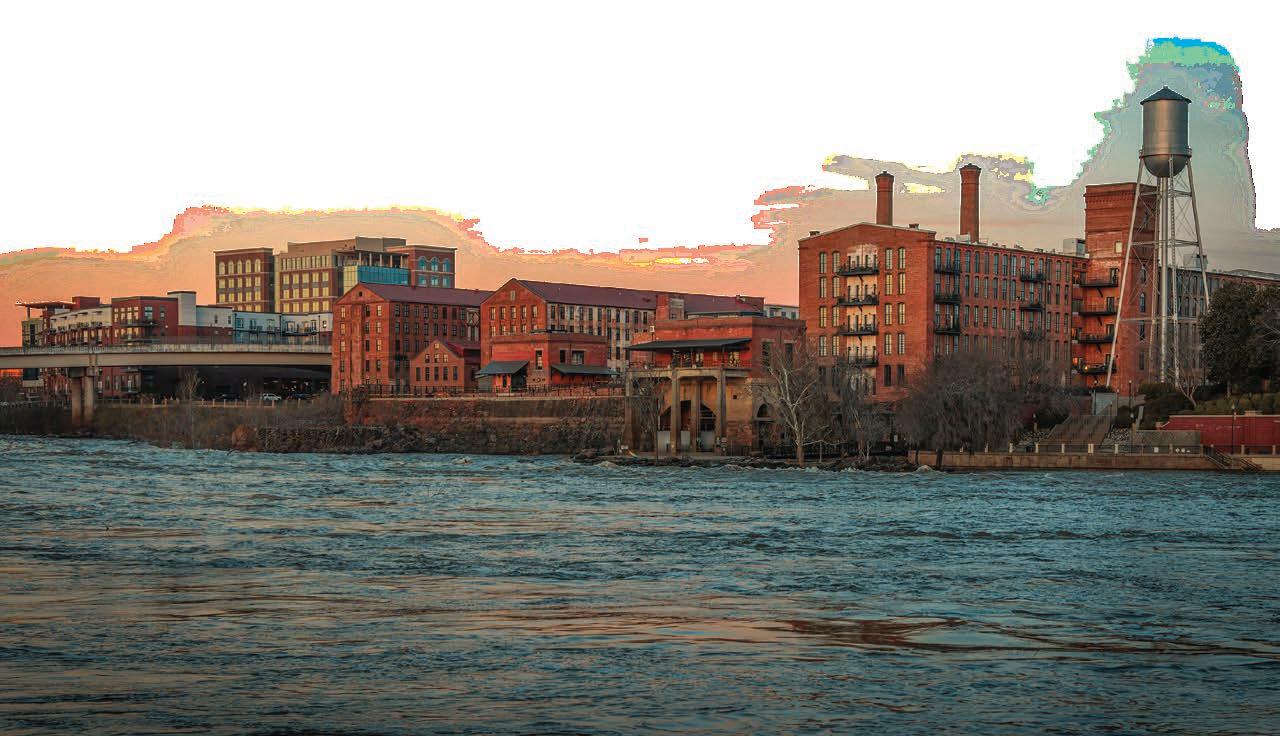
I have a vague memory of getting on a riverboat in Uptown Columbus and heading down the Chattahoochee.
Almost 30 years later and a bit of digging, I can verify that it did happen. The Jubilee was banked beside the Trade Center and carried passengers down the river for a short cruise. The city was in the early days of its renaissance with the banks still very much overgrown. The RiverWalk had early footings…so to speak.
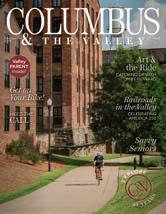
What was once an essential vein for passenger and freight transportation down to the gulf coast to the river of today—a world class whitewater venue that draws kayakers from all over the globe. A River Journey gives us a peek into the world of early Columbus folk taking a leisurely trip down the river to Apalachicola on the legendary steamboat named the Naiad. What would they make of the revitalization of the city and people who come to ride the river in competition and for fun?
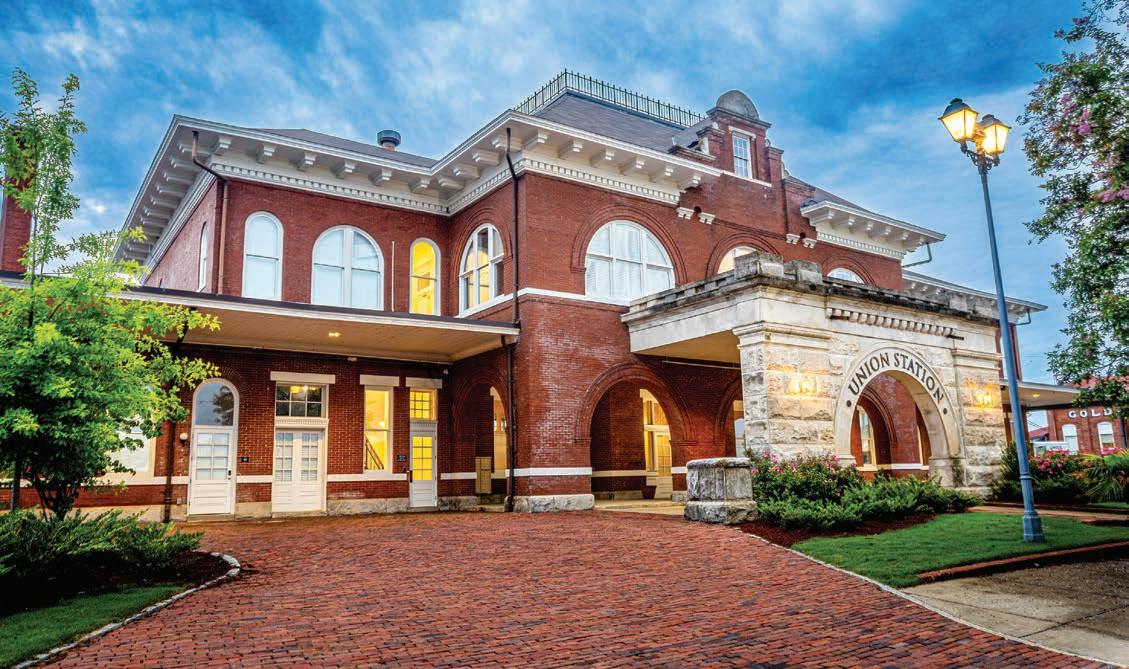
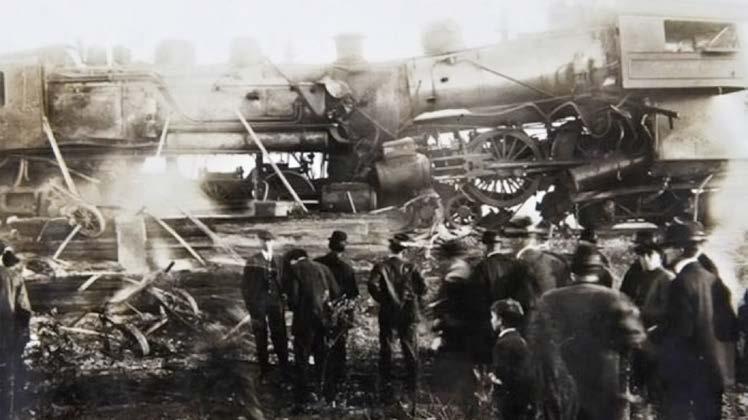
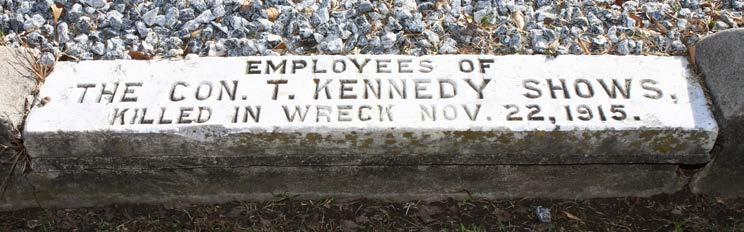
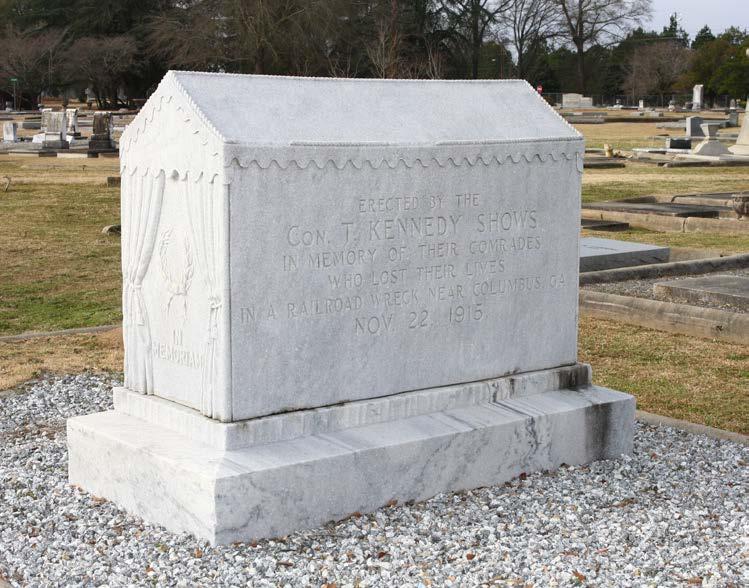
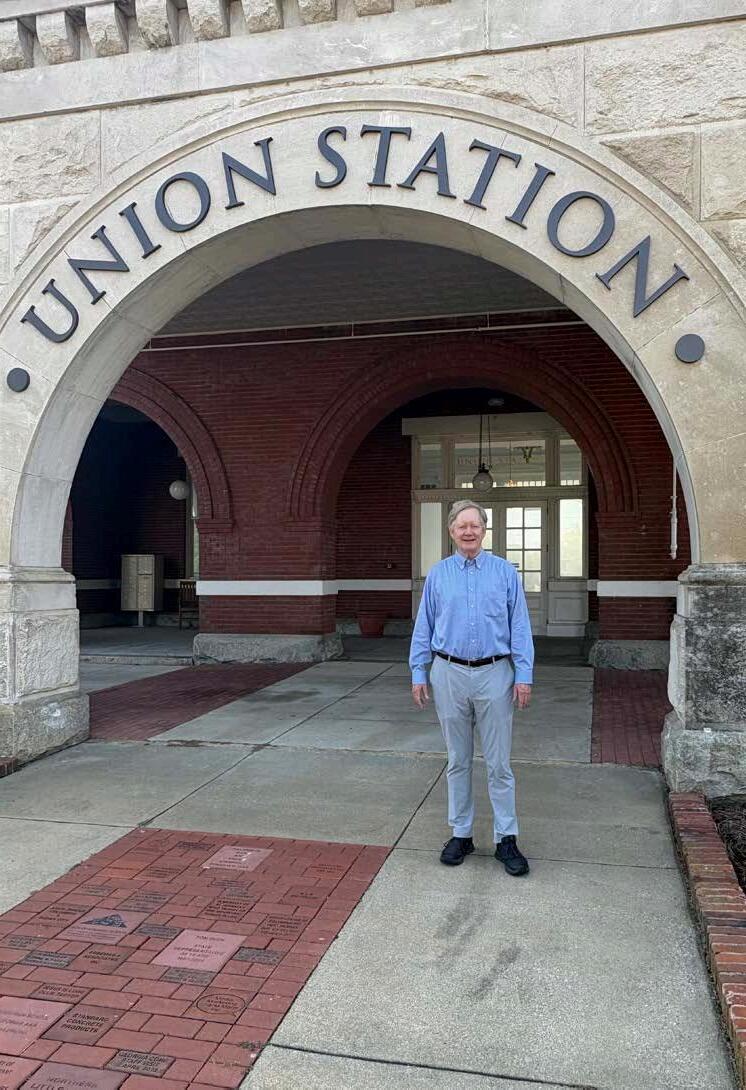
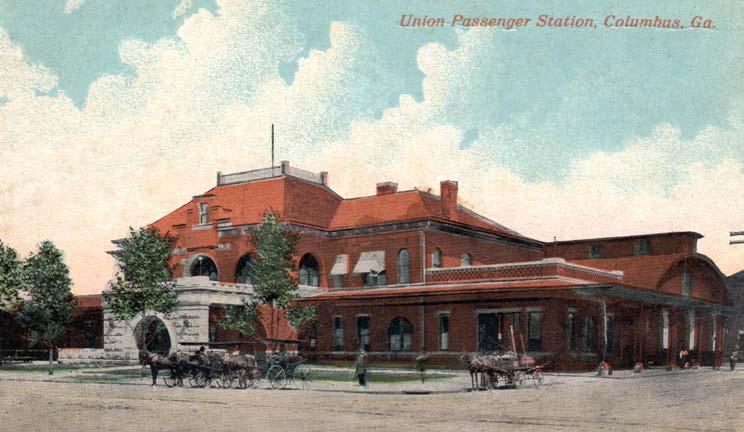
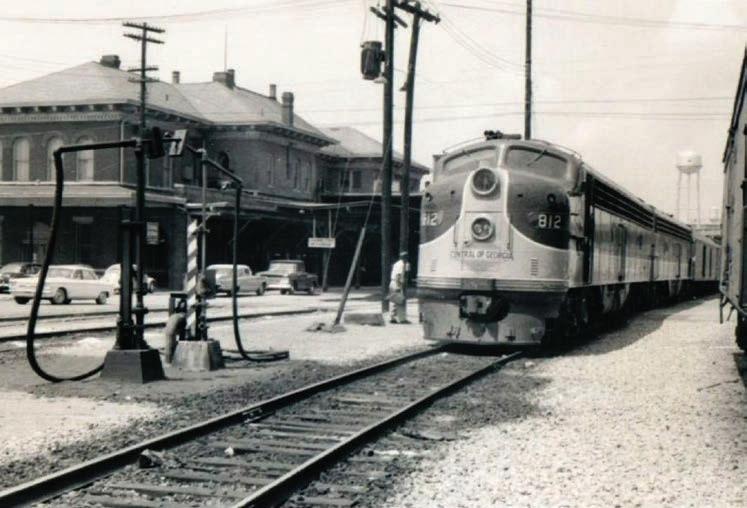
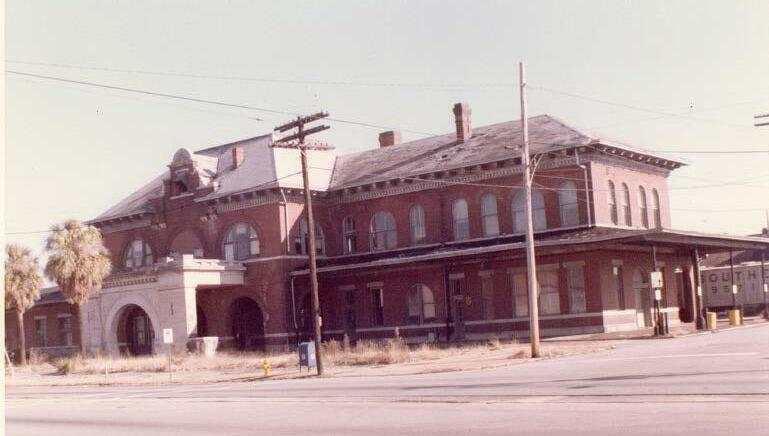
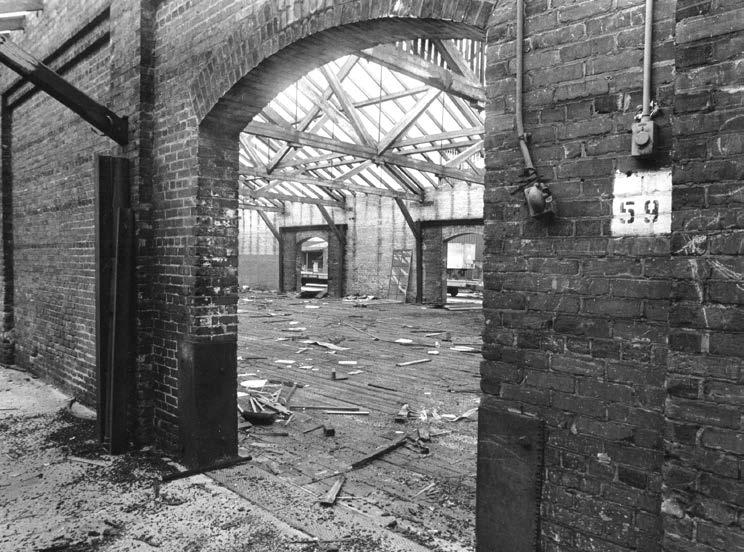
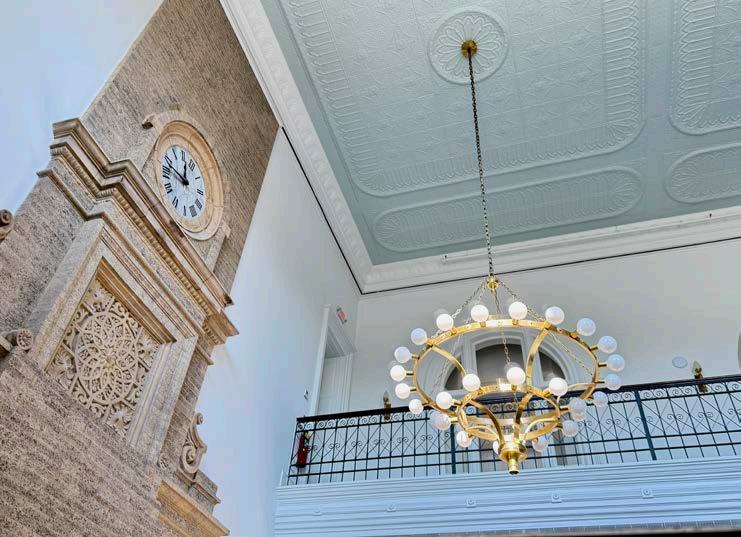
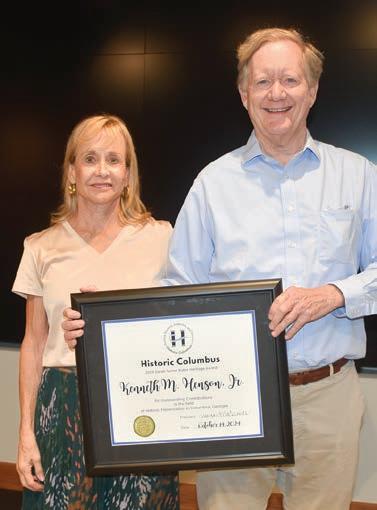
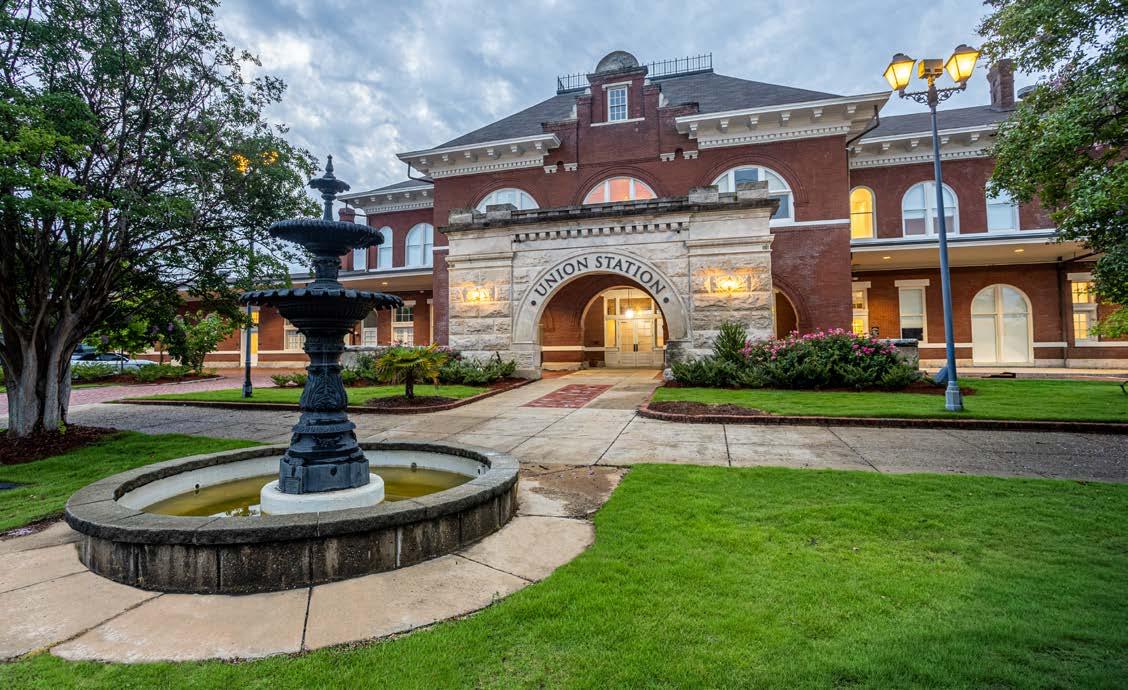
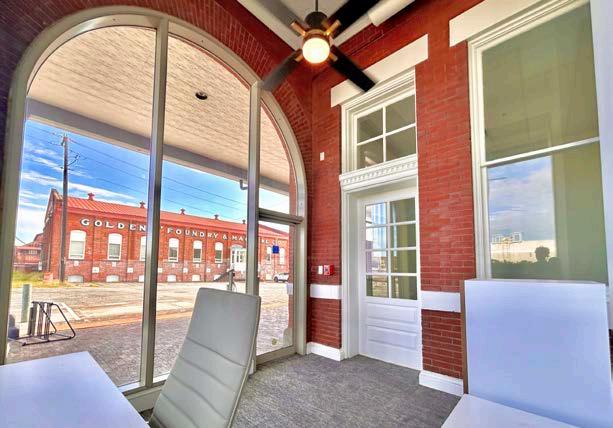
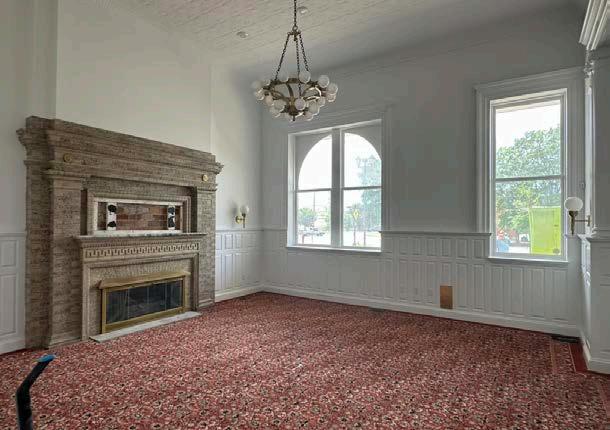
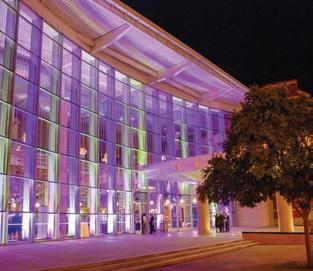
Our fourth segment in our America 250 series is focused on the railroad. Another flashback came as I toured the recently renovated train depot now proudly sporting its original name of Union Station. I spent three years in that building when I worked with the Chamber of Commerce, and the architecture and integrity of the building has been respectfully preserved by local attorney and real estate developer Ken Henson. Now housing office and apartments this is another development that holds tales of travelers making their way through Columbus or disembarking on the platform where the rail yard sits. A red-letter historical event in our history is the circus train crash of 1915 and the fantasy
and folklore of the night the animals were loose in the city. Read all about it here!
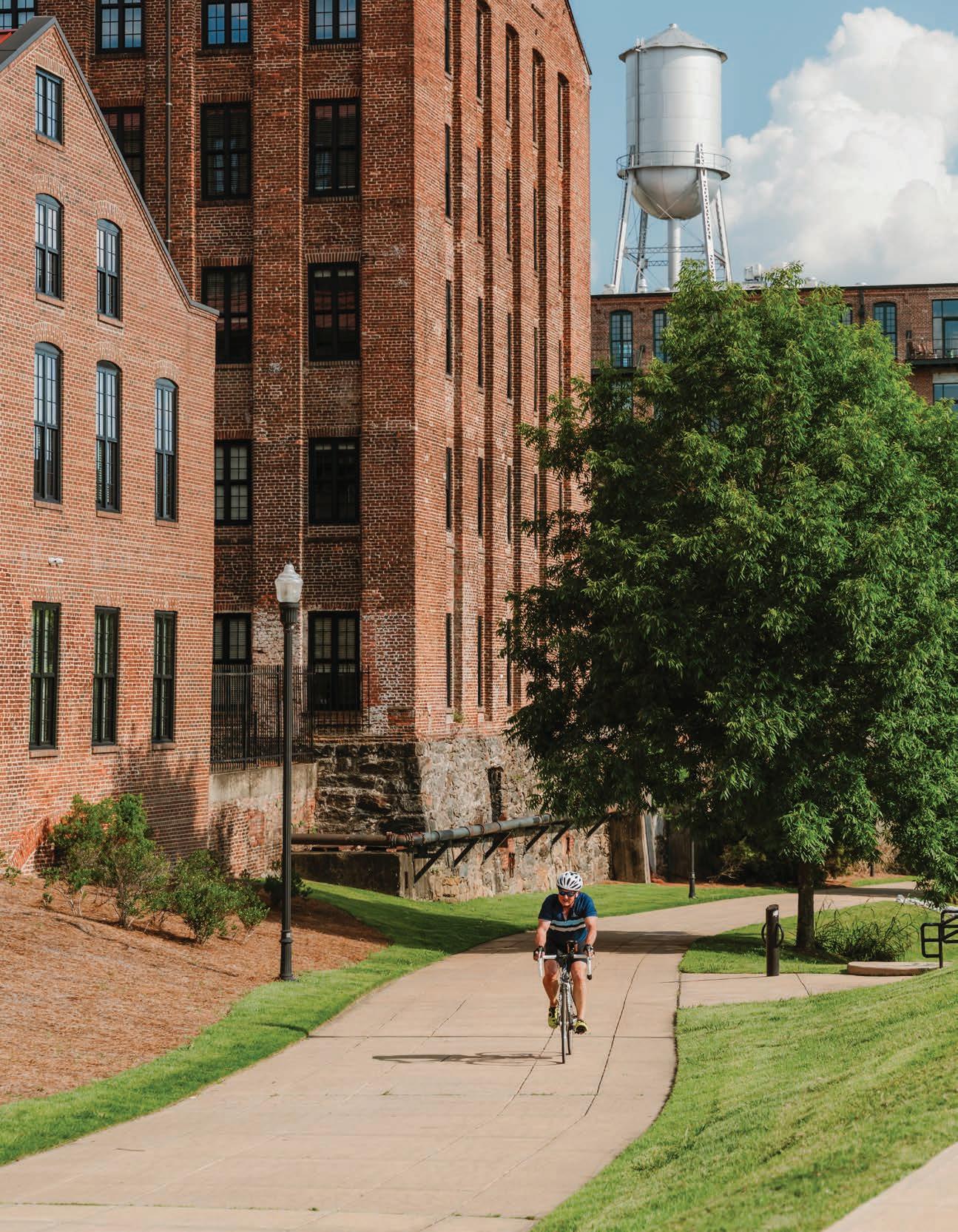
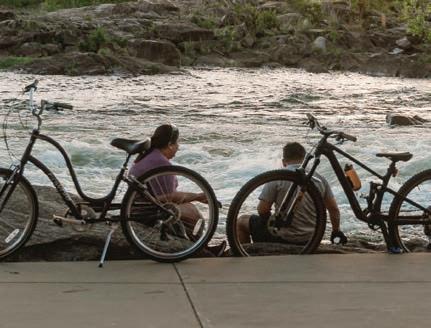
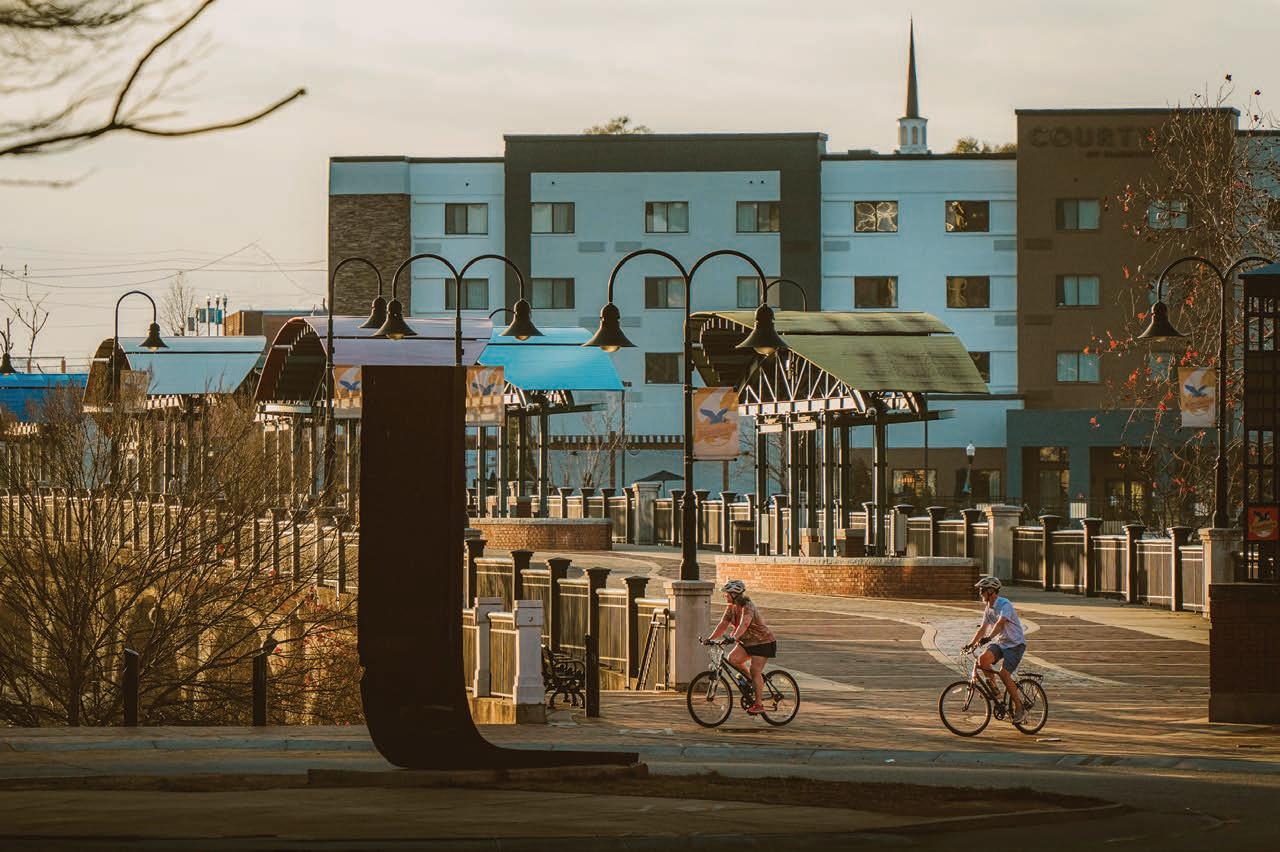
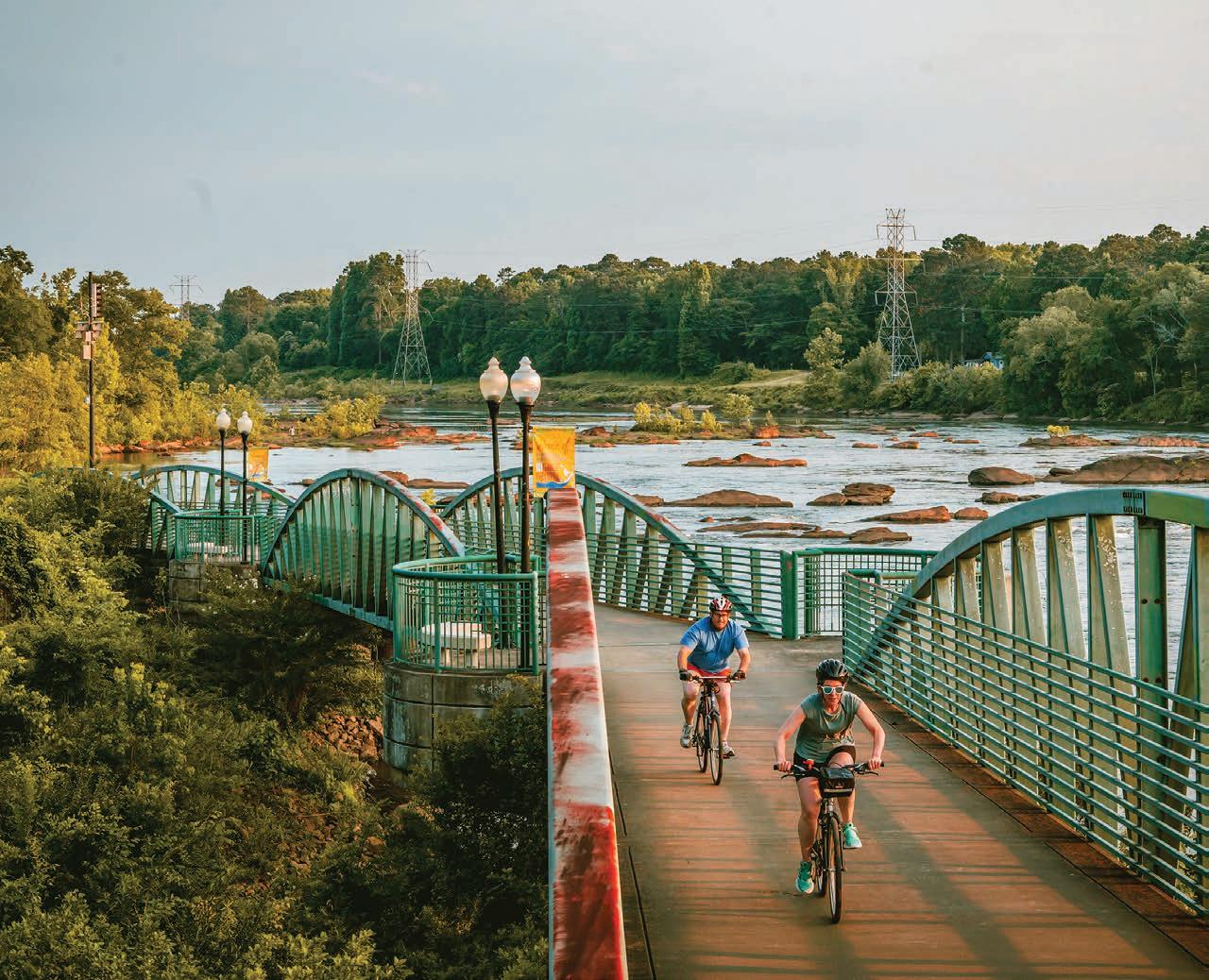
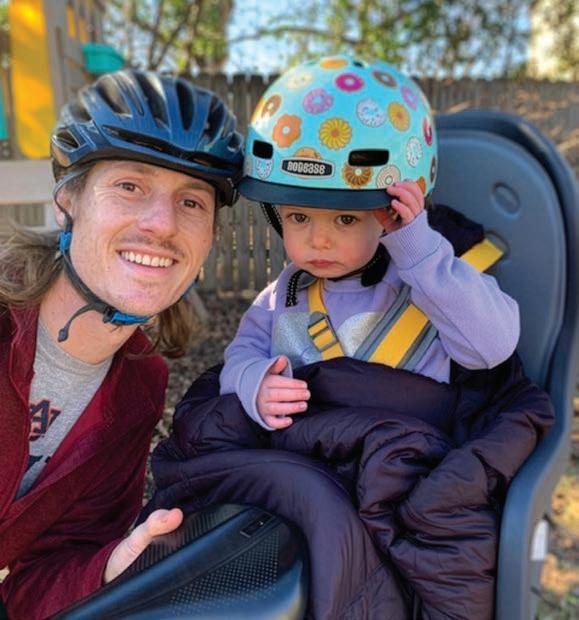
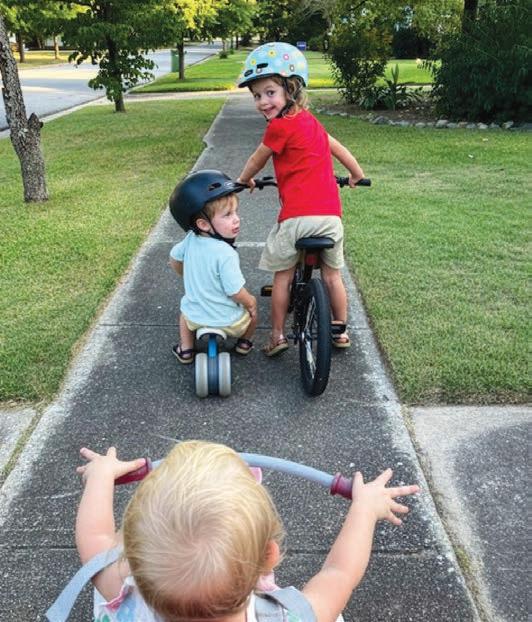
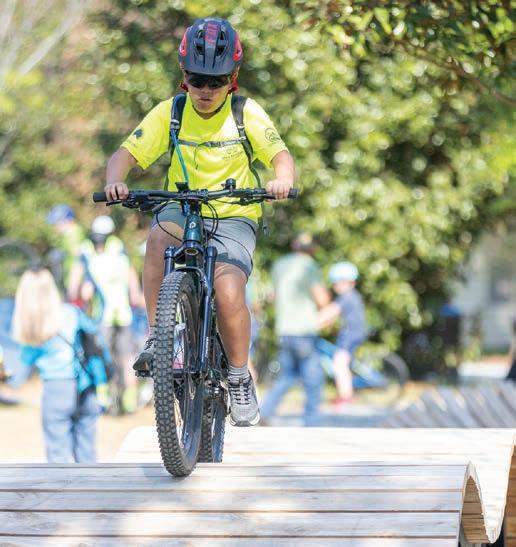
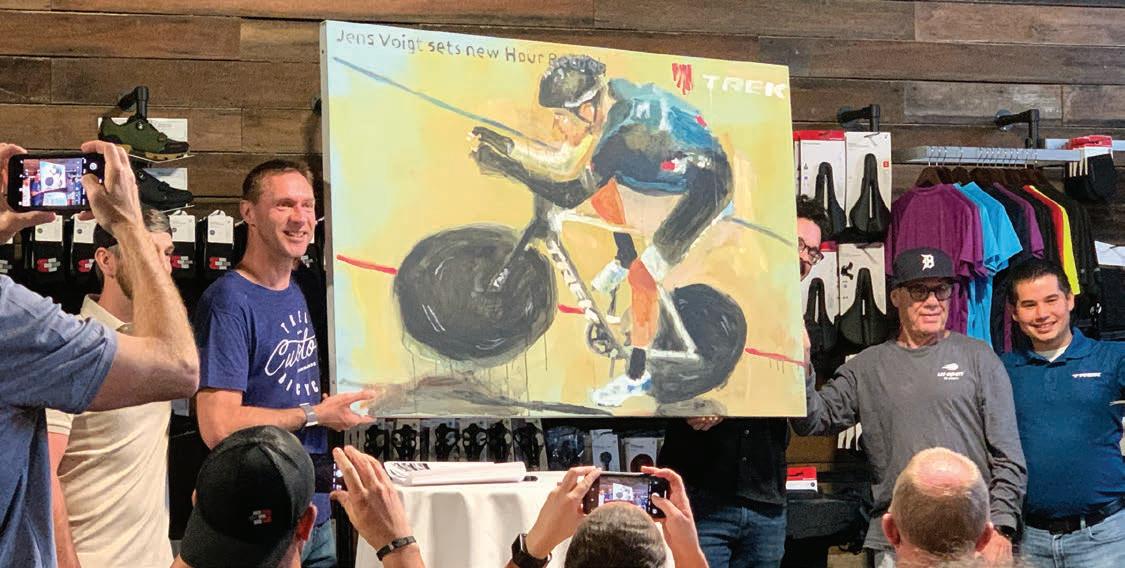
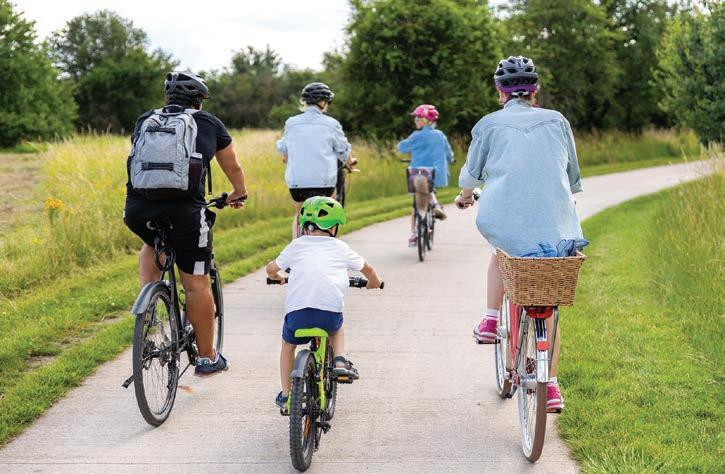
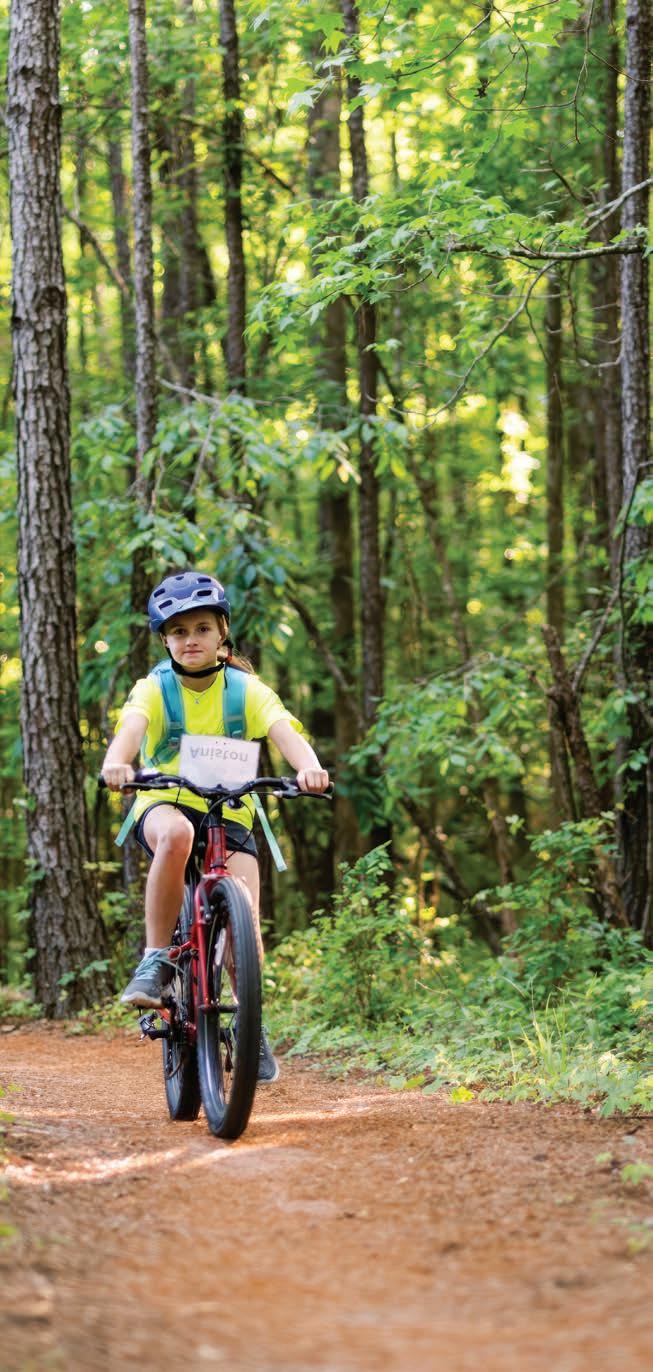
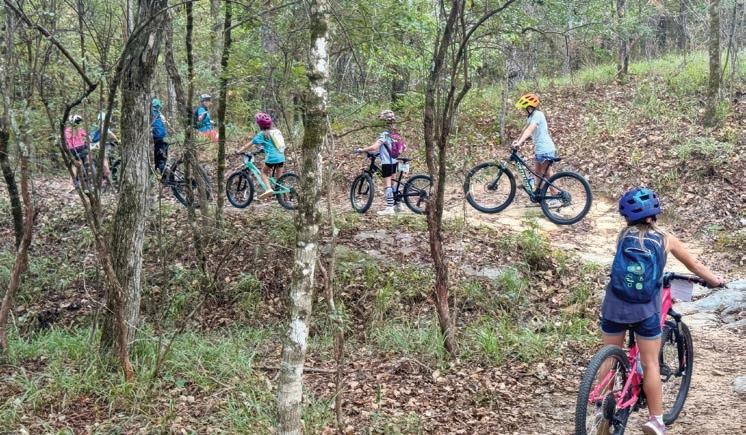
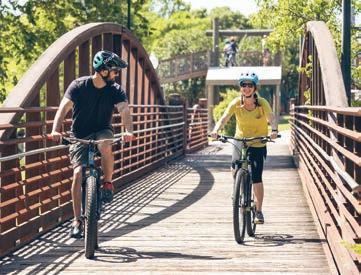
A mode of transport that never goes out of style is the bike. As the biking and walking trails continue to develop, Columbus is being recognized as a community worth exploring. With BRAG choosing Columbus as the final destination for this year’s statewide ride, there are plenty of ways to get rolling. From full moon rides and local cycling groups to opportunities for children to build their biking skills and mountain bike trails to explore, Columbus offers something for every rider. Cycling is for all, and our riders who grace our pages prove it. Age is no barrier with local artist Mike Howard proving to still be in the saddle as an accomplished artist and as a winner in his cycling career.
Looking to make a connection? There’s no time like the present. Columbus Academy for Lifelong Learning has their fall schedule of classes and activities all set, and this great opportunity to join is literally CALLing your name. In our digitally draining worlds real relationships matter. If you’re inspired to be all hands-on deck, the Living Mosaic community is another example of where there’s a place for everyone to participate and build something meaningful together.
There are welcome changes at the magazine. We’ve merged our two publications, and from this issue forward, Valley Parent will be a section of Columbus & The Valley. A future digital newsletter will provide timely resources for local families. Also, we’ve moved our subscriptions to a new platform that allows us to better serve you, our readers. We are working on our inventory of subscriber accounts, and if you’re due to renew, you will hear from us soon. This summer we have also welcomed our new intern onboard at the magazine. Campbell Baker is getting real hands-on experience in the world of print publication and is enjoying exploring Columbus.
As I write this editorial, it’s the final day to vote on several runoff elections for our city. A new political landscape is emerging. One such change is Tyson Begly’s recent appointment and vote by council to be our new city manager. While we’re sad to lose our Valley Business Insider columnist we’d like to congratulate Tyson on his new position. As Mayor Henderson phases out of office over the next few months, another congratulations is due on a job well done. I met Skip and his wife Karon many moons ago, and I am delighted that after two terms in office, they get to relax and enjoy the city.
Here’s to exploring! Be it on bikes, boats, trains, through preservation projects, community endeavors or in the classroom, there’s something for everyone.
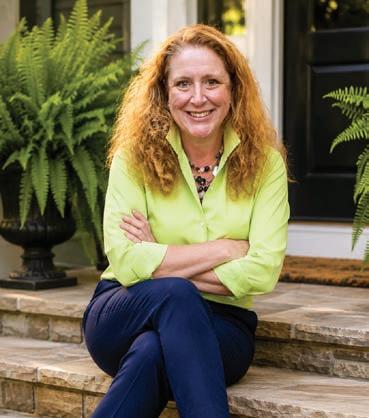
Jodi Saunders Publisher/Editor
Cheers to Skip Henderson as he winds down his final term as Mayor.
Proud to be a local, independent small business in the Valley area for 30+ years.
Our Team
Becky Kenimer
706-289-8338
Julie Lauzon
Sales & Marketing Manager
706-324-6214 Campbell Baker Intern/Journalism Major
We are happy to provide our publications for your events. Gift a great read showcasing the best of our region. Digital options available by request. Request at contactus@columbusandthevalley.com. Please give 6 weeks advance notice
We want to hear from you!
Share your stories and ideas with us. Our region is rich in its heritage, arts and culture scene, entrepreneurial endeavors and big business corporations. Everything is happening right here in the Chattahoochee Valley. Connect at contactus@columbusandthevalley.com.
your
WHAT’S HAPPENING?
Ongoing
Tours at Historic Westville
SECOND SATURDAY OF EVERY MONTH
Visit Westville the second Saturday of every month for a 45-minute site tour led by the director of programs and education. These tours will provide a great overview of Historic Westville Village and are free with museum admission. Tours begin at the Thornton Visitor Center at 11am. westville.org
Uptown Market Days
NOW THROUGH AUGUST
Each Saturday, three blocks along Broadway host over 100 local and regional vendors. Visitors can expect to find fresh and organic produce, home goods, jewelry, unique crafts and delicious baked goods. Market Days is the perfect Saturday activity for family, friends and visitors. Don’t forget to bring your furry pals to get in on the fun.
AlwaysUptown.com
Vacationland at COMU
NOW THROUGH AUGUST
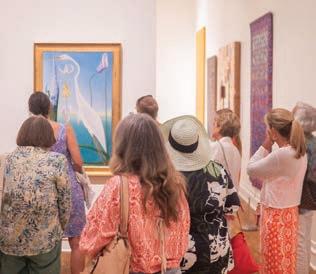
This permanent collection-based exhibition spotlights over 150 years of American artists with ties to Maine. The state’s varied topography and picturesque views have long enthused artists seeking new subject matter or escape from humdrum city life. COMUGA.org
Highside Market Farmer’s Market
SUNDAYS
Spend your Sunday afternoons at Highside Market exploring their Farmers Market — a seasonal showcase of locally grown goods and handcrafted flavors in the heart of Columbus.
HighsideMarket.com
VP Tuesdays at 10 at COMU
TUESDAYS
Drop by COMU for new surprises each week –scavenger hunts, exploring touch objects in the galleries, special art-making activities… and more! COMUGA.org
VP Storytime with Grammy Trish at Columbus Bound Bookshop
WEDNESDAYS
Grammy Trish reads charming childrens books and engages with your little ones. ColumbusBound.com
Yoga at Highside Market
WEDNESDAYS
This complimentary outdoor yoga session is open to adults of all ages. Whether you’re a beginner or an experienced yogi, this is a great opportunity to unwind, stretch and connect with the community in a beautiful park setting.
HighsideMarket.com
VP Family FriYAYs at Columbus Botanical Garden
JULY 10-AUGUST 28
Drop in for Friday night programs around a new theme centering on the Catrinas each week! ColumbusBotanicalGarden.org
July
Star Spangled Beach Party at Callaway Gardens
JULY 3-5
Celebrate summer days and starry nights with their weekend-long July 4th Star-Spangled Beach Party! Enjoy family adventures on the sunny shores of Robin Lake Beach with beach volleyball, putt putt and water activities like stand-up paddle boarding. Each day ends with a bang thanks to nightly Fireworks Extravaganza; a spectacular salute to summer. CallawayGardens.com
250 Celebration at National Infantry Museum
JULY 4
This free, family-friendly celebration honoring America’s 250th Anniversary will have historic reenactors, military displays, family activities & bounce houses, local food trucks, live entertainment throughout the day and wraps up with an unforgettable finale concert by military veteran and country music artist Keni Thomas. 10 a.m.-5 p.m. NationalInfantryMuseum.org
VP Gallery Kids! at the Do Good Fund Gallery
JULY 8 & 15
Visit the The Do Good Fund Gallery for a free educational art making experience for kids ages 5-10. Led by a local art educator, kids can make art in a gallery setting surrounded by colorful paintings by Carol John in our summer exhibition Sunshine, Happiness & Joy. TheDoGoodFund.org
Art and Patriotism Guided Tour at COMU
JULY 9
American artists have used their creative output to share stories throughout history. Join Lucy Kacir, Director of Education and Engagement, at 5:30 p.m. for a gallery experience exploring the intersection of art and patriotism in the United States. COMUGA.org
Harry Potter Night at the Clingstones Game
JULY 10
Grab your invisible cloaks, wands, a chocolate frog and broom and fly your way to watch the Clingstones take on the Birmingham Barons and stick around for post-game fireworks thanks to GFL Environmental! Clingstones.com
Honey Harvest
JULY 11
Join Honey Harvest, where you will learn about beekeeping and learn about the process of extracting and bottling honey. Honey sales begin at 12 p.m. or available as honey is extracted and bottled on site. Admission to the Honey extraction demonstration is included with your admission ticket.
Oxbow.ColumbusState.edu
Columbus United FC vs. East Atlanta FC
JULY 11
Come cheer on Columbus United as they play their last scheduled home game against EAFC at AJ McClung Memorial Stadium. ColumbusUnitedFC.com
Uptown Christmas in July Market
JULY 11
Uptown transforms into a festive holiday wonderland— in the middle of summer! Shop your favorite market day vendors offering Christmas-themed gifts, treats and handmade holiday items. Santa Claus in his summer best. Grab a photo with him in his Hawaiian shirt.
AlwaysUptown.com
The Sandlot Movie Night at Highside Market
JULY 16
Every Third Thursday gather in Daisy Park at Highside Market for dinner and a movie.
HighsideMarket.com
VP Corduroy at Springer Opera House
JULY 17-26
Based on the beloved children’s classic, join the world’s favourite teddy bear as he takes a rollicking ride up the escalator and begins a delightfully destructive romp through the department store. SpringerOperaHouse.org
VP Harris County/Pine Mountain Community Pool Party
JULY 17
Visit the Liberty Bell Pool from 6 to 8 p.m. for a fun filled evening with bounce houses, free food, DJ and free school supplies while supplies last.
VP Hero for a Day at the Trade Center
JULY 18
Bring the entire family for an action packed morning at Hero for a Day! Meet your favorite superheroes, connect with real life community heroes, explore and touch emergency vehicles up close and enjoy interactive activities for all ages. Costumes are encouraged.
ColumbusTradeCenter.com
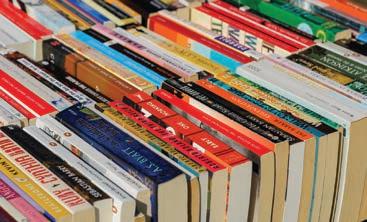
Friends of the Library Book
Sale at Columbus Public Library
JULY 24-26
Shop from a variety of titles including bestsellers, mysteries, romance, biographies, cookbooks and much more! Everything is priced at $2 or less. CVLGA.org
JEEP Takeover at Columbus Civic Center
JULY 25
Jeep enthusiasts from across the region are invited to show off their rides, connect with fellow Jeep owners, and experience an exciting atmosphere filled with custom builds, vendors, entertainment, and more. Guests can explore a variety of Jeeps ranging from rugged off-road setups to fully customized show vehicles while enjoying activities designed for both longtime Jeep lovers and families alike.
TheJeepTakeover.com
Artist Talk with Carol John and Spalding Nix at Do Good Fund Gallery
JULY 29
Learn about art on display at The Do Good Fund Gallery straight from the artists. Athens based artist Carol John and Atlanta based artist Spalding Nix will present at this artist talk from 6-8 p.m. It is free and open to the public.
TheDoGoodFund.com
Forgotten Monitor: The Story of the USS Tecumseh at the National Civil War Naval Museum
JULY 30
Enjoy an engaging evening with Thomas E. Nank as he brings to life Forgotten Monitor: The Story of the USS Tecumseh. A retired U.S. Navy Master Chief Petty Officer and historian, Nank combines firsthand naval insight with deep Civil War research to uncover the powerful story behind this iconic ironclad. PortColumbus.org
August
VP Midland Commons Back to School Bash
AUGUST 1
Midland Commons and Street Food Saturdays are teaming up once again to host the 2nd Annual Back to School Bash from 4 to 7 p.m. Visit for an action packed afternoon filled with fun, food, shopping and entertainment for the whole family to celebrate the end of summer and gear up for a new school year. facebook.com/events/1325893939486190
Celebrate 100 Years of Golden Park at the Clingstones Game
AUGUST 1
Come see the Clingstones play the Rocket City Trash Pandas. They’ll be celebrating the past 100 years of baseball in Columbus. There will be a pre-show concert and a post game kids bases run. Clingstones.com
VP Princess for a Day at the Trade Center
AUGUST 1
On this day, your princess will experience a magical time! From meeting their favorite princesses, crafting royal artwork, having their make-up, hair, nails done, petting a pony, enjoying live performances and much more.
ColumbusTradeCenter.com
Tri-City Mega Show
AUGUST 15
This family-friendly event features an indoor and outdoor showcase of custom cars, trucks, motorcycles, Jeeps, audio builds, classics, exotics, lifted trucks, muscle cars, and more from across the Southeast. Guests can enjoy vendor booths, food and beverage vendors, entertainment and hundreds of unique vehicles all in one location. CivicCenter.ColumbusGa.gov
Yacht Rock Night at the Clingstones Game
AUGUST 21
Come see the Clingstones play the Montgomery Biscuits. If you like baseball blended with the breezy, mellow vibes of the 70s and 80s, this is it. Make sure to stick around for fireworks after the game. Clingstones.com
Invincible:
A Glorious Tribute to Michael Jackson at RiverCenter
AUGUST 22
Created, produced and directed by Bessie Award–winning producer Darrin Ross, INVINCIBLE is more than a tribute—it is a full-scale theatrical transformative celebration that transports audiences through the soundtrack of Michael Jackson’s extraordinary career.
RiverCenter.org
Schwob School of Music: Aesook Moon Organ Faculty Recital
AUGUST 23
The Joyce and Henry Schwob School of Music presents Aesook Moon Organ Faculty Recital. The concert starts at 4 p.m. in RiverCenter’s Legacy Hall.
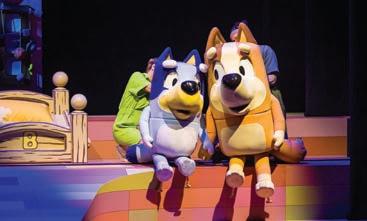
VP Bluey’s Big Play at Gogue Performing Arts Center
AUGUST 25
This is a theatrical adaptation of the Emmy Award-winning children’s television series, with an original story by Bluey creator Joe Brumm, and new music by Bluey composer, Joff Bush. Join the Heelers in their first live theatre show made just for you, featuring brilliantly created puppets, this is Bluey as you’ve never seen it before, brought to real life.
GogueCenter.Auburn.edu
Schwob School of Music: Paul Vaillancourt Faculty Recital
AUGUST 31
The Joyce and Henry Schwob School of Music presents a Percussion Faculty Recital. The concert starts at 7:30 p.m. in RiverCenter’s Legacy Hall.
September
Uptown’s Friday Night Fall Concert Series
SEPTEMBER 4
Join Uptown on Broadway during its Fall Friday Night Concert Series, where you’ll hear jazz, rock, reggae, gospel and more. A full block along Broadway is shut down for pedestrian use only to ensure enough space for dancing and air guitars. Kids dance stage left and parents dance stage right.
AlwaysUptown.com
Labor Day Weekend at Callaway Gardens
SEPTEMBER 4-6
Enjoy a full weekend of fun and relaxation with exclusive garden and beach access, Yacht Rock Schooner concert, K9s in Flight show, classic car show plus more entertainment and a festive fireworks display each night.
CallawayGardens.com
Scan to submit your event, or see more events.
VP = Valley Parent Family Fun Event
photos by Jake Rhodes
by Brett Buckner
RIDE ALONG
A city learning to move differently, and the people leading the way
Biking has always been there for Amy Way. “As a kid I had a yard with this big hill,” she said. “I taught myself to ride by rolling down the hill and balancing.”
An admittedly “hyperactive” child, Way’s earliest memories are of motion, circling the yard with a neighbor, riding until she wore herself out.
“We just rode in circles,” she said. “I had a lot of energy that I had to do something with, and it was usually riding a bike.”
That instinct never left. By the early 2000s, she was riding the Riverwalk obsessively, constantly pushing herself farther—Oxbow Meadows, Fort Benning, century rides, triathlons. But it wasn’t until COVID that she borrowed a mountain bike and tried Standing Boy Trails.
“I told everybody, never in a million years will you see me on a mountain bike,” she said. “I was terrified. Then I fell in love the minute I set foot on that property.”
Love turned into purpose. A longtime music teacher at the St. Luke School and on Fort Benning, Way became a certified mountain bike instructor to help others find their
confidence riding the same trails that once frightened her.
“I never wanted anybody to feel like I did on the bicycle, that fear,” she said.
Columbus wasn’t always an area where bike riders found a hospitable path. That started to change in October 1992 with the opening of the Chattahoochee Riverwalk—a safe, scenic path away from cars that allowed riders to build confidence. But the most significant turning point came with the 34-miles of interconnected, multi-use trails—Riverwalk, Fall Line Trace, MLK and Follow Me— collectively known as the Dragonfly Trails.
In 2015, Dragonfly Trails Inc. partnered with the PATH Foundation and Columbus Consolidated Government to create and adopt a 65-mile trail master plan building upon an existing, non-connected trail infrastructure. The Dragonfly Trails network is composed of 15 trail segments that are being developed in phases with the goal of connecting underserved areas of Columbus to Uptown and the Chattahoochee River.
A recent TSPLOST renewal is allowing the city to add a 10-foot-wide trail to one of every
14 to16 road projects, said Becca Zajac, executive director for Dragonfly Trails, Inc.
“When the newest TSPLOST campaign came around, and we had the opportunity to really put more trails in it, we jumped at that opportunity,” Zajac said. “The city saw the value of the trails and did something that I think will be transformational when it comes to fruition.”
By 2030, Columbus is expected to surpass its original 60-mile master plan. “We will become the longest interconnected trail system in the southeast,” Zajac said. “It is a huge tourist draw.”
But the Dragonfly Trails are about more than recreation. “People are using trails to walk their kids to school, to walk to work, to get to appointments,” Zajac said. “We’re trying to build that culture up.”
Two current projects, Dinglewood Park and River Road, will serve as “gateway trails” connecting larger neighborhoods to the Riverwalk and downtown. Dinglewood is a $2.2 million public-private partnership, and River Road extends the North Riverwalk by a mile near Lake Oliver.
These projects aim to reshape how people move through Columbus. Realtors now market homes based on trail access and nearly a billion dollars has been invested along the Riverwalk alone. More than 500,000 people use the trails annually,
Zajac said.
“Honestly, it’s probably a lot higher,” she said. “If you’re coming here, you are likely setting foot on the RiverWalk at some point. That’s pretty significant.”
REASONS FOR RIDING
For many Columbus residents, biking is exercise. For others, it’s a matter of survival.
Keith Sims, a Midtown resident and longtime commuter, started riding because he and his wife chose to sell their second “beater” car that they couldn’t afford.
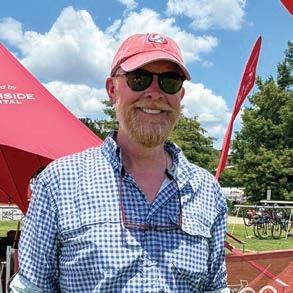
ABOVE: Keith Sims started riding his bike to work to be more self-reliant and also enjoys taking his young kids for rides around the neighborhood.
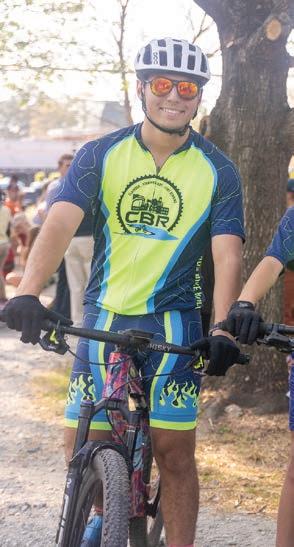
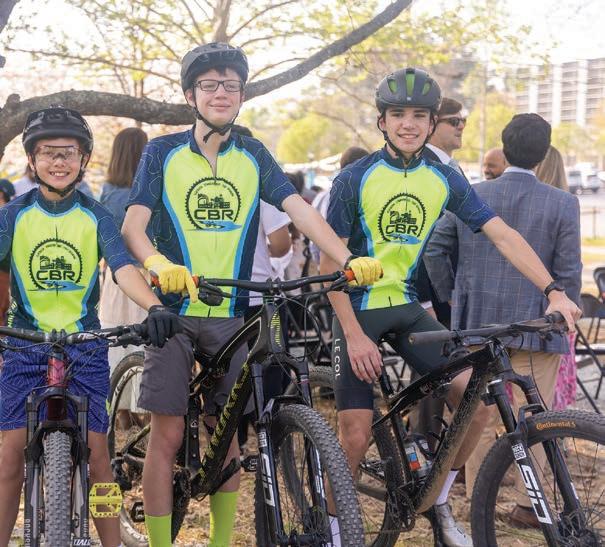
BELOW: Members from Columbus Bike Racing (L-R) Paul Bolduan, Ethan Sebert, Lane Lopez and Alex Burgin at the grand opening of MidTown Children's Bicycle Playground at Dinglewood Park
“We want everything in our community to be connected and accessible by bicycles We want people to not just feel safe but comfortable.”
-Jack Jackson
“I liked the idea of self-reliance and making my life as lean as it could be,” he said. “[With a bicycle], I can get where I need to go by my own means. I don’t need a degree like a mechanic to fix a car. I can fix a bicycle. I can patch a tire. I can rework a chain—all under my scope, which means a lot to me. “
Cycling became Sims’ primary mode of transportation. Whether it was taking him to work in North Highland or to MercyMed Farms, he was logging upwards of 10 miles a day for years, grounding him to the community in a way driving could not.
“I think that if a city invests in transportation other than vehicular, which puts you in a box going 60 miles an hour, it’s a better way to experience your city and connect with your neighbors on the porches or businesses,” he said. “The numbers of people who stop when they’re pedaling by a store versus those who are driving is very high.”
Midtown and downtown, with access
BIKE RIDE ACROSS GEORGIA
Ron Ward
On Saturday, June 6 just over 1,000 registered riders made their way from LaGrange to Columbus on the final leg of 2026 Bike Ride Across Georgia. Woodruff Park in Uptown was the finish line where the official BRAG team was set up and ready to greet the riders with refreshments courtesy of Visit Columbus GA, and a chance to rest after riding over 400 miles.
Overseeing the ride from start to finish is Columbus native, Ron Ward. Ward’s first experience with BRAG was in the early 1990s when he rode alongside his brother Rob. Alongside may not be the exact term as Ron trudged along on a Giant Iguana mountain bike with huge hard tires while his brother tackled the course on a sleek Trek Road bike. Today, a couple of decades later, Ron holds the title of BRAG’s Domestic Ride Director. A position that came after an injury forced him to seek out alternative ways to get outdoors. As Ron explains, “I spent some time on the Appalachian Trail back in 2023 and was injured, and I came home and my doctor said, you can't hike, you can't run. You can swim, or you can bike. And I said, all right, I'll get my bike out of the rafters in the garage. And I started really getting into cycling. I did a few cycling events, including this one (BRAG), and I met the executive director Franklin Johnson, and we hit it off. I volunteered on one ride and then he said, ‘Hey, if you ever want to join us on staff permanently, we're looking to expand internationally because we do luxury tours in Amsterdam, France, Croatia and Portugal.’ He handles all the international rides, and I take care of the domestic. We're leaving for Iowa in July to do RAGBRAI, which is the ride across Iowa. That’s 60,000 riders, so we're taking a big group from Atlanta over there”.
“We've had people here that have done it 30, 35 years on the road. They just keep coming back. Our demographic is getting older. We’re trying to recruit younger riders, maybe bringing in families so that they're younger kids as they age can get involved,” Ward said.
Not Just A Georgia Thing
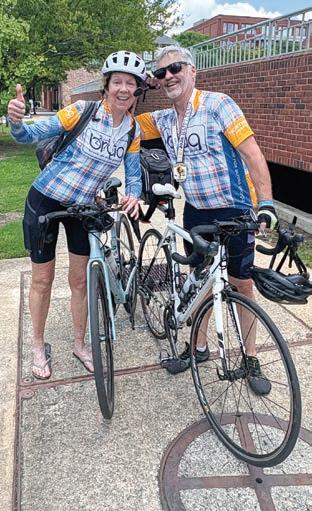
Rides, such as BRAG, attract riders nationwide and there’s an element of international participants, too. Patty and Tom Jones live in Upstate New York and road biking is a family affair. Their inspiration to ride BRAG was their son. “He’d asked us back in December if we’d come and do this with him. How can you say no?” Patty went on to say, “We combine our road bike trips with SEC football games.“My son finished before us because he needed to get back in time to pick up his children and Tom was held up with a flat tire, so he rode the last few miles without us. We plan on doing BRAG again next year. It was very enjoyable for sure. Met a lot of nice people."
Patty and Tom Jones
to the Fall Line Trace and Dragonfly, are relatively safe. But the north side, such as Double Churches Road and the Whitesville Road bridge, are a “death trap for cyclists because cars don’t respect bike riders,” Sims said.
Jack Jackson, president of Bicycle Columbus, has been commuting by bike for a decade. He’s watched the city’s infrastructure evolve, slowly at first, then rapidly with the Dragonfly network.
“In the past 10 years… the connectivity and the quality and the safety has definitely gone up,” he said.
Jackson emphasizes that biking isn’t one thing. It’s fast road rides, slow commutes, DIY bike culture, e-bikes, family rides and everything in between.
“There’s so many different ways you can bike,” he said. “It’s all very communal.”
Bicycle Columbus advocates for safety, not by removing bikes from roads, but by creating a city where people feel comfortable riding regardless of age or skill.
“We want everything in our community to be connected and accessible by bicycles,” he said. “We want people to not just be safe but comfortable.”
Sims envisions a future in which downtown serves as the “heart” for cycling with the Riverwalk, MLK, Fall Line Trace and all of Dragonfly serving as its arteries.
“Downtown really needs to be built
around cycling and pedestrians,” he said, “and limit cars as much as we can.”
As a commuter, Sims has experienced a cultural stigma associated where cycling is equated with poverty.
“I’ve had people frequently stop to ask if I’m okay,” he said laughing without much humor. “They assume I’m struggling or stranded just because I’m on a bike and not wearing spandex. They can’t imagine I’m choosing this.”
Historically, Columbus trails were used mainly for recreation, but in the last five to 10 years that has changed. Since the Dragonfly network was established, biking has become an invaluable mode of transportation.
“That’s also because we have a real high poverty rate and people can’t afford vehicles,” Zajac said. “And our public transportation is not the strongest thing in the city. People are using trails to get their kids to school, to get to work, to get to appointments, and we’re trying to build that culture up.”
Jason McKenzie, owner of Ride On Bikes, witnesses the disparity between those riding for exercise versus those riding out of necessity all the time.
“Man, if you walked into Ride On Bikes and hung out, you’d be blown away,” he said. “It’s like a sitcom. The characters— you have a homeless person getting their bike fixed waiting in line next to a literal
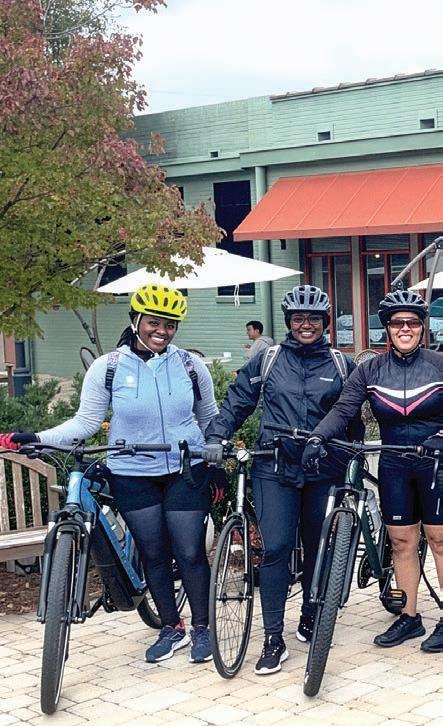
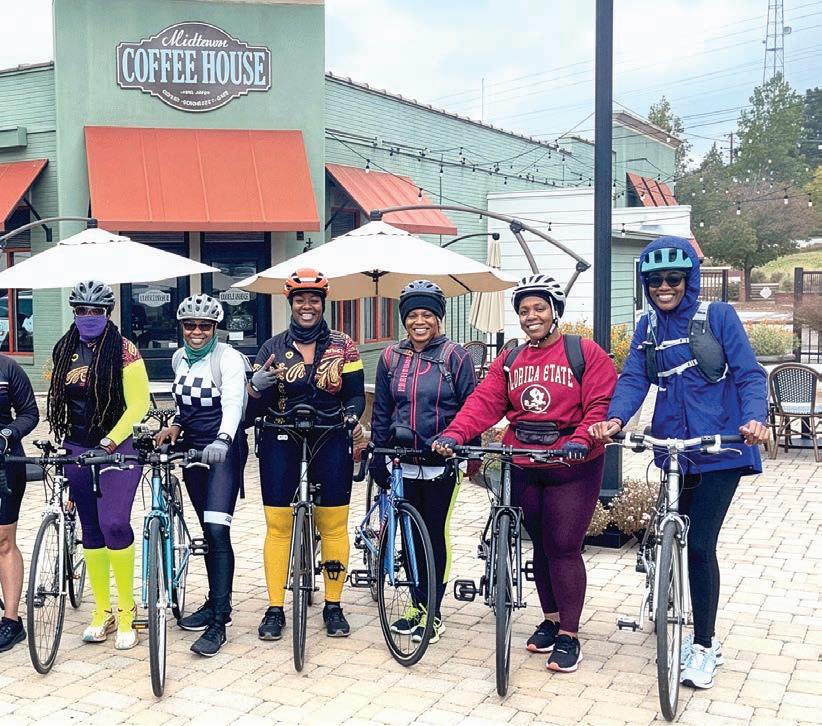
Chandrika Phea and other members of the Breakfast, Bikes, and Black GIrls cycling group ride together and stop for breakfast once a month.
A Great Way to Get Started
When Jason McKenzie, owner of Ride On Bikes, talks about how beginners should get into cycling, he starts with a confession.
“Can I tell you the way people mess it up first, and then we’ll go to the right way,” he said. “People make the mistake of buying a cheap bike from a department store to see if they like it. The logic makes sense, but it doesn’t work out.”
McKenzie has watched the pattern play out for years.
Those bargain bikes, he explained, are often assembled by third party contractors paid “10 bucks a bike.” The result is predictable. Gears that don’t shift. Bolts that loosen, and riders who assume they are the problem, not the bike itself. Add in the oversized, cushy seats beginners think they need, the frames that are too small—believing that both feet should touch the ground—and the experience quickly sours.
are hurting, everything is squished, and you’re like, ‘God, I hate cycling,’ And I’m over here just begging you to walk into Ride On Bikes to give me a shot.”
McKenzie isn’t just interested in selling a bike but preventing people from giving up before they’ve properly started.
Ride On Bikes offers rentals starting at $10 a day, and if a customer buys a bike within 90 days, that rental credit rolls into their purchase. This allows beginners to learn what actually fits, what feels good and what they enjoy.
“I can give you all of my experience, 23 years in the industry,” he said. “You try something for a day, come back with feedback and I can help dial in the exact right thing for you.”
McKenzie’s goal is simple—“I don’t want to just sell you a bike,” he said. “I want you to fall in love with cycling.”
billionaire. It’s like that every day, all day.”
Since opening, Ride On Bikes has combated the enduring image of the elitist bike shop. To that end, the shop runs a “Do Good Fund” where all tips and donated bikes go into a pool that staff can use at their discretion to help anyone in need.
“I feel like [biking] used to be a poor man’s transportation and then it became a rich man’s luxury,” McKenzie said. “But in the business that I’m sitting in, it’s the full spectrum. It’s not one or the other. It’s everything.”
‘LITTLE GIRL JOY’
If Sims is cycling’s economic identity, Chandrika Phea represents its cultural advocacy.
Phea, founder of Breakfast, Bikes, and Black Girls, began riding after returning from a two ear missionary trip to China around the year 2007. Once back home, she felt confined by the expectations of her community.
“My community was mainly church, and church for me is the Black church,” Phea said. “If my community is only black, then I’m stuck.”
VENDORS
Get your copy at one of these Valley area locations!
Barnes & Noble
Columbus Park Crossing 5555 Whittlesey Blvd. Columbus, GA 31909
The Cat’s Meow 137 Main St. Pine Mountain, GA 31822
Columbus Bound Bookshop 1328 13th St. Columbus, GA 31901
Columbus Collective Museums 3218 Hamilton Rd. Columbus, GA 31904
Columbus Museum Gift Shop 1251 Wynnton Rd. Columbus, GA 31906
Dinglewood Pharmacy 939 Wynnton Rd. Columbus, GA 31906
Durham’s Pharmacy 1420 17th St. Columbus, GA 31901
Galleria Riverside 1658 Rollins Way Columbus, GA 31901
Judy Bug Books 1033 Broadway Columbus, GA 31901
Piedmont Columbus
Regional Midtown Gift shop 710 Center St. Columbus, GA 31901
Piggly Wiggly
5850 Moon Rd., Columbus 4916 River Rd., Columbus 1359 13th St., Columbus Stadium Plaza, Phenix City
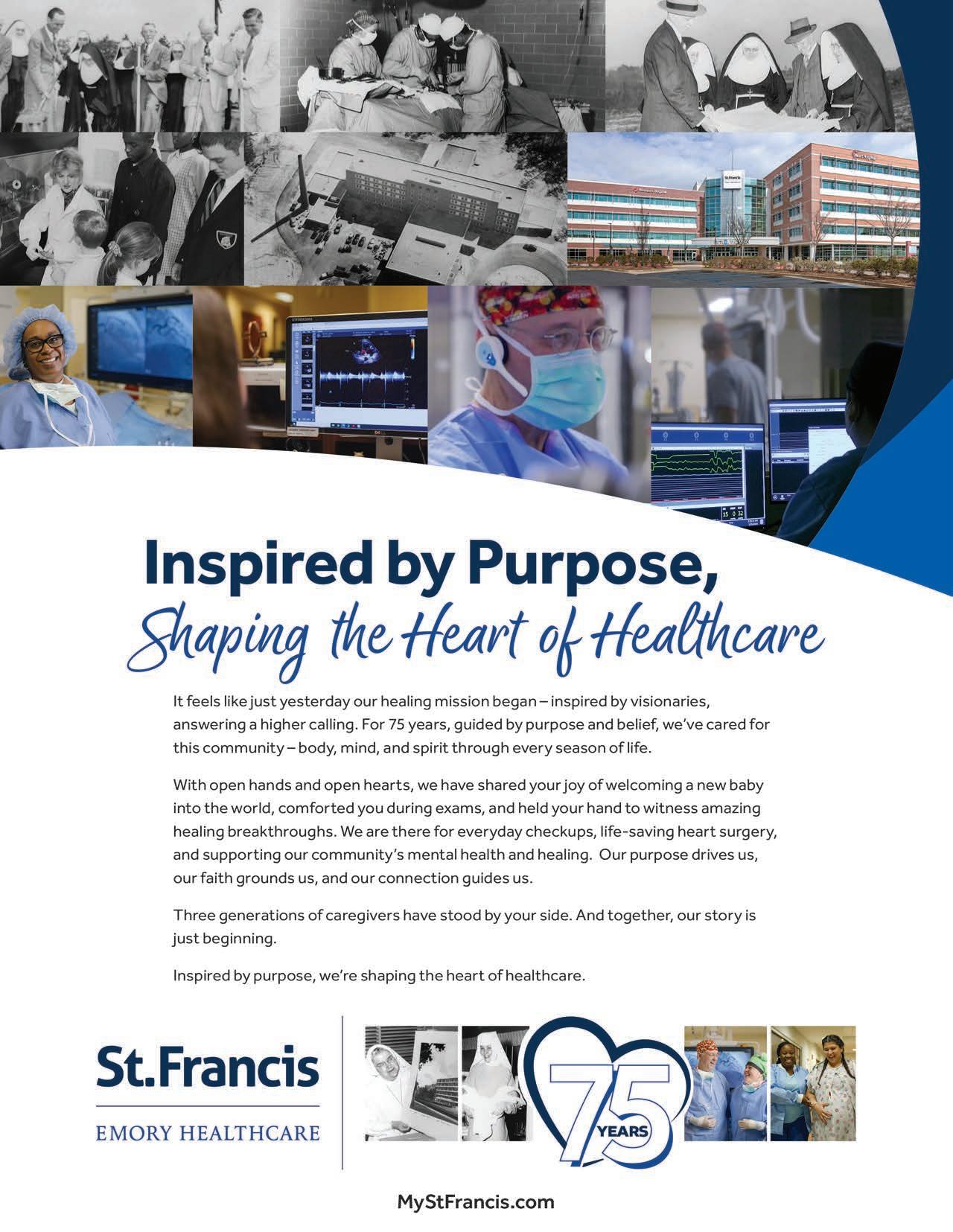
St. Francis-Emory Healthcare
Nancy Saunders Gift Shop 2122 Manchester Expy. Columbus, GA 31904
Whitewater Express 1000 Bay Ave. Columbus, GA 31901
If your business would like to be a vendor, please email ContactUs@ColumbusAndTheValley.com
She bought a Walmart bike as a means of escape and started riding on Sunday mornings.
“I was basically just trying to breathe,” she said. “The only place I felt like my level of expansion could fit was outdoors where there were no limits.”
Phea met a more experienced cyclist on the road who taught her the ropes. She upgraded bikes, strengthened her skills and eventually began teaching other black women—many of whom never saw themselves represented in cycling because it’s still widely perceived as a white man’s sport.
“What I’ve experienced and observed is the boldness and vibrancy of the black women outdoors feeling safe and free can also turn into entertainment for those who are not of the culture,” she said.
Phea wanted to fiercely defy stereotypes by creating a group for black women to ride unguarded and unified. Thus, Bikes, Breakfast, and Black Girls was born.
The group’s origin story borders on the cinematic. While teaching a friend how to clip-in her cycling pedals, they noticed the newly opened Indigo Hotel. Phea suggested riding there for breakfast. They sat on the balcony afterward, and something happened she’d never experienced.
“I will never forget the laughter,” she said. “The energy was incredible and so real … recapturing that little girl joy.”
The group’s monthly rides start in March and continue through the warmer months. When members gather, they’ll call out, “Hey Black girl. Yeah, you.”
“That’s our way of saying, ‘We see you, and we see your courage. Come out and connect with us,’” Phea said.
While Dragonfly reshapes the city, Standing Boy Trails is reshaping its outdoor identity.
With more than 30 miles of nearly completed trails in its master plan, Standing Boy has contributed to Columbus being named one of only 28 IMBA Trail Towns in the U.S., and the only one in Georgia. Riders travel from Florida, North Georgia and Alabama to ride there.
Standing Boy is a place where people rediscover the carefree excitement of childhood; that same feeling Way once had riding circles in the dirt of her backyard.
“When you’re on a bike, you can’t think about anything else,” she said. “You’ve got
“The only place I felt like my level of expansion could fit was outdoors where there were no limits.”
-Chandrika Phea
to be in the moment. There’s something about being able to get outside, breathe fresh air and ride. “It’s all play. It doesn’t feel like exercise. It’s just joy.”
There’s a clarity that comes with riding. As with most strenuous activities, it has a way of stripping people down to their true selves. “I think being outdoors, especially in groups, just creates authenticity,” Phea said. “It’s hard not be yourself when you’re out of breath.”
Share your journey out on the trails with us @columbusandthevalley
Local Cycling Resources
BICYCLE COLUMBUS bicyclecolumbus.org
BIKES, BREAKFAST & BLACK GIRLS FACEBOOK GROUP facebook.com/groups/1494586324703609
DRAGONFLY TRAILS dragonflytrails.org
GEORGIA CYCLING ASSOCIATION’S TEAM MTB teammtb.georgiacycling.org
Artist Mike Howard talks about his legacy and downshifting WHAT A RIDE!
Mike Howard may not have been a household name in the art world in 1991, but he achieved a lot. He opened at least 10 solo shows, mostly in New York, and had been a part of nearly 50 group exhibitions throughout the country. He earned press in The Village Voice, The Philadelphia Inquirer and even People Magazine Howard—born in Columbus and raised in Phenix City and Hurtsboro, Alabama— might have been able to ride that wave of
near fame to full-on artistic renown. He ultimately chose to take a dive. He opened a solo show at a place called The Baby Doll Lounge, a Tribeca strip club, to put it most kindly. It was the kind of place with no windows, low lights and pungent carpet. It also happened to be on the ground floor of a fancy loft where Howard had taken a job as a house painter.
Eventually he peeked in The Baby Doll’s doors. “It was dark, and it was a
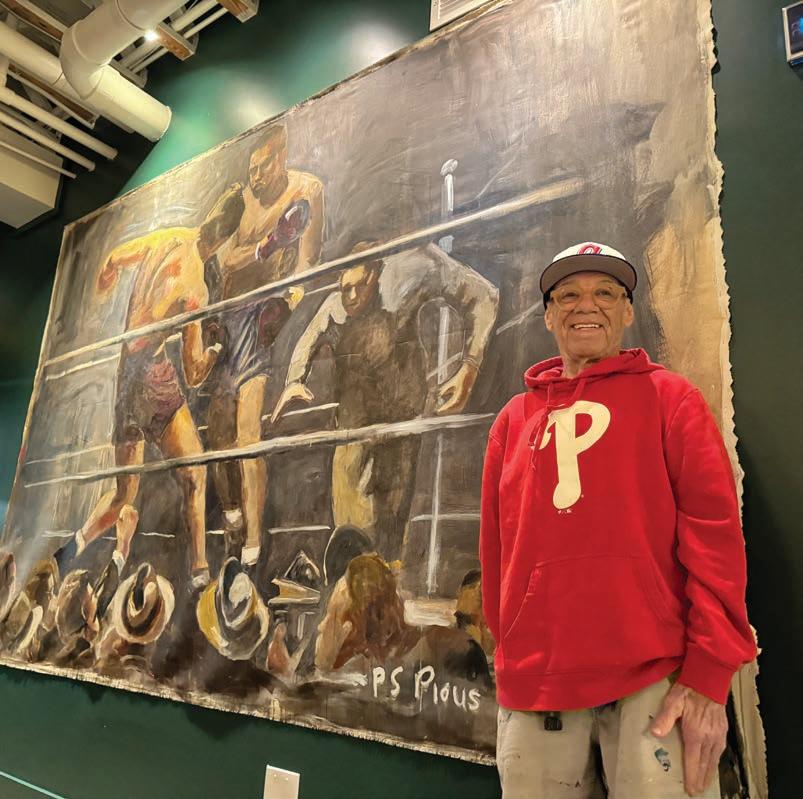
Mike Howard with his boxing scene painting at Nonic.
bunch of men just sitting there staring at some poor woman dancing. It just struck me as, like, hunters sitting in the woods waiting for Bambi to come by,” he says. And from that impression was borne the idea of an art exhibition: a series of painted hunting scenes as backdrops for the dancers.
“I was on the side of the dancers.”
Today he calls the show a career killer— “Poor Mike Howard, he has to show in The Baby Doll Lounge,” he says, mimicking the likely sentiment among his peers. He knew the consequences going in. He just didn’t care. “It was funny to me.”
He’s classically trained, with a master’s in fine art from Rutgers University, bachelor’s in art degrees from the University of Georgia and Columbus College and a prestigious tenure at the Whitney Museum Independent Study Program in New York. Still he sees himself as an outsider to the traditional art world.
“I’ve never, never thought about making a penny from art, or thinking I should. I could care less,” says Howard, 81.
Rolling on the Riverwalk
When it comes to his time in Columbus, he’s literally an outsider.
He’s an avid cyclist and bought his home-studio on Front Avenue, so he could be close to the Riverwalk.
“I can almost roll down the hill to the
Riverwalk, and it’s an amazing thing,” he says.
He spends cold-weather months in town, and a good day for him is a ride to Fort Benning and a cuppa at Fountain City Coffee, where he often scouts for tourists and offers to take their pictures with Garry Pound’s wall of portraits behind them. He catches up with artist friends like Pound, Bo Bartlett and Fred Fussell when he can.
Sometimes he’ll join group bike rides on streets, but he’s seen enough of drivers’ antagonism toward cyclists that he typically just rides the Riverwalk. He loves riding alone, but that’s not without travails either.
“I can’t do anything mechanically. If I had a flat tire, I’m serious, I’d have to I call an Uber,” he says. “I was a machine gunner in the Marine Corps, an M60 machine gunner, and I
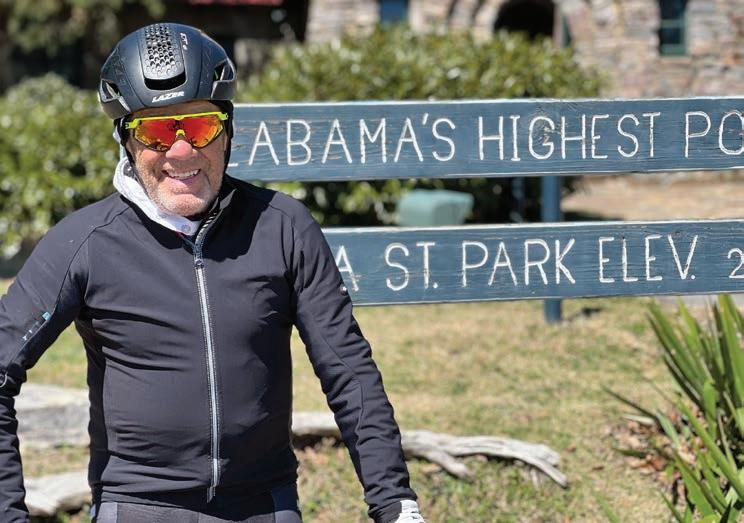
TOP: Howard at the peak of Mount Cheaha, Alabama's highest point after cycling to the top
BOTTOM: Howard's painting of pro-cyclist Jens Voigt setting the hour record. Voigt is on the left and Howard on the right.
had to take the thing completely apart, every little part, and put it back together constantly. So I could do that, but I can’t even change a flat tire now.
“Maybe if I was gonna starve to death I could get back. I’d just ride on the rim or something.”
In New York, he’ll log 30 miles training in a velodrome cycling arena. He’s been a professional racer, even competing in his advancing years. He took two first-place titles in 2024—at the Grand Fondo Asheville in the men’s 70+ category and racing for Salt Life in the men’s 80-84 in the USA Cycling Masters & Junior Road National Championships Road Race in Augusta.
He’s not dismissive of those successes, but much as in his art, he pushes away from any associated fame.
“Winning a national championship, it’s a dream of most people. You see them when they cross the line, their hands are up and they’re just so excited. There’s pictures of me, and I just had a hand out like, ‘What the hell was this?’ Like, I could have cared less,” he says. “To me it’s just the idea of, you know, the racing.”
Experimenter & Influencer
His wife, Mary Howard, doesn’t share his ambivalent relationship with success. She’s an acclaimed set designer, often favored by photographer Annie Leibovitz. Her curriculum vitae includes scores of covers for Vogue and Vanity Fair, working with a celebrity list that includes Barack and Michelle Obama, Lady Gaga, the Rolling Stones and the late Queen Elizabeth. Commercial clients include Jimmy Choo, Prada and Dolce & Gabbana.
“Thank God I have a wife who knew how to make money,” he says. Her production design agency, Mary Howard Studio, employs around 100 workers and produces some 650 shoots a year. She was on a location shoot with Madonna at the time we interviewed Mike.
The two have three daughters and loads of grandchildren. Mary often accompanies Mike to Columbus.
His work frequently focuses on nature—many, many cows and dogs—and often seems created in a whirlwind of brushwork. “The paint is hasty but sure, dripping, splotching, being dabbled and stroked, but does not overly address our attention to the maker of the marks,” wrote artist and art critic Joe Fyfe of Howard.
His creations also skew far from traditional art at times.
During his Rutgers tenure he became heavily involved in the Fluxus movement, which blurred the lines between art and everyday life and often included performance art.
He once painted a version of Van Gogh’s Wheatfields live, in front of an audience. He constructed a replica of the Unabomber’s one-room cabin (itself modeled on Henry David Thoreau’s cabin at Walden Pond) at his property in Hurtsboro, then painted a series of paintings of the place.
Howard performed his first sanctioned Fluxus event in 1970, when, after a year spent bulking up his body, he donned a Speedo and worked through a series of weightlifting poses, “turning myself into a sculpture” on the floor of The Whitney Museum Art Resources Center. He culled the images for a calendar and called it a success.
Six years letter, The Whitney one-upped him, bringing in
a model for a similar show. The model they tapped was a man who’d won six consecutive Mr. Olympia titles. His name was Arnold Schwarzenegger.
Howard’s work often draws from his time in the Columbus area. He created a series of paintings based on the assassination of Albert Patterson in Phenix City. He also donated more than 100 small paintings of peaches that were auctioned off to support the preservation of Pasaquan, Eddie Owens Martin’s art environment in Buena Vista.
He was the mystery painter of a large boxing image on canvas that has hung inside of Nonic Gastropub in Uptown Columbus since it opened a decade ago.
“He would stop in pretty often when we were building the space at Nonic and just check on the progress,” says Miles Greathouse, one of Nonic’s partners.
“Sometimes he’d ride his bike through the building.” Howard looked at one of the place’s blank walls and told them it needed a painting—and that he had one for it. It was a piece he’d made in the pulp style of Robert Pious. “It was the first piece of artwork we hung up at Nonic,” Greathouse says. “He said, ‘Don’t tell anyone it’s me.
Tell them you found it in the basement.’”
When Nonic moved to its new location, at Highside Market, in 2024, the building’s plans included glass walls all around. But the Nonic partners insisted on one windowless wall big enough to hold that painting.
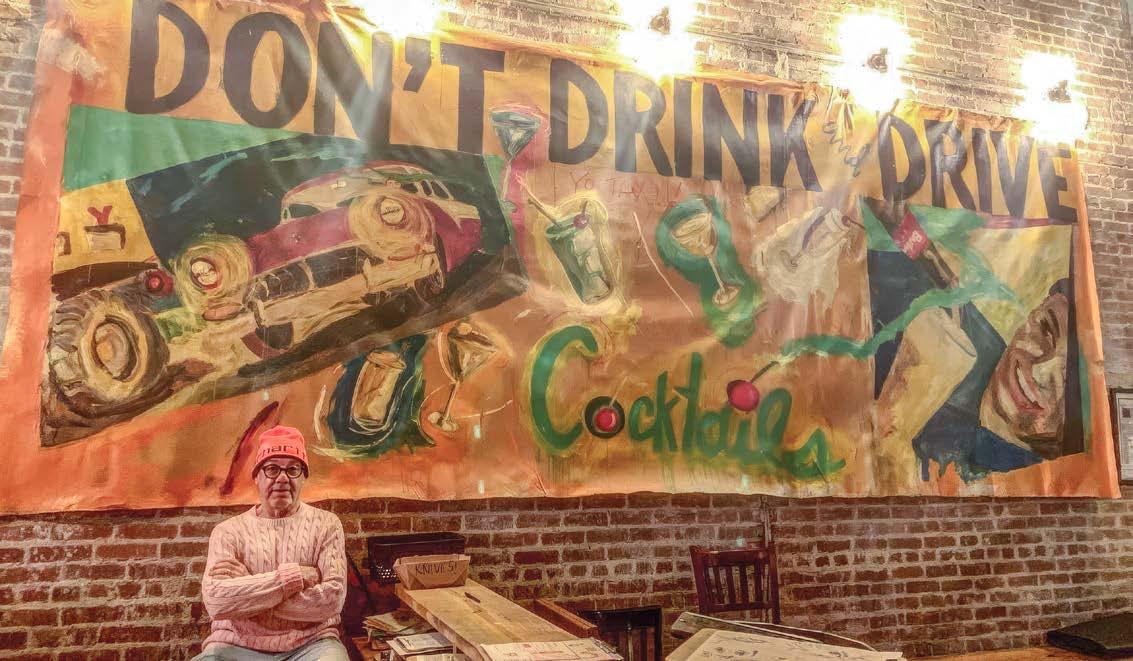
Another Howard original still hangs in the old Nonic location (now the watering hole Super Regular), and it has its own nefarious story. It’s a 30-foot sign that says “Don’t Drink and Drive,” with an image of a car striking a truck. That painting hung in New Jersey’s Melody Bar for years in the mid-1980s, causing such a stir at the time that the New York Times wrote a piece on it.
Greathouse, 38, calls the octogenarian “one of my best friends in the world.” He and his fiancé were invited to Howard’s 80th birthday party in Brooklyn. “There were like 100 or 200 people from all over the world there, but he spent a lot of time with us. We rented bikes and rode all around the city and through Central Park.”
‘Biking
is miserable’
When asked what he’d do if he had to choose between his passions for cycling
“I’ve never, never thought about making a penny from art, or thinking I should. I could care less.”
-Mike Howard
and painting, he pauses for a long moment. “Painting,” he says finally. “Painting, of course. Biking is physically miserable, you know? It’s like I’m going out to the velodrome and somebody says, ‘Have fun.’ I say, ‘It’s not fun.’ Painting is actually fun. Putting a paintbrush in some paint and making something, that’s fun. I enjoy that.”
In truth, he’s now faced with doing less of both.
Cycling accidents are a way of life for competitive racers. He’s suffered numerous concussions and been taken by ambulance to intensive care units five times. Even now, he’s wary of riding the Riverwalk, getting distracted by a squirrel and having
a pothole end his day. (There’s that whole flat-tire thing, remember.)
Yet, Greathouse is skeptical that Howard is hanging up his bike cleats just yet. “That answer will change depending on the day of the week,” he says. “I was just talking to him, and he sent me a calendar of events and said, ‘I’m thinking about doing this, this year.’”
As for painting: “I’ve not actually stopped,” Howard says, “but I’ve just started trying to get together my stuff for an art estate. I finally started thinking, like, I’m not gonna be here forever.”
To that end, Howard gave 62 of his pieces to Troy University some 12 years ago. Several pieces were on display at the Phenix City campus, on the Chattahoochee River, until the university closed the building last December. Those have now been relocated to the Troy, Alabama campus. The university exhibited a show of his works, titled “Gravity and Gesture,” at its International Arts Center from last December through April. The title was a nod to not just subject matter— which juxtaposed sobering topics, like the assassination of Martin Luther King, with quirky images of fast food, or, of course, some of Howard’s many images of the natural world—but also that the works were on unstretched canvas, hanging loosely.
“Several of Howard’s works are currently on display across the Troy Campus,” says Matt Clower, Troy’s senior director of communications. “Two of his stretchedcanvas pieces are part of the permanent collection at the International Arts Center, and six additional works are displayed in Trojan Dining Hall. The remainder of the collection is currently being stored in John Robert Lewis Hall, with plans to display the work in the hallways and public spaces of the building in the near future.”
At his homes, Howard has started selecting pieces to save—in his words, “rolling them up.” But much of his legacy will live on by pieces already in the hands of people he knows.
“My friends, everybody has a painting of their dog. Yeah, it’s mostly dog paintings,” he says, laughing.
“If I tried to do a portrait of someone, everybody turns out to look like Richard Nixon, you know, it’s just horrible,” he says. “No kidding. If I painted you, it would turn out like Richard Nixon.”
Sow It Grows
Water you thinking?
Ixgrew up in Florida, where the summer slogan was, “If you don’t like the weather, wait five minutes.” And then, inevitably, came the rain. Having lived nearly half my life in Georgia now, the most fitting parallel slogan might go something like, “If you don’t like the weather, wait until October.”
That offers little comfort now, when it feels like we’re seven inches from the midday sun. It also doesn’t help with the rain we so desperately need for our gardens and lawns.
Columbus has been in some level of drought since last September, according to the federal Drought Monitor. For the first four months of the year, we’ve seen less than 11.5 inches of rain, compared to a 30-year average of 17.7 inches. For most of 2026, we’ve been ranked at drought level 4—“extreme drought”—out of 5. If this chart were a doomsday clock, we’d be looking at 9 p.m. right now.
This doesn’t mean panic, green thumbs. But it does mean plan.
For home gardens, start by taking a page from the commercial operations.
About a quarter of our nation’s farms have adopted highly efficient dripirrigation systems, and for good reason. Blurping out little drops of water right at the roots of a crop row is 95 percent efficient. By comparison, sprinklers waste as much as half of the water they spray by either missing the crop or through evaporation.
Home-center irrigation kits may set you back half a Benjamin, but they’ll actually save you money on your water bill. More importantly, you won’t be squandering the wet stuff and engendering the anger of Mother Hooch.
But what about people who just want a pretty front yard?
Smart Planting
Everyone wants that emerald grassy lawn, right? And there are options for grass that won’t be a resource hog. TifTuf™ Bermuda is a popular grass choice, which thrives in the direct sun and is certified as
highly drought tolerant.
I’ve also found St. Augustine to be a lot more forgiving on all counts. Specifically, we stumbled into a pallet of the Palmetto variety maybe 15 years ago and fell in love with it. It can handle drought, grows well in shade and sun, and it’s tolerant of traffic from feet and pets. It’s also a dwarf grass, so it grows slowly. Honest to Gaia, since we laid down our Palmetto—atop clay, mind you—we’ve never watered it, never fertilized it and must mow it maybe five times a year. That said, it can be tricky to source. (There’s a farm in Unadilla if you’ve got a truck and are in the mood for a day trip.)
If you’re not up for re-sodding your lawn, consider having less of it. I’m not just talking about rock gardens and cacti, called “xeriscaping” in landscaperspeak. A great water-wise practice is to zone your yard with large swaths of plants, bushes and trees that are just less thirsty. Keep the turf that needs frequent water in small areas closer to the house, and create large beds planted with things like azaleas or beautyberry that only need water when stressed. Beyond those, drop in ornamental grasses like muhly, or flowers that don’t require watering after establishment such as coneflower, yarrow, black-eyed Susan, blanketflower and salvia.
Another unsung hero of the mediumsized bushes? Rosemary. It stays low but gets nice and full, and it’s great if you need to snip a bit for the kitchen.
Frame the backs of your beds with compact trees to give your spaces a lovely layered structure. Good candidates are little gem magnolia, eastern redbud, southern crabapple, and yaupon holly.
After planting, mulch those beds. This gives a nice finished look, sure, but just as valuable is mulch’s ability to absorb rainwater and slowly deliver it to the plants around it. You can think of it like a savings account for captured water. Pine straw is a great, inexpensive choice that’s readily available in the Chattahoochee Valley, but bark or shredded mulch is even better for water retention, if budget allows. Lay a
by Brad Barnes
three-inch layer of whatever you choose. If you want visuals, find the University of Georgia Extension’s “Water-Wise Landscape Guide for the Georgia Piedmont” (bulletin B1444) online. We’re technically right on the transition from the Georgia piedmont to the plains, but the strategies there are solid for us, too. Its diagrams show specifics on redesigning landscapes.
Watering Tips
Depending on your grass, and even with your drought-tolerant plants, you may still need to water when a drought lingers. When you do water, do so in the early morning to minimize evaporation and risk of fungus. Water infrequently but deeply. Just a smattering of water encourages shallow roots, which makes for a fragile plant. Deep watering trains plants to reach down to those clay layers where moisture lingers.
Soaker hoses are great for this. Don’t be that guy standing out spraying a hose on everything for 30 minutes. It may seem like a great way to enjoy the morning coffee, but you’re wasting both water and time that could be better spent enjoying that lovely yard.
Brad Barnes was a journalist for 17 years and a marketing expert for 9 years before he and his wife, Jenn, started Dew Point Farm in MidTown Columbus in 2019. You can email him at info@dewpoint.farm, and he’ll get back to you after he’s washed his hands.
Collective LIVING MOS IC
Building Sustainable Community
by E.L. Miller
Something auspicious is taking root on Warm Springs Road in MidTown Columbus. That weedy, unused property—the one near 12th Avenue with the weathered smokestack and dilapidated greenhouse—is suddenly not so overgrown.
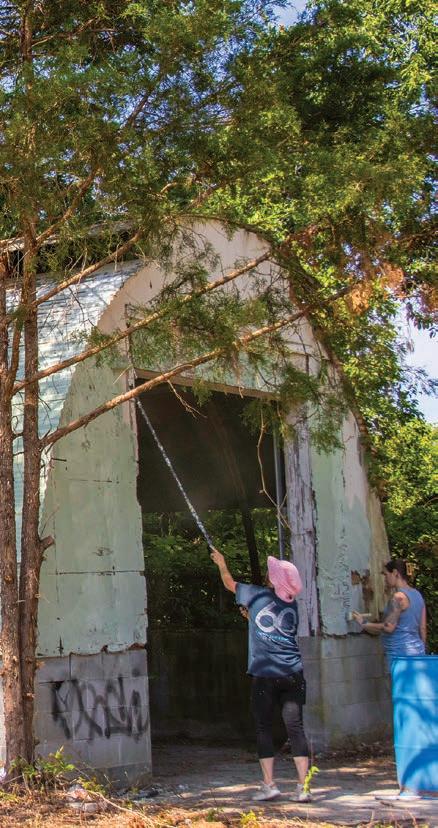
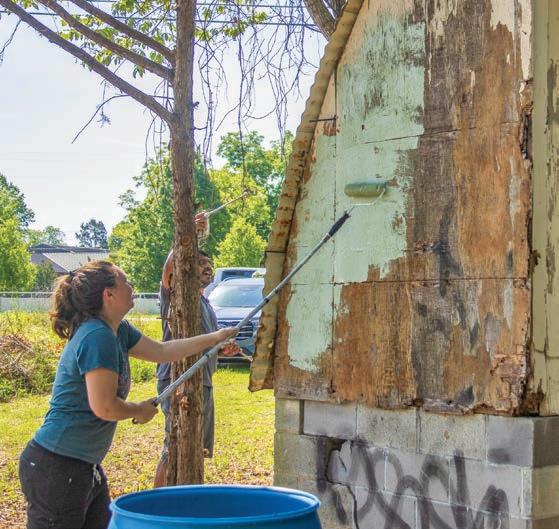
Weeds have given way to a paved area. The greenhouse has been reclaimed and painted a lovely shade of sage.
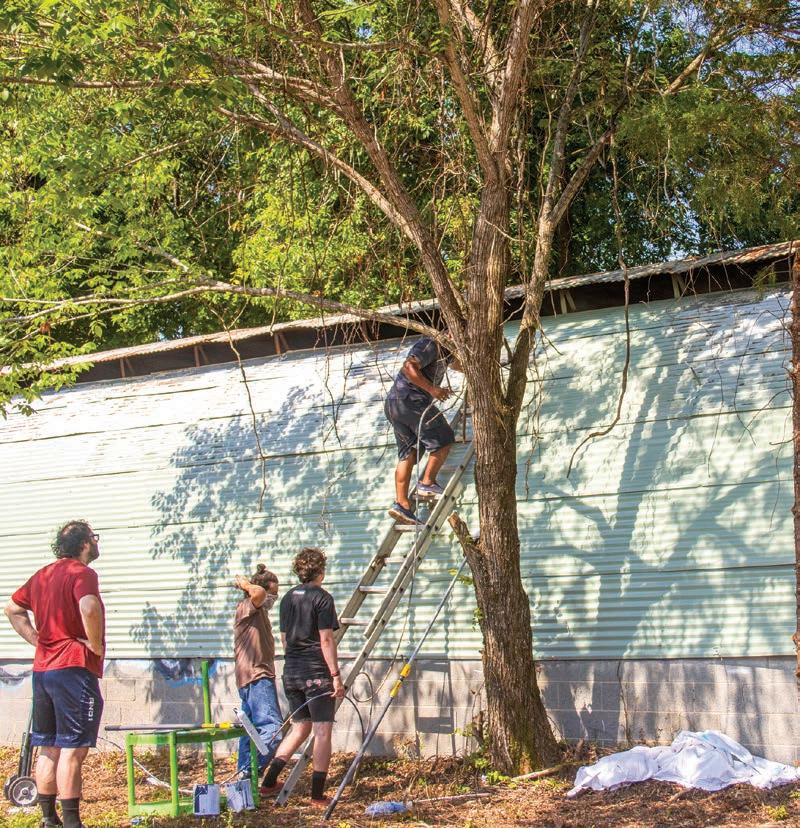
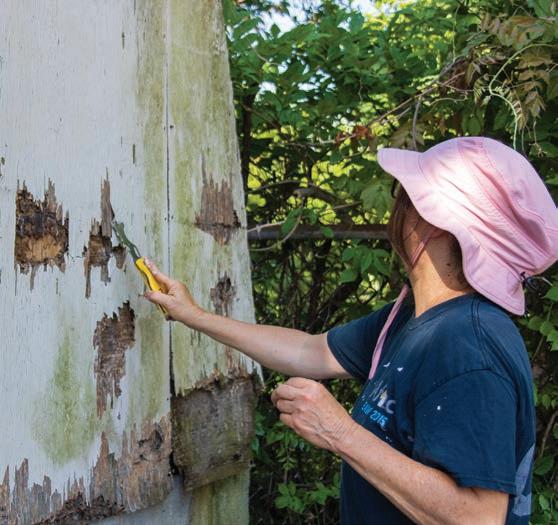
If you drive by at just the right time, you’ll notice groups of volunteers working together to revitalize and repurpose a space that’s been an eyesore and an untapped resource for years.
The project is called Living Mosaic Collective, and when completed, it will be a gathering place where visitors can contribute to a community garden, learn gardening and other trades at expert workshops and acquire appliance repair skills from technicians at a planned “Repair Café.”
“Our first project is to turn a portion of the old Jordan Mill into a community garden where neighbors can learn, create and grow together,” explains Kristin Andris Living Mosaic Collective’s founder.
“However, our mission is broader than that one project. Overall, we would like to inspire the community to get creative and resourceful with spaces, items and skills that are often overlooked.”
Andris, who lives in MidTown, said she conceived the idea for Living Mosaic Collective two years ago when she began practicing mindfulness techniques. Through her practice she became aware of how often she was “mindlessly throwing away” items because she was “too busy” and “didn’t have the skills to repair them” herself.
Noting this, Andris decided she wanted to engage in more sustainable living, and she wanted to make a space for the community to join the effort.
“As I sought to change my habits and learn new skills, I began to realize that there are artists, gardeners and creatives within the community who are extremely skilled at turning forgotten resources into something new,” Andris said. “However, I noticed there is not a public space where people can come together and exchange
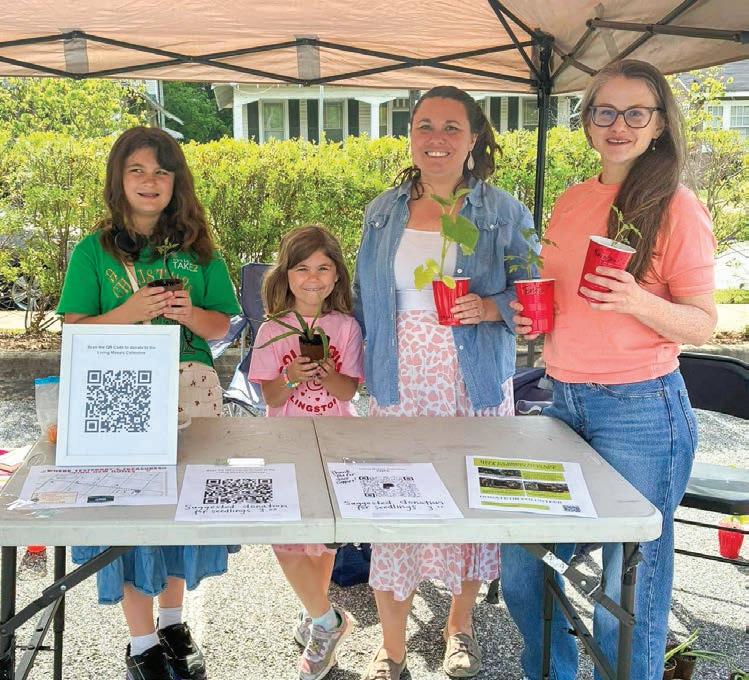
TOP: Evelyn, Vivian and Kristin Andris with Rachel Vogt with some of their seedlings at the Waverly Terrace Yard Sale.
LEFT: Volunteers cleaned up the old shed onsite to be repurposed for plants.
those skills or become inspired by one another.”
Armed with a passion and a purpose, Andris started scouting spaces, exploring blighted properties that “have so much potential,” but are often “overlooked and even avoided.”
The Jordan Mill caught her eye. “I became particularly drawn to the old Jordan Mill. It’s a lot
that I drive by frequently, and I began to dream of what it could be. For about a year, I just thought about this on my own. Eventually, I began sharing the idea with friends. Ultimately, I realized that a lot of people were also curious about this lot,” she said.
One such curious person was MidTown resident Terri Strickland, who has good reason to be one of
Volunteers worked for several weeks clearing the grounds and working on the building
Living Mosaic Collective’s most dedicated volunteers—in addition to believing in the mission, she’s also Andris’ mom.
“Before Kristin even said anything about the project, I used to see the smokestack by the old factory and think ‘Oh that would be so beautiful for an artist to paint.’ Turns out Kristin had been getting the same vibes, so she got right to work,” Strickland said.
And work she did. Andris began seeking out the property owner, securing Living Mosaic Collective’s 501c3 status, putting together a board and gathering volunteers.
Volunteers Coming Together
It’s a hot day in May, and Andris and Strickland are joined by over a dozen volunteers. It’s painting day for the greenhouse, and there are audible whoops and cheers when one volunteer shows up with a paint sprayer.
Among those hard at work when I arrive are Cheryl DeYoung, resident of MidTown, and Alli Magee, resident of Waverly Terrace. We set up in the greenhouse, which has been fully cleared of weeds and debris. As I interview each volunteer, a pattern emerges in their responses—put succinctly, each woman feels that Living Mosaic Collective, while not yet “fully operational,” is already accomplishing what Andris set out to do— build community.
The project allows residents from all backgrounds “to work together, sweat together and build community,” said DeYoung, who first heard about Living Mosaic Collective through social media groups. “It can help break down barriers and establish dialogs in a world where people are too often on their phones and not engaging with their fellow humans,” she said.
Magee—who came to the project through word-of-mouth—agreed, and added that she hopes the project addresses some of the needs of her neighborhood, where many residents do not have reliable transportation to easily reach a grocery store.
“The community garden will help with healthy diets for lower income families,” she said. “And we’re excited about how this is going to provide the opportunity for workshops for people to learn. We hope it will help people to start gardens in their own yards.”
“And it’s not just about the garden,” Strickland said. “Kristin wants to pass down forgotten skills from generation to generation like sewing and canning. When the Repair Café opens, visitors can bring small appliances to learn how to fix or get them fixed. Programs like this one build community but also build independence.”
As I interview Strickland, DeYoung and Magee, several children, including Andris’ and Magee’s, pop in and out of the greenhouse, seeking direction and feedback on their own volunteering assignments. It’s mildly chaotic and intensely charming.
The inclusion of children is by design, according to Andris.
“One value I’d like to specifically focus on is intergenerational learning. We don’t want childcare to prevent adults from participating in this project. We believe it is valuable for kids to see their parents building community and learning new skills,” she said, and noted that children have attended every work day, cleaning up trash and clearing weeds.
“We love that this has already become a space for people of all ages to learn, create and grow together, and we want to be very intentional to keep that culture,” she said.
“We believe it is valuable for kids to see their parents building community and learning new skills.”
-Kristin Andris
Immediate Impact
Living Mosaic Collective had its first board meeting in January of 2026, and its first volunteer workday in March. Andris says 60 volunteers showed up that day and cleared 3,000 pounds of trash.
In the months since, some land has been cleared, the shed painted and the groundwork laid for the water infrastructure needed to facilitate the community garden.
The project is also already showcasing the work of local artists, and volunteers are already sharing their expertise.
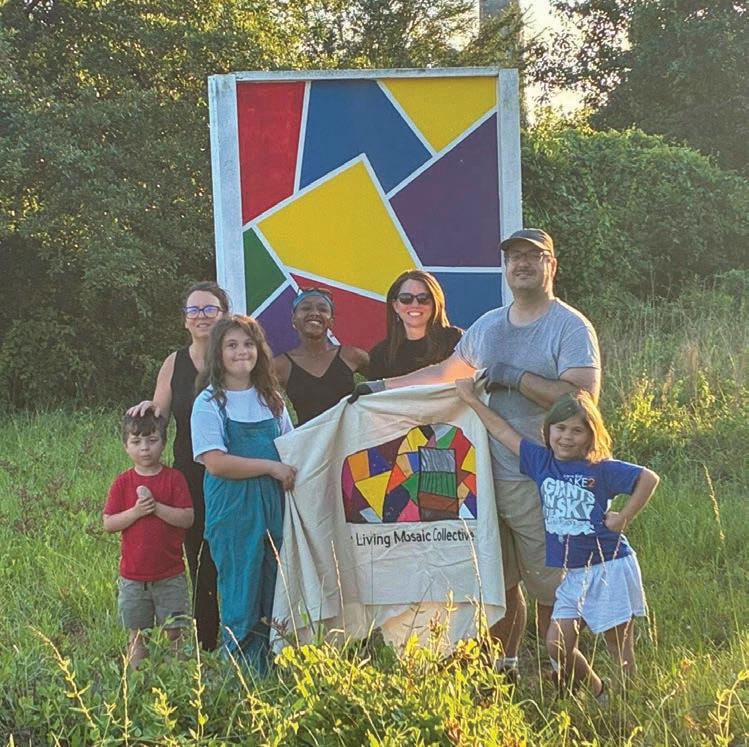
At a recent workday, “A group of volunteers who had just met each other worked together to design our first sign,” Andris recalled. “They used what limited paint we had to design a beautiful mosaic on an old sign that was already on the property. That’s exactly the kind of collaboration and resourcefulness that I wanted this project to inspire.”
“Throughout these workdays, I have heard volunteers exchanging tips on how to address problems like weeds or fire ants without herbicides or pesticides. Those conversations tell me that we are already serving our mission, and I hope those conversations continue, no matter how ‘complete’ the garden might seem,” Andris said.
Fundraising
Living Mosaic Collective received its license to solicit donations in April, and had community support to the tune of $5,000 by May. Individuals and businesses, including Dr. Shane Darrah, Amy & Tracy Spencer and Lindsey Brown Law LLC, have financially supported the project, and Andris—who has a background in grant writing—is also pursuing purpose-driven grants, including one for the Repair Café.
“However, grants can take a while, and it’s very helpful to demonstrate community support in a grant application,” Andris said.
Fundraising efforts are ongoing, and Andris says the money raised will go toward establishing the garden and purchasing supplies. If funding continues at its current rate, Andris says she anticipates Living Mosaic Collective could have a garden going by fall.
“We currently could use either donations to help us reach that milestone and/or in-kind donations,” she said.
Partnerships
Though in operation for under a year, Living Mosaic Collective already boasts a full board and many community partners.
The board is comprised of Andris, a middle school teacher who serves as founder and president; Marina Mendenhall, a strategic advisor who serves as treasurer; Rachel Vogt, an art educator who serves as secretary; and community leaders and entrepreneurs Kat Cannella, a licensed realtor; Olivia Fortson, who recently opened Sticker & Stamp in MidTown; and Marc Smith, owner and cultivator at Marc’s Mushrooms.
The board has been instrumental in helping Andris shape and get the word out about the project, which has already seen contributions of time and resources from local artists including Ralphabetz, Raijeim Douglas, Marji Bordner and Bernie LaFleur, who are helping with various art projects, and local service groups including Throw It In The Bag, Theta Tau Iota from Columbus State University, Girl Scout Troop 50208 and members of Awaken Church have volunteered.
“I also would love to mention… Thomas Montgomery of Harvest Coffee Co, who has made his energy balls for workdays and donated a $1 of every energy ball sale at the Crossroads Folk Art Festival to Living Mosaic Collective; Kaitlynn Etheridge
(L-R) Sully Andris, Terri Strickland, Evelyn Andris, Amaria Long, Amy Bruce, Tom Andris and Vivian Andris pose in front of their repurposed sign.
of the Columbus Collective Museums, who invited us to the Crossroads Folk Art Festival and who has just been a cheerleader for this project; [and] Jonathan and Alli Magee—neighbors near the lot, who have been to every single workday, lended tools and just been incredibly supportive,” Andris said.
The Future
While the idea of a community garden is not a new one to Columbus (several operate within the city), Andris says she hopes Living Mosaic Collective can be part of a larger trend toward sustainability and creative reuse.
“I would love for Columbus to have a full creative reuse center—a space for artists, gardeners and creatives to repair and repurpose items that would otherwise go into a landfill. I dream of a space where the community could come to watch creative-reuse-in-action for ideas, inspiration and skill sharing. I envision a space where people can bring anything from vegetable scraps to be composted in a community garden to a broken bicycle to be transformed and resold onsite,” she said.
“That is my ultimate dream for Columbus. It doesn’t necessarily have to be me or Living Mosaic Collective who brings this to fruition, but I hope that we inspire it in one way or another. In the meantime… I am proud of the fact that we are bringing people together to exchange skills and reimagining a forgotten space.”
Further Info
Andris says she looks forward to hearing reader’s feedback and ideas, as community input directly feeds Living Mosaic Collective’s mission.
“The mosaic is not just about piecing together resources, but also about piecing together people. Each and every person has some way that they could contribute to this project, if they would like,” Andris said. “I strongly believe that every single person has a unique skillset to share with the community. There is a place for everyone in the mosaic.”
Visit livingmosaiccollective.org, email livingmosaiccollective@gmail.com or follow Living Collective Community Garden on facebook to learn more.
A River Journey
A Ride Down the Chattahoochee by Steamboat in the Year 1900
As a burgeoning city, Columbus’s early years as a trading post had a prime position on the banks of the powerful Chattahoochee River. Steamboats were a regular means of transportation as they journeyed the river down to Florida. The city had focused its efforts on developing rail, but it kept failing and the river ultimately drove the development of the city. The citizens received essential provisions and had the opportunity to trade goods, which included
the delivery of cotton bales from The W.C. Bradley Company whose offices to this day are still housed on Front Avenue.
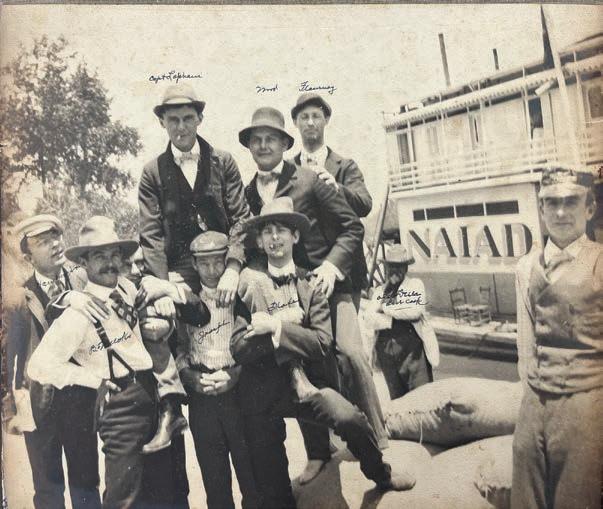
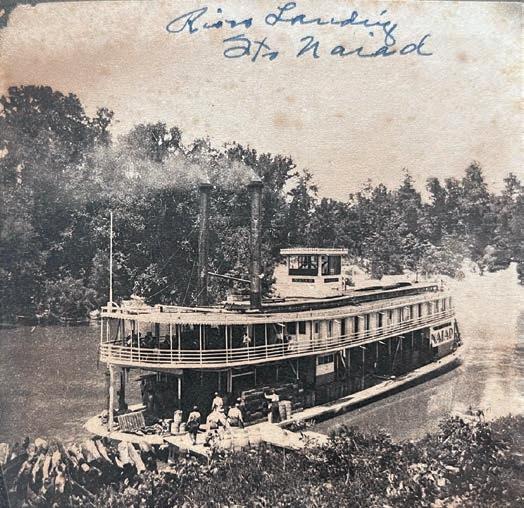
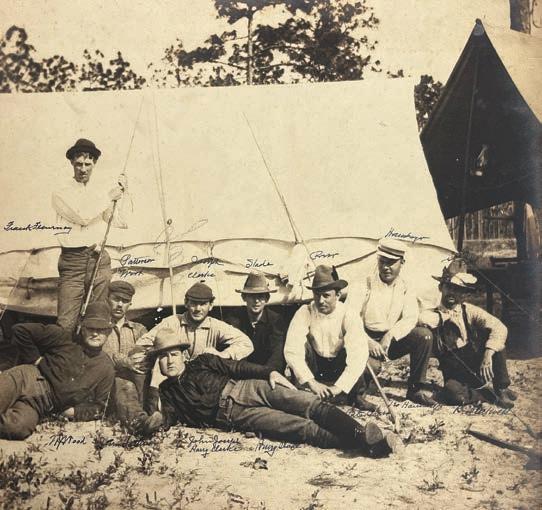
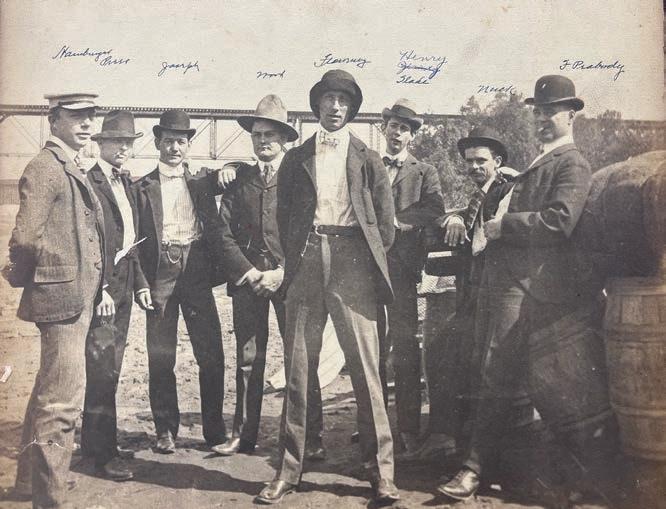
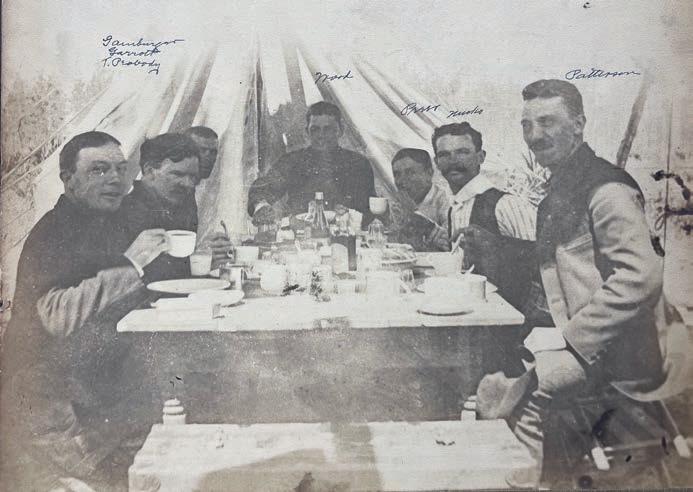
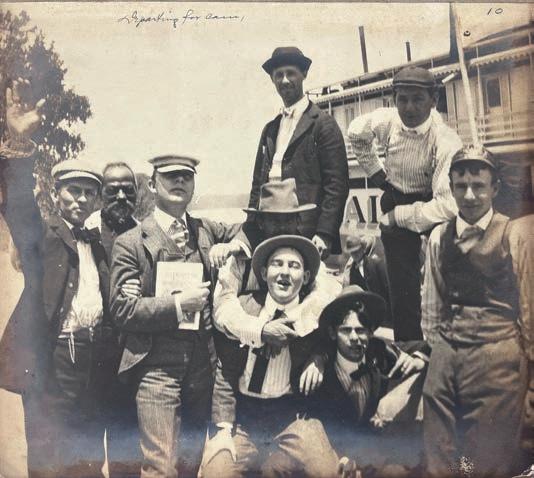
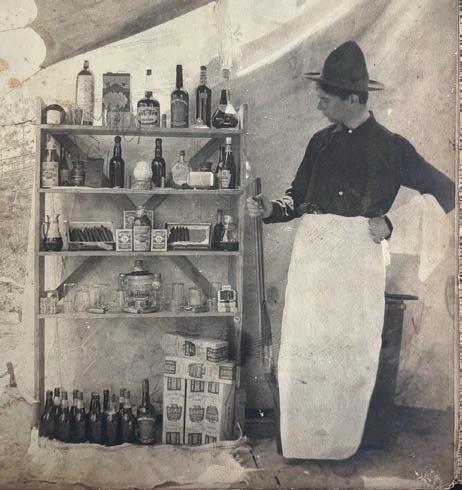
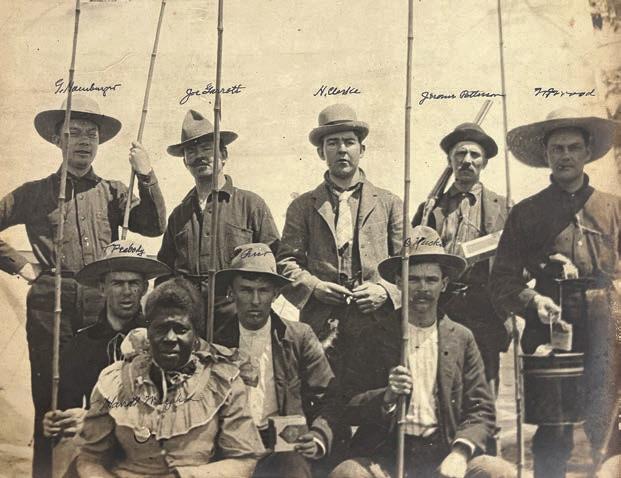
In May of 1900, one such trip down the Chattahoochee for members of the Ellum Creek Club to the gulf town of Apalachicola, Florida was preserved in time by a photographer. A journey that averaged six days was captured on film by a group of men from Columbus on a fishing and hunting trip with fully stocked provisions of liquor and cigarettes. They embarked the steamboat Naiad at the city wharf that was located on the east bank, south of the iron works which is now the Convention and Trade Center between 5th and 7th Streets.
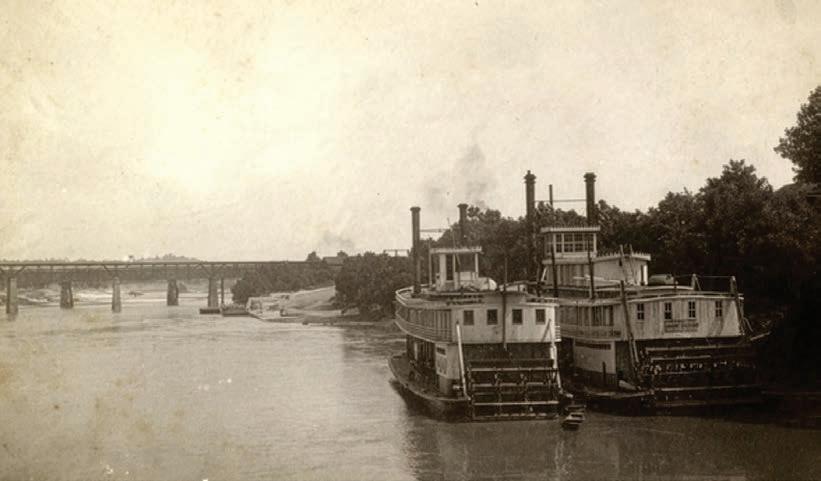
The Naiad was built in 1884 in Columbus by Charlie Blaine. It weighed 173 tons and used Apalachicola as its home port. George L. Lapham was captain during the maiden voyage on September 20, 1884. In the photo on the left, you will see it docked alongside another well-known steamboat, the Fannie Fearn, that was built in 1890. The Naiad is reputed to have made more trips on the Chattahoochee-Apalachicola route in her 20 years than any other boat but ultimately, like many boats of that era it burned at Blountstown, Florida in 1902.
(Front Row) George Hamburger, Forbes Bradley Nuckolls, John Joseph, Henry Slade; (Back Row) Captain George L. Lapham on Joseph's shoulders, William Jennings Wood and Frank Flournoy.
(L-R) George Hamburger, Joe Garrett, Thomas Peabody, William Jennings Wood, Peter Preer, Forbes Bradley Nuckolls, J. Patterson
(Front Row) Thomas Peabody, Cook Hattie Wright, Peter Preer, Forbes Bradley Nuckolls; (Back Row) George Hamburger, Joe Garrett, H. Clarke, J. Patterson, William Jennings Wood
(Front Row) William Jennings Wood, J. Patterson, John Joseph, H. Clarke, Henry Slade, Peter Preer, George Hamburger, and Forbes Bradley Nuckolls; (Standing) Frank Flournoy
(L-R) George Hamburger, Peter Preer, John Joseph, William Jennings Wood, Frank Flournoy, Henry Slade, Forbes Bradley Nuckolls and Thomas Peabody.
Spring Harbor at Green Island
More Than a Place to Live
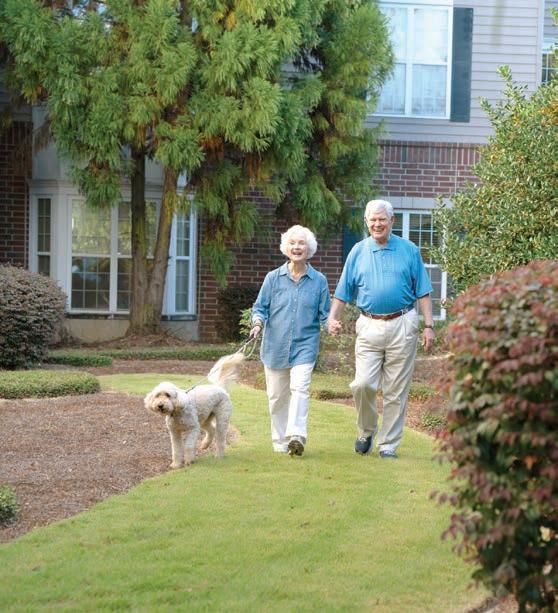
Tucked into 40 serene acres in Green Island, Spring Harbor has spent nearly two decades shaping what senior living can look like in the Chattahoochee Valley. Since opening its doors in 2005, the not-forprofit Life Plan Community has earned a reputation as the region’s premier retirement destination—one built not only on amenities and services, but on a mission to enrich the lives of residents and their families.
For Tricia Jeffcoat, RN and Sales and Marketing Director, that mission sets Spring Harbor apart.
“Spring Harbor at Green Island has been redefining senior living in the Columbus area since 2005,” Jeffcoat said. “What separates us is not just what we offer, but what we stand for—a mission to make a positive difference in the lives of residents and their families.”
As the area’s first and only Life Plan Community, Spring Harbor provides a full range of care for adults 62 and older—from independent living to personal care, memory care and skilled nursing. That structure allows residents to remain in a trusted community even as their needs change.
“It’s the combination of lifestyle, security and purpose,” Jeffcoat said, “paired with a welcoming atmosphere that families feel the moment they arrive.”
For all that Spring Harbor offers, Jeffcoat believes that the heart of the community is the people who call it home.
“Residents come from diverse backgrounds, but they’re united by a shared desire to live fully, stay active and continue growing in this next stage of life,” she said. “There is a genuine spirit of friendliness and curiosity throughout the community.”
That spirit is often what new residents notice first. Many describe feeling at home within days, not months, because of the neighbors who greet them, invite them to dinner or strike up conversation during an afternoon walk.
“Connections happen naturally here,” Jeffcoat said. “Whether it’s sharing a chef-prepared meal, attending a concert or wellness class or simply enjoying conversation on a beautiful afternoon, friendships form easily. People truly look out for one another.”
Those connections make Spring Harbor residents feel they are a part of a close-knit neighborhood. It’s a community where residents are encouraged to pursue their interests, discover new ones, while also engaging with one another.
Spring Harbor’s amenities play a major role in supporting the active, engaged lifestyle residents enjoy.
The community features multiple dining venues with delicious chefprepared meals, a heated indoor swimming pool, jacuzzi, fitness and recreation facilities, a woodworking shop and a movie theater. These offerings, she said, are designed to make everyday life both enjoyable and enriching.
“Retirement should not mean slowing down,” Jeffcoat said. “It should mean living with purpose, connection and opportunity.”
Spring Harbor also provides scheduled transportation, making it easy for residents to enjoy Columbus’ cultural and recreational offerings. From art galleries and museums to concerts, theater productions, botanical gardens and local dining, residents can explore the city with confidence and convenience. Even errands like grocery shopping, are made simple.
“It’s about supporting independence,” Jeffcoat said, “while giving residents the freedom to enjoy everything our community and the wider Columbus area have to offer.”
Behind the scenes, Spring Harbor’s team plays a central role in shaping the resident experience. From the first tour to move in day and beyond, team members work to ensure each transition feels smooth and welcoming.
“Care here goes beyond services,” Jeffcoat said. “It’s personal. Our team takes time to learn residents’ names, stories and preferences. They create an environment where people feel seen and valued.”
Many team members build long-standing relationships with residents, forming bonds that feel more like family than formal care. That sense of connection, Jeffcoat said, is essential to the community’s identity.
“At Spring Harbor, our team doesn’t simply support daily living,” she said. “They help create a true sense of home where residents feel safe, respected and genuinely cared for every day.”
As Spring Harbor looks toward the future, its mission remains unchanged: to provide a vibrant, secure and meaningful environment for older adults ready to embrace their next chapter.
For Jeffcoat, that purpose is what continues to draw residents—and what keeps the community thriving.
“Spring Harbor is more than a place to live,” she said. “It’s a place to belong.” Adv.
Learn More About Spring Harbor at Green Island
100 Spring Harbor Dr. • 706-813-3934
SpringHarborSeniorLiving.org
Joannah Neal, Southern Life Insurance
Education First
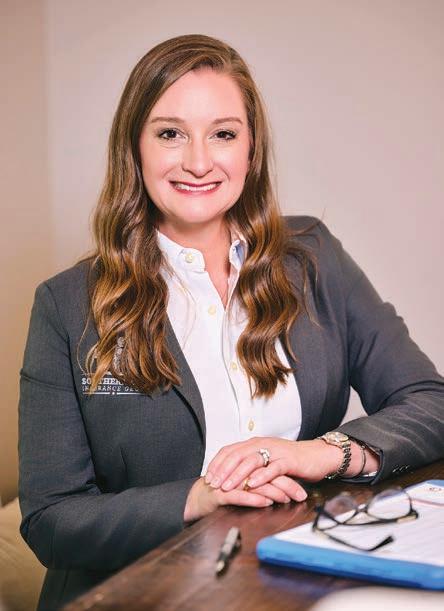
In 2013, Joannah Neal received a call that would not only change her life but countless senior adults and working individuals. Neal is an agent with Southern Life Insurance Company based in LaGrange. She has access to over 40 major carriers. Her three areas of expertise include Medicare, life insurance and retirement income protection.
Before becoming a life insurance agent, Neal was an eighth-grade teacher, an experience she brings to her new career. That background shapes everything she does.
“God’s been so good to me,” she said. “He just blesses me as long as I do the right thing and do what’s right by the client. I tell other agents, when they ask me how I’m so successful. It’s because I put God first, my client second and myself last.”
Neal would become one of the first agents for Southern Life, covering the tri-city area and five other states. While she may have left teaching, she’s still very much a teacher when it comes to her clients who have come to appreciate her collection of catchphrases.
“I’m going to make Medicare eighth-grade easy,” she will say. “I also tell them, ‘Well, I’m a former school teacher, so you’re probably going to learn something, and I might give you homework.’”
education is always the starting point.
“I’m going to teach you what all this extraneous information means so that you understand it,” she said. “And if there’s a need there, we’ll fill that need. But I’m not here to sell to you. I’m here to educate you on the different products that I represent and teach you about how Medicare works, how Medicaid works, how social security income levels work.
“I educate first.”
The reasons Neal chose to leave teaching to become an insurance agent were numerous, but it was largely driven by the people she’d be helping.
“I love seniors,” she said. “And they really seem to love me. I’m very patient, I’ve learned a lot from being a teacher and I just fell in love with it. Plus, I could talk about things I couldn’t talk about in the classroom … like Jesus. And I get to go to church at least once every day.”
Too often agents from national companies come in trying to sell plans without taking the time to explain what they’re selling. They don’t explain anything. But with Neal as their agent,
Another benefit of being with a smaller agency is that Neal gets to spend more time with her clients, time spent tailoring plans to meet their needs.
“If you go to your big shops, they only have one product,” she said. “I have 40 companies and over 100 products. I do field underwriting and really get into their medical background and find a plan that’s going to offer them day-one coverage.”
On the Medicare side, Neal locates their doctors and makes sure those doctors are innetwork, gets a list of prescriptions and finds out what their drug costs are going to be. She can
compare drug plans and compare Medicare plans.
Medicare is a something of a specialty for Neal, who, once again relying on that teacher mentality, is comfortable in simplifying complex.
“It is very confusing,” she said. “[Clients] are sent this big thick book every year that’s over 200 pages long and are basically told, ‘Read this and make decisions.’ It’s so confusing, but because of my teaching experience, I can break it down and make it easier to take in. That’s the reason I do this. I have a good heart and truly want to help people.”
One of the most popular products that Neal sells is Retirement Income Protection, which, she explains, protects her clients’ accounts from the stock market and stockbrokers. “I don’t charge fees,” she said. “This grows accounts at a guaranteed five percent with no ceiling, providing a lifetime of guaranteed income. Even if they spend all the money in the account, when they turn their income on and they’re a 100 years old, the company still has to give them their monthly payments.”
Once clients fully understand their options, Neal will make suggestions as to what would work best for their needs. It’s all low pressure. She’s not pushy because unlike most agents, she’s not worried about making a commission.
Neal has recently enjoyed hosting education sessions including but not limited to churches senior centers, retirement homes and apartment complexes. She has done seminars at Unite the Valley, Georgia Power Ambassadors Club and many other community organizations. “I can cater to any group based on their needs.” She will also do individual and family meetings.
Call today to get on her calendar for any group or individual that would benefit from her knowledge! Adv.
Learn More
For an appointment, call or text Joannah at 706-527-9132 or email her at JoannahHart@yahoo.com
Moves and More Aging in Place
No one has ever said, “I can’t wait for assisted living.” Older adults often intend to remain in their own homes, maintaining their independence, for as long as possible.
“It’s understandable to want to ‘age in place,’” said Susan Haycock, owner of Moves and More, a locally owned and female-operated business focusing on estate sales and senior relocation. “However, the key to successful aging in place is not waiting until a crisis happens but preparing early and making thoughtful changes over time.”
Denial can be dangerous. Waiting until, during or after a health emergency makes difficult and stressful decisions even more urgent and complex. Planning ahead allows for better results, safer outcomes and less financial and emotional strain.
“Instead of trying to do everything at once, focus on small, manageable improvements,” Haycock said. “Needs will naturally change over time, and larger modifications such as walk-in showers, stair lifts or major renovations often require both planning and budgeting.”
Haycock offered these suggestions for older adults seeking to sustain their independence at home.
Reducing fall risks throughout the home is a
good place to start because falls are one of the most common reasons older adults lose their independence.
• Entry points should be safe, well-lit and easy to navigate.
• Install sturdy handrails on both sides of stairways that can support full body weight.
• Place light switches at both the top and bottom of stairs for better visibility.
• Use motion-sensor lighting to illuminate entryways at night.
Bathrooms are one of the highest-risk areas for falls due to slippery surfaces and limited space.
• Install secure grab bars near toilets, tubs and showers
• Use non-slip mats inside and outside the shower.
• Ensure strong overhead lighting for full visibility.
• Add night lighting to reduce nighttime fall risk. The living room is where much of daily life takes place and should be both comfortable and safe:
• Arrange furniture to maintain clear walkways of at least 36 inches.
• Secure or remove loose area rugs to prevent tripping hazards.
• Use chairs with armrests and firm cushions to assist with sitting and standing.
• Set up charging stations near seating areas for easy access to devices.
• Keep pet beds, toys and other pet items in designated areas.
• Train pets not to run underfoot.
“Aging in place works best when safety is planned in advance, not after a fall or health emergency,” Haycock said. “Small, thoughtful changes made over time can significantly reduce risk and help maintain independence longer.” Adv.
WE’RE HERE TO HELP YOU KEEP UP WITH THE IMPORTANT THINGS IN LIFE
Hughston Clinic of Columbus is where it all began. The physicians of Hughston Clinic’s main campus specialize in all areas of orthopedics ranging from issues of the foot and ankle to the spine. We offer easy scheduling and on-site physical therapy to provide our patients with the most thorough and convenient care possible.
Hughston also offers on-site Physical Therapy. Our Columbus PT/PTA(s) and OTs feature a wide array of sub-specialties including general orthopedics, sports medicine, dry needling, nerve conduction (EMG), aquatic therapy, concussion therapy, spine therapy, certificated hand therapist (CHT), vestibular, work conditioning, and functional capacity evaluations (FCE).
Champ L. Baker III, MD
Edgar J. Dollar II, DO
John D. Dorchak, MD
JUstin p. Fernicola, MD
Patrick J. Fernicola, MD
Fred Flandry, MD
Ryan M. Geringer, DO
David M. Gloystein, MD
Gil Gomez, DO
Garland K. Gudger, Jr., MD
David H. MacDonald, DO
James E. McGrory, MD
Douglas W. Pahl, mD
David C. Rehak, MD
A. Gianni Ricci, DO
Randall J. Ruark, MD
Matthew G. Stewart, MD
Michael M. Tucker, Jr., MD
B. Collier Watson, DO
L. Erik Westerlund, MD
Bradley L. Young, MD
Heed the CALL
Local Opportunities to Connect through Lifelong Learning
by Jodi Saunders
Rick Dukes has spent his career teaching at Columbus State University and Chattahoochee Valley Community College. Having hung up his teacher’s hat, he was enjoying the fruits of his retirement years until a friend suggested a new venture.
“Barbara Jo, my wife, and I were selling produce at the Midland Market when one of the members, Gaby Azhar, walked by and suggested that we look into CALL-Columbus Academy for Lifelong Learning,” Rick said. “She gave us a brochure, and I was intrigued, and eventually began to teach with them. That was about six years ago.”
Today, Rick is the president of the organization, a role he was reluctant to take on. “My friend Barb Romey, who
recently passed away was president, and she asked me to act as vice president for the upcoming year,” he said. “I had been teaching with CALL for about five years at that time, teaching through philosophy and Bible courses, and Barb was in my classes and asked if I would take up that responsibility. I said no. She did not give up, came back and asked me three times, and I finally relented. I didn't really seek that responsibility; I guess but I'm happy to do it. It's a service to the members and keeping to the mission offering learning enrichment for mature adults by providing exceptional experiences at minimal costs.”
Azhar has been involved with CALL for over 13 years. She’s participated as a student, facilitating classes such as needle
CALL president, Rick Dukes a man of many hats.
Members visiting Columbus Botanical Garden
arts and writer’s call. “The needle arts group just got together at Panera Bread, solved all the problems of the world and worked on our respective projects,” Azhar said with a laugh. She has also participated in the trips to areas of interest throughout our region such as Hills & Dales and the Shakespeare Festival in Montgomery. Another memorable trip was to the F. Scott and Zelda Fitzgerald house also located in Montgomery.
Making a Connection
According to the World Health Organization, social isolation and loneliness are important, often neglected, social determinants of health across all ages. High-quality social connections are essential to our mental and physical health and our well-being. With one in six people experiencing loneliness, a large body of research shows the serious impact on physical and mental health, quality of life and longevity. Creating more age-friendly communities by improving access to transportation, information and communication technologies can also help reduce social isolation and loneliness. Rick is aware of the dangers posed through social media and its mature audience, “While seeming to suggest connection, Facebook, X and other internet offerings can lead to disappointing and sometimes tragic relationships,” he said. “Despite warm, fluffy pictures of kittens,
these internet businesses are created and developed for financial gain. Scams are a very real part of the social order today as our group recently heard from the Muscogee County Police Department. The handheld computer, the ‘phone,’ cannot replace the intrinsic value of face-to-face relationships. Not only financial loss but loss of faith in our fellow humans. CALL gathers seniors together for social interaction making actual new friendships possible. What goes on in the classroom setting is often meaningful discussion, the sharing of ideas and conversations of substance, with lots of time
TOP: CALL members on a visit to the George Washington Carver Victory Garden and Farm
ABOVE: Members went to Macon to visit the Ocmulgee Mounds National Park.
for personal interaction, which leads to deepening relationships.”
CALL provides opportunities to combat the isolation prevalent in today’s age. As Rick recalls, “I had a run in with a lady who was a member the other day, and she remarked that it (CALL) does help immensely with connecting with other people and giving her purpose in life. It’s a very useful organization in my estimation, and in hers as well, and she was very thankful for what we do as a group.”
Variety is the Spice of Life
The upcoming fall schedule offers a gamut of classes with choices covering such as physics to religion, exercise to travelogues and history to politics. Other topics include: history’s greatest voyages of exploration, writer’s CALL, extraordinary cities and the stories of their rise to fame, Mark Twain, Ben Franklin, St. Augustine’s “City of God,” the great tours of Ireland, from Yao to Mao; 5000 years of Chinese history, lost christian scriptures, cathedrals—architecture and symbolism, lunch bunch book club, needle arts, etc.. As
Rick states, “Our classes are the work of our dedicated facilitators who bring out their own topics of interest.”
Outside of the Classroom
Not all learning happens in the classroom. CALL members are encouraged to gather for physical exercise with a walk in the park. Walks take place at Lakebottom, Cooper Creek and CSU's Cunningham Center. When it rains, they try to go to Peachtree Mall. Alternatively, there’s line dancing and keep moving.
Annual social gatherings are a fixture on the calendar. The holiday social gathering is always popular, and the Spring Recognition Banquet is enjoyed by members at no cost. Summer social events are planned while classes are not meeting. Regular out of town trips are also scheduled.
Cost of Membership
The membership fees beginning this fall are $155 for annual members and $75 for each of the three quarters (fall, winter, spring). As Rick points out, “The annual membership is a bargain, especially
as it includes the cost of the Annual Recognition Banquet. Annual membership is available only in the fall. A quarterly membership is $65 and is good for the six weeks term of classes during that quarter. This allows members to attend all classes.”
Affiliated with Columbus State University, membership fees go towards paying for the use of classrooms and CSU’s transportation services for out-of-town trips. Classes are held at the Elizabeth Bradley Turner continuing education building on campus. Classes last an hour and a half and often include 30 minutes for discussion time. As Rick points out, “CALL is an opportunity to continue sharpening your mind through education, to keep your body active, to make new friends and to enjoy shared activities, but it is also an opportunity to make use of your personal gifts, whether in facilitating a course of interest or teaching from your own experience. CALL can be an opportunity to give something back to the community.”
Visit ColumbusCALL.org to learn how to get involved.
by Campbell Baker
Splash Into Summer Safety
7 Tips for Kids & Parents
School is out and summer is officially in session. Kids are rushing to put on their swimsuits and dragging their bikes out of the garage, but before we can let them run free, it’s important to make sure they understand the basics of safety. The summer season may seem like the most carefree time for kids, but it’s also the busiest time of year for injuries. However,the most common summertime disasters are preventable. From the summer travel plans to backyard pool days, here are 10 ways to keep your kids safe this summer.
Choose the right swimsuit color.
Believe it or not, your child’s swimsuit can be the difference between life or death. Drowning is a silent and quick killer. According to the Children’s Safety Network, children account for one out of four drowning deaths. If your child is wearing a blue or white swimsuit, it can blend in with the shades of blue in the water, but if your child is wearing neon green or purple, the bold colors make them easily visible. Besides, what kid doesn’t love bright colors?
It’s stronger than it looks.
The beach has something for everyone. Parents can relax with a book in one hand and a drink in the other, while kids let their imagination run free
while playing mermaids or building sand castles. While a day at the beach can feel carefree, the ocean can quickly become unpredictable. Rip currents can happen in an instant, so be prepared. Check conditions before going in the water. Look for flags, warnings and lifeguards. Keep an eye on your kids at all times and set boundaries of where to go and where not to go. Most importantly, be honest and prepare your kids for what to do in the event of an emergency—don’t fight it, stay calm, float and wave for help. Rip currents pull you away from shore, not under. Don’t let one small mistake turn your perfect day into your most dreaded one.
SPF=Sun Protective Fun
When most kids think of SPF they think of the fun police, but it’s really what keeps the fun going safely
in the sun. To help prevent red, itchy skin, think of the 30 rule. Use at least SPF 30, wait 30 minutes before going into the water and reapply every 30 minutes. This applies even on cloudy days because those UVA and UVB rays are still there.
4
Summer is the time to grill hot dogs, make s’mores and get cozy by a fire. When parents refer to summer safety, sometimes they tend to forget that fire can be just as dangerous as water. Establish a 3-foot “no kids zone” and use long-handled tools to cook over the fire or grill. Talk to kids about fire danger and always keep an eye on them. Just like drowning, fire accidents can happen in the split of a second. 2 1 3
Watch out for a different kind of burn too.
There’s a reason it’s called a “life” jacket.
Whether you are in the lake, on a boat or in a pool, a life jacket is a summer must-have for kids. Just because you think they’re a good swimmer does not mean they do not need one. It should fit snug and stay buckled at all times. A properly fitted, U.S. Coast Guard approved life jackets help kids stay safe while they splash and float. Don’t just pack it, wear it!
6 7
Beat the bugs.
Let’s face it, kids love the woods and dirt, but some of the creatures who live there don’t like sharing their homes. While most are harmless, some can be a little cranky, which is why a few simple precautions can help prevent bites and stings. Just like swimsuits, clothing also matters. Bright clothing and flower patterns can attract bugs. In addition, light colored clothing can help expose ticks and help kids stay cool. After outdoor time, check for ticks and other bugs that your child may have brought inside. Don’t forget to apply a kid-safe bug repellent, and to wash it off at the end of the day.
Smart kids (and parents) wear lids.
Summertime is the perfect time to bike, especially in Columbus with its sprawling Dragonfly Trails. With biking
also comes with being a role model. Parents are the first thing kids look up to. If you set an example of wearing a helmet, they will want to follow in your footsteps. That same example comes with crossing the street. Remind your kids and show them that looking both ways and making sure drivers see you before stepping off the curb is important. By leading with those choices, you show them that safety is just a part of the ride.
Going over simple rules and summer protocols with kids helps them know what to do before they need it. Whether it’s crossing the street, swimming laps in the pool or eating a hamburger by the camp fire, it is important to have a plan set in place so that no one has to question “What do we do?”. When safety becomes something you practice, it helps keep summer fun and stress-free. VP
Mental Health MINUTE
Vacationing with Confidence: Traveling with ASD
Summer is here, and I couldn’t be happier. It’s my favorite season. Despite the heat and how quickly it passes, I love the excitement it brings— kids out of school, families spending more time together, and the chance for everyone to recharge before a new school year begins.
I also love summer because it means vacation. Whether it’s a weekend getaway or a big adventure, exploring new places is exciting. As I thought about summer travel this year, I found myself thinking about my patients with autism spectrum disorder (ASD) and their families. While vacations can be rewarding, traveling with a child who has autism often requires extensive planning and flexibility. With that in mind, I wanted to share some practical tips to help families avoid common challenges and have a more enjoyable travel experience.
Before You Go
The first step is choosing a trip that fits your family’s needs. Consider everything from transportation to accommodations and think about how to balance your child’s needs with the goals of the vacation. For many families, a destination within driving distance may be the easiest option. Traveling by car allows for frequent breaks, greater flexibility and a familiar environment. Children may feel more comfortable because they know the vehicle and have easier access to preferred items and activities.
Some families may prefer a cruise. A parent recently asked me about this option, and I learned that several cruise lines offer sensory-friendly programs. Lodging, dining and entertainment are all in one place. If you choose this option, look for ways to minimize long check-in times and crowded waiting areas, which can be overwhelming for some children. If you are flying, consider whether a nonstop flight or a layover would work best for your child. Some children do
better completing the trip in one stretch, while others benefit from a break between flights to move around and regulate their energy. Research the airport ahead of time. Many airports offer special assistance services, family rooms, sensory spaces or quiet areas that can make the experience less stressful.
It can also help to communicate with airline staff and fellow passengers. Some parents choose to let nearby travelers know that their child is neurodivergent and may have behaviors or vocalizations beyond their control. A little understanding often goes a long way.
For children who have a tendency to wander or elope, consider placing identifying information on their person or belongings. If they dislike bracelets or necklaces, attach contact information to a shoe, backpack, hat or electronic device. If hand-holding is difficult, practice alternatives such as holding a pocket, backpack strap or small towel. Bright clothing can also make it easier to keep track of your child in busy locations. Taking a current photo before travel can be helpful in case you need to describe them quickly.
Packing can be challenging. Every child is different, but a good starting point includes one electronic device, one or two non-electronic activities such as art supplies or fidgets, a favorite comfort item and plenty of preferred snacks. Avoid introducing everything at once. Spacing out activities and treats throughout the journey can help maintain interest and reduce boredom. Familiar snacks can also provide comfort and help manage anxiety during long waits or crowded travel situations.
During the Trip
Once you arrive, remember that your child is navigating an unfamiliar environment and may need additional support. Before leaving home, research sensory-friendly attractions and activities
by Dr. Britney Farmer
alongside the major tourist destinations. Building a flexible schedule that includes downtime can make a significant difference.
Plan opportunities for rest at the hotel, rental home or another quiet space. If you have neurotypical children, consider scheduling some one-on-one time with them as well. Balancing everyone’s needs helps create a more positive experience for the entire family.
Technology can be a helpful tool. Travelplanning apps and AI-based itinerary builders can help create schedules that include activities for different family members while also ensuring that caregivers have opportunities to recharge. Before traveling, discuss the trip with your pediatrician, psychiatrist or other healthcare provider. They may have recommendations regarding medications, sleep routines or strategies for managing anxiety while away from home. Some children benefit from temporary adjustments to sleep supports or having a rescue medication available for situations involving significant anxiety or panic.
Just as importantly, remember to care for yourself. Vacations can be exhausting for caregivers, especially when additional planning and supervision are required. Giving yourself permission to rest and enjoy parts of the trip is not selfish—it helps make the experience better for everyone.
After the Trip
When the vacation ends, focus on reestablishing your family’s normal routine. Some children may continue to be excited or dysregulated for a few days after returning home, so consistency can help ease the transition.
When you have a quiet moment, take time to reflect on the experience. Think about what worked well, what challenges arose, and what you would do differently next time. Keeping notes on your phone can be incredibly helpful when planning
future trips. It is also important to recognize what you accomplished. Traveling with a child who has ASD can require significant effort, flexibility, and courage. Every successful trip builds confidence and creates opportunities for growth. Exposure to new places, people and experiences can broaden
your child’s world in meaningful ways. As always, every child is unique. Before making travel plans, consult your child’s healthcare provider to ensure that your destination, activities and travel arrangements are appropriate for your child’s specific needs and medical circumstances.
Dr. Britney Farmer is a Child and Adolescent Psychiatrist originally from California currently living in Columbus, Georgia. Practicing for St. Francis Hospital Partners at the Bradley Center Campus. Dr. Farmer has a passion for children with mental health disorders, learning disabilities and autism. VP
LessonsLearned
Dr. Britney Farmer is a Child and Adolescent Psychiatrist originally from California currently living in Columbus and practicing for St. Francis Hospital Partners at The Bradley Center Campus. Dr. Farmer has a passion for children with mental health disorders, learning disabilities and autism.
Raising Riders
Columbus is building up a generation of cyclists who feel strong, capable and connected to the world around them.
niston Merrill’s official introduction to mountain biking didn’t come on a whim, but from a photo on Facebook. The post featured a group of girls Aniston’s age, standing beside their bikes with flushed cheeks, wide grins and clouds of colored powder hanging thick in the air like the remnants of a magic trick. She didn’t know any of the girls, yet both 10-year-old Anniston and her mother, Amanda, felt a quiet certainty that she belonged in that picture, too.
“It just looked like a fun group,” Amanda Merrill said. “We were both just sorta drawn to it.”
The group was Little Bellas, a national noncompetitive mountain biking organization for girls ages seven to 13 that opened a new chapter in Columbus last year. The program blends skill building with games. It’s part mentorship, part adventure, part recess on wheels. For girls like Aniston, it becomes something more—a place to belong.
“It just feels like no one’s going to judge how fast you are or if you fall,” Aniston said. “There’s always another girl there to help you get up.”
Little Bellas is an example of a loosely coordinated effort by local biking/cycling enthusiasts, nonprofits and city planners to make Columbus one of the most accessible places in Georgia for children to learn to ride.
Across the Chattahoochee Valley— from the wooded trails of Standing Boy to the man-made curved berms on the MidTown Children’s Bicycle Playground at Dinglewood Park—youth cycling programs are expanding, families are joining in and kids are gaining confidence and independence while discovering a community all
by Brett Buckner
Amy Way, executive director for Standing Boy Trails, is a certified mountain biking (MTB) instructor who also serves as program lead for the Little Bellas and Trails Rangers. Little Bellas focuses on mentorship, confidence and fun rather than competition. Trail Rangers, a coed program, takes kids deeper into the preserve on longer, more technical rides.
Trail Rangers are competitive, going on “expeditions,” they’re not called races, across the state. Together, these groups form a pipeline that introduces children to the sport and keeps them engaged as they grow.
Way, who was a music teacher before her passion for hiking and mountain biking led to a career change, is mentoring young riders through programs without an ego, agenda or gatekeeping.
“I’d rather just make sure everybody has a positive experience,” she said. “Then they’ll come back.
And they do. Kids leave Trail Rangers wanting to return as student mentors. Little Bellas riders talk about becoming junior mentors. The pipeline is already forming.
“It’s all about the kids. They’re the future of the trails. I can see it happening because they already have so much love for mountain biking, for that preserve, for that property.”
‘Like practice, but fun’
Not all young riders start in the woods. Some riders start in the city.
Completed in March, the Midtown Bicycle Playground is a compact skills park tucked just off the Dragonfly Trail at the intersection of 13th Street and Warren Williams Road. Designed by Colorado-based International Mountain Bike Association (IMBA) Trail Solutions, the privately funded park includes a toddler track, skills track, modular pump track and linear pump track.
The idea emerged during the Standing Boy master plan process with IMBA, when they decided such features would be better placed in town rather than requiring families to drive out to Standing Boy, explains Blake Melton, founder of Standing Boy, which was among the numerous community partners that brought the project to fruition.
Aniston Merrill at Standing Boy Trails
“It’s like practice, but fun,” Melton said. “By riding all those things, they are naturally learning bike handling skills. When they go to Standing Boy, they’ll be confident, have a good time and not skin their knees too bad, which hopefully gets them coming back.”
Keith Sims, a father of three living in MidTown, often brings his children to the bike playground. His six-year-old daughter rides the track on her new 20-inch bike while his four-year-old son sticks to the smaller section.
“It’s a really good time,” he says. “A great way for my kids to learn how to ride their bikes in the middle of the city before I take them out to Standing Boy.”
Sims is a commuter, not a mountain biker. But he believes deeply in kids learning to navigate the world on two wheels. His daughter once took a hard fall, “bit the dust … the concrete, actually,” he said. "But she got back up, refusing to quit."
“She was going fast, and I trusted her a bit too much because she’s very athletic and coordinated,” he said. “It set her back a little, but now she’s doing all the tricks at the bike park. She loves it.
“So much of it is exposure, not forcing it, just letting it be part of their life.”
Columbus is working toward making that easier, having broken ground in May on a one-mile extension that will connect Dinglewood Park and MidTown to the Dragonfly System.
The project is expected to take about a year to complete, connecting Dinglewood Park running past the bike park, and down in front of Columbus High School, along Cherokee Avenue. Sims currently sees it as a dangerous four lane road that should be reduced to two lanes with bike paths on both sides. If that happens, he’ll consider allowing his children to bike to school
when they’re old enough.
“That would be an awesome thing for our city,” Sims said.
‘Safer and stronger’
Aniston Merrill was a rider before Little Bellas. On a red a hand-me-down bike that was “kinda falling apart,” she stuck mostly to the woods and big hills around her. But joining Little Bellas, and eventually the Trail Rangers, gave her something that couldn’t be measured in miles or medals— though both came in bunches. It gave her confidence and community. It inspired a child who once hesitated at the idea of joining a biking group into wanting to become a mentor.
“I want other girls to feel what I feel,” she said. “At first, I never thought I’d be able to do what I did.”
Aniston is now riding with the Trail Rangers. Her mother and little brother joined the beginner group while she flies ahead with the faster one. Way also arranged for her to borrow a better bike through the Gear-up program, a resource available to other families. Little Bellas also offers financial assistance.
“It made me feel safer and stronger,” she said. Anniston proved that, quickly. Trail Rangers compete in “expeditions” across Georgia, and Aniston remembers her first vividly.
“I was pretty scared,” she said. “I just didn’t know what was going to happen, but then I got into it and sorta figured it out…I passed 12 people.”
“And that’s a big deal,” Amanda added. She got an award for passing the most people.
Aniston saved her best for the last expedition of the season, placing eighth out of roughly 40 riders.
“I was proud of that,” she said. “It felt good, but I’m ready for next season.” VP
RAILROADS in the VALLEY
PART FOUR: TRACKING HISTORY
Railroads are one of the key elements that made America what it is today. It allowed for quick and easy transportation of goods and people to all corners of the country to create a boom like no other. Although our modes of transportation have evolved in the last century or so, the stories and places of railroads tracking through the Valley remain.
Follow along with C&V in 2026 for this series on America 250 where we focus on the skills and industries that were formative in the development of the United States of America and are still present in the Chattahoochee Valley.
The Con. T. Kennedy Circus Train Crash
A Devastating Circus Train Crash, a Community and the Stories We Tell
by Dr. Bryan Banks
In the early hours of November 22, 1915, two trains thundered toward one another just outside Columbus. One was a passenger train operated by the Central of Georgia Railway. The other carried the Con T. Kennedy Circus—a rolling world of performers, families, animals, wagons and wonderment. They even had a sideshow exhibition, which advertised “Mezeppa, the fire-fighting horse with a human brain.” Somewhere near Bull Creek, a simple order was ignored. The passenger train failed to wait at Muscogee Junction. The result was a head-on collision that would burn itself into local memory for more than a century.
The crash itself was catastrophic. Circus trains were not built like passenger trains. Their cars were made largely of wood and light metal and packed with canvasses, fuel and equipment meant to build an entire town of tents in a single night. When the two trains collided, fire spread almost instantly. Twenty four circus workers were killed. Remarkably, the passenger train suffered no fatalities at all. That imbalance—so stark and so cruel—shaped how people understood the disaster from the very beginning.
Among the dead were Fred and Blanche Kempf. Fred Kempf was a tinkerer and showman, famous for creating “Kempf’s Model City,” a mechanical miniature town that captured the imagination of audiences wherever the circus traveled. The Kempfs lived their lives on the rails. That car was destroyed in the wreck.
Their two-year-old daughter, Hazel, survived.
In the chaos and fire of the wreckage, Hazel’s parents passed her to a laborer in a desperate attempt to save her life. Their last act ensured that their child would live. In Columbus, news of Hazel spread quickly. People followed her recovery closely, turning her into a symbol of hope amid overwhelming loss. At a moment when there was little comfort to be found, Hazel became something to hold onto. The local news reported on her condition daily as the wreckage was cleared.
Hazel Kempf’s life did not become a footnote to tragedy. She received a substantial settlement and insurance payment—$30,000, an enormous sum at the time—that helped shape her future. As an adult, she became an actress, made history as New York City’s first airborne traffic reporter and served on the board of the Screen Actors Guild. She married actor Lester Mack and eventually returned to Michigan, where she died in 1999 at the age of 84. Yet Hazel never lost her connection to the train wreck or to the parents she barely knew. Their story remained part of her own, carried long after the fire had burned out.
Columbus’s response to the disaster was immediate and deeply human. Stranded circus workers—many injured, many suddenly homeless—were fed and housed
by local residents. Without federal aid or organized relief agencies, neighbors simply stepped in. The circus, often seen as exotic or fleeting, was treated as part of the community in its hour of need.
Support came from beyond Columbus as well. American circus companies rallied together, sending rides, equipment and supplies to help rebuild the Kennedy Circus. The crash had revealed how vulnerable life on the rails truly was, not just to accident, but to the fragility of spectacle itself.
Then there were the animals.
In the days and weeks after the wreck, stories spread almost as fast as the fire had. Parrots and monkeys were spotted in nearby trees. Local hunters were recruited to help round up escaped animals. Rumors circulated of bears on the loose. Some stories grew stranger still—whispers of improbable crossbreeding and sights that sounded more like circus fiction than fact spread through the community. After a
speaking engagement in 2025 about the circus train crash, one resident stopped me in the parking lot to tell me the story of an oversized tiger traipsing down Broadway in broad daylight. Whether true or embellished, these tales mattered. They reflected the way people processed shock
and confusion, filling the silences left by tragedy with imagination.
Over time, the wreck became something more than a news story. It became memory.
Memorial to the 1915 Train Crash in Riverdale Cemetery, Columbus
In 2015, a full century after the crash, centennial commemorations brought renewed attention to the event. Graves were visited. Stories were retold. Some were based on fact and others played with all the tropes of ghost stories. The collision took its place among what historians call “sites of memory”—moments tethered to a particular location, where memory remains alive because people continue to return to such spaces to replay those memories for a new generation. Long after eyewitnesses were gone, the wreck endured through ritual, storytelling and shared remembrance. The memorial to the train crash in the Riverdale Cemetery is the most prominent site of memory, as its stone circus tent blends circus design and commemoration of those lives lost.
The phrase “the horse with the human brain” captures why this disaster never fully faded. It suggests the strange blend of reality and fantasy that defined the circus— and that still defines how we remember it. Circuses asked audiences to believe
TOP: A photo of the wreckage from the Con. T. Kennedy Circus Train Crash
LEFT: The memorial to the victims of the train crash located at Riverdale Cemetery in Columbus
in impossible things: mechanical cities, performing animals, marvels that blurred the line between genius and illusion. After the crash, that same imaginative impulse shaped memory. Facts remained, but stories gave them meaning.
The circus train crash of 1915 was caused by human error. But its legacy lies just as much in what people did afterwards, how they cared for strangers, how they turned survival into symbol and how imagination helped carry grief across generations.
More than a wreck, it became a story a community continues to tell, reminding us that history does not end when the flames go out. It lives on in memory, where tragedy and wonder often share the same railway track.
Full Steam Ahead!
Tracking Ken Henson's Redevelopment Momentum
by Frank S. Etheridge IV
Longtime real estate developer and attorney, Ken Henson, has completed over nine revitalization projects for Columbus, each totaling over $1 million in cost. Some of his work includes Historic City Mills on 1st Ave., the 1516 2nd Ave. apartments and the old Coca-Cola Bottling Plant turned into Salt Life headquarters that is now the Community Foundation’s office on 6th Avenue. And while that might seem like a lot of work to the average person, Henson says he’s just having fun.
“Anybody who knows me knows I like building things,” he says. “I like having fun, and I have a lot of fun doing this.”
Union Passenger Station (its original full name, dating back to 1901 when it was opened by Central of Georgia Railway, the company a major player in Southern transportation until it folded in 1971) was placed on the National Register of Historic Places in 1980. A stunning example of Second Empire ornamental and eclectic architectural style, the building was joined on the register in 1997 by the adjoining red-brick structure, the Southern Railway Freight Depot. Built in 1916, the depot helped support Columbus’ industrial growth, particularly serving nearby industries such as Swift Spinning Mills and Golden’s Foundry.
In the latter half of the century, it has held tenants such as TSYS and the Greater Columbus Chamber of Commerce, but for the past few years has been vacant up until this past fall when Henson brought it back to life and reopened its doors to offer apartment, office and special-event leasing.
Henson’s success toward the visionary repurposing of Union Station draws not only from his more-recent experience as a
real-estate developer but from his decades as an attorney. He provided his insight on the ongoing federal court litigation between the city of Columbus and Norfolk Southern, which operates the neighboring railroads between Sixth and 10th Avenue. The city argues that the current arrangement is an antiquated system without legal merit.
“Right now we feel like they are on property we have title to,” Mayor Skip Henderson said when the lawsuit was filed in September 2025.
“It’s a pretty interesting legal question,” Henson says of the dispute, now on appeal in the 11th Circuit following Judge Clay Land’s dismissal of the city’s lawsuit in March.
“The Surface Transportation Board, which used to be the Interstate Commerce Commission, wants to claim jurisdiction over anything and everything involving interstate commerce, railroads and so forth,” Henson says. “The difference here is that properties are owned and leased by the city to the railroad. They’ve abandoned it; they’ve contained it. And they're not paying any rent.”
Judge Land dismissed the city’s lawsuit without prejudice, which opens an avenue of appeal on grounds of ‘adverse abandonment.’
Henson’s deep knowledge of and investment in this case reveal not only his connection to it as both a developer and attorney, but also his deeply rooted love for history and his hometown. Those passions fuel Henson’s locomotive-like momentum toward a robust model of progressive preservation—a hallmark of Columbus, Georgia’s identity that has endured across centuries.
“East Commons was public land; it was used as grazing pastures,” Henson explains of the designated area in the original city design where Norfolk Southern’s rail yard is today. “I’ve got a map of it where you see how it came up Sixth Avenue, basically all the way from South Commons up to Linwood Cemetery. The city allowed the railroad to use this property as long as you pay taxes, and as long as you provide passenger and free freight service. And if you don’t, the property reverts back to the
city. That’s what’s in six deeds.”
Central Georgia Railroad folded in 1970, the same year passenger service on the fabled Man of War line from Union Station to downtown Atlanta stopped operating.
“They haven’t provided free freight service for a long, long period of time,” Henson says. Noting Norfolk Southern continues to pay taxes, he contends that, because of terms spelled out on those six deeds, the railyard should have returned to city property 40-plus years ago.
“But because these deeds date back to the 1840s and continue through the 1850s, 60s and 70s, they’re not really even deeds,” Henson says, his research in local records augmented by fact-finding trips to Savannah to peruse dusty archives in dim antebellum libraries full of long-closed volumes with pages marked by long strands of ribbon.
“They were resolutions,” he continued. “Nobody ever went back and looked at the actual deed of how the railroads actually got possession of it, so everybody assumed, incorrectly, that the railroad owned all this property. It is an interesting legal question that, ideally, the 11th Circuit will determine they’ve damaged city property and have ownership reverted back to the city.”
The 1516 Project
Not all of Henson’s late-career development projects involve large-scale repurposing of historic properties. His 1516 Project (its numbers taken from an old home address in a family line that’s called Columbus home since 1848) added an in-demand inventory of 74 quality one-, two- and three-bedroom apartments for
Union Passenger Station in the heyday of passenger trains that ran through Columbus
TOP: The abandoned depot in the 1970s with the palm trees at the entrance.
BOTTOM: The inside of the depot before the original renovations occurred.
rent in High Uptown (north of 13th Street) directly across Second Avenue from TSYS (now FIS).
“It’s less expensive to knock something down and start over than restore an existing structure,” Henson says. “Rehabilitation doesn’t make any sense if you don’t have federal and state historic renovation tax credits. None of these projects would work. None of them would make financial sense.”
Completed in 2021, the 1516 Project cost a total of $15 million. Union Station ran about $5 million, Henson figures, with the Coca-Cola Building restoration at $3.5 million. His first foray into this iconoclastic trajectory—real-estate success via capturing lighting in a bottle, the story of a victorious Southern Gothic spin on Ayn Rand’s epic Fountainhead—started more than a decade ago: City Mills, which cost a staggering $20 million.
“I was really lucky with that,” Henson says of the price tag that far exceeded initial estimates. “I’m lucky because I have Bill Green as my project manager. Lucky because, after realizing we had to stabilize it before we did anything, Historic Columbus came in as a partner to loan us some money to help stabilize it. In all, stabilizing cost around $800,000. And then, I was lucky because [renowned area businessman (McDonald’s, Valley Hospitality) and former Georgia legislator] Jack Pezold came to me with an idea for the hotel. It was a godsend.”
Today, City Mills stands as a gleaming four-star hotel with a restaurant, bar and special event space beside Mercer Medical School—a remarkable transformation of the long-shuttered grist mills. Henson’s interest in the historic site began “at a conference [Community Foundation of the Chattahoochee Valley President and CEO] Betsy Covington took a group of us to in Chicago,” he says, “that was all about trails and connectivity.”
Inspired by Others
The “Doable City” conference took place over three days in June 2014 in
Chicago. Organized by the Miami-based Knight Foundation as part of its Knight Cities Challenge, the conference focused on supporting local initiatives in former Knight-Ridder newspaper communities that aim to “attract talented people, expand economic opportunity and create a culture of civic engagement.” The Doable City concept was presented by the Torontobased 8>80 Cities initiative, which promotes a New Urbanism philosophy centered on “Walk & Bike Parks & Streets for All.”
Along with Covington and Henson, the Columbus group featured Teresa Tomlinson (former Columbus Mayor), Becky Rumer (Synovus Foundation), Marquette McRae McKnight (City Village Project), Richard Bishop (Uptown Columbus), Neil Clark (architect with
Hecht-Burdeshaw) and Anne King (Midtown, Inc.). Together, they biked downtown Chicago streets and conducted walkability audits guided by the cityscape concepts of “Complete Streets Make Money Count” with an aim to “Maximize Exchange.”
“The Doable Cities Conference brought city leaders together from all over the country to learn how we can best plan healthy, interactive cities for people who are eight, 80 and everyone in between,” Covington says. “Each of us came back inspired in slightly different ways, but for us collectively, the conference was a giant affirmation of Columbus’ burgeoning direction as a city of invitation to quality public space and common gathering areas.”
Covington stresses the Complete Streets concept not only enabled economic
development but was also inspired by factoring in human dignity when it comes to civic engineering and investment in transportation infrastructure. These points were driven home in presentations showing a grandmother pushing a baby stroller in a gutter on cracked concrete and the elderly suffering at the bus stop, unprotected from the elements and forced to stand for hours.
“The work that Ken and others are doing to make our city better is important.”
She says Henson’s development projects “celebrate and implement a number of the ‘Doable Cities’ ideas: a way for people to safely move around in their community along beautifully planned greenways without cars (Dragonfly Trails); reuse existing buildings in our core community that returns them to activity; and introduce infill housing to vacant lots in our city street grid in a way that introduces more citizen density (a very good thing) and produces tax revenue. All of these concepts are heralded by those who promote healthy cities.”
Henson’s success using this model has inspired similar lines of thinking among area developers, Covington explains. “Having a healthy city core is critical to
Columbus’ long-term success,” she says. “And jump-starting ways for people to gather, get around, and live, work and play easily will make Columbus a better city for all of us.”
A Vision Turned Reality
“I walked away from that conference with an idea for what I was going to try to do,” Henson recalls from the
The original mantel and clock are still the centerpiece in Union Station's lobby.
transformative summer of 2014.
“At the time, I was living on the north side of town and my son and I would ride our bicycles near Brookstone School,” he explains. “We would take that dangerous section of River Road to get on the Riverwalk at Lake Oliver. We’d come all the way down, and when you hit City Mills, you had to zigzag around it.”
Equipped with the audacity of foresight, Henson approached then-City Mills owner Charlie Bowers with the proposal, “You need to hire me, for free, to fix the Riverwalk.” Having known Bowers since childhood, Henson argued the city plans for an expanded Riverwalk would divide up Bower’s City Mill property and “make it really, really hard to develop.”
The two negotiated a trade: Bowers’ City Mills for 35 acres Henson had placed in a conservation easement further north off River Road. “So that’s how I ended up with City Mills,” Henson says. “I knew it was important. Not necessarily for me, but important for its history and for its connectivity with the Riverwalk.”
Henson’s subsequent realization that the Riverwalk “didn’t include the neighborhood of Bibb City” inspired yet-another cornerstone of the community today: the Dragonfly Trails, 34 miles of connected pathways hosting 500,000 users a year.
“With the Dragonfly, you can commute by bicycle from Midland to downtown,” Henson says, noting Becca Zajac’s “incredible job” as director of the nonprofit organization now five years into the role. They worked with the city to bring down costs for recent expansions and upgrades to the Dragonfly during that time, and thanks to voter-approved T-SPLOST funding, the network will reach even further into the community with designated trails included in road-widening projects on University Avenue, Cusseta Road and Whitesville Road.
Henson says, “Even when you compare us against peer cities, ones that have larger populations, very few communities have the amenities we have, especially along the river.”
Bringing History to the Future
A boundless enthusiasm comes across Henson’s office desk as he passes around documents detailing Union Station’s history—Atlanta architects Bruce & Morgan awarded the $33,000 bid from Leonard & Young in 1901 for construction that would cost $40,092—while reminiscing about taking the Man O' War to Atlanta and then aboard the Southern Crescent out of New Orleans to Washington, D.C. for a school patrol trip in sixth grade. He pulls out a photo dated October 1921 showing President Warren G. Harding giving a speech at the station with the Coca-Cola building in the background.
KEN HENSON
2024 Sarah Turner Butler Award Recipient
by Justin Krieg
The Sarah Turner Butler Award is the Historic Columbus Foundation’s highest honor, awarded annually since 1984 to an individual or organization for outstanding contributions to historic preservation in our city and region through demonstrated leadership and commitment to the mission of Historic Columbus. The 2024 recipient was Ken Henson.
Ken Henson is a Columbus native and graduate of the University of Georgia School of Law. After law school, he worked as an assistant solicitor in Muscogee County before joining his father's law firm. Following his father’s retirement, he practiced law independently for more than 30 years. Fortunately for the community, he shifted his focus to real estate development, playing a key role in the revitalization of Columbus by restoring several historic properties and developing much-needed housing to enhance the vitality of High Uptown.
Among his most notable preservation achievements is the transformation of the 1905 CocaCola bottling plant and a joint venture with Historic Columbus to purchase and stabilize City Mills in 2015, an abandoned mill along the Chattahoochee River, which is now the City Mills Hotel. At the time, City Mills was Historic Columbus’ largest singular investment in a project. Without Ken Henson saving this National Historic Landmark from certain demolition, the project would not have been possible.
His other significant preservation projects include the renovation of the John Paul Illges House at 1425 3rd Avenue, the development of four new infill apartment buildings in High Uptown, three historic house renovations on 3rd Avenue in High Uptown, the renovation of the Union Station train depot on
6th Avenue, and the Scarborough House on Wynnton Road next to The Columbus Museum. In under 10 years, Henson has purchased and restored more than a dozen historic properties, all while maintaining his patience and passion for future revitalization projects.
Beyond his work in historic preservation, Henson is deeply engaged in the community. He is a founding member of the Columbus Area Habitat for Humanity, is active in the Chattahoochee Valley Land Trust and Dragonfly Trails, and has worked with organizations like the Housing Authority, the Community Foundation of the Chattahoochee Valley and the Mill District. In addition to his local efforts, he has also served on the UGA School of Law’s Board of Visitors for more than a decade.
With his extraordinary vision, leadership and commitment to both preserving our past and building a better future, Henson exemplifies the spirit of the Sarah Turner Butler Award.
“When I was a kid, they’d invite us down to the CocaCola building to eat hot dogs and drink Coca-Colas,” Henson remembers. “They’d invite us during Peach League baseball to watch the World Series, or Pee Wee football to watch the NFL games, and put the games up on a projector. We loved it.”
Henson also shrugs off the notion of these big-dollar, unconventional projects as being financially risky or impractical.
“It’s not hard today,” Henson says. “I think when Bill Turner, Rozier Dedwylder, Harry Kamensky—the first ones who started doing redevelopment in the Uptown area 40 to 50 years ago—it was really, really hard. They’ve lifted us up. The Springer. The Iron Works. Rankin Square. All the individual projects on Broadway. The Eagle & Phenix. It’s a whole lot easier doing what we’re doing than what they did.”
“And that’s the main thing—we need to continue the momentum from when we built all these amenities,” Henson continues. “And we need to build more housing.”
Henson points to recent market surveys that show demand for apartments in downtown Columbus will remain strong. Next on his list: revive the Fifth Avenue corridor downtown between 12th and 15th Streets with the construction of new high-quality low-rise apartment buildings planned around an interior courtyard.
“I don’t know how I got started out on this but I really enjoy what I’m doing,” he says. “And if Fifth Avenue goes well, then we’ll look at doing another one.”
The newly renovated Union Station features apartments and event space.
by Theresa Peterson
AN EVENING OF Elegance,History & Purpose
Each August, one of Columbus' signature philanthropic and social gatherings brings together community leaders, military supporters and friends of the National Infantry Museum (NIM) for a memorable evening. The National Infantry Museum Foundation's annual 1775 Society Gala and Auction has become a beloved tradition, blending elegance, entertainment and patriotism in support of one of our region's most treasured institutions.
Last year's gala was a celebration of community and commitment. Guests enjoyed an evening of fine dining, spirited bidding and lively conversation at the NIM. The event featured an atmosphere that was both sophisticated and welcoming. As always, the evening served a greater purpose: supporting the museum's mission of honoring Soldiers and preserving their stories for future generations.
The annual gala is hosted by the 1775 Society, the museum's premier membership group and a dedicated community of supporters who help sustain museum operations and educational programs throughout the year. Their commitment ensures visitors from across the nation can continue to experience the exhibits, artifacts and stories that make the NIM a world-class destination.
The timing of the 2025 gala carried special significance as the museum joined communities nationwide in commemorating the 250th anniversary of the United States Army Infantry. The gala provided an opportunity to reflect on the enduring legacy of Infantry Soldiers while investing in the museum's future.
The gala serves as a powerful reminder of the extraordinary community that stands behind the NIM. It is an opportunity to celebrate a shared commitment to preserving history, honoring Soldiers and ensuring future generations understand the sacrifices that have protected our freedoms. The continued support of donors,
sponsors, members and guests helps make that mission possible.
Beyond the elegant atmosphere and exciting auction items, the gala plays a vital role in supporting the museum's mission. As a nonprofit organization, the museum foundation relies on generous donors, sponsors, members and event participants to help maintain the museum and expand its impact. Funds raised through the gala directly support exhibits, educational initiatives, public programs and preservation efforts.
The generosity displayed each year at the gala is a testament to the community's dedication to preserving the legacy of the American Soldier. Contributions from donors, sponsors and attendees help ensure the museum can continue sharing stories of courage, sacrifice and service while inspiring visitors from around the world.
Excitement is already building for this year's gala. Scheduled for August at the NIM, the black-tie event promises another unforgettable evening filled with exceptional cuisine, unique auction
experiences and the opportunity to support a mission that resonates far beyond Columbus. Set against the backdrop of the nation's America 250 commemoration, the evening will celebrate the enduring spirit of service that has shaped our country for two and a half centuries while helping preserve those stories for generations to come. Guests do not need to be members of the 1775 Society to attend, making it an excellent opportunity for anyone who values history, service and community to take part.
Whether you are a longtime supporter or considering attending for the first time, this year's gala offers a chance to enjoy a premier Columbus event while making a lasting impact. Tickets are available now, and every guest helps ensure the museum continues to inspire visitors for generations to come.
To learn more about the 1775 Society or to purchase your tickets for the Gala and Auction, visit NationalInfantryMuseum.org.
Valley Scenes
Chattahoochee Promenade and History Trail Unveiled photos by Gary Poole
The revitalized Chattahoochee Promenade and the Swift History Trail were officially dedicated by Bobsie Swift. Initiated in 2020, the project focused on returning the Heritage Park property to residential use while relocating its industrial history elements to the Promenade and establishing the new Swift History Trail.
Janice Biggers addresses the attendees at the original opening of the Chattahoochee Promenade in 1976.
(L-R) Elizabeth Walden, Justin Krieg, Jenny Swift, Mayor Skip Henderson, Carlton Swift, Catherine Trotter, Parker Swift, Bobsie Swift, Deputy City Manager Pam Hodge, Deputy City Manager Lisa Goodwin, and District 7 Councilor Joanne Cogle
Bobsie Swift
2026 Steeplechase at Callaway Art Reveal
photos by C&V
Friends, supporters, committee members and the staff of Steeplechase gathered at the Springer Opera House's PATIO for the highly anticipated 2026 race art reveal. Artist Austin Williams created 'Neck and Neck' capturing the intensity of the race. This work will be available via silent auction on race day—mark your calendars for November 7.
(L-R) Leigh Anne Smith (race director), Brooke Neville (executive director), Austin Williams (2026 race artist) and Mason Lampton (race chairman) with Austin's painting titled "Neck and Neck."
Kathleen Jenkins, Judith Orange Jones, Danita Gibson Lloyd, Meaghan Blight, Jessica Roberts and Rawlanda Hercules
Girls Inc. Strong, Smart, Bold Celebration Luncheon
photos courtesy of Girls Inc.
Meaghan Blight, president of Wesleyan College, was the keynote speaker. Honorees were Sergeant Katrina Williams with the Columbus Police Department, Amy Spencer, Suzanne Hughston, Adriana Embus and Dr. Kia Chambers. Autumn Cohen (Strong Award), Kylie Oestricher (Smart Award) and Laveah Walker (Bold Award). Ariya Daniels received the Priscilla Zellner Leadership Award and Olivia Garcia was named 2026 Girls Inc. Girl of the Year. Scholarship recipients were Mikayla Brazil, Chantel Barnes, Jordan Askew, Mia Giles, Zariah Davis, Jdad Hurst and Lauren Jenkins. A tribute was also given to honor the memory of Kiara "Coach Kay" Lewis.
(L-R) Millie Grace Drake, Jackie Thomason, Alex Berch, Erin Clark, Fred Dodelin, Adam Pease, Lanier Olliff
Alissa Jordan, Leigh Anne Smith (race director), Molly Wallace, Sally Norman
Girl Scouts Women of Distinction
photo by Sid Saber
The annual Girl Scouts of Historic Georgia Columbus Women of Distinction Dinner was held at the Cunningham Center. Teresa Whitaker was the mistress of ceremonies and the Youth Orchestra of Greater Columbus gave a musical performance. DeeDee Rivers presented the award to Susan Gallagher, Dr. Tiffany McBride presented the award to Dr. Kia L. Chambers, Kathelen Amos presented the award to Buffy Swinehart and Dr. Tara Askew presented the award to Geniece R. Grantville.
Visiting NAIA Softball Teams
Keep Columbus Beautiful photos courtesy of Keep Columbus Beautiful
East Alabama Chamber 2026 Leadership
Graduating Class
photos courtesy of East Alabama Chamber of Commerce
The East Alabama Chamber of Commerce Leadership 2025-2026 cohort graduated from the program on May 7. The group of professionals across the Chattahoochee Valley area committed to nine months of leadership and community development training. The East Alabama Chamber is currently taking applications for the 20262027 year. Visit EALCC.ORG to apply.
Keep Columbus Beautiful was honored to partner with the Columbus Sports Council to host the Champions of Character for a Downtown Columbus Riverwalk cleanup. KCB thanked the NAIA softball players from The University of the Cumberlands in Williamsburg, Kentucky and Marian University in Indianapolis for giving back to the community through service.
Graduates were Alvin Cavlier, Brenda Dockery, Cameron Whitlow, Elizabeth Ham, Gavin Ives, Jamekia Richardson, Johanna Hernandez-Figuero, Kim Wilson, Liberty Sims, Melanie Dempsey, Robin Lewis, Ronna Pirdle, Roy Lewis, Ryan Dick, Shenika Murray, Sheri Massey, Sylvia Averett, TJ Jordan and Janita Cornelius.
(L-R) Buffy Swinehart, Dr. Kia Chambers, Susan Gallagher and Geniece R. Grantville
Columbus Foundation's
Historic Columbus kicked off its 60th Anniversary with a special evening held at Green Island Ranch. This celebration also honored 60th Anniversary co-chairs, Mary B. Bradley and Sally B. Hatcher, two tireless advocates for preservation in the community Historic Columbus generously thanked the hosts, Mr. and Mrs. Gardiner W. Garrard, Jr. and Mr. and Mrs. Robert M. Dixon, Jr., event chairman Margaret B. McCormick and her committee, as well as all our incredible patrons who made this a sold-out event.
Columbus Chamber 2026 Leadership Class Graduates
photo by Gary Poole
Congratulations to the 2026 graduates for completing the Leadership Columbus program: Adrian Chester, Anthony Johnson, Brittany Brossett, Carrie Beth Wallace, Catie Tierney, Chris Strong, Dalia Diaz, Dareion Smith, Emma Kieran, Fletcher James, Jamall Wimberly, Jerica McCrary, Jerry Dodson, Jody Andrews, Kyndal Nipper, Lauren Harrison, Lena Williams, Madeline Pieper-Wolff, Maryanne Lovejoy, Natre'L Payne, Ralph King, Randy McCoin, Renee Lambert, Stanton Schorr, Steve Catchings, Tashee' Singleton, Tifany Manning-Hunter, Tracy Sprowls and Will Heard.
Madden and Sally Hatcher with Mary and Bo Bradley
Gardiner and Nora Garrard
Bob and Cally Dixon
Historic
"A Night at the Ranch" photos by Morgan Duke Photography
Piedmont Classic
photos by LeighAnn DiCesaris
The Piedmont Columbus Regional Foundation held the 31st Annual Piedmont Classic-—driven by Mercedes-Benz of Columbus at the Country Club of Columbus. Held this past Spring, the event raised a net total of $137,950.81. The proceeds will benefit patient care and support services at the John B. Amos Cancer Center and the Bill and Olivia Amos Children’s Hospital. Two hundred avid pickleball, tennis and golf players paired up with the Columbus State University tennis team as well as pickleball and golf professionals for top-notch instruction and friendly competition.
Racing for COMU: Kentucky Derby Day
photos by Morgan Duke Photography
The second annual Derby Day race event was held at the Columbus Museum. This fundraising event ensures the exhibitions, educational programs and admission to the museum remains free for the community. Guests enjoyed watching the Derby from the big screen and cheering on their favorites.
Golfers getting ready to hit the course
Tennis winners along with CSU tennis players and coaches
Pickleball winners Marcy Majors and Angie Dorchak
Travis and Kia Chambers
(L-R) Jeremy and Eliza Brewer, Jack and Ashley Turner, Jeff and Mary Lovett Beck.
Jerry and Kelly Watts
RiverCenter Executive
Director Lee Foster and Associate Executive Director Jim Rutland welcomed attendees.
RiverCenter Unveils 25th Anniversary Season
photos by
RiverCenter held it's 25th Anniversary Season Preview Party. Theatre supporters, subscribers and community leaders gathered in the Bill Heard Theatre for refreshments and a video presentation of their season from Executive Director, Lee Foster and Jim Rutland, associate executive director.
Wynn House Heritage Ball
photos by Joe Paull
Twenty-one debutantes were presented at the 2026 Wynn House Heritage Ball. Debutantes for this year are: Sara Frances Adams, Marjorie Murry Bickerstaff, Virginia McMillan Brooks, Lane Bowers Brown, Patricia “Trish” Elizabeth Calhoun, Ava Parkash Kaur Chhokar, Mary Clarke Douglas, Elizabeth “Lizzie” Deborah Helton, Graycen Elizabeth Jordan, Hatton Luo Li “LiLi” Kalish, Mary Hall Kinnebrew, Sara Wellons Lee, Winnifred Marjorie Mayher
Julia Elizabeth McRae, Remington “Remi” Elizabeth Thuong Miller, Lillian “Hinton” Rice, Charlotte Ann Saunders, Isabella “Belle” Landon Sessions, Siri Robin Stenslie, Mallory Hayes Tucker, Delaney Jane Turner, Emma “Grace” Walker.
Kinetic Credit Union Scholarships Awarded
photo courtesy of Kinetic Credit Union
Kinetic Credit Union awarded the Ronald J. Mahoney Kinetic Scholarships to two rising college students. The recipients are Skylar Mackenzie Toombs from Northside High School and Lily Cameron Phillips from Columbus High School.
Lee Foster and Robin Trimarchi
Kay and Dickie Saunders
Jodi Saunders and Sammie Saxon
Salvation Army Center of Hope Ribbon Cutting
photo by Gary Poole
The newly built Center of Hope located on Second Avenue held its ribbon cutting. The facility is for families experiencing homelessness and provides services allowing them to receive support with challenges such as unemployment and lack of education.
Springer Opera House/Fox Gives Check Ceremony
photo by Jennie Clayton Photography
The Springer Opera House staff and supporters travelled to the Fox Theater in Atlanta to receive the grant check for historic preservation that was designated for renovations for the veranda and exterior paint.
(L-R) Tate LeClair, South Arts; Brian Luedtke, Springer board of directors; Allie Kent, Springer marketing director; William Morgan, Springer board chair; Sally Turner, Springer board member; Jordan Beck, Springer director of development; Danielle PattersonVarner, Springer CEO/executive director; Leigh Burns, Fox Gives; Scott Taylor, Fox board member; Allan Vella, Fox Theatre CEO; and Renee Dye, Fox board member.
Ms. Miki Mailes, director of social services welcomed guests.
Maj. John Murphy, divisional commander
(L-R) Capt. Andre Pereira, corps officer; Maj. John Murphy, divisional commander; Commissioner Kelly Igleheart, territorial commander; Rennie Bickerstaff, advisory board member; Capt. Debora Pereira, corps officer; Miki Mailes, director of social services; Gary Allen, Columbus city councilor; and Commissioner Igleheart.
AREA ATTRACTIONS
Museums & Galleries
Bo Bartlett Center
An experiential learning space and cultural hub for the visual arts whose mission is to explore creativity and learning within the context of the work and studio practice of artist and Columbus native Bo Bartlett. 921 Front Ave., 706.504.8800, ColumbusState.edu/bartlett-center
Columbus Collective Museums
Eight museums in one location! See the world famous Lunch Box Museum plus 7 more unique museums full of vintage items and nostalgia.
3218 Hamilton Rd., 706.332.6378, ColumbusCollectiveMuseums.com
The Columbus Museum
COMU has something for everyone—from the art enthusiast to the history buff, the nature lover to the leisure visitor—it’s free and it’s all in one space! 1327 Wynnton Rd., 706.748.2562, ColumbusMuseum.com
Gallery on 10th
This artist cooperative features over 23 local and regional artists with over 1,000 pieces of original art on display, including the largest collection of Columbus’ Historic Landmark Art. 9 E. 10th St., 706.321.8948, GalleryOn10th.com
Highland Galerie
Experience a wide range of fine art with the goal to foster local artistic appreciation and contribute to the cultural fabric of the ever-growing city. 3500 2nd Ave., 706.641.2114, HighlandGallerie.com
Museum of Wonder
This drive-thru museum is a free, 24/7 experience full of modern-day curiosities such as art, historic artifacts, and found objects brought to you by worldrenowned folk artist and Russell County native, Butch Anthony. 970 Hwy. 169, Seale, AL, MuseumOfWonder.com
National Civil War Naval Museum
Experience the story of the U.S. and Confederate navies during the Civil War. This museum features two original Confederate warships recovered from the Chattahoochee River along with uniforms, weapons, models and art that tell the story of this little known aspect of the American Civil War. 706.327.9798, PortColumbus.org
National Infantry Museum and Soldier Center
Priceless artifacts and immersive experiences tell the history of the U.S. Infantry in this world-class museum located outside the gates of Fort Benning. Campus includes an authentic World War II Company Street, 3/4-scale replica Vietnam Wall, giant screen theater and simulator attractions.
706.685.5800, NationalInfantryMuseum.org
Pasaquan
The mock-Precolumbian psychedelic wonderland, Pasaquan is a 7-acre visionary art environment deep in the pines of Marion County. It was constructed by the late artist Eddie Owens Martin who went by the name St. EOM.
238 Eddie Martin Rd., Buena Vista, GA, ColumbusState.edu/pasaquan
Outdoors
Columbus Botanical Garden
Located on 36 acres of green space in north Columbus, come enjoy four acres of developed gardens with a 10 year plan for new gardens to come.
Enjoy Columbus's network of offroad greenway trails for recreation, transportation & interaction. There are 34 miles of trail that include the Chattahoochee RiverWalk, Fall Line Trace and a 1.4-mile connector. This is an ongoing project. DragonflyTrails.org
Man O’ War Trail
A 13.4-mile bike and walking trail bisecting much of Harris County, the Man O’ War Trail follows the path of the retired diesel train with the same name. ExploreHarrisCountyGa.com/attraction/ man-o-war-trail
Pine Mountain Trail
This 23-mile hiking trail is located in FDR State Park in Harris County. PineMountainTrail.org
Providence Canyon
A popular state park seven miles west of Lumpkin on Ga. Highway 39. Known as the “Little Grand Canyon.” GaStateParks.org/ProvidenceCanyon
RushSouth Whitewater Park
Experience fun along the Chattahoochee River in Uptown Columbus/Phenix City. Cross the Chattahoochee on the blue heron adventure zip line and ropes course, raft in a kayak or guided raft on the world’s longest urban whitewater course, frisbee golf, fly fish, paddleboard yoga, enjoy the playground with splash pad and so much more for all ages. RushSouth.com
Standing Boy Trails
The trail systems consists of nearly 30 miles of natural surface trails for hiking, trail running and mountain biking in north Columbus near the Chattahoochee River banks.
1700 Old River Rd., StandingBoy.org
Discover
Coca-Cola Space Science Center
Features Omnisphere Theater, WestRock Observatory, Challenger Learning Center and Space Shuttle Odyssey Exhibit. 701 Front Ave., 706.649.1470, CCSSC.org
Columbus Historic District
Travel through time with a tour of Columbus’ significant houses and neighborhoods in historic 706.322.0756, HistoricColumbus.com
Historic Westville Village
A recreation of the real life of the ordinary people of the mid-nineteenth century deep south. This is an open-air, living history museum.
3557 S. Lumpkin Rd. 706.221.9330, Westville.org
Little White House
President Franklin Roosevelt’s retreat in Warm Springs, GA and the only home he ever owned. He died there in 1945. 706.655.5870, GaStateParks.org/LittleWhiteHouse
Oxbow Meadows
This center provides exhibits, displays and nature trails while offering formal and informal programs about the ecology and natural history of the area. 3535 S. Lumpkin Rd., 706.507.8550, Oxbow.ColumbusState.edu
Theatres
Liberty Theatre & Cultural Events Center
Built in 1924, this was the first black theatre in Columbus. Today it is used for events and performances. 813 8th Ave., 706.225.4915, ColumbusGa.gov/LibertyTheatre
RiverCenter for the Performing Arts
This state-of-the-art facility includes the 2,000-seat Bill Heard Theatre, the center’s main venue and home to the Columbus Symphony Orchestra. 900 Broadway, 706.256.3612, RiverCenter.org
CSU's Riverside Theatre
Columbus State University houses three state-of-the-art performance spaces for over 75 public theatre performances each year.
Corner of 10th St. and Bay Ave., 706.507.8444, ColumbusState.edu/theatre
Springer Opera House
The State Theatre of Georgia is home to one of America’s most vibrant professional theatre companies. 103 10th St., 706.327.3688, SpringerOperaHouse.org
Libations
by Pat Daniel
Wine Tips & Fun Facts
In the dog days of summer, it’s just too hot to focus on deep information about wine. Here are some interesting facts, tips and secrets about wine that you might not already know about:
Did You Know?
It’s easy to tell how sweet or dry a wine is by looking at the label. By law, every bottle of wine has the alcohol content (ABV) on the label somewhere. The lower the alcohol content, the sweeter the wine, conversely, the higher the alcohol content, the drier the wine. Wines with an ABV of five percent to eight percent are very sweet. Wines with an ABV of nine percent to eleven percent are semi sweet. Wines with an ABV of 12 percent to 16 percent are very dry.
Did You Know?
You can chill a bottle of wine from room temperature to very cold in just a few minutes. Place the bottle in a bath of ice with cold water added to it, and it will be chilly in 10 to 15 minutes. The combination of ice and water will chill the bottle dramatically faster than ice alone.
Did You Know?
For those of us counting calories this summer, a glass of wine is fairly low in carbohydrates. Sparkling wines (choose brut or extra brut) have one to two carbs per five ounce glass. Dry white and red wines have one to three carbs per five ounce glass. But, be careful of sweet wines that can have 10 to 30 carbs per glass. Calories are a similar story: dry sparkling wines have 100 to 120 calories per glass, while dry red and white wine have 115 to 140 calories per glass.
Did You Know?
A small glass of a dessert wine can be the perfect end to a summer meal when a huge dessert would be too heavy. A tiny glass of port paired with walnuts and blue cheese, a tiny glass of madeira with a piece of good dark chocolate or a tiny glass of sauterne with a grilled peach half can be just the right ending to a summer meal.
Did You Know?
Most white wines, (with the exception of Champagne) should not be served straight out of the refrigerator. That’s too cold for the flavor to shine through. Take them out of the refrigerator about 15 to 20 minutes before you pour them, so the flavors aren’t muted or dull.
Did You Know?
Red wines aren’t just for winter and heavy meals. Examples of lighter red wines are pinot noir from Burgundy, cabernet franc (try the ones from Chinon in the Loire Valley), lambrusco (which is experiencing a revival) and gamay from Beaujolais. These wines should be served lightly chilled and will make your summer meals sing.
Did You Know?
Rosé wines from Northern Italy and Provence are the perfect drink for a hot summer day, especially one by the pool. These are not your grandmother’s white zinfandel! These wines are dry, fruity and refreshing. They pair perfectly with appetizers like a cheese or charcuterie board and any type of seafood. They are also what we call “porch quaffers,” they can be enjoyed on a hot afternoon all by themselves.
Did You Know?
Champagne is a wonderful summer drink, cold and refreshing, but good Champagnes can be very expensive. However, “Grower Champagnes” are a new category that are just as exquisite and half the price of the name brands. These are family owned, single vineyard wines, (made the same way as the “big name” brands) that have formed cooperatives to export and market their beautiful wines. There are also sparkling elegant wines from other French regions
than Champagne that are made by the same “Champenoise” method, such as Crémant de la Loire and Crémant d’Alsace that are lovely and dramatically less expensive. SECRET: these lovely bubbles pair beautifully with everything from appetizers to fried chicken to dessert.
Now you know! Enjoy these summer days with a perfect glass of your choosing.
Pat Daniel is the owner of Uptown Wine & Spirits in Uptown Columbus.
FOOD & DRINK GUIDE
RUTH ANN’S RESTAURANT
A Columbus tradition for families, friends and great food. Ruth Ann’s offers authentic Southern style lunches, and breakfast is served all day. RuthAnnsRestaurant.com
W-Su 6:30AM-2PM 940 Veterans Pkwy., 706.221.2154
WASABI JAPANESE STEAKHOUSE & SUSHI BAR
Traditional Japanese cuisine with hibachi grill tops and fresh sushi. Come and try our flavorful and fresh ingredients. WasabiJapaneseColumbus.kwickmenu.com
Su-Th 11AM-9PM, F-Sa 11AM-10PM 1080 Manchester Expy. • 706.642.0888
MELLOW MUSHROOM
The combination of a great menu, hand-tossed dough, fresh ingredients and friendly service makes Mellow Mushroom a must when you have a taste for pizza. Come for a family-friendly dinner or join your friends in our comfortable neighborhood bar. MellowMushroom.com
Real barbecue slow cooked over hickory and oak. Casual dress, takeout, catering, kids’ menu, three Columbus locations. CountrysBarbecue.com
Open 7 days a week 11AM-10PM The Original: 3137 Mercury Dr., 706.563.7604 Country’s on Broad: 1329 Broadway, 706.596.8910 Country’s North: 6298 Veterans Pkwy., 706.660.1415
BIG MAMA VIETNAM KITCHEN
Big Mama’s is proud to serve you fresh, homemade food made with local ingredients that you are sure to love. Our specialty involves healthy cuisine with plenty of fresh vegetables and a variety of flavorful spices. BigMamaVietnamKitchen.com
Our authentic, traditional Vietnamese dishes are both delicious and healthy and feature fresh ingredients and a variety of flavorful spices. Dine-in, carry-out and party trays available, and a 10% military discount. UptownVietnamCuisine.com
M-F
10:30AM-3PM & 5-9PM, Sa 11AM-9PM, Closed Sunday 1250 Broadway, 706.576.9922
FOUNTAIN CITY COFFEE
If you’re in the mood for anything from drip coffee to an iced Libbarace, come to Fountain City Coffee to support some locally roasted excellence. FountainCityCoffee.com
Does your place serve up a signature dish or cocktail? Maybe a break time smoothie or coffee? Show the Chattahoochee Valley what you offer!
Contact Becky Kenimer at 706-289-8338 or Margie Richardson at 706-575-7825 to be included in our next
A-Com
Alexander Systems Co.
ANEW Tutoring Services
Beverage South
Big Mama Vietnam
Kitchen
Chancellor’s
Chattahoochee CASA
CVCC
Columbus Body Works
Columbus Hospice
Columbus Museum
Columbus Tape & Video Columbus Tech
Country's Barbecue
East West Martial Arts
Emory/Winshape Cancer Center
Fountain City Coffee
Gardens at Calvary
Gary Poole Photography
Gentle Dentistry
GPB
Hughston Clinic
Image Auto Lab
Keep Columbus
Beautiful Commission
Kinetic Credit Union
Dr. Lawrence
Malone Office Environments
Master Kleen Fine Dry Cleaners
McMullen Funeral
Home & Crematory
Mellow Mushroom
Moves and More
NG Turf
National Infantry Museum
Pastoral Institute
Pediatric Dentistry
Poydasheff & Sowers
Ritch Electric/ Mr. Sparky
RiverCenter for the Performing Arts
Robinson Grimes & Company
Russell County School District
Ruth Ann's Restaurant
Schomburg's Jewelers
Set Fee Realty
Southern Life Insurance
Speakeasy
Spring Harbor
St. Francis-Emory
Healthcare
Striffler Hamby Mortuary
Sylvan Learning Center
Synovus
Townsend Wealth
Management
Uptown Vietnam
Cuisine
Uptown Wine & Spirits
Valley Fir & Redwood
Wasabi Japanese Steakhouse
WIC
Conversations on the Couch with Rev. Jimmy Elder
Tell us about your early life. My dad was a Baptist minister. I always tell people that I was born to a Baptist minister at Georgia Baptist Hospital in Atlanta during the Georgia Baptist Convention, so I was kind of doomed from the beginning, you know? It was kind of a pathway there, but that’s not why I became a minister. It’s just my background, growing up in what I do. It came to a point in my life when I felt that this is what I needed to do. My dad did not encourage me because he didn’t want me to just follow in his footsteps. He wanted to make sure that I felt called to do the ministry rather than just doing what he did. When I made the firm decision, he began to encourage me and help me in all of that, though. He was wise in that, but he also was wise in teaching me that I stand before God myself and not through him that I make these decisions. From that decision, I went on to attend and graduate from Mercer University, then Southern Seminary in Louisville, Kentucky for my master’s and then received my doctorate from Princeton.
What brought you to Columbus?
My wife and I moved here 23 years ago from Thompson, Georgia. In the Baptist tradition, there will be a pulpit committee or pastor search committee when they are looking for a new pastor. I was speaking at a Women’s Missionary Union meeting in Augusta, which happened to be a statewide gathering, when a person attending noticed and talked to me at one of the breakout sessions before he heard my address. Well, he went back to his church and said to the chairman of his pulpit committee, “I just found the guy to be our new pastor.” He just handed him a sheet of paper with my name on it, and said, “I’m not sure where he is, but I just heard him speaking and this is who we need.” It took nine months of conversations before Roxanne and I felt led to come here.
PASTOR, FIRST BAPTIST CHURCH OF COLUMBUS AND CYCLING ENTHUSIAST
In August of 2003, Elder and his wife, Roxanne, moved to Columbus to start a new chapter at First Baptist. Since then he has balanced his pastoral duties with a growing commitment to biking, which would become a defining part of his personal journey.
And again, I don’t take lightly the idea of the Lord’s leadership in what you do. There were several things that could have held us back. We had finished a major project at the other church and things were going really well. Our oldest son was at Georgia Tech studying architecture, and our youngest son was a rising junior in high school on track to be a star student and valedictorian of his class. We plucked him out at the beginning of his junior year, brought him over here and enrolled him in Columbus High. He was willing to do it, too. We wanted our family to be engaged, involved and interested in this move. Once we were convinced this is where we should be, we never looked back. It’s been a very good journey, and it has been our home since. We love Columbus as if we have been here forever.
What does Columbus and the church mean to you? It means family. That’s the best term for it. It has been a wonderful place, and the people do things beyond just the walls of the church. For example, our church partnered with NeighborWorks Columbus to create Elliot’s Walk. We have a victory mission down there that serves that part of the community, which is a very underserved community. It’s important for Columbus to pour into the church, but it’s just as important for the church to pour right back into their community. We also have a program that gives out scholarships to 10 to 15 students who are a part of our church. They play their instruments or are in the choir, and we get to help engage in that education with them. That has evolved into people wanting to take lessons, so we created the Koart Academy of Music and teach private lessons. What we have seen happen is this congregation is a willingness to step out and go beyond the walls of the church. It has given me a place to actualize what my faith tells me I need to be doing.
I’ve heard you like to cycle. Tell me a little bit about your love for the sport.
As a kid, I rode my bicycle, but not the same way I do now. About 20 years ago, a friend of mine and I would go to the gym together, and one day he said, “You know, we really ought to ride a bike.” I had not ridden a bike in a long time, but he let me borrow his wife’s bike one day, and we rode down the Riverwalk and I thoroughly enjoyed it. We then started talking a little more and decided we should ride more often, so I decided to buy a bike. This routine turned into the Bike Ride Across Georgia ride, which turned into doing the Katy trail, which goes halfway across Missouri, and the year after that we did the Ride Across Ohio.
How has the love for cycling helped you mentally?
Biking became a way for me not only to clear my mind, but also to find good fellowship. It was a healthy and good release outlet. As a pastor, it’s not unusual for me to do anywhere from 35 to 52 funerals a year. Along with my in-person congregation, we also have a big audience on television. In a lot of cases, there were people I had not met until something happened. My mental and emotional balance relies on bike riding, and because Columbus is such a bike friendly community, with our Dragonfly Trails, it’s been easy. We’ve been all over the place and you’ll be hard pressed to find many communities that are as visionary or as well put together as the biking community here. Movement is the best kind of medicine, and we have a community here that encourages and makes a space for that. We are not always fixing what is broken, but we are opening it up for people to be able to create experiences and memories and to do good in their lives before something is broken. How have you combined cycling and your faith?
Anytime you have a chance to get out from the structure of schedule and get into the world around you to commune with nature, you can appreciate more of what God has created. I see God in everything. God created the world to a
by Campbell Baker
soundtrack because all the rhythms of nature fit into it. It’s almost musical that way. When you’re riding a bike, you’re hearing the birds, you’re smelling the air, you’re feeling the wind and seeing all the colors. It’s like thumbing through God’s creation book and seeing all the different things He has made. You observe things in ways that you don’t when you’re always in a structured routine with buildings and cars and trying to get from this place to place. Part of biking slows you down. You’re going from one place to another, but you have to stop every so often. If you see something, you can just pull off and look at it. You’re able to kind of go back to the very basics of life and just see the world and feel God’s presence.
What would you tell someone that wants to get into cycling or movement of any kind?
I think the first thing to me, whether it’s biking, walking, going to the gym or anything, is stepping out of your structured world. You need to take a deep breath and begin to anticipate something that is different from what your routine is. If you’re gonna walk, just walk. Don’t put too many restrictions on it, too many goals or plans. There is a rhythm to this world, to God’s creation, that you’ll find. You just need to let it guide you. It’s like going to the beach and watching the waves roll in. You let the rhythm of the world guide who you are, rather than trying to force your own pace like we do in daily life. My suggestion is to clear your mind and ask the Lord to give you His vision for that day; you can see Him in whatever is out there. I like to say swimming is a good example of leaving everything behind. When you put on a bathing suit and dive into a pool, you cannot carry your worries of the day with you because you must swim. Listening to the sounds of the water can help clear your head, and when you get out and get dressed, everything will fit differently, including your perspective of the day ahead. That’s why I feel exercise is so important. It has been transformational for me. I probably wouldn’t be here at this age if I hadn’t started biking years ago.