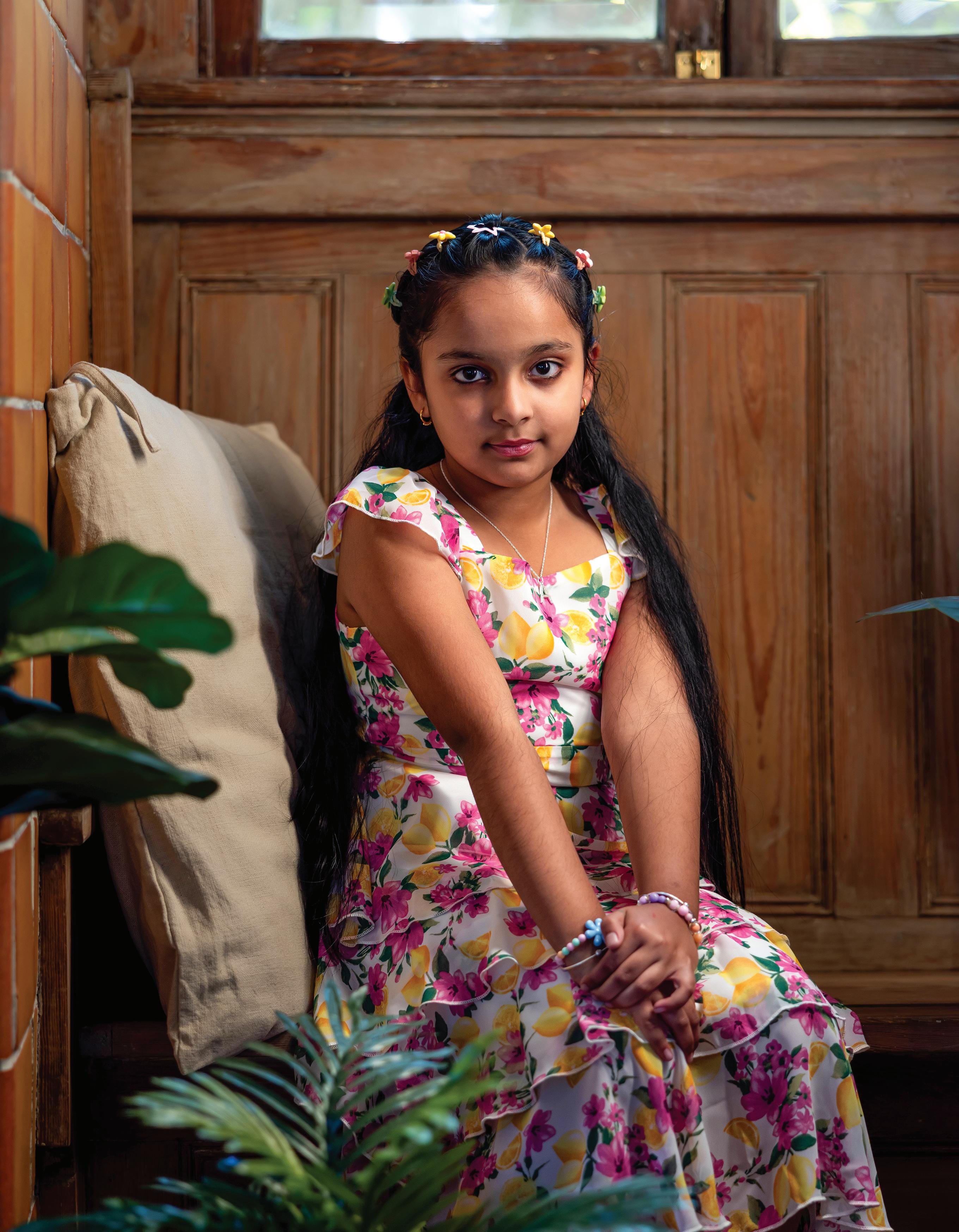







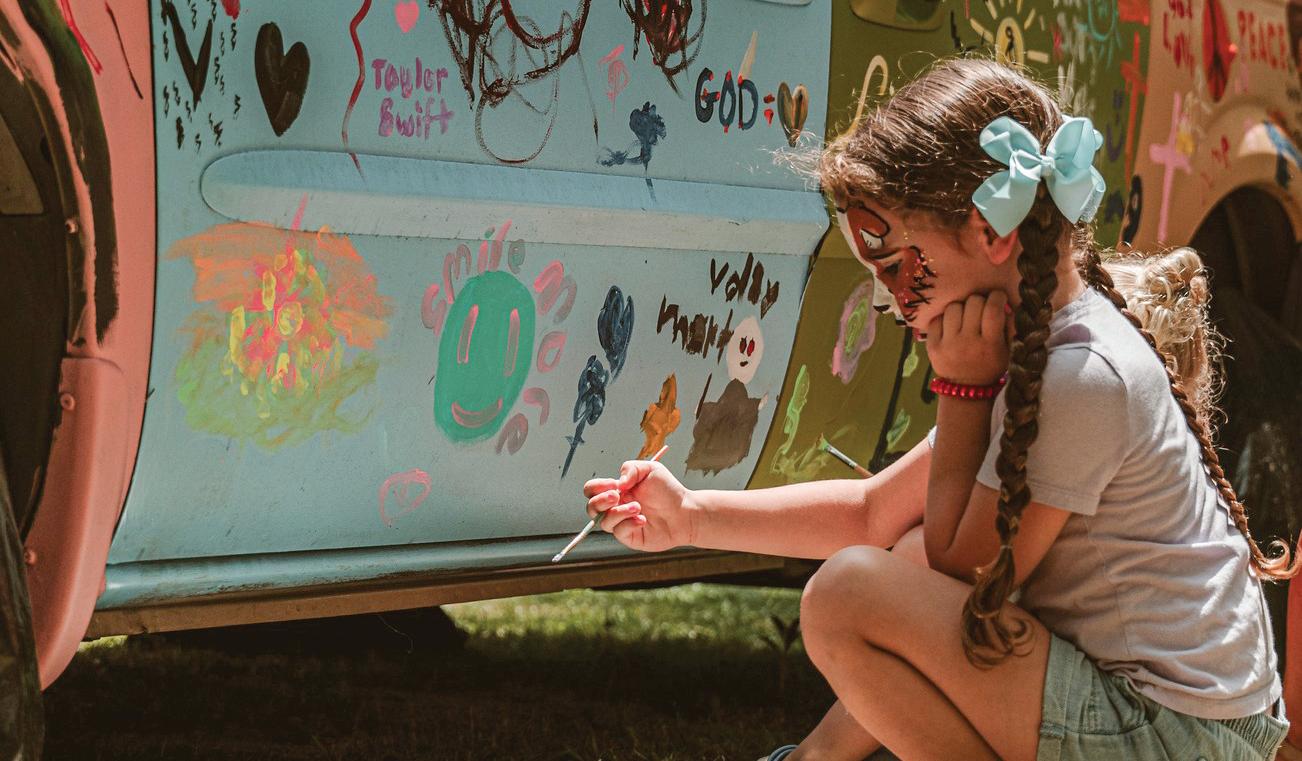
Adriti Shrivastava, 7, is the daughter of Mrinal and Sheena Shrivastava of Columbus.
photos by Ker-Fox Photography


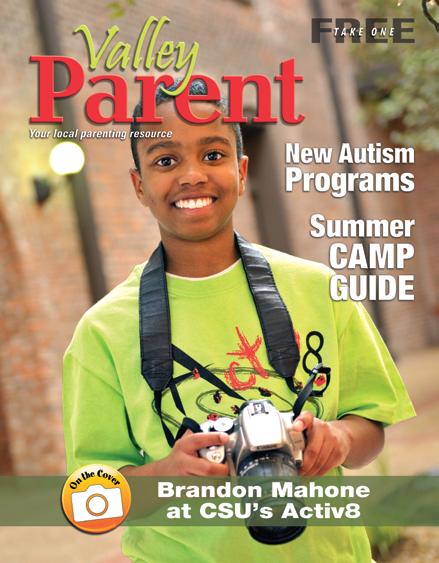
Valley Parent has come of age. In 2006, our first issue was launched, and over the years we’ve had the pleasure of connecting with families throughout the Chattahoochee Valley area and communicating fun family events, offering sage advice for parents, featuring hundreds of children on the front cover, fantastic giveaways for events throughout the region as well as focusing on area schools news, art and theater, summer camps and so much more!
The children who graced the front covers in the first couple of years are graduating college and entering the workforce. Some of them may be embarking on their next chapter with engagements, marriage or starting a family themselves.

What’s next for Valley Parent? We are graduating into a regular section that will be featured in our sister magazine— Columbus & The Valley. Vested in the Chattahoochee Valley for 35 years, Columbus & The Valley is a wonderful resource for all the amazing happenings, people and stories that make our region such a great place to live.
In addition, we’ll have an email newsletter that will be delivered straight to your inbox monthly. Our goal is to reach more families with all the family-orientated happenings going on in this wonderful region that we call home. See the QR code below to sign up for our newsletter, and we look forward to dropping in monthly in your inbox.


Our Valley Parent website and social media pages will continue to be a great resource for families. A shout out to our advertisers over the years for ensuring that your partnership ensured that our families always had the option to read for free. Every edition was made with love for our community, and we were are delighted to have the opportunity to continue to be a part of your parenting journey. We can’t wait to for you to join us on this next chapter.
Jodi Saunders
P. O. Box 229
Columbus, GA 31902
706-324-6214 • fax 706-324-6216
EDITOR/PUBLISHER
Jodi Saunders
jodi@columbusandthevalley.com
ADVERTISING & MARKETING
Becky Kenimer
Advertising Account Executive becky@columbusandthevalley.com
Margie Richardson
Advertising Account Executive
margie@columbusandthevalley.com
Julie Lauzon
Sales & Marketing Manager
julie@columbusandthevalley.com
LAYOUT & DESIGN
Rebecca DeLoach 62GraphicStudio.com
WRITERS
Natalie Downey Dr. Britney Farmer
Khristina Gallagher
CONTRIBUTING WRITERS
Cherie Gough Dr. Tanni Haas
Rebecca Hastings
PHOTOGRAPHY
Ker-Fox Photography KerFox.com
Publication of Columbus and the Valley

WEDNESDAYS
Story Time with Grammy Trish
Columbus Bound Bookshop ColumbusBound.com
SATURDAY MORNINGS
Market Days in Uptown
Uptown Columbus/Broadway AlwaysUptown.com
FRIDAYS IN APRIL
Uptown’s Concert Series
Uptown Columbus/Broadway AlwaysUptown.com
2
Phenix City’s Easter
Egg-stravaganza Hunt
Garrett-Harrison Stadium PhenixCityAL.gov

Nature Fest
Oxbow Meadows
Oxbow.ColumbusState.edu/nature-festival/
Smiths Station Spring Swing
Smiths Station City Hall SmithsStation.gov
Columbus River Dragons vs. Pee Dee Icecats
Columbus Civic Center RDragons.com
Midland Commons MidlandCommons.com
Earth Day Sprouts Spectacular North Columbus Public Library Cvl.Libnet.info/event/14742203
Submit your upcoming event online at columbusandthevalley.com/valley-parentmagazine-event-submissions
Uptown Columbus/Riverwalk Island
Uptown Columbus/Broadway
Columbus Historic District ColumbusPorchFest.com
X Marks the Spot Springer Opera House SpringerOperaHouse.org
Liberty Theatre & Cultural Arts Center Columbusga.gov/libertytheatre
Columbus Public Library CVLGA.org
Museum
Columbus United FC First Home Game
A.J. McClung Memorial Stadium ColumbusUnitedFC.com
Memorial Day Weekend at Callaway Callaway Gardens CalawayGardens.com
Memorial Day Pool Splash
Liberty Bell Pool at FDR State Park Explore.GaStateParks.org/info/317224?c=32441730

Uptown Columbus/Woodruff Park PawsHumane.org/barks-blues-festival/
by Tanni Haas, Ph.D.
oing away to summer camp is without a doubt something kids look forward to all year. Nevertheless, there are important issues you should address to ensure that your kids have a really great time while they are away at camp. Based on my experiences as a parent of seasoned summer campers as well as conversations with other parents, I’ve pulled together a list of some of the most common issues.
If your kids suffer from seasonal allergies, like grass or tree pollen, tell the camp physician or nurse and pack all the medication they need. It can be a real drag for them to walk around the whole time with a runny nose or watery eyes. If they suffer from more serious allergies, like animal or food allergies, inform the camp that your kids shouldn’t come into contact with those allergens. Our son is very allergic to horses. We didn’t think anything of it before we realized that his camp has alpacas, which can induce the same allergic reaction as horses.
Every camp has a policy about how they prefer you to communicate with your kids, whether by email or phone, and about how many care packages you may send and what you can put in them. Know those policies, and follow them. Kids don’t want to be called out for not following the rules. It’s embarrassing, and it can hurt them socially.
Some kids find it easy to make friends, and others have a harder time. If your kids have a difficult time, ask if they can bunk with one or more of their regular friends from home. Most camps permit that. Explain to your kids that no matter how confident the other kids may appear, chances are that they are nervous too. Use yourself as an example and tell them what you did when you were a kid—it makes the situation much more relatable and manageable.
Your kids can still get homesick even if they’re rooming with close friends. It can happen to any camper, no matter how well-prepared and seasoned they are. Find out how the camp handles homesickness. Can you call your kids, even if there’s a no-phone policy? Is it possible to visit them outside camp visiting days? Pack some family photographs or a favorite stuffed animal with their belongings; it can help put them at ease.
You want your kids to have fun at camp, but you also want them to be safe. One of the best things you can do to prepare them, if they don’t already know how, is to teach them how to swim. Most camps include a swimming program with access to a pool. Another popular activity is hiking. Be sure that your kids have footwear with good traction. More generally, teach your kids how to have fun without putting themselves in any danger.
Despite your best efforts, emergencies can happen. Hopefully, it won’t be anything serious, and the camp doctor or nurse can take care of it. To be on the safe side, pack hard copies (front and back) of your hospital, medical and dental insurance cards with your kids’ belongings. A hospital stay can be very costly without insurance.
Many summer camps offer day or overnight trips to nearby ball games, amusement parks or other special places for an extra fee. These trips can be expensive, so before you sign your kids up for them, ask the camp how many kids usually go on these trips and take a good hard look at what you can afford. If only a few kids are going and the trips are expensive, don’t feel pressure to sign your kids up. There are plenty of exciting activities for all the kids who remain at the camp site. VP


by Khristina Gallagher
Summer brings a burst of energy—long days, camp adventures and chances to learn something new. It’s also a season for celebrating the families who shape us, from Mother’s Day hugs to Father’s Day high fives. These book picks capture sunshine, curiosity and the joy of spending time with the people who matter most.

AGES 0-4
by Nicola Edwards
A warm, colorful board book that celebrates the bond between a father and child. Simple, uplifting lines pair with bright illustrations highlight everyday moments of love, comfort and encouragement. Bonus: there’s a Mommy Loves You, too.

by Kate Hosford
A gentle, heartwarming tribute to everyday moments that make life feel whole. Through small kindness, cozy connections and simple joys, the book shows that love doesn’t need grand gestures. It grows quietly and beautifully in the little things we share, reminding young readers that meaning often lives in ordinary moments.
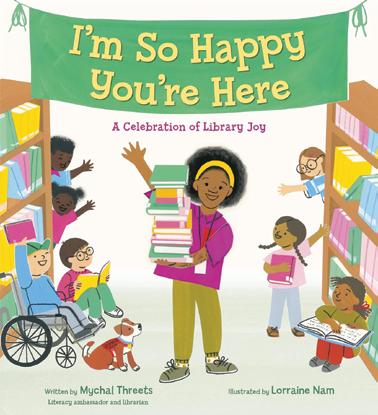
by Mychal Threets
A bright, joyful picture book celebrating a child’s summer adventures, from sunny playdays to discovering new stories. As temperatures rise, the library becomes the perfect cool escape—full of books, imagination and community fun. Together, a parent and child explore, read and make memories, showing that summertime is library time.


by Jashar Awam
A lively, confidence boosting picture book about a child determined to master tying their shoelaces. With humor, persistence and positive self talk, each attempt becomes a small victory. It’s a perfect summer read—encouraging kids to embrace challenges, practice new skills and discover the joy of learning something new during the sunny months.
These reviews are provided by Columbus Bound Bookshop owner Khristina Gallagher. Locally owned, located in Midtown, Columbus Bound Bookshop carries new books for children and adults. You can find them online at Columbus Bound Bookshop, Facebook and Instagram.



Summer brings long days, sunshine and the promise of memorable experiences. For families, however, it can also mean a hectic schedule filled with camps, activities and vacations. Striking the right balance between structured plans and downtime can feel like a juggling act. With a little forethought and planning, you can craft a summer schedule that keeps everyone engaged, rested and connected.
Before filling the calendar, take a step back and look at the summer as a whole. Mark down any fixed dates, such as family vacations, weddings or reunions, as well as registration deadlines for camps or activities.
Once you’ve outlined these key events, consider how they affect the rhythm of your summer. For example, if your vacation falls at the end of July, you might want to avoid scheduling an intensive camp the following week to allow for a recovery period.
TIP Use a digital calendar or a large wall planner to visualize the entire summer at a glance.
Summer is a prime opportunity to strengthen family bonds, but it can easily be overshadowed by packed schedules. Make family time a non-negotiable part of your summer.
This could mean dedicating weekends to family activities like hiking, visiting local attractions or relaxing backyard barbecues. For busier weeks, schedule simple evening activities, such as movie nights or board games, to reconnect after a day apart.
TIP Plan at least one “staycation” weekend or day trip as a family to enjoy local adventures without the stress of extensive travel.
Camps and extracurricular activities are summer staples that can enrich your child’s break from school. To avoid burnout, be
selective about how many and which types of activities to sign up for.
Balance active camps, like sports or adventure programs, with more creative or relaxed options, such as art classes or theater workshops. Pay attention to your child’s energy levels and interests—some kids thrive in back-to-back activities, while others need downtime between engagements.
TIP Block out at least one unscheduled week in your child’s summer. This can be a time for spontaneous playdates, unstructured outdoor fun, or simply relaxing at home.
Family vacations are a highlight of summer, but they can also disrupt routines and lead to exhaustion if not planned carefully. When booking trips, consider the duration and distance—will you need a few days to recover after returning?
Space vacations and camps apart so your child isn’t transitioning from one high-energy experience to another. If you’re traveling during camp season, ensure there’s enough buffer time to avoid overwhelming yourself or your kids.
TIP Alternate between “on” and “off” weeks to create a rhythm of engagement and relaxation throughout the summer.
Even with a flexible summer schedule, maintaining some structure can help kids feel secure and balanced. Incorporate routines like consistent bedtimes,
by Rebecca Hastings
mealtimes and quiet periods, even when days are busy.
A morning routine can set the tone for a productive day, while a wind-down ritual can ensure kids get enough rest to recharge for their next adventure.
TIP Block off downtime in your schedule to prevent overcommitting. Quiet afternoons at home can give kids—and parents—a chance to recharge.
While planning is essential, leaving room for spontaneous fun is just as important. Kids often find joy in unstructured activities like riding bikes with friends, exploring the backyard or building forts in the living room.
Allowing for flexibility in your summer schedule not only prevents burnout but also fosters creativity and resilience in children.
TIP Set aside “open days” where there’s no agenda. These can become opportunities for spur-of-themoment adventures or much-needed relaxation.
As the summer unfolds, keep an open line of communication with your kids about how they’re feeling. If they’re showing signs of exhaustion or expressing a desire for more downtime, be willing to adjust the schedule.
Parents should also check in with themselves to ensure they’re not feeling overextended. A balanced summer should be enjoyable for the whole family.
TIP Schedule weekly family check-ins to discuss upcoming plans, reflect on the past week and make adjustments as needed.
At the end of summer, take time to reflect on the experiences you’ve shared as
a family. Celebrate the memories you’ve created and discuss what worked well (and what didn’t) for future planning.
This reflection not only helps parents refine their approach but also teaches children the value of balance and prioritization.
TIP Make a note on your calendar for next winter or spring about what worked well and anything you would do differently. This will ensure the reminders are handy when you need them.
A balanced summer schedule allows children to explore, rest and connect. By thoughtfully prioritizing activities, creating space for family time and leaving room for spontaneity, parents can ensure their kids have a summer filled with growth, relaxation and fun. VP


by Dr. Britney Farmer
When thinking about your child making friends, most parents hope they’ll connect with peers who are well-adjusted, kind-hearted and making positive choices. But what happens when that doesn’t quite go as expected? What do you do when your child starts spending time with the “wrong crowd”?
This is something that comes up often in clinic—parents feeling unsure about how to respond when their child forms friendships that don’t seem like a good fit. Sometimes, children are even brought in for behavioral concerns, leaving parents wondering: Is this who my child is, or are they being shaped by the company they keep?
From those conversations, I’ve gathered a few approaches that may be helpful.
As you read, keep in mind that there’s no step-by-step guide for helping your child choose the “right” friends. However, there are some principles and tools that can help both you and your child think more intentionally about friendships before they become deeply established.
Avoid immediately dismissing or criticizing the friend. While that reaction is completely natural, it often has the opposite effect. The more a child feels that a friendship is being attacked, the more strongly they may hold onto it.
This is a normal part of adolescent development. That pushback and independence we see now—while sometimes challenging—are the early forms of the critical thinking and problem solving we want them to develop.
If your child is spending time with peers you’re concerned about, ask what they enjoy about that person. What does the friendship add to their life? Learning this can give you valuable insight into why the
connection matters to them.
For example, if the appeal is that the friend is fun or exciting, you can acknowledge that need while also helping your child see that fun doesn’t have to come with negative consequences.
Another helpful exercise is to have your child identify what they value in a friend. This can be done on paper, a tablet or even their phone—whatever feels most natural.
Ask them to list qualities they find important and rank them from most meaningful to least. Then, have them reflect on how their friend aligns with those values using a simple scale from one to five.
Once they’ve completed it, go through it together. This isn’t about proving a point, but about helping them slow down and reflect. Sometimes kids need a little support remembering moments when a friend didn’t quite live up to the values they themselves identified.
A broader life lesson to introduce here is the idea that your child is the “consumer,” and their attention is valuable. What they give their time and energy to tends to grow, and what they step back from often loses its influence.
This concept can apply not only to friendships, but also to social media, school dynamics, gossip and even family. It shifts the conversation away from judging others and toward helping your child recognize their own worth and the importance of how they spend their time.
If the friendship continues to develop, it can be helpful to get to know the

other child’s family. While it’s not always definitive, it can offer helpful context. You may find that your values align and that your child’s new friend is simply going through a phase. In those cases, your presence could actually serve as an additional positive influence. On the other hand, if there’s a clear mismatch in values, it may help guide your decisions about boundaries.
Instead of trying to keep distance, consider inviting the friend into your family’s space. This might look like having them over for dinner, youth night’s at church, family walks or including them in activities your child already participates in. This approach serves two purposes:
• It allows you to model the behaviors and values you want your child to adopt.
• It increases your ability to supervise interactions in a natural, non-intrusive way.
Sometimes, being a steady, positive presence can influence not just your child, but their friend as well.
There’s no guaranteed formula for ensuring your child chooses the “right” friends. However, by staying engaged, fostering open communication and teaching critical thinking, you can equip them with the tools to make better decisions over time.
If your child is struggling in this area, even small shifts in how you approach the situation can make a meaningful difference.
Stay tuned for a future discussion on the other side of this dynamic—what to do when your child may be the one influencing others in a negative way, and how to help guide them back on track. VP

by Cherie Gough
Earth Day is April 22, but it’s important for us to take care of our planet every day. If you’ve been thinking about finding significant ways to help your children learn to care for the environment, we’ve got 25 ideas, one for each day in April to help your family take action. From building a sense of wonder for nature, to conserving our precious resources to helping older kids to find ways to become activists, you’ll find an array of activities to suit your family.
1. Go for a butterfly walk in your neighborhood or a garden.
2. Recycle food scraps. Proper food waste disposal is powerful. Did you know? Food and yard waste in landfills rots without oxygen, emitting methane, the second greatest contributor to climate change.
3. Donate fruit from your trees or volunteer to pick fruit and donate excess to food pantries.
4. Observe nature while getting exercise. Try hiking, rockclimbing or kayaking.
5. Avoid single use plastics. Take the kids shopping and help them choose reusable snack bags, lunch containers and water bottles.
6. Pick up litter around your neighborhood.

7. Host a toy or book swap with friends. Be sure to get kids’ input on items they’d like to exchange.
8. Learn how to compost. Many kids enjoy the adventure and mystery of worm bins.
9. Don’t idle your car while picking up the kids. The US Department of Energy reports that idling personal vehicles wastes about six billion gallons of fuel annually.
10. Go on a nature scavenger hunt. Find inspiration through the National Wildlife Federation: www.nwf.org/Great-AmericanCampout/Activities/Printand-Go
11. Plant a garden. Even if you live in a small space, gardening can be a fun family activity.
12. Watch a sunset together.
13. Eat leftovers to avoid food waste. Start with a rotisserie chicken: Use leftovers to top a salad, throw in a soup or make a potpie. Enchiladas, anyone?
14. Instead of paper napkins and paper towels, try fabric and see how it works for you. Many Etsy shops make napkins in cute seasonal fabrics and “unpapertowels”.
15. Buy local, pesticide-free produce at farmers markets.
16. Walk or bike instead of drive to do an errand. Better yet, encourage your teen to take on this age appropriate task.
17. Check out nature at your local library, including hiking backpacks and state park passes.
18. Buy good quality clothing that lasts or try thrifting.
19. Conserve water. Shut off the tap while brushing teeth.
20. Attend a local Earth Day event.
21. Make recycled art. Repurpose jars, lids and egg cartons into a fun spring craft.
22. Try bird watching. Read tips from The Audubon Society at www.audubon.org/magazine/ easy-ways-get-kids-birding
23. Volunteer at a community garden or river clean-up.
24. Enjoy a natural playground. Kids’ imaginations expand when building with logs, rocks and petals.
25. Spring clean and donate waste at a site or recycling event near you. VP


Academy Dance Center
Acute Care Express
All About Kids Learning Center
Devica Alappan, MD
Angel Academy
Aranas & Stitt, OBGYN
Bareware Pottery
Basilio Pediatrics
Behavioral Health Partners
Bluebelle Artist Market


The Blushing Brunette Boutique
Carver Heights Presbyterian Child Development Ctr.
Center Pharmacy
Central Christian Church
Central OBGYN
Chambers OBGYN
Ritu Chandra, MD
Childcare Network (Hamilton Rd)
Clement Arts
Columbus Bound Bookshop
Columbus Children’s Dentistry
Columbus Clinic
Columbus Museum
Columbus Pediatrics
Columbus Public Library
Columbus Regional Midtown
Columbus Roberts Center
CSU Elizabeth Bradley Turner Ctr.
Dinglewood Pharmacy
Divine Childcare Learning Ctr.
Columbus Specialty Hospital
James Dorchak, MD
Easter Seals
Miranda Y. Edwards, MD
Fairview Baptist Preschool
The Family Center
Family Physicians of Columbus
First Baptist Church Child Dev./PC
Foot & Ankle of West Ga.
Fort Benning Housing Services
Fountain City Coffee
Generations Knowledge & Care Ctr.
Great Beginnings Child Care
Greystone Falls
Greystone of Columbus Park
Greystone Inverness
Growing Room
Growing Room Too
Hollywood Connection
Imagination Station
Imagination Station Too
International Friendship Ministries
Joyful Journeys Childcare
Just for Kids
Kool Smiles
Mark Lawrence, DDS
Little Angels Child Development Ctr.
Little Paws Preschool
Thomas Malone, MD
Mathnasium
Mickayla’s Place
Midtown OBGYN
Mildred L. Terry Library
My Gym
Necco Foster Care
North Columbus Public Library
Northside Recreation Center
OBGYN Associates
Lirio E. Palmos, MD
Panvelkar & Panvelkar, MD
Pastoral Institute
Pediatrics at Brookstone Ctr.
Phenix City-Russell County Library
Pierce Chapel Methodist Preschool
Polka-Dots Early Childhood
Development. Ctr.
Preppy Pets
Puddle Jumpers Child Enrichment Ctr.
Rivertown Pediatrics
Russell County DHR
Second Avenue Animal Hospital
Jeffrey Serff, DMD
Smile Doctors
Smiths Station Baptist Church
Smiths Station Pharmacy
St. John AME Church
St. Luke Early Learning Ctr.
St. Mark UMC Child Dev. Ctr.
Lisa Alexander Strickland, DMD
Summerville Baptist Church
Sylvan Learning Center
Nora Tan-Ngo, MD
Toni’s Dancing Studio
TSYS Childcare Center
Uptown Pediatrics
Richard A. Valentine, MD
Wynnton Methodist Preschool
ZÖe Pediatrics
by Natalie Downey
Ithink no matter who you are, what you do for a living or where you’re reading this from—if you exist in the world right now and do not live under a rock— you can agree that the world is a heavy place lately.
We see the news in headlines while we’re brewing our morning coffee, little sleepy heads slowly yawning out of bed and into the kitchen to ask what’s for breakfast, and we feel the weight of it in our chests but smile anyway and say, “Good morning.”
We hear the people in the checkout line talking about potential bombs and new wars and the weight of it all makes their little hands holding ours seem so small and light, and we whisper to them, “Pizza tonight?”
We run into revelations of horror in our everyday lives even when we try to hide from stories we surely can’t rewrite, and we feel the weight of it all and wonder, “What can I possibly do?”
And I want you to know, the world needs you.
Kneeling beside baths filled with bubbles like a believer kneels in worship before an altar is holy work, and the world needs you.
Trimming tiny fingernails with caution and compassion like those little hands are God’s very own is sacred business, and the world needs you.
Listening to her chatter about the book she just finished like every detail gives directions straight to Heaven is pure devotion, and the world needs you.
Mamas, the world needs the practicality of the rituals of your tender care, your dedication to the souls your soul dreamed into existence and the knowledge you carry in your bones of generations of womb wisdom. Your babies need you to witness the lives you gave them, and they need
your laughter, wild-hair kitchen dancing, those burnt pancakes and a steaming cup of chamomile tea for upset tummies. The world needs the magic of your touch because most of all it needs humanity to do better. And humanity starts with you.
Papas, the world needs the strength of your voice in defense of the most voiceless members of our species, your commitment to an integrity that pulses in your veins even when no one is watching, and for you to set an example in words and actions for your sons to know how to respect, revere and be kind to all living beings who are more vulnerable than they are.
And the world needs this in authenticity and truth, with no screens between it and you. It needs a better future, and the future is born from within you. To understand how much important work you really are doing when you play another round of UNO with them, never once looking at the clock, just to make sure they never forget how important they are in a heavy world that’s what you can do.
You don’t have to be the perfect parent to make a positive impact on the life of your children. Learning that people make mistakes and how to recover and restart when we do is also important work. But commitment looks like steering back onto the course we set sail for even when the winds of imperfection make for a wobbly trip. Just apologize, plan to do better and show up each day. Kids are more understanding than we give them credit for, but they hate inauthenticity and can spot it a mile away.
More than anyone or anything else in their lives, we parents have the biggest opportunity for impacting our children to understand the value of their own lives and the lives of others. Our work may be unappreciated and even unseen, but it is
never unimportant.
So, when the world feels heavy and you feel helpless, try to think of something light you can do to pour into your children and the world’s next generation. Take a walk, have a stargazing night, pick flowers for your neighbor, make a fort out of pillows and know that anything you do to pour into the lives of your children is a valuable contribution for humanity.
And in pouring into your children, you’ll find that you’re really pouring into your own heavy heart a bubbling hope that whispers that maybe tomorrow will be a little lighter than today. Loving them well is the most important thing we can do. VP
in nature when she finds a free moment to recharge.