An Energy Vision for the Columbia
For the River
To the energy industry, the Columbia River is a convenient fossil-fuel highway, an electricity-generating workhorse, and a cheap energy source.
Columbia Riverkeeper has a different vision: a river that unites people for clean water, abundant fish and wildlife, and our climate. We advance our vision in partnership with multiple Tribal Nations, the Columbia River Inter-Tribal Fish Commission, and people living in urban and rural communities who are most directly impacted by energy development, threats to clean water, and food sources reliant on the Columbia and its tributaries. This energy vision:
• Prioritizes truly renewable and carbon neutral power, not produced using fossil fuels or nuclear reactors
• Honors Tribal sovereignty and shifts the negative externalities of existing energy production and transmission away from Tribes and frontline communities
• Accommodates river restoration (including Lower Snake River dam removal) and river operations necessary to support healthy and harvestable fish populations
• Allows native fish and wildlife populations to persist and recover in abundance to support robust traditional uses, including Tribal, sport, and commercial salmon fishing
• Accounts for the needs of low-income households and does not shift on to ratepayers the cost of generation or transmission to serve large industrial loads like data centers
• Advocates for energy conservation and efficiency over new generation as a response to load growth
In this issue of Currents, we dig into a handful of the ways you advance this vision as a Columbia Riverkeeper supporter. We also share reflections from the people who power our work as donors and volunteers. This includes new board members: Confederated Tribes of Warm Springs Tribal Court Judge Anita Jackson and Gorge-based business owner Jodie Gates.
“The scope of Columbia Riverkeeper’s work touches so many aspects of my life—as a parent wanting to protect this essential resource for my children to enjoy and utilize, as a community member concerned with the watershed's overall health, and as a business owner whose livelihood relies on clean water in the Columbia,” shares Gates.
Judge Jackson reflects, “Columbia Riverkeeper's daily actions, including taking legal actions to protect the River and its resources, give me hope for the future of the River and my People's way of life, especially since my People were placed on the Columbia River by the Creator since time immemorial, and my ancestors had the foresight to ensure that all future generations would be able to continue those ties to our ancestral lands.”
Together, we inspire people to rise up for environmental and climate justice on the Columbia. You power this critical work.
Onward,

Lauren Goldberg, Executive Director
Columbia Riverkeeper protects and restores the water quality of the Columbia River and all life connected to it, from the headwaters to the Pacific Ocean.
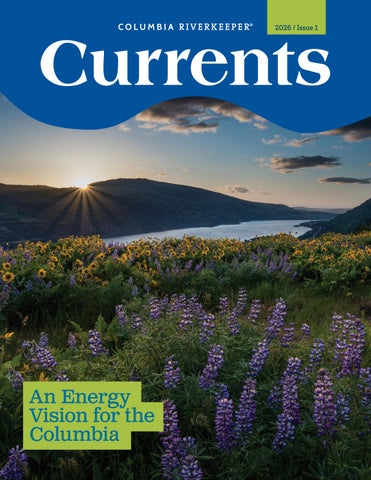
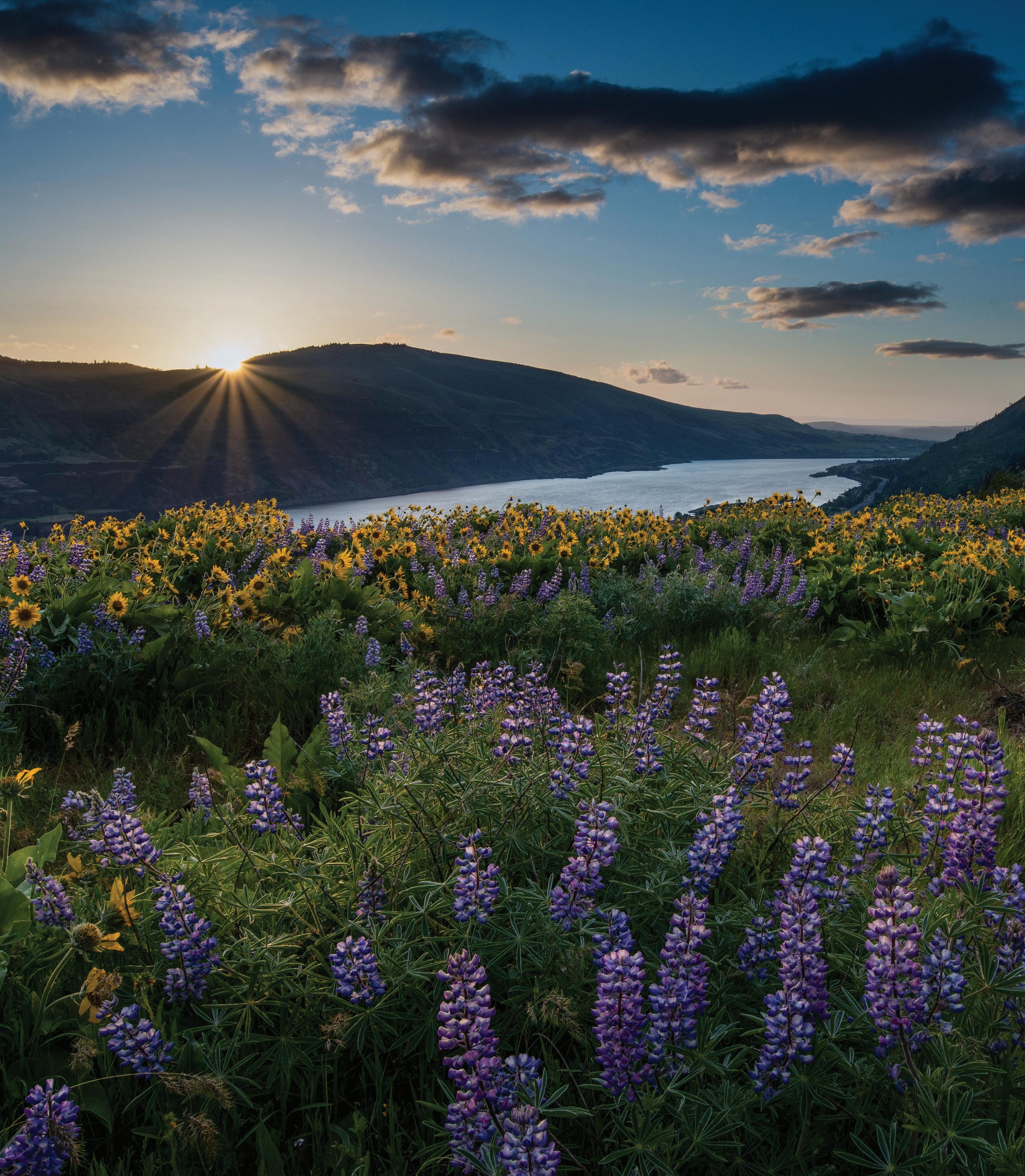
Front cover: Columbia River Gorge. Photo by Brian Chambers, brianchambersphotography.net
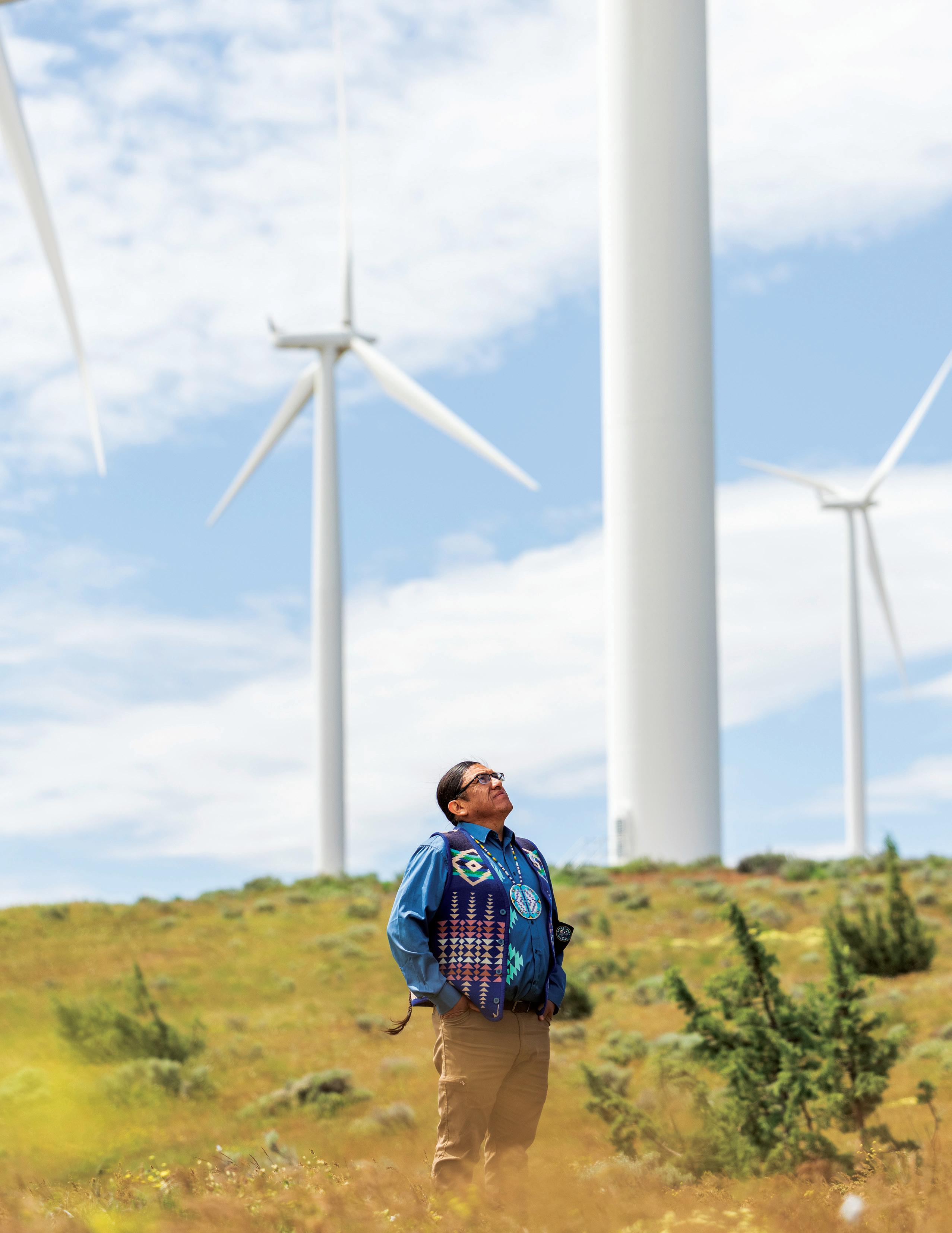
This page: Yakama Nation Tribal Councilman Jeremy Takala visiting the area near the sacred site of Pushpum where a pumped storage development is proposed. Over 300 people attended a day-long event in May 2026 celebrating Pushpum.
Photo by Paloma Ayala. Graphic design by Melissa Delzio.
Mid-Year Impact Report
Columbia Riverkeeper is powered by more than 25,000 members and supporters who invest in clean water and a healthy climate because the fight is urgent and the time is now. You accomplished great things.
Clean Water Win
The Clean Water Act is one of the strongest legal tools we have to support our mission and keep pollution out of the river. When we go to court and win, we make polluters pay serious penalties for violating the Clean Water Act. This spring, we secured a major victory for clean water and salmon recovery in our lawsuit against Darigold Inc. We sued the corporation to hold it accountable for years of unlawful pollution at its large dairy processing facility in Sunnyside, WA. Darigold agreed to comply with the law and pay $2 million to Yakama Nation to restore water quality in the Yakima River and offset harm from years of unlawful pollution. We also prevailed in two additional Clean Water Act enforcement actions this spring.
Court Rules for Salmon
In response to a request by Columbia Riverkeeper and our partners, a court ordered additional protections for Columbia River salmon. In granting the additional protections, the court noted that federal salmon policy is moving in the “wrong direction” and scolded Bonneville Power and the Army Corps of Engineers for their “disappointing history of government avoidance and manipulation instead of sincere efforts at solving the problem and genuinely remediating the harm.” The upshot: Baby salmon will travel downstream faster and more safely in 2026.
Hands-on Learning
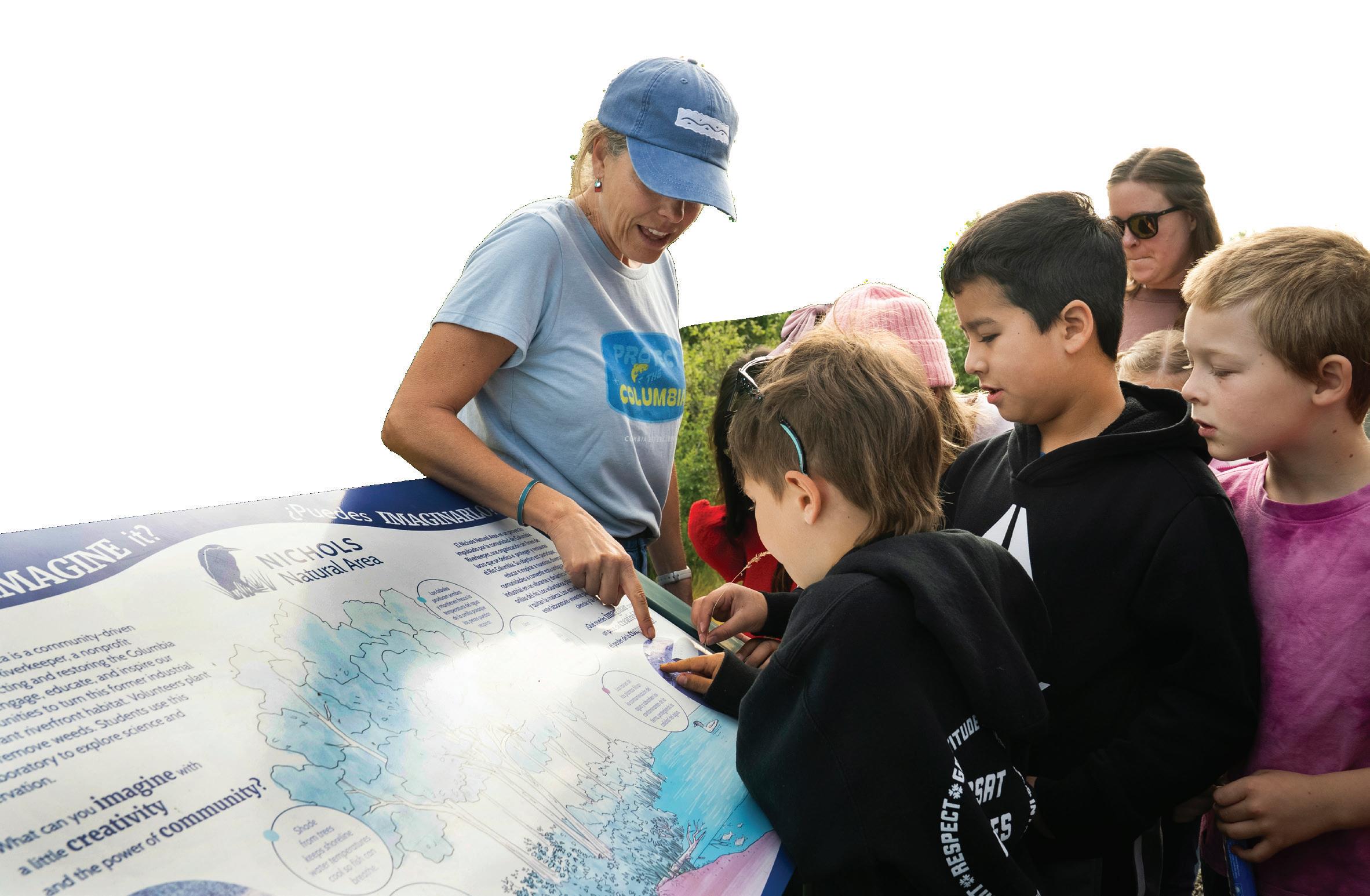
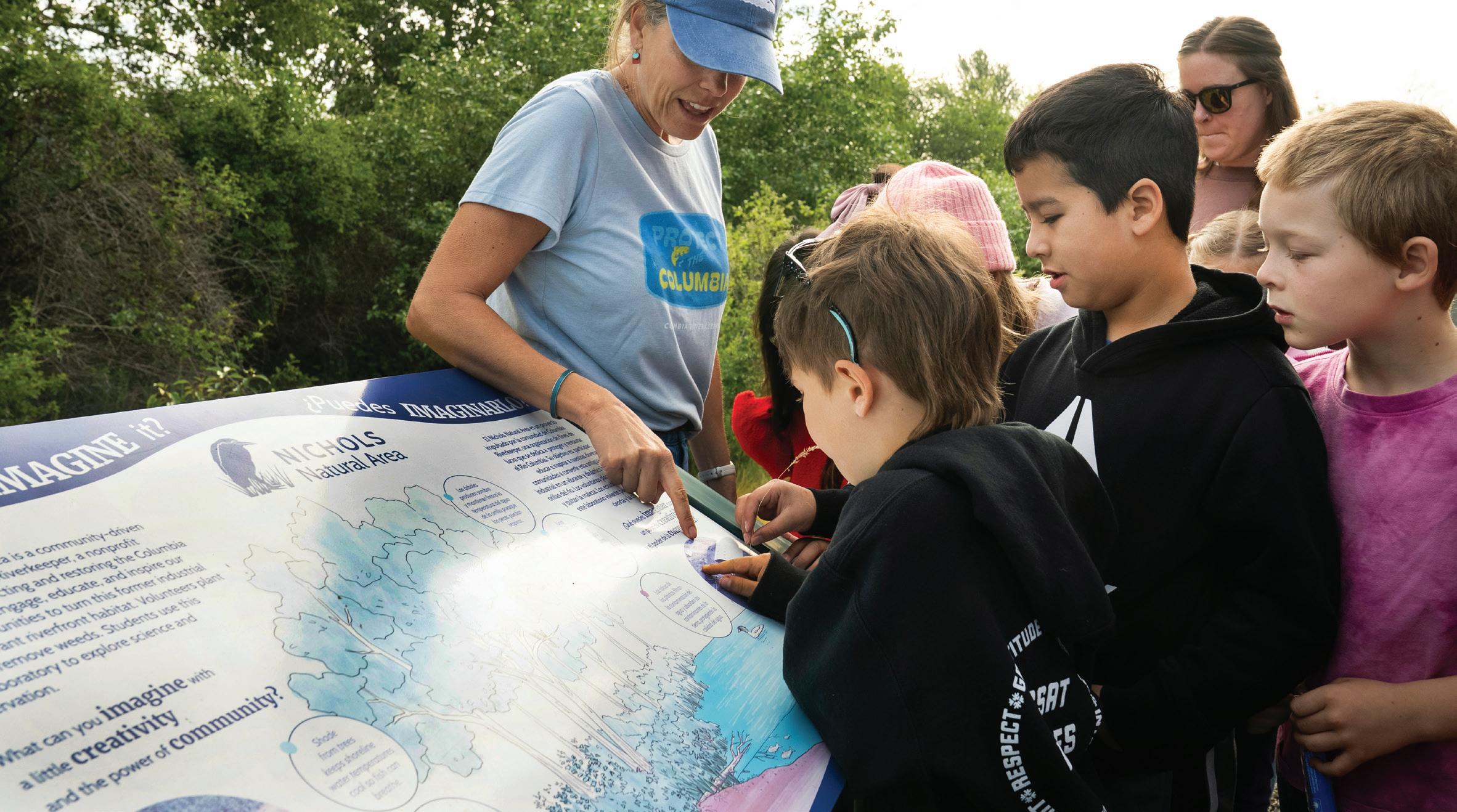
This spring over 800 students learned about the river through Columbia Riverkeeper's Science & Education program. Through environmental education and hands-on learning, Columbia Riverkeeper explores science, stewardship, and community care with local students like in the above outdoor classroom along the Columbia River. Engagement goes beyond a one-time field trip, as students and their families create lasting connections by joining local volunteers and community members for plantings, river clean ups, and restoration projects to transform a former industrial site into a thriving riparian habitat.
Community Advocacy for Clean Air, River
After sustained community advocacy and support from nonprofits including Columbia Riverkeeper, Drax Group has announced it is pausing plans to develop a large-scale wood pellet facility in the Columbia River community of Longview, WA. Industrial burning of wood pellets for energy is not clean or sustainable. It leads to deforestation, releases dangerous air pollution, and worsens climate change. This pause reflects the strength of Columbia River communities coming together to protect our shared home.
40+
Community events Columbia Riverkeeper hosted or spoke at to share information about pressing river issues and how to make an impact
$2.25 million
Amount polluters paid to Tribes and nonprofit organizations as a result of lawsuits
14,000
People signed petitions urging action for the Columbia and our climate
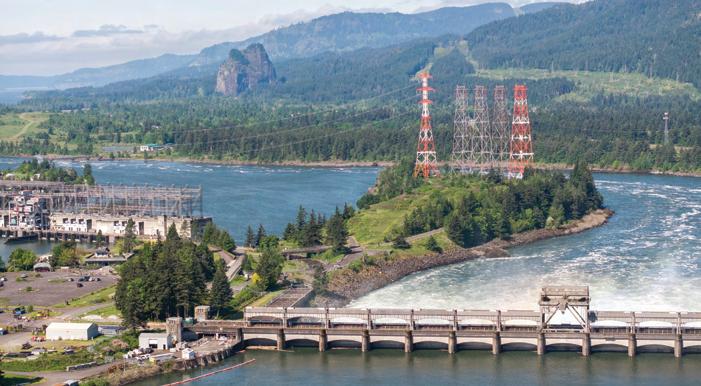
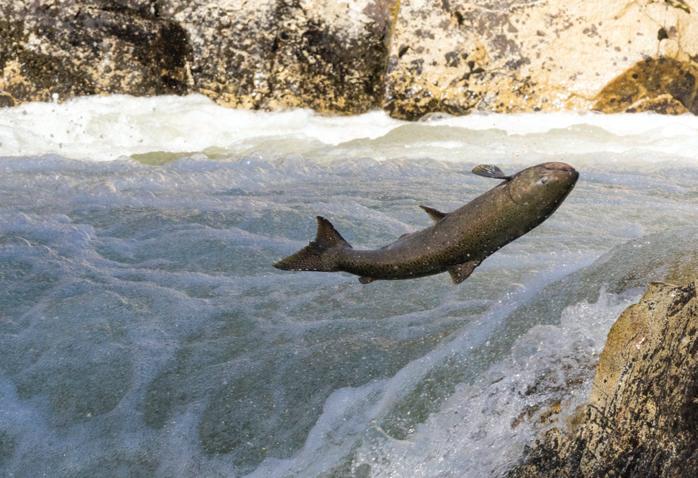
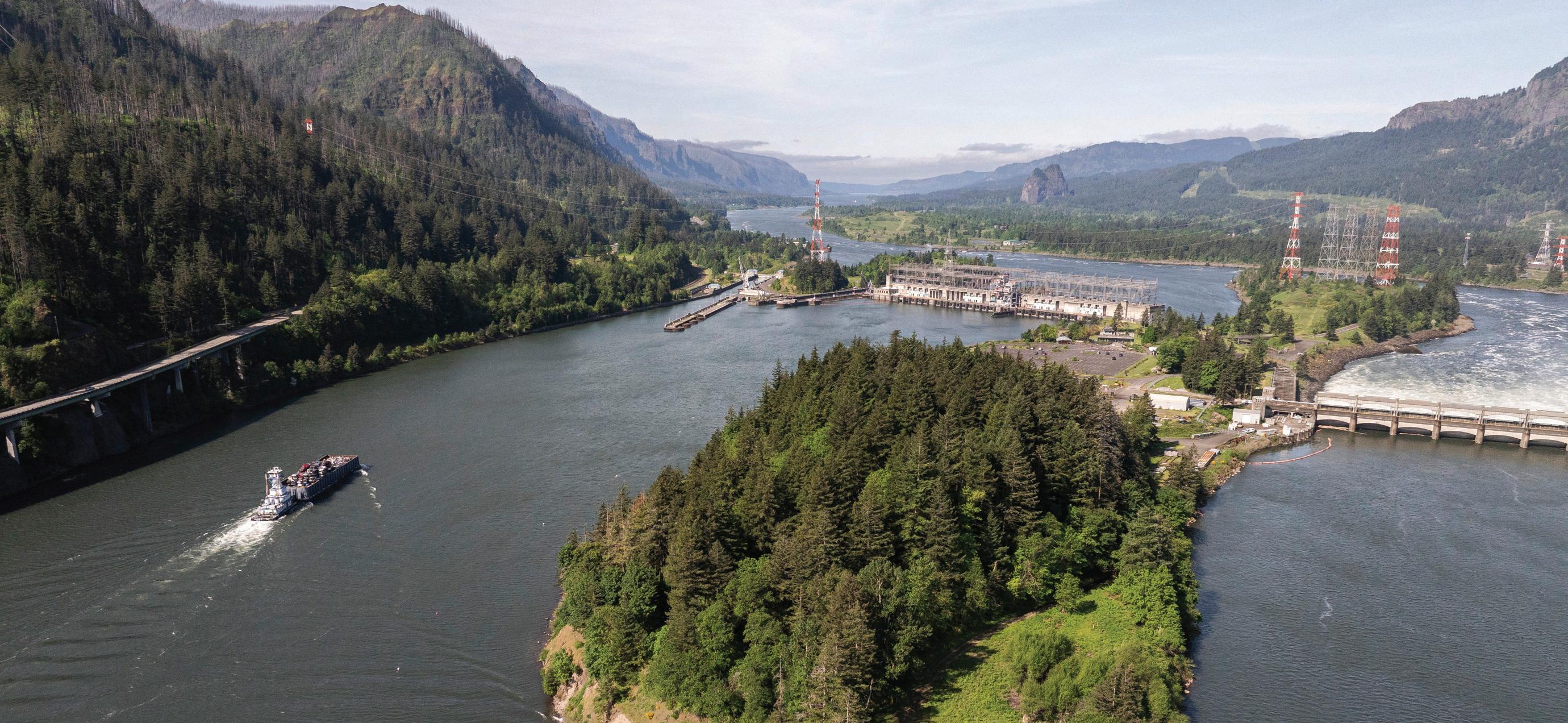
Left: Bonneville Dam. Photo by Alex Milan Tracy. Above: Chinook salmon jumping. Photo by David Moskowitz. Right: Hood River Westside Elementary School students visiting Nichols Natural Area this spring with Columbia Riverkeeper Science & Education Director Lorri Epstein. Photo by David Hanson.
Taking on Big Tech’s Data Center Building Spree

By Kelly Campbell, Policy Director
What’s at Stake
It’s hard to escape news about AI and data centers, and the enormous amount of energy and water Big Tech is demanding to build more facilities. Data center expansion is driving demand for fossil fuels, including new gas pipelines, power plants, and even small modular nuclear reactors. Unless we act soon, an unprecedented buildout of data centers in Oregon and Washington will derail some of the nation’s strongest clean energy laws, including state mandates to decommission gas- and coal-fired
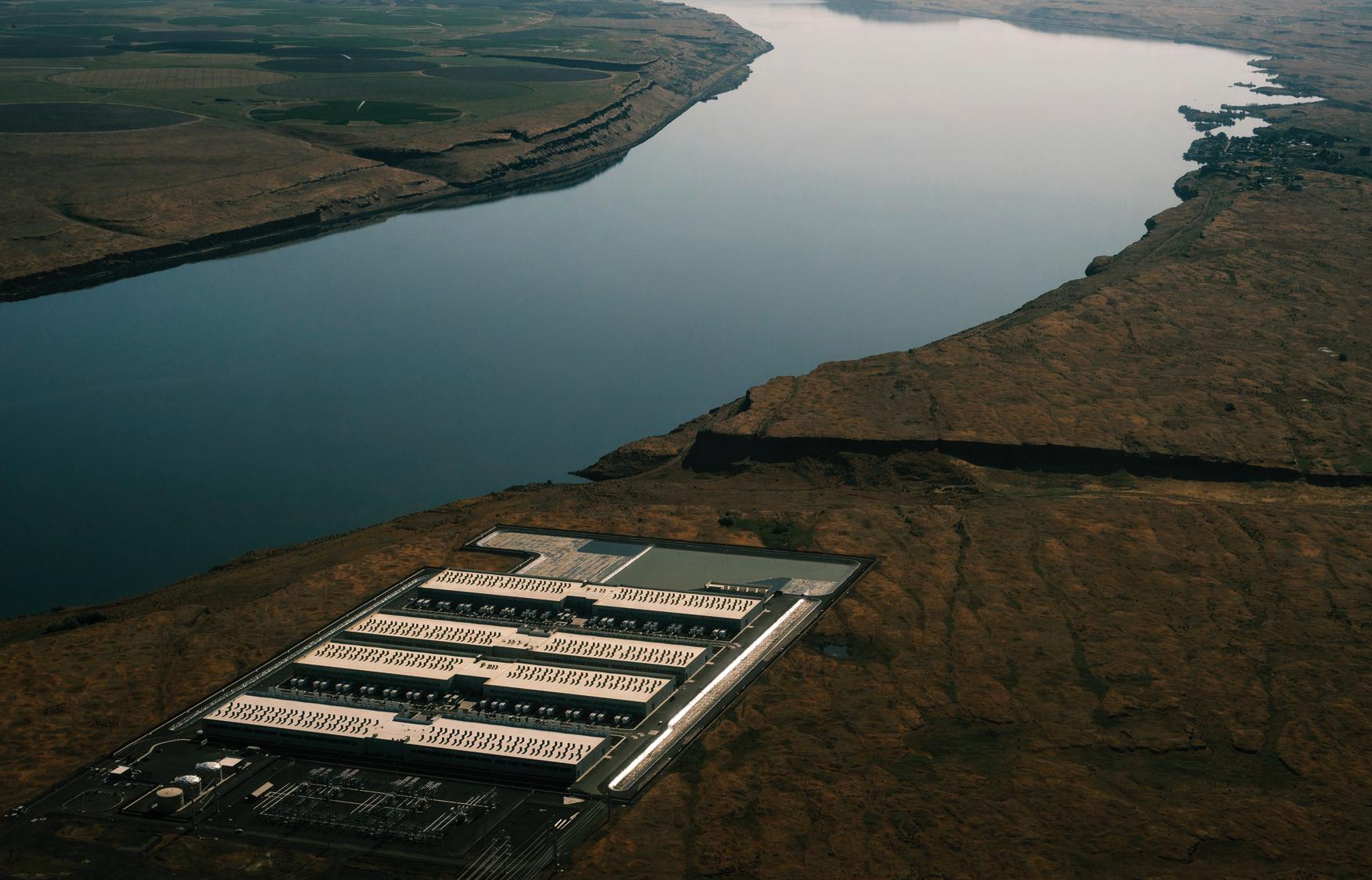
power plants and reach 100percent renewable energy by 2040 and 2050, respectively. In fact, data center power demand in the two states could reach 35 million megawatt hours by 2029—the equivalent energy demand of four cities the size of Seattle. With timely intervention, the Northwest could become a model for smart data center regulation that allows for a just transition from fossil fuels. In 2025, Columbia Riverkeeper launched a campaign for responsible regulation to address the impacts of data centers. In a recent report, “A Closer Look: Columbia River Data Centers,” we identified more than 100 data centers at various stages of development and operation concentrated in just 12 mostly rural counties along the Columbia River. Current regulations are not geared for the scale of the data center industry. Big Tech— Amazon, Microsoft, Google and Meta—are taking advantage of rural communities to build as fast as possible, often irresponsibly.
Data center power demand in [Oregon and Washington] could reach 35 million megawatt hours by 2029—the equivalent energy demand of four cities the size of Seattle.
Opportunity for Impact
Oregon and Washington can create the playbook for states around the country to address largely unchecked data center expansion.
Columbia Riverkeeper has been hard at work developing and implementing a multi-pronged campaign to engage various levels of government in both states to address the climate, water, and salmon-recovery impacts of data centers. We are actively working with community members, Tribal governments, and the Columbia River Inter-Tribal Fish Commission, which represents four Columbia River Treaty Tribes. We understand that achieving a just energy future will require substantial changes to our region’s regulatory and physical infrastructure. This will include regulating how, if, and where data centers are sited and
operated in our region. That’s why we are calling for a moratorium on new data center development until common-sense laws are in place to address their impact. In the interim, we are advocating for new laws to improve transparency, accountability, and oversight.
Progress to Date
In short 2026 legislative sessions, Columbia Riverkeeper and some of its incredible partners advocated for bills in both states to address data center proliferation. Together, we notched important wins:
• Oregon passed a one-year moratorium on tax incentives for new data centers in parts of the state.
• Washington acted to close loopholes to ensure the state’s
100- percent clean electricity law applies to data centers. In addition, we engaged in the Oregon Public Utility Commission’s first “large load docket” and successfully established meaningful guardrails for data centers in Portland General Electric territory, Oregon’s largest electric utility.
Looking Ahead
Along with Tribes, partner organizations, and community members, we are working to convince elected officials and regulators to curb irresponsible data center expansion and the tremendous amount of energy and water use that comes with it. Our team is gearing up for the 2027 legislative sessions in both Oregon and Washington, which are primed for action on data centers. We are also taking a hard look at
new proposals for data centers along the Columbia, and engaging in public input opportunities.
Columbia Riverkeeper launched our Data Centers Advocacy project in 2025. Now is the time to put our ambitious plans into action and deliver results. This will require sustained and increased support for our team of attorneys, policy advocates, community organizers, communications specialists, and expert consultants. As a Columbia Riverkeeper donor, you power this critical work for everyone who cares for the Columbia.
An Amazon data center campus in Umatilla County. Amazon owns at least six operating or planned data centers in the county.
Solidarity for Indigenous Rights

By Simone Anter, Senior Attorney & Clean Up Hanford Program Director
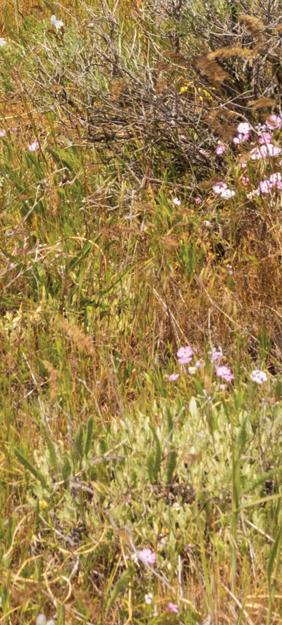
Columbia Riverkeeper has partnered with the Confederated Tribes and Bands of the Yakama Nation and the Ḱamíłpa (kah-MILT-pah) (Rock Creek) Band of Yakama Nation for nearly two decades to stop the destruction of Pushpum. Located along the Columbia River near the John Day Dam, Pushpum is a sacred site for ceremonies, legends, and gathering of traditional roots and medicines. As a natural seed bank, this landscape contains rich biodiversity in plant and animal life that, once removed, can never be fully restored.
The project area is within ceded lands of Yakama Nation, and the area has historically been used by Yakama Nation, Confederated Tribes of the Umatilla Indian Reservation, Confederated Tribes of Warm Springs Reservation, and Nez Perce Tribe for hunting, traditional gathering, fishing, camping, and traditional ceremonies.
Rye Development’s pumped-storage plans would destroy a large swath of this sacred land, including archeological, ceremonial, petroglyph, monumental, and ancestral sites. Columbia Riverkeeper is working in court and in the court of public opinion to protect Tribal resources and advance a just transition from fossil fuels.
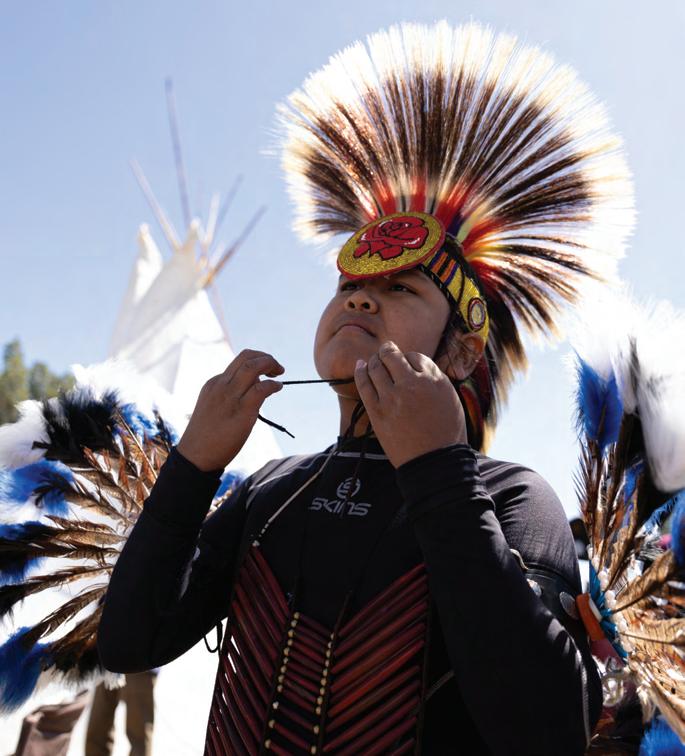
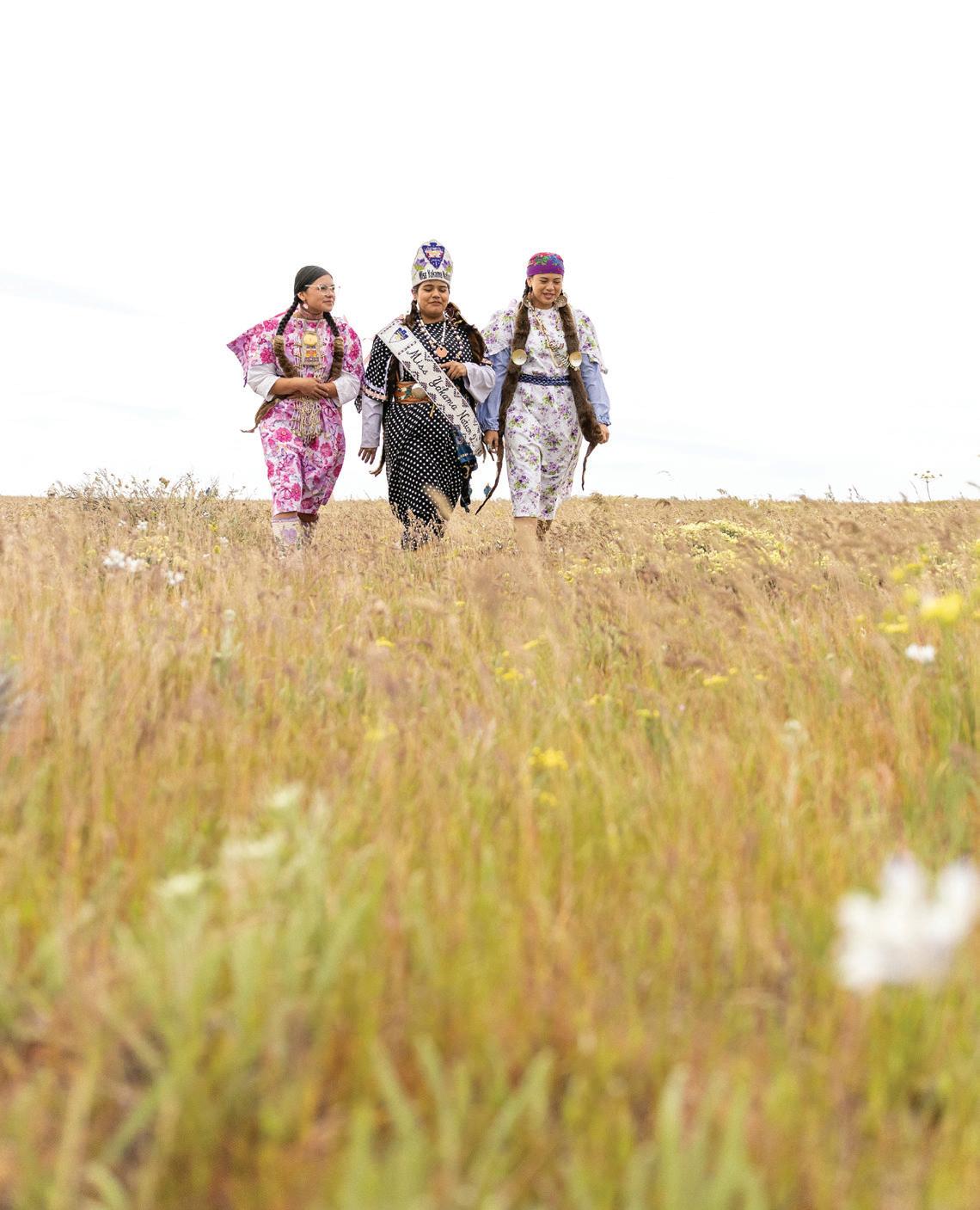
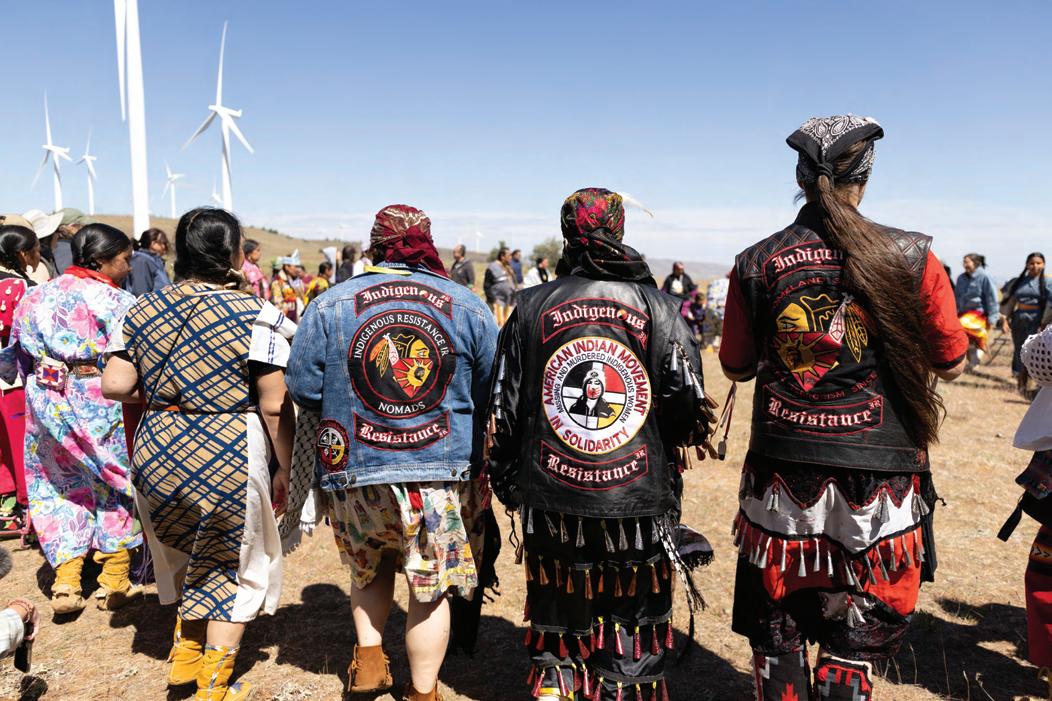
In May 2026, the Ḱamíłpa Band and Yakama Nation hosted a Protect Pushpum encampment, a day-long event featuring speakers, dancers, and ceremonies.
Columbia Riverkeeper supported the event and is honored to stand in solidarity with Tribal Nations to advocate for Indigenous cultures, natural resources, and Treaty rights. Over 300 people attended the event, which was covered by media outlets online and around the country.
by

Photos
Paloma Ayala.
“ Members Speak!
How We Collaborate Community by Community

By Eric Block, Communications & Marketing Director
Columbia Riverkeeper is directly powered by more than 25,000 members and supporters, whose connections to our mission, programs, and love for the river are often deeply personal. Each has a unique story of how they first came into contact with Columbia Riverkeeper and what inspires them to continue to support us.
“I kept seeing them show up at meetings, permit processes, and public comment periods,” said Jasmine Lillich, a farmer in Columbia County, OR, “reviewing long documents most people don’t have time to read, and having conversations with people directly impacted. They (Riverkeeper) stepped in where it actually
mattered, asking questions a lot of us wouldn’t even know to ask, and taking the time to walk people through the technical language and legal process so it made sense. They know how to carry local voices into spaces where they’re usually overlooked, and have them actually be heard. If you’re lucky enough to have Columbia Riverkeeper in your corner, it changes things.
“The folks at Columbia Riverkeeper really care, and you can tell by how they listen,” Lillich continued. “They don’t come into a community pretending to already know the whole story. They pay attention to local people, ask good questions, and let that shape the work. Having staff paying attention, helping make sense of the process, and keeping local communities informed makes a real difference.
I can’t imagine what industrial expansion in our region would look like without Columbia Riverkeeper’s watchful eye and steady advocacy. All I can really say is thank you. Our farms and our community owe them so much.”
In Hood River, Melody Shapiro was drawn to Columbia Riverkeeper’s volunteer programs
“They know how to carry local voices into spaces where they’re usually overlooked, and have them actually be heard.”
— Jasmine Lillich
and dedication. “What initially motivated me to support Columbia Riverkeeper with ongoing donations was not just my love and concern for the river and the years I spent kayaking miles of its waters, from Mosier to the Columbia Bar. It was the dedication of the staff and their obvious commitment to restore and protect the river.
“Columbia Riverkeeper’s volunteer programs and outreach provided me not only a chance to meet and interact and learn more with staff,” Shapiro added, “but to really experience their dedication. I want to always be a part of that by supporting Columbia Riverkeeper in restoring and protecting the river!”
In 2007, a pipeline proposal threatened to rip through the Western Washington County, OR, forestland of Martha and Allen Neuringer. They soon forged deep and lasting relationships with Columbia Riverkeeper staff. “We learned that our forestland was in the path of two giant pipelines proposed to bring natural gas to two mega-LNG terminals at the mouth of the Columbia,” said the Neuringers. “Those projects
at Bradwood Landing and Oregon LNG would be disastrous for the river and its salmon, as well as all of us living along the 130-mile route.
“Together with folks in Forest Grove, Gales Greek and Yamhill we created OCAP (Oregon Citizens Against the Pipelines) to inform ourselves and generate opposition,” the Neuringers explained. “In short order, we linked up with Columbia Riverkeeper, which offered amazing technical expertise, organizing skills, political savvy, and financial support for the battles to come.
“Month after month, continuing for years, Dan (Serres, Advocacy Director) would drive to Forest Grove to participate in our OCAP meetings. Facing public outcry and one legal battle after another, the first proposed pipeline project—Palomar Pipeline—gave up and folded. A second mega-project also went under.
In one case, (Riverkeeper Executive Director) Lauren Goldberg and her legal team prevailed against three of the most prestigious law firms in Oregon. Experienced
land-use lawyers advised us that our cause was hopeless, that we could not win. But they didn’t count on the commitment and savvy of Columbia Riverkeeper.”
The Neuringers closed by saying, “We feel deep gratitude for the extent to which Columbia Riverkeeper has contributed to the protection of the Northwest’s natural resources. Its continuous record of success in environmental protection will extend into the future if we all continue to give it the support it needs.”
Many thanks to Jasmine, Melody, Martha, and Allen for sharing their stories. Our members and supporters power our work and inspire us each day to continue to fight for what we love.

Jasmine Lillich (right) and her partner Brandon Schilling (left) lead the nonprofit Clatskanie Food Hub, a marketplace, farm-to-table venue, and food literacy classroom. Photo by Paloma Ayala.
Williams’ Pipe Dreams

WBy Audrey Leonard, Staff Attorney
ashington has some of the nation’s best climate and energy laws—and for good reason. Over 1.2 million people in Washington live in communities that are highly impacted by air pollution, and are exposed to the associated health risks.
With your support, Washington’s leaders have been climate champions. From opposing liquefied natural gas and methanol plants, to fighting the GTN Xpress gas pipeline expansion, our elected officials have stood up for communities and the environment against the fossil fuel industry. Now, facing a federal administration full of fossil fuel fanatics, Washington’s leaders must choose: stay on track or capitulate.
Fossil Fuels & Power-Hungry Data Centers
There was a time when the fossil fuel industry wouldn’t dare to propose a major new pipeline project in the Pacific Northwest. Now, they’re emboldened by the Trump administration and the promise of data centers’ insatiable energy needs.
Gas corporations have dollar signs in their eyes. A region that was solidly moving away from reliance on gas is now a potential market for growth as data centers expand at breakneck speed. Williams Companies, the owner of the largest gas pipeline system in Washington, has its eye on power-hungry data centers and is eagerly exploring options to build new gas pipelines. By tracking investor calls and customer meetings, Columbia Riverkeeper learned that Williams is actively working to influence Washington policymaker opinions on
methane gas. Williams boasts that Washington leaders’ opinions on gas are "softening."
The Northwest Pipeline, owned by Williams, carries methane gas from Western Canada and the Rocky Mountains through Washington and Oregon. Williams has floated two major expansion projects that would involve hundreds of miles of new pipeline in Washington, and bring 700 million cubic feet of new gas to the state per day. (By comparison, that’s more than four times the amount of gas added by the GTN Xpress expansion.) Burning this gas would emit 13.5 million metric tons of CO2 per year, increasing Washington’s annual emissions by about 14 percent.
Rockies Columbia Connector
New Pipeline Through the Columbia River Gorge
The first of these two Williams proposals, the Rockies Columbia Connector, would bring a staggering quantity of new gas from the Rocky Mountains to Washington. Williams wants to add 158 miles of new pipeline along the Columbia River Gorge and expand air-polluting compressor stations along the route.
In 2025, Williams solicited buyer interest in the Rockies Columbia Connector from gas utilities and other entities. The stated capacity of this project in Washington is 123.3 billion cubic feet of gas per year. This project should be a non-starter. Laying a new pipeline through the Columbia River Gorge would harm water quality and impact highly sensitive areas. The air quality implications for this project are enormous, especially considering communities along the I-5 corridor already experience significant concentrations of pollution.
Williams Companies, the owner of the largest gas pipeline system in Washington, has its eye on power-hungry data centers and is eagerly exploring options to build new gas pipelines.
Grant County
New Pipeline + Gas-Fired Power Plant
The second Williams proposal, the Valley Trail Project, calls for adding 137 miles of new pipeline in Grant County that would carry 123.3 billion cubic feet of gas per year.
Data centers have flocked to this area, leading to concerns about water and energy consumption. In August 2025, the Grant County Public Utility District estimated that the 79 pending requests for utility service would consume approximately twice as much energy as the entire city of Seattle.
In January, the Grant County Public Utility District announced plans to explore the feasibility of constructing new gas-fired power plants near Moses Lake or Quincy. The materials reference a need for gas pipeline expansion in order to achieve supply.
New gas pipelines have no place in the Northwest. The short-term profits of greedy corporations are not worth sacrificing clean water, clean air, and healthy communities.
Take Action
It’s not too late for Washington leaders to stop these dirty projects in their tracks. River communities, public health advocates, and environmental champions have been clear: new gas is not welcome in the Pacific Northwest. As a Columbia Riverkeeper supporter, you power strategic, creative advocacy for a climate-friendly future along the Columbia and beyond.
High Voltage, High Risk Fighting the Underwater Power Line

By Teryn Yazdani, Staff Attorney
When I joined Columbia Riverkeeper’s staff two years ago, one of my earliest tasks was investigating a new project. It sounded outlandish: a proposal to lay a massive electrical transmission line under the Columbia River, from The Dalles to Portland, near the navigation channel. Using a jet of high-pressure water to break apart the riverbed, a device called a hydroplow would create an underwater trench up to 10 feet deep and 100 miles long. The power line would be dropped into the trench from a ship, and left there indefinitely. Where the river bed is too hard, the developer proposes to lay the power line directly on the river bottom, weighed down by concrete or rocks. To get around Bonneville Dam, the power line would be buried on land in Washington for approximately seven and a half miles.
From the start, this project raised serious questions. Through collaboration with the Columbia River Inter-Tribal Fish Commission and Columbia River Tribes, our understanding of Tribal and environmental concerns grew. While large underwater power lines are not entirely new, their use in freshwater environments like the Columbia River is experimental. This project’s true environmental impacts on Columbia River fish and aquatic life are untested and unknown. While other underwater power lines exist,
they are often in more developed areas, like the San Francisco Bay, with different species and environmental needs, and wider areas for fish passage around the line.
The Columbia River, and its species and communities, are already significantly overburdened by energy development. Reservoir construction profoundly altered the river ecosystem and created water temperature problems that are only made worse by climate change. The river, and those who depend on it, already pay a high price to help meet the region’s energy demands. This project would continue that trend and set a precedent that our region’s waterways are fair game for similar energy infrastructure.
Columbia Riverkeeper has many concerns about the short- and long-term impacts of this project.
First and foremost, the power line, a high-temperature cable bundle, could add heat to 100 miles of an already overheated river. Other concerns include, but are not limited to the development’s:
• electromagnetic field impacting fish migration;
• reintroduction of contaminants into the water column by disturbing polluted river sediment; and
• impact on Tribal treatyprotected resources, Tribal fisheries, First Foods, and culturally significant riverbed areas.
Another large concern is the developer's refusal to look at meaningful alternatives for this project.
Failure to look at out-of-river alternatives paints an incomplete picture and ignores Tribal Nations’ and the public’s demand for other ways to meet energy needs without permanently degrading the river.
The developer claims this power line is for “renewable” energy, but Columbia Riverkeeper is not convinced. So far, the developer has failed to make any binding promises that this project will not transmit fossil or nuclear energy. Additionally, we have serious questions about who this power line will ultimately benefit; the developer makes no guarantees it won’t serve large tech clients like data centers.
To date, the developer has failed to answer basic questions about the environmental impacts of this monumental project and provide clarity around the power line’s true need and end use. The implications of this one proposal could be felt for generations, transforming the Columbia River into a transmission corridor. With state and federal permitting processes now underway, Columbia Riverkeeper is working hard to ensure that decision-makers prioritize salmon protection, river health, and Tribal treaty rights.

P.O. Box 950
Hood River, OR 97031
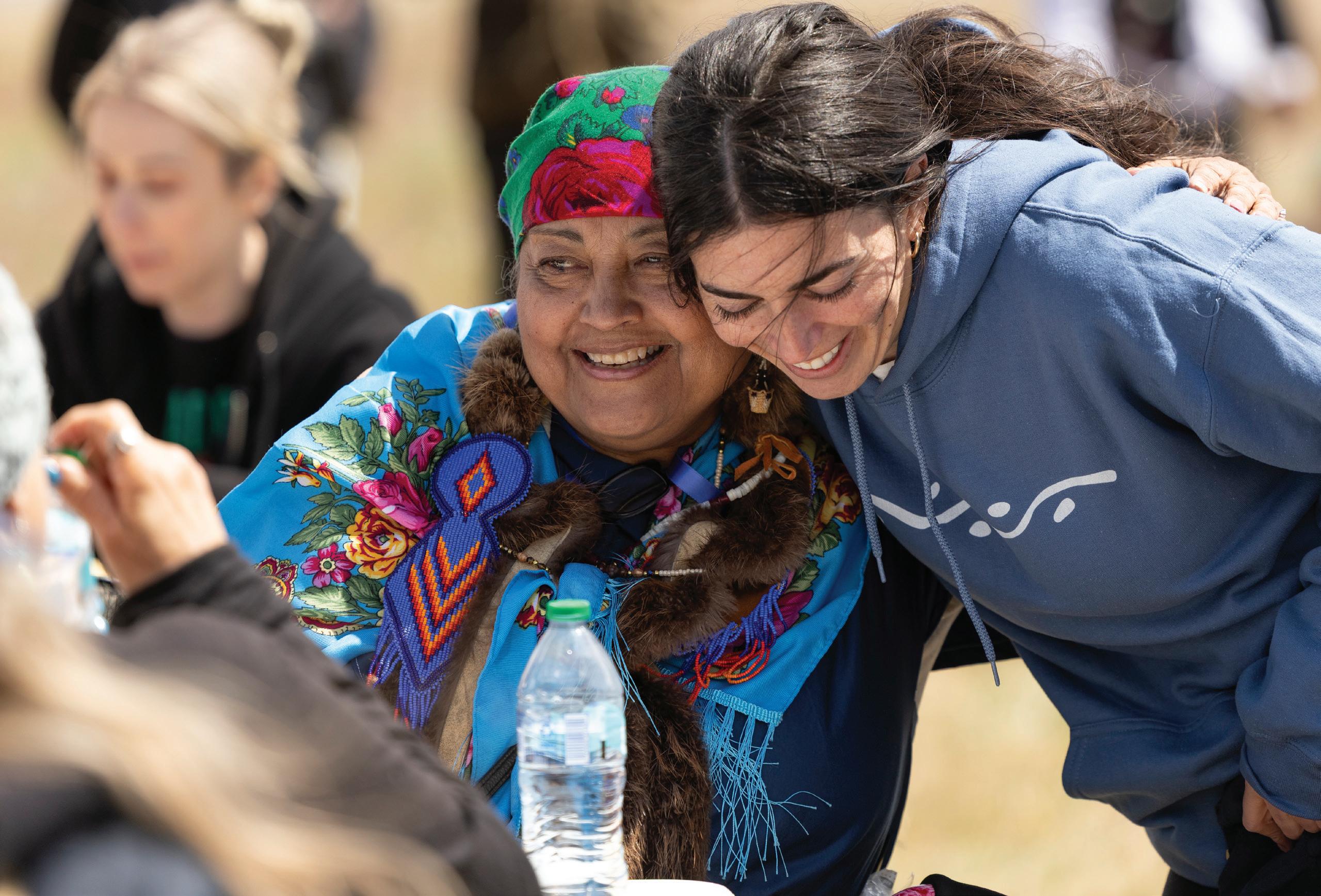
Senior Attorney & Clean Up Hanford Program Director Simone Anter connects with the director of Yakama Nation's Hanford clean up agency, Laurene Contreras, at the Protect Pushpum Encampment event on May 8, 2026.
Photo by Paloma Ayala.