PUBLIC POLICY AGENDA
Columbia Chamber Partners,
In 2023, The Columbia Chamber launched the FORWARD TOGETHER initiative to help propel our region towards a sustainable yet progressive future. This three - year program of work was developed to address the most pressing opportunities and challenges in the Midlands. One key component of this initiative is the enhancement of local, state, and federal advocacy efforts. As we begin 2026, the Chamber remains committed to communicating the needs and concerns of the business community to elected officials at every level.
Working together, we will continue to focus on the following goals:
• CREATING a regional vision and plan
• CONTINUING to build support for local military installations
• CULTIVATING a competitive business climate for the Midlands
PURPOSE
• ESTABLISHING and MAINTAINING strong relationships with local, state and federal government
• PARTNERING with K - 12 schools along with local institutions of higher education and technical colleges to ensure a competitive workforce
Our mission is clear: to create an environment for sustained prosperity and future success through public policy and advocacy. We are proud to work alongside you to make the Midlands the best place to live, work, and play.
Thank you for your continued Partnership and commitment to moving our region forward.
Carl Blackstone President and CEO
The Columbia Chamber advocates for policies that strengthen our region's economic vitality, support business growth, and enhance quality of life for all residents.
1. WORKFORCE, EDUCATION & TALENT DEVELOPMENT
• Support legislation addressing workforce barriers, education pipelines, and training programs.
• Modernize the Child Care Tax Credit to improve accessibility and affordability for employees.
• Advocate for accountability and transparency in publicly funded entities.
• Remove employment barriers and strengthen the talent pipeline for a skilled workforce.
INFRASTRUCTURE
Strategic infrastructure investments to meet growing industrial and residential demand.
2. ECONOMIC DEVELOPMENT
• Incentivize job creation and capital investment to keep South Carolina competitive.
• Foster public-private partnerships to expand water, sewer, transportations, and broadband infrastructure.
3. MILITARY & DEFENSE
• Engage with local leaders to strengthen the connection between the community and military installations.
• Utilize military outreach initiatives to integrate military families into our community in an efficient and timely manner in order to continue to promote and grow the mission.
ENERGY
Adopt an "all-of-the-above" energy strategy to increase South Carolina's generation capacity to ensure business consumers have available, affordable, and reliable power.
TAX MODERNIZATION
Address the disparity in property tax rates between primary residences and nonowner-occupied residences.
REGULATIONS, ORDINANCES & PERMIT
Advocate for streamlined permitting processes, periodic review of regulations, and elimination of outdated rules to reduce compliance costs for businesses.
Promote initiatives ensuring zoning ordinances protect landowners and developers, while supporting economic development and reducing uncertainty in permitting.
ADVOCATING FOR YOU
Guiding Principles
The Columbia Chamber has been the trusted voice of the business community since 1902. As such, the Chamber serves as a watchdog for public policy items that we deem impactful to local businesses and business leaders.
The Columbia Chamber Public Policy team is the dedicated voice of our region’s business community. Our goal is to ensure that businesses can do business without interference. We work to shape the Greater Midlands Region into a vibrant, diverse, and sustainable business climate by:
■ SUPPORTING local and state legislation that will help attract new quality business, industries, and jobs.
■ ENCOURAGING and educating entrepreneurs in their pursuit to expand and create new businesses.
Growth by the Numbers
The Chamber welcomed
207 new Partners in FY 24/25
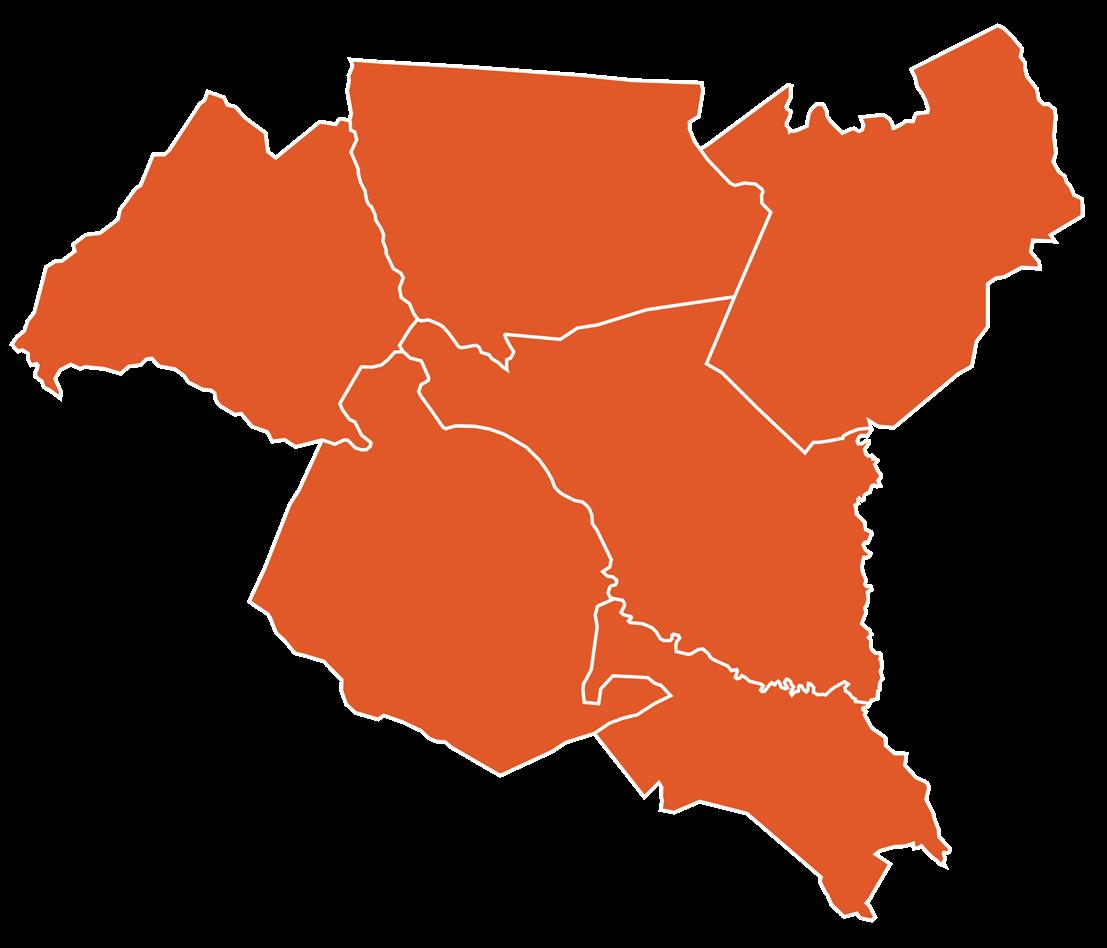
Percentages of Columbia Chamber Partners by county
■ HELPING the region’s businesses and industries retain and recruit talent and prosper.
Navigating the Legislative Session:
1 Bill Filing
2 Bill Introduced and read
3 Subcommittee and Full Committee Hearings for consideration
4 Committee report sent to the full body (Senate or House) for second and third reading
5 Send to opposite chamber to repeat the bill process
6 Bill introduced and read for the first time
7 Committee consideration
8 Committee report sent to the full body for second and third reading
9 When passed by both the House and Senate, the bill is sent to the Governor for signature, to become a law.
10 The law then becomes an Act, creating the Code of Laws.
Session Length:
South Carolina has a two-year long regular session beginning on the second Tuesday of January and ending on the second Thursday in May. 2026 will mark the second year of a two-year session. If a bill does not pass in May 2026, the bill will need to be reintroduced prior to January of 2027.
ECONOMY AND EMPLOYMENT IN THE MIDLANDS
IN COLUMBIA, 80,910 small businesses make up 98.6% of all businesses, employing 133,432 people - about 44% of the local workforce.
Statewide, South Carolina is home to 530,402 small businesses, which employ 863,326 individuals, representing 42.9% of the state’s workforce.
Workforce and Childcare
CURRENT UNEMPLOYMENT:
U.S. Bureau of Labor & Statistics
EXPECTED GROWTH
62 COMPANIES announced projects in South Carolina in 2025 YTD, with 30 NEW PROJECTS and 32 EXPANSIONS of current companies.
• TOTAL OF 5,892 POTENTIAL JOBS if all 62 companies are approved
8 COMPANIES located in the Midlands
• 6 NEWS PROJECTS, 2 EXPANSION PROJECTS
• 526 JOBS and $389.3M investment
Types of Childcare Settings in SC:
CENTER-BASED CHILD CARE
Licensed for 13+ children; can be commercial, faith-based, or school-based.
LICENSE EXEMPT
Serve school-age children for less than 4 hours/day under specific criteria. [scchildcare.org]
FAMILY CHILD CARE HOME
In a residence; up to 6 children.
GROUP CHILD CARE HOME
In a residence; 7–12 children.
For state FY 2024, South Carolina’s state budget for child care was $10,287,761. For state FY 2024, South Carolina’s state budget for preschool was $144,291,577. [Source: Childcare.org]
Education
■ ADVOCATE for accountability and transparency with all public-funded entities.
Total Expenditure per Student
■ ENSURE the best use of resources to encourage increased student achievement in an economic and efficient way.
College & Career Ready Assessment
Source: SC Report Cards 2024-2025
Total Revenue per Student (Est.)
College Ready Assessment
Source: SC Revenue and Fiscal Affairs
Teachers Returning per Year
Source: SC Report Cards 2024-2025
Career
Ready Assessment
Talent Development
The Columbia Chamber advocates for policies that strengthen our region’s workforce and talent pipeline. Our priorities include:
SUPPORTING legislation that addresses workforce barriers, education pipelines, and training programs, including apprenticeships and work based learning opportunities through initiatives like LaunchCola.
MODERNIZING the Child Care Tax Credit to increase accessibility and affordability of childcare for employees. Affordable childcare is a critical workforce issue, impacting retention and participation.
EXPANDING UTILIZATION of employer provided childcare tax credits. In 2022, only 19 employers in South Carolina claimed the credit, highlighting the need for greater awareness and incentives. Upcoming federal enhancements to Section 45F in 2026 will allow higher credit rates, expanded caps, and pooled small-business models—creating new opportunities for employers to support working parents.
HOW CHILDCARE IMPACTS THE WORKFORCE?
Childcare Access
Nearly 42% of South Carolinians live in a childcare "desert," meaning there are more than three children under age five for every licensed childcare slot. The state has 1,572 licensed childcare centers and 824 licensed family childcare homes, but demand still exceeds supply by about 13%.
Economic Impact
The childcare crisis costs South Carolina’s economy an estimated $997 million annually in lost productivity, absenteeism, and tax revenue. Employers lose about $818 million through turnover and absenteeism, while the state misses $179 million in tax revenue.
Workforce Participation
61% of South Carolina’s 167,000 children ages birth to three have mothers in the workforce, yet many parents face long waitlists and high costs.
LACK OF CHILDCARE IS A TOP BARRIER TO EMPLOYMENT, contributing to labor shortages and over 72,000 open jobs statewide. [Source: scchildren.org]
Business Role in Solutions
Employers can help address the childcare gap through on-site childcare, flexible scheduling, and financial support programs. Legislative efforts, including modernizing the Child Care Tax Credit, aim to incentivize employer participation
COST BURDEN ON FAMILIES
$10,474 OR $873 /MONTH
ECONOMIC DEVELOPMENT
Infrastructure
■ STRATEGIC INFRASTRUCTURE INVESTMENTS to meet growing industrial and residential demand.
■ INCENTIVES that reward job creation and capital investment, ensuring South Carolina remains competitive.
■ PUBLIC-PRIVATE PARTNERSHIPS to expand water, sewer, transportation, and broadband infrastructure for future growth.
South Carolina Industry Data:
January 2024 - November 2025, SC’s capital investment was $16.44 BILLION.
• Includes 141 ANNOUNCEMENTS (56 NEW projects) and 12,000 jobs
Leading Industries (2024-2025)
• Information Technology / Software Development investment of $9 billion
• Automotive investment of $1.9 billion
• Electronic & other Electrical Equipment investment of $1.18 billion
• Aerospace & Aviation investment of $1.04 billion
Energy
South Carolina’s three major utility providers
- Dominion Energy, Duke Energy, and Santee Cooper, along with 19 electric cooperatives - serve residential, commercial, and industrial customers statewide.
Adopt an “all-of-the-above” energy strategy to increase South Carolina’s generation capacity to ensure business consumers have available, affordable, and reliable power.
Recent Legislative Action
2025 South Carolina Energy Security Act:
• Streamlines permitting for energy projects (6-month review deadline).
• Authorizes new natural gas generation and advanced nuclear technologies, including small modular reactors.
• Expands renewable energy programs and competitive procurement for solar and storage.
• Directs the Office of Regulatory Staff to create a 10-year comprehensive energy plan.
TO KNOW: By 2040, South Carolina’s population is estimated to grow by nearly 1 MILLION PEOPLE, according to the State Revenue and Fiscal Affairs Office.
Tax Modernization & Licensing Fees
DEVELOP A COMPETITIVE TAX ENVIRONMENT by working with the legislature to lower taxes for small businesses.
REDUCE PROPERTY TAX RATES to be more competitive for new businesses and address the disparity in property tax rates between primary residences and non-owner-occupied residences.
South Carolina has a 5% corporate income tax rate and a 6% state sales tax rate. An average combined state and local sales tax rate of 7.5%.
South Carolina is ranked 11 in the country for corporate taxes. Ranked 33 in sales tax and ranked 45 in property taxes.
Regulations, Ordinances & Permits
ADVOCATE for streamlined permitting processes, periodic review of regulations, and elimination of outdated rules to reduce compliance costs for businesses.
LEGISLATION H.4216
Current Top Rate: South Carolina’s individual income tax rate is 6.0%, dropped from 6.2% effective July 1, 2025.
PROPOSED STRUCTURE
The top rate would drop to 5.39% at a $400 million cost
Filers with a taxable income of less than $30,000 would pay 1.99%
Filers with a taxable income of $30,000 or more would pay a top rate of 5.39%
The two rates would collapse into one, and could eventually lower to zero
Only 24% of filers could expect an increase
PROMOTE initiatives ensuring zoning ordinances protect landowners and developers, while supporting economic development and reducing uncertainty in permitting.
ADVOCATE FOR REFORMS that reduce insurance costs and improve the state’s competitiveness for hospitality and retail sectors.
SUPPORT JOINT AND SEVERAL PROTECTIONS for businesses to reasonably reflect fault in tort and liability actions. Joint and Several Liability Reform: South Carolina passed Act 42 (H.3430) in May 2025, significantly reforming liability laws. Effective January 1, 2026, defendants less than 50% at fault will only pay their share of damages, and juries can now allocate fault to non-parties. This removes the previous “deep pocket” rule that often burdened small businesses.
Example: supporting retail liquor liability revision rates to ensure small businesses are protected and those convicted are held wholly responsible.
LONG-TERM GOAL
Gradual reduction toward a flat 1.99% rate and eventual full elimination of state income tax, positioning South Carolina alongside zeroincome-tax states like Florida and Texas.
REVENUE SAFEGUARDS
Tax cuts are triggered only when state revenue grows by 5%, ensuring fiscal responsibility.
Surplus allocation: $200 million or 25% of recurring general fund surplus (whichever is greater) dedicated to tax reduction each year.
The Institute for Legal Reform ranks South Carolina’s lawsuit climate 37th in the nation, and our tort costs are 2.5% of the state GDP and $3,181 per household.
Richland County: 12.5%
Richland One School District: .30630
Richland Two School District: .40710
Columbia Municipal Millage Rate: .08960
Property Taxes
Newberry County: 13.7%
Newberry School District: .23300
Newberry Municipal Millage Rate: .08340
Little Mountain Municipal Millage Rate: .05422
Greenville County: 7%
Greenville School District: .20670
Greenville Municipal Millage Rate: .08140
Kershaw County: 9.4%
Kershaw School District: .22910
Camden Municipal Millage Rate: .12350
Lexington County: 9.8%
Lexington One School District: .41586
Lex-Rich Five School District: .33550
Lexington Municipal Millage Rate: .02606
Cayce Municipal Millage Rate: .06210
Fairfield County: 19.19%
Fairfield School District: .22370
Ridgeway Municipal Millage Rate: .05544
■ ENGAGE with local leaders to strengthen the connection between the community and military installations.
BACKGROUND
MILITARY
■ COLLABORATE with state and local legislatures to expand opportunities for transitioning military families to earn professional licenses in the state.
Fort Jackson, located in Columbia, SC, is the U.S. Army’s largest Initial Entry Training Center, responsible for training over 50% of all Army recruits and 61% of female recruits annually.
The installation spans 52,000+ acres and includes key institutions such as:
• Soldier Support Institute
• Drill Sergeant School
• Chaplain Center and School
• National Center for Credibility Assessment
$4.7 billion Contributed to the Midlands economy annually
■ UTILIZE military outreach initiatives to integrate military families into our community in an efficient and timely manner in order to continue to promote and grow the mission.
COLUMBIA CHAMBER’S ROLE
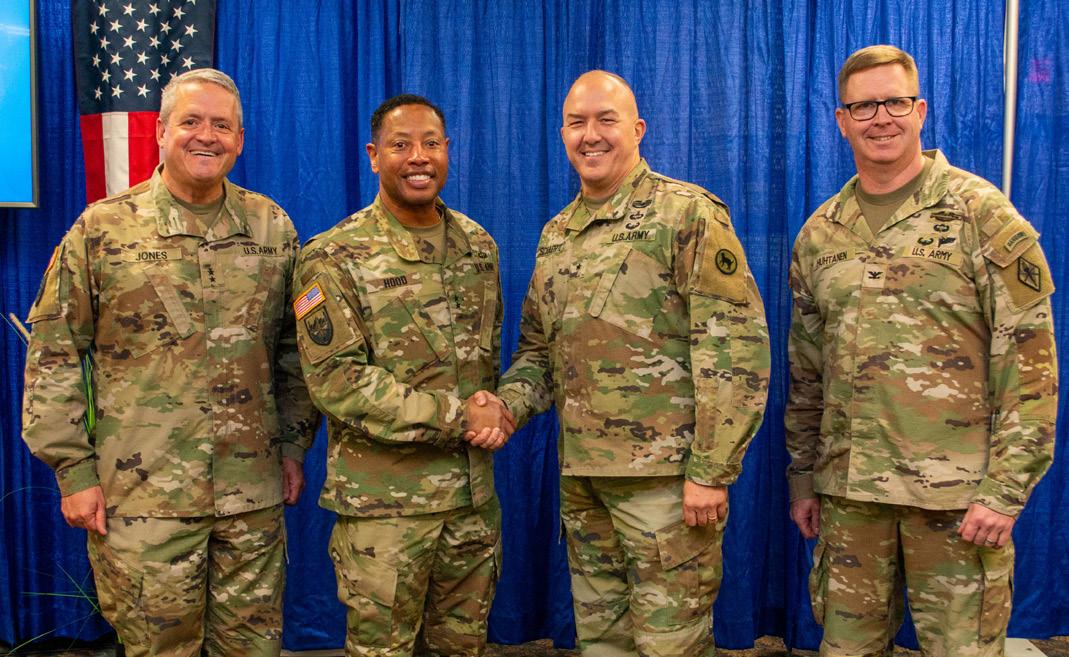
The Columbia Chamber has a century-long partnership with Fort Jackson, dating back to 1917 when it led the campaign to acquire land for the installation. The Chamber maintains strong relationships with local, state, and federal officials to advocate against future Base Realignment and Closure (BRAC) efforts that could negatively impact our installations.
MILITARY AFFAIRS COMMITTEE & OUTREACH
The Chamber’s Military Affairs Initiative works through the Military Outreach Group, which:
• Onboards senior military and civilian leadership
• Serves as a liaison with elected officials and the SC Military Base Task Force
• Connects DoD contractors with local businesses
• Supports military organizations like USO, AUSA, and ESGR
ECONOMIC IMPACT
• Fort Jackson one of the largest employers in the region and a significant pillar of Columbia’s economic foundation.
18,000 Active service members > 4,000 Active-duty soldiers
46,000 Veterans and families receive on base assistance > 5,000 Civilians > 9,000 Personnel employed
56,000 Soldiers trained annually
254,000 Military supported jobs across multiple sectors around the state
When combined with the economic contributions from the South Carolina National Guard, McEntire Joint National Guard Base, Fort Jackson, and the Dorn VA hospital, the total militaryrelated economic impact exceeds $6.6 billion.
FEDERAL
In 2026, the Chamber will continue to prioritize this initiative, advocating for:
■ SUSTAINED federal investment in Fort Jackson and regional military assets
■ SUPPORT for transportation and broadband infrastructure projects
■ WORKFORCE DEVELOPMENT programs aligned with local industry needs
■ POLICIES that promote small business growth and innovation
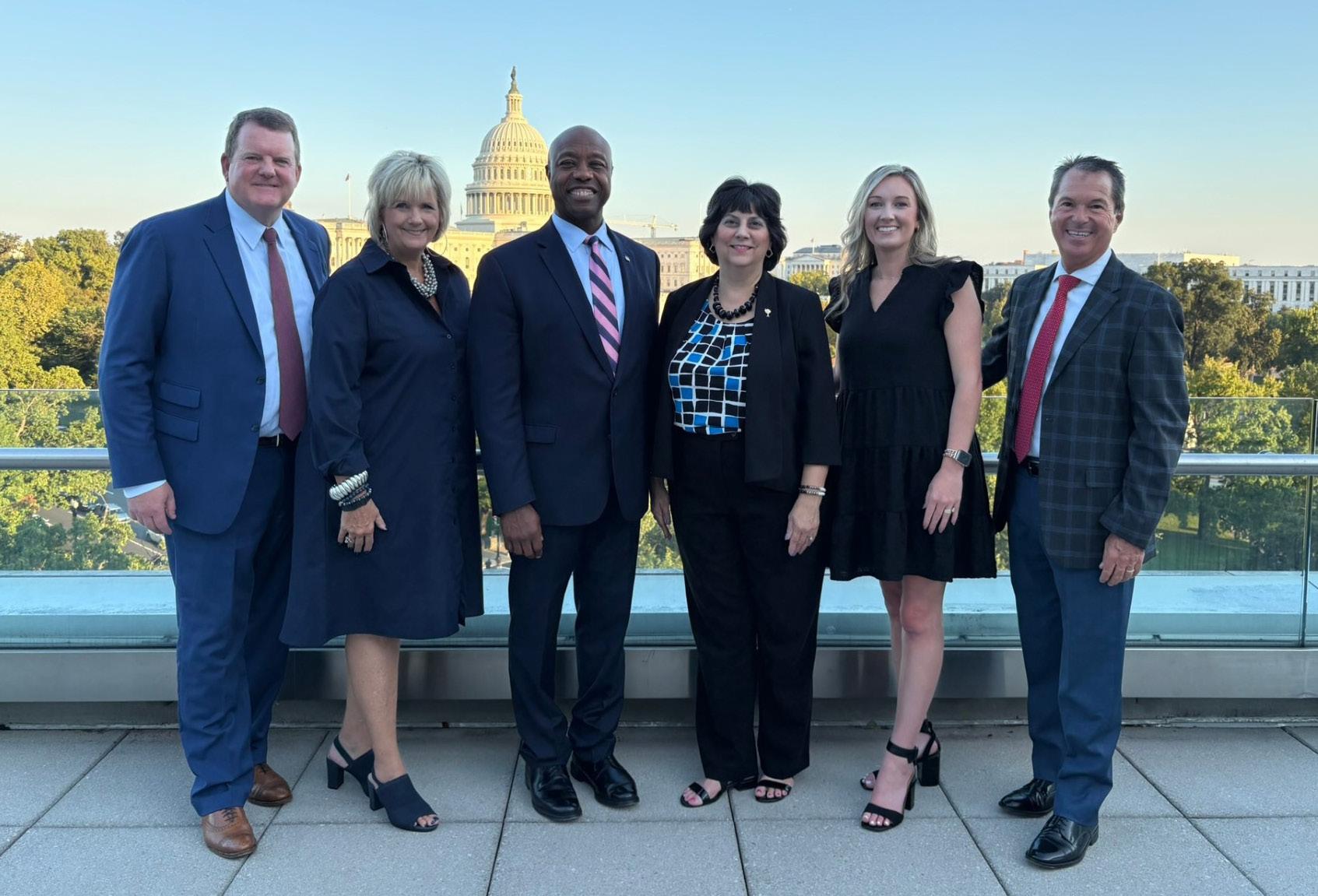
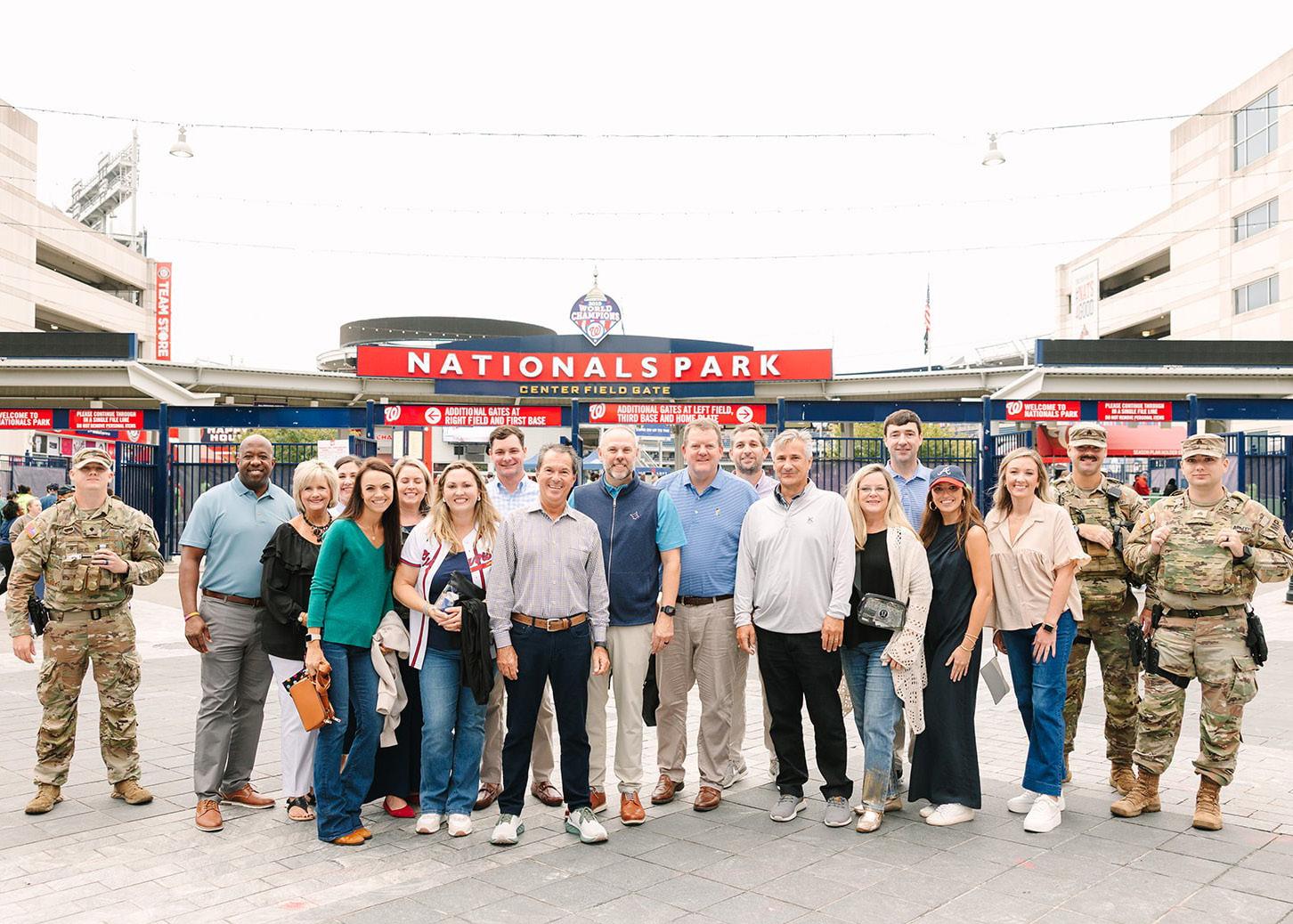
In 2025, Chamber leadership, members, and regional stakeholders traveled to Washington, D.C. to engage directly with South Carolina’s congressional delegation, federal agencies, and national policy organizations. The Fly-In serves as a strategic platform to elevate local priorities - such as military support for Fort Jackson, infrastructure investment, workforce development, and economic competitiveness - while fostering relationships that ensure Columbia’s voice is heard at the national level.
PRESENTING SPONSOR
INFLUENCER SPONSORS