With the Knights of Columbus, your life insurance is more than just a policy. It’s the certainty that, no matter what happens, your family will be protected. Because your legacy is not only what you build today… but what you secure for tomorrow.
INSURANCE, WITH A CATHOLIC DIFFERENCE:
• Guaranteed protection: permanent life insurance that never expires.
• Financial peace of mind: help provide security for mortgages, education, and your children’s future.
• Catholic values: ethical investments that reflect your faith.
• Community impact: every policy helps fund charitable works in our parishes and communities.
¡Viva Cristo Rey!
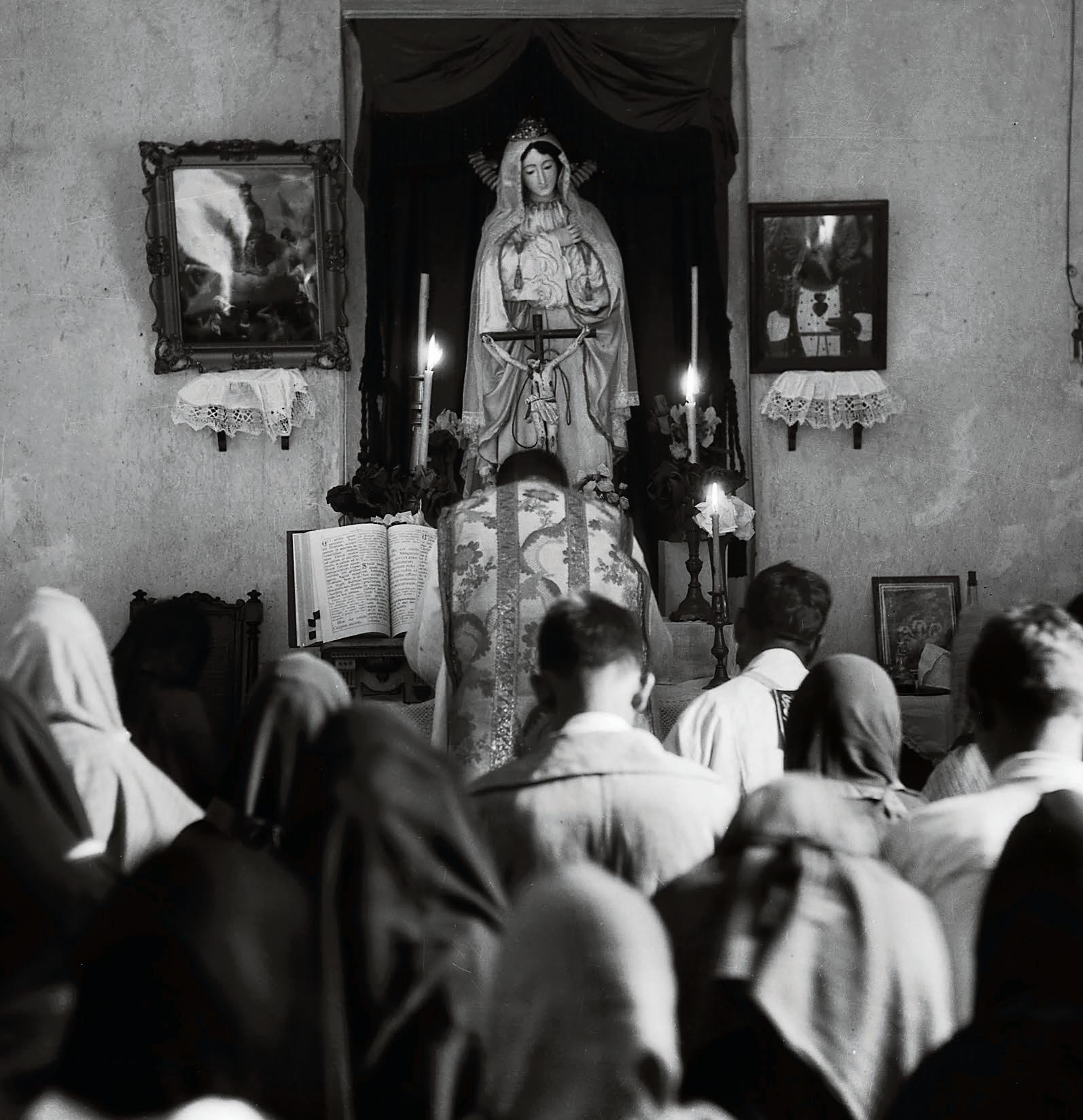
Light descends upon the altar of Mary Queen of Martyrs Church in Silao, Guanajuato, which houses relics of the canonized and beatified Mexican martyrs — including nine Knights of Columbus. The church was built on the site where the head of a statue of Christ the King, erected on nearby Cubilete Hill, landed after being bombed by the Mexican government in 1928 (see page 10).
A century ago, as Catholics in Mexico faced persecution and martyrdom, the Knights of Columbus mounted an international campaign to defend the Church.
By Columbia staff
Faith of Our Brothers
K of C councils fan the flame of devotion to the Cristero martyrs, including nine brother Knights.
By Elisha Valladares-Cormier
Hands, Heart and Soul
New Catholic trade schools equip young men for manual work while providing vibrant faith formation and fraternity.
By Scott Warden
A damaged plaster statue helped a washed-up Chicago radio legend return to the faith — and bring hope to millions.
By Denyse Shannon
3 For the greater glory of God
In an age of loneliness and isolation, authentic friendship and fraternity help men discover and live their God-given mission.
By Supreme Knight Patrick E. Kelly
4 Learning the faith, living the faith
From the Annunciation to the foot of the Cross, Our Lady exemplifies how grace enables us to say “yes” to God and live for others.
By Supreme Chaplain Archbishop William E. Lori
6 Knights of Columbus News Knights Deliver Aid to Flood Victims in Hawaii • Catholic Men Called to Heroic Friendship and Evangelization • Knights of Columbus Asset Advisors
Recognized • Supreme Knight Issues Statement on Respect for the Holy Father
8 Building the Domestic Church
A series of columns on family life, leadership and financial stewardship
28 Knights in Action Reports from councils and assemblies, representing Faith in Action ON
Membership in the Knights of Columbus is open to men 18 years of age or older who are practical (that is, practicing) Catholics in union with the Holy See. This means that an applicant or member accepts the teaching authority of the Catholic Church on matters of faith and morals, aspires to live in accord with the precepts of the Catholic Church, and is in good standing in the Catholic Church. kofc.org/join
A Question of Faith
A DISPATCH published in the New York Morning World on Aug. 26, 1926, reported that Mexican government employees were being presented with a stark series of questions regarding their loyalty. The first: “Are you a Knight of Columbus?”
Earlier that year, nearly a decade after Mexico’s 1917 Constitution formally denied legal recognition to the Church and restricted its public life, President Plutarco Elías Calles moved to impose those provisions more strictly. In February 1926, he declared, “As long as I am president of the republic, the constitution of 1917 will be obeyed.”
That summer, amid petitions, boycotts and demonstrations, he enacted the Calles Law — mandating strict nationwide enforcement, with severe penalties for priests who continued their ministry and for officials who failed to enforce it.
On July 31, 1926, Mexico’s bishops suspended public worship rather than submit to state control. Within days, sporadic uprisings marked the beginning of a rebellion known as the Cristiada, as the cry “¡Viva Cristo Rey!” (“Long live Christ the King”) spread across the country. The Knights of Columbus had become a visible lay force within the Church throughout Mexico, supporting the hierarchy and Catholic efforts, including the National League for the Defense of Religious Liberty.
It was at precisely this breaking point that the Order gathered for its 44th Supreme Convention, convened Aug. 4-6, 1926, in Philadelphia. The crisis in Mexico became central to the proceedings. Before hundreds of delegates — including Knights and members of the clergy from Mexico — Supreme Knight James A. Flaherty addressed the persecution directly, placing the Order on record in opposition to the Mexican government’s
campaign against the Church. He later wrote in Columbia: “The day of Knighthood is not over. There are still men on earth honorable enough to resent injustice, however disguised, and courageous enough to protest publicly against it.”
Indeed, the Knights’ response was immediate and organized. The Order established a $1 million fund and brought national attention to the persecution, including direct appeals to President Calvin Coolidge and other officials. In Mexico, the Order was driven underground, together with the Church; its headquarters was attacked and its activities suppressed. Membership itself became a liability.
Pope Pius XI, in his November 1926 encyclical Iniquis Afflictisque, praised Catholic organizations that stood by clergy and safeguarded churches amid the crisis. He singled out the Knights of Columbus for “their practical lives and open profession of the Faith, as well as by their zeal in assisting the Church” — especially through the Order’s promotion of Catholic family life, education and religious liberty. The Holy Father also did not omit the cost, noting that Knights were among those imprisoned, abused or killed. “Some of these young men,” he wrote, “have gladly met death, the rosary in their hands and the name of Christ the King on their lips.”
Among the Knights killed during the persecution are nine saints and blesseds, including six priest-martyrs commemorated May 21. A century later, their witness continues to inspire and to challenge us to defend the Church boldly and profess the faith without counting the cost.
¡Viva Cristo Rey! ¡Viva la Virgen de Guadalupe! B
Alton J. Pelowski, Editor
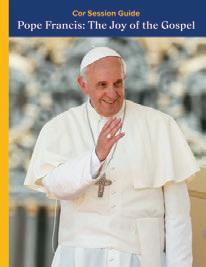
Featured Cor Resource: The Joy of the Gospel
A new Cor Session Guide provides councils and men’s groups with six faith formation sessions based on Pope Francis’ 2013 apostolic exhortation Evangelii Gaudium (The Joy of the Gospel), in which he urges all Catholics to embrace their baptismal call to be missionary disciples. This 19-page guide leads men through Chapter 5 of the document — a roadmap to becoming effective evangelizers in our homes, parishes and communities. For more information or to order, visit kofc.org/shopcis .
Columbia
PUBLISHER
Knights of Columbus
SUPREME OFFICERS
Patrick E. Kelly
Supreme Knight
Most Rev. William E. Lori, S.T.D.
Supreme Chaplain
Arthur L. Peters
Deputy Supreme Knight
John A. Marrella
Supreme Secretary
Ronald F. Schwarz
Supreme Treasurer
Anthony R. Picarello Jr.
Supreme Advocate
EDITORIAL
Alton J. Pelowski
Editor
Matthew Kirby
Editorial Director
Andrew J. Matt
Managing Editor
Elisha Valladares-Cormier
Senior Editor
Megan Stibley
Associate Editor
Paul Haring
Manager of Photography
Cecilia Engbert
Content Producer
HOW TO REACH US
COLUMBIA
1 Columbus Plaza
New Haven, CT 06510-3326
columbiamagazine.org columbia@kofc.org
Address changes
203-752-4210, option #3
addresschange@kofc.org
Columbia inquiries
203-752-4398
K of C Customer Service
1-800-380-9995
Blessed Michael McGivney (1852-90) – Apostle to the Young, Protector of Christian Family Life and Founder of the Knights of Columbus, Intercede for Us.
To the Heights Together
In an age of loneliness and isolation, authentic friendship and fraternity help men discover and live their God-given mission
By Supreme Knight Patrick E. Kelly
ONE OF THE BIGGEST problems of Blessed Michael McGivney’s time was young men leaving the Catholic Church. He built our brotherhood, in part, to address that crisis, seeing that when Catholic men come together in fraternity, they can become who God made them to be.
This was one of Father McGivney’s great insights — not only that men desire fellowship, but that they need it to find and fulfill their mission. This remains true today, yet we live in a time of isolation.
One man in particular puts a face on this crisis: Luigi Mangione. In December 2024, he allegedly killed UnitedHealthcare CEO Brian Thompson — taking another’s life and ruining his own. Mangione is just 27 years old, and by all accounts had much going for him: academic success, opportunity, a Catholic upbringing. Yet something fundamental was missing. In the aftermath of the murder, it became clear that Mangione was deeply isolated. He had cut off contact with friends and family. Alone with his thoughts, he turned toward a destructive end.
There are, of course, complex factors behind such a tragedy. But there is no question that a lack of real friendship made things worse. Mangione had no one to guide him. Most disturbing of all, his story is not unique. It reflects a broader pattern among young people today — especially men.
A 2021 Harvard study found that 61% of 18- to 25-year-olds feel lonely most or all of the time. About one in four people under 30 report having no close friends. And over the last 35 years, the share of men who say they have no good friends has increased fivefold.
Catholics are not immune. In many of our parishes and schools, young men are searching — often in the wrong places — for purpose, identity and belonging.
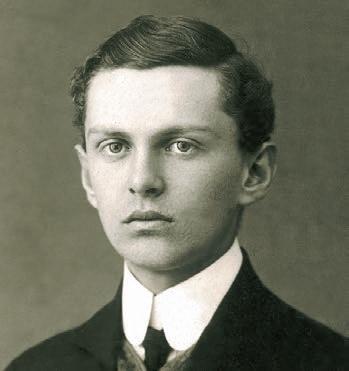
But there is another young man who shows what is needed today: Pier Giorgio Frassati.
Living in early 20th-century Italy, he took the opposite path from Mangione — a contrast that goes to the heart of what Father McGivney calls us to do.
Like Mangione, Frassati had much going for him — a good family, a strong education and an awareness of the challenges of his time. He refused to be indifferent to injustice and suffering, and he sought to take action. But while Mangione directed that drive toward evil, Frassati devoted himself to doing good.
Frassati’s mission was to serve the poor. He gave them everything he had, including friendship, meeting them not as a volunteer but as a friend. He died at just 24, after contracting polio from those he served and loved.
What Mangione lacked, Frassati had: a strong Christian community. He surrounded himself with friends he called “precious guides,” who helped him discover the mission God had chosen for him. Canonized last year by Pope Leo XIV, he remains a powerful witness today.
Frassati famously wrote on a photograph of himself climbing a mountain, “Verso l’alto” — “To the heights.” And that is where he went. With the help of his friends, he continually sought God’s will and, by his grace, climbed to the heights of heaven.
Father McGivney founded our Order to help us follow that same path. He built this brotherhood so that we could be guides for one another. This is what Blessed Michael McGivney calls us to in this time of isolation: to provide the friendship Catholic men need to find their mission.
We were never meant to go it alone. God created us for communion — with one another and with him. And his plan is that we follow that path together, so that we may climb “to the heights” in this life and the next.
Vivat Jesus!
Father McGivney built this brotherhood so that we could be guides for one another. We were never meant to go it alone. God created us for communion — with one another and with him.
Mary’s Interior Freedom
From the Annunciation to the foot of the Cross, Our Lady exemplifies how grace enables us to say ‘yes’ to God and live for others
By Supreme Chaplain Archbishop William E. Lori
THE FEAST of the Visitation, May 31, is among the many beautiful feasts honoring the Blessed Virgin Mary. Because it falls this year on Trinity Sunday, it will not be observed in the liturgy. Yet it should not be passed over in silence. Among its important lessons is the beauty of interior freedom — Mary’s interior freedom.
When the Angel Gabriel announced to Mary that she would be the Mother of the Savior, she had questions — not because she resisted God’s will, but because she wanted to fulfill it. Even without fully understanding how her unique vocation would change her life, Mary was free to say, “I am the handmaid of the Lord; be it done to me according to your word” (Lk 1:38). Hearing from the angel that her cousin Elizabeth was with child in her advancing years, Mary did not remain at home to ponder all that had happened. Instead, she hastened to see her cousin, undertaking a difficult journey of some 90 miles. There, she and Elizabeth rejoiced in the wonders of God’s love, and Mary spent about three months helping her during her pregnancy.
Let’s pause and ask ourselves — how was Mary so free that she could say “yes” to the Lord’s singular plan for her life and then set out to rejoice with her cousin and assist her? The answer is Mary’s complete freedom from sin. As we know, she was preserved from original sin by a singular grace of God, and throughout her life she committed no actual sin. By that grace, she was free to say “yes” to God, unimpeded by sin and its effects on the human will.
Freedom from sin enabled Mary to assent to God’s will, but it did not preserve her from suffering. Mary, who is “Cause of Our Joy,” is also “Our Lady of Sorrows.” She endured hardship and misunderstanding. As Simeon predicted at the Lord’s Presentation in the Temple, her soul was pierced with a sword of sorrow (Lk 2:35). Indeed, there was no
sorrow like Mary’s as she stood beneath the Cross while her Son gave his life for the world’s redemption. Because she was free from sin, Mary could assent to and bear the suffering her vocation entailed, thus fully participating in Christ’s self-offering.
Unlike the Blessed Virgin Mary, none of us is spared original sin and its effects. But we are redeemed from sin by Christ’s death and resurrection, and we are given the grace we need to overcome sin — especially through the sacraments, including reconciliation. But let’s face it: When we are engaged in the struggle to eradicate persistent sin from our lives, we may not feel particularly free. We may feel as though “the narrow way” to eternal life compromises our freedom. At times, the Ten Commandments, the precepts of the Church and the Beatitudes can seem like a moral straitjacket rather than the path to freedom.
Conversion of life hinges on rejecting that lie and allowing the Holy Spirit to work in us. We are utterly reliant on God’s grace as we seek to break the grip of the sins that bedevil us. At the same time, God’s grace works in our humanity (as it did in Mary’s) — our minds, hearts, wills and appetites. Gaining freedom from the power of sin can feel difficult, but once liberated by God’s grace, we discover that, like Mary, we are able to say “yes” to God, to our families and to those in need.
Charity, of course, is the first principle of the Knights of Columbus. As Blessed Michael McGivney’s life teaches us, there is no charity without freedom — freedom from sin and from self-centeredness that enables us to see others and respond with generosity.
May Mary, the Virgin Mother of God, intercede for us — that in our journey through life we may become progressively freer from sin, until that day when we are fully free in our homeland of heaven. B
Gaining freedom from the power of sin can feel difficult, but once liberated by God’s grace, we discover that, like Mary, we are able to say “yes” to God, to our families and to those in need.
Photo by Paul Haring
Supreme Chaplain’s Challenge
A monthly reflection and practical challenge from Supreme Chaplain Archbishop William E. Lori
Jesus said to them again, “Peace be with you. As the Father has sent me, so I send you.” (Gospel for Pentecost Sunday, May 24, Jn 20:21)
Jesus sends us into the world, just as the Father sent him. Jesus had a sacred, divine mission — to proclaim the Good News of salvation and build the kingdom of God — and we are commissioned to do likewise. As his faithful disciples, we continue his saving mission on earth, consistent with our state of life. We are not just receivers of the Gospel; our mission is to bear witness to the Good News in word and action, living the Gospel through our example and outreach to others.
Challenge: This month, I challenge you to take a few minutes each morning and prayerfully ask Jesus how you can use your gifts for his mission, and set one clear, specific resolution (large or small) for what you will do on that particular day.
To view future challenges, visit kofc.org/monthlychallenge
Catholic Man of the Month
Blessed Ivan Merz (1896-1928)
DURING WORLD WAR I, while serving on the Italian front, Ivan Merz wrote in his diary: “It would be horrible if this war had no spiritual benefit for me. I must not live the same way I lived before. … Let the Lord alone help me.”
Born in Banja Luka, Bosnia, to a nominally Catholic father and a Jewish mother, Merz was drawn to the Catholic faith through his high school teacher Ljubomir Maraković, a literary critic. He completed a year of university study in Vienna before being drafted into the Austro-Hungarian army in 1916. At the front, often unable to receive the sacraments, he committed himself to daily prayer and the pursuit of holiness.
After the war, Merz continued his studies in Vienna and later in Paris, where he spent two years serving the poor through the Society of St. Vincent de Paul, made a pilgrimage to Lourdes, and was influenced by writers such as Jacques Maritain, Paul Claudel and Charles Péguy.
In the years that followed, he helped organize the Croatian Catholic youth
movement and promoted Catholic Action under the motto “Sacrifice, Eucharist, Apostolate.” In 1923, he completed a doctorate at the University of Zagreb and began teaching French language and literature. Deeply devoted to the Sacred Heart of Jesus, he centered his life on daily Mass and Eucharistic adoration. Suffering from chronic eye disease and sinus infections, Merz underwent surgery in April 1928. He contracted meningitis and was left unable to speak. When a priest administering the last rites asked whether he offered his life for the youth he served, he nodded in assent. He died May 10, 1928, at age 31, and was beatified by St. John Paul II in 2003. B
May 2 St. Athanasius, Bishop and Doctor of the Church
May 13 Our Lady of Fatima
May 14 St. Matthias, Apostle
May 14 (17) The Ascension of the Lord
May 21 St. Christopher Magallanes, Priest, and Companions
May 24 Pentecost Sunday
May 25 The Blessed Virgin Mary, Mother of the Church
May 26 St. Philip Neri, Priest
May 31 The Most Holy Trinity
Let us pray that everyone, from large producers to small consumers, be committed to avoid wasting food, and to ensure that everyone has access to quality food.
Knights Deliver Aid to Flood Victims in Hawaii
FROM MARCH 10-24 , a series of devastating floods caused widespread damage across Hawaii, with prolonged, heavy rainfall affecting multiple islands, including Oʻahu, Maui, Kauaʻi and the Big Island.
As floodwaters forced thousands to evacuate, closed roadways and downed power lines, local Knights and the Hawaii State Council mobilized to distribute thousands of dollars through the Order’s Disaster Relief Fund and provide food and shelter assistance to families in need.
According to the state government, damage surpassed anything seen in 20 years, with more than 400 homes destroyed and statewide damage exceeding $1 billion. To date, the Supreme Council has sent $65,000 to support state council efforts and 465 $100 gift cards for distribution.
“It’s times like these where we often ask, ‘Where was God?’” said Joshua Kapika, past grand knight of St. Michael the Archangel Council 16741 in Waialua. “The answer is very simple; it’s in me. It’s in my brother Knights.”
Within the first 10 days of the disaster, the state council distributed more than $15,000 in gift cards to hundreds of families in need. More than 90% of those served reported direct damage to their homes or property, with approximately half reporting having insufficient or no flood insurance. Nearly half of households that benefited from the gift cards included elderly residents.
In some cases, funding was used to assist with insurance deductibles, while in others it supported council-led repair efforts at parish facilities and community spaces. In partnership with EPIC Ministry, a lay organization of young adults,
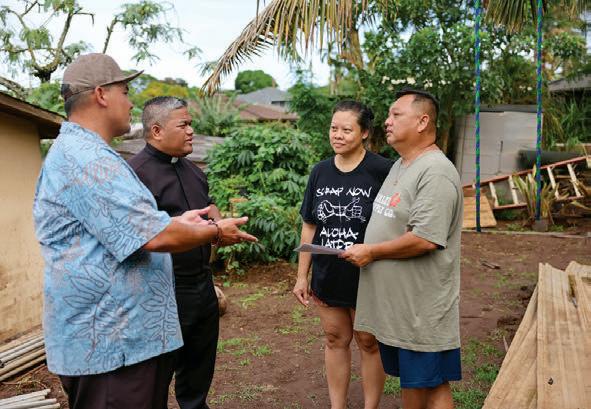
Dallas Carter (left), a member of St. Michael the Archangel Council 16741 in Waialua, Hawaii, and former president of EPIC Ministry, and Father Romple Emwalu, council chaplain, speak with Josephine and Fredrick Diana, whose home was damaged by floodwaters.
the Knights organized volunteer efforts ranging from needs assessment to cleanup and repair.
“It’s the Knights of Columbus that have the ability to be the first on the streets to help where it’s needed,” said Hawaii State Deputy Angelito Alvarez. The Order is “the strong right arm of the Church,” he added, “not only because of the money we hand out, but because we put our faith in action through our programs and the way we serve.” B
Catholic Men Called to Heroic Friendship and Evangelization
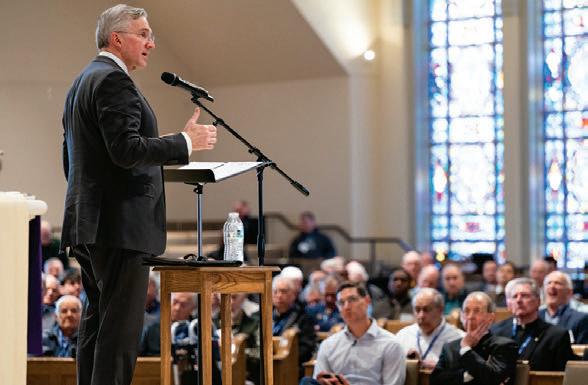
ADDRESSING MORE THAN 800 men gathered at St. Louis Catholic Church in Clarksville, Maryland, Supreme Knight Patrick Kelly challenged them to be men of virtuous friendship and Christian witness.
“Not all friends are created equal,” the supreme knight told attendees of the Catholic Men’s Fellowship of Maryland Conference on March 14. “What we all need — everyone in this room — are the right kinds of friends.”
He explained how Catholic teaching builds on Aristotle’s dictum that the highest form of friendship is based on virtue.
“Our faith teaches us that the reason we need friends is because they help us build the most important friendship of all,” said the supreme knight, pointing to the example of St. Pier Giorgio Frassati, who was canonized last year.
Supreme Knight Kelly concluded by calling those present to deepen their faith and bring the Gospel to others, proposing Cor, the Knights’ parish-based faith formation initiative open to all men, as a valuable opportunity to do so. B
Supreme Knight Patrick Kelly addresses participants in the Catholic Men’s Fellowship of Maryland annual conference at St. Louis Church in Clarksville, Md., March 14. Supreme Chaplain Archbishop William Lori of Baltimore (lower right) was in attendance.
FROM TOP: Photo by Marco Garcia — Photo by Kevin J. Parks Catholic Review
Recognized
Supreme Knight Issues Statement on Respect for the Holy Father Knights of Columbus Asset Advisors
KNIGHTS OF COLUMBUS Asset Advisors (KoCAA) was recognized as one of America’s Top Financial Advisory Firms 2026 by Newsweek and Plant-A Insights Group for the second consecutive year.
“KoCAA is honored to be recognized by Newsweek and Plant-A Insights Group as one of the premier financial advisory firms,” said Supreme Knight Patrick Kelly in a press release. “For more than 10 years, KoCAA’s growth, performance and breadth of investment strategies have made it one of the largest managers of Catholic-compliant assets, offering individual and institutional investors a ‘Catholic Difference’ approach to investing that aligns with their beliefs and Catholic teaching.”
Knights of Columbus Asset Advisors was established in 2015, extending the Order’s long-standing, Catholic-screened investment approach to Catholic institutions. In 2021, KoCAA launched its Investment Advisory Program, expanding access to individual investors. Today, the firm manages more than $30 billion in assets and, as a wholly owned subsidiary, contributes to the Knights’ broader charitable mission.
“Our growth reflects something deeper than numbers,” said Deepak Devaraj, a 25-year investment industry leader who was appointed president and chief investment officer in early 2026. “It starts with internal clarity about who we are and what we stand for, which grounds our work in the mission to provide competitive, faith-consistent investment solutions.”
The Newsweek ranking is based on an evaluation of firms selected from a shortlist of financial companies, considering factors including asset performance, client performance, advisor expertise and client ratios, breadth of service offerings and conflicts of interest. KoCAA was among the 1,000 top-ranking firms out of 16,000 SEC-registered investment advisors evaluated in the study. The November 2025 announcement was based on an evaluation period between September 2020 and September 2025. Visit www.kocaa.com/newsweek to learn more. B
SUPREME KNIGHT Patrick Kelly issued a statement April 15 in response to disparaging social media comments by President Donald Trump about Pope Leo XIV.
“The Successor of St. Peter is not a politician — he is the Vicar of Christ, entrusted with proclaiming the Gospel and shepherding souls,” the supreme knight said. “The Knights of Columbus has always stood in solidarity with the Holy Father, recognizing in him a spiritual father who calls the world not to division, but to unity; not to conflict, but to peace. In this moment, we reaffirm that commitment with clarity and conviction.”
The statement continued: “At the same time, we recognize that faithful Catholics can and do engage vigorously in the public square, and that nations have a right and duty to safeguard the security of their own people — always in accordance with the demands of justice and the pursuit of peace. The Church does not ask Catholics to withdraw from civic life, but to engage with and elevate it — bringing to our civic dialogue the light of truth, respect for the dignity of every human person, and a steadfast concern for the common good.”
Calling on Knights to be “men of unity, as followers of Christ and patriotic citizens,” the supreme knight concluded by urging prayer for civic leaders and charity in public discourse: “May we be known not for echoing the divisions of our time, but for healing them,” he said. “In a moment of tension, the path forward is not louder conflict, but deeper fidelity — to truth, to charity, and to the Gospel.”
To read the full statement, visit kofc.org B
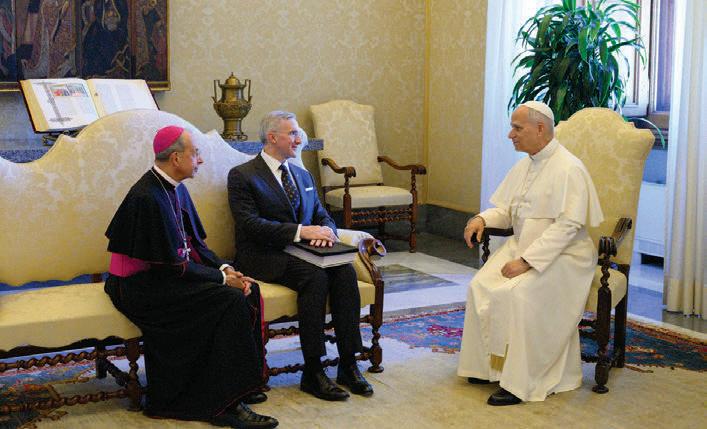
Pope Leo XIV speaks with Supreme Knight Patrick Kelly and Supreme Chaplain Archbishop William Lori of Baltimore before his Oct. 6, 2025, audience with the Knights of Columbus Board of Directors.
Work for the Good of Your City
By Jason Adkins
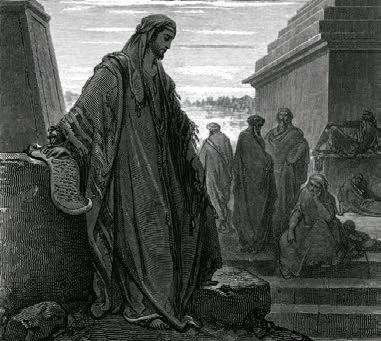
the welfare of the city where I have sent you into exile, and pray to the Lord on its behalf, for in its welfare you will find your welfare” (Jer 29:7). This verse reminds us that, no matter what our circumstances may be, we are called to be faithful in prayer and service to others, even those who persecute us.
Our own communities are the places where we have real agency, because it is here that we best understand the actual problems and can work with others to implement solutions.
Politics is the work of ordering the common life of the city. In that sense, it is also, as recent popes have said, one of the highest forms of charity because it serves the common good.
Faithful citizenship is especially important at a time when the ambient culture is hostile and public life seems broken. Much like Daniel and his companions in Babylon, we grow in faithfulness by a willingness to serve even the inhabitants of a pagan city. We must work for our well-being and theirs but never waver in faith. In doing so, we may one day be welcomed into the heavenly city. B
— Jason Adkins is executive director and general counsel of the Minnesota Catholic Conference and a member of Blessed Theodore Romzha Council 17596 in Minneapolis.
MISSION
OF THE FAMILY
The Father’s Gaze
Our children need to know that we see them — just as God sees us
By Trevor Williams
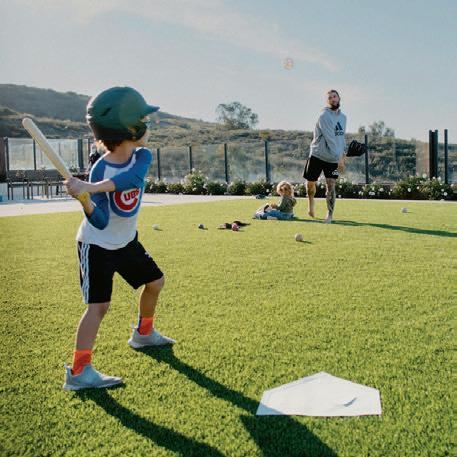
BASEBALL WILL ALWAYS be my first love. I fell in love with the game at a young age, attending countless Padres games with my father. From as young as 1 year old, my dad took me along, placing me in the stadium seats in my car seat. As I grew older, after each game, I remember him asking me, “Who did you see play today? Who did you watch?”
As kids, my brothers, friends and I would play wiffle ball in the street. “We’re playing at a sold-out Petco Park!” we would shout, so concerned about whether we had an audience, always looking over our shoulders. “Who is watching? If I do this, will somebody see it?”
As a Little Leaguer, when I would make a good defensive play or get a base hit at an important moment during my games, my first thought was always, “Dad, did you see that?” and I would look up at my father, sitting in the bleachers with a wide smile on his face. The joy that gave my young heart — to know his gaze was upon me and that he was proud.
Whether you have a great dad, a bad dad, or don’t know your dad at all, we have all asked this question: “Dad, are you proud?” We were all once children, playing before our parents, with a desire in our heart to make them proud.
We also know that God is always watching — but the Father’s gaze means more than that. It sits right at the intersection of divine omniscience, providence, mercy and intimacy. The Father’s gaze penetrates our heart; he knows our longings, our joys, our sacrifices: “O Lord, you have searched me and known me” (Ps 139:1).
If you watch a Major League Baseball game, you will notice that many players look upward in moments of success or failure. Some cross themselves; others point. They all raise their gaze to heaven — “Dad, did you see that?”
As a father myself, I now get a small glimpse into our Father’s heart as he gazes upon me in the same way. Every time my kids do something hard, they quickly turn to see if I saw. Every time they make a diving play in Little League or in our backyard wiffle ball games, they jump up to see if Dad was watching.
In showing our children our loving attention, we reflect our heavenly Father, who sees, knows and loves them perfectly. B
TREVOR WILLIAMS, a father of four children, is a Major League Baseball pitcher for the Washington Nationals and a member of Our Lady of Mount Carmel Council 9665 in his hometown of San Diego.
God said to the Israelites exiled in Babylon: “Seek
What are good sources of income for retirement?
By Brian O’Connor FAMILY FINANCE
Today, individuals are increasingly looking for diverse options to strengthen their retirement income. In addition to Social Security, potential income sources include:
Pensions. Though increasingly rare in the private sector, some occupations still provide them.
Defined contribution retirement accounts, such as 401(k) plans, which may be offered through an employer or managed individually.
Investments. Dividends and interest from securities can help supplement
FOR YOUR MARRIAGE
retirement income, and retirees may also realize capital gains by selling assets.
Insurance. Some permanent life insurance policies offer cash value, dividends and policy loans, which may serve as a supplemental, tax-efficient source of income.
Annuities. These can provide guaranteed income through a variety of products, including fixed, variable and indexed annuities.
Real estate. Rental properties may generate income, while downsizing a home can free up equity. Some retirees also use home equity loans or reverse mortgages.
Continued work. For some, working during retirement provides both income and a sense of purpose.
In addition to diversifying income sources, it is important to distinguish
Weathering the Storm
While all marriages have highs and lows, faith and reason lead us to persevere
By Brendan and Kerry Lynn Kirby
LAST YEAR was one of the toughest of our 25-year marriage. We were wracked with debt from cancer surgery costs carried over from the year before, compounded by a major plumbing leak in our kitchen wall that added even more debt and stress — and eventually forced us out of our house for nearly a year. Still, after so many years of marriage, we know that we just need to ride out these difficult times, putting our trust in God to give us the strength to cope, and confidence that he will eventually see us through to the other side. As the Book of Joshua puts it, “Be strong and of good courage; be not frightened, neither be dismayed; for the Lord your God is with you wherever you go” (1:9).
No marriage is perfect. A successful one requires acceptance that there will be highs and lows. The best way to endure the lows is to realize that they are temporary — whether they arise from external challenges or internal strife. Our Catholic faith reinforces the permanence of marriage. We truly believe that we have been joined until death.
between guaranteed and variable income. Guaranteed income can help cover essential expenses, while variable income may help address inflation and support one’s desired lifestyle.
For additional resources, visit kofc.org/familyfinance. B
— Brian O’Connor II is an internal wholesaler for Field Management and a member of St. Thérèse of Lisieux Council 8013 in Trumbull, Conn.
But secular research offers encouragement as well. Early in our marriage, we learned of a study that examined unhappy marriages. The findings stuck with us both: Those who chose divorce tended not to be happier. But two-thirds of unhappily married adults who stayed together ended up happily married five years later. Even now, we continue to find this encouraging, as it speaks to the importance of commitment — to each other and to our marriage.
As our children have grown and our roles as parents have changed, that commitment often takes the form of making time in our busy lives to do things we enjoy as a couple. In this way, we continue to find our way back to each other and grow together in love. B
AND KERRY
BRENDAN
LYNN KIRBY write from Daphne, Ala. Kerry Lynn is an award-winning journalist, and Brendan, a member of Poet-Priest Father Ryan Council 2737 in Daphne, is an investigative reporter with FOX10 News in Mobile.
¡VIVA CRISTO REY!
A century ago, as Catholics in Mexico faced persecution and martyrdom, the Knights of Columbus mounted an international campaign to defend the Church
By Columbia staff
“Situation is normal,” Mexican President Plutarco
Elías Calles insisted in 1926 — even as churches across Mexico were preparing for the suspension of all public worship. Priests hurried to administer the sacraments and the faithful crowded into parishes for their last public Mass for some time. Baptisms surged, confessions stretched late into the night, and an uneasy urgency settled over Catholic life
The crisis — soon to erupt into the Cristero War — had been years in the making. The Mexican Constitution of 1917 imposed sweeping anticlerical restrictions: churches were stripped of legal status, religious education was banned, religious orders suppressed, public worship outside churches forbidden, and clergy placed under strict government control.
But Catholics did not simply recede. Among the most organized and consequential lay forces were the Knights of Columbus. Established in Mexico in 1905, the Order had built a nationwide net work linking Mexican Catholics not only with one another but with brother Knights in the United States and beyond. That international structure would prove critical in giving voice to the persecuted as the crisis deepened.
roughly 400 to more than 6,000. Responding to both dire poverty and religious restrictions, the Knights founded and ran dozens of schools, clinics and other charitable works, while supporting clergy as conditions worsened.
Pope Pius XI later recognized that role explicitly in his encyclical Iniquis Afflictisque, published Nov. 18, 1926, in response to the persecution in Mexico: “First of all we mention the Knights of Columbus … made up of active and industrious members who, because of their practical lives and open profession of the Faith, as well as by their zeal in assisting the Church, have brought great honor upon themselves.”
A CHURCH UNDER PRESSURE
By the mid-1920s, varying enforcement of the governmental restrictions gave way to open persecution.
In this tense time, however, the Order in Mexico expanded rapidly as an organized Catholic lay force. From 1918 to 1923, dozens of councils formed, as membership grew from
Defense of clergy sometimes took on a literal meaning. In February 1921, Archbishop José Mora y del Río’s residence in Mexico City was bombed, prompting the Knights of Columbus to organize a 15-man protective detail.
A decisive turn came in January 1923 at Cubilete Hill (Cerro del Cubilete) in Guanajuato, where the Diocese of León laid the cornerstone for a monument to Christ the King before a crowd of tens of thousands. Archbishop Ernesto Filippi, the pope’s representative to Mexico, presided. Authorities condemned the event as illegal, and two days later Filippi was expelled from the country.
W.F. Buckley Sr.’s March 1923 Columbia article, “What’s Wrong in Mexico?”, reported that Archbishop Filippi believed the real reason for his expulsion was “the growth in Mexico of the Knights of Columbus and the Catholic Daughters of America.” A protest issued by Catholic leaders underscored the scale of the moment: “More than 50,000 Mexicans were there united to proclaim Jesus Christ the King of Mexico.”
This took place two years before Pope Pius XI established the feast of Christ the King for the universal Church — a declaration that would soon take on particular resonance in Mexico.
Recognizing religious liberty as more than a one-organization concern, the Knights expanded their advocacy. For example, then-State Deputy Luis G. Bustos soon organized the Pacto de Honor de las Organizaciones Católicas (Honor Agreement of Catholic Organizations), and in March 1925 helped found the Liga Nacional de la Defensa de la Libertad Religiosa (National League for the Defense of Religious Liberty) with the support of the Order. More than half of its founding members were Knights, and hundreds more served as local officers.
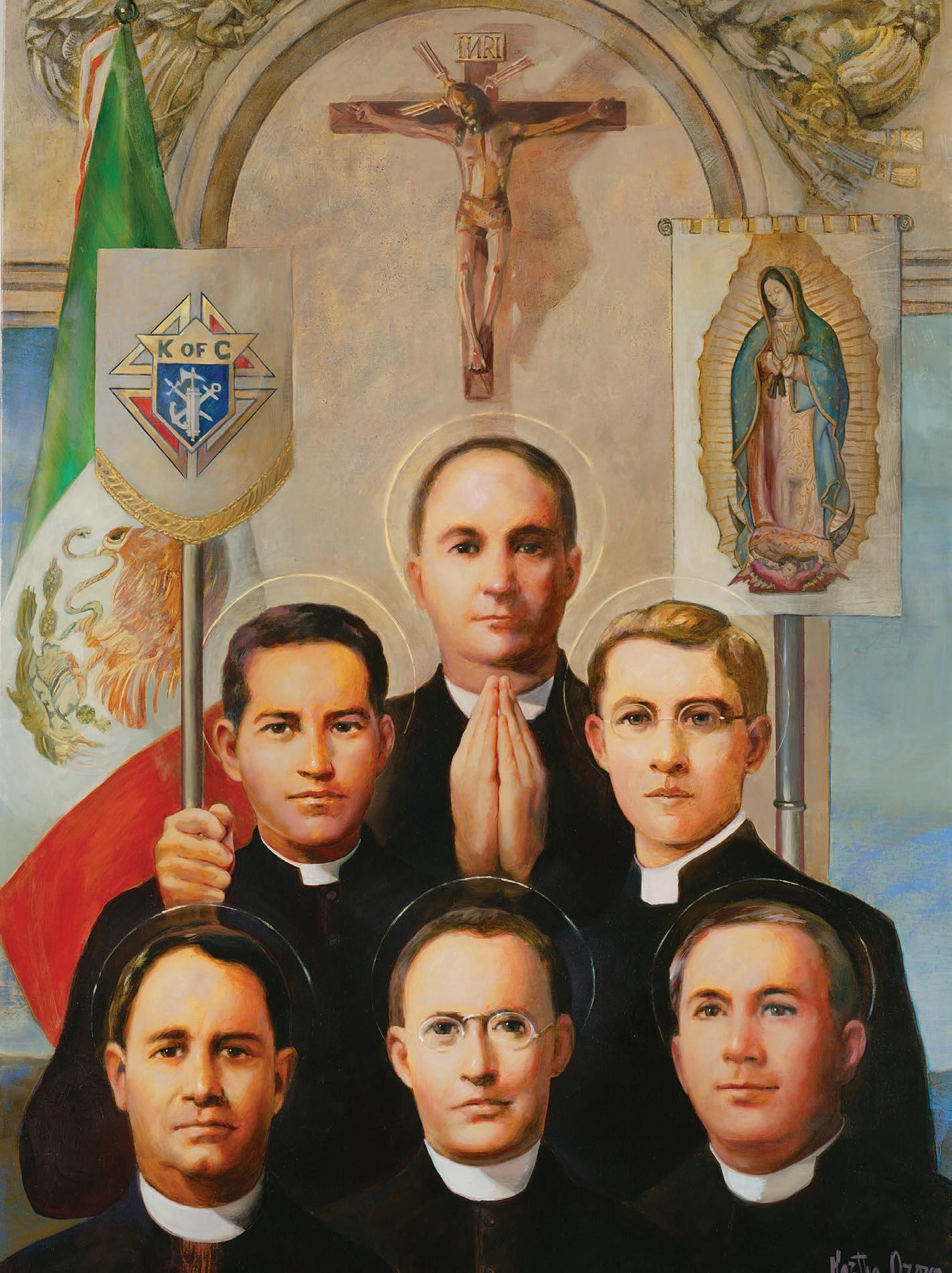
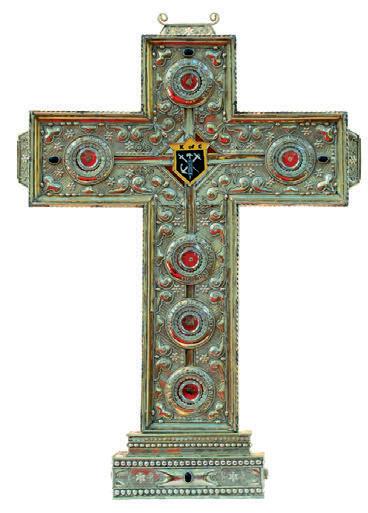
Opposite page: A 2005 painting by Mexican artist Martha Orozco portrays the six Knights of Columbus priest-martyrs who were canonized on May 21, 2000. • Above: A silver reliquary containing bone fragments of the six saints, presented to the Supreme Council by Mexican Knights following the canonization, is often hosted by local councils for veneration.
By 1926, enforcement had become systematic under President Calles. In June, the so-called Calles Law introduced penalties that made religious practice legally perilous, with sentences of up to six years in prison.
This was the reality that prompted Mexico’s bishops to take an extraordinary step: On July 31, 1926, public worship ceased nationwide.
The shutdown of public worship did not end Catholic life in Mexico. It forced the crisis into a new, underground phase — and the Knights of Columbus responded in a far more public, coordinated and international way.
THE KNIGHTS RESPOND
Providentially, the 44th Supreme Convention opened in Philadelphia on Aug. 4, 1926, just days after the suspension of services. There, Supreme Knight James Flaherty gave the Order’s response its public voice. “We behold our brothers suffering for their Faith in one of the most violent and unjust religious persecutions of modern times,” he declared. Many Americans argued the persecution was the affair of an independent state. “But we shall not hold our peace,” Flaherty said. “We shall protest against this persecution in the names of humanity and liberty.”
The convention adopted a formal resolution condemning President Calles’ persecution and authorized the raising of $1 million for what became the Mexican Fund — a campaign to educate the public and assist those affected.
The Order quickly carried that campaign beyond the convention hall. In a short time, lectures across the country — sometimes drawing thousands — shed light on the situation. Five million pamphlets were produced and distributed detailing the persecution and its ideology, along with 2 million copies of the bishops’ pastoral on Mexico. Refugees escaping the persecution were aided as well.
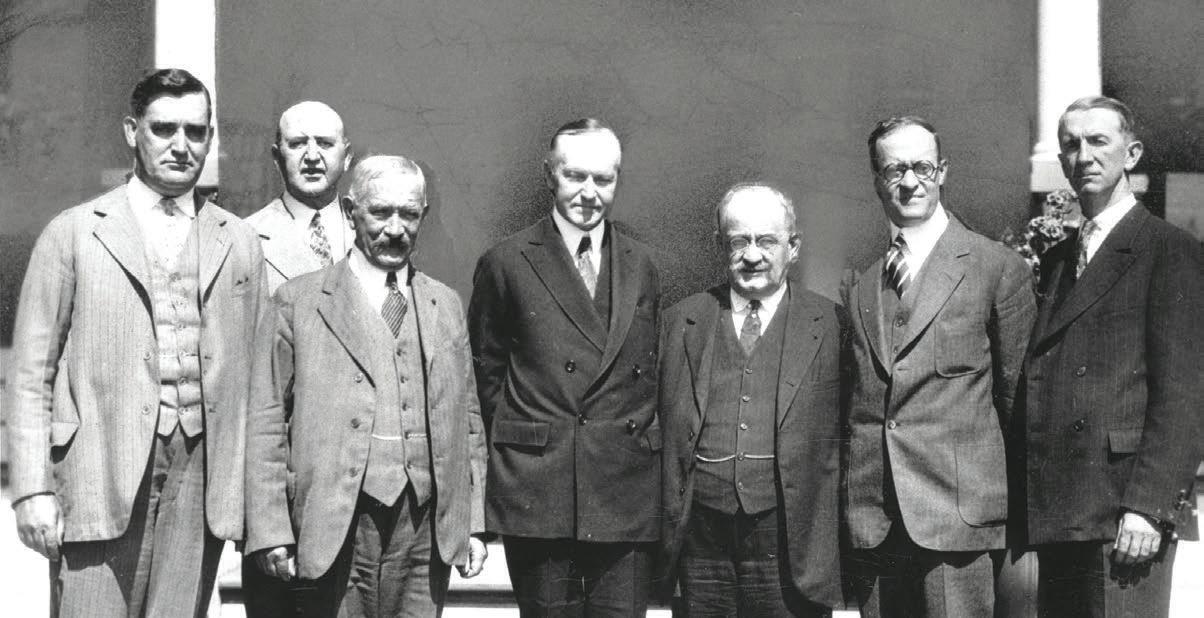
On Sept. 1, 1926, Flaherty and other Supreme Officers met with President Calvin Coolidge to discuss the Mexican crisis, helping move the issue from the margins of public concern into the sphere of national policy.
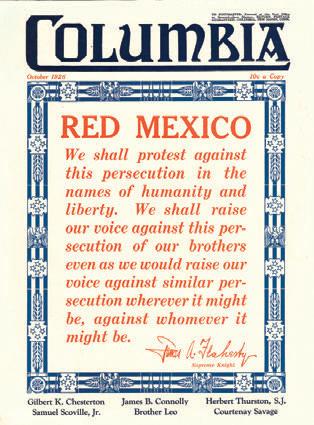
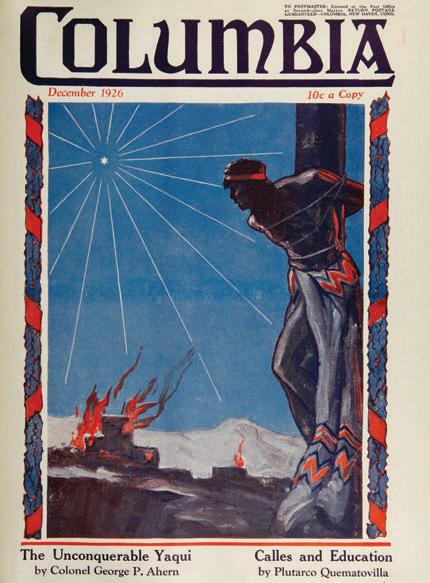
Meanwhile, Columbia’s coverage was sharp enough to have real consequences. The October 1926 issue stated flatly: “The Mexican government cannot stand publicity. In the white light of fact and history, the red of the blood it spills and the ideas it sponsors are revealed as great blots on modern civilization. The Mexican government has, accordingly, forbidden Columbia from Mexico.”
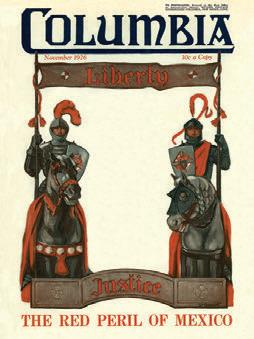
The Mexican legislature denounced the Supreme Convention, and the November 1926 Columbia issue was cited in an effort to discredit the Order — a response that underscored how seriously the regime took the Knights’ campaign.
Knights employed by federal, state and municipal governments — and even by the railroads — were being dismissed, and there was a movement to strip them of citizenship.
The Knights’ campaign unfolded in continuity with the Vatican’s own response. In Iniquis Afflictisque, Pope Pius XI commended the Knights especially for helping Catholics organize and instruct one another to present “a united
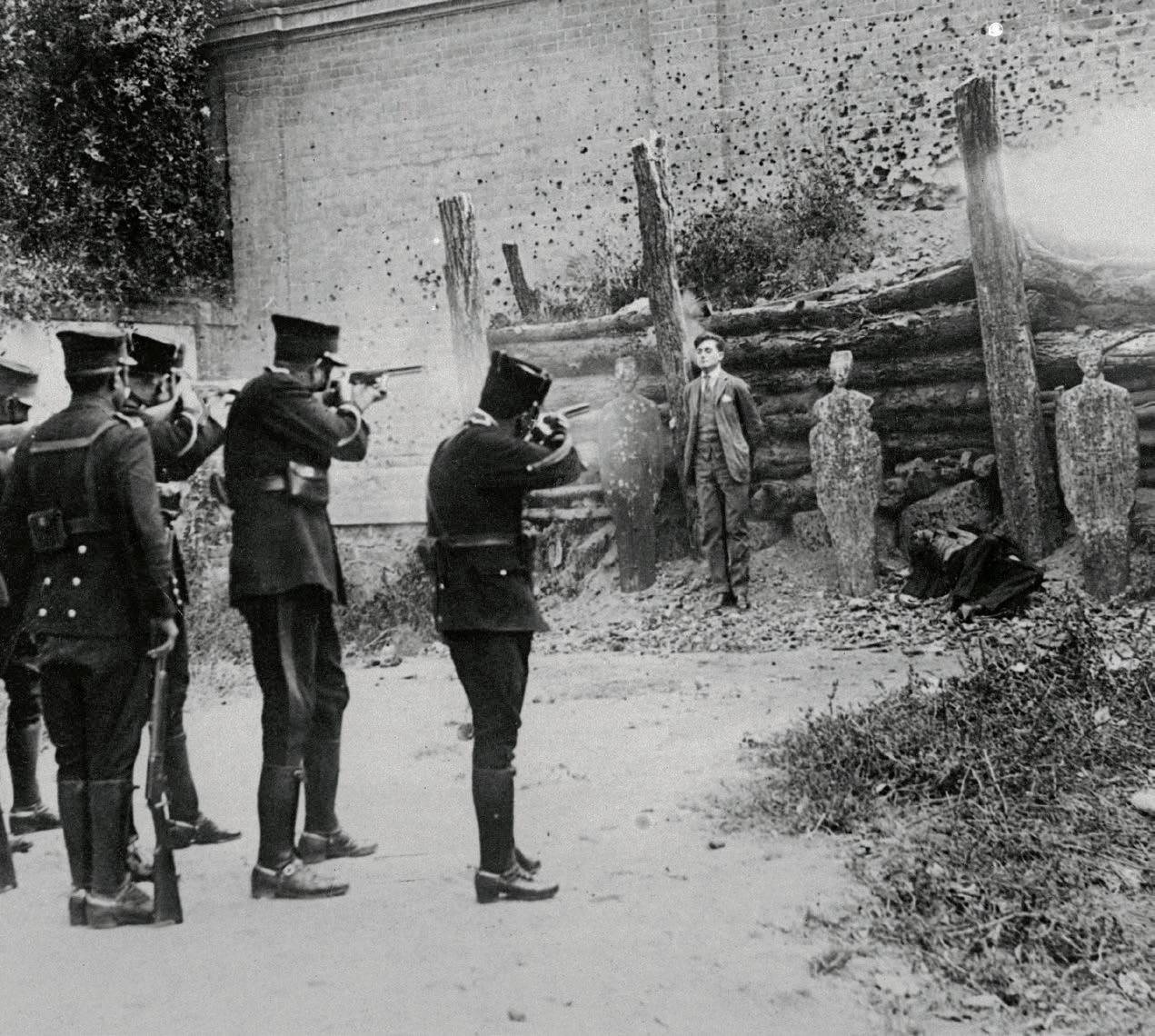
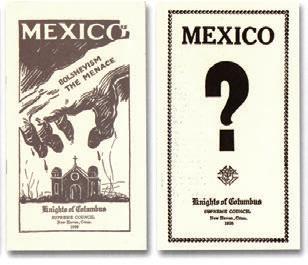
Above: Luis Segura Vilchis, an engineer and member of the Catholic Youth Association, faces a firing squad in Mexico City on Nov. 23, 1927, beside the body of Blessed Miguel Agustín Pro, a Jesuit priest executed moments earlier. • Below, clockwise: The October, November and December 1926 issues of Columbia forcefully denounced the persecution of the Church in Mexico; the magazine was soon banned by the Mexican government. • The Supreme Council distributed pamphlets exposing the persecution and challenging its underlying ideology.
invincible front to the enemy.” He also described the suffering endured by Catholic organizations: members arrested, handcuffed, dragged through public streets, jailed, fined and, in some cases, dying “with the rosary in their hands and the name of Christ the King on their lips.”
By the end of 1926, the Order’s response was no longer a matter of concern or protest alone. It had become a coordinated campaign that reached from local Mexican councils to the president of the United States and to the Holy See.
THE WITNESS OF BLOOD
“Lord, I want to be a martyr,” said Father Luis Batis Sáinz, a parish priest from Durango. “Although I am your unworthy servant, I want to shed my blood, drop by drop, in your name.”
On Aug. 14, 1926, two weeks after the Calles Law took effect, Father Batis was arrested. His crime, federal officers told him, was simple: “You have been offering Mass and baptizing and marrying in secret.” The next day — the feast of the Assumption — he and three laymen were executed by firing squad. One of them, Manuel Morales, president of the local chapter of the National League for the Defense of Religious Liberty, declined an offer to be spared, replying, “I am dying for God, and God will care for my children.”
The persecution soon escalated into the Cristero War, a three-year conflict between federal forces (federales) and Catholic resistance fighters known as “Cristeros” for their rallying cry: “¡Viva Cristo Rey!” — “Long live Christ the King!” For the faithful, the cry was a final profession of faith; for the government, it was treated as an act of defiance. Simply belonging to the Knights of Columbus could invite suspicion, arrest or death. Indeed, more than 20 of
the approximately 90 priests killed during the conflict were Knights, some executed alongside brother Knights from their own councils. Father Batis — a member of Fray Diego de la Cadena Council 2367 in Durango — was among the first. Their “crimes” were acts of sacramental fidelity: celebrating Mass, hearing confessions, administering the Eucharist and continuing their ministry in secret.
Father Mateo Correa Magallanes, a member of Nuestra Señora del Patrocinio Council 2140 in Zacatecas, was arrested while bringing the Eucharist to a sick woman. On Feb. 5, 1927, a general ordered him to hear the confessions of fellow prisoners — and then demanded he reveal what had been said. “You know well, General, that a priest must keep secret all he hears in confession,” Father Correa replied. “I am willing to die.” He was executed the following day.
Others met similar fates. Father José María Robles Hurtado, a member of Antonio Alcalde Council 1979 in Guadalajara, was captured while preparing to celebrate Mass and hanged June 26, 1927. Father Miguel de la Mora de la Mora, another member of Council 2140 in Zacatecas, was executed Aug. 7, 1927, after continuing his clandestine ministry.
Father Rodrigo Aguilar Alemán, a member of San José de Zapotlán Council 2330 in Ciudad Guzmán, was killed after refusing to betray seminarians under his care.
Some died together. Father Andrés Solá y Molist and Leonardo Pérez Larios, both members of Diez de Sollano Council 1963 in León, and Father José Trinidad Rangel Montaño of Godofredo de Bouillon Council 2484 in San Felipe were executed after continuing their ministry in a safe house. Before they were shot, the men spread their arms in the sign of the cross.
A K of C delegation meets with President Calvin Coolidge on Sept. 1, 1926, to discuss religious persecution in Mexico. Pictured from left: Supreme Advocate Luke E. Hart, Deputy Supreme Knight Martin Carmody, Supreme Knight James A. Flaherty, President Coolidge, Supreme Secretary William J. McGinley, Supreme Director William C. Prout, and Assistant Supreme Secretary John Conway.
In the face of imprisonment, exile and death, Knights across Mexico remained visible witnesses — defending the Church, sustaining sacramental life and, in many cases, sealing their fidelity with their blood.
DESTRUCTION, SURVIVAL AND REBUILDING
As the persecution intensified, the Mexican government turned its efforts toward dismantling the Church’s visible presence — both its hierarchy and its physical structures.
On Jan. 28, 1928, the former offices of the Knights of Columbus and the Catholic League in Mexico City were raided by secret police; all documents were seized and soldiers were ordered to bayonet a painting of Our Lady of Guadalupe. Days later, the Calles regime dynamited the statue of Christ the King atop Cubilete Hill in Silao, Guanajuato. Two pieces survived the blast: Christ’s head and his sacred heart.
The next fall, the Mexican bishops, meeting in San Antonio, Texas, issued a pastoral letter thanking the Knights of Columbus and other groups for their support while urging fidelity among the faithful and an end to the persecution.
“We bishops give our word of honor that the clergy and people of Mexico … will accept whole-heartedly whatever agreement the Holy See may approve,” the letter said.
That agreement came in June 1929, brokered by Archbishop Leopoldo Ruiz y Flóres of Morelia on behalf of Pope Pius XI and President Emilio Portes Gil. Churches reopened and some restrictions were lifted.
in January 1934. “It is almost beyond the conception of the American mind. The Russian Soviet is at our door.”
Mexican clergy and laity devised creative means of sustaining sacramental life. Around 1931, Bishop Rafael Guízar y Valencia of Veracruz — a member of Francisco Suárez Peredo Council 2311 who would be canonized in 2006 — established “Eucharistic Centers” in private homes, where priests celebrated Mass in hiding and consecrated hosts for lay distribution.
Knights of Columbus Mexican Martyrs
The reprieve was brief. Within weeks, the government resumed executing Cristero leaders, killing all but two by the end of the year; over the next six years, some 5,000 Cristeros would be executed.
The period has been described as “a war of the destitute, without resources, without support.” Knights of Columbus leaders appealed to President Franklin Roosevelt, and in 1935, U.S. Rep. William Connery noted that in 14 of 30 Mexican states, no priests were approved for ministry.
A year earlier, Frederick Vincent Williams, a faithful navigator from San Francisco, spent six weeks in Mexico documenting the persecution, smuggling nearly 100 documents sewn into his clothing. “The situation is worse than it has been painted,” he wrote to Supreme Knight Martin Carmody
The violent persecution persisted into the late 1930s. Father Pedro de Jesús Maldonado Lucero, a member of Fray Alonso Briones Council 2419 in Chihuahua, was beaten after hearing confessions on Ash Wednesday, Feb. 10, 1937, and died the following day in Chihuahua. He became the final martyr of the Cristero persecution; two months after his death, churches reopened, and over the next decade, conditions gradually improved. The Calles Law was repealed in 1938, and in 1940 Manuel Ávila Camacho, a practicing Catholic, was elected president.
The Church in Mexico slowly rebuilt. In 1944, Bishop Emeterio Valverde Téllez of León laid the cornerstone for a new shrine atop Cubilete Hill. Six years later, Bishop Manuel Martín del Campo Padilla blessed a new 65-foot-tall bronze statue of Christ the King overlooking the region.
FROM PERSECUTION TO RECOGNITION
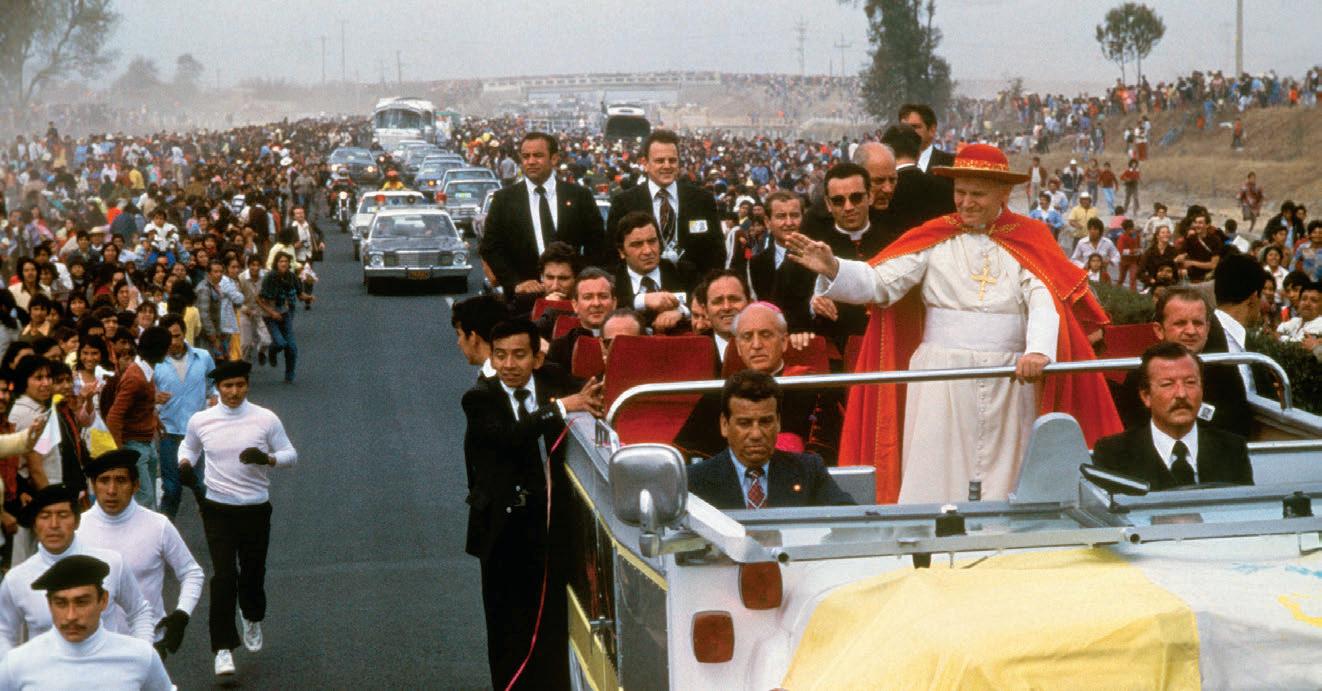
On Jan. 27, 1979, Pope John Paul II celebrated Mass outside the Basilica of Our Lady of Guadalupe in Mexico City. It was the first papal visit to Mexico, and for a Church that had endured decades of restriction and periodic persecution, the moment marked a visible return to public life.
Not until 1992, however, were the constitutional provisions that had long governed Church-state relations formally revised. Reforms restored diplomatic relations with the Holy See and lifted key restrictions on the Church, while maintaining the separation of church and state. That same year, John Paul II beatified 25 martyrs of the Mexican persecution, including six Knights of Columbus priests; he later canonized them in St. Peter’s Square on May 21, 2000.
In his homily, the Holy Father pointed to the enduring fruit of their witness: “After the harsh trials that the Church endured in Mexico during those turbulent years, today Mexican Christians … can live in peace and harmony,
St. Luis Batis Sáinz
St. Mateo Correa Magallanes
St. Miguel de la Mora de la Mora
St. José María Robles Hurtado
St. Pedro de Jesús Maldonado Lucero
St. Rodrigo Aguilar Alemán
Blessed José Trinidad Rangel Montaño
Blessed Andrés Solá y Molist
Blessed Leonardo Pérez Larios
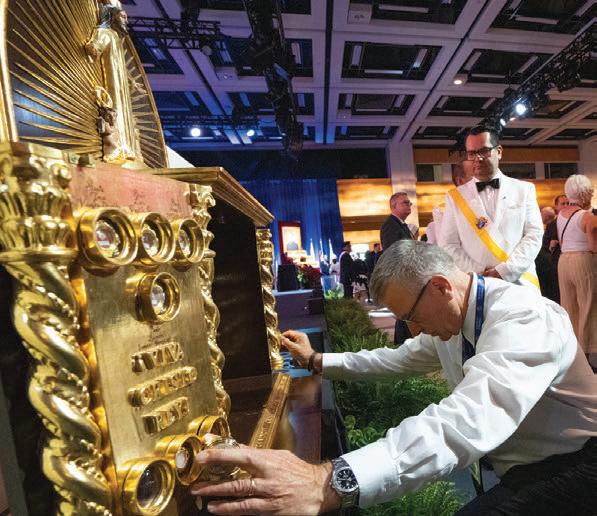
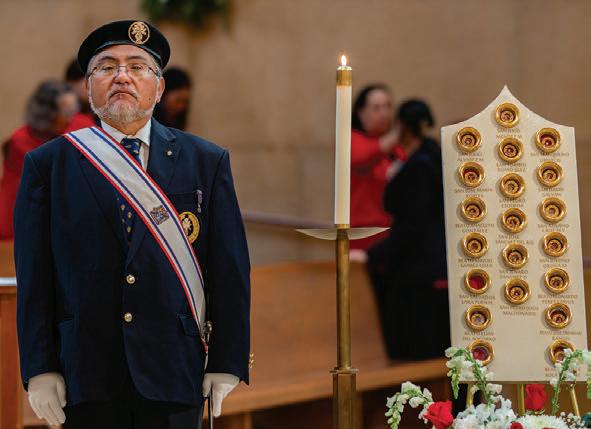
Above: Pope John Paul II greets the faithful as he is driven through Oaxaca, Mexico, on Jan. 28, 1979, during the first papal visit to the country. The visit was a watershed moment for the Church in Mexico. • Right: Delegates venerate relics of the Mexican martyrs at the 142nd Supreme Convention in Québec City in 2024. The Order’s Christ the King reliquary contains relics from 25 saints and 13 blesseds — including nine Knights — who were martyred in Mexico in the 1920s and ’30s.
contributing the wealth of Gospel values to society,” he said. “The Church grows and advances, since she is the crucible in which many priestly and religious vocations are born, where families are formed according to God’s plan, and where young people … can grow up with the hope of a better future.”
Recognition continued on Nov. 20, 2005, when 13 Mexican martyrs were beatified in Guadalajara, including three Knights of Columbus, as well as José “Joselito” Sánchez del Río, who was executed at age 14 in 1928 for refusing to renounce his faith. Pope Benedict XVI would later visit Mexico in 2012, celebrating Mass at Cubilete Hill, and Pope Francis visited in 2016 before canonizing Joselito later that year.
In recent decades, the Knights of Columbus has increasingly promoted devotion to the martyrs (see page 16). Since 2005, relics of the Knight-martyrs have traveled widely across Mexico and the United States. The Order has also supported major shrines associated with the martyrs, including the Sanctuary of the Martyrs of Christ the King near Guadalajara, where construction began in 2007.
In March 2011, then-Supreme Knight Carl Anderson joined approximately 400 Knights and their families on
pilgrimage to the Sanctuary of Christ the King at Cubilete Hill. The event marked the renewal of an annual national Knights of Columbus pilgrimage to the site.
A century after the persecution, the witness of the martyrs endures in the devotion of the Knights who continue to honor them. As the past supreme knight observed at Cubilete, the martyrs’ blood “has united forever the Order of the Knights of Columbus with the people and the land of Mexico. The Order’s history is forever linked to the history of this great nation.” B
Editor’s Note: Maureen Walther, co-author of The Knights of Columbus: An Illustrated History (2020), and Luis Guevara, executive director for Hispanic development, contributed research to this article.
FAITH OF OUR BROTHERS
K of C councils fan the flame of devotion to the Cristero martyrs, including nine brother Knights
By Elisha Valladares-Cormier
In October 1923, Father Pedro de Jesús Maldonado Lucero reported to his new assignment at Santo Cristo de Burgos Parish in Jiménez, Chihuahua. There, he met Yucundo Durán, the newly elected grand knight of Santo Cristo de Jiménez Council 2418, and the pair likely discussed opportunities for the council to collaborate with Father Maldonado, a brother Knight.
But Father Maldonado’s pastorate ended after two months; the 33-year-old priest was reassigned to protect him from frequent beatings by members of local Masonic groups — foreshadowing the Mexican government’s bloody anticlerical persecution.
Both men would be killed for their faith — Durán in 1927, upon admitting to being a Knight of Columbus, and Father Maldonado a decade later, after hearing confessions
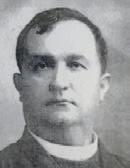
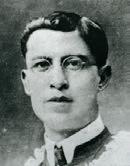
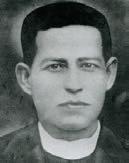
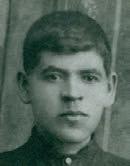
on Ash Wednesday. They are among an estimated 200,000 people, including more than 70 Knights of Columbus, killed during the persecution. Forty have been declared saints or blesseds — including nine Knights, among them Father Maldonado and five other priest-martyrs whose feast is celebrated May 21.
By organizing pilgrimages to two national shrines and cultivating deeper devotion to the Cristero martyrs in Mexico and beyond, Knights today play a crucial role in preserving a faith blessed by the blood of martyrs.
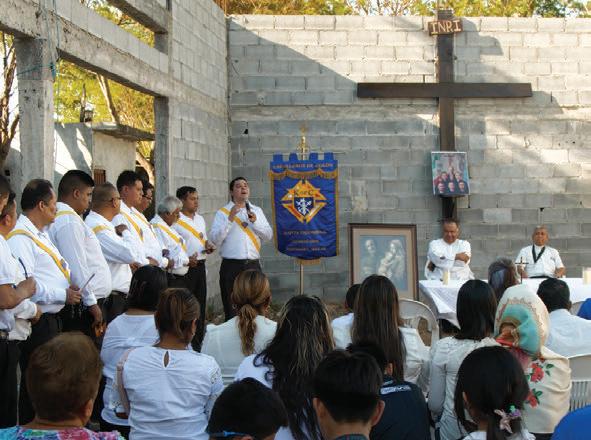
“The martyrs’ witness should inspire and encourage us in the mission we have today,” said Supreme Director Jorge Estrada during a national K of C pilgrimage to the Sanctuary of Christ the King in Guanajuato on March 15. “Let us not allow others to act while we remain mere spectators.”
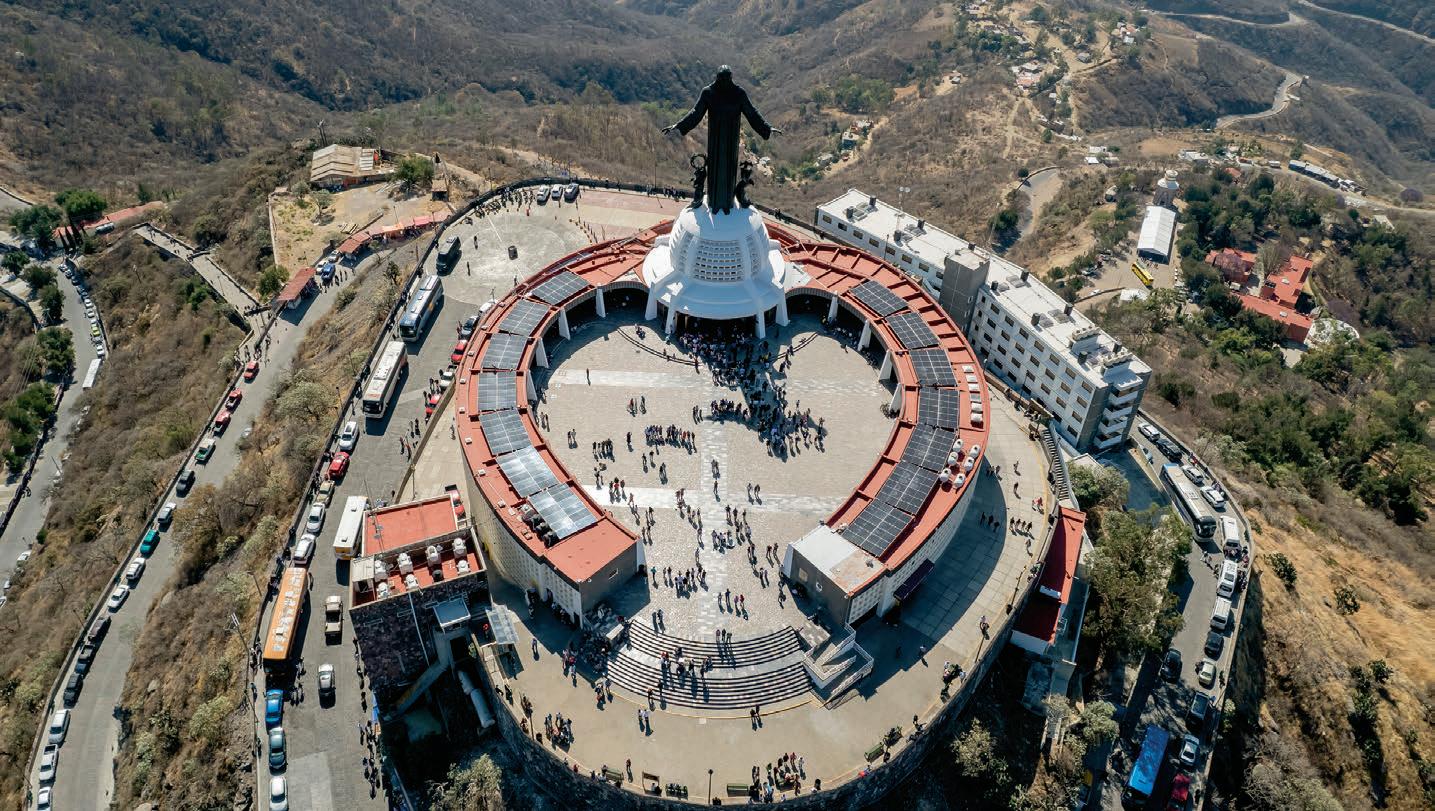
page: An aerial view shows the Sanctuary of Christ the King in Guanajuato, Mexico’s geographic center. After the Mexican government bombed the site in 1928, the shrine was rebuilt in 1944 with financial support from the Order.
HALLOWED GROUND
The Sanctuary of Christ the King sits atop Cubilete Hill in Silao, Guanajuato, Mexico’s geographic center. A small chapel was constructed at the bottom of the hill in 1920, and a 6-foot statue of Christ the King was erected at the top in 1923 — only to be blown up by the government five years later.
Construction on the new monument began in 1944 with financial support from the Knights of Columbus, and local councils made pilgrimages to the shrine as early as 1948 — two years before the installation of a 65-foot-tall bronze statue of Christ the King. Completed in 1960, the shrine stands at an elevation of 8,400 feet.
Knights from each of the five Mexican jurisdictions converge in March for an annual pilgrimage to honor Christ the King and the Mexican Martyrs. In addition to attending Mass together, Knights and their family members consecrate themselves to St. Joseph and venerate the relics of several martyrs.
“The shrine reminds us that Christ is King, and he is the King of Peace,” said rector Father Rubén de la Cruz Martínez. “This shrine was built in times of so much persecution and conflict. And yet faith moves mountains.”
About 170 miles west, just outside Guadalajara, Jalisco, stands another Cristero monument — the Sanctuary of the Martyrs of Christ the King. Cardinal Juan Sandoval Íñiguez, archbishop of Guadalajara from 1994 to 2011, sought to create a place of pilgrimage to house relics of every Cristero martyr, and construction began in 2007, supported in part by $2 million in grants and a subsequent $1 million loan from the Supreme Council.
The work is ongoing, but when completed, it will include a
church and atrium accommodating a combined 62,000 people, along with a retreat center — the largest shrine complex in Mexico. It is also home to two reliquaries containing relics of the canonized and beatified martyrs.
“In a diocese like ours, where we have the testimony of so many people who shed their blood for the sake of Christ, we could not have preserved the living memory of their example in any other way,” said Auxiliary Bishop Héctor López Alvarado of Guadalajara. “They encourage us to be true witnesses in the present day.”
In addition to helping plan the annual national pilgrimage each June, local Knights serve as custodians for one of the complete relic sets during its veneration tour. Teams of four Knights take turns — for three months at a time — overseeing the reliquary’s travels to parishes in the Archdiocese of Guadalajara and beyond; there are also plans to bring the reliquary to the United States.
“We take pride in guarding the relics at the shrine — the blood of martyrs shed on our soil,” said Mexico West State Deputy Sergio Vázquez. “As we transport and safeguard these relics, our martyrs remind us every day that our commitment to Christ means accompanying him always, even unto death.”
HOMETOWN HEROES
While the national pilgrimages to the shrines give Knights and their families fraternal opportunities to honor the martyrs, many councils in Mexico foster devotion locally. Often, knowledge of the Cristero War and its martyrs is limited due to decades of official silence and omission from Mexican history textbooks.
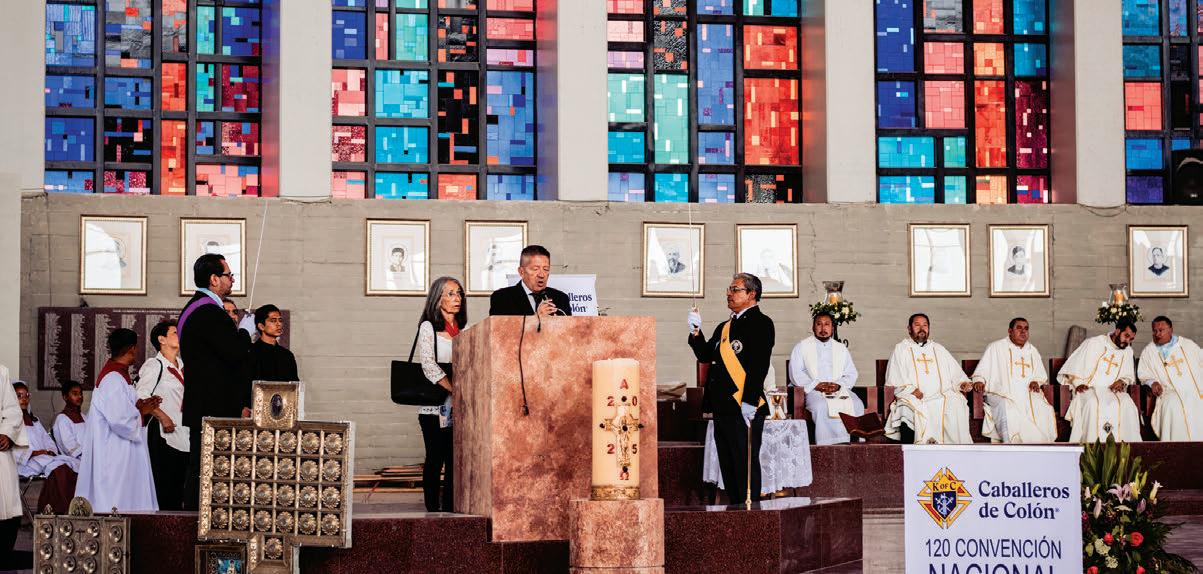
Above: Pedro Rubén Romero Olivera, deputy grand knight of Nuestra Señora de las Victorias Council 14374 in Zapopan, Mexico West, leads the prayer of the faithful during the closing Mass of the Mexico National Convention at the Sanctuary of the Martyrs of Christ the King in Guadalajara, on May 18, 2025. • Opposite
In Monterrey, Mexico Northeast, a chapel served by Santa Filomena Parish fell into disrepair after being closed for several years. Named Señor de los Afligidos (Lord of the Afflicted), the chapel once connected many to the faith. Seeing a need, Santa Filomena Council 16296 recently decided to renovate the chapel so it can open again under the patronage of the Mexican martyrs. Work is now underway to reinforce the structure and build an oratory dedicated to Blessed Michael McGivney.
“The influence of the martyrs is minimal in Monterrey,” said Joel Aguirre, a member of the council. “It’s a challenge to make them known. But the martyrs were witnesses to Christ’s love, and we as Knights of Columbus also want to be witnesses of that love, sharing and giving of ourselves to those in need.”
Spreading devotion to the martyrs hits home for Knights from Fray Alonso Briones Council 2419 in Chihuahua, Mexico Northwest. Among its charter members was Father Pedro de Jesús Maldonado.
Knights entrust themselves to their brother’s intercession at the start of every council meeting, and the Archdiocese of Chihuahua has charged the council with escorting a relic of the saint throughout the diocese for veneration, including to events commemorating the martyr’s death each February.
In other cases, Knights have helped bring those stories to light. In the 1990s, members of Excmo. Sr. Obispo Cázares y Martínez Council 4637 in Sahuayo, Mexico West, played a lead role in initiating the cause for canonization of José Sánchez del Río, the 14-year-old known as “Joselito,” who was tortured and killed for refusing to renounce his faith. They collected witness statements, served as official observers for the exhumation of his remains and helped prepare the positio, or official testimony, for the Vatican.
Mario Higareda, 90, a member of Council 4637 since 1959, called his participation in the process — which culminated in Joselito’s canonization in 2016 — one of his life’s greatest achievements.
“Our parents told us about … [the] little saint, how he had given his life for Christ, but he wasn’t really known,” said Higareda. “He was left forgotten. But then, the Knights of Columbus took up the cause.”
INTERNATIONAL APPEAL
In the United States, general interest in the Cristero War was minimal until 2012, when For Greater Glory — the star-studded feature film about the Cristeros, produced with assistance from the Supreme Council — was released. More than a decade later, the film resonates with audiences, and K of C councils continue to screen it to educate members and parishioners about the conflict and its heroes.
“The martyrs were witnesses to Christ’s love, and we as Knights of Columbus also want to be witnesses of that love.”
Photo by María Paula Estrada
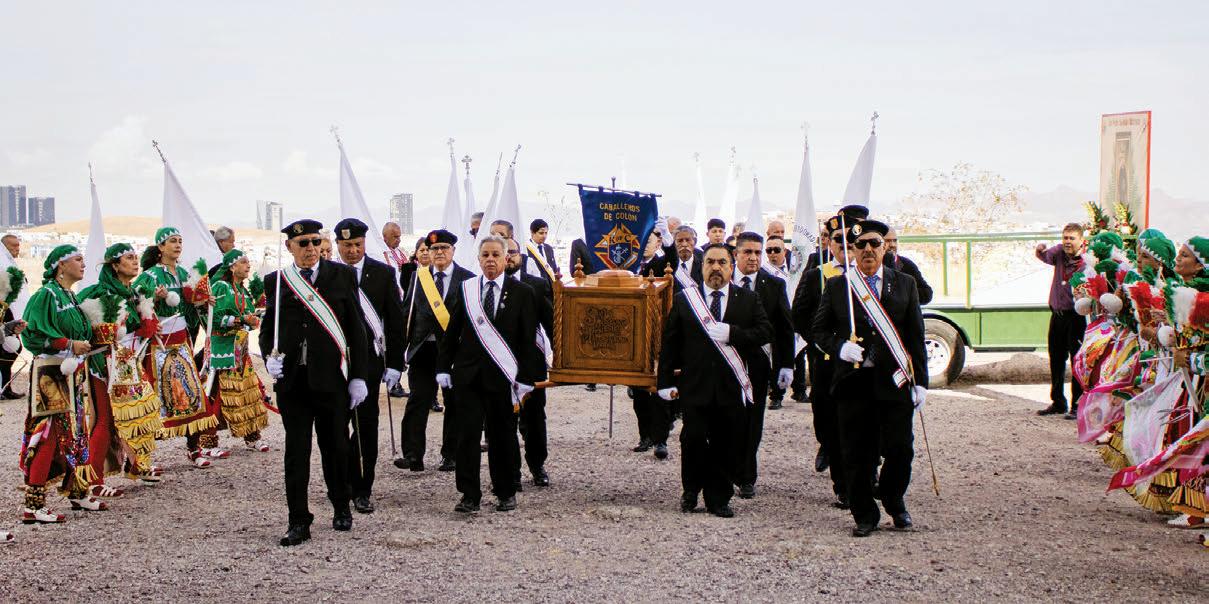
Fourth Degree Knights escort relics of St. Pedro de Jesús Maldonado into the shrine dedicated to the martyr in Chihuahua on Feb. 8. Many of the Knights belong to Fray Alonso Briones Council 2419, of which Father Maldonado was a charter member.
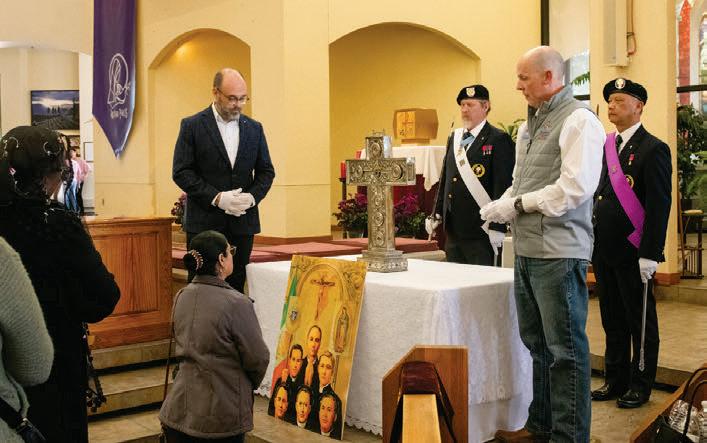
Clockwise, from top left: Joel Aguirre (center) speaks on behalf of Santa Filomena Council 16296 during an event at El Señor de los Afligidos Chapel in Monterrey. Last year, the council began renovating the chapel to reopen it under the patronage of the Mexican martyrs. • A woman venerates the relics of the six Knights of Columbus priest-martyrs after Mass at Queen of Peace Catholic Church in Aurora, Colo., on March 8. • Jesús Barón, faithful pilot of Father Hawe Assembly 45 in Santa Monica, Calif., stands guard next to relics of Mexican martyrs during an April 18 veneration service at the Cathedral of Our Lady of the Angels in Los Angeles, held during an archdiocesan event marking the centennial of the Cristero War.
“When we show the film to our members, it motivates them to share the story and the Knights with other men,” said Adrian Dominguez, a past state deputy of Arkansas and a charter member of Los Martires Mexicanos Council 14609 in Rogers. “It’s an opportunity to learn what the Cristeros went through, and guys will be in tears watching it.”
The Order’s promotion of the martyrs long predates For Greater Glory, including decades of Columbia articles, books and other media. One of the most effective ways of introducing the martyrs has been a traveling silver cross reliquary containing relics of the Order’s six priest-martyr saints.
The reliquary was a gift from Knights in Mexico to the Supreme Council in 2000, and it toured Mexico before embarking on its first U.S. trek in 2006. It continues to travel as requested by state and local councils, and jurisdictions in the United States in particular have made a concerted effort to use the relics to connect with Hispanic men and their families.
Colorado hosted the relics March 6-15, and State Deputy Marc Solome was impressed with the turnout, estimating at least 5,000 people venerated the relics during stops in two dioceses.
“It builds inroads with the Hispanic community,” Solome said of the tour. “The martyrs help invite the Hispanic community to the Knights and lay a foundation to continue growing it in the future.”
Two months earlier, the cross reliquary had passed through North Carolina, where a surging Hispanic population has
contributed to regional Catholic growth. The tour was personally significant for José Blanco, past grand knight of Our Lady of Mercy Council 10504 in Winston-Salem and a native of Jalisco. He grew up hearing his grandfather’s stories of Cristeros liberating their hometown of Degollado, and it was Blanco’s father, who joined the Knights in Mexico, who first shared with him the Order’s connection to the martyrs.
“People ask me if the persecution really happened, so I tell them what my grandfather told me,” said Blanco. “They had no idea.”
Blanco observed that current political tensions in the United States have left many in his community with a sense of uncertainty, but venerating the martyrs’ relics brought peace — and for others, inspiration.
At one veneration service, Blanco noticed a teenage boy listening intently as the martyrs’ biographies were being read. Afterward, he approached Blanco, asking, “Do you think I have the strength to be like them?”
Months later, his words still resonated. “What are we willing to do for faith?” Blanco reflected. “Let’s hope we have the faith and eagerness to do what is needed, when the time comes.” B
ELISHA VALLADARES-CORMIER is senior editor of Columbia and a member of Fremont (Ohio) Council 591.
HANDS, HEART and Soul
New Catholic trade schools equip young men for manual work while providing vibrant faith formation and fraternity
By Scott Warden
At 6 a.m., before the sun has risen, a group of young men gathers in silence for prayer. By midmorning, they are wiring electrical systems, framing walls or welding joints. Come evening, worn out from the day’s labor, they share dinner before returning to prayer, ending the day as it began.
For many of them, this rhythm marks a departure from the lives they left behind — lives that often felt uncertain, even directionless.
Among high school graduates of Generation Z — those born in 1997 or later — something is shifting. As the cost of college rises and confidence in the traditional undergraduate path declines, more young men are searching for something that has eluded many of their peers: purpose, clarity and a sense that their work matters. Enrollment at trade-focused institutions in the United States has increased nearly 20% since the spring of 2020, according to the National Student Clearinghouse Research Center.
San Damiano College for the Trades in Springfield, Illinois, and a member of Holy Family Council 4179 in Chatham. “But you can’t become a good craftsman until you become a good man.”
While a growing number of hands-on Catholic vocational training schools — as well as technical high schools — are emerging across the United States, three in particular — Santiago Catholic Trade School in California; Harmel Academy of the Trades in Michigan; and San Damiano College for the Trades in Illinois — are led by Knights and have also attracted students who are Knights.
Over the past several years, innovative trade schools that form young men in both a craft and Catholic discipleship have begun to take root. These programs offer a structured alternative to the traditional college path while responding to a desire for formation and fraternity, guiding students toward lives of meaningful work, strong families and active faith.
The Knights of Columbus’ emphasis on charity and fraternity aligns naturally with the mission of these new schools — and in at least one case, is built directly into them.
“Students are choosing these schools because they want to become craftsmen,” said Kent Lasnoski, president of
SANTIAGO CATHOLIC TRADE SCHOOL
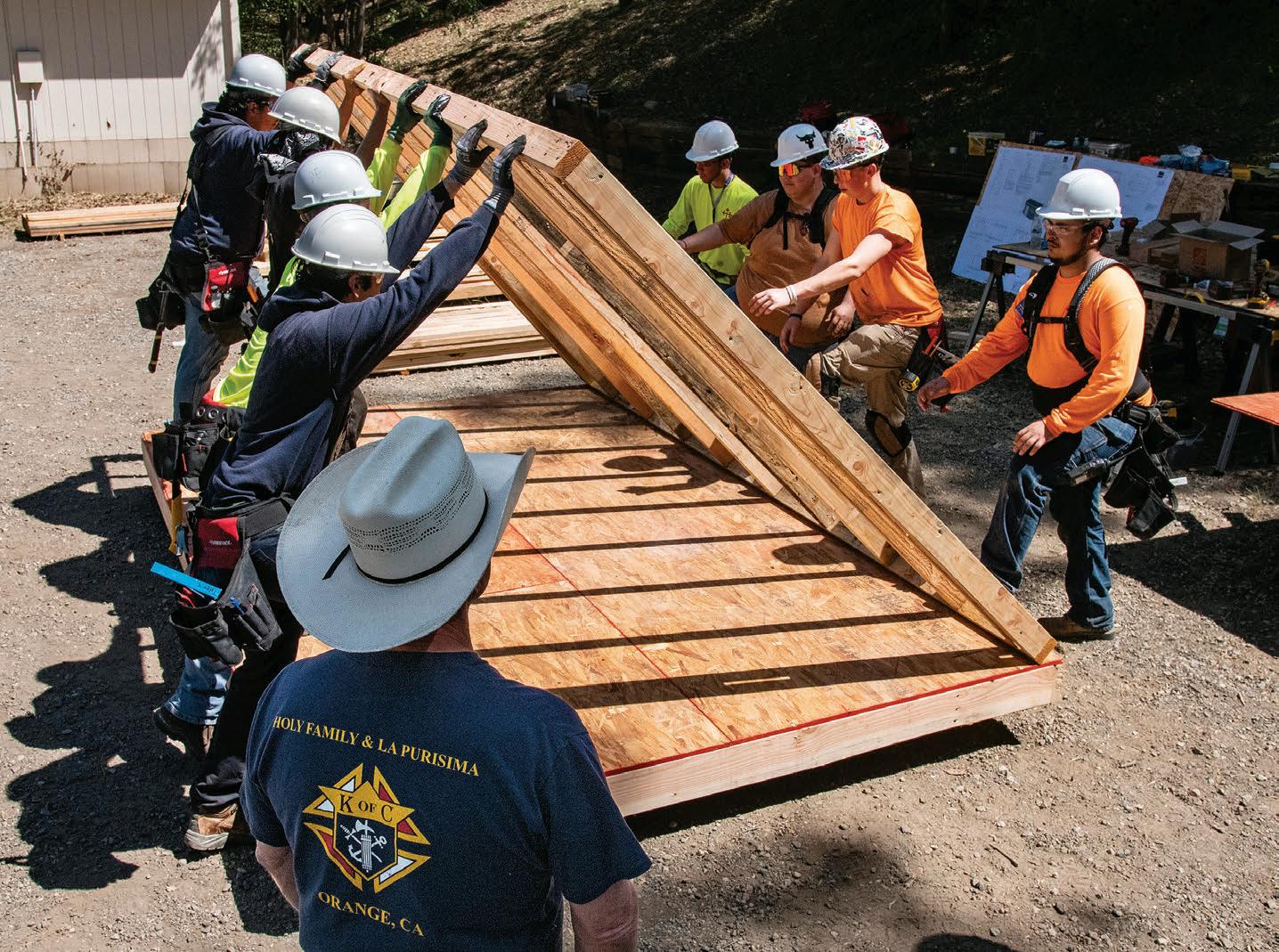
Situated in the rugged foothills of the Santa Ana Mountains, about 50 miles north of Los Angeles, Santiago Catholic Trade School was co-founded in 2023 entirely by Knights. Over the course of its two-year program, small cohorts of about 15 young men live, pray and work together as they learn construction — not in theory but by building real projects.
“At Santiago, we not only form young men in their Catholic faith, but we also teach them how to build from the ground up,” said co-founder Mark Padilla, the school’s headmaster and a former district deputy and chapter president. “We teach them framing, roofing, electrical, plumbing and auto mechanics, as well as theology and philosophy. The goal with our young tradesmen is to build the kingdom of God.”
Students also benefit from a unique formation experience: learning agricultural management and animal husbandry on a 300-acre farm and ranch with cattle, bison, goats, turkeys, chickens, quail and bees.
Photo by Tim Vizer
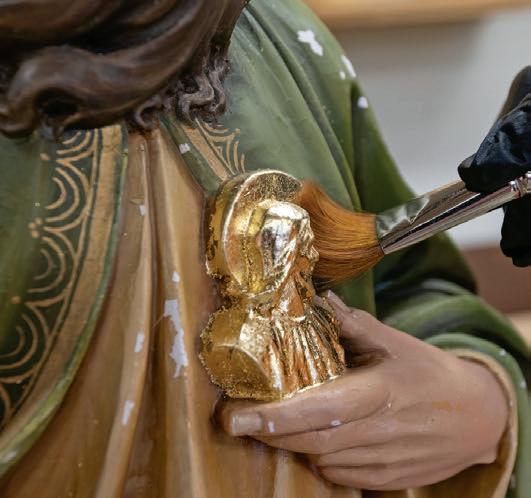
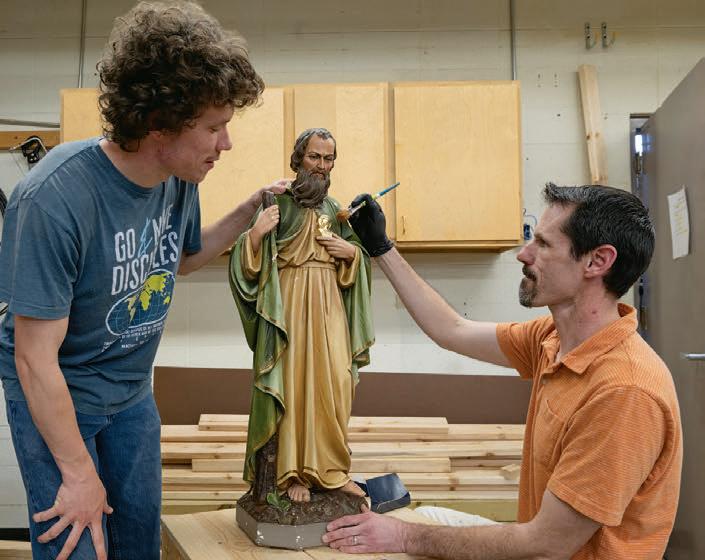
Santiago Catholic Trade School instructor Jeff Rice (foreground), who also serves as a district deputy in Orange County, Calif., oversees students constructing a confessional during a build in March. • Opposite page: A statue of St. Jude is restored during an ecclesiastical restoration class at San Damiano College for the Trades in Springfield, Ill.
“Eventually, second-year students declare what kind of trade they want to specialize in,” Padilla said. “And then we assist them in getting certification in that particular trade.”
Mark McElrath, executive director of the Santiago Retreat Center, where the school is located, said students’ lives are structured around prayer from beginning to end — morning and evening prayer from the Liturgy of the Hours, daily Mass, and the rosary before bed.
“That rhythm,” said McElrath, who is also a co-founder of the school, “is something we’re hoping to inculcate — something that will carry them not only through these two years, but long after they leave.”
One way Santiago ensures that formation is lived out is through membership in the Knights of Columbus. All students are invited to join Santiago Catholic Trade School Council 18585, which was chartered in 2024 and includes administrators, staff, volunteers and local tradesmen.
Jacob Kliatchko, 22, studied to be an electrician at Santiago and served as the council’s charter grand knight.
He said his involvement in the Knights has been a vital part of his formation, giving him examples of men striving to live as faithful Catholics.
“Living in community with a bunch of Catholic guys has been phenomenal,” Kliatchko said. “I think Blessed Michael McGivney would be very pleased with what’s going on here, since his whole idea was to help young men and give them a support system to grow in their Catholic faith.”
He added, “That’s what we’re doing here: creating a support system of guys studying together, going to Mass together, praying together. They become brothers in no time.”
For McElrath, the goal is not simply to produce skilled workers but virtuous men whose faith shapes how they live and work.
“‘You’re going to give me a man that doesn’t lie, cheat or steal?’” McElrath recalled local business leaders saying. “‘I’d hire that guy all day long. I can teach him anything, but I can’t teach him to be ethical or moral.’”
Photo by Juanito Holandez Jr.
top: David
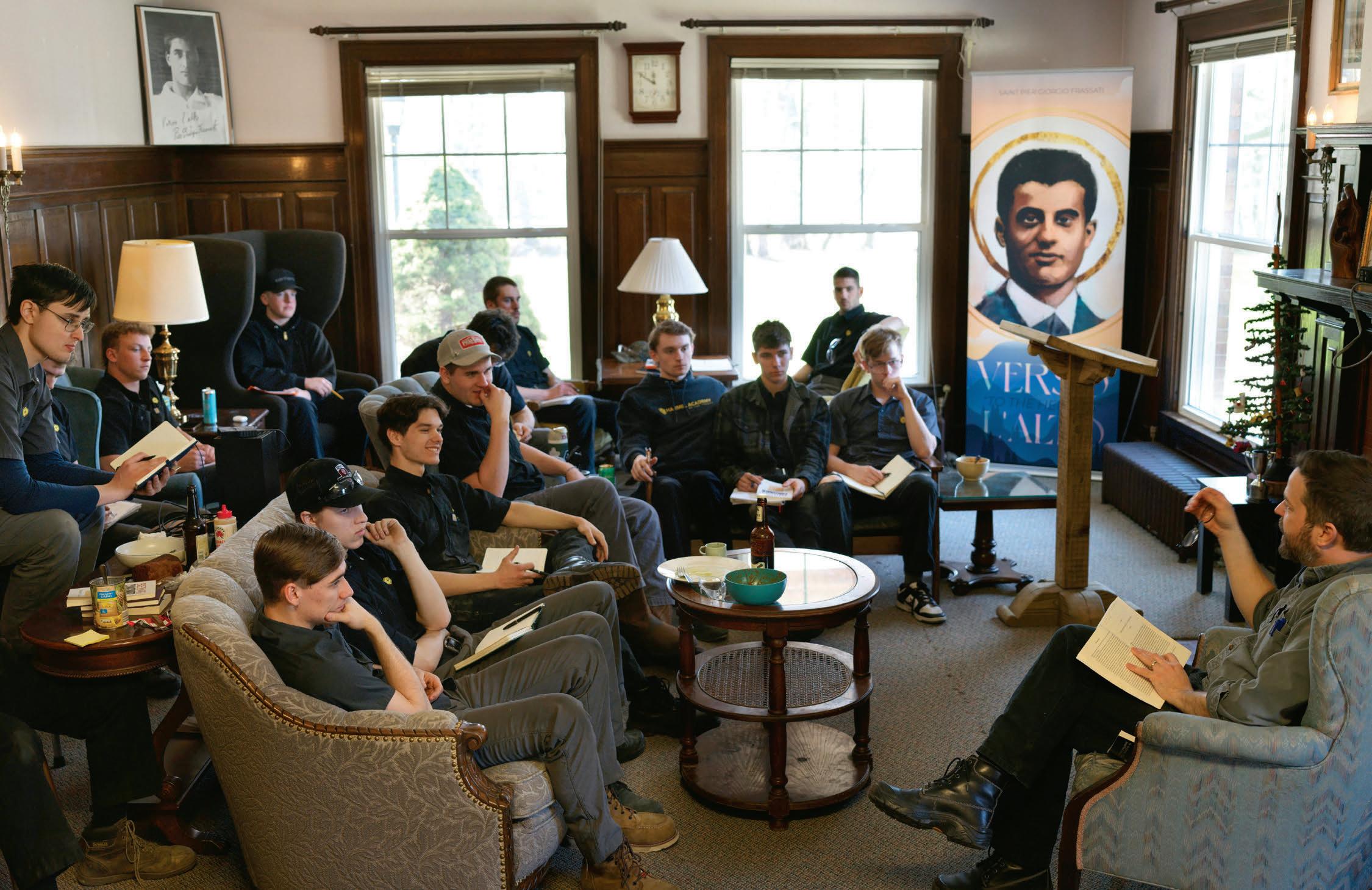
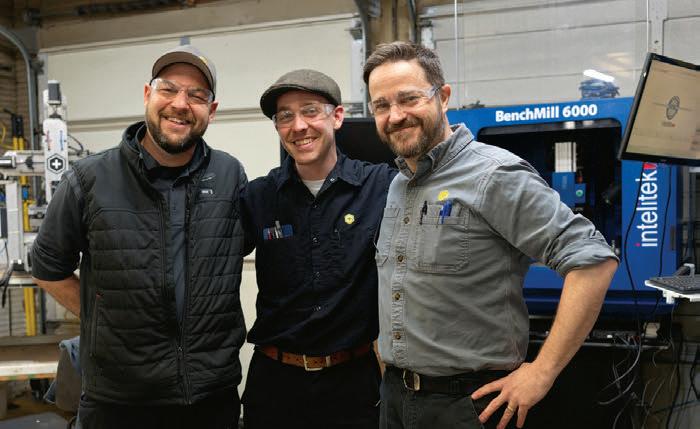
president of Harmel Academy of the Trades and a member of Sacred Heart of Jesus Council 13641 in Grand Rapids, Mich., speaks with students during his integrated humanities course, “God and Man at Work,” in April.
• Phelps (right) stands with student and brother Knight Abe Forget (center) and Andy Beach, director of manufacturing services, in one of the school’s workshops.
HARMEL ACADEMY OF THE TRADES
Students at Harmel Academy of the Trades in Grand Rapids, Michigan, follow a model that blends hands-on training with intellectual and spiritual formation. Founded in 2020, the academy immerses young men in a rhythm of work, study and prayer while exposing them to a range of trades.
Rather than specializing immediately, students rotate through disciplines such as welding, automotive work, construction and machining, while also studying philosophy and theology and working part-time jobs that reinforce practical skills. The goal is not simply to train laborers but to form men who understand the dignity of work and their own aptitude within it.
“There’s a real crisis of meaning with young men — even Catholic young men from good families,” said David Michael Phelps, Harmel’s president and a member of Sacred Heart of Jesus Council 13641 in Grand Rapids. “They don’t have a vibrant and pragmatic sense of what the adventure is they’re called to in the world.”
For many students, that uncertainty is personal — and, without clear direction, can linger well beyond high school.
“I couldn’t see myself going through four-plus years of
higher education toward an unknown end,” said Abe Forget, 19, a student at Harmel who recently joined the Order online. “Without a clear view in mind, I would be in a state of uncertainty about any future career. My knowledge would be a know-what, not a know-how.”
For Jonathan Bargenquast, a recent graduate who now works as a machinist, the lessons he learned at the school continue to guide his vocation.
“You start to see work differently,” he said. “Instead of work being just a means to a paycheck, you see it as a way to co-create with God.”
His father, Jason Bargenquast, previously served as grand knight of Sacred Heart of Jesus Council 13641 in Grand Rapids, and Jonathan recognized in the Knights of Columbus the same fraternity he experienced at Harmel.
Photos by Kyle Monk
From
Michael Phelps (right),
“It’s a continuation — you see men living this out at every stage of life,” he said of his brother Knights from Msgr. Hugh Michael Beahan Council 7719 in Lowell.
According to Phelps, students come to Harmel already inclined toward manual work, but searching for deeper meaning in the trades.
“What we try to do at Harmel,” he said, “is to show that this isn’t simply about earning a paycheck or even providing a service. There’s something cosmic in collaborating with Our Lord in the creation and redemption of the world.”
SAN DAMIANO COLLEGE FOR THE TRADES
At San Damiano College for the Trades in Springfield, Illinois, which welcomed its first students in fall 2025, young men take part in a program that integrates apprenticeships, a liberal arts education, and daily spiritual formation into a unified vision of work.
“From the cross, Christ told St. Francis of Assisi, ‘Rebuild my Church!’” said president Lasnoski. “At SDC, we’re answering that call, one living stone at a time.”
The trades taught are carpentry, electrical work and church restoration, including stained glass and organ restoration. A unique course is casket-making, led by master carpenter
Marcus Daly, founder of Marian Caskets and a Knight.
“For work to be meaningful, you have to realize that you’re being worked on by God and by his grace,” affirmed Lasnoski. “Any time I go to work, I’m either becoming a better man or a worse man because of the way I work.”
For students like Joseph Lee, 21, a member of Teutopolis (Ill.) Council 2874, that perspective brought clarity to a path that had once felt uncertain.
After high school, Lee discerned a possible vocation to the priesthood or religious life, enrolled in community college, and worked a series of jobs — from factories to concrete work — but found himself searching for direction.
“I was trying to figure out what to do next,” Lee said. “Be a missionary, try college again, or get a different job.”
At San Damiano, he found a way of life that integrates prayer and study with manual work.
“You start to see work differently. Instead of work being just a means to a paycheck, you see it as a way to co-create with God.”
As Jonathan Prabhu, a fellow student, explained, “It provides a seminary-like environment where you can focus on what it means to be a man and practice virtue alongside other men who are there to build each other up.”
With the school completing its first academic year, its leadership is looking to deepen relationships with local Knights of Columbus councils — not only as a source of mentorship, but as a way to help students integrate into parish life and the wider Catholic community.
“I want to see these guys end up as Knights,” Lasnoski said, “living out the mission and taking these skills where they’re needed.”
In workshops and on jobsites, in chapels and around dinner tables, these young men are learning what it means to live as brothers — to challenge one another, to support one another, and to pursue a common good.
Indeed, across a new generation of Catholic trade schools, a shared vision of lifelong formation and fraternity is taking shape.
“They’re not just forming us for the time we’re here,” said Jacob Kliatchko, who graduated from Santiago Catholic Trade School in January and is now a member of the staff. “They’re forming us for what comes next.”
Editor’s Note : Earlier this year, the Knights of Columbus released Into the Breach: The Dignity of Work, a five-part video series exploring the relationship between labor and holiness and the vocation of Catholic men. Visit kofc.org/intothebreach. B
SCOTT WARDEN is editor-in-chief of Today’s Catholic , the news outlet of the Diocese of Fort Wayne-South Bend, Ind., and a member of Holy Trinity Council 12741 in New Haven.
San Damiano student Joseph Lee (left), a member of Teutopolis (Ill.) Council 2874, observes as instructor Joseph Williams applies gold leaf to a statue of St. Jude.
Our Lady of the
A damaged plaster statue helped a washed-up Chicago radio legend return to the faith — and bring hope to millions
By Denyse Shannon
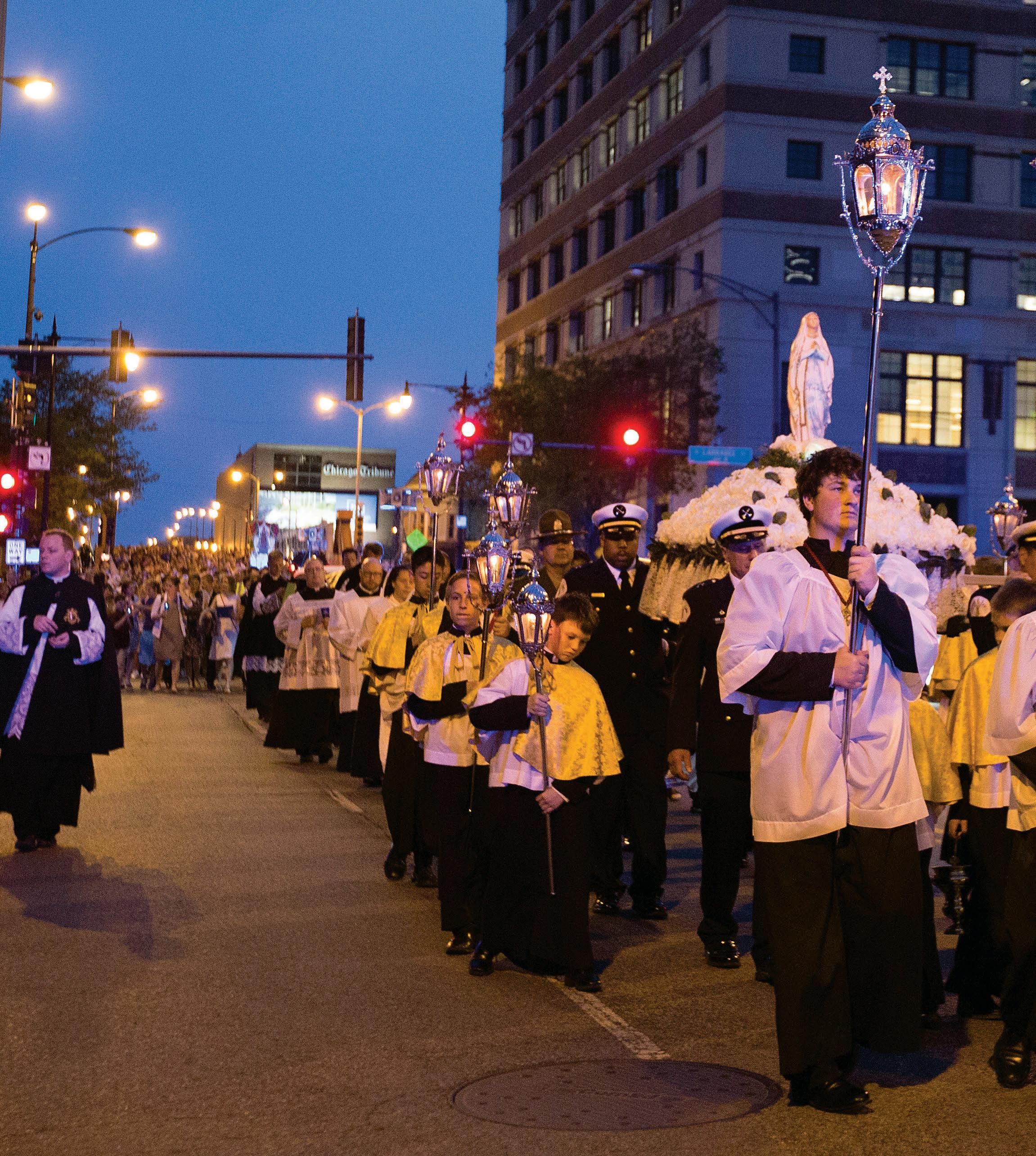
Thousands of people process behind the “Broken Mary” statue down Chicago Avenue after leaving St. John Cantius Church on May 31, 2019. The event, inspired by former Chicago radio host Kevin Matthews, was titled “There Is Hope for the Broken.”
“If you would’ve told me 30 years ago that I’d be carrying around a broken statue of the Virgin Mary and talking about God, I’d say, ‘Are you high?’”
So begins Broken Mary: The Kevin Matthews Story , a recently released documentary film from ODB Films and Family Theater Productions about the Chicago DJ who went from having 10 million listeners a week to hitting rock bottom — and then, unexpectedly, to following Christ’s call to become a messenger of mercy for the broken.
In 1987, Kevin Matthews catapulted to Windy City fame on WLUP-FM “The Loop” by making people laugh. His off-kilter humor, zany impersonations and on-air antics garnered huge audiences — and a cult following of KevHeads, as his fans were called.
“He was an icon in Chicago, and I was a huge, huge fan,” recalled Bill O’Connell, a former KevHead and a member of St. Michael the Archangel Patron of Police Council 12173 in Chicago. “Throughout the ’80s and ’90s, the last thing you would think of him was a pious and faithful person.”
Matthews himself admits as much.
“I was born Catholic. But during this time, I would say, from 1986 until 2011, I’m living the life of a zombie Catholic.”
He attended Sunday Mass, but it was mostly a formality. “Make sure the priest sees you,” he remembers thinking. “It’s a fake; it was a con.”
Then one day in 2011, Matthews walked into the studio to do the work he had known for 35 years — only to be fired moments later. What followed was a series of what he calls “miracles.”
Today, Matthews touches millions of people who are drawn not to an edgy radio personality, but to Christ and his Blessed Mother.
‘WILL YOU DENY MY MOTHER?’
Matthews grew up the son of an auto worker in Pontiac, Michigan. Undiagnosed dyslexia contributed to a childhood marked by abuse and bullying. He learned he could deflect much of it by making people laugh, and carried that coping mechanism into adulthood, parlaying it into a successful radio career.
But as the media landscape evolved, Matthews’ celebrity status waned. He left Chicago in 2005 and returned to Grand Rapids to pick up his career where he first got his start in radio. The new gig, with WLAV-FM, was short-lived. While on air one morning, Matthews found he couldn’t move. He thought he’d had a stroke.
Matthews was diagnosed with a rare form of multiple sclerosis. The disease made it hard for him to work, and within a short time, it cost him his job.
“You’re fired — two weeks’ notice,” he recalled being told, and a decades-long career ended abruptly.
Photo by Denise Duriga/ Chicago Catholic
“You talk about broken,” Matthews said. “You talk about hitting rock bottom. And it wasn’t until I said, ‘I’m so broken; here — the pieces, the garbage, the beatings — I give it to you, help me,’ that, boom, my life changed.”
The first in what Matthews calls a “succession of miracles” occurred in 2009, when he was driving in Chicago.
“I heard a voice say, ‘Go to the cemetery.’ I knew which one because of the Tribune article,” Matthews recalled, referring to a news report on alleged apparitions at Queen of Heaven Cemetery in nearby Hillside.
“Thank goodness I went, because I could have just ignored it,” he said. “But every time I heard the Holy Spirit, I listened and did what I was told.”
At the cemetery, Matthews went to the 15-foot-tall crucifix where a retired railroad worker was allegedly cured of blindness in 1986.
“I put my hand on the feet of Christ, and I said, ‘I’m sorry; help me; I’m so afraid,’ and then my hand started to work as water came running down on my hand and my arm.”
Though mobility returned to his MS-afflicted hand, the spiritual impact did not last.
“I once again forgot about God,” he said.
It wasn’t until the following year that Matthews began to undergo a lasting conversion.
“That happened at the dumpster where I found Broken Mary lying on the ground,” Matthews recalled, referring to the plaster statue that would play a pivotal role in his life.
“I walk over to her. She’s on her back. She’s broken in two at the waist. Her hands are missing. She’s sunk in the mud. She’s covered in weeds and garbage — and that’s when I hear
the voice of Jesus Christ say to me, ‘Will you deny me? Will you deny my mother?’”
Matthews had been about to enter a flower shop near Grand Rapids to buy flowers for his wife. He stepped into the shop to ask about the statue but was told it wasn’t for sale.
“She said, ‘No, it’s a family heirloom.’ And so, I hear the voice again: ‘Will you deny me? Will you deny my mother?’”
“For the second time, I said, ‘God, help me,’” he recalled.
“What came out of my mouth next — I have no idea where it came from. But I just said, ‘I’ll give money to nuns that live out here if you let me have her. I’ll give money in your name if you let me take her.’”
It worked. Matthews took the statue into his home and for some time kept it in his dining room, where it reminded him of his own brokenness.
“I was garbage,” he said. “I could really relate.”
A MISSION OF HOPE
Father Mark Przybysz first met Matthews in the 1990s while serving as pastor of St. Anthony of Padua Church in Grand Rapids, where he was also a member of Bishop Plagens Council 3104.
“I would go on his radio show a couple of times a week, and we got to be friends,” Father Przybysz said. Through their shared love of cooking, the two paired up for parish events to raise money for Catholic education. The friendship deepened when Matthews lost his job at WLAV.
“He started talking about this thing called the Broken Mary Project and that he found the statue,” Father Przybysz recalled.
Photo by Robert Neumann
Kevin Matthews has spent the past 15 years traveling the world as “Mary’s roadie,” sharing his testimony of God’s love.
The priest offered to have the 27-inch-tall image of Our Lady of Lourdes repaired, but Matthews declined.
“I started crying and said, ‘No, I don’t want her fixed,’” Matthews explained. “I kept her broken because we’re all broken, and we’re loved by God.”
Father Przybysz soon realized that Matthews was undergoing a real spiritual awakening and encouraged him to share his story with parishioners at St. Anthony.
Matthews recalled in the documentary: “I’m thinking, ‘Sure.’ I’ve done comedy. I’ve opened for Seinfeld and Bill Hicks — how hard is church?”
The experience, however, was not what he expected.
“You talk about dying — I’m getting no laughs,” he said. Afterward, he told Father Przybysz he didn’t want to do it again after the next Mass. The priest suggested he turn around.
“There were people kneeling in front of this statue,” Matthews recalled. “It was as though Jesus was saying, ‘I’m going to leave you with my mother, and she’s going to clean you up.’”
From that moment, the Broken Mary Project began to grow. Matthews visited churches, prisons, hospices, hospital rooms and homes, sharing his story, promoting the rosary and bringing the statue to those in need of encouragement and hope.
In 2018, he accepted an invitation to join the Knights of Columbus, serving as chancellor of Council 3104 for six years.
During a visit to Chicago in 2019, Matthews met Father Joshua Caswell, superior general of the Canons Regular of St. John Cantius.
“Someone brought him into the church and said, ‘This is Kevin Matthews,’” Father Caswell recalled. “I gave no reaction because I’d never heard of him.”
However, the young priest was soon captivated by the Broken Mary Project.
“I had this inspiration: It’s time for Kevin to come home to Chicago,” Father Caswell said. “Let’s show Chicago this broken statue.”
On May 31, 2019, Broken Mary was elevated on a bed of roses and carried in a 1.5-mile procession through downtown Chicago. Titled “There Is Hope for the Broken,” the event was aided by the Chicago police and fire departments and attracted an estimated 8,000 people.
“The officers were lined up to lead the procession,” said Father Daniel Brandt, chaplain of the Chicago Police Department and St Michael the Archangel Patron of Police Council 12173 in Chicago. “They were just so proud. A lot of our officers have a very committed love for the Blessed Mother.”
Matthews could barely believe his eyes.
“She went from a dumpster to a bed of roses,” he said. “It was unbelievable.”
‘I
WEEP FOR YOU’
Upon returning to Michigan, Matthews experienced another moment of grace.
“When I got home and was checking my mail, I heard Jesus Christ say to me, ‘I love you so much. I weep for you,’” he recalled.
Pope Leo XIV greets Kevin Matthews (right), accompanied by Father Joshua Caswell, superior general of the Canons Regular of St. John Cantius, following the pope’s general audience Feb. 11. The Holy Father named the statue seen in the background Our Lady of the Broken.
After traveling widely with Broken Mary — a journey he chronicled in his 2024 book Mary’s Roadie — Matthews finally made his way to Rome earlier this year.
“I simply sent a letter to the Vatican and informed them of who Kevin was,” Father Caswell said. “He was given a special ticket, and he asked that I accompany him.”
Father Caswell described their encounter with Pope Leo XIV, a fellow Chicagoan, after the pope’s Feb. 11 general audience — the feast of Our Lady of Lourdes and World Day of the Sick: “It was such a serene moment. The Holy Father spoke about how important this is because the world is so broken and people are so in need of hope.”
Pope Leo gave the title Our Lady of the Broken to the statue, Father Caswell added.
As Matthews’ multiple sclerosis progresses, those close to him have urged him to slow down. He has no such plans.
“He just wants to do Mary’s work for as long as he can,”
Father Caswell explained.
Through it all, Matthews believes he has followed the voice of Christ and the promptings of the Holy Spirit.
“When I die, I will hear Christ again, and he will either say ‘I know you’ or ‘I don’t,’” he said. “But to go from ‘Will you deny me?’ to ‘I love you so much. I weep for you’ — that’s where I am now.”
He added: “I made a covenant with God two years ago. I said, ‘Jesus, you are my shepherd. I just want to be your shepherd dog.’”
Broken Mary resides at St. Anthony of Padua Church, but Matthews said she belongs to everyone, and he will take her anywhere she is wanted.
For more information, visit brokenmary.com. B
DENYSE SHANNON is a freelance journalist based in Bay City, Mich.
Members of St. Francis Xavier Council 6608 in Buffalo, Minn., gather in front of a new statue of Blessed Michael McGivney installed at St. Francis Xavier Catholic Church. The council helped raise more than $22,000 to commission the bronze-cast statue of Father McGivney, which was placed in an empty space that resulted from the construction of a new church entrance. Father Austin Barnes, pastor and council chaplain, blessed the statue afterward.
RENEWED FOUNDATION
Members of Salem (Ohio) Council 1818 worked with parishioners to strip and seal the nearly 100-year-old tile and stone floors at St. Paul Church. Materials were donated by a local ceramic company, and the work of Knights and other volunteers helped the parish save more than $1,000 in labor costs.
AT THE COR(E) OF FAITH FORMATION
Knights from six councils near Kingsville, Ontario, attended a training session led by Past State Deputy Marcel Lemmen on implementing Cor — the Order’s faith formation initiative — in their parishes.
EGGS AND BLESSINGS
Msgr. James J. Zegers Council 9113 in Marmora, N.J., hosted its annual Easter egg hunt for nearly 70 children at St. Maximilian Kolbe Parish. Father Piotr Szamocki, pastor and council chaplain, blessed families’ Easter food baskets prior to the egg hunt.
CHANTING THE FAITH
Sacred Heart of Jesus Council 18010 in Skiatook, Okla., organized a Gregorian chant prayer night at Sacred Heart of Jesus Parish to celebrate the feast of St. Joseph on March 19. The Knights provided a pizza dinner for participants.
MEDIA MINISTRY
Bishop Nicholas A. Gallagher Council 8482 in Houston donated $1,200 to Prince of Peace Parish to help fund the parish’s summer communications internship program. About 20 Catholics ages 14-25 participated, learning about media and ministry in weekly sessions over eight weeks. The donation covered meals, shirts and supplies.
THE SHROUD IN FOCUS
Counsel of the Holy Spirit Council 18557 in Mims, Fla., sponsored a presentation on the Shroud of Turin by Fernando Figueredo, a member of several academic groups studying the shroud, at Holy Spirit Parish. More than 100 people attended, and the council hosted a potluck dinner afterward.
Faith
WITH CHRIST WE WALK
Knights from Queen of Peace Council 10687 in Savannah, Ga., led about 40 people in a Eucharistic procession at Sacred Heart of Jesus Church. The procession concluded with prayer and Eucharistic adoration, during which a staff member from Savannah Care Center, a local pregnancy resource center, spoke about fatherhood. The Knights also prepared a barbecue lunch for attendees.
A Knight from Manitowoc (Wis.) Council 710 hands a Bible to a student at Roncalli Catholic School after Mass at St. Francis of Assisi Parish. The council gave Bibles to the whole fourth grade class, and Father Nicholas Stellpflug, associate pastor and brother Knight, blessed both the Bibles and students.
Family
Past Grand Knight Abel Desa of Msgr. John Robinson Council 8279 in Saskatoon, Saskatchewan, prepares pancakes for the council’s breakfast at St. Patrick Parish. The council has organized these breakfasts for more than 25 years for fellowship and to support the parish and other charities.
CAMPING WITH CHRIST
Knights from Father Richard E. Gubbels Council 15603 in Ankeny, Iowa, organized a camping weekend for parishioners of St. Luke’s Church at Prairie Flower Campground. About 40 people spent the weekend praying, sharing meals and enjoying outdoor activities. Father Ken Halbur, a council member, celebrated Mass on Saturday evening, followed by a potluck dinner.
FRESH CATCH SERVED
Our Lady of the Virtues Council 11558 in Anchorage, Alaska, has organized Lenten fish fries at St. Anthony Parish for about 25 years. The council served 60 people at its most recent event, which featured salmon caught and donated by parishioners. Afterward, the Knights led 70 people in the Stations of the Cross at the church.
FILLING THE SHELVES
Holy Redeemer Council 1621 in Marshall, Minn., collected more than 4,000 pounds of food and over $1,800 for the local Kitchen Table Food Shelf during its annual food drive. Since 2018, the council has donated more than $13,700 and nearly 15,000 pounds of food.
SHARING THE LUCK
Our Lady of Fatima Council 4122 in Vernon-Rockville, Conn., organized its sixth annual St. Patrick’s Dinner at St. Bernard Church. The council served 200 meals and raised $3,000 to support Cornerstone Food Cupboard and Clairvaux House, a homeless shelter.
FAITHFUL PATRIOTISM
James D. Hart Council 9673 in Biloxi, Miss., organized its annual essay contest for students at St. Patrick High School. Participants wrote about patriotism and what it means to be a good Catholic, and three winners received scholarships totaling $1,100 for books and other school supplies.
YEARLY DRIVE, LASTING IMPACT
St. John the Baptist Council 14898 in Longmont, Colo., organized a food drive at local grocery stores to support St. John the Baptist Food Bank, collecting nearly 10,000 pounds of food and more than $1,500 in cash donations. Since 2013, the council’s drives have generated nearly 73,000 pounds of food and $12,000.
PROJECTING FOR ALL
Regina Coeli Council 423 in New York City donated $850 to cover the installation costs of a new projector for the parish hall at the Shrine and Parish Church of the Holy Innocents. The projector will be used for parish events, Catholic lectures and family movie nights throughout the year.
Members of Ave Maria Council 15931 in Louisville, Ky., and middle school volunteers from Our Lady of Lourdes School gather behind 250 bags filled with water, snacks, personal care kits and more. The packages, assembled as part of the council’s Good Neighbor Bags program, were taken by Our Lady of Lourdes parishioners to give to people experiencing homelessness. In the past five years, about 2,000 bags have been distributed.
Josh Neely of Pocahontas (Ark.) Council 2443 looks on as children search for Easter eggs filled with candy and toys during the council’s annual egg hunt at St. Paul the Apostle Catholic Church. About 50 children participated in the hunt, which was held after Mass on Easter morning.
RALLYING FOR A CURE
When a brother Knight’s two granddaughters were diagnosed with Shwachman-Diamond syndrome, a rare inherited disease, members of Holy Mother Mary Council 3958 in Nesconset, N.Y., rallied to support research into a cure. So far, the Knights’ contributions — including $2,500 from the council — along with an ongoing public awareness campaign, have helped raise more than $95,000 for Boston Children’s Hospital.
HONORING PARISHIONERS’ MILITARY SERVICE
Au-Lac Council 10724 in Anchorville, Mich., commissioned a memorial stone engraved with the names of more than 200 veterans from Immaculate Conception Church in Ira. The Knights raised $24,000 over two years for the project.
LEVELING THE WAY
Knights from South Plainfield (N.J.) Council 6203 installed a ramp at the home of a brother Knight’s daughter with mobility issues. Since 2008, the Knights have installed 25 ramps and automatic lifts.
KOREAN WAR TRIBUTE
Christopher Columbus Assembly 2272 in Edgemere, Md., organized a ceremony honoring Korean War veterans that included the presentation of colors, recitation of the Pledge of Allegiance, the national anthem and prayer.
PARS WITH PURPOSE
St. William Council 12618 in Guntersville, Ala., hosted its third annual golf tournament at Gunter’s Landing, where more than 100 golfers competed and raised $18,000. Proceeds supported several local causes, including assistance for women and children affected by domestic abuse, people experiencing homelessness, and cancer education and prevention.
STARS OF HONOR
Msgr. William Van Garsse Assembly 2664 in Apple Valley, Calif., partnered with Stars for Heroes to collect 250 stars from retired U.S. flags. The stars will be sent, along with a prayer card, to members of Disabled American Veterans Chapter 14 in Sierra Vista, Ariz. The assembly has distributed about 750 stars over the past three years.
Community
Thomas Weninger (left) and Thomas Poppell of Bishop Thomas J. Grady Council 5618 in Altamonte Springs, Fla., paint a room at Recovery House of Central Florida Inc., a home for people recovering from addiction. The room was dedicated in honor of former council chaplain Msgr. Ed Thompson, who died in 2016 at age 92 and previously overcame an alcohol addiction.
TREE-MENDOUS HELP
Members of Twin Falls (Idaho) Council 1416 helped remove a tree that fell in front of a parishioner's home due to heavy winds, blocking the exit. Five members responded to an email from the grand knight and spent eight hours removing more than 6,700 pounds of the tree and transporting it to a landfill.
Life
ROSARY FOR LIFE
Archbishop Patricio Flores Council 16748 in Seguin, Texas, organized a rosary for life at Our Lady of Guadalupe Catholic Church. About 40 people began at the monument of the unborn, donated by the council, and prayed while walking the church grounds. The event followed a Mass celebrated by Father Josselin Randriamiharimanana, pastor and council chaplain, and concluded with food and fellowship in the parish hall.
Knights from the Diocese of Talibon, Visayas, lead a March for Life and rosary procession for some 300 participants. More than 20 councils participated in the march, which highlighted the Order’s commitment to pro-life and pro-family values.
Financial Secretary Dominick Latino (right) and Andrew Greco from Mary, Queen of Peace Council 12072 in Mandeville, La., present Easter baskets to Thomas Mitchell (left), executive director of Children’s Advocacy Center–Hope House, which provides support and services for children and families who have experienced abuse. The council has been doing this for more than 10 years, providing about 240 baskets with toys, stuffed animals and candy in that time.
CARING FOR MOMS AND KIDS
Father E.F. Callahan Council 3837 in Union City, Tenn., donated $1,000 each to Agape House of Northwest Tennessee, a pregnancy resource center, and Isaiah 117 House, a home for children awaiting foster placements in Trenton.
BLOOD SAVES LIVES
Father Widmer Council 7877 in Stafford, Va., partners with the American Red Cross to host blood drives every two months at St. William of York Church. Nearly 300 units of blood were collected in the last fraternal year, bringing the council’s lifetime total to more than 3,800.
EMPOWERING ALL
St. Teresa of Calcutta Council 12036 in Charles Town, W.Va., raised $2,500 from its annual fundraiser for people with disabilities, which supported Special Olympics of the Eastern Panhandle, Jefferson County Schools, St. James the Greater Parish summer camps and more.
DOUBLE THE IMPACT
St. John Council 10901 in Oxford, Miss., raised about $30,000 to help purchase an ultrasound machine for the Pregnancy Center of Oxford. The Supreme Council matched the donation through the Ultrasound Initiative. Father Mark Shoffner, pastor of St. John the Evangelist Catholic Church and a brother Knight, blessed the machine.
NATIVITY HOUSE BLESSINGS
St. Paul the Apostle Council 11232 in Peotone, Ill., donated $500 to Nativity House, a Catholic nonprofit that provides housing and support for expectant mothers. Because the donation was submitted through the ASAP (Aid and Support After Pregnancy) program, the Supreme Council provided an additional $100 to the organization.
See more at www.kofc.org/knightsinaction
Please submit your council activities to knightsinaction@kofc.org
Brotherhood at Bat
An Ohio council builds community between the two parishes it serves, one base at a time
By Megan Stibley
TAKING HIS LEAD off first base, Scott Deering turned on the jets when his teammate slugged an extra-base hit into the outfield. With sights set on home, Deering barreled past the third base coach’s signal to stop. The ball arrived just as Deering slid feet-first into home plate.
“Safe!” came the umpire’s emphatic call, his outstretched arms visible through a cloud of dust — another run for the squad from St. Aloysius Parish in Bowling Green, Ohio.
Deering’s sprint came during Holy Trinity Council 6373’s summer softball game last year, an annual competition that began in 2022 between Knights from St. Aloysius and St. Thomas More University Parish at Bowling Green State University.
“We haven’t always worked as a single team,” Grand Knight Todd Grillot said of Bowling Green’s Catholic community. “This game brings both parishes together, through the council. It’s been a blessing.”
For Knights who compete in the annual matchup, the fire of competition gives way to a spirit of fraternity among neighboring parishes.
The game also provides an opportunity to invite college students and introduce them to the Order and to Catholic fraternity lived out in community.
“They are so frequently surrounded with counterexamples to Christian living,” said Father Peter Grodi, pastor of the university parish and a brother Knight. “They have the energy and strength which, when paired with the experience and skills of older men, can get a lot done.”
The game is a family affair, with wives and dozens of children cheering from the stands, and it serves as a way to introduce older sons to the fraternity.
After nine innings, the Knights from St. Aloysius came out on top, 22-16. The victors claimed the Father Michael McGivney Cup — a trophy featuring the scores of each year’s game — to be displayed at their parish until the next game.
Knights of Council 6373 say the relationship between the two parishes has strengthened because of the game, assisting with events and service projects at each other’s parishes as needed.
“Men build relationships by doing things together,” said Deputy Grand Knight Michael Ginnetti. “We want to form men as leaders of their families and incorporate their families into what we’re doing. This is something kids can look forward to being a part of one day.” ✢
— Megan Stibley is associate editor of Columbia.
VALUATION EXHIBIT OF THE KNIGHTS OF COLUMBUS
In compliance with the requirements of the laws of the various states, we publish below a Valuation Exhibit of the Knights of Columbus as of Dec. 31, 2025. The law requires that this publication shall be made of the results of the valuation with explanation as filed with
4.5%, 4.25%, 4%, 3.75%, 3.5%, 3.25%, 3%, 2.75%, 2.5%, 2.25%, 2%, 1.75%, 1.5%, 1%, the future assessments of the society, at the net rate now being collected, together with the now invested assets of the General Account Fund are sufficient to meet all certificates as they mature by their terms, with a margin of safety of $3,375,994,204 (or 11.67%) over the above statutory standards.
STATE OF: Connecticut
COUNTY OF: New Haven
The officers of this reporting entity, being duly sworn, each depose and say that they are the described officers of the said reporting entity, and that on the reporting period stated above, all of the herein described assets were the absolute property of the said reporting entity, free and clear from any liens or claims thereon, except as herein stated, and that this statement, together with related exhibits, schedules and explanations therein contained, annexed or referred to, is a full and true statement of all the assets and liabilities and of the condition and affairs of the said reporting entity as of the reporting period stated above, and of its income and deductions therefrom for the period ended, and have been completed in accordance with the NAIC annual statement instructions and accounting practices and procedure manual except to the extent that: (1) state law may differ; or, (2) that state rules or regulations require differences in reporting not related to accounting practices and procedures, according to the best of their information, knowledge and belief, respectively. Furthermore, the scope of this attestation by the described officers also includes the related corresponding electronic filing with the NAIC, when required, that is an exact copy (except for formatting differences due to electronic filing) of the enclosed statement. The electronic filing may be requested by various regulators in lieu of or in addition to the enclosed statement.
Subscribed and sworn to before me this 20th day of February 2026.
Lisa A. Monico, Notary Public
PATRICK E. KELLY, President
JOHN A. MARRELLA, Secretary
RONALD F. SCHWARTZ, Treasurer SEAL
OFFICIAL MAY 1, 2026: To owners of Knights of Columbus insurance policies and persons responsible for payment of premiums on such policies: Notice is hereby given that in accordance with the provisions of Section 84 of the Laws of the Order, payment of insurance premiums due on a monthly basis to the Knights of Columbus by check made payable to Knights of Columbus and mailed to same at PO Box 1492, NEW HAVEN, CT 06506-1492, before the expiration of the grace period set forth in the policy. In Canada: Knights of Columbus, Place d’Armes Station, P.O. Box 220, Montreal, QC H2Y 3G7 ALL MANUSCRIPTS, PHOTOS, ARTWORK, EDITORIAL MATTER, AND ADVERTISING INQUIRIES SHOULD BE MAILED TO: COLUMBIA, PO BOX 1670, NEW HAVEN, CT 06507-9982. REJECTED MATERIAL WILL BE RETURNED IF ACCOMPANIED BY A SELF-ADDRESSED ENVELOPE AND RETURN POSTAGE. PURCHASED MATERIAL WILL NOT BE RETURNED. OPINIONS BY WRITERS ARE THEIR OWN AND DO NOT NECESSARILY REPRESENT THE VIEWS OF THE KNIGHTS OF COLUMBUS.
SUBSCRIPTION RATES IN THE U.S.: 1 YEAR, $6; 2 YEARS, $11; 3 YEARS, $15. FOR OTHER COUNTRIES ADD $2 PER YEAR. EXCEPT FOR CANADIAN SUBSCRIPTIONS, PAYMENT IN U.S. CURRENCY ONLY. SEND ORDERS AND CHECKS TO: ACCOUNTING DEPARTMENT, PO BOX 1670, NEW HAVEN, CT 06507-9982.
PERIODICALS POSTAGE PAID AT NEW HAVEN, CT AND ADDITIONAL MAILING OFFICES. POSTMASTER: SEND ADDRESS CHANGES TO COLUMBIA, MEMBERSHIP DEPARTMENT, P.O. BOX 554, ELMSFORD, NY 10523.
CANADIAN POSTMASTER PUBLICATIONS MAIL AGREEMENT NO. 1473549. RETURN UNDELIVERABLE CANADIAN ADDRESSES TO: KNIGHTS OF COLUMBUS, 50 MACINTOSH BOULEVARD, CONCORD, ONTARIO L4K 4P3.
PHILIPPINES FOR PHILIPPINES SECOND-CLASS MAIL AT THE MANILA CENTRAL POST OFFICE. SEND RETURN COPIES TO KCFAPI, FRATERNAL SERVICES DEPARTMENT, PO BOX 1511, MANILA.
From left: Scott Deering, an officer of Holy Trinity Council 6373, takes a swing during the council’s annual softball game. • Knights from St. Aloysius Parish raise the Father Michael McGivney Cup to celebrate their victory.
Photos by
Knights of Charity
Every day, Knights all over the world are given opportunities to make a difference — whether through community service, raising money or prayer. We celebrate each and every Knight for his strength, his compassion and his dedication to building a better world.
Members of St. Nicholas Council 14994 in Langley, British Columbia, display wooden crosses they crafted for the new St. Paul’s Hospital, currently under construction in Vancouver. The Knights were commissioned by the hospital to assemble the crosses, now totaling some 1,300; the project has raised more than $11,000 to support construction of St. Nicholas Parish’s new church building.
Photo by Sandra Leung
‘God wanted me to be fulfilled.’
In the years since I entered seminary at 19, I have heard many of the questions people bring to God as they discern his calling for them. Asking God questions about our vocation is not a lack of faith; it is how we come to know that deep, intimate knowledge of who we truly are in God’s eyes.
In seminary, I encountered seminarians, priests and bishops who seemed to me far more suited by nature and temperament for priestly ministry than I. The abiding question between the Lord and me was, “Why do you want me?” The answer God revealed then — and continues to reveal in each blessed day of priestly service, the gift from his heart to mine — is that he “summoned those whom he wanted, and they came to him” (Mk 3:13).
God called me because he wanted me to be fulfilled in this life and in eternal life by being a priest. That promise unfolds more and more each day, and I am confident that every person who seeks Christ will find this same abiding joy.
Father Avery Daniel Archdiocese of Atlanta St. Benedict Council 10633 Johns Creek, Georgia