An illness or accident can interrupt your ability to earn an income.
Disability income insurance helps safeguard your financial strategy — so you can keep providing for the people who depend on
KEY BENEFITS:
• Provides monthly benefits to replace a portion of lost income due to an inability to work.
• Benefits can be used freely, for any expense.
• Policies include total, partial, or presumptive disability benefits for special circumstances.
• Waiver-of-premium provision suspends insurance premiums during a disability.
Departments
3 For the greater glory of God Through the Eucharist, Christ teaches that authentic fatherhood begins with receiving and sharing the sacrificial love of God.
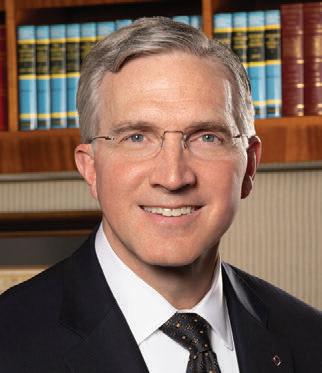
By Supreme Knight Patrick E. Kelly
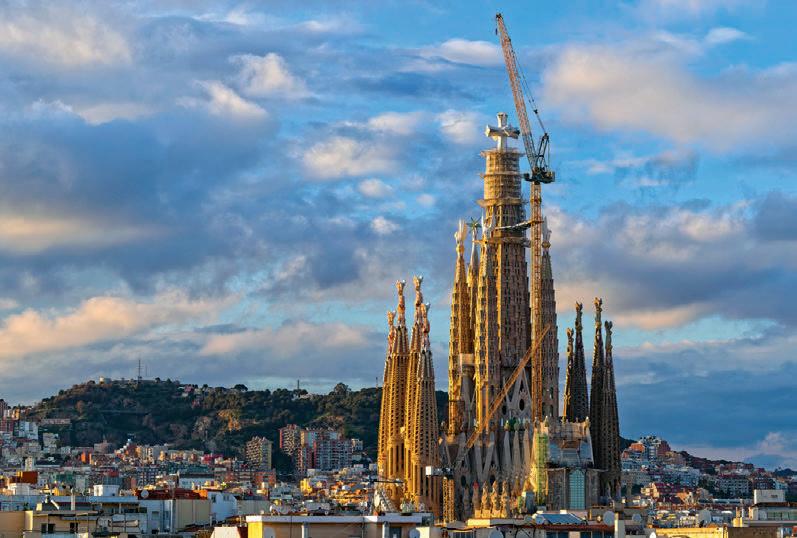
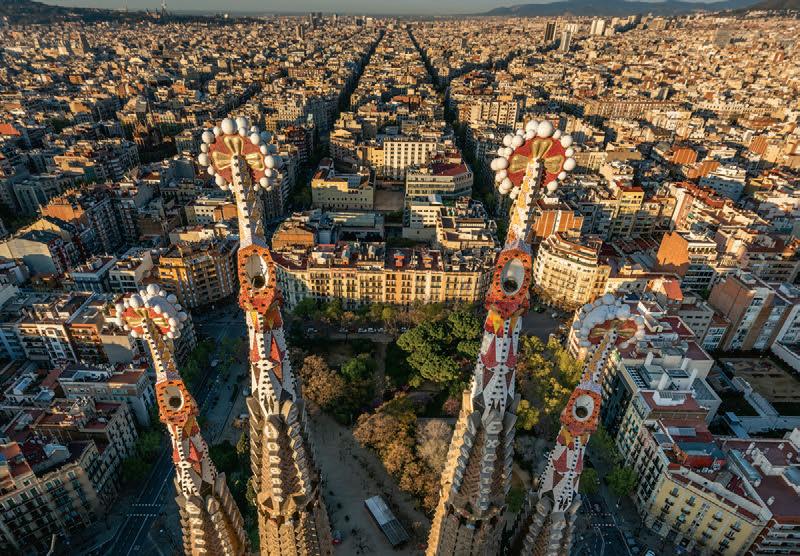
The sun sets on the Basilica of the Sagrada Família in Barcelona, Spain, designed by Venerable Antoni Gaudí (1852-1926). Pope Leo XIV will visit the church June 10 to commemorate the centenary of Gaudí's death (see page 10).
God’s Architect
PLUS: Works of Mercy – Throughout North America, local councils welcome and assist migrant families in their communities 16 10
The Church marks the 100th anniversary of the death of Venerable Antoni Gaudí as work on the Basilica of the Sagrada Família reaches a major milestone.
A Collaborator of the Creator By Chiara Curti Builders of Communion By Columbia staff
Heart of the Nation
A conversation with Archbishop Alexander Sample of Portland about the consecration of the United States to the Sacred Heart of Jesus.
Christ Among the Campesinos
California State Council’s outreach program serves thousands of migrant farmworkers and their families.
By Elisha Valladares-Cormier
4 Learning the faith, living the faith
Amid growing division and mistrust, true patriotism strengthens civic friendship, upholds the dignity of every person, and advances the common good.
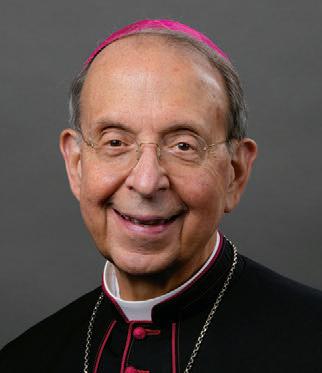
By Supreme Chaplain Archbishop William E. Lori
6 Knights of Columbus News Knights March for Life Worldwide • Order Files Amicus Brief on Behalf of First Responders • Order Recognized With Path to Peace Award • Pilgrimage Center Explores Knights’ Role in US History • McGivney Fellowship Strengthens Leaders for Service
8 Building the Domestic Church
A series of columns on family life, leadership and financial stewardship
26 Knights in Action Reports from councils and assemblies, representing Faith in Action ON THE COVER
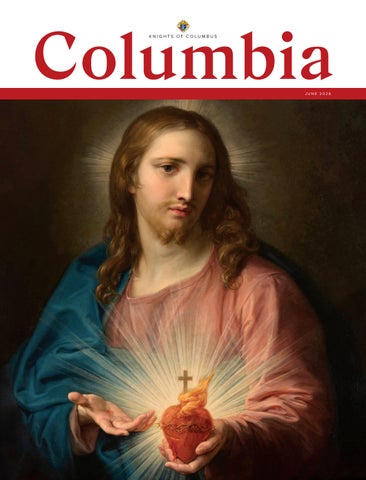
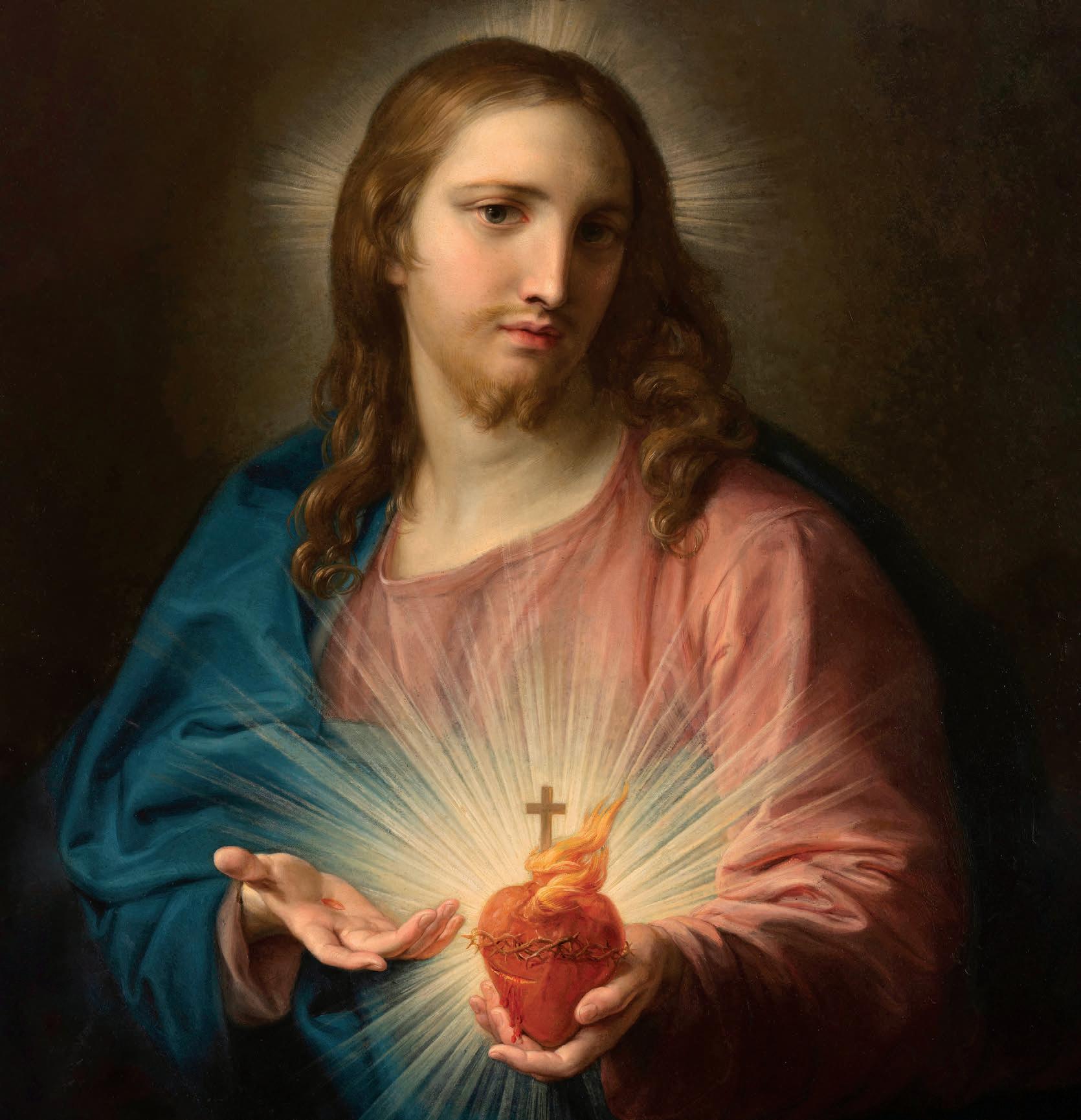
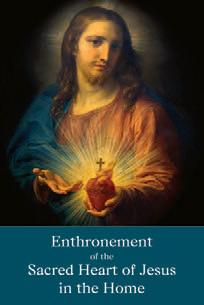
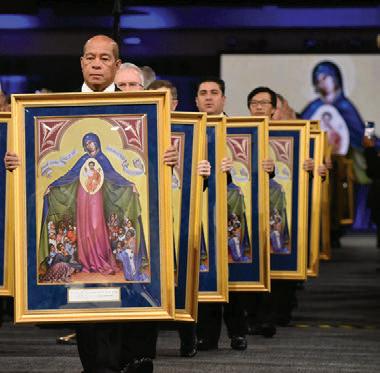
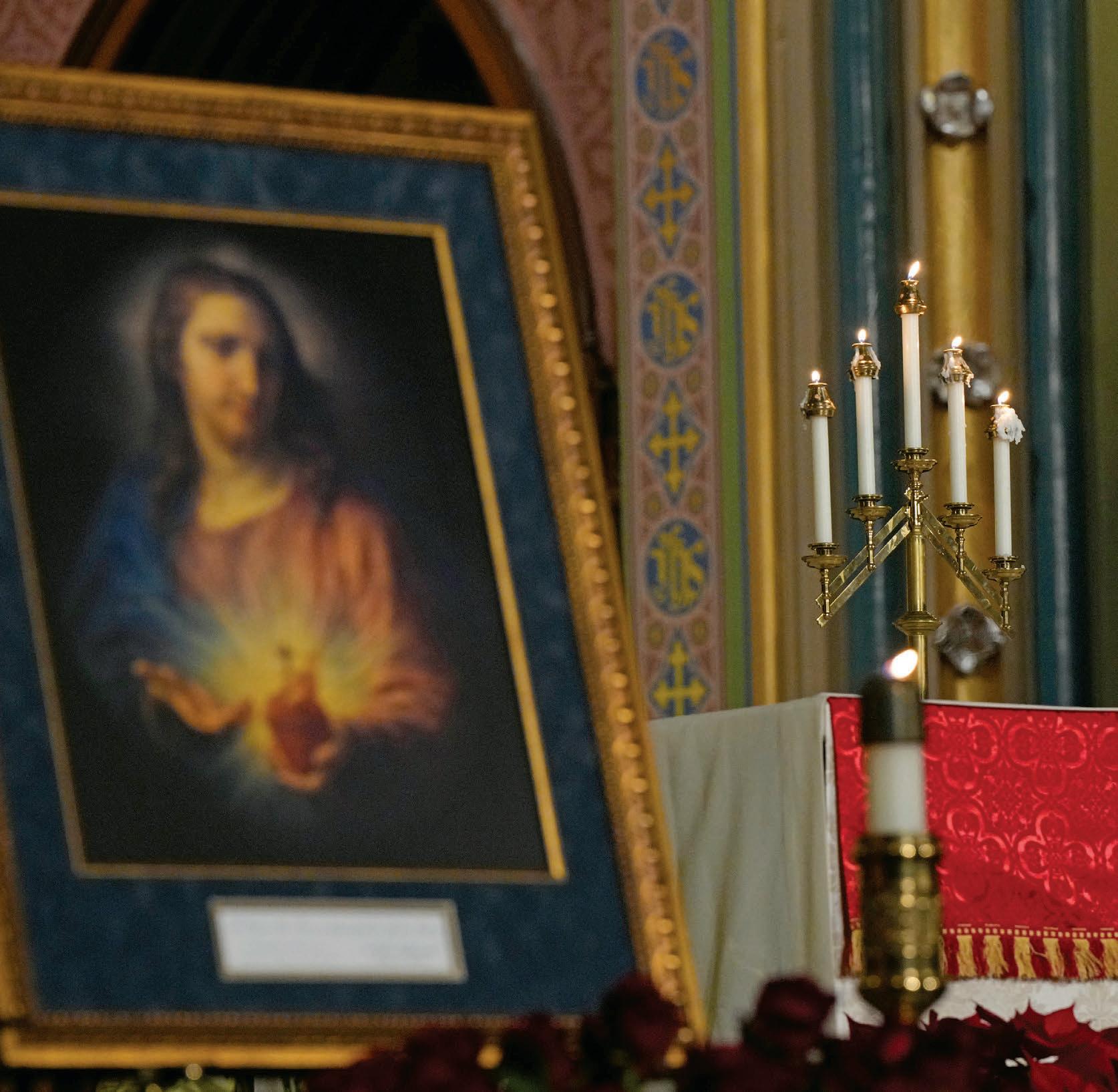
The Sacred Heart of Jesus is depicted in a renowned 18th-century painting by Pompeo Batoni, recently restored with support from the Knights of Columbus.
Membership in the Knights of Columbus is open to men 18 years of age or older who are practical (that is, practicing) Catholics in union with the Holy See. This means that an applicant or member accepts the teaching authority of the Catholic Church on matters of faith and morals, aspires to live in accord with the precepts of the Catholic Church, and is in good standing in the Catholic Church. kofc.org/join
IN MAY 1964, the Catholic monthly Znak in Kraków, Poland, published a brief meditation titled “Reflections on Fatherhood.” A poetic monologue by a man named Adam, the text wrestled with loneliness, dependence and the meaning of fatherhood. At one point, Adam realizes: “After a long time I came to understand that You do not want me to be a father if I am not also a son.”
The meditation, signed with a literary pseudonym, was written by then-Archbishop Karol Wojtyła during the Second Vatican Council, as he emerged as a leading theologian. It distilled the central insights of a larger dramatic work, Radiation of Fatherhood, published only after Wojtyła’s 1978 election as Pope John Paul II. Subtitled “A Mystery,” the play represented the culmination of ideas he had explored in his earlier drama The Jeweler’s Shop and in Love and Responsibility, both published in 1960. He would continue developing these themes throughout his papacy, beginning with his Theology of the Body catecheses and Familiaris Consortio, emphasizing that the human person is made for communion.
In his 1988 apostolic letter Mulieris Dignitatem (On the Dignity and Vocation of Women), John Paul II observed: “The man — even with all his sharing in parenthood — always remains ‘outside’ the process of pregnancy and the baby’s birth; in many ways he has to learn his own ‘fatherhood’ from the mother” (18). The passage echoes Radiation of Fatherhood, in which the Mother tells Adam: “The radiation of fatherhood passes through me, acts through my motherhood.” Elsewhere, the character Monica reflects: “So father grew in me through mother.” For Wojtyła, fatherhood is not self-generated, but something received and learned through relationship.
A year after Mulieris Dignitatem, John Paul II wrote in his apostolic exhortation Redemptoris Custos (Guardian of the Redeemer), “St. Joseph was called by God to serve directly the person and mission of Jesus through the exercise of his fatherhood” (8). The exhortation marked the centenary of the first papal encyclical on St. Joseph, in which Pope Leo XIII strikingly began not with Joseph alone, but with his relationship to Mary and Jesus: “Joseph was the spouse of Mary and reputed father of Jesus Christ. From these sources have sprung his dignity, his holiness, his glory” (Quamquam Pluries, 3). The late 19th century witnessed a flowering of devotion to St. Joseph and the Holy Family amid rising secularism. In 1893, Leo XIII instituted a feast of the Holy Family for wider celebration in the Church; a decade earlier, the young architect Antoni Gaudí had assumed leadership of Barcelona’s Sagrada Família — today a monumental basilica dedicated to the Holy Family (see page 10).
As someone who for decades has studied the thought of St. John Paul II and has long been devoted to St. Joseph, I have come to appreciate these insights differently after marrying last spring and recently welcoming our first child, a daughter. Watching my wife embrace motherhood with tenderness and joy has helped me understand my own fatherhood — that it is first received as gift and needs to be learned in humility. The gifts of life and parenthood are not something we possess, but are entrusted to us by God. “For this reason, I kneel before the Father, from whom every family in heaven and on earth is named” (Eph 3:14-15). B
Alton J. Pelowski, Editor
Featured Resource: Enthronement of the Sacred Heart
On June 11, the U.S. bishops will consecrate the United States to the Sacred Heart of Jesus (see page 16). Knights of Columbus and their families are invited to take part in this national act of devotion by placing an image of the Sacred Heart in a place of honor in their homes. The ceremony of enthronement contained in this K of C booklet, also available in Spanish and French, is a powerful way for families to discover anew Christ’s love for them. To learn more or to purchase, visit kofc.org/sacredheart or kofc.org/shopcis.
Columbia
PUBLISHER
Knights of Columbus
SUPREME OFFICERS
Patrick E. Kelly
Supreme Knight
Most Rev. William E. Lori, S.T.D.
Supreme Chaplain
Arthur L. Peters
Deputy Supreme Knight
John A. Marrella
Supreme Secretary
Ronald F. Schwarz
Supreme Treasurer
Anthony R. Picarello Jr. Supreme Advocate
EDITORIAL
Alton J. Pelowski
Editor
Matthew Kirby
Editorial Director
Andrew J. Matt
Managing Editor
Elisha Valladares-Cormier
Senior Editor
Megan Stibley
Associate Editor
Paul Haring
Manager of Photography
Cecilia Engbert
Content Producer
Blessed Michael McGivney (1852-90) – Apostle to the Young, Protector of Christian Family Life and Founder of the Knights of Columbus, Intercede for Us.
HOW TO REACH US
COLUMBIA
1 Columbus Plaza
New Haven, CT 06510-3326
columbiamagazine.org columbia@kofc.org
Address changes
203-752-4210, option #3
addresschange@kofc.org
Columbia inquiries
203-752-4398
K of C Customer Service
1-800-380-9995
The Heart of the Father
Through the Eucharist, Christ teaches that authentic fatherhood begins with receiving and sharing the sacrificial love of God
By Supreme Knight Patrick E. Kelly
AS WE CELEBRATE Corpus Christi Sunday (June 7), the Solemnity of the Sacred Heart of Jesus (June 12) and Father’s Day (June 21), we are invited to meditate more deeply on the love of Christ revealed in the Eucharist and reflected in the vocation of fatherhood.
This year, in a special way, the U.S. bishops will consecrate the United States to the Sacred Heart of Jesus on June 11 — as part of the broader observance of the 250th anniversary of the signing of the Declaration of Independence. The formal act of consecrating the nation to the Sacred Heart is a way of entrusting our country to the love and guidance of Christ. According to the U.S. bishops, the consecration is meant “to remind everyone of our task to serve our nation by perfecting the temporal order with the spirit of the Gospel.” That idea — “perfecting the temporal order with the spirit of the Gospel” — is a tall order. When contemplating something so big, I find it helpful to think of something a little closer to home. St. John Paul II reminded us that “the future of humanity passes by way of the family” (Familiaris Consortio, 86).
What does devotion to the Sacred Heart have to do with the family? How can this devotion help us become better husbands and fathers? I believe the answer lies in meeting Christ in and through the Eucharist. The Mass teaches us four lessons essential to understanding what it means to be a father. First, the Mass connects us to the heart of Christ and gives us the true heart of a father. In revealing the Father’s love, Christ is our best guide for what it means to be a father, and he shows us that being a good father begins with being a good son. Jesus said: “I came down from heaven not to do my own will but the will of the one who sent me” (Jn 6:38). The better we understand who we are as God’s sons, the better fathers we will be to our own children.
Second, in the sacred liturgy we hear the Father’s voice, and he teaches us. Through the readings, we hear our heavenly Father encouraging, correcting and instructing us. We see Jesus modeling how we should act and think. We learn about forgiveness and mercy. The Mass, then, reveals the meaning of a father’s love in all its dimensions — a love we are called to make our own and pass on to our children.
The third lesson the Mass teaches is sacrificial love. This is the very essence of the Eucharist. Our heavenly Father made the ultimate sacrifice — his only Son — out of love for us. It was an act in which Jesus himself fully shared. Christ shows us that giving one’s life for others is the greatest gift one person can give another.
As fathers, we are called to make a similar sacrifice — to give all that we are and all that we have for the sake of our wives and children. Every family needs a man willing to love sacrificially in this way. We learn that love through the sacrifice of Christ that we encounter in the liturgy.
Finally, the Mass teaches us that Jesus entrusts us with a mission and sends us forth. Yes, modern life is complex, but God works through his creation — and he works through us. He is greater than the forces shaping our world, and he gives us the capacity to achieve great things if we rely on him.
The most important difference we can make in shaping the world is in shaping our children. The Eucharist gives us the strength to fulfill this calling and to form our families — especially our children — as disciples of Jesus Christ.
Devotion to the Sacred Heart is not complicated. At its core, it means having a personal relationship with Christ. And the best way to deepen that relationship is through the Eucharist, where Christ teaches us to love with his own heart.
Vivat Jesus!
In revealing the Father’s love, Christ is our best guide for what it means to be a father, and he shows us that being a good father begins with being a good son.
Healing a Divided Nation
Amid growing division and mistrust, true patriotism strengthens civic friendship, upholds the dignity of every person, and advances the common good
By Supreme Chaplain Archbishop William E. Lori
NEXT MONTH, the United States will celebrate the 250th anniversary of the Declaration of Independence. For many, it will be a moment of patriotic fervor. For everyone, it should be a moment of grace and responsibility.
As Knights of Columbus, we are patriots. We love the lands of our birth, and many of our brother Knights have given their lives in defense of their countries. Patriotism is woven into the fabric of our Order. Indeed, our Fourth Degree is known as the “patriotic degree.”
Yet our patriotism is not blind. In celebrating this 250th anniversary, we give thanks to God for what is noble in America while not forgetting what is painful and flawed. The Declaration of Independence proclaimed that all are created equal and endowed by our Creator with inalienable rights. Two and a half centuries later, we often struggle to live up to that ideal. Many were excluded from those rights for generations — and some still are.
Perhaps most painful are our deep divisions. Our political culture is wounded. Public discourse is more vitriolic than ever, and the threat of political violence hangs in the air. Trust of our institutions and leaders is at an all-time low. Often, politics is more about theater than good governance, more about holding power than defending human dignity, and more about winning partisan victories than securing the common good.
As a result, our unity as a nation is endangered. We have lost our ability to discuss our differences with civility and our capacity for civic friendship. Everyone is expected to take sides, identifying as a Democrat or a Republican before identifying as Americans or, indeed, as Catholics. We have lost the capacity to listen, to empathize, to walk together as “one nation under God.”
Patriotism is not oblivious to a nation’s shortcomings. But neither do patriots
content themselves with complaining about what’s wrong. True patriotism spurs us to help our country become the best version of itself — to make things better, to repair a broken system and a shattered web of relationships, beginning with the family, and to recover our highest ideals, especially the dignity of the human person at every stage of life, from conception until natural death. What, then, can we do?
As patriotic Knights of Columbus, let us do what we must always do: put into practice the principles of our Order — charity, unity and fraternity.
Charity takes many forms: feeding the hungry, protecting the widow, the orphan and the outcast. It also involves listening to others, discerning what is good, and striving to walk together. This does not mean abandoning truth; it means truth and charity walk together. It also means leaving our comfort zone and encountering those with whom we disagree, not as opponents but as persons made in God’s image.
Unity requires responsibility. We are called to be builders of unity in the Church, for Jesus prayed that his followers would be one. Let us also be builders of unity in the broader culture by recognizing legitimate diversity where it exists and respecting the humanity of those with whom we disagree. Fraternity and friendship go hand in hand. Because we share a common humanity, we are to reach out to those in need. We also seek a culture of mutuality in which we both give and receive, supporting one another in our lives as believers and citizens.
In Blessed Michael McGivney, we encounter a priest who knew that following Christ is inseparable from building communities where human dignity is protected and hope is sustained. He reminds us that love of country and love of neighbor are not rivals but companions rooted in the Gospel. B
Let us be builders of unity in the broader culture by recognizing legitimate diversity where it exists and respecting the humanity of those with whom we disagree.
Photo by Paul Haring
Supreme Chaplain’s Challenge
A monthly reflection and practical challenge from Supreme Chaplain Archbishop William E. Lori
“[W]hoever does not take up his cross and follow after me is not worthy of me.” (Gospel for June 28, Mt 10:38)
Our fallen human condition involves a measure of suffering and trials. Our commitment as disciples of Jesus, Scripture tells us, necessarily means taking up our own crosses willingly. God will grant us the strength to endure all trials if we remain faithful, and our suffering can prove redemptive if we accept it and unite it to the passion of Christ. This doesn’t mean we can’t take steps to alleviate our suffering, but we are called to courageously bear our crosses, even when faced with persecution, and to thereby participate in the saving work of Christ.
Challenge: This month, I challenge you to pray the Divine Mercy Chaplet each day with the intention of uniting your daily sufferings with Christ’s passion and in solidarity with all persecuted Christians around the world.
To view future challenges, visit kofc.org/monthlychallenge
Catholic Man of the Month
St. José Gregorio Hernández Cisneros (1864-1919)
WHEN 27-YEAR-OLD José Gregorio Hernández Cisneros returned to his native Venezuela from Europe, he founded three university chairs in medicine. Despite his social prominence, he prioritized the poor: “I am not going to deny them consultations, and I am not going to make them go through the pain of telling me that they have no money,” he said. “God will help.”
Born in the Andean village of Isnotú, Hernández wanted to become a priest but pursued medicine at his family’s urging. After earning his medical degree, he continued his studies in Paris and Berlin, where he was known for his intelligence and virtue.
On returning to Caracas, he taught and practiced medicine, beginning each day with Mass and each lecture with the sign of the cross. A third-order Franciscan, he provided free consultations for impoverished patients and paid for their prescriptions out of his own pocket, earning the nickname “doctor of the poor.”
In 1908, Hernández entered a Carthusian charterhouse near Lucca, Italy, but returned to Venezuela after nine months due to ill health. He twice pursued seminary studies, first in Caracas and later in Rome, but his lifelong desire to become a priest remained unfulfilled. He ultimately devoted himself to medicine, making important contributions to immunology and bacteriology, pioneering laboratory diagnosis and treating influenza patients during the 1918 pandemic.
On June 29, 1919, Hernández was struck by a car outside a pharmacy while delivering medicine to a sick person. After receiving last rites, he called out, “Oh, Blessed Virgin,” and died at age 54. He was canonized by Pope Leo XIV in 2025. His memorial is celebrated Oct. 26. B
June 7 The Most Holy Body and Blood of Christ (Corpus Christi)
June 11
St. Barnabas, Apostle
June 12 The Most Sacred Heart of Jesus
June 13 The Immaculate Heart of the Blessed Virgin Mary
June 24 The Nativity of St. John the Baptist
June 29
Sts. Peter and Paul, Apostles
Let us pray that sports be an instrument of peace, encounter, and dialogue among cultures and nations, and that they promote values such as respect, solidarity, and personal growth.
Knights March for Life Worldwide
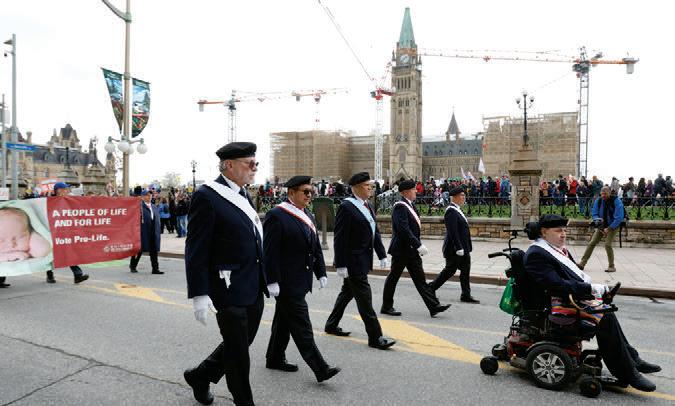
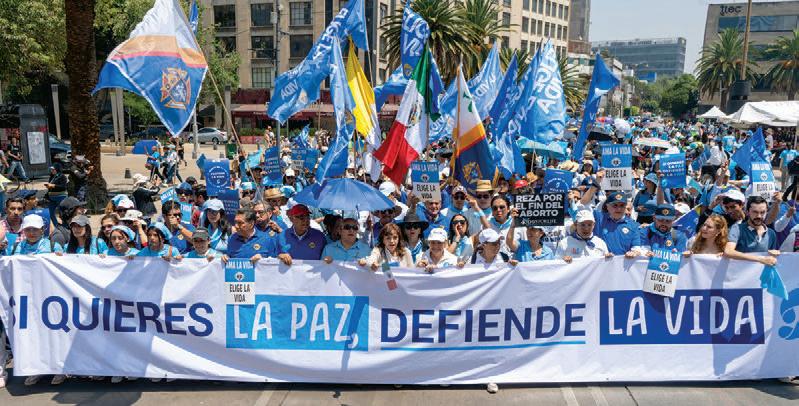
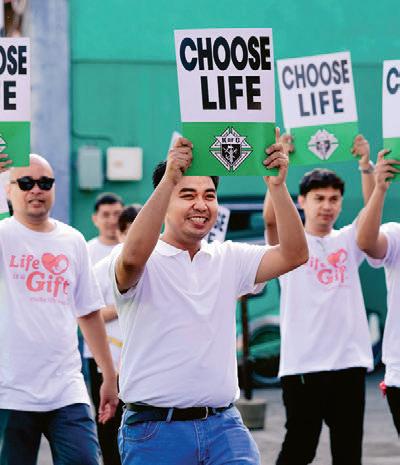
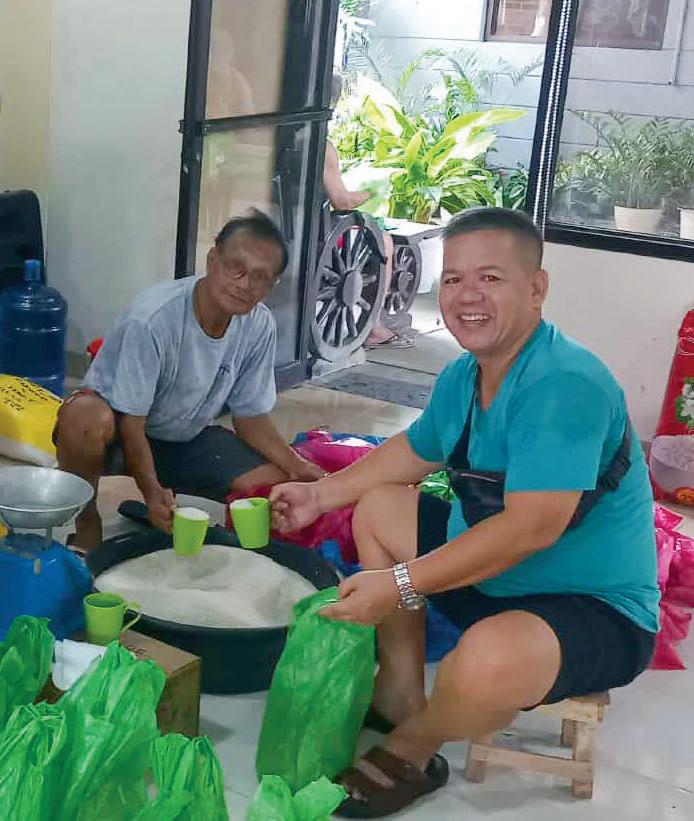
THIS SPRING, Knights of Columbus joined tens of thousands of demonstrators at pro-life marches and rallies held around the world. Clockwise from top left: A Fourth Degree honor guard leads pro-life demonstrators past Parliament Hill during the 29th National March for Life in Ottawa, Ontario, on May 13. Canada’s largest annual prolife demonstration, the event drew thousands of participants from across the country. • Knights from councils throughout Mexico participate in the country’s annual March for Life, joining more than 2,000 people in downtown Mexico City on April 25. The march is held each year near the anniversary of the Mexico City government’s decriminalization of abortion. • Knights participate in the Diocese of Balanga’s March for Life in Bataan, Luzon North, on March 7 — one of several pro-life marches across the Philippines, drawing hundreds of Knights from each of the country’s four jurisdictions B
Order Files Amicus Brief on Behalf of First Responders
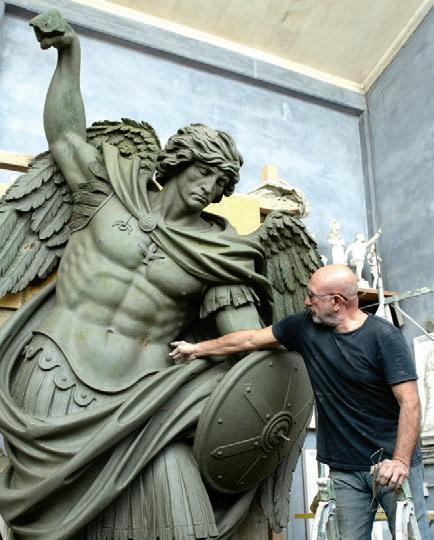
THE KNIGHTS OF COLUMBUS is among a coalition of 18 organizations and scholars — including major firefighter and police associations — that filed friend-of-the-court briefs asking Massachusetts’ highest court to protect the City of Quincy’s freedom to erect statues of St. Michael the Archangel and St. Florian in honor of its firefighters and police officers.
Last year, the American Civil Liberties Union sued the city and Mayor Thomas Koch on behalf of residents opposed to the mayor’s plan to install 10-foot statues of Florian and Michael on the façade of the city’s new public safety headquarters, securing a preliminary injunction blocking their installation. The Massachusetts Supreme Judicial Court heard arguments from both sides May 6.
According to the Becket Fund for Religious Liberty, counsel for the City of Quincy, Michael and Florian have long
served as symbols of law enforcement and firefighting. Their images — or symbols such as the Florian cross — appear on uniforms and public buildings in the United States and around the world and are used by police officers and firefighters regardless of religious affiliation.
The Knights’ brief cites the Order’s longstanding ties to the first responder community, including scholarships for children of firefighters and law enforcement officers killed in the line of duty, financial assistance provided to families affected by the Sept. 11 terror attacks, Blue Masses organized by local councils and disaster relief efforts undertaken alongside first responders. “Police and firefighters — so many of whom are, or work with, brother Knights — should not be consigned to a work environment utterly stripped of religious meaning,” the brief states. B
Russian-American sculptor Sergey Eylanbekov works on a statue of St. Michael the Archangel commissioned for the city of Quincy, Mass., at his studio in Pietrasanta, Italy.
Order Recognized With Path to Peace Award
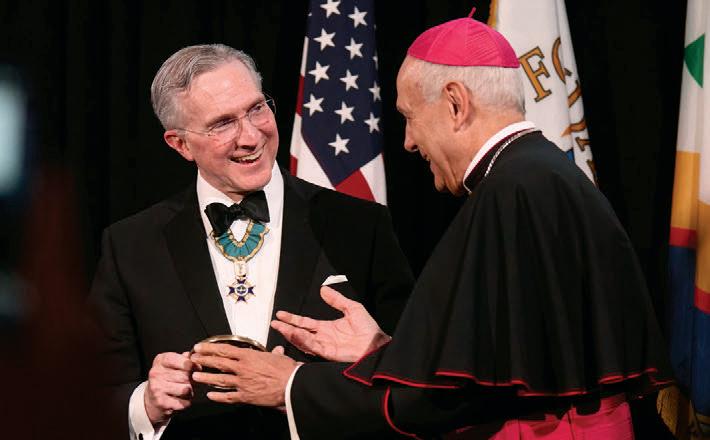
THE PATH TO PEACE FOUNDATION, which supports the Permanent Observer Mission of the Holy See to the United Nations, honored the Knights of Columbus and Supreme Knight Patrick Kelly with the 2026 Path to Peace Award on May 18 in New York. Presented by Archbishop Gabriele Caccia, apostolic nuncio to the United States and formerly the Vatican’s permanent observer to the U.N., the award recognized the Order’s outstanding service to the cause of peace.
“On behalf of the Knights of Columbus, I thank you for the honor of this award. It reflects so much of the work that our 2.2 million members do around the world,” said Supreme Knight Kelly. “Real peace depends on recognizing that we are all made in the image and likeness of God. And charity is how we live out that truth. Charity is how we make our proclamation of the dignity of the other real.” B
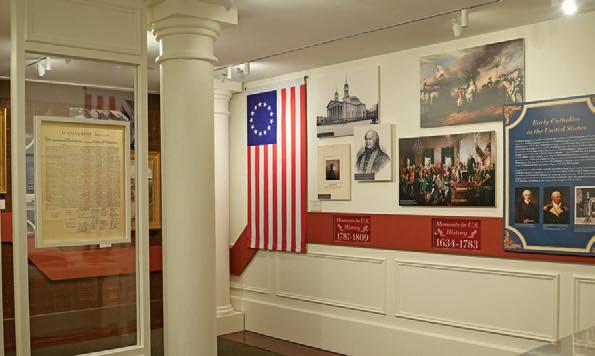
Pilgrimage Center Explores Knights’ Role in US History
TWO NEW EXHIBITIONS at the Blessed Michael McGivney Pilgrimage Center in New Haven, Connecticut, explore the Order’s relationship with American history.
In God We Trust: The Knights of Columbus and the American Experience (pictured above), on view through Sept. 5, examines how U.S. history shaped the Order’s founding and development into a global institution. The exhibition also highlights how the Knights contributed to American society through the principles of charity, unity, fraternity and patriotism.
Illustrating America: Columbia Magazine Covers, which runs through Sept. 6, features original illustrations and studies for covers of the monthly magazine of the Knights of Columbus from the 1950s to the ’80s. B
McGivney Fellowship Strengthens Leaders
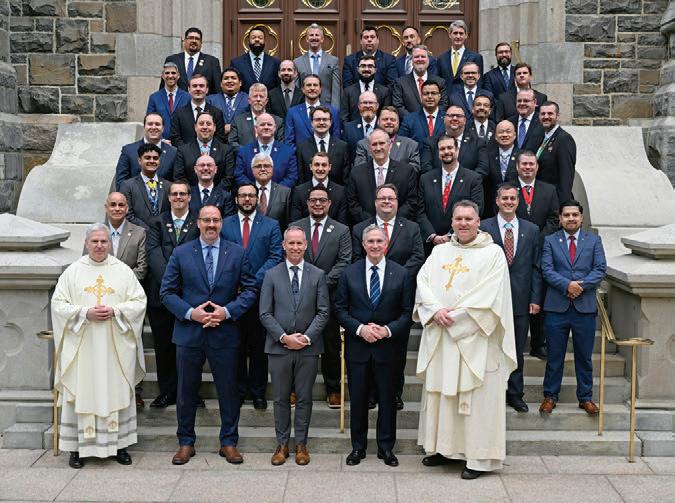
THE INAUGURAL CLASS of McGivney Fellows graduated from a two-year leadership formation program during a Mass and ceremony at St. Mary’s Church in New Haven, Connecticut, on May 2.
The McGivney Fellowship is a selective leadership formation experience designed for Knights who demonstrate spiritual depth and leadership potential. Through monthly formation sessions, guided reading and dialogue, nearly 50 men were formed in the principles of Christian leadership to apply in their councils, parishes, families and workplaces.
Supreme Knight Patrick Kelly, who delivered the commencement address, praised the graduates for their commitment to the program and encouraged them to remain firm in their call to leadership.
“We live in a time of plummeting trust in our institutions,” the supreme knight said. “But I firmly believe that through this fellowship, you are now equipped to be the leaders we need … to show the way forward in a world in which so many people seem to be simply lost or rudderless.” B
for Service
Supreme Knight Patrick Kelly (front row, second from right) stands with McGivney Fellowship graduates in front of St. Mary’s Church in New Haven, Conn., following Mass on May 2.
Piety and Patriotism
By William Edmund Fahey
The virtue traditionally held to be most important for civic leaders may surprise you: piety. In the classical world, to be pious meant being willing to sacrifice all in defense of one’s patria , “fatherland,” embracing both its people (especially one’s family) and the land itself, with its natural riches and heritage.
Aeneas, the hero of Virgil’s epic poem The Aeneid , is known as “the pious.” He struggles against the temptations and trials that beset all men, yet prevails, establishing a homeland for his people when all seemed lost.
Today, the word piety has lost its civic meaning and is associated with elderly ladies in church. I propose an updated expression: “critical patriotism.” By “critical,” I do not mean harsh or snarky, but a clear-sighted determination to remain fixed on what is good and right and just.
Critical patriotism was exemplified by Charles Carroll, the only Catholic signer of the Declaration of Independence. Though slow to embrace the Revolution, he loved Maryland and the emerging American republic, and he guided his state and nation with faith and moral wit.
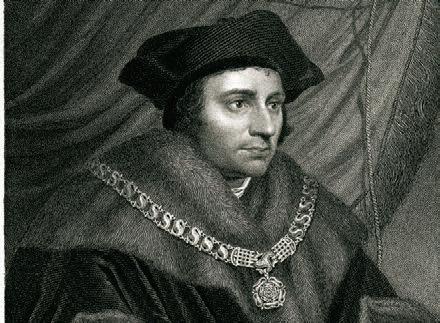
St. Thomas More, who lived 250 years earlier, gives perhaps the clearest expression of this virtue. His last words were, “I die the king’s good servant, and God’s first.” B
— William Edmund Fahey, Ph.D., is a fellow of Thomas More College of Liberal Arts in Merrimack, N.H., where he served as president from 2009 until 2026. He is a member of St. Stanislaus Council 17027 in nearby Nashua.
MISSION OF THE FAMILY
Loving Under Pressure
When family emotions run high, it helps to have a plan to lower the temperature
By Jack Calcutt
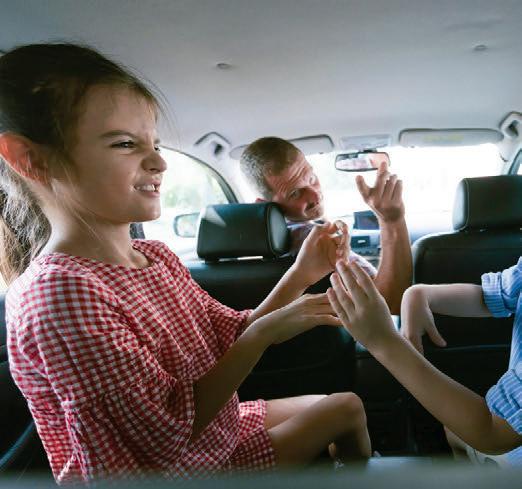
“GIVE IT BACK! I mean it! It’s mine!” exclaims our 8-year-old son from a room he shares with older brothers. The activity — if you could not tell — is getting dressed for Sunday Mass. Our family’s intent is to keep the Sabbath day holy, but the situation devolves while Dad tries to take a shower.
“I don’t like it! Get away!” The shouts grow louder as I grab a robe and run down the hall in time to disentangle a mess of humans, clothes and some inconsequential item that has become as desirable as the “one ring to rule them all.”
My temptation is to counter with the same energy: “Stop messing around — or we are going to be late! Give me that!” This doesn’t work. After a stern talking-to and a swift departure, the argument continues over who got “the precious” confiscated by Dad-cop. Mom-cop is no better. “They have done this four times already this week” somehow doesn’t inspire the repentance we know is due.
Negative words and emotions have a contagious effect, making timely arrival at Mass (or any destination) nearly impossible. Instead of calm and focus to get shirts buttoned and shoes laced, we get yelling, grabbing and crying.
After many mistakes, my wife and I adopted three simple practices that improve our odds of piling into our pew before the procession reaches the sanctuary:
Take care of yourself first: We are better helpers and less prone to conflict when we avoid multitasking and manage ourselves before directing our attention to others.
Be present: Pick one person, and focus on the relationship. The best intervention is relational. It begins in love: a hug to console, a reminder of the goal, a helper to track down a loose sock or tie a tie.
Youngest to oldest: Available help goes to those most in need. When the youngest children are buckled in the car, happily sipping from their water bottles, they are no longer emotional wild cards or easy targets for mischievous siblings.
Ironically, the “positive energy” that gets us out the door faster is just our family learning to love each other better under pressure. Jesus implored us to love our neighbor as we love ourselves, and to serve him by serving the least among us. When we learned how to put this into better practice at home, we were better at loving him in the Eucharist — and even arriving on time. B
JACK CALCUTT is a member of Most Pure Heart of Mary Council 4254 in Topeka, Kan., where he lives with his wife, Katie Scarlett, and their nine children.
FAMILY FINANCE
Should I convert my traditional IRA to a Roth IRA?
By Michael Finneran
Market volatility can distract from longterm retirement planning, making it all the more important to maintain both short- and long-term strategies for saving and investing. One strategy to explore is converting a traditional IRA to a Roth IRA. If you’re thinking of making the switch, here are some key factors to consider: Current vs. future taxes: The income from converted funds will be taxed in the current year, potentially pushing you into a higher bracket. This may make sense if you expect to be in a higher tax bracket during retirement or believe federal
FOR YOUR MARRIAGE
Little Marriage Helpers
tax rates will rise. The benefit of taxfree growth, later withdrawals and no required minimum distributions (RMDs) during your lifetime may offset the taxes paid today. Roth IRAs may also provide tax advantages for heirs.
Timing: Converting to a Roth often makes the most sense during lower-income years, in years when market values are down (allowing you to convert more shares for the same tax cost), or before RMDs begin at age 73. Conversions can be made regardless of income level.
Permanent decision: A Roth conversion is permanent; you cannot “recharacterize” the transfer back to a traditional IRA.
The 5-year rule: This rule generally prevents penalty-free withdrawals of converted earnings (and principal for
those under age 59½) for five years, starting Jan. 1 of the conversion year. Consider whether you might need access to this money sooner.
As you plan for retirement, our financial professionals can help you navigate your overall portfolio. Visit kofc.org/familyfinance for more resources. B
— Michael Finneran is vice president of field management at the Knights of Columbus and a member of St. Pius X Council 16347 in Fairfield, Conn.
*K of C professionals do not provide tax advice.
Far from being a hindrance, children offer spouses unexpected ways to deepen their love
By Philip Kosloski
WHEN A COUPLE gets married, they also face the decision of whether to accept children lovingly from God. Many young couples today are hesitant, fearing how children will affect their marriage. They may think that children will somehow weaken their relationship, diluting the love that initially brought them together.
There is no question that children add a new dynamic to married life. Yet the reality is that children can actually bring spouses closer together and unite them in a bond that is stronger than before. Children are a blessing, one that can help a marriage rather than hinder it.
Part of how children can deepen a married couple’s love is by the way small children prompt spouses to make deliberate choices to spend time together. Early in our marriage, my wife and I had five children, all 5 years old or younger. Babies and toddlers require a great deal of time and
attention, and we were often worn out from all the running around we had to do each day.
Nevertheless, we made our marriage a priority and carved out specific time each day to spend with one another and to deepen our relationship. We simply had to be deliberate about it; otherwise, we could easily be swept up by all the needs of our children. Weekly date nights away from the kids also helped strengthen our bond, reminding us that in order for our family to thrive, our marriage had to be as strong as ever.
What may seem surprising to some people is how much married love grows over time. I love my wife more today than I did on the day of our wedding. Children are a big part of that equation, bringing us together in ways we never could have imagined. B
PHILIP KOSLOSKI writes for Aleteia and is the founder of Voyage Comics. He and his wife, Maggie, live with their six children in Wisconsin Rapids, Wis., where he is a member of Msgr. Reding Council 1558.
God’s Architect
The Church marks the 100th anniversary of the death of Venerable Antoni Gaudí as work on the Basilica of the Sagrada Família reaches a major milestone
“Ido not know if we have awarded this degree to a madman or to a genius,” declared Elies Rogent, director of the School of Architecture in Barcelona, after 26-year-old Antoni Gaudí received his diploma in 1878. “Only time will tell.”
Time has rendered a clear verdict not only on Gaudí’s genius, but also on its inseparable connection to his Catholic faith. That union of artistic vision and religious conviction gave rise to the Basilica of the Sagrada Família (Holy Family) — a majestic “Bible in stone” that attracts millions of visitors each year as one of the world’s most recognizable churches.
On June 10, Pope Leo XIV will celebrate Mass at the basilica to mark the centenary of Gaudí’s death. The Holy Father will also bless the newly completed central Tower of Jesus Christ, which now makes the Sagrada Família the tallest church in the world. The occasion comes just over a year after Pope Francis declared Gaudí venerable, recognizing his heroic virtue and advancing his cause for canonization.
Born in 1852 in the industrial Catalonian city of Reus, in present-day northeastern Spain, Gaudí developed an early fascination with craftsmanship, nature and the play of Mediterranean light. Frail health often kept him close to home as a child, sharpening his attentiveness to the natural world that would later define his architecture. “I captured the purest and most pleasurable images of Nature,” he later recalled, “the Nature that is always my Teacher.”
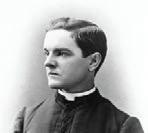
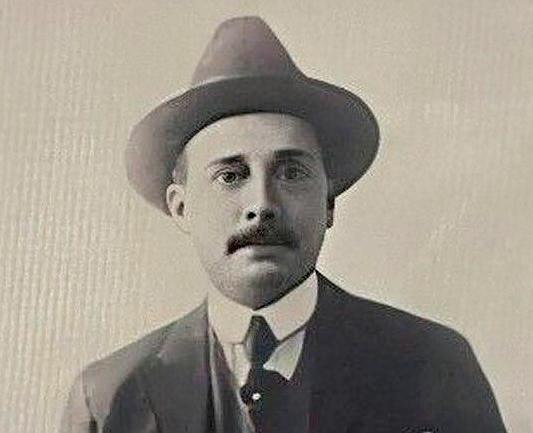
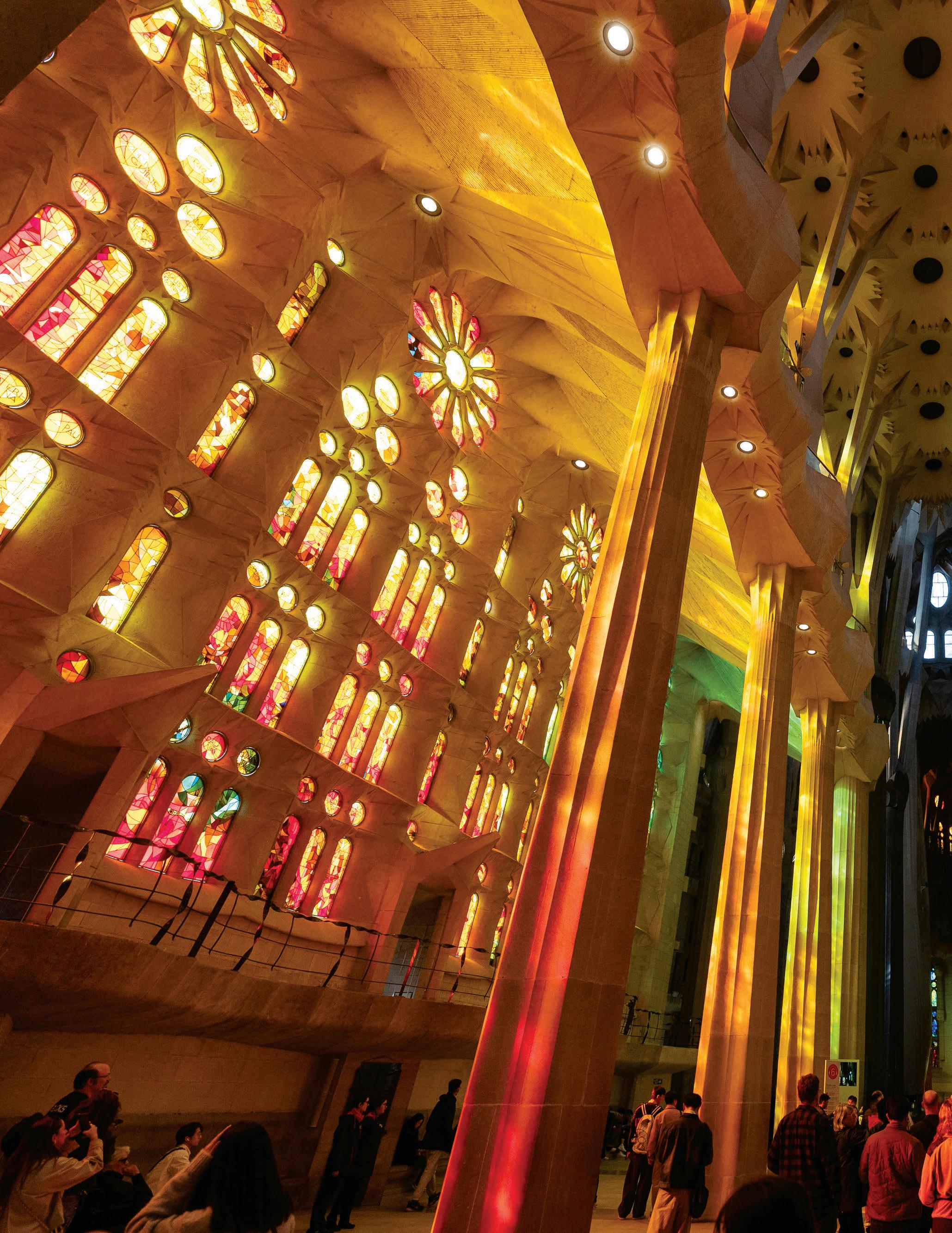
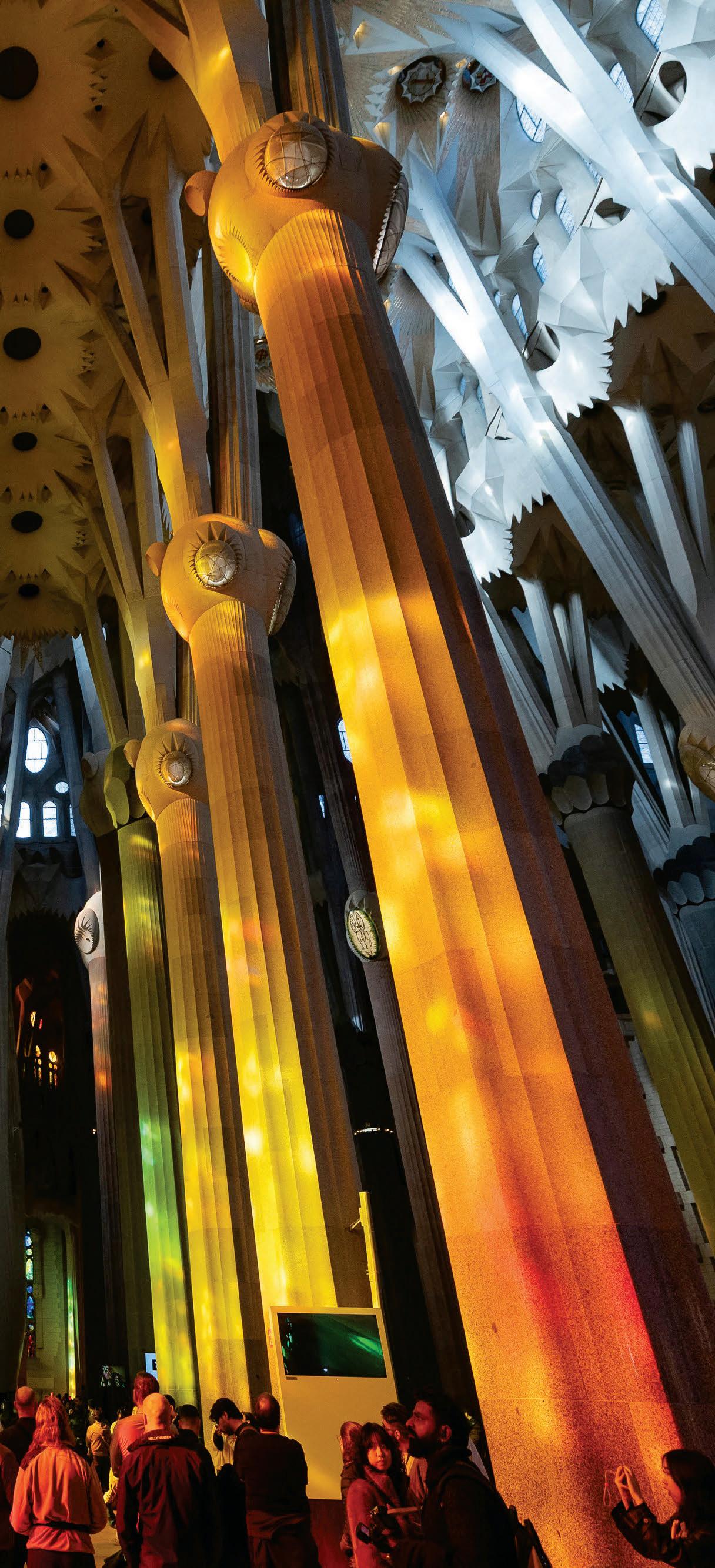
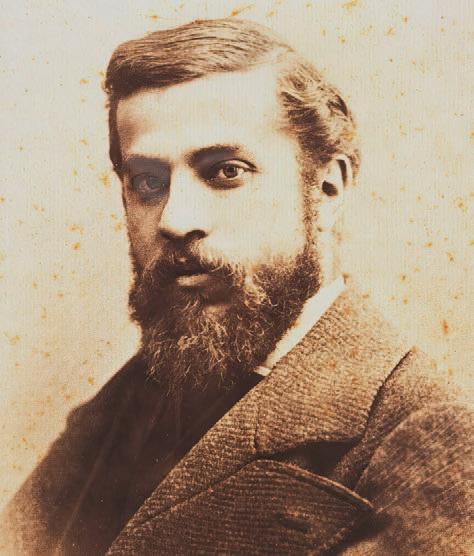
Pilgrims walk beneath the branching columns and stained-glass windows of the Basilica of the Sagrada Família in Barcelona on Feb. 3. The church has become the city’s most iconic landmark and the tallest church in the world. • Top right: Antoni Gaudí is seen in the earliest known photograph of the architect, taken in 1878.
A devout Catholic and daily communicant, Gaudí believed beauty should direct the human soul toward God. When he took over the Sagrada Família project in 1883, a year after construction began, he developed a singular architectural language that fused biblical symbolism, Gothic inspiration and forms drawn from creation itself. The basilica’s façades are adorned with plants, animals, saints and scenes from Scripture, while the interior rises like a luminous forest, its branching columns supporting vaults bathed in shifting color.
The poet Joan Maragall recounted Gaudí’s description of the basilica’s light: “He told us that, as the upper parts of the church would be pierced or perforated, they would let in rays of light at sunset that would fleck everything with light, without showing where they emanated from. ‘Like in a forest, exactly like in a forest,’ he would repeat, with the serene and smiling exaltation of a visionary.”
St. John Paul II visited the church in 1982, when it was still commonly known as the Sagrada Família Church of the Atonement. Pope Benedict XVI consecrated it for worship in 2010 and designated it a minor basilica. Today, the Sagrada Família and six other Barcelona buildings designed by Gaudí are UNESCO World Heritage sites.
In his homily at the basilica’s dedication, Pope Benedict explained that Gaudí sought to unite “the three books that nourished him as a man, as a believer and as an architect: the book of nature, the book of sacred Scripture, and the book of the Liturgy.” In the Sagrada Família, these three books became stone, glass and light.
Gaudí devoted the last 12 years of his life exclusively to the basilica’s design and construction. “A church is the only thing
worthy of representing the soul of a people,” he said, “for religion is the most elevated reality in man.”
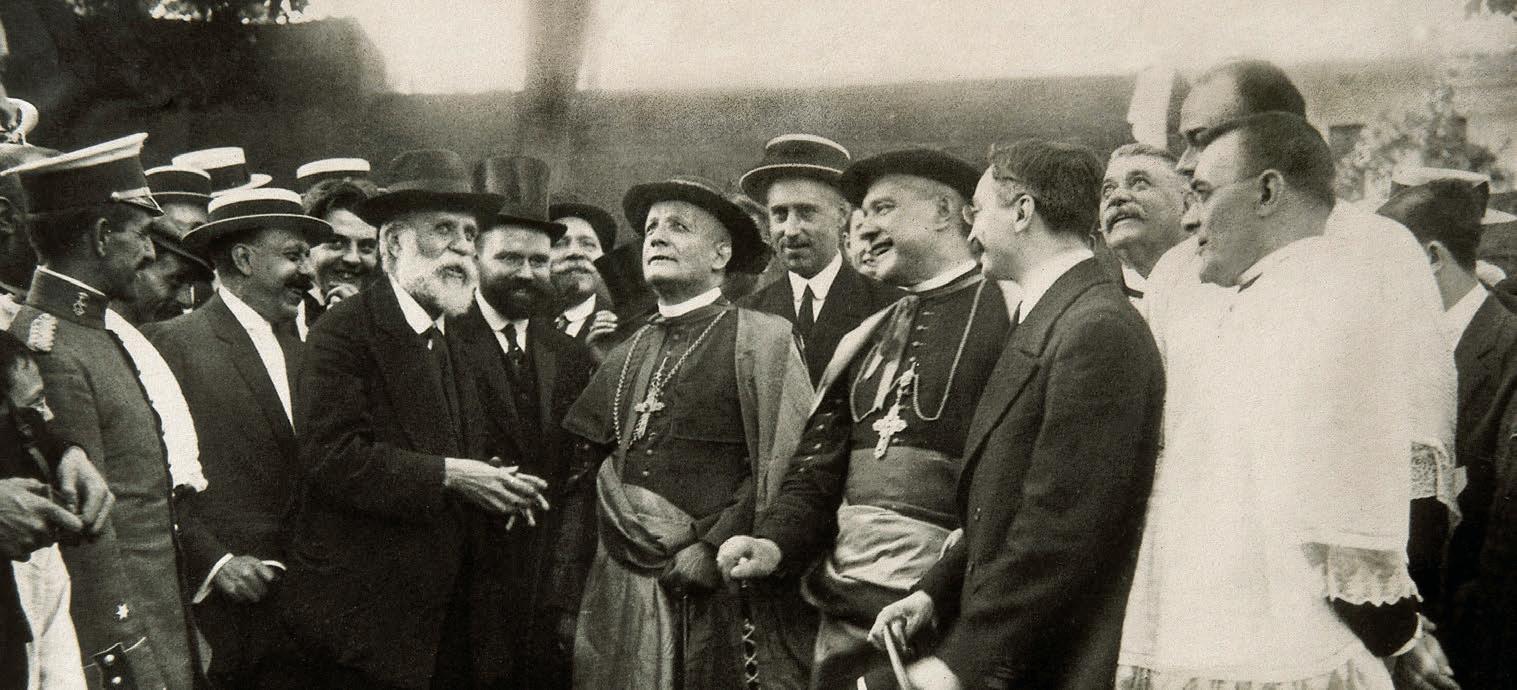
When Archbishop Francesco Ragonesi, the apostolic nuncio to Spain, visited the Sagrada Família in 1915 and gazed upon the masterpiece in progress, he reportedly told Gaudí, “You are the Dante of architecture.”
Like Dante’s Divine Comedy, Gaudí’s masterwork is animated by the love of the Triune God — a love reflected, in the Sagrada Família, through the life of the Holy Family. That vision gave shape to Gaudí’s art, his faith and his joyful sense of vocation. “My surname comes from the Latin gaudere,” he once said, “which means ‘joy.’” B
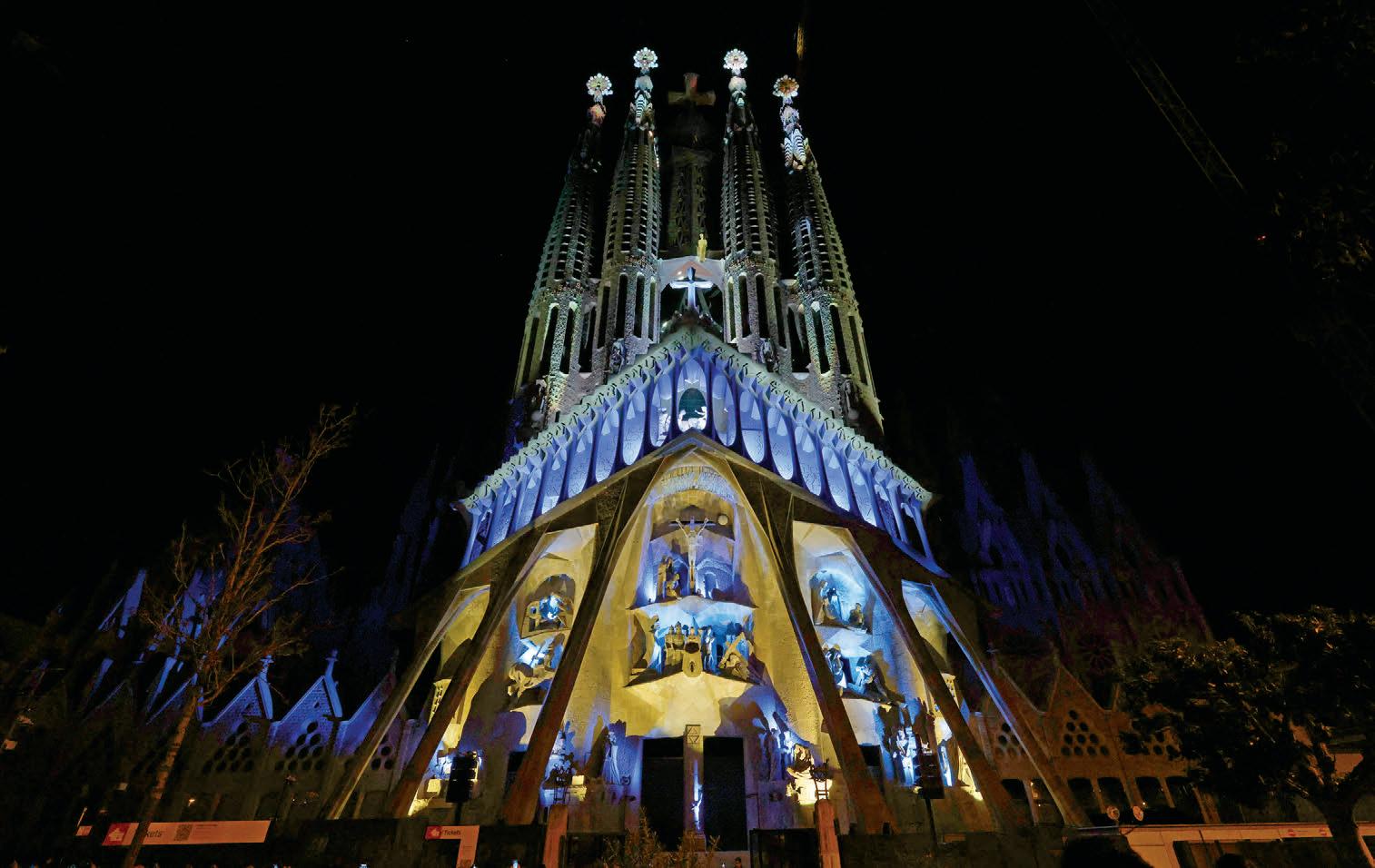
Lights illuminate the basilica’s Passion façade during a presentation narrating the passion and death of Jesus on Palm (Passion) Sunday, March 29. • Above: Four of the 18 towers adorning the basilica, topped by Gaudí’s hallmark mosaic pinnacles, rise over Barcelona.
FROM TOP: Photo by Pep Daudé courtesy of the Sagrada Família Foundation — Photo by Lluis Gene AFP via Getty Images
A COLLABORATOR of the Creator
The architectural legacy of Antoni Gaudí, culminating in the Sagrada Família, is an open-ended dialogue with God, nature and his fellow man
By Chiara Curti
Traditionally, an architect is judged by his ability to create beauty from mere matter. The image is so powerful that even descriptions of divine creation invoke God as architect. St. Thomas Aquinas, for example, employed this metaphor in his Summa Theologica when he wrote, “God, Who is the first principle of all things, may be compared to things created as the architect is to things designed.”
How, then, are we to understand the fact that Venerable Antoni Gaudí, an architect whose work was informed by his deeply held Catholic faith, viewed the discipline of architecture as alien to this image of creating perfection out of nothing?
“I am not building the Sagrada Família; she is the one building me,” he said of the masterwork that consumed the last 12 years of his life. “I would not want to finish the work, because it would not be fitting to do so.”
To those who knew him, Gaudí’s marvelous structures were the fruit of his search for truth — in life, faith and the discipline of architecture.
“Do you believe that a man who spends half his life making a unique work that grows slowly, almost desperately slowly, is only moved by an ardent imagination that is not presided over or governed by the most serene of insights?” asked Isidore Puig Boada, a student of Gaudí’s who served as director of construction at the Sagrada Família.
“Thirty-one years of study, of continuous efforts, ‘bringing together energies,’ as he says, have resulted in the wonders we contemplate today.”
IN PURSUIT OF A SUPREME IDEAL
Gaudí’s architectural career can be seen as a long preparation for the Sagrada Família. “The unity of his works should not surprise us, since each one was a study that was meant to be applied to the Church of the Holy Family, which is his life’s work,” said Lluís Bonet i Garí, Gaudí’s disciple, who helped save his architectural models from destruction by anarchists during the Spanish Civil War.
Most of Gaudí’s works, from the Mataró Workers’ Cooperative, his first major commission, to Casa Milà, the last private residence he designed, were left unfinished or were completed by other architects.
As for the one project of which he was both developer and architect, the Sagrada Família Schools — a small building
Above: Antoni Gaudí (third from left) accompanies Archbishop Francesco Ragonesi (center), apostolic nuncio to Spain, and Bishop Enrique Reig y Casanova of Barcelona during a visit to the Sagrada Família on July 2, 1915.
constructed for the children of the men working on the church — he chose a site where the expansion of the church would eventually necessitate its demolition. (Instead, the building was relocated after sustaining damage during the Spanish Civil War.)
In many cases, it was Gaudí’s deliberative pace that caused projects to remain incomplete.
“In spite of his excellent vision, he, the man who could improvise most easily, made and unmade his projects tirelessly, always looking for solutions, adjusting the harmonies, while growing closer and closer to the supreme ideal of perfection,” said Domènec Sugrañes, whom Gaudí chose to succeed him as architect of the Sagrada Família at the end of his life.
“This is why he produced relatively few buildings, although their quality and flawlessness more than made up for this.”
Gaudí’s buildings are reminiscent of Michelangelo’s intentionally unfinished sculpture series The Prisoners, in which human figures appear to struggle to free themselves from the blocks of marble from which they are carved. Like Michelangelo, Gaudí manages to transcend the work, to confront and accept incompleteness, expressing a deeper idea about creation, change and the relationship between the divine and the human.
For Gaudí, the work of art is God’s and, at the same time, incomplete. Man has been chosen by God as his collaborator in a continually unfolding creation.
his strength, began fiercely hammering the anvil, with truly apocalyptic blows and a tremendous ferocity,” the sculptor Ricard Opisso recalled.
Despite his exacting vision, Gaudí did not impose a rigid plan on the craftsmen and sculptors, but granted them freedom in the work’s execution. He upheld the dignity of the laborer at a time when factories imposed alienating conditions and workers had lost sight of the meaning of their labor.
His lectures on building methods, materials and engineering became so popular that a hall was set up in the basement of Casa Milà to accommodate the audience, which included workers from Gaudí’s own and other construction sites, young architects and the general public. Even then, crowds spilled onto the street, testifying to the architect’s broad appeal.
“The flexible clarity of his vision gave him free rein to develop the highest concepts of his architecture,” said Bonet i Garí. “For that reason, his works cannot be separated into mere parts; they are whole, elegant and filled with sincerity. Humbly recognizing the grace that God had granted him, he was never surprised when he found the solution to any architectural problem swiftly and easily.”
A BUILDER OF PEACE
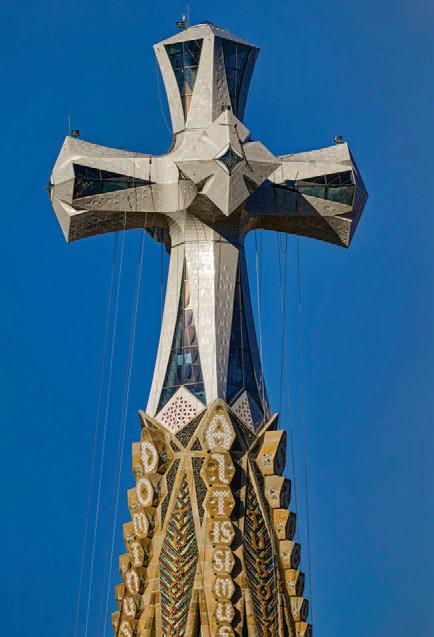
The central Tower of Jesus Christ, with its cross installed Feb. 20, rises above the Basilica of the Sagrada Família at 172.5 meters (566 feet).
Gaudí’s notion of the artist as participating in God’s act of creation informed his relationships with his clients and the workers who made his designs a reality.
Josep Bayó Font, the builder of the houses Casa Batlló and Casa Milà, described Gaudí’s close rapport with his builders: The architect would carefully observe the work of the laborers and then set to work alongside each of them, saying, “Like this, like this, like this … .”
Gaudí himself was no stranger to manual work. On more than one occasion, the architect demonstrated his instructions to perplexed ironworkers. “The brilliant Gaudí took off his jacket and waistcoat and, rolling up his shirt sleeves, swiftly picked up the heavy mallet and, with every ounce of
Our own era bears a certain resemblance to Gaudí’s. The pace of life accelerated by the industrial revolution has only intensified in the digital age, while technological progress continues to shape both human creativity and destruction. In such a world, Gaudí’s example teaches a method of building peace. He points to a world in which we are inspired by the work of others, allow freedom in its execution and, above all, do not think of ourselves as the owners of our work, but rather its stewards.
During Gaudí’s lifetime, the Spiritual Association of Devotees of St. Joseph, the group that initiated the Sagrada Família, printed postcards for donors bearing an image of the Nativity façade then under construction.
Significantly, the description on the cards did not read “Façade of the Nativity,” but rather “Façade of Life.” The phrasing is a fitting testimony to Gaudí’s conviction that what matters is not the final result, but the process — that is, time, dedication, life. As the master himself said, “The Nativity façade expresses the thrill and enjoyment of life!”
Gaudí’s architecture remains open, in a continuous dialogue with time, with people and with God, even if some work remains incomplete — like the Sagrada Família itself, whose construction continues today. When asked if he was the architect of the Sagrada Família, Gaudí replied that he was a “collaborator of the Creator.”
This is the legacy he leaves to all those who seek to collaborate with God as builders, perhaps of great structures, but above all of their own lives. B
CHIARA CURTI, a Barcelona-based architect and art historian, is the author of My Gaudí: The Biography Written by His Friends (Triangle Books, 2025) and Sagrada Família: Cathedral of Light (Triangle Books, 2022).
by
Photo
Dr. Guillermo Simon-Castellvi / Fiamc Press Services
Builders of Communion
In the late 19th century, Antoni Gaudí and Father Michael McGivney lived out parallel visions of faith in action
AT FIRST GLANCE, Venerable Antoni Gaudí and Blessed Michael McGivney would seem to have little in common. One was a Catalan architect whose masterpiece transformed the skyline of Barcelona; the other was an American parish priest who founded a fraternal society in New Haven, Connecticut. Yet the two men — both on the path to sainthood — shared striking convergences of time, circumstance and mission.
They were born just weeks apart in 1852. Gaudí, born June 25 in Reus, Catalonia, was the youngest of five children in a family of artisan coppersmiths and boilermakers. He later proudly recalled, “As a boy, I worked as a boilermaker.” McGivney, born Aug. 12 in Waterbury, Connecticut, was the firstborn of 13 children. His father, Patrick, was an iron molder, and Michael left school at age 13 to work in a local brass spoon factory to help support his family.
Faith and family were central and formative for both. As a student, Gaudí prayed the Little Office of the Immaculate Conception and absorbed the artistic and devotional environment of his childhood. McGivney, inspired by the parish priests of his youth, entered seminary as a teenager; the later death of his father made vivid for him the vulnerability of families left without a breadwinner.
enlightened.” In similar terms, Father Joseph P. Daley, a contemporary of Father McGivney, said the founder’s “special vocation was to develop Catholic manhood, to bind into one conspicuous solidarity all the elements that make for strength of character and so, indeed, to bring out that solidity of character … in its strength before the world.”
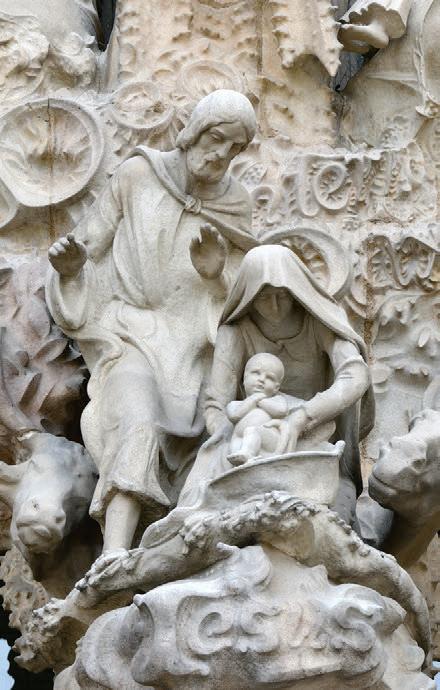
A detail of the Holy Family is seen on the Portal of Charity of the Sagrada Família’s east-facing Nativity façade.
The year 1882 marked a defining moment in both men’s legacies. Then in his fifth year of priesthood, Father McGivney incorporated the Knights of Columbus on March 29 to strengthen Catholic men in faith and provide financial protection for their families. Ten days earlier, on the feast of St. Joseph, the first stone of the Sagrada Família had been laid in Barcelona. Gaudí was not yet the lead architect, but he was likely present and would take over the project the following year.
Both men gave themselves to works larger than themselves. Llorenç Riber i Campins, a priest and poet who knew Gaudí, described seeing him at the construction site “among the magnificent dust and the jubilant music of hammers — which, to God’s ears, must have sounded like the music of harps; you would always see him laboring like Nehemiah when he rebuilt the holy walls, and speaking like someone
Both also understood that faith is lived in communion, not isolation. Gaudí gathered around him artisans, students, workers and friends, and treated their labor as a shared vocation. Chiara Curti writes in My Gaudí that he “carefully cultivated human connections” because he believed creativity was born “from encounters, from shared lives, from communion.” McGivney likewise gathered Catholic men into a fraternity rooted in charity, unity and practical responsibility.
While Father McGivney’s founding vision was animated by the needs of widows, orphans, fathers and young men, Gaudí, too, showed great concern for families and children. He built the Sagrada Família Schools so that workers’ children could be educated near their families, and he welcomed schoolchildren to the construction site so they could see themselves as part of the basilica’s future.
Finally, both men labored without seeing the full fruits of their work.
When Father McGivney died in August 1890, two days after turning 38, the Knights numbered about 6,000 men; he could not have known the Order would grow to more than 2.2 million members worldwide. Gaudí died in June 1926, shortly before his 74th birthday, while construction on the Sagrada Família has continued for another century.
Undeterred by the slow progress of his life’s work, Gaudí once said, “The only thing that should concern us is to make it so well, so beautifully, with such magnificence and art that our successors will have no choice but to continue it.” He added, “My client is in no hurry.”
Father McGivney would have understood. Each man built for a future entrusted to God — one through a basilica, the other through a brotherhood — and thereby left living legacies of faith carried forward across generations. B
Heart of the Nation
A conversation with Archbishop Alexander Sample of Portland about the consecration of the United States to the Sacred Heart of Jesus
DPhoto by Paul Haring
evotion to the Sacred Heart of Jesus — rooted in Scripture and developed over centuries in the life of the Church — has long testified to Christians’ trust in the merciful and abiding love of Jesus Christ. In 1675, during the final of a series of visions received by St. Margaret Mary Alacoque, a French nun, the Lord asked that his Sacred Heart be honored with a special feast, helping to spread devotion to the Sacred Heart more widely.
In the three and a half centuries since, Catholics around the world have expressed devotion to the Sacred Heart through
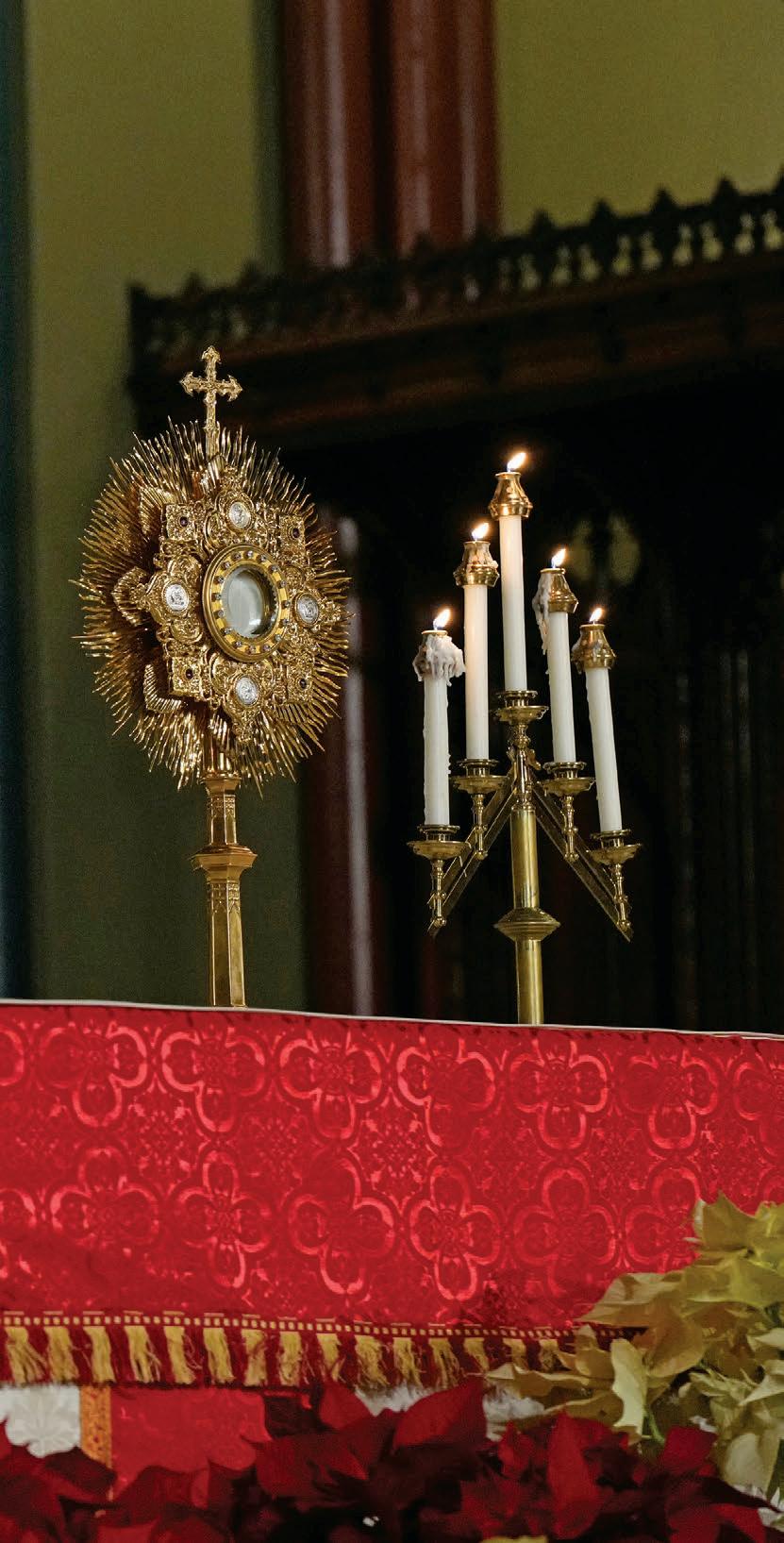
Left: The Order’s Sacred Heart pilgrim icon is displayed during a Holy Hour at St. Mary’s Church in New Haven, Conn.
acts of consecration, Eucharistic adoration, prayer, and works of charity and reparation. Today, amid renewed interest in the Sacred Heart reflected in Pope Francis’ 2024 encyclical Dilexit Nos (He Loved Us), the Order’s Sacred Heart Pilgrim Icon Program and other initiatives, the U.S. bishops are preparing to consecrate the nation to the Sacred Heart of Jesus on June 11, as the country approaches the 250th anniversary of the Declaration of Independence (July 4).
Archbishop Alexander Sample of Portland, Oregon, chairman of the U.S. Conference of Catholic Bishops’ Committee for Religious Liberty, spoke with Columbia about the consecration, devotion to the Sacred Heart, and the role of religious liberty in American society. A longtime Knight and chaplain, Archbishop Sample is a member of St. Mary’s Cathedral of the Immaculate Conception Council 15295 in Portland. This interview has been edited for length and clarity. To learn more and participate in related initiatives, visit kofc.org/America250 .
COLUMBIA: What prompted the U.S. bishops’ decision to consecrate the United States to the Sacred Heart of Jesus this June, and what spiritual fruits do the bishops hope this consecration will bear?
ARCHBISHOP ALEXANDER SAMPLE : The driving force behind this wonderful idea is the semiquincentennial of our country, the 250th anniversary of the signing of the Declaration of Independence. What better way to observe this great anniversary than for our nation to be solemnly consecrated to the true king — Christ the King — and to his Most Sacred Heart.
We bishops see this not just as a symbolic act. We really expect spiritual fruit to come from this consecration — not just for Catholics, but for our whole nation. Our hope is that greater charity will be exercised throughout our country, and that in the heart of Christ we will rediscover the unity that seems to be slipping away from us in today’s divisive culture; that in the heart of Christ we will find ourselves to be friends again, even with those with whom we disagree.
We also hope that justice will be more firmly secured for our nation, that we will continue to strive for equality for all people, and that virtue will flourish — in imitation of Christ, who exemplifies every human virtue.
COLUMBIA: How can Knights of Columbus and other Catholics participate in the national consecration — including at the parish and local council level — and why should families consider consecrating their homes to the Sacred Heart?
ARCHBISHOP SAMPLE: While the national consecration will take place during the June 11 vigil Mass at the U.S. bishops’ annual meeting in Orlando, many bishops will also consecrate their local churches to the Sacred Heart of Jesus
around the same time. I’ll be doing that here in the Archdiocese of Portland on Corpus Christi Sunday (June 7) before our grand Eucharistic procession through the streets of Portland.
All parishioners can certainly join with the bishops in this national event, and I hope every pastor will encourage parishioners to actively engage with this consecration — not just the shepherds, but the whole people of God. In so doing, we are also consecrating ourselves to the Sacred Heart of Jesus as citizens of this country and as Catholic members of our own local faith communities.
We also encourage participation at the level of the home, where we are the “domestic church.” It used to be a great tradition in Catholic families to consecrate their homes to the Sacred Heart of Jesus with a blessing and the enthronement of a Sacred Heart image in a place of honor.
I would love to see Knights of Columbus, as husbands and
fathers, step up during this time and consecrate their homes to the Sacred Heart of Jesus, and encourage their council members to do the same for their families.
COLUMBIA: In his encyclical Dilexit Nos, published in 2024, Pope Francis wrote that contemplation of the Sacred Heart of Jesus inspires deeper “attentiveness to the suffering and needs of others” — a theme Pope Leo XIV also emphasized last fall in his apostolic exhortation Dilexi Te (I Have Loved You). How should Catholics live out the consecration, particularly in terms of charity and service?
ARCHBISHOP SAMPLE: Pope Leo’s Dilexi Te — the second part of what Pope Francis already laid out in Dilexit Nos about the Sacred Heart — is a reminder that the Church has always had a preferential care and love for the poor. Devotion to the Sacred Heart needs to be seen in this light. Just as we are the presence of Jesus in the world as the Mystical Body of
by
Photo
Anna Harvey / Arlington Catholic Herald
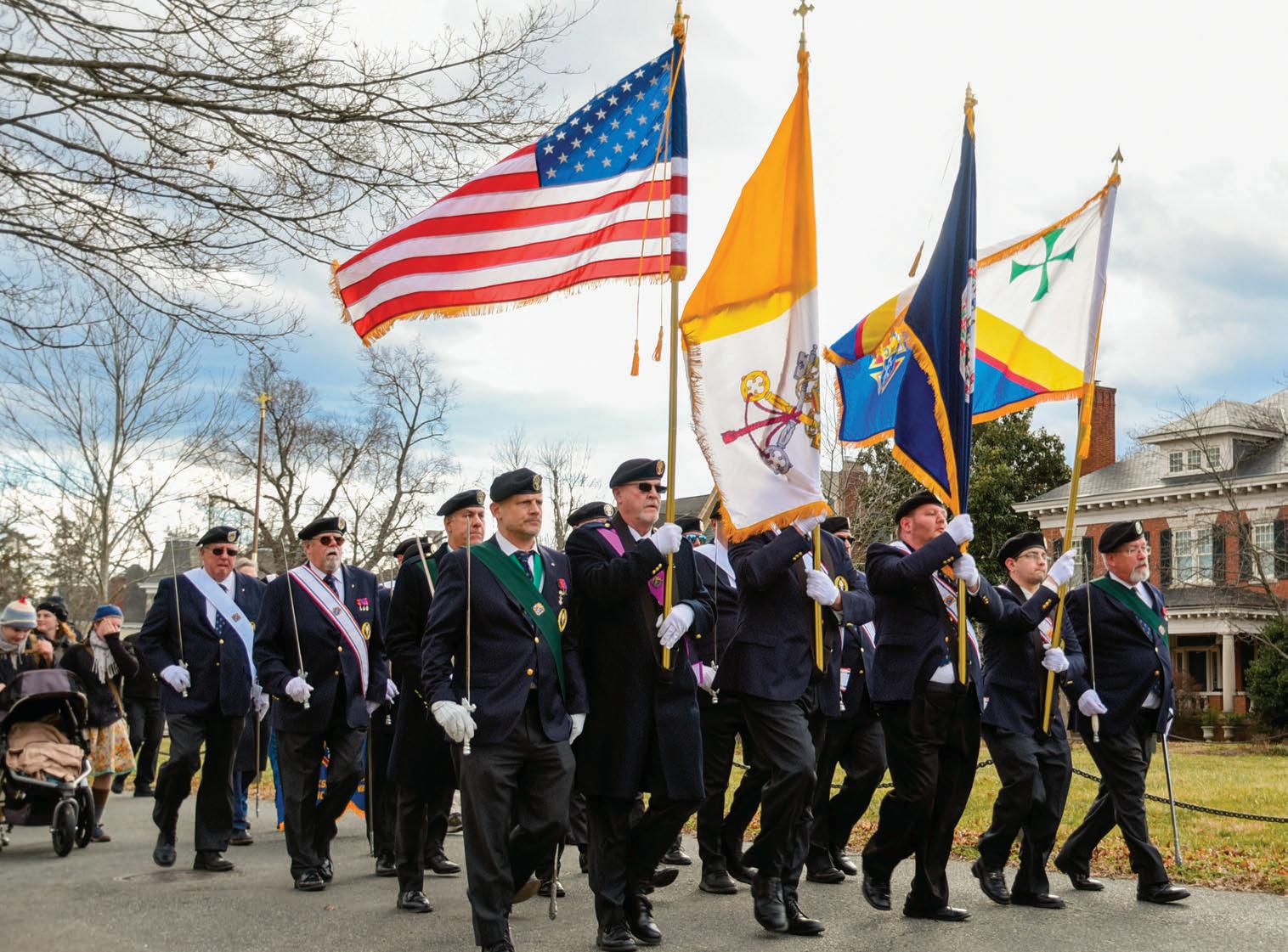
A color guard from Rappahannock Assembly 1613 in Fredericksburg, Va., leads a parade for the city’s annual Religious Freedom Day on Jan. 14, 2024. The celebration has been organized by local Knights, including from Fredericksburg Council 4034 and Battlefield Council 10246, for more than 50 years.
Photo by Jay Fram
Christ, we also must reflect the love of the heart of Christ for others, especially for the poor and the suffering.
We certainly want that personal devotion for ourselves, our families and our loved ones, but it doesn’t stop there. It must then move us to be the heart of Christ for others. Jesus clearly identifies himself with the poor throughout the Gospels, especially in the parable of the final judgment in Matthew 25.
That must be how the Church lives this consecration. It isn’t just for us in the comfortable community of the Church; it is meant for the world, for the Church to be the heart of Christ for others.
When we care for and minister to the poor and suffering, we see the face of Jesus. But they must also see the face of Christ in us and thus experience the heart of Christ for them. There’s a profound connection between consecration to the Sacred Heart, devotion to the Sacred Heart, and the Church’s care for the poor and suffering in our world.
COLUMBIA: As the United States marks the 250th anniversary of the Declaration of Independence, how do you see the Church’s call to entrust the country to the Sacred Heart intersecting with the nation’s founding?
ARCHBISHOP SAMPLE: Even though we live in a very secularized culture today, we should never forget that this nation was founded on a firm understanding that the rights and dignity of every human being do not come from government, but from God. This nation enshrined that equal dignity and the rights we all enjoy — as people created in the image and likeness of God — in a constitution and a form of government meant to protect and advance those rights and that dignity.
In more recent times, there has been a forgetting of these foundations, and even an effort to set aside the original understanding of our Founding Fathers. This consecration to the Sacred Heart of Jesus is an opportunity for us to return to basic principles — not only of faith, but also of the founding of this nation.
As we make this consecration, the U.S. bishops also hope to highlight the contributions Catholics and the Catholic Church have made throughout the history of this country, especially through educational institutions, healthcare ministries and social service agencies known for their care of the poor and suffering. Without being prideful about it, we should not be afraid to celebrate the role the Church has played in the foundation, growth and advancement of this great land.
COLUMBIA: Religious liberty has long been a defining feature of American life. What particular challenges to religious liberty are of greatest concern today, and how are Catholics to respond?
ARCHBISHOP SAMPLE: A very important distinction needs to be made here. For many people, religious liberty means freedom of worship — everybody is free to worship God as they choose, but only within the walls of a church or synagogue or other place of worship. Yet religious liberty means
Archbishop Alexander Sample of Portland, Ore., processes into St. Matthew Church in Hillsboro for the opening Mass of the Oregon State Convention on May 1.
much more than that. It is the freedom to live our faith and moral principles within the wider culture.
It’s not a question of imposing dogmatic faith on others, but of publicly expressing moral values grounded in the very nature of the human person and in natural law that all citizens share in. That’s what is under threat today in our culture.
I like to distinguish two broad areas of concern. On the one hand, there are attempts to force religious institutions to do things contrary to our faith and morals. During the debate over the Affordable Care Act, for example, Church institutions were going to be forced to engage in the provision of artificial contraception. Other examples include proposals in some states that would require priests to violate the sacred seal of confession in order to use information given there for the charging of crimes.
Another broad category of concern involves denying religious institutions access to grants or programs available to others because of our religious identity. One example would be denying adoption services if the Catholic Church will not place children with same-sex couples. A more recent threat is the imposition of gender ideology in our culture today. Pope Francis famously called it “ideological colonization,” contrary to natural law and to the Christian understanding of the human person.
COLUMBIA: Blessed Michael McGivney founded the Knights of Columbus, in part, to combat anti-Catholic prejudice. Do you think anti-Catholicism remains a significant issue today, and if so, how does it manifest itself in contemporary culture?
ARCHBISHOP SAMPLE: I don’t want the Catholic community in the United States to sound like we’re the only victims of religious intolerance or hatred or violence, because other groups — particularly the Jewish community — often suffer far worse than we do. But anti-Catholicism certainly still exists.
To my brother Knights in this great Order: Men, step up at this time. Take leadership in your homes and families.
Be, by your baptism, the “priest” in your home, and truly dedicate your family to the heart of Christ.
I see him doing that in this work of proclaiming the Gospel to a world that needs to hear this message anew, with care for the poor as part of that work of evangelization.
He knows what the mission of the Church is. That’s very clear to me. He has a great sense of meaning and purpose for the Church.
Of course, we all look forward to Pope Leo’s first papal visit home to the United States. I think it is going to be a game changer for the Church here and spark an even greater religious revival in this country. We’re going to see quite a response in terms of people saying, “OK, enough of living without God. It’s horribly lonely. I need to find the real meaning and purpose of my life.” If he is able to proclaim that message effectively, I think it will make a tremendous impact.
COLUMBIA: Many dioceses, including your own, are seeing a rise in converts to the faith. How might devotion to the Sacred Heart of Jesus serve as a path for evangelization and conversion?
I think every diocese in the country has experienced churches being vandalized, especially when contentious political issues spark a rise in hostility. The internet and social media are great ways to connect people and share information, but in some ways they have also become a cesspool of hatred and intolerance.
More recently, the Church has been very concerned that those in immigration detention centers are able to receive the sacraments and pastoral care, and that priests and others serving them are not denied access because of immigration status. There have been isolated examples where the Church’s ability to provide pastoral care for detainees has been denied, and we need to continue making sure we are able to care for these people.
We simply continue to witness to the Gospel. The response of Christ to his persecutors was love. He told us to love our enemies and pray for those who persecute us. There’s our cue. That is how we best respond as Catholics in this country: with love.
COLUMBIA: This past February, Pope Leo XIV received you in a private audience. What stood out to you from that encounter, and what hopes do you have for his pontificate, particularly with respect to the Church in the United States?
ARCHBISHOP SAMPLE: One thing that stood out immediately was what a great listener he is.
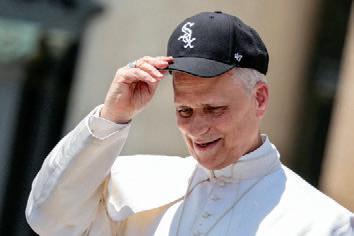
You’re overwhelmed and a little intimidated sitting across from the pope, right? But after a while, it was like I was talking to a guy from Chicago. There was an ability to be more familiar, to use turns of phrase and colloquialisms that would perhaps be lost on a non-native American.
In our conversation, Pope Leo amplified something he said at the beginning of his pontificate: “My job as pope is not to solve the world’s problems. My job is to proclaim Jesus Christ.”
ARCHBISHOP SAMPLE: Everything flows from the heart of Christ. We should never forget that. All grace flows from the heart of Christ upon the cross, and after his death, when his side was opened and blood and water poured out, the Church was born from his open side. That’s the great mystery of the Church.
The Fathers of the Church tell us that the water that flowed from Christ’s side reminds us of the waters of baptism, in which we are regenerated and become a new creation and members of the Body of Christ. And the blood is symbolic of the Eucharist, by which we are nourished daily by the very presence of Christ — the body, blood, soul and divinity of Jesus.
The Church’s life flows from the Eucharist, but it also flowed from the heart of Christ on the cross. So if there is to be spiritual renewal in our time, according to God’s plan, it will flow from the heart of Christ.
By consecrating the nation to the Sacred Heart of Jesus, we are disposing ourselves — our country and its citizens — to the outpouring of grace that Jesus wants to give us, flowing from his Sacred Heart, which is the heart of mercy and love for the world.
COLUMBIA: Finally, what would you say to Knights of Columbus members and their families as they prepare for this consecration?
ARCHBISHOP SAMPLE: To my brother Knights in this great Order: Men, step up at this time. Take leadership in your homes and families. Be, by your baptism, the “priest” in your home, and truly dedicate your family to the heart of Christ.
I’m sure you already have a deep faith life in your family, but it can always be improved. Use this consecration to renew devotion to Christ in your homes and families, in partnership with your wife and for the benefit of your children.
Let this consecration of our nation to the Sacred Heart of Jesus be truly a profound spiritual renewal in your own life, in the life of your family, in the life of your councils and in the life of your parishes. Now is the time. B
Christ Among the CAMPESINOS
California State Council’s outreach program serves thousands of migrant farmworkers and their families
By Elisha Valladares-Cormier
Rising before the sun, migrant farmworkers in California’s Central Valley often begin their day around 4 a.m. Parents wake children for school, prepare and pack lunches, and make sure everyone is out the door on time. As sunlight begins to spill across the valley — which stretches more than 450 miles from Redding in the north to Bakersfield in the south — one or more household members have already begun work on its 7 million acres of farmland, preparing for a day of hard labor in temperatures that often surpass 100 degrees.
“There are a lot of risks working in the fields,” said Ramón Cruz Medina, who spent some 30 years working on farms, including, most recently, in almond fields near Fresno. “In addition to the heat, heavy fog in the early morning can make the drive to work dangerous. And the pesticides used in the fields can lead to ‘valley fever,’ a fungal infection in the lungs.”
Until changing careers earlier this year, Cruz was among the nearly 800,000 crop workers — also called campesinos — estimated to work throughout California, which produces more than one-third of U.S. vegetables and nearly three-quarters of the country’s fruits and nuts, according to the California Department of Food and Agriculture. Yet despite the state’s $49 billion agricultural industry, the rising cost of living and other factors mean that many farmworkers, especially migrant and seasonal workers, struggle to afford food for their own tables.
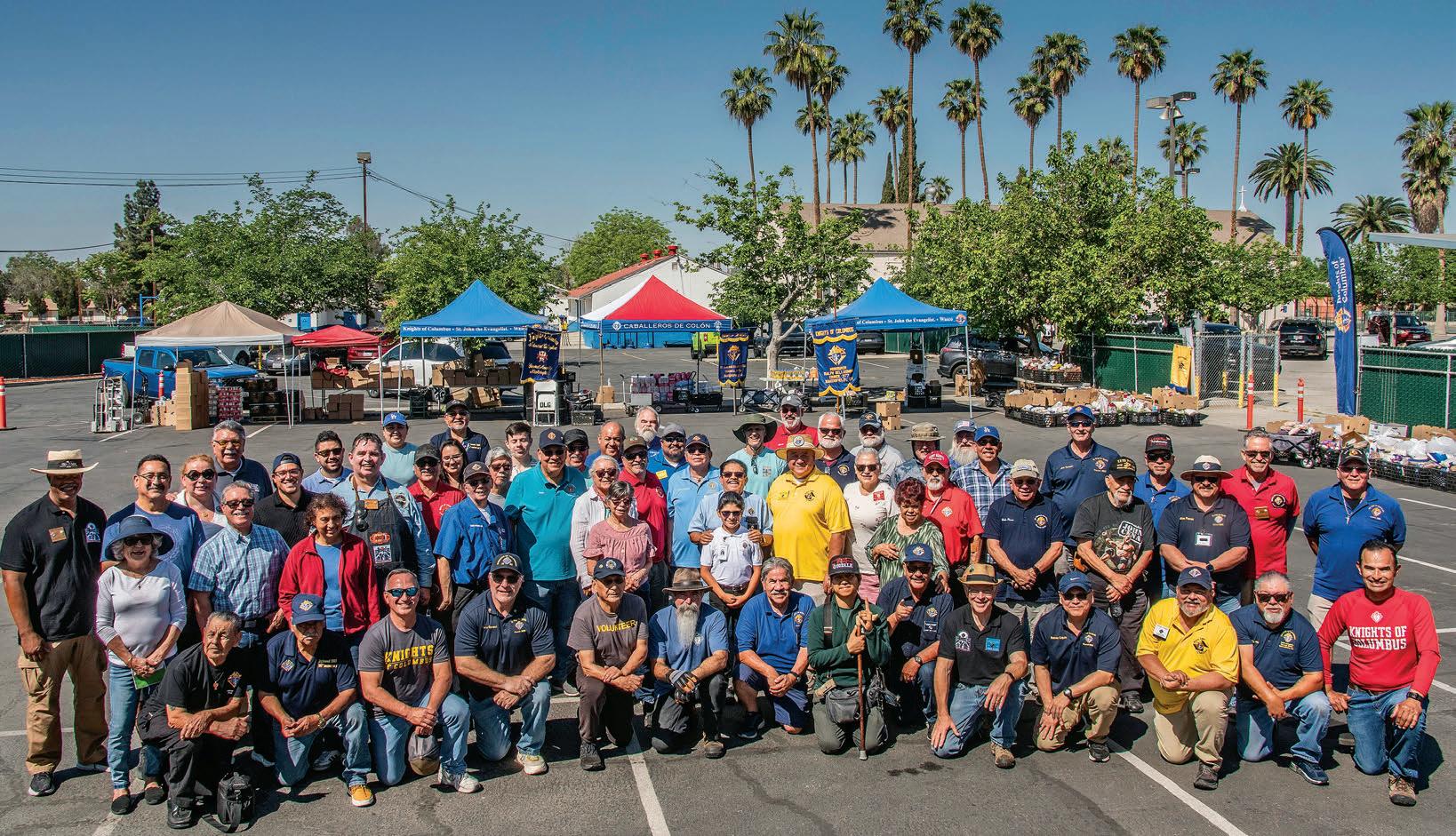
For years, siblings George and Linda Arias — whose father was once a campesino — have worked to raise awareness of the needs of migrant farmworkers and their families. Since 2023, they have led the California State Council’s Campesinos program, organizing distributions throughout the state to feed, clothe and assist farm laborers. In that time, they estimate the program has helped tens of thousands of campesinos and their families.
“There’s an absolute need that no one’s doing anything about,” said George, a member of Santa Monica (Calif.) Council 920. “We’re here to serve and say ‘thank you’ to our farmworkers.”
In promoting the program, California State Deputy Ken Rose has met with diocesan and local leaders who sometimes have no idea how acute the needs of campesino families are in their own communities.
“Campesinos are the hidden group nobody wants to talk about, especially while their mouths are full thanks to the farmworkers’ labor,” Rose said. “Anything we can do as Knights to help these families continue to grow and flourish is important.”
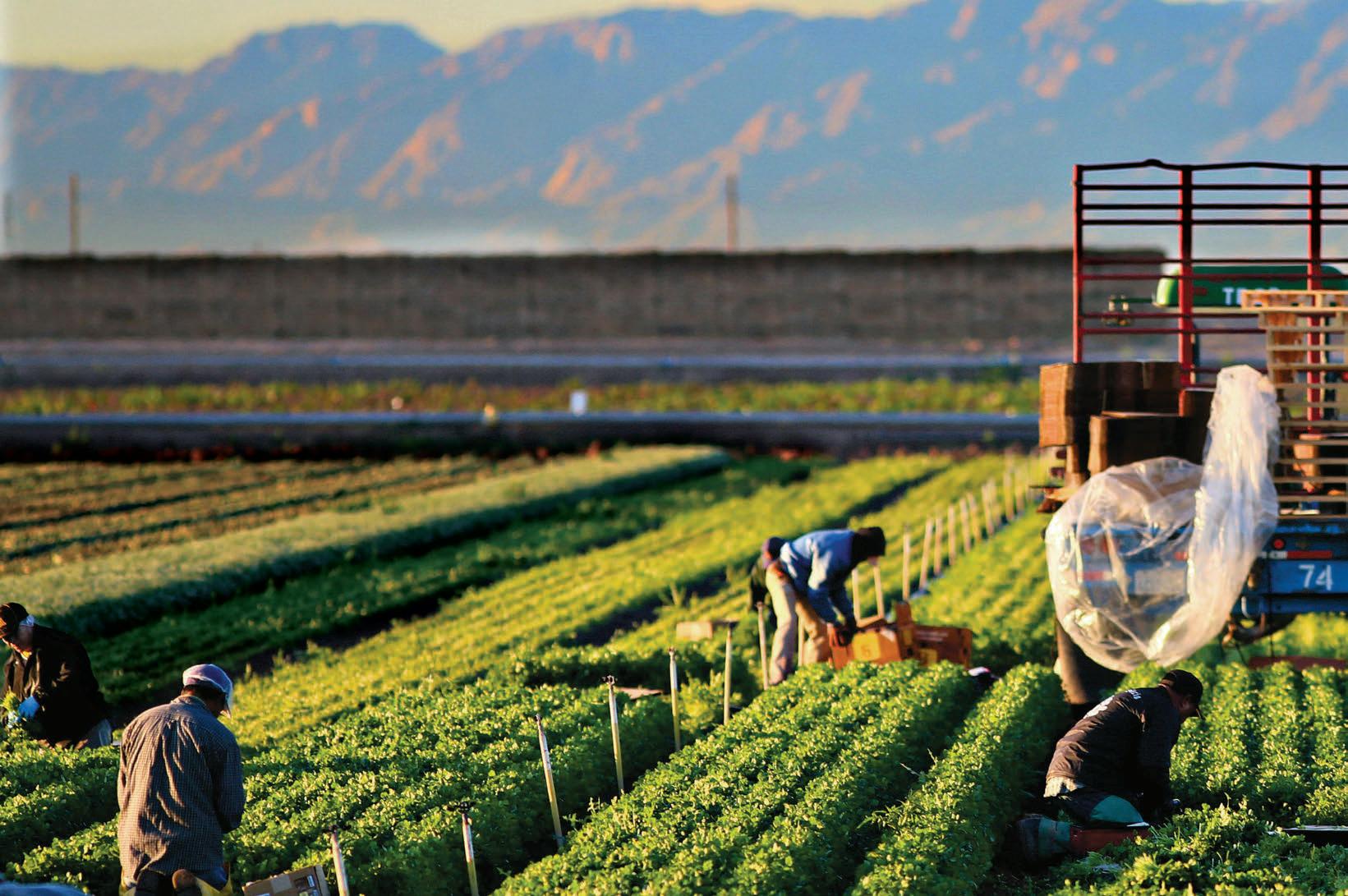
Above: California farmworkers, or campesinos , work in a lettuce field near El Centro, outside Brawley, in March 2014. Brawley was among the Campesinos distribution sites this fraternal year.
PLANTING SEEDS OF SERVICE
George and Linda’s father, David Arias, arrived in California from Mexico in the early 1950s as part of the Bracero Program, the guest worker program agreed to by the United States and Mexico to fill agricultural and manual labor needs from 1942 to 1964. Although David remained in the program only a few years, he spoke with pride about his work in the fields and ensured his children understood the hard work and sacrifice required to bring food from farms to their dinner table.
Even after their parents died, George and Linda remained close to Claretian Father Albert Vazquez, who celebrated their parents’ wedding Mass in 1961 and who, at age 97, has spent more than 60 years ministering to migrants and immigrants in three states. As he grew older, Father Vazquez — also a member of Council 920 — expressed concern about who would continue outreach to this community.
“Don’t worry, Father,” George and Linda told him. “There will be others. We’ll take care of it.”
The siblings’ friendship with Father Vazquez and their relationships with campesino communities throughout the state motivated them to raise awareness about the difficulties facing farmworkers and provide material support where possible.
Official tallies of the total number of migrant farmworkers vary and are often incomplete because they do not include immigrants living in the country without legal permission, who constitute nearly 60% of the farming workforce, according to a 2022 report from the Public Policy Institute of California. That same year, researchers from the University of California, Merced, found that 42% of farmworkers reported low food security
and median personal wages of $16,000 per year.
“They’re working 12- to 16-hour days, six days a week,” Linda said. “Children as young as 12 can work in the fields, too. They start working at 4 a.m., and they’re in class by 8 a.m., tired and hungry. The high school graduation rate is atrocious.”
The turning point for their efforts came in 2019, when George was serving as grand knight of Marina Council 4834 in Venice. The council had purchased winter jackets through the Knights of Columbus Coats for Kids program to distribute near Santa Monica, but hardly anyone came to receive them. At Father Vazquez’s urging, Council 4834 brought more than 200 coats to migrant farmworkers in Fresno, some 220 miles north.
The response was overwhelmingly positive, George recalled. After the distribution, some people approached him and said, “We have a real need for food. Can you help us?”
George and Linda soon realized that, despite the Central Valley’s status as an agricultural hub, many families had little access to food banks or similar assistance. Additionally, distributions from existing pantries might take place monthly or periodically, but rarely more than once a week.
“So, we regrouped and brought other councils in,” George said. “That’s how the Campesinos program got started.”
Within six months, he and Linda had partnered with local grocery stores and councils to organize a distribution serving 200 Fresno families. Another event followed near Christmas — a holiday feast held at St. Paul Catholic Newman Center in Fresno, complete with china and crystal glassware, a mariachi band and gifts for everyone, all provided by the Knights and other sponsors at no cost to the families.
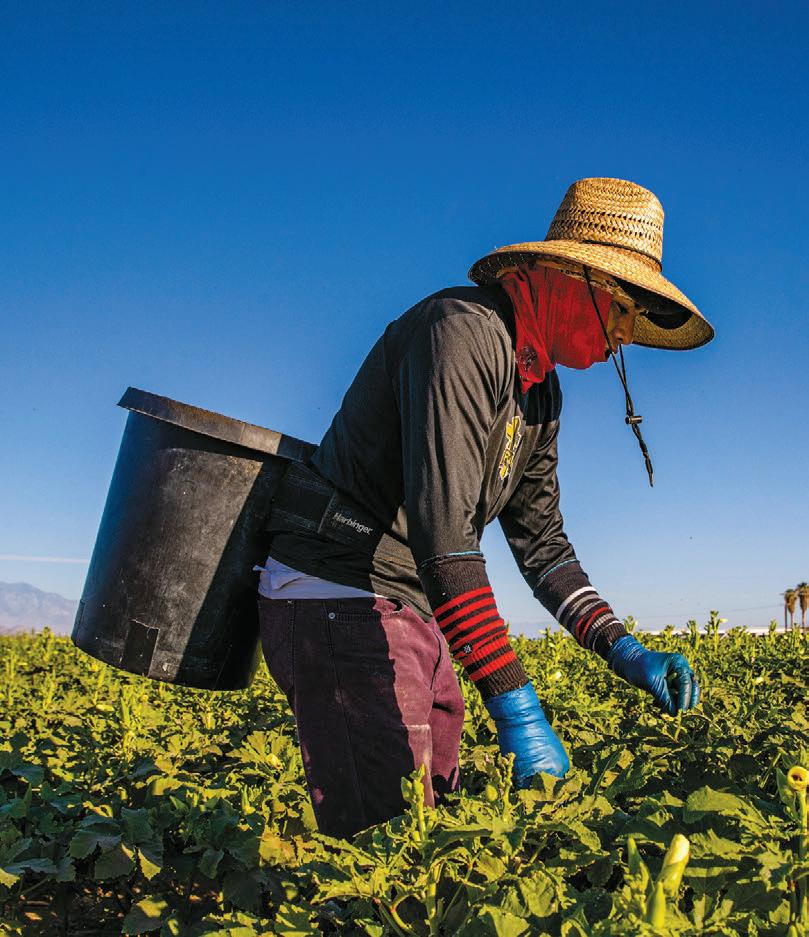
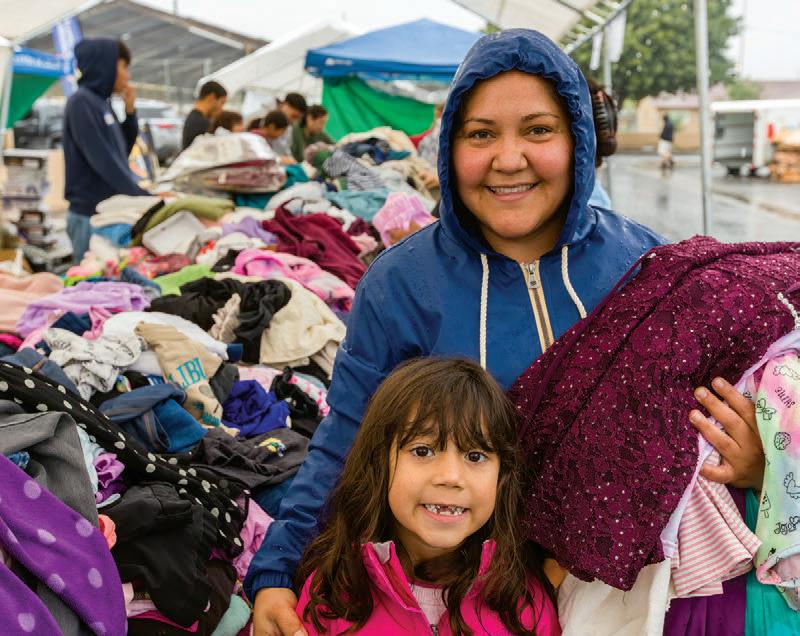
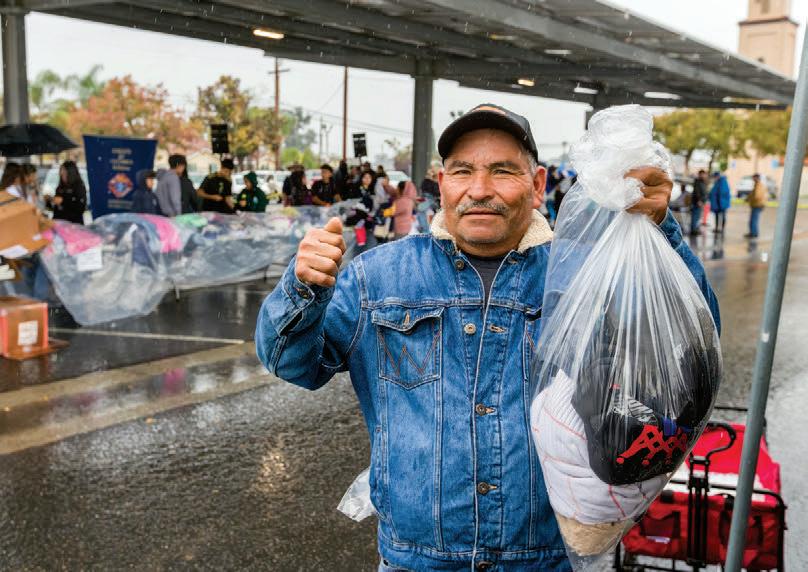
Left: Steven Rodriguez picks okra in Coachella on July 11, 2023, when temperatures reached 109 Fahrenheit . • Above: A mother and daughter receive clothing during a Campesinos distribution in Hanford on Nov. 15, 2025.
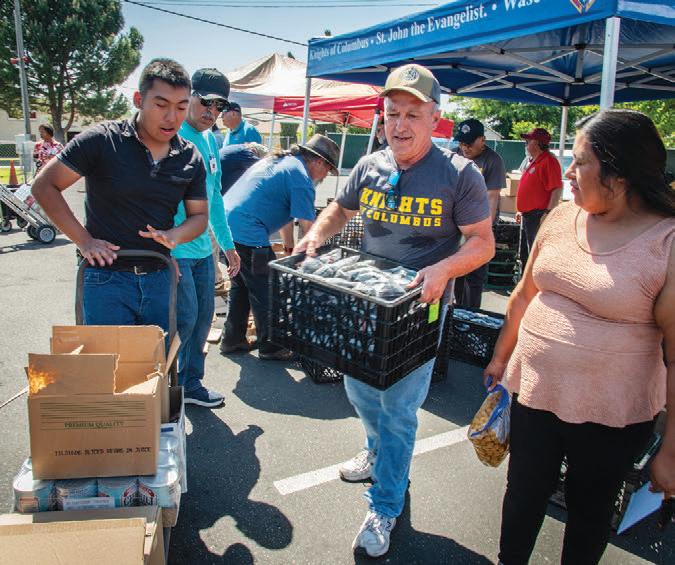
Clockwise from top: Knights and volunteers representing councils from the Kern/Inyo Chapter in the Diocese of Fresno assemble before the Campesinos distribution in Bakersfield on March 28. • A campesino displays clothes and other goods received during the Hanford distribution last November, which was supported by Knights from three chapters in the Archdiocese of Los Angeles. • Past Grand Knight Mark Nazeck of Father John Crowley Council 3199 in Ridgecrest, Calif., helps carry food to a family’s car during the March 28 event.
A few years later, the Knights returned for a distribution event serving more than 2,000 people in Raisin City. This time, the campesino families insisted on preparing a meal for the volunteers in gratitude for the Christmas dinner held years earlier. One family told Linda, “We’d never seen that before — a plate just for salad, or wine on the table. The way we were treated that night, we have never felt so appreciated in our lives.”
FIELDS OF HOPE
In 2020, Linda and George formed Reserva de la Casa, a nonprofit organization supporting their campesino outreach. In the years that followed, they collaborated with several councils to organize food and supply distributions and provide additional support. But a new chapter began with the 2023-2024 fraternal year, when State Deputy Gregory Marracq decided to make the initiative a formal program of the California State Council.
Four distributions took place during the first year — two in Southern California (Mecca and Oxnard) and two in the Central Valley (Cutler and Easton). The Cutler event was particularly timely, as 5,000 campesinos had just lost their jobs after a large fruit company declared bankruptcy.
Members of councils throughout California drove several hours to volunteer at the distributions, and by the time the program’s Raisin City event arrived in November 2024, Knights were prepared to serve thousands.
Ramón Cruz attended the Raisin City distribution with his wife, Patty, and their five children. The generosity they witnessed had a profound impact on them.
“Since my brother died, my sister-in-law has had to work on a tomato farm while raising two children,” Patty said. “Imagine
Works of Mercy
how happy she was to receive the Knights’ support — there was enough food to stock their pantry for three weeks.”
The Cruzes were no strangers to support from their church community; their oldest daughter had been diagnosed with cancer twice by the age of 18, and their son is autistic. Family members, friends and parishioners had always showered them with prayers and assistance. Ramón recognized the same selfless service in the Knights, and he was so moved that he joined the Order on the spot.
“I saw the joy of the people who were able to take something home, some food for their children,” Ramón said. “The support the Knights are providing is exactly what’s lacking in our community.”
This fraternal year, George and Linda Arias have aimed
Throughout North America, local councils welcome and assist migrant families in their communities
MIGRANT FAMILIES OFTEN arrive in the United States and Canada with little, if any, support infrastructure in their new communities. For farmworkers, long and irregular work hours, along with seasonal employment, can make it difficult to connect with schools and churches. Rising living costs can also create a financial burden that leads quickly to food insecurity.
Recognizing the needs of these families, Knights of Columbus councils remain ready to help them adapt to their new communities. Their outreach, inspired by Father Michael McGivney’s ministry to immigrants, reflects Christ’s command to feed and clothe the stranger, remembering that “whatever you did for one of these least brothers of mine, you did for me” (Mt 25:35).
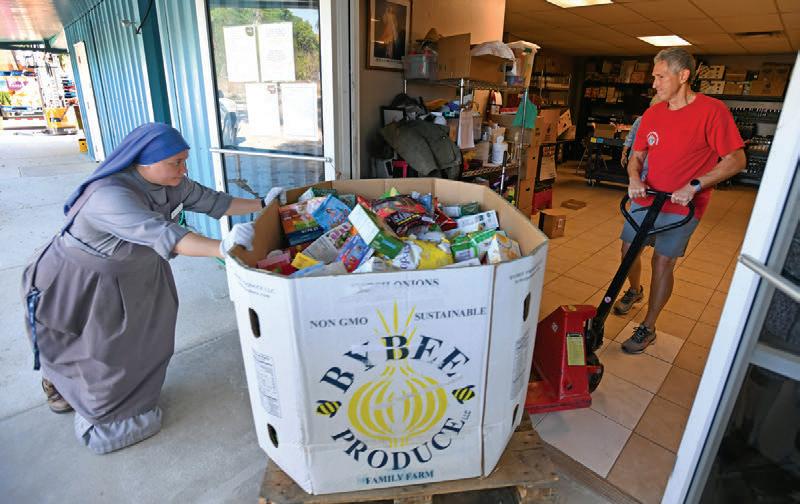
Hardee County, in central Florida, is about 42% Hispanic, including many migrant farmworkers, and is one of the poorest counties in the state. Sts. Cosmas and Damian Council 13341 in Lakewood Ranch has partnered with St. Michael Parish in Wauchula to support the parish’s religious education program, and Knights travel to the parish each week to help deliver as much as 15,000 pounds of food for its food bank.
“Ninety percent of the parishioners are either migrant or first-generation migrant workers,” Grand Knight Gordon Shellhaas estimated. “Many of our charitable works … don’t necessarily have a local focus. In this parish, it’s a local cause with a local face, and I think everybody feels good about that.”
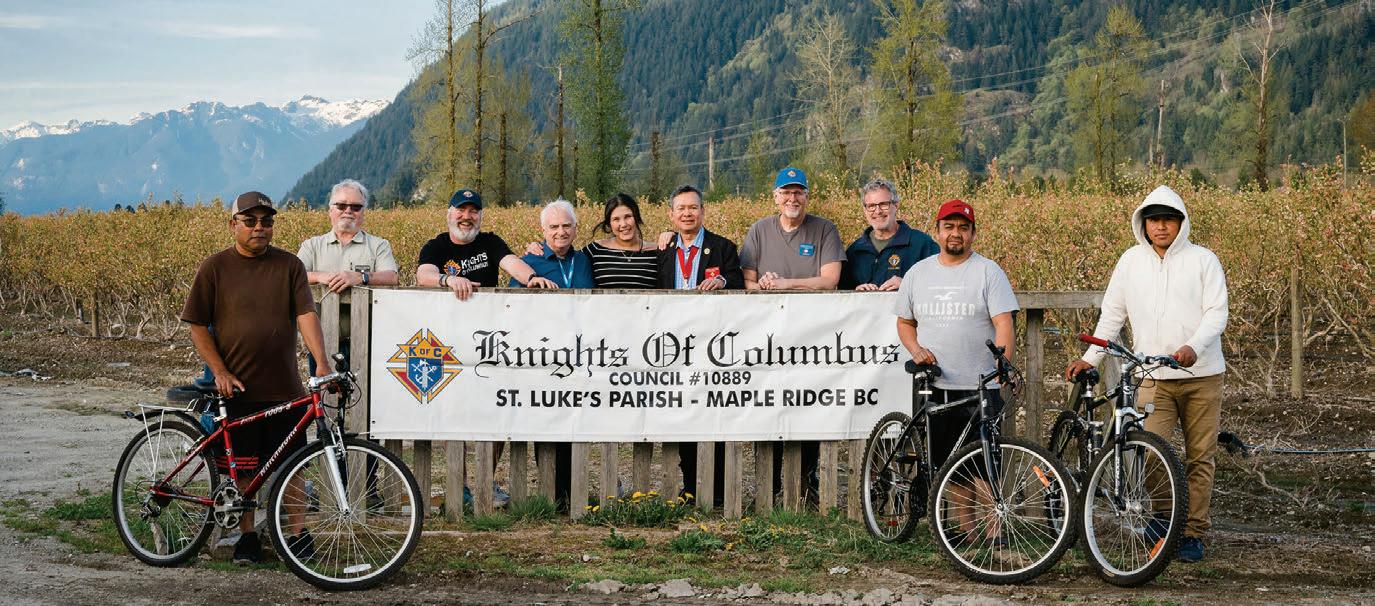
A common challenge for migrant families is a lack of transportation. Since 2023, members of Our Lady of the Valley Council 10889 in Maple Ridge, British Columbia, have supported a community initiative to collect and donate used bicycles to farmworkers.
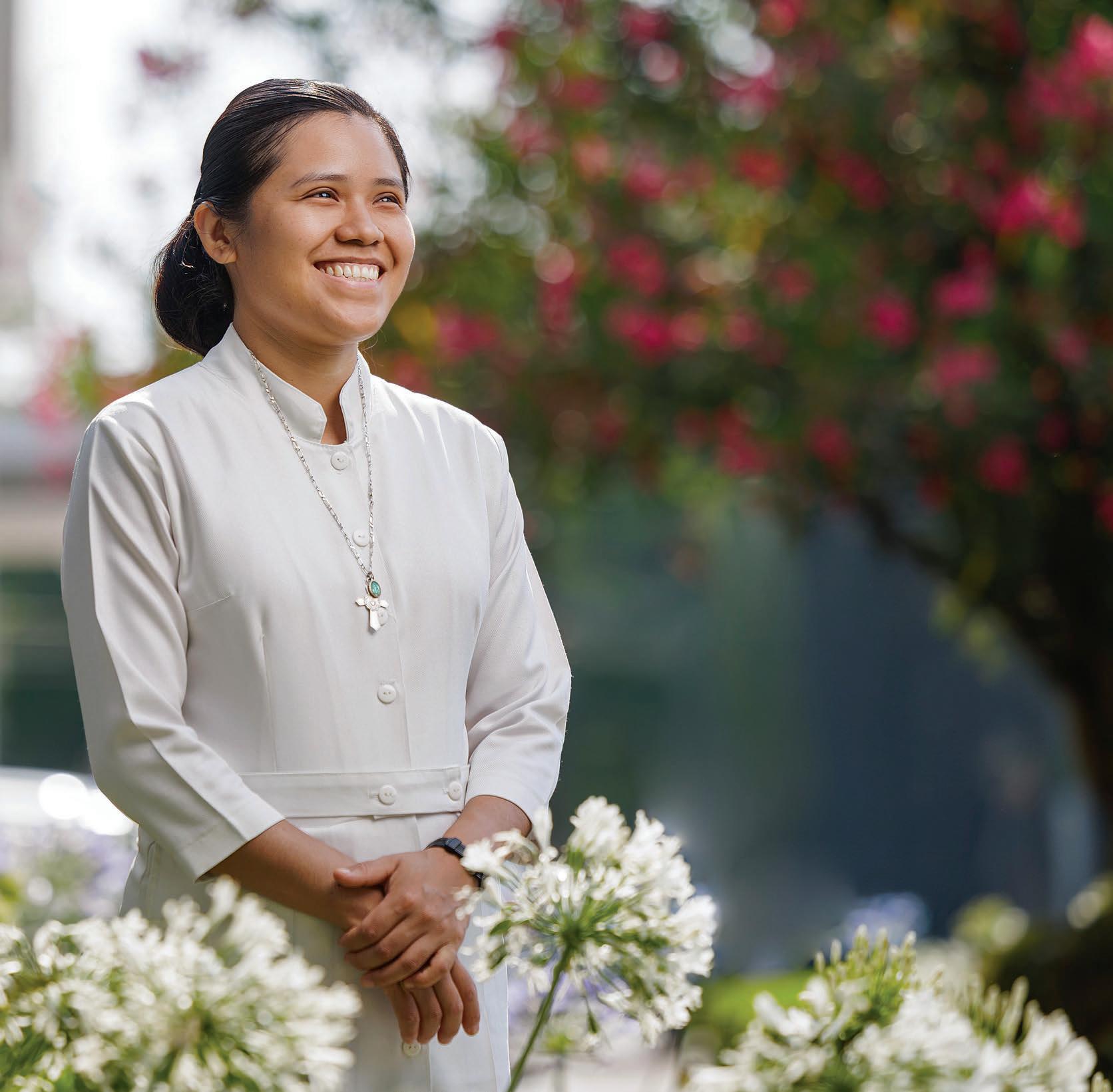
Grand Knight Gordon Shellhaas of Sts. Cosmas and Damian Council 13341 in Lakewood Ranch, Fla., and Servidora Sister Maria de Talpa Vargas Espinoza unload a food shipment at St. Michael Parish’s food distribution center in Wauchula.
“The workers have to get to the fields and back home, and pick up groceries,” said Financial Secretary Wayne Turner.
“They’re here for a reason. They work hard and want to get a better life for their families. We’re just people helping people.”
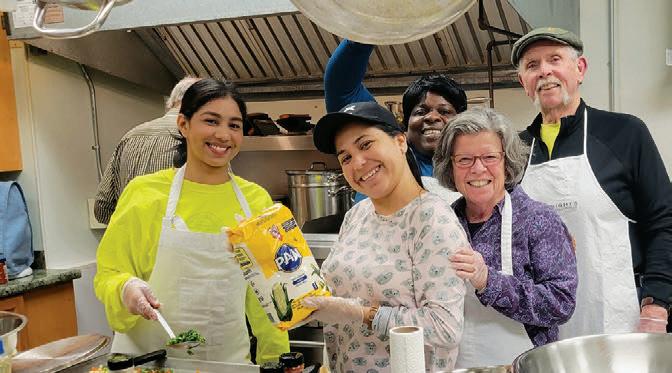
In 2023, Massachusetts’ “Right to Shelter” law led to about 30 immigrant families from Haiti and Latin America arriving in Westminster, despite vocal opposition from some local residents. In response, members of St. Edward the Confessor Council 15972 organized monthly meals at the
by Mark Taylor
Photo
to host 12 Campesinos events — a significant increase from previous years — thanks to a push from State Deputy Rose encouraging K of C chapters in every California diocese to host distributions.
Through a combination of fundraising and material donations, each distribution provides families with clothes, diapers and other essential supplies, in addition to a “Box of Hope,” which includes 20 pounds each of beans, rice, sugar and Maseca flour, along with a gallon of cooking oil. Each Box of Hope costs about $100, and more than 2,000 have been distributed during the past year.
“As Knights, we are called to look for Jesus in everything we do,” Rose said. “If I can touch the life of just one family, it’s all worth it.”
The program has not been without challenges. Some have asked Linda whether the program implicitly supports illegal immigration because many campesinos lack legal status; others question whether the need for such large-scale distributions truly exists.
“We’re not political,” Linda said. “We’re not questioning immigration. We are questioning the humanity of the conditions they live in.”
She continued: “Once you hear something, you can’t ignore it. You need to take action. And the Knights of Columbus, when gathered in brotherhood, are a force of nature.” B
ELISHA
parish, giving the new arrivals a chance to gather beyond the small motel rooms where they were housed.
“As a Catholic, the whole ‘love your neighbor’ theme is at the center of my heart, and I didn’t understand the negative welcome,” said Financial Secretary Jack McCarthy, whose wife, Kathy, began English as a Second Language classes for the families. “Helping these families is one of the proudest things I’ve ever been involved with as a Knight.”
The councils also provide opportunities for spiritual growth to workers and their families by facilitating Masses and church dinners, providing K of C-branded rosaries, and distributing Spanish-language booklets from the Order’s Catholic Information Service.
“These are hardworking, very spiritual people,” said Turner. “We might not speak Spanish, but it’s the same spiritual language. They know where the love is coming from.” B
— Reported by Elisha Valladares-Cormier
VALLADARES-CORMIER is senior editor of Columbia and a member of Fremont (Ohio) Council 591.
From top: Knights from Our Lady of the Valley Council 10889 in Maple Ridge, British Columbia, deliver refurbished bicycles to migrant workers at a local farm • Financial Secretary Jack McCarthy (right) of St. Edward the Confessor Council 15972 in Westminster, Mass., and others cook dinner for 30 migrant families from South America and the Caribbean living in a local motel.
Members of Dededo (Guam) Council 10752 lead a procession at Santa Barbara Catholic Church last year celebrating the feasts of the Sacred Heart of Jesus and the Immaculate Heart of Mary. The procession followed a Mass celebrated by Father Richard Kidd, parish administrator and council chaplain.
STAIRS FOR SAFETY
Knights from Our Lady of Mercy Council 10504 in Winston-Salem, N.C., designed, funded and built a staircase connecting the lower and upper parking lots at Our Lady of Mercy Catholic Church. The council covered the full $3,100 cost and installed a plaque dedicating the staircase to deceased members.
¡VIVA CRISTO REY!
About 250 people venerated relics of six Mexican martyrs — priests and brother Knights killed during Mexico’s anti-clerical persecution of the 1920s and ’30s — during a service hosted by Rupert (Idaho) Council 2792 at St. Nicholas Church. The reliquary remained on display during a prayer service and Eucharistic adoration.
PARISH REVITALIZED
Members of Sacred Heart Council 11389 in Ellwood City, Pa., painted and renovated the lunchroom and entrances of the Catholic Center at Holy Redeemer Church, which hosts weekly community dinners, funeral luncheons, meetings and other events.
CRUSADERS ANSWER THE CALL
Following heat advisories in the area, Knights from Crusaders Council 10151 in Orland Park, Ill., spent more than $1,600 to purchase, deliver and install more than 10 portable air-conditioning units and dehumidifiers at the Poor Clare Monastery of the Immaculate Conception in Palos Park.
HAVE MERCY ON US
Our Lady of the Angels Council 13069 in Catonsville, Md., organized a Divine Mercy Sunday prayer service at 3 p.m., the hour of mercy, at Charlestown Retirement Community for Knights, family members and the ladies’ auxiliary. Participants prayed the Divine Mercy Chaplet and reflected on the life and message of St. Faustina Kowalska.
FOR THE FANS
Members of Kristong Hari–St. Augustine Council 16282 in Dasmariñas, Luzon South, participated in a basketball fundraiser organized by San Agustin Parish in Mabuhay City. More than 4,000 PHP (about $70) was raised to help purchase an industrial fan for the parish.
MISSION VOCATIONS
St. Francis of Assisi Council 16356 at Naval Submarine Base Kings Bay, Ga., and St. Marys Council 11058 organized a pilgrimage from St. Francis of Assisi Chapel to Our Lady, Star of the Sea Church in St. Marys. About 250 people, including Bishop Stephen Parkes of Savannah, participated, praying for vocations in the Diocese of Savannah and the Archdiocese for the Military Services, USA.
Knights from Zapata (Texas) Council 9650 reassemble the sanctuary at Our Lady of Lourdes Catholic Church after repainting the church's interior. Completed over a week at the request of Father Antoni Michno, pastor and a member of the council, the project included a $1,300 donation for materials.
Family
Ebaa Alkhouri of St. Augustine Council 16714 in Ottawa, Ontario, prepares meals during the council’s family dinner and movie night at St. Augustine Parish. More than 80 parishioners attended, and leftover food was distributed downtown to people experiencing homelessness.
REELING IN SUPPORT
Bishop Salvatore Schlaefer Council 11301 in Campbellsport, Wis., hosted four Lenten fish fries at St. Matthew Catholic Church, serving 1,200 meals and raising $12,000. Proceeds support the parish, its school, New Beginnings Pregnancy Care Center and other local groups. Over the past two decades, the council has raised nearly $100,000 through these events.
LENDING A HAND
More than 60 Knights from Visayas District #46 pooled donations totaling 1,799 PHP (about $30) for Grand Knight Juanito Baculao of Holy Cross–Bilangbilangan Council 18046 in Bien Unido to assist with medical expenses related to his wife’s recent hospitalization.
BIBLE LITERACY
St. Hilary Council 14551 in Fairlawn, Ohio, provided 350 Bibles valued at $7,500 to students in grades 5-8 at St. Hilary School. The Bibles were presented during an all-school Mass and enthronement ceremony.
SCHOLARSHIPS ACED
Point Loma Council 3947 in San Diego awarded $9,000 in scholarships to three students from St. Charles Borromeo Academy. Recipients were selected based on essays reflecting on the importance of Catholic education.
HOLIDAY OUTREACH
For about 30 years, Knights from Holy Rosary Council 10537 in Ansonia, Conn., and their families have prepared and delivered meals to
homebound and older residents for Easter, Thanksgiving and Christmas. More than 60 meals are delivered each holiday, including 77 this past Easter.
EXPLORING VOCATIONS
Our Lady of Good Counsel Council 13015 in Lincoln, Neb., hosted a men’s vocational panel at St. Thomas Aquinas Church’s Newman Center at the University of Nebraska–Lincoln. A diocesan priest, a Benedictine monk, and a husband and father each shared his vocational story with Catholic college men.
FOOD DRIVE HARVEST
Msgr. Edward Wright Council 15119 in North Aurora, Ill., collected several hundred packages of food during its annual 40 Cans for Lent drive at Blessed Sacrament Catholic Church. The council has supported Aurora Food Bank through this initiative for 15 years.
MOTHER’S DAY FEAST
Father Pierre-Jean De Smet Council 9756 in Pinedale, Wyo., organized its annual Mother’s Day pancake breakfast at Our Lady of Peace Catholic Church, a tradition spanning more than 20 years.
Members of Yukon (Okla.) Council 6478 guide a brother Knight’s son as he pushes a cart of food donations into Manna Pantry. The council partnered with St. John Nepomuk Catholic School for its Food for Families drive in November, collecting more than 2,700 pounds of food and $600 for the pantry, which serves families in need in Canadian County.
Photo by Chris Porter
Members of Calinan Council 7470 in Davao City, Mindanao, participate in a tree-planting event organized by the council. About 15 Knights and volunteers planted approximately 50 trees over four hours.
CHICKEN CHARITY
St. Mark–Star of the Sea Council 11374 in Rochester, N.Y., has organized chicken barbecue sales at St. Lawrence Church for about nine years to support local parishes and charities. The council hosts about three events annually and has raised more than $26,600, including over $1,000 at its most recent sale.
DENIM AND DIGNITY
Father Louis Anthony Sigman Council 16277 in Chandler, Ariz., sponsored a jeans and sneakers drive at St. Juan Diego Church. Nearly 300 pairs of jeans and 200 pairs of shoes were collected and distributed to people experiencing homelessness at the Paz de Cristo Community Center in Mesa. Knights volunteer at the center weekly and regularly donate items throughout the year.
SERVING UP SUPPORT
Algona (Iowa) Council 952 donated $3,660 to three organizations: Kossuth County Food Pantry; Moving Veterans Forward, which assists
veterans experiencing homelessness; and Exceptional Opportunities, which provides services and support for people with disabilities.
RETIRING OLD GLORY WITH HONOR
Msgr. A.J. Sprigler Assembly 253 in Evansville, Ind., has placed 13 collection boxes at local Catholic churches to collect worn U.S. flags for proper disposal in accordance with the U.S. Flag Code.
SHOOTING STARS
Bishop Navagh Council 5943 in Pequannock, N.J., hosted a Knights of Columbus Free Throw Championship at Holy Spirit School. Nearly 20 children ages 9-14 competed, with six advancing to the diocesan level.
EASTER OUTREACH
Members of Pope John Paul I Assembly 2754 in Edmonton, Alberta, served meals to 840 people experiencing homelessness at Hope Mission on Easter Monday. This marked the second year of the initiative.
Community
Jack Gustafson, Fourth Degree district marshal for the Diocese of Shreveport, La., presents eighth grader Jasmine Juarez with a certificate recognizing her as the winner of a patriotic essay contest organized by the Fourth Degree District of Louisiana. Her essay won at the assembly, diocesan and state levels, earning a total of $800.
DISASTER RESPONSE
San Salvador Council 1 and Hon. W. Patrick Donlin Assembly 2459 in New Haven, Conn., each donated $500 to St. James Council 8947 in Cebu, Visayas, to support relief efforts following Typhoon Tino, which caused more than 250 deaths and displaced hundreds of thousands. The funds helped provide food and supplies for about 250 families.
Life
TWO COUNCILS, ONE PRO-LIFE MISSION
St. Thomas à Becket Council 16236 in Orlando, Fla., and Epiphany Council 12569 in Port Orange raised a combined $26,500 to help purchase an ultrasound machine for JMJ Pregnancy Center in Orlando. With a $9,000 match from the Supreme Council through the Ultrasound Initiative, the total reached $35,000.
James Roche of Rev. P.N. Lynch Assembly 1071 and John Kenny of St. Finbar Council 17760 in Charleston, S.C., stand beside a fountain at the Cathedral of St. John the Baptist dedicated to children lost to miscarriage, stillbirth and abortion. Bishop Jacques Fabre-Jeune of Charleston blessed the fountain, which was funded, designed and installed by Knights.
STRIKES FOR LIFE
Frank Jackson Council 3991 in Tullahoma, Tenn., organized its third annual “Bowling for Babies” fundraiser, raising more than $2,000 for Life Choices Pregnancy and Family Resource Center, which operates three locations. The Supreme Council contributed an additional $400 through the ASAP (Aid and Support After Pregnancy) program.
QUARTERLY CARE
Monmouth (Ill.) Council 1496 has partnered with Immaculate Conception Catholic School and ImpactLife for the past three years to host quarterly blood drives at Immaculate Conception Catholic Church. More than 300 pints of blood have been collected.
PAVING PATHS TO HOPE
Members of Joseph M. Johnson Council 7538 in Ashland, Va., built and landscaped two walkways at Millie’s Home, the only maternity home in Hanover County. The council contributed $200 for materials
and more than $1,000 in additional support, with further funding from the Supreme Council through ASAP.
WALKING WITH PURPOSE
Archangel Gabriel Council 11279 in Pittsburgh, together with the parish pro-life group, participated in a walk for life hosted by Choices Pregnancy Services, raising $14,000 — nearly 15% of the event’s total.
SAFE AND SECURE
O’Fallon (Mo.) Council 2269 and its ladies’ auxiliary raised $15,000 to purchase a Safe Haven Baby Box, installed at Fire Station #3 in December 2024 and since used to safely receive at least one infant. Msgr. Dennis Stehly, senior associate pastor of Assumption of the Blessed Virgin Mary Parish and a brother Knight, blessed the box.
See more at www.kofc.org/knightsinaction
Please submit your council activities to knightsinaction@kofc.org
Grand Knight Michael Netto of Corpus Christi Council 13125 in Mobile, Ala., and his wife present sweatshirts to students representing Theodore High School’s Special Olympics athletes. The council purchased sweatshirts for more than 30 students and staff to wear at competitions.
Scott Stueber of Mother Cabrini Council 7278 in Coram, N.Y., boxes bags of rice and beans during a food-packing event organized in conjunction with Cross Catholic Outreach at the St. Frances Cabrini Parish Center. A total of 220 volunteers — including 50 Knights from Council 7278 and 20 from several area councils — helped pack 60,000 meals and an additional 300 1-pound bags of rice.
Grand Knight Myroslav Baidiuk of St. Demetrius Council 17293 in Ivano-Frankivsk gives a box of sweets to a boy from Dolishne Zaluchchia Boarding House, which serves about 140 children with disabilities. Council 17293 and Andrey Sheptytsky Council 15804 delivered hygiene products, clothing, toys and food to the children. The councils have supported the organization since 2018, visiting about twice a year.
Knights from St. Michael the Archangel Council 17736 in Dagupan City, Luzon North, pack 200 bags of rice, noodles and canned goods at St. Michael the Archangel Parish. The bags were distributed to families in need as part of the parish’s ninth anniversary celebration.
Members of Rev. Dr. G. Everett Grant Assembly 620 in Fredericton, New Brunswick, prepare to serve food at The Veteran Farmer, a wellness center for veterans, first responders and their families. The assembly members served more than 70 veterans.
TOP LEFT:
Photo by Gregory Shemitz — BOTTOM LEFT:
Photo by Myroslav Mazur
Ukraine Philippines Canada
United States
Members of Blessed Anacleto González Flores Council 4344 in Tepatitlán, Mexico West, and the local community portray the fifth station — Simon of Cyrene helping Jesus carry the cross — during the council’s annual Stations of the Cross reenactment for more than 120 residents at Espacio Grato Para la Tercera Edad A.C., a nursing and retirement home. The council has organized the event for five years.
Knights from several councils in Marseille gather in the square of Notre-Dame de la Garde Basilica during an event celebrating the restoration of Bonne Mère — the statue of Mary holding the child Jesus atop the basilica. The Knights helped coordinate 200 volunteers and welcomed more than 5,000 attendees to Mass celebrated by Cardinal Jean-Marc Aveline, archbishop of Marseille, followed by a procession and blessing of the statue.
Knights and community members carry Knights of Columbus and St. Joseph flags during a procession celebrating the feast of St. Joseph in Kraków. Organized by local Knights, the event drew about 100 men and included Mass at the Sanctuary of St. Joseph, a talk by Karol Cierpica — a Polish soldier saved by a U.S. soldier in Afghanistan in 2013 — as well as Eucharistic adoration and confession.
At Their Brother’s Side
College Knights respond with prayer, charity and solidarity after a brother Knight’s loss
By Megan Stibley
JUST DAYS BEFORE Thanksgiving last fall, Bartosz Chramiec, a student at the University of Notre Dame in South Bend, Ind., learned that his father, Wojciech, had died after a five-year battle with pancreatic cancer. When Chramiec, grand knight of Notre Dame Council 1477, returned to Illinois for the funeral, his brother Knights brainstormed ways to support him in his mourning.
Without Chramiec’s knowledge, members of Council 1477 planned a memorial Mass and a 24-hour Eucharistic adoration vigil in memory of his father at the Chapel of the Holy Cross in Keenan Hall, a campus dormitory. Knights found an available priest — Holy Cross Father Stephen Koeth, a fellow council member — and prepared a program for the liturgy, coordinated the music and more.
“It was a very unifying group effort,” said Deputy Grand Knight Gabriel Ortner. “Various Knights used their different talents to make this happen.”
Inspired by Blessed Michael McGivney’s founding vision for the Order — to support families after the death of a father — Ortner also organized a freewill collection among the Knights to help finance the
funeral in Illinois. Nearly 60 college Knights contributed a total of more than $5,000.
A few days before the Mass, the Knights informed Chramiec of their plans.
“He sat there stunned for several seconds and was very moved. We all hugged and were just there for him in that moment,” Ortner said. “It’s moving to know there are all these Knights who would do the same for me and any other Knight. We truly have each other’s backs.”
About 70 people attended the memorial Mass, including Chramiec’s mother and his brother, who served as a lector. Chramiec and three other Knights were altar servers.
“You realize how important certain people are when you fall into the gutter,” Chramiec said. “Seeing what they did for me made me realize how deep a brotherhood truly exists with the Knights.”
“I saw in real time the mission of the Knights of Columbus being lived out through actions and prayers,” Chramiec continued. “It’s a true brotherhood you can depend on.” ✢ — Megan Stibley is associate editor of Columbia
Holy Cross Father Stephen Koeth, a member of Notre Dame Council 1477, proclaims the Gospel during the memorial Mass for the father of Grand Knight Bartosz Chramiec at the University of Notre Dame’s Chapel of the Holy Cross. Chramiec, serving the Mass with brother Knights, is pictured at far left.
Complete this coupon and mail to: The Father McGivney Guild, 1 Columbus Plaza, New Haven, CT 06510-3326 or enroll online at: fathermcgivney.org
OF C
www.KnightsGear.com www.KnightsGear.ca IN THE UNITED STATES AND CANADA THE ENGLISH COMPANY INC. www.kofcsupplies.com 1-800-444-5632 FOR UNIFORMS IN THE UNITED STATES THE SUPPLY ROOM, INC. www.kofcuniform.com 1-833-562-4327 FOR UNIFORMS IN CANADA MOORES
Visit a Moores store to purchase stores.mooresclothing.ca/search/
OFFICIAL JUNE 1, 2026:
To owners of Knights of Columbus insurance policies and persons responsible for payment of premiums on such policies: Notice is hereby given that in accordance with the provisions of Section 84 of the Laws of the Order, payment of insurance premiums due on a monthly basis to the Knights of Columbus by check made payable to Knights of Columbus and mailed to same at PO Box 1492, NEW HAVEN, CT 06506-1492, before the expiration of the grace period set forth in the policy. In Canada: Knights of Columbus, Place d’Armes Station, P.O. Box 220, Montreal, QC H2Y 3G7 ALL MANUSCRIPTS, PHOTOS, ARTWORK, EDITORIAL MATTER, AND ADVERTISING INQUIRIES SHOULD BE MAILED TO: COLUMBIA, PO BOX 1670, NEW HAVEN, CT 06507-9982. REJECTED MATERIAL WILL BE RETURNED IF ACCOMPANIED BY A SELF-ADDRESSED ENVELOPE AND RETURN POSTAGE. PURCHASED MATERIAL WILL NOT BE RETURNED. OPINIONS BY WRITERS ARE THEIR OWN AND DO NOT NECESSARILY REPRESENT THE VIEWS OF THE KNIGHTS OF COLUMBUS.
SUBSCRIPTION RATES IN THE U.S.: 1 YEAR, $6; 2 YEARS, $11; 3 YEARS, $15. FOR OTHER COUNTRIES ADD $2 PER YEAR. EXCEPT FOR CANADIAN SUBSCRIPTIONS, PAYMENT IN U.S. CURRENCY ONLY. SEND ORDERS AND CHECKS TO: ACCOUNTING DEPARTMENT, PO BOX 1670, NEW HAVEN, CT 06507-9982.
Every day, Knights all over the world are given opportunities to make a difference — whether through community service, raising money or prayer. We celebrate each and every Knight for his strength, his compassion and his dedication to building a better world.
Members of Phil Sheridan Council 1497 in Fremont, Neb., help children’s kites take flight during the Family Fun Day organized by the council and St. Patrick Parish. About 100 people enjoyed a day of indoor and outdoor games, food, face painting and more. The event raised $415 to support a family in need in Mexico City through Hope of the Poor.
Photo by Kenneth Ferriera
‘Discover what God has planned for you.’
I grew up in a family that was very close to God, especially my father, who instilled in us a deep love for Jesus in the Eucharist. When I was 10, I met the Sisters of the Sacred Heart of Jesus for the first time; their joy, dedication and closeness to people sparked in me a longing for consecrated life.
I also learned about their founder, St. José María Robles Hurtado, a priest and Knight of Columbus who was enamored with the Heart of Jesus and the Eucharist. His charism, spirituality and selflessness — even unto martyrdom — deepened my desire to be a religious sister.
During high school, I was a catechist and sang in the choir, an experience that helped me grow in my faith. In Eucharistic adoration, when I was alone with Jesus, his voice echoed within me: “Come and follow me.” I felt called and loved; it was a pivotal moment in my discernment.
To young people who feel God’s call: Don’t be afraid to say “yes.” Don’t be afraid to discover what God has planned for you.
by
Photo
Paulina Camarena
Sister Eva Medina Hernández Sisters of the Sacred Heart of Jesus Guadalajara, Mexico