SEPTEMBER 2021
Beroepsvereniging voor kinesitherapeuten
Exclusief
SPECIAL
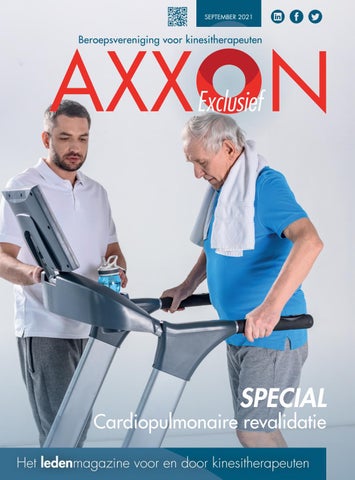
Cardiopulmonaire revalidatie Het ledenmagazine voor en door kinesitherapeuten AXXON_exclusief_51_SEPT21_NL.indd 1
20/08/2021 12:15
INHOUD
EXXTRA
EXXTRA
02
Vakliteratuur
AXXON IN ACTIE
06
VAKLITERATUUR Compendium Geneeskunde 2.0 totaalpakket (5 delen)
Hoeveel kost kinesitherapie (deel 2)?
EXXPERT
04 08
Telerevalidatie voor chronische luchtwegaandoeningen
18
Een vennootschap oprichten, in 4 stappen naar je eigen zaak
Cardiovasculaire revalidatie: nieuwe Europese aanbevelingen
10% KORTING ALS
AXXON-LID
€ 161,10 incl. 6% btw (Normale prijs € 179)
AXXON
EXCLUSIEF PUBLICATIE VAN AXXON VZW SEPTEMBER 2021 DRIEMAANDELIJKSE UITGAVE – JAARGANG 12 – NR. 51 – IMPERIASTRAAT 16 – 1930 ZAVENTEM AFGIFTEKANTOOR: BRUSSEL X ERKENNINGSNUMMER: P910666 – VERANTWOORDELIJKE UITGEVER: PETER BRUYNOOGHE – IMPERIASTRAAT 16 – 1930 ZAVENTEM REDACTIE & COPYWRITING: SÉBASTIEN KOSZULAP & HELENA D.MILONAS – REDACTIE@AXXON.BE VERTALING: EMILY VAN COOLPUT – ERIK VERTRIEST CONCEPT EN VORMGEVING: C3CREATIES DRUKWERK: SYMETA CORRESPONDENTIEADRES AXXON: IMPERIASTRAAT 16 – 1930 ZAVENTEM – TEL: 02 709 70 80 – FAX: 02 749 96 89 – WWW.AXXON.BE REKENINGNUMMER VOOR LIDMAATSCHAP: BE18 3631 0868 1365 U ontvangt dit tijdschrift op de naam en het adres die zijn opgenomen in ons adressenbestand. In uitvoering van de wet van 8 december 1992 tot bescherming van de persoonlijke leefsfeer hebt u inzage- en correctierecht. De artikels/publiciteit verschijnen onder verantwoordelijkheid van de auteurs/ firma’s. AXXON houdt zich het recht voor om ingestuurde teksten en/of publiciteit die het beroep kunnen schaden te weigeren. © Niets uit deze uitgave mag worden vermenigvuldigd en/of openbaar gemaakt door middel van druk, microfilm, fotokopie of op welke andere wijze dan ook, zonder voorafgaande schriftelijke toestemming van de uitgever.
02
Compendium Geneeskunde 2.0 is hét naslagwerk voor iedereen in de (para)medische wereld. In deze boekenreeks wordt met behulp van schema’s, tabellen en illustraties een duidelijk overzicht gegeven van de studie geneeskunde, verdeeld over 35 disciplines in vijf boeken. De boeken worden inmiddels gebruikt door iedereen in de zorg: van verpleegkundige tot kinesitherapeut. Compendium Geneeskunde 2.0: compleet herzien, 8 nieuwe disciplines en 1.700 illustraties.
Uitgeverij: Acco Publicatiedatum: 20 april 2020 Uitgave: Boek - Softcover Editie 2 ISBN: 9789463798716
ONLINE TE BESTELLEN OP WWW.ACCO.BE MET DE ACTIECODE AXXON10CGMM. DEZE KORTING IS GELDIG TOT EN MET 1 DECEMBER 2021. EXCLUSIEF VERZENDKOSTEN (€ 3.50 PER BESTELLING).
SEPTEMBER 2021
AXXON_exclusief_51_SEPT21_NL.indd 2
20/08/2021 12:15
DIRK VERLEYEN VOORZITTER AXXON, KIK
VOORWOORD
Structurele hervormingen verduurzamen en verankeren mét de kinesitherapie De zorgraden van de eerstelijnszones vierden op 1 juli 2021 hun eerste verjaardag. De eerste lijn is in Vlaanderen nu georganiseerd in 60 territoriaal afgebakende eerstelijnszones waar interprofessioneel wordt samengewerkt. Zorgraden zijn vzw’s die inspelen op de lokale noden en tendensen met aandacht voor diversiteit en duurzaamheid. Lokaal vertegenwoordigen ze de brede eerstelijn en verenigen ze de sectoren zorg, welzijn, lokale besturen, de persoon met een zorg- en ondersteuningsnood en de mantelzorger. Daarnaast starten ze eveneens met intersectorale samenwerking. Ze zijn het kloppend hart van de eerstelijnszones. Zie onder meer de belangrijke rol die de overheid hen toekende tijdens de coronacrisis. De eerstelijnszones werden zo verantwoordelijk voor sensibilisering en de organisatie van lokale bron- en contactopsporing. Met als exploot de oprichting en organisatie van vaccinatiecentra, in samenwerking met de lokale besturen. Een succesverhaal waaraan ook heel wat collega’s kinesitherapeuten nu nog dagelijks hun medewerking verlenen. De ambitieuze doelstellingen van de ELZ’s waarmaken kan niet zonder de (h)erkenning en vergoeding van onze kinekringen en de kinesitherapeuten die na hun goedgevulde dagtaak zich ook nog eens inzetten voor een sterke eerstelijn. Alle zorgverstrekkers
geloven in een meerjarenplan voor een sterke en zorgzame eerstelijn waarin een respectvol overlegmodel tussen de eerstelijn, de Vlaamse Overheid en de Federale Overheid een belangrijk aspect is. Als gevolg van het zesde Vlaams Interprofessioneel Akkoord (VIA6) kwam op 1 juli 2021 de toegankelijkheid, de continuïteit en de kwaliteit van de kinesitherapeutische zorg voor de bewoners in de Vlaamse woonzorgcentra sterk in het gedrang! Door een gelijkschakeling
van de personeelsnormen mogen geen verstrekkingen meer geattesteerd worden onder de RIZIV-nomenclatuurcodes, enkel nog voor de zeer kleine groep van bewoners met een lichte zorgnood. Als beroepsorganisatie van de kinesitherapie betreurden we het ten stelligste dat we op voorhand niet geconsulteerd
werden. Bij de personeelsnormen worden de kinesitherapeuten nu in het nieuwe akkoord ingedeeld bij de zeer heterogene groep van reactiveringspersoneel. Kinesitherapie is steeds op voorschrift, is een bij wet beschermd beroep gekoppeld aan kwaliteitsnormen. M.a.w. wanneer een arts kinesitherapie voorschrijft moet aan deze nood op een correcte wijze gevolg gegeven worden door een kinesitherapeut en door niemand anders. Dankzij de tussenkomst van AXXON op verschillende terreinen (RIZIV, Vlaamse regering en politici) wordt de implementatie van de kinesitherapeutische zorg aan bewoners van de ROB’s (VIA6akkoord) tijdelijk uitgesteld naar 30 september 2021. AXXON is op verschillende vlakken aan het pleiten voor een duurzame oplossing die de kwaliteit van de kinesitherapeutische zorg, de keuzevrijheid van de bewoner en de werkdruk voor de kinesitherapeuten in loondienst waarborgt. Overleg met alle stakeholders en de minister staat gepland dit najaar. Ten slotte blijft vaccinatie nog steeds een persoonlijke keuze van elke burger, maar het behoort tot onze verantwoordelijkheid om onze patiënten te beschermen en dan past vaccinatie in een kwaliteitsvolle praktijkvoering. Bravo, we zijn op weg naar een maximale vaccinatiegraad bij de Vlaamse kinesitherapeuten.
SEPTEMBER 2021 AXXON_exclusief_51_SEPT21_NL.indd 3
03 20/08/2021 12:15
EXXPERT
TRUDY BEKKERING1, EMMANUEL SIMONS1,2
Telerevalidatie voor chronische luchtwegaandoeningen Wat zijn de effecten en neveneffecten van telerevalidatie voor mensen met chronische luchtwegaandoeningen? Context
Samenvatting resultaten
Longrevalidatie is bewezen effectief voor mensen met chronische luchtwegaandoeningen, zoals chronic obstructive pulmonary disease (COPD), interstitiële longaandoeningen of bronchiëctasieën. Traditionele longrevalidatie vindt plaats in een ziekenhuis of revalidatiecentrum. Relatief weinig mensen volgen longrevalidatie vanwege gebrek aan dergelijke programma’s in de buurt, problemen om op het centrum te geraken en soms andere gezondheidsproblemen die deelname verhinderen. Om deze redenen worden alternatieve revalidatie vormen onderzocht. Telerevalidatie omvat revalidatie van op afstand, gebruik makend van informatie- en communicatietechnologie.
De review includeerde 15 studies met 1904 deelnemers. De studies gebruikten verschillende vormen van telerevalidatie zoals via videogesprekken, via een website met of zonder telefonische ondersteuning, via gsm met feedback via sms of via een mobiele applicatie. Bijna alle deelnemers (99%) hadden COPD.
Selectiecriteria voor studies Deze Cochrane review includeerde gerandomiseerde of gecontroleerde studies die het effect van telerevalidatie voor longaandoeningen nagingen. De interventie moest in ieder geval oefentherapie bevatten en tenminste 50% van de interventie moest van op afstand (via telerevalidatie) verlopen. De laatste zoekactie vond plaats in november 2020.
04
Bij vergelijking van telerevalidatie met traditionele revalidatie is er waarschijnlijk weinig of geen verschil op uithoudingsvermogen (6 minuten wandeltest, gemiddeld verschil 0.06 meter, 95%BI -10.8 tot 10.9 meter, 4 studies, 556 deelnemers, matige zekerheid). Er is mogelijk ook weinig of geen verschil op levenskwaliteit (St George vragenlijst, gemiddelde score -1.26, 95%CI -3.97 tot 1.45, 2 studies, 274 deelnemers, lage zekerheid) of op dyspnoe (Chronic Respiratory Questionnaire, gemiddelde score op dyspnoe domein 0.13, 95%CI -0.13 tot 0.40, 426 deelnemers, 3 studies, lage zekerheid). De deelnemers van telerevalidatie hadden meer kans om het programma af te maken; 93% vergeleken met 70% bij een traditionele revalidatie.
SEPTEMBER 2021
AXXON_exclusief_51_SEPT21_NL.indd 4
20/08/2021 12:15
Bij vergelijking van telerevalidatie met geen revalidatie, is er mogelijk een verbetering van het uithoudingsvermogen (gemiddeld verschil op de 6 MWD 22.2 meter, 95% CI -38.9 tot 83.2 meter; 94 deelnemers; 2 studies; lage zekerheid), maar nauwelijks verschil op levenskwaliteit en benauwdheid (lage zekerheid). Telerevalidatie als onderdeel van onderhoudsrevalidatie kan mogelijk ook het uithoudingsvermogen vergroten maar er is onzekerheid over het effect op dyspnoe en levenskwaliteit.
Conclusie
Referenties
De effecten van longrevalidatie of onderhoudsrevalidatie, uitgevoerd via telerevalidatie voor mensen met chronische longaandoeningen zijn mogelijk vergelijkbaar met die van traditionele revalidatie, zonder bijzondere risico’s. De zekerheid van bewijs voor telerevalidatie is laag tot matig vanwege een beperkte aantal studies die verschillende telerevalidatiemodellen bekijken, met relatief weinig deelnemers.
1. Belgian Centre for Evidence-Based Medicine (Cebam), Cochrane Belgium
Het aantal neveneffecten van telerevalidatie lijken vergelijkbaar met dat van traditionele of geen revalidatie, maar het is onzeker of er verschillen zijn omdat de gegevens niet konden worden gecombineerd.
Telerevalidatie voor mensen met chronische longaandoeningen lijkt zinvol indien traditionele revalidatie niet lukt of niet haalbaar is.
Implicaties voor de praktijk
2. UVC-Brugmann Cox NS, Dal Corso S, Hansen H, McDonald CF, Hill CJ, Zanaboni P, Alison JA, O’Halloran P, Macdonald H, Holland AE. Telerehabilitation for chronic respiratory disease. Cochrane Database of Systematic Reviews 2021, Issue 1. Art. No.: CD013040. DOI: 10.1002/14651858.CD013040.pub2. Accessed 14 June 2021. Raadpleeg de volledige tekst van deze Cochrane review via de Cebam Digital Library for Health (www.cebam.be/nl/cdlh of www.cebam.be/fr/cdlh). Cochrane Corner In samenwerking met CEBAM, Cochrane Belgium (www.cebam.be)
Axxon ledenkorting: €99 in Antwerp Expo €85 online conferentie
Huisartsenconferentie en Vakbeurs 2021
Een evenement voor huisartsen en andere zorgprofessionals uit de eerste lijn 9 oktober 2021 9u-17u Antwerp Expo én online
» » » »
Conferentie met actuele thema’s binnen de gezondheidszorg 60 workshops, gedeeltelijk ook via livestream beschikbaar Doorlopende vakbeurs Accreditering aangevraagd voor kinesitherapeuten
INSCHRIJVEN via www.huisartsenconferentie.be
AXXON_exclusief_51_SEPT21_NL.indd 5
20/08/2021 12:15
MARC EN STEFAAN DECRAMER MIND OVER MATTER CONSULTING
AXXON IN ACTIE
Hoeveel kost kinesitherapie (deel 2)? In een begeleidend artikel gericht naar alle kinesitherapeuten werden de hoofdlijnen uiteengezet van een studie uitgevoerd door Mind over Matter Consulting. Dit is een consulting bedrijf opgericht door Marc en Stefaan Decramer, dat zich vooral richt naar ziekenhuizen, beroepsverenigingen en commerciële bedrijven die actief willen zijn in de gezondheidssector. Het huidige artikel gaat dieper in op de onderliggende berekeningen en veronderstellingen. Zoals reeds beschreven in het begeleidend artikel, berekent de analyse hoeveel de kostendekkende remuneratie per uur moet bedragen via de inschatting van de jaarlijkse kosten en het aantal effectieve behandelingsuren. De volgende kosten werden in rekening gebracht: salaris-, exploitatie-, huur, inrichtings-, materiaal- en rentekosten. Deze kosten werden ingeschat op basis van een verscheidenheid aan databronnen: o.m. een enquête uitgevoerd door AXXON, interviews met specialisten, kostenschattingen uit publieke bronnen en gegevens van gespecialiseerde firma’s zoals Gymna (voor de materiaalkosten) en Architime (voor de inrichtingskosten).
Jaarlijkse kost € 7.800
8%
€ 12.857 € 66.183
We hebben steeds vanuit een conservatieve inschatting van de kosten gewerkt, om de indruk te vermijden dat de kosten artificieel opgeblazen werden. De jaarlijkse kost bedraagt € 94.934, en de breakdown van deze kost is voorgesteld in Figuur 1. Ongeveer zeventig procent van de kosten zijn salariskosten, 14% exploitatiekosten (kosten van energie, telefonie, internet, bureau, verzekeringen, verplaatsing, publicaties, lidgeld van beroepsverenigingen, boekhouding), 8% huur, 7% inrichtingskosten van het kabinet (groot materiaal en aangepaste vloeren, maatwerk en schilderwerk), 1% klein materiaal en minder dan 0,5% rentekosten.
€ 6.501
€ 1.139
€ 454
7%
1%
0%
€ 94.934
14%
100% 70%
Salaris
Exploitatie
Huur kabinet
Inrichting & materiaal
Figuur 1. Breakdown van de jaarlijkse kost.
06
Klein instrumentarium
Rentefactor
Totaal
De evolutie van de kosten in de diverse studies van 1990 tot de huidige studie, is voorgesteld in Figuur 2. Uit deze Figuur blijkt dat de toename in kosten tussen de vorige en de huidige studie hoofdzakelijk het gevolg is van een stijging van de salariskosten. Dit is niet het gevolg van het feit dat het salaris buitensporig zou toegenomen zijn. In de huidige studie werd hiervoor het huidige referentie barema voor een kinesitherapeut in een ziekenhuis (IFIC-barema categorie 15), in het midden van de loopbaan, gebruikt. Tevens een barema dat overigens moeilijk aanvaardbaar is voor een kinesitherapeut, gezien zijn academische opleiding (master) en zijn “medisch” statuut. Hiermee rekening houdend zouden de barema’s categorie 16 of 17 meer aanvaardbaar zijn (zie hieronder). De keuze voor dit barema was ingegeven door de conservatieve approach die we voor de hele duur van de studie gevolgd hebben. De stijging van de salariskosten was vooral te wijten aan het feit dat we ook rekening gehouden hebben met een aantal verzekeringen, die nodig waren om de kinesitherapeut aan aanvaardbare sociale dekking te geven. Hieronder vielen: gewaarborgd inkomen,
SEPTEMBER 2021
AXXON_exclusief_51_SEPT21_NL.indd 6
20/08/2021 12:15
Jaarlijkse kost
€ 94.934 € 28.751
€ 79.057 € 33.020
€ 72.737 € 33.110
€ 20.087
€ 66.183 € 46.037
Andere kosten Salaris
Kost per uur
€ 48.504
€ 42.627
€ 28.418
2021
2014
2008
1990
€ 72
€ 58
€ 50,5
€ 33
Figuur 2. Evolutie van de kosten (salaris- en andere) over de diverse studies die tussen 1990 en 2021 uitgevoerd zijn.
levens-, pensioen- (vrije aanvullende verzekering voor zelfstandigen, VAPZ en individuele pensioentoezegging, IPT), hospitalisatie en ongevallenverzekering. Daarnaast hebben we ook rekening gehouden met de compensatie voor onregelmatige uren die voorzien is in de barema’s, en die voor kinesitherapeuten in loondienst bij ziekenhuizen typisch 5% bedraagt.
In een minder conservatief scenario werd rekening gehouden met loonkosten volgens barema’s categorie 16 (zoals voor een master in de psychologie) voor een kinesitherapeut en 17 (zoals voor een stafmedewerker) voor een kinesitherapeut met een bijkomende erkenning (bv. manuele therapie) samen met 10% compensatie voor de onregelmatige uren, schoonmaken van het kabinet tweemaal per week i.p.v. 1 maal, een duurdere boekhouder, toename van de huurprijs met 10%, afschrijving van de inrichtingskosten van het kabinet op 15 in plaats van 20 jaar en rentekosten van 2% in plaats van 0,75%. Hoewel dit scenario minder conservatief is, lijkt het ons nog steeds realistisch. In dit scenario bedroeg de kost per uur ongeveer € 88. Globaal gezien, lijkt het van groot belang om de remuneratie van de kinesitherapie aan te passen aan de huidige kosten, omdat anders de kwaliteit van de behandelingen in toenemende mate dreigt te verglijden een situatie waar noch de patiënt, noch de ziekteverzekering bij gebaat zijn en die de therapeuten zeker te allen tijde willen vermijden.
Noteer in Figuur 1, ook dat de overige jaarlijkse kosten tussen 2014 en 2021 afgenomen zijn: van € 33.020 tot € 28.751. Dit is het gevolg van het feit dat uit de enquête die AXXON Physical Therapy in Belgium in 2021 bij de kinesitherapeuten uitvoerde bleek dat de gemiddelde praktijkruime afgenomen was van 78-100 m2 tot 65 m2, vermoedelijk een uiting van een maatschappelijke trend naar kleinere ruimtes in woningen, en het aantal km jaarlijks afgelegd met de wagen afnam van 20.000 tot 9.061 km. Dit bevestigt verder dat we gepoogd hebben de reële kosten correct in te schatten en daarom dan ook veranderingen gemaakt hebben in positieve, maar ook in negatieve zin. Ook de andere kosten zoals exploitatie-, huur, inrichtings-, materiaal- en rentekosten werden conservatief ingeschat. Ondanks deze conservatieve attitude bedroeg de kost per uur reeds ongeveer € 72, een bedrag dat de huidige remuneratie van € 50 per uur ruim overschrijdt, wat aantoont dat de huidige remuneratie helemaal niet meer aangepast is aan de kosten van de praktijk. Noteer tevens dat de studie van 2014 ook reeds op een kost van ongeveer € 58 uitkwam, wat 7 jaar geleden ook al een belangrijke overschrijding was van het huidige honorarium. Tenslotte, kwam een Nederlandse studie van het KNGF (Koninklijk Nederlands Genootschap voor Fysiotherapie) in 2013 zelfs uit op een kost per uur van € 79.
SEPTEMBER 2021 AXXON_exclusief_51_SEPT21_NL.indd 7
07 20/08/2021 12:15
EXXPERT
DOMINIQUE HANSEN – PHD FESC1,2
Cardiovasculaire revalidatie: nieuwe Europese aanbevelingen
Dominique Hansen vatte voor AXXON de kwaliteitsvolle publicatie samen die hij leidde binnen de European Society of Cardiology, getiteld Exercise intensity assessment and prescription in cardiovascular rehabilitation and beyond: why and how. Deze publicatie stelt de nieuwe Europese aanbevelingen voor in cardiovasculaire revalidatie en illustreert perfect de specifieke kenmerken van de ABSG CAPURE. Naast het feit dat dit soort publicaties de omvang en complexiteit aantoont van de elementen die een voorschrift van kwaliteit in revalidatie vormen, het feit dat het werk is van een kinesitherapeut van opleiding - Belgisch bovendien en internationaal erkend - verdient onderstreept te worden. Dominique Hansen is auteur van talrijke artikelen en dit werk vertegenwoordigt zeker een van zijn belangrijkste geschriften. Ik wens u veel leesplezier en een “eerlijke” toepassing van aanbevelingen die erin worden uiteengezet. Michel Lamotte, PhD, lid van de ABSG CAPURE 08
SEPTEMBER 2021
AXXON_exclusief_51_SEPT21_NL.indd 8
20/08/2021 12:15
Exercise intensity assessment and prescription in cardiovascular rehabilitation and beyond: why and how. A position statement from the Secondary Prevention and Rehabilitation Section of the European Association of Preventive Cardiology Introduction Multidisciplinary/comprehensive CR leads to significant reductions in hospitalizations, adverse cardiovascular nonfatal events, and mortality rates, as well as improvements in the CVD risk profile and exercise capacity, in patients with CVD. Multidisciplinary CR should be offered to every patient with CVD, with specific core components, including exercise. As a general advice, for aerobic training, an exercise frequency of at least three days/week, preferably 6-7 days/week, at moderate or moderate-to-high intensity is promoted. In addition, the prescription of resistance training twice a week, at 30-70% of one-repetition maximum (1RM) for the upper body and 40-80% of 1RM for the lower body, with 12-15 repetitions/set, is supported. Exercise training should be arranged in order to provide an energy expenditure of 1000-2000 kcal/week. In CR a proper determination of the exercise intensity is key. Therefore, in 2013 the European Association of Preventive Cardiology (EAPC) together with the American Association of Cardiovascular and Pulmonary Rehabilitation and the Canadian Association of Cardiac Rehabilitation, published a position statement on the determination of the exercise intensity in patients with CVD. However, it has been shown recently that the currently applied objective exercise intensity determination techniques in CR should be revised considerably, as internal inconsistencies were discovered. In addition, a personalized approach based on the patient’s preferences and abilities should be followed, particularly in the context of long-term adherence. Moreover, how to achieve permanent progression in exercise intensities during prolonged CR programs, and how to determine the exercise intensity during resistance training, is not yet explained, next to which exercise intensities should be selected during resistance training. Finally, new data have emerged considering the validity and reliability of subjective exercise intensity determination techniques in CVD patients. As a result, because of these reasons, a new EAPC position statement has now been published, with concrete conclusions (Table 1).3
TABLE 1 TAKE HOME MESSAGES FOR AEROBIC EXERCISES The design of the exercise program should primarily be aimed at optimising total energy expenditure rather than on one specific training characteristic (e.g. exercise intensity). A correct determination of the exercise intensity in CVD patients is important as this leads to exercise programs that are more time-efficient to induce short-term clinical benefits. In CAD and HF patients, higher exercise intensities are related to relatively greater risks for adverse cardiovascular events, but absolute risk remains low. The selection of the aerobic exercise intensity should be done in dialogue with the patient in a shared-decision making process. The commonly used peak indices such as VO2peak, HRpeak, HRR, and Wpeak should be applied with great caution for the prescription of the aerobic exercise training intensity in CVD patients. The assessment of VT1 and VT2 during CPET, preferably by the nadir of the VE/ VO2 and VE/VCO2 to WR relationships, provides reliable effort-independent parameters that should be used for the determination of the aerobic exercise intensity in the majority of CVD patients. The talk test and Borg RPE scale should only be considered as an adjunct to an objective aerobic exercise intensity determination method in CVD patients. Progression should be made during CR, in which first the desired duration of the exercise session should be achieved before increasing the exercise intensity. When changes in physical fitness occur as result of CR, the VT1 and VT2 should be re-assessed to re-establish a proper aerobic exercise intensity, if feasible.
FOR RESISTANCE EXERCISES High-intense dynamic resistance training leads to greater improvements in muscle strength in patients with elevated CVD risk, as opposed to low-intense dynamic resistance training. When executed properly, high-intense dynamic resistance training is equally safe as low-intense dynamic resistance training, in patients with CVD. The selection of the resistance exercise intensity should be done in dialogue with the patient in a shared-decision making process. To properly determine the exercise intensity during resistance training, a <10RM test can be used to set the initial weight, while the OMNI-RES can be used to track the perceived intensity during the exercise sessions. To allow further improvements in muscle strength, progressive resistance training is promoted in CR, in which the repetitions, intensity and resting periods can be adjusted in such chronological order.
SEPTEMBER 2021 AXXON_exclusief_51_SEPT21_NL.indd 9
09 20/08/2021 12:15
EXXPERT
Exercise intensity in aerobic training: does it matter? Impact on health outcomes
In patients with coronary artery disease (CAD) or heart failure (HF) higher exercise intensities are independently associated with a greater exercise capacity at CR completion, next to a lower age, male sex and lower baseline peak oxygen uptake (VO2peak). For each 10% increase in the applied exercise intensity (%VO2peak or % peak heart rate (HRpeak)), a greater mean increase in VO2peak by 1.0 ml/kg/min is found. However, it is questionable whether these differences between exercise intensities are clinically meaningful at an individual level. Whether or not a different continuous exercise intensity is of paramount importance to affect CVD risk factors in patients with CVD, remains to be studied in greater detail, although improvements in the components of the metabolic syndrome are not driven by exercise intensity, but by exercise volume. Although the beneficial effects of aerobic training at a higher continuous intensity are not always obvious, it still is important to set the intensity correct, and make significant progression in this intensity during CR, as will be explained later.
High-intensity interval training vs. moderateintense continuous training There is a fundamental physiological difference between exercising at a continuous moderate intensity (MICT) vs. high-intensity interval training (HIIT). During HIIT, the calcium release, ATP turnover and carbohydrate use is significantly greater, when compared to MICT, which leads to a greater accumulation of metabolites, ions and free radicals. This accumulation is key to the gene expression of PGC-1α, leading to a greater increase in mitochondrial content of the skeletal muscles. As a result, in particular the skeletal muscles will be exposed to intense exercise training. Because respiratory distress/ symptoms are prevented to (fully) emerge because of the short duration of the high-intense exercise, and great changes in cardiac output are not mandatory to be able to execute HIIT, this type of exercise training is also feasible for patients with respiratory or cardiac limitations. To date, two large multicentre studies have compared HIIT vs. MICT, one in CAD patients (SAINTEX-CAD, n=200), and one in HF patients (SMARTEX-HF, n=261). In both studies HIIT was not superior to MICT for improving VO2peak. Therefore, it seems that HIIT could be a more timeefficient manner to improve VO2peak, as the total exercise duration was significantly shorter, when compared with MICT. Moreover, one key element in a valid comparison between HIIT and MICT is the total energy expenditure of the exercise intervention. HIIT is indeed not superior to MICT when isocaloric exercise training programs (i.e.
10
with the same total energy expenditure) are compared in meta-analyses. Thus, it is the total volume of exercise that elevates the likelihood to respond sufficiently to the exercise intervention (including VO2peak). The total energy expenditure of an exercise program is determined by the product of session frequency and duration, program length, but also training intensity. Hence, also in CAD patients, the design of the exercise program should be primarily aimed at optimising total energy expenditure as it predicts greater beneficial changes in fat mass, blood HDL cholesterol concentrations and glycaemic control as well.
Long-term adherence to exercise training The success of CR is highly dependent on long-term adherence. According to a meta-regression analysis no single exercise component is a significant predictor of mortality outcomes, but the greatest reductions in total and cardiovascular mortality are observed in CR programs with the highest participant exercise adherence levels. As a result, it is important to decide together with the patient what exercise intensities will be applied in a shared-decision making process, and to avoid too high exercise intensities. This will assist in long-term adherence to the prescribed exercises.
Impact on medical safety The adverse event rate is 1 per ±8,500 exercise stress tests and 1 per ±50,000 patient-hours of exercise training, and the cardiac arrest rate is ±1.3 per 1,000,000 patient training hours. These data clearly indicate that current CR is very safe. While HIIT precipitates acute cardiac events at a rate that is six times higher than MICT, comparisons of HIIT vs. MICT indicate that the absolute risk for adverse cardiovascular events and musculoskeletal injury remains however low. However, in most randomized trials, low-risk and/ or clinically stable patients are examined, the exercise interventions are of a relatively short duration, studies are not powered for safety outcomes and exercise training is supervised: this all mitigates the actual risks of HIIT. Moreover, for some indications (e.g. valve disease, electrophysiological heart diseases, congenital heart disease, etc.) the medical safety of HIIT is not known. In final, safety precautions should also be taken into account during exercise training in the case of nephropathy and retinopathy (e.g. avoid exercise hypertension), peripheral and autonomic neuropathy (e.g. be aware of balance disorders or disturbed BP/HR response to exercise) and foot deformations/wounds (e.g. be aware of orthopaedic symptoms or bacterial infections), thus potentially contra-indicating HIIT. These arguments may also explain why HIIT is a potential alternative to MICT to allow variation in exercise training, but is not formally promoted to all CVD patients.
SEPTEMBER 2021
AXXON_exclusief_51_SEPT21_NL.indd 10
20/08/2021 12:15
As a result, to the best and updated knowledge, MICT is the most feasible and cost-effective aerobic training modality for current CR activities in all referred populations. HIIT could be prescribed in selected patients (such as stable CAD or HF patients) for specific targets of intervention (e.g. to increase VO2peak).
Exercise intensity determination in aerobic training: methodology. Objective methods
Indices of peak exercise capacity The vast majority of CR guidelines recommend that aerobic exercise training intensity is based on indices of peak effort, including % of VO2peak, % of peak workload (Wpeak), % of peak HR (HRpeak) and % of HR reserve (HRR) (Table 2), where peak values are usually defined as the highest average value of the last 20-30 sec of an incremental symptom-limited cardiopulmonary exercise test (CPET). An important problem associated with using these indices of peak exercise capacity for exercise prescription is that not all CVD patients achieve a maximal effort during CPET. Moreover, the different peak indices cannot be used interchangeably for exercise training prescription. In fact, at the same level of physiological effort, different exercise intensity domains are elicited. For example, the first ventilatory threshold (VT1) occurs at the low-intensity domain (3.7% of cases), moderate-intensity domain (34.9% of cases), high-intensity domain (59.6% of cases), or very hard domain (1.8% of cases), and similar variances are noticed at the second ventilatory threshold (VT2). Also, it must be emphasized that these exercise intensity domains also have been criticized recently in healthy individuals as well. These findings thus indicate that when a certain percentage of the VO2peak, HRpeak, HRR or Wpeak is selected, it is not sure whether this would be physiologically intense enough, or too
vigorous, for a significant proportion of CVD patients. Clinicians should also decide whether they base the aerobic exercise intensity on HR or WR (workloadbased rehabilitation). The first approach sometimes has the disadvantage that the HR zone between VT1 and VT2 can be very small (e.g. a few beats/min), making it difficult to properly set the target HR during exercise training. Moreover, changes in beta-blocker therapy could further complicate the determination of the target HR during exercise training. Whenever such change in beta-blocker dose has occurred, the new target HR should be set by applying the workload from the last few exercise sessions on the different exercise modes (e.g. bike, treadmill), and note the new elicited HR after >5 min of exercise. The workload-based approach in exercise intensity determination has the disadvantage that it does not automatically change in accordance to changes in exercise capacity, so arbitrary increments in the workload must be foreseen during CR to elicit sufficiently effective exercise intensities.
Ventilatory threshold An approach to avoid using the above-mentioned indices of peak exercise intensity for exercise training prescription is to relate the training intensity to VT1 and VT2. VT1 and VT2 are effort-independent and can be achieved by the vast majority of the general CVD population. Moreover, exercise intensity prescription, based on VT1 and VT2, is more effective to improve VO2peak, as opposed to applying exercise intensities based on %VO2peak or %HRpeak, at least in healthy individuals. The VT1 represents the exercise intensity corresponding to the transition from purely aerobic metabolism to a point where blood lactate begins to rise in the blood but reaches equilibrium (as a result of progressive activation of anaerobic glycolysis, with stable lactate levels of 1,5-2 mmol/L). To counteract this metabolic acidosis, ventilation (VE) starts to increase
TABLE 2 CLASSIFICATION OF AEROBIC EXERCISE INTENSITY VO2MAX (%)
HRMAX (%)
HRR (%)
RPE SCALE
LOW INTENSITY, LIGHT EXERCISEA
<40
<55
<40
10-11
Aerobic
MODERATE INTENSITY EXERCISEA
40-69
55-74
40-69
12-13
Aerobic
HIGH INTENSITYA
70-85
75-90
70-85
14-16
Aerobic + lactate
VERY HIGH INTENSE EXERCISEA
>85
>90
>85
17-19
Aerobic + lactate + anaerobic
INTENSITY
TRAINING ZONE
Abbreviations: VO2peak, peak oxygen uptake; HRmax, maximal heart rate; HRR, heart rate reserve; RPE, ratings of perceived exertion
SEPTEMBER 2021 AXXON_exclusief_51_SEPT21_NL.indd 11
11 20/08/2021 12:15
EXXPERT
at a faster rate than VO2 until an equilibrium is reached. The VT2, also called the respiratory compensation point, represents the exercise intensity at which blood lactate starts to increase rapidly, and could further accumulate by prolonged exercise above this intensity, due to tissue anaerobiosis, resulting in a disproportionate increase in VE relative to CO2 production (VCO2) (with lactate levels 3-5 mmol/L and potentially increasing further). The most commonly used methods to assess VT1 include the nadir of the VE/VO2 to work rate (WR) relationship (i.e. the lowest point in the curve before VE/VO2 starts to increase), and the V-slope method in which the slope of the linear relation between VO2 and VCO2 increases (i.e. the increase in VCO2 becomes faster than the VO2 increase). VT2 corresponds to the nadir of the VE/ VCO2 to WR relationship (i.e. the lowest point in the curve before VE/ VCO2 starts to increase) and the VE/ VCO2-slope method in which the slope of the linear relation between VE and VCO2 increases (i.e. the increase in VE becomes faster than the VCO2 increase). These thresholds could then be extrapolated to the
12
corresponding WR or HR. Typically, from those extrapolations the ‘exercise training zones’ could then be determined: low-intense (at a HR or WR below VT1), moderate-intense (at a HR of WR between VT1 and VT2), and high-intense (at a HR or WR above VT2). Yet, several difficulties may hamper the reliability of the determination of these thresholds, such as the absence of VT1 or VT2, and a high inter-observer variability. When comparing the V-slope method and the assessment of the nadir of the VE/VO2 to WR relationship, the last method shows a slightly lower success rate of determination, but a higher inter-observer agreement, making it more suitable for exercise prescription in HF and CAD patients. The reliability and reproducibility of the assessment of VT2 by the nadir of the VE/VCO2 to WR relationship is not well established in CVD patients: this method provides however acceptable limits of agreement and a high success rate of determination, making this method suitable for the follow-up of individual patients in everyday clinical practice.
A major limitation, however, is the fact that many clinicians do not have (access to) CPET and (data). As a result, following the EAPC position statement on quality standards in CR, the minimal requirement would then be to execute a cycle ergometry test, with determination of the exercise intensity based on %Wpeak or HRpeak (though with known limitations), while the ultimate requirement would be to execute a CPET with exercise intensity determination based on VT.
Anaerobic threshold To determine the onset of anaerobic metabolism during exercise, blood lactate concentrations may also be assessed. The first lactate threshold (LT1, also known as aerobic threshold) represents the first rise in blood lactate above baseline (often noticed around 1,5-2 mmol/l). The second lactate threshold, (LT2, also known as anaerobic threshold) represents a sudden greater increase in blood lactate (often noticed around 3-5 mmol/l). Some major shortcomings or difficulties prevent the widespread use of this method in many CR centres. There is no consensus what would be the ideal exercise test protocol to determine
SEPTEMBER 2021
AXXON_exclusief_51_SEPT21_NL.indd 12
20/08/2021 12:15
LT1 and LT2, and there are more than 30 methods described on how to determine LT1 and/or LT2, without internationally supported consensus which method would be most valid. In addition, at least 3-min step protocols should be used to determine LT1 and LT2 to allow full changes in VO2 and blood lactate concentrations, while in CVD patients ramp protocols or 1-min protocols are preferred as they are more sensitive to detect changes in VO2peak in CVD patients. As a result, in CVD patients the determination of LT1 and LT2 does not seem to offer crucial or even valid information.
Myocardial ischemia threshold It is generally conceived that patients with residual myocardial ischemia should confine to exercise training at a HR or WR which is below the myocardial ischemic threshold (MIT). The most common definition of the MIT used in clinical studies is the HR or WR at which a 1mm horizontal or down-sloping ST segment depression starts to appear during incremental exercise testing. However, in some individuals the ECG is not sensitive enough to detect myocardial ischemia, but
rather a decline in the O2 pulse trajectory is noticed. Studies show that repeated myocardial ischaemic training sessions (up to 60 min with tolerable ischemia symptoms) do not induce myocardial injury, significant arrhythmias, or left ventricular dysfunction, and may even be more beneficial in a controlled setting for improving the myocardial blood flow. To further explore the safety and effectiveness of exercise training above the MIT, standardization of its assessment is needed. When using the MIT for exercise training prescription, it is higher during cycling compared to walking/running, while the exercise protocol (ramp or Bruce protocol) does not influence these results. To conclude, this position paper suggests to determine the exercise intensity by assessing VT1 and VT2 during CPET, preferably by the nadir of the VE/VO2 and VE/VCO2 to WR relationships, and to allow a training range between these thresholds. If VT cannot be determined due to logistic limitations, clinicians could determine the exercise intensity based on %Wpeak or %HRpeak.
Subjective methods When it is impossible to determine a patient’s exercise intensity based on a standard exercise test or CPET, the exercise prescription can be guided by using Borg scales and/or subjective tools such as the ‘talk test’. The most commonly used subjective methods for the determination of aerobic exercise intensity in CVD patients are the Borg ratings of perceived exertion and the talk test.
Ratings of perceived exertion The most widely used instrument to measure perceived exertion or exercise intensity is the Borg’s RPE scale. The RPE scale is a subjective means to gauge an individual’s aerobic training intensity on the basis of the physical sensations a person experiences during physical activity including HR, respiratory rate, sweating and fatigue. It is proposed to supplement a standard CPET with subjective determination of exercise intensity levels, such as RPE. The RPE can be evaluated by the patient at each stage of the CPET on a linear scale with 15 points (6-20). A 0 to 10 scale for rating exercise intensity may be more intuitive for comprehension by the patient than the 6-20 scale.
SEPTEMBER 2021 AXXON_exclusief_51_SEPT21_NL.indd 13
13 20/08/2021 12:15
EXXPERT
Although it is assumed that RPE scores correlate relatively well with both physiological measures of stress and arousal (e.g. HR, VT, and blood lactate) as well as psychological measures of exhaustion, studies in CVD patients reveal inconsistencies about the strength of the relationship between RPE and various physiological criterion measures, such as HR, blood lactate concentration, (%) VO2peak, VE and respiratory rate. The highest correlations between RPE and the physiological criterion measures have been found among male participants and during highintense exercise. RPE is thus less valid at low-intense exercises, and can be affected by factors other than the physical effort of the exercise, including psychological factors and environmental conditions, unfamiliarity with exercise training (modes/equipment), low education level and the use of beta-blockers. As a result, the validity of the Borg’s RPE scale may not be as high as previously thought. However, despite its variability, the RPE Borg
scale can be a valid surrogate when peak exercise data are lacking or when HR is not available or usable (e.g. atrial fibrillation, pacemaker, chronotropic incompetence).
Talk test From a physiological point of view, the talk test is based on the swift increase in breathing rate above VT2 that causes difficulty in talking during exercise. For exercise training, patients are instructed to maintain a certain level of exercise while still being able to talk comfortably in full sentences. The self-regulatory nature of the talk test can empower patients for self-management. An important advantage of the talk test is that it does not require any expense and expertise, which further enhances its utility in home-based CR. The test is suitable in patients with CAD and shows quite good intra-class correlations, when comparing self-ratings with external observations. However, when comparing with VT1 and/or VT2, the level of agreement demonstrates
wide ranges, suggesting poor individual correspondence. Like Borg RPE, the talk test thus can be used as an adjunct practical way to guide exercise intensity in daily activities of CVD patients, but it cannot replace objective methods to determine the exercise intensity. Another potential limitation is that the talk test is not a practical tool for customizing high-intensity exercise.
How to determine the exercise intensity during progressive CR (including phase III)? To achieve the weekly energy expenditure needed to elicit cardiovascular benefits, a steady progression in exercise dose is usually necessary. Patients should progress from moderate- to vigorousintensity aerobic exercise over the course of a CR program. As a result, it is proposed to start at VT1 (lower limit of exercise intensity) and progress towards VT2. This approach likely incrementally improves the total increase in exercise capacity obtained by the training program. Also for HIIT, a gradual increase in intensity has been described in trials, by starting to exercise at the lower end of the prescribed intensities and gradually increasing to the higher end of the prescribed intensities. Specifically for the high-intense bouts in HIIT, it can then be decided to go above VT2. The exercise progression needs to be individualized for each patient. Factors influencing such exercise progression include patient-related factors (e.g. subjective exertion, physical fitness, comorbidities, age, frailty, CV risk, patient preference), CR team-related factors (e.g. experience, program policy) and equipmentrelated factors (e.g. availability of CPET, exercise equipment with automated intensity adjustment based on HR), among others. Ultimately, shared-decision making should be applied in this process.
14
SEPTEMBER 2021
AXXON_exclusief_51_SEPT21_NL.indd 14
20/08/2021 12:15
Increases in intensity and duration of 5-10% per week are generally well tolerated. As a result, this increase in exercise intensity is very often foreseen between VT1 and VT2, based on objective indicators but also on the patient’s willingness and capacity. The exercise duration should first be increased, until the desired session length is attained, before increasing the exercise intensity. Although this is general advice, it remains however to be validated whether such approach is feasible is very weak or deconditioned patients as well. Some clinicians habitually include a repeat CPET after several weeks of training to guide the intensity progression. This approach takes into account that changes in aerobic capacity can already occur very early in the program, with studies showing improvements in VO2peak after only 2-4 weeks of exercise training. It is well established that CR leads to improvements in VO2peak, but also to increments in VT1 and VT2. Moreover, it has been observed that also HRpeak can increase and resting HR can decrease, both in CAD as well as HF patients, and that the HR curve during exercise (testing) changes as well. These data thus indicate that when the physical fitness of the patient changes during CR, the exercise training intensity should be carefully re-assessed. Even more importantly, the training status significantly affects the relation between VT1 or VT2 and the corresponding exercise intensity domains. Therefore, during prolonged CR (including phase III), it remains important to reassess VT1 and VT2 to properly determine the exercise intensity, although with a lower frequency (for example, once a year). The talk test or RPE Borg scale can also be used to direct progression of exercise intensity in MICT programs, especially in home-based settings.
Exercise intensity in resistance training: does it matter? Impact on health outcomes
Given that muscle weakness is a strong predictor of premature death in CVD patients, it is obvious that maximizing muscle strength is of paramount importance. Moreover, following cardiac surgery, significant muscle wasting is observed, and also HF patients experience weakened peripheral muscles. The addition of resistance training on top of aerobic training leads to greater increments in physical fitness and muscle strength in CVD patients, and favourably affects bone health, glycaemic control, blood pressure and lipid profile, at least in the elderly and patients with elevated CVD risk. The volume of resistance training is determined by the number of sets, multiplied by the number of repetitions in these sets, and the weight lifted during the muscle contraction. The intensity of a muscle contraction is typically expressed as a percentage of one repetition
maximum (%1RM), in which <50% of 1RM is considered as low-intense and >70% of 1RM as high-intense. Between a set, it is important to allow a sufficient rest interval (usually 1-2 min). In CR, typically dynamic concentric resistance training is applied, while eccentric, isometric and isokinetic resistance training are less frequently applied. During concentric resistance training, a contraction and relaxation (going back to start position to initiate a new contraction) duration of 2-4 sec is usually proposed, and the number of repetitions per set can vary from 6 up to 25. To maximise muscle mass and strength gains, dynamic high-intense resistance training (D-HIST) should be preferred above dynamic low-intense resistance training (D-LIST). D-HIST led to significantly greater improvements in muscle strength, as opposed to D-LIST. Changes in the myofibrillar protein synthesis rate are dependent on the contractile intensity of the muscular exercises, revealing only an improvement following a single bout of D-HIST. When D-HIST contractions are executed, the mitogen-activated protein kinase and mammalian target of rapamycin complex 1-dependent pathways are activated to a significantly greater amount, compared to D-LIST. Such enhanced myofibrillar protein synthesis may lead to greater muscle mass gains, explaining why greater increments in muscle mass are sometimes noted after D-HIST vs. D-LIST. Even if muscle mass gains are comparable after a D-LIST vs. D-HIST, the neurological adaptations are distinct. When comparing a long-term D-HIST intervention (at 80% of 1RM) against a longterm D-LIST intervention (at 30% of 1RM), greater neural adaptations occur after D-HIST, which may explain the disparate increases in muscle strength, despite similar muscle hypertrophy, following D-HIST vs. D-LIST. However, in CVD patients it remains to be established what would be the effects of D-HIST vs. D-LIST (in combination with aerobic training) on changes in muscle mass and strength.
Impact on medical safety The rates of adverse cardiovascular events during dynamic resistance training are very low in CR, or at least not greater as opposed to aerobic training. In addition, there is no established relation between the applied dynamic resistance training intensity and the incidence of adverse cardiovascular events during CR in stable and well-screened patients. On the other hand, intensive heavy weightlifting, especially when this includes substantial isometric (static) muscle work, can induce the Valsalva manoeuvre. This thus occurs when holding the breath during muscular contraction. After the termination of this compressed breathing, a large increase in venous return may be
SEPTEMBER 2021 AXXON_exclusief_51_SEPT21_NL.indd 15
15 20/08/2021 12:15
EXXPERT
provoked and thus an increase in cardiac output. This may lead to sharp increments in BP and myocardial oxygen demand. The Valsalva manoeuvre can thus be avoided by teaching patients a proper breathing technique, which includes exhaling during muscular contraction and inhaling when returning to the starting position. Actually, the volume of resistance training (in particular the number of repetitions) relates to changes in BP. In older adults, a greater acute BP and HR response after high-repetition resistance training is present, as opposed to low-repetition resistance training.
Exercise intensity determination in resistance training: methodology.
1RM= applied weight/(1.0278 - 0.0278 * repetitions) or 1RM = (1 + 0.0333 * repetitions) * applied weight However, to obtain a good estimation of 1RM, no more than 10 repetitions are allowed during the strength testing (thus leading to a <10RM test).
Objective methods
Subjective methods
In the rehabilitation setting, dynamometry could be proposed to set the training load during resistance training. However, this methodology is less attractive because of the high cost of a dynamometer, the technical complexity of executing a strength test, and the difficulty of translating the outcome of dynamometry (expressed as Nm) towards a load during resistance training (kg). Alternatively, a % of 1RM or RM can be used to objectively prescribe the intensity for dynamic resistance training. 1RM is a measure of the maximum weight a patient can lift in one complete repetition for a given exercise in a controlled way through a full range of motion with good posture, whereas RM is the maximum weight that the person can lift for a given number of repetitions of an exercise. The 1RM is obtained through trial and error by means of free weights or machines, and should ideally be performed for each targeted muscle group.
In the context of dynamic resistance training, it is important to be aware that the same resistance exercise prescribed at a specific % of 1RM may lead to different perceptions of exercise in different patients. Factors such as body weight, coordination, intention and previous experience with resistance training play a role. Ratings of perceived exertion are therefore being used to monitor the intensity in a variety of exercise modalities, including dynamic resistance exercise. The RPE can be used effectively to gauge resistance exercise intensity in older adults by the adult Omnibus Resistance Exercise Scale (OMNI-RES).
As many patients do not have any previous experience with dynamic resistance training before enrolling in CR, patients should first engage in at least one, but preferably more, practice sessions in which they are acquainted with the test equipment and familiarized with a proper and safe execution of the exercise, in order to obtain a reliable score that can be used to prescribe the dynamic resistance exercise, and to track progress over time. In this regard, also here it is important to decide together with the patient, in a shared-decision making process, which resistance exercise intensities will be applied to maximize adherence to these prescriptions. In patients in which a 1RM test is not suitable or preferred, the load-repetition relationship for resistance training, such as a 10RM, may be more appropriate
16
to assess muscular strength. Subsequently, prediction equations are available to estimate the 1RM from these multiple RM tests:
How to determine the exercise intensity during progressive CR (including phase III)? Generally initial loads should be light at initiation of CR, with patients completing 12-15 repetitions at 30% of 1RM and 40% of 1RM for the upper and lower body, respectively. Exercise pace should be slow, allowing at least twice the time for rest/recovery phases as compared to work/contraction phases. Beginning with unilateral exercises can increase strength exercise tolerance. The intensity of the resistance exercises should then be increase up to 70% of 1RM and 80% of 1RM for the upper and lower body, respectively. Consequently, for optimal training prescription of the muscle groups involved, a periodic evaluation, to accurately adjust the program, is mandatory. In this respect, the <10RM test can be used once every few weeks. There seems to be consensus that such build-up can only be allowed when it is medically safe (no orthopaedic symptoms, cardiac arrhythmias, or episodes of syncope or dizziness) and patients are able to execute the exercises with proper technique. Respecting the
SEPTEMBER 2021
AXXON_exclusief_51_SEPT21_NL.indd 16
20/08/2021 12:15
biological principles of exercise training and considering the need to apply progressive overload so that training adaptations are constantly stimulated, a well-supported approach in the scientific literature is the progression of loads. This progression involves the increase or variation of the external loads, thus generating larger internal loads (muscle forces or torques) and increasing adaptations over time. In this regard, three strategies are often used to increase the external load:1 volume (i.e., number of sets or repetitions),2 intensity (amount of resistive load lifted), and3 density (i.e., alter rest periods, keeping volume and intensity unchanged). How to progress in resistance training, depends on the ultimate goal of the intervention (e.g. increase muscle strength), as well as the acceptance and feasibility (as assessed by the OMNI-RES). In CR, first the desired number of resistance training sets should be achieved, after which the intensity can then be gradually increased, finally followed by adaptations in rest periods. During prolonged CR (phase III),
however, resistance training should be implemented with more focus on functional resistance training targeting those muscle groups needed for facilitating daily life activities. A large body of evidence, at least from healthy (older) individuals, is in support of this concept.
Conclusion From this position statement, it is concluded that: The assessment of VT1 and VT2 during CPET, preferably by the nadir of the VE/VO2 and VE/VCO2 to WR relationships, should be used for the determination of the aerobic exercise intensity in the majority of CVD patients. The talk test and Borg RPE scale should only be considered as an adjunct to an objective aerobic exercise intensity determination method in CVD patients. To properly determine the exercise intensity during resistance training, a <10RM test can be used to set the initial weight, while the OMNI-RES can be used to track the perceived intensity during the exercise sessions.
De volledige tekst van dit onderzoek vindt u terug op de website van AXXON: Publicaties> Exclusief
References 1. Heart Centre Hasselt, Jessa Hospital, Hasselt, Belgium 2. UHasselt, Faculty of Rehabilitation Sciences, BIOMED-REVAL-Rehabilitation Research Centre, Hasselt University, Belgium
Wie is Dominique Hansen? Dominique Hansen werd in 1980 geboren in Bilzen. Hij is is hoogleraar revalidatie en inspanningsfysiologie in inwendige aandoeningen en vicedecaan van de faculteit Revalidatiewetenschappen aan de UHasselt. Daarnaast is hij onderzoeker in het Hartcentrum Hasselt en Jessa Ziekenhuis Hasselt.
3. Hansen D, Abreu A, Ambrosetti M, et al. Exercise intensity assessment and prescription in cardiovascular rehabilitation and beyond: why and how: a position statement from the Secondary Prevention and Rehabilitation Section of the European Association of Preventive Cardiology. Eur J Prev Cardiol 2021 Jun 2:zwab007. doi: 10.1093/eurjpc/ zwab007. Epub ahead of print.
SEPTEMBER 2021 AXXON_exclusief_51_SEPT21_NL.indd 17
17 20/08/2021 12:15
EXXPERT
JOHANNA WAELKENS SBB ACCOUNTANTS & ADVISEURS
Een vennootschap oprichten, in 4 stappen naar je eigen zaak Een goed businessidee maakt je onderneming niet. Ook de structuur van je praktijk bepaalt mee je zakelijk succes. Ga je solo of in team? Welke fiscale constructie is voor jou geknipt? En hoe regel je de aansprakelijkheid? Dit artikel helpt je een aantal vragen te beantwoorden. 1. Wat is een vennootschap eigenlijk? Een vennootschap is een ondernemingsvorm. Je richt een aparte juridische entiteit op. Dit is in de meeste gevallen een ‘rechtspersoon’, dus met een eigen naam, een eigen vermogen en eigen rechten en plichten. De eigenaars van zo’n constructie noemen we de vennoten of aandeelhouders. Zij houden de aandelen van de onderneming in handen. Een vennootschap staat dus naast die andere bekende ondernemingsvorm: de eenmanszaak, waarbij de ondernemer zelf zijn of haar bedrijf is. Alle winst gaat dan rechtstreeks naar de ondernemer.
NV: de Naamloze Vennootschap is geschikt voor iets grotere ondernemingen. Deze vorm komt vaak voor bij beursgenoteerde bedrijven. Kies je hiervoor, dan moet je zorgen voor een minimumkapitaal van 61.500 euro.
Welke vennootschapsvorm past er nu bij je businessidee? Je hebt de keuze tussen 4 basisvormen:
CV: Coöperatieve Vennootschappen dienen voor organisaties met een ‘gemeenschappelijk coöperatief gedachtegoed’ (waarbij niet in de eerste plaats winst, maar wel een collectief doel centraal staat). Deze vorm veronderstelt minimaal drie aandeelhouders. Een CV leent zich minder als vennootschapsvorm voor kinesisten.
BV: de Besloten Vennootschap is de standaardvorm, ook voor starters.
Maatschap (met de CommV en VOF als subcategorieën): deze
2. Welke vennootschapsvorm past bij je zaak?
18
Je kan een BV alleen oprichten. Je hebt hier geen startkapitaal voor nodig, maar wel een toereikend aanvangsvermogen. De aandeelhouders kunnen flexibel inen uitstappen als je dat wil. Deze vorm is bij uitstek geschikt voor een kinesitherapiepraktijk.
‘lichtere’ vormen hebben minder voordelen qua aansprakelijkheid. Je kan ze oprichten zonder verplichte stop bij de notaris. Je hebt minstens twee vennoten nodig. Je kan je kinesitherapiepraktijk structureren als maatschap of VOF, maar besef wel dat je dan met je eigen vermogen instaat voor de schulden van de praktijk. Een CommV is minder geschikt: deze vorm veronderstelt een stille vennoot, die niet mag deelnemen aan het beheer van de vennootschap. Je bent uiteraard niet levenslang gebonden aan een juridische vorm. Als je zaak evolueert (in activiteiten, omzet, partners …) kan je altijd switchen van de ene vennootschapsvorm naar de andere.
3. Knoop doorgehakt? Dit moet je nog weten Vond je de ideale structuur voor je bedrijf? Dan kan je bijna beginnen. Eerst moet je nog enkele formaliteiten in orde brengen, van financiële of van juridische aard.
SEPTEMBER 2021
AXXON_exclusief_51_SEPT21_NL.indd 18
20/08/2021 12:15
Oprichtingsakte
Jaarlijkse belastingen
Bij de officiële start hoort een oprichtingsakte. Die bevat de statuten of regels waaraan elke vennoot of aandeelhouder zich moet houden. Bij de maatschap, de eenvoudigste vennootschapsvorm, volstaan in principe mondelinge afspraken. Om latere problemen te vermijden, is het toch aangeraden een doordacht maatschapscontract op te stellen. Voor een CommV of VOF heb je een onderhandse akte nodig, opgemaakt tussen de oprichters onderling. Bij de BV, NV en CV moet je de akte laten opmaken door een notaris.
Een vennootschap wordt belast aan een vlak tarief. Dat ligt in 2021 standaard op 20%. Onder bepaalde voorwaarden kom je in aanmerking voor een verlaagd tarief, zij het enkel op de eerste schijf van 100.000 euro winst.
Hoeveel kost de start? Alle formaliteiten samen brengen een pak kosten met zich mee: notariskosten voor de akte en statuten, registratierechten (een belasting op de officiële registratie van je akte), een kost voor publicatie in het Belgisch Staatsblad, de kosten van je accountant voor advies en ondersteuning bij de oprichting en bij de opmaak van je financieel plan, de inschrijving bij een ondernemingsloket … Reken alles samen toch op een paar duizend euro, afhankelijk van de specifieke onderneming die jij voor ogen hebt.
De dubbele of enkele boekhouding In een BV, CV of NV voer je doorheen het jaar een ‘dubbele’ boekhouding. Dat betekent dat je elke transactie (bv. een aankoop) moet kunnen bewijzen met een andere transactie (bv. een betaling). Daarbij hoort ook een jaarrekening die je neerlegt bij de Nationale Bank. Bij de ‘lichtere’ vennootschapsvormen volstaat in principe de enkelvoudige boekhouding: een overzicht van je facturen, uitgaven en inkomsten, zonder meer. Neerlegging van de jaarrekening is hiervoor niet vereist.
Sociale bijdrage Ook vennootschappen moeten sociale bijdragen betalen. Die liggen wel een pak lager dan in de personenbelasting. Voor kleine vennootschappen (een balanstotaal lager dan 702.954,47euro) ligt die jaarlijkse bijdrage op 347,5 euro. Grotere vennootschappen betalen 868 euro. Let wel: als bedrijfsleider in je eigen zaak betaal je daarbovenop nog persoonlijke sociale bijdragen op je loon.
4. Aan de slag: wat kan je zelf doen? Het mag duidelijk zijn: een vennootschap oprichten doe je niet van vandaag op morgen. Elke keuze heeft een belangrijke financiële en praktische impact. Neem die beslissingen dus niet alleen: laat je bijstaan door een goeie accountant. Wél kan je al je huiswerk doen voor je bij iemand aanklopt. Dat bespaart tijd en geld. Zorg ervoor dat je minstens: een duidelijk beeld hebt van je toekomstige activiteiten en ambities en de kosten die ermee gepaard gaan. je idee al wat hebt vormgegeven in een (rudimentair) businessplan. in grote lijnen weet wat het verschil is tussen een eenmanszaak en een vennootschap.
SEPTEMBER 2021 AXXON_exclusief_51_SEPT21_NL.indd 19
19 20/08/2021 12:15
ing Concepts
Voor gezondere lucht!
99.99% EFFECTIEF TEGEN HET CORONAVIRUS
La Boîte à Malice biedt u een heel gamma producten om uw welzijn en dat van uw patiënten te verbeteren: Aera Max, een innovatieve oplossing om zelf de lucht in uw praktijk te zuiveren!
AXXON-leden genieten van een korting van 10%! Plaats uw bestelling vóór 1 december 2021 en gebruik de code « AXXON + uw lidnummer »
WWW.BOITEAMALICE.BE AXXON_exclusief_51_SEPT21_NL.indd 20
EC@LABOITEAMALICE.BE 20/08/2021 12:15