
ON THE COLORADO PLATEAU
COLORADO PLATEAU FOUNDATION – STRATEGIES AND PARTNERSHIPS

Colorado Plateau Foundation
INTRODUCTION
In 2010, the Colorado Plateau Foundation convened Plateau Native leaders to listen and gain insights into the challenges and opportunities facing the Colorado Plateau. From these conversations emerged CPF’s four priority areas: the protection of water, the protection of sacred places, the preservation of languages, and community health. In 2014, CPF revised its community health priority to sustainable community-based agriculture due to significant requests for support in this area.
Just over a decade later, and as CPF initiated its 2024 strategic planning, the foundation again convened conversations with leaders to ensure our priority areas remain relevant to the communities we serve. In this report, CPF’s Strategies and Partnerships Manager, Rebekah Chattin, shares findings from our conversations with Plateau Native leaders.
The Conversation Process: Plateau Native Leader Nominations
Leader Conversation Participants
Framing and Prompting the Conversations
Distilling and Weaving the Conversations Together
The Plateau Discussion Topics
THE CONVERSATION PROCESS PLATEAU NATIVE LEADER NOMINATIONS
CPF intends to have our priority areas informed by leaders who have intimate knowledge of and are dedicated to stewardship of the Colorado Plateau cultures and environments. For these conversations, CPF staff examined what constitutes leadership, who should participate, and whether an intergenerational component is necessary. CPF’s staff decided to invite the Plateau’s Native community to nominate individuals they view as leaders of the Plateau. This process revealed fresh concepts and definitions of community leaders, as opposed to customary involvement of leaders from tribal governments, federal agencies, and academia. Included in the invitation for the Plateau community to nominate leaders, we also provided an opportunity to incorporate intergenerational perspectives specifically. Consequently, leader nominations included emerging leaders aged 16 to 25, because the outcomes of the leadership perspectives will impact them and future generations. With these parameters set, CPF’s Strategies and Partnerships Manager created a Google form to guide the nomination of Plateau leaders.
The Google form was circulated through CPF’s staff, grantees, donors, and partners to collect nominations for the Leader Conversations. The nomination period, which lasted a month and a half, resulted in 29 leader nominations. The next phase involved contacting nominees and extending an invitation to participate in an in-person summit, a 45-minute online conversation, or a 1.5-hour focus group discussion.
LEADER CONVERSATION PARTICIPANTS
From the list of 29 nominated leaders, 21 agreed to participate in the conversations. Twelve leaders attended an in-person Leader Summit on June 22, 2024, in Flagstaff, Arizona. Four leaders participated in one-on-one online discussions, and two separate focus groups were held, with two leaders participating in one focus group and three leaders participating in the other. Overall, CPF conducted seven conversations with Plateau leaders over two months. All leaders received an honorarium for their time and contributions.
The leaders represented a diversity of Tribes across the Plateau and a broad spectrum of professional backgrounds. 95% of the leaders were from Plateau Tribes, while 5% were from outside the Plateau but had a demonstrated history of working with a specific Plateau Tribe or community. The Tribal Nations represented within these conversations included Havasupai, Hopi, Hualapai, Laguna Pueblo, Navajo, Ute Mountain Ute, White Mountain Apache, and Zuni Pueblo [Figure 1]. Expertise among the leaders spanned various professions and interests, including work with Youth, Philanthropy, Culture, Economics, Law, Environment, Policy, Education, Advocacy, Health, Women’s Leadership, Agriculture, and Food Sovereignty. Most leaders who participated in these conversations were women, making up 66.7% of the leaders [Figure 2]. By opening up these conversations to include younger participants, 23.8% of the leaders were emerging leaders [Figure 3], with the youngest participant having just begun their first year of college.
LEADER CONVERSATION MAP
[Figure 1]: A map of the Colorado Plateau is highlighted in blue. Tribal Nations represented in the conversations are highlighted in purple.
• Havasupai
• Hopi
• Hualapai
• Laguna Pueblo
• Navajo
• Ute Mountain Ute
• White Mountain Apache
• Zuni Pueblo
FEMALE AND MALE LEADERSHIP REPRESENTATION
[Figure 2]: The number of male vs. female leaders represented in the conversations.
ESTABLISHED VS. EMERGING LEADERS
[Figure 3]: The number of established vs. emerging leaders represented in the conversations.
Grand Junction
Moab
Page
Flagstaff
Prescott
Sedona
Phoneix
Durango
St. George
Cedar City
Gallup
Santa Fe
Albuqeurque
FRAMING AND PROMPTING THE CONVERSATIONS
The Leader Summit was convened with four goals in mind. Specifically, to understand 1. Plateau Challenges, 2. Plateau Opportunities, 3. Plateau Strengths, and 4. Potential Partnerships. These goals guided CPF’s Strategies and Partnerships Manager and Chief Executive Officer, Jim Enote, in creating questions to gather the Leader’s thoughts, emphasizing a Plateau-wide lens. The goals and their associated questions are as follows:
1. Plateau Challenges: What are the most significant needs facing communities across the Plateau? Why?
2. Plateau Strengths, and 3. Opportunities: What are some of the key strengths and resources that communities can build upon? Why?
4. Potential Partnerships: Who are possible partners that CPF can reasonably and efficiently leverage to help advance the Plateau’s greatest needs?
CPF collaborated with two facilitation consultants to tailor questions for the in-person leader summit, online focus groups, and online one-on-one conversations, and to facilitate the in-person summit. During the in-person leader summit, the Strategies and Partnerships Manager, CEO, and Communications and Outreach Manager, Darrien Benally, attended, took notes, and clarified CPF’s purpose, work, and outlook as needed. The Strategies and Partnerships Manager conducted the online one-on-one conversations and focus groups.
DISTILLING AND WEAVING THE CONVERSATIONS TOGETHER
Input from participants of the in-person Leader Summit, online focus groups, and online individual interviews was recorded and transcribed. The Strategies and Partnerships Manager manually transcribed half of the transcripts, while the other half was transcribed using Temi, a transcription software. The transcripts were then reviewed for accuracy and spelling. The transcripts were further examined to remove unnecessary filler and repeating words.
The goals of the Leader Summit led to the creation of three questions. Leaders’ responses to these questions were organized into containers that captured their discussion topics. [Figure 4]
PROMPT PHASE RESPONSE PHASE
Conversation Goals Questions
Plateau Challenges
What are the most significant needs facing communities across the Plateau? Why?
Data Containers Discussion Topics within Each Container
Plateau Challenges
Plateau Opportunities
Plateau Opportunities
What are some of the key strengths and resources that communities can build upon? Why?
Plateau Strengths
Plateau Strengths
Current CPF Priority Areas, Health, Intergenerational, Environment, Culture, Infrastructure, Access, Government, Youth and Elders, Leadership, Education, and Local Talent
Current CPF Strategy, Culture, Access, Government, Intergenerational, Communication, Partnerships, Leadership, Local Talent
Community, Culture, Indigenous Knowledge/Interchange of Modern and Traditional Expertise, Attributes, Philanthropy, Environment, Tribal Governments, Intergenerational
Who are possible partners that CPF can reasonably and efficiently leverage to help advance the Plateau’s greatest needs?
Partnerships Suggested Partnerships
Specific Plateau Partnership suggestions
[Figure 4]: Leader Summit data organization process
THE DATA CONTAINERS AND THEIR DESCRIPTIONS ARE AS FOLLOWS:
• PLATEAU CHALLENGES – Issues, challenges, or concerns that leaders raised throughout the conversations.
• PLATEAU OPPORTUNITIES – Approaches, positives, or resources leaders shared throughout the conversations.
• PLATEAU STRENGTHS – Current strengths leaders felt were an advantage of Plateau Communities.
• SUGGESTED PARTNERSHIPS – Included federal, state, tribal, nonprofit, or individual partners doing positive work on the Plateau that CPF should be aware of.
From discussions with leaders, 133 responses were gathered that fell within the Plateau Challenges container, 58 responses in the Plateau Opportunities container, and 56 responses in the Plateau Strengths container. Additionally, leaders offered 37 suggestions for potential partnerships. The data within the plateau challenges, opportunities, and strengths container was then used to create topics most frequently discussed by leaders across all conversations. The data from suggested partnerships will be utilized to inform CPF’s power mapping of the Plateau, which is described further on page 18. Twelve overall topics arose within the Plateau Challenges container, nine in the Plateau Opportunities container, and eight in the Plateau Strengths container. Those overall discussion topics are listed and defined below:
THE PLATEAU CHALLENGES DISCUSSION TOPICS:
• Current Priority Areas – This category encompasses topics related to CPF’s current funding priority areas, including the protection of water, preservation of sacred places, sustainable community-based agriculture, and the preservation of languages.
• Health — This category includes topics related to Trauma, Mental Health, Health Issues, Violence, Addiction, etc.
• Intergenerational —This category encompasses topics related to Intergenerational issues, including intergenerational leadership, knowledge sharing, and addressing intergenerational needs.
• Environment — This category includes topics related to Climate Change, Water Quality, Extractive Industries, Agriculture, Food Quality, etc.
• Culture — This category includes topics related to Language, Ceremonies, Indigenous Life Ways, etc.
• Infrastructure — This category includes topics related to Technology, Communications, Energy, Emergency Planning, etc.
• Access — This category includes topics related to access to water, land, cultural items, healthy foods, resources, infrastructure, etc.
• Government —This category includes topics related to Tribal, State, and Federal governments, Policy, etc.
• Youth & Elders – This category includes topics explicitly related to Plateau Youth or Elders.
• Leadership – This category includes topics related to leadership in Government, Community, and the Cultivation of New Leaders, etc.
• Education – This category includes topics related to Western education models, Awareness campaigns, Advocacy efforts, etc.
• Local Talent – This category includes topics related to Local experts, Indigenous Representation, Community investment, etc.
THE PLATEAU OPPORTUNITIES
DISCUSSION TOPICS:
• Current CPF Strategy – This category includes recommendations or reaffirmations of CPF’s general approach to philanthropy and programs.
• Culture – This category includes opportunities related to Language, Ceremonies, etc.
• Access – This category includes opportunities to facilitate access to water, cultural items, resources, etc.
• Government – This category includes leader recommendations for CPF’s role in working with Tribal, State, and Federal entities.
• Intergenerational – This category includes opportunities, desires, and approaches to incorporating an intergenerational component into work on the Plateau.
• Communication – This category includes recommendations for CPF’s communications regarding its work and communication of Plateau issues.
• Partnerships – This category encompasses partnership opportunities for knowledge sharing, thought partnership, and general partnership ideas.
• Leadership – This category includes recommendations for leadership opportunities and educational resources.
• Local Talent – This category includes leaders’ recommendations regarding investing in, representing, and building local talent within Plateau communities.
THE PLATEAU STRENGTHS
DISCUSSION TOPICS:
• Community – This category includes discussions of community, unity among Tribes, family, and ‘our people’ as a strength.
• Culture – This category encompasses discussions of culture as a strength rooted in Language, Ceremonies, Traditions, Sacred Places, and other aspects.
• Native Traditional Knowledge and Modern Education – This category encompasses the strengths of the knowledge that Indigenous people possess, which includes both Traditional knowledge and Western education.
• Attributes – This category lists characteristics of Plateau Native communities that Leaders see as strengths, including adaptability, curiosity, and resilience.
• Philanthropy – This category includes discussions of the strengths of nongovernmental organizations and the Colorado Plateau Foundation’s unique giving strategies.
• Environment – This category discusses the environment, particularly native plants, and the strength derived from relationships with nature.
• Tribal Governments – This category includes discussions of the unique strengths Tribal Governments possess in their political status and sovereignty.
• Intergenerational – This category includes discussions of the strengths of youth and those under 49, highlighting their unique mindsets and perspectives on the world.
FINDINGS
The feedback from the conversations with Colorado Plateau leaders was overwhelmingly positive. Many leaders appreciated the opportunity to discuss the Plateau candidly with a unique group of leaders and peers. Multiple leaders expressed appreciation to the community, nominating them to participate in the conversations, and felt community nominations were innovative and crucial to CPF’s Leader Conversations design. From these discussions, leaders shared thoughtful perspectives on challenges and opportunities impacting their communities and how they envision CPF serving the Plateau region.
PLATEAU CHALLENGES FINDINGS
The number of discussions related to the Plateau’s challenges, categorized by the most frequently mentioned topics, were Culture (20), Environment (18), Intergenerational Topics (15), and Access (15).
CULTURE
The issue category with the most frequent mentions was related to Culture. Leaders frequently shared challenges related to language, cultural preservation, and teaching the culture. One leader shared, “I think our main point was [the] preservation of our tradition and really grounding people back to that.” Another leader urged teaching the culture, “Reteaching [the] traditions and why it is so important to protect the water [and] to protect the land. Because I feel like we are losing that a lot.”
Another leader discussed the dire need for language preservation, “If I were to pick something that I view of utmost importance related to Tribal communities in the Colorado Plateau… what really comes to mind is the language issue. We’re in a situation, which most Tribes are, where a generation of language loss has already taken place.”
Most leaders emphasized the importance of continuing cultural practices and shared their approaches to teaching culture to the next generation. Many leaders reiterated that culture is a crucial part of their communities and needs protection.
ENVIRONMENT
The next category leaders frequently mentioned were issues related to the environment, including climate change, extractive industries, agricultural activities, water conservation, and the protection of native plants.
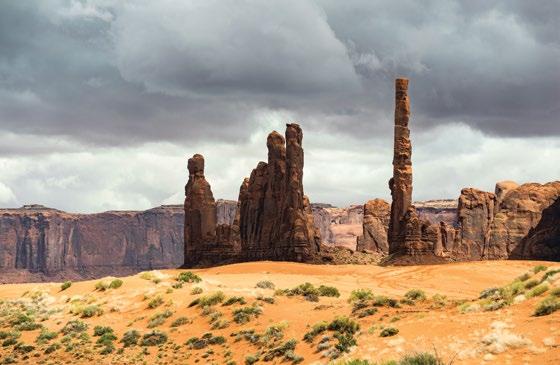
Uranium remains a significant issue for many Plateau communities, stemming from abandoned uranium mines, water contamination, and the growing threat of future mining operations. One leader described the Uranium issue, “White Mesa (Utah), that’s where the only known Uranium dump still exists in the world, and it’s affecting their aquifer or their water source, which also affects us as Navajo living near that space… Coming from Monument Valley (Arizona), we live around a lot of the Uranium dumps that have never been cleared.”
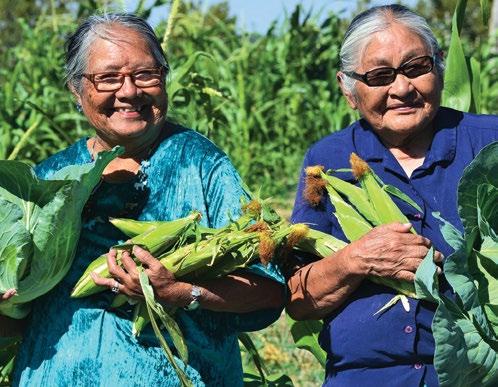
Leaders also mentioned native plants and agriculture as important environmental issues to address, and each goes hand in hand, “I feel like the ethnobotanical component of knowing how to identify traditional native plants is equally important with traditional agriculture.” Environmental issues were also indirectly reflected in other categories, demonstrating how Intergenerational Knowledge, Culture, and Access are essential to both those categories and the environment.
INTERGENERATIONAL DISCUSSION TOPICS
Leaders discussed the need for Intergenerational knowledge sharing, leadership, and mentorship regarding the future of the language, culture, and work happening on the Plateau. One leader shared the need for intergenerational mentorship, “I think the answer comes from our young people. You know, not answers surrounding way, but the power to find solutions. It consists in young people, and only if they’re able to find the assistance they need, support they need, the guidance, the mentorship they need. That’s what I hear all the time from young people. They’re looking for a mentor.”
Intergenerational knowledge sharing was the most significant topic in the Intergenerational category. One emerging leader shared their frustration, “Understanding that my generation is going to live with this and your inaction is continuing to perpetuate stagnant progress… It uplifted this notion of having this intergenerational space where these ideas can flow, and that youth and middle-aged generations have that recognition and respect of their words in these spaces.” Another leader shared a conversation with a Hopi elder regarding the lack of Intergenerational Knowledge sharing for cultural practices, “What I got from that conversation is he’s really stressed out because he has a lot of responsibilities. I don’t know anything about Hopi or Pueblo [traditions], but I know there’s a lot of really important stuff, and he has to carry it on, but there’s nobody after him. That’s one thing I know a lot of places don’t have.”
Plateau leaders emphasized the significance of intergenerational unity, deeply rooted in Plateau cultures and practices. Without this unity, leaders fear our culture, languages, and traditional ways of life will not be transmitted to younger generations.
ACCESS
Access is an issue that many Plateau leaders have been fighting for in their work for generations. Many leaders have emphasized the importance of access for Tribal Nations, as many continue to fight for access to water and sacred places.
The Plateau is primarily an arid desert, and many Plateau Tribes have historically been excluded from essential water rights discussions. Leaders overwhelmingly urged the importance of access to water. One leader shared the need for access to water, beginning with water rights: “So, access to water is not only just like in a physical sense, but rights as well. Ensuring that we have a say in that, from all of us, not only Tribal but at State and Federal agencies as well.” Another leader directly urges CPF to focus on access to water, “You take away the water, you take away the people’s lives. If I was the Colorado Plateau Philanthropy Foundation, I would look at issues like that because water is always going to be a hot topic.”
Access to sacred places was also a common issue that many leaders discussed. One leader shared her frustration with co-stewardship and co-management of Sacred Places, “It all involves access to these spaces, and that’s where we’ve been having challenges through co-management and costewardship practices with the Federal agencies. I think there still needs a lot of work done around that.”
Beyond the common theme of access to water and sacred places, some leaders also emphasized the need for access to infrastructure, broadband, cultural items, food, and resources. As many leaders described, access is crucial to uplifting the Plateau’s Tribal communities. For significant change to happen on the Plateau, access to basic needs like water is vital to the prosperity of Plateau communities.
PLATEAU OPPORTUNITIES FINDINGS
When discussing the opportunities the Plateau offers, leaders frequently mentioned Local Talent (14), Communication (13), and Intergenerational Opportunities (9).
LOCAL TALENT
Local talent is the top category that the leaders overwhelmingly mentioned throughout the conversations regarding opportunities. Leaders discussed various ideas, ranging from local community organizing to uplifting local experts.
Investing in local talent as a category goes beyond the individual, with many leaders pointing to local community organizing, “There is opportunity to come together to find ways that we can separate ourselves from those spaces… Work for our communities rather than working for the Federal system or the State system.”
Leaders also talked about the importance of local experts who may not have formal education or degrees, “That’s one thing that we want to advocate from the local level, is that we need to invite the elders. We need to invite those who may have not been to formal school or received a formal education, like my grandma.” These findings reiterate the significance of CPF’s mantra: ‘We live where we serve.’ Overwhelmingly, leaders pointed to the talent within the Plateau as a means to address many issues that arose during these conversations.
COMMUNICATION
Leaders discussed the importance of communication for CPF, encouraging the foundation to share the story of the Plateau, especially by highlighting the efforts of local people who are doing great work. They expressed a desire for more communication about the Plateau, with a focus on uplifting the initiatives in Tribal communities.
One leader recommends, “I do think you guys (CPF) need to start moving boldly into being confident enough that you’ve built the foundation and you’ve earned that right to speak.” Another leader discussed local organizations and communicating their work, “I think we need to talk about the work of these organizations and the purpose of this work, and the whole idea of focusing on resiliency and not victimhood.” Another leader touched on the need to communicate community-level work, “I guess liaison work within the work that they’re doing across the Plateau. Or sort of like demonstrate the work that is being done at the community level. Put it into the local newspaper. Put it however way, however else you can, in terms of outreach.”
Overall, leaders recommend emphasizing communication about the Plateau in a bigger way. Communicating the Plateau’s advances and positives will uplift those working in the community and the leaders’ work.
INTERGENERATIONAL OPPORTUNITIES
With intergenerational opportunities being a significant topic in conversations with leaders, many have urged the importance of focusing on intergenerational opportunities.
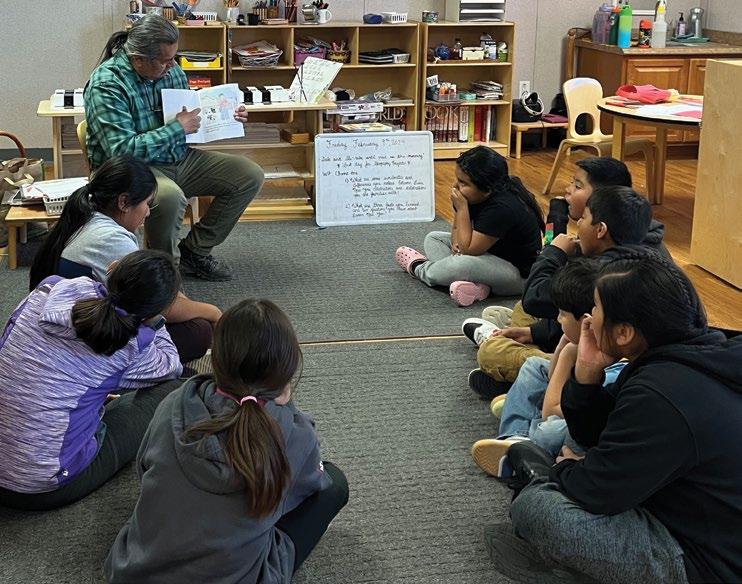
Many leaders, especially established ones, shared a desire for mentorship among younger generations looking to get involved in their work. One leader expresses, “We recognize we can’t do this alone, and we need that younger motivation and energy to be a part of this now. I want them to learn these hard skills and lessons that we learned.” Another leader mentioned the need for intergenerational learning, “Within instilling intergenerational learning, that will help us too because we are our ancestors’ dreams, our survivors. We need to learn how to have better foresight for the future than living presently.”
Another leader discussed learning in an intergenerational space, “Opportunities for those intergenerational connections and learning, that’s reciprocal. It’s not from elder to youth only, it’s youth to elder as well.”
Overwhelmingly, the leaders agreed that this knowledge, future opportunities, and future strategies must include an intergenerational aspect within those plans. More youth desire to get involved with their Tribal communities, and leaders have expressed their willingness to share their knowledge.
PLATEAU STRENGTHS FINDINGS
When discussing the Plateau’s strengths, leaders frequently mentioned Community (18), Culture (17), and Native Traditional Knowledge and Modern Education (6) as the frequently discussed categories.
COMMUNITY
In every conversation with Plateau leaders, leaders emphasized that community is the main strength that the Plateau has to offer. A majority of leaders shared short lists that included communities, families, kinship, ‘our people’, and connection when asked about the Plateau’s strengths. A significant theme from leaders who gave longer answers is that tribal communities are stronger when they come together. “I realize how much power we have as Indigenous people, as collectives, and how much our voice matters in issues regarding sacred lands protections and even water and extractive industries.” Others mentioned the strength of building within communities by seeking expertise and knowledge from community members, “Our people. Utilizing them to our-their full capacity to help meet our needs as
communities and organizations.” Another leader spoke of trusting our people and the knowledge they hold, “We really need to trust our own people, trust our leaders, and whether that’s like an elected leader, but really our local leaders to trust them, that they have key solutions that they can bring to the table, and that we have enough knowledge.” The feedback illustrates the hope and call for utilizing the Plateau community to its fullest potential. The consensus among leaders when discussing the community is that there is considerable local talent and potential.
CULTURE
The culture category highlights many strengths that the leaders felt were crucial for the Plateau Tribes. Leaders mentioned culture, language, traditional farming practices, traditions, ceremonies, songs, prayers, sacred places, connection to land, kinship models, and Traditional Fundamental Laws as key cultural strengths.
Some leaders highlighted that our culture is a strength and aspects of it, like kinship models, can be a tool in our work: “Kinship models, K’é (Navajo word for familial relationships and kinship), Hózhǫ́ (Navajo life concept for well-being that includes harmony, balance, and order). That’s the gift that our ancestors gave us, you know? It’s not just given to us, but we have to earn and deserve those gifts. So I think on an abstract level, I guess we have the tools we need already.” Other leaders emphasized the strength of having a connection to the Plateau, “Having the official ties to this place and understanding who we are and where we come from really, really strengthens the reason why we do what we do as Indigenous peoples, as stewards of these ancestral landscapes.” Another leader noted that more people are returning to our cultural ways as tools for our future: “We are not going to let go of [Culture] because there are reasons why we are really going back to practicing our old ways. Farming, culture, language, and it’s for our future and to ensure that we have a future.”
From the leader’s responses, it is clear that culture is a force that has stood the test of time. Although leaders mentioned cultural loss as a challenge, they also shared that culture is a way forward, seeing it as an opportunity to create connections for Plateau communities to engage with their culture, including their connections to the land, sacred places, songs, language, traditional practices and more.
LIVING IN TWO WORLDS: NATIVE TRADITIONAL KNOWLEDGE AND MODERN EDUCATION
Within the strength category, many leaders emphasized the importance of uplifting those on the Plateau who possess not only cultural and traditional knowledge, but also those who have undergone Western Education and can share their knowledge with their communities.
One leader shares about recognizing this expertise, “There needs to be stronger recognition of the knowledge and experience that we as community members hold collectively and bring that to the fore.” Another leader comments on the importance of recognizing leaders who do not have a Western education, “Our Indigenous Scientists, Astronomers, Cartographers, Hydrologists, etc. Just recognizing that we have experts in our communities that do not have Western education.” Another leader built on the conversation, taking the concept further and urging communities to recognize the excellence inside rather than outsourcing, “We have enough wisdom and also expertise that we don’t have to seek outside consultation or others that we think may have a degree in such topics. But we have that in our community already.” It is clear from the leaders that investing in Plateau communities, especially those with either cultural or Western knowledge, is an untapped strength.
PLATEAU PARTNERSHIPS
SUGGESTIONS
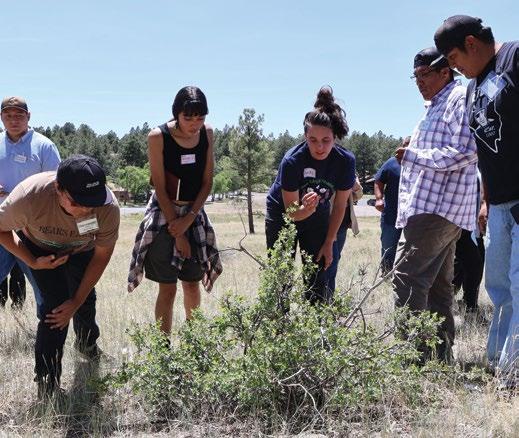
During these conversations, CPF sought the leaders’ suggestions on potential organizations and individuals to partner with, aiming to create a broader impact on the Plateau. The leaders provided recommendations for various potential partners, including organizations, experts, and allies working in diverse areas related to the Plateau. These suggestions included individuals involved in environmental initiatives, agriculture, protection of sacred places, women’s organizations, funding entities, university programs, advocacy groups, grassroots organizations, public figures, tribal leaders, federal agencies, state representatives, cultural knowledge holders, coalitions, and legal entities.
Each recommendation from the leaders is being considered as CPF works on a larger power map that informs our strategies and partnerships for breaking down barriers on the Plateau. CPF recognizes that we cannot do the work alone, and as articulated by the leaders, there are many people already doing great work on the Plateau.

DISCOVERY AND RESOLVE
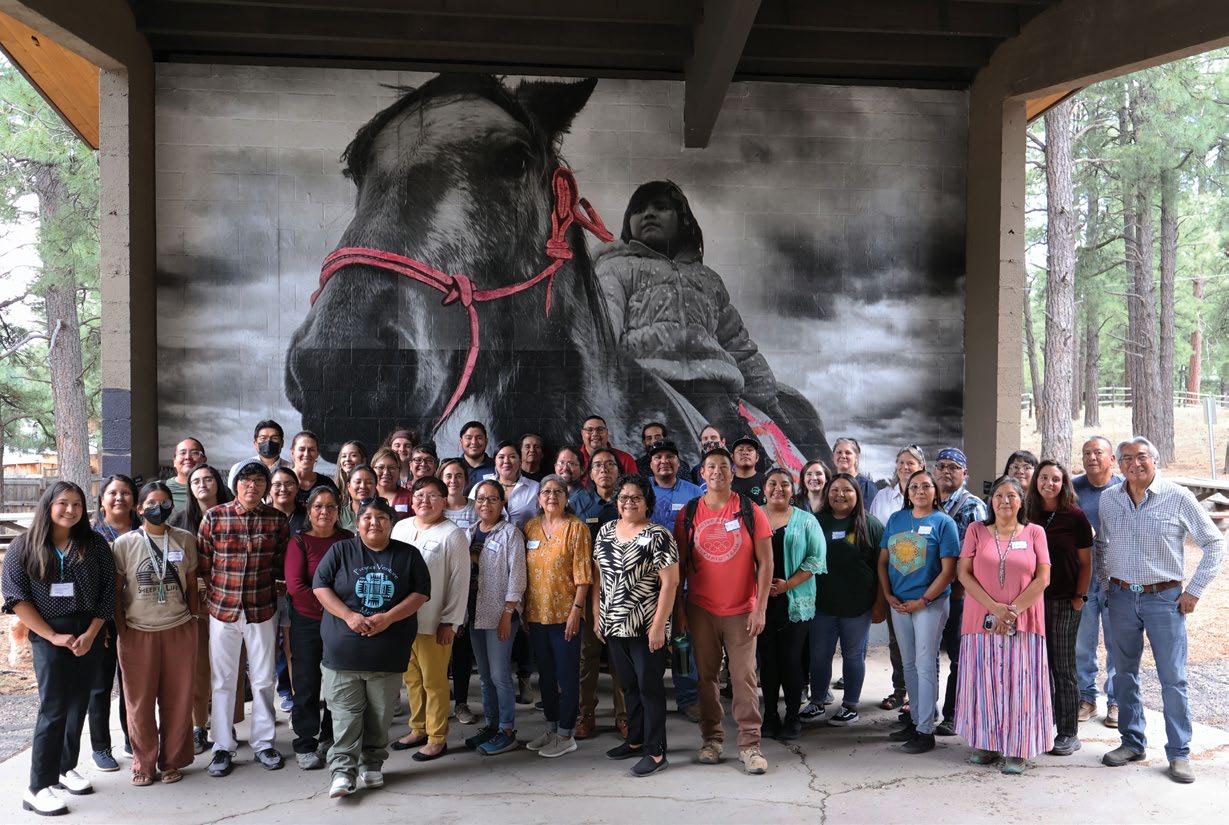
The conversations with leaders conducted by CPF reiterate the importance of reaching the communities we serve and ensuring our priorities remain aligned with what Colorado Plateau communities believe are necessary. From these conversations, many emphasized the importance of CPF’s current issue areas but raised other pressing challenges and opportunities related to the environment, culture, access, and intergenerational issues. These conversations have revealed that Plateau priorities have undergone a shift since the last leader summit in 2010. Based on these conversations, CPF’s four priority areas are as relevant as ever but can evolve to address the new issues raised by the Plateau leaders effectively. The opportunities and strengths that Plateau leaders identified are also a vital par t of this conversation, recommending areas of opportunity in Local Talent, Communication, and Intergenerational Opportunities, as well as areas of strength in Community, Culture, and Knowledge.
In conclusion, leaders have provided an in-depth overview of issues, opportunities, and strengths across the Plateau for CPF to consider when refreshing its four priority areas and implementing its next strategic plan. We listened to the people we serve, our partners, and other stakeholders to enlighten our foundational priorities. We heard that culture is at the heart of identity and belonging, knowledge and values transmission, adaptation and resilience, and emotional and spiritual well-being, that food systems are drivers of health and nutrition, food security, community connectivity, economic stability, and resilience to crisis, that environmental stewardship includes protecting water, land and air for all dependent life forms, advocacy for access to sacred places, and confronting climate change with sustainable solutions, and that leadership innovation centers and strengthens organizational frameworks, collaborative networks, and enhances skills for intergenerational partnerships.
Our commitment to Native-led solutions remains at the heart of everything we do. We are poised to deepen our partnerships, expand our influence, and ensure that the wisdom of the communities we serve guides the way forward.
SPECIAL THANKS
The Colorado Plateau Foundation would like to extend a heartfelt thank you to the participants who attended the Leader Summit. Your unique insights and perspectives are invaluable in guiding CPF’s work.
We also want to express our gratitude to Vickie Oldman of Kitseallyboy Consulting, LLC, for helping us organize the summit structure and for facilitating these meaningful in-person conversations. And thank you to Daryl Melvin of Melvin Consulting for helping us design our online conversation structure.
Lastly, a special thank you to the Colorado Plateau community for helping CPF identify leaders who truly represent the authentic voices of their communities. We appreciate everyone who contributed to bringing together this distinctive group of individuals to help guide CPF into the future.