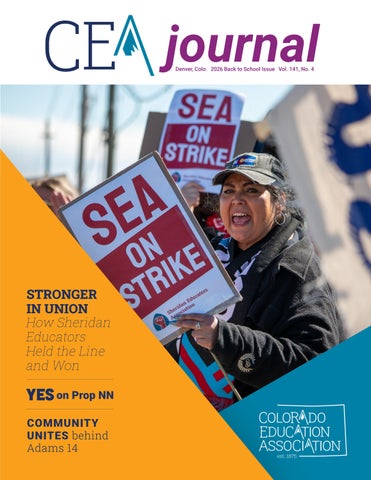
COMMUNITY UNITES behind Adams 14 How Sheridan Educators Held the Line and Won on Prop NN
Vol. 141, No. 4
Denver, Colo. 2026 Back to School Issue
Mountain
PRESIDENT
Kevin Vick
VICE PRESIDENT
Liz Waddick
SECRETARY-TREASURER
Amber Wilson
NEA DIRECTORS
Ang Anderson
Dr. Timothy Brown
INTERIM DEPUTY
EXECUTIVE DIRECTOR
Kris Gomez
CONTRIBUTING
Sydney Breakfield Communications
Coordinator
Ian Hecker
Director
Kevin Pape
Political Director
Sydney Slifka Director
Photo by Sydney Slifka
Make Education A Lasting Profession
Dear Members,
Every August, educators return to our schools with purpose because we believe in our students and in the promise of public education. But belief alone is not enough to keep educators in our schools.
Across Colorado, too many educators are working second and third jobs, carrying unsustainable workloads, and wondering whether they can afford to stay in the profession they love. When educators leave, students lose trusted adults, schools lose stability, and communities pay the price.
That is why everything we do together in our union must be tied back to one goal: making education a career where people can stay, thrive, and retire with dignity.
This past year, CEA members showed what is possible when educators organize together. In Sheridan, educators held the line through a strike and won a path forward that protected their voice, their union, and their ability to keep advocating for students. In Mountain Valley, certified and classified educators won their first wall-to-wall contract, a historic victory five years in the making that brought stronger protections and a real voice on the job to educators in Saguache. Aurora and Thompson ESP gained recognition and organized for the respect and working conditions education support professionals deserve, they can win meaningful change for themselves, their students, and their school communities.
We also won big at the state level. After years of organizing, lobbying, and sharing the real stories of what underfunding means in our schools, CEA members spearheaded the passage SB135 through the legislature and put Proposition NN on the ballot this fall.
This fall, our work continues with Proposition NN. For too long, Colorado has chronically underfunded our students, our schools, and the educators who make public education possible. Prop NN is our opportunity to raise the revenue cap without raising taxes by allowing the state to keep money it already collects and dedicate it to children and public schools. That means more resources to recruit and retain educators, reduce class sizes, expand student support, increase career and technical education courses, and make sure every student has the opportunity to learn in a fully staffed, fully-resourced public school.
As we head back to school, I hope every CEA member feels proud of what we have accomplished together this past year. I also hope we are clear-eyed about our collective work ahead.
A sustainable career means liveable wages. It means manageable workloads. It means safe, welcoming schools. It means enough staff to meet student needs. It means having a voice in the decisions that affect our profession, our students, and our school communities.
Most of all, it means educators do not have to choose between serving their students and taking care of themselves and their families.
That is the future we are fighting for, and this fall we have a real chance to make meaningful change for Colorado students, educators, and public schools. We have built the momentum. Now we have to organize, show up, and win.
In solidarity, Kevin Vick
Kevin Vick is a high school social studies teacher and president of the CEA.
CEA President Kevin Vick
2026 Legislative Wins
By Ian Hecker
During the 2026 legislative session, we secured one of the biggest public education victories in recent years by passing SB-135, giving voters the opportunity in November to significantly increase K-12 funding. CEA members mobilized to ensure not only passage of 135 but also to fend off proposed cuts to education during an extremely challenging budget year. This is a massive win and sets us on the path toward sustainable long term investment in our public schools.
CEA successfully defeated every bill it opposed, including proposals that would have reduced public resources, burdened educators, or weakened public education. Across the session, CEA supported 46 bills, helped pass 33, and improved numerous others to better protect students, educators, and public schools.
Thank you to Sen. Bridges, Sen. Kipp, Rep. Bacon, Rep. Lukens who worked alongside educators and championed SB26-135 through the legislature.
MORE WINS
SB26-023 CEA advocated to ensure this year’s School Funding Act did not cut K-12 funding despite an extremely dire budget situation, and also worked to close privatization loopholes via the bill.
CEA advanced policies that make education a more sustainable career.
» HB26-1400 to strengthen PERA
» SB26-126 to streamline licensure for experienced out-of-state teachers
» SB26-153 to maintain quality standards for school counselor licensure
» We also supported HB26-1291, which would have reduced unnecessary evaluation burdens for experienced educators, and SB26-139, which would have helped districts create workforce housing for teachers and school staff. (Neither bill passed)
Protected against federal attacks. These bills PASSED.
» SB26-005 to protect people when their rights are violated during federal immigration enforcement activities
» SB26-125 and HB26-1141 to strengthen protections for students with disabilities and combat discrimination in public schools while ensuring educators were protected from additional burden and liability
» SB26-1322 to protect LGBTQ+ youth and survivors by creating civil remedies for individuals harmed by conversion therapy
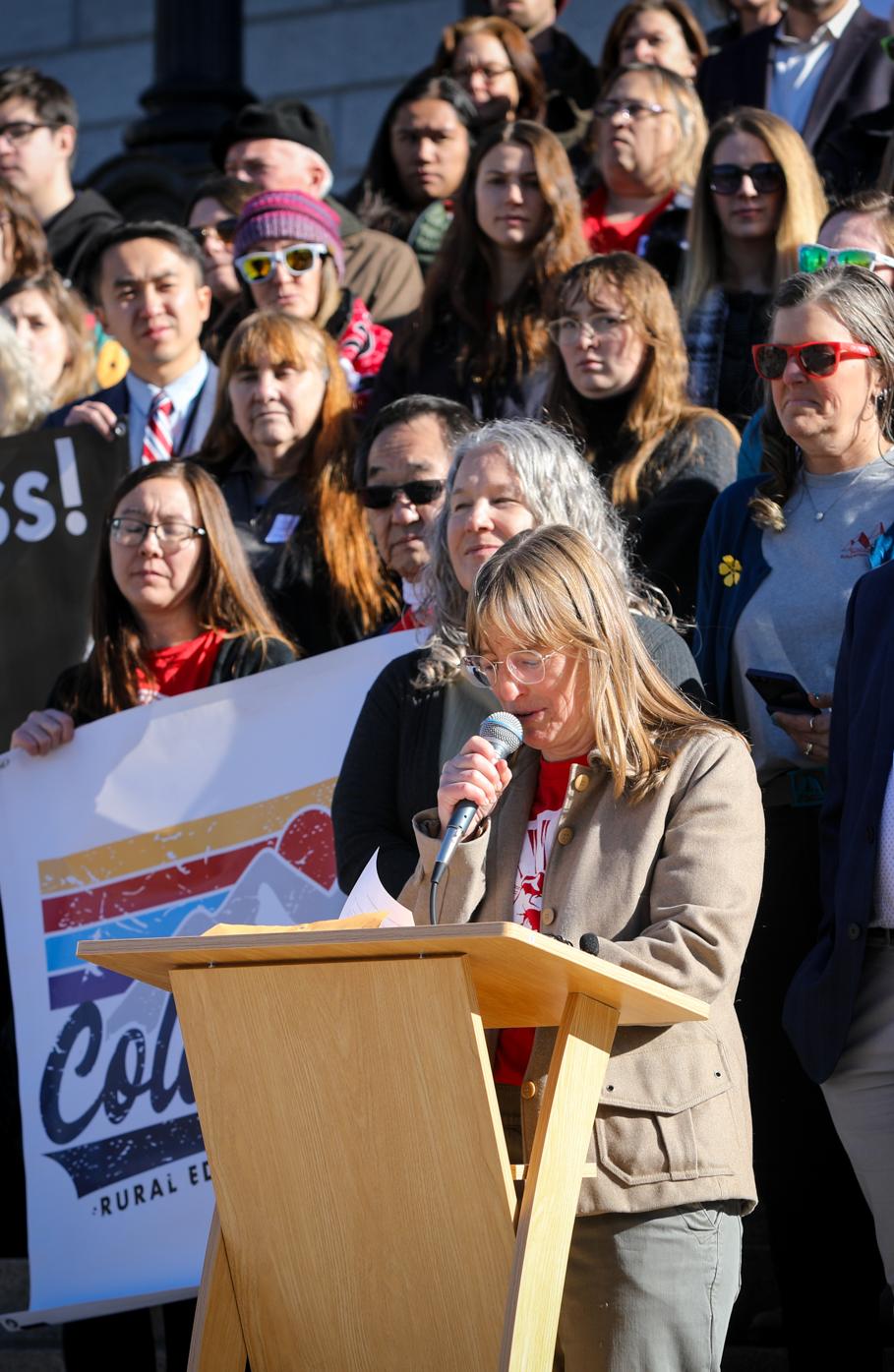
PICTURED ABOVE: Kelly Johnson, high school English teacher and Delta County EA member speaks at the Cut the Ropes press conference during Rural Lobby Day. Photo by Sammy Emerson
2026 Midterm Elections Preview
By Kevin Pape
All four statewide offices are open and up for election in 2026 (Governor, Secretary of State, Attorney General and Treasurer). There will also be several competitive primaries at the state legislative level that pit pro-public education candidates against well funded education reform candidates. There are also about six highly competitive state Senate districts and 10 state House districts to watch this year. Many of these seats are held by public education champions we will need to protect in November.
At the federal level, John Hickenlooper is running for re-election to the U.S. Senate. Congressional District 8, which includes parts of Adams and Weld counties, is also expected to be one of the most competitive districts in the country and could help determine control of Congress.
Finally, the ballot measure space will be very crowded with good and bad measures. We will obviously be leading the charge to pass Proposition NN and are monitoring other positive measures. We are also monitoring a return of the “school choice” measure that we defeated in 2024 and other measures that would target immigrant and other vulnerable communities.
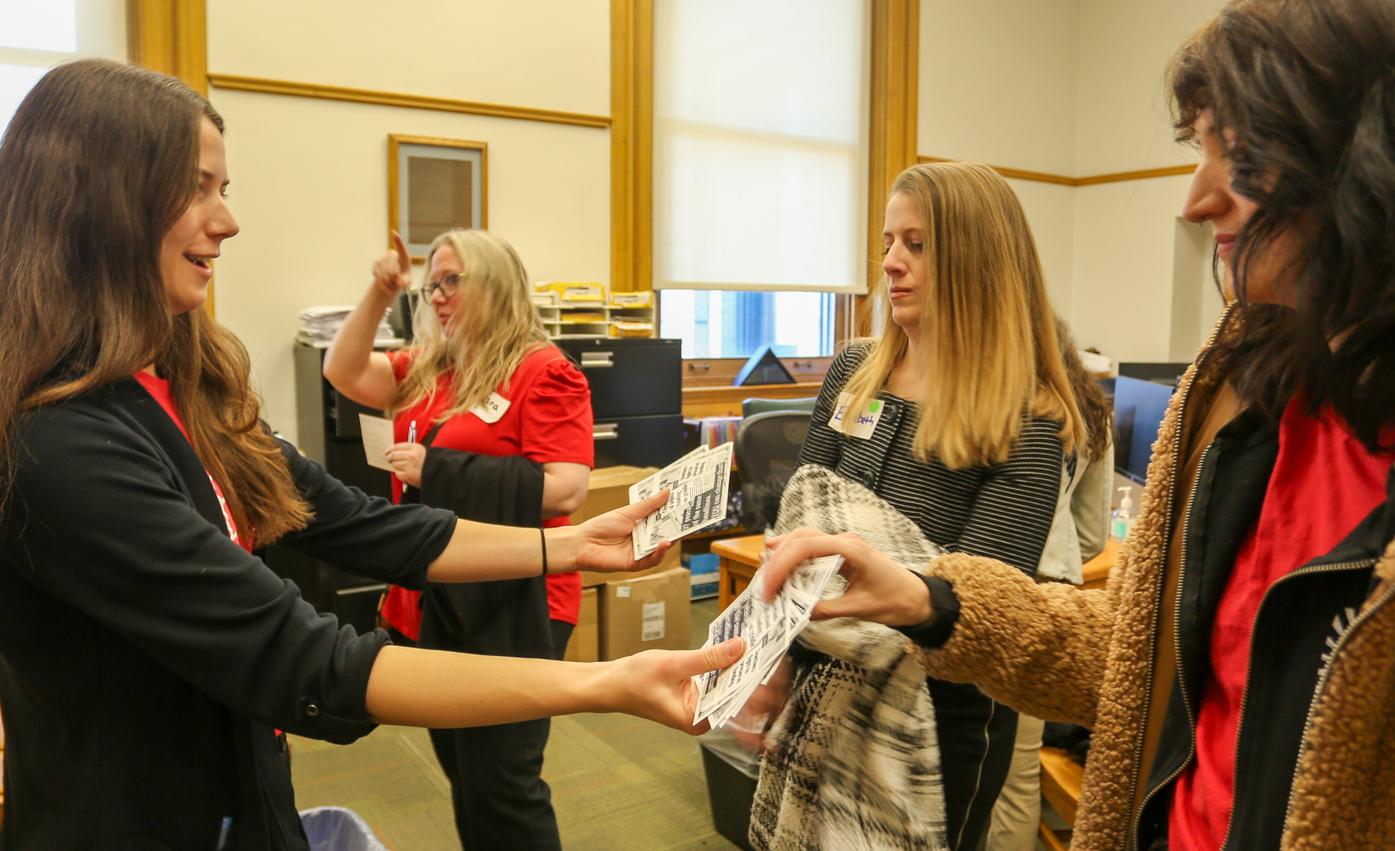
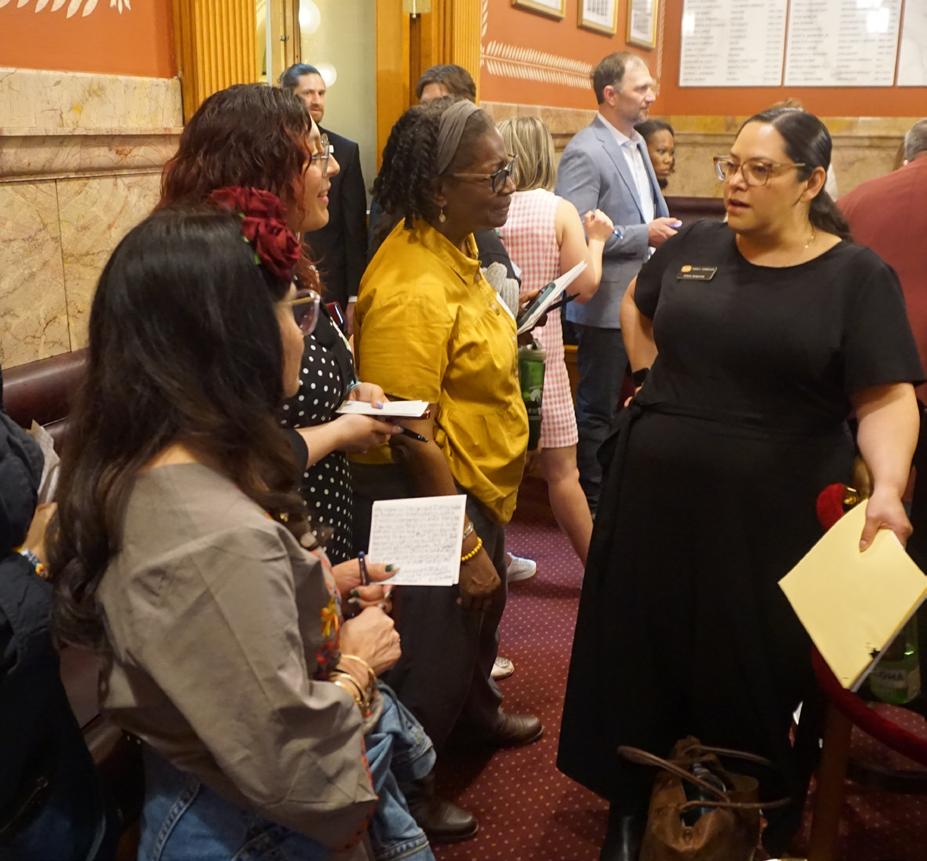
LEFT TO RIGHT: Poudre EA members leave postcards for legislators calling on them to support SB-135. Photo by Sammy Emerson; Sen. Julie Gonzales discusses education funding needs with members. Photo by Sydney Breakfield
Before the close of the 2026 legislative session, Senate Bill 135, successfully passed through state legislation, and will now be on the statewide ballot as Prop NN. This significant ballot measure would allow Colorado to retain and invest revenue it already collects in an amount equal to state K–12 education funding. The proposal would also provide stable increases in school funding of up to 2% annually for ten years and require annual independent audits to ensure transparency and accountability.
This monumental win would not have been possible without the efforts of educators across the state. Members held countless conversations with legislators at the Capitol and sent hundreds of emails and postcards urging them to support this legislation. Many shared personal stories during interviews, press conferences, and testimony. And several locals accomplished having school board resolutions passed in their districts. This collective power proves that when we work together we win.
Why We Need It
in the nation
Colorado ranks at the bottom nationally in teacher wage competitiveness.
Colorado underfunds every student by which creates an annual shortfall of
Why Passing Prop NN Matters
I think my big concern right now is with mental health support for students and having enough people in our building, whether that is mental health providers or paraeducators who can work one-on-one with students and support them in our classrooms.
SARAH SANTOS
Fifth-grade teacher, Cherry Creek Education Association
“ESPs across the state are not paid a living wage. Some of them even pay back their paychecks at the end of the month to pay for their insurance and other things that they owe the district. And it is time that our ESPs across the state are paid a living wage and are not having to work two or three jobs just to survive.”
MARY HENRY
Preschool paraeducator, Boulder Valley Education Association
“I hope we are able to have more schools like the schools that have effective needs centerbased programs, so that every student has an opportunity to thrive in every one of our schools in the whole state.”
IRMA SANDOVAL
Dual-language kindergarten teacher, Poudre Education Association
FUNDING IMPACTS OUR ABILITY TO PROVIDE MATERIALS AND EQUIPMENT THAT IS RELEVANT TO THE CHANGING TIMES, AND BE ABLE TO PROVIDE STUDENTS WITH REAL-WORLD OPPORTUNITIES THAT WILL HELP DEVELOP THEIR SKILL SETS TO MAKE THEM MORE MARKETABLE WHEN THEY LEAVE OUR SCHOOLS.”
KASEY ANDERSON
High school science teacher, Sterling Education Association
Adams 14 behind Community UNITES
By Sydney Breakfield
Just a few years ago, Adams 14 educators were facing a serious challenge. After the pandemic, the Commerce City school district ranked near the bottom of the Front Range in educator pay. Schools struggled to fill positions, staff morale was low, and teacher shortages were widespread. Post pandemic, one school opened with 16 classrooms that did not have a permanent teacher. Resulting in hard to manage emergency staffing solutions. As teacher shortages increased, the effects were felt across the district. Families saw how difficult it had become to hire and keep educators. Students experienced frequent staff turnover, and educators faced heavier workloads and growing frustration. It was clear that the time for change had come.
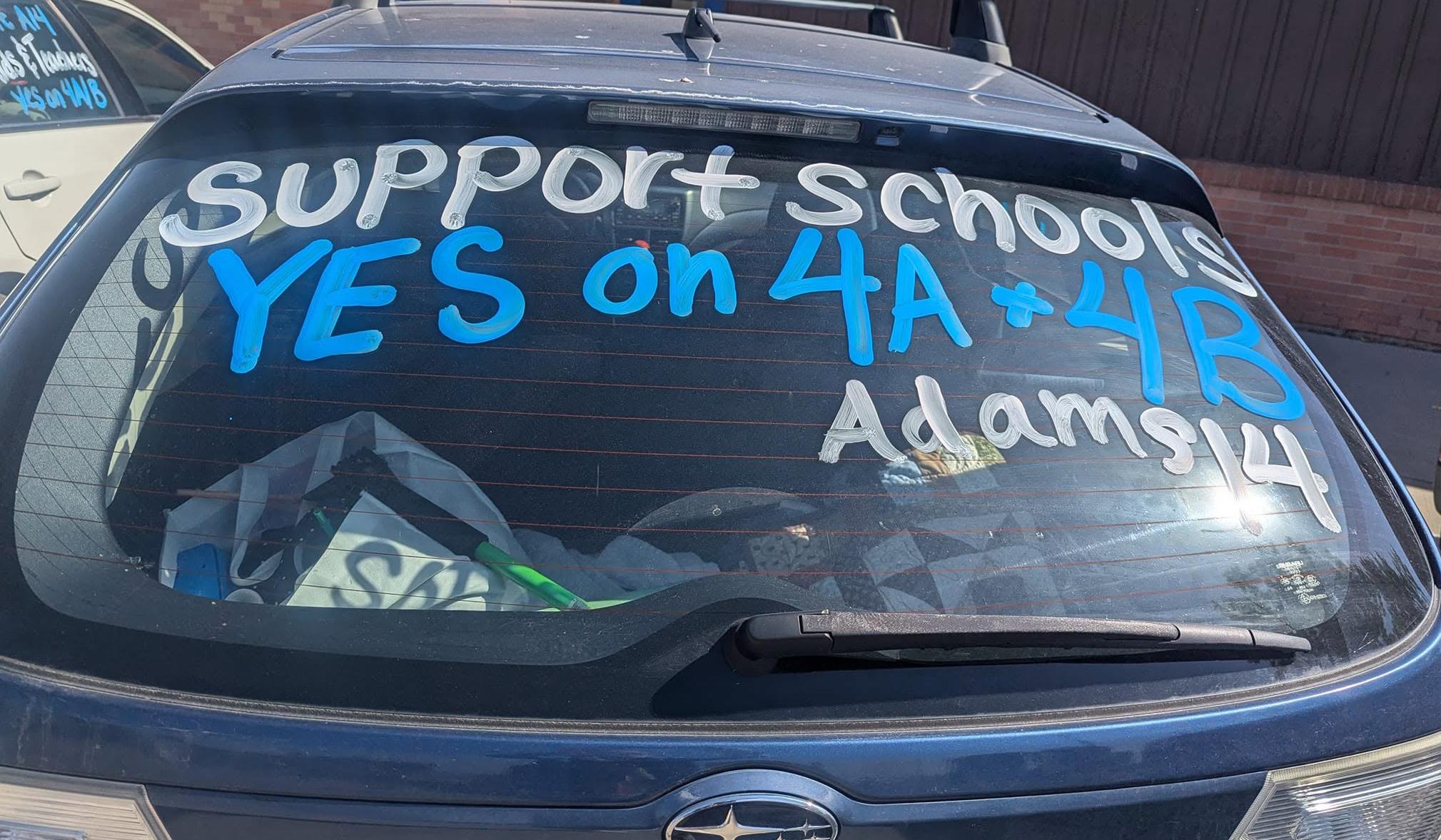
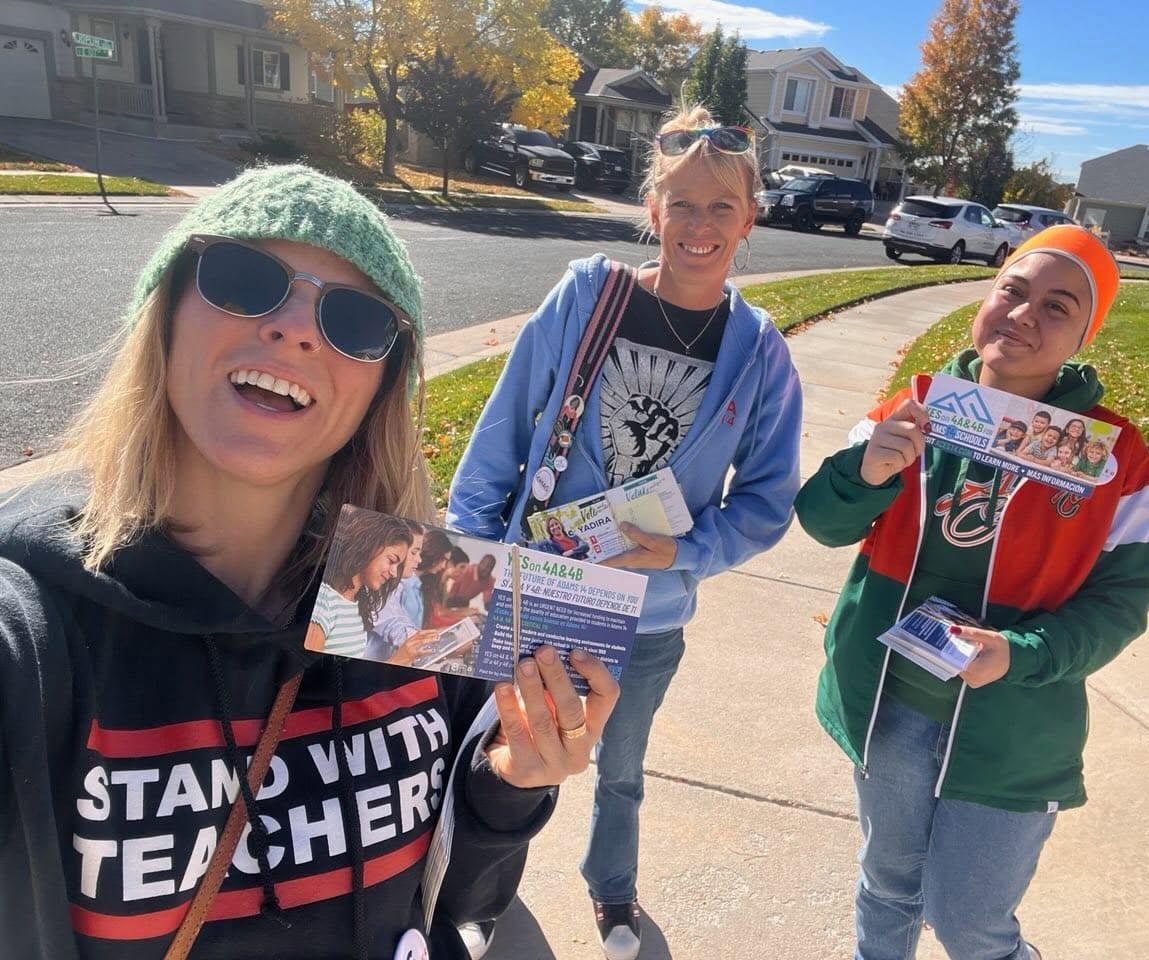
That solution came in the form of a bond and mill levy package that would fund school improvements and increase pay for certified and classified staff. School District 14 Classroom Teachers Association (SD14CTA) members led the effort by knocking on doors, talking with voters, and explaining the district’s needs. The local also hosted events, provided resources, and helped new educators navigate everything from healthcare systems to housing challenges. That strong investment in member engagement created solid relationships, and members’ desires to take action.
It was not hard for members to gain support from the community, who understood the importance of public education. Families were directly impacted by the staffing shortages and demanded change. “There was a sense that this was overdue,” said Jason Malmberg, high school teacher and SD14CTA president. This sentiment was clear during the door knocking conversations held with community members.
Jason believes that voters supported the proposal because they knew exactly how the money would be used. “The district really had to commit that they were not going to spend a dollar of this on administrative salaries, consultants, or curriculum,” he said. “People like teachers. People like kitchen workers. People want to know their investment is going directly into classrooms.”
Accountability measures helped ensure the money was used as promised, building trust with both employees and voters. Instead of spending all of the new funding right away, district leaders and the SD14CTA bargaining team focused on longterm planning. “We wanted it to last,” Jason said. “If you can wait a little bit and have a trusting relationship with your board
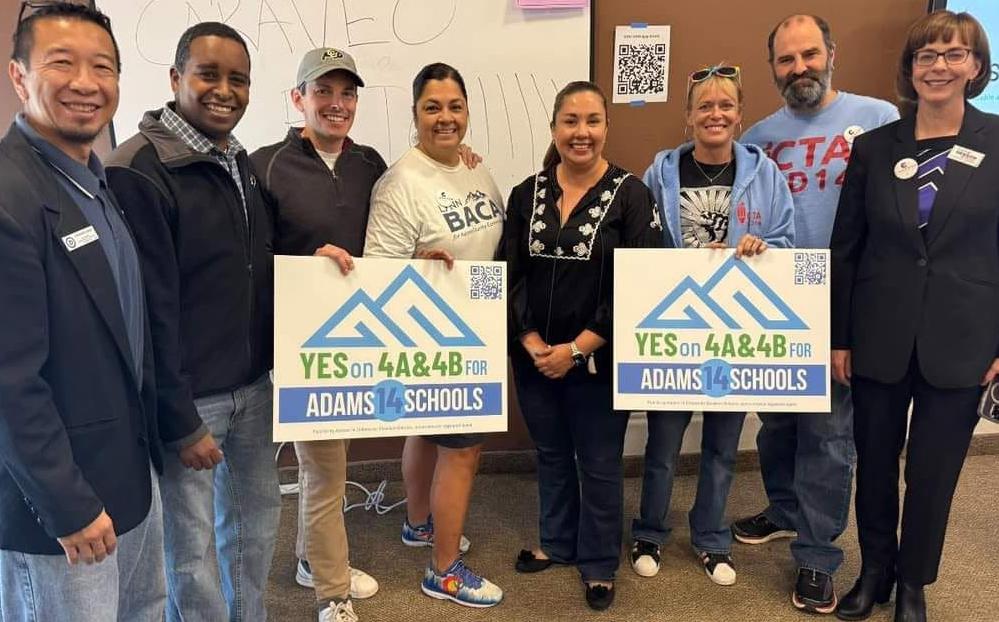
ABOVE: U.S. Representatives and Adams County Commissioners show support for the Adams 14 mill levy and bond campaign. RIGHT: SD14CTA members canvass to pass the mill levy and bond. Photos by SD14CTA
and leadership, then that money continues to build.” Early raises improve pay while preserving funding for future years.
Jason is proud to share that as a result of the voters supporting public education in their community, Adams 14 now offers a starting teacher salary of $68,000, the highest in Colorado. Recently, SD14CTA also secured a 5% raise for educators. This new salary system helps attract new educators while also rewarding experienced teachers who have spent years in the district.
While educators in Adams 14 continue to face challenges, Jason sees the shift in the atmosphere thanks to these
New school facilities are under construction, staffing shortages have slowed down, and educators are earning more competitive salaries.
monumental wins. New school facilities are under construction, staffing shortages have slowed down, and educators are earning more competitive salaries. More importantly, there is a renewed sense of possibility. He shared, “If I was going to take it down to one idea, it’s just a sense of hope. We’ve got problems, but the hopelessness is not what it was.” This historic success demonstrates what can happen when educators, community members, and local leaders unite around a common goal: strengthening public schools.
Durango Educators Stand Together
By Sydney Breakfield
After months of organizing, bargaining, and working together, members of the Durango Education Support Professionals Association (DESPA) and Durango Education Association (DEA) secured meaningful contract improvements, including permanent salary increases that will help educators keep pace with the rising cost of living.
Compared to previous years, this round of negotiations looked very different. Rather than relying on a small group of leaders to carry out bargaining, members became active participants throughout the process. Bargaining teams focused on keeping educators informed, listening to concerns, and making sure members understood both the challenges and progress happening at the table. That work started long before negotiations began. "We went site by site to anybody who would hear us," Jake Richmond, a paraeducator and chair of the DESPA bargaining team said.
The communication strategy continued throughout the school year, helping members understand not only what was happening at the bargaining table but also why their participation mattered. "Over the last 2 years, we've been working really hard to get our members more engaged, to make sure they're showing up, to make sure that they understand the importance," said Laura Haley, interventionist and DEA President. Throughout the bargaining season, members attended meetings, asked questions, and helped build momentum around shared goals.
The partnership between DESPA and DEA became one of the defining features of the bargaining campaign.
For Diane Montoya-Scott, SIS data specialist and DESPA President, the support between the two groups was especially meaningful. "And I think that has a huge impact when the district and the community sees that yes, we are all one group of educators, but it's more powerful when you have teachers speaking up on behalf of your DESPA members," Diane said.
Perhaps the most lasting victory was the change in culture surrounding bargaining itself. Instead of seeing negotiations as something that happened behind closed doors, members experienced firsthand how collective action influences outcomes. "We got the 2% [increase] from last year to be permanent for all staff, an additional 2.5% for licensed staff, and an additional 3% for all ESPs," said Jake. Keeping experienced educators in schools creates stability for students, strengthens school communities, and helps maintain the relationships that are critical to student success.
Every conversation, survey response, meeting attendance, and show of support helped move the process forward. "When we stand together, when we're willing to push back, then we can accomplish really great things," Laura shared. This year's bargaining season demonstrated that successful negotiations are not won by bargaining teams alone. They are won when members organize, communicate, and take action together.
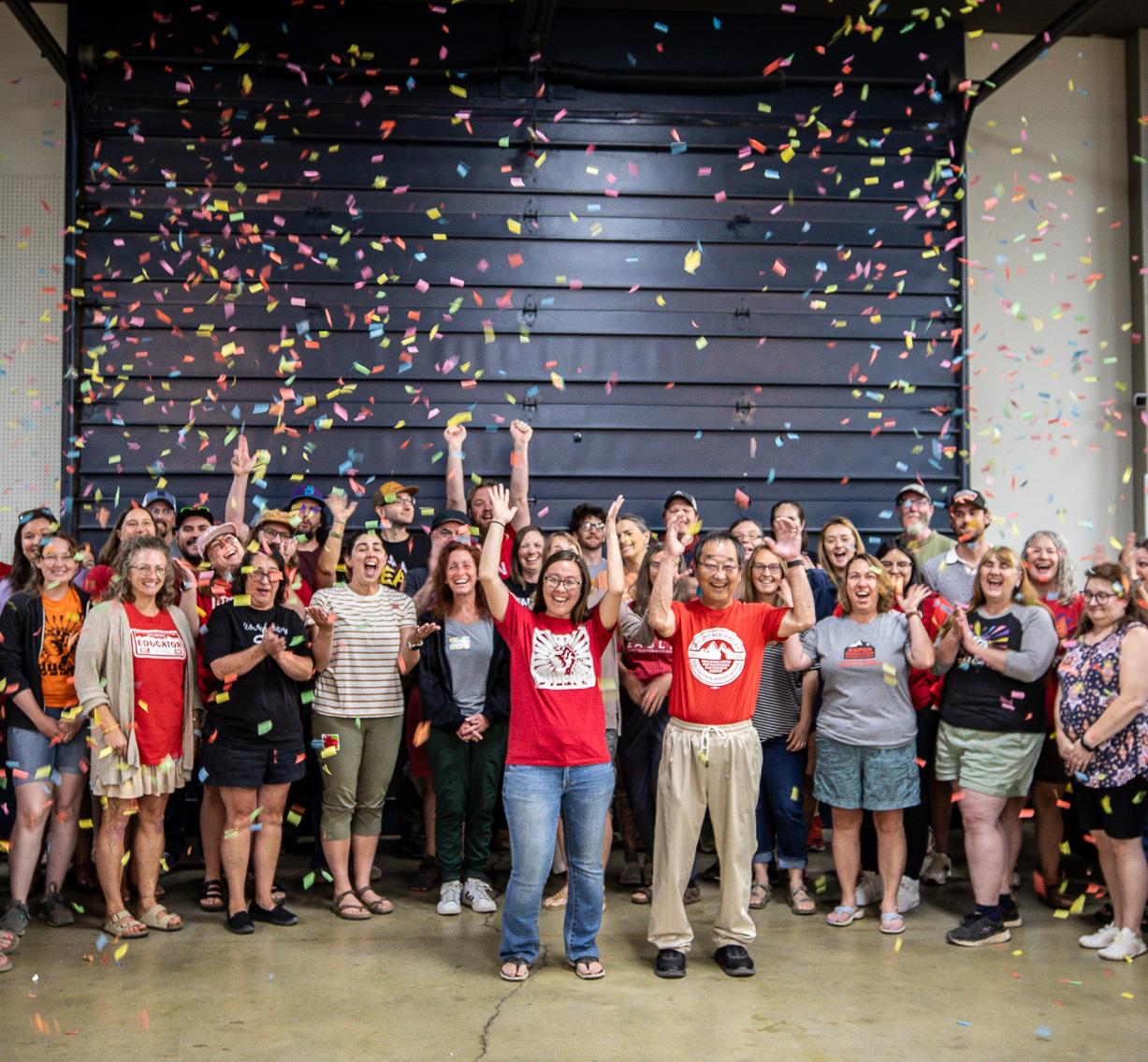
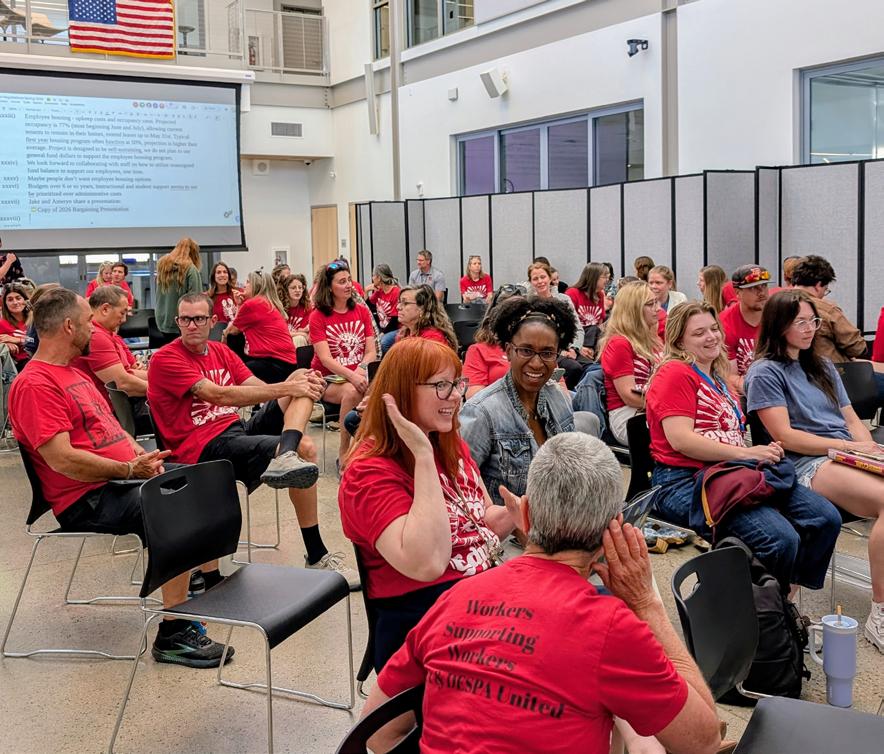
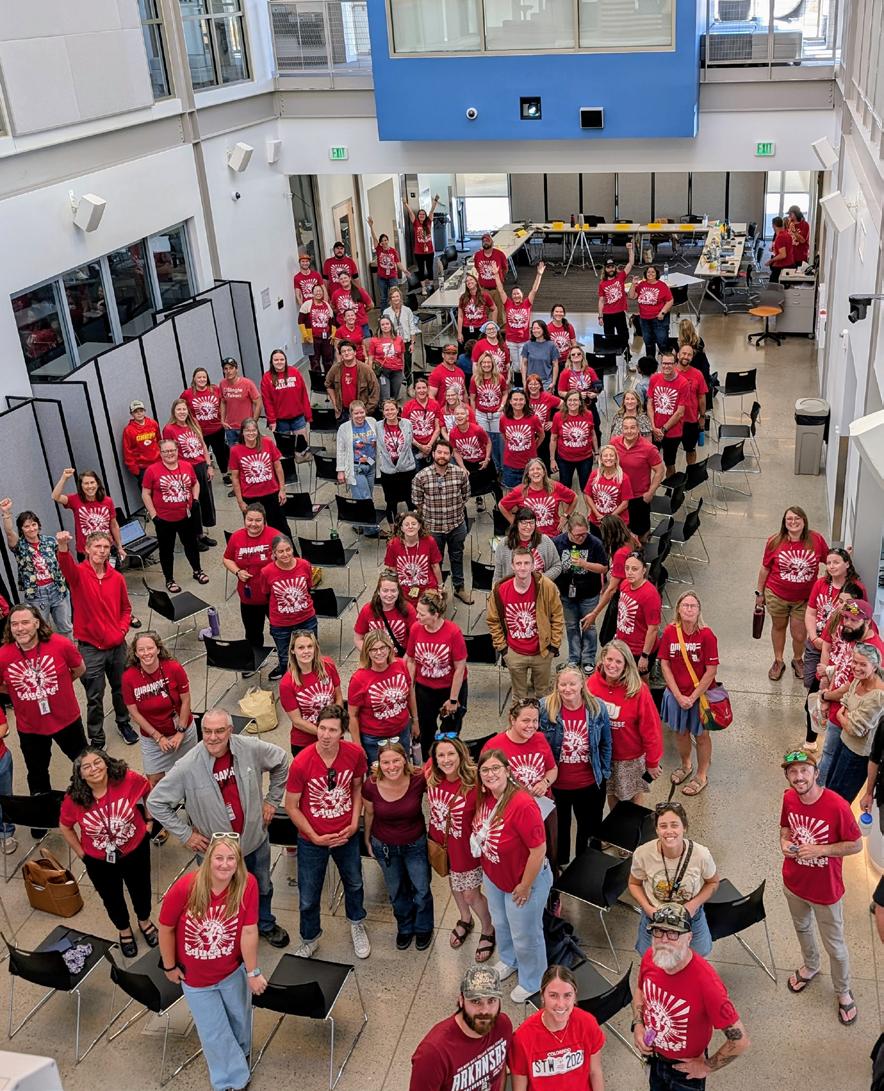
TOP: DESPA and DEA members gather for their annual member meeting before school starts.
BOTTOM: DESPA and DEA members pose after their meeting. Photos by Laura Haley, Durango Education Association
IN UNION How Sheridan Educators Stronger held the line and won
By Sydney Slifka
For more than 50 years, Sheridan educators had a collective bargaining agreement that gave them a voice in their work and a way to advocate for students. But when district leaders decided to no longer honor that longstanding agreement, members of the Sheridan Educators Association began the school year without the contract protections that had long helped create stability in their schools.
After the district’s decision, classified educators, including paraprofessionals, bus drivers, food service workers, custodians, and office staff, made the decision to organize for recognition and join certified educators in one wall-to-wall union. Classified staff had never had formal recognition in Sheridan, but teachers and classified staff understood that they were stronger together. The fight quickly shifted from just reinstating a contract to building a union where every educator had a voice, a seat at the table, and the power to fight for the students they serve.
But in the weeks that followed, district leaders still refused to meaningfully move on SEA’s demands. They did not show educators the respect they had earned or return to the table in a serious way. So, on April 1, Sheridan educators walked out together.
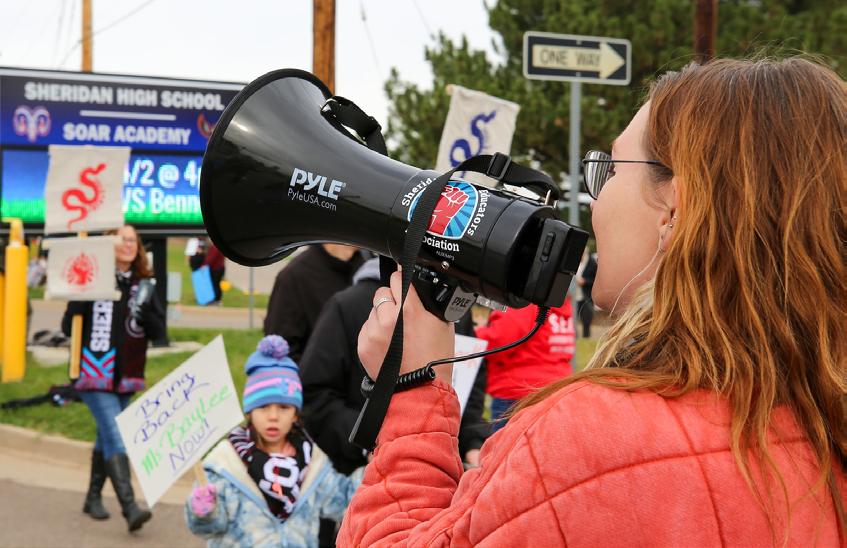
The days that followed were long, emotional, and powerful. Members picketed outside their schools, showed up at board meetings, talked with families, and kept pushing for three clear demands: reinstate the contract, create a path to recognize classified staff, and end harmful anti-union policies and retaliation.
“We want to have a seat at the table for negotiations, for salaries...because we’ve never really had a voice in this district and I think it’s about time that we do.”
KYLENE VIGIL Alice Terry Elementary
On March 4, SEA members voted 98 percent in favor of authorizing a strike. Following the vote, members started training, preparing, talking with families and community members, and planning to care for students and families if the district forced them onto the strike line. Members prepared food boxes for families, organized community town halls, and built the kind of solidarity that could hold through uncertainty.
As a first year teacher, Joe St Cyr saw firsthand that the strength of Sheridan schools came from the educators working alongside him.
“I got all of my support from my fellow coworkers and amazing teachers here at Sheridan,” St Cyr said. “And the only reason I was able to survive this long as a brand new teacher is because of them.”
For classified educators, the strike was about winning the voice they had been denied for too long.
“I am doing this because I am trying to stick up for all my classified coworkers and want to be treated equally,” said Kylene Vigil, office manager at Alice Terry Elementary. “We want to have a seat at the table for negotiations, for salaries, for everything that the teachers were getting as well, because we’ve never really had a voice in this district and I think it’s about time that we do.”
84 days.
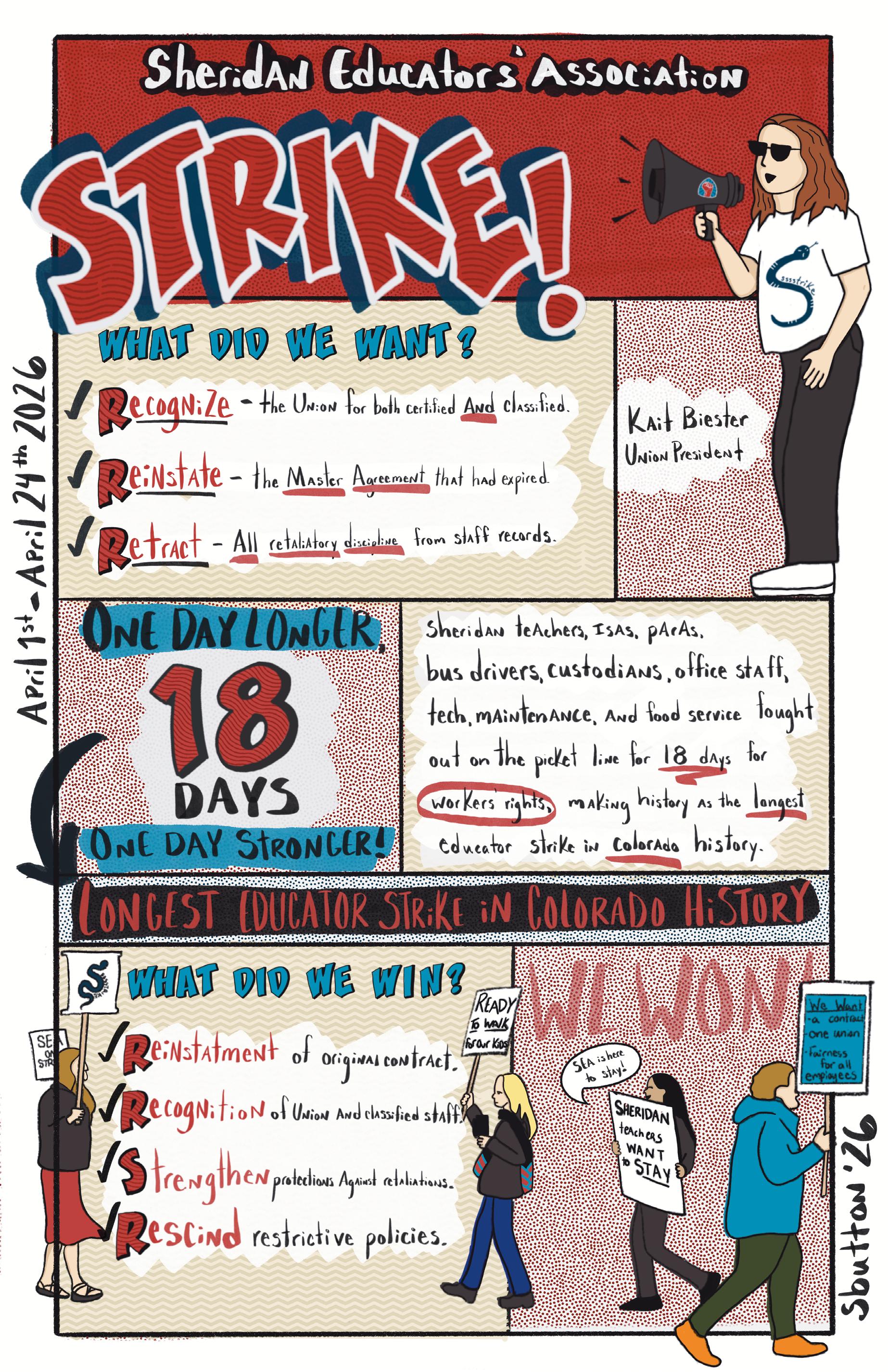
Infographic by Shelby Gahm, SEA member, detailing the Sheridan Educators Association strike in April 2026. *Note: the longest strike in Colorado history took place in 1981 by the Montezuma Cortez Education Association, lasting
CLOCKWISE FROM TOP LEFT:
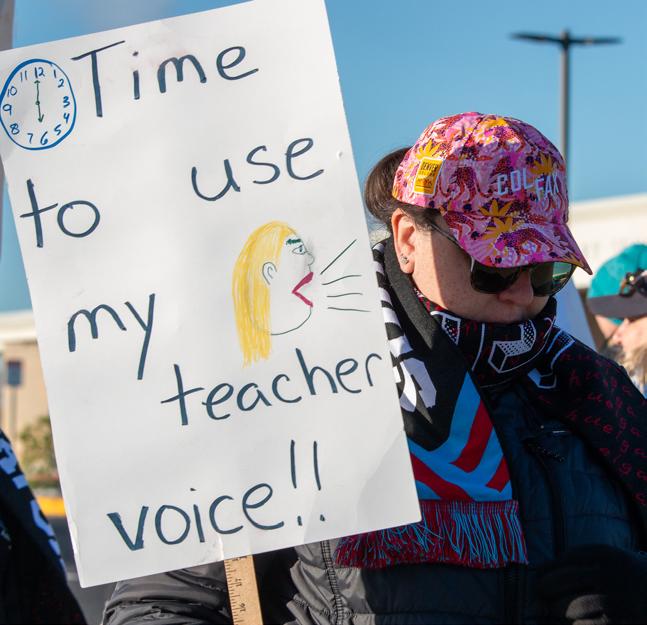
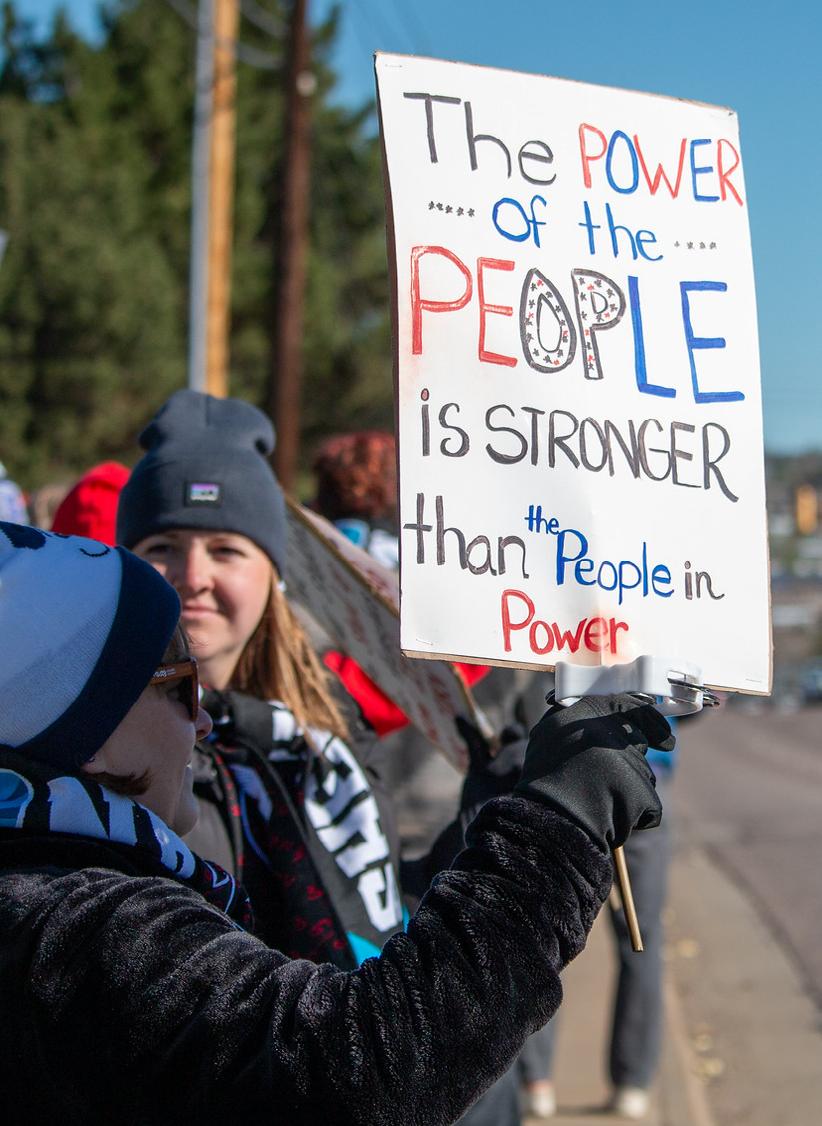
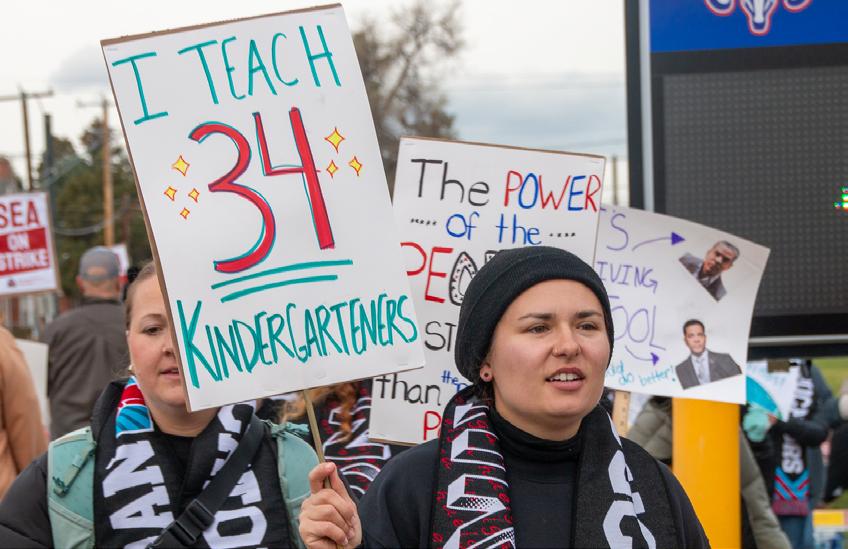
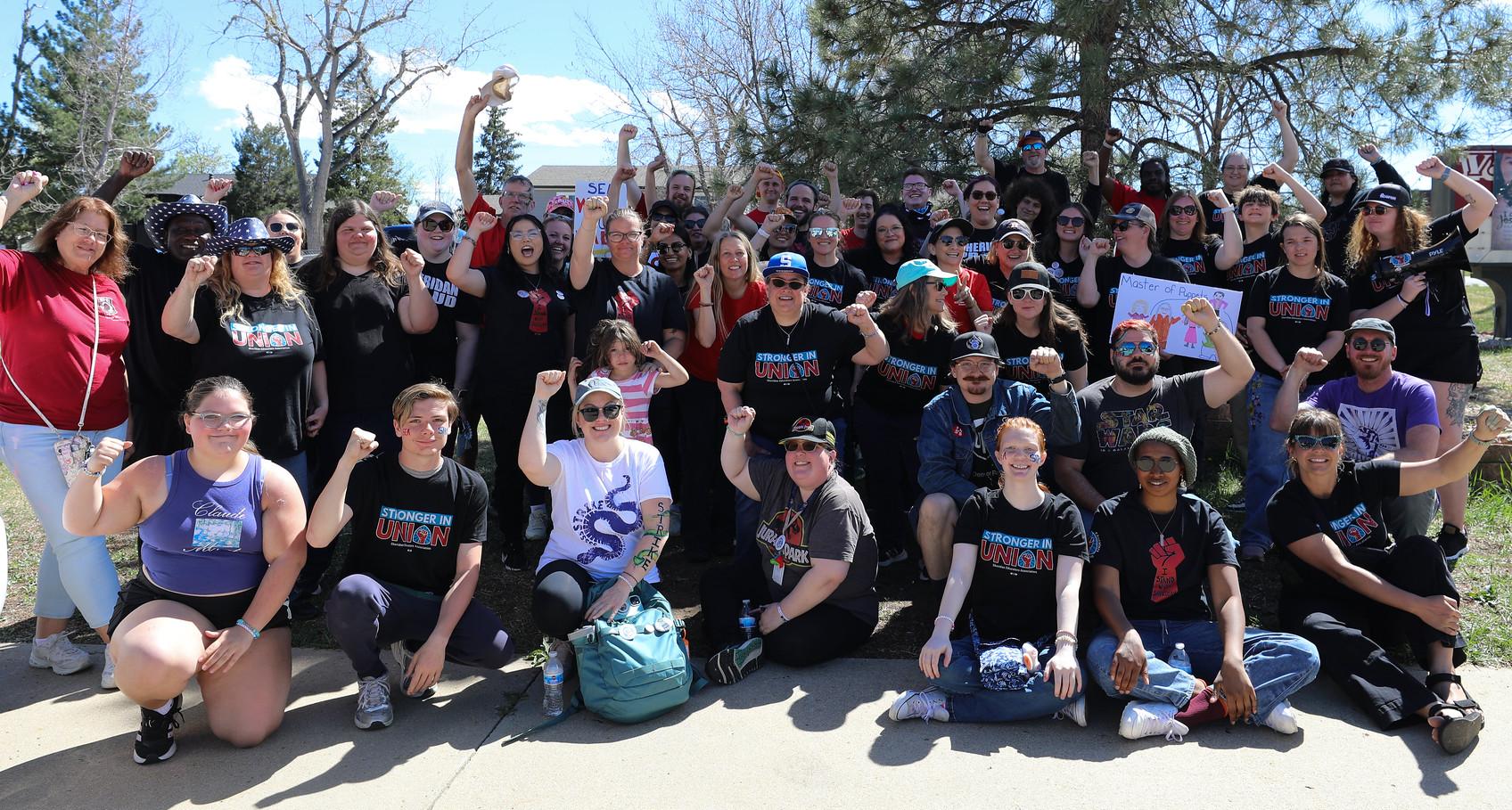
1) SEA member Megan Brown holds a sign calling for educators to have a stronger voice in decisions affecting their schools and students. 2) SEA members Jessica Samucha, Allie Wallace, and Trudy Morales join fellow Sheridan educators on the picket line, standing together for respect, fair working conditions, and a stronger union. 3) SEA member Shelby Gahm rallies alongside fellow educators, proudly representing the 34 kindergarten students she teaches. 4) SEA President Kate Biester speaks to striking educators and supporters gathered outside Sheridan High School. 5) Sheridan Education Association members stand together during the first days of their 18-day strike. 6) A Sheridan educator holds a sign reminding the community that the power of people is stronger than the people in power. Photos by Sydney Slifka
That solidarity became the heart of the strike. It showed up in the way members cared for one another and for the Sheridan community. Teachers stood with paraprofessionals. Bus drivers stood with office staff. Classified staff stood with licensed staff. Parents stood with educators. Union siblings stood with Sheridan members. Every day on the strike line, the community stood together because Sheridan students needed all of them.
For many educators like Jennifer Alvey, librarian at Sheridan High School, the strike was rooted in love for students and a commitment to the stability they deserve.
“I am here because I believe in our students,” Alvey said. “They’re the best, and I’m really excited to advocate for them and to make sure that they have stability in their teachers and in their classrooms and everything that they need. I love Sheridan!”
Families became part of the fight in ways members will not forget. Parents opened tailgates and fed educators on the strike line. Families came to meetings, shared their stories with the media, and spoke to elected officials about what was happening in Sheridan. They made clear that this fight belonged to the whole community, because the people who know Sheridan schools best understood what was at stake.
about the conditions students learn in, the stability families depend on, and whether the people closest to students would be heard.
When district leaders continued to ignore educators, SEA members held firm. They escalated their tactics, sent hundreds of emails and text messages, lobbied at the Capitol, and kept showing up for one another. Every day on the line became another reminder that members were not alone.
“This strike was hard because we love our students and we love this community,” said Kate Biester, Sheridan High School teacher and SEA president.
“But our members knew we could not go back to a district where educators were ignored and staff were left without a voice. We held the line because Sheridan deserves better, and because we believed in collective power.”
“We held the line because Sheridan deserves better, and because we believed in collective power.”
KATE BIESTER
Sheridan High School
“I’m here because I want a good future for my son,” said Sheridan parent Dulce Aguilar. “I want him to graduate from high school, not under this administration that is only filling us with lies.”
Her words carried the frustration many families felt, but also the trust they placed in educators. The strike was never only about working conditions. It was
After 18 days on strike, Sheridan educators reached a tentative agreement that SEA members ratified with 100% approval. Licensed staff won their contract back. Classified staff won a path to recognition and the chance to have a real voice in decisions. And all members won changes to district negotiating policies that had been used to silence and divide them.
But Sheridan educators came away with more than an agreement. They built a stronger union, a more connected community, and a new understanding of what they could demand together. That power was built in the early mornings on the line, the food shared from open tailgates, the parents who spoke up, the union siblings who showed up, and the members who kept choosing one another even when the days were long and uncertain.
Every day on the strike line, Sheridan educators reminded us what can happen when we are Together in Learning, Together in Community, and Stronger in Union.
Many Voices Become One When ESPs Organize
By Sydney Slifka
Every school day begins because Education Support Professionals make it possible.
Before students walk into classrooms, most of our classified staff are already at work. Bus drivers are getting students safely to school. Kitchen and nutrition staff are preparing meals. Custodians are making sure buildings are clean and ready. Paraeducators are supporting students who need them most. Office staff, library paraprofessionals, maintenance workers, and countless other classified educators are holding school communities together in ways that are often invisible until the work is not done.
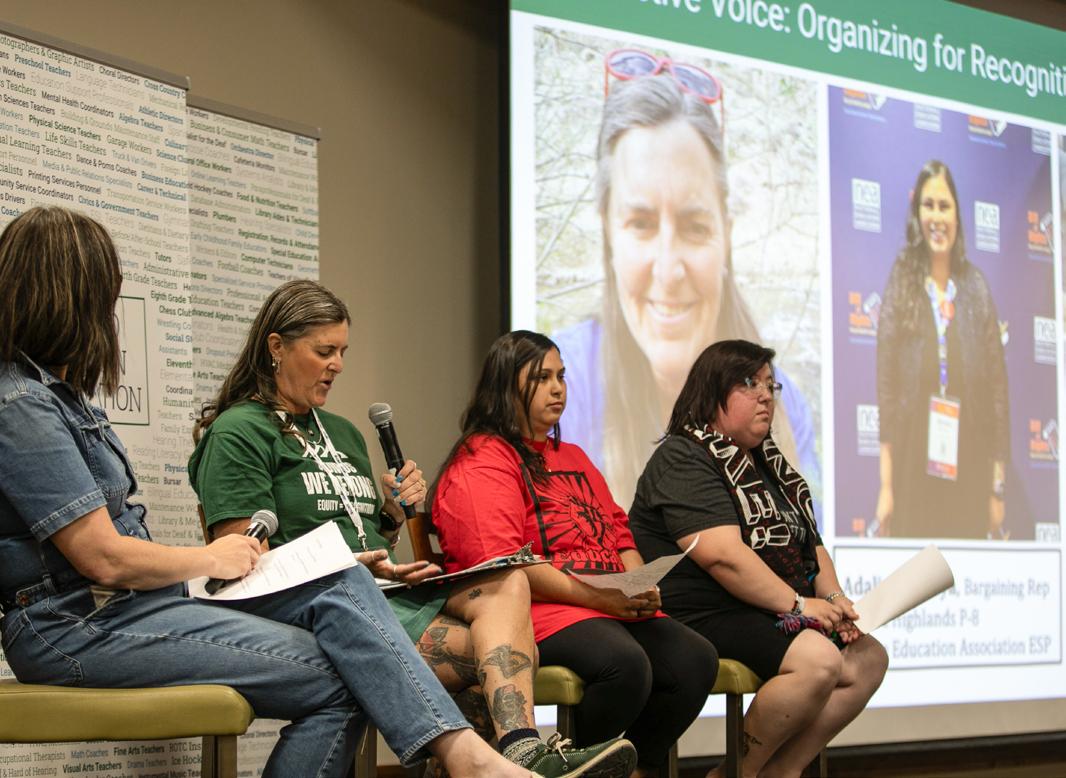
During a panel at CEA Power Week, three member leaders shared how classified educators in their districts turned frustration into collective action, organized their coworkers, and won union recognition. Sam Islaub, a
library paraprofessional and ESP Vice President with the Summit County Education Association; Adalis Montoya, an Special Needs Paraeducator and bargaining representative with the Aurora Education Association; and Nikki Osborne, a paraprofessional and union steward with the Sheridan Educators Association, each brought a different story of organizing. Together, their stories showed that when educators come together and organize, they build power not only for themselves, but for their students, their coworkers, and their entire school communities.
For Sam, that power showed up every time members acted together. “I would say for me, it's every time our unit acts collectively. When we work together, we go to the board and we show them how strong our numbers were, or how strong they are,” she said. In Summit, ESPs had already shown strong support for recognition, but the district
put new hurdles in front of them. Still, they kept organizing. They kept talking to coworkers. They kept showing up. What began as individual frustrations transformed into a collective demand that could not be ignored.
Sam said she stepped into leadership after she started paying attention and realized her story was connected to something bigger. “Once I started paying attention, I could not look away. I realized that my story is not singular and that telling it could help. And then I saw a gap and I filled it,” she said.
Adalis got more involved after serving in multiple ESP roles in Aurora. She worked as a custodian, a paraeducator, and SPED para, which helped her see what different ESPs needed across the district. “Every individual story is what drove me to step into a leadership position and advocate for them.” she said.
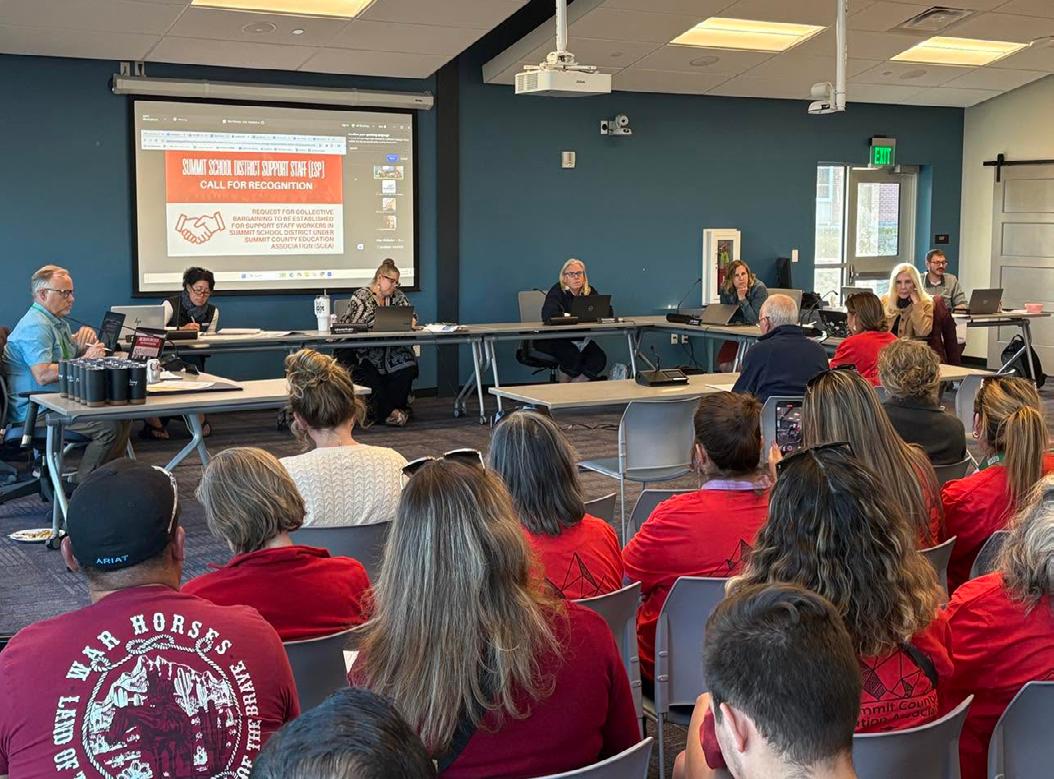
LEFT: Summit County ESPs and supporters show up at a school board meeting to demand recognition and respect. Photo by Sam Islaub
RIGHT: Sam Islaub, Adalis Montoya, and Nikki Osborne speak on an ESP organizing panel during CEA Power Week. Photo by Sydney Slifka
Every perspective matters. ESPs do different jobs, but their work and issues are deeply connected. They are often the first faces students see in the morning, the people helping them through difficult moments, the ones making sure they are fed, safe, supported, and able to learn. Gaining union recognition gave Aurora ESPs a way to bring those experiences together and fight for the respect and support they deserve.
In Sheridan, Nikki saw the power of that fight on the strike line. As educators prepared to strike, students showed up beside them. “When I felt most powerful was when we were even getting ready to go on strike and seeing our students come and walk beside us,” Nikki said. “These are our kids. These are our students.”
The fight for recognition was not easy. ESPs faced delays, barriers, retaliation, and district attempts to divide them from their licensed colleagues. Nikki worried that ESPs might be left behind if licensed educators received an offer during the strike. Instead, teachers refused to accept a deal that excluded them. She recounted what they said, "No, we are standing with our ESPs. We're saying no until you get this right for everybody. Wall to wall or nothing at all.”
That moment captured the heart of what it truly means to be Stronger in Union. A union is not just a structure or a contract. It is people choosing to stand with one another when it matters. Sam said Summit ESPs would not have succeeded without the support of teachers and SSPs, adding, “Our ESPs are going to bargain our own contract, but we consider ourselves part of one union, and we will not let the district divide us.”
The panelists were also clear that teacher support was essential. It looked like listening to ESPs, showing up at school board meetings and bargaining sessions, sharing organizing skills, and making sure they know they are not alone. Nikki said sometimes support begins with something as simple as asking, “Are you doing all right?” But when the fight gets harder, everyone needs the reminder: “We have your back. The union has your back. We got you.”
“When the fight gets harder, everyone needs the reminder: We have your back. The union has your back. We got you.”
NIKKI OSBORNE
The stories from Summit, Aurora, and Sheridan show why having a union matters. A union gives educators a collective voice, a path to bargaining, and the power to advocate for the pay, protections, respect, and working conditions they need to support their students.
When ESPs are respected, students are supported. When ESPs have a voice, schools are stronger. And when educators refuse to leave each other behind, our union becomes what it is meant to be: workers united for the schools our students deserve.
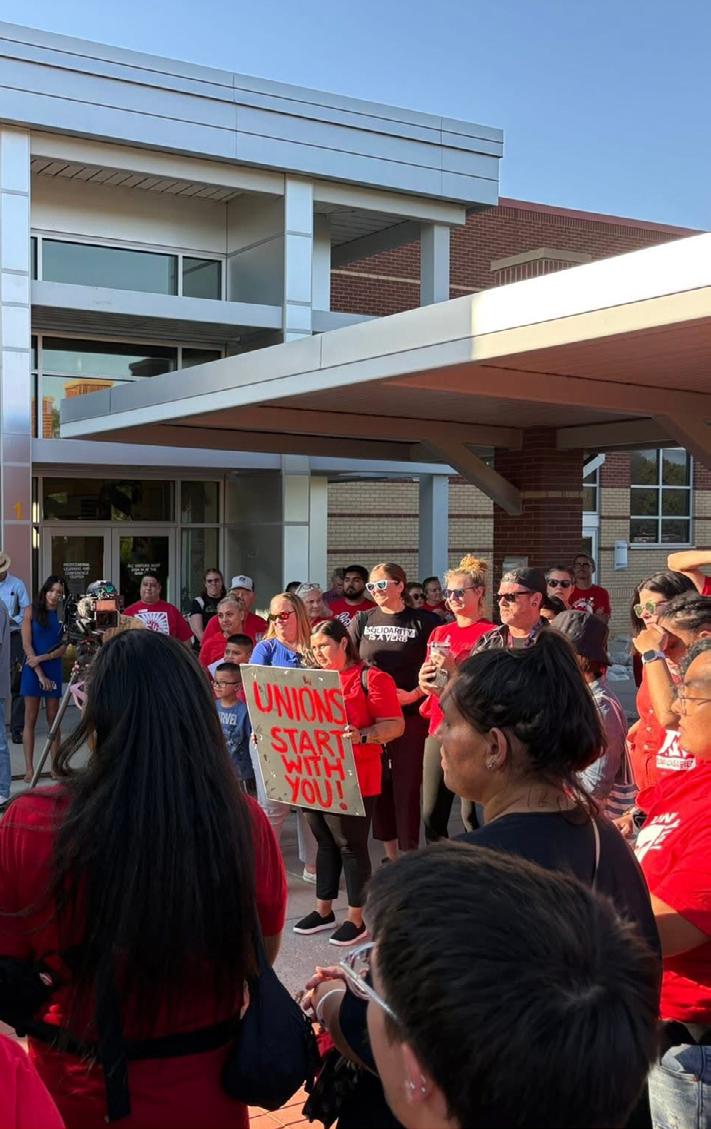
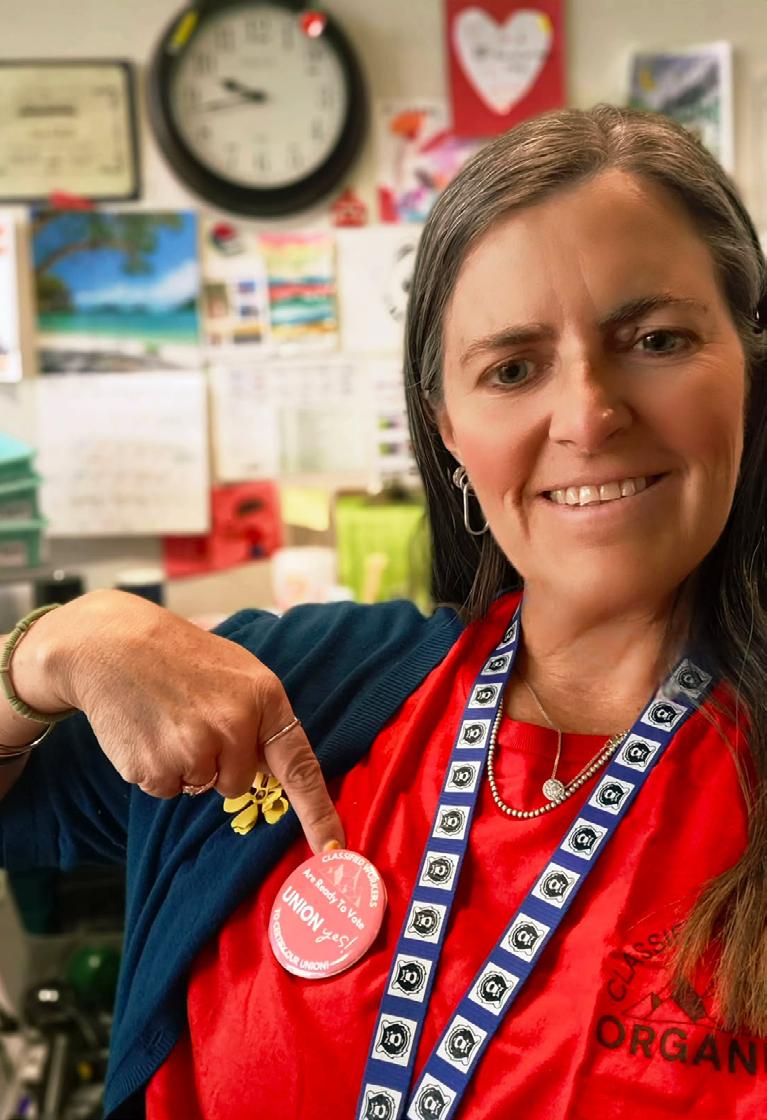
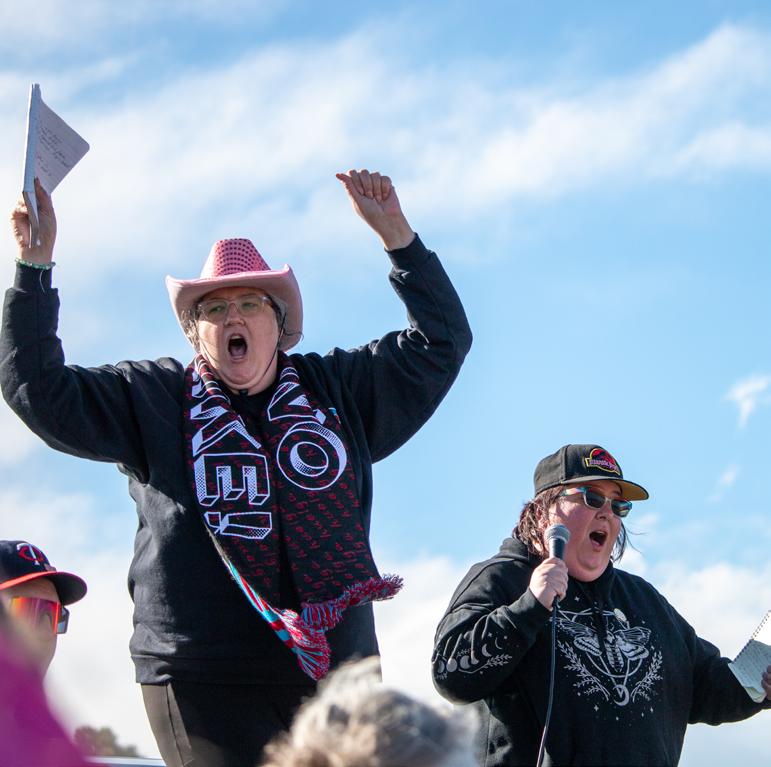
TOP LEFT: Adalis Montoya joins Aurora ESPs before a school board meeting to demand recognition. Photo by Sydney Slifka; TOP RIGHT: Sam Islaub shows off her union button during recognition campaign.
Photo by Sam Islaub; BOTTOM: Rebecca Renz and Nikki Osborne speak at a rally during the Sheridan educators strike. Photo by Sydney Slifka
As a Colorado Education Association member, you have access to special savings not available to the general public on Travelers auto insurance. Drivers who switch save an average of $611.*
See what members are saying ...
“My experience with changing from my former car insurance to Travelers was wonderful! A very friendly, knowledgeable agent helped me with the particulars needed to make the change seamless. I am so happy with my decision to switch my insurance carrier to Travelers!”
– Kathleen R.
“I saved over $700 a year and would encourage others to simply call Travelers.” – David D.
“We love Travelers! We are paying lower rates because we are safe drivers, as evidenced by your app that captures our driving habits. That is really appreciated!” – Major and Zora C. See for yourself. Request your CEA member quote today.
Travelers: 877-276-3630 or scan the QR code for a quote.
A MORE AFFORDABLE PATH TO YOUR MASTER’S DEGREE
CEA members can now complete elective requirements through COpilot and save more than $2,000 on a Master’s in Curriculum and Instruction through Adams State University.
Through this new partnership, select courses completed through COpilot can count toward elective requirements in Adams State’s fully online master’s program. That means educators can grow their skills, complete required coursework, and save more than $2,000 on the cost of earning a master’s degree.
A master’s degree may help you move on your district salary schedule and increase your long-term earning potential.
Graduate coursework can help you strengthen your practice, stay current, and bring new tools into your classroom or school.
Through our partnership, CEA members access an affordable path to completing their master’s degree online.
A.C.E. Fellows Growing and Building Power Together
By Sydney Breakfield
The CEA Advocacy, Civil Rights, and Equity (A.C.E.) Fellowship wrapped up its third year, and 2025–2026 was its biggest yet. The fellowship was created to support educators of color in Colorado. Over time, it has grown from a small program into something much larger: a community where teachers learn, lead, and lift each other up.
For many educators of color, the classroom can feel like an isolating place. They may be the only teacher of color in their building, with few people around who truly understand their experience. The A.C.E. Fellowship changes that. It brings educators together, gives them a space to be honest about the challenges they face, and gives them real opportunities to lead. Fellows don’t just attend CEA events and programs. They help shape them.
Just like during previous years, the fellowship followed the same format: monthly meetings, completion of book studies, and participation in Lobby Day and Delegate Assembly. However, this year brought a big change. For the first time, fellows were split into two cohorts. Cohort 1 was made up of brand-new fellows, and Cohort 2 was made up of fellows from the 2024–25 program year and came back for more. Their focus this year was on setting personal goals and building on what they already learned. The mentorship program changed too. Instead of one group of mentors for everyone, mentors were matched with specific cohorts. This gave the mentors more time to connect with each group and meet their individual needs.
Programming opportunities also shifted. Fellows sat in on more workshops related to personal and professional growth. Janet Damon, the 2025 Colorado Teacher of the Year and DCTA member, set the tone for the year during the first fellowship meeting. Janet guided the fellows in meditation and shared wellness tips that could be implemented in their schools. Former Denver educator and current education consultant Dr. Asia Lyons focused
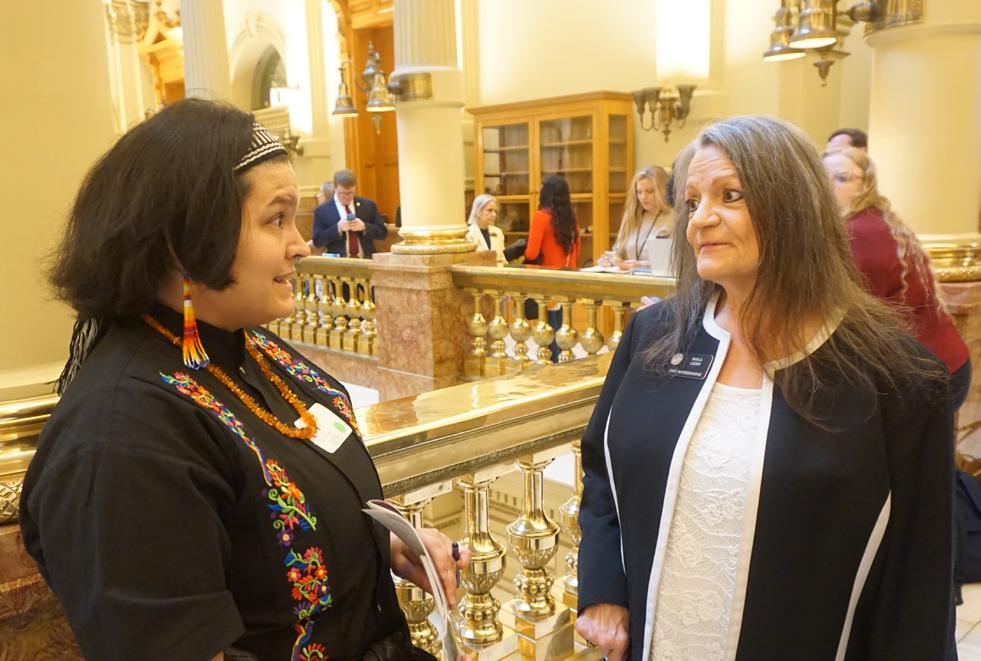
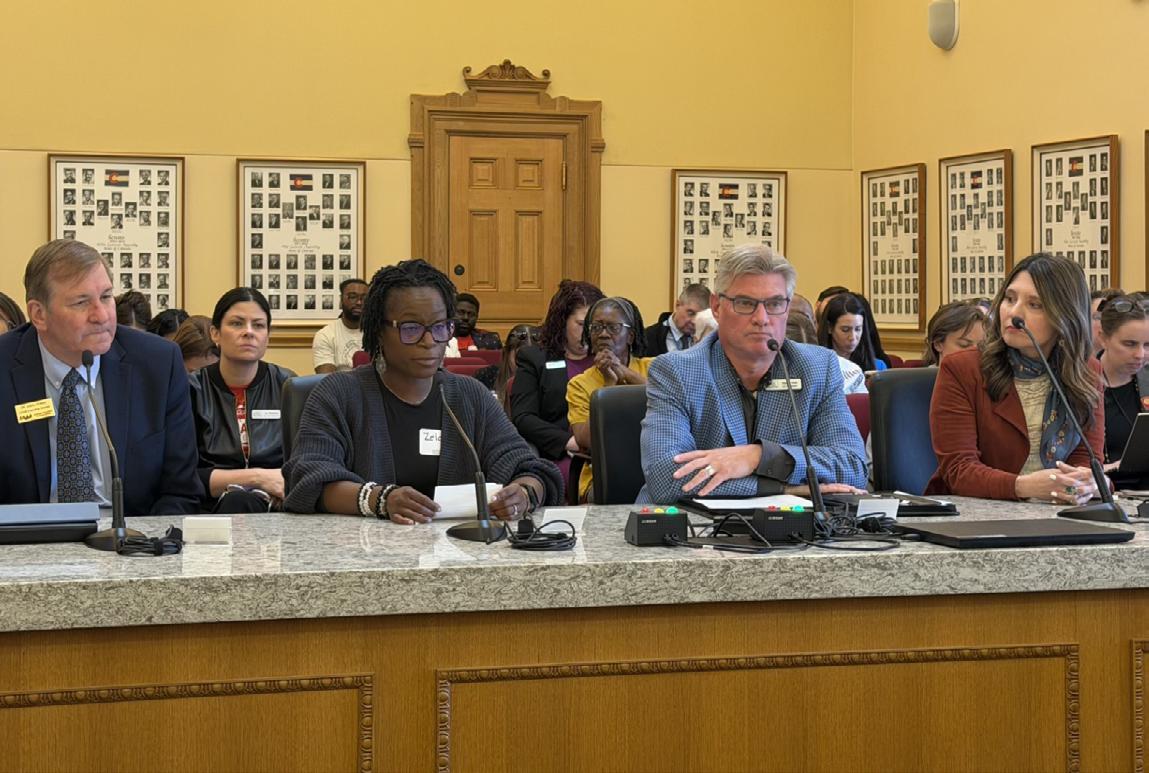
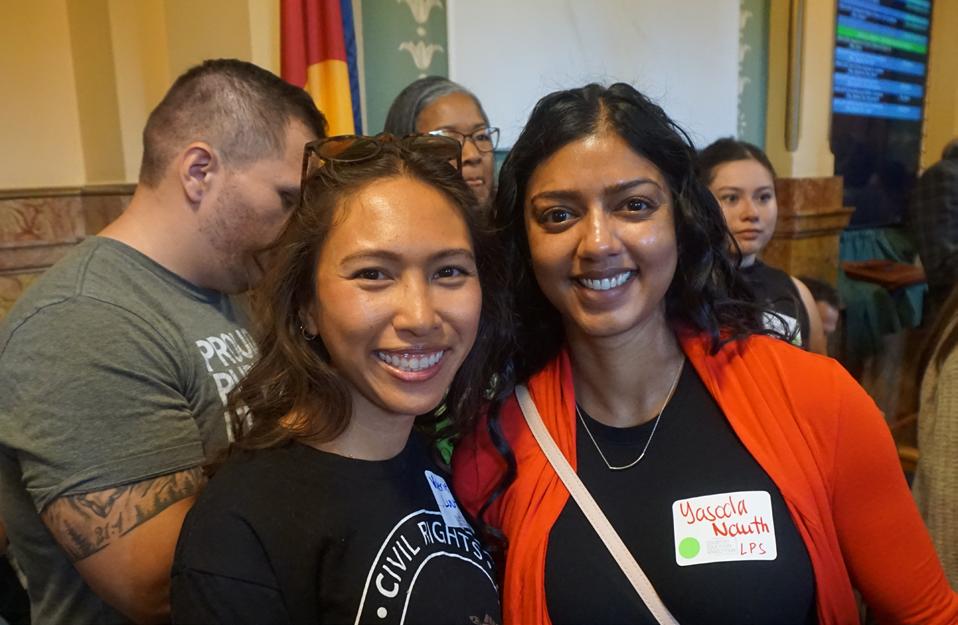
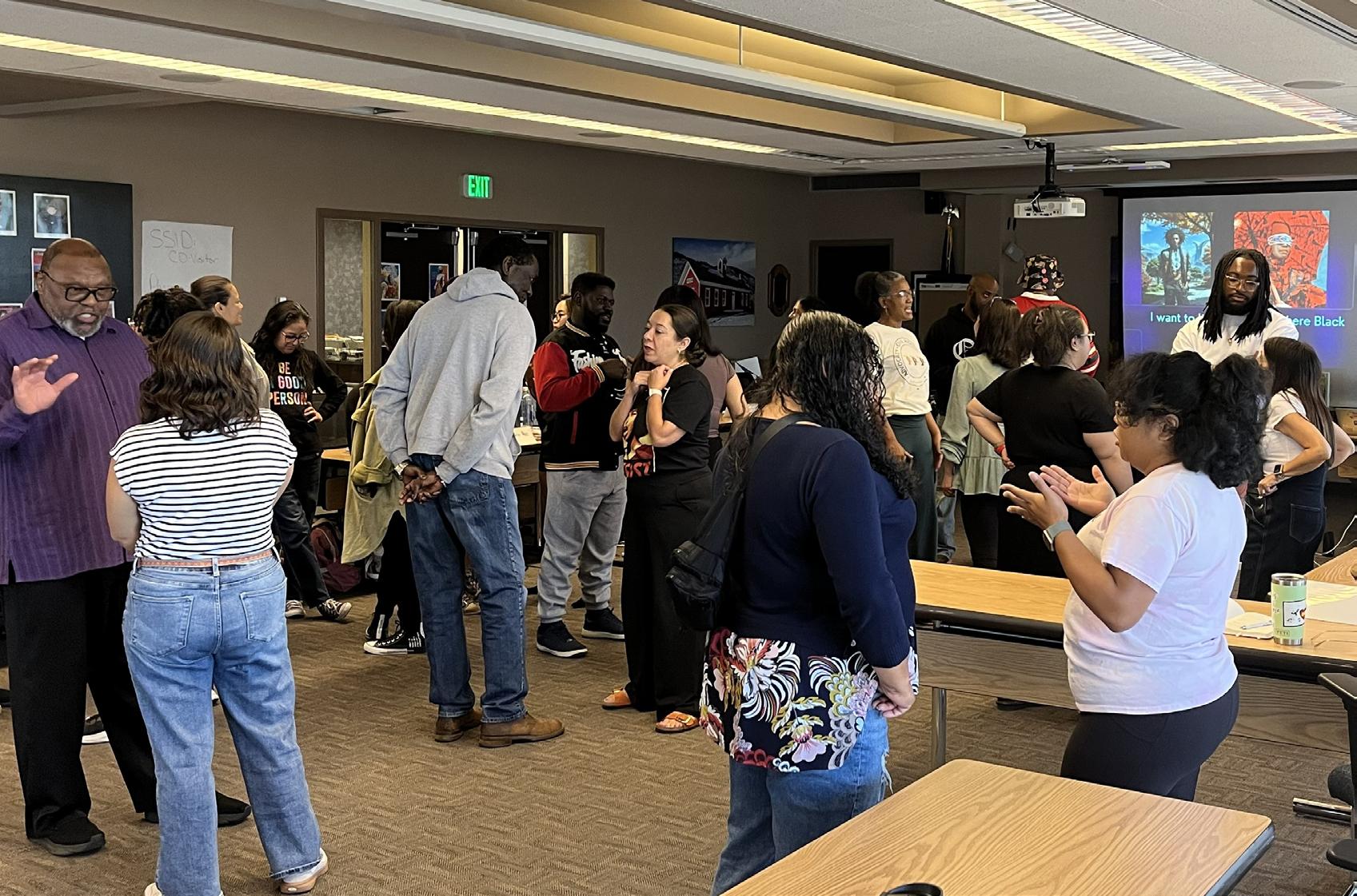
CLOCKWISE FROM TOP RIGHT: 1) First-year fellows Valerie Luutran and Yadosa Nauth pose in celebration of a successful first Lobby Day. 2) A.C.E. Fellows discuss how they’ve fought against microaggressions in the workplace. Photos by Sydney Breakfield; 3) Zelda Alao (second from left) testifies with Dr. Jubal Yennie from CASB, CEA president Kevin Vick, and Poudre EA President Candice Mozer in support of SB135. Photo by Meghan Raynes; 4) Zoel Ybarra speaks with Rep. Sheila Lieder during Lobby Day.
on Racial Battle Fatigue, teaching the fellows how to sustain themselves mentally and emotionally while experiencing racism and microaggressions in the workplace. Lyrica FilsAimé, a therapist specializing in anti-racism, anti-oppression, and multicultural experiences, engaged the fellows in hands-on activities that demonstrated how to identify and deescalate anti-Black racism.
Photo by Sydney Breakfield
This year’s fellowship opened up a world of leadership opportunities for both cohort groups. Fellows led CEA’s first ever Native American Heritage Month celebration. Fellow Zoel Ybarra, a Cherry Creek Education Association member and Indigenous Two Spirit educator, read an original poem about what it means to reclaim their heritage. Mentor Sophia Bagola (Oglala Lakota), a DCTA member, led a Lakota language lesson. She shared the origin story of the Lakota pipe and taught guests how to read, write, and say Lakota words connected to the seven Lakota virtues. At the second annual Black History Month event, mentor and DCTA member, Taurean Hamm spoke about the importance of being in spaces with others who looked like him and the impact his students have on him. Reading from an observation inspired by a student, Taurean shared how meaningful the celebration of Black History Month can be for Black students.
The A.C.E. fellows, along with other members of color, took lobbying head on during the Educators of Color Lobby Day. Their message was clear: public schools in Colorado are not
receiving enough funding, and teachers of color are leaving the profession at alarming rates. For many, this was their first Lobby Day, however they did not let this deter them from urging legislators to support public education funding. Valerie Luutran, a seventh-grade science teacher from the St. Vrain Education Association and first-year fellow, was nervous. But she stood her ground when talking to a conservative legislator who disagreed on the purpose of Senate Bill 135 (now Prop NN). Victoria Paez, a middle school ELA teacher and Westminster Education Association member, came to Lobby Day in support of her students and their needs.
During this Lobby Day, multiple fellows testified before the Senate Finance Committee in support of Senate Bill 135. Patrick Jiner, a DCTA member and second-year A.C.E. mentor, talked about teaching in the same school district he grew up in, and finding that not much had changed. First-year fellow and Cherry Creek Education member, Zelda Alao shared that due to lack of funding and educator shortages, her position transitioned from instructional coach to third-grade teacher.
Fellows then put their leadership skills into action by submitting New Business Items (NBIs) to the Delegate Assembly for the second year in row. The experience gave fellows a deeper understanding of how members can help shape the direction of their union and advocate for issues that matter to educators and students. The program year concluded with the fellows’ attendance at CEA’s inaugural Power Week conference, where a few led presentations ranging in topics from transitioning positions to managing burnout, and how to build organizing power. For fellows who started the year feeling isolated in their own schools, standing in front of a room full of colleagues and leading a session is exactly the kind of leadership opportunity the A.C.E. Fellowship was built to create.
The 2025–2026 A.C.E. Fellowship proved something important: when educators of color are given support, community, and real opportunities to lead, they show up in a big way. The program is still growing. And so are the members in it. The A.C.E. Fellowship isn’t just building better educators. It’s building a movement.
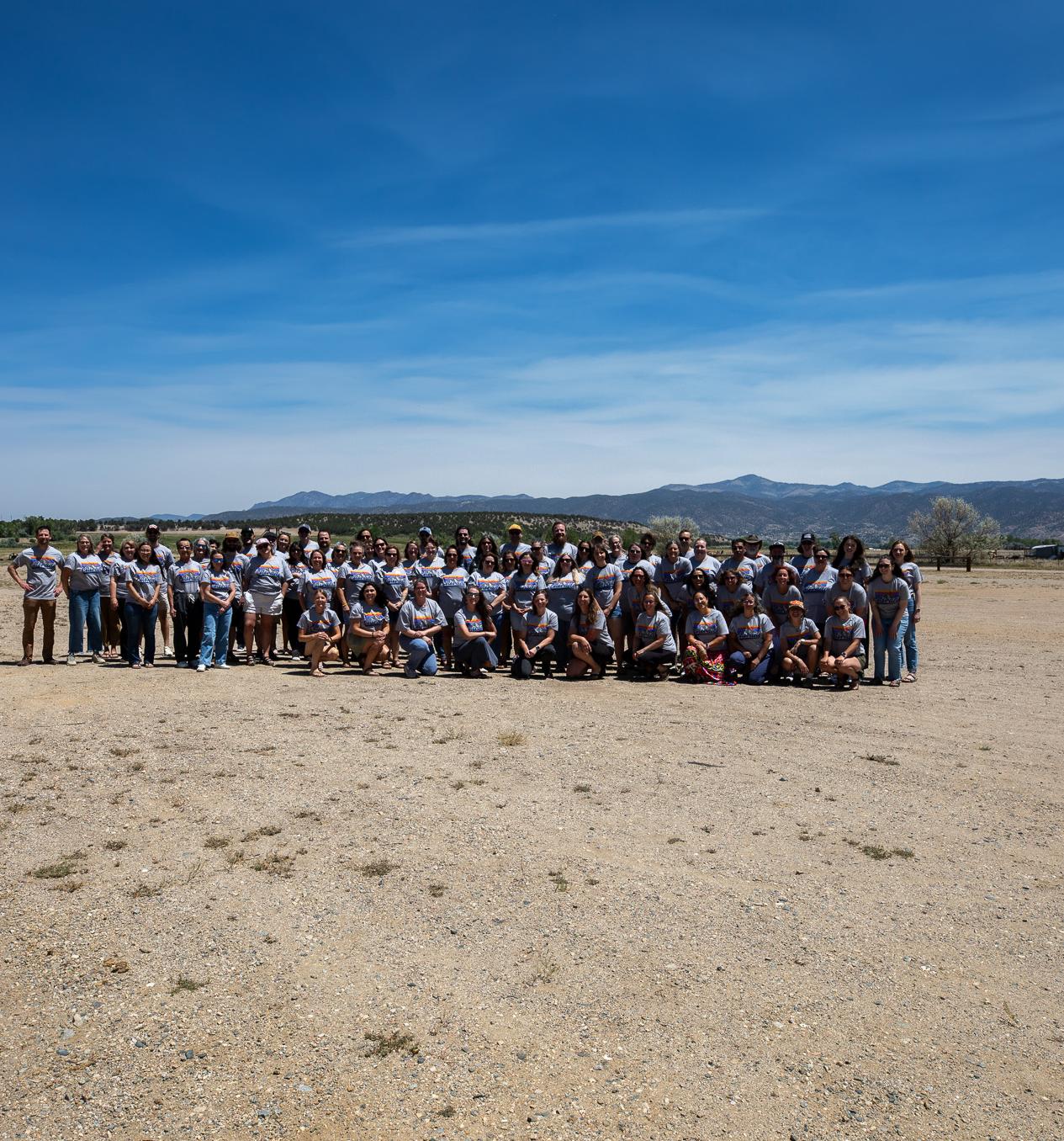
Every year CEA honors remarkable educators and friends of public education from across Colorado. This year, the 2026 CEA Awards were presented at the inaugural Power Week. Congratulations to all of the winners! Learn more about the CEA Awards at coloradoea.org/awards
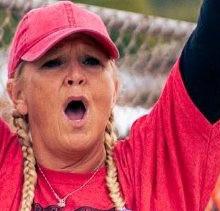
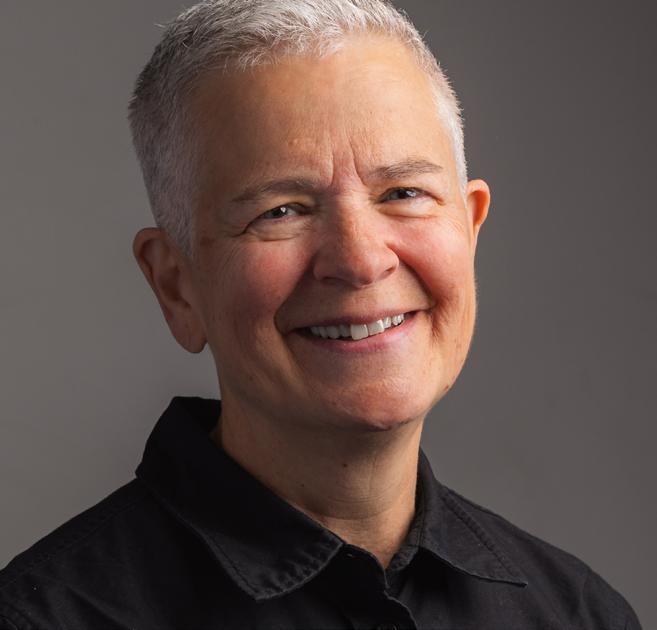
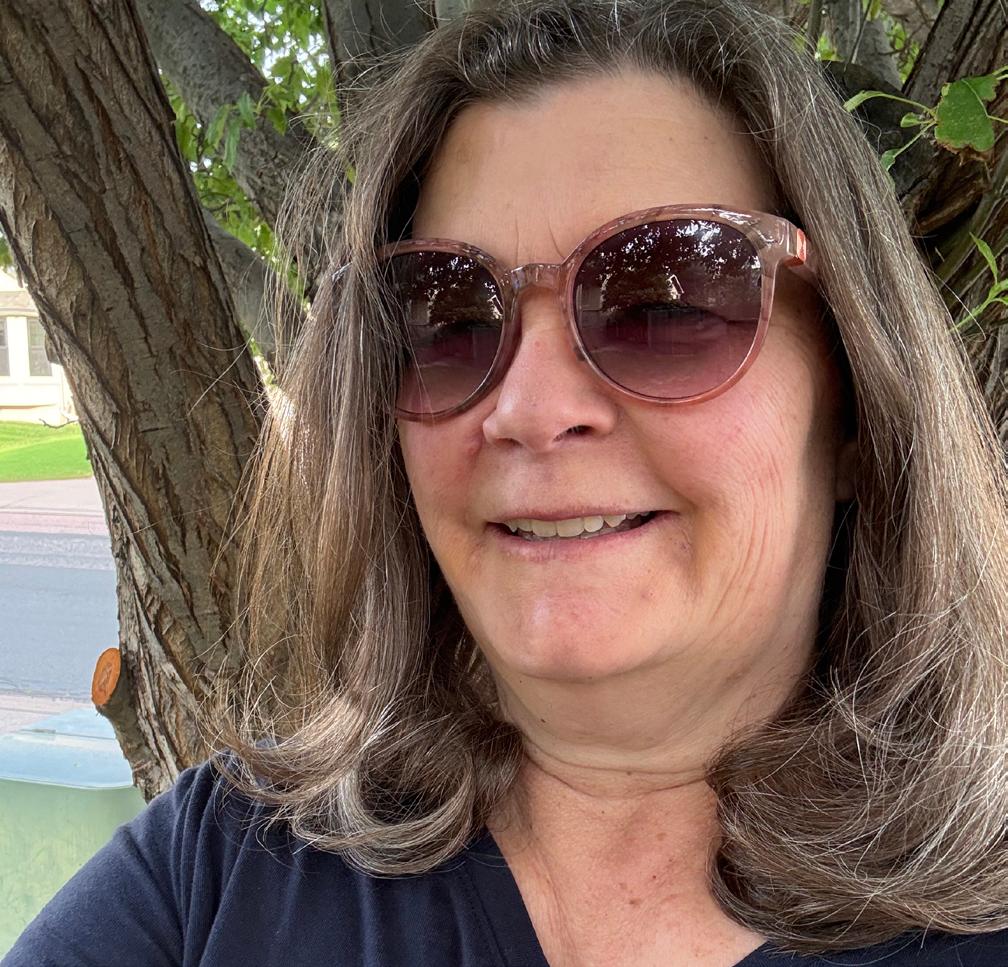
CLOCKWISE FROM TOP: 1) Julie Ott, Friend of Education Award; 2) Judy Solano, Lion Advocacy Award; 3) Charles Muchiri, CEA International Educator Award; and 4) Karol Martinez, Apple CORE Award.
MARY HARRIS “MOTHER JONES” ORGANIZING AWARD
FIRST ROW (LEFT TO RIGHT): 1) Ann Franco, Columbine Award; and 2) Suzie McGhghy, ESP Award.
SECOND ROW: 1) Karl Sailbaugh, Mel Mickelson Diamond Award; 2) Pam Goldbach, Golden Apple Award; and 3) Bernie Janelle, Silver Apple Award.
THIRD ROW: 1) Collin Ferraro, Robert H. Johnson Jr. Memorial Scholarship; and 2) Carmen Moyer, Mary Harris “Mother Jones” Organizing Award.