Anthropogenic Fall 2024
WHO WE ARE
The Colorado College's State of the Rockies Project encourages students to further their academic interests in the ecological,social,andpoliticalchallenges of living in the Rocky Mountain West. Students embark on inter-disciplinary investigations around the region to discover the possibilities for balancing human activity without spoiling the naturalenvironment.
OUR MISSION
The State of the Rockies Project enhances understanding of and action to address socio-environmental challenges in the Rocky Mountain West through collaborative student-faculty research, education,andstakeholderengagement.
Visit www.stateoftherockies.com for a complete version of the magazine.
WHERETOFINDUS
StateoftheRockies
StateoftheRockiesProject
stateoftherockies
rockies@coloradocollege.edu

http://stateoftherockies.com/

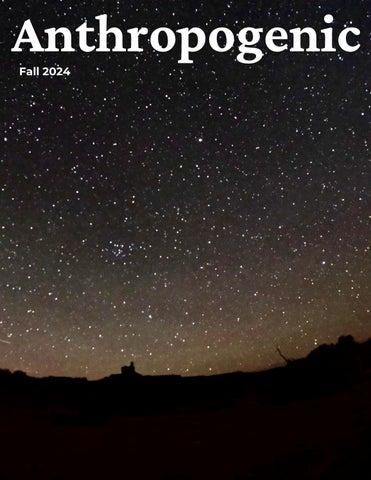
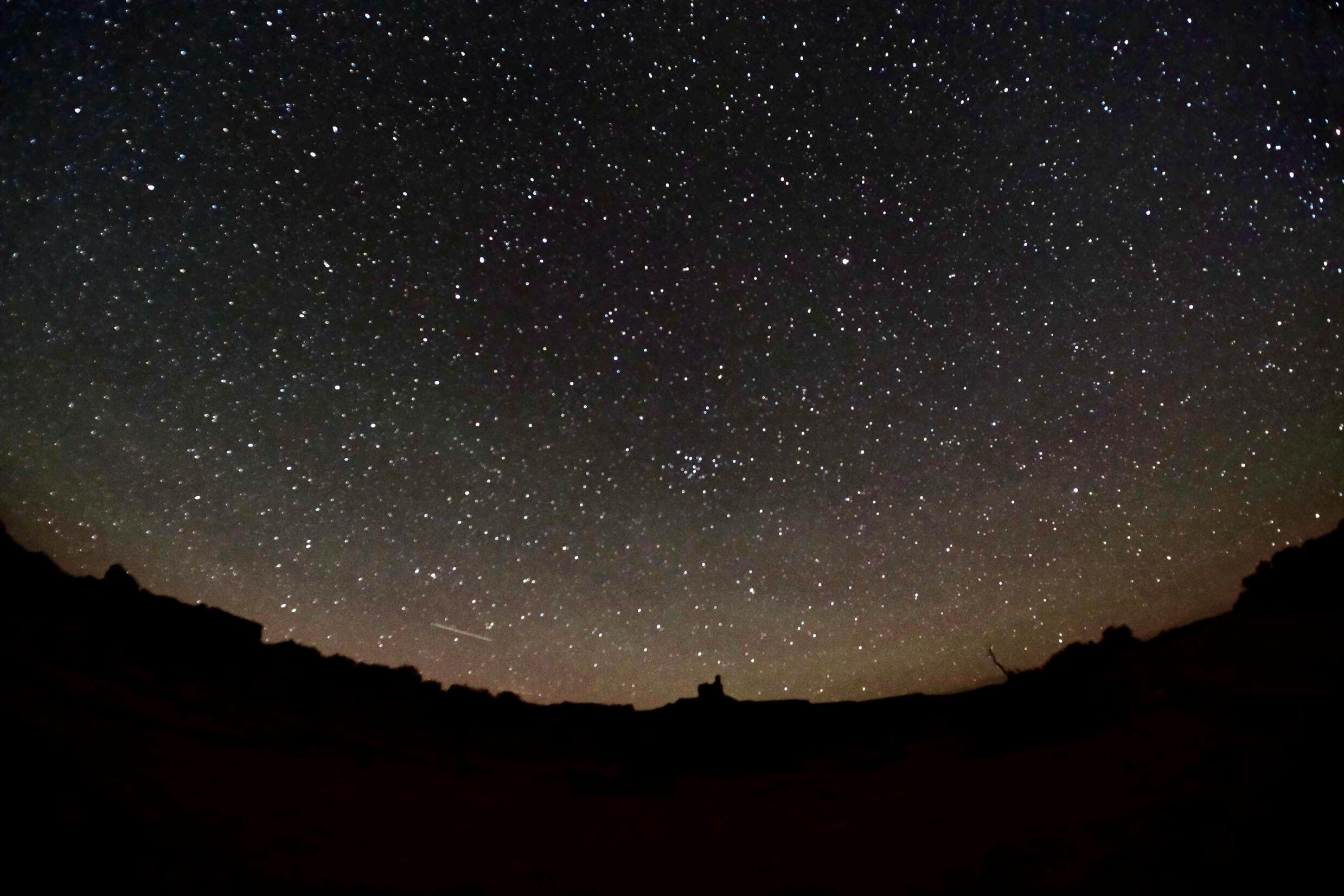
Front Cover: Lady in the Bathtub of Stars, Bears Ears National Monument. Photo by Megan O’Brien ‘25.
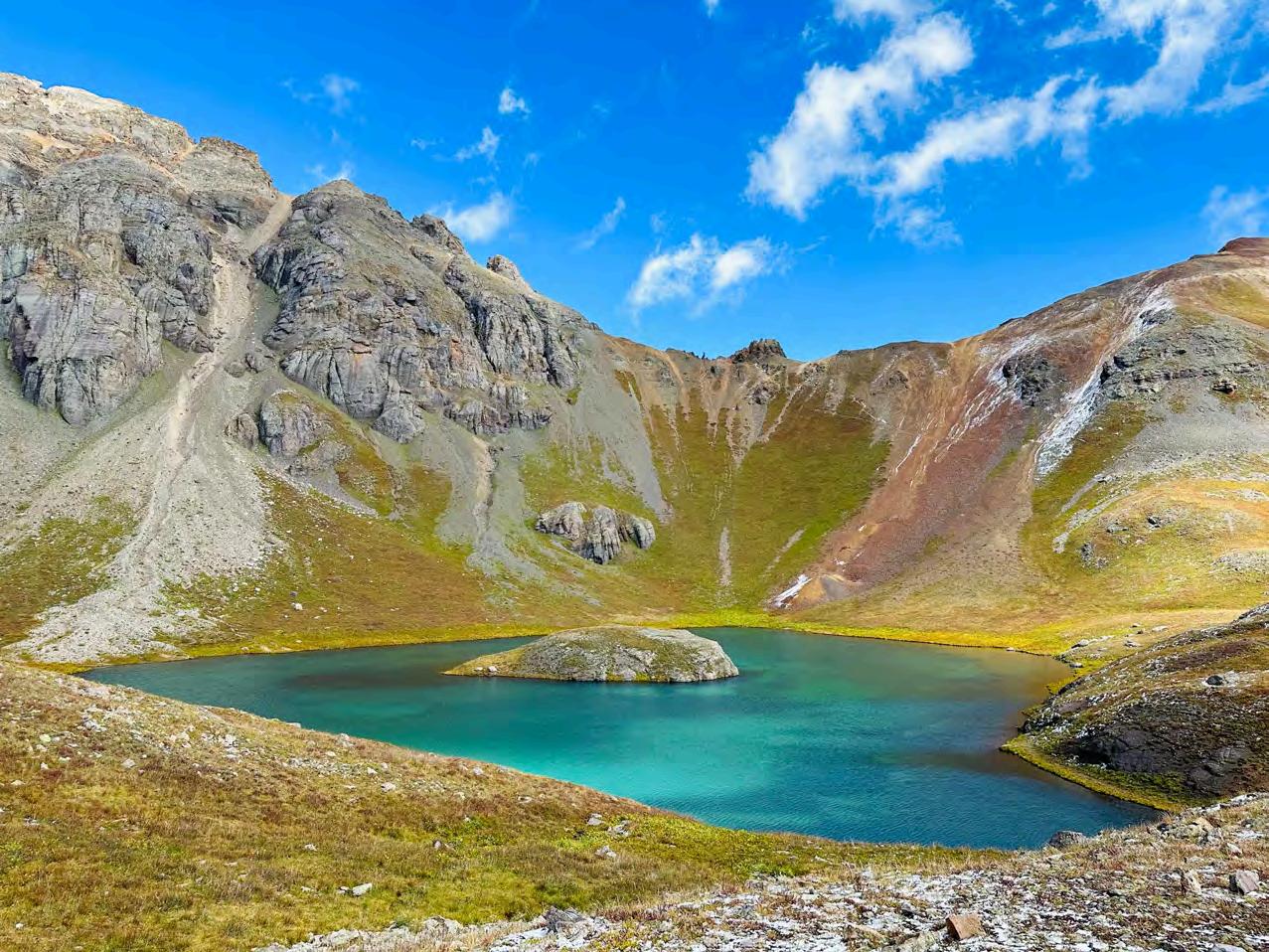
San Juan Mountains, Colorado | Photo by Kayla Mackel, '26
EDITOR-IN-CHIEF
Cyndy Hines
chines@coloradocollege.edu
CONTRIBUTING WRITERS
O’Neal-Freeman
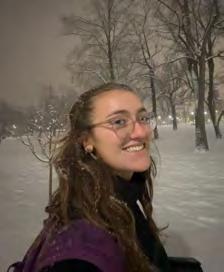
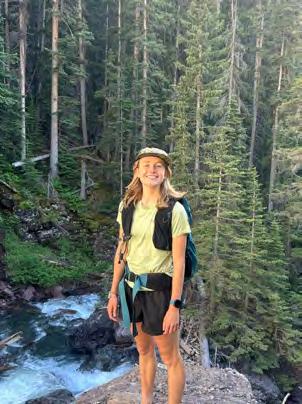
FROM: Chevy Chase, MD
MAJOR: Organismal Biology and Ecology
HOBBIES: Playing ultimate frisbee and soccer, wild swimming
FUN FACT: I’ve lived in the Amazon rainforest!
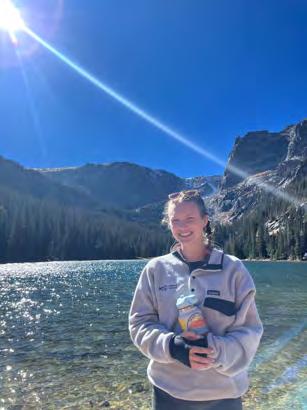
Cutler
FROM: Scituate, MA
MAJOR: Environmental Studies
HOBBIES: Ceramics, running, reading, and baking
FUN FACT: I worked at a bird sanctuary this summer!
FROM: Charlotte, NC
MAJOR: Environmental Studies
HOBBIES: Spending time outdoors, whether that’s running, skiing, biking, or climbing.
FUN FACT: I have a pet gecko that’s older than I am
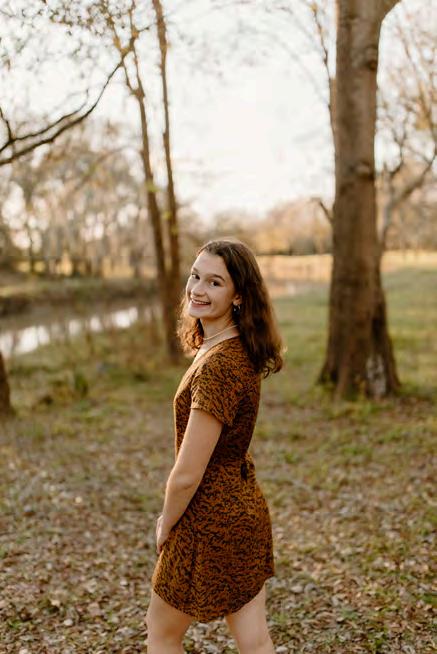
FROM: Katy, TX
MAJOR: Environmental Science
HOBBIES: Running, hiking, reading
FUN FACT: I have an identical twin sister.
Annabel Meyer
FROM: Newton, MA
MAJOR: International Political Economy
HOBBIES: FUN FACT: I had my license for 3 years before I drove on the highway!
GRAPHIC DESIGNER
Macy McCauley
FROM: Loveland, CO
MAJOR: Education
HOBBIES: Swimming, cooking, painting, yoga, and hiking
FUN FACT: I am training to go to the 2028 LA Olympics for pickleball.
Alice
Libby
Mary Cate Kiser
Greetings
Greetings! As the end of summer nears, I’m happy to share the projects and activities of the State of the Rockies research teams. Since our last edition of Anthropogenic, our Rockies fellows and research students have been hard at work exploring the social, environmental, and political challenges of living in the Rocky MountainWest.
InthiseditionofAnthropogenicwsharetheexcitingworkofour students with projects led by myself and our Project Specialist Cyndy Hines, in collaboration with many staff and faculty across campus. Over the summer, research teams were in the field gathering data on projects such as the Survey of Public Lands Visitors, Dark Skies, Waldo Canyon Fire, and the Oil and Gas IndustryofColorado.
In addition, research fellows were hard at work analyzing data from previous years of these projects, writing draft papers, and preparing articles for journal submission. Our Adventurous Spirit Film Team was also in the field working on a new creation. We are proud of our students’ work!
In other exciting news, our 2023-24 Adventurous Spirit Film Team was nominated for best student film at both the Seattle Film Festival and Winter Park Film Festival for Root Bound, a short feature film exploring the dangers of climate change. We also received a renewal of the $800,000 2-year grant from the William and Flora Hewlett foundation, which will facilitate upcoming Conservation in the West Polls and related projects.
Looking ahead to the 2024-25 academic year, we will start many new exciting projects that span the academic year and summer. Keep an eye on our social media pages and the CC Handshake website for new opportunities. We are always looking for motivated students to work with us on our research projects, especially students who want to preserve the beautiful landscape of our region.
Finally, I’m sad to say my Directorship will be ending this December. The last four years have been such a joy for me working with our Project Specialist Cyndy Hines and the student fellows and researchers. The State of the Rockies has been a highlight of my time at CC, and I will be forever grateful for this experience. I look forward to seeing what the future holds and where it will take our students!
Thank you for all of your support, and enjoy this edition of Anthropogenic!
Kat Miller-Stevens, PhD
She/her/hers
Director, State of the Rockies
Associate
Professor
of Business
State of the Rockies Project: Navigating Change
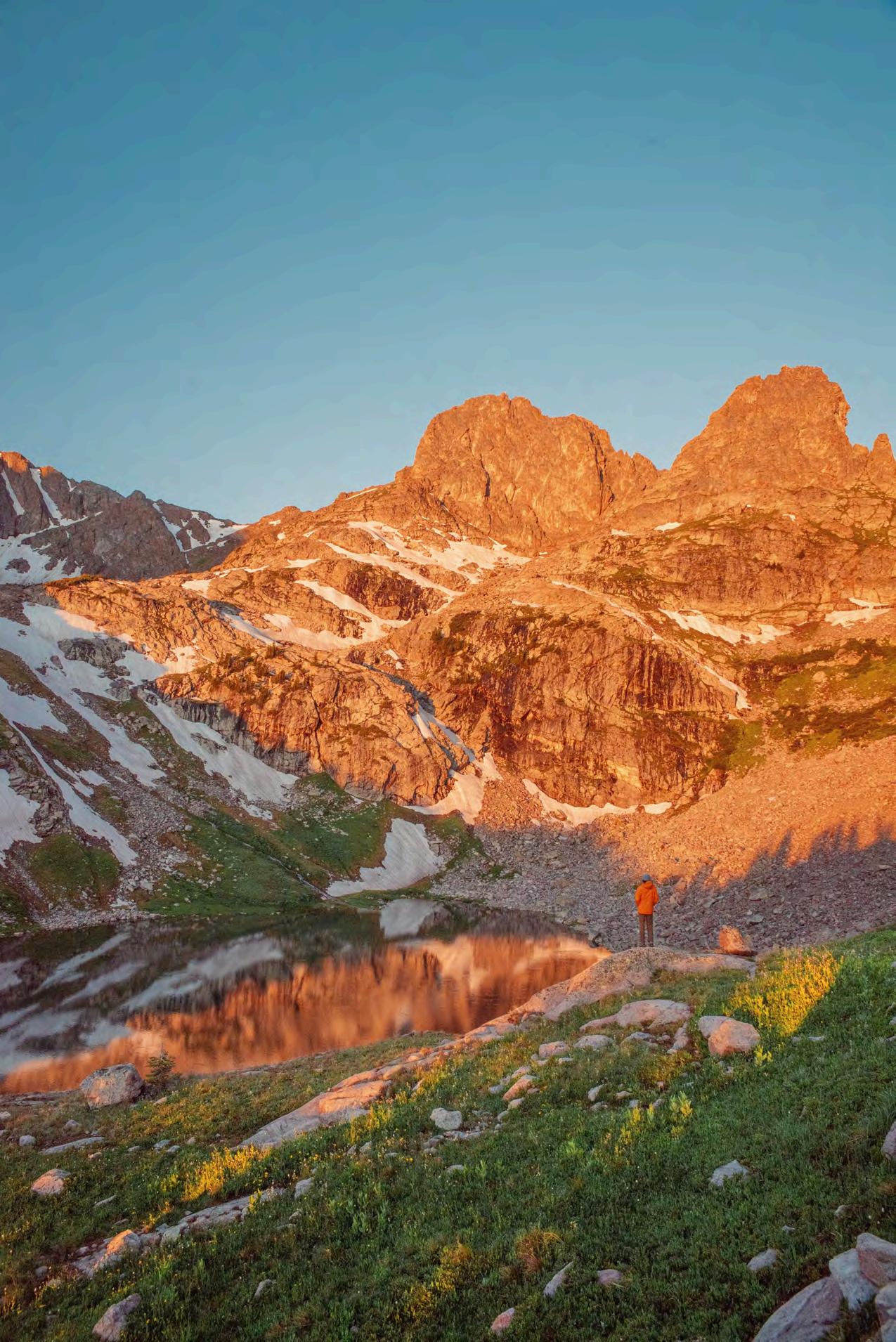
Sunrise at Willow Lake | Photo by Maren Greene, ‘24
Top Environmental Concerns of CC Students
SurveydatafromSOTRtablingeventstellsuswhatCCstudentsareworriedaboutconcerningtheenvironment
By Nicole Craighead
Student Spotlight: Henry Hodde StudentsturnshissummerRockiesstudent-ledresearchintoapodcast
Faculty Spotlight: How Past Glacial Models Predict the Future
EricLeonard:acareerofcomparinghistoricandpresentdayclimaticconditionsandthetrajectoryofdeglaciation
By Nicole Craighead
2023 Faculty-Student Research Project Findings
WhySoEmotional? By
Dr. Kat Miller-Stevens
2024 Faculty-Student Research Project Findings
StateoftheRockiessummerFellowsinvestigatewaterintheWestissues
Dr. Kat Miller-Stevens
Cyndy Hines
2023 & 2024 Projects and Reports
Studentteamsheadedouttothefieldtoundertakevarioussummerprojectsandresearch
Across the Rocky Mountain West: A Summer with the 2023 Public Lands/Dark Skies Survey Team
ExploringtheextenttowhichdarkskiesmatterstoresidentsandvisitorsoftheRockyMountainWest
By Alison Mueller-Hickler
2023 Have Waldo Canyon ponderosa pine forests bounced back?
Studentecologyresearchersembarkonalong-termdemographicstudyofPinusponderosaregenerationinWaldoCanyon followingthe2012forestfire
By Chris Burich, Liam Kietly, Sydney Morris, Theo Ollier, Charlotte Pulido,
2023 Adventurous Spirit Film Team Project
Watchourtwice-nominatedStateoftheRockiespremierestudentfilm: ROOTBOUND
2023
Dark Skies Project
Consideringdarkskiesconservationthrougharthistory,economic,andbiologicalperspectives
By Alice O’Neal-Freeman
2024 Waldo Canyon
StudentstacklePhase2oftheWaldoCanyonpost-fireecologicalstudy
By Libby Cutler
A Point of Diminishing Returns
TheFlawsinModelingaProductionFunctionofofEconomicProductivityOverWaterAvailability
By Nicole Craighead
2024 Adventurous Spirit Film Team Project
Watchourtwice-nominatedStateoftheRockiespremierestudentfilm: ROOTBOUND
By Alice O’Neal-Freeman
2024 Dark Skies
MappingLightPollutionand IndigenousAttitudesTowardDarkSkiesConservationintheRockyMountainWest
By Alice O’Neal-Freeman
2024 Vintage Poster Contest Winners
Winningposterartofthe3rdannualStateoftheRockiesConservationintheWestpostercontest
By Annabel Meyer
2024 Student Photo Contest Winners
WinnersoftheannualStateoftheRockiesConservationintheWeststudentphotocontest
By Libby Cutler
One-to-oneratio: auniqueexperienceforKonradGunderson,‘26
By Annabel Meyer
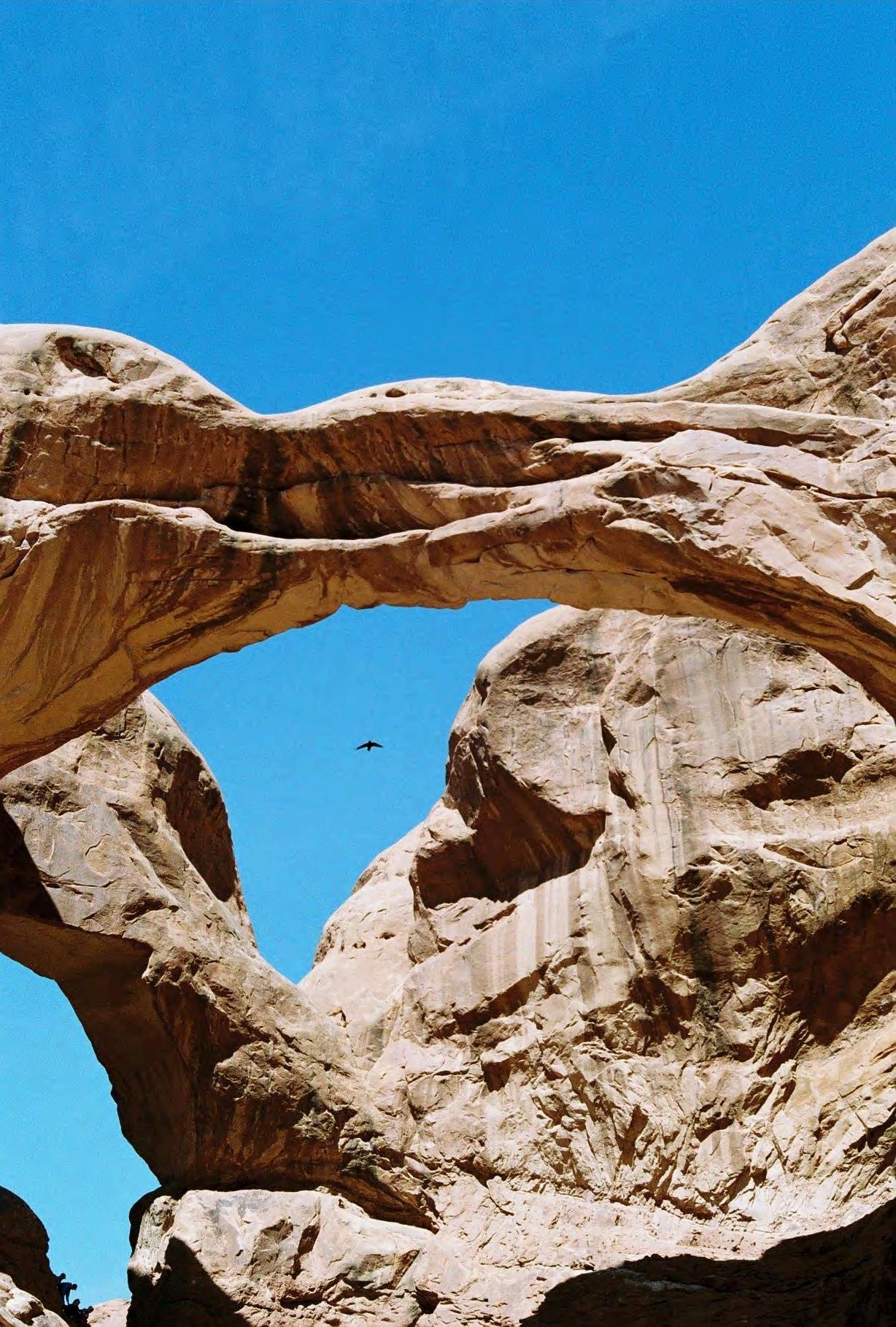

Arches National Park, Utah | Photo by Olivia Petipas '21
What are the Top Environmental Concerns of CC Students?
By Nicole Craighead, ‘26
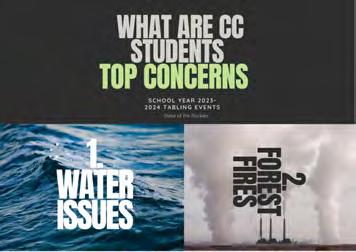
Whenasked,CCStudentsoftenrecognize StateoftheRockiesandidentifytheirone source: Rockies’WornerTablingEvents.
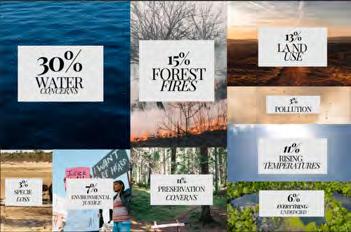
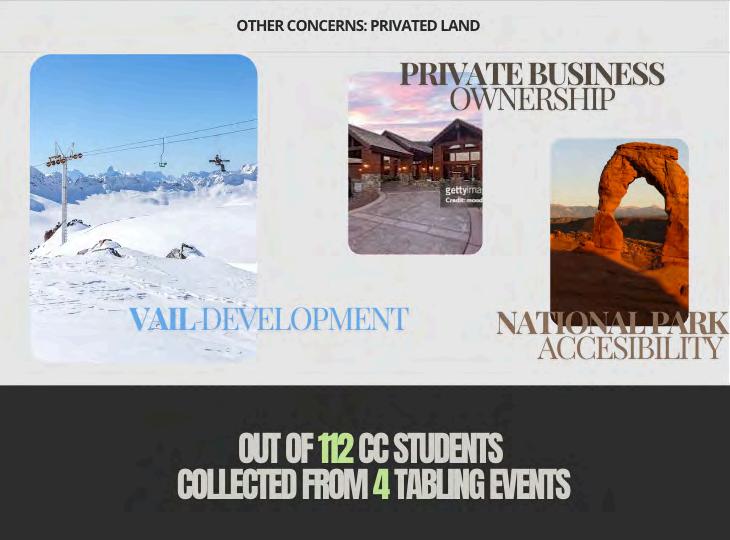
Throughout the year, we’ve organized multiple events to identify the student body's primary concerns regarding climate change. Over the course of four tabling events,we gathered and analyzed datafromatotalof112entries,providinga clear synthesis of the climate issues most importanttostudents.
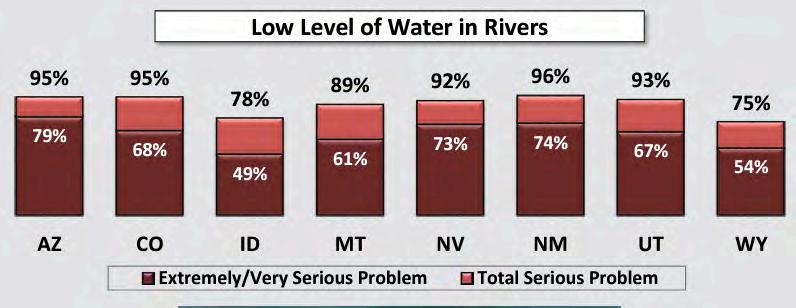
The foremost concern was clear: water. Studentsexpressedworriesaboutnatural resource use, ranging from preservation and pollution to scarcity and regulation. The State of the Rockies annual poll reflected similar concerns among the general public in the Rocky Mountain West. Among Colorado participants, 95% feared low river flow levels, with 68% consideringitextremelyserious.Colorado tied with Arizona for second place in significant concerns, topped only by New Mexicoparticipants.
WhileCCstudentspredominantlyfeared
the dwindling water supply, they also echoed another sentiment expressed in the polls: water quality. Poll data found that 86% of residents feared the same issue alongside microplastic contamination,poordrinkingwater
quality in low-income areas, and hazardousfacilities'releaseofwater.
Following the fears of water was a concern for fire risk, comprising nearly a fifth of students. Again, the entries reflected various aspects of the problem, butmostprominently,thefearofwildfire risk.
Alongsidethethreatofwildfirescamethe more significant concern of deforestation in the area. Students' fears are timely, given the past seasons of severe forest fires.LastJuly,theLittleMesafireoutside Delta, Colorado, saw over 4,000 acres burnafteralightningstrikehitthearea. This year, forecasters are more optimistic about this forest fire season, though still projectingover5,000acrestoburn.
A response that weaved throughout the tabling event data but deterred from climate change-related issues were policy concerns. Students expressed a mutual fear of land privatization and its impact on public park accessibility. Poll data echoedtheseconcerns,notablyinsupport
Lone Bison, Yellowstone National Park |
Photo by Owen Reeve '27
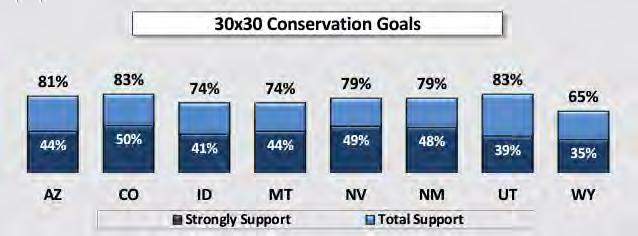
of the 30x30 conservation goal, which aims to protect 30% of inland and ocean regionsby2030.Anoverwhelming83%of Colorado voters supported this proposal, reflectingstrongbipartisanagreement.
The poll also united water inadequacies and land conservation concerns with its focus on the Dolores River. Flowing 241 miles through Colorado, the river is crucial for water distribution, native species,andagriculturalirrigation.
The Dolores River Proposal aims to protect over 68,000 acres of public land acrossfourcountiesandhasbeendebated for two decades. In the past two years voter support has only grown, reaching 92%ofparticipantsthisyear.
Compiling data from the tabling events, thestudentbody'sprimaryconcernswere easytostreamline.
Issues in water allocation, deforestation, and conservation methods for protecting our lands and waters were clear. Analyzingthe2024Pollfurtherconfirmed that student concerns closely align with thoseprevalentstatewide.Thisalignment raises a crucial question: if there is broad consensus on these issues, why are we strugglingtotranslatethemintoconcrete actions?
Data taken from 2024 State of the Rockies Conservation in the West poll
Data taken from 2024 State of the Rockies Conservation in the West poll
Student Spotlight
Henry Hodde, ‘24 “Forged by Fire”
Henry Hodde studied Environmental Science at Colorado College. During the summer of 2022, Henry worked with the State of the Rockies first Public Lands Survey Team where he was inspired by the past wildfires of Rocky Mountain National Park in 2020 and the East Troublesome Fire of 2018. His podcast, ‘Forged by Fire’ is about wildfires in the West in 2023 and how they impact communities. The podcast’s three episodes “highlight the resilience” of the “impressive people” who work to combat wildfiresintoday’schangingclimate.
Within the three episodes, is a collection of experiences and expertests ranging fromthefounderoftheBeWildfireReady nonprofit, fire mitigation experts, and individuals belonging to communities who have been personally affected. He shares stories of prescribed burn projects andwayspeoplecanpreparetheirhouses forwildfires.
When making the podcast, Henry had to listen to all his recordings from 2022 and pull out what he thought were “really importancepiecesoftape”thateitherhad good conversation points or provided details that were “valuable to the story.” His recent internship at NPR helped him navigate the challenges of putting together a podcast. He gained valuable insights on piecing together both Zoom and in-person interviews while making theiraudiosthesamequality.
During the spring semester, ‘Forged by Fire’ will be presented on the Sounds of CC(SOCC)wheretheywillstreameachof thepodcast’sepisodesweekly.Alongwith its debut on the Colorado College radio, Henryishopingtohavethepodcastaired onKRCCandpublishedintheGrandLake newspaper.
You can listen to the podcast on Spotify here.
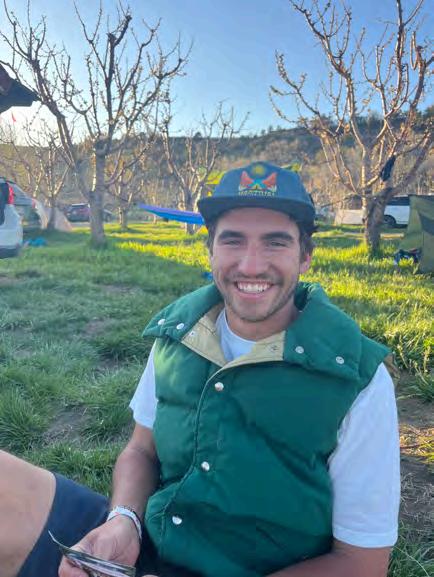
Henry Hodde, ‘24 during summer his research in 2022. Photographer unknown.
Calwood Fire, Boulder, CO | Photo by Owen Braley
Visualizing the Past: How Past Glacial Models Can Predict Our Future
By Nicole Craighead
Eric Leonard began his career over forty years ago at Colorado College with an intention to push students to consider how the deglaciation crisis can be answered not only from current climate data, but that of the past. By which he means not just several centuries, but thousandsofcenturiesprior.
When I attended his talk to the CC community back in October 2023, I could tell I was surrounded by an audience of impressive chemists, geologists, and glaciologists, alike, all ready to hear the wealth of knowledge of Eric’s worldly experiences. Eric has studyied rocks and glaciers from Tibet to Chile during his career.Butwhereheturnedourattention tothatdaywasmuchclosertohome--the RockyMountainWest.
In his presentation Colorado GlaciersPast,Present,&Future(butmainlypast), Ericstayedtruetohistitle,placinggreat
emphasis on the Last Glacial Maximum eraorLGM.
He asked the driving questions of the location, extent, and timing of past glaciersandhowtheirclimaticconditions compare to present day and to the trajectoryofdeglaciation.
Eric made his expertise clear from the start, explaining the insufficiency of radiocarbon dating to the surprise of many audience members. Rather, he argued, the usage of cosmogenic radionuclide (CRN) surface exposure dating was necessary in modeling past glacialformations.HeexplainedthatCRN dating revolutionized his field of study in the 90s, as glacial deposits rarely have organicmatterinregion’sliketheRockies, which is an essential compound in radiocarbon dating but not in CRN methods.
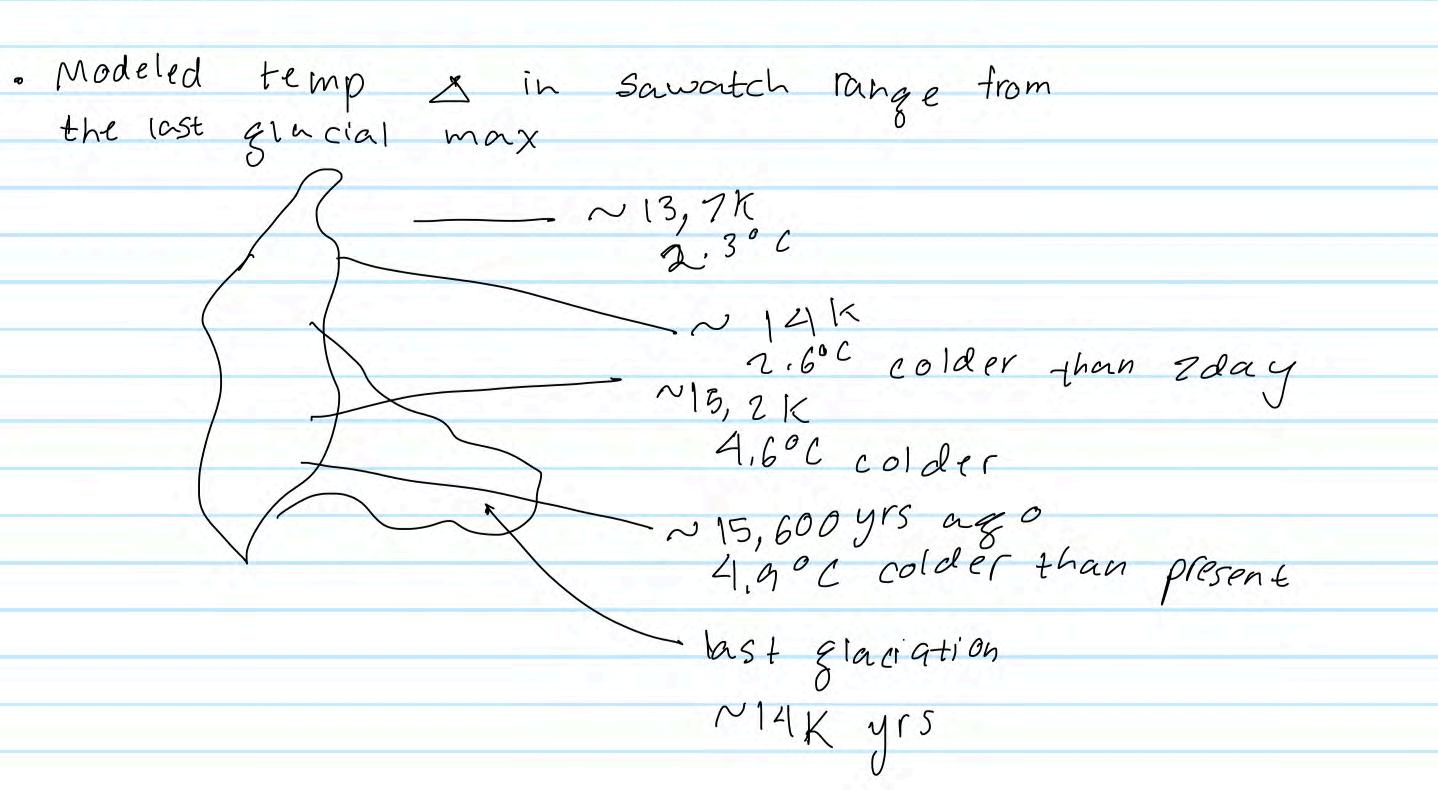
NotesfromLeonard’sCCtalk.NicoleCraighead
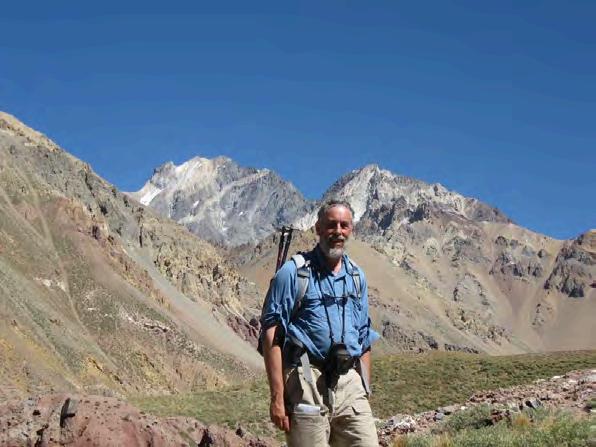
Dr.EricLeonard,Professor,(Ret.)Geology Department, ColoradoCollege(above)infieldin SouthAfrica.
WiththehelpofCRNdating,Ericwasable tocreatemodelsthatmappedtheperiods of the last glaciation maximum and deglaciation era in Colorado. These models then took his studies to the next level, probing the question: how does the past period of deglaciation help in the studyoffutureclimatechange?Analyzing thedeglaciationperiodallowedforabasis of comparing climatic conditions such as precipitation patterns and temperatures oftoday.Hisworkalsoprovedtheefficacy of contemporary modeling methods and in which ways they may fall short, advancingthefield’sunderstandingofthe limitations of such models when used to predictfutureconditions.
IntalkingtoEric,heclearlyhadabreadth ofknowledgeinthearea,butforthesake of simplicity pointed to the last glacial maximum glaciers models in northern Utah and Colorado and southern Wyoming. Here the glaciers exposed a pattern between the precipitation and temperature changes from the present day,likelyacauseofthepresenceoflarge past lakes that are now completely retreatedinwesternUtahandNevada.
These lakes served as local moisture sources for glaciers in the Uthan mountains and influence tapered off quicklyeastwardacrossColorado.
He also noted that other pieces of evidence like vegetation in our current climate echo similar patterns to that observed at the last glacial maximum. However due to the climate models of LGMsthatrunatlowspatialresolution,
theydonotcapturetheeffectsoffeatures likeLGMlakesduetotheirsmallsize.
Through sets of interviews and presentations from Eric, it was clear that in deepening our understanding of what is to come of glaciers in the Rocky mountain region lie in an unassuming answer can be found 16,000 years in the past.
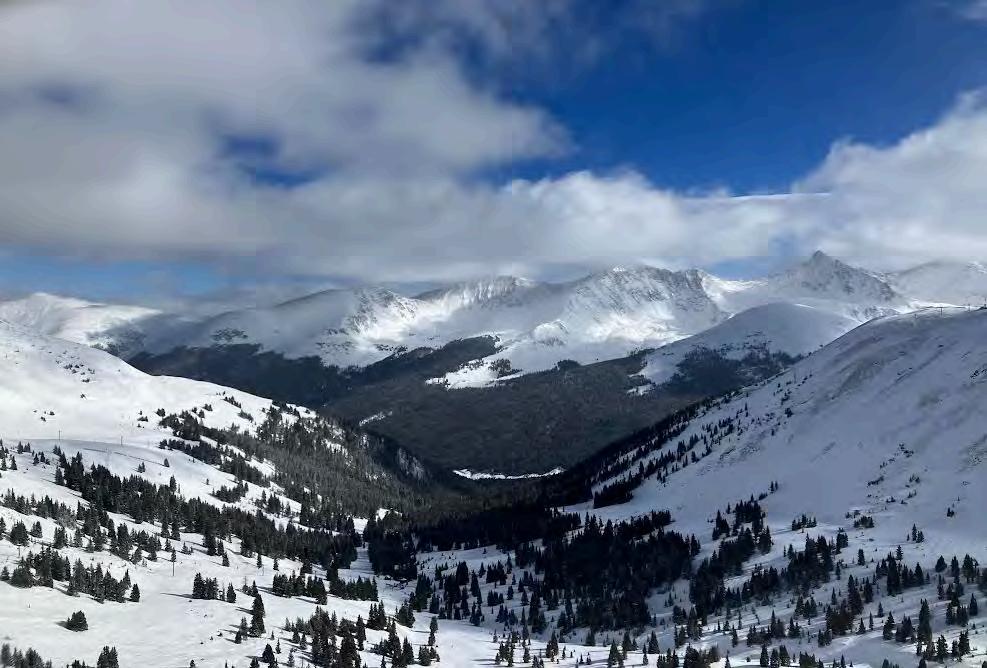
CopperMountain,Colorado.PhotobyEthanCastette,‘26.
Pyramid Peak, Colorado | Photo by Whitton Feer, ‘23.
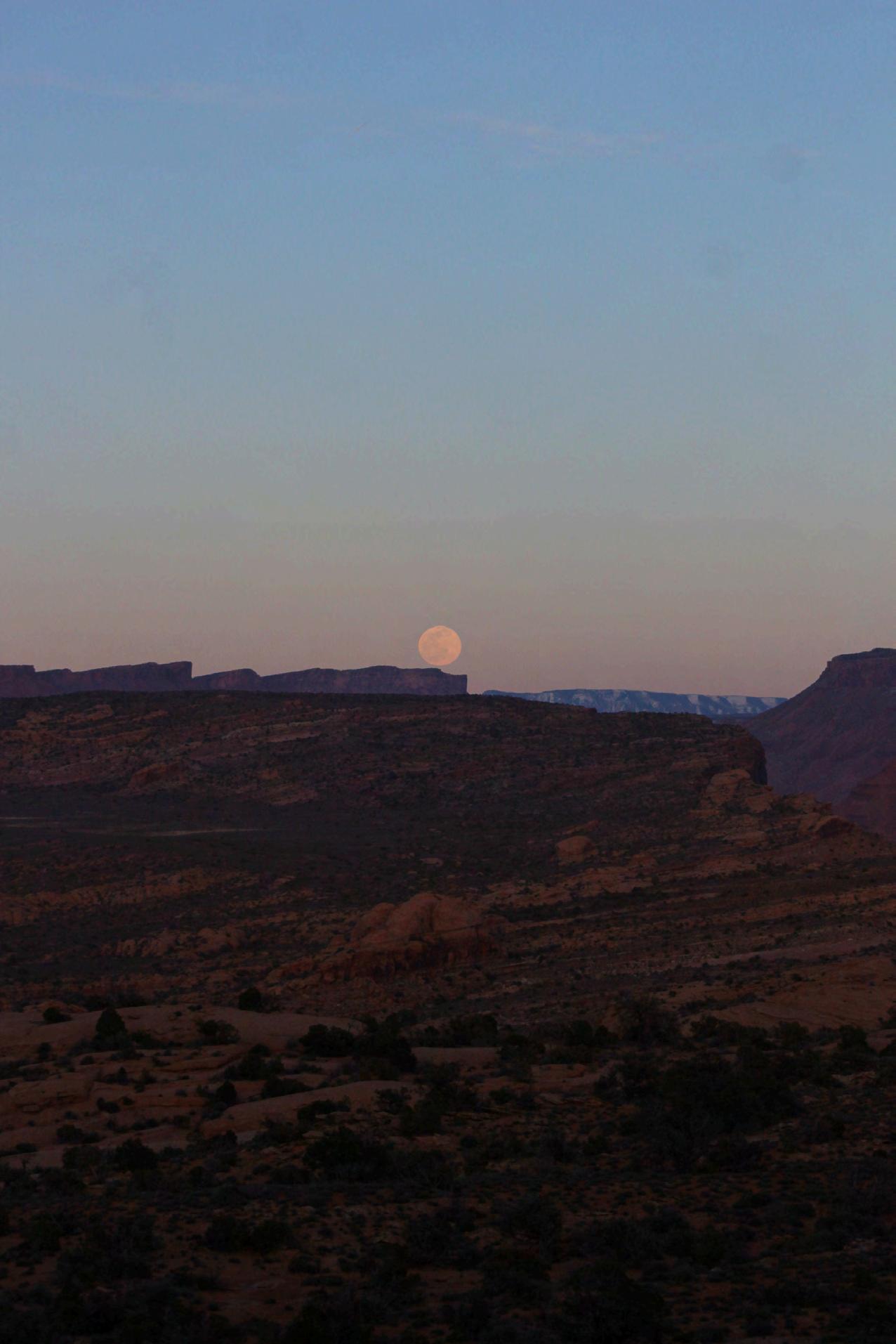
Full Moon, Arches National Park, Utah | Photo by Shaylan Shaeff, '26
2023 Faculty-Student Research Project Findings
By Dr. Kat Miller-Stevens
In2023,StateoftheRockiesfeaturedtwosummerfellows’projectsattheSCoREConference.CharlotteToogood’24,LaylaHaji’25and Willow Ma ’24 worked with Rockies Director Kat Miller-Stevens and Dr. Jason Machado from UCCS on a project called “Why So Emotional?Anexplorationoftheuseofemotionaladvocacyinnonprofitorganizations”. Usingcontentanalysis,thisprojectanalyzed thetestimoniesof48individualsrepresentingnonprofitorganizationsatlegislativehearingsdiscussingColoradoSB19-181,abillaimed toregulatetheoilandgasindustry.AnotherteamofsummerfellowsincludingZoraizZafar’24andMustafaSameen’25workedona projecttitled“ApreliminaryanalysisofopinionsontheoilandgasindustrythroughtheannualConservationintheWestPollSurvey”. Inthisstudy,thefellowsexaminedfiveyearsofopinionpolldataaskingquestionsabouttheoilandgasindustryintheRockyMountain West.ZoraizandMustafa’sresearchbuiltontheworkofformerRockiessummerfellowsSaigopalRangaraj’23andZoeyRoueche’24 whobeganthisprojectinthesummerof2022.
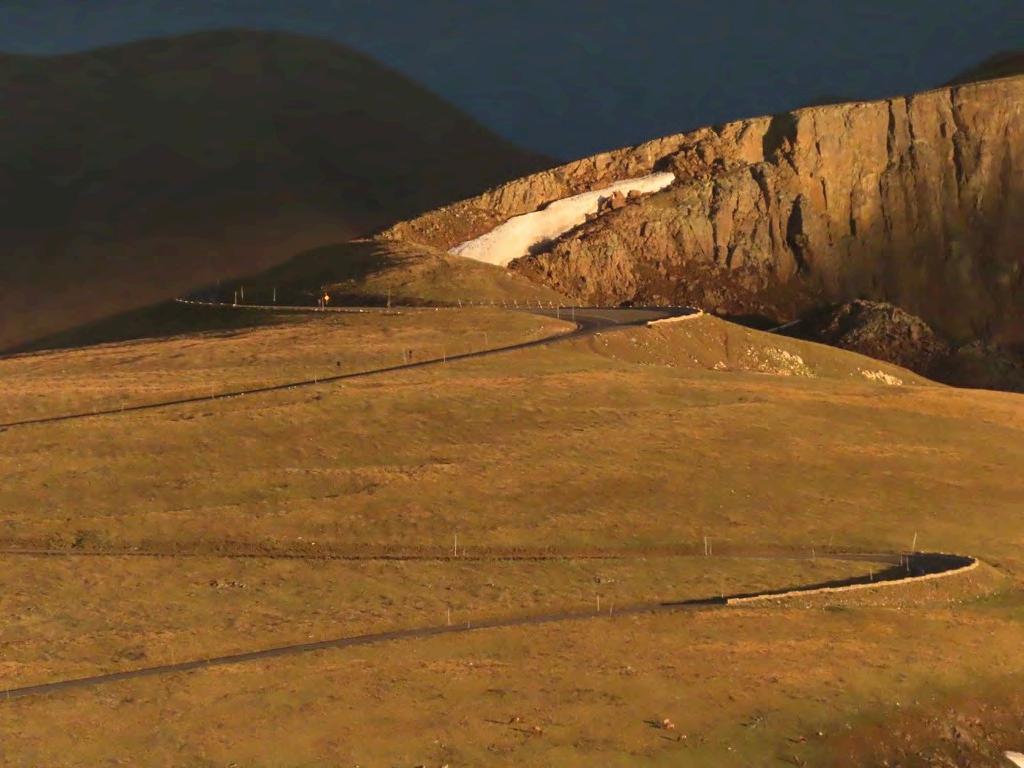
Trail Ridge Road, Rocky Mountain National Park, Colorado | Photo by Macy McCauley, '25

A Preliminary Analysis of Opinions o the Annual Conservati
The oil and gas industry has experienced unprecedented growth in the United States in the last 20 years, the result of increases in population and per capita consumption of goods. However, this industry, in addition to fracking, is a complicated and often controversial topic because of the health and environmental risks associated with its practices. Thus, this study delves into the responses from 2018 to 2022 of the Conservation in the West Survey which aims to capture bi-partisan public opinions of registeredvotersintheRockyMountainWestregiononavarietyof topics. Specifically, this study looked at whether respondents wantedthethen-incumbentadministrationtofocusonensuringthe safety and quality of the environment or on prioritizing domestic energy production. It found that, overall, there is a greater support in the 8 surveyed states for focus on environmental issues than there is for domestic energy production through years 2018 to 2021,butthatthissupportdeclinesinstateswherefrackingislegal and additionally declines in the year 2022, likely because of increased gas prices. Furthermore, the findings of this study indicate that female-identifying individuals are more likely to support focus on environmental issues over domestic energy production.
U.S. makes up 5 percent of the Earth’s population, but accounts for nearly30percentofitsannualenergyconsumption
In 2021, 60.8 percent of U.S. Energy came from fossil fuels such as natural gas (38.3 percent), coal (21.8 percent), and oil (0.5 percent) as the U.S. consumed an average of 19.78 million barrels of oil per day
Increases in population and per capita consumption of goods have ledtoimmensegrowthintheindustryinthe20thcentury
In 2000, there were 23,000 active hydraulic fracturing wells comparedto300,000in2015,anincreaseof1,204percent
Fracking now accounts for over 70 percent of U.S. natural gas productionandover50percentofU.S.crudeoilproduction
The U.S. is responsible for 14 percent of global carbon emissions, producingmorethan5,416milliontonsofCO2annually
Fracking is known to cause air and groundwater pollution, impacting plant and animal species (including humans, especially thosewholiveclosetosuchsites)
The oil and gas industry has undeniably had adverse effects on the environmentandhasfueledtheclimatecrisistheworldnowfaces, butrefusestotaketheaccountabilityandactionneededtoprevent thiscrisisfromworsening
Climate change will impact all individuals on this Earth, but will have disproportionate impacts on BIPOC (black, indigenous, people of color) communities and those that are socioeconomically disadvantaged
Rou
Colorado College State Saigopal Rangaraj, Zoey
The Obama administration’s policies surrounding the oil and gas industry and fracking contained both regulatory and supportivemeasures:
VetoedtheDakotaAccessandKeystoneXLpipelines
Spent nearly 34 billion USD supporting over 70 fossil fuel projectsaroundtheworld
Set stronger fuel economy standards, increased clean energy generation (especially solar and wind), and set strict renewableenergyandefficiencytargetsatthefederallevel
The Trump administration’s policies surrounding the oil and gas industry and fracking were overwhelmingly supportive ratherthanregulatory:
Modified safety rules to allow for rail transport of highly flammable liquefied natural gas Ended environmental impact reviews of natural gas export projects at the Department of Energy
Authorized oil and gas development in the Arctic National WildlifeRefugeinAlaska
Made significant changes to many major national parks, especially in the Rocky Mountain West region, to allow for increased fracking, drilling, and mining permits on the federally-ownedland.
The Biden administration’s policies surrounding the oil and gas industry and fracking have worked to both combat the actions of the Trump administration, stimulate the economy amidst a global pandemic, and curb globally fluctuating oil andgasprices
Easedoilandgasindustrymethanecontrols
Boostednaturalgasexports
LiftedtheE15summertimeban
Regulating the oil and gas industry and active fracking wells by disclosing chemicals used in fracking operations, strengthening industry cleanup requirements, and plugging abandonedoilandgaswells
The Conservation in the West Survey is an annual poll sponsored by the Colorado College State of the Rockies Project and is conducted by New Bridge Strategy and Fairbank,Maslin,Maullin,Metz&Associates.Thepollaimsto capture bi-partisan public opinions of registered voters in the Rocky Mountain West region. The states that are surveyed eachyearareArizona,Colorado,Idaho,Montana,Nevada,New Mexico,Utah,andWyoming.Respondentsareaskedquestions relating to the conservation public lands, energy, water, wildlife,wildfire,andotherpressingchallengesintheregion
on the Oil and Gas Industry through ion in the West Survey
ueche, & Zoraiz Zafar
e of the Rockies Project
We looked at the responses the Conservation in the West Survey received in the five-year period from 2018 to 2022. The samplesizewasthesameforallthepollsconductedacrossthe time period, with 3200 respondents surveyed annually. Furthermore, an equal number of 400 respondents were surveyed in each of the eight states. We compiled a database which merged the responses received across this period. Then, we proceeded to look for questions that were the same or very similarly worded across all five editions of the poll. Eventually, we decided to statistically analyze a question that asked respondents about their views on whether the federal government should focus on environmental issues or domestic energy production. For most of the statistical and regression analyses,STATAwasusedasthepreferredstatisticalsoftware.
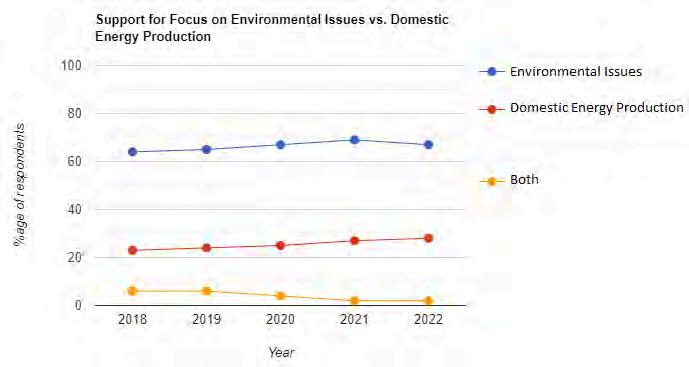
Support for focusing on environmental issues was consistently higher than support for focusing on domestic energy production in all Rocky Mountain states, with the exception of Wyoming.
Support for focusing on environmental issues increased throughout the 2018-2021 period before seeing a slight decreasein2022.
Rising gas prices starting from the second half of 2021 could bemostlikelyattributedtothisdecrease.
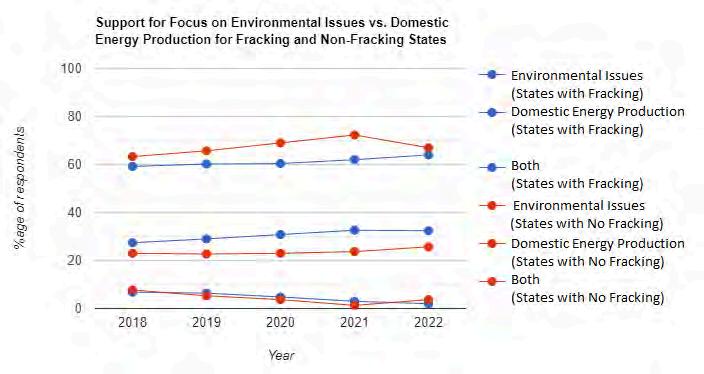

The states that fall in the category of fracking states include Colorado, Montana, New Mexico, Utah, and Wyoming. Conversely, the states that fall in the category of non-fracking statesincludeArizona,Idaho,andNevada.
Respondents from states with no fracking are more strongly in favor of focusing on environmental issues instead of domestic energyproduction.
The gap between the two categories of states gradually increased from 2018 and 2021. After reaching its peak in 2021, thegapcamedownsharplyinthe2022survey.
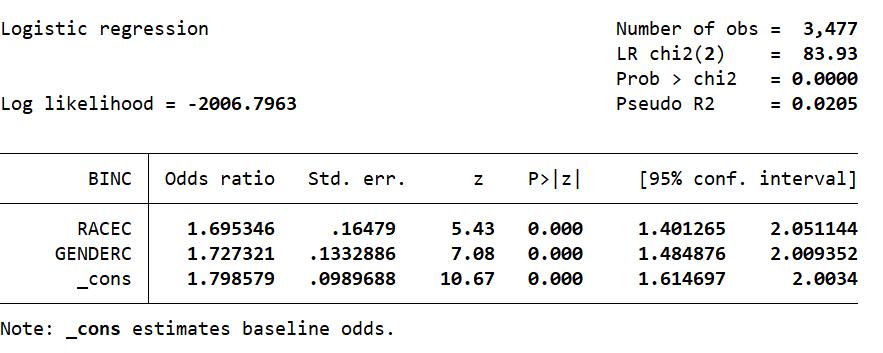
For the year 2021, female-identifying and non-white respondents were found to be more likely to support focusing on environmental issues over bolstering domestic energy production.
The regression equation and table above depict our deployed model and the results of the logistic regression we ran with a binarydependentvariableandtwobinarypredictors.
Colorado College’s State of the Rockies project encourages students to explore critical environmental and social challenges of the Rocky Mountain West. Through faculty-led research and out-of-classroom experiences, students gain an appreciation of the region’s physical characteristics and the impact of human land use activities while employing an interdisciplinary approach to finding balance between human activity and our environment.
Current Chair: Dr. Kat Miller-Stevens, Economics & Business

ABSTRACT
Why So Emotional? An Exploration
Colorado College State Kat Miller-Stevens, PhD. Jaso Charlotte Toogood, Willow M
This research delves into nonprofit policy advocacy within the context of SB 19-181, an important bill that aimed to regulate the oil and gas industry in Colorado. Through examining the nonprofit organizations that participated in public hearings for SB 19-181, this study aims to provide insight into the characteristics of and tools used by these organizations to engage in policy advocacy. The research identifies a variety of advocacy tools, including narrative techniques featuring heroes, victims, and villains, as well as the use of moral values, technical data, and emotional appeals. This paper offers valuable insights into the strategies, challenges, and impacts of nonprofit advocacy and contributes to the broader understanding of the role of nonprofits in shaping public policy.
RESEARCH QUESTION:
How do nonprofit organizations use emotions, characters, and narratives as an advocacy tool?
NONPROFIT ADVOCACY TOOLS
Nonprofit organizations use a variety of techniques and strategies to effectively advocate for policies and influence decisionmakers (Cairney, 2019). A primary tool used is the creation of compelling narratives that are able to resonate with the target audience(McBeth,2018).Thesenarrativesoftenfeatureconventionalcharactersinstoriesthatevokestrongreactions,suchas: heroes representingpositivevalues victims whoexperienceinjustice villains thatareresponsibleforharm
Nonprofitorganizationsalsoleveragemoralvalues,scientificdata,andemotionalappealstohelpstrengthenandsolidify theirmessages. Emotionalappealsinclude: anger blamingsomeoneelse fear and anxiety whenlookingaheadorthinkingofconsequences gratitude forpolicymakersorgovernmentortheoilandgasindustry compassion towardsotherswhohavesuffered
For example, highlighting wildlife preservation appeals to moral values, presenting air quality statistics leverages scientific data, andmentioningan emotional sentiment suchaschildren'shealthoftentriggersemotionalresponses.
n of the Use of Emotional Advocacy Organizations on Machado, PhD. Layla
Haji, a and Jonathan J. Pierce, PhD.
e of the Rockies Project
COLORADO’S SB 19-181
This was a landmark bill passed in 2019 that enacted substantial reforms in the regulation of the oil and gas industry. It was introduced to address growing public concerns over the impacts of oil and gas operations on public health, safety, the environment, and wildlife.

SB19-181createdmajorchanges:
shiftingauthorityoverdrillingpermitsfromstatetolocal governments strengtheningairqualityprotections
mandating that regulators prioritize public health and safetyoverproduction.
It was seen as a political victory for environmental advocacy groups, community activists, and legislators who had pushed for stricter regulation of the oil and gas industry in Colorado. However, the bill also faced strong opposition from oil and gas industry groups who argued thatitwouldharmenergyproductionandjobs.
METHODOLOGY
This study used a qualitative approach where we analyzed oral testimonies of 48 individuals who represented nonprofit organizations at the legislative hearings for Senate Bill 19-181 that aimed to regulate the oil and gas industry in Colorado. Testimonies were analyzed using a codebook drawn from previous literature on emotions, narratives,andcharacters.
PRELIMINARY FINDINGS
Testimonies are more likely to mention victim and villain, rather than hero.
Attitudes towards the oil and gas industry are mixed: the majority are not assertive that oil and gas causes a negative impact, but also not able to say the it does not cause negative impact, or generate a positive impact.
Emotions are also mixed, and respondents showed: compassion towards people employed by the oil and gas industry fear of both the oil and gas industry and SB 181 being too stringent anger towards the oil and gas industry.
Testimonies are more likely to use moral issues rather than technical and scientific information as evidence. Lastly, environmental justice is not a frequently mentioned theme among the testimonies.
2024 Faculty-Student Research Fellows Projects
By Dr. Kat Miller-Stevens
Fellows Updates
This summer, State of the Rockies fellows Anna Amacher ’24, Zara Zafar ’27, and Layla Haji ’25 worked on a project analyzing data from the Public Lands Survey to explore individuals’ opinions on the use of public lands. Over the summer, the team created a codebook of variablesdrawnfrompreviousliteratureonpubliclandsuse.Usingthiscodebook,nearly400individuals’responseswereanalyzedand recorded.Theteamwillcontinuethisprojectintothefall.Inaddition,Zarahelpedcompletethewritingofapapertitled“Ananalysisof opinions on the oil and gas industry through the annual Conservation in the West Poll Survey”, which was started by previous Rockies fellowsSaigopalRangaraj’23,ZoeyRoueche’24,ZoraizZafar’24,andMustafaSameen’25.
FellowsthisyearareworkingwithColoradoCollegefacultytofocusonclimaterelatedissuespertainingtotheRockyMountainRegion andadjacentareas.Thefivefellows,AnnaAmacher‘25,ZachDinklage‘25,EthanJStewart‘25,ZaraZafar‘26,andLaylaHaji‘25allhave uniquebutintertwiningprojectsandinterestsinhowclimateinfluencesourlivesintheRockyMountainRegion.
2024 Fellows and Faculty Research Projects
Anna Amacher
Anna is a State of the Rockies Summer Fellow. She will be conducting public policyresearchfocusedonenvironmental sustainability. More specifically, she will be working on projects related to dark skies, oil and gas, and watershed coalitions. Her research will involve the collaboration with Professor Kat MillerStevens to explore the impacts of these issuesontheRockyMountainWest.This research aims to contribute to the understanding and development of policiesthatpromoteenvironmentally
responsible practices and sustainable resource management in the South West region.
Zara Zafar
This summer Zara is collaborating with Professor Kat Miller on extending and refining the draft paper: Analysis of opinion on the Oil and Gas Industry throughtheannualConservationinWest Survey. Written by past State of the Rockies fellows, this paper provides framework that breaks down the correlationsbetweendemographicsand
responses to the Conservation of West Surveyquestions.Shewillbeworkingon further strengthening the linkages outlinedinthepaperanddevelopingthe qualitative analysis. Together, they are preparing the paper for publishing in a relevantjournal.
Layla Haji
This summer, Layla will be focusing her research on Public Lands. She will be looking through the results of ConservationintheWestPolloverthelast
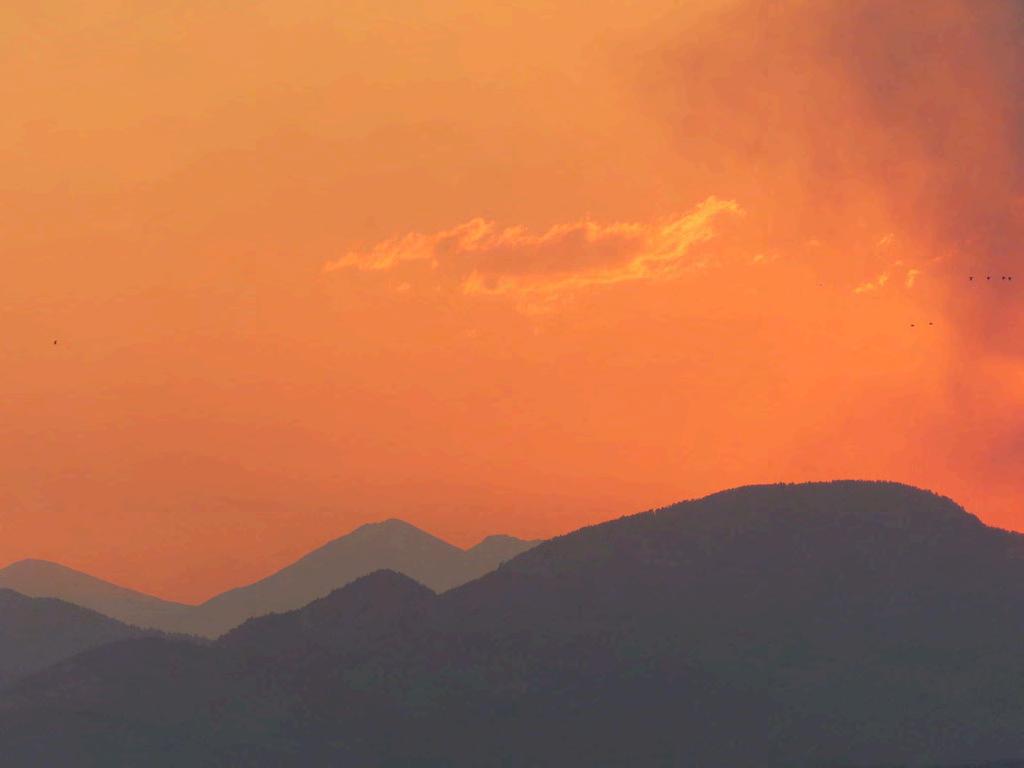
Sunset from camp near Blanding, Utah, June 2024 | Photo by Cyndy Hines
few years and the Public Lands & Dark Skies projects that have been ongoing research projects at State of the Rockies. Withthisdataanalysis,hergoalforthis summer is to highlight any interesting information and draw on broader research surrounding public lands in the lastfewyears.Bytheendofthesummer, this information will be compiled and formattedtodemonstrateitsapplicability to broader public lands studies and she planstosharethefindingswithintention ofpolicychangewhereapplicable.
Zach Dinklage
Zach is focusing on a project titled “Colorado River Water Rights and Economic Impacts” in collaboration with Colorado College Professor Michelan Wilson. Michelan Wilson is a microeconomistwithresearchinterestsin environmentalandnaturalresource
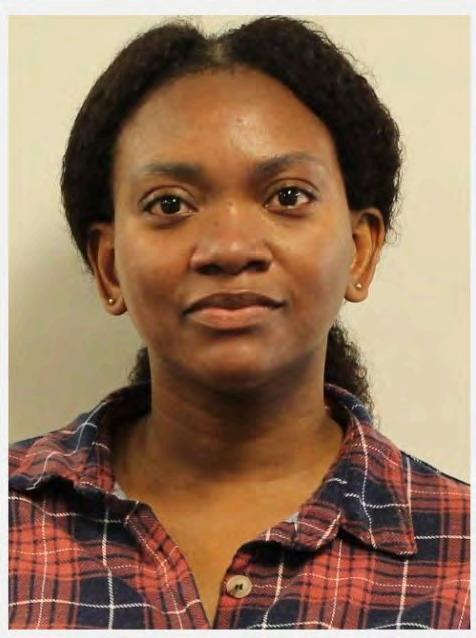
Meet the 2024 Fellows
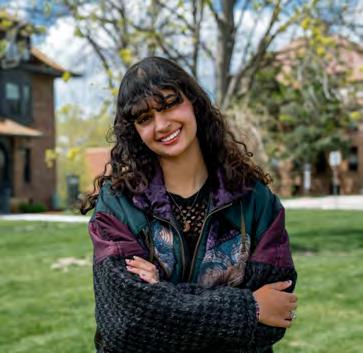
economics and environmental justice. Together, they aim to get a better understanding of recent water policy changes for the Colorado River. In their research, they want to understand how changesinwaterpolicyhaveaffectedthe livelihoods, agricultural practices, and resilience of small-scale farmers facing water scarcity. This research strives to answertwomainquestions:Whatcoping strategies have farmers adopted in response to changes in water policy, and how have these strategies affected their livelihoods?And,Howdofarmersperceive the fairness and effectiveness of current water policy regulations in addressing theirneedsandchallenges?
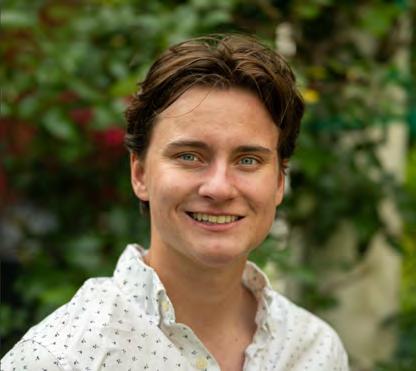
Ethan Stewart
Ethanisfocusinghissummerresearchon water policy in the west and its distributionalimpacts.Throughapolicy
critique of the Colorado River Federal Water Agreement between California, Arizona,andNevada--allstatesthathave access to the water of the Colorado-- he aims to analyze ways in which urban appropriation of rural and indigenous water resources may negatively impact disadvantagedcommunities.Byanalyzing this agreement from an environmental justiceperspective,hehopestocontribute to existing literature on the topic and highlighttheareasinwhichpolicychange isnecessary.StewartaimstosubmitacoauthoredpaperwithDr.MichelanWilson, thenewlyhiredenvironmentaleconomics professor, to a journal for publication. Ethan’s literature review of Colorado River policy and impacts led him to develop an idea for tree restoration in Denver,Colorado.Ethanaimstocontinue hisresearchthisfallwithDr.Wilsonand maybe co-write a paper with her on his researchonColoradoRiverappropriation.
Dr. Michelan Wilson is an assistant professor in the Economics and Business Department and an environmental and resource economist. Her research focuses on the valuation of the environment as an input in production. Her work explores the impact of environmental degradation on societal welfare, and the environmental justice implications of pollution and environmental policies. She is also interested in working with community organizations on answering environment-relatedquestionsthatareimportanttothem.
Michelan is from Jamaica, where she received her Bachelor’s and Masters in Economics. She received her PhD in EconomicswithenvironmentalandnaturalresourceconcentrationfromtheDepartmentofEconomicsatColoradoState University.ShejoinedColoradoCollegein2023.
Zara Zafar ‘25
Zara is currently a rising Senior. She is an international student from Pakistan. Zara is interestedinInternationalRelationsandEconomicDevelopment.Sheenjoystraveland thrifting, and is involved in SASA, CC competitive communications, and student journalismatColoradoCollege.
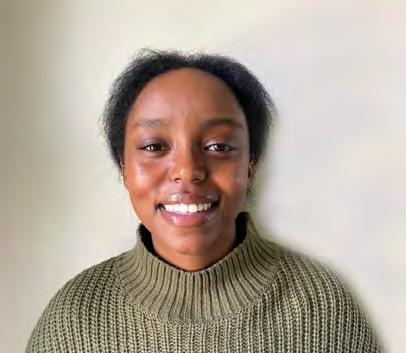
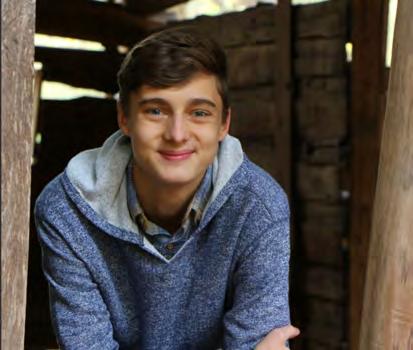
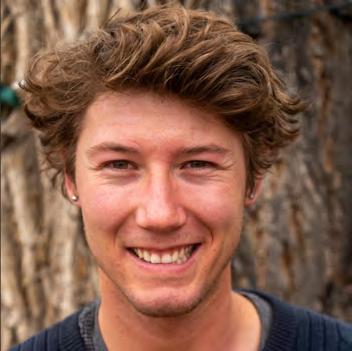
Anna Amacher ‘25
Anna is currently a senior at Colorado College, and is pursuing a major in Business, Economics, and Society (BESoc) and has been honored on the Dean’s List for the 20222023 academic year. Her professional journey includes serving as a Legislative Analyst at the Nuclear Energy Institute, a Government Affairs Intern at Edison Electric Institute, and an Economics Grader at Colorado College. She is gaining hands-on experience with Long Path Technologies, a startup founded by CC alumni, which is at the forefront of methane emission monitoring technology. She is dedicated to merging economic insightswithtechnologicaladvancementsforasustainablefuture.
Layla Haji ‘25
Layla Haji is a rising senior studying neuroscience and anthropology at Colorado College. This year she will be helping Kat Miller Stevens analyze data that has been collected over the years on public lands and dark skies. In her free time, she enjoys running,beinganEMT,andspendingtimewithmyfriends.
EthanisasenioreconomicsmajorandenvironmentalstudiesminorfromFayetteville, Arkansas. He is very interested in the many intersections between economic, environmental, and justice issues, particularly in the Rocky Mountain region, and in studying climate change solutions and impacts. The State of the Rockies program providesanexcitingopportunitytosupportinitsinspiringandmeaningfulmissionto research and inform the public on regional environmental issues. In his free time, he enjoyreading,hiking,andlisteningtopodcasts.
ZachDinklage25’isaBESocmajorandphysicsminorfromSantaBarbara,California.He becameinterestedinenergyandnaturalresourcesgrowingupindroughtproneareasof theWestincludingUtahandCalifornia.Understandingourrelationshiptoenergyand waterhasbecomeincreasinglyimportantforZachasheworkstocombineisknowledge in economics and business policy with energy consumption and water usage. Zach is looking forward to researching recent policy changes regarding Colorado River water rights,tounderstandtheeconomicimpactsonavarietyofstakeholders.
Ethan Stewart ‘25
Zach Dinklage ‘25
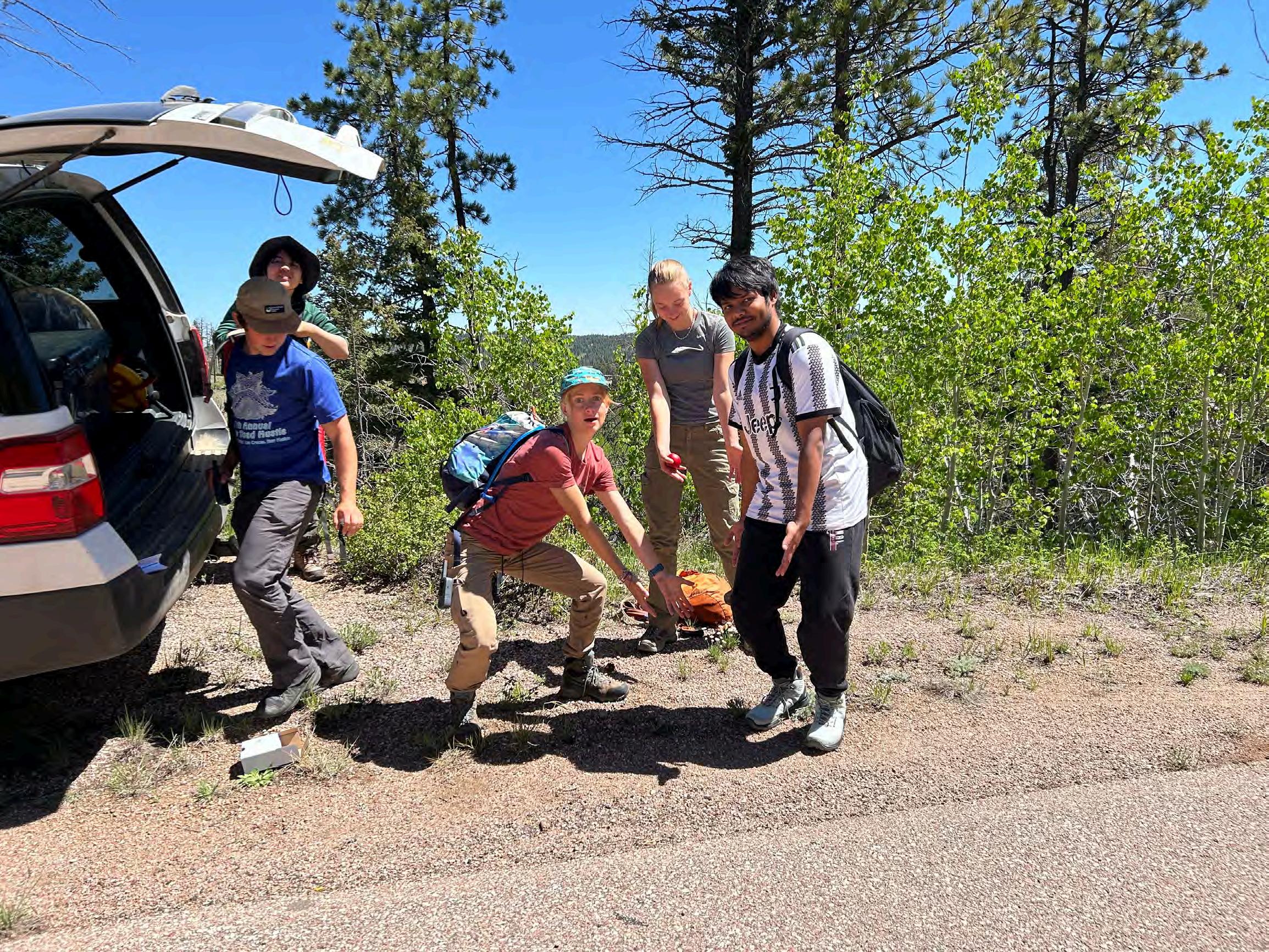
Rafi’s very first pair of hiking shoes.
2024 Waldo Team L to R: Ben Curry, ‘25, Rachel Phillips, ‘25, Mary Cate Kiser, ‘27, Tyler Mielke, ‘26, Rafiul Khan, ‘26.
| Photo by Cyndy Hines
Student-Led Research: A Roving Think Tank
by Cyndy Hines
Student-ledStateoftheRockiessocialand natural science-based research and projects are aimed at finding ways to balance how we live with the responsibility of caring for our natural world.Weprovidestudentsopportunities to build skills and apply classroom knowledge to practical projects to help prepare them for life after Colorado College.
Our climate-focused research takes us deep into the social and ecological dilemmas and across the diverse landscapesthatshapeourliveshereinthe Rocky Mountain West. We contemplate ways we can attenuate human environmentalimpactwhileaddressing
equityandinclusionissues.Ourgoalisfor students to pursue their academic interests, or perhaps discover new ones, as they engage in inter-disciplinary researchandprojects.
Working on a Rockies project enables students to take learning beyond the 31/2-week block plan. In the field, in the lab,andwheninterviewingandreporting, students apply their coursework knowledge, gain skills and practical experience, and consider how their work contributes to finding an equilibrium between human activity and ecosystem integrity.
Becauseartandscienceareinextricably
intertwined, many of the projects we design require students to present research and use some form of creative expression disseminated across a variety of platforms, (e.g., GIS; radio; print; and electronic journalism; art and design; social media; photography). This approachtoappliedintegrateddesignand researchappealstostudentsfromdiverse backgrounds across many academic departments.
We recognize the importance of sharing research findings through academic and creativeoutletstoincreasethesizeofour audience and the diversity of our participants with the goal of motivating otherstotakeinterestandaction.
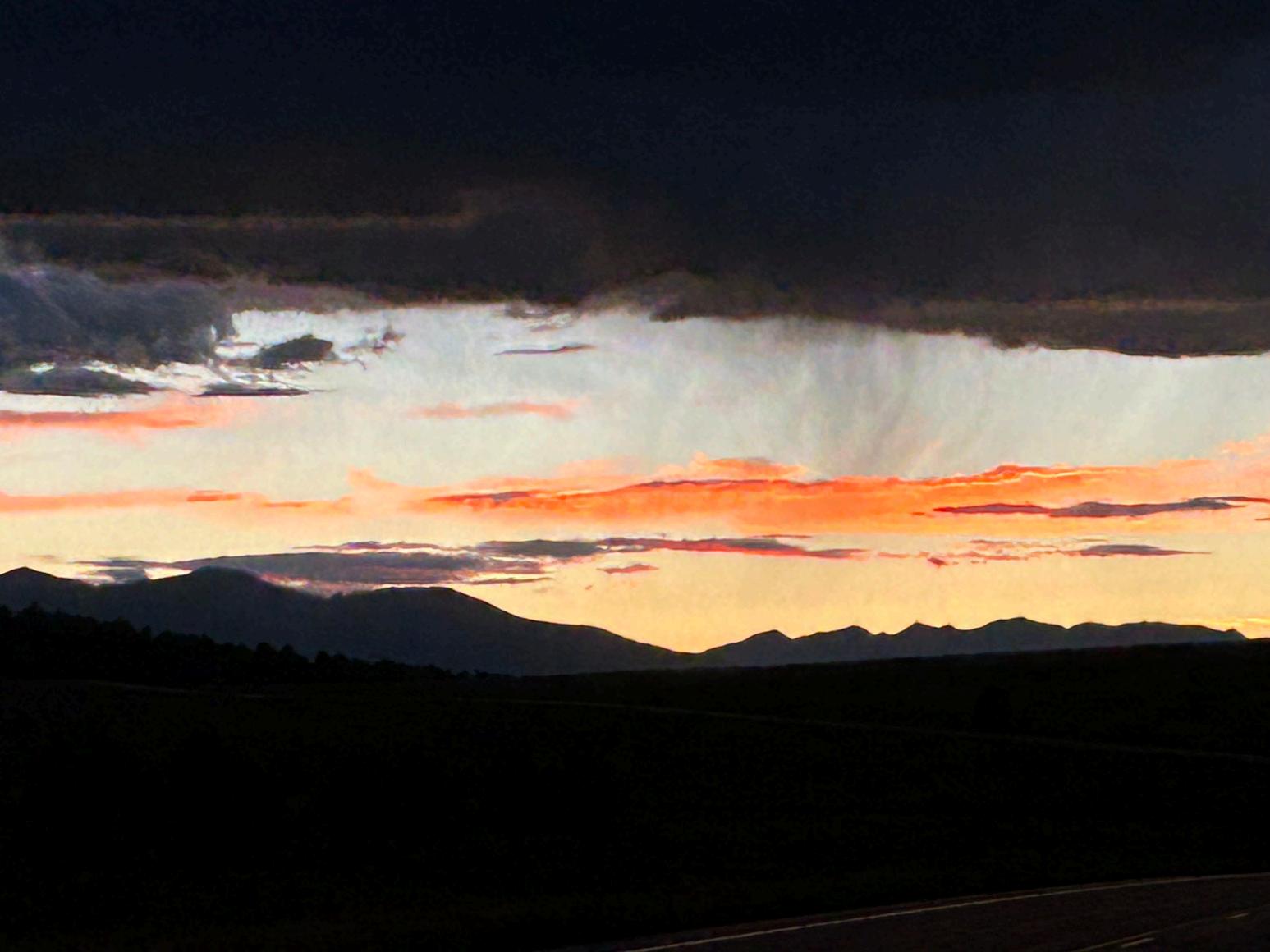
Sunset over the Sangre de Cristo Mountains, Silvercliffe, Colorado | Photo by Cyndy Hines
By Cyndy Hines
physiological processes of animals and plants. Colorado College’s 2023 Conservation in the West poll data suggestsseeingstarsatnightisvaluedby morethan70%ofresidentsandisamajor draw of visitors to the region’s various expansive public lands and dark skies designated areas. The allure of the physical landscape, wildlife, climate, and starry nights are reasons many of us live and recreate here in the Rocky Mountain West.
Growing populations and increased development of Rocky Mountain western cities and rural communities are sources ofincreasinglightpollutionintheregion
held by land developers, city planners, policymakers, residents, and visitors. We are interested in determining how different types of land and economic developmentcontributetoandexacerbate the issues related to increasing light pollution. To explore this, students are investigating the source and extent of lightpollutionandtheimpliedimpactsof pervasive artificial light on urban and ruralcommunitiesintheRockyMountain West. We are interested in knowing if artificial light at night disproportionately affects marginalized populations such as lower-income populations in urban environments,andwhoandwhatarethe major contributors to artificial light pollutionsinthesecommunities.
By studying light pollution in several urban and rural locations in the region, 2024 Dark Skies student researchers are deciphering whether the spatial distribution of people--i.e., who lives where--is influenced by the location and intensity of artificial light at night and identifying the top contributors to light pollution in these areas. We conducted interviews, measured and photographed the extent of artificial light at night, and recorded nighttime sound in locations of varying artificial light levels. A comparison between the urban environment and several rural communities will be made to determine how light pollution from growth and development affects the nighttime environment.
Bears Ears National Monument Project
Voters surveyed in the 2024 Colorado CollegeStateoftheRockiesConservation in the West poll are concerned about disappearingstarryskies.Whydoes
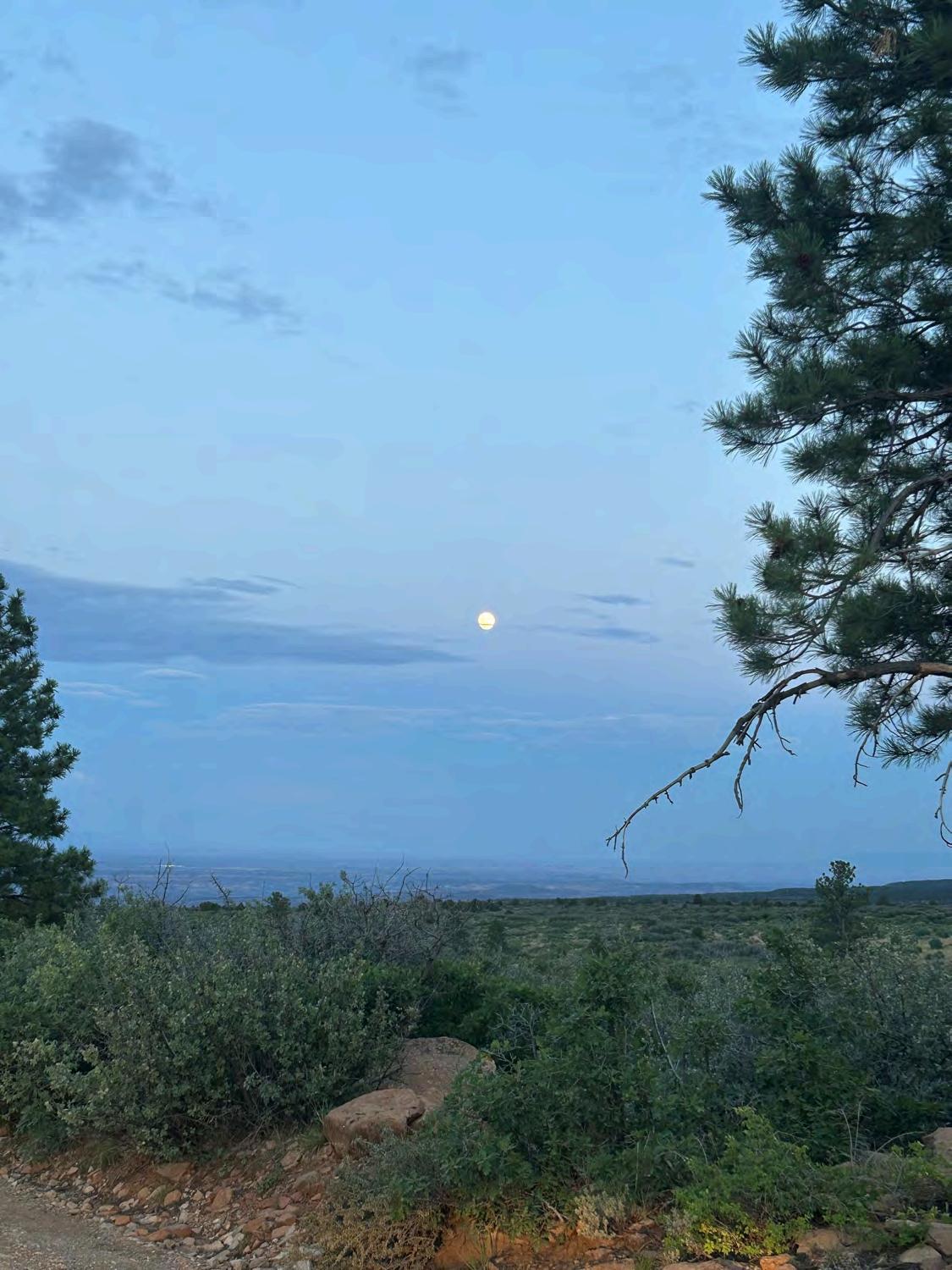
Full moon in Bears Ears, Utah. Photo by Alice O’Neal-Freeman,’27
managingpubliclandstoensurethereare moreoutdoorplacesfreeoflightpollution to see the stars at night matter to 89% of pollrespondents?Theattentionto disappearing western starry skies has led to an increased interest and actions to protect night skies from the far-reaching effectsofhumanactivity.
One example of such initiatives is the managementplanforBearsEarsNational Monument in southeastern Utah. Incorporatingbestmanagementpractices for night sky and dark environments on BureauofLandManagementpubliclands is highlighted as a prime concern for Indigenoustribeswhoseculturesandlifepractices are tightly tied to the cosmos. A betterunderstandingofthepervasiveness ofartificiallightonnightenvironmentsis a key component of the co-management plan.
Our intention is to learn what concerns residents of these communities have about the brightening of the night sky. This summer, a team of Rockies student researchers worked with The Bears Ears National Monument (BENM) Inter-tribal Coalition to design survey and in-person interviewquestionsforresidentsoftowns bordering the national monument to gauge their awareness of the Bears Ears Inter-tribal Co-Management Plan and gather their opinions of a possible dark sky designation of BENM. We are also interestedintheleveloftribalmember participationintheimplementationofcomanagement plans and educational initiatives to preserve dark skies and culturalandnaturalheritage.
We are exploring the extent to which artificial light from population growth anddevelopmentofnearbycommunities, (Bluff, Blanding, Monticello, and Moab, Utah), may potentially impact Bears Ears NationalMonument.Thisisofinterestas BENM tribal members contemplate designating BENM as an international dark sky preserve which could lead to increased visitation to the monument. Would a dark skies designation of BENM attract more visitors? Is tourism a benefit tothelocaleconomy?Whatarethe
pitfalls of community growth and development in rural southeastern Utah townsborderingpopularpubliclands?
We hope to provide Inter-tribal Coalition leaders information gained from this study to help improve communications andincreasecommunityinvolvement.
2024WaldoCanyonFireProject
The Re-establishment of a Ponderosa Pine Forest: a Multi-scale Retrospect of the Waldo Canyon Fire, Woodland Park,Colorado
This summer, Waldo Canyon student researchers completed field data collection for phase two of the study during June and July. We are using GIS (Geographic Information Systems) and statistical analyses of data collected in 10 sites in day-two of the burn area to expand and strengthen the data set collected during phase one of the study. We are interested in mapping ponderosa pine regeneration in these locations to determine whether ponderosa pine regrowth is more likely in some sites than others as influenced by differences in physical site conditions (e.g., slope, elevation, aspect, etc.) and burn severity. An absence of ponderosa pine seedlings and saplings may indicate whether the long-termsurvivalofthisspeciesislikely given drier conditions and hotter temperatures in the region-- an outcome of a changing climate exacerbated by the growing popularity of living in the Rocky MountainWest.
2024SustainableLandscapesProjects:
A Point of Diminishing Returns: The Flaws in Modeling a Production Function off Economic Productivity OverWaterAvailability
An economic perspective on water conservation in cities in the West intrigued a State of the Rockies student researcher to report on how Colorado Springs, Colorado city officials plan to supply water to a booming population, nowandinthefuture.
2024AdventurousSpiritFilms
State of the Rockies film students are continuingtheirexplorationofthehuman condition and the attitudes of residents and visitors toward life in the Rocky Mountain West as influenced by the physical constraints and social pressures of climate change. Water supply is a seriousconcernforresidentslivinginthe Rocky Mountain West. In 2024, the ConservationintheWestPollfound66% of survey respondents think water availability is a significant problem. The 2024 State of the Rockies Adventurous Spirit Films team spent their summer interviewing and filming residents, conservationists, environmentalists, and activists for a documentary feature on historic and today’s water conservation policiesforandmanagementeffortsofthe Delores River, a major tributary of the Colorado River system. The team is particularly interested in how allocation, drought, and overconsumption of the riverhaveshapedandcontinuetoimpact theSouthernUteMountainUteTribe.
The Delores River is capturing national attentionasconservationgroupspushfor itsdesignationasanationalmonument.
Residentsintheregion,liketheSouthern UteMountainUteTribe,worrythe designation as a national monument will furtherrestrictuseoftheareabythetribe who depend on the landscape for their livelihoodandtopracticetraditionalways ofbeing.
A free campus screening will be held in thespringof2025.Theteamaimstoenter several film festival competitions in the springandfallof2025.
2023 Student-Led Summer Research Reports:
The Re-establishment of a Ponderosa Pine forest: a Multi-scale Retrospect of theWaldoCanyonfire,WoodlandPark, Colorado
Research findings for phase one of our study of ponderosa pine regeneration followingthe2012WaldoCanyonforest
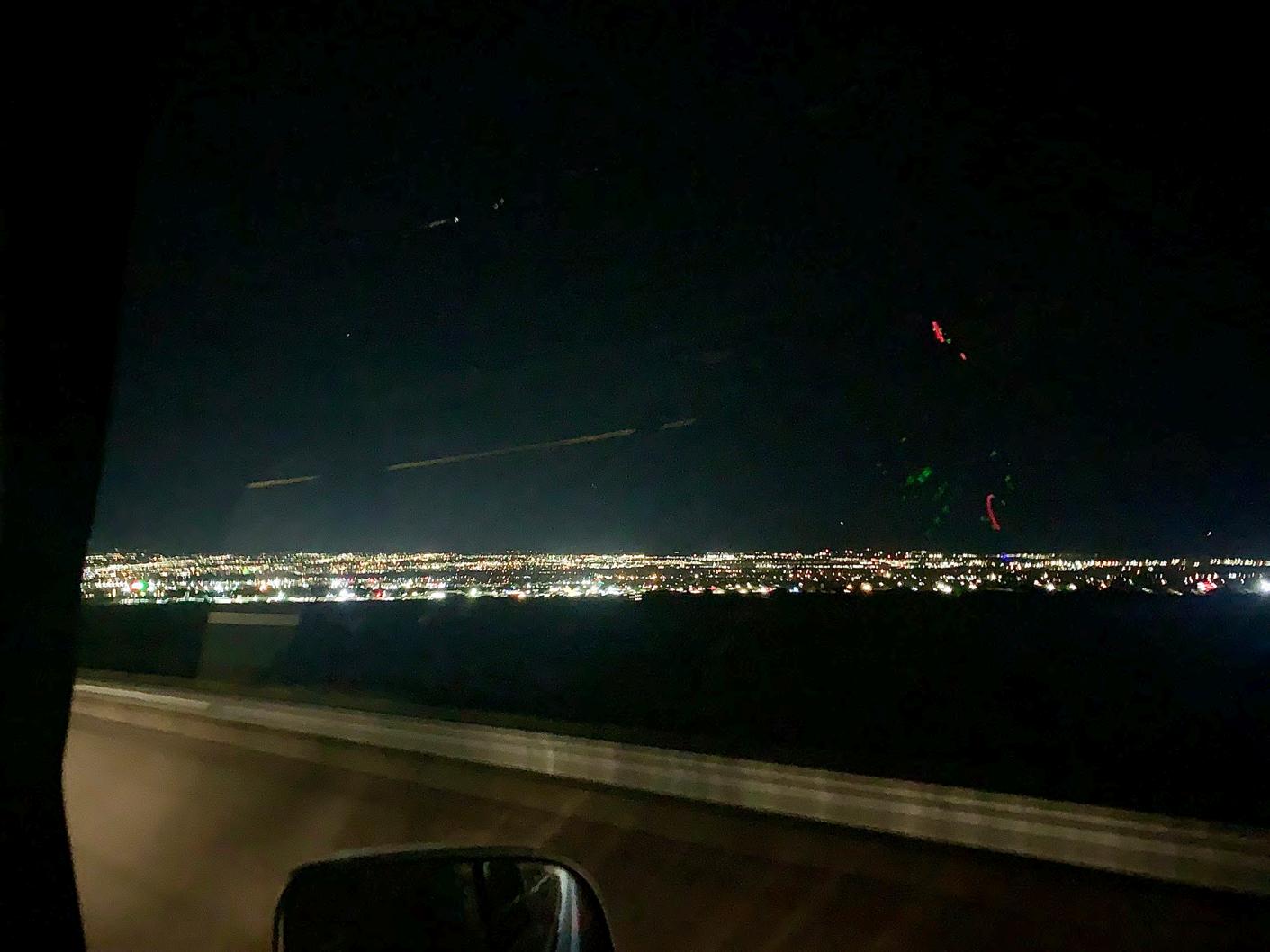
Interstate 40 heading northwest into Albuquerque, New Mexico after a night of collection light data. Photo by Alison Mueller-Hickler, ‘26.
fire, Woodland Park, Colorado, can be found in the following 2023 project report. Preliminary field data analyses indicate ponderosa pine generation is occurring in sites in high elevations and on steep slopes. Much of the forest patchesdepictedin2011aerialimageryof the study sites are now grass, shrub, or bare ground. 2023 aerial imagery interpretation, verified by field site reconnaissance and data collection, and GIS analyses, reveal little evidence of a newcohortofponderosapineindividuals followingthe2012WaldoCanyonfire.
AreStarrySkiesWorthSaving?
2023 Dark Skies research team members executedphasethreeofthePublicLands VisitorsDarkskiesproject.The5-member team interviewed residents and public lands visitors to learn who visits public landsandwhy,andtowhatextentseeing starryskiesatnightwasareasonfortheir visit. Findings from their individual student research projects demonstrate the deep connection we have to the land andtothecosmosthoughwemaynot
understand why we feel at peace in the outdoors,orwhatdrawsoureyesupward tocontemplatethenightsky.
BigStarrySkies:DoesoutofSightMean outofMind?
Celestial bodies and their movements were subjects of contemplation by early humans through the ages. This is evidencedbytheoldestofartforms(cave paintings, petroglyphs, ceremonial costumes, sculptures, pottery, etc.) created to record and communicate cultural ideologies and belief systems. Studying ancient artifacts reveals the importanceofnightskiesinourpastand sheds light on what our decoupling from cosmic rhythms may mean for life in the future.Whatcanwelearnfromhistorical art about our connection to the stars-howtheyshapedourminds,oursurvival, and our lives? How is our ancient connection to starry skies expressed through art today? Does our relationship tothestarsexistonlyinourpast?
These questions led us to research the topicofnightskiesincontemporaryart
(1850’s-today) to create a virtual exhibit ofartworkthatrepresentelementsofthe night skies of the Rocky Mountain West. During the 2023-2024 academic year, a student researched the art history of starry skies over the past 150 years to gauge whether the importance of our relationship to the cosmos is present in theconsciousnessofmodernsociety.
The goal of the exhibit is to raise awareness of the importance of night skies to humans biologically, culturally, andartistically.
The Economic Benefits of Night Skies Conservation
Inthefallof2023,ateamofstudents,CC professor, Dr. Guanyi Yang, and University of Northern Colorado professor,Dr.MarkEiswerth,investigated the economic value of tourism of night skiesbysurveyingnighttimestargazersat the Great Sand Dunes National Park to determine how much people valued seeing stars at night. Their research findings attempt to determine if pristine night skies are economically beneficial to conserve.
2023 Student Research
Waldo Canyon. | Photo by Ollie Beland ‘25
Across the Rocky Mountain West: A Summer with the 2023 Public Lands/Dark Skies Survey Team
By Alison Mueller-Hickler ‘26
My summer with the 2023 Public Lands Survey Team was nothing short of eventfulaswetraveledacrossalleightof the Rocky Mountain West states. Joining Nathalie,Brigitte,Lily,Liam,andJesúsin the field brought along a variety of experiences. From seeing Monument Valley in Utah jam-packed with tourists reliving an iconic scene from Forrest Gump to getting a 12-passenger CC van outofthesandatLakePowell,therewas neveradullmoment.
We started our work in Block 8, spring 2023,whenwemetCoreyHutchinsofthe CC Journalism department. Corey provided meaningful insights concerning journalism and interview processes. During these meetings, I observed the nuances of interviewing and how getting an answer is usually dictated by what a person is doing or the use of certain words that discourage participation. Outside of interview preparation, we worked to schedule our trips during the summer, taking into consideration a sense of place, and researching the area and the people who live there. We ended upwiththreetripsaveragingaroundfive days each with a two-week fourth trip to finishupthesummer.
Thefirsttriptaughtustheimportanceof flexibility. We left the Sustainability Houseataround2:30pmonFriday,June 16th with a van stuffed with food and supplies.
Ourgoalforthefollowingfivedayswasto learn from Denver Post reporter Bruce Finley,practice to the art of interviewing, andgetourfirstinterviews.
On our way to Westcliffe, Colorado we drove through hills and valleys densely populated with nourished trees from the recentrainfall.Everyfewmoments,Cyndy wouldturndownthemusicandpointout the window to identify popular trees like Aspen,Douglasfir,andJuniperandtellus howtoidentifythembasedonshapeand leafcolor.
At around 5:30 pm, we arrived at the Finley family cabin, a gorgeous redpainted wood structure with a large deck and upstairs patio overlooking the valley below.Stayingtruetothecabintheme,it also had a plethora of bear decorations hidden around. We settled in and Nathalie, Lily, and I took a short hike to explore the nearby campsite while Liam andJesússtartedpreparingdinner.
After dinner, we decided to do some night-time work and plan for the next day,trainingday.Thistrainingdaywas
Loveland, Colorado | Photo by Macy McCauley '25
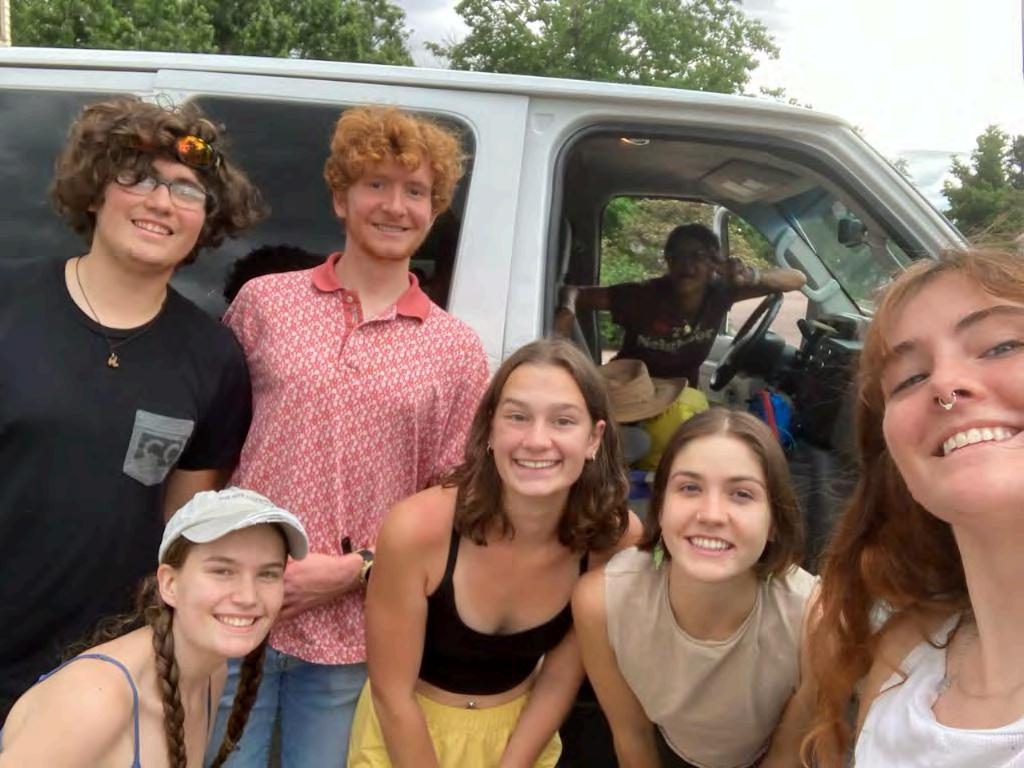
Team selfie! (Left to right: Jesús Lara Rivas, ‘25 , Liam, Mullen, ‘26, Cyndy Hines, Brigitte, Arcoite, ‘24, Alison Mueller-Hicker, ‘26, Nathalie San Fratello, ’25, and Lily Frost, ‘26. | Photo by Lily Frost
special because for the first time Lily, Nathalie, Brigitte, Liam, and Jesús would interviewpeople.Thisplanningalsocame withthefirstofmanychangesinourtrip’s schedule. Due to heavy rain in the area, we decided to stay another night at Bruce’s, which was difficult to accept at first, as we were so excited to visit more newplaces.
Thenextmorning,weallsqueezedaround thewoodentabletolearnfromBruce.We built upon what we had learned from Corey in Block 8 and added into consideration length of discussion. The bestpartwasthataftera10-minutebreak, BruceandCyndywoulddemonstratehow itwasdone.Theirfive-minuteinteraction was hilarious and engaging and showed usthatitisokaytomakemistakesduring theinterview.
At11:30a.m.itwasfinallyinterviewtime! We filed into the van and Bruce directed us to our first interview site, the Comanche Trailhead at San Isabel National Forest. As we pulled in, we immediately saw two people sitting next to a map of the trail, and we knew they would be our first interview. However, what we did not know was that it was goingtostartpouringrainandwewould have to conduct the interview under the cover of the restroom stall. Bruce began the interview and quickly let the team takeoverwithLily,Nathalie,andBrigitte takingcharge.Welearnedthattheywere a trip leader and a student from the Outward Bound School in Leadville. The tripleader,TanmayBain,wasdelightedto helptheteamwiththeirsurveyandeven stuckaroundtodiscussBrigitte’spersonal projectwithher!
After this interview, our confidence was soaring.Ithoughtthat,duetotherain,we would have a tough time finding people, letalonepeoplewhowouldagreetostand in the pouring rain to answer our questions. It was a nice surprise to be wrong. There were often hikers and runners coming off the trail who would enthusiastically answer our questions. It wasquitethescenebecausewehadtaken shelterfromtheraininourvan,and
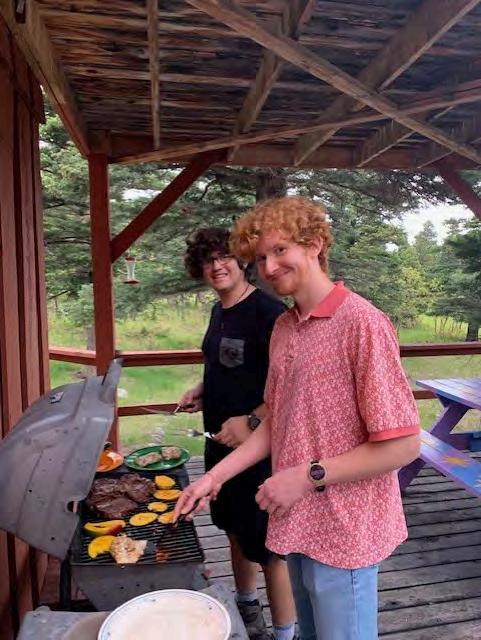
Photo by Cyndy Hines
whenever someone came within sight, oneofourteammemberswouldsay“I’ve gotthis!Doessomeonewanttocomewith me?”andtheywouldjumpoutofthevan toapproachthehiker.
At the end of our rainy hour at the trailhead,wehadcompleted10interviews and received no rejections, which was spectacular.
After a couple hours, the team decided they wanted more action, so we once again piled into the van and drove to the town of Westcliffe, an International Dark Skies Association certified area. Finding peopletoparticipateinthesurveyintown was a lot more difficult than at the trailhead.Immediately,NathalieandLiam experienced rejections. I thought that experiencing rejection was going to be difficult on the team’s moral; however, they took it in their stride and immediatelysearchedforanotherperson. Conducting their interviews, the team appeared as though they had been doing this for a long time and today was not theirfirstday.Bytheendofoursessionin town, we had collected an estimate of 37 interviews.
Thatnight,welayeredupanddrovetothe SmokyJackObservatory.ThefirstthingI
noticed was the usage of red light in the telescopes which I had never seen before, but Jesús had. He explained that it was used to see at night as an alternative to white light because it affected our vision andeyeslessharshly,sowecouldseethe stars more clearly while not contributing to light pollution. This method spoke to thetown’scommitmenttopreservingthe dark sky. We were able to look through a series of telescopes to see the different constellations and galaxies. We interviewed some of the hosts and volunteers, and the consensus was that theeventwasdefinitelyworthstayingup late.
The next morning, started the long drive towards Mancos State Park campground, which was right next to a beautiful lake. We set up our tents and decided to let everyone explore for an hour or so before cookingdinner.LiamandIwentonatrail run around the lake which included getting lost several times and even crawling under barbed wire! Brigitte also went on her own run, Nathalie and Lily wenttoseeiftheycouldswiminthelake, and Jesús went on a hike. Afterward, we sat under the stars and drank hot chocolate. It was a very peaceful moment when we decided instead of rushing onto the next location we had planned, Gunnison, we would skip it all together and spend a day at Mesa Verde National Parkandthesurroundingtowns.
The next morning, we had a nice quiet breakfast and drove to Mesa Verde. However, interviewing would look different because we were on National ParkServicegroundsanddidnothavethe documentation to survey within National Parks (a program which we opted out of because we believed that wearing neon vests with clipboards would not help attractparticipants),sowedecidedjustto have conversations with the park-goers, whilenottakinganynotes,andaskingfor their contact information to follow up later.
After our day at Mesa Verde, we visited a giant Folk Art stand on the side of the highway.Everywhereyoulookedthere
Jesús Lara Rivas, ‘25 and Liam Mullen, ’26 preparing mangos and steak for some dinner-time burritos.
were these crazy, huge wood carvings of popularfigureslikeObamaandtheLorax, and animals like bears and raccoons. We talked to the owner and designer of the folkart,DaveSipe.Hesaidthatseeingthe starsintheskywasveryimportanttohim and that he lived by the phrase “more love,lessgov.”
Onthefinaldayofthefirsttrip,wevisited Durango and Chimney Rock National Monument where Nathalie talked to a ranger who stated that accessibility was an interesting issue for parks and monuments because decisions had to balance making them for everyone while also preserving the area around the trail. The Chimney Rock ranger also stated something similar to a ranger at Mesa Verde.ThattheNationalParkServicehas beenfacingincreasingdemandsthatthey preserve dark skies and promote educational programming. This is mainly rising from the recent tourist interest in protectingdarkskiesandbeingabletosee the stars; a core issue that we are surveying.
Trip 2 was the most chaotic of them all. Theplanwastogotoseverallocationsin UtahandArizonatointerviewavarietyof people for both the team’s main and individualprojects.Itstartedwithan
unexpected delayed start by a day, therefore cutting the trip short and forcingare-evaluationofthelocationswe wanted to visit. This re-evaluation was followedbynotbeingabletofindanyone to interview and the van getting stuck in thesandatLakePowell.
OnWednesday,June28th,wefinallywere abletoleave.Everyonewassuperexcited andpackedthevanquicklytogetasmuch ofanearlystartaswecouldfortheninehour drive ahead of us. As we entered Arizona,welistenedtoABBA,makingita
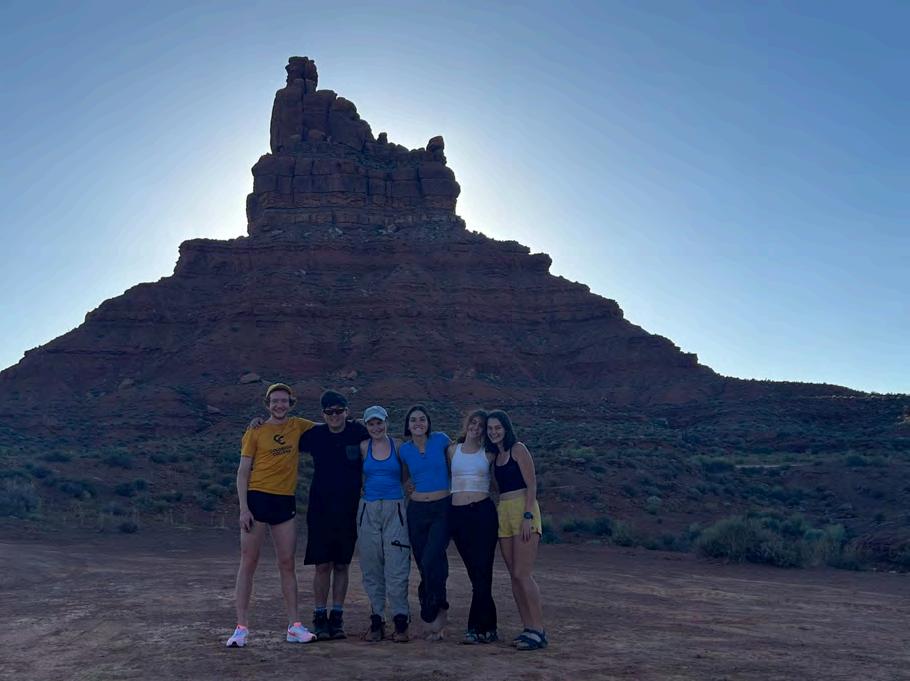
mini dance party at the end of an extremely long and tiring drive. That night we camped at Valley of the Gods, rightbelowtheLadyintheBathtubButte. The next morning, we packed up and drove to the town of Blanding. We got a handful of interviews at a Native AmericanArtsandCraftsstore.Oneofthe most notable interviews was with a Navajo woman who worked behind the counterandanearbygasstation.Shewas very surprised that we had asked her to participateinthesurveybecauseshesaid no one had ever asked for her opinion eventhoughshehaslivedonthoselands all her life. She also showed us some beautiful photos taken of the area. When we were finished, we decided to drive towards Lake Powell hoping to find interviews at the campsite and in Page, AZ.
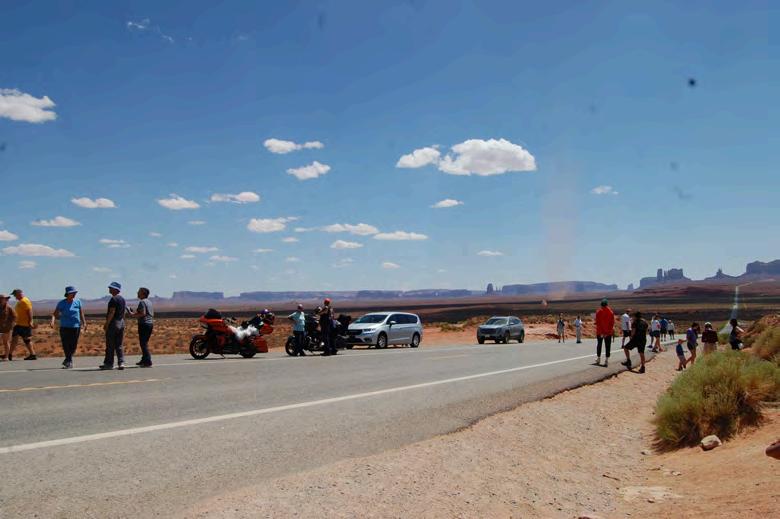
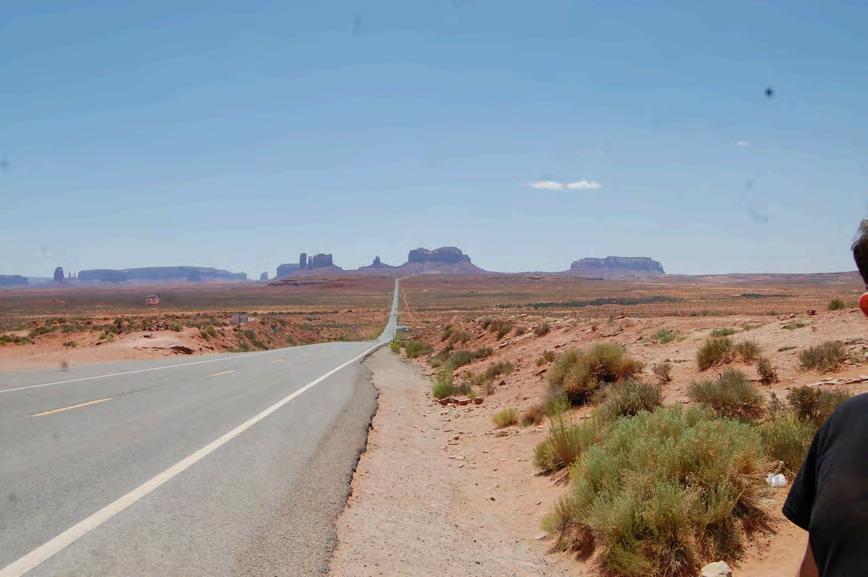
On our way there, we finally caught a break! We saw a bunch of people congregated on a piece of the highway taking pictures and a couple of jewelry stands. We pulled over and realized that thereasonthisplacewassopacked,other than it being Monument Valley, was becauseitwasForrestGumpHill,andthat everyoneherewantedtotakeapicture.It was amazing to see the impact a movie has on society making this hill in Utah a populartouristdestination.
AtMonumentValley,Nathalieinter-
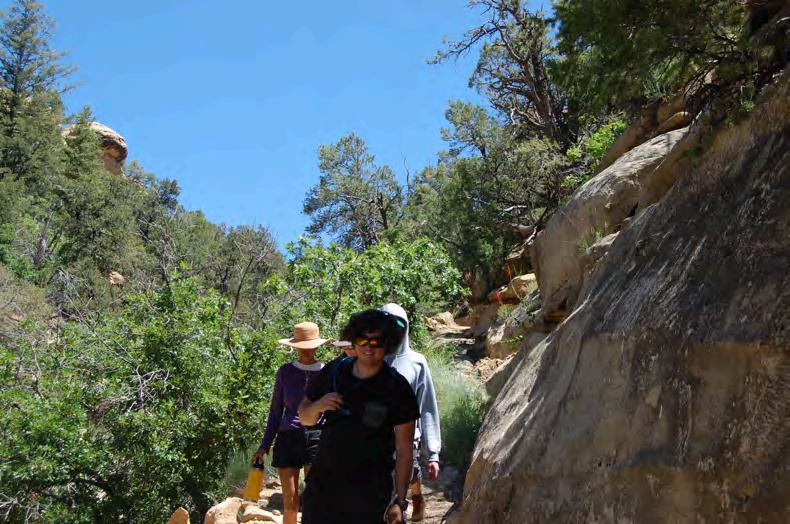
The 2023 PLSDS team on a canyon hike at Mesa Verde. Photo by Alison Mueller-Hicker, 26.
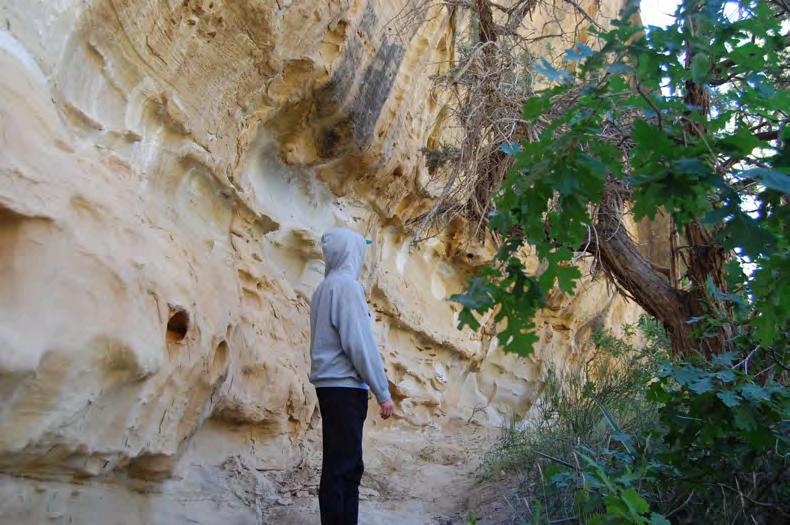
Liam Mullen, ‘26 admiring the rocks on the side of the canyon. Photo by Alison Mueller-Hicker, ‘26.
-viewed a couple of the Navajo vendors about the way they interpreted the stars and the night sky, and how their perspectivesweredifferentthanours.
Liam attempted to interview one of the threebikersonmassiveHarley-Davidsons wearing a Trump 2020 shirt but got turned down. However, Liam did end up getting a short interview from a Polish man who had come in a large group. Duringtheinterview,hestoppedLiamfor a second, took out his phone, snapped a picture of the motorcycles, turned to Liam,andsaid“Oh,soAmerican.”
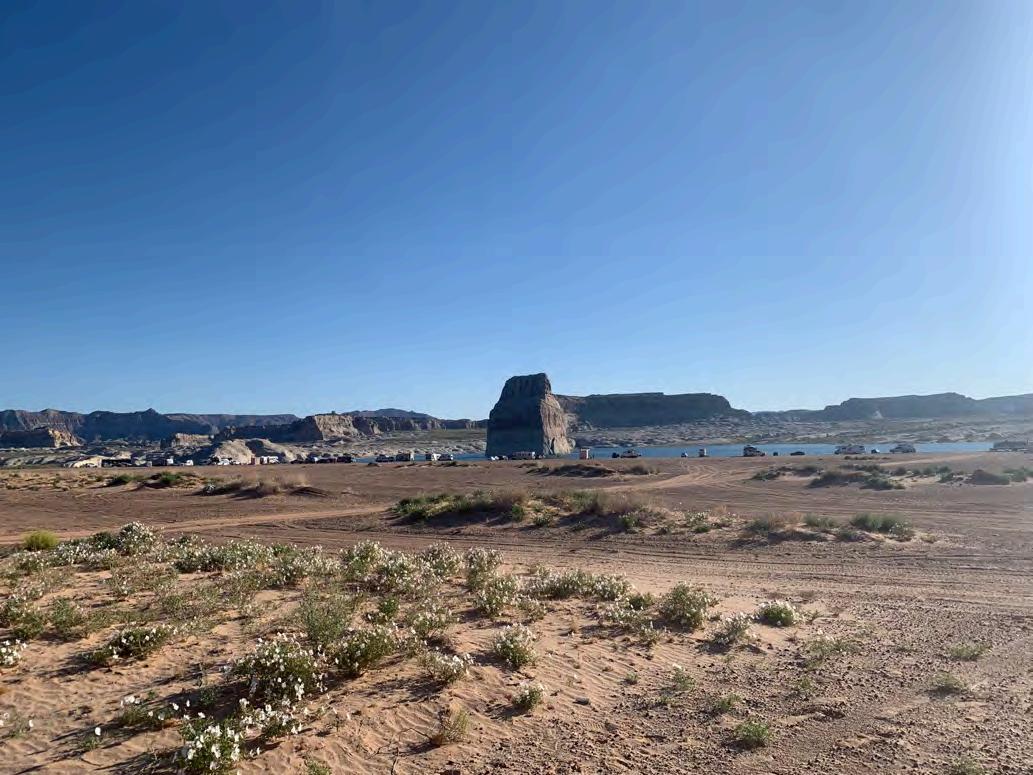
AtLakePowell,wefollowedCyndytothe beach where there were a hundred RVs were parked on the shoreline. It was fascinating to see all trucks and RVs and no tents. Next thing we knew, the van sputtered and then wouldn’t move no matter how much pressure Nathalie put onthepedal.Wewerestuck.
We started to shovel out the sand with our hands and once we felt like all tires had some reasonable space we told Nathalie to try to drive. Unfortunately, everytimewedidthatthevanonlywenta coupleoffeetandthenstalledandsank.I decided to go find some shovels or someonetohelppullourvanoutbecause
it looked like there were more than enough. A couple lent us some shovels and offered to help us. We took most of the air out of the tires to help with the sinking, and the couple brought their truck over to see if they could wench us out. Next thing we knew, there was a giant, raised truck bouncing on the sand coming right at us. The couple driving it attachedustothetruckanddrove.Weall pushed with all our might and then the van started rolling and then it was gone. We ran after it, cheering happily, and watched them drive it to the hard sand. Weweregratefulforalltheirhelp.
For the rest of the trip, the team would visit Horseshoe Bend, Dinosaur Tracks, Four Corners Monument, the Durango Farmer’sMarket,andTreasureFalls.
Throughoutthesummer,wecontinuedto improve on our interview skills and gained confidence. The presence of a student group in the Mountain West statesservesasanimportantreminderof
the necessity to corroborate online and telephone surveys with data collected in person. Beyond the survey’s goal of gauging the individual characteristics of park attendees, how they recreate in the parks, attitudes toward climate change, and other conservation topics, it is important to recognize the voices and communities that are underrepresented and marginalized concerning access to recreation and in data collection throughouttheregion.
During my time with the PLSDS team members, I had the opportunity to learn thatasurveyisdramaticallyimpactedby the people conducting the interviews, so here are a few things I learned about Jesús,Liam,Lily,Nathalie,andBrigitte.
Jesúsisamajorteamplayerandoneofthe mostcaringpeopleyouwillevermeet.He alwaysthinksofothersandtrulybelieves that everyone has the capability of doing anything they put their mind to. He is a greatteacherandlistener.WhenItold
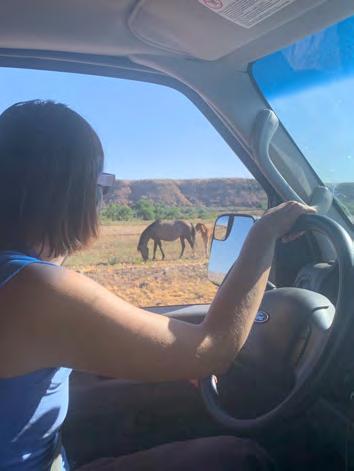
Nathalie San Fratello, ‘25 looking at the horses in Utah. Photo by Lily Frost, ’26.
2023 PLSDS Team at Valley of the Gods. Photo by Cyndy Hines
Nathalie is the most spontaneous and energetic person. She knows how to make you laugh. She enjoys the little things and it is so easy to feel like you have known herforyears.Shehasapassionforfashion andup-cycling.
Brigitte is motivated and intelligent. It seemslikesheisinvolvedineverythingon campus and is incredibly knowledgeable. Her connection to public lands and outdoor recreation makes the project a thousand times more meaningful. She is also a bird watcher and loves to identify birds from far away. I have never really foundbirdsthatinteresting,butnowIpay more attention to them because of Brigitte’spassion.
This summer experience with the Public
him I had never built a fire before and asked if he could show me, he said that not only was he was going to instruct me how to do it, but that I would build it by myself! It gave me so much confidence andIactuallydidit!
Liam is goofy and enjoys finding interesting trails. He knows how to make everyone laugh and will bring you on trail runsthataresoamazingyouforgetyou
honest opinion. She also has the most amazing talent for flower identification andwilltrytoidentifyanyfloweryouask her to on a hike. She has a cool magnifier for her camera to pay attention to detail ontheplants.
Top: The crowd at Monument Valley / Forrest Gump Hill.
Bottom: Forrest Gump Hill at Monument Valley. Photos by
RVs around Lake Powell | Photo by Alison MuellerHickler, ‘26
Meet the 2023 PLS Team
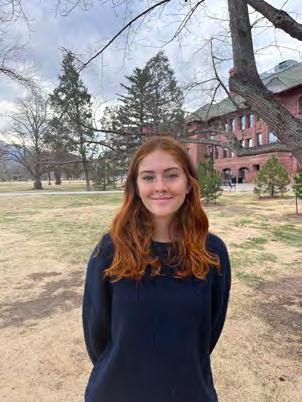
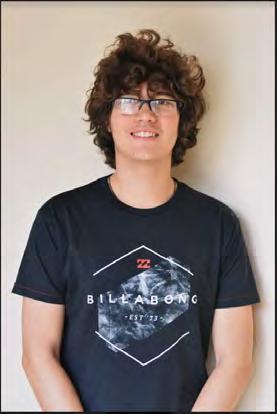
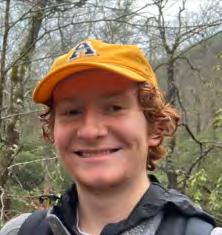
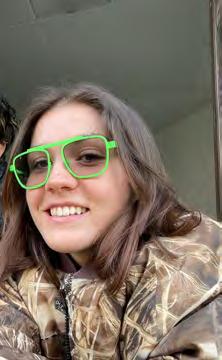
Corey Hutchins is the co-director of the Journalism Institute at Colorado College. His work has appeared on the cover of The Nation, The Washington Post, Slate, The Daily Beast, and The Texas Observer,amongothers.CoreyHutchinsstartedworkingwithStateoftheRockieslastyearbyteaching thePublicLandSurveyteamhowtousethejournalisticmethodinthefield.HejoinedthePublicLands Team because it is a great opportunity for students who are interested in putting their journalistic researchandinterviewingskillsintopracticeinsomeofthemostbeautifulplacesintheWest.
For most of her childhood, Brigitte Arcoite '24 knew no connection to our natural world as she had grownupinarelativelydensemetroareainNorwalk,CT.Thisallchangedwhenshewasintroducedto a small state-funded wilderness therapy-like program tucked away in the woods of northern Connecticut. Brigitte's rigorous involvement in this reciprocal environment helped her discover her passionforenvironmentaladvocacyalongsideacommunity-engagedapproach.Sheiseagertoexplore thispassioninanewwayalongsideStateoftheRockies.
LilyFrost ‘26isfromBerkeley,Californiaandpursuinganorganismalbiologyandecologymajor.Sheis interested in human interactions with the natural world and minimizing our impact on different ecosystems. The dark skies public lands survey is a combination of her conservation and journalism interestsandanopportunitytoformaqualitativeunderstandingofrecreationandconservationinthe RockyMountainwest.
Jesús Lara Rivas '25 is studying Geochemistry at Colorado College. He was born and raised in Venezuela;movedtoNewMexico,forboardingschoolatUWC-USA. Hehasplayedtennisforabout14 years and loves backcountry activities, particularly backpacking. Jesús' not-so-common hobby is Archery. HisresearchinterestsvaryfromGeopoliticstoStableIsotopeGeochemistryandTraceelement Biogeochemistry. He intends to use his individual research opportunity in the Dark Skies Project to studytheeffectivenessofWildernessAreasasconservation-designatedlandorIsotopicTracersofthe impactofhumansinfederallands.
Liam Mullen '25 is a rising senior from Chapel Hill, North Carolina. He enjoys running, hiking, and spending time outdoors. His interest in conservation was sparked by spending time in the beautiful mountainsofColorado.HeplanstomajorineconomicsandisexcitedtoworkaspartoftheStateofthe Rockiesprojectthissummer.
Nathalie San Fratello '25isaseniorfromthecityofChicago.AsaDesignStudiesmajorandFeminist and Gender studies minor her interests combine studying art with a social purpose, fashion, and consciousconsumption.HerextracurricularsincludebeingFashionClubandB-Sidepresidentwhere she mainly organizes events for students to share their artwork. In her free time, personal passions include upcycling fabrics and materials, walking, exploring, and yoga. She is looking forward to workingontheDarkSkiesandPublicLandsResearchteam,asshepursuesfieldinterviewsrelatingto conservationintheWest,sustainability,andnaturaltextiles.
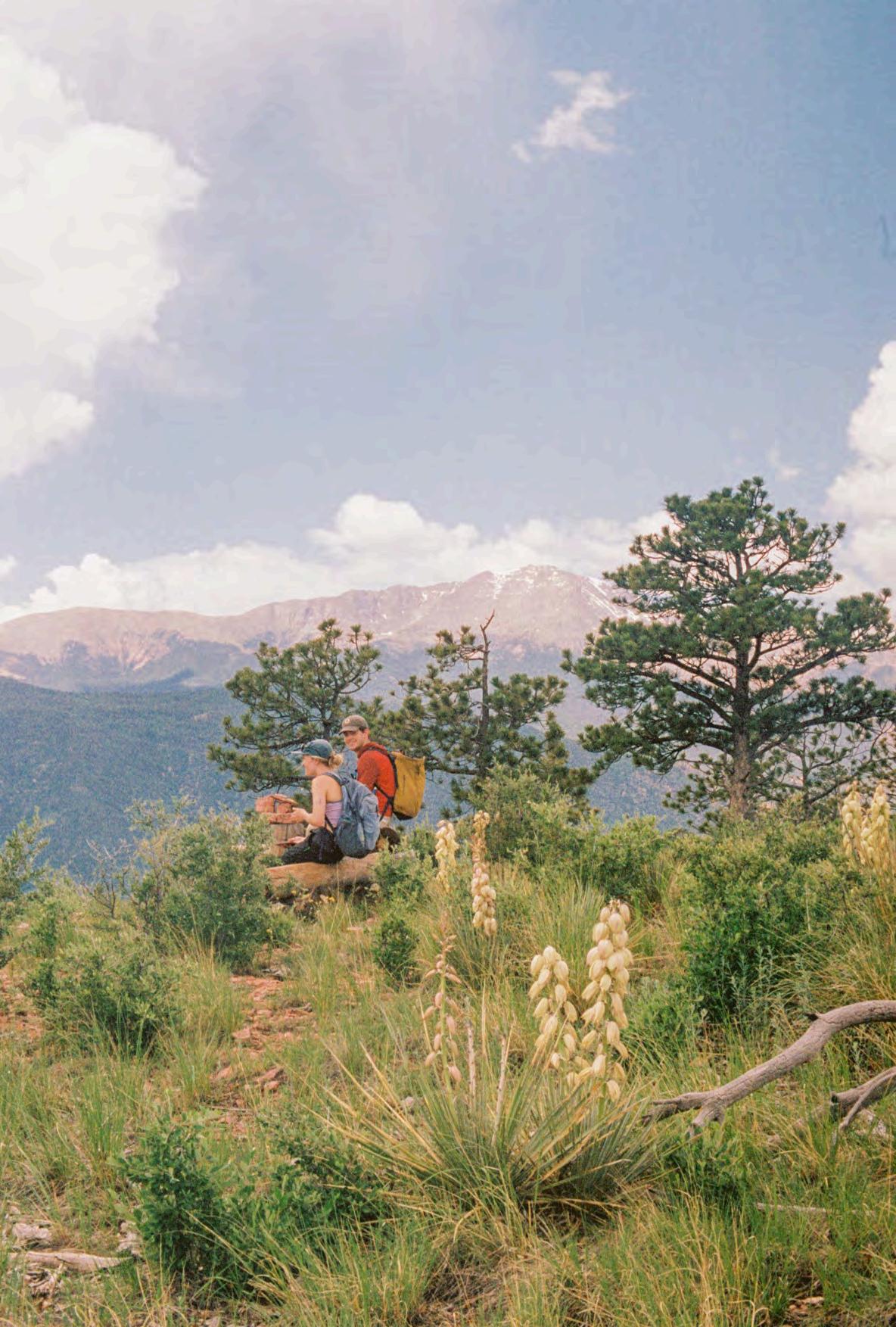
Sydney Morris, ‘24 and Liam Kielty, ’25 appreciate the view from a Waldo Canyon field site. | Photo by Maren Greene ‘24
Are Rocky Mountain Western Starry Skies Worth Preserving?
By: Brigitte Arcoite ‘24, Jesús Lara Rivas, ‘25, Liam Mullen ‘26, Nathalie San Fratello ‘25, and Lily Frost, ‘26
Edited by Alison Mueller-Hickler, ‘26
Abstract:
Since2011,theStateoftheRockiesProjecthasconductedtheConservationintheWestPolltogaugepublicopiniononconservation issues within the Rocky Mountain West region. For the first time, the 2023 poll asked voters about their opinions on dark skies conservation.Respondentsoverwhelminglyexpressedsupportfordarkskiesconservationwith70%expressingthatseeingthestars at night is significant to them. During the summer of 2023, the Public Lands Survey team set out to understand why this trend occurred.Theteamspokewith388visitorsandresidentsataround65stateparks,downtownareas,gasstations,andshopsinthe RockyMountainRegion.Thesurveyincludedfourqualitativequestionstobuildanunderstandingofboththepersonalsignificanceof seeing the stars and concerns surrounding the current conservation/development and tourism dilemma. These questions were somewhat personalized to enable the team to allow more intimate conversations and reflections. While on the surface the team carriedoutresearchsurroundingtheissueofconservingthedarkskiesintheRockyMountainregion,whatpeoplesharedtendedto gobeyondwhatthequestionsasked.Severalpeopleexpresseddifficultyansweringthequestions,becausetheywereunfamiliarwith thethemesorhadinterpretedthequestionsdifferently.Respondentsoftenusedthelanguageoflightpollutiontoexpressandshare other issues within their community. Finally, there were some individuals who expressed that dark skies conservation was not significantorimportanttothem.ThePublicLandsSurveyteamcreatedthefollowingquestioninresponsetothesesituations:Whyis (orisn’t)seeingthestarsimportant?Whencomparingtheseconversations,itisclearthattheimportanceofconservingthenightsky iscomplicatedbyseveralfactors,butitisnonethelessworthdiscussing.
Introduction:
Theoverarchingresearchquestionwasto understandhowpubliclandsareenjoyed bydifferentgroups.
Nuancesintheresponsescollectedduring the summer of 2022 research periods prompted the 2023 team to expand the scope of this research to dark skies conservation and light pollution issues. The primary goal of the research was to inform policy-making, but additional goalsweretounderstandhow/whypublic land users’ attitudes and activities may influence dark skies conservation efforts. How dark skies designation affects tourism and the communities surroundingfederal,stateandindigenous landswasalsoofinterest.
To better understand people’s perspectives we inquired about the impact of being able to see the stars on theirpersonallives,theircommunity,and the quality of their relationships to nature. A significant part of our respondents indicated not being familiar with the subject and/or not being well informed about what dark skies conservation measures would look like. Such limitations support the recommendation this research has for educationbasedpolicymaking.Withthat beingsaid,severalcommunitiessurveyed includingWestcliffe,COorLasVegas,NM had legislation (Dark Skies Ordinances) thatwereenforcedtovaryingdegrees.
Lastly,representationisanimportantpart ofthisyear’ssurveying.Giventhe
historical and cultural heritage of the RockyMountainregion,itwasimportant to represent BIPOC perspectives in the region. We attempted to highlight the voices of marginalized perspectives in environmental policy—a space in which theyhavehistoricallybeenexcludedfrom —by intentionally selecting locations whereminoritygroupsarerepresentative ofthepopulation.
StudyArea:
The Rocky Mountain region is the region offocusfortheConservationintheWest Poll. Taking advantage of our location in central Colorado, the team traveled to northern New Mexico and Arizona; Utah, Colorado, Wyoming, and the southern IdahoSawtoothRange;andallthewayup
to West Yellowstone, Montana. In doing so, a broad data set of the attitudes and opinions regarding dark skies conservation in these Rocky Mountain states was achieved. Visitors, travelers, and passersby were interviewed at approximately 65 locations ranging from gas stations and city parks to BLM lands and state parks. Access to federal lands was limited as national parks, recreation areas,andmonumentsallrequirepermits for surveying. Parks proximal to Native American populations were chosen in hopesoffillingthegapinpreviousyear’s data regarding diversity and inclusion in outdoorspacesandrecreationalactivities.
Methods:
The methodology used for this project was journalistic by nature. Through conversation, the team uncovered many opinions and issues within the conservation of dark skies. Speaking directlywithinterviewsubjectsthatwere interacting with the night sky, public lands,andthetourismindustry,wefound that most people were willing to have a friendlyconversationabouttheirpersonal experiences. We used some questions from last year's survey to cover demographics and formed new questions specific to the dark skies, conservation, andmonetization.
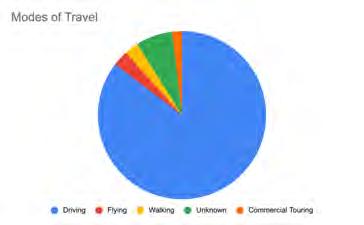
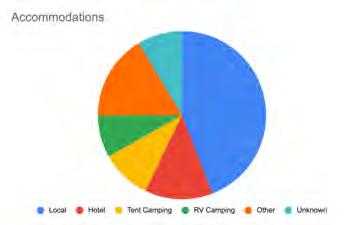
The 387 survey respondents were asked for their names, ages, zip codes, methods of travel to public lands, and accommodations while in public land areas in addition to five open-ended questions. The first open-ended question was various versions of “What are you doinghere[intheareainwhichtheywere interviewed]?”. The next two questions were, again using slightly varied phrasings, “How important are stars to your visit here today?” (if in a town) or “Howimportantarestarstoyourdecision to live here?” (if locals) and “To what extent does seeing stars influence your life?”.Finally,respondentswereasked“To what extent do you support dark skies conservation?” and “To what extent do you support the monetization of dark skiesfortourismpurposes?”.
The final question, the “monetization of darkskies”referstotheuseofdarkskies, primarily through advertising, by towns, nationalparks,andotherareasasawayto bring in tourists to support local economies or generate revenue for parks. Inthefield,peoplerespondedwelltoboth the personal and direct approaches to asking for an interview. The team found that question phraseology changed and developedoverthecourseofthesummer, to accommodate efficiency and ease of understanding.
Talkingwithindividualsinlocationssuch astrailsandgasstations,allowedustoget valuable responses that may not be accessibleororganicthroughamorerigid surveyingmethod.Weselectedtheplaces we visited, strategically, for a more thorough collection of data. In trip planning we began by researching what popular public land sites were in proximity to national parks, monuments and towns. We also looked into dark sky reserveslikeWestcliffe,CO,andaimedto visit places with favorable access to the nightsky.
Another goal in finding our interview locations was to identify land histories and indigenous populations of the areas in order to ensure that more diverse populationswouldbeatourchosensites. We interviewed at public parks, campsites,nationalmonuments,shopsin small towns, and even at museums. The more successful locations varied in each state and were sometimes more unpredictable.Forexample,oursuccessin West Yellowstone was directly related to the amount of tourist traffic passing through near the Yellowstone National Park. Over time we figured out what locations would be popular by practice, although sometimes we would have to change our route and reschedule the day ofinterviews.
Overall, combining journalistic interviewing with the route we planned, allowed us to form connections with interviewees and uncover more personal andrawopinions,ideas,andbeliefs.
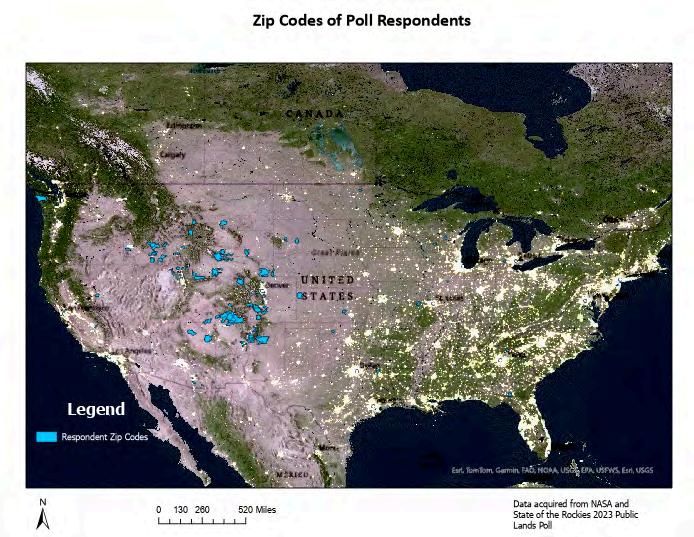
Figure 1: Heatmap of Respondant Zip Codes
Results:
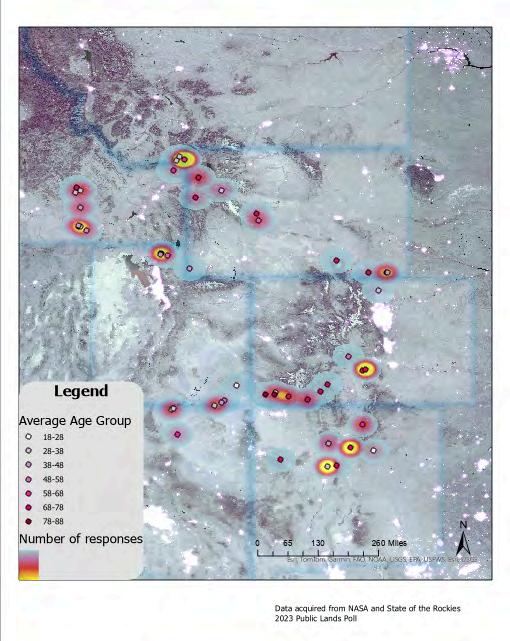
The average age of respondents in the survey was 49.6 years old, with a minimum age of 18 and a maximum age of87years,and26respondentschosenot to share their ages. The average distance traveled by participants was 531 miles (keeping in mind matching zip codes are counted as no distance traveled). For the question “To what extent does seeing stars influence your life?”, the responses were purely qualitative and thus were difficult to analyze with standard statisticalmethods.Theresultsforeachof theremainingquestionsareshownbelow inpiecharts.
In addition to an analysis of these questions, the research team identified severalqualitativethemesofinterestthat were prevalent throughout their interviews. These included a “love it to death” dialogue, where triumphs like accesstopubliclandsarecomplicatedby auxiliaryconcernssuchasnoiseandlight pollution. A detailed analysis of the languageintheseconversationsindicates that 14% expressed this concern for a dilemmaasitrelatestoconservationand monetization.
Another theme to note was the large numberofintervieweesmentioningtheir concern for others not being able to see the dark skies. In some form or another 16.58% of respondents expressed that they held this concern, and they expressed this as a wariness of the exclusivity of monetization or a need for accesswhenitcametoviewingthestars.
Discussion:
It is evident that the stars matter to people.Basedonourresultsamajorityof respondentsexpressedthatthestarswere an important part of their visit. While eachindividualhadauniquestoryoftheir own,itwasoftenexpressedthatthestars were seen as a form of connection: to others,toculture,tofaith,orthemystery of life. With that being said, 28% of people did not share this sentiment. While the results indicating importance are significant enough to justify policy implications for dark skies conservation, thisresearchasksustofurtherinvestigate
why a large number of respondents did not express that the stars were an importantpartoftheirvisit.
Analysis of the questions regarding support for dark skies conservation and monetizationsuggestthatthisareais
complicated by several factors. Responses to these questions were varied, but included concerns about cost, too much government, a need for management, the desire for education, a need for access, and an awareness that monetization and publiclandscouldchangethestars.
Title | Photo by Name 'GY
Figure 2: Heatmap of Responses by Age Group
Figure 3: Pie chart of modes of travel used to reach public lands
Figure 4: Pie chart of living accommodations at location of survey
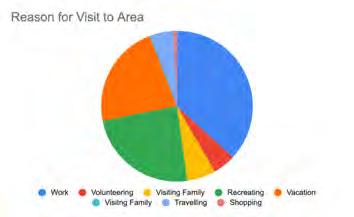
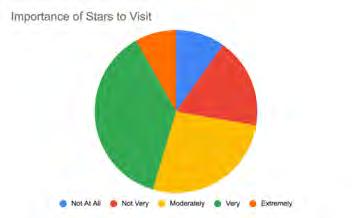
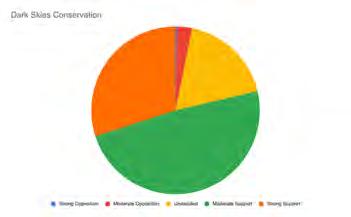
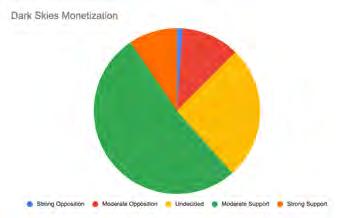
Thesealongwithotherthemesidentified duringtheanalysissuchasfeelingsabout light pollution and concern about others not being able to see the stars would make for interesting questions in future iterationsoftheresearch.
Several limitations come to mind when thinkingaboutthestructureinwhichthe data was gathered. For one, while questions were standardized, the journalisticmethodsofinterviewing,may havechangedthewaythequestionswere phrased when interacting with respondents. Additionally, while a significant amount of the respondents werelocals,themajorityweretouristsor passers-through, which would limit the representativenessoftheregionswewere surveying. With that being said, the goal wastogatheropinionsaboutpublicland use,sothelargepopulationoftouristsis not unexpected or unwelcome in our analysis. Finally, the National Parks Service (NPS) requires approval beforehand and oversight over the questions being asked in the park, so we decided to opt out of surveying in NPS administered land, which created significant logistical challenges and a potentialgapintherepresentativenessof
theresults.
Conclusion:
The recent introduction of dark skies conservation questions in the Conservation in the West Poll produced unexpected results. If there’s one thing most people agree on, it’s that people want to see the stars. While previous PublicLandsSurveyteamshavesurveyed publiclandvisitorsonamyriadofthemes surrounding conservation, none have focused on the thoughts and feelings surroundingseeingthestarsatnight.The main goal of the 2023 Public Lands Survey team was to ground-truth the findings of the poll, while also digging deeper to uncover the emotions, concerns, insights, and local histories of seeing the stars. A parallel goal was to make the results of our poll more representative of the American population by seeking out survey areas suited to this goal. Several common themes emerged, many of them were expectedbasedonourpreviousresearch; however,therewereseveralthatrevealed intriguingresults.
For one, around 50% of respondents indicated that they supported dark skies conservationwitharemaining25%being undecided. Likewise, about 60% of respondents indicated some level of support for dark skies monetization with about30%remainingundecided.Atleast part of this portion of “undecided” respondents has to do with a lack of awarenessaboutwhatthedarkskiesare, let alone conservation and monetization issuesrelatingtothem.Itisclearthen,
throughthislimitedunderstandingofthe dark skies, there is a need for education that raises awareness about issues relatingtothedarkskies.
Another likely cause for these “undecided” numbers was the relatively highprevalenceofsubjectswhoindicated somelevelofconcernfora“Catch-22”or “loveittodeath”relationshipasitrelates toconservationandmonetization.
Based on a qualitative analysis of responses to those questions regarding conservation and monetization, about 14%ofsubjectsexpressedthisconcern.
An unexpected result that emerged during this analysis was the high degree ofsubjectswhoindicatedtheysupported monetization. Reasons for this support varied from anticipated benefits to the economy, local population, tourists, and even conservation efforts. Perhaps future research with more refined questions about these specific themes would provide more meaningful and specific results.
A similarly surprising result was the theme among respondents in which people were concerned just as much about others not being able to access or experience the stars. This outwardly focusedconcernforstrangersconveysthe universalimportanceofbeingabletosee and connect to the stars as an extension ofourselves.
Based on these results, policy implicationsareclear.
Figure 5: Pie chart of reasons for being in the survey location/activities being done
Figure 6: Pie chart of levels of how important seeing the stars at night is to decision to visit a public lands area or live in a place (if a local)
Figure 7: Pie chart showing levels of support/opposition for conservation of dark skies
Figure 8: Pie chart showing levels of support/opposition for monetization of dark skies
For one, it is not only emotionally impactful, but also politically and economically viable to pursue the protection of dark skies landscapes. To a similar end, raising awareness about and educating on dark skies conservation, local star stories, and potential solutions, maynotonlyignitefurtherinterestinthe issue, but work to solve part of the problem.
LiteratureReview:
In an attempt to answer the question of who is using public lands we reviewed sourcesaccountingfordifferencesinpark visitation between racial/ethnic groups: marginality discrimination, or subculture (Krymkowski, Daniel, et al., 2014). The study’s results were in line with the common finding that white visitation to nationalparksishigherthanthatofblack people. However, it found that Hispanic visitation was similar to whites (~30% of Hispanics have visited a national park in the past year versus ~35% of whites). A more recent study that went into depth intolackofAfricanAmericanvisitationto theGreatSmokyMountainsNationalPark found the exclusion of African Americans from historical and present promotional documents despite proximity to large African American communities in the South (Sultana, Selima, et al., 2023). Combined with the current majority of white GSMNP workers and communities surrounding the park, may contribute to thefeelingamongAfricanAmericansthat they “do not belong”. Based on previous NPS findings that older generations were morelikelytovisitnationalparks,Dustin LeeWilson’sresearchfoundthemeanage ofparkvisitorsbetween1988and2011to be39.5(2015).
Many of our national and state parks are locatedonindigenousheritagesites,park and land use can erode these sites of culturalandspiritualimportance(Stoffle, Richard.,etal.,2020).Thisstudyaimsto answer how we can center intersectional and marginalized identities in park interpretations and media. Some suggestionsincludeendingtrailsfaraway from important sites, re-establish indigenousstewardship-including
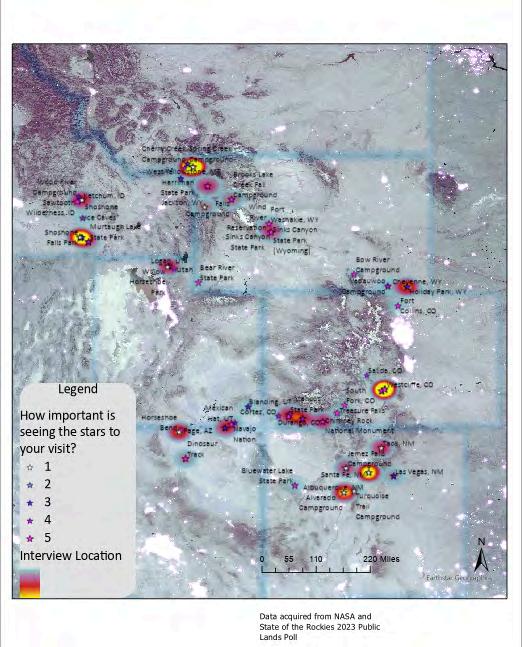
presence of traditional ecological knowledge, prayer, and cleaning practices-byreturningthelandstotribal governments. Reclaiming a Presence in Ancestral Lands reviews the exclusionary history of indigenous people from their lands and those promised to them (Wolfley,2016).
Significant changes from the Clinton administration required US federal entitiestotreattribesasgovernmentsand dealwiththemaccordinglyanda“pledge byPresidentClintonin1994toupholdthe trust obligations of the federal government to Indian tribes”, as well as expanding the rights of tribes. Most significantly, statements from the NationalParkssystemclaimtheywould
beasunrestrictiveaspossibleinallowing indigenouspeopletousefederallandsfor what they were historically used for, including ceremony or prayer. This, of course,doesnoteliminateallobstaclesto rematriation of indigenous lands. Anderson and Moratto examine how “pristine and untouched lands” at the timeofcolonizationuntilestablishingthe nationalparkswereandhavealwaysbeen shaped by Native American use throughouthistory.TraditionalEcological Knowledge of people native to the Sierra Nevada range can be used to maintain these lands more effectively. Removal of indigenous people from their lands has ledto“disequilibrium”ofmanybiomesin the area. Furthermore, recent fire suppressionmethodshaveledtodecline
Figure 9: Heatmap of importance of seeing stars to visit or decision to live in an area
in biodiversity. The authors argue that management of these areas and others should be led with the knowledge of historical and pre-colonial land-shaping behaviors and the direct consultation of NativeAmericanandecologicalspecialists (1996).
Scafer and colleagues found that leave no tracepracticesareconsideredeffectiveand easy to practice from a study of hikers in theGreatSmokyMountainsNationalPark (2022).Steadyincreasesinparkvisitation have contributed to overuse of trails and other areas, the author is a proponent of employingcarryingcapacitiesintheparks (Timmons,2019).addressingthequestion of park overuse and “love it to death” (Stadler,etal.,2023).
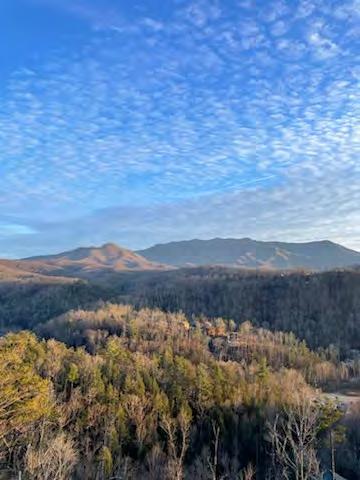
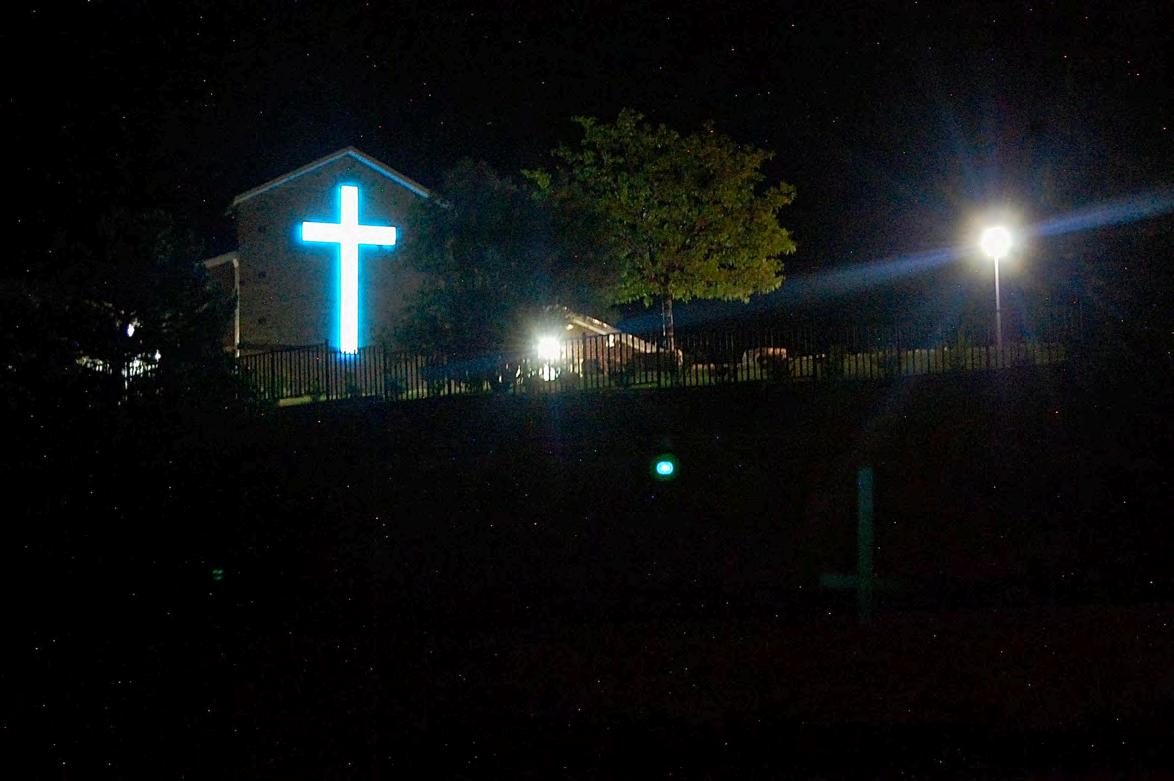
References
Anderson, M. K., & Moratto, M. J.Native american land-use practices and ecological impacts baby_boomer_NP
Krymkowski, D. H., Manning, R. E., & Valliere, W. A. (2014). Race, ethnicity, and visitation to national parks in the united states: Tests of the marginality, discrimination, and subculture hypotheses with national-level survey data. Journal of Outdoor Recreation and Tourism, 7-8, 35-43. https://doi.org/10.1016/j.jort.2014.09.008
Schafer, D. M., Bobilya, A. J., Schultz, J., Mr, O. E. B., & Lawhon.Schafer2022
Stoffle, R., Seowtewa, O., Kays, C., & Van Vlack, K. (2020). Sustainable heritage tourism: Native american preservation recommendations at arches, canyonlands, and hovenweep national parks. MDPI AG. https://doi.org/10.3390/su12239846
Sultana, S., Merced, J., Weber, J., Allen, R., & Carlton, G. (2023). Great smoky mountains national park and its missing black visitors: A preliminary analysis on the hidden architecture of landscape. Project MUSE. https://doi.org/10.1353/sgo.2023.0003
Timmons, A. L.Too much of a good thing: Overcrowding at america' s national parks
William, A. S., Cheryl, L. J., & Brooke, M. G. (2023). Are we loving our national parks to death? A call for research on crime and law enforcement in the U.S. national park system. Criminal Justice Review, 48(1), 85-105. https://doi.org/10.1177/07340168211015726
Wolfley, J.Reclaiming a presence in ancestral lands:: The return of native peoples to the national parkshttps://doi.org/10.2307/24889110
Colorado Springs Light District 3 East. Colorado Springs Baptist Church near Academy District 20 Transportation Department. | Photo by Alison Mueller-Hickler, ‘26
Great Smoky Mountains National Park. Photo by Alex Aronie ‘26.
“Artificial light from the town of Blanding glows in the distance. For locals concerned about protecting the area, questions loom whether pervasive light pollution from rural development and population growth will someday be a problem.”
- Cyndy Hines
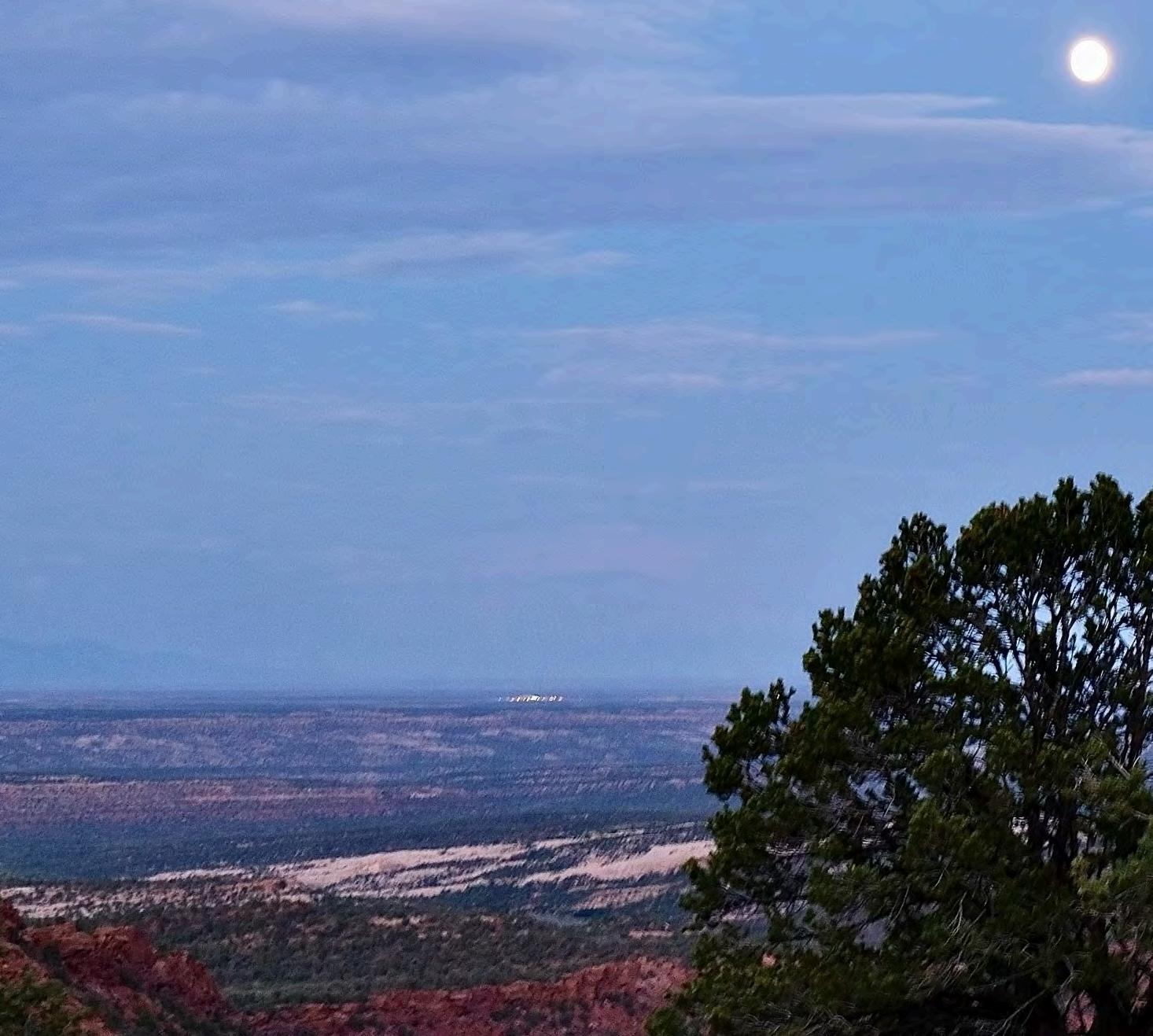
Bears Ears National Monument, Utah | Photo by Megan O’Brien, ‘25
Witnessing the Impact of Light Pollution: a Weaving of Conversations, Stories and Key Words
By Nathalie San Fratello , ‘25

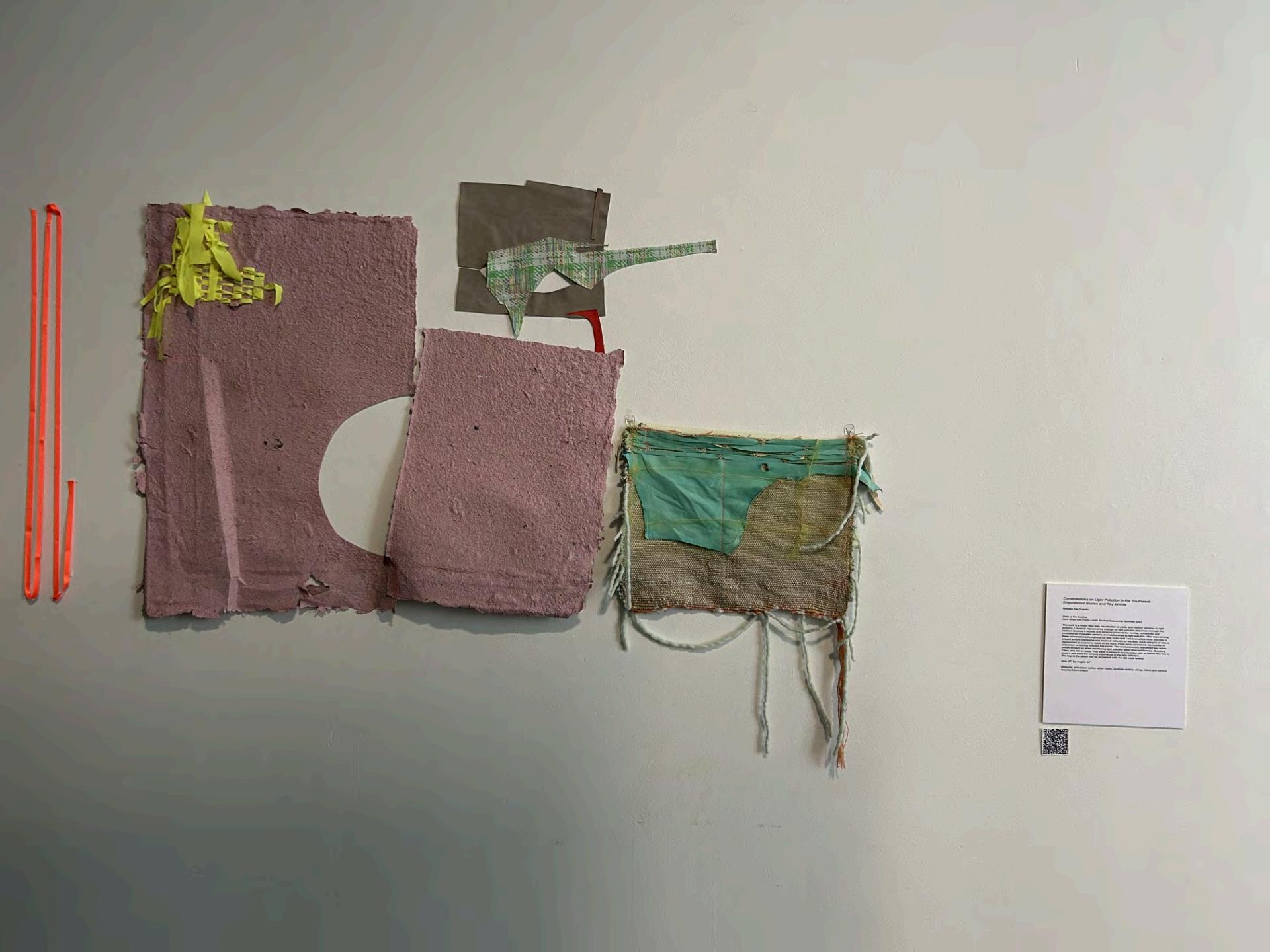
ThissummertheDarkSkiesPublicLands Survey team spoke with 387 people on publiclandsofthesouthwestinColorado, Utah, Arizona, New Mexico, Idaho, and Wyoming. Out of the 387 individuals, 79 of the respondents brought up light and 52 mentioned light pollution. The variety of responses about the need for darkness amidst a time of immense artificial lighting, showed me the complexities of climate issues relating to urban sprawl, tourism, and environmental destruction andhowtheypersistinoureverydaylife. Theinformationpresentedwasnotdirect or straightforward in any way. We spoke with tourists, locals, and indigenous communities that all expressed different connectionstothenightsky.Thereisnot one understanding of belonging in regards to the stars. In my work I will try to confront these divides, by demonstratingthatallofusarerelatedto the sky in different ways, and all of us needitfordifferentreasons.Duetothese differences, our beliefs on light pollution varybutitisshownthatmostofusagree thatitisagrowingissuethatcreatesa
multitude of issues we can’t easily categorize and solve. The most common shared opinion I found this summer was that most people love to, need to and enjoybeingconnectedtotheoutdoors,as theyfeelmorehumanlookingatthesky.
With my first written attempt, I tried to organize our conversations where respondents mentioned light pollution into four categories of key themes and terms. The categories I outlined were Minimize Light Pollution, Cities and Sprawl,Turn Your Lights Off,and Not An Issue. As I tried to sift through these conversations I found them to be very contradictory, interconnected, and impossible to simplify. The categories I defined are not the main focus in this written piece, but they are addressed morethoroughlyinmyartisticresponse,a woveninstallation,Illuminated:Storiesof Light Pollution in the Southwest. I decided that communicating the interpersonal information we found would be better explained through an artisticreflection.Asanartistworking
with fibers, I am interested in communicatingthroughembodiedwoven works, utilizing material selection, and weaving as a social and artistic practice. With this piece I summarize the conversations visually and physically in a woven textile map to represent the communitiesoftheSouthwestpresenting a tapestry of the social and humanistic storiesoftheareaswevisited.
Peoplecareaboutsolutions:
Public lands visitors who have seen the starsatnightcareabouttheimpactithas hadonthem.Legislationandregulationof businessesandcapsonvisitationnumbers to public lands were some of the larger solutions that arose. Within the Dark Skies Public Lands Team’s survey, it is apparent that the implementation of increased access and education regarding nightskyknowledgeisimportantasitwas frequently brought up in connection to schools, conservatories, and community projects.Ofthe52peoplewhomentioned lightpollutiondirectly,23ofthemsaid
Nathalie’s exhibit at the State of the Rockies Project’s 2024 Data Viz Night end-of-year event: Conversations on Light Pollution in the Southwest: Emphasized Stories and Key Words. Scan the QR code to find out more!
| Photo by Cyndy Hines
thatminimizingitseffectswasimportant to them and they usually provided a personal opinion on how that would be possible. All of these visitors, whether theyarefromurbanorruralplaces,must pay for gas, lodging, access, and food, whiletheyseekoutavacationfromwork, a re-set in the outdoors, or a recreational dreamoftheirs.
Inordertoexperiencetheuntouchedland ofthesouthwest,onemustpaymanyfees. Parks, visitor centers, hotels, campsites, towns,allrelyonhighvisitationnumbers to operate as stars become a natural phenomenon we capitalize on as their visibility diminishes. Some respondents plainlystatedthattheyvisitedtheseareas toseethestars,andothershadnevereven thought of being somewhere without stars. Outdoor tourism of the Southwest relies on self constructed narratives and advertisements that historicize and further colonize indigenous populations in surrounding areas, as well as local connections to dark skies. Although visitors of public lands care about the nightskyandwanttoprovidesolutionsto light pollution, their presence can pose contradictory issues. The more visitors there are, the more access, the more infrastructure, the more business, the moreexpensivethestarsbecome.
An overarching theme I looked at in this projectistheLoveittoDeathconcept.Ina standout interview with Cody Cammack, a Forest Service ranger at Chimney Rock National Monument, I learned about the downsides of making dark sky tourism more accessible, and how hard it is to create sustainable yet inclusive programs for education and access. Cammack, a Pagosa Springs local, works to make the Chimney Rock Monument and night sky area accessible not just for visitors but alsolocalsoftheindigenouscommunities intheChimneyRockarea.
Durango,thesurroundingtown,isanarea home to 26 current sovereign tribal nations and roots of 11 ancestral tribes. Chimney Rock as a geologic formation is known as a historical site to ancestral Puebloanswhooccupiedtheformation
for rituals relating to cultural beliefs relating to celestial, spiritual and ritual, butitstillholdsgreatimportancetotribes in the area. People like Cammack of the Forest Service, do important work of Night Sky programming, partnering with the San Juan Stargazers, indigenous communities in the area and other nonprofit partners that run educational programs. Chimney Rock was one of the only monuments we visited that honors the history of the night sky in the area intentionally by installing historically inclusive signage, partnering with indigenous artists to design the space, promoting indigenous artwork, and closing the monument for community gatherings. Aside from its community partnerships, the monument was designed with low light architecture and limits the amount of visitors it has in a season.
In my conversation with Cammack she mentioned that, “the label "dark skies” helpsbolsterourwildness.”Darkskiesisa termthathasgrowninpopularityasour
urban areas become more filled with artificial light. She also mentioned that “celestial phenomenon and history is notedinthisplace,sowearetryingtoget thisexperienceasclosetowhatitwasfor the people that were here,” and “we do want to make it accessible to as many people as possible but not allow them to lovetheplacetodeath."Herworkhelpsto provide an experience for visitors and indigenous communities who have a different connection to the sites' celestial significance. There was an overarching perspective that stars are amazing, important,andmagical.
“we do want to make it accessible to as many people as possible but not allow them to love the place to death."
-Cody Cammack
Nathalie’s project description
Formostvisitors,theycouldn’timaginea visittopubliclandswithoutthenightsky. Many locals expressed that they love wheretheylive becauseofthestars,and theirfamilies'historiesinthearea. When speaking with individuals of local indigenous populations, the sky seemed tobeofunspeakableimportance.Creation stories, ancestral livelihoods and current culturalneedsarealivebecauseofthesky. MyaWilliegrewupseeingtheMilkyway on the Navajo Reservation in San Juan County Utah. Her family relies on moonlightasasourceoflightatnight,but they also stay connected to the dark sky through sharing oral histories and creation stories. I met her at her family's touristdestinationcalledDinosaurtracks, asiteofstallsandhandpaintedsignsoff Highway 261. Here her family leads tours ofthelittlecratersleftinbedrock,
supposedlydinosaurtracks.
When we started talking about dark sky conservation Mya told me that she had never witnessed light pollution. She remarked “I'm happy you said there is natural light at night from the sky and that it's important." We are connected even though we have had such different experiences with the sky. After the conversation I felt like I had gained a betterunderstandingofwhatitmeantto have the stars be a more integral part of community, and home. To most people that mentioned light and light pollution, stars are part of who we are as people, they are location specific wherever we may be and we rely on the stars for ancestral, spiritual, cultural belonging at varying degrees. At the forefront of this sharedexperiencewhichislookingatthe
sky, people have different experiences of belonging.
As the culmination of my summer research, I will be visualizing these conversations I had on light pollution. In my woven map, tactile information, shown using size, texture, and color will provide a synthesis of conversations. Weaving is a deeply historic and interpersonal practice. Everytime I have been in weaving spaces, talking, sharing and learning occurs while the pieces are made. I feel that my approach to this project was more about the emotional, unique and personal moments I experienced when in conversation with strangersduringinterviews.
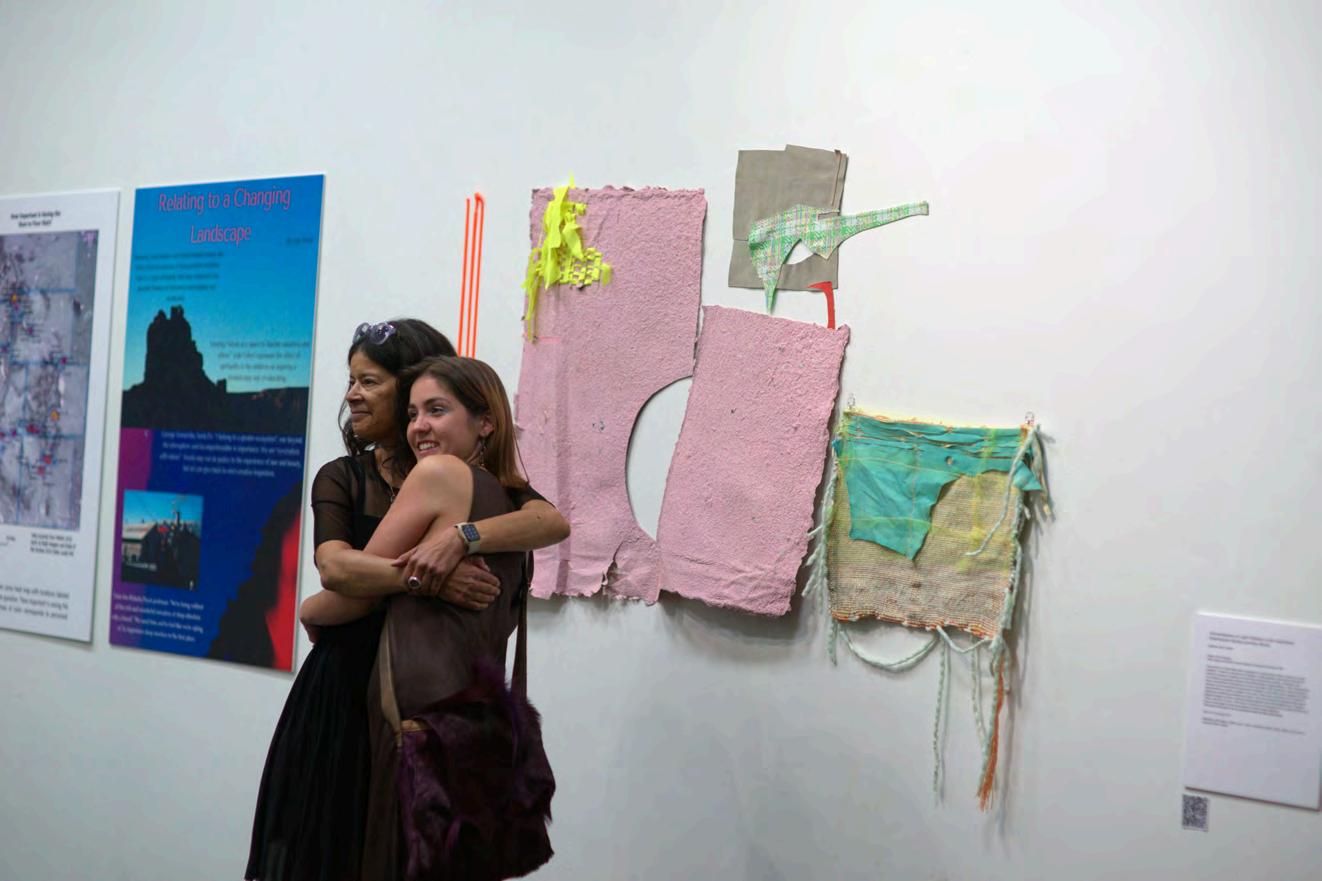
Nathalie San Fratello, ‘25 and Cyndy Hines share Nathalie’s success at Data Viz Nite 2024.| Photo by Sabine Zenter, ‘25.
Stream moss, Waldo Canyon. | Photo by Maren Greene ‘24
On the Outside, in the Outside
By Brigitte Arcoite, ‘24
We clasp sticky hands and stand for a moment, silent. In the chaos of the day, we stand together, silent. Our randomly chosen leader asks for someone to share a quote. One of us talks. We listen. Reflect. Then, the pulse is passed around the circle, a simple squeeze that everyone gives and everyone receives. The beauty in this moment begins with the knowledge that we are all strangers. The decisive “peace and chow” tells us that we may unclasp and eat. This is Chow Circle, one of many traditions at the Wilderness School. Its lesson is silent but heard: ‘You’re a community now.’
The Wilderness School wasn’t our first choice for summer vacation. After all, the grueling effort of repeatedly slogging up and down mountains with a crap ton of weight is a niche activity, outside of CC. But the alternative was less than attractive: juvenile detention, a summer stuck in a group home, or the risk of being taken away from your family. To be out there, accumulating those layers of dirt and sweat, was a privileged punishment. And suddenly, it wasn’t punishment at all—but something you worshiped. Every last salt soaked second.
Each of us had our own reasons for being there. But our reasons for coming back were almost always the same: being outside was the one place where we’d never felt we were on the outside.
Foundedin1973,theWildernessSchoolis one of few programs whose structure is inclusive by nature. And that’s not a coincidence.
Outdoor recreation has been dominated by white faces since its early beginnings when environmental thinkers Henry David Thoreau and John Muir transformedthe“popular”imaginationof wilderness from one of ruggedness to romantics. Thoreau, for instance, is known for his period defining Walden, which popularized the value of a simple and introspective life in nature. Meanwhile, Muir was the founder of the long-active Sierra Club and was responsible for supporting the establishment of numerous national parks.Foralloftheircontributiontoearly American conservation, these men predictably failed in their discriminatory views towards others, particularly Indigenous, Black, and immigrant populations.
Despite their own transcendentalist view on the unity in all things, they refused to seetheunityinallhumans.Despitetheir commitment to the conservation of wild beauty,theyforcedthenativestewardsof the land to leave their homes. And these contradictions undoubtedly carried into current discriminatory perceptions as to whobelongsinoutdoorspaces.
https://www.fs.usda.gov/recmain/giffordpinchot/recreation
https://www.fs.usda.gov/recarea/inyo/recarea/?recid=21875
Top: Gifford Pinchot National Forest, Washington. Photo by USDA Forest Service.
Bottom: John Muir Wilderness, California. Photo by USDA Forest Service.
Thefloodofnationalparksestablishedin theearly19thcenturywasfueledbymore than just innocent motivations for environmental protection. Influential names like Rockefeller donated excessive amounts of land establishing the Grand Teton, Acadia, and Shenandoah national parks. And alongside all of these plans were the projections that the federal government and other judicious entrepreneurs would profit immensely from the “newfound” beauties. They weren’twrong.
Nowadays, while far more cost-effective thantravelingacrosstheworld,traveling to these “public lands” can still be immensely prohibitive if you do not have the privilege. While it might be easy for sometoswingonabackpackanddrivefor themountains,thisin-and-ofitselfcanbe prohibitively expensive in terms of time and money. Take for example, Jackson HoleofTetonValley.Thiscommunityhas bypassed the sprawling metros of New York as the county with the largest income disparity within the U.S, where the top 1% make 142.2 times more than thebottom99%.
While uber-wealthy Americans flock to thisregionforitsnaturalbeautyandstate level tax shelter, recent Latin American immigrantsstruggletoaffordburgeoning housing costs, often living in trailers in distant outskirts of these communities. Thisisallwhilemanyareworkingtwoor eventhreejobstokeeptheirheadsabove water.Thesehardworkingfamilies—who are in need of the relaxation of the outdoors as much as anyone else—can hardly afford to live there, let alone find access to the abundance of recreational opportunities. But to live here is a must formostbecauseoftheabundanceofjob opportunities that result from such concentratedspendingandwealth.
Since white settlers began forcing native people off their land, environmentalism has been white washed. Without prompting, most white individuals (includingmyself)wouldnotthinkabout the historical and present-day traumas thatareintertwinedwithbeingoutdoors
A driving force in my decision to come to CC was built around the awareness of the robust outdoor community. For me being outdoors has always bred connection, community, and for the first time belonging. Naively, I didn’t think anything other than that outcome as possible. My backpacking leader training was my first experience “on the outside, in the outside.” While we were out there learning how to enrich this experience for others, especially first-timers, one leader was focusing his energy on doing the opposite for me. For about a week I was given strange looks, told I couldn’t use the bathroom when I needed to, criticized for every action I did or didn’t take, and yet everyone loved him. I was alone.
And while I’d like to say it was all in my head, a conversation towards the end of the trip told me it very much wasn't. The important piece is that this opened my eyes to the reality that existed outside of my sheltered experience with the Wilderness School, and even within it.
At its simplest, if someone doesn't feel safeoutsidehowcantheybeexpectedto foster a relationship with the space they’rein?
This is yet another barrier to access that can’t be addressed with marketing and accessibilityalone.Andthisbarrierisone that extends beyond a concern for physical safety. In my conversations one of the biggest themes addressed was a lacking sense of belonging. Whether it was through outdoorsy jargon, inadequate training, or an overly strong emphasis on the physical experiences in the outdoors, time and time again, interviewees shared how they were othered in this way or that. There is something we can all do here to make thesespacesmoreaccessible.
THEPEOPLE
In my pursuit to understand the current scopeoftheproblem,Iaskedthreesetsof questions depending on the participant's role as either a student or educator. This providedmewithalotofanswerstoalot of questions, which unfortunately, can’t be sufficiently covered here. With that being said, a lot of insight came from studentsandeducatorsalike,whohelped explain (given their experiences) the current challenges and opportunities in outdooreducationspaces.
A wildland firefighter I met in Jackson Hole, WY shared how his unique path engaging with the outdoors began with community engagement work, where he joinedaStudentConservationAssociation program in Grand Teton National Park. WhiletheteamorientedaspectoftheBoy Scouts may have served others well, he realized early on that engaging in large groups outside simply wasn’t for him. So he sees his time biking, climbing, and skiing as a space reserved for himself where he can reset, be alone, and have fun. In reflecting on this story, it’s amazingthathewasabletogetoutthere andjumpintotheseactivitiesforthefirst time on his own. But with such a steep learning curve and high cost of entry to outdoor recreation, it’s also rare. One thingisclear,though,fromthis
conversation: you don’t need anyone but yourselftobeoutside.
Someofthebiggestchallengescitedwere a lack of available funding, not properly educating staff on issues of equity and inclusion—combined with the fact that conceptual DEI conversations can often haveamarginalizingeffectforstudentsof color—and the COVID-19 pandemic; but 2020 was also a year of opportunity. While the pandemic brought the challengeofdwindlingparticipationrates to most outdoor education programs, it also provided momentum for a pedagogical shift in outdoor education practices.
pedagogical shift in outdoor education practices.
WhenitcomestofeedbackabouttheCC community,oneindividualnotedthatthe barrier to entry within Outdoor Education was unnecessarily high for reasonsthatdidn’tevennecessarilyrelate to identity. For one, they felt that marketing for OE opportunities was not accessible. Despite there being a listserv for OE events, unless you know about thatlistserv,thereisnootherwaytolearn about current opportunities going out. This,hesaid,hadtheeffectof “[making] itcliquey.”And,whilehesharedthatthe Bridge Scholar OE training was a great opportunity,hefeltthatitdidn’tprepare him well enough for the more technical experience needed to lead a group of peers. Beyond this, he shared a general belief that the culture within outdoor spaces needs to shift from one of expertise and performance, to one of communityandwelcomeness.
In responding to a question about his engagement in outdoor recreation as a child he shared that he would casually bike and run around his neighborhood, “but if I were to tell a CC student my experience…maybe people wouldn’t countitasoutdoors.”
Challenges were just as present at the institutional scale, where leaders of over twelve outdoor education programs sharedwithmehowtheyareintegrating DEIJframeworksintotheirwork.
Someofthebiggestchallengescitedwere a lack of available funding, not properly educating staff on issues of equity and inclusion—combined with the fact that conceptual DEI conversations can often haveamarginalizingeffectforstudentsof color—and the COVID-19 pandemic; but 2020 was also a year of opportunity. While the pandemic brought the challengeofdwindlingparticipationrates to most outdoor education programs, it
The most successful approaches were thosemodelinginnovativestrategiesthat got to the root of the problems in their community. My conversation with Amanda Fong, Community Engagement Coordinator of Three Rivers Park District in Minnesota, provides hope for the organizations leading the way towards justice in non-traditional spaces. This park is considered a special park district with a count of 400 staff year round and 2000 seasonally. Its breadth of resources and facilities, which includes a downhill ski area, five nature centers, and several golf-courses,isexplainedbylocationand fundingfromahigh-incometaxbase.For the past eight years, however, Amanda has been working on building partnershipsandrelationshipsfocusedon removingbarriers.
Althoughseveralprogramsandinitiatives have helped in achieving this goal, one
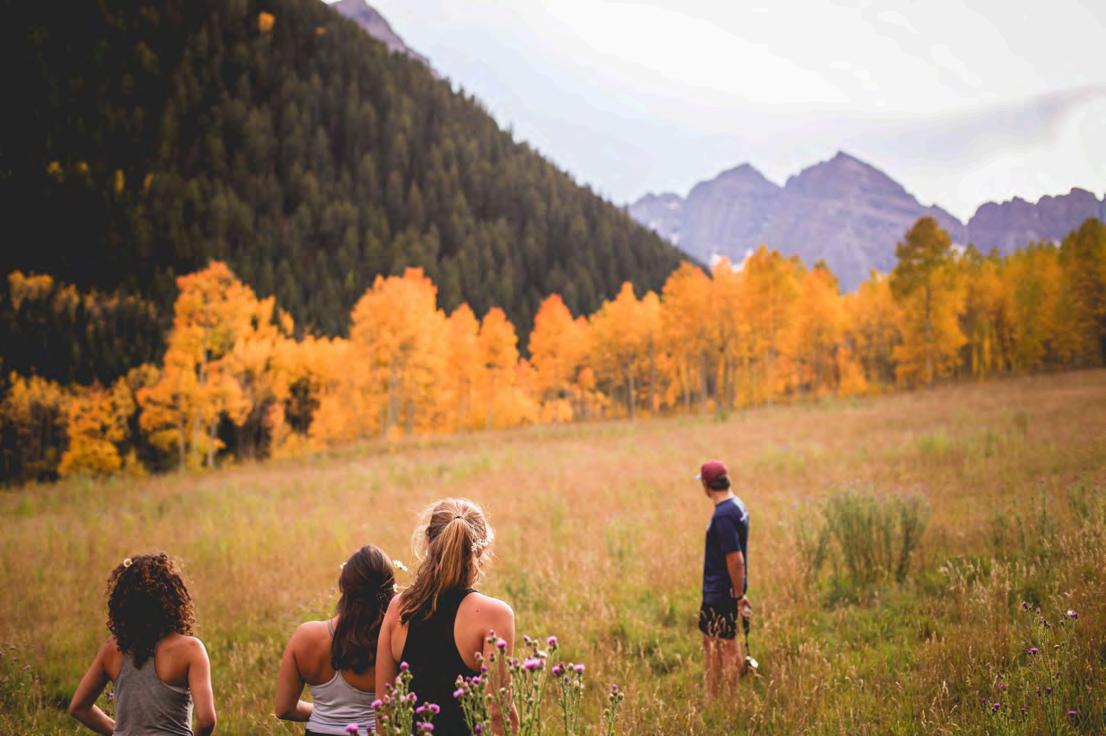
Students on an Outdoor Ed trip, from the CC Outdoor Ed website.
Jackson Hole, Wyoming from above

providescomprehensivecampinggearfor agroupofupto50people.
Beyond just supplying the gear, the community engagement team engaged with community leaders on how to best facilitate an overnight camping experience promoting ownership of their own experiences. This program started from humble beginnings, with only three groupstrainedtousethetrailer.Butafter a “slow build” now the trailer is in use, serving between 30-50 people every weekendbetweenMayandOctober.They begin the process for all their programs, butespeciallythisone,withconnectingto the community to understand what the needsandwantsare.
“If there are a lot of people expressing interest in swimming, why isn’t that something our program already provides access to? Well, a lot of the structured swimminglessonsfillupveryquicklyand aren’tasattentivetoculturaldifferences,” Amandadetailed.
Similarly, Amanda’s team has grown in their understanding of the importance of flexibility. She noted how, in the early days of the office she would get an expression of interest from groups of community members for educational experiences,butbythetimethey’dgetin touch,theywerebookedout.Now,in
order to accommodate for potential lastminuterequestsbyaffinitygroupswithin the community, the education team has training and times blocked out on their calendarinordertoincreaseaccessibility.
“It'snotatool-kitbutalotofanticipating needs are asking what those needs are,” Amanda says. Perhaps most important of all was having staff members who were representative and part of the communitiesthemselves.
Attheendoftheday,whatseemstobuild this success is a lot of “relationship building,” flexibility, and “active listening.” Early on, Amanda notes, the team was going back and forth asking to see if their programs were meeting the needs of community members. And in those early years, according to her, they weren’t. Now, as Amanda shares, “we don't need to ask that question, because we know we're hitting our priority audience100%ofthetime.”
So why is all of this important? As one former CC student shared, “It's kind of inexplicable how much meaning the outside brings to your life." And that’s exactly what others echo when responding to one of my questions about how being outside adds meaning to their life:
“It makes me feel more free because it means I can actually spend quality time with family.” - Teenager in Taos, NM
“It is my meaning. I gained so much from it and it's something that's integral to myself and every one of my close relationships in my life.” - Community Engagement Coordinator of outdoor organization in Colorado Springs
“[It] improves my mental health so much… New lease on life.” - Former CC student
“I would describe it as like cleaning the pipes… Kind of just washes away the muck of the day.” - CC Staff member
“My analogy in life [comes] from mountain biking. If you know you're looking at the rock and you can overcome it, it's like anything in life.” - Community Engagement Coordinator of outdoor organization in Colorado
After seeing countless responses to just oneofmyquestionsaboutwhatitmeans tobeoutdoors,it’sclearthatthemeaning varies immensely from person to person. Tobealeadercanmeanmanythings.To be outdoors can mean many things. So let’s all be a little more generous in our definitions.
And yet the Wilderness School isn’t perfect. When I worked for them in the summerof2021,enlightenedbymy
Sledding hill in Elm Creek Park Reserve, part of the Three Rivers Park District in Minnesota. | Photo from the Three Rivers Park District website.
experiences at CC I began to see things differently.Inoticedhowover75%ofour instructor staff was white, including me. How there was no attention paid to DEI training when a majority of our community were students of color. How one of my students continuously experiencedmicroaggressionsandovertly sexual advances in what I had always imagined was a sheltered space. Just like anyotherspace,outdoorrecreationcanbe exclusive and harm reproducing. But it offersauniqueopportunity.
If done well, outdoor education can help youfindyourself,buildconfidence.Itcan connectyou.Itcannurturethesoul.Itcan do all of this and more, but only if we allowit.Thisexperiencedoesnotexistin isolation. Exclusivity in the outdoors startsandendswithracialjustice.
THEPROPOSAL
The goal at the beginning of this project was not to contribute to a growing body of literature. Instead, it was to have conversations and find points of connection. The opportunity to participate in these engaging conversations on the future of outdoor education was enlightening, and more than anything else worked to shift my own limited understanding of the issue. Significant and dedicated progress towards enhancing community, accessibility, and inclusivity is already being made at OE as they transform the structure of their leader training and development. In any case, it’s clear that this will be an ongoing challenge, with a need for continued conversations aimed at exploring and understanding a variety ofinterestsandexperiences.Andacollege campus is the perfect place for those conversationstobestarted.
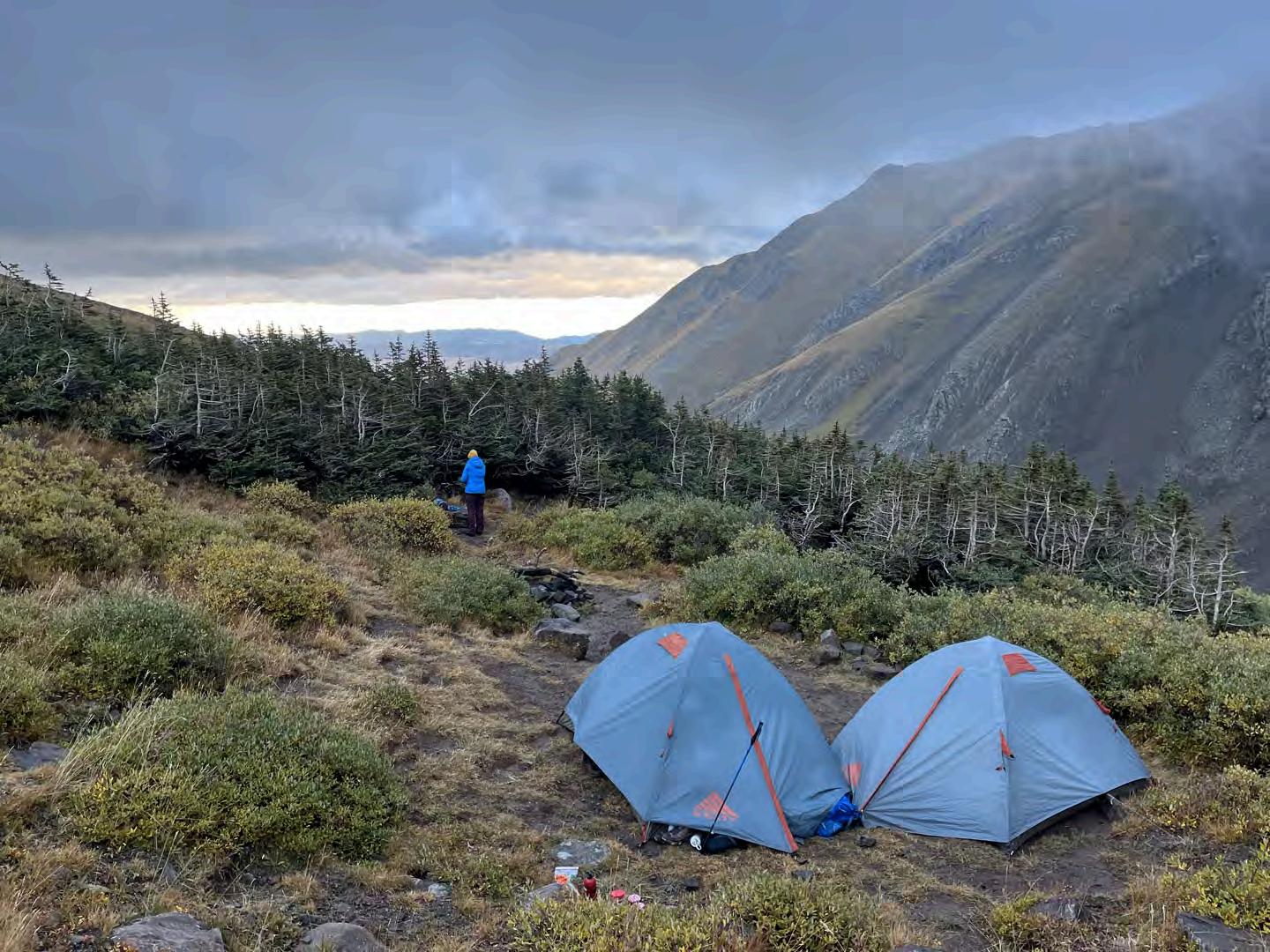
As one of my biggest inspirations at the Wilderness School taught me, being in community can change the world. But that community has to start with yourself. Peace andchow.
REFERENCES
Elm Creek Park Reserve | Three Rivers Park District. www.threeriversparks.org/location/elmcreek-park-reserve.
“Henry David Thoreau, a Man Who Took Simplicity to Heart - American Essence.” American Essence, 14 Jan. 2023, www.americanessence.com/henry-david-thoreau-a-man-who-tooksimplicity-to-heart_10408.html.
Location | Jackson, WY. www.jacksonwy.gov/214/Location.
Our Story, Our Mission - Colorado College. www.coloradocollege.edu/offices/outdooreducation/about-us/index.html.
Wikipedia contributors. “John Muir.” Wikipedia, 24 July 2024, en.wikipedia.org/wiki/John_Muir.
Venable Lakes trip from CC OE website | Photo by Walker Thompson ‘26
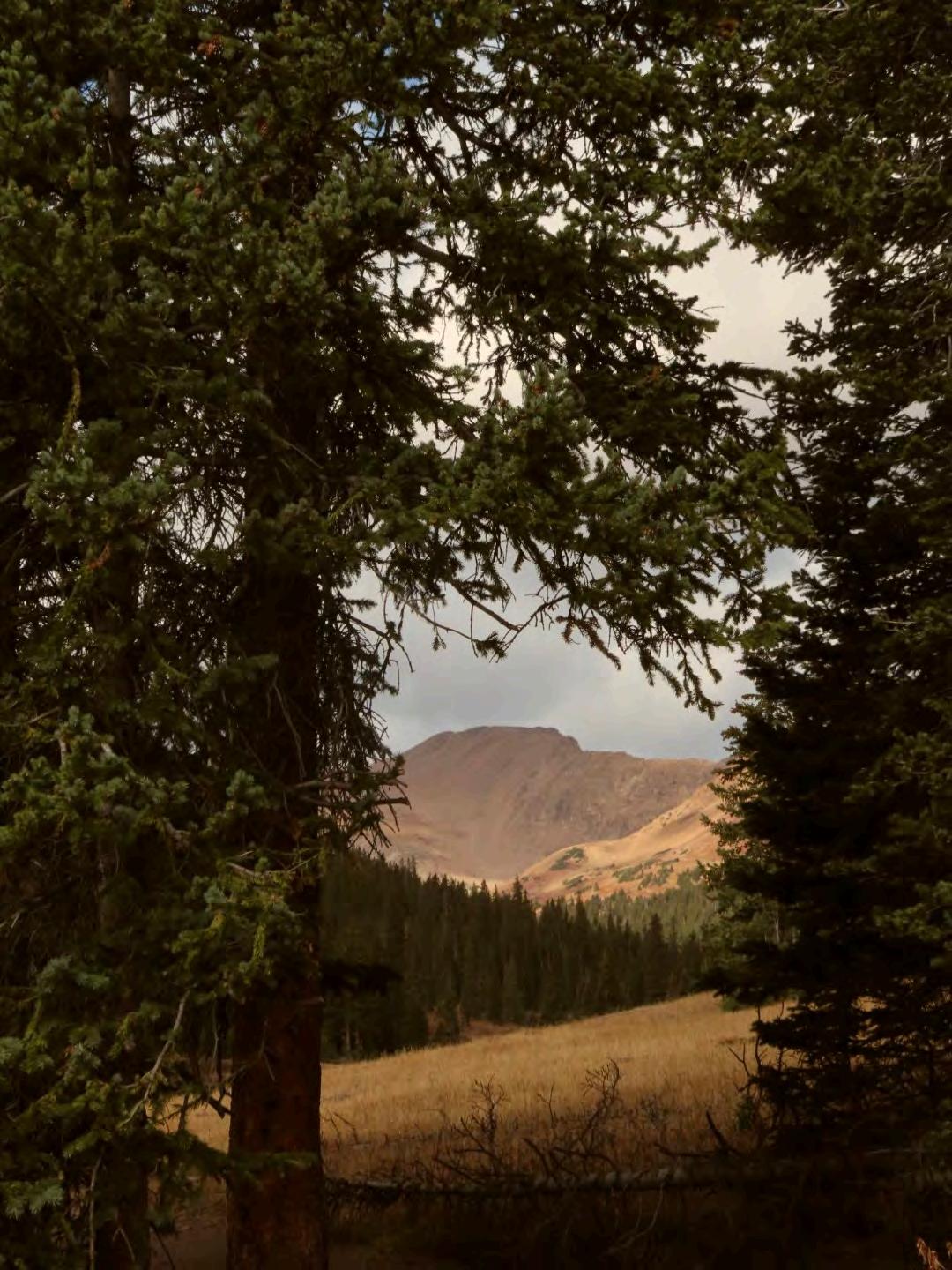
Herman’s Gulch, Arapahoe National Forest | Photo by Macy McCauley ‘25.
Examining Awe: A Pathway for Collective Emotion
By Lily Frost, ‘26
Introduction
Theexperienceofaestheticaweinnature ishighlysoughtafterwithinthestructure ofmodernsociety.The transcendentalemotionofaweprovidesa pathway for breaking our ego-ties to individualism and can make us feel a complicated and wonderful sort of smallness.Inour rapidlychangingworld, itiscrucialthatwecelebrateandembrace beauty. Vast beauty can make us feel insignificant,andthroughthisexperience we can be liberated from our individualism. Sharing awe with others can create opportunities for deeper connection and breaking away from the shallowvaluesofconsumptionandmindbody dualism. To create my case for mindfully paying attention to others and the state of our world, I discussed with variousacademics,strangers,andartists 1
how the emotional response to aesthetic nature manifests, and how this impacts their relationship to the lands and communitiestheyinhabit.
Research
Vastness, wild nature, and indescribable beauty are often cited as elicitors of transcendent emotions. Awe is a type of beautythatsurpassesourvocabularyand societal frames of reference (Piff et al., 2015). It can be a collective emotion (Seo et al., 2022), capable of motivating individualstoseeksomethinglargerthan the self. The experience of awe awakens self-transcendence, and in turn inspires one to pursue the authentic self (Jiang & Sedikides, 2022). Such powerful emotion can bring one out of the self and may reaffirm individual belief in a higher power,forsomethatmaybeinclination
towards religiosity or spirituality (Bethelmy & Corraliza, 2019). Furthermore,itis“theemotionthatarises when one encounters something so strikingly vast that it provokes a need to update one’s mental schemas” (Rudd, et al., 2012). Many people’s lives are confined to the landscapes of modern society. Veering outside of the ordinary andexperiencingawecanrevealuniversal truths that are obscured in our concrete jungles.
Transcendent emotion and empathy are entangled with our human existence; almost a fact of life. Philosophers from Proust to Kant have explored beauty as a gift, as liberation from subjectivity, conformity, and the obligation of moral goodness.Justaseasilybeautycanremind us of the responsibility we have to one anotherandtoourworld.SugerandHegel regard art as the bridge between the spiritual and physical. They see it as the waywesynthesizethebeautyofthe
Mormon Row, Teton National Park, Wyoming. | Photo by Lily Frost, ‘26
material world into our infinite immaterialconsciousness.
Discussion
Experiencing beauty in the natural world can lead to a connection with the earth that mirrors empathy and human relationships. We are deeply interconnected with the story of our planet. The origin of the stars is written throughourlives.However,individualism and capitalism create conditions that isolateusfromthebeautyandexperience of life. Environmental degradation extends damage to all of our senses: our visionisimpactedbythenightskiesfilled with artificial light instead of stars. Our senseoftasteisimpactedbyfoodspacked with preservatives and dyes, sugars, salt, and fats. Our sense of touch, smell, and hearing are impacted by the lack of biodiversityinourneighborhoodsinways weareonlyjustbeginningtounderstand (Kuo,2001).
“Wearemadeofstarstuff”wasaphraseI heardagainandagaininterviewingpublic lands visitors for the 2023 Public Lands Survey.Whenaskedabouttheimportance of seeing the stars, the sentiment expressed most was an appreciation for thestars,butnotbeingsurewhy.Themes of universal connection, smallness, spirituality,and reverence for the natural world surfaced. One woman I met at Chimney Rock was soul searching through the Rocky Mountains, chasing solar and lunar alignments and the summer solstice at Chaco Canyon, Chimney Rock, Craters of the Moon and other archaeoastronomy sites. She had been driving across the country for five months searching for dark skies and celestial alignments, seeking to remedy the natural disconnect in her office job. Society can be profoundly isolating, so much so that people may feel motivated totraveltoextremelengthstogetataste ofthephysiologicalbenefitsofbeautyand spiritual connection to nature. Wild and naturalsettingsarenotonlycrucialtothe carbon cycle and to curtail biodiversity loss, but equitable access to these spaces is a form of liberation from modern systemsofdependence.Themythof
untouchedlandscapesisaromanticideal that erases the work humans have been doing to shape our landscapes for all of human history. We no longer need to form meaningful relationships with the landifwearetetheredtoalifelinerather thanconnectedtosystemsofsupport.We travel through our landscapes, owning them, rather than belonging to the communities they (the lands) create. Through a series of interviews, I explore the value in building resilience and resistance through the communal experienceofawe.
Interviews
I reached out to Colorado College alum Josh Felton, who is seeking a masters in plantbiologyfromCornell.Atthetimeof theinterviewIwasespeciallyinterestedin the spiritual aspect of awe in the outdoors. He reflected on the vast park systems of his hometown, Minneapolis, and the importance of accessible green spaces.AtCCheparticipatedinaspiritual retreat through the chaplains office and experienced community as nature and spirituality intertwined. At this Baca campus retreat, it was through his heightened senses in which he found grounding. The absence of distraction common to the college campus provided space for deeper reflection. He spoke to plant awareness disparity (PAD) in the community, which he tries to remedy through his instagram; @botanyballer. PAD is known in the botanical and scientific communication fields as substantialknowledgegapsaroundplant awareness, such as not recognizing the importance of plants to humans, and tendency not to notice plants in the environment altogether (Parsley, et al., 2020). However, our attention to the details of the natural world can inspire change.Learningaboutthebiologicalside of experiencing the outdoors changed Felton’s experience outside. He’s not out there to climb a fourteener, but rather to mindfully attend to the finer details of plant life. Spiritual practices like mindfulness have helped him bring awe into his daily life. Felton says that in 15 years he “want[s] to teach radically, ya know?”MaybeevenintheSanLuisvalley
Maybe even in the San Luis valley as an aspiring botanical educator. He sees “nature as a space to liberate ourselves, and others.” Perhaps spirituality in the outdoors is inspiring a revolutionary way of educating. When we look deeply into the world of a fern we’re able to inspire smallnessinourselves.
WhenvisitingSantaFe,NewMexicoIwas focused on how we might be able to inspire transcendent experiences, conversation,communalengagementand spiritualconnectioninthepublic.George Somarriba, a Santa Fe based painter, has beenstudyingthestarssincechildhood.I sharehisbeliefthatthisisouronehome, and we “belong to a greater ecosystem,” onethatgoesbeyondouratmosphereand is incomprehensible in importance. We are“co-creatorswithnature,”becausewe are nature. Throughout his creative journey he has reimagined still life; turning apples and oranges into planets, inspired by our universal ecosystem. In SantaFe,thevibrantartcommunityisone that fosters co-creation and a sense of belonging. Within a close knit creative community, artists can help each other out. Many people I spoke with remarked on the inspiration that the land brings, reminding us of the ultimate inspiration thatlifehasputtogether.Creatingartisa way to pay homage to one’s inspiration. Artists have the unique role of synthesizing raw emotion into creative outputs.Wordsmaynotdojusticetothe experienceofaweandbeauty, butartcan give back to one’s creative inspiration. Creatorsbringemotionslikeaweintothe public consciousness. In Albuquerque, NewMexicoIfoundasimilarsentimentin KathleenGallegos,workinginateashop. She introduced me to the idea of forest bathing, a mindful practice that can be dynamic or static, but is centered in devotingyourattentiontonoticing.Away from Albuquerque, simply bathing in the sound of the forest. “I feel spiritually peacefulandcontent,”shesaid.“Youcan really talk to yourself and hear yourself speaking.” The forest is “not going to interrupt you.” The term emerged from Japan in the 1980s, putting words to an attentivenesstothenaturalworldpeople
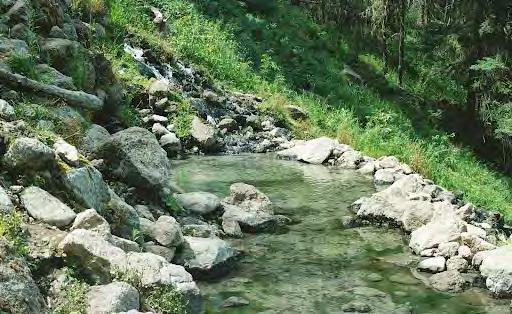
have been embodying for centuries. The therapeutic exercise amounts to finding peace and quiet in a natural setting, finding stillness or slowing the breath, andnoticingwhatisaroundyou.Areyou allalone?Whatsubtlesounds,smells,and tricks of light can we only be aware of when we’re not looking for anything at all?Istoppedhersonintheplaza,hewas enmeshed in the world of Pokemon, go! He told me about his experience in the navy, standing at the bow of a ship looking out over a glassy sea reflecting innumerablestarsfromaboveandbelow. Aplacewherethereisnothingtobeseen butstillnessinthedarkness.Inaway,this momentatthebowoftheshipstruckme as an embodied form of mindfulness. He wished everyone could experience that moment of peace and wonder. The absence of light and noise pollution reminds us of the sound and light that already exists. The stars still shine, it's onlythatwecannotseethem.Thebirds
andtheleaveshavetheirownsound,it's onlythatwecannothearthem.Whenwe begintopayattentiontotheintricaciesof our world, humans become a smaller piece of the whole. With a greater percentage of the world’s citizens projected to live in cities, these experiences often require mindfully seeking out and preserving the stillness, darkness,andsilence.
I met a man selling wild foraged mushrooms and herbs in Taos, New Mexico.Asanunhousedperson,herelies onpubliclandsforshelter.Hehadalong white beard and sun spotted hands. I sat down with him as it started to rain and heard a woman cry out “Yes, rain! Thank you,Jesus!”aswebegantotalkaboutthe "there for each other” community attitude, Taos being discovered, and how the plaza bushes should be abuzz with butterflies and bees. Free grazing cattle enragedhim.Heknewthemountains
well. As an herbalist and selective picker he is against commercial foraging, particularly Osha harvesting, ripping out the roots of the flower before it can complete a reproductive cycle. Now, he claims, you’d be lucky to find a dozen of theplantshewasselling.He’sthekindof guy who would hang around environmental advocate and author Edward Abbey: “the only people I know are locals,” he told me. While money is moving into the area due to ski tourism and development, he still believes it's never too late to create a community. As an environmentalist and self proclaimed “natureboy,”heblamesthefactthatmost peopledon’tknowthateverythingaround us is alive. He declares that the “population isn’t paying attention while nature runs away and dies” at the hands ofAmericanpureconsumerism.Ileftwith a bag of tea, knowing it had come from these hills and those hands. He left me withthis“whenyoumakeit,simmer,
San Antonio Hot Springs, New Mexico. | Photo by Lily Frost, ‘26
refill,boil.”Thisconversationformewas a callback to how we use our lands. I wonderedhowhisforagingdifferedfrom his commercial competitors. This, again, brought up the question of how to bring genuine awareness into community spaces which lack time for slowness and deep attention. Selective foraging is a process that speaks to a philosophy of don't take it all. Access to awe-inspiring landscapesisdiminishingduetoresource extraction and privatization. Beauty is something to share,not-over consume or hoard, but cherish in community. Emotion is better experienced with company.
I had a conversation with Tomi-Ann RobertsatColoradoCollege,aprofessorof psychology whose research interests include “Social psychology of emotion, gender,andthebody;enjoyment,aweand wonder.” She explained that awe and wonderaredifficulttostudyintheclinical setting, though recently we are seeing more studies about their benefits. For example, the ability of awe to incite humility, feeling small and a part of something larger than the self. In New YorkCity,sheexperiencesawelookingup totheskyscrapers,butadifferentkindof awe from what we feel in deep nature. Humancreationscaninciteastonishment, and make you think- how did we do it? Viewinganawe-inspiringpieceofhuman creationcanmakeusempathizewiththe workandcreator.
We have an impoverished vocabulary to describe awe; it's “hard to put words to our experience of aesthetic wonder,” Dr. Roberts explains. For creatives, art becomes the mode of expression rather thanwords,andinawayofferssomething backtothesourceofinspiration.Duringa psychology block in Italy next year, she will ask her students to study a single sculpture, even to form a relationship with it, and make a work of art to offer back. This, she thinks, will provide the opportunity to demonstrate appreciation rather than to say it. True connection is thedeepestformofappreciation-forlife, emotion,andbeauty.
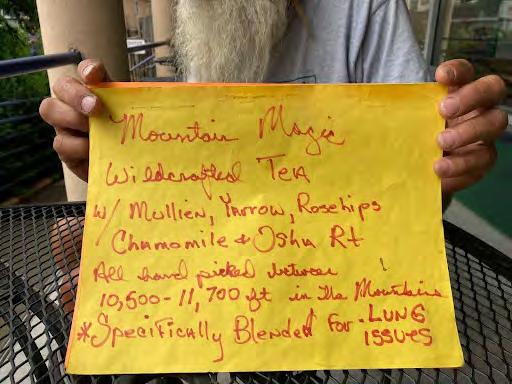
In Tutt Science, she says looking up towards Tava, she feels she has no real responsibilityto‘outside.’Notintheway she might have responsibility towards studentsorthepottedplantsinheroffice that rely on her coming to work. I asked herhowstudyingandteachingaesthetics inpsychologyhaschangedherexperience of these emotions. Her response: “Every possibleway,it'severything.”Forone,she is furious at technological titans; attention is our only precious resource. Shestatesthatitisaninjusticethatwe’ve had our “attentional control divested from ourselves.” In a digital world mediated by dopamine response, the transition from technology back to real lifeisincrediblyhard,asshe’sobservedin hertwo-year-oldniecelookingupfroman iPad.Sheexpressednotonlyworryabout attentional injustice, but losing sight of what's going on in the world around us. “We just need to move people to look,” she says. We must attend to the natural world or else we may lose it. Paying attention and caring is the only way we can invest our attentional resources to createanymeaningfulchange.
Dr. Roberts explained that we have environmental degradation, light pollution, and global warming hindering ourexperienceofaestheticnature.Allthe while, “handheld technologies are degrading our sense of willful control.” “We need time and to feel like we’re opting in,” in order to fully pay any attention. When we attend carefully and mindfully we begin to feel a sense of a relationshipbetweenusandthesubjectof our attention, then we may feel a moral obligation to do right by it. She claims that we feel alone more than ever as a nation, and the constant stimulation provided by technology provides a false remedy. What’s more, she said “we’re being robbed of the rich and wonderful sensationofdeepattentionwithafriend.”
Loneliness in adolescence is a global phenomenon, a problem which is exacerbated by the ability to entertain oneself on a phone instead of seeking connection. Awe is often described as a communalemotionbecauseofthewayit makesyoufeelasenseofconnectionthat goesbeyondtheordinary.Wearebuiltto collaborateinaestheticenjoyment,ajoint
Man selling “Mountain Magic Wildcrafted Tea,” herbs harvested in the mountains. Photo by Lily Frost, ‘26.
When we look at the stars and feel smallness “we cannot fathom our attentionbeingsentallthewayupthere.” It'sbothtoosmallandtoomassivetofully comprehend. There is a huge, tiny world at every present moment. A world of wonder,justaponderaway.
The difference between massive and miniscule amounts to one’s perspective. The Merriam Webster definition of a thing: “an object or entity not precisely designated or capable of being designated” is perhaps a good place to start.Dr.Robertsreferencedanepisodeof Radiolab titled “the Middle of Everything Ever”wherealisteneraskedherselfifshe wassmall,inrelationtothemostmedium thingever.Thecurrentsmallestthingthat has a fairly certain volume is a quark (10^-18m). The largest thing in the universe is a red giant called UY Scuti (10x10^-12 m). The middle of everything ever, perhaps our most fundamental unit oflife,is10x10^-3m.Thisisthesizeofa “water bear” or tardigrade, just smaller thanthebiggesteukaryoticcells.Fromthe water bear’s perspective, we are utterly gigantic. Dr. Roberts said I “ought to feel hugelookingatamicroscope,”thetruthis I’ve never felt huge examining the microscopicworld.Itisanenormoussort
of smallness, analogous to looking throughatelescopeatBetelgeuse,thered supergiant. It's staggering and beautiful thatanemotionlikeawecanpullusfrom ourbodiesandshowushowsmallweare. Being somewhere in the middle is, in a way,arelief.Whilewemaybeextremely large in comparison to the middle, yet insignificantly small in the grand scheme of things, there is a certain liberation in knowingwe’renotaloneinbeingsmall,in factwe’renotthatsmallatall.
Conclusion
Awe is a cognitive perspective shift that exemplifies how we often view ourselves atthecenteroftheuniverse.Anemotional response that is powerful enough to pull us away from our own self-centeredness andshowusthevastexternalworldwe’re apartof,bringingustogetherinsolidarity of our smallness in the universe. This is thecaseforpracticingaweincommunity, whatever form it may take. Communal awareness is essential to win the battle against attentiional injustice. Maybe we arenotassmallasbigemotionsmakeus feel, but experiences of awe can give us humility, empathy, and reframe our schemas. The experience of beauty is one that should be celebrated and embraced incommunion.Theonlywaywecansolve humanity’s greatest issues is by being present, witnessing them unfold and givingintothevastnessofemotion.Awe makesusfeelinsignificant,yetliberated
Works cited
Bethelmy, L. C., & Corraliza, J. A. (2019). Transcendence and sublime experience in nature: Awe and inspiring energy. Frontiers in Psychology, 10. https://doi.org/10.3389/fpsyg.2019.00509
Jiang, T., & Sedikides, C. (2022). Awe motivates authentic-self pursuit via self-transcendence: Implications for prosociality. Journal of Personality and Social Psychology, 123(3), 576-596. https://doi.org/10.1037/pspi0000381;
Merriam-Webster. (n.d.). Thing. In MerriamWebster.com dictionary. Retrieved February 8, 2024, from https://www.merriamwebster.com/dictionary/thing
Piff, P. K., Feinberg, M., Dietze, Pia, Stancato, D. M., & Keltner, D. (2015). Awe, the small self, and prosocial behavior.108(6), 883-899. https://psycnet.apa.org/fulltext/2015-21454002.pdf?
auth_token=9f474be1bdcb2490fe8c5ebe9ae5235ffa9 fa1b3&returnUrl=https%3A%2F%2Fpsycnet.apa.org %2FdoiLanding%3Fdoi%3D10.1037%252Fpspi0000 018
Seo, M., Yang, S., & Laurent, S. M. (2022). No one is an island: Awe encourages global citizenship identification. Emotion, https://doi.org/10.1037/emo0001160;
Smith, L., López Sánchez, G. F., Pizzol, D., Yon, D. K., Oh, H., Kostev, K., Gawronska, J., Rahmati, M., Butler, L., Barnett, Y., Ball, G., Shin, J. I., & Koyanagi, A. (2024). Global time trends of perceived loneliness among adolescents from 28 countries in africa, asia, and the americas. Journal of Affective Disorders, 346, 192-199. https://doi.org/10.1016/j.jad.2023.11.032 fromindividualism,grantingustheability toreclaimourattentionalfreedom.
Silhouette of Nathalie San Fratello on the rocks under the waxing strawberry moon. | Photo by Lily Frost, ‘26.
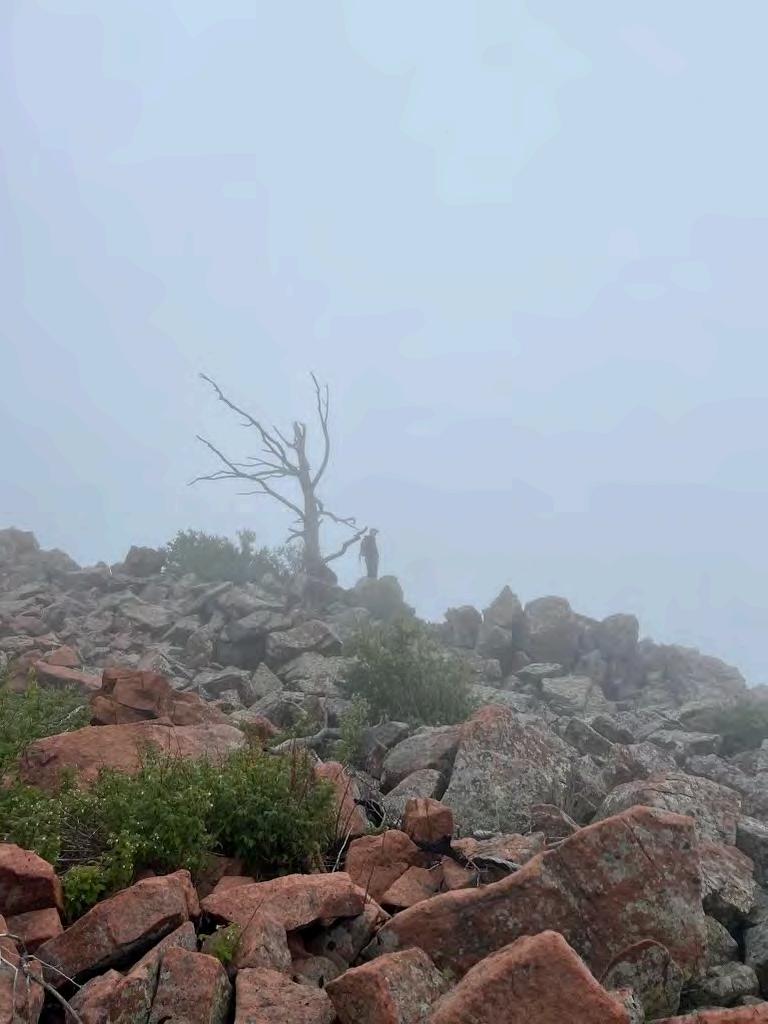
2023 Waldo Canyon Projects
Waldo Canyon 2024 Field Work on a foggy day | Photo by Tyler Mielke, ‘26
The Re-Establishment of a Ponderosa Pine Forest: a Multiple-Scale Twentyyear Retrospect of the Waldo Canyon Fire, Colorado
Chris
Burich,’24, Liam Keilty, ‘25, Sydney Morris, ’24, Theo Ollier, ’26, and Charlotte Pulido ’24
Abstract:
Inrecentdecades,thenumberofforestfiresoccurringinthewesternUnitedStateshassignificantlyincreasedinresponsetofire suppressionandclimatechange.Asanthropogenicwarmingcontinues,wildfiresareexpectedtoincreaseinseverityandsize.The Rocky Mountain West is particularly vulnerable to these changes in climate conditions. Long periods of drought and rising temperaturesacrossmostelevationshavebeencorrelatedwithanincreaseinwildfireoccurrence.GlobalwarmingintheWestis predictedtocreateashiftfromaninfrequent,highseverityfireregimetoanovelfireregimeinwhichhighseverityfiresburnmore oftenandaffectlargerareas. Historically,thefireregimeoftheRockyMountainsischaracterizedasinfrequent,low-to-moderate severity, and patchy. Scientists believe the shifting climate conditions may not support P. ponderosa dominated forests as fires increase in area burned, frequency and intensity. These high severity fires can be detrimental to forest types that have not historically experienced extreme fires, leading to a low likelihood of forest regeneration and the development of new post-fire ecological trajectories. P. ponderosa is poorly adapted to regenerate in large patches of high severity fire because of the of lack serotinous cones, the inability to maintain long-lived soil seedbanks, and shade-intolerance in the presence of flora that outcompeteponderosapineintheseconditions.MuchofColorado’sFrontRange,includingtheWaldoCanyon,havehistorically beendominatedbyponderosapineforests.Thissummer,weconductedademographicstudyofponderosapinepopulationsinthe WaldoCanyonburnscarover20yearsafterthefireoccurred.Inthisstudy,weattempttopredicttheWaldoCanyonlandscapepost 2020firesbyanalyzingthepresenceorabsenceof P.ponderosaonnorthversussouthfacingslopes.
Introduction:
In recent decades, the number of forest fires occurring in the western United States has significantly increased as an outcome of modern human alteration of historic fire regimes and climate change (Chapman et al ., 2020) . As anthropogenic warming continues, wildfiretrendsareexpectedtoincreasein severityandsize(Chapmanetal.,2020). More specifically, global warming is anticipated to cause a shift from infrequent, high severity fire regimes to fireregimesinwhichscientistspredictfire rotationstobelessthan10yearsapartby 2070-2099 (Westerling et al. , 2011). A transition to shrubland or non-forest ecosystems is the expected successional outcomeofthechangeinfirefrequencyin these systems if trees cannot regenerate under more frequent and severe fire conditions(Haffeyetal.,2018).
Oneareaspecificallyvulnerabletothese
changes is the Rocky Mountain West, where long periods of drought and rising temperaturesacrossmostelevationshave been correlated with an increase in wildfire occurrence (Carter et al., 2019).
The Rocky Mountain West is particularly vulnerable to these changes because long periods of drought and rising temperaturesacrossmostelevationshave been correlated with an increase in fire occurrence. In this region of the United States, pineforestshaveevolvedwithlow severity fire regimes (Haffey et al., 2018).
Low severity fires thin out surface fuels, eliminating competitors like Douglas fir andRockyMountainjuniper(Carteretal., 2019). ponderosa pine forests have experienced unprecedented high severity fires(Rother&Veblen,2017).Inaddition, with the introduction of fire suppression during the 20th century, ponderosa pine forests have grown increasingly dense, creating large stores of surface fuels that pavethe
wayforthesehighseveritycrownfires.
ponderosa pine is poorly adapted to regenerate in large patches of high severity fire due to its lack of serotinous cones,inabilitytomaintainlong-livedsoil seedbanks, and shade-intolerance in the presence of flora that can outcompete ponderosapineintheseconditions(Owen etal.2020).
Much of Colorado’s Front Range, specifically Waldo Canyon, has historicallybeendominatedbyponderosa pineforests(Brownetal.2015).Ourstudy area is in the Pike National Forest where most of the Waldo Canyon fire occurred. The Waldo Canyon Fire burned over 18,000acresandhassignificantlyaltered the ecological landscape of this region (Johnsonetal.2014). Thislandscapehas traditionally been dominated by a range of piñon-juniper woodlands, ponderosa pine,andDouglasfirforests(Young&
Rust,2012).Theprojectweproposedaims to answer these questions: What is the predicted landscape post 2012 fires? Will ponderosapinebecome“extinct”insome ofthemostseverelyburnedforests?What species are returning?What does their presence or absence mean from a socioecological perspective? Is restoration recommendedorshouldnaturalprocesses beallowedtounfold?
Study Area:
The Waldo Canyon fire occurred in Colorado’sFrontRangein2012(Young& Rust, 2012; Figure 1). The burn has been categorized as 19% high severity, 40% moderate severity, and 41% low severity (Young&Rust,2012;Figure2).Ourstudy area is in the Pike National Forest where muchoftheburnoccurred.Thisregionis dominated by piñon-juniper woodlands, ponderosa pine, and Douglas fir. Sites were located between 8,500 ft – 9,500 ft in elevation, 38°-39° longitude, and 104°-105°latitude.
Methods:
SiteSelection:
UsingArcGISPro,werandomlygenerated pointsonnorthandsouthfacingslopesin the Waldo Canyon’s Day 1 burn scar (Figures4and5).
To access these potential sites, we drove Rampart Range Road through Pike- San IsabelNationalForests,WoodlandPark, Colorado to scout randomly assigned sample sites . During th e site selection process, we considered accessibility, terrain, length of slope, width of slope, andaspectofslope.Ouraimwastolaya transect 500 meters in length from high tolowelevations.Aftervisitingnumerous sites on both north and south facing slopes,wefoundlayinga500mtransect would not be feasible in most of the selected sites because the slope distance of most sites measured less than 500m. To adjust, we shortened our transect lengthto300m.Selectedsiteswerethose in which we could lay four 200m transects perpendicular to our 300m center line to create a grid of six 100m x 100mplots(Greig-Smith,1983).Ifterrain inhibitedourabilitytolayatransect,we
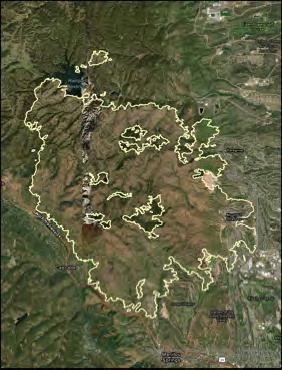
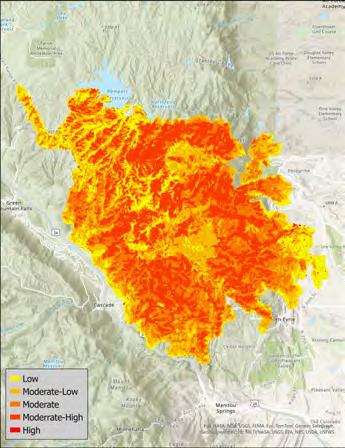
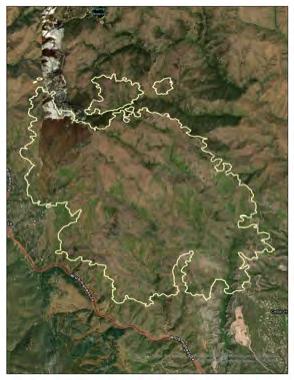
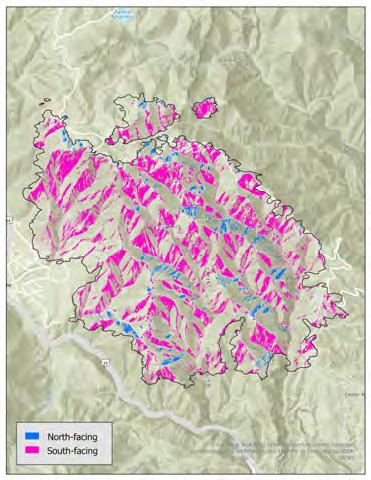
shifted our transect to proximal slopes that were more navigable. We then measured out 200m across the top and bottomoftheslopetoverifythatthesite matched our width requirement. In addition, we identified the bearing of the downslope. We added and subtracted ninetydegreestofindthebearingsofthe EastandWestedgesofourplots.Withthe centerofthe300mtransectlaid,we
measured out 100m east and west of the center transect, identified our bearings, and marked the points, creating our six 100mx100mplots.Overall,welaidseven transects on both north and south facing slopes,totaling42plots (Figure6).
Figure 2. Predicted Burn Severity map of Waldo Canyon, Woodland Park, Colorado. Map adapted from Herros, A. (2018).
Figure 1. Map of Waldo Burn Area Perimeter, City of Colorado Springs, Final After Action Report, (2013). Map created in ArcGIS Pro v3.1 by Matt Cooney (2024).
Figure 3. Waldo Canyon Burn Area Day 1, City of Colorado Springs, Final After Action Report, April 2013. Map created in ArcGIS Pro v3.1 by Matt Cooney (2024).
Figure 4. North and south identified slopes in burn day one area. Map created in ArcGIS Pro v3.1 by Matt Cooney (2024).
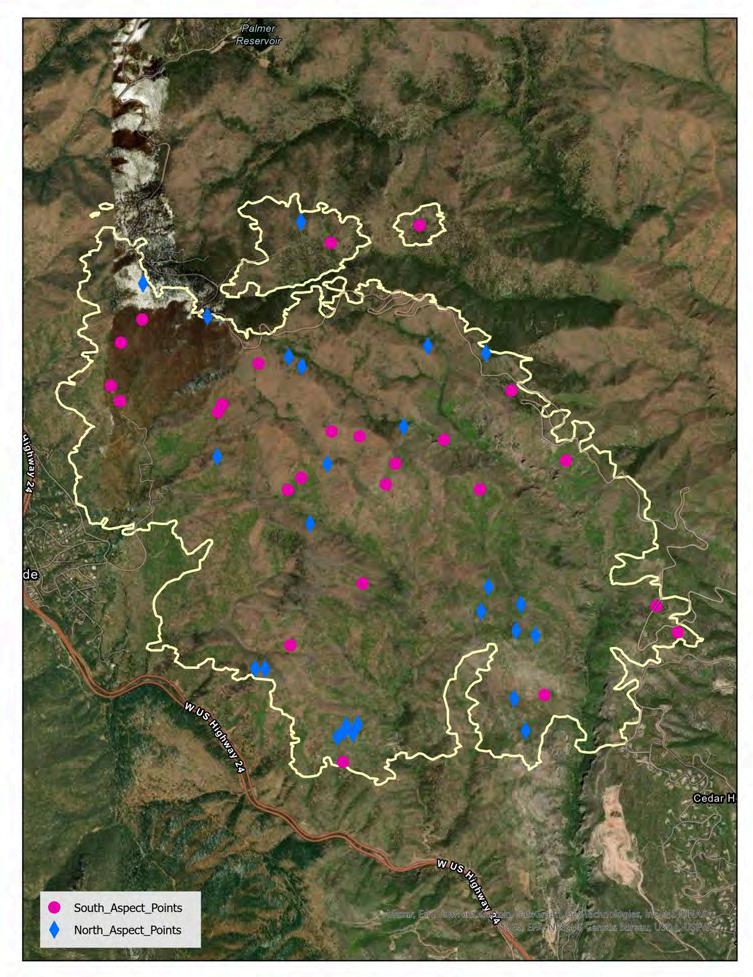
1 visited first, then point 2, and so on) until five sites in each aspect (north and south) met our site criteria: accessibility, aspect, and within the burn area and national forest boundary. Map created in ArcGIS Pro v3.1 by Matt Cooney (2024).
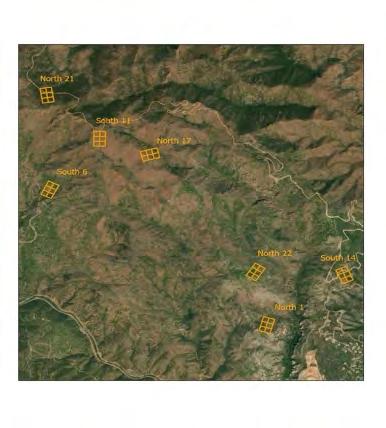
DataCollection:
Percentcover
Withineachquadrantofeachstudysite, we divided the quadrant into four 50m x 50msquaresandestimatedtheamountof groundcovertothenearestpercent.After estimating percent cover in each 50 m x 50mplot,weaveragedthesenumbersto determinethepercentcoverfortheentire quadrant.
Ponderosapinesaplingpresence
At our selected sites, we counted the number of ponderosa pine saplings present in each 100m x 100m quadrant alongourtransect.Thisgaveusan
estimate of the amount of regeneration thathasoccurredineachstudysitesince theWaldoCanyonfire.
Ponderosapinesampling:
Four living mature ponderosa pine trees were sampled in each 100m x 100m quadrantalongthe300mtransectineach site.Weselectedourtreesbyfirstlocating the center of each quad and locating the fourclosestlivingponderosapinestoour centerpoint.Usingstemsizeandheightof each tree as proxies for age, we recorded diameter at breast height (DBH) of individualstallerthan1.52m(5feet)using a DBH tape and measured tree height using an inclinometer. We cored trees if they were mature (above 1.52m tall). The selectedlivingmaturetreeswerecoredto determine approximate age of trees in each site to determine the stand age of eachsite.Slopeandaspectwererecorded foreachlivingtreetodetermineifaspect and slope at the individual scale accounted for the presence or absence of ponderosa pine individuals at the quadscale. We compared the aspect and slope at the quad-scale to aspect and slope determined by GIS techniques for each site.
iNaturalistData:
Link:StateoftheRockies-WaldoCanyon ·iNaturalist
We are also interested in documenting post-fire flora and fauna recovery in the Waldo Canyon area. We used iNaturalist to identify various species. iNaturalist is an online social network used to share biodiversity information and identify species using artificial intelligence and public responses. For our research, we createdaprojectthroughiNaturalistthat onlyallowedourteamtoaddinformation on plant, insect, and bird species in our study area. During our time in the field, from June 2023 – August 2023, 120 observationsweremadeoniNaturalistby our team. We identified a total of 78 species, mainly flora. Some of our most commonspeciesincludedponderosapine, whole leaf paintbrush, common yarrow, sticky geranium, fringed sagebrush, great plains yucca, mountain mahogany, and gambleoak.
Figure 6. Study site locations of study plots on north and south-facing slopes within the Waldo Canyon burn day one area.
AerialImagery&ArcGISPro:
After collecting the data, we used ArcGIS Protoproducelandcoverandslopemaps. Aerialimagerywithaspatialresolutionof 1 meter was acquired for 2011 (pre-fire) and2023(post-fire)toaccuratelydigitize different land covers (Figures 7 and 8). Before analysis began, 300m by 200m grid polygons were geo-referenced onto our eight site locations to represent our transects on the ground. Within each of our 8 site locations, we identified and digitized areas of ground into five classifications: trees; shrubs; grass; rocks/bare ground; dense dead standing of trees. We carried out two methods to calculate land cover percentage at both the site level and quadrant level with the digitization of the five classifications. In addition, we used the slope geoprocessingtooltocalculateanddepictthe percent slope for all the transects to highlight the variability of slope between ournorthandsouthfacingsites(Figures9 and 10). One method allowed us to calculate the average slope percentage of each quadrant, and another assisted in visually representing across all our sites this variability in slope characteristic of theWaldoCanyonlandscape.
StatisticalAnalyses:
We wanted to know whether Pinus ponderosaregenerationisoccurringinthe 12-year-old day one burn area and if so, what influences the likelihood of seeing seedlings and saplings across a range of physicalsiteconditionsinWaldoCanyon.
We are also interested in whether burn severity of each quad is a predictor of seedling and sapling presence. Additionally, we explored whether there isalinearrelationshipamongthenumber of saplings found per quad and the physicalsitecharacteristicswemeasured. We ran a logistic regression analysis to identify a potential relationship between the likelihood of seeing seedlings and saplings across and physical site conditionsinWaldoCanyon.GLMlogistic regressions were used to determine whether there is a linear relationship between the number of saplings in each quad and the physical site characteristics wemeasured.
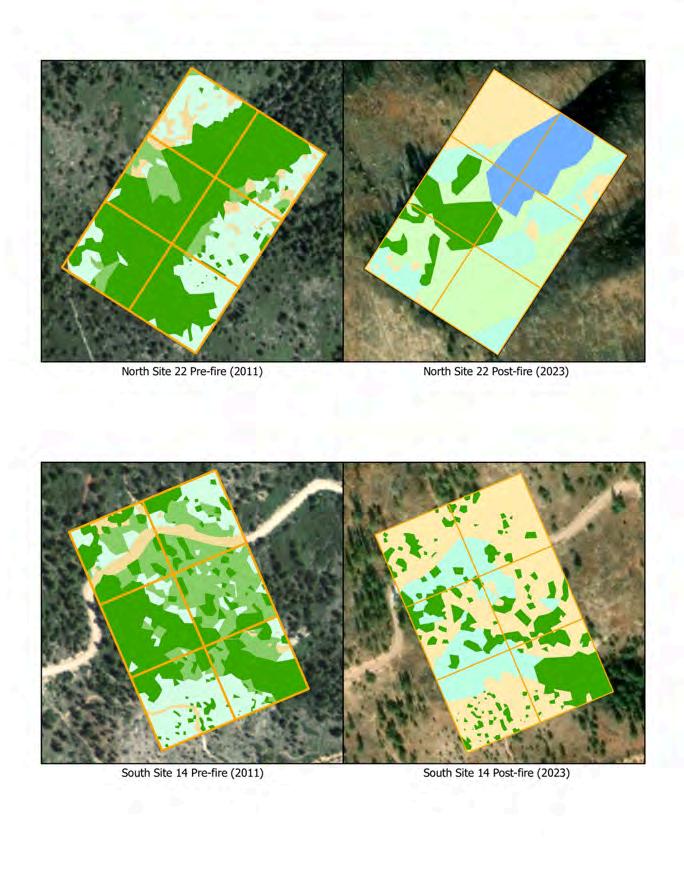
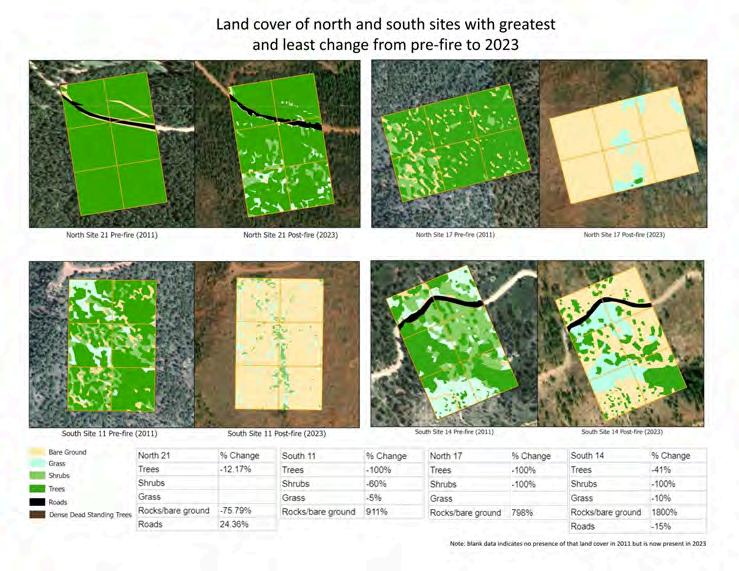
Figure 8. Land cover of north and south sites with greatest and least change from pre-fire to 2023.
Figure 7. Digitized spacio-temporal changes in vegetation and land cover of pre- and post-fire conditions.
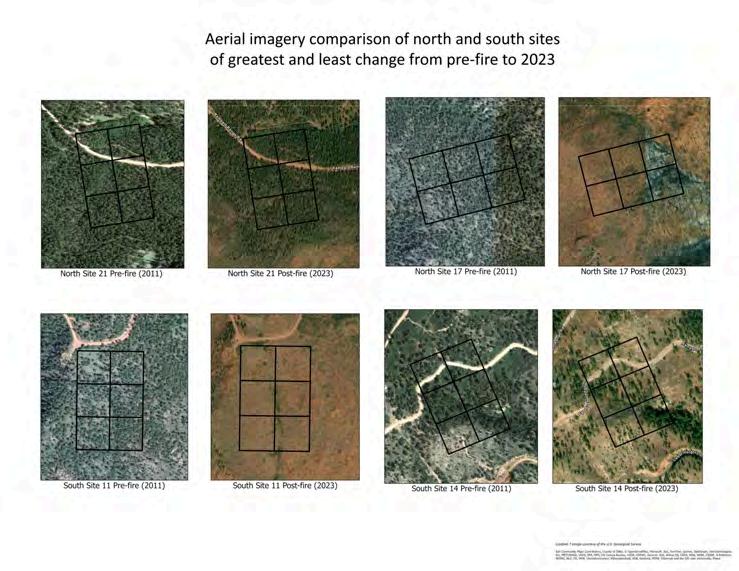
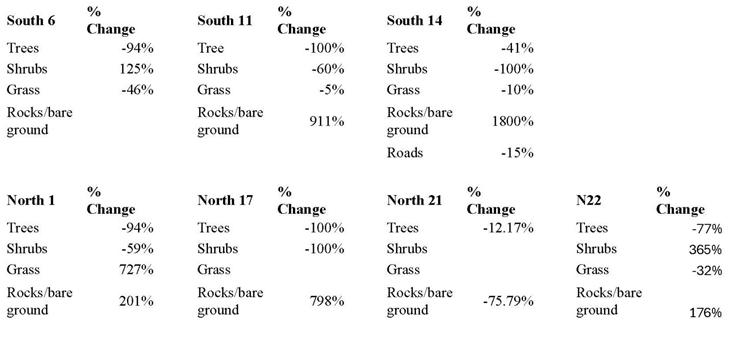
The odds of seeing seedlings increases 1.325withaoneunit(%)increaseinmean slope per quad (CI =95%). Quads ranged from a mean slope of 6.25% to 27.96%. The odds of seedlings and saplings being present increase 2.82 times with a one unit increase in mean elevation (meters) per quad (CI =95%). The mean elevation perquadrangedfrom2215metersto2872 meters. We also conducted a logistic regression to analyze whether burn severity of each quad is a predictor of seedlingand
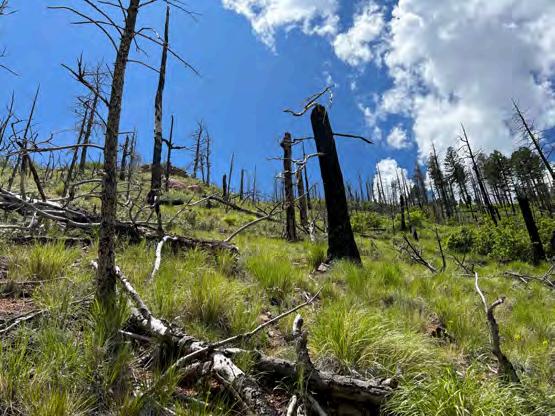
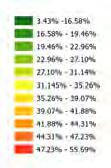
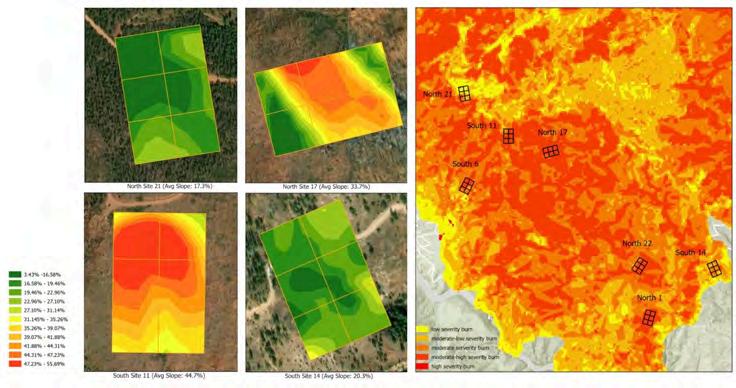
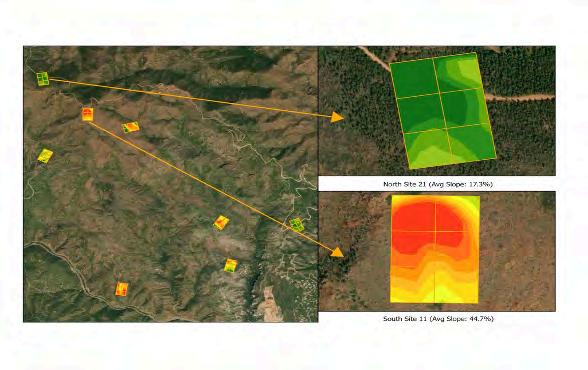
Table 1. Percent of land cover changes in sample sites following fire (2011 to 2023).
Figure 9. Slope percentage and locations of sites of varying degrees of burn severity.
A severely burned site in day one of the fire. | Photo by Cyndy Hines
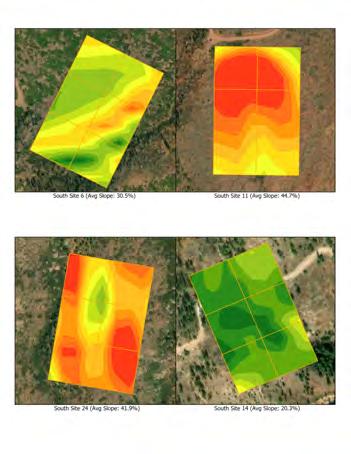
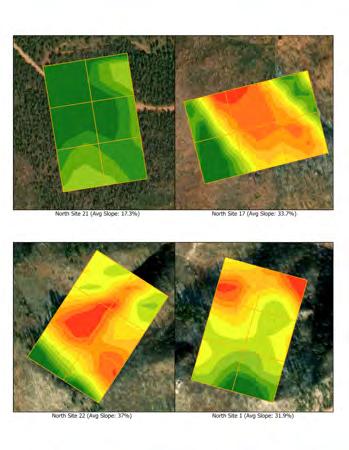
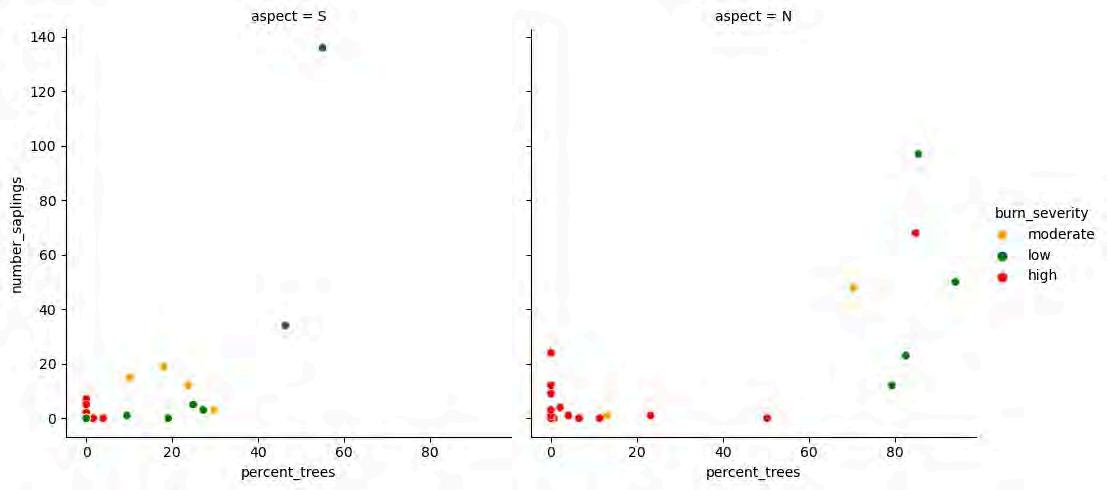
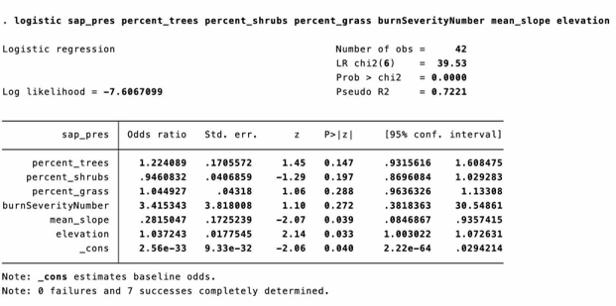
-value 0.002), shrubs (p-value 0.004), and trees (p-value 0.007). As the percent cover of grass increases by 1%, we see a 4.06%decreaseinthenumberofsaplings perquad(CI=95%).Asthepercentcover of shrubs increases by 1%, we see a decrease of 3.41% in the number of saplings per quad (CI =95%). As the percentcoveroftreesincreasesby1%,we seeanincreaseof3.85%inthenumberof saplings per quad (CI =95%). No other explanatory variables were significant (Table3).
Preliminary results of our collected day arelimitedbytheaverageofseedlingsand saplingsin48quadrantsinsevensitesin burn day one of the 2012 Waldo Canyon fire. We aim to expand our dataset in PhaseII(burndaytwo)andPhaseII(burn daythree)ofthislong-termstudy.
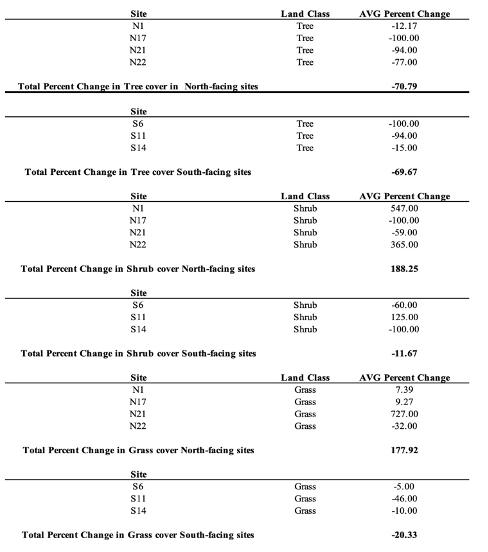
severity of each quad is a predictor of seedling and sapling presence. Burn severitywasnotsignificant(Table2).
Ouranalysissuggeststhereissomelinear relationship between the number of saplingsandpercentcoverofgrass(p-
Table 3. Comparison of average percentage differences in land cover classifications in sites on northern aspects and southern aspects. We calculated the total average of percent difference in each vegetation class before (2011) and after (2023) the 2012 Waldo Canyon fire in north-facing sites compared to sites in south-facing sites in the burn day one area. South-facing sites support 2.265 times less shrubs or 226.5% more shrubs are established on north-facing sites following fire than on southsloping sites. The average percent cover of grass on southern exposures is 2 times less than sites with northern exposure; 200% more grass has established on north-facing slopes than on south-facing slopes.
Figure 10. Calculated percent slope percent for each site.
Figure 10. Frequency and occurrence of seedlings and saplings in relation to GIS classified north- and south-facing slopes.
Table 2. Results of logistic linear regression model using all site characteristics.
PreliminaryResults:
For our preliminary findings, a logistic regression analysis of the data suggests that mean elevation (p-value 0.033) and meanslope(p-value0.039)influencethe presence of seedlings and saplings. The odds of seeing seedlings increases 1.325 withaoneunit(%)increaseinmeanslope perquad,contrarytowhatwe hypothesized (Table 4). Quads ranged from a mean slope of 6.25% to 27.96% (Figure 10). This suggests the stresstolerance of ponderosa pines and their ability to grow in difficult terrain. The odds of seedlings and saplings being present increases 2.82 times with a one unit increase in mean elevation (meters) per quad. The mean elevation per quad rangedfrom2359metersto2872meters. This data aligns with the elevational gradient in which ponderosapine are typicallyfound(Figure11).
A GLM log linear regression analysis of thedatasuggestssomelinearrelationship after the log transformation of the y variable (number of saplings per quad). Thisanalysissuggeststhereissomelinear relationship between the number of saplings and percent cover of grass (pvalue0.002),shrubs(p-value0.004),and trees(p-value0.007;Table4).
Findings:
We wanted to know whether ponderosa regenerationisoccurringinthe 12-year-old day one burn area and, if so, what influences the likelihood of seeing seedlings and saplings across a range of physicalsiteconditionsinWaldoCanyon. We were also interested in whether burn severity of each quad is a predictor of seedling and sapling presence. Additionally, we explored whether there isalinearrelationsupamongthenumber of saplings found per quad and the physicalsiteconditionswemeasured.
A logistic regression analysis of the data suggests that mean elevation (p-value 0.033) and mean slope (p-value 0.039) influence the presence of seedlings and saplings.
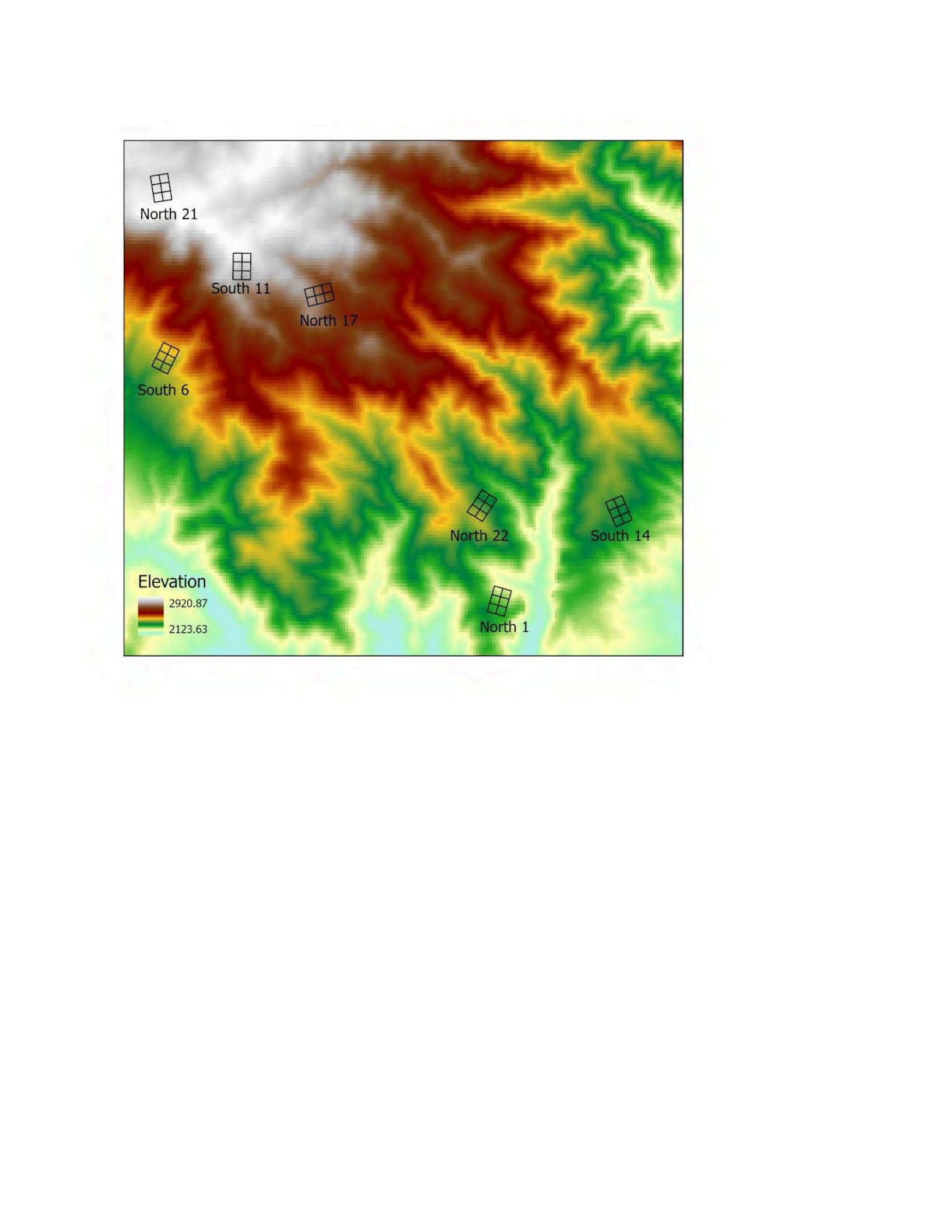
saplingsandpercentcoverofgrass(p- sensethatwewouldfindmoreponderosa
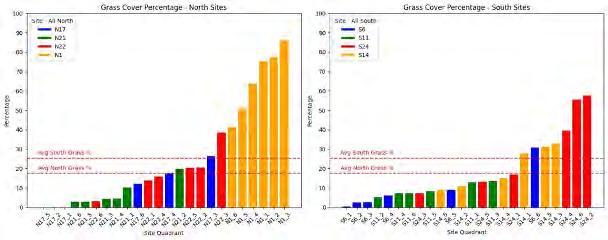
pine seedlings at higher elevations. In addition, there was no significant relationship between the likelihood of seeing a seedling and burn severity. Due tooursmallsamplesize,itispossiblethat a larger dataset could reveal trends between burn severity and ponderosa pineseedlinglikelihood.
Asthepercentcoverofgrassincreasesby 1%, we saw a 4.06% decrease in the numberofsaplingsperquad.Similarly,as the percent cover of shrubs increases by 1%, we calculated a decrease of 3.41% in thenumberofsaplingsperquad.
These findings suggest that grasses and shrubs, often primary successors after a fire, outcompete ponderosa pine seedlings. The mechanisms of competition may potentially include blocking sunlight and taking water away fromseedlings.Ontheotherhand,asthe percentcoveroftreesincreasedby1%,the number of saplings per quad increased 3.85%. Typically, live trees were found in low severity burn sites. In low-moderate burn severity sites, primary successors like grasses and shrubs were unable to takeover(Figure12).Saplingsweremore likely to be observed in sites where there is less competition with grasses and shrubs. Furthermore, ponderosa pine saplingsaremorelikelytoregenerate
when there is a live tree nearby due to their short-lived seed bank. In areas wheretreessurvivedtheburnandarestill able to reproduce, ponderosa pine seeds arepotentiallymoreabundant.
Conclusion:
The 2012 Waldo Canyon fire devastated acresofponderosapinedominatedforests andincineratedhomesandbuildingsasit swept upslope.Our study aims to determineifdominanthistoricponderosa pine forests are regenerating post-fire under dramatically different climate conditions. We aim to identify if and whereinthelandscapethespeciesisand will likely survive. This information will help guide federal and state agencies in designing restoration and land management practices as well as deepen our understanding of the resultant impactsofachangingclimate.
On-goingResearch:
We embarked on a phase two of the projectthissummerinefforttobuildour fielddatasetandmapthelandscape-scale changes observed using GIS techniques. This preliminary work, several has generatedadditionalquestions.
What can we say about the complexity (heterogeneity)ofthesitesin2011andin 2023?
Is the landscape patchwork more complexfollowingfire?
Atwhatscaledoweobservethegreatest andleastamountofheterogeneity?
How does landscape heterogeneity influence habitat diversity, species richness,andthemovementofwildlife?
What soil conditions (e.g., mycorrhizae; chemicalproperties)existinsiteswhere saplings are observed more frequently comparedtositeswhereonlyponderosa pinedeadtreesstand?
Figure 12. Frequency and occurrence of seedlings and saplings in relation to GIS generated percent grass cover.
Independent Study: The Effects of Burn Severity on Soil Chemistry and Pinus ponderosaRegeneration in Waldo Canyon, Colorado
By Sydney Morris
High severity fires can be detrimental to forest types that have not historically experiencedtheseconditions,leadingtoa low likelihood of forest regeneration and the development of novel post-fire ecological trajectories. Pinus ponderosa forest is a dominant forest type in the westernUnitedStatesandpoorlyadapted toregeneratefollowinghighseverityfires. While factors such as elevation and climate are known to affect P. ponderosa regeneration post-fire, less is known regarding how fire-altered soils may impact forest regrowth, specifically in relation to the soil’s chemical properties. A concurrent study of how soil nitrogen, carbon,andaluminumoxidesacrosshigh and low burn severity sites may be correlated with P. ponderosa regeneration. ArcGIS was used to randomly select 12 sites from both north and south aspects. Each site was divided into six plots and categorized unburned, high, or low severity burn areas (Figure 13). Soil samples were collected, and organic debris was removed. Then, samples were dried at 70°C for 24 hours to remove any remaining moisture and pulverized for two minutes. A Tracer Handheld XRF Spectrometer to measure levels of aluminum oxide and a NC2100 elemental analyzer was used to quantify levels of nitrogen and carbon. Data were log transformed and analyzed in RStudio using One-way ANOVAs. Findings indicate that the limiting factor for P. ponderosa sapling regeneration may be unrelatedtosoilchemistry.Theseresults help better understand future directions for conservation of P. ponderosa, specifically focusing on the potential limitingfactorsforregenerationincluding soilmoistureandtemperature.
Results:
ponderosa pine sapling abundance differedsignificantlybetweenthecontrol (unburned) and high severity burn plots (F2, 65 = 5.742, p = 0.006). In addition, therewasnosignificantdifferenceinsoil
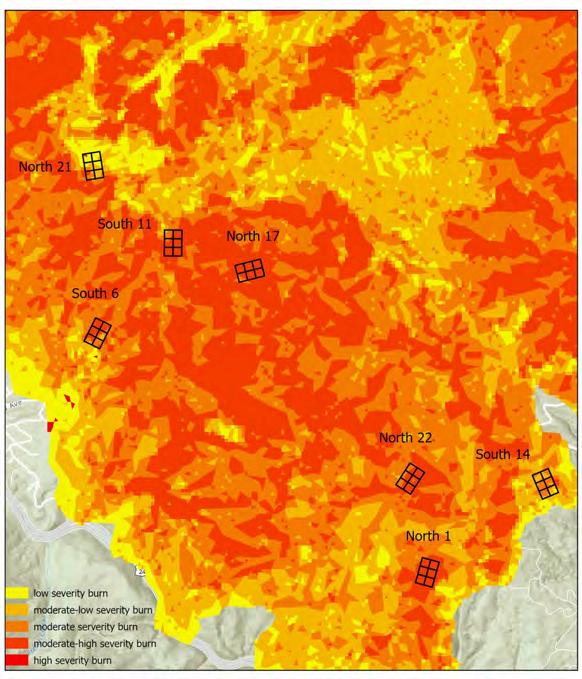
nitrogen, carbon, and aluminum oxide levelsamongthe3burntreatments.
Thepreliminarystatisticalanalysisofthis research reveals a lack of statistical significance when comparing soil chemistryacrosstheWaldoCanyonburn scar. Considering this fire occurred 11 years ago, it is plausible that the impacts of fire on soil were temporary, even in high severity burns where exceedingly high temperatures can have permanent impacts on soil. Despite these findings, my data show a significant difference in sapling abundance. This could indicate that, in contrast to previous studies done in Canada and the Pacific Northwest, the limitingfactorforponderosapinesapling regeneration is unrelated to soil chemistry. Studies done in the southwestern United States suggest potentiallimitingfactorsforsapling.
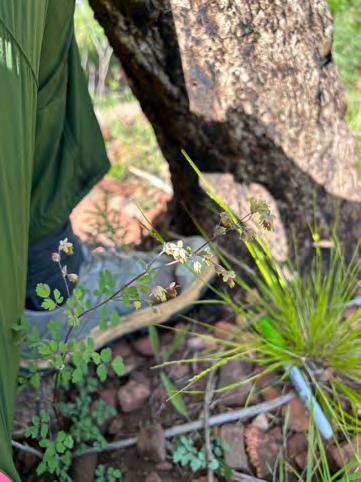
ponderosa pine regeneration post-fire includesoilmoistureandtemperature.
Thalictrum spp. in day 1 burn area, Waldo Canyon, Woodland Park, Colorado. June 2023. Photo By Cyndy Hines
Figure 1. Predicted Burn Severity Map of Waldo Canyon, Colorado Springs adapted from Herros, A. 2018.
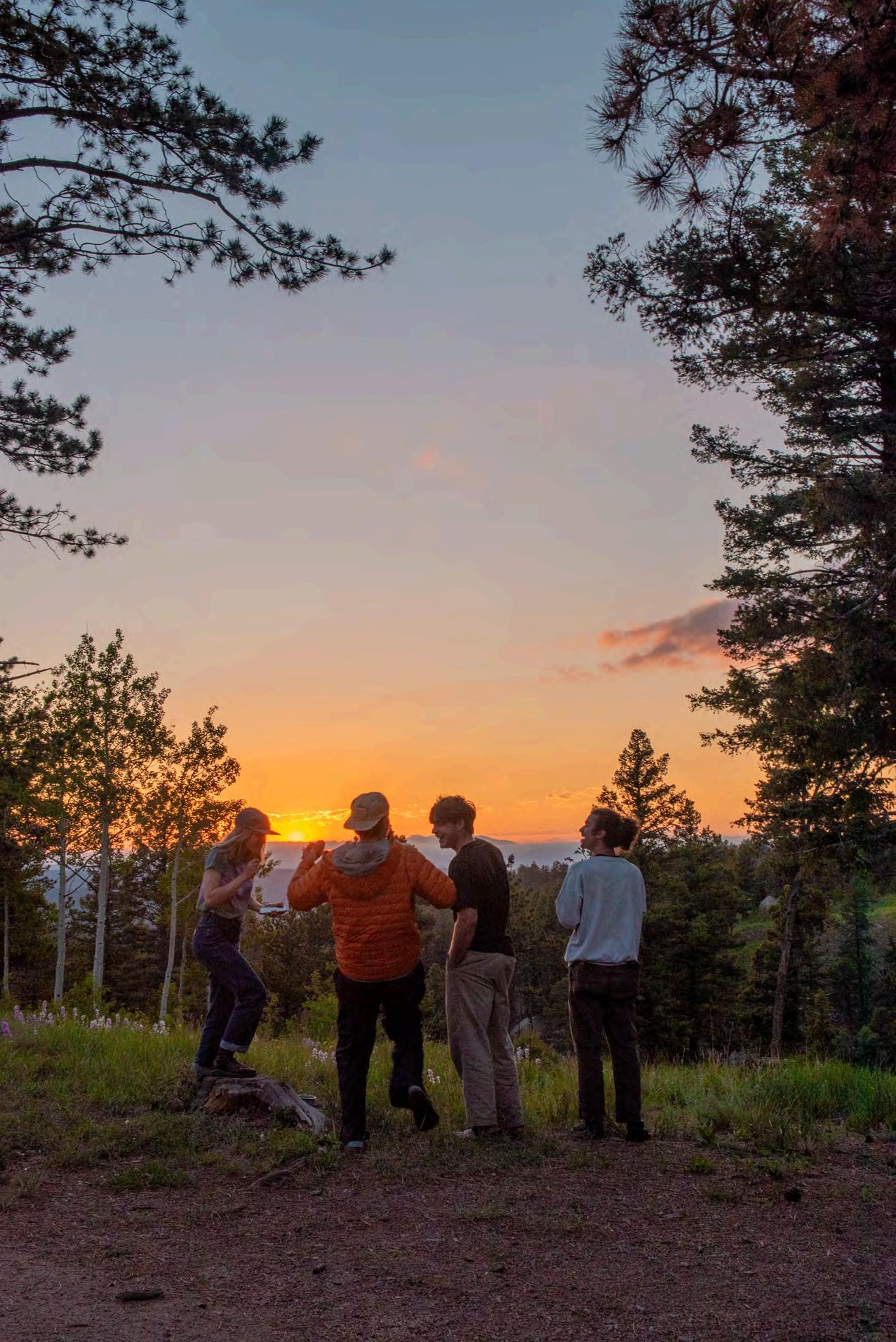
Sydney Morris ‘24, Chris Burich ‘24, Liam Keiilty ‘25, and Theo Ollier ‘26 relax during a work trip in Waldo Canyon. | Photo by Maren Greene ‘24
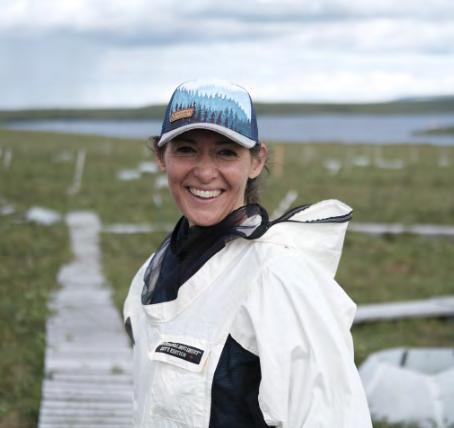
Acknowledgements: Special thanks to Dr. Roxaneh Khorsand, the Organismal Biology and Ecology Department at Colorado College, andCyndyHines.
Broadly,myresearchfocusesontheinteractionbetweenplant reproductiveecologyandtheabioticenvironment.Specifically, Iinvestigateplantphenology,plant-pollinatornetworks,floral rewards, and breeding systems in the context of a changing climate. My current research focuses on tundra pollination ecologyandplantreproduction.Whileplantphenologicaland growth responses to warming are widely documented in the Arctic,lessisknownaboutwarmingeffectsonplant-pollinator interactions and floral rewards, as well as the implications of thesechangesonplantandpollinatordiversity.
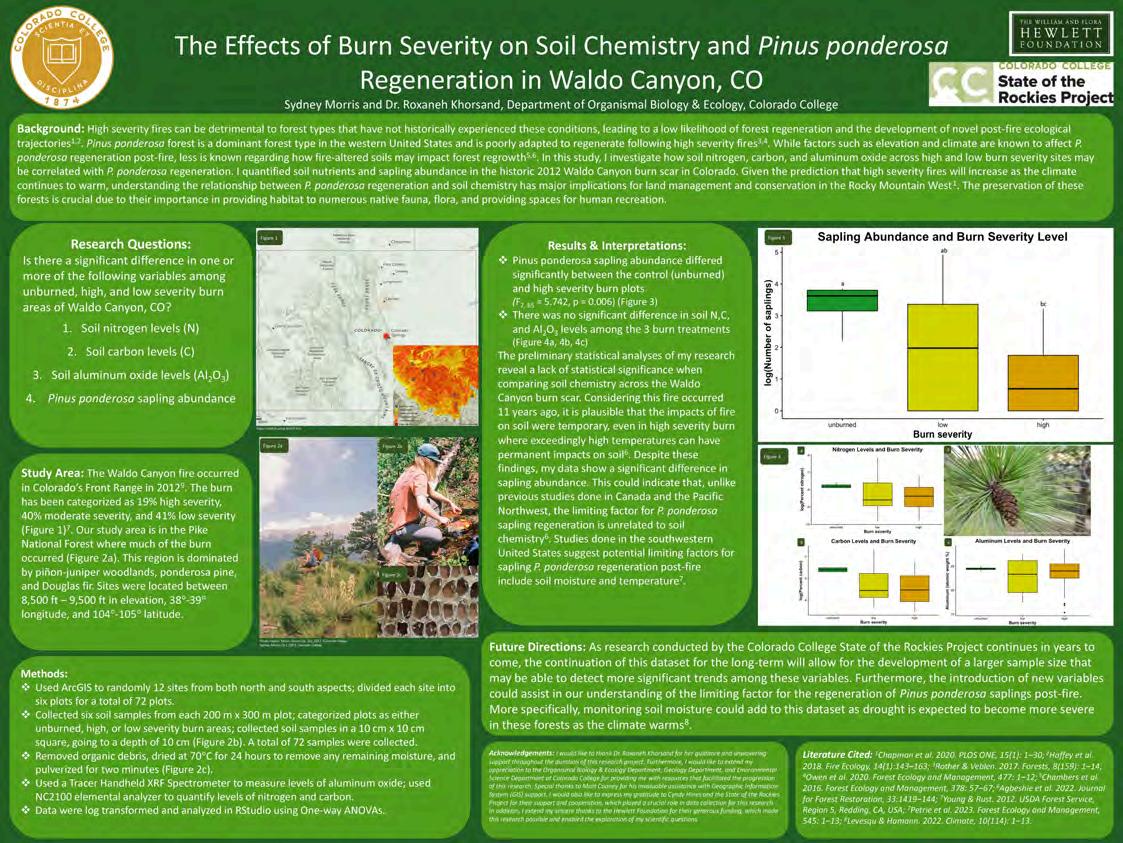
Dr. Roxaneh Khorsand
Figure 2. Results of burn severity on soil chemistry and Pinus ponderosa regeneration in Waldo Canyon, Colorado.
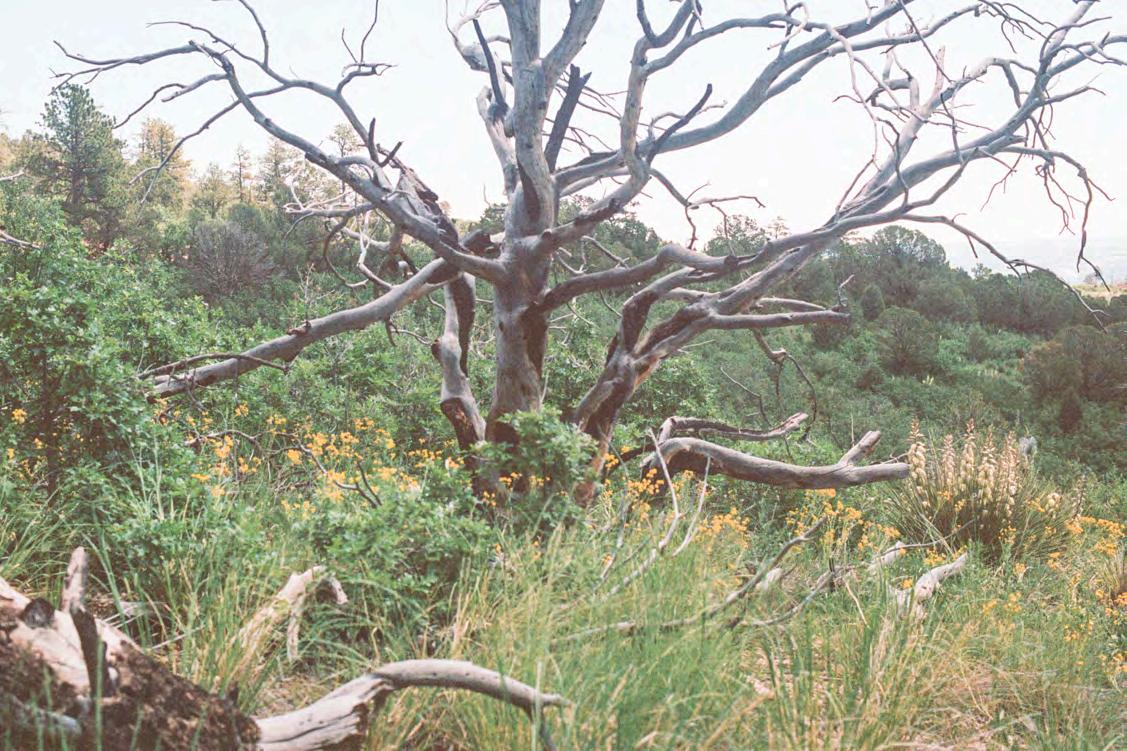
Literature Cited:
Brown, P. M., Battaglia, M. A., Fornwalt, P. J., Gannon, B., Huckaby, L. S., Julian, C., & Cheng, A. S. (2015). Historical (1860) forest structure in ponderosa pine forests of the northern Front Range, Colorado. Canadian Journal of Forest Research, 45(11), 1462-1473.
Carter, V. A., Power, M. J., Lundeen, Z. J., Morris, J. L., Petersen, K. L., Brunelle, A., Anderson, R. S., Shinker, J. J., Turney, L., Koll, R., & Bartlein, P. J. (2018). A 1,500-year synthesis of wildfire activity stratified by elevation from the U.S. Rocky Mountains. Quaternary International, 488, 107–119.
Chapman, T. B., Schoennagel, T., Veblen, T. T., and K. C. Rodman. (2020). Still standing: Recent patterns of post-fire conifer refugia in ponderosa pine-dominated forests of the Colorado Front Range. PLOS ONE, 15(1): 1–30.
Greig-Smith, P. Quantitative Plant Ecology, Vol. 9 (third edition), Great Britain, Blackwell Scientific Publications, (1983).
Haffey, C., Sisk, T. D., Allen, C. D., Thode, A. E., & Margolis, E. Q. (2018). Limits to ponderosa pine regeneration following large high-severity forest fires in the United States Southwest. Fire Ecology, 14(1), 143-163.
Herros, A. (2018) Learning from Devastation: A Predictive Burn Severity Model for the Colorado Springs Wildland Urban Interface.
Johnson, R. H., Schumacher, R. S., Ruppert, J. H., Lindsey, D. T., Ruthford, J. E., & Kriederman, L. (2014). The role of convective outflow in the Waldo Canyon fire. Monthly Weather Review, 142(9), 3061-3080.
Owen, S. M., Sieg, C. H., Fulé, P. Z., Gehring, C. A., Baggett, L. S., Iniguez, J. M., & Battaglia, M. A. (2020). Persistent effects of fire severity on ponderosa pine regeneration niches and seedling growth. Forest Ecology and Management, 477, 118502.
Rother, M. T., & Veblen, T. T. (2017). Climate drives episodic conifer establishment after fire in dry ponderosa pine forests of the Colorado Front Range, USA. Forests, 8(5), 159.
Valido, M (2018) Past and Future of Wildfire in the Colorado Springs Wildland-Urban Interface. Colorado College.
Vankat, J. L., The Natural Vegetation of North America, New York, John Wiley & Sons, (1979). Westerling, A. L., Turner, M. G., Smithwick, E. A., Romme, W. H., & Ryan, M. G. (2011).
Continued warming could transform Greater Yellowstone fire regimes by mid-21st century. Proceedings of the National Academy of Sciences, 108(32), 13165-13170. Young & Rust. 2012. USDA Forest Service, Region 5, Redding, CA, USA.
Acknowledgements: Special thanks to Matt Cooney, Cyndy Hines, and Liam Mullen, (’26), and Shamdeed Kabir (’25) for their contributions with data analysis and graphics.
Site 14S in Waldo Canyon. Photo by Maren Greene ‘24.
Waldo Team 2023 Artist in Residence Project:
“Height and Size do not Reveal Age”
By Maren Greene
Maren completed a series of drawings of Mature ponderosaPines sampled this summer by the Waldo Canyon field research team. These drawings depict 3 pairs of trees. Each pair is the same age, but varies in relative size to one another. Thecomparisonsmadebythesedrawings reveal that conditions specific to the locationof thegrowthofatree impactthe tree'ssize.
Scientific Drawings By Maren Greene
Site 14S:low-gradeslope,lowseverityburn,lotsofGambleOakregrowth
Tree 23 Scientific Drawing
IwastakingatechnicaldrawingclasswhenI started working as an Artist in Residence for the Waldo Canyon project. In this class, we learned about scientific illustration: the techniques for this drawing style, and its importance as a means of disseminating information. Scientific illustration became a broadjumping-offpointformyproject.After learning how to create multi-perspective architectural drawings, I felt inspired to transfer this method of displaying information to my work with State of the Rockies. The multi-perspective drawings allow a viewer to comprehend the size and shape of a tree (or other object) from several angles.
I realized this would be a compelling way to representdatacomparingtherangeinsizeof trees of the same age, and that it would help illustrate how the qualities of a tree’s environmentaffectitsgrowth.
These illustrations also allowed me to highlightdetailsofaponderosapinetreethat make them recognizable: their bark, needles, andcone.ScientificIllustrationisavitalpart of conservation efforts, and I was thrilled to have this opportunity to develop my skills at thecrossroadsofartmakingandscience.
-MarenGreene
On20°Eslope
Height:9.29m
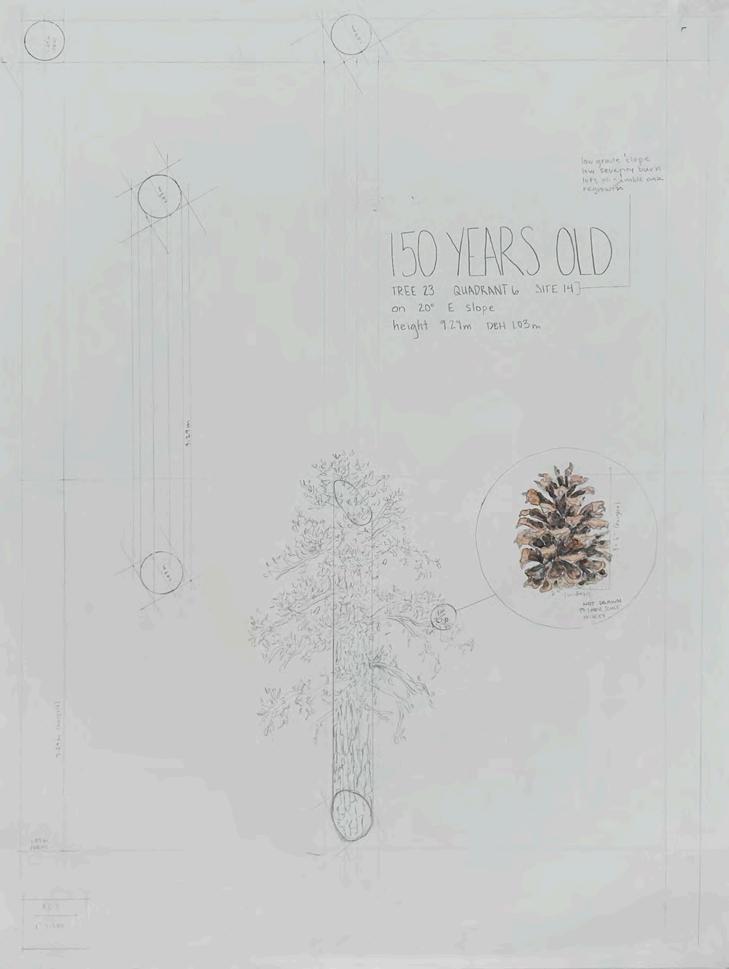
DBH(DiameteratBreastHeight):1.03m
Age:150years
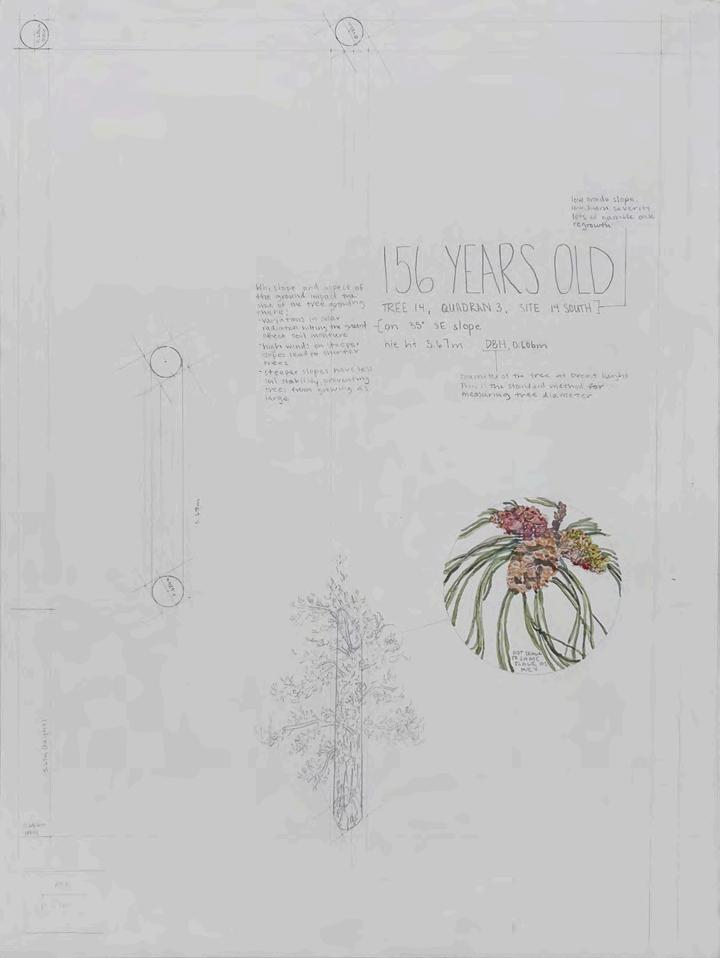
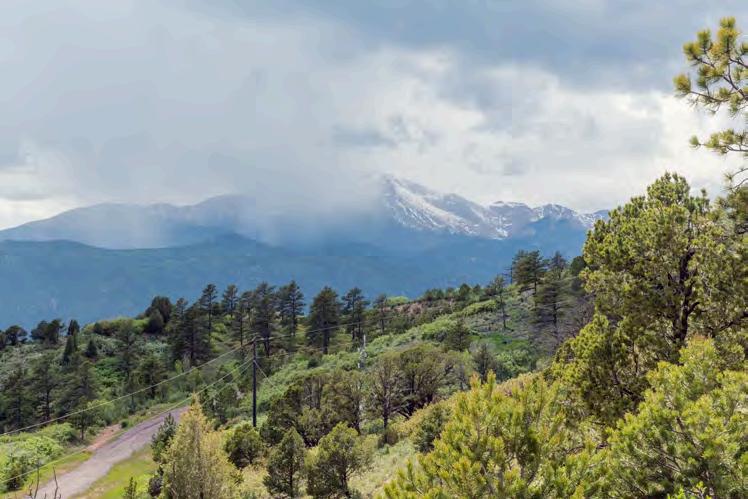
Tree 14 Scientific Drawing (Left)
On35°SEslope
Height:5.67m
DBH(DiameteratBreastHeight):0.606m
Age:156years
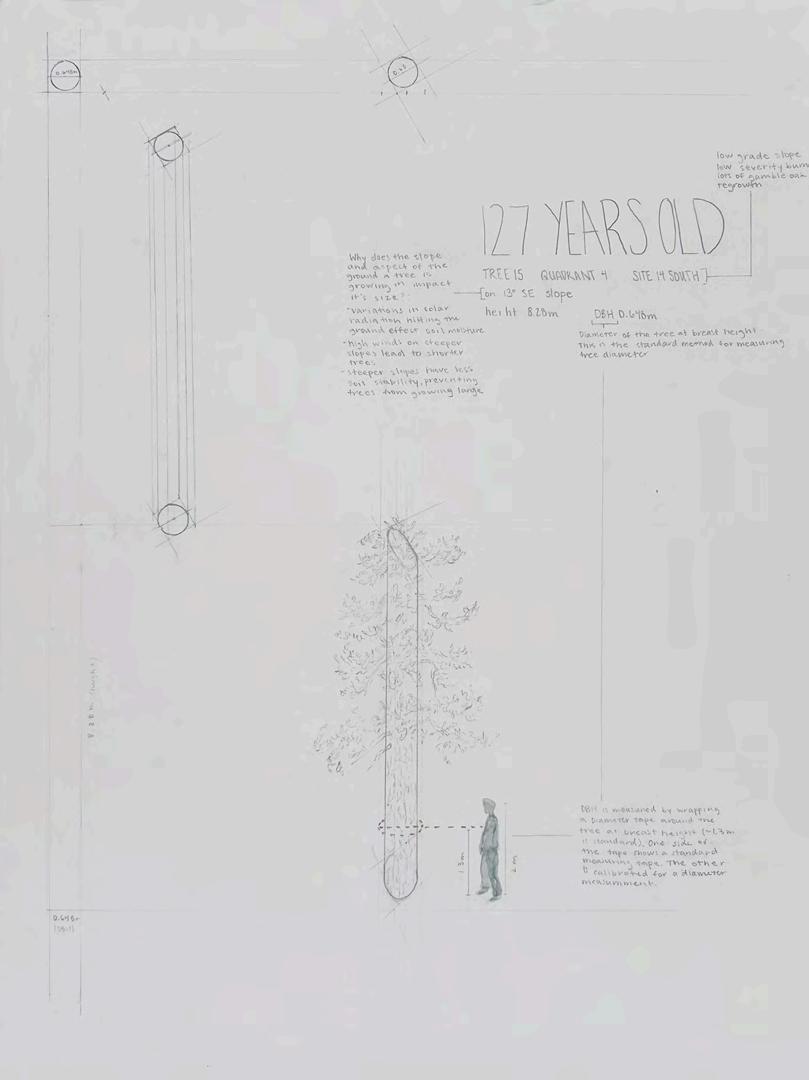
Above:
On13°SEslope
Height:8.28m
DBH(DiameteratBreastHeight):0.648m
Age:127years
Site14SinWaldoCanyon,PhotobyMarenGreene
Right:
On26°Nslope
Height:4.829m
DBH(DiameteratBreastHeight):0.61m
Age:127years
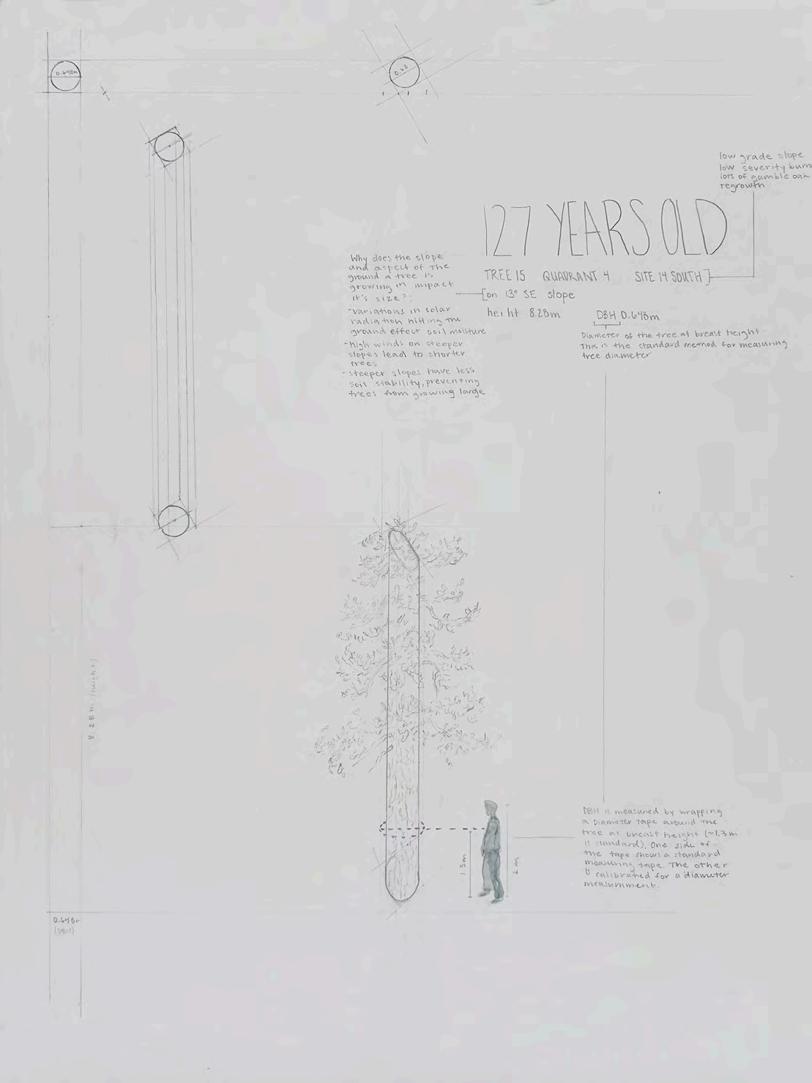
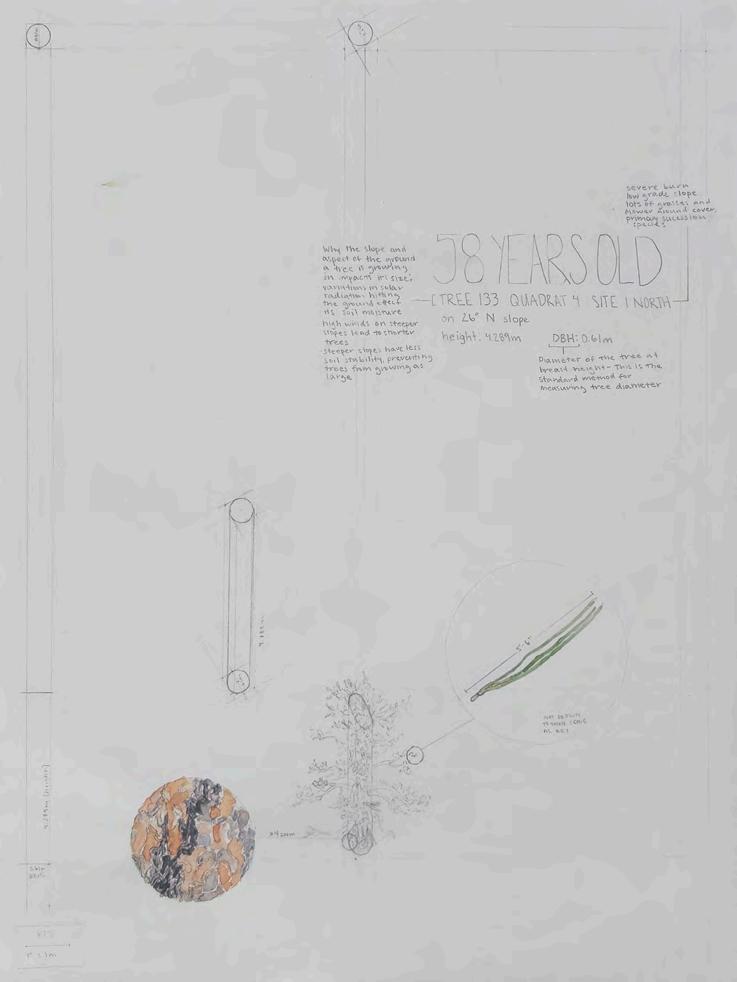
Maren Greene, Studio Art, ‘24, works across a variety of media, focusing primarily on painting and photography. She has lived her whole life in Colorado and is passionate about preserving the natural spaces that helped raise her. She knows that the time she spends outdoors-- skiing and biking through mountains, walking around gardens, and lounging under trees-- is sacred: grounding her in life’s chaos and inspiring her creative practices. As such, she is deeply motivated by discovering art’s place in conservation efforts and using her work to give back to the land thatinspiredit.
Waldo Team 2023 Artist in Residence Project:
“Pinus ponderosa Webs”
By Ollie Beland
Lastsummer,ItaggedalongwiththeWaldo Canyon Ecological Research Team – taking hundredsofpicturesandbrainstormingwhat would ultimately culminate in this exhibit. Throughout this process my goal has been to present the data and importance of the WaldoCanyonstudytangiblyandaccessibly. These“webs”serveasthemeanstothisend.
The background images of each web are of the sites from which the research team collected data – distinct enough to capture thenumerousenvironmentswesurveyed,yet cohesive to express their shared impact from the Waldo Canyon Fire. The webs on each imageareamoredirectrepresentationofthe collected data. Each web represents the distance and direction to the nearest four livingponderosapinetreesfromthecenterof each quadrant. Data was collected at designated sites, each of which were divided intosixsquarequadrants.
The color of the threads corresponds to the age/class of each tree. Often, there are fewer than six webs present on an image –indicating the absence of living trees ten years after the fire. Science, particularly regarding climate change, needs to be accessible to everyone – and art is arguably oneofthemostpowerfulwaysforittobeso.
-OllieBeland
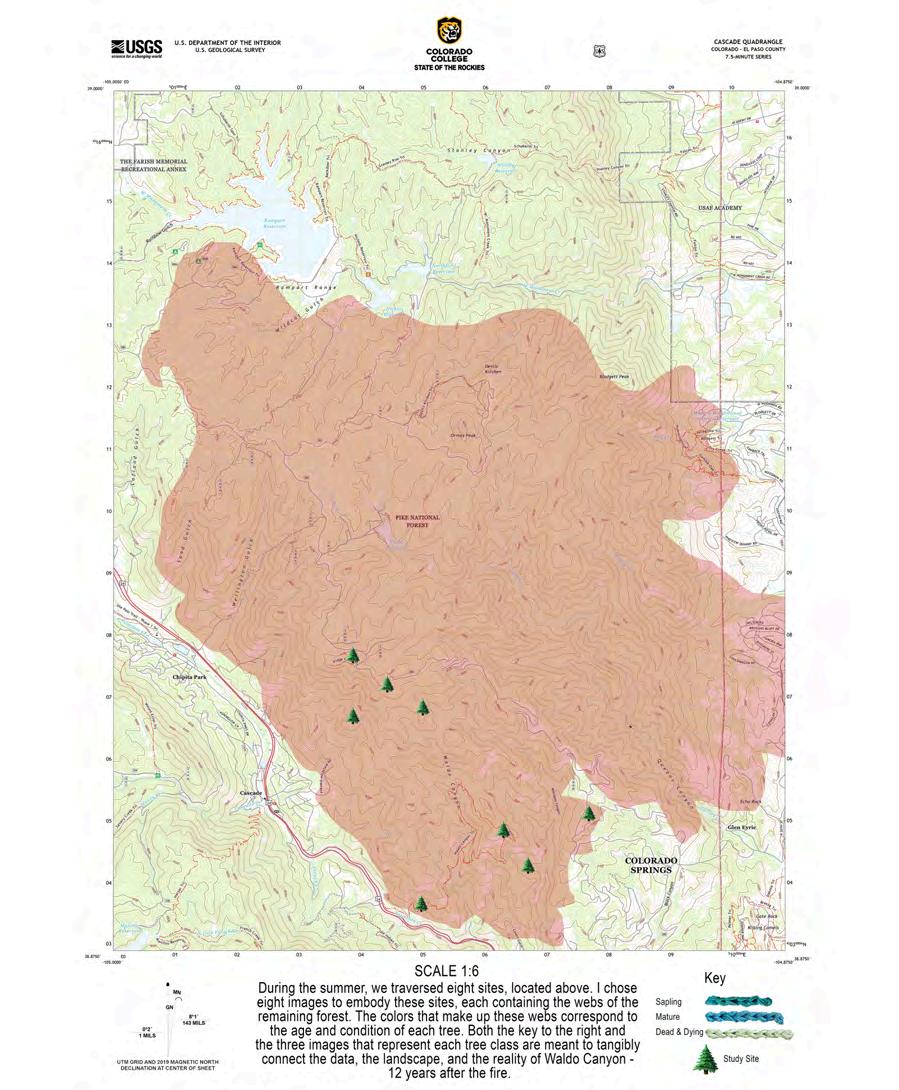
Ollie‘25isaBiochemistrymajorandishopingtominorinartstudio.HegrewupinLittle Rock, Arkansas - but has always been drawn towards the Rocky Mountain region. Ollie enjoys integrating art into as many aspects of his life as possible - particularly through photography.ItwasinColoradowherehefirstdiscoveredphotography,andnowalmost 10yearslaterheisecstatictousephotographythissummeraspartoftheWaldoCanyon ResearchProject.
Sapling
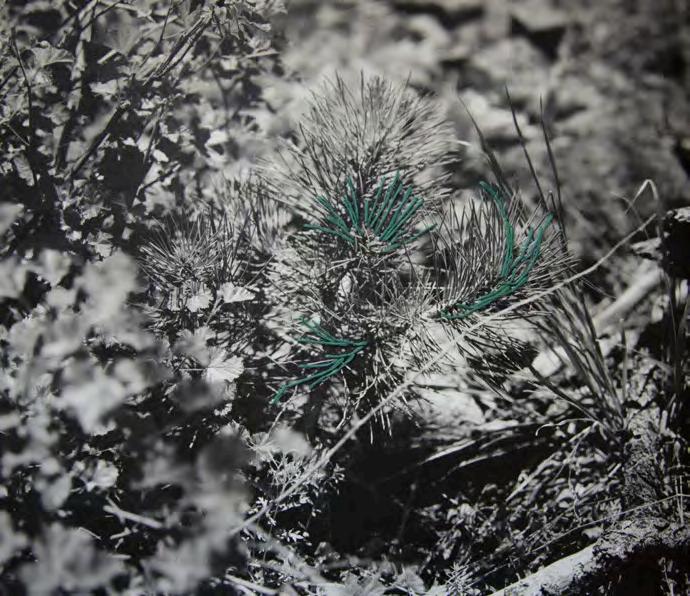
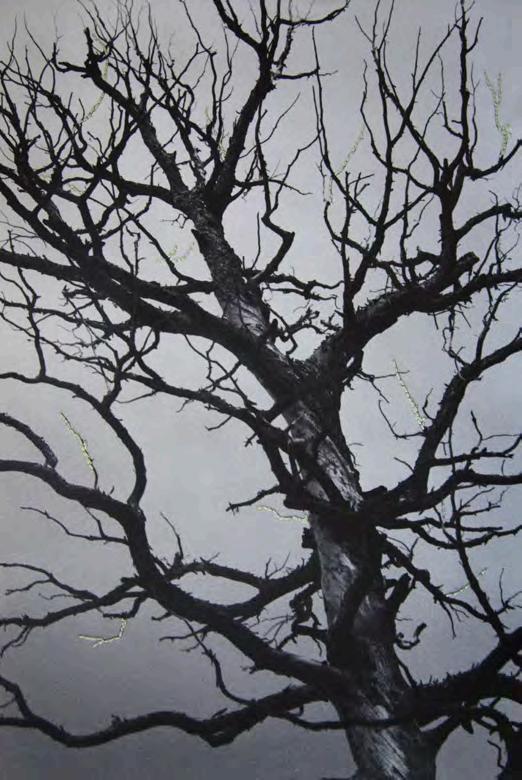
Dead and Dying
Embroidery Work by Ollie Beland
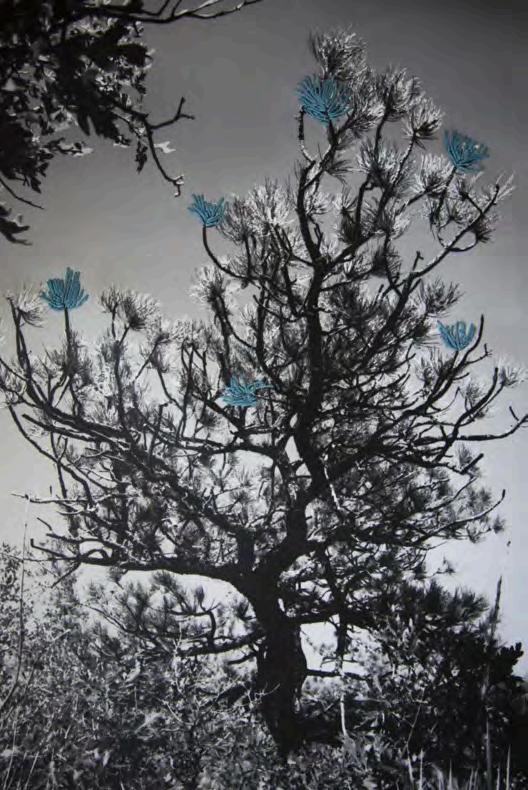
Mature
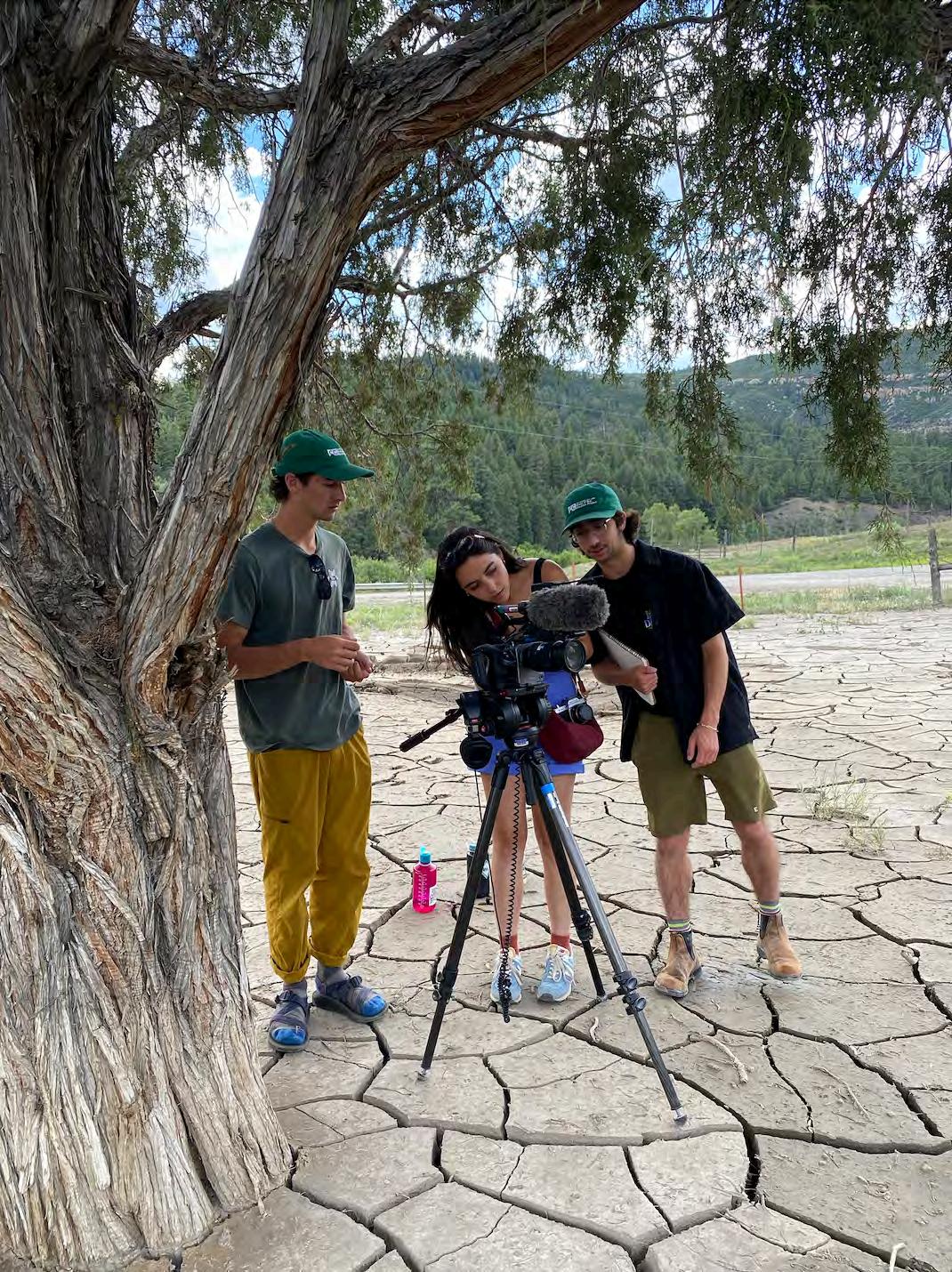
Summer 2023 Film Rootbound
By Alice O’Neal-Freeman
In the summer of 2023 Colorado College students Audrey Colgin ‘23, Sada Schumann‘26,MatanFields‘26,Melanie Shea '22, Daniel De Koning ‘23, and Charlie Marks ‘26 created the short film Rootbound with the assistance of Aaron Patterson‘12,andCyndyHines.
SincethenithasbeennominatedforBest Student Film at both the Seattle and WinterParkFilmFestivals.
The State of the Rockies launched the AdventurousSpiritFilmprogramin2023. Thegoalistocreateaspaceforstudents
toflextheirstorytellingskillsinresponse tothequestionofhowlifewillchangedue to climate change, and how we address these changes. 12 minutes long, Rootbounddelvesintoapost-apocalyptic world with a water crisis. The “dry-land people”haverunoutofwaterandcanno longergrowcropsontheirland.Theelites have all the water they need and lush, thriving gardens, but are unwilling to sharewiththe“dry-landpeople.”
Sada Schumann, a director and writer of the film, is also the post-production producer.Shesubmittedthefilmto
variousfilmfestivals,mainlythosewitha western audience. She explains that the film is rooted in western landscapes, and the team based the film’s themes on the resultsfromtheStateoftheRockiespoll. Theyanalyzedtheresultstodiscernwhat people in the Rocky Mountain region are worried about. They then turned to translating these concerns narratively; water scarcity clearly coming out on top. Schumann intentionally focused on festivals that would reach the people the filmiscraftedabout.
TheWinterParkFilmFestival(WPFF)
2024 Adventurous Film Team members Charlie Marks, ‘26, Jess Duran, ’25, and Matan Fields, ‘26 make final adjustments before rolling the film. | Photo by Ellie LaCasse '26
looks to “spotlight filmmakers and their experiences, fostering a platform for creative expression.” Rootbound will be screenedattheWPFF.IreachedouttoSFF Festival Director Michael Ray, who said “what we look for are excellent productionvalueswithnomajorerrorsin the editing, framing, camera work etc., and then of course compelling stories, innovatively and well told.” Three team members, Colgin-Hubbard, Schumann, and Hines attended the Seattle Film Festival (SFF) awards ceremony in Edmonds,Washington. Theydidnotwin, but their nomination is a recognition of reaching these standards. Matan Fields, who worked on writing, scoring, and lighting Rootbound sayshegotquiteclose withthepeopleontheteam,andisproud ofthemall.Heishappytheycanallshare this celebration. Charlie Marks, who was co-director of photography and edited much of the film, enjoyed “getting the validation that something [they] worked so hard on and put so much time into turnedoutprettycool.”
Fields and Marks noted the collaborative nature of Rootbound. “Adding everyone’s creative brains together made it special,” Marks asserted. Fields continued in this vein,usingtheclimacticfightsceneasan exampleoftheteam’scollaboration:“this fight scene was Charlie’s brain child, he kind of had that idea. And then it was filtered through all these other peoples’ writing styles, then Daniel and Charlie's filmingstyle,Audrey’sdirectingstyle,my lighting style.” Bringing everyone’s perspectives and ideas together despite the formal roles they undertook resulted inaunique,beautiful,andimpactfulfilm. Their hard work has already paid off, while there are still festivals remaining thathavenotsentouttheirnominations. In being recognized for their film, Rootbound’s filmmakers have increased the reach of the State of the Rockies’ message around the conservation of essentialresourcesintheWest.

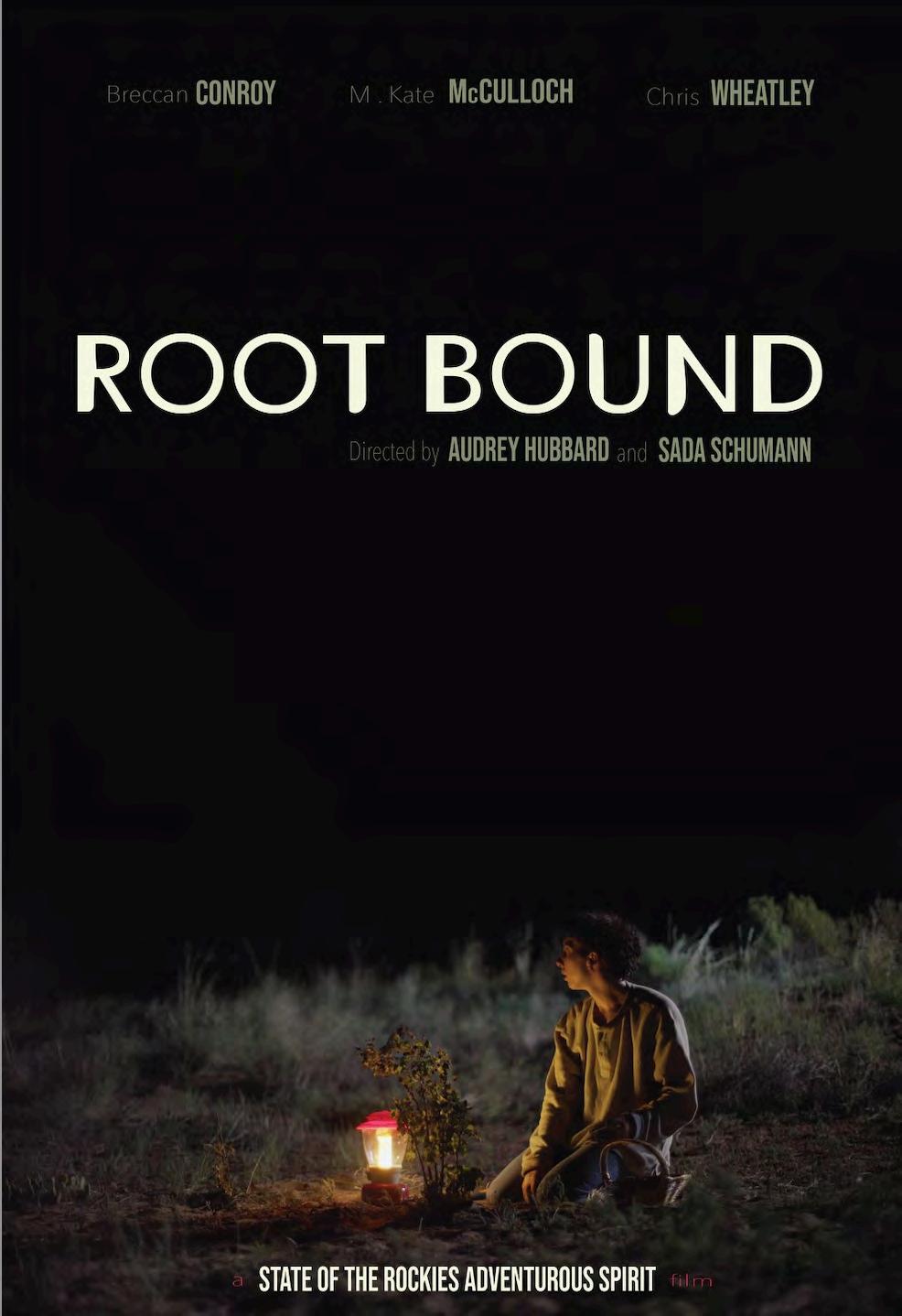
Cyndy Hines, Sada Schumann, ’27, and Audrey Colgin, ‘24 at the Seattle International Film Festival Awards gala, Seattle, Washington, July 2024.
towatch Rootbound
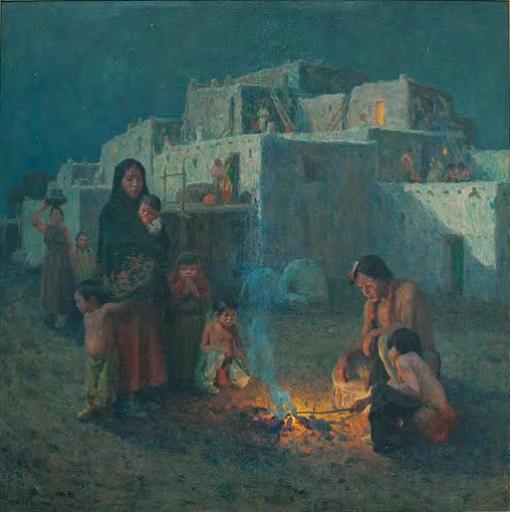
THE INFLUENCE OF THE COSMOS IN AMERICAN WESTERN ART
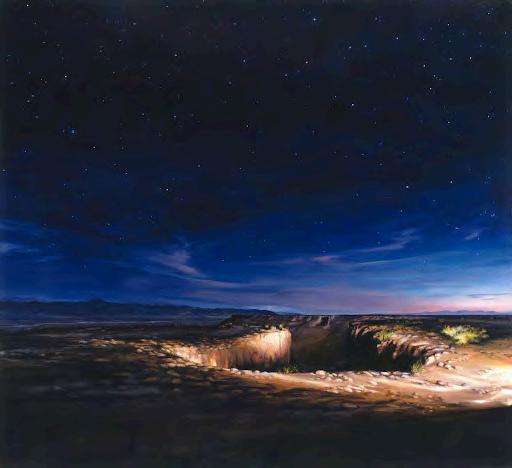
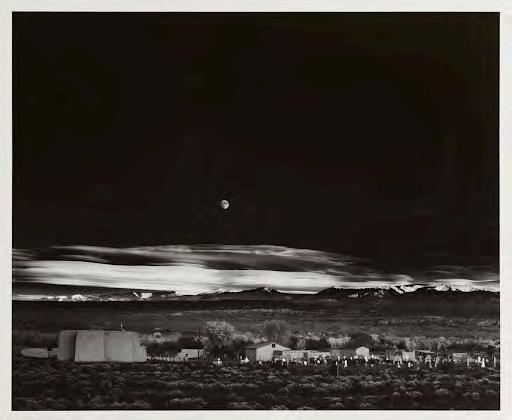
Ansel Adams, Moonrise, Hernandez, New Mexico, 1941, Courtesy of the Ansel Adams Publishing Rights Trust: Denver Art Museum
E. Irving Couse, Taos Pueblo - Moonlight, 1914, Courtesy of the New Mexico Museum of Art
Don Stinson, High Beams and Starlight, 2004, Courtesy of the Denver Art Museum
Paula Wilson, Catching the Night, 2021, Courtesy of the Tamarind Institute
Big Starry Skies: Does out of Sight Mean out of Mind?
By Sarah Bedell, ‘24
This light pollution project uses art to bringawarenesstotheimportanceofthe night skies to humans artistically, culturally,andhistorically.Withthegoal of tracing the importance of the stars to humansthroughtime,wehopetoremind the public of the long-standing significanceofthecosmostoourspecies. Art is the medium; the evidence through whichweworkedtoaccomplishthisgoal. This project involved research and curation work of night sky artwork depicting or created in the Rocky Mountain West. We developed a virtual gallery/exhibit in relation to State of the Rockies'DarkSkieswork.
We approached the topic of light pollution from an art history perspective to create a virtual museum exhibit. The Manual of Museum Exhibitions states thatthepurposeofamuseumexhibition is to "transform some aspect of the visitor's interests, attitudes, or values affectively, due to the visitors’ discovery ofsomelevelofmeaningintheobjectsor content on display.” In effort to inform and transform visitors’ awareness, interests,attitudes,orvaluessurrounding light pollution, we showcase in this exhibit, artwork from the Rocky Mountain West that features the night sky. This exhibit is meant to be an example of how the night sky opens our emotions and awe and how it continues to inspire artists in different ways. The artwork featured comes from museums across Montana, Wyoming, Colorado, andNewMexico.Thisvirtualexhibitwill exist on a website tied to Colorado College for educational purposes. The exhibit is planned to be launched in the summerof2024andisplannedtobelive foraboutfiveyears.
This exhibit is meant to be an example of how the night sky opens our emotions and awe and how it continues to inspire artists in different ways.
Sarah Bedell ‘24 (she/her) majored in Museum Studies and minored in Performance Design. Sarah is an artist and exploredhowshecanlendhercreativeeyeto museum and theatre design in college. She is grateful for this opportunity to work with StateoftheRockiestopracticehercuratorial skillsandadvocatefortheimportanceofart.

The Economics of the Night Sky
By Alice O’Neal-Freeman, ‘27
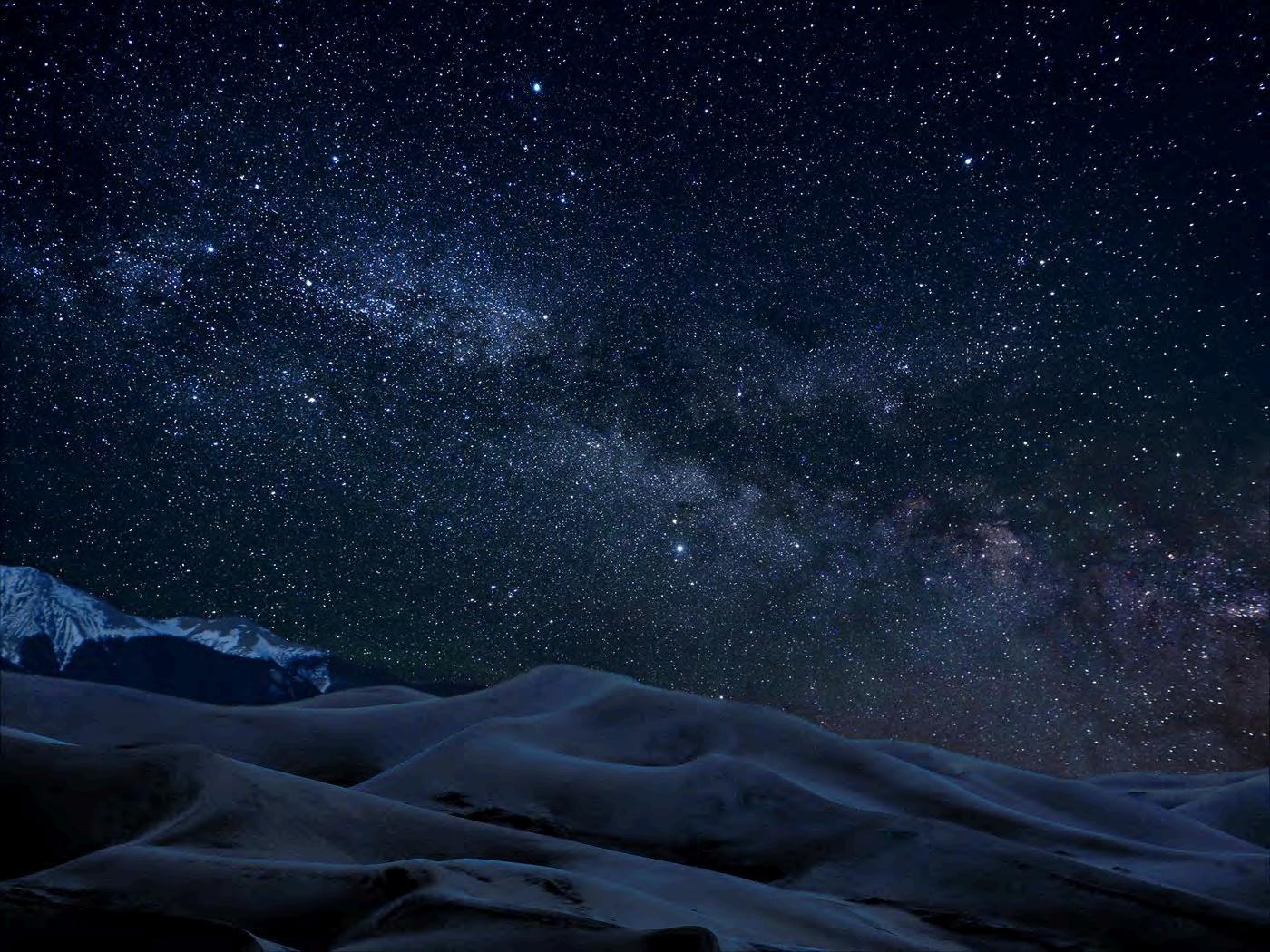
gazing up at a sky full of stars. It is Colorado College’s second block break of Fall 2023. Colorado's Great Sand Dunes National Park and Preserve was designatedanInternationalDarkSkyPark in 2019, and they can see the Milky Way. Theyaresurroundedbysandduneswhich extend about 30 miles along the western slope of the Sangre de Cristo Mountain Range. Tourists cross oceans and state lines to reach the dunes, which are the tallest in North America. Professors Guanyi Yang, Mark Eiswerth, and their team of students had spent the day surveyingvisitorsatthePark.Theytalked todozensofpeopleaboutthesignificance ofthenightskyintheirexperienceofthe GreatDunes.
The research project integrated the ecological and economic aspects of light pollution as well as integrating CC and the University of Northern Colorado. Dr. Yang is an assistant professor of Economics and Business at CC who partnered with Dr. Eiswerth, a professor of Economics at UNC. Three CC students and two UNC students joined them. I contacted Dr. Eiswerth and Liam Mullen, oneoftheCCstudentresearchers,tolearn moreabouttheirresearchandexperience.
Titled Tourism Response to Dark Sky Conservation at the Great Sand Dunes NationalParkandPreserve,Dr.Yangand Dr.Eiswerth’sresearchprojectdelvesinto the economic value of conserving starry skies. When asked why he chose to researchthistopic,Dr.Eiswerthexplained that he has “been very concerned about the negative impacts of night light pollution for quite some time now,” and that “it simply seems somewhat sad that we, as well as our children and grandchildren,arenotabletoseestarsat night in the same way that preceding generationsmayhavebeenableto.”
Light pollution’s effects have been well studied environmentally, but less so economically. Artificial night lighting can disruptspecies’foraging,communication, and reproduction behaviors, all essential to survival (Longcore and Rich). Dung beetles navigate by the stars (Cuda Kroen),andharborsealsdirecttheirlong swims by the night sky (Sokol). In addition, much research has been conducted on the economic costs of wastedartificiallight.
But what about the economic value thousandsofvisiblestarsbringbymeans oftourism?Howmanypeoplewould

continuetovisitnaturalspacesiftheclear starry skies were diluted? Are pristine night skies economically beneficial to conserve?
This final question is the one Dr. Yang and Dr. Eiswerth posed for their project. Withthisinmind,theycraftedasurveyto track demographics, how much people valued a trip to the Park, and possible change in their visitation behavior if the nightskyattheGreatSandDuneshadthe same amount of visibility as where they lived. Their goal was to measure current visitation behavior and predict future visitation behavior if night sky visibility changed. Their survey hammered out, they headed to one of five Dark Sky designated national parks in Colorado to survey the public. The heavily trafficked Great Sand Dunes National Park and Preserveprovedaperfectlocationfortheir research.
Liam Mullen, a rising senior majoring in economicsatCC,toldmeaboutthedayto day process of conducting surveys in the Park. He said that the experience was “pretty fun,” and “it was a nice time of year to be there.” Liam also enjoyed the experience of their collaboration with Fred Bunch, the Chief of Resources ManagementatGreatSandDunes.
Great Sand Dunes National Park and Preserve, Milky Way over dunes.
Photo by National Park Service | Patrick Meyers.
to NPS Great Sand Dunes after dark site, with video Link
They surveyed for three days, doing two sessions daily and breaking for lunch in between. According to Mullen, many peoplewerereceptivetotheirrequestfor participation in a survey, and agreed. In total they surveyed 367 people (Eiswerth etal.).Dr.Eiswerthcommentedthat“inperson survey work is always very challenging.Itisnoteasy,anditrequiresa special recipe of attention to detail, dedication to working long hours, and strong interpersonal skills in terms of interacting with the public. Our team of students did marvelously in this regard and, due to their skills and enthusiasm, we met with success despite the difficultiesthatarealwaysencounteredin suchfieldwork.”
Upon return to CC, they used the data they collected to answer the research question of the value of dark sky conservation. They analyzed the data, including the survey data in addition to the geolocation data of the survey participants.First,thestudentresearchers inputtherawdataintoExcel.
Dr. Yang collaborated with the students onthedataanalysis,andMullenretrieved thegeolocationofthesurveyparticipants from VIIRS (Visible Infrared Imaging Radiometer Suite) data based on visitors’ home zip codes. VIIRS provides earth imagery from a shared satellite between NASA and NOAA. Mullen pulled VIIRS Day/Night Band (DNB) data in order to quantifythelightpollutioninotherareas of the country. They then compared the nightskyvisibilityatGreatSandDunesto that of their survey respondents’ home regions,aswellasthatofnearbyAlamosa andBreckenridge.
Drs.YangandEiswertharestillpolishing the final report, and they hope to get it published in an academic journal. Therefore, the findings are somewhat “under wraps,” as Mullen puts it. However,broadlyspeaking,theirfindings indicate that the majority of those surveyed have college degrees and come from suburban areas. A little more than half of them had seen the night sky at GreatDunes.Importantly,almosthalfof
all respondents asserted that they would spend less time at the Park if it had the samenightskyastheirhome.
The professors analyzed the data for the economic impact of increases in night light pollution. To do so, they calculated estimates of the annual decrease in local spendingattheParkifthereareincreases innightlightpollution.Theirpreliminary resultssuggestthattherewouldbelosses of hundreds of thousands of dollars if there was more light pollution (Eiswerth etal.).
So why is this research significant? Well, Dr. Eiswerth states that it has been a “chance for [the] team to make a contribution on a topic on which very little research has been conducted to date.”Theeconomicvalueofdarkskiesis novel information with potential impact onenvironmentalpolicies.
This study unveils possible economic lossesiflightpollutionincreasesatGreat Sand Dunes National Park and Preserve. Indeed,onewondersifthispatternwould hold at Dark Sky sites throughout the country. Perhaps this study will catalyze moreresearchonthetopic.
Ecologically, the loss of clear night skies hashaddevastatingeffects,yetcontinued development and with it glaring night lights grind on. Artificial night lighting is fatal to a third of the insects that congregatearounditeverynight(Daley). Atthebottomofthefoodchain,thelossof these insects has a domino effect throughout ecosystems. Nevertheless, 9,500newapartmentunitsarebeingbuilt in Colorado Springs alone, many in rural areas. Lights are usually on around the clock at these sites. However, with extensive financial losses uncovered by Drs. Yang and Eiswerth in the equation, the case for conserving our night skies mayjustbestrengthened.

Guanyi Yang is a computational macroeconomist whose research focuses on inequality and labor market frictions. His work explores the impact of these frictions on welfare loss during recessions and the factors that contribute to income and wealth inequalities over time. Growing up in a mining town in China has given him a unique perspective on the anthropogenic impact of resource extraction on local communities, which informs his research on economic development and community well-being in the Rockies region. Through his work, Guanyi seeks to deepen our understanding of the relationship between economic policies, development practices, and the social and environmental landscape of the Rockies region.
Mark Eiswerth is an Economics professor at the University of Northern Colorado. He worked with Guanyi Yang in 2022 and 2023 to conduct dark sky conservation research at Great Dunes and has been a visiting professor several times over the last few years in the Economics Department at CC. His research focuses include Environmental and Natural Resource Economics.
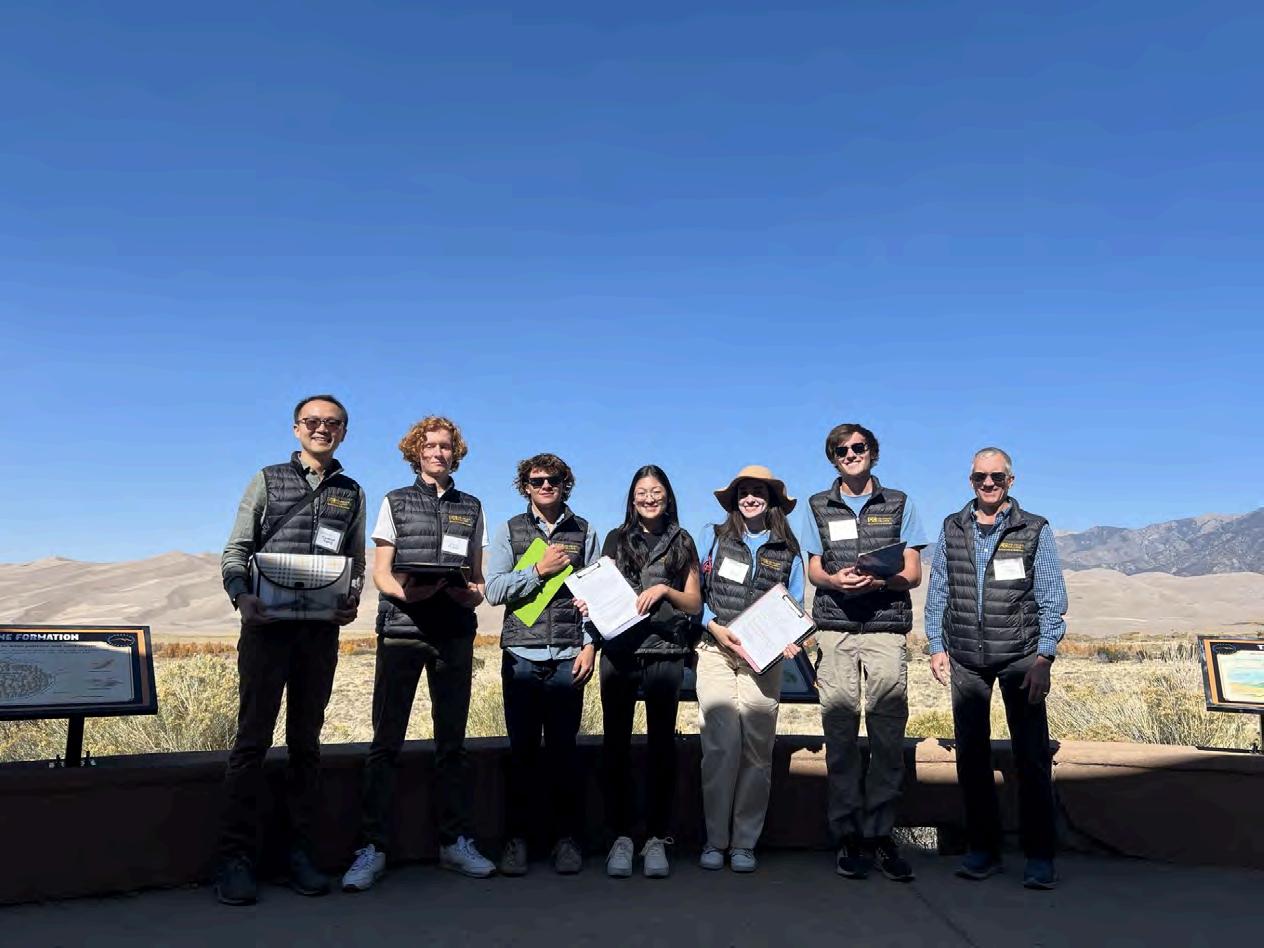
References
Cuda Kroen, Gretchen. “Dung Beetles Navigate by the Milky Way.” AAAS Articles DO Group, 24 Jan. 2013, https://doi.org/10.1126/article.26499. Accessed 22 July 2024.
Daley, J. The Devastating Role of Light Pollution in the 'Insect Apocalypse' Smithsonian Magazine. 25 November 2019, https://www.smithsonianmag.com/smart-news/light-pollution-contributes-insect-apocalypse-180973642/ Eiswerth, Mark, et al. Tourism Response to Dark Sky Conservation at the Great Sand Dunes National Park and Preserve.
Experience the Night - Great Sand Dunes National Park and Preserve (U.S. National Park Service). www.nps.gov/grsa/planyourvisit/experiencethenight.htm.
Longcore, T. and Rich, C., “Ecological light pollution.” Frontiers in Ecology and the Environment, 2004, 2: 191-198. https://doi.org/10.1890/15409295(2004)002[0191:ELP]2.0.CO;2
Meyers, Patrick. “Great Sand Dunes National Park and Preserve, Milky Way over Dunes.” Dark Sky, 5 May 2019, darksky.org/news/great-sand-dunesdesignated-as-international-dark-sky-park.
Sokol, Joshua. “What Animals See in the Stars, and What They Stand to Lose.” The New York Times, 29 July 2021, www.nytimes.com/2021/07/29/science/animals-starlight-navigation-dacke.html. Accessed 22 July 2024.
From left to right: Guanyi Yang, Liam Mullen (CC), Benjamin Slater (CC), Avery Morgan (UNC), Duaa Nakshbandi (UNC), Jacob McDougall (UNC), and Mark Eiswerth surveying at the Great Dunes. Photo taken by unknown Great Dunes visitor
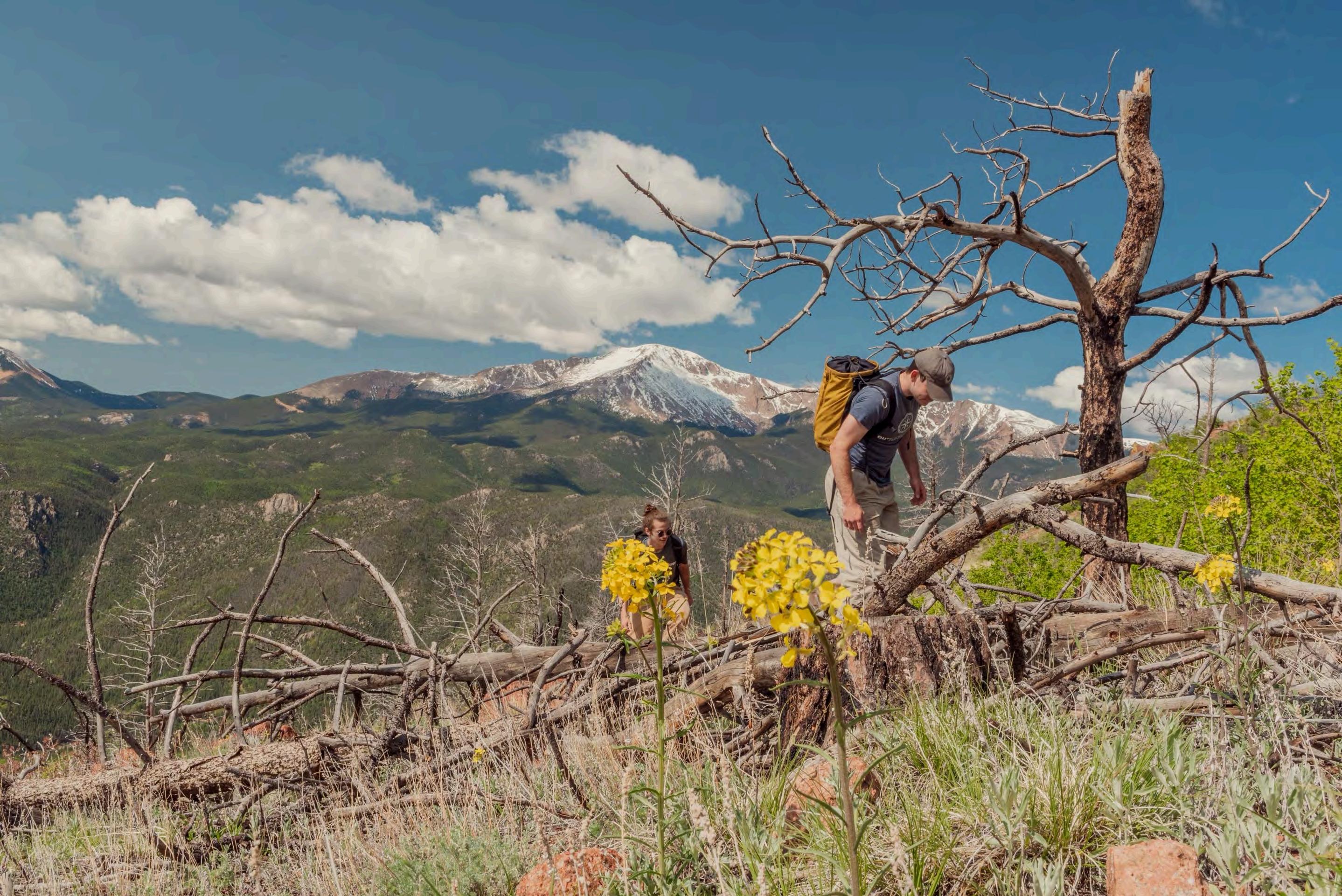
2024 Research Projects
2023 Waldo Canyon team members Theo Ollier, ‘26, and Liam Kielty ’26 hike during a day of field work | Photo by Maren Greene '24.
Investigating the Influence of Light Pervasiveness on the distribution of population demographics in three Rocky Mountain Western cities
By Alice O’Neal-Freeman, ‘27
The Rocky Mountain West is one of the fastestgrowingregionsinthecountry.As people continue to move near the mountains for access to outdoor recreational activities, economic opportunity, and surrounding views of rugged mountainous landscape, we are challenged with the problems of population growth and an increasing builtenvironment.
Stunning,star-fillednightskiesarealsoa draw to the region. Increased artificial lighting is a threat to this pristine night sky visibility. As the development in the Rocky Mountain region increases, does light pollution rise with it? And within these mountainous cities are there demographic differences based on levels oflight?
State of the Rockies sutdent researcher, Alison Mueller-Hickler, 26', is focused on
She is studying the relationship of artificial light pollution and growth and development in three Rocky Mountain West cities. Phoenix: the fastest growing and fifth largest city in the West, Albuquerque:acitythatgrewrapidlybut is now on the decline, and Colorado Springs, one of the fastest growing cities ontheFrontRangeofColorado.
She is investigating who the biggest contributors of light pollution are in addition to their location, and whether race and crime in the most/least artificially lit areas is the same. Alison’s project is related to Megan’s in that they are both trying to identify major contributors to light pollution in the Rocky Mountain West. Alison in already heavily populated areas, and Megan in areas where population growth and development is increasing in towns proximal to popular outdoor recreation locations(Moab,Monticello)whoarealso seeingincreasesintourism.
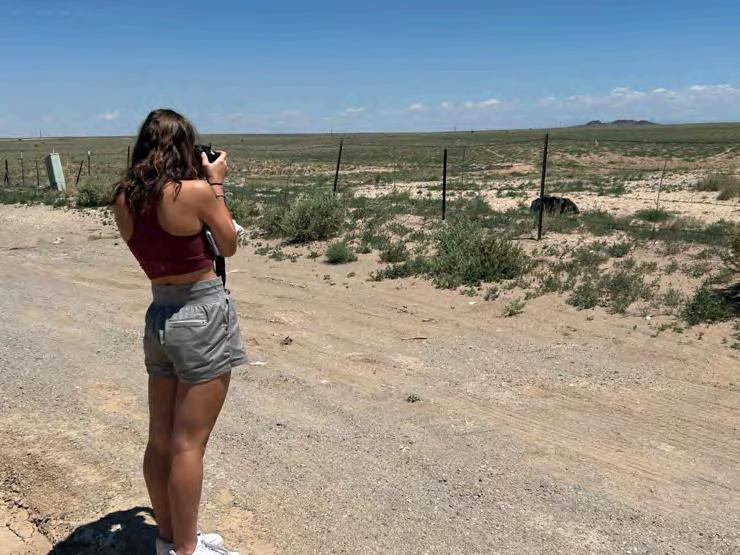
Alison Mueller-Hickler, ‘26
Alison is interested in the relationship between the amount of artificial light emittedanddevelopment.She setoutto study some of the fastest growing cities in the Rocky Mountain West: Phoenix, Albuquerque, and Colorado Springs. She traveled to and through these cities to dozens of sites she mapped over them, taking pictures during the day and returning for light measurements and more pictures at night. Sometimes she finishedaday’sworkat12:30am. Alison’s project is the bigger picture of light pollution in the Rocky Mountain West, with historical vs current photo comparisons from the more rapidly developing cities. Alison is also using historicalaerialimagesfromtheUSGSto track development. She is then visualizing her collected data and VIIRS data on the three cities using GIS. She is working to determine if there is a correlation between demographics and light pollution. She pulled age, sex, location, and other demographic informationfromthecensusdata,andis comparing this data on demographics to crime rates in these cities, as well as comparing it to the light measurements she took. She will do an analysis of the linearregressionmodelingthisdata.She hasinterviewedmanypeopleoverZoom, including the founder of Dark Sky international. She was invited to show her work at a Dark Skies seminar in October. Alison is looking to publish a paperonherresearch.
Alison taking pictures of a site on a research trip to Albuquerque. Photo by Cyndy Hines
The Public Lands Survey Team Individual Projects
Megan O’Brien, ‘25 Meganisinterestedinpredictingpossible future light pollution if development continues. She is focused on the towns Blanding, Monticello, and Moab near BearsEars.SheisalsotheDarkSkiesteam Artist in Residence: in addition to collecting light pollution data, she has been interviewing people she encounters around Bears Ears about the meaning of thestarstothem,andtakingtheirphoto. She looks to combine data and art with herproject.
Meganiscreatingagridofdatapointsin the biggest developments/towns near Bears Ears, and taking photos and light measurements at those points. She scheduled meetings at local libraries searchingforhistoricphotosinthetowns ofBlanding,Monticello,andMoab.Sheis then comparing the current photos she takes and the historic ones she finds in order to get an idea of the changes in developmentaroundBearsEars.
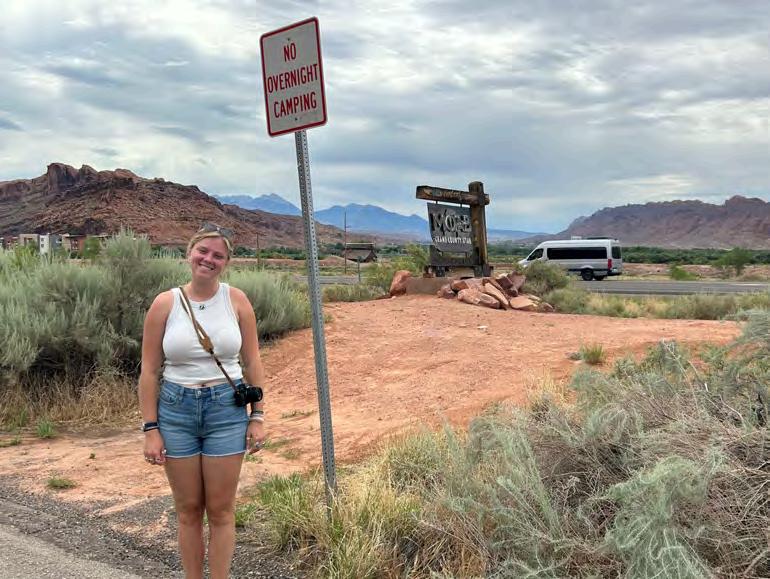
Megan pored through VIIRS (Visible Infrared Imaging Radiometer Suite) data tofindthebrightestartificiallylitsites
nearBearsEarsasseenviasatellite.Sheis investigating the biggest threats to Bears Ears’darkskies.
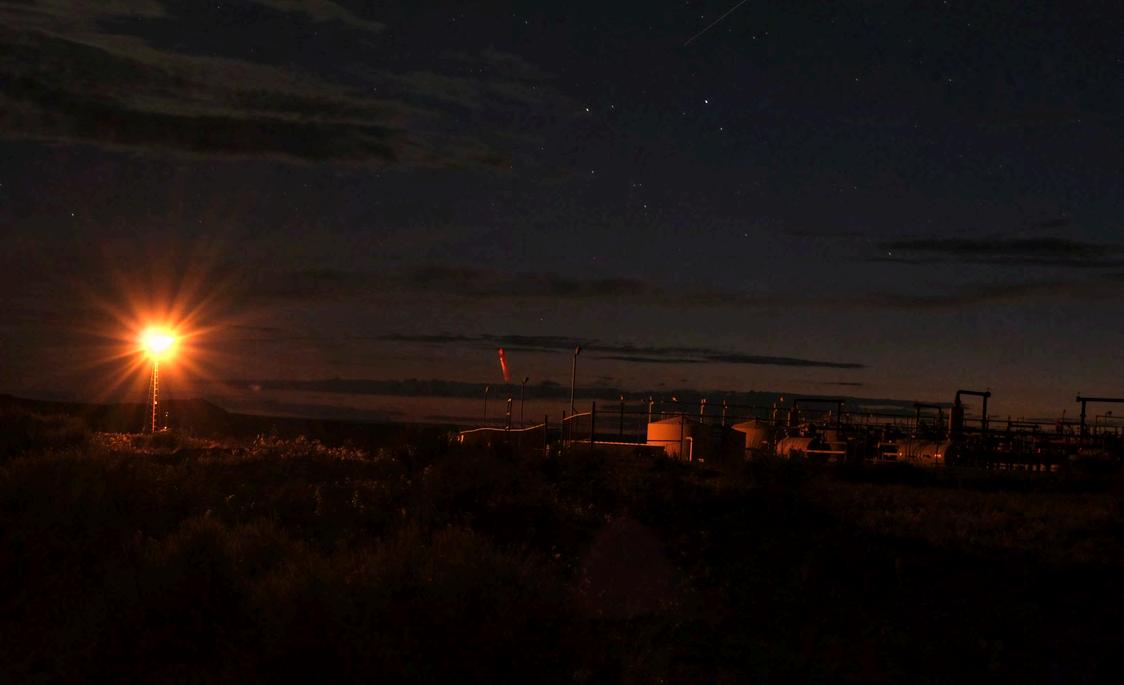
Megan O’Brien in Moab, July 2024, during a reconnaissance trip. Photo by Cyndy Hines.
Flares at Elk Petroleum South, Montezuma Creek , Utah, Photo by Megan O’Brien, ‘25
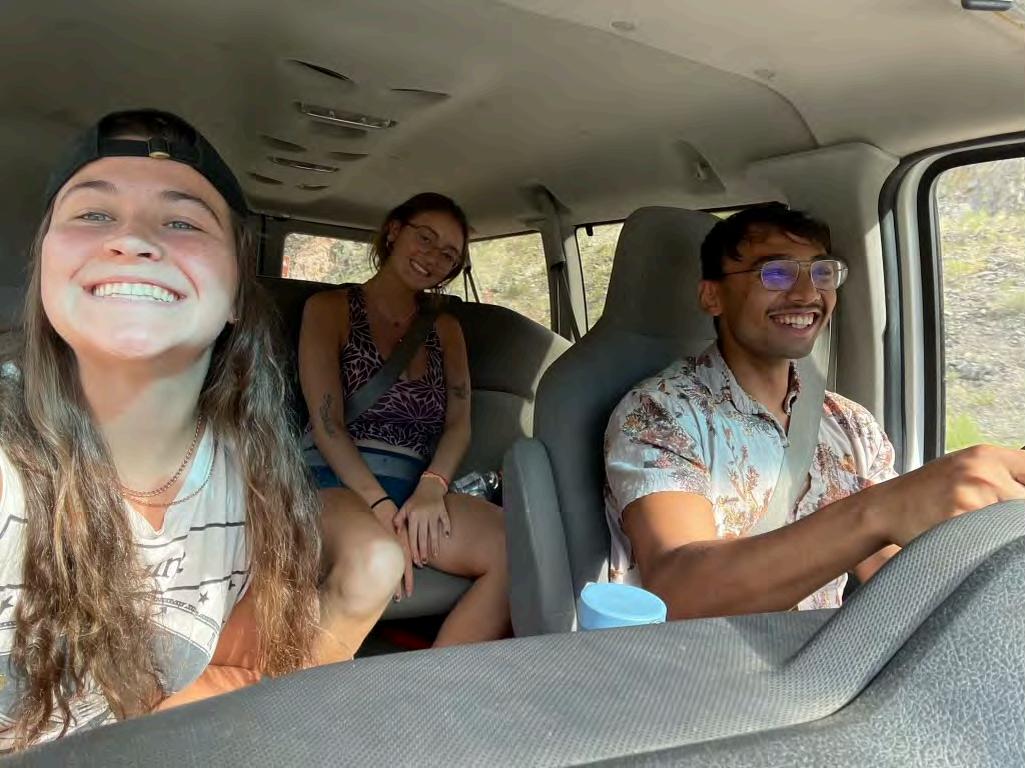
visitingsemi-closetothemonument.
Hissurveyfocusedonpeoples’connection to the stars. He asked if respondents observe the night sky frequently, if they have seen a change in the night sky visibility, and if light pollution has impacted their activities, among other questions. Additionally, he asked for demographic information as he looks to analyze differences in how varying age groups think about the night sky. It came tohisattentionthatalotofpeopledidnot realize night sky visibility has changed in many areas and there could be more changeinthefuture.
Mustafa is also working on a Dark Skies website as a place to compile all the research State of the Rockies conducts on lightpollution.
Natasha Thomas, ‘24
The Bears Ears Inter-Tribal Coalition wants to understand how their community outreach is doing in terms of thenewco-managementplan;howmany people knew about it around Bears Ears. Natasha undertook this project, and surveyedpeoplenearthemonument.She askedthemiftheyhaveatribalaffiliation, if they know about the changes in size of theMonument,andiftheyparticipatedin the meetings held for public input on managingthearea.
Natasha traveled to Bluff and Blanding right next to the Monument, as well as more towards the Four Corners. She surveyed on the Southern Ute, Mountain Ute, and Navajo reservations. Natasha interviewedpeopleinandoutsidegrocery stores, at gas stations, in trading posts, and outside on the street. She has talked tomanyNativepeople,butalsoMormons andotherresidentsoftheSoutheastUtah region.
Thethemeofthecomplexityinidentities andinterestsintheareabecameapparent
to her through her interviews. Oil companies looking to profit off the land, native people looking to protect it, yet othernativepeoplelookingforajob(with the oil companies if needed), Mormons looking to make use of the land they believe is there for their use, ATV enthusiastslookingforexhilartatingrides ontherockyland.Natashahashearditall this summer. She wrote a long-form journalismstoryaboutallthesedifferent perspectives coming together in one place, the fight for the varied resources BearsEarsoffers.
Mustafa Sameen, ‘26
Mustafa initially wanted to study the impact of light pollution on people around the Bears Ears National Monument. He is interested in the cultural practices of indigenous people centered around the stars. After his first trip in the field his research shifted, and he spent the summer surveying Native peopleonreservationsaswellastourists
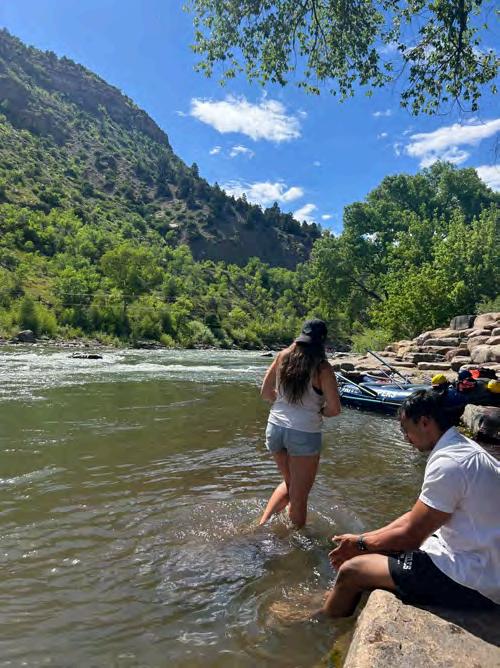
Natasha and Mustafa wading in the Animas River, near Durango, CO on a research trip. Photo by Alice O’Neal-Freeman, ‘27.
Natasha, Mustafa, and Alice driving Southwest in Colorado on a research trip.
Photo by Natasha Thomas, ‘24.
Landmark Venture to Co-Manage Bears Ears National Monument Digs Up History of Southeastern Utah
“border towns”
By Natalie Thomas
Oncedismissedas“wasteland”bytheUS government, Bears Ears became home to those marginalized by mainstream culture:namely,theLatter-daySaintsand Native Americans. Southeast of Bears Ears, three towns—Monticello, Blanding, and Bluff—border the Abajo Mountains. In these border towns of Bears Ears National Monument, centers our story: one of people fighting to protect what theyholddear.
Half a century after Mormon settlement, theforgotten landreceivednewattention
from the US government, when uranium deposits were discovered. Subsequently, its many other resources of “market” value were recognized: livestock grazing, mining, and recreation, to name a few. Bears Ears also holds immense "nonmarketvalue"fortheNativeUtahTribes, for its traditional, cultural, and spiritual uses.Inthepast10years,therichvalueof this land holds has led to a battle of resources — tribal nations, corporations, and environmentalist orgs. have fought overwhatshouldbedonewithBearsEars.
Until now, US government agencies have been at the helm of federal land management — under these agencies, land usage is evaluated by one big equation:X,Y,andZresourcesgetdivided accordingtotheirvalue.Butoneproblem arises with such methods: how does one assign relative importance to spirituality, livelihood, and longevity of the humanlandconnection?
Such division of land and its resources is not a practice shared by every culture. Western,Euro-centricthinkingtendsto
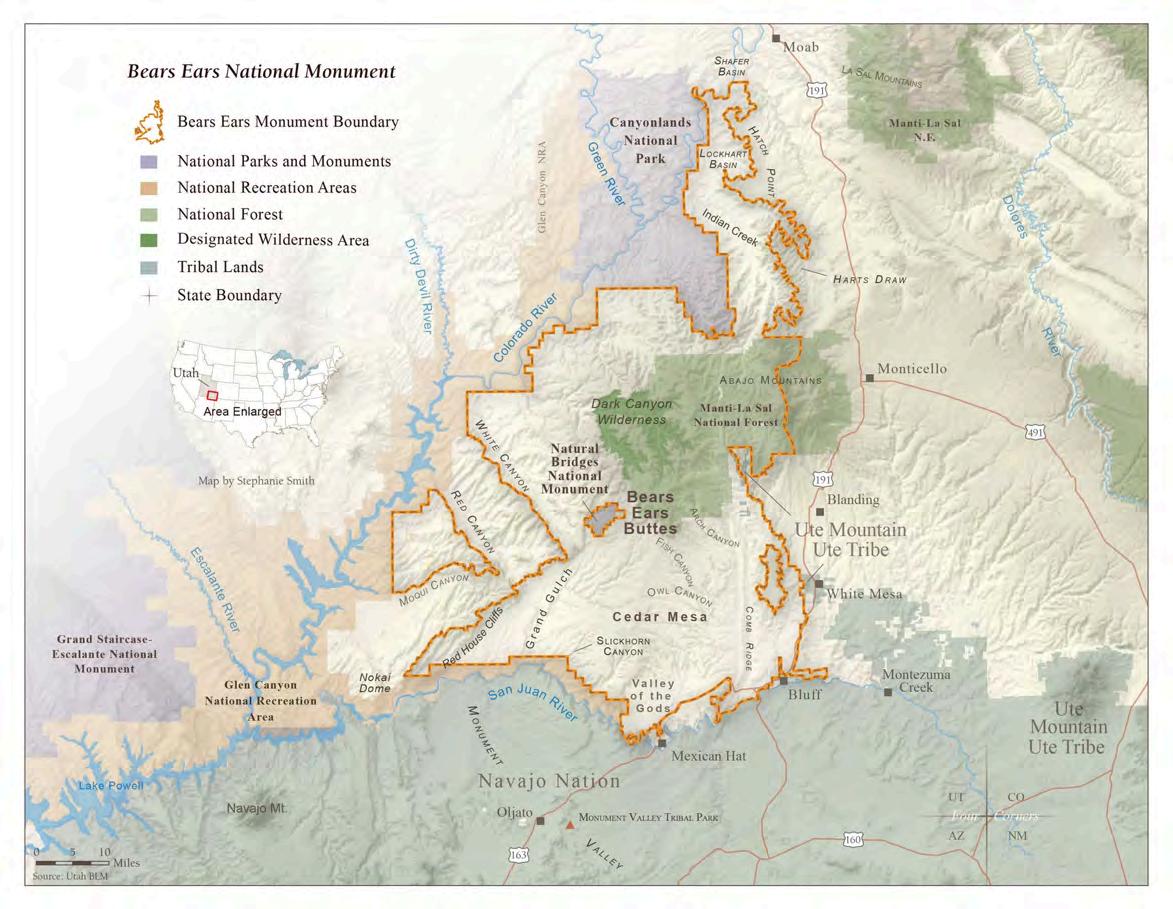
Did you know?
“Non-market value” is the term used in the land management documents created by the US Department of Interior to represent that which holds value beyond the US dollar.
treat land as an object of ownership, a concept imposed by colonizers on Native Americans. Because this ideological view of land ownership and rights is still dominant,NativeAmericansareforcedto live under this societal construct, out of alignmentwiththeirown.
In 2024, we have reached the first-ever attempt at co-management: sharing the responsibilities of land between the US Government and Tribal Nations, carried out through the Resource Management Plan.Thisisadivergencefromthetypical equational approach — Traditional Indigenous Knowledge is cited over a hundred times as reason for certain managementdecisions.
Historicallyspeaking,thismoveisradical for the US. The United States has made space for Traditional Indigenous voices land management; quite the contrary — tribeshavebeenviolentlyforcedtovacate land,assimilate,andbesilent.
MONUMENTINTHEMAKING
In the 1980s, U.S. policies began shifting from enforcing assimilation of Native Americans to promoting their autonomy. This change reflected a growing recognition of self-determination as an inalienable right for all, akin to "life, liberty,andthepursuitofhappiness."
This mindset spurred former President Obama to support the plan brought to him by a Native American Nonprofit: the Utah Diné Bikéyah. The organization’s name means “the people’s sacred lands” inNavajo;theyseektoturntheBearsEars Region, which was the place of cultural andspiritualconnectionfortribesaround it,intoaprotectedmonument.
Kenneth Maryboy, a Navajo Council Delegate and San Juan County Commissioner, was instrumental in this movement. In a 2010 letter to R-UT Senator Bennett, he reasoned: “One or more tribes occupied each county in the state for thousands of years, prior to pioneer immigration to the region. Because of this, the tribes of Utah each have strong cultural and spiritual ties, treaty rights, and interests in places throughout Utah that lie outside of reservationboundaries.”
The Bears Ears Inter-Tribal Coalition, representing the five major tribes connected to the area—the Hopi Tribe, Navajo Nation, Ute Mountain Ute Tribe, UteIndianTribeoftheUintahandOuray Reservation, and the Pueblo of Zuni— joined forces with Utah Diné Bikéyah. Despitetheirefforts,theSanJuanCounty CommissionersinFebruary2015opposed the monument proposal, advocating insteadforthedesignationofpartsof
Bears Ears as “Energy Zones” for agricultural, mining, and energy development.
TheroadblockstheseTribalNationsfaced to protect Bears Ears mirror many other challengesthathindernativehealing,ever since they were pushed off land that the US deemed too valuable — time and again, for US policy, economy trumps “non market value”. Despite this, the coalition's persistence paid off in 2016 whenObamaapprovedthedesignationof Bears Ears as a national monument, supported by a broad coalition of Native Americans, their allies, and outdoor gear companies. Thus, it was extreme whiplash, and heartbreak, when only months after Obama’s BENM institution, Trump’s administration called for an investigation of the monument's adherencetotheAntiquitiesAct.
The Antiquities Act is a law written in 1906, and it was originally intended to protect cultural sites like Bears Ears. Unfortunately, it had one sticky clause: themonumentmustoccupythe“smallest areacompatible”withprotection.
The land would undoubtedly be more profitableiftappedforitsoilandmineral resources;evenifthatresultedinextreme changes to the landscape, and all the health risks for neighboring towns that comeaboutfromindustrialmining.Under Trump, Bears Ears did not “pass” the smallest-area-compatible investigation. The monument was reduced in size by 85%, with many important cultural sites not protected. Ten years of work, taken down with the scratch of the Executive pen.
LOCALDISCONTENT
It’s no surprise that the monument’s fluctuating status has impacted the economy and daily lives in the small townssurroundingit.
Rallies were held in hopes that Biden wouldre-establishthemonument,which hedidin2021.ThecontroversyoverBears
Ears—its establishment, deestablishment, and eventual reestablishment, supported by major groups like Patagonia—has brought significant outside influence to these typicallyquiettowns.
Nowthatthelandwasbeingregulatedas a monument (on and off and on again), locals of Blanding and Monticello were fired-up to stop certain changes. The restriction of ATV access to the locally belovedArchCanyon,forexample,isone of the most contested changes our team heardwheninterviewinglocals.
Blanding has a history of passionately protectingATVroutes—it’sacorebattle foughtbySanJuanCountyGovernorPhil Lyman, who was arrested in 2014 for leading an ATV ride through closed canyons. This was in protest of federal overreach—anunderlyingfearformany livingintheseBearsEarsbordertowns.
If you ask your average Blanding Local howtheyfeelaboutthemonument,you
are bound to get one of two responses: Either extreme opposition to government/outsider interference, or hesitancy to speak on the matter. You would be hard-pressed though, to find someone who had no opinion at all -willingtoshareitornot.
If you go to the Blanding Library, you’ll likelybegreetedbysomefriendly,bubbly womenatthefrontdesk.Iwaslookingto researchthearea'sculturalandeconomic past, and they were accommodating to help me find historical reports on the town. When I shared my intentions to investigate the town’s attitude towards themonument,GinnyBrookssharedthis: “Everybody who’s local is against it, and everybody who’s not local is like, ‘Yeah, let’sdoit!’”Thetwogalsworkingwithher chimedininagreement.
Ginny is white, like about half of the population in Blanding; but she felt that those with Native ancestry, who comprised the town’s other major ethnic group,tendedtofeelthesame.“The
[native] people that I do know would go up on the mountain, chop down wood, collectnativeherbsandthings…andnow with the protection they are putting on the [monument], they aren’t able to do thatanymore”.
Other white residents shared similar views. Mike Larson is a young man who grewupinBlanding,leftforafewyearsin his adulthood, and returned to work as a socialworkerandfarmer.
“First of all, I feel that the expansion of Bears Ears was a huge overstepping for the Federal Government. Second of all, it had a huge negative effect on the local economy. A lot of people in this area are ranchers and farmers, and they count on that land to graze their cattle. It also blocked off access for the Native Americans in this area to go and gather their sacred herbs, plants, all sorts of stuff. It put a complete block on that.”
Sixteenothernon-Nativeindividualsfrom Blanding, Bluff, and Monticello echoed Larson’sviewoffederaloverreach,with
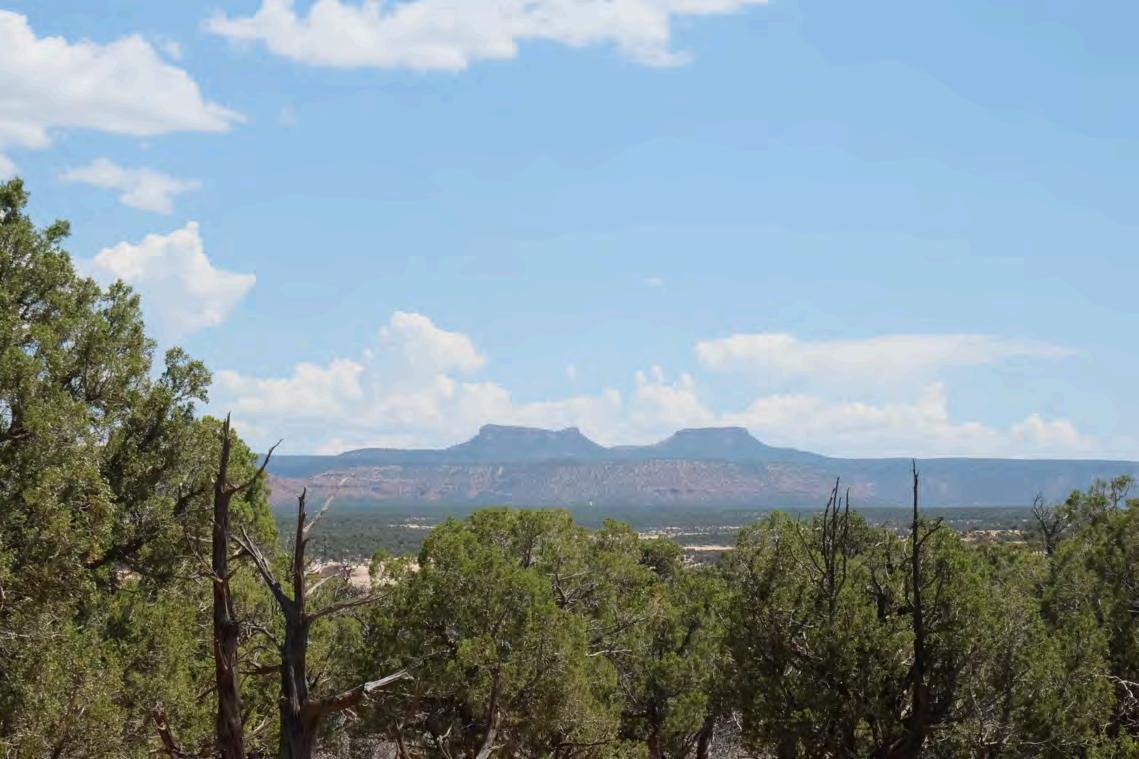
Bears Ears National Monument.
Photo by Megan O’Brien, ‘25.
thebeliefthatNativeAmericanssharethis sentiment. To understand the Native perspective, I spoke directly with those livinginthesebordertowns.
Robert Cly is a Navajo who grew up aroundthetrailsofBearsEars,andinhis adulthood, he worked in those same canyonsasacattlerancher.Hesays,“they justneedtoleaveitthewayitissopeople can enjoy, and have their families go up anduseBearsEars.”
Cly’sviewpointiscommonamongNative individuals in these towns. While they support protecting Bears Ears, they are frustrated by external directives. On the matterofco-managementwiththeInterTribalCoalition,hesimplyvoiced:“yeah… there’ssomestuffthatIdidn’tlike[about theInter-TribalCoalition].”
NavajoandUteNativeandBlandinglocal MilesHarrisonusedtoknoweverytrailin BearsEars;whenhewasyoung,hewould go exploring the different offshoots through those endless canyonlands. Throughtheyears,he’shadbuddiescome back from adventuring, and report that some of their old trails got closed off. He wants the trails to be used, loved, and takencareof;notshutofftothepeople.
He, like Cly, expressed concern at the inter-tribal coalition’s venture to comanage the monument. “I think [the inter-tribalcoalition’s]mindsaretwisted, in ways they don’t know.” Harrison believes the government will ultimately disregard the coalition’s input once they are on board. Cly says many in his social circles share this skepticism about the monument’smanagement.
Cly and Harrison were some of the few Native people living in the border towns who agreed to be interviewed; but it was more common that Native individuals werehesitanttospeakonthematter.We found folks who would share some opinions, but not want their name recordedortobeinterviewedinanofficial capacity.
These individuals tended to share opinionsthatdidn’talignwiththatofthe average Blanding local’s. Often, Native Americanslivinginthebordertownshad conflicting feelings of wanting protection for the sacred space, but seeing issues with restrictions the monument would bringabout.Astatisticalfactofourteam's investigation was that non-native people living in the San Juan County border townsweremuchmorelikelytoshare
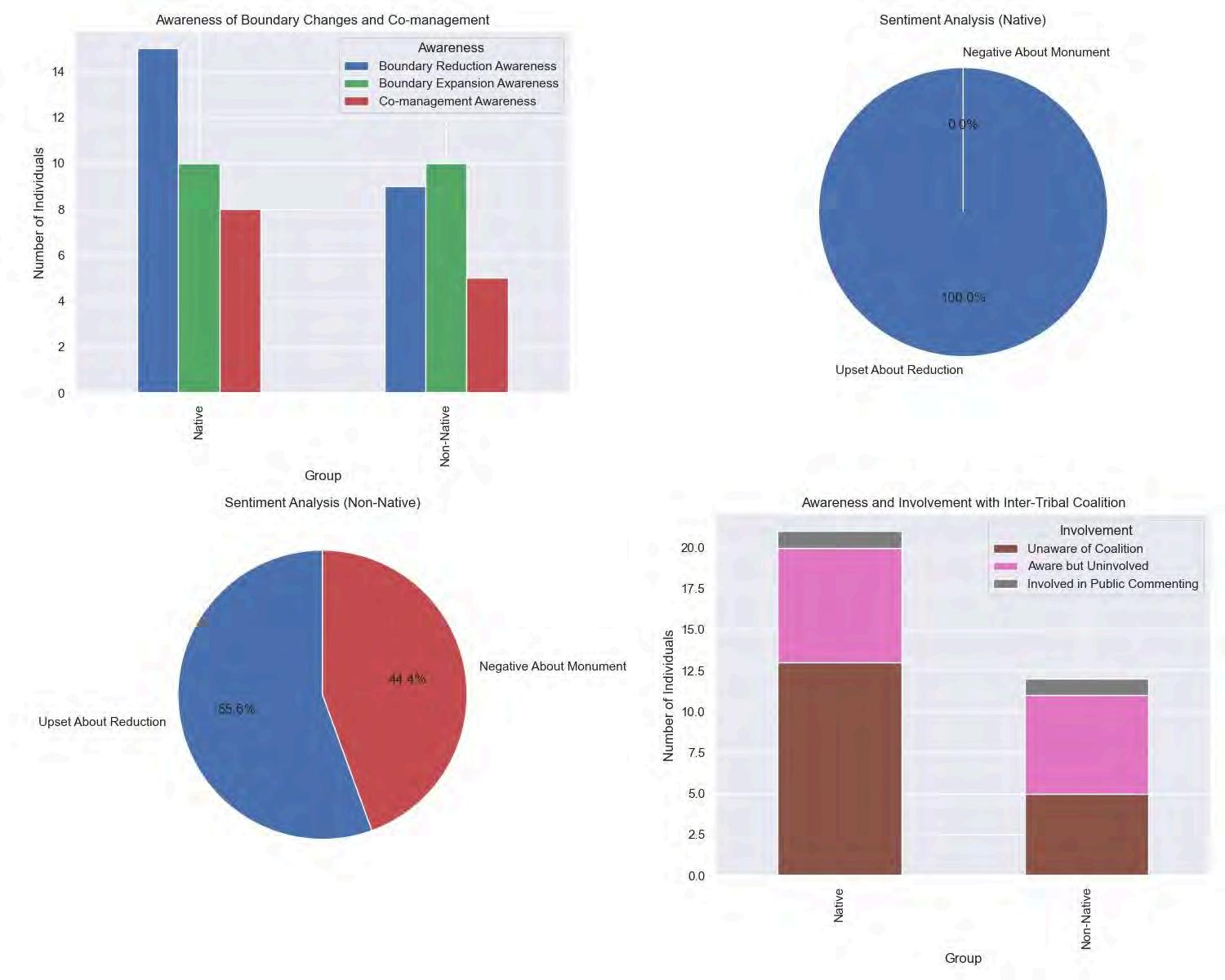
Data from N.Thomas, ‘24, summer 2024 southeastern Utah. Graphics by Mustafa Sameen, ‘26.
their opinions than those with native heritage—thisisnotafacttobeignored
THEFACTS:
I have itemized the concerns we heard from locals about the monument: (1), reduction of OHV access to certain beloved canyons, such as Arch Canyon. (2),lossofaccesstotimbercollection.(3) inabilityfornativestoengageinculturalspecificpractices,suchascollectingherbs and visiting sacred locations. (4) loss of abilitytograzeanimalsontheland. Every single alternative in the CoManagement plan allows livestock grazing;AlternativeE,whichisthatmost supportedandfavoredbytheInter-Tribal coalition, would leave 87% of the land availableforgrazing.
Under Alternative E, forest and wood products would be available for harvest onaseasonaloryear-to-yearbasis,based on close monitoring of the health of the wildlife and its needs. Similarly, vegetation gathering would be allowed with wildlife health monitoring and potential rest periods for vegetative growthortoallowforceremonialuses.
Finally, 58.8 percent of land will have managed OHV access — for comparison, this is more access than 2 other alternativeplans,thesameaccesslevelas anotherplan,and9%lessaccessthanthe alternative that gives the most OHV allowance.
Alternative E additionally plans for invasivespeciesmanagement,healthysoil maintenance, protective measures for artifacts that have been the target of looting, and implementation of the AbandonedMineReclamationProgramto clean up waste associated with abandoned mine lands. We find that many local fears seem to be based on misinformation rather than the reality of the co-managed monument. Timber access,cattlegrazing,andherbcollection remain possible. Although some OHV trails may be restricted, 800,000 acres will still be available for off-highway vehicleexploration.
Atthispointinresearch,thereisonefacet I was still very uncertain of: the frequent repetition I heard, in these San Juan Countybordertowns,ofdistrusttowards the Inter-Tribal Coalition. If this collaboration aims to enhance Native Americanautonomy,theirrepresentatives shouldbeatrustworthyreflectionoftheir needs.
(DIS)TRUST:Historicallyspeaking.
Why do such fears fester and spread through a place like San Juan County?
SpendanytimeinBlandingorMonticello, and I imagine you’d form the same impressionthatIdid—thatmanyofthe locals seeked to lead a quiet and happy life.
I never felt that they aimed to be oppositionalaboutthemonument;rather, they had genuine fears — fear that this wasallhappeningtothem,notwiththem or for them. And it was out of their control.
San Juan County is home to two significant groups: the Church of Jesus Christ of Latter-day Saints (LDS) and NativeAmericans.About38percentofthe county’spopulationareMormons,whose ancestors faced severe persecution in the 1830s and 40s. Driven from Illinois, Missouri, and Ohio, Mormons endured violent attacks and forced relocations before settling in what is now Utah. This persecution includes the Hawn’s Mill Massacre,where17Mormonswerekilled.
In1880,Mormonsundertookthearduous "HoleintheRock"expedition,descending 1,200 feet down sandstone cliffs to settle inSanJuanCounty.TheHoleintheRock Foundation now works to preserve this pioneeringhistory.
Native Americans, who make up 46 percentofthecounty’spopulation,also
have a deep connection to the land. Ancestral Puebloans originally inhabited the land, and Southern Utes arrived around1300.Ithasalsobecomehometo manyDiné(commonlyknownasNavajo): the Long Walk of the Navajo is an unforgettable atrocity committed against theDinéfrom1864-1868,oneinwhichUS soldiers “burn Navajo hogans to the ground, kill livestock, and destroy irrigated fields”. The Diné were then forced to march from various places in Arizona and New Mexico to Fort Sumner NM, and quarter there without enough foodandwater.
Hundreds of Navajo died during the grueling, sometimes 300 mile journey, andmoredeathsfollowed.
It was upon arrival to Fort Sumner when warrior hero K’aayelli led a band of Navajos to Bears Ears, escaping to the mountainsofSoutheasternUtah.
The ancestors of San Juan County have endured significant hardships and injustices;storieshavebeenpasseddown of the cruelty brought upon them. Unfortunately, there is ample reason for San Juan County citizens to be fearful of outsiders managing their beloved trails, open spaces, and spiritual sites. The 1860’s, marked by Mormon persecution and the Navajo Long Walk, was not so long ago. These traumas are a powerful deterrentofthetrustsuchacollaboration aimstooperatewithin.
COMMUNITYHEALS:
How do we heal such deeply cut wounds?
A lot was illuminated for me inside the monumentitself.Whenourresearchteam was welcomed into the Bears Ears Gathering held deep into the monument, we witnessed kinsmanship and togetherness that permeated to everyone present.HundredsofNativepeoplehad
gathered the first night of this weekend event. Circled under a big tent, Native Americans from various tribes spoke into a microphone about their connection to this land. Gourd songs and dancing were centered in the circle. The energy was starkly different from those towns of BlandingandMonticello,andevenBluff.
Thefocusofthisgatheringwasnoton meetingeconomicneeds.Itwasaspiritual engagement. This became clear when three young women tearfully spoke in theirnativelanguageaboutgrandparents who had passed away. Their stories were partofwhytheyfeltcompelledtoconnect withtheirlargerfamilyatthisgathering.
A gentleman in a Vietnam Veteran vest, adorned with a Purple Heart, spoke of friends lost in the war, who would have been at the ceremony had they not perished. Tears flowed. The drummers and dancers set a tone that aligned everyonepresenttothesamewavelength: thespacewassacred,foralltoconnecton thisspecialgroundoftheirancestors.
Onlymilesawaywerethetwobuttesthat came to be known as the Bears “ears”, whereNavajoWarriorK’aayellioncetook refuge.
Utah Diné Bikéyah member Meredith Benally spoke on what the ceremony means to her. “This place being sacred and this place being safe is incorporated into the relationship with my ancestors [...].Notjustlanguage,notjustceremony, not just the food source and the dependencythatwehaveonthenational resources here, but also knowing where I standinallofthattimeline.”
To her, the spiritual connection is so important to maintain because it's about everydaywell-being.
She described the cyclical and connected way things work, and how humans have tobeintentionallyintouchwiththat.
“Nature itself has its responsibilities withouthavingtoremingeachother,like the trees to the deer or the deer to the wateror,youknow,totheuniverse.”
“Nature itself has its responsibilities without having to remind each other, like the trees to the deer or the deer to the water or, you know, to the universe. Like, hey, don't forget, you've got to bring us rain. It's just a naturally occurring relationship. Whereas with us as humans, we have to be reminded. That's why the seasons change.”
BEYONDTHEDOLLARVALUE
Benallyandherpartneralsospokeonthe UtahDinéBikéyah’sworkwiththeInterTribal coalition, and addressed the mistrustI’dbeenhearingabout.
Thecloserthepeoplearetobordertowns, they become biased, because that's who theylistento;andreally,theyareblinded bytheeverydayvoicesthattheylistento.” her partner said. “That's the assimilation oflivingintownships,theykindofmirror whateverybodyissaying.”
Meredithadded:“UtahDineBikeyahstays grassroots; they stay local to the people. It's unilateral. Whereas the coalition is able to maneuver upward and across. So, if people are saying ‘What about the coalition? How come they don’t talk to us?’Well,wecanalwaystalkwiththem.” Her partner continued: “The coalition is goodbecauseit'sgotrepresentationfrom different tribes; the bad part that we’re talking about is probably our own fault, becausetherepresentationthatwepickis sometimes not the correct representation thatwewant.”
Their perspective gave the Inter-Tribal Coalition more credibility; it likely isn’t perfect, in the same way that US elected government officials aren’t always the ideal candidates. But its existence is necessary — they are fighting for something that each of these tribe’s peoplewant.Thehundredsgatheredthat nightwasevidence.
Inthebeginningofthisstory,Iwantedto learn more about that which cannot be answered by hard science; by one big equation. In many ways, science can explain the sacred environment that was created at the gathering: Music, for example, is wavelengths of phonons that everyonewholistensisreceiving—when weareallaffectedbythissameenergetic input,weshareaphysicalexperiencethat connects us. The air we were breathing, thesunrayspokingthroughthetallpines, connected us all to this space and time. There is also research indicating how danceconnectspeople:similarly,tomove one’s body to a common beat creates similar neural patterns in people's brains —itisaconnectorofpeople.
We can talk science all we want; but the theorieswillnotbringusthissenseof communitythatpermeatedthegathering — to achieve that, we must engage with oneanother.
Equations that suit economic decisionmaking will not account for the invaluable:ourheritageandrighttoselfexpression.
Through historical rejection of, and violenceagainst,communitiesinSanJuan county, we’ve created an environment of fear. Whether it be fear of outsiders, fear of the US government misappropriating the land, or concern that the inter-tribal coalitions interests do not align with tribal citizens — locals think that any changewillaffectthemnegatively,which canleadthemtorejectthemonumentor co-management.
However, steps like sharing management between the tribes and US, and further attempts to create authentic connection to these citizens, can begin to heal generationaltrauma.
Operating in this Tribal-US comanagement, equations must be drawn up. But the solution to the fear is not furtherdivision;itisinclusionoflocalsin the management of their land, done throughmeaningfulon-the-ground
connection.
As of this summer, the co-management plan appears to be a turn in the right direction towards native selfdetermination. However, more work needs to be done to connect with border towns,sothatthetransitionintothisnew wayofsharinglandmanagementiswellreceived.
Whenwecannottalktoeachother,wedo notconnectwitheachother.Whenwedo notconnectwitheachother,howcanwe find solutions that meet both of our needs?DespitetheoldUSrelegationof
thewestasa“wasteland,”BearsEarsis obviously rich in many things: wood for building and burning, land for grazing, spirituality that echoes through ruins of hundreds of canyons, and space for connection.FeartellsusthatBearsEarsis 1.35millionacresthat,ifnotpossessedby us, will be used by others to lower our ownpositioning.
If we operate from only a capitalistic, euro-centricapproach,perhapsthatisthe way it would go. But through a lens of hope, Bears Ears is a massive physical embodiment of history, ancestors, resourcesthatgiveuslife,andspacethat
we can connect with ourselves, nature, and others. To decide what should be “done” with the land, perhaps we may find a similar wavelength, rather than staying on our own separate ones. An equationofperfectdivisiondoesnotexist; whichiswhyallwhoholdBearsEarsdear mustbeincludedinsharingthisland.
Natasha Thomas is a CC 24' graduate in Biochemistry. Her project this summer was a qualitative exploration of public opinion regarding use of land, specifically that protected as Bears Ears National Monument. She interviewed individuals living in various communitiesinandaroundBearsEarsabout the monument's initial establishment under Obama,de-establishmentunderTrump,and nowreestablishmentandco-managemen
withtheTribalCoalition.Theprojectbecame a historical exploration into what causes fear in communities, and the importance of connection in healing generational trauma. The field work and story-building processes have been such a rewarding experience for her.
“ I’m grateful I got to work with the State of theRockiesteam!”--NatashaThomas
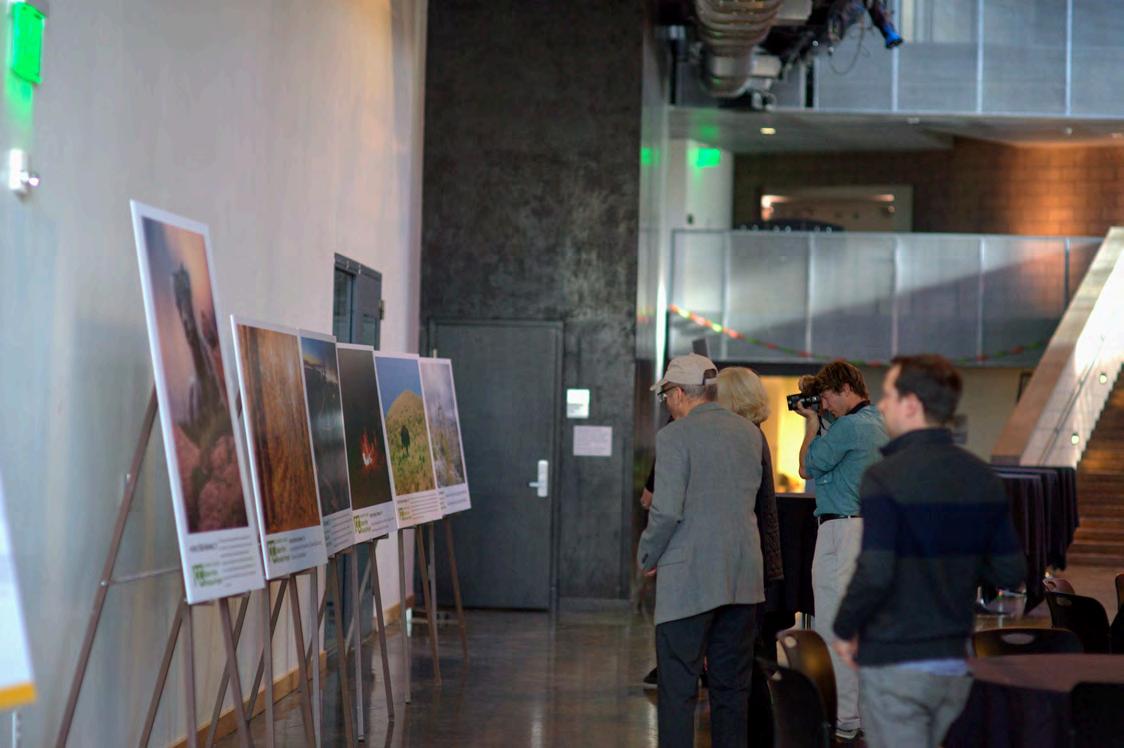
Natasha Thomas, ‘24
Photo by Hset Hset Naing, ‘24
Visitors at Data Viz Nite, April, 2024. Photo by Sabine Zentner ‘27.
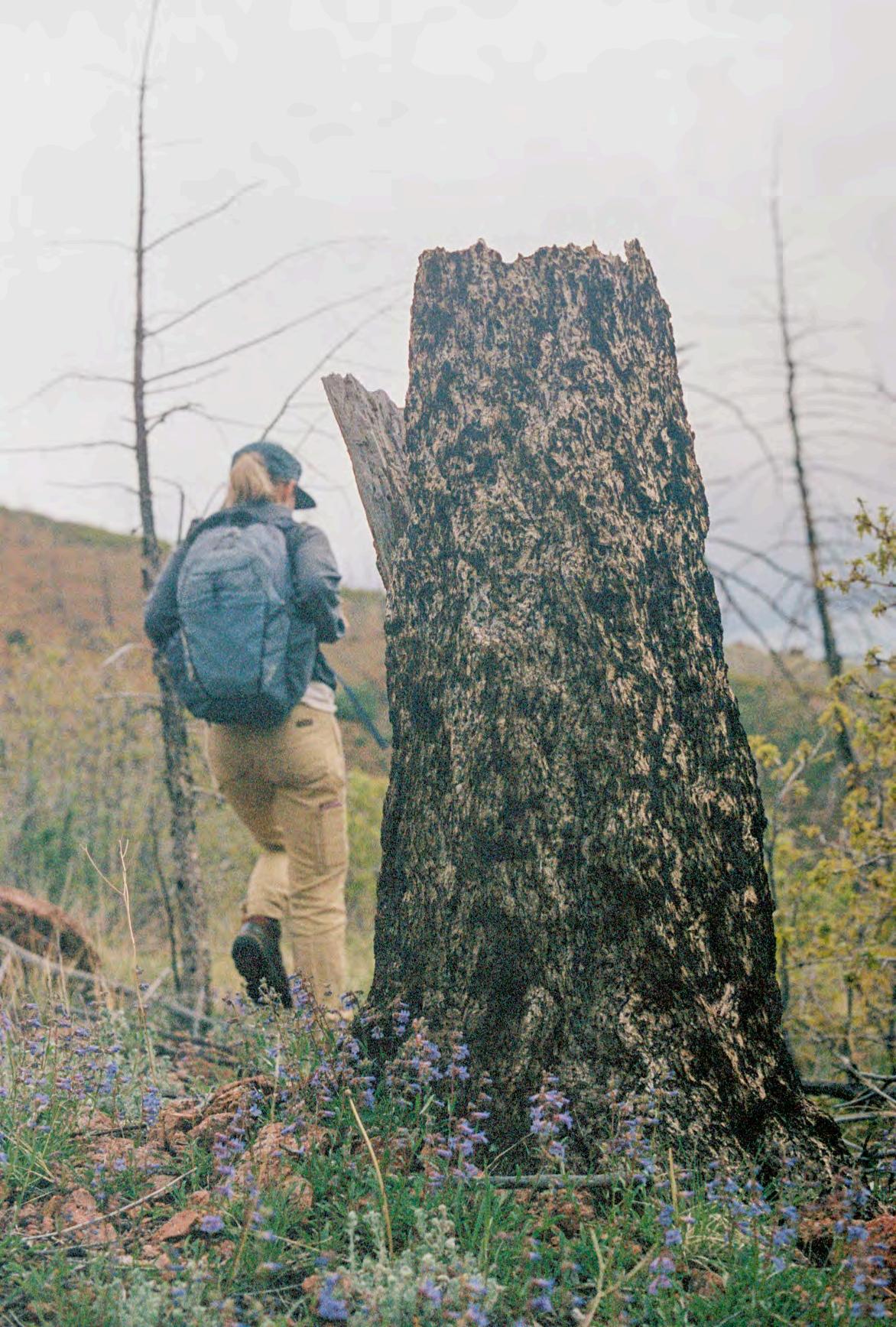
2023 Waldo Team member Sydney Morris, ‘24 walks through blanket bluebells. | Photo by Maren Greene ‘24.
Meet the 2024 Waldo Team
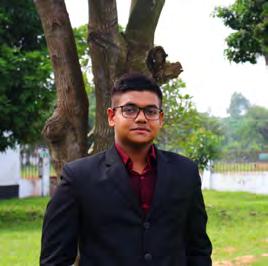
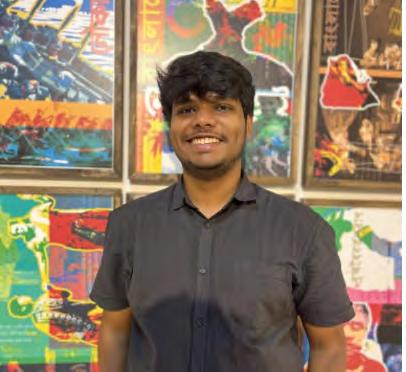
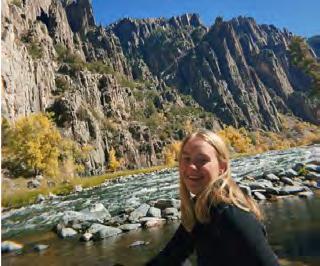
Matt Cooney
MatthasbeenworkingatCCandwithStateoftheRockiesfornearly7years.Providingexpertise intheGISandremotesensingfields,heassistsRockies'students,staff,andfacultywithresearch, analysis,data,cartography,andtechnology.MattenjoysworkingwithStateoftheRockiesashe holds shared beliefs with their mission and goals and is passionate about aligning technology, teaching,andstudentdevelopmentaroundissuesintheRockyMountainRegion.
Ben '25 is an Environmental Studies major. His passion for the outdoors started in Southern New Mexico, on his mountain bike. At Colorado College Ben is a member of the Club Cycling team, manager of the Ritt Kellog Climbing Gym, leader for the North Boys program, motion graphics designer for CC athletics and loves making pottery. His interest in wildfires started during his time at the United World College, USA when after a rapid evacuation, the Hermit's peak fire wiped out large swaths of the Pecos wilderness and nearly burnt down the school for the third time
Shamdeed Kabir
IamShamdeedKabir'25fromDhaka,Bangladesh,pursuingamajorinComputerScienceanda minorinStatistics.Iambroadlyinterestedindatascienceandmodeling,andIenvisionmyself working in the fields of computational biology/bioinformatics in the future. Apart from my academicinterests,Iamanavidantiquecoincollectorandcarenthusiast,wholovestotravelto differentcountriesandenjoysbackpacking,fishing,andkayaking.
Rafiul Alam Khan
Rafiul, ‘26, is a Mathematical Economics major and Physics minor. He is excited to be part of the State of the Rockies Waldo Canyon team. Specifically, he looks forward to working with lots of data points and analyzing specific data parts from the project. A fun fact about Rafiul is that he grewuptravelingallaroundBangladesh.
Tyler Mielke
Tyler, ‘26, is an Organismal Biology & Ecology major from Hastings-on-Hudson, New York. Tyler is passionate about conservation and, as a member of the Waldo Canyon team, is deeply interested in learning more about the preservation of forest ecosystems in the Rocky Mountain West. At Colorado College, she is a member of the Cutthroat Rugby team and a mechanic at the Bike and Ski Co-op. In her free time, Tyler enjoys skiing, mountain biking, hiking, and anything thatinvolvesspendingtimeoutdoors.
Ben M Curry
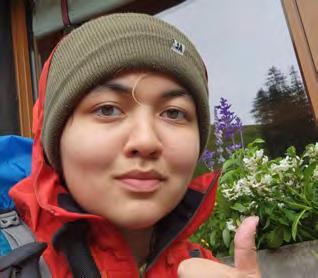
Rachel Phillips
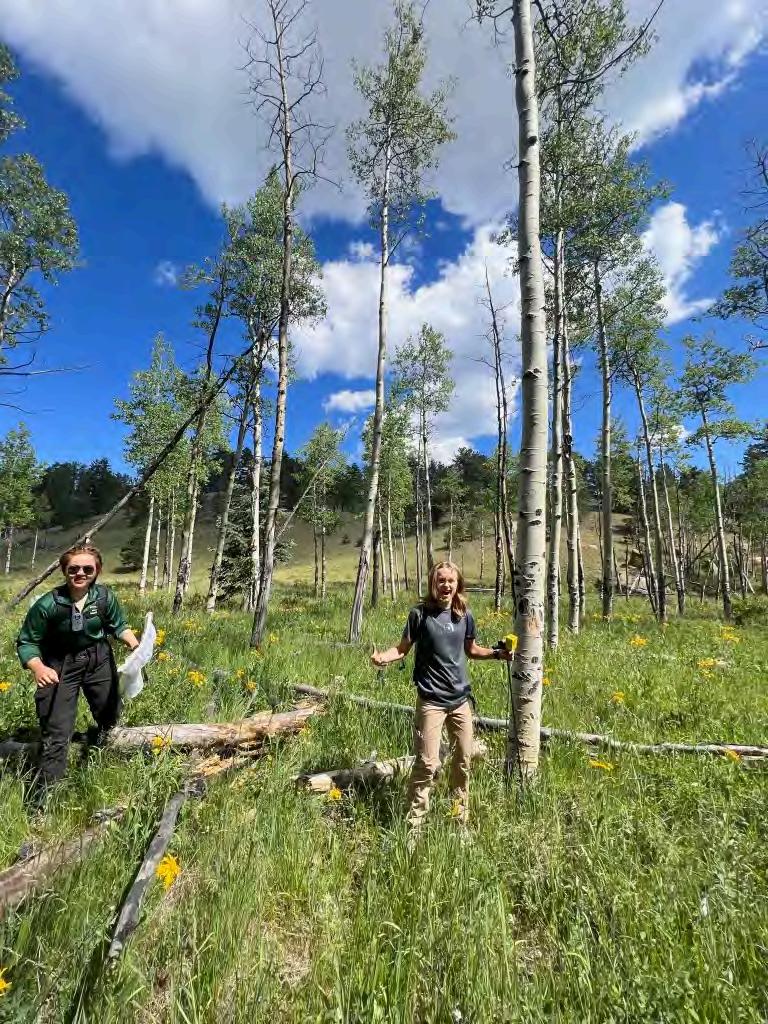
HailingfromGreenevilleTennessee,Rachelbecamepassionateaboutnaturewhileexploringthe forestsofSouthernAppalachia,especiallythelikesofinvertebratesandamphibians.Fromthis passion,RachelispursuingadegreeinOrganismalBiologyandEcology,aswellasaSouthwest Studiesminor.Intheirsparetime,youcanfindRacheltakingcareoftheirplants,cookingtheir favorite foods, or learning about fun entomology facts. With State of the Rockies, Rachel is excitedtocontributetoanunderstandingoftheecologicalrecoveryoftheWaldoCanyonFirefor generationstocome.
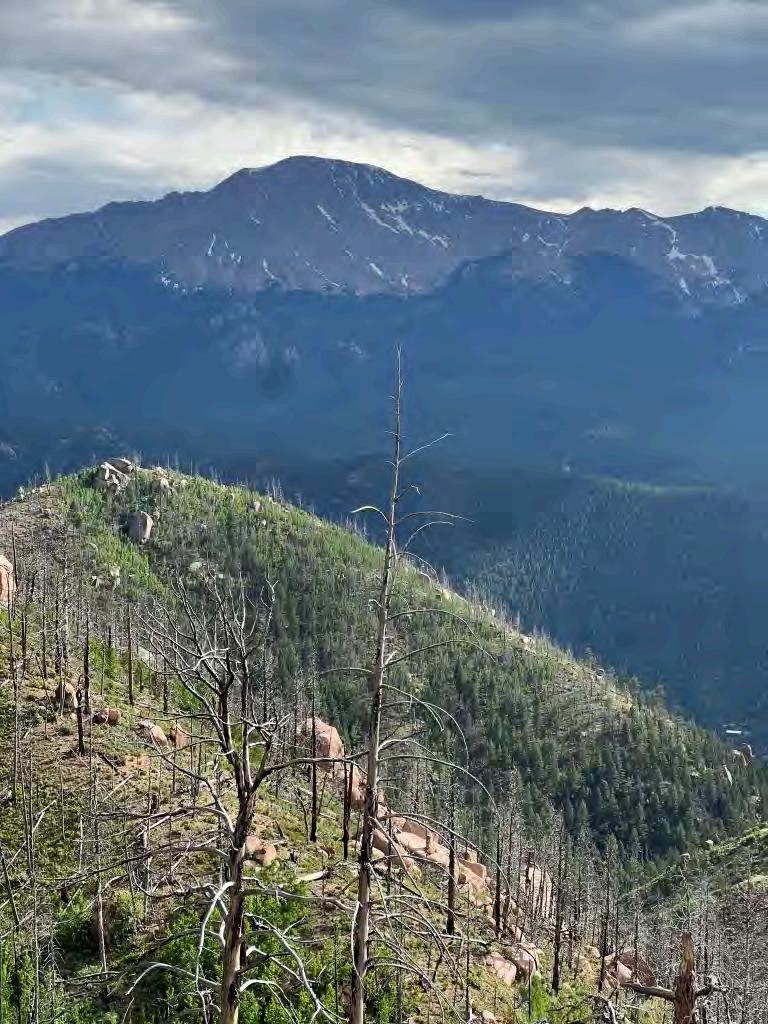
2024 Waldo Team Updates and Findings
By Libby Cutler ‘26
The Waldo Canyon Team consists of five Colorado College students, led by Cyndy Hines.TheworkdonebytheWaldoteam focuses on the study of the area affected bytheWaldoCanyonfiresinJulyof2012. Waldo Canyon is located two miles west of the Manitou Springs bypass, in close proximity to Colorado College. The goals of this project involve research and data collection of the ecological comeback of different species since the fire. A large focus of the project is studying the resilienceoftheponderosapinespecies.
UsingprogramssuchasGIS,anddifferent mappingtechniquesandtechnologies,the Waldoteamiskeepingtrackofvegetation growth to compare the pre-fire and postfirestateofWaldoCanyon.Theponderosa pine species is significant to this project. Not only is it an iconic Colorado tree species, but it is currently predicted that continuous intense fires, due to the warming and drying climate in Colorado, could lead this species to extinction. The monitoring done by the Waldo team will providefirst-handinsightonunderstand
the resilience of the species, specifically post-fire. This year, new team members have continued to work to grow the project. This includes studying the presenceofanimalspeciesandsoilhealth to determine further how the fire has impacted the whole of the Waldo ecosystem. The Waldo Canyon project is just getting started, and State of the Rockies hopes to continue to monitor the regrowthofthedifferentspeciesinWaldo Canyon.
Rachel Phillips, ‘26 and Mary Cate Kiser, ‘27 collect pollinators and measure soil moisture. Photos by Tyler Mielke ‘26
team contemplates how to best access the next randomly located sample site.
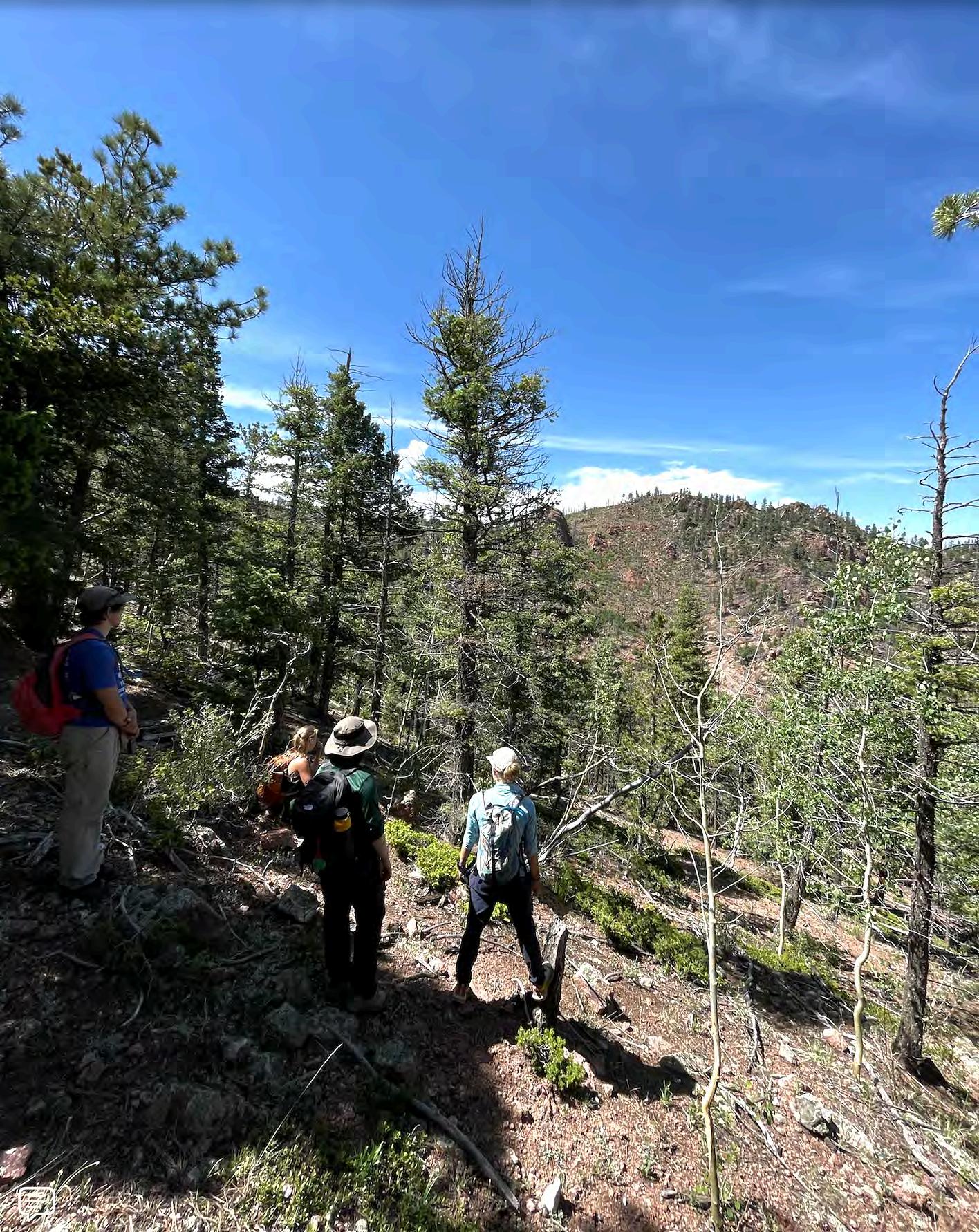
The
Left to right: Ben Curry, ‘25, Tyler Mielke, ’26, Rachel Phillips, ‘25, and Mary Cate Kiser, ‘27 | Photo by Cyndy Hines.
Summer in Waldo: While Studying Ecological Regeneration, I
Found Evidence of my Own
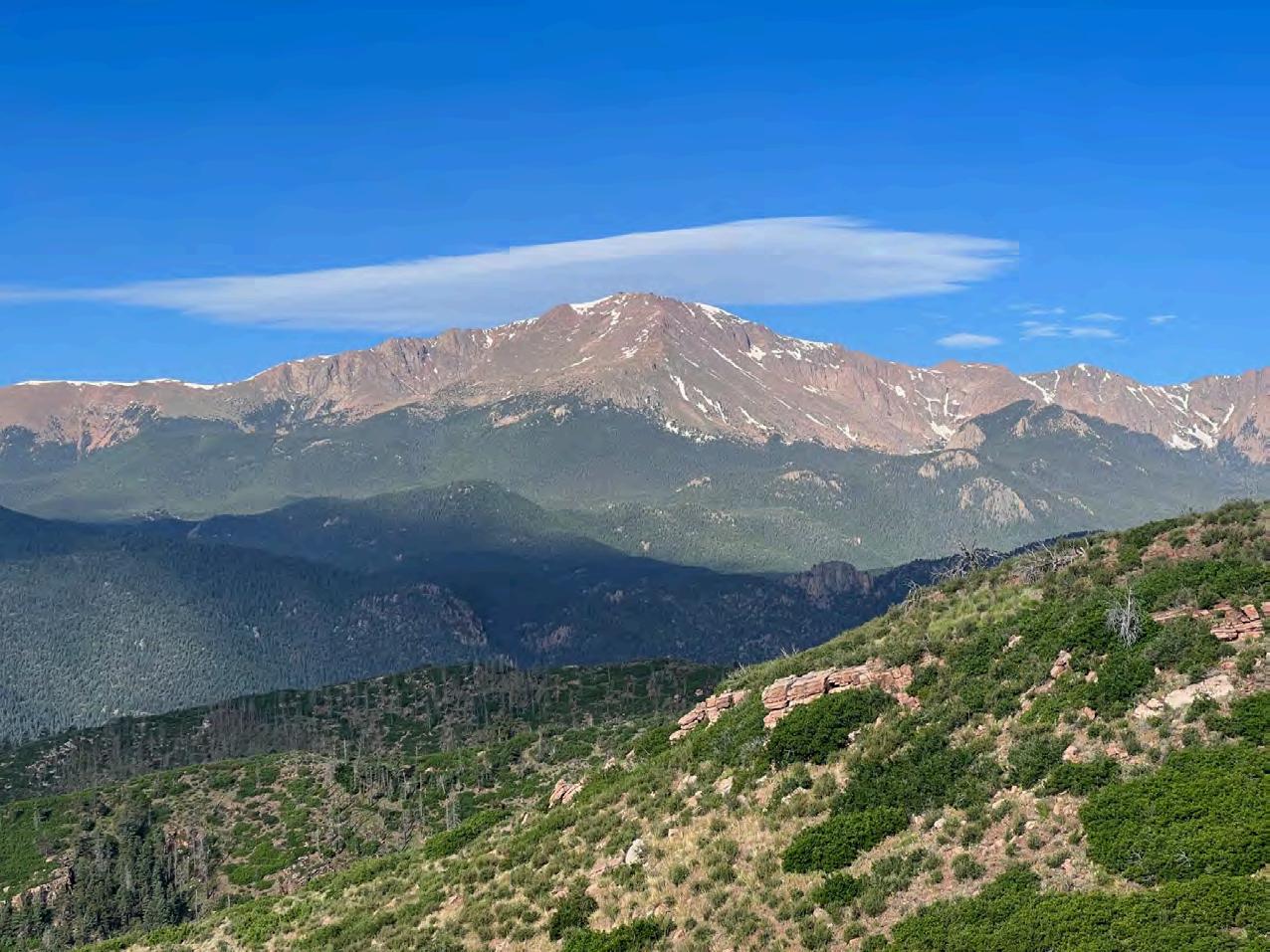
By Mary Cate Kiser, ‘27
“Working in Waldo, it’s pretty… bleak”. Silence followed as I waited for Cyndy Hines’ next words, eager to know what I wasinforifIchosetoacceptthejob.Ican handleafewmonths,Ithoughttomyself. Over the summer I came to understand that although the landscape is indeed bleak, every moment spent working in Waldo teemed with life. In studying ponderosa pine regrowth, I found evidence of regeneration within my own ecology: an awakening of the connection between human and land that too often liesdormantwithinus.
Imagineadesertinthemiddleofaforest. Imagine walking through a graveyard or old war zone, something abandoned and jarringly silent. Birdsong is scarce and therearehardlyanytreebranchesforthe windtosiftthrough.Thebonesofanimals and trees lay together in dirt– legs, ribs, skulls, trunks and branches, all bleached white and brittle. On these daily walks through eerie emptiness, I found myself wondering what this place must have looked like before the flames swept throughandtooksomuchlifewiththem.
We traveled through this land every day, andeachsiteresembledauniquelyabsurd obstacle course. We trudged through swampyvalleys,balancedonlogs
“ suspended precariously over groves of thorn bushes, and fought our way throughhordesofyoungaspentreeswith branches the perfect height for gouging outeyeballs.
In our hands we carried measuring tapes bigger than our heads, rolls of flagging tape, and compasses. Each day, someone was lucky enough to find themselves carrying a temperature probe, essentially a bayonet, as they stumbled and slid down slopes. These hikes were a balancing act that promised a variety of new scrapes and bruises each day. “I was at the grocery store,” Cyndy told us one day, laughing, “when this lady saw my legsandaskedmeifIwasokay”.
Our summer task was seemingly simple. First, we would select and flag ten 200by-300 meter grids of land in the burn areas by following a bearing and tying neonflaggingtapeontotreestomarkthe line. Next, we would sample every quadrant of each of our ten sites to monitor ponderosa pine regeneration following fire. To do this, we used a variety of measurements including slope, tree diameter, tree height, soil moisture, soil temperature, ground coverage, burn severity,andnumberofsaplings.
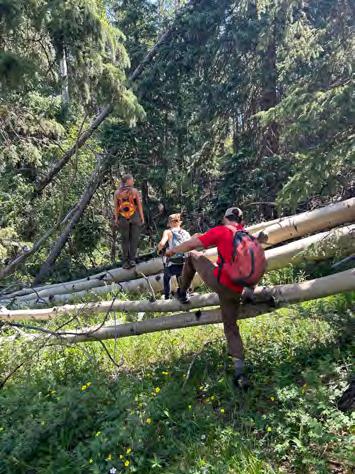
The group meshed together seamlessly, but we weren’t immune to occasional mistakes. Minor miscommunications could render an entire day’s work useless and more than once, we had to flag, unflag, and re-flag entire sites. We miscountedsaplingsandhaddeadwalkietalkies.Wedealtwithbrokentapes,faulty moisture meters, and once, spent hours untanglingaknottedtransecttape.
Each problem, however, came with a creative and group-crafted solution. Our communicationbecamethoroughand
Pikes Peak from Waldo Canyon | Photo by Mary Cate Kiser, ‘27
The Waldo team climbs over downed Aspens. Photo by Cyndy Hines
precise as we checked and doublechecked bearings and measurements. On flags, we included extensive information, includingadiagramofwhereitlayonthe transect. We developed a method for a solo person to lay a transect line in case wewereshortonpeople,andaneffective system for sapling counts emerged. Everyone collaborated to create a streamlined system for data collection andeventually,wefellintothesatisfying rhythm of counting, coring, measuring, andwriting.
Ajobthatrequiresyoutospendatleast8 hourseverydaywiththesamefourorfive people is a recipe for turning strangers intosomesortoffamily.
For efficiency’s sake, we would spend some nights camping near our sites. Though any of us could have retreated into our tents after an exhausting day of field work, we didn’t. We stayed up long after sunset simply because we enjoyed each other’s company. As the summer drew on and afternoon storms became routine, we spent hours hunkering under a tarp while the sky cracked and roared. Onthesedays,fearandlaughterwoveus together.
In Waldo, simple things brought enormous excitement. Occasionally, someone would find a rack of antlers or pileofanimalbones,andthegroupwould erupt with childlike glee as a full-on scavenger hunt broke out to find more. Whether it be a vibrant wildflower, a moose bounding up a distant slope, or a freakishlygorgeousflashoflightning,Ilet myself give in to a sense of shameless wonderthatIoftenresistinotherspaces.
Withtimeandquietobservation,Ilearned to read the land. It happened largely withoutmyknowing,butIbegantospeak a new language. I called plants and pollinators by name. I could tell the difference between a ponderosa pine and a Douglas fir as effortlessly and subconsciouslyasonemighttellleftfrom right.AndIknewwheretofindthem:just inches downslope from charred trees and stumps, a fascinating and beautifully symbolic place for a young tree to find refuge.Icouldglanceattheskyandknow whetherrainwouldhitusorpass.Icould tellNorthfromSouthwithoutacompass. I even found myself apologizing to wildflowersI’dsteppedon.Youmightcall thisawilddescentintomadness.I’llcallit thedevelopmentofempathyand
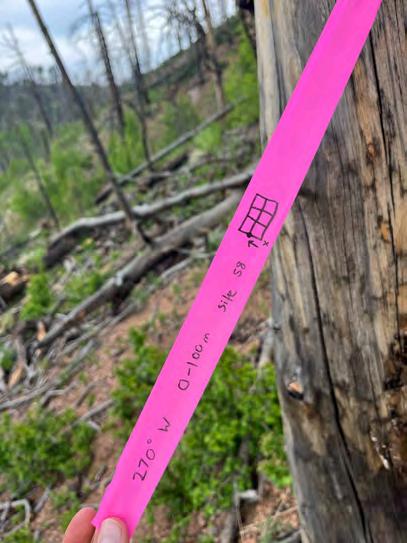
awareness.
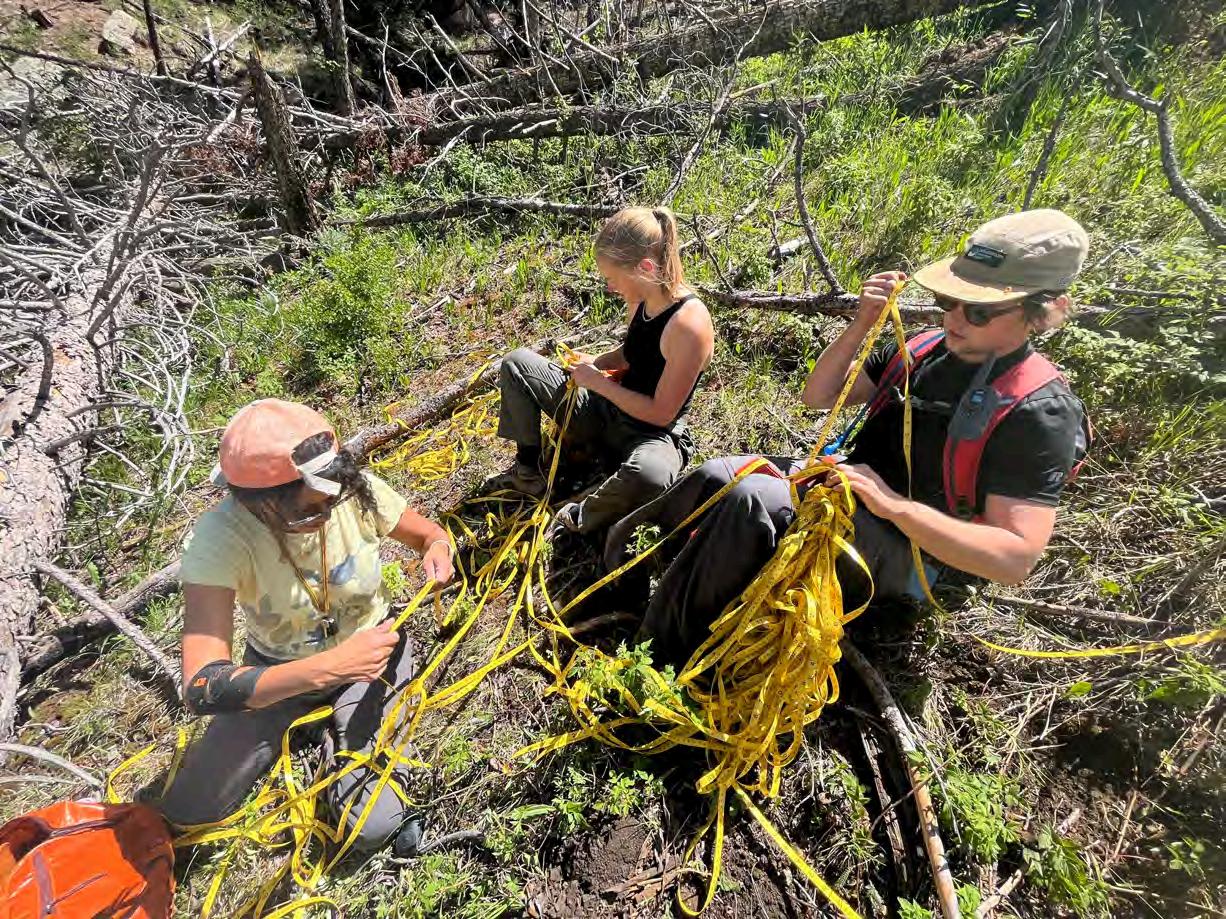
This job gave me much more than work. First and foremost, It gave me a sense of agency to combat the despair that once dominated my outlook on environmental topics.Ilearnedtolead,follow,and
A flag record of bearing, distance, and a site diagram. Photo by Mary Cate Kiser, ‘27.
Cyndy Hines, Tyler Mielke,‘ 26, and Ben Curry, ‘25 untangle a transect tape. Photo by Mary Cate Kiser, ‘27.
communicate with the utmost compassion and clarity. I began to listen forsoundswerarelyhearandtolookfor thingswedon’toftensee.Ifoundasense of empathy, softness, and wonder, and I nurturedcrucialrelat-ionshipswithboth thelandandthepeoplearoundme.Most remarkably,Ifoundasenseoffulfillment that I didn’t expect to find until much, muchlaterinlife:theknowledgethatI’m working toward something far greater thanmyself.
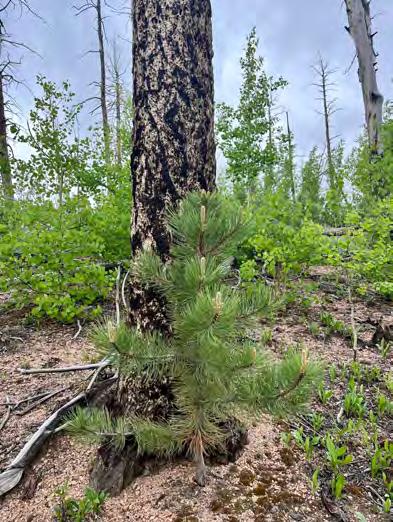
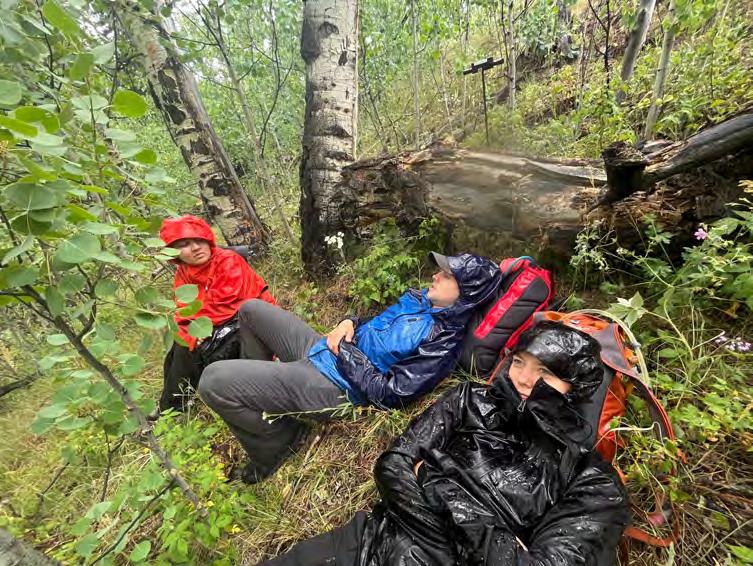
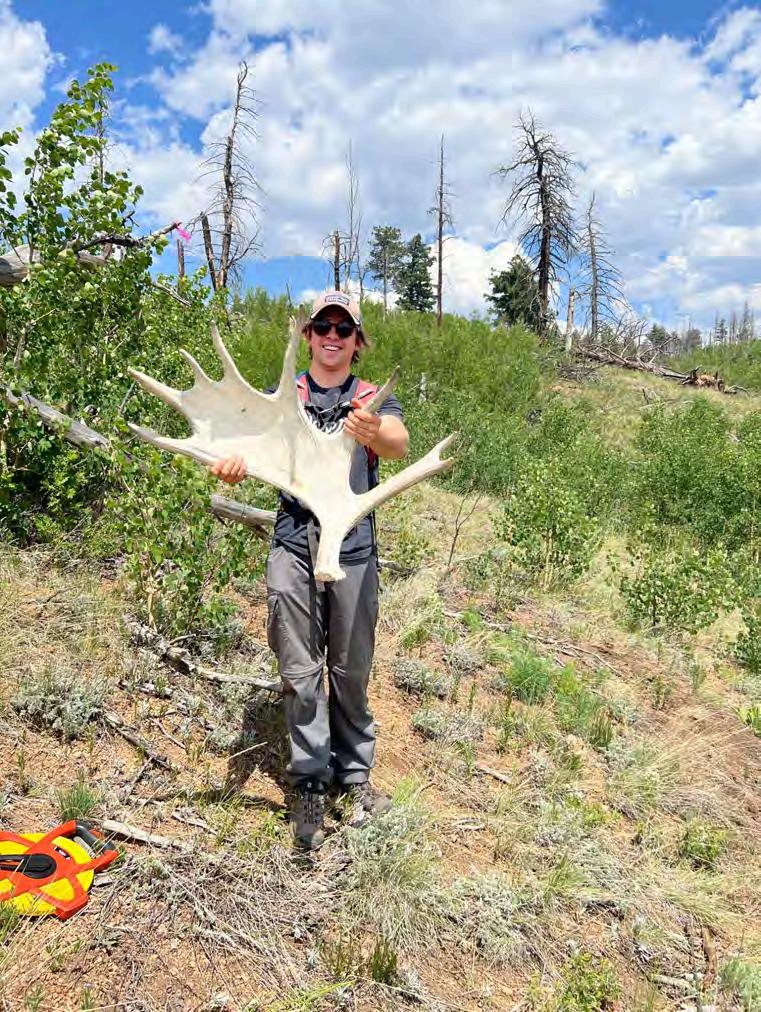
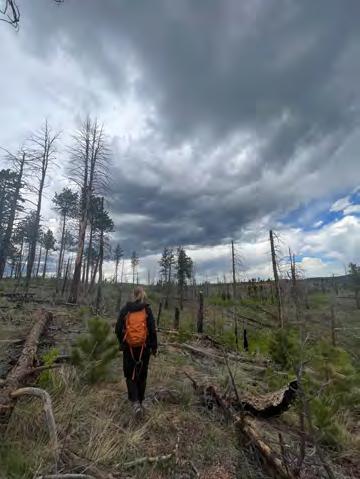
Rachel Phillips, ‘25, Ben Curry, ’25 and Tyler Mielke, ‘26 wait out a thunderstorm.
Photo by Mary Cate Kiser, ‘27.
Ben Curry, ‘25 finds a moose antler in site S4. Photo by Tyler Mielke, ‘26.
Tyler Mielke,’ 26 walks through burn area before a storm. Photo by Mary Cate Kiser, ‘27.
In Fire’s Shadow
A ponderosa pine sapling grows beneath a tree killed in the fire. Photo by Mary Cate Kiser, ‘27.
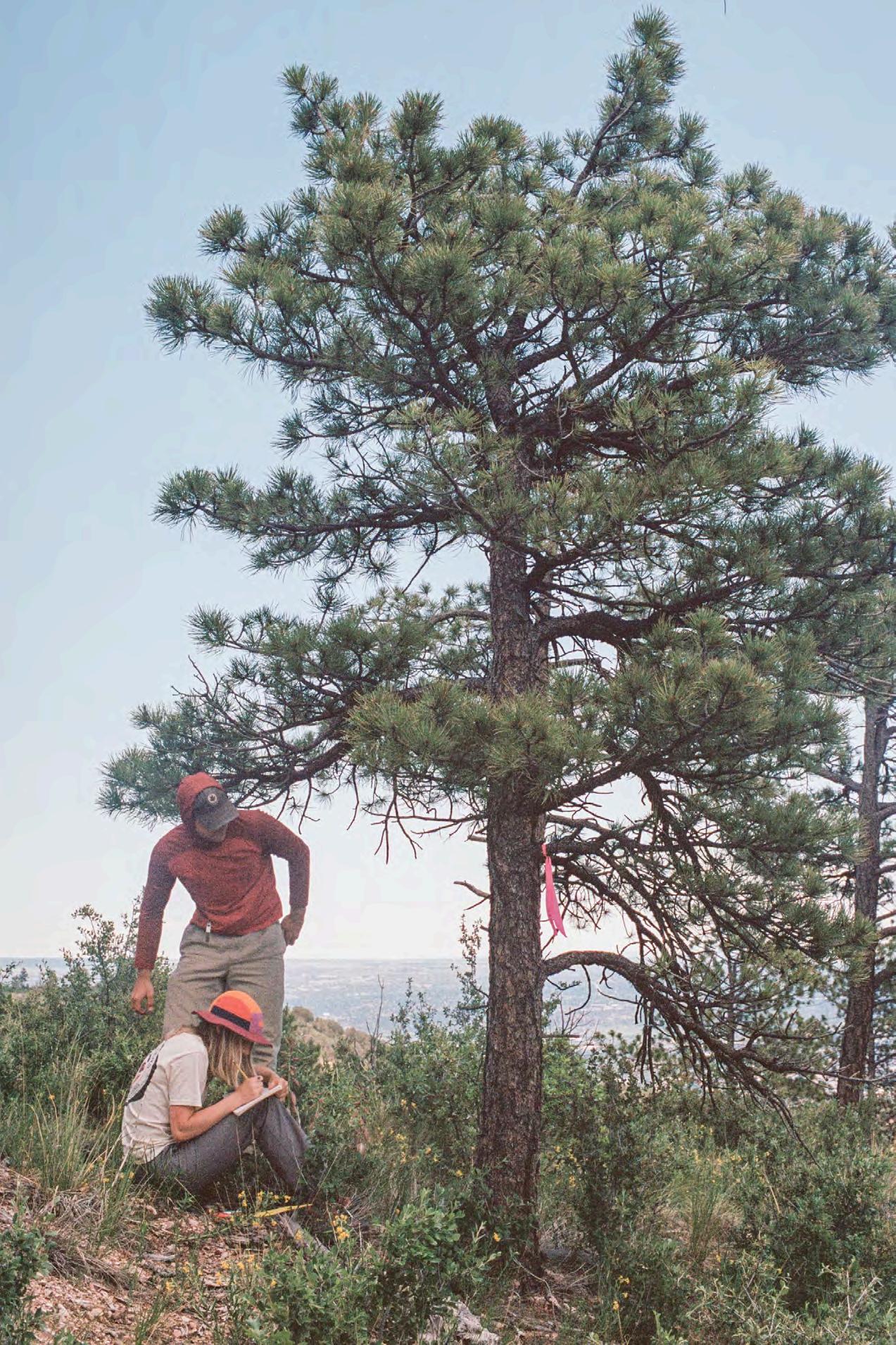
Sydney Morris ‘24 and Liam Keiilty ‘25 measure a tree in site 14S. | Photo by Maren Greene ‘24
A Point of Diminishing Returns: The Flaws in Modeling a Production Function of of Economic Productivity Over Water Availability
By Nicole Craighead, ‘26
When a Colorado Springs Utilities Department representative spoke to my class Block 4, she sounded entirely optimistic. Across state standards, Colorado’s water conservation programmingwasrobust,andwithinthe Colorado Springs municipality, it was a top performer nationwide. This ran contrary to the headlines seen across the state and nationwide discussing the dwindling Colorado River and the last of water resources being sucked up. Her reasoning seemed counterintuitive to the increasingpoliticizationoftheregion:the legality issues arising from six states attempting to divide the body of water acrossdrought-proneregions.Withrising contentions and falling water levels, ColoradoSpringsUtilities’optimismisa
rarity and a glimmer of hope amidst a globeofclimateanxiety.Nevertheless,are wenaivetobelieveinthem?
Colorado Springs Utilities (CSU) outlines its conservation strategies in the Integrated Water Resource Plan (IWRP), published most recently in 2017. The IWRP is a comprehensive plan that outlines the city's approach to managing its water resources and balancing economic growth with environmental sustainability. To illustrate the IWRP paradigm,CSUreferencesacoreeconomic principle: the production function. Economists use the production function togaugetherelationbetweenproduction inputsandtheoutputstheycreate.
The IWRP utilized the function in describing the region’s economic opportunity and productivity as a function of the sum of factors of production and the water supply. The factors of production in any given economy are the land, capital, labor, and entrepreneurship that drive its productivity. Each of such factors has proved immensely successful in the region, prompting the city to be an epicenter of economic opportunity. However, in doing so, they’ve neglected theconstrainingvariableofwaterandleft room for dangerous ramifications in the years ahead. As such, the current model that solves the function for economic opportunityundervariousfactorsleadsto acapitalisticframingofcitydevelopment
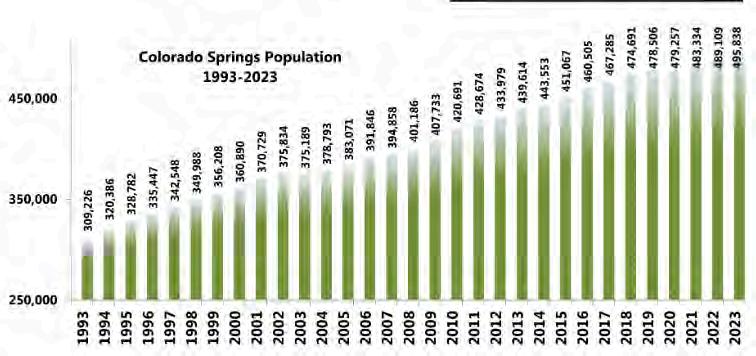
Colorado Springs Population: 1994-2014
2024 Budget and Community Profile | City of Colorado Springs (December, 2023), coloradosprings.gov/sites/default/files/2023pbudget-00-04-glanceprofile_0.pdf
that neglects the most fundamental question: where will the city get enough water? The first factor of production driving economic growth is the robust labor force driven by recent population growth.
Just over two decades ago, Colorado Springs’ population was 540,000, but above 769,000 in the most recent reportingyear.
Alongside the population growth, per capita personal income has risen with it. In 1990, the personal income of the averageColoradoSpringscitizenwasjust under $18,500, a figure that rose to over $60,000 in the next thirty years—the strongpersonalincomepointstoanother factorofproduction:thecity'scapital.
According to the city's annual economic development report, the 2023 General Fundsalesandusetaxrevenuegrew13% from the prior year, bringing the largest source of revenue for the city’s general fund, totaling $252,740,000. Over the past ten years, this trend has been sustained by continuous increases in city taxcollection.Indeed,ElPasoCountyhas over329,000residentsemployed,earning an average of $34.76 an hour. The County’sGDPasof2023was$42billion, 40%ofwhichisaccreditedtothemilitary bases, cybersecurity industry, and aerospace innovation that Colorado Springshosts.
According to the city’s 2022 annual report, the basis for higher capital gains stemmed from two city development areas, the first being the Economic Development Agreements (EDAs). In 2022,twonewEDAswereapproved,with 454 new jobs created and 600 retained jobs, driven by $95.1 million in private investment and reaping $10.8 million in projected net new city revenue. Greater investment in the city also led to capital growth,whichinformedanotherfactorof production: land availability. Through private investment totaling $146 million, the city’s Economic Development Divisions supported the Rapid Response ProjectProgram,expeditingtheprocess
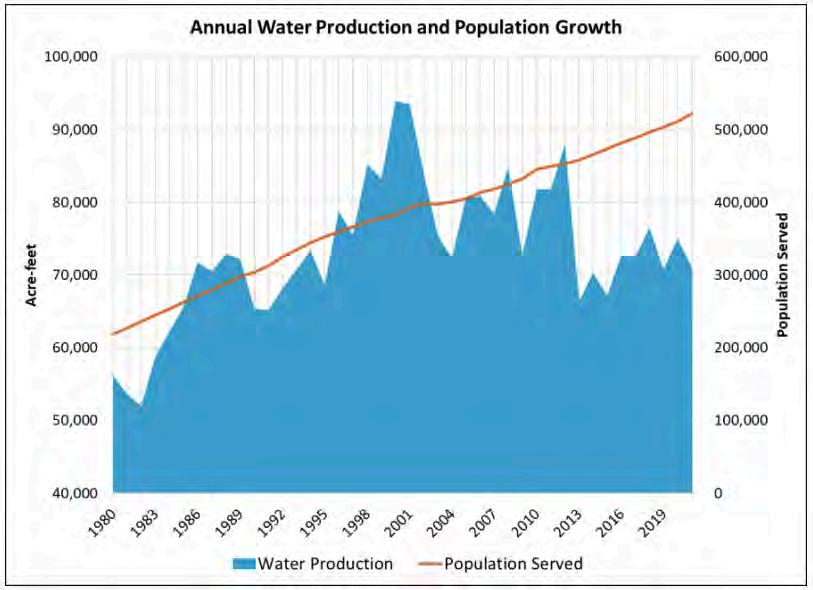
forbusinessdeveloperstoattainlanduse and building permits. The program was the catalyst to 13 new projects that year with425newjobsand1,938retainedjobs that utilized over 1.5M square feet of the city.
Beyond new businesses, residential land densityhasalsoshownprolificgrowth.In 2022, 20,000 new apartment units were built. According to the city's Department of Planning and Network Services, in 2020, Colorado Springs saw a 27% increase in residential property use, as 508.6acreswerededicatedtonewunits,a spikeinlandusefromthepriorfiveyears. Cumulatively,thecitysawa12%increase in new residential density in 2022. CSU aims to align economic growth with the sustainable use of natural resources like water, and their efforts have yielded impressive results in reducing water consumption. Despite significant population growth, overall water usage hasdecreasedsinceitspeakin2011,with monthly usage dropping by approximately1.8billiongallons.TheCSU Economic Development Team expressed optimism about continued water conservation, highlighting reductions in percapitawateruseandimprovementsin
6
infrastructure. These changes have transformed outdoor water use for irrigation from two-thirds of total usage 20 years ago to just one-third, with the remainingwaternowefficientlyreusedin aclosed-loopsystem.
1“Resident Population in Colorado Springs, CO” (March 14, 2024), Federal Reserve Bank of St. Louis Economic Data
https://fred.stlouisfed.org/series/CLRPOP
Annual Water Production and Population Served: 1990-2020 2022 Water Efficiency Plan | Colorado Springs Utilities (2022) https://www.csu.org/Documents/2022WaterEfficiencyPlan.pdf 4
2“Per Capita Personal Income in Colorado Springs.” CO Federal Reserve Bank of St. Louis Economic Data, November 16, 2023
https://fred.stlouisfed.org/series/COLO808PCPI 3KOAA News 5 “Growth and Opportunity: The Colorado Springs Economy.” Yahoo News, September 7, 2023 https://www.yahoo.com/news/growthopportunity-colorado-springs-economy214049577.html
4“Final 2022 Annual Report|City of Colorado Springs.” Colorado Springs Government, December 20, 2023.
https://coloradosprings.gov/document/final2022an nualreport-forweb.pdf
5“Final 2022 Annual Report | City of Colorado Springs.” https://coloradosprings.gov/document/final2022an nualreport-forweb.pdf.
6“Citywide Net Density of New Residential Development” City of Colorado Springs https://coloradosprings.gov/plancos/page/citywidenet-density-new-residential-development.
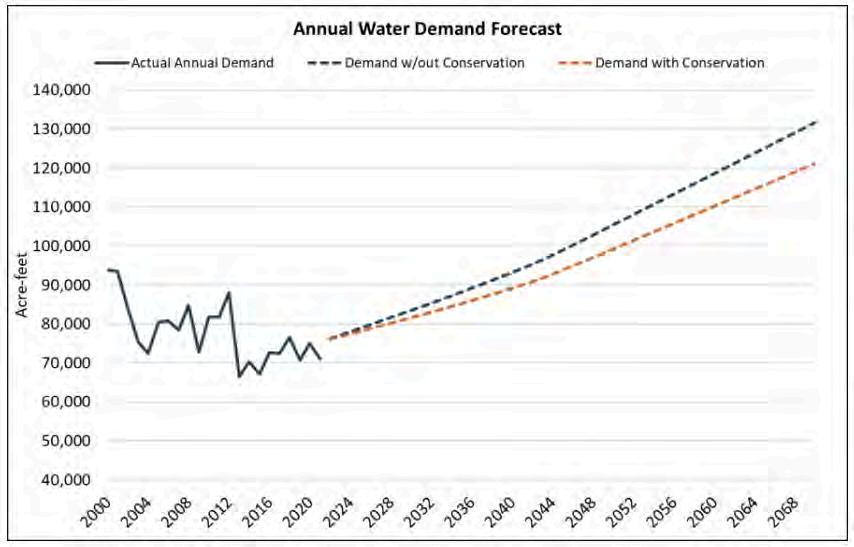
Colorado Springs Annual Water Demand Forecast 2000-2068, 2022 Water Efficiency Plan | Colorado Springs Utilities, https://www.csu.org/Documents/2022WaterEfficiencyPlan.pdf
Scott Winters, the water demand models and benchmarks project manager, analyzes water consumption metrics and their implications. His fourteen-year careerwithCSUhasgarneredexpertisein developing water resource economic models and planning buildouts to 2070 and 2080. With his expertise comes an abilitytoprovideauniformexplanationof the modeling process and how it has informed one of the most efficient municipal water utilities in the nation. CSU’s classifications are delineated by three bases: low, medium, and high densities, the latter classification being defined as 25 people per unit per acre. Their method of tracking usage per acre differs from the state of Colorado and other municipalities that rely on metrics of use per person alongside population growthestimates.
Still, CSU seeks to validate their metrics with the state each recording period to maintain their model’s integrity. This difference in technique has allowed CSU to revolutionize the process of municipal waterresourceallocation,forecastingnot based on individual needs but on the developmenttrendsofhigh-densityareas inurbanenvironments.
Thebenchmarksofwaterdemandarejust
the beginning of Winters’ work; these metrics are factored into various models to trace speculative futures the city may face. While Winters enjoys contending with the multiple factors playing into resident water use, it is by far the most complex. Economists can maximize one variable in models, but they can rarely maximize two without tradeoffs. While Colorado Springs has enjoyed a multi decade run of economic strength, economic indicators show a dip in recent years. To leverage the momentum cultivatedinpreviousyears,thecityfaces considerable pressure to maintain its profileasalucrativebusinessopportunity for big tech companies and chip manufacturers. Winters factors these developments into the “healthy economy scenario” where such companies move into the city, providing high-paying job opportunities and boosting the region's GDP per capita. While discussions about chipmanufacturingforrenewableenergy alternatives like solar panels and electric vehicles often highlight their environmental benefits, the intensive energy and water consumption involved intheirproductionisrarelyaddressed. In July of 2024, the World Economic Forum published data exposing chip manufacturers to use up to 10 million gallonsofwateraday,thesameamount
as 33,000 US households. Winters also mentioned the implications that aren’t reflected in the model; historical data shows that real estate built after 1990 consumes vastly more water, something an onset of higher income residents may drive. While the increasing business demands are being prioritized, the pressures of Colorado Springs being the largest city in the state without a central waterwayremain.
CSU draws its planning primarily from a baseline assumption, an extrapolation from the past 25 years of development growth trends. This forward-thinking approach, when seeking to solidify a sustainable plan for water consumption, instills optimism about the city's future. This assumption is then factored into their portfolio-based approach to adequately service the growing demands andmaintainahealthywatersupplyfrom various sources. By plugging in water demand, supply, and storage levels, the portfolio runs models to optimize the parametersinsearchofprovidingfurther guidelinesforfuturewateruse.According toCSU’smetricsin2017,currentsystems meet the demand by utilizing 95,000 acre-feet (ac-ft) each year, while the Buildout Demand projects a need for 136,000 ac-ft/yr, growing 41,000 ac-ft/yr each year, nearly half a year of the city’s currentwateruse.Throughthesemetrics, theIWRPmapsfora50-yeartrajectoryas a strategic supply plan to ensure longterm environmental and financial sustainability. CSU designed its strategy around the top risks to the city’s water supply, including infrastructure failures, climatevariability,federalorstatenexus, and demand increases. To combat the associated risks, they developed a BalancedPortfoliowithsixmitigation
7 James, Kirsten. “Semiconductor manufacturing and big tech’s water challenge” World Economic Forum, July 19, 2024, https://www.weforum.org/agenda/2024/07/thewater-challenge-for-semiconductormanufacturing-and-big-tech-what-needs-to-bedone/ 7
strategiesthroughpolicies,programs,and projects ranging from agricultural transfers to reuse and storage mechanisms. While these measures have broughtshort-termsuccessinyearspast, thewatersupplygapwillbemoreatrisk in years to come with the acceleration of climatechangeandincreasingprevalence of drought conditions. Furthermore, Winters and the CSU team can only integrateoneenvironmentalriskatatime in modeling such speculative futures, complicating their ability to forecast a future of various climatological threats. Additionally, according to forecasts of water efficiency buildouts, by the early 2040s, Colorado Springs will hit a point when water savings are fully realized. Winters describes this as the point of diminishing returns, when the Utilities has maximized all of the efficiency solutions possible. From that point onward,CSUwillcontendwiththe
question of how to find more places to conserve water without hindering the city's livability. As shown in the annual water demand forecast, the 2040s are aroundthepointatwhichwaterdemand will steeply increase to accommodate dwindling resources and growing populations. These models prove that whileColoradoSpringshasoutperformed other regions' water conservation methods, it still faces the dilemma of being a city in a world of increasingly scarcewaterresources.
As referenced in the IWRP’s production function, CSU models their production function to maximize economic growth. However, while economies can grow extensively, water supply remains a fixed variable.
Regions like Salt Lake City that pay an annual$2.2billionineconomicdamages
fromtheiroverexploitationoftheirwater resources serve as a warning sign of the harm water scarcity reaps on urban communities. It’s in the best interest of economistsandenvironmentalistalikefor thecity’sgovernancetobeinformedby the constrained water supply rather than the growing demand for its services. Therefore, we should rearrange the city’s production function to solve for water availability rather than economic development before circumstances force ustodoso.
8 Nguyen, Janet. “If the Great Salt Lake Dries up, What Would That Mean for the U.S. Economy?” Marketplace (blog), September 23, 2023. https://www.marketplace.org/2023/09/22/if-thegreat-salt-lake-dries-up-what-would-that-meanfor-the-u-s-economy/.
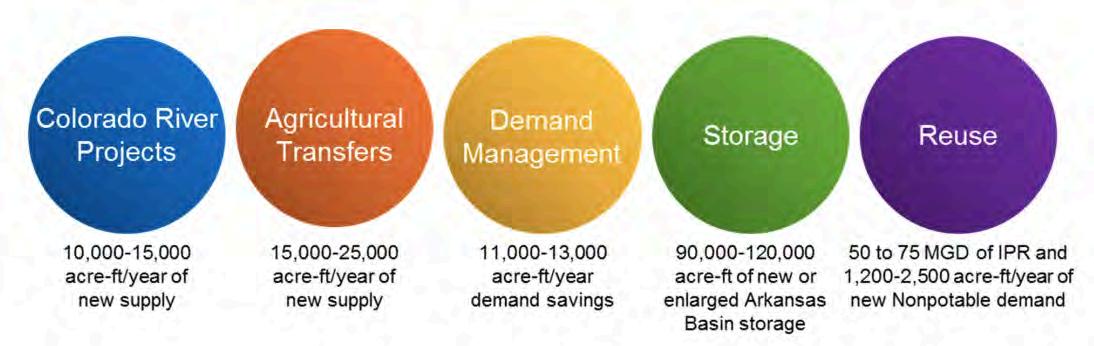
Components of Recommended Water Supply Balanced Portfolio Integrated Water Resource Plan | Colorado Springs Utilities (February, 2017), https://www.csu.org/Documents/IWRP.pdf
My paper was inspired by research I conducted earlier this year following a class visit from a Colorado Springs Utilities representative who discussed the city's water supply efficiencies. Collaborating with water economist Mark Eiswerth and CSU's water economic modeler Scott Winters, I examined the models used to forecast our city's water supply and demand, identifying inefficiencies and potential shortcomings.
“The team was at Lake Nighthorse filming some b-roll of the lake when a storm started to creep in. The misty rain started to overtake us, which actually made for perfect lighting. Ellie took up a traditional camera-stance, and, with the sun shining on the incoming rain behind her, I had to capture the moment on film. Documentary work can be grueling attimes,butitisalsobeautiful!”
- Photo and quote by Jessica Duran ‘25
Summer 2024 Film Team
By Annabel Meyer
Thissummer,agroupoffourstudentsare creating a short film centered on climate change in the Rocky Mountain West. Their film will dive into the nuances of local farming and environmental challenges, set in the Rockies. Initially focused on the Glen Canyon Dam region, they found farming stories in the area moreengagingandshiftedtheirnarrative accordingly.
The team's planning process included deep research and collaboration with environmental experts, such as nature conservancy members, farm managers from the Mountain Ute Tribe, and environmental lawyers like Shannon Melane. They’re using an approach inspired by "This American Life," opting to tell a more personal and compelling story about water use and resource management.
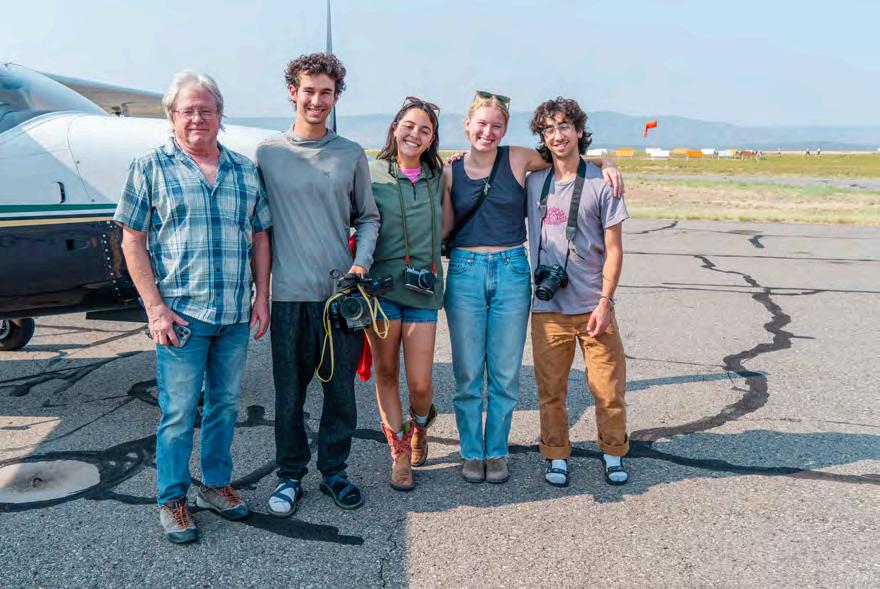
Astheyscoutlocationsandgatherstories, they’re also pondering the broader implications of overconsumption and drought, with a keen eye on the unique wayslocaltribesmanagewater.This
Meet the Team
projectrepresentsachancetomergetheir filmmaking skills with their passion for the environment, hoping to inspire reflection and conversation about our relationshipwithnaturalresources.
JessicaDuran,‘25
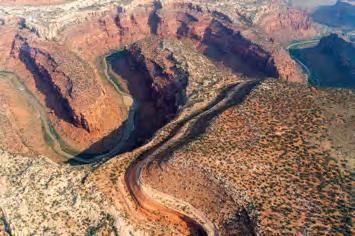
Jessica,aFilmandMediaStudiesmajorwithaJournalismminorfromOgden,Utah,ispassionateabout thepowerofstorytellingtoconnectpeopleandbuildcommunities.Growingupamidstthestunning landscapesoftheRockyMountains,she’seagertogivebacktotheplacesshecallshome.Whenshe's notdivingintoherstudies,JessicalovestotakepartinCC’sStandupComedyClub,Sunbutter,orrelax withagoodmovieorpodcastwhilesoakingupsomewarmsunshine.She'sexcitedfortheopportunity tomakeameaningfulimpactthroughherdocumentarywork.
EllieLaCasse,‘26
Ellie LaCasse is a junior Film and Media studies major with a Journalism minor from Watertown, Connecticut.Ellieworkstoblendvisualartandhoneststorytellingtoconveycompellingnarrativeson screen. At State of the Rockies, Ellie seeks to use film as a platform to emphasize the relationship betweenhumanactionsandclimatechangewhilehighlightingadaptationandsolutionsforthefuture ofwater.
The film team took a flight on EcoFlight, a conservation initiative that allows people to see the land from above. Top: from left to right, Bruce Gordon (pilot), Charlie Marks ‘26, Jessica Duran ’25, Ellie LaCasse ‘26, Matan Fields ‘26. Bottom: Dolores River Canyon from above. Photos from EcoFlight
MatanFields,‘26
MatanisaFilmandMediaStudiesmajorfromNorthampton,Massachusetts.Heisinterestedinboth film and photography as modes of learning and storytelling. Matan is passionate about creative documentary, hoping to tell empathetic stories that bring awareness to poignant issues and explore humanity. In his free time, you might find Matan on various long expeditions to and from ultimate frisbeetournamentsacrossthecountry,playingguitar,andspendingtimeinnaturewithfriends.At StateoftheRockies,Matanaimstocenterthehumanelementsandconsequencesofclimatechange throughfilm.
CharlieMarks,‘26
Charlie is a Film and Media Studies Major and Environmental Studies Minor from Atlanta, Georgia. Charlie loves making and watching movies and advocating for the environment. At State of the Rockies,Charliebringsapassionandcreativityforfilmwithanadventurousspirittomakefilmsthat inspirepeopletotakeonnewperspectivesontheirrelationshipwiththeoutdoors.Charlie'sdreamis to combine the persuasiveness of movie magic with a call to action to protect our planet. In his free time,Charliecanbefoundlisteningtohousemusic,rockclimbing,andmakingfreshsqueezedorange juice.
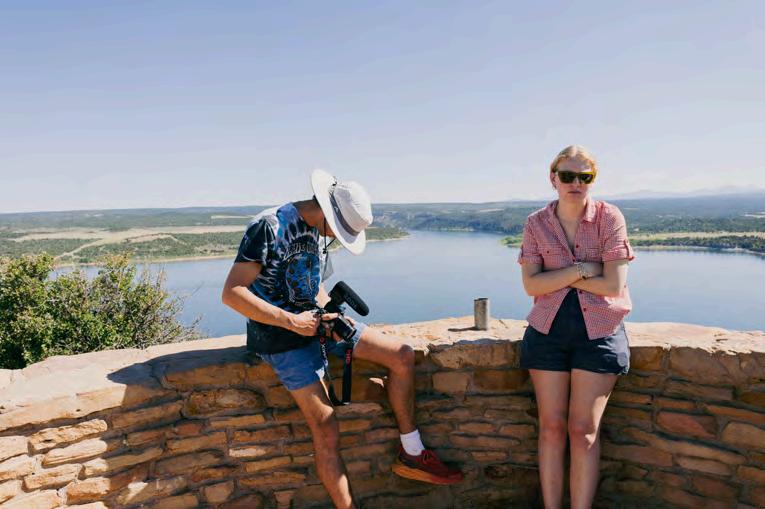
The film team took a flight on EcoFlight, a conservation initiative that allows people to see the land from above. Top: from left to right, Bruce Gordon
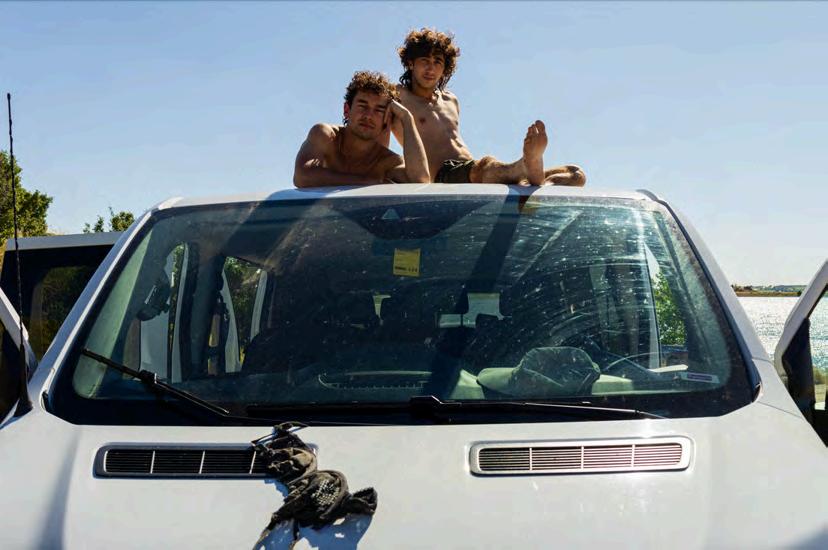
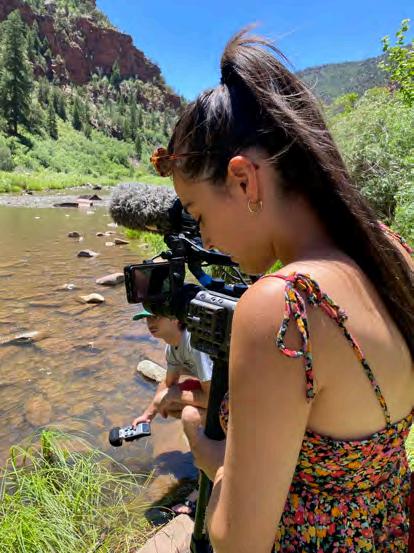
(pilot), Charlie Marks ‘26, Jessica Duran ’25, Ellie LaCasse ‘26, Matan Fields ‘26. Bottom: Dolores River Canyon from above. Photos from EcoFlight
The 2024 Dark Skies Project: Listening to What’s Being Said about Dark Skies Conservation in and around Bears Ears
By Alice O’Neal-Freeman, ‘27
ThePublicLandsSurveyteamembarkson its third year of research this summer, directed by Cyndy Hines. This is the second year where the team is digging deeper into Dark Skies conservation in theRockyMountainWest,atopicofgreat importance as population growth and developmentintheRockyMountainWest rapidly increase. Population increase in The Rocky Mountain West is one of the sharpest in the country. The unimpeded night sky has been essential to many peoples in this region throughout history evidencedby rockartofcomplexcelestial events and indigenous creation stories, ceremonies, and other practices and beliefs. This summer, the team hopes to learnmoreaboutitsimportancetopeople today.
Student researchers are surveying and researching near Bears Ears area in collaboration with the Bears Ears Intertribal Coalition. Bears Ears National Monument currently encompasses 1,351,849acresofSoutheasternUtah.Itis namedafterapairofbuttesthatrisehigh out of the earth, resembling the ears of a bear. There are five tribes that have ancestral connections to the region, makinguptheInter-TribalCoalition.The Navajo Nation, Hopi, Ute Mountain Ute, UteIndianTribeoftheUintahandOuray Reservation, and the Pueblo of Zuni. The protected area includes pictograms, petroglyphs, dinosaur bones and tracks, firewood,recreationalroadsforATVsand four-wheelers, and land that has been usedforcattlegrazing.
In 2009 the FBI and BLM conducted one of the US’s largest raids of stolen archaeological and cultural artifacts in Blanding, UT, a town near Bears Ears. BearsEarswasinitiallymadea
monument in order to prevent such looting,butamonumentdesignationalso prevents gas companies from taking advantageoftheoilinthearea.
Former President Obama designated the area a national monument of over a million acres in 2016. In 2017, Trump reduceditssizeby85%.n2021,president Biden restored the monument to its originalsize.
increase in nearby Moab, Monticello, BlandingandBluff.Morepeopleandmore development usually means more artificial lights-- something many residentsseeasathreattotheirwayoflife andtheirabilitytoseethestarsasnight.
The unimpeded night sky has been essential to many peoples in this region throughout history evidenced by rock art of complex celestial events and indigenous creation stories, ceremonies, and other practices and beliefs.
In 2022 the BLM, the Forest service, and the Inter-tribal coalition began comanagement of Bears Ears National Monument. One Dark Skies researcher, Natasha, has surveyed for awareness of thenewco-managementplan.
Growth and development in surrounding towns is a growing concern for some as populationsandrecreationactivities
Many indigenous people who have historicallyinhabitedthislandhavedeep cultural connections to the stars. One researcher, Mustafa Sameen, ‘26, has surveyed to understand this better. Some want to protect the Milky Way view by obtaining the designation of Dark Sky Park for the monument. Megan O’Brien, ‘25, has taken artificial light measurements at night and tracking development in order to predict the impactnearbytownscouldhaveonBears Earsnightskyvisibilityinthefuture.
But would a Dark Sky Park designation attract more tourism and development itself?Couldthisdamagethelandbecause thereisnotmuchinfrastructureinplace? Some say designating it a national monument in the first place attracted moretouriststhantheyhavethefacilities to accommodate. Many living in Southeast Utah have conflicting views of where to go from here.Some wish it was not even made a monument in the first place.Somefeeltheregionisnowabigger political stage, and the residents’ preferences for land use are not being prioritized.
Alison, Megan, Mustafa, and Natasha are eachdoingtheirownprojectthissummer. They are all connected to the pervasiveness of light pollution. They havepreparedbycompletingaworkshop on interviewing and doing research for multiple blocks before heading out into thefield.
Meet the Team
Alison Mueller-Hickler ‘26 is a sophomore from Katy, Texas. She is a member of the CrossCountry and Track teams, a RA, and is on the Student-Athlete Advisory Committee for Colorado College. She is majoring in Environmental Science with a minor in History. Alison became involved with State of the Rockies after attending a tabling event in Block 3 in her freshmanyear.Thelackofresearchinvolvinglightpollutionsparkedherinterestinanswering questions regarding how artificial night-time lighting affects humans and animals. She hopes that her summer research can have policy implications and will contribute to the research field.
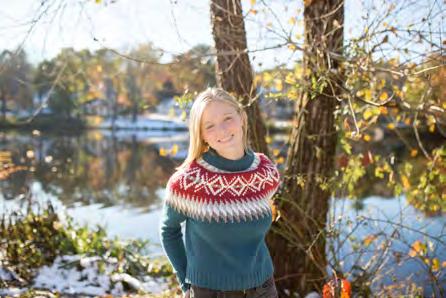
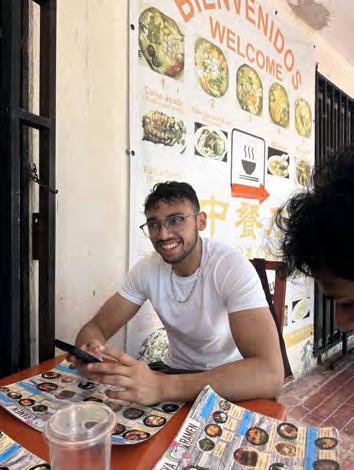
Megan O’Brien’s ‘25projectrolewithintheDarkSkiesteamforStateoftheRockieswillbe two faceted. Broadly speaking, she will be looking at different data sources to identify a correlationbetweenparkdesignation,subsequentdevelopment,andlightpollution.Utilizing GIS data, aerial imagery, historical photos, light data, sound data, and interviews I hope to create a well-rounded story behind light pollution near Bears Ears. The second part of her project will be more art focused to create a narrative around her research in the Bears Ears area.Thispartisevolving,andsheexpectsitwillcontinuetoevolve!!
Mustafa Sameen ‘25 is a double major in Mathematics and Computer Science at Colorado College.Passionateaboutenvironmentalconservationandtheintersectionoftechnologywith cultural practices, Mustafa is currently engaged in research focused on the whether the members of the 5-tribes Bears Ears coalition are concerned light pollution will alter their connectiontothecosmosthroughtraditionalways.Mustafaaimstoexplorehowincreasing light pollution affects the traditional cultural practices of the Indigenous tribes associated withthearea.Throughthisresearch,heseekstodeveloptechnicalsolutionsthatsupportthe preservationofbothnaturalandculturalheritage.
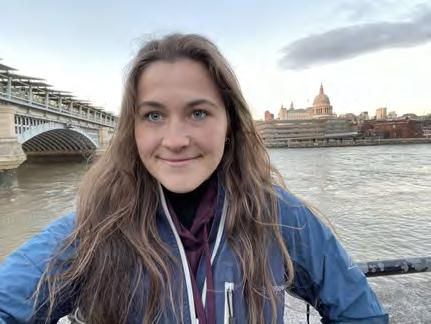
Natasha Thomas’ ‘24 project is a qualitative exploration of public opinion regarding use of land,specificallythatprotectedasBearsEarsNationalMonument.Shewilluseinterviewsof individualslivinginvariouscommunitiesinandaroundBearsEars,tocollectopinionsfrom residentsofareasdesignatedasenvironmentallyunjust.Throughalsocollectingdemographic information (such as ethnicity, age, and lifestyle), she hopes to “map” public opinion as it existsonthelandontopofvariousotherfactors,tounderstandmoreaboutthecomplexityof individualswhosharethespaceknownasBearsEarsNationalMonument.”
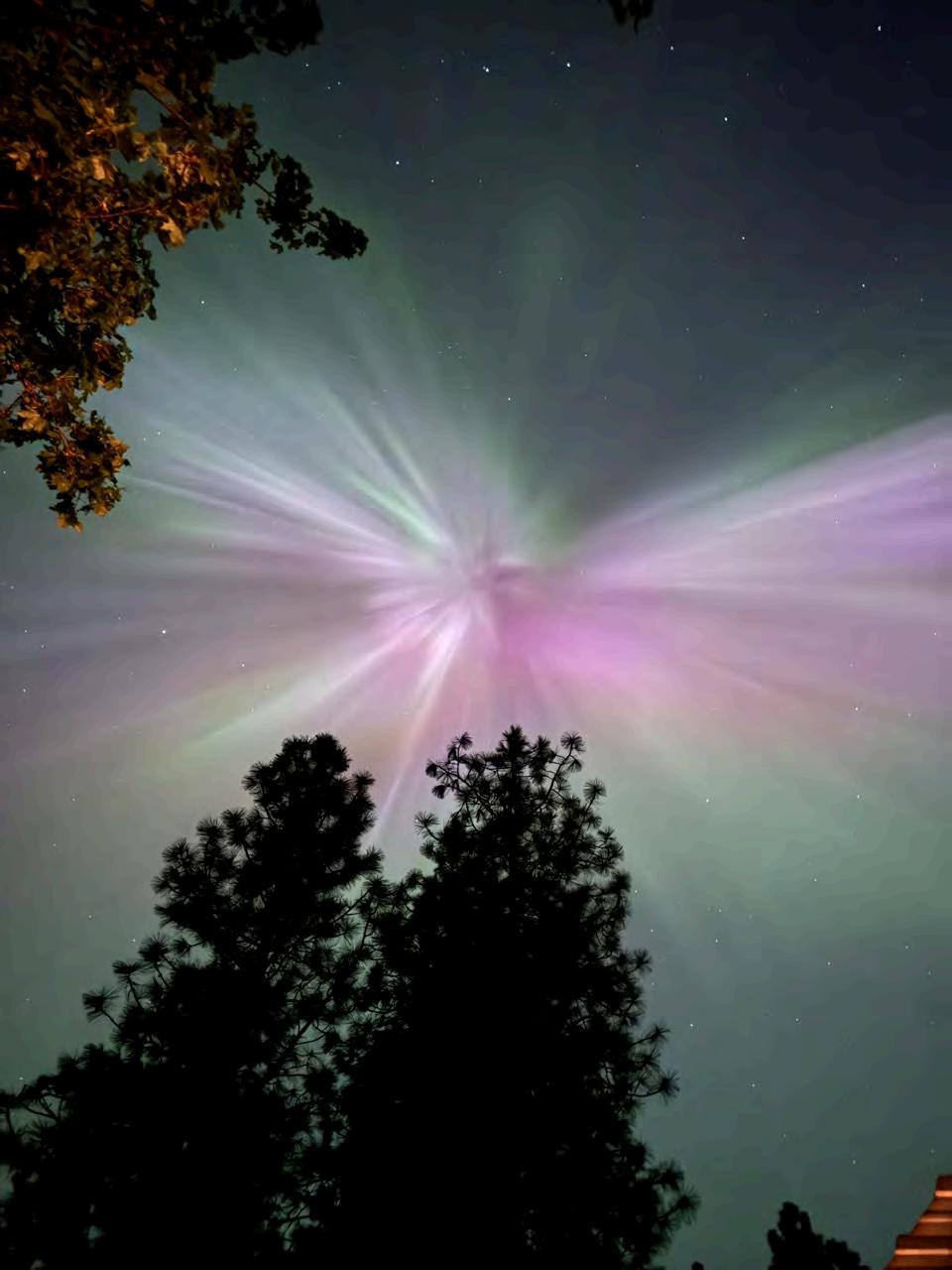
NORTHERN LIGHTS OVER THE ROCKY MOUNTAIN WEST
By Alice O’Neal-Freeman, ‘27
In May of 2024 swirling aurora borealis (northern lights) appeared in the Rocky Mountain western night skies. Usually a displayseeninNorway,Canada,Finland, and other countries beneath the auroral oval, residents of the Rocky Mountain Westweretreatedtoashimmeringlights show. Many drove out to areas with less light pollution in search of the aurora borealis appearance, an event that scientists say happens once or twice in a generation.Northernlights,theeffectsof large explosions of plasma and magnetic field,calledgeomagneticstorms,fromthe sun’soutermostatmosphere(thecorona) produce a continual stream of charged protons and electrons in the corona that, in a plasma state, are sent into the magnetic sphere and along Earth’s magnetic field toward the poles. The glowing lights, typically seen in polar regions, are visible in more southern latitudesduringthetimewhenthesunis most active; a cycle that recurs about every11years.
Toexplorethisphenomenon,TheStateof the Rockies is researching the topic and collectingphotospeopletookinColorado, Wyoming, and Utah to create a photo exhibit that captures the rarity of and helps to explain the appearance of the aurora over the Rockies, which scientists saywasduetoageomagneticstorm.
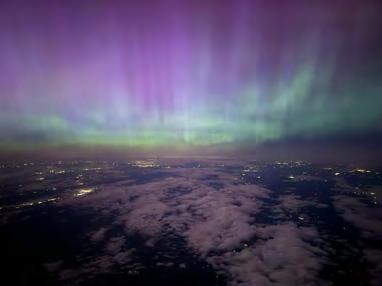
The aurora borealis from a plane in May 2024 in Northeast Colorado.
Photo by Erin Cheong.
The aurora borealis over trees in May 2024 in Elizabeth, Colorado.
| Photo by Aiden Varnak.
Vintage Poster Contest
By Annabel Meyer
Since2021,theStateoftheRockiesprojecthasinvitedstudentstosubmitavintage-styleposterofanationalpark,monument,orforest in the 8-state Rocky Mountain region that includes a contemporary conservation message, or "motto." The State of the Rockies ConservationintheWestPollinspiredartiststopinpointanissueinthefindingsofthepolltouseasthefocusoftheirposter.“The structureofthiscontestallowsstudentsalotofspaceforpersonalexpression.Itwastrulyamazingtoseethelevelofcreativity,effort andpassionputintothesubmissionswereceived,”saysKaitlinSteinfort‘22,oneofthecontest’sjudges.Featuringlocationssuchas RockyMountainNationalParkandPikesPeak, theseposterspushviewersnotonlytoappreciatetheoutdoorsbutalsotoadvocatefor them.
ALBERTA FALLS | FIRST PLACE
By Sam Daley '25
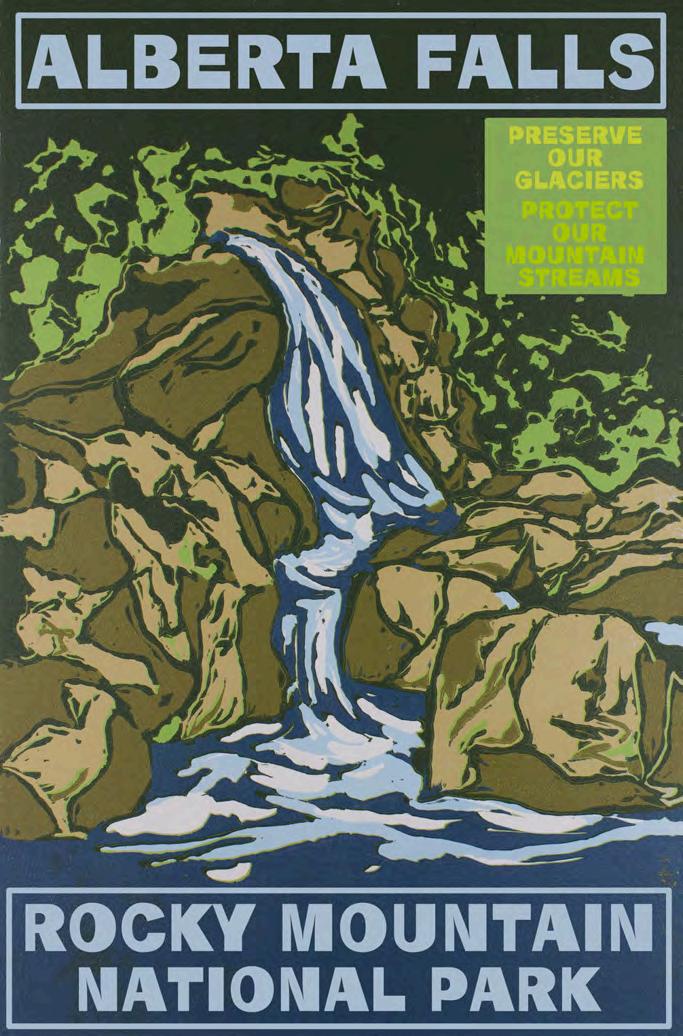
With forest fires, rising temperatures and droppingwaterlevelsfacingWesterns,92%of respondents believe that drought is a serious issue.InColorado,86%ofrespondentsbelieve that loss of natural habitat is a serious problem.TheloweringoftheColoradoRiveris often the spotlight of these concerns, however, other rivers deserve attention as well. Alberta Falls is a Rocky Mountain National Park phenomenon, is fed from Glacier Creek and is home to the native Colorado cutthroat trout. Aptly named, Glacier Creek is fed from the shrinking snow fieldsinthemountains,leadingtoaslowloss ofhabitatforthenativeendangeredcutthroat trout.IchoseAlbertaFallsasitspopularityfor hikerscanbeusedasaplatformtorecognize theimportanceofpreservingourglaciersand mountain streams. As the mountains grow drier, the tributaries of major rivers shrink vitalhabitatsaswell,likeAlbertaFalls.
“This was my second year entering the vintage poster contest. The first year, I discovered the contest and was enthralled as I love the classic vintage poster screen print style with the bold colors contrasted with nature. That year, I tried to learn how to draw digitally and failed miserably but learned a lot about simplicity with bold colors. This past year, I took what I learned from the first year and sketched digitally, which was new for me, then created as a reduction multi-color, using a linoleum block. After 7 color runs, I digitally edited the print to create the final. I chose to do a print about Alberta Falls in Rocky Mountain National Park because I love both hiking around and finding beautiful waterfalls. I have a special connection to the water, as it brings tranquility on a hike. As a fisherman, I strongly believe in conservation of natural habitats and respect for our native fish.” -- Sam Daley, ‘25
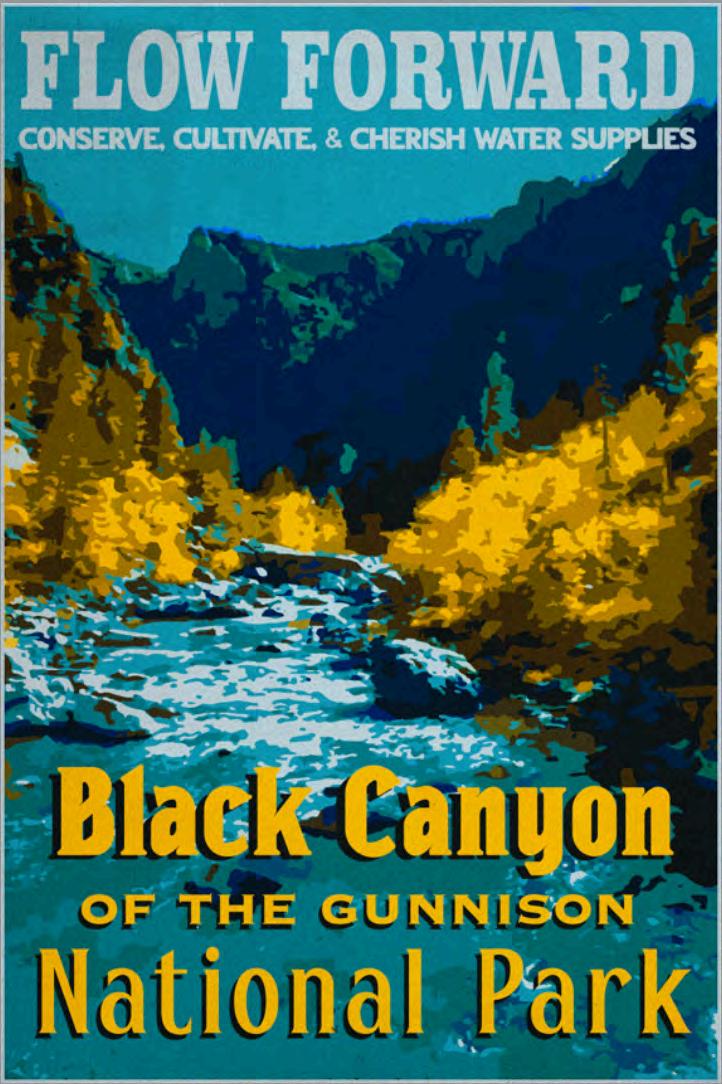
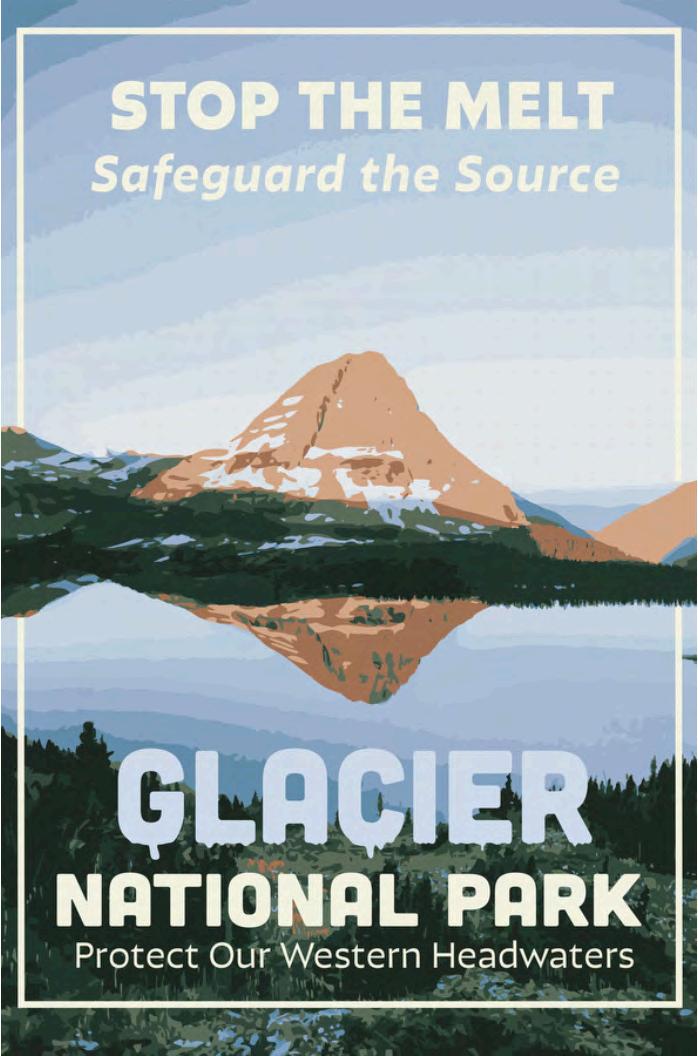
HEADWATERS | THIRD PLACE
By Holden Perry '25
TheBlackCanyonoftheGunnisonNationalPark,withitsstriking landscapesandthemightyGunnisonRiver,servesasatestament to the delicate balance of nature. My decision to choose this location is based on its role as a microcosm of the broader dynamicbetweentheinterconnectedecosystemsandresidentsof the Southwest's region. The results of the 2023 Conservation in the West Poll indicated that water supplies in the west are in a serious crisis, with rivers such as the Colorado and Gunnison viewedmoreatriskthaneverbefore.Themotto"FlowForward: Conserve, Cultivate, and Cherish Water Supplies" encapsulates theurgencytoaddresstheenvironmentalchallengeshighlighted bythepollresults,whilealsopromotingapositivecalltoaction metaphoricallytiedbacktothepark.
By Ben Curry '25
ThestunningGlacierNationalParkinMontanaisthehomelands to the Blackfeet, Salish, Pend d'Oreille, and Kootenai tribes. However,GlacierNationalParkismeltingattwotimestheglobal average rate, due to anthropogenic warming (NPS 2020). Throughoutthe2023ConservationintheWestPoll,participants inallstatesdemonstratedthatdroughtandwateravailabilityis a point of stress, with 56% of voters in Montana agreeing that drought is a serious problem. Glacier National Park is the headwatersforthreemajorNorthAmericanwatersheds:Hudson Bay,Atlantic,andPacific.Qualityandquantityoftheheadwaters has immense impacts on downstream ecosystems and users. Anthropogenicwarminghasincreasedglacialmeltrate,sparked wildfires and reduced average precipitation in the park, significantly altering natural flows. Climate mitigation efforts andincreasingtheefficiencyofwateruseiskeytoprotectingour nation'sheadwaters.
FLOW FORWARD | SECOND PLACE
Honorable Mentions
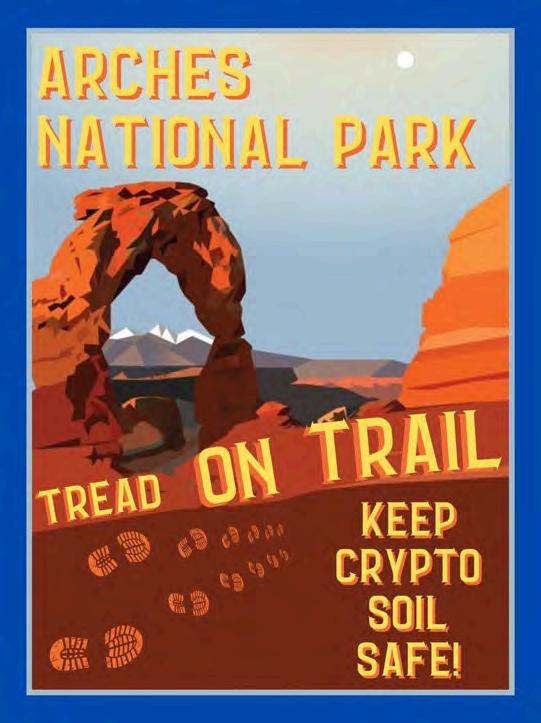
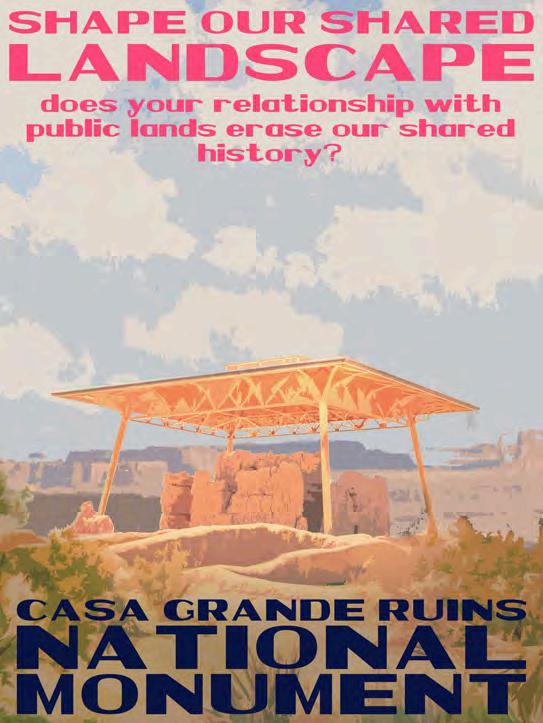
By Grace Gassel '27
Arches National Park is a desert biome. The native plants of the park depend on cryptobiotic soil to provide nutrients and moisture to survive in the harsh climate. Explorers of the park often encounter “crypto” alongside trails. When crypto is steppedonbyawanderinghiker,theareaisexposedtoerosion, organisms dependent on photosynthesis are buried, and plants cannot access the resources stored within crypto they need to survive. Staying on trail is essential to plant and habitat conservation, the health of Arches National Park, and all other desertbiomesintheRockies.So“treadontrail”to“keepcrypto soilsafe!”
By Sam Nystrom Costales '25
The aesthetics of public lands intertwines deeply with our nation’ssettler-coloniallegacy.Colonialencounterswithnature arebestexpressedbyKant’saestheticsublime,whichhecalls“a capacity for judging ourselves as independent of nature and a superiorityovernature."Panoramicviewpointsinnationalparks echo this perspective, offering privileged access to landscapes devoid of human influence. This narrative erases the violent history of indigenous dispossession essential for creating seemingly untouched landscapes. This ahistorical perception distancesthepark-goerfromthesocio-economicprocessesthat cultivate the landscape materially and aesthetically across history. The retro posters are emblematic of this relationship, havingbeencultivatedduringtheGreatDepressiontosimulatea senseofcollectiveunity.
TREAD ON TRAIL SHAPE OUR SHARED LANDS
Meet the Judges
Ellyn Walker
Ellyn Walker is an interdisciplinary arts scholar and curator. Her work explores questions of representation and placemaking in the arts as they pertain to distinct positional, cultural, and institutionalcontexts.Ellynhasstudiedat the University of Toronto, McGill, and OCADUniversity,andcompletedaPhDin CulturalStudiesfromQueen'sUniversity whereherresearchfocusedondecolonial curatorial methodologies used in contemporary exhibition-making and museumpracticeinCanadaandbeyond. She is currently working on a co-edited anthologytitledCuratorialContestations: Critical Exhibition-Making Practices in Canada with Michelle Jacques that explores diverse curatorial pedagogies and projects from across the lands now known as Canada. Ellyn was the Acting Director/Curator of The Blackwood University art gallery from 2021–2022, where she was also cross-appointed as Assistant Professor in the Visual Studies program at the University of Toronto Mississauga. She is currently a Visiting AssistantProfessorintheDepartmentof ArtatColoradoCollege.
Jillian Sico
Kaitlyn Steinfort ‘22
Jillian Sico is a papermaker, bookbinder, and letterpress printmaker who makes artists’booksundertheimprintFrogsong Press. She received an MFA in Book Arts from The University of Alabama in 2020, whereshefocusedonletterpressprinting, papermaking, and fine bookbinding. She also received an MA in Environmental Anthropology from The University of Georgia in 2013 and a BA from St. John’s College in Annapolis, MD in 2005. Her process is informed and expanded through collaboration and research on culture and ecology. Her work has been exhibited nationally and is held in numerousspecialandprivatecollections. Jillian currently manages The Press at ColoradoCollege.
Kaitlyn Steinfort is a Colorado College alum and former poster printer at The Press at Colorado College. In the summer of 2019, she took a Book Arts and Letterpress course at The Press at CC and workedalongsideAaronCohickandother students in the press through her senior year. During her final year on campus, Kaitlin combined her passion for environmental protection and education andherloveforcreatingartinthepressto helpdesignandcreatethepostersusedto advertise the first State of the Rockies poster contest in 2021/2022. Now as an alum, Kaitlin works in the habitat management field and continues to work on her own art in a variety of media, hoping to continue finding and creating waystouseartasatoolforenvironmental advocacy,protection,andeducation.

Interested in submitting a poster?
CallingallColoradoCollegeArtists!Everyyear,theStateoftheRockiesinvitesstudents tocreateoriginalnationalparkpostersinspiredbytheenvironmentalissuesthatmatter to them. Visit our Vintage Poster Contest Webpage for more information on 2025 contestdates, andtoseetherestofthe2024contestsubmissions.
Colorado College Vintage press printmakers share their ideas on what a winning poster should include. Learn what to include in your next poster design. Visit the State of the Rockies Websiteorviewthevideohere.
Video by Eric Ingram, '23
2024 CONSERVATION IN THE WEST STUDENT PHOTO CONTEST
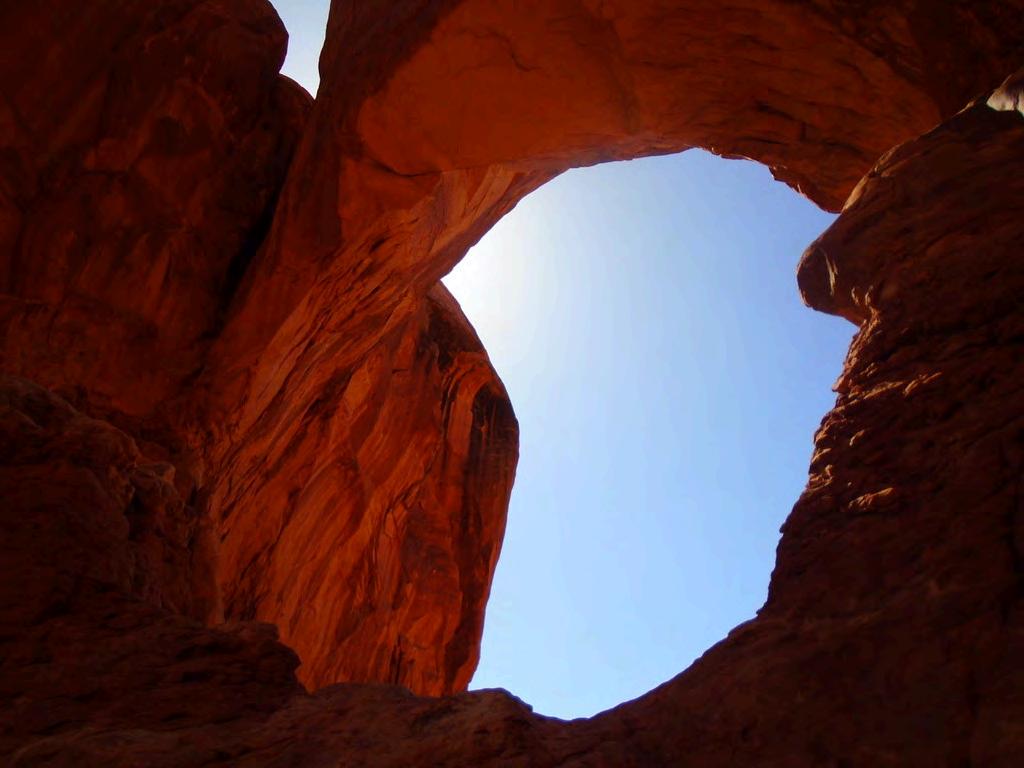
Eachyear,theStateoftheRockiesProject invites students to submit images from anywhereintheRockyMountainWestto its annual photo contest. These photos aim to remind us of the conservation efforts necessary to preserve and protect natureintheRockyMountainWest.
Students are required to submit photos that addressed areas of concern for wildlife and habitat, outdoor recreation and diversity and inclusion in the outdoors, shifting climate patterns and processes, public lands, wildfires, water, andotherconservationissueshighlighted
inthe2023ConservationintheWestPoll. A jury of staff expert photographers determined finalists, while the people's choice by popular vote was determined viavote-by-text.
Lookforphotocontestsubmission
Double Arch | Arches National Park, Utah | Photo by Macy McCauley ‘25
deadline and details on The State of the RockieswebsiteinBlock5forthe2025 ontest details ! Winners win monetary prizes!
1stplace $500
2ndPlace $250
3rdPlace $100
PopularVotewinner $100
Judges
Heather Oelklaus
HeatherOelklausisthePrintWorkShopSupervisor for the Colorado College Art Department. She has based her life around art for the last 30 years. After attending the Kansas City Art Institute, Heather moved to Colorado Springs where she has been creating artworks that incorporate her passion for photography,printmaking,sculpture,painting,fiber, and collage. Her work has been exhibited in numerous galleries and museums and is held in privatecollectionsaroundtheUnitedStates.Heather explores the boundaries of photography and experiments with alternative processes and technologies.Whensheisnotcreatingphotographs, shecanbefoundpleinairpainting,weavingonher loom, and researching new techniques for her art making.
Josh Raab
Josh Raab is the Director of Instagram at National Geographic. Previously, Josh worked at TIME as a Photo and Multimedia Editor. He has also been an adjunct professor at the International Center of Photography. Josh started out as a photographer covering the aftermath of the Boston Marathon bombings and Hurricane Sandy, then transitioned into editing by founding Jay Peg’s Photo Pub., an online and print publication for emerging photographers.
Delicate Arch | FIRST PLACE
by Macy McCauley '25
The sheer beauty of the Delicate Arch in Arches National Park makes it easy to see why so many care about the preservation of public lands through national parks, monuments,andreserves.Butwhoseland was it in the first place? To me, the delicate nature of the arches in the park representthebalancebetweenpreserving land and recognizing those who were there first. The land is beautiful, but at whatcost?
This photo was taken during a CC class visit to Arches, where the Outdoor Education&Leadershipcoursegotspecial accesstotheparkatsunset.
As lucky as we were to get such access, it does again make me question the relationship between privilege and outdoorspaces.
"A quintessential western moment captured well. The eye is drawn to the beautifully illuminated arch dividing the composition nicelyasthesunsetsinthebackgroundgiving theskyanicegradientofcolor."
--JoshRaab(Judge)
Photo
Leave No Trace | SECOND PLACE
Photo by Logan Brunk ‘27
For this image my intention is to bring awarenesshowwestepintothewild.Asa kidmyparentsandteacherspreachedthe values of "leave no trace:" important standards to live by in the outdoors. In this image the figure is walking along a dramatic rock formation that took millionsofyearstoform.Thisimageasks: shouldweasoutdoorenthusiastsbeable to explore and leave footprints on these delicate and extraordinary art formations? Where is the line between exploringnatureandpreservingit?
“Thephotograph”LeaveNoTrace”invitesus to reflect on our relationship with the landscape.Itremindsusofthevaluesinstilled by family and teachers, urging us to uphold and pass along those principles of environmental stewardship and reverence. Thehorizonlinehintsatadeepernarrative,a line graph with its sharp incline symbolizing the trajectory of our collective path, a reminder of the choices that shape our future inthisworld.”
--HeatherOelklaus(Judge)
Mountain Lion | THIRD PLACE
Photo by Isabel Devito ‘27
Iphotographedthismountainlionwitha cameratrapaspartofmyresearchonthe impacts of human activity on carnivores in Colorado. Human land use can negatively affect wildlife by changing their behavior or by contributing to habitat fragmentation. I found that mountains lions were less likely to use sites with high road density than those with less road disturbance, underscoring how important conservation of wildlife corridors and the creation of highway underpasses are for wildlife in the Southwest. The State of The Rockies survey found that 78% of Westerners believethatemphasisshouldbeplacedon conservingwildlifemigrationroutesthan oneconomicallyproductivelanduses,so many Westerners recognize and are in supportofconservationactionforspecies likemountainlions.
Mountain lions are notoriously difficult to spot.Chancesare,ifyouseeoneithasalready seenyoufirst.Thatiswhytheuseofacamera trap is often the best way to document them. Seeing this illusive cat up close is a technical featandcriticalforresearchpurposes.
--JoshRaab(Judge)
Fallen Forest | FIRST RUNNER-UP
Photo by Maren Greene '24
While the regrowth of grass and flowers after a wildfire may seem promising, the dominance of certain speciescanthreatenbiodiversityand ecosystem resilience. Here, amidst a fallentree’sremnants,theunchecked proliferation of shurbs could disrupt the delicate balance of the forest, highlighting the complex challenges of post-fire recovery. As climate change drives up wildfire burn severity, the likelihood of diverse ecosystemregrowthdiminishes.
Other Wordly Landscape | SECOND RUNNER-UP
Photo by Alex Aronie '26
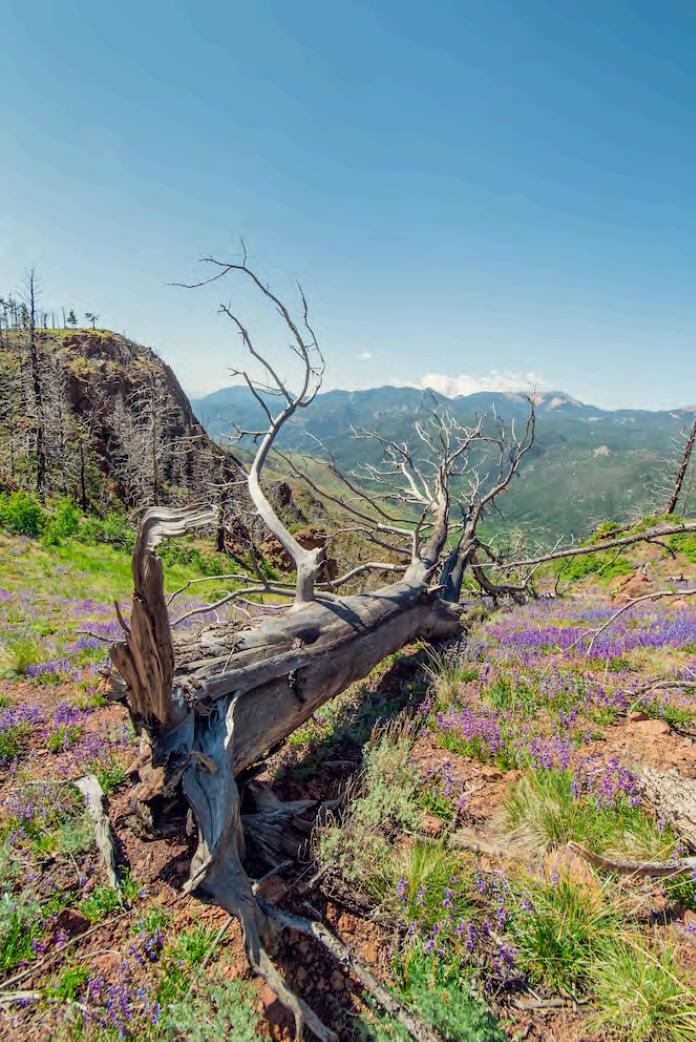
An ethereal haze settles over an otherworldly landscape while the Colorado River continues its five million-year journey, cutting its way deeper and deeperintotheEarth.Aswithmanyother waterways, due to climate change and seeminglyinsatiablehumandemand,the Colorado recedes every year. Future generationsmaynothavetheprivilegeof experiencing this awe-inspiring view if this continues unabated. Canyonlands wouldloseoneofitsincrediblescenes.
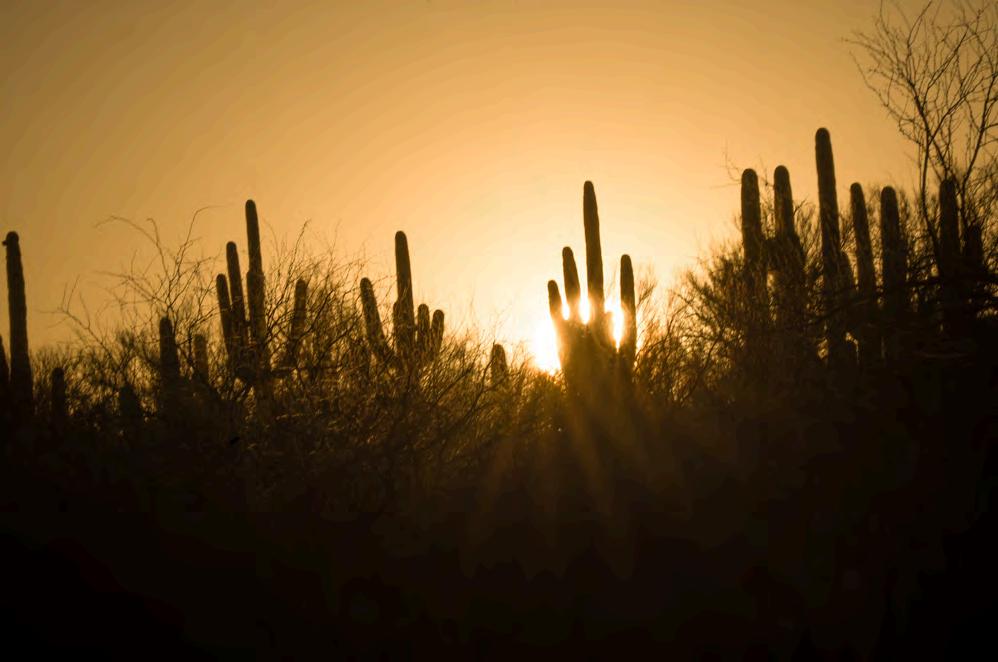
Catalina State Park | PEOPLE'S CHOICE POPULAR VOTE WINNER
Westerners recognized the importance of public lands for recreational opportunities,mentalhealthbenefits,and providing habitat for wildlife. This photo was taken in Catalina State Park just outside the major metropolitan area of Tucson, and is visited by over 250,000 people a year, highlighting the value of publiclandtoWesterncommunities.
Photo by Isabel DeVito ‘24
Environment and Climate Journalism: True Stories of People and the Natural World
By Annabel Meyer
In a hands-on course focused on climate journalism, Professor Bruce Finley found himself mentoring a single student, Konrad Gunderson, ‘26. This unusual setup turned into an extraordinary educational experience, allowing for indepth exploration of environmental journalism.
Gundersonenjoyedbeingthesolestudent inthecourse."SinceIwastheonlyone,I ended up being able to speak more indepth,probablymorethanwewouldhave as a group," he said. A highlight of the course was a one-week trip to Baca Campus, during which Gunderson and Finley examined various environmental issues in the San Luis Valley. This immersive experience included studying drought through multiple perspectives, including governmental water managementandtheeverydayrealitiesof localranchers.
Although this experience was once in a lifetime, it was also challenging at times. "In large groups, you might think you know more about the issue than you actually do. But since we were switching aroundsomuch,therewaspressuretoask questionsonthego,withouthavingmuch time to research beforehand," he said. Professor Finley, a visiting professor, broughtyearsofknowledgeandexpertise from his work at the Denver Post. He emphasized the demanding nature of journalism, describing it as intellectually, mentally,andphysicallychallenging."For me,it'sinvolvedtravelingtomorethan40 countries,agoodlynumberofwarzones. ButI'minterestedinbeingabletoshareit, especiallywithyounger,criticalthinkers," hesaid.
HavingjustonestudentallowedFinleyto dropGundersonintolivenewssituations, encouraginghimtodevelophisownstyle. "Konrad brought a lot to the course. He was motivated and capable, which is alwaysinspiringforaprofessor.Itmakes you want to share everything you can," Finleynoted.
ThecoursewaspartofColoradoCollege's StateoftheRockiesproject,whichFinley praised for its unique institutional architecture that supports innovative methods in environmental journalism. "The beautiful thing about State of the Rockies is that it deploys all these methods in the exploration of environmental issues in the Rocky Mountain West," Finley said. Though FinleyandtheStateoftheRockiesproject hadenvisionedafullclassofstudentsfor
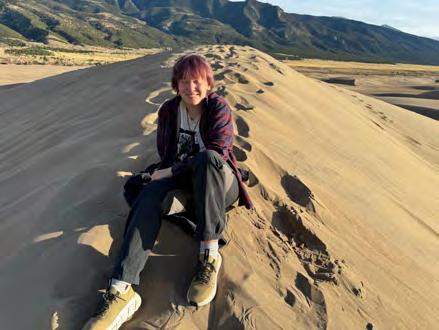
this course, Gunderson was able to learn this content in unprecedented way, and hassubstantialworktoshowasaresult.
https://sites.coloradocollege.edu/environ mentclimate2023/
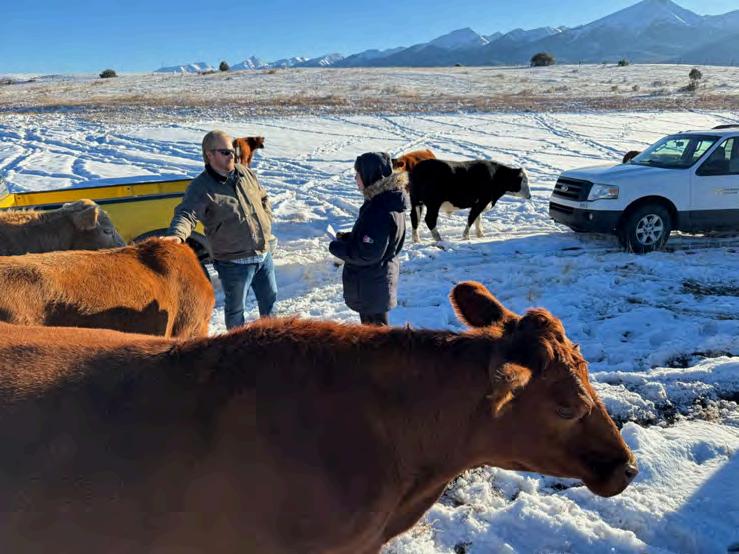
Konrad Gunderson rests after summiting a mountain of sand at the Great Sand Dunes National Park. | Photo by Bruce Finley.
Gunderson conducting an interview of a cattleman on the eastern flanks of Colorado’s Sangre de Cristo mountains. | Photo by Bruce Finley
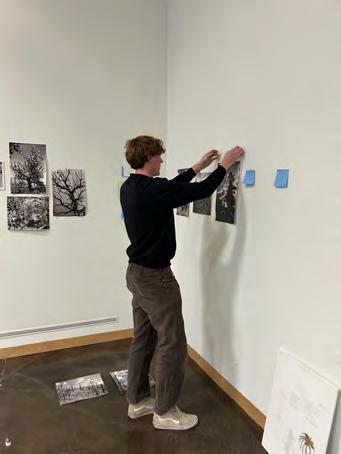
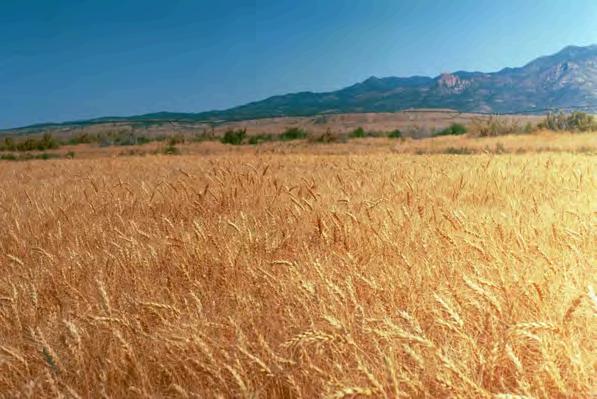
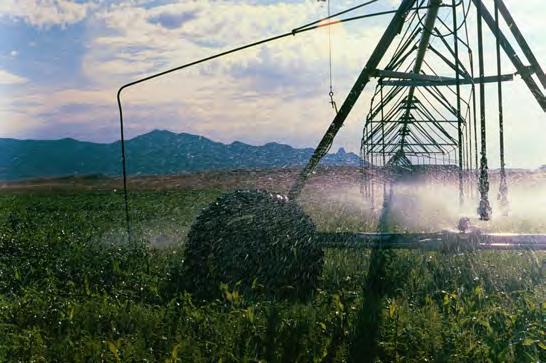
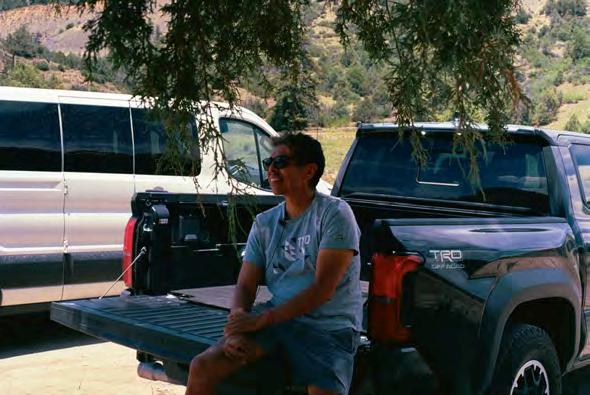
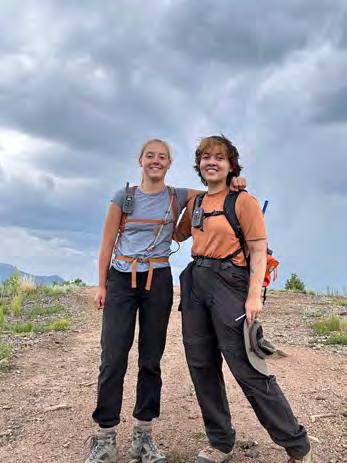
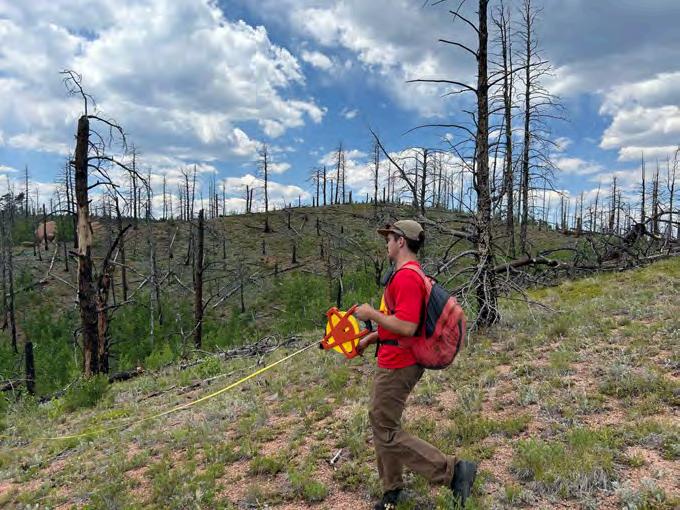
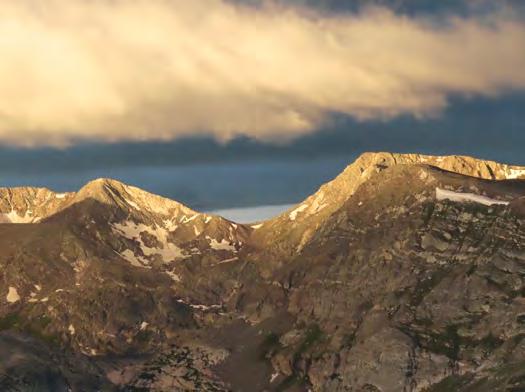
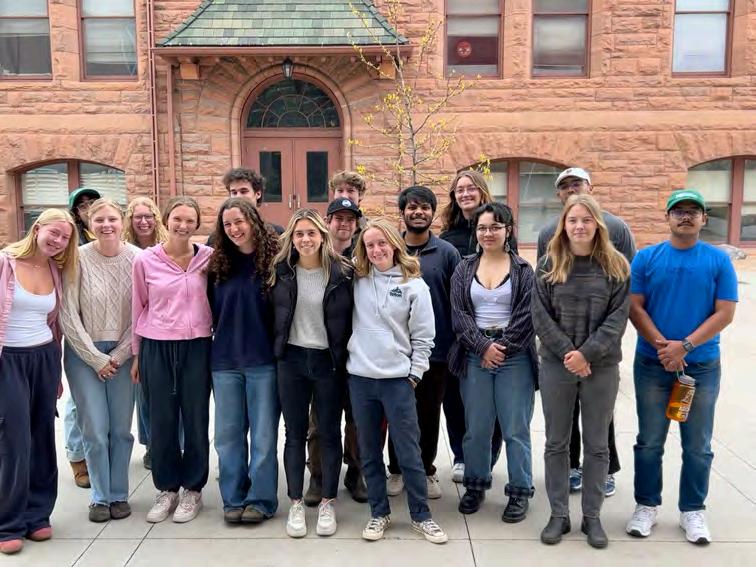
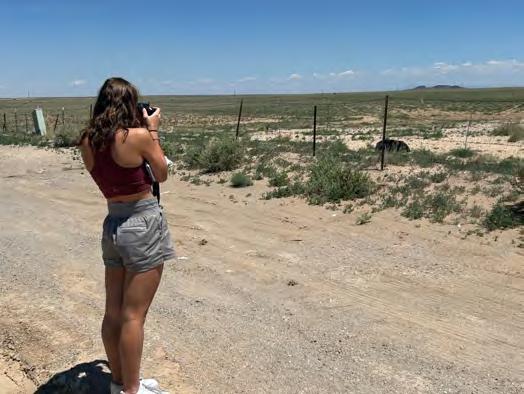
Fromtopleft:1)OllieBeland‘25installshisexhibit for Data Viz night. Photo by Cyndy Hines. 2) A sprinkler waters crops in the San Luis Valley. Photo by Jessica Duran '25. 3) Ben Curry ‘25 lays a transect in Waldo Canyon. Photo by Cyndy Hines. 4) A wheat field and 5) A Southern Ute Mountain Ute Woman. Photos by Jessica Duran ’25. 6) Ladybugs on blades of grass and 7) Tyler Mielke ‘26 and Rachel Phillips ’26 smile for a photo. Photos by Rachel Phillips ‘26. 8) Sunrise in Rocky Mountain National Park. Photo by Macy McCauley ’25. 9) Alison Mueller-Hickler, ‘26 photographs a site.PhotobyCyndyHines.10)StateoftheRockies team. Missing Jessica Duran 2024, Natasha Thomas ‘24, Macy McCauley, 25. Photo by Cyndy Hines.