

Dear Colonial Chapter Members,
As we move into June, our Chapter continues to stay busy, active, and focused on the issues that matter most to our members and all veterans living with spinal cord injury and disorders, including MS and ALS.
Recently, I had the opportunity to attend the PVA National Convention in Las Vegas. It reminded me of the strength of our organization and the important work being done across the country. It was encouraging to see Chapters sharing ideas, advocating for veterans, and working together to improve the lives of those we serve.
This month also marks an important time for our chapter as we finish reviewing and approving next year’s budget. Every year, we work carefully to ensure that our resources are directed toward the programs, services, advocacy, and support that make the greatest impact for our members and their families. Responsible planning today helps us continue building a stronger future for tomorrow.
PVA Advocacy Week, taking place during the second week of June, is another important opportunity for our voices to be heard. Advocacy has always been at the heart of Paralyzed Veterans of America. When we speak together, lawmakers listen.
These issues impact the independence, health, and quality of life of our members every single day. Advocacy is not just about legislation—it is about protecting dignity, opportunity, and access to the care our veterans have earned through service and sacrifice.
I also encourage everyone to support the exciting programs highlighted in Executive Director JoAnn Bedsworth’s article this month. “The Power of PVA in Color” and the Rise to Impact fundraising campaigns are wonderful examples of how our Chapter continues to grow awareness, strengthen our community, and support the services that make a difference in people’s lives.
Thank you for all you do to support our chapter and one another. Whether you volunteer, advocate, participate in events, mentor fellow members, or simply stay engaged, you are helping strengthen the Colonial Chapter and the entire PVA family.
Together, we continue to move forward.
Warm regards,
Kathleen Fitzpatrick
Kathleen Fitzpatrick President
Paralyzed Veterans of America, Colonial Chapter
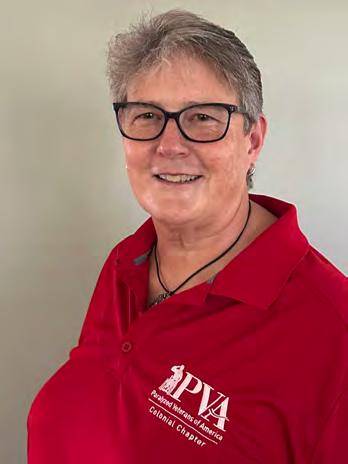
As we continue moving forward this year, I want to take a moment to share two exciting opportunities that truly reflect who we are as a community—resilient, creative, and deeply committed to improving the lives of our members.
At the Colonial Chapter of the Paralyzed Veterans of America, everything we do comes back to one simple idea: supporting each other. Through service, connection, and shared purpose, we continue to make a real impact. This month, I’m proud to highlight two initiatives that bring that mission to life: The Power of PVA in Color and our Rise to Impact Peer-to-Peer Fundraising Challenge.
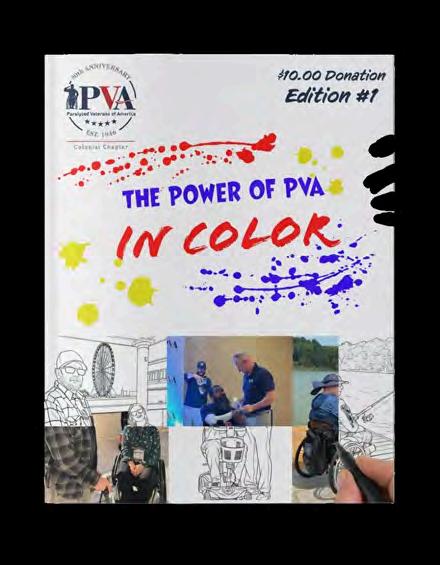
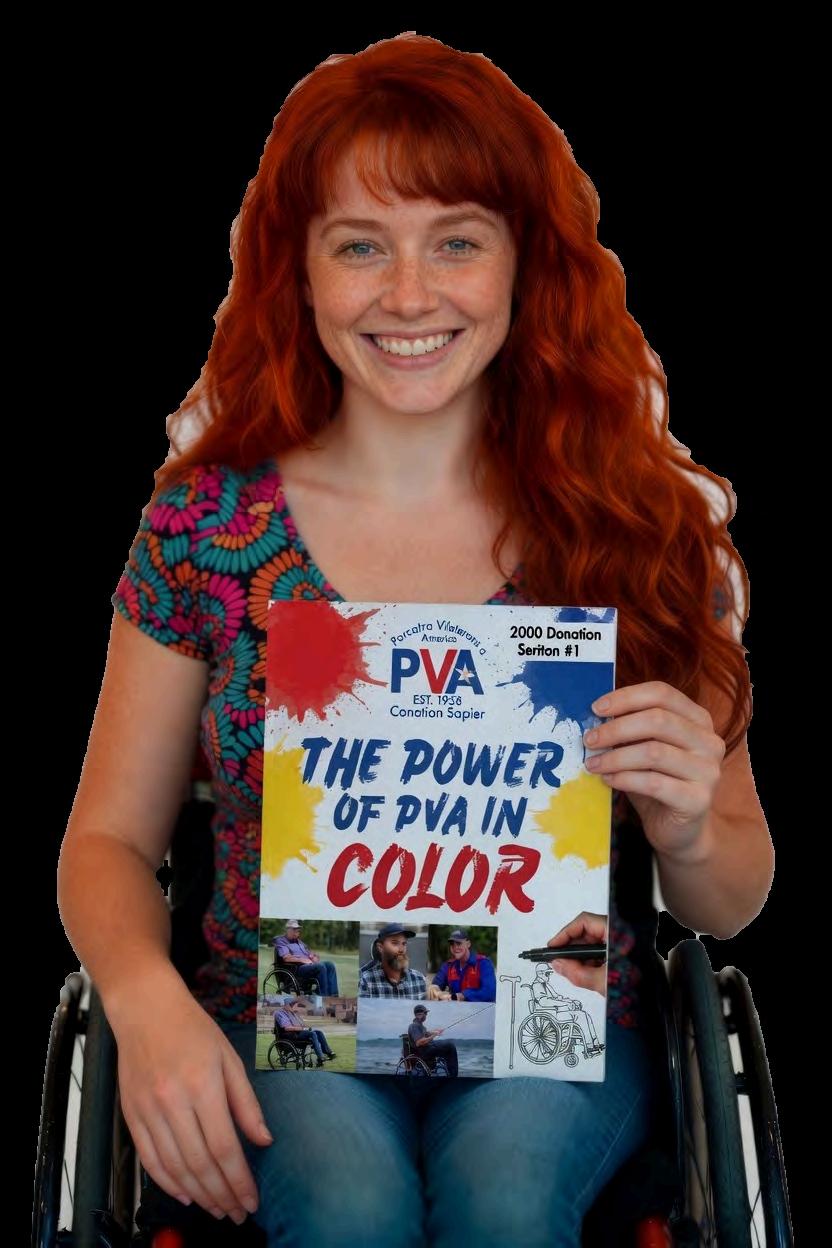
“The Power of PVA in Color” is a special edition coloring book filled with real stories from our members—stories of strength, resilience, determination, and hope. Each page reflects the lived experiences of the people we serve and celebrates the spirit that makes our community so strong.
This is more than just a coloring book. It’s a way to share our stories in a creative, meaningful, and accessible way for all ages. It helps others see who we are and what we stand for in a very personal way.
Each book is $10, and every purchase directly supports our programs, outreach, and services for members of our community. When you buy a book, you are not only helping sustain our mission—you are helping spread awareness and strengthen the programs that support independence and quality of life for paralyzed veterans.
Our goal is to sell 200 books. In the first 10 days we sold 70. Please help us with this goal and get yours today. You can order yours at colonialpva.org or call the office. And as a fun bonus, everyone who participates will also have two chances to win $100.
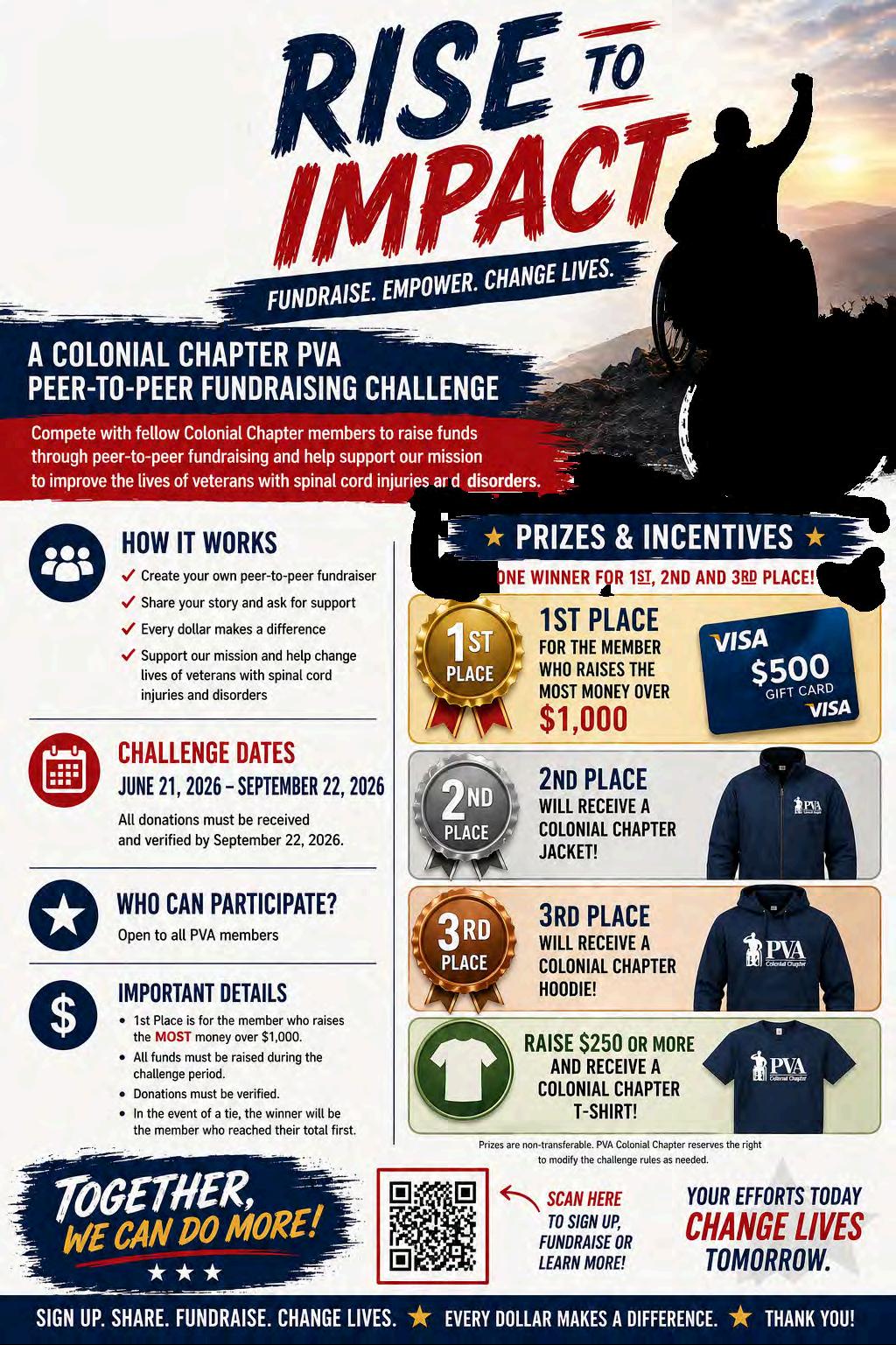
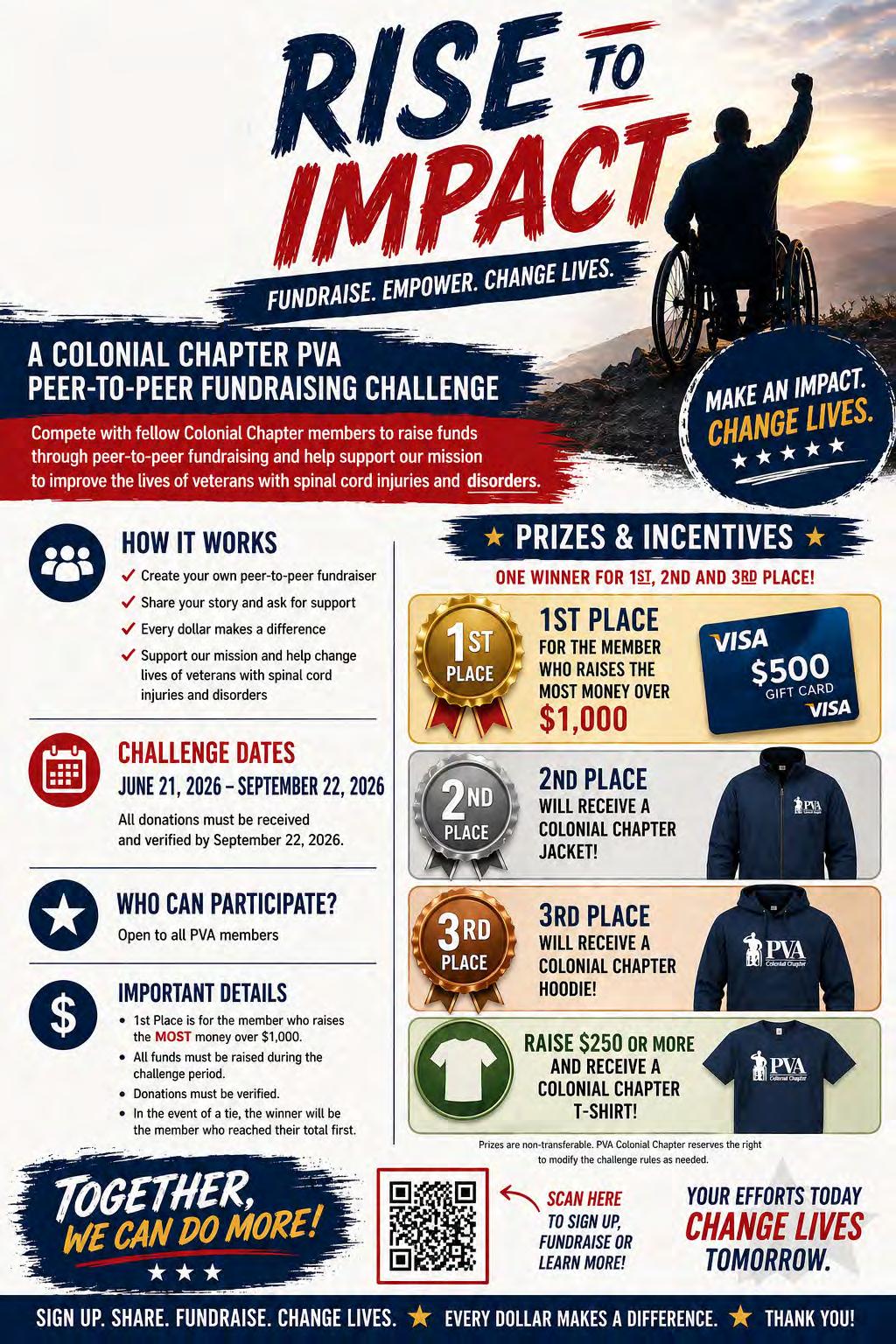
Rise to Impact – Peer-to-Peer Fundraising Challenge
June 21 – September 22, 2026
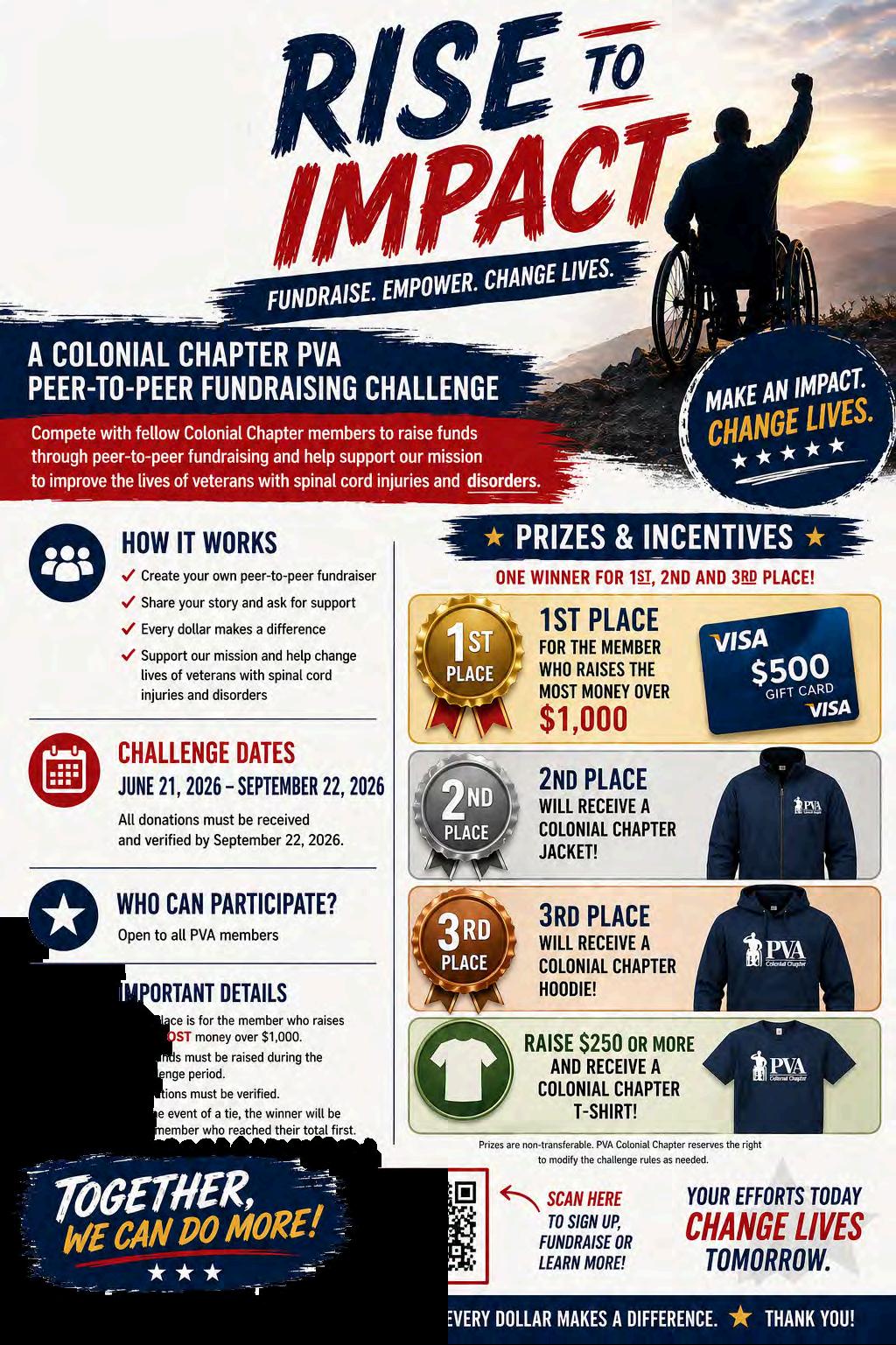
We are also excited to launch our Rise to Impact Peer-to-Peer Fundraising Challenge, and I truly hope every member will take part in some way. This is about coming together, sharing our stories, and building something bigger than any one of us.
Every effort, big or small, helps strengthen the programs that support our members and improve quality of life across our chapter.
Prizes include:
1st Place: $500 cash prize (for the top fundraiser raising over $1,000)
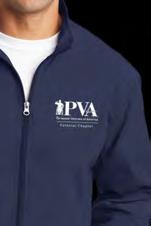
2nd Place: Colonial Chapter jacket
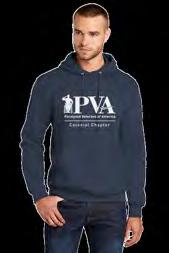
3rd Place: Colonial Chapter hoodie
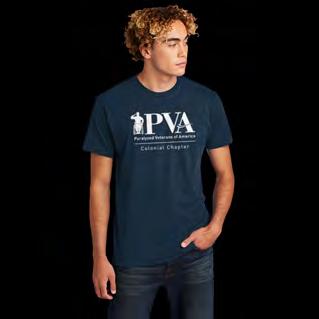
Everyone who raises $250 or more: Colonial Chapter T-shirt
This challenge isn’t just about fundraising. It’s about connection, pride, and showing what we can accomplish when we all participate. Every dollar raised goes right back into services, programs, and support for our members.
When we come together, we truly multiply our impact. Whether you purchase a coloring book, start a fundraising page, or simply encourage someone else to get involved, you are helping move our mission forward in a real and meaningful way.
Create your own story. Every dollar makes a difference.
If you have questions or want to get involved, please contact the chapter office.
With gratitude,
Jo Ann Bedsworth Executive Director Colonial Chapter, Paralyzed Veterans of America

Linda Richardson 05/01
Martina Russell 05/03
Antoine Moore 05/03
Daniel Bolton 05/05
Dean Flanagan 05/07
Cindi Walker 05/07
Glenn Osborne 05/11
Delano Draine 05/13
Victor Diaz 05/13
Chris Bryant 05/14
Robert Roundtree 05/19
Nancy Glowacki 05/20
Rodney Henning 05/21
Philip Sudano 05/24
Anna Cherepnina 05/24
Benjamin Shahan 05/26

Kenneth Archer 07/01
William Stump 07/01
Daniel Lindsey 07/01
Jerrod Harris 07/03
Tamika Campbell 07/04
Brian Augustniak 07/05
Dwayne Curbeam 07/06
Nuvia Charles 07/06
Jennifer Small 07/06
Wayne Carraghan 07/08
Stephen Rodgers 07/10
Jerome Johnson 07/11
Thomas Otte 07/12
Stanley Laskowski 07/14
Kathleen Fitzpatrick 07/15
Kenneth Atalian 07/16
Catherine Tolbert 07/17
Detlef Hartmann 07/20
David Duncan 06/02
Kenneth Swinehart 06/02
Kenneth Coppage 06/03
Darin Cassell 06/06
Leroi Colt 06/08
Joan Simms-Ashbrook 06/08
Harry Crafton 06/10
Christopher Abell 06/10
Michael Hellwig 06/15
Cheryl Goodman 06/22
Dylan Mackey 06/23
Kathleen Mason 06/28
Robert Selin-Williams 08/01
Daniel Czuczman 08/04
Thomas Rainier 08/04
Bernice Bocachica 08/05
David Zell 08/06
Larry Feller 08/08
Charles Rawlings 08/09
Charles Auble 08/11
Joseph Pugh 08/11
Jake Belardo 08/12
Dale Miller 08/13
Herbert Roberts 07/20
Jesse Rudgunas 07/22
James Harrington 07/29
Charles Widdoes 07/31
Cori Countess 07/31
Kenneth Jack 08/14
Ronald Sharer 08/14
Jeffrey Brown 08/17
Lisa Elijah 08/25
Dale Mecouch 08/26
Bernetta Lyons 08/26
Raymond Hauser 08/31
David Wands - 10/20/2025

Alfred Watson - 01/12/2026
Mark Bieberich - 02/24/2026
David Riley - 02/25/2026
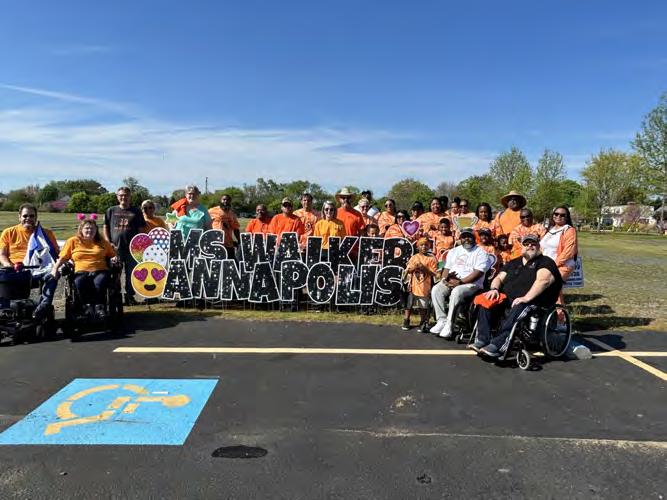
Host Jerrod Harris and Co-Host Jennifer Small produce and deliver monthly Teams meetings that takes our members on a journey plus connects them to their peers. You get to hear from your peers about living and managing their MS, and they are known to have guest speakers who give resources and support for navigating everyday life.

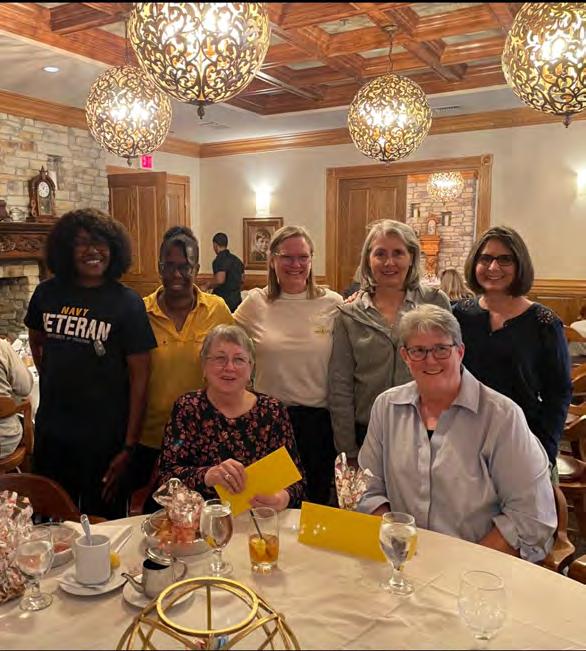
Colonial Chapter of the PVA provides an opportunity for women veterans to form bonds, share experiences, remind the community and themselves that they served too! Chair Betty Geer and Co-Chair Kathleen Fitzpatrick have virtual meetings on the first Tuesday of every month on Zoom.

Looking to take a coffee break every week and talk with others in the Colonial Family? Looking for a place to just pop in and listen to others for inspiration? Join Jennifer Small and others every Monday from 12:00 p.m. - 1:00 p.m. EST. on Microsoft Teams. Here, you can discuss whatever is on your mind because sometimes, communication outside of your circle is good for the soul.


06/21-06/27
07/15/2026
WATERCOLOR PAINTING
Watercolor painting session sponsored by Colonial PVA Register by June 1st, 2026
08/07 - 08/09
ADAPTIVE
09/16-09/17/2026
ADAPTIVE FISHING ON FISH REDEEMER
10/14-10/16/2026
GALLEN
12/5/2026
COLONIAL
11/2026
HOLIDAY BAKING CLASS (VIRTUAL)
SPEAKER: JASON SPOHN
DATE & TIME COMING SOON

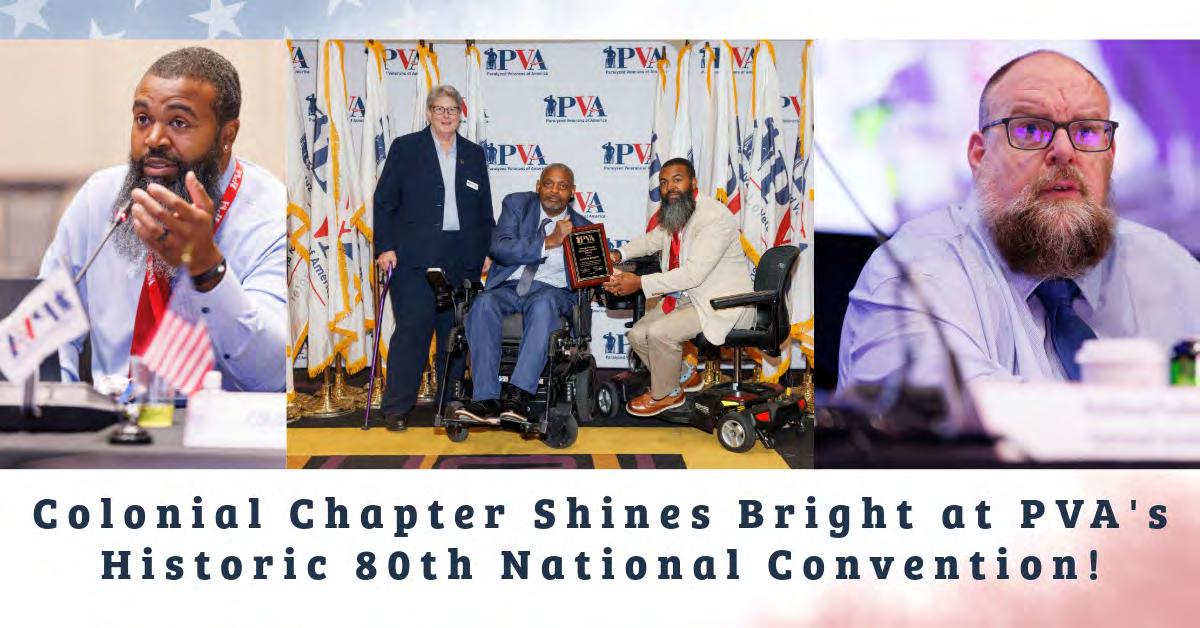
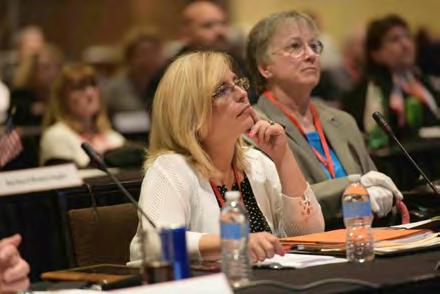
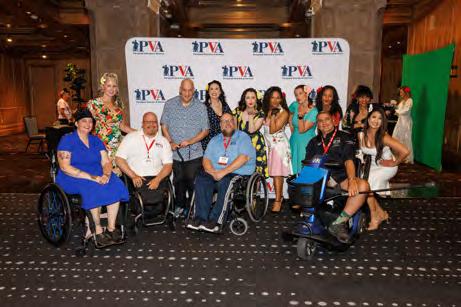
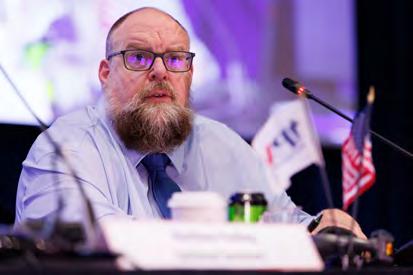
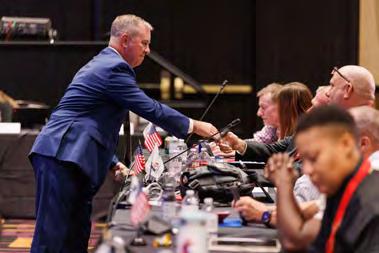
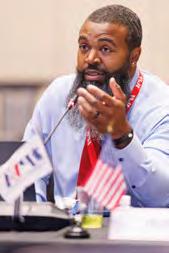
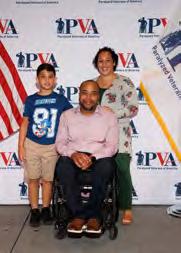
The Paralyzed Veterans of America (PVA) convened in Las Vegas, Nevada, May 12–15, 2026, for its milestone 80th Annual National Convention at the iconic Planet Hollywood Resort & Casino. Members of the Colonial Chapter proudly represented Delaware and the Mid-Atlantic at this historic gathering, reinforcing PVA’s enduring commitment to veterans living with spinal cord injury and disease (SCI/D), including MS and ALS.
The convention opened with a special welcome reception where Las Vegas Mayor Shelley Berkley joined attendees and officially proclaimed May 12, 2026, as “Paralyzed Veterans of America 80th Anniversary Convention Day.” This proclamation highlighted the city’s appreciation for PVA’s eight decades of advocacy, veterans’ rights leadership, and efforts to advance accessibility and barrier-free communities nationwide.
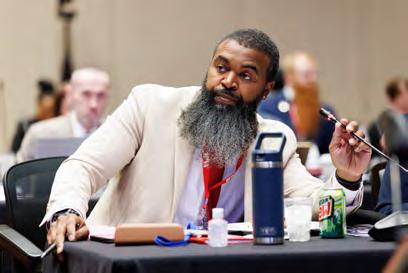
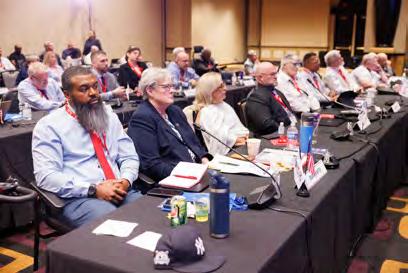
A strong Colonial Chapter delegation attended the four-day event, including National Director Jerrod Harris, President Kathleen Fitzpatrick, Executive Director Joann Bedsworth, and Marketing Director Jason Spohn. The group actively participated in the full agenda, which included proposed resolutions, FY2027 budget review, staff and department reports, chapter updates, awards presentations, and national Executive Committee elections.
National President Robert L. Thomas Jr. highlighted PVA’s remarkable legacy during the 80th anniversary celebration, from its founding advocacy efforts on Capitol Hill to today’s far-reaching achievements in legislation, research, accessibility, specialized VA care, and benefits recovery. The “Power of PVA” theme captured the organization’s ongoing momentum.
For the Colonial Chapter, the convention provided excellent networking opportunities, idea-sharing sessions, and fresh inspiration to strengthen our local programs. Attendees returned energized to build on successes in adaptive sports, the HEART Program for vocational training, home accessibility modifications, and member support services for our community of approximately 320 veterans and families in Delaware, Maryland, New Jersey, Philadelphia, and Washington D.C.
The event reaffirmed PVA’s core mission: safeguarding VA SCI/D centers of excellence, advancing disability rights, and creating a more accessible world.
Here’s to another 80 years of resilience, advocacy, and the unbreakable Power of PVA!
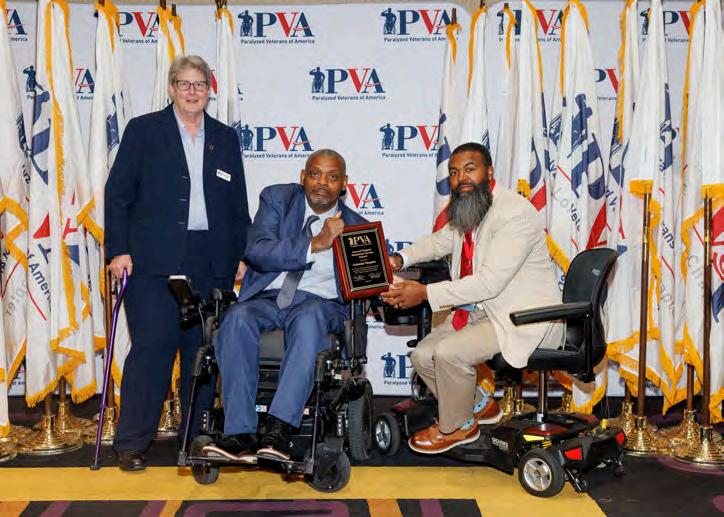
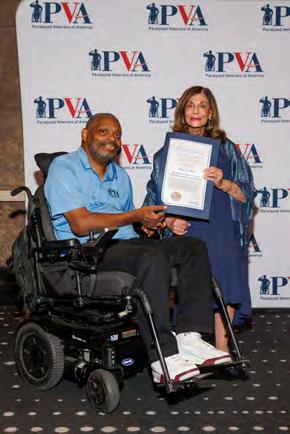
The Colonial Chapter of Paralyzed Veterans of America proudly received the 2026 Annual Chapter Volunteer Service Award at PVA’s 80th Annual National Convention in Las Vegas. This prestigious national honor recognizes the chapter’s exceptional volunteer efforts and service to paralyzed veterans and their families.
Chapter President Kathleen Fitzpatrick and National Director Jerrod Harris accepted the award from National President Robert L. Thomas Jr. during the convention’s awards ceremony. The award specifically honors the chapter’s outstanding volunteer contributions during fiscal year 2025, under the leadership of then-President Matthew Peeling, prior to his election as National Secretary.
Colonial Chapter volunteers achieved an impressive 106 per capita volunteer hours during FY2025 — one of the highest rates among PVA’s 34 chapters nationwide. These efforts supported adaptive sports programs, the HEART vocational training initiative, home accessibility modifications, hospital visits, and veteran outreach across Delaware and the Mid-Atlantic region.
Congratulations to every member and volunteer whose dedication and hard work earned this well-deserved national recognition!
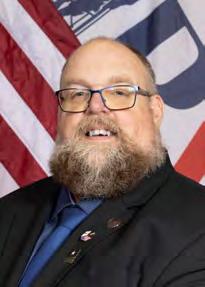
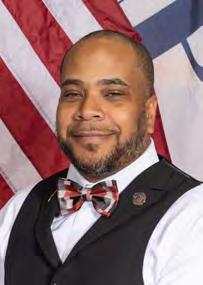
Colonial Chapter members Matthew Peeling and Marcus Murray were successfully re-elected to their national leadership positions during PVA’s 80th Annual National Convention in Las Vegas.
Matthew Peeling, U.S. Army veteran and past President of the Colonial Chapter, was re-elected by acclamation as National Secretary of Paralyzed Veterans of America. Peeling brings a strong background in business, information technology, and nonprofit leadership to the role. He previously served on PVA’s National Board of Directors and continues to champion improved processes, member services, and organizational efficiency.
Marcus Murray, U.S. Air Force veteran, was re-elected as National Vice President. Murray has a distinguished record of national service, having previously served multiple terms as National Secretary before stepping into the Vice President role. His leadership emphasizes teamwork, advocacy, and advancing PVA’s mission for veterans with spinal cord injury and disease.
Both leaders ran unopposed and received strong support from the PVA Board of Directors, with terms running from July 1, 2026, through June 30, 2027. Their continued service on the National Executive Committee reflects the talent and dedication within the Colonial Chapter and strengthens PVA’s ability to advocate for veterans nationwide.
The Colonial Chapter extends heartfelt congratulations to Matt and Marcus on their re-elections. Your leadership and commitment continue to make a powerful difference!

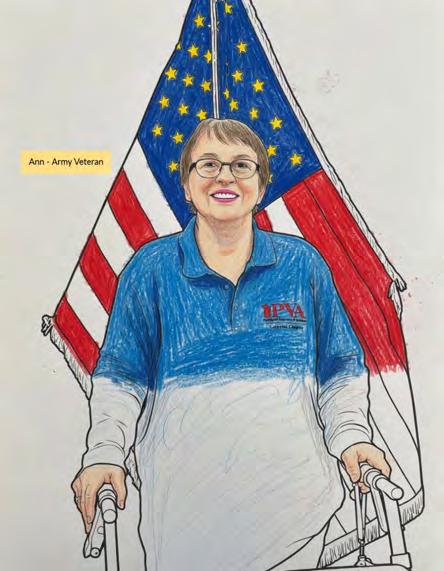




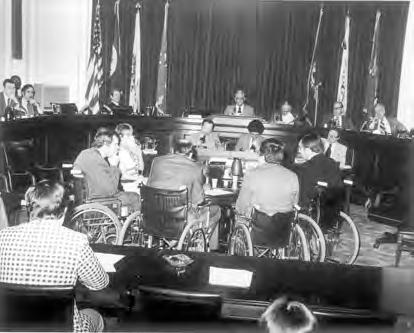
This year marks a historic milestone for the Paralyzed Veterans of America (PVA) as our national organization celebrates its 80th anniversary. Founded on January 18, 1946, by a group of approximately 70 determined World War II veterans with spinal cord injuries at Birmingham General Hospital in Van Nuys, California, PVA emerged from the shared resolve to overcome immense barriers to independence, dignity, and full participation in American life.
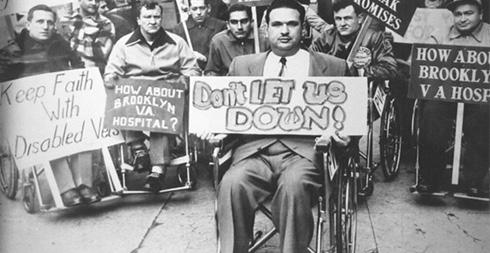
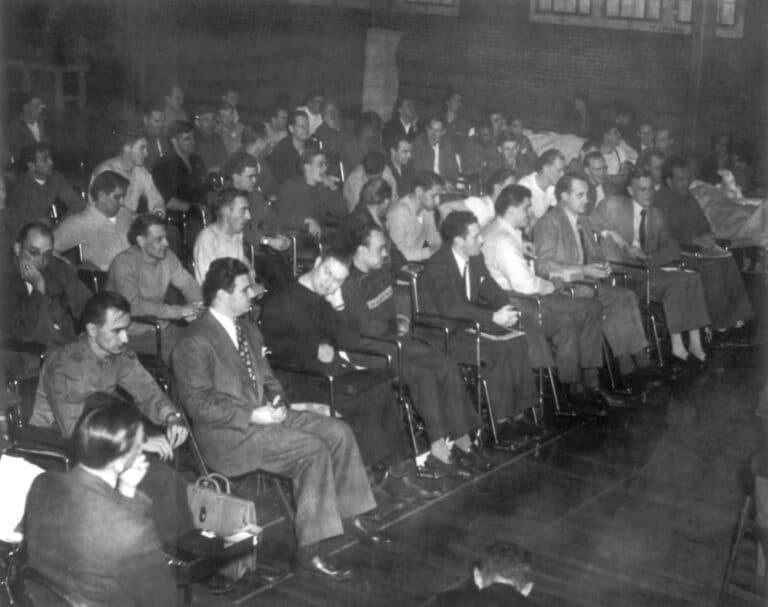
These pioneering veterans refused to accept a future defined by limitations. In the Recreation Hall of the Red Cross, they banded together not just for mutual support, but to advocate for better healthcare, accessible housing, employment opportunities, and civil rights for all people with disabilities. Their vision gave birth to a member-led organization that has grown into one of the most respected voices for veterans with spinal cord injuries and diseases (SCI/D) nationwide.
Over eight decades, PVA has achieved remarkable progress. The organization has fought tirelessly for accessible public spaces, advanced wheelchair technology and adaptive sports, supported groundbreaking research through the PVA Research Foundation (established in 1975), and partnered with the Department of Veterans Affairs to improve care standards. PVA has helped hundreds of thousands of veterans and their families across all 50 states, while opening 33 chapters that deliver localized support and community.
For the Colonial Chapter, serving veterans in the Philadelphia region, Delaware, Maryland, and parts of New Jersey and Pennsylvania since 1968, this anniversary holds special meaning. As one of PVA’s dedicated local chapters, we continue the founding spirit by providing peer support, benefits navigation, health and wellness programs, advocacy for accessibility, and fellowship through events that strengthen our community. Our approximately 320 members embody the same determination that sparked PVA 80 years ago.
The national 80th anniversary celebration includes the Power of PVA campaign, a six-month public awareness initiative launched in March 2026 that highlights the organization’s impact and invites broader support to advance accessibility and independence for all.
As we reflect on this milestone, let us honor the original founders—those brave service members who turned personal adversity into a powerful movement. Their legacy lives on in every ramp installed, every policy improved, every veteran empowered to live life to the fullest, and every adaptive athlete who crosses the finish line.
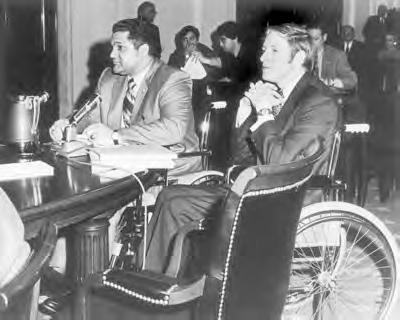

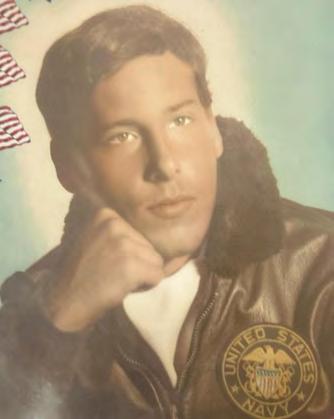
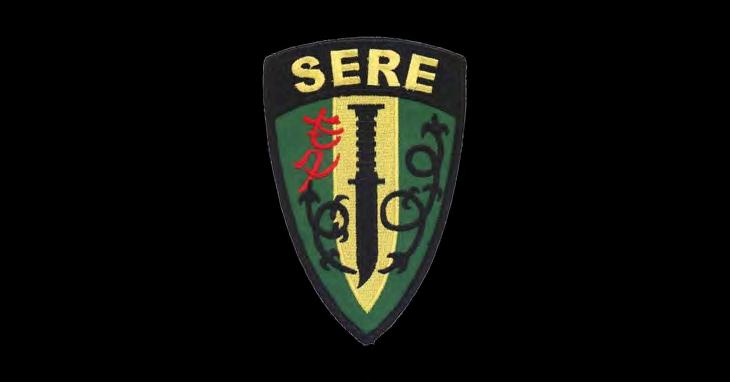
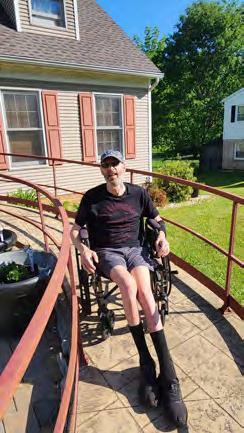
SERE — Survival, Evasion, Resistance and Escape — is a grueling 21-day military school required for aircrew members and certain Special Forces personnel before they are cleared to fly aboard aircraft or helicopters. The training is designed for service members who may possess sensitive information and face the risk of capture in combat. Each branch of the military runs its own program. My experience came through the U.S. Navy in February 1974, when I was just 18 years old. Although America’s role in the Vietnam War was supposedly winding down, everyone understood the conflict was far from truly over. The training was treated accordingly — very seriously.
The course began at the Naval Base in Coronado, California, with roughly two weeks of classroom instruction focused on survival techniques and the military Code of Conduct. From there we moved into the field phase: nearly a week in the rugged Southern California desert near Warner Springs, east of San Diego.
The survival portion taught us how to live off the land after a crash landing or bailout behind enemy lines. We learned how to evade capture, resist interrogation, and survive as prisoners of war. Days were spent gathering scarce food and trying to stay warm in freezing nighttime temperatures while sleeping beneath parachutes used as makeshift tents.
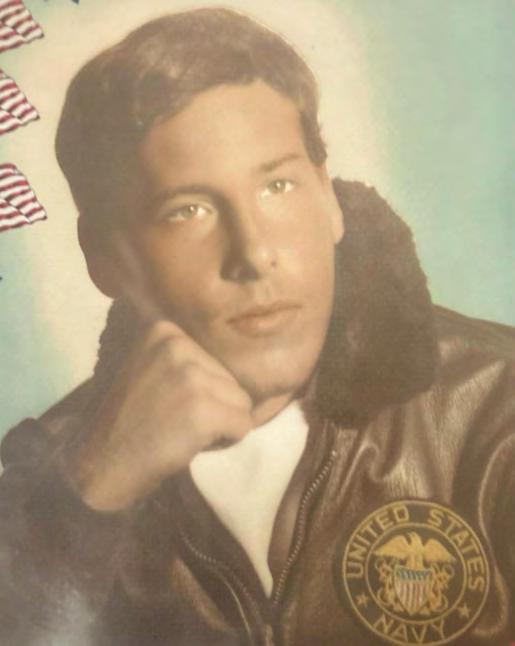
One lesson that stuck with me was a warning about cutting open rattlesnakes for food: instructors cautioned us to watch for live baby snakes that could still emerge from the mother. Fortunately — or unfortunately — none of us ever encountered a rattlesnake. In fact, during five days in the wilderness, we barely saw any living creature at all.
The evasion phase was both intimidating and strangely surreal. We were shown a training film demonstrating how not to evade enemy forces. The exaggerated scenes of men crashing through the woods like action-movie characters made us laugh nervously, because we knew we would soon be tested ourselves.
Food was almost nonexistent. Coffee became our lifeline — though the industrial-strength brew tasted like muddy water. We were allowed to bring cigarettes and a knife. My knife turned out to be a terrible choice: a cheap curved blade that snapped the first time I tried to use it.
After days of hunger and exhaustion, we began the evasion exercise. The terrain offered almost no cover — just sparse brush and open sand. We removed all identifying insignia and attempted to camouflage ourselves with branches and grass. We were also allowed to improvise “weapons” from sticks. I fashioned two fake pistols and strapped them to my wrists, convinced they might somehow help me escape if captured.
An instructor’s whistle signaled the start of the exercise, and we crawled through the desert toward what was called “Freedom Village,” supposedly marked by an American flag several miles away. The scuttlebutt had it that anyone who reached it would receive an apple or a peanut butter sandwich. Nobody made it.
I certainly didn’t. After only a few minutes, I curled beneath a tree and waited to be captured. Soon enough, I heard the words we had been warned about repeatedly during training:
“Get up, American pig!”
At first I ignored the voice, remembering we had been taught not to react immediately. But when I felt the butt of a rifle strike my back, I looked up. My captor was blond-haired and blue-eyed — an American sailor playing the role of the enemy.
From there the training became far more intense.
Captured trainees were hooded and transported to a mock prisoner-of-war camp where resistance training began. We endured sleep deprivation, interrogations, stress positions, physical intimidation, and humiliation intended to simulate the psychological pressure real POWs might face.
The most frightening experience was the waterboard.
Even decades later, I can still remember the panic. Restrained to a board while water was poured over cloth covering my nose and mouth, every instinct screamed that I was drowning. The sensation was terrifying and overwhelming. Toughness disappeared quickly under that kind of fear. The training made one thing very clear: the waterboard is torture.
At one point, I attempted to escape from a holding pen and paid for it by being repeatedly thrown to the ground by one of the guards trained in martial arts. The instructors constantly reinforced a hard reality: in an actual POW camp, striking a guard could get you killed.
Inside the main camp, we were stripped of our names and issued random “War Criminal” numbers instead of POW numbers. Mine was “Number 1.” We were isolated in cramped box-like cells with little food, little sleep, and constant pressure to obey orders or cooperate.
The training centered heavily on the military Code of Conduct — teaching us when to resist, when to comply under duress, and how to survive mentally without endangering fellow prisoners. Fear was a constant companion throughout the exercise.
Toward the end of training, I was ordered to read a false confession accusing American forces of war crimes. When I refused, I was again strapped to the waterboard. Desperate to make the ordeal stop, I tried slowing my pulse through controlled breathing and meditation techniques I improvised on the spot. Whether it worked or not, they eventually stopped.
Ten minutes later, the American flag was raised and the National Anthem played. The exercise was over.
Nobody rushed for food. Instead, we stood around chain-smoking cigarettes in exhausted silence.
After returning to base, I bought a loaf of rye bread, a pound of ham, and mayonnaise and made the biggest sandwich I had ever eaten. Then I lay down for what I thought would be a short nap.
I woke up more than 25 hours later.
Looking back now, more than 50 years later, I understand the purpose of SERE more clearly than I did as an 18-year-old sailor. The training was designed to prepare us mentally for the unimaginable — to teach us how fear, exhaustion, hunger, and isolation can break down even the strongest people. It also taught us something else: survival is often as much mental as physical.
The enemies may change over time, but the methods of captivity and coercion rarely do. That remains true today.
Lawrence Goldman
The Colonial Chapter officially announces the forthcoming election for the next Board of Directors!
Only certified members of the Colonial Chapter in good standing are eligible to submit their Letter of Intent for a position as well as a brief biography. DUE BY AUGUST 15TH 2026
Positions open for the election are
• President
• Vice President
• Secretary
• Treasurer
• Board of Directors

Ballots and candidate biographies will be sent out on September 15th, 2026. All ballots must be returned before October 15th, 2026.
On Thursday, November 12th, 2026, the election committee will process the votes and announce the winners live. Winners will be notified via letter and the results will be in our newsletter "The Ramp".
The Colonial Chapter of Paralyzed Veterans of America (PVA) continues to make waves in veteran advocacy, with National Director and Chapter Secretary Jerrod Harris recently featured in a compelling segment on WMAR-2 News Baltimore’s “Voice for Veterans” series. The spotlight highlighted Harris’s inspiring journey and the Chapter’s innovative efforts to raise awareness and funds for veterans living with disabilities, particularly through a new coloring book initiative.
A U.S. Army veteran, Jerrod Harris served just over four years before a medical retirement. Diagnosed with Multiple Sclerosis (MS) in 2008, Harris faced significant challenges, including foot drop and other mobility issues that ended his military career. Yet, rather than retreating, he channeled his experience into service. Harris discovered the Colonial PVA after his diagnosis and became deeply involved, serving as a past HEART Program participant, MS mentor, and Peer Connections Mentor with the MS Society. Today, he holds key leadership roles as Colonial Chapter Secretary, National Director, and a member of the PVA National MS Committee. In 2024, he was honored with the Joseph Singleton Award for his outstanding contributions.
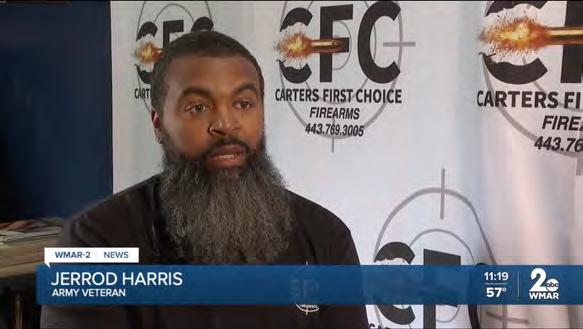
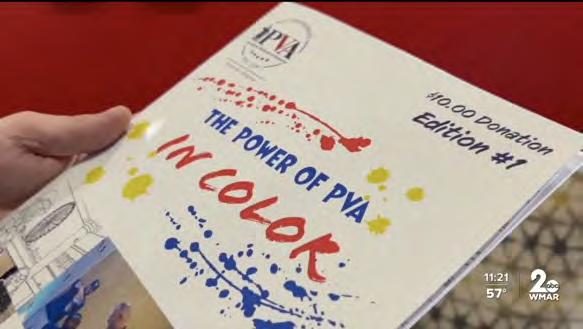
In the WMAR segment, Harris discussed his story and the Colonial Chapter’s latest project: a coloring book featuring veterans like himself. The book aims to raise awareness about the realities faced by paralyzed and disabled veterans while generating funds to support vital programs and events. Harris also operates Carter’s First Choice Firearms, a veteran-owned business, demonstrating resilience and entrepreneurship.
The “Voice for Veterans” feature underscores the Colonial Chapter’s mission to empower veterans with spinal cord injuries, MS, and related conditions through advocacy, peer support, adaptive sports, and community connection. Under leaders like Harris and Chapter President Kathleen Fitzpatrick, the organization provides mentorship, adaptive equipment assistance, and a strong sense of belonging.
For members of the Colonial Chapter, this media exposure is more than recognition — it’s a powerful reminder of the impact one dedicated veteran can have. Harris’s story illustrates how lived experience fuels advocacy, turning personal adversity into collective strength for the entire paralyzed veterans community.
If you haven’t seen the segment, search for it on WMAR-2 News (www.wmar2news.com) or the Colonial PVA social channels. Together, we continue building hope, empowerment, and accessibility for all veterans we serve.
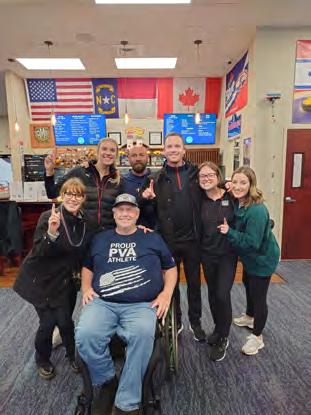

In a recent corporate event for the Charlotte Curling Association, I had an opportunity to assist at the event. The event was for Penske Group. While at the event I met with some of the marketing team of Penske. I had a great conversation with them. Besides talking about PVA and Penske, I was teaching them how to curl and the sport of curling. After teaching them how to curl, I had an opportunity to take a few photos with some of them. While attending the event, I let them know how much I appreciate all they do for PVA.
We are thrilled to announce that in May, the Colonial Chapter of Paralyzed Veterans of America officially earned accreditation from the Better Business Bureau. This significant milestone reflects our unwavering commitment to the highest standards of transparency, integrity, and ethical practices in everything we do to support paralyzed veterans and their families across our region. Achieving BBB accreditation demonstrates to our members, donors, and the broader community that the Colonial Chapter meets rigorous standards for accountability and trustworthiness.
This accreditation not only validates the hard work of our dedicated leadership, staff, and volunteers but also strengthens our ability to advocate effectively for veterans’ rights, improved healthcare access, adaptive housing, transportation, and quality-of-life initiatives. It provides an important layer of assurance that every contribution to the Colonial Chapter is managed with the utmost responsibility, ensuring that our programs and services continue to deliver meaningful, lasting impact for those who have served our nation.
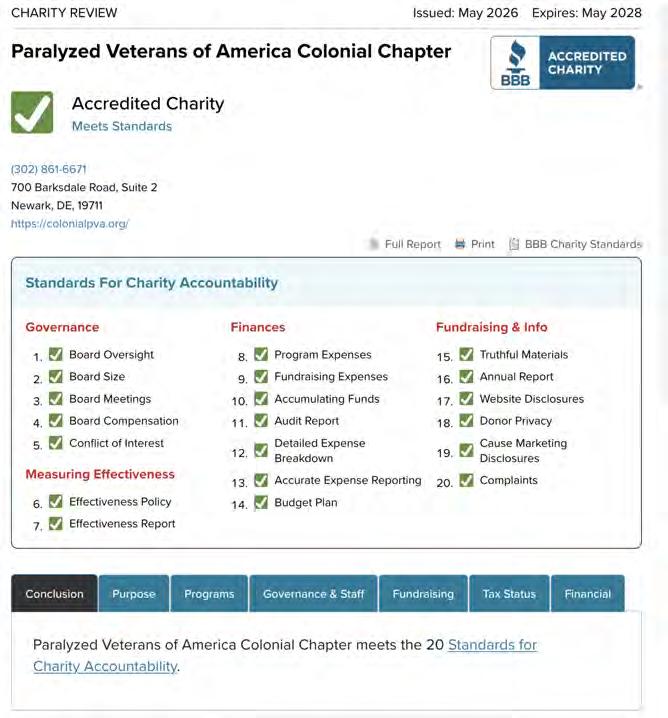
We know that trust is the foundation of our organization, and this BBB accreditation reinforces the confidence you have placed in us over the years. It highlights our ongoing efforts to operate with excellence while maintaining the personal connections that make the Colonial Chapter a true community for paralyzed veterans in the Philadelphia region and beyond.
We remain deeply grateful for your continued support, active participation in chapter events, and dedication to our shared mission. As we move forward with renewed momentum and this new endorsement, we look forward to sharing more updates, upcoming events, educational opportunities, and ways to get involved. Together, we will keep building a stronger, more accessible future for paralyzed veterans in our community.

We are excited to announce that a brand new Colonial Chapter website is coming soon at colonialpva.org! This modern, user-friendly platform will feature improved navigation, up-to-date chapter news, easy event registration, valuable resources for paralyzed veterans and their families, membership management tools, and much more. We’ve worked hard to design a digital home that better reflects our mission, enhances communication, and provides convenient access to the services and information you need.
Stay tuned for the official launch in late summer — we look forward to sharing this exciting new resource with all of you!



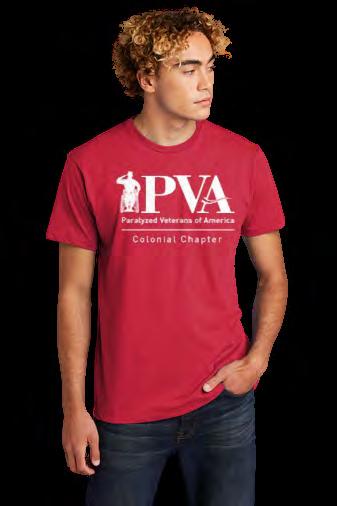
Support Our Veterans with a One-Time or Monthly Gift and Receive a T-Shirt as a Thank You
Your one-time or monthly contribution will not only make a difference in the lives of seriously injured veterans but also earn you a special t-shirt as a token of our appreciation. This tumbler serves as a reminder of the vital impact you're having in empowering veterans and helping them reclaim their independence.
At Colonial PVA, we provide personalized, free programs that support veterans in their journey to live fully and independently. We help them regain what they fought for— freedom and self-sufficiency, in a world that offers few solutions to the immense challenges they face.
Founded in 1968, Colonial PVA is a proud member of the Paralyzed Veterans of America (PVA), a 501(c)(3) nonprofit organization chartered by Congress in 1947. Our mission is to promote the health, well-being, and independence of our members and the disabled community through education, medical research, therapy (physical, psychological, and recreational), and advocacy for barrier-free access.
Together, we can make a real difference. Thank you for being part of our mission to improve lives and restore hope.


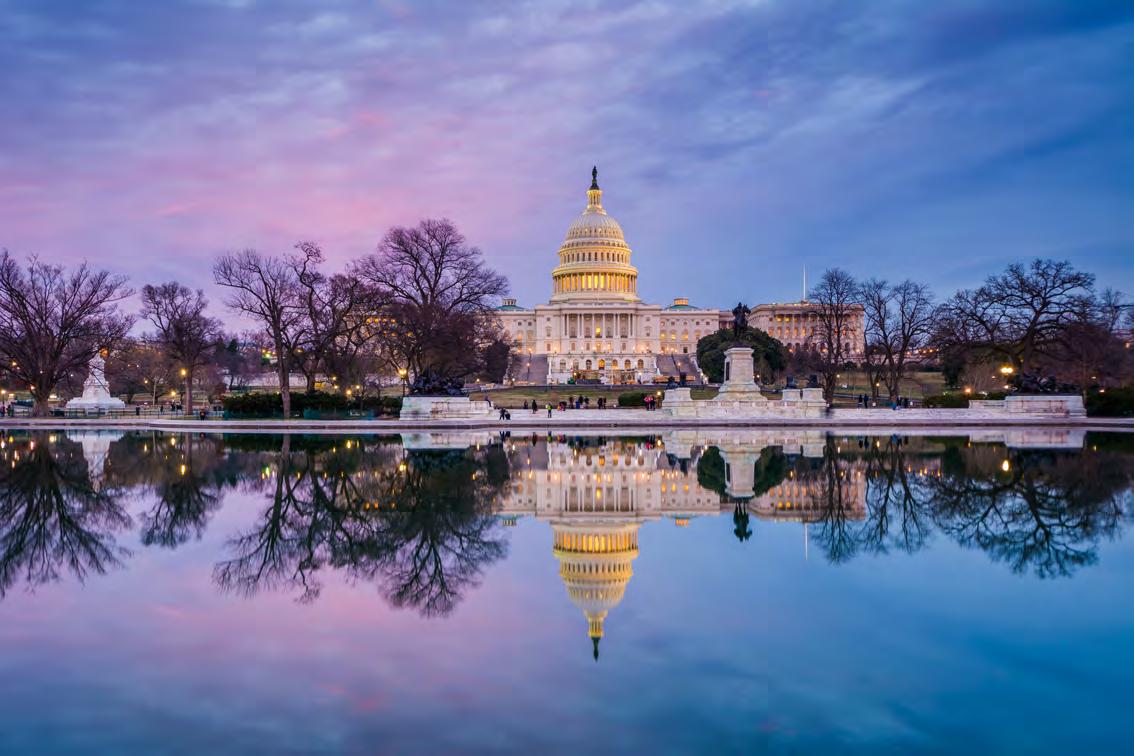
PVA’s 2026 Advocacy/Legislation Seminar is barely three weeks away! Nearly two dozen bills have been introduced in the 119th Congress that directly correlate with our legislative priorities. On May 7, PVA’s Government Relations Team briefed attendees on many key legislative priorities that could come up during their Hill visits. Below are the bills that we addressed that are PVA priorities but that likely won’t be in line for action in June. We will address the key bills that are likely to see action later in May.
H.R. 2055/S. 611, the Caring for Survivors Act. This legislation would increase the amount paid in Dependency and Indemnity Compensation, or DIC, to 55 percent of the total compensation paid to the surviving spouse of a totally disabled veteran. It also shortens the DIC waiting period from 10 years to 5 years with a graduated scale.
H.R. 2102/S. 1032, the Major Richard Star Act. There are approximately 50,000 medically retired, combat injured veterans subject to retirement offset from their VA disability payments. This legislation would allow those veterans who are Combat-Related Special Compensation (CRSC) eligible to receive concurrent receipt, or their full military retirement and their full VA disability payment.
H.R. 1288/S. 599, the Driver Reimbursement Increase for Veteran Equity (DRIVE) Act. The DRIVE Act would increase the VA reimbursement rate for mileage and other travel expenses. The current rate is $0.41 and this legislation would raise it to $0.70. It would also tie future increases to what federal employees receive for mileage reimbursement.
H.R. 2036/S. 925, the Credit for Caring Act. The Credit for Caring Act would create a new, nonrefundable tax credit of up to $5,000 for working family caregivers to help address the significant financial impact of caregiving.
H.R. 8490/S. 4396, the Social Security Caregiver Credit Act. This legislation would allow eligible caregivers to earn Social Security credits for up to five years while providing unpaid care to a dependent child under 12, an aging parent, a spouse, or a family member with a disability. Participation in the VA’s Program of Comprehensive Assistance for Family Caregivers would not affect eligibility for earning credits.
H.R. 2576/S. 1245, the Servicemembers and Veterans Empowerment and Support Act. This bill would expand evidentiary support for the survivors of Military Sexual Trauma (MST), modernize language for a digital age, allow non-Department of Defense evidence to support a claim, authorize Guard and Reservists to access VA mental health support, and allow a veteran to request their compensation and pension exam be done by a VA provider.
H.R. 2245/S. 1644, the Autonomy for Disabled Veterans Act and H.R. 3309, the Autonomy for All Disabled Veterans Act. These bills would increase the grant amount for VA’s Home Improvements and Structural Alterations (HISA) grant program. They would also tie the grant to an inflationary index, so the amount will increase automatically without needing congressional approval.
H.R. 220, the Veterans Infertility Treatment Act. This measure would increase access to infertility care, including assisted reproductive technology, such as in vitro fertilization (IVF), in VA’s medical benefits package. It would also eliminate the need to prove direct service connection for infertility, as well as codifying recent changes authorizing the use of donated genetic material.
H.R. 7411/S. 3395, the Mammography Access for Veteran’s Act of 2025. This legislation builds off the success of the MAMMO Act (P.L. 117-135), by permanently authorizing the mammography telescreening pilot program. It also would require VA to offer either a telescreening mammography program, a full-service in-house mammography program, or a mobile mammography program in each state.
You can find additional information on these bills and many others by visiting PVAction Force. Even if you’re not joining us in Washington, D.C. for this year’s Advocacy/Legislation Seminar, you can still participate by using this site to send messages to your elected officials, urging them to support these bills.

The chapter is currently accepting nominations for the Kimberly Reese Award, which was created to recognize the important work done every day by the people who take care of our members. These are the people who passionately serve our members, by restoring hope and quality of life. Do you know someone who goes above and beyond, someone who truly makes a difference, someone who stands out above the rest? The Colonial Family would like to celebrate, tell their story, and award them the 2026 Kimberly Reese Award. This award will be presented to the winner at our annual Member and Caregiver Retreat at Eden Resort in Lancaster Pennsylvania.
If you would like to nominate someone, please submit a nomination letter by August 1st, 2026. In the nomination letter, please include why you think they deserve this year’s Kimberly Reese Award and a brief bio of your nominee. Please keep your nomination letter no more than 500 words and three pictures.
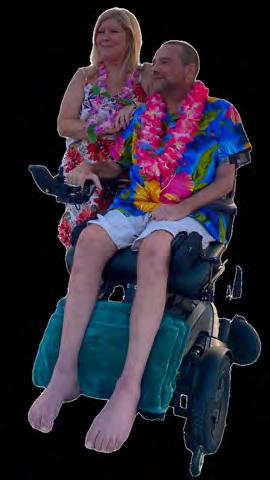
The Joseph L. Singleton award represents the highest honor bestowed by the Colonial Chapter of Paralyzed Veterans of America. This award is not an annual accolade; rather, it represents a lifetime achievement. It recognizes outstanding contributions and embodies ideals such as determination, compassion, perseverance, dedication, and stewardship. The recipient is a beacon, radiating their spirit throughout the Colonial Chapter. Their impact extends beyond the organization, leaving a lasting impression. While many may aspire to this honor, only a select few will achieve it."
Joseph Singleton, a remarkable individual, defies simple description. While tangible qualities like intelligence, vision, tact, diplomacy, leadership, decisiveness, and responsibility certainly define him, it's the intangibles that truly set him apart as a leader. His leadership fabric is woven from compassion, respect, humility, unwavering commitment, dedication, a sense of humor, honesty, integrity, empathy, transparency, hard work, and resiliency.
Joe exemplified the very essence of our mission and the core values of our chapter. His impact extended beyond organizational boundaries, touching both our Paralyzed Veterans of America community and the wider world. Through every engagement, Joe consistently delivered excellence, leaving an indelible mark on all who had the privilege of knowing him. His spirit radiated throughout the Colonial Chapter, inspiring us all.
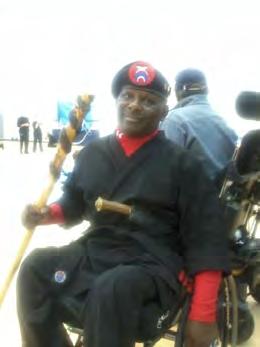
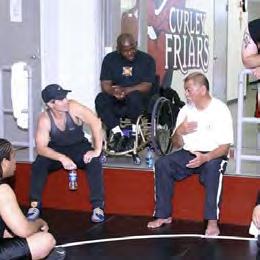
Cleveland VA Medical Center researchers have developed a promising approach using functional electrical stimulation (FES) to assist Veterans with spinal cord injuries during sit-to-stand transfers. This innovation could significantly ease the physical demands on caregivers and improve safety for paralyzed Veterans. Assisted transfers remain one of the leading causes of injury for caregivers of individuals with SCI. In the study, researchers first used 3D simulation to identify key muscles (hips and legs) that could aid the maneuver. A physical therapist then applied functional neuromuscular stimulation to activate the paralyzed muscles in a Veteran participant.
Results were encouraging: While the Veteran could not fully support their own weight, the stimulated muscles reduced forces on the therapist’s joints by 24% to 35%. This suggests FES could make transfers safer and more manageable without relying on expensive mechanical lift systems.
“This kind of practical research directly supports the independence and dignity of Veterans living with SCI,” said a PVA leader in related advocacy contexts. For Colonial Chapter members, it underscores the value of specialized VA SCI/D programs and ongoing innovation that complements PVA’s own research and advocacy efforts.
The full study appears in the Journal of NeuroEngineering and Rehabilitation. It builds on Cleveland’s long-standing expertise in FES through collaborations like the Cleveland FES Center. VA’s broader commitment shines through here, with record-high quality ratings (78% of rated VA hospitals earning 4 or 5 stars in the 2026 CMS report—the highest percentage since ratings began) and Veteran trust in VA health care reaching 93.6% in recent surveys.
Call to Action for Readers: Talk to your VA SCI care team about FES options or adaptive technologies. Share your experiences with the Colonial Chapter so we can continue advocating for expanded access to these tools.
All chapter members will be entitled to $100.00 per fiscal year to use towards activities such as dining out with your spouse, going to the movies, attending events, hotel stays, vacation expenses, hobby supplies, etc. Receipts for such activities will need to be dated and mailed to the Colonial Chapter office (700 Barksdale Rd, Suite 2, Newark, DE 19711) by the end of the fiscal year (09/30/2026). Receipts dated before 10/01/2025 will not be accepted. For more information, please contact the chapter office at 302-861-6671.

The Colonial Chapter of the Paralyzed Veterans of America meets every 2nd Wednesday of the month in person or via Microsoft Teams. Social Hour is from 09:50 a.m. - 10:50 a.m. with the meeting starting at 11:00 a.m. sharp. *June's BOD meeting was moved due to PVA Advocacy in D.C. Upcoming meeting dates are: June 3rd, July 8th, 2026, August 12th, 2026, September 9th, 2026.






Special Military Fares Available!
We salute our military with reduced rates!
For additional information, quotes, or to book your reservation contact a Military agency, any travel agent, call 1-800-CARNIVAL or visit carnival.com.
Mavis Discount Tire Offers 10% All Day Every Day!
At Mavis, we serve those who serve us by offering the best military discount on tires and auto services. To express our gratitude, all active duty military personnel, reservists, or veterans get 10% off of total sales price before tax.
Sirius XM Offers 25%
Save 25% with their military discount for eligible military personnel, spouses, and dependents - including veterans, retirees, active duty, and reserve.