Planning for the 2026/27 financial year, Council has continued to reference our strategic and long-term plans, while ensuring projects, activities and services are delivered in a costeffective way for the community.
Our strategic and master plans guide our projects and expenditure and these were reviewed in 2025, to ensure they can deliver a more realistic, manageable and achievable plan for 2026/27 and beyond. Our key focus remains on renewing our existing assets, with key new projects to be delivered only when they are captured in Council’s plans
At the time of preparing our 2026/27 Annual Business Plan and Budget, market volatility and sharply rising fuel prices were affecting Council and the community. The escalating fuel prices, economic fallout – and other cost of living pressures – look likely to continue into the 2026/27 year and Council has considered these issues in developing the plan and setting the budget for the year ahead
We understand the cost pressures continuing to face our community and have reviewed all of our operational budget lines to ensure we are spending only what is required to deliver the services and programs captured in our plans and expected by our community. Recognising community impacts, we have built only modest contingency into our budget to help manage increasing costs to Council in the new financial year.
Despite the added cost pressures and likely increases in CPI, Council has determined to keep the general rate increase at 5%, in line with our long-term plans.
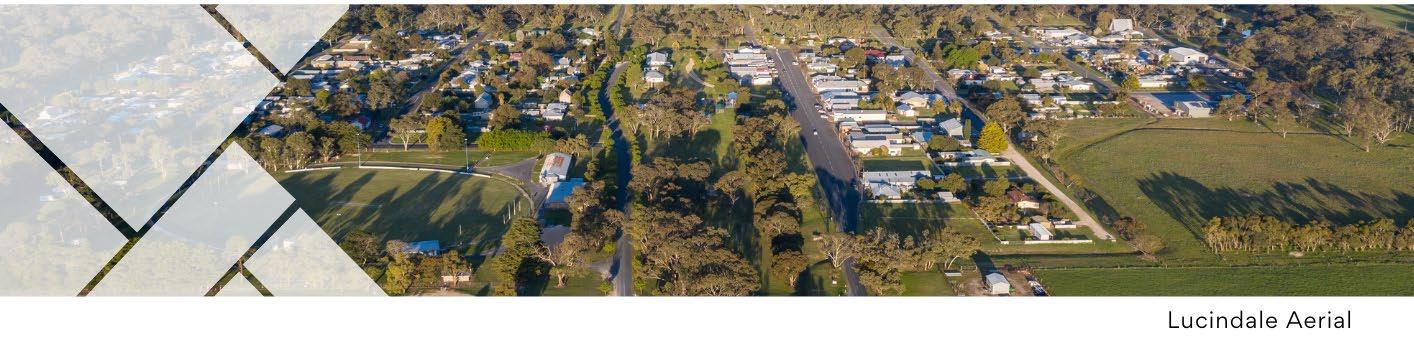
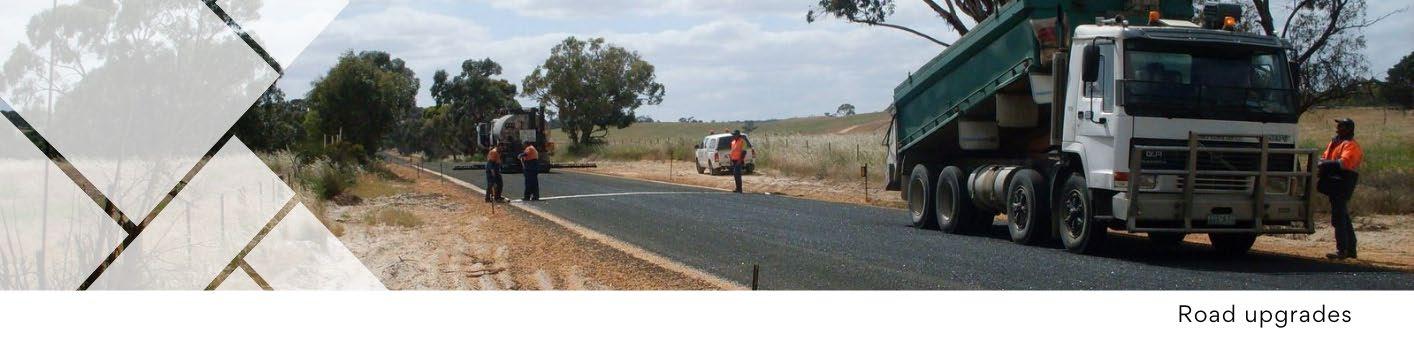
In 2026/27, roads will continue to be our biggest investment, with a total of $7.633M in capital works budgeted and $1.921M for road maintenance. There were delays in delivering the Lucindale main street upgrade so this project will extend into 2026/27.
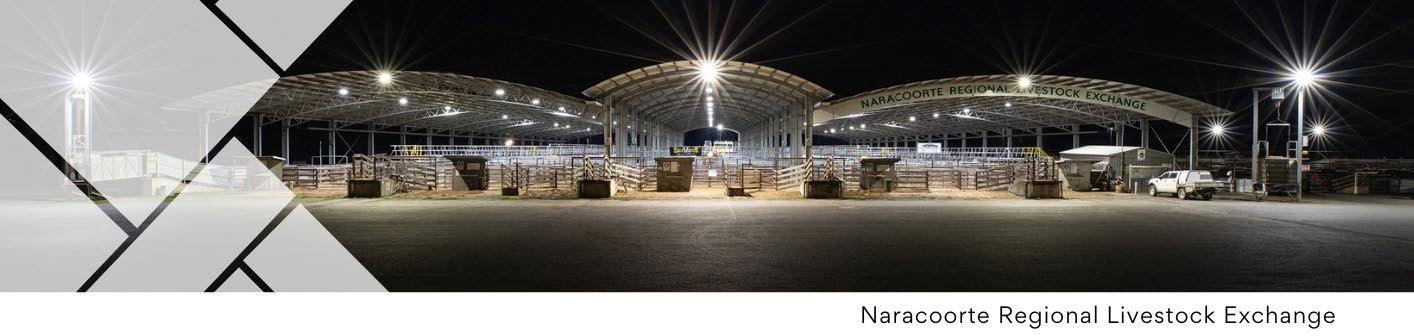
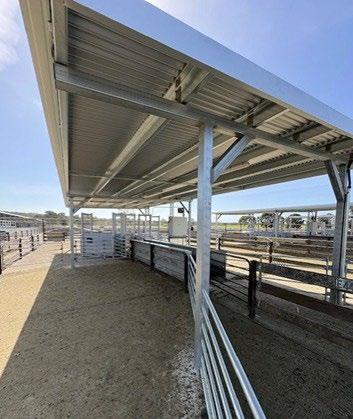
Works to upgrade the Naracoorte Regional Livestock Exchange will continue into the coming years, with a capital budget of $742,131 forecast for 2026/27.
More information about these projects can be found within this plan.
In February 2026, we received advice from the Essential Services Commission of South Australia (ESCOSA) as part of its final round of advice to councils. ESCOSA has provided independent, risk-based advice to all of the State’s 68 councils, with the aim of assisting councils when making long-term financial and investment decisions for the benefit of ratepayers.
ESCOSA found Naracoorte Lucindale Council’s projected financial performance to be mostly sustainable but acknowledged Council was – like many regional councils – challenged by a relatively small rateable property base, cost pressures and managing infrastructure over a large geographic area. ESCOSA’s advice forms part of this Annual Business Plan – refer Appendix 3.
In November 2026, Local Government elections will take place. This presents an exciting opportunity for people to step up and represent the community and to influence the direction of the district for at least the next four years.
Council is required to provide funding of $67,000 to the Electoral Commission of SA in 2026/27 to support its management of the election process and provision is also made for the induction, training and support of the new Council.
I would like to take an opportunity to thank the current term Council Members for their commitment and decision making over recent years. To those who do not contest the 2026 elections, I wish you all the very best for the future and thank you for your service to the community
Thank you also to the employees of Naracoorte Lucindale Council for your efforts and, of course, to the community members who help make this district thrive.
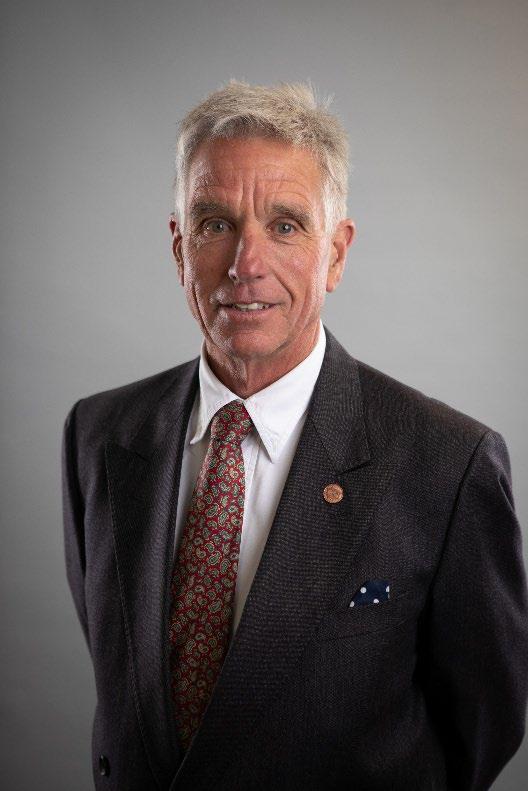
Mayor Patrick Ross
Your Council
Naracoorte Lucindale Council’s Mayor and 10 Councillors are elected to represent the interests of the community as a whole. This includes shaping the strategic directions and policies for Council as a whole and determining annual plans and budgets.
Local Government elections are scheduled to take place in November 2026, allowing the community to select their representatives for the next term of Council. In the leadup to the elections, Council will provide information to help people understand more about the role of Council Members, the nomination process and how to enrol and vote. More communication will be provided in the coming months.
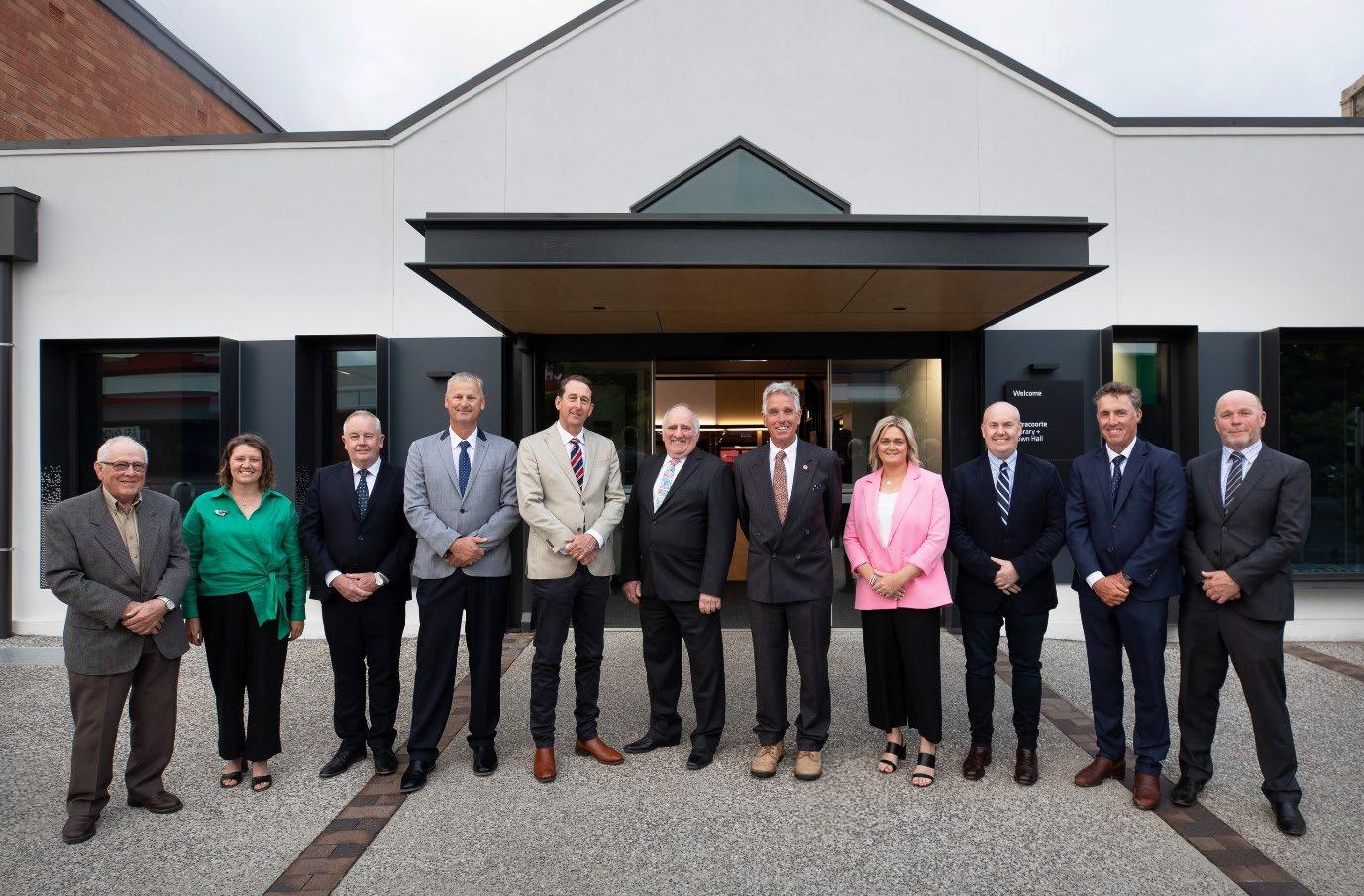
Image L-R: Cr Trevor Rayner, Cr Abigail Goodman, Cr Darren Turner, Cr Peter Ireland, Cr Cameron Grundy, Cr Andrew Downward, Mayor Patrick Ross, Cr Monique Crossling, Cr Damien Ross, Cr Tom Dennis, Cr Craig McGuire.
Executive summary
Naracoorte Lucindale Council’s 2026/27 Annual Business Plan and Budget is largely informed by Council’s Strategic Plan 2023-2033, our long-term financial plan and suite of master plans and asset management plans.
In 2026/27, Council is planning to progress several significant projects while keeping its key focus on renewal of existing assets, rather than brand new initiatives. Road upgrades and maintenance continue to be the key focus for expenditure across the year.
Council has carefully considered its longer-term plans, affordability concerns within the community and the December quarter Adelaide CPI (3.3%), noting CPI increases impact Council’s own program delivery through contractor costs and the price of materials. It is likely CPI will increase again in the coming months.
In the weeks leading up to finalising the draft Annual Business Plan and Budget, escalation of conflict in the Middle East saw a swift and significant increase in fuel pricing. The uncertainty and economic volatility have resulted in an increased budget allowance for materials and consideration of fuel-dependent projects that could be postponed. Council has determined not to delay projects at this stage but will closely monitor the situation in the coming months.
Despite the economic uncertainties, Council is now forecasting an operating surplus of approximately $322,437 and work will continue to ensure Council remains in a surplus position in the coming years. Council administration has undertaken a comprehensive review of the operating budget to identify savings, where possible, to help achieve this goal.
In 2026/27, Council is proposing to deliver a capital works program of $10.6M, which consists of $7.37M in renewal and replacements capital works, and $3.23M in new capital investment. External funding through grants, asset disposals and borrowings to the tune of $2.89M will be sought to offset these amounts.
Major capital and operating projects and activities planned for the 2026/27 year are outlined below, along with other key matters relating to this Annual Business Plan and Budget. More details can be found within this plan.
Roadworks
In 2026/27, roads will continue to be Council’s biggest investment, with a total of $7.63M in capital works budgeted, including $4.44M on road reconstructions, $1.53M on resheeting and $800,500 on resealing projects. Approximately $2.53M of this will be offset by grant income. Road maintenance (patrol grading and associated repairs) carries an operating budget of $1.79M.
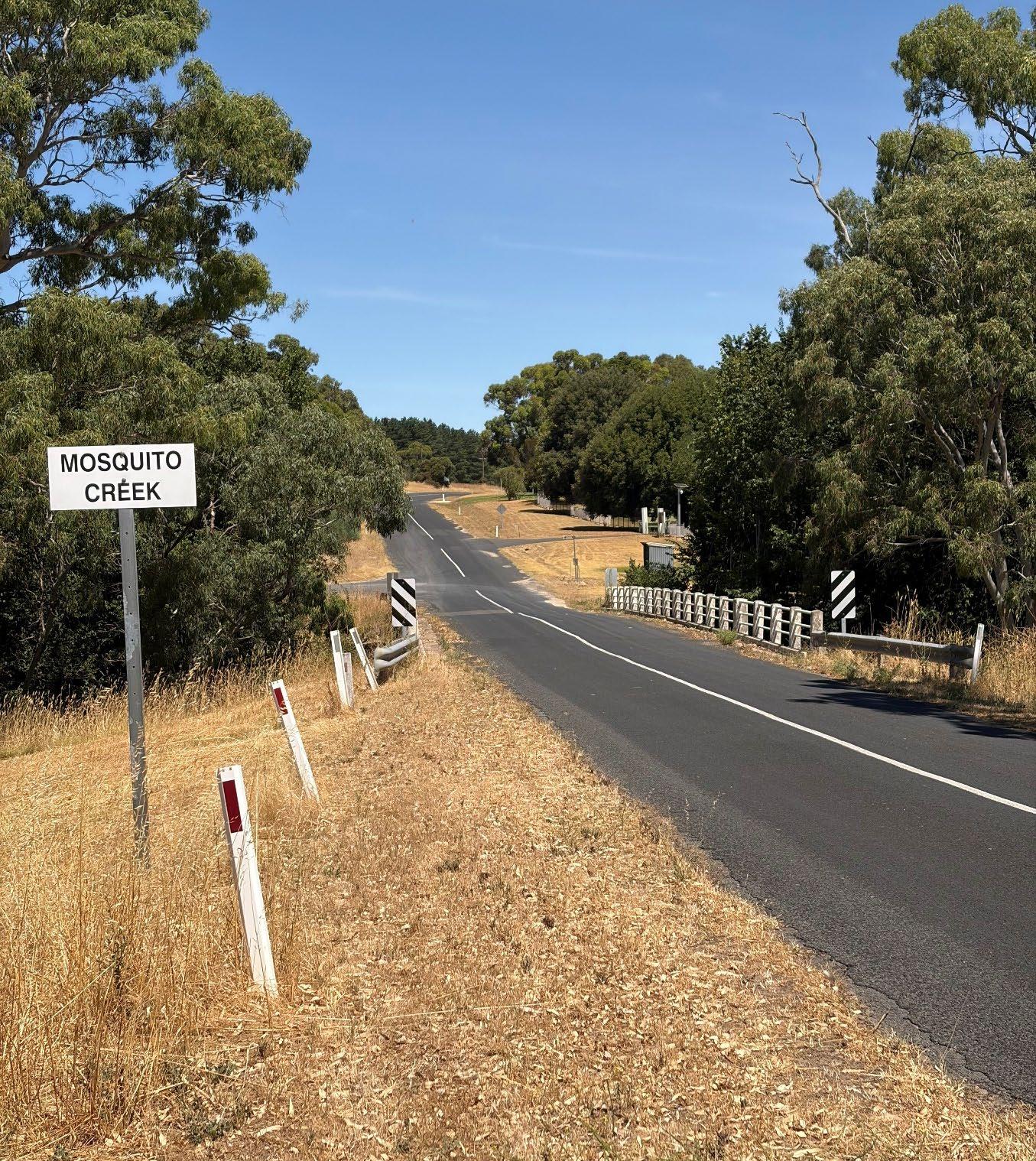
Struan House Road Bridge
A budget of $250,000 has been allocated in 2026/27 to undertake surveys, engineering and geotechnical investigations, detailed design works and cost estimates to upgrade the Struan
House Road bridge across Mosquito Creek, south of Naracoorte. These activities will enable preparation of a shovel ready project to support future grant funding applications.
Council’s current long terms plans have an allocation of $109,910 in 2028/29 to undertake designs for a bridge upgrade and approximately $1.36M in 2029/30 (offset by 50% grant funding) to address issues with the bridge that have been identified through the inspection reports. Further assessments in 2025/26 identified a greater investment would be required to progress the project to ‘shovel ready’ and then Council will determine the next steps in relation to a bridge upgrade.
A further allocation of $258,250 will see the replacement of the Vincents Road bridge barrier, adjacent Mosquito Creek – closer to the Victorian border.
Kerbs & footpaths
Council’s focus in 2026/27 will be on Gum Avenue, Lucindale, with footpaths to be constructed from Country Club Road through to the northern end of the seal. A budget of $217,178 has been allowed for these works. Kerb and water table works will take place on Memorial Drive, from Fifth Avenue to Pine Grove.
Naracoorte Aerodrome
External funding will be sought to support $115,000 worth of resurfacing projects at Naracoorte Aerodrome, to address safety and accessibility issues at the CFS fill point and provide asphalt for the refuelling apron used by helicopters.
Street Lighting & Energy upgrades
A $180,000 solar lighting project will address visibility issues around Memorial Oval in Naracoorte, while an audit of street lighting on major (urban link) roads will be undertaken.
Solar installation at the Naracoorte Library ($66,000) will form part of a three-stage energy efficiency project. This will be half funded through the Australian Government’s Community Energy Upgrades Fund.
Naracoorte Regional Livestock Exchange
Council will continue to invest in upgrades to the economically important NRLE, with the project to replace the sheep selling pens progressing in 2026/27. A budget of $527,341 is proposed for this next stage of the 7-year project. Council will review the scope of the project to determine timeframes for delivery of all sheep pen upgrades.
Master Plans
A new toilet block ($135,000) will be delivered at Frances as part of the delivery of the town’s master plan. This will be constructed at the recreation grounds.
In Naracoorte, works will be tendered for the redevelopment of Riverside Drive – one of the key components of the CBD Rejuvenation Plans – in preparation for 2027/28 budget determinations, while grant funding opportunities for future works are identified.
The second stage of the Loechel Park master plan ($80,567) will also progress, including signage, a shelter, picnic area, rainwater tank and ancillary works
Sport & Recreation
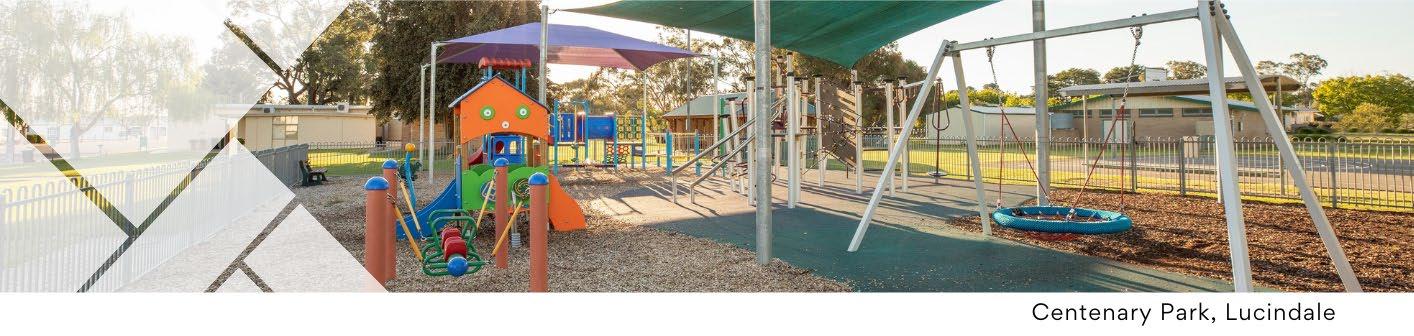
A sporting infrastructure support fund has been budgeted ($100,000) to assist major sporting facilities to progress their upgrade plans, while a budget provision for playground upgrades has been included ($300,000) and Council will work to identify priority playground projects early in the financial year.
Fuel contingency
Fuel pricing increases will lead to inflationary pressures across all councils. Given the uncertainties, Council felt it would be prudent to build a contingency into its 2026/27 budget but recognised cost pressures would also be felt in our community. On this basis, contingency amounts have been kept to a total of $150,000, recognising this may fall short of covering the increased costs
These funds are to address increases in contractor rates that may arise during the year and to ensure Council operations – particularly roadworks and other projects dependent on fuel –are managed within budget.
New operating expenditure
A new voucher system for free hard waste disposal will be introduced in 2026/27, to support householders across the district and discourage illegal dumping. A budget of $100,000 will support the implementation of this – an increase of $20,000 on the 2025/26 hard waste disposal days budget.
Council is required to provide funding ($67,000) to the Electoral Commission of SA to undertake council elections in November 2026. This amount is determined by the Commission and includes the postal voting materials and process The election will require supplementary budget to allow Council to undertake local advertising, meetings and other activities required to deliver a smooth and effective process, along with mandatory training for new elected members
Other new operating activities for the year include:
• Community Survey ($20,000) – to understand priority community expectations, community values and the levels of satisfaction with the services Council provides.
• Youth engagement ($10,000) - to develop a program that engages young people in Council and decisions that affect them.
• Fire mitigation ($17,000) - to continue works in Naracoorte’s parklands that have been funded externally in recent years.
Funding the Annual Business Plan
In developing this Annual Business Plan, Council has forecast an overall $288,569 increase in its operating expenditure (from $23.0M to $23.85M – or 3.7%) and overall $1.48M in its operating income (from $22.7M to $24.2M – or 6.5%) when compared to its 2025/26 budget
Reflecting its Long-Term Financial Plan (LTFP), to ensure Council remains financially sustainable and can remain in a surplus position, an increase in the general rate revenue of 5% has been determined.
Overall, Council is forecasting an operating surplus of $322,437, resulting from operating income of $24.17M and operating expenses of $23.85M
The expected cash balance as at the end of the 2026/27 financial year is $12.098M.
District snapshot
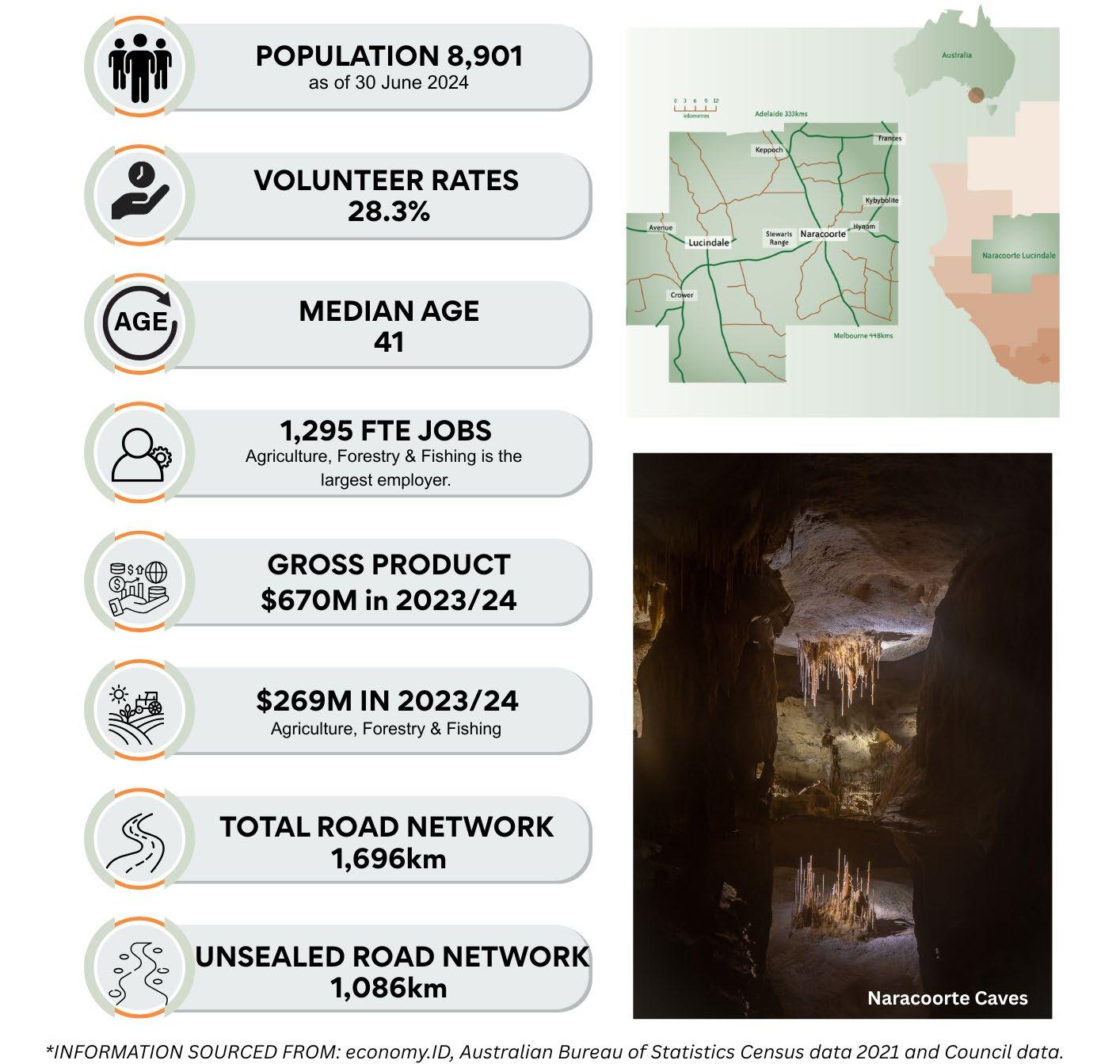
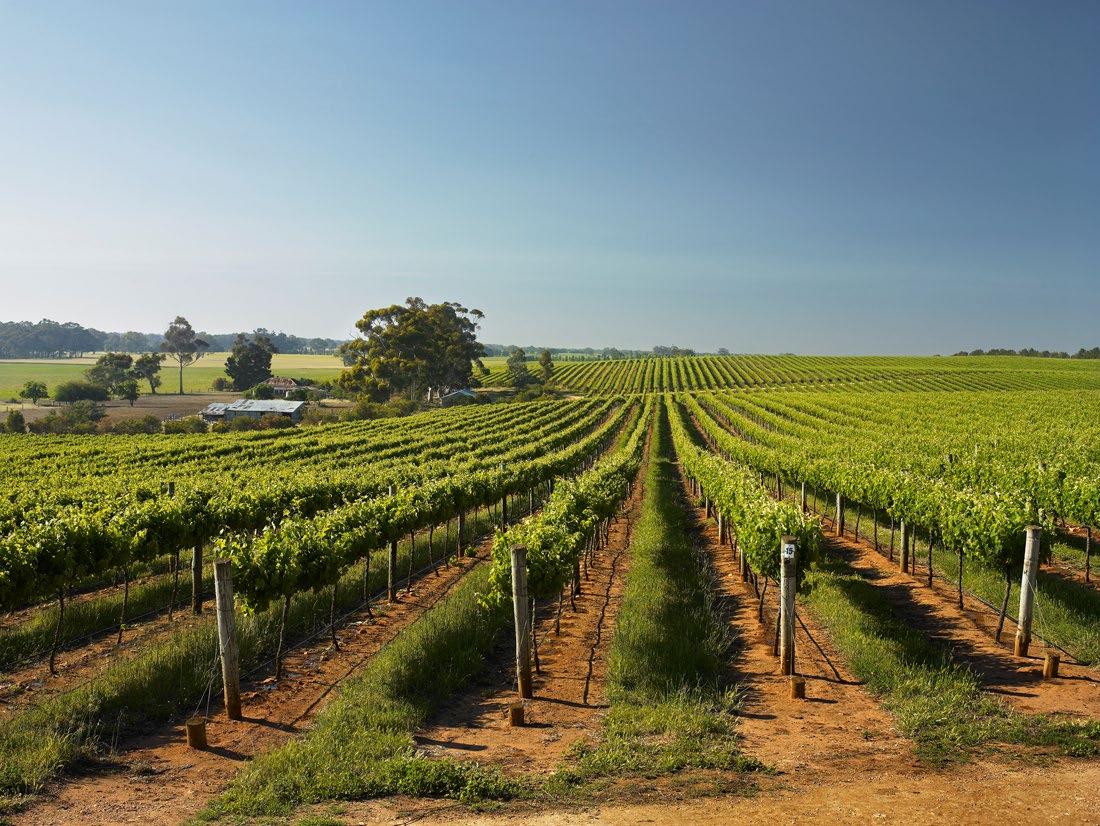
The Naracoorte Lucindale Council is located at the heart of the Limestone Coast region, approximately 300km from Adelaide and 450km from Melbourne. Naracoorte is the main service centre for the Council district, which also contains the smaller communities of Lucindale, Hynam, Kybybolite and Frances. The district is characterised by reliable rainfall and contains prime agricultural land and accessible underground water. It is home to a thriving and vibrant rural economy, featuring beef and dairy cattle, sheep for both wool and meat, and cereal growing. There is a strong tourism industry in the Council area and South Australia’s only World Heritage site, the Naracoorte Caves, continues to bring scientists and visitors to the district.
Services we provide
All councils have similar responsibilities under the Local Government Act 1999, and other relevant legislation. These include:
• Strategic and financial management – including preparing budgets, long term plans, setting rates etc
• Asset management – including roads, footpaths, stormwater, bridges, parks and gardens, buildings, CWMS and public open spaces
• Regulatory activities
• Planning and compliance, including building safety assessments
• Various environmental health services
• Economic development
In response to community expectations, the Council also provides further services and programs including:
• Naracoorte Swimming Lake
• Libraries
• Street cleaning and waste collection
• Environmental programs
• On-street parking management to maximise shared use of parking space
• Community amenities and wellbeing programs
• Visitor Information Centre
• Support (financial and in-kind) of festivals and events
• Arts (funded in part by Country Arts SA)
The Council also operates a number of facilities on a fee-for-service basis. These provide important community benefits, while also generating revenue that offset costs for services of benefit to the district, including:
• Town Halls
• Cemeteries
• Aerodrome
Council owns and operates the Naracoorte Regional Livestock Exchange (NRLE) under a business model that aims to meet operational costs and – as much as possible – provide for future capital investment from revenue generated by this facility. The NRLE plays a major role in the economy of the district.
Key achievements past 12 months
From 1 July 2025, Council has focused on delivering projects and asset upgrades in line with its long term plans, while ensuring the community continues to enjoy a liveable, attractive and safe district.
Key projects delivered or nearing completion include:
• Moyhall and Diagonal roads reconstruction undertaken, along with design works for Grubbed and Macmillan roads
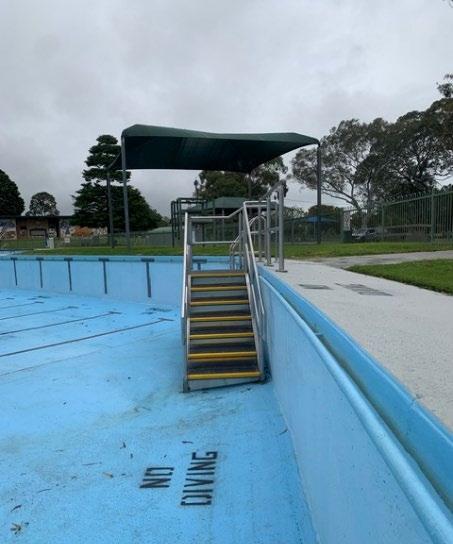
• Major projects to enhance the popular Naracoorte Swimming Lake – including disability access ramps, shade structures and the start of upgraded catering facilities, café and amenities block
• Resealing of Langkoop Road, Aitchison Avenue and Lochaber North Road
• Resheeting of Hodges Lane, East Settlement Road, Gunning Road, Schinckels Road, Laurie Park Road and Ellisons Road
• Progression of civil designs for Naracoorte CBD rejuvenation and Lucindale Main Street upgrade
• Stage 1 of replacement of sheep yards at the NRLE
• Finalisation of the sheep eID project to support biosecurity across the State
• Bridges and culverts work – design for barrier replacement on Vincents Road, with new barrier for Gap Road
• Footpath projects undertaken on Cedar Ave, Smith, Robertson, Rolland, Ormerod and Hinckley streets.
• Kerb and water table works on Butler Terrace, Smith Street, Rolland Street and Ormerod Street
• Finalisation of the Caves Valley Drain Stormwater Plan for Council consideration
• Old and long-vacant Naracoorte Library demolished
• Naracoorte Aerodrome – bitumen runway seal
• Naracoorte Town Clock replacement
• Naracoorte Art Gallery – paving and pergola works
• Naracoorte Town Hall – new chairs and upgrade of bar area in Supper Room
• Pioneer Park – gazebo and paving
• Naracoorte Creek Weirs project progressed
Images: Swimming Lake disability access ramp, Pioneer Park paving, NRLE sheep eID shelter.
Strategic Plan + planning framework
Council adopted a Strategic Plan in June 2023 with six key strategic directions for 20232033 and a suite of priority actions for 2023-2028. The Strategic Plan sets the vision, outcomes, and priority actions for the future and helps inform the Council’s Long-Term Financial Plan and Asset Management Plans, which are crucial in the process of developing Council’s Annual Business Plan & Budget.
The six key strategic directions in the Plan for the Council from 2023 to 2033 are:
• Plan for and manage growth
• Embrace our cultural diversity
• Grow the visitor economy and our regional service hub
• Preserve our natural environment and enhance our built assets
• Invest in key infrastructure and assets
• Activate our recreation, events, arts and culture opportunities
The plan also identifies priority actions for the 5-year period from 2023 to 2028. The table below shows key activities for 2026/27 and how these align with the strategic directions Strategic Direction Priority Action alignment 2026/27 plan alignment – key projects
1. Plan for and manage growth.
2. Embrace our cultural diversity.
SD1.1 Develop and implement a strategy for housing (permanent and temporary accommodation, rural living, affordable, for workers, different price points, potential to repurpose current buildings and available spaces) including clarity about the Council’s roles.
SD1.2 Identify where growth can or should occur and identify opportunities for the Council to facilitate the availability of additional land for housing.
SD2.1 Co-design, develop and implement a Cultural Partnership Plan to:
• Build an understanding and respect for the diverse cultures in our community
• Promote cultural awareness
• Celebrate the diverse cultures through ongoing collaboration and build capacity with multicultural representative groups, local business and other community networks
• Act as an advocate for issues affecting our migrant community to support people relocating to our Council area.
SD2.3 Develop and implement an approach to engage with young people to help shape decision making and enable them to become directly involved in projects that impact their community.
Progression of housing strategy, reflecting district’s master plans and leveraging external support as required
Continuing investment in events and programs to celebrate diversity of the district, including Harmony Day
Youth engagement program development and implementation
3. Grow the visitor economy & regional service hub.
SD3.2 As an early and urgent action, investigate potential roles for the Council in relation to economic development (including tourism) and adopt a policy position that clearly articulates the roles the Council will play.
SD3.3 Undertake a review of the Naracoorte Town Centre Rejuvenation Plan including car and long vehicle parking and improving people-friendly spaces.
SD3.4 Work with local businesses and relevant stakeholders to develop and implement a Regional Business Hub and Visitor Economy Plan that clearly defines the Council’s roles.
Naracoorte CBD master plan – progress Riverside Drive redevelopment
Finalisation of an investment prospectus, promoting NLC as a place to do business
Continuing partnership with UNESCO World Heritage listed Naracoorte Caves to identify further linkages between Council and this unique place
4. Preserve our natural environment & enhance our built assets
SD4.2 Develop and implement an approach to preserve and maintain Council’s natural environs
SD4.5 Prioritise and implement projects set out in the Naracoorte Creek Masterplan in collaboration with Landscape SA Limestone Coast.
SD4.6 Investigate and develop a policy that sets out good design considerations and objectives (such as being energy, water and waste efficient) for future Council buildings and public spaces and upgrades to existing buildings and spaces.
SD4.7 Design and implement a program of actions to reduce energy and potable water consumption for Council activities.
Implementation of free hard waste disposal voucher scheme
Continuation of fire mitigation works in parklands
Installation of solar energy infrastructure across Council buildings
Development of a weed management plan for the district
5. Invest in key infrastructure & assets
SD5.1 Undertake a service review relating to Council roads, including whether the current levels of investment in grading, repairs and maintenance, resurfacing and reconstruction, and shoulder sealing meet the Council’s service standards, and taking into account the changing nature and volumes of traffic.
SD5.3 Work with SAPOL and education sites to undertake an initial scoping exercise to identify key matters associated with road safety in the Council area and to identify potential actions (and funding sources) that can be taken and the Council’s role/s in them.
SD5.4 Work with the Naracoorte Regional Livestock Exchange Board to scope and develop business cases for potential improvements (and funding sources) to maintain high levels of service.
Significant investment in roads – refer later in this plan
Continued implementation (as required) of road and plant efficiency review recommendations
Detailed designs for Struan Bridge upgrade, south of Naracoorte
Ongoing upgrade of NRLE sheep pens
Sealing of loading area and upgrade of
6. Activate our recreation, events, arts and culture opportunities
SD5.5 Investigate and report on development opportunities for the Old Naracoorte Library.
refuelling apron at Naracoorte Aerodrome
Upgrade of Market Square facilities and new public amenities at Frances, to be built at recreation grounds
S6.1 Develop a Council-wide plan for recreation, arts, and culture that includes a Facilities Audit and the potential for multi-use facilities as well as the opportunities for re-purposing existing facilities that are no longer fit for purpose or underutilised.
S6.2 Progress the Naracoorte Regional Sports Centre project to the detail design and costing phase.
S6.3 Undertake a feasibility study for the potential of growth in sport and recreation at Lucindale.
S6.4 Work with regional partners to progress action on the Limestone Coast Regional Trails Masterplan, including scoping a project for a ‘Coast to Caves’ trail, Caves to Coonawarra Trail, and connection to the growing regional trail network.
S6.5 Identify and implement new opportunities for nature-based play, outdoor fitness and informal recreation in Council’s Open Spaces.
S6.6 Investigate and install solar lighting for tracks, trails and open spaces in township areas to increase use, deter vandalism and support community safety.
New solar lighting for Memorial Oval, Naracoorte, pathways
Provision for upgrade of playground(s) and comprehensive playground audit
Provision for Council support of sporting centre upgrades
Chlorinator pump replacement and bollards installation at Naracoorte Swimming Lake
Stage 2 of the development of Loechel Park, with signage, shelter and picnic setting
Our smaller towns of Frances, Kybybolite and Hynam each hold unique histories and identities that enrich the broader story of our area. Pictured above (from left to right) are the Frances Town Square, Kybybolite Recreation Reserve (photo credit Sue FitzGerald) and the heritage-listed Hynam Woolshed (located on private property).
External influences and key assumptions
In 2025/26, Naracoorte Lucindale Council was one of 19 councils taking part in the final round of the Local Government Advice Scheme established through reforms to the Local Government Act 1999.
This Scheme saw the Essential Services Commission SA (ESCOSA) deliver independent, risk-based advice to all of the State’s 68 councils, with the aim of assisting councils when making long-term financial and investment decisions for the benefit of ratepayers.
ESCOSA found Council’s historical, current and projected financial performance to be mostly sustainable due to its historical and forecast operating surpluses over the long-term.
ESCOSA acknowledged Council was – like many regional councils – challenged by a relatively small rateable property base, cost pressures and managing infrastructure over a large geographic area.
ESCOSA highlighted three risks impacting sustainability and Council was already aware of –and working to mitigate – these risks:
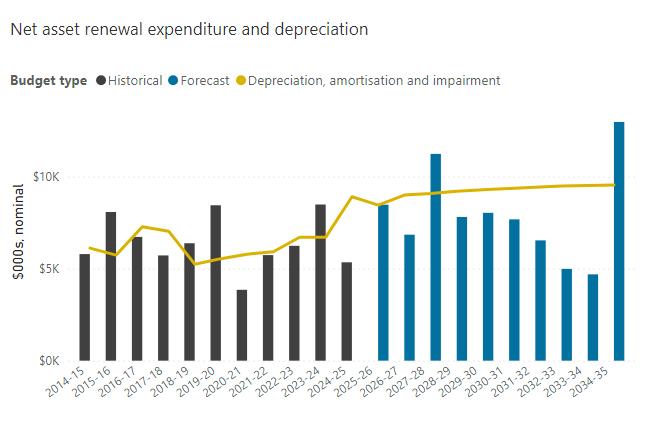
1. Not annually applying indexation to its asset base, potentially resulting in an understatement of depreciation charges and funding requirements for asset renewals.
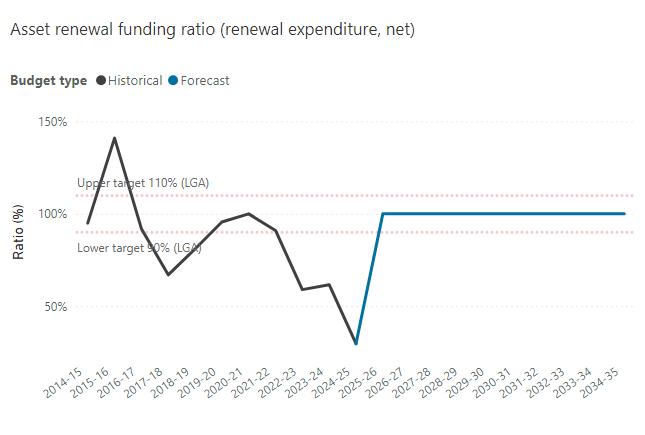
2. History of not fully funding asset renewals in line with the requirements of its Infrastructure Asset Management Plans.
3. Not achieving the planned reversal in operating deficits over the short to medium term as noted in its October 2025 Long-Term Financial Plan.
The ESCOSA advice forms part of this Annual Business Plan and the risks outlined above have been considered in preparing the 2026/27 Annual Business Plan and Budget
A number of significant factors continue to influenced the preparation of the Council’s Annual Business Plan and budget. These include:
• The need to comply with financial, regulatory, transparency and accountability requirements from the South Australian Government.
• Community expectations to maintain and improve infrastructure assets to acceptable standards including roads, footpaths, lighting, stormwater, street trees and plantings, open spaces and Council properties.
• Challenges of managing waste and improving waste outcomes.
• Enterprise bargaining agreements which provide for employment terms & conditions, wages and salaries.
The Council’s priorities continue to be:
• Continuing to maintain and improve Council’s assets and infrastructure in a sustainable and affordable way
• Exploring opportunities for improvements in effective and cost-efficient delivery of services
• Actively pursuing State and Federal Government grants.
• Attracting and retaining skilled and capable employees at all levels of the Council organisation.
• Enhancing Council’s profile within the community, through ongoing engagement and transparent decision making
With all of these factors in mind, the 2026/27 Annual Business Plan & Budget have been prepared within the following guidelines:
• Increase in general rate revenue of 5.0% (gross of rebates);
• Lucindale Community Wastewater Management Scheme (CWMS) charges to remain at $589 for occupied properties and $213 for vacant land;
• Kerbside waste collection charge to remain at $455 per annum;
• Grants Commission funding allocation being similar to 2025/26
Struan House Road Bridge
Financial summary
In delivering projects and services outlined in this Annual Business Plan, Council is forecasting an operating surplus of $322,437 in 2026/27, resulting from operating expenses of $23.85M being less than forecast revenue of $24.17M.
Council proposes to raise, net of rebates, $13.34M in general rates for the 2026/27 financial year and annual service charges of $2.40M (for the Lucindale Community Wastewater Management System and kerbside waste collection services).
Based on Council’s budget, direct borrowings will increase from $1 63M at the end of 2025/26 to $1 99M at the end of 2026/27. Increased borrowings are to cover Grubbed Road construction works Council will continue to pursue external grants to offset these borrowings.
Loan principal payments to external parties of $262,396 are scheduled for payment. Community organisations and individuals will repay Council $9,174 in loan principal repayments.
Overall, key financial indicators – which are detailed later in this plan – show Council to be in a financially sustainable position.
Operating expenses
In the first quarter of 2026, Council worked through each departmental budget line to identify overall operating savings against the 2025/26 budget to the tune of approximately $250,000. However, largely due to the inclusion of the fuel contingency and election expenses, overall operating expense for 2026/27 will increase
Key operating activities include:
• Unsealed road maintenance – including patrol grading and repairs: $1.18M
• Sealed road maintenance – including line marking, mowing, repairs, shoulder maintenance and weed spraying: $535,000
• New voucher system for free hard waste disposal: $100,000
• Street cleaning: $276,000
• Street lighting: $168,000
• Swimming Lake operations and maintenance: $268,000
• Election funding: $67,000 to the Electoral Commission of SA and $5,000 for Council support
• Community Survey: $20,000
• Fire prevention: $85,000, including $17,000 for Naracoorte parklands
Overall operating expenses for 2026/27 are forecast to be $23.85M, with depreciation accounting for the largest portion of this at $9.02M – an increase of $561,000 on 2025/26.
Materials, contracts and other expenses are forecast to decrease from $7.87M in 2025/26 to $7.80M in 2026/27 (-0.9%).
Salary and wages and associated expenditure (insurance, leave liability, superannuation, workers compensation levy etc) of $6.93M is forecast in 2026/27, compared to $6.75M in 2025/26 financial year. As per the Naracoorte Lucindale Council Enterprise Bargaining Agreements, most staff will receive a wage increase of 3%. The 2026/27 budget includes 65.7 full time equivalent employees, an increase from 64.6 in 2025/26.
Finance costs account for $103,000 in 2026/27.
Operational Expenses
(*These figures are based on forecasts as at 31 December 2025.)
Capital expenses
Council manages, operates and maintains approximately $278M worth of assets on behalf of the community and these assets account for significant renewal and upgrade expenditure. While the focus remains on renewing assets, several new projects have also been proposed in 2026/27
Overall, Council is proposing to deliver a capital works program worth $10.6M, which consists of $7.36M in renewal capital works and $3.24M in new or upgraded capital works.
Council’s capital program is partially funded from the cash raised to cover the annual depreciation expense and Council’s cash reserves. The delivery of the capital works will require an increase in Council’s overall borrowing, as described earlier.
It is also anticipated Council will receive $1.96M from State and Federal Government grants specifically for capital expenditure. These grants are normally not advised to Council prior to adoption of the Annual Business Plan and Budget.
The graph and table below show the key expenditure breakdown for 2026/27. The more detailed capital works program can be viewed in Appendix 1.
Capital Expenses
(*These figures are based on forecasts as at 31 December 2025.)
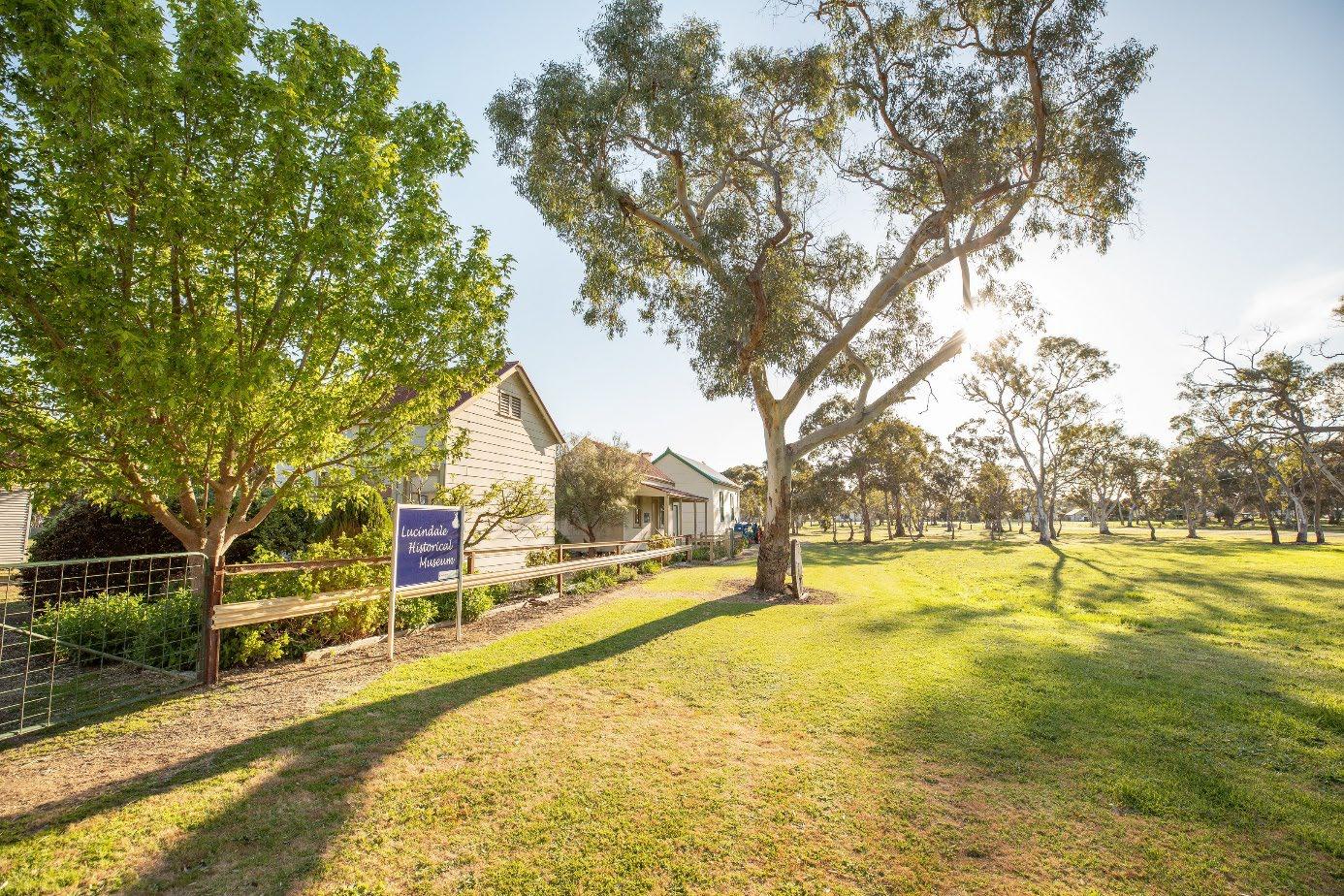
Lucindale Historical Museum
Community budget submissions
Council has allocated a total of $57,355 to fund community requests made through the budget process:
• Naracoorte Regional Art Gallery – support for administration: $30,990
• Lucindale Community Economic Development Board (LINC) – support for Lucindale Christmas Party, Christmas decorations adjacent LINC building, in-kind support for landscaping of LINC building: $4,500
• Naracoorte Interchurch Council Inc – contributions towards school chaplains: $6,000
• Carols in the Square – financial support: $2,000
• Naracoorte High School – NHS Year 12 Celebration Ball: in-kind Town Hall usage: $1,000
• South East Field Days – in-kind road closures: $1,000
• Naracoorte Lucindale Concert Band – free use of upstairs room at the Naracoorte Town Hall for rehearsals: $2,500
• Lions Club – TASTE the Limestone Coast - in-kind support: $3,200
• Stand Like Stone Foundation – financial contribution to support philanthropic efforts: $4,000
• Council resident – request for refurbishment of Road Trauma Memorial in McIntosh Square: $500
• Lucindale Netball Club – financial support to relocate netball shelters: $1,665
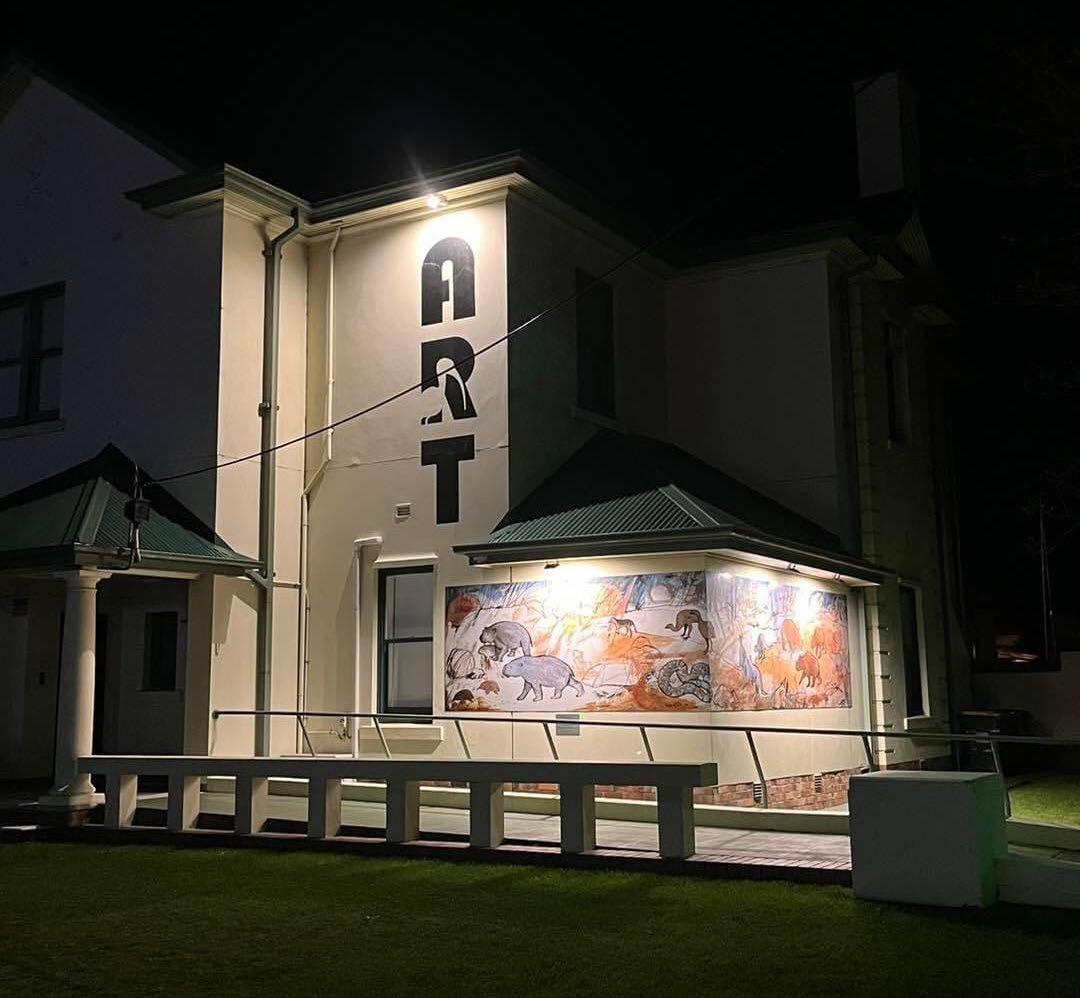
Naracoorte Regional Art Gallery
Funding this plan
Council’s long-term financial sustainability is dependent on ensuring that, on average over time, its expenses are less than its revenue.
In delivering the services and projects included in this Annual Business Plan and Budget, Council is planning to complete the year with an operating surplus of $322,437 before capital revenue.
Council’s total revenue is budgeted to increase by $1.87M compared with the 2025/26 budget (and prior to the final budget review). This is mainly due to a 3.3% increase in User Charges & Commercial Income (CPI of the Adelaide December quarter) and a 5% increase in general (overall) rates revenue.
The graph below shows the operating income breakdown for 2026/27
Rates
Like most Councils, Naracoorte Lucindale’s key source of income is derived from rates which are collected to fund services and facilities for the community
Council rates are a form of property tax, not a fee for service, and are applicable to almost everyone who owns property in the state. This includes homes, farms and businesses.
In South Australia, Council rates represent less than 3% of the total taxes paid by Australians, yet South Australian councils are responsible for around $29 billion worth of public assets and for providing about 25% of all services delivered to the community.
Service charges
These charges relate to the waste, recycling and green waste kerbside collection, Landscape SA levy and the Lucindale Community Wastewater Management Scheme.
Statutory Charges
Statutory Charges are set by the South Australian Government. These are fees and charges set by regulation and collected by the Council for regulatory functions such as assessment of development applications, dog registrations etc.
User Pay Charges & Commercial Income
These charges are for Council’s fee-based facilities such as town halls, cemeteries and property leases. Commercial income relates to the Naracoorte Regional Livestock Exchange, where facility users pay the relevant fees
Grants, Subsidies & Contributions
Council seeks to attract as much grant funding as possible from other levels of government. Major projects that may be of wider regional or State benefit may attract funding in partnership with the State or Federal Governments, or other key stakeholders and partners.
It is the Council’s intention to actively seek grant funding for projects.
Investment Income
Income relates to interest received from investments (Council funds deposited) with the Local Government Finance Authority, Council’s banking partner and loans granted to community organisations.
Reimbursements
Income relates to private work reimbursements, recoveries for insurance claims and rebates.
Overview of rates
Council is proposing to raise $13 34M in general rate revenue (before rate rebates), representing an approximate 5.0% overall increase from 2025/26, consistent with Council’s Long Term Financial Plan
In setting its rates each year Council considers the following:
1. The specific issues faced by our community, which are:
a. The need to continue to maintain and upgrade the district’s infrastructure (including roads, buildings, CWMS, bridges, stormwater and open space)
b. Increased costs associated with the collection and disposal of waste
c. Legislative compliance (e.g. health, environmental and other laws)
d. Benefits ratepayers receive from the services, projects and programs provided by the Council
e. Community expectations
2. The budget for the relevant financial year
3. Increases in costs and charges to be paid by Council
4. The overall impact of rates on the community
Payment of rates
Rates are payable in four approximately equal instalments and can be paid in advance. Notices are sent quarterly, and legal recovery action may be undertaken by Council for outstanding amounts owing.
Basis for raising rates
Capital value – i.e. the value of the land and all the improvements on the land – is used as the basis for calculating annual rates within the Council area.
The land against which rates may be assessed will include:
• Any piece or section of land subject to separate ownership or occupation; or
• Any aggregation of contiguous land subject to the same ownership or occupation.
Minimum Rate
Council is proposing a minimum rate of $600 on all properties. The minimum rate is levied against the whole of an allotment and only one minimum rate is levied against two or more pieces of adjoining land (whether intercepted by a road or not) if they are owned by the same owner and occupied by the same occupier or a single farming enterprise. Rate modelling indicates 516 assessments will be charged the minimum rate. This represents 8.1% of Council’s rateable properties. Legislation allows for a maximum of 35% of assessments to receive the minimum rate.
Adoption of Valuations
Council adopts the valuations made by the Valuer-General. Anyone who is dissatisfied with the valuation made by the Valuer-General may object to the Valuer-General in writing, within 60 days of receiving this notice of the valuation, explaining the basis for the objectionprovided the ratepayer has not:
• Previously received a notice of this valuation under the Local Government Act, in which case the objection period is 60 days from the receipt of the first notice, or
• Previously had an objection to the valuation considered by the Valuer-General.
Objections can be directed by:
• Mail – State Valuation Office, GPO Box 1354, ADELAIDE SA 5001
• Phone – 1300 653 345
• Email - LSGObjections@sa.gov.au
The Council has no role in this process. It is important to note that the lodgement of an objection does not change the due date for payment of rates.
Rating Policy – general rates
Locality is used as the factor to levy differential rates, with four general differential rates applied:
• Urban – all townships;
• Rural Living – to reflect a lower level of service, e.g. limited street lighting, some unsealed roads;
• Commercial / Industrial – ability to generate an income from property;
• Rural – ability to generate income from property but reduced services and generally larger capital values apply.
In 2025/26, Council initiated a review of its methods for setting general rates – the first such formal review since 2012/13. This process considers rating requirements and the best way for Council to distribute the rate burden across the community. This work will continue into the 2026/27 financial year.
For 2026/27, Council will continue with its current principles in relation to differential rates:
• That Council’s Commercial/Industrial (Naracoorte Township) rate in the $ is set at approximately 4 - 4.5% above the urban rate in the $
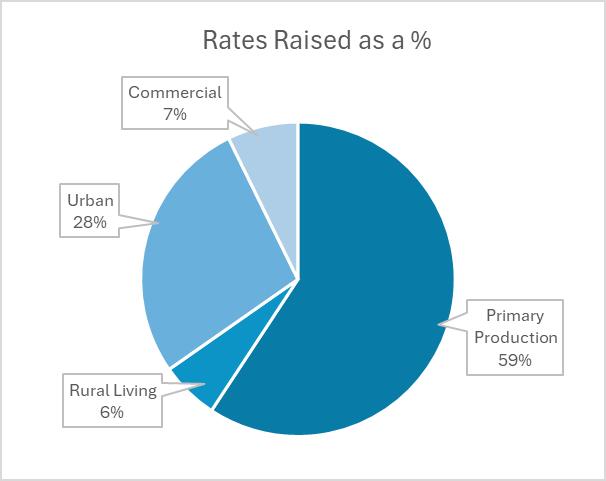
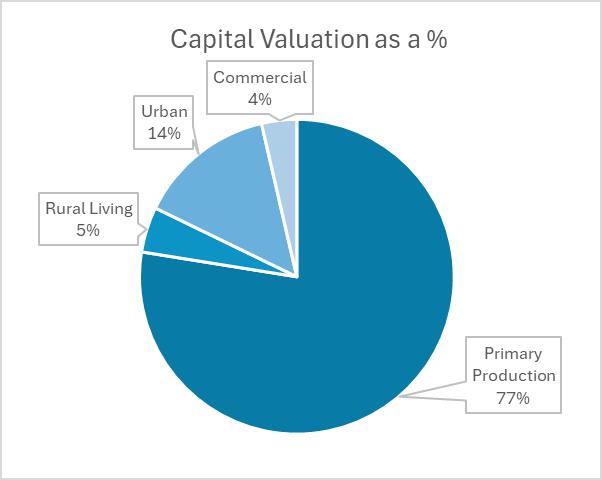
• That Council’s Primary Production rate in the $ is set to enable approximately 60% of total gross rates to be raised.
The graphs below show the percentage of capital value for each locality in 2026/27, compared to the percentage of total rates to be raised in 2026/27.
Council’s endorsed Long-Term Financial Plan has provided for a forecasted 5.0% increase in general rate income for 2026/27. Council has considered this rate, along with the Adelaide Consumer Price Index (CPI) for the December 2025 quarter which showed an annual increase of 3.3%.
Taking these indicators into consideration, Council has chosen to increase general rate income by 5.0%.
Across the district there will be properties which will still experience an increase or decrease greater or less than the 5.0% average general rate increase, and this will largely be due to valuation variations across rating localities.
Council has endorsed the provision of discretionary rebate of rates to all properties that have a general rate increase of greater than 20% over the previous financial year The following exclusions apply:
• Where the property has changed ownership in 2025/26; or
• Valuations have increased due to development on the property i.e. house built, improvements, sheds etc; or
• Valuations have increased due to property realignment or title mergers; or
• Valuations have increased due to other circumstances initiated by the property owner.
The capital valuation of properties across the Council area (excluding non-rateable properties) has increased from $6,088,519,939 in 2025/26 to $6,426,104,516 – or by approximately 5.54%.
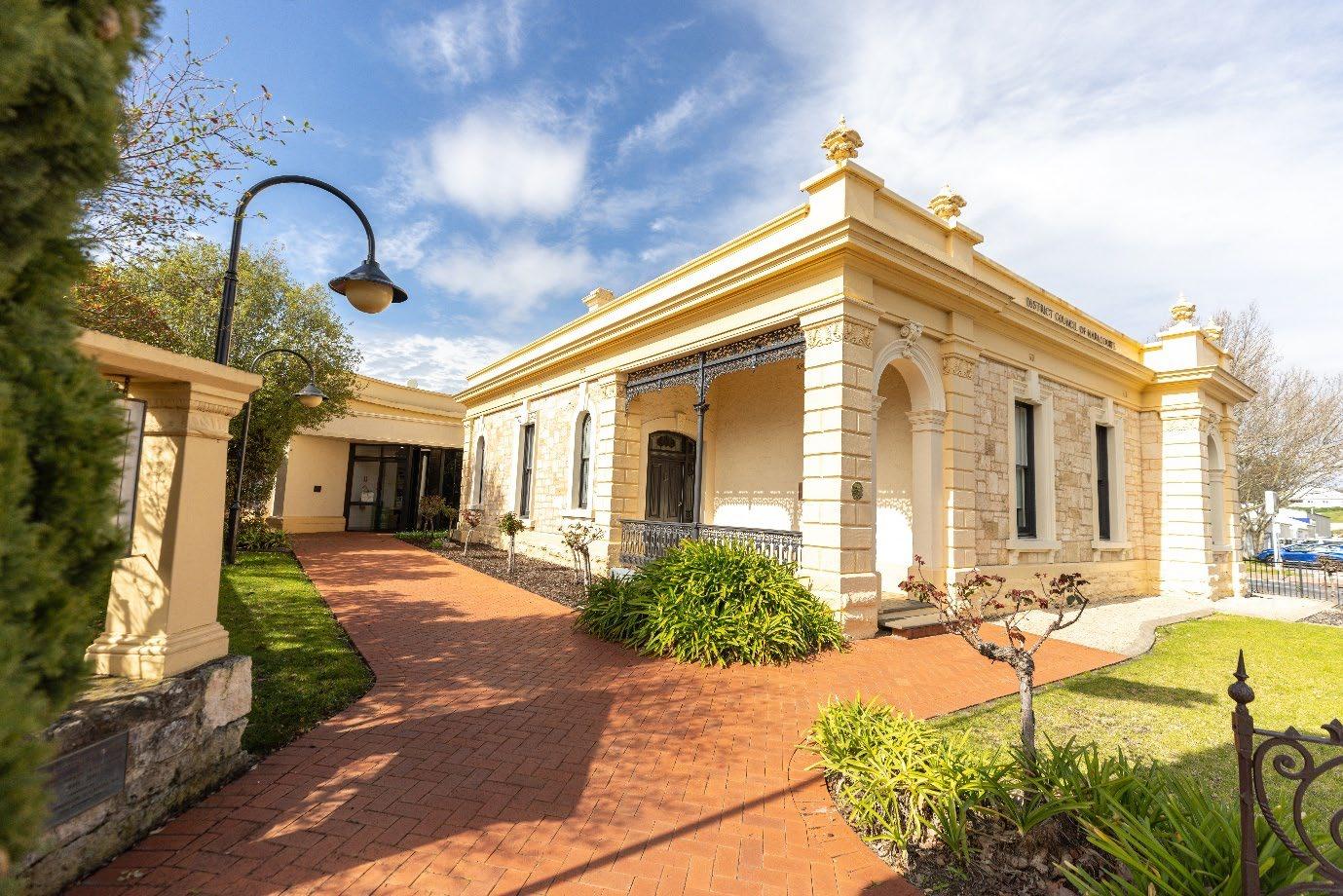
Naracoorte Council Office
rates in the dollar have been applied to each locality as shown below:
Council’s Statement on Expected Rate Revenue can be viewed in Appendix 2.
Fines and interest for late payment
The amount of rates due will be overdue if they have not been paid by the due date shown on the front of the rate notice. After this date, additional charges will apply. A fine of 2% of the amount due will be added immediately and at the end of each month thereafter, interest, at the rate prescribed in the Local Government Act 1999, will be added on any balance, including interest, not then paid.
Financial difficulties and rating assistance
Council may partially or wholly remit rates or to postpone rates on the basis of a ratepayer facing hardship. In such cases, an application for remission or postponement will need to be made. Ratepayers experiencing difficulties in paying their rates and associated charges are encouraged to contact the Council office – as soon as practicable – on 8760 1100 to discuss options available. Council treats such inquiries confidentially. Contact may also be made by email at council@nlc.sa.gov.au.
Council rebates
Certain individuals and/or organisations may be eligible for a rebate, e.g. community groups, health and education organisations etc. Phone 8760 1100 or email council@nlc.sa.gov.au for further information.
Postponement of rates for seniors
Ratepayers who hold a State Seniors Card (or who are eligible to hold a State Seniors Card and have applied for one) are able to apply to Council to postpone payment of rates on their principal place of residence. Postponed rates remain as a charge on the land and are not required to be repaid until the property is sold or disposed of. Phone 8760 1100 or email council@nlc.sa.gov.au for further information.
Service charge - CWMS
The Council provides a Community Wastewater Management System (CWMS) in Lucindale. The full cost of operating and maintaining this service for this financial year is budgeted to be $98,600 (including depreciation).
Council maintains funds within a specific CWMS Reserve Fund to fund future replacement of infrastructure such as pumps, pits, pipes and ponds. It is planned to maintain the charge at $589 for occupied properties and $213 for vacant land.
The Lucindale CWMS Reserve was $804,649 (audited financials figure) as at 30/6/2025 and is forecast to be $835,399 as at 30/6/2026. Based on budgeted figures, Council is anticipating the Reserve balance to be $919,402 as at 30/6/2027.
Service charge - waste and recycling
Council provides kerbside collection, recycling services and green waste collection in defined areas of the Council, consistent with Council’s long-term strategy to reduce the volume of waste to landfill and reducing the overall environmental impact of waste collection and disposal services.
A three-bin kerbside collection service for putrescible waste, recycling and green waste is available in defined areas in the townships of Naracoorte, Lucindale, Hynam, Kybybolite and Frances, and rural living zones.
Council provides a two-bin kerbside collection service for putrescible waste and recycling in defined areas within the township of Naracoorte, including the Town Centre, Industrial and Commercial zones.
The three-bin kerbside collection consists of one 140 litre bin putrescible waste (red lid) and two 240 litre bins, recycling (yellow lid) and green waste (green lid) collection. The two-bin kerbside collection consists of two 240 litre bins, recycling (yellow lid) and putrescible waste (green lid) collection.
The service charge will continue to be $455 per annum per occupied property. The levy is aimed to assist the service to be self-sustaining and funded by those that receive the service, rather than being partly subsidised by other ratepayers who do not receive the service.
Regional Landscape Levy
The Landscape South Australia Act obliges councils to collect the Regional Landscape Levy from their ratepayers. Council does not decide the amount of this levy, does not retain this revenue, nor do we determine how the revenue is spent.
Further information on how the levy is used can be found on the Landscape SA website: landscape.sa.gov.au.
The levy is charged per rateable property and rates payable per property for 2026/27 are:
• Residential, Vacant & Other
• Commercial
• Industrial
• Primary Production
$97.45
$146.18
$233.88
$428.78
Wrattonbully
Community Engagement
The Naracoorte Lucindale Council Draft Annual Business Plan and Budget 2026-27 was open for community consultation from 9.00am Monday 4th May and closed at 9.00am Wednesday 3rd June 2026.
Feedback could be received in the following ways:
In writing via post to Naracoorte Lucindale Council, PO Box 555, Naracoorte SA 5271
In writing via email to council@nlc.sa.gov.au
Online, using Council’s online engagement tool at https://yoursay.naracoortelucindale.sa.gov.au/
Hard copy feedback form available from the Naracoorte & Lucindale Council Offices and Naracoorte Library. Responses could be submitted by post or email (above).
In person at a Special Council meeting held in the Naracoorte Council Chambers on Tuesday 26th May 2026 from 5.00pm to 6.00pm
Statement of Significant Amendments
Section 123(6a) of the Act sets out a requirement for Council to provide a statement outlining significant amendments and the reasons why the amendments were made to this Annual Business Plan 2026-27 after public consultation.
In addition to the below, minor formatting and grammatical changes have been made throughout the document.
• Page 28 – Rating tables amended to reflect the most recent valuations and updated rating model.
• Page 31 – Adjusted the budget forecasts to reflect the Third Quarter Budget review presented to Council at its May Ordinary Meeting.
2026/27
NARACOORTE LUCINDALE COUNCIL
BUDGETED STATEMENT OF COMPREHENSIVE INCOME FOR THE YEAR ENDED 30 JUNE 2027
NARACOORTE LUCINDALE COUNCIL
BUDGETED STATEMENT OF CHANGES IN EQUITY FOR THE YEAR ENDED 30 JUNE 2027
NARACOORTE LUCINDALE COUNCIL
NARACOORTE LUCINDALE COUNCIL
Less: Net Outlays on Existing Assets Capital
Less: Net Outlays on New Assets Capital
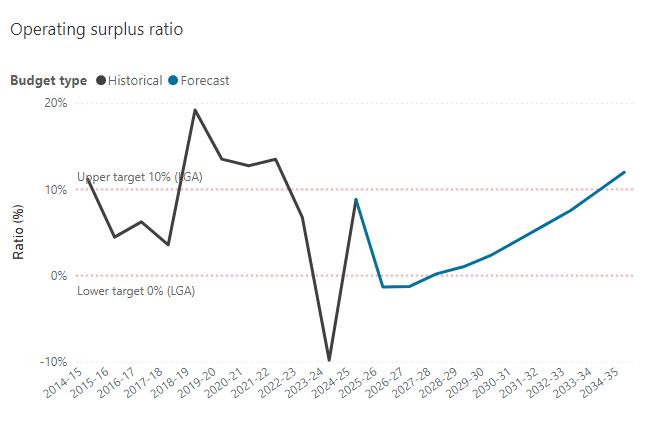
Operating Surplus / (Deficit) measures the extent to which operating revenue is or is not sufficient to meet all of the costs of providing council services, which include depreciation. Where an operating deficit exists, some costs being incurred in the current year are not being met by today’s ratepayers.
Net Lending / (Borrowing) equals Operating Surplus / (Deficit), less Net Outlays on existing and new assets. The Net Lending / (Borrowing) result is a measure of the Council’s overall (i.e. Operating and Capital) budget on an accrual basis. The Net Lending /(Borrowing) result can be expected to fluctuate from year to year, given the lumpy nature of some capital expenditure. Achieving a zero result on the Net Lending /(Borrowing) measure in any one year essentially means that the The Net Lending / (Borrowing) for the financial year does not include principal repayments in relation to loan borrowings.
Naracoorte Lucindale Council
Operating Surplus/(Deficit)
Measures the extent to which operating revenue is or is not sufficient to meet all of the costs of providing Council services, which include depreciation. Where an operating deficit exists, some costs bing incurred in the current year are not being met by today's ratepayer.
Operating Surplus/(Deficit) Ratio - %
Expresses the operating surplus(deficit) as a percentage of operating revenue.
Where an operating deficit exists, this percentage indicates the percentage increase needed in revenue to achieve a break-even operating result. Equally a break even operating result could be targeted by decreasing operating expenses.
Net Financial Liabilities
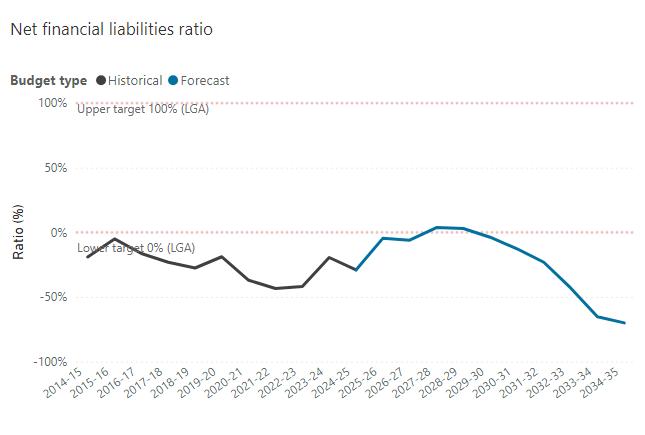
Equals total liabilities less financial assets, where financial assets for this purpose include cash, investments, loans to community groups, receivables and prepayments, but excludes equity held in Council businesses and land held for resale.
Net Financial Liabilities Ratio
Expresses net financial liabilities as a percentage of Total Operating Revenue.
This measure indicates the capacity of Council to meet its financial obligations from revenue streams. Where the ratio is falling, it indicates that a Council's capacity to meet its financial obligations from revenue streams is strengthening. Conversely, where this ratio is increasing, it indicates that a Council's capacity to meet its financial obligations is deteriorating.
The asset renewal funding ratio is calculated on the sum of the proposed expenditure as indicated in the Infrastructure & Asset Management Plan.
SPACES
Statement on Expected Rate Revenue
Please note: These figures represent a considered estimate of Expected Rate Revenue based on the most current information available at the time of going out to consultation on the DRAFT Annual Business Plan and Budget (ABP&B). This information is updated regularly and therefore these figures may be subject to confirmation at the time of actual adoption of the ABP&B.
Expected Rates Revenue
2025/26 2026/27 (estimated)
Comments Change
Kerbside waste collection
CWMS - Lucindale
Estimated growth in number of rateable properties
'Growth' is defined in the regulations as where new properties have been created which has added rateable properties to council's ratepayer base. Growth can also increase the need and expenditure related to infrastructure, services and programs which support these properties and residents.
Estimated average General Rates per rateable property
Average per rateable property
Councils use property valuations to calculate each rateable property’s contribution to the required rate revenue total. Councils do not automatically receive more money because property values increase but this may alter how rates are apportioned (or divided) across each ratepayer (ie. some people may pay more or less rates, this is dependent on the change in value of their property relative to the overall valuation changes across the council area).
The total General Rates paid by all rateable properties will equal the amount adopted in the budget.
Councils are required under the Local Government Act to provide a rebate to qualifying properties under a number of categories:
Health Services - 100 per cent
Community Services - 75 per cent
Religious purposes - 100 per cent
Public Cemeteries - 100 per cent
Royal Zoological Society of SA - 100 per cent Educational purposes - 75 per cent
The rates which are foregone via Mandatory Rebates are redistributed across the ratepayer base (ie. all other ratepayers are subsidising the rates contribution for those properties who receive the rebate).
Presented as required by the Local Government (Financial Management) Regulations 2011 reg 6(1)(ea)
Please Note: The percentage figure in (e) relates to the change in the total amount of General Rates revenue to be collected from all rateable properties, not from individual rateable properties (ie. individual rates will not necessarily change by this figure).
Councils are required under the Landscape South Australia Act 2019 to collect the levy on all rateable properties on behalf of the State Government. The levy helps to fund the operations of regional landscape boards who have responsibility for the management of the State’s natural resources.
Community Wastewater Management Systems
A council may grant a rebate of rates or service charges in a number of circumstances. The rates which are foregone via Discretionary Rebates are redistributed across the ratepayer base (ie. all other ratepayers are subsidising the rates contribution for those properties who receive the rebate).
Expected Total Rates Revenue excludes other charges such as penalties for late payment and legal and other costs recovered. 'Growth' as defined in the Local Government (Financial Management) Regulations 2011 reg 6(2)
Statement on Expected Rate Revenue
Please note: These figures represent a considered estimate of Expected Rate Revenue based on the most current information available at the time of going out to consultation on the DRAFT Annual Business Plan and Budget (ABP&B). This information is updated regularly and therefore these figures may be subject to confirmation at the time of actual adoption of the ABP&B.
Expected Rates Revenue
No. of rateable properties
Commercial/Industry
Living
Primary Production
Total Land Use
Minimum Rate
No. of properties to which rate will apply
Adopted valuation method
Council has the option of adopting one of three valuation methodologies to assess the properties in its area for rating purposes: Capital Value – the value of the land and all improvements on the land; Site Value – the value of the land and any improvements which predominantly affect the amenity of use of the land, such as drainage works, but excluding the value of buildings and other improvements (Note: Site Value will cease to be an option from 1 Sept 2023); or Annual Value – a valuation of the rental potential of the property.
Naracoorte Lucindale Council adopts the Capital Value valuation methodology to assess properties for rating purposes.
Average per rateable property calculated as General Rates for category, including any fixed charge or minimum rate (if applicable) but excluding any separate rates, divided by number of rateable properties within that category in the relevant financial year.
Where two or more adjoining properties have the same owner and are occupied by the same occupier, only one minimum rate is payable by the ratepayer.
Local Government Advice
Naracoorte Lucindale Council
February 202 6
Enquiries concerning this advice should be addressed to:
Essential Services Commission
GPO Box 2605
ADELAIDE SA 5001
Telephone: (08) 8463 4444
Freecall: 1800 633 592 (SA and mobiles only)
E-mail: advice@escosa.sa.gov.au
Web: www.escosa.sa.gov.au
Naracoorte Lucindale Council AT A GLANCE
OVERVIEW
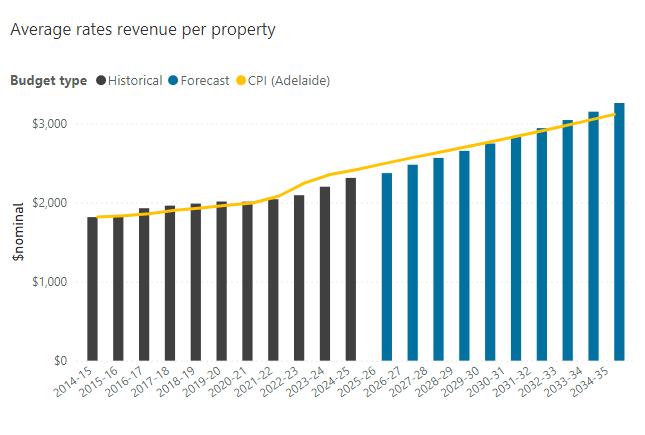
The Essential Services Commission finds Naracoorte Lucindale Council’s historical, current and projected financial performance to be mostly sustainable due to its historical and forecast operating surpluses over the long-term. In recent history, the Council has had challenges in managing cash flows and ensuring adequate funding for asset renewal, with some ratios below target. The Council’s Long-Term Financial Plan, while it projects operating deficits for the first two years, plans to progressively increase its operating surpluses largely through above-CPI increases in rate income per property. This regional Council is challenged by a relatively small rateable property base, cost pressures and managing infrastructure over a large geographic area
FINANCIAL PERFORMANCE
RISKS IMPACTING SUSTAINABILITY
⚠ Not annually applying indexation to its asset base, potentially resulting in an understatement of depreciation charges and funding requirements for asset renewals.
⚠ History of not fully funding asset renewals in line with the requirements of its Infrastructure Asset Management Plans.
⚠ Not achieving the planned reversal in operating deficits over the short to medium term as noted in its October 2025 Long-Term Financial Plan
KEY FACTS
▶ Population in 2024 was 8,901 residents
▶ The Council covers 4,520 square kilometres
▶ 6,293 rateable properties in 2024-25
▶ $25 4 million of income in 2024-25
▶ Value of infrastructure, property, plant and equipment held in 2024-25 equals $272 6 million
1 Executive summar y
1.1 Summary of observations
The Essential Services Commission (Commission) finds the Naracoorte Lucindale Council’s (Council) historical, current and projected financial performance and position to be mostly sustainable Over the last 10 years, the Council has predominantly achieved operating surpluses, indicating that the operating income it collects generally exceeds its operating expenses by a reasonable margin.
The Council is challenged by the need to manage infrastructure over a large geographic area and has a relatively modest rateable property base of 6,293 properties The Council owns and operates the Naracoorte Regional Livestock Exchange, which is the largest livestock saleyard in South Australia.
The Council’s strategic plans are regularly reviewed and updated, and its current Long-Term Financial Plan and Infrastructure Asset Management Plan underwent public consultation between September 2025 and October 2025. The Commission recommends that the Council continues to understand the community’s preferences on existing service levels, new service provision, and appetite for higher than Consumer Price Index rate increases over the long-term.
Historically, the Council has not fully funded its asset renewal and replacement program, although it has recently completed major capital improvements to the Naracoorte Regional Livestock Exchange. From a long-term financial planning perspective, the Council expects some cost challenges (or operating deficits) over the next two years to 2026-27 but has then projected it will progressively improve its operating surpluses over the period to 2034-35. The Council has a strong financial capacity (in the form of low borrowings and available cash) to undertake further investment in the community.
Affordability risk for ratepayers is currently assessed as moderate, on balance, given the economic resources available to the community and the relative lower rates for residential ratepayers compared to similar councils and Statewide averages. The Commission suggests that affordability risk be more comprehensively reviewed and factored into future Long-Term Financial Plans, ensuring it balances the need for higher than Consumer Price Index rate increases and infrastructure and service provision.
1.2 Summary of Recommendations
The Council has a range of sound practices in its strategic planning and asset management, including:
annually reviewing its Long-Term Financial Plan in accordance with the Local Government Act 1999
periodically updating its Infrastructure and Asset Management Plans underpinning its asset renewal requirements, and
continuing to prioritise the renewal of its asset stock.
To further strengthen the Council’s sustainability, the Commission recommends that the Naracoorte Lucindale Council:
1. Disclose all assumptions and estimates on material income and expenditure items and include in each Long-Term Financial Plan commentary on the material changes since its previous Long-Term Financial Plan
2. Review the operating performance projections in its Long-Term Financial Plan, ensuring this reflects accurate information on income and expenditure categories, and that operating surpluses are no more than is required for financial and asset sustainability.
3. Review its long-term cash balances projected in its Long-Term Financial Plan, with a view to aligning the timing and quantum of cash accumulation with identified asset and debt management requirements, to improve intergenerational equity outcomes for ratepayers.
4. Annually index asset values between formal revaluations (in accordance with the relevant accounting standards), and appropriately account for indexation in depreciation charges in its Long-Term Financial Plans.
5. Review long-term rate increases in its Long-Term Financial Plan, in consultation with its community, balancing the affordability and service level needs of the community, and the Council’s financial sustainability needs.
2 About the advice
2.1 Background
The State Parliament has tasked the Essential Services Commission (Commission), South Australia’s independent economic regulator and advisory body, to provide advice on material changes proposed by local councils in relation to elements of their Strategic Management Plans (SMP), and on the proposed revenue sources, including rates, which underpin those plans.1
A primary purpose of the Local Government Advice Scheme (Advice or the Scheme) is to support councils to make financially sustainable strategic decisions in their annual business plans and budgets, in the context of their Long-Term Financial Plans (LTFP) and Infrastructure and Asset Management Plans (IAMP).2 IAMPs are commonly referred to as Asset Management Plans (AMP). The LTFP and the IAMP are both required as part of a council’s SMP.3 Financial sustainability encompasses intergenerational equity,4 program (service level) and rates stability in this context.5 The other main purpose is for the Commission to consider ratepayer contributions in the context of all revenue sources, as outlined in the LTFP.6 In addition, the Commission has discretion to provide advice on any other aspect of a council's LTFP or IAMP it considers appropriate, having regard to the circumstances of that council.7
The first cycle of the scheme extends over four years from 2022-23 to 2025-26. The Commission has selected 19 councils for advice in the fourth year (2025-26) of the Scheme, including the Naracoorte Lucindale Council (Council).
This report provides the Local Government Advice for the Council in 2025-26
The Council is obliged under the Local Government Act 1999 (LG Act) to publish this advice and its response, if applicable, in its 2026-27 Annual Business Plan (including any draft Annual Business Plan) and in subsequent plans until the next cycle of the Scheme.8 Decision-making remains in the control of the Council.
The Commission thanks the Council for meeting with Commission staff and for providing information to assist the Commission in preparing this advice.
2.2 The Commission’s approach
In providing its Advice to the Council, the Commission has followed the approach it previously explained in the Framework and Approach – Final Report (F&A).9 In February 2025, the Commission
1 Amendments to the LG Act (s122(1c) to (1k) and (9)) specify the responsibilities for the Commission and local councils for the Local Government Scheme Advice. The Commission must provide advice to each council in accordance with the matters outlined in s122(1e), (1f) and (1g).
2 Commonly referred to as Asset Management Plans (AMP).
3 The objectives of the advice with reference to a council’s LTFP and IAMPs are presented under LG Act, s122(1g). LG Act s122(1) specifies the requirements of a council’s SMP, including the LTFP and IAMP.
4 ‘Intergenerational equity’ relates to fairly sharing services and the revenue generated to fund the services between current and future ratepayers.
5 Commission, Framework and Approach – Final Report, August 2022, pp. 2-3, available at www.escosa.sa.gov.au/advice/advice-to-local-government
6 LG Act s122(1f)(a) and (1g)(a)(ii).
7 LG Act s122(1f)(b) and (1g)(b).
8 LG Act s122(1h).
9 Commission, Framework and Approach – Final Report, August 2022, available at www.escosa.sa.gov.au/advice/advice-to-local-government
also published a report on practices identified in South Australia's Local Government sector, outlining both favourable and unfavourable practices that were observed.10
The Commission has considered the Council’s SMP documents (set out in the box below), with a particular focus on its performance and outlook against three financial indicators: the Operating Surplus Ratio (OSR), the Net Financial Liabilities Ratio (NFLR) and the Asset Renewal Funding Ratio (ARFR).11 Analysis of these three indicators captures financial and service sustainability, cost control and affordability risk.12
The Commission reviews 10 years of historical data, being the years 2014-15 to 2023-24 (Historical Period) the “current year” 2024-25 and 10 forecast years, being 2025-26 to 2034-35 (Forecast Period).
Table 1: Strategic management documents referred to
Infrastructure and Asset Management Plan, 2025-2035 (November 2024)
Strategic Plan (June 2023)
Given that the Commission must, in providing its advice, have regard to the objective of councils maintaining and implementing their IAMPs and LTFPs,13 it has also considered the Council’s performance in that context. Findings regarding the content of the Council’s AMP, and the alignment between its LTFP and AMPs,14 are discussed in Section 5.
The Commission has also reviewed the Council’s template provided by the Council, including its 2025-26 LTFP forecasts for 2025-26 to 2034-35, historical financial data, the number of rateable properties and Council staff (Full Time Equivalent or FTE) numbers from 2014-15 onwards.15 The charts and tables in the Advice are primarily sourced from these datasets. In addition, the Commission has reviewed the Council’s audit committee reports, and other public information, as appropriate.
The Commission has reported estimates in nominal terms to identify ‘real’ rather than ‘inflationary’ effects. In the charts, the Consumer Price Index (CPI) line for the Historical Period is calculated as the compound annual growth rate in the CPI (Adelaide) series from 2014-15 to 2023-24, being
10 Commission, Local Government Observed Practices, February 2025, available at https://www.escosa.sa.gov.au/advice/guidance-on-local-government-advice
11 The three financial indicators are specified in the Local Government (Financial Management) Regulations 2011. Since 2011, each council has been required to include these three indicators in its plans, annual budget, midyear budget review and annual financial statements. Councils can adopt their own target range for each ratio, but the Commission is guided by the Local Government Association (LGA) target ranges, which were established and agreed during the development of the LGA Financial Sustainability Papers (2006-2011).
12 The F&A listed 29 analytical questions that the Commission has considered in assessing the Council’s performance against these indicators to determine affordability, cost control and other sustainability risks.
13 LG Act s122(1g)(a)(i).
14 As required under s122(1b) of the LG Act.
15 Sourced from the Local Government Grants Commission (including data reported by the Office of the Valuer-General) and the Council’s data. The Council’s estimates for the 2024-25 financial year, relied on at the time of preparing this advice, were unaudited.
2.9 percent16. Each financial year is the average of the four quarterly results. The CPI for the Forecast Period is calculated as the compound annual growth rate in the CPI (Australia) series from 2025-26 based on the Reserve Bank of Australia (RBA) (Australia-wide) inflation forecasts to the December 2027 quarter, and the midpoint of the RBA target range (2.5 percent) thereafter, yielding an average inflation rate for the Forecast Period of 2.5 percent. Similarly, for the current year 2024-25, we have observed a CPI (Adelaide) of 2.4 percent.
Finally, in formulating this Advice, the Commission has had regard to all discussions and engagement with the Council, including the face-to-face onsite meeting at the Council offices and the individual circumstances of the Council, including:
its location as a Rural Agricultural: Large and Very Large council
its income level ($25.4 million in 2024-2517), and
the size of its rates base (around 6,293 ratepayers in 2024-2518).
Throughout this Advice, the Commission has identified several key points and assigned the following risk category to those points:
16 The assumed CPI for the Historical Period is 2.9 percent, being the compound annual growth rate in the CPI (Adelaide) series from 2014-15 to 2023-24, available at: Consumer Price Index, Australia, June Quarter 2024 | Australian Bureau of Statistics
17 Based on the Council’s financial reporting template provided to the Commission.
18 Based on the Council’s financial reporting template provided to the Commission.
3 Council profile
The Council is classified by the Commission as an ‘Rural Agricultural: Large and Very Large’ council and is one of nineteen in this category in South Australia.19 It covers an area of 4,520 square kilometres, has an estimated resident population of 8,901 (at 30 June 2024),20 and approximately 6,293 rateable properties (at 1 January 2025).21
The Council is located in the South-East of South Australia, approximately 300 kilometres from Adelaide and 450 kilometres from Melbourne. The main townships in the Council district include Naracoorte, Lucindale, Hynam, Kybybolite and Frances.
The Council region has the following attributes:
forecast rateable property growth of approximately 0.5 percent per annum22
population density of 2.0 persons per square kilometre23
1,618 kilometres of sealed and unsealed roads, of which 70.6 percent are unsealed roads24
employment sectors mainly in agriculture, forestry and fishing (26 1 percent), manufacturing (13 7 percent), and retail trade (9.2 percent),25 and
a median population age of 41 6 years.26
19 Commission, Fact Sheet - Local Government Advice Scheme – Schedule of Councils, May 2023, available at https://www.escosa.sa.gov.au/ArticleDocuments/21947/20240731-Advice-ScheduleOfCouncilsFactSheet.pdf.aspx?Embed=Y
20 Refer to Australian Bureau of Statistics, Data by region, available at https://dbr.abs.gov.au/region.html?lyr=lga&rgn=45090
21 Based on the Council’s Financial Reporting template provided to the Commission.
22 Based on the Council’s Financial Reporting template provided to the Commission.
23 Refer to Australian Bureau of Statistics, Data by region, available at https://dbr.abs.gov.au/region.html?lyr=lga&rgn=45090
24 Refer to the Department of Infrastructure and Transport - Local Government Grants Commission, 2023-24 Database Reports, available at https://www.dit.sa.gov.au/local-government/grantscommission/publications#database
25 Refer to Australian Bureau of Statistics, Data by region, available at https://dbr.abs.gov.au/region.html?lyr=lga&rgn=45090
26 Refer to Australian Bureau of Statistics, Data by region, available at https://dbr.abs.gov.au/region.html?lyr=lga&rgn=45090
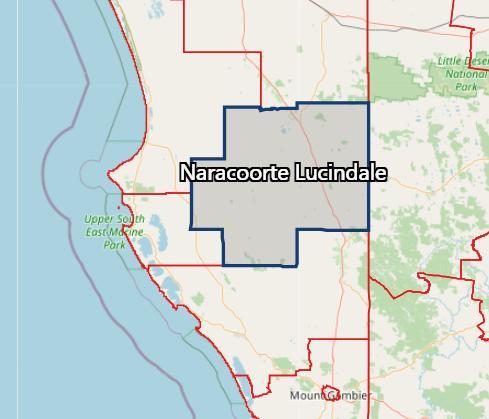
Figure 1: Council Area
4 Material plan amendments in 202 5-26
The Council has made several amendments to its 2025-26 budget and forward projections, partly for inflation and partly for other revenue and spending initiatives. The material amendments to some of its main financial forecasts are listed in the table below (in nominal terms).27 To ensure a comparable analysis of estimates between the 2024-25 and 2025-26 LTFPs, the Commission has reviewed the nine overlapping years’ statistics: 2025-26 to 2033-34 and identified material amendments accordingly.
4.1 Key points
Material amendments in some financial items result in an overall improvement in operating surpluses, particularly in the latter half of the Council’s planning period.
Materially lower capital expenditure for asset renewal and replacement, and new and upgraded assets are driven by revisions to the Council’s SMPs, review of projects in its Masterplan, and revisions to project scope and delivery timing
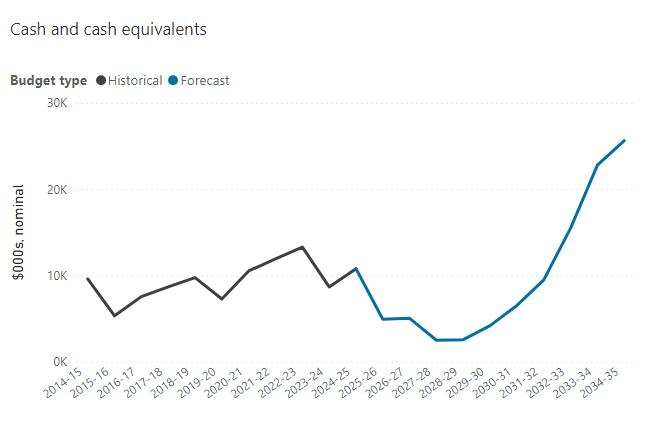
The cash balance materially increases between plans, to $25.6 million in 2034-35, mainly driven by a reduction in capital expenditure compared with previous estimates.
Further detail is encouraged on key income and expenditure drivers and on explanations of material changes between annual updates of the Council’s LTFP.
Financial Item Sum of 202526 to 2033-34
27 This table shows only selected financial items to demonstrate the material amendments made by the Council in its 2024-25 estimates. It excludes various financial items, and individual items may not sum to totals.
28 The capital expenditure estimates are based on the 2024-25 LTFP projections provided by the Council to the Commission (in an Excel template).
29 The capital expenditure estimates are based on the 2024-25 LTFP projections provided by the Council to the Commission (in an Excel template).
Table 2: Historical and forecast financial items
4.2 General observations on the LTFP and IAMPs
The Commission observes that the Council has annually reviewed (in recent years) its LTFP in accordance with s.122(4)(a) of the LG Act and issues a report from the Chief Executive Officer on the sustainability of its long-term financial performance and position (per s.122(4a) of the LG Act) The Council’s Audit and Risk Committee also endorses the reviews of the LTFP
The Council has an over-arching IAMP, which documents the Council’s asset management planning inputs and assumptions for major asset classes The Council’s 2025-26 LTFP and 2025-26 IAMP underwent review and public consultation between September 2025 and October 2025. The Commission’ s advice is based on these updated plans, adopted by the Council on 28 October 2025.
The Council has a rolling schedule of assessments of asset condition and asset lives. It generally undertakes asset revaluations every five years (although stormwater assets have not been revalued since 1 July 2016) On 30 June 2024, the Council’s road assets were revalued, accounting for 64.9 percent of its total infrastructure, property plant and equipment asset base.30
4.3 Changes to operating performance
In its 2025-26 LTFP, the Council has made of a number of operating changes, some resulting from indexation updates, real operating income and expenditure changes, and timing and project scope changes to proposed capital expenditure. These changes affect the quantum and timing of capital grant income and the value of depreciation. In general, this does not appear to have resulted in material amendments to the Council’s operating performance
Some notable changes, over the nine-year comparative period to 2033-34 compared to the 2024-25 LTFP (as shown in Table 1 above), include:
cumulative ‘grants, subsidies and contributions’ income reduced by $3.0 million (or minus 6.4 percent), reflecting the Council’s adjustment following a review of proposed capital expenditure and Masterplans
cumulative ‘materials, contracts and other expenses‘ reduced by $4.6 million (or minus 5.5 percent), reflecting, in part, the Council’s re-setting of its current (2025-26) budget requirements and allowing for escalation thereafter, and
cumulative finance costs reduced by $6.9 million (or minus 92.2 percent), reflecting the Council’s revised assumption to not allocate borrowings for projects for which firm estimates are not available. Stating this assumption in the LTFP would improve disclosure.
The Commission observes that, in general, stakeholders would benefit from further detail in the Council’s LTFP, such as in assumptions or estimates on major income and expenditure drivers (where appropriate), and provision of commentary on material changes between annual updates to its LTFP.31
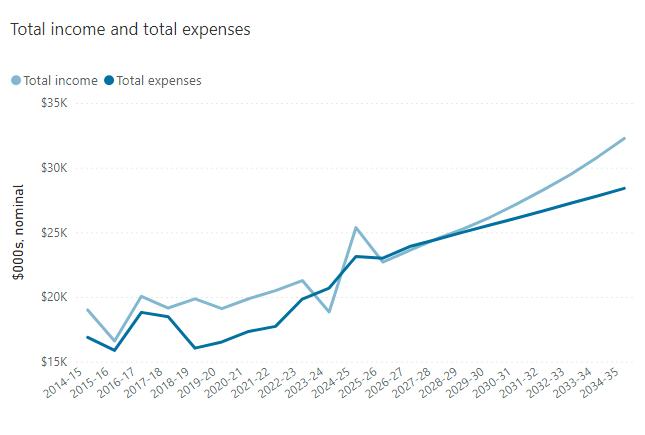
Overall, the Council’s cumulative operating surpluses are projected to increase by $5.9 million over the nine-year comparative period to 2033-34, indicating that the Council is planning to improve its financial sustainability. Generally, the Council’s operating surpluses are forecast to progressively improve year-
30 Naracoorte Lucindale Council, General Purpose Financial Statements for the year ended 30 June 2024 (included in its 2023-24 Annual Report), Note 7 Infrastructure, Property, Plant and Equipment, p.18.
31 This deficiency in Local Government strategic management planning was noted in the Commission’s Local Government Observed Practices report in February 2025, available at https://www.escosa.sa.gov.au/ArticleDocuments/21947/20250228-LGALocalGovernmentObservedPractices.pdf
on-year, although the Council is still projecting deficits in the first two years, and higher surpluses in the latter half of its LTFP.
4.4 Changes in capital expenditure
The Council projects lower capital expenditure for both the renewal of assets and new and upgraded assets, as shown in Table 2, compared with the previous LTFP The Council advises that a reason for this is the recently completed major capital improvements for the Naracoorte Regional Livestock Exchange (NRLE), as well as the removal of a number of significant projects in its Masterplans, where firmer cost estimates are not available or the potential projects remain subject to Council approval and grant funding The changes to capital expenditure also reflect the Council’s project delivery timing and scoping changes arising from its 2025-26 SMP reviews Again, the Commission notes there is limited information in the Council’s LTFP, so it is challenging for stakeholders to understand the specific material changes in the Council’s capital expenditure programs. Improved disclosure of these matters is encouraged.
The lower capital expenditure projections have contributed, in part, the Council’s material increase in cash and cash equivalents, rising from $10.8 million in 2024-25 to a forecast $25.6 million in 2034-35 (see Section 5.2).
The Commission recommends that the Council:
1. Disclose all assumptions and estimates on material income and expenditure items and include in each LTFP commentary on the material changes since its previous LTFP.
5 Financial sustainability
5.1 Operating performance
5.1.1 Key points
The Council generally achieved operating surpluses over the Historical Period, with OSR averaging 8.3 percent and an accumulated surplus of $16.0 million.
In the Forecast Period, the OSR averages 4.5 percent and the Council forecasts that it will accumulate a surplus of $12.1 million, forecasting progressively higher surpluses following forecast deficits in 2025-26 and 2026-27
Expenses per rateable property are projected to increase by an average (CAGR) of 1.9 percent per annum over the Forecast Period, which is broadly similar to the result for the Historical Period. However, there are some risks to projections, for example, due to Council’s current practice of not annually indexing its infrastructure asset base, which may result in an inaccurate assessment of depreciation.
5.1.1 Operating Surplus Ratio
Figure 2: Operating surplus ratio – historical and forecast
The Council’s operating surpluses, both historically and forecast, are generally good indicators of sustainability, although there has been some recent volatility driven by the accounting for grant income
Over the Historical Period, the Council’s OSR fluctuated but averaged 8.3 percent 32
32 The operating surplus ratio is defined as: Operating Surplus (Deficit) ÷ Total Operating Income. The general target is to achieve, on average over time, an operating surplus ratio of between zero and 10.0 percent (Local Government Association of South Australia, Financial Sustainability Information Paper 9 - Financial Indicators Revised, May 2019 (LGA SA Financial Indicators Paper), p. 6), available at financial_sustainability_information_paper_9.pdf
Over the Forecast Period, the OSRs are negative for the first two years then increase progressively to 12.0 percent in 2034-35, exceeding the LGA target range of zero to 10,0 percent. The Council has stated that a reason for this is that it has excluded some projects from its LTFP due to incomplete cost estimates or insufficient details on related grant funding – lowering increases in ‘material, contracts and other’ expenses, and lower finance costs.
5.1.2 Income and expenses
Figure 3: Total income and expenses – historical and forecast
5.1.2.1
Over the Historical Period:
The rates component of income increased by a CAGR of 2.5 percent per annum, 0.4 of a percentage point below the average CPI for the period (2.9 percent)
Total operating expenses grew by a CAGR of 2.3 percent per annum, based on low growth in employee costs (0.4 percent per annum),33 low growth in depreciation expenses (1.0 percent per annum),34 and growth in ‘materials, contracts and other’ expenses of 5.3 percent per annum,35 which exceeded average annual CPI of 2.9 percent
Operating expenses per property increased at a CAGR of 2.0 percent per annum, incorporating growth in the number of rateable properties of a CAGR of 0.3 percent
33 The Council’s template data shows that employee numbers reduced by 12 FTEs over this period totalling 59 FTEs in 2023-24.
34 This is considered low relative to inflation in the Historical Period The Commission acknowledges that, at times, condition-based asset assessments (or other accounting changes) can mean remaining useful lives are extended significantly.
35 Primarily due to material year-on-year increases in contractor expenses in 2022-23 and 2023-24, by 40.6 percent and 52.3 percent, respectively. See Naracoorte Lucindale Council, General Purpose Financial Statements for the year ended 30 June 2023 and for the year ended 30 June 2024, Note 3 Materials, contracts and other expenses, p.14 and p.15 respectively, available at https://www.naracoortelucindale.sa.gov.au/council/reports2/annualreports
5.1.2.2 Over the Forecast Period:
Total operating income is forecast to increase by a CAGR of 4.0 percent per annum, including average annual increase in rates income of 4.1 percent, compared with average annual CPI of 2.5 percent 36
The additional rates charges will be spread across an increasing number of rateable properties, forecast to grow by 0.5 percent per annum.
The Council plans to grow rates per rateable property are at an annual average (CAGR) of 3.6 percent, 1.1 percentage points above average CPI for the period (see Section 6).
The Council has forecast average annual growth (CAGR) of total operating expenses of 2.4 percent, however that is likely to be understated, as the depreciation component likely to be understated –refer section 5.3.
Table 3 – Comparison of growth in expenses: Historical and Forecast Periods
5.1.3 Commission’s recommendations on operating performance
The Council does not annually index its asset values, with the result that the replacement cost of assets and depreciation charges are likely to be understated in the years between formal valuations and significant jumps in values and depreciation can occur when formal valuations are undertaken.
This adds to financial and asset sustainability risks for the Council, through under-provision of depreciation and the need to fund higher than anticipated asset renewal expenditure to maintain its existing infrastructure asset base (see Section 5.3).
Mitigating the above uncertainty, the Council’s projected operating performance shows OSRs progressively increasing toward 12.0 percent by 2034-35. This could also indicate that, in the outer years, the Council may have the capacity to reduce rates increases without impacting on its financial sustainability (see Section 6).
The Commission recommends that the Council:
36 The forecast average annual growth in the CPI from 2025-26 to 2034-35 is estimated to be 2.5 percent based on the RBA forecasts for the CPI (Australia-wide) to December 2027 and the midpoint of the RBA’s target range (2.5 percent) thereafter
2. Review the operating performance projections in its LTFP, ensuring this reflects accurate information on income and expenditure categories, and that operating surpluses are no more than is required for financial and asset sustainability.
5.2 Net financial liabilities
5.2.1 Key points
The Council maintains a low NFLR, indicating a low financial risk profile.
The Council’s cash balances rapidly increase in the latter half of its LTFP with $25.6 million projected in 2034-35.
The Council has strong financial capacity and can utilise borrowings, as needed for capital and operating expenditure Over the long-term, it appears to have the capacity to return funds to ratepayers in the form of lower rates increases.
Figure 4: Net financial liabilities ratio – historical and forecast
5.2.1.1
Over the Historical Period:
The Council’s net cash flows after operating and investing (that is, capital-related) activities averaged $0.3 million annually.37 These are the cash flows generally available for debt repayments (and are after interest payments) and indicate the Council has generated the cash flow to repay some borrowings without utilising its cash reserves.
37 This figure provides a general measure on whether the Council has a capacity to repay borrowings or has an emerging cash flow sustainability issue. A negative or relatively small figure should be viewed in the context of the Council’s revenue base and existing cash balances, which could indicate it is able to service cash flow deficits over a long period.
The Council’s total borrowings have been relatively low (averaging $2.4 million), and its NFLR was below zero (below the suggested LGA target range),38 reflecting its relatively high cash balances.
5.2.1.2 Over the Forecast Period:
The Council is not projecting additional borrowings in the short to medium term and is planning to progressively repay its existing loans. As noted in its 2025-26 LTFP, the Council has two existing loans for the NRLE and associated D-Yards Roof and Pens.39
Over the two-year period from 2034-35 to 2035-36, the Council has estimated an additional $1.0 million in borrowings for upgrades to the NRLE, subject to securing grant funding for the balance of the project cost.40
Cash held by the Council (including financing activities) is projected to decline initially as capital expenditure increases and existing borrowings are repaid and then projected to increase to $25.6 million in 2034-35 (see Figure 7). This coincides with materially higher operating surpluses, as noted in the previous section.
Figure 5: Cash and cash equivalents at year end – historical and forecast
5.2.2 The Commission’s recommendations on financial liabilities
The Commission observes that the Council historically has cash flow available to service debt, representing a low financial risk profile
Towards the end of the Forecast Period, the Council projects that it will accumulate cash reserves of $25.6 million, however it has not documented how it intends to utilise those funds In the Commission’s view, the timing and amount of significant cash accumulation should generally be aligned to specific
38 The net financial liabilities ratio is defined as: Net financial liabilities ÷ Total operating income. This ratio measures the extent to which a council’s total operating income covers, or otherwise, its net financial liabilities. The suggested LGA target range is between zero and 100.0 percent of total operating income, but possibly higher in some circumstances (LGA SA Financial Indicators Paper, pp. 7-8).
39 Naracoorte Lucindale Council, Long-Term Financial Plan 2026-2036, October 2025, p.9.
40 Ibid. The Commission questions why the Council plans to borrow additional funds when it forecasts $25.6 million in cash holdings in 2034-35.
identified assets (or renewals) and debt management requirements, to improve intergenerational equity outcomes 41
The Commission recommends that the Council:
3. Review its long-term cash balances projected in its LTFP, with a view to aligning the timing and quantum of cash accumulation with identified asset and debt management requirements, to improve intergenerational equity outcomes for ratepayers
5.3 Asset renewals expenditure
5.3.1
Key points
In the Historical Period, the Council’s ARFR (net) averages 83 0 percent, indicating it has not fully funded its asset renewals in line with its IAMPs
In October 2025 (and in recent years), the Council has periodically reviewed and undertaken a public consultation on its SMPs (including the IAMP).
The Council is continuing to prioritise capital expenditure on asset renewals and replacement relative to new and upgraded assets.
The Council does not annually index its asset values between formal revaluations (in its financial accounts) and does not apply projected indexation on its assets in its LTFP.
The Council’s ARFR (net) of 83.0 percent for the Historical Period 42 indicates that it has not fully funded asset renewal and replacement compared to the expenditure requirements set out in its IAMPs. However, the Council plans to provide for an ARFR (net) of 100.0 percent (on average) in the Forecast Period indicating that it intends to renew assets in line with its IAMP.43
The Council has developed a comprehensive IAMP covering major asset classes, which it periodically reviews, most recently in October 2025. The Council has a rolling schedule for reviewing asset condition assessments and asset lives and generally undertakes asset revaluations for each asset class every five years (although stormwater assets have not been revalued since 1 July 2016) On 30 June 2024, the Council’s road assets were revalued - these account for 64.9 percent of its total asset base.44 The Council has advised its buildings and infrastructure asset class, including the whole of the NRLE, the Naracoorte Swimming Lake, and the Naracoorte Aerodrome, is currently being independently revalued.45
41 ‘Intergenerational equity’ relates to fairly sharing services and the revenue generated to fund the services between current and future ratepayers.
42 The IAMP-based method is the current industry standard whereby asset renewal/replacement expenditure is divided by the recommended expenditure in the IAMP (or AMP). Ideally, this will show the extent to which a council’s renewal or replacement expenditure matches the need for this expenditure, as recommended by the plan. The suggested LGA target range for the ratio is 90.0 to 110.0 percent (LGA SA Financial Indicators Paper, p. 9).
43 The Council targets and ARFR (net) of between 80.0 percent and 120.0 percent. See Naracoorte Lucindale Council, Long-Term Financial Plan 2026-2036, October 2025, p.10.
44 Naracoorte Lucindale Council, General Purpose Financial Statements for the year ended 30 June 2024 (included in its 2023-24 Annual Report), Note 7 Infrastructure, Property, Plant and Equipment, p.18.
45 Naracoorte Lucindale Council, Initial provision of information to the Commission, 30 April 2025.
5.3.1.1 Over the Historical Period:
The Council did not fully fund its asset renewal and replacement program, in line with the requirements of its IAMPs. It achieved an average ARFR (net) of 83 0 percent, with a decline in ARFR evident from 2021-22 to 2024-25 (see Figure 8) 46
5.3.1.2 Over the Forecast Period:
The Council states (in its LTFP) that it is targeting to fund its asset renewal and replacement in line with requirements of its IAMPs. The depreciation-based ARFR however, averages 85 8 percent, suggesting some misalignment in values or depreciation charges between the IAMP and the LTFP (see Figure 7).
The Council is allocating 77.6 percent of its capital expenditure to asset renewals and replacement, reflecting a continued prioritisation of maintaining its asset stock.
The Commission notes that depreciation can be compared to actual and forecast asset renewal expenditure particularly over the longer period Figure 7 suggests some long-term misalignment between historical and forecast expenditure on asset renewal and the depreciation provisions for those expenditures. The Commission also notes that the Council does not annually index its asset values, which would tend to exacerbate this situation Annual indexation provides the benefit of smoothing out increases in depreciation charges and allowing for more accurate assessment of asset consumption and financial recovery needs.
46 The historical performance data is sourced from the Council’s annual financial reports. See Naracoorte Lucindale Council, General Purpose Financial Statements for the years ended 30 June 2015 to 30 June 2024, Note –Financial Indicators
Figure 6: Asset renewal funding ratio (renewal expenditure net) – historical and forecast
5.3.2 The Commission’s recommendations on asset renewals funding
The Commission observes the positive commitment of the Council to continue to prioritise the renewal of its asset stock, as well as periodically reviewing asset condition and valuations. However, as noted above, there is scope for improvement, from a LTFP perspective, to appropriately account for indexation of its asset base and resultant depreciation charges
The Commission recommends that the Council:
4. Annually index asset values between formal revaluations (in accordance with the relevant accounting standards), and appropriately account for indexation in depreciation charges in its LTFPs.
Figure
6 Advice on current and projected rate levels
6.1
Key points
The increase in rate revenue per property averaged 2.2 percent over the Historical Period, which is 0.7 percent lower than average CPI for the same period.
The budgeted rates increase for 2025-26 is 5.0 percent across the Council’s ratepayer base
In the Forecast Period, the average rate increase per property is 3.6 percent per annum, which is 1.1 percentage points higher than the CPI forecast averaging 2.5 percent per annum.
Affordability risk among the community for further rate increases appears to be moderate, based on a range of factors, including an assessment of the economic resources available to the community, and community concerns expressed during the 2025-26 budget process
Figure 8: Average rates revenue per property – historical and forecast
6.2 Historical and forecast growth in rates
Over the Historical Period,47 the Council’s rate revenue per property increased at a CAGR of 2.2 percent per annum (see Figure 8). This growth rate was less than the average CPI of 2.9 percent annually during the same period.48
Over the Forecast Period, the Council is projecting to increase rates per property by a CAGR of 3.6 percent (taking into consideration the growth in the number of rateable properties), compared with
47 From 2014-15 to 2023-24
48 The assumed CPI for the Historical Period is 2.9 percent, being the CAGR in the CPI (Adelaide) series from 2014-15 to 2023-24, available at: Consumer Price Index, Australia, June Quarter 2024 | Australian Bureau of Statistics
projected annual CPI of 2.5 percent 49 It incorporates an increase of 5 0 percent in 2025-26 50 The rates growth appears to be aimed at reducing the Council’s financial sustainability risks
Most of the Council’s income comes from ratepayers, approximately 63.3 percent on average over the Historical Period This has been relatively consistent historically
The Council has relatively average ‘general rates’ compared to similar councils; however, this also reflects its relatively low rate-levels for residential ratepayers, and average rates for non-residential ratepayers.51 For the 2025-26 year, the Council estimates that 67.1 percent of expected rate revenue will come from primary production and commercial / industrial ratepayers.52
6.3 Proposed rate increases for 2025-26
The Council has budgeted for an average general rate increase of 5.0 percent across its ratepayer base.53 This rate increase aligns with the rate adjustments included in its previously adopted LTFP
6.4 Affordability risk
Affordability risk among the community for these further rates increases appears to be moderate, on balance when considering:
the Council’s higher than average socio-economic index for areas (SEIFA) economic resources ranking for the Council area54
the current relatively low average rates for residential ratepayers compared to similar councils and the Statewide average residential rates
the effect of cumulative increases in rates per existing ratepayer of approximately 3.6 percent per annum to the period 2034-35, which is 1.1 percent per annum higher than the forecast rate of inflation, and
several community concerns noted in written submissions to the Council during the 2025-26 budget process, most expressing concerns of rate increases and the necessity for funding certain Council programs 55
49 The forecast average annual growth in the CPI from 2025-26 to 2034-35 is estimated to be 2.5 percent based on the RBA forecasts for the CPI (Australia-wide) to December 2027 and the midpoint of the RBA’s target range (2.5 percent) thereafter
50 Naracoorte Lucindale Council, Long-Term Financial Plan 2026-36, October 2025, p 5
51 Refer to Councils in Focus rates data for 2022-23, available at https://councilsinfocus.sa.gov.au/councils/naracoorte_lucindale_council The Commission is not relying on these rate comparisons for its advice; the data source provides one indicator, among many, which has informed its advice on the appropriateness of the rate levels. Other rate charges such as for waste management and the regional landscape levy do not form part of this comparison.
52 Naracoorte Lucindale Council, Annual Business Plan and Budget 2025-2026, p. 31.
53 Naracoorte Lucindale Council, Annual Business Plan and Budget 2025-2026, p. 5
54 The Naracoorte Lucindale Council area is ranked 43 among 71 South Australian ‘local government areas’ (including Anangu Pitjantjatjara and Maralinga Tjarutja Aboriginal community areas and ‘unincorporated SA’) on the Australian Bureau of Statistics SEIFA Index of Economic Resources (2021), where a lower score (e.g., 1) denotes relatively lower access to economic resources in general, compared with other areas, available at https://www.abs.gov.au/statistics/people/people-and-communities/socio-economic-indexes-areas-seifaaustralia/2021
55 See Naracoorte Lucindale Council, Agenda for Special Council Meeting – 3 June 2025, Item 3.1 Draft Annual Business Plan and Budget 2025-2026: Consideration of Public Consultation, pp. 3-7, available at https://www.naracoortelucindale.sa.gov.au/__data/assets/pdf_file/0027/1815723/2025-06-03-SpecialCouncil-Meeting-Agenda-and-Attachments.pdf
6.4.1 The Commission’s recommendations on affordability risk
The Council’s 2025-26 LTFP appears to present a step-change in rate increases (compared to historical increases), and some members of the community are expressing concerns about affordability. The Commission has assessed the Council’s current financial performance as mostly sustainable, and Council recognises some sustainability risks in the short-term. In the outer years of the Forecast Period, cash reserves and operating surpluses may be higher than needed, and there may be scope to reduce the extent of rate increases, as previously discussed
The Commission recommends that the Council:
5. Review long-term rate increases in its LTFP, in consultation with its community, balancing the affordability and service level needs of the community, and the Council’s financial sustainability needs.
7 The Commission’s next advice and focus areas
In the next cycle of the scheme, the Commission will review and report upon the Council’s:
improved disclosure of material changes to its financial forecasts (including key operating income and expenses categories) in its LTFP
how it has sought to utilise its cash reserves or borrowing capacity
capital expenditure program, including asset renewal and replacement in line with updated IAMP
application of indexation on its infrastructure asset base and depreciation, and
the Council’s efforts to minimise any emerging affordability risks.
8 Appendix: Glossary of terms
Item
ABS
AMP
ARFR
CAGR
Commission
CPI
Council
CWMS
ESC Act
F&A
FA Grants
Forecast Period
FTE
Historical Period
IAMP
LG Act
Explanation
Australian Bureau of Statistics
Asset management plan (also called an IAMP)
Asset Renewal Funding Ratio: renewal expenditure based (gross):
Asset Renewal Expenditure / IAMP Renewal Expenditure (where IAMP expenditure includes sale of replaced assets)
Asset Renewal Funding Ratio - renewal expenditure based (net) - if IAMP excludes sale of replaced assets:
Asset Renewal Expenditure / IAMP Renewal Expenditure (where IAMP expenditure excludes sale of replaced assets)
Asset Renewal Funding Ratio (depreciation based):
Asset Renewal Expenditure / Depreciation (IAMP Renewal Expenditure is that required according to the IAMP.)
Compound Annual Growth Rate:
CAGR = (Vfinal / Vbegin) 1/t – 1
CAGR represents the mean annualized growth rate for compounding values over a given time period. CAGR smoothes the effect of volatility of periodic values that can render arithmetic means less meaningful. (Source: Wikipedia)
Essential Services Commission, established under the Essential Services Commission Act 2002
Consumer Price Index (Adelaide, All Groups)
Naracoorte Lucindale Council
Community Wastewater Management System
Essential Services Commission Act 2002
Local Government Advice: Framework and Approach – Final Report