

Macro Newsletter
March 2026



Hungary’s Economy in 2025–2026: Modest Growth Amid Rising Uncertainty
• Hungary’s GDP grew by 0.4% in 2025, but the outlook for 2026 remains highly uncertain due to an unpredictable interest rate environment and inflationary pressures driven by rising global energy prices.
• Inflation trends have recently been more favourable. The annual inflation rate slowed to 1.4% in February 2026, down from 2.1% in January and below market expectations of 1.7%. This represents the lowest level since November 2016, largely due to easing price increases in key categories such as food, clothing and footwear, as well as fuel and energy. Core inflation, which excludes more volatile items like food and energy, also declined from 2 7% to 2 1%, indicating a broader moderation in price pressures.
• Monetary policy remains cautious The National Bank of Hungary kept its benchmark interest rate
unchanged at 6.25% in March 2026, in line with expectations. This decision came at the final policy meeting ahead of the April elections and follows a rate cut in February the first adjustment after nearly 18 months of stability.
Despite inflation falling below the central bank’s target, volatility in global energy markets, partly linked to geopolitical tensions involving Iran, has shifted market expectations toward potential future tightening.
• At the same time, labour market conditions have weakened. Reflecting softer economic performance, Hungary’s unemployment rate rose to 4.9% in the December–February 2026 period, up from 4 6% a year earlier This marks the highest level since mid-2016, with the number of unemployed increasing by 11.9 thousand year-on-year to 235.7 thousand.

Hungary’s Industrial Decline, Resilient Consumption and
Rising Market Volatility
• Industrial performance in Hungary weakened at the start of 2026, with output declining by 2.5% year-on-year in January, in line with preliminary estimates and reversing the 1 8% growth recorded in December The downturn was primarily driven by manufacturing, which accounts for 93% of total industrial production, and fell by 2.6% compared to a strong 3.9% increase in the previous month. The decline was broad-based, affecting the majority of manufacturing sub-sectors.
• In contrast, retail activity remained relatively robust. Retail sales increased by 3.5% year-on-year in January 2026, maintaining the same pace as in December. Growth was particularly strong in automotive fuel sales, which accelerated to 5.7% from 1 7% Non-food retail also performed well, rising by 4 7%, with notable gains in textiles, clothing and footwear (6.7%), as well as in categories such as computer equipment and other goods.
• Financial markets, however, reflect rising global uncertainty The Hungarian forint traded at around 389 against the euro as of 27 March, indicating continued currency pressure. At the same time, Hungary’s 10-year government bond yield increased significantly to 7.38% a rise of nearly 100 basis points month-onmonth driven by global energy price developments and shifting inflation expectations.
EUR/HUF ex. rate (2021-2026)

Source: MNB
Energy market
Energy Market Tensions Drive Surge in Gas and Oil Prices
Amid Geopolitical Uncertainty
• European natural gas futures hovered around €55.5 per MWh on 27 March, maintaining recent gains as uncertainty surrounding a potential deescalation of the Middle East conflict persists Donald Trump postponed the deadline for Iran to agree to a ceasefire by 10 days, citing ongoing negotiations, despite Iran rejecting the US proposal and denying that talks had occurred.
• The situation has significantly disrupted global energy supply chains. The closure of the Strait of Hormuz has forced energy shipments to be rerouted, sharply reducing LNG availability. At the same time, the largest LNG facility in Qatar remains offline, with repairs expected to take three to five years As a result, Europe’s gas storage levels have fallen to around 28%, increasing vulnerability, particularly as competition with Asian markets for LNG intensifies.
• Meanwhile, Brent crude oil futures climbed toward $110 per barrel on the same day, reversing earlier losses. The rise reflects growing skepticism that a near-term agreement between the US and Iran can be reached, further reinforcing upward pressure on global energy prices.
Brent oil price (USD/Bbl)
EU DUTCH TTF Gas Price (EUR/MWh)
Eurozone
Eurozone Outlook: ECB Holds Rates as Inflation Risks Rise and Growth Weakens
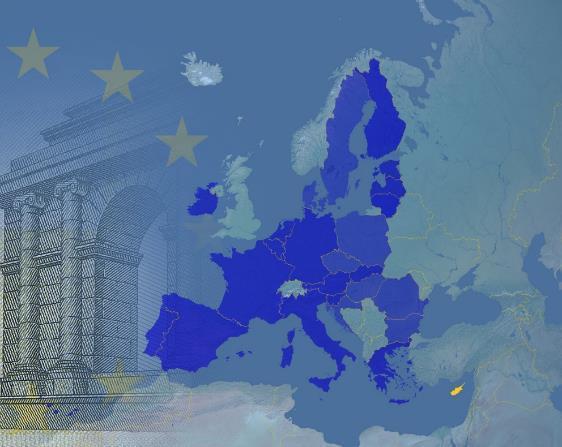
• The European Central Bank kept interest rates unchanged at its March 2026 meeting, reaffirming its commitment to bringing inflation to 2% over the medium term. The main refinancing rate remains at 2.15%, while the deposit facility stands at 2.0% and the marginal lending rate at 2 4% Policymakers emphasized that the ongoing Middle East conflict has significantly increased uncertainty, posing upside risks to inflation and downside risks to economic growth.
• Reflecting these concerns, the ECB revised its forecasts upward for inflation particularly for 2026 due to higher energy prices. Headline inflation is now projected at 2 6% in 2026, before moderating to 2.0% in 2027 and 2.1% in 2028. Core inflation expectations were also raised. At the same time, growth projections were downgraded, especially for 2026, as elevated commodity prices, weaker real incomes, and declining confidence weigh on economic activity.
• Across the Eurozone, inflation dynamics show mixed signals. Annual inflation was confirmed at 1 9% in February 2026, up from January’s 16month low of 1.7%. This increase was driven mainly by services inflation, which accelerated to 3.4%, and a rise in non-energy industrial goods inflation to 0 7% In contrast, inflation for food, alcohol, and tobacco eased slightly to 2 5%, while energy prices continued to decline, albeit at a slower pace (-3.1% compared to -4.0% in January). Core inflation rose to 2.4%, rebounding from a more than four-year low of 2 2% in the previous month.
• Meanwhile, Germany continues to show signs of industrial weakness Industrial output fell by 0.5% month-on-month in January 2026, following a revised 1.0% decline in December and defying expectations of a rebound. On an annual basis, production decreased by 1 2%, reversing a modest increase recorded at the end of 2025.
US Economy Shows Steady Inflation and Moderate Industrial Growth
• In the United States, the annual inflation rate remained steady at 2.4% in February 2026, unchanged from January and in line with expectations, marking the lowest level since May 2025. Core inflation, which excludes food and energy, also held steady at 2 5%, near its lowest point since 2021 On a monthly basis, core CPI rose 0 2%, slightly below January’s 0 3% increase, reflecting continued moderate price pressures
• Industrial production continued to expand moderately. Total US industrial output increased 0 2% month-over-month in February, surpassing market expectations of 0 1% and following a 0 7% rise in January Manufacturing, which accounts for roughly 78% of industrial output, rose 0.2% after a 0.8% gain in January, also exceeding forecasts. On an annual basis, industrial production grew by 1.4% in February 2026.
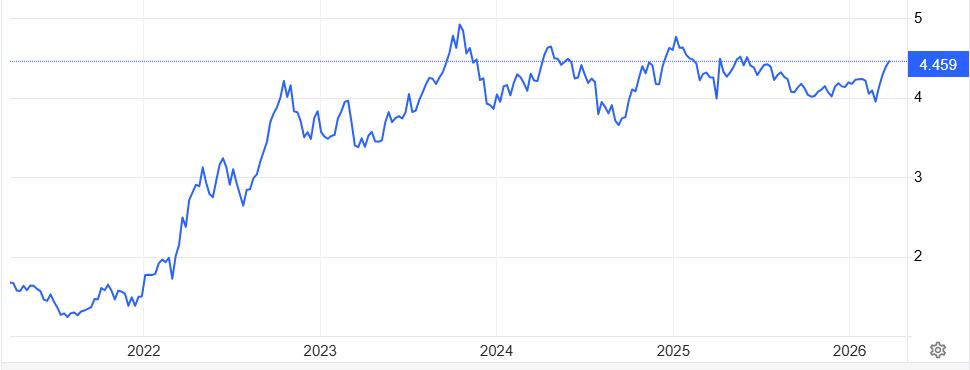
• Financial markets remain cautious amid global uncertainty The yield on the US 10year Treasury note held around 4.46% on 27 March, near eight-month highs, reflecting concerns over the Middle East conflict and its potential impact on oil prices, inflation, and overall economic growth.

Forecast- Hungary

Source: Colliers


Colliers Hungary BEM Center, Bem József u. 1/B., Budapest, 1027 Hungary Colliers | Budapest