Letter from the president
Board of trustees
CHAIR
Cynthia Baker
VICE CHAIR
Marthann Samek
VICE CHAIR
Hank Schmelzer (deceased 2026 )
SECRETARY
Ronald E. Beard
TREASURER
Barclay Corbus
MEMBERS
Michael Boland ’94
Joyce Cacho
Heather Richards Evans
Allison Fundis ’03
Beth Gardiner
Marie Griff ith
Andy Griff iths
Chris Groobey
Cookie Horner
Nicholas Lapham
Howard Lapsley
Casey Mallinckrodt
Chandreyee Mitra ’01
Roland Reynolds
Laura McGiffert Slover
Laura Z. Stone
Steve Sullens
Claudia Turnbull
LIFE TRUSTEES
Samuel M. Hamill, Jr.
John N. Kelly
TRUSTEES EMERITI
David Hackett Fischer
William G. Foulke, Jr.
Amy Yeager Geier
Elizabeth D. Hodder
Anthony Mazlish
Jay McNally ’84
Philip S.J. Moriarty
Cathy Ramsdell ’78
Hamilton Robinson, Jr.
Nadia Rosenthal
William N. Thorndike
EX OFFICIO
Sylvia Torti
Editorial EDITOR Daniel Mahoney
EDITORIAL
’29
Corey Blake Z Studio Design Administration PRESIDENT
CHIEF OPERATING OFFICER
Heather Albert-Knopp ’99
VICE PRESIDENT OF INSTITUTIONAL ADVANCEMENT
Lynn Boulger
PROVOST � DEAN OF FACULTY Kourtney Collum
CHIEF FACILITIES AND SAFETY OFFICER Dan Daigle
CHIEF OF STAFF Kara Daul ’96
DEAN OF ACADEMIC AFFAIRS David Feldman
VICE PRESIDENT OF ACADEMIC INNOVATION AND GLOBAL PARTNERSHIPS Ken Hill
DEAN OF COMMUNICATIONS
Rob Levin
DEAN OF STUDENT LIFE Joshua Luce
DEAN OF ADMINISTRATION
CHIEF FINANCIAL OFFICER
Bear Paul

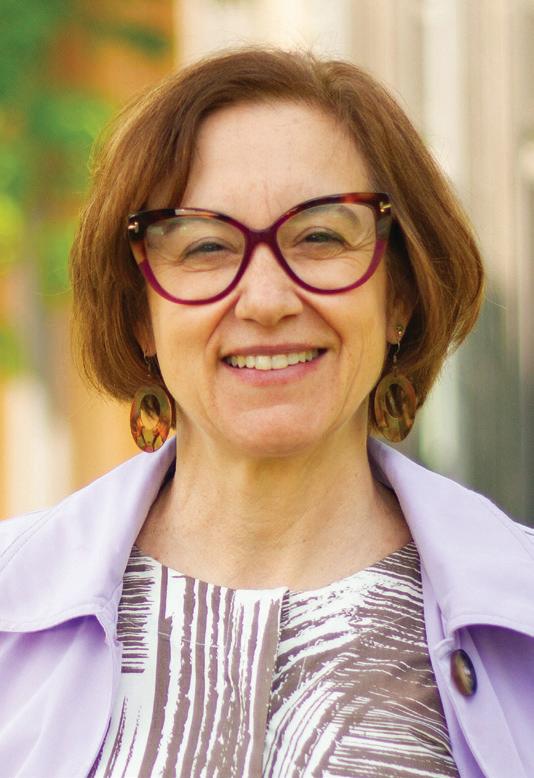
Dialogue is one of those words we use often, but rarely pause to examine. At College of the Atlantic, dialogue is not a formal exercise or a carefully staged exchange. It is a lived practice—sometimes generous, sometimes uncomfortable, always essential. It asks us to listen closely, to speak with care, and to remain open to being changed by what we hear.
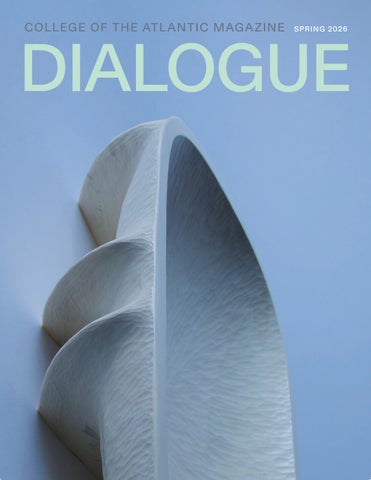
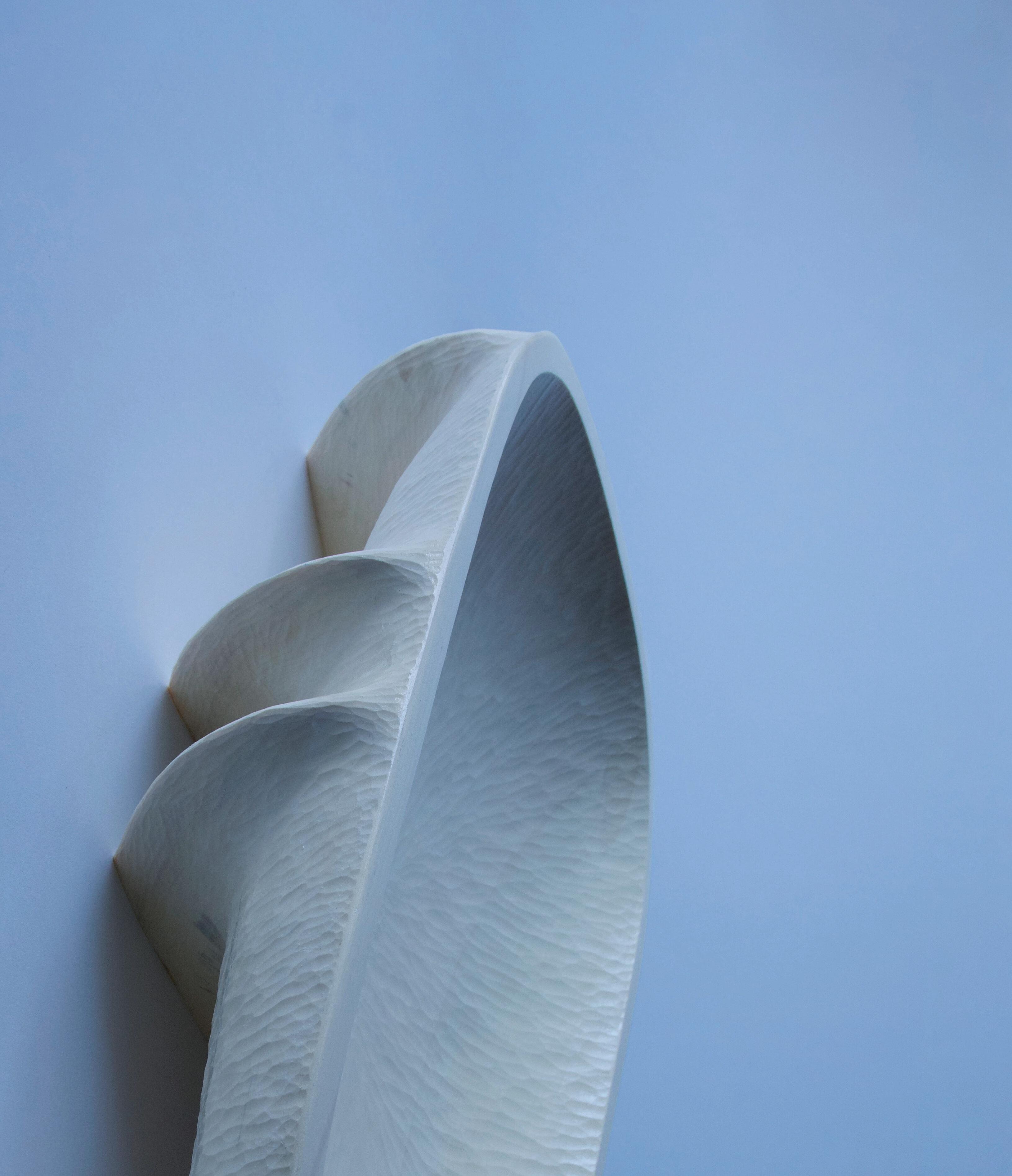
This magazine explores dialogue in its many forms, and it feels fitting that the cover features the hand-carved bowls of Danielle Rose Byrd ’05. Danielle’s work invites attention and touch. Each bowl bears the marks of the hand that shaped it and the tree that once stood. They are vessels, but also conversations, between material and maker, tradition and imagination, use and meaning. They remind us that dialogue can be quiet and physical, as well as spoken.
Many of the stories in this issue reflect dialogue as an active force in the world. We celebrate 25 years of Davis United World College Scholars at COA. These students arrive from across the globe, shaped by different histories and perspectives, and contribute deeply to our learning community. Their presence has enriched classrooms, campus life, and the Mount Desert Island community. In their postcollege lives, they continue the dialogue between COA and place long after graduation.
In a wide-ranging conversation, faculty and staff from across disciplines reflect together on the current moment, including its uncertainty, its urgency, and the responsibilities of higher education within it. In a different register, professor Sarah Hall’s recent work in Washington, DC focuses on how complex institutions communicate across agencies and with communities on the ground, where clarity and listening can have real consequences.
This year has also brought moments of loss and transition for our community. We remember and honor the lives of Hank Schmelzer, Scott Swann, and Steve Wessler, whose commitments to justice, learning, and community continue to shape this place. We celebrate the remarkable legacies of legacies of John Anderson, Suzanne Morse, and Linda Fuller upon their retirements, with deep gratitude for the decades of care and leadership they have given to COA.
At its best, dialogue is not about winning an argument or having the last word. It is about staying present to one another, to difficult questions, and to the work of building a more thoughtful and humane world. That work has always been at the heart of College of the Atlantic, and it continues today, one conversation at a time.
Sylvia Torti President
Letter from the editor
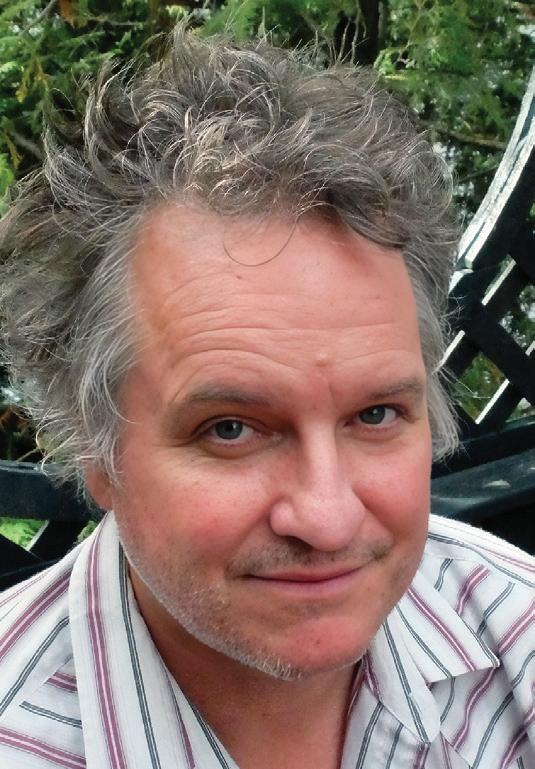
No matter what class it is, at the very top of each syllabus I write: If you don’t know where you are, you don’t know who you are. It’s taken from the novel Invisible Man by Ralph Ellison. A novel that reckons with—among other things—the uprooted invisibility of being a Black man in the US. When I first started using the quotation, I misattributed it to the great poet/ novelist Wendell Berry… It sounds like Berry: simple, profound, insightful. You could swim a lifetime in the waters of that quotation: Where am I? Who am I?
The attribution confusion springs, apparently, from Wallace Stegner’s 1986 essay, “A Sense of Place,” where he erroneously credits the line to Berry. Funny that an older white male writer would credit a line to another older white male writer; funny as in it happens all the time.
Ellison uses the line toward the end of Invisible Man. Mr. Norton— an elderly, wealthy Bostonian liberal who supports Black colleges financially but considers Black students as little more than notches on his “Mr. Norton’s great works of virtue” scorecard—is lost and looking for help, but not from other white folks. The unnamed narrator of the novel sees Mr. Norton walking his way and says, Maybe there’s an embarrassment in it if he admits he’s lost to a strange white man. Perhaps to lose a sense of where you are implies the danger of losing a sense of who you are. That must be it, I thought—to lose your direction is to lose your face. So here he comes to ask his direction from the lost, the invisible.
As the narrator and Mr. Norton speak, the narrator says, Mr. Norton, if you don’t know where you are, you probably don’t know who you are. When asked by Mr. Norton exactly who he thinks he is addressing, the narrator informs him, I’m your destiny, I made you…
After Stegner uses the line in “A Sense of Place,” he says of Berry, He belongs to an honorable tradition, one that even in America includes some great names: Thoreau, Burroughs, Frost, Faulkner, Steinbeck. Lovers of known earth, known weathers, and known neighbors both human and nonhuman. He calls himself a ‘placed’ person.
When Berry owns that line in Stegner’s context, he lays claim to a very specific lineage. When Ellison fashions that line in the context of Invisible Man, we see that same lineage as a continuum of erasure… The same words, differently. You could swim a lifetime in the waters of that quotation.
Dialogue is a practice, a way of doing, a relationship with material and process. It’s a point on a line, any line. It’s: Where are you going? It’s: Where have you been?
Dan Mahoney Editor
the opportunity to construct meaningful lives for themselves,
appreciation of the relationships among all forms of
Connecting globally with human ecology
Neha Panda ’26
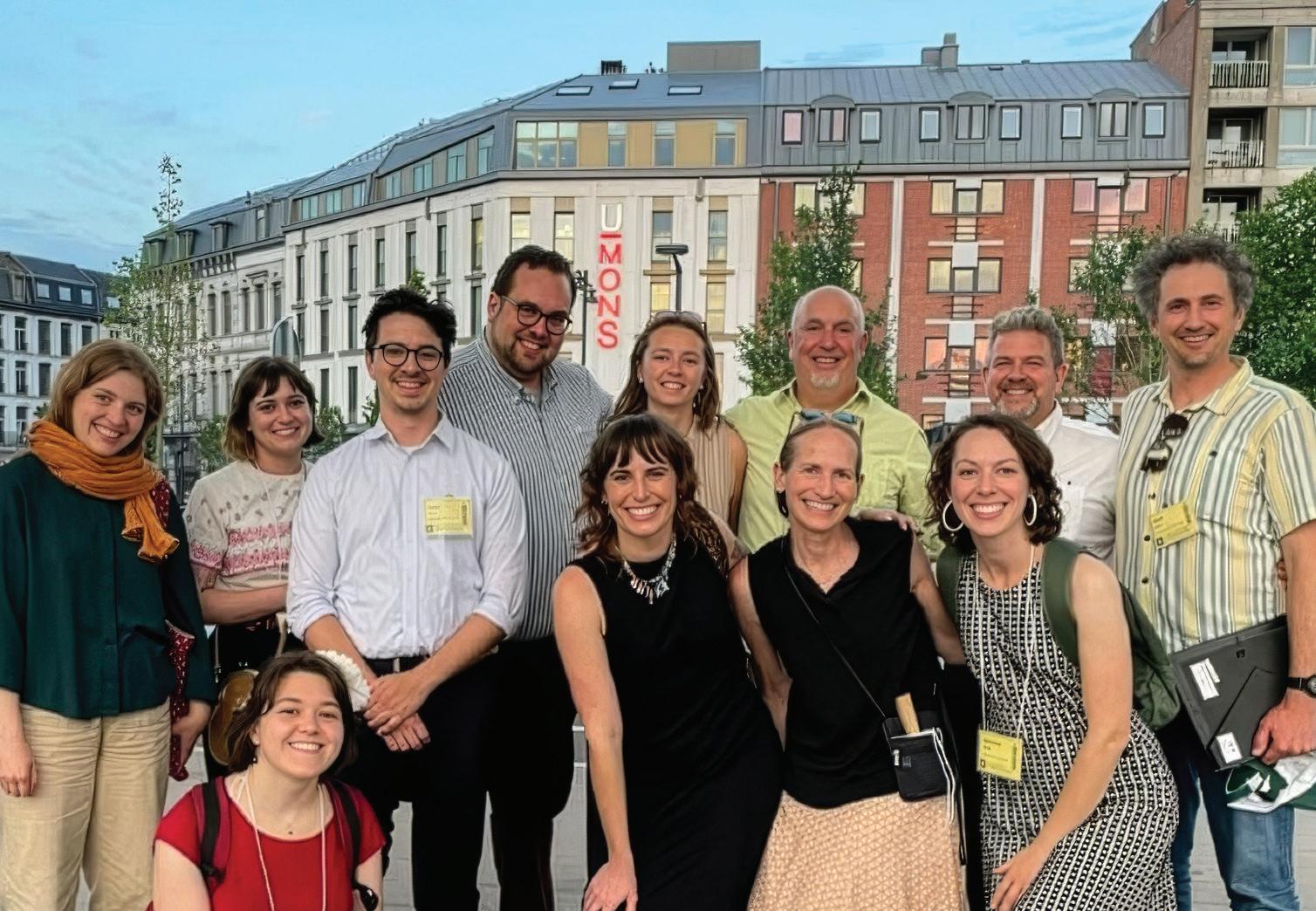
An interdisciplinary group of College of the Atlantic students, staff, and faculty took part in the XXVI International Conference of the Society for Human Ecology (SHE) in Mons, Belgium during summer 2025. They shared projects and independent studies, and presented and attended talks on a diverse set of topics, from urban ecology and rewilding to human-ecological education, all falling under the conference theme of Ecology, Politics, and Justice: Working Towards the Pluriverse.
ATTENDING
THE SHE CONFERENCE as an undergraduate student alongside peers, staff, and faculty was an enriching experience both academically and personally. The conference, hosted by University of Mons and SHE President Mihnea Tănăsescu ’06, included opportunities for participants to explore and engage with the historic city of Mons, a recognised UNESCO World Heritage site.
Engaging with a global community of researchers, scholars, educators, and leaders, I expanded my understanding of the field of human ecology in a novel cultural context and location.
Conference sessions were held on a wide range of topics including political ecology, food systems and agroecology, environmental law and policy, Indigenous knowledge and practice, and much more. “Everyone at the conference seemed concerned about both the human and environmental impacts of every issue,” said Lucy Dabbs ’25, who was part of the student group attending the conference.
“Human ecologists are deep, out-of-the-box thinkers. Rather than working within existing structures, we are reimagining ways of transforming the system.”
As student attendees, we got to present our academic work at the conference in the form of short talks, posters, and Ignite-style presentations. I really enjoyed presenting my work alongside my peers at the conference, as COA students and recent graduates showcased their senior projects and independent studies in front of a larger community. It was wonderful to see leaders and scholars at various stages of their academic paths engage with each other’s research, and it made me feel proud to see the inspiring work of COA students being appreciated and recognised.
One recurring theme was human-ecological education and how to talk about it with prospective students and their families. I interacted with leaders from programs and organizations from around the world over a roundtable discussion, exchanging ideas and talking about how our institutions could be in closer collaboration and partnership. There were also buzzing conversations and opportunities to connect over coffee breaks and lunch periods each day.

The conference led me to appreciate the many ways that human-ecological thinking is being applied and thought about around the world. It was really helpful as a student to feel the synergy as well as the different opinions presented in these discussions. These various perspectives gave new insights to my own education and that of my peers at COA, and we gained many interesting insights about our institutional values and philosophy by connecting with each other in a new setting.
In addition to being a great place for scholarly exchange, academic conferences are an excellent space for students to make connections for internships and learn about postgraduate opportunities. “SHE serves as a gateway for students to become aware of other institutions that are practicing human ecology, and it helps them see the true value of their degree program,” said COA Director of Academic and Administrative Services Lothar Holzke ’16, who helped organize the conference. “There’s a vital network of humanecological programs around the globe that SHE allows us to connect with directly.”
The SHE conference gave me a way to present my work and passion for alternative education and self-directed pedagogy, and engage with academic scholars and systems thinking outside the COA classroom. I would encourage any student who is looking to expand their connections within the interdisciplinary field of human ecology to get involved, ask questions, and apply to present at upcoming SHE conferences! Learn more at societyforhumanecology.org.
Neha Panda ’26, far left, at the XXVI International Conference of the Society for Human Ecology with (back row) Alexandra Löfgren ’25, Lily Besen-McNally ’20, Jake Totten ’19, Director of Career Development Jeffry Neuhouser, Andreigha Kraemer ’26, faculty members Jay Friedlander and Ken Hill, Director of Outdoor Programs Nick Jenei ’09, and (front row, from left) Lucy Dabbs ’25, Kira West MPhil ’18, and faculty members Ursula Hanson and Kourtney Collum
A decade of dialogue: The COA Summer Institute
COLLEGE
OF THE ATLANTIC launched an ambitious experiment in the summer of 2016 to bring scholars, practitioners, artists, and community members together for sustained, place-based inquiry around one urgent theme. The inaugural Summer Institute, focused on the future of American democracy, set the tone for what would become one of the college’s most distinctive public programs.
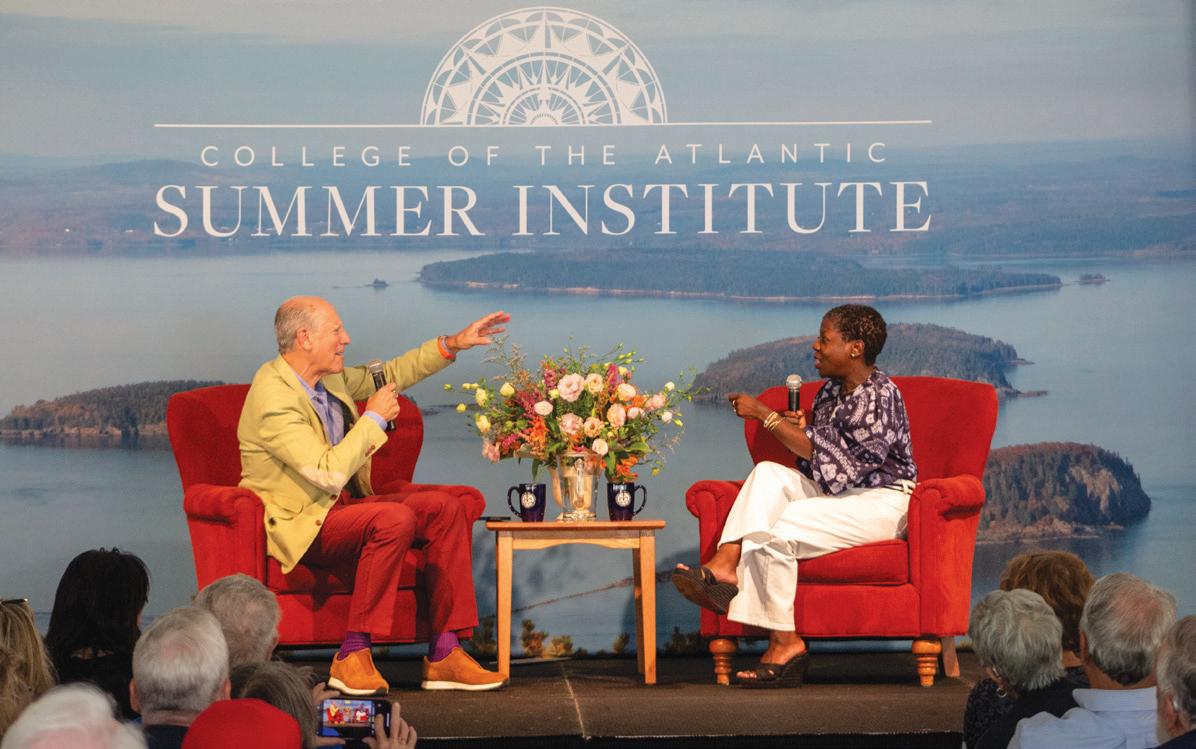
Over the past decade, the COA Summer Institute has welcomed thousands of participants and featured guest speakers, including figures from politics and public service, such as Former Secretary of State Hillary Rodham Clinton, The Honorable Stephen Breyer, and Ambassador Susan Rice to voices from science, the arts, and journalism including former National Institutes of Health Director Frances Collins, Director and Chief Curator of The Studio Museum in Harlem Thelma Golden, and The New Yorker staff writer Jill Lepore. Themes have ranged from the future of food to the plight of the oceans and to celebrations of visionary achievement. Held on campus each midsummer, the institute blends panels, receptions, and public events into an immersive week of learning grounded in human ecology and the landscapes of Mount Desert Island.
This milestone year also marks a new chapter in leadership. After guiding the Summer Institute for the past five years while serving as Dean of Institutional Advancement, Shawn Keeley ’00 has
transitioned into the role of the program’s inaugural executive director. The move formalizes what has long been central to Keeley’s work: shaping the institute’s intellectual arc, cultivating faculty and guest leaders, and stewarding relationships with participants and supporters.
“Our island has long been a confluence of arts and sciences, natural beauty, and civic life—a place to ask the most important questions of our time,” Keeley said. “The Summer Institute builds on that history. What begins on stage often continues over dinner, on the trails in Acadia, or in conversations weeks later. That sustained dialogue is what makes it so powerful.”
Keeley’s appointment reflects the institute’s evolution from a promising idea into a signature offering—one that strengthens COA’s connection to friends, neighbors, and partners while modeling the college’s interdisciplinary, place-based approach. A recent long-term gift has made it possible to establish the director role and ensure the event remains free and open to all.
Meanwhile, the college’s leadership structure has also evolved. Former Dean of Institutional Advancement Lynn Boulger has returned to the role—now retitled Vice President of Institutional Advancement, aligning the position with executive cabinet titles common across higher education. The shift clarifies reporting structures while allowing the Summer Institute to receive focused, dedicated leadership.
Looking ahead, this year’s institute, Toward a More Perfect Union, marks the nation’s 250th anniversary with a forward-looking series of conversations about the promises and perils ahead. Notable guests for 2026 include politician, lawyer, and voting rights activist Stacey Abrams; filmmaker Ken Burns; and musician Rhiannon Giddens.
Ten years in, the Summer Institute continues to do what it has done from the start: gather people in a remarkable place, pose difficult questions, and create space for conversations that ripple outward long after summer fades.
Glenn Lowry and Thelma Golden at the 2025 Summer Institute
Maine Beer Company raises a glass in support of Allied Whale
MAINE
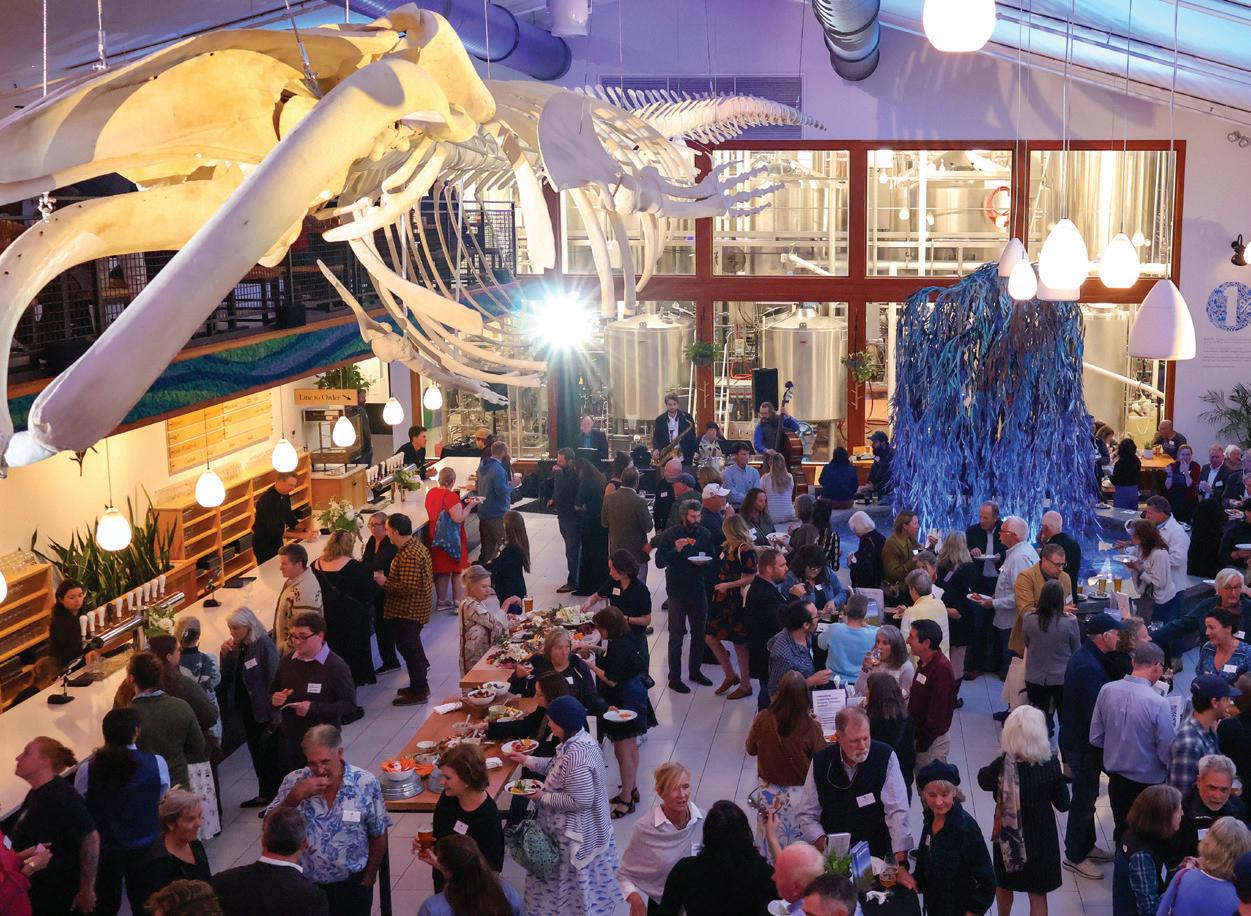
BEER COMPANY (MBC) hosted a gala celebration at its Freeport tasting room on an early-fall evening to mark the installation of a 53-foot fin whale skeleton and to raise support for College of the Atlantic Allied Whale—the NOAA-authorized responder for marine mammal strandings from Rockland, Maine, north to the Canadian border.
The preparation, articulation, and installation of the whale skeleton, “Finny,” was led by COA Research Associate Dan DenDanto ’91, founder of Whales and Nails, a Maine-based company that prepares and articulates whale skeletons for museums and educational settings. The project was completed in close collaboration with Allied Whale, with hands-on involvement from COA students and alumni.
The unveiling doubled as a reminder of what longterm community partnerships can make possible. MBC paired the celebration with an Evening Benefit for Allied Whale, directing proceeds and ongoing support to the field research, education, and response work that COA students, staff, and faculty carry out to better understand—and protect— Maine’s marine mammals. Permanent interpretive signage installed with the display now tells that story to thousands of annual visitors: how learning at COA
connects directly to real-world conservation work, and how a mission-aligned partner can help keep that work thriving.
Speakers included MBC Co-Founder Daniel Kleban, Allied Whale Director Sean Todd, COA President Sylvia Torti, and US Representative Chellie Pingree ’79 (D-ME-1).
Over 16 years of partnership, MBC has contributed more than $173,000 to Allied Whale in support of marine science and conservation. MBC is a certified member of 1% for the Planet, a global network of businesses that commit at least 1% of annual sales to environmental causes—an affiliation that reflects strong alignment between MBC’s sustainability mission and COA’s human ecology framework.
At the event, MBC announced a $50,000 gift to support Allied Whale’s North Atlantic Finback Whale Catalog, a long-term photographic identification database using a photo-ID process pioneered by Allied Whale researchers. Using high-resolution images of dorsal fins, scarring patterns, and pigmentation, researchers track individual whales over time, contributing to population monitoring, migration analysis, and conservation science.
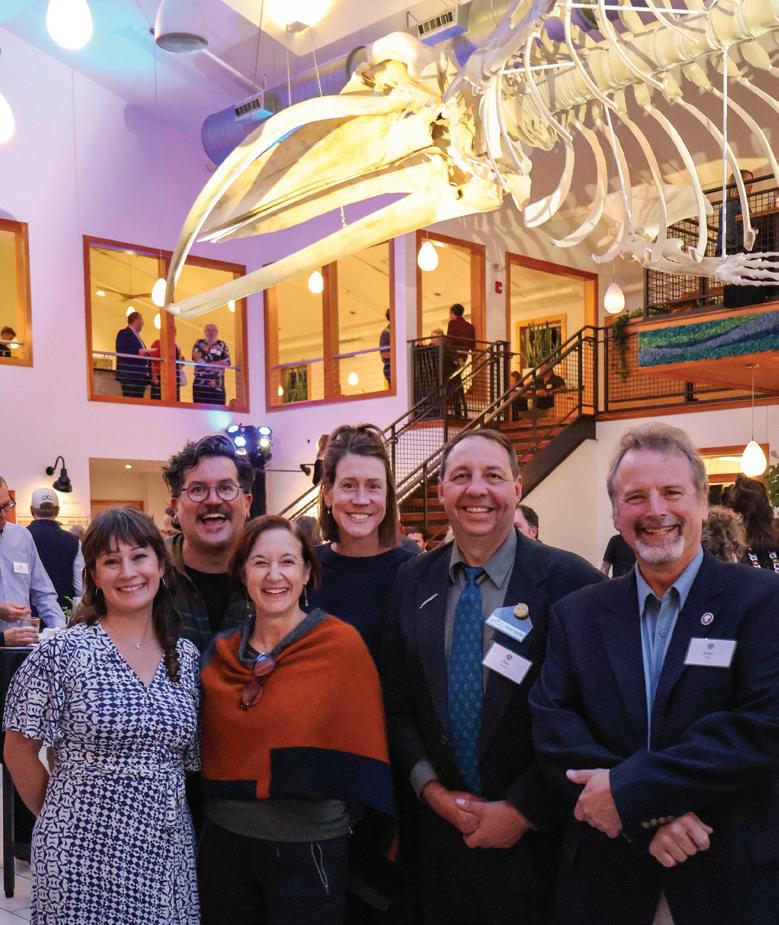
Left: An Evening Benefi t for Allied Whale at Maine Beer Company; right: MBC’s Carrie Seaver and Zach DeWitt, left, with COA President Sylvia Torti, MBC’s Colleen Croteau, Dan DenDanto ’91, and COA Professor Sean Todd
Cynthia Baker elected chair of the Board of Trustees
THECOLLEGE OF THE ATLANTIC Board of Trustees has elected Cynthia Baker as its new chair, marking the start of a term that draws on decades of fundraising and nonprofit leadership experience.
A trustee since 2018, Baker has spent more than 25 years in institutional advancement at Duke University, where she serves as Senior Philanthropic Director. Raised in Bangor, her son, Adam, is a COA class of 2019 graduate, and her family splits time between Southwest Harbor and Washington, DC.
For decades, Baker has seen first hand the transformative power of higher education. The work being done at COA is a vital part of that landscape, she said.
“The college’s human-ecological educational model, which encourages intellectual risk-taking and creative collaboration, is critically important for society, particularly now,” Baker said. “As board members, our work with President Torti and campus leaders to cement a sustainable future for the college is a privilege and challenge we don’t take lightly.”
Baker succeeds Beth Gardiner, who completed four years as chair and was awarded the 2025 Samuel M. Hamill, Jr. Distinguished Service Award at the board’s annual meeting.
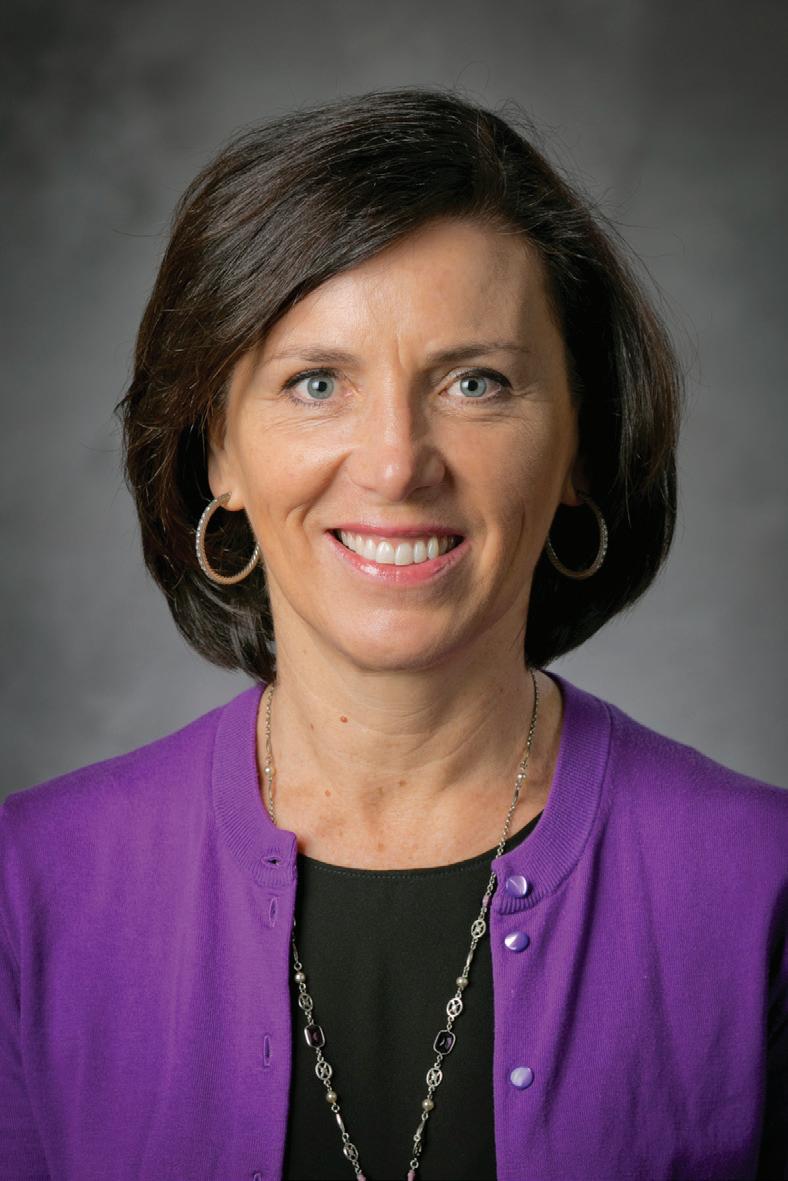
During her service as a trustee over the past eight years, Baker has been impressed with the depth and breadth of the COA community, she said.
“COA is a joyful place–a melding of cultures and ideas. The students’ fierce curiosity is inspiring and infectious, as is the way faculty and staff deftly guide their academic journeys,” Baker said. “Our reach beyond campus is so important as well, with regular speakers, visiting artists, and events like the Summer Institute serving to enrich the intellectual and cultural life of MDI.”
In addition to her work at Duke, Baker served as vice chair of the board of the nonprofit Avalon Theater in Washington, DC. Her previous professional roles include strategic development positions with national nonprofit and public affairs organizations, as well as service on Capitol Hill.
She earned a BA in history and an MA in women’s studies from Duke University. Baker and her husband, Jon Zeitler, are the parents of three sons: Adam, Jeremy, and Thomas.
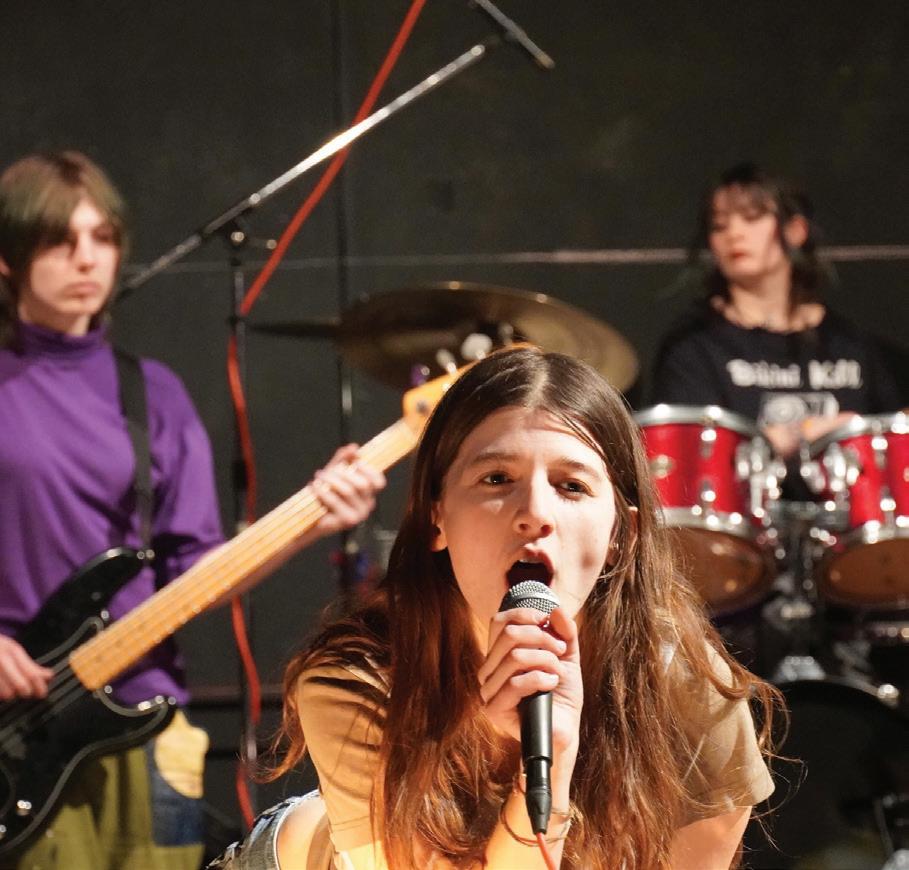
LIPSTICK TRACES
: A Secret History of the Twentieth Century is a play by the Rude Mechanicals performance collective, adapted from Greil Marcus’s 1989 cult classic book. A tangled counter-history, the work traces threads from 16thcentury heretics through Dada, the mid-century Lettrists and Situationists, the May ’68 student uprising in Paris, and the birth of punk rock in the UK. Part history lesson, part punk séance, it proposes we locate history not in a linear series of triumphs, but in the traces and detritus left by people hurling themselves against the status quo of their time and place.
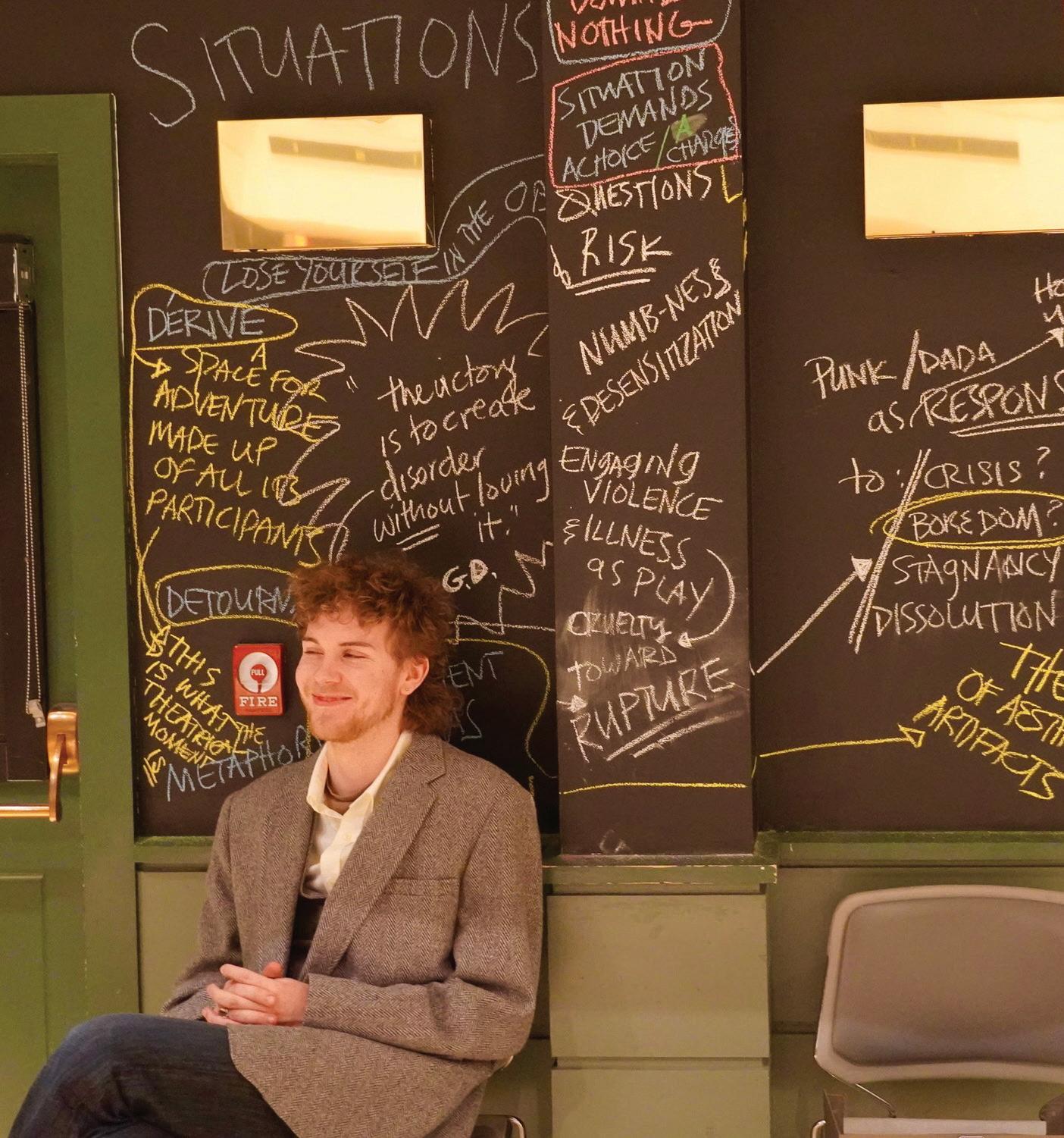
Legendary figures like the Sex Pistols’ Johnny Rotten, philosopher Guy Debord, and Dada poet Hugo Ball are snipped from time and fixed into a new frame. The resulting collage is a cacophony of music and manifestos, an assault on sense and the senses. College of the Atlantic students studied and staged the play this winter as part of a the Music and Theatre Production “monster” course, taught by Joanne Woodward & Paul Newman Chair in the Performing Arts Jodi Baker and Darron Asher Collins Chair in Music & Sound Studies Jonathan Henderson.
Heather Albert-Knopp ’99 has been appointed Chief Operating O icer, a newly created role overseeing administrative operations across the college. With this transition, the former position of Dean of Admission has been eliminated; admission is now led by a Director of Admission, a noncabinet role reporting to the COO.
Shawn Keeley ’00 has transitioned from Dean of Institutional Advancement to become the inaugural Executive Director of the COA Summer Institute, reflecting the college’s growing investment in the program.
Lynn Boulger has rejoined the college as Vice President for Institutional Advancement, succeeding Keeley. The title reflects President Sylvia Torti’s plan to align non-academic cabinet roles under vice president designations.
Ken Hill, who served for over two decades as Provost, has taken on a new role as Vice President of Academic Innovation and Global Partnerships.
Professor Kourtney Collum has been appointed Provost and Dean of Faculty
Kara Daul ’99 has been named Chief of Sta to the president, a newly created role that replaces the former Executive Assistant position.
Dan Daigle has been named Chief Facilities and Safety O icer, a newly created role that replaces the former Director of Campus Planning, Buildings, and Public Safety.
Professor Dave Feldman has been named Dean of Academic A airs
NEW TRUSTEES
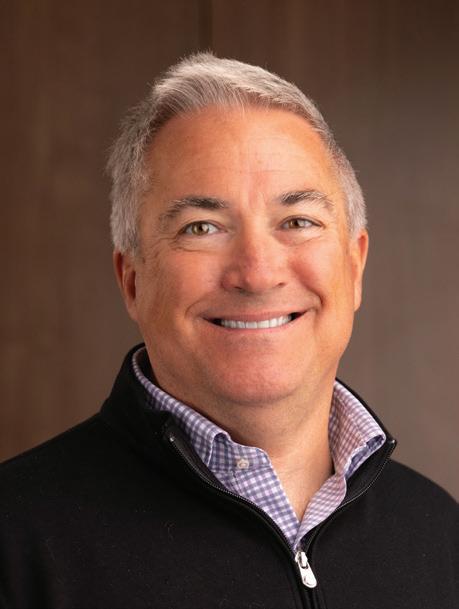
Chris Groobey is an angel investor, former lawyer, and sailor who fell in love with the coast of Maine 35 years ago as a student at Hurricane Island Outward Bound School. A graduate of Hampshire College, he is familiar with the challenges and opportunities that a small, focused, and innovative college faces while providing a unique education that launches students into meaningful careers.
During a law career spanning 25 years, Groobey, a native of Washington, DC, specialized in renewable energy and clean technology. He worked on some of the earliest wind and solar projects in the US, eventually becoming a partner in a leading Silicon Valley law firm, where he represented clients in all aspects of the energy transition and climate tech. He continues to support entrepreneurs and their companies as an investor, and has served on the boards of a publicly-traded clean energy company and multiple private companies.
An avid sailor, Groobey has raced competitively for decades, including on Mount Desert Island’s Great Harbor as a member of the Northeast Harbor Fleet. He and his wife, Carolyn, have cruised more than 30,000 miles in their own boats, including transiting the Panama Canal and crossing the Atlantic Ocean. The pair now split their time between Southwest Harbor and Miami.
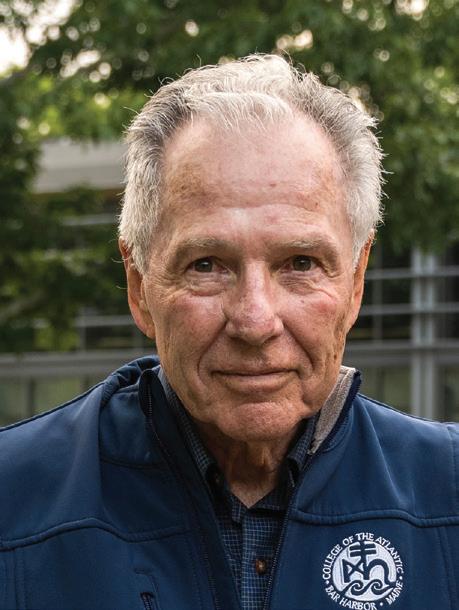
Andrew Gri iths served as College of the Atlantic’s Dean of Administration and Chief Financial Officer from 2004 to 2019. During this time he also served as interim president for one year while the position was vacant.
Griffiths started his career as an electrical engineer after graduating from Brown University in 1962. He worked until 1972 at the Massachusetts Institute of Technology Lincoln Lab, when he left to help start a nonprofit in the Massachusetts criminal justice system, primarily developing jobs for ex-prison inmates. After holding financial positions in the Commonwealth of Massachusetts government during the administration of Michael Dukakis then at the US Environmental Protection Agency, he settled down at WGBH in Boston. He served at this leader in public broadcasting as its treasurer and vice president for finance and administration for 25 years before joining COA.
Griff iths lives in retirement with his wife Susan at Birch Bay Village in Bar Harbor. Since retirement he has been active on several boards, including six local nonprofi ts and two mission driven forprofi t corporations.
Melissa Ferrari Art and inquiry
Jeremy Powers ’24
IN A STUDIO filled with pencils, light table, and the faint whir of a projector, Melissa Ferrari speaks about art as inquiry, not spectacle. As the new professor of interdisciplinary arts at College of the Atlantic, Ferrari hopes to highlight the importance of open-minded learning to create art that transcends conceptual and physical boundaries.
“I have often appreciated classroom spaces that feel like a living arts studio where the teachers and students are all sharing ideas, rather than a flattened didactic space where the teacher is simply telling,” she says. “I hope to foster a classroom where it feels like we are all learning together, and where education can be a catalyst to forming a creative community.”
As an undergraduate at Tufts University, she studied animation and philosophy, an early pairing that continues to shape her thinking. After working at an animation studio in New York, she earned a Master of Fine Arts in Experimental Animation from the California Institute of the Arts and went on to build a freelance career in Los Angeles, creating handdrawn animated sequences for documentary films. Along the way, she began performing with antique 19th-century magic lanterns—early slide projectors that once dazzled audiences with moving light— traveling to festivals and museums to revive the medium.
evidence, and veracity.” Ferrari sees animation as uniquely capable of navigating difficult terrain: “It is an emotionally resonant, powerful tool for engaging social issues and reckoning with urgent, complex, and vulnerable topics.”
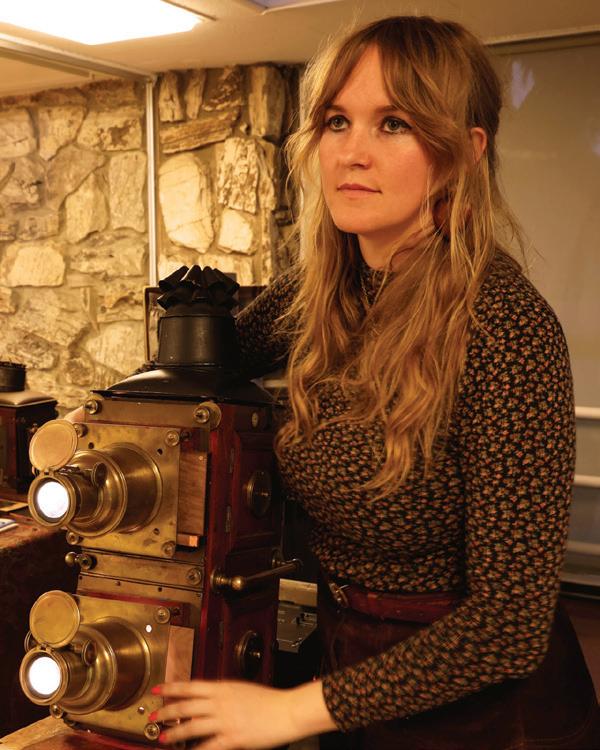
Ferrari says she was drawn to COA by its commitment to interdisciplinary study. “Hearing about the research being done by other members of the COA community is thrilling,” she said. She envisions collaborations that might include animated scientific visualizations, public service announcements on environmental justice, or films for the Dorr Museum. In her classes, students versed in physics and zoology analyze how creatures move with anatomical precision, while others steeped in philosophy and anthropology connect animation to theories of cosmology and power. “It’s really a beautiful thing to experience and witness as a teacher,” she said. “It creates a fantastically interdisciplinary conversation in the classroom.”
Looking ahead, Ferrari plans to teach courses in animated and live-action documentary and to develop practicums that connect students with research and activism on campus and in the surrounding community. She is also imagining an expanded cinema course that would incorporate projection mapping, using the island’s granite cliff s and historic architecture as canvases for light.
“My background in experimental animation motivates me to teach animation as a form of art, and a vessel for conceptual ideas, rather than just a traditional mode of entertainment and storytelling.” Her work often engages science, mythology and history, exploring “epistemological themes of belief,
“Just grateful to be a part of COA,” she said. “Especially in these dystopian times, I’m so thankful to be a part of a community that allows honest conversations and thoughtful engagement with how to support our global community.”
Victoria Edwards Trust and collaboration
Jeremy Powers ’24
AN ENGINEER BY TRADE and an educator at heart, Victoria Edwards has arrived on the rocky coast of Maine via a winding road full of twists and turns. Edwards, College of the Atlantic’s new interdisciplinary computing professor, comes to Bar Harbor with a resume that resists easy categorization and a conviction that the most interesting answers live somewhere in the spaces between inquiry and uncertainty.
“I’m really excited about the interdisciplinary nature and the general collegiality of the community,” she says, smiling. “It’s really fun to be part of a community that is different from my traditional background.”
She describes her approach to the classroom as a shared intellectual project that centers around trust. “To have a successful classroom, you need to build a two-way street. You need to trust the students and the students need to trust you as a professor,” she says. “Higher education offers a real opportunity to help nurture and foster the growth and development of young people from childhood into adulthood through challenging, interdisciplinary topics like computer science.”
school’s computer science offerings, which she can do thanks to a recent grant from the Maine Space Grant Consortium, a program centered on funding STEM courses. “The focus will be computer science instruction, but we’re also going to use visual media and music to explore a variety of different computer science applications, like live programming, where technical coding is performed live to produce unique sounds, visuals, and music.”
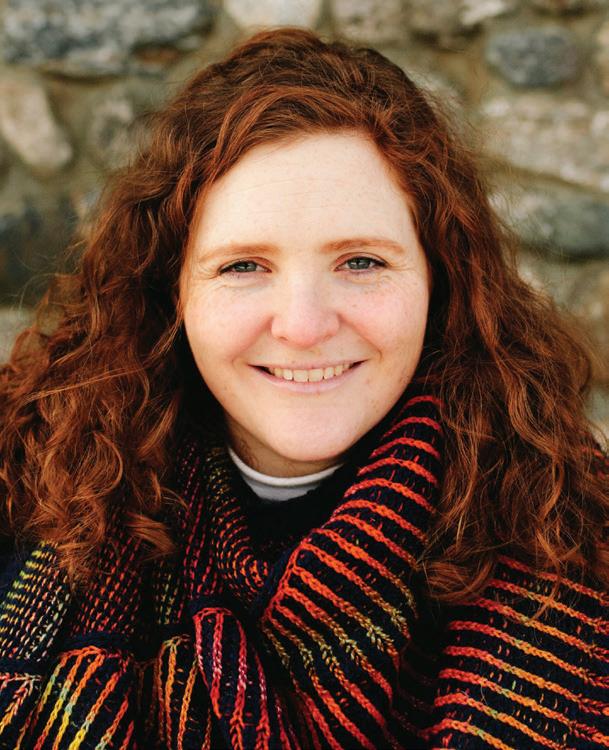
Edwards began her career by studying computer science and mathematics at Colby College. The trajectory soon widened—a master’s degree in robotics at the University of Michigan led to several years in the US Naval Research Laboratory, where she examined how to verify swarm systems—networks of autonomous agents whose collective behavior can be difficult to predict. She later completed a PhD in mechanical engineering at the University of Pennsylvania.
Edwards’ first class at COA focused on the fundamentals of computational thinking, with students learning to use computational skills and techniques to build tools for other disciplines. Among the goals of the course, she says, is to create a “computational community,” one that treats learning as a collaborative endeavor rather than a solitary pursuit.
Looking ahead, Edwards is excited to revamp the
Her habit of synthesizing different ideas and ways of thinking made COA—an institution organized around interdisciplinary study rather than traditional departments—an unexpected but fi tting destination. “I’m an engineer by training, and COA is not a cutand-dry engineering school,” she laughs. But during her interviews at the college, she found herself invigorated by questions from faculty and students outside her familiar technical sphere. “I remember getting questions about the legalities of robotic systems, about sensing rates, and it was really refreshing to be in a place that really encourages the community to address and work through different perspectives and biases to build better, stronger tools.”
Photo by Leslie Swan
Anna Ialeggio
Experimentation and spaciousness
Jeremy Powers ’24
ANNA IALEGGIO TALKS about teaching the way some explorers talk about entering the unknown. There’s only a rough map, and it demands trust in what will emerge along the way. Ialeggio is College of the Atlantic’s newest faculty member in ceramics and art, and is excited to join a community that is as focused on the space between the lines as they are.
“What excites me most is the fact that teaching here is approached as something that is inherently experimental—ultimately, where we’re going together is a surprise,” says Ialeggio. “I love being an educator because I love learning. I probably learn as much or more than my students do in every class.”
As such, they resonate deeply with COA’s experiential and collaborative approach to learning. Ialeggio is particularly energized by how site-specific teaching feels at the college. “I was attracted to how much interplay there is with fieldwork, field stations, the forests and islands and farms—everything feels connected to where we are.” They’re equally enthusiastic about the culture of collaboration they have encountered since arriving. “I’ve already seen so many interesting transdisciplinary experiments between my colleagues, like a geologist and an art historian teaching together. Amazing.”
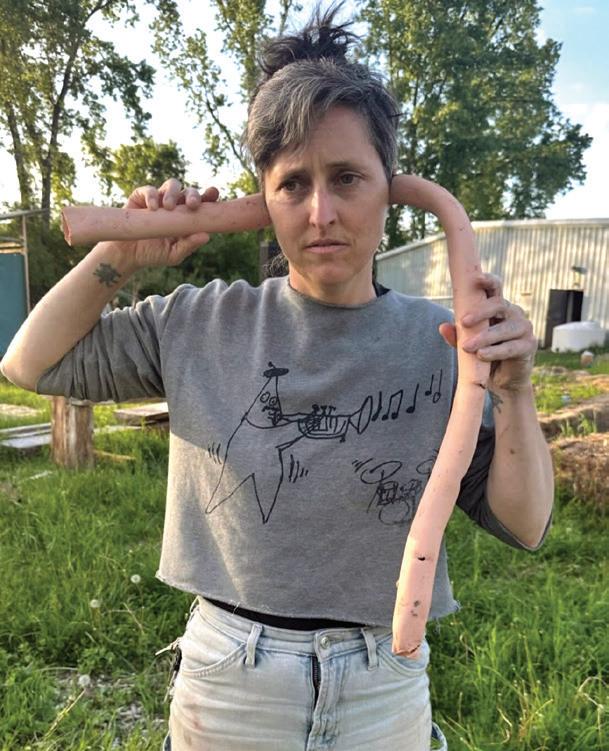
trash. When Ialeggio wasn’t focusing on collective art, they were working seasonally in conservation, spending time as a site steward, ridgerunner, trail crew member, and backcountry guide. They started thinking about what art and the wilderness have to do with each other, and say that these experiences turned them into “someone who makes art and teaches from a place of curiosity about how people relate to where they are, and how we inhabit and build the worlds in which we exist.”
This synthesis of material practice, ecology, and experimentation is reflected in their practice as an educator. This winter Ialeggio taught an advanced ceramics studio and a hybrid studio/seminar titled Sci-Fi & Sculpture: WorldBuilding as Art Practice. In the spring, they’re teaching an ecosculpture course where students work with materials that “grow or decay or erode in some way.” Looking ahead, Ialeggio is eager to develop courses on natural pigments, kiln building, advanced 3D studio practice, and a ceramics class that will be focused entirely on transforming local granite into a full line of ceramic glazes. “I do have a bit of a thing for hyper-local art materials,” Ialeggio says, laughing.
An appreciation for the space between disciplines lies at the root of Ialeggio’s identity as an artist. They say that their practice “began in artist and activist collectives, usually anonymous: big rhizomatic networks of people that would produce a fruiting body every once in a while, something big and spectacular.” One such collective was called the Miss Rockaway Armada, with whom they traveled down the Mississippi on a floating theater made of
In a moment when higher education feels uncertain in many ways, Ialeggio is clear about why they’re grateful to be at COA. “This is a particularly complicated moment in time,” they say, “but a place like this—small, transdisciplinary, experimental—can be incredibly nimble.” After a moment, Ialeggio adds, “At other institutions, some of my weirder ideas met a bit of resistance: You want to bring your sculpture class out on a bunch of sailboats? I don’t know… Then I interviewed here and everyone was like, Well, duh—we already do that. I’m really, really excited about this place.”
A canvas of dynamic settings— Know Hope: The Abstract and the Very Real
Award-winning
documentary by Omer Shamir ’16 hits the road
Dan Mahoney
FOR THE AVERAGE CITY
DWELLER , navigating crowded streets and public transportation systems is often a blur of utility. They move at times through the urban environment like ghosts, eyes fi xed on the pavement or buried in phones. But for street artist Addam Yekutieli (known as Know Hope), the city is a canvas of dynamic settings, where small, quiet disruptions demand we stop, breathe, and look. The award winning documentary, Know Hope: The Abstract and the Very Real —directed by Omer Shamir ’16—explores themes of borders, displacement, trauma, collective memory, and the legacies of colonialism.
This past fall I met with Shamir, Yekutieli, and—in a happy coincidence—COA alum Rosa
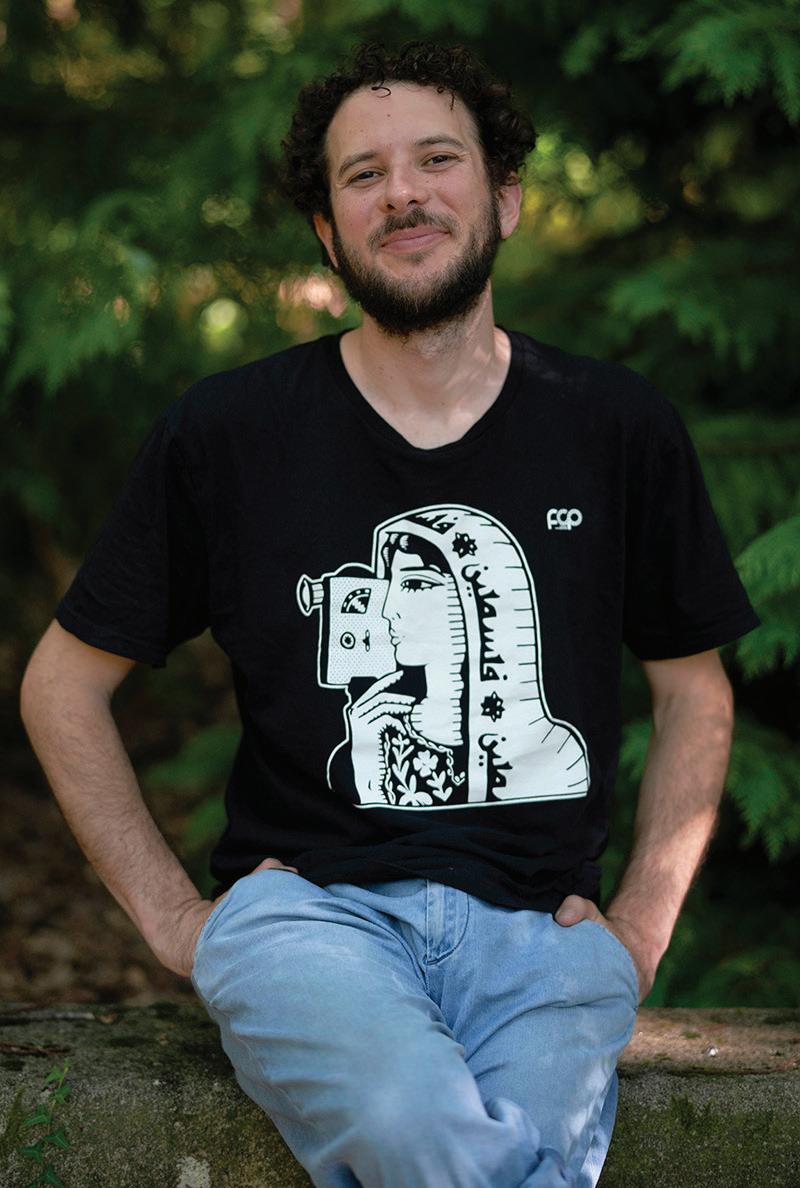
de Jong ’17 at Risbo, a cool neighborhood cafe in Brooklyn. The four of us shared food, talked about the upcoming premier of the documentary, and traded stories from the past decade.
From COA to Butte-Chaumont
My earliest encounter with Shamir was in a fiction writing class I taught at COA called Fail Better. The first thing that struck me was his sense of humor, the second was his moxie. It wasn’t that Shamir’s writing wasn’t strong—it was—but that he had more confidence than any 20 year old should have.
The moxie showed up again when Shamir and I were catching up before the others arrived at Risbo. After graduating from COA, Shamir returned to Israel and continued, among other things, working for Palestinian rights and social justice. While there, he met and fell in love with a graduate student who was planning to get her graduate degree in Paris. Shamir went with her. When the relationship fell apart, Shamir decided he could no longer in good conscience return to Israel.
“I’m very much in the Palestinian community in Paris and a lot of what I hear is, It’s great, you moved here. You decolonized the
land. You’re doing the right thing. But when I talk to my friends in Palestine—like my old friend Sami who is in the film—they tell me that I’m abandoning them… That I’m leaving Palestinians on the land vulnerable to settler attacks.” Yekutieli, who has just arrived at the cafe, chimes in, “Yeah, leaving the land is like a green light for settlers to do whatever they want.”
Know Hope
A scene from the film shot from across a busy intersection depicts a temporary construction wall where someone has written in red spray paint the word “revenge” in Hebrew. Yekutieli enters from frame right and, with red spray paint, creates a thought where once there was only a stone. After Yekutieli’s exit, the wall reads, “Revenge will not bring back the dead.”
Know Hope’s work is unmistakable. Using a mix of weathered paper, ink, and poetic text, his signature long-limbed characters and iconography of hearts, birds, and fences have become staples of the urban landscape in Tel Aviv and other cities around the world. One thing that Yekutieli has modified over the years is the type of work that he puts on walls. “I used to do these longer written pieces but I became dissatisfied with
Omer Shamir ’16
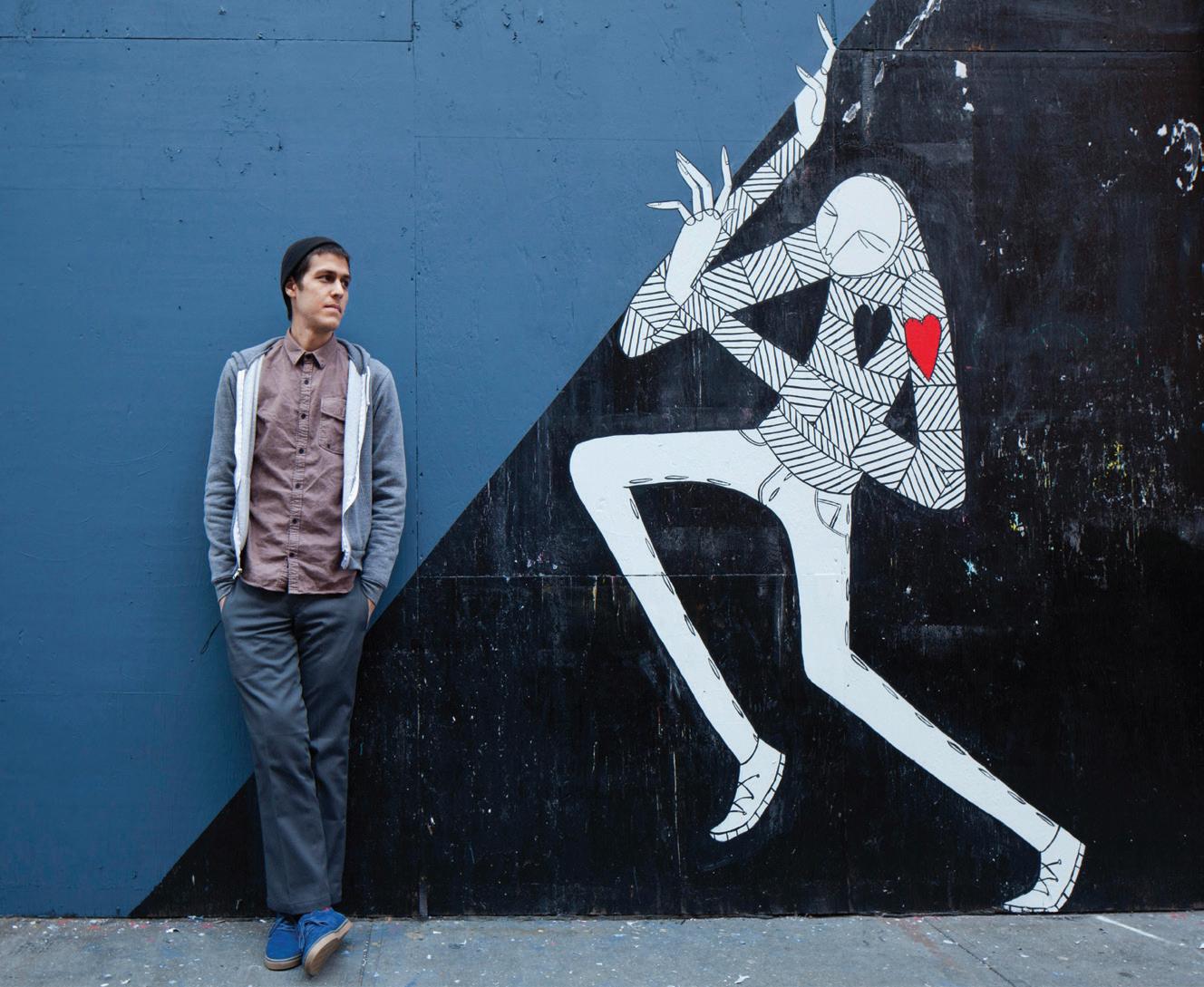
that work… I felt that it dictated the relationship between myself and the viewer. It put in place this hierarchy of, I’m the spectator and now I’m looking at an artwork painted by an artist. There’s something very limiting in that type of interaction.”
Yekutieli has always been interested in the physical matter of the city rather than just artwork on the street. “Like seeing a flickering streetlight or a bench and then developing all these stories from the physical world. Hypothetical situations. That’s when I went into writing more open-ended texts on the streets. It allowed the viewer to inhabit that same type of process… It stripped me away from being the author of the situation and more of just adding an element to a dynamic setting.”
A striking feature of Know Hope is that we hear the voice of the artist. Yekutieli’s voiceovers serve as an entry point into his work and the project. The film and its subject combine to form a master class of what
art and resistance look like at a time when the Israeli military is committing a genocide in Gaza.
On the day before the day after, as the tears and blood absorb into the ground, making it damp and muddy, so much so that our footsteps show, making small foot-sized holes in it. Impressions like testaments, like testimonies. It’s unclear whose footsteps belong to whom as much as it’s unclear which ones are going where. One could look at these moments now frozen in time and ask, Where were they all going? Eventually, maybe after our time, big rain will come down, pounding the ground with the weight of grief and unanswered pain. Washing away all the footsteps. On the day after the day after, what story will this tell?
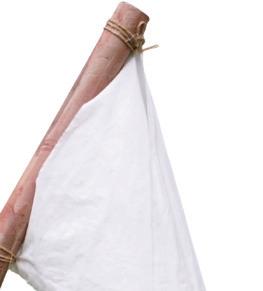
As we hear this voiceover, we see Yekutieli building a sculpture: many arms sprouting from the ground to hold up a simple white fl ag.
The abstract
and the very real
Shamir’s cinematography is intentionally tactile. He avoids the flashy, fast-paced editing often seen in “street art” films. He opts for long takes, natural lighting, and including his voice as a part of the action. For me, this is key, this listening in on Shamir and Yekutieli interacting; at one point Shamir even tells Yekutieli, Take off your hat. Yekutieli sort of rolls his eyes and does what the director says. There is real warmth between these two which allows for the viewer to see a side of creative relationships usually hidden.



















The film’s premier in New York was held at the Judson Church. There were a lot of people and a lot of love in the house. It was my first time being in the Judson Church and I was struck by the warmth and spirit of the folks working there. When I looked around I saw lovely old stained glass windows from the 19th century and a new set of painted inserts featuring iconic figures in African American literature, queer liberation, and intersectional activism. Featured in the windows were: St. Pauli Murray, St. James Baldwin, St. bell hooks, St. Marsha P. Johnson, St. Bayard Rustin, and St. Octavia Butler. I could think of no better place and no better company to premier Know Hope: The Abstract and the Very Real










Addam in NYC, Stamped, Mural March 2012

Mihnea Tănăsescu ’06
Context, history, and locality
Anara Katz ’24

INA WORLD filled with polarized politics and one-sided arguments, our opinions often inform our observations. Mihnea Tănăsescu ’06, professor and research fellow at University of Mons, Belgium, embraces uncertainty and ignorance as crucial to better understanding the interactions between humans and their multiple environments. A passionate philosopher, detail-oriented thinker, and human-ecologically rooted academic, Tănăsescu strives for specific, thoughtful, and empiricallybased meaning in a complicated world.
Ideas, prone as they are to becoming static, are never going to offer a faithful picture of the world, partly because what they are striving to immortalize is always one step ahead.
Tănăsescu, while stating that labels do not matter much to him, exemplifies human-ecological work at its finest, embodying an expansive perspective that is open to considering all disciplines and possible connections. His book, Ecocene Politics (Open Book Publishers, 2022), considers approaching socio-political studies using the lens of an ecologist. The book’s foundation was laid over a decade ago, when Tănăsescu encountered Chance and Change (University of California Press, 1998), a guide to ecological research, written by former COA professor Bill Drury and edited by COA W.H. Drury Professor of Ecology/Natural History John Anderson.

“Drury’s book really spoke to me in its attention to the specific. It doesn’t think of an idealized nature. It’s pragmatic and empirically grounded. Natural history has been a part of philosophy for me in many different ways,” Tănăsescu said.
Drury outlines three principles that ecologists must account for: chance, change, and locality, as every unique ecological system is subjected to constant, often unpredictable, change. However, sociology, economics, and political thought often miss the perpetual chance and change that the world will inevitably throw its way.
Writing Ecocene Politics was a “deeply personal process of trying to capture what I had come to learn through 10 years of work,” Tănăsescu said. This was a very different experience from writing another book he published in the exact same year, Understanding the Rights of Nature: A Critical Introduction (Transcript Publishing, 2022), which he wrote because “it had to be made.” In this book, Tănăsescu reminds readers that rights are not all good or bad, but rather must be theorized on a case-by-case basis, emphasizing the importance of thinking critically about context, history, and locality.
Tănăsescu has worked hard to ensure his books remain open access and are freely available online.
Tănăsescu first fell in love with philosophy in high school, at United World College of the Adriatic in Italy. When he got to College of the Atlantic, he happily encountered COA’s rigorous philosophy classes, with professors like John Visvader and Rich Borden, reading primary texts from prominent philosophers and engaging in seminar discussions.
Tănăsescu went on to receive a master’s degree in philosophy at the New School for Social Research in New York, and a PhD in political science at the Vrije Universiteit in Brussels, Belgium.



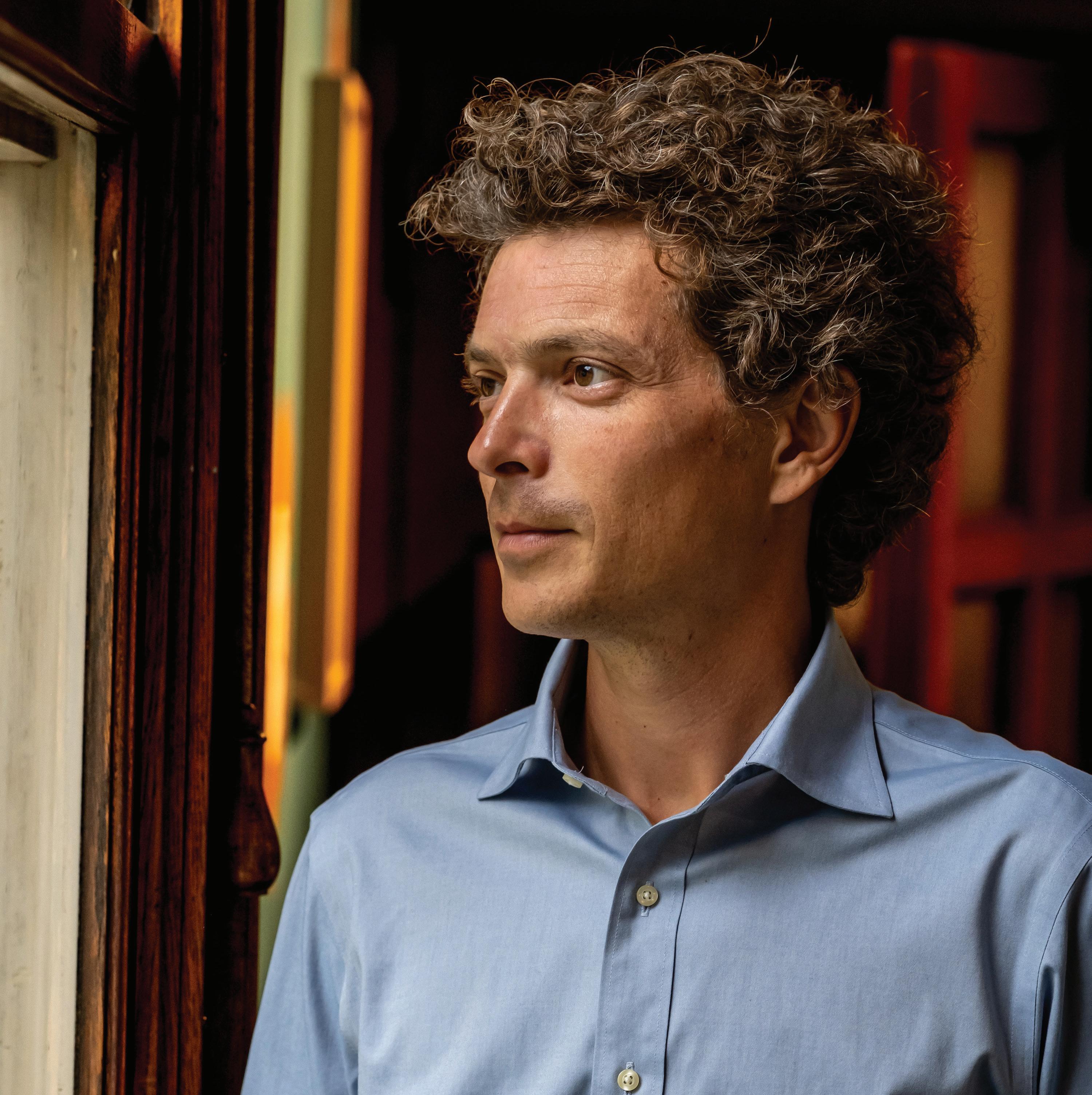
“The quality of the COA education really became clear to me when I went to grad school, because they weren’t that different from each other. The primary text authors I used to read at COA became my professors in New York. I never felt dumber than in that place, but in a very good way. And yet, in terms of what we actually did in class, it was more or less like COA,” Tănăsescu recounted.
Currently, Tănăsescu is a professor in the Department of Sociology and Anthropology at the University of Mons, Belgium, where he teaches a master’s course in human ecology. He was a visiting fellow at the New School for Social Research, NY, and the University of Auckland, Aotearoa, New Zealand. He has spent his career studying the
political, emotional, and social relationship between humans and nature. His most recent research has brought him to thousand-year-old olive groves in Apulia, Italy.
“About a decade ago, thousands and thousands of trees started drying up and dying after, sometimes, millenia of existence. The oldest olive trees in Apulia are 3,000 years old, and most of them are now dry. What do people do when something like that disappears? How do you think, feel, and act through that? It’s an interesting case to look at the political decisions,” Tănăsescu said. “And, to look at it from the non-human perspective, the olive trees, the insects, the soil, and the bacteria as serious agents in a much wider play of culture and political forces.”
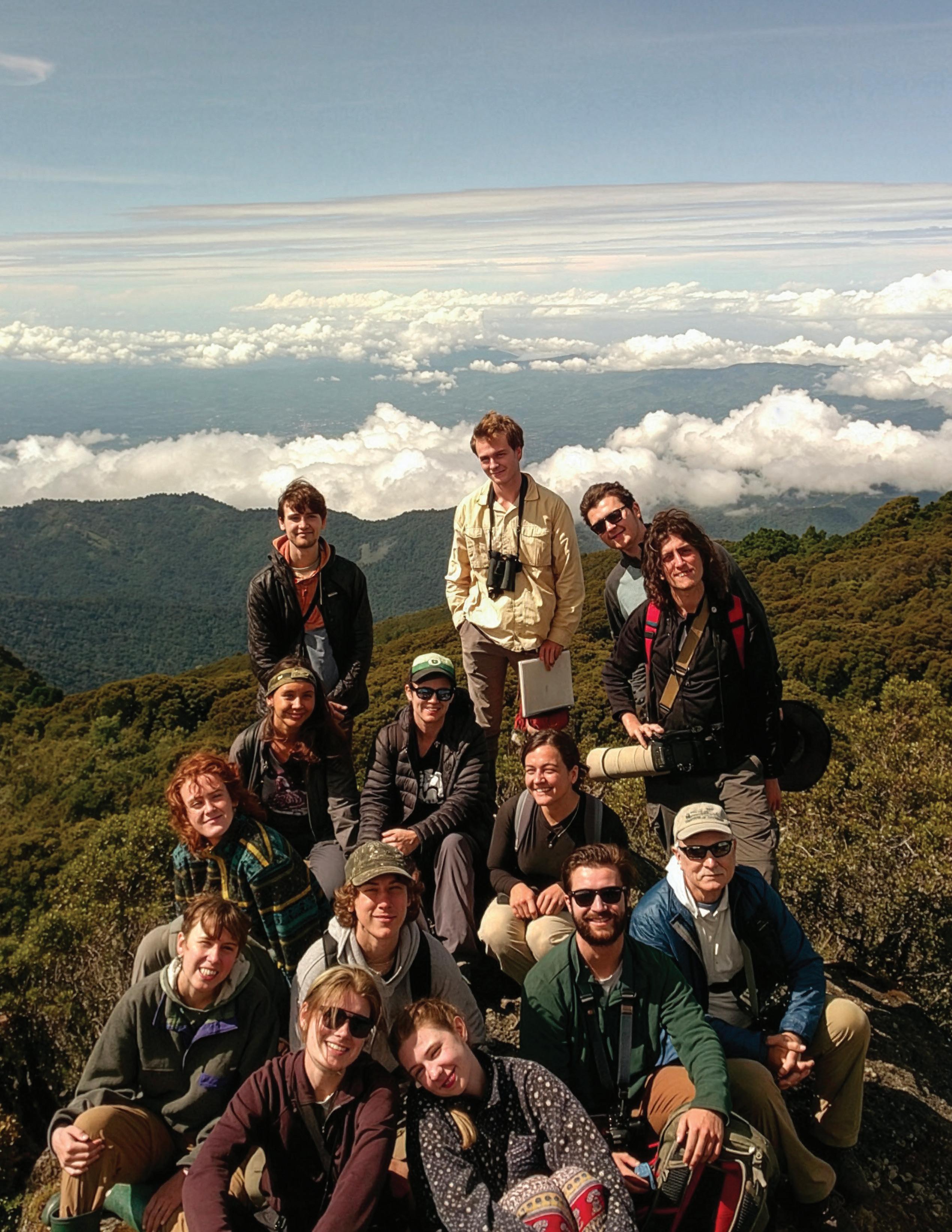

Costa Rica :: Pura Vida
Costa Rica class on the páramo near Cerro de la Muerte
(photo by Georgia Lattig ’24)


COLLEGE OF THE ATLANTIC students have been traveling to Costa Rica for the past 15 years to learn firsthand about the ecology and conservation of neotropical forests. The first iteration of this immersive experience—designed and developed by COA professor Steve Ressel—involved a two-week field experience associated with a single course offering, which he co-taught with COA W.H. Drury Professor of Ecology/Natural History John Anderson. In 2019, Ressel developed it into a six-week, three-credit “monster course” in order to provide students with a more comprehensive experience that used both art and science to study the central tenets of tropical biology.

This year, the course was team-taught by Ressel and COA George B. Dorr Museum of Natural History Director Carrie Graham, with support from Costa Rican guide Sergio Padilla Alvarez. The intensive, field-based course examined the ecology and biotic diversity found at several sites within Costa Rica and the implications of this diversity on concepts of conservation biology.

Costa Rica is the ideal setting for a monster course (one “monster” class worth three COA credits) in neotropical ecology. Despite its small size (comparable to the area of West Virginia), Costa Rica contains about 6% of the world’s biodiversity, including at least 300,000
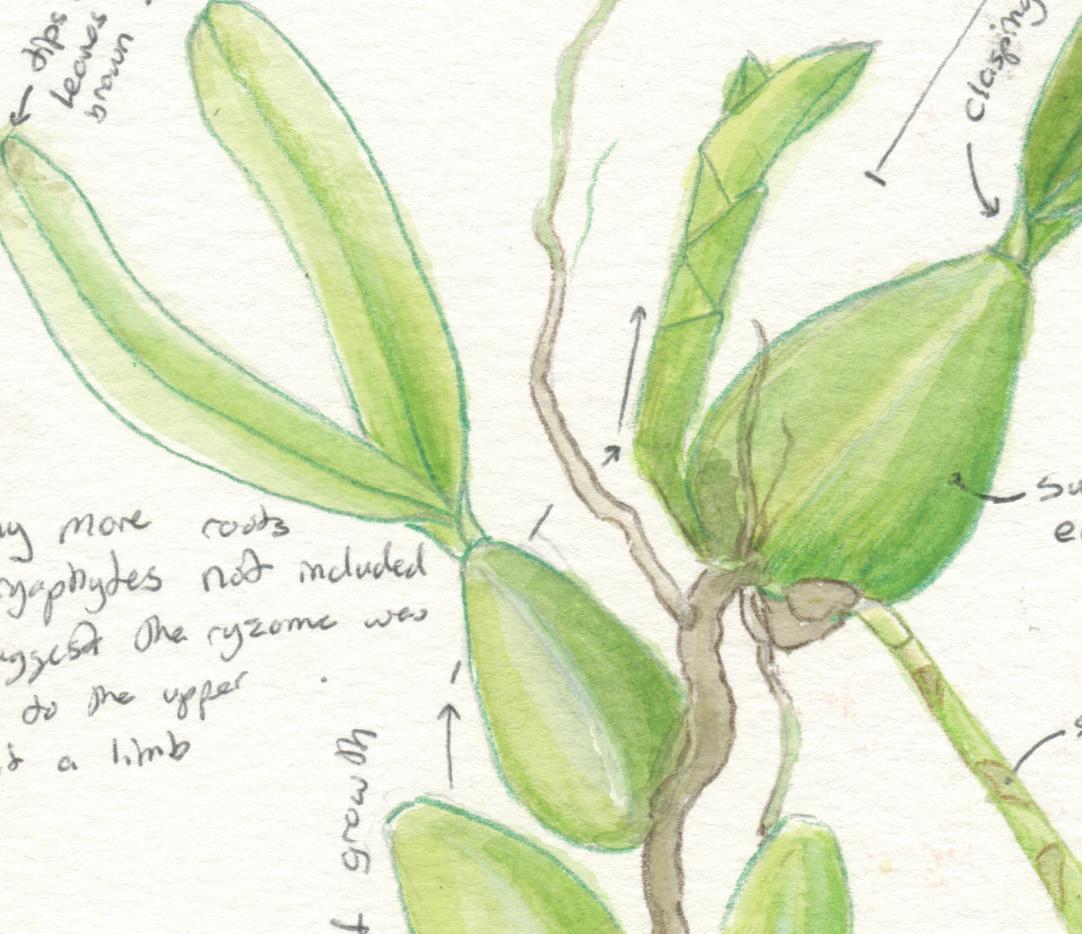
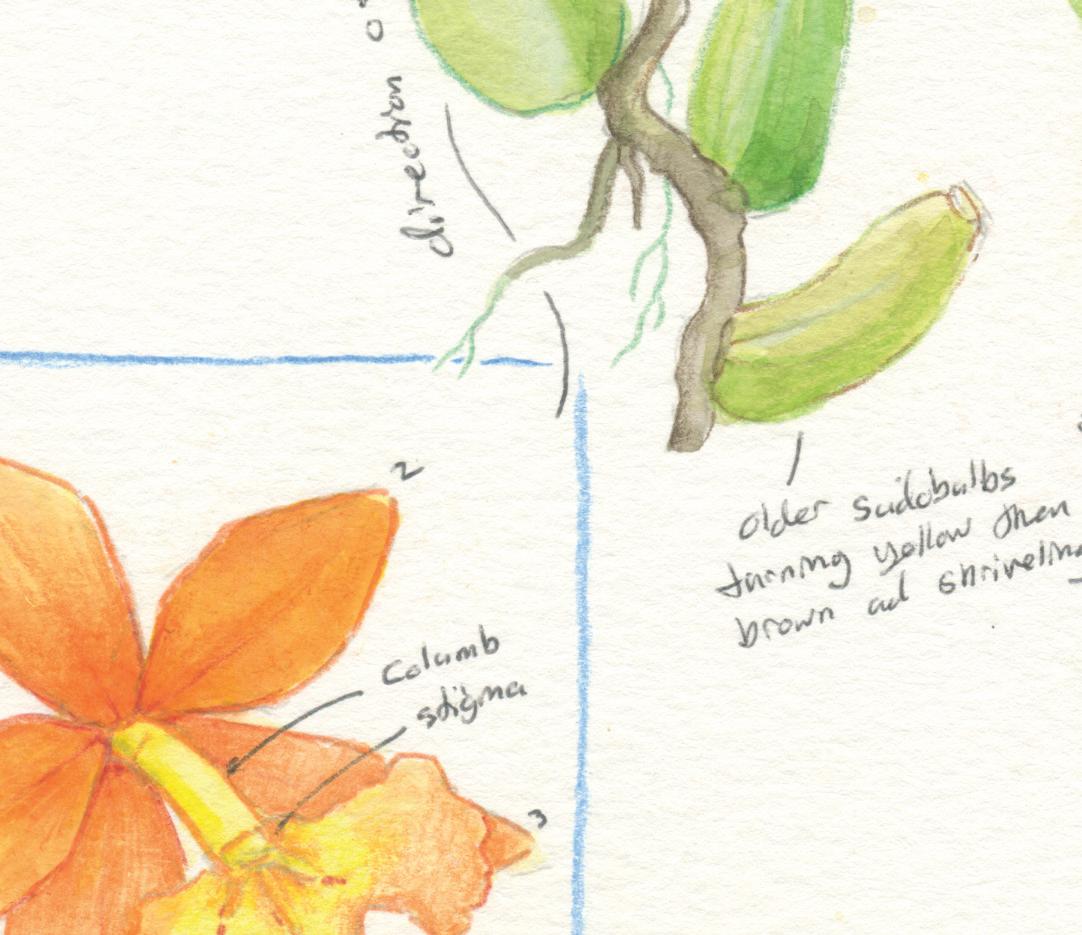
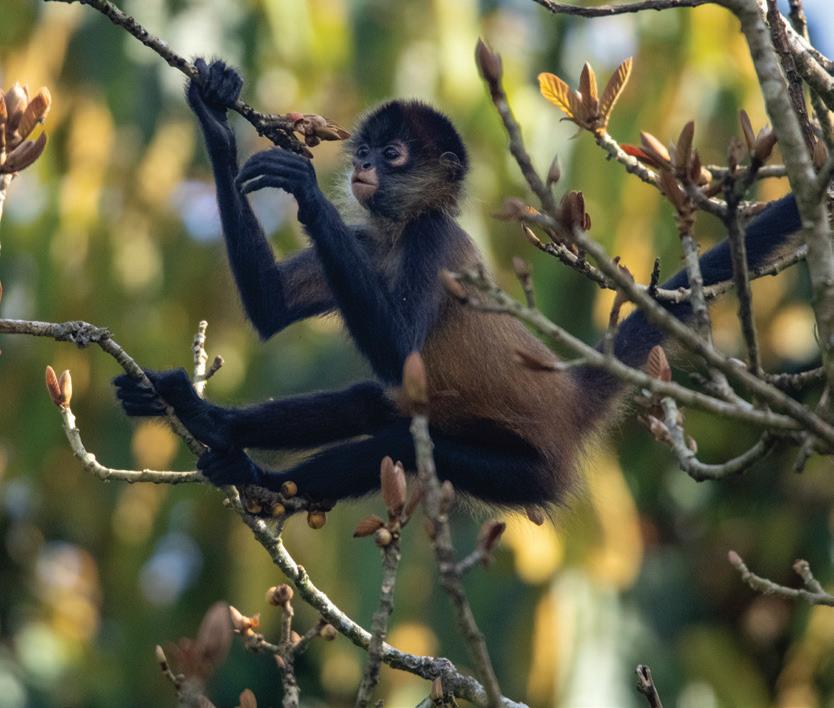

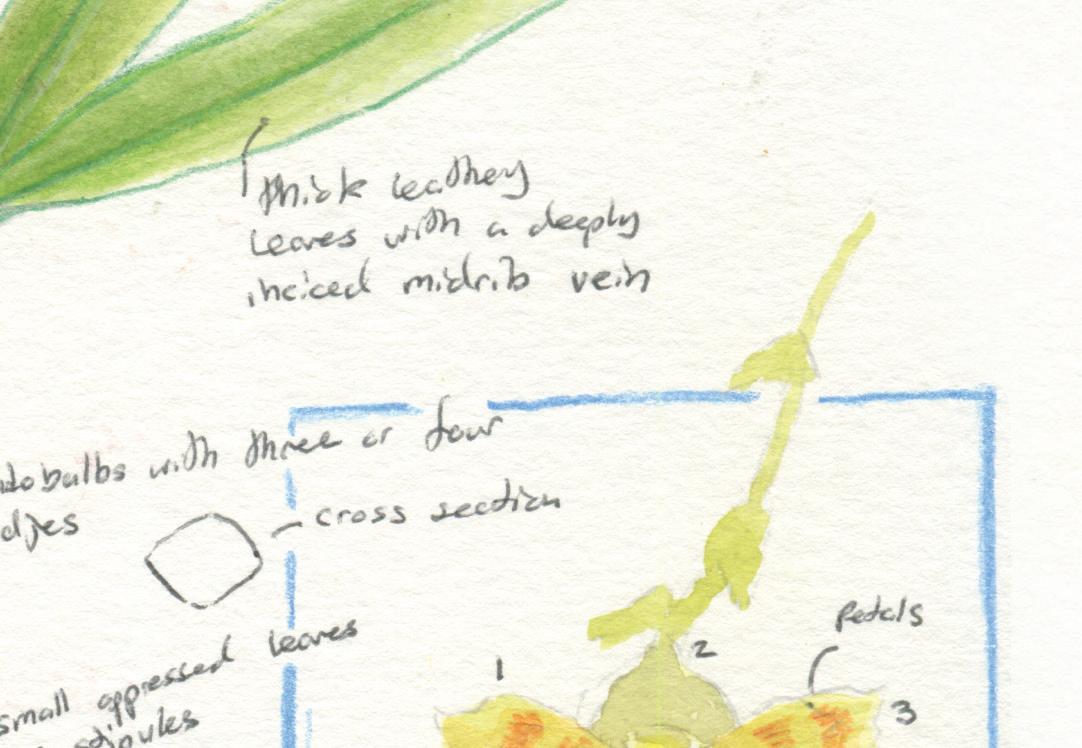

We followed leafcutter ant highways through the Caribbean lowlands at La Suerte, sketched waterfalls in the cloud forests protected by the Children’s Eternal Rainforest in Pocosol, and talked with land stewards about conservation, resilience, and restoration at Tapir Valley. We hiked through torrential rain in the Nicoya Peninsula alongside bellowing howler monkeys, admired glass frogs perched beside waterfalls on the Osa Peninsula, and snorkeled with parrotfish and sea turtles at Caño Island.
—Autumn Pauly ’26






Juvenile spider monkey in tree (photo by Megan Maloney ’26)
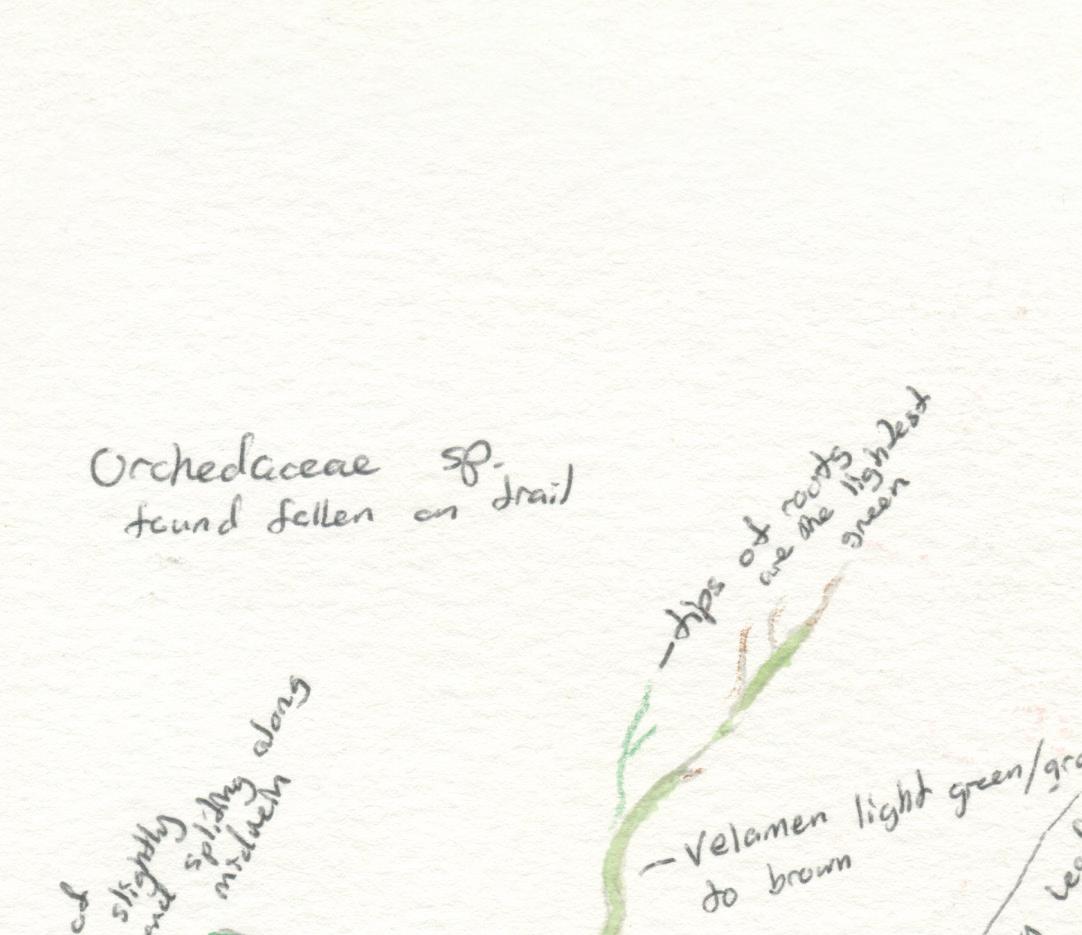
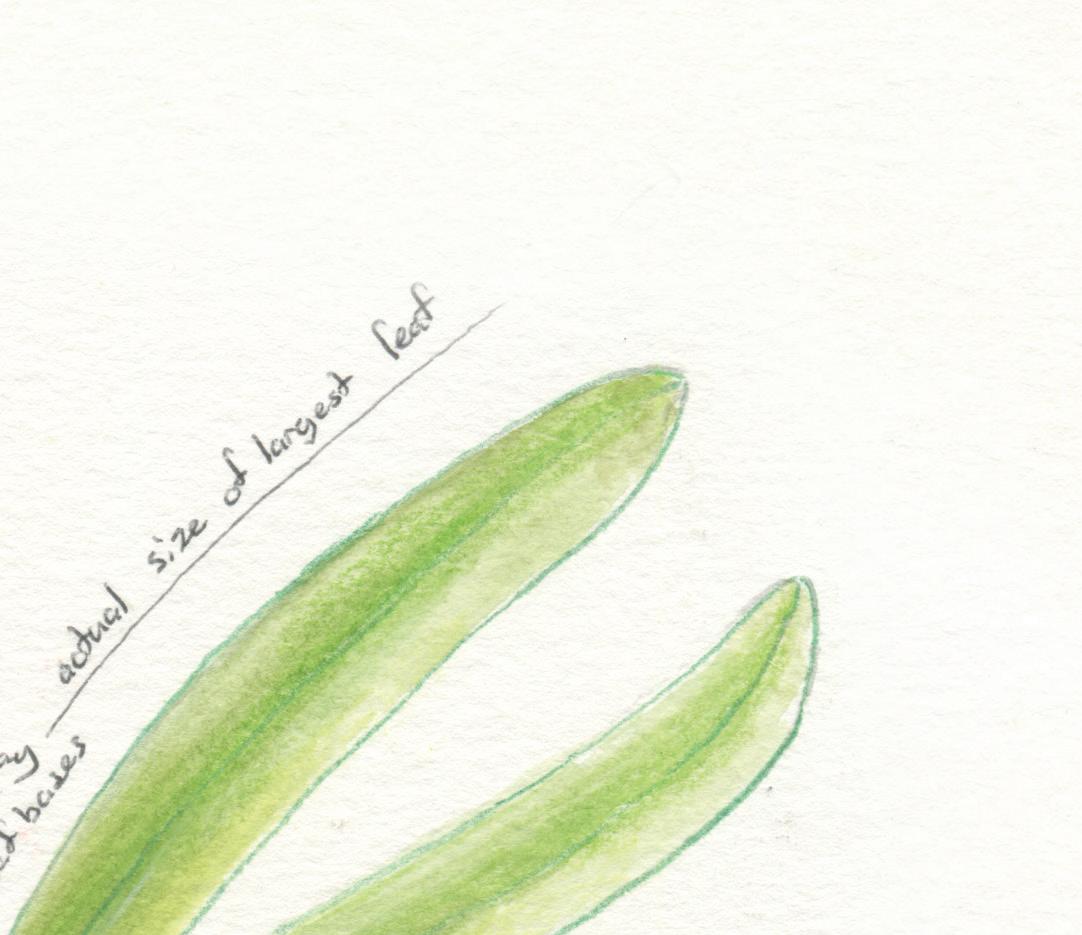
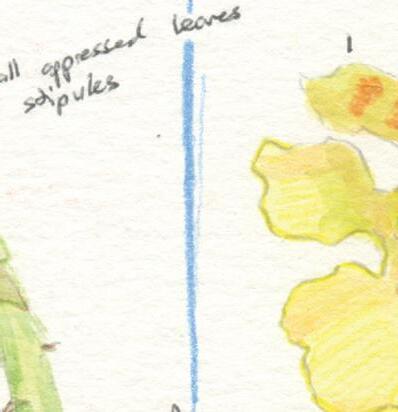
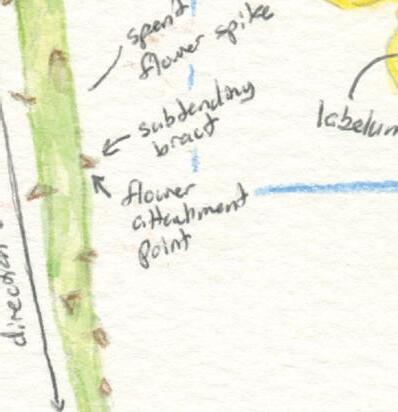
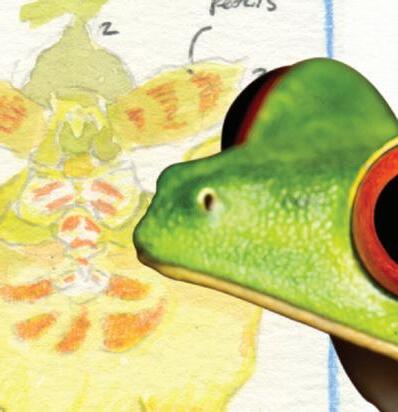
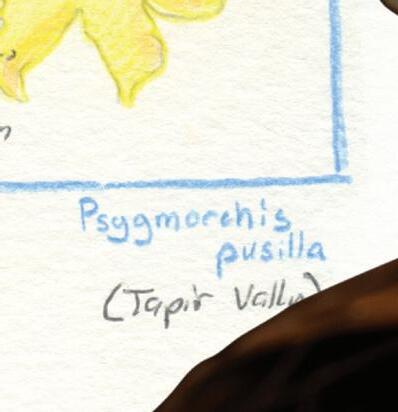
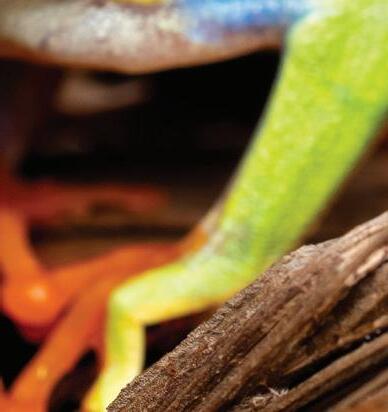
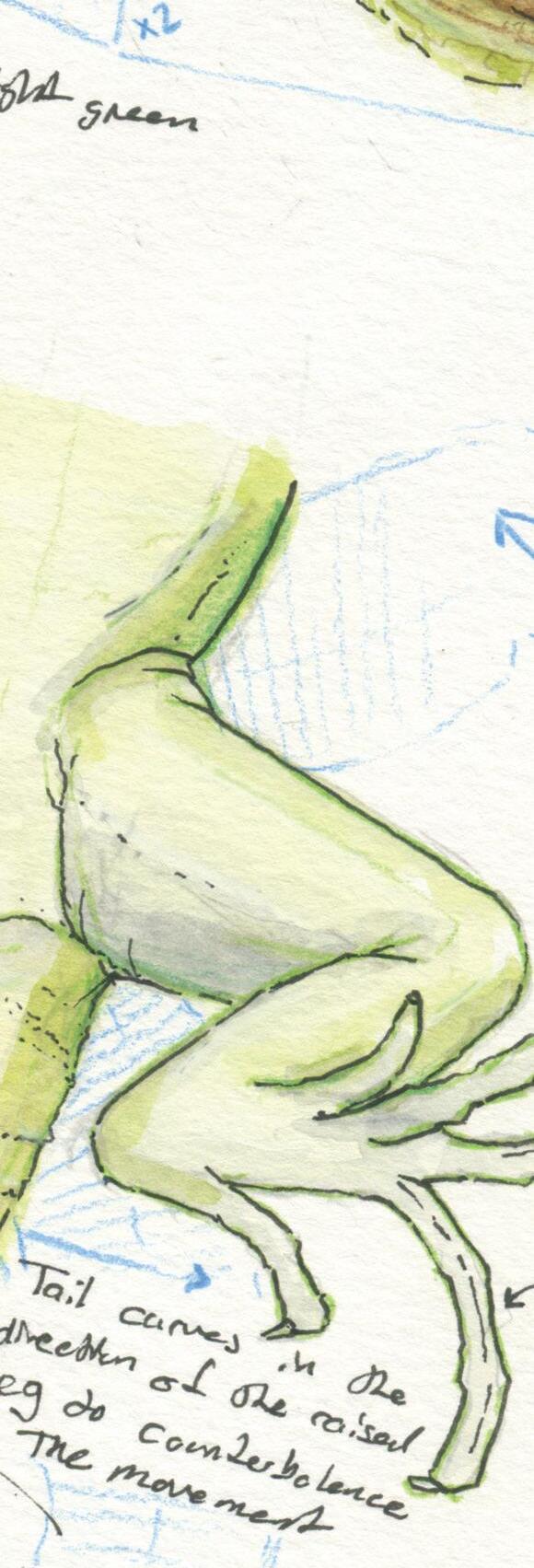
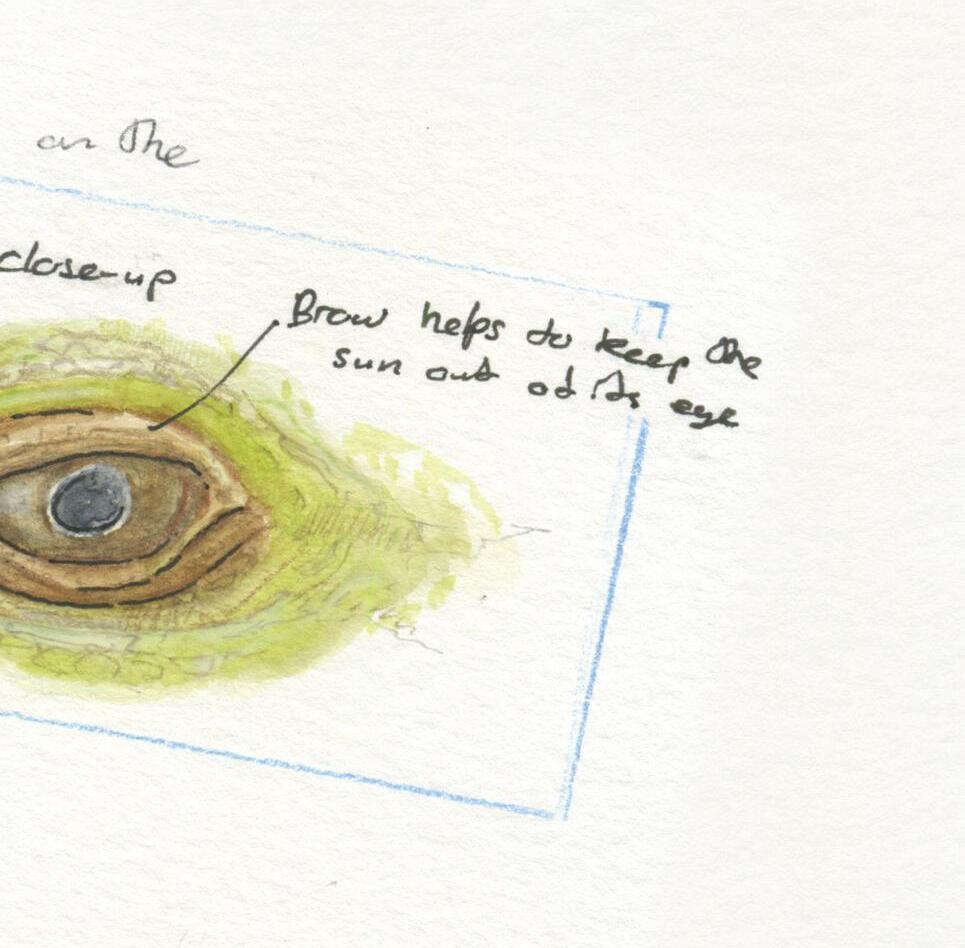
Left: Sketches of orchid anatomy by Conrad Kortemeier ’26. Below: Red-eyed tree frog (photo by Charlie Nadeau ’26)
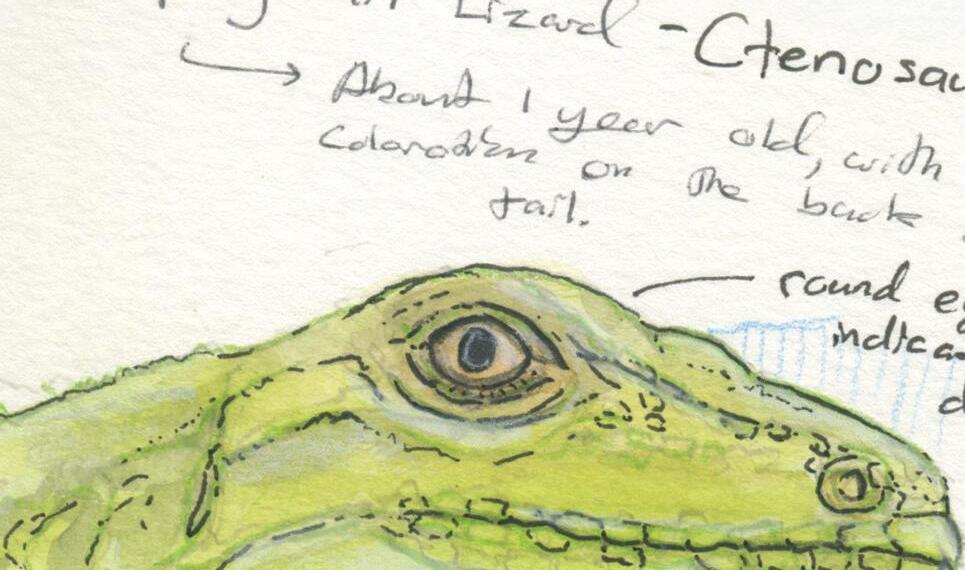
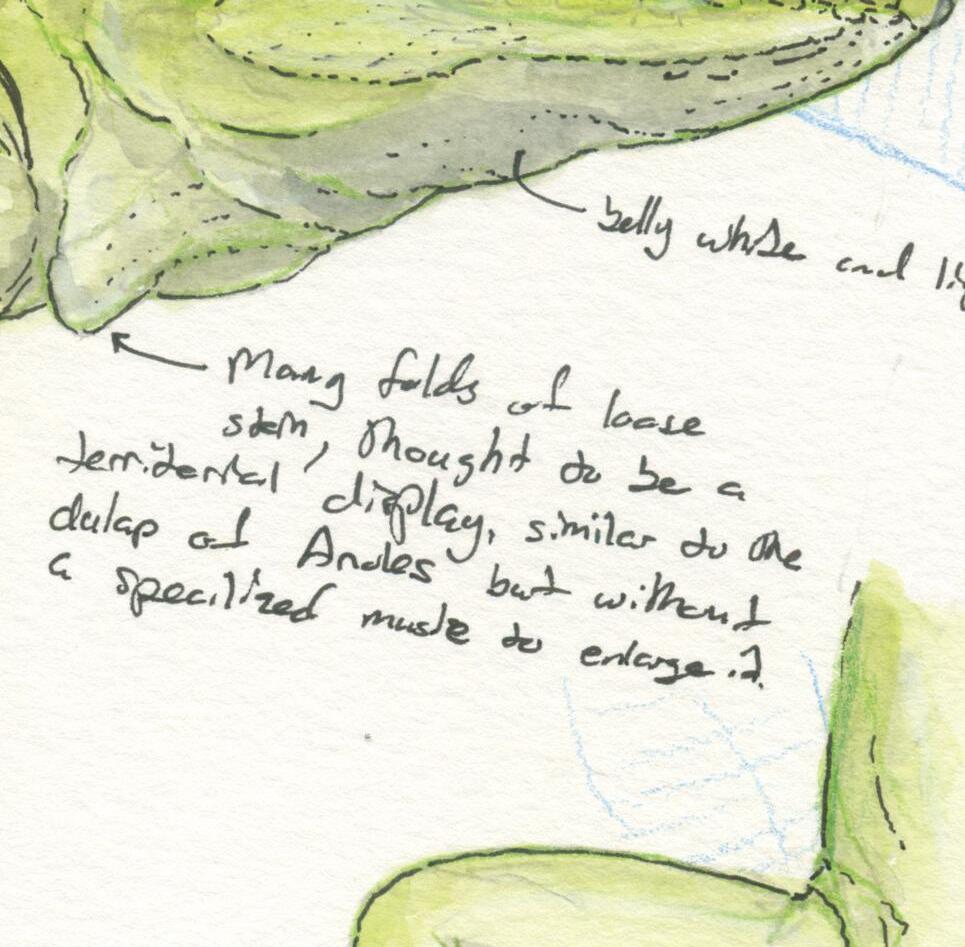
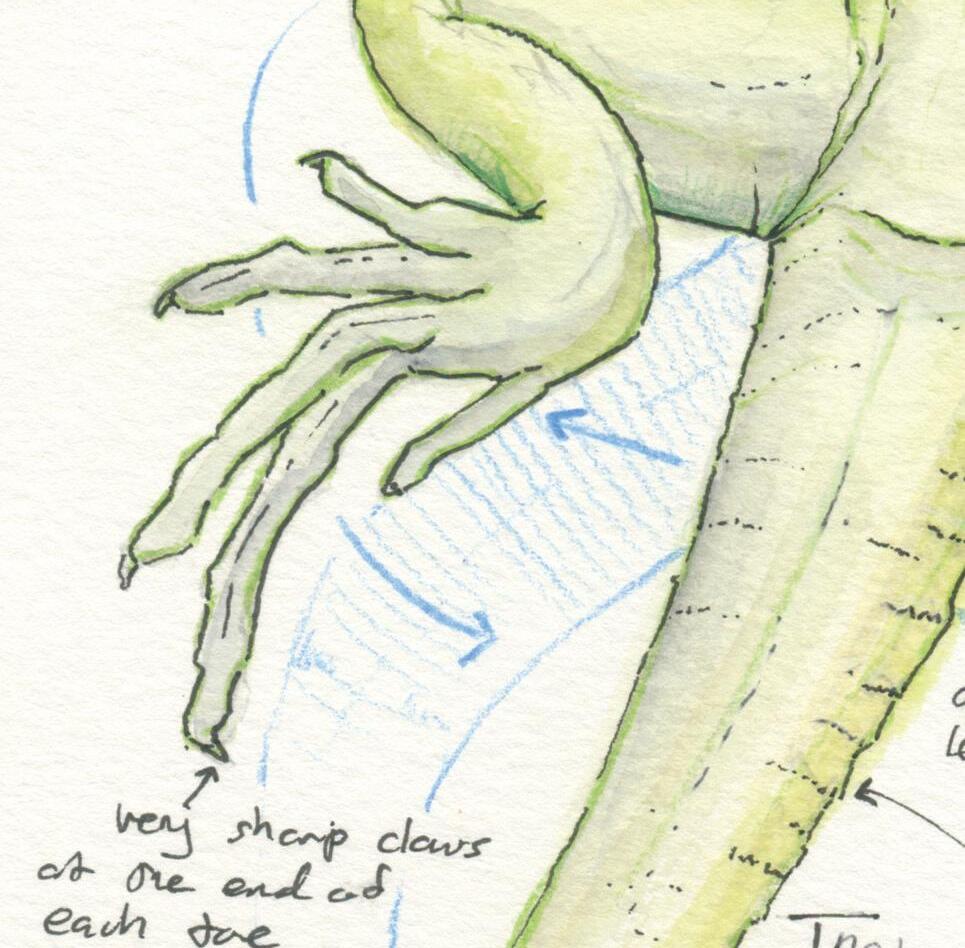
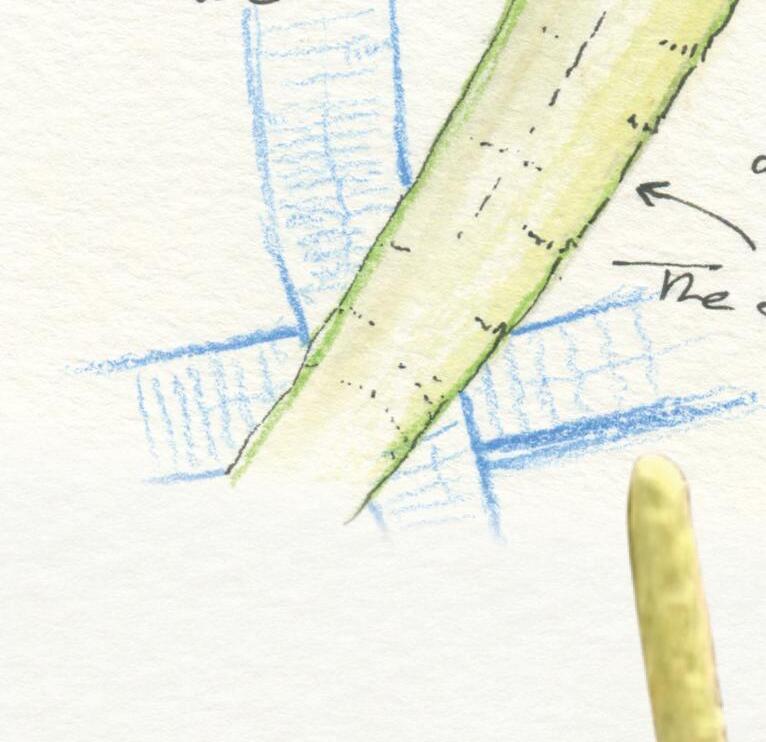


ctenosaur


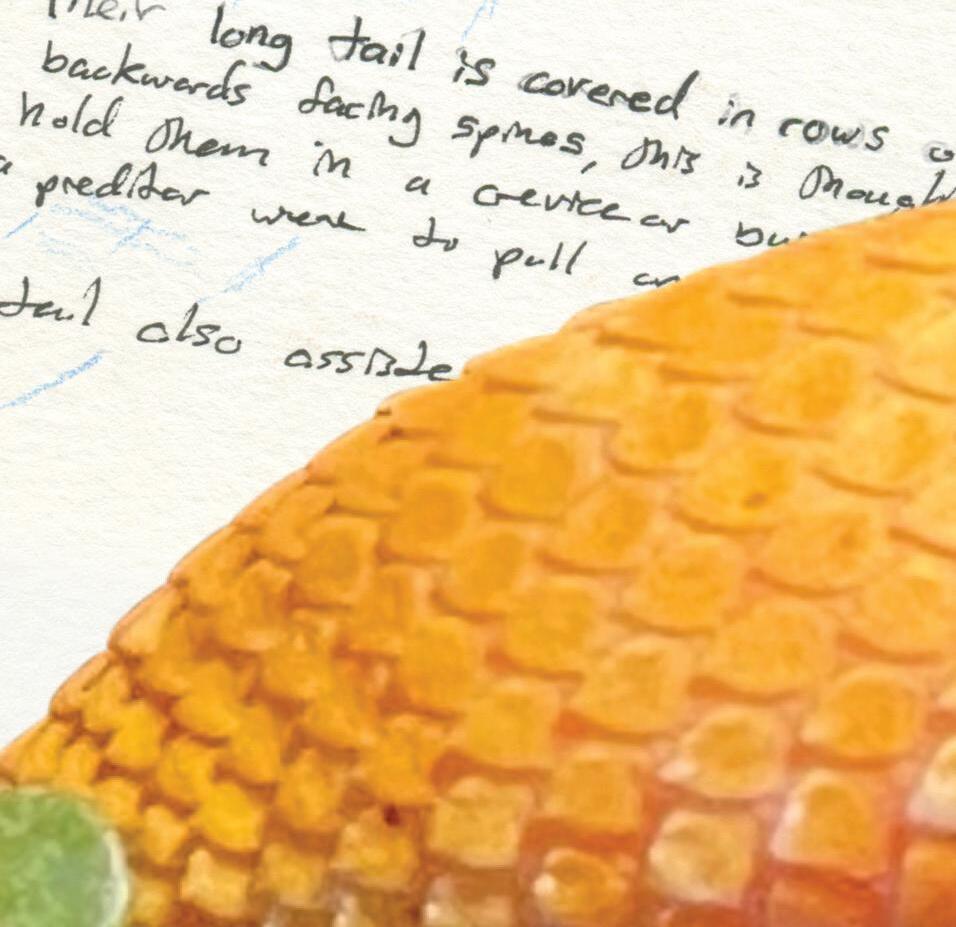
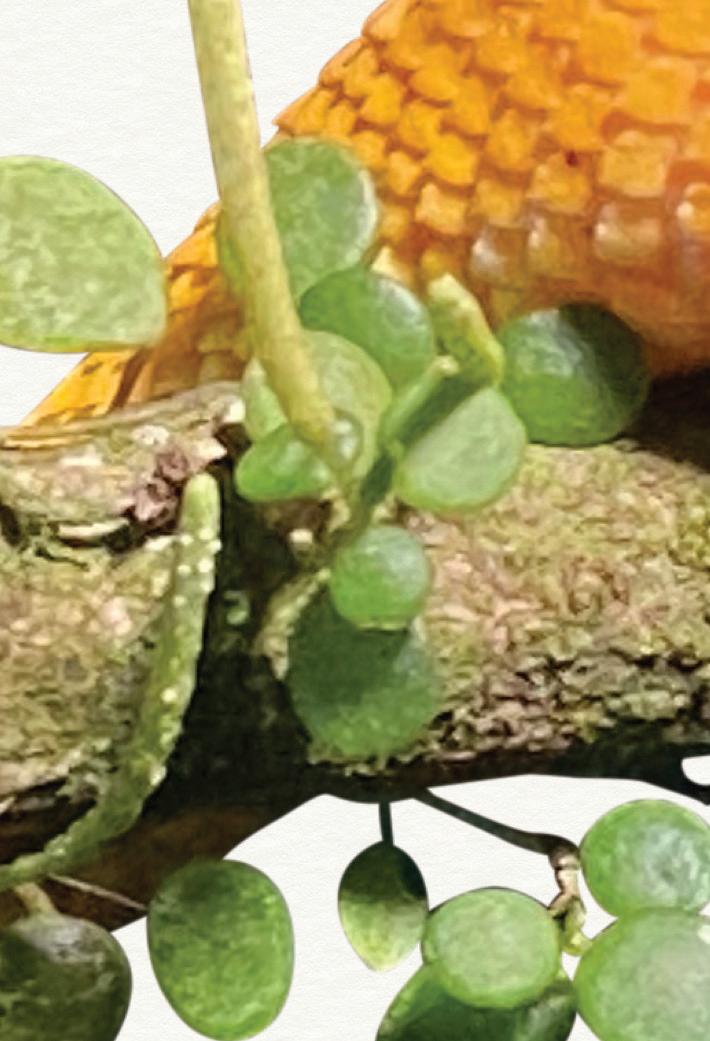

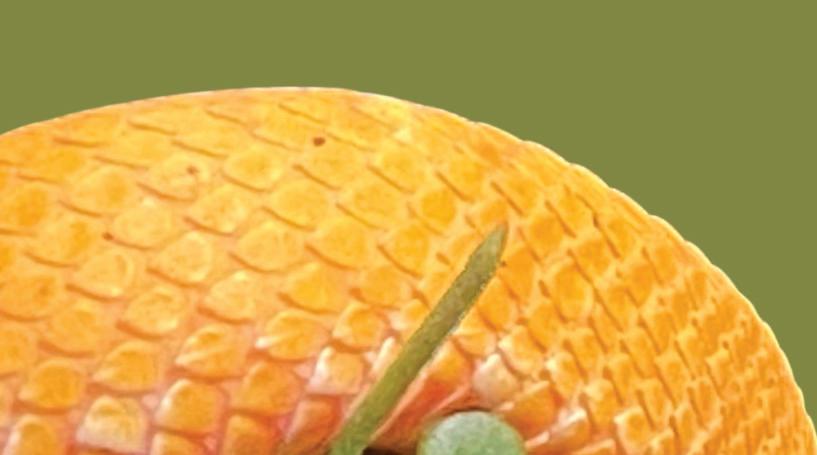
Sketches of
anatomy by Conrad Kortemeier ’26
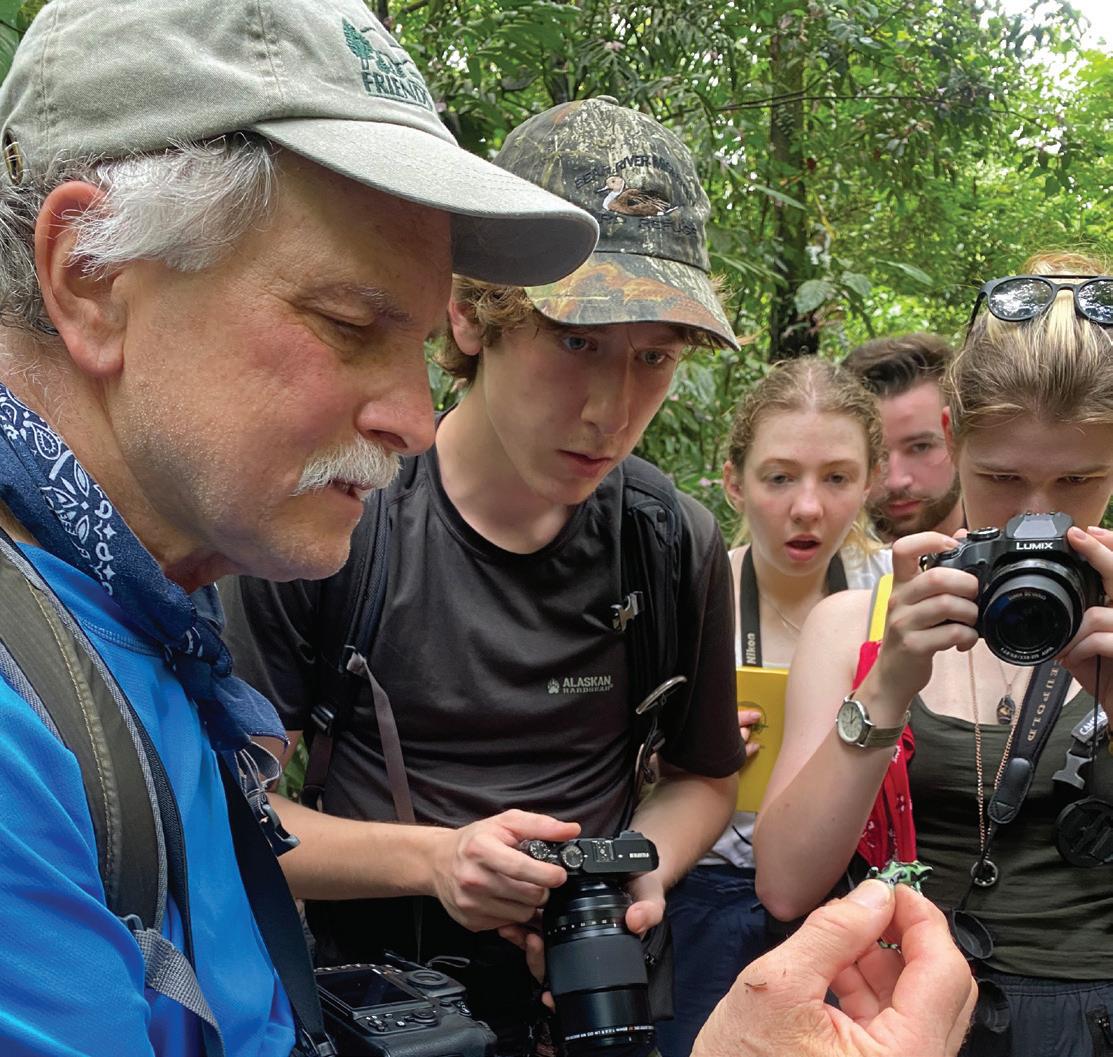
Professor Emeritus Steve Ressel with green and black poison-dart frog (photo by Carrie Graham)
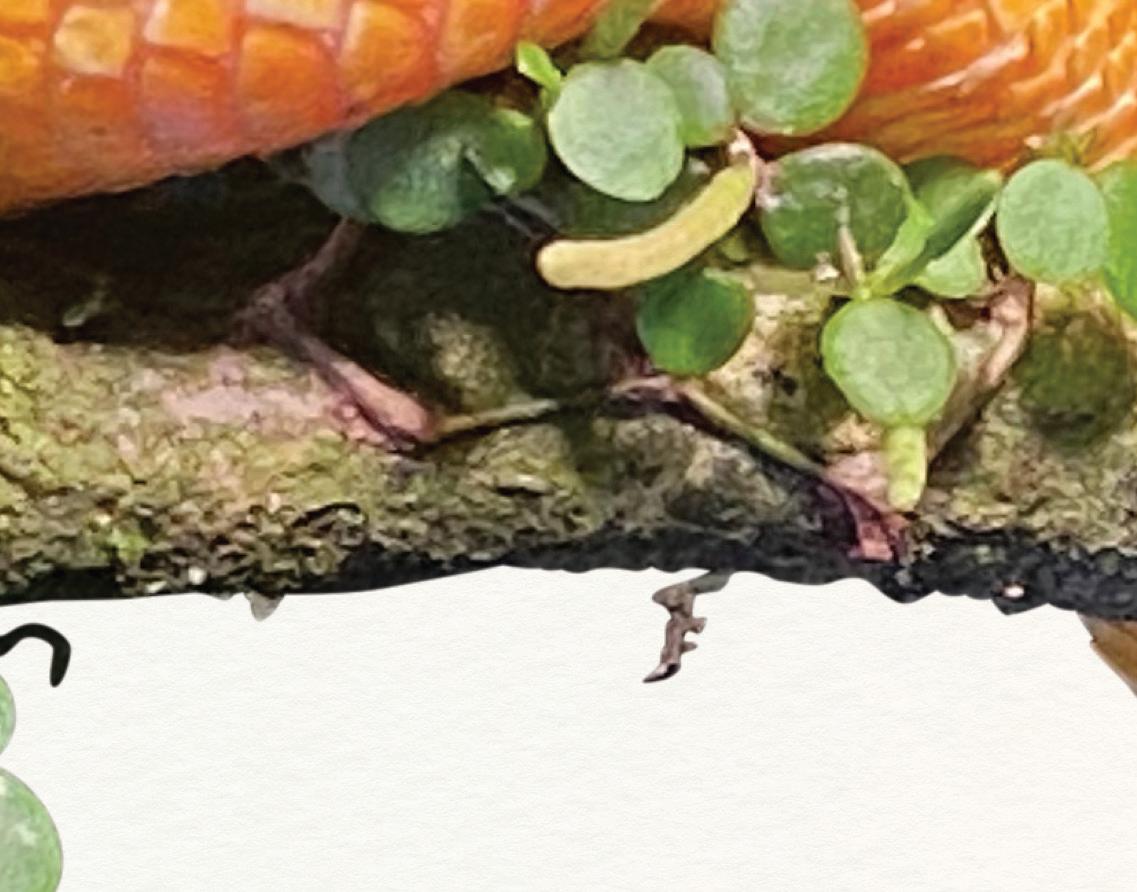
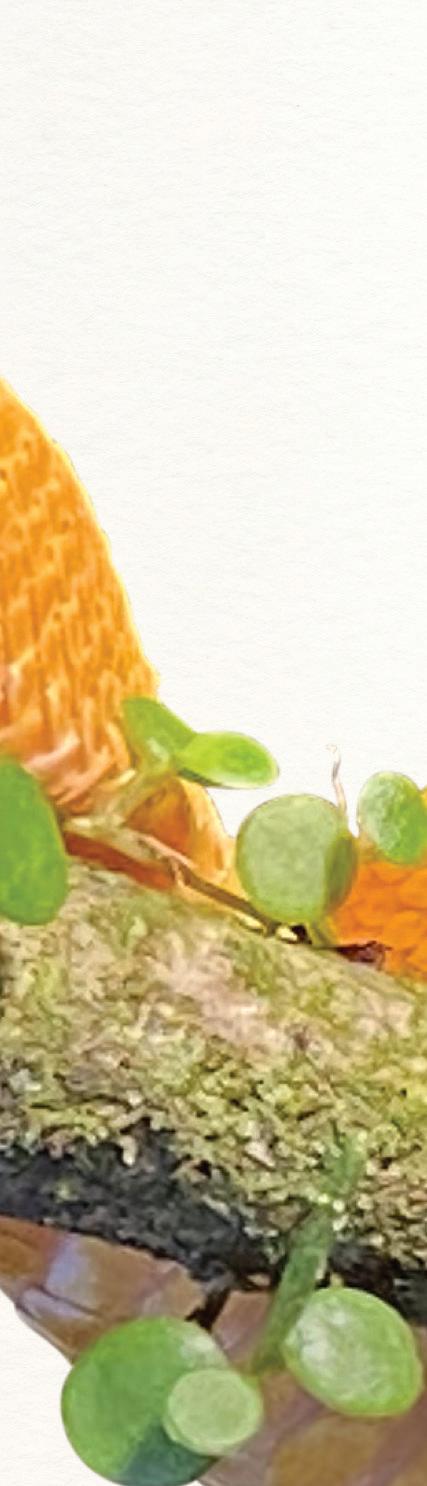
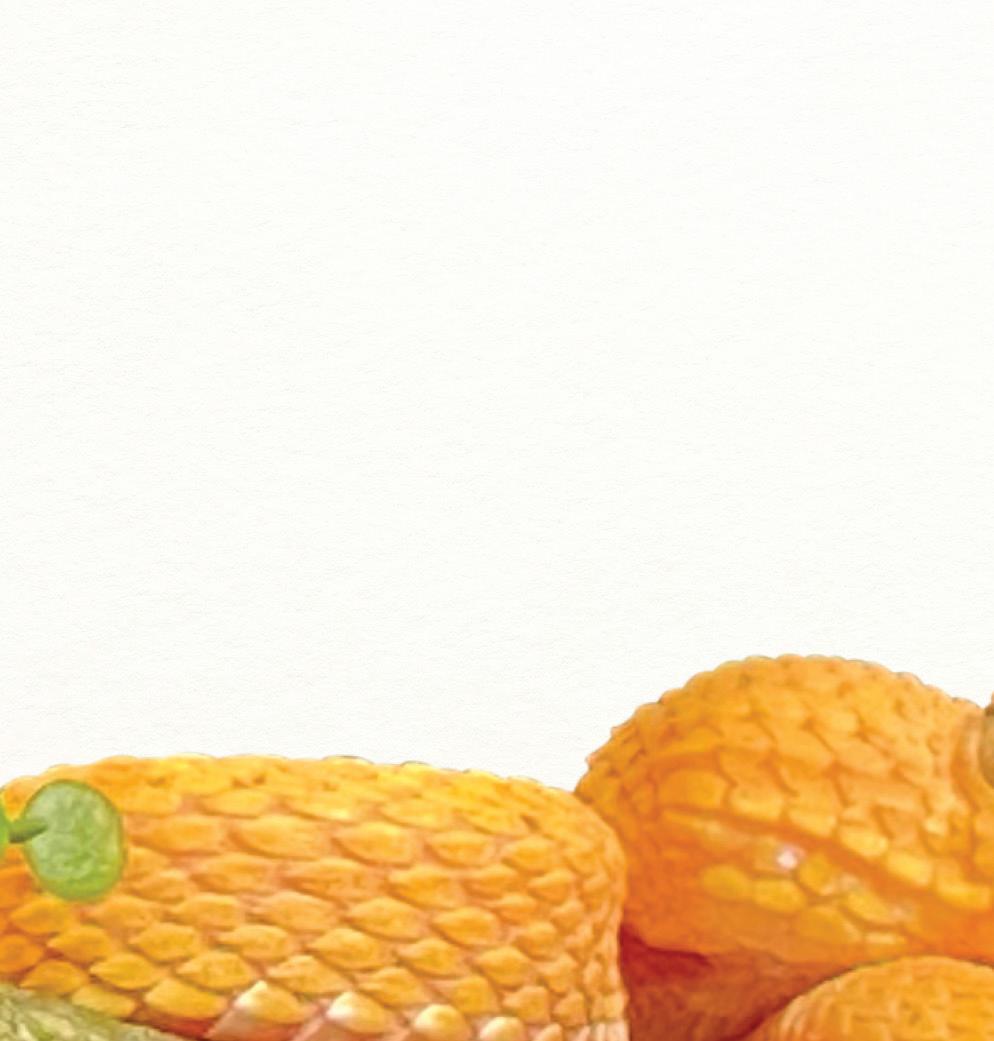
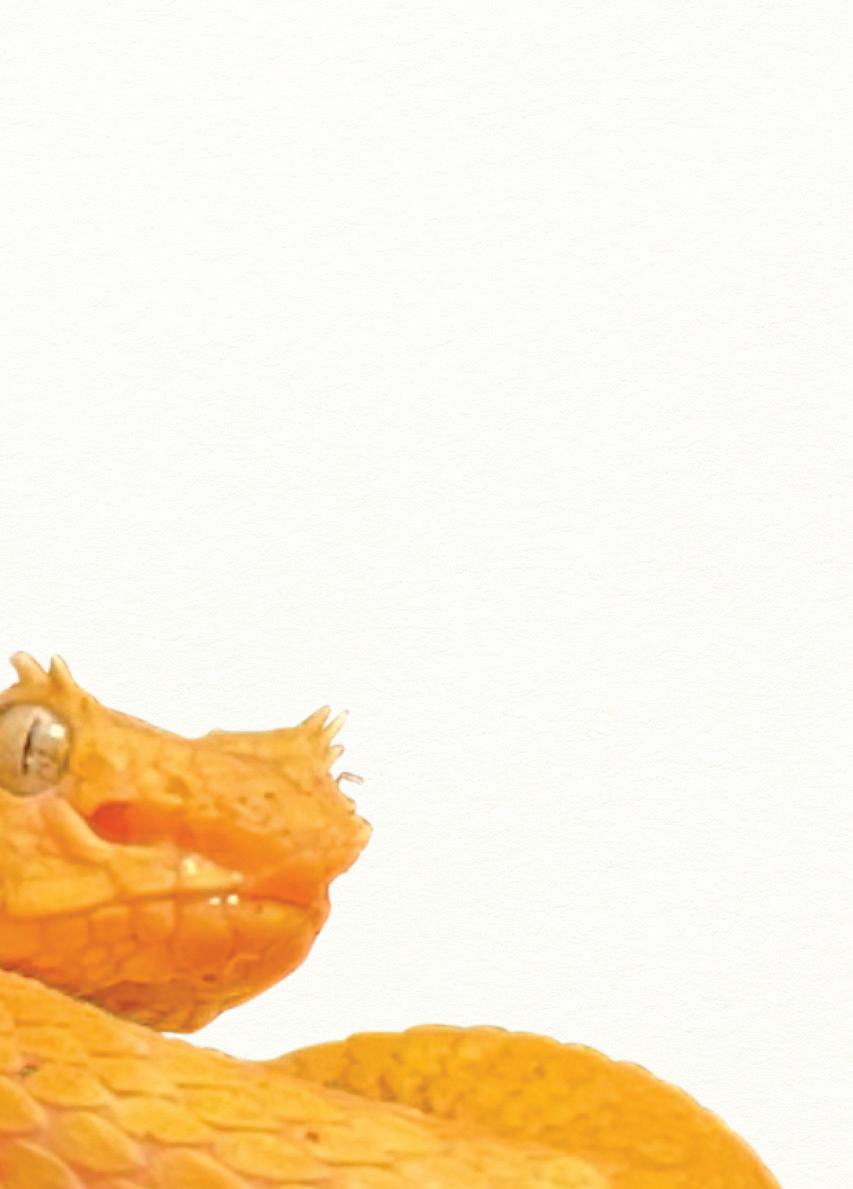
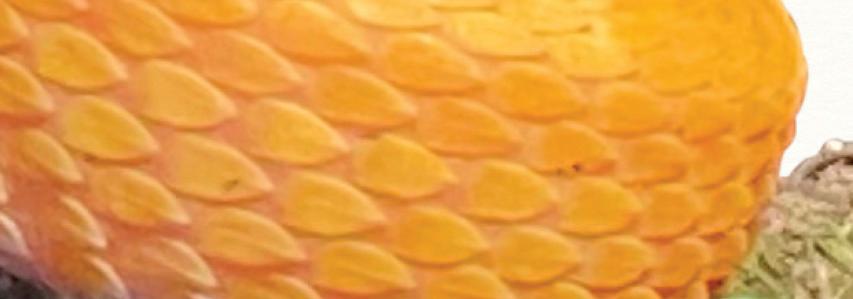
Yellow eyelash viper (photo by Carrie Graham)

species of insects—approximately one-third of all described insect species. This incredible abundance of species results in part from its unique geography: Within Costa Rica’s small area, the influence of the Caribbean Sea, the Pacific Ocean, and the central mountain ranges create a surprising array of very different bioclimate zones with different patterns of precipitation and temperature.
Costa Rica is also world-renowned for an infrastructure that supports both ecotourism and scientific study. Approximately 25% of the country is protected land. At the same time, Costa Rica also faces many of the same threats to conservation (e.g., deforestation, monocultures of food crops, and poaching) seen in other Central American countries. All of these factors present an excellent setting for our students to experience and reflect upon the diversity, excitement, mystery, and challenges of tropical life for both human and non-human inhabitants.


In the tropics there is a saying that our students quickly discover holds true as they venture into the field: “Common species are rare, and rare species are common.” Iconic species such as sloths, toucans, and orchids can thus be surprisingly elusive to see, masked by a cloak of monotonous green. Herein lies the value of incorporating the practice of natural history, where students employ persistence, patience, and careful observation while in the field. Only then will the biota of tropical forests reveal itself to students, creating a constant feeling of excitement and respect for what is around them; prerequisites for acquiring a greater understanding of tropical ecology.
Each of the six field stations the course travels to offer a different and astonishing array of wildlife encounters. It is no accident that two of these field stations are in the Osa Peninsula in southwestern Costa Rica, which National Geographic Magazine described as “the most biologically intense place on earth.”

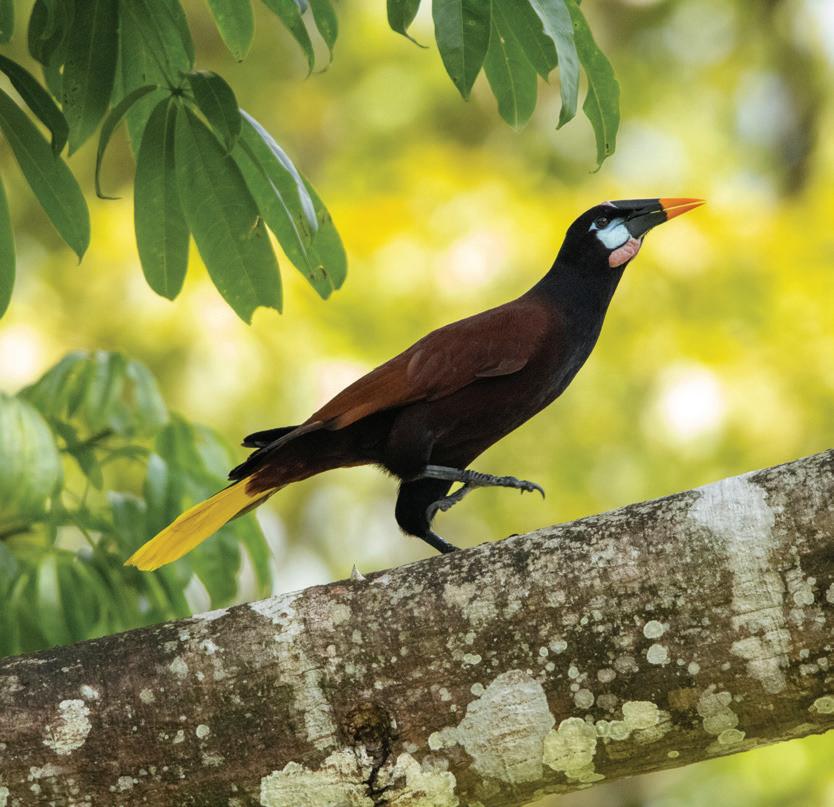
Here is an example of a single day from the first field station: After waking to the nearby calls of howler monkeys, our students enjoy an early morning encounter with the infamous fer-de-lance viper (from a safe distance, of course). This is interrupted by the sighting of mother and baby three-toed sloths (spotted by our expert guide, Sergio). After breakfast, students work on an assignment to observe and sketch the behavior of Montezuma oropendula and the ubiquitous pumilio poisondart frog. A satisfying lunch of beans and rice is followed by a few
Conservation in Costa Rica should be driven by connection—in all senses of the word. When it works best, conservation links people to place, science to local knowledge, and short-term actions to long-term impacts. At its worst, it becomes fragmented: focused on profit rather than protection, offering spectacle rather than substantial change, or isolating itself from the very communities or species it claims to support.

—Conrad Kortemeier ’26

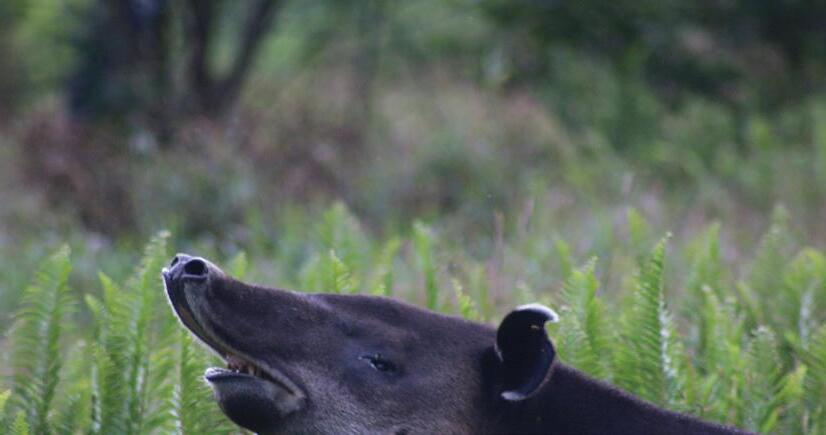
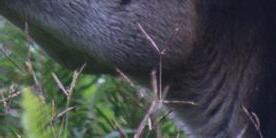
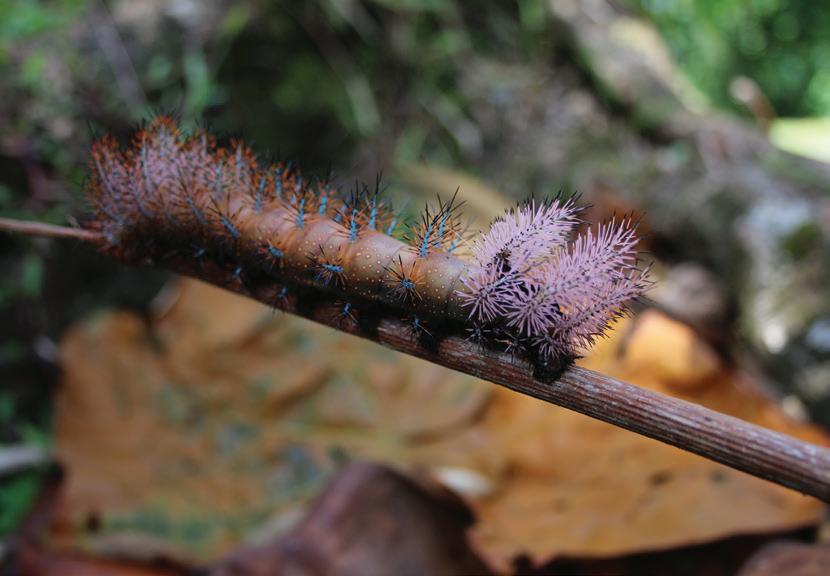

Above, top: Baird’s tapier (photo by Autumn Pauly ’26). Above, bottom: Automeris moth caterpillar (photo by Autumn Pauly ’26)


Nobody told me how much the rainforest changes over the course of 24 hours. Emi and I spent four days in Pocosol traveling the same trail to the lagoon three times a day. In the morning, birds greet you with flashes of their rainbow plumage. Leafcutter ants follow their green river and butterflies flap lazily in the shallow breeze. By noon, everyone has settled into the heat—it’s actually the quietest time of day. By night, though, everything is alive and awake. Flashes of long-tailed mammals careening through the trees, frogs leaping away just before your foot hits the soil, things that bite and stick and scratch coming out to find dinner. My favorites were the huge freshwater crabs that hunted minnows in the shallows by moonlight. So much abundance, so much diversity, so much beauty.
—Megan Maloney
’26



hours of lectures and discussions in the shade of the field station. As the oppressively hot tropical afternoon cools down, students venture back out onto the trails in pairs to make more observations and develop questions that could inform their upcoming research assignments. They cross a lawn dotted with cane toads and leafcutter ant highways, and enter the forest trails to find bullet ants, python millipedes, basilisk lizards, cicadas, katydids, spider monkeys, kinkajous, trogons, toucans, mantids, stick insects, hermit hummingbirds, wandering spiders, smoky jungle frogs, and more.


Throughout the Costa Rica course, students do an incredible amount of work. They examine fundamental tenets of tropical ecology via immersive, field-based work at various field stations throughout the country, learn about the ecological importance of insects in tropical ecosystems, and practice making and recording their observations through drawing and writing in their field journals. Conservation is a common theme throughout the course, and students experience a variety of conservation practices and engage directly in communitybased conservation initiatives in order to experience firsthand the challenges of preserving the livelihoods of local people along with natural systems. This interdisciplinary, human-ecological course offers a holistic way for students to know a place and its inhabitants deeply and thoroughly while growing their understanding and knowledge of ecology, art, and conservation.


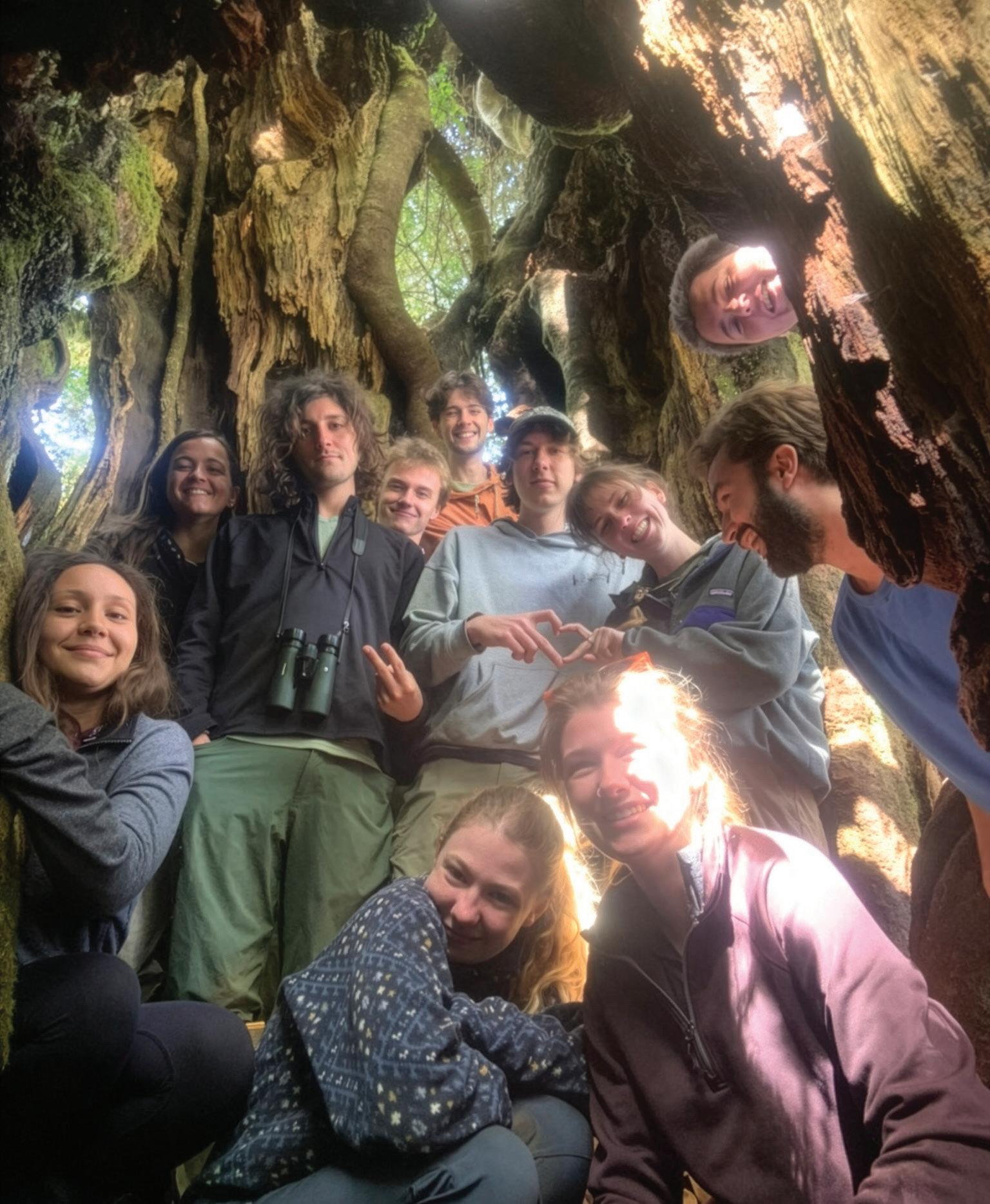
The class inside a hollow garlic tree on the Osa Peninsula (photo by Georgia Lattig ’24)
Montezuma oropendola on a branch (photo by Megan Maloney ’26)
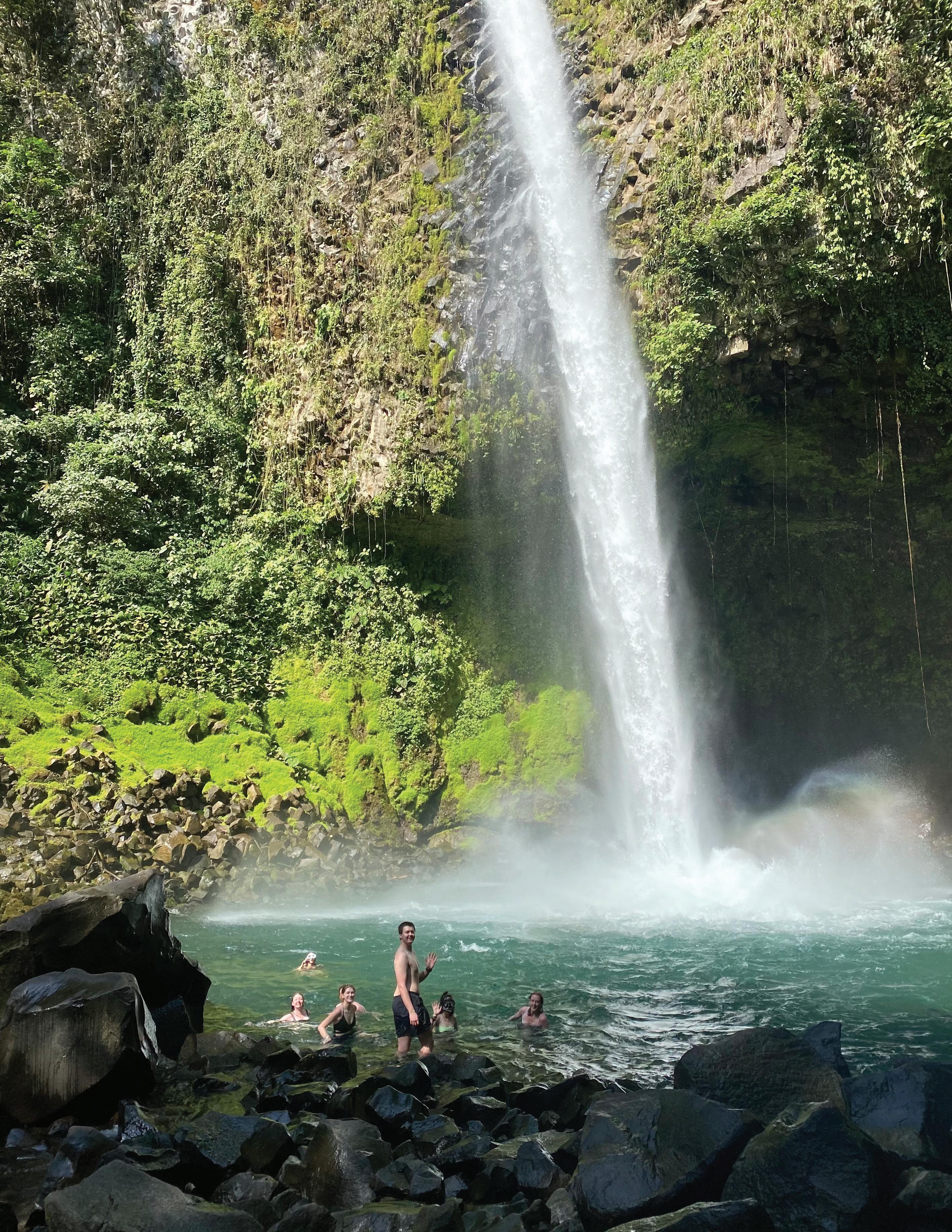

Swimming at La Fortuna Waterfall
(photo by Carrie Graham)
Nathan Morgan ’26
ICHOSE TO COME to COA because I felt its relatively small size would allow me to make more meaningful and longlasting connections with the people I met. That, coupled with the ability to create my own path, meant I could maximize the educational opportunities I’ve been receiving.
Things really started ramping up for me in the summer of 2024. Working with professor Brittany Slabach ’09, I did my internship as a field technician, where I conducted live small mammal trapping and radio telemetry on mountain summits in Acadia National Park. Immediately after that concluded, I departed on a 10-week road trip with professors John Anderson and Ken Cline as part of the Great West course. We spent our time learning about the ecology of the areas we visited, had book discussions on literature regarding aspects of the American West, and met with many individuals from different occupations to offer their insights on the work they do (this ranged from farmers to National Park wilderness rangers). I left again in the spring with professors Steve Ressel and Carrie Graham for the Costa Rica Monster Course, where we spent six weeks traveling from field station to field station learning about tropical ecology, entomology, and how to create a natural history journal with field sketches.
Vertebrate Zoology
This course, taught by professor Brittany Slabach ’09, was an exploration of the vertebrate world where we focused on learning about the different taxonomic and evolutionary relationships. Biodiversity, form and function, life history and behaviors, and conservation were topics that we revisited quite often as we made our way through the course. We made frequent use of wet and dry specimens during our lab times. We did dissections and even had a field trip to a local creek to not only investigate the biodiversity of local fauna, but also explore different field sampling methods. This class helped me apply concepts I’ve learned in other courses on a more focused scale, and provided me with pertinent information for my path forward in the realm of field sciences.
The only part of my schedule that had concrete blocks of time was Vertebrate Zoology, while the field component of my senior project was done on the weekends. For my independent study, I was down at the town pier on Mondays and Fridays before sunrise.

STUDENT SCHEDULE
Dept/ID Course name
ES 3014 Vertebrate Zoology
IN 6015
SP 6010
INDEPENDENT STUDY: An Exploration of Film and Printmaking
SENIOR PROJECT CREDIT: To Catch a Bear by the Hair
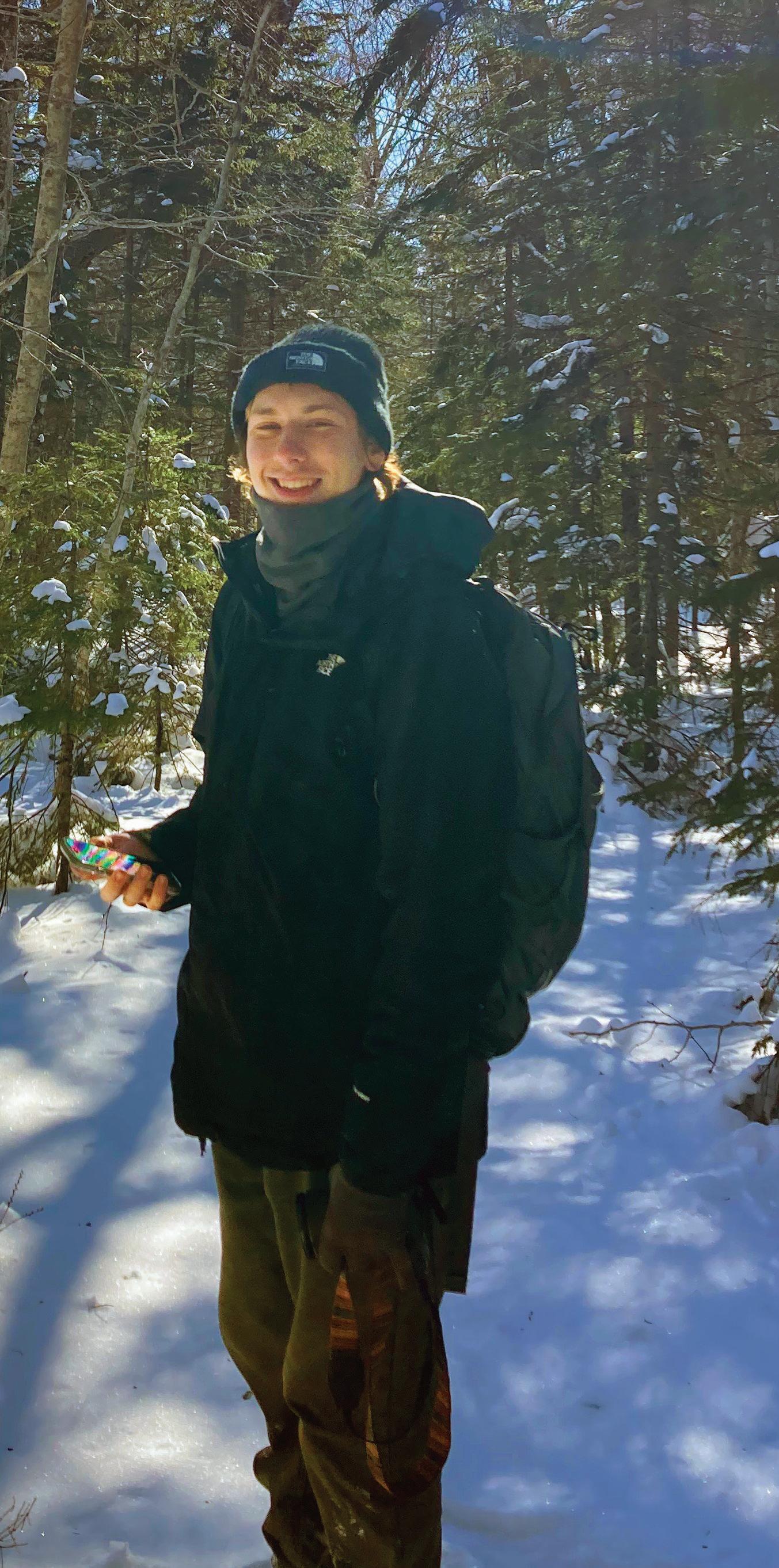
INDEPENDENT STUDY
An Exploration of Film and Printmaking
Photography has been a hobby of mine for almost four years now and I have yet to take a photography class during my time here at COA. I was craving a dedicated amount of time to start a project, and an independent study with instructor June Kim was the perfect way to meet my needs.
Through digital and film photography, I documented aspects of our local fishing communities. I spent many early mornings down at the town pier photographing fisherman and lobstermen, listening to their stories, and just observing a side of an industry that you normally don’t get to see. This project culminated in a series of prints on aluminum and glass that were displayed at the COA Art Crawl (a time at the end of every term for everyone to display art they’ve created either in a class, senior project, independent study, or elsewhere).
SENIOR PROJECT CREDIT
To Catch a Bear by the Hair
Fall term 2025 marked the beginning of my senior project. Its roots sprouted the previous winter, when I conducted an independent study focused on wildlife game cameras as a method to gather data in a field research setting. Working with professor Brittany Slabach ’09, we created a methodology that could be implemented for a carnivore occupancy study here on MDI. I was away in the spring, and during the summer things had changed, as they always do. Black bears, a relative newcomer in terms of MDI’s fauna, had been particularly active that summer, and National Park biologist Bik Wheeler ’09 felt we should shift gears and aim our focus towards them. Now my senior project is focusing on black bear population dynamics. Through the use of a series of hair snares (polygons of barbed wire wrapped around a set of trees with a scent lure in the center), we hope to collect samples of bear fur to run genetic testing to not only figure out how many individuals live here, but where they are going.
Ivy Enoch ’18 A sense of direction
Anara Katz ’24
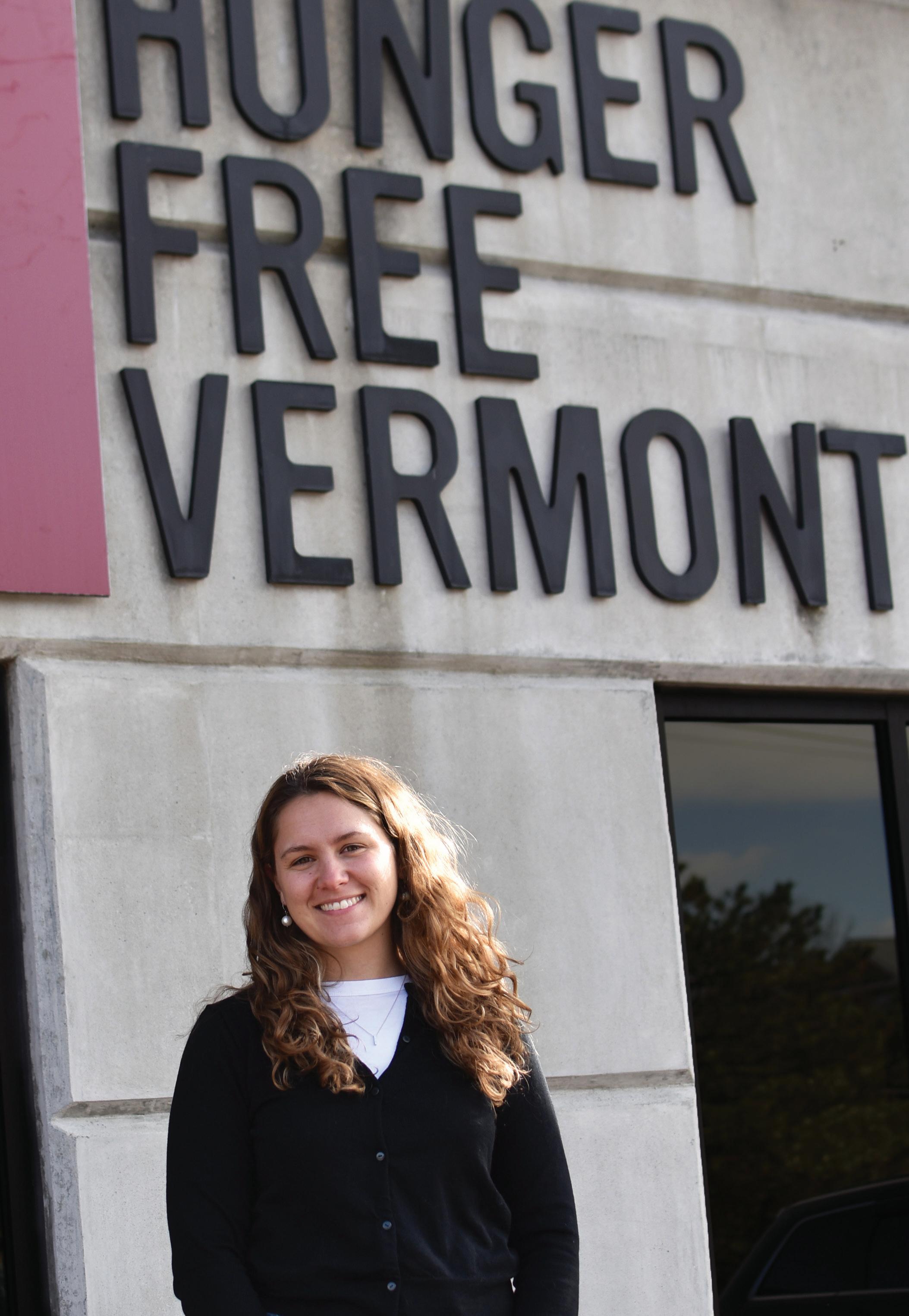
HUNGER
IS SOLVABLE, asserts Ivy Enoch ’18, the director of policy and advocacy for Hunger Free Vermont, an organization aimed at eradicating food insecurity. Hunger is not due to a lack of resources, but rather a lack of political will to correct this injustice. “Hunger is a policy choice,” she explains.
Enoch wears many hats at Hunger Free Vermont, such as working on policy bills, collaborating with state and federal representatives, and training people on the ground who help connect programs with people who need them. She has been Vermontbased since 2020. Beyond working to end hunger, she spends time in nature mountain biking and gardening, and enjoys the company of her partner and two cats. This gives Enoch the work-life balance to carry on fighting for those who need help.
In Vermont, only 50% of eligible SNAP recipients are actually enrolled. “We do public outreach to destigmatize the experience of tapping into programs like SNAP, and why hunger exists in the first place. Many people move in and out of the experience of being food insecure. We help people recognize these programs are ours, we pay for them with tax dollars, and we need to tap into them from time to time,” Enoch expresses.
“Believing that hunger is a solvable issue,” explains Enoch, “takes form in a type of hope that is necessary for this line of work.”
“Hope is a muscle. Hope is this thing that we have to work, stretch, take care of, nurture, and challenge. Ending poverty is a long game. You have wins and then you have setbacks. The federal government shutting down, or not releasing benefits to people at the top of the month. It’s like a marathon, and you need strong muscles for a marathon. My strong muscles are hope,” she elaborates.
Enoch was standing in a field at COA’s organic produce farm, Beech Hill Farm, where she worked at the time, when she realized that, in order to work toward her vision for a just and thriving food system, she needed to step into the world of policy.
Like many COA students, Enoch’s studies encompassed a wide range of classes and disciplines. Her senior project focused on the story of her family’s farm in Oklahoma, which she never knew firsthand but heard about all throughout her childhood. The loss of this farm, a very impactful event for her family, tells a narrative reflecting the national shift in the 1980s of small family farms to industrial agriculture. “Bigger stories and policies have a very real impact on everyday people and their lives,” Enoch explains.
While Enoch’s academic path brought her to the relationship between people, policy, and land, she never lost her commitment to the wider philosophy at play. “At COA, when you meet someone new, many ask what your focus is. I would always tell them, I am focusing on human ecology.”
For Enoch, human ecology is an essential part of how she lives her life. It inspires her philosophy of active hope and making a positive impact in the world. “The tools that COA students develop and hone as human ecologists are so essential for the time that we’re in, the challenges we face, and what we need to solve, as people on this planet,” she remarks.
“I encourage folks to not shy away from the weirdness of human ecology. Not to push it aside by saying, Oh, it’s just this funky degree, but we actually focus on something else,” Enoch urges. “Come up with your own statement for what it means for you, how it gives you a sense of direction, and defines the principles in your life.”
COMMUNICATING SCIENCE
WHENCOLLEGE OF THE ATLANTIC Anne T. and Robert M. Bass Chair in Earth Systems and GeoScience Sarah Hall wanted to broaden her understanding of the relationships between science, policy, and environmental and human health, she landed on the federal government. Hall found that a mid-career fellowship was a way to use her “scientific expertise while gaining experience with federal-level policy and science to inform decisions about human health and public safety.” During 2015–2022, Hall and a cohort of COA students had been gathering local water quality data, which led them to wonder how all the water quality data would get translated into actionable steps for well owners and potentially, future policy. According to Hall, about half of Mainers and 80% of people in Hancock County rely on private wells for their drinking water and every single well has its own set of physical factors influencing it. These include the rock it’s in and its location on a hill or a depression, but there are also social factors affecting the water: Are there filters on the well, and how often is the water tested for contaminants? How do state and federal agencies decide when arsenic level in drinking water is too high? How might public communication and messaging at the county or the state level be improved to inform people making decisions at the local level? What opportunities exist to help residents or communities take action to mitigate poor water quality?
These questions, in part, led Hall to become a Science and Technology Policy Fellow in Washington, DC from 2023-2025. The fellowships are sponsored through the American Association for the Advancement of Science—the organization that publishes Science magazine—and place PhD scientists in federal government jobs, mostly based in DC. Hall found a place at the United States Geological Survey (USGS), a bureau within the Department of the Interior, which is housed within the executive branch of the federal government.
One role Hall assumed upon arriving at the USGS was the Executive Secretariat for the Science for Disaster Reduction (SDR) Interagency Working Group. This title, she says, is “a fancy name for the person who organizes virtual meetings; but it was fantastic because it was for a group that includes representatives from many different executive branch agencies,” providing a window into operations across the federal “interagency.” Hall organized the monthly meetings, coordinated with presenters, and planned future activities with SDR co-chairs including the Director of the USGS. In addition to meeting people with many different areas of expertise working in federal agencies, she also learned how different parts of the government work together through a disaster response.
This early experience in the fellowship taught Hall
Dan Mahoney
Inside the Department of the Interior
some key skills she was able to translate, right away, into the development of the National Landslide Hazard Risk Reduction Working Group. This is a “national-scale community of professionals working on landslide hazard risk reduction. While the idea for it was articulated in the 2022 USGS National Strategy for Landslide Loss Reduction, it was my job to create it and manage it. Working with colleagues in the USGS Landslide Hazards Program and the Office of Risk and Resilience, as well as many professionals working throughout the US, I set it up during 2024 and launched it in November 2024. I still run the monthly virtual meetings typically attended by ~70 professionals from across the country.” According to Hall, “we have approximately 200 people on the Listserv. In its initial year, members launched eight subgroups focused on specific issues or regions. It’s a really active community and the deliverable of the fellowship experience that I’m most proud of.”
While in DC, Hall’s work focused mainly on implementing aspects of the National Landslide Preparedness Act (2021). A lot of data is being collected across the country, much of it at the state and local level and by community members who know the landscape. Congress appropriated a million dollars during FY24 and FY25 to distribute through grants to help communities do this work.
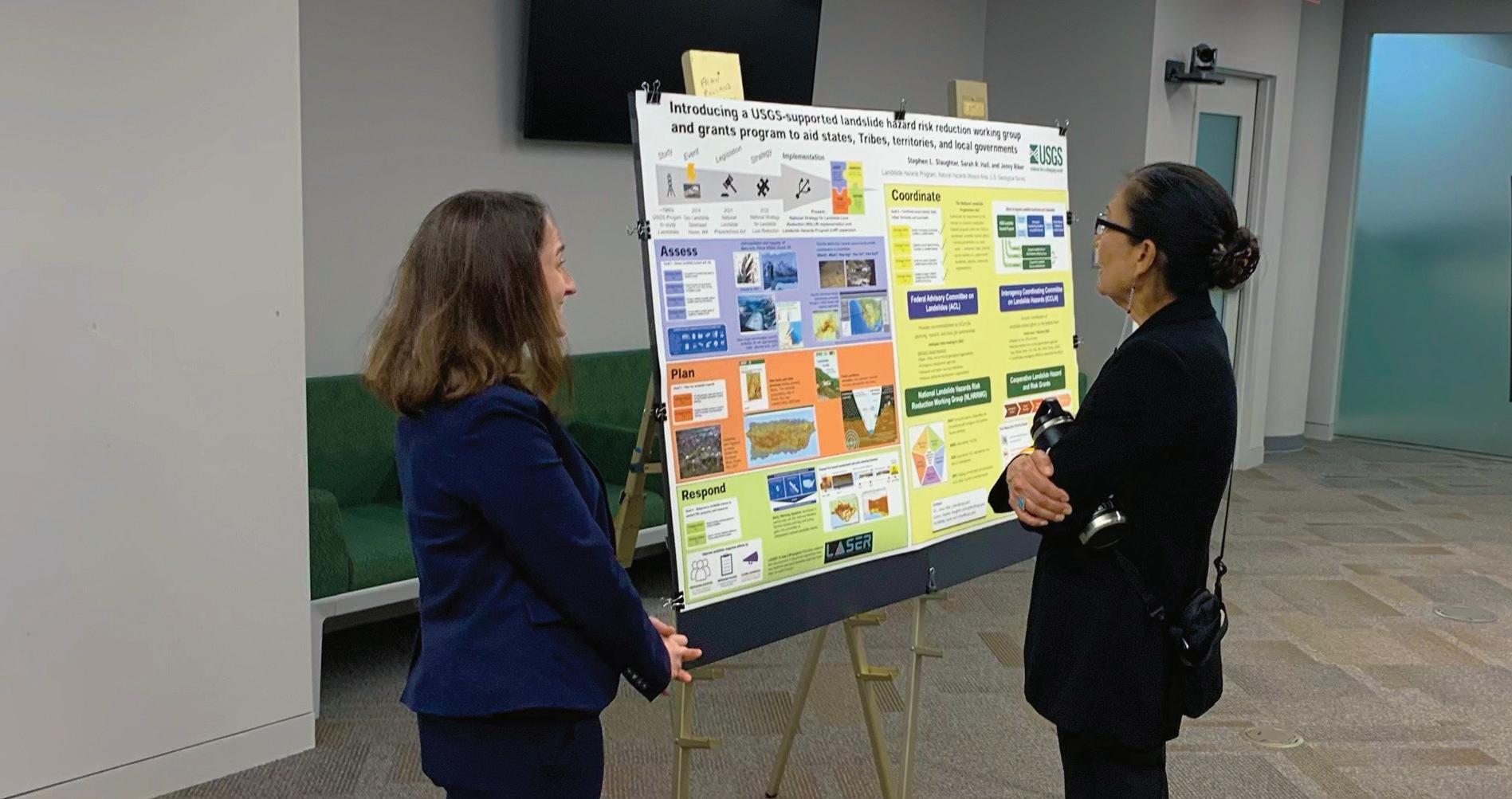
Local, state, Tribal, and territorial governments were able to apply for grants of up to $250,000 distributed by the USGS Landslide Hazard Program. Hall helped prepare the grant program and publicized the grant opportunity through engagement groups, regional partnerships, and conferences. A panel of experts reviewed the proposals and with their feedback, Hall and her USGS colleagues were tasked with choosing which grants to actually fund. “As someone who writes a lot of grants, it was a great learning process to be on the grant manager side of the equation,” noted Hall.
After Hurricane Fiona struck Puerto Rico in 2023, Congress allocated $3.7 million for disaster supplemental response work. The USGS Landslide Hazard Program Office team was to distribute the funds through cooperative agreements with local professionals in Puerto Rico working on response and recovery activities. Hall’s job was to “find people to do projects with that would both help with recovery from the current landslide event but to also prepare for the next one.” Building on existing relationships with USGS scientists, she facilitated the development of projects with social scientists, planners, and geoscientists at two University of Puerto Rico (UPR) campuses, Rio Piedras and Mayagüez. One in particular, the Puerto Rico Landslide Hazards Mitigation Office (PRLHMO), run
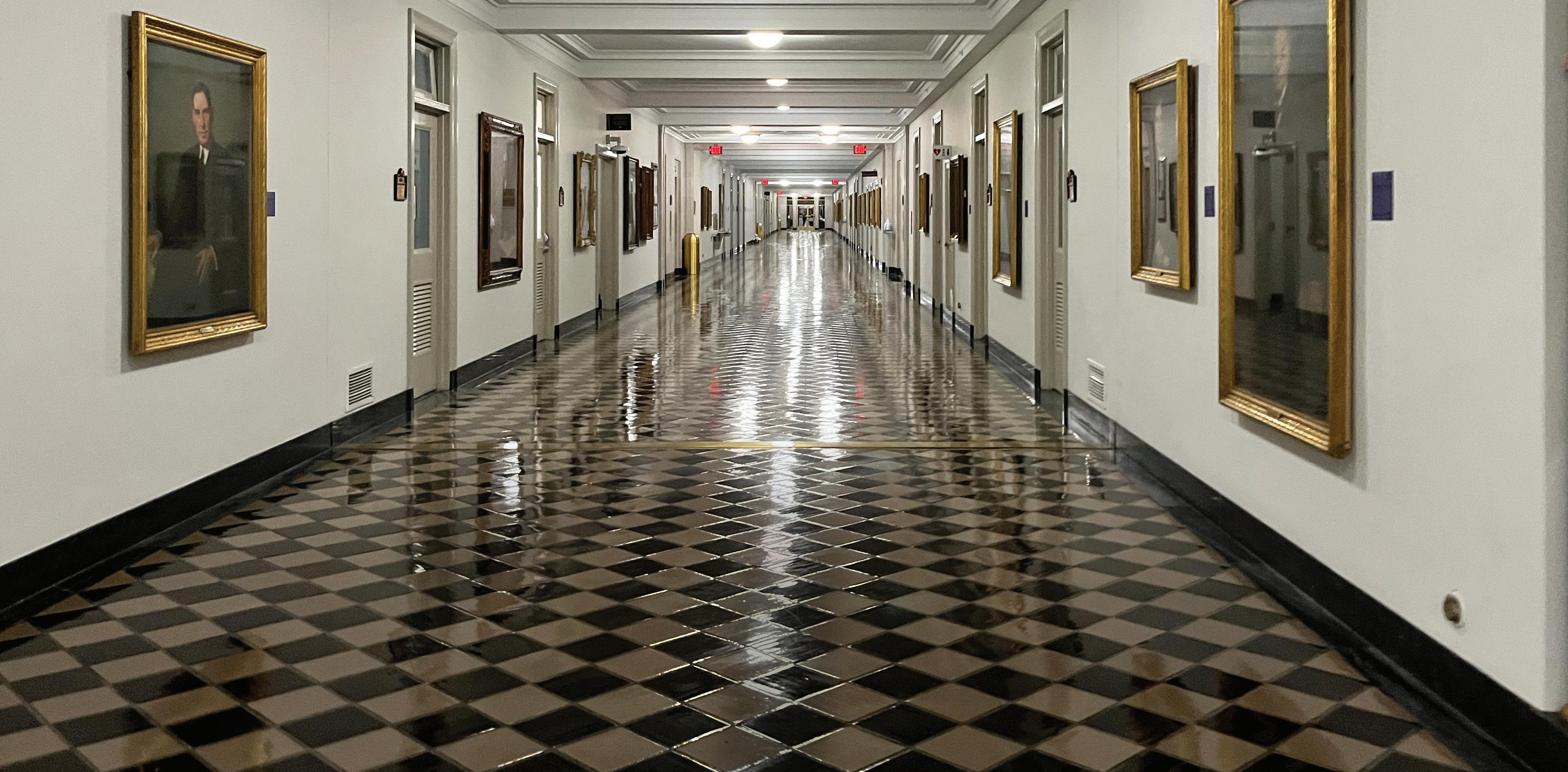
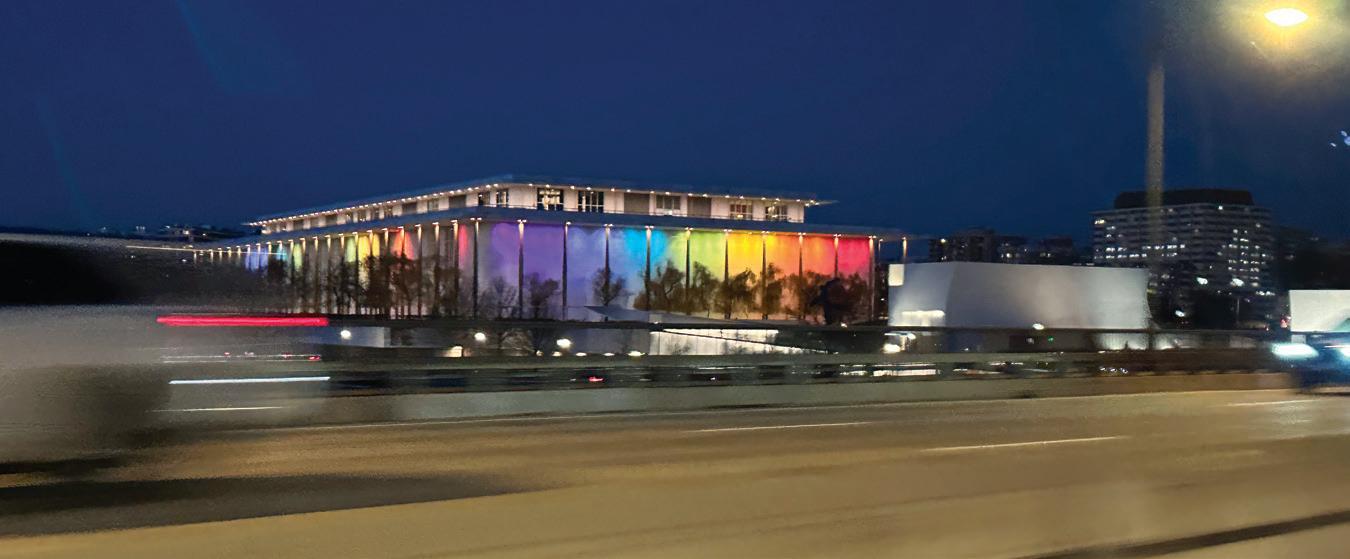
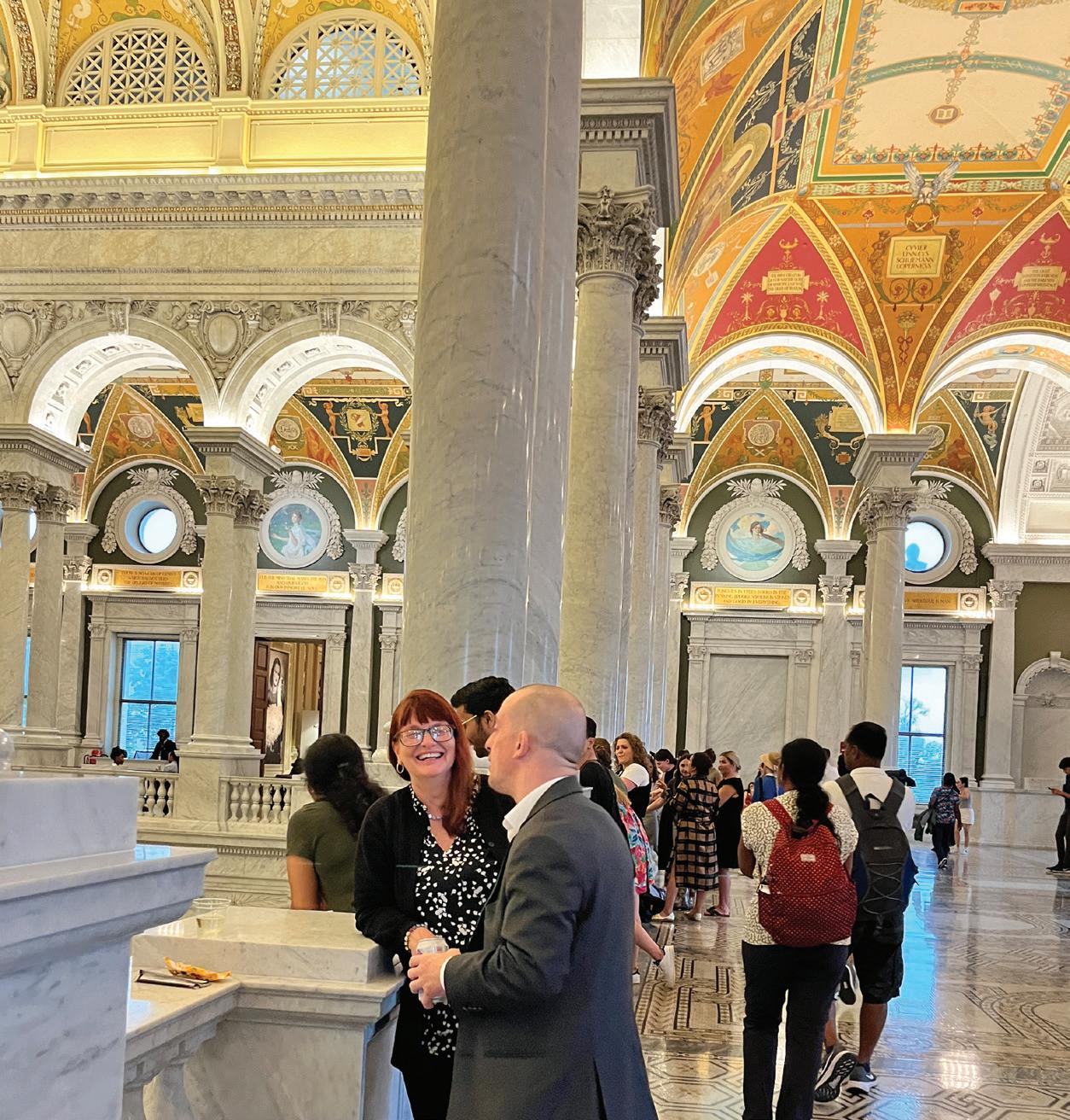
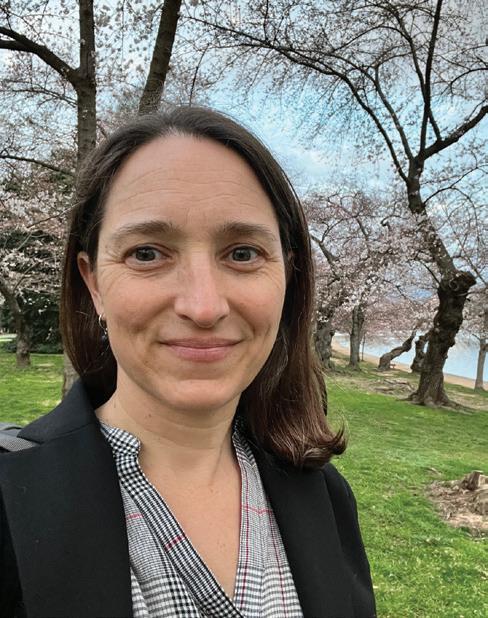
Clockwise from top left: professor Sarah Hall and former United States Secretary of the Interior Deb Haaland; happy hour at the Library of Congress; the Kennedy Center when it still had rainbow lights
out of the geology department at UPR Mayagüez, was already working with USGS scientists to establish a soil moisture monitoring network through Puerto Rico to inform landslide forecasting efforts. Building on this, Hall facilitated the implementation of the LandslideReady Community Engagement Program run by PRLHMO scientists, students, and staff. The team engaged with emergency management offices throughout Puerto Rico and got folks thinking about simple, actionable tasks like how to make evacuation plans and where to store emergency vehicles. They raised awareness about the soil monitoring stations across Puerto Rico, noting that when soil saturation is above a certain point, landslides are more likely.
There are many fine scientists working with LandslideReady but the one who has made the deepest impression on Hall is the primary investigator on the project, Dr. Stephen Hughes.
Hughes is demonstrating how to do fantastic science that is both top-notch research and applied community-focused work, while also being a caring/concerned neighbor/resident that can communicate effectively with many different people.
This speaks directly to Hall’s work on well water quality and seeking to turn science into actions.
According to Hall, “It’s not so much that Hughes can communicate with everyone, but that he finds the people who are respected in communities, builds relationships with them, and learns to communicate with them.” This has really been an inspiration for Hall.
While she deeply missed the forests, lakes, friends, and colleagues in Maine, working in DC brought its own set of opportunities. Hall had the great privilege to meet former Secretary of the Interior Deb Haaland and both Maine Senators. She was active in the Geological Society of Washington and attended some congressional committee meetings in person. “I lived in Arlington and was able to easily get to all sorts of museums in the DC area. The many bike
paths made the green spaces of the city accessible. In Arlington you could stand at Gravely Point and watch planes pass just overhead as they take off or land at National Airport. The Library of Congress has a happy hour event and is open late every Thursday night and you can just wander—with or without beverage—through all the beautiful spaces and collections in those buildings.”
In the end, it was a deeply human-ecological journey for Hall. “I think there’s science that informs policy and then there’s policy that can enable science. And they’re fluid… All of this involves a lot of translating and communicating across structures and systems that make it really slow, so you need to be flexible and enjoy small victories when they happen.” For Hall, working with a diverse group of people who had different expertise and modes of communication was more refreshing than difficult. “I loved working like we knew what the goal was and we were focused on it and the associated activities… There was a great connection between basic and applied research.” Hall wants to continue working on the regional and local scale, she calls it the “sweet spot,” the place where stuff gets done. Looking at the current political and scientific landscape, Hall remarks that “messaging and communication are just so, so important for observation-based and science-informed decision making.”
Currently, Hall serves as an affiliate to the USGS, contributing to management of the working group and continuing efforts with colleagues in the USGS Office of Risk and Resilience to document losses due to landslides each year. Her job is to focus on losses within national parks and she already has COA work-study students contributing to the effort. She hopes to expand the project to offer research opportunities to students in the future.
Sarah Hall
Strange subway posters in DC
The way
Celebrating 25 years of Davis Scholarships at COA
Shir Kehila ’18
OPENING AN INTERVIEW with a closed question may seem strange to some people. Generally, I would agree. And yet, I found myself asking every Davis scholar who agreed to an interview whether they would have been able to attend COA, or any other college in the US, if it weren’t for this scholarship. They all said some variation of “no.” I would have, too.
Co-founded in 2000 by philanthropist Shelby M.C. Davis and educator Phil Geier, the Davis Scholarship Program provides need-based financial aid to United World College (UWC) graduates—American and international—in partner US institutions. When it started out, the program had just five partner schools, COA among them, and 43 scholars. Last year, on its 25th anniversary, the program had more than 100 such partners and over 4,500 scholars. Its alumni count surpassed 15,000.
“The idea for a post-UWC scholarship,” Phil Geier wrote to me, “came about for three sequential reasons.” Then president of UWC USA in New México, Geier was confronted by the fact that, while UWC students were often admitted to American colleges and universities, they could rarely afford to go. Around the same time, Geier traveled with Shelby Davis—who had just expanded UWC scholarships for American students—to meet the recipients of these scholarships on campuses around the world. It was during this trip that Davis, impressed by the scholars’ non-American roommates and friends, got the idea for the program.
“Shelby and I viewed the end of the 20th century and the beginning of the 21st as a tipping point in international education,” Geier wrote, “an opportunity to help transform American campuses into more global communities and contribute to opening the eyes of all students and faculty to the benefits of living with and learning from difference.” So there was a need, a way to answer it, and the moment and means to do so: in collaboration, at the brink of a new millenium.
Andres Jennings ’08 had been a Davis Scholar
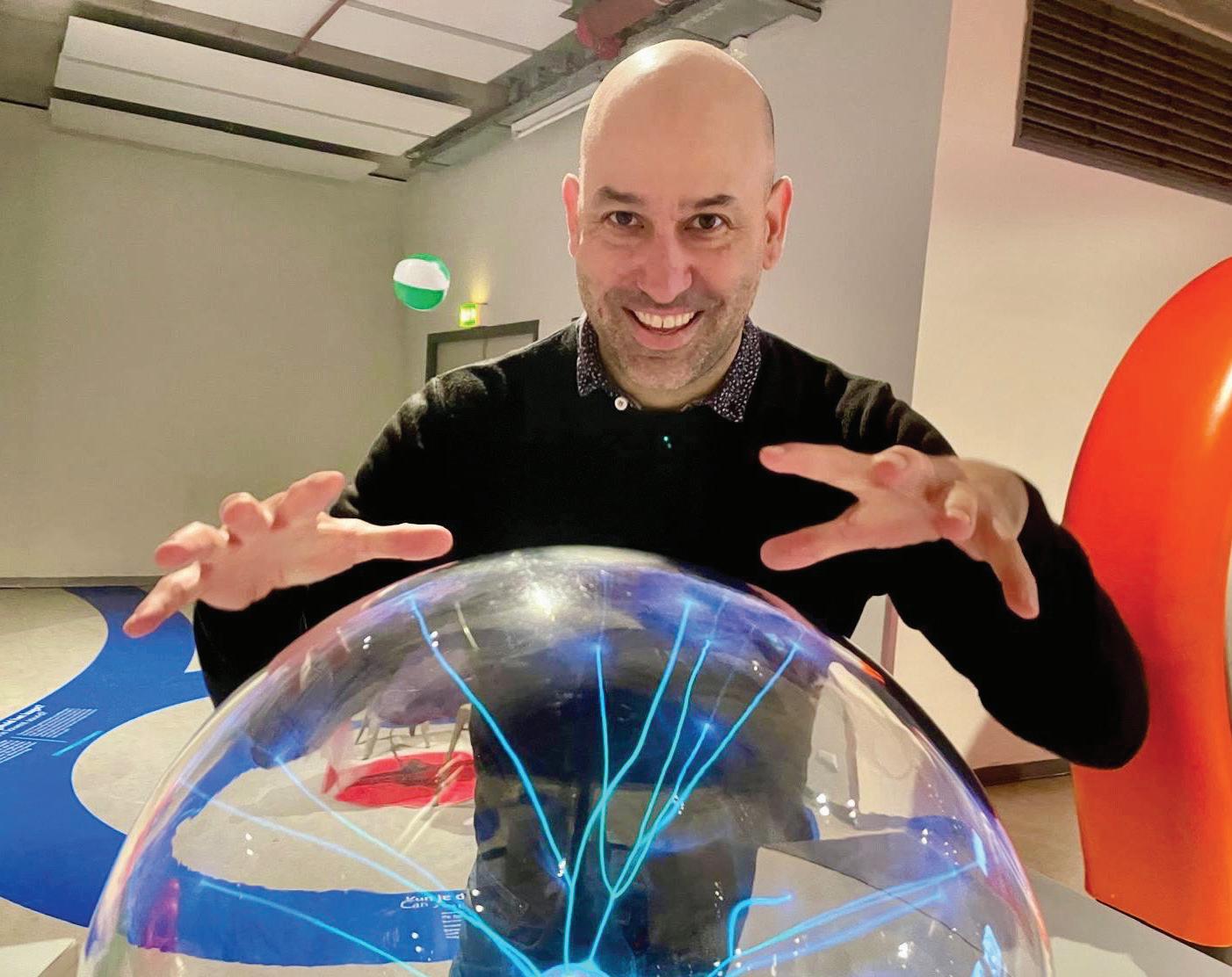
before he came to COA. Originally from Santa Fe, New México, he grew up attending events at the local UWC USA, where he was once approached by a man in salmon-colored pants. “You should apply to these schools,” the man said to 15-year-old Jennings, then got up to the sound of applause. It was 1999, and Davis had just donated 45 million dollars to the school.
When Jennings next met Davis, he learned a life philosophy he’s been living by ever since. “I want you to focus on three things,” he remembers the philanthropist saying, “and I want you to dedicate 30 years to each.” The first, he explained, should be devoted to study, the next to money-making, and the last to giving it back.
“I regard my support for these students not as gifts,” Davis wrote, “but investments. I am investing in promising students from all over the world, with the hope of realizing major long-term returns in the form of a better, safer, and more peaceful world.”
The “learn, earn, return” philosophy guides Jennings in his day-to-day life, he told me. Now in the “earn” phase, he runs a sustainable tourism company in Porto, Portugal, where he lives with his wife, toddler, and trilingual five-year-old. He writes Davis annual email updates, feeling duty-bound to share his
Andres Jennings ’08
progress with the man who invested in not just four, but six years of his education. The man who saw him, alongside thousands of other young students, as investments worth making.
Like many Davis Scholars, Jennings first learned about COA from other Davis Scholars. Unsure what he wanted to study right out of high school, “COA made sense,” he told me. “It was a no-brainer.”
Juliana Trujillo Mesa ’24 felt a similar way. She wasn’t just reluctant to choose a major, but also did not want to dedicate four years to any one discipline. And so, COA made sense to her, too. She did have some reservations, though, as someone “not genetically designed for winter,” as she put it. Her time in Colombia, India, and Brazil, where she spent a Global Citizen Year—another opportunity funded by Davis—did little to prepare her for Maine winters. What it did prepare her for was life in close-knit communities. Knowing she’d find one at COA, she told me, made the school “a no-brainer” for her, too.
The words “no-brainer” and “made sense” resonated, when it came to COA, not just because I heard them twice the same day, but because I’d felt the same way a decade earlier. COA seemed so aligned with the UWC movement, applying felt like a
natural next step. But what made it worth the effort, on a fundamental level, was less the compatibility of values and more the availability of the Davis Scholarship. It was about the knowledge that, should I be admitted, I could afford to go.
Like Jennings, Trujillo Mesa attended UWC on a scholarship funded by Davis. “He got me through high school,” she said, “through a gap year, through college,”“I call you Uncle Davis,” she told him in 2024, at the [Champlain Society Reception] on campus. Likely, she isn’t the only one.
Trujillo Mesa first met Davis while still at UWC Mahindra, during the early days of Trump’s first presidency. When asked why he chose to offer scholarships only to US schools, where most UWC students were now hesitant to go, Davis explained it was his way to support both a cause he believed in and his own country. “The USA could use students like you,” Trujillo Mesa remembers him saying.
The more I thought about it, the more the scholarship itself seemed to be about reciprocity: about the relationship between students and schools, between people and the spaces they inhabit. It seemed human ecological in essence. It seemed like human ecology in practice.
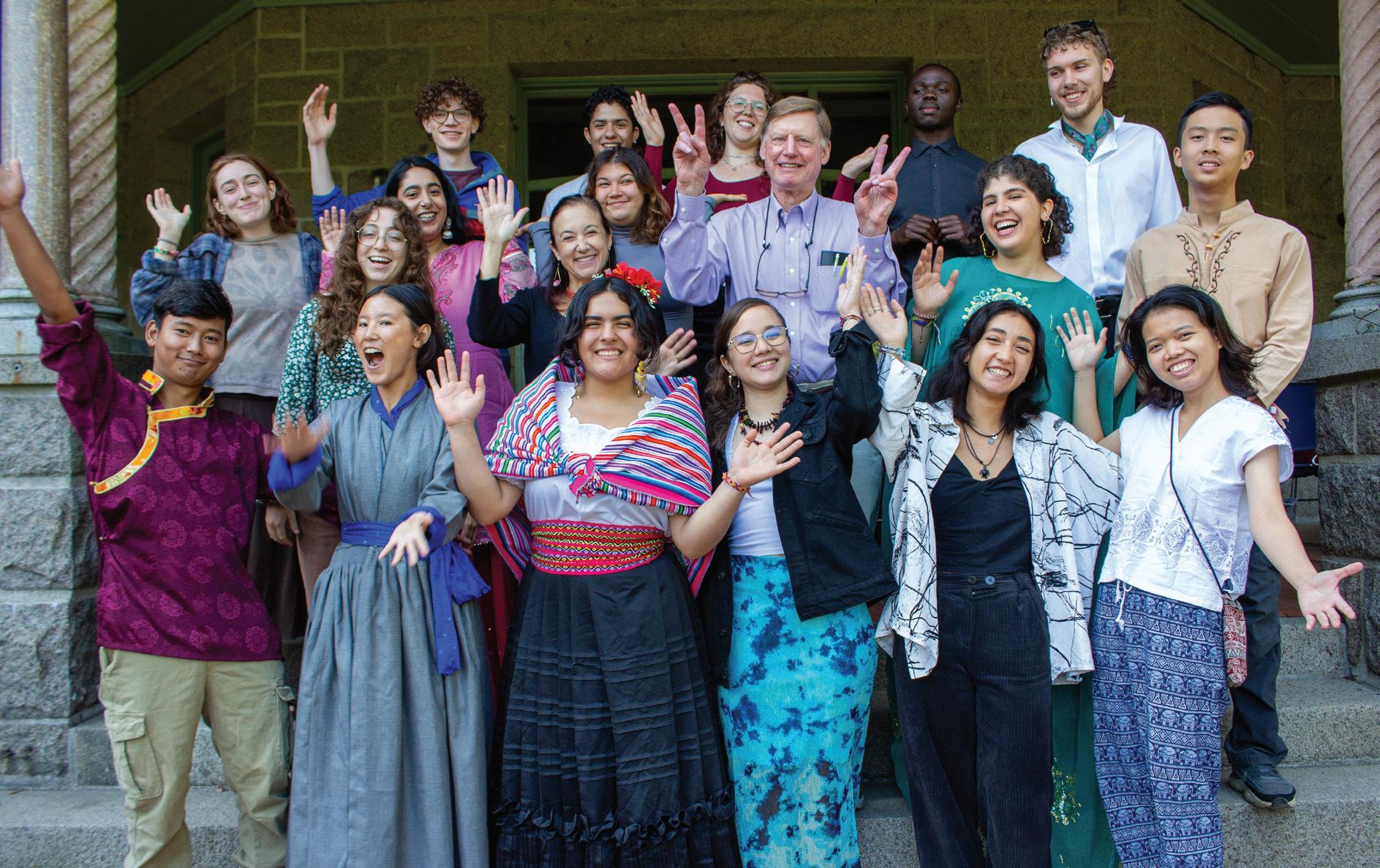
A group of fi rst-year Davis United World College Scholars gather with program executive director Phil Geier at The Turrets for the annual Globe Ceremony
Trujillo Mesa’s COA journey embodies this reciprocity. During her first term on campus, she co-founded The Antiracist Growing Space, a group whose online meetings were open to the community. Its creation inspired Trujillo Mesa to join the Diversity, Equity and Inclusion, Oversight, Accountability, and Research Team at COA. While working to understand the school’s DEI needs, members of the task force realized COA lacked a human resources department. The discovery led Trujillo Mesa to design an independent study in HR, join COA’s personnel committee, and, most recently, apply for master’s programs in HR. Like other Davis Scholars, she had to lead community-based projects, facilitate meetings, and speak in public at UWC, which prepared her, as she said, “to hit the ground running,” at COA. She wasn’t just ready to make the most of what the school had to offer. She was ready to help create what it didn’t.
“I can attest to the intellectual engagement and sense of responsibility demonstrated by the UWC Scholars,” COA President Sylvia Torti said. “During my on-campus interview, some of the most thoughtful and challenging questions came from Davis Scholars.” And while it may be true that, as Andres put it, “COA wouldn’t have been what it is without Davis Scholars,” it’s also true that many of us wouldn’t have been where we are now not only without the Davis Scholarship, but without COA.
“I’m a dramaturg because of [Joanne Woodward & Paul Newman Chair in Performing Arts] Jodi Baker,” Anna Parsons ’23 told me, “and an editor
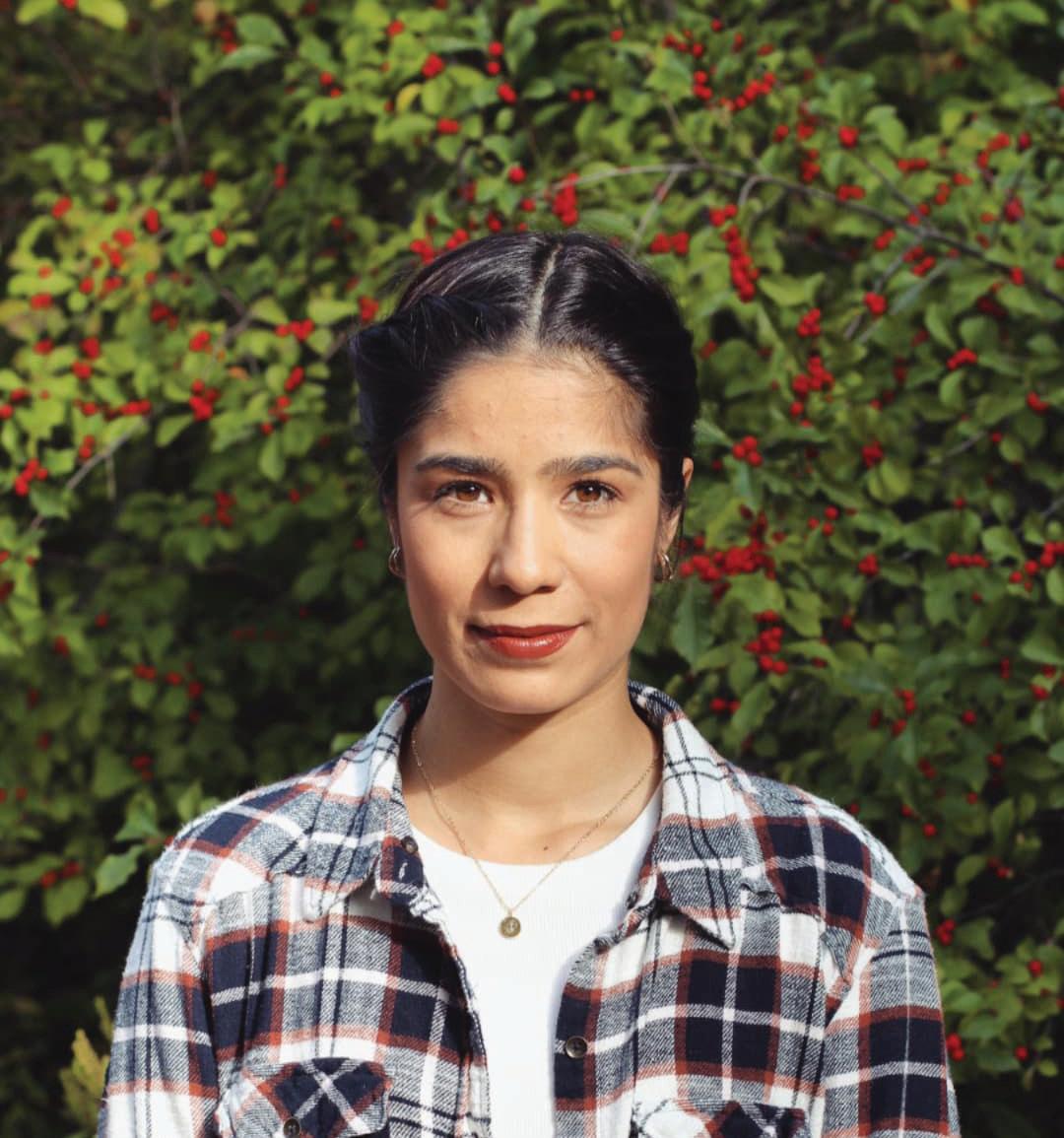
because of [COA lecturer and magazine editor] Dan Mahoney.” Working behind the scenes in a literary magazine as well as a journal for cultural analysis, Parsons is a writer in their own right. Their master’s thesis, exploring Carolina Bianchi’s play, The Bride and the Goodnight Cinderella, will be published as a book, as had the thesis of fellow Davis Scholar, COA, and University of Amsterdam alum, Goya van den Berg ’21.
Recent graduate Sara Wagner ’24 is also doing work informed by her time at COA. Following the abrupt closure of an interdisciplinary dance program she’d enrolled in, Wagner began applying for and participating in multiple other interdisciplinary dance projects, residencies, and exchanges across Europe. No stranger to an interrupted education— having been at COA through COVID, when a monster course she took helped turn restrictions to opportunities—Wagner knew an obstacle could be a stepping stone.
But it’s not just recent graduates who reflect on— and make work that reflects—their COA education. For Carmen Bedard-Gautrais ’07, COA “brought wonder back to the classroom.” It was where she “learned to love learning again,” as well as where she began exploring her interest in health and wellness. She went on to get a master’s in physical therapy and a PhD in traditional Chinese medicine, and now runs her own practice, working closely with medical doctors, across two islands in British Columbia, Canada. “The interdisciplinary, patient-centered approach is a direct reflection of that early work and development at COA,” she wrote. Bedard-Gautrais and her husband, who met as first-year students at COA, often think back to the college and the way it shaped their lives. They’re raising their two children on an island, having chosen to make their home where they could have a garden and be part of a community.
Charles-Olivier Levesque ’23 was first drawn to COA, in large part, because of its community. It was important to him, after graduating from UWC Pearson College, to find himself “in a place with a lot of difference around.” Home to more than 60 Davis Scholars from over 40 countries, COA was one such place. “The real strength of the Davis Scholarship,” he said, “was in bringing people together.”
Interested in social, economic, and educational alternatives, Levesque came to COA not only to surround himself with difference, but to study it. In Quebec, his home province, higher education was
Juliana Trujillo Mesa ’24
publicly funded, so that degree programs cater to the labor market. “If the labor market doesn’t say, We need this,” he explained, “then it doesn’t get funded.” The Davis Scholarship was a way to access a liberal arts education—an alternative which allowed him, in turn, to explore many others. Continuing this exploration on a Thomas J. Watson Fellowship, Levesque traveled to remote, devitalized communities—much like the one he was from—to look at how they might revitalize themselves through socio-ecological transitions. Wherever possible, he biked between destinations.
Levesque is now back in the Gaspé Peninsula, hoping to use the knowledge he’s gained in his years away to benefit the community he’s from. Having studied alternative food systems at COA and on the Watson Fellowship, he’s now helping found an agroecology research center that would create partnerships between the local government and farmers’ union. “I’m planting seeds,” he told me— pun maybe intended.
Sonic Dlamini ’10 also chose to return to his home country, Swaziland, after graduating COA. With job offers in both Bar Harbor and New York City, Dlamini “felt compelled to go back and be part of my country’s development,” he wrote, “in keeping with Shelby Davis’ mandate: Go on and change the world !”
At COA, Dlamini quickly became a climate activist, attending conferences, summits, and his firstever protest.
“Marches were always met with police brutality in Swaziland,” so he marched for the first time on the Capitol’s West Lawn in 2009, protesting the Capitol Power Plant’s coal usage.
“The Davis Scholarship meant endless doors were now suddenly open,” Dlamini wrote, “[which is] a rare opportunity for someone without a permanent home, being raised by a single unemployed and disabled mother.” COA was the only school that,
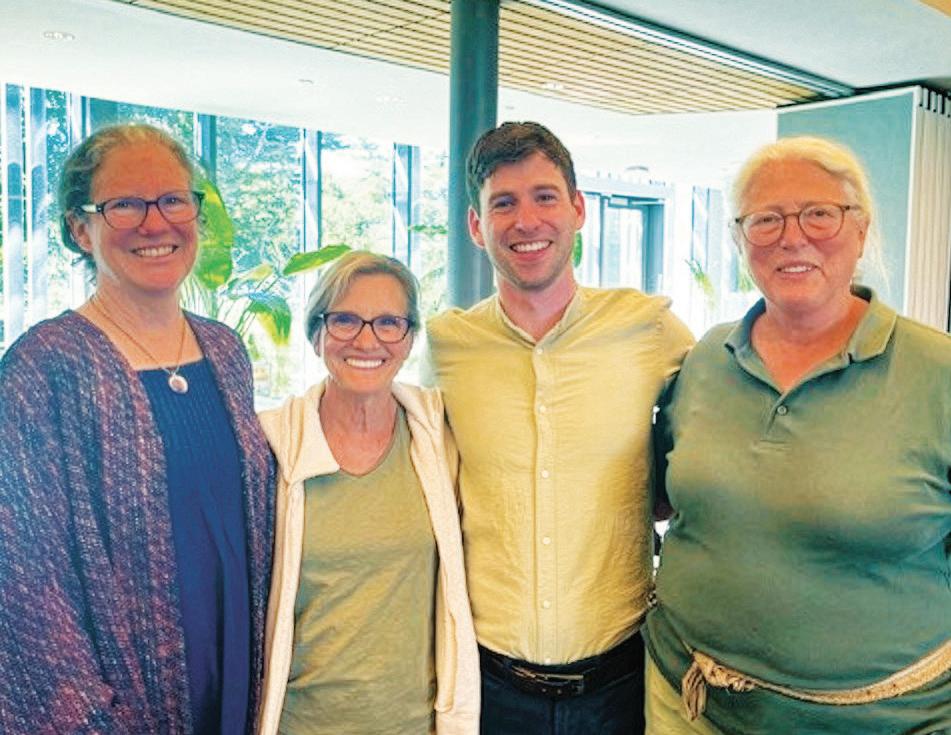
in conjunction with the scholarship, offered him a financial aid packet which included flight tickets, which was what he needed in order to arrive not just in theory, but in time.
Now leading a male mentoring organization, Dlamini also serves as the chair of the Eswatini Gender Consortium. He most recently returned to the US as his country’s representative at the 69th session of the UN’s Commission on the Status of Women, in early 2025. “I guess the journey has not yet ended,” he wrote.
Yaniv Korman ’18 also returned to the country on a recent work trip. In August 2025, he accompanied his employer, British landscape architect Tom Stuart-Smith, and his wife, psychiatrist and author Sue Stuart-Smith, all the way back to Bar Harbor. In a literal sense, the trip started when the three flew out of London. In a more ethereal one, it had started back on this side of the Atlantic, with a book passing from one pair of hands to another.
Korman was the rare COA student who arrived knowing exactly what he wanted to study. Hoping to become a landscape architect, he began working with professor Isabelle Mancinelli, who introduced him to gardens around the island. While gardening with COA Head Gardener Barbara Meyers ’89 for his work study, Korman grew interested in the Sunken Garden on campus. His research led him to the Beatrix Ferrand Society, a local nonprofit where he began volunteering, and whose president, Scott Koniecko, he’s kept in touch with. At one of their recent meetings, Korman gifted Scott a book by his boss, Tom Stuart-Smith. Not long afterwards, Scott emailed to say he was interested in giving Stuart-Smith the Beatrix Ferrand Achievement
Suzanne Morse, Isabel Mancinelli, Yaniv Korman ’18, and Barbara Meyers
Sonic Dlamini ’10
Award, and Korman, who was elated, began making arrangements for the trip. He reached out to COA, suggesting to have his boss give a talk on campus. “It was easy to make happen,” he told me, “because I had so many connections.”
Community played an important role also for Zuri de Souza ’14, now an independent chef and writer based in Marseille. What she remembers most from COA, “besides the academic nourishment” was spending long hours, like Korman, gardening with Barbara Meyers, learning about permaculture at Zocalo, and hiking with her host family.
Davis Scholars continue to engage with the Mount Desert Island community, both on the personal level and on the professional one. They have interned at the Jackson Laboratory in Bar Harbor and the MDI Biological Laboratory. They have worked on river herring restoration, research, and management in the Gulf of Maine and conducted energy audits as part of COA’s energy outreach program, launched in the summer of 2023.
Some Davis Scholars, like Korman, keep finding, and creating, reasons to come back to the island. “I have more of a community on MDI,” he told me, “than in my hometown.” Some of us love it so much, we find reasons to stay.
Sadie Cooley ’22 now works as an archive specialist at the Friend Memorial Library in Brooklin, on the Blue Hill Peninsula. “Sadie came to Maine from New México to attend College of the Atlantic,” the library’s website reads, “and has never left.” Devina Iyer ’16 came to COA from India, where she lived in an urban environment without much access to nature. “I’d never felt more safe than I have here,” she told me. After graduating, Devina moved to nearby Trenton with her partner, a fellow COA graduate, and opened both a dog training and a bookkeeping business— “something to do when it’s nice outside,” she told me, “and something to do when it’s not nice outside.” She has since tapered both down and now works in cyber security while pursuing a master’s in the same field. “I genuinely love it here,” she told me. “I think Maine is my place.”
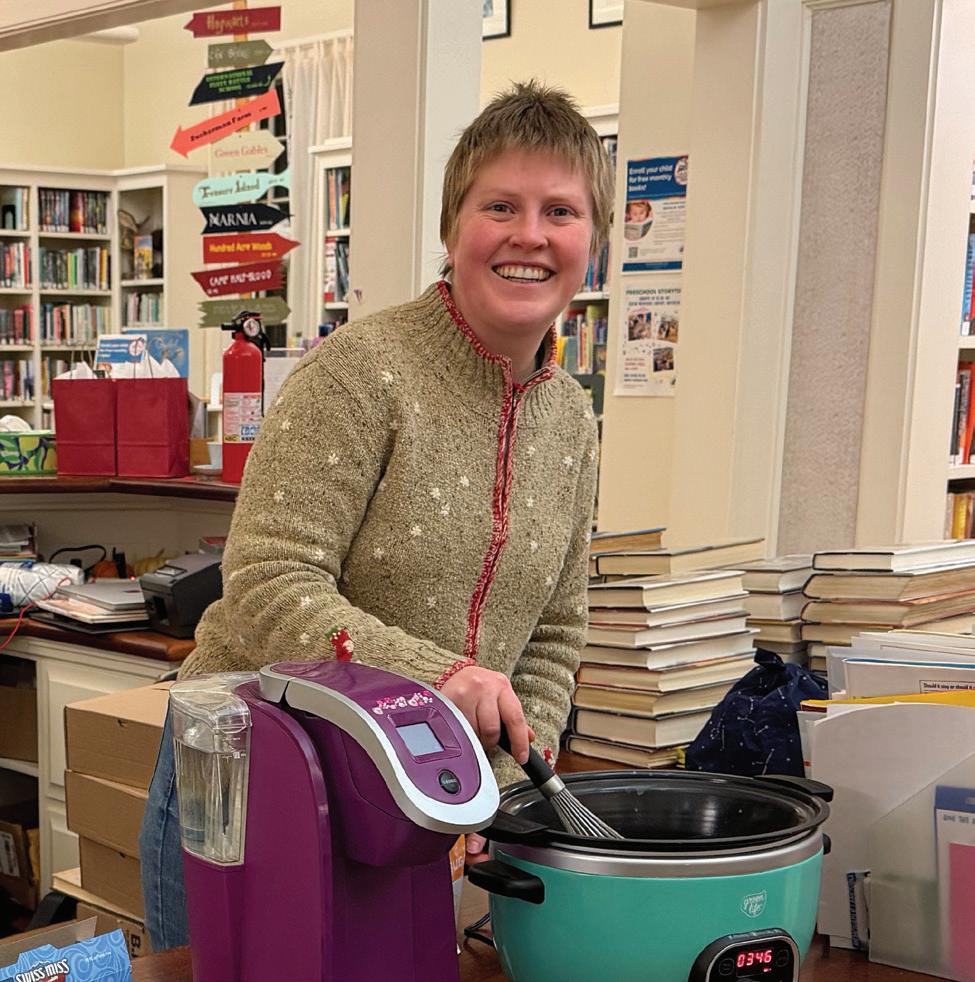
It has become mine, too. Like Iyer and BedardGautrais, I married a fellow COA graduate; like Korman and de Souza, I garden; like Cooley, I work at a local library. But most of the time, I do what I would have anywhere, which is write, only with views I would have found nowhere else.
While still at COA, I was sometimes asked how I ended up such a long way from home. This question came back to me when, in response to my closed opener, Would you have come to COA if it weren’t for the Davis Scholarship? Korman said, No way. The words struck me because the Davis Scholarship was, for so many of us, the way. I wouldn’t have ended up here without it. I wouldn’t have gotten to stay. I wouldn’t have gotten to say, as I now do in response to the question, that I am home.
Zuri de Souza ’14
Sadie Cooley ’22


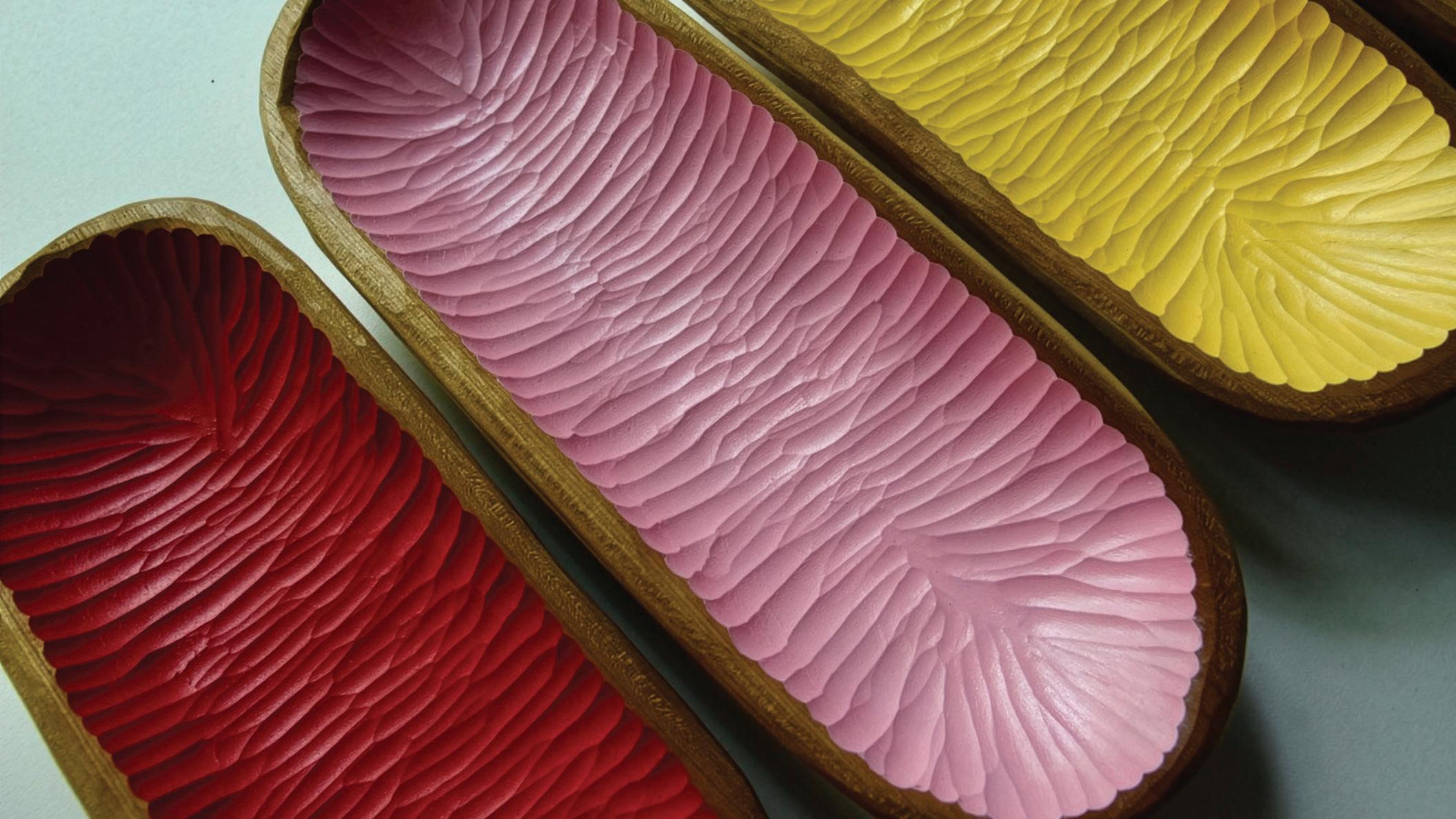
Honoring common forms
Danielle Rose Byrd ’05
CHRONIC ILLNESS has shaped much of my practice and techniques, encouraging me to blend power carving and hand tool work to sculpt and carve wood. This allows me to push the boundaries of vessel and abstract forms while honoring the limits of my body. It has also presented an opportunity to consider, personally and collectively, how our bodies relate to production and worth.
I often use carved texture as a visual history of the force used to create each piece, and find it conveys most universally the complex struggle of asking my body to partake in such a physical process. Hidden labor made visible is of particular interest to me, as I believe it points to the factors (and benefactors) of many imbalanced relationships, both small scale personal and large scale sociopolitical.
My work often begins with whole logs, which is tightly tied to my upbringing watching logs being processed in the open yards of the paper mill in my hometown of Rumford, in the rural foothills of Western Maine. Seeing this raw resource trucked into town day after day told only part of the story,
and was just one instance of many where only parts of the story were made visible. The people who worked it into a profi table product were not the ones who saw the profi t, but who suffered the consequences of an exceptionally toxic industry. Many other value structures in virtually every line of business imaginable mimic this dynamic. Living in a much wealthier community on the coast these last few decades has deepened my knowledge of how wealth inequality informs many of these outcomes and is amplifi ed by other purposefully disadvantaged identities.
I’ve taken this insight and am now transposing it to the craft world, casting light on deeply embedded notions of value and access using the basic tenets of disability justice. Who and what we choose to hide or ignore, and who benefits from that ignorance also holds the solutions we continue to refuse. How we behave at the small scale is also what we will bring to the large scale, and I believe that blurring the lines of utility and still honoring worth in common forms like bowls has the capacity to invite change at a more approachable level.
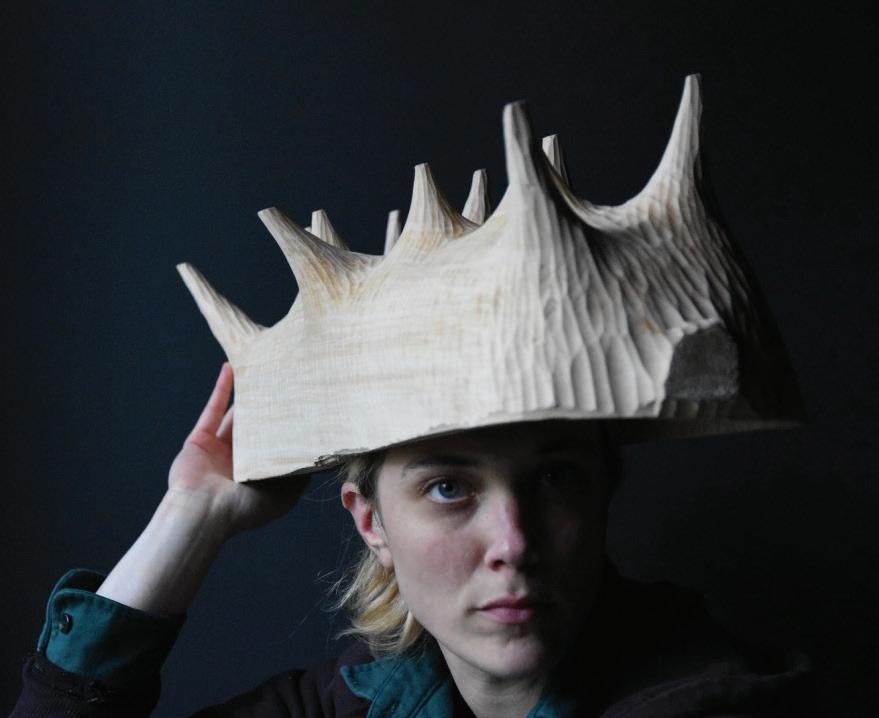
Danielle Rose Byrd ’05 is a primarily self-taught wood sculptor and carver originally from Western Maine and now living in Bar Harbor, Maine. At College of the Atlantic, they explored music and sound sculpture. While building a handmade fiddle-like instrument constructed from burn pile wood found on campus, they began carving scraps into spoons. They now make functional and nonfunctional work, and things hazily in-between. Lately they’ve been working on music and sound again, and looking for ways to bring it into their sculptural woodwork. They have written for Fine Woodworking, Mortise & Tenon Magazine, Popular Woodworking, and from 2014-17 were a member of LieNielsen Toolworks hand tool events, traveling the country teaching hand tool woodworking fundamentals.
In 2018 they were awarded the Belvedere Handcraft Fellowship from the Maine Arts Commission, were CoBest in Show at the 2024 Maine Wood Biennial, and have received a number of grants to support their work. They have taught workshops on their bowl carving methods all across the country and far-flung parts of the world. Their instructional book, The Handcarved Bowl, was published by Blue Hill Press in 2021.
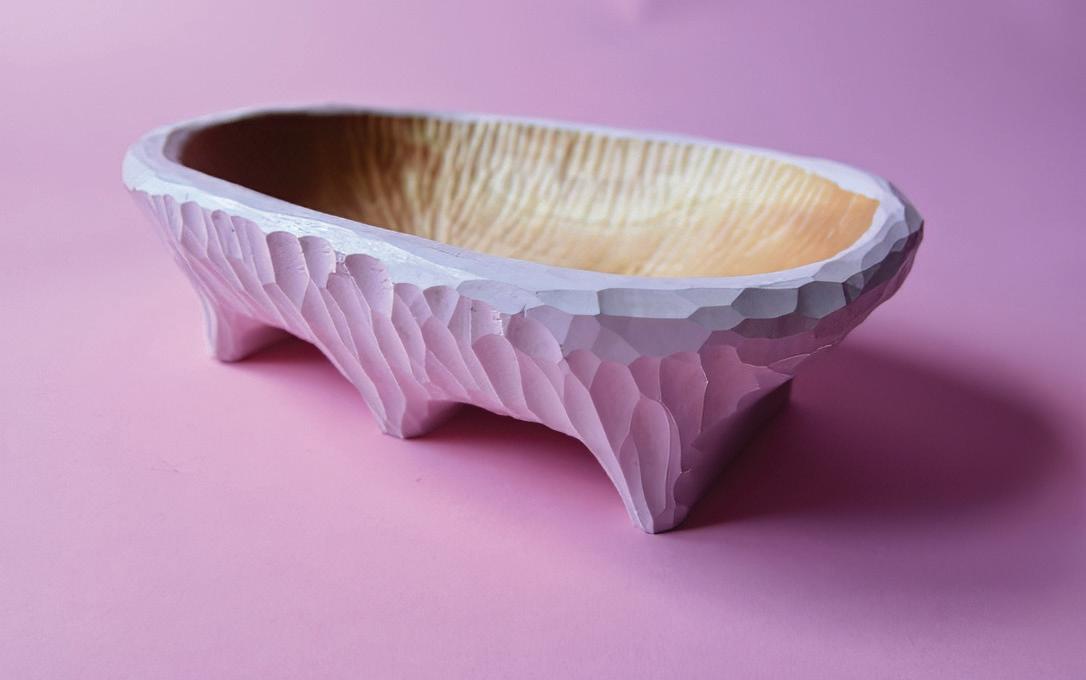



Pink #2 , 2024
Periwinkle #3 , 2024


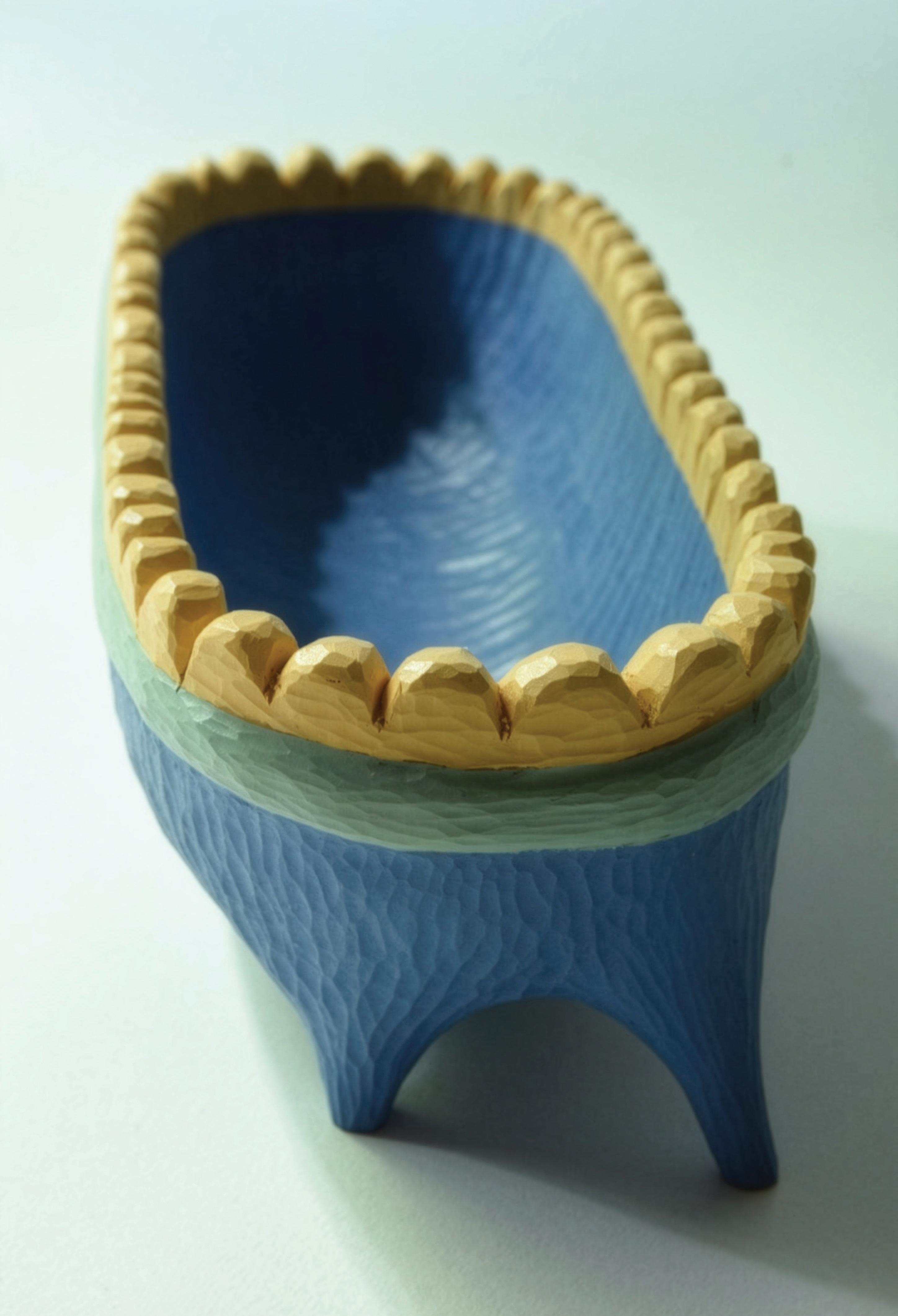
Bite
Hand #1 , 2024

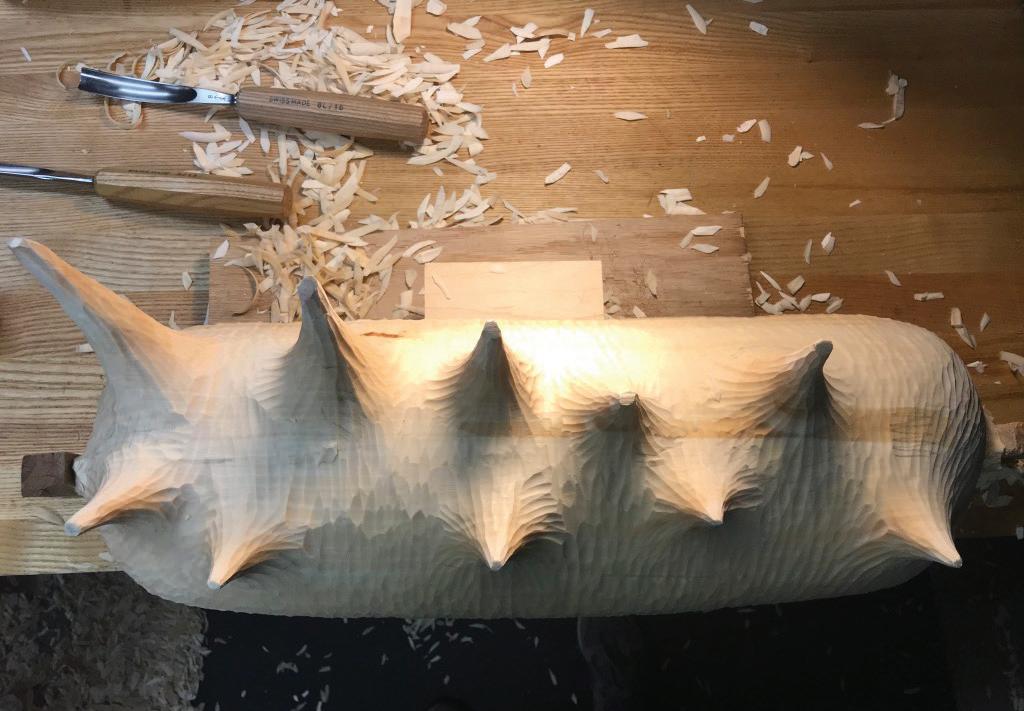
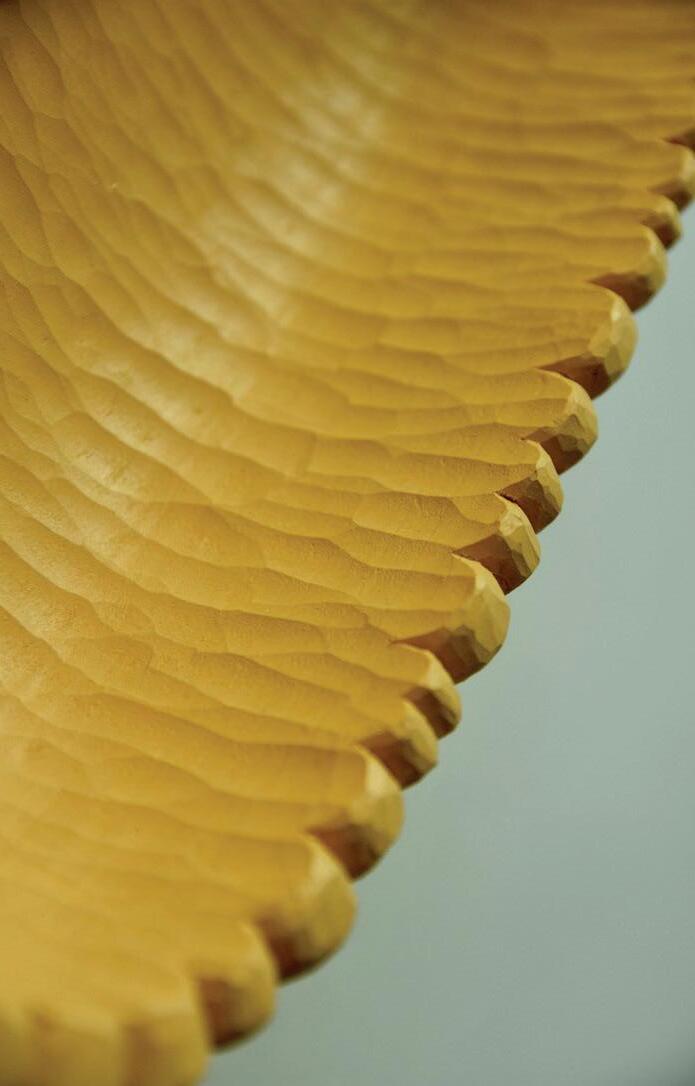
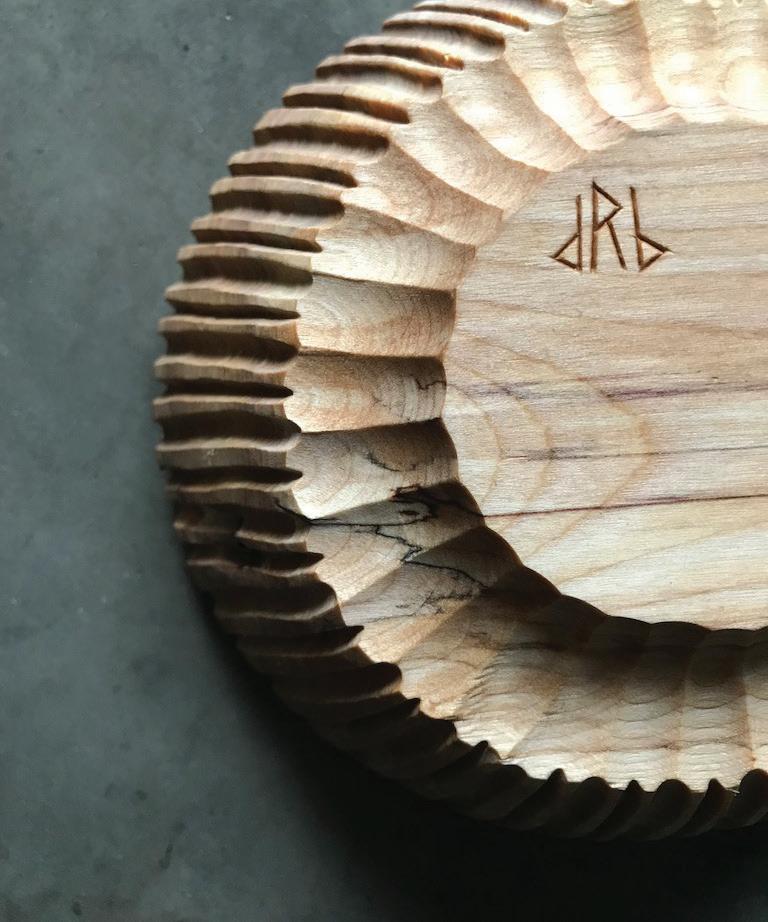



Antique Watermelon , 2023
Bite The Hand #2 , 2024
Here, I Picked You a Flower, 2024
Carving The Dancer, 2019
Peanut Butter Cup , 2018
PROGRESS
(excerpt)
Sam Miller McDonald ’09
WHETHER
OR WHEN progress can be shown to have occurred depends entirely on when measurements start and end, where the lens is focused, how those measurements are conducted, and what data researchers choose to include or omit. Sometimes what appears to be progress in technology is actually just the solution to a new problem caused by some other technology that falls outside the scope of a given study, while progress in justice and civil rights may be but a slight improvement on conditions that were not natural or eternal, but were newly created horrors at the beginning of the time period under consideration. Grand narratives of progress begin to break down when you look closely at them. It soon becomes clear that they instead often serve more cynical purposes.
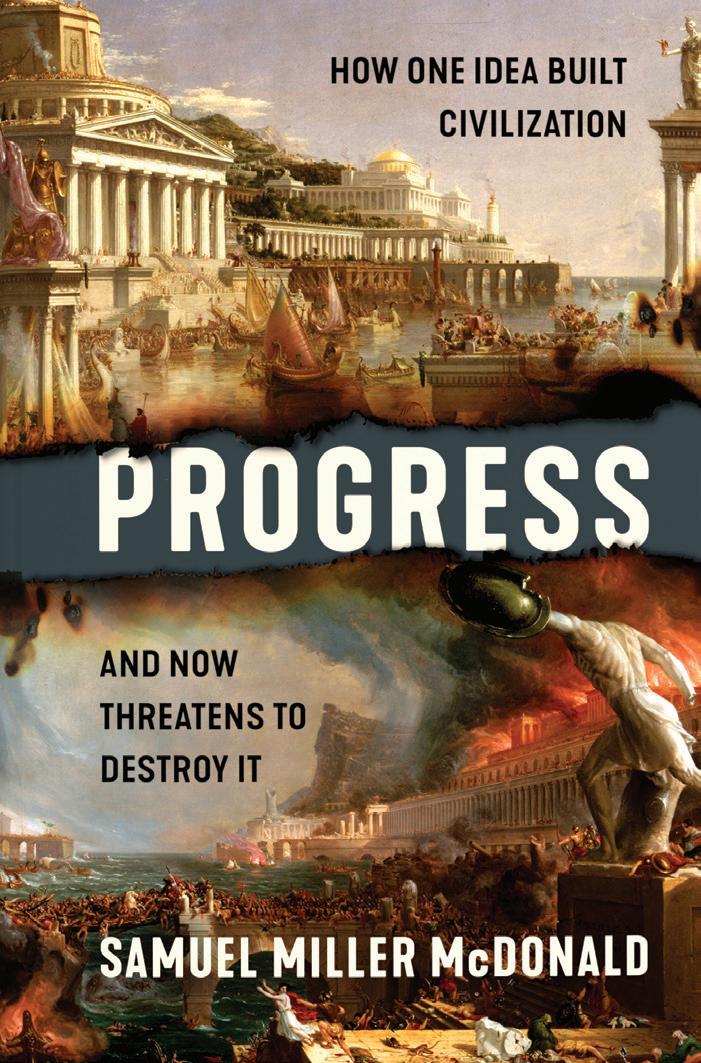
This faith, that history moves progressively, is at the foundation of my own upbringing. My parents have engaged in lifelong battles to improve the world they inherited, with an earnest urgency one sometimes finds—for better or worse—in US Midwesterners, which I could not help but absorb. They’ve protested in Washington, DC, they’ve volunteered for local and national candidates for office and for local and national organizations. They obviously do not believe progress is natural or inevitable. They believe you have to fight for it. And they instilled in me a deep-buried belief in the possibility of societal progress: of the value of participating in collective action movements to do whatever one can to make life better for other human beings and for all the other creatures that share the one planet known to house life. Some of my earliest memories involve attempting to decipher protest signs in the garage (“Keep your laws off my body”?) or accompanying my mother to envelopestuffing gatherings for a local politician. I began attending rallies and protests in my teens, seeing both the heart-fluttering power of hundreds of thousands of voices ringing together and the cold terror of kids being beaten bloody by riot police. Growing up among wild habitat in northern Michigan, I felt more at home among forests and hills than anywhere else. Seeing firsthand the destruction of beloved places, I have felt deeply committed to wilderness protection. After years of participating in activism and becoming disillusioned with its lack of success, I have lately been focusing on scholarship and public writing. It is this combination of experiences and a desire to contribute to meaningful change that turned my eye toward the idea of progress itself.
Studying progress as a cultural artifact and its connection to material systems, like economies and ecologies, is not straightforward. It is interpretive and, given the importance and complexity of the idea, must be approached from multiple angles. I
Progress: How One Idea Built Civilization and Now Threatens to Destroy It , St. Martin’s Press, 2025
set out to study this phenomenon first through the lens of my area of expertise, geography. From the Greek γεωγραφία, combining “earth” and “writing,” integrated geography is the study of how ecological systems interact with human systems through space and time. It is an inter-disciplinary field, and as such I have approached the subject with the tools of multiple disciplines. Progress as a narrative formula that shapes the identity and priorities of cultures can only be understood this way, by understanding not only the culture itself, but also the ecological context in which that culture exists and is shaped.
As I began going through documents, reading books on the idea, thinking through my own relationship to these assumptions, it became clearer that the narrative infrastructure that I took for granted did not necessarily reflect history and reality. What if, I wondered, these progress narratives were not just wishful thinking, not just a human tendency to yearn for hope and paradise, but were active forms of propaganda? What if this narrative was itself a rhetoric deployed for political ends, like conquest and control, as a perverse obstacle to actually achieving progress? And, further and more subtle, though we can easily identify such propaganda when political opponents deploy it, is it possible that seemingly virtuous ideas of progress can be just as corrupt, just as wedded to systems that ultimately undermine their own stated goals?
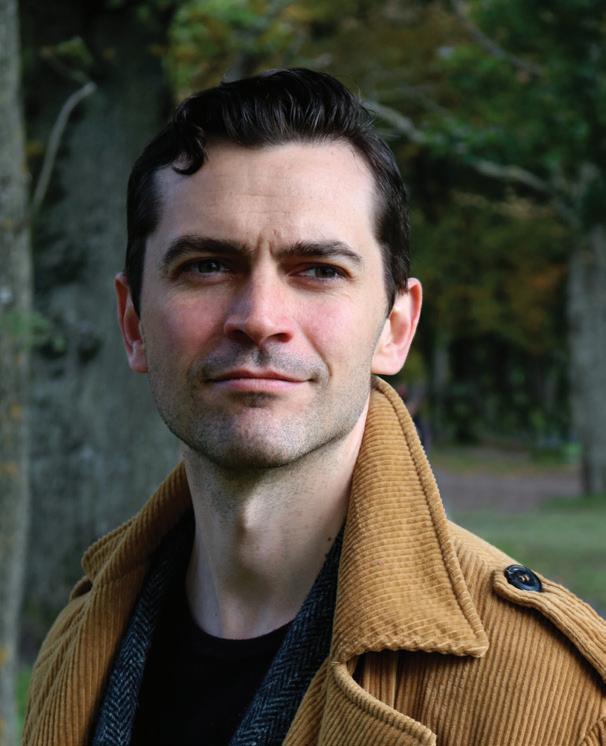
Setting aside debates around past instances of progress for now—we will come back to those later—it is very clear that whatever genuine claims can be made to improvements in the twentieth century, most or all of these are rapidly disintegrating in the twenty-first, as a direct result of that success.
Thanks to the explosion in fossil energy deployed in the last hundred years, atmospheric greenhouse gases are causing temperatures to rise more rapidly than at any other time in human history, with cascading impacts and feedback loops like increased droughts, wildfires, floods, sea-level rise, the melting of permafrost, glaciers and ice caps, ocean acidification, forest diebacks and desertification, heat waves, and more. As a result of the widespread expansion in use of synthesized chemical compounds in the Great Acceleration, other forms of airborne, waterborne, and soilborne toxic pollution are proliferating at increasing rates. As a result of skyrocketing human populations and the necessity for increased food production and housing during the last hundred years of growth, deforestation and habitat destruction are driving massive terrestrial extinctions, while overfishing, pollution, and hotter temperatures are bringing about the collapse of marine life. Since the 1970s, 60 percent of vertebrate populations have gone extinct. Two-thirds of tropical rainforests have been destroyed. Fish numbers have halved. The result of this? The extinction rate is hundreds of times greater than it would be without such pressures. Waste, too, is a growing problem: due to the invention of plastic and widespread single-use plastics, plastic waste proliferates across every region on the planet, reaching into the remotest parts of the globe, like the poles and sea floor; plastics are even found in human breast milk and blood.
In part as a result of the destruction of the biosphere, and entirely as a result of the processes that drive that destruction, human welfare is worsening in a number of key areas: democracy is declining, economic inequality is increasing poverty and slums are a growing feature of urban life, global life expectancy is falling, maternal mortality for millennials is 300 percent higher than for their parents’ generation, new infectious diseases are rapidly increasing in reach and number, social trust in institutions and individuals is decreasing, the rate of economic instability is growing and socioeconomic
Sam Miller McDonald ’09
mobility falling, along with other general well-being indicators in aggregate. In short, nearly everything is dying or degrading. By the time you read this book, such conditions will undoubtedly be worse. That is not a pessimistic assumption, but simply a realistic assessment based on all trend lines in these areas. What had appeared to be indicators of progress in human well-being during the twentieth century—greater equality in wealth distribution, rising well-being indicators, or environmental regulations, for instance— may be little more than a brief blip, at best: a quick flash resulting from all the energy that also ignited the Tsar Bomba, skyscrapers, and space shuttles.
By coincidence, on the day I wrote the first version of this paragraph—Monday, November 14, 2022—I went in search of the current number of living human beings on the planet, and on that day, the number passed the 8 billion mark. It was 3 billion fewer when I was born in 1986. Between 2018 and 2023, 400 million people have been added to the total count—net, meaning that the number accounts for those who have been subtracted. That’s adding more than the total population of the United States to the Earth in five years. The last time the total number of human beings declined is estimated to have been during the plague pandemic of the fourteenth century, which killed tens of millions. This means the world has seen nearly seven hundred years of a compounding increase in the total number of human beings. As I write in the early 2020s, there are 4 million cities and towns that house just over half of us. The roads on which many move could wrap around the planet thirteen hundred times. To feed us, about 37 percent of the planet’s land is covered by farms, many of them intensive, and between one and three trillion individual creatures are hauled out of the oceans annually and slaughtered. Two-thirds of the world’s humans have access to the internet: mass digital networks of information, communications, and markets. More than three-quarters can read words generated from among this planetary sea of human neurons. The anthroposphere has never been so vast. The biosphere has shrunk proportionately. Biomass is the total amount of biological material that makes up the living bodies of organisms. The biomass of wild mammals accounts for just 4 percent of all the mammals in the world. This means human biomass makes up more than eight times that of wild mammals, while domesticated mammal biomass is more than fifteen times greater than wild mammals. In 2020, the total mass of all animals was 4 gigatons. The total mass of plastic was more than double that, 9 gigatons. That proportion will have grown larger by the time you read this. The mass of humanity’s built environment—the stuff of Jefferson’s as yet most improved state—is greater than all life on the planet, all plants, all animals, all bacteria, everything, which means all known life in existence. The destruction of biodiversity is the sixth mass extinction that researchers know about in Earth’s history, and the first since 66 million years ago when what was likely an asteroid strike shrunk the planet’s biodiversity and ended the age of dinosaurs. There is an unknown and unquantifiable probability that today’s extinction event could end up being the worst in life’s 3.7 billion years on the planet—in all the universe, as far as we know— and could make us extinct along with much else. There is nothing more evil, nothing more horrific or important to avoid, than a situation in which the one planet in the universe known to house life is made inhospitable to most life.
Never before have so many lives, human and otherwise, depended on the immediate decisions of human beings.
Linda Fuller RETIREMENT
AFTER15 THOUGHT-PROVOKING , energizing, hopeful, and sometimes magical years at COA, I am turning my focus after June to some of these adventures:
Departure Note
Linda Fuller serves as the CoDirector of Educational Studies at COA, working closely with certification candidates through advising, teaching, and supervising student interns. Linda has been with COA for 15 years and the college will miss her deeply.
Participating in 90% of Rotary International’s community support projects (instead of 5%)
Going to weekday matinees!
Sorting, donating, shifting uses, and minimizing stuff
Exploring Maine in the style of Craig Kesselheim ’76 and his New to ME project
Bringing back the drop-by visit with renewed enthusiasm (you’ve been warned)
Spending a couple of months during the next few winters in areas enabling collaboration with international Rotary clubs
Watching Star Trek movies and shows, in order (and spending a fair bunch of time determining what might be an optimal order for viewing)
Skiing (at least briefly) each mountain in Maine in the 2027 season
Getting Christmas cards out the day after Thanksgiving
Organizing each and every recipe in my possession
Continuing to strengthen bonds with family and friends whose political views diverge widely from my own
Unearthing an exceptionally rewarding use of social media
Baking more often for people who don’t expect it
Seeking opportunities to communicate with elected officials through phone calls, emails, demonstrations, and creative activist endeavors
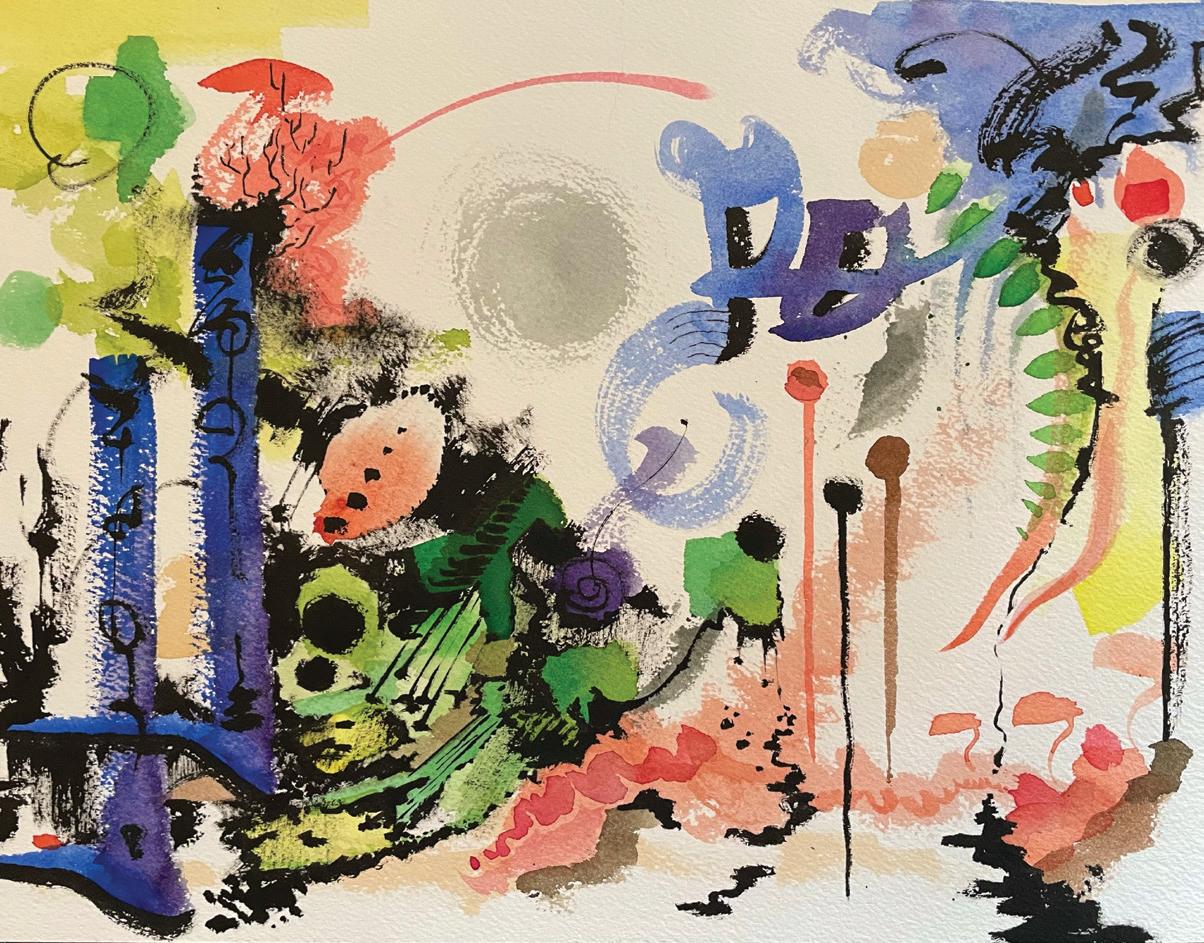
Increasing both deliberate and random acts of kindness
Increasing our family’s involvement with COA’s Community Connections program to help ensure that international students have local support and the opportunity to become familiar with interior Hancock County
Determining how to get my hands on Growth by Myles Kimball
Thank you COA community! You are amazing, unceasingly surprising, and always in my heart.
Growth by Myles Kimball
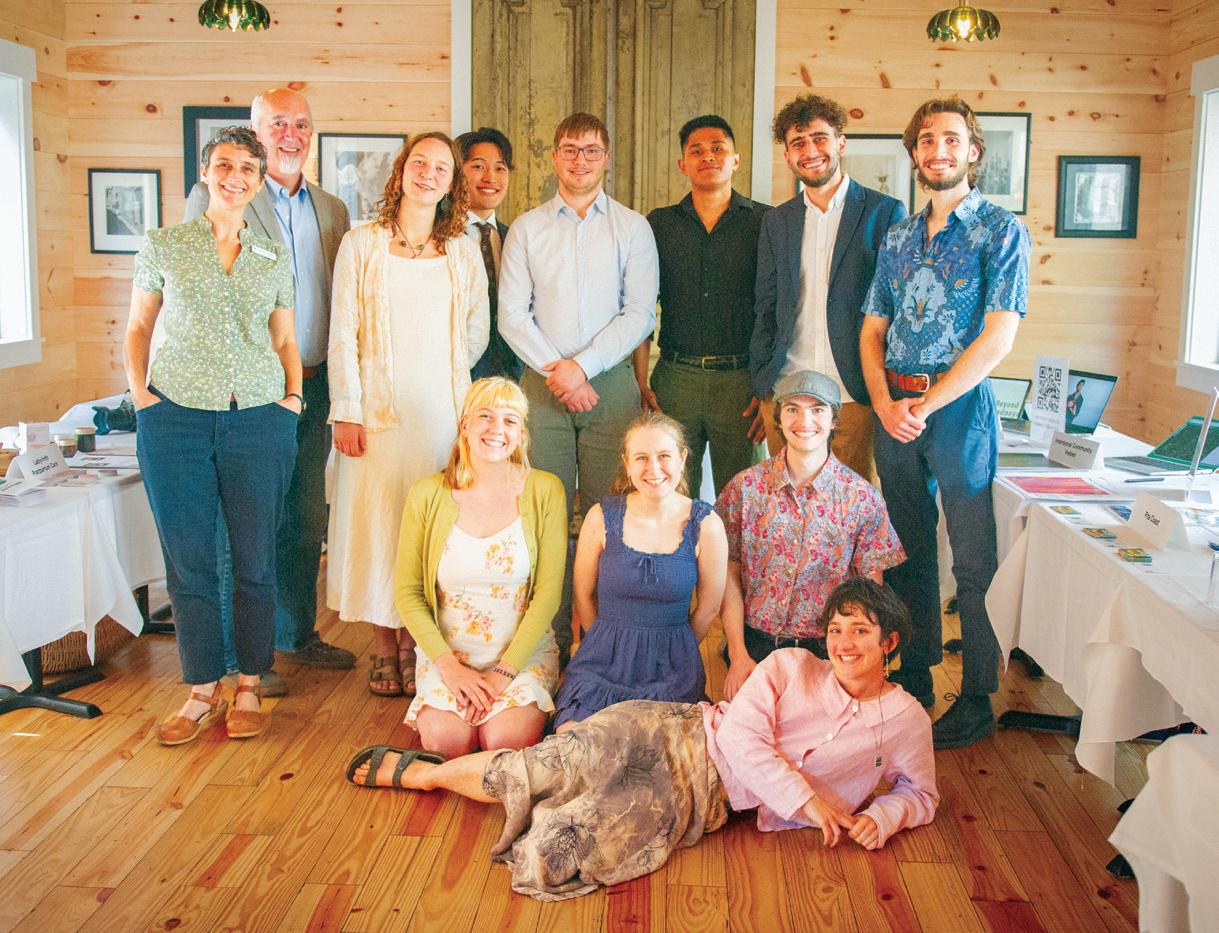
Fifteen years of the Hatchery
THEDIANA DAVIS SPENCER HATCHERY allows students to walk the entrepreneurial high wire with a safety net and support. While higher education frames success as the be-all and end-all in the real world, trial and error, intermittent success, and sometimes failure are the most effective teachers; we constantly have to adjust, reframe, and reboot through the rest of our careers and lives. The Hatchery encourages students to think on their feet, pivot when things are not working, and adapt to new environments—all skills increasingly important in the age of AI.
Established in 2010, the Hatchery is COA’s sustainable enterprise accelerator, helping students create impact by testing and launching their own ventures. In 2015, the Diana Davis Spencer Foundation endowed the program with a $1.5M grant and it was renamed in Diana’s honor.
Students enter the Hatchery in spring term. It is the only course they take and consists of 10 weeks of rapid refinement and testing. The Hatchery approach is unique among liberal arts colleges. Most incubator programs in colleges and universities exist outside of a student’s course load as something they do on the side. By offering a full term of academic credit for the program, the Hatchery aligns the entrepreneurial and educational interests of students, allowing them to start enterprises because of their education
The Hatchery fuses academic learning with a student’s personal passion, producing exponential energy, engagement, and learning. Ostensibly, the Hatchery provides students a toolkit for creating new enterprises. However, that is the tip of the iceberg.
Students also leave with a perspective and approach that embraces problem solving with experimentation, testing, and refinement. In many ways, the Hatchery is a reflection of the long history of engaged scholarship at COA.
I feel fortunate to work at a college where, in almost every academic area, students are combining theory and practice to engage with the world around them.
—Jay Friedlander
Sharpe-McNally
Chair of Green and Socially Responsible Business
COA students are fired up to discover ways to improve our communities and world. I love that the Hatchery offers practical skills to help them achieve their vision.
Hatchery students learn how to identify opportunities, listen carefully to stakeholder needs, communicate possibilities, assess feasibility, and provide value.
Critically, they learn to iterate and test their ideas in small steps so they can work toward meaningful long-term success and that is the art of life!
—Kerri Sands ’02 Sustainable Business
Program Manager
Left to right, back row standing: Kerri Sands ’02, Jay Friedlander, Lila Foster ’26, Yuri Tsuji ’25, Rūdy Lukaševičs ’25, Uriel Orozco Brenes ’26, Raheem Khadour ’25, Mustafa Khorzom ’25; middle row kneeling: Sami Rose ’25, Adler Garner ’26, Shea Turner-Matthews ’26; front: Madi Person ’24
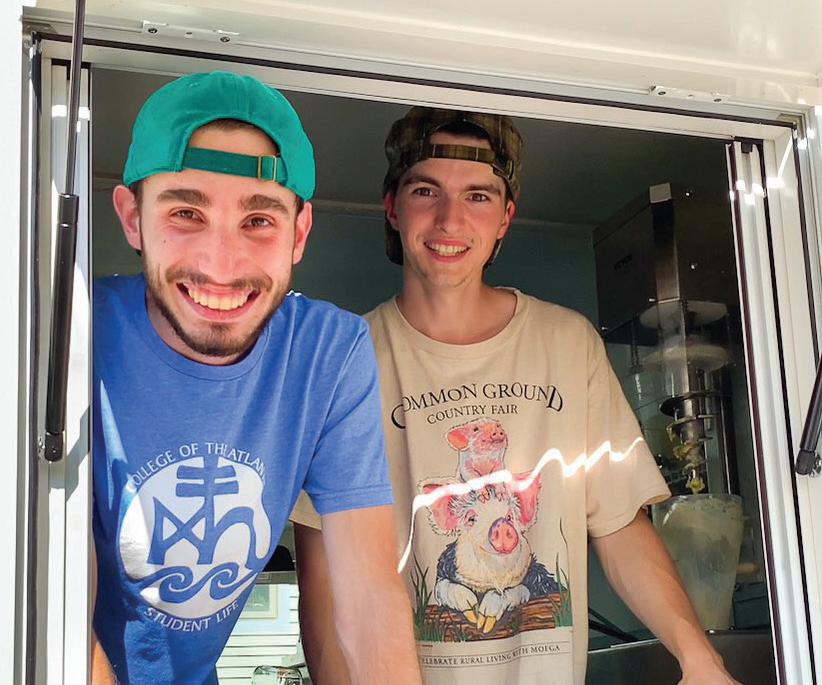
Food to make the poets swoon
Dan Mahoney
PITA
COAST ROLLED onto campus like a giant wave of deliciousness for a brief few months in summer 2025. Housed in a brightly painted food truck, but tethered to its rocky perch, Pita Coast was one of the more locally visible, and maybe tastiest, projects to come out of COA’s Diana Davis Spencer Hatchery in recent years. I visited with hopes of sampling some genuine Syrian street food in Maine. I was not disappointed.
When I arrived, I was greeted by Mustafa Khorzom ’25, one half of the Pita Coast team, who directed me to the small and appetizing menu. I decided to order a little of everything: chicken shawarma pita, falafel pita, za’atar chips, hummus and pita, Syrian salad, and a hibiscus soda to wash it all down with.
After a couple of minutes of waiting, a space opened up at a nearby picnic table. As I was sitting, Shea Turner-Matthews ’26 (the other half of Pita Coast) arrived with the hummus, za’atar chips, and hibiscus soda. I love chips and all things chip-like, so naturally I went for the za’atar chips first. What a wonderful idea taking za’atar—the popular spice blend from the Levant—and generously sprinkling it onto chips. It made the snack an earthy adventure with hints of thyme and citrus, and caused me to reevaluate the flagrant abominations of my snacking past. Next up was the hummus, which can veer wildly depending on ratios of cumin, tahini, and lemon... Pita Coast’s hummus appeared ethereal, the deep pool of olive oil in its center ringed with bold stripes of paprika and pita chips. Wonderful!
Listen close: Bread is THE make-or-break thing for a pita sandwich. It needs to be soft, chewy, rich, and bouncy with a balanced flavor. The pita at Pita Coast was as good as it gets outside of a Middle Eastern bakery. Bravo. The falafel wrap was good sized, filled with just the right amount of fresh ingredients (lettuce, pickle, tahini, tomato) to allow falafel to be the star of the show. Falafel is tricky, you want that crisp exterior (deep fried or baked) to give way to a perfectly moist, rich, flavorful interior. It’s a delicate ecosystem. I ate... I swooned... I revelled... I tell you, eating that falafel pita was like a daydream. It transported me. It’s a difficult thing to accomplish when all is said and done— not the dream—but the creation of a perfect sandwich. But that is what we found at Pita Coast for a few short months. Kudos to its co-creators, Mustafa and Shea.



McGhee Steiner ’27
WHEN
I TRANSFERRED to College of the Atlantic, I was looking for the queerest institution of higher education I could find. I was looking to share in the nurturing environment that this small, warm, and intensely applied community provides. I trusted that I could wield the strikingly open curriculum in such an inspiring and supportive environment. My time at COA so far has affirmed my trust, and I find myself equipped to weave together my many and multiplying interests into a meaningful academic program.
In my first year at COA, I discovered that the traditional sitdown classroom could not contain me and that my work had to be physically engaged. During the fall 2025 term, I focused my pursuits on sacred music, bridging my passion for music with my curiosity for spiritual communities and practices.
APPLIED MUSIC LESSON
Piano
I set out to develop and perform a lecture recital of Claude Debussy’s first book of Images. This stunning piano suite was the last piece I had tried to play, and had given up on, as a burnt out conservatory-track musician in high school. After years of growth away from the piano, I rediscovered this piece as a newly possible, but still daunting, task. Through the private lesson format of the AML, I was graced with the specialized guidance of local piano instructor Christina Spurling. I was able to embed myself in a study of Images that collaged its musicological context, harmonic imagery, and mechanical use of the full grand piano with its contemporary situation and my personal story. I shared this joyful work with both the COA and wider community in two public concerts.
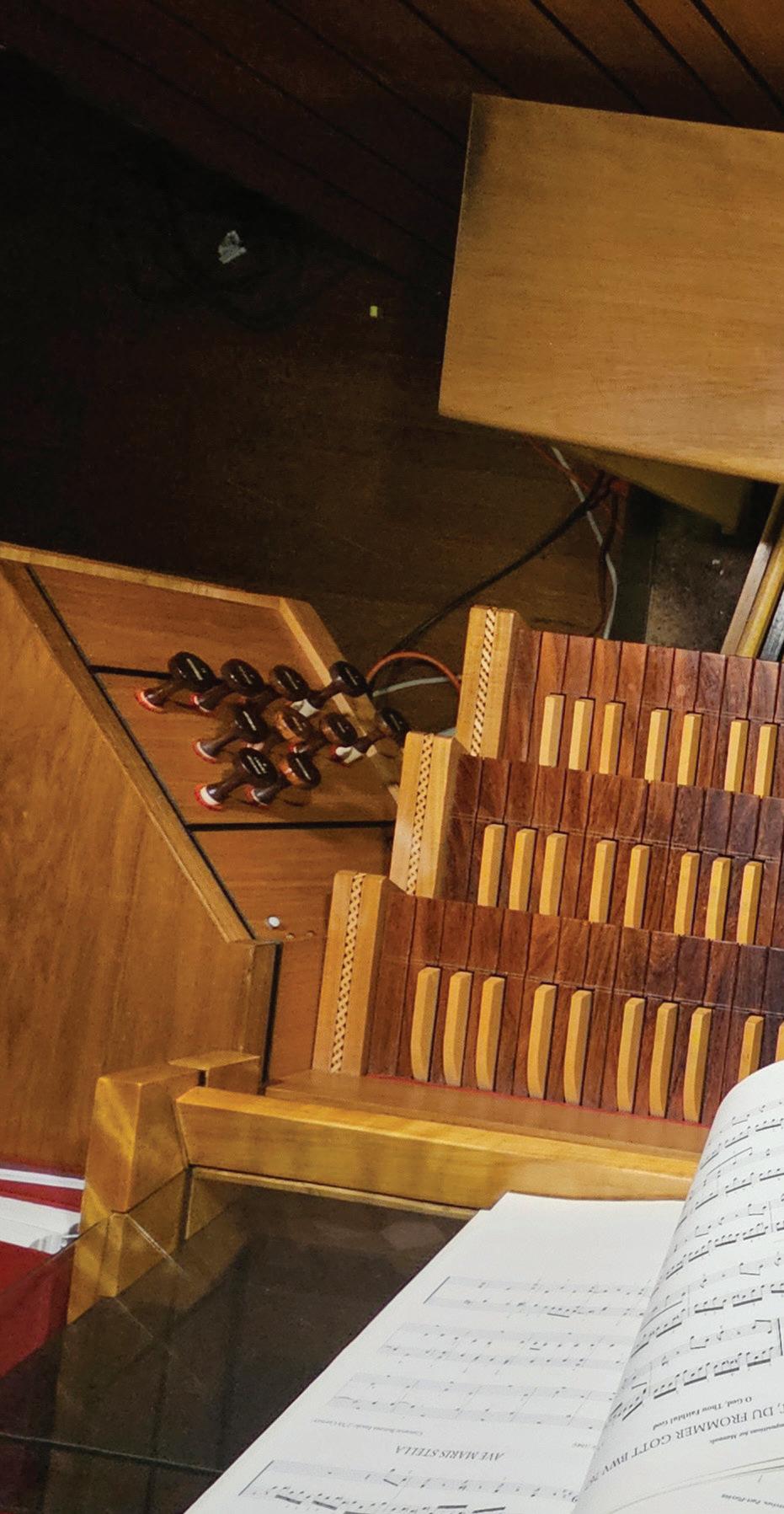
STUDENT SCHEDULE
Dept/ID
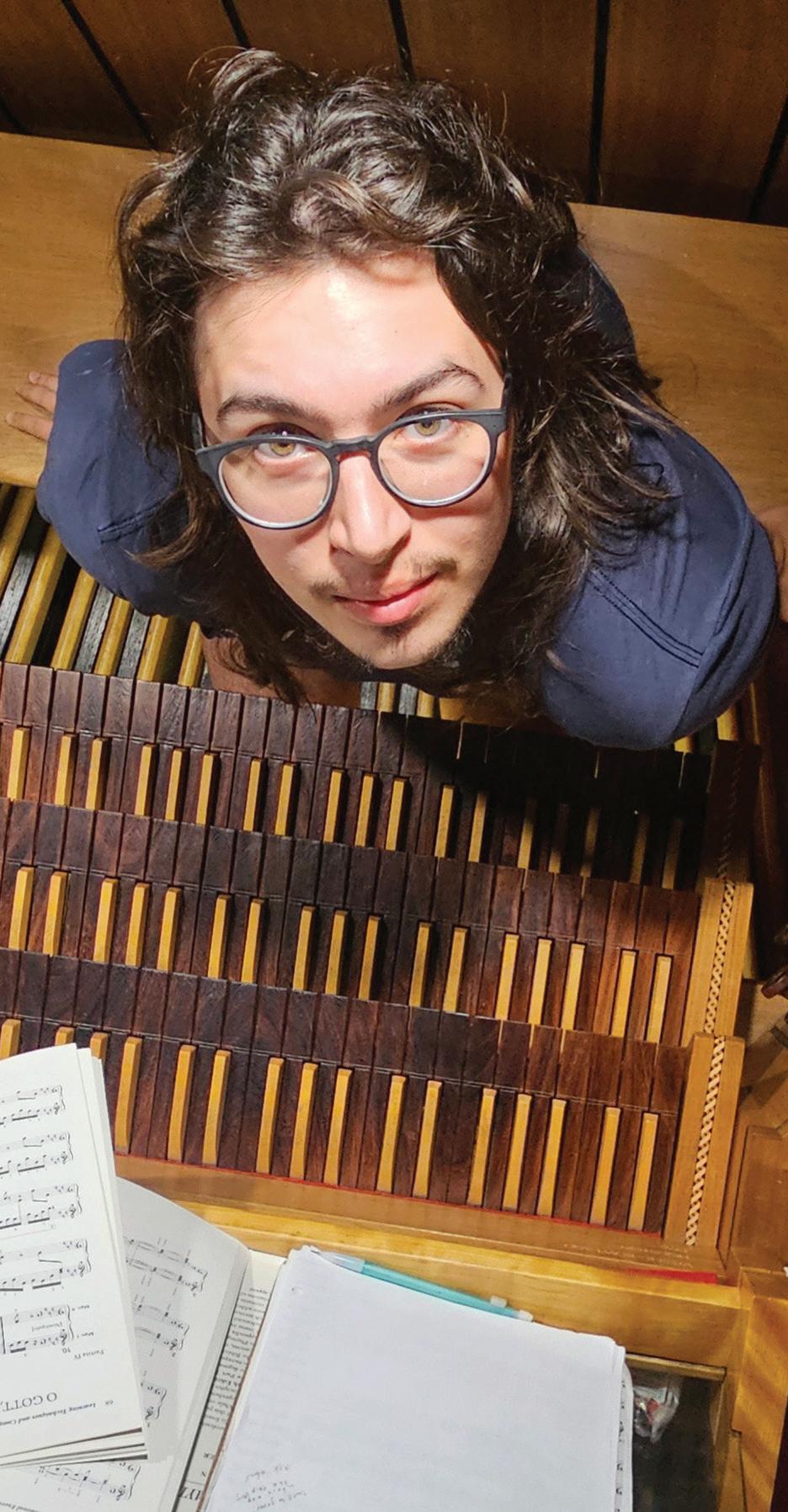
History of Agriculture: Apples
One of the first things I heard through the COA grapevine (or should I say apple tree) is that if you have the chance to join the Apples class, you have to take it. Todd Little-Siebold passionately led our class on countless field trips to orchards, cider mills, and apple events, and through thoughtfully organized readings and discussions. A deep dive into everything apple—from the genetic background of Malus domestica, to the process of grafting scionwood, to tasting more apple varieties than I knew existed, to the role of the apple in early American history—placed me in a more intimate relationship with the land and her literal and metaphorical roots, scars, seeds, and fruits. For my final research project, I created a watercolor directory of ten different apple varieties growing off neighbors’ trees in downtown Bar Harbor in the style of the historical USDA Pomological Collection. In ways from befriending my neighbors over their apple trees to brainstorming the role of apples in improving local food systems, this class ultimately changed how I walk down the street.
APPLIED MUSIC LESSON
Pipe Organ
Through weekly private lessons with local organist Daniel Pyle, I began formal training on the organ, an extensive instrument that strikes me as both a key window into the world of sacred music and an infinitely exciting logistical and tactile matrix. I laid the foundations of accurate and efficient movement of every part of my body to accomplish the specific choreography required for organ playing. The organ also provided outlets for my imagination and personality. As an aspiring church musician, I was elated to learn history, music theory, and even topics in anatomy and physics that worked together to enrich my engagement with sacred music.
Rosanne Mason
Black Fly Society, Northern Light Society, and Champlain Society member
Amy Morley
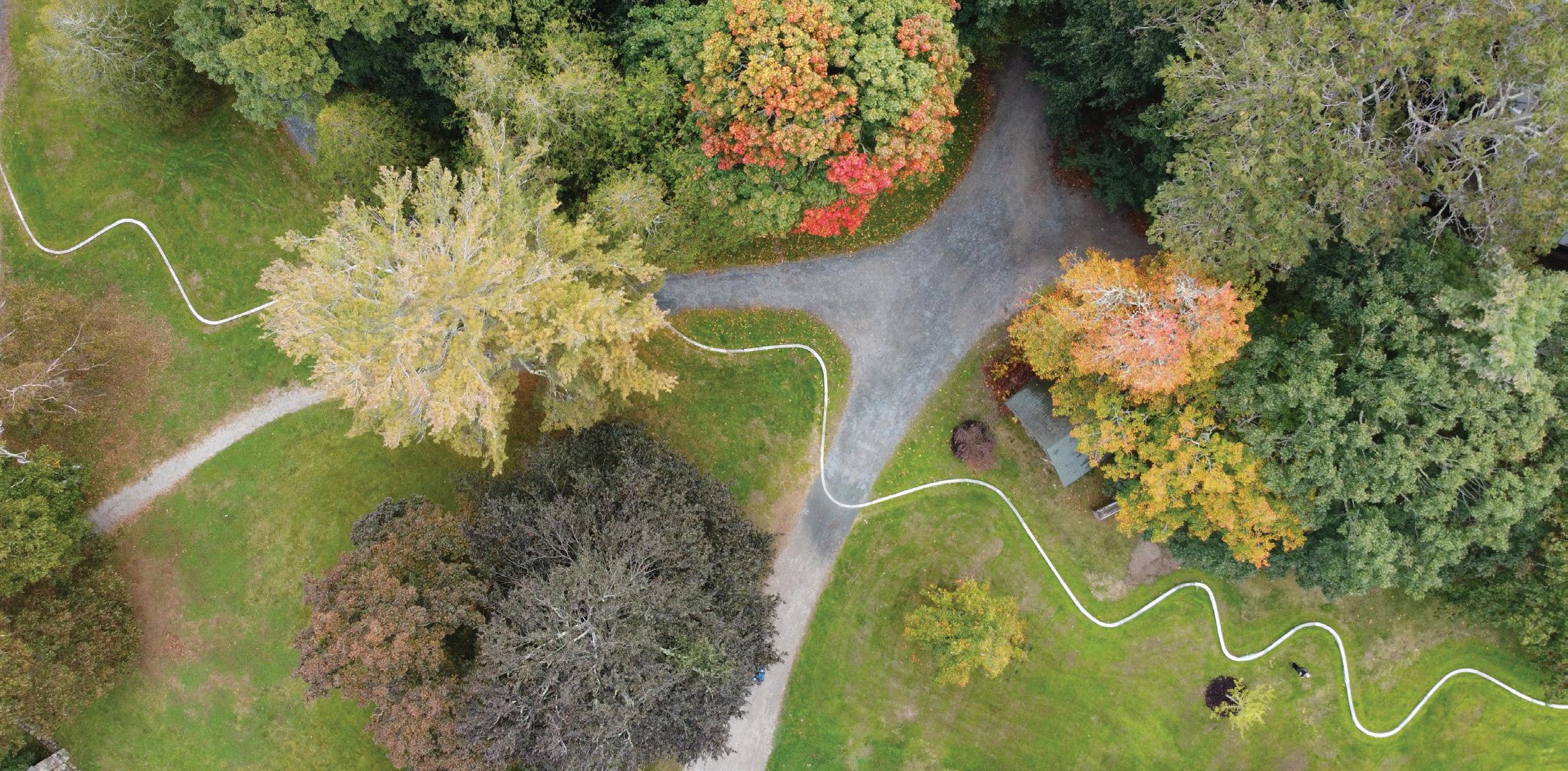
“COA changes lives,” current parent Rosanne Mason says simply. “I see it in my daughter.”
ROSANNE LIVES IN COLORADO, and when her daughter Ruth (class of ’29) began looking at colleges, neighbors who often spend time in Northeast Harbor, on Mount Desert Island, encouraged her to consider College of the Atlantic. They described it as a special place for unique students. After visiting, Rosanne understood exactly what they meant.
That visit coincided with the creation of Road Line, an installation by renowned environmental artist Andy Goldsworthy. Goldsworthy’s sinuous wave of granite—constructed from traditional curbstones— winds 1,500 feet across the COA campus, bending
away from the traditional straight curb and echoing the unique, non-linear paths that students chart at COA. Road Line is Goldsworthy’s first permanent installation in the State of Maine.
Rosanne and Ruth had long admired Goldsworthy’s work through the documentary Rivers and Tides Seeing his lyrical art on campus felt serendipitous. “Mom, it’s Andy from Rivers and Tides,” Ruth said. For Rosanne, it felt like confirmation: This was a place where art, science, landscape, and learning were inseparable.
Rosanne has been particularly struck by the physical and intellectual environment COA provides. Touring
Andy Goldsworthy’s Road Line on COA campus. To learn more, visit coa.edu/roadline
The Black Fly Society recognizes recurring donors who provide steady, year-round support through monthly automatically recurring gifts.
The Northern Light Society honors those who have included COA in their estate plans.
The Champlain Society celebrates donors who contribute $2,500 or more annually, whose leadership plays a vital role in advancing COA’s mission and sustaining its distinctive model of human-ecological education.
the Davis Center for Human Ecology—flooded with light and framed by an expansive, ocean-facing window—she contrasted it with her own chemistry lab “in a dark basement.” The message, she felt, was clear: COA is investing in how students learn.
“They’re doing something right,” she says.
Since enrolling, Ruth has immersed herself in COA’s hands-on, place-based approach to learning. She is drawn to human ecology, environmental field studies, and social justice. She also loves theater and the opportunities at COA to perform and collaborate. She kayaked the Maine coast during her Outdoor Orientation Program trip and quickly found a close circle of friends who share her energy and intellectual curiosity. At home in Colorado, Rosanne read the Human Ecology Core Course book, The Avian Hourglass, alongside her daughter,
To explore giving opportunities, visit coa.edu/giving or contact Lynn Boulger, Vice President for Institutional Advancement, at lboulger@coa.edu or 207-669-2566.
staying connected to the questions shaping Ruth’s education.
That confidence extends to COA’s leadership. She speaks of her trust in COA’s direction and in President Sylvia Torti’s leadership—transparent, thoughtful, and values-driven. During a recent conversation with our advancement team, Rosanne asked a straightforward question: “What type of gift does COA most need?” When she learned that unrestricted support provides essential flexibility, she readily agreed.
Her philanthropy reflects both trust and intentionality. In January, Rosanne pledged to join the Champlain Society in support of the Annual Fund. She also gives monthly through the Black Fly Society, directing her recurring gifts to the Field Stations Improvement Fund. In addition, she has made restricted gifts aligned with key institutional priorities, including the Campaign for Student Success—strengthening the information technology infrastructure that supports students from admission through graduation and beyond.
Looking ahead, Rosanne intends to include COA in her estate plans, a commitment recognized through membership in the Northern Light Society. For her, giving is about continuity—ensuring that the transformative experience she sees unfolding in her daughter remains accessible to future students.
“COA changes lives,” she says again. “I want to help make sure it can keep doing that.”
Ruth ’29, Rosanne, and Jack Mason at Brasserie Le Brun in Bar Harbor, owned by Michael Boland ’94
A rich picture of Suzanne Morse
Compiled and edited by Ana María Zabala ’20 and Rayna Joyce ’20
Contributors: Gillian Lalime ’19, Heather Albert-Knopp ’99, Emily Fetter ’24, and Lilia Machado ’25
“IFI COULD DRAW a rich picture of [Rachel Carson Chair in Human Ecology] Suzanne Morse, some elements it would include are: The Community Organic Garden. Norway. Strawberry jam. México. Taiwan. Common Ground Fair. Seeds. Craniosacral therapy. Tree House. California,” writes Gillian Lalime ’19. As we compile the reflections of some of the students who hold Suzanne Morse dear, Gillian reminds us of Suzanne’s Agroecology course, in which we were introduced to the method of creating a “rich picture.” A rich picture is a diagram that identifies and visually represents concepts and components of a system and connects them to one another. It shows different relationships, feedback loops, and interactions, resulting in a complex and tangled web of different perspectives and elements. It is human ecology in a visual form; it embraces complexity, nuance, and context. It seems fitting to take this concept Suzanne taught us and use it to create a portrait of her, one of the most humanecological professors, and humans, we have come to know.
A rich picture begins with an origin, a place, a person, an initial concept. When it is finished there is no clear beginning or end because ultimately all of its elements are interconnected. It seems appropriate to begin drawing Suzanne’s rich picture with a seed because it is a starting point of life, the foundation of the food system, and the theme of a course that Suzanne loved to teach.
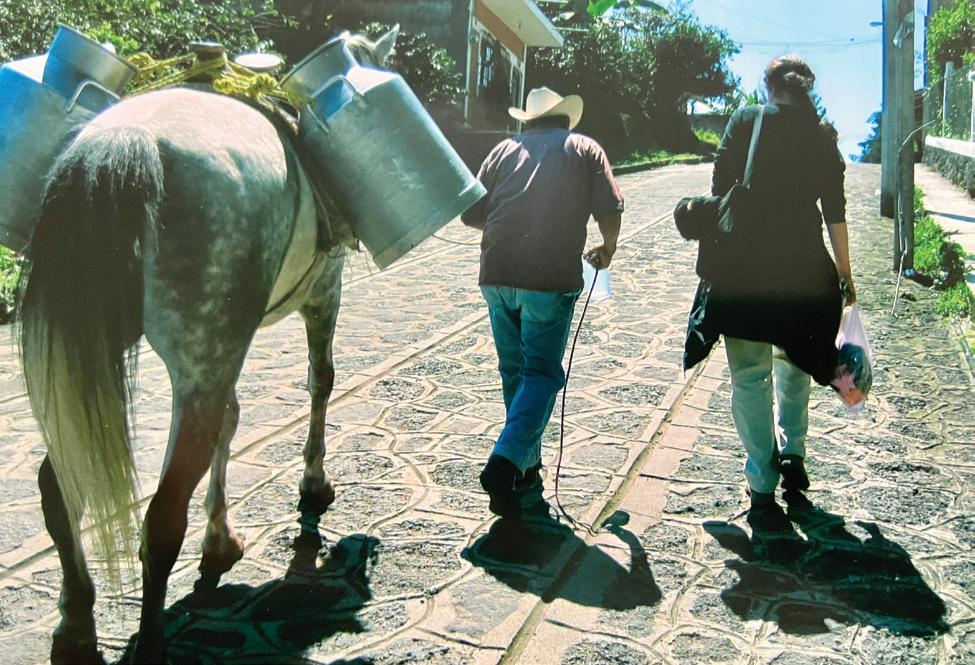
For some of us, sharing seeds became an ongoing expression of friendship, and saving them and reproducing them is a way to carry with us, and keep alive, the relationships woven into our time at COA. Ana María Zabala ’20 writes, “Before Christmas Eve I planted some bean seeds my dear friend Rayna [Joyce ’20] gave me back in 2018, when we lived together in one of the houses on Norris Street. She brought them from a market in Spain where she’d been studying in COA’s Sidra y Queso course. I’ve been reproducing them for the last few years. In this growing cycle, they sprouted right as the new year arrived.”
Ana María continues, “Whenever I think of seeds, I think of Suzanne Morse and her class on seeds. This was one of the most human-ecological classes I took during my time at COA. With Suzanne, I learned that we raise plants and they raise us. I learned to view the world from different human and more-thanhuman perspectives. I learned about the origin of edible plants, and how the movement of seeds across the globe has been shaped by histories of colonial domination and imperialism; how these magical beads can hold so much power because they are the basis of our food systems, and those corporations who want control over territories and people seek it by privatizing seeds.”
Suzanne is a mentor to each of us in different ways, but the common thread weaving our memories of her together is her ability to push us beyond comfort and ease to the place where true growth and change occurs. “I transferred into COA, which is to say I jumped on a running treadmill,” says Emily Fetter ’24. “I was drawn to this school for the ability to learn more about growing food, and Suzanne became one of the many flames that lit my way as I navigated my new environment like a moth. I struggled a lot during my time at COA, with my own relationship with education, personal events pertaining to my faraway family, and with the growing pains of my own constant becoming. Suzanne was, and still is, a warm invitation into the world of growing food and for showing up as my authentic self.”
Veracruz, México
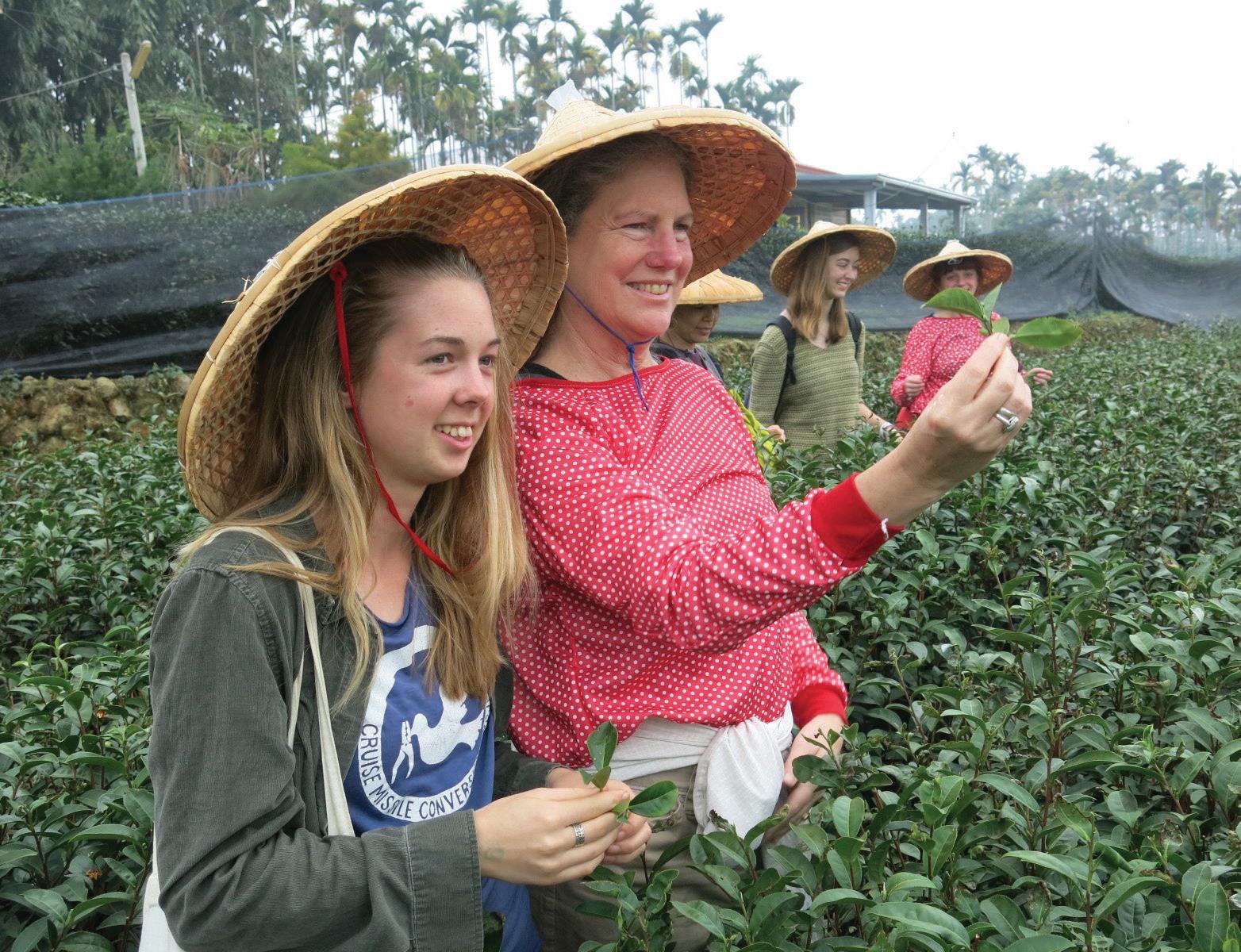
Heather Albert-Knopp ’99 shares, “From the very first time I met her (when she, out of the blue, handed me a stack of photocopying to do), Suzanne has been a mentor who challenged me to push myself: from digging out every bit of sow thistle in a corner of the Community Garden until those white rubbery roots invaded my dreams, to taking an unplanned term abroad in the Yucatán, from thinking more critically and encouraging me to (tearfully) scrap my nearlydone senior project report and start over with a more original idea, to finding nuance and gray areas in just about every situation by gleaning new perspectives from those complexities and uncertainties.”
“Suzanne Morse wants to be your friend, and then your teacher,” writes Lilia Machado ’25. “Befriend her, and be ready to grow.”
Another portion of our rich picture of Suzanne is dedicated to physical spaces, the ones she created for her students and the ones she shared so generously and experientially with us. Biking through Tainan, Taiwan. A COA van driving through the blueberry barrens on the way to a farm. A booth in the dining hall at lunchtime. Her own home. The organic seed conference in Oregon. Beech Hill Farm. According to Lilia, “Suzanne’s teachings occurred in glass jars bubbling with brine, between rows of overwintered Brussels sprouts, peering through koji spore incubators, and inside a greenhouse that no longer stands on COA’s campus. Learning from Suzanne, I came to understand that the origins of my curiosity and the stretching of my patience are the rigorous fibers that shape how she teaches, and how to learn through relationships.”
Curiosity is a word that many of us used in describing Suzanne. It is one of the other threads that make up her rich picture. Gillian recalls, “Suzanne uses everyday conversation as fodder to understand the complex relationships people have to land and community. Suzanne employs the same methods of observation, curiosity, and critical thinking that she guides students to use.” As Rayna remembers, “Studying in Taiwan with Suzanne and professor Bonnie Tai, they introduced us to the concept of compassionate curiosity, which has been a transformative lens for me to look through. I think Suzanne taught us all with compassionate curiosity, and by demonstrating it as a way of being and learning succeeded in passing it along.” Ana María reflects how “Suzanne always asked curious questions. She’s a scientist in the freest of ways; she never settled for one viewpoint or superficial insight, reminding us there are always rules in the workings of the world but also exceptions depending on context. She always valued the specific experiences of students and sparked dialogue among us. She was open to learning from us as much as we learned from her. She’s brilliant in the most humble way, always in awe of the world and others, always valuing what they had to teach her as well.”
With these words, we paint a rich picture of an exceptional scientist, gardener, fermenter, seed saver, mentor, and professor who has left a lasting imprint on her students and the COA community. We end this collage of memories with a compilation of our gratitudes:
Thank you, Suzanne, for being my advisor, mentor, and teacher. For always welcoming me into your home with arms open and full of veggies from your garden with which we made dinners while discussing the state of the world and our hopes and dreams. Thank you for accompanying me throughout my time at COA, during which I learned to look at the earth and its plants, food, peoples, and cultures with eyes of infinite compassionate curiosity and wonder while at the same time being critical and analytical, holding the world’s injustices and cruelty in one hand while holding its beauty and possibilities in the other. Thank you for encouraging, as Arundhati Roy would say, my seditious heart. –Ana María
Thank you, Suzanne, for being a bright flame! –Emily
Thank you, Suzanne, for not shying away from the most confounding questions and for caring so much about COA and this community. –Heather
Suzanne in Taiwan with Rayna Joyce ’21
FIELD GUIDE TO JOHN G.T. ANDERSON
FOR
NEARLY FOUR DECADES, Homo professoris andersoni, John G.T. Anderson, has guided students to step outside and pay attention. It is documented that John taught 238 classes and tutorials, consisting of 51 different titles during his time at College of the Atlantic, his primary habitat for the majority of his life. In acknowledgement of John’s retirement in June 2026, this collection gathers the observations and reflections of some former students who were greatly influenced by this rare subspecies. Together, these observations sketch the outline of a career defined not just by an incredible depth of knowledge, but also by the generosity with which it was shared. Field guides help readers recognize key features and traits of a subject. This one is offered in gratitude for all John helped us recognize—in the natural world and in ourselves.
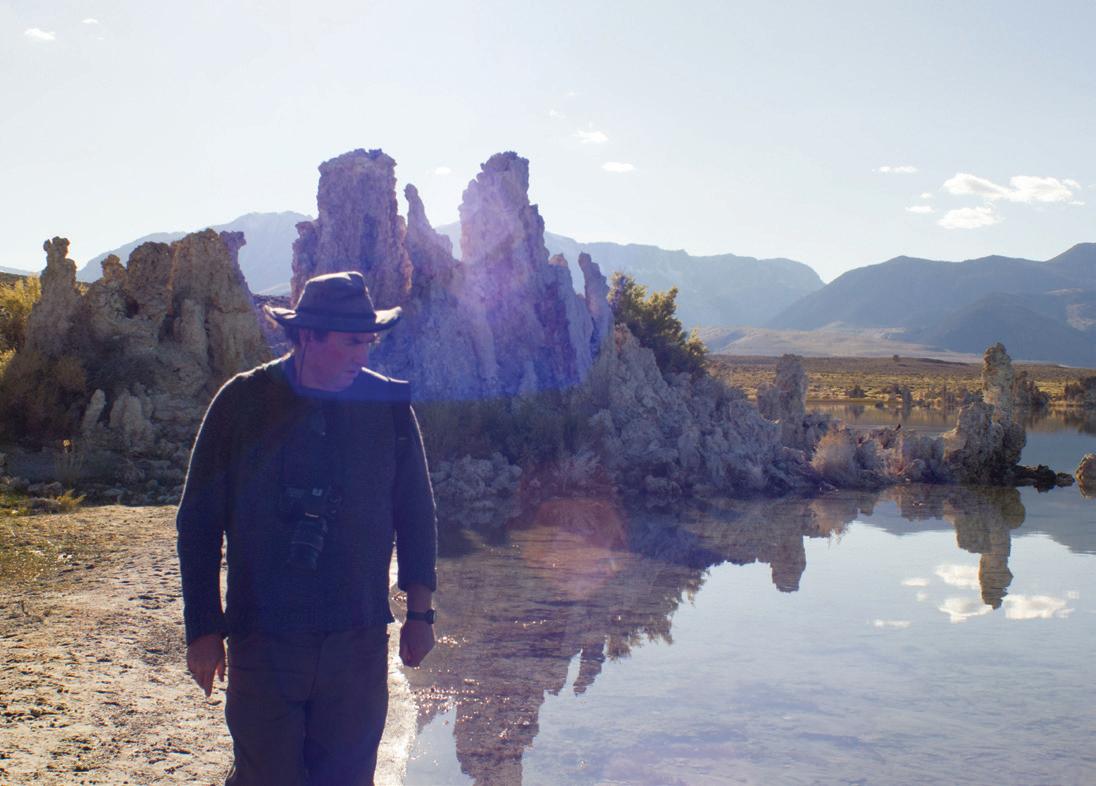
IDENTIFICATION
Distinguished by prominently developed supraorbital features, often described as “untamed eyebrows of considerable reach.”
Head tilt, arms out, and beaming smile for familiars
Frequently accompanied by a loyal quadrupedal companion, indicative of strong interspecific associations.
Locomotion characterized by a deliberate, ground-covering gait, typically with optical equipment (binoculars) suspended at the sternum, signaling preparedness for opportunistic field observation.
Seasonal change in coat from wool sweater and corduroys, to tacky tee and corduroys.
Frequently accompanied by emerging adults; those who have traveled to Great Duck Island, colloquially known as “Ducklings” (see range/ migration).
SONGS AND CALLS
“So, what’s the gossip?”
“Sigh.”
“Hee hee hee!” (high pitched call, delighted or mischievous expression of glee)
“Oh dear!”
Frequent quotations from poetry, music, film, and famous literature ranging from Yeats to Alice in Wonderland to the Bible and many works in between.
HABITAT
Deciduous and mixed forests, coastline, offshore islands (see range/migration).
Academic environments; specifically, small rural coastal College of the Atlantic since August 1987.
Pastry shops with abundant “tasty treats.”
Boats, transiently.
Islands, in and out of time.
Dusty, musty offices overfull with books, nautical charts, medical gadgets, and—invariably— artwork of a pelican and other sea birds.
RANGE/MIGRATION (ADULT)
FALL, WINTER, SPRING: regularly found in coastal Maine.
FALL, WINTER, SPRING: Sporadic transient visitor to all corners of the globe on short vacations or longer “sabbaticals,” with emphasis
John at Mono Lake, Great West course, 2017
in cities where ornithology or human ecology conferences are held, massive ancient libraries are housed, and former students have settled.
SUMMER (June–July): Petit Manan Island (1989–1998) and Great Duck Island (1999 –present) off the coast of Maine, where he has led field research monitoring bird populations and mentored student research. Rugged, exposed, windswept environment with rustic facilities.
PERIODIC FALL CIRCUIT (August–October): In recent decades, a regular biennial trip into the Western US with collegiate professor and van full of emerging adults for approximately eight weeks to study ecology, natural history, and land policy of the region. This is thought to be a transfer of acquired species knowledge.
BEHAVIOR
NESTING: Mated for life with his highly intelligent and tolerant wife, Karen, whose steady presence sustains him and allows him to devote far too much time to his students (editors’ note: we are so grateful!).
YOUNG: Brilliant, beautiful, and kind, two offspring inherited the best traits of Karen and John. Parenting of Clare and David gained extra depth from his many years teaching and mentoring COA students on the cusp of adulthood. John has developed the odd behavior of fostering Ducklings and other former students who often return to visit after they have officially fledged.
ROOSTING: Periodically hunkers down to craft manuscripts for scientific journals, conferences, or full-length books.
FEEDING BEHAVIOR/DIET:
Strong coffee, burnt sausage, waffles, and bacon in the morning when hosting old alumni from out of town.
Lunch at Jordan’s or China Joy while discussing poetry of the sea with colleagues, students, and friends.
Tea and scones at his kitchen table at 4 p.m., with freshly whipped cream.
A variety of dinner provisions for carnivores (grilled meat) and herbivores (grilled fake meat) alike, paired with a bountiful salad of greenery; warm, filling meals suitable for crowds and
accommodating dietary restrictions. In maturation, has taken to becoming a bit of a wine and cider connoisseur, but also known to down a few too many mudslides back in the day.
Dessert is appreciated and Pavlova is welcome (but only if it’s a traditional recipe).
Glass o’ milk or cup o’ cocoa before nesting down for the night.
His foraging strategy is opportunistic but always social; meals are less about nutritional sustenance than about intellectual exchange.
Deathly (emotionally) allergic to kale.
SOCIAL BEHAVIOR:
John Anderson is not a hugger.
Demonstrates an uncommon commitment to “office hours,” in which he meets with emerging adults who had to outcompete their peers to claim a spot before the sign-up sheet was filled. May take place in his office, at a bakery, or on a walk with his trusty canine.
In addition to advising current students, he maintains strong emotional connections to those who have fledged, nurturing changing relationships throughout their lifespans.
Leads and guides groups of emerging adults in the classroom and in the outdoor environment of Acadia National Park.
Instruction includes a wide range of courses,
John and daughter Clare at Jordan’s Restaurant, 1991
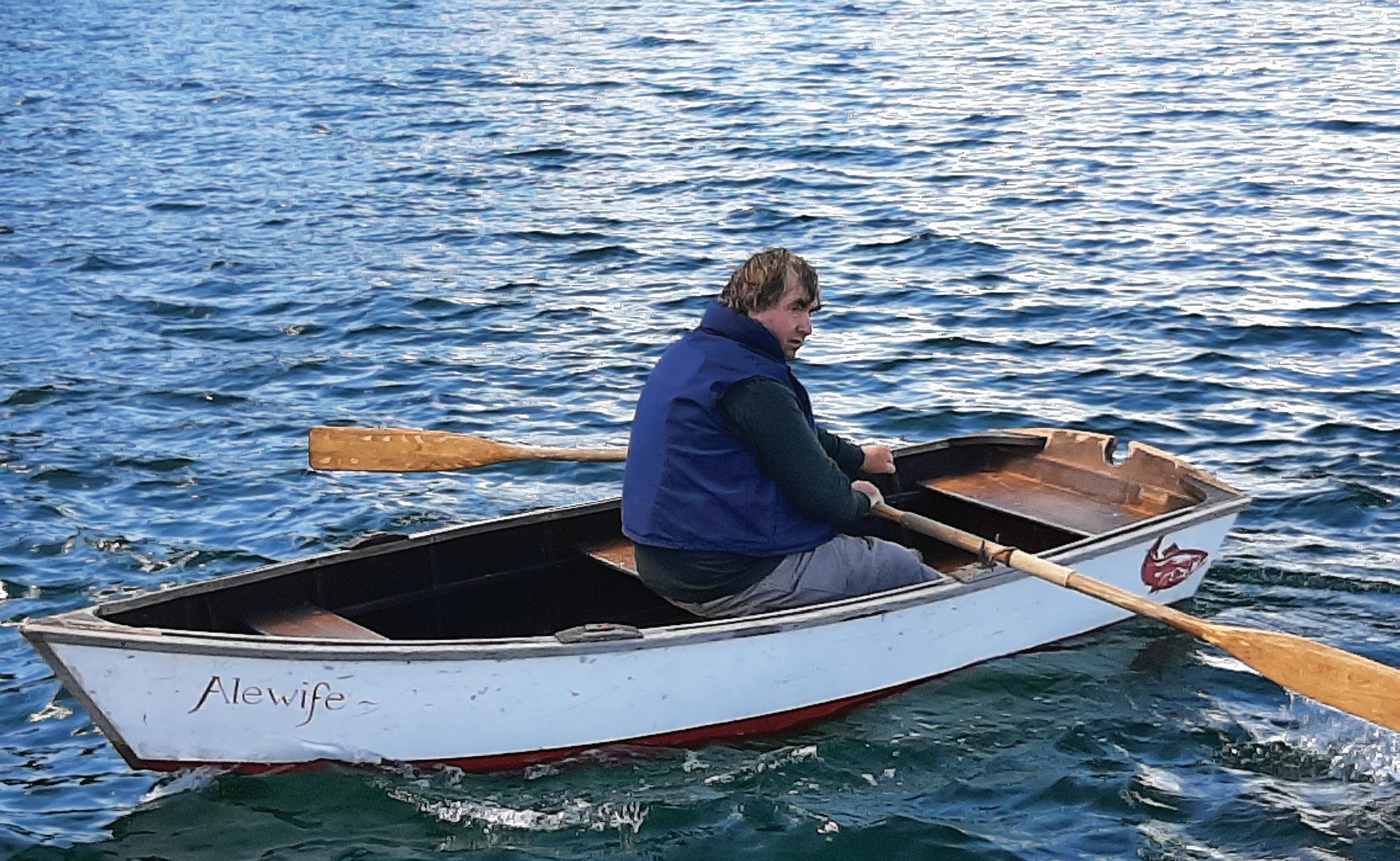
including standards such as Ecology, Conservation Biology, Anatomy and Physiology, Biology II, History of Natural History, as well as a willingness to take on new courses and group studies on extremely wide-ranging topics from Epic Poems to Earth’s Moon to Plagues, Panic & Prevention. Team-teaches courses on interdisciplinary topics, such as Turn of the Century, The Great West, Environmental Literature, Literature and Ecology of the Sea, and Farming the Wild. Co-teaches Islands Through Time, a course that has led many juveniles to enroll in COA.
SPECIALIZED BEHAVIORS
Even for a professor of human ecology (an interdisciplinary major), John is uncommonly well versed and interested in many areas of study. His interests—and the interests and future careers of his students—include history, literature, policy, medicine, psychology, and art. Major themes in his pedagogy include the importance of critical thinking and evaluation of scientific works; the role of aesthetics and human preferences in determining conservation priorities; and the need to study history and do thorough, accurate research before arriving at conclusions.
Characteristics of his field ecology work, inspired
by mentor Bill Drury and others, include rigorous observation of populations to study how they change over time.
Approach to “advising” students is difficult to capture in words, as it is so heartfelt, and it is here where his impact reverberates deep into his students’ lives. Not all subspecies of H. professori have such a strong, deep sense of obligation to not only the academic success of students but also to their professional satisfaction, personal growth, and happiness.
CONSERVATION STATUS: RARE/ THREATENED
This type of special creature is not common! During his time at COA, this dedicated and tireless individual advised more students than any faculty member in the history of the college. Over and over, his former students and advisees have commented on John’s interest in their lives, commitment to spending time with them, and dedication to staying in touch, regardless of their life’s course or career direction. His niche at COA—which may not be defined by an Nth dimensional hypervolume or any theoretical formula, for that matter—will be hard, if not impossible, to fill. John is a rare type worthy of conservation efforts.
John rowing Alewife at the COA waterfront
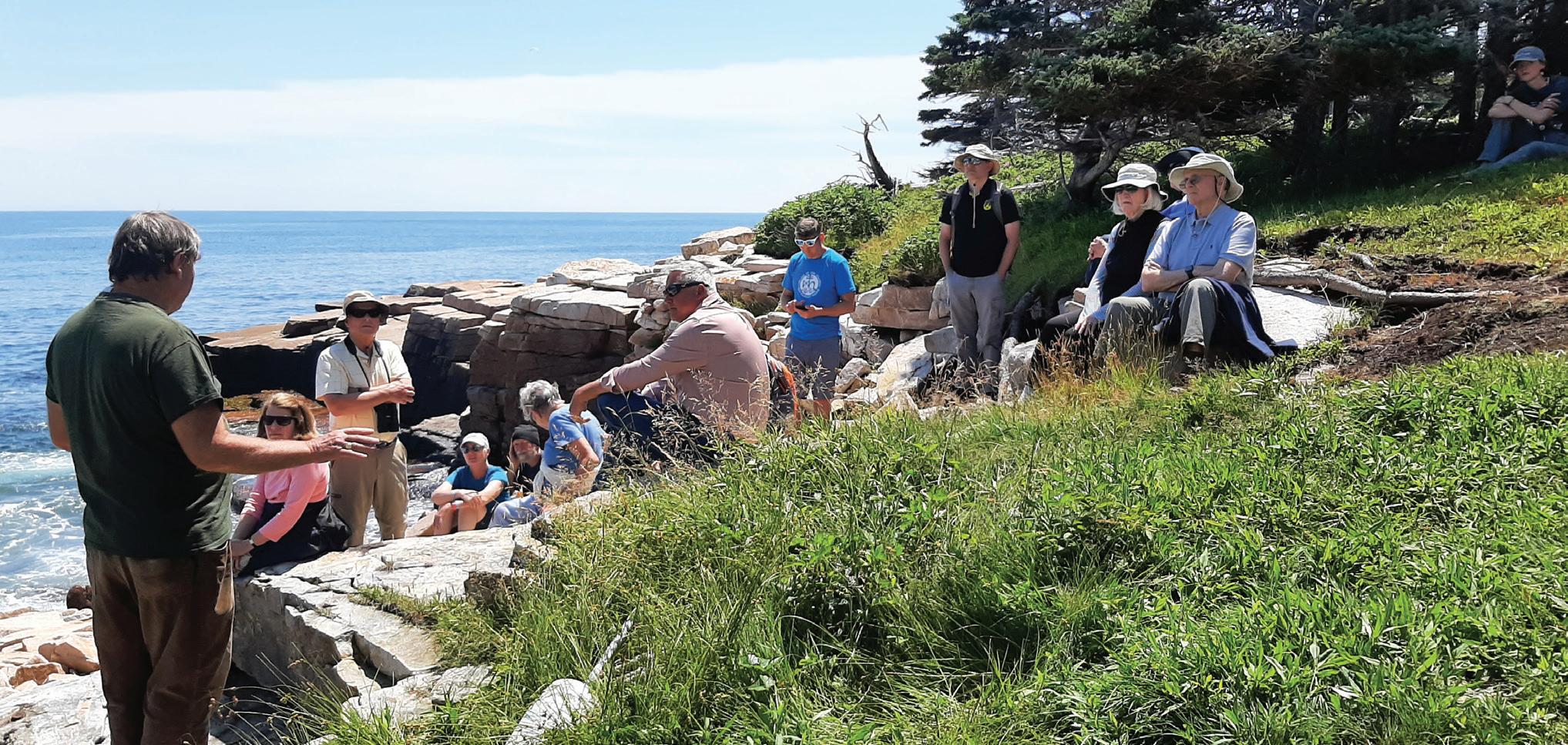
CONSERVATION RECOMMENDATIONS
Though subspecies andersoni’s teaching style may be on the path to extinction, the authors encourage the college to take the following steps for the protection of other subspecies of H. professori on the Maine coast.
HABITAT: Investment in island program infrastructure and continuance of the programs described above.
RECRUITMENT: Commitment to filling the W.H. Drury Chair with a subspecies embodying field ecology and place-based, experiential learning.
HUMAN ECOLOGY: The learning and connection that happens when students and professors together navigate a boat ramp, drive across the country, clean outhouses, and wash dishes both complement and eclipse the impacts of indoor instruction.
These steps and others will ensure that emerging adults can continue to acquire important species knowledge, conserving what makes COA, MDI, Great Duck Island, and other outdoor classrooms such special habitats.
AUTHORSʼ NOTE:
The authors of this field guide will not miss John after his retirement from COA in June 2026 because we are so fortunate to call him a friend. Plus, we know where he lives. The authors do, however, lament the fact that future students will never know the rare privilege of learning from someone who not only taught inspiring courses, but also lived and breathed his own study, passing it on with genuine devotion. John is taking with him a deep well of knowledge, his contagious passion, and a daily brilliance that shaped generations of students. This piece is our small attempt to capture what cannot truly be replaced.
Contributions from a dozen of John’s former students and advisees, ranging from the classes of 1993–2026. Sarah McDaniel ’93; Kate Devlin ’93; Nicole Cabana ’99; Cerissa Desrosiers ’00; Amanda Spector ’08; Kate Shlepr ’13; Ivy Enoch ’18; Gemma Lei ’18; Eleanor Gnam ’23; Autumn Pauly ’26.
A private, informal celebration of John’s retirement will be held in Portland, Maine on October 3, 2026. To receive an invitation or share your own remembrances, photos, and art with John, please email celebratejga@gmail.com.
John and summer visitors on Great Duck
Rick Epstein ’84 Broader perspectives
Anara Katz ’24
FORRICK EPSTEIN ’84, human ecology means a life-long passion for learning. Throughout his accomplished architectural career, Epstein has continued to explore the unknown and say yes to unconventional ideas, projects, and adventures.
Epstein’s style of learning has always been handson. Before coming to COA in the late 1970s, he hiked much of the Appalachian Trail. During his time at COA, he took field ecology classes, and for his senior project, he designed a house that was then built by students and given to a low-income family.
After graduating, Epstein followed his worldly curiosity. Thanks to the Thomas J. Watson Fellowship, he traveled around the globe at 40 degrees north latitude for one year. This took him to Portugal, Spain, and Italy, from the former Yugoslavia to Greece and Turkey, and on to six months in China and Japan, learning about traditional homes and communities. After completing his Watson Fellowship, coming back with 10 full sketchbooks, many rolls of film, and new understandings, he went to MIT for a master’s degree in architecture.
“The breadth of human ecology has continued to resonate with my interests, and who I am. I like to think holistically, values-based, and more real world, tackling problems out there,” expressed Epstein. Epstein owns an architectural design firm, re:architecture, in Boulder, Colorado, where he works on a diversity of projects, including urban design, historical restoration, cultural centers, housing projects, interior renovation, and much more.
“I’ve worked in some design firms that want to put you in a narrow box. You’re an urban designer, not an architect, but I’ve been an architect for 20 years. Being able to move across disciplines and reference other kinds of disciplines is the value of an ecological perspective,” he explained.
Epstein views the breadth of the human ecology degree as a strength that shouldn’t be overlooked. Epstein advises COA students to “not be afraid that it’s different. It can be a kind of secret sauce. I’m
NOT doing a narrow thing, I’m doing a broad thing, thinking about a broader perspective. That can actually be a strength.”
Epstein’s firm is congruent with his humanecological foundation. In addition to its broad scope, it is rooted in Epstein’s ethics and driven by a vision for a world filled with sustainable, affordable, and beautiful design. “It’s not about how much money I can make, but it is more about how I can make a great place or serve people,” he said.
If you ask Epstein about his projects, he will enthusiastically explain to you all the new things he is learning about, and the interesting people he has met along the way. One of his newest ventures has been designing a Latin night club in Denver, Colorado. He has enjoyed learning more about EDM, reggaeton music, and club culture. In addition to designing the four bars and a stage, Epstein designed the furniture, and helped to pick out the artwork, lighting, glassware, uniforms, and even created a few drinks with the bar owner. XSO opened in the fall and is slowly gaining a reputation as the nicest new club in Denver.
Another project he is currently working on is a 140-year-old gravity mine that is on the National Historic Register. He is designing a historically appropriate building to house a peat moss process that will cleanse the water from the mine’s heavy metals. The list of his interesting and diverse projects goes on, all pointing towards his unceasing curiosity to learn and expand his expertise.
His adventurous nature continues outside his work. He is an avid cyclist, hiker, and backcountry skier.
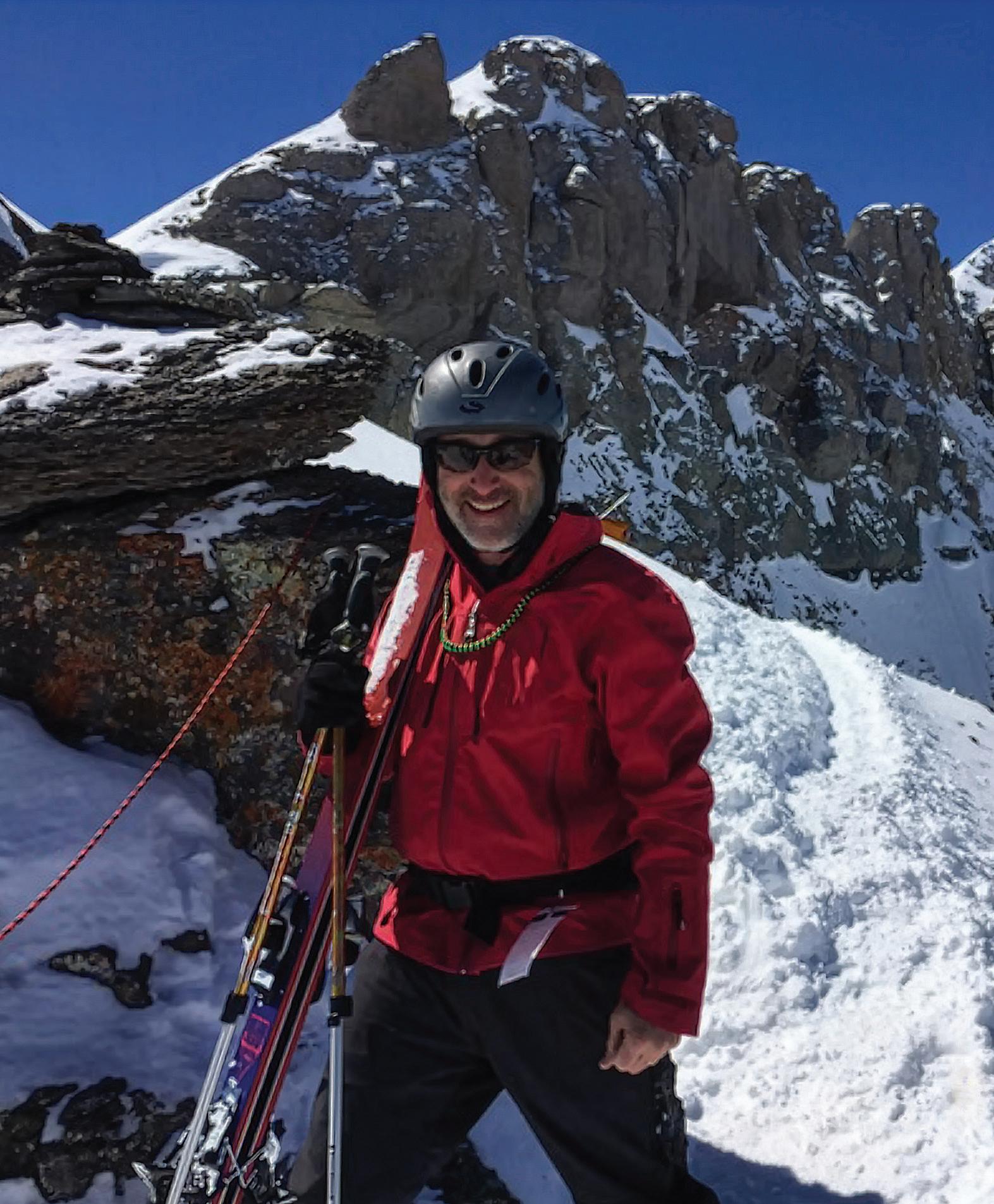
With his wife, an immigration lawyer specializing in political asylum, he raised two sons, who are now continuing to bring the innovative mindset into their own fields of AI, creativity, and urban planning.
“You become a lifelong human ecologist at COA,” he reported. Epstein shows us that his version
of human ecology means taking life at large, and not being afraid to step into something new. His natural inclination to make connections across different knowledge bases and to be open-minded is exemplary of human ecology. He is excited to continue his adventures in architecture and beyond.
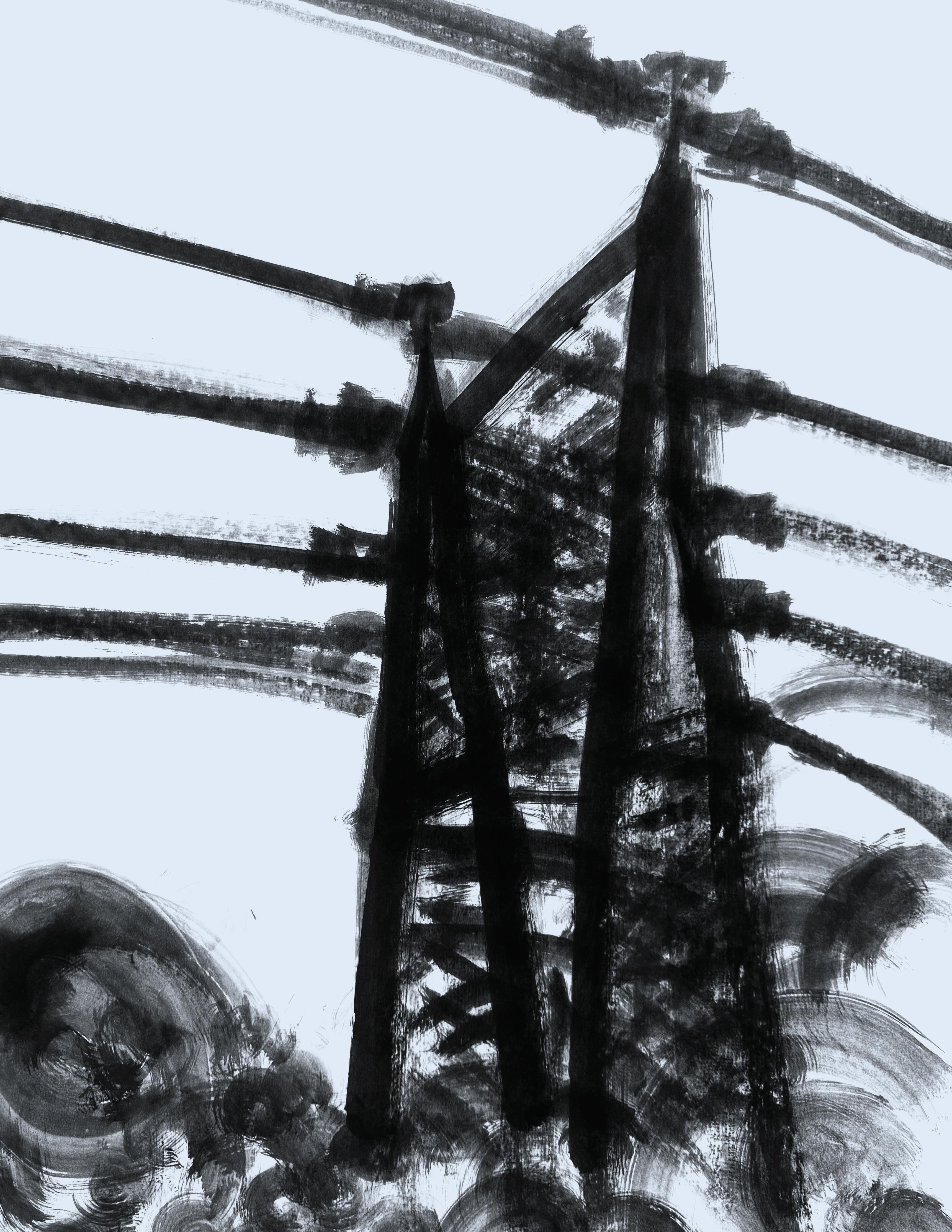

The current DIALOGUE on dialogue
Dan Mahoney
Art by Sabrina Wise ’26
HAVING A DIALOGUE on dialogue with a bunch of people way smarter than me seemed like the worst idea in the world. It brought up all my insecurities from young adulthood about not being smart enough in school or nimble enough with verbal repartees outside of school. Would having a dialogue on dialogue expose me, at long last, as the imposter I’ve always felt I am? Were these feelings of imposterhood just remnants from a time when I really had no idea who or what I was and if I’d ever find a cohort to welcome me despite my obvious flaws? All of these things were possible when this particular gathering gathered. But this, dear reader, is a prime reason COA is so valuable: the college constantly pushes you to move beyond what you think you’re capable of.
I began by contacting several COA colleagues working in different areas of the college: Faculty of Cultural and Political Anthropology, Postcolonial, and Feminist Theory Netta van Vliet, Cody van Heerden Chair in Economics and Quantitative Social Sciences Hien Nguyen, Faculty of Interdisciplinary Arts Anna Ialeggio, Co-Director of Thorndike Library Catherine Preston-Schreck, and Mitchell P. Rales Chair in Ecology Kara Gadeken. I then sent them Kenneth Burke’s “Unending Conversation” metaphor about how human
knowledge and discourse is built on what has come before. Here is Burke’s metaphor taken from The Philosophy of Literary Form: Studies in Symbolic Action (University of California Press, 1974).
Imagine that you enter a parlor. You come late. When you arrive, others have long preceded you, and they are engaged in a heated discussion, a discussion too heated for them to pause and tell you exactly what it is about. In fact, the discussion had already begun long before any of them got there, so that no one present is qualified to retrace for you all the steps that had gone before. You listen for a while, until you decide that you have caught the tenor of the argument; then you put in your oar. Someone answers; you answer him; another comes to your defense; another aligns himself against you, to either the embarrassment or gratification of your opponent, depending upon the quality of your ally’s assistance. However, the discussion is interminable. The hour grows late, you must depart. And you do depart, with the discussion still vigorously in progress.
And with that, our conversation begins.
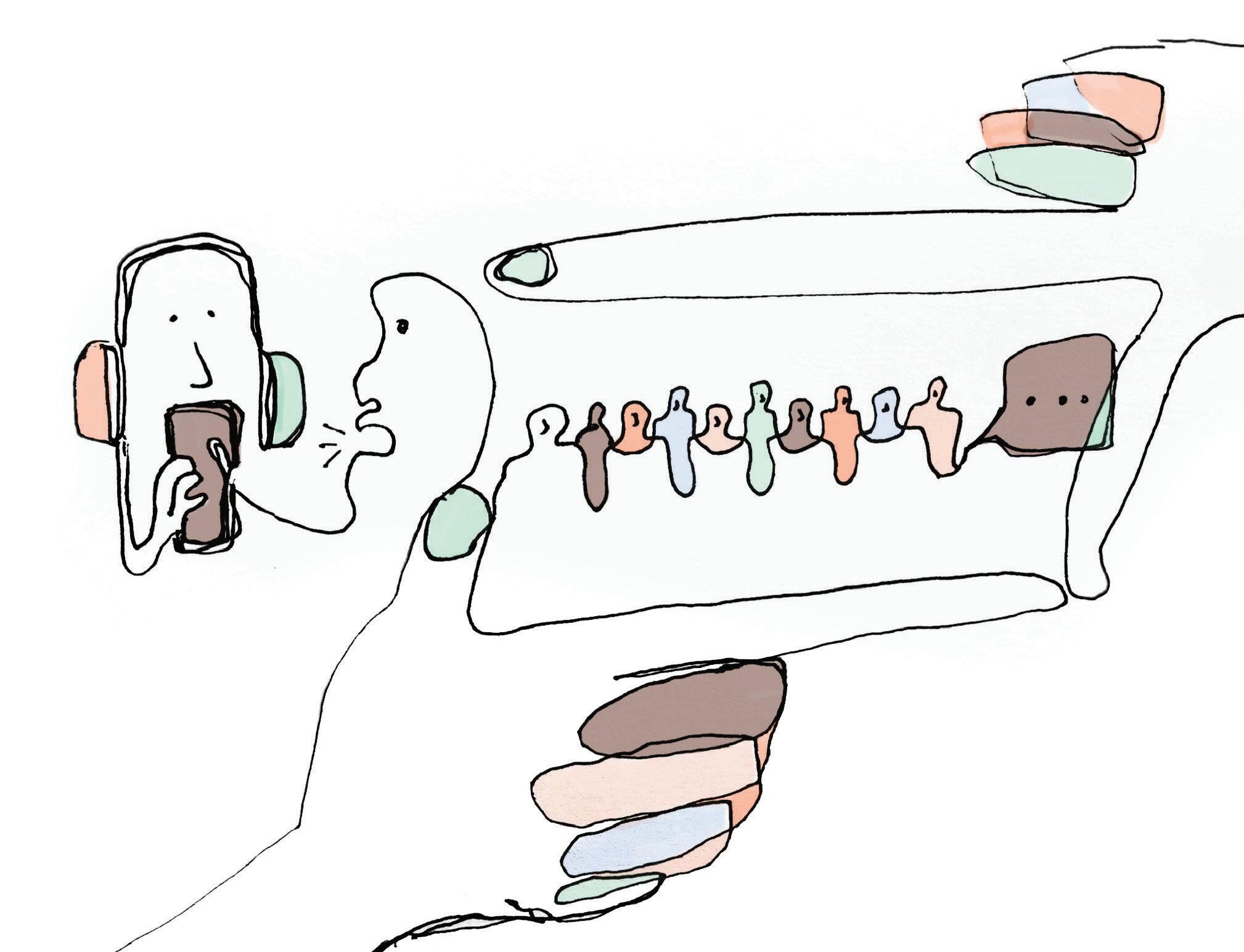

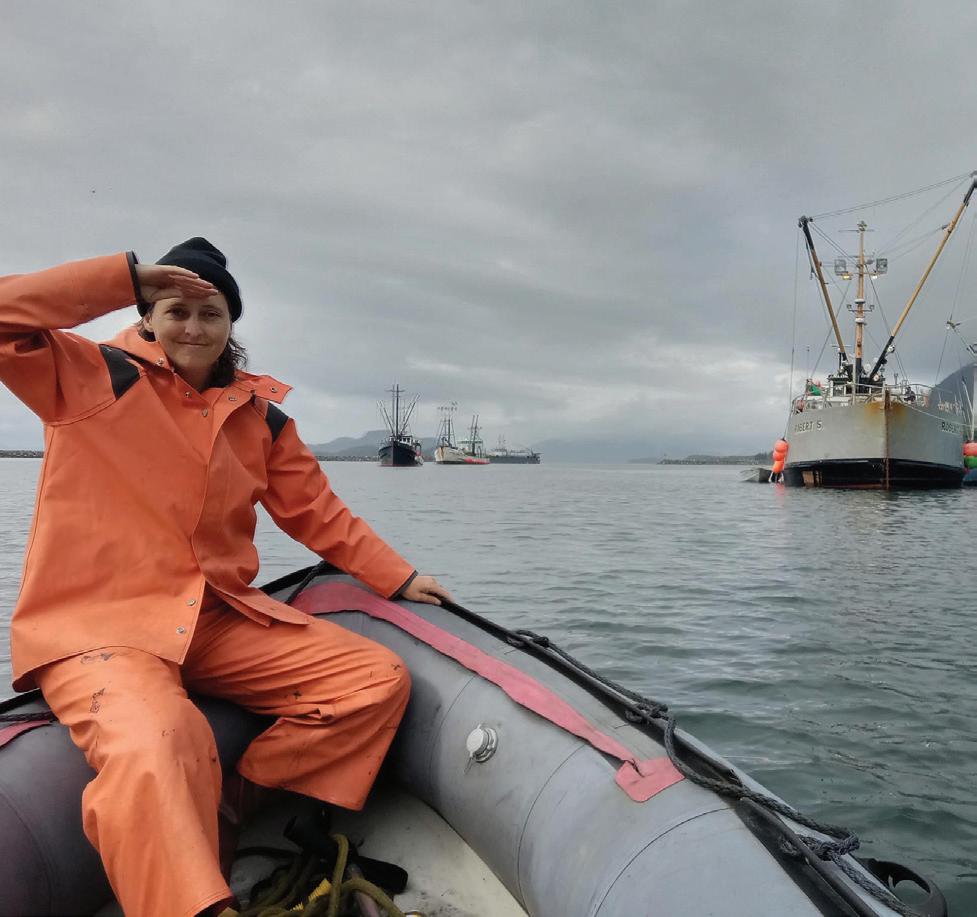
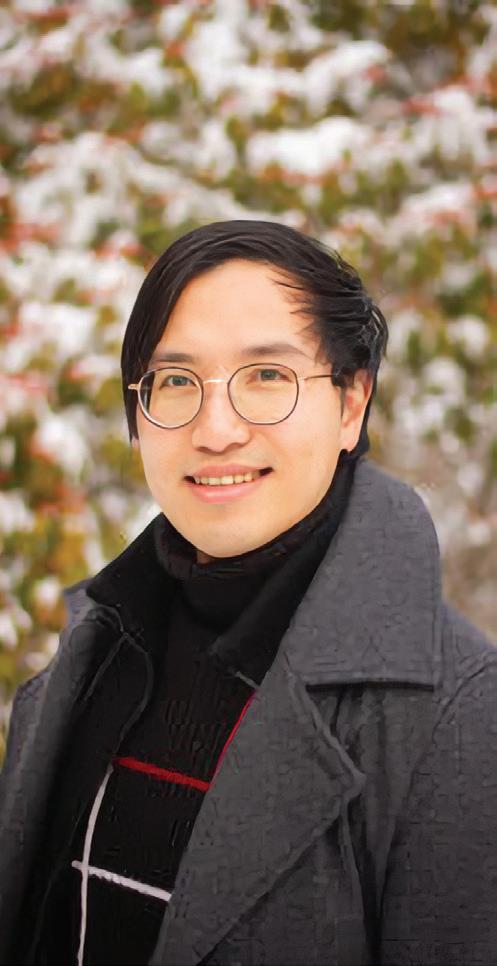
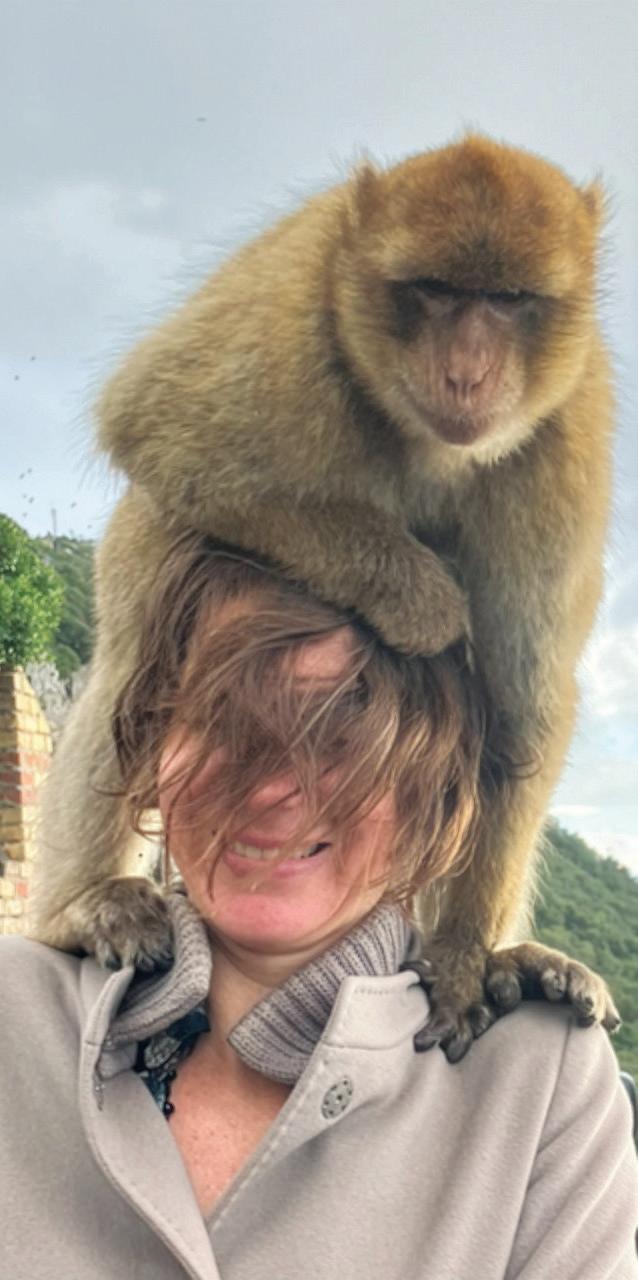
Dan Mahoney: The theme for this year’s magazine is Dialogue. One of the reasons I started to think about dialogue in the country, and in higher education in particular, is I’ve noticed conversations in the classroom—and conversations students are able to have with each other—have turned in a weird way. There is a fear of discomfort in a classroom setting. We’re afraid of stepping on each other’s toes, and this is strange because I’ve always considered myself to be an expert toe stepper-oner. I was wondering if anyone has experienced this, inside or outside of the classroom?
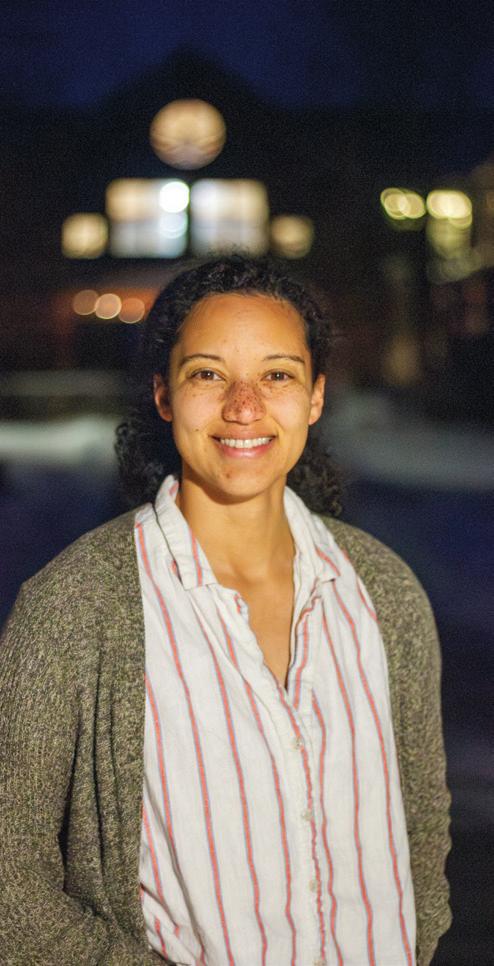
Netta van Vliet: I’m curious to hear what people think dialogue actually is and what it’s not. How is dialogue different from other forms of expression? For me there’s a question here of what it is that we’re referring to when we’re talking about dialogue.
Anna Ialeggio: If you’re seeding this conversation in terms of academic dialogue, or dialogue that happens in the structure of a classroom, that is one of many different kinds. In my field, there’s a particular form of dialogue I hope for that happens through artwork and projects being presented in a public realm with the hope of some response, that could lead to a counter response, and so on. So, if we’re talking about in-classroom dialogue, then what I’m thinking about is an idea or ideas being exchanged, ideally because we’re looking for something new.
Catherine Preston-Schreck: There are, as Anna was pointing out, many different kinds of dialogues. In the world of a library, I think about dialogues in terms of simply creating a space for people to gather and exchange ideas. Extending this to Burke’s metaphor of a parlor, who owns those spaces, and who owns access to the information that might inform that conversation? It’s more clear, I think, in the work of a librarian, because we are literally giving money to a lot of different corporations and organizations in order to have databases and journals. That really defines some of those conversations and leaves a lot of people out.
DM: What is dialogue and who has access? Kara, when I think about access in the sciences I think about Sci-Hub, the questionably legal shadow library that allows access to scientifi c journals without the paywall, and how that site has helped spread information far and wide, especially in the developing world.
Clockwise from top: Anna Ialeggio; Catherine Preston-Schreck; Kara Gadeken; Netta van Vliet; Hien Nguyen
Kara Gadeken: There are structural barriers to accessing knowledge that, much of the time, students and nonstudents have already paid for with their tax dollars. In my view—and I write this on the board for them—they should definitely absolutely under no circumstances ever think about using SciHub. I have my own opinions about accessibility in science. My musings when I read the email Dan sent were about the way scientific conversation occurs. The way I frame it for my students is that we can think about science through several different lenses.
One of the lenses we can use to view science is the lens of a conversation. It’s a long-running conversation between usually highly educated people in a very specific framework with rules of engagement for how you present information and how you engage with other people about the information presented. In a perfect world, that conversation would be free and open for everyone to view. That’s not the case. It’s by design, by historical design, curated and exclusive.
There are certain things that you need to have acquired, whether they are degrees or accolades or positions, in order to contribute, or you have to be associated with someone who has those metrics of expertise to contribute. The history of science is one of exclusivity.
NvV: As a non-scientist, that sounds familiar in an overlapping way to humanities and interpretive social sciences. I would also add that, as someone who’s not schooled in science beyond high school, to me there’s an element of exclusivity, but not necessarily by design but because I just have not learned as much as you have in biology. I might find it difficult to participate because I lack the language.
KG: Yes, language, that is what I was thinking about earlier and did not include. There are words that are given specific meanings that unless you are trained in that field, it is not immediately clear what it is that you’re talking about. Jargon, for lack of a better word… and I think it gets a bad rap because it can be exclusionary, but it’s double-sided. There are good reasons for jargon to exist. It can allow for the building of further understanding and complexity when you have that underlying structure. But for those who do not have access to that foundation, the whole thing seems like a forbidding tower they can’t enter. So that is where the years of training in how you actually talk about these things come into play. The language that you use, those common
understandings that you have with other experts in your field, allows for further development of ideas, but it also can keep people out.
Hien Nguyen: I couldn’t agree more with Kara about exclusivity in the disciplines. Yet there is a tension here between the need to democratize access to scientific knowledge and dialogue, and the dangers of people without scientific training but with significant political or financial power spreading scientific misinformation. For example, I am thinking about the spread of vaccine misinformation, which has done enormous damage to public health and social welfare, and which is often propagated by wealthy or politicallyconnected individuals who exploit their platforms to undermine scientific consensus.
But I want to return to the original question about what happened to dialogue in the classroom. I want to challenge that idea that the classroom is necessarily the place to have a dialogue. Let me give an example from my own field: In economics, we’re experiencing what a colleague aptly called “paradigm stagnation in the midst of polycrisis.” The dominant theoretical frameworks are demonstrably incapable of addressing contemporary economic crises—climate breakdown, rising inequality, care infrastructure collapse. Yet there’s no material incentive to fundamentally change the paradigm, because these ongoing crises actually increase demand for economists using the existing tools. The system rewards reproducing the same conversation without resolution. This connects back to Burke’s Parlor: sometimes we keep entering the same
room, having the same debates, not because we’re genuinely seeking truth, but because the material structures reward our continued presence in that space without transformation.
DM: So the “parameters” of Burke’s metaphorical conversation have been baked in. The place, who is allowed to participate, and what can be said has been seeded from the start. There’s no changing it. This could be the classroom, the social media sphere, the workspace… Ouch.
Dialogue and discomfort
NvV: The Latin root of the word dialogue is “through words.” So, I’m thinking in terms of my job teaching college students doing work together through words, and that has become more difficult. Or maybe the challenges have changed in a way… It has become more of a challenge to figure out ways to create conditions in which we can do work together with words rather than the challenge being more in the work itself. Does that make sense? I’m seeing various ways in which people are more concerned with what is allowed to be said or what the consequences might be of using which words when and how. At COA post-COVID, I feel like I am hearing more anxiety about disagreement and about policing of speech, and I find myself reassuring students that it’s okay to disagree more than what once was the case.
It’s okay that we have di erent opinions and di erent interpretations of texts. Not only is it okay, but it’s actually a good thing. There’s a di erence between being disrespectful and disagreeing, you can disagree and still be respectful.
AI: I would love to respond to Netta. I teach in a subjective area. Many of our discussions are in the realm of subjective responses. My students have to know they’re not being assessed on their conversation (or their creative actions) in terms of my personal taste. And what I’m interested in, what I want them to generate between each other, are thoughtful, specific responses to purposeful, specific choices that have been made—in objects, gestures, and propositions they offer to each other. Which comes back to not judging the person, but rather the action and being mindful of the word “judging.” That’s the job of an art professor. That’s the work as I see it.
DM: Have you noticed changes postCOVID?
AI: Around the time of the pandemic, a false binary started to emerge very powerfully in art classrooms: the idea that the basis for encountering or assessing artwork should be framed in terms of right and wrong, or in terms of liking versus disliking. Sometimes like/dislike was being interpreted as right/wrong. Those categories were muddled. It seems to be an even stronger inclination now… I agree with what Hien said about wondering exactly what kind of dialogue happens in the classroom. I’ve come to think of it more as a moderated conversation where my role is to constantly try to get us away from like/ dislike and right/wrong, and back to what are our specific responses to specific choices that an artist has made. What are the effects of those choices on us, the individual and collective audience? And then, how can the person who made those choices learn to be in control of them, or harness the awesome chaotic accident that sometimes produces them?
NvV: What I hear from students is that they feel restricted or scared to voice an opinion in all kinds of contexts, including in seminar discussions, in large part because of social media, that someone will post something they said, and label them in a particular way. This, then, causes a sense of restriction when trying to think out loud together in the classroom.
HN: There are so many different things to talk about when it comes to social media. The like/dislike binary, but also increasing political partisanship and what political scientists are calling affective polarization —where you don’t just disagree with
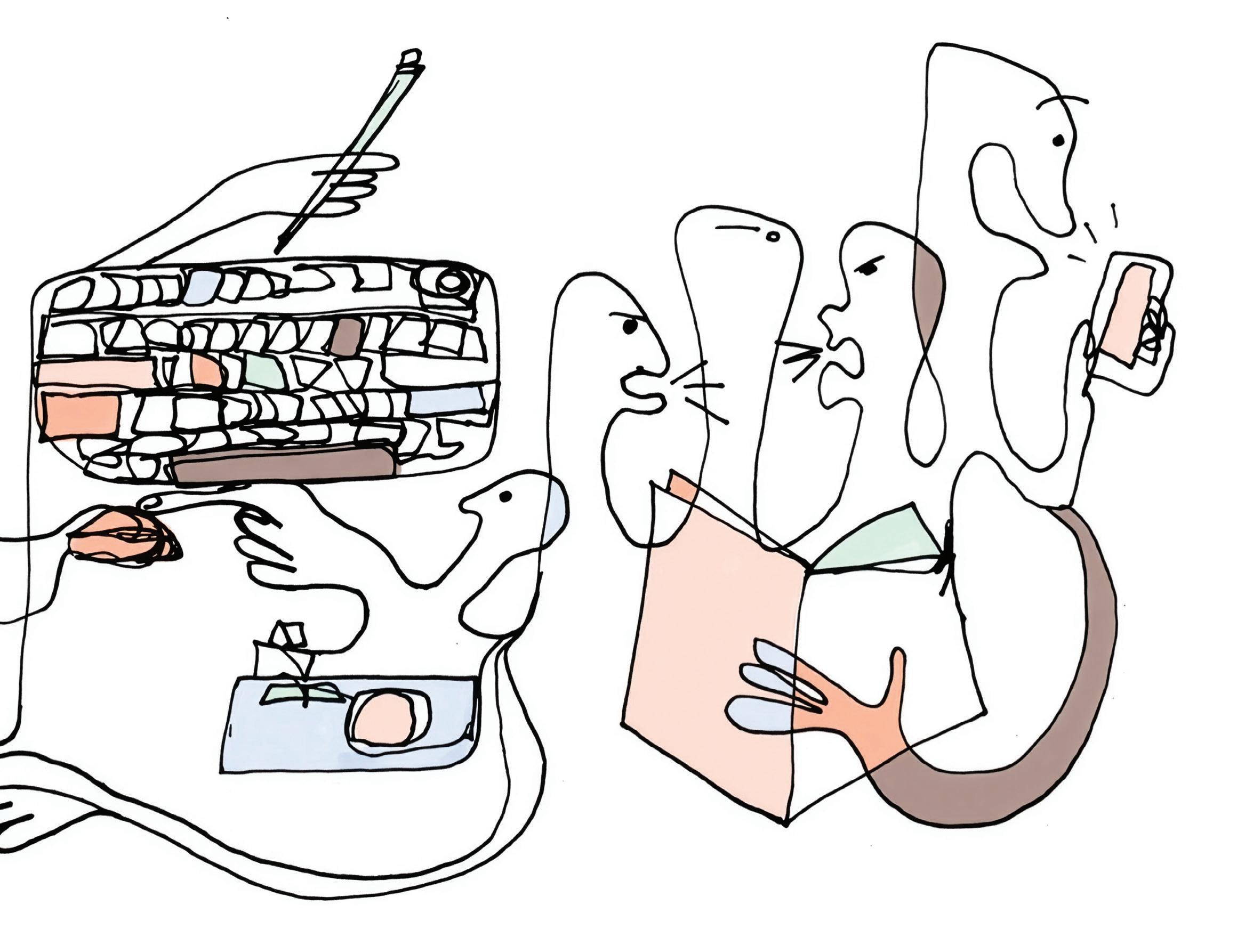
people who have different views, you find them morally repugnant. This happens across the political spectrum. I’ve noticed this among my students, some of whom talk about cutting off contact with family members over disagreements about controversial political issues such as abortion rights, climate change, or the Gaza conflict. Sometimes I myself have the same reflexive instinct, to cut off the conversation and disengage. So on dialogue, the question becomes: what kinds of dialogue become impossible in this climate? And what are we losing when political disagreement becomes grounds for severing relationships?
KG: I find it interesting to hear what you were saying, Anna, about how critique has changed in your classroom. A contrast I find between art and science (not at all to say that science is not political, because it is, especially at this current moment) is the scientific method. It is a thing that exists independent of any one person that you follow. You do the scientific method and the act of asking
scientific questions and posing hypotheses is a dialogue in and of itself. Once students learn the scientific method, they discover that it’s not them on the chopping block. The hypothesis is doing the work. That relieves some pressure when we’re having discussions in the classroom. There is a sense of “removal” in the sciences that perhaps does not exist in other disciplines. It’s like you’re trying to remove yourself from the equation as much as possible, and it becomes objective—but, of course, it doesn’t. But the goal is objectivity, whatever that is. I find that in the dialogues I’m having with students in the classroom, we have the most effective discussions when we really key into that vibe of, it’s the science having the discussion, not the students.
NvV: Part of my job as a teacher is to inform students about the current debates in anthropology and related fi elds. I teach the thinking behind some of those debates. For example, as an anthropologist how do you account for your
subjectivity, your personal experience, your views, your interpretations? What does it mean to do that in relation to people who have different experiences, different questions, and different interpretations? And how can we focus on the thing at hand? It’s interesting to hear Kara talk about this in the sciences. There are students who come into anthropology classes thinking they can be objective and that objectivity is the goal when you’re observing human behavior. And there are some anthropologists who think you can be objective. I’m not one of them. I try to challenge students to think about what “objectivity” means, especially in the context of trying to understand social relationships, power, politics, etc. In many of my classes we often turn to Stuart Hall’s writing about discourse, which can be thought of as the existing frameworks around a certain topic. If we look at discourse in terms of framework, then as a class we are thinking about the limits of the sayable about a topic, any topic… The dialogue we can then have is one that allows us to recognize what the discourses are and what can interrupt or open or change those existing discourses.
DM: But it is difficult to get there if folks are afraid of speaking or even thinking a thought that might offend someone.
HN: There’s data showing that rates of self-
censorship among Americans have increased dramatically—some research suggests it has tripled since the McCarthy era. Interestingly, selfcensorship correlates with education level: those with higher education report more self-censorship, while those without postsecondary education are more likely to express opinions without filtering.
DM: That holds up if you look at who has power in the US right now. The book burners are back… if, indeed, they ever left.
CP-S: I feel very privileged to be in a place where we have a lot of creativity and freedom with how we do our work. Public libraries and university libraries exist in different contexts. The rates of book bannings have been tremendously high in the last few years, especially since 2020. There are organizations like the American Library Association that track these numbers, but a lot of things don’t get reported. This has been happening across Maine. I know school librarians who have been fired because materials deemed “inappropriate” were in their collections. A lot of librarians are leaving the profession. It’s a low-paying job to begin with, so there are other factors that don’t necessarily keep people motivated to stay on. It’s a real scary issue, but it’s not new. We certainly have gone through historical phases of this. Not just the current political forces trying to dictate what information people can access in terms of what books are on the shelves, but also who can even enter into a space. There’s the history of segregation, that libraries for people of color were either poorly funded or barely existent.
HN: I’m speculating here because I don’t have access to the data, but I think part of the reason we’ve seen a growing rate of censorship in the US is increasing economic instability and precarity. The consequences of losing your job have become so much higher in the current climate and so people proactively censor themselves. We no longer have the material conditions to have a free and open debate if everyone is desperately clinging to economic survival. Meanwhile, we witness with increasing frequency examples of wealthy and powerful people openly saying things that are outrageous or morally repugnant. They
have freedom of speech because they can afford freedom of speech.
NvV: OK. Sorry, but because I’m a nerd, I looked up the Stuart Hall essay I mentioned earlier. This is taken from the middle: “For example, Palestinians fighting to regain land on the West Bank from Israel may be described either as ‘freedom fighters’ or as ‘terrorists.’ It is a fact that they are fighting, but what does the fighting mean? The language (discourse) has real effects in practice.” And then he goes on, and part of what he gets into is the way in which discourse has real material effects in the world. So even if something isn’t actually true, objectively, it can then have truth effects, so to speak.
Ways of knowing
AI: A form of dialogue at risk right now in the arts is the private dialogue an individual has with the material they’re engaging with, whether that’s a book or a blob of clay. This is different from being in dialogue with other human beings about that material.
But your relationship with material, whether that is an artistic preposition or a data set or a text, is not fi xed, because it’s durational and will change over time as you do. Developing the capacity and interest to stay entangled with that specific material—in a way such that your relationship to knowledge is evolving and dynamic—is a skill you can learn really well in a classroom.
I see it come up in art; often someone’s like, I’ve got this idea, but I think someone’s done it before. And the answer has to be, well, but you haven’t! You haven’t done it yet so it will be different when you do.
KG: Something I try to impart to students is, yes, we have a method that ideally evidences itself. But also, the doing of it is a deeply and profoundly human endeavor. We made all of this up. It is a way for us to try to know things. And people will try to know things in different ways. That is part of where discussion and debate in science comes from. This is the reason why people disagree. They don’t just disagree when we don’t know things. They disagree when we have data and we’re trying to figure out what it means. Data is interpreted. Science is a way for us to tell stories about the natural world. Scientists are working with the natural world but all of this is being filtered through the human… it has to go through us, the people who are doing it. And we cannot be separated from it. The current trend of politicians trying to use
science to their own ends or water it down until it becomes unintelligible is the product of science being wielded as a weapon rather than a practice and perspective, a lens through which you can view the world. A way of knowing.
NvV: That’s one of my most favorite definitions of science that I’ve ever heard.
HN: Let me be provocative: higher education can function as systematic, state-organized manufacturing of consent or as a tool for intellectual liberation. The structural reality is this: as educators and teachers, we hold significant power in shaping how young people understand the world, themselves, and what’s possible.
And so the intentional e ort of cultivating dialogue and critical engagement with each other and with the world around us—this is a form of political resistance. It might not feel radical in the day-to-day, but fostering genuine critical consciousness is a political act, especially in a moment when critical thinking itself is under attack.
DM: I love that, Hien. I think it is important for students, staff, and professors to remember. It strikes me that we have been talking a lot about time and spending time as a way of knowing something. And time is something that we feel we never have enough of.
AI: Yeah. I teach material processes that require immense amounts of time. If you want to engage with clay, there’s no shortcut. It’s an entity you have to learn to interact with by just being with it. Every term I’ve taught clay, the feedback from students who are interacting with this stuff for the first time is: Holy moly, you told me this would take a long time, and it’s taking even longer than I thought, but now that I’m in it I’ve come to love that there is no shortcut, and no way to turn in a late paper, and that none of the coping mechanisms I’ve developed in the face of my digital reality make any sense in relation to this material. As they spend all this time with this stuff, they realize they’re thinking haptically about other things going on in their minds: the personal, the private, the public, the academic. If they put in the time, it all comes out in one way or another through their hands. In some ways maybe the only thing I’m really trying to teach is patience. Everything else is window dressing.
NvV: I feel like what you’re describing used to be the case with writing. It takes time to read well and to write well. It takes time. There isn’t a shortcut, except that now, technically, there are all sorts of different AI shortcuts available to students.
CP-S: A month ago I had a student say to me, Wouldn’t it be great if we just had a whole class dedicated to reading in the library? So that’s all you did for that entire class is just show up and you sit quietly and then you have that dedicated amount of time to read. It was super revealing, the basis of so much of what we’re talking about is the pressure and stress of time.
The context of the library is rooted in articulations of time and the blending of past, present, and future as an expression of the everyday. Libraries are open, welcoming spaces that invite us to have conversations with thinkers over thousands of years. That’s powerful stu .
DM: Mary Oppen has this great quote: “When Heidegger speaks of boredom he allies it very closely with that moment of awe in which one’s mind begins to reach beyond. And that is a poetic moment, a moment in which a poem might well have been written.” We’re too busy to be bored… If bored time is time wasted, when will students write poems?
HN: There’s well-documented research showing
that student study hours have declined significantly over the decades. In the 1960s and ’70s, full-time students really treated studying in college as a full-time job, and typically devoted 30 to 40 hours per week to coursework. By the 2000s and 2010s, that dropped to 25 to 30 hours a week. Now it’s even lower. But the fact that students today don’t spend as much time studying reflects larger structural shifts: rising economic precarity forcing more students to work for longer hours, attention captured by social media algorithms, mental health crises, and increasing pressure to treat learning as a commodity.
NvV: Another aspect of dialogue is the relationship between product and process. An understanding of dialogue as an ongoing dynamic process where you’re all the time changing and being changed through your work of interpreting and engaging with material, and with other people, that is very different from an understanding of dialogue as being only or primarily about trying to reach a final position or declaration or claim. Those are really different things. And in some ways, everything that people have been saying in this conversation sounds to me like putting emphasis on process, like that it’s an ongoing, never-ending process of internal dialogue, of dialogue with an object or a product or another person, which is really different than trying to sort of solidify an outcome as the end goal.
DM: Others will say that time is money and you need a final product.
AI: Artists make a lot of so-called final products, but for me, money’s always been time. Money just means: how much time do I have in process, in relationship with people, with place, with ideas? And yes, that’s obviously a position that an artist might take, but it feels like it’s a fairly radical stance to insist on right now when everything, especially every second of one’s attention, is so deeply monetized.
CP-S: I certainly think and dream about endless time. Part of what I do outside of COA is volunteer in the libraries of regional jails and prisons. That is one thing incarcerated people have, they have a lot of time and they talk about it too. They are voracious readers. The best readers I’ve ever met are in Hancock County Jail. It’s really striking to think about in terms of COA: Why are we here? Where are we going? How will we get there?
Why we give
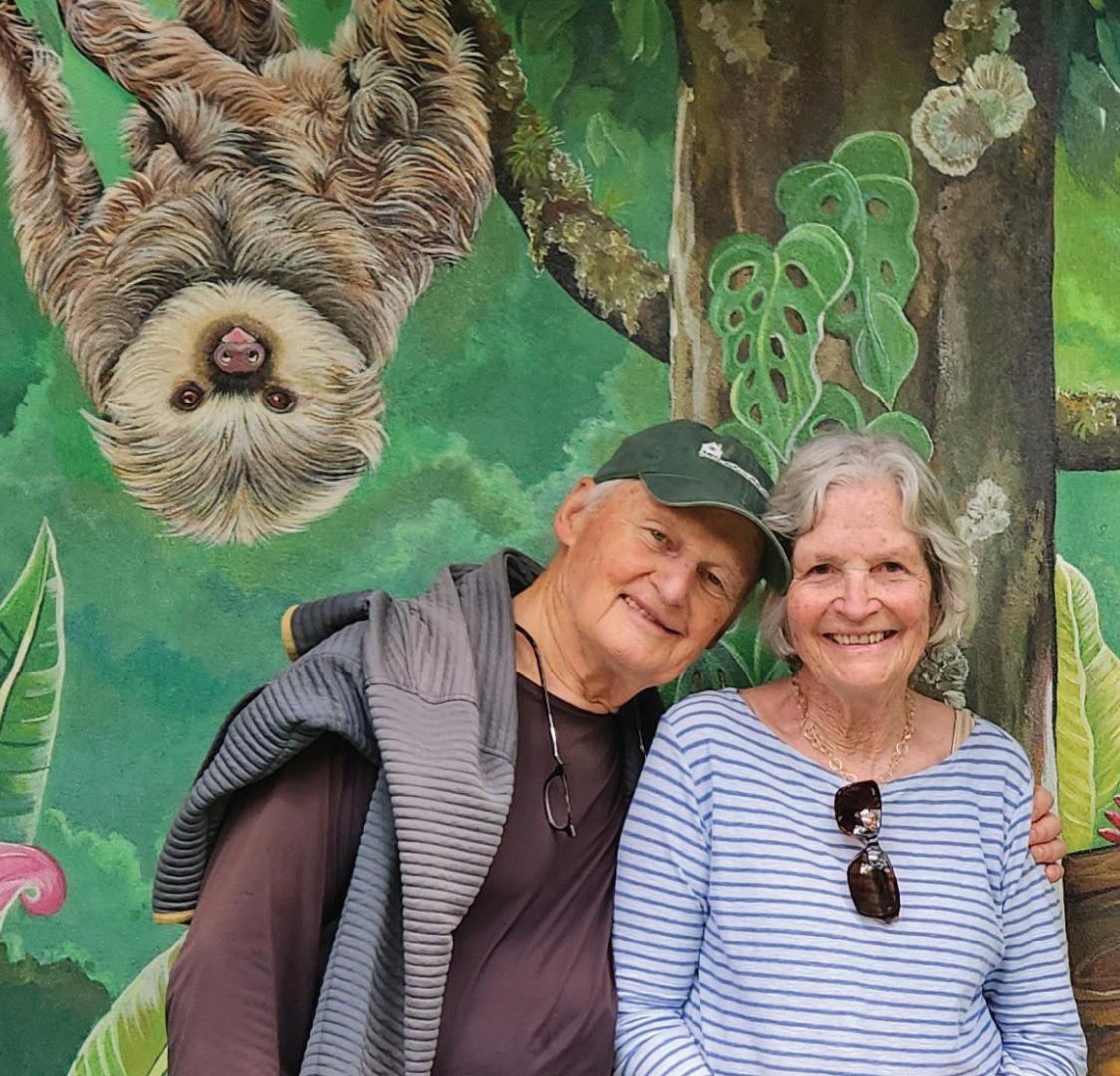
WEFIRST CAME TO KNOW of the college as something of a 1970s idealistic experiment. Our perception evolved gradually over the years as we met and began interacting with members of the community teaching there—architect Roc Caivano, ecologist Bill Drury, writer Bill Carpenter, and lawyer Dan Kane. There was a reason these thoughtful, committed people were drawn to this place. The emphasis on human ecology and the environment. The work with whales. The seriousness of purpose. The spirit of inquiry. Still, we weren’t initially deeply invested.
That changed when Cookie’s daughter Jen [Jennifer Judd-McGee (’92)] enrolled. Watching what she gained from her education transformed our understanding. She found her voice. She discovered and deepened her passion for art and for civil rights, and the college nurtured both. It gave her confidence and clarity. It helped her become who she is today. We believe that experience is not unique to her; it happens to many students who pass through this remarkable institution.
Over time, we have also come to see how so many COA graduates have stayed here on Mount Desert Island after graduation and how they have enriched our island community and the state—intellectually, culturally, and economically. They are teachers in local schools, faculty and staff at COA, Acadia National Park employees, leaders of local nonprofits, restaurant and shop owners, artists, musicians, and more. It is hard to imagine the area without them.
From Bill’s perspective, having grown up here, he thought the idea of the college was a long shot. But the value the college adds to the MDI community is immeasurable. The COA Summer Institute, for example, is a fantastic addition to all the college has to offer. We love the intellectual vitality it offers and the meaningful conversations it fosters.
Cookie’s time as a trustee has been deeply meaningful and has only strengthened our commitment to COA. We have found the faculty, staff, and board of trustees to be deeply engaged and invested in the student experience, in the COA mission, and in the future of the college. And as the college continues to grow and evolve, it’s an exciting and sound investment.
Cookie and Bill Horner
Cookie and Bill Horner
Fiona Lovejoy ’26
IN THE FALL of 2021, having deferred my acceptance to UVM, and frankly feeling disillusioned with higher education, I found myself WWOOFing* in Flying Pond, Maine, and got the chance to tour COA. It being winter break, the campus was empty and it was as if no one but my tour guide, Olivia Camber (formerly Clark) ’24 and I existed there. Nearing the end of the tour, she led me down towards the ocean where we bumped into her friend (and mine, in the future), Antoine. Walking side by side the two of them, still basically strangers, I somehow had already begun to feel at home. When I got back to Flying Pond, I immediately began my COA application.
I chose to study at COA for a number of reasons: because of the opportunity to craft my own educational path instead of subscribing to a binding, rigid major; because of the intrigue of human ecology, and what I hoped I’d come to understand it to be four years later; because of that frigid day in early November 2021, and because of the tenacity, vibrance, humor, integrity, dedication to craft, boundless curiosity, and truly inordinate generosity of the people that choose to intertwine themselves with this place.
Marx and Marxisms
Marx and Marxisms, apropos to its name, is a deep dive into the vast and complex world of Marxist theory. Like most other classes taught by professor of anthropology Netta van Vliet, the course engages feminist and gender theory as well as postcolonial study, among other disciplines, to chart intersections of political economy and difference, marginalisation, and the class struggle. The class was focused on the development and rise of capitalism, and the various and continued Marxist responses to that socioeconomic and political structure.
This class gave me the tools not only to read and engage with difficult and complex text, but strengthened my ability to contextualize myself inside of larger structures, bringing myself into pre-existing discussions. By the end of the course, I felt that I finally grasped what I couldn’t at the start—that learning is not about finding answers, but asking hard questions and trying our best, not to resolve them, but to create more of them.
STUDENT SCHEDULE
2120
and Marxisms AD 2048 Audiocra : Writing and Producing Longform Narrative Audio
*WWOOF:
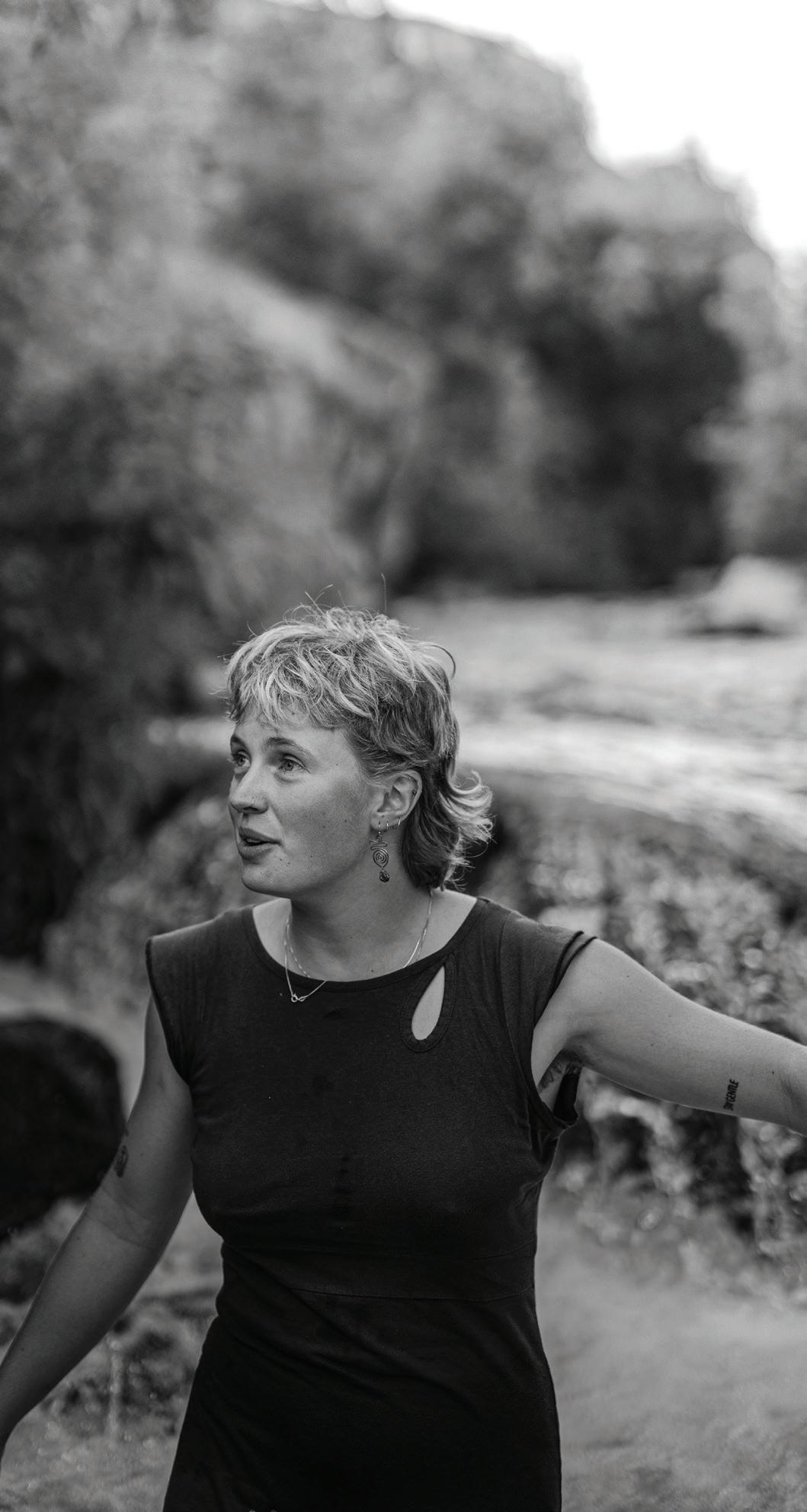
Movement Training Basics
This class, taught by Jodi Baker, pushed all the movement training I’d done in my life and at COA into concise focus. The most incredible part is that we hardly ever spoke. I learned about the importance of repetition, rules, and exactness walking in circles and circles and circles with Jodi barking out directions. We, a group of individuals, learned about taking action, following desire and impulse, and responding by passing balls—large and small—across space to one another. I learned and practiced soft focus and a neutral stance. I learned to take these postures with me in and out of the studio. My daily life became a practice in movement training. Nearing the end of term, we took a trip to Ellsworth’s candlepin bowling alley (featuring the oldest candlepin machines in the world. Let that sink in) to apply all that we’d learned in class to a new form. Training with Jodi helped me see where movement training and other theoretical disciplines intersect—allowing me to embark on my senior project, navigating concepts like nationalism and nationality, labor and exploitation, and gender and the body.
Audiocraft: Writing and Producing Longform Narrative Audio
Audiocraft, taught by sound and story archivist Galen Koch, is a practicum in long-form narrative storytelling. We began the class creating three short, prompted warm-up pieces which gave us the opportunity to get comfortable working in Logic Pro. After that, the term was largely dedicated to personal work on a 20-minute story. Given the freedom to create whatever I desired, I decided to produce a story about kinds and acts of love. I wanted to chart the myriad ways that peers, professors, and strangers alike navigate loving in times of deep pain, worry, and general hardship. What I ended up with was the story of a mosaic maker and a chance love story between two Londonites far, far from home. It was a journey into weaving what seemed like very distant stories into one, an experience I have had over and over again at COA.
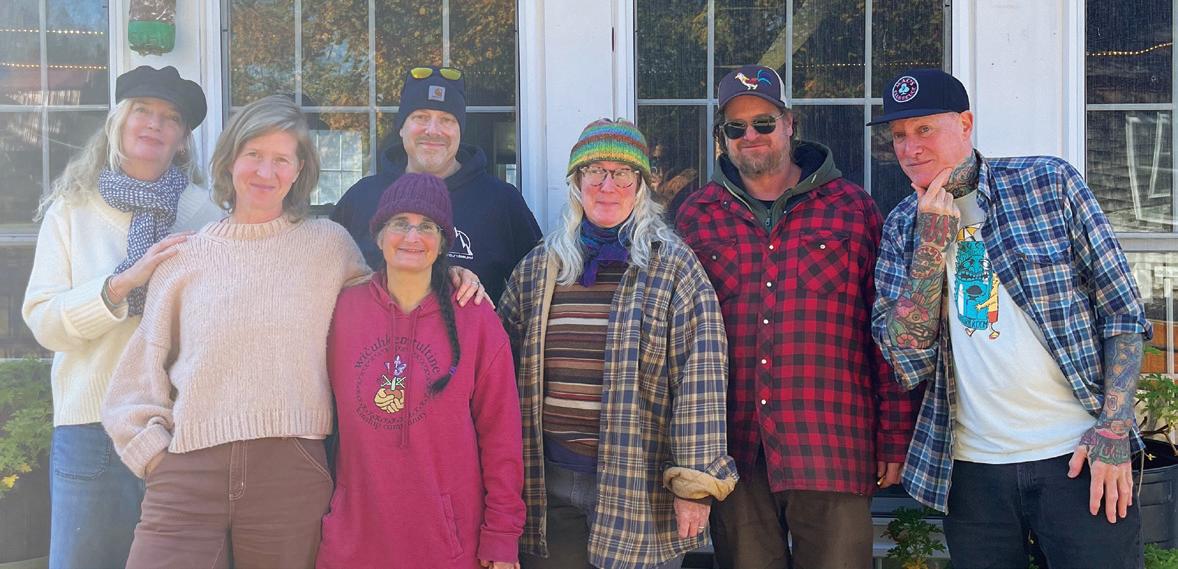
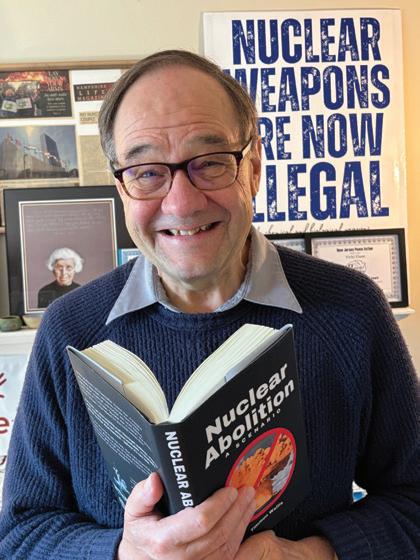
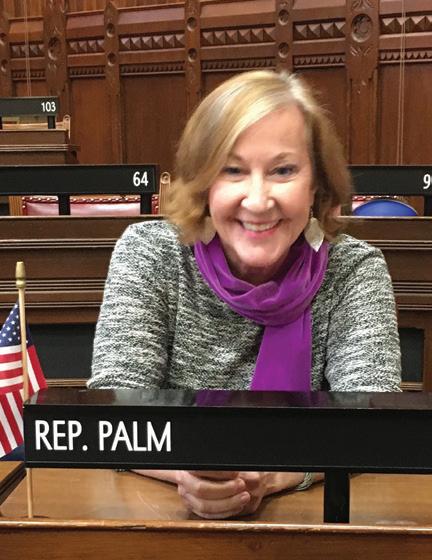
1976
Who knew elderhood was so much fun? After 40+ years of teaching at every level, ALICE LEEDS ’76 is thoroughly enjoying retirement and is immersed in her Addison County, Vermont community. Among many other things, she oversees the “Ways of Seeing” column in the Addison Independent, a wonderful local newspaper out of Middlebury. You can look for her column there as well as for the writing of CLAIRE CORKINS ’06. Alice is also on the board of Metta Earth Institute, a nonprofit run by GILLIAN KAPTEYN COMSTOCK ’88 and RUSSELL COMSTOCK ’89
This past year, after serving three terms in the Connecticut General Assembly as vice chair of the Environment Committee, CHRISTINE PALM (’76) chose not to run again in order to launch The Active Voice (theactivevoice.blog), a high-level internship program where young environmentalists learn to use journalism and civics (testifying on bills) as a way to turn climate change despair into meaningful action. While serving in elected office, she wrote and passed legislation to require the teaching of climate change in all public school curricula, making Connecticut the first state to do so. She also passed a bill to create
the Connecticut Office of Aquatic Invasive Species, modernize the Bottle Bill, and ban PFAS, among other environmental initiatives. “Although I never graduated from COA, I will always be grateful for the ways it and its people cultivated the environmentalist in me.”
1978
TIMMON (MILNE) WALLIS ’78
published his first hardback in May. Nuclear Abolition: A Scenario (Indespensible Press, 2025) is the antidote to Annie Jacobsen’s bestseller, Nuclear War: A Scenario (Dutton, 2026), which describes, step-by-step, how a nuclear war could engulf the planet at any moment. Timmon’s book describes step-by-step what it would take to eliminate nuclear weapons worldwide and prevent such a catastrophe, building on the steps that have already been taken by cities and countries around the world.
1980
HELEN CAIVANO
’80 writes, “This November, Katharine Starlight Caivano Macko turned 50—and to celebrate, 20 McGregor family members spent Thanksgiving in Scotland. The trip of a lifetime, or at least 50 years! Roc started teaching in 1974. 1975 was our first full year at COA. Since
then, Kate was born, Lilly was born, I graduated, Kate met BEN MACKO ’00, and she worked at COA for 10 years. Life is good. All thanks to COA!”
1989
Over the past year, DEBORAH MANDSAGER WUNDERMAN
’89 has been based in the DC area and working at the intersection of human consciousness, ecology, and social systems.
“I’m the author of Sapience: The Moment Is Now (independently published, 2024), a book 12 years in the making that explores how psychological perception, historical patterns, economic structures, and collective imagination shape human behavior—and how those forces are being leveraged in the present moment. My work examines human ecology at its deepest level: somatic, psychological, philosophical, historical, and future-facing. Drawing on history, systems thinking, and depth psychology, the book looks at how authoritarian movements take root, how misinformation becomes internalized as truth, and how individual awareness remains a critical form of resilience. In addition to the book, I publish essays and educational resources at sapience2112. com and host the Wisdom
Left to right: Jennifer Vinck ’93, Alex Lincoln ’00, Lelania Avila ’92, Josh Winer ’91, Liza Rose Gottlieb, Scott Murchison ’95, and Dan Gottlieb ’92 (RIP Noah Gottlieb ’95); Timmon Wallis ’78; Christine Palm (’76)
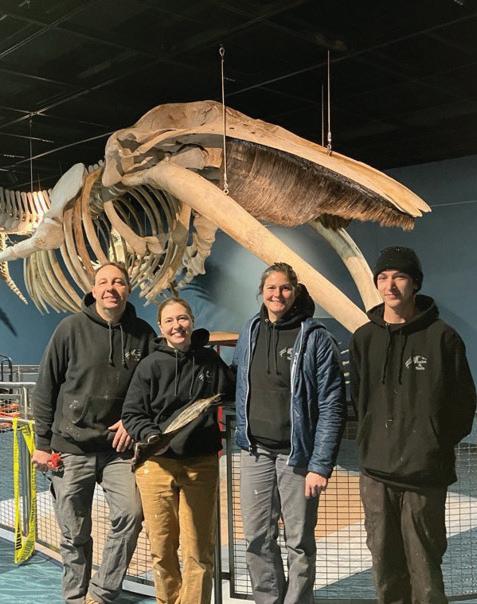
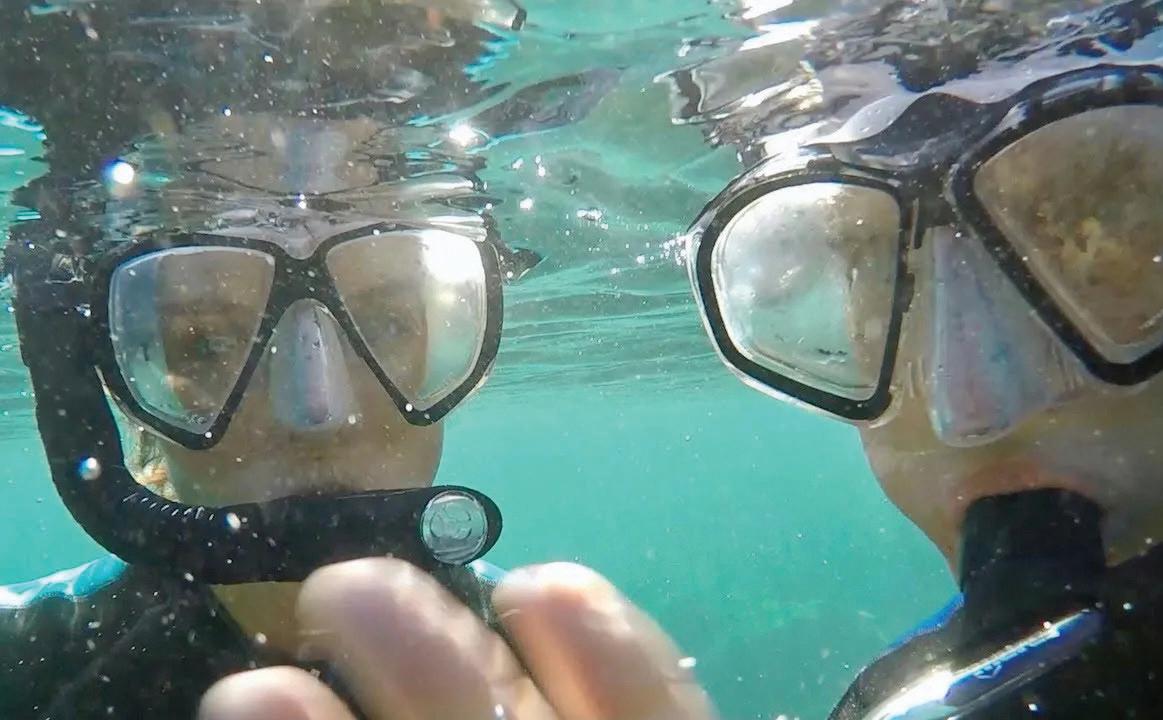
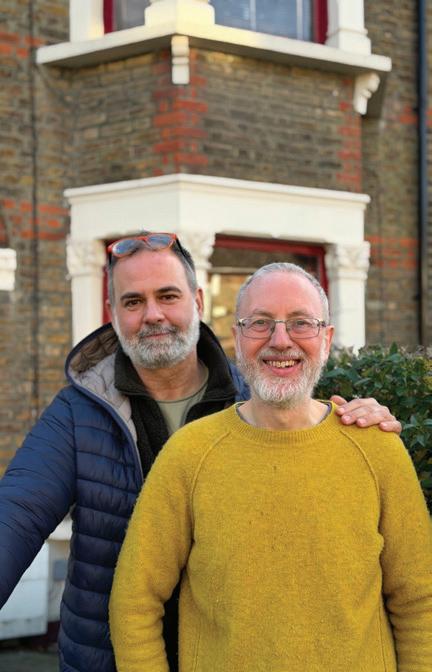
Guardians podcast on Spotify, where I explore current events through historical, psychological, and scientifi c lenses. I also run The Quip Collection on Etsy, a creative project using humor, design, and cultural critique to make complex social and political ideas accessible through everyday objects. COA’s integrative, ecological approach to learning continues to deeply inform my work.”
1991
DAN DENDANTO ’91 and his company, Whales and Nails, Inc., completed three large whale skeleton exhibits in the past year, including a pair of humpback whales at the Maine State Museum in Augusta, a minke whale at the Cape Lookout National Seashore in Harker’s Island, North Carolina, and a fin whale at Maine Beer Company in Freeport, Maine. The project at Maine Beer Company is a fundraising initiative marking a 14-year collaboration between the craft brewery and College of the Atlantic Allied Whale, which also included the naming of their very popular IPA, “Lunch,” for a fin whale tracked by Allied Whale (see page 5). A number of alumni worked on the teams that executed these projects, including COURTNEY VASHRO ’95, PHOEBE WAGNER ’24, JOSIAH HANSEN ’24, NICK
HOFFMAN ’24, ROSIE CHATER ’25, MARINA SCHNELL ’25, and current student EMI JONES ’27
It’s been a busy year of field research and science education for BETH HEIDEMANN ’91. This summer, Beth and her partner, Curtis Bentley, traveled to the Pantanal in Brazil, the world’s largest wetland, in search of capybaras for their latest project, and “In May, we depart for Madagascar to film our 15th field research mission. These expeditions are the heartbeat of Go2Science, which is now in its ninth year. Our goal is to bridge the gap between active field science and the classroom, providing K-5 learners in Maine and beyond with a front-row seat to real-world discovery. By engaging schools, afterschool programs, and homeschoolers, we aim to move beyond rote facts and instead nurture the next generation of evidence-based decision makers. As we continue to expand our reach internationally, I encourage my fellow alums to share our mission with the educators and parents in their lives. Helping young learners develop a critical, scientific lens has never been more vital.”
1992
Blessed by community near
and far, LELANIA AVILA ’92 prioritizes play even as the world gets wonkier. Thanks to extensive support from fellow alums AIMEE HUNT ’91, LOUISE TREMBLAY ’91, JESSIE GREENBAUM ’89, KATE YOUNG ’15, and ZACH TAIBI ’17, all the asbestos in her Northeast Harbor home is now sealed up. Lelania prepares to open a new Puppet Portal in Town Hill, Bar Harbor, in April 2026. Vivaxis and the Noise Band, her current puppet show-in-progress, includes a 20-foot cocoon for the audience to enter. While we wait for the puppets to usher us into the post-capitalist world so many of us anticipate, Lelania tends two part-time dream jobs: puppetry and movement teacher at the Cranberry Island School (which invites a welcome immersion into Wabanaki Studies); and circulation substitute at the Northeast Harbor library. Meanwhile, her Paradise Found, LLC metamorphosizes into The Land of Both-And. Visit her family’s pollinator sanctuary next time you’re in Northeast Harbor!
CLARK LAWRENCE ’92 is teaming up again with the London-based painter David Hollington for a third book about plants and gardens. A Verbal Herbal will be published by Libreria della Natura (Milan) in autumn 2026. This time, as the
Left to right: Dan DenDanto ’91 and crew at Maine State Museum; Beth Heidemann ’91 and Curtis in the Galápagos; Clark Lawrence ’92 (in blue jacket) with David Hollington (in mustard sweater)
title warns, there will be more words—often short anecdotes and aphorisms, garden jokes, and folklore. There will be fewer fullpage illustrations, but amusing, quick ink drawings will appear throughout. Clark is still in Italy, near Mantua, running Reading Retreats in the countryside. www. lamacchinafissa.com
1993 After almost 20 years of teaching in alternative education, JENNIFER (BUREAU) CRANDALL ’93 switched gears and became a Family and Consumer Sciences (FCS) teacher at Mount Desert Island High School. FCS has gone by many names, including human ecology and home economics. “My goal is to help students gain the information they need to make informed decisions about what they eat and wear, how they might raise their children, and how they spend their money. This year, the Maine Association of Family and Consumer Sciences has given me the Teacher of the Year award. I’ll be attending the national conference in Louisville, Kentucky, in June.”
ERIC (WEIKART) WOLF ’93 independently published a book in May 2024 entitled A Field Guide to Narrative Therapy. Eric is a practicing narrative therapist who
lives and works on Hawaii Island in the State of Hawaii. He is the winner of a National Oracle Award from the National Storytelling Association for service to the storytelling community. Eric was born and raised in New York City and has lived in intentional communities in the United States. He is a social worker, environmental educator, and professional storyteller. Eric has an MSW and an MS in environmental education. He is committed to finding new narratives to solve the overwhelming problems that are troubling the humans who live on this planet.
1996
JIM KELLAM ’96 writes that he is now in his 19th year of teaching biology at Saint Vincent College (Latrobe, Pennsylvania). “I was recently promoted from associate professor to full professor. Our department faculty have always valued teaching more than research, and so they have not tended to apply for promotion because there are publishing requirements for that. I was able to teach and conduct research at the same time, becoming the first full professor in my department in at least 40 years. I don’t usually brag about this to anyone, but COA Magazine seems a pretty good place to do it! Meanwhile,
I am continuing my research on birds, and how they are affected by pollution left over from our area’s coal mining past. I am also building a college aviary to house a nonreleasable rehabilitated raptor for use as an education ambassador and training opportunity for our pre-vet students.
RYAN RUGGIERO ’96 joined Friends of the Columbia Gorge Land Trust as its director in January 2025.
1999
ERIN CHALMERS
’99 continues to enjoy living in northern California, where Yosemite and other destinations aren’t far away. “At work (I’m still an attorney for the California Coastal Commission), I help the state plan for sea level rise, protect public access to the coast, and protect coastal ecosystems. In 2025, I picked up a trumpet for the first time since COA, and my son (age 13) and I are playing a bit together. My daughter (age 16) started driving and dating. My wife and I escape the city to go to Tahoe as much as we can, and are grateful our kids still enjoy spending time with us. Despite the craziness, life is beautiful and bountiful,” he writes, “though I do still miss Maine and its rivers and lakes.”
Left to right: A Field Guide to Narrative Therapy by Eric Wolf ’93; Erin Chalmers ’99 and family; Jim Kellam ’96
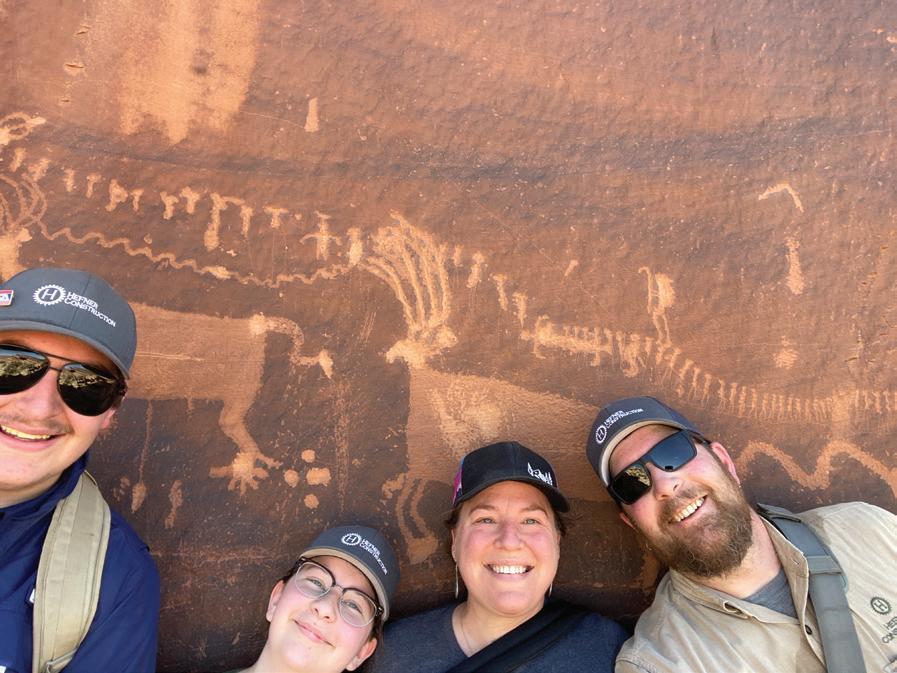
2002
Hello from TREE STURMAN ’02 in Bolinas, California! “After more than a decade in environmental conservation, I switched careers and co-founded Compass Montessori Jr. High in Traverse City, Michigan, where I taught for 11 years. This past summer, I pulled up roots and moved to Marin County to take on the leadership of Marin Montessori Jr. High,” Tree writes. “I remember my COA days fondly and hope to make it back there soon. Here’s to the class of 2002!”
2003
MATT CORUM ’03 and his band, Old Profanity, released their second album, Downhill Both Ways. Available on all streaming platforms and vinyl (of course), and do check them out at a live show if you’re in Portland, Oregon. Matt writes, “We’re performing on a one gig a year clip, so temper expectations.”
CLEMENTINE MALLET ’03 starts a new job in March. “I will be working for Roland Foods as a food safety & quality assurance specialist and will be moving to central New Jersey.”
2004 JULIA MORGENSTERN HEFNER ’04 and her family live
in the mountains of southwest Colorado, where they love to camp and explore. “I earned my secondary teaching license through an alternative licensure program, and am now in my second year of teaching high school English in our local public school, and I am loving it,” she writes. “Our daughter, Zoe, is in 7th grade, and our son, Wyatt, is about to graduate from high school and will continue his education in mechanical engineering at Western Colorado University this fall.”
2009
ADAM KUMM
’09 and his better half, Fiana, celebrated the first birthday of their daughter Sonja. Adam finished his MS in environmental science and policy from Johns Hopkins University. Together they live in San Diego and love spending time in the wilderness with their Vizsla, Copper.
2010
LELAND MOORE ’10 was elected to the New Haven Board of Alders as the Alder for the city’s 18th ward. Leland is an attorney who lives in New Haven with his wife, Ashley.
BRANDYN SCHULT ’10 and EMILY SPEIR (NOW SCHULT) ’11 , their two children, Walter
(age 8) and Imogen (age 4), and three rescue dogs are now living in Austin, Texas. Brandyn is a director at Saronic Technologies. Emily co-leads a “Nature Nerds” after-school club at Walter’s elementary school, teaching kids the value of native and organic gardening practices and helping students get certified from the Junior Master Gardener’s Association as wildlife gardeners.
2012
JENNY HARRIS ’12 and JULIANNA LICHATZ ’90 found each other on the Roaring Fork Women’s Triathlon Team this summer in Colorado.
RENAE LESSER ’12 lives in Bloomington, Indiana with her husband, Gabriel Piser, and their new baby, Misha, who arrived in July! Together, Renae and Gabriel co-publish The Funny Times, a cartoon newspaper that recently marked its 40th year in print. Renae is also completing a PhD in education at Indiana University, where she teaches courses focused on creativity, youth cultures, and social change.
JOSE MERLO ’12 writes, “Living in Ecuador with my wife Meli and our lil-dog Oli. Working at orijin.io developing agricultural and traceability-related projects.
Left to right: Jenny Harris ’12 and Julianna Lichatz ’90; Julia Morgenstern Hefner ’04 and her family at the Procession Panel, an incredible petroglyph in southeastern Utah; Clementine Mallet ’03
Missing Bar Harbor sunsets and being 20 years old.”
For the last 14 years, URS RIGGENBACH ’12 has been busy spreading solar energy access with Lytefire, especially in Africa where they’ve been equipping and incubating solar bakeries with the new technology. “I became a co-founder in the Lytefire company soon after graduating back in 2012. We call it human scale tech as it can be built and maintained locally, something that was important to us from the start. Looking back, it’s been a very intense journey! We have some of the largest nonprofit organizations and the UN as clients, even though we’re still a very small company and team. We are especially proud of all the small bakeries that create jobs and reduce tree-burning. This year, we’re putting everything we’ve learned to work and hope to get Lytefire more known and grow our impact both among DIYers and in the humanitarian sector. Sending my regards to you all!”
2013
In July, HANNAHMATHILDE LITTLE
WASCHEZYN ’13 made the difficult decision to leave regional planning after two years. After some time to reset, she then found work—and a world-class team—at her local credit union. “I’ve been there three months and love the new, familiar (from library service) view of my community’s human ecology. I also have a dog now, though that’s a 2024 update. Cheers to 2026!”
2015
EMILY HUGGINS ’15 and CONNOR
HUGGINS ’16 welcomed their daughter, Eden Louise, in June 2025. They are living in Bowdoinham, Maine, and loving this new chapter!
2016
After many years of college after COA, CORRIE INGALL ’16 is getting ready to complete her PhD in mathematics at the University of Connecticut. Her research work is within reverse mathematics, a subfield of mathematical logic that she first came across while taking a tutorial on mathematical proofs at COA. Her first academic article, “Properties of Range Sets of Continuous Functions in Reverse Mathematics” was published in July 2025 in the Lecture Notes in Computer Science series. She spends most of her time teaching introductory math courses at the University of Connecticut and hopes to find an academic teaching-focused position after graduation. When she isn’t doing math, she follows creative pursuits like dance, creative writing, and theatre.
2017
Retirement gives SHLOMIT
AUCIELLO ’17 time to walk in the woods and fields. She continues to write her bi-weekly column, “Letter from Away,” for online and local print publication in Maine’s Midcoast Villager, and is preparing a book of selected essays with Maine Authors Publishing & Cooperative. She writes, “Since February 8, 2025, I have been a song leader at weekly political demonstrations every Saturday at noon in Rockland. It is heartening to sing in community at any time. Before cataract lens replacement, I was able to convince the surgeon to rescue my original equipment and return the old mush to me for safekeeping. In November, my daughter and I bought land together in Vermont. Stay connected.”
NICOLE GURRERI ’17 just wrapped up her second year as the assistant manager of the Asticou Azalea Garden in Northeast
Harbor. “It’s a dream job,” she says. “I’m working outdoors with plants and people in the calm, verdant oasis of the garden. I am so lucky to be mentored by my fellow COA alum, longtime garden manager
MARY ROPER ’85! I feel grateful to continue to work and live yearround on beautiful Mount Desert Island and spend my non-garden time in all the usual ways: hiking, running, cross-country skiing, swimming, kayaking, camping, and lying on warm rocks in the sunshine.”
2019
KAITLYN (CLARK) KOWALESKI
’19 successfully defended her dissertation on Atlantic sea scallop reproductive and feeding ecology to earn her PhD in marine science (concentration in fisheries science) from the Virginia Institute of Marine Science, William & Mary. Following graduation, she moved across the country to start a postdoc position with Washington Sea Grant at the University of Washington. In this new role, she is working with shellfish growers, Tribes, and local, state, and federal organizations to capture community knowledge and build tools for decision-making and scenario planning around ecosystem-based management for estuaries in southwest Washington.
2020
Since 2023, REBEKAH HEIKKILA ’20 has been singing with the Mount Desert Summer Chorale and now also serves on their board of directors. This past spring, she had the great pleasure of being invited to sing under the Chorale’s beloved conductor, David Schildkret—as well as two other conductors, Tom Porter and Mack Wilburg—in a concert at Carnegie Hall in New York City. The performance included Chichester Psalms (Bernstein),
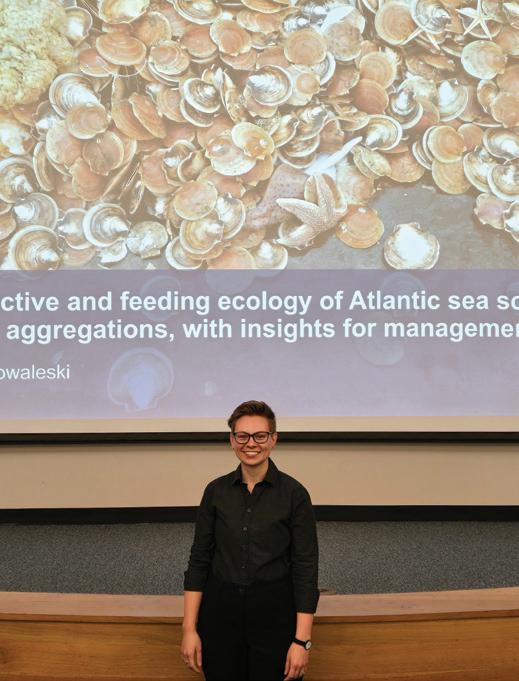
Schicksalslied (Brahms), and A Cloud of Witnesses (Wilberg). Amazingly, once Rebekah had successfully navigated the backstage web of staircases at the hall, she did not have any jitters as she stepped on stage!
ROSE JACKSON ’20 is touring quite a bit these days with her bands Dearest Dear and Stove Dragon. She was a recent recipient of a Grant for Creative Individuals from the Massachusetts Cultural Council for her work with New England fiddle music. Her debut album will be out in the spring.
EMMY AVERYWITHAM ’20 is currently living in Scarborough, Maine, where she self-published her debut novel, The Power of Family, in June. After five years of hard work, she says, “It feels so good to have this book be out in the world!” If anyone is interested in reading it, The Power of Family is available on Amazon.
2021
2025 was a year full of professional milestones and joyful personal change for ALIZA LEIT ’21! She works as a marine biologist at ECOncrete, a nature-inclusive marine infrastructure firm that brings ecological uplift to coastal and marine projects around the world. “This year, I had the chance
to present my work at several national and international forums, including the National Practice Forum on Nature-Based Solutions hosted by the National Academies at UC Irvine, New York Climate Week, and the World Conference on Ecological Restoration in Denver. I remain incredibly grateful for my time at COA, and for mentors like professor Chris Petersen, whose guidance and enthusiasm continue to shape my work in marine science and engagement with coastal communities,” she writes. “On the personal side, I married the love of my life, Daniel, with SARAH SOMES ’21 in the wedding party! Daniel and I also adopted a second dog and bought our first home this year. It’s been a whirlwind!”
In August 2025, MICAELA
SUELDO GLATTLI ’21 married VANESSA TAYLOR ’19 in Copenhagen, Denmark. “We met and started dating at COA, and now we can call each other spouses. It was a beautiful ceremony, and we were fortunate to have our parents, family members, and close friends join us to celebrate our love. Putting it in the alumni notes feels like full circle!”
2023
IZZY GRIMM ’23 has been living
in Ithaca, New York, and working at an anarchist used book store downtown. Still recovering from herniating three disks playing Dance Dance Revolution, they are currently performing with the band The Worm Collective and continuing their solo project as Izabelle Labs. This year, during the Jaws 50th reunion screening, Izzy finally popped the question and asked ANNIKA ROSS ’23 for their hand in marriage. They plan on celebrating in the fall of ’27.
2024
EMILIANA REINOSO
’24
embarked on a year-long Thomas J. Watson Fellowship, “Social Ecologies: Weaving Stories through Art,” after graduation. “It was a year full of transformative experiences, and it helped me envision new ideas for graduate school. I met wonderful, creative humans who think critically about the climate crisis. I thought that many of them could be human ecologists in one way or another. I found hope in dialogues with different species. I am now in Vienna pursuing a master’s degree in environmental science, policy, and management through the Erasmus Mundus program. I have recently met with friends from COA, and we shared fond memories of our time in Bar Harbor.”
Left to right: Emiliana Reinoso ’24; Micaela Sueldo Glattli ’21 and Vanessa Taylor ’19; Kaitlyn Kowaleski ’19; Urs Riggenbach ’12

LYNN BOULGER (who is back as vice president for institutional advancement after retiring five years ago) and her husband hiked the Alta Via 1 in the Dolomites, after years of hearing Hank Schmelzer (see page 78 for Hank’s remembrance) and Cynthia Livingston raving about their time there. The AV1 completely kicked their butts—the hardest hike have ever done, some of which have included long distance treks in the Alps, Patagonia, Morocco, England, France, Portugal, Mallorca, Iceland, Turkey, and New Zealand. Lynn cried.
Partridge Chair in Food and Sustainable Agriculture Systems KOURTNEY COLLUM had an active sabbatical before assuming the role of provost and dean of faculty this summer. In March, she delivered a talk titled, “A Better World through Social Science,” at the Maine Science Festival 5-Minute Genius event, part of the annual multi-day science festival. The following month, she appeared on the Maine Science Podcast to discuss her research and teaching. In May, Kourtney and colleague ZACH SOARES ’00 gave the inaugural Bill Newlin Distinguished Faculty Lecture titled “Food that Harms, Food That Heals: Transforming Prison Food Systems,” profiling the podcast production course they co-taught
in the winter. In June, she traveled to Mons, Belgium to attend the Society for Human Ecology Annual Meeting where she presented two papers. The following month, Kourtney delivered an invited lecture at the Mid Maine Global Forum, an event of the Linda Cotter Speakers Series at Colby College. The talk was titled, “Invisible Workers: Local Food Systems & Global Migration.” In July, Kourtney completed the Institute for Educational Management at the Harvard Graduate School of Education, an eight-day professional development program for chief academic officers. The experience was the highlight of my sabbatical. I built an exceptional network of colleagues from across the United States and the globe and left with tangible tools to support me in working strategically in my new role.
ANNIKA EARLEY MPHIL ’14 had work in three exhibitions she was pretty excited about in the fall of 2025. Her paintings were featured in Lonely Table at Gallery 263 in Cambridge, Massachusetts alongside Camryn Connolly and Julia Cheng. Annika also had some papier maché works in Chewed Paper at Working Loose in Blue Hill, Maine. Lastly, Annika had a piece in Works on Paper at Palladium/Athena Project in Brooklyn, New York, which closed
on January 17. There was a great article about the show in Two Coats of Paint
In the spring of 2025, SharpeMcNally Chair of Green and Socially Responsible Business JAY FRIEDLANDER led a twoweekend entrepreneurial boot camp at Swarthmore College for their Center for Innovation and Leadership. In addition, Jay facilitated a series of workshops as part of the Island Institute’s Future of Fishing program and Ignite Presque Isle. Jay also went to Washington, DC where he participated in the AshokaU Changeleader Retreat, bringing together leading social entrepreneurship programs from around the world. Shortly after graduation, Jay, along with COA adjunct URSULA HANSON , trustee emeritus JAY MCNALLY ’84, and ANDREIGHA KRAEMER ’26 attended the Society for Human Ecology Conference in Mons, Belgium where they presented “The Camino,” reflections on their fall 2025 course walking the 500-mile Camino Frances from St. Jean Pied-de-Port, France to Santiago de Compostela, Spain. After the conference, Jay and Ursula walked the first 100 miles of the Via Gebennensis. This camino starts in Geneva and traverses roughly 700 miles of Switzerland
Left to right: Lynn Boulger and her husband in the Dolomites; detail of painting by Anikka Earley MPhil ’14; photo by Su Yin Khor
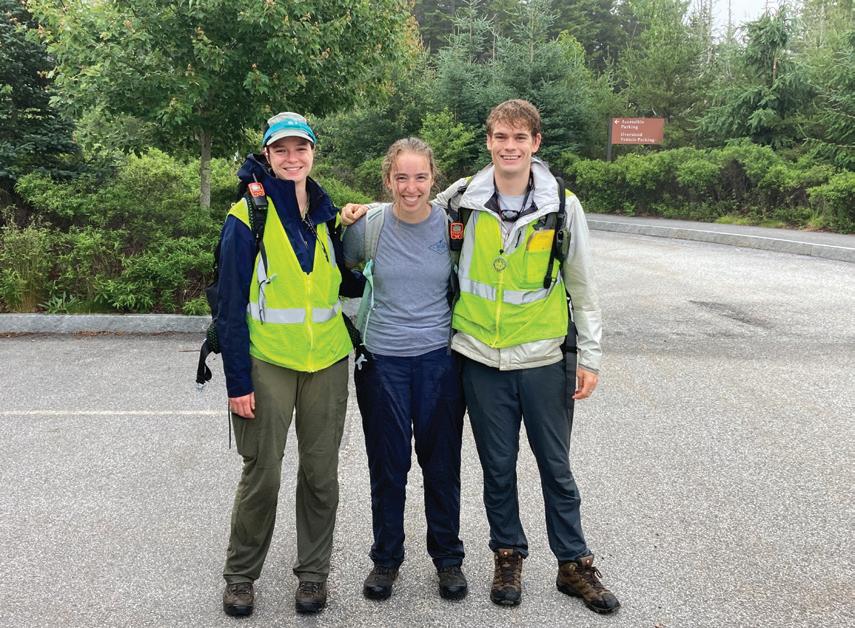
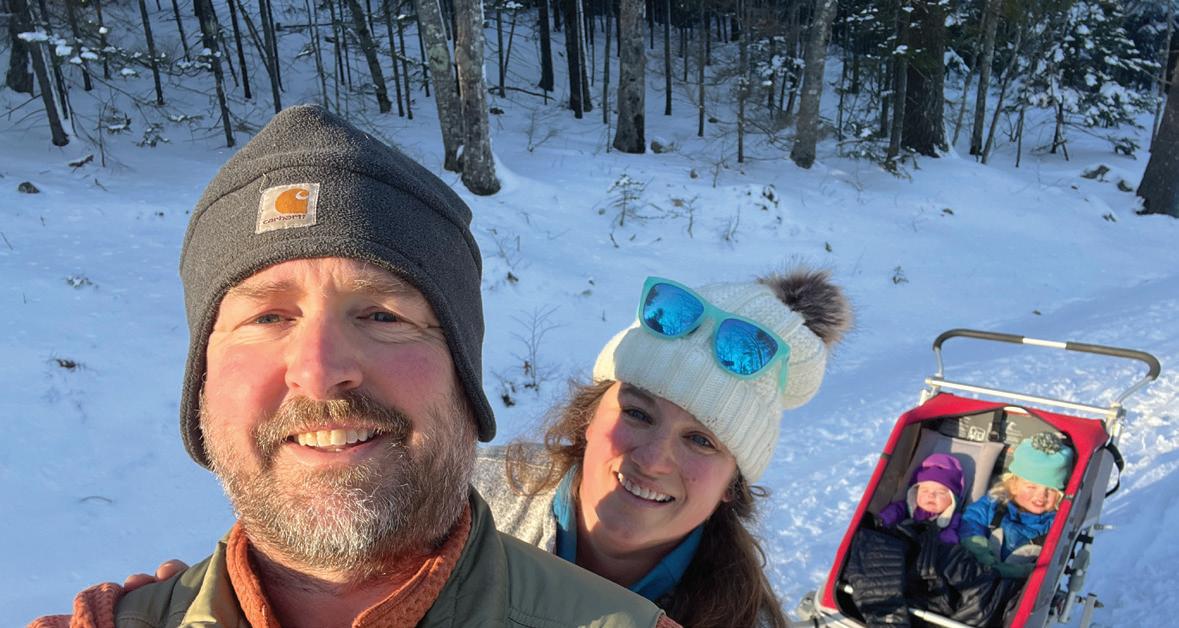
and France to the starting point of the Camino Frances. In the fall, Jay attended the Blue Economy Investment Summit and in March will again be returning to Swarthmore College to facilitate their student boot camp.
In November 2025, interdisciplinary art professor ANNA IALEGGIO opened a solo exhibition of new sculptural work in Tjaden Gallery at Cornell University. Entitled HOLE FOLDS, the exhibition was composed of images printed on silk as well as ceramic objects and audio pieces. It grew from several years of involvement/visitation at three sites of prairie and meadow rehabilitation, as well as a fellowship in the Ursula K Le Guin Archive. Anna also has a chapter in a new book with the unbelievably excellent title Unserious Ecocriticism: Humor, Play & Environmental Destruction in Art & Visual Culture (eds. Jessica Landau & Maria Lux, Michigan Publishing Services, 2026).
SU YIN KHOR, director of the writing program and professor of writing and rhetoric, co-authored a peer-reviewed research article titled, “Building affiliation in the L2 classroom: The role of side sequences.” It was published in Classroom Discourse, a major international journal for scholars, researchers, and educators
interested in classroom interactions and pedagogy. In March 2026, she presented at two conferences. She gave a presentation about COA’s writing program at the Conference on College Composition and Communication in Cleveland, Ohio. She also presented at the American Association for Applied Linguistics in Chicago, Illinois. The presentation was about second language literacy development. She and her partner Will spent the summer on MDI, enjoying gardening, hiking, fishing, and woodworking.
Elizabeth Battles Newlin Chair in Botany SUSAN LETCHER spent her fall sabbatical on MDI, hiking, writing, and analyzing data for forthcoming papers. She was excited to be back in the classroom this winter. Outside of COA, she works on the weekends as music director at Somesville Union Meeting House. In her spare time, she is trying to figure out how to grow saffron in Maine without it just becoming expensive vole food.
In March 2025, COA Allied Whale Director of Photo-Identification Research TANYA LUBANSKY won the Pilot Gig 2025 Snow Row Race while six months pregnant. That July, she and her husband, CHRIS TREMBLAY ’03, welcomed their daughter, Alice Hope Tremblay, joining big brother Otis Sky. In October 2025, Tanya
and DELPHINE DEMAISY ’26 traveled to Tadoussac, Canada, to represent the North Atlantic Humpback Whale Catalog at the Humpback Whale World Congress. Both presented findings from new research projects aimed at improving our understanding of humpback whales in Maine waters and across the broader North Atlantic basin.
In March 2025, AMY MORLEY was elected to the Select Board for the Town of Lamoine, near Mount Desert Island. She decided to run after years of community organizing and civic involvement. Her work on the Select Board involves land use, municipal policy, financial oversight, and community planning, with particular attention to transparent governance, citizen engagement, local housing challenges, and the practice of democracy at the community level. Serving in local government has deepened Amy’s understanding of how institutions function under pressure and reinforced the importance of listening carefully, building trust, and stewarding shared resources—values that closely align with her role in philanthropy at COA. Amy is grateful for the opportunity to contribute to her town and to bring those experiences back into her work and conversations on campus.
Left to right: Maggie Denison ’25, Ellie Jackson ’25, and Thomas Bates; Chris Tremblay ’03, Tanya Lubanksy, and their children
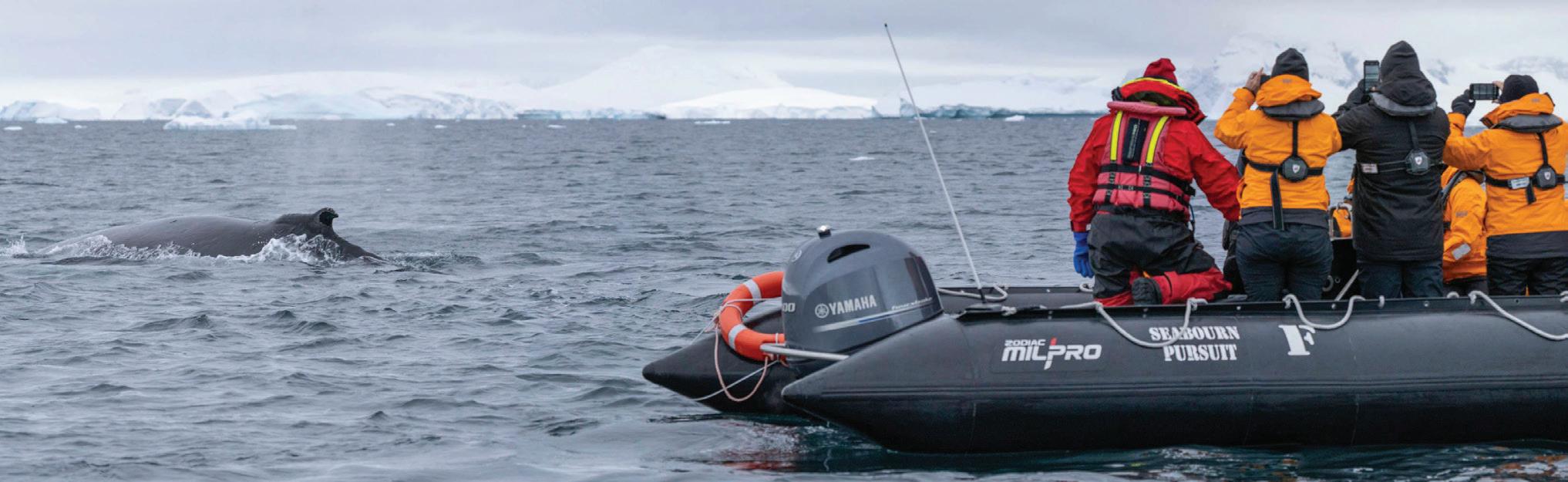
As a Fulbright Specialist, Charles Eliot Chair in Ecological Planning, Policy, and Design BROOK MULLER spent January 2026 in Cairo, Egypt, continuing his work with Megawra-Built Environment Collective on developing urban green spaces in the al-Khalifa neighborhood within the Historic Cairo UNESCO world heritage site. A key component of the Athar Lina initiative, these transformative interventions combine urban design, water reclamation, urban agriculture (including food forests and hydroponics), ethnographic research, heritage conservation, and community development. Brook also presented a paper, “Regrowth Architecture: Design in Solidarity with Life,” at the 18th Conference of the International Society for Ecological Economics and at the 11th International Degrowth Conference, “Building Socially Just Postgrowth Futures,” in Oslo, Norway in June 2025. The paper serves as the basis of a chapter in his current book project Regrowth Architecture, currently under review by the University of Texas Press. Brook would like to give a shout out to LÉO CHARBONNEAU ’27 who is currently serving as an intern with Athar Lina, doing fantastic work, and learning Arabic to boot.
In November 2025, Thorndike Library Co-Director CATHERINE PRESTON-SCHRECK was the
deputy moderator of elections for the Town of Bar Harbor, marking her 10th year as an election clerk. She also expanded her library skills as a substitute librarian for three public libraries on MDI (Southwest Harbor, Somesville, and Bar Harbor), while continuing to volunteer in the library at the Hancock County Jail. In the summer, Catherine had the good fortune to visit libraries in correctional facilities in Maine, and in October, along with two COA community members, spent a day at Maine State Prison participating in a shared read and day-long discussion of The Giver by Lois Lowry. Prior to this, Catherine enjoyed two trips to Europe, including a stop in Mons, Belgium where she attended the Society for Human Ecology Conference and had a fabulous time with COA staff, students, and very fun human ecologists from all over the world. In her journeys, Catherine was sure to check out the local libraries. Some of her favorites were in the Czech Republic, Bulgaria, and Iceland (the Reykjavick public library is very COA in spirit).
Kim M. Wentworth Chair in Environmental Studies BRITTANY SLABACH ’09; William H. Drury, Jr. Chair in Ecology/Natural History JOHN ANDERSON; and alums ELLIE JACKSON ’25, MAGGIE DENISON ’25, and
BIK WHEELER ’09 had a field note published in the journal Northeastern Naturalist entitled, “Caught Red Handed: Cannibalism in Jumping Mice?” The note records a behavior previously undocumented in jumping mice in the wild! Brittany would also like to give a shoutout to ADRIAN BOEYE ’26, who recently had a manuscript accepted for publication in the journal Royal Society Open Science on his work investigating the biomechanics of Tyrannosaurus rex. In January 2026, Adrian presented a talk entitled, “Approximate SLIP Model Reveals Bird-Like Running in Tyrannosaurus,” at the Society for Comparative and Integrative Biology conference in Portland, Oregon.
Steven K. Katona Chair in Marine Studies SEAN TODD became certified in polar bear guiding earlier this year and spent much of the summer working as a guide in the Kimberly, Northern Territories of Australia, collecting images of humpback whale tails for Allied Whale’s Southern Ocean Catalog aboard Seabourn Pursuit He returned to Pursuit in late November to work further as a polar guide and onboard resident scientist helping to coordinate their citizen science whale tail program, crossing the Antarctic Circle in December.
Sean Todd guiding in Antarctica with a humpback whale, photo by John Shedwick
COA ALUMNI WEEKEND
AUGUST 13–16
2026
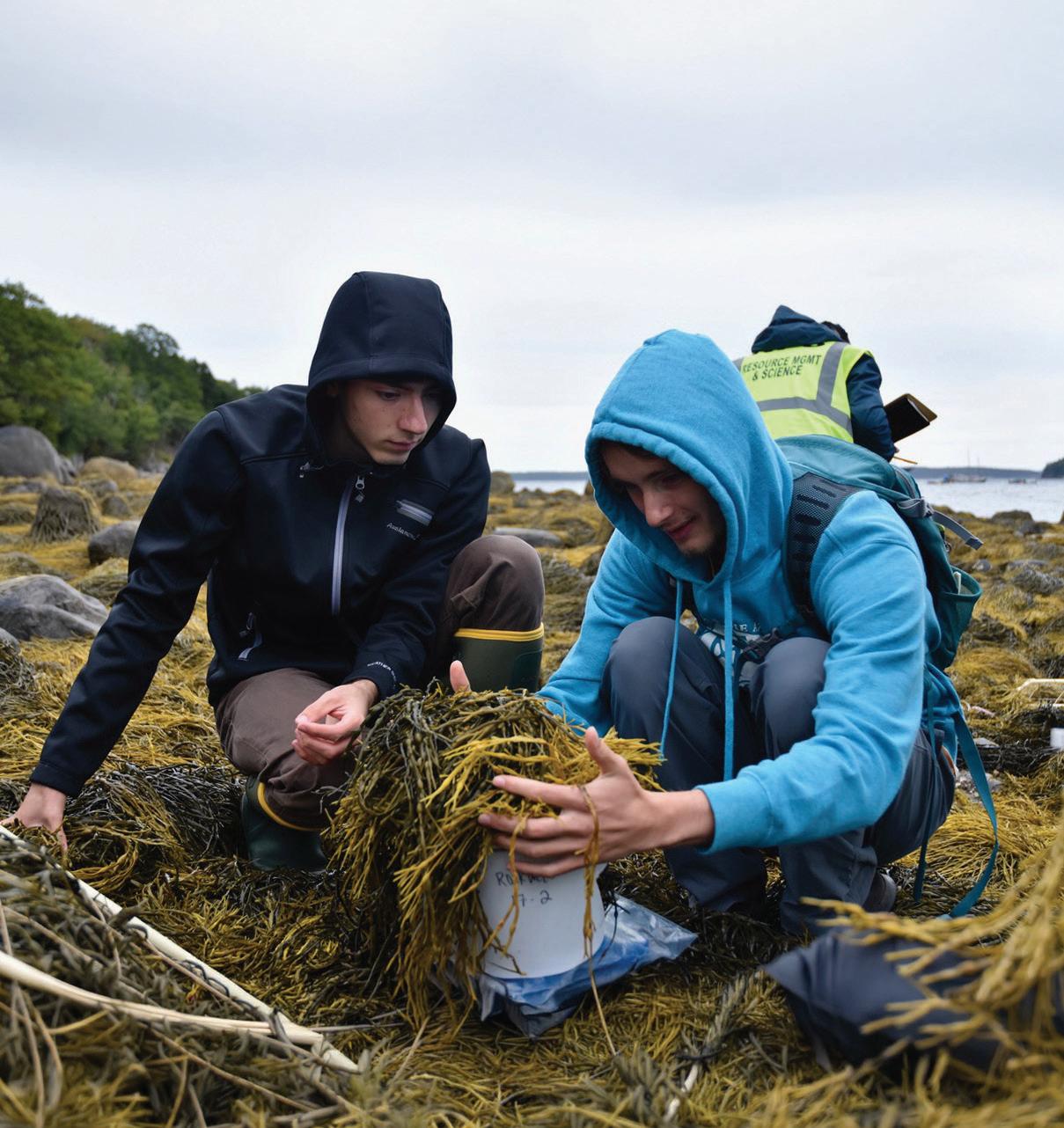
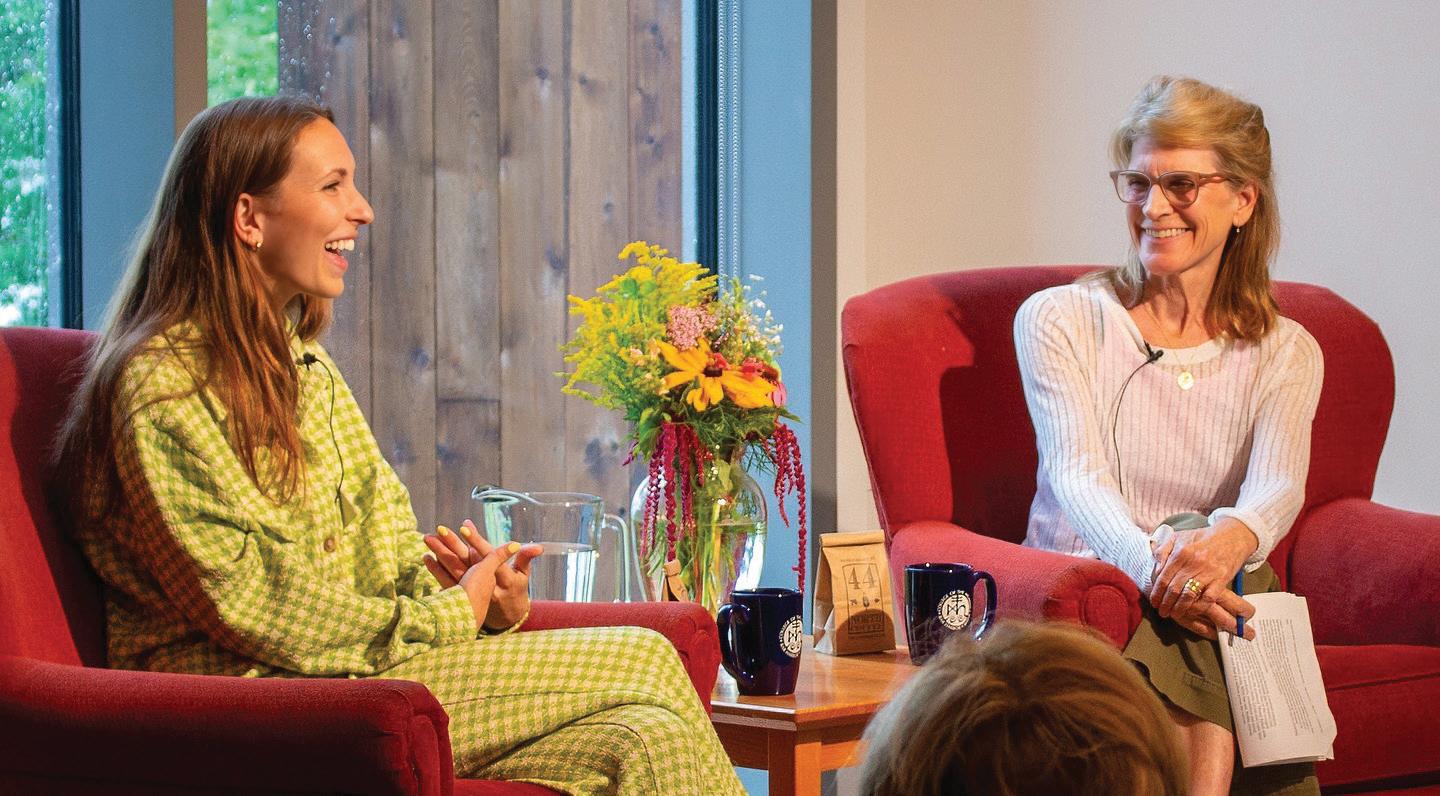
COFFEE AND CONVERSATION
Join us on Tuesday mornings in Gates Auditorium throughout the summer! Speakers include the novelist Christina Baker Kline; Caroline Bicks, Stephen E. King Chair in Literature at the University of Maine; The Atlantic CEO Nick Thompson; Eliza Newlin Carney, founder of The Civic Circle; photographer Peter Ralston; Jock Heron and Will Thorndike, co-authors of the book MDI Modernists; Brett Ciccotelli ’09 and Ellie Oldach ’15, alumni working at First Light, non-native land-oriented organizations across Wabanaki homelands.
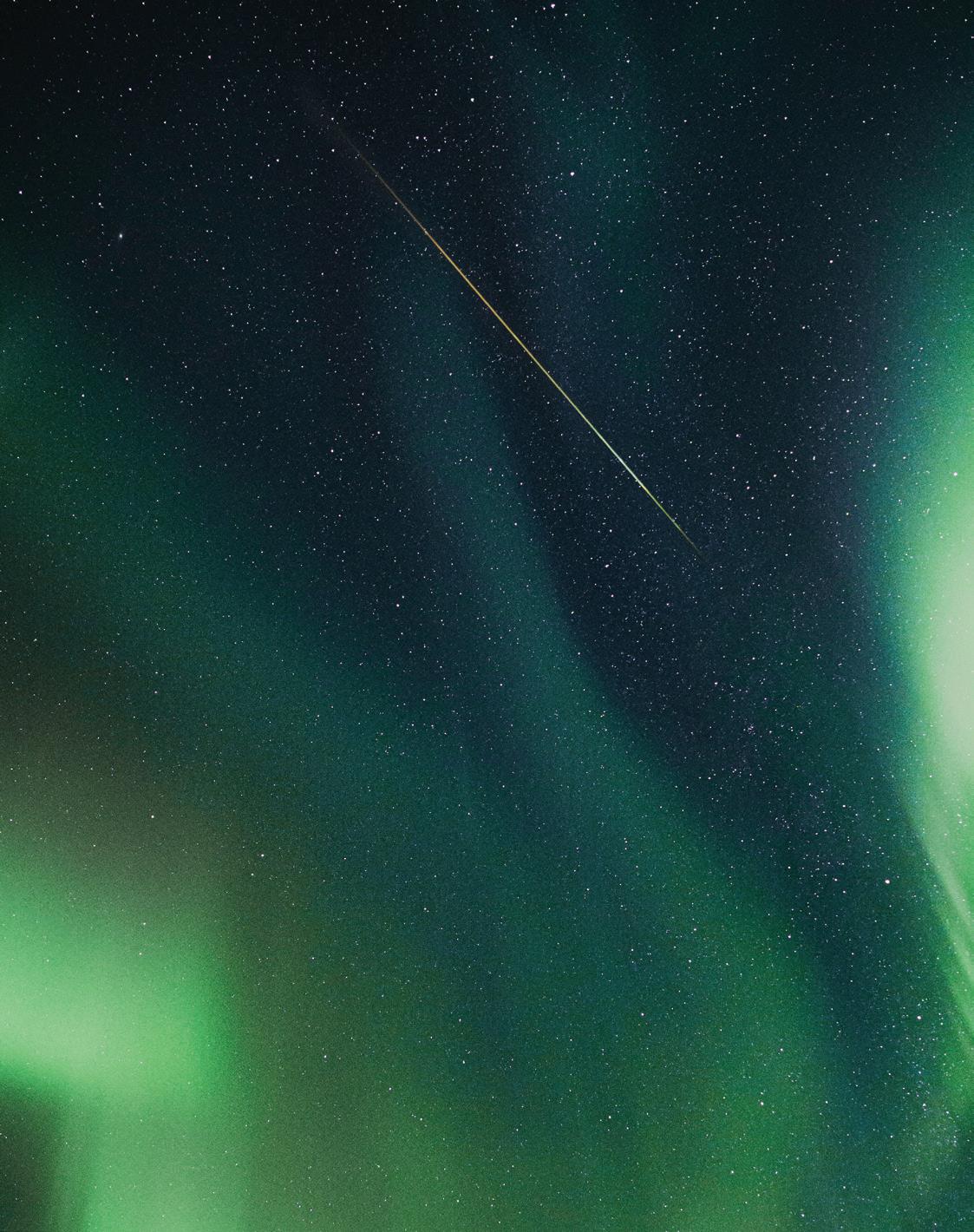
NORTHERN LIGHTS SOCIETY
The Northern Lights Society was established to recognize and thank COA friends who have made planned gift s to the college. These gift s include bequests, charitable gift annuities, and gift s of life insurance. Members are celebrated at an annual gathering. If you have made a planned gift to COA, please let us know so we can add you to the invitation list.
To learn more about making a planned gift to COA, please contact Lynn Boulger at 207-801-5620.

Henry L.P. “Hank” Schmelzer
March 26, 1943–January 12, 2026
Ron Beard, Secretary, Board of Trustees
COLLEGE
OF THE ATLANTIC has lost a valued friend and leader. Board of Trustees Vice Chair Hank Schmelzer passed away in Somesville in the home he shared with his wife, Cynthia Livingston, on January 12, 2026 following a short and spirited battle with cancer.
Friends, family, and colleagues are invited to a celebration of Hank’s life on Saturday, July 18 at 11am in Thomas S. Gates, Jr. Community Center on College of the Atlantic campus.
Hank joined the board in 2008, bringing with him decades of experience in corporate and securities law, business and nonprofit management, investment strategy, and philanthropy.
Prior to his election to the board, Hank served as president of Maine Community Foundation, now a significant state-wide philanthropic force, created by the founding president of COA, Ed Kaelber, on his retirement in 1983. Over nearly a decade, Hank brought deep insight to that role, supporting the hard and joyful work of building community resilience with investment policies that produced growth from careful stewardship. Quoted in a 2007 article in Mainebiz, he noted, “… philanthropic nonprofit organizations are in themselves businesses. The only way they can successfully carry out their missions is if they’re well-run organizations.”
Throughout his College of the Atlantic tenure of 27 years, Hank served on many of the board’s standing committees, including finance, investment, and development. Hank helped his fellow board members grapple with complexity, developing an understanding of when and how to make strategic investments in student housing, teaching space, and human capital.
He was enthusiastic in his willingness to tell the story of COA, inspiring others to pledge their support through two successful capital campaigns, bringing total reserves from $19 to $90 million, enabling the college to significantly grow its academic programs and its scholarship support for students. He lent thoughtful leadership to strategic planning, most recently providing a framework aligning the work of the board and the college administration.
In 1969, following graduation from the University of Maine and George Washington University Law School, he enlisted, and as a Captain in US Army Intelligence, was sent to Vietnam. He served as part of a joint CIA and Army effort to cripple capacities of the Viet Cong, and earned a Bronze Star with Oak Leaf Cluster and the Vietnamese Cross for Gallantry.
In a Maine Public Radio interview in 2017, Hank recounted that after only four months in country he realized the US could not win the war against the Vietnamese Communists. He also understood that the military prefers 17 and 18 year olds, perhaps lacking the time or education to think things through or ask many questions.
He may have been impressed, therefore, with the perceptive questions College of the Atlantic students were asking about the college’s investments in the mechanisms of war. Hearing them, Hank worked with fellow trustee Roland Reynolds and other members of the investment committee to recommend changes that reduced those investments while maintaining the board’s fiduciary responsibilities.
Following news of his death, Hank’s fellow board members shared how welcome he made them feel. One recalled that he and Cynthia had opened their home during a weekend of meetings, sharing a joy of living that included “…integrity, fun in the out of doors, intentional partnership with one’s spouse, and good wine.” Another recalled her first board meeting, seated next to Hank, who leaned over with gentle words of welcome and encouragement during the
typical flood of information, policy discussion, and opportunities.
Former board chair Beth Gardner remembers Hank having the magical capacity to be a mentor and friend at the very same time. She said that she and Hank began as colleagues and ended up with a deep friendship.
“There were so many complicated decisions that we grappled with: hiring a new president, acquiring real estate, building a new dorm, divestment—no question, no request too much for Hank, he never once failed to answer my call and offer his sage advice. He brought joy and the humor of life to every decision or sticky situation—mixing those along with his fierce intelligence. COA benefi ted from that magic touch,” she said.
Beth also told how Hank, no stranger to woodland creatures from his boyhood work at a Massachusetts dairy farm, helped with a home invasion. “With the swiftness and confidence of a fighter pilot and the help of a broom and a few pots and pans, Hank ushered a wayward bat to freedom, to the glee and cheers of her three children.”
COA’s current board chair Cynthia Baker reflected her experience of Hank as a gentle lion. “His twinkle and warmth, along with his adventurous spirit, blistering smarts, and New England fortitude was without parallel. He was a mentor to so many of us, and his dedication to College of the Atlantic was inspired, always urging that we follow its very best angels… he and Cynthia Livingston modeled how to be both community leaders and dear friends.”
Emeritus board member and past chair Will Thorndike noted that he had taken a turn to drive Hank, with Cynthia, to a series of cancer treatments in Bangor. He recalled Hank with clear traces of his old vitality intact, robust ruddy coloring, and trademark nattiness of dress, including an old touring cap. Hank was clear and unwavering in his support for the college, its new president, and its prospects. Arriving back in Somesville, Will recounted how Hank turned to him and said, “ I have been on a lot of boards, and the best one, by far, is the board at College of the Atlantic.”
Although of German ancestry through his immigrant parents, Hank spent 12 years at the Berlitz School in Boston learning Italian to enhance his and Cynthia’s
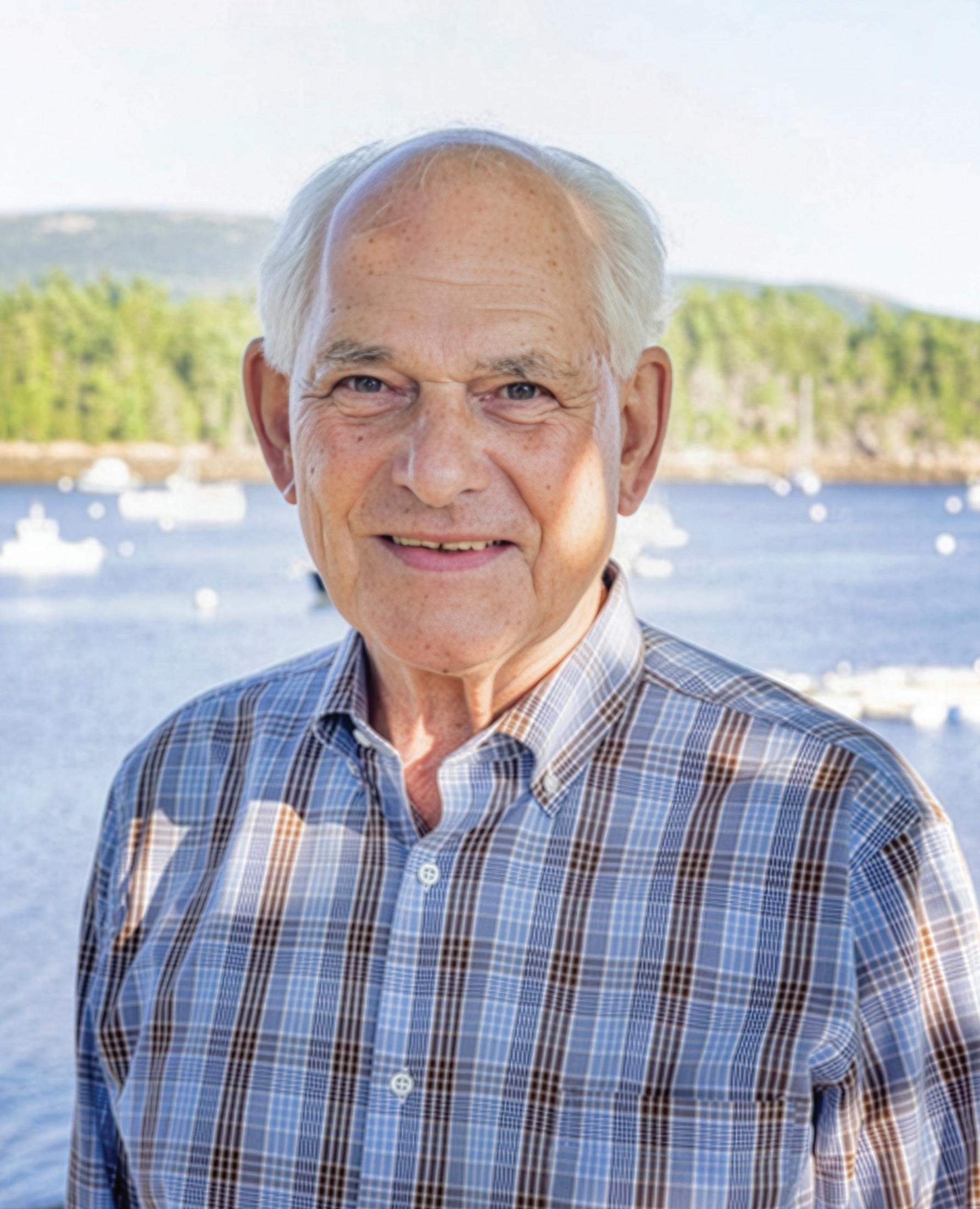
many skiing and hiking trips to their beloved Dolomites. However, I think of Hank when I read the 18th Century Scottish bard, Robert Burns. In his song For a’ That and a’ That, Burns celebrates qualities we admired in Hank, highlighting the common man who doesn’t flaunt his status or wealth, who needs no trappings to be a valued member of a community, one who recognizes the dignity and worth of every person.
For those without benefit of the Scots language, I offer a humble translation of one verse, in tribute to Hank:
What
though
on homely fare we dine,
Wear homespun grey, and all that;
Give fools their silks, and knaves their wine,
A man’s a man for all that:
For all that, and all that,
Their tinsel show, and all that,
The honest man, tho’ e’er so poor, Is prince o’ men for all that.
Scott Swann ’86, MPhil ’93
1960–April 16, 2025
Adrian Boeye ’26
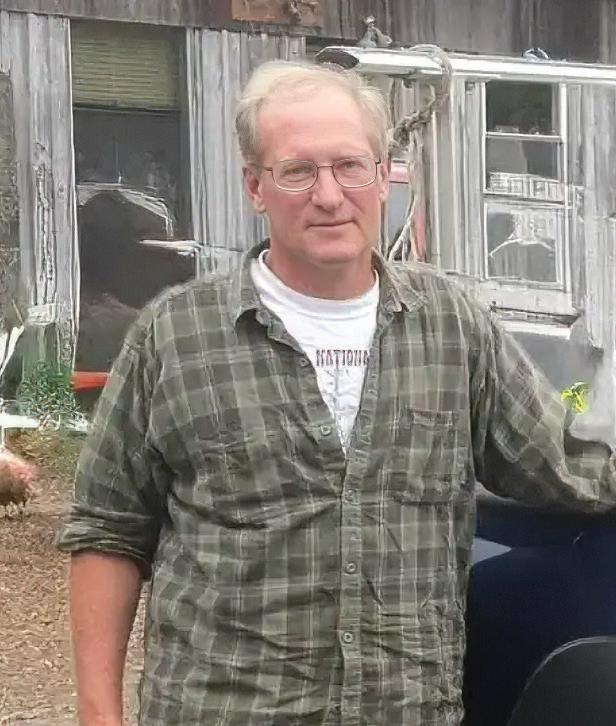
THEFIRST TIME I heard of Scott Swann was through a heartfelt piece he wrote in COA Magazine for beloved COA community member James “Howdy” Houghton. I would learn more about Scott on my OOPs trip, after which I took my first class with him in fall 2022. It was the first of many classes with Scott that I would take. I came to learn he had the kind of curiosity which can drive an individual to engage with almost any subject. It is a rare attribute in anyone, but one I thoroughly enjoyed. This curiosity quickly led us to a conversation about the lips of Allosaurus fragilis (rather, their “extra oral soft tissue”) and blossomed into further chaos involving all manner of topics, from Scott’s travel adventures, anemones, stories of Mount Desert Island, various strange birds, or anything else which happened to strike our fancy.
I could ramble on about the three years I spent with Scott and how I came to consider him family. However, something I want to reflect on is the
patience and kindness always apparent in how he observed and learned from the world around him. This approach to observation was characteristic of Scott, and something that I felt he brought out in others. The world around us is complex and there’s a lot to be interested in. For Scott, this curiosity and desire to observe and learn were manifested in his lived experiences: his travels across the world looking at birds in South America, hyraxes in Africa, or his time on MDI. Through his rickety slide projector and the stories he told, Scott brought those places to us. It’s here I think that he gave one of the most valuable lessons I have received: how important it is to go out there, feed that curiosity and desire to observe, and live a life rich in experience and story. That curiosity and drive to experience the world and its wonders is one of the most powerful components of the human experience, and Scott as a naturalist and human being showed me just how impactful that could be.
Scott’s accumulated stories were a fundamental aspect of who he was. As a naturalist, a father, a friend, and a teacher, Scott was always more than happy to share those stories. And I find that trying to move forward without having Scott around to keep telling those stories has been something which has weighed on me heavily, as I am certain it has for many others. The time we have is finite, there are only so many things we can do with it. I think Scott would agree that we should limit how much of it we spend on him. So, do something that matters to you, learn something that you’re curious about, go somewhere you want to see. Live your life. Scott certainly did, and he inspired me to do the same, from freezing off the tips of my fingers in Alaska to seeing how T. rex moved like an eight ton chicken.
Through the life he led, the stories and experiences he so happily shared with inquisitive minds, his kindness, generosity, and care for the world around him, Scott made an enormous positive impact on so many people, including me. There will always be a place for you in my heart, Scott, just as you held a place in your heart for us. I’ll miss you, buddy.
Judith Swazey
1939–October 4, 2025
Professor Emeritus Bill Carpenter
THECOA COMMUNITY has learned of the passing of Judith P. Swazey, PhD, longtime Bar Harbor resident and College of the Atlantic’s second president. Swazey died on October 4, 2025 at the age of 86. She succeeded the college’s founder, Ed Kaelber as the President of COA, and served from 1982 to 1984. Her background was ideal for the interdisciplinary center COA had become in its first decade. She was a Wellesley graduate with a doctorate in the history of science from Harvard. Before coming to Bar Harbor, she was the Executive Director of Medicine in the Public Interest at Boston University, as well as an adjunct professor of sociomedical sciences and community medicine.
Though barely 40 years old when she arrived at COA, she was a widely known historian of science and medicine, and of the social, ethical, legal, and policy aspects of contemporary medical research and practice. She had already published nine books in her field, and was a member of the Institute of Medicine of the American Academy of Sciences.
Swazey arrived in Bar Harbor in July 1982 with a vision for the young college as a “community of scholars… in a small center of great excellence.” She valued COA’s self-governing and interdisciplinary approach to education, and saw human ecology as “a revolution in human thought.” Her two-year administration witnessed the most tumultuous chapter in COA history, including the tragic death of academic vice president Dick Davis on the opening day of her first term, the 1983 fire that consumed COA’s main classroom building and library, and, in its aftermath, the creation of the Phoenix Fund, which furnished the initial resources for COA’s rebirth. She likened the college to the mythical phoenix that rose from its own ashes. By the time of the September 1983 convocation, Swazey said that, “it is nothing short of a miracle that we are all assembled here today.”
After Swazey left the college in the summer of 1984, she remained in Bar Harbor to lead a life of public service, including the presidency of the Jesup
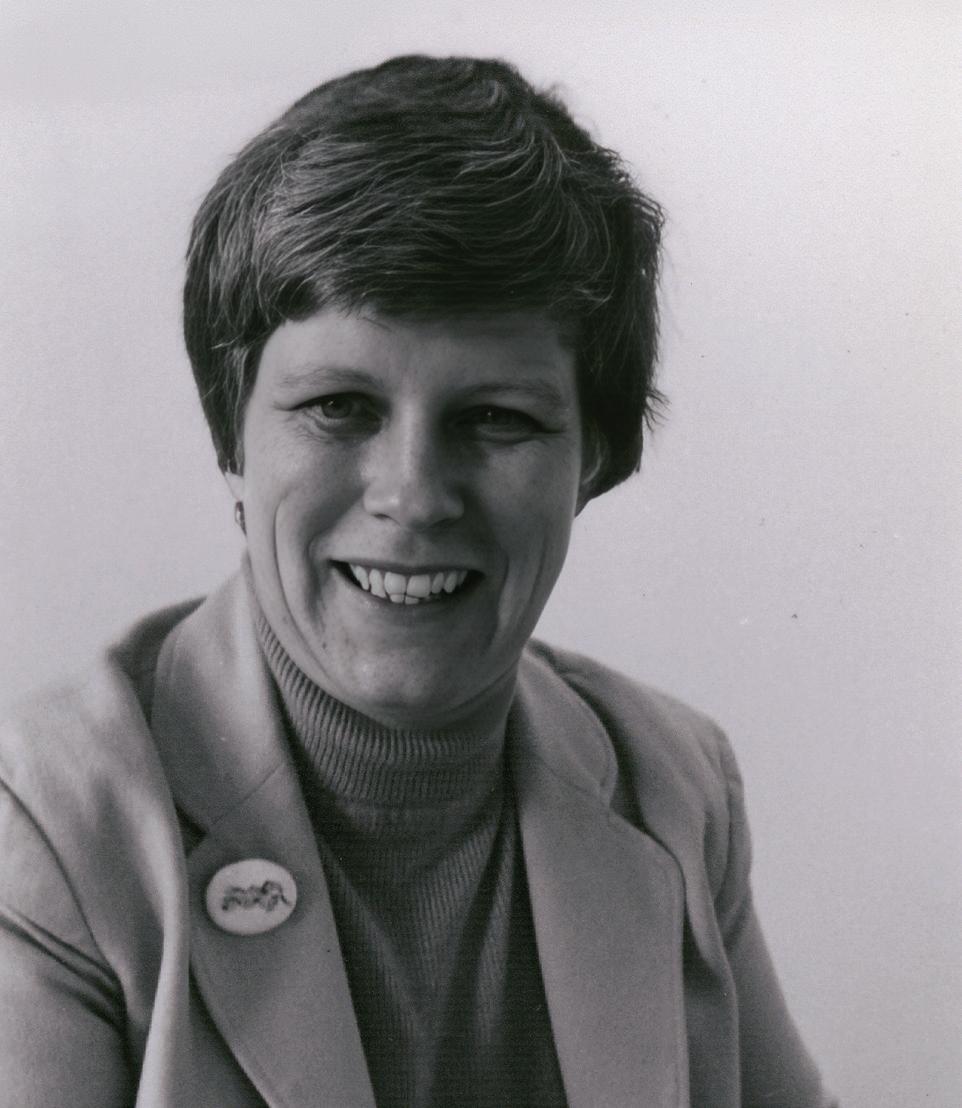
Memorial Library, as well as founding and directing the Acadia Institute, an independent, nonprofit research organization focused on the intersection of medical, scientific, ethnographic, social, and policy issues in biomedical research and healthcare.
Working both individually and with her friend and collaborator, Renee Fox, Swazey wrote several more books after leaving COA, including Spare Parts: Organ Replacement in American Society (Oxford University Press, 1992), and The Ethical Climate of Academic Work (Oxford University Press, 1990s). Her life’s vocation was to hold educational and medical institutions to the highest standards.
In the words of former president Darron Collins ’92, “Post-Covid, we would gather on her back porch. She would smoke cigarettes and we would drink boxed white wine and cautiously chat about the past. I loved that time together, and came to appreciate this smart, insightful, driven woman. Her want for change came from a good, honest, creative place, as a thoughtful and experienced academic and intellectual leader. I hope in her death we can honor these qualities of humility and self-awareness alongside her smarts, her insight, and her drive.”
Her presidency challenged the identity and purpose of our community, and we rose from the ashes with a greater strength, coherence, and knowledge of who we were. The college extends its condolences to her family, including her children Woody and Beth, who attended Bar Harbor schools and are fondly remembered on Mount Desert Island.
Zhuna Lynn Holden ’03
(Jennifer Atkinson)
September 13, 1981–July 28, 2025
Jericho Bicknell ’03, in collaboration with Kathryn Hunninen ’03 and Emily Clark ’03
M Y FIRST MEMORIES of Zhuna were in the College of the Atlantic kitchen where we both worked: me, painfully shy, and her always with smiles and laughter and jokes about robots and turtles making me and everyone else feel welcome and loved.
She was a world traveler and adventurer seeming to slip into other places and cultures with ease, yet also always yearning for roots and a feeling of solidity. Zhuna’s life endeavors took her from Idaho to Maine to China to México to Maui to Morocco and many places in between. She created community and impact wherever her path led.
Zhuna was a philosopher, a poet, an artist, a planner, an athlete, a linguist, an entrepreneur, and so much more, but the thing that defined her most was her
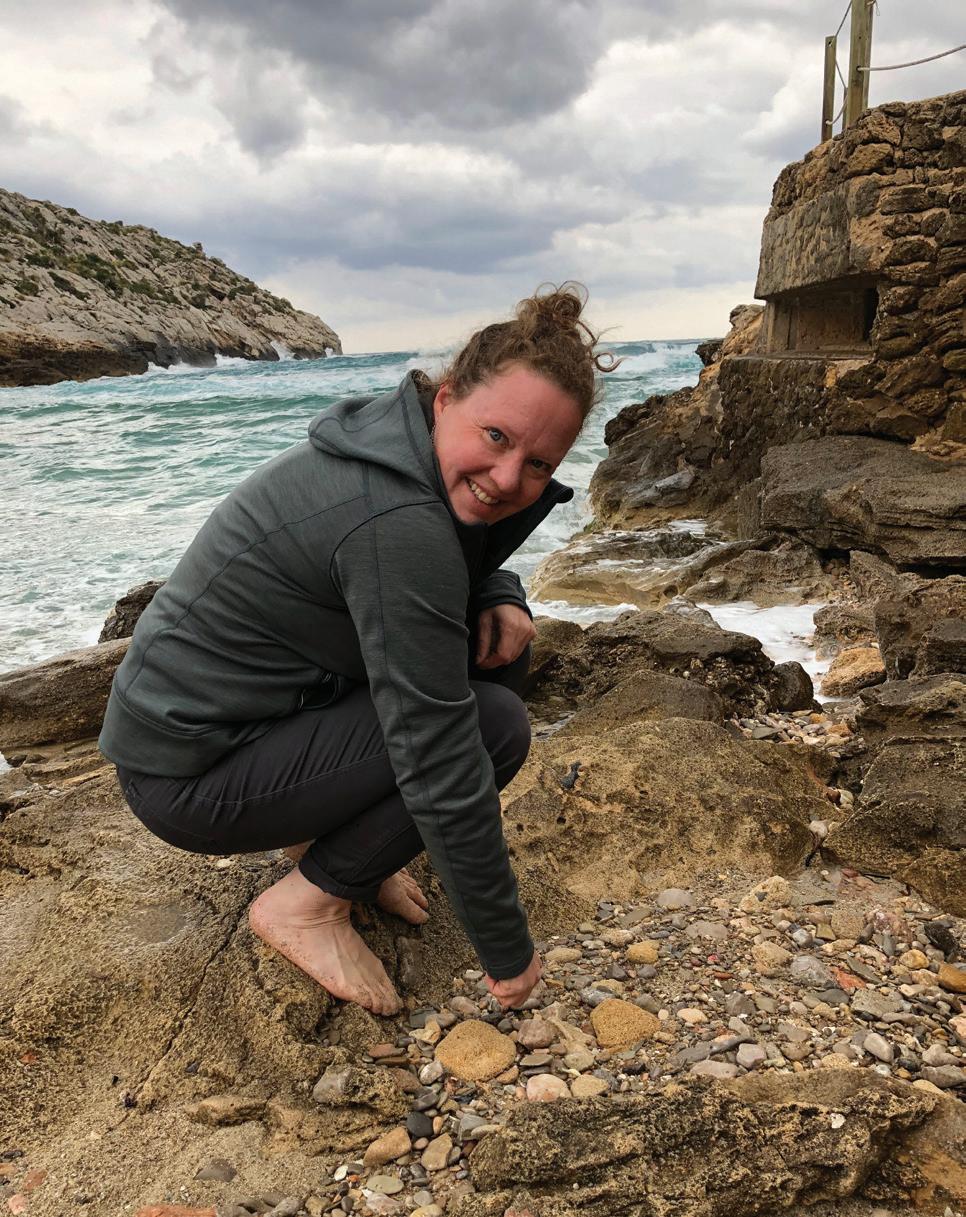
friendship. She was not the kind of friend who would always agree with you or like the things you like. She had fierce opinions and wasn’t afraid to share them. If something wasn’t going to be fun for her she would state that fact and decline. Just one year ago, she said she was in “a state of fierce self-advocacy,” but I think she lived this way most of her life and I admired her so much for that.
Very few adventures were declined though—Zhuna was up for just about anything. Travel and study in China and México? Sure! Go get our ears pierced at the Bangor Mall? Yes, please! Drive to Vermont on the spur of the moment (and in the middle of the night) to spend the weekend? Of course! She had an uncanny ability to show up just how and when you needed her. And every year on my birthday, she sent me a message.
As Zhuna once said, “The only permission that I was ever given that had any bearing on who I am or what I do is the permission my mother gave me to be unapologetically myself, the permission my grandfather gave me to use my mind to the fullest extent, and the permission my grandmother gave me to sow my wild oats however I damn well pleased. I ignored all of the other ones.”
They say that those who shine brightest often burn fastest. In the case of Zhuna Lynn Holden, the truth of this hurts so deeply. In the heaviness of the days without her, I feel the same as I did during my first time swimming in the ocean at night, where each stroke pulls against the current and the thickness of the water and there is an untethered feeling in the darkness. Yet like the sparkles of bioluminescence that suddenly appeared in the water as I moved, Zhuna’s words, her art, and the memories of her laughter and love can give us a bit of fire to burn brighter, love harder, advocate more fiercely, and live life more fully. We will miss you forever, Zhuna.
Steve Wessler 1951–March 10, 2025
George Morris ’04
IHAD THE HONOR , for it was a profound honor, to have been Steve’s student on several occasions during my time at COA. To me, he was a mentor, a friend, and an individual who shaped my professional and personal development in ways I will be forever grateful for.
Above all, however, Steve possessed a deeply resonant humanity, a humanity sometimes difficult to find in today’s world.
My first interaction with him was when taking his Conflict Resolution and Advocacy for Human Rights class. Professor Jamie McKown, my long-suffering advisor, believed the content of the course—but particularly Steve’s approach—would suit me well. Unsurprisingly, in both aspects Jamie was right.
This was not only because of the subject matter of his classes, but because of the empathy, lived experiences, and moral clarity that Steve taught them with.
I distinctly remember a conversation with Steve in the summer of 2022. I was based in Kosovo at the time, a decision itself influenced by him, and had jumped on a Zoom call to discuss another ambitious project I wanted his advice on. I always wanted Steve’s expert opinion. He didn’t know where I was at first, but as the conversation progressed it quickly became clear that, when he lived in Kosovo, he had stayed quite literally around the corner from where I was. With joy, Steve reeled off the names of local contacts and business owners he knew in that neighbourhood of Prishtinë. The bakery owner, he suggested, might even remember him.
The next day, armed with the five words of Albanian I knew, I walked in, greeted the owner, and then said tentatively, “Steve Wessler?” Surely this was too much of a coincidence. Instantly, though, the owner’s face lit up. After speaking animatedly in his mother tongue, he switched to broken English to say, simply, “A lovely, lovely man.” That, for me, said everything. Steve was a trailblazer, yet never sought the limelight.
Instead, his work was driven by a desire to help as many people as he could. Pure altruism if such a thing is possible. His profoundly moving piece on living with Alzheimer’s was the embodiment of this, bringing many—including this usually stoic Brit—to tears. As Steve himself wrote, “Behind the disease is a person,” and seeing and honouring that intrinsic humanity meant everything to him. He epitomized that belief, quietly and completely.
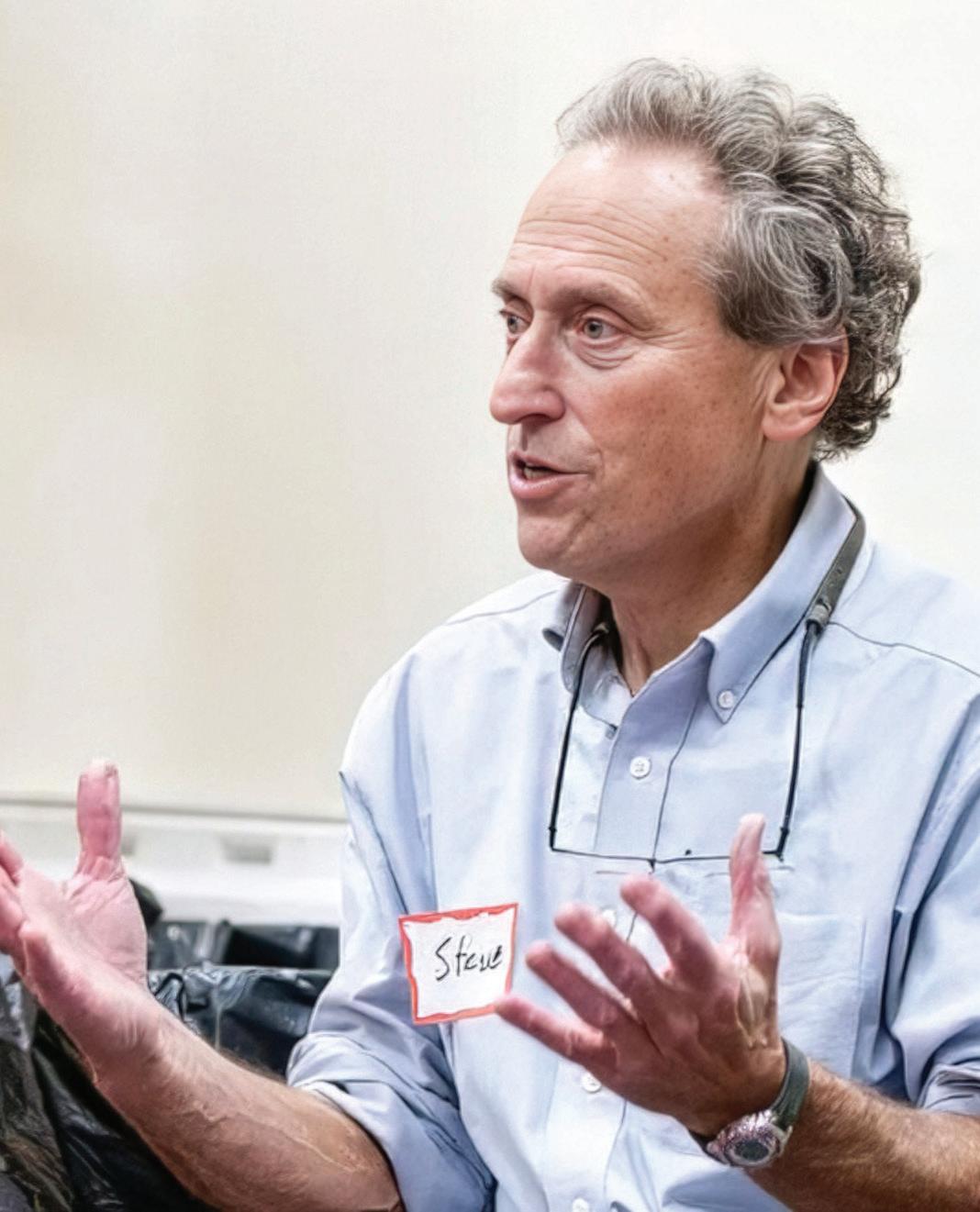
Even a year later, it is still difficult to use “was” when talking about this remarkable man. I hope Steve’s family and loved ones, whom he spoke of at length and with tremendous pride, can take comfort in knowing how many lives he touched and the deep esteem in which he was held by so many different people.
Rest easy, Steve. Thank you so much. We’ll keep your good work going from here.
Toward a more perfect union
The 2026 Summer Institute: Toward a More Perfect Union will mark the country’s 250th anniversary with a forward-looking series of conversations about the future of the American experiment.
By late July, we anticipate that audiences will have encountered plenty of historical retrospectives and the predictable swing between overly patriotic and overly critical narratives. Our goal: to convene voices from across American culture—journalism, the arts, science, philanthropy, civic life, and beyond—and explore how the nation’s founding values have been, and continue to be, tested, reshaped, and reimagined. The Institute asks how these ideals can be stewarded, strengthened, and carried forward along the path ahead.
STACEY ABRAMS
Former Minority Leader of the Georgia House and Founder of Fair Count
KEN BURNS
Documentary Filmmaker
RHIANNON GIDDENS
Musician, Composer, and Artistic Director of Silkroad
AYANA ELIZABETH JOHNSON
Marine Biologist, Co-founder of Urban Ocean Lab, and Author
ENES FREEDOM KANTER
Human Rights Activist and Former NBA Player
ROBIN WALL KIMMERER
Plant Ecologist, Educator, and Author
ELIZABETH KOLBERT
Pulitzer Prize-winning Staff Writer at The New Yorker and Author
NICHOLAS KRISTOF
Pulitzer Prize-winning Op-Ed Columnist for The New York Times
JULY 27–31
2026
JEANINE ABRAMS MCLEAN
President of Fair Count
JOHN PALFREY
President of the John D. and Catherine T. MacArthur Foundation
LEE PELTON
CEO and President of The Boston Foundation
SAMANTHA POWER
Former U.S. Ambassador to the United Nations and Former Administrator of USAID
JEFFREY ROSEN
CEO Emeritus of the National Constitution Center
KARA SWISHER
Host of the On with Kara Swisher podcast and Co-host of Pivot
NICHOLAS THOMPSON
CEO of The Atlantic
JIA TOLENTINO
Staff Writer at The New Yorker

Of potlucks and yogurt-covered pretzels
2019 COMMENCEMENT SPEECH, EDITED FOR LENGTH
Ky Osguthorpe ’19
IT’S NOT THAT I DIDN’T LIKE POTLUCKS —it’s more that I didn’t come to COA expecting them to be the main social events of my college experience. I hadn’t prepared myself, didn’t know how to cook at the same level as my potlucking peers. I started bringing Hannaford-brand, yogurt-covered pretzels to potlucks. It became my thing, my contrarian radical stance to potlucking… That is, until the day I rolled up to a potluck and someone else had brought the same yogurt-covered pretzels. I was no longer radical.
We use the word radical a lot here at COA. This place, we like to say, began as a radical experiment, a push-back against an educational system that silos learning into disciplines. Our radical opposition served as a defining point in our early years. But in the years since, things have changed. Interdisciplinarity is no longer an outlier pedagogy, many schools consider themselves green, and self-directed learning has become a cliched phrase.
While we spent the past decades pushing back against the world, the world came closer to us. The world brought pretzels to this collegiate potluck. But that was OUR thing! So maybe we need to ask ourselves: What does it mean to be radical when you are no longer special, or no longer unique in your radicalness? If we’re not radical in juxtaposition, can we still be radical… at all?
One of the most memorable educational experiences I’ll take away from COA—one that maps the shape of my education as a human ecologist—happened on a trail behind the Bass Harbor Lighthouse. John Anderson took us to the same landscape that had been the basis for a seminal piece of ecological research conducted by an esteemed academic some 70 years earlier. We set out with our ecology notebooks for a walk through the forest, the class trailing behind John and Charles Darwin, John’s dog.
We followed the two of them down a wide path for some time before John, approaching the edge of a wooded area, suddenly, and without explanation, left the path. My confused class tentatively followed with no small degree of reluctance, until he sat down at the base of a gnarled old tree.
John then did something radical. He asked us what we saw.
The tree John was sitting beside was not the kind of tree the esteemed ecological authority of 70 years prior had documented in his study. It was an apple tree, and its very existence in that place cast doubt on the supposed expert’s characterization of the landscape. We bore witness to this with our own eyes and were encouraged, in that moment of teacher, students, and log, to show up to our education as living, breathing individuals with eyes and beating hearts and the responsibility of questioning authority.
It was not a gentle lesson. It was an elbow to the ribcage telling us something we’d be told eight million times at COA: that we’d better pay attention when we were getting uncomfortable. Because it meant we were about to learn something.
It will always be uncomfortable to participate in the kind of learning that demands authenticity of its students, that says sometimes authorities don’t know shit and that you, with your eyes and ears and nose and hands, do. But in the end it’s up to the “I.” The viewer, maker, doer. That’s the kind of learning we do here at COA.
It’s radical because it’s authentic. The fi rst-person perspective of our work and words subverts the world that asks us to be unbiased, objective, dispassionate, and distant.
To my fellow graduates, I love you, you ARE radical, but you’re not unique. Not here, not on this campus. Because this is the very core of what we have been doing here: getting an education in subversive vulnerability.
It’s not something we are necessarily aware that we have been doing—not even something we may have sought when we showed up on these shores. But here we are, in our last hours, raw and authentic, about to go out into the world in the only way we know how: radically
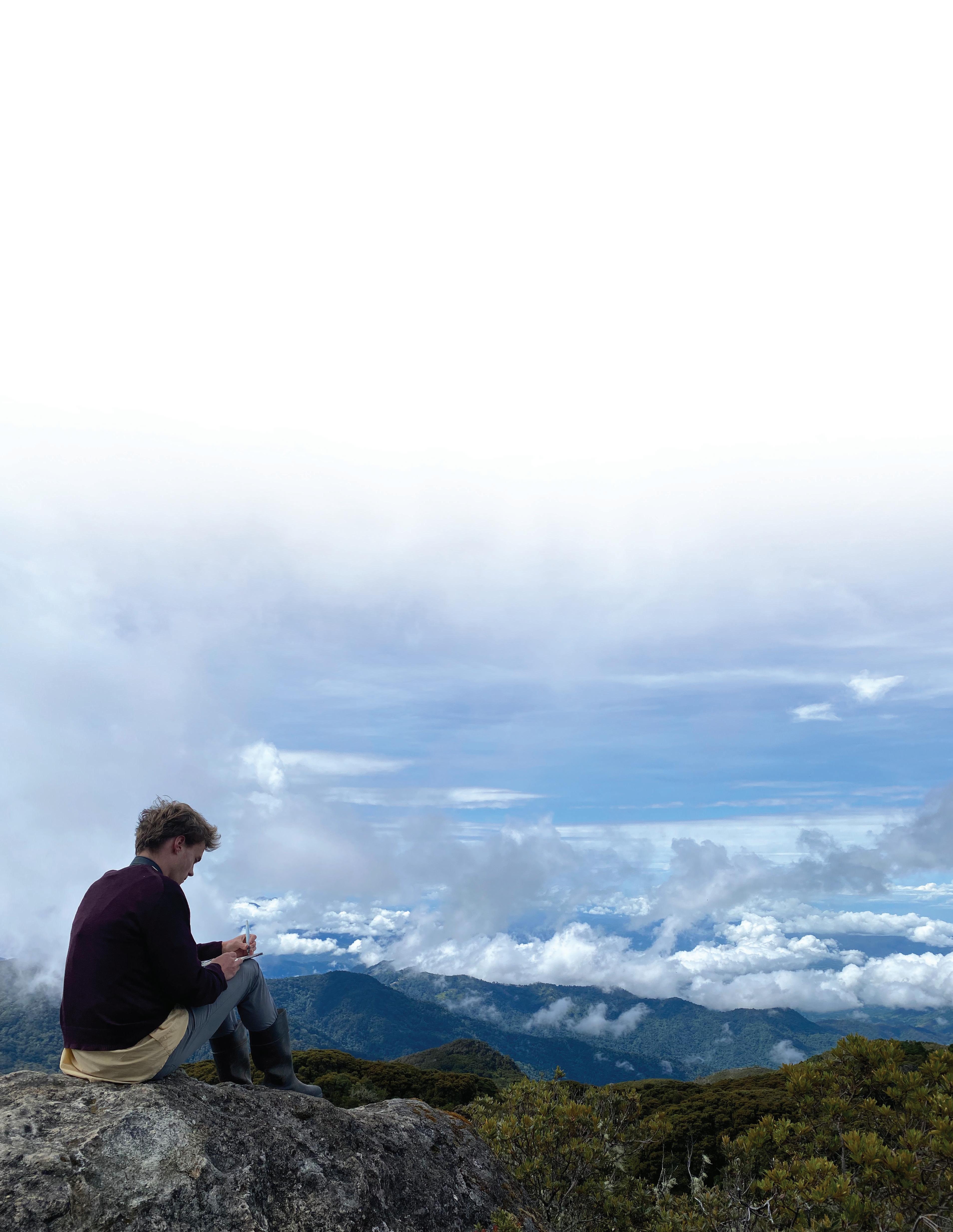
Will Draxler ’26 at the páramo near Cerro de la Muerte, Costa Rica (photo by Carrie Graham) — see page 16