How Viking Shields Reflect Ancient Craftsmanship, Strength, and Norse Heritage
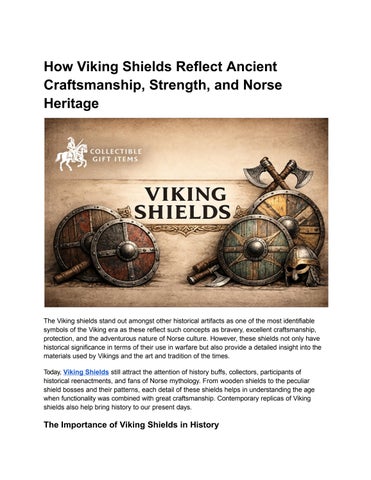
The Viking shields stand out amongst other historical artifacts as one of the most identifiable symbols of the Viking era as these reflect such concepts as bravery, excellent craftsmanship, protection, and the adventurous nature of Norse culture. However, these shields not only have historical significance in terms of their use in warfare but also provide a detailed insight into the materials used by Vikings and the art and tradition of the times. Today, Viking Shields still attract the attention of history buffs, collectors, participants of historical reenactments, and fans of Norse mythology. From wooden shields to the peculiar shield bosses and their patterns, each detail of these shields helps in understanding the age when functionality was combined with great craftsmanship. Contemporary replicas of Viking shields also help bring history to our present days.
The Importance of Viking Shields in History
Vikings lived between the late 8th and early 11th centuries. This age saw exploration, trade, conquest, and settlement in some parts of Europe and beyond. The Vikings had shields, which were significant defense items because they could protect them from attack while still allowing movement and coordination. Viking shields did not only have aesthetic value but were also made considering their practical use and available materials. By looking at the history of these shields, we get more insight on how they were constructed and what they looked like. In contrast to popular culture and its perception of Viking shields as similar, historians have discovered that there are different models of Viking shields in terms of construction and appearance. This diversity adds extra value to collecting Viking shields due to their historic significance. Materials Traditional for Vikings and the Construction of Shields The main material used in many cases of reconstructed or found by archaeologists shields was wood. Light wood was easy to handle yet provided adequate protection. The type of wood used could vary depending on availability. Shields might be made using wooden boards or planks combined together to form a wide surface. Other shields might have had other constructions of wooden parts. It would depend on the purpose of the shield and how the craftsman saw the design. One of the most notable features of the shields used by Vikings was the metal boss located at the center. The metal round shape protected the part where the hand holding the shield should go. It became one of the most recognizable parts of a Viking shield. There could be other parts as well such as wooden handles or decorations. Materials and finishings varied so every shield was unique in its way. The materials used to make modern Viking shields depend on their purpose. They could use old or new materials based on their application in terms of whether they are being bought for display, reenactment, stage props or training purposes.
Crafting Viking Shields The construction of Viking shields is representative of the resourcefulness of their creators. Constructing a viable shield meant that not only did one need to work with the wood. Additional issues to consider included balance, durability, weight, grip, and how one would hold the shield. Wood carving played an especially significant role in the process. The wooden base was to be carved and constructed properly to create something usable. The grip and boss were also an integral part of consideration due to handling and protective qualities of the shield.
Working with metal added another aspect to the construction process. One would need to craft and fasten the metal boss, but could use other pieces of metal depending on the design. The process of decoration provided a chance to display personal style. Historical shields might have been decorated with painting colors or patterns. However, it is difficult to know what exact shields looked like historically. Modern interpretations include Norse patterns or geometric shapes along with bright colors. These factors can be what turns the decoration into an ordinary one or makes it stand out as a historically interesting item to display. The finish quality, visible workmanship, and correctness of the design are what adds to the charm of the shield.
Viking Shields and Norse Heritage Norse heritage includes the cultural practices, religion, myths, stories, and artifacts related to the Vikings living in medieval Scandinavia. Viking shields have been used as important symbols for the heritage as they unite practical artistry with the history of Vikings. Runic writing, knotwork, animal design, and elements of Norse mythology can be included in Viking-style decorations. This will bring the association of these items with the myths and art forms that continue to inspire books, movies, games, and designs. Nevertheless, there is a matter of historical accuracy. Not every symbol, which is considered a Viking one, was actually put onto shields of Vikings. Some of the popular symbols today are rather a modern version. Therefore, for the person interested in historical accuracy, one should choose items with description of their inspiration. The properly chosen Viking shield can be not only an elegant decoration but also an item which can evoke curiosity about Scandinavian history and myths connected to this culture.
Types of Viking Shields for Collectors There are various types of Viking shields, which can be distinguished according to their material, historical inspiration and intended purpose. Traditional wooden shields are appreciated by those who prefer natural materials and historically inspired shields. The grain of the wood, plain finish and presence of the central boss can make the shield look traditionally Viking-like. Decorative Viking shields are created to decorate your home. They usually have painted patterns, Viking-inspired designs, distinctive colors or decorative elements made of metal. Reenactment shields are meant for individuals that take part in recreations of historical events and activities. The suitability of these shields depends on the way they are constructed, the safety standards, and the rules of the reenactment organization. Reproduction decoration is not necessarily safe enough for combat or contact activities.
The collectible and gift shields usually attract attention because of their design, cultural significance, and link to the Viking era. It is important to define the purpose of the chosen shield before making your selection. Display shields require decoration but for reenactments some additional research and evaluation should be done.
Choosing Viking Shields as Collectible Gift Items Historical collectibles can become great gift choices because they combine both an interesting visual aspect and a story behind it. For example, Viking shields can appeal to those who have interests in medieval history, Norse mythology, fantasy-style decoration, historical reenactment, or traditional craft making. If you want to choose Viking shields as collectible gift items, the first thing to do is to analyze the interests of the recipient. History lovers would like to have historically accurate items but those who decorate their room can prefer shields that have unique decoration. Quality of material is another vital factor to consider. Examine the material quality, finish, size, mounting method, and general presentation of the product. The product description must clearly state whether the piece is handcrafted, factory-made, merely decorative, or functional in some way. Requirements for packaging and presentation must also be considered in case of buying a gift. In case of buying a large shield, it will require appropriate mounting equipment, as well as proper packaging, since it might take a lot of wall space. When businesses seek unique gifts related to historical themes, they should consider specialized manufacturers of collectible gifts. To place orders, buyers have to clarify the available design, material, customizing possibilities, costs, and other requirements.
Displaying and Caring for a Viking Shield A properly displayed Viking shield can become a centerpiece in your house, at work, in a themed establishment, or in your private collection. It can be displayed on the wall, mounted on a stand, or placed in a set of historical artifacts. It is important to protect wooden shields from too much moisture and other inappropriate environmental factors that can result in warping and damage. Sunlight can also lead to fading of any painting on the shield, as well as deteriorate certain finishes. Metals should be monitored for any corrosion, especially if the artifact is stored in a humid atmosphere. Use mounting materials, which are appropriate for the weight of the shield and the wall on which it will be mounted. If the artifact is heavy, ask about proper mounting instructions and do not use a simple decoration hook.
Proper care will help maintain the condition of your collectible. Follow the manufacturer's guidelines on how to clean it and do not use any oils and polishes. The Viking shield remains one of the most durable examples of design and manufacture, as well as a piece of Viking culture. The wooden shield with the metal boss and various decorations demonstrates how the useful items can also become items of historical value. In the present day, Viking shields are highly valued by collectors and fans of historical and traditional design. Regardless of whether it is selected for your own collection or display and even as one of many unique gifts, Viking shield will surely give a feeling of history in your contemporary interior. The knowledge of the historical context, the high quality of construction, and the choice of design according to its purpose are the main criteria which should be taken into account.