
The Planning Team would like to acknowledge the residents, stakeholders, and partners who participated in this planning process. In particular, we would like to thank the project Working Group members for their valuable knowledge and guidance during the process, along with our Community Ambassadors, whose dedication and persistence continue to make this initiative a success.

EXECUTIVE
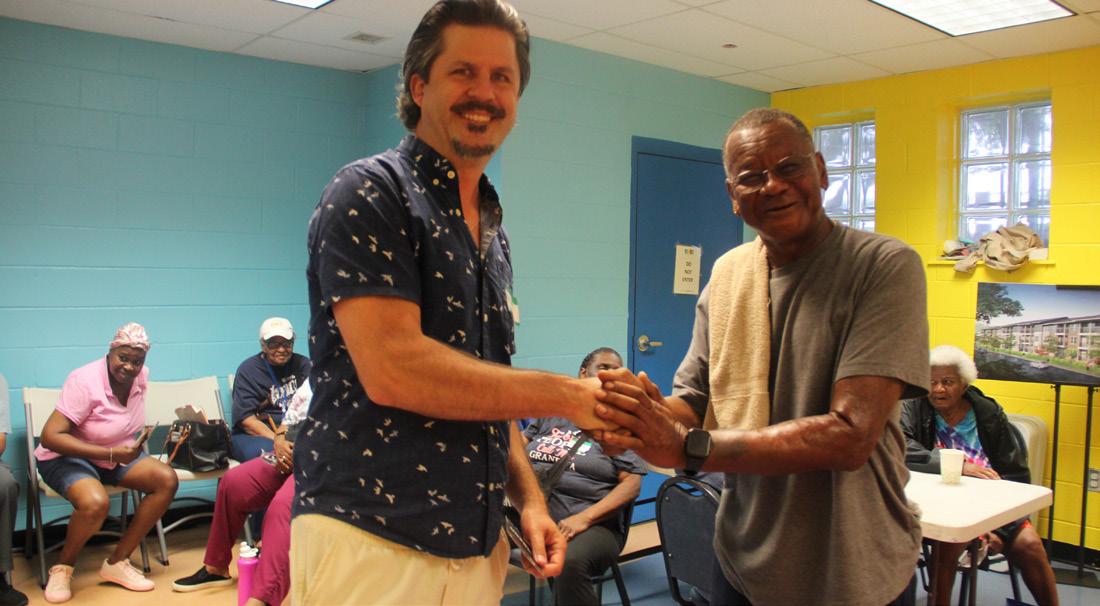
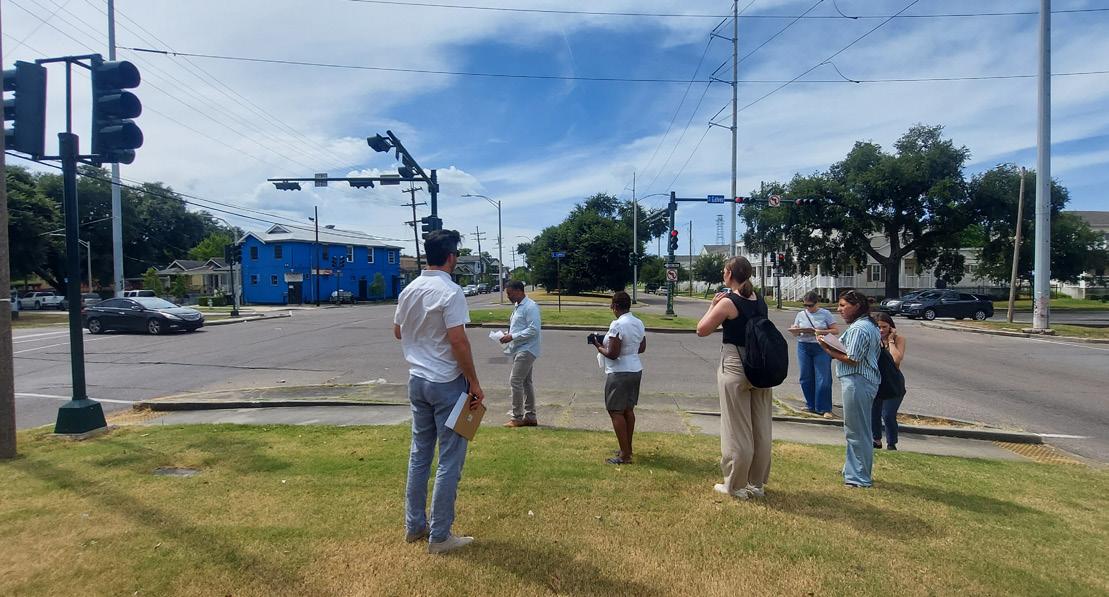
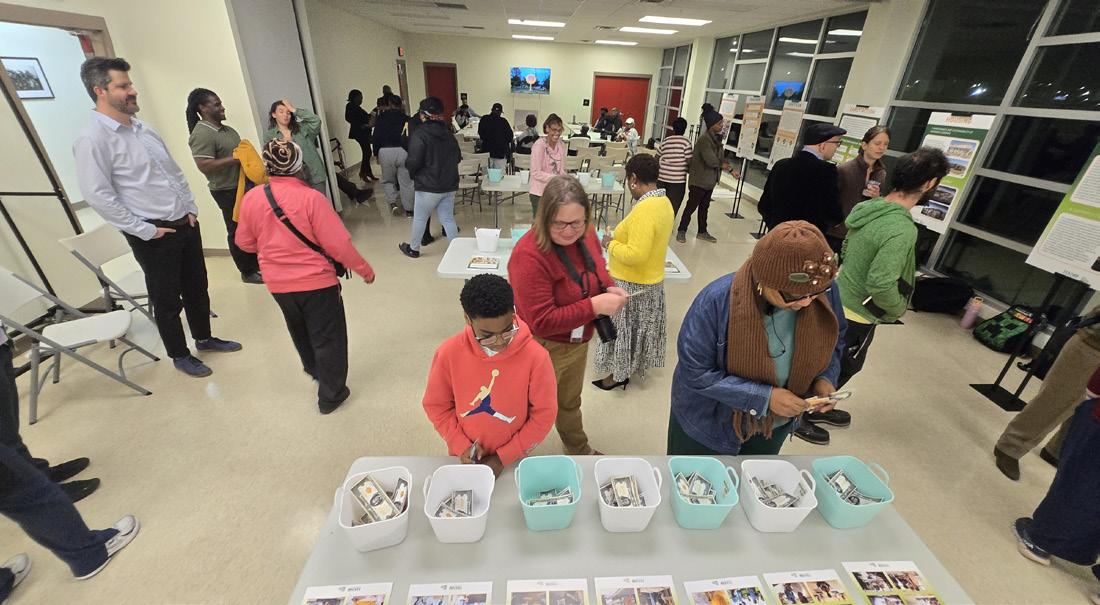
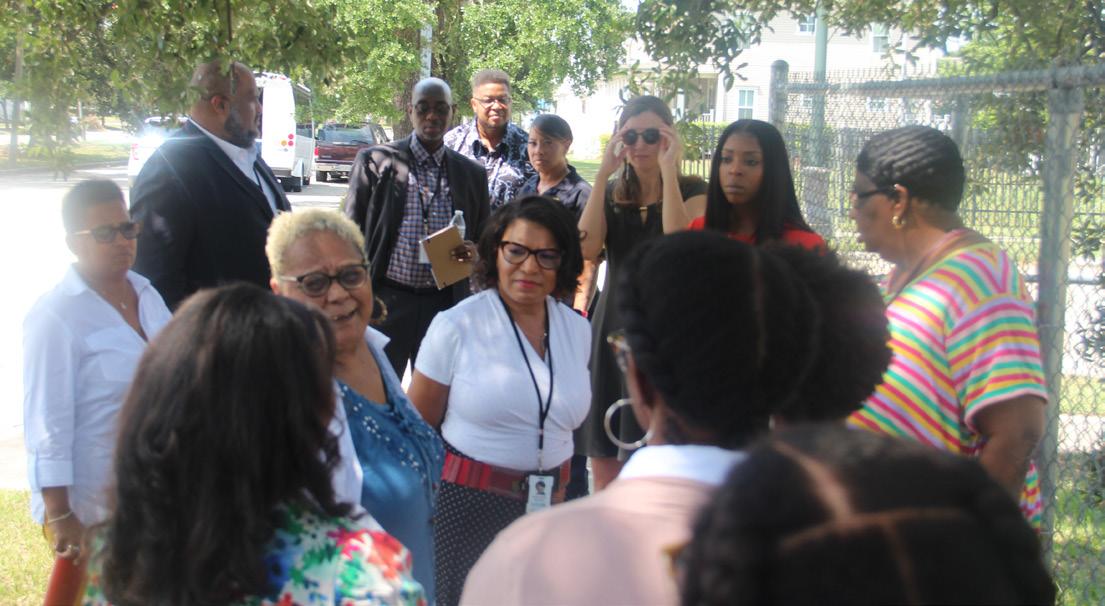
In December of 2022, New Orleans was one of nine communities nationwide awarded a Planning Grant for the Choice Cooper Neighborhood. This grant is awarded by the U.S. Department of Housing and Urban Development (HUD) as part of the Choice Neighborhood Initiative (CN). Through the grant, the Housing Authority of New Orleans (HANO) has been working with a local group of community stakeholders- including residents, nonprofits, local universities, businesses, supportive service agencies, and residentsto create an innovative and actionable Transformation Plan.
This partnership has come together to focus on the three core goals of the CN:
Housing- expanding upon the successful Marrero Commons redevelopment to provide additional high-quality, energy-efficient mixedincome housing that is well-managed and responsive to the needs of the surrounding neighborhood.
People- improving outcomes of households within the Choice Cooper neighborhood related to income and employment, health, and education.
Neighborhood- creating the conditions necessary for public and private investment in order to help create a complete community.
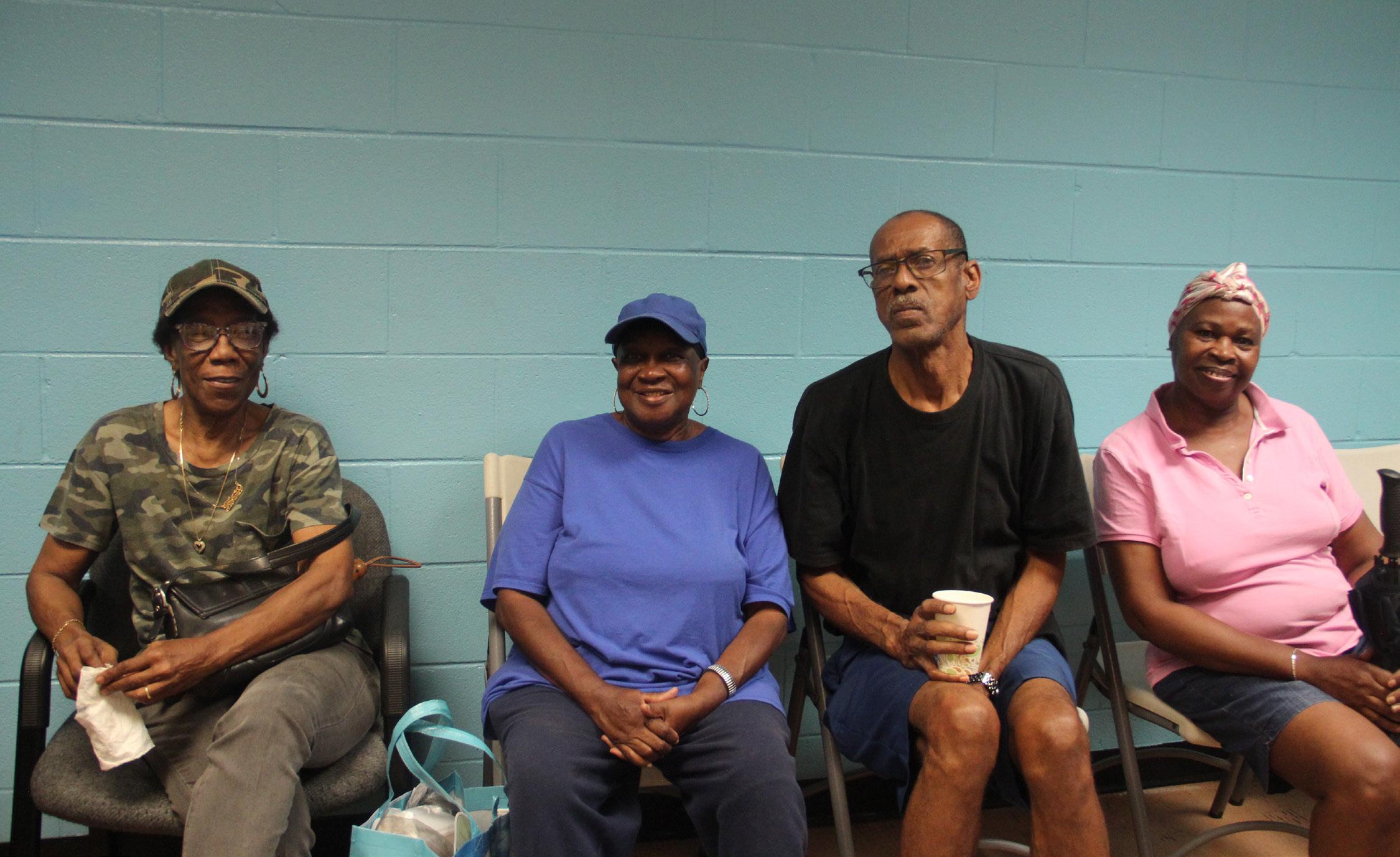
The Choice Cooper neighborhood, anchored by the Marrero Commons community, was one of nine neighborhoods that was selected by the Department of Housing and Urban Development (HUD) to receive funds to create a Transformation Plan that addresses affordable housing, resources for people, and improves neighborhood amenities. The Housing Authority of New Orleans (HANO) has been working with key stakeholders to create a forward-looking CN Plan with a strong commitment to recognizing the past and addressing current challenges to create a better future for the community.
The Choice Neighborhoods (CN) program is a Department of Housing and Urban Development (HUD) program that employs a comprehensive approach to neighborhood transformation. The program helps communities transform neighborhoods by revitalizing distressed public and/or assisted housing, and catalyzing critical improvements in the neighborhood such as: vacant property, housing, business development, social services, education, transportation, and improved access to jobs. The CN ensures that current residents will be able to benefit from this transformation by preserving affordable housing or providing residents with the choice to move to affordable and accessible housing in another existing neighborhood of opportunity.
To achieve these core goals, communities such as New Orleans are required to develop and implement a comprehensive neighborhood revitalization strategy, or Transformation Plan. This Plan will become the guiding document for the revitalization of housing, while simultaneously directing the transformation of the surrounding neighborhood into positive outcomes for families.
Our CN Plan describes strategies to improve the quality of life for residents of the Choice Cooper community and identifies catalytic projects and initiatives based on stakeholderidentified planning principles. The overall goal of the Plan is to ensure that the Choice Cooper Neighborhood continues to become a place of choice rather than necessity.
EXPAND UPON THE FOUNDATIONAL MARRERO COMMONS DEVELOPMENT TO PROVIDE ADDITIONAL RENTAL AND OWNERSHIP OPPORTUNITIES FOR SENIORS AND FAMILIES WHILE ENSURING ONGOING MAINTENANCE AND SUSTAINABILITY.
CONTINUE TO IMPROVE THE CHOICE COOPER NEIGHBORHOOD AS A VIABLE, MIXED-INCOME COMMUNITY WITH ACCESS TO WELL FUNCTIONING SERVICES, WHILE LIMITING DISPLACEMENT AND GENTRIFICATION.
WORK WITH COMMUNITY RESIDENTS AND ORGANIZATIONS TO IMPROVE LIVES AND LIVING CONDITIONS FOR HANO FAMILIES AND RESIDENTS OF THE SURROUNDING NEIGHBORHOOD, WITH A PARTICULAR FOCUS ON THE HIGHEST NEED FAMILIES.
The Choice Cooper planning area is 0.9 square miles in size, and is defined by the following geographic boundaries: Carrollton Avenue to the north, Interstate 10 to the east, South Claiborne Avenue to the south, and Toledano Street to the west. The planning area has an estimated population of 4,990 residents. The census tract in which Marrero Commons is located (Tract 69) is 99% African American (2020).
The community includes portions of the Gert Town neighborhood as well as the B.W. Cooper and Hoffman Triangle Neighborhoods.
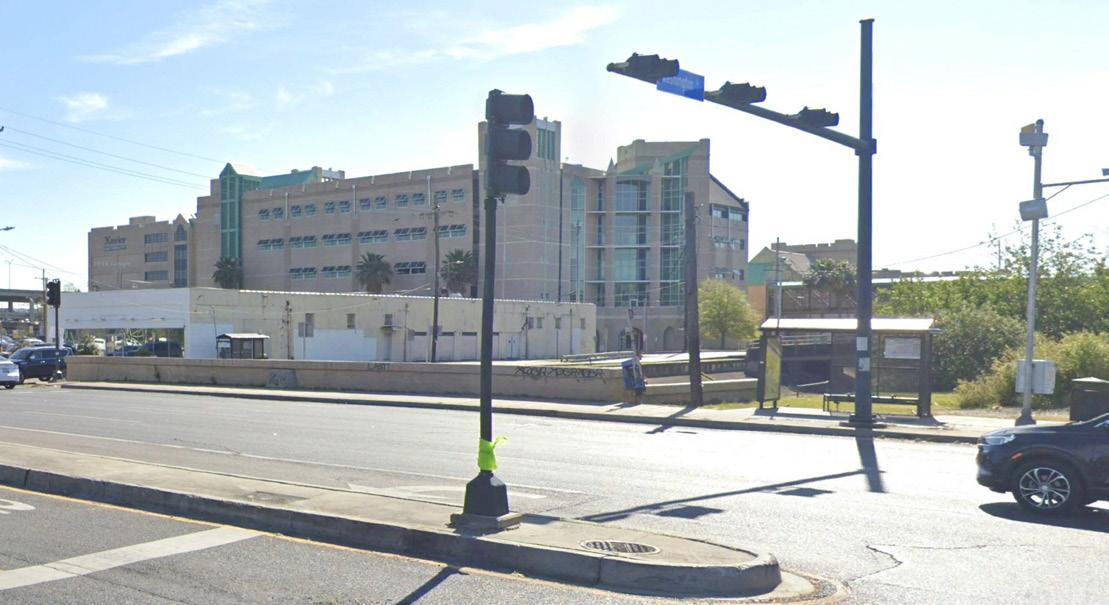
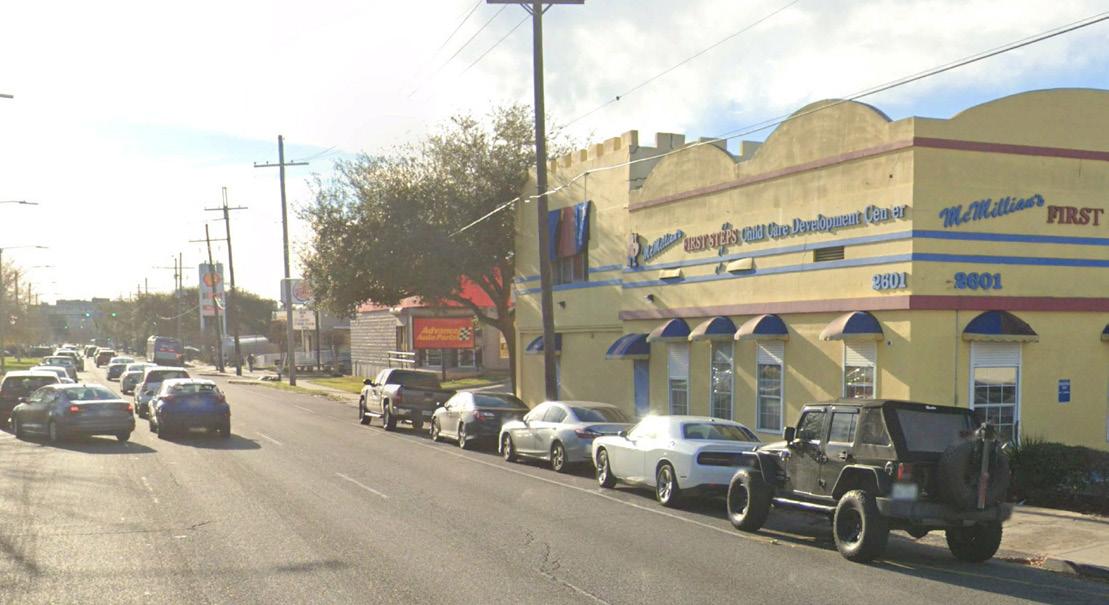
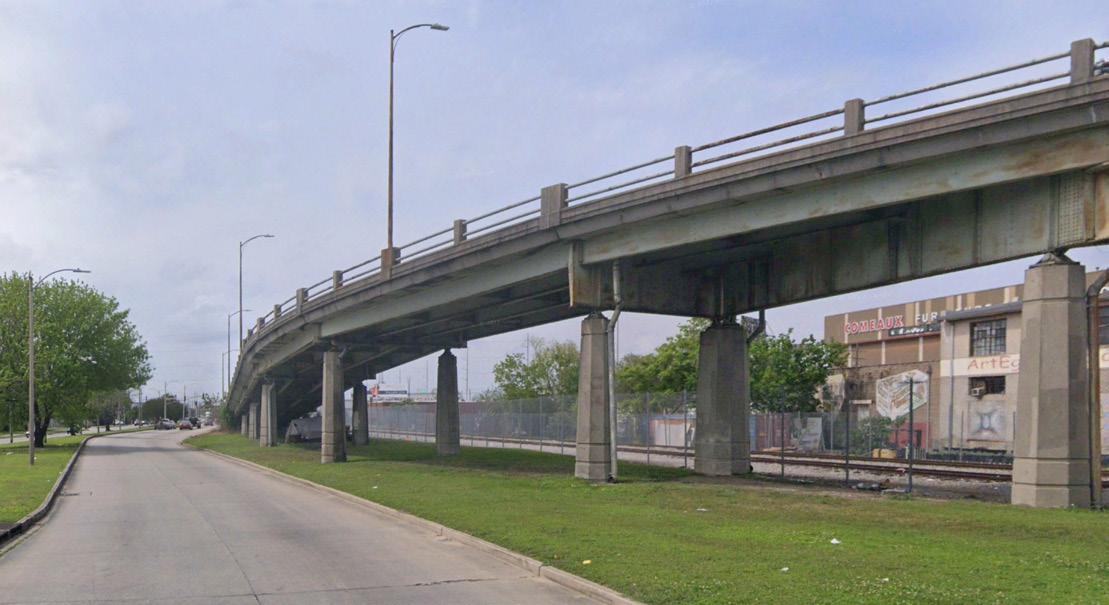
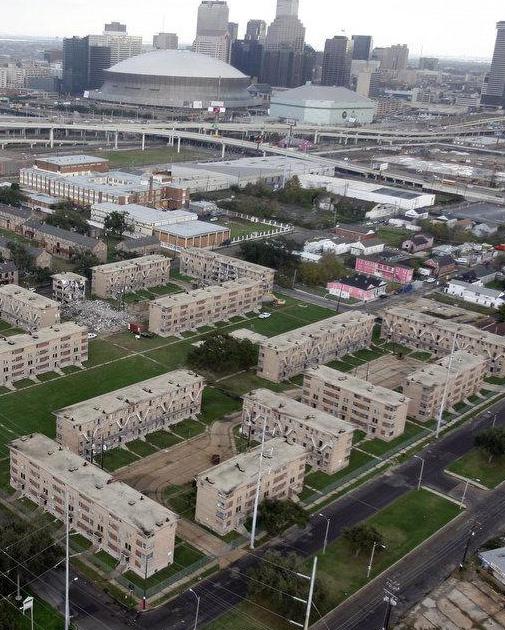
During the 1960s, the community was separated from the downtown following the construction of I-10. After Hurricane Katrina, the former B.W. Cooper housing development was demolished and many surrounding single-family homes and businesses were not rebuilt.
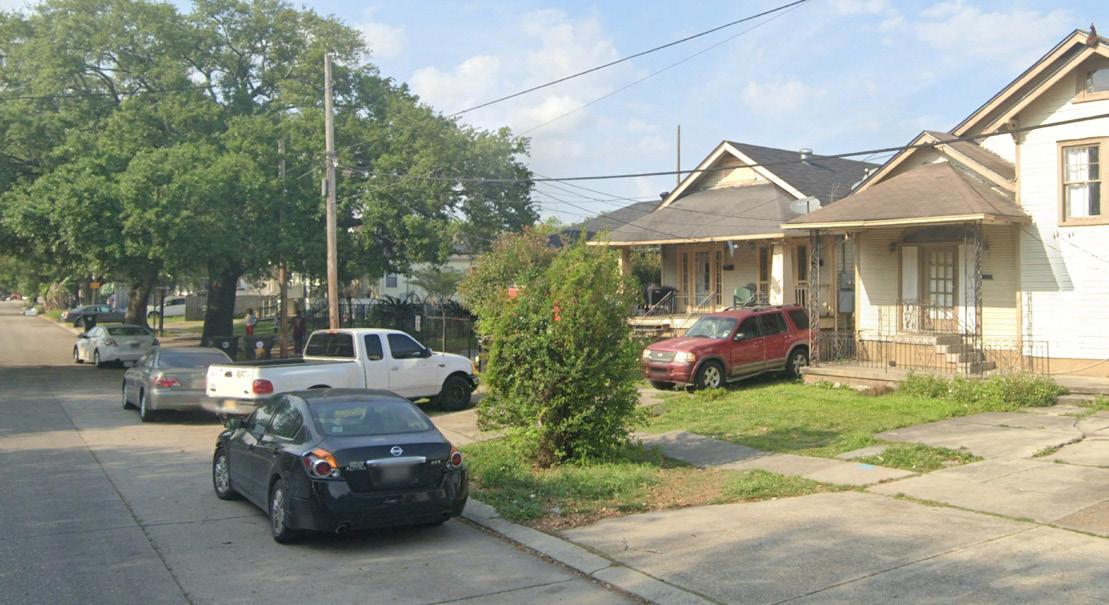
Today, the community includes schools, numerous religious organizations and other community-oriented service providers. The community features a mixture of residential and commercial, as well as other community institutions and amenities scattered throughout.
Neighborhood
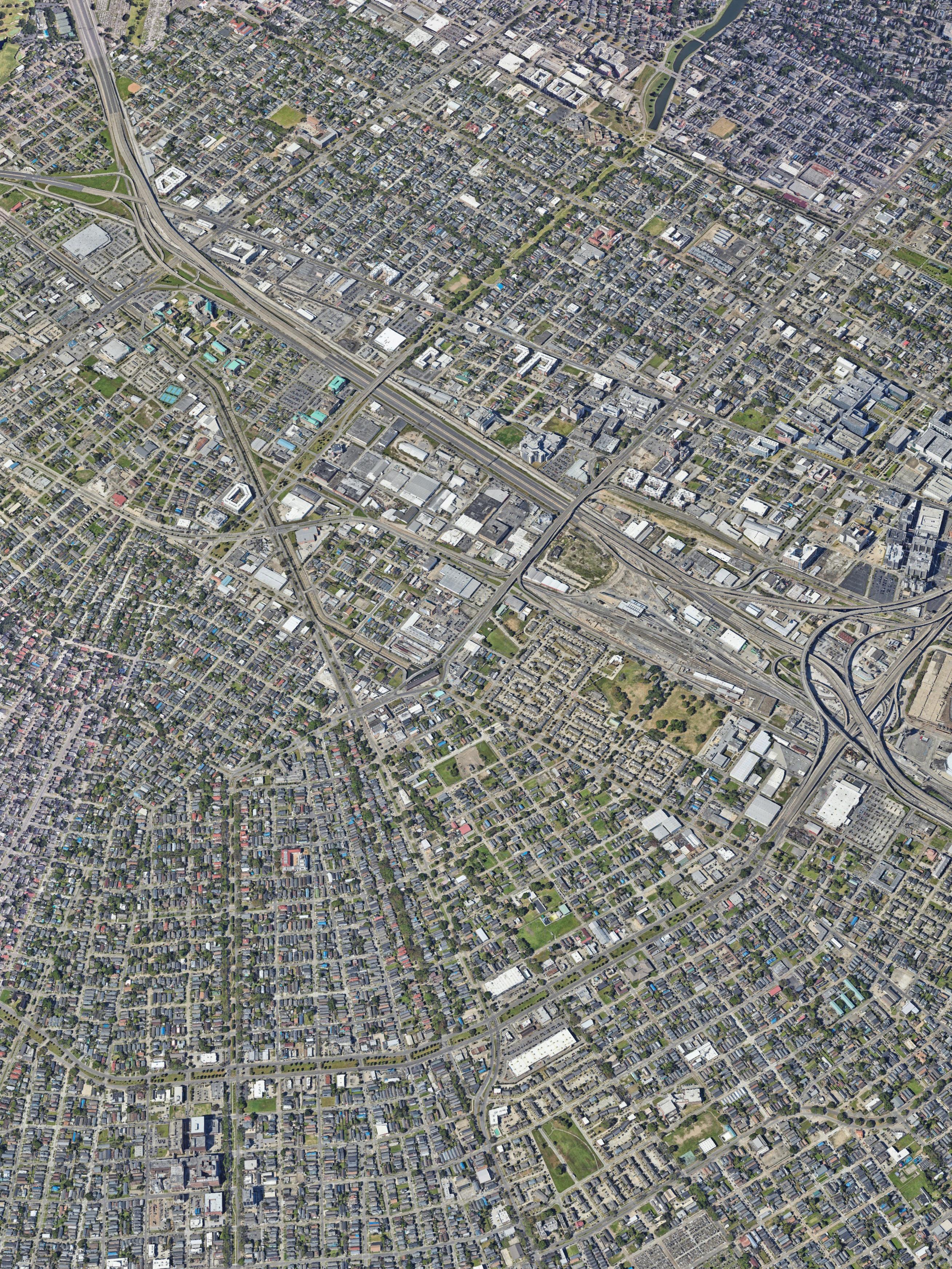
B.W. Cooper Neighborhood

The vision for the Choice Cooper Community is based on the analysis of existing strengths, weaknesses and opportunities informed by its residents, neighborhood organizations, community leaders and institutional partners.
The Choice Cooper neighborhood is rich with history, traditions, and an identity that inspires residents to create a brighter future. Residents work to improve the neighborhood by making it safe, creating a sense of place for existing and new residents, and by investing in the community to create a thriving environment for all. Residents will accomplish this by improved access to services, amenities, employment opportunities, education and fresh food.
The following strategies make up the Choice Cooper Neighborhood Transformation Plan. Information on each strategy can be found in the chapters of the Plan
1. Maintenance And Sustainability Of Marrero Commons
2. HANO Senior Housing Development
3. HANO Hq, Mixed-Income Housing, And Sports Field
4. HANO / Odyssey House Transitional Housing
5. Neighborhood Infill Housing
6. Support A Community Land Trust Model
7. Address Heirs’ Property Issues
8. Implement The Illumination Initiative (Early Action Activity)
9. Develop Local Food And Fresh Produce Sources
10. Improve Neighborhood Streetscapes For Walking And Biking
11. Build Local Capacity For Commercial Investment
14. Connect With Rosenwald Community Center Staff To Address Gaps In Programming
15. Connect With Booker T. Washington High School To Offer Enhanced Programming
16. Create A Mixed-Generational Mentorship Program
17. Foster Greater Integration With Xavier University
18. Require Resident Hiring Contracts For Neighborhood Improvements
19. Partner With Propeller For Increased Workforce Development
20. Enhance Connection To The BioDistrict Through Workforce Development Programming
12. Convert Historic Buildings Into Community Spaces
13. Naturalize The Washington Palmetto
21. Enable Greater Utilization Of HANO’s Resident Opportunity And SelfSufficiency Program
22. Expand Free Or Low-Cost Mental Health Services
23. Create Local Food And Nutrition Programming
24. Create A Community Guide To Health Programs And Connect Residents To Existing Services
25. Connect Residents With Local ReEntry Programs
26. Establish A Resident Council Or Ambassador Group







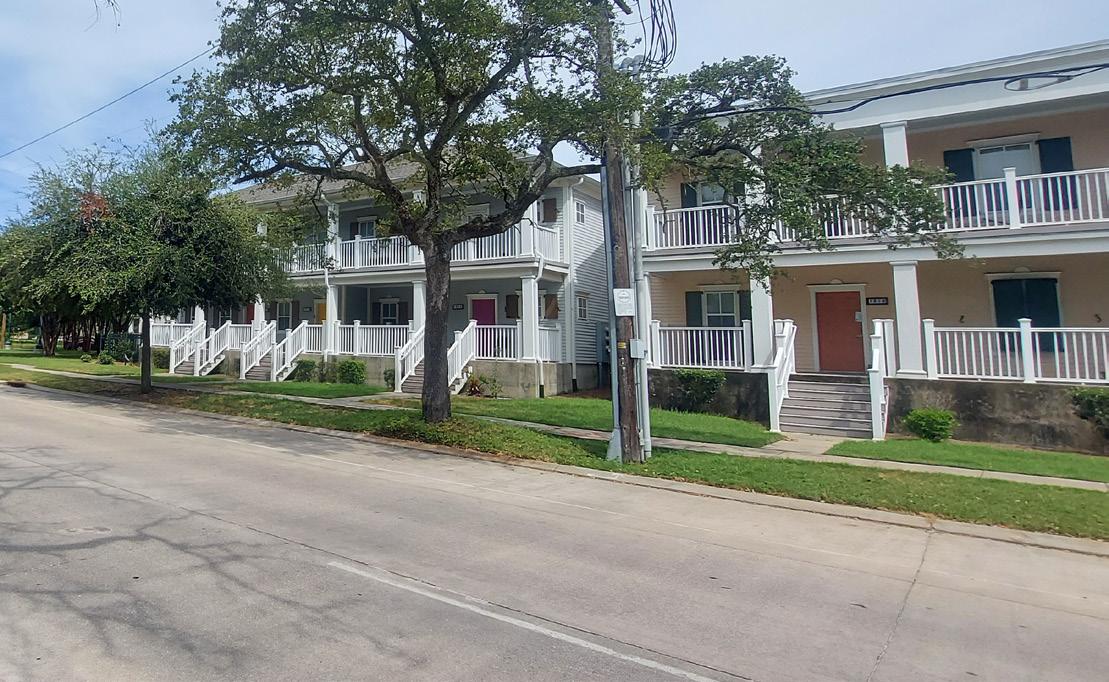
Encompassing the historic neighborhoods of B.W. Cooper, Hoffman Triangle, and Gert Town, the Choice Copper Neighborhood Transformation Plan area stands out for its immense potential, distinct opportunities, and enviable strategic location near Downtown New Orleans. These culturally significant communities have emerged as a focal point for reinvestment, including promising prospects for revitalizing retail spaces along the Broad Street corridor, which seamlessly connects to the Earhart corridor. This integration would not only unlock local job creation, but also provide vital resources to residents and business owners, positioning the area as a hub for economic growth and activity.
Investors are breathing new life into the area, converting underutilized properties into new housing, business ventures, and essential services. Anchor institutions such as Xavier University, are contributing to this resurgence by directly investing in the community. Their initiatives are bolstering local educational offerings and strengthening ties to the neighborhood, fostering a shared vision of progress and inclusivity. Through these efforts, the Plan symbolizes a collaborative commitment to equitable growth and sustainable revitalization, proving that a forward-looking approach can both honor the cultural heritage of these neighborhoods and equip them for a thriving future.
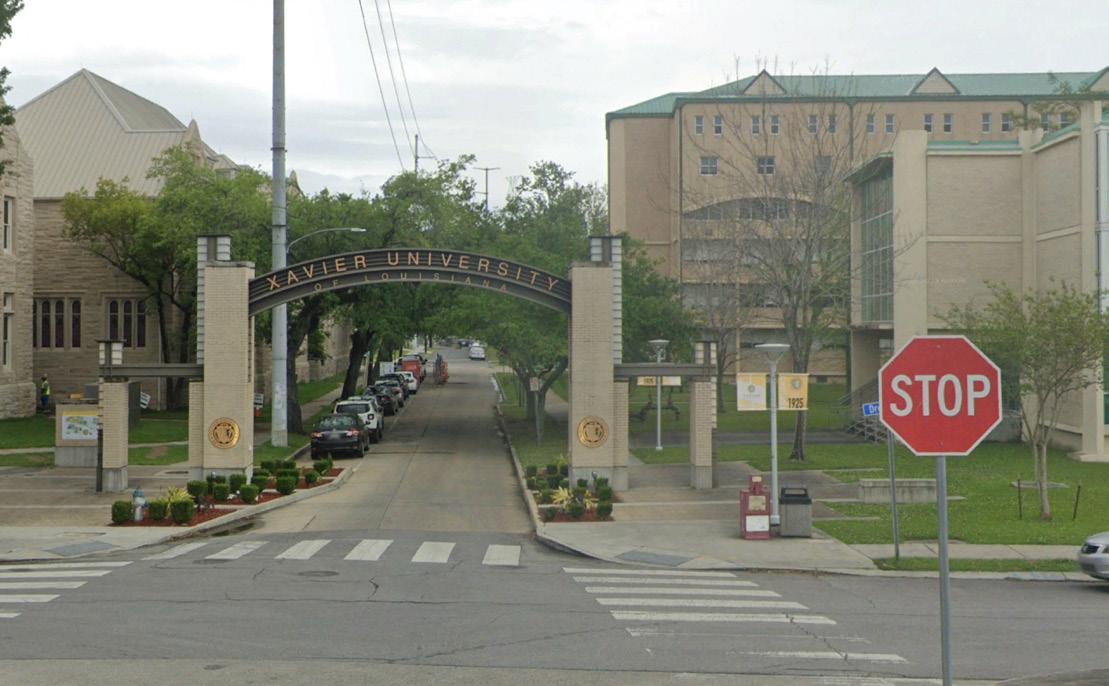
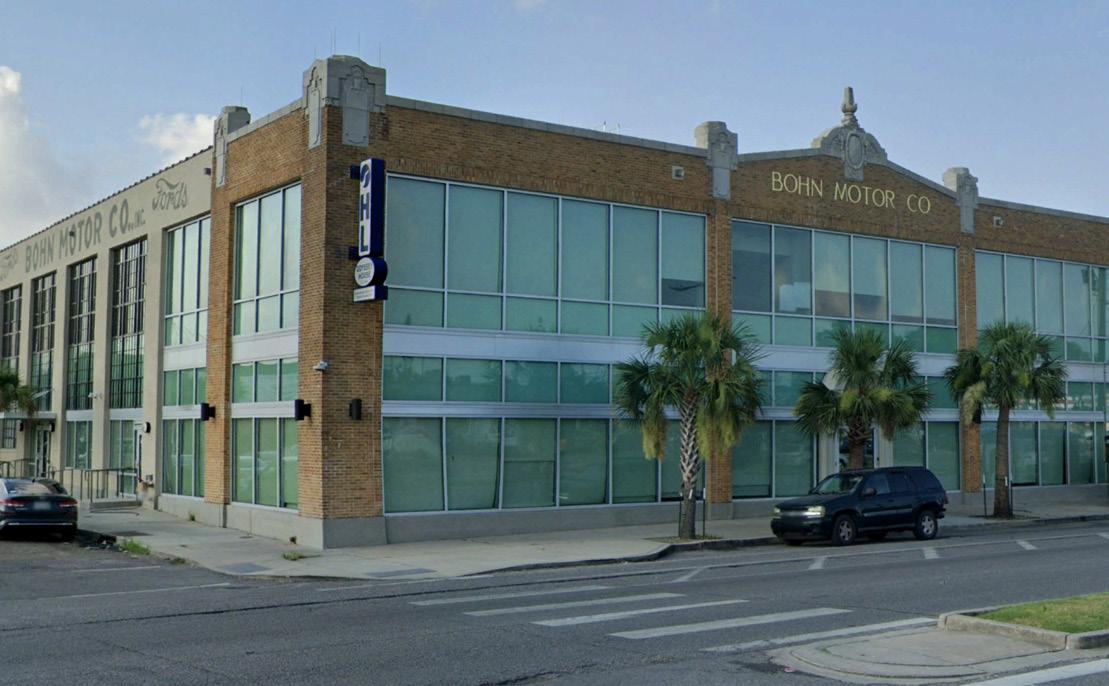
The Choice Cooper Neighborhood Transformation Plan area comprises three distinct historic African American neighborhoods that lie just west of Interstate 10 and Downtown New Orleans, B.W. Cooper, Gert Town, and the Hoffman Triangle.
The history of B.W. Cooper reflects broader national trends in public housing, including its role in providing essential housing during times of need, the challenges of systemic poverty and neglect, and the controversial shift toward mixed-income developments.
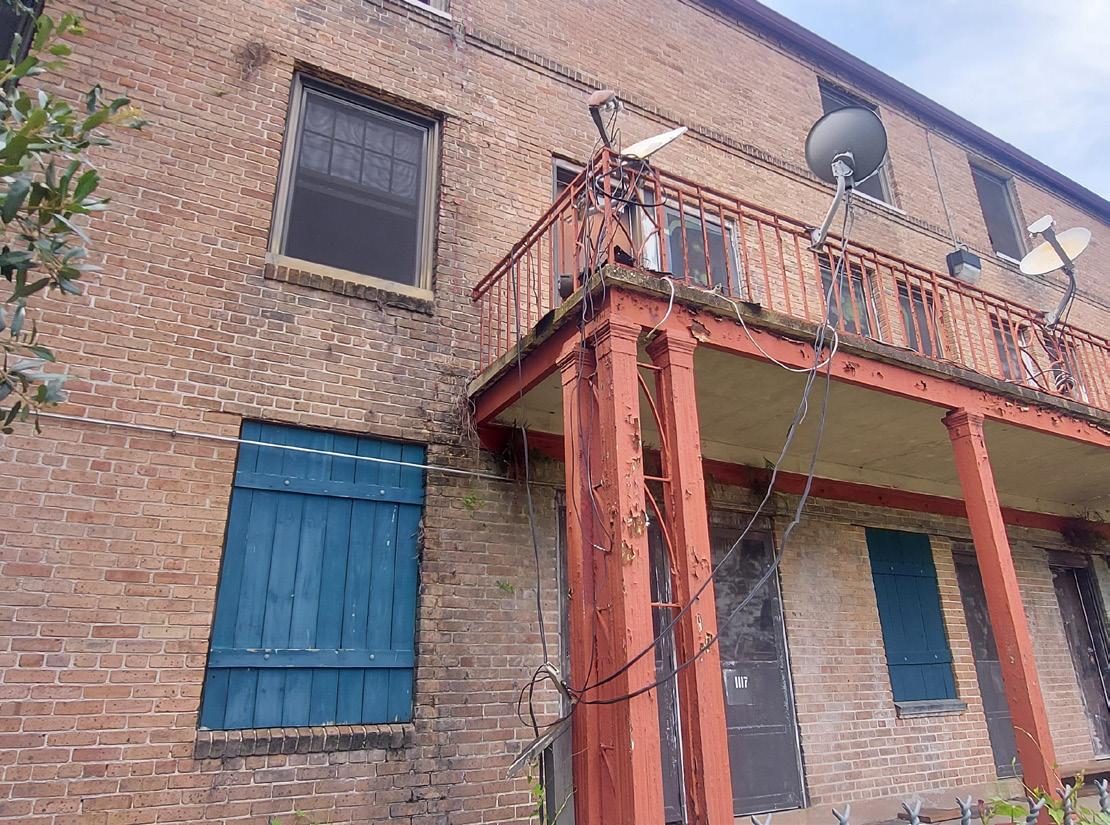
Originally known as the Calliope Projects, B.W. Cooper was built between 1939 and 1941 as part of a federal initiative to provide affordable housing during the Great Depression for African American residents. It was later renamed to honor Bertha W. Cooper, a prominent civil rights advocate and community leader. By the 1970s and 1980s, residents faced high unemployment, lack of maintenance, and rising crime rates, like many public housing developments across the country during this period in the country’s history. In 2005, catastrophic flooding caused by Hurricane Katrina displaced nearly all residents of B.W. Cooper. Post-Katrina, HUD and the Housing Authority of New Orleans (HANO) initiated the demolition of B.W. Cooper as part of a broader effort to replace large public housing complexes with mixed-income developments. This effort was controversial, as many displaced residents faced difficulties returning to the area.
Portions of the site were redeveloped into Marrero Commons, a mixed-income community that includes public housing units, affordable housing, and market-rate
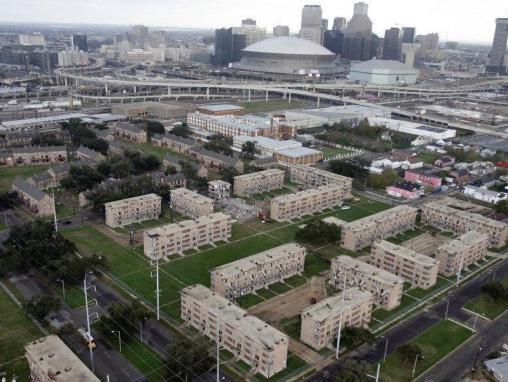
apartments. The redevelopment aimed to integrate residents into a more economically diverse neighborhood and improve living conditions. Today the legacy of B.W. Cooper remains a significant part of New Orleans’ urban history, emblematic of both the promise and the pitfalls of public housing policies in the United States.
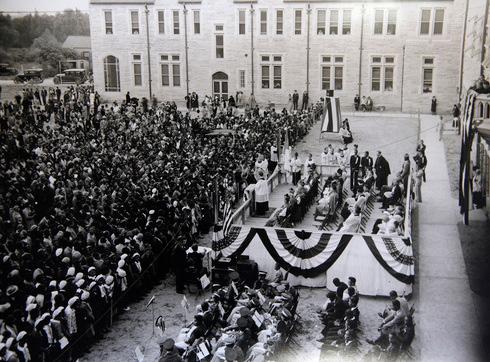
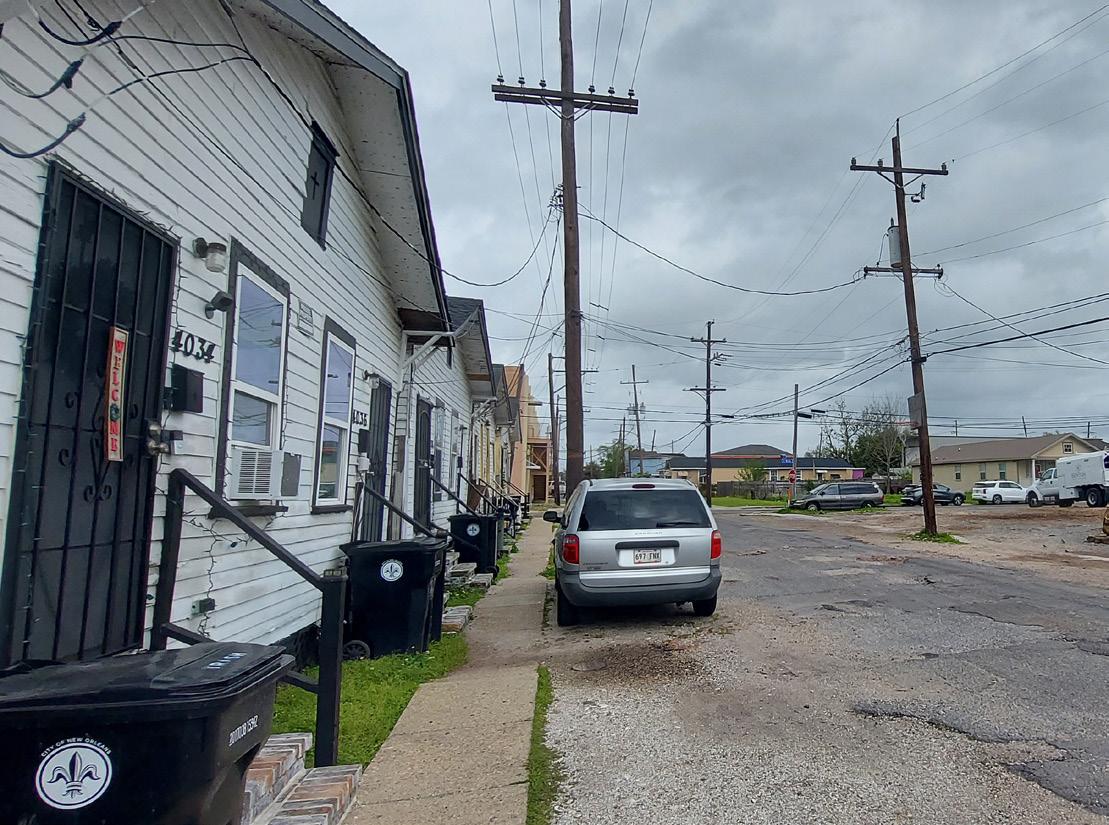
Gert Town is a historic Mid-City area neighborhood known for its contributions to the city’s culture and its evolution as a community. Gert Town’s contributions to New Orleans’ cultural heritage, particularly its musical legacy, are celebrated as a testament to the community’s enduring spirit.
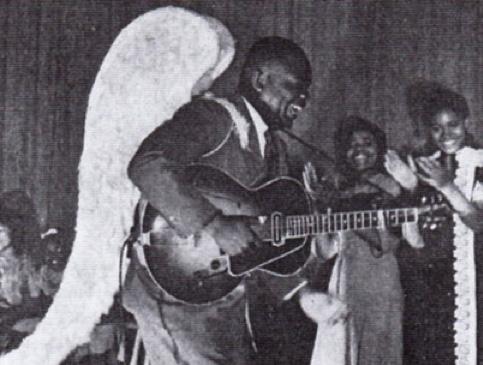
Developed on land once occupied by the McCarty Plantation, Gert Town was established in the late 19th century as an industrial and working-class neighborhood. It was named after Gehrke’s Town, a reference to the Gehrke family, who were prominent landowners in the area. During its early years, Gert Town housed several factories and industrial facilities, which attracted workers to settle in the area. By the early 20th century, Gert Town became home to a predominantly African American population. A close-knit community, the neighborhood played a significant role in the development of New Orleans’ music scene. Jazz musicians such as Professor Longhair (Henry Roeland Byrd), a Gert Town resident, contributed to its cultural legacy. It was also the birthplace of other musical greats such as Allen Toussaint, as well as having the Gert Town Golden Star Hunters and Mardi Gras Indians, an important notable Mardi Gras Indian Tribe. Gert Town also became home to Xavier University, the only historically Black and Catholic University in the United States.
Gert Town’s population peaked in the late 1940s with more than 8,700 residents. During the mid-20th century, Gert Town began to experience economic challenges due to the decline of manufacturing and industrial jobs in the area. By the late 20th century, the neighborhood experienced significant population decline and concerns about pollution and health risks associated with former industrial facilities. Many residents were displaced as the neighborhood suffered significant flooding and damage during Hurricane Katrina in 2005.
The Hoffman Triangle is characterized by its rich cultural roots, community resilience, and challenges related to systemic inequities and urban development. It lies within the broader Central City area, historically a hub for African American life and culture. Named for its triangular layout and prominent Black educator John Wesley Hoffman (1870-1926), the Hoffman Triangle began developing in the late 19th and early 20th centuries. Early residents were a mix of working-class families who lived in modest homes. Its proximity to industrial and commercial areas provided employment opportunities. As part of Central City, the Hoffman Triangle contributed to the cultural vibrancy of New Orleans, particularly in the realms of music and social aid societies. Brass bands, Mardi Gras Indian traditions, and second-line parades thrived in the area.
Home to organizing efforts aimed at dismantling segregation, the Hoffman Triangle community played a significant role in the Civil Rights Movement in New Orleans. Following World War II, the neighborhood faced economic decline as industries relocated or shut down, leading to rising unemployment.
The Hoffman Triangle was heavily impacted by Hurricane Katrina in 2005. Flooding and property damage displaced many residents, and recovery efforts were uneven. PostKatrina, the neighborhood experienced significant demographic shifts, with some residents unable to return due to economic and housing challenges. In recent years, the Hoffman Triangle has been the focus of revitalization efforts by both community organizations and the city. Balancing affordable housing with new developments remains a challenge as gentrification pressures increase in surrounding neighborhoods.
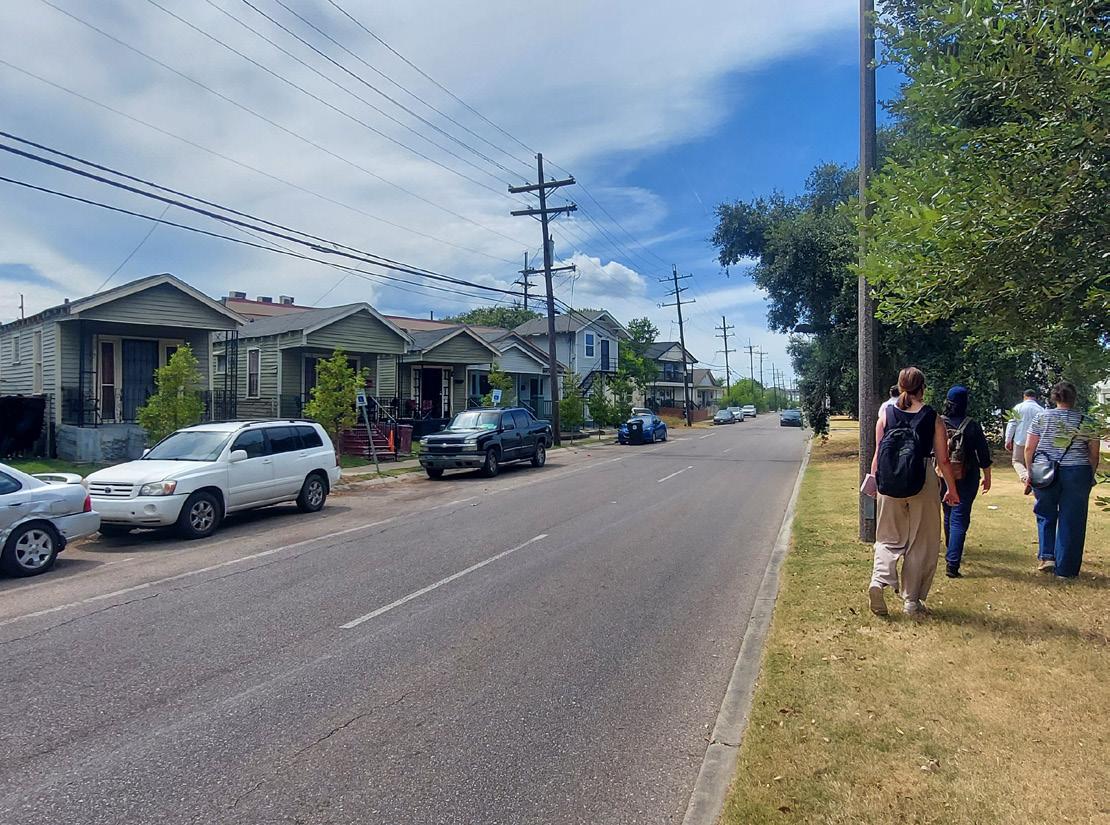
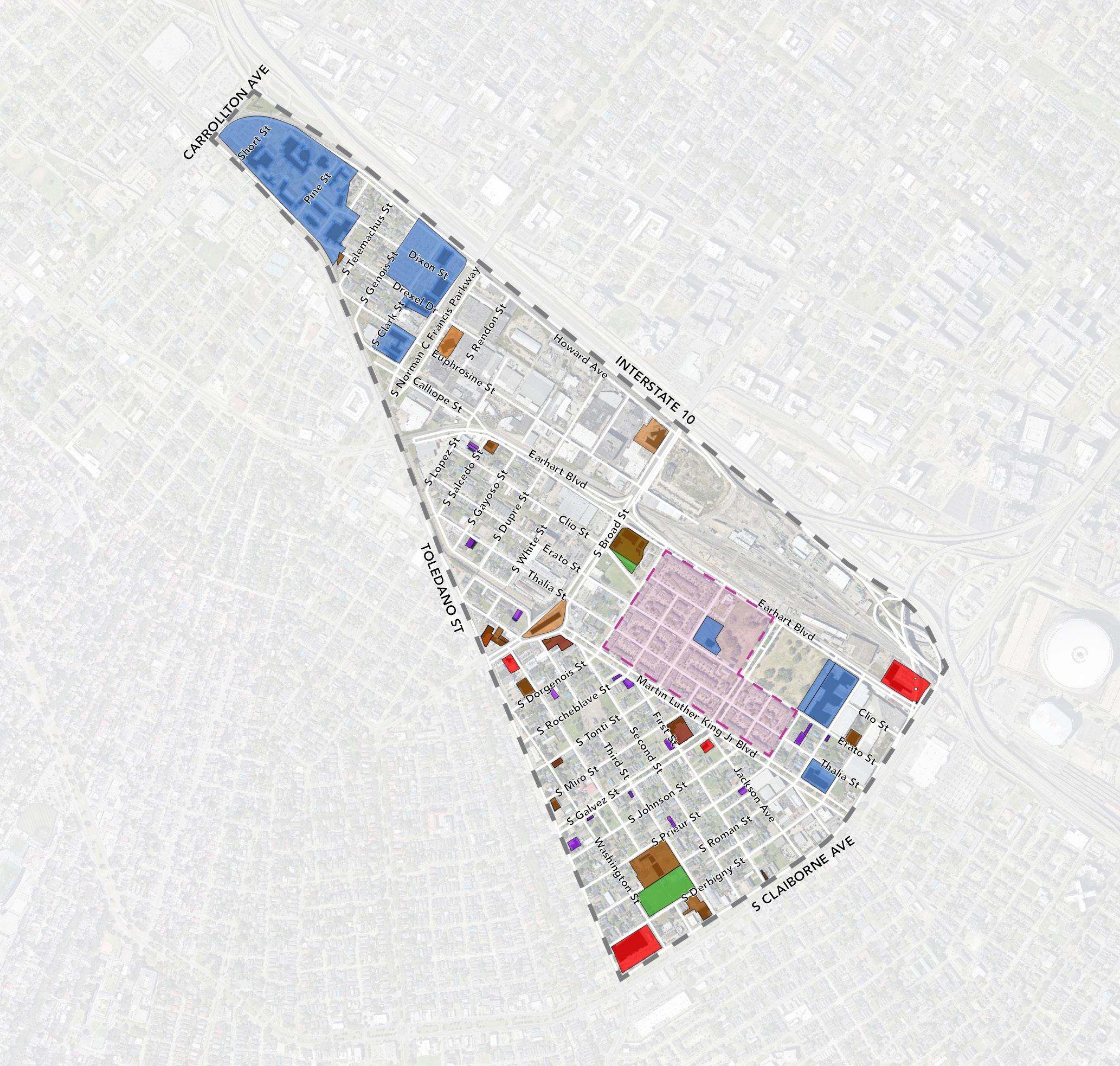
The Choice Cooper neighborhood includes schools, numerous religious organizations and other community-oriented service providers. The neighborhood features a mixture of residential, commercial and light industrial land uses along with Xavier University of Louisiana. Other community institutions and amenities are scattered throughout the neighborhood.
Choice Neighborhood Boundary Marrero Commons
School
Religious Organization
Government Service
Health-Related Service
Community Amenity Parks
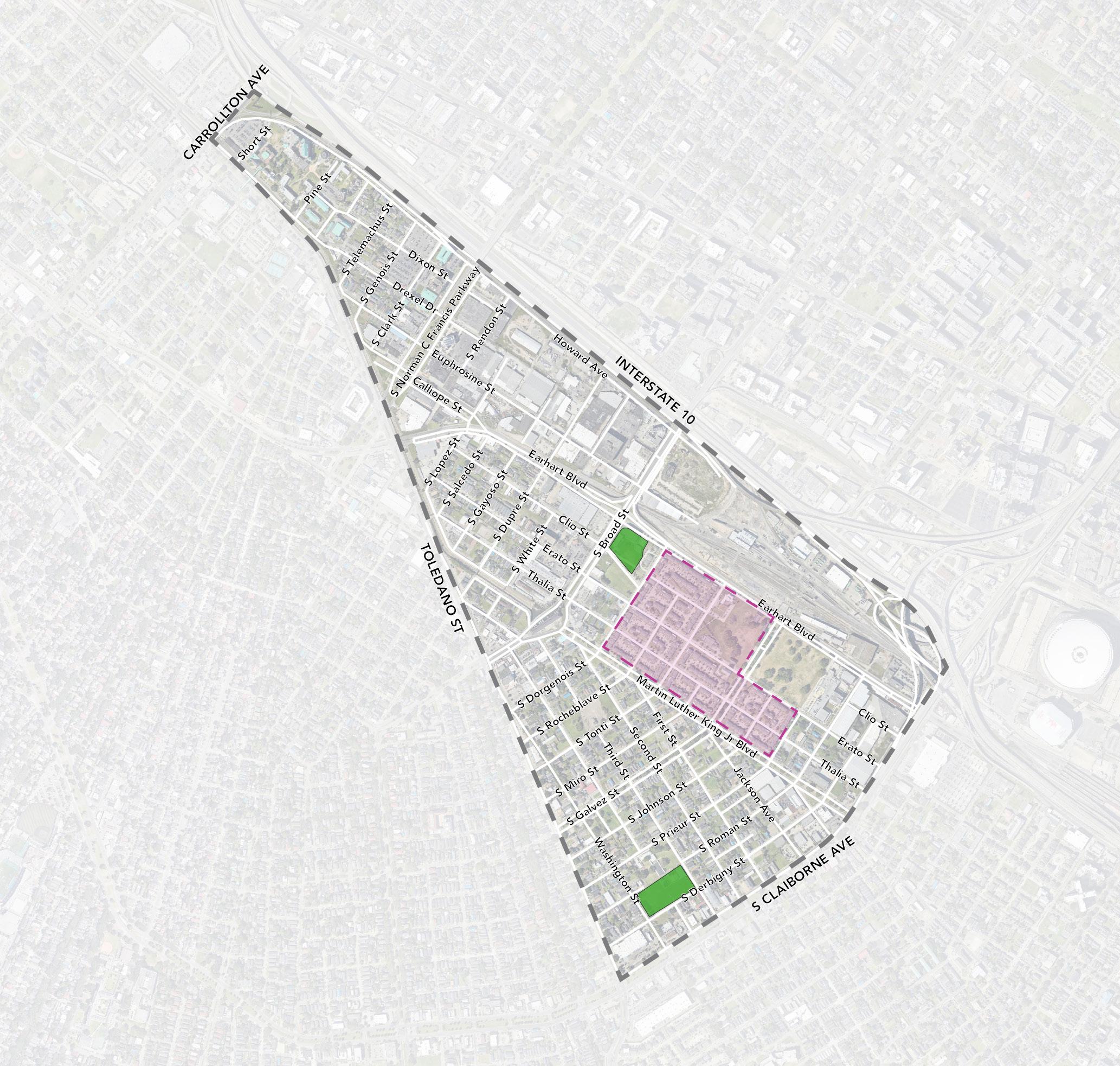
The neighborhood generally lacks dedicated park spaces. The primary recreation areas are Taylor Park and the Rosenwald Recreation Center.
Taylor Park and Rosenwald amenities include:
• Covered Basketball Court
• Playground
• Soccer Field
• Playground
• Baseball Field
• Pool
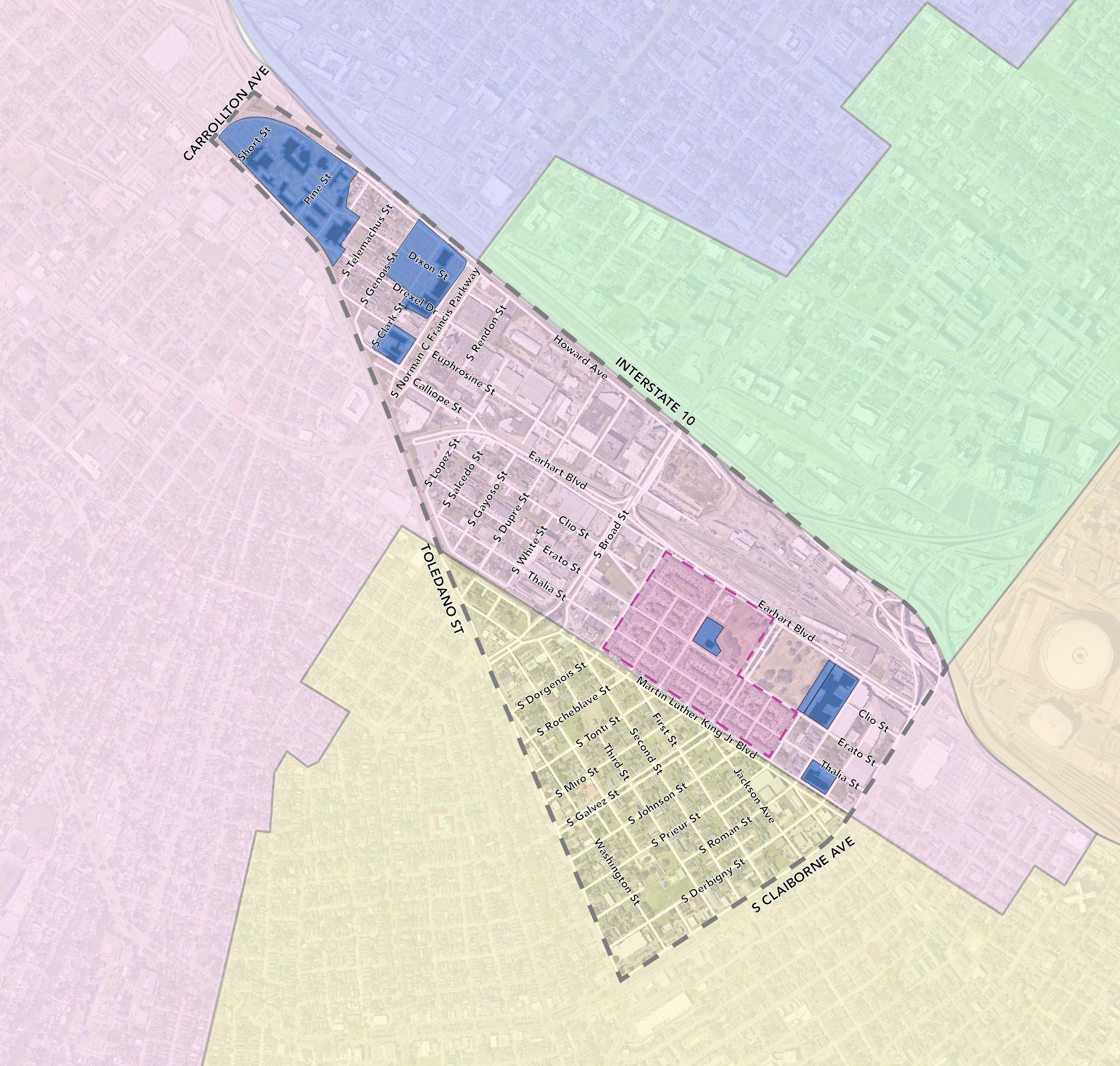
The Choice Cooper neighborhood includes two charter schools: Booker T. Washington and KIPP Central City Primary. Marrero Commons includes the onsite Viney Reynolds Parent/Child Development Center.
Xavier University of Louisiana (also known as XULA) is a private, historically black (HBCU), Catholic university in New Orleans, Louisiana. It is the only Catholic HBCU and, upon the canonization of Katharine Drexel in 2000, became the first Catholic university founded by a saint. It currently enrolls 2,727 undergraduate students.
Choice Neighborhood Boundary Marrero Commons School
Xavier University of Louisiana
The Viney Reynolds Parent/Child Development Center
Booker T. Washington High School
Central City Primary
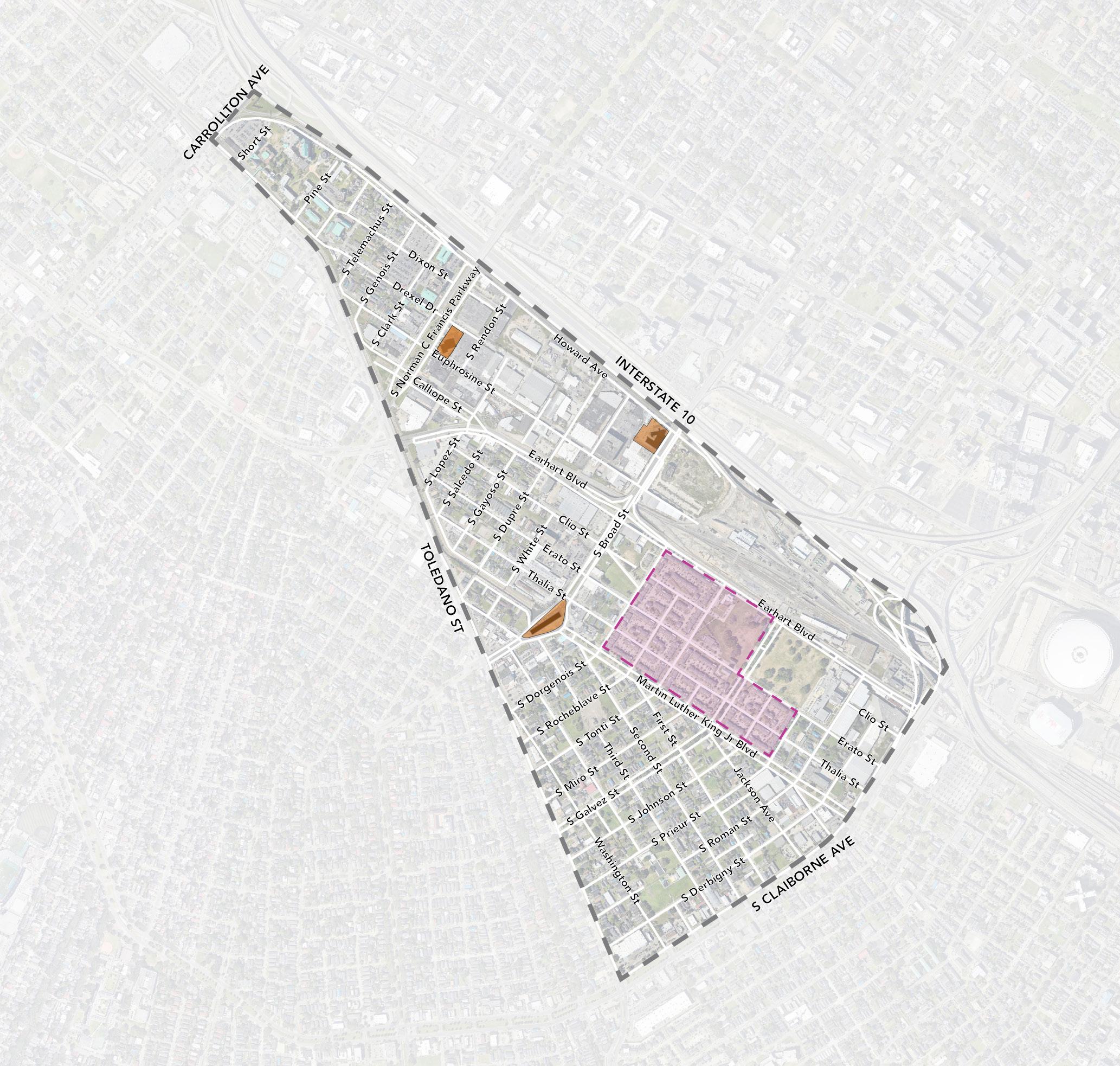
The Choice Cooper neighborhood includes several local, state, and federal government services. Some of these services include the Pontchartrain Housing Corporation and the Melpomene Pumping Station.
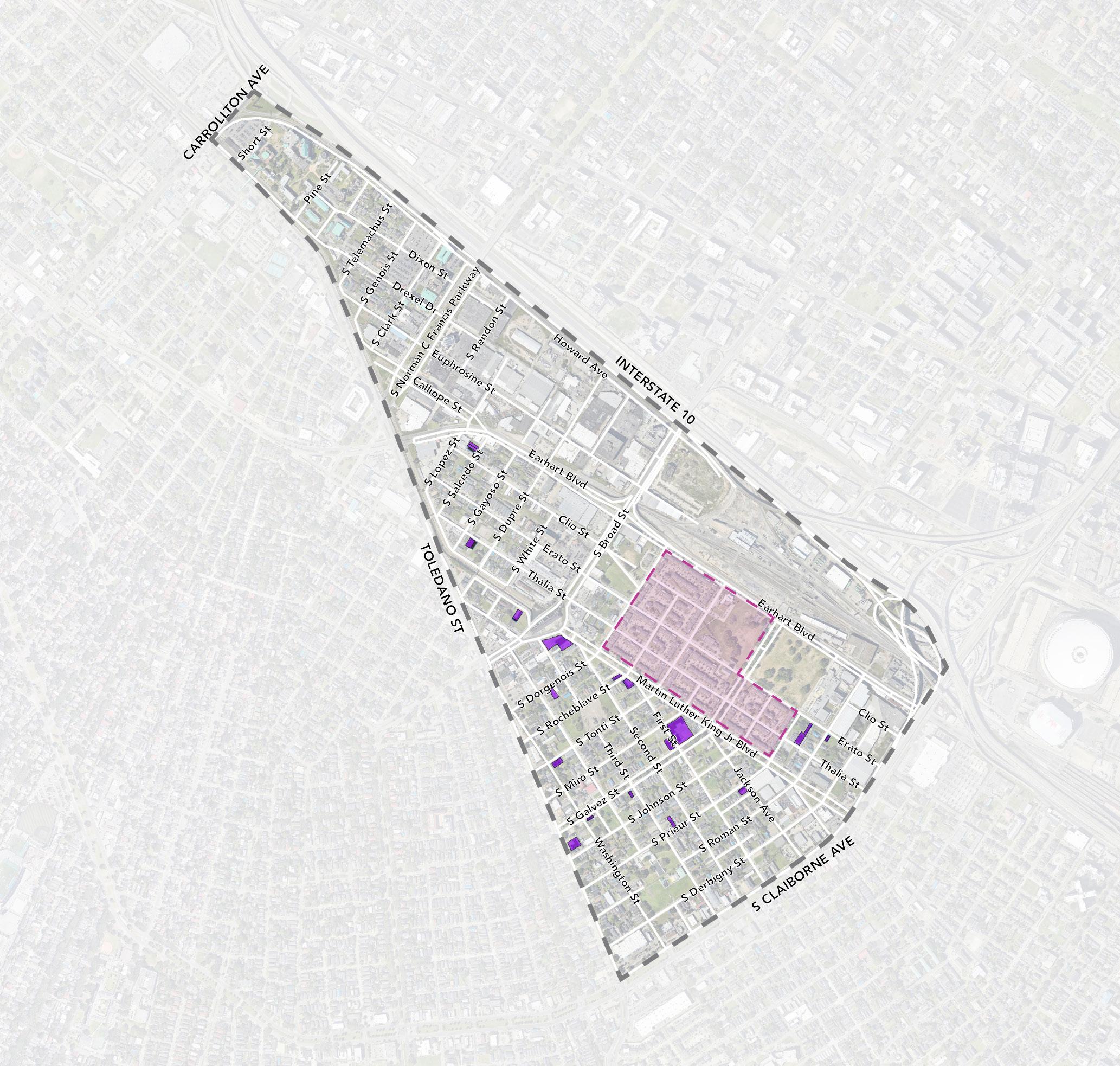
The Choice Cooper neighborhood is home to a number of religious organizations that represent different denominations. Some of the churches also offer space for non-profits and food distribution services
Choice Neighborhood Boundary
Marrero Commons
Religious Organizations
Beulah Baptist Church
James Chapel Baptist Church
Ephesian Baptist Church Pure
La. Iglesia-Profetica Jesus-Viene EnLas Nubes
Pleasant Zion Baptist Church
Pleasant Hill Baptist Church
Castle Rock Community Church
Stronger Hope Baptist Church
Regeneration Church NOLA
New Mount Era M.B.C.
Morning Glory Fellowship Church
First Agape Baptist Church
Solid
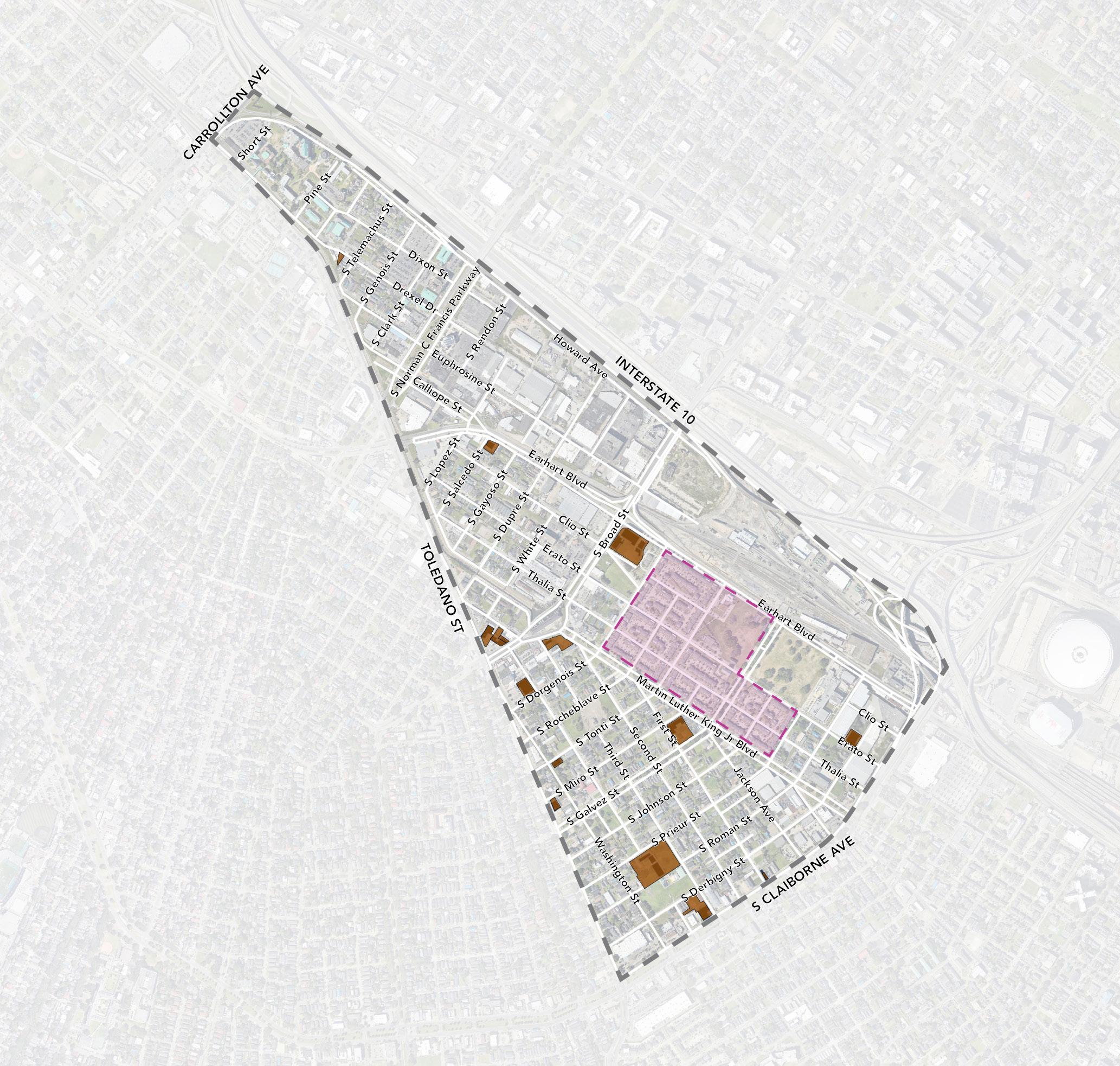
The Choice Cooper neighborhood includes several non-profits, cultural organizations, and other staple amenities that provide indispensable resources for the community. Some amenities include Rosenwald Recreation Center located just
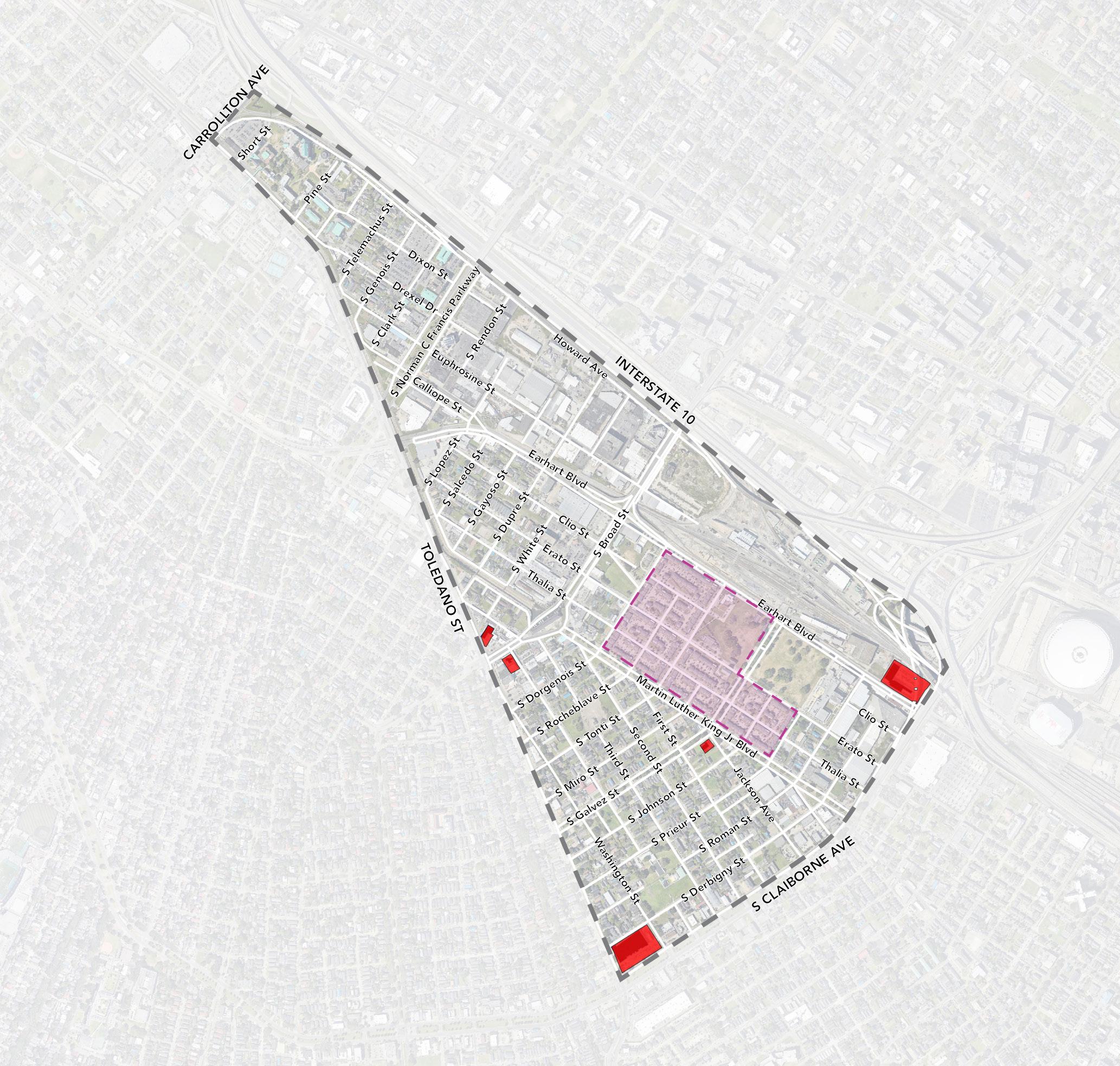
The Choice Cooper neighborhood includes an emergency medical center off of Earhart Boulevard. There are a few medical clinics including the Start Community Health Center and Oak Street Health Clinic.
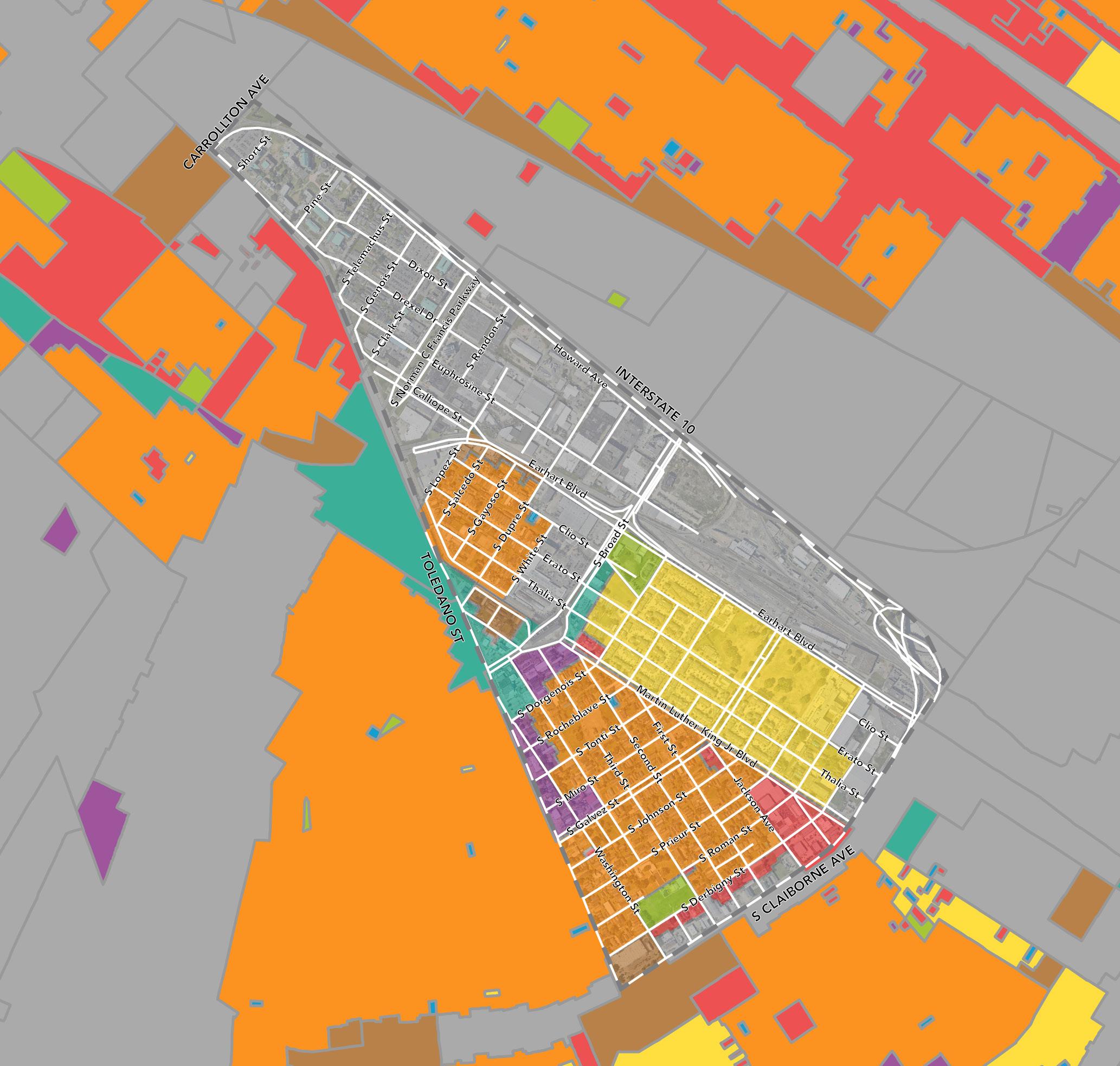
The Choice Cooper neighborhood includes a variety of uses including residential, commercial, and industrial. Most commercial properties are located along Toledano Street and a few along Broad Street. The eastern portion of the target neighborhood includes light industrial as well as heavy commercial. Residential is concentrated south of Broad Street between Toledano Street and Earhart Boulevard.
Choice Neighborhood Boundary
Historic Urban Neighborhood Mixed-Use District
Historic Urban Neighborhood Business District
Neighborhood Open Space District
Historic Urban Neighborhood Business District
Historic Urban Two-Family Residential District
Historic Urban Multi-Family Residential District
Historic Marigny/Tremé/Bywater Commercial District
Medium Intensity Mixed-Use District
General Commercial District
Suburban Business District
Other
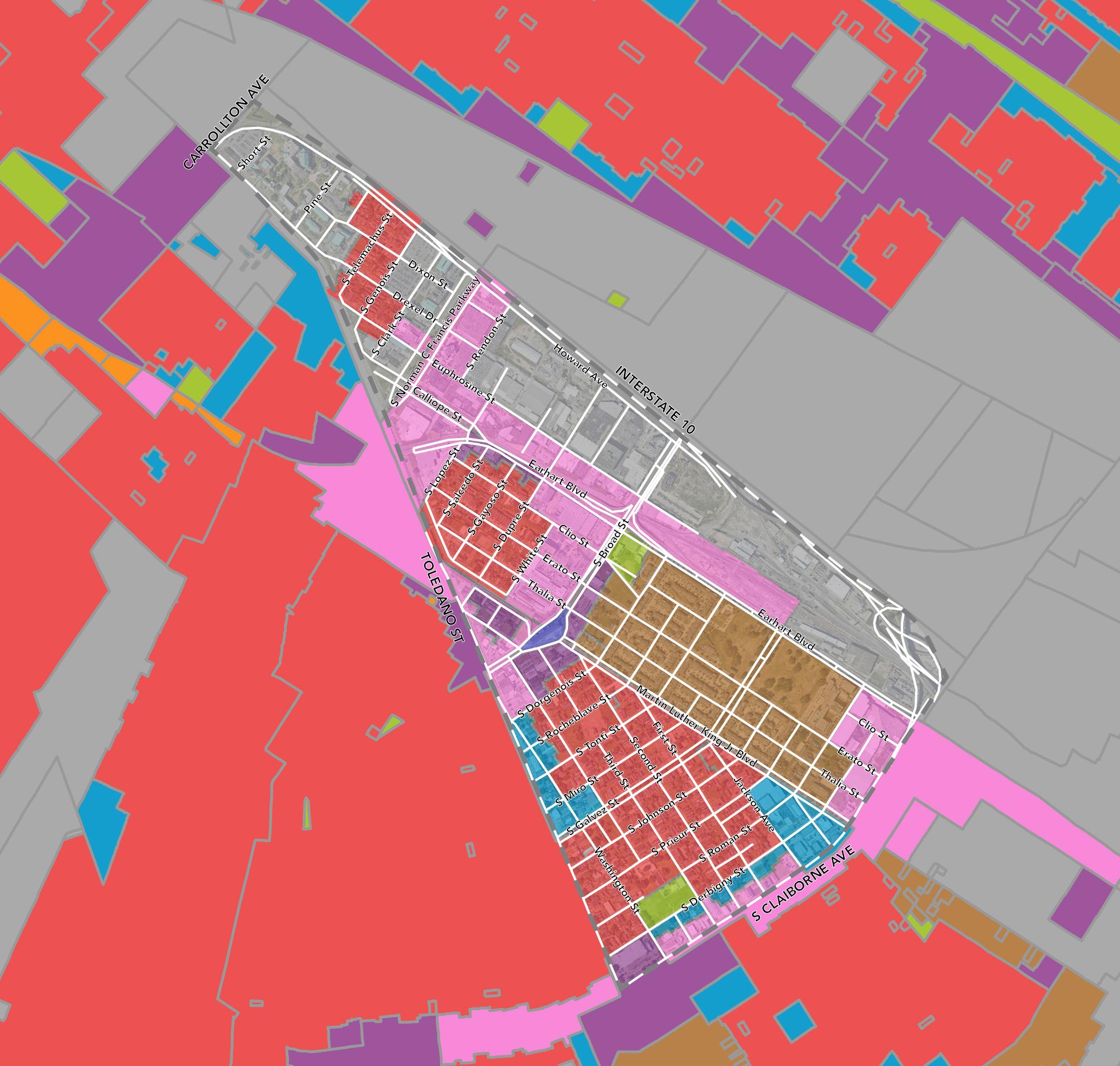
The map reflects the land uses in the Choice Cooper neighborhood that correspond to the long term vision, goals and policies expressed in the City of New Orleans Master Plan.
Choice Neighborhood Boundary
Residential Low Density Pre-War
Mixed-Use Low Density
Parkland and Open Space
Mixed-Use Medium Density
Neighborhood Commercial
Mixed-Use Historic Core
General Commercial
Residential Medium Density Pre-War
Residential Historic Core
Industrial
Other
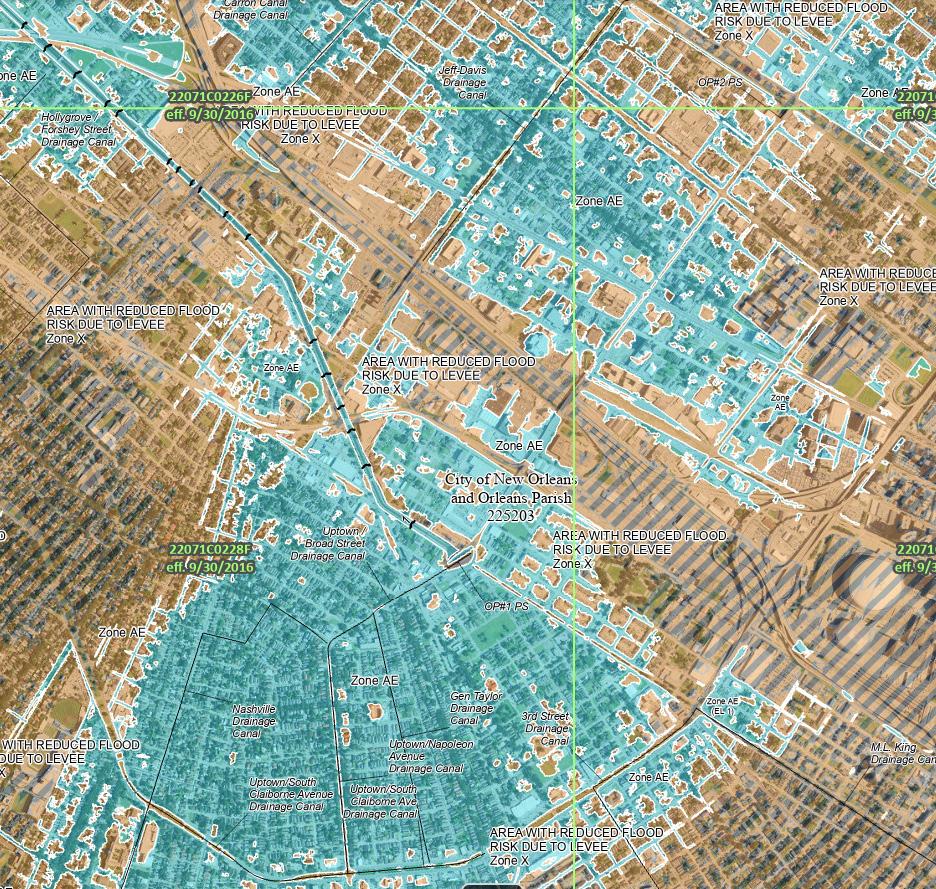
This map delineates the areas of the neighborhood that are within the floodplain. Some portions of the neighborhood are located in FEMA Flood Zone AE, meaning they have a 1% annual chance of flooding. The eastern boundary classified Zone X, meaning they have 0.2% annual chance of flooding. The area along Washington St. up to the Melpomene Pumping Station has reduced flood risk due to levee.
Choice Neighborhood Boundary
Zone AE - 100 Year Floodplain
Zone X - 500 Year Floodplain
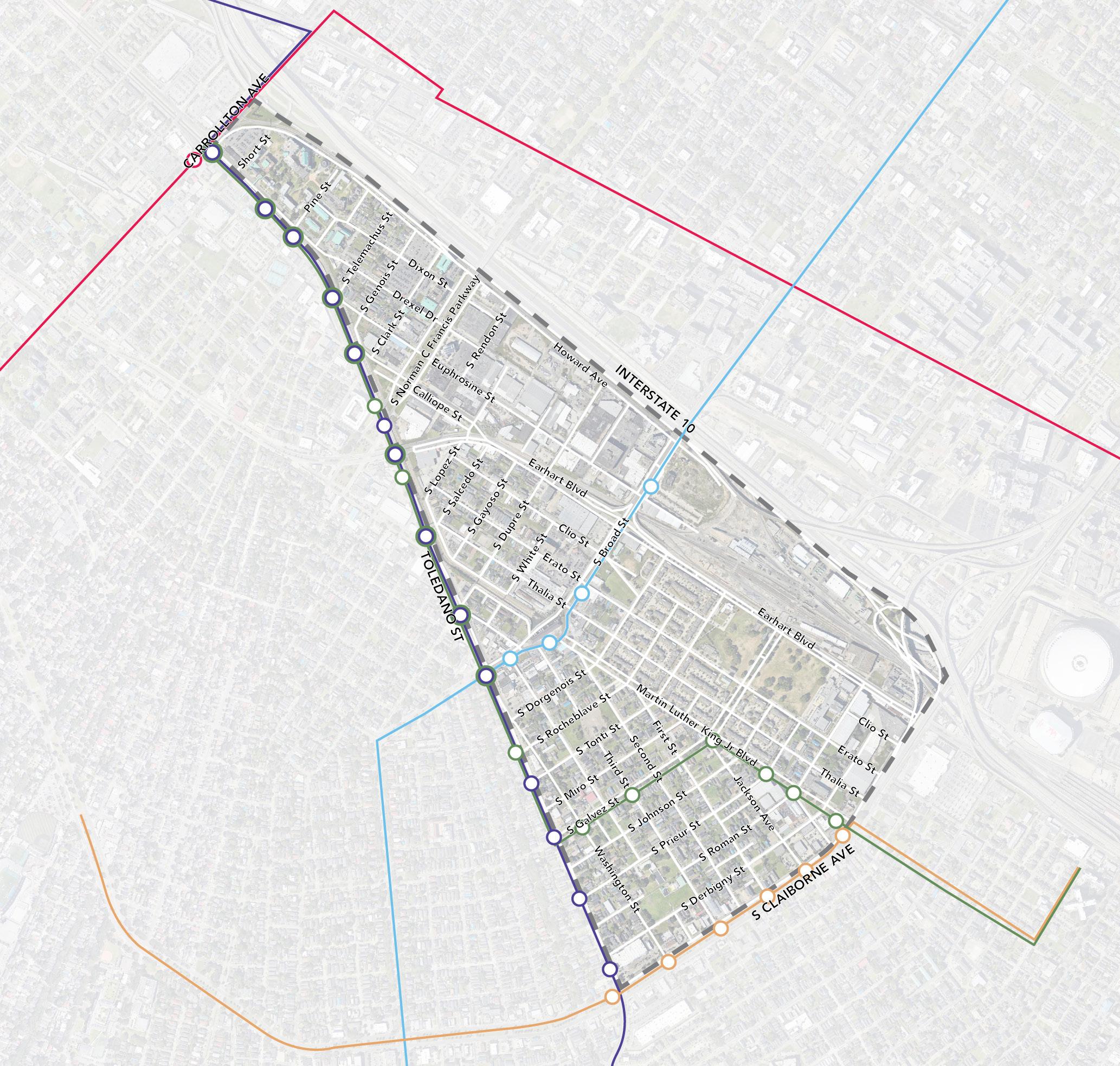
The Regional Transit Authority builds and operates regional transit service throughout Jefferson, Orleans and St. Bernard Parishes. The RTA system currently includes five streetcar lines, 30 bus routes, and two ferry routes, plus paratransit services. The RTA moves more than 19 million passengers throughout the system every year. Five routes run on the perimeter of the Choice Cooper neighborhood.
Choice Neighborhood Boundary
3 - Tulane - Elwood
9 - Broad - Napoleon
27 - Louisiana
51 - St. Bernard-Claiborne
52 - Paris - Broadmoor
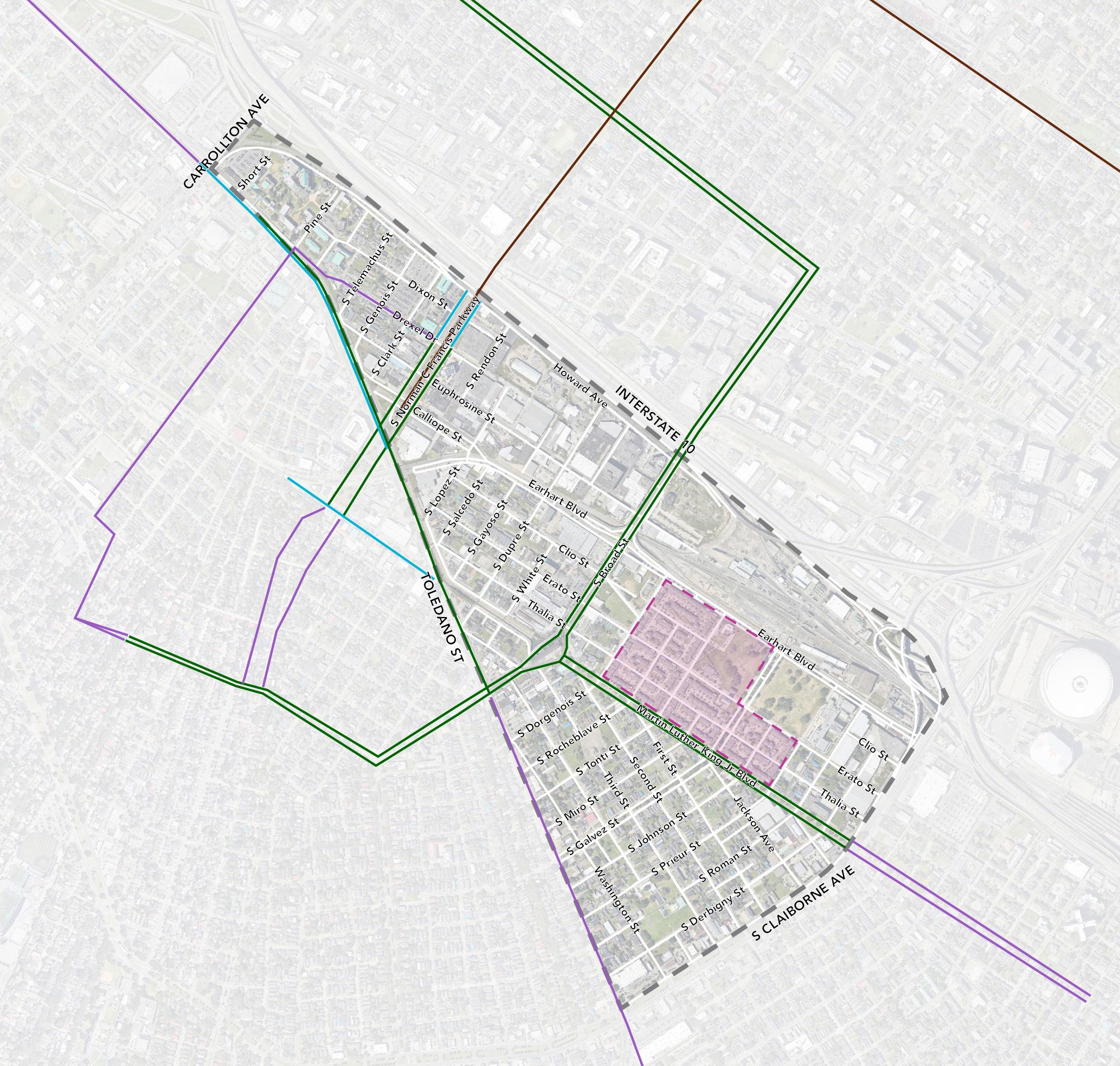
The Choice Cooper neighborhood includes a few bike lanes along Washington St, Broad St, and MLK Jr Blvd. The neighborhood also includes shared lanes near Xavier University.
Choice Neighborhood Boundary
Bike Lanes
Shared Lanes
Off-Street Trails/Access Points
Bicycle Connector Routes
Source: 2020 U.S. Census
The City of New Orleans has approximately 376,971 residents while the Choice Cooper Community has 4,990 according to the 2020 U.S. Census. African-Americans are 59.2% of the population in New Orleans but are 97.5% of the population in the Choice Cooper community. Only 40.5% of residents in the Choice Cooper community have completed high school or the equivalent, while 87.7% have done so in the City. In addition, the median income in the City of New Orleans is $43,258 and for the Choice Cooper residents the median income is only $15,582.
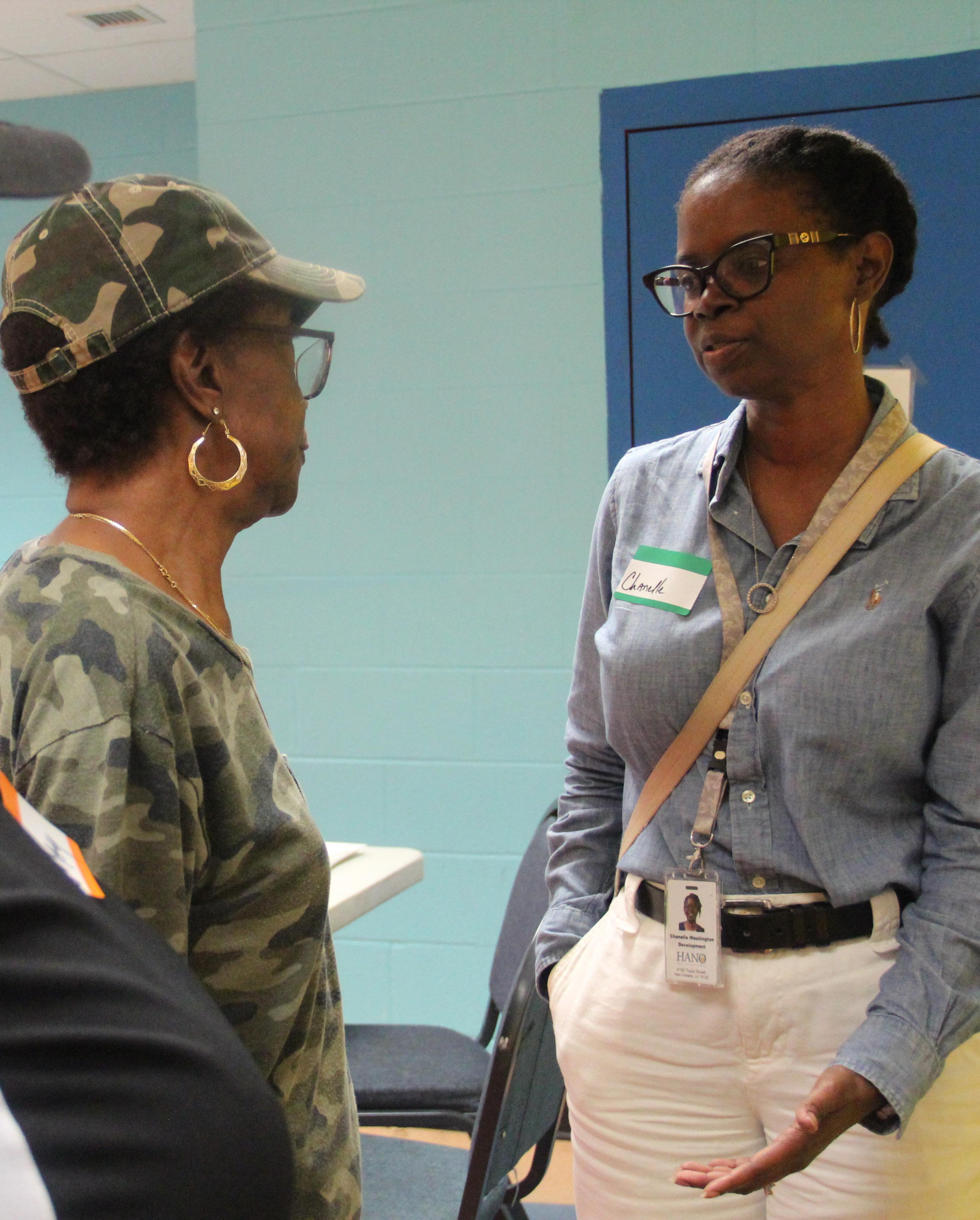
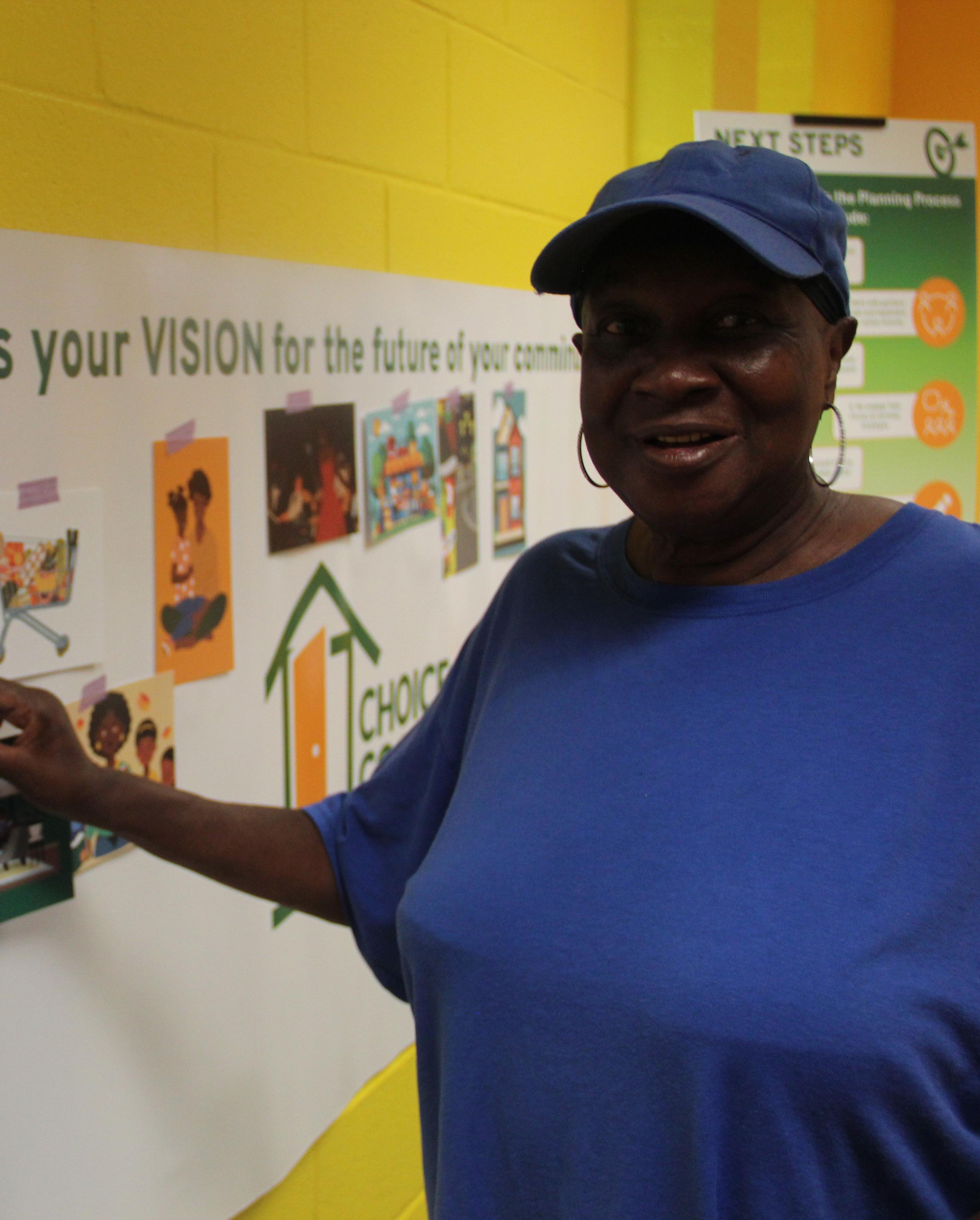
We strongly believe in resident empowerment, and have aimed to ensure that our team, our collaborators, and our actions represent the Choice Cooper Neighborhood. Community Ambassadors have been identified through this process and have become part of the Planning Team, assisting with engagement, early action projects, and decision making. The eight Community Ambassadors are former B.W. Cooper residents, current housing residents at Marrero Commons, or part of the surrounding neighborhood.
The Ambassadors are: Darlene Banks, Pearl Banks, Donna Johnigan, Irwin Jones, Susie Trosclair, Claudette Warren, Sequoia Warren, Terry Clay, Wanda Francois, Keith Bourne, Patricia Growe, Theophilus Mackey, Theophilus Moore, Deborah Jackson, and Denise Pierre
The Ambassadors have played a crucial role in increasing resident engagement, specifically increasing participation from four to over sixty residents throughout the Community Meetings. Community Ambassadors continue to lead and carry out initiatives and actions within their neighborhood to help to ensure that revitalization efforts fully benefit the local community.
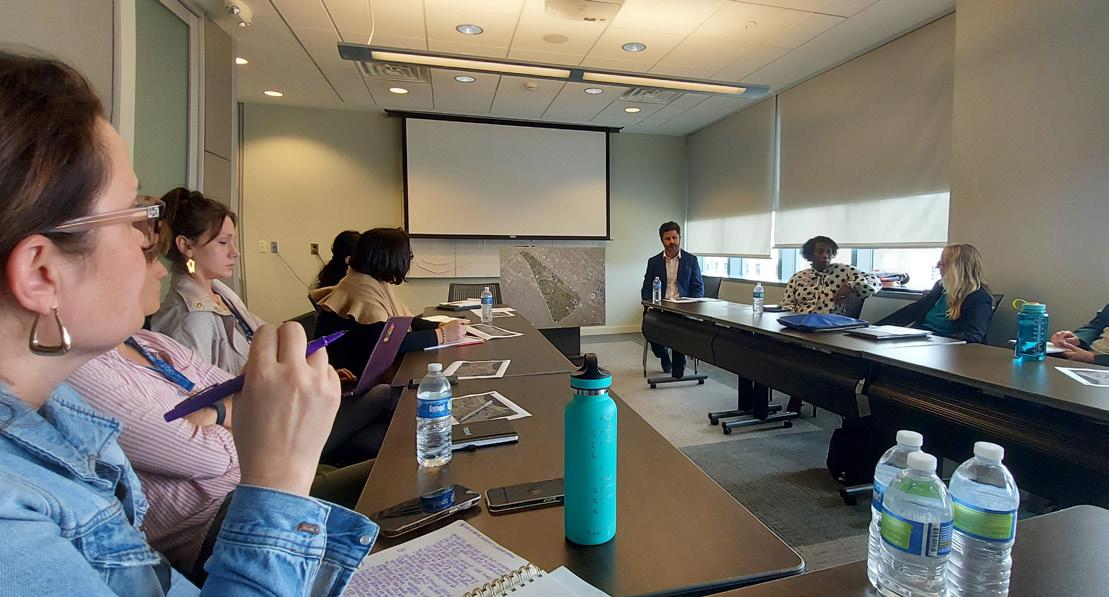
Key person interviews involved selected agencies and service providers, including Together New Orleans, Urban Impact New Orleans, Odyssey House of Louisiana, and more. These interview sessions were designed to gain local insights into the project area, its history, existing conditions, planned improvement initiatives and other topics to be addressed in the development of the Choice Cooper Neighborhood Transformation Plan, and to build local support for implementation. This phase helped establish the community context and provided the Planning Team with important information on the assets, issues and opportunities present in New Orleans.
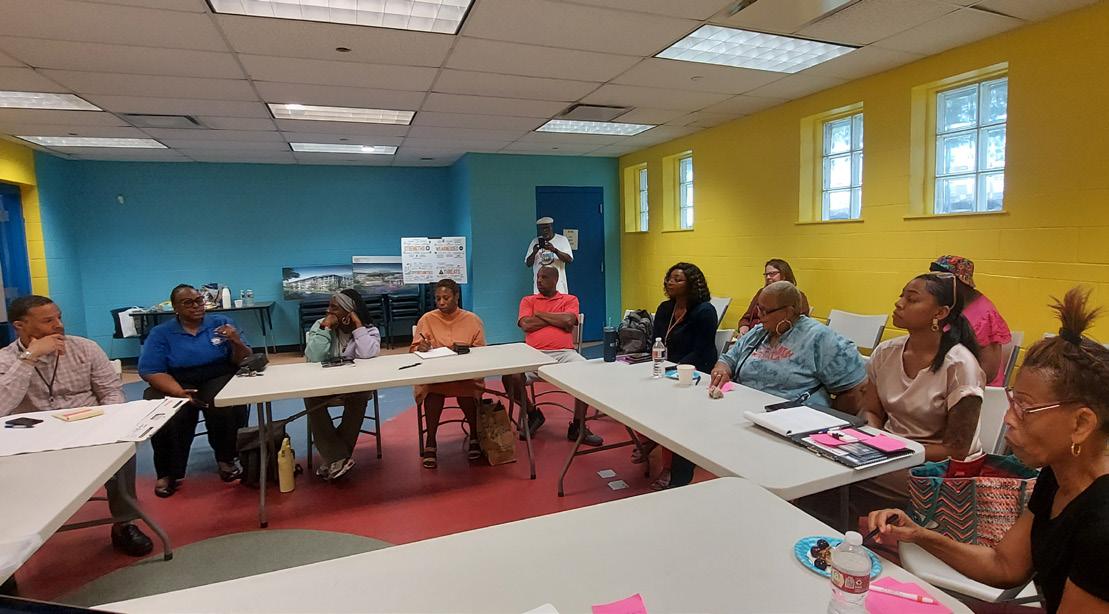
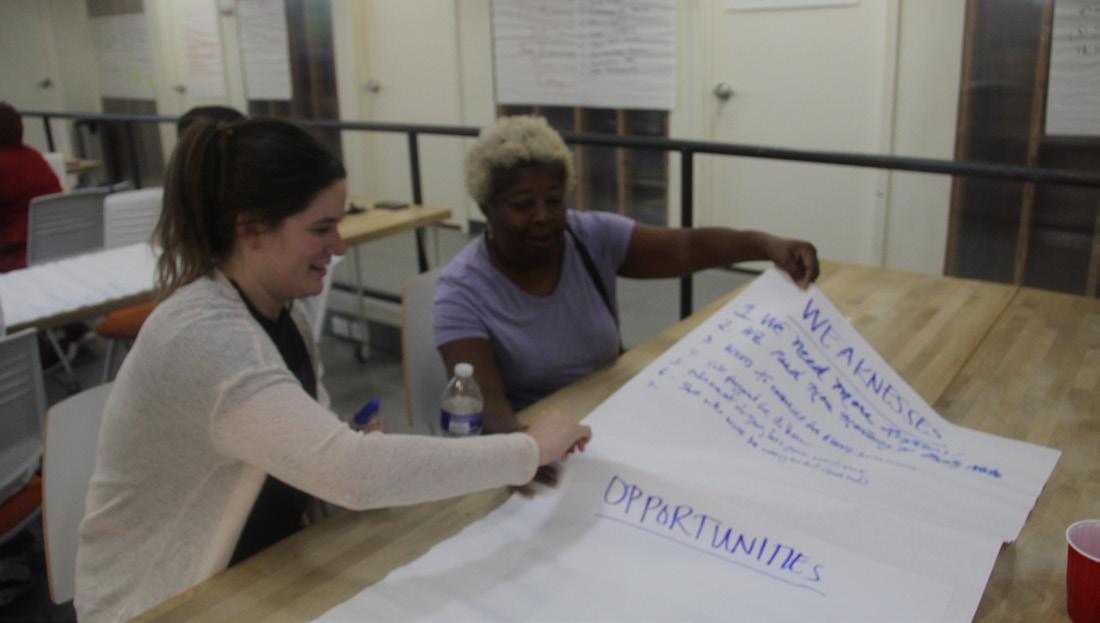
Working Groups were created to develop strategies that respond to the issues and challenges that have emerged from the initial community meetings and visioning workshops. Working Groups were created under the three pillars of the CN process: People, Housing, and Neighborhood. The Working Groups include key service providers with specific expertise who can help devise programmatic responses to address challenges and suggest appropriate goals for improving baseline conditions. Target housing residents and neighborhood leadership were invited to join the Working Groups to provide insights into what will work best within the neighborhood context and best meet residents’ needs.
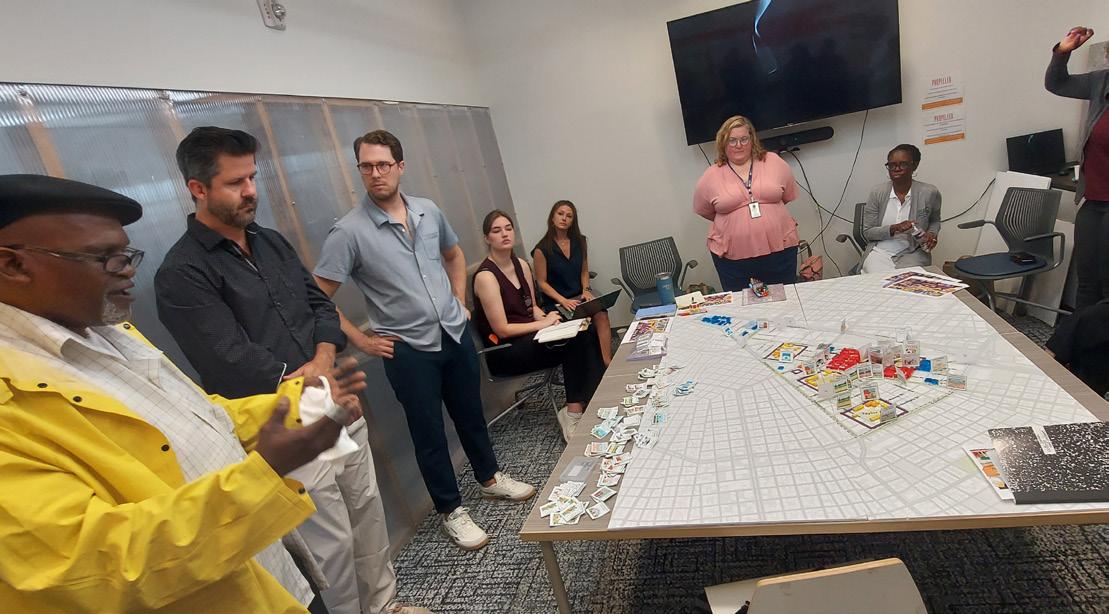
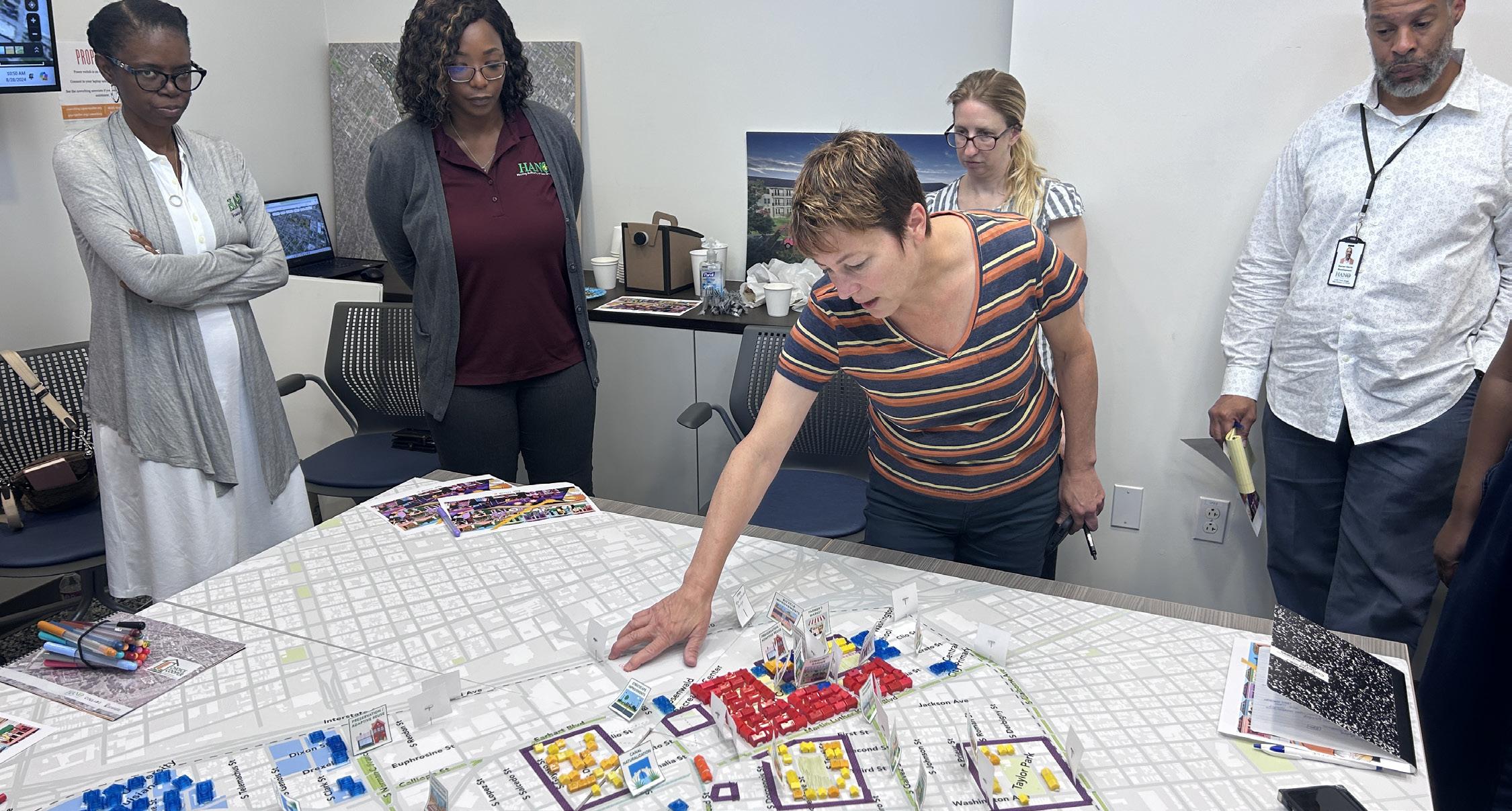
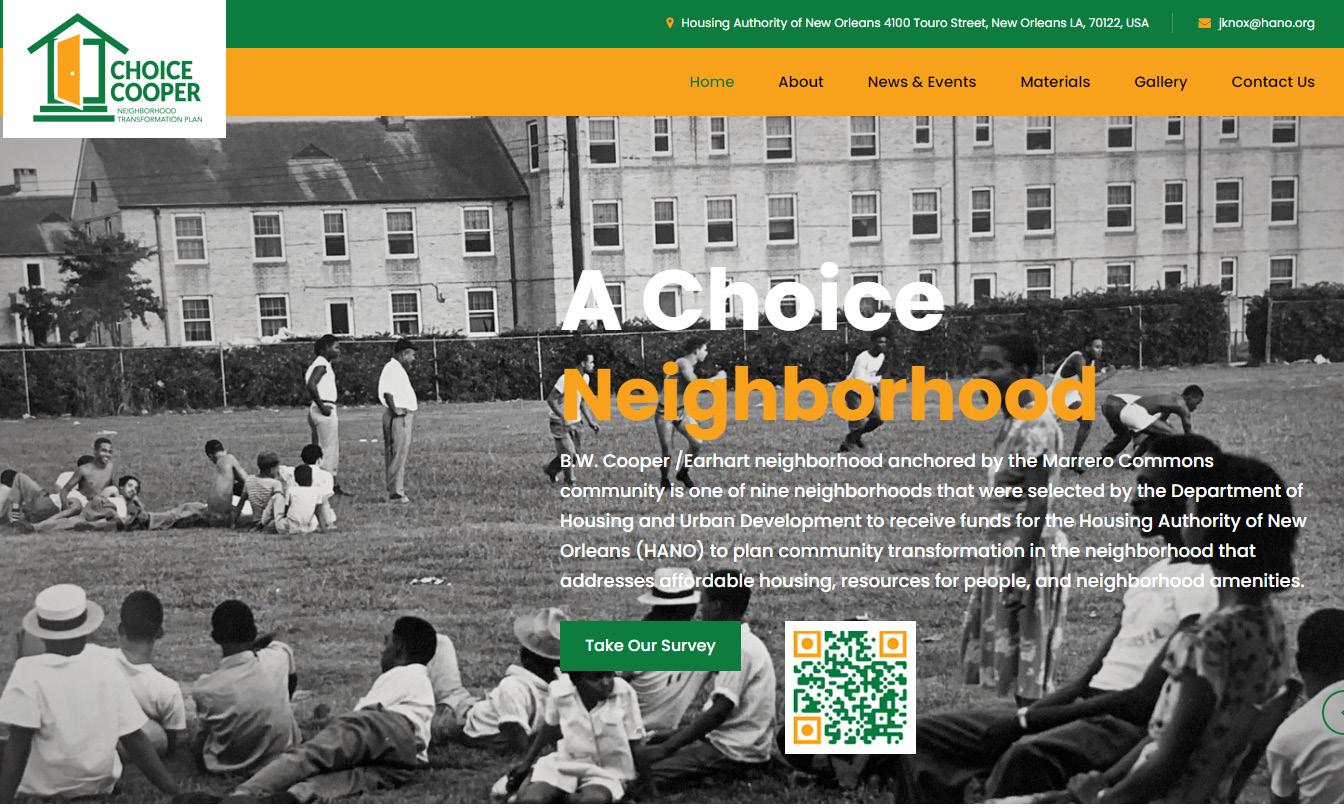
HANO and its strong group of partners have utilized unique and effective outreach techniques and activities, including online interactive tools, to keep residents engaged throughout the process. Multiple forms of communication have been utilized to reach HANO and neighborhood residents. A project website has been established (www. coopercommunity.org) to document the planning process and provide easy access to information. Flyers and notices are distributed prior to meetings through our Community Ambassadors. Word of mouth via the Community Ambassadors has been one of the most successful tools in getting residents to come out and participate. Engaging local neighborhood groups and organizations has also attracted participation from residents. Residents have been engaged at key points in the planning process as outlined in the timeline on a previous page.
TUESDAY, JANUARY 28
6PM - 8PM
PROVIDE YOUR FEEDBACK ON
LEARN MORE ABOUT THE ILLUMINATED
HANO began phase one with focus group interviews, including: Seniors, Business Community, Marrero Commons residents, Together Gert Town Neighborhood Association, City of New Orleans Public Works Department and Xavier University. The six focus groups were interviewed to determine specific needs as well as assets and opportunities.

Youth residents were invited to participate and give feedback in every meeting. Youth were able to participate in activities such as drawing pictures of their desired neighborhood or giving verbal feedback on needs and assets in their community. They were also able to present their ideas to adults and the Planning Team.
Community Meeting 1
Community Meeting 1 was held at Rosenwald Community Center on June 7, 2023. Due to weather conditions at the time of the meeting, it was not heavily attended. However, HANO was able to utilize the meeting to hold a focus group with members from the Together Gert Town Neighborhood Association. The group provided valuable insights including top needs of the community and information on additional outreach to residents.
Community Meeting 3
Community Meeting 3 was held on July 26, 2023 at Rosenwald Community Center. Over 60 residents and partners were in attendance. This meeting allowed for the creation of Task Force Groups. These groups were created to develop action items that respond to the needs and opportunities that were presented from the initial community and visioning meetings.
Community Meeting 2
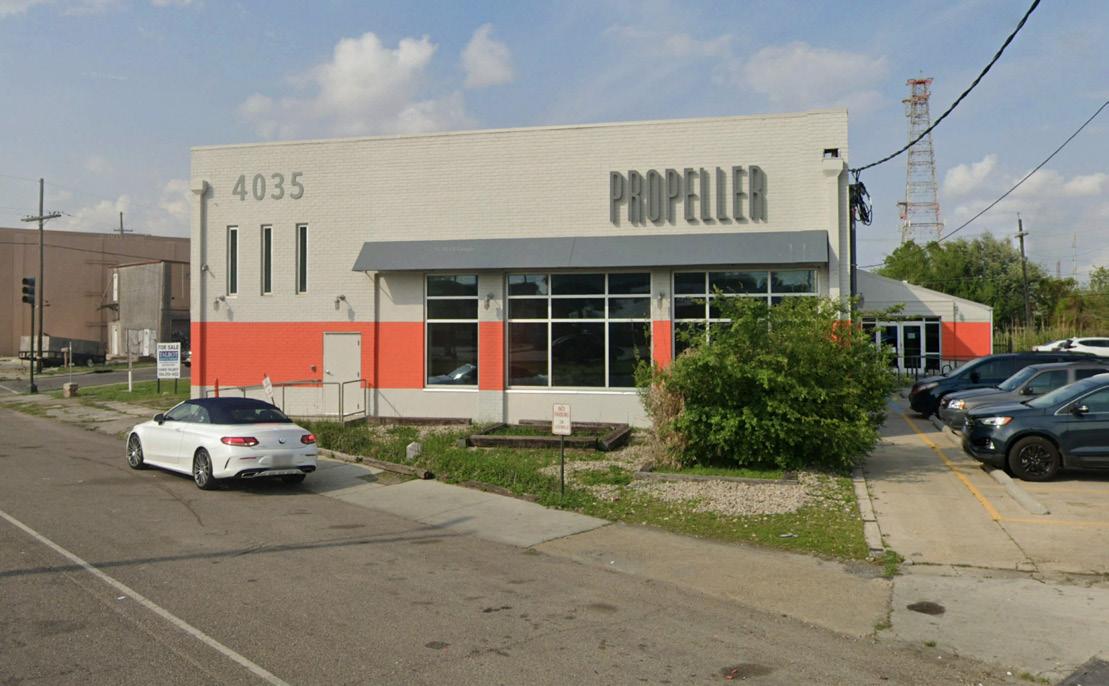
Community Meeting 2 was held on July 11, 2023 at Propeller. Identified as a neighborhood amenity, Propeller is a non profit organization that serves as a coworking space with programming that helps entrepreneurs and small business owners tackle social and environmental disparities. Propeller is located on Washington Avenue and Broad Street, both major commercial corridors. Over 50 local residents and partners gathered to learn about the Choice Neighborhood Initiative and how it relates to the Choice Cooper Neighborhood. Participants were able to interact with HANO and ask questions about the planning process, housing, Early Action Project and other topics. Participants were also engaged in an activity in which they identified strengths, weaknesses, opportunities, and threats in the neighborhood through a SWOT Analysis.
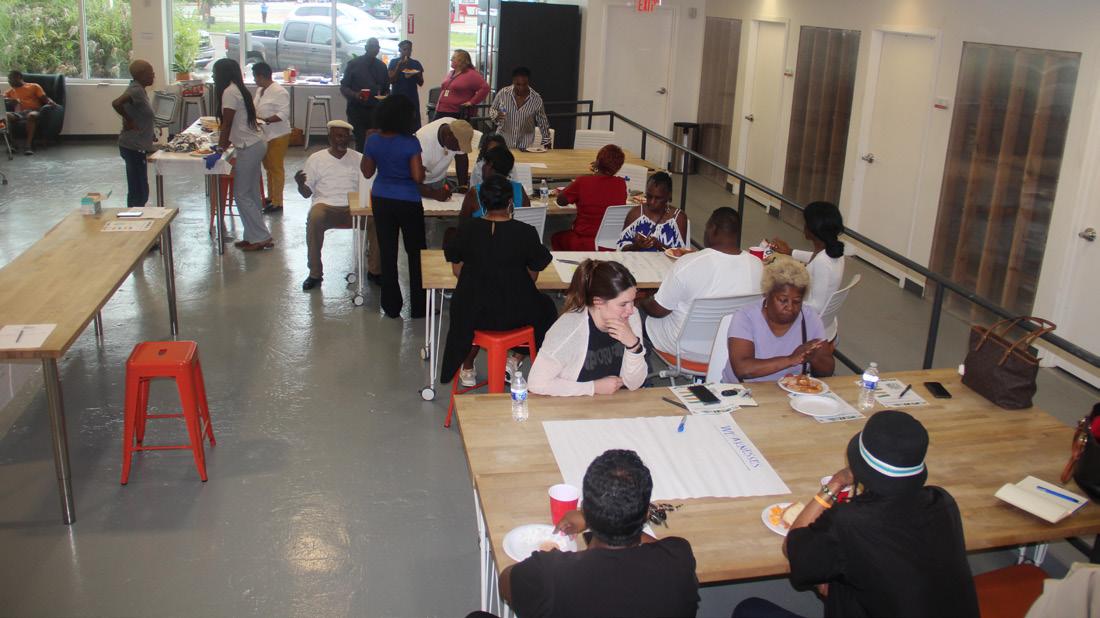
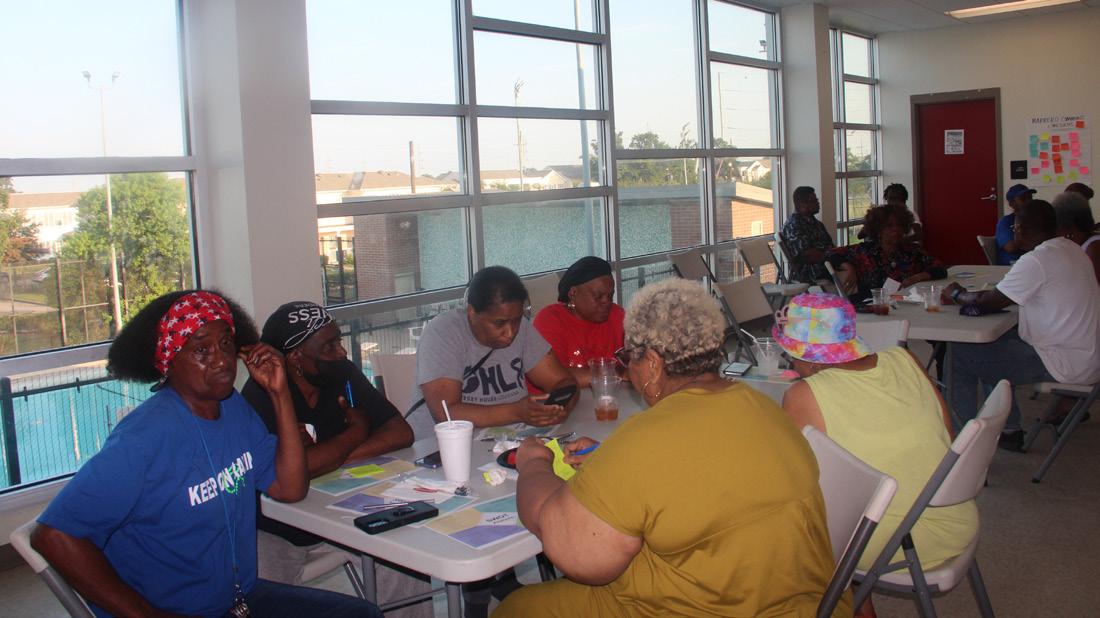
The People Task Force held a community meeting on August 23, 2023 at the Rosenwald Community Center. Participants were able to engage a new partner, Orleans Career Project (OCP), established by Delgado Community College Workforce Development, Judge Arthur Hunter, Jr (Ret), and Greater New Orleans, Inc. OCP aims at bringing real, generational change to New Orleans. Participants were able to sign up for key study areas including GED, gaming, health care, CDL licensing, maritime, and heavy equipment operations. They also received information about scholarships opportunities available through the programs.
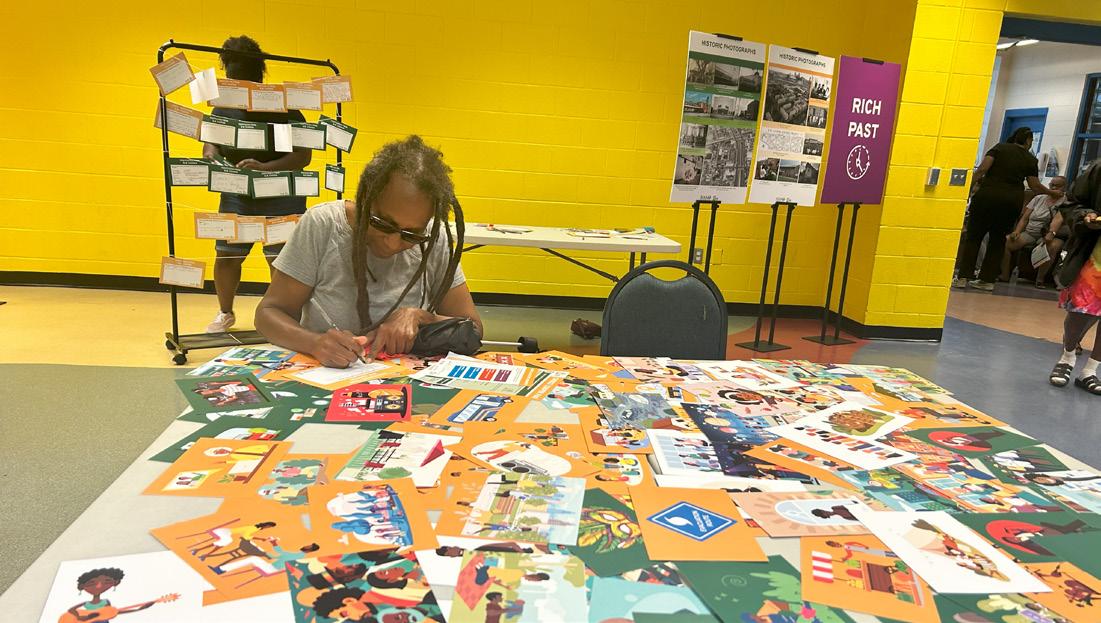
Community Meeting 5 was held at the Rosenwald Recreation Center on July 17, 2024. Around 30 residents gathered to participate in activities and discussions related to the Choice Cooper Neighborhood Transformation Plan, and to enjoy free food and raffle prizes. Four activity stations were set up for residents to engage the past, present, and future of the B.W. Cooper Neighborhood, as well as gather information on the Early Action Project. The four activity stations included:
• Past: Postcards from B.W. Cooper
• Present: Early Action Project
• Future: Mapping the Neighborhood
• Future: Visioning for the Future
HANO held its annual Mother’s Day (May 11, 2024) and Father’s Day (June 14, 2024) events at the Marrero Commons Clubhouse. The Planning team set up a Choice table at both events, providing residents with information about Choice as well as encouraging them to fill out the Resident Survey. The Team was able to interact with residents and provided flowers to the mothers celebrating this day.
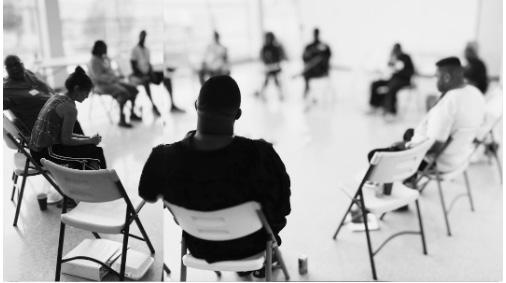
Following the events, residents were invited to participate in a Restorative Justice Circle conversation. These circles became a space for healing, storytelling, and resilience-building, revealing the profound history many residents have carried for generations. Residents were able to openly share their thoughts and feelings about the Choice Cooper Neighborhood as well as other topics.
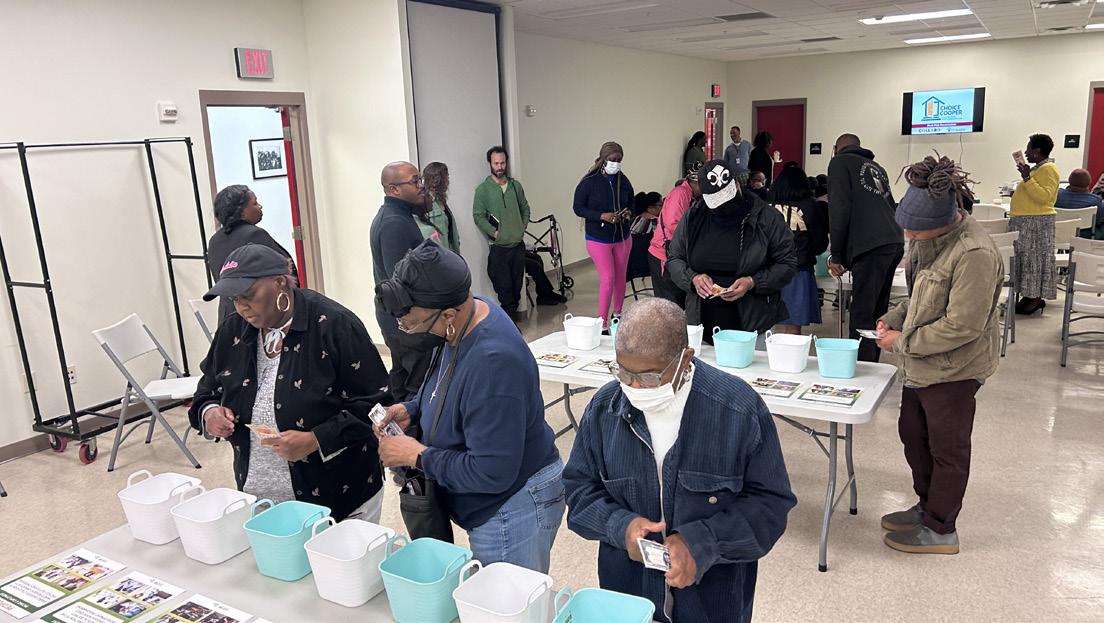
Community Meeting 6
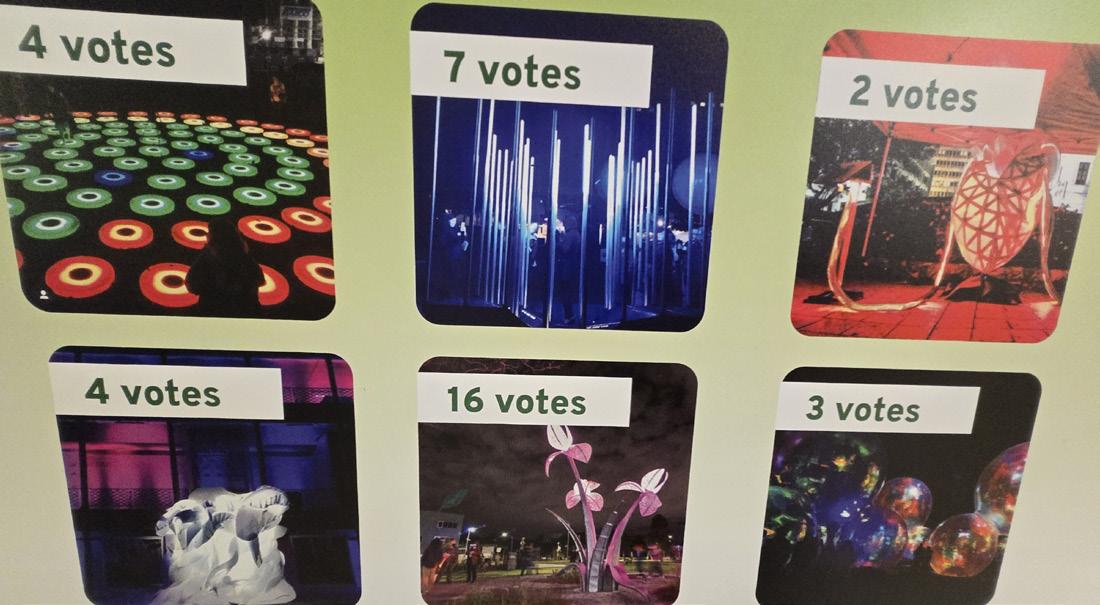
Community Meeting 6 was held at the Rosenwald Recreation Center of January 28, 2025 and attended by approximately 30 residents. The Meeting provided an opportunity for residents to learn about the Illuminated Art Project and share feedback on the Draft Plan. Attendees participated in small group discussions with selected artists, and were able to help guide the themes of the public art installations.
The 18 People (orange) and Neighborhood (green) projects on the chart below were identified by our Choice Neighborhood Working Groups for potential inclusion in the Plan.
Participants at the Community Meeting each spent $100,000 on projects that they thought were the highest priority for the community Participants spent a total of $2,717,000 on their favorite projects as shown below. This prioritization has helped to provide structure for the Transformation Plan.
PRIORITY PROJECTS
The 18 People (orange) Neighborhood (green) chart were identified by Neighborhood Working potential inclusion in the Participants at the Community Meeting each spent $100,000 projects that they thought highest priority for the community. Participants spent a total on their favorite projects.
The Restorative Justice Circle process, inspired by Indigenous practices and facilitated by Pamela Purdie and CORH Counseling, was essential in breaking down barriers and building trust with the community. It created a safe space where residents could come together, share openly, and reconnect with one another. For many, this was the first time they felt truly heard and respected in a long time.
A key part of the process was the introduction of a talking piece—a symbol of respect and active listening. The talking piece ensured that every resident had the opportunity to speak without interruption and to be heard without judgment. For many participants, this experience of being listened to—of having their voice matter—was transformative. We shared stories that were both heartbreaking and uplifting. We laughed, we cried, and we allowed space for both grief and hope. The talking piece became a powerful symbol of trust and empowerment as residents opened up about their experiences. This simple yet profound practice helped foster deep connections among circle members.
The circles provided a space where residents could share their pain and loss, particularly in the wake of Hurricane Katrina. Most of the brick buildings in the former B.W. Cooper property was demolished, despite protests from residents who had not been able to return after the storm. Many spoke of the devastation the storm caused—homes destroyed, families displaced, and the overwhelming struggle of rebuilding. For some, the grief was still fresh,
nearly two decades later.
But the circle wasn’t just a space for grief; it was also a place for hope. As residents shared their stories, they also shared their visions for the future. We laughed together, finding moments of joy and inspiration. By the end of the circle, many residents expressed how glad they were they came and also spoke about the hope they had for their community moving forward. This sense of solidarity strengthened the bonds between residents, fostering a deeper connection and trust.
• Strengthening Trust and Engagement: Restorative Justice Circles create safe spaces where residents feel heard and respected. By fostering mutual respect and transparency, housing authorities can build stronger community relationships.
• Trauma-Informed Practices: Restorative Justice Circles offer a trauma-informed approach to healing, addressing emotional and historical scars that often go unrecognized in revitalization efforts.
• Elevating Resident Leadership: By training residents as facilitators, housing authorities can elevate local leadership and empower communities to take ownership of their own futures.
• Combating Isolation and Supporting Vulnerable Populations: Restorative Justice Circles can reconnect isolated groups, such as seniors and formerly incarcerated individuals, ensuring that no one is left behind during revitalization efforts.
• Valuing History and Culture: Understanding and valuing a community’s history is essential for meaningful, future-focused planning. Restorative Justice Circles offer a way to honor the past while building a thriving future.
The Resident Needs Assessment Survey was completed in Fall 2024 as part of the Choice Cooper Neighborhood Transformatin Plan. The survey was conducted at the Housing Authority of New Orleans (HANO) Marrero Commons property and the larger B.W. Cooper Neighborhood. A total of 57 surveys were collected.
Data collected through this survey will be utilized to create the Choice Cooper Neighborhood Transformation Plan, and shared with other partners to implement programs that will support the needs of residents. We recognize the Community Ambassadors and HANO for their assistance with this effort, as well as all the residents who took time to complete the Survey.
IF THE B.W. COOPER VACANT LOTS WERE REDEVELOPED, RESIDENTS WOULD LIKE TO SEE THE FOLLOWING PHYSICAL IMPROVEMENTS:
1 1 2
3 LIGHTING IMPROVEMENTS
RESIDENTS WOULD LIKE TO SEE THE B.W. COOPER VACANT LOTS REDEVELOPED AS THE FOLLOWING:
FOOTBALL FIELD FOR BOOKER T. WASHINGTON
4 MORE COMMUNITY / SHARED SPACE
23%
Would like to live in a new unit at the previous B.W. Cooper site
19% Need a new unit with physical accessibility in the redeveloped site
TOP STRENGTHS OF THE NEIGHBORHOOD:
1 1 2 3
HOUSING AFFORDABILITY
ACCESS TO PUBLIC TRANSPORTATION LOCATION
4 ACCESS TO HOSPITALS / MEDICAL CARE
TOP THINGS RESIDENTS DO NOT LIKE ABOUT THE NEIGHBORHOOD:
1 1
CRIME / VIOLENCE
2
POOR STREET LIGHTING / LAYOUT
AMENITIES MOST NEEDED IN THE NEIGHBORHOOD:
1 1 2
GROCERY STORE / SUPERMARKET FARMER’S MARKET
3
URGENT CARE / MEDICAL SERVICES
3
LACK OF NEIGHBORHOOD SERVICES
4 PHARMACY / DRUG STORE
AMENITIES RESIDENTS WOULD LIKE TO HAVE
1 2
REGULATION SIZE COURT / FIELD
3
PICNIC / BBQ AREA WALKING / RUNNING PATH
RESIDENTS GET FOOD FOR THEIR HOUSEHOLDS FROM THE FOLLOWING:
1 2
FOOD BANK GROCERY STORE
CORNER
3
RESIDENTS NEED ASSISTANCE WITH THE FOLLOWING SERVICES: HOMEOWNERSHIP COUNSELING
1 MENTAL HEALTH COUNSELING
2 NUTRITION / HEALTHY COOKING CLASS
3 HEALTH, WELLNESS, & PHYSICAL FITNESS
4
ACCESS
REASONS RESIDENTS DO NOT UTILIZE THE SERVICES AVAILABLE IN THE COMMUNITY: I DON’T KNOW ABOUT THE SERVICES
1 IT TAKES TOO LONG TO GET SERVICES
2 SERVICES I NEED ARE NOT AVAILABLE
3
16% Live in a household with children aged 0-5 years
RESIDENTS WITH KIDS HAVE THE FOLLOWING CHILD CARE ARRANGEMENTS:
1 ATTENDS A HEAD START PROGRAM
ATTENDS ORLEANS PARISH PUBLIC SCHOOLS
2 ATTENDS AN EARLY HEAD START PROGRAM
3
40% Feel that their kids are very safe on the bus 52% Feel that their kids are very safe at school
4 RECEIVES CARE AT HOME FROM SELF
5
CHILDCARE IN A PROFESSIONAL CENTER
33%
Live in a household with children aged 18 and under
38% Feel that their kids are somewhat safe walking to and from the bus stop
YOUTH PROGRAMS SOME SCHOOL-AGED CHILDREN CURRENTLY PARTICIPATE IN:
1 1 2
3 AFTER SCHOOL PROGRAM ROSENWALD / NORD CENTER ARTS / PERFORMING ARTS / MUSIC
REASONS SOME SCHOOL-AGED CHILDREN DON’T PARTICIPATE IN OUT OF SCHOOL ACTIVITIES:
1 NO PROGRAMS AVAILABLE
2
DON’T KNOW WHAT PROGRAMS ARE AVAILABLE
3
PROGRAM HOURS DON’T WORK WITH SCHEDULE
PROGRAMS SCHOOL-AGED CHILDREN WOULD PARTICIPATE IN THE FUTURE:
1 AFTER SCHOOL PROGRAMS
4 TUTORING / ACADEMIC SUPPORT ROSENWALD / NORD CENTER
2 SUMMER PROGRAM
3 MENTORING PROGRAM
4
50% Of head of household consider themselves in good health
43% Consider children in the household to be in good health
THE TOP REPORTED HEALTH CONDITION IS HIGH BLOOD PRESSURE OR HYPERTENSION
1
94% Head of household have health insurance
76% Of children in the household have health insurance
RESIDENTS GO TO THE FOLLOWING PLACES FOR HEALTH CARE NEEDS: PRIMARY CARE DOCTOR
1 HOSPITAL EMERGENCY ROOM
2 URGENT CARE
3 50%
Rate their health care service as good
3 20%
74% Of residents do not have a special need
THE FOLLOWING SERVICES WOULD BEST ASSIST RESIDENTS WITH ANY TYPE OF DISABILITY: IN-HOME HEALTH ASSISTANCE
1 BETTER TRANSPORTATION OPTIONS
2 HOME VISITS FROM A SOCIAL WORKER
3 36% Of children engage in phyiscal activity 3-4 days / week 37% Of
CHALLENGES THAT KEEP RESIDENTS FROM BEING PHYSICALLY ACTVE: DON’T HAVE TIME
1 THERE IS NOWHERE TO WALK / EXERCISE
2 NEIGHBORHOOD IS NOT SAFE
REASONS RESIDENTS DON’T EAT FRUITS OR VEGETABLES:
COST OF FRUITS AND VEGETABLES
1 FRUITS / VEGETABLES IN LOCAL STORES ARE
3
2 NOT AVAILABLE IN LOCAL STORES
SAFETY ISSUES RESIDENTS HAVE EXPERIENCED IN THE NEIGHBORHOOD:
1 1 2
3
CAR BREAK-INS GUN SHOTS THEFT
TOP IMPROVEMENTS RESIDENTS FEEL WOULD MAKE THE COMMUNITY SAFER:
1 BETTER AND/OR MORE STREET LIGHTING
BETTER SECURITY SYSTEMS
2 BLIGHT & VACANT LOT REMEDY
3 YOUTH VIOLENCE PREVENTION PROGRAM
4
4 VANDALISM
41% Are somewhat likely to allow their children to play outside in the neighborhood
51% Feel very safe inside their apartment
39% Feel somewhat safe walking to and from the bus stop
33% Of residents say that crime
37% Feel somewhat safe walking in between units and buildings
40% Feel somewhat safe in the parking lot
33% Of residents say that crime frecuently occurs in the neighborhood
77%
Do view the police as someone to call when they need assistance
36%
Do view the police as a possible threat to their own safety
36%
Don’t view the police as a possible threat to their own safety
73% Feel safe providing information and evidence to the police
64% Have not experienced what is considered to be an unprovoked threat frmo the police
57%
Have not been assisted by the police
43% Have not experienced police brutality
The Housing Element centers on ensuring the ongoing maintenance and sustainability of Marrero Commons while identifying opportunities for the creation of new mixedincome rental, transitional, and for-sale housing for both current and future community residents.
The Planning Team developed criteria for potential locations, evaluated available land within the Choice neighborhood community, and integrated larger city-wide strategies for redevelopment as outlined in recent planning documents. The result of these analyses is a Housing Element that identifies four locations whose transformation can be implemented through strategic partnerships and investments.
Through this approach, the Housing Element seeks to promote development that is a good use of available resources, and that can have a catalytic effect on their surrounding areas. The overall goal is to locate new housing in areas of opportunity to help improve the lives of residents.
The Housing Element is organized around four key strategies as outlined below
• Maintenance and Sustainability of Marrero Commons
• HANO Senior Housing Development
• HANO HQ, mixed-income housing, and sports field
• HANO / Odyssey House Transitional Housing
The Market Analysis was conducted to support decision-making for the Choice Cooper Neighborhood Transformation Plan. The Analysis evaluated development potential based on market demand and pricing, along with recommendations based on HUD Choice Neighborhoods goals (socioeconomic diversity, catalytic development, neighborhood transformation, affordable housing in all forms). The Analysis also provided guidance on physical improvements in the neighborhood in partnership with the City and key partners to revitalize the neighborhood, improve outcomes for HUD-assisted residents, and spark private development.
• The Choice Cooper Neighborhood is centrally and strategically located, within walking distance to the Medical District and approximately one mile from the Central Business District and the French Quarter. Within a 30-minute walk of the target housing site there are more than 43,000 jobs.
• Walkability and public transportation are important to neighborhood residents since 43% of households do not own a car. Among employed residents, 12% walked to their jobs (six times higher than national average) and another 12% took the bus (three times higher than national average). Most employed residents work in the services industry or retail.
• The neighborhood median income is low ($23,000 per year) but one in four households earns above $50,000 per year. The existing income diversity in the target neighborhood implies
The Market Analysis for the BChoice Cooper Neighborhood assesses market feasibility for new residential and retail development and recommends potential strategies based on market potential and the objectives of the HUD Choice Neighborhoods Program. The data used to estimate market potential includes ESRI Business Analyst, MLS and other realty trade groups, and publicly available data from the Census, HUD, and the FFIEC. The estimates use industry standard methods, with growth projections and income distribution based on historical trends.
mixed income development is feasible at an earlier stage of redevelopment (i.e. revitalization efforts do not have to “build up” the neighborhood to attract moderate or middle income households).
• Most of the neighborhood’s households (>80%) are renters living in smaller structures (one to four unit structures). The neighborhood’s high density encourages walkability, favorable for neighborhood retail and services, and infill development of smaller multi-family structures. There is also significant potential to increase homeownership opportunities in the target neighborhood.
• The neighborhood is surrounded by higher priced neighborhoods with significantly higher rents and home prices and yet remains distressed with deflated property values and high vacancy.
• Between 2021 and 2023, 36 homes were sold in the target neighborhood, with an average sale price of $218,000 or $154 per square foot. This is affordable to a household earning approximately $65,000 per year (or 95% of AMI for a two-person household in 2024). Of these sales, 17 were new construction, which sold at an average price of $272,000 or $176 per square foot. This is affordable to a household earning approximately $83,000 per year (or 120% of AMI for a two-person household in 2024).
• Based on a survey of roughly 3,600 rental units within multi-family developments, average rents range from $1.54 to $2.42 per square foot.
• According to ESRI forecasts, the population within the primary market area is expected to increase slowly (~0.3% annually) but there is an anticipated shift in demographics, with a significant decrease in very low income households and an increase in higher income households. As a result, demand for lower-priced rental units stems from turnover of existing residents (a New Orleans renter moving out of one unit and into another unit) as opposed to new households moving into the city.
• Between 2025 and 2032, the forecasted demand for rental units in the target neighborhood is between 1,043 and 1,384 units, with roughly half affordable to households earning less than 60% of AMI.
• Based on a survey of 30 small-scale rentals (single-family homes, doubles, triplexes and fourplexes) within the target neighborhood, rents per square foot range between $1.24 and $1.83 per square foot, with a median price of $1.46 per square foot.
• Rental occupancy rates in central New Orleans have declined since 2022, when there was a severe shortage of rental housing (vacancy rates at that time were 2%). The occupancy rate in Q1 2024 is now an estimated 94.5%, indicating rental housing remains in high demand in central New Orleans.
• Demand for homes for sale will be fueled by new residents and existing renters shifting into the homeownership market. Between 2025 and 2032, the forecasted demand for new homes for sale in the target neighborhood is between 223 and 887 homes. In consideration of the target neighborhood’s central location and shortage of affordable homeownership opportunities within central New Orleans, this estimate is conservative.
Table 1: Estimated Demand for New Rental Units and Homes for Purchase in the Target
– Moderate Growth Scenario
Table 2: Estimated Demand for New Rental Units and Homes for Purchase in the
Source: Atria Planning using data provided by ESRI, HUD, MLS, FFIEC, and American Community Survey
A mixed-income housing development, such as Marrero Commons, consists of housing units with differing levels of affordability, often with some market-rate housing along with units that are available to low-income occupants below market rate. The “mix” of affordable and market-rate units that comprise mixedincome developments differs from community to community, and can depend on location, the local housing market, and the marketability of the units themselves.
Federal, state, and local governments employ a wide variety of methods to support the development of mixed-income housing. Public housing authorities and their housing partners often design approaches that take maximum advantage of many established government incentive programs. This effort, and have worked to foster a seamless and inclusive collaboration with local leaders and those currently working in the neighborhood to develop strategies and solutions that are driven through community ownership.
Mixed-income housing improves education. The educational benefits of mixed- Income housing affect all income classes. Experience shows that the socioeconomic status of a school’s pupil population is the primary factor related to academic performance. Both academic performance and life opportunities of low-income students improve significantly when they are surrounded by middle-class classmates. Studies further confirm that the academic performance of middle-class students is not adversely affected by having modest proportions of low-income classmates. Mixed-income neighborhoods produce mixedincome neighborhood schools, and everybody wins.
Mixed-income housing is good for neighborhood stability. Mixed-income housing contributes to the long-term sustainability of affordable housing. In order to attract and retain occupants willing to pay affordable and market rates for housing, the design and construction of all the housing units in the development (including the below marketrate units) typically are higher quality than traditionally-developed public housing. In addition, the communities tend to be more stable than many of the communities that support exclusively low-income housing. These are direct benefits to low- and very low-income occupants.
Mixed-income housing is a safe investment. The objection to mixed-income housing that is most often expressed is the fear that mixedincome housing will adversely affect the market value of nearby homes. However, mixedincome developments usually contain only a limited percentage of subsidized housing, and home builders have shown remarkable ingenuity in producing affordable housing that is architecturally compatible with neighboring market-rate homes, thereby preserving and improving the character and marketability of the neighborhood.
DrexelDr
Marrero Commons
Opportunity Areas
Choice Neighborhood Boundary
Parkway SWhiteSt SGayosoSt
EarhartBlvd
SBroadSt
SPrieurSt SGalvezSt
Our ongoing interactions with the residents have brought several critical issues to light, which are significantly impacting their quality of life for existing Marrero Commons residents. The residents are understandably preoccupied with the immediate and pressing concerns about their living conditions, which makes it more difficult to ensure that the long-range Choice Cooper Neighborhood Transformation Plan has their full backing and support. In response, a new Asset Management Director has been selected to address the following resident complaints and a new Exectuive Director is being sought. Primary concerns include the following and should be addressed in the short-term through collaboration between HANO staff, McCormack Baron Salazar (property management), and Urban Strategies (program management).
There is a backlog of maintenance requests from residents that remain unaddressed. This backlog is causing considerable distress among the community members and is a significant barrier to their well-being.
It has been noted that public housing residents are being provided with used appliances, whereas other residents receive new ones. This practice is perceived as discriminatory and is fostering a sense of inequity within the community.
Numerous reports have been made regarding unprofessional behavior by the management staff towards residents. This includes dismissive attitudes and a lack of responsiveness to resident concerns, which undermines trust and cooperation.
The management’s approach to addressing resident issues often appears punitive rather than supportive. This includes threats of eviction and other penalties, which exacerbate the residents’ sense of vulnerability and insecurity.
There is an urgent need to address the barriers that formerly incarcerated men in the community face in accessing housing, jobs, and resources for self-determination. Addressing these barriers can help in their successful reintegration into the community.
The interior state of many units in Marrero Commons is substandard, with issues such as poor maintenance, inadequate repairs, and general neglect. These conditions are unacceptable and contribute to an overall decline in resident morale.
Residents report that they are not able to access the clubhouse and do not feel welcome to utilize their amenities. This issue needs to be addressed to ensure that all residents can benefit from community facilities.
Residents have requested to receive restorative justice training to help better engage with management, staff, and other residents. This training can foster a more harmonious community environment and improve interactions.
Addressing these concerns promptly will not only improve the residents’ quality of life but also enable us to refocus our efforts on creating a positive and sustainable vision for Marrero Commons. To achieve this, the following actions are recommended:
Immediate Addressing of Maintenance Requests
Implement a plan to expedite the resolution of the outstanding maintenance requests.
Equitable
Ensure all residents, regardless of their housing status, receive equal treatment in terms of amenities and appliances.
Conduct mandatory training for management staff to improve their interactions with residents and ensure they are responsive, respectful, and trauma-informed.
Supportive Policies
Develop and enforce policies that support rather than penalize residents when they raise legitimate concerns.
Housing Resources for Formerly Incarcerated Men
Provide a comprehensive list of accessible housing resources for men with records and work to remove barriers to their selfdetermination.
Conduct thorough inspections of all units and prioritize necessary repairs to bring them up to acceptable living standards.
Access to Amenities
Ensure that all residents have access to the clubhouse and feel welcome to utilize the community amenities.
Implement restorative justice training programs for residents to foster better engagement and communication within the community.
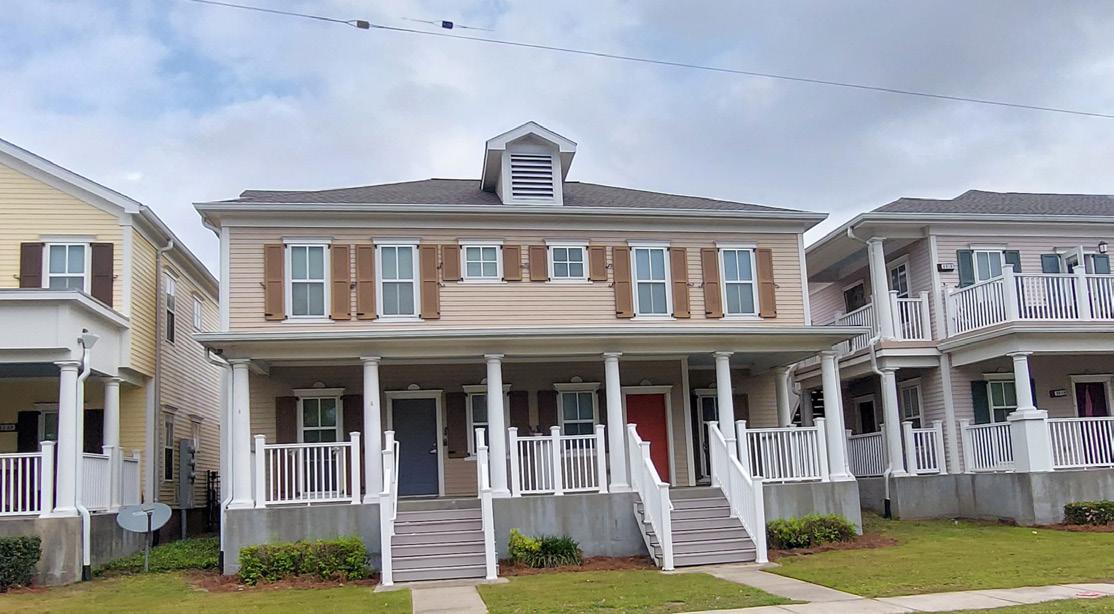
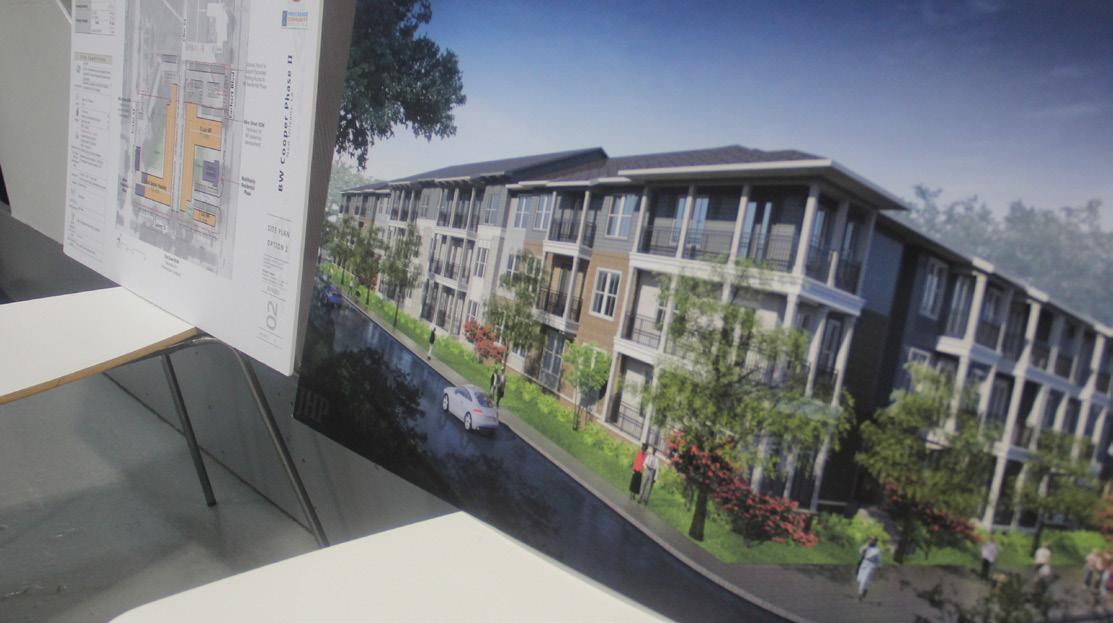
In the assessment and visualization phase, it was found that additional affordable housing for seniors was a need and a desire of neighbors. To address the need, HANO along with partners has secured funding to build 103 one-bedroom senior units on the 2.6 acre lot
Construction of this development will begin in late 2025.
Architectural Designs/Schematics – Building Elevation Profiles
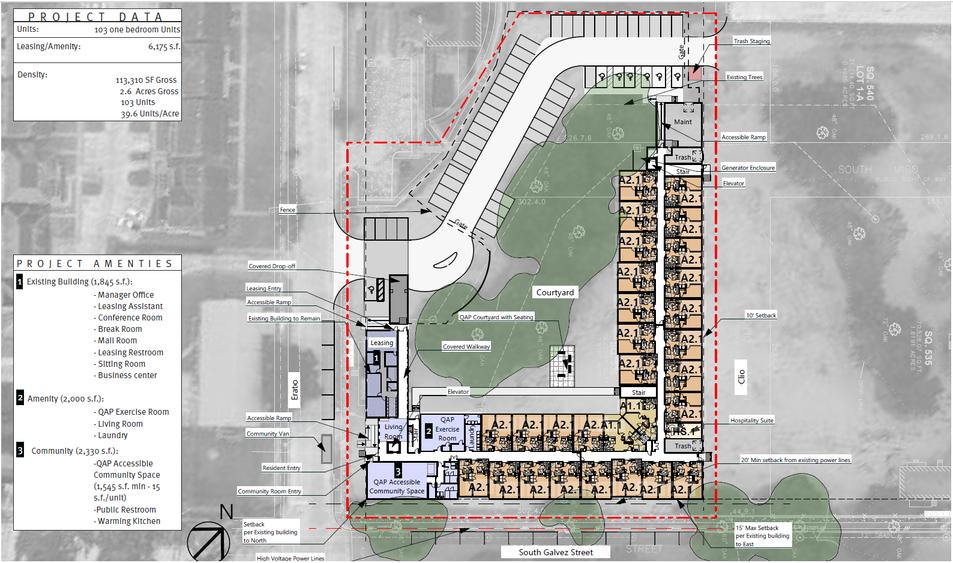

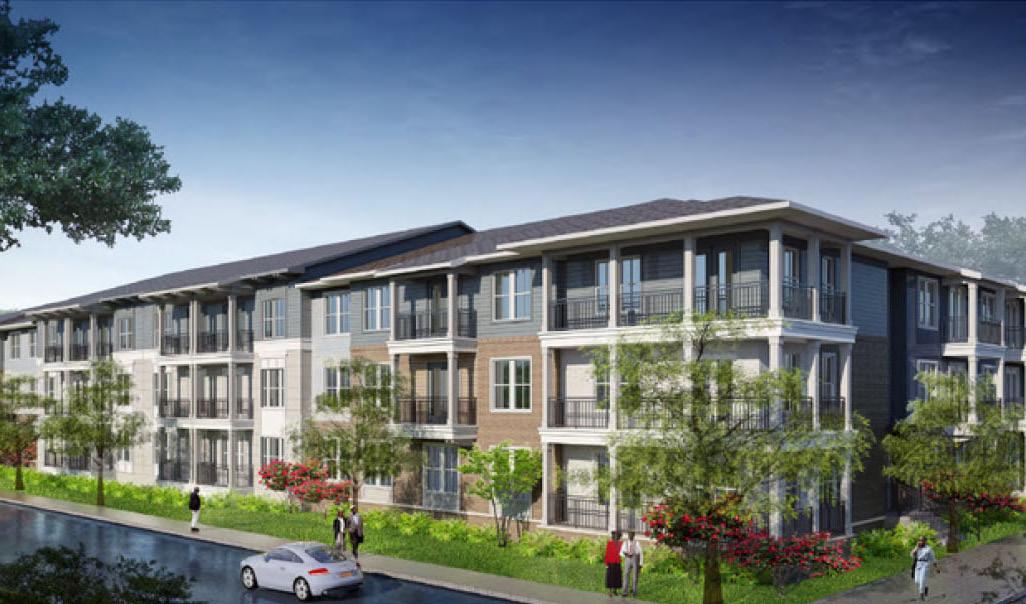
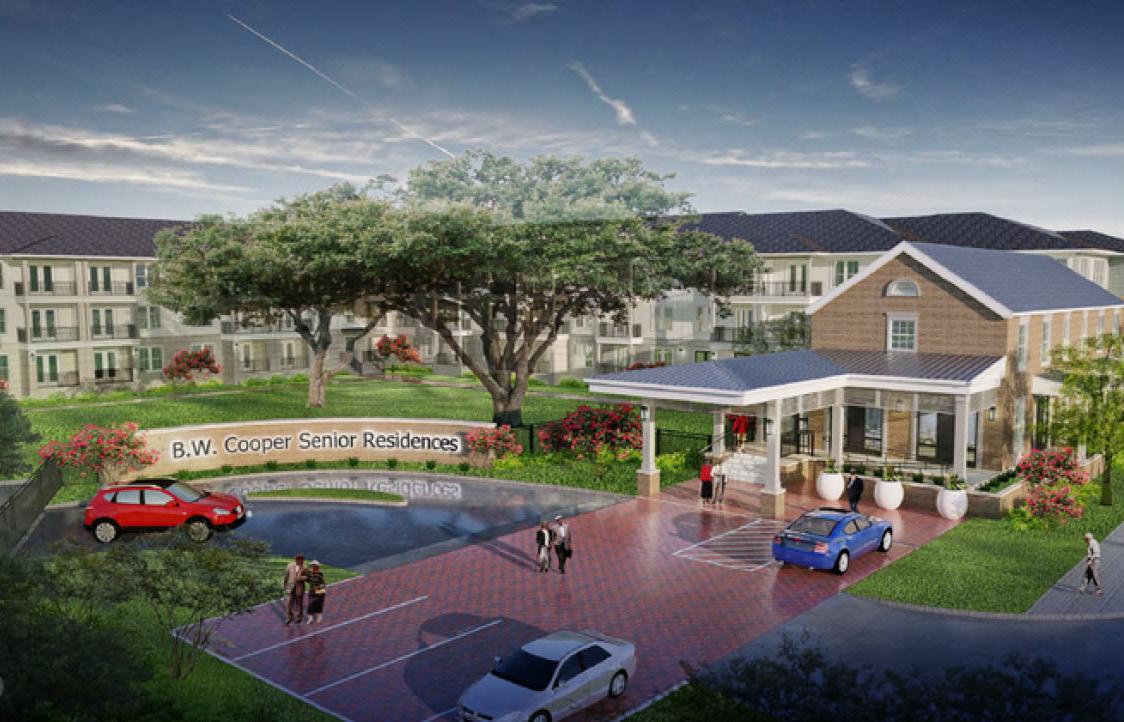
PROPOSED VIEWS
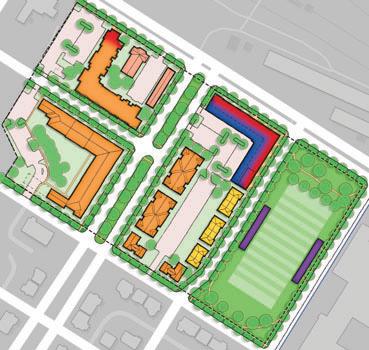
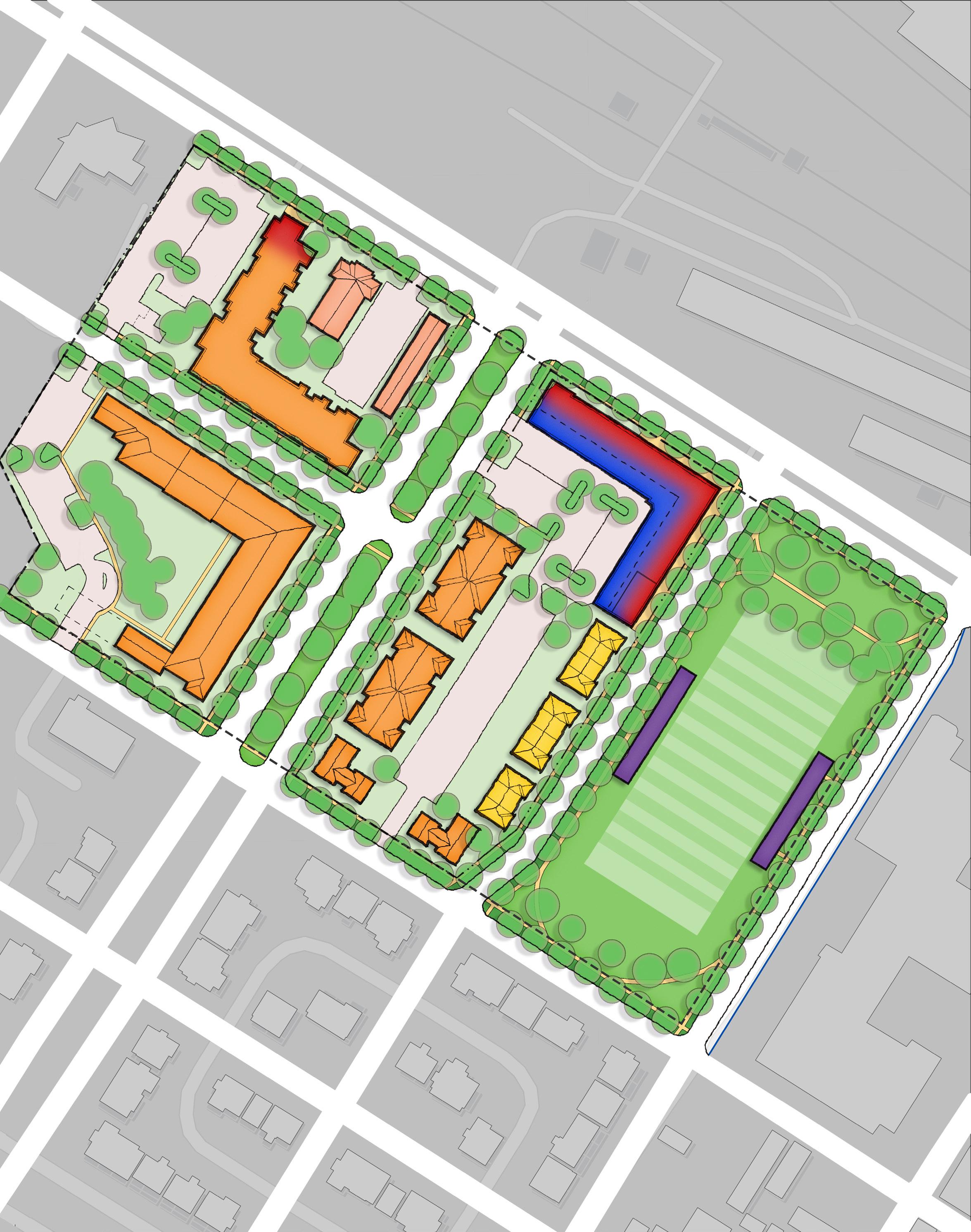
Adjacent to the new Senior Housing Development at S Galvez Street and Erato Street, the Plan recommends additional mixeduse development of vacant HANO property.
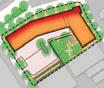
Directly north of the Senior Housing Development, mixed-income apartments are envisioned with potential ground floor retail or service uses. This new development would integrate with the existing historic B.W. Cooper buildings on site. These historic buildings would be adaptively reused as community space for programs that could benefit both Marrero Commons residents, local students, and neighbors as a whole.
To the east of this property, a mixed-use development is envisioned to include a future HANO headquarters office building. The headquarters space could include retail and other community uses on the ground floor, helping to activate Earhart Blvd, while providing additional amenities for residents.
To the south of the headquarters, new walk-up apartments are envisioned along with for-sale townhouses to help create additional housing options for the community.
A new street connection of S Johnson Street would bisect the block, improving access and circulation. The east side of the block is envisioned as a new multi-purpose sports field which could be utilized by the adjacent Booker T. Washington High School and KIPP Central City Primary School. This new park space could serve as a central gathering area for the community, and can host multi-general recreational activities and events.
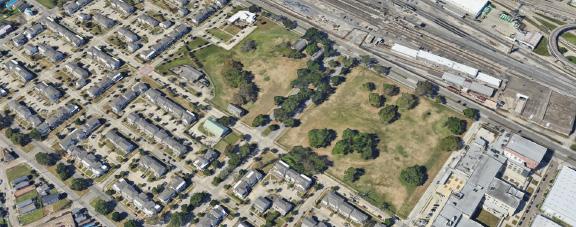
Odyssey House Louisiana (OHL) is a nonprofit behavioral health care provider with an emphasis on addiction treatment. OHL’s mission is provide a comprehensive continuum of care for people in Louisiana, encompassing primary care, behavioral health, and substance use disorder treatment.
OHL provides a variety of therapeutic services to help individuals struggling with substance use disorders and addiction. These include individual or group counseling, cognitive behavioral therapy, 12-step programs, and other activities. We also offer relapse prevention and aftercare services to help individuals maintain sobriety and transition back into their daily lives.
OHL offers a Transitions Program where residents live on-site at the residential facility while in treatment for 3 to 6 months. While in the program, clients are able to reside in a safe and sober living environment while developing life skills that enable them to gain employment and a strong support system.
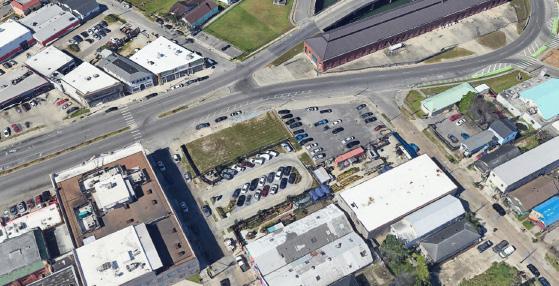
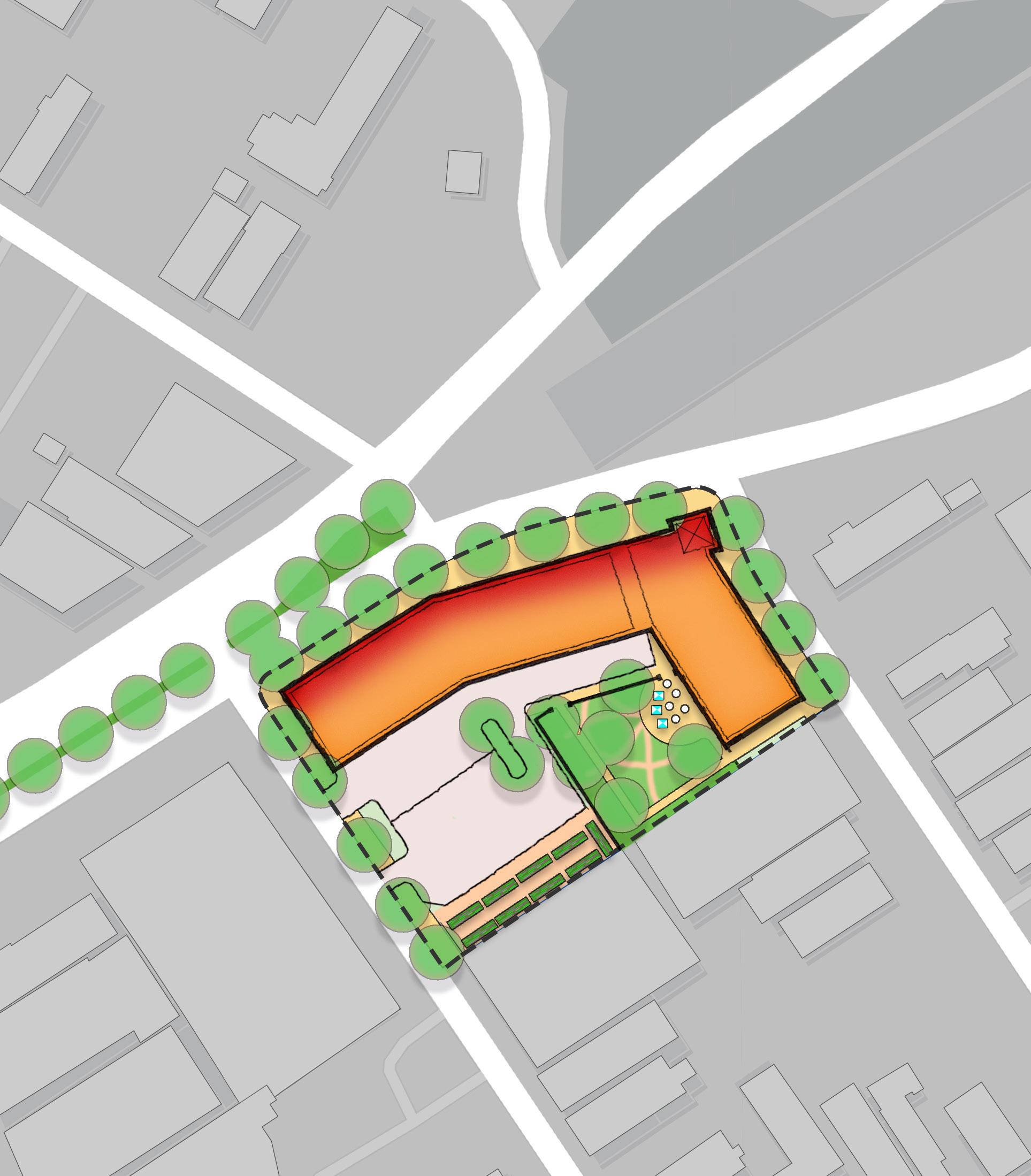
This location along Broad Street provides a unique opportunity to develop transitional housing for individuals participating in OHL programs, directly next door.
The site, currently owned by the City of New Orleans, includes a series of empty lots at the corner of S Broad Street and 4th Street.
Redevelopment of this property could include a mixed-use building with health services, or community space on the ground floor and three levels of housing above.
Through collaboration with HANO, approximately 50-75 project-based vouchers could be utilized to house residents in the new building. A courtyard space would be incorporated, along with walking paths and the integration of the existing community garden on the southern edge of the property.
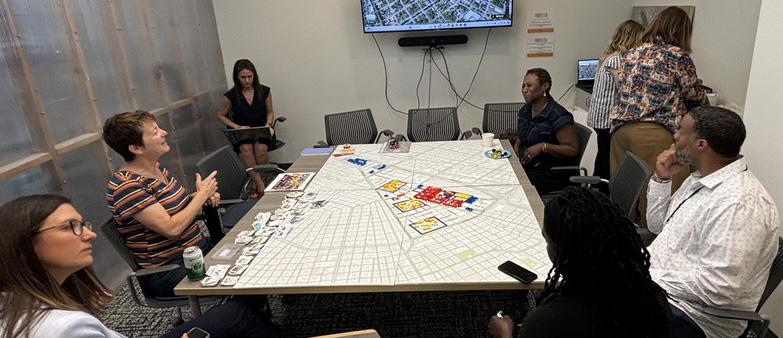
The SWOT Analysis was completed as part of Community Meeting 2. Participants were asked to identify strengths, weaknesses, opportunities, and threats. The following diagram shows results from the SWOT Analysis:
ROSENWALD PARK
TAYLOR PARK GRASS UPKEEP NO UTILITY BILLS
STREET FLOODING
SECURITY AT MARRERO COMMONS
SOME BUSINESSES
CHILDCARE CENTERS AFTER SCHOOL PROGRAMS CLOSE PROXIMITY TO SUPERDOME
AFFORDABLE HOUSING
COMRADERY/ GOOD NEIGHBORS
SOCIAL ORGANIZATIONS
ESTABLISH MENTAL HEALTH SERVICES
BUILD A SENIOR VILLAGE
RECRUIT A GROCERY STORE
PARENTING CLASSES
DIGITAL LITERACY FOR SENIORS
LACK OF RESOURCES FOR ELDERLY TO MAINTAIN HOMES
ENTREPRENEURSHIP
FIX EXISTING LIGHTS ADD STREET LIGHTING SUPPORT GREEN INFRASTRUCTURE
ADD MORE PARKING FOR MARRERO COMMONS
CREATE OPEN SPACE PLAY FIELDS
PARTNERSHIP WITH SCHOOL BOARD MORE SCHOOL CHOICE
SENIOR TRANSPORTATION
PROVIDE EDUCATIONAL TRAINING
SHORTER WAITLIST
IMPROVE PARKS
ESTABLISH SENIOR CARE CENTERS
NEED POLICE HUB BUILD LEADERSHIP ADD BUS ROUTES
RECONNECT STREET GRIDS THROUGH AMTRAK
HIGH CRIME RATE NO ENFORCEMENT OF DRUG FREE ZONES AROUND SCHOOL
NEED STREET REPAIRS
POOR LIGHTING
LACK OF K-8 SCHOOLS NO FRESH PRODUCE/ HEALTHY FOODS
POOR ACCESS TO TRANSPORTATION
MORE AFFORDABLE HOUSING ABANDONED VEHICLES
LACK OF COMMUNITY PARTICIPATION
LACK OF RESOURCES (PEOPLE & FUNDING)
CHANGE IN ADMINISTRATION LACK OF COALITION
HURRICANES
AGENCIES FAILURE TO COMMUNICATE
LIMITED COMMUNICATION CHANNELS
CHANGE IN PRIORITIES
POOR MAINTENANCE OF EXISTING HOUSING
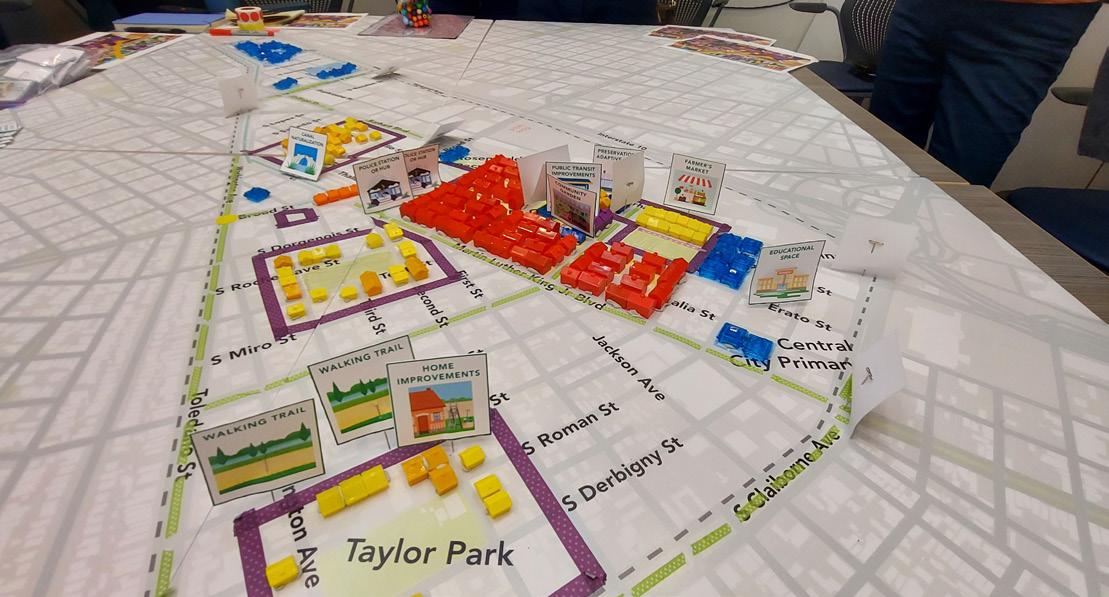
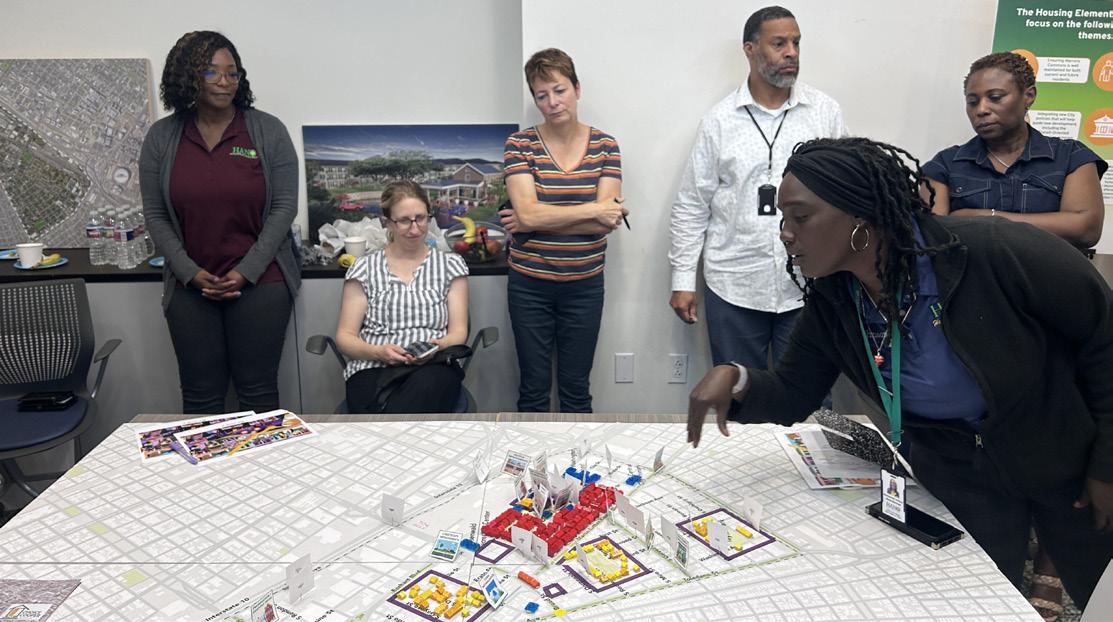
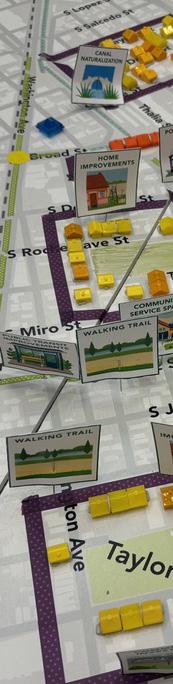
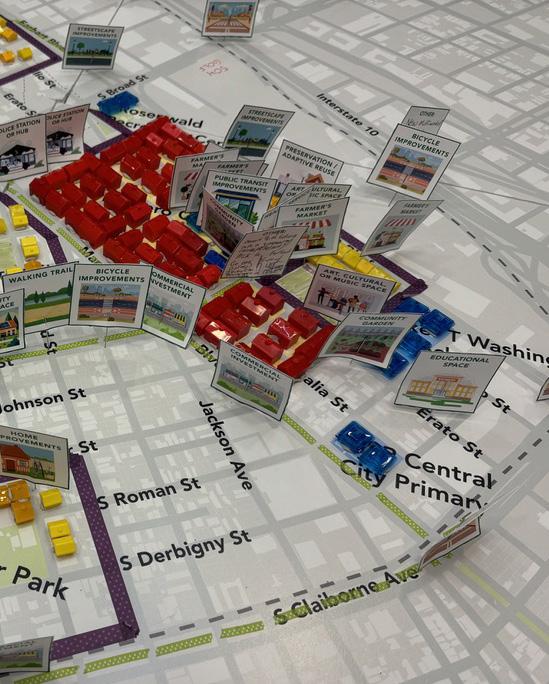
The “Mapping the Neighborhood” activity was completed as part of Community Meeting 5. This station focused on understanding resident’s current experiences in the Choice Cooper Neighborhood. A large-scale map of the neighborhood was set up for residents to identify where public investment (green dots) is most needed to improve streets, parks and public spaces, and where private investment (orange dots) is most needed to build or repair homes, businesses and services. The following are initial ideas that emerged from the activity:
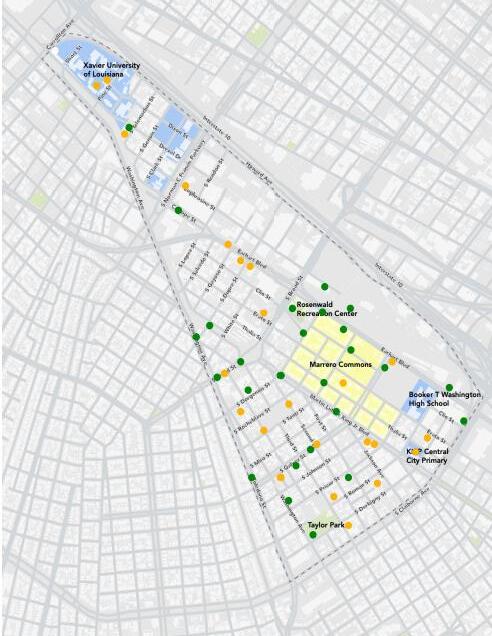
The following are initial ideas that emerged from the activity:
• The identified public and private investment is almost even amongst the participants with 23 interested in private investment and 26 interested in public investment.
• The majority of identified investment, both public and private, is located in the southern end of the target neighborhood, including the Hoffman Triangle and Marrero Commons.
• Residents emphasized the need for investment near Martin Luther King Boulevard due to vacancies.
• Many residents identified the Rosenwald Community Center with the need for public investment.
Private Investment
Public Investment
The Neighborhood Strategies build on existing community assets, the area’s central location, educational amenities, and natural spaces as the framework for revitalization. The Planning Team used active and ongoing community engagement to build consensus on the Neighborhood Element’s desired Strategies. Strategies are designed to strengthen important connections and foster community-wide improvements that will help to improve economic vitality, safety and community identity while limiting displacement and gentrification. The Neighborhood strategies would also include the adoption of land use, zoning and historic designations policies that prioritize the preservation of cultural heritage and history within the Choice study area.
Capacity building and training for nonprofit community organizations within the study area is essential for the success of the Plan. HANO and the City of New Orleans should not and cannot bear sole responsibility for driving revitalization efforts. Moreover, they should not exclusively control funding for community organizations that may otherwise qualify for resources to conduct independent initiatives aimed at benefiting their communities and neighbors.
Access to information fosters empowerment. Across the nation, strong community organizations demonstrate the capacity to lead neighborhood revitalization efforts independently. Therefore, investing in capacity building and providing training for existing community organizations is a crucial component of anti-gentrification strategies. This approach, proven effective in other communities, is equally applicable and valuable for addressing the challenges within this study area. By equipping community organizations with the necessary tools and knowledge, they can take an active and impactful role in revitalization efforts. This not only enhances local autonomy but also ensures a more sustainable and inclusive approach to combating displacement.
As part of the Choice Neighborhood planning grant, $150,000 of HUD funding is going towards the installation of an Early Action community project.
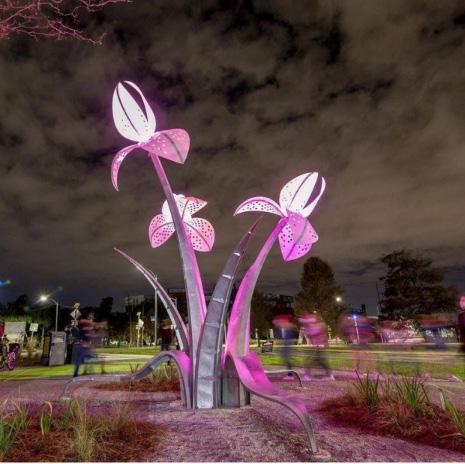
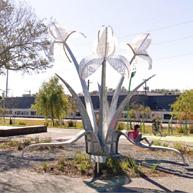
Our Choice Neighborhood Planning team is collaborating with Arts New Orleans, a 501(c)(3) nonprofit to spearhead the creation of illuminated art installations in the Choice Cooper community. This Early Action Project originally stemmed from resident requests for more lighting around Marrero Commons, with concerns about safety and visibility after dark.
The Early Action goals are to use public art to:
• Beautify the neighborhood and tell its story
• Promote connectivity throughout the neighborhood
• Incorporate lighting as a public amenity
• Promote a sense of community identity, safety, and wellbeing
Arts New Orleans will contribute an additional $125,000 through the City of New Orleans Percent for Art program. Artwork will be owned by the City of New Orleans, and Arts New Orleans will provide long-term maintenance and care of the artwork through the Percent for Art Program, which will be sourced by local community workers.
1 1 2 3
In tandem with the public art installations, HANO will be fixing and updating porch lights across Marrero Commons, many of which have needed repairs for years. The current goal is to convert the porch lights to solar power with automatic sensors so future maintenance is needed less frequently and streets and homes are well-lit, safer and more welcoming.


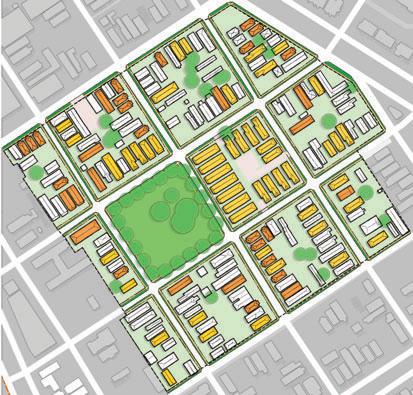
The Plan recommends a focused infill housing development framework organized around five strategic locations. This strategy would help to fill in vacant lots over time, many of which have been vacant since Hurricane Katrina. By focusing on key transportation corridors and open spaces, new residents can have access to improved amenities within the community.
Opportunity Area 1:
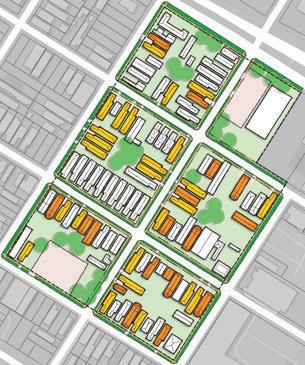
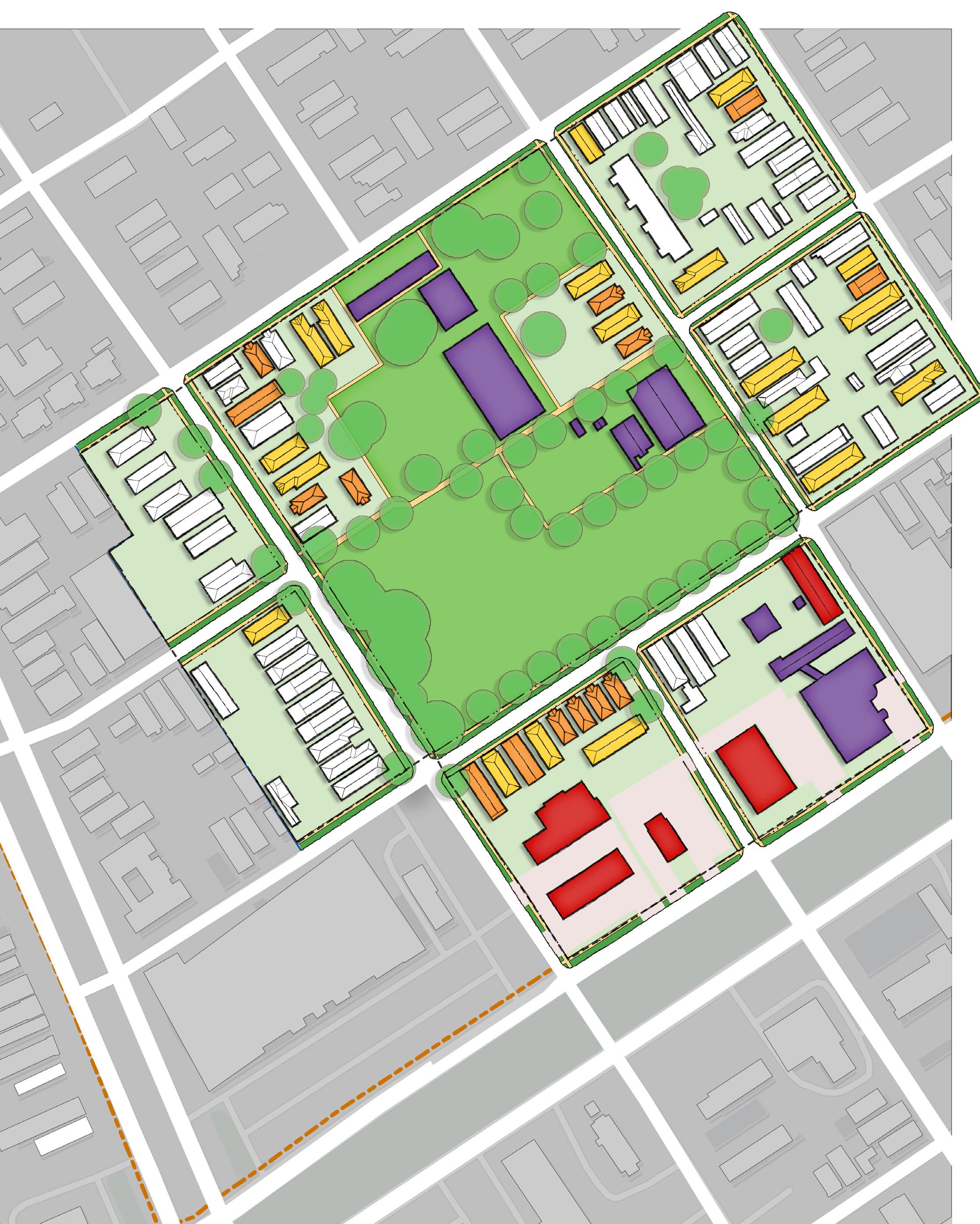
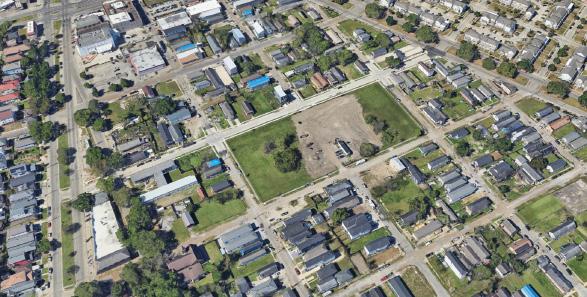
Location 1 is centered on the existing Taylor Park, an underutilized open space in the southwestern portion of the CN area. Residents have requested programming at the park to disrupt gang activity and create a safe environment for families to participate and feel secure.
Through a combination of single-family and two-family homes, approximately 40-50 homes could be created within one block of the Park. In conjunction with new development, the park itself could be upgraded to include features
such as walking paths, new ballfields, dog areas and a splash pad or water feature for hot summer months.
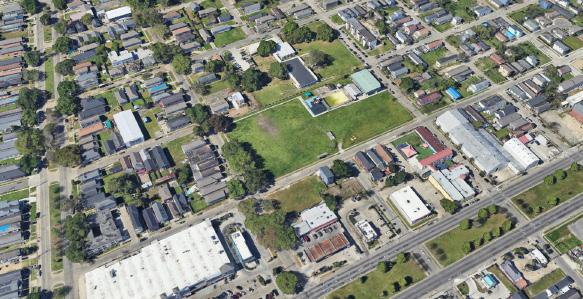
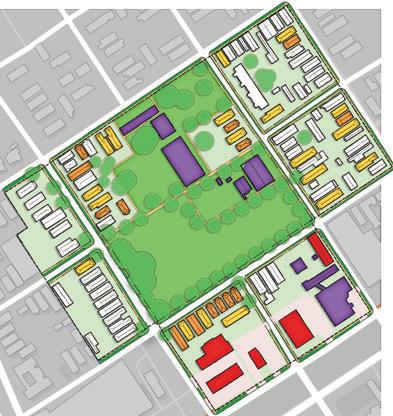
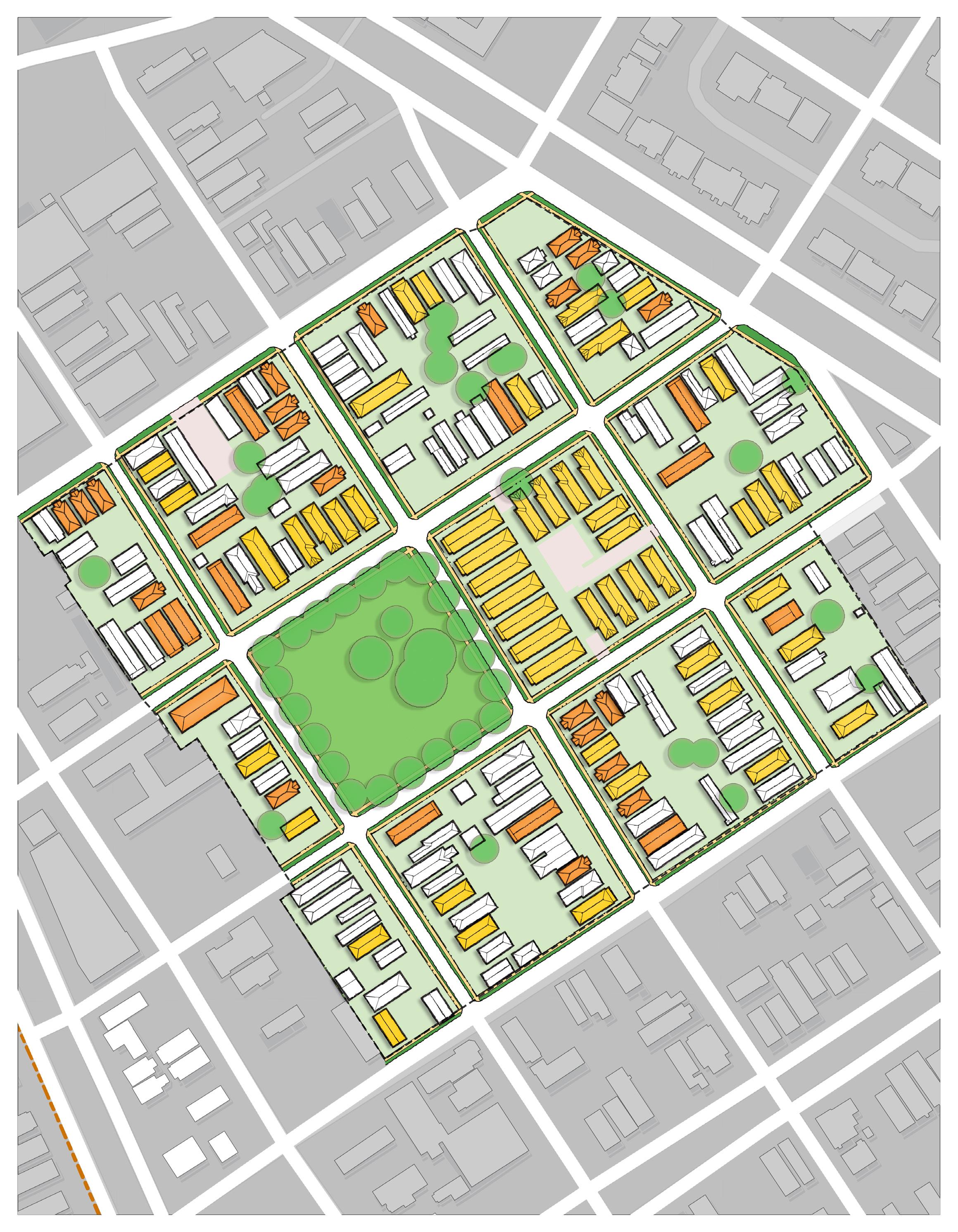
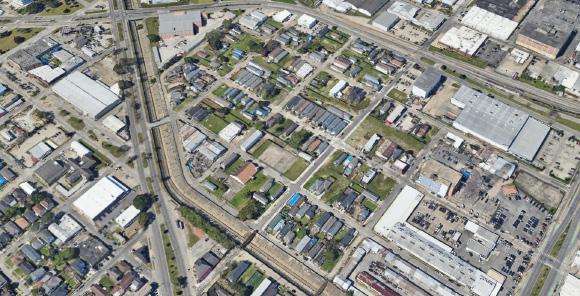
Location 2 is focused around the former Clark Joseph S Senior High School site on S Rocheblave Street. The site, currently owned by the Orleans Parish School Board is now a blocksized open space that could serve as a catalytic amenity for the immediate surrounding area.
Within one block of the open space, approximately 110-120 single-family and two-family homes could be created providing significant homeownership opportunities while helping to create a safer, more cohesive neighborhood feel. The former school site could be repurposed into a park or community space, or could become an anchor redevelopment site for a larger mixed-use building.
Location 3 is focused on residential blocks within Gert Town, just north of the Broad Street commercial area. This location, bounded by S White Avenue, Thalia Street, S Gayoso Street, and Earhart Boulevard, is challenged by a large number of vacant lots. We recognize that the Together Gert Town is diligently working to create a beautiful and thriving community, rich with support and culture at every corner.
The Plan recommends a targeted approach to infill homeownership development including approximately 55-65 single-family and twofamily homes to be built over time in the area. New residents would have walkable access to shops and services along Broad Street, as well as regional transit services. As a key neighborhood project in the CN Plan, we are recommending the naturalization of the Palmetto Canal to create a local amenity. The canal is just one block west of this focus area and could serve as a catalyst for the private development of these sites.
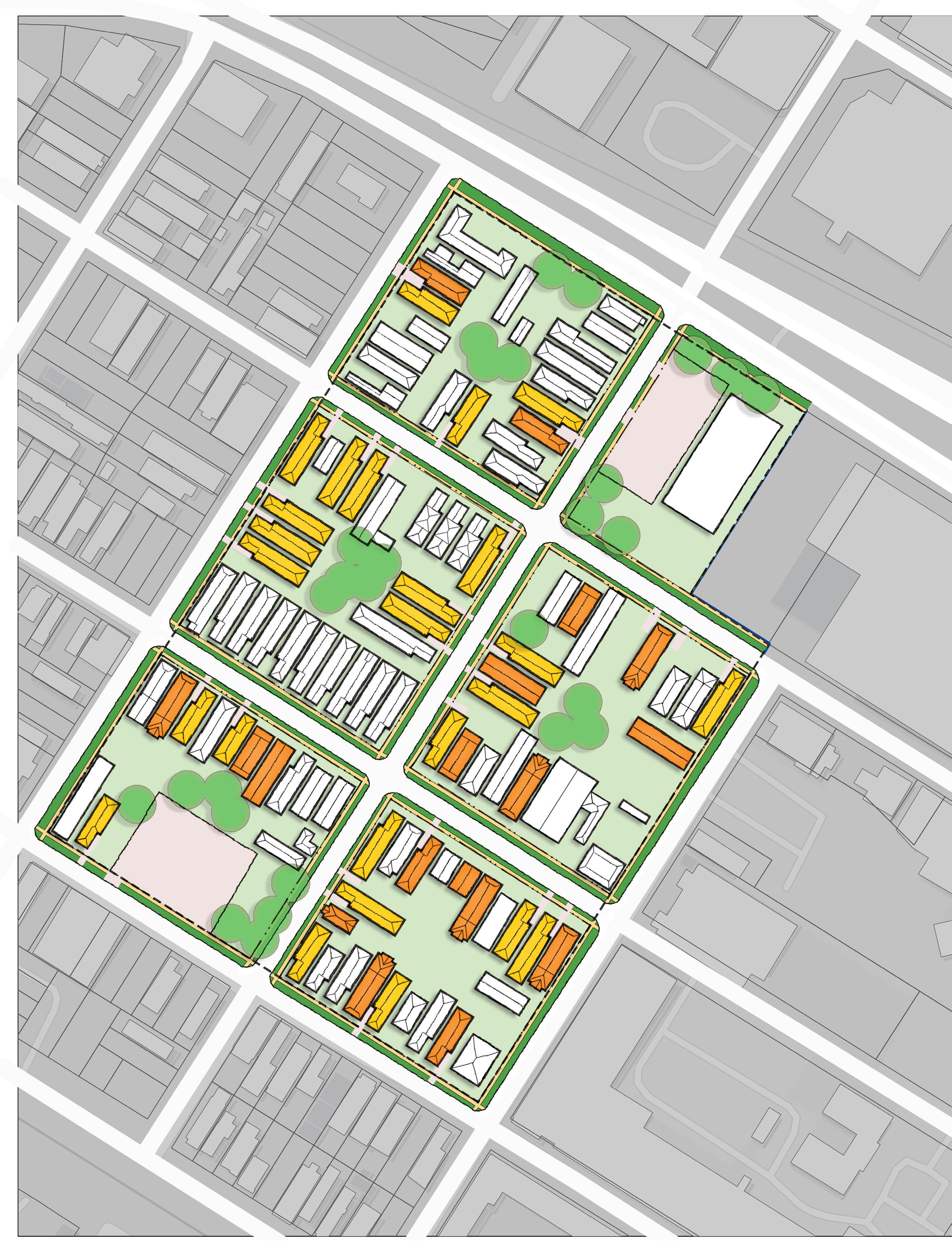
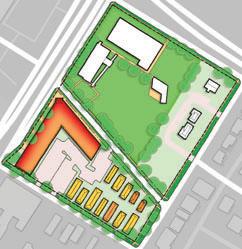
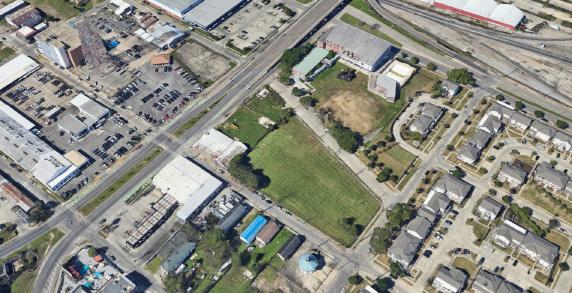
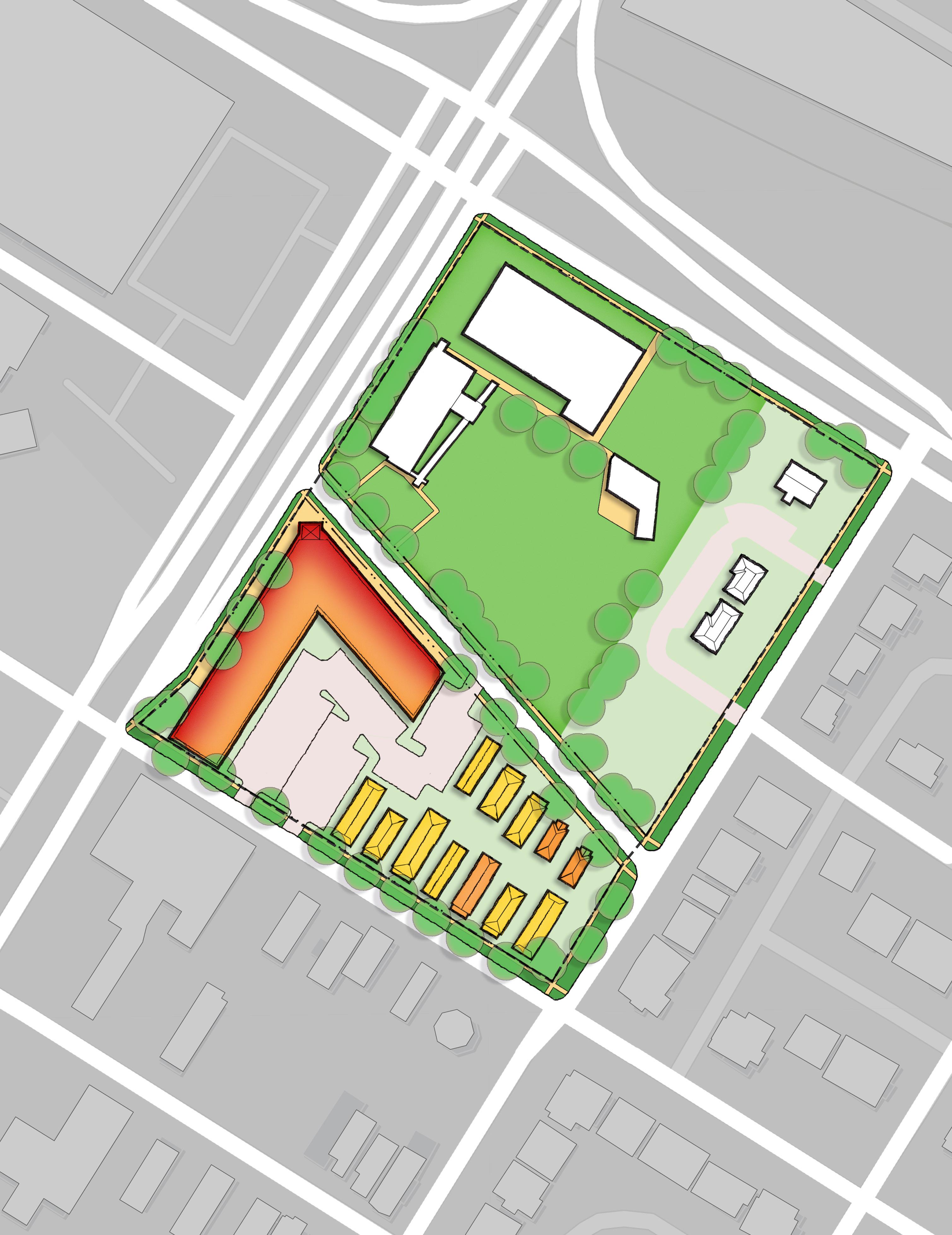
Location 4 includes a vacant lot directly adjacent to the Rosenwald Recreation Center, a key neighborhood asset.
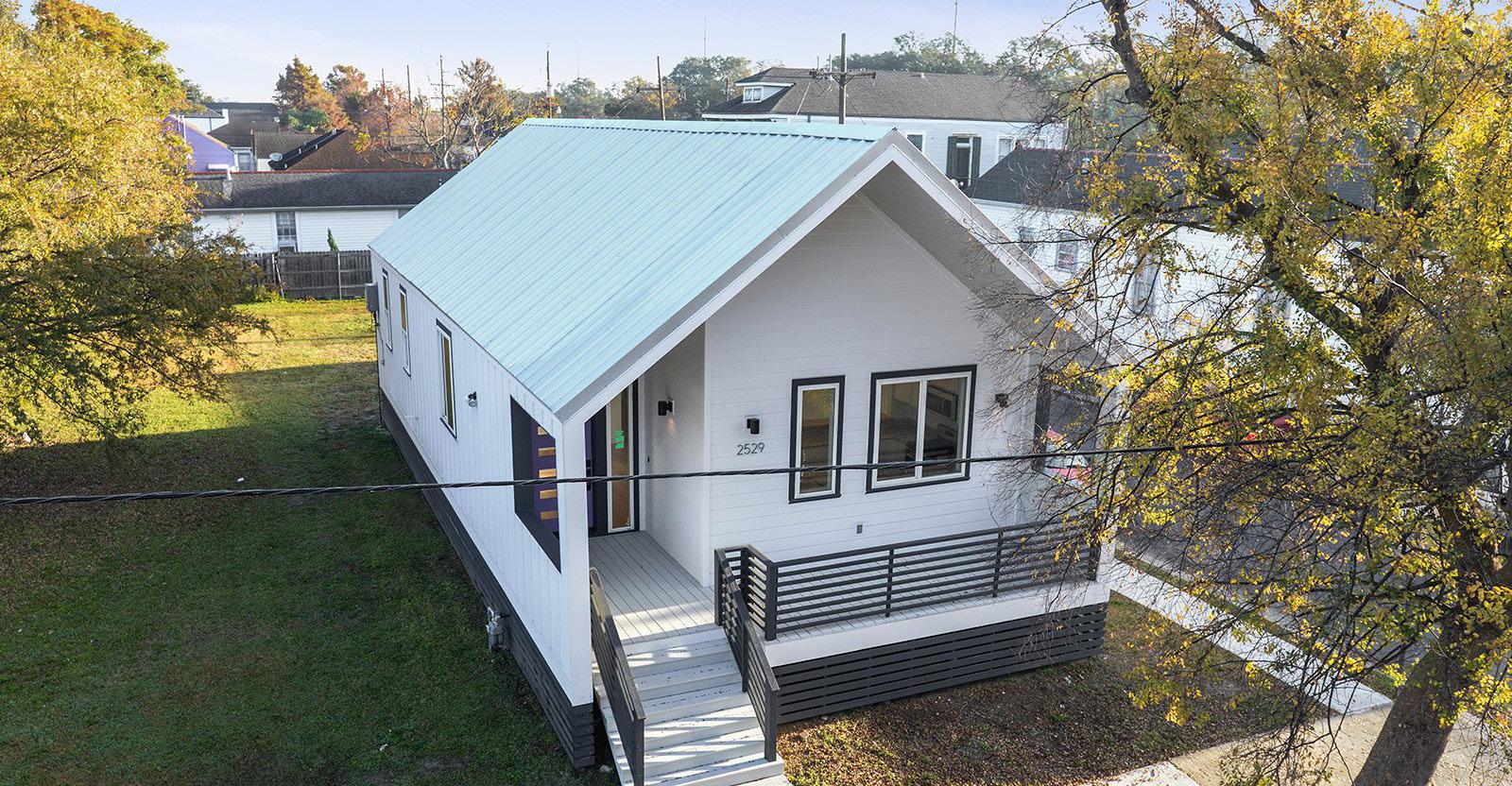
The Plan recommends utilization of the site for transit-oriented development including a mixeduse building with retail, service, or community uses on the ground floor, with three levels of housing above. This mixed-use building could contain 30-40 apartments and would front Broad Street, an important transportation corridor. To the southeast of the site, the Plan recommends a series of for-sale single-family and double homes that could provide up to 15-20 new homes for local residents, including families from Marrero Commons who are interested in moving from rental housing to an ownership role.
A desire to expand and preserve affordable housing and to foster community ownership and opportunity are key Choice Cooper goals. The establishment of a community land trust (CLT) is recommended as a proven tool to help achieve these results. Community land trusts focus on the creation of homes that remain permanently affordable, providing successful homeownership opportunities for generations of lower income families. CLTs are nonprofit organizations governed by a board of CLT residents, community residents and public representatives that provide lasting community assets and shared equity homeownership opportunities for families and communities.
People’s Housing +, a local non-profit organization, has established a community land trust and is interested in further supporting the Choice Cooper Neighborhood. People’s Housing + was created through the strategic merger of three New Orleans based Community Development Corporations and has a mission focused on fostering multigenerational wealth to combat systemic racism. People’s Housing+ seeks to secure permanent affordability for generations of New Orleanians through equitable residential and commercial development, community stewardship, and housing advocacy. The Plan recommends working with People’s Housing + to expand the CLT model, with a focus on the Choice Cooper Neighborhood.
In addition to affordable ownership housing, the CLT could develop urban agriculture projects, commercial spaces to serve local residents, and affordable rental and cooperative housing projects. The CLT could also help to conserve land or urban green spaces in the Choice Cooper Neighborhood. The community land trust would balance the interest of its residents, the broader community, and the public interest to promote wealth building, retention of public resources, and solutions for community needs.
The CLT should be set up to where residents have a seat at the decision making table (i.e. help to control the finances and financial decisions being made by the CLT), in order to ensure the organization is always aligned with the goals of the actual community it is intended to serve. An advisory council of Choice Neighborhoods (CN) Ambassadors and/or community members is necessary to ensure that the implementation process is accessible and inclusive for residents.
In addition to housing redevelopment strategies, the Plan recognizes the needs and challenges of existing homeowners in the community. Neighborhood homeowners emphasized the goal to maintain and rebuild their homes after storms to pass them down to the next generation, supporting generational wealth and sustaining the community. A potential strategy to help carry out this goal includes resolving heirs’ property issues. Addressing the complexities of heirs’ properties is challenging, but there are actionable strategies to mitigate their negative impacts on city initiatives. Understanding how these properties affect resources and programs is crucial for better management and maximizing community results. Steps that can be taken to begin to address heirs’ property issues include:
• Build a Family Tree: Identify all heirs, both living and deceased, by developing a family tree from the original property owners to the youngest generation in the family.
• Trace Ownership: Perform a title search to trace the ownership of the land from the original titled owner to current owners.
• Seek Legal Consultation: Engage legal aid attorneys to help with correcting outdated
land records and determining legal heirs.
• Consider Mediation: If disputes arise, attempt to resolve them through mediation before taking the matter to court. A mediated settlement is often more flexible than courtroom decisions.
• Utilize Free Legal Services: Partner with community organizations like Three Rivers Legal Services for free legal aid in resolving disputes.
• Develop Clear Goals: Establish specific goals for addressing heirs’ property challenges to form a strategy focused on family consensus.
• Legal Documentation: Encourage drafting of wills or estate plans to prevent future issues. For agricultural or land-based assets, these solutions provide clarity on succession.
• Municipal Actions: Municipalities can proactively address heirs’ properties through understanding their economic impact and developing policies to prevent tax and partition sales
• Tax and CPA Consultations: Consult a CPA or tax specialist to navigate tax implications related to heirs’ property and optimize financial planning.
The U.S. Department of Agriculture identifies the northern half of the Choice Neighborhood as both a low-income and low-access tract, which means there is no available grocery store within 1/2 mile of the area. This tract qualifies as a food desert. The Choice Cooper Plan recommends addressing this challenge through a two-step process. The first step would include organizing and establishing a neighborhood farmers market at a convenient location within the community. A farmers market at Marrero Commons would help to stimulate the local economy, increase access to fresh, nutritious food (including utilization of SNAP benefits), support a healthy community, and promote sustainability.
The second, longer-term step involves a larger initiative to assess the viability, determine a location, recruit an operator, and establish a grocery store on or around S Broad Street. Expanding an existing smaller meat market (Aeren’s Supermarket) operating the area is also a possibility.The grocer could operate as a for-profit entity, or as part of a cooperative grocer model. A grocery store in the Choice Cooper neighborhood would not only greatly improve access to fresh food, but would provide additional local jobs for residents, and could help support other small businesses in the immediate vicinity.
1 1 2 3
4
Grocery stores typically evaluate sites based on the following criteria:
• 6,000-8,000 nearby households.
• A one-mile trade area with a population greater than 12,000.
• A two-mile trade area with a population greater than 25,000.
1 1 2 3
• A minimum annual average daily traffic volume (AADT) of 20,000 cars per day
1 1 2 3
4

•
• Propeller
The City of New Orleans has identified three major corridors within the Choice Neighborhood for the Commercial Corridor Revitalization Strategy, the goal of which is to address the gaps that make it difficult for main streets to thrive. The three streets - Carrollton Avenue, Broad Street, and Claiborne Avenue - are targeted for increased planning and management, business development, safety and services, real estate development, and infrastructure. By utilizing these strategies, New Orleans aims to create strong and vibrant corridors across the city, particularly within lowand medium-income communities.
The Main Street Resilience Plan created by the New Orleans City Planning Commission additionally includes Earhart Boulevard and Washington Avenue as potential Main Street corridors, and targets all five streets as future targets for resilience efforts. These resilience efforts would aim to build capacity for main streets to survive, adapt, and grow despite experiencing various stress and shocks.
The City’s land use plan provides a framework for how a street can be transformed through planning and investment. Earhart Boulevard was used as an example for integrating the existing light industrial parcels with bigbox retail, supermarkets, and restaurants by updating the existing zoning and conducting a
retail market analysis. By leveraging city funds and resources including funding through the BioDistrict New Orleans, the Choice Cooper neighborhood can target identified streets with small business support, streetscape improvements, and infill development.
The Plan recommends that the priority should be to uplift existing business owners and resident businesses located within the planning area.
1 1 2 3
4

1 1 2 3
• New Orleans Redevelopment Authority,
• Biodistrict New Orleans
• Propeller Impact Accelerator
• Go.Be.
• Stay Local
The Market Assessment completed for the CN Plan forecasts the following retail demand:
• Based on an analysis of retail expenditures in the target neighborhood, there is a shortage of retail services, notably a grocery store, restaurants, and personal care stores. The neighborhood can support three to five small restaurants, a small or mid-sized grocery store, and three to four personal care retailers like a nail salon and barber.
• The size of grocery store appropriate for the neighborhood will depend on location. A full-sized grocery store can be supported along the main arterials (Broad Street, Claiborne Avenue, or Earhart Boulevard) due to traffic volume in addition to local resident grocery expenditures. A neighborhood-type grocer (~10,000 sq.ft.) can be supported within the neighborhood.
• The neighborhood can also support a medium-sized gym or fitness center (<8,000 sq.ft.), Both the city and neighborhood have a gap in recreational retail (e.g. gyms, fitness centers, studios) and there are no fitness centers in Central City, Hoffman Triangle or Broadmoor.
• In the northeastern portion of the target neighborhood south of Xavier University is a large swath of underutilized industrial land. There is potential for significant and catalytic development within this area due to the land area (65 acres) that could be tied to existing enterprises (several current tenants operate artisan production within fashion, art, and craft beverages); to the medical industry (the area buffers the Medical District); and/or in green enterprises (another strong local economic sector with potential to expand).
Source: Atria Planning using data provided by ESRI
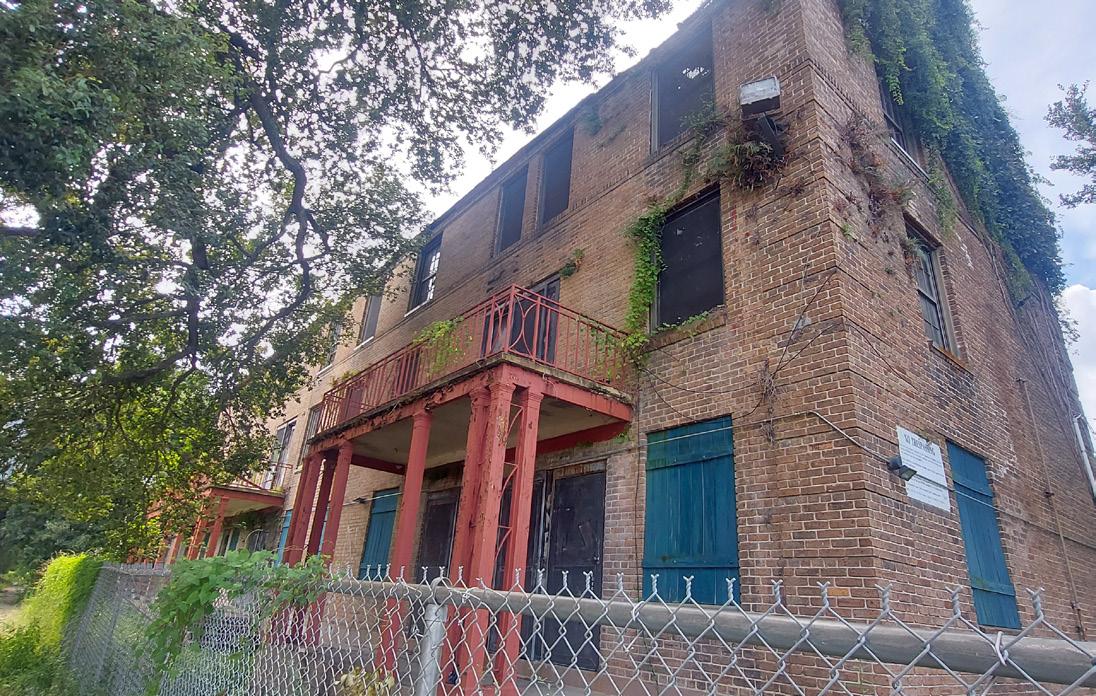
At the intersection of Galvez Street and Earhart Boulevard sits two abandoned historic buildings the Plan aims to redevelop and restore. Both constructed in the late 1930s to address the housing shortage in the wake of the Great Depression, the one-story building to the north was previously an administrative building and the two-story building was residential. While both are classified as historic under the Historic American Buildings Survey from the Library of Congress, they are not currently designated as historic buildings by the City or State. These buildings could be eligible for inclusion to the National Register of Historic Places, creating new opportunities for rehabilitation funding.
The goal of the redevelopment of these sites is to further connect residents to the history and culture of the area, while creating community spaces to host needed resident programs.
The historic buildings would be accessible to high school students, senior housing residents, Marrero Commons residents and surrounding neighbors.

• HANO
• City of New Orleans Planning Department
• Historic New Orleans Collection
• New Orleans Redevelopment Authority,
• Arts Council of New Orleans
• New Orleans Art Association
• St. Bernard Parish
• New Orleans Center for Creative Arts
• Alumbin Community Development
• Studio B
• Ashé Cultural Arts Center
• Choice Neighborhoods Implementation Grant
• NPS Underrepresented Communities Grant Program
• National Park Service Historic Preservation Funds
• African American Action Fund National Grant Program
The Plan recommends improving the streetscape of the neighborhood for walking and biking. Approximately 21% of Choice Cooper residents walk or use public transportation as their primary mode of travel, but a study of the Hoffman Triangle reveals that 44% of parcels have no sidewalk or are in need of repair.
The City’s Capital Improvement Plan has allocated funds to install new pavement markings and signage along S Galvez Street. There is also an ongoing project on S Carrollton Avenue to enact overlay and safety improvements around the canal, including bicycle and pedestrian-related thermoplastic pavement markings. Across the B.W. Cooper, Gert Town, and Dixon neighborhoods, the City plans to repave asphalt roadways from curb-tocurb, repair damaged sidewalks and driveway aprons, and install ADA compliant curb ramps at intersections.
Infrastructural improvements can enhance people’s experience along these roadways and encourage healthier lifestyles. Improved crosswalks, bike lanes, and better signage can create a safer and more attractive environment.
Major corridors such as South Galvez Street and Martin Luther King Boulevard already have sizable neutral grounds which could support pathways, signage, and seating areas to make the corridor more appealing. Special attention
should be paid to sustaining old growth trees along sidewalks and neutral ground.
Upgrading crosswalks can change the way certain dangerous intersections function. Clearly marked signage could also improve resident’s walking experience as cars would naturally reduce their speeds. Residents identified four major intersections in need of these improvements:
• S Claiborne Avenue and Martin Luther King Boulevard
• Washington Avenue and Earhart Boulevard
• S Broad Street and Earhart Boulevard
• S Broad Street and Interstate 10
• Superdrome Pedestrian Overpass
Infrastructure improvements for bike lanes along Washington Avenue, Martin Luther King Boulevard, S Broad Street, and S Galvez Street are also needed. The bike lanes could be extended in accordance with the New Orleans Bikeway Blueprint, which would create an integrated bike network that would connect the entire neighborhood. The Blue Bikes NOLA Bikeshare program can also be expanded through this initiative.
The Plan also suggest that an accessible passenger van be available at the Rosenwald Recreation Center to help support vulnerable community members.
• City of New Orleans Department of Public Works
• City of New Orleans Planning Department
• LADOT
• Bike Easy
• New Orleans Regional Planning Commission
• RTA • Blue Bikes NOLA
• Choice Neighborhoods Implementation Grant
• Safe Routes to School Funding
• Complete Streets Activation Mini-Grant
• NORPC Pedestrian and Bicycle Program
• MLK Library
• 3-5 Years
The Palmetto Canal runs along Martin Luther King Boulevard and Washington Avenue within the Choice Neighborhood. The visible portion of the canal is capped by Xavier University and Pumping Station 2 on the North and South ends, respectively. The canal currently exists as a concrete culvert with no landscape or natural features. It acts as both a physical and psychological barrier in the neighborhood.
The Greater New Orleans Urban Water Plan suggests that in order to naturalize the Palmetto Canal, runoff from the backslope in Uptown New Orleans would need to be slowed with water management elements on interceptor streets. This would lower required capacity during heavy rainfall, and also allow more water through in dryer seasons. A related solution would be to utilize the proposed Claiborne Canal as the major discharge canal for Uptown New Orleans, which would help lessen the load on the Palmetto Canal. Through these solutions, the Palmetto Canal can become an open waterway and public amenity in the heart of the city.
Removing the concrete walls and replacing the hardscaped edges with native plants, greenery, and walkways will activate the corridor while capitalizing on the natural beauty the canal offers. Enhancing pedestrian bridges to be
more walkable and bikeable can create natural view corridors and strengthen the connection across the canal.
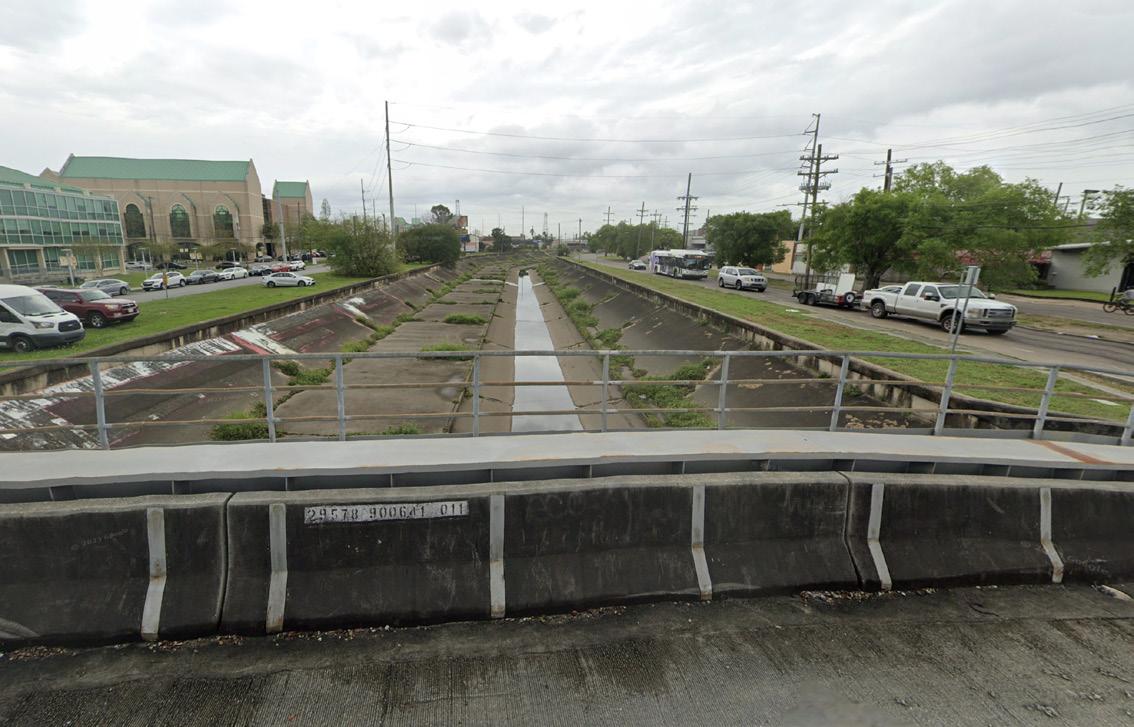
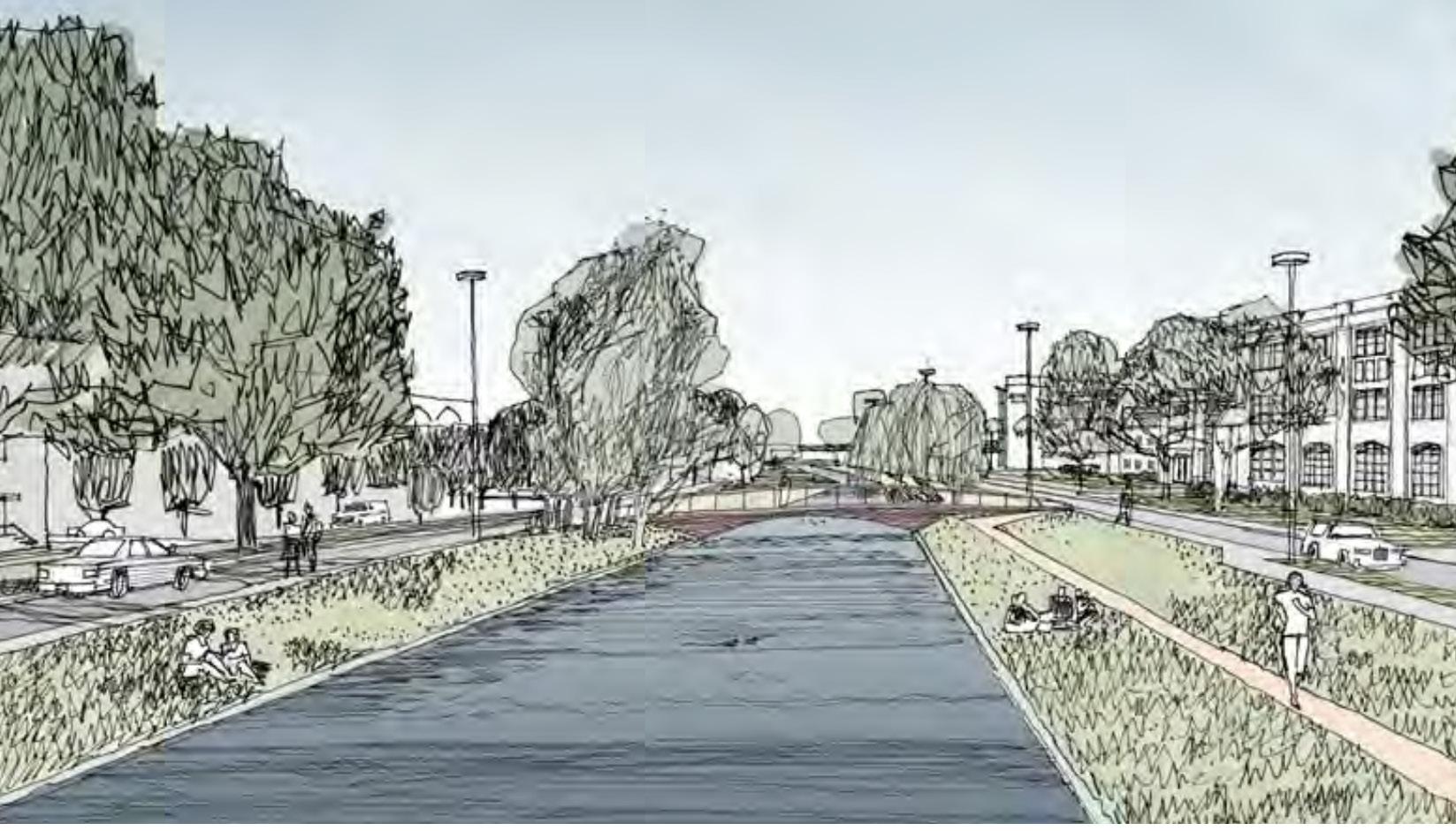
• Every Drop NOLA
• The Water Collaborative
• Louisiana Watershed Initiative
• City of New Orleans Public Works Department
• Water Wise
• LADOT
• New Orleans Redevelopment Authority,
• Louisiana Bucket Brigade
• Sustaining Our Urban Landscape
• Southeast Louisiana Flood Protection Authority
• Thrive 9th Ward
• Water Institute
• Xavier University
• Groundworks New Orleans
• Friends of Lafette Greenway
• Together Gert Town
• Louisiana Watershed Initiative Design Support Program
• Propeller Impact Accelerator
- Water
• Choice Neighborhoods Implementation Grant
• 5-10 years

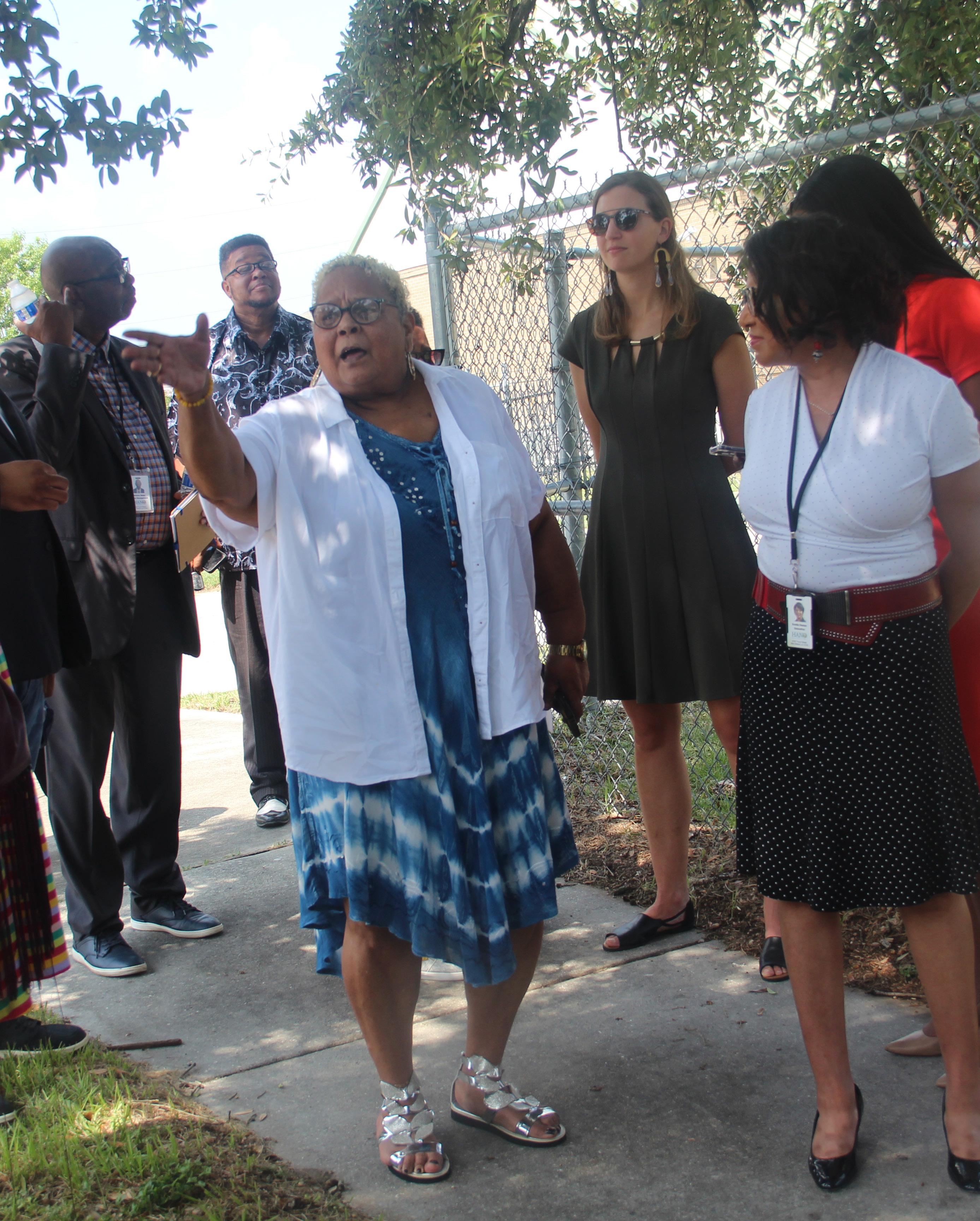
The People Strategies are centered around enhancing opportunities and access to those opportunities for both Marrero Commons and community residents. The People Strategies include actions related to education, health and safety, and income and employment. Strategies include potential lead and supporting partners, as well as potential resources that could be utilized for implementation.
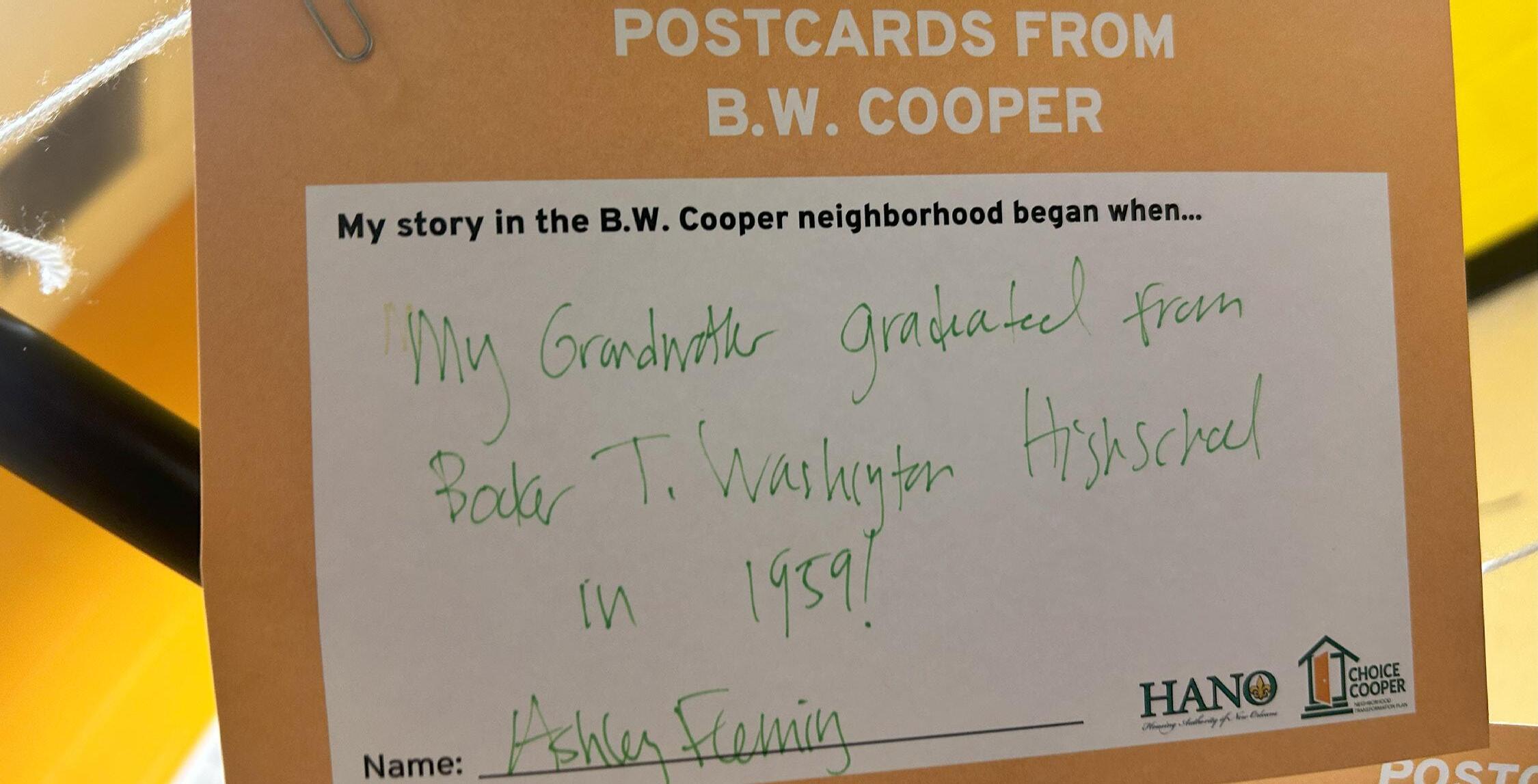
This project would seek to improve the availability and access to mental health services, which could result in healthier residents, a reduction in crime, and the ability to connect to educational and employment opportunities. Many residents have expressed the need for trauma-informed care, since many struggle with severe trauma and grief. 20% of Choice Neighborhood residents listed mental health services as one of their primary unmet healthcare needs.
Recognizing that mental health is often connected to many other issues including nutrition, exercise and the lack of positive role models, a holistic wellness-based program should be designed to foster community connections while helping to strengthen relationships and build trust. It is intended as a way to help create a healthier, more supportive environment. Booker T. Washington High School should be a primary partner in this effort. Research shows that youth that receive mental health services through schools are more likely to continue receiving assistance as they get older.
In health, Propeller’s Impact Accelerator supports entrepreneurs who provide direct health and wellness services, including clinical care, and services that address the social and physical determinants of health in the built
environment and community context domains. By connecting with past or prospective Impact Accelerator participants, the Choice Cooper neighborhood could expand the available services through these local health experts.
1
2
3

Booker T. Washington High School combines strong relationships, frequent exposure to real world experiences, and rigorous college and career preparatory curricula to enable students to be best prepared for success and contribute to their communities. High school staff introduces new rigorous material through a perspective that resonates with students while also providing personalized guidance to create the balance they need to succeed.
While residents noted the strong academic merits of Booker T. Washington, they expressed that high school students often do not have creative or constructive outlets for their specific interests. Many express interest in participating in skill and workforce development training, but are pushed towards more traditional school programming. There was also concern that high schoolers would not elect to travel to various activities, either for lack of transportation or simple inconvenience. After-school activities hosted at Booker T. Washington will give high school students the access and opportunity to put their energy into constructive skill-building.
Partnerships with local organizations can strengthen the connection between the students and potential resources postgraduation. Xavier University could provide early skill-development while encouraging
students to build their academic portfolio for college enrollment. Propeller could also offer entrepreneurship programming to build interest in the Impact Accelerator Program. Other discussed programming included auto mechanics, construction, shoe repair, brick masonry, sewing, etc.
There was also general interest in bringing back many of the services offered for students prior to Hurricane Katrina. The school formerly offered a health program and a daycare for high school students with kids. Reestablishing amenities through capacity building could boost graduation rates and student satisfaction, addressing many of the stresses that students may face outside of school.

The Plan recommends that local nonprofits including VOICES NOLA worth with Booker T. Washington High School and the broader community establish a mixed-generational mentorship program.
During the listening and learning phase of the Plan, residents expressed concerns about computer literacy, health and wellness, and social activity for seniors in the neighborhood. Residents also raised the issue of children and teenagers without parental figures or guidance during critical development years. The proximity of the new senior living center to the high school could present an additional opportunity to connect across generations and provide learning opportunities for both groups.
Participants will be paired based on interests they share and skills they need. Each meeting will cover a different topic, including leadership skills, time management, or computer skills. Guest speakers from supporting organizational partners will lead a group discussion on the topics at hand and participants will have the chance to break off and have individual conversations with their respective mentor.
The program is intended to help build each individual’s life skills while forging a strong relationship within their community.
YOUTH PROGRAMS SOME SCHOOL-AGED CHILDREN CURRENTLY PARTICIPATE IN: 1 1 2 3
4
AFTER SCHOOL PROGRAM ROSENWALD / NORD CENTER
/ PERFORMING ARTS / MUSIC
REASONS SOME SCHOOL-AGED CHILDREN DON’T PARTICIPATE IN OUT OF SCHOOL ACTIVITIES:
DON’T KNOW WHAT PROGRAMS ARE AVAILABLE 1
NO PROGRAMS AVAILABLE 2
• Booker T. Washington High School
• VOICES NOLA
• Marrero Commons Resident Council
• Thrive New Orleans
• KIPP New Orleans Schools
• New Orleans Council on Aging • AARP
Sage Center • Urban Strategies
Humana
PROGRAM HOURS DON’T WORK WITH SCHEDULE 3
PROGRAMS SCHOOL-AGED CHILDREN WOULD PARTICIPATE IN THE FUTURE:
ROSENWALD / NORD CENTER 1
2 SUMMER PROGRAM 3
AFTER SCHOOL PROGRAMS
MENTORING PROGRAM 4

3-5 Years
The Plan recommends strengthening the current Choice Cooper Resident Council. The existing Council has very little capacity to expand or properly reach the community, which means residents are not informed of the opportunities that a Resident Council can provide. Advertising and expanding the council strengthens its voice in community discussions around future change and advancement. Council seats would be open to all interested residents in the Choice Cooper area.
The Council should meet monthly to strategize ways of promoting the Choice Cooper neighborhood through cultural programming, events and more. The main goal of the Council should be to continually advocate for the well-being of the community. Members can also work with HANO to create programming that keeps the residents engaged as the Transformation Plan begins to be implemented.
The Council could also incorporate mediation, advocacy, and restorative circle training to empower residents in mediating conflicts within their communities.
To keep momentum going outside of the Planning Process, the Resident Council can host annual family-friendly events, which would promote the projects that have been created from resident and working group input.
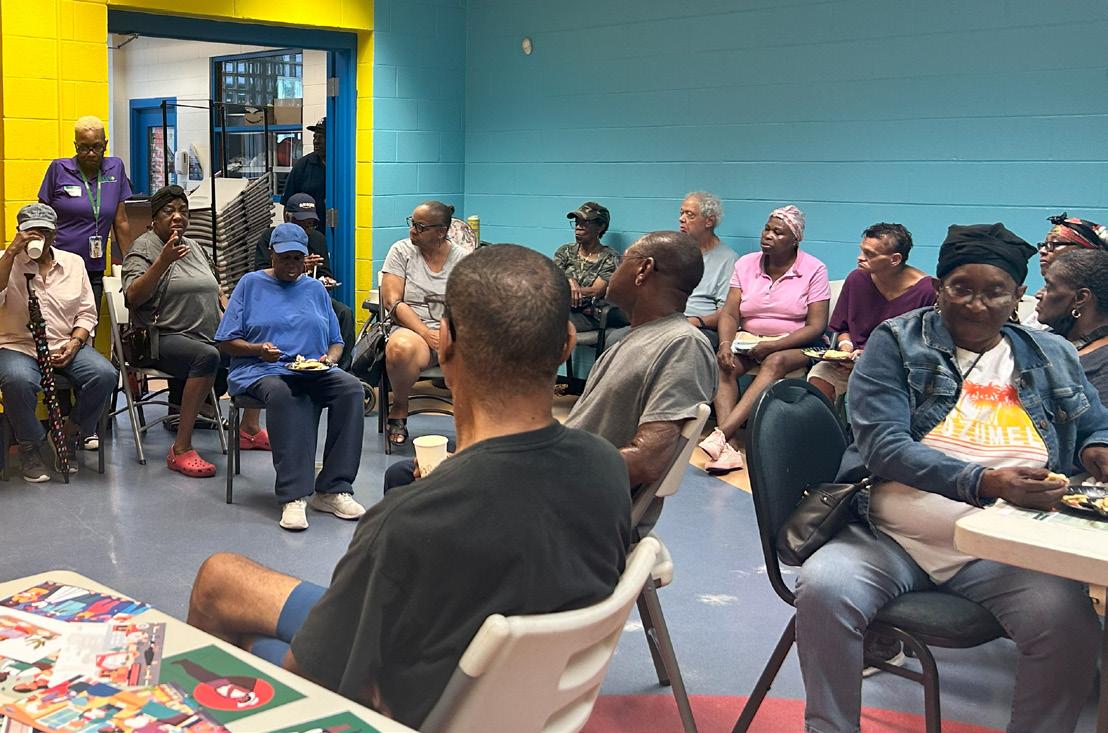
The Resident Opportunity and Self-Sufficiency (ROSS) program is designed to help public housing residents connect with vital services available in their communities based on household needs. ROSS service coordinators are enlisted to build relationships with local organizations and services related to employment, health, education, financial literacy, disability services, and more to remove the barriers between residents and resources. ROSS coordinators are expected to understand the needs of the larger community and the individuals who meet with coordinators to set their program goals. ROSS also provides specialized services for elderly residents and residents with disabilities.
Marrero Commons is currently included as a targeted housing site for ROSS grant funding, so coordination funds cannot be used. The Plan recommends that Marrero Commons be a focus area for promotion of the ROSS program.

Many Choice Cooper community members are aware of their personal health needs but face barriers to access for health services in the area. 18% of Choice Cooper Neighborhood residents rate the healthcare that they receive as fair or poor quality. Residents reportedly struggle with expensive co-pays and fees which make health care expensive even with insurance coverage. Transportation also poses an issue for elderly residents.
A partnership with Odyssey House can provide mobile health services in central neighborhood locations or at the proposed senior living facility. Proximity to the biomedical district and local universities also present opportunities for an increase in offered healthcare services. The guide will connect residents with nearby resources and provide information about eligibility, cost, special events, and transportation options.
children in the household to be in good health

Residents have reported a need for more programming through the Rosenwald Center, which has been a resource for community members of all ages. A particular concern was expressed for the lack of teen programming, especially for ages where students begin making decisions about their future career and lives. Residents saw potential to partner with local organizations to provide workforce development programming for older teens, focusing on training in thriving fields like green infrastructure and construction.
Instituting programs for teenagers that have already been successful at other New Orleans recreation centers is an easy way to introduce more variety without having to create an entirely new program. This includes a teen council, which is a year-long enrichment-based program aimed towards empowering teens through event planning, character development and monthly recreation opportunities. Running the Teen Internship program and Teen Career Camp through Rosenwald will also allow local students to get started in vocational training. A long-term goal could be to create a permanent Teen Center, as seen at other locations like Lyons and Joe W. Brown Rec Centers, which will be a fun and safe place where local teens can socialize.
The community also highlighted the need for more single-parent household support programs that can provide assistance or mentorship for children and parents that need it. Current programs at Rosenwald are focused more towards seniors and youth.
RESIDENTS NEED ASSISTANCE WITH THE FOLLOWING SERVICES:
1
2
3
4
HOMEOWNERSHIP COUNSELING
MENTAL HEALTH COUNSELING
NUTRITION / HEALTHY COOKING CLASS
HEALTH, WELLNESS, & PHYSICAL FITNESS
RESIDENTS ACCESS THE INTERNET THROUGH A SMARTPHONE
Of Choice Neighborhood residents surveyed, 11% of households indicated that nutrition and healthy cooking programs were among their primary unmet healthcare needs.
The Plan recommends instituting comprehensive local food programming, which extends from community gardens to nutritional cooking demonstrations. One priority would be the establishment of a mobile food pantry in collaboration with Second Harvest Food Bank, which supports mobile pantries across southern Louisiana. A main concern highlighted in the working group meetings was that seniors may need groceries delivered but are not able to schedule deliveries online due to lower computer literacy rates and a lack of internet access. It is recommended that a discussion is held with local grocery store chains about whether groceries can be delivered on a consistent basis for senior residents without the requirement of internet service.
Since Rosenwald Recreation Center already focuses on fitness and health programs, nutrition education programs should be included in monthly programming. Rosenwald can invite a local nutritionist to teach healthy eating practices and do simple cooking demonstrations once a month to promote healthier living.

The proximity between Xavier University of Louisiana and the Gert Town neighborhood presents a unique opportunity to foster a relationship between residents and academic programs. The Xavier University Community Outreach Center works with surrounding communities to address services that the University can provide. Computer literacy programs are of particular interest to residents, especially as job opportunities and training is increasingly digital. Xavier currently partners with Rosenwald Recreation Center to offer special clinics, which can be expanded to include monthly programming or events. In the short-term, Xavier students could assist the community in neighborhood and skill-building activities, which would ideally lead to residents being provided opportunities to become students or staff with Xavier in the long-term.
Xavier’s Institutional Master Plan is currently focused on infill for underutilized property owned by the school and also intends to add to the neighborhood through street beautification and safety projects.
As Xavier expands, the institution has been planning for higher density and increased student housing in a community that has historically been largely single-family. Residents who have established roots near Xavier fear that they may be displaced. The Gert Town
Master Plan includes elements to better define the land use relationship between the University and Gert Town. The University is understanding of the fact that plans for expansion would need direct approval from Gert Town residents. Special sensitivity should be paid as the University approaches its upcoming anniversary, which may lead to increased enrollment and heightened opportunity for the University to expand.
• Xavier University of Louisiana Community Outreach Center
• Gert Town Together • Rosenwald Recreation Center
• Propeller • Booker T. Washington High School • HANO
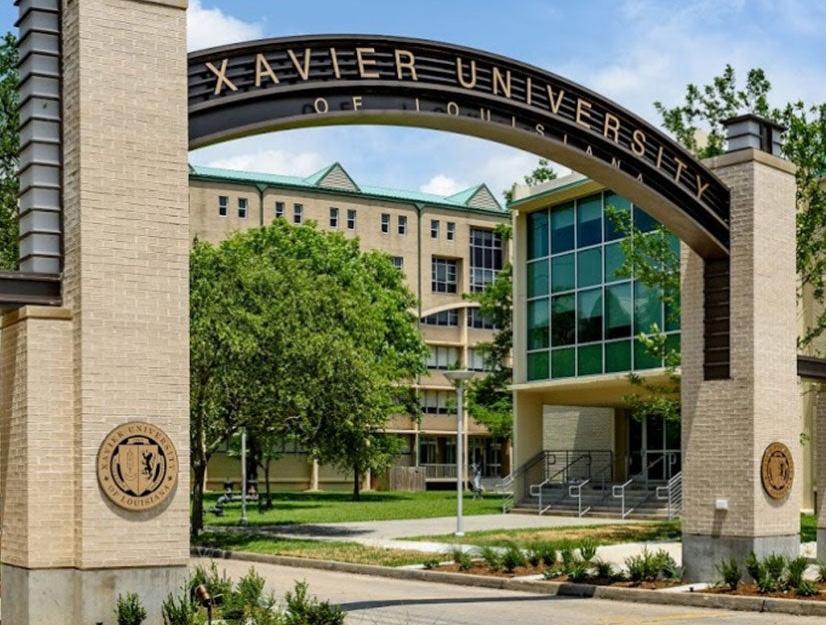
Through the Department of Housing and Urban Development, the Section 3 program requires that recipients of certain HUD financial assistance, to the greatest extent possible, provide training, employment, contracting and other economic opportunities to low- and very low-income persons. This applies especially to recipients of government assistance for housing. Section 3 also requires businesses that provide economic opportunities to lowand very low-income persons. Including this stipulation in construction or maintenance contracts will ensure that Marrero Commons residents will be prioritized when hiring, so that community members can be part of neighborhood improvements as they develop, fostering a greater sense of pride in these projects.
To provide a precedent for future projects, the Early Action Project should include stipulations that all construction elements will prioritize contracts with residents of Marrero Commons. All art installations will require pouring concrete bases and other stability measures, and porch light replacements will require qualified maintenance workers for installation. Including residents in the Early Action process will strengthen community buy-in on neighborhood improvements, building forward momentum for future improvement projects.
Arts New Orleans
Re-entry programs provide services that help people transition from prison or jail back into their communities. According to the United States Census Bureau Opportunity Atlas, approximately 1.3% of Choice Cooper neighborhood residents were incarcerated in 2020, which is higher than both the Louisiana and national incarceration rate averages. Finding housing, healthcare, and employment is a major struggle for previously incarcerated individuals without strong support networks.
A number of programs support eligible formerly incarcerated individuals in the Choice Neighborhood. VOICES NOLA is an advocacy group fighting for the formerly incarcerated to have voting, medical, employment, and housing rights. First 72+ helps with pre-release support to better prepare people for reentry, and also provides transitional housing, clinic access, case management services, and internet access to individuals directly after incarceration. Sisterhearts is a local thrift store that raises funds for re-entry services including personal development training, transportation, bank account support, driver’s license support and other resources to assist returning citizens as they reintegrate into society. Operation Restoration targets specifically formerly incarcerated women and girls, offering transitional housing, posting bonds for
residents who cannot pay, and advocating for reformation of the justice system both locally and state-wide.
Beyond the goal of providing stability for reentry participants, a broader goal is to minimize the impacts of incarceration on relatives and neighbors. Partnering with Daughters Beyond Incarceration to help girls with parents who have been incarcerated would help mitigate trauma and decrease recidivism by providing healthy support networks for those affected by incarceration.

• Voice of the Experienced
• Operation Restoration
• Daughters Beyond Incarceration
• SisterHearts
• First 72+
• New Orleans Day Reporting Center
• Voice of the Ex-Offender
• STRIVE Fresh Start
• New Orleans Police Department
• New Orleans Central Lockup
• New Orleans Parish Sheriff’s Office
• OPSO Re-Entry and Reunification Grant
• Community Incentive Grant Program
• Emergency and Transitional Housing Program
• 1-3 Years
Propeller is a local 501(c)(3) nonprofit that grows and supports entrepreneurship. Despite being located on the edge of the Choice Neighborhood, many residents are unaware of the work that Propeller does. Other residents have expressed concerns about inefficiencies or the percieved lack of cultural competency with management.
The Plan recommends that Propeller work with residents to improve overall accessibility and to strengthen connections to their programs while offering the co-working space to residents who may need it.
11% of survey respondents indicated that they or someone in their household requires entrepreneur training. Connecting residents to Propeller’s Impact Accelerator could help launch local business initiatives. The Impact Accelerator is designed for growth-stage entrepreneurs who are committed to building businesses grounded in financial viability, social impact, racial equity, and a demonstrated commitment to the prosperity of the city and region. Propeller connects businesses with contract opportunities, markets, and customers to put their business on the fast track for growth.

The Biomedical District is an economic development district that works to grow the biosciences sector of the New Orleans economy. Health care, economic development, higher education, business, and nonprofit leaders are working collaboratively to harness expertise, assets, and opportunities to position New Orleans as a global center of excellence in research and healthcare specialties. The BioDistrict aims to become a model for equity and economic inclusion, including small business creation and local hiring and training to increase the wealth of residents in the region.
The BioDistrict Strategic Plan has developed community engagement goals for the next year, which include formalizing a community advisory working group, developing a work plan, and developing a broader community engagement strategy. Within this timeline, the strategic plan also aims to create forum partners to collaborate towards an enhanced workforce development strategy.
Capitalizing on the BioDistrict’s proximity and outreach commitment, the Choice Neighborhood Plan suggests connecting residents with local hiring and training resources in the biomedical field. Delgado
• BioDistrict New Orleans • HANO
• Urban Strategies • Thrive New Orleans • New Orleans Career Center
• Delgado Community College Workforce Development
• Tulane University
• LCMC Health
• STEM Nola
• Xavier Medical School
Community College offers medical assistant, patient care technician, and health coach certifications for community members. The Plan suggests partnering with Tulane University to offer community training programs in healthcare with direct connections to BioDistrict institutions, which could lead to higher enrollment in undergraduate healthcare programs.

• Healthcare Workforce/ Collective Impact Grants
• Addiction Medicine Fellowship Program
• Advanced Nursing Education Grant
• Public Health Training Centers Program
• Louisiana Community Health Worker Trainer Program
• 3-5 Years
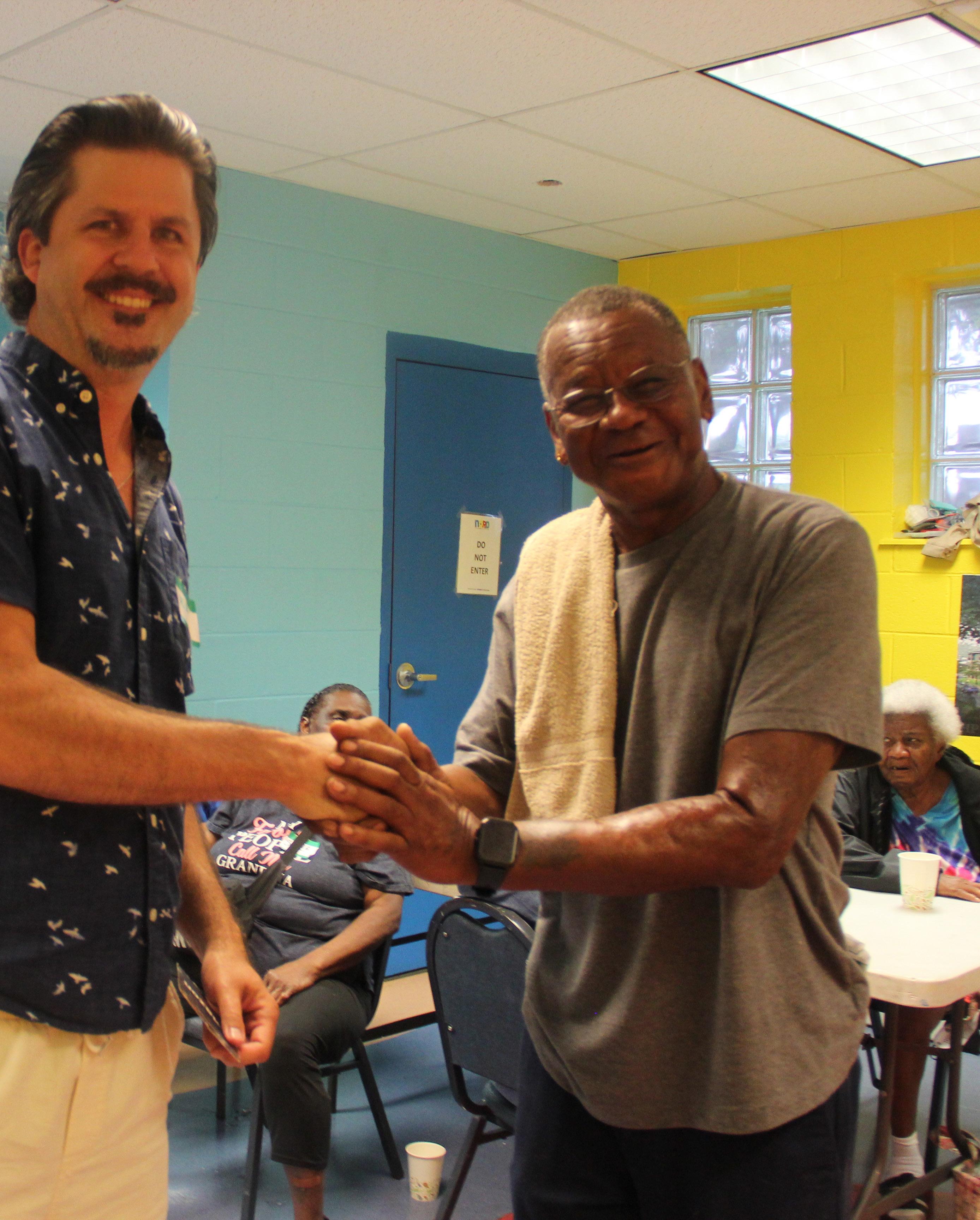
The transformation of the Choice Cooper neighborhood is actively progressing and poised for continuous evolution. Key partners are making substantial investments in the area, yet the realization of the specific priorities outlined in this Transformation Plan is expected to unfold over the next 10 to 15 years, influenced by various factors such as financing and market conditions. For the successful implementation of the Plan, a broad network of collaborative partners is essential; many of which are already executing pivotal projects within the neighborhood.
A high-quality, mixed-income housing program, coupled with a comprehensive focus on selfsufficiency, will empower the Choice Cooper community to transform into a thriving Choice Neighborhood—ultimately becoming one of New Orleans’ most complete communities, fundamentally supported by a sustainable implementation and governance framework.
The collaboration between HANO and the New Orleans Redevelopment Authority (NORA) will continue to strengthen as they work with public and private agencies, philanthropic organizations, businesses, cultural entities, and a diverse range of community stakeholders. This joint effort aims to gather and leverage the resources necessary for the long-term financial sustainability of the Plan while fostering community support and active involvement in its execution. By strategically directing resources to specific areas and harnessing the compounding effects of coordinated actions, the Choice Cooper Neighborhood Transformation Plan is well-positioned to garner the local backing vital for establishing the area as one of the city’s most livable communities.
Utilizing the Plan as a foundational resource, HANO and its partners will strive to secure funding aimed at actualizing the People, Housing, and Neighborhood Elements. This encompasses pursuing grant opportunities that are relevant for funding diverse projects, alongside understanding their timelines, requirements, necessary partners, and matching commitments.
As they progress, HANO will persist in seeking financial resources for both early-stage and ongoing implementation of initiatives that support HANO residents and other low-income community members. Their goal is to initiate neighborhood improvements cited in the Plan while regularly evaluating performance metrics to ensure alignment with objectives.
Beyond seeking project-specific funding for the Choice Cooper Transformation, HANO is additionally engaged in several initiatives and efforts that promise to benefit residents and establish best practices. These efforts will be instrumental as HANO advances the revitalization of its properties alongside other housing sites.
With established partnerships across multiple City of New Orleans departments and strong market interest in housing and economic development, HANO is confident in its ability to attract the necessary investments. This collective momentum will support both the housing vision articulated in the Plan and a myriad of related neighborhood improvement strategies and initiatives.
The Implementation of this Transformation Plan cannot be accomplished alone by a single entity. The many private, non-profit, and philanthropic partners who helped shape the CN Plan also remain committed to playing significant roles in implementation. As strategies were drafted and developed, HANO worked diligently to align strategies with the appropriate partners within their broad network.
HANO will bring on an outside entity to serve as the People Lead. This partner will provide the bulk of cross-agency coordination and organization and will serve as the primary entity for managing day-today operations, focused on assisting target residents and families. The team will adopt a framework that prioritizes strategy development aimed at achieving stability and promoting thriving outcomes for families. This framework will be:
• results-oriented and based on data, establishing clear performance indicators and utilizing data to monitor progress and make necessary adjustments
• focused on building trust and addressing disparities while acknowledging the impact of race, class, and culture on the opportunities available to vulnerable families
• collaborative, recognizing that the ability to reach consensus and make collective decisions allows leaders to align their efforts and drive progress toward desired results
• capable of managing both adaptive and technical challenges that may hinder alignment among families, community partners, and stakeholders in neighborhood revitalization efforts
HANO will serve as the Housing Lead, working in partnership and collaboration with Providence Community Housing as development moves forward. Providence Community Housing has experience in developing affordable housing for low- and moderate-income persons locally. The Housing Leads will work to secure the resources necessary to develop the replacement housing and will coordinate with private investors and developers working on rehab and smaller-scale infill efforts to dramatically improve the housing stock throughout the Choice Cooper community. Providence Community Housing will report on the unit types, sizes, and price points of new homes developed for rent and for sale. Providence Community Housing and HANO will track households living in the new homes and will maintain information on HUD-assisted housing units and tenants living in these homes.
The New Orleans Redevelopment Authority, will serve as the Neighborhood Lead. NORA will assume responsibility for public infrastructure improvements and will allocate funding for improvements that complement and reinforce Choice-funded implementation activities. NORA will continue to organize and undertake community-led projects while holding all project leads accountable to the plan’s vision and the community’s shared values and priorities. NORA will maintain updated administrative data tables with the most current American Community Survey and Census data, plus supplemental data derived from future community surveys, data collection, and analysis undertaken by project partners.
An Implementation Advisory Committee (IAC) will be formed to help guide implementation of the Plan. The IAC will meet quarterly to provide strategic guidance, review progress on activities to ensure that they address community needs and catalyze investment in a way that produces measurable beneficial outcomes to residents and the overall neighborhood. Representatives from the Lead entities will remain in active communication with the IAC, attending meetings and providing updates on progress quarterly.
HANO and their selected People Partner will establish a data tracking and sharing strategy to help all project partners and funders measure progress and implementation impact. As a first step to implementation, HANO will work with the NORA and community members to confirm performance measures for each strategy, as well as a data sharing agreement to ensure that as the work is implemented, the community and partners will be able monitor progress toward each goal and track long-term change. Through data sharing, partners will also be able to identify early on when strategies may not be working and need to be revised. The Lead entities will produce an annual report for the community at-large each year while Choice implementation activities are underway.
The CN Team, led by HANO, has been actively working to establish site control for sites indicated in the Housing Plan. The Housing Leads will continue to work with NORA staff to align the housing designs for the new mixed-income development with the zoning code and prior plans and studies. Consideration has been given to building scale, massing, and materials, which complement the adjacent fabric of the Choice Cooper Neighborhood.
Making the vision of the Choice Cooper Choice Neighborhood Plan a reality will require a number of private, state, local and federal funds. Central to this is the use of the Low Income Housing Tax Credit from the Louisiana Housing Corporation (LHC). Additionally, LHC will be an integral partner in funding this Plan as it also offers the State Low Income Housing Tax Credits (LIHTC) and other resources which will need to be utilized for implementation.
Implementation of the Plan will require a range of funding sources to create the conditions necessary to redevelop the replacement housing sites, attract private investment, and produce the types of housing at the density supported by the community with an appropriate mix of affordable units. Potential sources include:
• Tax Credit Equity – Low Income Housing Tax Credits (LIHTC) are expected to be a primary source of funding for all multifamily residential development phases. Both nine percent and four percent LIHTC credits will be needed to finance the planned replacement housing. Securing the nine percent credits will require active pursuit of these competitive resources with the LHC while the four percent credits are more readily available. Planning for a mix will enable the development of replacement units to proceed more quickly, even concurrently.
• Choice Neighborhood Implementation Funds – The Choice Neighborhood Program can provide between $30-$50 million in implantation funds to reconstruct distressed public and assisted housing, to invest in the neighborhoods surrounding them, and to support the health, education, and economic success of families.
• Private Equity and Conventional Debt – As a mixed-income development approach, the replacement housing projections will be able to support private investment through conventional mortgages.
• Public Housing Funding – HANO will work to secure Section 8 Project-Based Vouchers to support some of the rental units at the replacement housing sites.
• Deferred and Reinvested Developer Fee – As develop or co-developer, Providence Community Housing may receive some of the developer fee for planned residential and non-residential development projects and reinvest these fees to implement future phases of the Plan