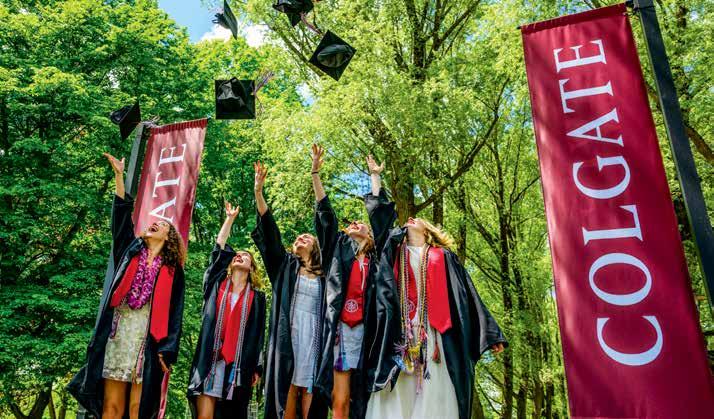
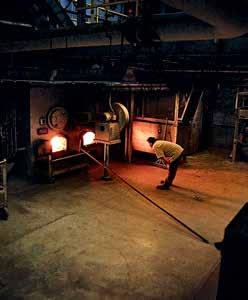
Milestones achieved under the University’s leadership P.30
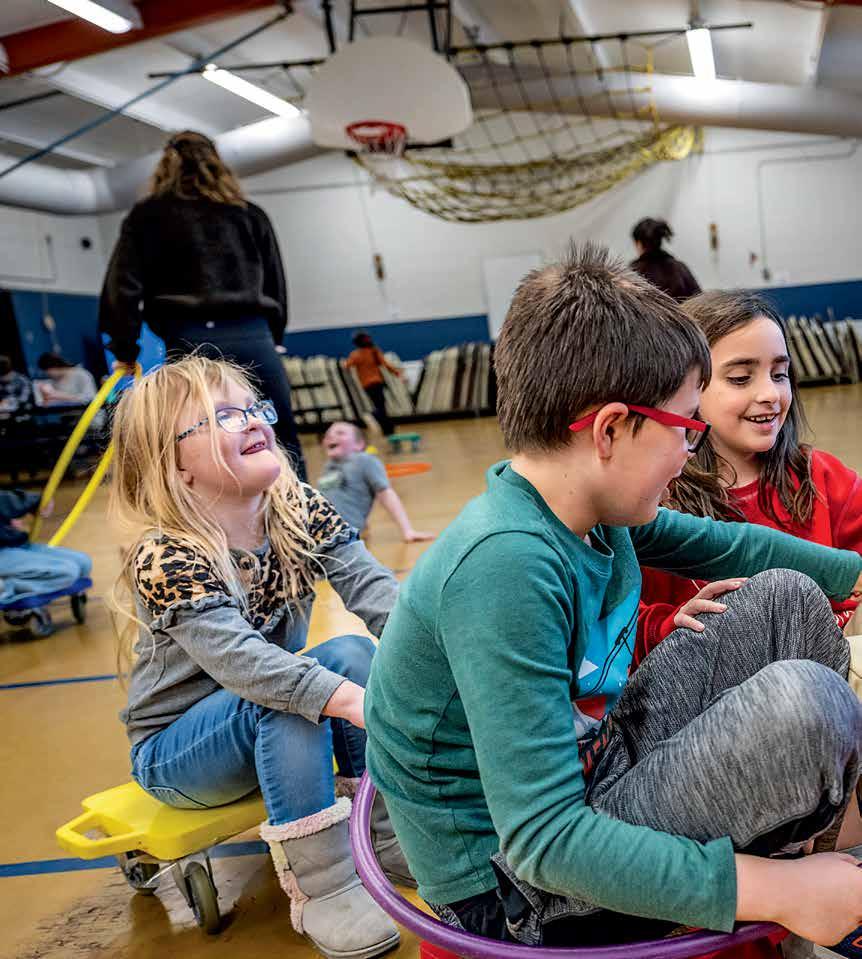
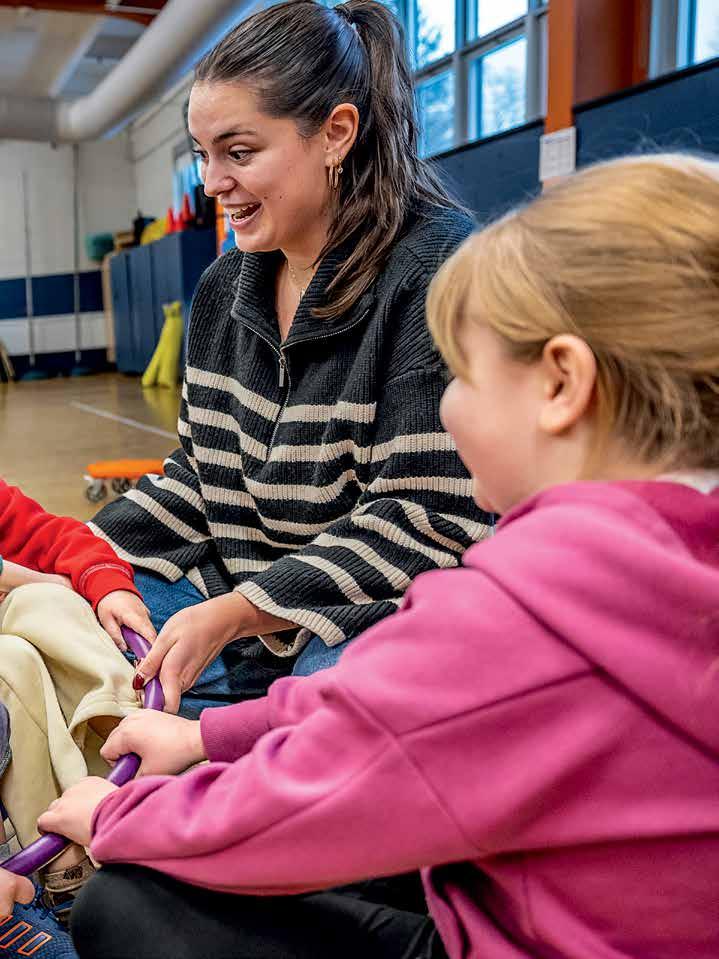
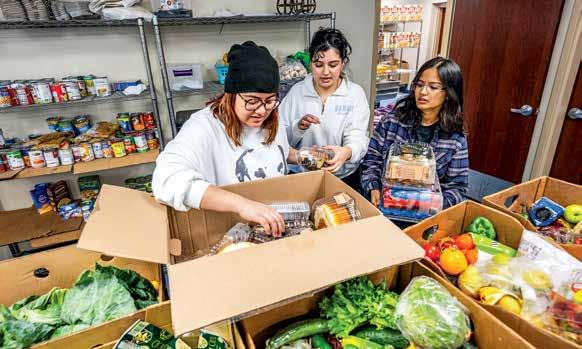
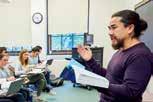
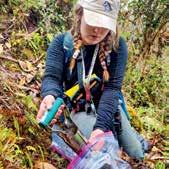
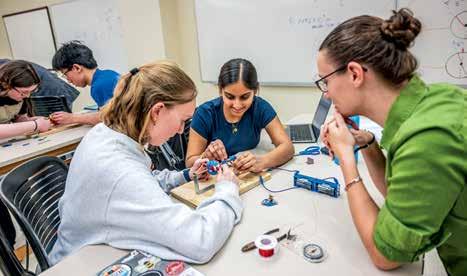
Sarah Green ’26 is part of Seneca Street Mentors, a volunteer group that supports elementary students in Oneida, N.Y., through fun afterschool activities. The group is part of the Max A. Shacknai Center for Outreach, Volunteerism, and Education (COVE). Read more about the COVE, in honor of its 25th anniversary, on p. 18.
look
Coop convenience: The new C store — a one-stop shop for produce, school supplies, and wellness items — in the O’Connor Campus Center had its grand opening on Colgate Day in February (the 13th). A student survey informed decisions like making fresh produce, from apples to mangoes to dragon fruit, available.
Read this issue and all previous issues at
SPRING 2026
Greg Steinmetz ’83, P’23,’26 looks at various ways the University has popped up in
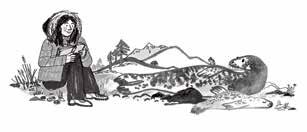
Taking the Plunge Into the Heart of the Story
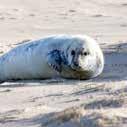
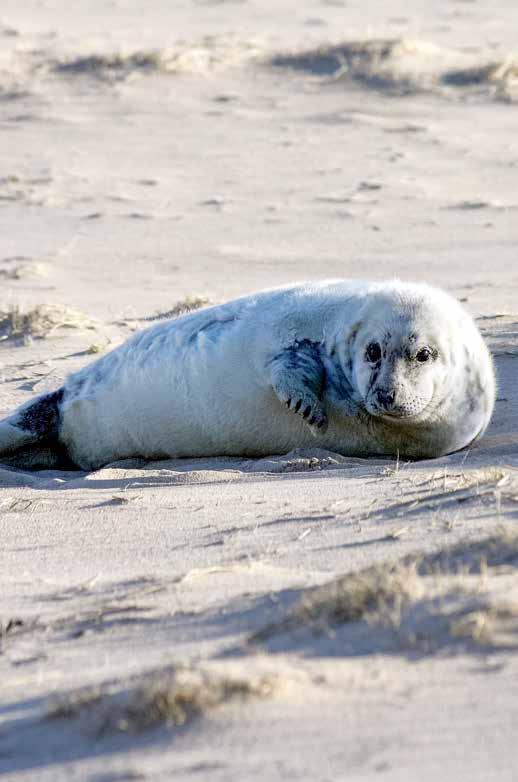
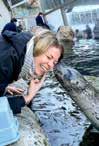
Alix Morris ’05 explores the depths of humans’ relationships with seals. 26
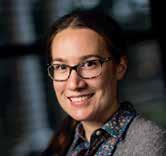
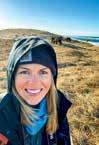
a Professor Why do weather apps give conflicting forecasts? Professor Adam Burnett provides answers.
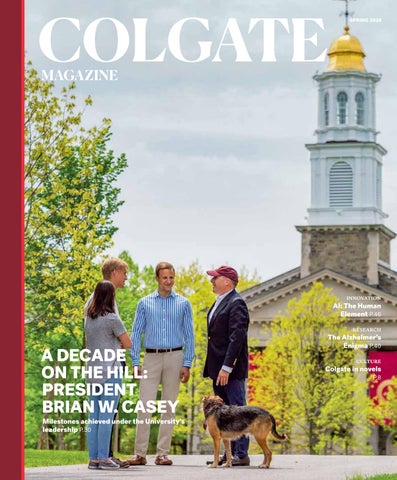
A Decade on the Hill
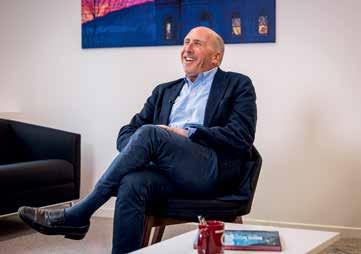
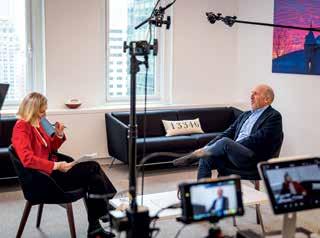
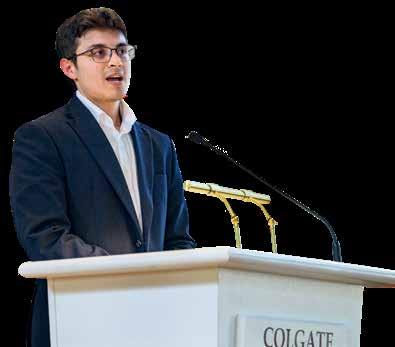
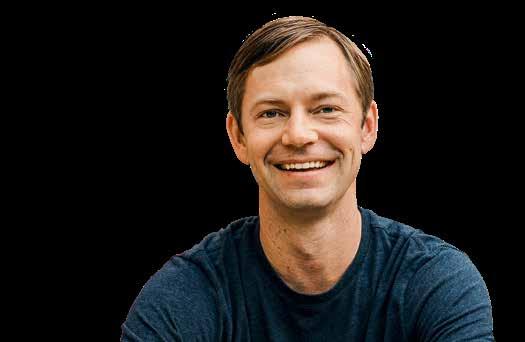
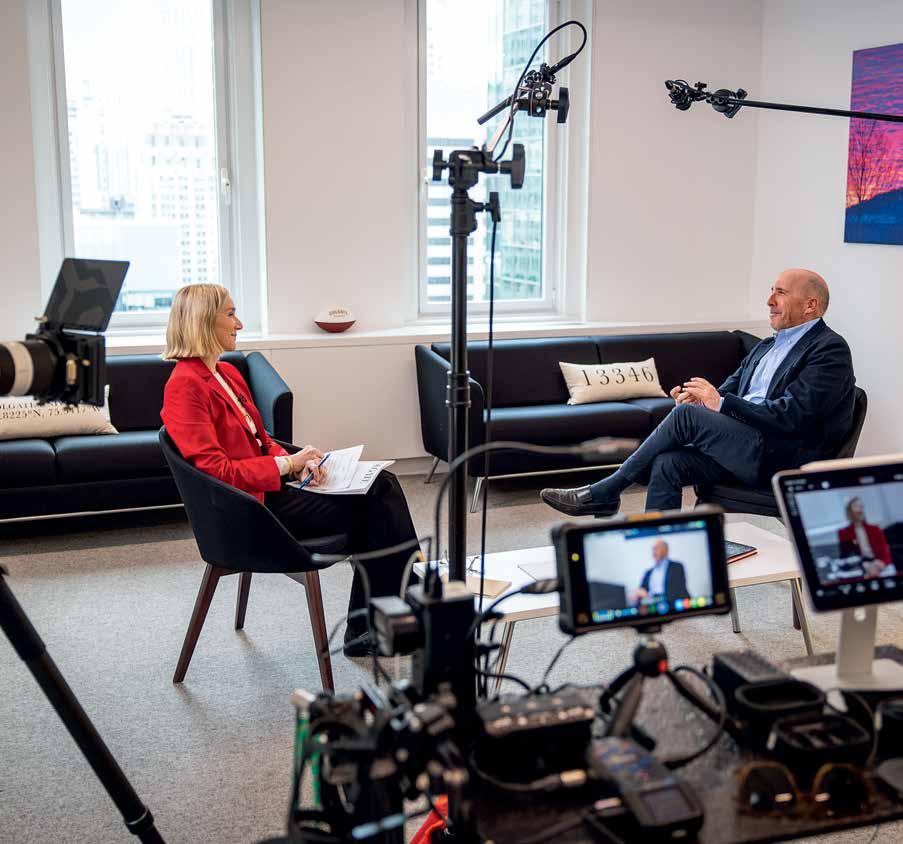
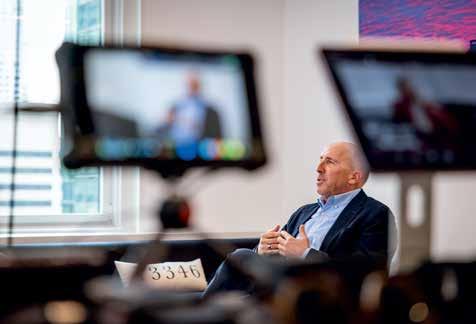
President Brian W. Casey reflects on his first 10 years at Colgate in an interview with Lee McConaughy ’82 Woodruff. 30
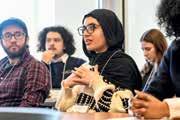
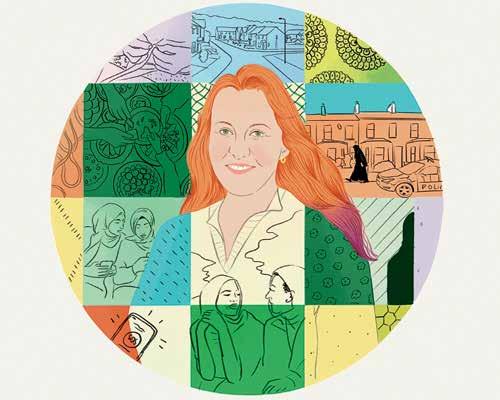
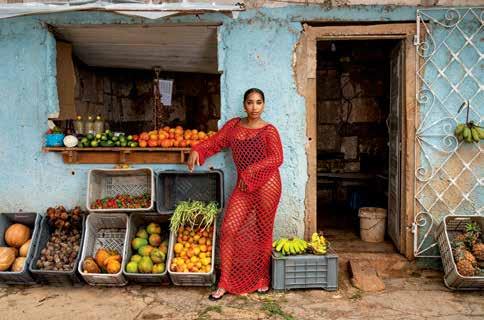
Amanda Lubit ’00 documents the resilience of Muslim migrant women in Northern Ireland, the “race-hate capital of Europe.”
Kendra Brim ’11 is now helping fellow former athletes.
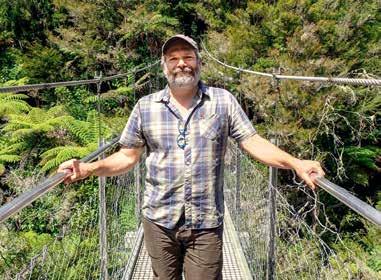
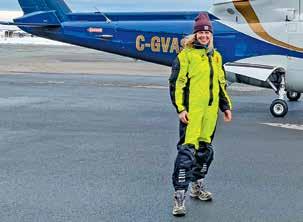
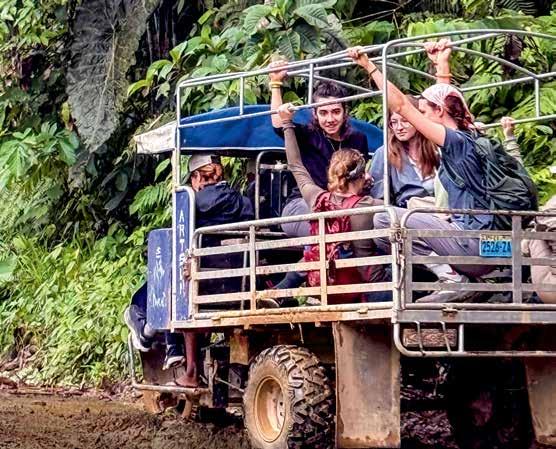
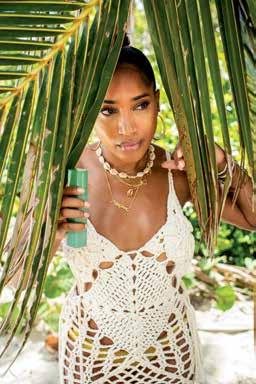
A Tropical Ecology course takes students into the rainforest and mountains.
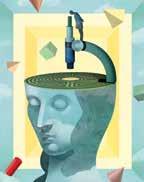
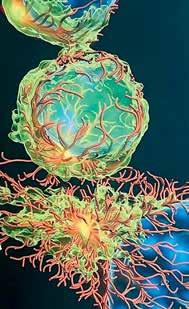
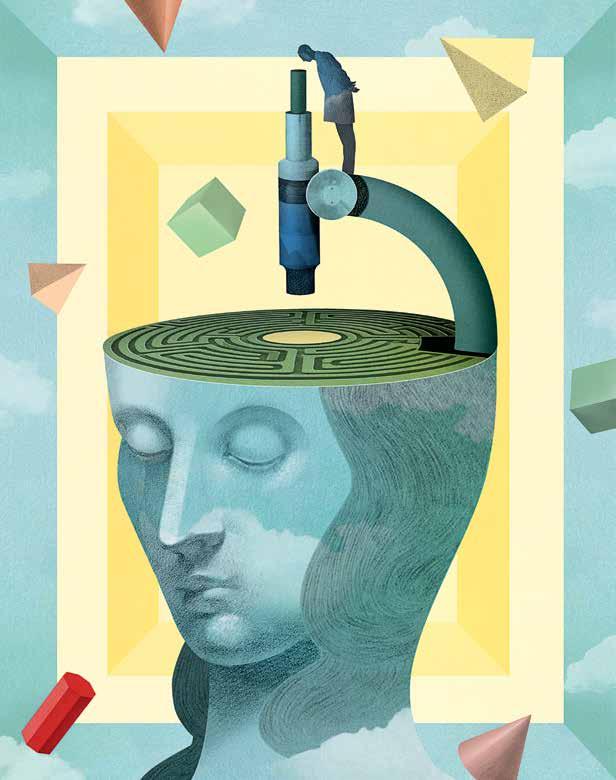
The Alzheimer’s Enigma
Alumni physicians and researchers are working to solve the mysteries of neurodegenerative care.
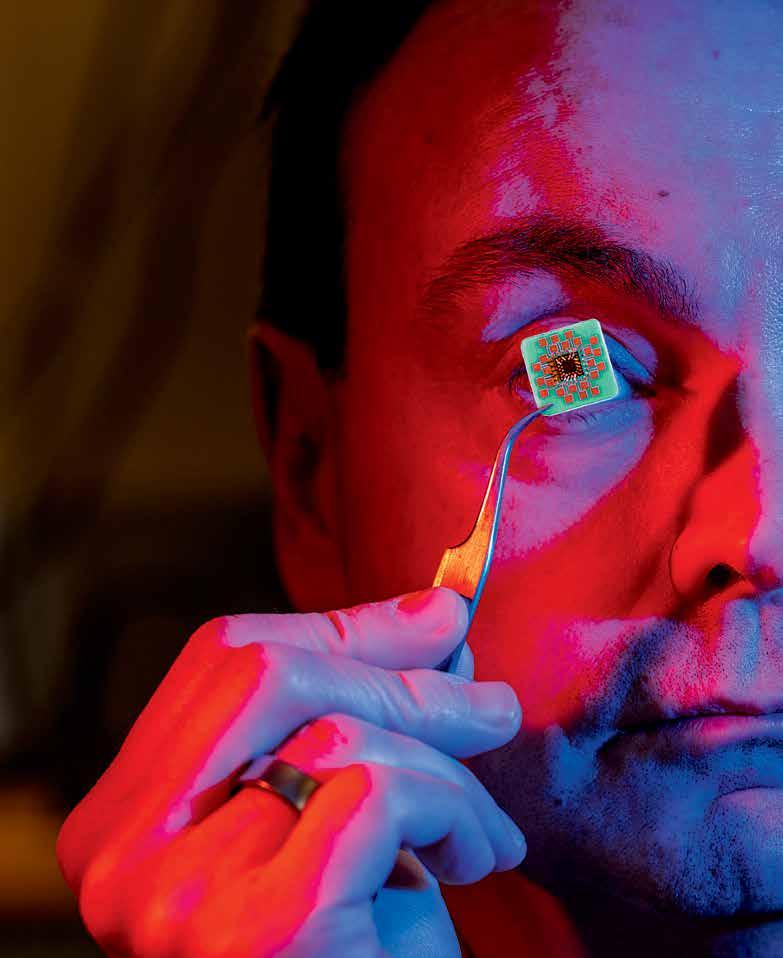
Artificial Intelligence, Authentic Ingenuity
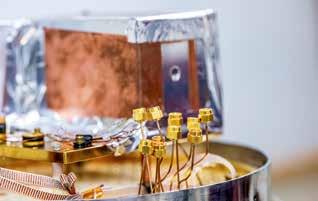
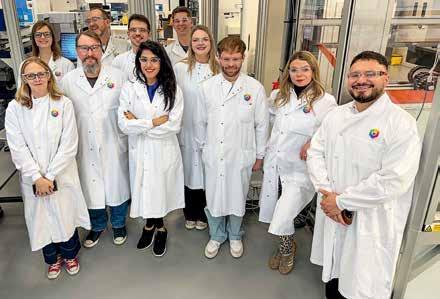
Professors and alumni are examining the hardware, ethics, and applications that will define the next era of AI innovation.
Cover: Photo by Mark DiOrio
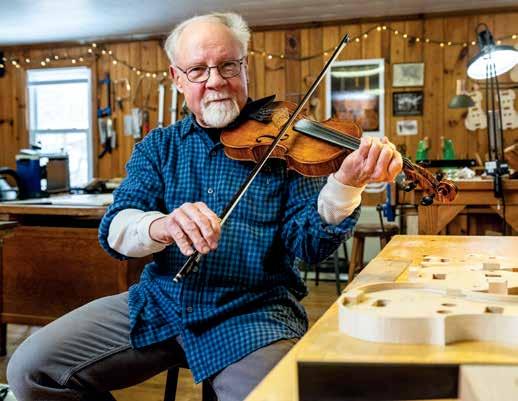
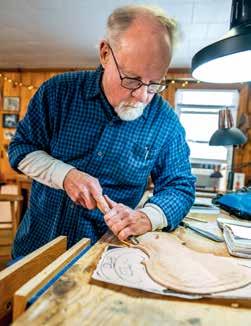
Shaping Sound
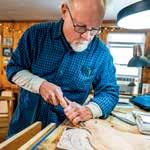
Chris Sekerak ’73 handcrafts replicas of legendary violins.
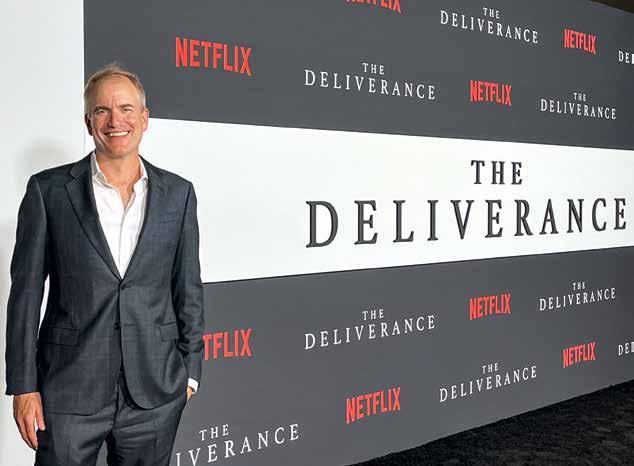
How David Coggeshall ’98 Learned to Stop Worrying and Trust the (Family) Plan
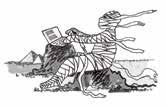
The screenwriter’s new films include Matchbox: The Movie and The Mummy 4
The audience wants something that’s real, authentic, and made with love.
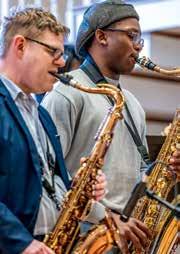
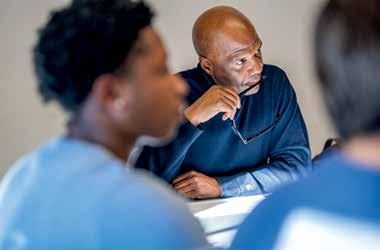
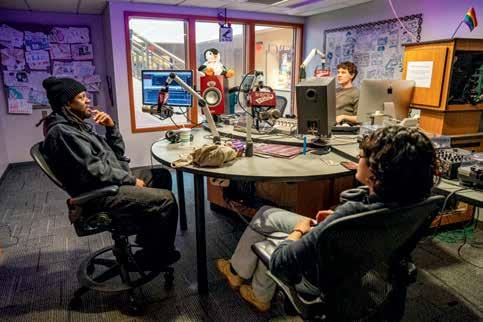
Bobby Carter of NPR’s Tiny Desk Concerts visited Colgate as the Clifford Family Innovator in Residence, p. 22
Interim VP for Communications L. Hazel Jack
Director of University Publications
Aleta Mayne
Assistant Director, University Publications
Mary Donofrio
Assoc. VP for University Communications
Mark Walden
Senior Art Director
Karen Luciani
University Photographer
Mark DiOrio
Communications Specialist
Kathy Jipson
Contributors: Kelli Ariel, asst. dir., web and digital platforms; Travis Clines, advancement communications mgr.; Stephanie DeVries, communications mgr., centers and institutes; Bernie Freytag, creative dir.; Dave Herringshaw, sr. digital production specialist; Garrett Mutz, sr. designer; Rodrigo Santiago, sr. mgr., communications and creative media; Amber Springer, web content specialist; Rebecca Taurisano, assistant dir., advancement communications
Printed and mailed from Lane Press in South Burlington, Vt.
Colgate Magazine Volume LV Number 2
Colgate Magazine is a publication of Colgate University. Online: colgate.edu/magazine Email: magazine@colgate.edu Telephone: 315-228-7407
Change of Address: Alumni Records Clerk, Colgate University, 13 Oak Drive, Hamilton, NY 13346-1398 Email: advrecords@colgate.edu Telephone: 315-228-7453
Opinions expressed are not necessarily shared by the University, the publishers, or the editors. Colgate University does not discriminate in its programs and activities because of race, color, sex, pregnancy, religion, creed, national origin, ancestry, citizenship status, physical or mental disability, age, marital status, sexual orientation, veteran or military status, predisposing genetic characteristics, domestic violence victim status, or any other protected category under applicable local, state, or federal law. For inquiries regarding the University’s non-discrimination policies, contact Renee Madison, Title IX coordinator and vice president for equity and inclusion, 13 Oak Drive, Hamilton, NY 13346; 315-228-7014.
Karen Levine ’82
President’s Message
Notes From the Campus
In this issue, there is a long interview with Lee McConaughy ’82 Woodruff reflecting on my 10 years at Colgate. I approached this with some hesitation. I have never been entirely comfortable being the subject of such reflection and examination — especially in a place where so many lives and contributions extend well beyond any single tenure. I am hardly the first person to have been at Colgate for 10 years.
And yet, 10 years has a way of asking something of you. It gives a reason to pause, look back, and notice what, over time, has taken shape.
I arrived in the summer of 2016 at a university on the edge of its bicentennial — already confident in its identity, but also aware that it was not always seen as clearly as it might have been. There was, even then, a kind of quiet insistence about Colgate; a belief that the University deserved a wider hearing.
Over the years, that recognition has grown. More students seek out this place. The name carries further. You feel it in small, almost incidental ways. You feel it in a conversation struck up in an airport, a moment of recognition from someone who has come to know the University from afar. There are the visible markers as well, with student achievements, national competitions, the steady work of building and sustaining a campaign. What has been more interesting to watch, however, is the slow, less visible work of a place becoming more fully itself. And it has done so not by changing course dramatically, but by clarifying, refining, and, at times, returning to what matters most: the education of the next generation of leaders.
That work continues.
If anything, the years ahead feel more consequential than the years behind. How do we shape the places where students live so that they truly support the life of the mind and the friendships that sustain it? How do we articulate, with confidence, the value of a liberal
arts education in a world increasingly shaped by new technologies? How do we care for the village that is, in many ways, inseparable from the campus? And how do we hold fast to the idea that a university must remain a place of open inquiry?
These are not new questions. But they feel, now, more immediate, particularly from the vantage point of the seat I occupy.
It is a habit of leadership to look outward and scan the horizon for what might come next. And certainly, the past decade has offered its share of the unforeseen. These years saw a global pandemic and a shifting national conversation about the role of higher education. Every day, events remind you, quickly, of how little is entirely within your control. I still scan the horizon. It’s my responsibility.
And yet what I find myself returning to is something closer at hand.
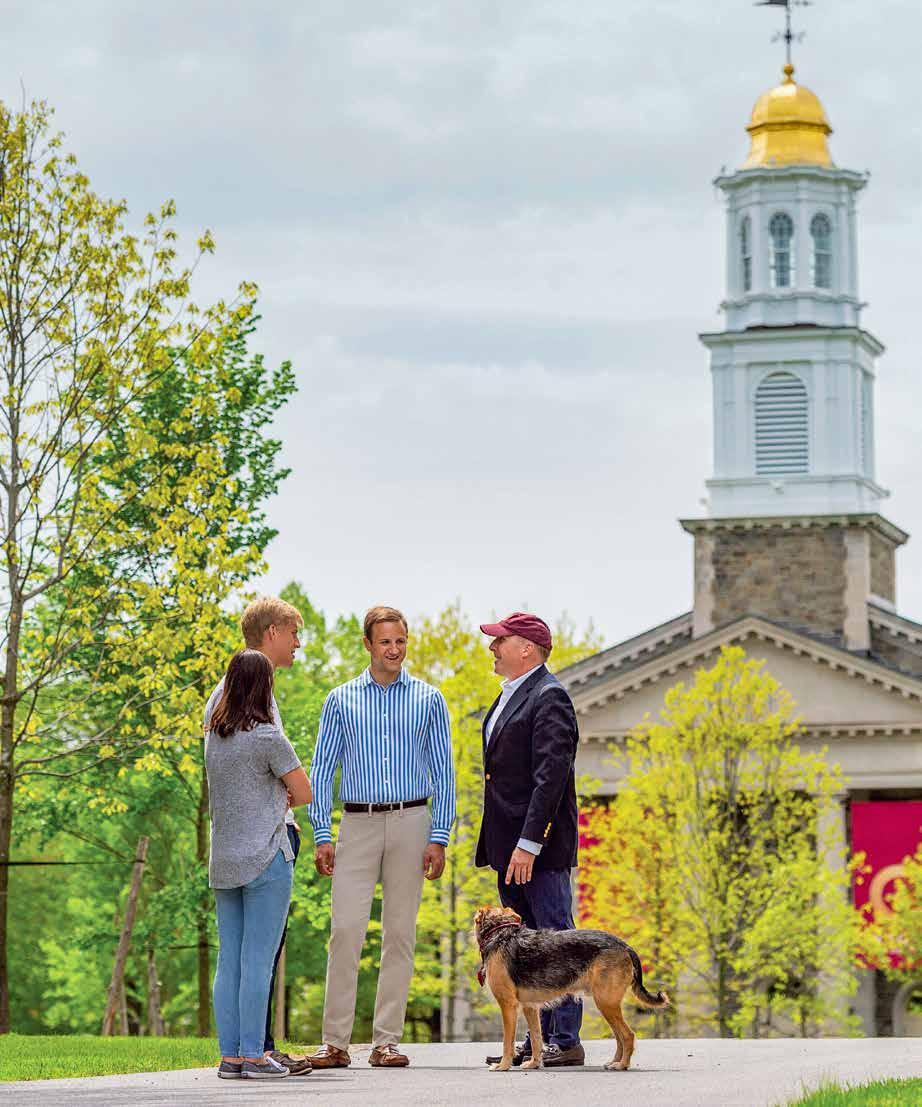
Most days, I walk my dog across the campus. It’s a pretty ordinary routine; he has to go out after all. But it has become, for me, a kind of reset. There is a conversation with a student about a class. There is a passing exchange with a faculty member. There is a wave from someone working in one of the buildings that, on paper, might be described as part of a larger plan.
In these moments, I am reminded that a university is, at its core, a collection of lives intersecting for a time. The larger efforts — the campaigns, the buildings, the plans — matter, of course. But they matter because they shape the conditions in which those lives unfold.
That is what I have come to see more clearly over these 10 years. And that, I suspect, is what will remain.
— Brian W. Casey
In these moments, I am reminded that a university is, at its core, a collection of lives intersecting for a time.
Letters
That Time Jimmy Carter Gave Me a Ride to the Olympics
Having just read Bill O’Brien’s contribution to the growing stories of Colgate’s connections to Jimmy Carter (Letters, fall 2025/winter 2026), I find myself moved to share my own experience. My wife, Randi, and I attended the 1996 Olympics in Atlanta. One afternoon, we were watching the diving finals only to realize we were sitting directly opposite President Carter’s delegation. I call it a delegation because Carter had made international news when he — in response to a request from organizers — intervened to convince North Korea to attend the 1996 Olympics, which they were previously planning to boycott. There he was with Rosalynn and a handful of North Koreans.
Following the session, my wife and I hailed a cab to go to the Capital Grille for a quick dinner. We had tickets to the swimming finals, which were being held that evening. No sooner did we enter the restaurant than Carter and the Korean delegation appeared at the same location — [and then] were ushered to a private room. We ate quickly knowing we had limited time to return for the evening session. Immediately upon exiting the restaurant we realized we were never going to make it back; traffic was at a standstill. Just then the Carters exited the Capital Grille, and Jimmy and Rosalynn approached
their Lincoln Town Car. Much to my surprise, my wife walked up to President Carter and explained that we had been sitting opposite them earlier and assumed they were returning for the swimming finals. Carter acknowledged that he was indeed. With that, my wife asked if we could ride with them to the venue. Perhaps surprised by someone being so bold to ask, Carter said yes. With that, the four of us squeezed in the back seat. The conversation during this 20-minute ride was animated, but in a break, I asked the Secret Service officer who was riding in front if President Carter had ever before invited a stranger to ride with him. The Secret Service agent promptly replied, “No, sir. It has never happened before, and I can assure you, it will never happen again.”
Peter Desnoes ’65, P’17,’23
To Disagree or Not to Disagree
I read with interest the article “Academic Freedom and Freedom of Expression in Colgate’s Third Century” (fall 2025/winter 2026, p. 48) with the cover quote “Can disagreements strengthen community?” The answer, in the most obvious instance, is no, they can’t. By their nature they are not strengtheners (whatever that can mean), but they do fall into several categories, each one worthy of examination, consideration, and evaluation. The actual question is, what is the ground for disagreements in the University to be addressed by or on? Some disagreements (speaking to the concept as used in the language) are resolvable; some are not but do not imply incompatibility with the shared idea of “community.” Some disagreements will lie, by acceptance of the University’s self-definition, outside of the “community.” Some disagreements will be essentially toxic or destructive
or fatal to the University. The fundamental point is not whether disagreements are strengtheners or not (because they are not), but what is the context in which disagreements will be addressed. That answer need not be overly strict but it should be rigorously defensible. The article does get at the moving target of the University “community.” There is, though, a need for some fundamental principles that might be elastic enough to allow even temporary suspension, say for survival, or newly experienced needs becoming more immediately attended to. Then the fundamental principles return. That kind of set of principles may not be directly assessed by “disagreements,” as if disagreeing were the only moving element. It’s just the dance of the minute. I went to Colgate in 1965. I swallowed many disagreements I had with the college and with many of the students there for the sake of seeing what was worth changing, what was beyond my short time there to influence, and the personal sense of what a college education could be. I do not mind being on the margin of what might be considered the general or majority sense of what needs Colgate has as its mission. It is in fact the very weaknesses of the college that I treasure along with the more typical virtue-signaling “successes” that any college needs to promote. [The University’s] strength will be exhibited not as a community per se, but in what my beloved Colgate presents to students coming in as an experience and an education, not preparing specifically for what a person wants to be, but to discover what it is to be a human being in this time and this place.
Eric H. Edwards ’69
Who Gets to Define the Public Good?
Response to “Getting Religion” (fall 2025/winter 2026, p. 33): Colgate was founded by Christian men who believed in Jesus Christ and His teaching. Supporting people of the Wiccan faith, to me,
does not support the intent of our founders. Jesus taught first to love God with all our hearts and then to love others as ourselves. Lived out, a public good should arise, but who gets to define the public good? I am sure Karl Marx and Pol Pot thought they were serving the public good. Whom do you claim as your Lord and master is the real life question to be answered and our founders pointed to correct answers.
Ed Wilbur ’61
Acknowledging Indigenous Roots
As an alumnus who cares deeply about Colgate’s history and values, I would encourage the University to more fully acknowledge that our campus stands on land that was once part of the Oneida Nation’s homeland. While Colgate’s founders legally purchased the land in 1826 from a settler, that transaction was only possible because the Oneida people had already been dispossessed of their territory through coercive treaties and forced removals in the decades following the American Revolution.
Recognizing this history is not about assigning blame to later generations, nor does it diminish Colgate’s accomplishments. Rather, it reflects a commitment to honesty, education, and respect — values the University rightly celebrates. A clearer, more visible acknowledgment of the Oneida Nation in Colgate’s public narratives and campus spaces would honor the enduring presence of the Oneida people and situate the University’s origins within their full historical context.
Colgate has long prided itself on intellectual rigor and moral reflection. Telling a more complete story of the land on which we learn and live would be a meaningful expression of those ideals.
Jim Barber ’68
Send your letters to Colgate Magazine: magazine@colgate.edu or 13 Oak Drive, Hamilton, N.Y. 13346.
Connections
An Enchanted Haven: Colgate in Contemporary Fiction
by Greg Steinmetz ’83, P’23,’26
Afew months ago, I read David Goodwillie’s Kings County (2020), a hipster thriller that the New York Times made an Editor’s Choice and praised for its “thoughtful, appealing characters.” Audrey, a band manager, falls for Theo, who went with Colgate over Brown, Bowdoin, and Cornell to play linebacker for the Raiders.
My very next book was Gary Shteyngart’s Vera, or Faith (2025). A nod to Colgate comes when the father of the heroine announces he knows people who can get her 6-year-old brother into Colgate.
Two books, two mentions. What’s going on? What do these writers’ words mean about perceptions of Colgate? And are there other examples?
ChatGPT steered me to Jonathan Dee’s The Privileges (2010), a finalist for the Pulitzer Prize and praised by the New York Times as “intelligent and ambitious.” It begins with a Colgate wedding. “A wedding!” Dee writes in an exuberant opening sentence. “The first of a generation.” The bride, Cynthia, is marrying Adam, her Colgate classmate. They’re both witty, charismatic, and endowed with stunning good looks. Only 22, they are the first of their friends to marry and the first to have a baby. Their eagerness to have it all lures Adam to Wall Street and a life of crime.
Dee has written eight novels. He once spoke at a Colgate Living Writers event and said he based Adam and Cynthia on a real
Voices
Colgate couple (he didn’t give names) whom he knew in the 1980s. They both worked in finance. “They had exactly the kind of charisma, of precocious adulthood — especially in their love for each other — that I wanted Adam and Cynthia to have,” he said. Dee could have changed their alma mater but stuck with Colgate. “They needed to be very smart and high achieving in the way Colgate students are, but they also needed to be in a small enough environment that they could plausibly carry that prom-kingand-queen social energy through their time there.” He took the Colgate components and mixed them with other material having nothing to do with the real-life couple. “The opening wedding scene, for instance, takes all the details of its setting from the wedding
of my college roommate.”
Kate Reynolds, the general book buyer at the Colgate Bookstore, pointed me to Deborah Harkness and her bestseller The Book of Life (2014), part of the All Souls Series. In it, Caleb Pratt is a Colgate anthropology professor who has a toddler, wears a maroon Colgate T-shirt, and buys arborio rice at Hamilton Whole Foods. Caleb is also a witch. He’s among those who, after the Salem witch trials, fled to Madison, N.Y., just on the other side of Lake Moraine from Hamilton. Madison becomes the headquarters of a global witch syndicate with offices in London, Amsterdam, Milan, Rio de Janeiro, and Tokyo.
In The World of All Souls, the companion guide to the set, Harkness explains that she
lived in an old clapboard house in Madison during her time as a Colgate visiting professor. The house in the book grows or shrinks depending on how many witches are present. In reality the house “didn’t grow rooms,” she writes, “but it did creak and sigh.”
Reynolds also suggested Jean Hanff Korelitz, whose book The Plot (2021) is a thriller described by Stephen King as “insanely readable” and by Malcolm Gladwell as “perfectly told.” In it, Samantha is a bright and motivated 16-year-old junior at a fictional Earlville high school. Her dad is a custodian at Colgate. For years all Samantha thought about was going to Colgate on a scholarship and using her degree to get out of central New York. Her dreams are crushed when she gets pregnant.
I asked Korelitz why she chose Colgate instead of her alma mater, Dartmouth. It was convenient, she explained. She needed a small college town in the story and, because she and her husband have a weekend house near Sharon Springs, she knows the area. The only thing she got wrong was deliberate. The Colgate Inn disappears in favor of the College Inn. If you read the book, you’ll know why. A TV series is in the works. Will Colgate make the cut? To be determined, she said: “Once it goes to Hollywood, anything can happen.”
None of the writers I came across attended Colgate. Dee is a Yale man. Shteyngart was Oberlin.
In Vera, or Faith, Vera recounts a discussion she and Dylan had with their father over college. Shteyngart writes:
Daddy wanted to tell people that both his kids had gone to public school yet ended up in excellent liberal arts schools with low “studentto-faculty ratios.”
“But I hate brushing my teeth,” Dylan said when told about his future alma mater.
Why did Shteyngart pick Colgate? Was it that low student-to-faculty ratio? Was it that Colgate, as in some of the other books, represented a portal to the good life?
Through his agent, Denise Shannon, I got an answer: “Colgate was chosen for toothpaste joke reasons,” she said.
More thought went into Goodwillie’s decision to feature Colgate in Kings County Theo’s factory worker father thought his son should forgo higher education and get a job. His football coach wanted him to attend the commuter school where his son was the coach. Given the objections, “Theo’s presence at Colgate,” says the narrator, “was a minor miracle.”
Goodwillie, a Kenyon grad who played minor league baseball after graduation, told me he wanted to write about an elite school with a lot of prep school kids but not so
many as to make his character feel out of place.
It’s also interesting to consider who didn’t write about Colgate. The most famous novelist to attend Colgate was the late Russell Banks, a Pulitzer Prize finalist for Continental Drift (2007). Banks entered as a freshman in 1958 and quit after six weeks, with plans to find adventure in Cuba. He got as far as Lakeland, Fla. Some of his books, including his posthumous thriller American Spirits (2024), are set in upstate New York. None of his books mention Colgate.
Professor Fred Busch — who taught at Colgate for nearly 40 years, wrote 30 novels, and won the PEN/Faulkner award — didn’t write about Colgate either, at least not directly. I was among the legions who took his fiction writing class. As far as I can tell, he circles Colgate in his novels without ever landing. Harry and Catherine: A Love Story (1990) is about a hard-drinking senate aide living in the Chenango Valley. Busch mentions Route 12. He talks about an area of Madison County called East Hamilton. He does not talk about Colgate. In Girls (1997), the hero works campus security at an unidentified upstate university. He watches news on a Syracuse channel and drives through his share of snow drifts. Colgate is not found beneath the snow.
My suspicion is Busch avoided Colgate because he saw no upside. Even muddled references posed a risk. In his memoir, A Dangerous Profession (1998), he writes how he modeled a character in Rounds (1979) on a fellow professor who was also a good friend. The professor was my brilliant freshman European history professor Terrence Des Pres. When Des Pres read the book, he broke off their friendship. Busch writes how Des Pres didn’t like being described as anything “less than heroic.” Busch was sad about the loss.
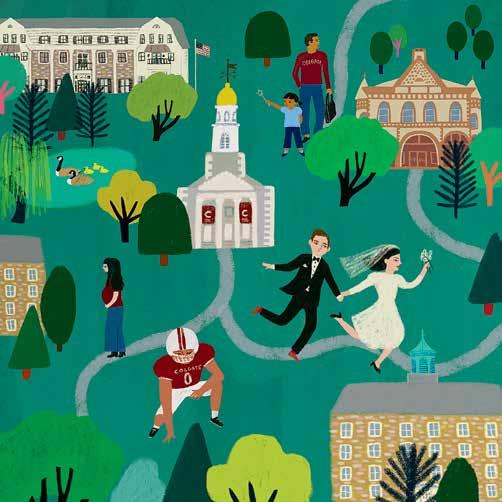
Busch was, of course, an avid reader, so it’s unfortunate we can’t get his take on the novels I mentioned. Here’s my take: Harkness has it right. Colgate is a magical place where those talented and lucky enough to be there find themselves transformed and elevated, if not by a witch’s spell, then by the others — the students and the faculty — passing through the enchanted haven. The football player, the aspiring financier, the custodian’s daughter, the father of the kid who brushes with Colgate: They recognize that Colgate opens a door to an interesting life, a privileged life, and even a life worthy of a bestseller.
— Greg Steinmetz’s third book, The President and the Oligarch: Roosevelt, Mellon and the Triumph of Big Government (Simon & Schuster), will appear in 2026.
IN THE MEDIA
“The institutions that remain nimble, that foster rigorous exploration and prepare students for a complex, AI-driven world, will emerge stronger.”
— President Brian W. Casey in the Adirondack Almanack
“ In a pluralist democracy, there are invariably conflicts of values.”
— Alexander Karn, associate professor of history, in the Mother Jones article “Trump’s War on History”
“ Some of the most significant mysteries posed by the [James Webb Space Telescope’s] cosmic dawn data are, in fact, features of the dark star theory.”
— Cosmin Ilie, assistant professor of physics and astronomy, to SciTechDaily
“ In the context of our work, cyber conflict will be most severe when technological capabilities between attackers and defenders converge towards each other.”
— Rishi Sharma, associate professor of economics, told the Debrief.
“ I have been proud to be affiliated with a national monument to the human spirit, a place that has long served as an inviting home for our ever-growing family of artists and opera lovers.”
— Francesca Zambello ’78 in the New York Times about the National Opera leaving the Kennedy Center
“ We may lose a generation of brilliant, motivated scientists doing groundbreaking and fundamental research.”
— Professor Amy Leventer in the MSN article “US to Lose Ground in Antarctica After Pulling Out Last Research Ship, Scientists Say”
“ I worry that for a lot of people, their experience with political argumentation is that whenever they talk with somebody that they disagree with, like their family member, it always ends in a screaming match. And it’s never productive.”
— Paul Schulze ’25 in “College-Age Voters Choose Friendship Over Politics” on Spectrum News 1
Inspiration
When Her Basketball Career Ended, She Rediscovered Herself
Kendra Brim ’11 is helping fellow former athletes redefine who they are after the final buzzer sounds.
or Kendra Brim ’11, the end of her college basketball career felt like the beginning of a long, uneasy pause — the space between what had been and what came next.
After years defined by discipline, competition, and the charged thrum of life as a Division I student-athlete, graduation marked the loss of the identity she carried onto the court, leaving Brim unsure of who she was beyond it. In that transition, she grappled with the question many former collegiate athletes recognize: Who am I when the uniform comes off for the last time?
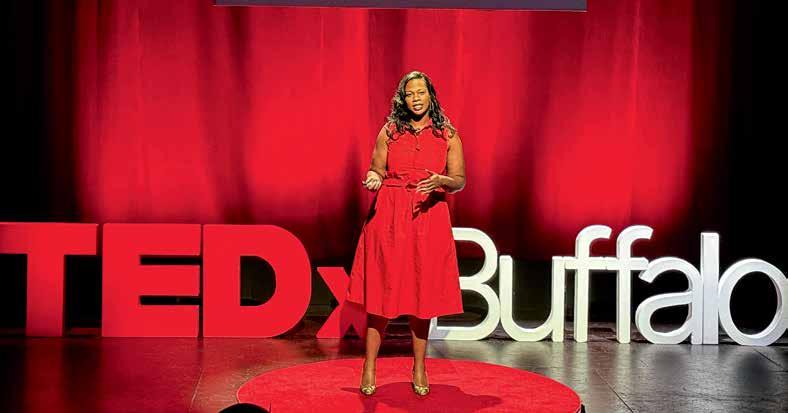
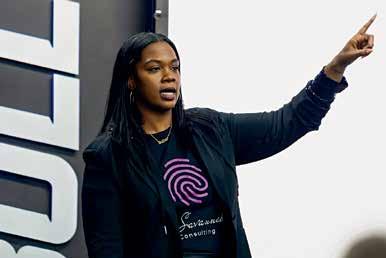
Now an author and the founder of K. Savannah Consulting, Brim works with organizations to foster collaboration in diverse workplaces. She’s also the founder of coaching and mentoring program Out of Bounds, where Brim draws on her own experience to help others navigate life’s in-between stages. In a November 2025 talk at TEDxBuffalo, adapted here, Brim asked listeners to reconsider what it means to go “out of
bounds” — not as a mistake, she says, but as a first step in reclaiming your true identity.
I lost 120 pounds. That’s something many people can’t say, but I can. And although I am proud of that accomplishment, I recognized I should have never reached that point in the first place.
You see, I was a Division I basketball player. I knew what it meant to be at the pinnacle of physical fitness, push past my limits, run miles in record times, lift heavy weights, and win close games. I lived and breathed mental grit — it was my life for more than 15 years. But in 2011, when the lights went dim, all of that grit disappeared.
I graduated college at 20 years old. Basketball prepared me for the physical battles of life, but nothing prepared me for the emotional and mental toll I would experience in the absence of adrenaline.
I slipped into the monotony of 9 to 5, thinking that was the right next step. I chased a picture-perfect life: a husband, a family, a
home with kids running around the backyard enclosed in a white picket fence. And that failed. I clung to external goals, but nothing gave me the high I had once known. Instead, I faded into the background. I found comfort in food to numb the emptiness inside. And I gained 120 pounds.
But this talk is not about weight. It’s about what we carry to be a certain way. It’s about the pressure of expectations, old dreams, and
That day not only marked the end of my basketball career, it also marked the end of an identity. I was no longer the athlete — I was just me.
trying to figure out who we’re meant to be. It’s about the feelings that stay hidden, but hit hard.
Let me take you back to my last day on the court. The echo of basketballs bouncing, sneakers slicing through the hardwood, the smell of sweat and resin in the air, and my coach barking one last set of plays from the sideline. My jersey clung to my skin in effort, adrenaline, and legacy — the growth, discipline, and identity created from the moment I first picked up a basketball. The buzzer sounded, and just like that, it was over. The arena faded, the roar quieted, and the rhythm of my life — the constant pulse of competition and comradery — flatlined. I didn’t realize it at the time, but that day not only marked the end of my basketball career, it also marked the end of an identity. I was no longer the athlete — I was just me. And I didn’t know who me was anymore.
The wake-up call came years later, when I was standing in a store’s dressing room under those brutally honest lights, trying to force a dress over my body — not just because of its size, but because of how disconnected I felt from the person in the mirror. I couldn’t hear the arena, couldn’t feel the fire, couldn’t smell the sweat.
I felt so heavy — mentally, emotionally, and physically. I hadn’t just changed, I had lost myself in the transition. I lost my confidence. I lost my discipline. I lost my voice. I lost my joy. And I lost the belief that I could be anything other than who I once was.
We don’t often talk about the in-between: the time when one chapter closes and the next one begins. We talk about wins and losses, but we rarely talk about the pause in between the buzzer and the next tip-off. That’s when life gets real.
I didn’t wake up one day and say, “I’ll lose 120 pounds and start a business.” It started with tiny, unglamorous decisions. Go for a walk. Drink water. Say no to the voice that says you’re not done. It’s like returning to the gym after an injury — weak, wobbly, and unsure, but doing it anyway.
Here are three truths I learned about reclaiming who you are.
1. You are not your last success. Basketball was my first love. But loving something and living in the shadows are two different things. You can love something that shaped you without being trapped by it. At some point, I had to stop identifying myself by a chapter I had already closed.
2. Small wins matter more than big ones. We live in a culture obsessed with before-and-after photos. But transition happens in the middle. It happens when you show up for yourself, give yourself grace, and keep going.
3. Letting go is hard, but necessary. I had to mourn the person I thought I would become at an early age — the wife, the mother, the athlete — in order to fully embrace the person I was meant to be.
The phrase “out of bounds” used to sting. In basketball it signals a misstep. You made a mistake, you messed up. The play ends and the ball goes to the other team. When I stepped out of bounds, I didn’t just step out physically, but also existentially. I wasn’t out of play, I was out of purpose. But one thing I realized is that “out of bounds” is not the end. It’s just a reset. It’s where strategy gets reimagined. It’s where you recenter yourself, take a deep breath, and get ready for your next play. Not because the whistle forces you to, but because you are ready.
I wasn’t alone in needing that space. Let’s talk about what happens to athletes, specifically women, after college. Only 1.2% of NCAA women’s basketball players go on to play professionally in the WNBA or overseas. That means 98.8% of women feel a sudden shift in identity or routine right after college.
I’ve worked with student-athletes who are searching for a road map, helping them avoid the same pitfalls I faced when I graduated and was unprepared for what came next. I’ve worked with adults in transition; those who are laid off or burnt out or quietly questioning whether the life they built still suits the person they’ve become. Through mentoring, coaching, and one-on-one sessions, the same three core questions always arise, regardless of age or background: Who am I now? What comes next? How do I move forward when everything I know no longer applies?
I created Out of Bounds to be a guided transformational space to reflect without judgment. It’s a space to reclaim your voice, even if it’s shaky. It’s a space to redefine success on your own terms — not based off of someone else’s scoreboard. And it’s a space to redefine your identity based on truth and not rooted in titles or résumés.
Many times when we think of transformation — whether it’s mental, physical, or emotional — we often think that it has to happen in isolation. But the truth is, it doesn’t. Sure, I had to dig deep, but it was the people around me who helped me through the experience. It was my mentors who shared their stories; it was my friends and family
A Boston University study found that many athletes face “identity foreclosure,” where their sense of self is so tied to being an athlete that once it ends, they don’t know who they are anymore. The NCAA’s own mental health survey found that 47% of female athletes reported feeling overwhelmed, and 35% said they felt mentally exhausted on a regular basis. These stats are not just about athletics; they are about the mental toll behind the game. While my story started with athletics, Out of Bounds is so much more than basketball.
who lifted me up when I was down; and it was the people who were experiencing the same things I was. Transformation does not happen in isolation. It happens in community.
At my gym, we often say, “be where your feet are planted.” That means show up for yourself, even if you’re unsure, because there’s beauty in the process — not just at the finish line.
So no, this talk is not about weight. It’s about releasing setbacks, disappointments, and failures. It’s about redefining success, and it’s about realizing, maybe for the first time, that stepping out of bounds is not the end of the game. It’s just a new quarter.
Brim speaks at leadership and corporate workshops, specializing in inclusivity.
A 5'11" forward, Brim ended her collegiate career in 2011 with a total of 325 points.
SCENE
Games
From Colgate to Cortina:
Five
Alumnae, One Olympic Global Stage
The Milano Cortina 2026 Winter Olympic Games unfolded as a kaleidoscope of color, from the iconic Olympic rings to the vibrant national uniforms sported by athletes from around the globe. Woven into that international display was a distinct thread of maroon as five Colgate alumnae, four on the ice and one behind the camera, made their mark on the world stage.
Colgate’s presence spanned both competition and coverage. Cate Gropper ’14, a line producer for NBC News, helped bring the 2026 Games to audiences around the world, while four women’s ice hockey players — Kayle Osborne ’24 for Team Canada and Team Czechia’s Kristýna Kaltounková ’24, Noemi Neubauerová ’22, and incoming first-year Linda Vocetková — competed under the Olympic spotlight. Canada finished with the silver medal, while Czechia placed fifth. For Osborne, Kaltounková, and Neubauerová, Milan marked another milestone in already accomplished careers. Kaltounková entered the games fresh off being drafted No. 1 overall by the New York Sirens in the 2025 PWHL Draft,
while Osborne, a standout goaltender for the Raiders, now starts in net for the same franchise. Neubauerová, meanwhile, returned for her second Olympics after debuting in Beijing in 2022, when the COVID-19 pandemic was still limiting fan turnout.
“This year’s games were really different,” Neubauerová says. “At Milan, the stands were full of people, which was an extremely cool experience.”
That energy extended beyond the rink. In one surreal moment, Neubauerová crossed paths with hockey legend Sidney Crosby in the dining hall, serving as a reminder of the rare, shared space the games create among the world’s best athletes. Still,
for Neubauerová, the true meaning of the Olympics runs much deeper.
“We put so much emphasis on this tournament because it means so much to represent all the people who believed in you and helped you to get where you are now,” Neubauerová says. “It’s also an opportunity to represent yourself and all your hard work.”
For Kaltounková, that same sense of responsibility defines every time she steps out onto the ice. “No matter what tournament it is, whenever I put on that beautiful jersey, I focus on being the best version of me on and off the ice because I am always representing my country and the people there,” Kaltounková says.
Vocetková, the youngest member of Team Czechia who is set to arrive at Colgate this fall, experienced the games with a mix of nerves and determination. However, uncertainty quickly gave way to focus when the reality of the moment set in. “I really wanted to help my team as much as I could,” Vocetková says. “Whether cheering them on or being on the ice fighting for them, I was locked in.”
Vocetková actually learned about Colgate through Neubauerová — who had once coached her at a summer camp before becoming her teammate — and Kaltounková, as an ideal place to grow as a player and a student.
“Linda is one of my closest friends on the team,” Kaltounková says. “Colgate is getting an amazing human being who is incredibly good at hockey and will better the already wonderful, tight-knit community in Hamilton. I am looking forward to seeing how great she does and cannot wait to support her through it all.”
— Norah Hendrickson ’27
Incoming first-year Linda Vocetková (left) and Noemi Neubauerová ’22
Cate Gropper ’14
Kristýna Kaltounková ’24
Moments From MLK Week
Live the Values and Lift Each Other” was the theme of the University’s 2026 celebration of Martin Luther King Jr. Week at the end of January. The week began with a keynote address by activist Fredrika Newton, the widow of Black Panther Party co-founder Huey P. Newton and a former member of the party. “It is important that we recognize [Martin Luther King Jr.] not as a symbol polished for comfort, but as a man whose life and work challenged this nation
to tell the truth about itself,” she said. “I speak to you as someone who’s lived through the consequences of that truth being denied,” added Newton, who has dedicated herself to sharing what she described as the true
history of the Black Panther Party. The ceremony featured a jazz performance by Professor B. Stark and Friends, and the weeklong celebration included a Social Justice Summit as well as volunteering in the community.
Sound Bite
“
One of the aspects
that excites me about this project is that
the
WNO’s new production
of Treemonisha
will introduce Joplin’s opera to many who may only know him as a composer of ragtime music.”
— Professor and playwright Kyle Bass, who was commissioned by Washington National Opera Artistic Director Francesca Zambello ’78 for Treemonisha by Scott Joplin
1
President Casey has been appointed to the inaugural College Swimming and Diving Advocacy Council.
2
Colgate was awarded the 2026 Carnegie Community Engagement Classification.
3
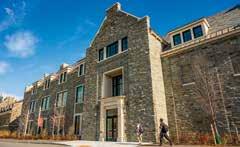
Bernstein Hall has achieved gold LEED certification for sustainable design.
4
Dean of Students Dorsey Spencer was named to the HBCU Executive Leadership Institute’s 2026 Community of Fellows.
5
Colgate’s study abroad program ranked first in the annual Institute for International Education Open Doors Survey.
6
Students learned to make kimchi, sauerkraut, kombucha, and sourdough in the course Fermentation and Multispecies Pedagogies
1. Volunteering at Hope House
2. Prof. Brian Stark (left) leads a jazz performance
3. Keynote speaker Fredrika Newton (right)
4. Social Justice Summit
7
Professor Ellen Kraly received the Center for Migration Studies’ Excellence in International Migration Scholarship Award.
8
Men’s basketball Head Coach Matt Langel is part of the 2026 USA Basketball Men’s U18 National Team staff.
9
Hadley Johnson ’25 received the NIH Oxford-Cambridge Scholarship; she’s Colgate’s fifth OxCam recipient in the last seven years.
10
President Casey invited students to celebrate his dog Emrys’ 13th birthday with a spaghetti dinner in March.
11
At the Alasitas Festival, students created clay miniatures of their wishes for the year.
12
The Colgate Thirteen and the Swinging ’Gates delivered Cupid Grams on Valentine’s Day, serenading unsuspecting students with a cappella love songs.
13
Colgate has been named to the Fulbright Top Producing Institutions list for the eighth consecutive year.
Global Gaining an International View of Law
Jonathan Eaton ’24 is the first person from Colgate to be awarded the Schwarzman Scholarship, a one-year, fully funded master’s degree program in global affairs at Schwarzman College, Tsinghua University, in Beijing, China.
The scholarship was created to respond to the geopolitical landscape of the 21st century and designed to prepare the next generation of global leaders. Eaton, an international relations and Asian studies double major from Bethel, Conn., plans to practice national security and international trade law — primarily sanctions and export controls — in the public and private sectors before eventually turning to academia. He sees the Schwarzman year in Beijing as a critical step on that path.
“A year in China will help me understand the regional business structures, government regulations, and compliance philosophies that I will interact
underpin their creation or change.”
Since graduating, Eaton has been working at Steptoe LLP in Washington, D.C., as a prelaw fellow, gaining firsthand exposure to the legal and policy environments with which he hopes to engage long term.
At Colgate, Eaton’s interest in the region deepened through his coursework and a formative study abroad experience. As a Gilman Scholar, he studied abroad in Taiwan, where he immersed himself in Chinese language and culture, reinforcing both his academic focus and his desire to work at the intersection of law, global affairs, and the AsiaPacific region.
Outside of the classroom, Eaton was involved in campus leadership, serving as president of the Student Government Association and as an Alumni Memorial Scholar, a Lampert Scholar, and a Presidential Ambassador. He was also the recipient of the Colgate Alumni Corporation 1819 Award, given each year to the graduating senior whose character, scholarship, and service to others best exemplify the spirit of Colgate.
Eaton looks forward to learning alongside students from across the world and applying his academic training in a global
Investigating Cancer Progression
Long before his time at Colgate, Jeff Arigo ’26 was fascinated by medicine. Through on-campus lab work and an internship at St. Jude Children’s Research Hospital, his longtime interest has developed into real-world experience in cancer research.
“regardless of what that moment
Arigo first dipped his toe into the medical research field in Professor Engda Hagos’ cancer biology lab, where Arigo has studied a cell death pathway known as ferroptosis since his sophomore year. His research investigates the relationship between ferroptosis and Krüppel-like factor 4 (KLF4), a transcription factor whose dysregulation has been closely linked to cancer progression.
“Many of my family members have faced cancer, which was a big motivating force for me to join Dr. Hagos’ cancer biology lab,” Arigo says.
Hagos’ mentorship prepared Arigo for his summer work at St. Jude Children’s Research Hospital by introducing him to the research techniques he’d need as well as guiding him to develop his own research questions and hypotheses.
“Dr. Hagos not only taught me the technical skills necessary, but through his
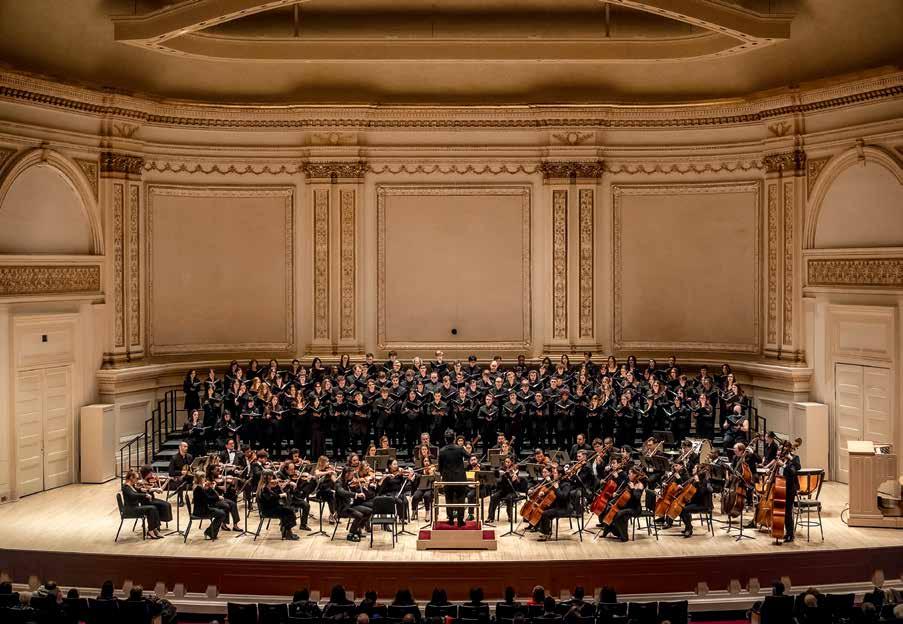
The Colgate University Chorus performed at Carnegie Hall’s Stern Auditorium in New York City under the direction of Sinhaeng Lee, assistant professor of music and director of choral programs.
Lee’s appearance at Carnegie Hall was a result of his recognition as first runner-up in its conducting competition.
The March 14 event was presented by MidAmerica Productions in collaboration with the Hamilton College Choir. The groups performed Johannes Brahms’ Schicksalslied and Felix Mendelssohn’s Hear My Prayer
mentorship, he helped me find a passion for research, driving me to always ask new questions,” Arigo says.
Upon acceptance into St. Jude’s highly competitive Pediatric Oncology Education (POE) Program, Arigo joined Dr. Thirumala-Devi Kanneganti’s immunology lab as a student researcher. There he studied the fundamental processes that define the innate immune system, such as cell death. The internship allowed Arigo to explore the same cell pathway (ferroptosis) he researches in Hagos’ lab but in a different
During his internship, Arigo also shadowed a St. Jude postdoctoral fellow, learning new experimental techniques and receiving continued guidance on his capstone research project.
“Through Dr. Kanneganti and the POE Program, I was immersed in an environment where cuttingedge science and patient care come together, shaping how I approach both research and medicine,” Arigo says.
At the conclusion of the program, his report was voted as the first-place winner by the St. Jude postdoctoral community, a huge honor and commendation of his efforts. He notes that his Colgate research experience and hands-on mentorship were
critical in finding his place and familiarity within the medical research giant.
Now completing his honors thesis under Hagos’ tutelage, Arigo continues to explore how KLF4 interacts with cell death mechanisms, shedding light on its role in cancer biology. He will return to the Kanneganti lab this summer, after which he plans to take a gap year and apply to medical school. For Arigo, the professional and personal development opportunities available at Colgate helped him grow from a student interested in helping others to an accomplished researcher at one of the world’s leading pediatric hospitals.
— Jordana Harwitz ’28
Arigo is a John A. Golden ’66 Fellow, a program established in 2006 that supports students preparing for the medical and law professions.
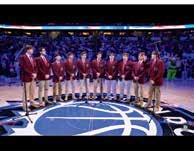
The Colgate Thirteen sang the national anthem at the Magic vs. Lakers game in Orlando on March 21.
“Growing up I watched the players we shared the court with, and it was a surreal experience to be so close to them,” says Will Olszewski ’26. “The fans were also so kind and welcoming to us as performers; we felt right at home.”
Watch the Thirteen’s performance on Colgate University’s Facebook page.
A Cappella Magic
TEACHING
Excellence Across Disciplines:
Colgate’s Newly Tenured Faculty 2025-26
Kyle Bass, Theater
A playwright and theater professional, Kyle Bass fosters human-tohuman connections through his creative works. His departmental courses include: Playwriting; Contemporary African American Drama; Theater Practicum: African American Theater Workshop; Narrative Screenwriting; and Research Seminar in Dramatic Writers. He also teaches Core Communities and Black Upstate New York. His major dramatic works include Possessing Harriet; Citizen James, or The Young Man Without a Country; and Toliver & Wakeman. Bass’ other scholarly endeavors include providing script dramaturgy, working as a playwright in residence at other universities, and serving as an editor for Stone Canoe. He has obtained external grants from the New York State Council on the Arts and New York Foundation for the Arts. Bass’ dramatic writing contributes to the exploration of the meaning of place, race, the search for dignity, and the tension between our nation’s past and present.
Jacob Goldberg, Chemistry
Jacob Goldberg’s expertise in chemical biology, organic chemistry, and biochemistry is applied to the development of chemical tools to understand complex problems in biology — for example, how small molecules cause large proteins to change shape and how such rearrangements affect the function of the protein. Goldberg’s lab develops chemical
several courses in chemistry and biochemistry, as well as a Core sciences class, Poisons.
Isla Globus-Harris, Economics
An environmental economist whose research combines mechanism design theory with empirical analysis, Isla GlobusHarris explores policies that induce environmentally friendly actions not required by law. Her work has appeared in leading economics journals, including Journal of the Association of Environmental and Resource Economists and Journal of Environmental Economics and Management. She teaches multiple sections of Introduction to Economics, upper-level classes in environmental economics, and a Core Scientific Perspectives class called Cooperation and the Environment. For the past five years, Globus-Harris has also been the faculty liaison for the men’s and women’s cross country and track and field teams.
Paul
tools in three areas: zinc neurobiology, bioconjugation, and protein spectroscopy. His published work appears in top journals including the Proceedings of the National Academy of Sciences, Nature Structural & Molecular Biology, Journal of Neuroscience, and Scientific Reports. A subset of the papers includes Colgate student co-authors. He has been awarded grants from the National Science Foundation, National Institutes of Health, and the American Chemical Society, and he holds a patent for Pnictogen-containing Heterocyclic Compounds from the World Intellectual Property Organization. Goldberg teaches
Harnik, Earth and Environmental Geosciences
Specializing in paleobiology, Paul Harnik uses a combination of fieldwork, specimen-based study, statistical analysis, and modeling to investigate
questions related to the causes and consequences of extinction and anthropogenic impacts on biodiversity. His research focus is on marine ecosystems, with recent work in the northern Gulf of Mexico and urbanized marine ecosystems near Hong Kong. Through support from the Picker Interdisciplinary Science Institute, he is contributing to a collaborative project on determining the impacts of anthropogenic climate change on calcifying marine organisms. He has published widely, with recent articles in journals such as Annual Review of Marine Science, Continental Shelf Research, Marine Micropaleontology, and Anthropocene. A subset of the papers include undergraduate student co-authors. His research accomplishments have been recognized with a National Science Foundation CAREER grant and a Presidential Early Career Award for Scientists and Engineers. Harnik’s geology courses include Sustainable Earth, Paleontology of Marine Life, Conservation Paleobiology, and a cross-listed, team-taught class on Evolution of Form and Function in Biomineralizing Marine Animals. He also teaches a Core sciences class, The Anthropocene. Harnik serves on the Faculty Committee on Affirmative Action Oversight, Committee on ALANA Affairs, and the Environmental Studies Program Steering Committee. He played a key role in developing the NASC Division STARS program that pairs first-year students from under-resourced high schools with a faculty research mentor.
Kyle Bass
Paul Harnik
Richard Klotz, Economics
An environmental economist, Richard Klotz works to improve environmental policy decisions — particularly those surrounding air and climate pollution — by revealing the intended and unintended impacts of regulations. He has published papers in top economics journals, such as Energy Journal, Journal of the Association of Environmental and Resource Economists, and Economics of Energy & Environmental Policy. Klotz teaches Applied Econometrics, multiple courses in environmental economics, and a Core Scientific Perspectives course, Measuring the Environment. His service to Colgate includes the Committee on Information Technology, the University Properties Committee, and the Carbon Offsets Subcommittee of the Sustainability Council. Since 2019 he has been the faculty liaison for the Colgate men’s soccer team.
Monica Mercado, History
Monica Mercado’s scholarship focuses on the development of young women’s gender and religious identities in the 20th century U.S., especially in the context of Catholic education. She has published in venues such as Religion and American Culture and Smithsonian Magazine and has an in-progress book project titled An Archive of Girlhood: The Convent Academy in Catholic America Mercado is a pioneer in the use of material culture for historical analysis and brings her work to a broad audience via public scholarship in the form of museum
exhibitions and online fora. Her courses have a deep connection to regional history, with offerings such as Upstate History and Curating Public History: Utopia, Sex and Silver at the Oneida Community Mansion House.
Javier Padilla Rios, English
Javier Padilla Rios’ research and teaching are deeply rooted in his upbringing in Nicaragua, where he spent his formative years amidst revolution, civil war, and other social upheaval. His courses include Justice and Power in Postcolonial Literature, New Immigrant Voices, Latinx Literature, Inventing Ireland, and James Joyce. Padilla Rios has published articles such as “Thinking Revolution: The Decolonial Instant in Ernesto Cardenal’s Documentary Poems” in Modern Philology, “Political Theology from the Global South” in Interventions: International Journal of Postcolonial Studies, and “Yeats’s Meditative Spaces: Between Modernity and Coloniality” in the Journal of Modern Literature. His publications include a poetry collection, Dodecadencias, through Valparaíso Ediciones, and a translation of poems by Carlos Martínez Rivas.
Anne Perring, Chemistry
Anne Perring’s research looks at the impact that primary aerosol can have on cloud formation and the hydrological cycle, as well as human, animal, and plant health. She teaches general chemistry courses, as well as Environmental Chemistry, Practical Quantitative Analysis, and Instrumental Methods. Perring’s scholarship is broadly important to the atmospheric chemistry community and dramatically boosts the national profile of the chemistry department. Her articles have appeared in several journals, including Atmospheric Chemistry and Physics, Journal
of Geophysical Research: Atmospheres, and Environmental Science & Technology. Her service to the University includes chairing the Sustainability Council and serving as interim (and incoming) director of the Alumni Memorial Scholars Program.
Osvaldo Sandoval Leon, Spanish Osvaldo Sandoval Leon’s courses include Latin American Women Dramatists; Core Communities: Mexico; Intermediate Spanish, Language and Literature; and Postdictatorial Transatlantic Theater. His co-edited volume, Partera de la Historia: Violencia en Literatura, Performance y Medios Audiovisuales en Latinoamérica, appeared in 2022, and his articles have appeared in journals such as Cuadernos Literarios; Cuadernos del CILHA: Centro de Literatura Hispanoamericana; and the Journal of Gender and Sexuality Studies. Sandoval Leon revived Colgate’s National Collegiate Hispanic Honor Society, and his leadership of this organization has earned him national recognition. His University service includes serving as Latin American Studies coordinator, a member of the Africana and Latin American Studies Steering Committee, and part of the ALANA Affairs Committee.
Daniel Tober, Classics
Daniel Tober has offered a wide range of courses, including surveys of Greek and Roman history, Ancient Persia, and the Hellenistic World; a first-year seminar on Alexander the Great; introductory Greek and Latin language sequences; and upperlevel seminars on Greek and Roman authors and genres, such as Homer, Herodotus, Plato, Greek Tragedy, and Roman Oratory. He has also co-led an extended study to Greece and Italy. His research interests include Greek and Roman historiography, local historiography, Achaemenid Persia, and Alexander the Great and the Alexander Romance. Tober’s articles have appeared in Classical Quarterly and Historia, and his book chapters in volumes, including Identities in Antiquity, Cultures of Resistance in the Hellenistic East, and the Oxford Classical Dictionary. He is currently working on a book on Hannibal Barca. Tober’s University service includes membership on the Academic Affairs Board, the Advisory and Planning Committee, the Faculty Affairs Committee, and the Faculty Development Council.
Anne Perring
community Service That Stays With You
Alumni reflect on their COVE experiences for its 25th anniversary.
The Max A. Shacknai Center for Outreach, Volunteerism, and Education (COVE) is celebrating its 25th anniversary of inspiring the Colgate community to give back. The center was born from a proposal that three Colgate students — Betsy Levine-Brown ’01, Jenny (Buntman) ’03 Indig, and Adrienne (LaGier) ’01 Forgette — wrote. In it they shared a vision of creating a centralized hub for community partnerships.
That vision sparked a lasting legacy with thousands of students collectively contributing more than 635,000 hours of service to date valued at nearly $18M to the Hamilton community and beyond. Yet the COVE’s work represents more than just service hours; it fosters reciprocal relationships that continue to shape both those who are served and those who serve long after graduation. To better understand this enduring impact, we spoke with four alumni, who reflected on their COVE experiences and how those experiences continue to influence them today.
Gabriella Bianchi ’19
As a student COVE volunteer, Bianchi co-led the mentoring group Friends First, which paired Colgate students with Hamilton middle schoolers. She remains in touch with her former mentee, now a first-year college student. Bianchi also served as a program coordination intern, where she led pre-orientation for first-years, organized campuswide days of service, and coordinated alternative service breaks.
Today Bianchi is the director of BoardLead at Cause Strategy Partners, a social impact firm focused on nonprofit board governance, where she oversees board matching, placement, and training programs in the U.S., the U.K., and Hong Kong. She also serves as the co-chair of the Fiver Children’s Foundation’s Advocates, a nonprofit summer camp in Poolville, N.Y., founded by Tom Tucker ’67.
How did volunteering through the COVE shape your Colgate experience?
“As a first-year, it’s so easy to stay on campus and only experience what’s immediately available to you. Volunteering in and around central New York allowed me to learn more about our local community and build meaningful relationships with my peers, nonprofit leaders, and the constituents served by these organizations. From harvesting vegetables with elementary students to cleaning cages at a local animal shelter, there are so many wonderful ways to give back to causes and organizations close to campus.”
How did this work influence your career path?
“My experiences at the COVE allowed me to build a career in the social good sector focused on building capacity for nonprofits and providing organizations with the tools and resources they need to best live out their missions. The leaders at the COVE while I was a student were incredible mentors, and I’m grateful for their investment in me.”
Ingrid Hale ’89
Hale served as director of the COVE from 2006–10, advising student service organizations and meeting weekly with student leaders to strengthen their community partnerships. Hale also helped organize and participated in service trips to New Orleans, Texas, and the Dominican Republic, while overseeing other COVE initiatives.
She currently works as a reader in
Colgate’s Office of Admission and remains involved in community service organizations.
What was your favorite part of working at the COVE?
“The team — colleagues, interns, leaders. They were incredibly smart, talented, energetic, and fun. I looked forward to coming to the COVE every day to work alongside them to solve real-world community challenges. I also have the fondest of memories from the service trips. It was amazing to immerse ourselves in a community project for an extended period of time. The weeks were humbling, informative, exhausting, fulfilling, uplifting, and wonderful all at the same time.”
How did your time at the COVE influence your lifelong commitment to service?
“Community service was something I was always passionate about. My work at the COVE inspired me to do even more — serving on school boards, volunteering in classrooms and as a coach, providing college counseling to students from underserved communities, and volunteering for campaigns, to name a few. It is important that we engage in society and the world beyond ourselves.”
Georgette Manos ’25
Manos’ involvement with the COVE began before her first day of classes. She participated in a first-year pre-orientation program where she volunteered with community partners — an experience she enjoyed so much that she later stepped up to lead similar trips. As a sophomore, she
Gabriella Bianchi ’19
Ingrid Hale ’89
was hired as a civic engagement intern, a role she continued throughout her time at Colgate, supporting the COVE’s work as a nonpartisan center for voter education and civic engagement.
Manos is currently a JD candidate at American University Washington College of Law.
What did the COVE mean to your undergraduate experience?
“The COVE made up my best memories at Colgate. I met some of my best friends through volunteering and working there. As a civic engagement intern, some of my most rewarding experiences were when I was able to register someone to vote. The COVE is nonpartisan; our biggest thing was wanting students to vote and care about what was going on locally and nationally.”
How did your work at the COVE influence your decision to pursue a law degree?
“I’m someone who really thrives on meeting people from different backgrounds and working with organizations that stand for many different things. Having had the opportunity to engage at the COVE with tutoring and mentorship organizations, organizations centered on food insecurity and combating homelessness, and education and historical groups propelled me to Washington College of Law, which is known for its public interest work. Working with nonprofits and community partners meant so much to me that I wanted to be at an institution that would have similar opportunities.”
Brandon Malmberg ’03 Malmberg was involved in multiple COVE volunteer organizations, including Sidekicks, a program that paired elementary students with a “big brother” or “big sister,” as well as mentoring and tutoring at a group home in Madison, N.Y.
Community service has continued to play a significant role in Malmberg’s career; he now works as an independent consultant for nonprofit organizations.
How did your experiences at the COVE serve your future career path?
“Working with the COVE was a powerful vehicle for leadership. I built skills that I carried through my entire career, through motivating people and organizing efforts to make an impact. I’ve worked for most of my career in the nonprofit sector, and my volunteer experiences at Colgate set the tone for that in a lot of ways.”
How did your volunteer work connect you to the broader community?
“Having a long-standing relationship with a family and with an elementary school boy really got me off campus and into the community. I wouldn’t have visited towns like Earlville, Madison, and other adjacent towns to Hamilton if not for these opportunities. It was very valuable to connect what I was engaging with at Colgate academically to the community it’s situated in.”
— Interviews by Norah Hendrickson ’27
From Cardiac Hill to the Fishbowl, students have their own vocabulary for favorite study spots, steep climbs, and Hamilton hangouts. Here are 13 of the most familiar nicknames on and around campus.
1. The Gap: area between Lathrop and Lawrence Halls where cars drop off and pick up students from class
2. Chob: Chobani at the Hieber Café, located in Case Library, offers study snacks, including campus-favorite chocolate chip cookies.
3. PG13: Peter’s Glen, connects upper and middle campuses
4. Field of Dreams: uppermost hill between Burke Hall and President Brian Casey’s house
5. Fishbowl: The largest common room in Curtis Hall, with glass walls protruding from the main structure of the building, this is a popular homework congregation and first-year social spot.
6. Cardiac Hill: lower to upper campus
7. Donnie’s: Donovan’s Pub
8. ToHo: student townhouse apartment complex with common lawns and outdoor amenities
9. Little Blue/LB: Gamma Phi Beta sorority house; 72 Broad Street
Off-Campus Eateries:
10. FloSa: Flour and Salt Cafe
11. F and P: Friends and Pho
12. Max’s: Maxwell’s
13. Slices: New York Pizzeria
What campus shorthand do you remember from your Colgate days? Tell us at magazine@ colgate.edu.
Illustration by Bernie Freytag
’GATE SLANG
RECORD
Swimming for More Than Gold
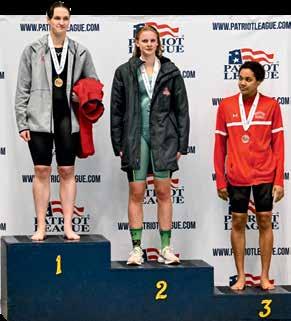
When MG King ’27 won the gold medal in the 200-yard backstroke at the Patriot League Championship, it was not only a record-breaking achievement, but also a personal tribute.
As King prepared for the 200, they placed a red fleece on the timer’s chair behind their lane. The fleece belonged to their recently deceased father, who always wore it when volunteering as a timer for their Lake Forest, Ill., home club team meets.
“More than I had the rest of the season, I was thinking about my dad during that race,” King says. “I knew that no matter what I did, he’d be proud.”
In the first few days of the four-day competition, King “was having some issues,” but “went into the last day thinking, ‘I will swim the best I can.’ My coach pulled me aside and said, ‘This is your race. Just follow the plan that we’re comfortable with.’”
King’s strategy going into the race was to preserve their energy for the end. It worked:
As others were getting tired after swimming a hard 75, King kicked it into high gear. There came a moment near the end when King was ahead, but they didn’t believe it until they touched the wall, looked toward the Colgate bench, and saw their teammates and Head Coach Ed Pretre jumping up and down in celebration.
“Experiencing that moment of such profound joy with my teammates was so special,” King says. When King climbed to the top of the podium to accept the gold medal, they brought the red fleece.
Podium finishes are nothing new for the junior. King has piled up wins, including earning the bronze in the 400 medley relay with three teammates in 2025. It was Colgate’s first podium finish in that event in more than a decade. The win showed how far the program had progressed over a couple of seasons.
With one remaining year at Colgate, King looks forward to completing their classics degree and working with incoming teammates. And while that happens, it’s a safe bet King will continue to add victories to their record.
“I’ve learned that I’m just one part of a very large machine. Though there are individual wins, it’s all about scoring points for the team at large.”
Her Pro Dad Says She’s Better Than Him
When Marina Taveras ’29 was a newborn, she was on a field most ballplayers can only dream of. The diamond was full of stars. David Ortiz, Manny Ramirez, and Dustin Pedroia played on one side. Todd Helton, Matt Holiday, and Troy Tulowitzki played on the other. At the center of it all was Colorado Rockies outfielder and, more importantly, Marina’s father, Willy Taveras.
Willy’s Rockies lost the World Series to the Boston Red Sox that season. But on that hallowed ground, the Taveras family got to bring baby Marina to the field. She will never remember those moments, but they would be immortalized in photos.
“She looks at the photos and she sees (David) Ortiz holding her,” Willy says. “We have one of her and Matt Holiday’s son, Ethan.”
Now at Colgate, Marina is slashing .339/.397/.726 through her first 20 games and is tied for the team lead with six homers, as of press time. Those numbers have earned her two Patriot League rookie of the week nods. And she’s coming for the Raider record books next.
The first-year home run record for a Colgate softball player is 13. Marina is on pace for 15 — and that’s not even including Patriot League tournament games. If she hits 16, she would tie the single-season record by any Raider.
The key to Marina’s prolific start has been her swing. The swing that has hardly changed over her career. The swing that makes the same clunk on the softball nearly every time. The swing she developed with her dad.
“He definitely had a ton of influence with my swing and what it turned into,” she says. “I don’t touch it because he helped me with it, so I don’t really want to change anything.”
Throughout Marina’s career leading up to Colgate, Willy was her only coach.
But now, 1,500 miles from her Texas home, she’s had to adjust to life away from him. She takes input from her Colgate coaches, but still gets advice from her dad too. “He’s still coaching me even though we’re so far [apart].”
Sometimes Marina and the Colgate softball staff will talk about her mechanics. Whenever one of them makes a suggestion, they’re usually met with the same response.
“Sometimes we’ll suggest something to her and she’ll say ‘my dad told me the same thing,’” Colgate softball head coach Marisa Lamison-Myers says. “If we’re saying the same thing he is, we’re probably doing something right.”
All the coaching paid off quickly. In her first collegiate plate appearance, Marina smashed a home run over the left-center field wall. She wasn’t trying to hit one over the fence, but her swing drove the ball farther than she meant.
That effortless power is one of the qualities Willy believes makes Marina stand out. The Dominican Republic native says that, in his country, everyone can tell when a player has the tools to be a great hitter. Not only did he see those attributes in Marina early on, but many people he talks to have even higher praise.
“She comes and hits the ball, and the ball just goes differently,” he says. “People [say] ‘the one that hits the most in the Taveras [family] is Marina.’”
It’s high praise, but it might not be unwarranted. Marina has always strived to be like her father. She used to watch his highlights in admiration. Years later she’s doing damage at the plate against the best of the best.
And now it’s Willy’s turn to look up to his daughter.
“She’s way better [than me],” he says. “She’s a whole different level.”
— Christian Locker
The Power of the Tiny Desk: NPR Music’s Bobby Carter
Music producer, DJ, and multimedia storyteller Bobby Carter visited Colgate in March as the Clifford Family Innovator in Residence. Carter is the host and producer of NPR Music’s Tiny Desk Concerts, the iconic web series that features performances from both well-known and emerging artists behind an office desk at NPR’s headquarters in Washington, D.C.
Carter is the third visionary to serve as the Clifford Family Innovator in Residence. Supported by a permanent endowment from Trustee Emeritus Chris Clifford ’67, H’11, P’93 and Carrie Clifford ’93, the residency is one of the cornerstones of the Middle Campus Initiative for the Arts, Creativity, and Innovation (ACI), which engages students and faculty in the work of artists, designers, entrepreneurs, and creatives from various fields.
From March 3–6, Carter immersed himself in the Colgate community, engaging with students, faculty, and staff through a variety of interactive events, including formal discussions with students and faculty, radio and podcast appearances, a criterion record pull, and a musical performance as his DJ persona, DJ Cuzzin B, alongside Assistant Professor of Film and Media Studies and Africana and Latin America Studies Aaron Dial as his DJ persona, Phade Ali.
Throughout the residency, Carter shared stories from his personal and professional life in order to inspire and encourage students to follow their passions. A gifted
storyteller, Carter provided examples from notable Tiny Desk performances to reinforce the lessons he imparted: authenticity, intimacy, connection, discovery, and individuality.
On Authenticity
Carter credits much of the success of NPR’s Tiny Desk Concerts to authenticity, noting that the stripped-down format of the show forces a level of honesty from artists that resonates deeply with audiences.
“Less is more in our space,” said Carter. “The audience wants something that’s real, authentic, and made with love.” The most impactful performances are often the most minimalist ones, he explained.
On Intimacy
The power of the close-quarters format of Tiny Desk fosters a vulnerable connection between artists and the audience, in a space that holds no more than 200 people.
The audience gets an up-close view of global superstars who typically perform in stadiums and arenas. “The best of the best get really nervous, which is endearing to watch because you get to see these artists as human beings and not just these massive superstars,” Carter said.
On Connection
During the COVID-19 pandemic, Carter had to rely on artists to send in video for Tiny Desk (Home) Concerts. This time period was crucial in understanding how meaningful the show was for people, providing the audience with a sense of community and connection to live music when it was otherwise unavailable. As audiences found community in the comment sections of the online concerts, Carter discovered something powerful about Tiny Desk: “What we were doing meant more to people than I ever realized,” he said. Many people were
Ryan John Lee
introduced to the platform during that time, and Tiny Desk’s following exploded. Now, as Tiny Desk expands to Japan, Korea, and Brazil, the team is exploring what common threads connect audiences globally and how they can maintain quality control across production teams.
On Discovery
Carter recalled his upbringing in St. Louis, Mo., when his passion for music was ignited, influenced by his musician uncle’s diverse musical taste and an experience watching a DJ control a crowd at a roller skating rink. “I watched just how the DJ had the whole room in the palm of his hand,” he said. “That was my introduction to how music can just take your body, mind, and spirit.” He also talked about his teen years spent DJ’ing and working in a Sam Goody music store during the 1990s. These experiences provided him with a foundational education in appreciating all genres of music, informing his curatorial approach at Tiny Desk
“When you look at a month’s worth of shows on YouTube, it’s just a DJ’s playlist,” Carter said. “I’m going to give you a little bit of what you love. I’m going to give you a little bit of what you never heard of, but I know you’re going to love.”
He sees Tiny Desk as a platform for diversity, showcasing a wide range of cultures and genres that reflect the world. Tiny Desk is celebrated for its cultural impact bringing NPR into spaces like the NAACP Image Awards, where the organization traditionally had no presence. “Tiny Desk was NPR’s happy accident,” Carter said. “They didn’t expect us to affect culturally the way we do.”
On Individuality
Carter — who joined the NPR Music team in 2007 and produced his first Tiny Desk concert in 2014 — was a catalyst for the platform’s growth, as he helped open the door to a wider range of genres and he hopes to pave the way for the next generation to follow. His advice to Colgate students was to lean into that individuality in whatever passion they choose to pursue. “Muster up the courage to be exactly who you are, no matter how uncomfortable that may make other people,” Carter said. “My superpower is my unique perspective. So tap into that special thing about you and bring that in every single room.”
— Rebecca Taurisano
Opportunities
A Network in Action
Students and alumni unite during intensive career programs.
Colgate became a hub of professional development as two premier programs, the Tuck Business Bridge Program and Sophomore Connections, converged to bridge the gap between academic study and career readiness in January. These initiatives provided networking and mentoring opportunities as students and alumni gathered on campus.
Tuck Business Bridge Program
The second year of the Tuck Business Bridge Program at Colgate kicked off in early January with 40 students returning to campus for more than two weeks of intensive programming designed to prepare students for internships and careers, while building connections among students, alumni, and top-ranked Tuck faculty.
“We continue to be impressed with the level of instruction delivered by Tuck, and the clear growth in students’ preparedness to compete for business internships that is evident in students who take part in the program,” says Teresa Olsen, Milone Family AVP for career initiatives. “Following the success of our inaugural cohort last year, we were excited to expand the group to 40 students for January 2026. Through the generosity of our alumni, 17 in our cohort were supported with full scholarships to cover the cost of participating.”
Colgate and the Tuck School of Business at Dartmouth College formed an institutional partnership in 2024, with funding for aided students to participate in the program provided through the generosity of Giovanni ’94 and Maree Cutaia. The Cutaias have also endowed the First@Colgate directorship and funded Colgate’s Graduate School Access Fund.
Sophomore Connections
On Jan. 16 and 17, nearly 500 Colgate sophomores and 130 alumni gathered on campus for Sophomore Connections. Presented by Career Services, the two-day signature program is designed to teach basic networking and internship search strategies, give students practice connecting with alumni, and provide additional opportunities to explore career interests.
The weekend began with a kickoff session in Memorial Chapel and LinkedIn and networking workshops. Christopher Nulty ’09, head of external communications at Anthropic, gave the keynote address — 13 lessons he’s learned from his own career.
Several alumni served on the weekend’s 17 career panels, which spanned four career categories: STEM and health care, business, arts, and common good. Panelists also emphasized the importance of the alumni network for career exploration.
Olsen sees Sophomore Connections, now in its 14th year, as a point of pride. “I am proud of how our former students have grown into mature professionals who prioritize a commitment to giving back to something bigger than themselves and supporting others along the same journey,” she says.
— Stephanie DeVries and Savannah Tracy ’26
Advancement
Into the Light: A Focused Vision Illuminates the Third Century
Alexander Graham Bell once said, “The sun’s rays do not burn until brought to a focus.”
I love that image, especially on warm spring days when the sun feels like such a gift after a cold and snowy winter. Focus takes something that is already good — sunshine — and turns it into a powerful, illuminating force.
A clear institutional plan does the same for philanthropy.
It would be easy to lose focus at this point in the campaign. We’ve raised nearly $800 million and Colgate’s priorities have evolved. We’ve remained nimble and adapted our strategies a number of times in order to be most responsive to the call of the third century here at Colgate. This approach has allowed us to be best positioned to address emerging needs through the Third-Century Plan and its long arc.
The Carey Center is an excellent example of what happens when we stay adaptable and willing to embrace change. After many iterations, construction has begun on a new arena that’s possible thanks to the generosity of the Carey family and a growing number of other deeply engaged alumni who care about the future of Division I athletics at Colgate. The end result will transform the southern gateway to our campus, better support our student-athletes, and create a best-in-class facility that truly celebrates the important role athletics plays in the student experience.
The Carey Center was a journey as an institution to make sure we got it right for our athletics campus today and into the future. As it turns out, the changes that led us to this place weren’t challenges, they were opportunities. Colgate’s Third-Century Plan enabled us to navigate them with a clear sense of purpose.
Now, President Brian Casey is asking us all to consider: What kind of institution is Colgate becoming over the next decade? How do we sustain and continue to deepen our commitment to the University’s vision?
At the same time, I’m asking: How do we partner philanthropy to that process? We as a community must stay aligned to continue bringing the totality of the Third-Century Plan to fruition. Together, we are raising endowment for financial aid so that the finest students find their way to Colgate regardless of their background. We’re continuing our work and deepening our commitment to a renewed and enhanced residential system, complete with robust academic opportunities, that meets the needs of all our students from their first year to graduation. And by supporting our outstanding faculty and their teaching and research, we’re ensuring that the liberal arts education these students receive is the best in the nation.
We can accomplish these goals because we have a clear vision for what Colgate is becoming; your investment in that vision is what brings it to life.
That’s the role of advancement: to focus the sun’s rays — your support — and help it illuminate the brilliance of our great University.
— Kim Harris, vice president for advancement
Support
The Strength of Many: Colgate’s Collective Generosity Exceeds $5.9M for the Colgate Fund
As of Dec. 31, 2025, Colgate University has raised more than $5.9 million for the Colgate Fund since the start of Fiscal Year 2026. This milestone places the University more than halfway toward its $10.4 million goal for the 2026 fiscal year (July 1, 2025–June 30, 2026), ensuring robust support for the unrestricted-use funding that impacts every student and program on campus.
This achievement was driven by the successful conclusion of the Colgate YearEnd Challenge. The challenge, which ran from Dec. 16–31, mobilized the Colgate community to support the University’s liberal arts and sciences tradition.
The initiative began with a $1.5 million commitment from a dedicated group of leadership-level donors. In a call to maximize the impact of these leadership gifts, the University challenged the broader community to double that amount. More than 3,800 alumni, families, and friends responded — far exceeding expectations — to raise a record-breaking total of $4.6 million for the Colgate Fund during the challenge period.
“I am deeply grateful to our challengers who joined me and to the thousands of donors who rose to meet them,” says President Brian W. Casey. “This generosity directly supports our faculty and ensures that a Colgate education remains a meaningful foundation for our students’ lives.”
The effort centered on supporting fundamentals of the Colgate experience: the close collaboration between scholars and the long-term professional trajectory of graduates. By highlighting studentfaculty research and the achievements of notable alumni, the challenge underscored the enduring value of a liberal arts and sciences foundation — one that equips graduates with the tools for leadership and complex problem solving in an evolving global environment.
I am deeply grateful to our challengers who joined me and to the thousands of donors who rose to meet them.
President Brian W. Casey
Kim Harris, vice president for advancement, notes the strategic importance of the timing and the target. “The year-end period is a dynamic moment for the Colgate Fund. By heeding this call, our community has provided the flexible, immediate-use support necessary to sustain our most vital programs. Gifts of all sizes contributed to the effort, and it is a resounding vote of confidence in Colgate’s future and in support of the Campaign for the Third Century.”
— Rebecca Taurisano
As the primary source of unrestricted support, the Colgate Fund enables the University to address its most pressing needs, ranging from financial aid and student life to classroom innovation and campus stewardship.
The Hoyns Challenge: Financial Aid Now and in the Future
When Colgate first launched the Colgate Commitment, it was with the understanding that its promises could be kept thanks to the trust, cooperation, and investment of the University’s alumni and friends. Each expansion of the Colgate Commitment has made the University more accessible and affordable for the finest students. It also has increased the University’s responsibility to ensure the funding is in place to make those promises possible.
In 2023 John Hoyns ’76 made a significant promise of his own when he pledged $20 million to Colgate through his estate. When realized, Hoyns’ bequest will create the John Hoyns ’76 Endowed Scholarship, providing an extraordinary infusion of resources for students with demonstrated financial need.
Even more remarkable: Hoyns asked that his generosity be leveraged to inspire a wave of outright philanthropic support for the Colgate Commitment in order to double the impact of his gift.
In response, 10 generous alumni and alumni couples have committed $1 million each to financial aid as “Hoyns Challengers.”
→ Jeanne ’82 and Phillip Foussard P’16,’18
→ Christopher ’90 and Beth Dalrymple ’90, P’28
→ Toby Bozzuto ’96 and Robin Bozzuto
→ Chris Clifford ’67, H’11, P’93 and family
→ Alan Greene ’51, P’81, GP’08
→ Plus five anonymous commitments
These challenge gifts will serve as catalysts to raise an additional $10 million in outright gifts to the endowment from the wider donor community.
In all, Colgate is anticipating an additional $20 million in outright gifts to financial aid on top of Hoyns’ $20 million estate provision. With the successful completion of the Hoyns Challenge, Colgate will have built tremendous momentum toward satisfying the long-term obligations of the Colgate Commitment and realizing the University’s extraordinary vision for financial aid.
As a student, Hoyns majored in history and served as a member of the Student Senate and general manager of WRCU. After graduating, Hoyns attended the University of Michigan School of Law and received his JD in 1979. While working for Hughes, Hubbard & Reed LLP, he was a corporate generalist before becoming one of the leading aviation finance lawyers in the nation.
His first gift to Colgate was a $4 contribution during his senior year. Since beginning his career, his gifts to the school have grown steadily over the years, and he has long supported the Colgate Fund and the Colgate Fund Scholarship.
As he sought to make a more lasting impact and improve access and affordability, Hoyns saw the opportunity to elevate the Colgate Commitment through his philanthropy.
— Stephanie Boland
Discover
Taking the Plunge Into the Heart of the Story
Environmental journalist Alix Morris ’05 reached remote Sable Island in the dead of winter 2023. Nearly 200 miles off the coast of Nova Scotia, surrounded by feral horses and sunken shipwrecks, she witnessed an ancient ritual: roughly 400,000 gray seals “hauling out” of the ocean onto the beach to give birth, nurse, and mate before returning to the water.
Her 2025 book, A Year with the Seals: Unlocking the Secrets of the Sea’s Most Charismatic and Controversial Creatures, recounts her travels by helicopter, plane, and kayak to spend time with gray and harbor seals — and with diverse human communities who impact and are impacted by North American seal populations.
The book is part adventure tale, part scientific storytelling, part personal journey. Its heart, Morris says, “is about learning to question my own assumptions about how to protect wildlife and to build empathy with people holding many different perspectives.”
The germ of Morris’ story began in 2020. News of a fatal shark attack reverberated up and down the Maine coast, where Morris had recently moved. “The media response focused on how large local seal populations lured sharks closer to shore and endangered public safety. There were calls to cull the seal population,” she says. “I was surprised to learn these cute, curious animals are very controversial, and I wanted to know how legitimate those calls were as a solution.”
Morris decided to “take the plunge” into writing a book about an increasingly relevant and complex issue: “As conservation measures and legislation are successful, animals are coming back in large numbers. That’s wonderful! And yet, now the same conflicts that originally
caused humans to kill off these species are repeating themselves. This is where we’re at with seals and species like gray wolves and grizzlies. What do we do now as people and wildlife interact more frequently?”
Alix Morris ’05 explores the depths of humans’ relationships with seals.
Sable Island, Nova Scotia, is home to the largest colony of gray seals in the world.
Morris takes a helicopter from Halifax, Nova Scotia, to Sable Island.
With grant funding from the Alfred P. Sloan Foundation, Morris began investigating the conflicts between humans and seals — and between humans with different perspectives on what’s best. She started her research in New England, then ventured north to Canada and west to Washington state. She spent time with seals, scientists, wildlife rehabilitators, local government representatives, surfers, and commercial and subsistence fishermen, among others.
To understand why some tribal communities in Washington state want to dismantle the Marine Mammal Protection Act — which Morris personally favors — she spent time fishing with a member of the Puyallup Tribal Council. “He told me about salmon’s central role in their culture and identity,” Morris recalls, “and how seals and sea lions gathering around dams have been devouring their salmon resources.” This impact comes on the heels of historical restrictions tribes have faced to their fishing rights and access.
“I had a split moment on the boat, watching this fisherman watch seals splash around playfully, seeing in them the loss of a way of life and livelihood,” she says.
“As a writer, there’s a great responsibility to do justice to the stories entrusted to me,” Morris says. “I couldn’t try to fit them into my own preconceived notions. I had to seek to understand people on their terms.” Morris continues: “When I was trying to wrap my head around how to conclude the book, I was also thinking about how incredibly polarized society is right now.” Rather than tying up the book with a bow made from prescriptive solutions, she instead sought to grapple with the lack of a single right solution. “I wanted to inspire myself and others to try to make sense of all the shades of gray, to accept when there aren’t just black and white and easy solutions.”
ASK A PROFESSOR
The Forecast Gap: Why Do Apps Give Conflicting Predictions?
One of the first things meteorologists do when they forecast the weather is look at the numerical models — the computer simulations of the atmosphere. There are a handful of these models, and every weather forecaster, every weather app begins with them.
In the U.S., the National Centers for Environmental Prediction uses several models, two of which are the North American Mesoscale model (NAM; designed for shortterm forecasting in North America) and the Global Forecast System (GFS; designed for longer-term global modeling). They both yield the same kinds of information, but because they’re designed for different spatial and time scales, they produce different forecasts. For example, I find that the NAM always produces precipitation forecasts that are overblown, whereas the global model is a little bit more muted in that respect. Some of these forecasts and apps may not even involve humans; they may just gobble up the model output information and deliver it.
Some of these apps take advantage of different inputs of data. Models are initialized with observed data that come from observations all around the world. Data at the surface and aloft are collected, and then these data go into the models, thereby influencing the end forecast. Some of the apps actually have people who look at the forecast and say, “This needs to be modified because it doesn’t look right given what I know about this area.” So you end up with forecasts that are similar, but if you dig in deep, you find that they’re quite a bit different.
Every time the model runs, it uses more updated data. So, the closer you get to a forecast day, the better your forecast gets. You can’t just look at the forecast once a day and ride it. I have become more reliant on these weather apps myself, especially for hourly forecasts, which are probably some of the most unreliable forecasts because of the timescale they’re operating on. You just have to keep up with it.
And, of course, there’s still a lot of uncertainty about the behavior of the atmosphere.
Now, nearly a year after her initial book tour, Morris continues to make space for other perspectives. She invites people she interviewed to join ongoing book events and tell their stories directly to her audiences.
“The questions I had to ask myself while I researched and wrote get at so many larger issues: How can I look outside my own assumptions? How can I build empathy?” Morris says. “If we can look beyond the surface of a conflict to understand what’s at the heart, I believe we can create more nuanced, context-specific ideas.”
And with ideas grounded in the heart of the matter, there’s greater hope of effectively protecting and benefiting both animal and human communities for the future.
— Meghan McDonald
Some of these apps are proprietary in the way they approach their work, but I think it’s well understood that different apps may begin with different numerical models. And even though every one of the numerical models has the same goal, they all work slightly differently because they have different resolutions — meaning, how fine they break up the Earth. Is it going to give you information at a 100-by-100–meter grid or is it going to give you information at 12-by12–kilometer grid resolution or something larger? Also, they all ingest different types of data. Some of them actually use different mathematical approaches to solve the key equations of the atmosphere. So by the time you put all these little differences in, you end up with a slightly different forecast coming out of the model.
There is also a psychological element: People remember the blown forecasts more than they remember the correct forecasts. When the weather is nice outside, people don’t tend to think much about the weather, but when the weather’s bad, they think about it a lot. There is a belief that weather forecasting is not good. But meteorologists and modelers take a lot of pride in their work, and they want it to be useful. Weather forecasting is important and it’s actually pretty good, except in the times when it’s not good and that’s what everybody remembers. My advice is: Don’t remember the bad.
— Adam Burnett is the William R. Kenan Jr. Professor of geography. His research and teaching focus on climate-related processes and patterns of variability.
Fellowship
Anthropology as Advocacy
Amanda Lubit ’00 documents the resilience of Muslim migrant women in the ‘race-hate capital of Europe.’
The Arabic word sadiqa can be translated into English as an honest, truthful friendship.
Through her ethnographic studies of migrant Muslim women in Belfast, Northern Ireland, sociocultural anthropologist Amanda Lubit ’00 has developed trusted friendships that have enabled her to share the hard truths about the tremendous challenges these overlooked women have faced — and overcome.
Lubit’s work secured her a threeyear global Marie Skłodowska-Curie postdoctoral fellowship, awarded by the European Commission in 2024. The program’s objective is to equip researchers at all stages of their careers with new knowledge and skills, through mobility across borders and exposure to different sectors and disciplines. Lubit has split her time between her research in Belfast, as staff at Dublin City University, and as a visiting researcher in Germany at the Max
Planck Institute for the Study of Religious and Ethnic Diversity.
“The fellowship has felt like a validation of all the work I’ve put in and all the struggles,” she says.
A history major, Lubit fondly remembers those classes at Colgate, as well as her anthropology courses. “They were about trying to understand how all the big forces happening in the universe — history, politics, economics, etc. — impact real people in their ordinary lives and experiences,” she says.
While earning her master’s degree in anthropology, with a focus on conflict, in Portland, Ore., and her PhD at Queen’s University in Belfast, Lubit was drawn to the experiences of care, crisis, and racism among migrants in urban contexts. Earlier generations of Lubit’s own family had endured forced migration from Austria and Russia; that displacement informs her work.
“That’s why I feel so strongly about
giving voice to people who tend to be silenced,” she says.
In Belfast, Lubit first volunteered for a month in 2019 with the group she identifies as the Sadiqa Women’s Space in order to earn their trust. She understood their hesitation. Northern Ireland has been called the race-hate capital of Europe by the media, and anti-immigration violence is on the rise. Its long history of sectarian violence complicates numerous aspects of everyday life. “These women would be asked [by locals], ‘Are you a Catholic Muslim or Protestant Muslim?’ which translated as, ‘Do you side with the Catholics or Protestants?’” Lubit explains.
For her fellowship, Lubit is drawing on her research to write policy recommendations addressing racism in housing issues. The migrants report being continually cycled through housing locations where they’re repeatedly subjects of hate crimes. The women have created a tracking software so they can, in real time, record where hate crime incidents are happening. “They were tired of talking to the police, the housing authority, and politicians and having nothing change,” she says.
Lubit has chronicled how the group has handled successive crises. When the COVID-19 pandemic hit, the women solicited donations of Wi-Fi equipment so they could not only continue meeting virtually but also keep their children in school. They connected online with a group of retired teachers to tutor their children and later created their own school, in partnership with local universities, so that teen migrants deemed too old to enter public schools could receive the necessary instruction. The group has also created community kitchens to bring together the diverse Muslim community dispersed among hotels and transitory housing.
“They’re dealing with desperate situations,” Lubit says, “but I like to focus on the positive side — of what comes out of their unbelievable strength and determination to make a better life for themselves and their children and to contribute to their community.”
A fiber artist, Lubit also has used some of her fellowship funds to sponsor a quilting project in which each woman in Sadiqa Women’s Space contributes a block that represents who they are. “It is a healing and empowering activity,” Lubit says. “They all have different experiences, but this outlet lets them come together to make a statement.”
— Kristin Baird Rattini
Testing Their Limits
A Tropical Ecology course takes students into the rainforest and mountains.
Students leapt out of their textbooks and across the hemisphere this past winter. After a semester studying ecological theory and research methods, students in professors Catherine Cardelús and Eddie Watkins’ Tropical Ecology extended-study course took a three-week excursion across Peru, conducting research from the Amazon rainforest to the Andes Mountains.
Students tackled rigorous preparations before embarking: designing research projects, getting comfortable with advanced statistics and biology, and gaining sociocultural insight into the regions they would explore. The greatest challenges, however, came in the field: braving harsh and unpredictable weather, gathering data in taxing conditions, and developing presentations and papers on their findings under the canopies and atop mountains.
The course’s central mission is immersion: Students physically interact with the ecosystems they studied in the fall semester, getting their hands dirty as they learn beyond theory. Advanced scientific coursework and background provided a solid foundation, but nothing could fully prepare them for the realities of fieldwork — anything goes in the jungle and on the mountain.
Cardelús, a field biologist, teaches the course from a theoretical standpoint, while engaging students in interactive field research, sparking their passion for physical environmental learning. “Students learn to think critically about theory from the literature, and then they test those theories in the ecosystems themselves,” she explains.
while moving between lab sites and elevations with all their gear. The real test of the grueling trip — or “crucible,” as Cardelús endearingly calls the exploration — was measured in their mental strength and scientific growth.
“Many students don’t realize how well prepared they are or how capable they are of success. Watching [students] discover more about themselves is the absolute most exciting part,” Cardelús says.
The Peruvian excursion began in Cusco, with a highlight being a two-day boat trip from Manu to Tambo Blanquillo and the Los Amigos Biological Station. This experience allowed students to absorb the glory of the forests while also confronting the impacts gold mining has — an ongoing ecological issue they studied throughout the semester.
“The time we spent in nature gives us more reason to go out and protect it,” reflects Daytona Doherty ’26. “We do not protect what we do not know. You can’t experience this just by reading a book; you need to go out and be a part of it.”
The trip inspired Doherty, a biology and psychology double major, to consider new protection strategies for these diverse ecosystems through the lens of conversational psychology — studying the reciprocal relationship between humans and nature to promote sustainable and productive climate action. Students
Across three distinct elevational gradients, students learned to watch birds, collect and analyze soil samples, and measure trees, facing unforeseen challenges at each site. There was thin air and freezing temperatures at higher elevations, while lower elevations welcomed the researchers with relentless rain, stiff humidity, and limited amenities. While adapting to these conditions, students balanced active research, precision in new data analysis, and creating group and individual presentations,
connected their classroom work and realworld experiences to explore the impacts of climate change on biodiversity, cultures, and local communities.
Amid grueling hikes, 4 a.m. wake-up calls, and mosquito-ridden nights, the cohort became a family. Students supported each other through humor, capturing memories and challenges on their blog, and soaking up unique aspects of the terrain together.
“Fieldwork in the rainforest was challenging both mentally and physically, from smelly clothes to fear of being stung by a bullet ant,” reflects Lottie Allen-Emerson ’28. “But it brought me closer to my peers in a way I never would have without this shared experience. You learn a lot about a person when you’re pooping in the rainforest while hunting for dung beetles, or birding at 5 a.m., looking out across the cloud forest, but also in the simpler moments, like sharing meals, enjoying a view, or playing cards between project meetings.”
Cardelús emphasizes student independence and curiosity as a key component of the trip. “I love watching students surprise themselves at their own capacity — taking risks and embracing the discomfort,” she says. “They start out relying on [professors], but by the last site, they don’t need me anymore, and they can’t believe it. That is my whole goal.”
— Jordana Harwitz ’28
Lee McConaughy ’82 Woodruff interviewed President Brian W. Casey at Colgate’s New York City offices. Watch a video of the interview at colgatemagazine.com.
By Lee McConaughy ’82 Woodruff
Rosario
A DECADE ON THE HILL: PRESIDENT BRIAN W. CASEY
Every morning he’s in Hamilton, Brian Casey unlocks the Huntington Gym and slips into the locker room at 5:30 a.m. He changes into his bathing suit, turns on his music, and dives into Lineberry Pool to swim laps before anyone else arrives. It’s been his routine since his days as a collegiate swimmer, both a form of exercise and meditation. As president of Colgate, this is a sacred time to center himself, think about speeches, and organize his mind for a day that will contain a million big and little things.
As he closes out his first decade of leadership, Casey is only speeding up. He seems to be everywhere, all at once — walking his dog, Emrys, calling students by name, inquiring after test results, congratulating an athletic win, or remarking on a campus event. You might find him on an airplane, crisscrossing the country to talk with alumni, hosting student groups at Raab House, or grabbing a meal at Merrill House with faculty members.
His enthusiasm for the job is downright infectious, whether he is talking about trees on campus, the women’s volleyball team, or creating a champagneat-sunset tradition he began for each senior class (no parents allowed). Casey beams recalling the moment they first flicked on the lights along the Willow Path nine years ago. He was determined to maintain the surprise, and he did not disappoint as an already beautiful campus instantly transformed into a magical fairyland.
Looking ahead to his next decade, Casey is a ball of optimistic, kinetic energy, moving the University forward in large and small ways. He views his role as one of continually challenging the University to be its best, burnishing the many assets that have made it a hallowed and coveted place of learning for generations.
But it isn’t enough to simply preserve the past. At a time of sharp political and economic division, there are additional unprecedented challenges around information and technology. The very value of a liberal arts education is being questioned, but Casey remains convinced that institutions like Colgate are more relevant than ever. He believes colleges and universities are fundamental to healthy discourse and debate, to being places of innovation and ideas, the keeper of the flame around the very essence of community and civil society.
He’s looking ahead, creating conversation and building consensus, taking the pulse of life both inside and outside of Hamilton, N.Y., and creating new traditions to keep the University vital and relevant. As president he has listened and counseled, traveled and connected, raised more than $800 million for new faculty initiatives, increased financial aid, and overseen the construction of magnificent buildings including Bernstein and Benton halls. Under his leadership, Colgate added two residence halls, creating an upper and middle campus, and unified a physical plant that had been built over time under one cohesive plan.
He was able to pivot every aspect of University life during COVID-19, leading with conviction through an unprecedented moment in our lifetimes and choosing to put boots on the ground by moving into the dorm with the students. He navigated the school through the #MeToo movement, George Floyd’s murder, and Black Lives Matter. He met the national moment when higher learning was challenged after the
events of Oct. 7, 2023, in the Middle East; he demonstrated rigor around a framework for civil conversation.
Talking about the latest headlines, war and violence, political division and the “age of anxiety,” with cell phones and artificial intelligence, Casey is quick to remind that he’s never pretended to have all the answers to all the issues facing our nation’s colleges and universities. He believes that good leadership means surrounding himself with smart, capable people who have experience,
jewel in the Chenango Valley.
As a Colgate trustee from 2009–18, I had the pleasure of serving on the search committee in 2016, with members of the board, faculty, administration, and students. I still remember how the current in the air changed when Casey bounced into the room for his interview. We all sat up a little bit as he demonstrated that he’d done his homework, clearly energized at the prospect of the job and the school. He felt that the University hadn’t begun to reach its
open minds, and are ready to innovate. Add to that Casey’s gut instincts, his willingness to course correct if required, and he is poised to lead Colgate into this next decade of certain uncertainty.
Casey’s vision and energy are transforming Colgate as he implements the Third-Century Plan, with the goal of raising a billion dollars to ensure the institution’s longevity and health as it enters this next chapter, punching way above its weight as a
potential and the school needed someone to help “turn up the volume.” Spoiler alert — he got the job.
Ten years later, as I sat down with Casey in Colgate’s New York City offices to talk about his decade of leadership and the vision for the future, he strides into a room with the same ebullience he exuded when interviewing for the job. Arriving straight from Florida, Casey was returning from an unexpected visit with his mother, following
“ I understood it was very much my job to shine a light back on the campus because it deserved it.”
Richard Rosario
the devastating and sudden death of his beloved older brother. It would have been completely understandable for him to push this conversation out, to give himself time to heal from such a massive loss, but in typical Casey fashion, he arrived on time. He was determined to keep the appointment, setting his own grief aside to focus on Colgate University and the coming years. What follows is a distillation of that conversation.
LMW: Let’s go back 10 years to your first day walking into the president’s office. Do you remember what that felt like?
BWC: It’s interesting… I can’t really remember my first day, which is not like me. I remember the night before my first day in office, because I was up in Raab House preparing for the first day. It was this beautiful summer night in late June, and I was starting on July 1st. I decided to take Emrys for a walk through the campus just to take it all in. I saw the summer students playing volleyball in front of the chapel and they looked at me like, “Who’s that guy with a dog?” And I remember thinking, “I’ll never be able to walk anonymously on this campus again.” It was one of my last nights to be completely unobserved or unrecognized. I also remember thinking of the interview process and being struck by the thought that Colgate needed to have more pride in itself. It needed a better sense of itself. And I understood it was very much my job to shine a light back on the campus because it deserved it.
LMW: Did you see things you wanted to change immediately?
BWC: I never wanted to change Colgate. I definitely wanted to strengthen it, burnish it, and improve it, but not change its fundamental nature or its mission. When I first got here, people would ask me, “Well, what are we like? Are we Dartmouth? Or are we Williams?” And I never liked that question because I didn’t want to accept someone else’s category. Because we’re Colgate. We have distinctive characteristics, and my job is to understand them, amplify them, and add to them.
LMW: I remember one of the most important questions during your interview was, “Are you going to stick around for a little while?” And you said, “Yes,” and you said it with conviction. And here you are. Not many college presidents today have a tenure of a decade. How does that
Student Access
Total enrollment 2,890* 3,084 (fall 2025)
8,722 (2015) 16,772 (2026)
Academic Excellence
Endowed professorships 35 48 (as of fall 2026 )
# of fellowships awarded 14 28
$1.413B
*Common Data Set 2016–17
commitment feel one decade later and how do you stay committed to the community?
BWC: I’ve had the good fortune of working closely with a lot of great university presidents. I was at Brown when Ruth Simmons came in as president and I watched her transform that university. It was almost like an act of will on her part. I was in a cab in New York with her once, and she was past her 10th year at Brown and I asked her, “How do you keep going?” She
said, “If I wake up in the morning and there are things I want to do, I go to work. But the first morning I wake up and I don’t want to make the place better,” she said, “I have an obligation to walk away.”
This may sound odd, but I have a very clear movie in my head of what Colgate not so much looks like, but what it should feel like. It’s as clear as it was that first day, and I keep thinking, “Make that movie.” And then every now and then, there will be times I’ll think, “There it is. That’s a moment.”
Professor Laura Early instructs her Fundamental Physics II Lab where students are working on building electric motors.
Whether it’s engaging in a tradition or watching the students gathered somewhere, I’m still actively thinking about the fact that I need to make more of those. I’m motivated by that image, the vision I have for the place.
LMW: You’ve been president of Colgate University for a decade. Can you talk a little bit about what that feels like and what this decade has meant to you?
BWC: It’s meant a lot to me. It’s been 10 years of my life dedicated to a university, but it’s also been 10 very particular years. I’m reflecting on a decade of tumult and challenges, including questioning of higher education. And I’m glad I’m still standing, still at it. I am both proud that Colgate has navigated some very difficult years quite well, but I’m also anxious about the future, not just for Colgate, but also for American higher education. It’s a period we’re in. As a historian of higher education, I know that someday people are going to write about what this decade meant to America’s colleges and universities.
LMW: Just a few years ago, many people predicted that online education would be the giant disruptor. Is this the most disruptive period we’ve seen in a long time?
BWC: If you look at American higher education, about every 60 to 70 years, there’s a renegotiation between the colleges and the nation. Post–Civil War, we had the emergence of land-grant universities, the idea that we’re going to train the people to populate and lead a new nation. That was a moment. Then came the 1920s, when colleges entered the public awareness for the first time. People become aware of colleges through college football. Then the 1960s Vietnam era brought about another radical transformation, and that was almost 60 years ago. So I feel like we’re in a renegotiation between the colleges and
universities and the nation that they serve. There’s great doubt about what we’re doing. It’s incredibly expensive to go to these schools, and it’s sometimes felt that it is not clear exactly what they’re leading students toward. And now there are new threats. I think artificial generative intelligence is a greater threat to educational institutions than what Coursera and the online learning platforms promised. In some ways, this moment might be the equivalent of the invention of the printing press, the radical transformation of how knowledge is created and transmitted. This is incredibly disruptive, and with every disruption, you will witness some institutions get stronger and some get weaker.
LMW: This is a special graduation year for you. At the end of your first decade, what will you tell the seniors as they enter the next chapter of their lives?
BWC: I believe our students got lucky to have picked a liberal arts college — that they picked an institution that trains them to be thinkers and creative people and to understand and navigate complexity. They picked the right form of education for a turbulent time.
LMW: Some would say that if AI does usher in a new age of reasoning, then a liberal arts education is a waste of money. There are people who say we should be focused on vocational training, teaching people to be plumbers, hairdressers, and electricians — physical things that AI can’t do. What do you say to that?
BWC: They’re wrong. AI is a generative tool. It’s a powerful tool, but it’s a tool that needs thoughtful people learning how to master it for the good of humankind. And I mean that.
LMW: You have seen incredible change in the political landscape and discourse during your
tenure. The liberal arts and colleges that were once seen as bastions of learning are under fire. Black Lives Matter, #MeToo, COVID-19, and the demonstrations after Oct. 7. How did you keep pivoting? And was there ever a moment when you thought, “Can I get a break?” Or “I’m not sure what comes next?”
BWC: There have certainly been moments where I’ve thought, “Oh, another one? Another?” You have to believe in what the school does fundamentally. It’s not a moral compass; you just have to keep coming back to something that’s true about the place. During COVID, we were trying to decide what we were going to do. We were all terrified, but we made the decision to bring all the students back to campus and have them quarantine in their rooms for three testing cycles. At that time, we didn’t actually know how long it would be. But we decided to keep the institution open and alive. And then I decided to move into one of the dorms. People still ask me, “Why did you move into a dorm?” It just seemed so obvious. I turned to my head of communications, Hazel Jack, and said, “I’m going to do this. I’m going to live with the students in this hard time.” That was a moment. There are moments like these when it’s OK not to know the outcome. And I felt obligated to say, “I don’t know right now if this will be the exact right decision, but we’ll figure it out.”
LMW: You mentioned the importance of traditions at Colgate, and you’ve been
“As a historian of higher education, I know that someday people are going to write about what this decade meant to America’s colleges and universities.”
innovative and intentional in creating some of them. Why is that important, and what is your favorite tradition?
BWC: Traditions are important on so many levels. First, they are the physical manifestation of your values. Traditions stop
time, they interrupt the everyday flow of life and let us pause and do something out of the ordinary that honors something and creates community. Often we’re repeating things that people have done before us, so it’s important to create and nurture them.
As for my favorite one, there are so many
… maybe Senior Sunset. The idea for this tradition happened when I was up at Raab House looking out on the lawns. When we built Burke and Pinchin residence halls on the upper campus, it opened the vista toward the west, creating an ideal spot to enjoy some gorgeous sunsets. Gradually,
Casey started the Senior Sunset tradition, which is a studentcentered event on the Thursday of commencement weekend.
capital and landscaping
Benton Hall (2018)
Burke Hall and Jane Pinchin Hall (2019)
Hamilton Theater renovation (Village, 2019)
students began to come up there, and one evening I looked out and saw a bunch of them on the hill and recognized they were seniors. So I trotted out there and asked them what they were doing. They said, “We just handed in our senior theses and we wanted to reflect and be happy.” I told them to stay there and then ran home to grab three bottles of champagne for them.
I remember walking away thinking, “They’re going to remember that forever.” That may sound arrogant, but it wasn’t about me, it was about marking the end of four years of their lives at this special place. Their reaction and gratitude stayed with me. The next year, I sent out an email to the entire senior class saying, “Before your family gets here Thursday night, come up the hill. I’ll provide the champagne, you bring the blankets.” I didn’t know whether 10 students or 50 would show up, and in fact they all came. So now the Senior Sunset tradition happens the Thursday of commencement weekend, an intimate slice of time they get to enjoy before their families start showing up.
LMW: As the president of Colgate, you have some serious range. You are equally comfortable being the person at the podium speaking to a room of illustrious alumni or chatting with students on the quad as “the guy with the dog.” People see you as being close to the students. In those moments, are you their friend or their president?
BWC: Always I think, “I need to be their president.” I credit my mother, who is a teacher, for this perspective. She was always a popular teacher, but she used to say, “I’m not their friend, I’m their teacher. They have friends, they need a teacher.” So, I never think that I’m the students’ friend. I’m their president, and I believe that’s very important.
LMW: I just finished reading The Anxious Generation by Jonathan Haidt, which talks
about the disruption caused by having the world in our pockets with cell phones and social media. He calls it the end of a playbased childhood. What do you have to say about that part of student life today and the ability to get outside in a rural, upstate New York setting?
BWC: I’m constantly urging everyone to be outdoors. But if I could do anything, I’d get them off their phones. I would also tell them not to have double majors or majors with minors. I advise students to pick a major and take the 10 courses in your area of study and then choose another 25 that are all over the map.
I look back on my own liberal arts education and until I took a course on Celtic poetry, I had no idea it would open up a love of the Irish language that still resonates with me. So if I had the power to give students one important thing, it would be to free them up a bit, allow them to explore more topics that interest them outside of their majors.
LMW: You’ve worked on other college campuses in other roles and as president of DePauw University. How does the Colgate community compare to other schools?
BWC: Colgate has spirit, and I don’t mean that to sound like a cliché. When we get our sense of self going, it can feel quite spirited in a positive sense. I also like the fact that the students are not competitive in a way that is cruel to one another. That’s very apparent to me. Here’s the other thing: Colgate is in the middle of nowhere, which ensures a number of things. It keeps the students here. They don’t slip away on weekends and they can’t catch a commuter train into New York. In a little village, the social options are fairly constrained. And that can mask income differentials in a very effective way. “Well, we’re all here in this small downtown.” Or, “We’re all going here. We are having a snowball fight.”
LMW: Let’s talk about the Third-Century Plan — not just how that was hatched, but where we are now and where we’re going.
BWC: There are two “whys” to that question. The first is why a plan? One answer is the fact that the school had never had a longterm strategic plan. It had never sat down and said, “This is where we’re going.” And if you don’t know where you’re going, it’s likely you’re going to get lost. And I also had the great gift of the University’s Bicentennial, so I met with a group of faculty and trustees to loosely hammer out where we wanted to go as an institution. The result was a framework, something intentionally not too detailed. The second is that in the plan we doubled down on what we were; that we were going to be a residential liberal arts college of the very first order. One of my favorite phrases in the plan is, “we are profoundly a residential college.” We are engaged in the liberal arts model of education and we do it in community. If I had to boil down the Third-Century Plan, it’s those plus we need more resources to bring people there. The financial aid components of the plan are harder to point to than the buildings. People often say to me, “The plan is about the buildings.” I respond, “We’ve raised more money for financial aid than any capital project on the campus.” So, we are making the liberal arts education accessible to as many students as possible, full stop. That’s the essence of the whole plan — excellence in liberal arts, living together, and making that accessible to as many students as possible.
LMW: The plan and the fundraising have been very successful. What do you attribute that success to?
BWC: One of my jobs is to tell the same story over and over — the story of where Colgate is and where it is going. It’s really important that we don’t have a new
Seven Oaks Golf Course and Clubhouse (2023)
Robert H.N. Ho Mind, Brain, and Behavior Center (2024)
Chenango Hill (Village, 2023)
A Sampling of Academic Initiatives Launched SINCE 2016
→ Additional Colgate study abroad programs
→ The Clifford Family Innovator in Residence
→ Data Science Collaboratory
→ Enhanced start-up packages for faculty
→ Flexible tenure clocks
→ Increased Research Council funding
→ The Lampert Institute for Civic and Global Affairs expansion
→ The Kraynak Institute for the Study of Freedom and Western Traditions
→ The Middle Campus Initiative for Arts, Creativity, and Innovation
→ Public Affairs and Policy Research Initiative
→ The Robert H.N. Ho Mind, Brain, and Behavior Initiative
strategic plan every year. You see some institutions whip around when it comes to strategic direction. I’d like to think that a speech I gave during the Bicentennial would be relevant to one I’d give today. So, yes, we are currently in the midst of a billiondollar campaign. You couldn’t raise a billion dollars unless you had a plan and a series of compelling ideas. Money follows ideas, full stop. And then, of course, I’ve been here for
10 years, and when I took the job, I knew that Colgate really needed a president to stay for a long time. You simply can’t do big things in six years. It’s virtually impossible, and there are so many dimensions and constituents at the University. It takes three years just to understand who’s there, what issues matter, what are the buildings and grounds needs, and to begin to crystallize all of that into some sort of plan or direction. So you say the same things, and you stay focused. You keep pushing even when you’re really, really tired.
LMW: I’ve never seen you really tired.
BWC: Oh, I can get really tired. And a little crabby. But I know how to go away and
1. The Clifford Family Innovator in Residence brings visionaries like Bobby Carter of NPR’s Tiny Desk Concerts. 2. The Lampert Institute for Civic and Global Affairs hosts speakers like Karl Rove. 3. Students present their research during Arts, Creativity, and Innovation weekend. 4. The Jamaica Study Group is one of 25 semester-long, faculty-led recurring study groups.
recharge my battery when I need to. I’m actually much more of an introvert than most people think. Sometimes I just have to go away — maybe for a swim, maybe for a weekend, to find my energy again. I tend to do this by being alone.
LMW: No interview with you would be complete without asking you about the future. What is your big vision for Colgate?
BWC: I have a lot of thoughts here. On the microlevel at campus, living in community, living around and with each other is vitally important for the future. I think walking under trees and taking courses in the humanities is important. On a broader stage when I think about the future, I do believe that institutions like Colgate do serve the nation. That’s the historian in me. We have produced people who’ve transformed this nation, and we have an obligation to do it really well. There are some days where it’s frustrating, days where your constituencies are not speaking the same language, and those are hard days. And then you put your head down and say, “This is important, let’s go do this.” When I walk around campus, it invigorates me. I say to myself, “The students are here, and they are our best shot for the future. They ARE the future.”
LMW: This little school in Hamilton, N.Y., has a big reputation. What does it mean to you when you look at Colgate’s ranking, and how important is it today to be nationally recognized?
BWC: We’re outsized for our scale; we simply look bigger than other colleges. I think Division I athletics contributes to that. I try not to place too much emphasis on annual rankings, but a very interesting thing has happened in the 10 years at Colgate. When I first arrived, our overlap schools, meaning the other schools that our students were applying to (Bowdoin, Middlebury,
Williams, Hamilton) were all in the top 10. Today they’re out. Cornell and Dartmouth remain, but now the cohort in the top 10 is Notre Dame, Duke, Wake Forest, Boston College, and Georgetown. Our applicants see us as a small private university, and that’s a big shift over the past 10 years. But when I look at Colgate’s place in the nation, there’s been a positive shift in how we’re perceived, which I find interesting and certainly don’t mind.
LMW: The landscape has shifted as well.
BWC: The landscape has shifted. I also think small liberal arts colleges in the Northeast had a rough go of it for the last couple years. There’s a sense of, “What are the students being taught? Can you speak freely in these places? Is there actual debate and discourse on these campuses?”
LMW: Let’s touch on free speech and civil discourse, something higher education values and teaches. Can disagreements strengthen community? Every campus seems to be struggling with this right now, the need to try to stand in someone else’s shoes. How are you thinking about that at Colgate?
BWC: In 2017 I remember thinking, “There’s something about speech on a campus that feels fraught.” I charged a task force of trustees, faculty members, students, alumni, and administrators to articulate our principles of academic freedom and freedom of expression. This group worked for well over a year and came up with Colgate’s statement on our principles around academic freedom and freedom of expression. I brought it to the board, the Alumni Council, and the faculty. That gave us a strong sense of free discourse. But you always have to remember you’re in a community and sometimes it’s difficult to balance that. But we did that work, and I am proud of that.
During the last couple years, when things got very intense on campuses, we had given this some thought and created our own North Star, which was critical. For example, during the Gaza-Israel-Palestine challenges, I had a group of students who wanted to demonstrate and communicate their feelings around the events of Oct. 7.
I brought them to the house and said, “Your student government voted on these principles. If we believe in these principles, how do you want to go about your protest in light of these principles of speech on this campus? And by the way, protest is a form of speech.” It was early in the morning when they finally left. But I concluded by saying, “If you abide by the sense of community in that you’re not saying something harmful, you’re not impeding other people’s capacity to go to class and experience things, I will back you up, because I believe in this.” We did the work in 2017 and 2018, and it’s still difficult to keep the campus focused on this. I’ll get people from the right who are like, “You need to bash the university. You need to tell
70 Broad Street (beginning in 2026) Carey Center (beginning in 2026)
The Kendrick (Village, 2026)
them that this is your approach to speech.” And the left will say, “You can’t yell. You have to bring people along.” How do you keep the whole university moving forward? It’s incredibly hard.
LMW: What is it like to be president of a liberal arts university in this environment and with such a divided country?
BWC: It’s a hard chair to sit in. There are certainly days when I feel the pressure. And during my decade as president, the frame of outrage has grown measurably. I’ll open my inbox and read emails from alumni, faculty members, students, and parents that begin with, “I am outraged that…” and I think, “Why did you start with outrage? What if you started with, ‘Help me understand this decision,’ or, ‘I’m curious why you chose this direction?’” That continuous and palpable sense of fury today can get quite exhausting. When you open with being
intellectually curious, it’s a more respectful, elevated response. It invites thoughtful conversation. The other thing about this job is that it can be unbelievably lonely. At the end of the day, the decisions are yours to make and you’re alone in that.
LMW: What do you want your legacy to be when you do finally leave Colgate? How would you like to be remembered?
BWC: That I helped an institution; I brought a lot of people together to create the most compelling undergraduate university in the country. I fully believe that. There is something special here, and it’s a place of conviction, intelligence, and curiosity. People want to be part of that. So I want my legacy to be, again, not that I changed Colgate, but that I amplified it and the world sees that excellence. ●
Visit colgate.edu/president.
1,397 and counting: number of trees planted since 2016
NEW TREE COUNT
“ When I think about the future, I do believe that institutions like Colgate do serve the nation... . We have produced people who’ve transformed this nation, and we have an obligation to do it really well.”
THE ALZHEIMER’S ENIGMA
By ALETA MAYNE
Inspired by a new discovery in the case of former Colgate President Rebecca Chopp, Colgate Magazine talked to alumni physicians and researchers who are working to solve the mysteries of neurodegenerative care.
with nothing — no tau and no significant amyloid plaque,” Chopp says. “And that was shocking. Both [the neurologist] and I expected there to be some, and I assumed we were going to hear, ‘you’re really lucky, it’s progressing really slowly.’ But it indeed came back with at least this biochemical suggestion that I didn’t have Alzheimer’s.”
After months of further testing, including assessments for other cognitive disorders, “my tests indicated that I was perfectly fine,” Chopp says. “I was gobsmacked. I could not get my mind around it.”
The first question, of course, is: What happened? The short answer is, the doctors don’t know for sure. Chopp went to three different neurologists six years ago, and they all agreed that her scans and tests were indicative of Alzheimer’s. The doctors are hypothesizing now that a lesion on her brain, which they believe has been present since she was in the womb, could have been triggered by the lifestyle that her high-pressure positions demanded over the years (leader of Colgate, Swarthmore College, then University of Denver). She admits that she prided herself on “needing” just a few hours of sleep per night, for example, and the stress of her career could have compounded her symptoms. “But [my neurologist] said, and I would underscore, that is pure speculation.”
The second question for Chopp was: “Who am I now?”
She’s Still Her
Rebecca Chopp thought she knew how she would die.
The former president of Colgate University (2002–09), Chopp was diagnosed with early stage Alzheimer’s disease in spring 2019.
She experienced a period of depression — “I felt like I was diving into Hell,” she writes in her memoir Still Me — and had to come to terms with her career as chancellor of the University of Denver. After making the difficult decision to retire early, Chopp threw herself into Alzheimer’s activism and awareness.
“One of the hardest parts of processing the diagnosis was the challenge to the very essence of my being,” she says in Still Me. “I do things for myself and take care of myself. It is the deepest personal code I have,” she writes, adding that her favorite T-shirt says “Tell Me What You Think I Can’t Do So I Can Get Started.”
Chopp joined three national boards for
Alzheimer’s foundations, co-founded the advocacy group Voices of Alzheimer’s, spoke to the media and universities (including Colgate), and wrote the memoir to give people information about the disease and how to live well.
She thought she knew: “This is my trajectory. It’s written out for me.”
But as the saying goes, “We plan, God laughs.”
Last summer Chopp went in for a routine visit with a neurologist and her world flipped upside down — again.
The doctor told her, “We need to retest you. This is not making sense. After six years, you should be showing more symptoms, no matter how good your genes are, no matter what luck you have, no matter what you’ve done.” Chopp, too, had thought she should be retested going into the appointment that day. “Because of my national and local work in Alzheimer’s, I know the tests have developed; there are now blood biomarkers, better PET scans, and new cognitive tests,” she says. “So I was prepared to ask.”
The blood biomarker test, which looks for tau and amyloid — the two proteins assessed in dementia patients — “came back
In Still Me, she recalls how she felt after receiving her Alzheimer’s diagnosis: “How and where I had built so much of my identity was now in the past.” These feelings resurfaced with this latest news. Today, she says, “I chose to use my pain, my frustration to become an advocate and an educator. Then, this goes away, and it was kind of like, what?! Everything I do has to do with this. I am the woman with Alzheimer’s who’s going to try to make a difference. And then all of a sudden, whoops!”
She also worried about how people would perceive her integrity. “That has been the hardest thing,” Chopp says. “I’ve been out there on the front lines, on these national boards representing Alzheimer’s, giving speeches, writing a book…” But “I have had help in thinking about that from a number of people, including neurologists who use my book and other organizations who say the book is still valid. It’s all true and still incredibly helpful.”
Unexpectedly, one emotion Chopp has not felt much of is anger: “These doctors made a good faith effort. And for some reason, my body probably was saying, ‘You can’t do this anymore.’”
She’s now accepted this new stage of
her life, with a rededication to her activism work. “I lived thinking I had this disease for many years, and I’ve done a lot of research and put a lot of energy into it. More than ever, I want people to go get tested, learn about your brain, live a healthy life, raise money for research.”
Chopp will continue with her brainhealthy lifestyle by staying active physically, mentally, and creatively. She’s been learning to paint over the years and is now dipping into oil painting, “which I love, love, love. The colors are so beautiful.” Hiking is another one of Chopp’s favorite hobbies, and she goes outdoors a few times a week near her home in Colorado, “which is fun, fun, fun.”
Now that she feels like much of her cognitive ability is restored, she’s started reading philosophy books and novels again. She continues to volunteer, participate in Voices of Alzheimer’s, and give lectures. Chopp says she’s “trying to stay busy, but happy and relaxed.”
Although her case sounds like a fluke or a miracle, Chopp has learned from some
doctors and researchers that the situation is not completely unique — there are cases where Alzheimer’s seems to have been reversed or misdiagnosed. She also has heard of, and has friends who have experienced, a misdiagnosis where the patients may have another type of dementia.
“It’s important to remember that science really didn’t have the tools to do almost any Alzheimer’s diagnosis until the last 10, 15, 20 years,” she says. “Before that, it was very rare, and it usually occurred when people were in the final stages.” Even Chopp’s own mother, for example, wasn’t diagnosed until the disease had progressed to the point where she was having hallucinations.
Chopp’s story motivated Colgate Magazine to reach out to a few alumni working in the field.
More than 7.2 million people age 65 and older are living with Alzheimer’s disease in the U.S.
An App to Detect Early Warning Signs
Anecdotally, Chopp has learned that her case was not entirely unique, but a February article in the Wall Street Journal highlighted an increasing number of patients who had been diagnosed with Alzheimer’s and later found out they did not have the disease. Each case varies, but the phenomenon calls into question: How is Alzheimer’s being diagnosed?
Dr. Pankaj Gupta ’88 is a Harvardtrained geriatrician who now works in managed care, and he stresses that “diagnosing Alzheimer’s holistically is essential.”
“Divergent diagnoses for Alzheimer’s are the result of different criteria for diagnosing the disease,” the Wall Street Journal reports. Doctors don’t always agree on whether to rely mainly on the presence of the brain protein amyloid, as the Alzheimer’s Association 2024 criteria for diagnosis suggests; or whether to follow the three-prong criteria established by the International Working Group — the presence of amyloid, tau, and cognitive symptoms. Further complicating diagnoses, symptoms can be varying and subjective and could be caused by something else, like the theory about Chopp’s brain lesion or vascular disease of the brain. Lastly, what if, by the time symptoms present, it’s too late?
Dr. Pankaj Gupta ’88 is a Harvard-trained geriatrician who now works in managed care, and he stresses that “diagnosing Alzheimer’s holistically is essential.” Gupta’s health care
2025 Alzheimer’s Association data
technology start-up is developing a patentpending app that he hopes can be one piece of that puzzle — before it is too late.
Called LexisMD, the app uses machine learning and large language models to detect whether the user is at risk for mild cognitive impairment (MCI) — which, for some, can be an early sign of dementia.
Gupta asserts: “Up to 40% of MCI cases are reversible.” Studies have shown that symptoms can improve with lifestyle changes, including diet, good sleep habits, mental health, and physical activity.
The app is a risk-assessment tool that evaluates your risk of having MCI through language patterns, such as pauses, how long it takes the user to complete a sentence, and word finding. It is not a diagnostic tool, but it could help with prevention by encouraging people to talk to their doctors.
“When I got into geriatrics, I saw so many patients who already had full-blown dementia,” Gupta says. “That made me think, I want to focus on the stage before dementia.”
Working in managed care, Gupta understands how difficult it can be to navigate insurance and approvals. In fact, that was his motivation to earn an MBA from Cornell and change course after practicing medicine: “I wanted a larger stage because I felt the elderly were disadvantaged. The health care system in this country is like a maze.”
The app, he believes, serves as an easy and accessible tool for people. “There’s so much respected scientific literature about language patterns and MCI,” he says. “So why not make an app that puts it all together to monitor your risk of having MCI — in the comfort of your home and while talking on your cell phone?”
Gupta concludes: “I want this country and the world to be prepared. [I want people to be able to] do estate planning, retirement planning, etc. But the key word is planning — being proactive.”
Using AI to Assess MRI Scans
Measuring blood-based biomarkers, as was used last summer to reassess Chopp’s case, is one way researchers are hoping to improve Alzheimer’s diagnosis. Another is by using artificial intelligence, which Avi Chandra ’11 is studying as a postdoctoral research associate at Queen Mary University of London.
In the United Kingdom, one in two people will be directly affected by dementia — either through caring for someone with the condition, developing it themselves, or both — according to Alzheimer’s Research U.K. “There are people in this country who are living with dementia but don’t have a diagnosis, and they aren’t getting the treatment or the support they need,” Chandra says.
He’s part of a team, supported by the National Institute for Health and Care Research, that is gauging the efficacy of AI in getting an earlier and more accurate diagnosis of dementia. They’re applying AI to MRI images to pick up subtle patterns in the brain over time — to find small changes that doctors or radiologists might not be able to see. “The technology we’re testing shows about 92% accuracy in predicting whether someone will develop dementia,” Chandra says.
For his part, Chandra has been collecting real-world data by seeing patients in person and gathering data retrospectively from the National Health Service in England. “We’re looking at patients who have been to the memory clinic who have received a diagnosis of some kind of cognitive impairment, and basically we’re seeing if the technology replicates in this real-world cohort,” he explains.
“The aim is to improve the time it takes and the accuracy for getting a dementia diagnosis,” Chandra continues. “In the U.K., patients need to be followed up with for at least one to two years before they can be certain of a dementia diagnosis. This is a crucial period for planning, eligibility, and treatments and support, so we’re trying to give doctors another tool by using AI to hopefully diagnose dementia sooner.”
Independently, Chandra is studying the “modifiable lifestyle risk factors for dementia,” and he’s published papers looking at how those are related to the pathology or neurotoxicity that underlies Alzheimer’s. One of the lifestyle risk factors he’s examined is people who are widowed or divorced. “I found that they had lower memory scores relative to people who were married,” Chandra says. “This was mediated by amyloid beta protein levels, indicating that there might be some neuropathological component or outcome consequence that results from the stress of being widowed or divorced that might increase dementia risk.”
Last year Chandra also published a paper on the relationship between hearing loss and Alzheimer’s. “We found that central hearing loss — not just peripheral, not just detecting a sound, but detecting a sound with background noise or discriminating between two different stimuli in either ear
— was linked to tau protein, which is one of the contributing factors, we believe, to the brain cell loss in Alzheimer’s.”
In addition Chandra investigates risk factors related to genetics, ethnicity, and socioeconomic status. “As a postdoc, I do a lot of different things,” he acknowledges.
Outside of his research, Chandra does public engagement work. “It’s important to go beyond the papers and translate them to the real world,” he says. He offers his expertise to the media, and he and a colleague have been visiting South Asian religious centers to give dementia awareness workshops.
At Colgate Chandra was an economics major, but in his sophomore year he took a psychology course and “fell in love with the brain.” He added neuroscience courses to his schedule, conducted lab work with Professor Spencer Kelly, and wrote a thesis with Professor Rebecca Shiner. “Afterward, I knew research was the path I wanted to go down,” he says.
Chandra went on to earn his PhD at King’s College London, and he soon realized, “I wanted to do something that had a societal impact.” Also, his grandmother was diagnosed with dementia, and “I found out firsthand how devastating dementia was.”
Although Chandra is based in the U.K., he’s part of the DEMON network, an international group of people who are collaborating to identify innovative approaches to interdisciplinary dementia research across multiple institutions using data science and AI.
A Global Lens
Taking a worldwide view of Alzheimer’s could provide valuable insights. At the National Institute on Aging (NIA), Minki Chatterji ’89 is part of the National Institutes of Health’s (NIH) effort to support international research on the disease. “We believe cross-national comparisons of different contexts and how they influence outcomes can help us learn a lot about causes of the disease that will also help older people in the U.S.,” Chatterji says.
As a program officer, she oversees a portfolio of grants to U.S. and international institutions studying aging, specifically Alzheimer’s disease (AD) and Alzheimer’s Disease Related Dementias (ADRD). She also oversees a portfolio of grants on how Medicare and Medicaid influence access, cost, and use of health care by older adults in the U.S., with an emphasis on AD/ADRD.
The 73 grants in Chatterji’s portfolio are valued at more than $60 million.
The NIA has supported research in more than 50 countries; Chatterji’s portfolio includes studies in Latin America, Europe, Asia, and Africa. Her work has brought her to the Austrian Alps, the American University of Cairo, the All India Institute of Medical Sciences in Delhi, and places in between.
A program officer’s role: “We act as the liaison between the NIH and researchers. We guide investigators through the application process, evaluate scientific aims for alignment with institute priorities, monitor ongoing funded research, and make recommendations on funding decisions.”
Her portfolio includes: “National representative studies, including a set of established cognitive and neuropsychological assessments and informant reports to better characterize cognitive function among older people. These studies also include collection of data on risk factors related to AD/ADRD and dementia. Many of these studies also include collection of AD blood-based biomarkers and genomic data collection.”
Some findings: “We’ve found that dementia prevalence is higher in the U.S. than it is in England, and there are bigger
differences if you compare rich people and poor people, or compare less educated with more educated people — those differences are bigger in the U.S. than in England. Another study did a national comparison of negative wealth shocks (when a household loses a lot of money), and they showed that in older adults in the U.S., even if they experienced that wealth shock decades before, their cognition was worse than older adults in England. We hypothesize that this is because, in England, they have a better safety net. In a study in South Africa, they found that giving cash transfers to households slowed memory decline and reduced dementia risk among older adults. There are also a lot of studies recently on pollution, which India has, and it’s fascinating how they found that different types of particulate matter increase the instances of dementia.”
Dementia defined: “Dementia is a general term for cognitive decline, and there are many brain disorders that cause this condition — the most common are Alzheimer’s disease, vascular dementia, Lewy body dementia, and frontotemporal dementia. Most people suffering from clinically diagnosed dementia have mixed pathologies, meaning their dementia is caused by more than one type of brain change.”
An evolving picture: “Our understanding of the biological basis and pathways of AD/ ADRD is complex and our understanding is evolving. That’s why, even though we’ve made some advances in treatment, the clinical benefits currently remain modest. However, to crack the nut of the biological basis, NIA is focusing on all different pathways. We don’t know [for example] if amyloid plaque causes the dementia or whether it’s just associated with dementia. Another issue is we need more early diagnosis tools, so we’re funding things like that too.”
The bottom line: “Even though we have some general ideas of risk factors for AD/ ADRD — like stress or social connection or environmental factors — we lack large-scale public health strategies. That would save a lot of money, but we’re not there yet.”
The Promise of Stem Cell Therapy
If you have a broken refrigerator and your food is spoiling, would you just remove the spoiled food and keep your broken refrigerator? “No, you have to fix the refrigerator,” says Dr. Christopher Duma ’81, a neurosurgeon in Newport Beach, Calif.
Duma is head of the brain tumor program at Hoag Hospital, where he also performs neurosurgery on patients with Parkinson’s disease. In his free time, he’s invented what he believes might be a fix for Alzheimer’s.
The technique he’s invented injects stem cells into the brain through an Ommaya reservoir, a neurosurgery device the size of a quarter that’s placed under the scalp and allows repeat administration of medicines.
“Alzheimer’s disease [involves] all these different problems: inflammation, P-tau, beta, oxidative stress,” he says. Existing pharmaceuticals aren’t a good treatment option, according to Duma, calling into question their effectiveness and the danger of
side effects. “Big pharma is targeting just one of the problems [amyloid plaque]. You need to target everything. And in my neurosurgical mind, I thought, a stem cell is the only thing that can do this.”
He goes on to explain: “Most people do not know that our brains are hollow in the middle, [like] a honeydew melon. [Our brains] have hollow cavities called ventricles, and they produce the cerebrospinal fluid that bathes every nook and cranny of our brains. Cerebrospinal fluid is like spring water, and it’s a constant circulation that’s literally giving us a ‘brainwashing.’ We can use this fluid to deliver the stem cells throughout the entire brain. Interestingly, right next to the ventricle, we all have stem cells sitting there, waiting to be awakened.” There is a barrier at the edge of the ventricle that, as we age, becomes porous. “So if you injected stem cells in there, it’s quite likely it will get through and be able to stimulate those dormant stem cells,” he says.
Duma continues: “A substance called Wnt is a signaling protein that if it’s being exhibited on a stem cell, that expressing Wnt stem cell can go to another stem cell, and that is the signal for that next stem cell to turn on. Then that stem cell gets turned on and another one gets turned on in the same wave.” The Wnt wave, he says, is “like being at a football game and people start the wave. It is a way to resurrect these little dormant stem cells living in the wall of the ventricle and get them to be active.
“What we know of stem cells is, once they’re active, they can seek out areas of damage and repair them. That’s their job, and they have all the genetic material to create what they’re supposed to create in that environment. They’re extremely powerful.”
Duma formed Regeneration Biomedical to house lab space and attract investors for clinical trials. His technique uses patients’ own, non-modified stem cells, and he completed a U.S. Food and Drug Administration (FDA) Phase 1 clinical trial with six people. They were all in the middle to advanced stages of the disease and had cognitive mini-mental state examination (MMSE; a test used to check for cognitive impairment) scores as low as a 9 on a scale of 1–30. After one year of injections, some were scoring at 19–20, “a result that has yet to be seen with any existing FDA-approved treatment in the Institutional Review Board–approved research,” according to Regeneration Biomedical’s website. The results have shown “a leveling off” in scores, requiring booster shots every two months for the first two years, “and then potentially at intervals further apart.”
Duma says: “We had zero complications. The patients didn’t even get a headache when we injected the cells. We also saw amyloid PET scan improvement in almost all of them with a single injection. We are also normalizing the tau protein with every single patient.” On the Alzheimer’s Disease Assessment Scale-Cognitive Subscale, patients’ scores also improved. He’s been presenting these findings at conferences around the world.
The FDA has approved a Phase 2, multicenter trial; Duma has five hospitals on board and is looking for investors. One of his investors in the first trial was the husband of a woman who participated in the trial, “because he saw how well we did with [her],” Duma says.
He hopes this treatment will have potential for other diseases, too, including ALS, multiple sclerosis, Parkinson’s, and even traumatic brain injury. “There is not one neurodegenerative disease that we don’t think we can actually work on,” he says.
DECODING THE DISEASE
To analyze genetic data and identify patterns associated with Alzheimer’s disease (AD), researchers have been utilizing machine learning in recent years.
Lola Garrigue ’26 and Aryeh Andriola ’26 have been using this tool for their senior thesis. They began their work in the fall, starting with a data set of 21 brains donated postmortem in the U.K. from those who were diagnosed with AD and healthy individuals.
“[We wanted] to build a system that can identify genes that might help with understanding Alzheimer’s at a deeper level,” Andriola says.
Their intention was to create a pipeline that could detect genes associated with Alzheimer’s based on single-nucleus RNA-sequencing data; they knew their code was successful when known genes showed up. Their pipeline included clustering the data by cell type, then identifying the differential expressed genes between Alzheimer’s and healthy control in each cell type, and lastly they used machine learning to determine which cell types were most predictive of Alzheimer’s, indicating genes of interest for further research.
Machine learning identified five high-performing cell types, whose downstream enrichment analysis revealed overlapping pathways and ontologies related to neuronal-differentiation maintenance and intracellular signaling. These findings indicate catastrophic signaling failure between cells in the brain, which deeply impacts brain function and longevity.
The students emphasize that their data is preliminary and limited due to the fact that it is based on only 21 subjects. However, to even study 21 subjects, Garrigue and Andriola spent many long nights in the lab and had to tap into the power of Colgate’s supercomputer. They worked with IT to install the software onto the supercomputer, wrote the code and script to get it working, and then accessed the supercomputer (housed in Case Library) through their own computers.
The catalyst for this project was Professor of Biology and Mathematics Ahmet Ay, who let the students take the lead while guiding them through uncertain territory.
“He has a vast knowledge of statistical analysis,” Andriola says. Ay served as a sounding board, “but if we really started to veer off, he’d say, ‘You’ve gone too far — get back on track,’” Garrigue adds.
She is applying for postgrad research positions, and Andriola will pursue a PhD in chemistry. Hooked on this project, they hope to continue their research this summer by accessing the supercomputer through a virtual private network.
Artificial Intelligence, Authentic Ingenuity
BY Daniel Oberhaus
As AI’s momentum speeds up, Colgate researchers and visionaries are racing to address issues around sustainability, ethics, and how best to use the tool for the benefit of humankind.
1
The chip, in the center of the green fiberglass, measures 1/2 cm by 1/2 cm.
2
The superconducting neural network, in the center of the chip, is made from the metal niobium.
3
to AI’s energy crisis requires rethinking the way chips are built. For nearly two decades, he has been working on a radically different approach to AI known as superconducting neuromorphic computing. This involves creating chips that operate just a few degrees above absolute zero and function similarly to a biological brain. Now Segall is helping to take this technology out of the lab and into the real world, through a new research agreement with Great Sky AI, a start-up founded by former National Institute of Standards and Technology (NIST) researchers and led by Jeff Shainline (Segall’s longtime friend and collaborator).
“We’re trying to make chips that do pattern recognition just like a conventional neural network, but blazingly faster,” says Segall. “With this research agreement, we’re trying to characterize them and see if we can scale them up. We need to program them and show that they’re acting correctly.”
COLD COMPUTING
Ken Segall | Professor of Physics, Colgate
For the past 50 years, computing power has doubled approximately every 18 months. It’s a phenomenon known as Moore’s Law, and it’s driven by cramming ever more transistors onto silicon chips. Today top-of-the-line computer chips that are used to train AI models behind apps like ChatGPT contain more than 200 billion of these microscopic switches, and many experts predict that we may see trillion-transistor GPUs within the decade.
Better chips have been key to developing new AI systems that have already led to dramatic advances in health care, education, and virtually every other area of modern life. But as the number of transistors on a chip continues to grow, so do the challenges. More transistors require more energy to run the chip, and more energy coursing through the chip generates more waste heat. The amount of energy required to power and cool the thousands of chips in planned data centers now rivals the energy usage of entire cities and has led AI companies to look to drastic solutions such as building nuclear reactors next to data centers or launching data centers into space to meet the energy demands.
For Professor of Physics Ken Segall, the solution
The stitch-like structures from the chip to the green circuit board are called wire bonds, and they allow you to apply electrical current and measure voltage on the chip.
One of the basic challenges with conventional computer chips is that the microscopic metal wires that link the billions of transistors together on the chip produce resistance as electrons flow through them. That resistance not only limits the amount of energy that can flow through the wires — reducing the speed of the chip — it also wastes energy as dissipated heat. Beyond a certain point, it’s not something that can be designed around; it’s just a fact of nature. But as the number of transistors on a chip grows, the problem only gets worse. At a certain point, transistors are packed so closely together that the heat begins to melt nearby transistors and destroys the circuit entirely.
Photography by Mark DiOrio
Segall’s circuits use wires made of superconducting materials, which have virtually no resistance when operated at temperatures just a few degrees above absolute zero. No resistance means no wasted heat and no speed bottlenecks from sluggish connections. Even accounting for the energy needed to keep the chips cold, superconducting circuits will still use just a fraction of the energy of conventional chips once they scale to the size necessary to run large AI models.
But superconducting wires alone aren’t enough to solve AI’s energy dilemma. You still need something to replace the transistor, the switching element that does the actual computing. That’s where Josephson junctions come in. These are a type of switch that are widely used as qubits in quantum computers, which consist of a nonsuperconducting material sandwiched between two superconductors.
point where an output of one layer goes back to become the input of a previous layer. We think we’ll be uniquely positioned to do recurrent neural networks because we’ll have the outputs so quickly.”
When current flows through a Josephson junction, it doesn’t just switch on and off like a transistor. Instead, when the current passes a certain threshold, the junction emits a series of voltage “spikes” that are used to encode data. It’s remarkably similar to the way that a neuron fires in the brain, and it’s this remarkable property that should allow Segall’s superconducting circuits to increase their computational speed by an order of magnitude while simultaneously reducing their energy usage.
This approach to AI is known as neuromorphic computing. Rather than forcing brainlike software to run on hardware designed for spreadsheets, neuromorphic chips contain physical components that directly mimic how biological brains process information. Unlike the software-defined neural networks that power ChatGPT and other modern AI applications, the chips that Segall is working on with Great Sky embody the neural network on the hardware itself.
The artificial neurons also operate at speeds that make biological brains look glacial in comparison. While neurons in the human brain can fire at a maximum rate of roughly 1,000 times per second, Josephson junctions pulse every 30 picoseconds, seven orders of magnitude faster.
In the future, this unique aspect of superconducting neuromorphic chips could enable entirely new approaches to AI. Most AI systems today use simple feed-forward designs where information flows in one direction through layers of processing. More complex recurrent neural networks, where outputs can loop back to influence earlier processing, offer additional capabilities but are computationally expensive to train on conventional hardware.
Superconducting circuits could change that equation. “For AI today, you basically have an input at one end of the network, it goes through a bunch of layers, and then you get an output,” says Segall. “There’s never a
Segall and Will Rye ’26 open the fridge — a device that cools the circuit board and chip to a few degrees above absolute zero, which enables the chip to become superconducting.
For Professor of Physics
Ken Segall, the solution to AI’s energy crisis requires rethinking the way chips are built.
Although a lot of the fundamental elements of a superconducting neuromorphic chip have already been demonstrated at NIST and in Segall’s lab at Colgate, his research agreement with Great Sky is focused on moving a superconducting neuromorphic chip toward commercialization. A lot of this work will involve improving measurement techniques for testing the circuits to show that they’re operating as expected. That process requires a methodical progression, from testing individual components, developing structures that inform how future chips should be designed, and gathering detailed performance data that Great Sky’s team in Boulder, Colo., can use to advance the technology.
Great Sky isn’t immediately targeting the large language models that dominate AI headlines for the first applications of its superconducting neuromorphic chip. Instead, the company is starting with specialized applications where inference speed is critical, such as anomaly detection or high-frequency trading. Segall and the team are also exploring more exotic applications for the chip in nuclear fusion reactors. The chip’s ultrafast pattern recognition could be used to detect early warning signs of plasma instabilities — the sudden, destructive pressure spikes that can force a fusion reactor to shut down — which has been a major challenge for fusion reactors to date. If the chips can sense an instability coming fast enough, operators could dial back hydrogen injection before the plasma spirals out of control and keep the reactor running.
“The key is to close the feedback loop in the reactor faster than what a neural network can do today,” says Segall. “It’s an area where we’re not really competing with anyone else because I don’t think anyone can really do the kind of fast inference that you would need to do this.”
For truly massive scaling with networks that approach the complexity of biological brains, Great Sky envisions using optical connections between superconducting neurons. Single photons would carry signals across the chip, then get converted back into superconducting currents by specialized detectors. This architecture would enable the kind of dense connectivity that biological brains use, where individual neurons connect to thousands of others. But in the near term, Segall says, their goals are more modest.
“We’re just trying to make simple neural networks that we can program and that will do basic pattern recognition techniques,” he adds. “Nobody doubts that this can be done, but nobody has ever tried to wire them in this way so they can be trained to solve these types of problems. We’re putting a lot of different things together in a new way.”
FIXING AI’S NETWORKING PROBLEM
Mike Capuano ’87 | Founder, Eridu
Companies will spend trillions of dollars building data centers across the United States to power the AI boom over the next five years. Inside those facilities, tens of thousands of specialized processors work in concert to train and run AI models. They are the most expensive computers ever built, yet the chips inside them will sit idle more than half the time. It’s not because demand is low, but because the networks connecting them can’t move data fast enough.
Mike Capuano ’87 thinks he has the fix. In January 2024, Capuano co-founded Eridu, a start-up in Saratoga, Calif., that is building networking hardware and software from scratch for AI data centers. The company has raised more than $200 million and grown to approximately 120 employees since its founding.
Capuano studied physics at Colgate and started his career in the telecom industry. From there he spent three decades moving through networking and telecommunications companies, from General Instrument to Juniper Networks to Cisco, each time helping to build systems that could carry more data at greater speeds.
A few years ago, when AI arrived and data demands inside data centers jumped by three orders of magnitude, Capuano was primed to see a bottleneck — and a business opportunity — that few others were chasing. The processors that power AI, called GPUs, need to constantly exchange data with one another. But the networking equipment connecting them was designed for an older era of cloud computing, when data volumes were a thousand times smaller. It’s like trying to run a fire hose through a garden hose. The result is waste on a staggering scale: operators build 10-billion-dollar computing clusters only to use them less than half the time.
“Everyone’s still building with cloud networking technology because that’s all they have,” says Capuano. “So they deploy more of this underperforming cloud networking technology and end up with more devices, more optics, more fibers, and poor performance, which results in GPU underutilization.”
Today dozens of start-ups are racing to build more efficient processors, but few are working on the connections between them. Eridu, by contrast, is tackling the plumbing. The company can’t yet share specifics about its technology, but Capuano says the goal is to improve how much of the time those processors are actually working. In a $10 billion cluster, even a 10% gain in utilization could recover more than a billion dollars for data center operators — enough to pay for the entire networking overhaul. The company’s technology also saves power, but Capuano is blunt about what happens next: operators will fill the freed-up capacity with
Capuano was primed to see a bottleneck — and a business opportunity — that few others were chasing.
more processors, because everyone in the industry is desperate for more computing power.
When it comes to solving challenges for the emerging AI sector, “everyone’s picking the Mount Everest, which is compute,” Capuano says, referencing the deluge of startups focused on building increasingly powerful AI chips. “Nobody’s paying as much attention to networking, and we think it’s going to become the problem, so our goal is to build AI networking technology that matches the scale and the power of the compute.”
REWRITING DRUG DISCOVERY
Najat Khan ’07 | CEO, Recursion
In the past two decades, the cost of bringing a single new drug to market has climbed past $2 billion. The process takes a decade or more, and 9 out of 10 drug candidates fail in clinical trials. Najat Khan ’07 is trying to change those odds by bringing AI into the mix.
Khan is CEO of Recursion, a biotech company that uses AI to discover new medicines. Founded in 2013, the company of approximately 600 people has built one of the largest biological datasets in the world, which is generated by robotic labs that run millions of experiments a week.
Khan grew up in Bangladesh, the daughter of a trauma surgeon and a radiologist. At Colgate, she studied
Khan (front row, third from left) with members of the Recursion team at the company’s laboratory and research site in Milton Park, Oxfordshire, U.K.
computational chemistry with Professor (now emeritus) Mike Shen, spending three summers writing code to model molecular behavior while classmates worked at the bench. After a PhD at the University of Pennsylvania, she jumped to Boston Consulting Group, spending seven years advising pharmaceutical companies. At Johnson & Johnson, she built an AI team from 5 people to nearly 300. She joined Recursion in 2024 and became CEO in early 2026.
The problem her company is attacking is, at its root, a problem of ignorance. Khan estimates that scientists understand perhaps 10% of human biology, and the number of possible molecular designs for a single drug can be measured in the trillions. Traditional drug development is like searching for a needle in a haystack while blindfolded: researchers guess, synthesize thousands of compounds, and hope they hit pay dirt.
“When you start with so much unknown, no wonder it’s hard for us to figure out what’s driving the disease,” says Khan. “This is as complex of a problem as possible, and if there’s anything that can make it better, I think it’s AI and computational approaches.”
Recursion’s approach uses computer vision, the same type of AI that powers facial recognition, to photograph cells and detect differences between healthy and diseased tissue that no human eye could catch. Where the industry typically synthesizes 5,000–10,000 compounds to find a drug candidate, Recursion averages a little more than 300. Late last year, the company reported clinical results for a potential treatment for familial adenomatous polyposis, an inherited condition in which patients develop hundreds of precancerous polyps in their colons. No drug is currently approved for it, but Recursion’s candidate produced the largest reduction in polyps ever recorded, and the effect held months after patients stopped taking it.
“We won’t always get everything right, but we’ve completely turned how you discover drugs on its head by increasing the speed and reducing the cost,” Khan says. “This is what the future is going to look like.”
FULL STOP
More than 39,000 people died in traffic crashes on American roads in 2024, a number that has fallen from its pandemic peak but remains well above pre-2020 levels. Jeremy Neigher ’05 is working on one piece of the problem.
Neigher is the vice president of operations at Obvio, a start-up that installs solar-powered AI devices on stop signs and speed cameras in high-frequency pedestrian areas (like school zones and crosswalks) to enforce the law.
The idea behind Obvio is elegantly simple: teach a camera to see traffic infractions.
He studied history and political science at Colgate, did a brief stint in New York consulting, and moved to California in 2007. There he spent a decade helping a solar financing company grow from a scrappy upstart to an established player, worked at Lyft helping the company during a period of massive growth, and then spent four years at a robotics company building machines to sort recycling. Each time, he joined the companies right as they were on the cusp of significant growth to help them scale it. Obvio, which he joined in 2025, is no different. When Neigher joined, the company had approximately 25 employees. It now has close to 100.
The idea behind Obvio is elegantly simple: teach a camera to see traffic infractions. The devices record whenever a potential traffic violation occurs, including at night with infrared, and the onboard AI evaluates each vehicle against a set of conditions at the stop sign. Did the car stop or did it roll through? When the system flags a violation, a trained human reviews the footage before it reaches a police officer, who decides whether to issue a citation. In this way, it operates as a tireless crossing guard with perfect memory, which has been particularly useful in cities and towns that are struggling to hire and retain police officers.
The results have come quickly. In Prince George’s
Jeremy Neigher ’05 | VP of Operations, Obvio
Obvio uses advanced computer vision and AI to detect violations like speeding and red-light running. A trained human reviews the footage before it goes to a police officer, who decides whether to issue a citation. Obvio’s systems reduce dangerous driving behaviors, typically by more than 50% within months of deployment, according to its website.
County, Md. — where Obvio was first deployed after two children were struck and killed near a school in 2023 — stop sign violations dropped nearly 70% within four months of Obvio’s cameras going up.
“We’ve seen behavior changes nearly instantly once we deploy,” Neigher says. “And we’re growing quickly right now because the results have been so positive.”
The company raised $22 million in 2025 and now operates across multiple Maryland counties, with plans to expand into Colorado, California, Virginia, Pennsylvania, and other states in the near future. The company also plans to extend its AI for monitoring violations like speeding, running red lights, and distracted driving. The key to its expansion, Neigher says, is partnering with communities to run pilot programs to prove the technology before a single citation is issued.
“We focused on troublesome areas within these towns, mainly around school zones and crosswalks,” says Neigher. “You think back to where you grew up, and somebody drives by your front yard going too fast, and a parent is screaming out the window. That’s what we’re trying to combat.”
Instead of reading a few policies in isolation, Apthorpe can now track how an entire industry’s disclosures shift over time.
THE FINE PRINT
Noah Apthorpe | Assistant Professor of Computer Science, Colgate
The average American encounters dozens of privacy policies every month. Reading them all would take roughly 47 hours, the better part of a workweek. The documents run thousands of words, are written at a college reading level, and are designed less to inform than to insulate the companies behind them. Noah Apthorpe, an assistant professor of computer science at Colgate, is trying to figure out what they actually say.
His research uses large language models, the same technology behind popular AI chatbots, to analyze privacy policies at a scale no human team could match. Over the past three years, Apthorpe and his collaborators have built a system that ingests hundreds of policies and labels specific data practices like who collects information, what kind, who receives it, and whether any protections are promised.
AI presents a promising new tool to help Apthorpe solve challenges he has been focused on his entire career. As a PhD at Princeton, Apthorpe studied the privacy risks of smart home devices then just entering the consumer mainstream. That work combined machine learning, computer networking, and social science, and it carried over when he joined Colgate’s faculty. His focus expanded from hardware to the software platforms we all use every day, which quietly collect data users rarely think about.
For Apthorpe, the technical challenge is teaching a model to do what a trained analyst does, but faster. Think of it as hiring a very patient reader who never gets tired of legalese. Apthorpe first had two students spend a semester manually labeling approximately 20 policies. Those labeled documents became the instructions for the AI. When the best models were tested against the students’ work, their accuracy was comparable. They processed 500 policies in hours.
“Privacy advocates have always been at a disadvantage,” says Apthorpe. “There are far more resources working to obscure data practices than there are people trying to understand what companies are doing.”
That speed enabled by AI changes the types of questions researchers can ask. Instead of reading a few policies in isolation, Apthorpe can now track how an entire industry’s disclosures shift over time. For example, after the European Union passed its General Data Protection Regulation, his analysis showed a spike in disclosures from firms that had likely been collecting the same data all along but only then felt compelled to say so.
“I’m still quite optimistic about these AI tools,” Apthorpe says. “The attention has maybe rightfully shifted to their social implications, but in the research space, they’re letting us do the tedious part of our work faster so we can get to the more interesting parts, which is analyzing what we’ve found.”
READING BETWEEN THE LINES
Grusha Prasad | Assistant Professor of Computer Science, Colgate
As language models have grown more capable, researchers have reported striking similarities between model and human behavior.
The number of people using AI chatbots weekly has surged past 1 billion in the past two years. As these tools have spread, so has a habit among researchers: describing AI language abilities with words once reserved for humans, like “understanding,” “belief,” and “preference.” And it’s not just researchers. In a 2024 survey, roughly twothirds of American adults said they believed ChatGPT was possibly conscious on some level. Grusha Prasad, an assistant professor of computer science, thinks that kind of linguistic shorthand deserves scrutiny.
Prasad is a cognitive scientist by training who uses large language models not to build products, but as laboratory instruments, running the same behavioral experiments on AI that psycholinguists have long run on people and comparing the results.
She came to this work through cognitive science, where she completed both her undergraduate and doctoral degrees. She was drawn early to the challenge of turning loose verbal theories about language into something testable. Computational models offered a way forward: State your assumptions as equations, generate predictions, check them against data.
That discipline carried her from symbolic modeling to evaluating AI systems against decades of human behavioral research.
For example, one long-standing theory holds that the brain processes language quickly because it constantly predicts what comes next, the way a listener might finish a speaker’s sentence. If true, a model trained on prediction should closely mimic human reading behavior. Prasad and her collaborators tested this by collecting reading-time data through eye-tracking and keystroke experiments. They ran these tests across a range of large language models — systems built for general purposes, not specifically designed to predict reading times — and while the models captured some patterns, they didn’t capture all of them.
“The stuff that people have been hypothesizing in psycholinguistics is not something you can just replace with this one prediction measure,” says Prasad. “There’s probably more complicated things that are happening.”
And that gap matters. As language models have grown more capable, researchers have reported striking similarities between model and human behavior. Prasad has seen this in her own work on covert grammatical structure. But she also sees papers using terms like “belief” to describe both minds and machines, blurring the line between a cognitive process and a statistical output. If those definitions go unchallenged, she argues, they shape how regulators and the public decide what these systems deserve and how far to trust them.
“A lot of this work equivocates between terms, and there are a lot of claims being made about how these models are humanlike,” Prasad says. “I find that not very satisfying because they’re making these logical jumps in the way they’re using words that doesn’t feel rigorous. So it’s very important to slow down and ask what to make of these results and why are they interesting?”
At Colgate Sebastian Tamburro ’26 decided to build a community that would provide students from any educational track with the opportunity to practice their AI skills and learn from peers.
Tamburro leads a meeting for Colgate’s AI Club, which has approximately 60 members and meets twice a month.
BUILDING AN AI COMMUNITY
Sebastian Tamburro ’26 | Student, Colgate
Demand for experience with AI tools has surged across the American job market in the past three years. Once confined to technical fields like software engineering and data science, AI skills now appear in postings for marketing managers, sales directors, and HR specialists. Yet outside of the classroom, many college students have no place to practice these skills before entering the workforce. At Colgate Sebastian Tamburro ’26 decided to build a community that would provide students from any educational track with the opportunity to practice their AI skills and learn from peers.
The Colgate AI Club meets twice a month and has about 60 members. One session teaches foundational AI concepts, like what a token is and how context engineering works. The other is a workshop where members open their laptops and build.
Tamburro is an economics major and writing minor from Toronto who came to Colgate on a hockey scholarship. After playing his first two years, Tamburro left the team and found himself with free time in his junior year, so he started a business helping young hockey players improve their skills by connecting them with Division I athletes for game film review. Running it as a full-time student, he needed to move fast, and in late 2022, when ChatGPT launched, he started using AI to handle repetitive work. Then he kept going. He taught himself to automate tasks, then to build software, then to ship products for connections he had with businesses in construction and coaching, all without formal training in computer science.
The tools that made this possible let him write code by describing what he wants in plain English, the way you might explain a project to a colleague. One program, Claude Code, became his primary instrument: It generates code, connects to specialized AI programs, and publishes finished websites and fullstack applications. Tamburro built his own company’s site from his laptop and linked it to his phone so he could edit pages by voice.
“People don’t realize what’s actually possible,” Tamburro says. “There is a huge gap between what software built with AI can do and what people think it can do.”
For Tamburro, this is the main purpose of the AI Club, which is designed to be a shared lab for experimenting with practical uses for AI. Members test tools, report what works, and teach each other, cutting the time and expense it takes to learn alone.
“I don’t know everything about AI, and I’m still learning,” Tamburro says. “But having a community of people figuring it out together, that’s how you prepare for whatever field you want to go into.”
This fern gametophyte sketch is part of a collection of Stokey’s papers that includes 10,000+ illustrations of 200+ species.
Shared Intelligence
A sampling of AI initiatives on campus
The Unconference
An “unconference” is a gathering where participants use the initial session of the day to identify the topics to be discussed. This allows ample room for subjects that participants might want to explore rather than imposing a set agenda.
In January Professor Constance Harsh kicked off a daylong AI Unconference for approximately 75 faculty and staff.
“As members of a university, we have the opportunity to look at things from many angles, to see a new phenomenon in all its complexity,” she said. “Above all, we get the chance to fit what is new into our understanding of education at Colgate — our knowledge of what young people need to thrive intellectually.”
The event was sponsored by the Center for Learning, Teaching, and Research. Topics included:
→ What are the effects of AI use on long-term memory, attention, and other cognitive processes?
→ How to have meaningful conversations with students about good vs. bad use of AI; and
→ Constructive uses of AI in student learning
One attendee, Professor of Geography Peter Klepeis, noted: “Gathering with colleagues to explore ways to innovate our teaching is a privilege. The day provided me with concrete strategies to help students read, write, and research in the age of AI, some of which I incorporated into my syllabi this semester.”
AI Showcase
Information Technology Services hosted an AI showcase for faculty and staff members in January, with tutorials on specific platforms — like Google’s Gemini and Notebook LM — as well as discussions on issues surrounding the use of these emerging technologies.
Attendees shared how they have been using AI to streamline their workflows. In the University Libraries, for example, collection services turned to Gemini to troubleshoot database errors while transferring books from Cooley Science Library into Case-Geyer’s LASR system. Chatbots, coding assistance, workflow management, and generative AI for media were all on the agenda. In between, leadership panels covered topics such as data security, University governance, risk management, bias, and sustainability.
Mother Nature Meets Machine Learning
Alma Gracey Stokey (1877–1968) was a renowned botanist whose field notes, personal papers, and journal could help scientists understand the evolution of fern gametophyte biology. But the more than 10,000 illustrations from more than 200 species of ferns present a challenging amount of information to sift through, so professors Eddie Watkins (biology) and Joshua Finnell (University libraries) are digitizing the collection with support from a Picker Interdisciplinary Science Institute grant. In this process, they experimented with generating a species taxonomy using machine learning to describe the collection that will be freely available to anyone in the field through JSTOR. The professors are aiming for an endof-summer project completion.
Alma Gracey Stokey in her botany lab, 1953
Endeavor
Shaping Sound
Chris Sekerak ’73 is devoting his retirement years to crafting meticulous, handmade replicas of legendary violins.
ou could say Chris Sekerak’s journey from Colgate to creating a copy of the famous 1734 Violon du Diable made by Giuseppe “del Gesù” Guarneri began during one of the regular Friday gatherings of Sekerak and his friends in their house off campus. “One of them would open a bottle of bourbon or something, and we would sit around on the floor, with someone spinning vinyl records,” says Sekerak ’73. “We’d summarize the week. Who got their butts kicked academically, who survived an exam, and the various
Ytraumas that befell us.” One Friday, someone put a Doc Watson record on the turntable, and Sekerak’s life was buffeted onto an altered course. “It was incredible. Next thing I knew I had acquired a guitar and was trying to play ‘Elk River Blues.’ I had to find out where this music came from.”
Sekerak, now retired, worked as an environmental scientist for many years, but his true passions from that fateful day in Hamilton have always been the music of rural America — and the building of the string instruments that make that music. After
graduating from Colgate, Sekerak spent more than a year in North Carolina working as an apprentice to David Sturgill, a luthier who had been a technician at Bell Laboratories for many years. During the apprenticeship, Sekerak learned the basics of instrument building. He also felt that his chops as a luthier at that time were not quite good enough for instrument making to be a viable career for him. Over the years, he played in many bands and built a number of banjos and dulcimers, but nothing so formidable as the renowned Guarneri du Diable.
After retirement, Sekerak lived in North Carolina, not far from the shop of master luthier Joseph Thrift, whom Sekerak had first met in Sturgill’s studio decades before. “Joe’s deft touch for fine woodwork was evident then,” Sekerak recalls. “He had the gift.” Thrift had also acquired the blueprints for the Diable violin. Sekerak resolved to give it a go.
Every high-quality violin begins with what is called tone wood, typically blocks of maple for the back and sides of the violin, and spruce for the top, exquisitely aged and selected with care. “Tone wood is aged in a controlled environment to allow for the shrinkage and hardening that you
You can reach a Zen-like state that I found helpful.
desire for the instrument, so you can work the wood delicately and remove mass, but still retain as much strength as possible,” Sekerak explains. “It’s a strength-to-weight ratio consideration in terms of the physics, because you want the wood to sustain the acoustic vibrations as much as possible. The master luthiers of Cremona [home of the Guarneri and Stradivari families] determined the ideal ratios many years ago.”
Under Thrift’s close tutelage, Sekerak began to rough cut the pieces for his Diable copy, and then began the painstaking process of shaping, gouging, and honing the wood pieces into the proper forms, at times down to tolerances of a fraction of a millimeter. Sometimes luthiers will employ power tools, but the most delicate work is done by hand, and it is taxing. “Four hours with a maple gouge is a long day,” says Sekerak.
The work is as much of a strain for the mind as the body. About twice a week for eight hours a day, Sekerak worked on his violin with care and dedication. There’s potential danger with every move, and an unfocused moment can destroy months of work.
In part to avoid such tragedies, Sekerak kept up a meditation practice, especially on days he went to the shop to work on his violin. “You can reach a Zen-like state that I found helpful. It was a mental place I needed to find to be able to do the work. There were days that I just wasn’t on, and it was better to go for a walk than force things.”
After almost three years, Sekerak finished his Diable copy, a lovely fiddle that Sekerak plays daily. It’s an heirloom that he hopes will be enjoyed by his children and by generations to follow. In the meantime, when the weather is good, Sekerak takes the violin to the local playground at sunset and plays for the kids and their parents. “A little 3-year-old will walk up and stare, and parents will video their kids dancing,” he says. “One fall day I looked up at the leaves and the children around me and thought, ‘This is all I need. This is where I was meant to be.’”
Chris Quirk
← Watch Sekerak play his handcrafted Diable copy at colgatemagazine.com.
How David Coggeshall ’98 Learned to Stop Worrying and Trust the (Family) Plan
He built a career as a Hollywood screenwriter by taking creative risks and trusting his instincts — even when the industry didn’t.
Hollywood has long abided by an adage from screenwriter William Goldman: “Nobody knows anything.” David Coggeshall ’98 has seen enough of the business to offer his own take: “Nobody’s looking for something,” he posits, “until they are.” Now, they’re looking for his writing. After a recordbreaking streaming success, he’s been hired to start the Matchbox movie franchise for Mattel and revive another with The Mummy 4. In a town that gravitates toward traditional narrative structures, Coggeshall’s journey to becoming an in-demand screenwriter has followed few such predictable patterns. He thought he’d got the proverbial “big break” when his first script got optioned. Coggeshall quit his job working for Oscar-nominated producer Mark Gordon, but that college comedy — based on his experience at Colgate — never got made.
Through former Colgate Thirteen members, he connected with Stephen Brown ’81, who helped him land a job as a writer’s assistant on Donny Osmond’s game show, Pyramid. When Brown moved on to another company, he brought Coggeshall along for an ambitious project of adapting Spanish-language telenovelas
for American primetime audiences. The release format of nightly episodes never caught on, so his foray into TV provided little more for his career beyond the lesson of how to write (and rewrite) quickly.
At a moment when the global economic downturn and a collapsing home video market were changing the cinematic landscape, Coggeshall turned to a recession-proof genre to start anew: horror. It’s here where he found success with 2013’s The Haunting in Connecticut 2, 2019’s Prey, and 2021’s Orphan: First Kill. Although Coggeshall was gaining a reputation as a horror guy, a different idea captured his imagination. Star One, based on the true tale of two CIA operatives in China, became his passion project. His agents,
however, begged him not to write it. Hollywood had become increasingly dependent on Chinese audiences gobbling up American films, and a script painting Mao’s revolution in a negative light would be an uphill battle to get financed.
Star One never got made, but it landed on The Black List — the best unproduced scripts as voted by industry professionals. That opened the door to gigs writing for Warner Bros. and
DC Studios, the latter of which included a Justice League project. Coggeshall’s gamble had paid off, albeit not in the way he anticipated. “Big swings have always led to good changes in my life,” he says.
Coggeshall then took an unpredictable turn into yet another genre: action-comedy.
“Every married person secretly wonders if their spouse knows how cool they used to be,” he says. “But how do I pour gasoline on that?” His answer was The Family Plan, an original script that imagines what would happen if an average suburban dad had a Jason Bourne–like past that tracked him and his family down.
the script for production and securing Mark Wahlberg as producer and star.
In 2023, The Family Plan, starring Wahlberg and Michelle Monaghan, went on to become Apple TV’s biggest original hit to date — an impressive feat considering the streamer had released Martin Scorsese’s Oscar-winning Killers of the Flower Moon just a month earlier.
“If you chase a trend, you’re just going to get there six months late,” Coggeshall says. “You want to be part of whatever’s next.”
The Family Plan 2, also written by Coggeshall, premiered on Apple TV in November 2025.
also be returning to the world of Orphan with a pitch that producer David Leslie Johnson-McGoldrick had speculated would “either sell in the room or get us escorted out by security.” Luckily for them, it sold and was in post-production this past winter.
But Coggeshall is most excited to be the screenwriter behind a long-awaited revival of The Mummy franchise that brings back original stars Brendan Fraser and Rachel Weisz. The series’ producers were fans of his Star One script, and they championed his involvement throughout the process.
If you chase a trend, you’re just going to get there six months late. You want to be part of whatever’s next.
Coggeshall knew he had something special on his hands. His agents once again disagreed, this time even going so far as to drop him from representation. But a week later, his faith in The Family Plan was vindicated when it sparked a bidding war among production companies. Skydance won, fast-tracking
So, what’s next for Coggeshall? Mattel’s Matchbox: The Movie, for which he wrote the screenplay, will be released in 2026. Think Jason Bourne meets The Hangover as the energy for this John Cena–starring, world-hopping celebration of real-life vehicles. (As Mattel made sure he knew, the fantasy vehicles are strictly the territory of Hot Wheels.) He’ll
While details about The Mummy 4 remain under wraps, Coggeshall says the project feels like a culmination and combination of his knowledge in both screenwriting craft and audience taste. And, if the past is any prologue, the chapter that follows will offer yet another surprising twist in his own narrative.
— Marshall Shaffer
David Coggeshall ’98 co-wrote The Deliverance, a 2024 horror film by Lee Daniels.
Entrepreneurship
From Group Chat to Glow Serum
With the hit podcast Black Girls Texting, Chelsea (Pinky) Rojas ’15 and her friends built an audience — then leveraged it to launch a beauty brand inspired by their shared travels.
For fashion lover Chelsea Rojas ’15, her first job at Adidas felt like an ideal fit. As a member of the brand’s global sales team, Rojas worked on fashion collaborations with designers such as Prada, selling Adidas collections to department stores and e-tailers.
But the job came with a tough manager and all the ups and downs of post-grad life. Rojas, a Brooklyn, N.Y., native, found support in a daily group chat with six close friends — all women navigating new careers, dating, and nascent adulthood. For Rojas and her friends, the chat became such an integral part of their daily lives that they began to wonder if the advice, humor, and vulnerability they shared might resonate beyond the group.
That question sparked a trajectory that would take Rojas from a private group chat to a popular podcast and, most recently, a fastgrowing beauty brand inspired by the same themes that fueled the podcast’s success: female friendship, travel, and connection.
Launched in 2018 by Rojas and her friends (and fellow Brooklynites) Glynn Pogue and Sade Parham, Black Girls Texting featured hour-long discussions on everything from long-distance relationships to the latest Real
Housewives drama to how to handle “white-people hair touching.” Their conversations were candid and often provocative. A popular 2022 episode with author and professor Dr. Sarah Webb explored colorism, or racism within one ethnic group.
With a growing fanbase and more than 250,000 downloads as of 2025, they soon scored interviews with high-profile guests like Serena Williams, Olympic track and field athlete Alyson Felix, and actress Tia Mowry.
One topic they always returned to was travel, specifically their international trips to warm destinations. “We would always end up competing over who had the best tan,” Rojas explains. But even with trying to get a better tan with various products, she usually ended up in last place.
the sun with sunscreen can help your body produce vitamin D, boost your mood, and support your immune function. And Rojas can attest to that. “For much of my life, I dealt with vitamin deficiencies, and sun exposure was literally what my doctor ordered.”
While basking in the sun with her podcast co-hosts, Rojas lamented how most products designed to enhance her tan and protect her skin were filled with chemicals, didn’t smell good, and simply weren’t effective. The women knew they could create something better. “That’s how Blue Water Girls was born.”
Thanks to the success of Black Girls Texting, Rojas, Pogue, and Parham used advertising revenue to reinvest in Blue Water Girls and fund the development of Private Island Glow, a tan-enhancing serum made with clean ingredients and scented with tuberose and jojoba oils. They leveraged their podcast success to make connections in the beauty industry.
“None of us has a beauty background, so we attended networking events, sent products to buyers and influencers, and we were able to make contacts organically,” Rojas explains. “We are working with the same factory that developed [popular skincare line] Topicals, so there’s a lot of expertise and science behind our product.”
Rojas says her time at Colgate also played a part in her success as an entrepreneur. A sociology and Spanish major, Rojas was involved in Thought Into Action, where she learned that “you could really start your own business and live well from what you build.” Rojas and her husband now reside in Los Angeles, where she’s been working as a financial adviser for two years. While episodes of Black Girls are scaling back for now, Rojas feels hopeful about the future of the beauty brand she helped create. Blue Water Girls landed a deal with Nordstrom in 2024, and Rojas says their products will be in stores by this spring.
Sure, Rojas knows that excessive tanning isn’t good for your skin, but she believes there’s a real benefit to responsible sun exposure. Research has shown that being in
“I see Blue Water Girls [becoming] a household name that people are really familiar with,” Rojas says. “I hope we become a go-to suncare brand.”
— Sydney Wingfield
SALMAGUNDI
Fuel for Thought
At press time, the closure of the Strait of Hormuz — one of the world’s busiest oil shipping channels — due to military conflict with Iran was disrupting global oil supplies. The events inspired Jim Leach, former vice president of communications at Colgate, to reflect:
In 1973 members of the Organization of Petroleum Exporting Countries (OPEC) embargoed oil shipments to the U.S. to protest U.S. support of Israel in the Yom Kippur War. Five years later, in 1979, the Iranian Revolution resulted in a 75–80% reduction in Iranian oil shipments. News coverage of those crises depicted long gas lines as drivers queued up at their local stations.
The shortage also affected heating oil supplies, including the #6 fuel oil that fired Colgate’s boilers. The late Ron Suiter, a PhD psychologist who was Colgate’s director for corporate and foundation support, wrote a proposal to the U.S. Department of Energy (DOE) for a grant to underwrite the cost of installing a high-tech, wood-fired boiler to supply the University’s heat and hot water. The DOE provided $480,000 toward the $700,000 cost of installing the new boiler — which is still in use today and meets 80–100% of Colgate’s need for heat and hot water. The current situation provides an opportunity to mention that prescient decision 45+ years ago.
CrossEights
Fill the grids with eight-letter words: four words reading down and four reading across. The snapshots of Colgate life accompanying the grids contain hints for each word in the grid.
Check your answers on p. 90.
At Colgate University, the return of bright mornings brings a song from the treetops as a small feathered visitor fills the quad with bright, lilting notes. Ideas move easily across campus, linking classrooms, labs, and studios in an atmosphere that feels both imaginative and purposeful.
In seminar rooms, students spar over timely issues with sharp reasoning and thoughtful rebuttals, each exchange sharpening their perspectives. Out on the fields, the Colgate Raiders study tendencies, adjust formations, and execute game plans with precision, their season record reflecting steady success built on disciplined preparation and clutch performances.
On the hill at Colgate University, a stretch of steady showers leaves the air calm and almost perfectly still, the kind of afternoon when even the flags hang without a ripple. Grounds crews move methodically through the flower beds, coaxing early blooms from the soil while students chart out end-ofterm projects beneath clearing skies.
Out on the fields, the Colgate Raiders chase another rival from the win column, a standout wearing a jersey number just beyond a dozen drawing cheers from the sideline. Beyond the practice grounds, lowlying marshy edges of campus glisten, and phones light up with quick bursts of game updates and celebratory posts as spring settles in.
Andres Echenique ’83 has mentored students in Colgate’s Thought Into Action entrepreneurship program for more than 13 years, and he currently serves as chair of Colgate's Entrepreneurship and Innovation Advisory Board. He puzzles from Manlius, N.Y., which is headquarters for his CrossEightsDaily.com puzzle game.